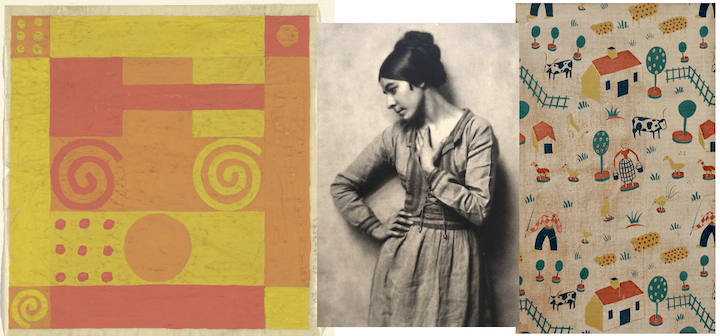
Above: Ilonka Karasz designed six children's rooms for a holiday display at Saks Fifth Avenue, featuring colorful rugs (left) and nursery screens (detail at right) among other items. In a House and Garden article, Karasz wrote: "Through new theories of design, production and distribution, [these rooms] have more vision than the manufacturer who still insists upon Little Bo-Peep." (MoMA.org/1stdibs.com)
In the Days of Yore, Christmas celebrations were largely adult- or family-centered affairs, that is until the Industrial Age enabled the mass production of toys and other goodies. Beginning in the 1870s, Macy’s began offering impressive toy displays, and even children in the hinterlands could get in on the action with a Sears catalog, the company raising its game in 1933 with the introduction its Wish Book.
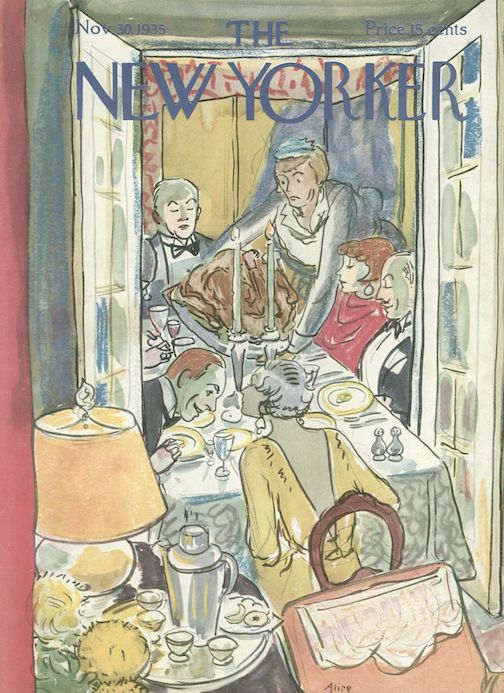
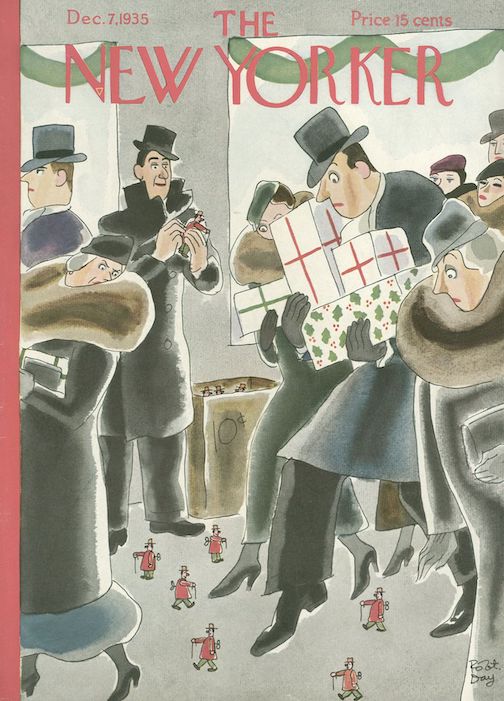
November 30, 1935 cover by Alice Harvey. From 1925 to 1943, Harvey (1894–1983) contributed three covers and more than 160 drawings to The New Yorker. I highly recommend Liza Donnelly’s Very Funny Ladiesfor more about Harvey and other women cartoonists.Alice Harvey came to New York from Chicago with her friend Helen Hokinson in the early 1920s, finding early success submitting to Life, Judge and other publications before she and Hokinson joined the fledgling New Yorker in 1925. (Photo from Michael Maslin’s essential Ink Spill).
*
The New Yorker was no exception when it came to toy shopping, featuring exhaustive lists of toys, games and other items for children available at the city’s major retailers.
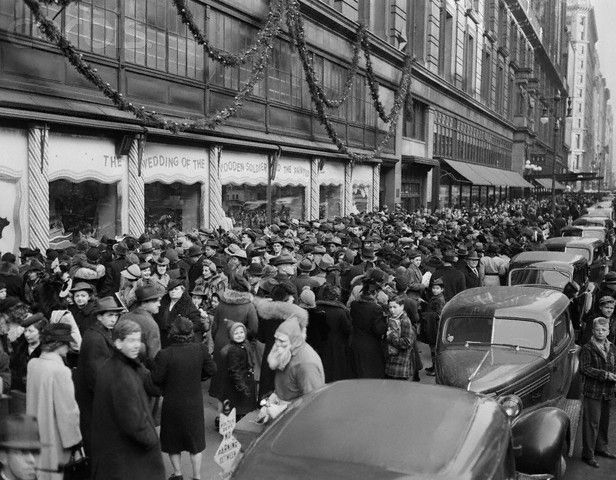
BEFORE ONLINE SHOPPING…A crowd of holiday shoppers outside New York’s Macy’s department store, 1939. (Vintage.es)
These lists were in the back of the book, following Lois Long’s “On and Off the Avenue” fashion column. Here are some excerpts:
KEEP THE KIDDOS BUSY…Clockwise, from top left: Bloomingdale’s offered an Optics Set, while Macy’s featured Lester Gaba’s soap sculptures (including Popeye, Olive Oyl and Wimpy), 8mm Mickey Mouse and Silly Symphony cartoons, and “Jack & Jill” portable children’s record players. (scrappyland.com/acghs.org/etsy.com/worthpoint.com)
Of course it wouldn’t be Christmas in New York without F.A.O. Schwarz, and if you shopped at Saks you could be dazzled by children’s rooms designed by Ilonka Karasz.
GIFTS FOR THE MODERN KID…At F.A.O. Schwarz you could find Foxblox and Buck Rogers costumes, while Saks featured children’s rooms and furnishings designed by Ilonka Karasz, including a colorful nursery screen. (Pinterest/invaluable.com/worthpoint.com/cooperhewitt.org/reddit.com)
* * *
Pouting Plutocrat
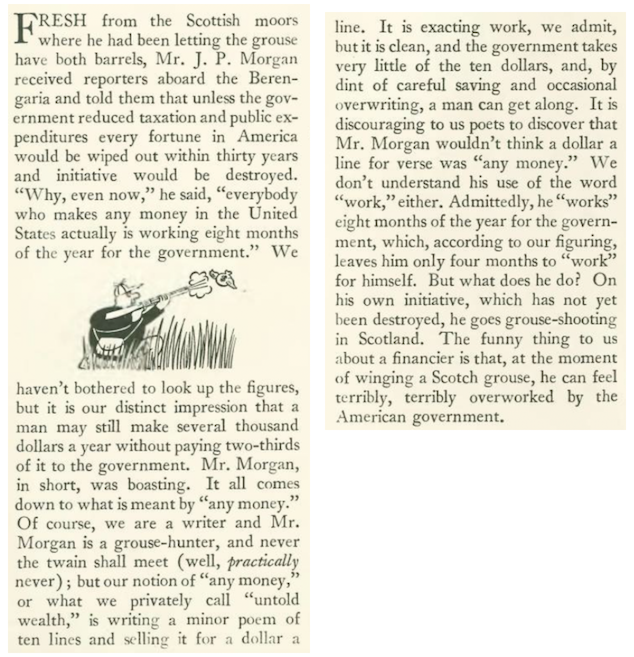
In his “Notes and Comment,” E.B. White took issue with J.P. Morgan’s gripes about taxation while grouse hunting in Scotland.
* * *
A City Resurrected
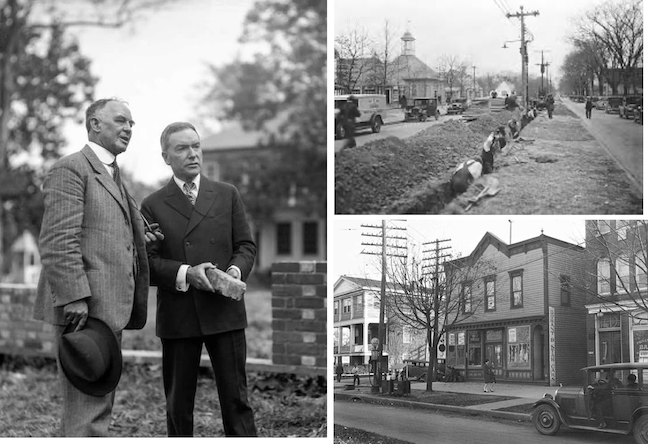
Founded in 1632, Williamsburg, Virginia played an important role in colonial and revolutionary America, but by the 20th century it had become a quiet and rather neglected little town. Then in 1924 the town’s rector, Rev. W.A.R. Goodwin—bolstered by the successful restoration of his parish church—approached oil tycoon John D. Rockefeller Jr. for funds to restore the entire colonial capital. As John Peale Bishop noted in these excerpts from “Onward & Upward With The Arts,” the project left some residents scratching their heads.
MY VISION, YOUR MONEY…The Rev. W.A.R. Goodwin (left), rector of Bruton Parish Church, shared his vision for Williamsburg with philanthropist John D. Rockefeller Jr; top photo, paved streets and modern utility lines were removed as part of the restoration, circa 1930; bottom photo, pre-restoration photo of Duke of Gloucester Street—all businesses located on Market Square, including these, were demolished during the restoration. (colonialwilliamsburg.org)RENEWED OR REMOVED…Clockwise, from top left, the 18th-century John Crump House was in a sad state in this 1895 photograph; the Crump House after its 1941-42 restoration; workers examine the old foundation walls of the Governor’s Palace; Williamsburg High School was demolished to make way for the Governor’s Palace reconstruction, seen in the background.(yourhistorichouse.com/colonialwilliamsburg.org)
* * *
At the Movies
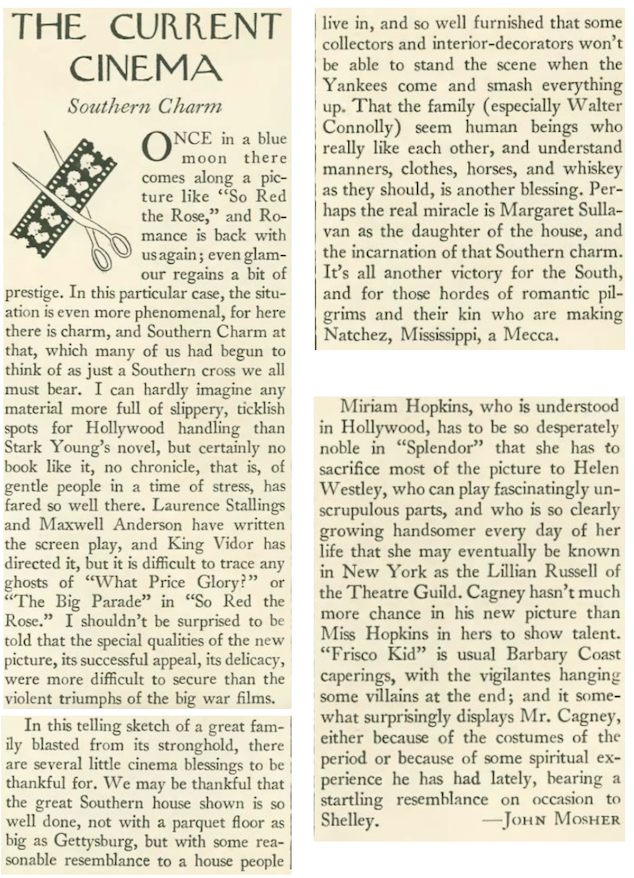
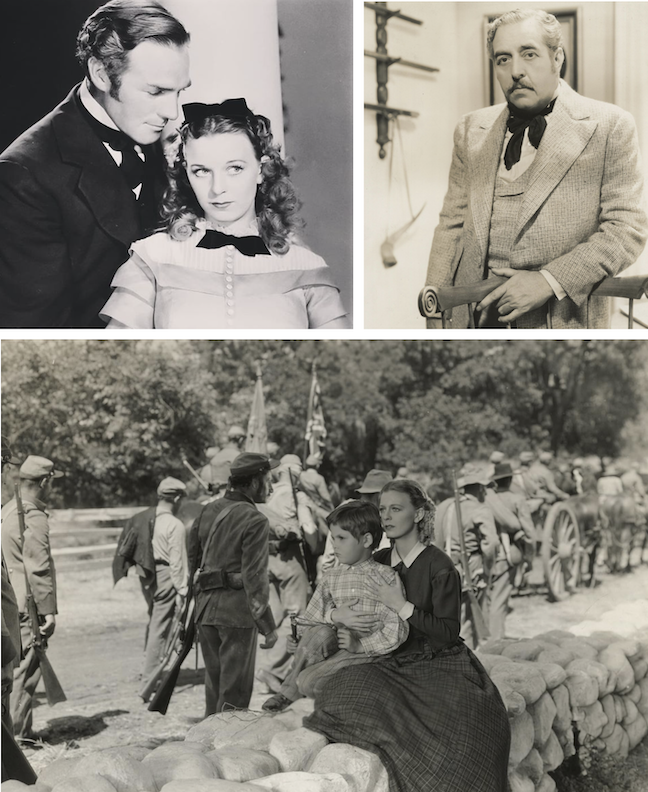
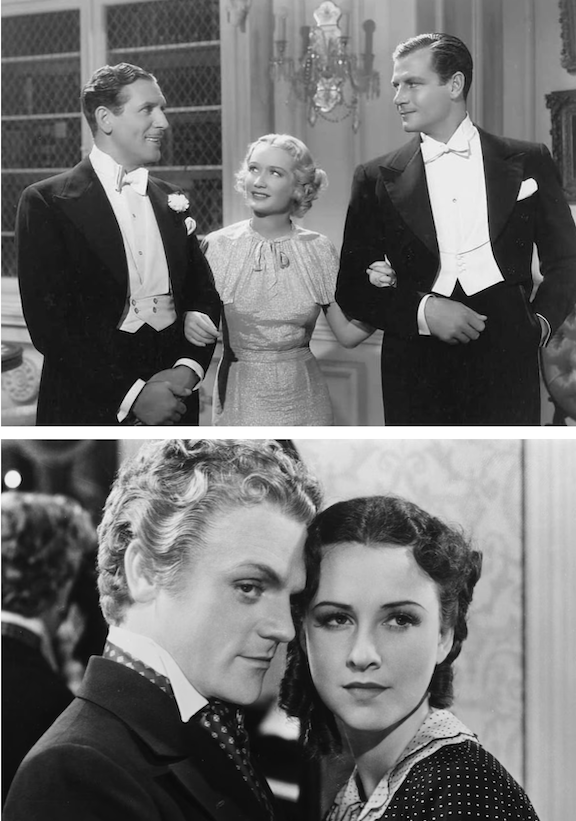
John Mosher had high praise for King Vidor’s Civil War romance, So Red the Rose. Although it did not have the epic sweep (or epic length) of 1939’s Gone With The Wind, Mosher and other critics praised the film’s human qualities. It did not, however, do well at the box office.
FRANKLY, MY DEAR…a line that would have to wait for another Civil War romance…clockwise, from top left: Randolph Scott and Margaret Sullavan play kissing cousins in So Red the Rose; Mosher singled out Walter Connolly for his performance as the family patriarch; child star Dickie Moore and Sullavan in a scene from the film. (IMDB/Letterboxd.com)HIDDEN TALENTS…In two other films, Mosher found the performances of the lead actors to either be upstaged or muffled in period costume. Top, Paul Cavanagh, Miriam Hopkins, and Joel McCrea in Splendor. Below, James Cagney and Margaret Lindsay in Frisco Kid. (IMDB/TCM)
* * *
From Our Advertisers
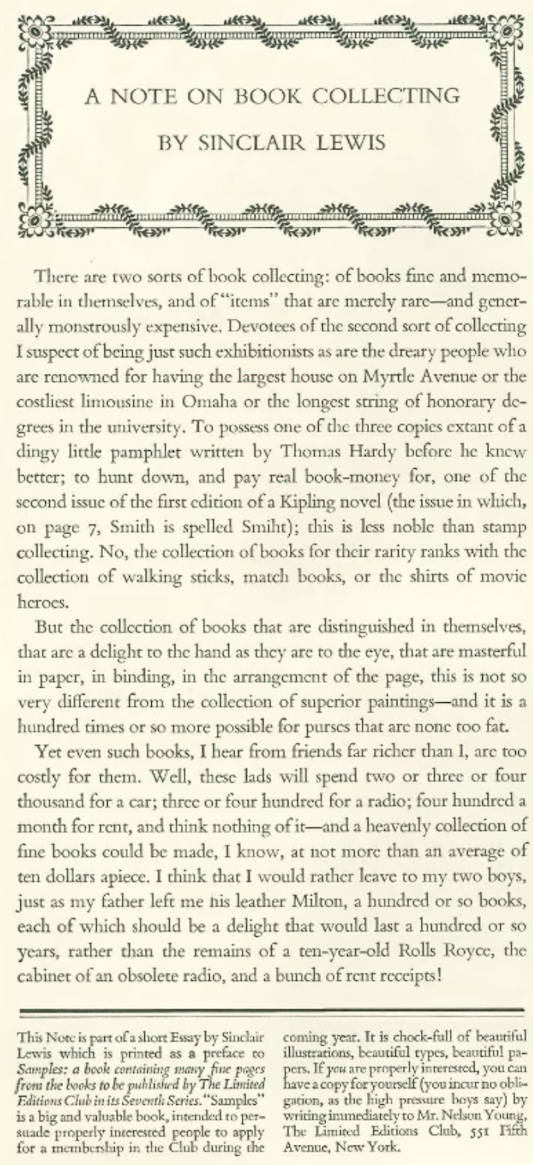
We start with this advertisement from The Limited Editions Club, founded in New York by George Macy in 1929. The 29-year-old Macy, determined to make his living from books, focused on publishing beautifully illustrated classic titles in limited quantities, available to subscription-paying members. Illustrators of the editions have included Pablo Picasso, Henri Matisse, Reginald Marsh, Norman Rockwell and many other noted artists. The ad below includes an excerpt from a Sinclair Lewis essay that extolled the virtues of investing in fine books.
Above, frontispiece from The Limited Editions Club’s 1930 publication of Thomas De Quincey’sConfessions of an English Opium-Eater, illustrated by Zhenya Gay. (librarything.com)
…as the holidays grew near the automobile ads grew more luxurious…this Cadillac spot featured an illustration of posh tots driven by their chauffeur…
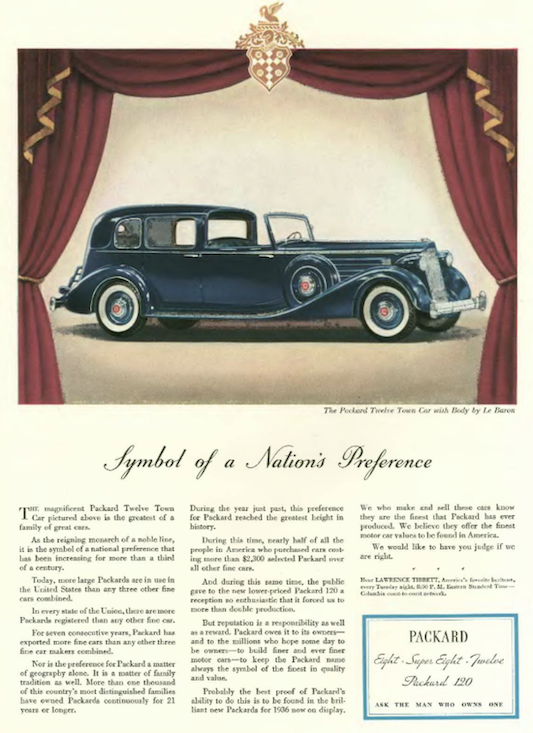
…and from Packard, an automobile designed with the assumption that you already had a liveried driver…
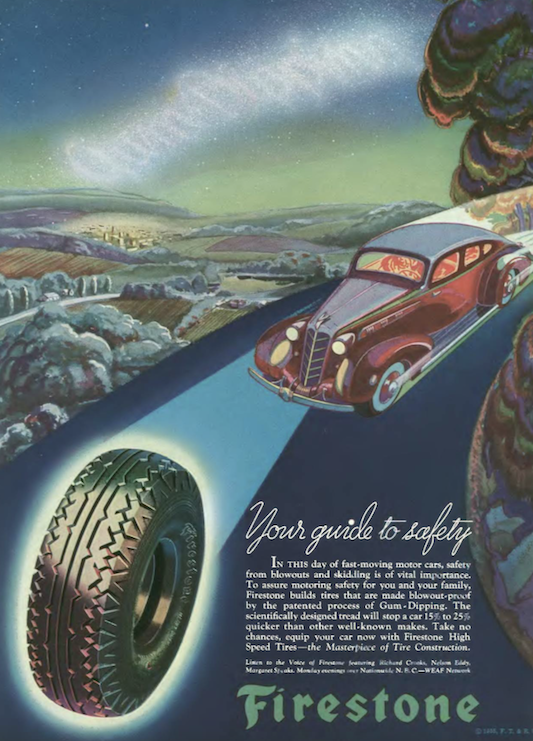
…colorful ads also came our way from Firestone…
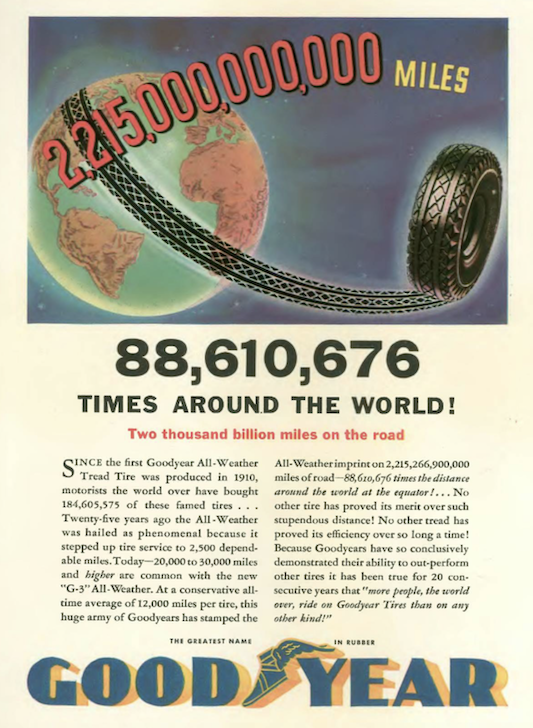
…and Goodyear…these two companies were the largest suppliers of automotive tires in North America for more than 75 years…
…World Peaceways continued their series of provocative anti-war advertisements…
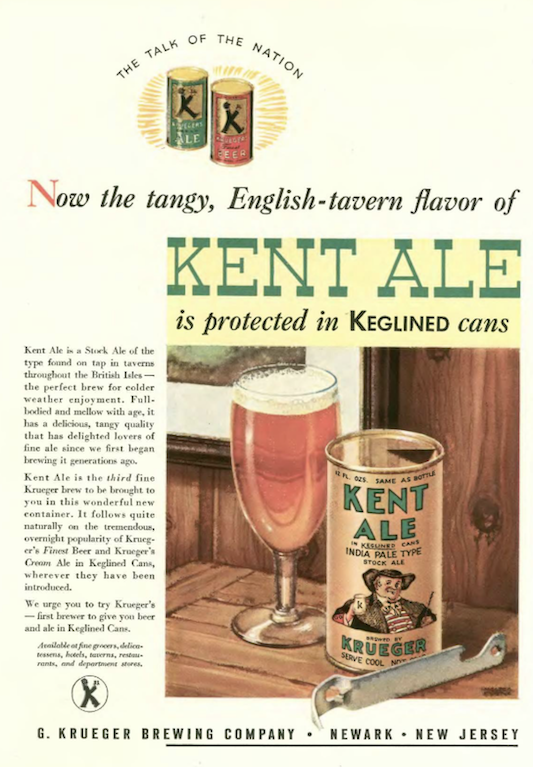
…Kent Ale was produced by Krueger Brewing Company, one of the first breweries to use cans that were coated with some substance referred to as “Keglined”…
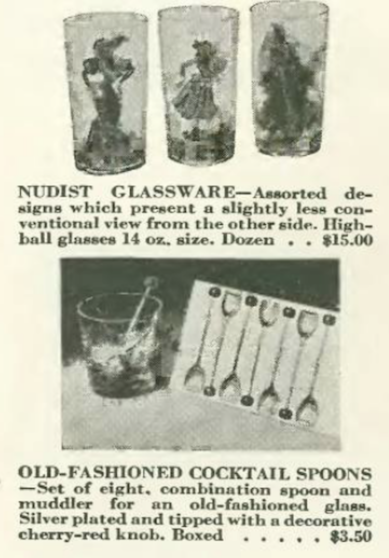
…a detail from an Abercrombie & Fitch advertisement, which suggested “Nudist Glassware” as a unique gift idea for the holidays…
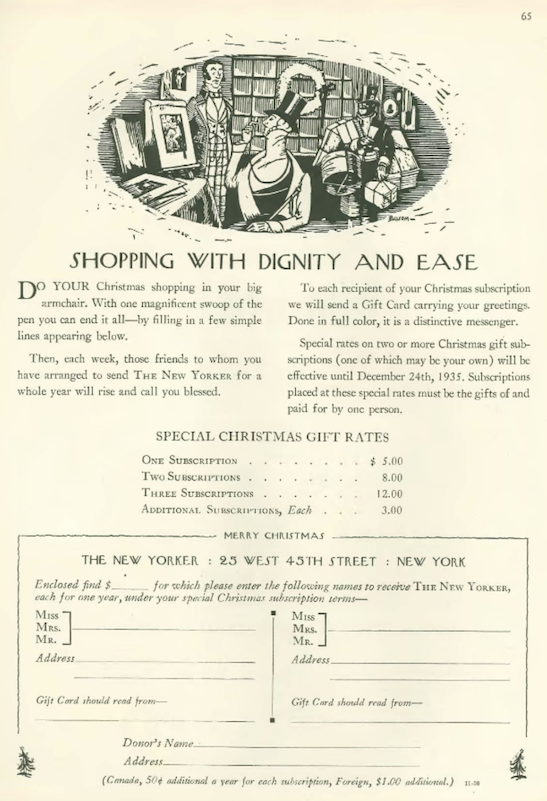
…while The New Yorker suggested a subscription (or three) as a gift that keeps on giving…curiously, the magazine used the talents of artist Lowell Leroy Balcom (1887-1938) to render this woodcut illustration of Eustace Tilley…
…James Thurber kicked off our cartoons with a familiar theme…
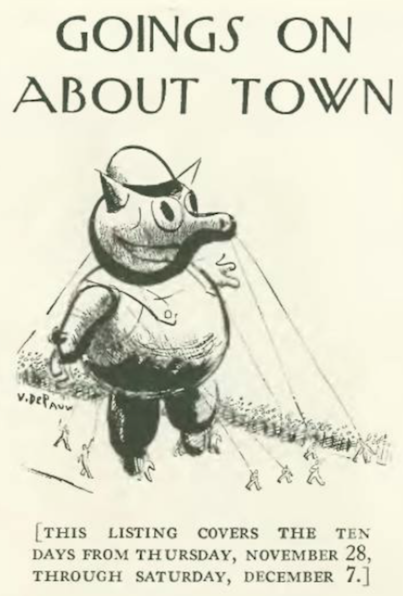
…and Victor de Pauw offered up this Macy’s Thanksgiving Day parade image to calendar section…
…what de Pauw illustrated…
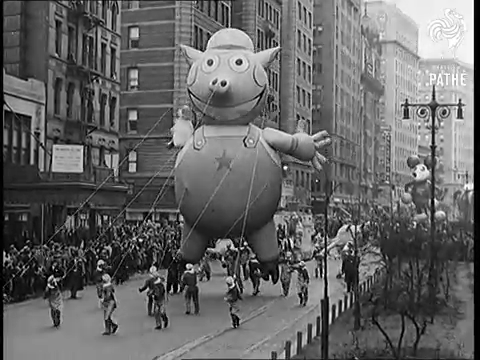
To promote his Silly Symphonies animated short, “The Three Little Pigs”, Walt Disney designed a balloon based on Practical Pig (the one with the brick house). The balloon was featured in the 1934 and 1935 Macy’s Thanksgiving Day parades. (YouTube)
…William Steig stepped in for Al Frueh in providing the illustration for the “Theatre” section…
…and Steig again…
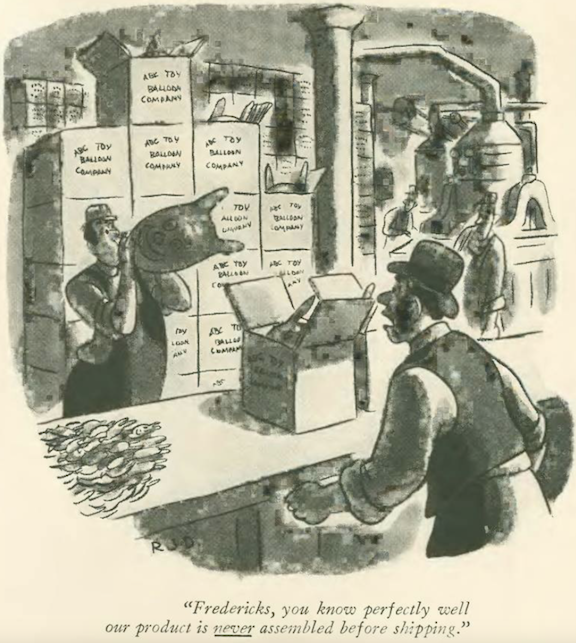
…Robert Day gave us an airhead at a balloon factory…
…Day again, with some evicted ghosts…
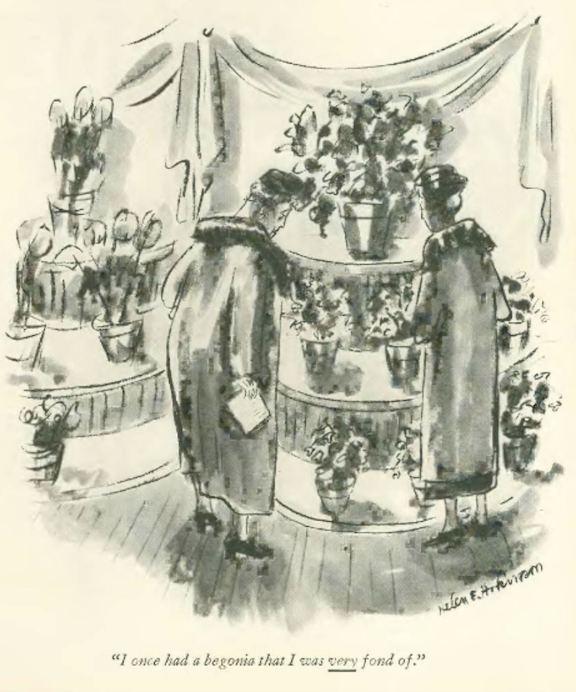
…Helen Hokinson went plant shopping…
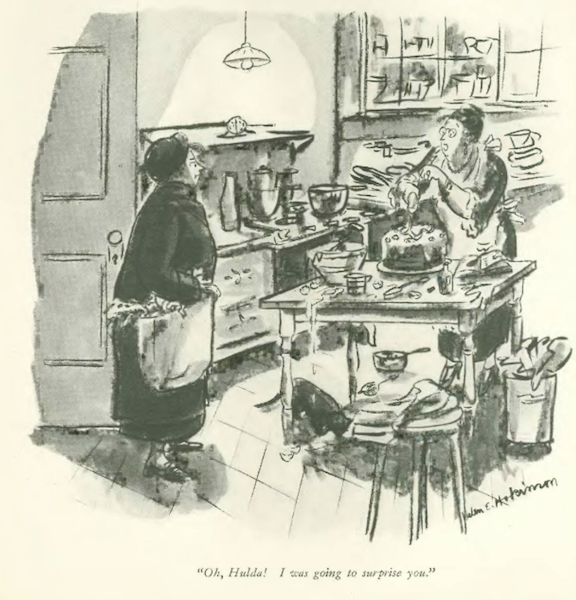
…and found a surprise in the kitchen…
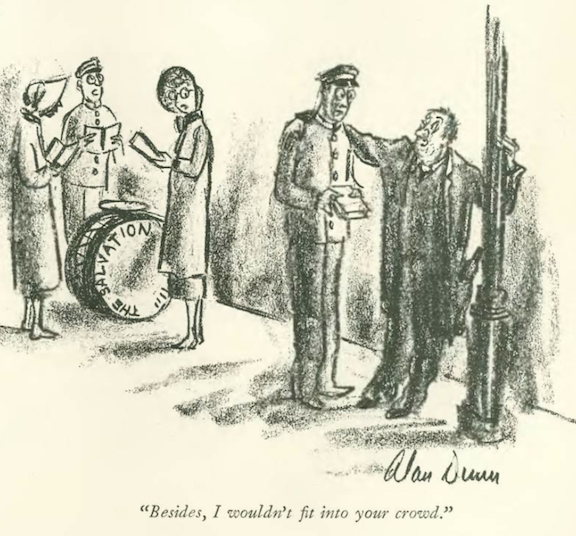
…Alan Dunn offered a challenge to the Salvation Army…
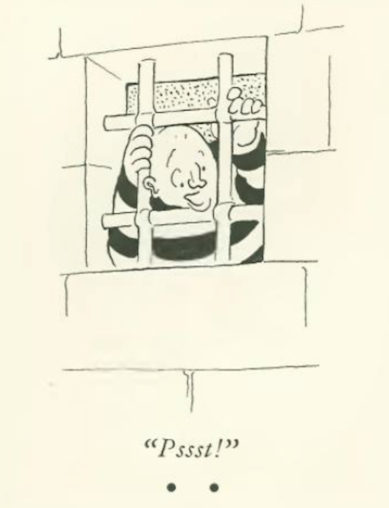
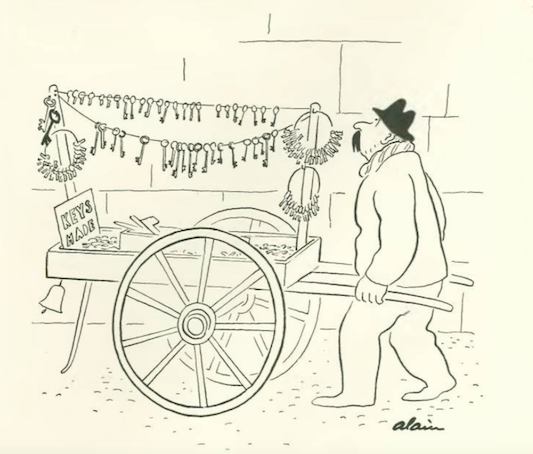
…Alain received a special layout for this cartoon…
…which was arranged thusly…
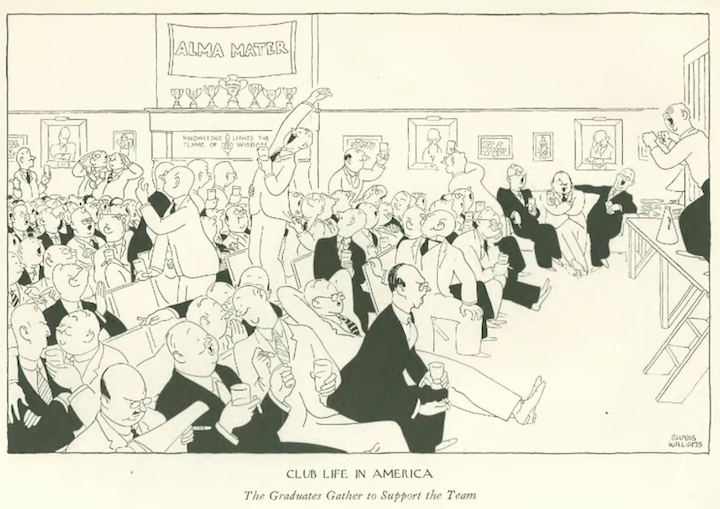
…Gluyas Williams was back with his look at club life…
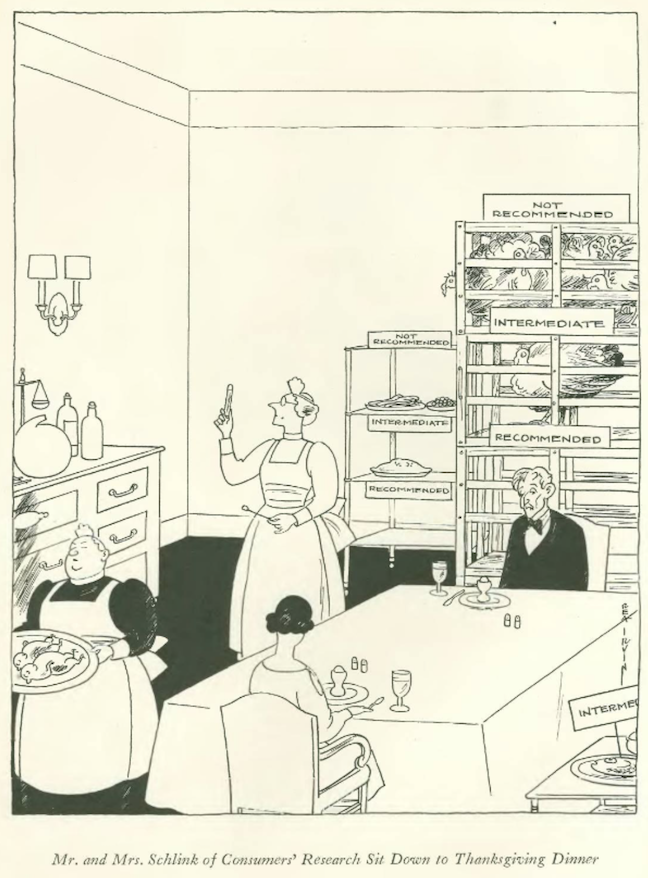
…and we close with Rea Irvin, and the science behind a holiday feast…
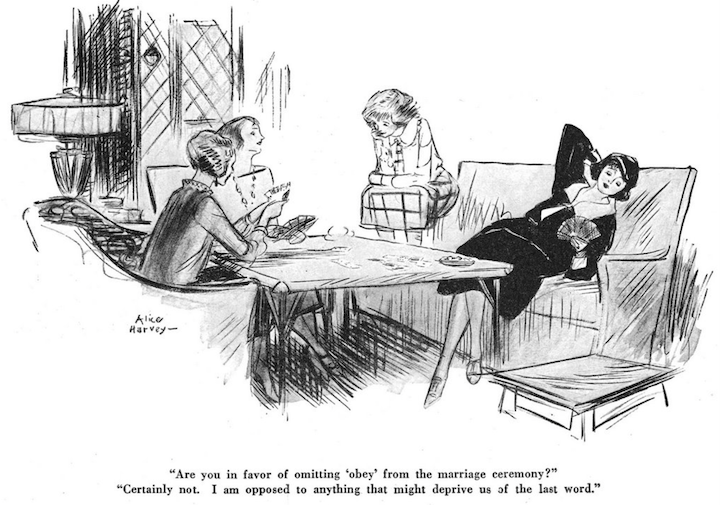
…and before we go, our cover artist, Alice Harvey, was publishing New Yorker-style cartoons in Life magazine at least three years before the New Yorker got off the ground. Here is an example of her early work, published 103 years ago on December 28, 1922:
There was a time when dirigibles were considered the future of transatlantic transportation. In the 1930s they could carry more passengers than any other type of aircraft while offering amenities usually associated with ocean liners such as private cabins, dining rooms and large observation decks. They were also faster than those water-borne vessels.
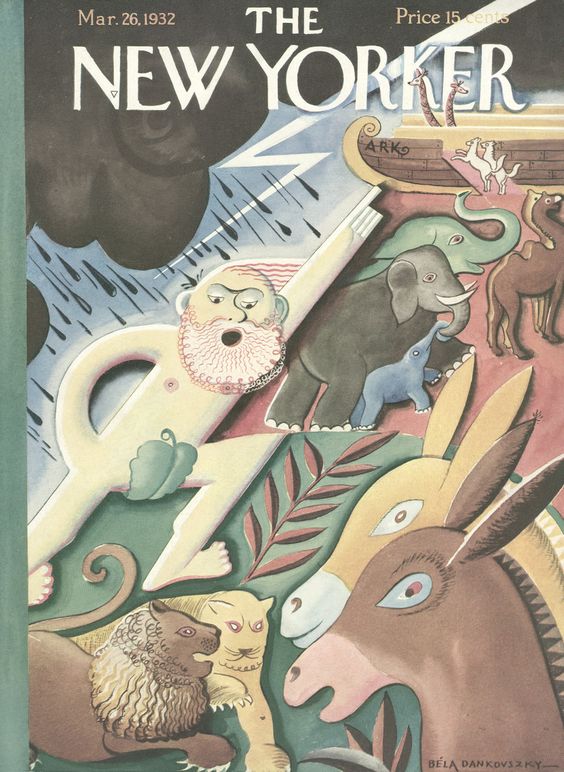
March 26, 1932 cover by Bela Dankovsky.
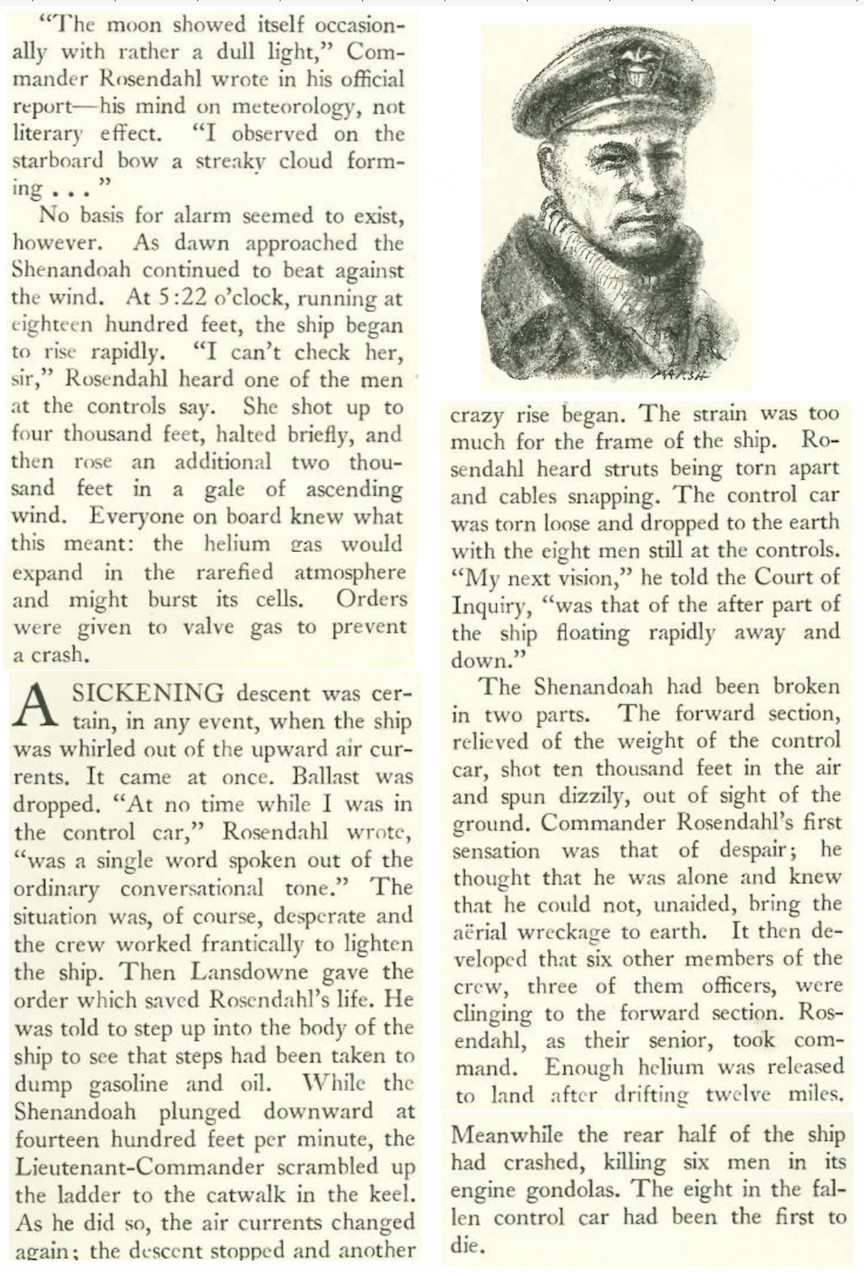
Dirigibles, however, were challenging to operate—with crew members outnumbering passengers—and sometimes they fell from the sky. Such was the fate of the USS Shenandoah during a 1925 publicity flight over Ohio. On board was the Navy’s Lt. Cmdr. Charles Emery Rosendahl (1892–1977), who had to act quickly when the airship encountered a severe thunderstorm. Hitting a violent updraft that carried it beyond the pressure limits of its gas bags, the airship was torn apart. For the March 26 “Profile,” writer Henry Pringle recounted Rosendahl’s experience:
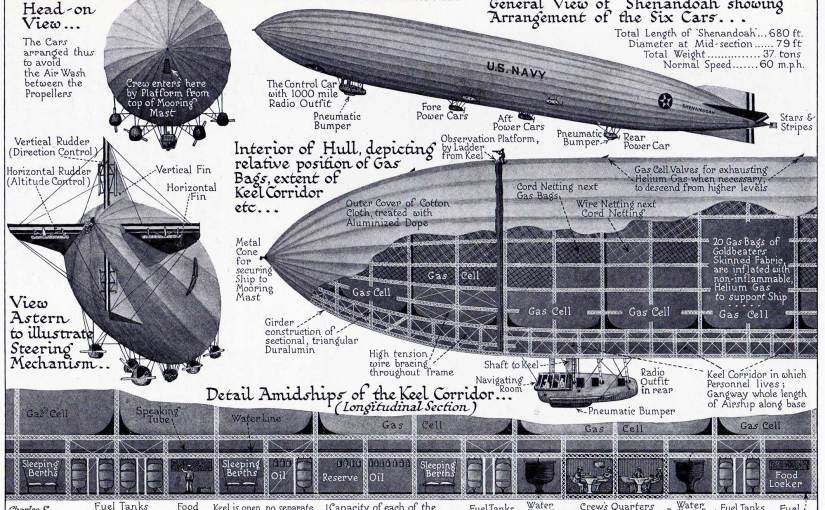
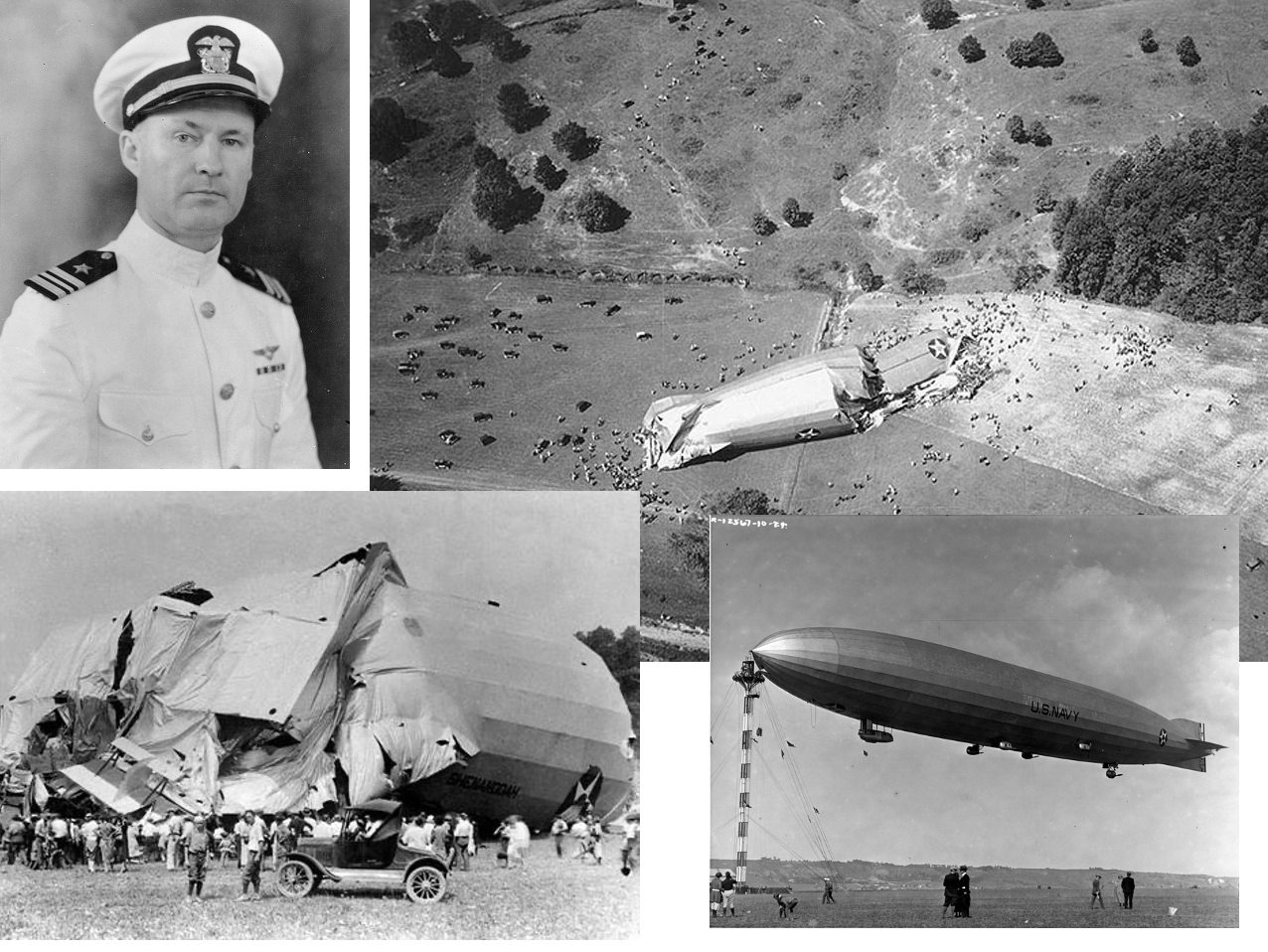
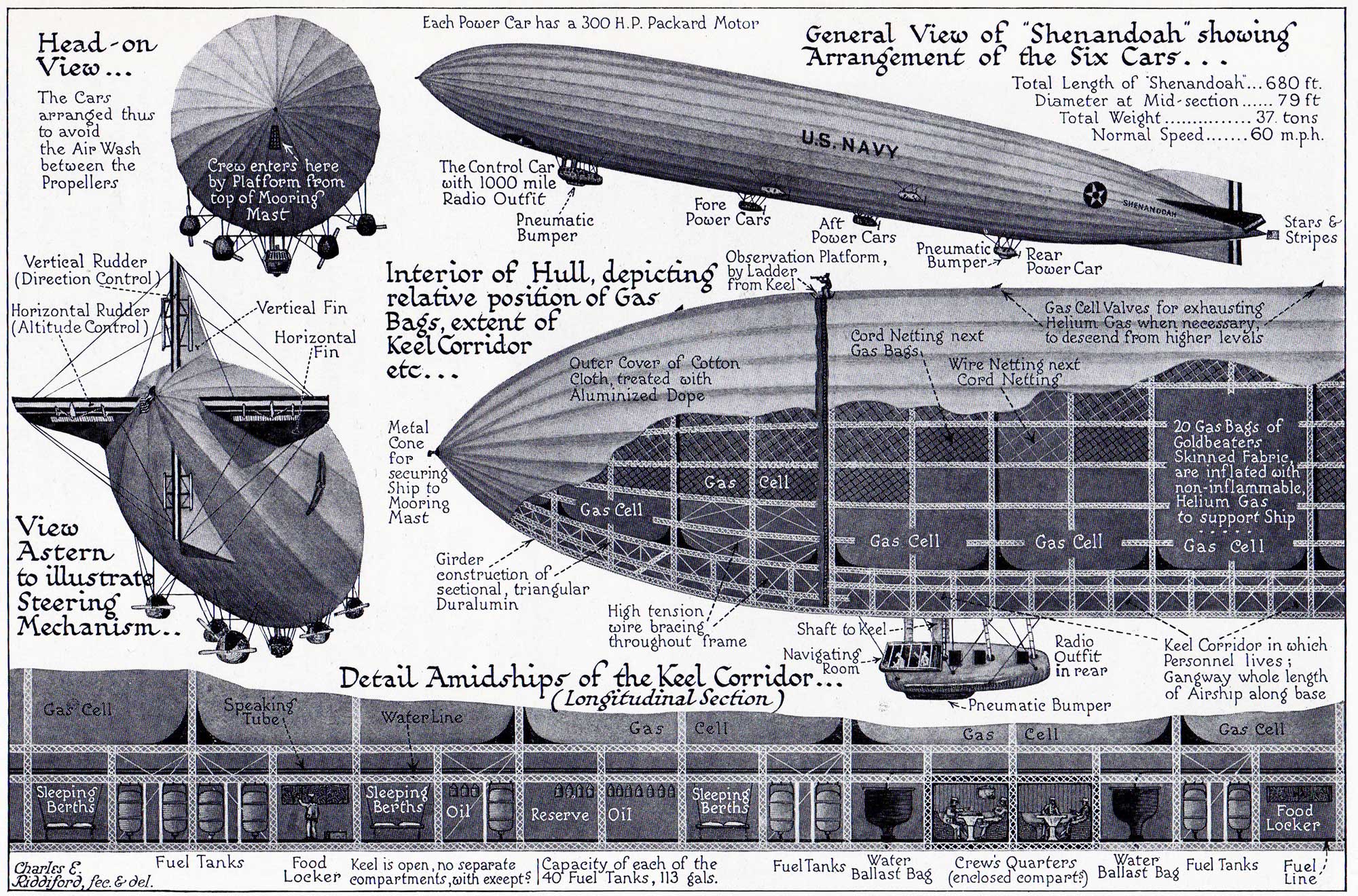
HE LIVED TO TELL ABOUT IT…Clockwise, from top left, Lt. Cmdr. Charles Rosendahl, USN, circa 1930; the USS Shenandoah in pieces near Caldwell, Ohio; the airship in better days; close-up view of the wreckage. (Wikipedia/airships.net)IT WAS A GAS…Like other other early dirigibles, the USS Shenandoah was designed for war (fleet reconnaissance) rather than passenger service. It was the first rigid airship to use a safer gas, helium, rather than hydrogen to gain lift. However, helium was scarce at the time, and the Shenandoah used almost all of the world’s reserves to fill its gas cells, which held 2,100,000 cubic feet. (fly.historicwings.com)
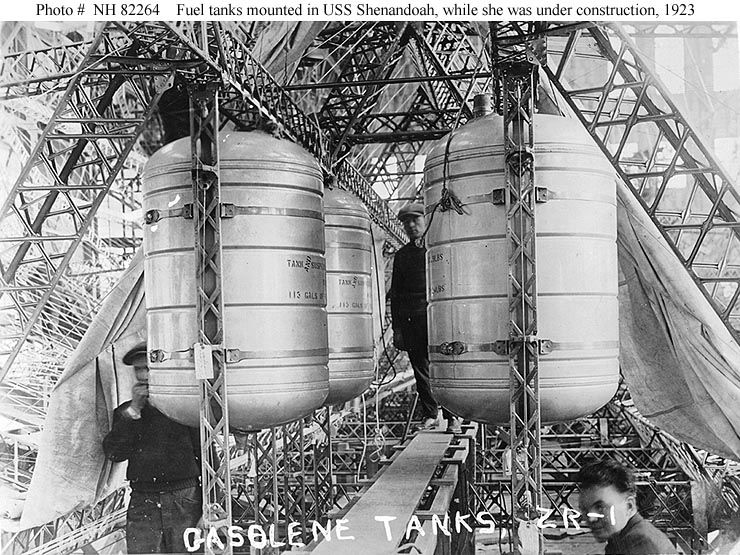
ON THE CATWALK…Lt. Cmdr. Charles Rosendahl hurried through this area while the USS Shenandoah was being torn apart in mid-air. Rosendahl was ordered out of the control car by the airship’s pilot, Cmdr. Zachery Landsdowne, to check on the Shenandoah’s oil and gas tanks. It was an order that ultimately saved Rosendahl’s life: Eight crew members in the control car, including Landsdowne, perished. In all, 14 crew members lost their lives. (airships.net)
* * *
Untouchable Unmentionables
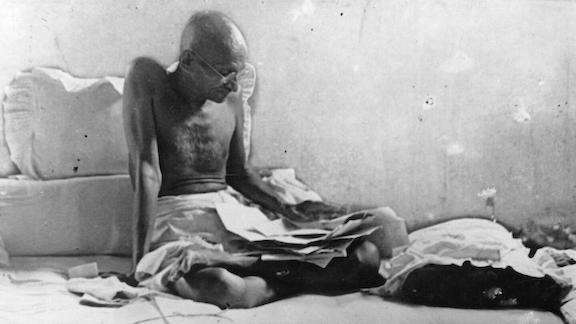
In his “Notes and Comment,” E.B. White mused about one Boston store’s promotion of a line of women’s underwear as “Gandhi panties,” apparently inspired by the loincloth worn by Indian liberator Mahatma Gandhi:
THE SIMPLE LIFE…Mahatma Gandhi held numerous hunger strikes during his years of protest against India’s caste system and British Imperial rule. He is pictured here in jail in September 1932 during the second of his fasts, protesting the British government’s decision to separate India’s electoral system by caste. (history.com)
* * *
Hearst Wurst
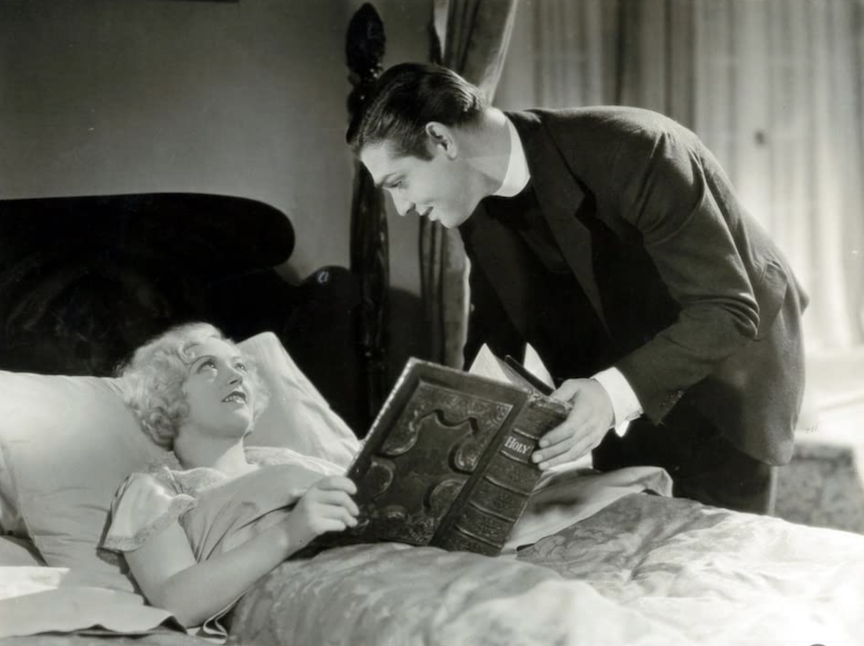
Film critic John Mosher was not happy with the happy ending (or much else) in the William Randolph Hearst-backed Polly of the Circus, which starred Hearst’s mistress, Marion Davies, along with emerging star Clark Gable, who portrayed a small-town minister who risked his career for love with a trapeze artist.
JUST READ THE NAUGHTY BITS…Top image: With the backing of William Randolph Hearst, Marion Davies was able to bill her latest MGM film as a “Marion Davies Production.” Davies had star billing over Clark Gable in Polly of the Circus, but as his star rose in the 1930s, Davies saw her fortunes (and Hearst’s) drain away during the Depression years. Bottom image: the Reverend John Hartley (Gable) and trapeze artist Polly Fisher (Davies) “look for something hot” in the Book of Ruth. (IMDB)
* * *
From Our Advertisers
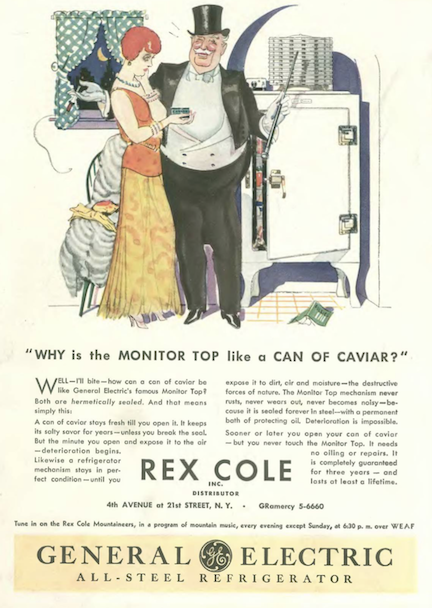
Electric refrigerators for home use had been around for less than decade in 1932, but as more companies got into the business, the drive to distinguish one’s product from the competitor’s became keen…the distinctive “Monitor Top” GE refrigerators were touted by Rex Cole in both their ads and in the design of their showrooms…
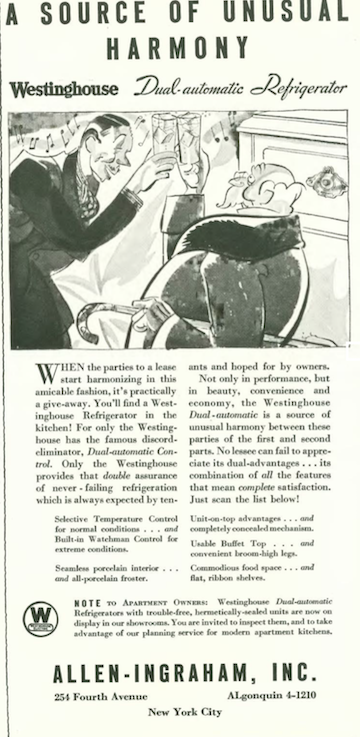
…Allen-Ingraham, on the other hand, demonstrated how their “dual-automatic” Westinghouse could bring harmony to a party of bootleg-swilling old gents…
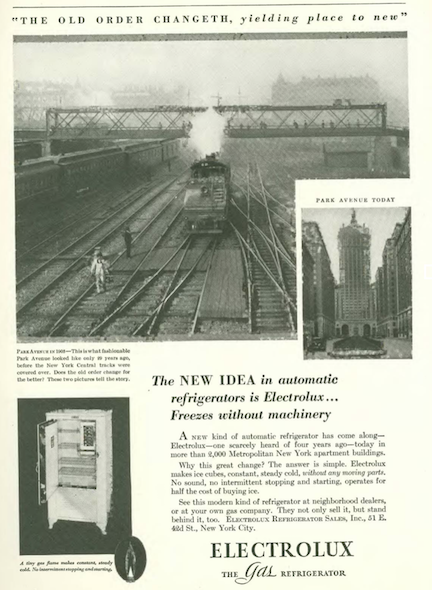
…the makers of Electrolux invoked the inevitable march of time and progress in promoting their “automatic” refrigerator…
…on to sundry things, the upscale British department store Fortnum & Mason employed this simple ad to demonstrate the superiority of old money over the preening lower orders…
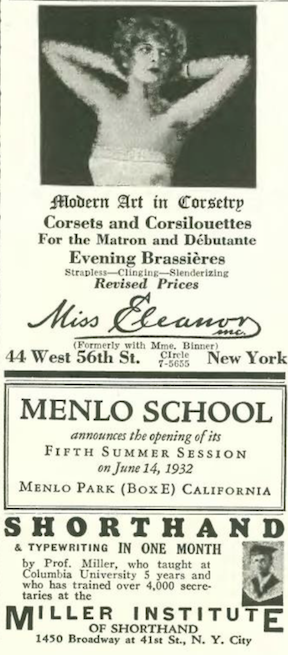
…and in the back pages we find these cheap ads for corsets, a prep school and a shorthand lessons…
…the makers of Listerine reminded readers of the connection between their old line of antiseptic products and their new line of cigarettes…
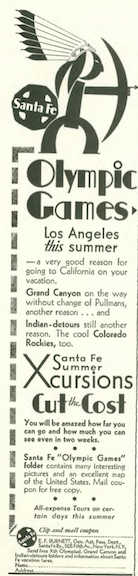
…the Santa Fe Railroad invited travelers to the Summer Olympics in Los Angeles…
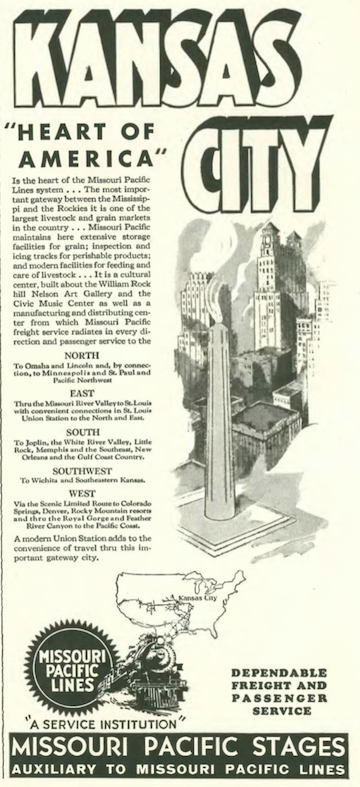
…while the Missouri Pacific line promoted the wonders of Kansas City, the “Heart of America”…
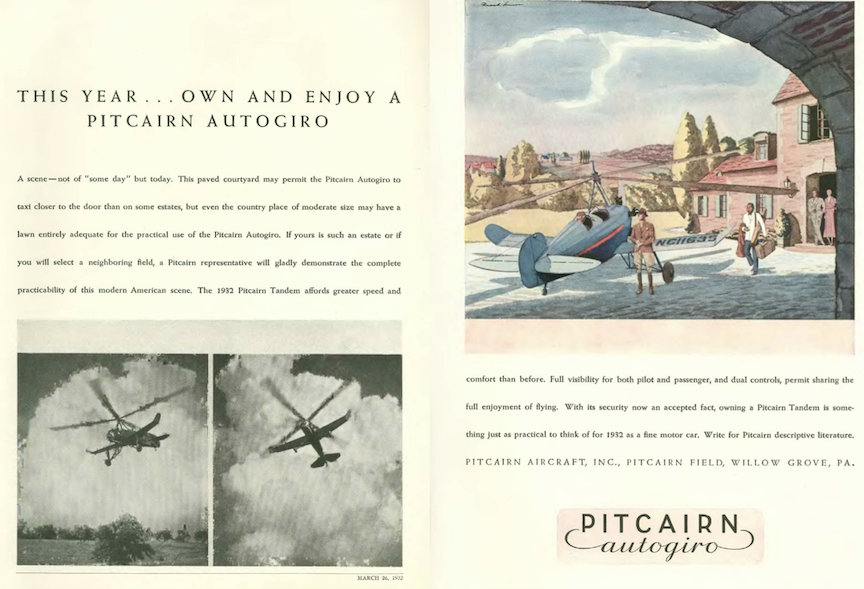
…makers of the autogiro — part airplane, part helicopter — continued to promote the advantages of this supposedly easy to fly contraption…in the 1930s the autogiro was seen as the future of personal air travel, some predicting that the craft would join the automobile in many a garage…
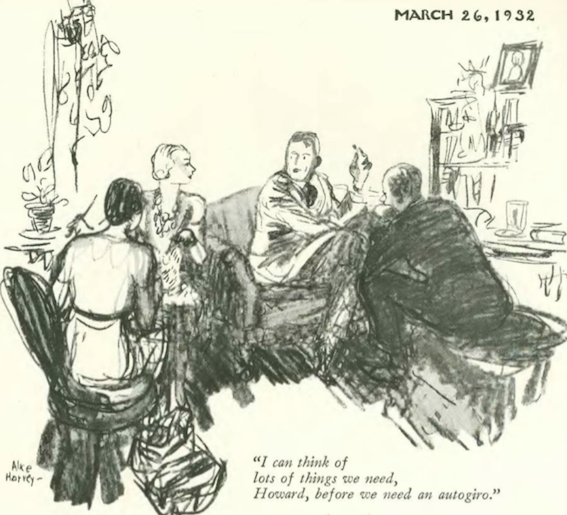
…on to our cartoons, Alice Harvey found one man who was ready for the autogiro lifestyle…
…and Peter Arno gave us an old walrus ready to take advantage of an unsuspecting host…
……and Helen Hokinson’s “girls” also found themselves involved in a scandalous situation…
…on to the April 2, 1932 issue…
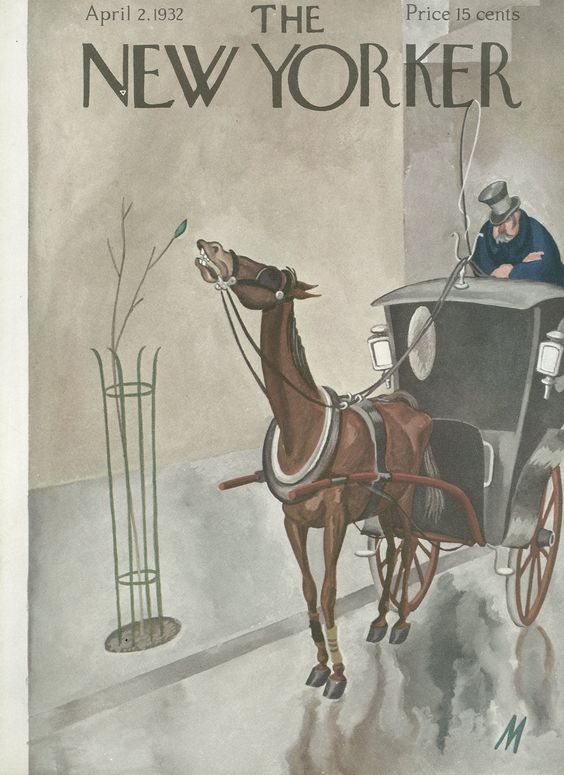
April 2, 1932 cover by Julian de Miskey.
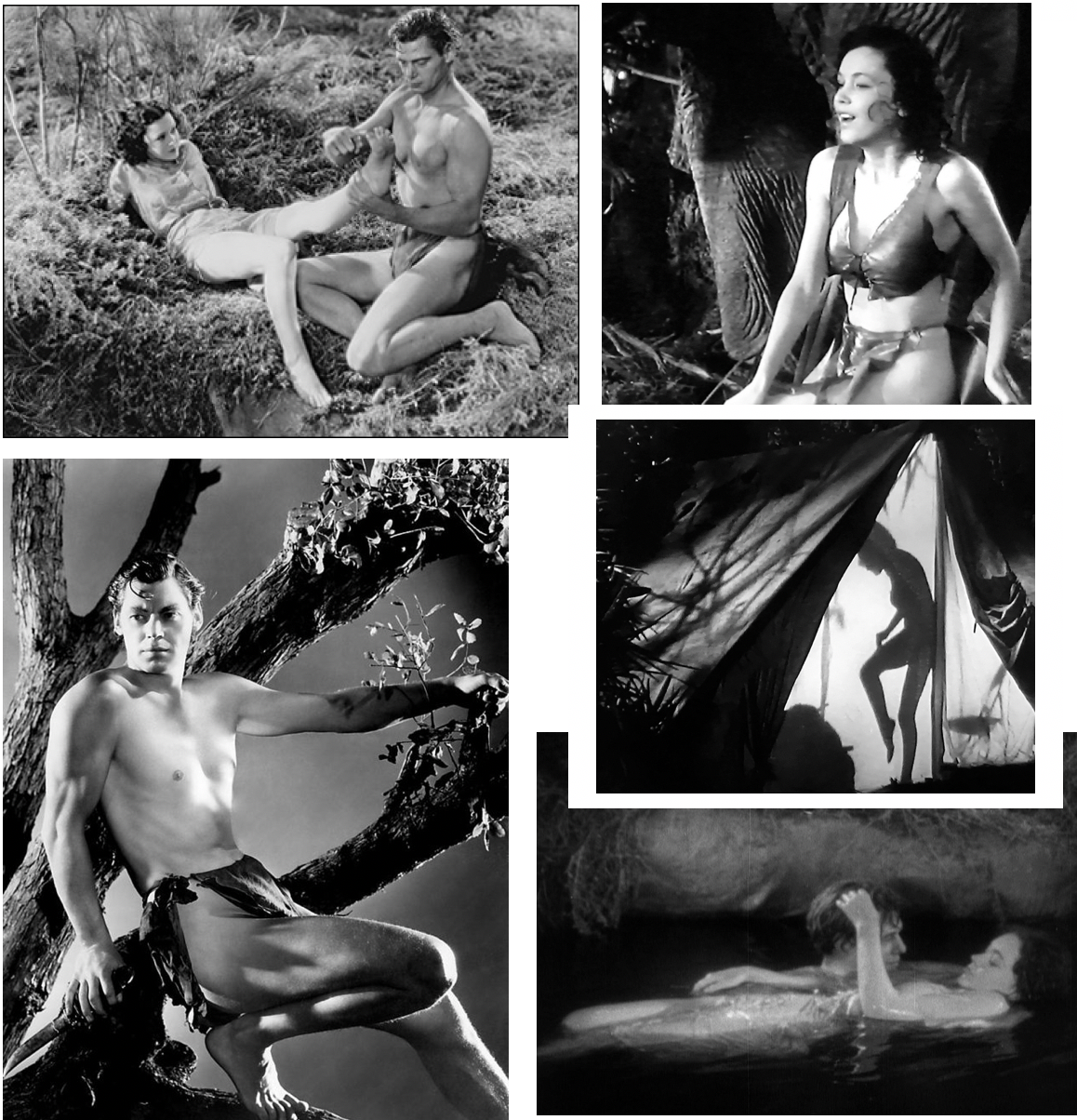
…where this time critic John Mosher took a look at a new film (and a new film genre) — Tarzan, the Ape Man, starring Johnny Weissmuller and Maureen O’Sullivan.
Weissmuller (1904-1984) was well known in the 1920s as a five-time Olympic Gold Champion swimmer, so the 28-year-old was a familiar face when he stepped into the title role. The Irish-born O’Sullivan (1911-1998) had appeared in seven films in 1930-31 before she was cast as Jane Parker in Tarzan, the Ape Man. Mosher found the film silly, but entertaining nonetheless.
THAT PRE-CODE LOOK…Before decency codes were strictly enforced in Hollywood, many early 1930s films featured scenes that were pretty racy for those times. Both Maureen O’Sullivan and Johnny Weissmuller were scantily clad for their roles in 1932’s Tarzan the Ape Man. (IMDB/fanpop.com/manapop.com/YouTube)
* * *
Cancel Me, Kate
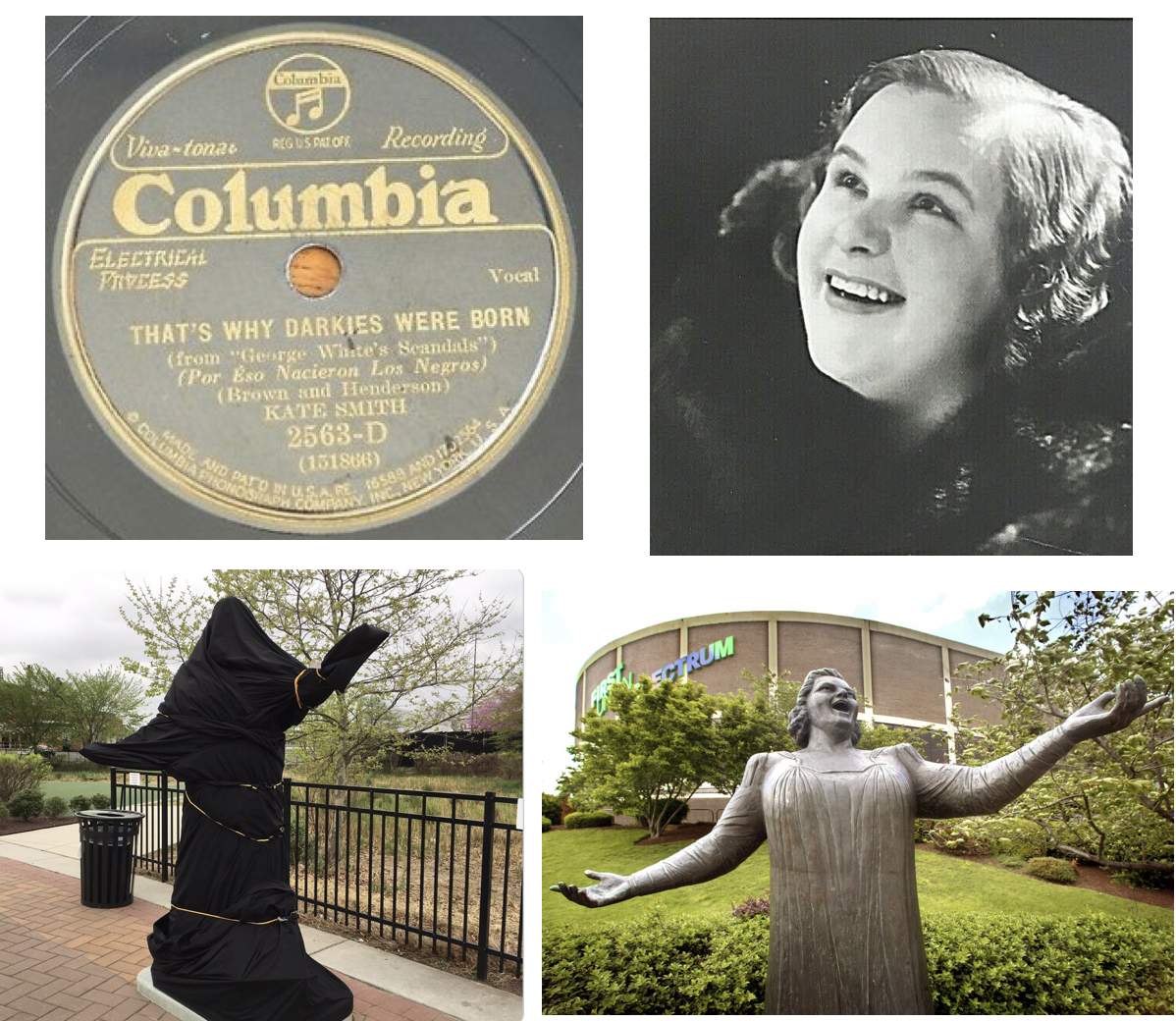
“That’s Why Darkies Were Born” was a popular song in those days of casual racism, written by Ray Henderson and Lew Brown for George White’s Scandals of 1931. It was recorded by a number artists including Paul Robeson (see below) and Kate Smith — it was one of Smith’s biggest records and also the reason she was recently “cancelled” in some sports venues.
In 2019 the New York Yankees announced that Smith’s rendition of “God Bless America” would no longer be played at Yankee Stadium, citing not only Smith’s version of “That’s Why Darkies Were Born” but also her past performances of the song “Pickaninny Heaven.” The Philadelphia Flyers followed the Yankees example, covering up and later removing a statue of Smith outside the Wells Fargo Center.
THAT’S WHY YOU WERE CANCELLED…One of Kate Smith’s biggest early hits was her performance of “That’s Why Darkies Were Born.” In 2019 the Philadelphia Flyers organization covered and later removed a statue of Smith outside the Wells Fargo Center. (mprnew.org)
* * *
From Our Advertisers
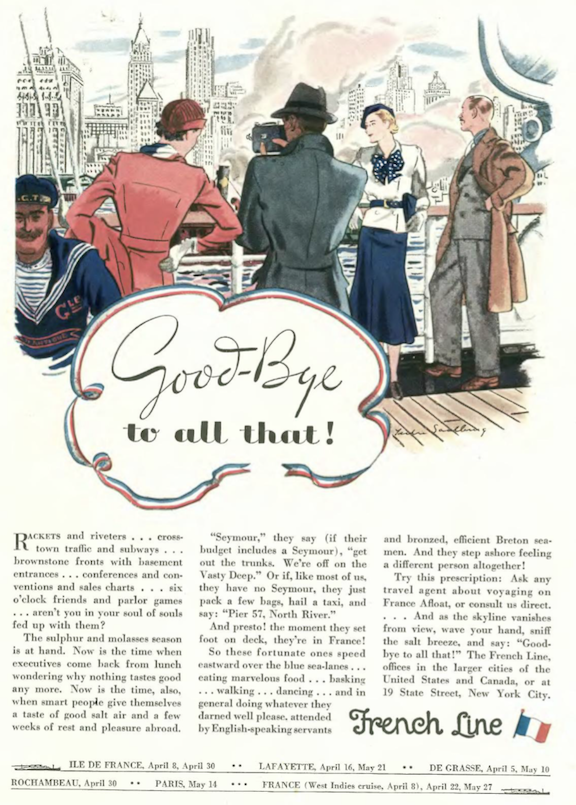
We have more inducements to travel, this time abroad and in style aboard the French Line…
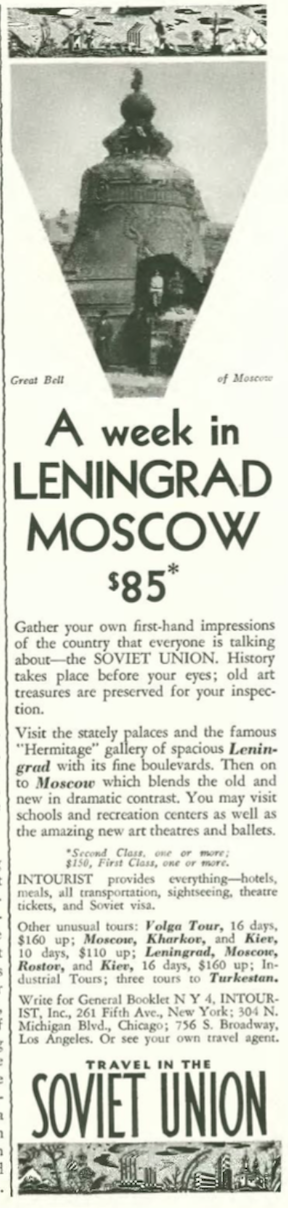
…or if you were looking for something a bit more exotic, Intourist could book you passage to the Soviet Union…
…on to our cartoonists, we begin with this great spot illustration by Victor De Pauw, who contributed to The New Yorker from 1928 to 1948…
…William Crawford Galbraith offered some insight into the cultural tastes of the upper orders…
…while Alan Dunn illustrated the Depression’s domestic woes…
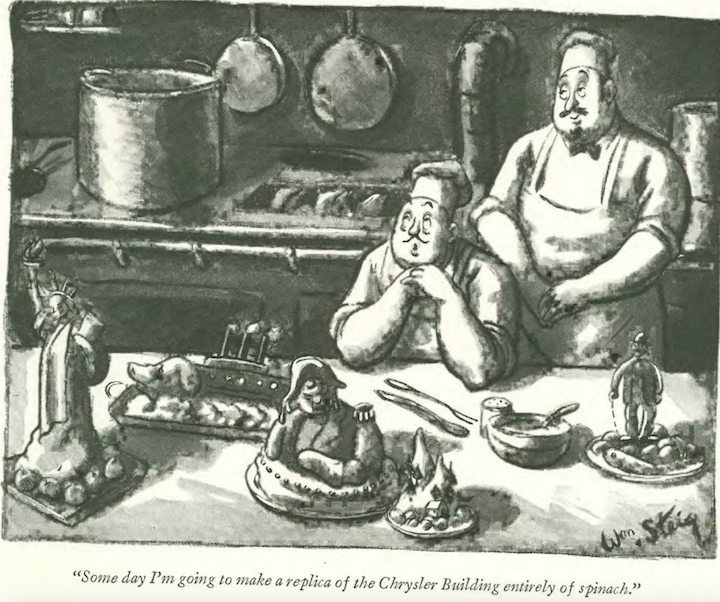
…and we have what I believe is the first appearance of William Steig’s “Small Fry” children identified as such…many more would follow, later to be collected into a popular book by the same name…
…and another by Steig of a person contemplating his life’s desire…
…and we end with James Thurber, with all of his familiar themes tied up in one drawing…
While the Empire State Building developers were preparing to reduce the old Waldorf-Astoria Hotel to rubble, another venerable relic of the Victorian age, the Murray Hill Hotel, was still clinging to the earth at its prime location next to the Grand Central Depot.
June 15, 1929 cover by Sue Williams.
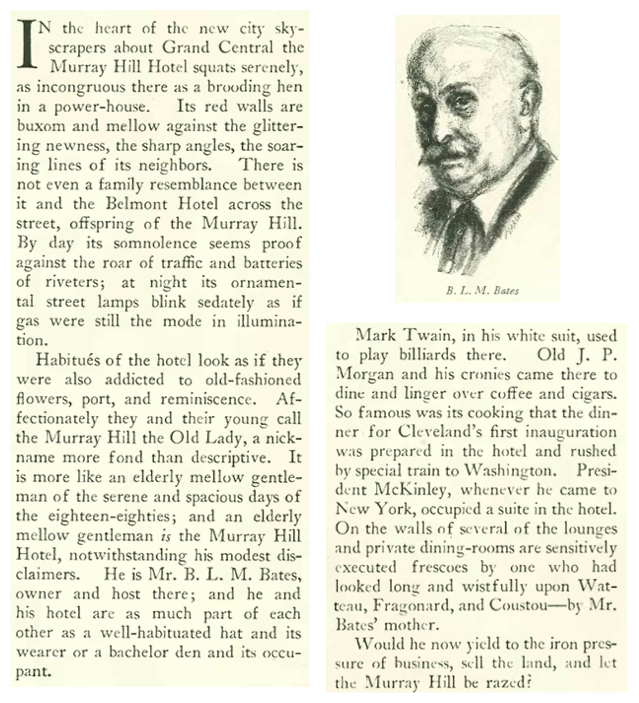
The hotel’s survival was due in part to its owner, Benjamin L. M. Bates (1864-1935), who seemed as much a part of the hotel as its heavy drapes and overstuffed chairs. Bates, who started out at the hotel as assistant night clerk, was profiled in the June 15, 1929 issue by Joseph Gollomb (with portrait by Reginald Marsh) Some excerpts:
The hotel was just 26 years old when Bates bought it in 1910. But by the Roaring Twenties Murray Hill Hotel seemed as ancient as grandmother’s Hepplewhite…
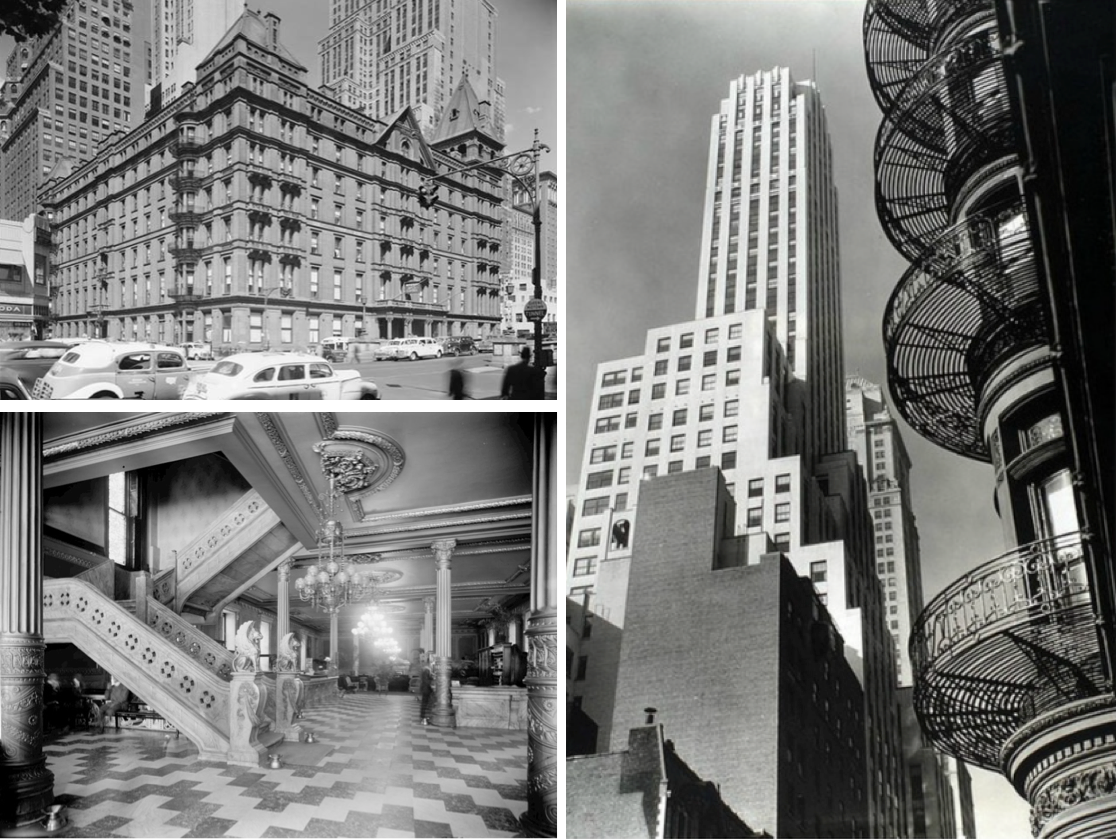
Clockwise, from top, left, The Murray Hill Hotel in September 1946, just months before it was demolished; the hotel’s ornate spiral fire escape, seen at the right in a 1935 photograph of 22 East 40th Street by Berenice Abbott; the hotel’s office and foyer. The hotel featured 600 rooms and two courtyards. (Museum of the City of New York (1 & 2)/Wikipedia)
…but to the very end it continued to be a popular gathering spot for New York notables, including Christopher Morley’s prestigious literary society, the Baker Street Irregulars…
FAMILIAR HAUNT…Three members of the exclusive literary group, the Baker Street Irregulars — Fletcher Pratt, Christopher Morley and Rex Stout —swap stories at the Murray Hill Hotel in 1944. (Wikipedia)
…with the hotel’s prime location near Grand Central Depot (and its replacement, Grand Central Station), the party couldn’t last forever, and the Murray Hill Hotel yielded to the wrecking ball in 1947…
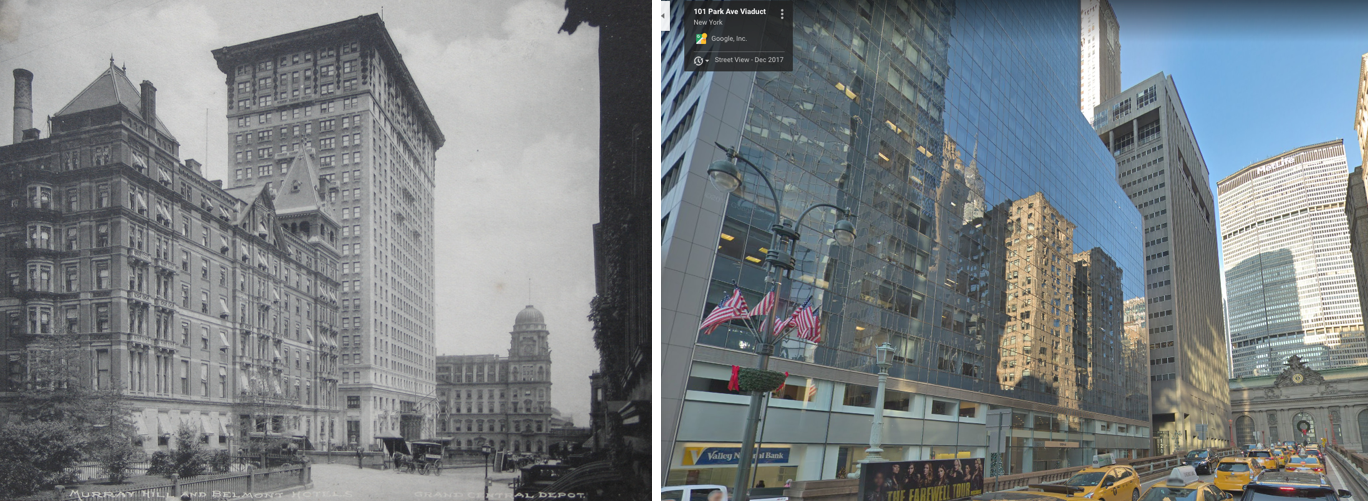
THEN AND NOW, the Murray Hill Hotel, circa 1905. The adjacent 25-story Belmont Hotel, erected in 1904-06 and a skyscraper for its time, would be razed in 1931. Note the old Grand Central Depot in the background, which would be replaced in 1913 by Grand Central Station. At right, a Google Maps view of the same location today.
Some parting notes about the Murray Hill Hotel: In 1905, delegates from 58 colleges and universities gathered at the hotel to address brutality in college football and reform the sport. They formed the Intercollegiate Athletic Association of the United States, which would later become the NCAA.
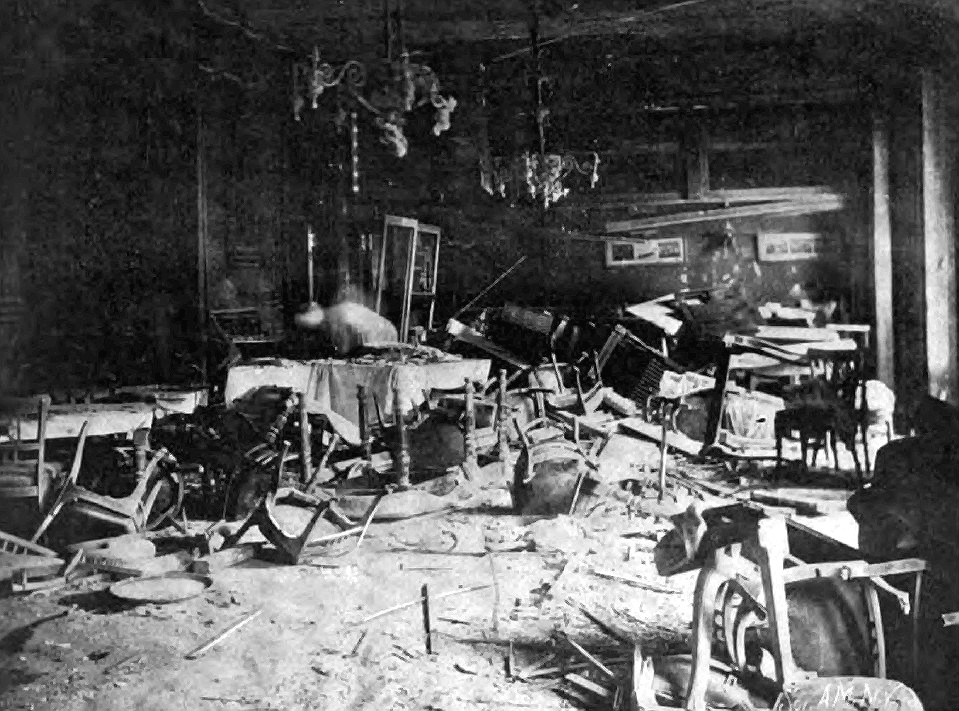
The hotel was also the site of a massive explosion in 1902, when workers constructing a subway tunnel under Park Avenue accidentally set a dynamite shed ablaze. Every window along Park Avenue and 40th Street was blown out, and the blast opened a pit, 10 feet deep and 30 feet wide, in front of the building. Five people were killed by the blast—three of them at the Murray Hill Hotel.
AFTERMATH…The Murray Hill Hotel’s cafe following the 1902 explosion. (Wikimedia Commons)
* * *
Irwin S. Chanin, fresh from erecting his Art Deco masterpiece, the Chanin Building, was now setting his sights on the Century Theatre, barely twenty years old but already obsolete due to its poor acoustics and inconvenient location. “The Talk of the Town” takes it from there…
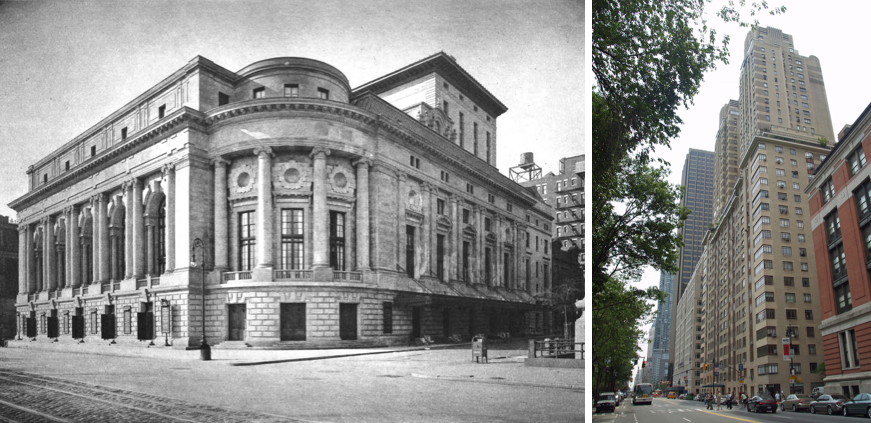
BIGGER PLANS…The Century Theatre, located at 62nd Street and Central Park West, opened on November 6, 1909. Plagued by poor acoustics and an inconvenient location, it was demolished in 1931 and replaced by the Irwin S. Chanin’s Century Apartments building. (The New-York-Architect, November 1909/David Shankbone via Wikipedia)
As the Century Theatre marked its last days, an older and more successful theater in the Bowery went up in flames. The Thalia Theatre (also known as “Bowery Theatre” and other names) was a popular entertainment venue for 19th century New Yorkers and for the Bowery’s succession of immigrant groups. A series of buildings (it burned four times in 17 years) housed Irish, German and Yiddish theater and later Italian and Chinese vaudeville. The 1929 fire marked the end of the line. “Talk” noted its passing…
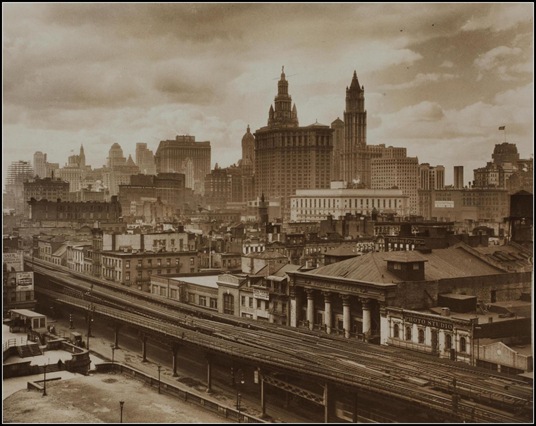
UP IN SMOKE…The Bowery’s Thalia Theatre (building with columns) went up in flames on June 5, 1929. The photo was taken in 1928, one year before the final fire. Note the elevated train tracks in front of the building. (Manhattan Unlocked)
While we are on the subject of the changing skyline, I will toss in this cartoon from the issue by Reginald Marsh…the caption read: “I tell you, Gus, this town ain’t what it used to be.”
* * *
Down for the Count
There was a bit of a sensation in the June newspapers when a European count was arrested for running a bootlegging ring among socially prominent circles. A headline in a June 8, 1929 edition of the New York Times shouted: LIQUOR RING PATRONS FACING SUBPOENAS; Socially Prominent Customers Are Listed in Papers Found in de Polignac Raids. COUNT SAILS FOR PARIS. Goes, After Nearly Losing Bail Bond, Smilingly Calling the Affair ‘Misapprehension.’
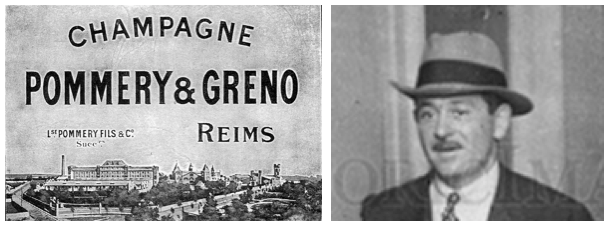
What the Times so breathlessly recounted were the activities of Count Maxence de Polignac (1857–1936), who owned one of France’s most prominent Champagne houses, Pommery & Greno.
The Times reported that an undercover federal agent, William J. Calhoun, led a raid that netted the Count and 34 others in a liquor ring connected to many Park Avenue and Fifth Avenue residents. Calhoun’s agents interrupted the Count’s morning bath (at his suite in the Savoy-Plaza Hotal) to make the arrest. They seized more than “seven cases of champage and liquors” in the suite, which the count said were for his personal use. Denying all charges, de Polignac was nevertheless arrested. Thanks to a guarantee provided by his friends at the Equitable Surety Company, he made the $25,000 bail and quickly set sail for Paris. “Talk” reported…
IT WAS JUST A LITTLE SIDE BUSINESS…Count Maxence de Polignac owned the house of Pommery & Greno, one of the largest Champagnes firms in France. (Wikipedia/tcreims.com)
“Talk” concluded the dispatch with some notes on Calhoun’s character as a federal agent…
…and a final bit of trivia, Count Maxence de Polignac was the father of Prince Pierre of Monaco, Duke of Valentinois, who in turn was the father of Rainier III of Monaco, who famously married the actress Grace Kelly. Grace Kelly, by the way, was born in November 1929, just months after her grandfather-in-law’s run-in with Prohibition authorities.
* * *
Underwhelmed
Once again “Talk” looked in on aviation hero Charles Lindbergh, and his dispassionate approach to matters of fame…
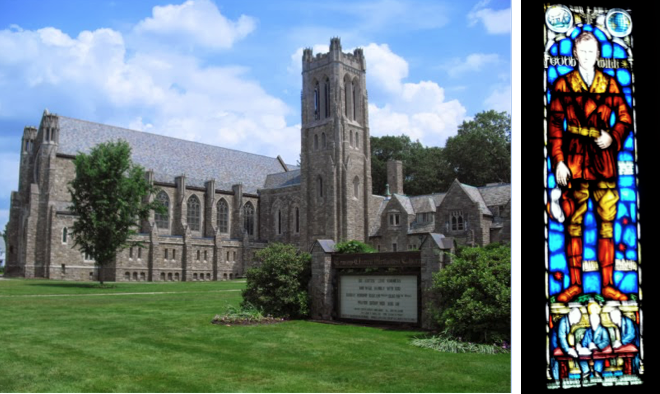
GOODWILL, OR WHATEVER…Trinity Methodist Episcopal Church in Springfield, Mass., features a series of 24 stained-glass windows representing historic personages with the theme, “The Light of Christ in the Life of Civilization.” Charles Lindbergh’s pane represents “Goodwill.” (tm01001.blogspot.com)
* * *
Mr. Monroe Outwits a Bat
James Thurber submitted a humorous piece on a husband and wife at a weekend cabin retreat. The husband encounters a bat, and feigns to dispatch it while his wife remains behind closed doors. A brief clip:
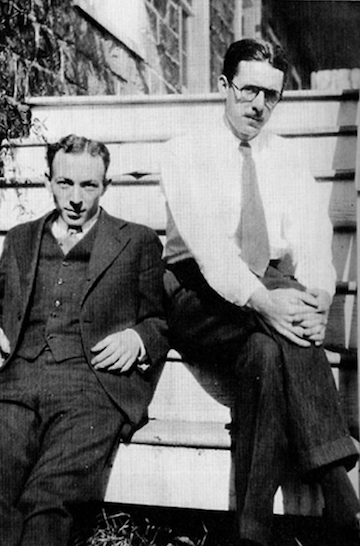
E.B. White and James Thurber, circa late 1920s.
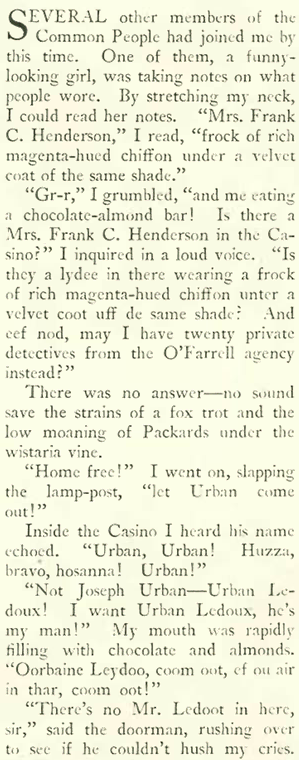
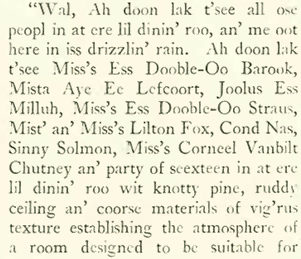
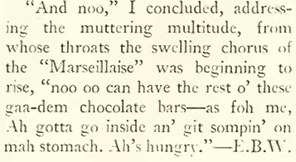
Thurber’s office mate and friend, E.B. White, penned a piece on the opening of the Central Park Casino (“Casino, I Love You”) in which he pretended to be a hobo loitering outside the Casino’s recent grand re-opening. Some excerpts…
White’s character confuses Urbain Ledoux with Casino designer Joseph Urban. Ledoux was known to New Yorkers as “Mr. Zero,” a local humanitarian who managed breadlines for the poor. White’s character continues to name off the notables present at the event…
* * *
From Our Advertisers
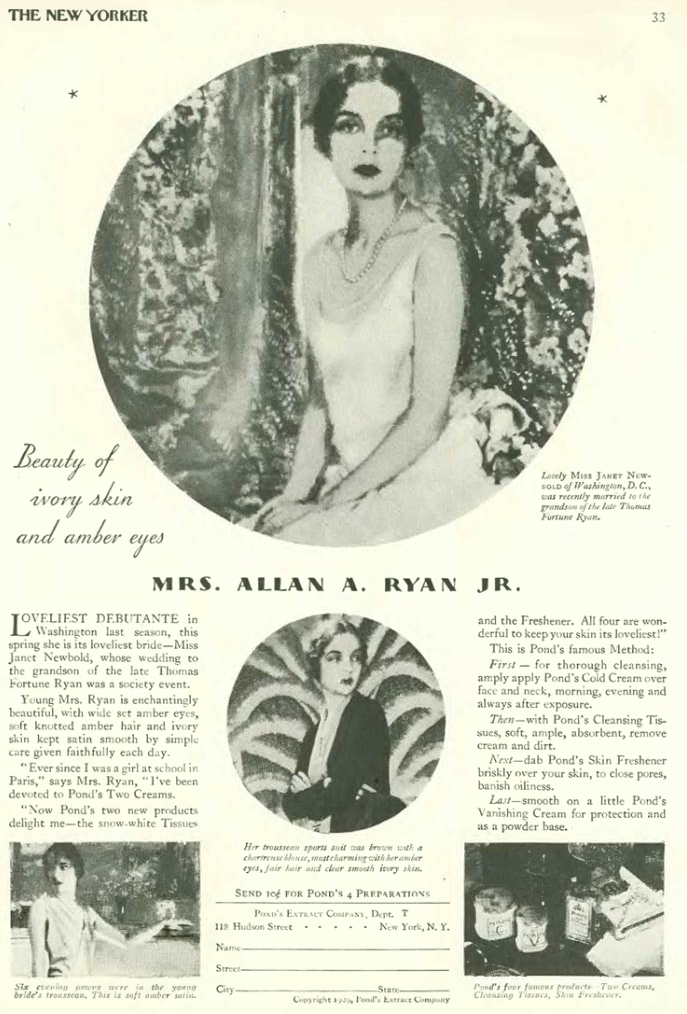
We begin with a Pond’s cold cream ad featuring Janet Newbold (1908-1982), who was known in some circles as “the most beautiful woman in New York”…
MIRROR, MIRROR…Left, an iconic photo of Janet Newbold by Erwin Blumenfeld, “Woman and Mirror,” was published in Harper’s Bazaar in November 1941. “Janet Newbold Wearing A Sari,” photo by John Rawlings, was published in Vogue in 1947. Thrice married, her last marriage (in 1948) was to James S. Bush, uncle of U.S. President George H.W. Bush. (Harper’s Bazaar/Vogue)
…some of the more colorful ads in the June 15 issue included this entry by Jantzen…
…and this ad for the REO Flying Cloud, a name that suggested speed and lightness, and changed the way cars would be named in the future (e.g. “Mustang” rather than “Model A”)…
…and if you think gimmicky razors are something new, think again…
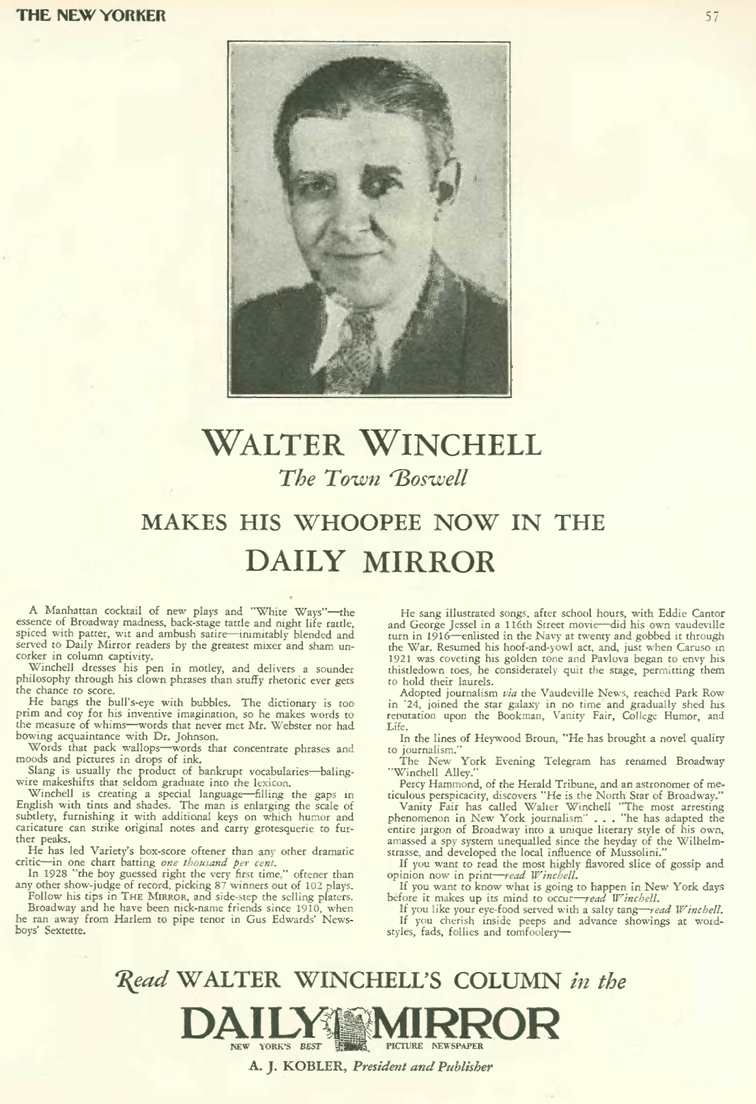
…this ad announcing Walter Winchell’s employment with the New York Daily Mirror is significant in that in marks the beginning of the first syndicated gossip column. Winchell’s column, On-Broadway, was syndicated nationwide by King Features. A year later he would make his radio debut over New York’s WABC…
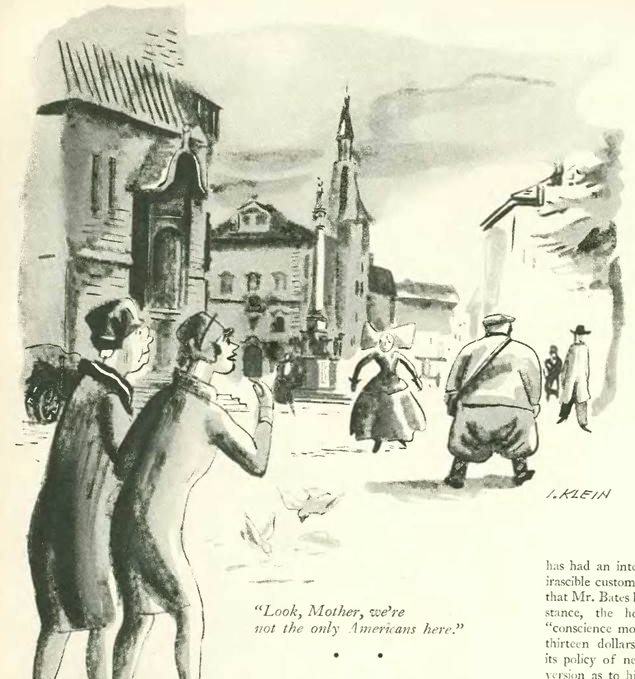
…for our June 15 cartoons, Isadore Klein confirms that stereotypes regarding American tourists haven’t changed much in 90 years…
…a quick footnote on Klein. In his long and colorful career, he would contribute cartoons to the New Yorker and many other publications. He also drew cartoons for silent movies, including Mutt and Jeff and Krazy Kat, and later worked for major animation studios including Screen Gems, Hal Seeger Productions, and Walt Disney. He was a writer and animator for such popular cartoons as Mighty Mouse, Casper, Little Lulu and Popeye.
Isadore Klein (1897–1986) holding the National Cartoonists Society “Silver T-Square.” He received the honor from his fellow members on April 22, 1974. (michaelspornanimation.com)
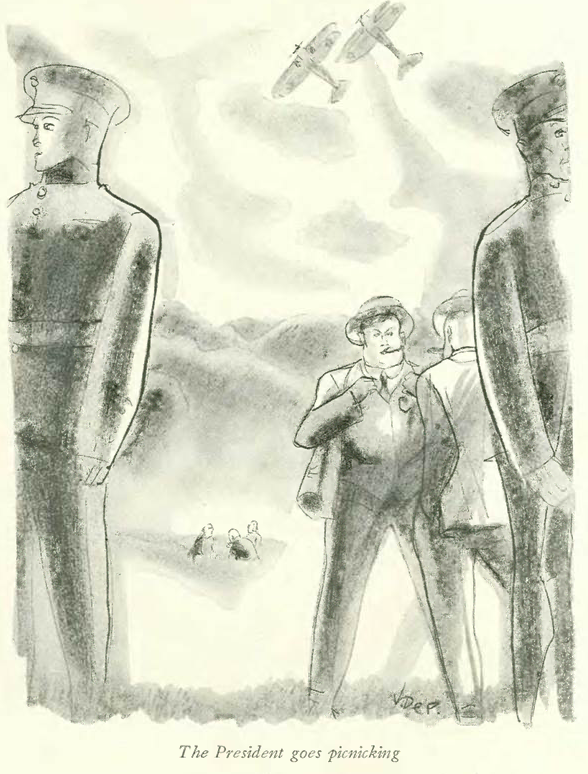
…Belgium-born artist Victor De Pauw depicted President Herbert Hoover picnicking, as viewed through his security detail…
…and a quick note on De Pauw…well known during his lifetime, he illustrated seven covers for The New Yorker and drew many social and political cartoons for magazines such as Vanity Fair, Fortune and Life. He also had a career as a serious painter, and some of his work can be found at the Museum of Modern Art…
Victor de Pauw (1902-1971) and one of his New Yorker covers from Nov. 20, 1943. (Smithsonian/Conde Nast)
…Helen Hokinson looked in on two of her society women in need of some uplift…
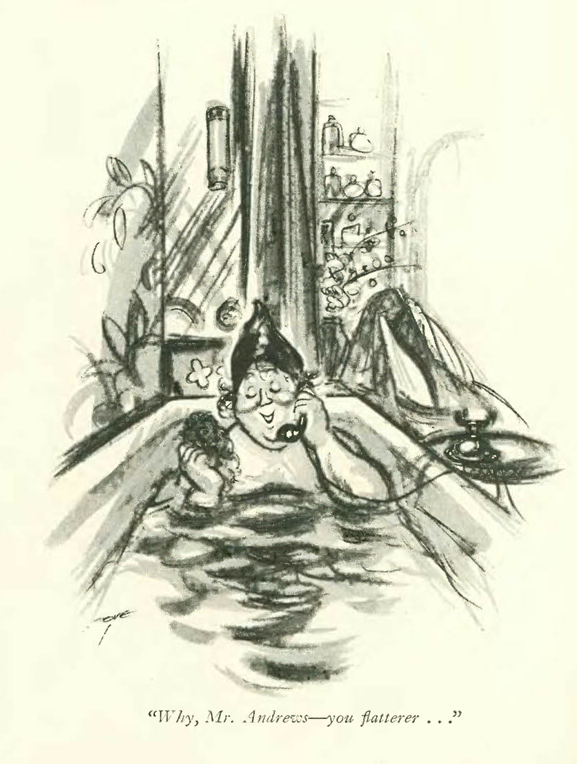
…and Leonard Dove looked in on another enjoying a soak…
Moving along to the June 22, 1929 issue, “The Talk of the Town” offered more news on the city’s changing skyline…
June 22, 1929 cover by Constantin Alajalov.
…and noted that the slender 1906 “Chimney Corner” building at Wall and Broadway had a date with the wrecking ball…
FAILED THE TEST OF TIME…At left, 18-story “Chimney Building” was demolished in 1929 along neighboring properties to make way for the Irving Trust Building (now 1 Wall Street), an Art Deco masterpiece by architect Ralph Walker. Note the scale of the two buildings relative to the church spire. (skyscraper.org/architectsandartisans.com)
* * *
Apartheid on the Seas
“Talk” also featured this sad account of a theatrical company setting sale for England and discovering that racial discrimination did not end at the docks of New York Harbor. It is also sad that The New Yorker didn’t seem to have any problem with this injustice, and rather saw it as nothing more than fodder for an amusing anecdote…
NOT THE GOOD OLD DAYS…Percy Verwayne, Frank H. Wilson and Evelyn Ellis were part of the cast in the original Broadway production of Porgy in 1927. The play, by Dorothy and DuBose Heyward, was the basis for the libretto in the George Gershwin’s 1935 Porgy and Bess. (Wikipedia)
* * *
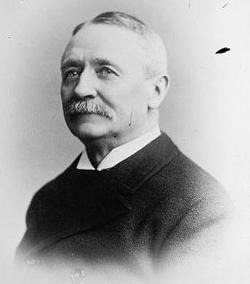
The profile for June 22 featured 100-year-old John R. Voorhis (1829-1932), Chairman of New York City’s Board of Elections. A fixture of the Tammany Hall Democratic political machine, in 1931 Tammany members created a special title for the old man—Great Grand Sachem. He died the next year at age 102.
John Voorhies in 1900, when he was a bouncy youth of 71.
* * *
From Our Advertisers
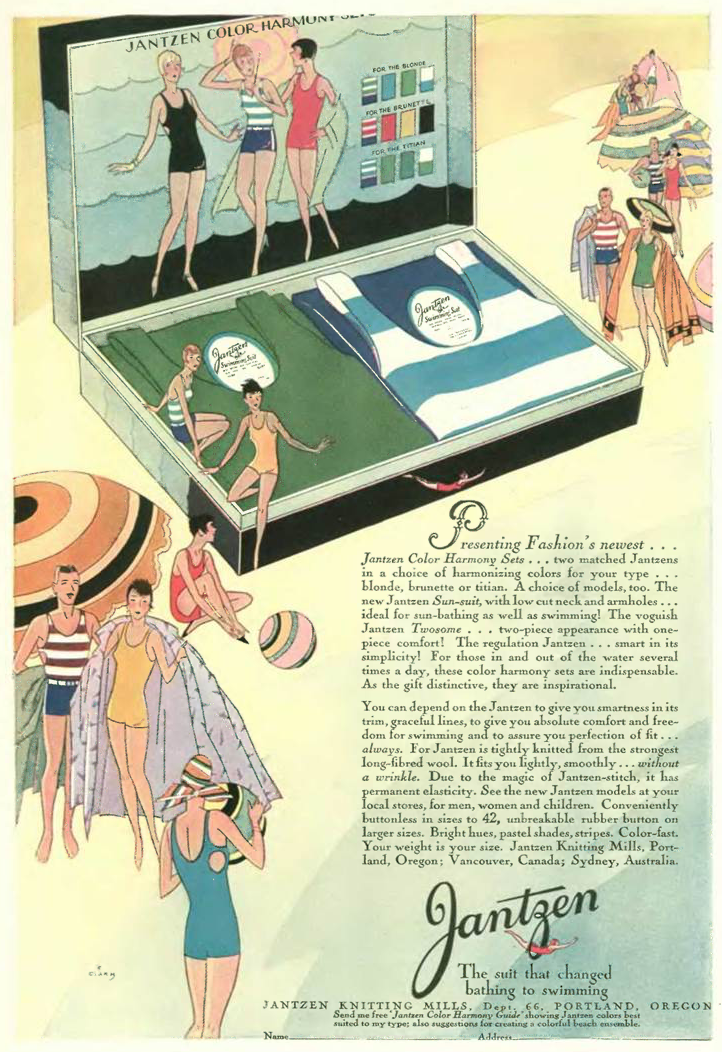
Another colorful entry from the makers of Jantzen swimwear to celebrate the summer season…
…famed composer George Gershwin urged his fans to light up a Lucky Strike…
…and with help from Rea Irwin, Knox Hatters offered yet another example of the faux pas one might suffer without the proper headgear…
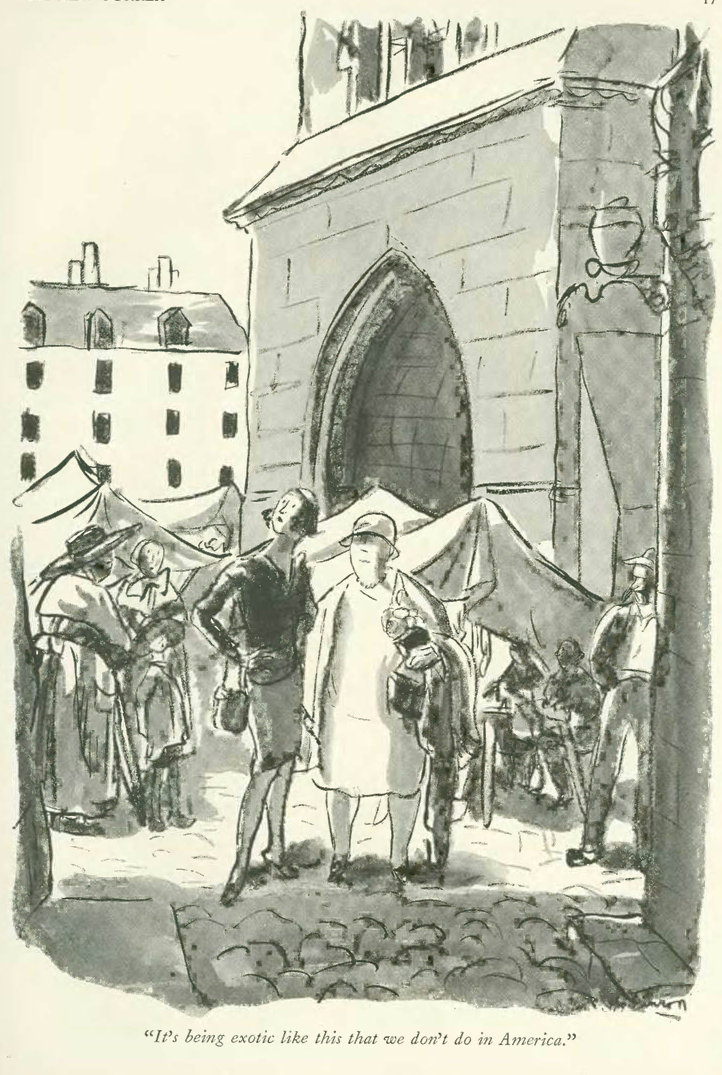
…for our June 22 cartoons, Helen Hokinson caught up with some American tourists…
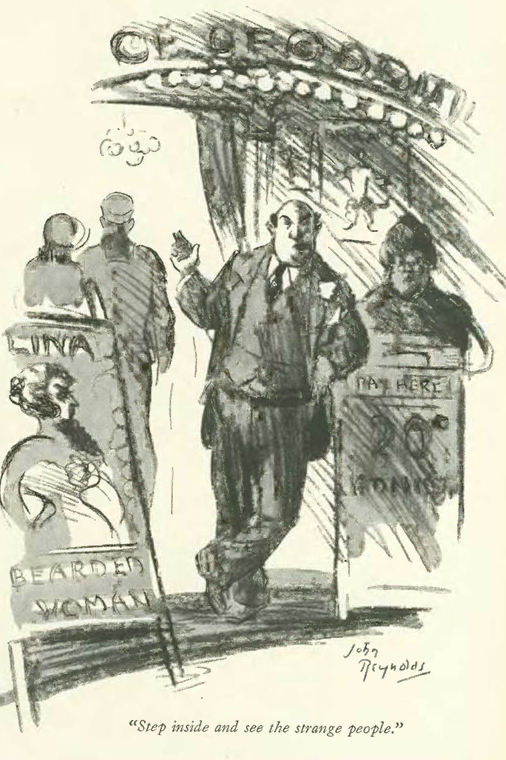
…John Reynolds found a bit of irony in one carnival barker’s claim…
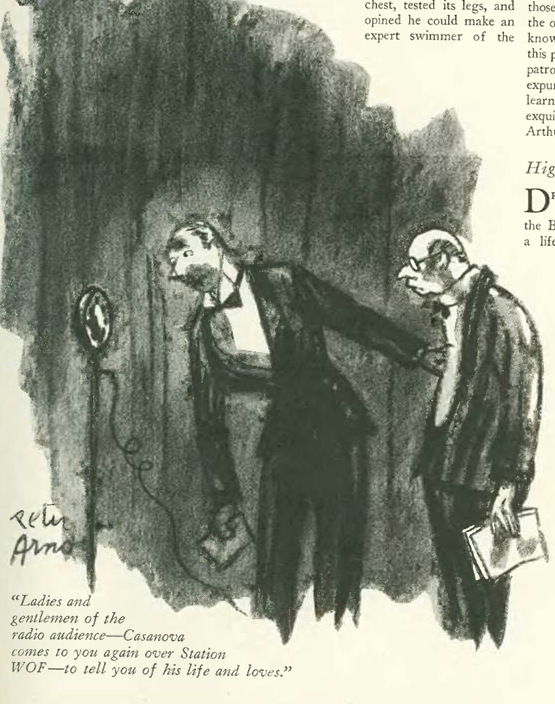
…and Peter Arno revealed a less than glamorous face behind a radio broadcast…














































 A New Yorker State of Mind