Wining & Dining

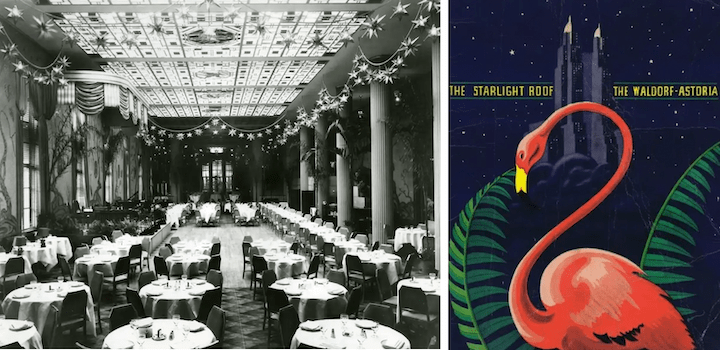
Above: The Waldorf-Astoria's Starlight Roof, and a 1930s menu cover. (Facebook/Pinterest)

With summer approaching, the rooftop restaurants were in full swing, and Lois Long continued her exploration of favorite haunts, including one nightclub that drew many Manhattanites across the Hudson to the cliffs of the New Jersey Palisades.

June 1, 1935 Cover by Rea Irvin.

Ben Marden couldn’t wait for the official end of Prohibition when he opened his Riviera Night Club in Fort Lee in 1931. The frequent site of raids until the repeal of the 18th Amendment, the Riviera continued to be a place well known to Bergen County police thanks to clientele that included racketeers and other unsavory types. But to New Yorkers like Long, it was a break from the din of the city to the relative green of the Garden State. Long wrote:
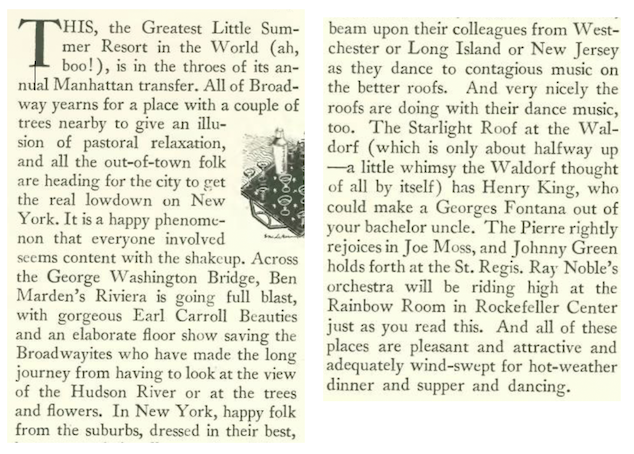
The Riviera closed during the first years of World War II, but it reopened in 1945 after Bill Miller bought it from Marden and apparently cleaned it up. It then attracted the likes of Frank Sinatra, Dean Martin, Jerry Lewis, Martha Rae, Sammy Davis, Jr., and Pearl Bailey until it closed in 1953. It was demolished the following year.
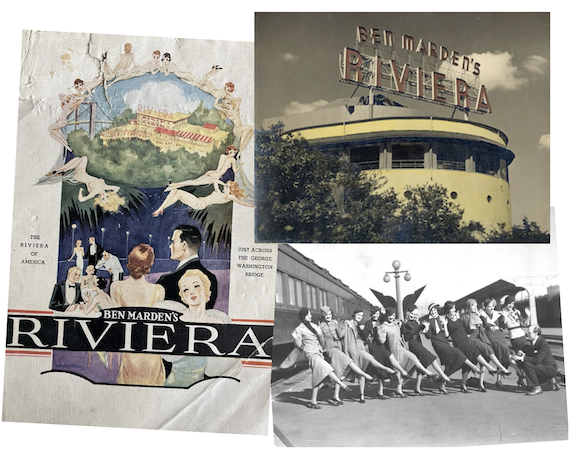
THEY HAD FOOD, TOO…Clockwise, from left, the1936 spring menu cover of Ben Marden’s Riviera featured an illustration of the original Riviera (ringed by nude showgirls), which burned to the ground on Thanksgiving night, 1936; the building that replaced it was called an architectural wonder with its retractable roof, rotating stage, and glass windows that slid down to the floor; Earl Carroll and his “Beauties” performed at the Riviera in 1935–they are pictured here at a train station in Los Angeles, 1934. (ebay.com/patch.com/lapl.org)

Long also stayed in town to visit the Waldorf-Astoria’s Starlight Roof.
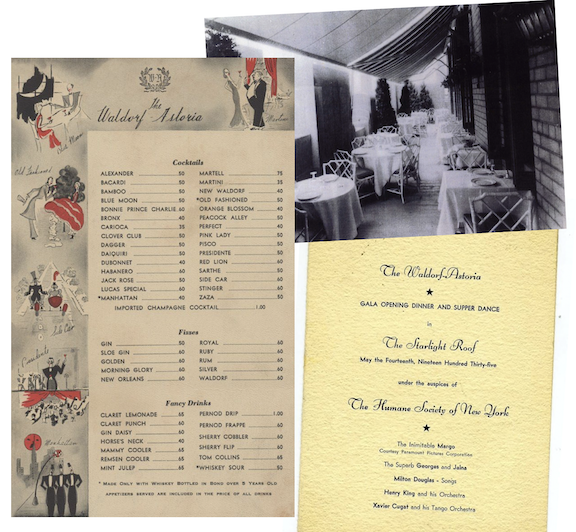
WITH THE STARS, UNDER THE STARS…Clockwise, from left, cocktail menu from the Waldorf’s Starlight Roof, 1935; outdoor seating on the Starlight Roof Terrace; special menu for the Gala Opening Dinner and Supper Dance on the Starlight Roof, May 14, 1935. It was a favorite destination of Frank Sinatra, Cole Porter, Katharine Hepburn, and Ella Fitzgerald, among others. (Pinterest)

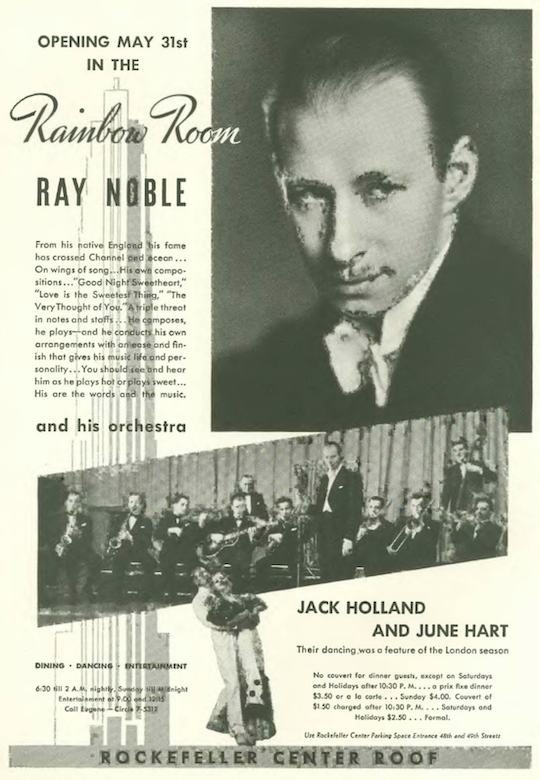
Long also mentioned the appearance of Ray Noble in the Rockefeller Center’s Rainbow Room. This full-page ad appeared in the June 1 issue:
Other summer season attractions were advertised in numerous back-of-the-book, one-column advertisements:

…and at the bottom of page 64…

Wining and dining were also the topic of the profile, a two-parter penned by Margaret Case Harriman, who took a look at New York’s famed Colony Restaurant.
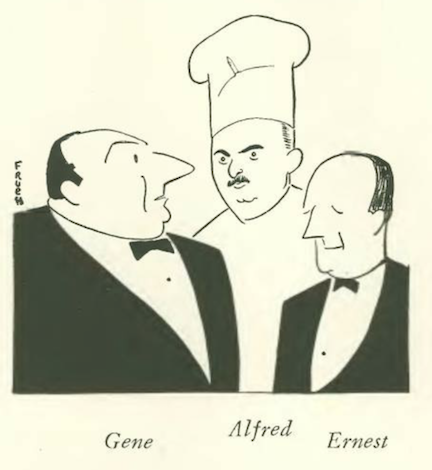
ORIGINAL TRIO…Al Frueh’s caricatures of the Colony’s owners/headwaiters Gene Cavallero and Ernest Cerutti, who flank chef Alfred Hartmann, who was also part owner until he sold his interest to the other two in 1927 and retired to a farm in France. Harriman wrote that Cavallero and Cerutti were “born headwaiters—suave, solicitous, infallible.”
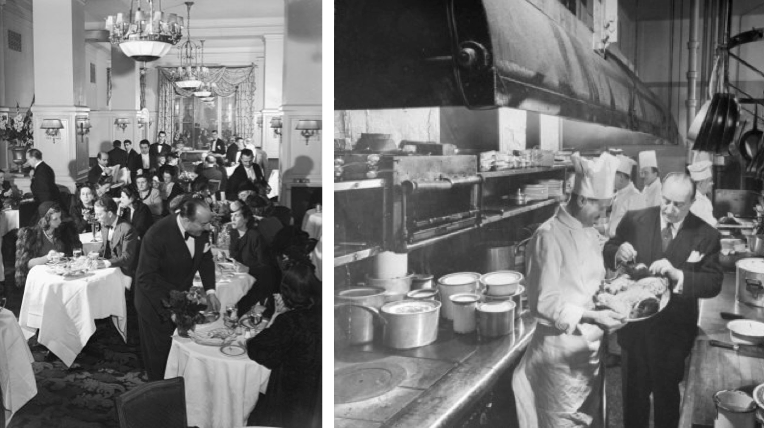
A PLACE TO BE SEEN…From the 1920s to the 1960s New York’s café society dined at the Colony. Rian James, in Dining In New York (1930) wrote “the Colony is the restaurant of the cosmopolite and the connoisseur; the rendezvous of the social register; the retreat of the Four Hundred.” Critic George Jean Nathan said the Colony was one of “civilization’s last strongholds in the department of cuisine.” Photo at left of the dining room around 1940; at right, co-owner Eugene Cavallero consults with a chef. (lostpastremembered.blogspot.com)

 * * *

The Business of News

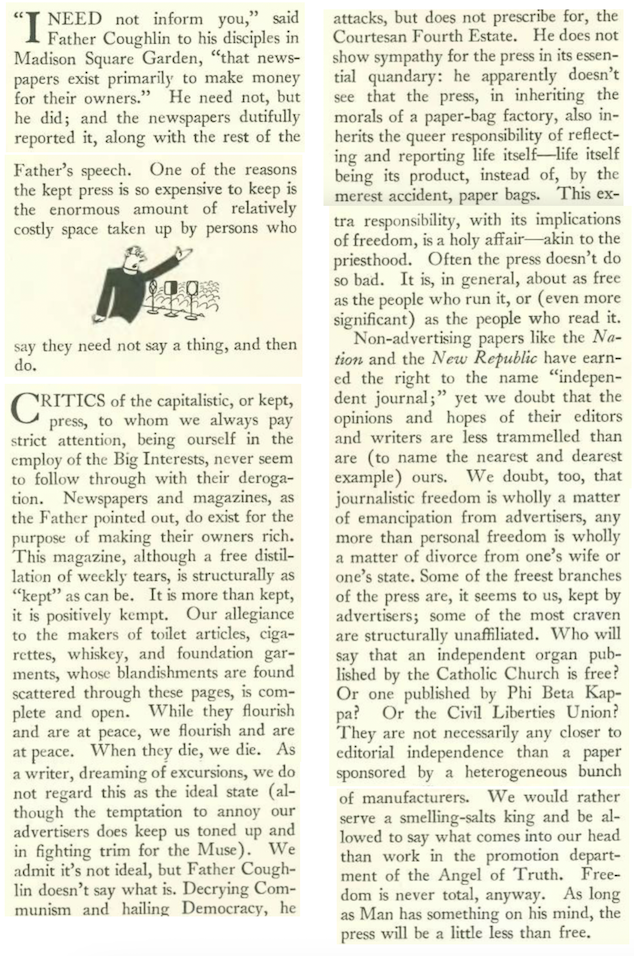
In his “Notes and Comment,” E.B. White contemplated the meaning of a free press, noting that nearly all media was at the mercy of advertisers. That included The New Yorker, which owed allegiance “to the makers of toilet articles, cigarettes, whiskey, and foundation garments.”
* * *

Cat Lady

“The Talk of the Town” anticipated the arrival of French writer Colette (1873-1954) aboard the S.S. Normandie. This excerpt makes note of her high standing in society as well as her love of cats.

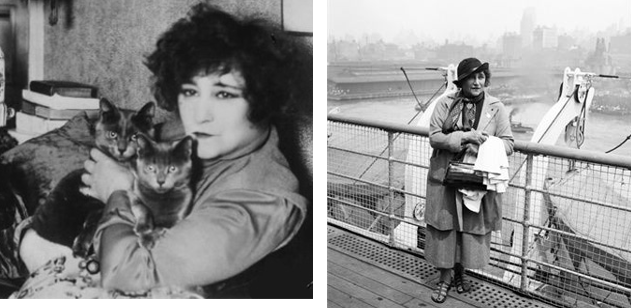
SHE ONCE OWNED AN OCELOT….Colette with her cats in an undated photo; at right, entering New York Harbor on the S.S. Normandie, 1935. (Pinterest)


 * * *

Public Artists

“The Talk of the Town” noted the latest Washington Square Outdoor Art Exhibition…
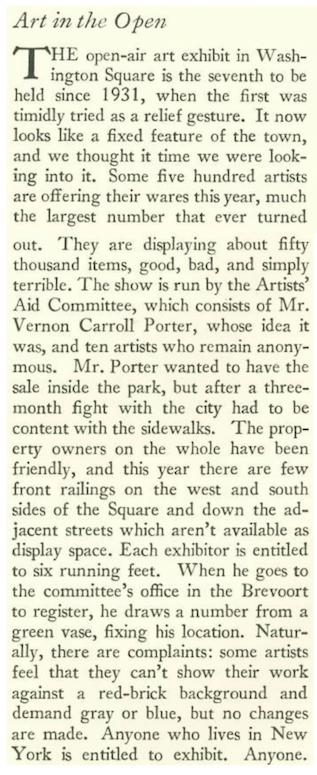
LENDING THEIR TALENTS…New Yorker cartoonists who helped promote the Outdoor Art Exhibition in Washington Square included James Thurber, Otto Soglow, and William Steig.

 * * *

Cutting Remarks

S.J. Perelman offered his thoughts on the decline of the tonsorial arts. In this excerpt, he sees his beloved Italian barber give way to a “knifelike individual in a surgical apron.” Excerpts:
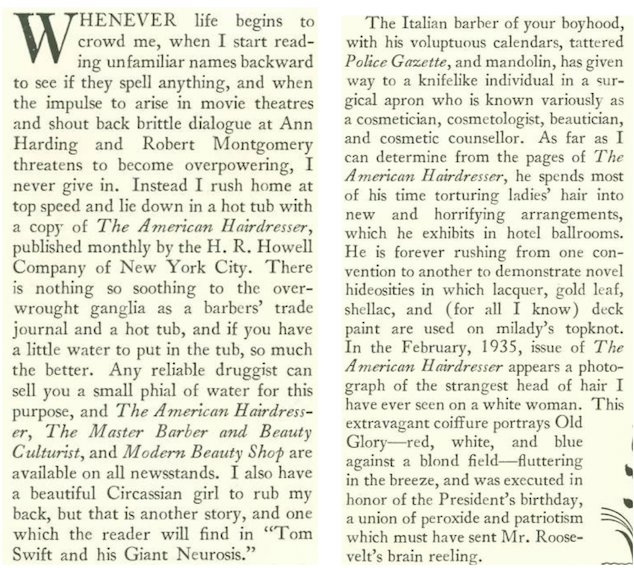
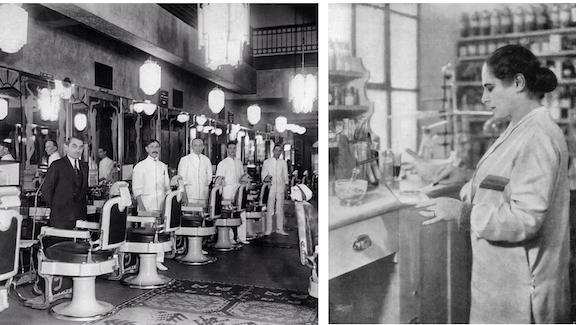
IT’S A SCIENCE NOW, SIDNEY…S.J. Perelman worried about the displacement of Italian barbershops by cosmetologists in “surgical aprons,” such as the one modeled by Helena Rubinstein at right. (Pinterest)

* * *

Even Those Eyes Couldn’t Help

Film critic John Mosher was sad to report that disappointment was in store for moviegoers who enjoyed seeing Bette Davis in Of Human Bondage. Her latest flick, The Girl from 10th Avenue, featured Davis murmuring “gentle nothings of a vaguely noble monotony.”

GET ME OUT OF THIS PICTURE…Left, Bette Davis with Ian Hunter in the uninspired The Girl from 10th Avenue; at right, screen shot of Davis in 1934’s Of Human Bondage, the film that made Davis a star.  (thefilmexperience.net)

Other items in the editorial section included a casual by Dorothy Parker’s husband Alan Campbell (titled “Loyalty at Pool-Wah-Met”), and Morris Markey examined the Christian Science movement inspired of Mary Baker Eddy, in “A Reporter at Large” piece titled “But Thinking Makes It So.”

 * * *

From Our Advertisers

We begin with an advertising theme common through midcentury, namely, that you could smoke certain brands as much as you liked and still be a star athlete (as opposed to a wheezing husk of a human being)…
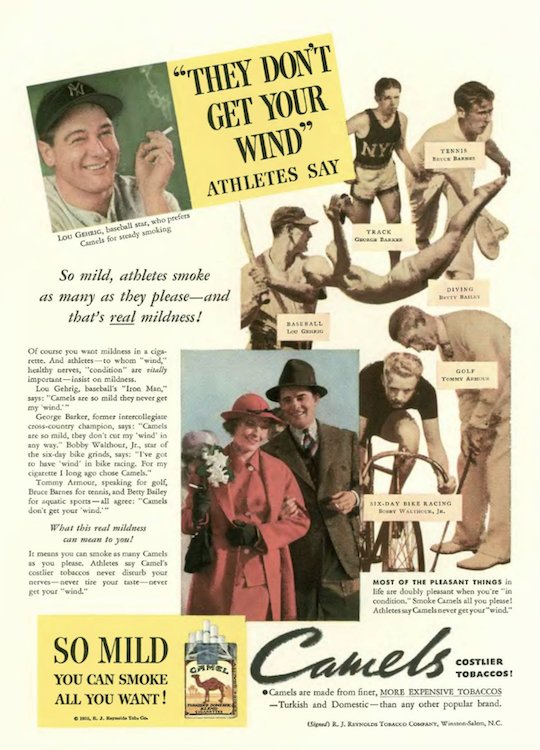
…not only did these cigarettes “steady your nerves” and preserve your “wind,” they also made for sweet, romantic moments…

…in between puffs you could also enjoy breathing in fumes from leaded gasoline…lead pollution increased by more than 625 times previous levels after leaded fuels were introduced in 1924…

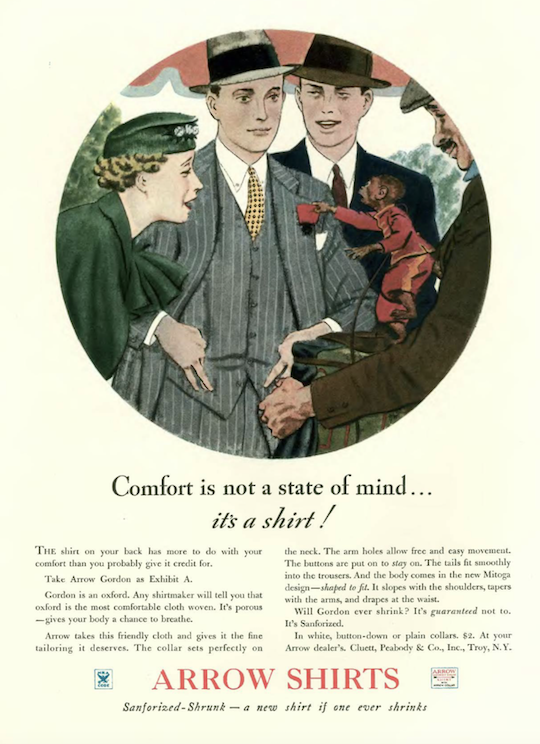
…although they were being outlawed by New York Mayor Fiorello Henry La Guardia, an organ grinder nevertheless made an appearance in an Arrow Shirt ad that offered a lighthearted moment for all involved (except for the dude on ketamine)…
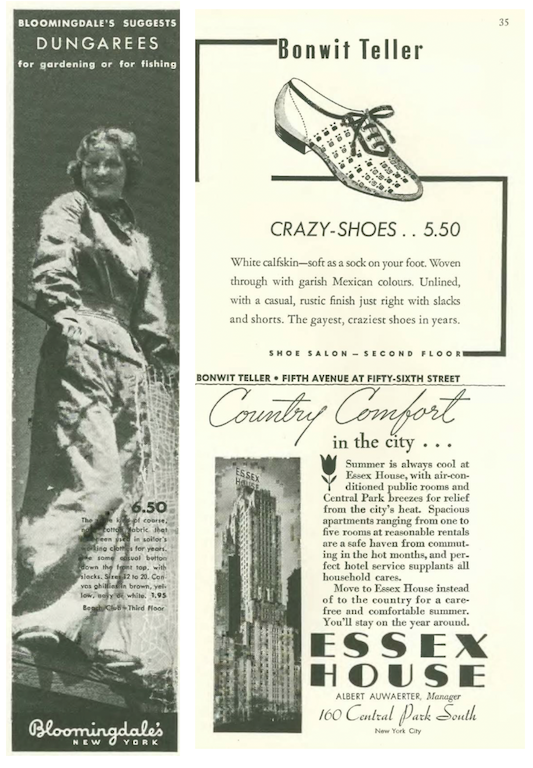
…when jeans were called “dungarees” they were reserved for gardening or fishing…at right you could land a pair of “Crazy Shoes” woven with “garish Mexican colours” for five-and-a-half bucks…
…the makers of White Rock kept it cool with this minimalist ad…

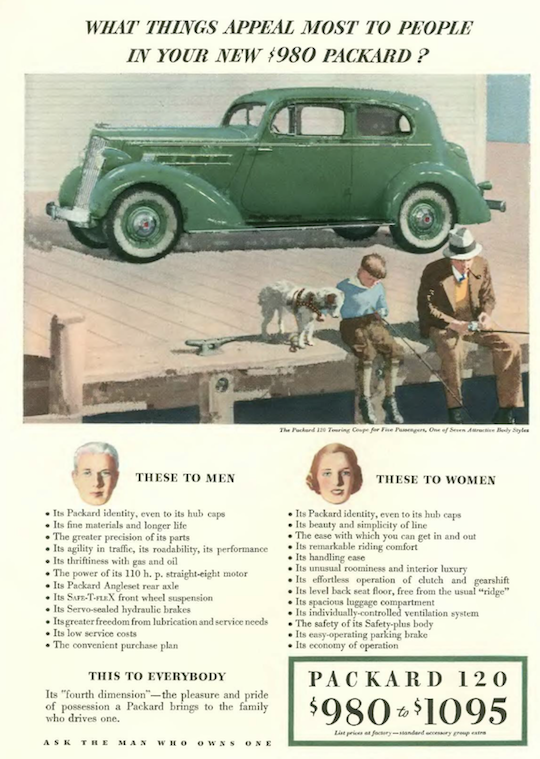
…luxury automaker Packard continued to hang on through the Depression by offering a downscale version…it appears their demographic was middle-aged men and women who still preferred the finer things even if they couldn’t afford them…
…now the property of Hearst, Otto Soglow’s Little King could still appear in The New Yorker via the advertising sections…

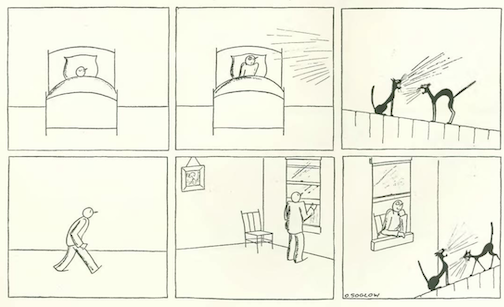
…and Soglow continued his contribution to the magazine’s cartoons with other multi-panel subjects…
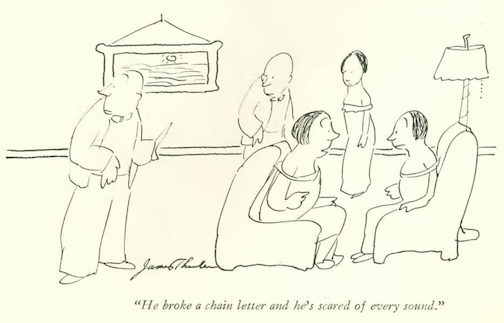
James Thurber kicked off the cartoonists with this tender spot…

…and contributed this cartoon…
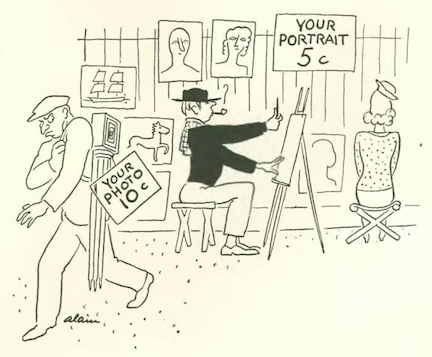
Alain found competition in the portrait trade…
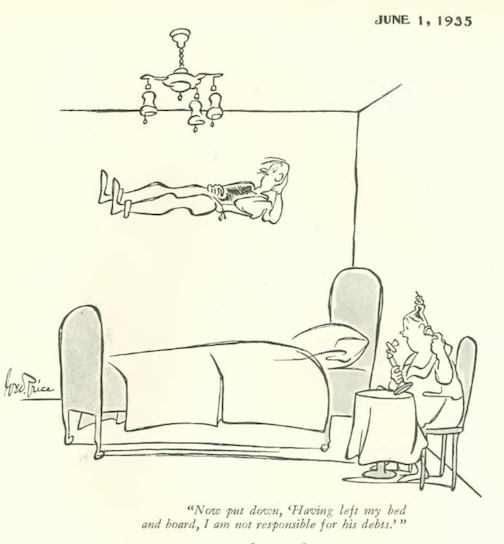
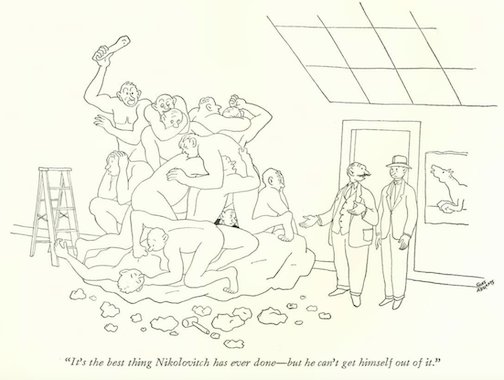
George Price was still afloat…

Charles Addams was tied up with the sculptural arts…
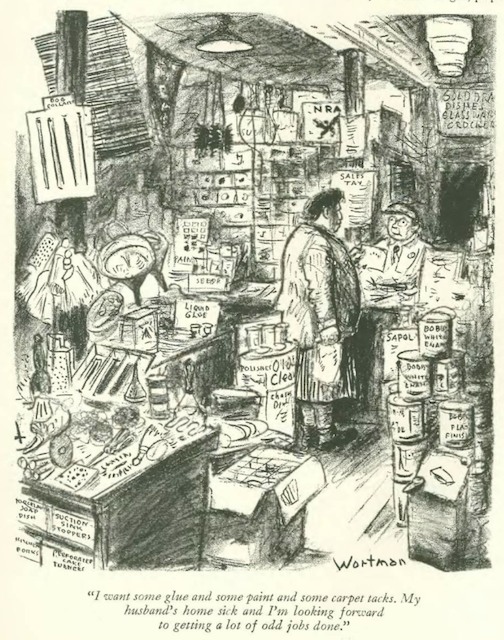
Denys Wortman shopped for DIY projects…
Peter Arno found a sensitive side in one member of the NYPD…
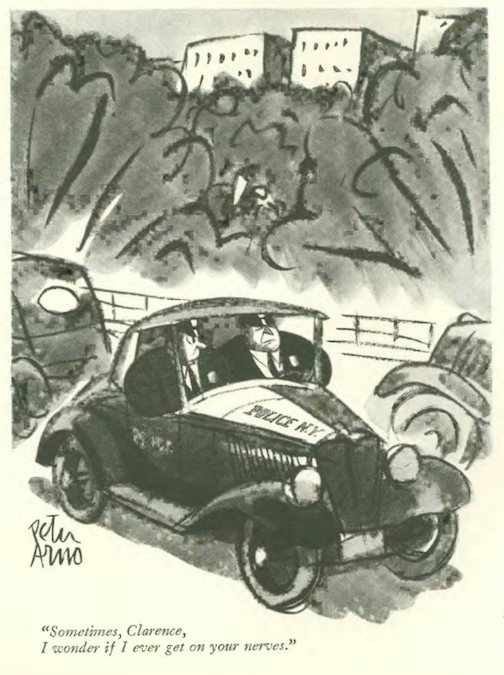
Mary Petty made some alterations…

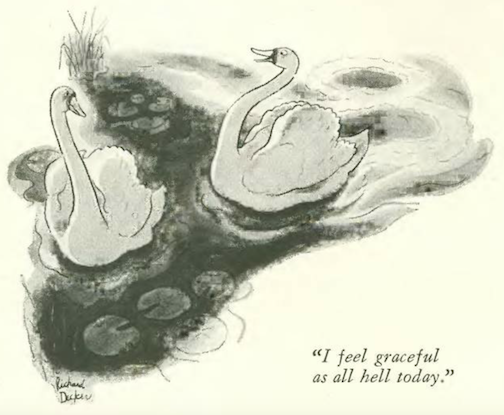
…and we close with this terrific cartoon by Richard Decker

Next Time: Not a Square Deal…


Some Comic Relief

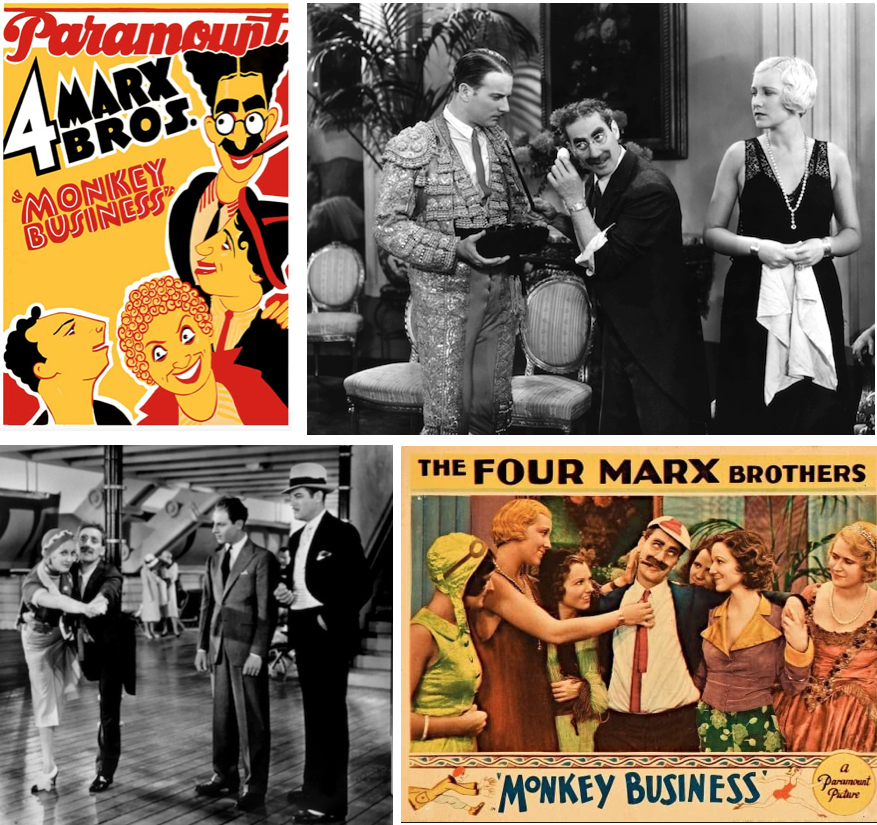
From the Upper East Side and the vaudeville stage to the shining lights of Hollywood went the Marx Brothers in 1931, starring in their first movie written especially for screen rather than adapted from one of their stage shows.

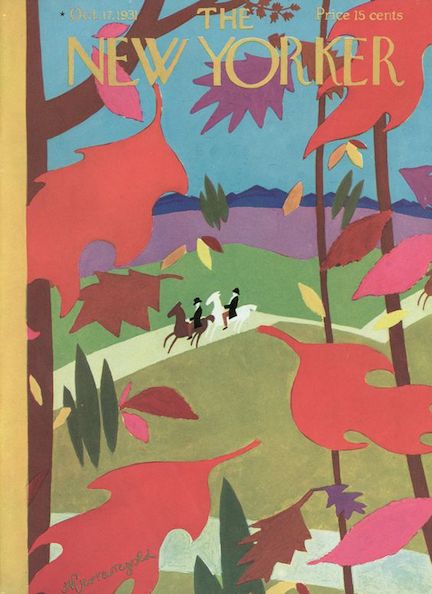
Oct. 17, 1931 cover by Adolph K. Kronengold.

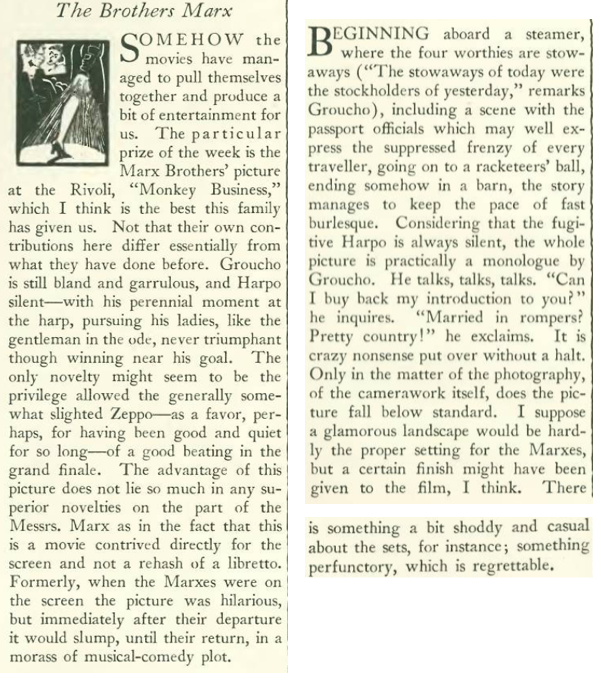
Monkey Business also their first film to be shot outside of New York. The brothers’ first two pictures—The Cocoanuts (1929) and Animal Crackers (1930)—were filmed at Paramount’s Astoria Studios in Queens. Film critic John Mosher found their latest movie to be a “particular prize” among the somewhat ordinary fare being cranked out of Hollywood. It featured the four as stowaways on an ocean liner bound for America, and that’s all you really need to know, because like most of their films it cut quickly to the chase…

Monkey Business was the first film to label the troupe the “Four Marx Brothers” (a billing that would continue through their Paramount years). A fifth brother, Gummo, left the team early and went on to launch a successful raincoat business.

NEVER A DULL MOMENT…The Marx Brothers were up to their usual antics in their first Hollywood-made film, Monkey Business. At top, Groucho performs an egg trick on a society couple; at bottom, he does a bit of hoofing with comedian Thelma Todd. (IMDB)

 *  *  *

Monkey’s Uncles

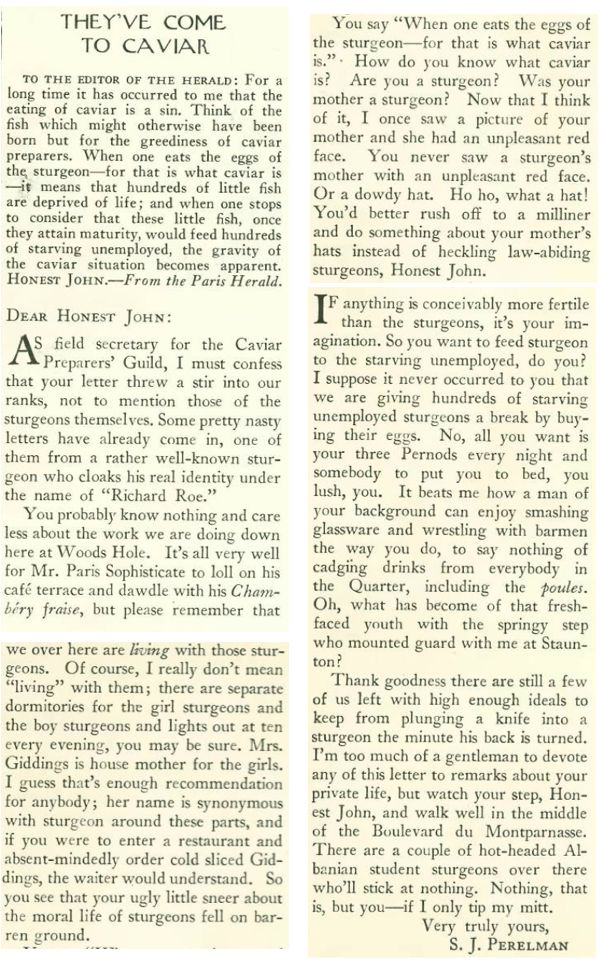
There was a New Yorker connection to Monkey BusinessS. J. Perelman‚ a frequent contributor of humorous shorts to the magazine, was one of the screenwriters for the film. And it just so happens that one of Perelman’s shorts was in the Oct. 17 issue, and it was a doozy…

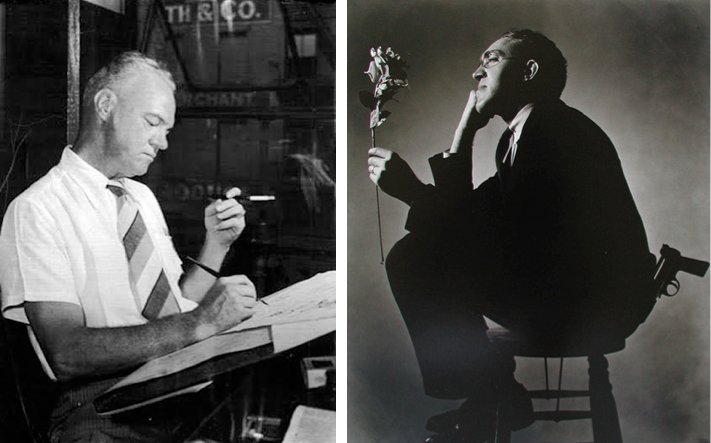
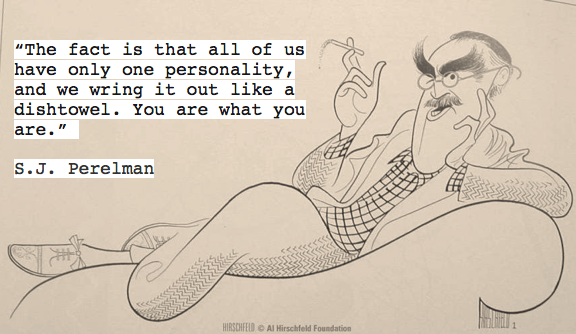
MAKE ‘EM LAUGH…Writer and cartoonist Will B. Johnstone (left) wrote the screenplay for Monkey Business with S. J. Perelman, right, in a 1935 portrait by Ralph Steiner. (Meg Farrell/Yale University)
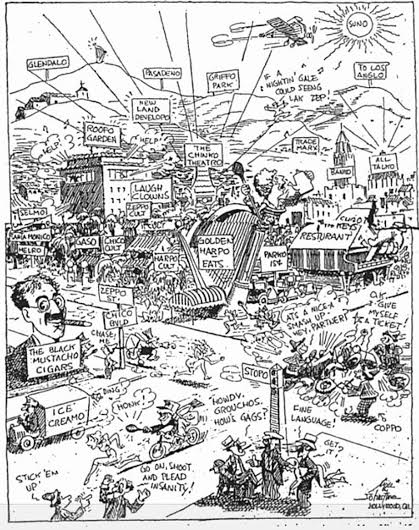
A promotional cartoon for Monkey Business by Will B. Johnstone. He also created the cartoon character of The Tax Payer wearing only a barrel held up by suspenders. It was a regular feature in the New York World-Telegram. (Meg Farrell via travsd.wordpress.com)
 *  *  *
Office Chatter
E.B. White called out a couple of his New Yorker colleagues in “Notes and Comment” as he mused about “lady poets” and their disillusionment with the menfolk. The “Selma Robinson” he mentions was a young writer who had just published her first collection of poems titled City Child

…White then moved on the subject of matrimony and advice columns, zeroing in on Dorothy Dix, the most widely read woman journalist of her time with an estimated 60 million readers turning daily to her syndicated column…

LIGHTEN UP ON THE LOVEBIRDS, DOROTHY, E.B. White seemed to suggest in his “Notes and Comment” item about syndicated advice columnist Dorothy Dix. (Associated Press/The New York Times)

 *  *  *

So Much for Prognosticators

The New Yorker ran an amusing two-page spread that contained the quotes of prominent writers, politicians, businessmen and economists—month by month since the October 1929 market crash—who predicted a swift end to the Depression and better times just around the corner. An except below (note the reprise of Otto Soglow’s manhole cartoon).

 *  *  *

It Pays to be Funny

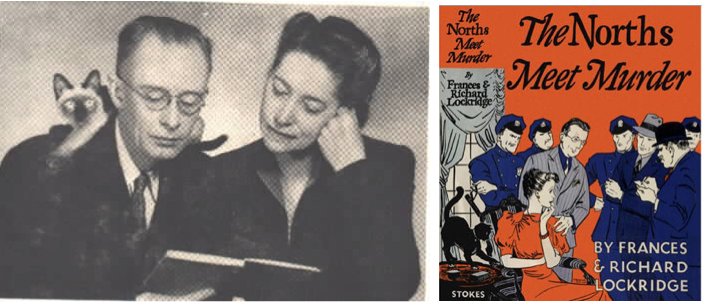
Richard Lockridge (1898–1982) was a reporter for The New York Sun when he began submitting comic sketches to The New Yorker such the one excerpted below. Later sketches would include the characters Mr. and Mrs. North. In the late 1930s Lockridge would collaborate with his wife, Frances Louise Davis, on a detective novel, combining her plot with his Mr. and Mrs. North characters to launch a series of 26 novels that would be adapted for stage, film, radio and television.

PARTNERS IN CRIME…Richard and Frances Lockridge examine one of their mystery novels in this undated book jacket photo. At right, the cover of their second “North” book, with cover illustration by Helen Hokinson (note the similarities of the Mr. and Mrs. North characters to Richard and Frances).

 *  *  *

Land Barge

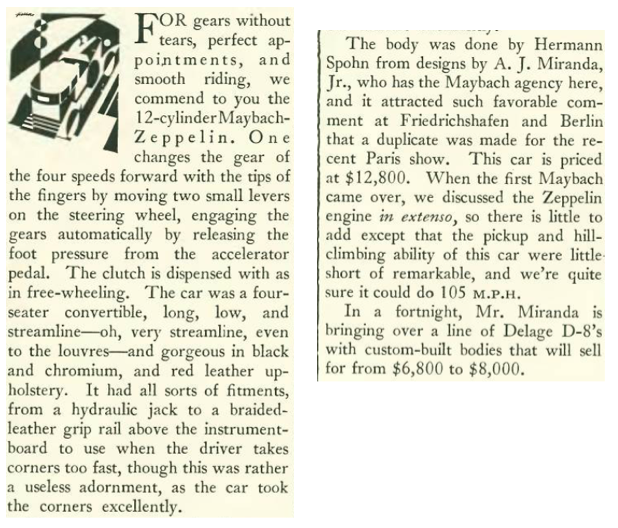
The “Motors” column featured the latest luxury offering from Germany, the massive 12-cylinder Maybach Zeppelin, which would set you back a cool $12,800 in 1931 (roughly $200,000 in today’s currency). Named for the company’s production of Zeppelin engines in the World War I era, the car weighed 6,600 pounds (3,000 kg).

THE 12-CYLINDER Maybach Zeppelin was not known for its economy. (Wikipedia/Alf van Beem)

 *  *  *

From Our Advertisers

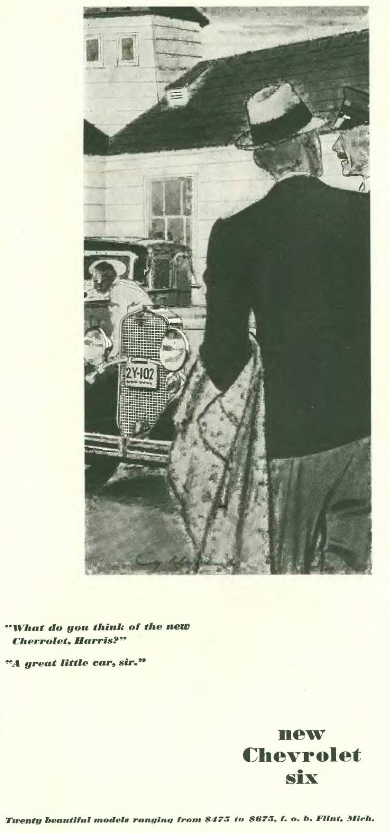
The new Chevrolet Six was no Maybach, but the folks at GM nevertheless tried to suggest it was a car for the posh set…

…when Kleenex was first introduced to American consumers in 1924 it was marketed as a tissue for removing cold cream, and wasn’t sold as a disposable handkerchief until the 1930s…

…and contrary to the wisdom of the ages, the makers of Old Gold cigarettes tried to convince us that their cigarettes would not leave smokers with bad breath or yellowed teeth…

…Winnie-the-Pooh, or here referred to as “Winnie, The Pooh,” was only five years old when this ad was created for Macy’s, and even before Disney got his hands on him the bear was being turned into various consumer products including baby bowls, handkerchiefs and lamps…

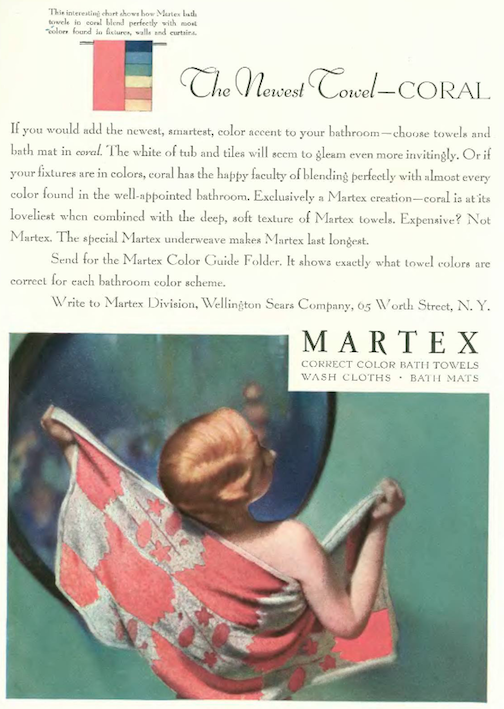
…the color ads in the early New Yorker were quite striking, such as this full-pager for Martex towels…

…or this one for Arrow shirts, featuring a determined coach making an important point to his leatherheads before the big game…

…on to our cartoons, we have Otto Soglow’s Little King engaging in some sport of his own…

Alan Dunn showed us a meter reader who probably needed to come up for some fresh air…

William Crawford Galbraith gave us a sugar daddy without a clue…

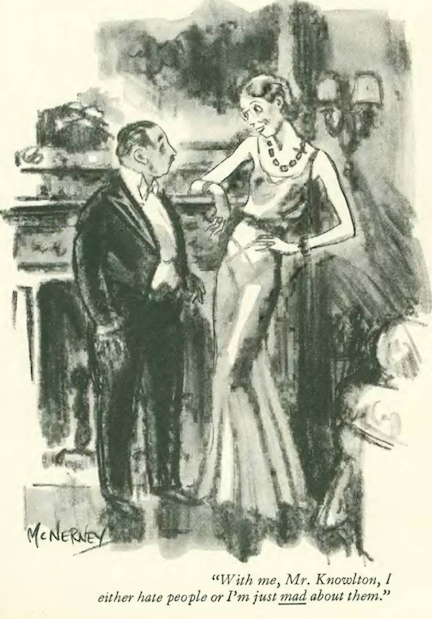
E. McNerney showed us another pair that begged the question “what comes next?”…

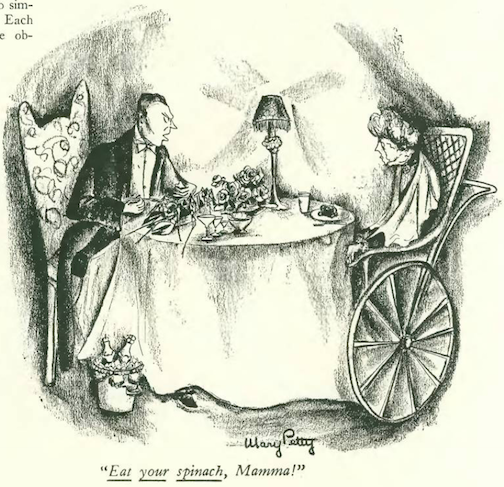
…this Mary Petty cartoon recalls Carl Rose’s famous “I say its spinach” cartoon—and Mamma has every right to say “the hell with it” in this case…

…in this William Stieg entry, a father teaches his young charge the art of rubbernecking…

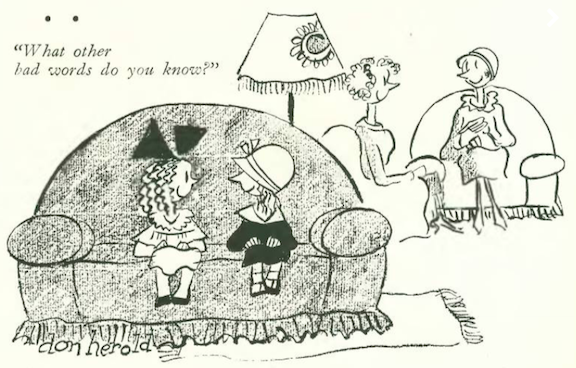
…and Don Herold gave us a peek at what the little dears really talk about while their parents exchange the latest gossip…

…on to the Oct. 24, 1931 issue…

Oct. 24, 1931 cover by Rose Silver.

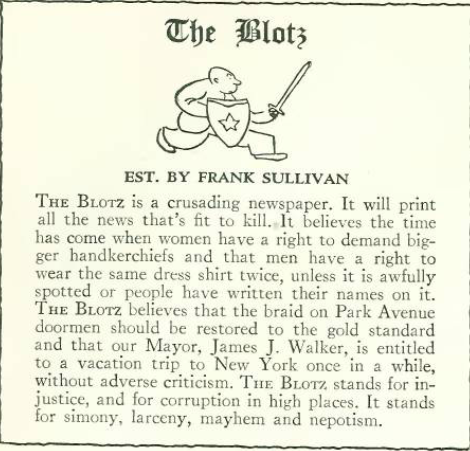
…where we find the latest edition of Frank Sullivan’s satirical newspaper, The Blotz, which occupied a two-page spread (excerpt below)…

…and featured this masthead of sorts (with James Thurber art)…

…and another Thurber contribution as The Blotz’s political cartoonist…

…more colorful ads to enjoy, including this nighthawk view of an apartment house…

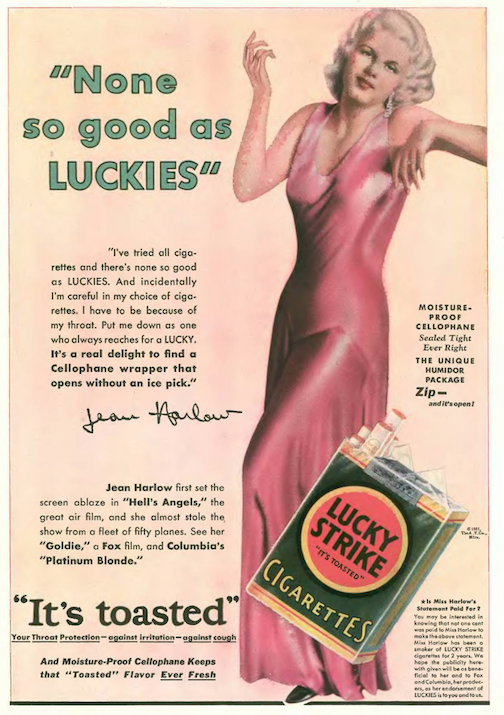
…and this ad for Lucky Strike cigarettes, featuring 20-year-old Platinum Blonde star Jean Harlow (what is she leaning on?) who probably shouldn’t have smoked because her health was always a bit fragile—she would be dead in less than six years…

…ands then we have our latest high society shill for cold cream, Marchioness of Milford Haven, aka Nadejda Mikhailovna Mountbatten, aka Countess Nadejda de Torby, aka Princess George of Battenberg…she was probably best known for her part in the 1934 Gloria Vanderbilt custody trial, when a a former maid of Vanderbilt’s mother, Gloria Morgan, testified that the Marchioness had a lesbian relationship with Morgan…

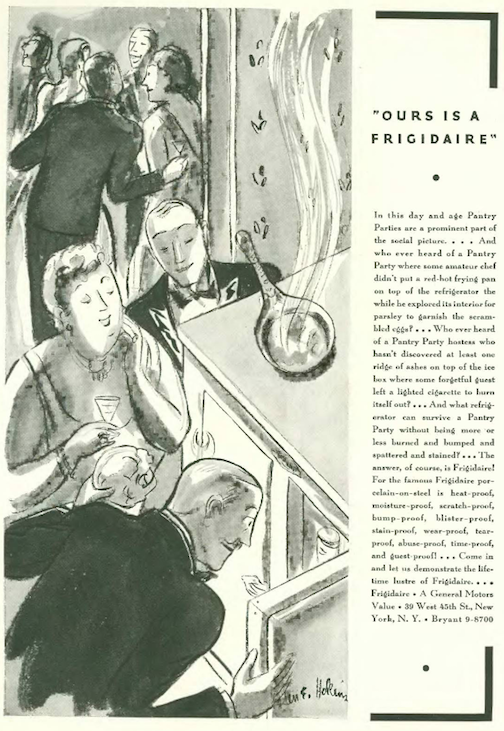
Helen Hokinson continued loaning one of her “girls” to Frigidaire to extol the wonders of their seemingly indestructible refrigerators…

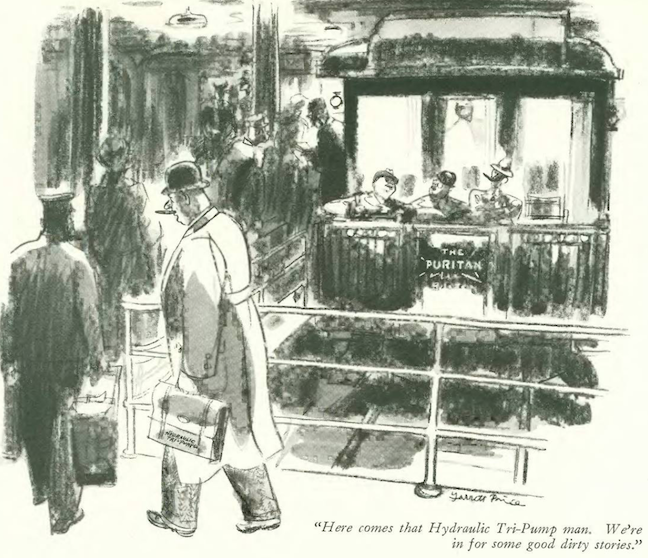
…our Oct. 24 cartoons feature Garrett Price, who brought us the exciting world of the traveling salesman…

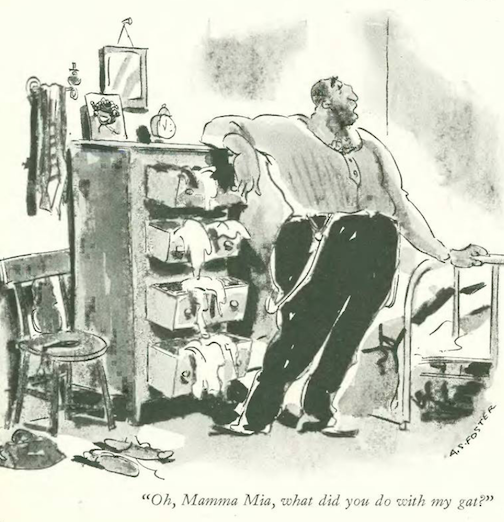
A. S. Foster served up an Italian stereotype…

Isadore Klein, on the other hand, turned a stereotype on its head…

…and we end with Rea Irvin, who gave us what I believe was a first in The New Yorker—a cartoon character breaking the fourth wall…
…by the way, M.F.H. stands for Master of Fox Hounds…I had to look it up.

Next Time: Through a Glass Darkly…
Ten Cents In Stamps

Like E.B. White, James Thurber and Dorothy Parker who came before him, S. J. Perelman was one of those New Yorker writers whose name would become synonymous with the magazine. 

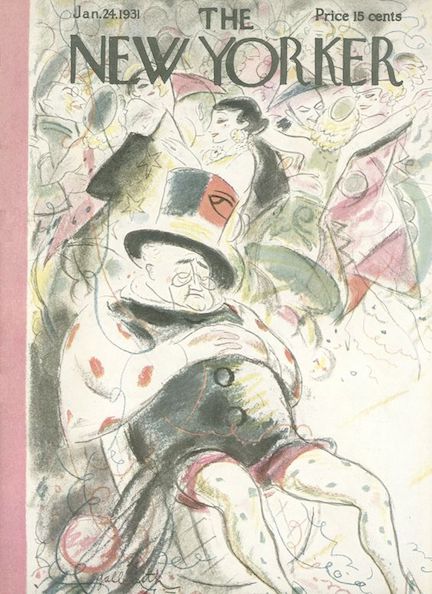
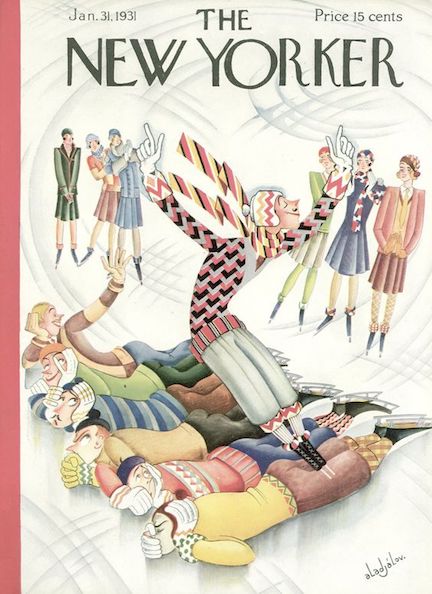
Jan. 24, 1931 cover by William Crawford Galbraith.

Perelman’s first New Yorker article, “Ten Cents in Stamps,” appeared in the Jan. 24, 1931 issue, his subject a collection of self-help and “how to” books he introduced with this Editor’s Note: “Upsetting as it may seem, all the books reviewed in the following article are genuine.”

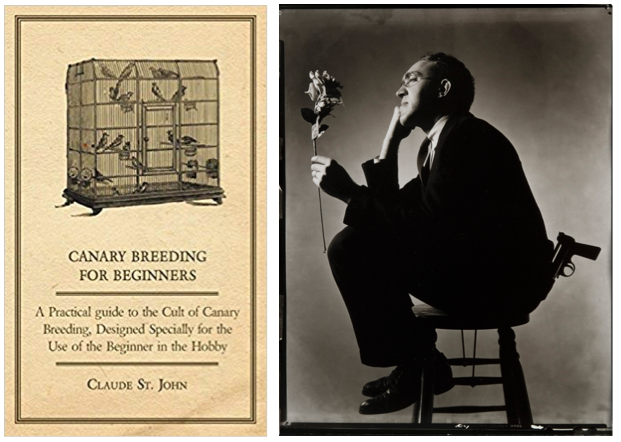
FOR THE BIRDS…S. J. Perelman (1904–1979) sampled Canary Breeding for Beginners among other titles in his first humorous short for The New Yorker. The above 1935 photograph was made by Ralph Steiner, who recalled “when I made this photograph I said ‘this is a foolish thing for two grown men to be doing with their time,’ Perelman answered: ‘We may be the only two men in the world at this moment not doing harm to anyone.'”(amazon/akronartmuseum.org)

Without further ado, some excerpts…

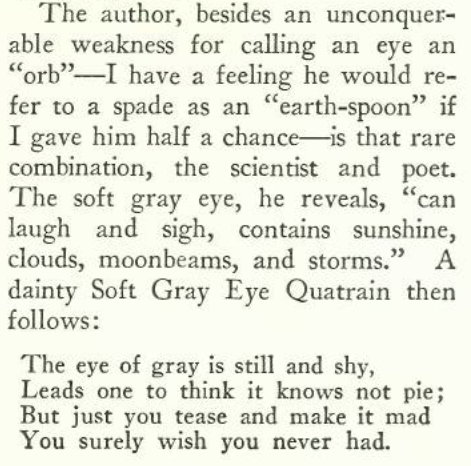
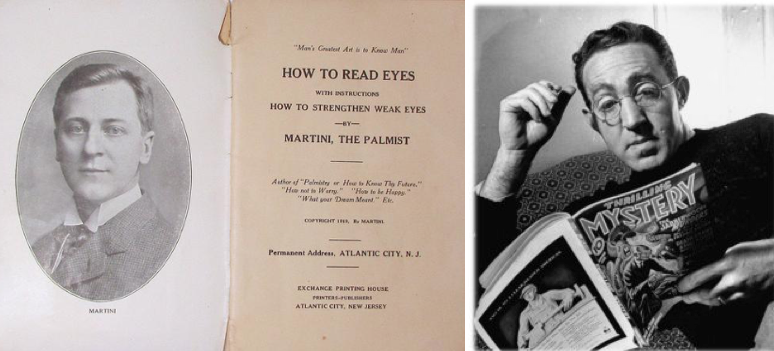
…Perelman offered us a taste of Martini’s poetic gifts…

MARTINI WITH A TWIST…S.J. Perelman wanted “a little tighter thinking” from Martini, The Palmist, in his book, How to Read Eyes. (Etsy/johnesimpson.com)

…and also sampled the wisdom of Jacob Penn, who wrote a book titled How to Get a Job Through Help Wanted Advertisements. Perelman zeroed in on the book’s appendix, which contained “Successful Model Letters”…

*  *  *

Dorothy Returns

After a long absence, Dorothy Parker returned to her immensely popular “Reading and Writing” column. Parker had been staying at an alpine sanitorium in Switzerland, providing moral support for her friends Gerald and Sara Murphy while their young son was treated for tuberculosis. Parker had originally fled to Europe (France, specifically) to write her “Great American Novel,” only to end up on the Swiss mountaintop, where she composed a long letter just recently published (2014) under the title Alpine Giggle Week. Back in New York, she returned to her typewriter and released her wit on Charles Noel Douglas, editor of Forty Thousand Sublime and Beautiful Thoughts.

A PENNY FOR YOUR THOUGHTS?…Charles Noel Douglas had 40,000 of them, Dorothy Parker discovered.(amazon/britannica.com)

 *  *  *

A ‘Tables’ Reprise

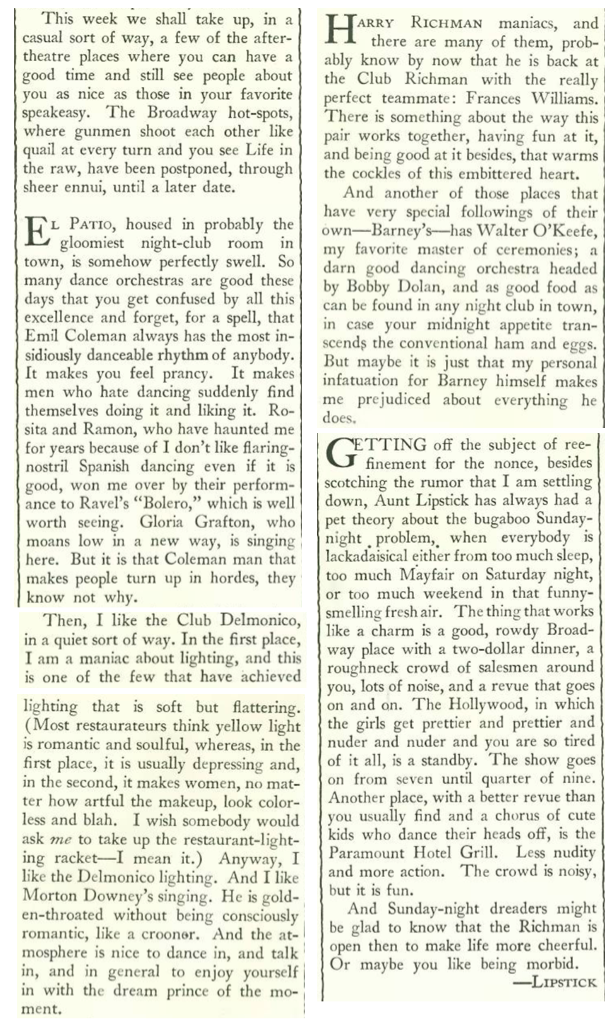
Lois Long was also back, in a way, reviving her “Tables for Two” column for on a one-off on the city’s Broadway hot-spots…

AFTER THE CURTAIN FALLS on Broadway there were plenty of nighttime diversions to keep theater crowds entertained into the wee hours.Clockwise, from top left, singer-dancer Frances Williams worked wonders with Harry Richman and his orchestra at the Club Richman; Bobby Dolan wielded a smart baton at Barney’s; and crooner Morton Downey (pictured with wife and actress Barbara Bennett)… lent his golden tenor to adoring crowds at Club Delmonico. The couple spawned the combative star of 1980s “Trash TV” Morton Downey Jr. (Pinterest)

 *  *  *

From Our Advertisers

We begin with a full page of ads for various Broadway shows…

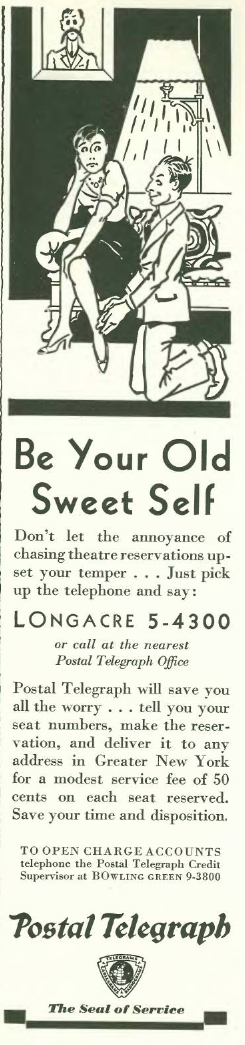
…and if you wanted to get tickets to one of those shows, here is 1931’s version of StubHub…

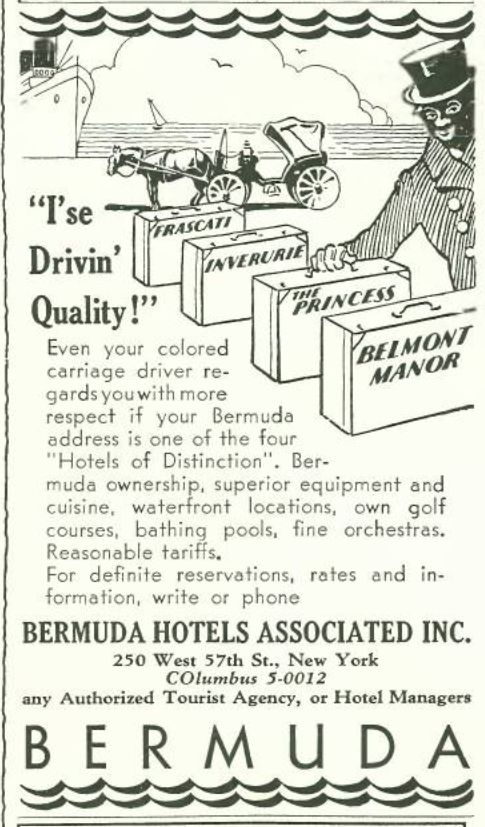
…and we are reminded that it is indeed 1931 with overtly racist ads such as this…

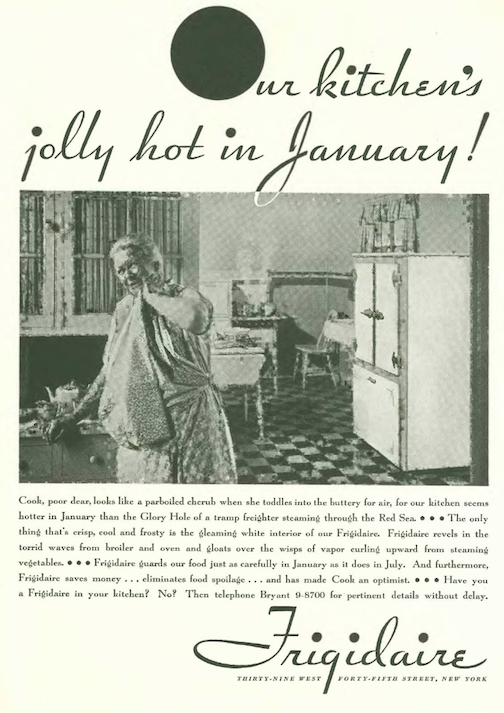
…back home, the help isn’t treated much better. “Cook” can suffer as long as the food remains fresh in the gleaming Frigidaire…

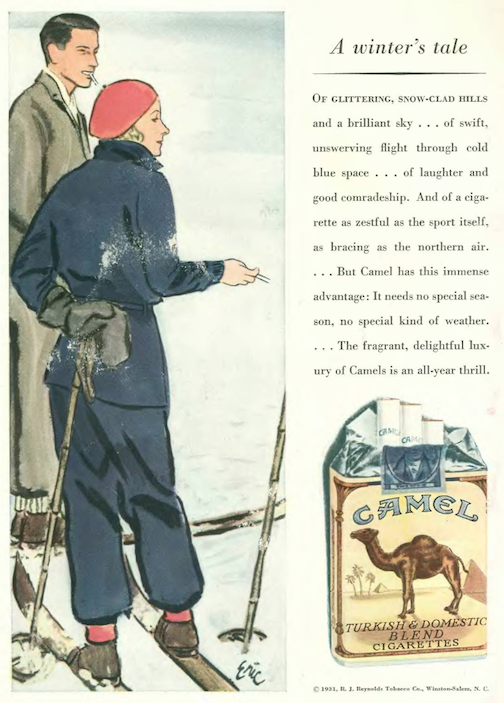
…meanwhile, our stylish Camel smokers (illustrated by Carl “Eric” Erickson) are keeping cool on the slopes…

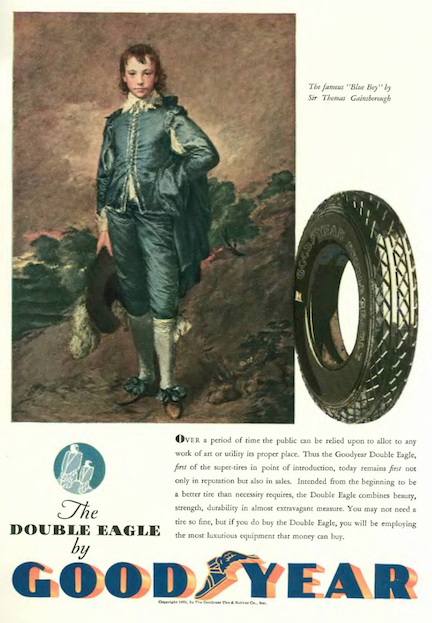
…and perhaps this is the one and only time a painting by Thomas Gainsborough is compared to a tire…

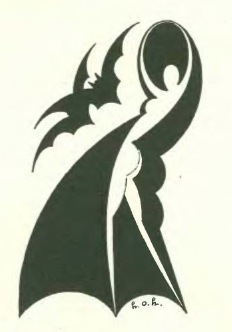
…on to our illustrators and cartoons, the editors tossed in this old spot illustration by H.O. Hofman to fill space on the events page…

…an then we have this spot (sorry, I can’t identify the artist) that imagines disastrous consequences for the Empire State Building’s “mooring mast” (which was never used as such)…

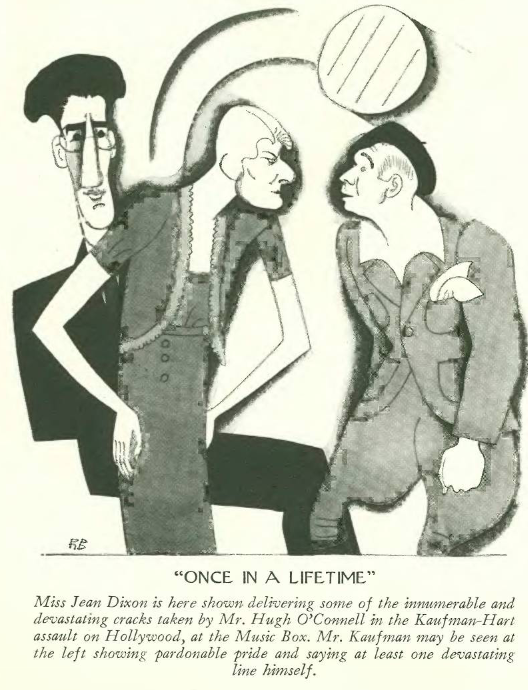
…and Ralph Barton returned to lend his artistry to the theater review section…

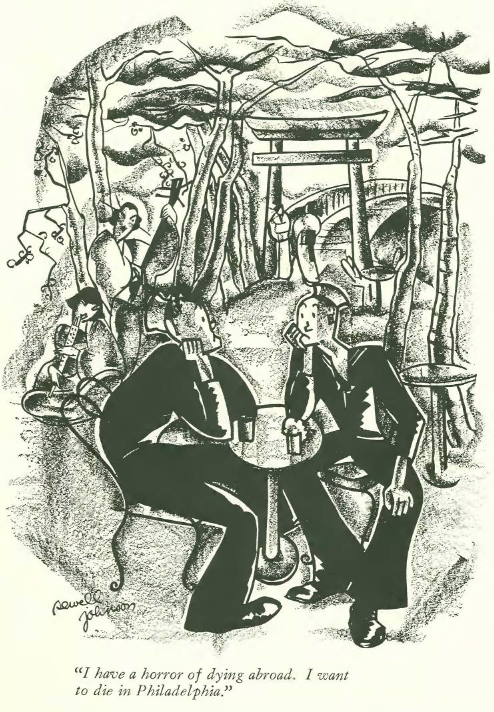
…for our cartoons, we begin with Sewell Johnson’s lone contribution to The New Yorker

Carl Rose was at the movies…

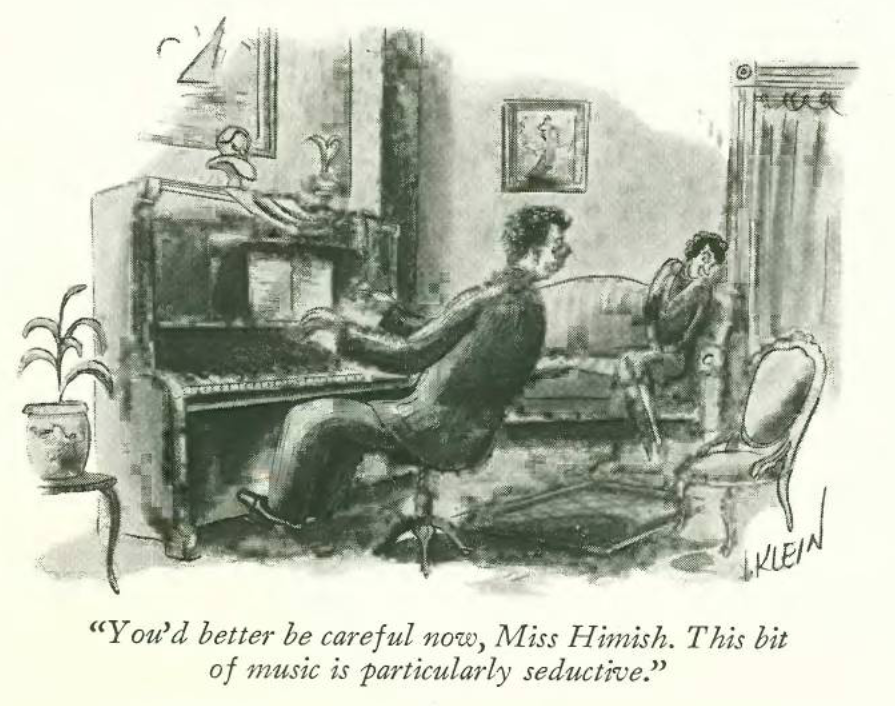
Isadore Klein warmed things up in this parlor scene…

Alan Dunn justified the existence of thriller author Edgar Wallace

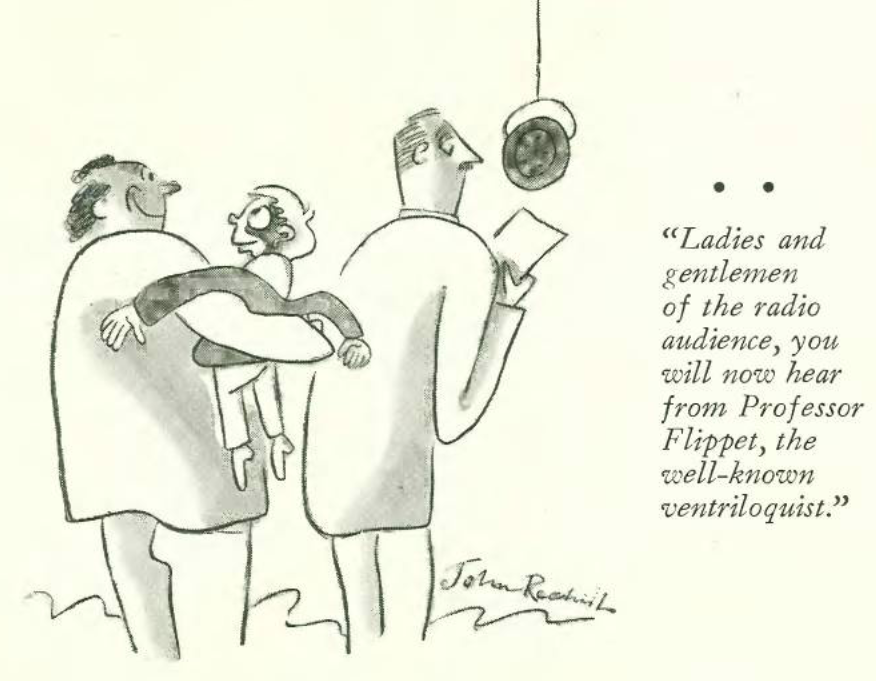
...John Reehill gave us a look at an unlikely radio act (however, from 1936 to 1956 ventriloquist Edgar Bergen and his dummy, Charlie McCarthy, would be hugely popular radio stars)…

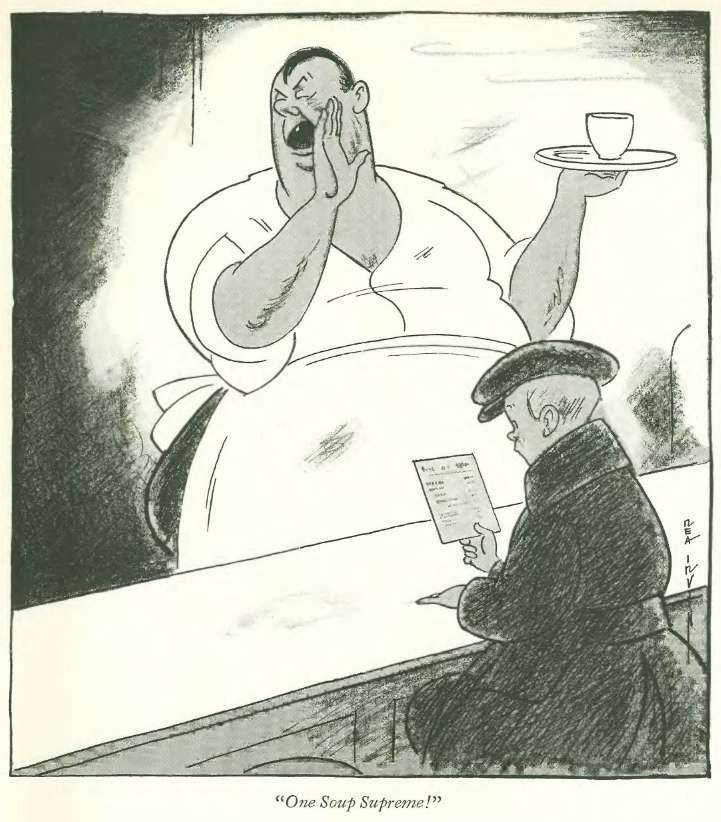
Rea Irvin paid a visit to the diner in this full-page cartoon…

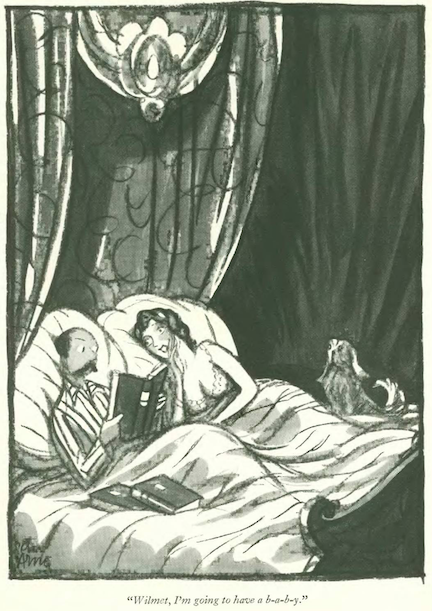
…and another full-page cartoon from Peter Arno, who looked in on an intimate moment…

Next Time: The Wickersham Sham…