Robeson’s Othello

In 1930s America there were few if any opportunities for black actors to perform in mainstream stage or screen productions unless they conformed to racial stereotypes. An exception was Paul Robeson.

June 21, 1930 cover by Gardner Rea.

In 1930 Robeson (1898-1976) won rave reviews for his performance in Shakespeare’s Othello. That performance, however, took place in London, not New York, which London correspondent Anthony Gibbs took pains to point out in his dispatch for the June 21, 1930 New Yorker.

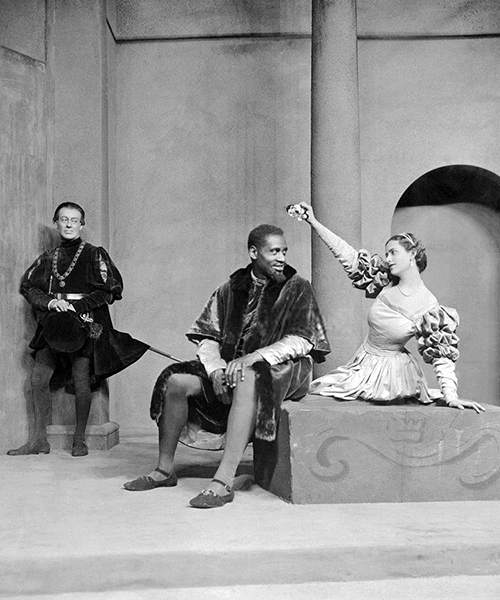
English actress Peggy Ashcroft as Desdemona and Paul Robeson as Othello in London’s Savoy Theatre production of Othello in 1930. Although only 22 at the time, Ashcroft was an established Shakespearean actress. The 32-year-old Robeson was already famous as both an athlete and actor. He was twice named a consensus All-American in football (Rutgers) and was the class valedictorian. He also received a law degree from Columbia while playing in the NFL. In 1930 he was already known to London audiences, having previously appeared in a 1928  London production of the American musical Show Boat. (theshakespeareblog.com)
CENTER STAGE…Left to right: Maurice Browne (Iago), Paul Robeson (Othello) and Peggy Ashcroft (Desdemona) in Othello at the Savoy Theatre, 1930. Maurice Browne was also the play’s producer; his over-the-top portrayal of Iago and his wife’s incompetent stage direction hurt the production, but Robeson nevertheless received high praise for his performance. (britishstageandscreen.tumblr.com)

Although the performance was a triumph for Robeson, the production itself was a mess. The play’s producer, Maurice Browne, enlisted his wife, Ellen van Volkenburg, to direct (Peggy Ashcroft later called her “a pretentious dud”). Writing in The Guardian (Sept. 3, 2003), Samantha Ellis observes: “Recognising that his Othello transcended the ropey production, the audience gave Robeson 20 curtain calls. He reprised the role all over the world and never lost his pleasure in it. For Robeson, it was more than just a part: it was, as he once said, “killing two birds with one stone. I’m acting and I’m talking for the negroes in the way only Shakespeare can.”

Robeson’s Othello would not make it to New York until 1943. It would run for almost 300 performances, setting an all-time record run for a Shakespearean play on Broadway.

 *  *  *

Restoring Order

In the aftermath of Grover Whalen’s disastrous (and sometimes violent) run as New York City Police Commissioner, E.B. White and his fellow New Yorkers welcomed the steady hand of Edward P. Mulrooney (1874-1960) to the helm:

THE COMMISH…Edward P. Mulrooney in a 1930s portrait by Edward Steichen. (Conde Nast)

 *  *  *

The Commander

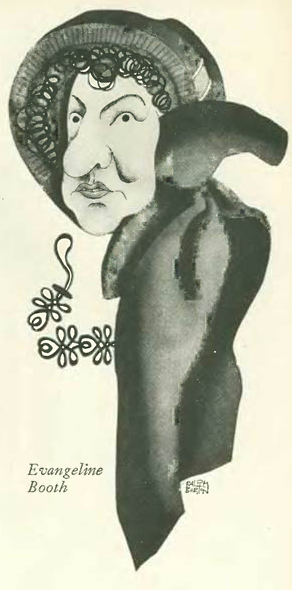
American author and lecturer Virgilia Peterson Ross profiled Evangeline Cory Booth (1865 – 1950), who would become the fourth General of the Salvation Army in 1934. She was the first woman to hold that post. An excerpt:

Ralph Barton returned to provide this caricature for the profile, one of the last works he would create for The New Yorker before his untimely death…
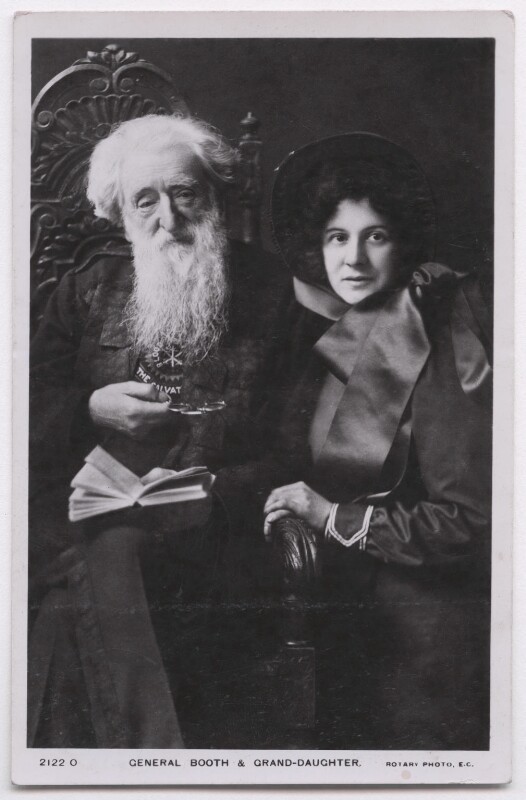
HEIRESS TO A LEGACY…William Booth, an English Methodist preacher who founded The Salvation Army and became its first General, poses with his grand-daughter Evangeline Cory Booth in this 1908 postcard image. (National Portrait Gallery)

 *  *  *

Home of the Dome

Architecture critic George “T-Square” Chappell was gladdened by the sight of scaffolding atop St. Bartholomew’s Church, which would finally get its dome to complete architect Bertram Goodhue’s vision…

NOW YOU SEE IT…Clockwise, from top left, St. Bartholomew’s Church at 325 Park Avenue, sans dome, in 1928; the church with dome in the 1950s; interior and exterior views of dome. (nyago.com/bostonvalley.com)

…Chappell also commented on the emergence of the Chrysler Building’s blindingly shiny dome and interior appointments…
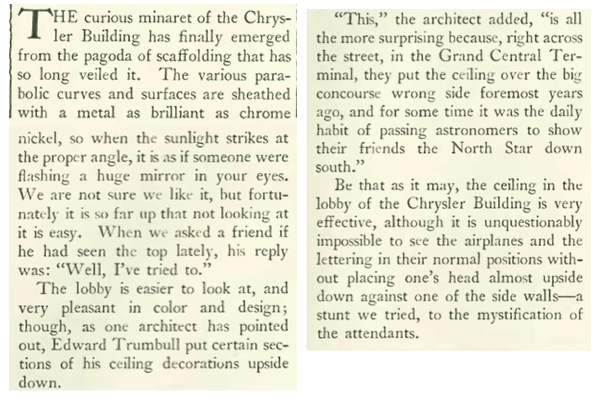

BLINDED BY THE LIGHT…The Chrysler Building’s gleaming spire emerged in all its glory in June 1930. At right, an elevator in the building’s lobby. (Wikipedia)

 *  *  *

Below the Belt

It wasn’t Dempsey-Tunney, but the bout between Max Schmeling (1905-2005) and Jack Sharkey (1902-1994) was the next best thing for boxing fans. The World Heavyweight Championship had been vacant since Gene Tunney’s retirement in 1928, and Sharkey and Schmeling had emerged as the sport’s No. 1 and 2 contenders.

The bout ended in a controversial decision: Although Sharkey won the first three rounds, he was disqualified after he landed a punch below the belt late in the fourth round. Schmeling became the first boxer to win the World Heavyweight Championship on a foul. The New Yorker’s Niven Busch Jr. (with illustration by Johan Bull) offered these thoughts on the fight’s disappointing outcome:

LOW BLOW…Although Jack Sharkey (far right) led after three rounds, a low blow in the fourth delivered the World Heavyweight Championship to German boxer Max Schmeling (left). Sharkey would claim the title two years later in a rematch with Schmeling. Although boxing isn’t the healthiest pursuit, both men lived into their 90s; Schmeling died in 2005 just shy of his 100th birthday. (Wikipedia/boxrec.com/thefightcity.com)

 *  *  *

One Of Ours

The New Yorker included this brief review of a collection of short fiction pieces by Dorothy Parker, herself a literary critic of some renown at the magazine…
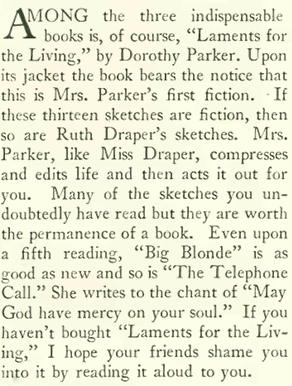
DOROTHY’S LAMENTATIONS…The New Yorker’s Dorothy Parker published this collection of short fiction in 1930.

…and on to our advertisers, this ad appeared on the opposite page of the review…

…speaking of ads, the makers of Marlboro cigarettes continued to sponsor gimmicky penmanship and writing contests to promote their deadly product…

…while promoters of the Empire State Building (still under construction) continued to draw on the historical significance of the building’s Midtown location…

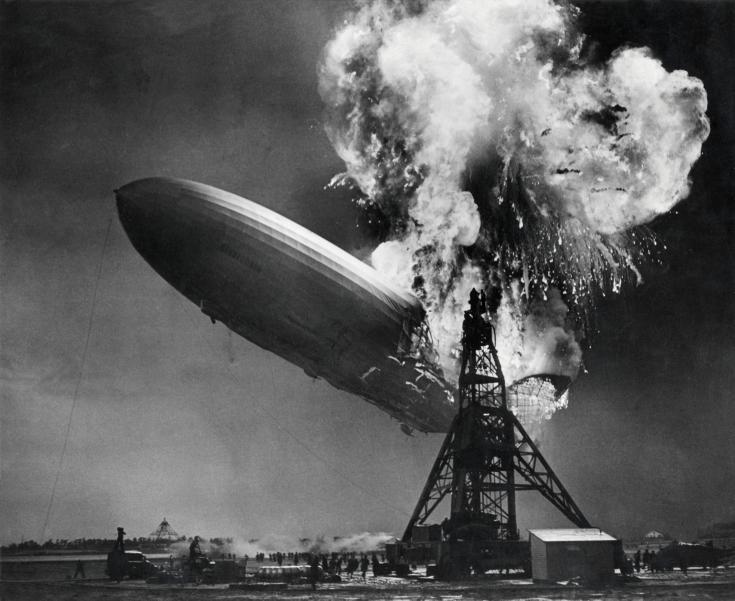
…on to our cartoons, Garrett Price pondered the very real challenge of guiding a massive Zeppelin to the planned mooring mast atop the Empire State…

…a portent of what would happen to the Hindenburg just seven years later…
The New Yorker’s typesetter Popsy Whitaker made clever use of his columns for this Isadore Klein entry…
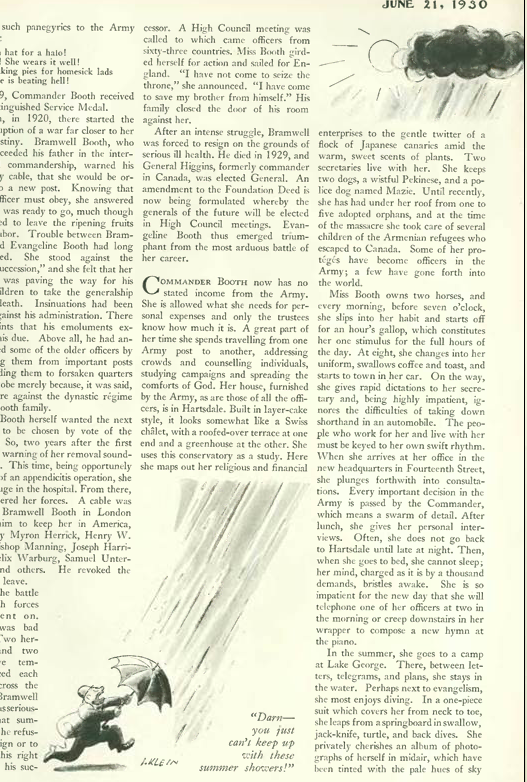
John Murray Anderson found humor in contrasting the grand with the mundane…
Carl Kindl eavesdropped on the small talk of a couple of ash haulers…

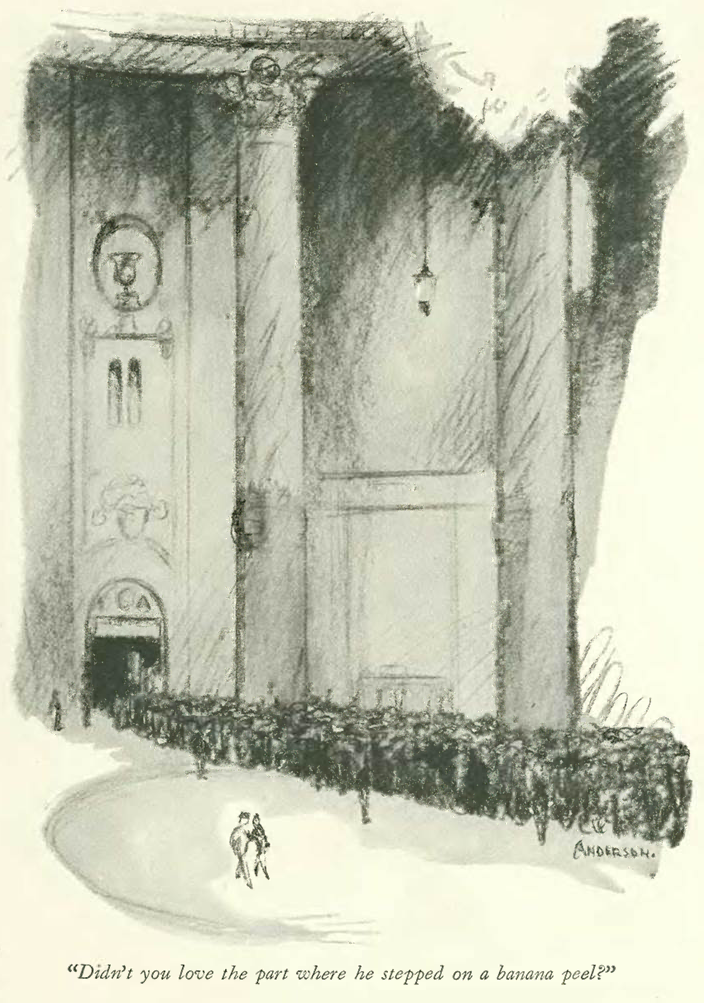
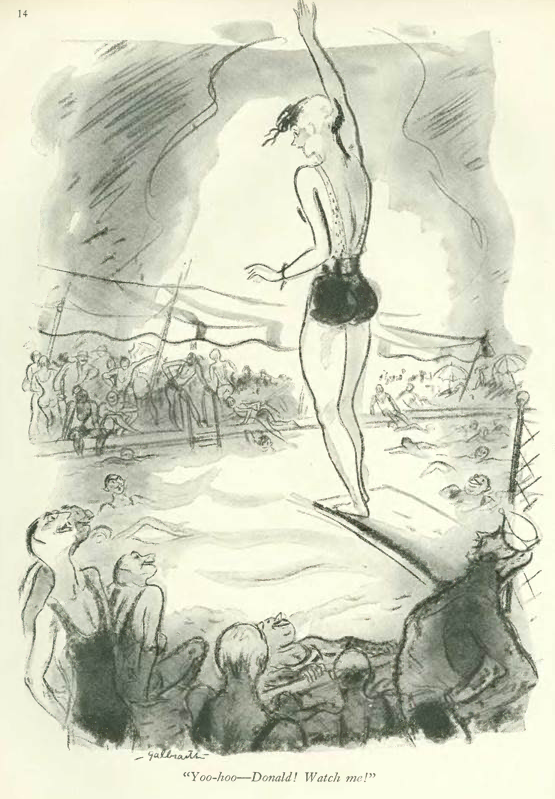
…and William Crawford Galbraith found humor at the public pool…
 *  *  *

On to the June 28 issue, with a cover featuring a satirical kakemono-style illustration by Rea Irvin, who was fond of Japanese scroll art…

June 28, 1930 cover by Rea Irvin.

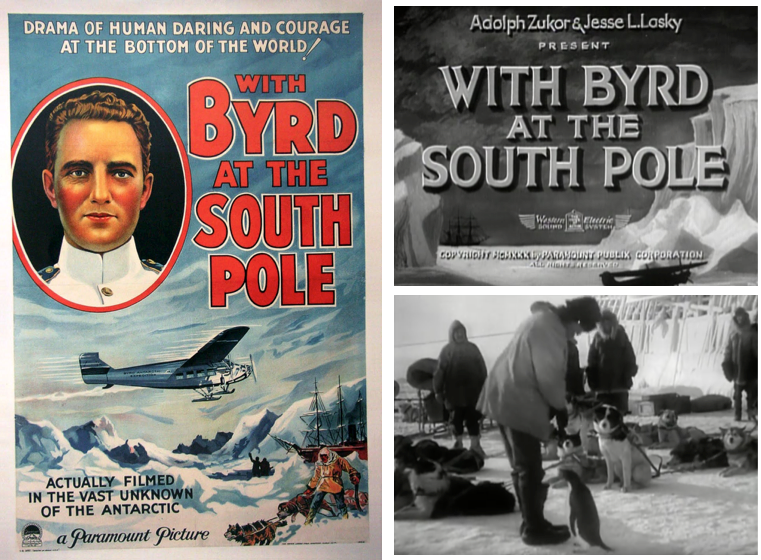
Film critic John Mosher checked out the new documentary on Admiral Richard Byrd’s expedition to the South Pole…

A BYRD WITH WINGS…A Paramount Pictures movie poster promoting the 1930 documentary With Byrd at the South Pole; still images from the film at right. (Wikipedia/YouTube)

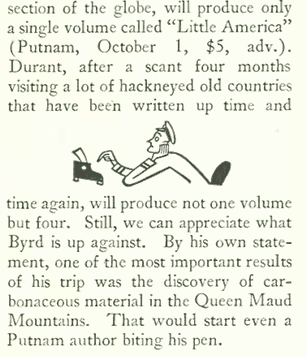
“The Talk of the Town” also made note of Byrd’s expedition and homecoming, contrasting his upcoming book, Little America, with the four-volume historical work planned by popular historian Will Durant.

In collaboration with his wife, Ariel, Durant would end up publishing an eleven-volume history of civilization (four million words across nearly 10,000 pages), written between 1935 and 1975. Will Durant was at work on a twelfth volume when he died in 1981 at age 96.

Admiral Richard Byrd’s Little America, left, and the 11-volume The Story of Civilization, by Will and Ariel Durant.

 *  *  *

American Lenin

The June 28 profile, written by Alva Johnston, featured radical American labor organizer and Marxist politician William Z. Foster. Despite Johnston’s portrayal of Foster as something of a genial pinko, in reality Foster was a strong supporter of Joseph Stalin and a dedicated and loyal ally of the Soviet Union’s Communist Party until his death in 1961. The Soviets even gave him a state funeral, with Nikita Khrushchev personally heading an honor guard in Red Square. An excerpt of Johnston’s profile:

RED AS A ROSE…Left, a campaign photo of William Z. Foster when he headed the Communist Party ticket in the 1928 U.S. presidential election; at right, illustration of Foster for the profile, by Abe Birnbaum.

 *  *  *

And to close…a colorful advertisement in the June 28 issue from Rex Cole…from the signature it appears to be the work of Mario Cooper, but this doesn’t look at all like his other work…

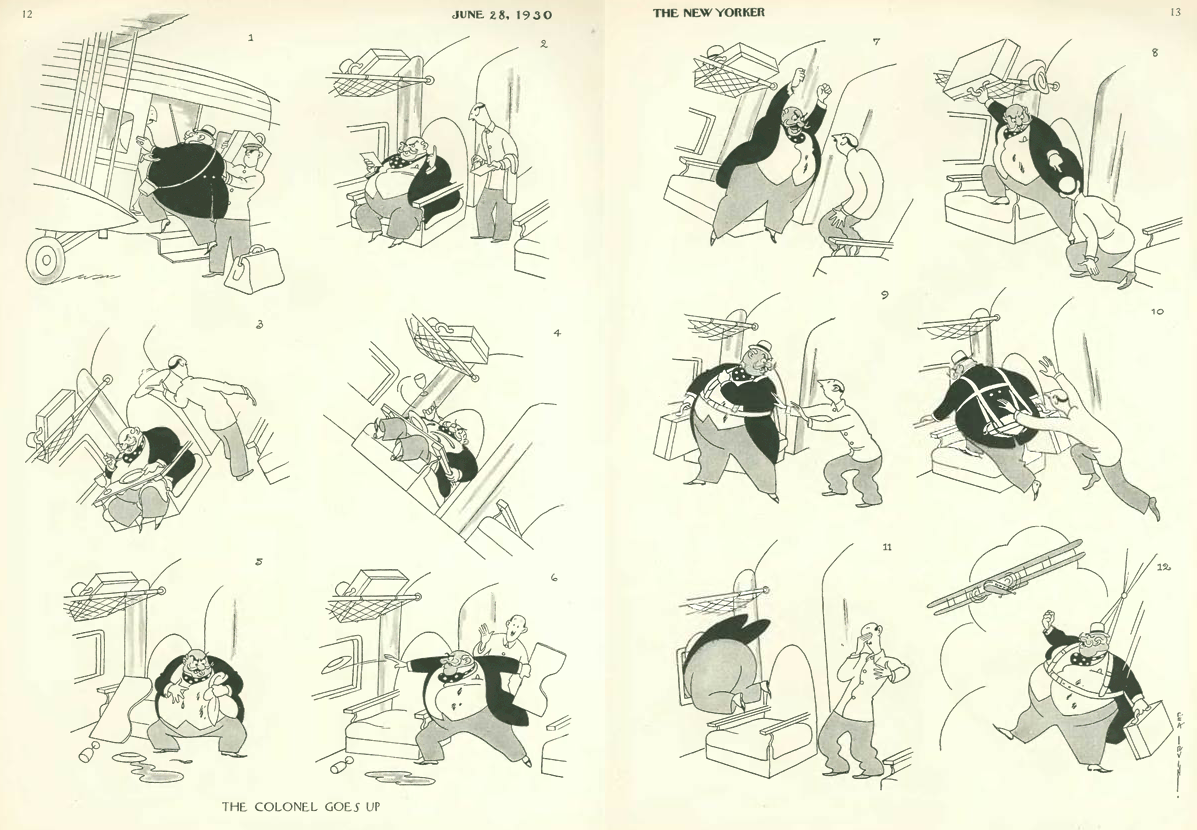
…and a two-page Rea Irvin cartoon, which demonstrates his visual storytelling skills…
Next Time…Happy Fourth!

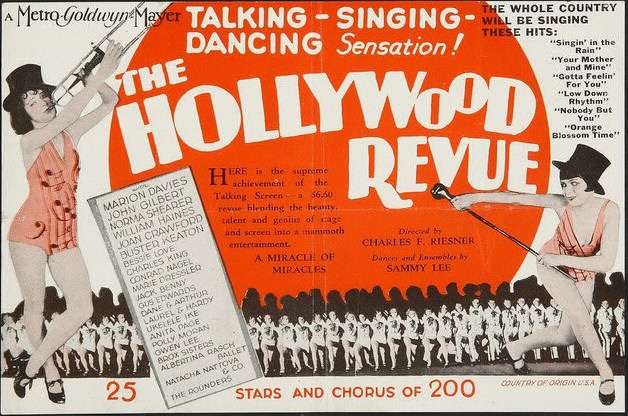


Hooray for Hollywood

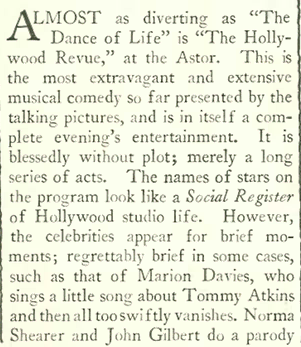
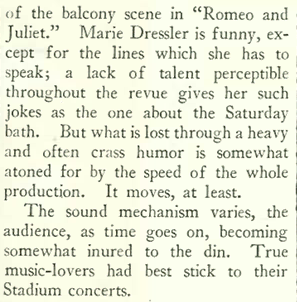
MGM piled so many stars and gimmicks into the premiere of The Hollywood Revue of 1929 that even The New Yorker’s jaded film critic John Mosher had to admit he was entertained.

Aug. 24, 1929 cover by Helen Hokinson.

Although today’s audiences would find the film quaint and corny (not to mention its tinny sound and crude editing), it was a big hit in 1929. A plotless revue featuring nearly all of MGM’s stars (Greta Garbo said no — she had a clause in her contract exempting her from such silly things; Lon Chaney, on the other hand, was in failing health), the film followed a variety format similar to such vaudeville productions as the Ziegfeld Follies. The Arthur Freed/Herb Nacio Brown song “Singin’ In the Rain” was introduced in this film, and would inspire the Gene Kelley musical by the same name 23 years later. A rarity for the time, the Hollywood Revue included four skits in an early version of Technicolor, including an all-cast performance of “Singing’ In the Rain.” Mosher observed:

One of the film’s color skits featured John Gilbert and Norma Shearer in a Romeo and Juliet parody filled with Jazz Age slang. It would mark the beginning of the end of Gilbert’s career and, sadly, his life. He was one of the silent era’s most popular leading men, but it was purported that his voice was not suited to the talkies. What really ended Gilbert’s career, however, was studio head Louis B. Mayer, who clashed with the actor both personally and professionally…

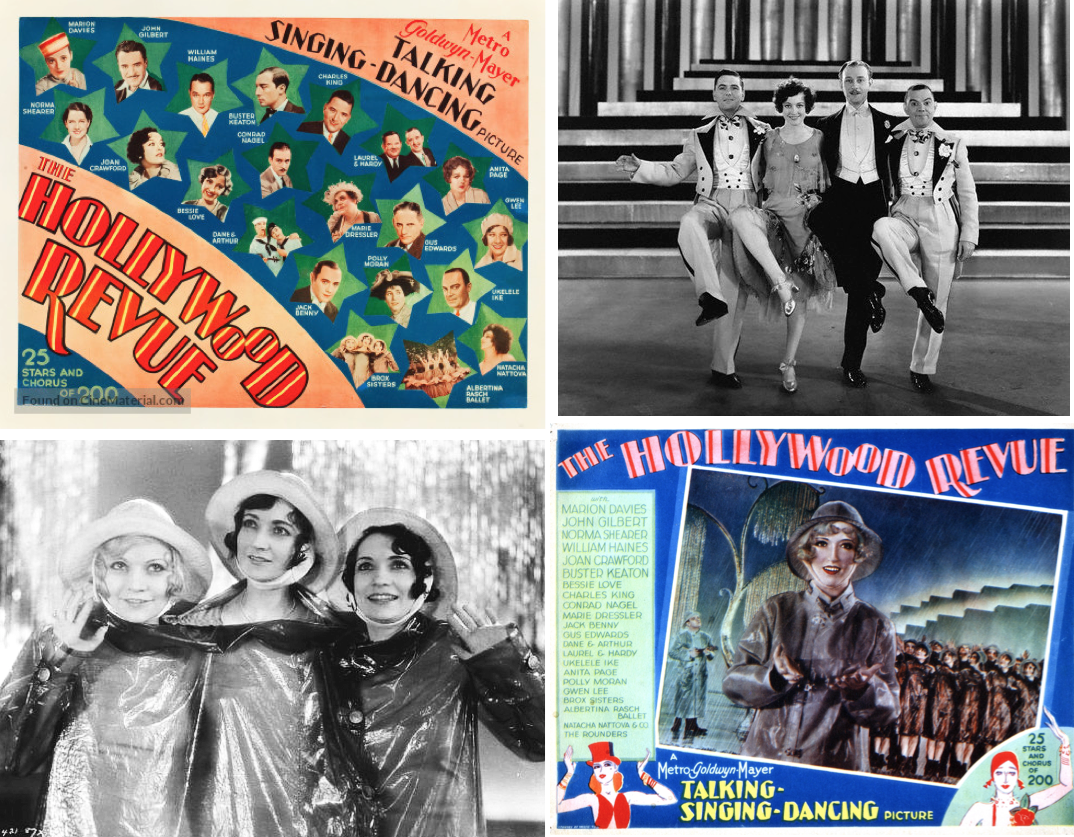
FAREWELL ROMEO…A lobby card promoting The Hollywood Revue of 1929 featured John Gilbert and Norma Shearer in one the film’s color sequences, a parody of Romeo and Juliet filled with Jazz Age slang. At right, a scene from the skit in which the director (played by Lionel Barrymore, far right) tells Shearer and Gilbert to put more pizzazz into the act. (IMDB/YouTube)
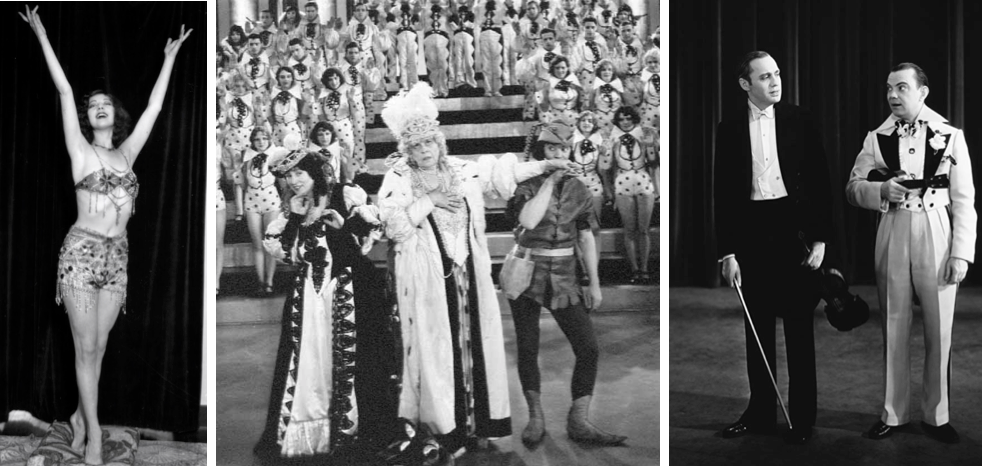
STAR-STUDDED…Left to right, early silent film comedian Marie Dressler hammed it up in a royal court skit; co-emcee Jack Benny, with his trademark violin, and Cliff “Ukulele Ike” Edwards, and his trademark uke. (vickielester.com/doctormacro.com/thejumpingfrog.com)
DANCING IS GOOD FOR YOUR HEALTH…Chorus girl Carla Laemmle in the film’s “Tableau of Jewels,” in which she emerged from a seashell to perform a seductive (and weird) dance number while other showgirls posed on a revolving crown — all set to a tune sung offstage by James Burroughs. The niece of Universal Pictures founder Carl Laemmle, Carla Laemmle was one of the longest surviving actors of the silent era. She died in 2014 at age 104. (songbook1.wordpress.com)
GALAXY OF STARS…Clockwise, from top left, lobby card for The Hollywood Revue of 1929; Charles King, Joan Crawford, Conrad Nagel (a co-emcee along with Jack Benny) and Cliff “Ukulele Ike” Edwards show off their dancing skills; lobby card featuring actress Marion Davies; a popular act in vaudeville and on Broadway, the Brox Sisters—Lorayne, Patricia and Bobbe (along with Cliff Edwards) introduced the song “Singin’ in the Rain,” also sung by the entire cast near the finale of the movie. (IMDB/joancrawfordbest.com/mubi.com)

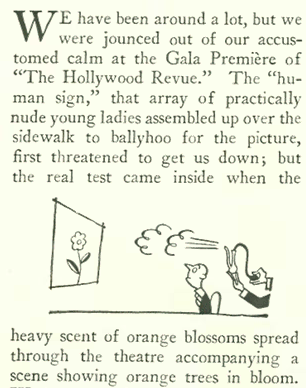
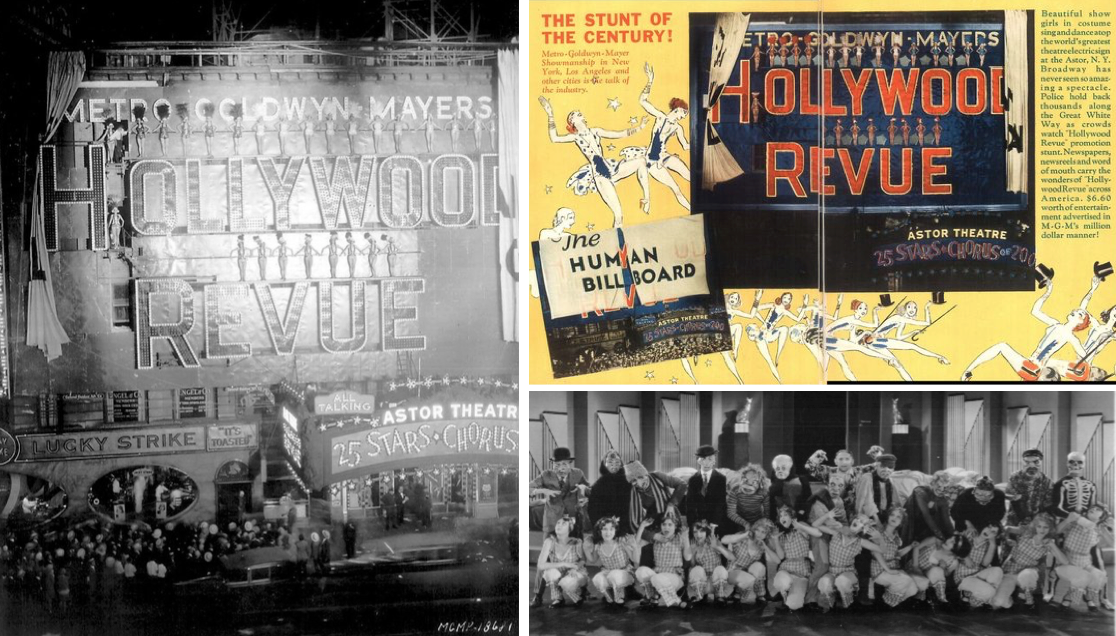
…MGM deployed a number of stunts to generate publicity at the film’s New York premiere at the Astor Theatre, including a “human billboard” that featured scantily clad chorus girls precariously perched on a huge letters high above the theatre’s entrance. In a rather less dangerous stunt—during the movie’s “Orange Blossom Time” skit—a faint scent of orange blossoms wafted into the theatre. “The Talk of the Town” observed…

WHAT COULD POSSIBLY GO WRONG?…Showgirls arranged along narrow catwalks atop the glowing HOLLYWOOD REVUE sign would pose for hours above crowds of gawkers; top, an advertisement promoting “The Stunt of the Century”; bottom, chorus girls lined up on somewhat safer ground in a skit from the movie titled “Lon Chaney’s Gonna Get You If You Don’t Watch Out.” Chaney himself was near death and did not appear in the film. (oldphotoarchive.com/anndvorak.com)
Another angle shows just how precarious this stunt proved to be for these brave chorus girls, who held their poses for hours on end. (legendaryjoancrawford.com)
JUST SINGIN’…Among the MGM stars appearing in the film’s finale include, in the middle of the front row, Buster Keaton, Marion Davies, and Joan Crawford. (IMDB)

*  *  *

Technological Adjustments

Had you attended the premiere of The Hollywood Revue, perhaps you would have appreciated James Thurber’s observation that actors in talking pictures sound as if they are speaking into cracker boxes. In this hilarious piece (titled “The Roaring Talkies”), he proposed a solution. An excerpt:

*  *  *

A Happy Diversion

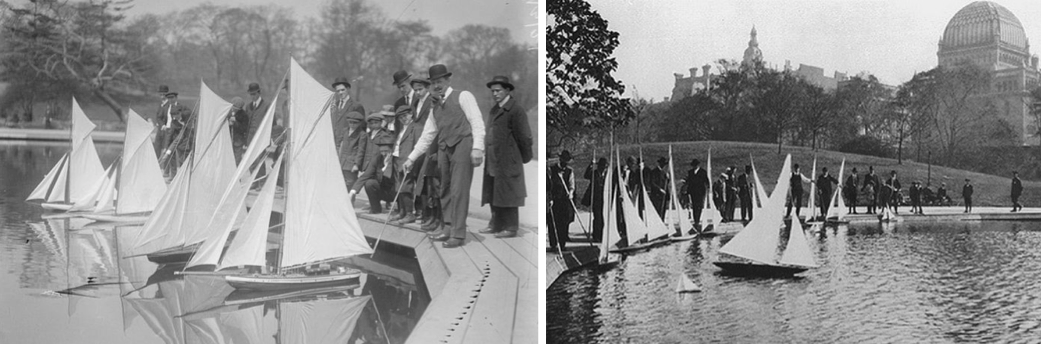
“The Talk of the Town” (via Theodore Pratt) looked in on the hobbyists who raced model boats at Central Park’s Conservatory Lake, a happy tradition that began in the late 19th century and continues to this day:

A DAY AT THE RACES….Model sailboats (left) prepare to face off in 1910 at Conservatory Lake (also called Conservatory Water); at right, model sailors at the same lake around 1920. (Library of Congress)

Pratt also described the old wooden boathouse, which was replaced in 1954 with a somewhat grander structure, Kerbs Boathouse, where model boats are still stored…

STILL SAILING…The copper-roofed Kerbs Boathouse replaced a wooden structure in 1954. Conservatory Lake served as the setting for a model boat race in E.B. White’s Stuart Little. (centralparknyc.org)

 *  *  *

On the Other Hand…

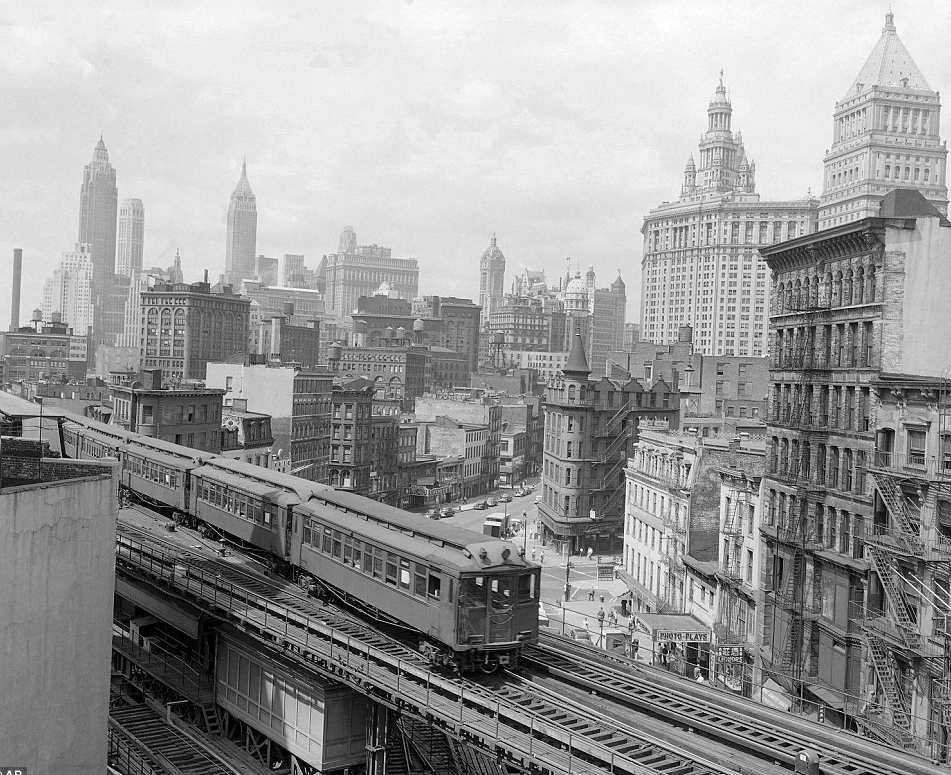
Leaving the cool and quiet of the park brought one quickly back into the dust and clamor of the metropolis. Pratt observed that the summer season lasted two weeks longer in the city than in the country, thanks to the city’s heat island effect— perhaps an unwelcome observation given the usually hot summer of 1929. Not only did the city’s heat extend the season, but it also kept the city enveloped in “an enormous cloud of dust”…

HAZY DAYS OF SUMMER…A dusty haze hangs over Lower Manhattan as the Third Avenue elevated train rumbles by in this circa 1950 photo. (Associated Press)

 *  *  *

Already Feeling Old?

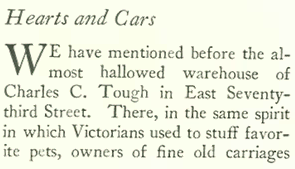
I found this “Talk” item curious for exploring the sentimental attachment some folks had developed for old cars from the 1910s, given those cars were barely twenty years old and cars in general hadn’t been in common use much longer…

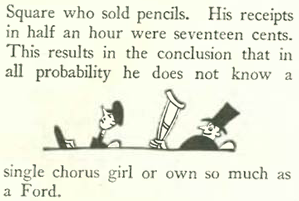
…as for another “Talk” item, I doubt modern New Yorker readers would find any humor in this observation:

 *  *  *

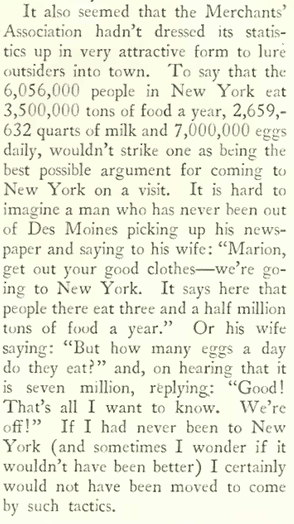
On to sillier things, Robert Benchley turned in a casual titled “Boost New York!” Benchley ridiculed a promotional brochure from the New York Merchants Association that touted various statistics in a manner reminiscent of the fictional George Babbitt. Benchley imagined how an Iowa couple might respond to such dazzling numbers:

*  *  *

A Drinking Life

Occasionally I like to feature infrequent or one-time New Yorker contributors who are nearly lost to history. Frank Ward O’Malley (1875-1932), a reporter for the New York Sun from 1906-19, was known for his humorous stories. In 1928 he published a book titled The Swiss Family O’Malley. In this casual (titled “The Fatty Degeneration of Broadway”) from the Aug. 24 issue, O’Malley described an alcohol intervention of sorts and then his fall off the wagon. Here are the opening and closing paragraphs, along with his photo circa 1910s.

                                                                           Frank Ward O’Malley (Library of Congress)

 *  *  *

From Our Advertisers

This week we have an advertisement for the Drake Apartment Hotel, claiming to be the “smartest” in New York. Note how they employed what seems to be the same pointy-nosed, haughty couple that we saw last week (below) who endorsed the Park Lane (I want to believe there is a subtle joke here)…

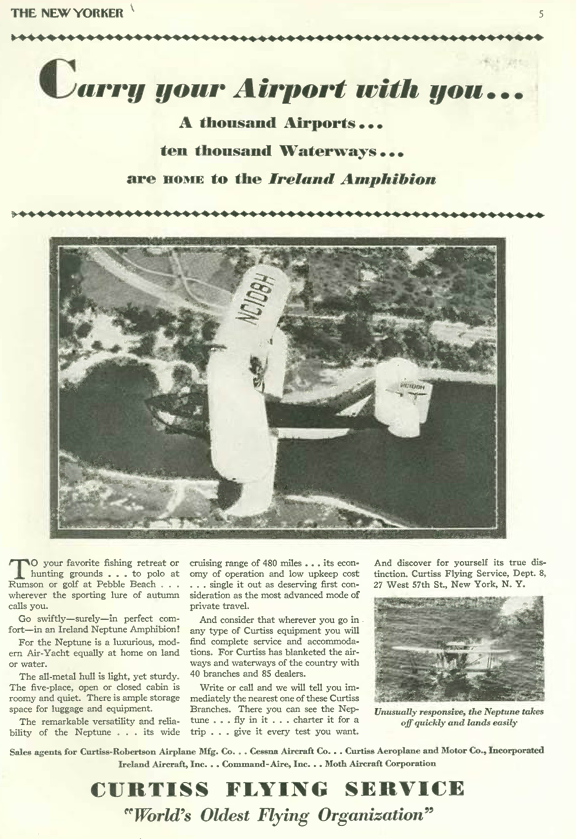
…just 25 years removed from the Wright Brothers’ flight at Kitty Hawk, advertisers were treating flying as though it were routine…

A better photo of the Ireland Neptune Amphipian (aerofiles.com)

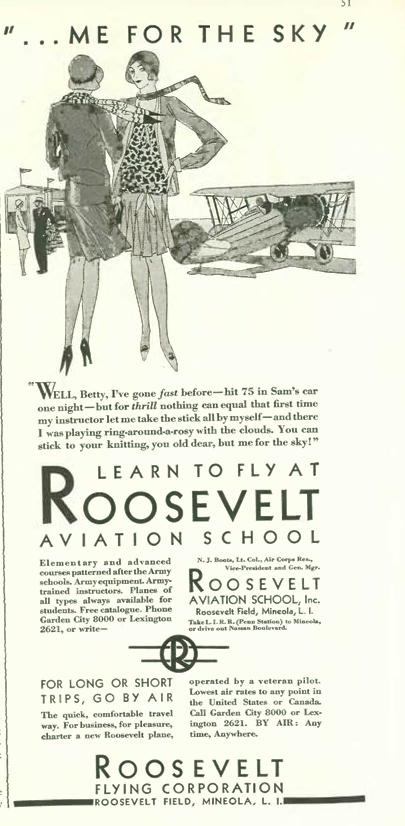
…and this young woman seemed to think flying was nothing more than “playing ring around the rosy with the clouds”…

…I like the reviews included in this bookseller’s ad, especially the first one for the book Ex-Wife by Anonymous (it was written by Ursula Parrott, a writer of romantic fiction)…

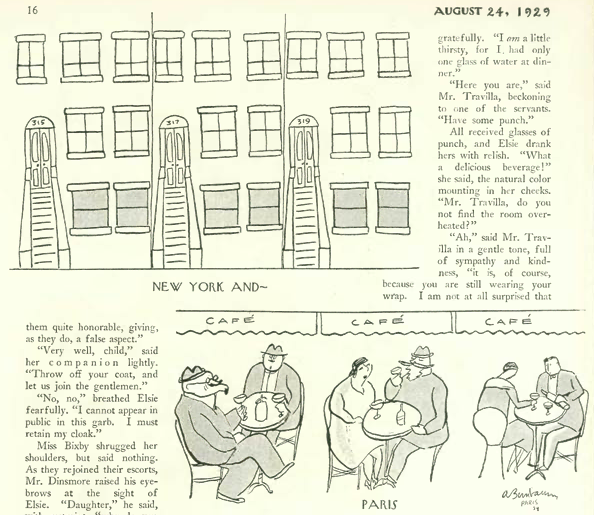
…our illustrations include Abe Birnbaum’s contribution to the casuals section (breaking up the copy of one of Josie Turner’s Elsie Dinsmore parodies)…

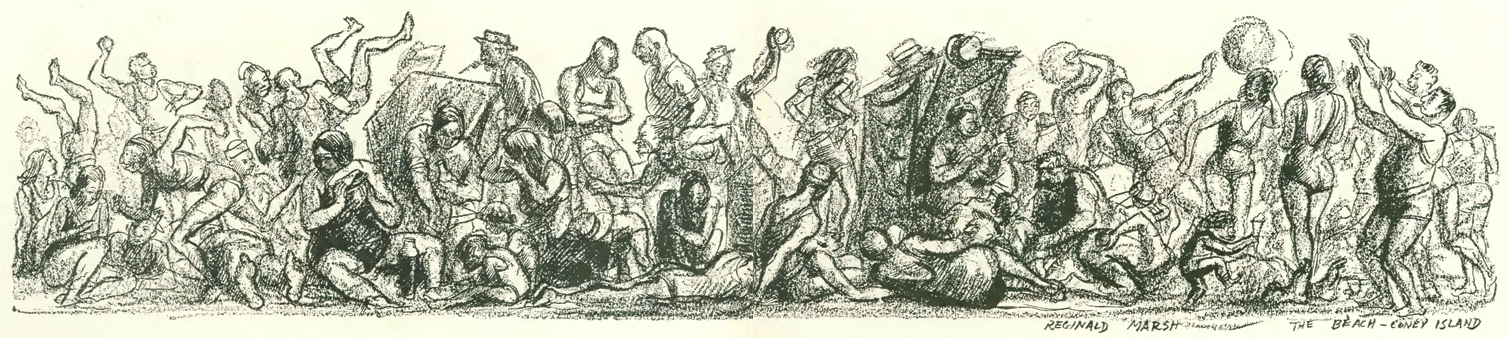
Reginald Marsh illustrated the late summer beach scene at Coney Island…

…and for kicks this nice little filler by Constantin Alajalov

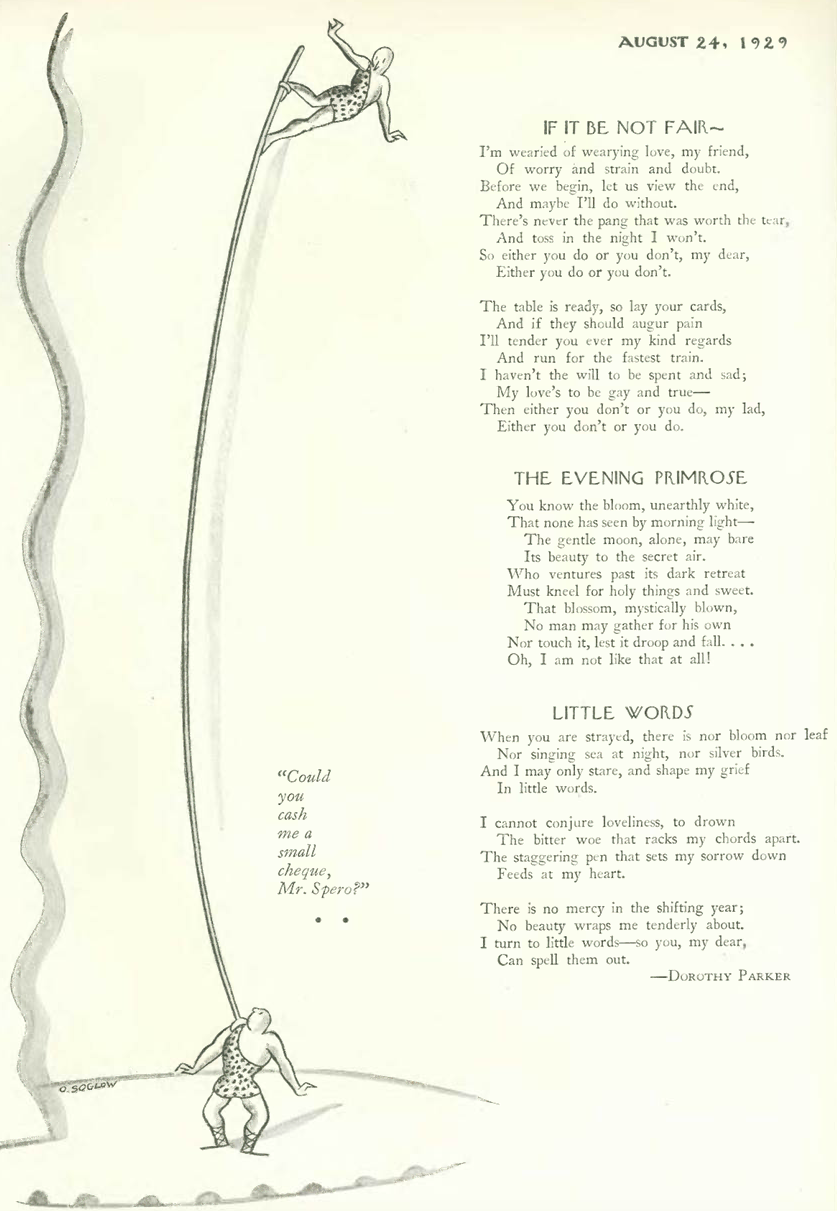
…thanks to the skills of The New Yorker’s first layout artist, Popsy Whitaker, we have this whimsical pairing of Otto Soglow and Dorothy Parker

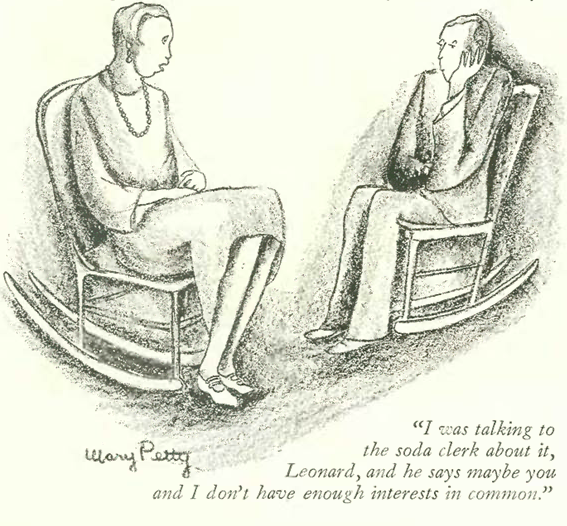
Mary Petty contributed a cartoon that looks contemporary…

Peter Arno paid a visit to the doctor’s office…

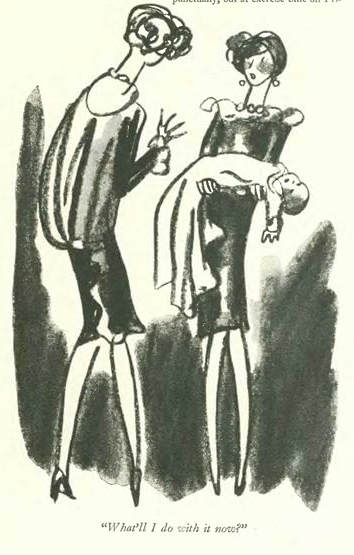
…and commented on his life as a new father…the woman holding the baby was doubtless inspired by his wife, New Yorker columnist Lois Long

…for reference, Peter Arno and Lois Long are pictured here with baby daughter Patricia Arno in 1928…Lois clearly had a better grasp on the situation than Arno had imagined…

Arno and Long with their baby daughter, Patricia, in 1928. (Vanity Fair)

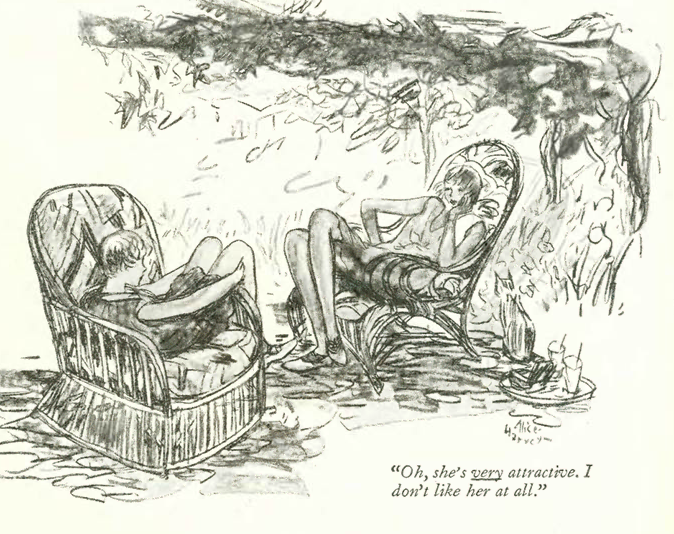
Alice Harvey eavesdropped on a conversation between teenagers…

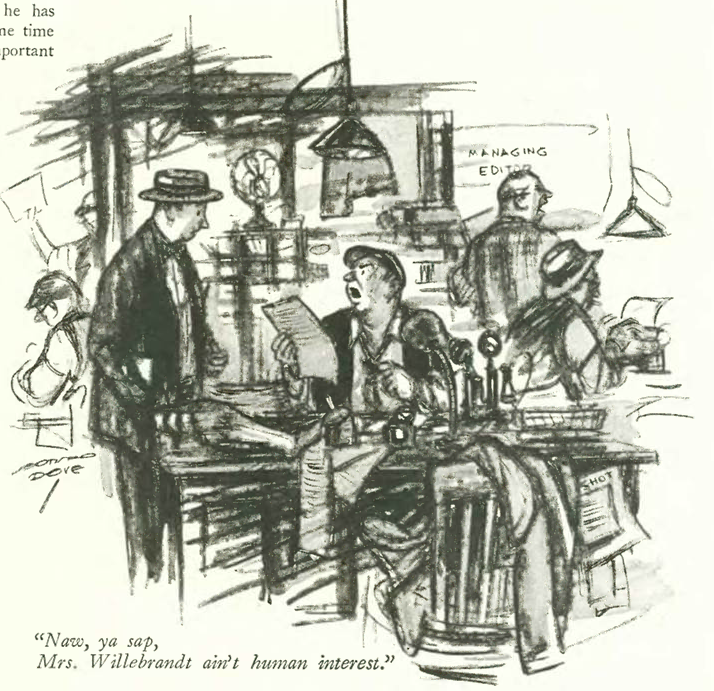
…and like Arno, Leonard Dove had two cartoons in this issue…here an editor finds the former Prohibition enforcer no longer newsworthy…

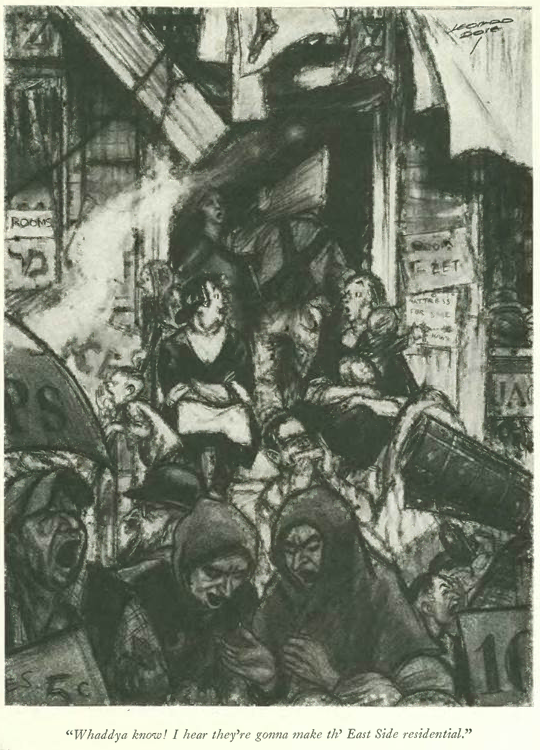
…and over on the East Side, rumors of gentrification…

Next Time: A Carnival in the Air…