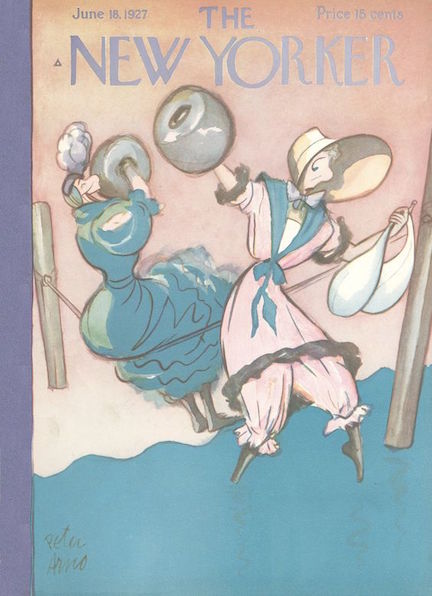
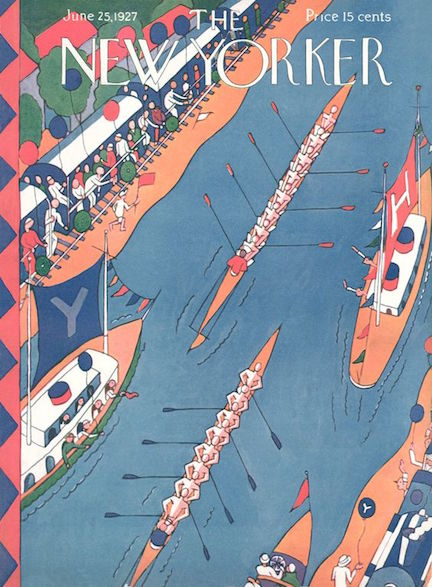
The New Yorker welcomed spring with a cover featuring Peter Arno’s popular Whoops Sisters testing the waters at the beach…
June 18, 1927 cover by Peter Arno, featuring his popular Whoops Sisters.
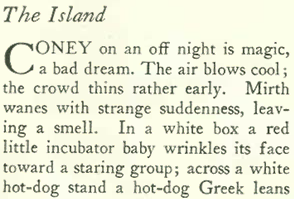
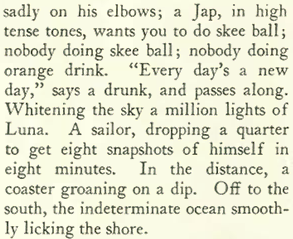
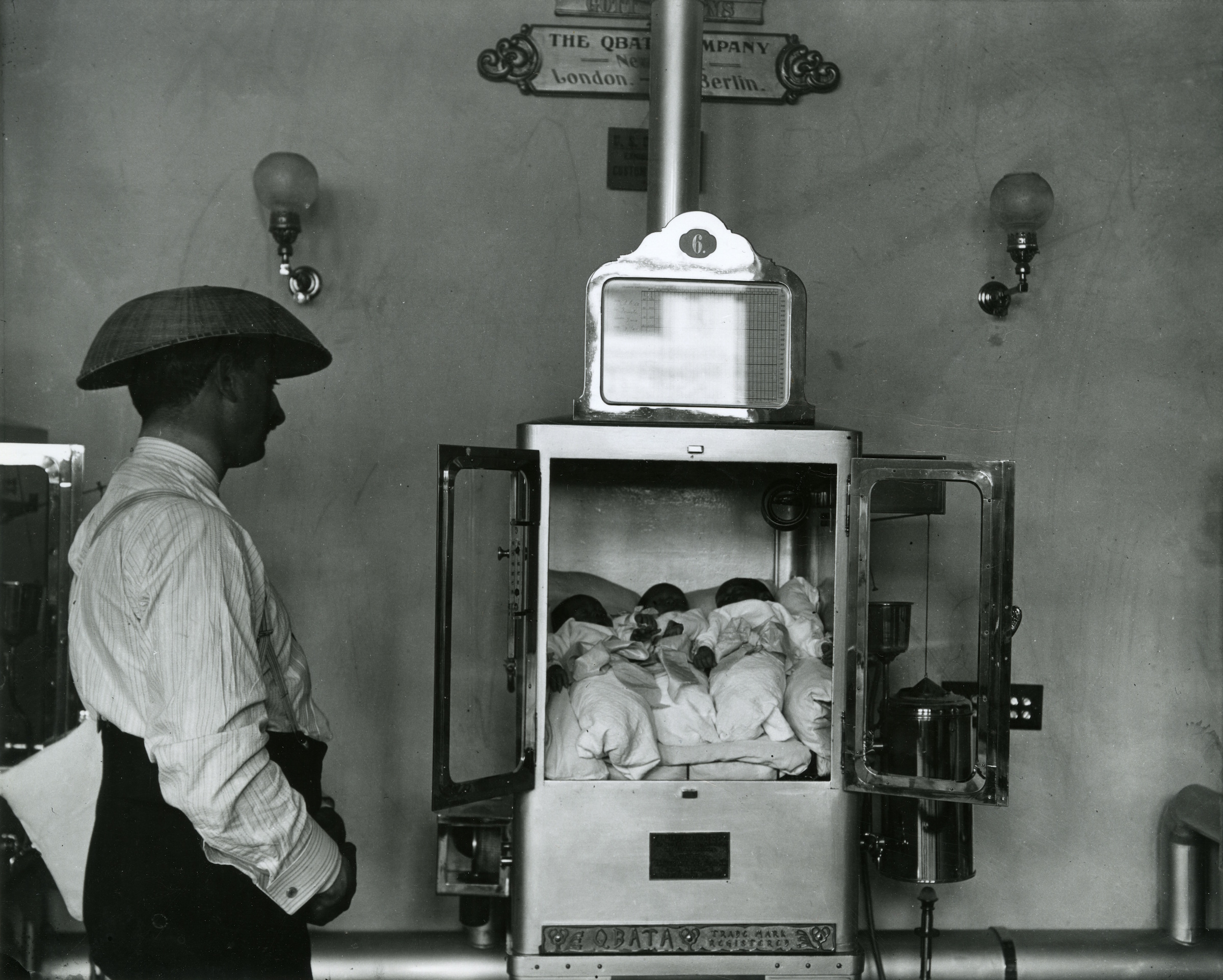
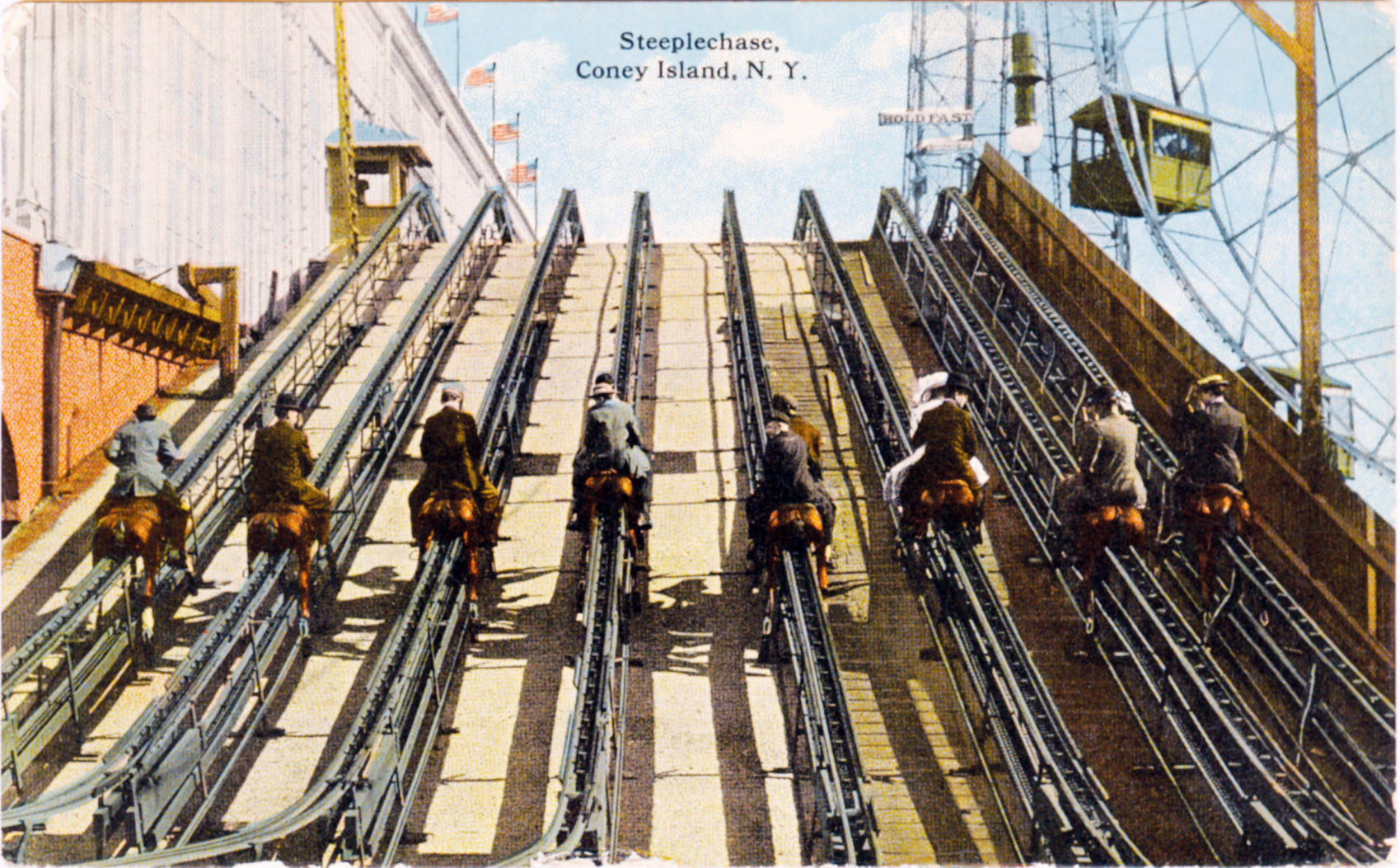
…and so was The New Yorker, on the south shores of Brooklyn to check out attractions old and new at Coney Island, paying a visit on an “off-day” to check out attractions ranging from incubating babies to the mechanical horse-race at the old Steeplechase:
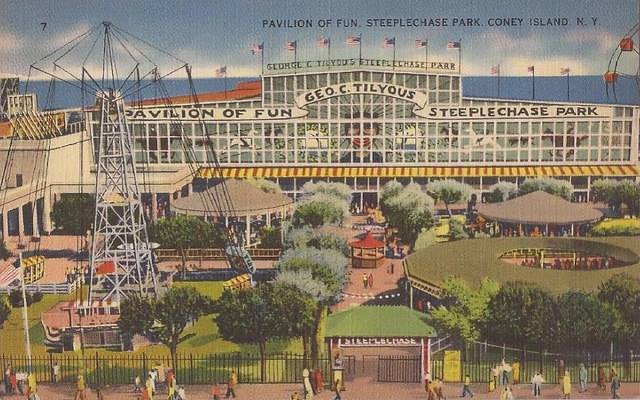
WEIRD BUT WORTH IT…Incubating babies on display at Coney Island in the early 1900s. At the time, most babies were born at home, so hospitals did not have incubators–considered to be untested (and expensive) equipment. Dr. Martin Couney featured the device in “incubator shows” at various World’s Fairs and as a permanent exhibit at Coney Island from 1903 to 1943. Although he found the public spectacle somewhat distasteful, Couney hoped the exhibits would prove that the new technology actually worked. Paying for staff and machinery through ticket sales, he saved the lives of perhaps 8,000 premature infants at Coney Island. (NY Historical Society)BEFORE THERE WAS NATHAN’S…Feltmans hot dog stand, circa 1930s. Feltman’s began as a pushcart business on the sand dunes of Coney Island in 1867, operated by German immigrant Charles Feltman, considered the inventor of the hot dog on a bun. By 1920 Feltman’s Ocean Pavilion covered a whole city block and served more than five million customers a year. (digital commonwealth.org)OFF TO THE RACES…Riders astride mechanical horses prepare to compete in the popular Coney Island Steeplechase in this postcard image circa 1915. (carouselhistory.com)LANDMARK…Coney Island’s famed Cyclone roller coaster opened in 1927. (Encyclopedia Britannica)ONE MILLION lights brightened Coney Island’s Luna Park on a summer evening in the 1920s. (carouselhistory.com)
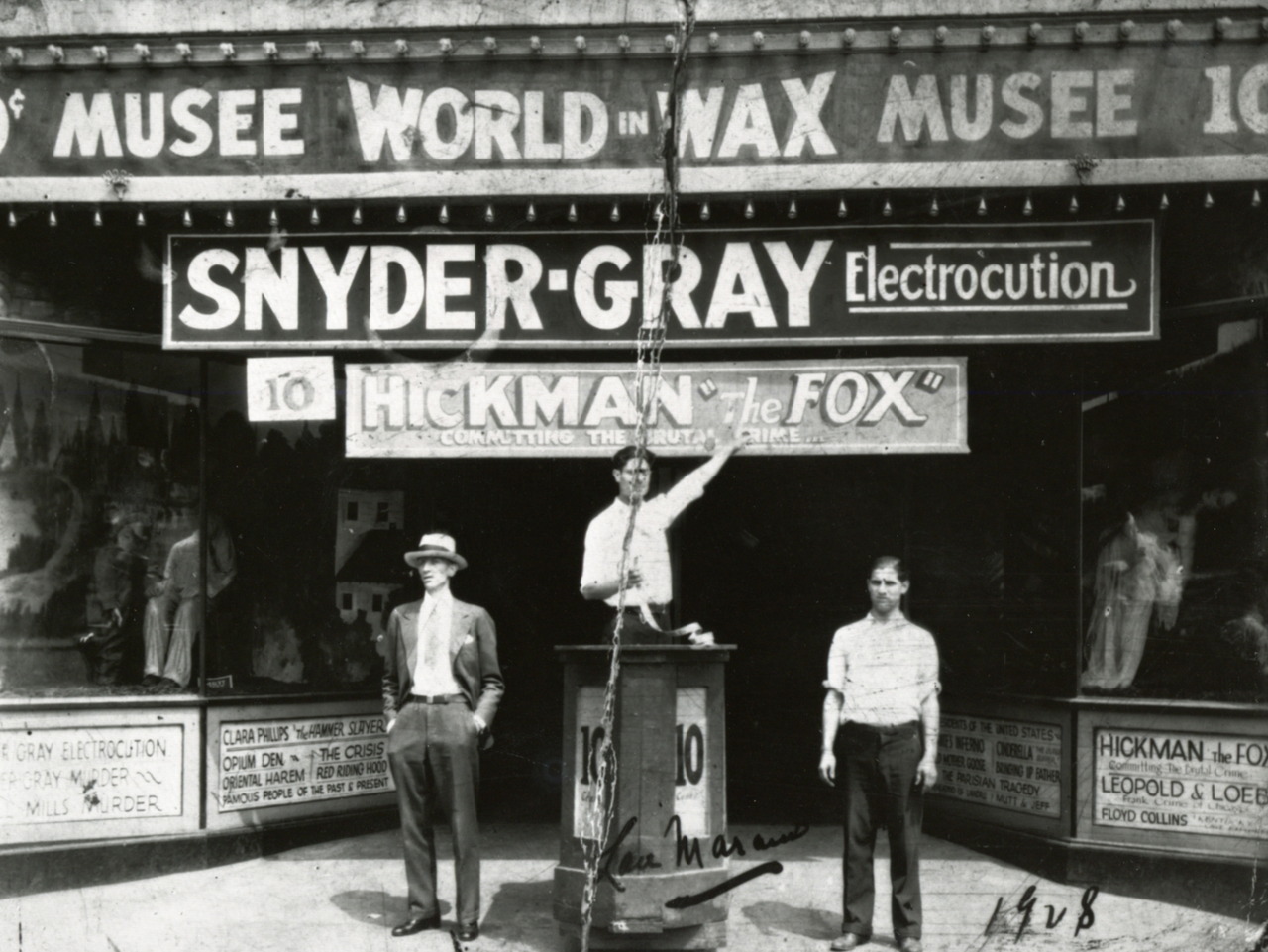
Of course not everything was as dazzling as Luna Park at night. Like any carnival, Coney Island had its share of barkers announcing everything from games of “chance” to freak shows and a wax museum that depicted–among other grisly sights–the murder of Albert Snyder by his wife, Ruth Snyder, and her lover, Judd Gray, and the subsequent execution of the notorious pair.
GET YOUR DIME’S WORTH…Barkers at Coney Island’s Eden Musee wax museum advertise the wax dummy recreation of the Ruth Snyder and Judd Gray executions, circa 1928. The Snyder-Gray murder trial of 1927 was a national media sensation. (houseoftoomuchtrouble.tumblr.com)
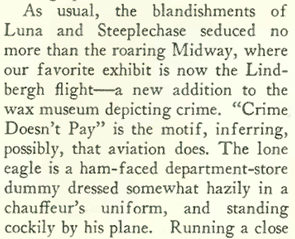
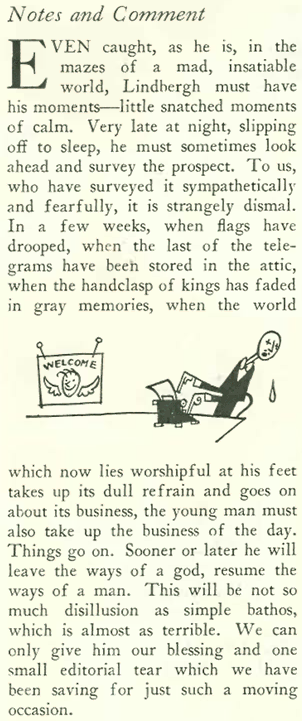
Charles Lindbergh, feted with his own wax image at Coney Island, was beginning to appear on the verge of a meltdown thanks to the relentless attention he was getting in the aftermath of his historic flight:
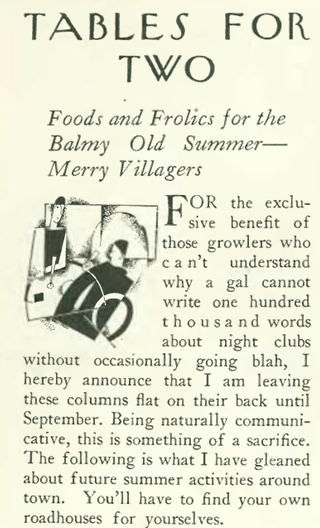
Lois Long also seemed at her wit’s end, abruptly announcing to readers that her nightlife column, “Tables for Two,” would go on hiatus for the summer. No doubt this was a relief to Long, who seemed to be growing weary of the nightclub scene and was doing double duty as fashion writer (“On and Off the Avenue”) for TheNew Yorker:
And perhaps there was another reason Long was taking a break–she would marry fellow New Yorker contributor and cartoonist Peter Arno on Aug. 13, 1927.
* * *
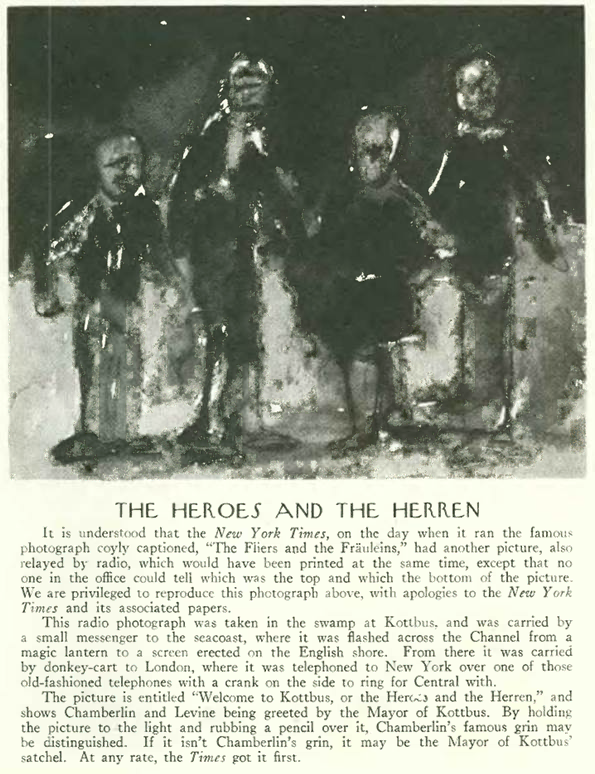
Always poised to take a poke at the newspaper media, TheNew Yorker had some fun with the New York Times’ attempt to reproduce an early wirephoto of Clarence Chamberlin, the second man to pilot a fixed-wing aircraft across the Atlantic from New York to Europe, while carrying the first transatlantic passenger, Charles Levine. The original photo apparently showed Chamberlain and Levine being greeted by the mayor of Kottbus, Germany:
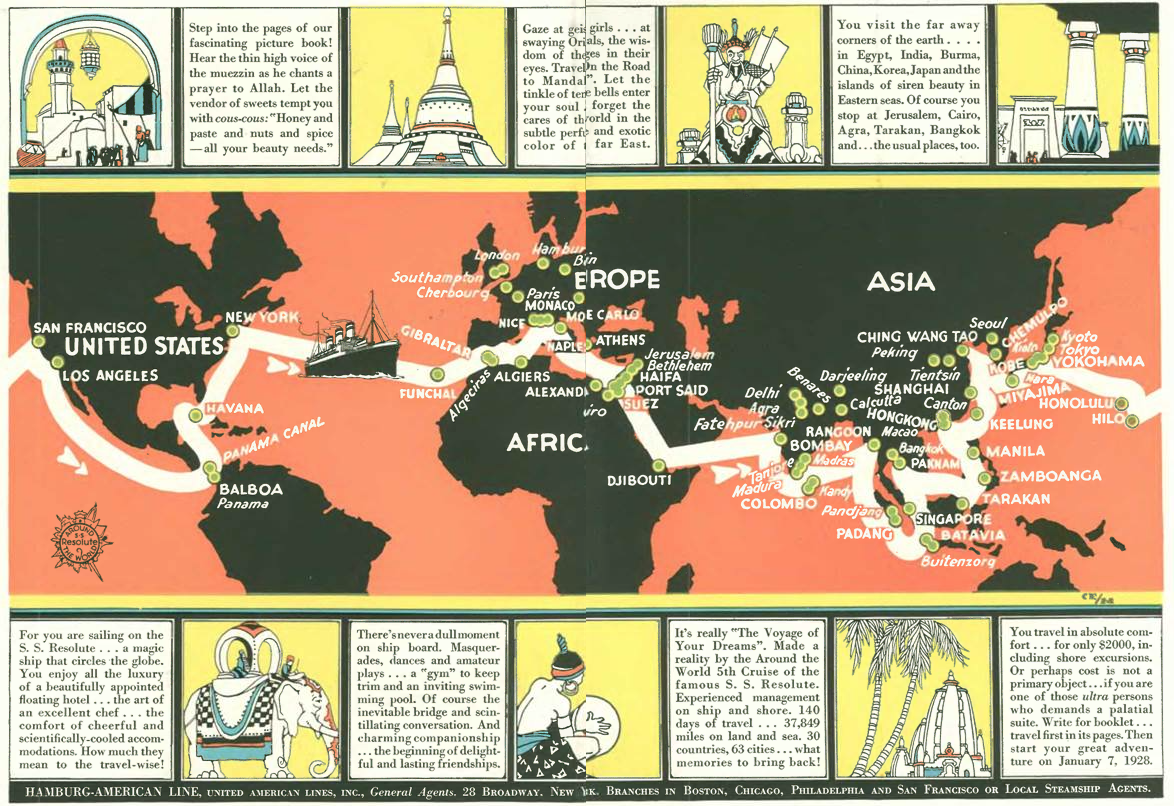
Charles Levine took a plane to Europe, but most still had to settle for the more leisurely pace of a steamship. Below is a two-page advertisement featured in the center of the June 18 issue for an around the world excursion on the Hamburg-American Line (click to enlarge):
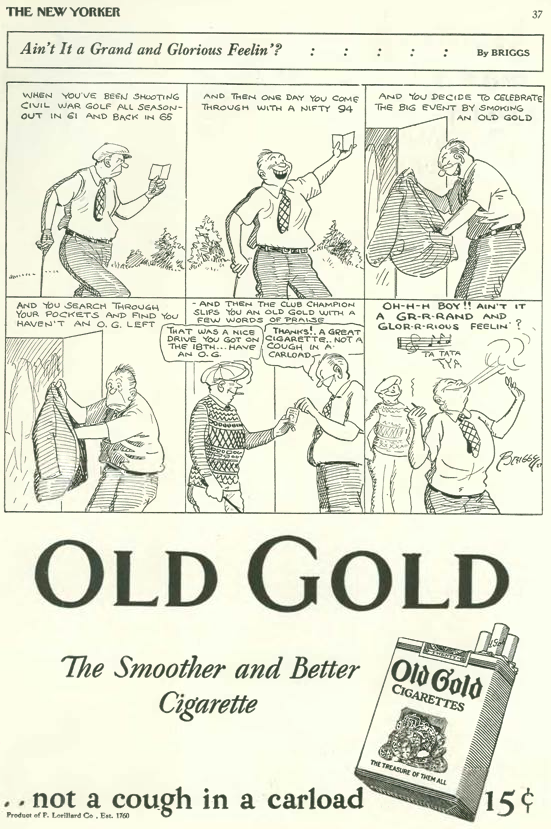
And finally, this advertisement in the back pages for Old Gold cigarettes, which claimed to be “coughless”….
The artist for these Old Gold ads was Clare Briggs, an early American comic strip artist who rose to fame in 1904 with his strip A. Piker Clerk. Growing up in Lincoln, Nebraska gave Briggs the material he needed to depict Midwestern Americana, a style that would influence later cartoonists such as Frank King (Gasoline Alley).
We cross the pond for the May 14, 1927 issue, for a look at all things French. As I’ve previously noted, New Yorker readers of the 1920s had a decidedly Francophile bent when it came to food, fashion and general joie de vivre.
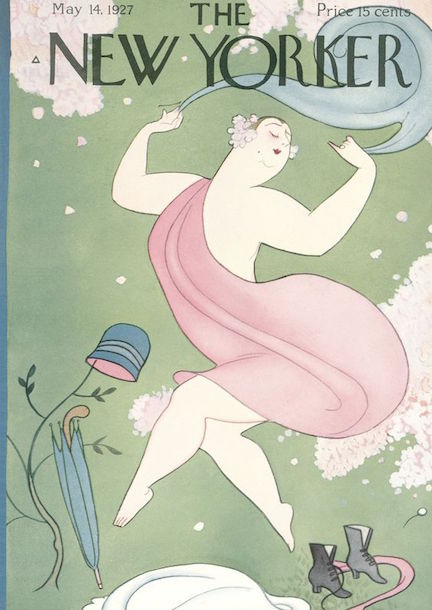
May 14, 1927 cover by Rea Irvin.
In fact, readers were so enamored with France that the country merited its own New Yorker correspondent, Janet Flanner, who wrote under the nom de plume “Genêt.”
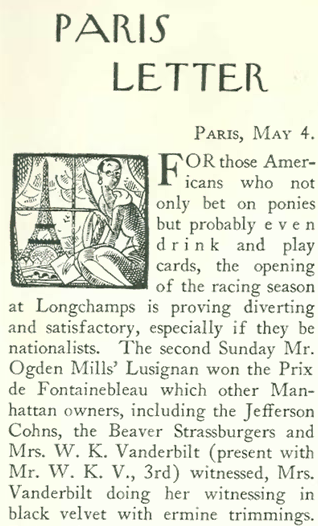
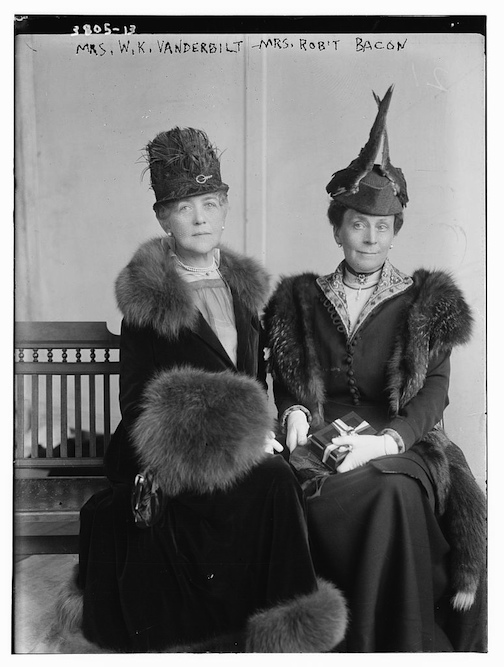
In the May 14 issue Flanner casually mused about the racing season at Longchamps, which attracted the likes of Anne Harriman Vanderbilt (identified here as Mrs. W. K. Vanderbilt), who was well-known in France for her philanthropic work during World War I, including her founding of an ambulance service and a hospital at Neuilly. Vanderbilt received the class of the Legion of Honor in 1919 in recognition of her war work, and in 1931 she was made an officer of the legion.
BLUE BLOODS…Anne HarrimanVanderbilt (left) with Martha Waldron Cowdin Bacon, circa 1915-1920. Bacon served as chairman of the American Ambulance Committee. (Library of Congress)
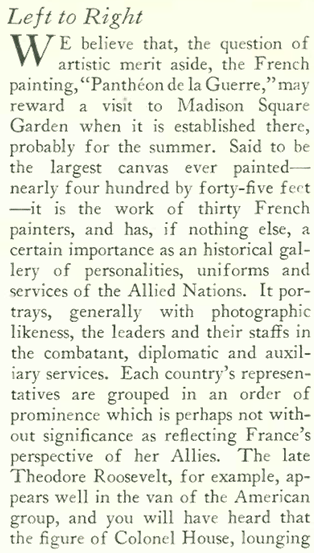
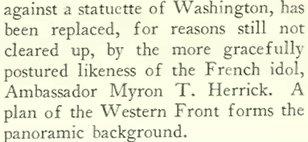
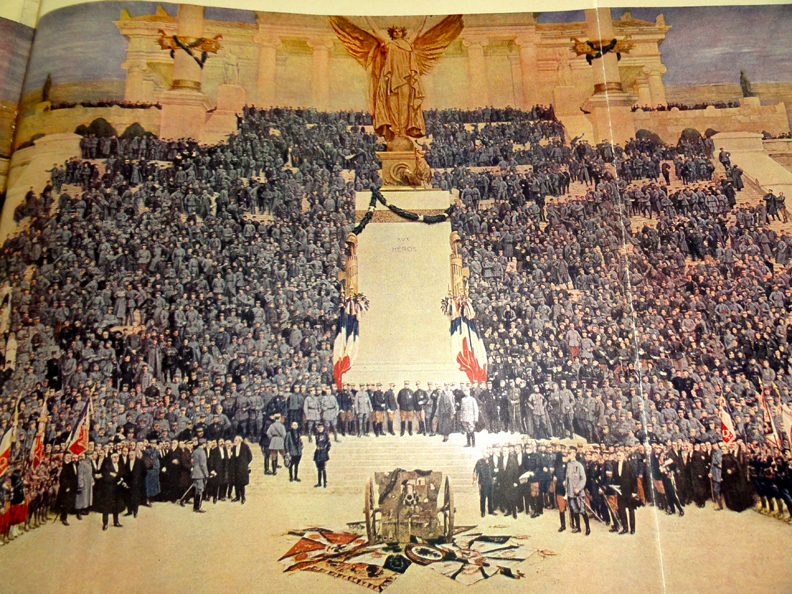
In “Talk of the Town,” the editors suggested that readers go to Madison Square Garden and check out the world’s largest canvas painting, Panthéon de la Guerre, more for the spectacle than for any artistic merit:
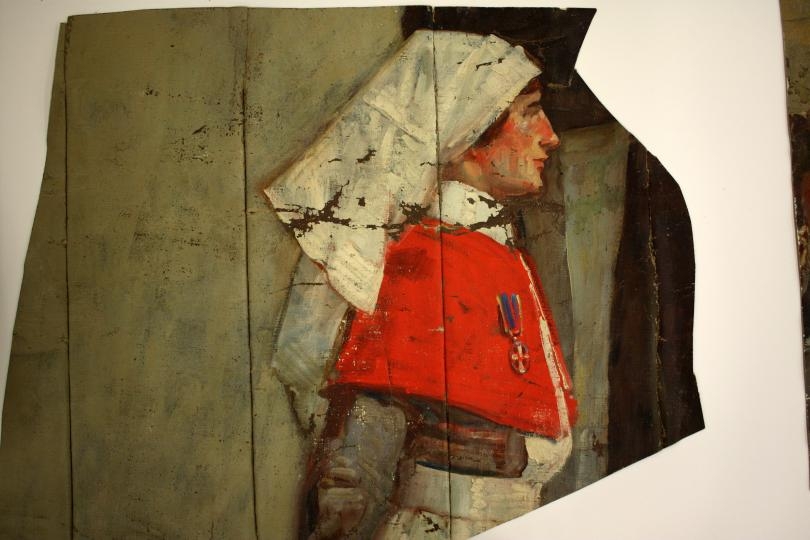
Section of Panthéon de la Guerre showing allies of World War I, now in Memory Hall, Liberty Memorial, Kansas City, Missouri. (theworldwar.com) Click to enlarge
Panthéon de la Guerre was painted during World War I as a circular panorama—402 feet in circumference and 45 feet high—displayed in Paris in a specially built building next to the Hôtel des Invalides. It was visited by an estimated eight million people between 1918 and 1927.
The painting was acquired by American businessmen in 1927 and exported to New York, where it was displayed at Madison Square Garden. Some changes were made to the painting for the benefit of an American audience, including the addition of an African-American soldier. The work later toured the U.S.—from 1932 to 1940 it went to Washington DC, Chicago, Cleveland, and San Francisco. It was then acquired by restaurant entrepreneur William Haussner for $3,400.
In 1956 Haussner donated the work to Leroy MacMorris to be adapted for display at the Liberty Memorial in Kansas City. MacMorris drastically reduced the size of the work and modified it to emphasize America’s contribution to WWI: Only seven percent of the original work was retained, and large French sections were left out. MacMorris likened it to “whittling down a novel to Reader’s Digest condensation.” And he didn’t stop there. He also modified some figures to represent post-WWI figures such as Presidents Franklin Roosevelt and Harry Truman.
A BIT OF THIS, A DASH OF THAT…Figure of Victory from the Temple to Glory cut to fit above a doorway at Memory Hall, Liberty Memorial, Kansas City, Missouri, with the staircase of heroes to either side. Compare to original below:(trenchartcollection.com)
To reduce and reconfigure the painting, MacMorris first photographed it in detail, then cut out the figures in the photos and used them like puzzle pieces to work out his new condensed version, which was dedicated on Nov. 11, 1959.
As for the unused portions, what MacMorris did not use he threw away, sending several of the larger excised passages back to Haussner for display in his Baltimore restaurant. MacMorris also gave pieces to the art students who helped him reconfigure the painting and to a number of prominent Kansas Citians.
Fragment from Panthéon de la Guerre depicting a British nursing sister. (theworldwar.org)
The National World War I Museum and Memorial in Kansas City recently held an exhibition on the painting and its recovered fragments.
* * *
Lois Long had returned from Paris and advised readers on where to shop in the City of Light. Her fashion column, “On and Off the Avenue,” featured recommendations for many stores and bargains. It began with a brief note from “Parisite,” aka Elizabeth Hawes, who occasionally contributed to Long’s column with cables sent from Paris).
And now for the advertisements, all from the May 14 issue, featuring various French themes, such as this one for Krasny makeup that evokes the glamour of Paris and the intrigue of Russian women…
…or exotic perfumes for only the most exclusive set…
…or the chic look of Revillon Freres spring coats and wraps…
…or fake vermouth…this odd little illustration in the back pages for non-alcoholic vermouth, served by a dutiful French maid to what appears to be a giant. You have to feel sorry for the writers of such ads during Prohibition, trying so hard to make this sad libation appealing to thirsty New Yorkers…
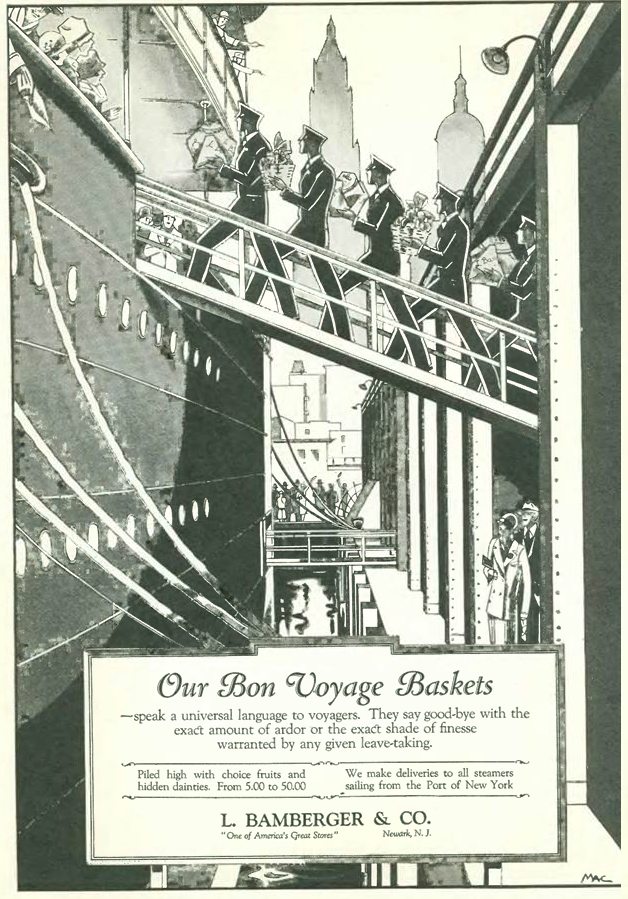
…but there were those lucky few who could actually travel to France and drink the real stuff, you could get a really swell send-off with a “Bon Voyage Basket” from L. Bamberger & Co…
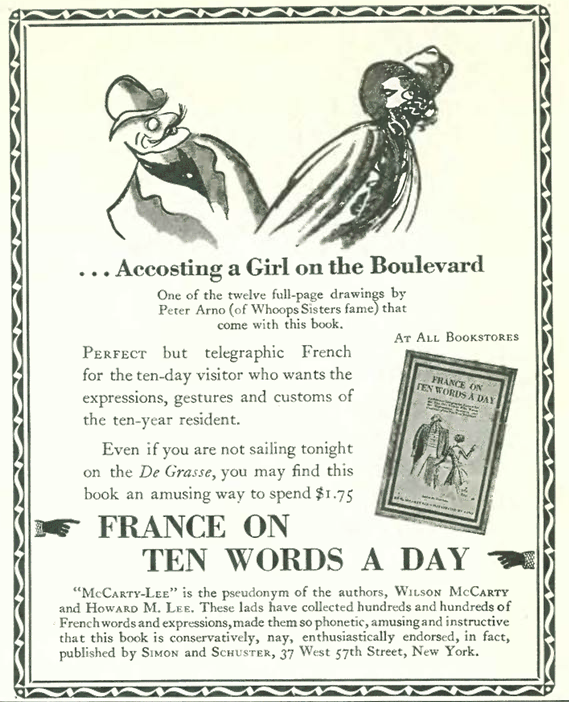
…and while you were in France (at least for the men), Peter Arno could show you how to give the glad eye to the mesdemoiselles…
Publisher William Randolph Hearst was a larger-than-life personality who inspired writer Herman Mankiewicz* —an early NewYorker contributor—to pen the screenplay for Orson Welles’s film Citizen Kane.
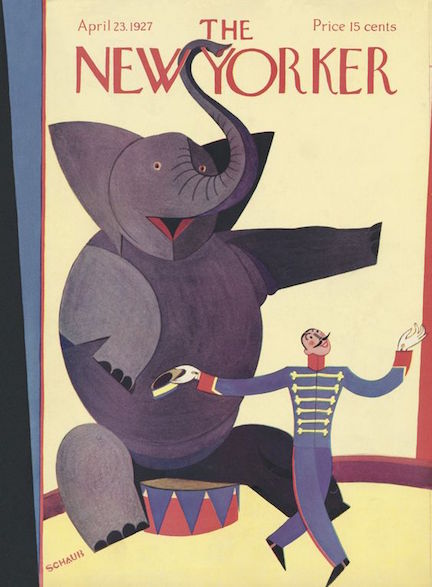
April 23, 1927 cover by Andre De Schaub.
* Stuart Cooke adds this clarification: Herman Mankiewicz did not write the screenplay of Citizen Kane. He contributed to it along with many others. (See Citizen Welles by Frank Brady). However, Welles credited him as the co-writer and at the last minute, graciously put Mankiewicz’s before his in the credits.
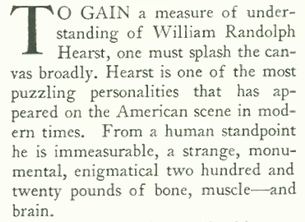
So when the New Yorker featured Hearst in its April 23, 1927 “Profile,” it required five lengthy installments by the writer (and Hearst biographer) John K. Winkler, who began the profile with this observation:
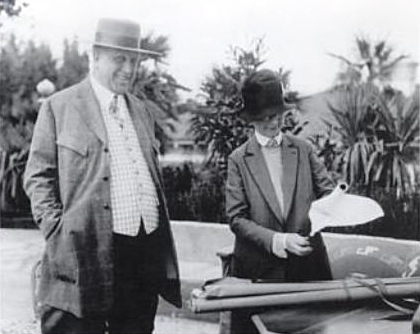
MAKE NO SMALL PLANS…William Randolph Hearst reviews blueprints with Julia Morgan, architect of Hearst Castle, in 1926. (Wikipedia)
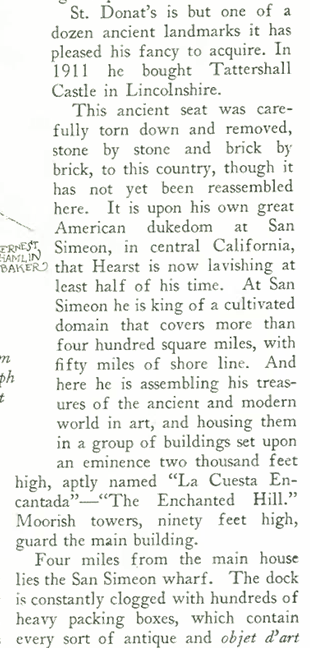
Winkler detailed Hearst’s plunder of European art and architecture—much of it sitting on a wharf below his “castle” at San Simeon on California’s Central Coast—awaiting architect Julia Morgan’s decision on where it might fit into the fabric of what became one of America’s most famous “homes.” Later in the profile Winkler described Hearst’s purchase of St. Donat’s Castle in Wales, and his acquisition of another castle that he had dismantled and shipped to San Simeon.
Hearst Castle at San Simeon. (sfgate)LEGENDARY PARTIES FOR THE LEGENDS…Hollywood actors pose for a photo at one of the famed Hearst costume parties…(back row) Douglas Montgomery, Leslie Howard, Marion Davies, unidentified man; (front row) Bruce Cabot, George K. Arthur, Ramon Navarro & Eileen Perry. (moviemorlocks.com)HOST & HOSTESS…Hearst and his mistress, actress Marion Davies, at one of their famous San Simeon costume balls (oldloves.tumblr.com)
The mid-1920s to the mid-1930s were glory days at San Simeon. In his Great Hall Hearst “held court” with movie stars and statesmen who also attended famous costume parties hosted by Hearst and actress Marion Davies.
The profile writer, John K. Winkler, would publish two books on Hearst in 1928 and 1955, as well as books on other captains of industry including Andrew Carnegie, John D. Rockefeller, F.W. Woolworth, J. Pierpont Morgan and the DuPont family.
* * *
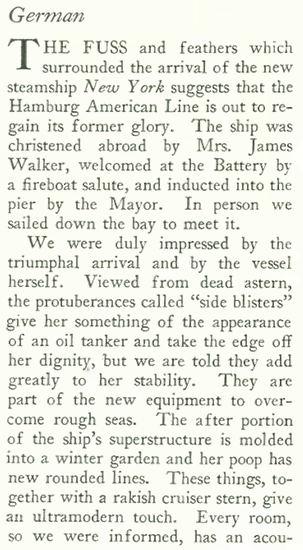
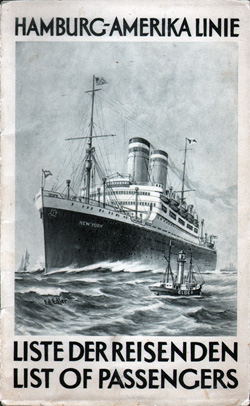
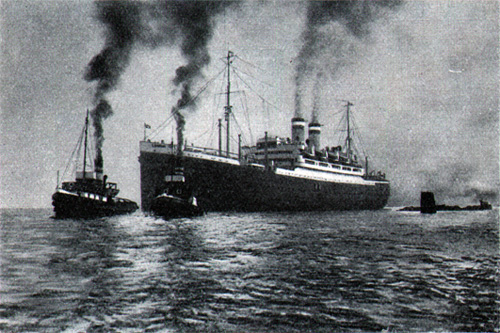
The Germany-based Hamburg America Line had been a major player in moving both passengers and freight between Europe and North America since 1847. In 1914, its passenger flagship, the Vaterland, was caught in port at Hoboken, New Jersey at the outbreak of World War I. She was later seized, renamed Leviathan after the declaration of war on Germany in 1917, and served as a U.S. troopship. So it was significant to European travelers (including many New Yorker readers) that the line was out to regain its former glory with the launch of the New York.
Cover of the passenger list for the, SS New York.Photo of the departure of the steamship SS New York.
* * *
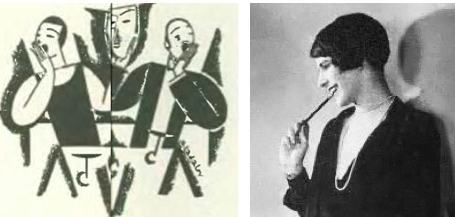
Lois Long chronicled nightly escapades of drinking, dining, and dancing for The New Yorker in her column “Tables for Two,” and she often teased her readers about her true identity. Although in reality she was young (26), attractive and a big partier, she often described herself to readers as a bit of wallflower, or a “short squat maiden of forty.” When her marriage to cartoonist Peter Arno was announced in August 1927, her true identity was revealed.
Long seemed to be growing bored with New York nightlife, as evidenced by shorter “Tables” columns (the feature would go on hiatus in 1930) while her fashion column—On and Off the Avenue—took on more importance. In her “Tables” column for the April 23, 1927 issue, she devoted most of it to yet another playful deception for her readers.
The artwork that accompanied Lois Long’s “Tables for Two” column often featured this pair of bored nightclub patrons. Long, with stylish bob, shown during her New Yorker days in the 1920s.
This time she portrays herself as a bookish spinster…
In other diversions, “Talk of the Town” made this mention of the Orteig Prize,a reward offered to the first aviator to fly non-stop from New York City to Paris or vice versa. Of course we know Charles Lindbergh would capture the prize the following month (and six others would die trying):
In advertising, the issue featured this promotion for radio station WOR. Broadcast radio was in its infancy in 1927, and this is one of the first ads of its kind to appear in The New Yorker:
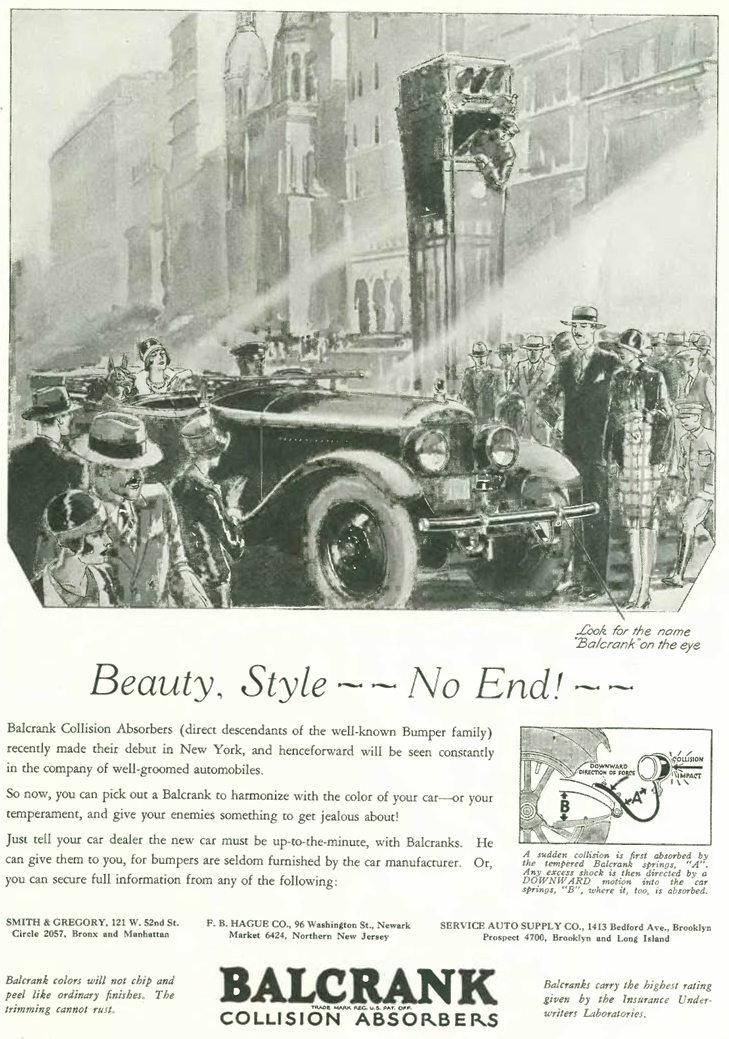
The following advertisement for Balcrank auto bumpers tells you a lot about the bourgeois New Yorker reader it is trying to reach. It suggests the addition of these bumpers to your car will lend an upper class touch people will admire and notice—everyone from the traffic cop in the signal tower to the smart couple who seem to be inches away from having their feet run over.
I love the smug expression worn by the female passenger. Of course the actual old money upper class wouldn’t see this ad—they could care less about bumpers or literature—and would be reading Town & Country, the Social Register, or nothing at all. Funny how the early New Yorker loved to tweak the nose of the upper class, all the while running ads that appealed to a grasping bourgeois desire for status. The bumper ad says it all.
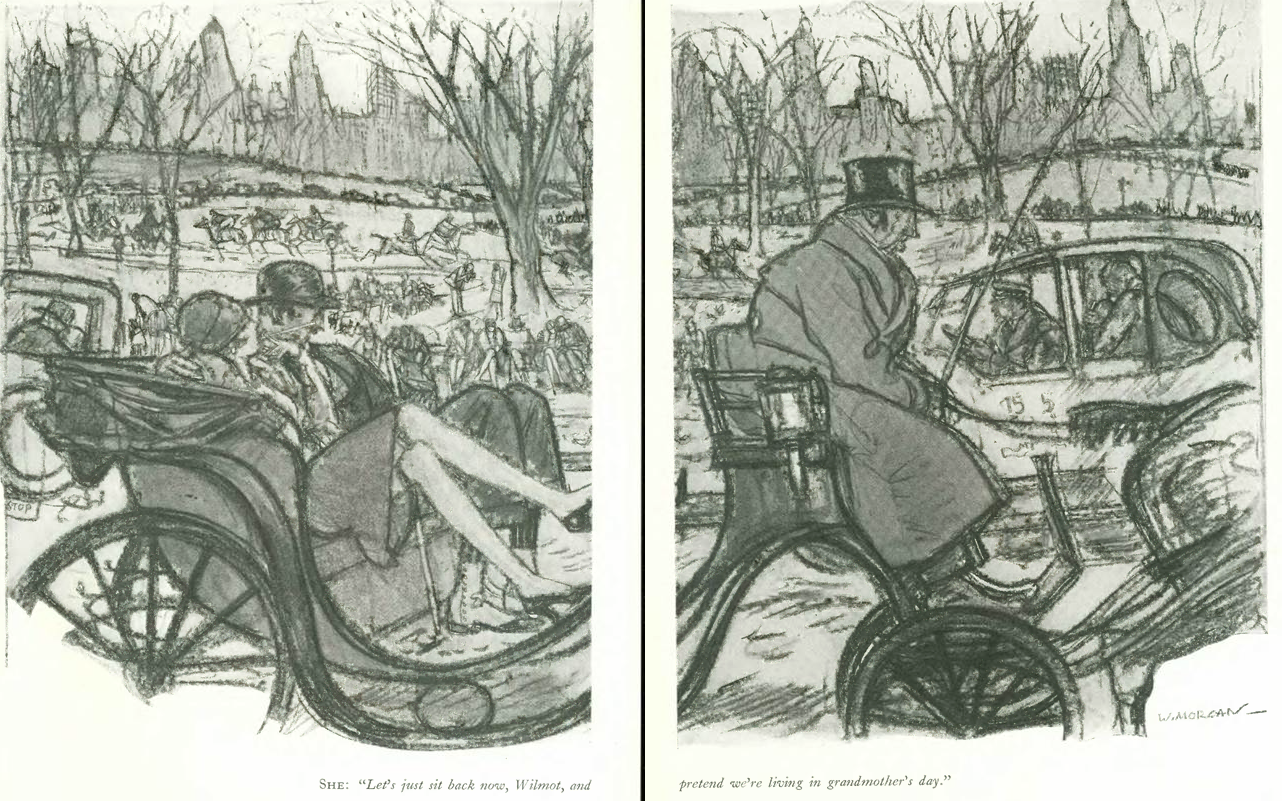
The issue included this cartoon by Wallace Morgan, set in Central Park. Displayed across a two-page spread, the caption reads: SHE: “Let’s just sit back Wilmot, and pretend we’re living in grandmother’s day.” (click to enlarge)
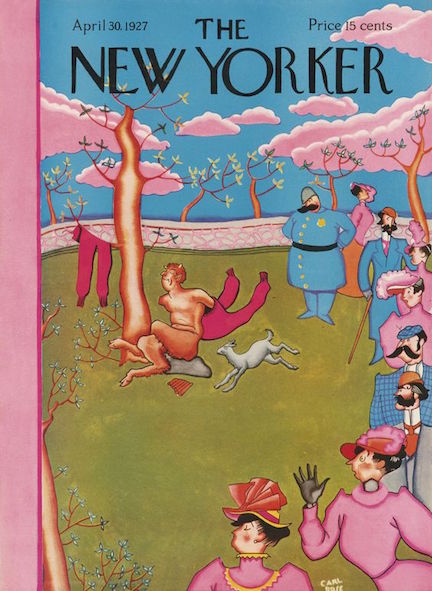
And finally, the Barnum and Bailey Circus was in town, so we end with this cartoon by Carl Rose:
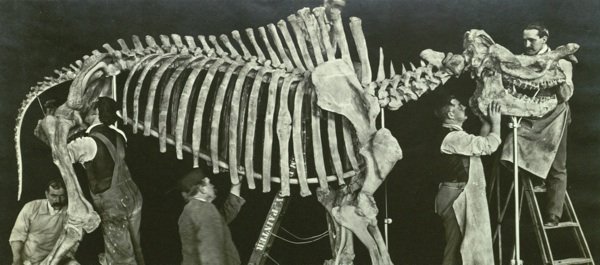
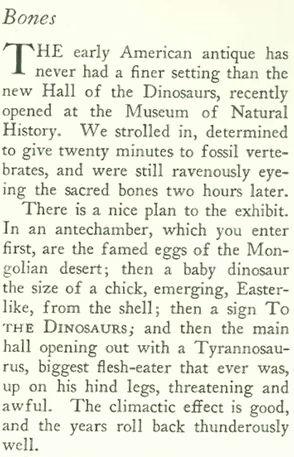
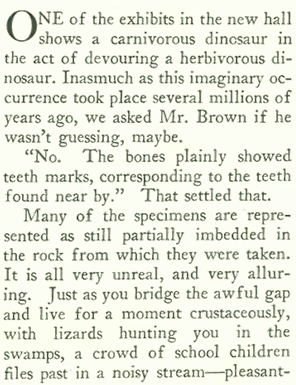
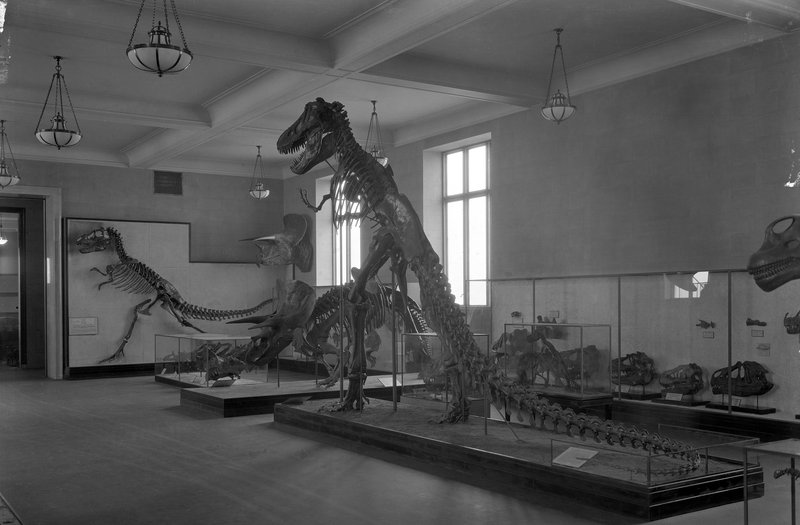
New York’s American Museum of National History unveiled its new Hall of Dinosaurs, and it was so impressive that even The New Yorker set aside its usual blasé tone toward popular attractions…
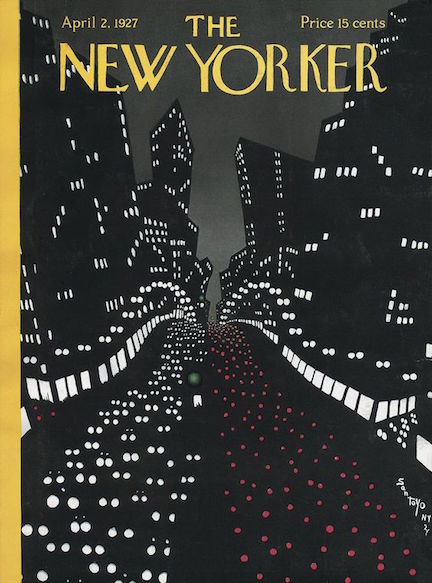
April 2, 1927 cover by Toyo San.
…and found its “Talk of the Town” editors to be quite taken with “sacred bones:”
NEW DIGS…Children studying a Brontosaurus skeleton in the American Museum of National History’s Hall of Dinosaurs, 1927. (AMNH Research Library)
Tyrannosaurus and Triceratops in the Hall of Dinosaurs, 1927. (AMNH Research Library)
* * *
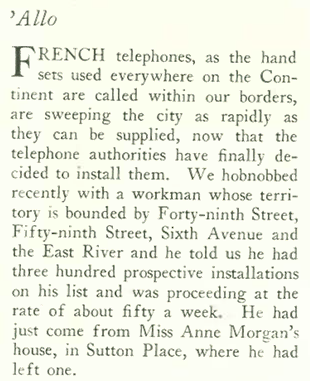
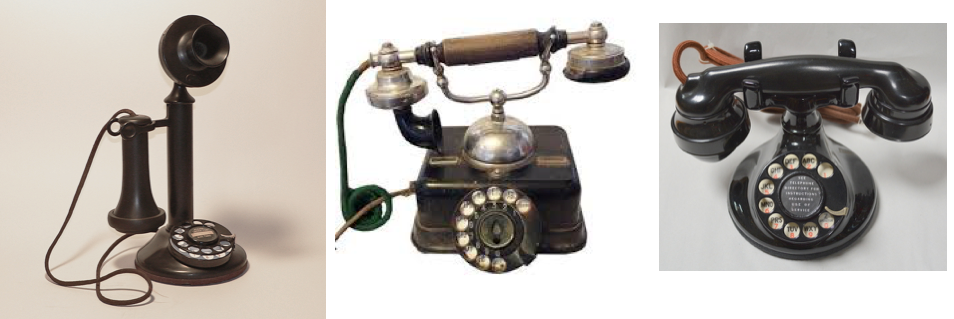
The April 2, 1927 issue also found New Yorkers to be agog over “French-style” telephones:
FRANCOPHONE…Trendy New Yorkers were switching from their old reliable candlestick telephones (left) to “French-style” phones (center) that were common throughout Europe. Western Electric answered their call with a sleek American version in 1928, right.
* * *
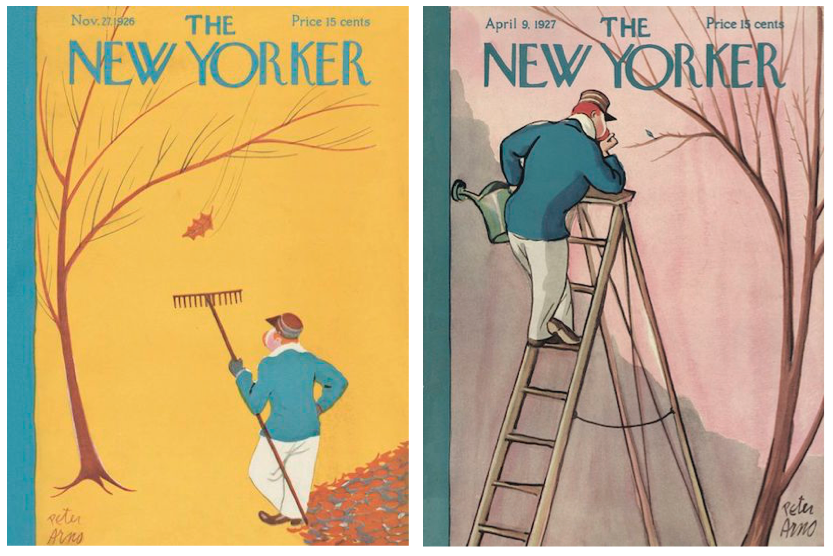
The April 9, 1927 issue featured the second of Peter Arno’s 99 covers for the New Yorker. His first cover appeared eighteen issues earlier (Nov. 22, 1926) and featured the same gardener, but this time he was inspecting a newly budded leaf rather than the last one to fall:
Note the difference in style between the two covers–the April 9 cover is rendered with more detail, depth and texture. These would be Arno’s only covers with rather sedate subjects. Subsequent covers would have more action and humor, such as this one from 1954, one of my favorites:
* * *
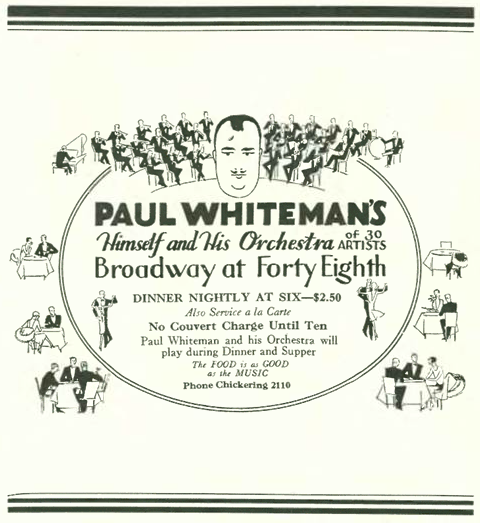
And now for a note about Paul Whiteman. One cannot write about the Jazz Age without mentioning the Paul Whiteman Orchestra. It was Whiteman who in 1924 commissioned George Gershwin’sRhapsody in Blue, which premiered with Whiteman’s orchestra (and with Gershwin himself at the piano).
This ad in the Feb. 26, 1927 New Yorker announced the much-anticipated return of Paul Whiteman and his orchestra. The caricature of Whiteman was his trademark.
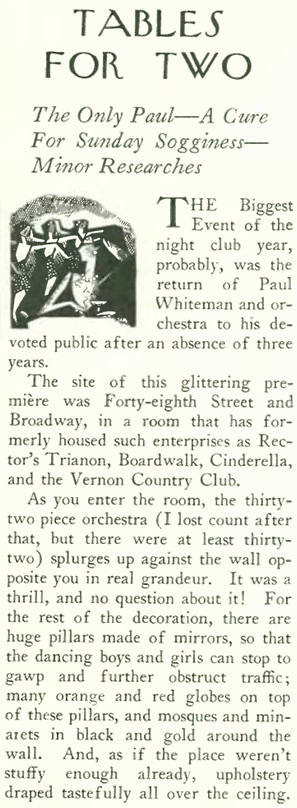
Even Lois Long, who seemed to be growing bored with New York nightlife, found reason to celebrate Whiteman in this column that appeared alongside the ad:
Whiteman had 28 number one records during the 1920s and dominated sheet music sales. He provided music for six Broadway shows and produced more than 600 recordings. Dubbed “King of Jazz” his style was actually a blending of jazz and symphonic music.
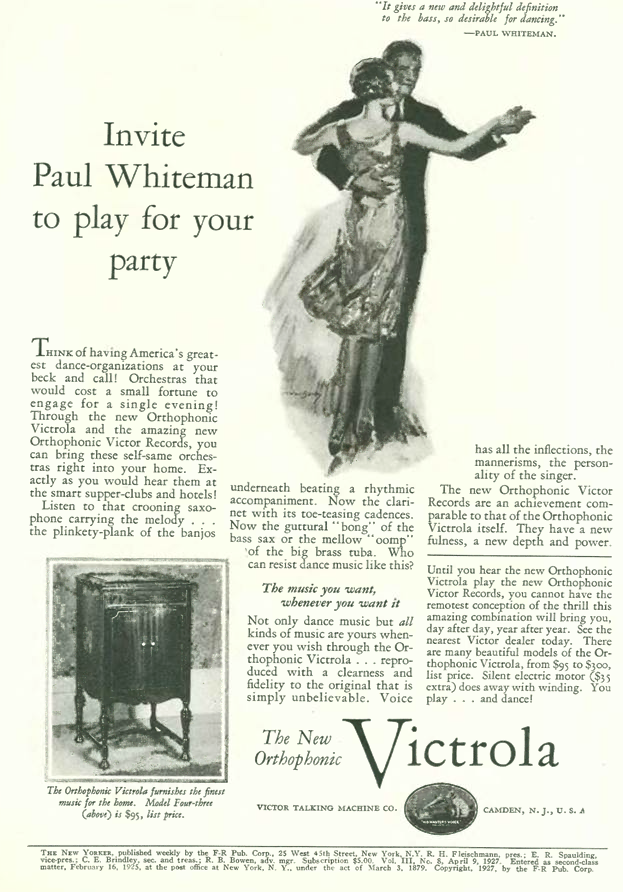
The folks at Victor Talking Machines played on Whiteman’s fame with this advertisement for their latest “Orthophonic” Victrola. Although it was the first consumer phonograph designed specifically to play “electrically” recorded discs and was recognized as a major step forward in sound reproduction, the claim that the machine would reproduce sounds “exactly as you would hear them at the smart supper clubs” seemed a little far-fetched.
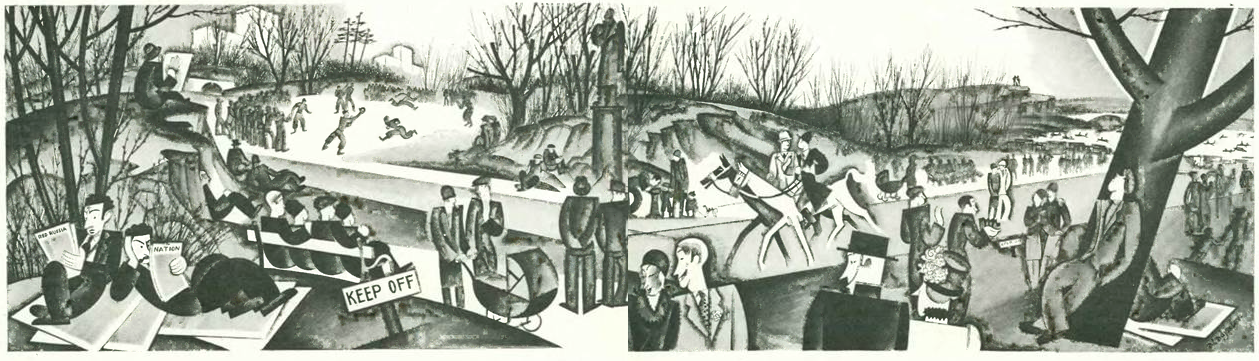
And finally, in celebration of spring, Constantin Alajalov illustrated an April day in Central Park, which was featured in a two-page spread in “Talk of the Town.”
With Christmas fast approaching, The New Yorker was getting into the spirit of holidays, especially with all of the advertising revenue it gained from merchants who targeted its well-heeled readership.
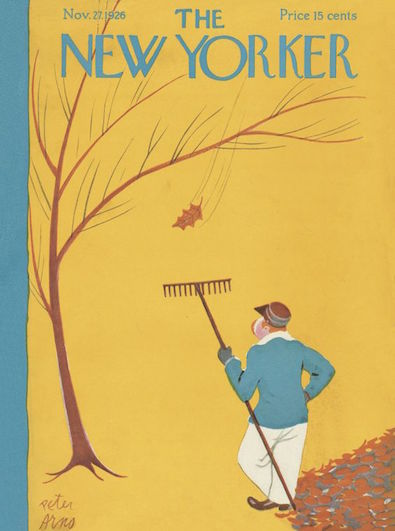
November 27, 1926—Peter Arno’s first cover for the New Yorker. He would do 98 more.
Lois Long continued to write both of her weekly columns for the magazine–her observations on fashion along with ideas for Christmas shoppers in “On and Off the Avenue” (“Saks’ toy department has some of the loveliest French notepaper for tiny children…”) and her musings on nightlife in “Tables for Two.”
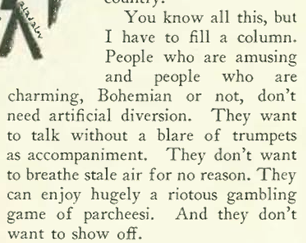
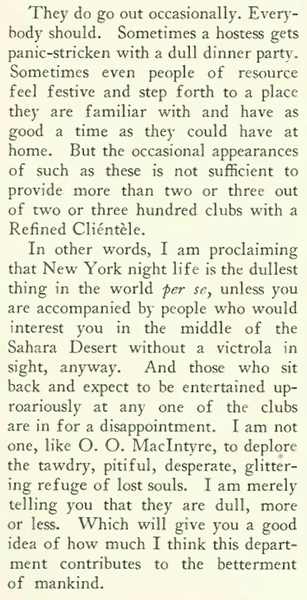
In contrast to her rather light mood expressed in the fashion column, Long was feeling far from jolly in her “Tables” observations of New York’s nightlife:
As you might recall, in a previous column Long tossed a “ho-hum” in the direction of the famed Cotton Club. Perhaps Prohibition was taking its toll on the hard-partying columnist.
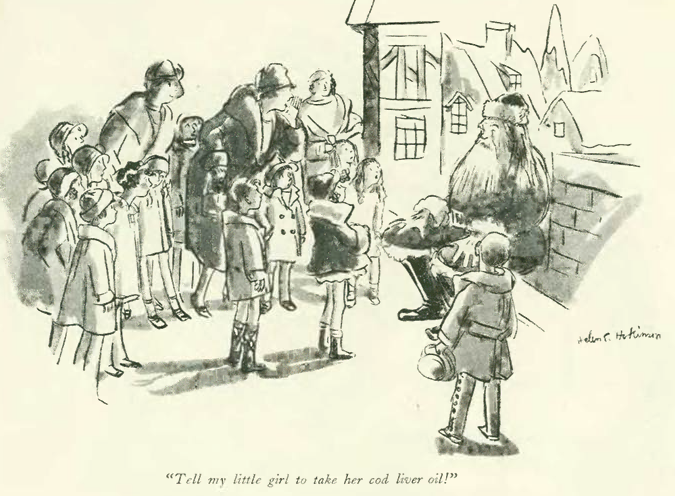
Nevertheless, the holiday spirit was upon with The New Yorker, in the cartoons (this one by Helen Hokinson)…
…and in various advertisements.
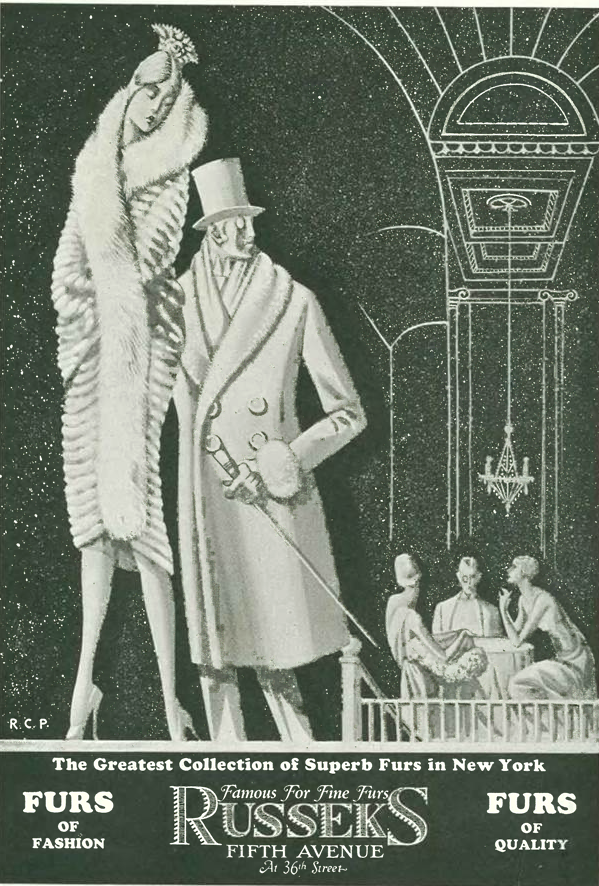
Note this advertisement (below) from Russeks. The comics in The New Yorker famously poked fun at the comic pairings of rich old men and their young mistresses, but this ad seemed to glorify such a pairing while suggesting that an older man of means must invest in fine furs if he is going to hang on to his trophy wife or mistress, in this case a young woman who appears to be nearly eight feet tall…
I liked this ad from Nat Lewis for the simple line drawing…
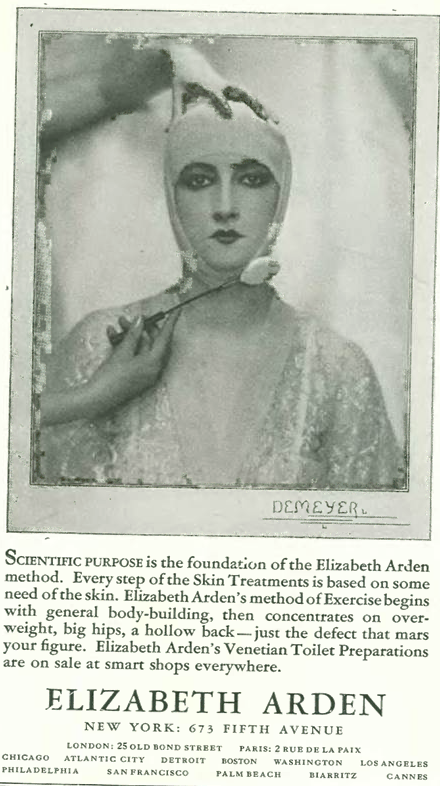
…but the ads for Elizabeth Arden, which for years featured this “Vienna Youth Mask” image, always creep me out.
The mask was made of papier-mâché lined with tinfoil. Although not pictured in the ad, it was also fitted to the client’s face. The Vienna Youth Mask used diathermy to warm up the facial tissues and stimulate blood circulation.
SLEEP TIGHT…The full “Youth Mask” applied to an Elizabeth Arden client in the mid 1930s. (cosmeticsandskin.com)
In a 1930 advertisement, Elizabeth Arden claimed that “The Vienna Youth Mask stimulates the circulation, producing health as Nature herself does, through a constantly renewed blood supply. The amazing value of this treatment lies in the depth to which it penetrates, causing the blood to flow in a rich purifying stream to underlying tissues and muscles…charging them with new youth and vigor. It stirs the circulation as no external friction or massage can possible do.”
I don’t believe this claim was backed up by medical research, but as we all know, Elizabeth Arden made a bundle from these treatments and the various creams and potions that came with it.
It’s the dog days of summer, and the editors of The New Yorker are seeking various distractions to take their minds off of the broiling late season heat.
August 21, 1926 cover by H.O. Hofman.
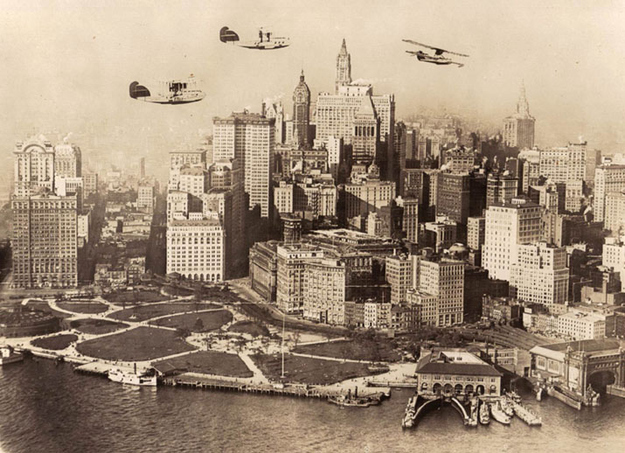
In the Aug. 21, 1926 issue (bearing an appropriate cover image by H.O. Hofman of bathers taking a refreshing dip), “The Talk of the Town” suggested that it was a good time for even the natives to take a boat tour of their beloved island:
Aerial view of Battery Park Wharf in the early 1920s (Buzzfeed)
In the following Aug. 28 issue, the “Talk” editors ducked out of the sun to visit the American Museum of Natural History.
Aug. 28, 1926 cover by H.O. Hofman.
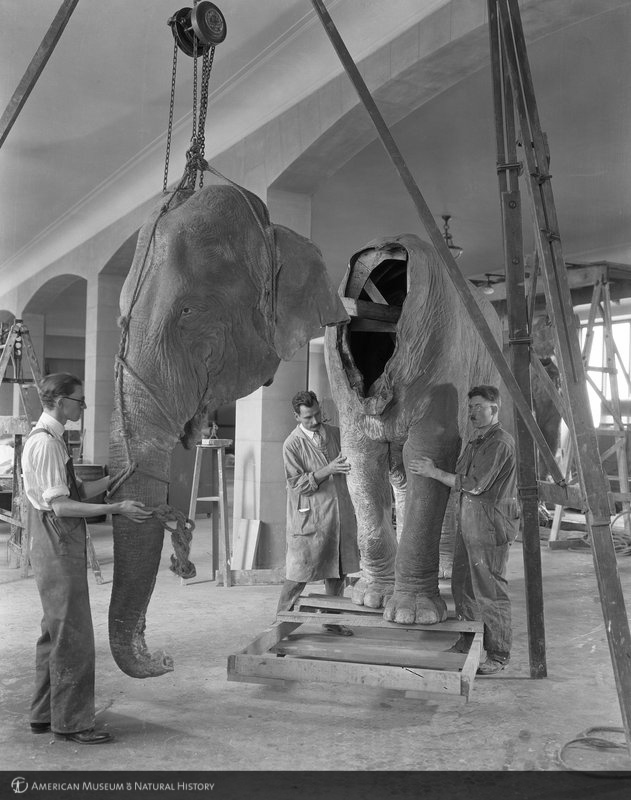
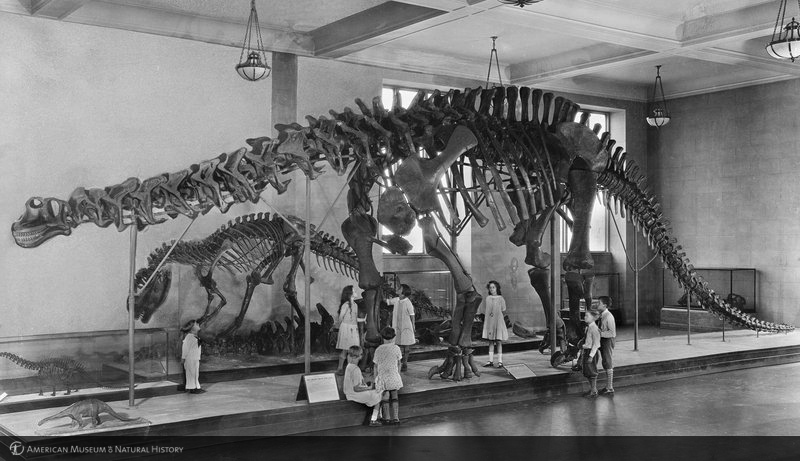
There they found curators busy reorganizing displays of dinosaurs and various stuffed beasts of the wild:
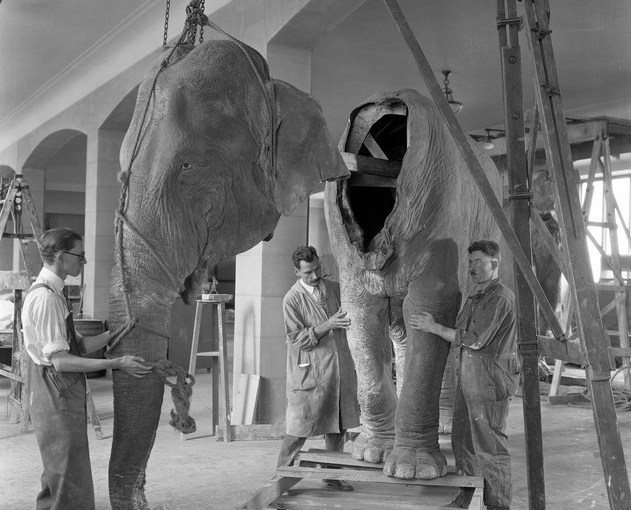
AMNH staff joining head to body of female elephant in Indian Elephant Group, 1926. (AMNH Digital Special Collections)The end result of the 1926 reorganization of displays at the AMNH—children viewing Brontosaurus exhibit in 1927. (AMNH Digital Special Collections)
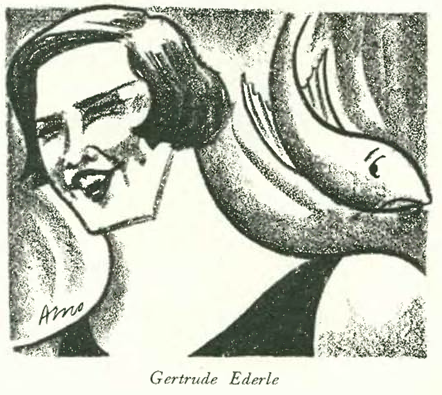
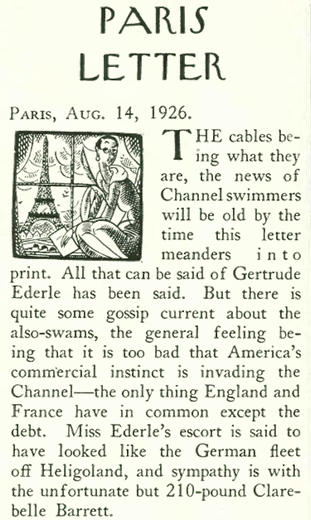
The magazine also profiled New York City native Gertrude Ederle, who became the first woman to swim across the English Channel in August of 1926:
Gertrude Ederle, as rendered by Peter Arno for the “Profile.”
Even Janet Flanner, the magazine’s Paris correspondent, commented on the event, noting Europe’s jealous reaction to an American’s seizing of the record:
Ederle would return home to a ticker tape parade along the Canyon of Heroes in the Financial District, and would also be feted by 5,000 people who turned out on West 65th Street for a block party in her honor.
WHAT FOLKS DID BEFORE TELEVISION…Block party celebrates Gertrude Ederle as “Queen of the Waves.” (Ephemeral New York)
According to the excellent blog Ephemeral New York, Ederle received offers from Hollywood and Broadway and was deluged by marriage proposals. But she returned to a quiet life, moving to Queens and working as a swimming instructor for deaf children–Ederle’s hearing was seriously damaged in the water of the Channel, but otherwise swimming must have been good for her health. She died at age 98 in 2003.
Keeping with the summertime theme, the magazine covered the Gold Cup Regatta, complete with illustrations by Johan Bull:
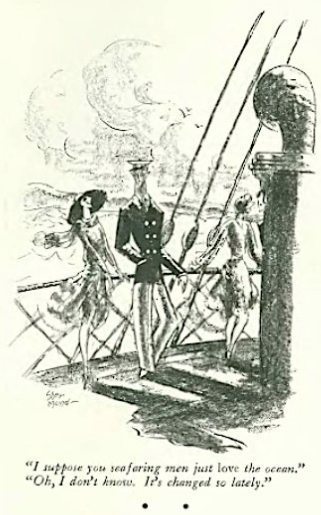
An early Barbara Shermund cartoon, always a delight…
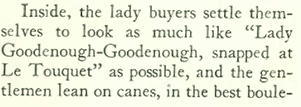
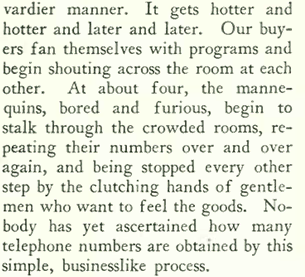
Lois Long took her “On and Off the Avenue” column to Paris, where she cast a jaded eye at the behavior of American buyers of French fashion:
Coco Chanel’s “Little Black Dress” debuted in 1926. (homeecologist.com)
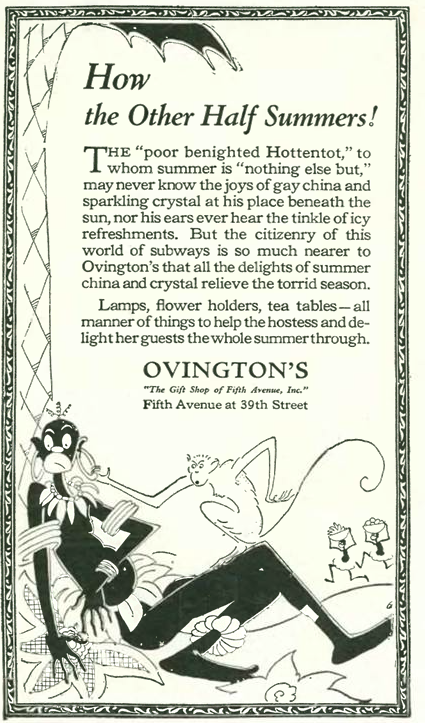
And finally, from the advertising department, this strange ad from Ovington’s, which seemed to be more concerned with promoting racial stereotypes than in selling dinnerware:
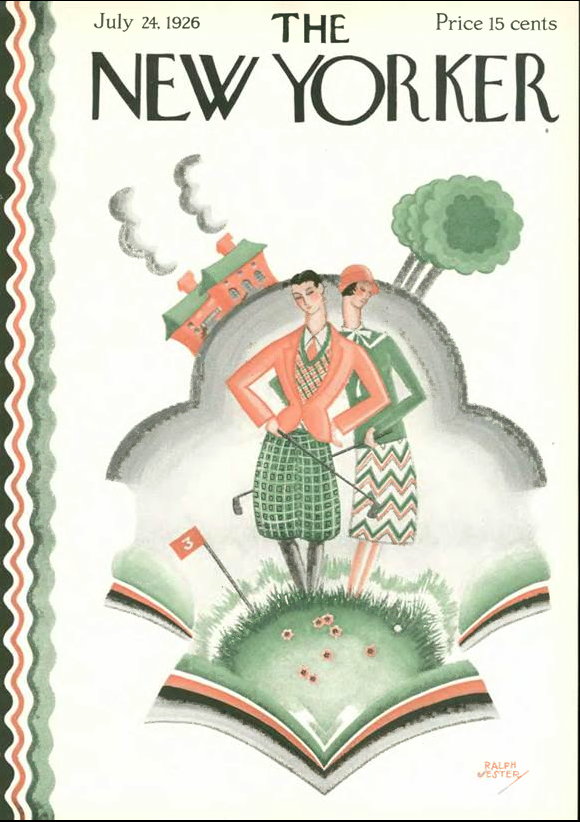
The glories of summertime filled the pages of the July 17, 1926 issue. The cover featured a stylish young couple enjoying a romantic evening on a moonlit lake, while the inside pages were filled with all sorts of outdoor activities ranging from dining and dancing to open air concerts and golf, lots of it.
There was a lengthy profile by Herbert Reed on golfing great Bobby Jones, a mere boy of 24 who competed as an amateur but often beat top pros such as Walter Hagen and Gene Sarazen (in a few years Jones would help design the Augusta National Golf Club and co-found the Masters Tournament).
Rending of Bobby Jones for the “Profile” by illustrator Miguel Covarrubias.
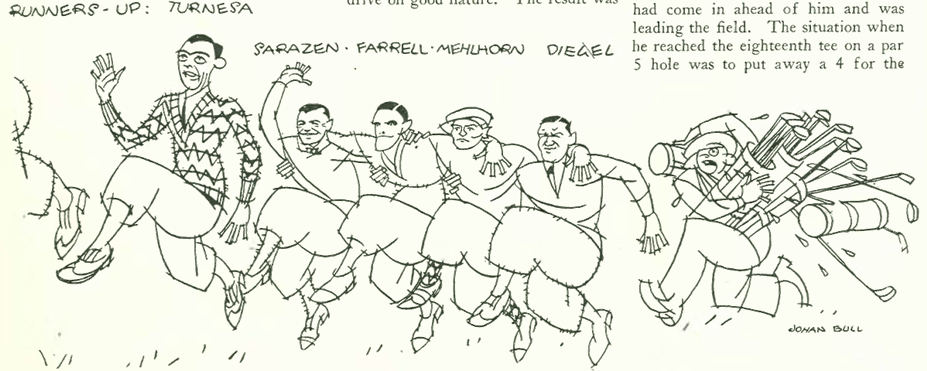
In “Sports of the Week,” Reed wrote about Jones’s second U.S. Open win, in Columbus, Ohio. Johan Bull offered this rendering of the runners-up:
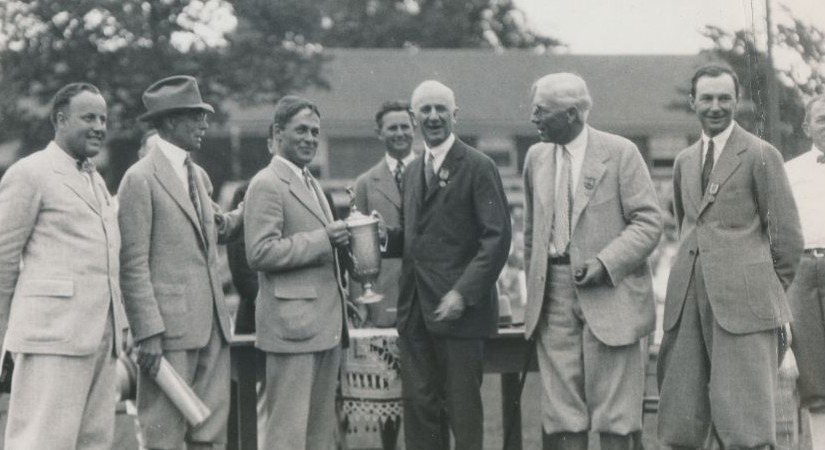
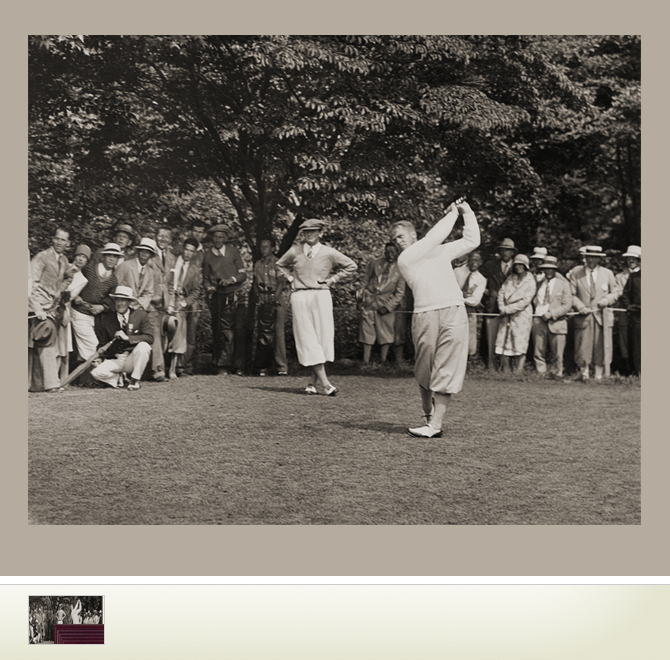
Bobby Jones at the 1926 U.S. Open (golfspast.com)
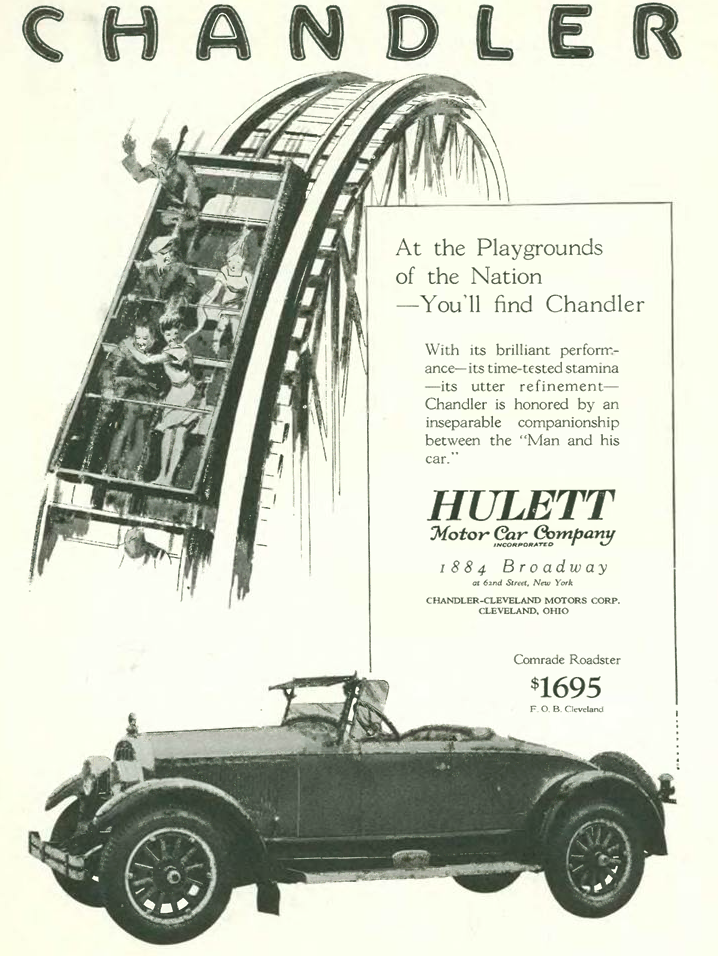
And with the warm weather the tops were open on automobiles for both the rich:
And the not-so-rich:
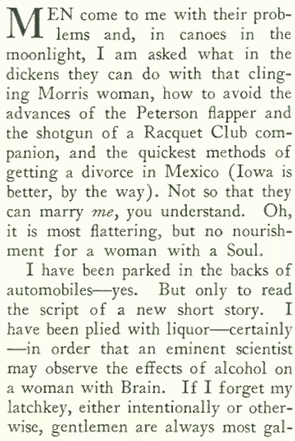
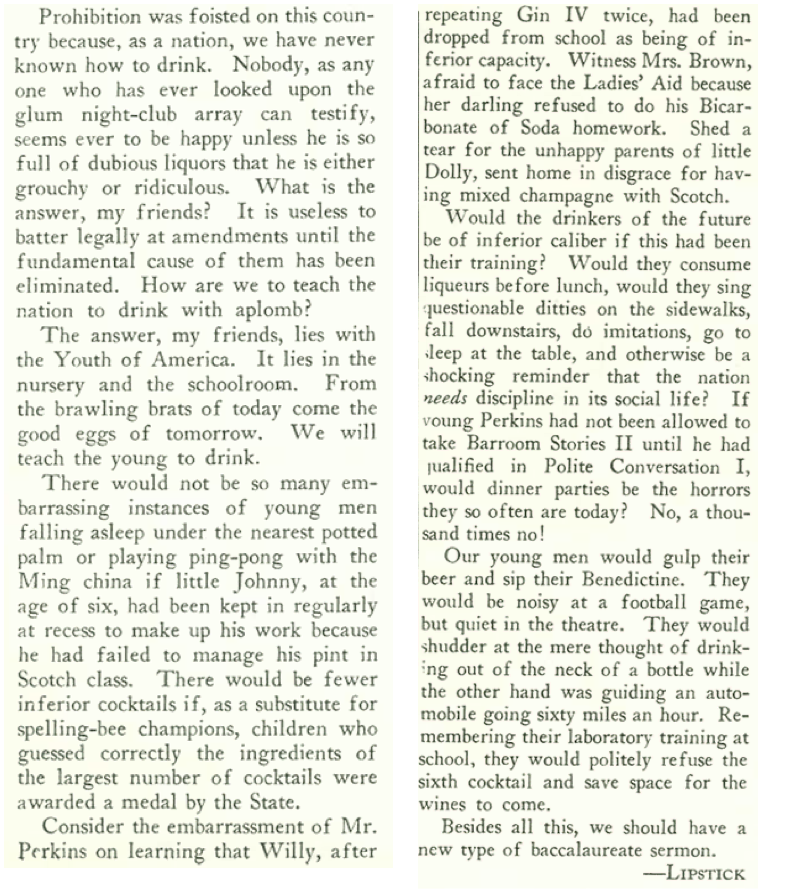
And finally, Lois Long, fed up with reviewing restaurants, fires off a column about the sad state of drinking in America:
Fashion advertising in the early New Yorker can tell you a lot about the mood of the city’s smart set. As I’ve observed before, the magazine’s advertisements were rife with Anglo- and Francophile messaging, but they also reveal much about our changing times. A good example is the upscale retailer Abercrombie & Fitch, which these days uses the tagline “Authentic American clothing since 1892.”
In its early days, A&F was known as an elite outfitter of sporting and excursion goods, supplying aspiring country squires with expensive shotguns, fishing rods and the clothing and kit necessary for successful and stylish expeditions beyond the drawing room:
“Sporting goods” meant something a bit different in 1926.
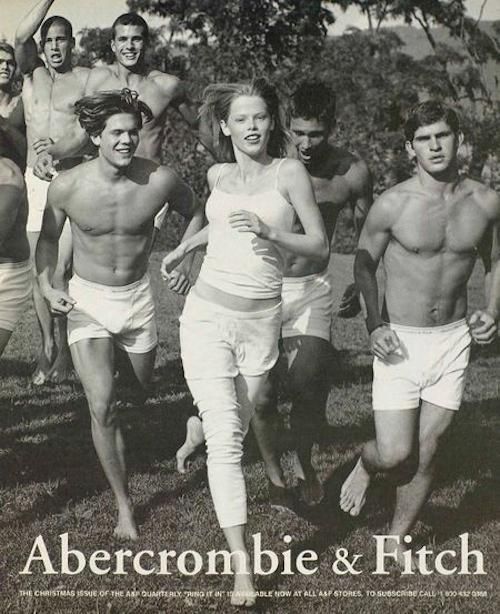
The company went bankrupt in 1976 and operated through mail order until 1988, when the The Limited clothing chain bought the name and operation and turned the focus to the young adult market:
Cover for A&F Fall/Winter 1998, photo by Bruce Weber. (Image Amplified)
Over the past couple of decades there’s been a lot of criticism regarding the abundance of A&L ads featuring shirtless, white men and the corresponding dearth of minority models. The newer ads feature a lot less skin and a sprinkling of minorities, but the product line is still a far cry from the one offered in 1926. Except for the elitist part.
As for other purveyors of fine fashion in the pages of The New Yorker, B. Altman made this stylish pitch for its line of bathing suits:
And here’s an advertisement for Croydon Cravats, featuring the ubiquitous Father’s Day necktie:
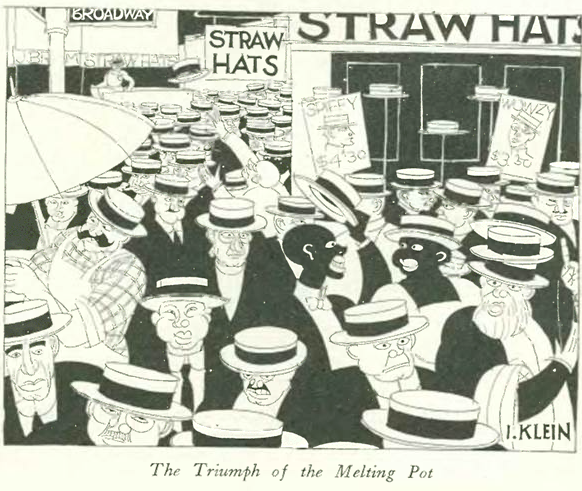
As for fashion in the comics, this drawing by Isadore Klein found humor in the multicultural appeal of the summer straw hat:
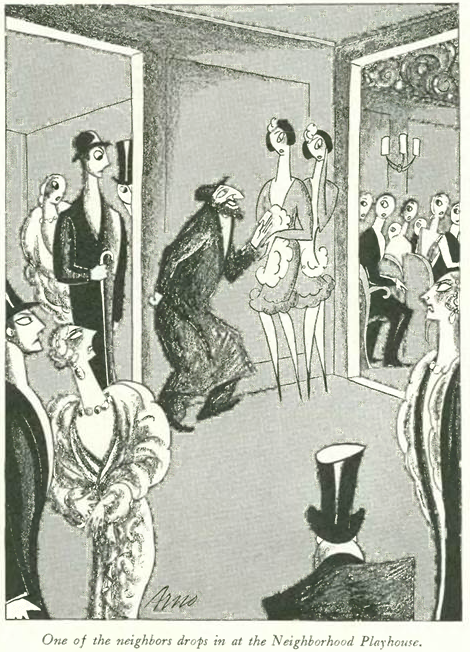
African Americans in the early New Yorker were nearly always depicted in minstrel-style blackface, and Jewish immigrants (such as the one Klein depicted at right) rarely lacked the Orthodox beard. Such is the case in this Peter Arno illustration where cultures clash rather than mix:
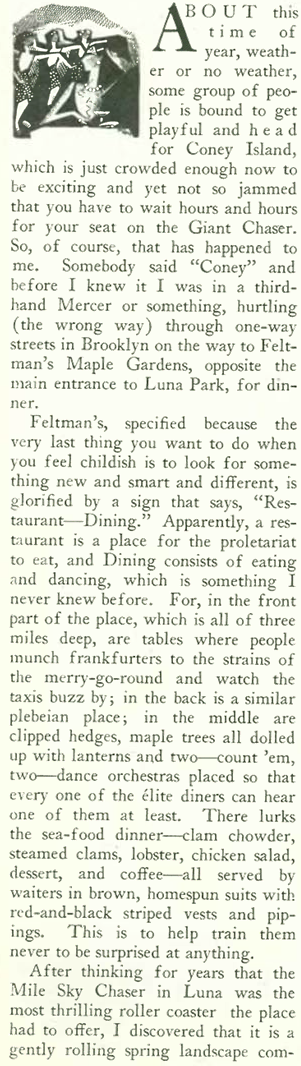
And let’s check in with the New Yorker’s fashion critic (and Arno’s soon-to-be wife) Lois Long, who slummed with the Proles at Coney Island:
CONEY CRONIES…(l to r) Silent film star Charlie Chaplin, Vanity Fair editor Frank Crowninshield, sculptor Helen Sardeau, Lois Long and screenwriter Harry D’Arrast pose in a Coney Island photo booth, 1925. Photo scanned from the book Flapper by Joshua Zeitz.
Finally, given the terrible circumstances in the Middle East and especially Syria, this small item in “Of All Things” is both timely and prescient:
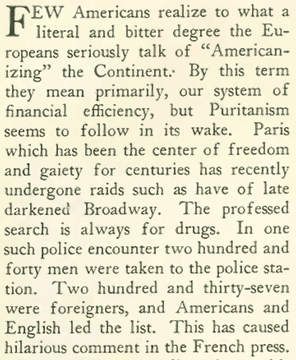
In her latest dispatch from Paris, correspondent Janet Flanner offered New Yorker readers a glimpse into the French mind, its fear of “Americanization” and its perception of America’s Puritanical attitudes behind Prohibition.
April 3, 1926 cover by Rea Irvin.
All the more reason the French were bemused by reports that American and English citizens led the lists of reported drug raids in the City of Light…
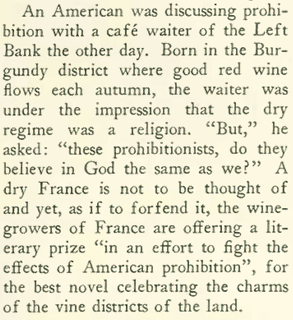
or that somehow Prohibition was a question of theological differences:
The April 3, 1926 issue also offered up some curious advertisements. Aiming square at the grasping Anglophilia of New Yorker readers, here’s a pitch for a used Rolls Royce:
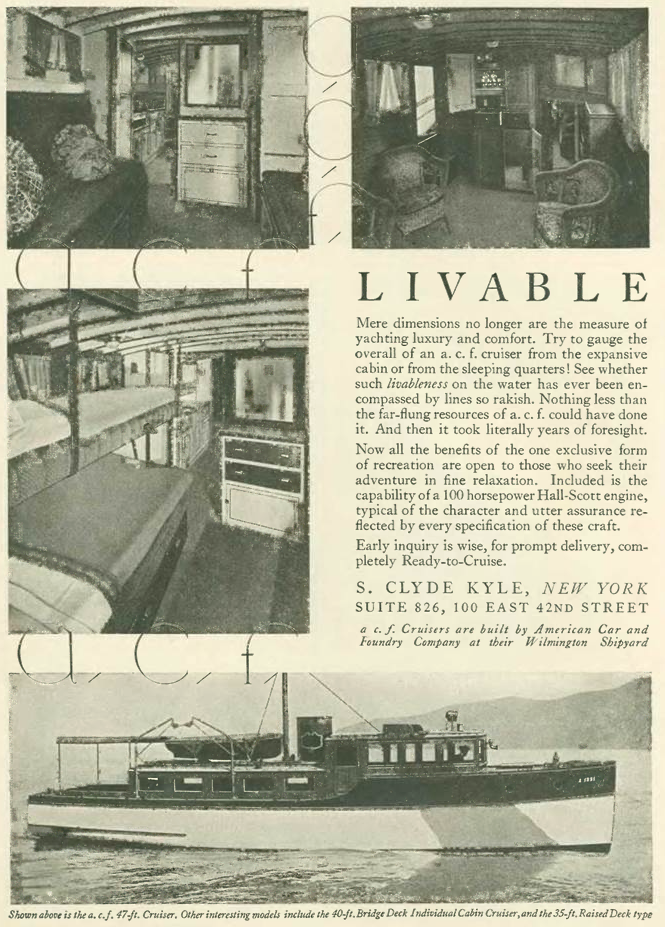
And with the money left over from your savings on the used Rolls, you could buy this 47-foot cruiser from the American Car and Foundry Company:
Moving along to the April 10, 1926 issue (cover designed by H.O. Hofman)…
April 10, 1926 cover by H.O. Hofman.
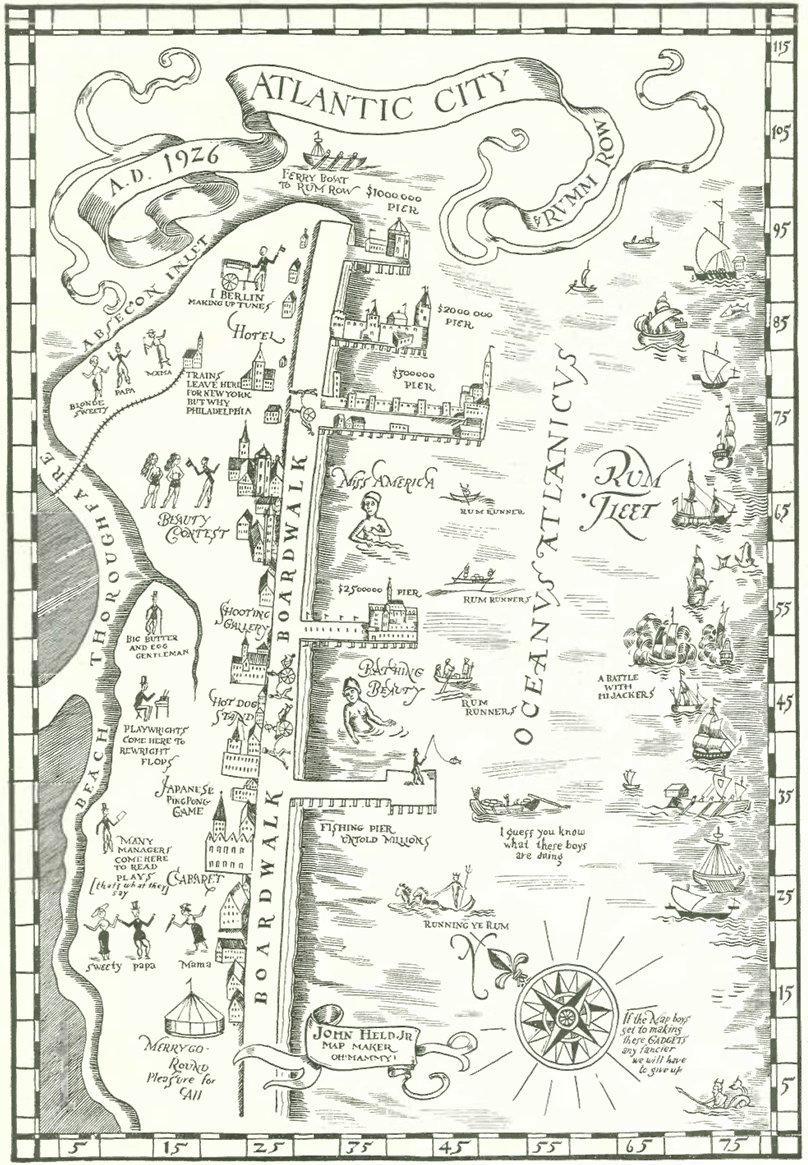
…I discovered this clever “map” by John Held Jr. For fans of “Boardwalk Empire” or other 1920s gangster-themed fare, Held’s map confirms it was no secret that Atlantic City was a major port for rum runners:
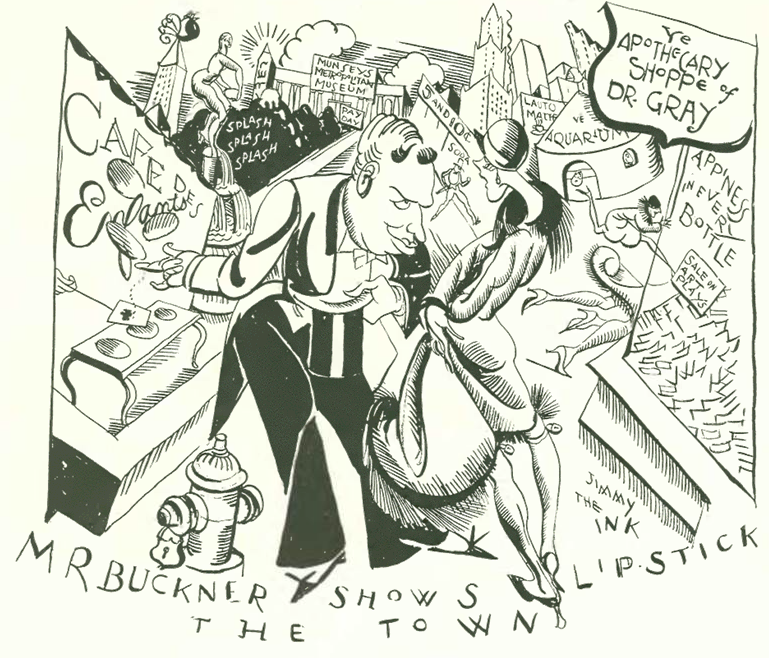
Also on the theme of Prohibition, cartoonist James Daugherty (Jimmy the Ink) had some fun with New Yorker colleague Lois Long (aka Lipstick) by pairing her with New York’s top Prohibition prosecutor Emory Buckner in this unlikely scenerio:
Note the lock on the fire hydrant. Padlocking restaurants and clubs suspected of selling alcohol was a favorite tactic of Buckner and his agents. Long famously took him task in her Oct. 31, 1925 “Tables for Two” column. You can read about it here in my previous post, “How Dry I Am.”
Although they didn’t know it, thirsty New Yorkers still had more than six and half of years of Prohibition to endure, and business was brisk for the rum runners who plied the coastal waters.
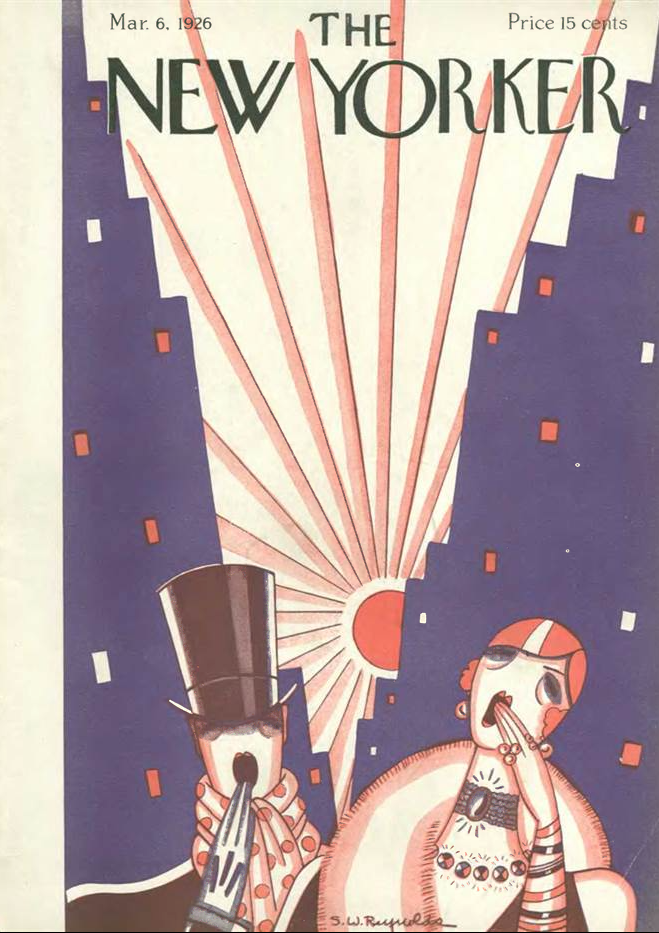
The March 6, 1926 issue featured the article “Rum Runners Must Live,” in which writer Emile C. Schnurmacher described the heroic efforts of bootleggers and rum runners in keeping New York’s countless speakeasies (and many home liquor cabinets) well stocked. Some 30,000 speakeasies were opened in New York City alone during the Prohibition era.
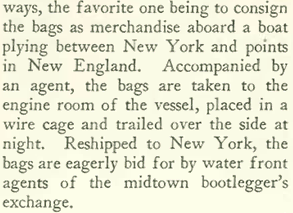
Schnurmacher described the risky game of running “overboard stuff:”
He told of how one rum-running boat, the Sea Bird, made its way through Flushing Bay (to pick up bootleg Scotch) while evading the Coast Guard:
The boat later successfully delivered the “Scotch” near Yankee Stadium:
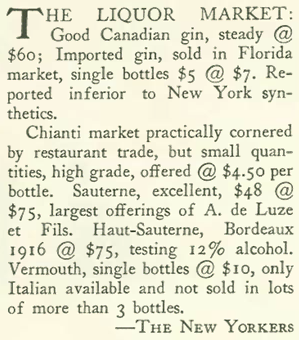
“The Talk of the Town” offered its regular update on bootleg prices. The local “synthetic” gin was reported to be of better quality than the imports, surprising given that synthetics poisoned a good number of folks back then:
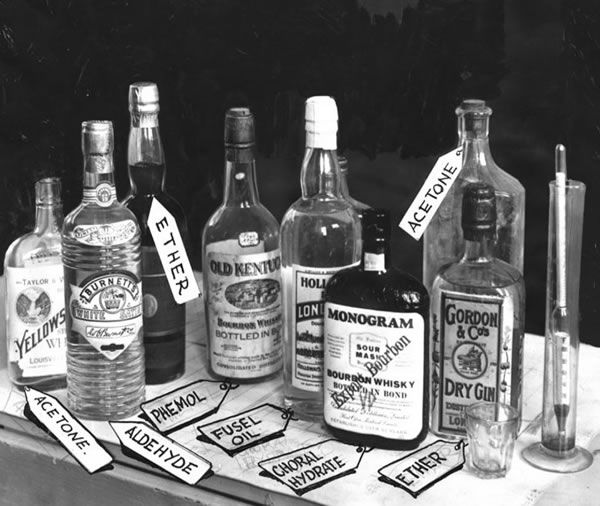
The blog Speakeasy Science notes that during Prohibition, police department chemists, “analyzing the so-called gin in the Brooklyn bar and around the city, reported that much of it was industrial alcohol, re-distilled to try to remove the wood alcohol content. The re-distilling was not notably successful. The poisonous alcohol remained and there was more: the chemists had detected traces of kerosene and mercury, and disinfectants including Lysol and carbolic acid in the beverages.”
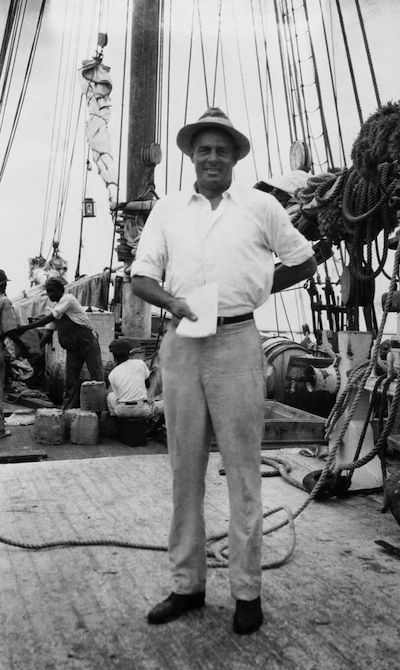
HE HAD THE GOOD STUFF…Not all bootleg was poison. Until he was busted in 1923 by government agents, one of the most famous purveyors to wealthy buyers was rum-runner William McCoy. (US Coast Guard)In order to destroy evidence, the crew of the rum-runner Linwood set fire to their vessel after being pursued by a patrol boat. (Photo circa 1923, U.S. Coast Guard)
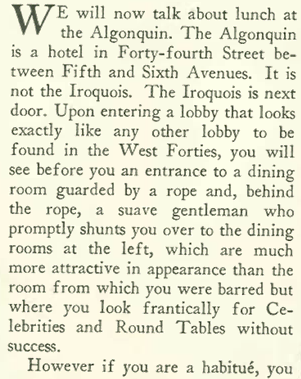
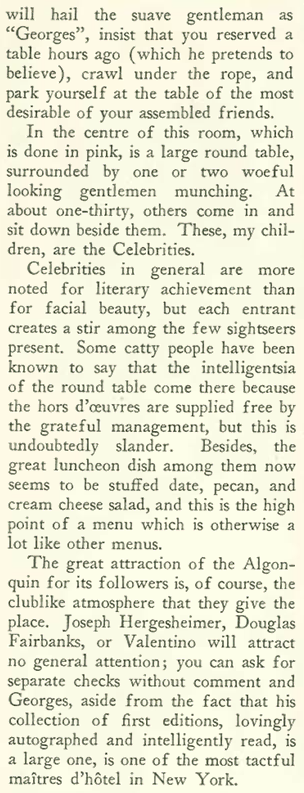
In “Tables for Two,” Lois Long paid a visit to the Algonquin hotel and took some playful swipes at the denizens the famed Round Table:
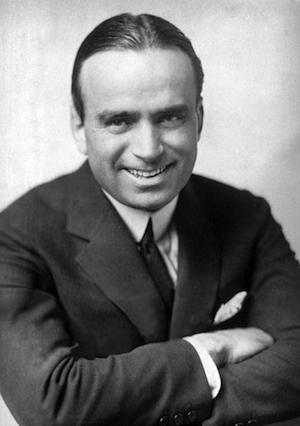
IS THAT YOU DOUG? Silent screen star Douglas Fairbanks could relax unmolested in the quiet confines of the Algonquin. (Meredy.com)
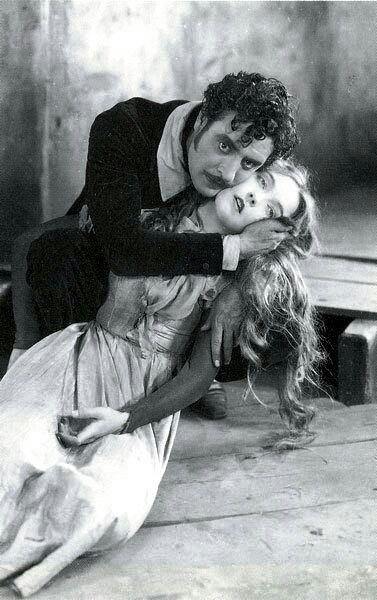
At the movies, Theodore Shane took deadly aim at the silent film version of the opera La Bohème:
A “pop-eyed” John Gilbert and Lillian Gish in the 1926 silent film version of La Bohème. (IMDB)
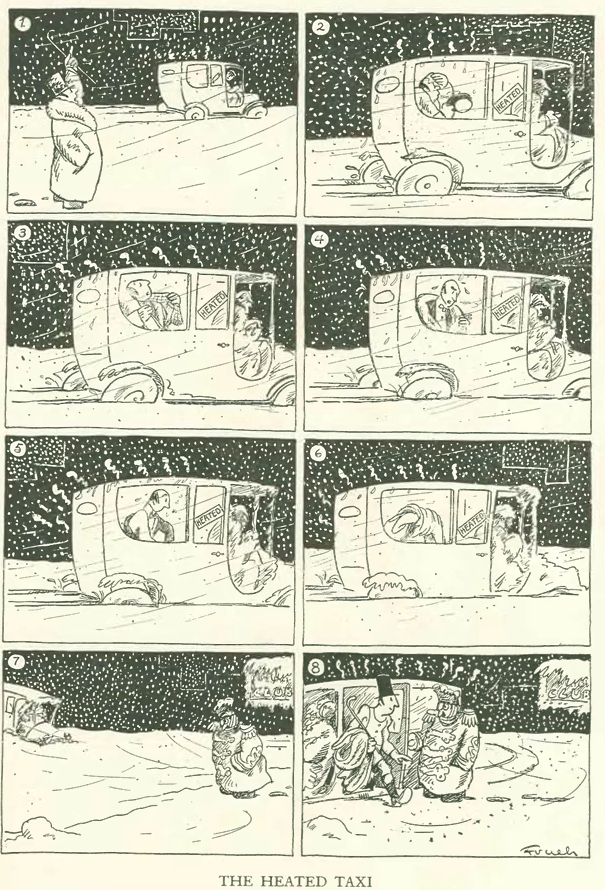
And finally, Al Frueh’s sympathetic take on the wintertime toils of the rich:























































 A New Yorker State of Mind