It seems that each generation has its “Fight of the Century,” a phenomenon that emerges from the alchemy of mass marketing, a lust for blood sport, and the madness of crowds. Gene Tunney — a boxer who also wanted to be a public intellectual — was party to at least two of these spectacles in the 1920s.
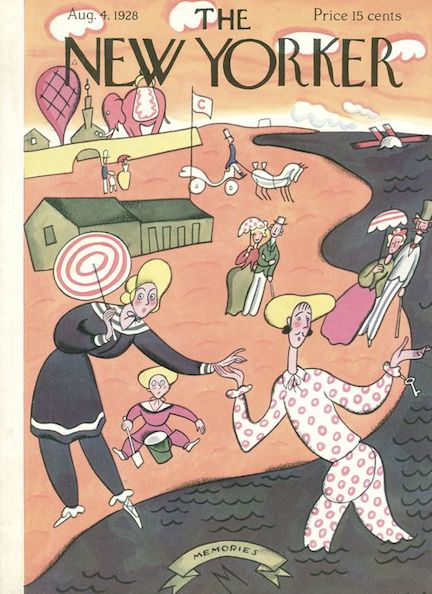
August 4, 1928 cover by Julian de Miskey.
Tunney is most famous for his fights against Jack Dempsey—in some ways they were the Ali–Frazier of their day. Tunney took the heavyweight title from Dempsey in 1926, and again defeated Dempsey in the controversial “long count” rematch one year later, on Sept. 22, 1927. That match was a huge spectacle, staged at Chicago’s Soldier Field in front of 105,000 spectators.
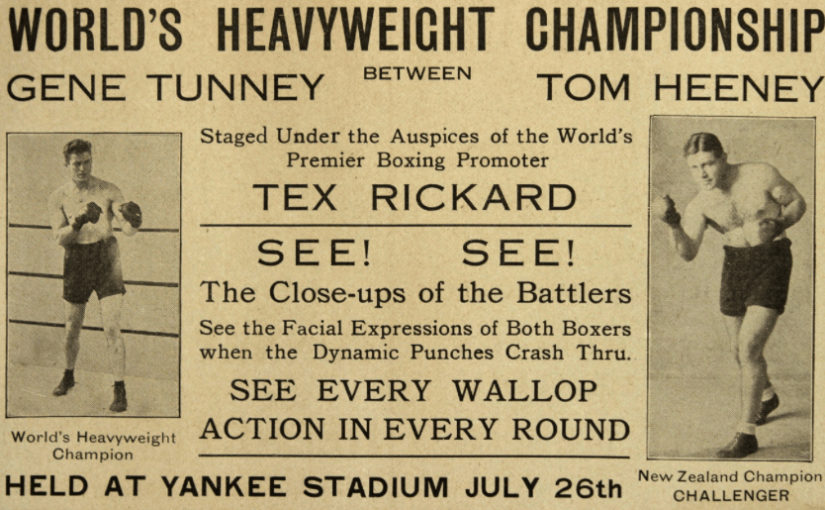
Boxing promoter Tex Rickard saw dollar signs when a scrappy New Zealander named Tom Heeney challenged the champ to a match. Heeney had won the Australian heavyweight title in 1922, and after arriving in the U.S. in 1926 found enough success in the ring to be ranked fourth among the world’s heavyweight boxers.
Writing in his column, “Sports of the Week,” in the July 21, 1928 issue of The New Yorker, Niven Busch Jr. assessed Heeney as a formidable opponent:
NO PALOOKAS HERE…Tom Heeny (left), and Gene Tunney in the late 1920s. (boxrec.com / Alchetron)
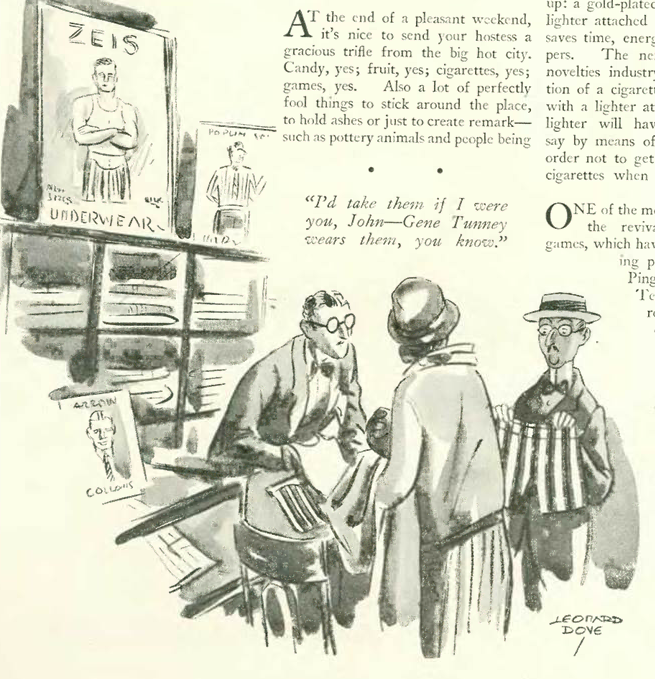
This cartoon by Leonard Dove, also in the July 21 issue, joined in the fun…
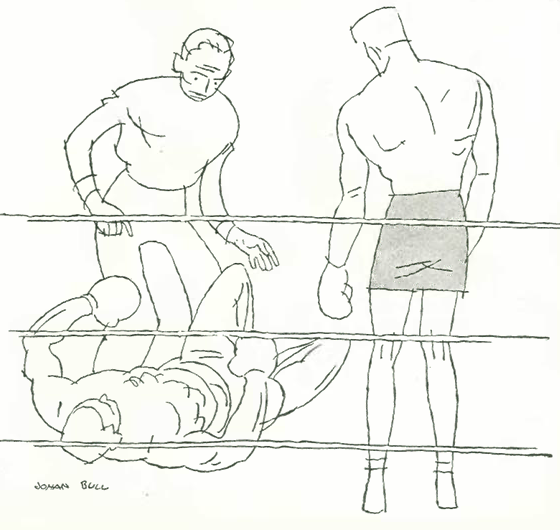
As for the actual fight at Yankee Stadium on July 26, 1928, Tunney won by a TKO in the 11th round. Perhaps the boxer from Down Under wasn’t in such great shape after all, or so surmised Niven Busch Jr in the August 4 issue:
New Yorker illustrator Johan Bull offered this perspective in artwork that accompanied Busch’s article…
Tunney’s winning purse was $525,000 (about $7.3 million today) and Heeney’s was $100,000 ($1.4 million), modest when compared to the recent debacle in Las Vegas that pitted professional boxer Floyd Mayweather Jr. against mixed martial arts champion Conor McGregor. Mayweather earned a disclosed purse of $100 million while Conor McGregor brought home $30 million.
Heeney would remain in the U.S. and fight a few more bouts before retiring to Florida, where he ran a bar and fished with his friend, Ernest Hemingway. Tunney, on the other hand, announced his retirement from boxing just five days after the fight. It was time to finally devote himself to a life of the mind. Norman Klein, writing in the Aug. 4 “Talk of Town,” offered a glimpse into that new life:
BRAIN OVER BRAWN…Boxing champ Gene Tunney, left, and writer George Bernard Shaw on a 1929 vacation to Brioni. (Associated Press)
Still not getting enough of The Champ, “Talk” also related this story about Lucky Strike cigarettes, and how that company’s publicists tried unsuccessfully to persuade Tunney to endorse their product:
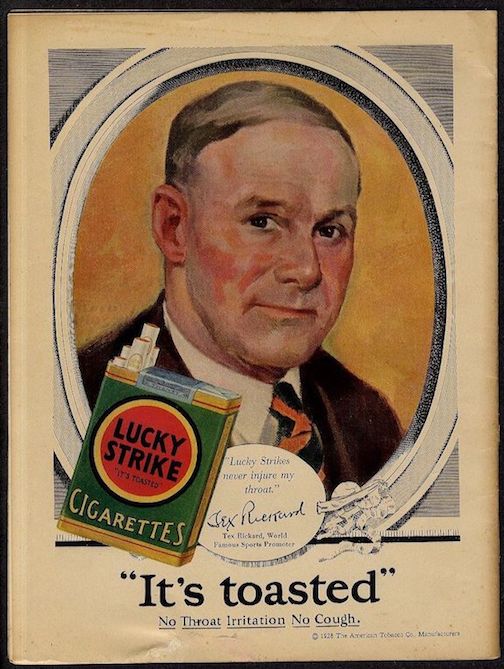
However the promoter of the Tunney–Heeney fight, Tex Rickard, had no problem taking money from the American Tobacco Company:
THEN I’LL TAKE THE MONEY…The promoter of the Tunney – Heeney fight, Tex Rickard, had no problem endorsing Lucky Strikes in this 1928 advertisement. Rickard would die the following year at age 59, from an appendectomy of all things. (eBay)
* * *
Tunney Was More Exciting
“The Talk of the Town” cast a jaded eye toward the Ninth Olympic Games in Amsterdam:
Poster from the 1928 games. (www.olympic.org)
And perhaps even less exciting than the Olympics was the magazine’s “Profile” subject, Andrew W. Mellon, referred to in the title as “Croesus in Politics.” Mellon was no Gene Tunney, but he did ensure his immortal fame through his philanthropy, still expressed today by the Andrew W. Mellon Foundation. Below are the concluding lines of the profile, written by Homer Joseph Dodge:
The article featured this terrific caricature by illustrator Abe Birnbaum…
Planned Obsolescence
The magazine’s “Motors” column touted Chrysler’s new “peaked” radiators, which no doubt caused many insecure Chrysler owners to consider junking their non-peaked models of yesteryear:
This ad in the same issue screamed “new, new, new” for what appeared to be mostly the same old, same old…
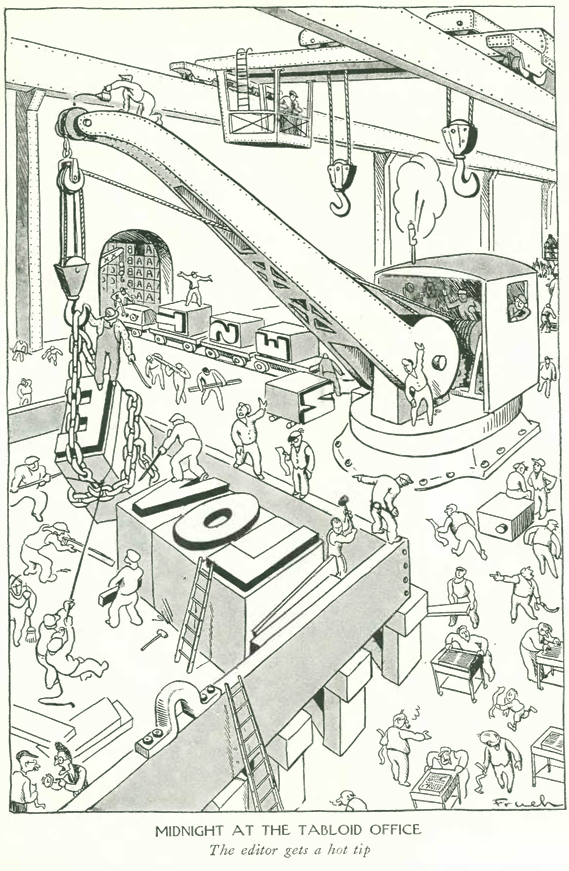
Our comic comes courtesy Al Frueh, who looks in on the workings of a printing press at a celebrity tabloid:
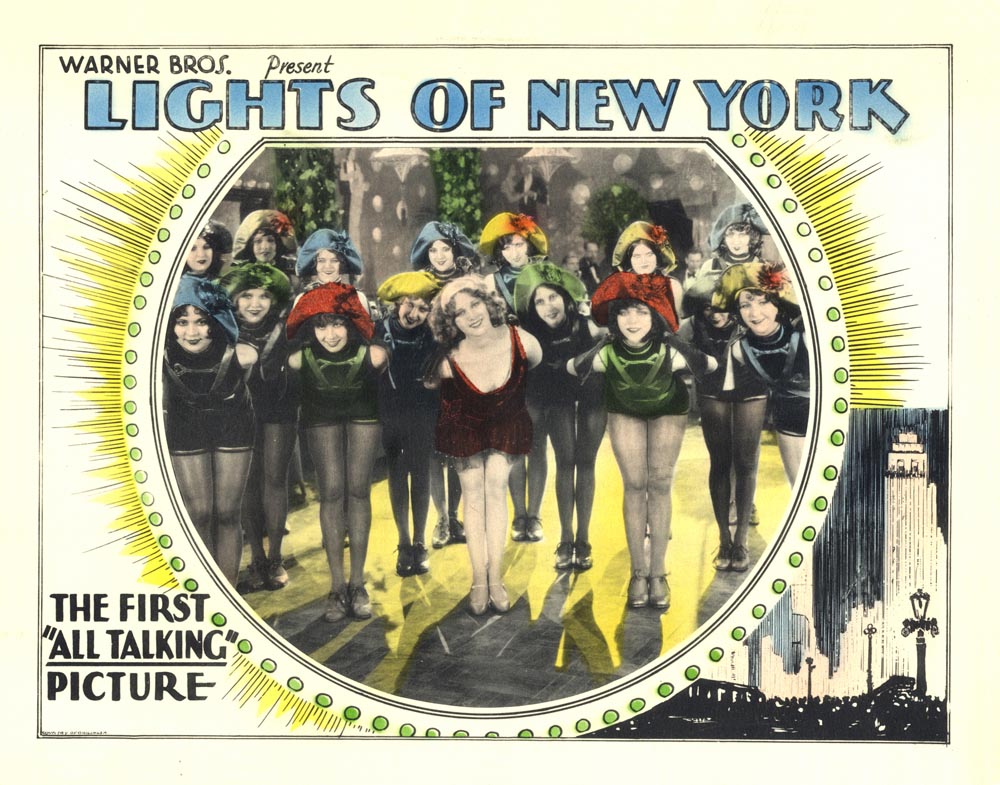
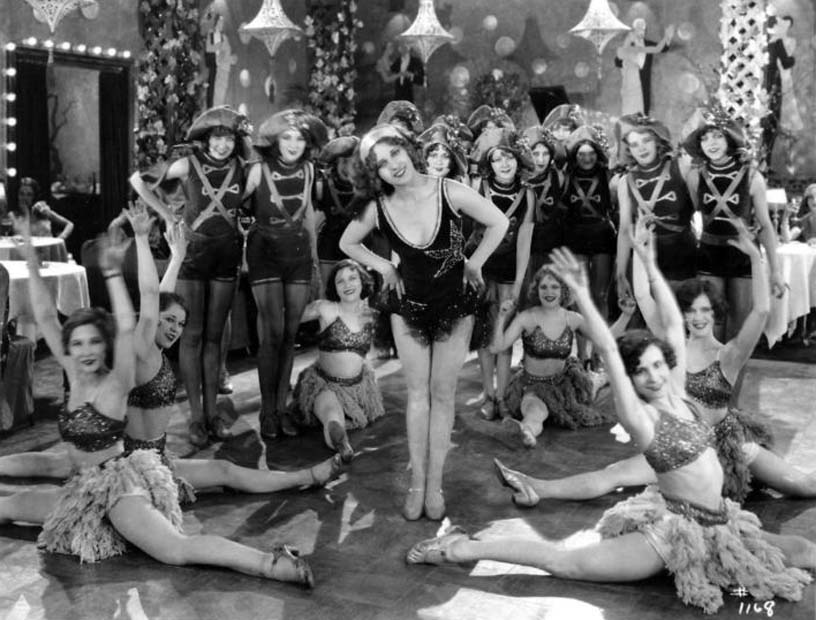
Lights of New York would be a forgettable film if not for the fact it was the world’s first 100 percent talking motion picture. Yes, it was a bad film, but…
July 14, 1928 cover by Leonard Dove.
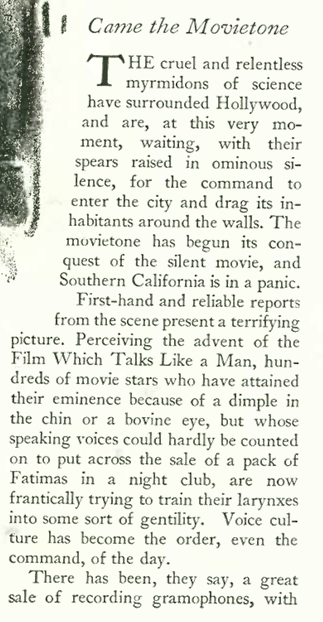
…even the July 14, 1928 New Yorker had the foresight to note that the film was destined to be a “museum piece.” Despite the corny plot and bad acting, the magazine’s critic “O.C.” had to concede that the film offered proof that sound would improve the motion picture experience.
Theatre Card for Lights of New York. (untappedcities.com)MAKING SOME NOISE…Helene Costello with a cast of nightclub dancers in Lights of New York. (vintage45.wordpress.com)
The Jazz Singer (1927) launched a “talkie revolution” that would culminate nine months later in Lights of New York, and by the end of 1929 Hollywood was almost exclusively making sound films. But studios still released silent films into the 1930s, since not every theatre in the country was wired for sound.
TheNew Yorker had been slow to embrace sound in motion pictures (see my previous posts). What helped to win them over was the further refinement of the Movietone process, in which the sound track was printed directly onto the film strip (The Jazz Singer used Vitaphone, which essentially synched a record player with a film and provided a sporadic rather than continuous sound track).
In the same issue, writer Robert Benchley also predicted (in “The Talk of the Town”) that sound in movies would challenge actors whose voices weren’t as attractive as their screen images:
IT’S COMPLICATED…It is a common assumption that sound motion pictures killed the careers of many silent stars, however big names like John Gilbert (left) and Clara Bow left the pictures for other reasons. Studio politics ended Gilbert’s career, and he drank himself to death by 1936. Bow—famously known as the “It Girl,”—made a few sound pictures, but retired from acting in 1931 to become a Nevada rancher. (Wikipedia)SILENCED…Some silent actors such as Wallace Beery (left), were sidelined not because of their voices but because of their high salaries. On the other hand Raymond Griffith (right), who made only one sound movie, spoke with a hoarse whisper not suited for the talkies. (Wikipedia / silentfilmstillarchive.com)
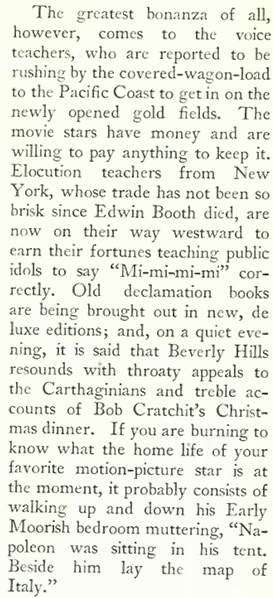
The New Yorker also noted that sound pictures would prove to a great “bonanza” to voice teachers:
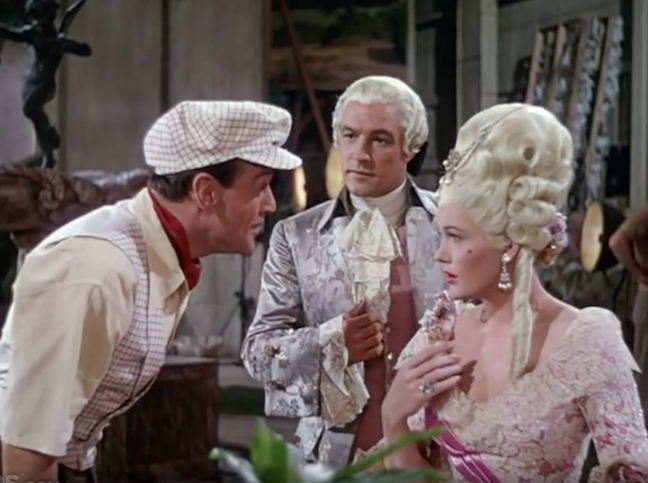
Transition to sound in the late 1920s would later provide the theme for the 1952 musicalSingin’ In The Rain, in which Jean Hagen portrayed silent film star Lina Lamont, whose voice was ill-suited for talking pictures.
SAY WHAT?…Actress Lina Lamont (Jean Hagen) tries the patience of her director (Chet Brandenburg) while her co-star (Gene Kelly) looks on. The scene demonstrated the challenges of acclimating former silent stars (like Lina Lamont, whose voice sounded like squeaky hinge) to “talking pictures.” (MGM/YouTube Movieclips)
The New Yorker also noted that the advent of sound in motion pictures would put an end to many theatres operating on the vaudeville circuit:
In his regular column, “Of All Things,” Howard Brubaker gave his two cents about the new world of talking movies:
Paving Over Paradise
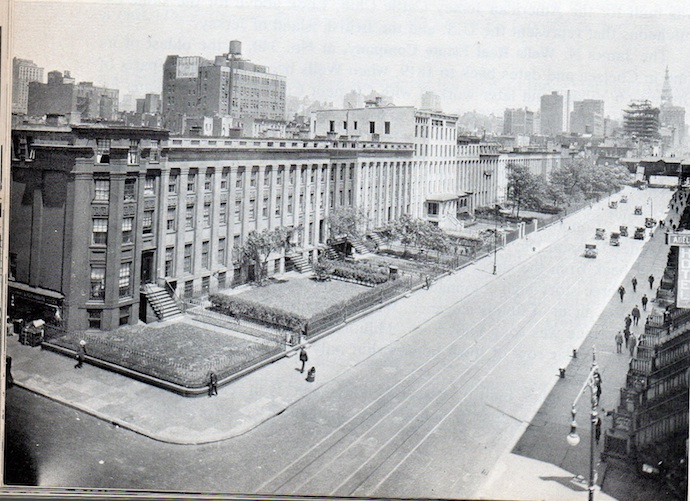
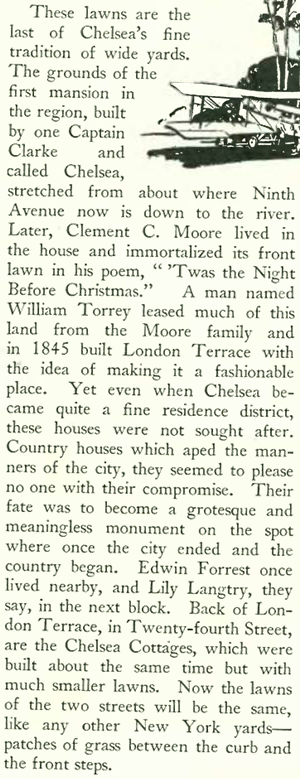
The July 14 “Talk of the Town” offered more bittersweet commentary on the city’s rapidly changing landscape. This time it was a famous stretch of lawns on West 23rd Street—London Terrace— that were being uprooted to make way for a massive new apartment block:
According to Tom Miller (writing for his blog Daytonian in Manhattan), Clement Moore, the writer to whom “A Visit from St. Nicholas” (“The Night Before Christmas”) “had developed the block when he divided up his family estate, ‘Chelsea.’ On the 23rd Street block, in 1845, he commissioned Alexander Jackson Davis to design 36 elegant Greek Revival brownstone townhouses. The row was designed to appear as a single, uniform structure or ‘terrace’ (a design not lost on The New Yorker). Unusual for Manhattan, each had deep front yards planted with shrubbery and trees. He called his development ‘London Terrace.'”
A BIT O’ GREEN…London Terrace, circa 1920. (ephemeralnewyork)
By October 1929, writes Miller, “a few weeks before the collapse of the stock market and the onset of the Great Depression, (developer Henry Mandel) had acquired and demolished all the structures on the enormous block of land. All except for Tillie Hart’s house. Hart leased 429 West 23rd Street and, although her lease had legally expired, she refused to leave, firing a barrage of bricks and rocks at anyone who approached the sole-surviving house. A court battle ensued while she barricaded herself inside. Finally, just four days before Black Tuesday, sheriffs gained entry and moved all of Hart’s things onto the street. She held out one more night, sleeping on newspapers in her once-grand bedroom, then gave up. The following day her house was destroyed.”
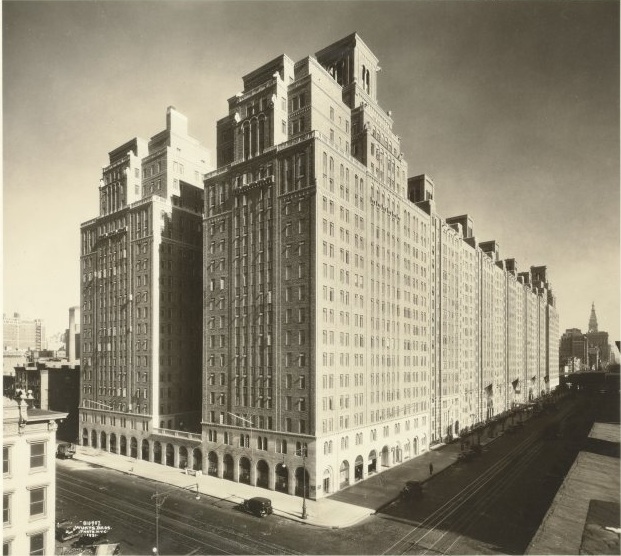
IT’S YUGE…Farrar & Watmough designed this massive, Tuscan-inspired apartment block, completed during 1930-31. The developer Henry Mandel, kept the site’s original name, London Terrace. (ephemeralnewyork)
Miller writes, “to describe the new London Terrace was to use superlatives. Consuming the entire city block, it was the largest apartment building in the world with 1,665 apartments. It boasted the largest swimming pool in the city – 75 feet by 35 feet, with mosaic walls and viewing balconies. Twenty-one stories above the street a “marine deck” was designed to mimic that of a luxury ocean liner. It had a fully-equipped gymnasium, a recreation club, a rooftop children’s play yard with professional supervisors, and a large dining room. The doormen were dressed as London bobbies.”
STILL THERE…London Terrace today. (Brick Underground)
* * *
In other diversions, Isadore Klein looked askew at the latest headlines, namely the big fight between Gene Tunney and Tom Heeney, one of the 20th century’s many “battles of the century”…
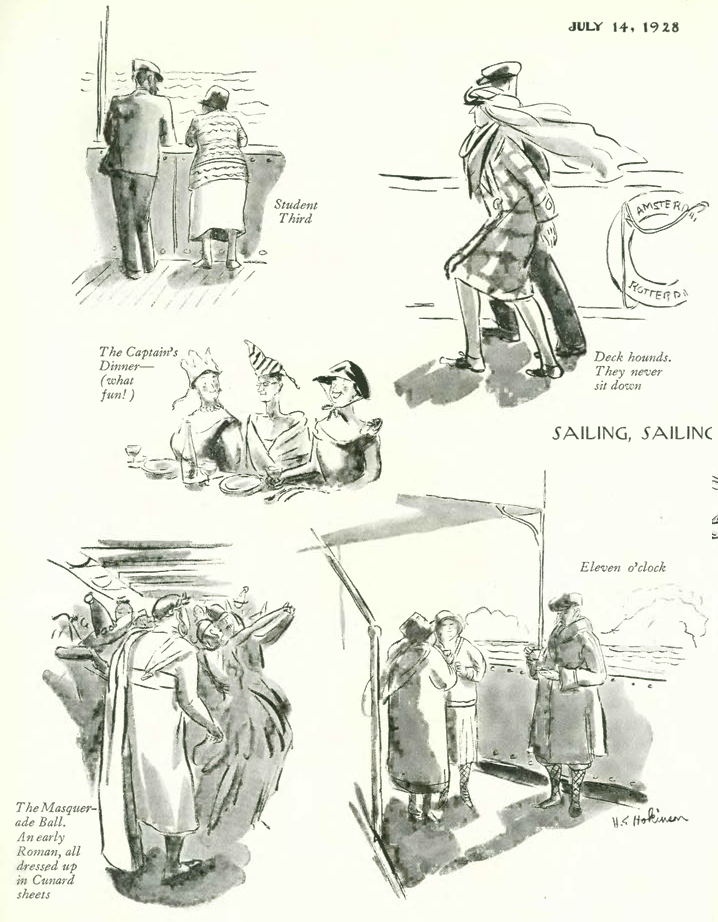
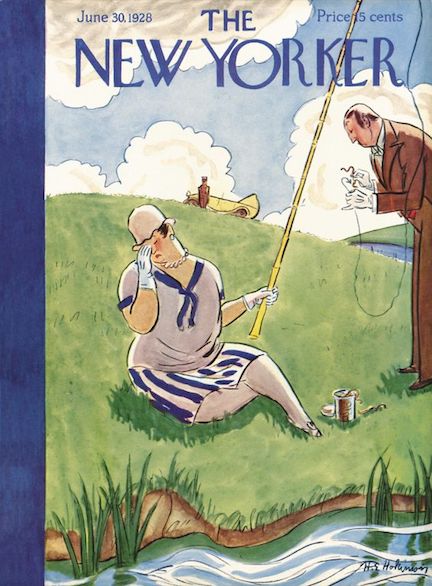
…while Helen Hokinson, on the other hand, offered some sketches of seafaring life…
…and looked in on the challenges of buying a hat…
And to close, a cartoon by Leonard Dove…
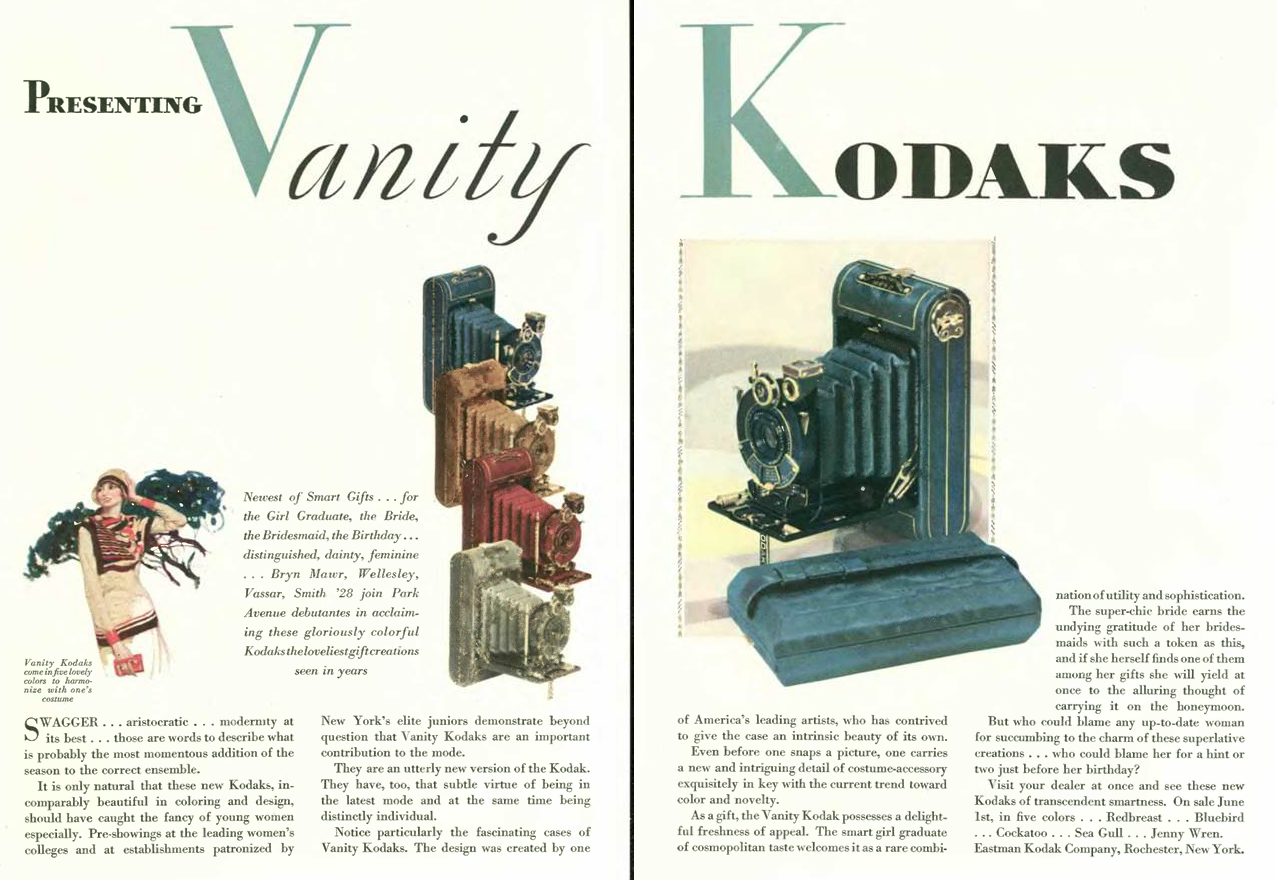
…that referenced ads such as this one from the June 2, 1928 issue…
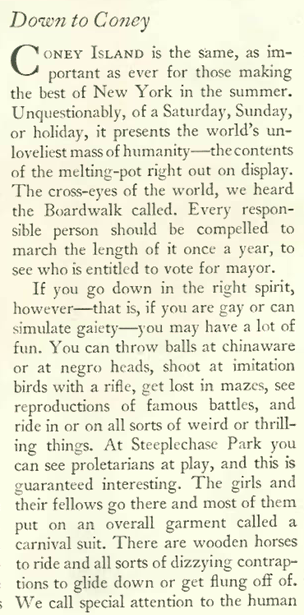
TheNew Yorker kicked off the summer season with a trip down to Coney Island. “The Talk of the Town” took in the various sights and amusements at the famed Steeplechase and Luna parks.
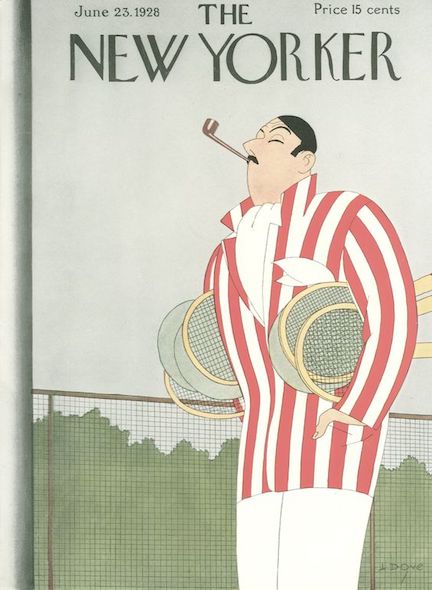
June 23, 1928 cover by Leonard Dove.
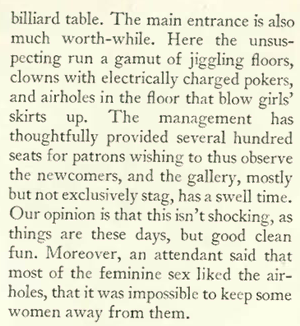
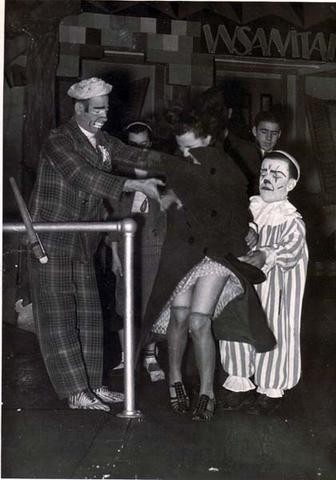
Attractions at Steeplechase Park included everything from racing wooden horses to a “human billiard table.” Less jolly diversions included air jets that blew up women’s skirts and clowns who administered electric shocks to unsuspecting visitors (one more reason to fear them). And there was at least one racist game of skill…
FEAR THE CLOWN…A photo from the 1940s shows a pair of clowns “help” a woman through the entrance to Steeplechase Park’s Insanitarium and Blowhole Theatre. Located in the Pavilion of Fun, visitors were led through Comedy Lane, which featured jets of compressed air intended to lift skirts. Clowns spanked patrons and even zapped them with a cattle prod. (Worthpoint.com)Clockwise, from upper left: A Steeplechase rider passes in front of the massive Pavilion of Fun; interior of the Pavilion of Fun; young women preparing to be spun around on the Human Billiard Table; scene from the 1928 Harold Lloyd movie Speedy filmed in the Pavilion of Fun (westland.net, CardCow, houseoftoomuchtrouble.tumblr.com, safetylast.tumblr.com) click to enlargeOUT FOR A SPIN…Harold Lloyd and Ann Christy take a spin on the Pavilion of Fun’s Human Roulette Wheel in the 1928 film Speedy. (spellboundbymovies.com)TRUMPED…Coney Island’s landmark Pavilion of Fun at Steeplechase Park was demolished in 1966 by developer Fred Trump, father of Donald Trump. The young Donald (19 at the time) was on hand for his father’s “Demolition Party,” which featured scantily clad models who paraded in front of the park and encouraged guests to throw bricks at the stained glass windows of the historic pavilion. Later that night Trump bulldozed the amusement park to the ground, thereby limiting any pending proceedings to declare the property a historic landmark. (Daily Telegraph/Untapped Cities)
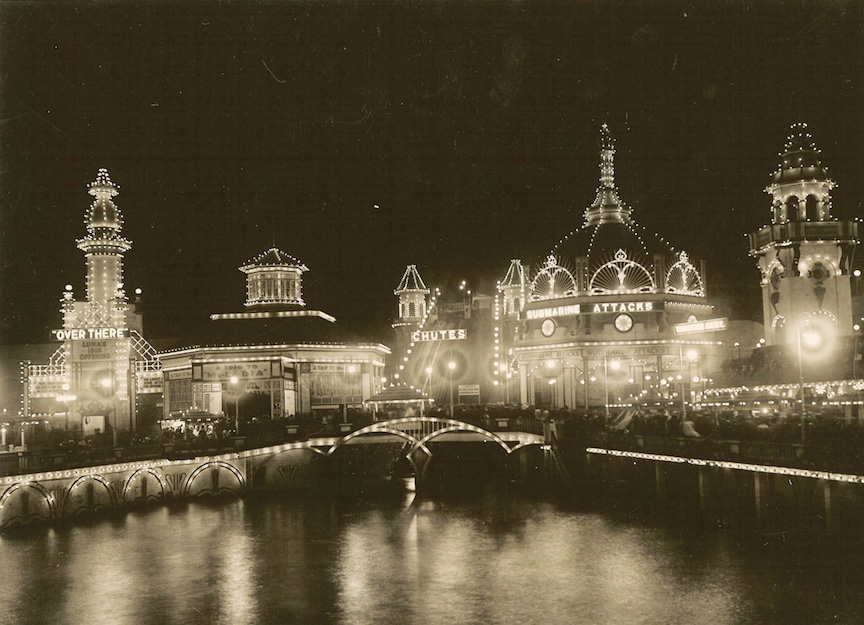
Over at Luna Park there were more air holes to blow up women’s skirts and assorted freak shows. More wholesome entertainments included the famed Cyclone rollercoaster, which celebrated its 90th year of operation in 2017.
DREAMLAND…Luna Park at night in the 1920s. (carouselhistory.com)
* * *
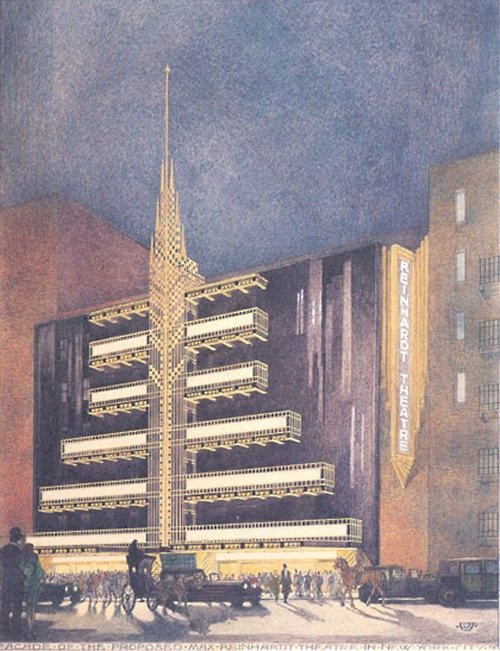
Writing for the June 23 “Talk of the Town,” Murdock Pemberton anticipated the construction of a new theatre to be developed by famed Austrian director/producer Max Reinhardt and designed by Austrian-American architect, illustrator and scenic designer Joseph Urban:
Unfortunately the market crash of 1929 put an end to the project, which would have looked like this had it been constructed:
DREAMLAND…Joseph Urban’s unbuilt Reinhardt Theatre. The innovative design incorporated the building’s fire escapes into its glimmering facade. (Columbia University)
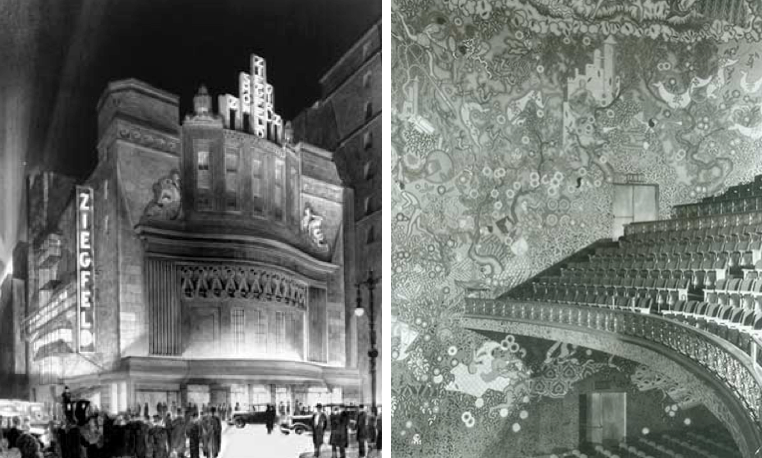
Urban designed innovative sets for clients ranging from the Metropolitan Opera to the Ziegfeld Follies (he also designed a theatre for Ziegfeld in 1927, see below). Although he is noted as one of the originators of American Art Deco, most of his architectural work in the United States has been demolished.
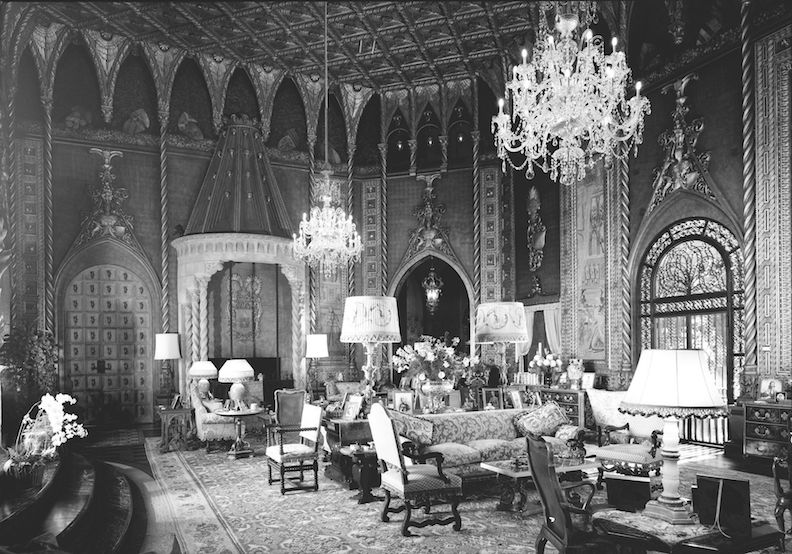
RARE REMNANT…Little remains of the work of Joseph Urban, one of the originators of American Art Deco. Fortunately the Tishman Auditorium at the New School still stands. (nycarchitecture.com)ONLY A MEMORY…Most of Joseph Urban’s American work has been demolished, including his Ziegfield Theatre from 1927. (nyc-architecture.com)MAR-A-LAGO…Joseph Urban designed the interiors of one of America’s most famous mansions—Mar-a-Lago. Built from 1924 to 1927 by cereal heiress Marjorie Merriweather Post, it is now owned by Donald Trump and operated as a members-only club. (Wikipedia)
* * *
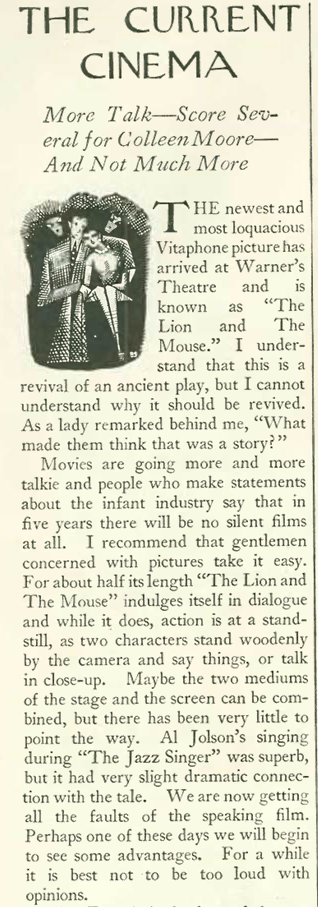
The New Yorker continued to struggle with the emergence of “talking pictures.” The critic “O.C.” found that the sound dialogue in The Lion and the Mouse did little to improve the picture:
The critic seemed to believe that sound pictures would take some time to catch on. Little did he know that Warner Brothers would announce later that summer (August 1928) that all of its films for the 1928-29 fiscal year would have sound. United Artists would make the same announcement in November 1928. In February 1929 Twentieth-Century Fox would make its final silent movie, and Columbia would release its last silent movie on April 1, 1929.
OH SHUT UP…Theatre card for The Lion and the Mouse. (Wikipedia)
TheNew Yorker still found happiness at the movies through the likes of actress Colleen Moore, who made a sweet little film called Happiness Ahead.
A CASE OF THE HAPPIES…Colleen Moore strikes a contemplative pose in Happiness Ahead. (IMDB)
Colleen Moore was one of the most famous stars of the silent era who popularized the bobbed haircut and flapper style. Moore presented a more wholesome version of the flapper, in contrast to the more worldly Louise Brooks, another flapper icon of the Twenties.
VARIATIONS ON A THEME…Actresses Colleen Moore (left) and Louise Brooks defined flapper style in the 1920s. (dorineenvrac.wordpress.com / corvusnoir.com)
* * *
From Our Advertisers
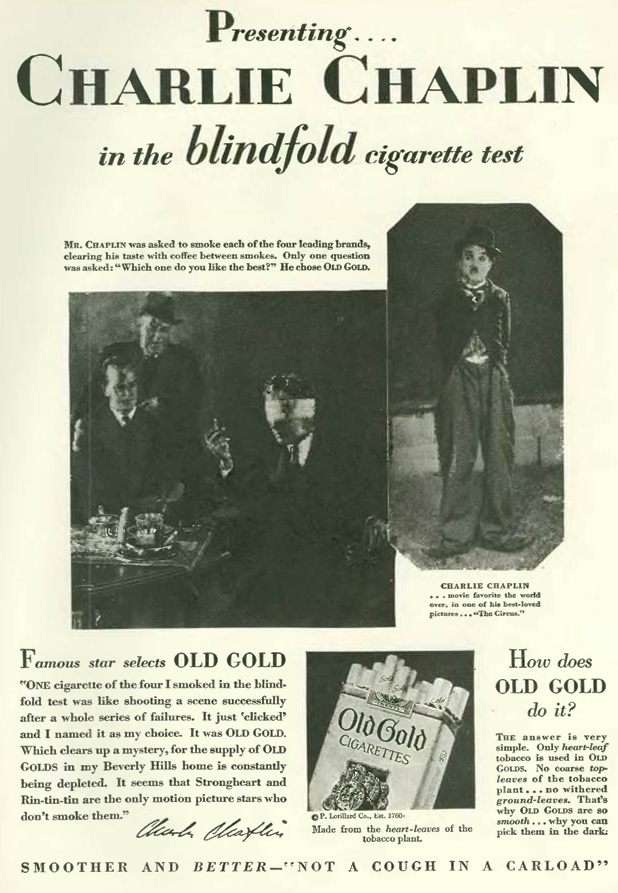
Continuing our series on celebrity endorsements of Old Gold cigarettes, none other than the Little Tramp stepped up to take the blindfold test (along with a pile of cash, no doubt):
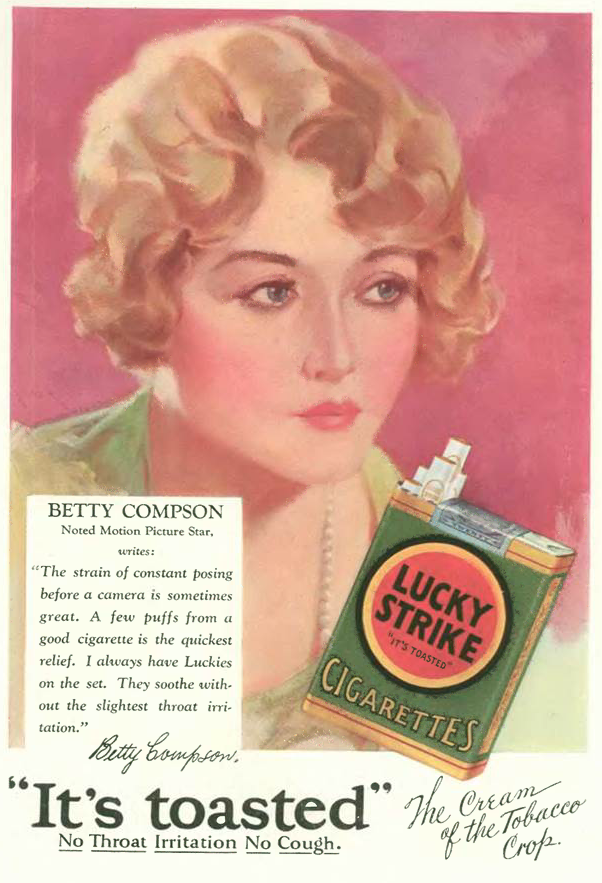
And if Old Gold is not to your taste, then why not enjoy the “toasted” pleasures of Lucky Strike? Actress Betty Compson found them indispensable when preparing for a big scene:
* * *
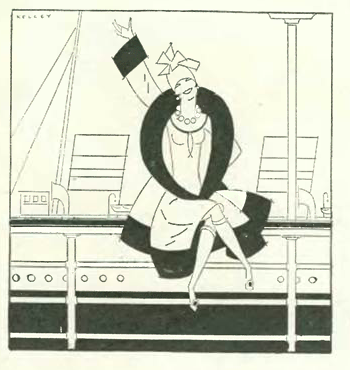
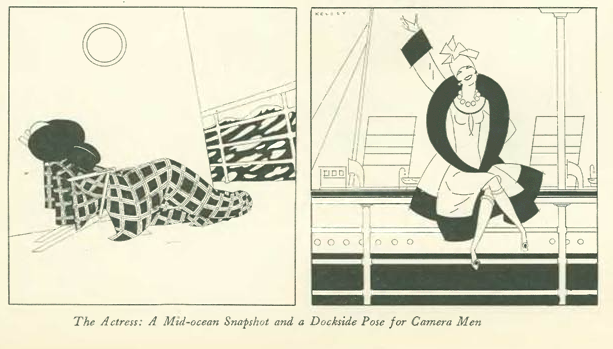
And now for something that caught my eye in the June 23 issue…a bit of filler art by Eldon Kelley that broke up some copy on page 34:
This particular illustration was also featured in one of The New Yorker’s earliest issues—March 21, 1925—in a two-part comic panel (below). I am puzzled why the magazine, flush with artistic talent by 1928, reused this Kelley illustration. Perhaps the layout editors figured since the readership was so small in March 1925, no one would notice.
Here’s an early contribution by Otto Soglow that is a far cry from his later minimalist cartoons…
And we leave with yet another look at some Jazz Age shenanigans, courtesy cartoonist Peter Arno:
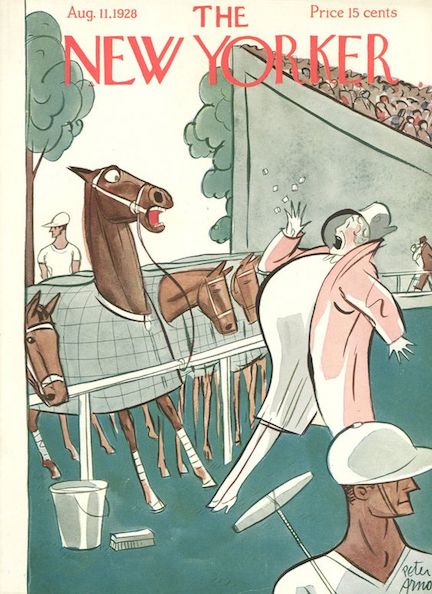
Broadway shows were a popular nightlife diversion for New York’s upper middle-class, but plays and musicals were only part of an evening’s entertainment. The city’s “after theatre” clubs beckoned those who enjoyed an evening of dance with the Astaires or a light comedy with Lunt and Fontanne, but believed the night was still young.
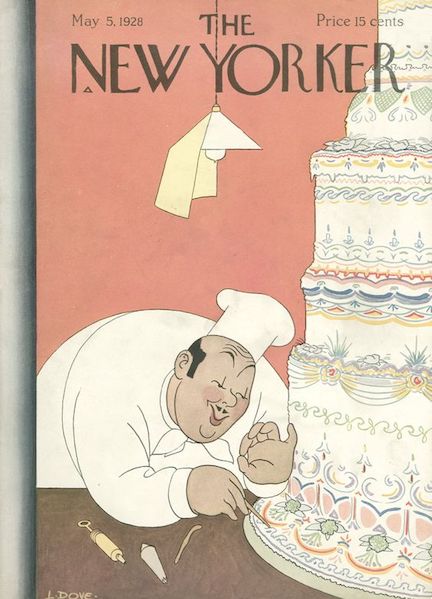
May 5, 1928 cover by Leonard Dove.
And who better to chronicle the late night revelry than Lois Long, who through her “Tables For Two” column was a leading voice of after hours Manhattan and a nightly presence in its various clubs and speakeasies. Longtime New Yorker writer Brendan Gill (Here at the New Yorker) observed that Long, who joined the magazine in 1925, “had plunged at once, joyously, into a New York that seemed always at play — a city of speakeasies, night clubs, tea dances, football weekends, and steamers sailing at midnight.”
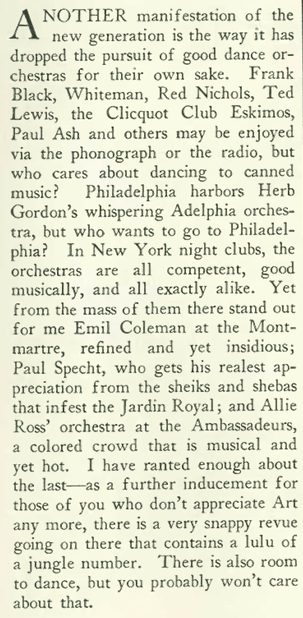
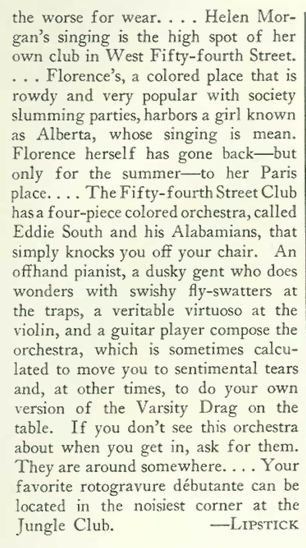
In May 1928 Long had been married for about nine months to colleague and cartoonist Peter Arno, who was also a regular fixture of the nightclub scene. But in Long’s column for May 5, 1928, one can detect a bit of weariness setting in, the 27-year-old sensing the next generation didn’t know how to have a good time.
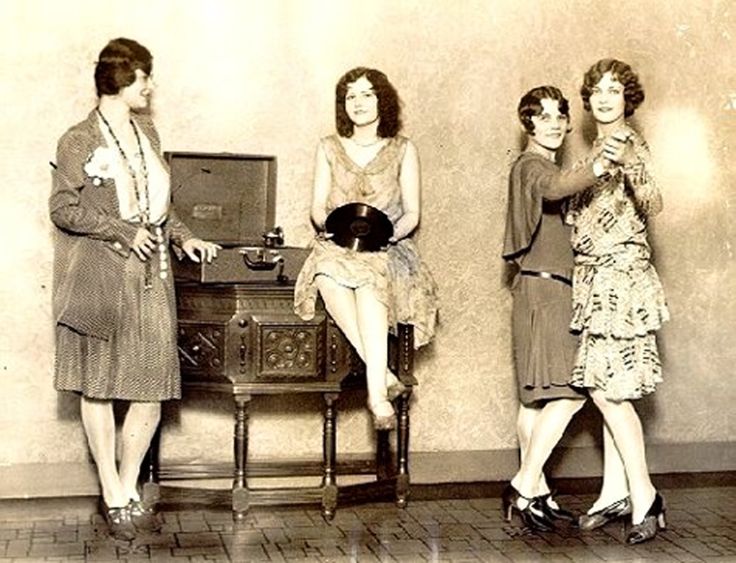
And it didn’t help that the younger people were dancing to “canned music,” what with the spread of broadcast radio and improvements in phonograph records…
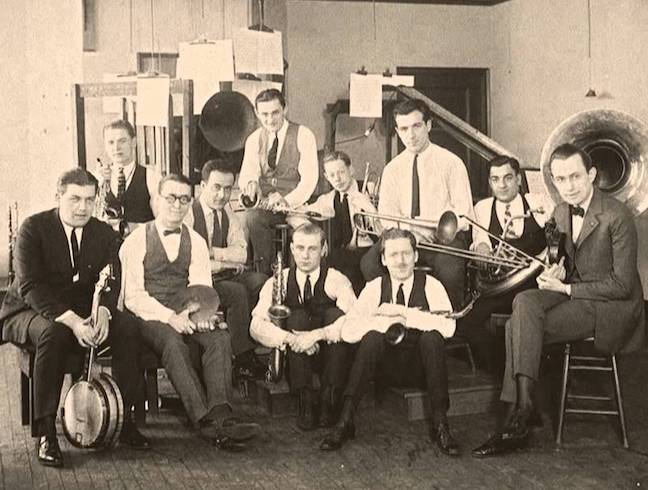
LIPSTICK WAS A FAN of the Paul Specht Orchestra, seen here in 1928. (YouTube)BUT NOT A FAN of those darn kids who preferred records to live music, and didn’t know how to party at the clubs. (Pinterest)
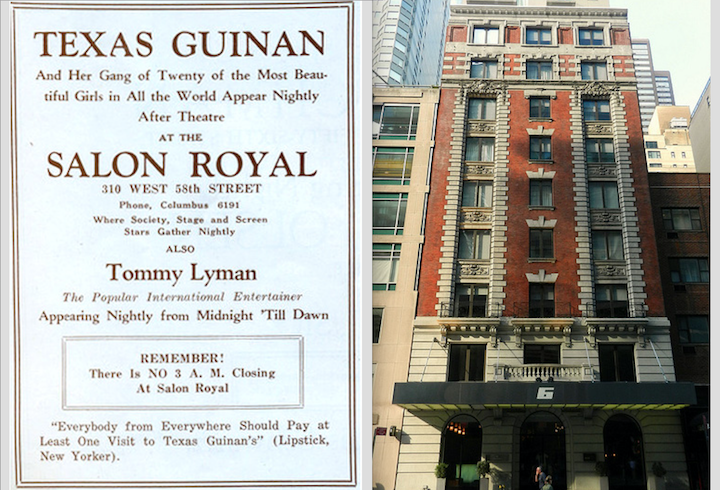
For those on the wilder side, Long recommended a number of after-hours entertainments, including Texas Guinan’s latest all-night club, Salon Royal, and its snake-charming hootch dancer.
WHOOPEE was the order of the day at Texas Guinan’s Salon Royal on West 58th Street, now refurbished as the 6 Columbus Hotel. Guinan was well known to New Yorker writers and editors and was a frequent guest of the numerous parties hosted by Harold Ross and Jane Grant in their Hell’s Kitchen brownstone. (texasguinan.blogspot)
Because so many New Yorker readers were both theatre and after-theatre-goers, the magazine included some of the after-dinner destinations in its “Goings On About Town” section. Excerpts follow.
Rubberneckers
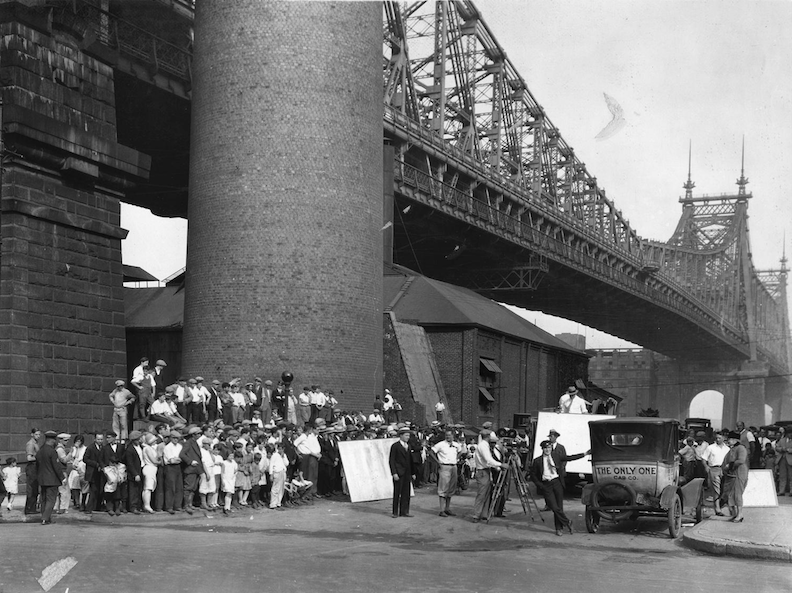
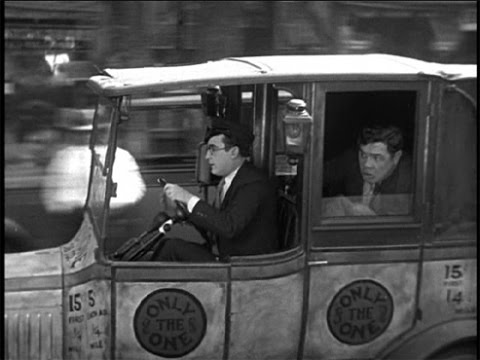
A May 5 “Talk of the Town” segment (written by James Thurber) commented on the challenges film crews faced when they shot on location in the city, in this case the production of Harold Lloyd’s latest comedy, Speedy:
LOCATION, LOCATION, LOCATION…Silent film star Harold Lloyd (leaning on car at right) and his crew draw a crowd under Queensboro Bridge during the filming of Speedy. (silentlocations.wordpress.com)BABE IN THE CITY…Harold Lloyd takes baseball legend Babe Ruth for a wild spin in 1928’s Speedy. (YouTube)
* * *
Before Mommie Dearest
The actress Joan Crawford is best known today as the subject of the 1981 biopic, Mommie Dearest, which portrayed Crawford as an insecure, abusive parent to her adopted daughter Christina (the film was based on a 1978 memoir and exposé of the same name written by Christina Crawford).
But in the 1920s and 30s the former dancer and chorus girl was better known for her sex appeal, attractive to men for her looks and to women for the roles in which she portrayed hard-working women who find both romance and success.
PRETTY PICTURE…Ramon Novarro and Joan Crawford in Across to Singapore, 1928. (Silent Hollywood)
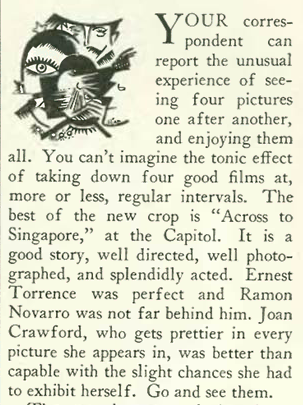
TheNew Yorker took notice of Crawford in its review of Across to Singapore, the critic O.C. noting that Crawford “gets prettier in every picture”…
Another film released later in 1928, Our Dancing Daughters, would make Crawford a star and a symbol of the liberated, 1920s flapper. Even the writer F. Scott Fitzgerald would observe that “Joan Crawford is doubtless the best example of the flapper, the girl you see in smart night clubs, gowned to the apex of sophistication, toying iced glasses with a remote, faintly bitter expression, dancing deliciously, laughing a great deal, with wide, hurt eyes. Young things with a talent for living.”
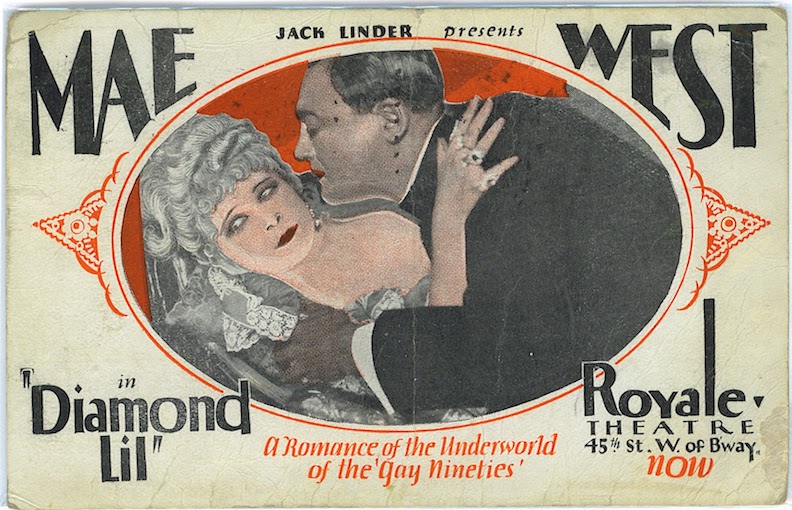
Another actress with a talent for living was 34-year-old Mae West, who was appearing on Broadway in Diamond Lil. Already a 21-year veteran of the stage (she began performing in vaudeville in 1907 at age 14), West was known for writing and performing in risqué plays beginning in 1926, when she appeared in Sex, which was panned by conservative critics but enjoyed hot ticket sales.
Subsequent plays aroused controversy and kept her name in the newspapers, but her play Diamond Lil would become the Broadway hit that would cement her image as a sex symbol, one she would maintain until her death at age 87 in 1980. In the May 5 issue artist Miguel Covarrubias offered his vision of the Queen of the Bowery:
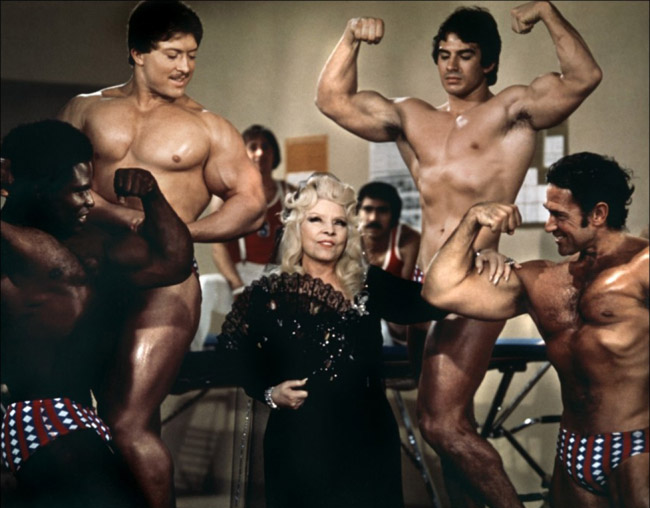
THEATRE CARD for the Broadway production of Diamond Lil at the Royale Theatre. (maewest.blogspot.com)STILL AT IT 50 YEARS LATER…The 86-year-old Mae West in her last film, 1978’s Sextette. In a 1979 review, New York Times film critic Vincent Canby called the film “a disorienting freak show in which Mae West, now 87 years old, does a frail imitation of the personality that wasn’t all that interesting 45 years ago. The movie, which opens today at the Victoria and other theaters, is a poetic, terrifying reminder of how a virtually disembodied ego can survive total physical decay and loss of common sense.” (filmcomment.com)
From Our Advertisers
It’s interesting to see how 1920s advertisers made even the most mundane gadgets appear to be vital to one’s survival. The ad for the “Sesamee” auto switch lock is a case in point, appealing to upscale female readers with this odd scenario in which the gadget enables the driver to avoid the awkward and potentially hazardous situation depicted below, although it hard to see what the actual threat might be from a dandy in a tie and waistcoat. Perhaps death from boredom.
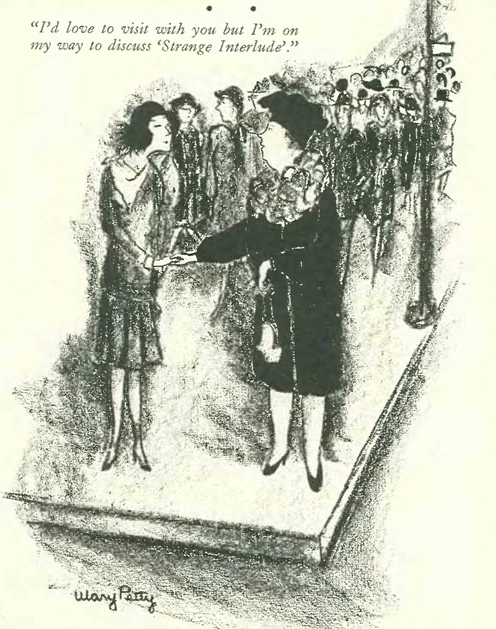
Our cartoon is courtesy of Mary Petty, who would become a renowned illustrator for The New Yorker, best remembered for a series of covers featuring her gentle satirization of the upper class Peabody family.
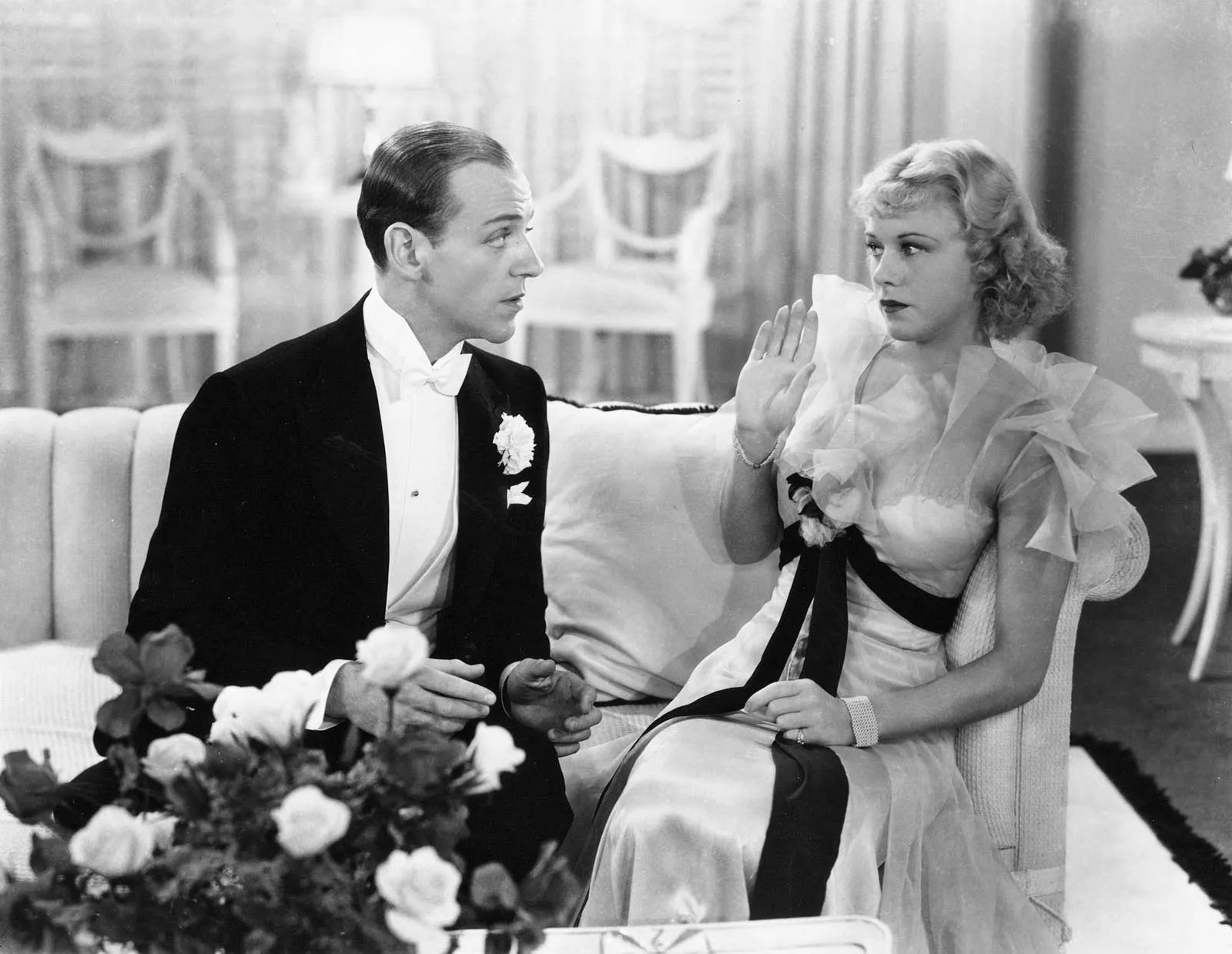
Before there was Fred and Ginger, there was Fred and Adele, and during the 1920s and early 30s Fred and Adele Astaire were brother-sister dancing royalty and the toast of Broadway.
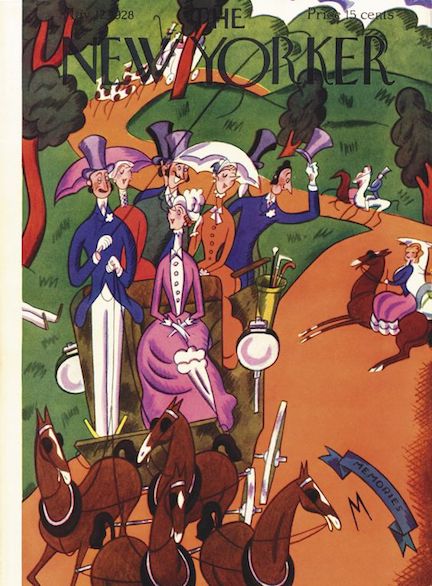
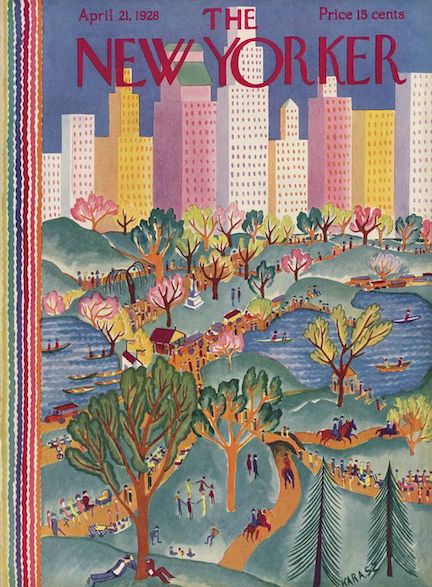
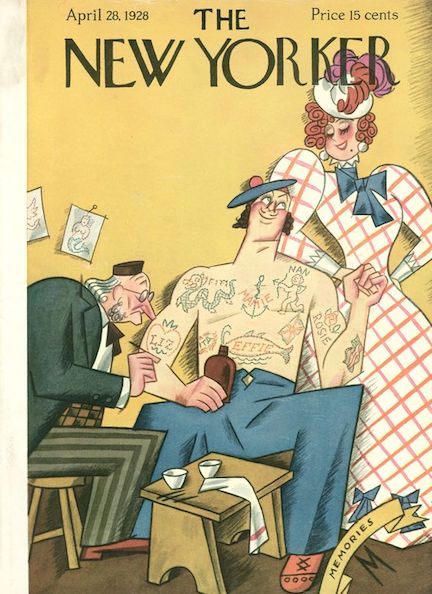
April 21, 1928 cover by Ilonka Karasz.
Fred and Adele Astaire were born a year apart in Omaha (she the eldest, born in 1898). Their mother wanted the siblings to learn professional dance at an early age, so in 1903 she moved with the children to New York City, leaving their Austrian-born father in Nebraska to work at the Storz brewery. By 1905 the brother-sister act were already popular on the vaudeville circuit, making their way to the Broadway stage by 1917.
EARLY BLOOMERS…Left, Fred and Adele Astaire in a photo taken around 1906, three years after they left Omaha and began their vaudeville career. At right, Fred and Adele in 1911. (dailytelegraph.com.au/Courtesy Antoine Dutot Museum & Gallery)
Fred became friends with composer George Gershwin, and in December 1924 the Astaires headlined George and Ira Gershwin’s first full-length New York musical, Lady, Be Good!, in which Fred and Adele played a brother-and-sister dance team down on their luck. In real life, however, their star soared above Jazz Age New York. So when rumor had it that the duo was on the verge of a break-up, “The Talk of the Town” weighed in:
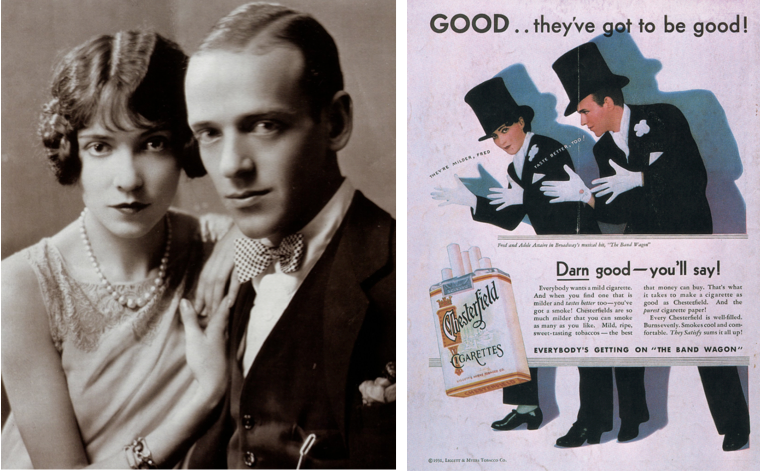
NO, THE OTHER ASTAIRE…At left, Adele and Fred Astaire in the 1920s. At the time the gamine Adele was considered the undisputed star of the duo. At right, the pair in a 1931 ad for Chesterfield cigarettes that also promoted The Band Wagon, their last Broadway revue together. (From The Astaires by historian Kathleen Riley/atticpaper.com)
Today you would be hard pressed to find anyone young or old who hasn’t heard of Fred Astaire, his legend so firmly attached to our cultural memory. But at the time it was Adele’s fun-loving ways and mischievous charm that captured the hearts of reviewers and fans alike. Brother Fred, on the other hand, was more interested in devising the duo’s clever routines.
The April 21, 1928 New Yorker was correct in noting that Adele had plans to marry and leave the country, but happily the magazine was wrong on the timing; Adele and Fred would perform together nearly four more years, capping their 27-year partnership with the successful run of The Band Wagon on Broadway.
In 1932 Adele would marry Lord Charles Cavendish and move to Ireland, not England. Home would be Lismore Castle in County Waterford. The end of the partnership with Adele was traumatic for Fred, who was indeed interested in producing and race horses, but that was not his immediate future as TheNew Yorker suggested. Instead, his movie career would take off like a rocket in 1933 in a string of hits with Ginger Rodgers including The Gay Divorcee (1934), Top Hat (1935) and Swing Time (1936).
Fred Astaire briefly turned his focus to horse-racing when he announced his early retirement in 1946, but he would soon return to the screen with Easter Parade in 1948 and enjoy another string of hits in the 1950s. Though separated by an ocean, the brother and sister remained close through the years.
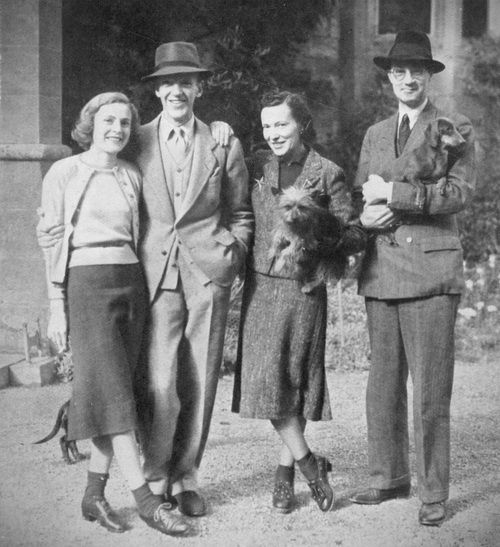
MY SIS IS A LADY…A reunion of Astaires in Ireland, 1939. Fred Astaire and his wife, Phyllis Livingston Potter, with Lord and Lady Charles Cavendish photographed on the day brother Fred and wife arrived at Lismore Castle from America to stay with sister Adele and her husband at their home in County Waterford. (Press image via Pinterest)Fred Astaire and Ginger Rogers in The Gay Divorcee (1934). (RKO Radio Pictures via Encyclopedia Britannica)TOGETHER AFTER ALL THESE YEARS…Left, Fred and Adele honored by the American Theater Hall of Fame in 1972 (celebrity promotor Earl Blackwell is in the center). Right, Fred and Adele at Chatsworth House in Derbyshire, England, circa 1980. Chatsworth had been in the Cavendish family since the 17th century, so Adele, as Lady Cavendish, was a frequent visitor. In a recent article in The Cheshire Magazine (April 11, 2017) Duchess Mary recalled the family’s first meeting with Adele in 1932: “All gathered, like stone pillars, in the library… the heavy doors opened and there stood this tiny girl, beautifully dressed. We waited for her to approach us, but instead of walking, she suddenly began turning cartwheels. Everyone loved it.”(American Theater Hall of Fame/thecheshiremagazine.co.uk)
* * *
Not So Happy Feet
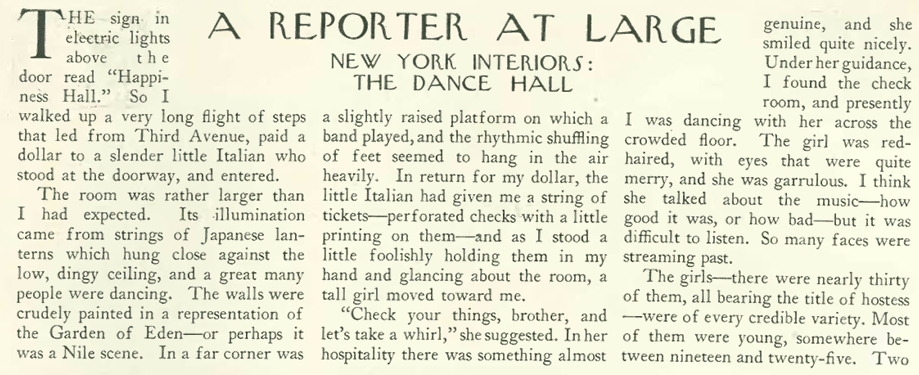
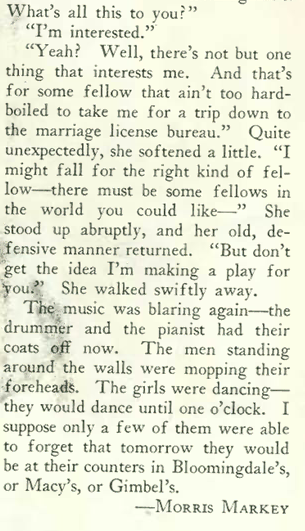
Morris Markey wrote several articles under the heading, “New York Interiors” (the last post featured his look at radio broadcasting). In the April 21 issue Markey took a look at the sad world of the “taxi dancers” in the ironically named “Happiness Hall.” This was the second time TheNew Yorker delved into the taxi-dancing world—Maxwell Bodenheim visited a Broadway dance hall in the June 12, 1926 edition of the magazine.
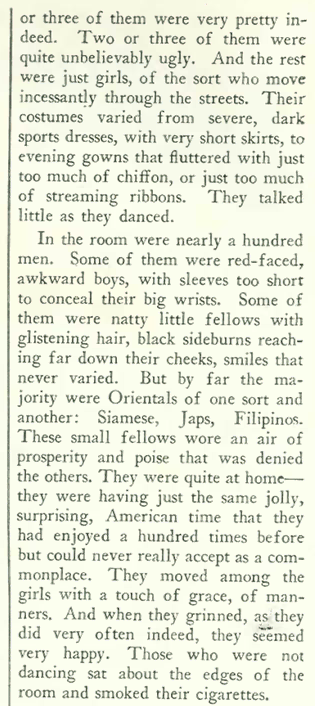
In both cases, the writers described a pathetic ritual for dancers and patrons alike, and both underscored a cruel illusion we still have today that the Roaring Twenties was an age of prosperity and good times for all. Excerpts:
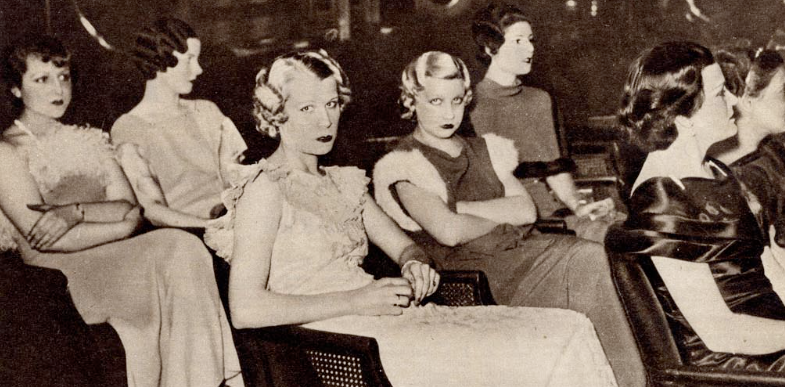
NO FREDS OR GINGERS HERE…Taxi-dancers awaiting customers at a Broadway dance hall in the early 1930s. The image was scanned from an article in Weekly Illustrated (Oct. 6, 1934) that described new regulations banning the vocation.
Later in the article, Markey described a dance with a red-haired girl who showed him the ropes…
…and described the less than elegant environment of “Happiness Hall”…
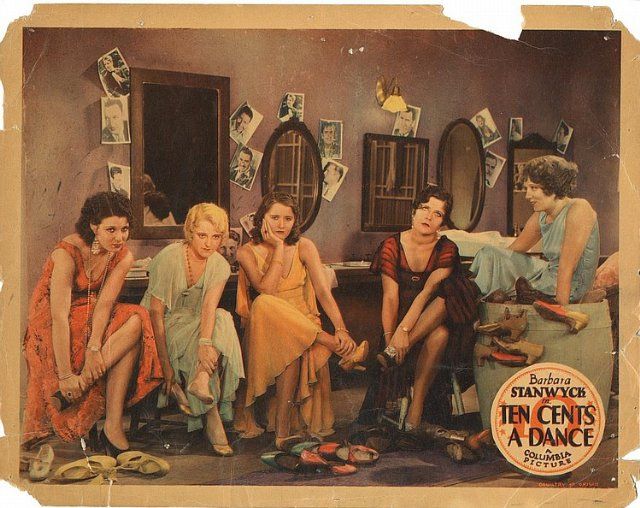
NO FUN IN THE MOVIES EITHER…Footsore taxi-dancers including Barbara Stanwyck, third from left, in 1931’s Ten Cents a Dance. (IMDB)
Markey concluded his visit by attempting to talk, rather than dance, with a graceful, yet hardboiled dancer:
In the 1920s Americans in general were poorer than they are today (money-wise) and lacked the safety nets that we have come to depend on in modern life. In 1929 economists considered $2,500 the income necessary to support a family. In that year, more than 60 percent of the nation’s families earned less than $2,000 a year—an income necessary for basic necessities—and more than 40 percent earned less than $1,500 annually.
For single women, such as the taxi dancers, the situation was just as bad or worse. Retail workers in U.S. faced long hours, poor working conditions and low pay, especially before the passage of the Fair Labor Standards Act in 1938. A clerk selling those beautiful clothes at Bloomingdale’s couldn’t afford those clothes herself, let alone make a living wage from the job. As Markey’s article made clear, taxi dancing was nothing but additional toil, 10 cents a pop.
From Our Advertisers…
We’ve seen cigarette advertisements featuring celebrity endorsements, but how about this one for Marlboro that suggested Christopher Columbus would have preferred their smokes…
…and then there were the ads for Fleischmann Yeast featured in nearly every issue of the early New Yorker magazine. According to Thomas Kunkel’s book, Genius in Disguise, Raoul Fleischmann was the wealthy scion of a New York yeast and baking family and a frequent guest of the Algonquin Round Table. He hated the baking business, so when founding editor Harold Ross pitched the idea of investing in his new magazine, Fleischmann obliged with $25,000. Ross and his wife, Jane Grant, together put up the other $25,000 (which included some IOU’s), but after the magazine was launched and struggled during its first months, Fleischmann was further obliged to pour in many hundreds of thousands of dollars to keep the magazine afloat (and in spite teasing from his friends that he might as well dump the money in the river).
The magazine was actually killed as early as May 8, 1925, when Fleischmann called Ross and other magazine directors together after Ross lost a large amount of money in a poker game (money he’d plan to invest in the magazine). Fortunately, the following day was fellow Round Tabler Franklin P. Adams’ wedding, and in the convivial atmosphere Ross and Fleischmann agreed to give the magazine another go. If Fleischmann was going to pour money into the magazine, he might as well get a little “free” advertising for his product. Hence the ads in TheNew Yorker promoting the generous consumption of fresh yeast cakes as a laxative and health tonic…
…and with that background information, this cartoon in the April 21 issue by Peter Arno makes a lot more sense
And finally, Leonard Dove takes a look at life in a growing metropolis…
U.S. presidential elections have long provided fodder for the nation’s humorists, and the 1928 contest between Herbert Hoover and Al Smith was no exception.
March 31, 1928 cover by Theodore G. Haupt.
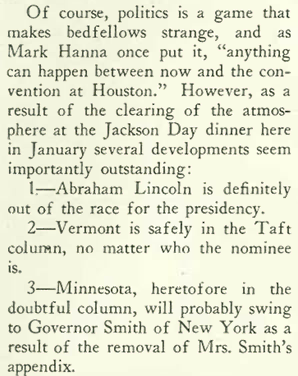
In the March 31, 1928 issue of the New Yorker writer Frank Sullivan and cartoonist Al Frueh took particular delight in skewering the party nominating conventions. As Sullivan observed:
Regarding item No. 3, Sullivan was referring to Minnesota’s famed Mayo Clinic, and the related pride that was doubtless associated with the removal of an appendix from Catherine Dunn, the wife of Al Smith, four-term governor of New York and nominee to lead the Democratic ticket.
The candidates could not have been more different. The first Catholic to be nominated for president, Smith was a crowd-loving, charismatic personality, a Tammany Hall politician and a committed “wet” who opposed Prohibition. He attracted strong support from Catholics, women, drinkers and those who were tired of the crime and corruption associated with dry America.
WET VS. WET BLANKET…The staid, “dry” Republican candidate Herbert Hoover (right) easily defeated the charismatic “wet” Democratic candidate Al Smith in the 1928 U.S. Presidential Election. (Wikipedia)
Hoover, on the other hand, was deliberately dull and humorless, as stiff as his heavily starched collars and committed to keeping the country dry. But the economy under fellow Republican Calvin Coolidge was booming, and it didn’t hurt that many Protestants believed the Catholic Church would dictate Al Smith’s policies if he were elected. Sullivan had some fun with this perceived religious prejudice:
In light of the recent 2016 elections and the prominence of “Islamophobia” in the political rhetoric, Sullivan’s joke regarding the role of “Mohammedans” in the 1928 election is noteworthy:
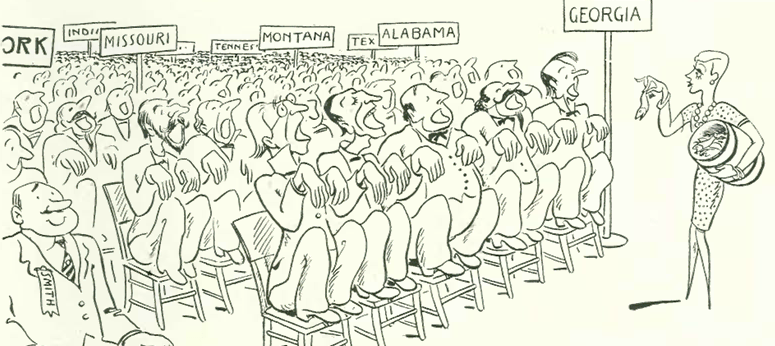
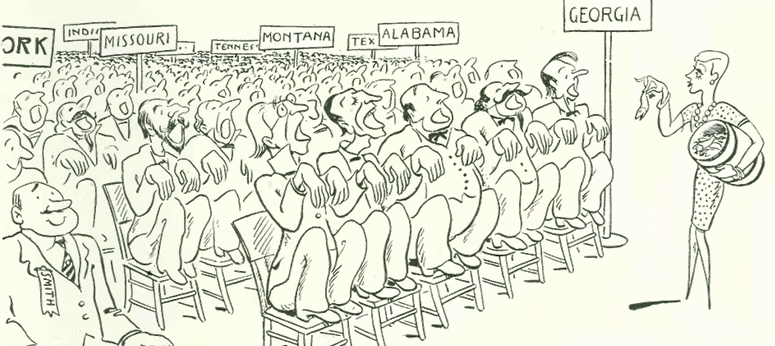
Illustrations by Al Frueh, both top and bottom, aptly captured the picture Sullivan painted of the nominating process:
Smith would lose in a landslide. Journalists at the time attributed his defeat to the three P’s: Prohibition, Prejudice and Prosperity. Rural voters, who favored Hoover, also had a bigger say than their urban brethren: Republicans would benefit from a failure to reapportion Congress and the electoral college following the 1920 census, which had registered a 15 percent increase in the urban population. After the election, Smith became the president of Empire State Inc., the corporation that would build the the Empire State Building in 1930-31.
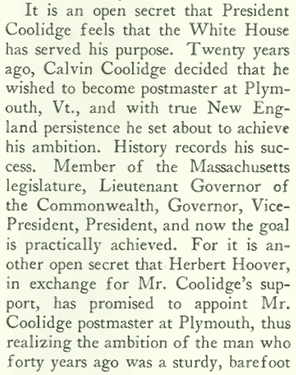
In his piece Sullivan also took at parting shot at President Coolidge…
…as did cartoonist John Price in the same issue…
For reference, the image that inspired Price:
BIG CHIEF… Calvin Coolidge donned a headdress while being named an honorary Sioux chief (“Leading Eagle”) in Deadwood, South Dakota in the summer of 1927. (Associated Press)
* * *
New Yorker Monotypes
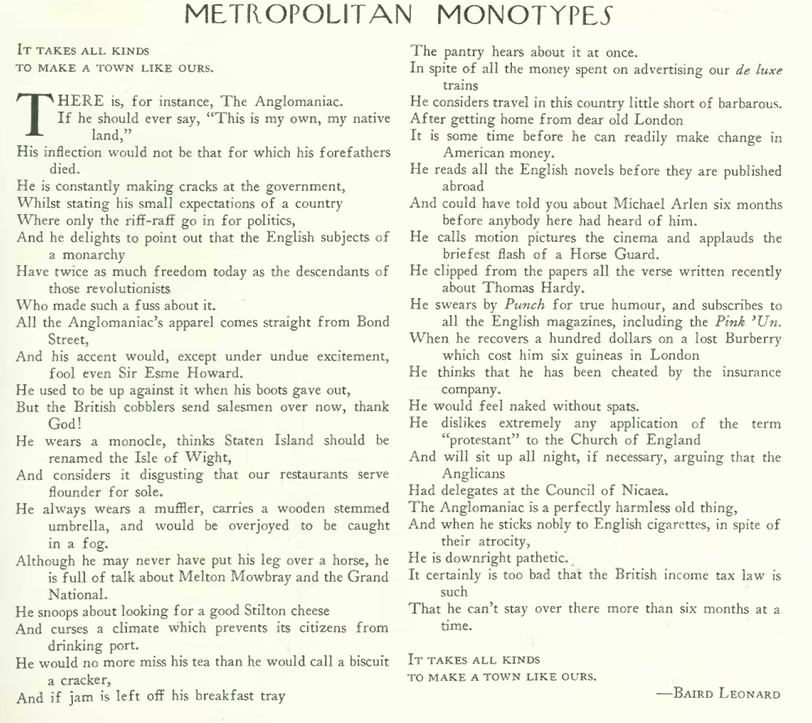
Another humorist who regularly contributed to The New Yorker was Baird Leonard, who beginning with the second issue of the magazine (Feb. 28, 1925) wrote a series titled “Metropolitan Monotypes.” Over five years and 36 installments Leonard wrote free-verse characterizations of various New York “types,” from debutantes to aesthetes to “The Anglomaniac” as described below in this installment from March 31, 1928:
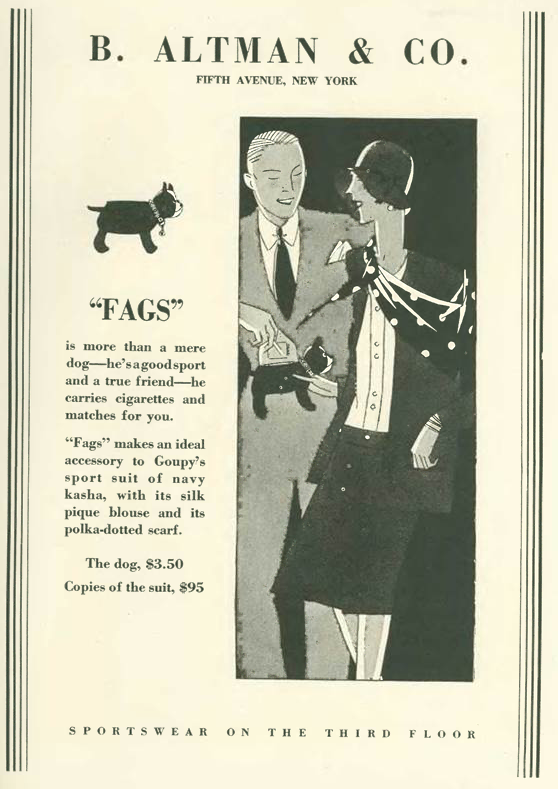
As noted before, Anglophilia oozed from The New Yorker ads, particularly those directed at the male reader (France was a common lure in ads for women). Every issue from the 1920s is rife with examples, but sticking to the March 31 issue we find this ad employing the British slang for cigarettes to market a silly, dog-shaped cigarette case to fashionable women:
In the same issue this ad from Macy’s appealed to participants of a famous cultural event for the posh set—the annual Easter Parade on Fifth Avenue. A tradition dating back to the 1870s, in its first decades the “parade” was a display of wealth and beauty, as the well-to-do strolled from church to church to check out various floral displays.
In 1928, the poor and middle classes were merely observers of the passing parade, perhaps hoping to learn something about the latest fashions. The April 14 “Talk of the Town” suggested as much:
And finally, our cartoon comes courtesy of Leonard Dove, who explores the lighter side of boxing…
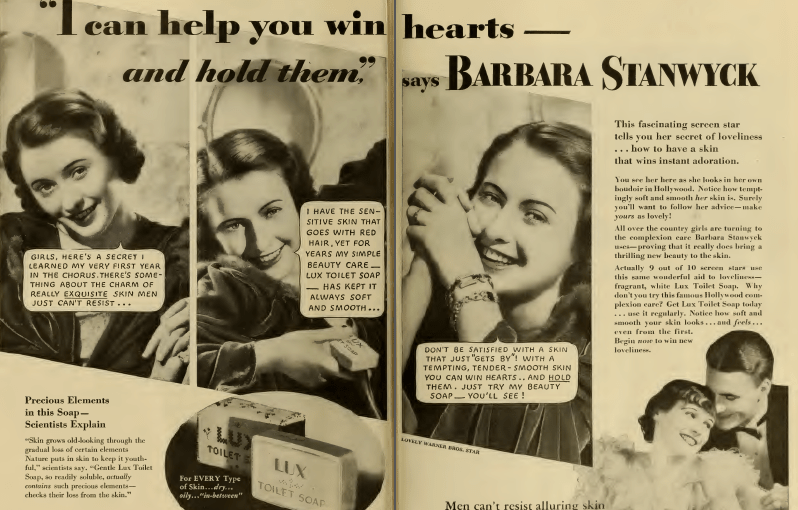
Lux Toilet Soap was launched in the United States in 1925 by its British parent company, Lever Brothers, which had been making soap since 1899. To capture the hearts and pocketbooks of American women, the company launched an advertising blitz that featured advertisements in a number of magazines including TheNew Yorker.
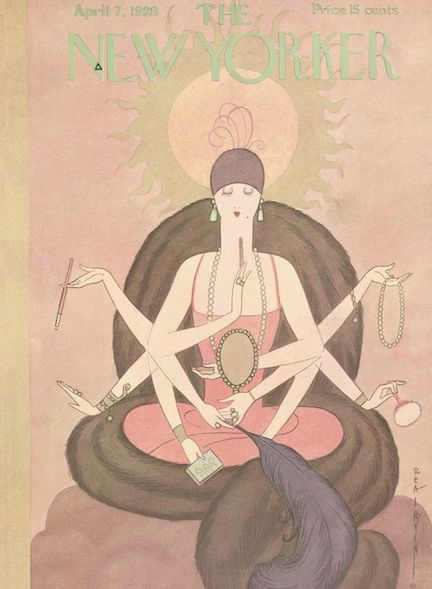
We look at two issues this week: March 17, 1928 cover by Peter Arno / March 24, 1928 cover unsigned, probably by Ilonka Karasz.
The earliest ads appealed to upscale women who saw the French as arbiters of taste and style. In the following Lux ad (from the Feb. 5, 1927 New Yorker), note that every paragraph and headline includes the words France or French:
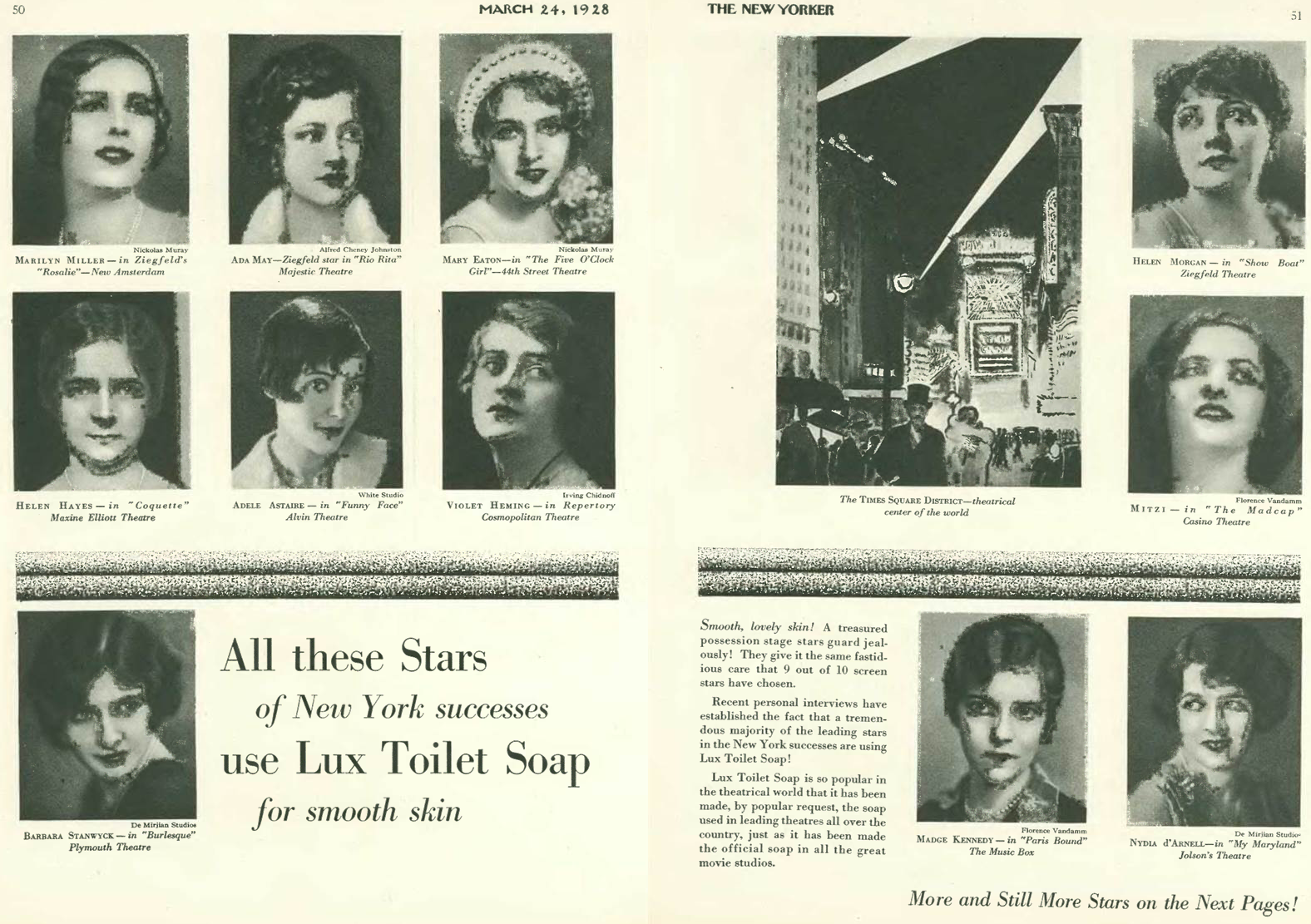
The big blitz came in 1928, when Lux pioneered the use of female celebrity endorsements on a mass scale. The campaign focused more on the roles played by Broadway and movie stars than on the product itself. The March 24, 1928 issue of The New Yorker featured these ads splashed across two center spreads.
The captions I have provided below the ads give brief information on each actress. Note that many of these actresses did stints with Broadway’s popular Ziegfeld Follies. Most also had long lives, including Mary Ellis, who lived in three centuries, sang with Enrico Caruso, and died at age 105.
Click Images to Enlarge
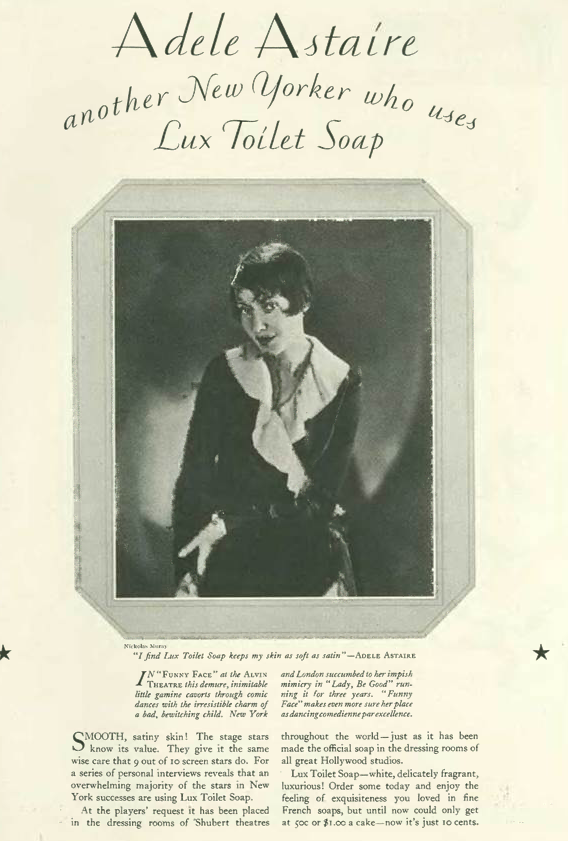
LEFT TO RIGHT, TOP TO BOTTOM: Marilyn Miller (1898-1936) was one of Flo Ziegfeld’s top talents and one of the most popular Broadway musical stars of the 1920s and 30s; Ada May (1896-1978), a theater actress most of her career, in 1927 played a lead role in Ziegfeld’s Rio Rita; Mary Eaton (1901-1948) was a leading stage actress, singer and dancer in the 1910s and 20s. She was featured in three editions of the Ziegfeld Follies; Helen Morgan (1900-1941) was considered the quintessential torch singer. A draped-over-the-piano look became her signature while performing at Billy Rose’s Backstage Club in 1925. She performed with Ziegfeld Follies in 1931; Helen Hayes (1900-1993) was called “the First Lady of American Theater.” Her awards included the EGOT– an Emmy, Grammy, Oscar and a Tony; Adele Astaire (1896-1981) was part of popular act with her brother, Fred. After the 1931 Broadway revue The Band Wagon she retired to marry Lord Charles Cavendish and moved to Ireland’s Lismore Castle; Violet Heming (1895-1981) was a dependable Broadway star with many theatrical credits; Hungarian-born Mitzi Hajos (1889-1970) specialized in musical comedy but faded from acting in midlife; Barbara Stanwyck (1907-1990) got her start as a model and “Ziegfeld Girl” before going on to become one of Hollywood’s biggest stars. She made 85 films in 38 years before turning to TV; Madge Kennedy (1891-1987) appeared in dozens of films from Baby Mine (1917) to Marathon Man (1976). She had a recurring role on TV’s Leave it to Beaver as Aunt Martha; Nydia d’Arnell was a musical comedy actress. Almost no record of her after 1928. She died in 1970.FROM LEFT TO RIGHT, TOP TO BOTTOM: June Walker (1900-1966) was the first actress to portray Lorelei Lee in 1926’s Gentlemen Prefer Blondes. Mostly stuck to the stage; Mary Lawlor, (1907-1977) was active on Broadway 1922-32; Judith Anderson (1897-1992), later awarded British title of Dame, was considered one of the world’s greatest classical stage actors; Mary Ellis (1897-2003) was star of the stage (including opera with Caruso) as well as radio, TV and film. Best known for musical theater, she performed into the 1990s and died at age 105; Wilda Bennett (1894-1967) was a Broadway musical comedy star in the 1920s whose career quickly faded. Appeared in 9 films between 1914 and 1941, mostly uncredited; Polly Walker (1904-1983) also faded quickly from the stage in the early 1930s, appearing in just 2 films; Mary Nash, (1884-1976) was a noted stage actress best known for two Shirley Temple films. Played Katharine Hepburn’s mother in 1940’s The Philadelphia Story; Norma Terris (1904-1989) had a long career as a performer and musical theater supporter. Last surviving adult actor from original 1927 production of Show Boat; Vivienne Segal’s (1897-1992) career was mostly in musical theater, including the 1924-25 Ziegfeld Follies. She appeared in a few films in the 1930s, as well as on TV in the 50s and 60s. Claudette Colbert (1903-1996) was a Hollywood leading lady for more than two decades. Won an Oscar for 1934’s It Happened One Night; Vivian Martin (1893-1987) appeared in 44 silent films in the teens and twenties before returning to the stage; Dorothy Peterson (1897-1979) made her screen debut in Mothers Cry (1930), a drama that required the 29-year-old to age three decades. She was typecast in careworn maternal roles for the rest of her career; Sylvia Field (1901-1998) enjoyed a long career on stage, screen, and TV. Best known for playing Martha Wilson on TV’s Dennis the Menace; Jeanette MacDonald (1903-1965), an influential soprano best remembered for 1930s musical films with Maurice Chevalier and Nelson Eddy.ADELE AGAIN…In the March 31 issue of The New Yorker Lux followed up with this ad featuring Adele Astaire all by herself.
Over the years dozens of famous actresses would appear in colorful ads singing the praises of Lux soap…
STAR POWER…Lux ads from 1954, 1956 and 1959 featuring, respectively, Audrey Hepburn, Debbie Reynolds and Sophia Loren. (Pinterest)
A final note. Lever Brothers began selling Lux soap in India in 1909, years before it was introduced in the U.S., and through the decades Bollywood actresses were prominently featured in their advertising…
NEW AGE…Bollywood Star Katrina Kaif in a 2010 Lux advertisement. (afaqs.com)
* * *
Meanwhile, back on earth…
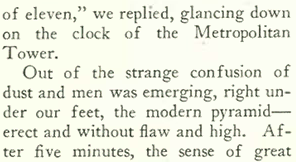
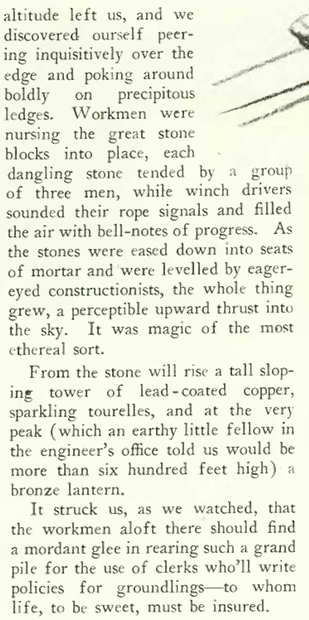
The March 17, 1928 “Talk of the Town” marveled at the rising structure between Madison and Park avenues that would become the New York Life Building. Designed by Cass Gilbert, who also designed the Woolworth Building, its gilded roof, consisting of 25,000 gold-leaf tiles, remains an iconic Manhattan landmark.
From 1837–1889, the site was occupied by the Union Depot, a concert garden, and P.T Barnum’s Hippodrome. Until 1925, the site housed the first two Madison Square Gardens, a memory that lingered amidst the city’s rapidly changing skyline…
ETHEREAL…The New York Life Building shortly after its completion in 1928. (Museum of the City of New York)
* * *
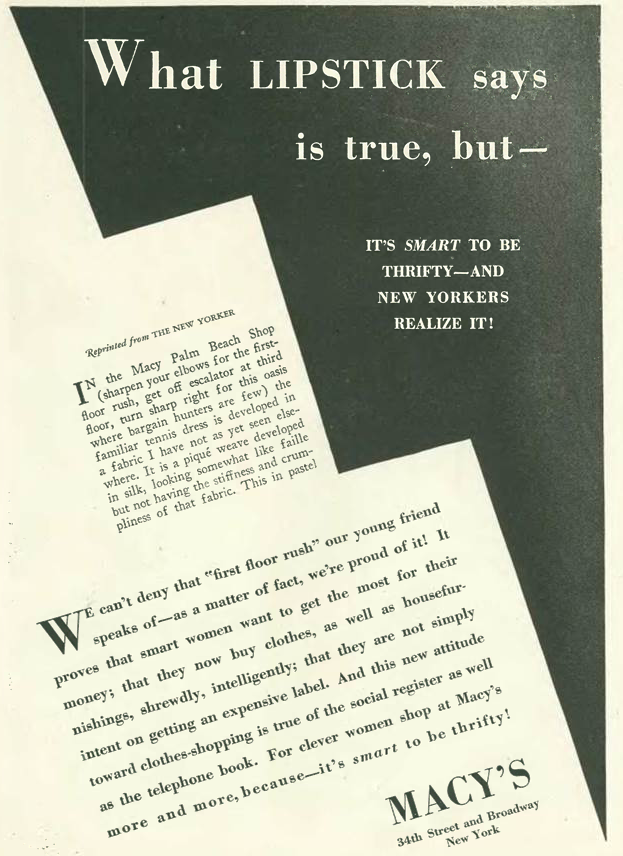
Following the lead of a Roosevelt Hotel advertisement in a previous issue, Macy’s Department Store also called out The New Yorker’s popular nightlife columnist “Lipstick” (Lois Long) in this ad featured in the March 17 issue…
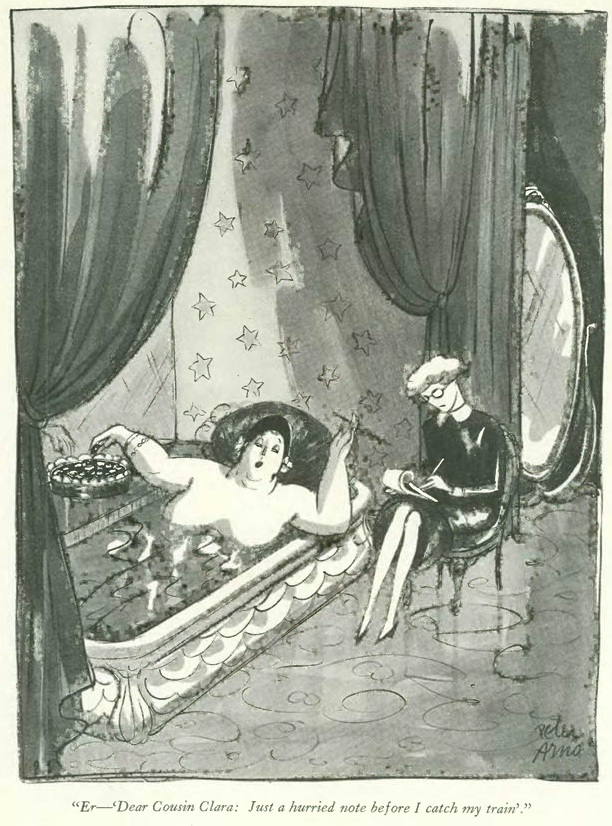
Our cartoon from the March 17 issue explored the hurried life of the idle rich, as depicted by Long’s husband, Peter Arno…
Landmark in Name Only
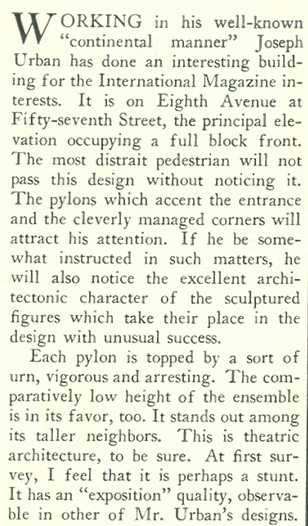
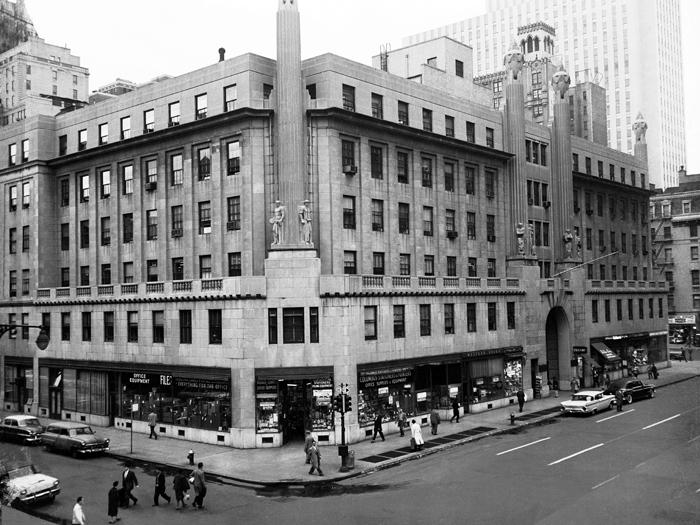
In the March 24, 1928 issue another building caught the attention of the magazine–a six-story structure designed by theatrical scenic artist and architect Joseph Urban for William Randolph Hearst. The International Magazine Building was completed in 1928 to house the twelve magazines Hearst owned at the time.
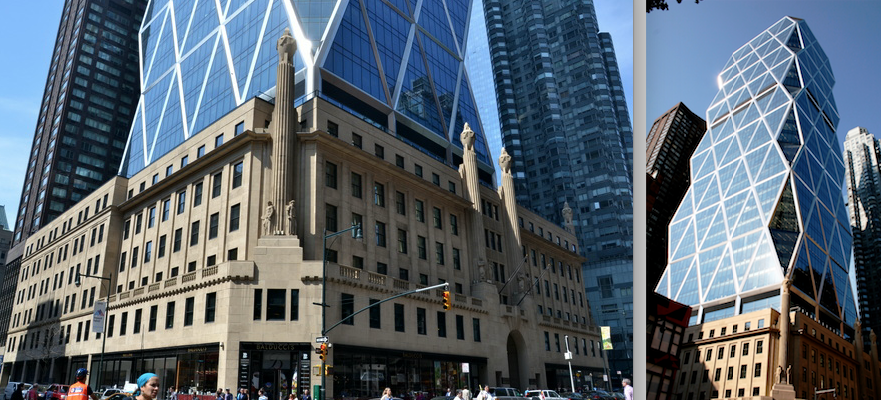
An important monument in the architectural heritage of New York, the building was designated as a Landmark Site by the Landmarks Preservation Commission in 1988. The six-story International Magazine Building was originally built to serve as the base for a proposed skyscraper, but the construction of the tower was postponed due to the Great Depression. The new tower addition by Norman Foster was finally completed nearly eighty years later, in 2006. It is probably not what either Hearst or Urban had in mind in 1928:
START OF A BIG IDEA…The International Magazine Building circa 1960. (Hearst)ALIEN INVASION…The 2006 Norman Foster tower rises from the hollowed-out shell of the International Magazine Building. (Benjamin Waldman / Wikipedia)
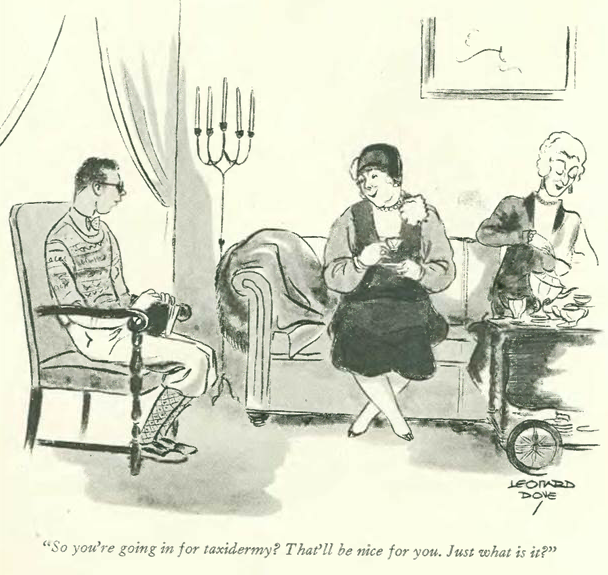
And finally, cartoonist Leonard Dove listens in on some tea time chatter…




































































 A New Yorker State of Mind