Fifteen Minutes is Quite Enough

Above image courtesy NASA History Office.

Charles Lindbergh was all over the July 2, 1927 issue of The New Yorker, which reported that Lindy was a better a flier than a writer, and as a celebrity the press had to be inventive with a subject who would rather be alone in a cockpit with a ham sandwich than be feted at countless banquets.
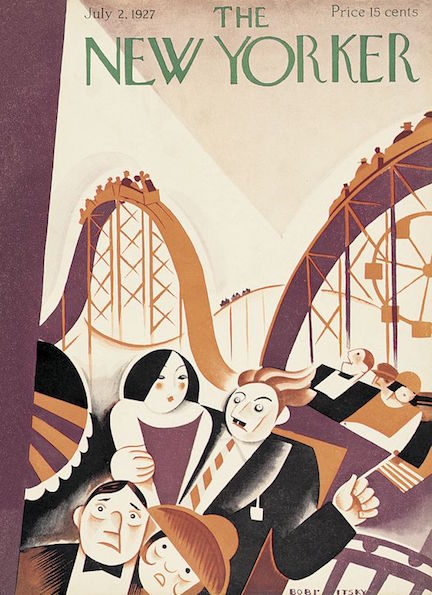
7b096a824e274d6b7b7c5e0f1a3e85e7
July 2, 1927 cover by Victor Bobritsky.

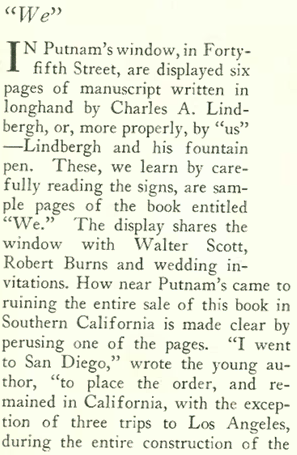
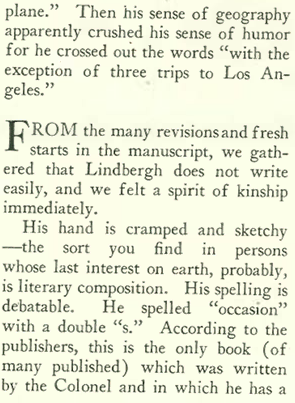
“The Talk of the Town” commented on the display at Putnam Publishing of a few manuscript pages penned by Lindbergh himself for his upcoming book, WE.

A draft of the autobiography had already been ghostwritten by New York Times reporter Carlyle MacDonald, but Lindbergh disliked MacDonald’s “false, fawning tone” and completely rewrote the manuscript himself–in longhand–using MacDonald’s manuscript as a template. Those early results were displayed in Putnam’s 45th Street window to whet the appetites of eager readers:
screen-shot-2016-10-14-at-10-13-58-am

screen-shot-2016-10-14-at-10-14-09-am

screen-shot-2016-10-14-at-10-14-26-am

dustjacket_for_the_book_%22we%22_by_charles_a-_lindbergh_first_edition_published_july_1927
FLYING THE ATLANTIC WAS EASIER…The dust jacket (left) for Charles Lindbergh’s WE. The ghostwritten first draft was disliked by Lindbergh, who in less than three weeks re-wrote the book in longhand. About a week later the book was published (July 27, 1927) and quickly became a bestseller. (Wikipedia)
lindberghs-ticker-tape-parade-1927-science-photo-library
YEAH WHATEVER…Lindbergh appears less than thrilled during his ticker-tape parade in Manhattan on June 13, 1927. (Science Photo Library )

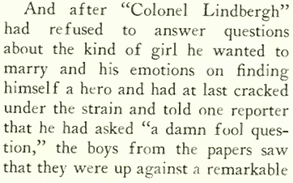
Nonplussed and often annoyed by all of the attention, Lindbergh was less than a colorful subject for the media. Philip Wylie (writing under the pseudonym “Horace Greeley Jr.”) in The New Yorker’s “Press in Review” column observed that reporters, seeking a more conventional image of a sentimental hero, decided to “supply him with emotions” he apparently lacked:
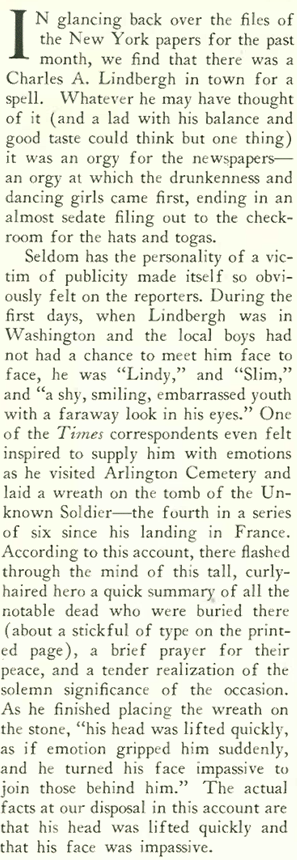
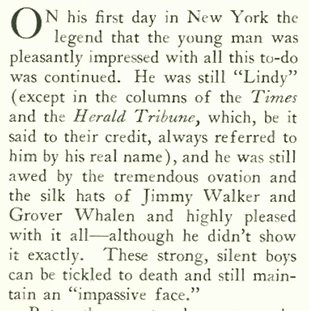
the-press-in-review

screen-shot-2016-10-14-at-10-26-11-am

screen-shot-2016-10-14-at-10-26-24-am

screen-shot-2016-10-14-at-10-26-30-am

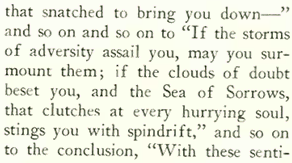
Other reporters resorted to treacly tributes…

screen-shot-2016-10-14-at-10-26-38-am

screen-shot-2016-10-27-at-2-56-10-pm

screen-shot-2016-10-14-at-10-27-45-am

…and if the subject himself wasn’t very interesting, you could always resort to listing quantities of food and drink as a measure of the spectacle…
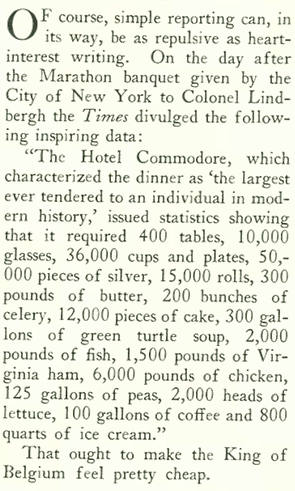
screen-shot-2016-10-14-at-10-27-57-am

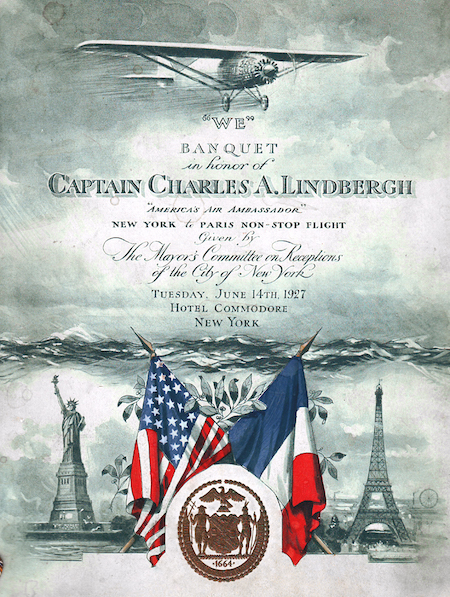
cal_banquet
WHERE’S MY HAM SAMMICH?…Invitation to the WE banquet at the Hotel Commodore (Wikipedia).

And if the reception at the Hotel Commodore wasn’t to your liking, you could go to the new Roxy Theatre and put in a bid for 300 pounds of home-made candy:

screen-shot-2016-10-14-at-10-28-17-am

screen-shot-2016-10-14-at-10-28-23-am

screen-shot-2016-10-14-at-10-28-57-am

 *  *  *

We’ll give Lindy a break and move on to excerpts from Upton Sinclair’s “How to be Obscene,” in which he tweaks the Boston bluenoses:

how-to-be-obscene

upton-sionclair

screen-shot-2016-10-14-at-10-21-29-am

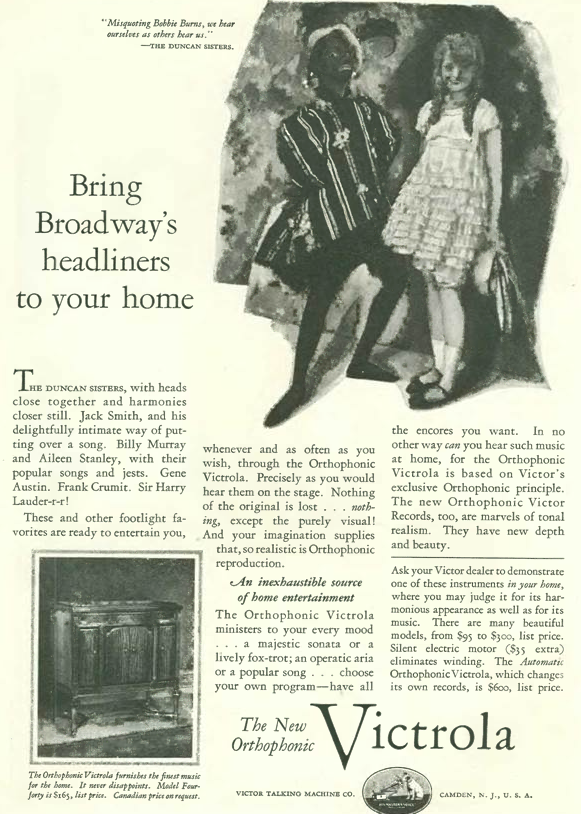
And then we have this advertisement for the Orthophonic Victrola, promising to bring the clear tones of racism into your home courtesy of the Duncan Sisters:
duncan-sisters

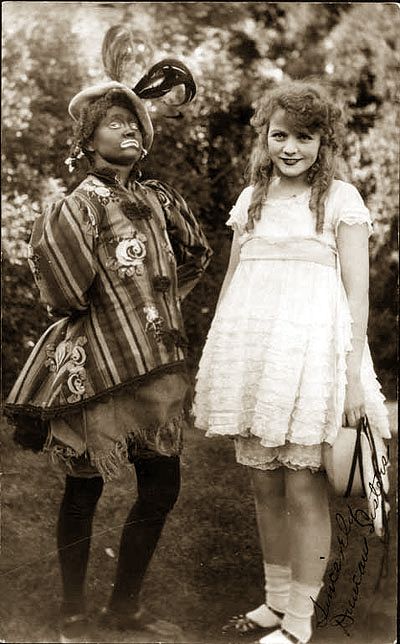
The Duncan Sisters were a vaudeville duo who created their stage identities in the 1923 musical comedy Topsy and Eva, derived from the novel Uncle Tom’s Cabin by Harriet Beecher Stowe. The musical was a big hit.
18bcd1e588bb3456db02bd7de94cba31
THAT WAS ENTERTAINMENT…Sisters Rosetta (left) and Vivian Duncan as Topsy and Eva. (silenceisplatinum.blogspot.com)
9a89aa65126941d43da14c086ed0f22c
Rosetta and Vivian Duncan in a promo photo. (silenceisplatinum.blogspot.com)

After a brief foray into movies in the early 1930s, the duo mostly entertained at night clubs and for many years continued to perform their Topsy and Eva routine even though appearing in blackface was considered impolite or offensive by later audiences. One of their final performances was on Liberace’s television show in 1956. The act ended in 1959 when Rosetta died in a car accident.

screen-shot-2016-10-27-at-4-22-32-pm
STILL TOGETHER…Vivian (left) and Rose Duncan on Liberace’s television show in 1956. They performed their Topsy and Eva routine, without the blackface. (YouTube)

 *  *  *

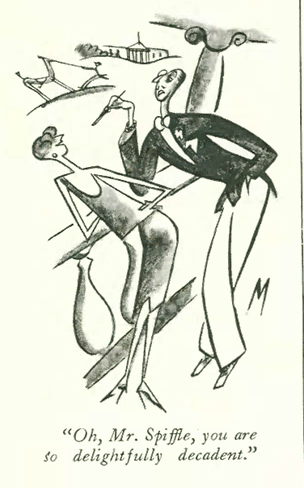
And to close, a cartoon from the July 2 issue, courtesy of Julian de Miskey:
screen-shot-2016-10-24-at-11-32-18-am

Next Time: Summer in the City…

21b6fac0e9233b827d578cf6175dd79d


Île-de-France

On June 22, 1927, the legendary French ocean-liner, the Île-de-France, traveled from Le Havre to New York on its maiden voyage, soon to be greeted by the American media and the thousands who would crowd the docks at New York Harbor to see the great ship.

80c5240bf5ffaaff418de94b7e176525
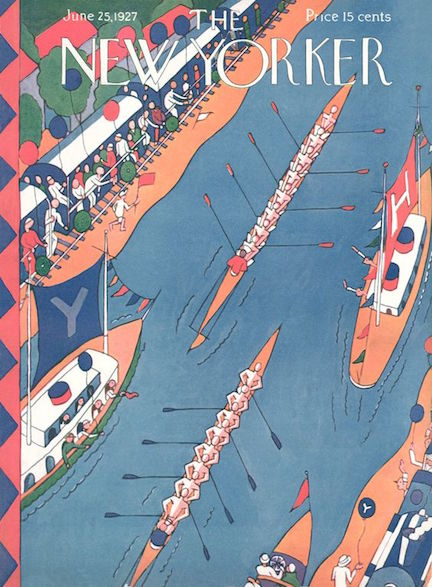
June 25, 1927 cover by Ilonka Karasz.

Among those anticipating the visit was The New Yorker, which offered this account in “The Talk of the Town” for the June 25, 1927 issue:

screen-shot-2016-10-14-at-9-46-05-am

screen-shot-2016-10-14-at-9-46-18-am

screen-shot-2016-10-14-at-9-46-27-am

ss_ile_de_france_c1935
PRIDE OF FRANCE…Postcard image of the Île-de-France from 1935. During a post-war refurbishment, the three funnels were replaced with a pair of stockier, more stylish funnels. (Wikipedia)

The Île-de-France was unique in that it was the first ocean-liner to have an interior design that didn’t imitate “shore-style” interiors that resembled rooms in manor houses or grand hotels. The trend-setting ship sported a modern, art deco look that celebrated the present and the future.

mainfoyer
IN WITH THE NEW…The Main Foyer & Grand Staircase of the Île-de-France,(newyorksocialdiary.com)
c1fe5bedcb3cb40a005ca4aa6672195c
LEAVE YOUR FLIP-FLOPS AT HOME…The first-class dining room in the Île-de-France. (newyorksocialdiary.com)

Note that these photos do not contain images of water slides or all-you-can eat buffets. An ocean voyage, if you could afford it, was an elegant affair. The Île-de-France was especially popular among wealthy Americans who liked its stylish, youthful vibe.

The Île-de-France served as a troop ship during World War II, and in 1956 played a major role in rescuing passengers from the sinking Andrea Doria off the coast of Nantucket.

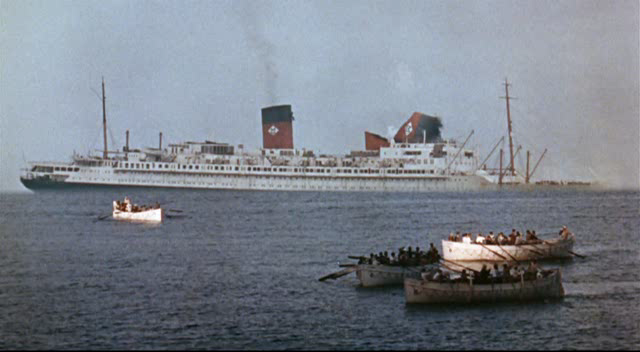
Unfortunately, anything that is youthful soon grows old, and as we all know, style is an ephemeral thing. With the advent of transatlantic jet transport, ships like the Île-de-France fell out of favor, and by 1960 the grand ocean liner was reduced to serving as a floating prop for a disaster movie titled The Last Voyage. The filmmakers partially sunk the poor ship, set fires and detonated explosions in the interior, and in a final act of desecration dropped one for the ship’s smoke stacks onto its deck house.

oceanlinersmagazine
(IMDB)
the-last-votage
NOT A BUFFET IN SIGHT…Still from the 1960 movie, The Last Voyage, shot on board the soon-to-be-scrapped Île-de-France. (Screen shot from movie trailer)
screen-shot-2016-10-20-at-2-20-28-pm
FIERY END…Fires were set in the interior of the Île-de-France during the filming of The Last Voyage. (Screen shot from movie trailer)
the-last-voyage-1960-ship-sinking
BROUGHT TO ITS KNEES…The Île-de-France (named the SS Clarion in the movie) is partially sunk with its forward funnel collapsed in a still from the film, The Last Voyage.

 *  *  *

The Ruth Snyder–Judd Gray murder trial and sentencing captivated Americans in 1927, but another trial and sentencing in the 1920s would bring worldwide attention and spark mass protests.

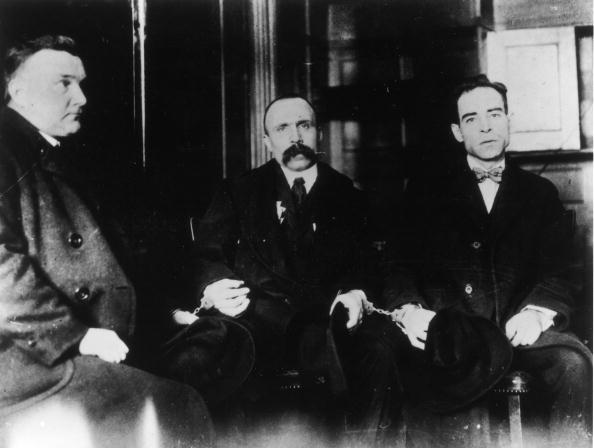
Nicola Sacco and Bartolomeo Vanzetti were Italian-born Americans who were convicted of murdering a paymaster and guard during a robbery of a Boston-area shoe company in 1920. Although convicted of murder the following year, many critics of trial believed Sacco and Vanzetti, who held anarchist views, were innocent of the charges, and the case became one of largest causes célèbres in modern history with protests held on their behalf in major cities across the U.S. and around the world.

Ferdinando Nicola Sacco and Bartolomeo Vanzetti in handcuffs, circa 1920s. (Photo by Fotosearch/Getty Images).
Cause Célèbre…Nicola Sacco and Bartolomeo Vanzetti handcuffed together at the Dedham, Massachusetts Superior Court, 1923. (Boston Public Library).

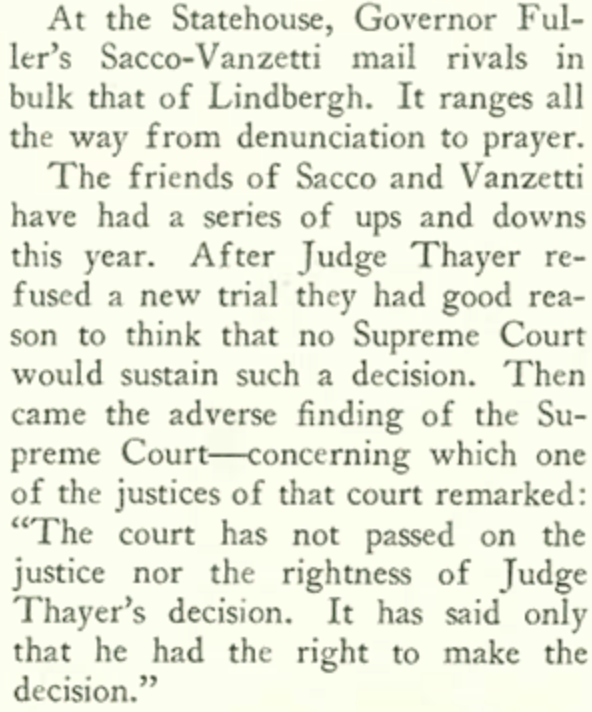
Sentenced to death in April 1927, they would be executed the following August. The New Yorker, predisposed to look down on Boston as something of a backwater, had this to say about the trial in an article by Gerald Day for the “Reporter at Large” column:

screen-shot-2016-10-22-at-10-18-49-am

The case also rekindled memories of other notorious trials:

screen-shot-2016-10-22-at-10-19-05-am

The governor did appoint a commission to review the case, but the final decision was in his hands…

screen-shot-2016-10-22-at-10-19-49-am

And so the only option left for Sacco and Vanzetti was clemency from the governor.

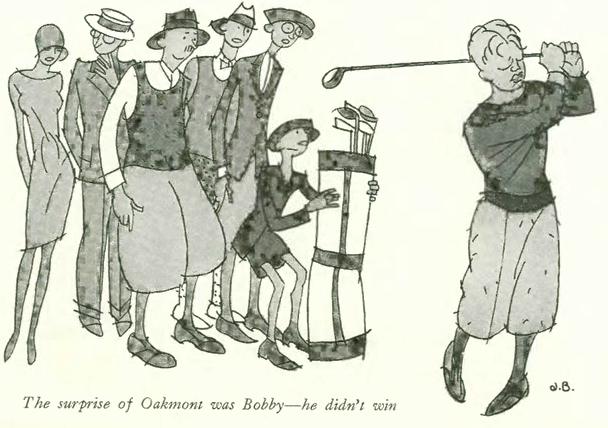
To close, a few illustrations from some of the magazine’s mainstay artists…this one from Johan Bull used to illustrate an article on the U.S. Open featuring amateur Bobby Jones

screen-shot-2016-10-14-at-9-49-23-am

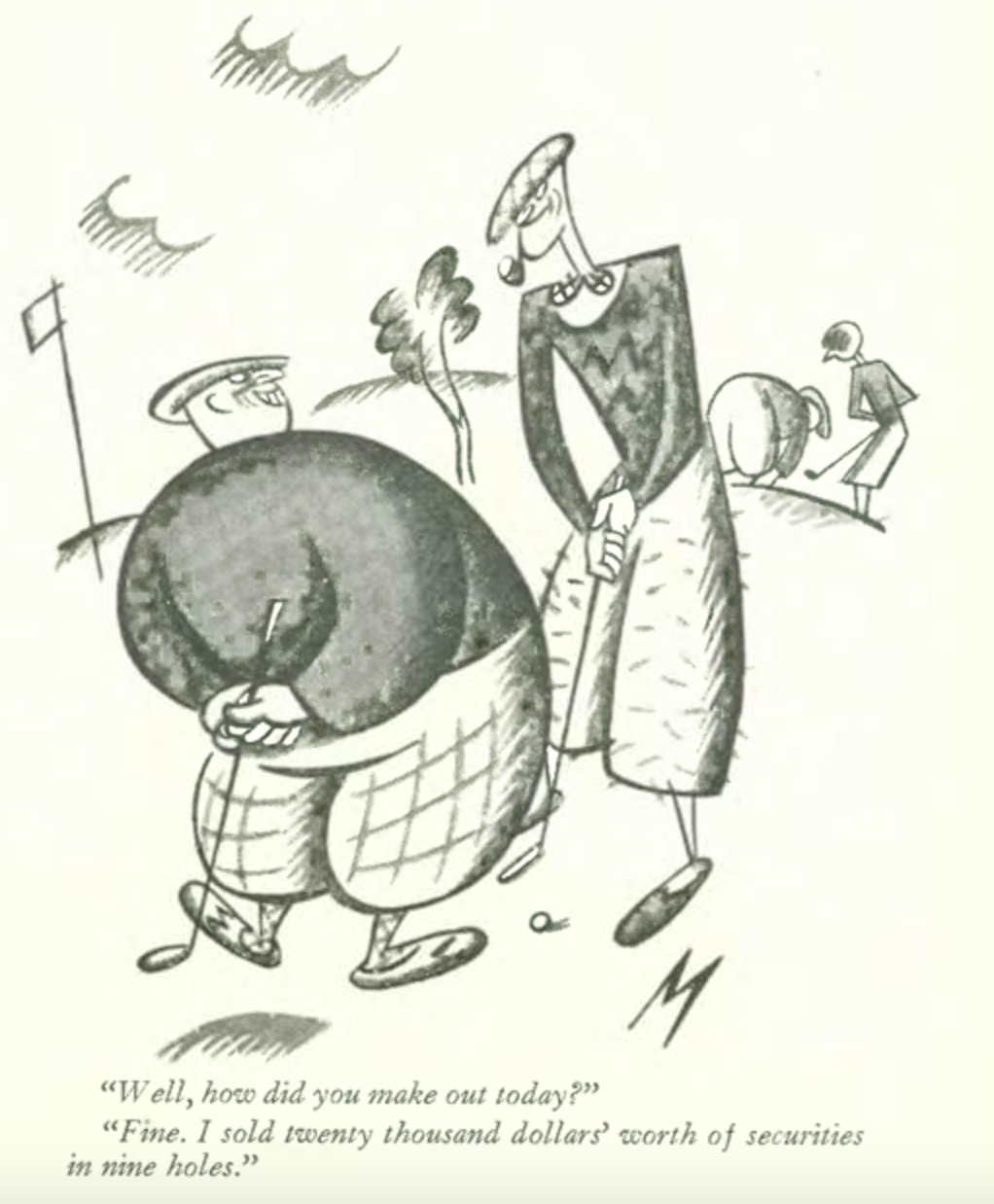
…and keeping with the golf theme, this cartoon by Julian de Miskey

screen-shot-2016-10-22-at-9-36-35-am

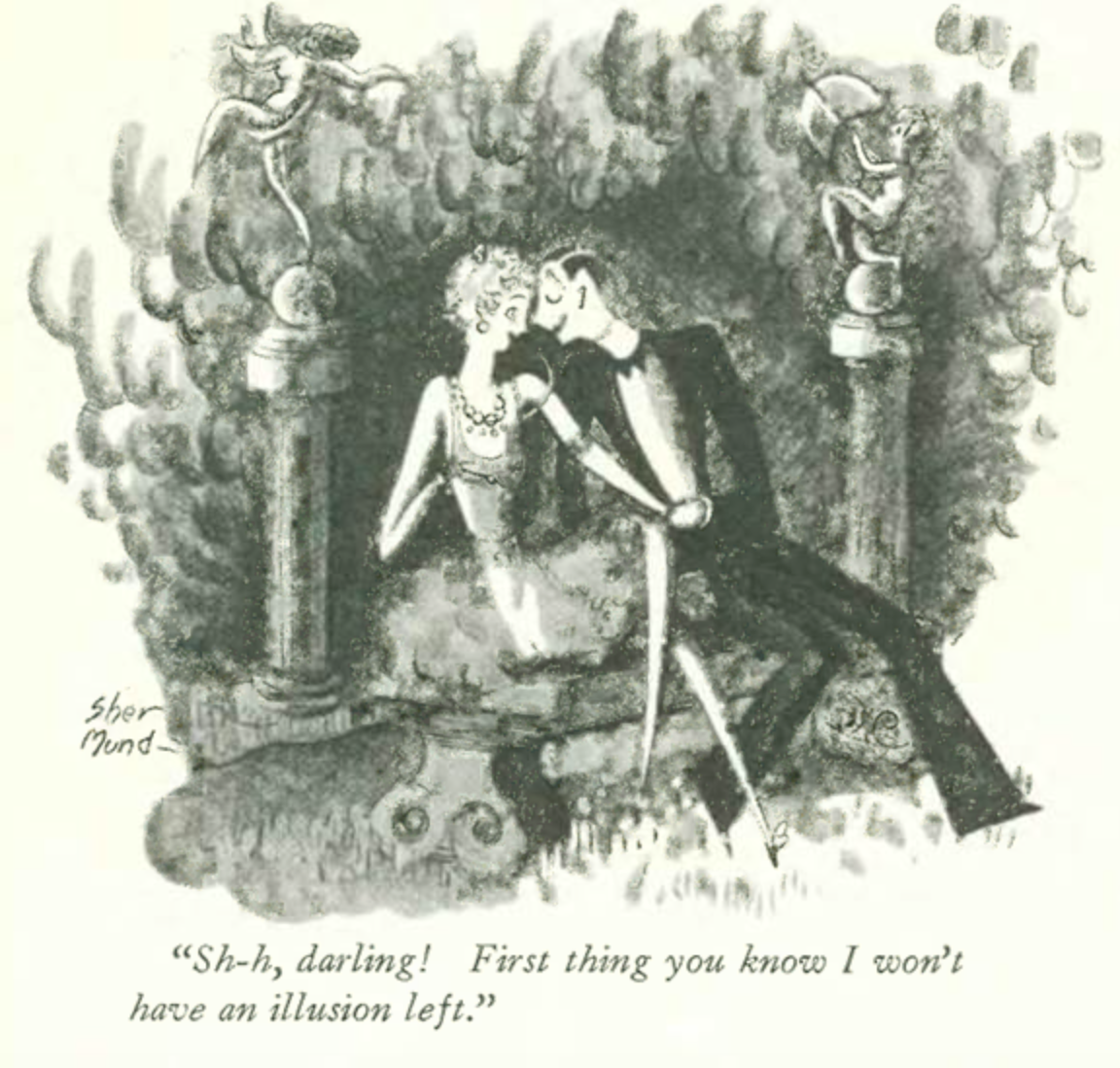
…and finally, a little fun with Barbara Shermund and her comment on social mores of the day:

screen-shot-2016-10-22-at-9-37-14-am

Next Time: Fifteen Minutes is Quite Enough…

7b096a824e274d6b7b7c5e0f1a3e85e7


Race Matters

Ben Hecht was a well-known screenwriter, director, producer, playwright (notably, The Front Page) and journalist who contributed a number of comic essays to The New Yorker, including “The Caliph Complex” featured on Page 30 of the Dec. 4, 1926 issue.

e0fa6079facd04a1d0611e2da7cd2519
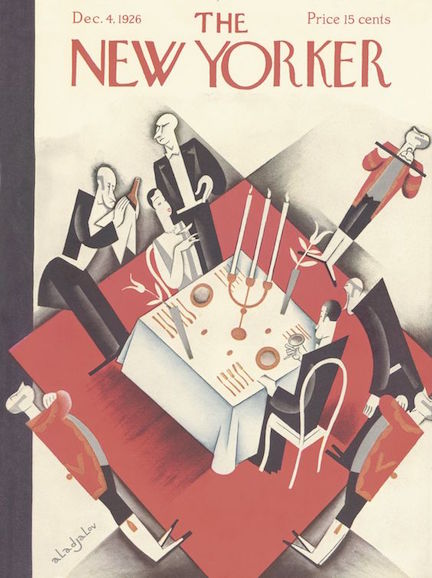
December 4, 1926 cover by Constantin Alajalov.

The magazine consistently rejected “uptown slumming” by New Yorkers seeking exotic thrills in Harlem nightclubs (see my recent post on nightlife correspondent Lois Long’s ho-hum attitude toward the Cotton Club), and Ben Hecht was no exception to this stance.

Screen Shot 2016-05-17 at 9.19.24 AM
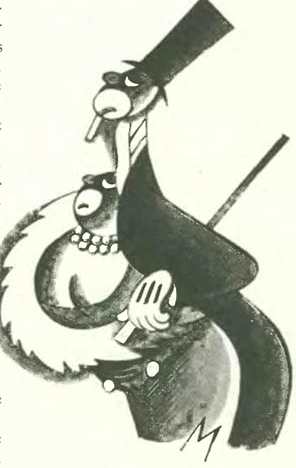
A drawing by Julian De Miskey that accompanied Hecht’s article.

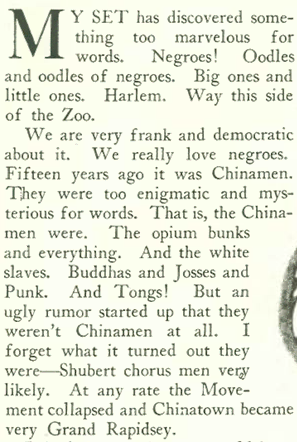
In her book Defining New Yorker Humor, Judith Yaross Lee suggests that Hecht’s criticism of “slummers” was not an act of political liberalism, but rather was in line with the magazine’s habit of poking fun at the faddish. Hence the opening lines of Hecht’s essay:

Screen Shot 2016-05-17 at 9.39.05 AM

Screen Shot 2016-05-17 at 9.39.20 AM

As I’ve previously noted, for all its sophistication The New Yorker of the 1920s was decidedly mainstream in treating blacks as racial “others.”

Lee notes that only a few illustrations in the magazine’s first five years depicted Asians, and the servant class was mostly represented by European types (butlers with a Jeeves-like air, or comely chamber-maids).

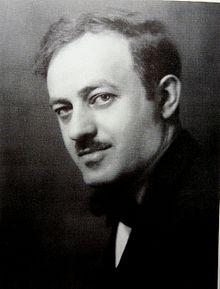
Ben Hecht (Wikipedia)

When it came to depictions of black and brown faces, Lee notes that the magazine featured “conventional” types of the day—minstrel figures in blackface (see illustration above) or exotic African dancers.

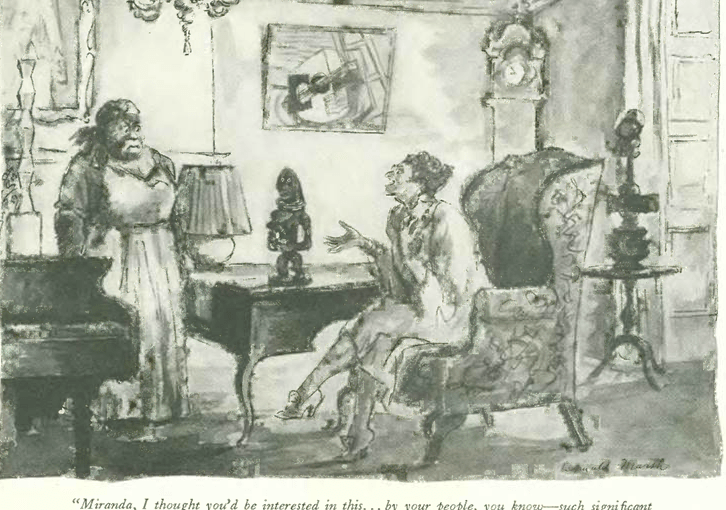
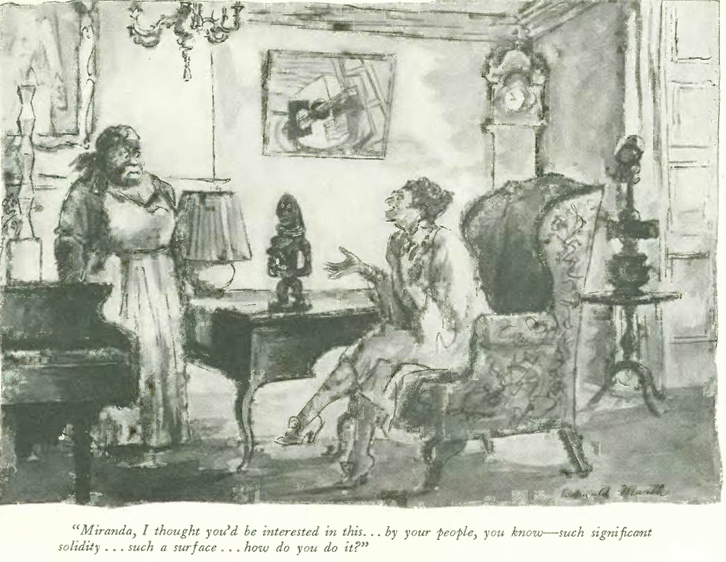
When blacks were depicted as servants, they were rendered as “mammies,” such as in this cartoon by Reginald Marsh in the Dec. 4 issue:

Screen Shot 2016-05-17 at 5.01.48 PM

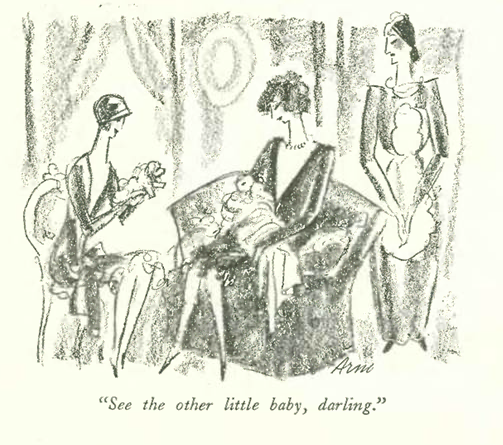
On the facing page, Peter Arno offered a depiction of a servant more typical for the magazine:

Screen Shot 2016-05-17 at 9.57.11 AM

But lest we feel smug in looking down at our literary forebears, the current discourse in our country seems to indicate that we still have a long way to go on issues of race.

Although there is much to dislike about The New Yorker’s views on race 90 years ago, its criticism of faddish “slumming” did call into question 1920s notions of race. Lee notes that the cartoon by Reginald Marsh (above) is actually a sneer aimed at the white woman for her patronizing comment. She represented the “fashionable Afrophilia” that Hecht and his fellow New Yorker writers detested.

“The Caliph Complex,” according to Lee, “suggested that The New Yorker did not so much ignore Africanist movements as suspect their white supporters.” The following October, Dorothy Parker would pen the essay “Arrangement in Black and White”–the story of a party in honor of a famous gospel singer–that would echo Hecht’s attack on false liberalism.

Next Time: What Price Glory…

9ce9dbbb683b23ca1336748460e4d7ac


The Cotton Club & Other Distractions

Of all the nightclubs made famous in the Roaring Twenties, none were quite so famous as Harlem’s Cotton Club. Frequented by many celebrities, the club was a whites-only establishment even though it featured many of the most popular black entertainers of the day including Fletcher Henderson, Duke Ellington and Cab Calloway.

8a3e8956e7cf51e58975801865fdce55
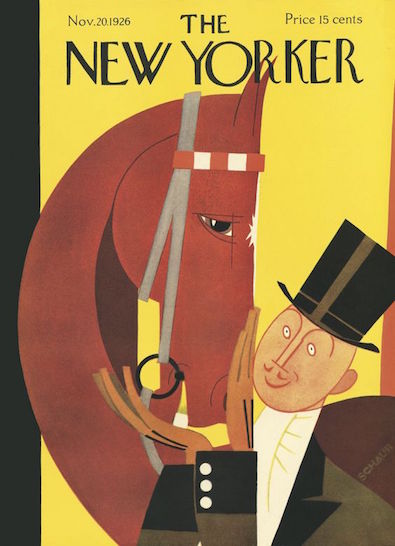
November 13, 1926, Issue # 91, cover by Julian de Miskey.

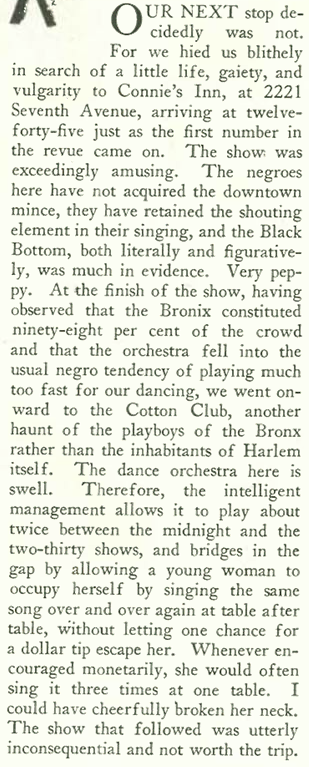
So leave it to The New Yorker, and specifically its nightlife correspondent, Lois Long, to take a blasé view of the famed hot spot. Perhaps she was just tired, having already visited three other nightclubs that evening—the Montmartre, the Yacht Club, and Connie’s Inn—before seeking out the Cotton Club:

Screen Shot 2016-04-14 at 6.16.45 PM

Screen Shot 2016-04-14 at 6.49.42 PM
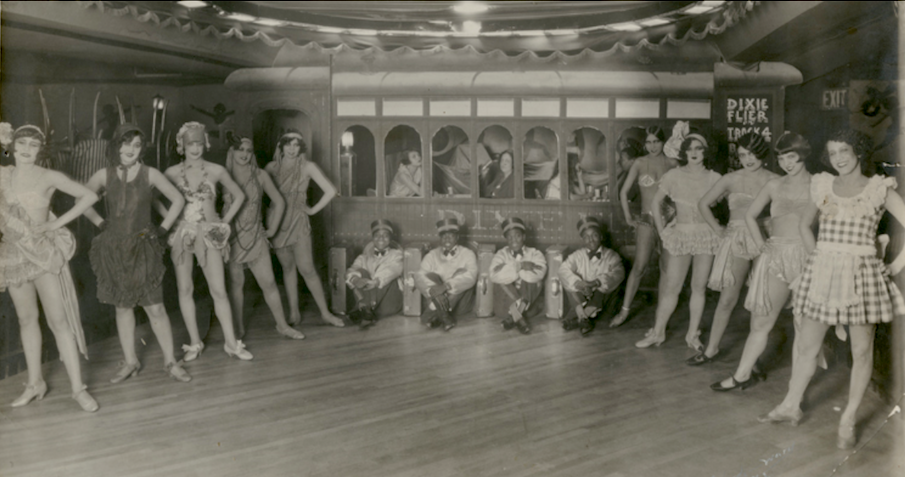
Performers on stage at Connie’s Inn, Harlem, 1920s. (New York Public Library)
Duke-Ellington-band-Cotton-Club-NYC-New-York-Untapped-Cities
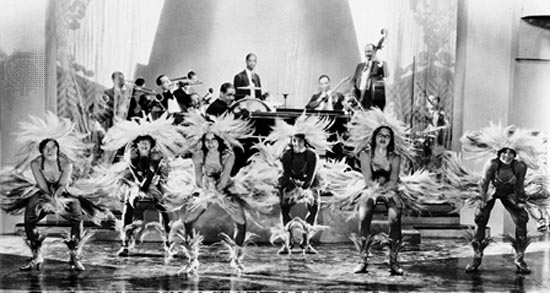
Duke Ellington and dancers at the Cotton Club in the late 1920s. (Untapped-Cities)
dadanycottonclubflyer
Program from the 1920s designed to attract white patrons to the Cotton Club. (Women of the Harlem Renaissance)

* * *

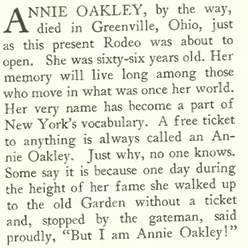
“The Talk of the Town” noted the passing of rodeo star and sharp-shooter Annie Oakley (next time you get a free ticket with a hole punched in it, you’ll know what to call it):

Screen Shot 2016-04-13 at 4.54.06 PMScreen Shot 2016-04-13 at 4.54.49 PM

If nightclubs weren’t your thing, there were plenty of movie houses screening the latest offerings from Tinseltown. The opening pages of the magazine featured this advertisement for the new 3,664-seat Paramount Theatre, located at 43rd Street and Broadway in the Times Square.

Screen Shot 2016-04-13 at 4.52.30 PM

It’s a reminder that Paramount, a venerable old Hollywood studio (which these days is owned by Viacom) had its origins in New York as the Famous Players-Lasky Corporation. Founded in 1916, Famous Players-Lasky was primarily located at the Kaufman Astoria Studios in Queens (after 1920). It would eventually become Paramount Pictures and relocate to Hollywood in 1932.

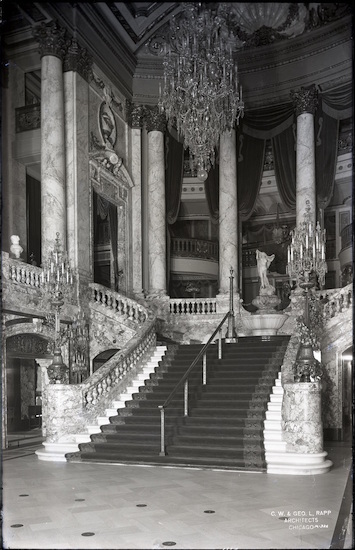
The Paramount Theatre was closed in 1964. Sadly, the interior was gutted and converted to office and retail use. Here are a couple of interior shots of the theatre’s Grand Hall as it appeared following its opening:

NY-NYC-MAN-Paramount-CAPC-M0316

NY-NYC-MAN-Paramount-CAPC-M0326
NOT YOUR LOCAL CINEPLEX…Grand Hall of the Paramount Theatre, featuring imported Italian marble columns. (American Theatre Architecture Archive)

The theatre’s huge pipe organ, one of the largest and most admired theatre organs ever built by the Wurlitzer company, was removed and later installed in a convention hall in Wichita, Kansas.

ParamountThCon
Keyboard array of the Paramount Theatre’s huge pipe organ, one of the largest theatre organs ever built by the Wurlitzer company. (nycago)

Paramount would open theatres around the country (in the chain of Publix Theatres), and a number of them survive today. The original Paramount Building in New York is still there, but all that’s left of the theatre is the marquee.

The marquee in 1927:

Copy of New York's Paramount Theater - 1930s
(nyc.gov)

And today:

(Wikipedia)

Next Time: The Sporting Life…

cb57ca46d50ab47f3acf02be954149b6


Gentlemen Prefer Blondes?

Despite The New Yorker’s taste for the finer things–polo, opera, classical music–its editors couldn’t resist the pull of popular culture as both spectacle and fodder for mockery of the hoi polloi.

848d031119e0d470956ce963e6e7fb62
Oct. 9, 1926 cover by Julian de Miskey.

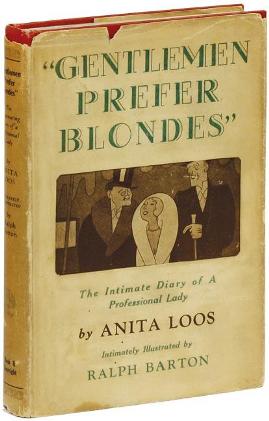
And so we have the Oct. 9, 1926 issue with a review of the much-anticipated Broadway play Gentlemen Prefer Blondes, which was based on a surprise bestselling novel by Anita Loos (and illustrated by The New Yorker’s own Ralph Barton). Despite garnering lukewarm reviews from critics, the public loved the adventures of gold-digging flapper Lorelei Lee.

GentlemenPreferBlondes
First edition of Gentlemen Prefer Blondes, by Anita Loos, illustrated by Ralph Barton (Wikipedia)
tumblr_l7eu7x4QVv1qcl8ymo1_500
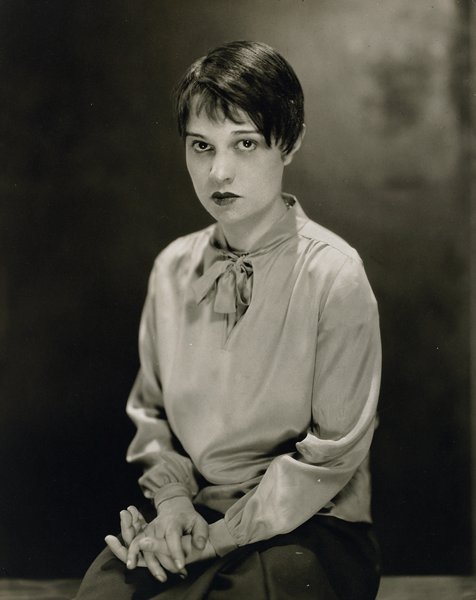
Edward Steichen portrait of Anita Loos, 1926. The New Yorker would feature a lengthy, admiring “Profile” of Loos in its Nov. 6, 1926 issue. (Minneapolis Institute of Art)

According to Wikipedia, the book was one of several famous novels published in 1925 to chronicle the Jazz Age, including F. Scott Fitzgerald’s The Great Gatsby (which ironically didn’t do so well) and Carl Van Vechten’s Firecrackers. Loos was inspired to write the book after watching a sexy blonde “turn intellectual H. L. Mencken into a lovestruck schoolboy.” Mencken, a close friend of Loos, actually enjoyed the work and saw to it that it was published.

nypl.digitalcollections.ab6c9cc0-81c6-da79-e040-e00a1806702e.001.w
Gold-digging flapper Lorelei Lee (June Walker, second from left), Henry Spofford (Frank Morgan, second from right), and the rest of the cast tussle in the stage production Gentlemen Prefer Blondes, Times Square Theatre, 1926. Another “blonde,” Marilyn Monroe, would famously portray Lorelei Lee in the 1953 Howard Hawks film. (New York Public Library)

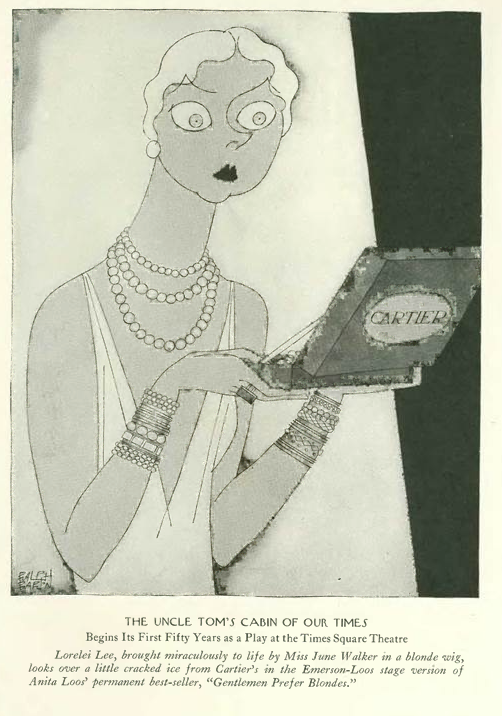
Ralph Barton contributed this drawing of June Walker for the magazine’s review:

Screen Shot 2016-02-29 at 9.26.56 AM

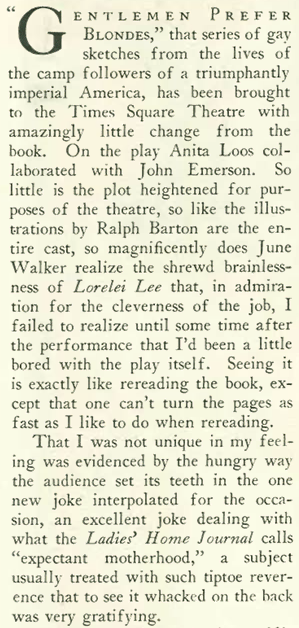
And a bit of the review itself…

Screen Shot 2016-02-29 at 9.28.33 AM

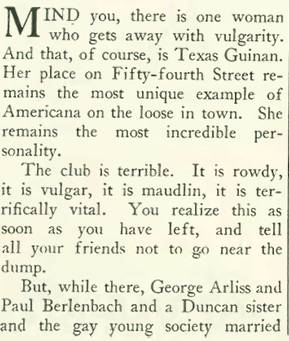
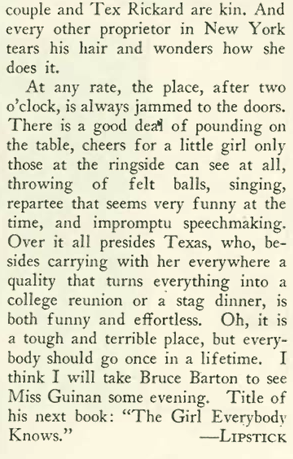
In other items, Lois Long paid a visit to Texas Guinan’s 300 Club on 54th Street, which apparently was still the place to go for a roaring good time:

Screen Shot 2016-02-29 at 9.30.16 AM

Screen Shot 2016-02-29 at 9.30.33 AM

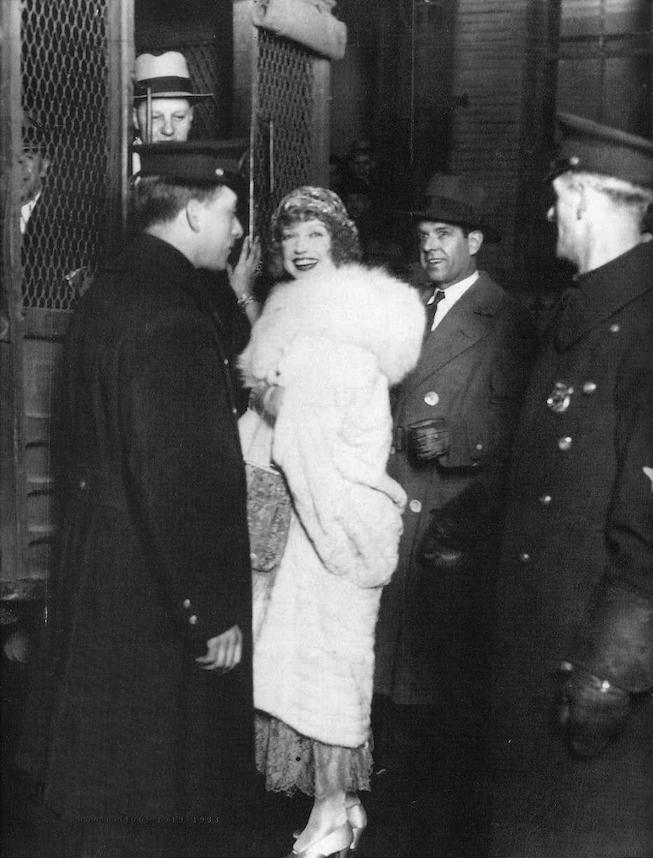
texasguinanpolice
JUST HAVING FUN…According to the blog Ephemeral New York, Texas Guinan’s 300 Club at 151 West 54th Street hosted the likes of John Barrymore, George Gershwin, and Clara Bow. The club was targeted by prohibition officials, who were constantly padlocking the door and arresting Texas. Guinan’s clever rejoinder to the officials: The 300 Club’s patrons brought liquor with them, and because the place was so small, the showgirls were forced to dance close to customers. (Ephemeral New York)

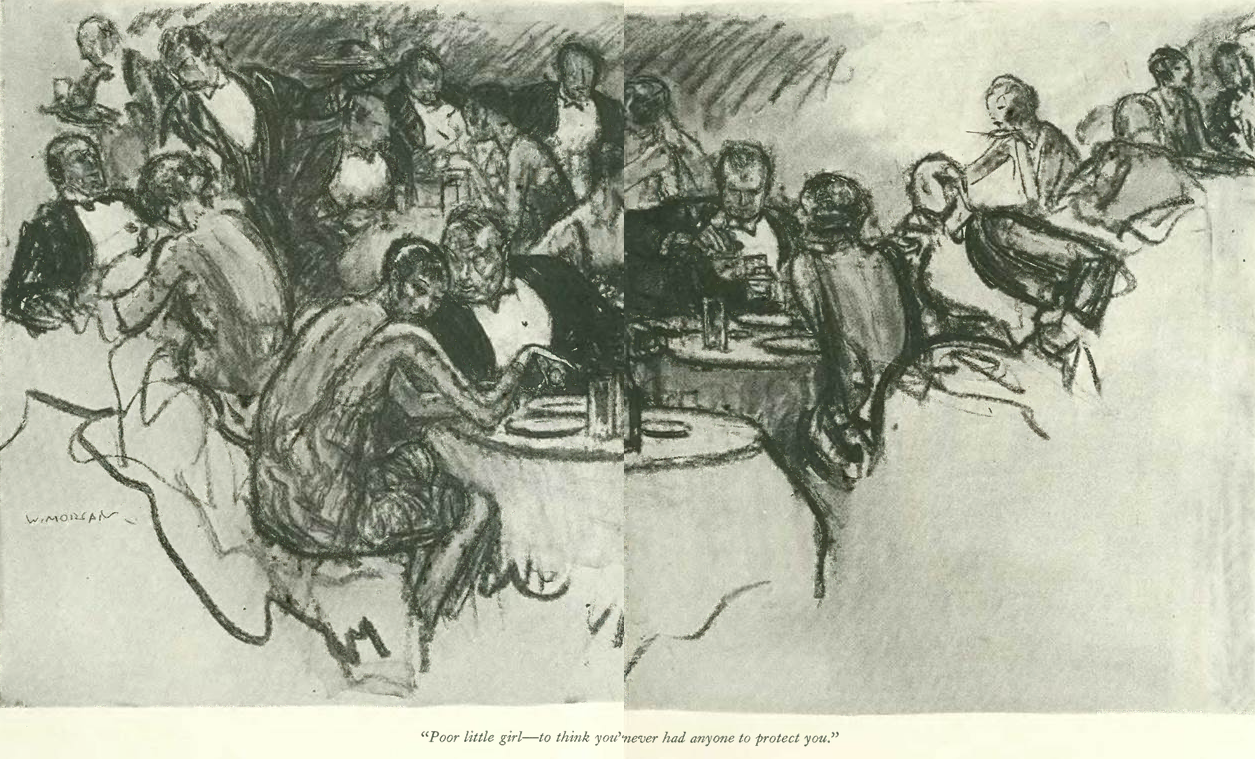
The magazine’s cartoons continued to mine the humor of rich old men out on the town with their young flapper mistresses. The one below was a center spread illustration by Wallace Morgan with the caption: “Poor little girl–to think you’ve never had anyone to protect you.”

Screen Shot 2016-02-29 at 9.21.32 AM

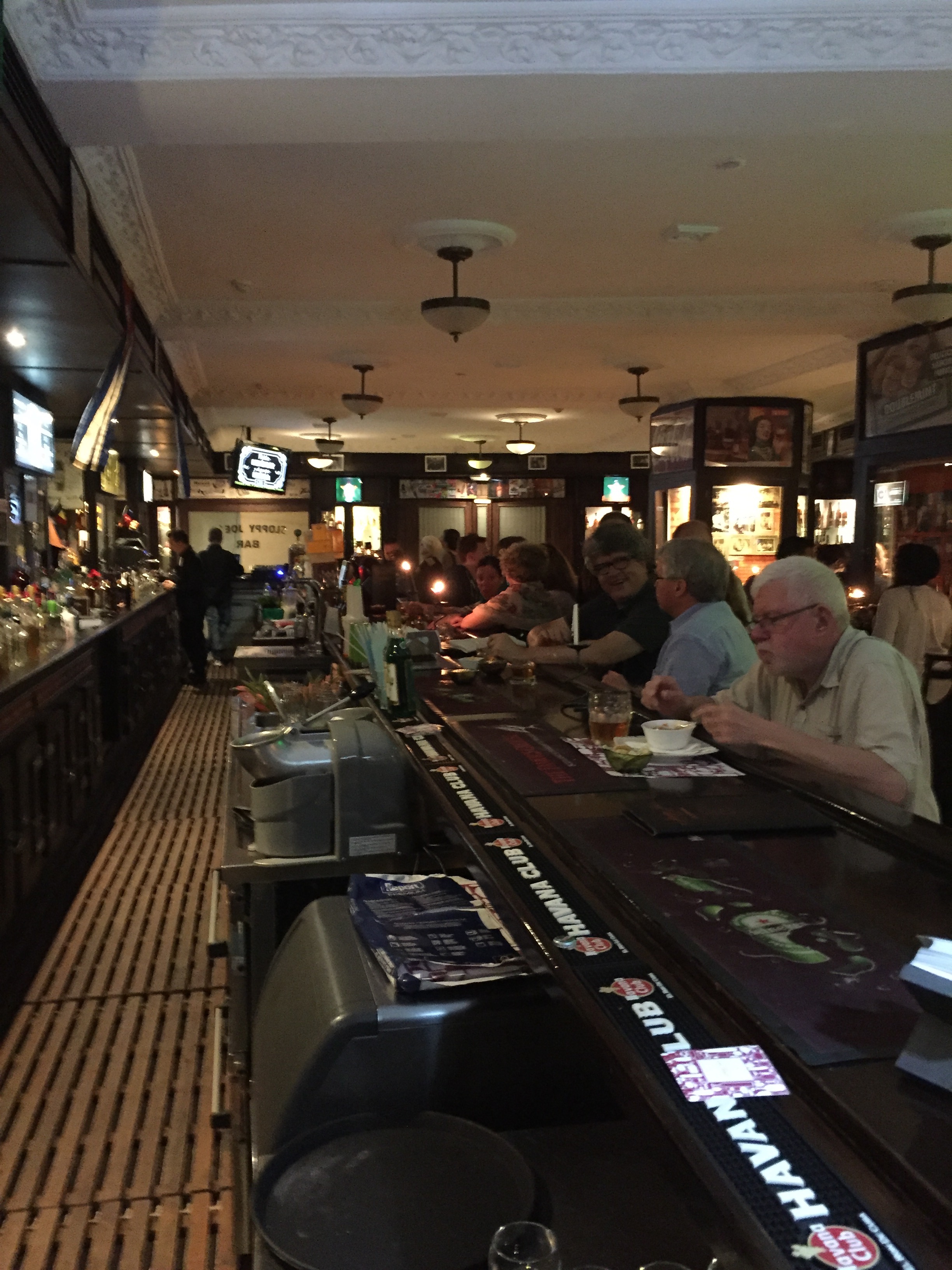
Finally, a look back at one of my earlier blog posts (Cuban Idyll) that featured Americans in Havana. I recently traveled to Cuba and visited some of the old haunts, including the famed Sloppy Joe’s:

IMG_1549
(Photo by David Ochsner)

Next Time: The Changing Skyline…

c37832e544c79a83494d91ea68c0329b


Tarnished Tinseltown

Screen Shot 2016-01-14 at 9.54.46 AM
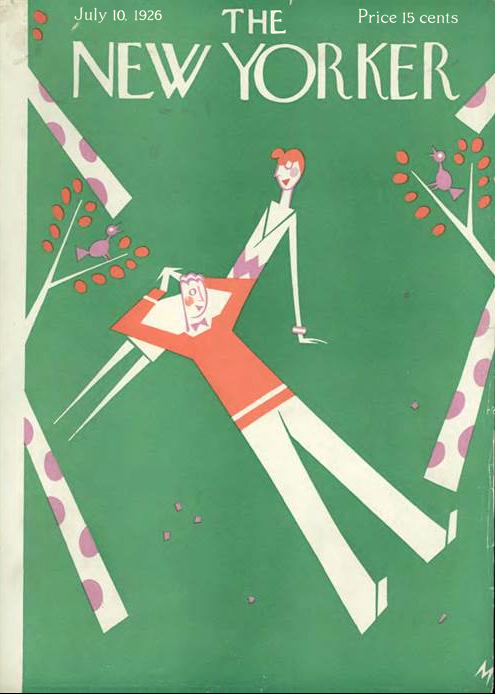
July 10, 1926 cover by Julian de Miskey.

Although there are some good indie and foreign films being made these days, not to mention some decent stuff on cable and streaming services, we still have plenty of bland popcorn fare coming out of Hollywood that combines the worst of unscrupulous producers and their fawning writers and directors.

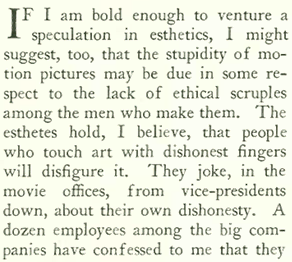
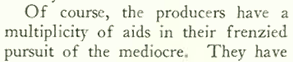
That’s how The New Yorker viewed Hollywood 90 years ago. Movie critic Theodore Shane weekly voiced his disappointment over American cinematic fare (while generally praising the work of European, and particularly German directors), and writer Morris Markey took the industry to task in the July 10, 1926 edition of the magazine, finding the whole lot of Hollywood to be a cesspool of mediocrity and dishonesty. It also didn’t help that Will H. Hays, president of the Motion Picture Producers, was trying to enforce his morality code on the motion picture industry:

Screen Shot 2016-01-15 at 3.55.27 PM

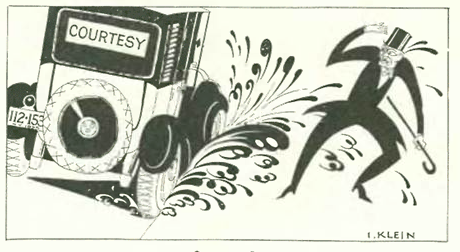
Here’s the full illustration by Isadore Klein that was cut off above, because it’s worth a look:

Screen Shot 2016-01-15 at 3.38.49 PM

Later in the article Markey laid into the men in charge of the studios:

Screen Shot 2016-01-15 at 3.59.02 PM

Screen Shot 2016-01-15 at 3.59.10 PM

Markey also leveled scorn at the media, and gullible audiences, for supporting this tawdry spectacle:

Screen Shot 2016-01-15 at 4.03.43 PM

Screen Shot 2016-01-15 at 4.03.54 PM

Screen Shot 2016-01-15 at 4.28.38 PM
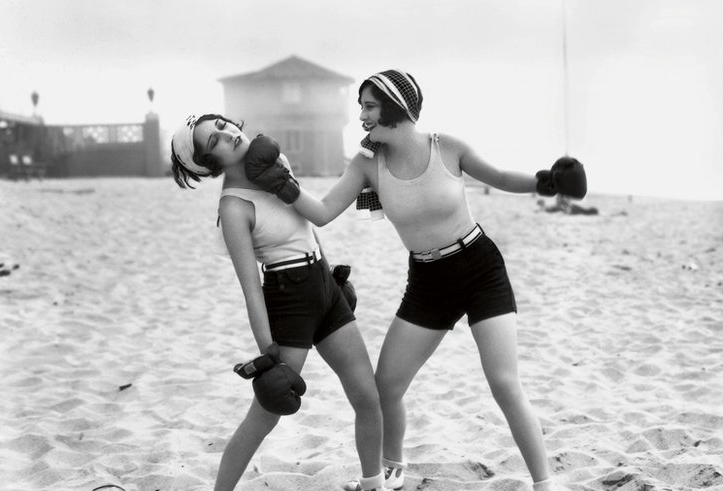
Publicity still of Hollywood starlets Dorothy Sebastian (left) and Joan Crawford (on a Santa Monica beach) most likely used to promote the 1928 film Our Dancing Daughters. (BBC)

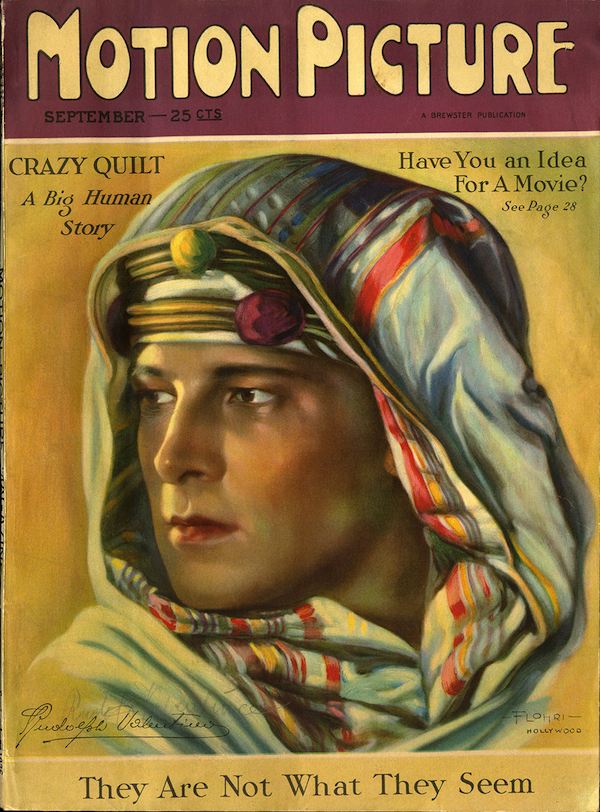
Motion Picture magazine and others of this ilk were the US magazines of the 1920s:

Valentino_Flohri-scan
Rudolph Valentino on the cover of the September 1926 issue of Motion Picture magazine. (archive.org)

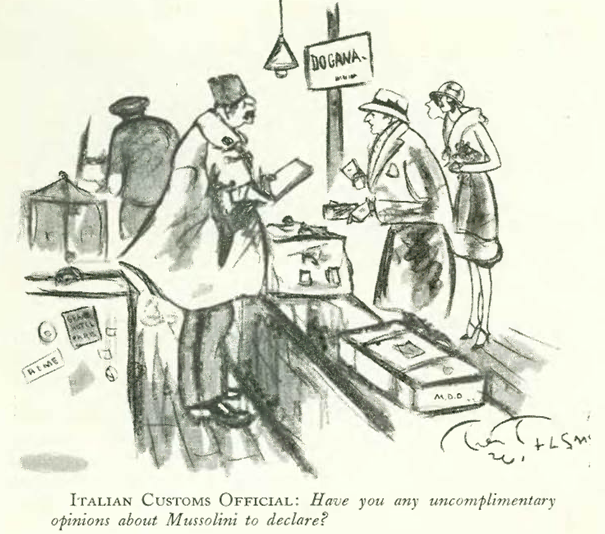
And finally, a couple of bits for my “They Didn’t Know What Was Coming” department. Generally people were having too good of a time in the Roaring Twenties to take this fascism thing very seriously. From the section “Of All Things:”

Screen Shot 2016-01-14 at 10.02.38 AM

And from “The  Talk of the Town” section, a cartoon by W.P. Trent:

Screen Shot 2016-01-14 at 9.57.47 AM

Next Time: The Good Old Summertime…

Screen Shot 2016-01-15 at 4.05.58 PM


Black Bottom & Other Scandals

The Roaring Twenties were all about fads and crazes, ranging from flagpole sitting to dances such as “The Shimmy,” “The Charleston,” or “The Black Bottom.” These dances were appropriated from Black culture, with many New Yorkers getting their first exposure in places such as Harlem’s famed Cotton Club.

Screen Shot 2016-01-08 at 1.35.03 PM
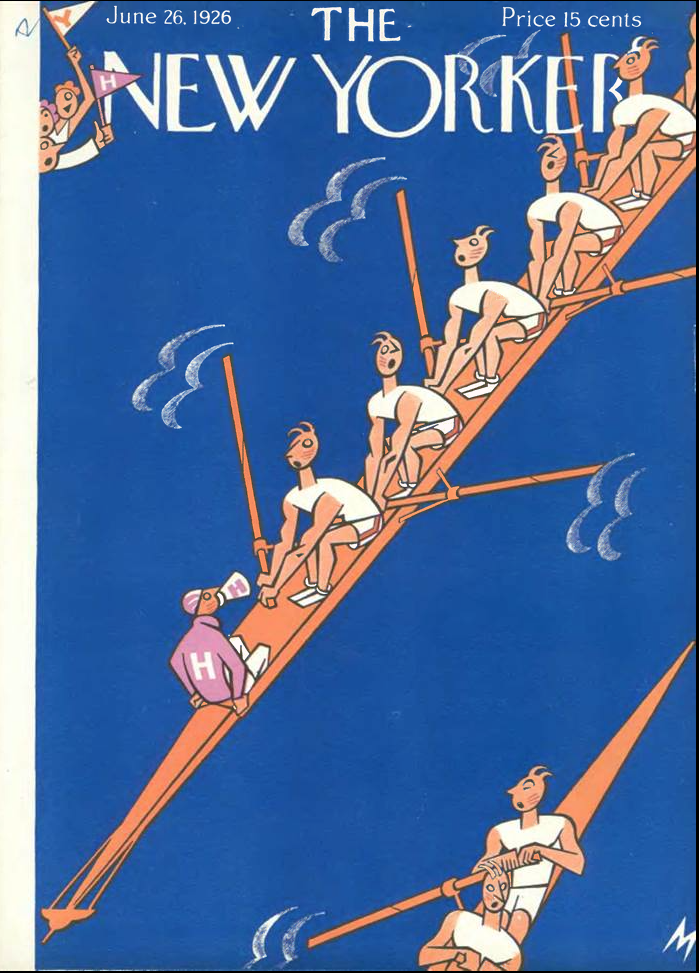
June 26, 1926 cover by Julian de Miskey.

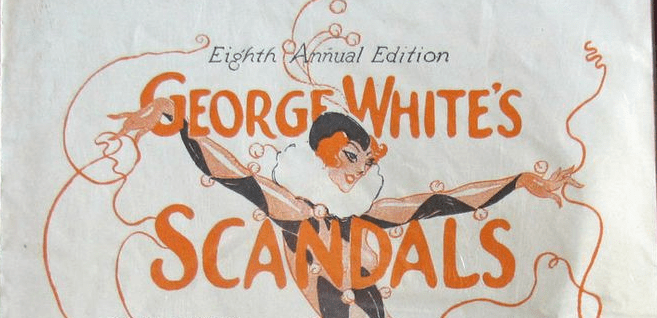
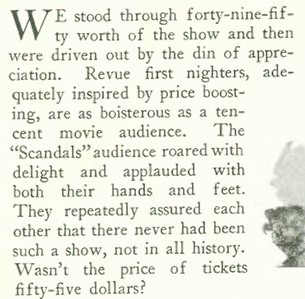
The June 26, 1926 issue of The New Yorker was all abuzz over the Broadway debut of George White’s eighth annual Scandals. The Scandals were a long-running string of Broadway revues that ran from 1919-1939. Modelled after the Ziegfeld Follies, the Scandals launched the careers of many entertainers, including W.C. Fields, the Three Stooges, Rudy Vallée and Louise Brooks. Composer George Gershwin’s early work also appeared in the earliest editions of the show.

a257e06b8b87fdf0d0f851e9b7586642
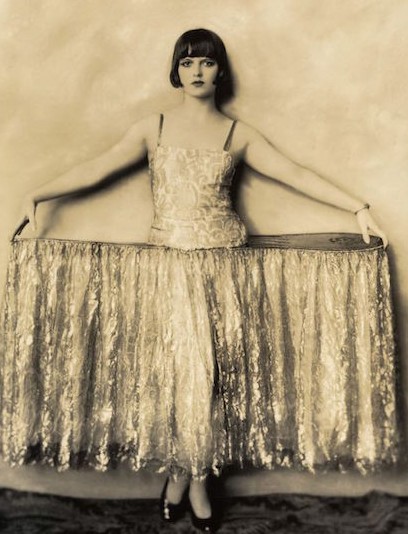
Actress Louise Brooks got her start in the Scandals and later the Ziegfeld Follies. Here she portrays the “Duchess of Sidebottom” in George White’s Scandals of 1924. By 1925 Brooks would have a movie contract with Paramount, and go on to become a popular star of the late silent era and gain fame as the iconic symbol of the flapper. (Flickr)

Like Florenz Ziegfeld, White must have been a master at marketing, since tickets for the Scandals opening sold for $55, which today would be the equivalent of about $725:

Screen Shot 2016-01-11 at 4.42.50 PM

The editors of “The Talk of the Town” were a bit skeptical of all the hype:

Screen Shot 2016-01-11 at 4.44.15 PM

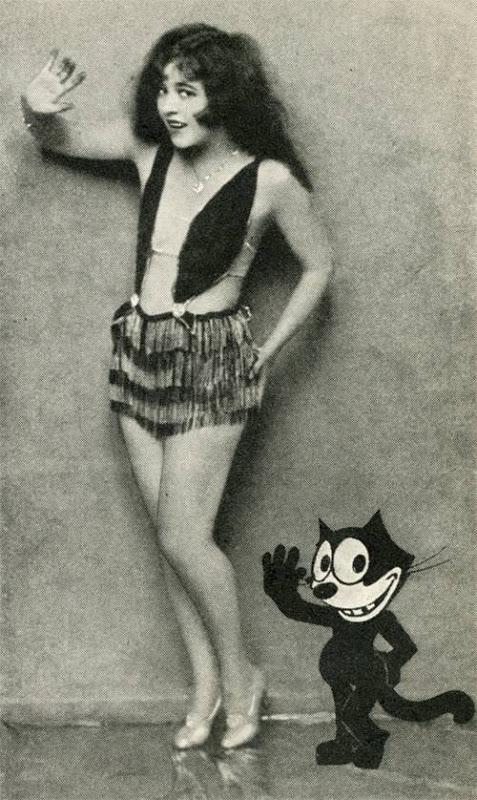
The 1926 Scandals show featured “The Black Bottom,” danced by Ziegfeld Follies star Ann Pennington and Tom Patricola. In this dance-crazed era, “The Black Bottom” became a national phenomenon and even surpassed “The Charleston” in popularity.

It_illustrates_the_Black_Bottom_dance_and_features_Ann_Pennington,_George_White_and_Tom_Patricola,_all_of_whom_are_Wiki,_as_is_GEORGE_WHITE%22S_SCANDALS
Tom Patricola and Ann Pennington dance “The Black Bottom” in 1926 as Scandals producer George White looks on (Wikipedia)
Ann-Pennington-and-Felix2
Ann Pennington “teaching” Felix the Cat how to dance “The Black Bottom.” Image scan from Photoplay magazine spread, January 1927.

“The Black Bottom” was popularized in New York by the 1924 Harlem stage show show Dinaah. Although the dance moves originated in New Orleans in the early 20th century, Jelly Roll Morton gave it a name when he wrote Black Bottom Stomp in 1925, referring to Detroit’s Black Bottom district.

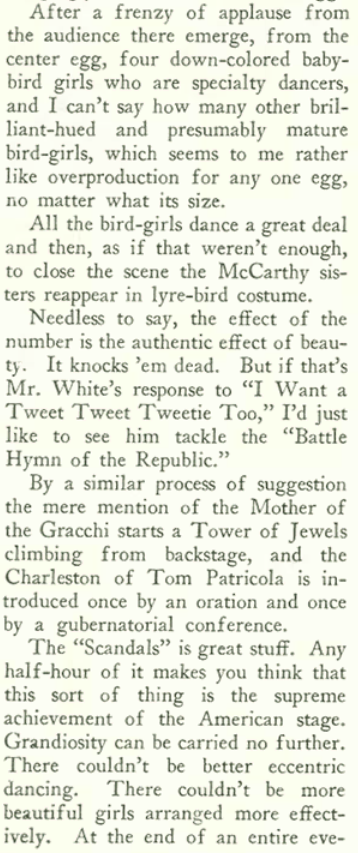
In typical fashion, The New Yorker was less than impressed with the spectacle. In his theatre review column, Charles Brackett made this observation:

Screen Shot 2016-01-11 at 4.52.53 PM

Screen Shot 2016-01-11 at 4.53.12 PM

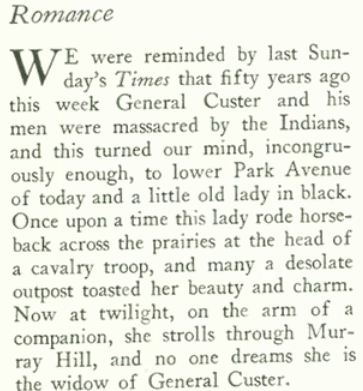
On to other things, “The Talk of the Town” also featured this curious note about George Custer’s widow, reminding us that 1926 was a very long time ago. Here are excerpts:

Screen Shot 2016-01-11 at 4.46.36 PM

Screen Shot 2016-01-11 at 4.46.54 PM

aow.img.RG3126-2-58
Elizabeth Bacon Custer in 1876, the year of the Battle at Little Bighorn (Nebraska State Historical Society)

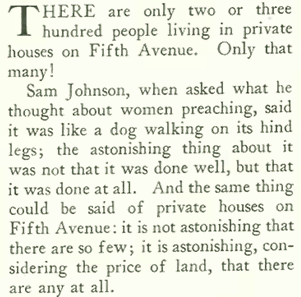
The New Yorker editors continued to remark on the changing face of Fifth Avenue…

Screen Shot 2016-01-11 at 4.38.59 PM

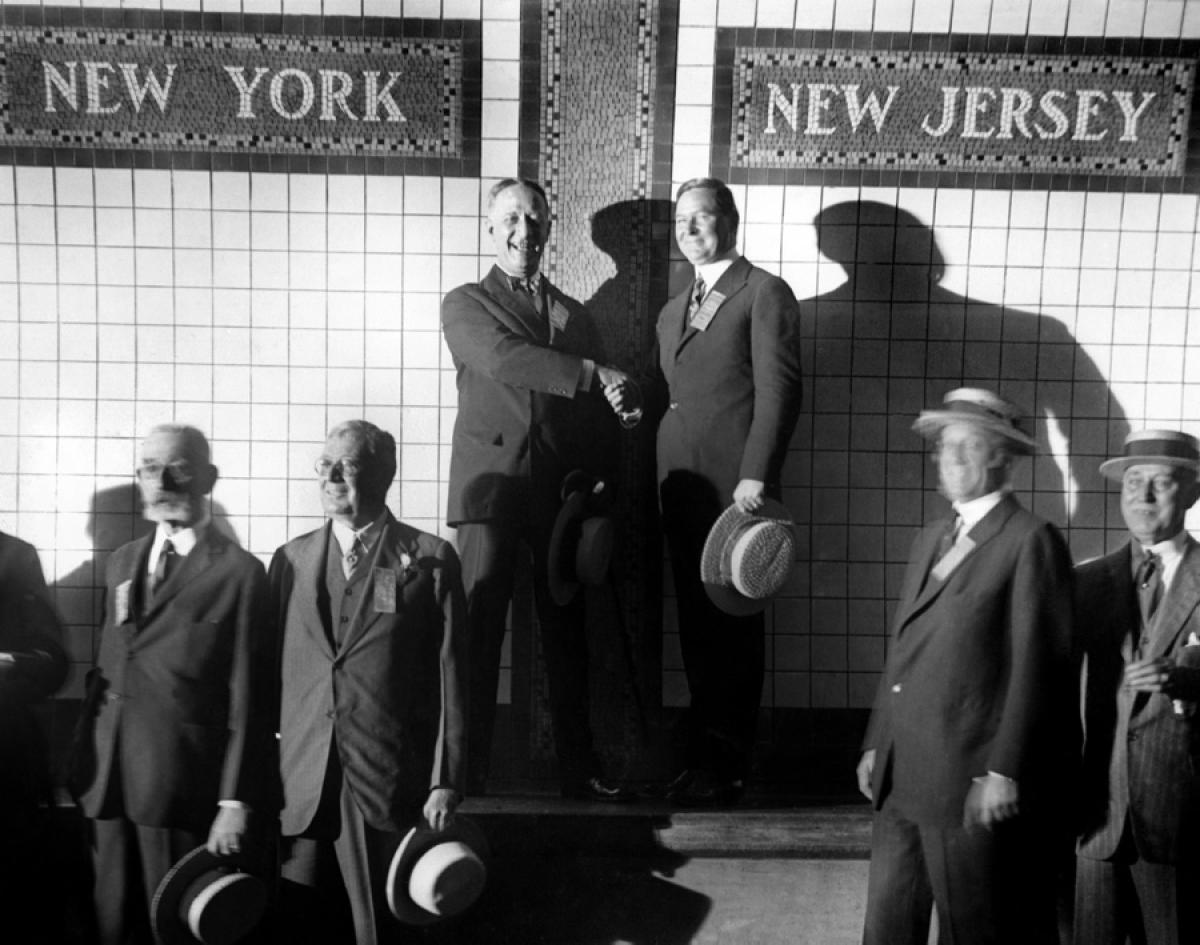
…and on the progress of the city’s infrastructure improvements, as in this excerpt from a humorous piece by the Robert Benchley:

Screen Shot 2016-01-11 at 4.50.40 PM

holland-tunnel-1926
New York Governor Al Smith and New Jersey Governor A. Harry Moore shake hands at the state border inside the Holland Tunnel in 1926. (grayflannelsuit.net)

Next Time: Wild & Woolly…

Screen Shot 2016-01-12 at 11.17.43 AM


What to Drink During Prohibition

The Roaring Twenties were a strange confluence of the Puritan and libertine, perhaps best represented by Prohibition and the speakeasy night life it inspired. Many if not most of The New Yorker readers of the late 1920s were familiar with these establishments as well as with reliable bootleggers and rum runners. And for those of you following this blog we all know that “Tables for Two” columnist Lois Long was the voice of speakeasy and New York nightlife.

Screen Shot 2015-12-17 at 1.51.20 PM
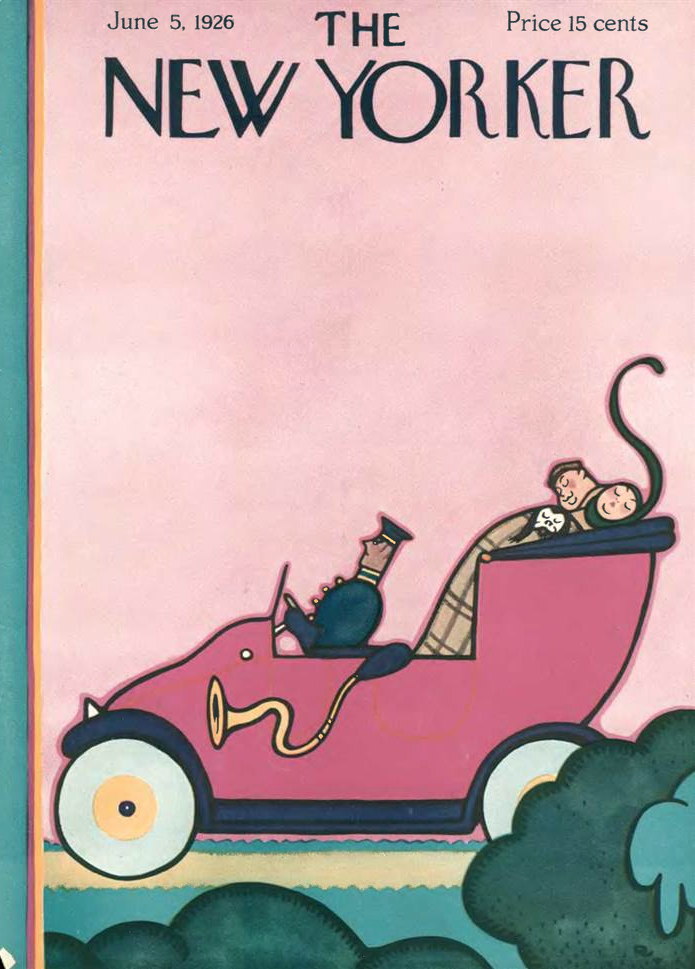
May 29, 1926 cover by Stanley W. Reynolds.

Prohibition did not make consumption of alcohol illegal. The 18th Amendment prohibited the commercial manufacture and distribution of alcoholic beverages, but it did not prohibit their use.

So if you had a connection to a smuggler bringing whisky from Scotland via Canada, for example, you could enjoy a Scotch at home without too much trouble, although the prices could be high. “The Talk of the Town” editors regularly reported black market wine and liquor prices (I include an adjoining Julian de Miskey cartoon):

Screen Shot 2015-12-18 at 11.53.01 AM

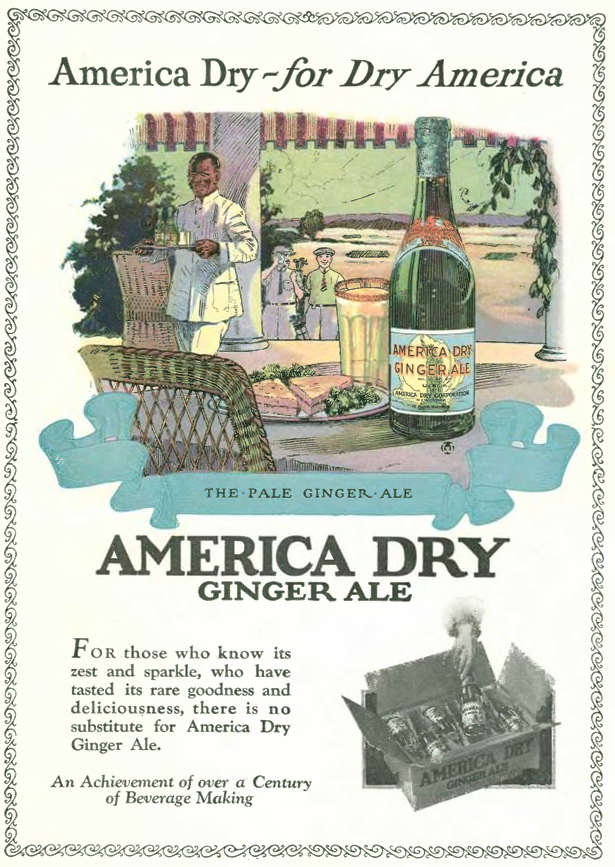
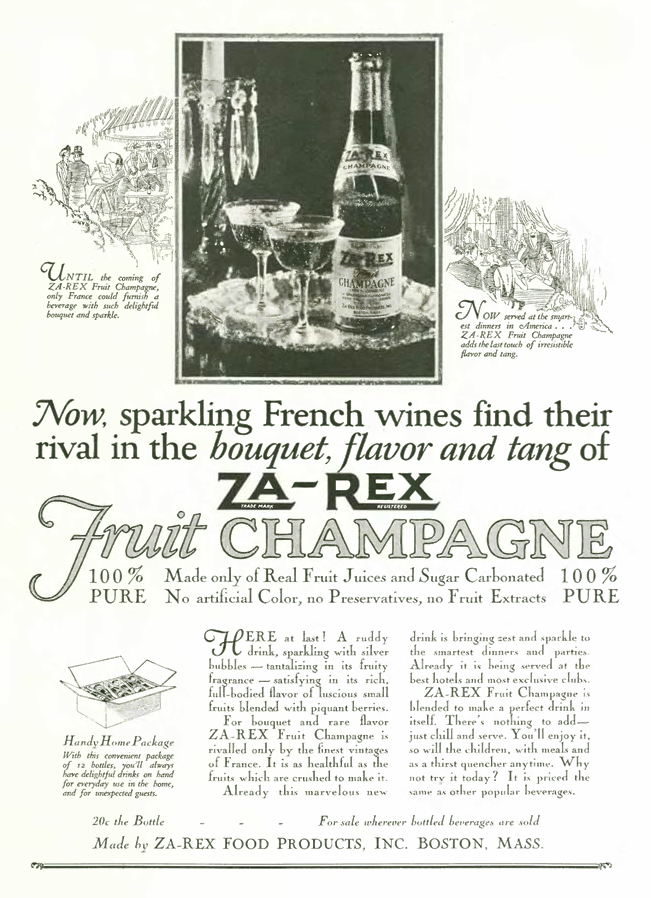
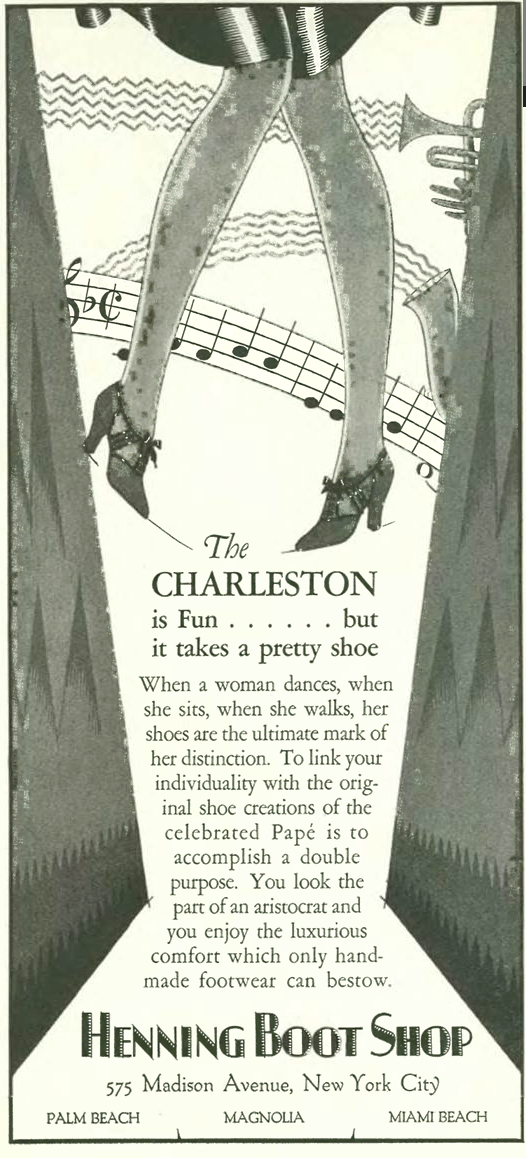
Note the mention of pocket flasks, which were an important item in a purse or vest pocket when one went to a nightclub or restaurant, where White Rock or some other sparkling water was sold as a mixer for whatever you happened to bring with you. You see a lot of this type of advertisement in the Prohibition-era New Yorker:

Screen Shot 2015-12-18 at 12.11.14 PM

I’ll bet those grinning golfers have something in their bags besides clubs.

And then there were ads like these, which I find quite sad:

Screen Shot 2015-12-18 at 12.12.11 PM

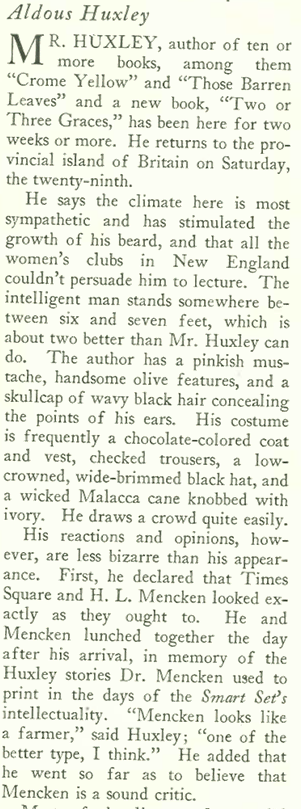
“The Talk of the Town” also commented on the recent visit of British writer Aldous Huxley, who told his New York hosts that he admired American writers Willa Cather and Sherwood Anderson, and he also had praise for writer and critic H.L. Mencken, whom he likened to a farmer “of the better type:”

Screen Shot 2015-12-18 at 11.48.18 AM

Aldous Huxley in the 1920s. (Biography.com)

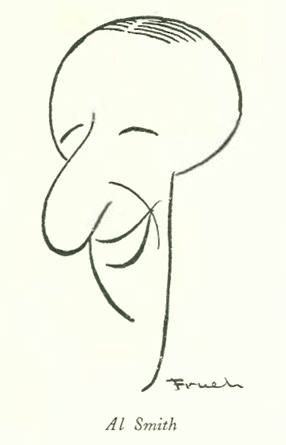
Other odds and ends from this issue…a clever drawing by Al Frueh for the “Profile” feature on New York Governor Al Smith:

Screen Shot 2015-12-18 at 12.06.42 PM

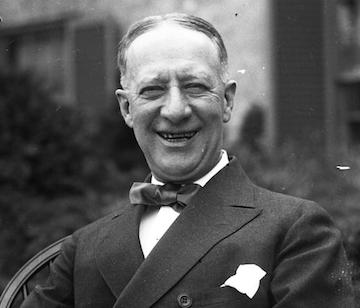
A photo of Al Smith for comparison:

al
New York Gov. Al Smith (IMDB)

And this bit from “Of All Things,” complete with bad pun/racial slur:

Screen Shot 2015-12-18 at 12.05.53 PM

New Yorker readers in 1926 had little reason to believe that in a decade Benito Mussolini would try to make good on his statement and join Adolf Hitler in the next world war.

Here’s a couple more ads from the issue that are signs of those times. Note the listing of Florida locations for those New Yorkers who were flocking to that new winter vacation destination:

Screen Shot 2015-12-18 at 12.09.48 PM

And this ad for an electric refrigerator…for those who could afford such newfangled things. The ice man was still plenty busy in 1926, but his days were numbered.

Screen Shot 2015-12-18 at 12.09.15 PM

And finally, a nod to springtime, and this excerpt of an illustration by Helen Hokinson for the “Talk” section:

Screen Shot 2015-12-18 at 12.07.27 PM

Next Time: After a Fashion…

Screen Shot 2015-12-18 at 12.12.38 PM

Nize & Not So Nize

This entry opens with a “Nize Baby” comic illustration by Milt Gross, since Milt’s book by the same title was advertised in the May 22 issue (featured later in this entry). I thought it better to begin with a bright comic than with a depressing image of NYC’s “The Tombs” prison, which was featured in the May 15 issue’s “Reporter at Large” piece written by Morris Markey.

Screen Shot 2015-12-11 at 9.44.03 AM
May 15 cover by Ronald McRae.

The somber, colloquial name of the prison was actually derived from a previous prison that had occupied the area, designed in a fashion that resembled an “Egyptian mausoleum.” The original Tombs (pictured below) was built in 1838:

The-Tombs-First
(daytoninmanhattan)

The first Tombs was notorious as a place of extreme cruelty—most of the prisoners were simply detainees awaiting their hearings and few had been convicted of actual crimes. Nevertheless some remained imprisoned for up to ten months in horrible conditions. The city’s answer to the problem was simply to demolish the prison in 1897 and replace it in 1902 with a Châteauesque-style structure. This was the prison to which Markey paid his visit:

The_Tombs-built_1902
The prison (left) that replaced The Tombs connected to the 1892 Manhattan Criminal Courts Building with a “Bridge of Sighs” crossing four stories above Franklin Street. (Wikipedia)

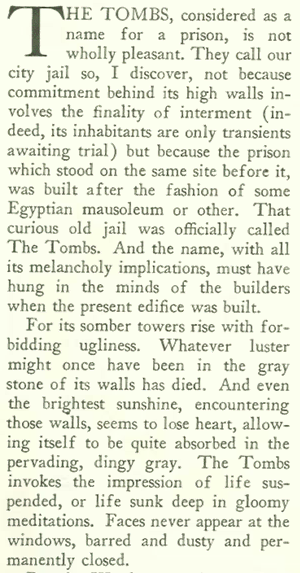
The prison may have been an improvement over the original Tombs, but Markey nevertheless found it a gloomy place:

Screen Shot 2015-12-17 at 1.30.44 PM

Now on to something a bit cheerier. It is springtime in New York, after all:

Screen Shot 2015-12-17 at 1.33.44 PM
May 22, 1926 cover by Julian de Miskey.

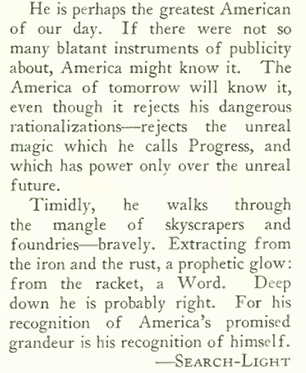
“The Talk of the Town” briefly commented on Sinclair Lewis’s refusal to accept the Pulitzer Prize for his novel Arrowsmith. Lewis said he did not agree with contests where one book or author was praised over another. In the “Profile” section, Waldo Frank looked at the life of philosopher and education reformer John Dewey…through a jaded lens:

Screen Shot 2015-12-17 at 1.42.00 PM

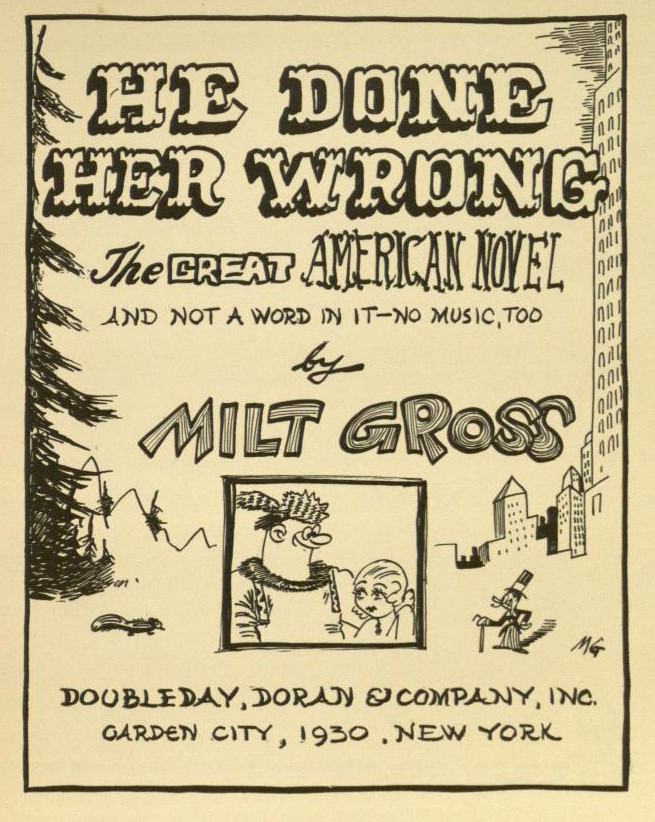
The issue featured this advertisement for a new book by cartoonist Milt Gross. He was best known for his comic characters who spoke a Yiddish-inflected English dialogue.

Screen Shot 2015-12-17 at 1.47.28 PM

Gross is perhaps one of the first comic artists to publish (in 1930) what today we call a graphic novel—his pantomime tale He Done Her Wrong: The Great American Novel and Not a Word in It — No Music, Too. At nearly 300 pages, it was composed entirely of pen-and-ink cartoons.

Milt_Gross_(1930)_He_Done_Her_Wrong_(title_page)
Cover for He Done Her Wrong (Wikipedia)

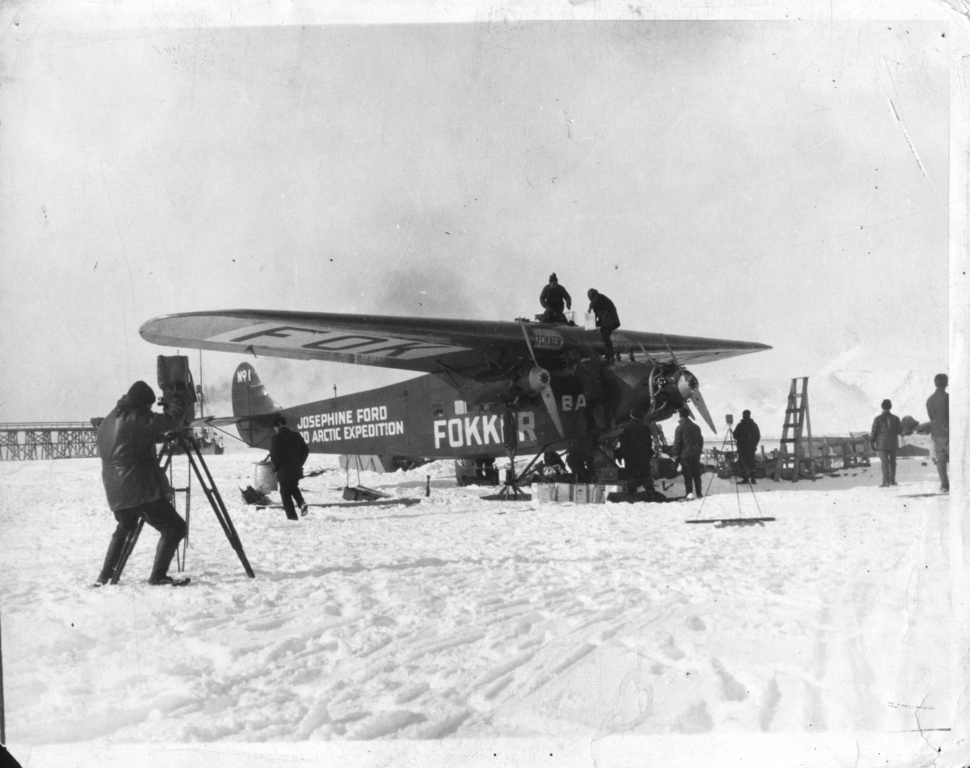
And The New Yorker took its usual blasé tone in reporting on the latest world news, namely Admiral Richard Byrd’s attempted flight over the North Pole.

web_Byrd7739_6
Pathé cameraman filming the Josephine Ford as it was being prepared for flight to the North Pole. (The Ohio State University Archives)

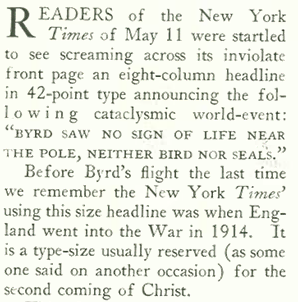
New Yorker editors had some fun taking jabs at The New York Times for its sensational headlines regarding the event:

Screen Shot 2015-12-17 at 1.43.41 PM

And to close, the first of what would be a series of ads for Grebe radios, including the weird testimonials by Confucius and “Doctor Wu”…

Screen Shot 2015-12-17 at 2.02.48 PM

Next Time: What to Drink During Prohibition…

Screen Shot 2015-12-17 at 1.51.20 PM


Ben Hur Bric-à-brac

Screen Shot 2015-09-25 at 9.48.36 AM
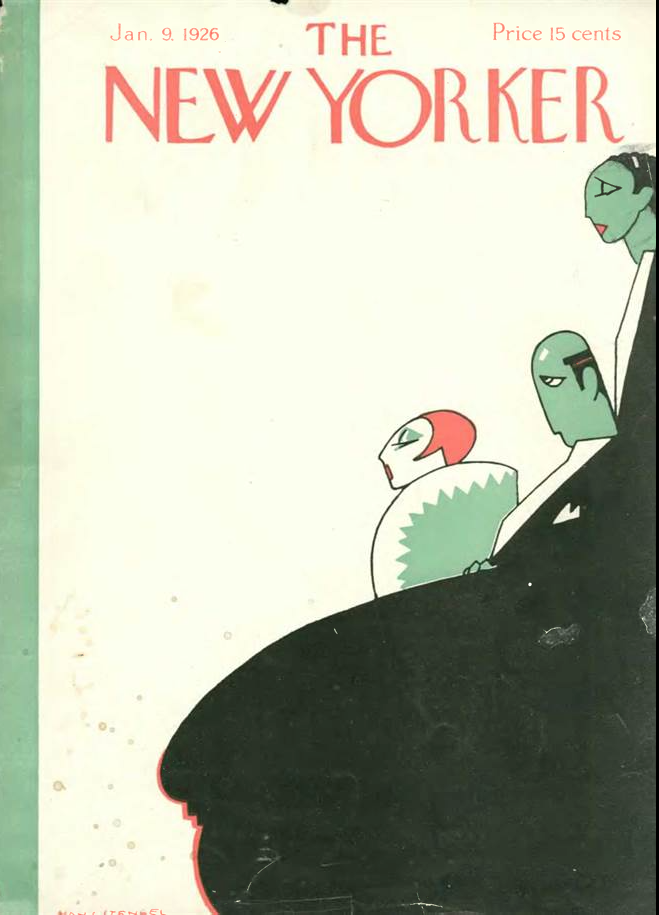
Jan. 9, 1925 cover by Hans Stengel.

MGM spent nearly $5 million (about $70 million today) to make the silent epic Ben-Hur, filming the movie on location in Egypt, Italy and the United States. The New Yorker’s film critic Theodore Shane was not impressed.

Shane wrote that $4,999,999.95 had been spent “on massive effects and the remaining $.05 on drama.”

He noted, however, that the original story, an 1880 novel by Lew Wallace (who was a Union general in the Civil War, among other things), was pretty lacking in drama to begin with, just a “piece of bric-à-brac romance (that was) nothing more than a super Rover Boys story touched up with a Biblical background.” Here’s Shane’s entire review of the film, which was released by MGM on December 30, 1925:

Screen Shot 2015-09-28 at 3.49.54 PM

00239
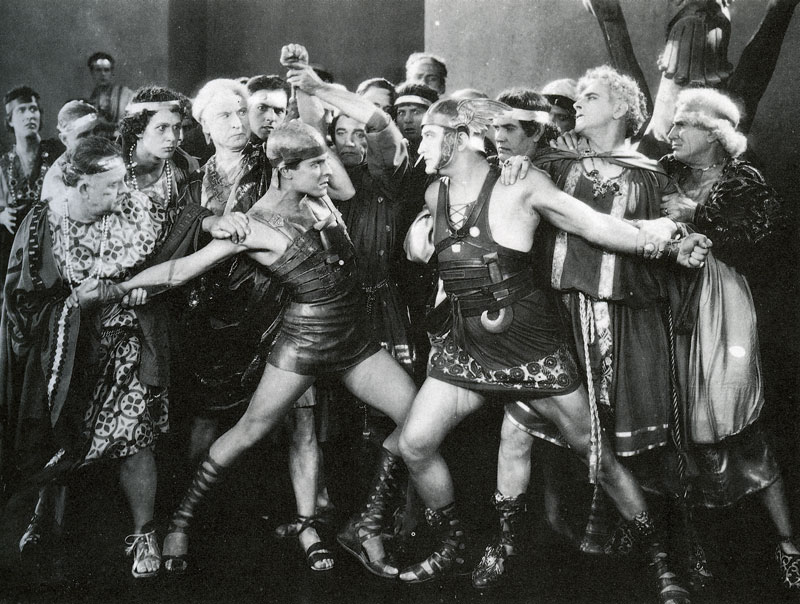
A Nickel’s Worth of Drama…Ramon Novarro (left) and Francis X. Bushman mix it up in Ben-Hur (1925) (Virtual History)

This was actually the second Ben Hur film. The first was made in 1907, a 15-minute silent costing $500 (and it really was made on the cheap; the producers stole some shots of a mock chariot race at a fireworks show at Sheepshead Bay, Brooklyn, and then added some interior shots to complete the picture).

For the 1925 Ben Hur, filming on location proved difficult from the start. Italy’s new leader, Benito Mussolini, was in an anti-American mood when production began, and labor disputes often delayed filming. By all accounts, conditions were miserable. Kevin Hagopian, in an essay for the New York State Writers Institute, observed “The worst agonies were reserved for the film’s climax, the chariot race. Legendary second unit director B. Reeves Eason’s nickname “Breezy” was certainly not earned by his work on the Ben-Hur set, for his merciless pace cost the lives of over a hundred horses. As [actor Francis X.] Bushman said sadly, “If it limped, they shot it.” A stunt man was killed in a chariot crash, and [actor Ramon] Navarro himself only narrowly escaped death.”

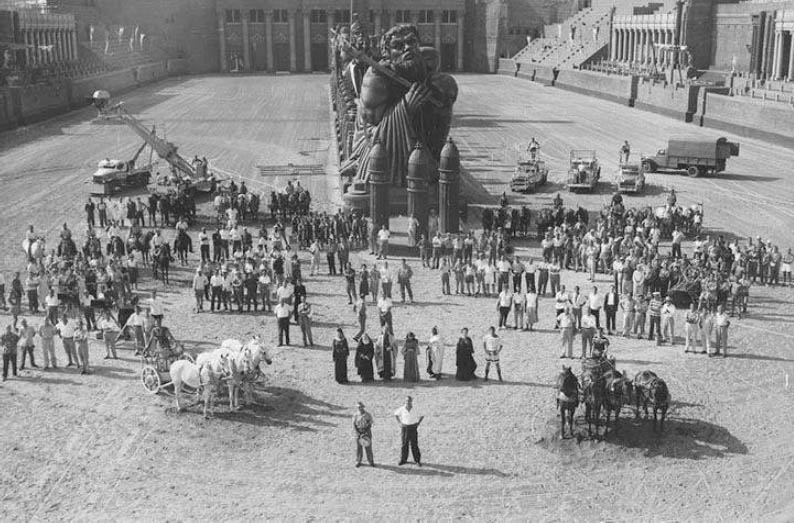
The troubled Italian set was eventually torn down and a new one built in Culver City, California. The crowd scenes and master shots for the race were done in a single day, with forty-two cameras covering the action.

The famed chariot race staged in Culver City, California, was shot with 42 cameras.

In “Profiles” Esther Carples looked at the life of Sergei Rachmaninoff, who was widely considered one of the great pianists of his day, and as a composer represented the last vestiges of Romanticism in Russian classical music. Carples painted a portrait of a brooding genius, a man with aristocratic bearing who lived in lonely exile from his native Russia.

Sergei_Rachmaninoff_cph.3a40575
Sergei Rachmaninoff in 1921. (Library of Congress)

In 1921, Rachmaninoff bought a house on 33 Riverside Drive in New York City, where he lived until 1925. There he consciously recreated the atmosphere of Ivanovka (his beloved Russian summer house) entertaining Russian guests, employing Russian servants, and observing old Russian customs.

*****

Screen Shot 2015-09-28 at 4.33.35 PM
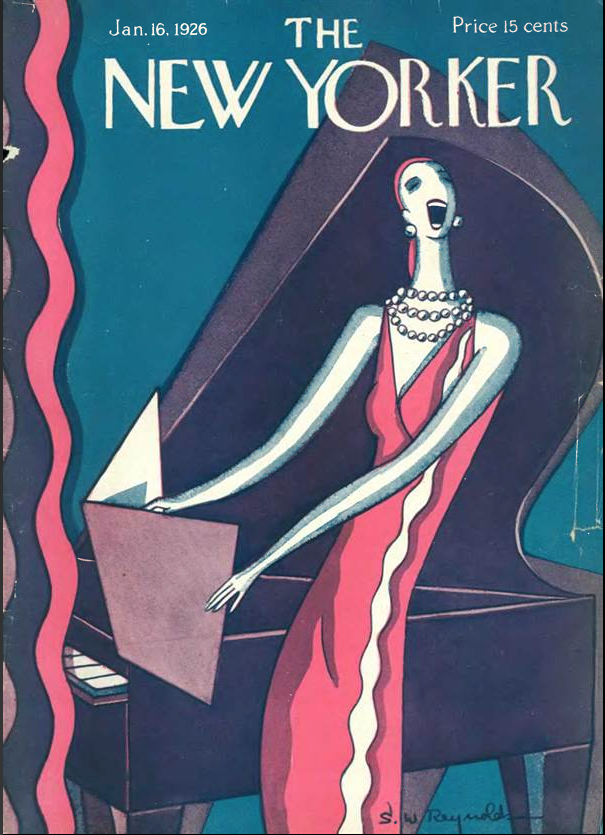
Jan. 16, 1926 cover by S.W. Reynolds.

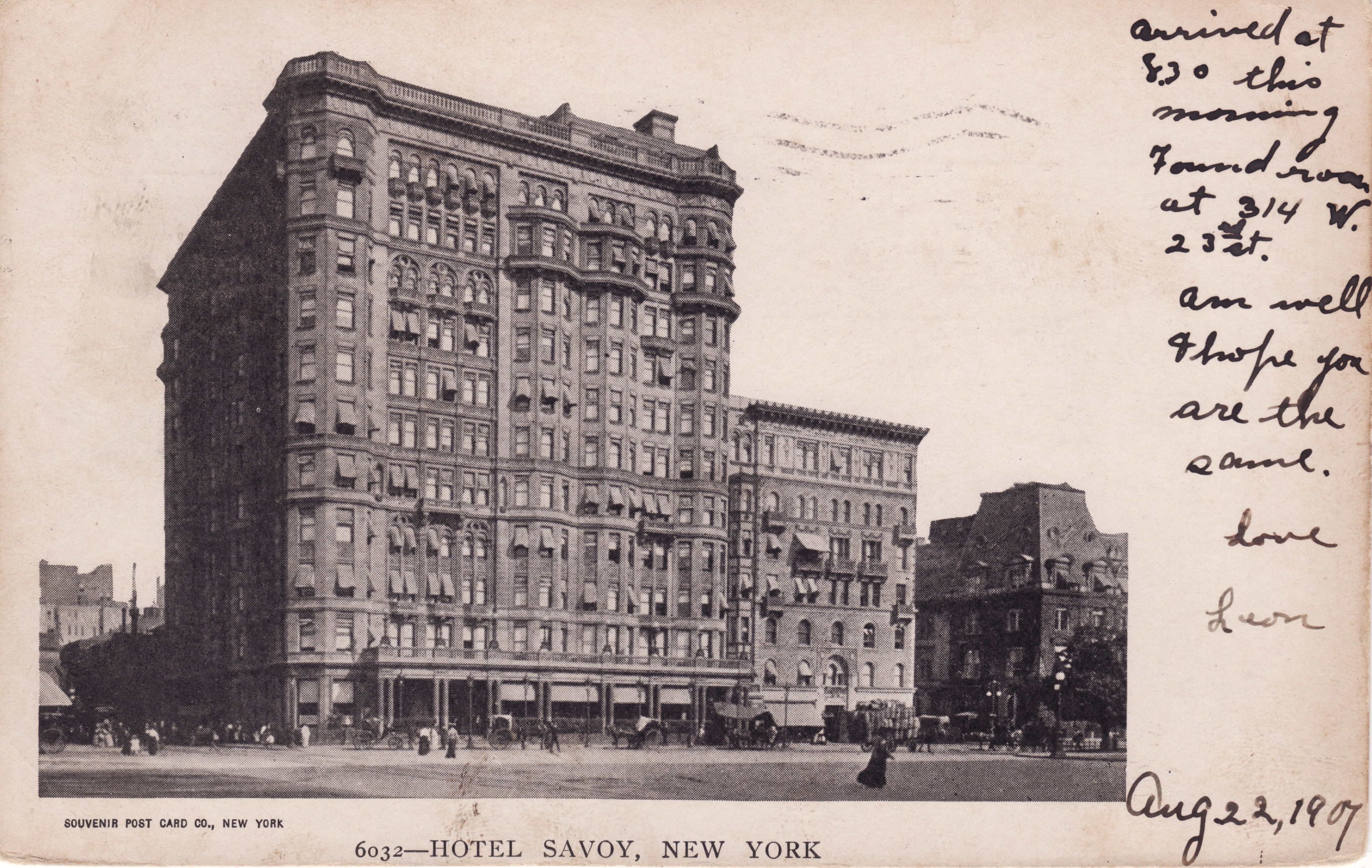
Let’s move on to the next issue, Jan. 16, 1926. “The Talk of the Town” noted another loss of a Fifth Avenue landmark with the Savoy Hotel was falling to the wrecking ball.

The Savoy, built in 1891-92, was slated to be replaced by The Savoy Plaza Hotel, which itself would be demolished in 1965-66 (amid significant public outcry and protest) to make way for the eastern headquarters building of General Motors.

It was observed that the new year would see a boon in construction of huge new buildings along the Avenue, and buildings only five years old (such as Heckscher Building) would be dwarfed by the new towers.

Hotel-Savoy-hres
Another One Bites The Dust…The Savoy Hotel (stuffnobodycaresabout.com)

The New Yorker continued to have fun with actress Gloria Swanson‘s pretensions to royalty (she was married to the Marquis de La Coudraye at the time). This time it came from the pen of Jimmie the Ink (James Daugherty), part of his series of drawings that coupled famous people of the day in comic situations:

Screen Shot 2015-09-29 at 9.32.55 AM

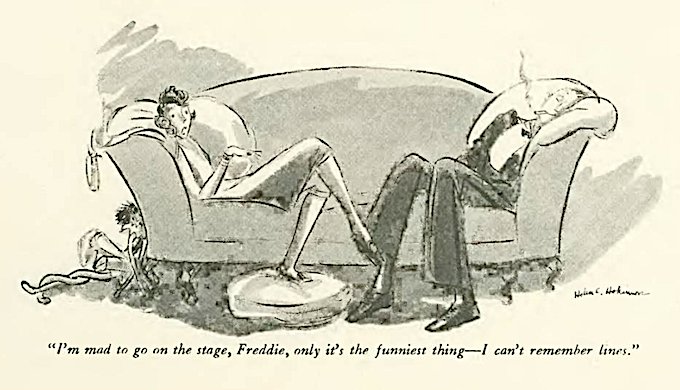
The issue also featured Helen Hokinson with a cartoon that seemed more in Barbara Shermund’s wheelhouse…

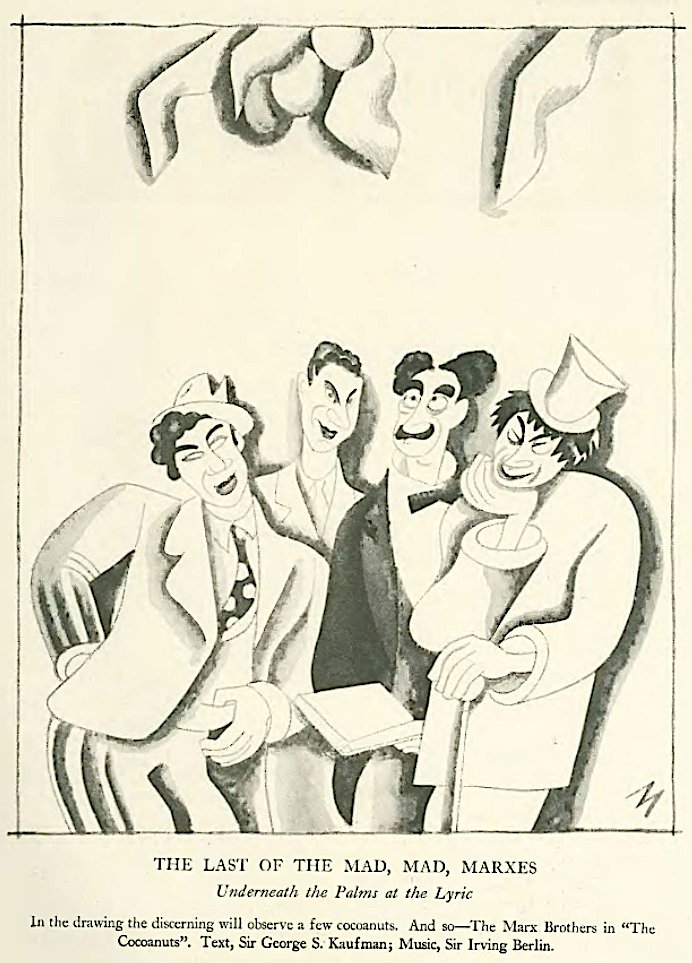
…a Julian de Miskey drawing for the theatre section…

…and a Peter Arno illustration…

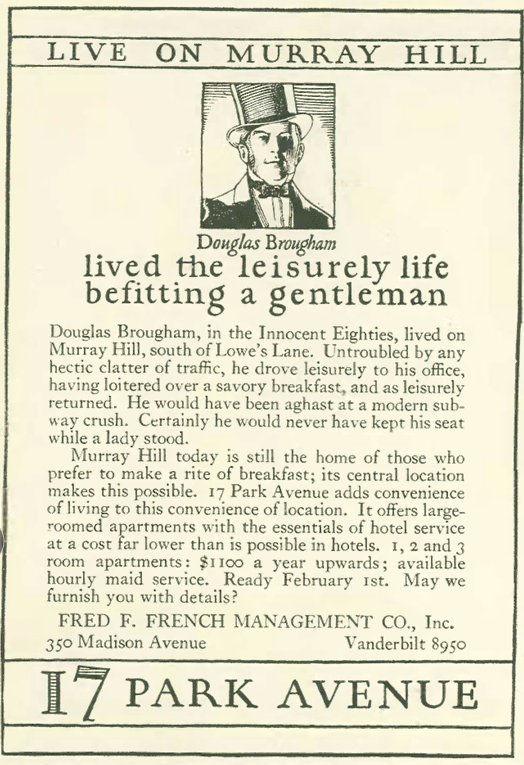
To close, two ads from the Jan. 16 issue, this one appealing to Anglophilic, aristocratic aspirations of certain readers…

Screen Shot 2015-09-29 at 9.34.08 AM

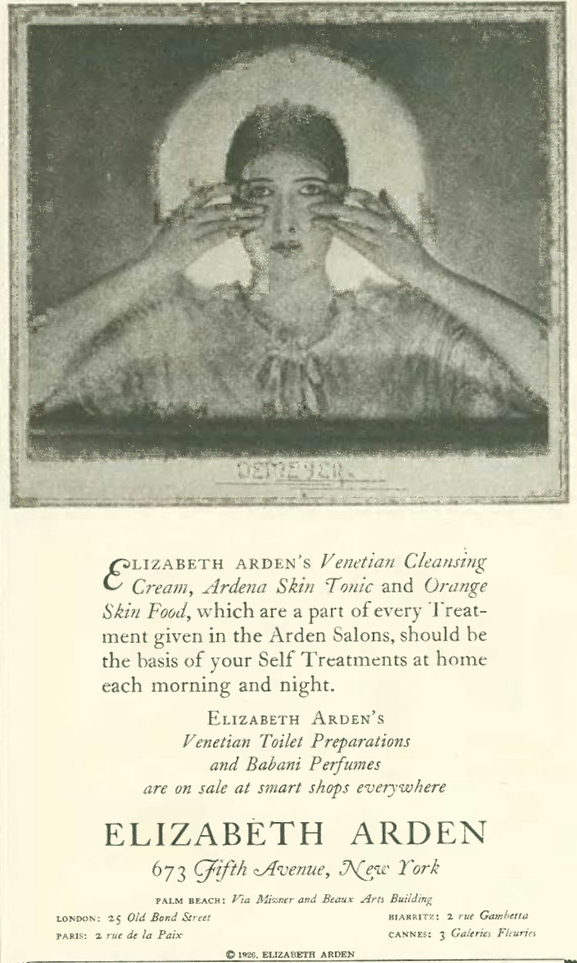
And this one from Elizabeth Arden, who will become a mainstay in the magazine with these ads featuring women with ghostly stares, usually with their heads wrapped tightly to combat sagging skin. Thanks to Hollywood, it was the age of the close-up, so wrinkles and blemishes be gone!

Screen Shot 2015-09-29 at 9.36.19 AM

Next Time: Lois Long Talks Cars…

Screen Shot 2015-09-28 at 4.36.32 PM