Führer Furor

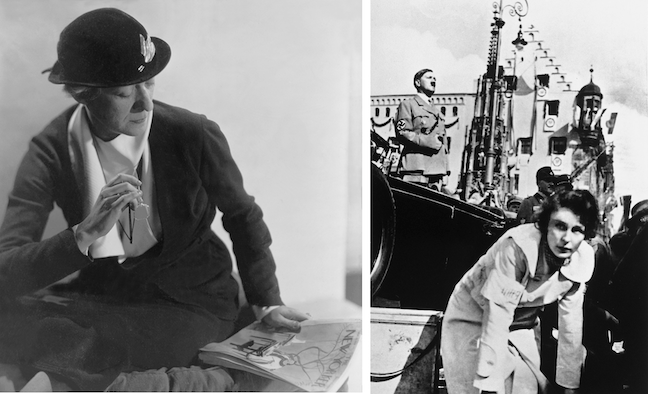
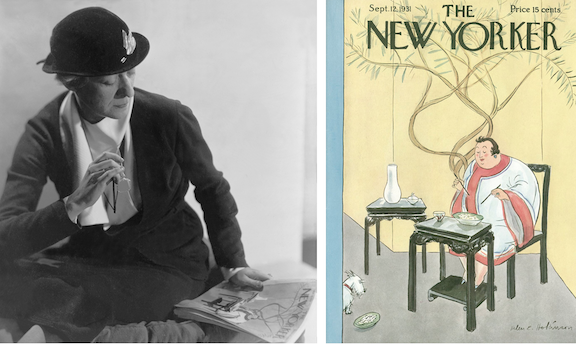
Above, left, Janet Flanner regards the cover of the Sept. 13, 1931 issue of The New Yorker; at right, Adolf Hitler's chosen filmmaker Leni Riefenstahl at Nuremberg's "Shovel Day" parade, 1936. (Library of Congress/Sueddeutscher Verlag)

The February 29, 1936 issue stands out from pack not only for its cover—James Thurber’s first—but also for the magazine’s first in-depth look at a man who would spark the deadliest conflict in human history.
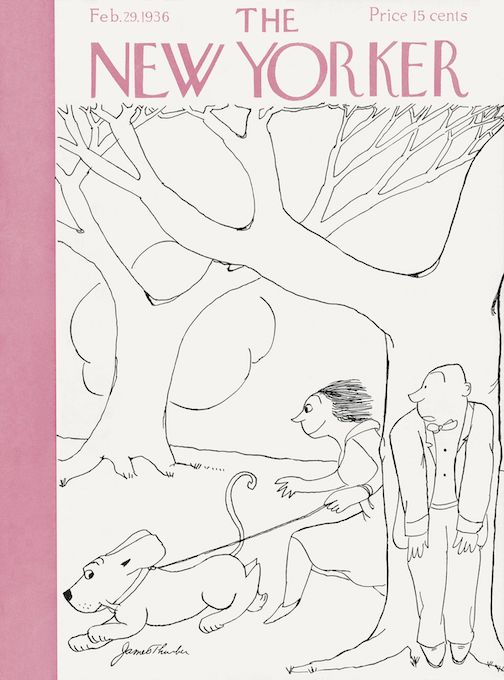
February 29, 1936 cover by James Thurber. This was the first of six covers Thurber contributed to The New Yorker. You can see all six covers at Michael Maslin’s Ink Spill, the go-to site for all things Thurber and so much more. UPDATE: Also check Maslin’s post regarding the repeat of this cover on Sept. 4, 2023. Fascinating read!

Before we jump in…Thurber’s close friend E.B. White noted another unusual fact about this issue…
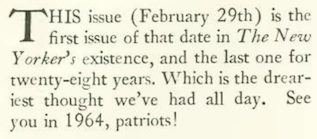
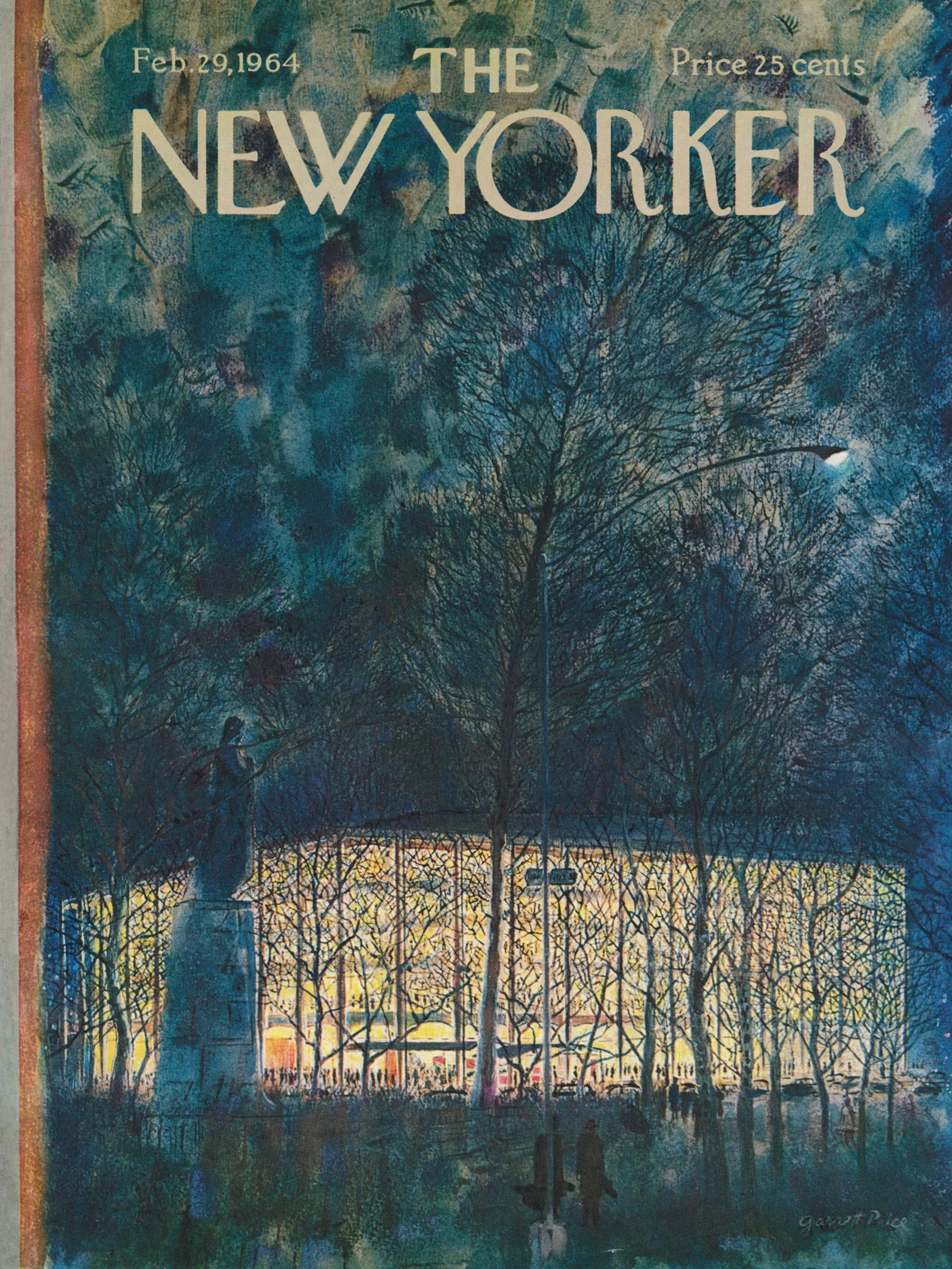
…twenty-eight years later, and a dime extra (cover by Garrett Price)…
 * * *

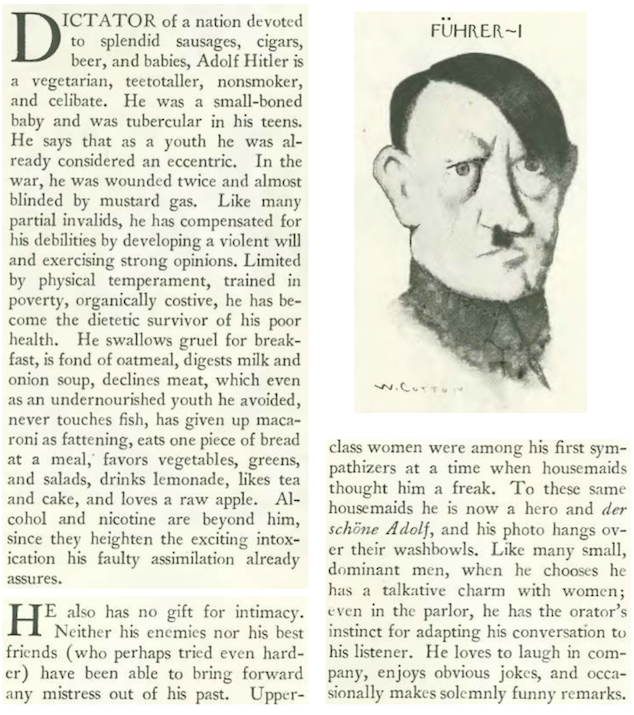
Inside the Feb. 29 issue, The New Yorker’s Paris correspondent Janet Flanner published the first part of a three-part profile on German dictator Adolf Hitler. In this first excerpt she described the Führer’s ascetic diet and personality (caricature by William Cotton).
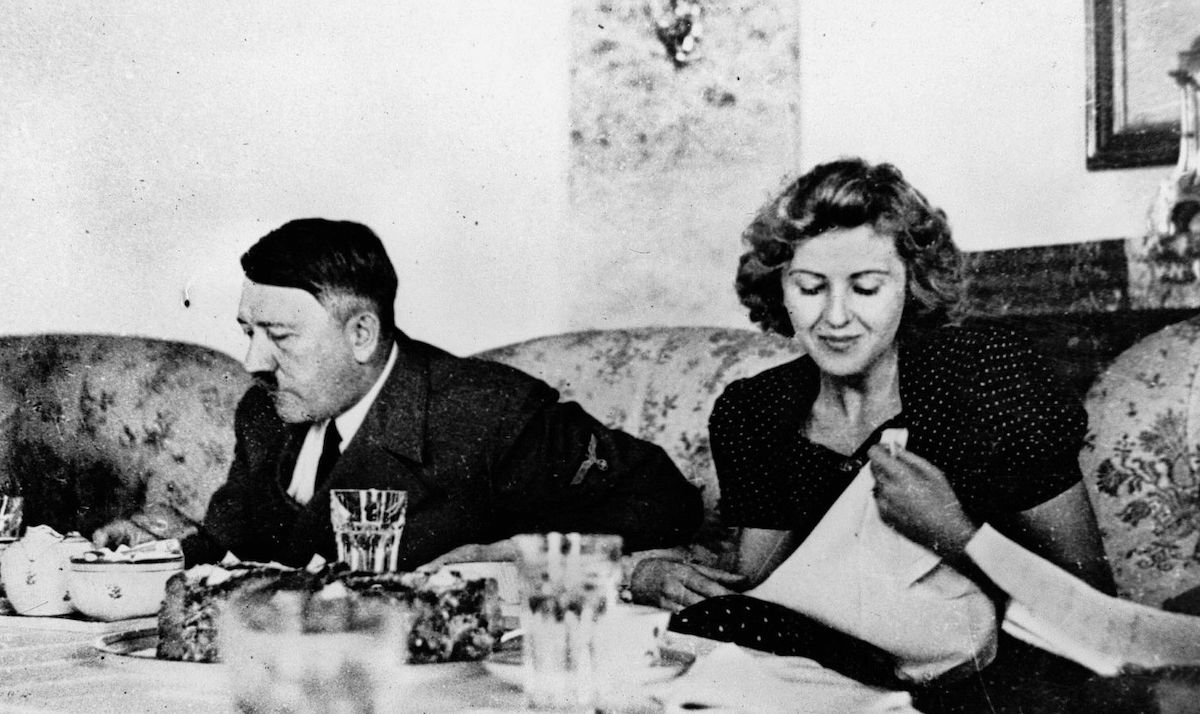
NAZI NUM NUMS….Adolf Hitler with one of his official food tasters, Margot Woelk, during World War II. Woelk later claimed she was the sole survivor from a group of food tasters who were summarily executed by the Red Army after the fall of Berlin. (warfarehistorynetwork.com)

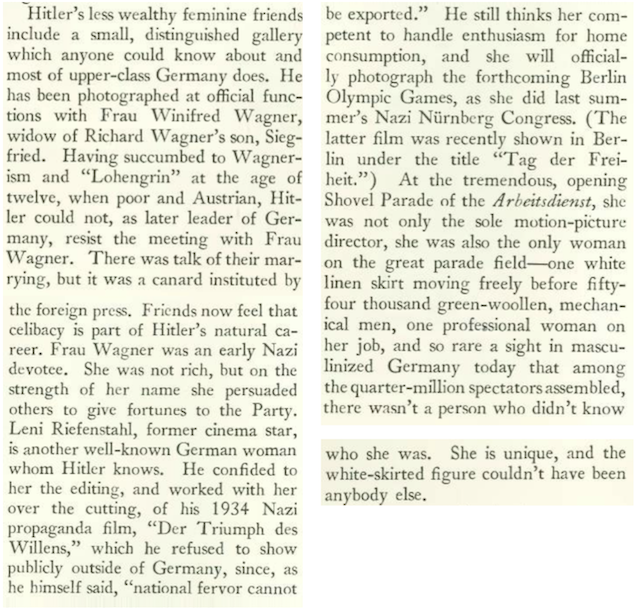
Flanner described Hitler’s relationships with influential women, particularly filmmaker Leni Riefenstahl.
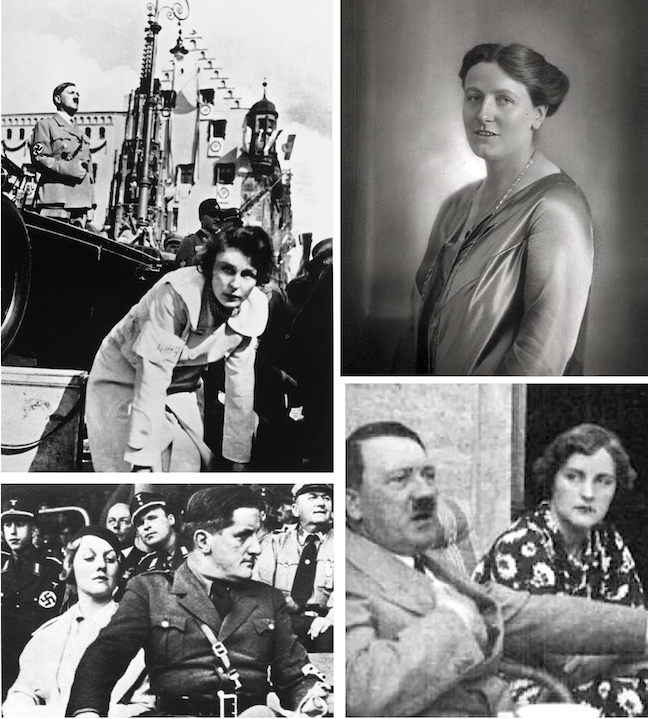
FRIENDS WITH BENEFITS…Adolf Hitler had influential admirers both in and outside of Germany, including, clockwise, from top left, filmmaker Leni Riefenstahl (in the white skirt described by Flanner) at the 1936 “Shovel Day” in Nuremburg; Winifred Wagner, daughter-in-law of composer Richard Wagner, in 1925; Hitler with Unity Mitford, one of six aristocratic Mitford sisters and a fanatical Nazi; Ernst Franz Sedgwick Hanfstaengl with another Mitford sister, Diana Mitford, at a 1934 Nuremberg rally. Diana as married to Oswald Mosley, leader of the British Union of Fascists, and Hanfstaengl was the son of Katharina Wilhelmina Hanfstaengl, a prominent Munich art publisher who helped finance Hitler’s rise to power. (Sueddeutscher Verlag/Wikipedia/historyreader.com)

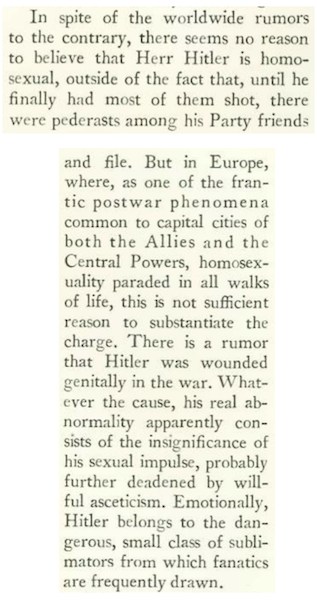
Flanner concluded the piece with a look at Hitler’s sexuality, which seemed non-existent, and drew an ominous conclusion about his personality type.

EXPENDABLE…Ernst Röhm with Adolf Hitler in 1933. Although Hitler knew Röhm was gay, he also valued Röhm’s leadership and organizational skills, that is until his presence proved a liability. Röhm was murdered by the SS in 1934 during the “Night of the Long Knives.” (Wikipedia)

As part of a centenary series, The New Yorker’s Andrew Marantz recently looked at Flanner’s profile of Hitler, noting that she was “neither an antifascist, like her friend Dorothy Parker, nor a Fascist, like her friend Ezra Pound; she was against crude bigotry, but she was not the world’s greatest philo-Semite.”

 * * *

Lamour Amour

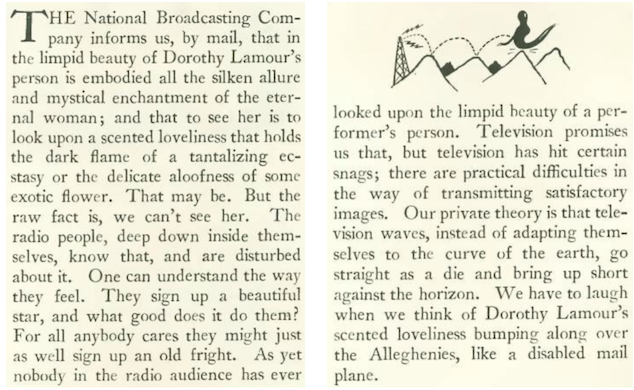
In his “Notes and Comment,” E.B. White pointed out the challenges of expressing physical beauty over a non-visual medium like radio:
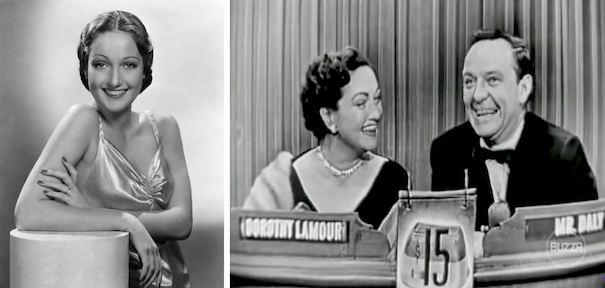
TELEGENIC…Hopefully E.B. White managed to see Dorothy Lamour on the “television waves… bumping along over the Alleghenies.” At left, publicity photo of Lamour from 1937; at right, Lamour appeared as a mystery guest on What’s My Line?, Feb. 20, 1955, seen here with host John Daly. In later years Lamour was a guest on a number of television shows, ranging from Marcus Welby, M.D. to Remington Steele. (Wikipedia/YouTube.com)

 * * *

Shadow Plays

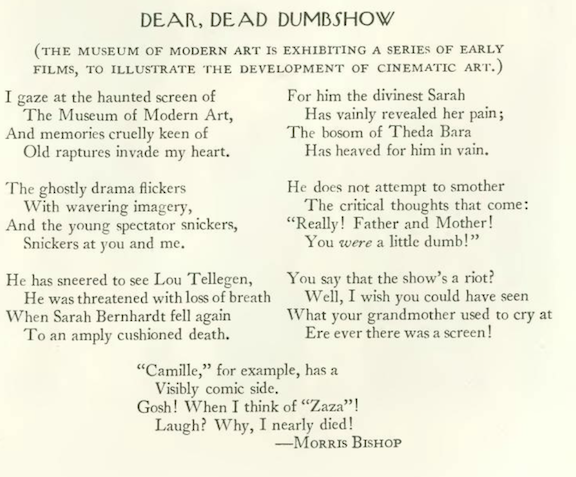
Morris Bishop (1893-1973), a noted scholar of the Middle Ages as well as a writer of light verse, offered up these lines after screening early silent films at the Museum of Modern Art. The screenings were curated by Iris Barry to showcase MoMA’s new film library and to advance the study of film as a serious art form.
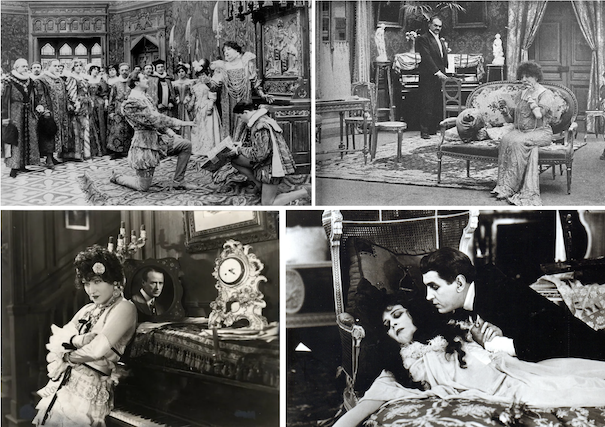
TIME CAPSULES…The Museum of Modern Art was a pioneer in the study of film as a modern art form. Among the films screened at MoMA in 1936 (clockwise, from top left): famed stage actress Sarah Bernhardt as Queen Elizabeth in the Les Amours de la reine Élisabeth (The Loves of Queen Elizabeth) with Lou Tellegen, 1912; Bernhardt in the film Camille (La Dame aux camélias) with André Calmettes, 1911; Theda Bara’s 1917 take on Camille, in a scene with Alan Roscoe; Gloria Swanson in Zaza, 1923. (Wikipedia/imdb.com/YouTube.com)

 * * *

A Reporter’s Chops

With so much attention given to James Thurber as a humorist, it is easy to forget that he was an experienced journalist, and that he could apply his considerable gifts as a writer to narrative non-fiction. For the Feb. 29 “A Reporter at Large” column, Thurber penned “Crime in the Cumberlands.” I can’t do it justice through excerpts, but I highly recommend giving it a read as a prime example of Thurber’s skills as a reporter.

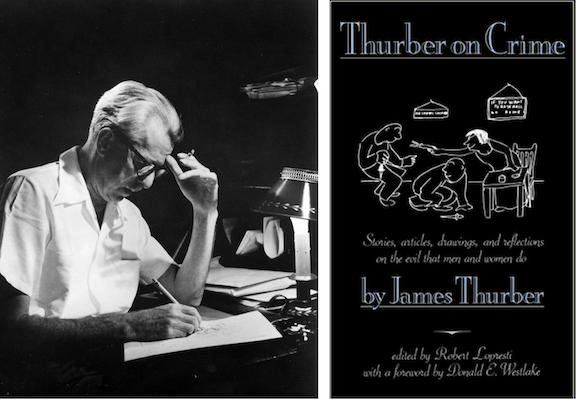
SERIOUSLY SERIOUS WRITER…You can find both humorous and not-so-humorous crime stories (and drawings, of course) in 1991’s Thurber on Crime, edited by Robert Lopresti. “Crime in the Cumberlands” is included in the collection. (jamesthurber.org/barnesandnoble.com)

 * * *

At the Movies

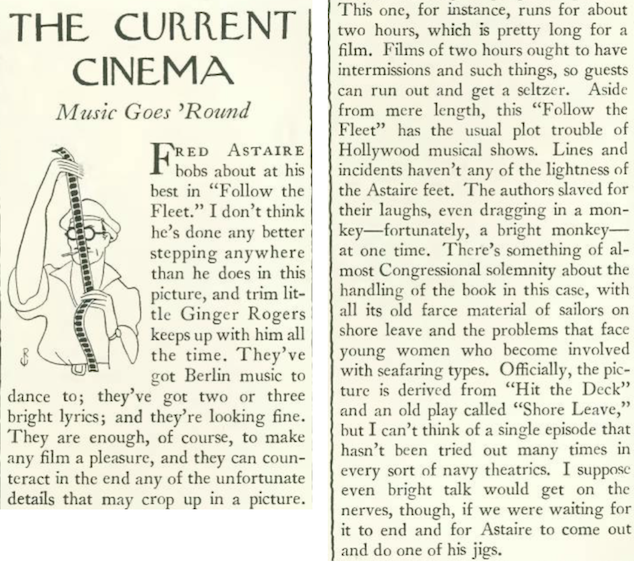
Not so serious were the films being churned out by Hollywood, including the Fred Astaire/Ginger Rogers toe-tapper Follow the Fleet, set to an Irving Berlin score that featured the hit “Let’s Face the Music and Dance.” Critic John Mosher was on board for the ride.
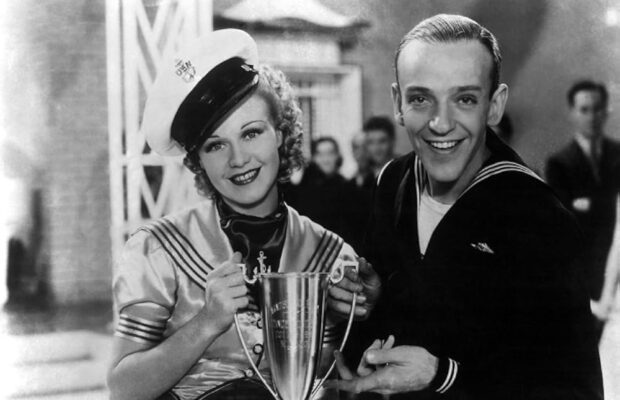
GOOD CLEAN FUN…Dance partners “Bake” Baker (Fred Astaire) and Sherry Martin (Ginger Rogers) find love during shore leave in Follow the Fleet. (Toronto Film Society)

Bandleader Harry Richman, well known in the New York nightlife scene of the 1920s and 30s, showed his acting chops in The Music Goes ‘Round…
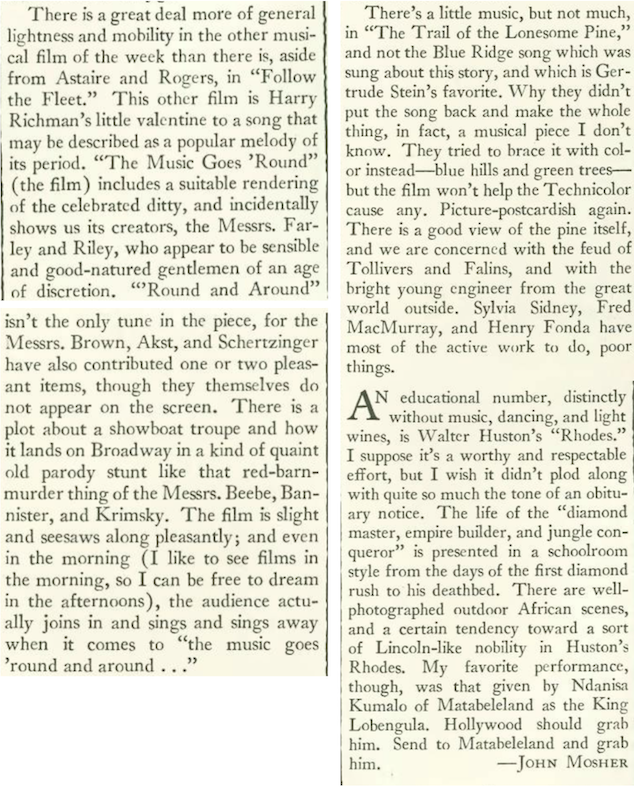
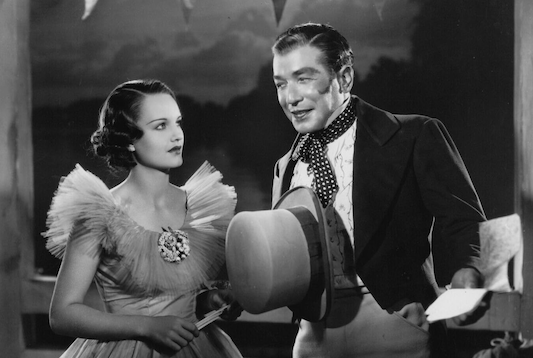
I CAN SING TOO…Rochelle Hudson and Harry Richman in The Music Goes ‘Round. (imdb.com)

Fred MacMurray, Sylvia Sydney, Henry Fonda and Fred Stone appeared in living color in The Trail of the Lonesome Pine–it was just the second full-length feature to be shot in three-strip Technicolor and the first to be shot outdoors in Technicolor…
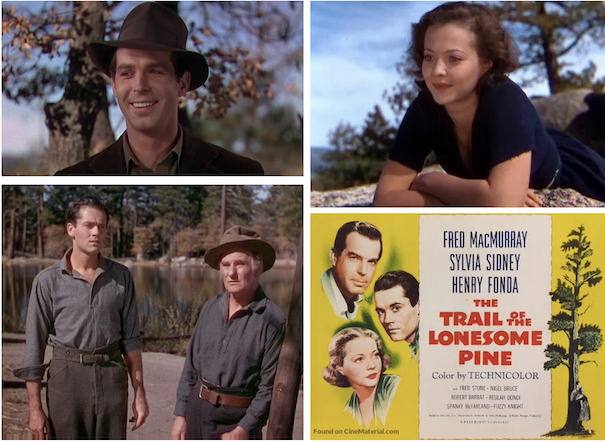
LIFELIKE…Clockwise, from top left: Fred MacMurray; Sylvia Sydney; a Paramount movie poster; Henry Fonda and Fred Stone. (moviesalamark.com/imdb.com)

…the 1936 film Rhodes (aka Rhodes of Africa) featured the massive acting talents of Walter Huston and Peggy Ashcroft; not surprisingly, the subject matter of the film has not aged well…a 2015 review in The Guardian is headlined: “Rhodes of Africa: only slightly less offensive than the man himself”…
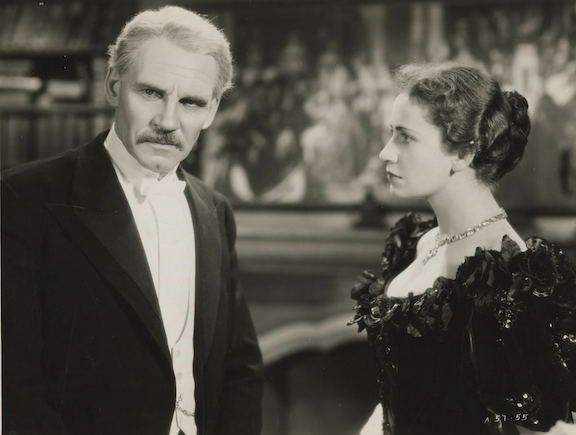
COLONIAL KLINK…Walter Huston and Peggy Ashcroft in Rhodes. (imdb.com)

 * * *

From Our Advertisers

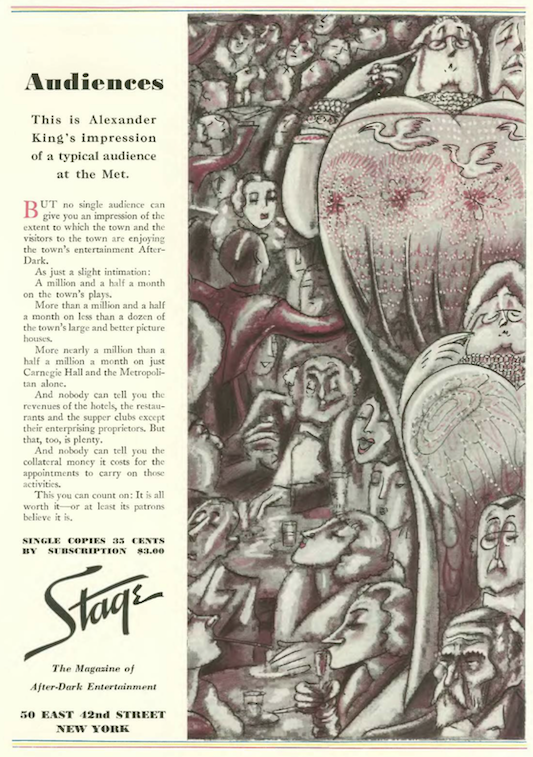
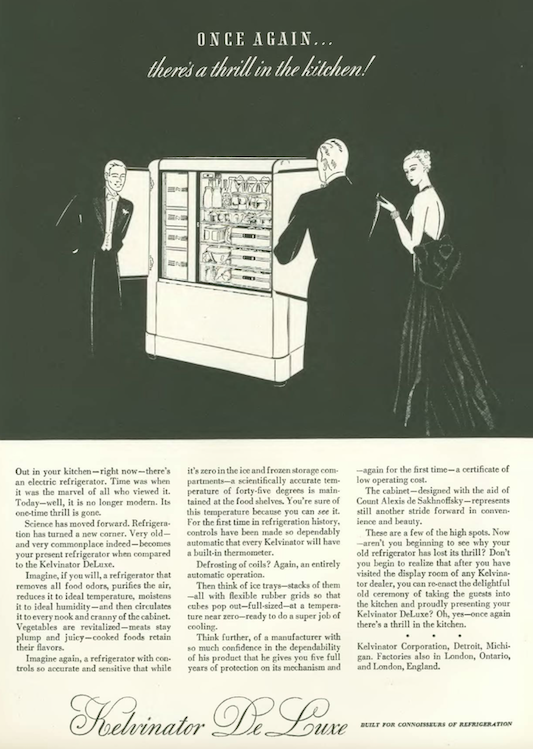
We begin with a Stage magazine ad from the inside front cover, featuring an illustration by Alexander King

…only new-money swells would be seen doing this…old money wouldn’t dare enter the kitchen, unless they needed to sack the cook…
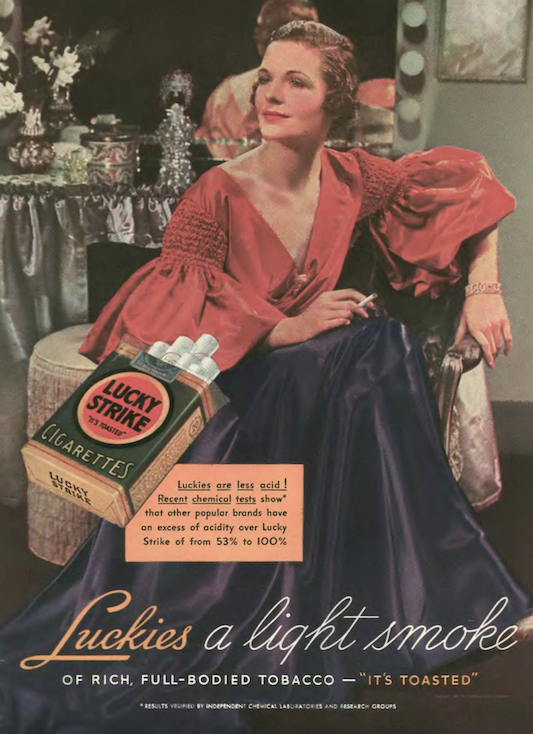
…on the back cover of the Feb. 29 issue you would find this elegant woman taking a break from her vanity to enjoy a “toasted” Lucky…
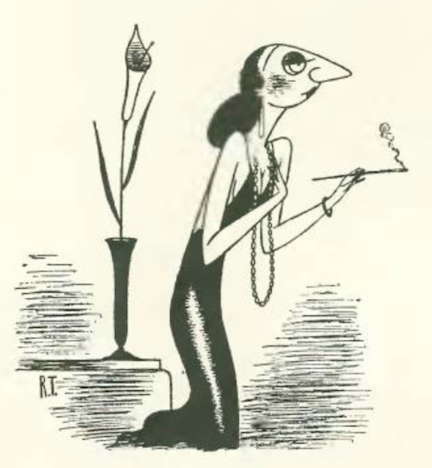
…we join our cartoonists, starting with this spot by Richard Taylor

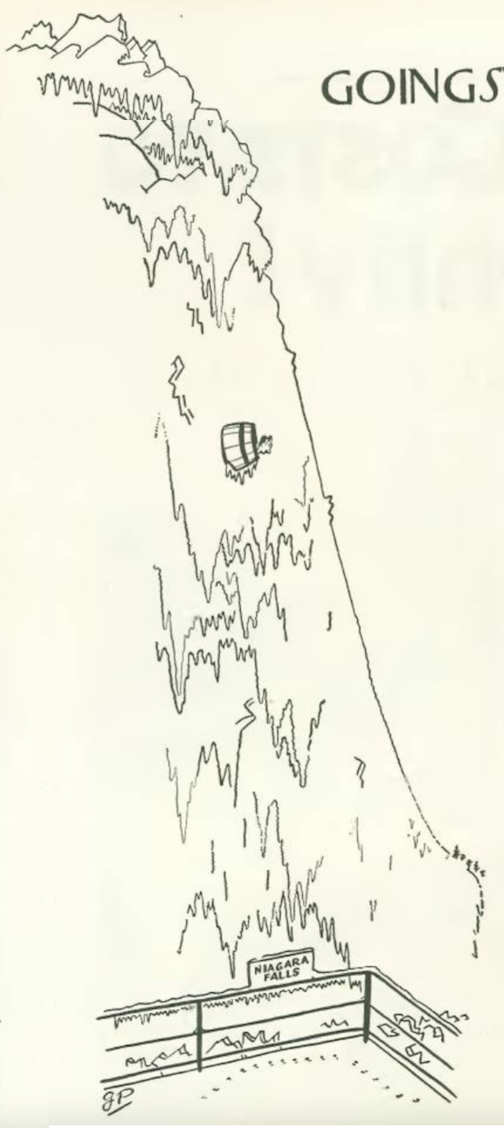
Garrett Price got stuck over the frozen falls…
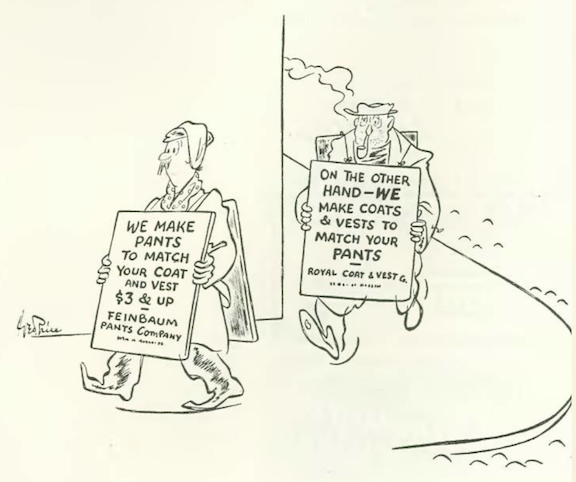
George Price drew up a sandwich board competition…
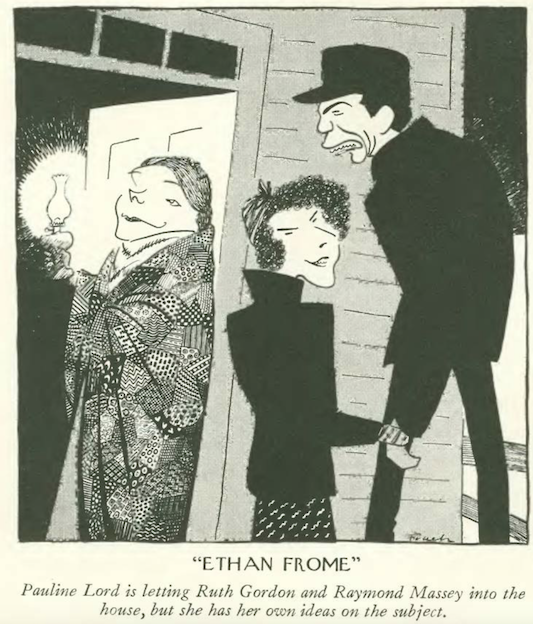
Al Frueh continued to illuminate “The Theatre” section…
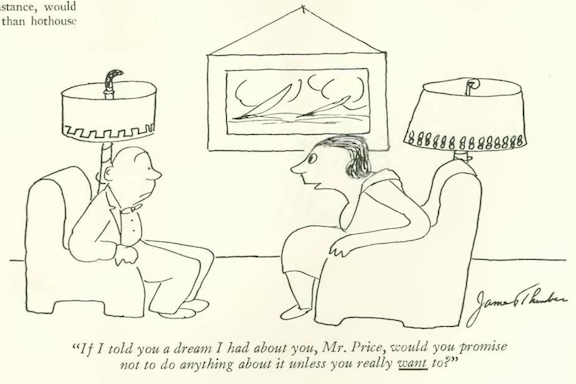
James Thurber posed a loaded question…

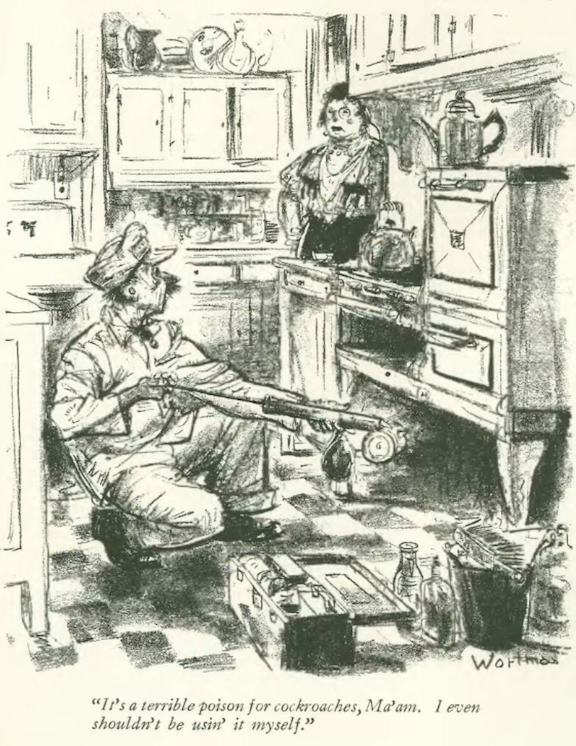
Denys Wortman got down to some debugging…
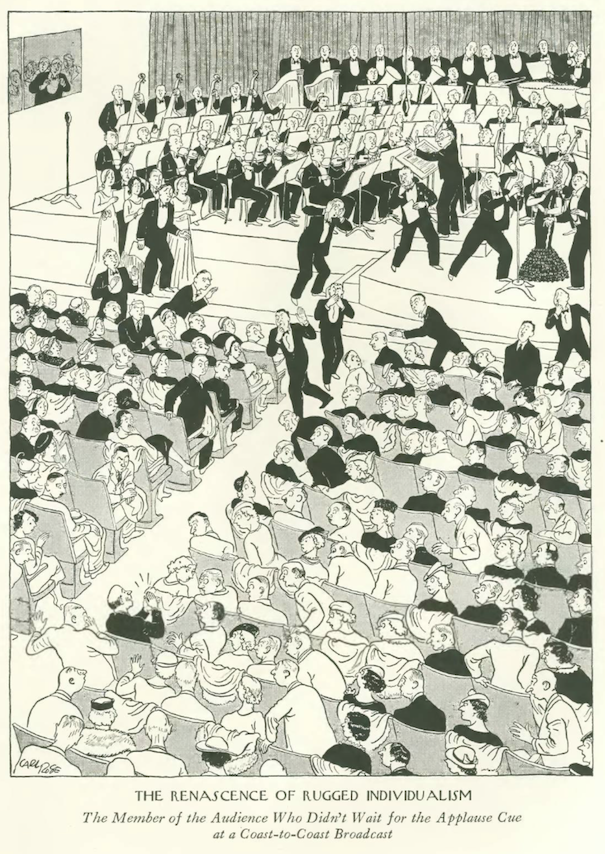
Carl Rose offered up another example of rugged individualism…
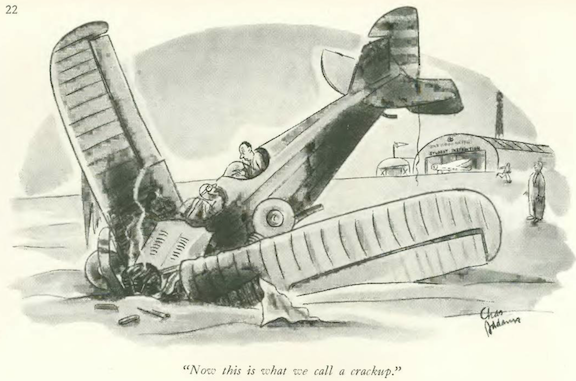
Charles Addams came down to earth…

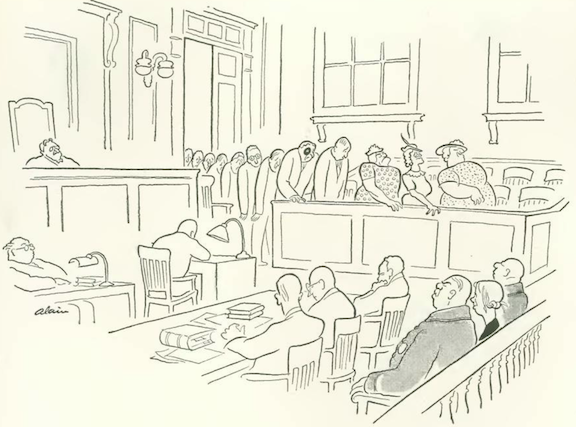
Alain illustrated a case of jury tampering…
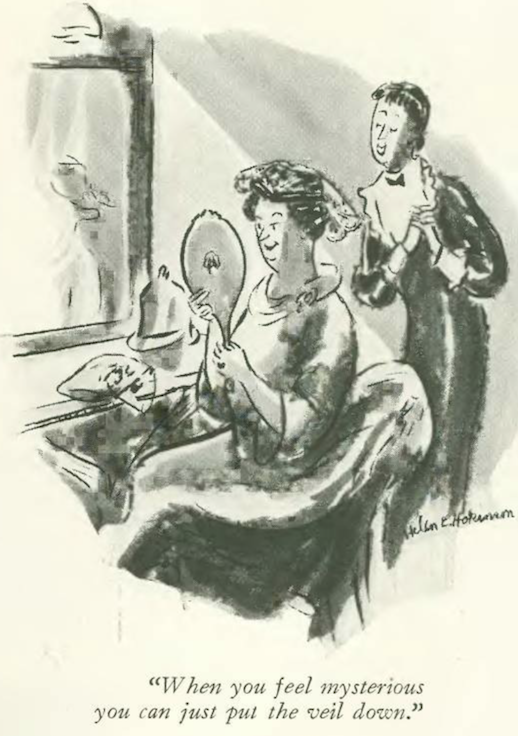
Helen Hokinson demonstrated the allure of a netted hat…
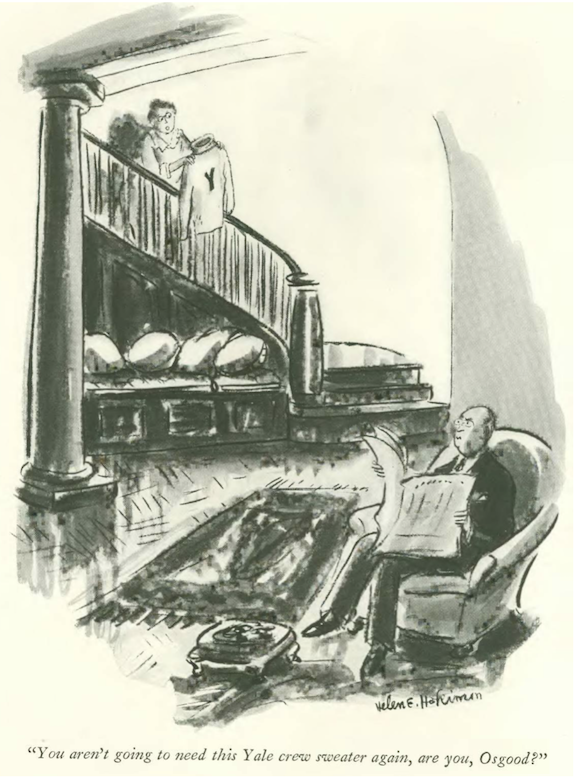
…and Hokinson again, doing some early spring cleaning…
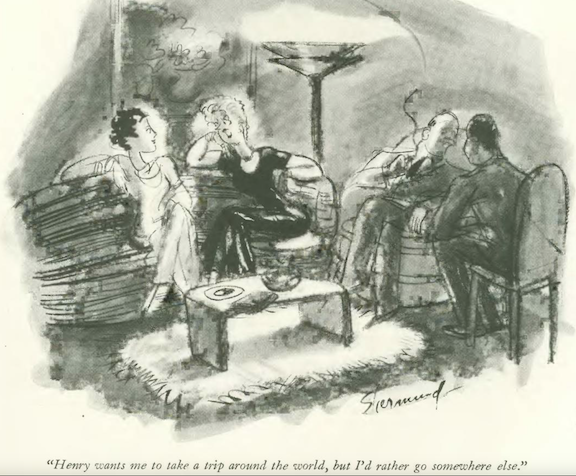
…and Barbara Shermund explored the idyll of wanderlust…
…and before we go, here is the New Yorker cover—by Helen Hokinson, Sept. 12, 1931—that was the object of Janet Flanner’s attention…
Next Time: Making of a Madman…
 

Hays Hokum

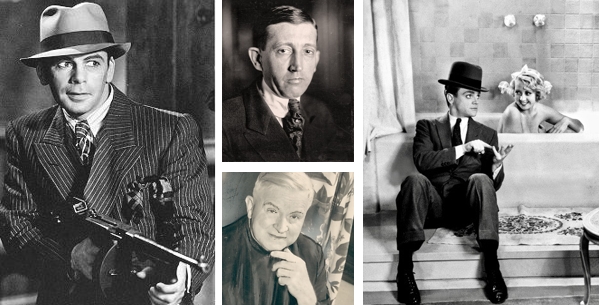
Above: Will Hays (center, top) was the enforcer and Fr. Daniel A. Lord was the author of the Production Code that was rigidly enforced beginning in 1934. They and others were responding to the sex, violence and other forms of "immorality" in such films as 1932's "Scarface" (with Paul Muni, pictured at left) and 1931's "Blonde Crazy" with James Cagney and Joan Blondell. (Wikipedia/cinemasojourns.com)

With the Production Code fully enforced, New Yorker film critic John Mosher found even less to get excited about during his visits to Manhattan’s cinemas.

August 17, 1935 cover by Julian de Miskey. He contributed 62 covers to the magazine, as well as 82 cartoons from 1925 to 1962.

The Motion Picture Production Code—a set of industry guidelines for the self-censorship of content—had been around for awhile, but it was mostly ignored until June 13, 1934, when an amendment to the Code required all films released  to obtain a certificate of approval. Hoping to avoid government censorship and preferring self-regulation, studios adopted the Code.

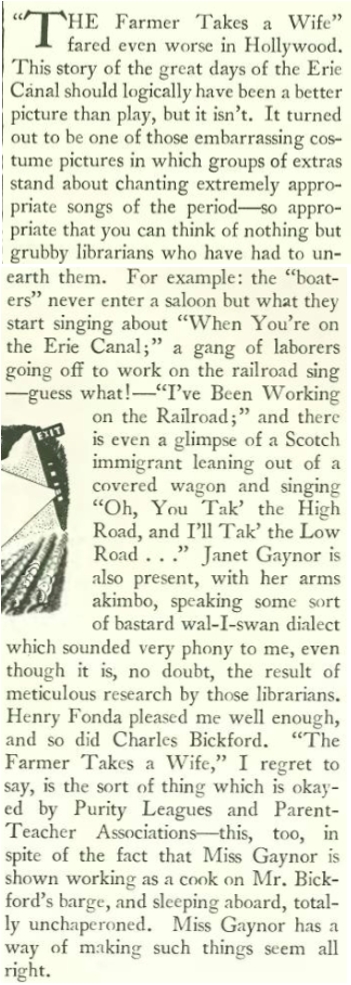
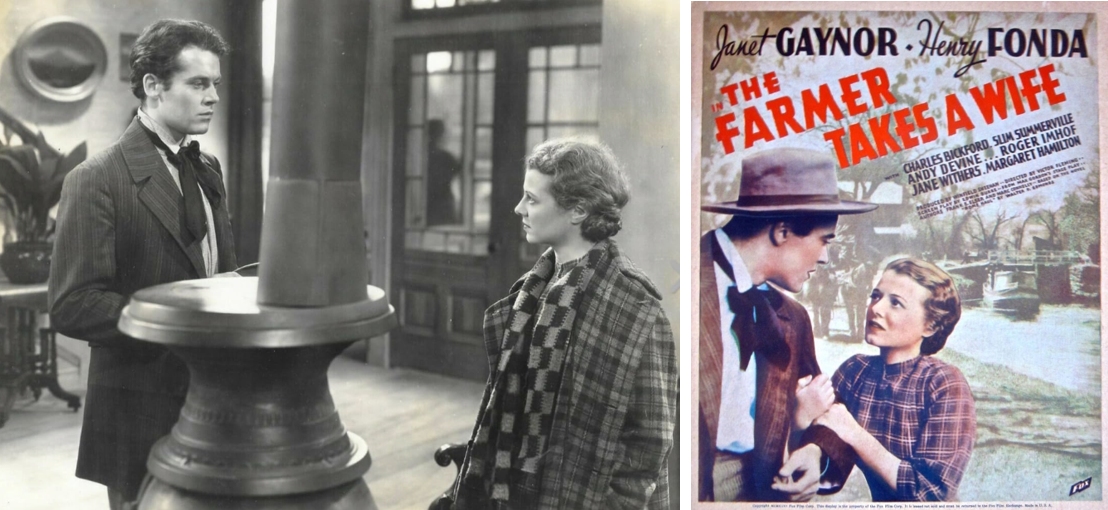
The Code’s effects were felt in such films as The Farmer Takes a Wife, a romantic comedy about a Erie Canal boatman, portrayed by Henry Fonda, who dreams of becoming a farmer (a role reprised by Fonda from the Broadway production of the same name; it was Fonda’s first break in films). Mosher was pleased by Fonda’s performance, but found the film adaptation to be corny and phony, filled with “bastard” dialect and schmaltzy musical numbers. “It is the sort of thing which is okayed by Purity Leagues…” Mosher concluded.

SILVER SCREEN DEBUT…Boatman Dan Harrow (Henry Fonda) woos barge cook Molly Larkins (Janet Gaynor) in a scene from A Farmer Takes a Wife. While it was Fonda’s film debut, Gaynor was an established star known for playing sweet, wholesome characters. One of the few actresses who made a successful transition to sound movies in the late 1920s, Gaynor was the number-one draw at the box office in 1935. (IMDB)
STILL KEEPING IT CLEAN…The Code was still in force when The Farmer Takes a Wife was remade in 1953; however, nineteen years after the Code took effect there was a notable easing of restrictions, as can be seen in the generous display of Betty Grable’s famous gams (seen here with Thelma Ritter). (IMDB/Wikipedia)

To get a clearer idea of what the Code did to the pictures, compare the scene from 1934’s Tarzan and His Mate (left), which was released two months before the Code went into effect, and Tarzan Escapes (right), from 1936.

CLOTHED IN THE CODE…Johnny Weissmuller and Maureen O’Sullivan appeared together in six Tarzan films. In their second outing, 1934’s Tarzan and His Mate, O’Sullivan wore a skimpy halter-top and loincloth (left) and was shown sleeping and swimming in the nude. In their next film, 1936’s Tarzan Escapes (right); Jane is more chastely clad. (mikestakeonthemovies.com/rottentomatoes.com)

 * * *

Noted and Notorious

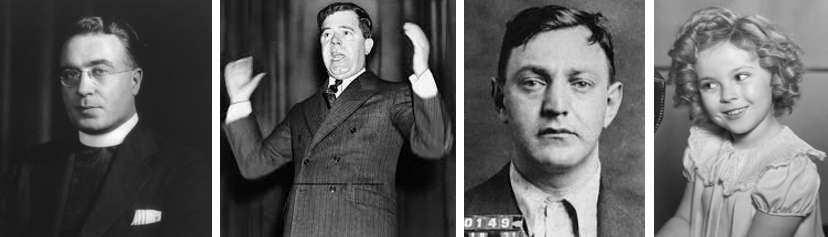
In his weekly column “Of All Things,” Howard Brubaker offered wry observations on the passing scene, including this latest brief that described the rise and fall of a very unlikely quartet of celebrities.

DEMOGOGUES, DUTCH & DIMPLES…(Left to right) Support appeared to be on the wane for radio priest and demagogue Father Charles Coughlin and fellow-fascist Louisiana Sen. Huey Long, while stock was on the rise for mobster Dutch Schultz, who successfully swayed public opinion (while under indictment for tax evasion) by generously donating to various charities. Shirley Temple continued to charm audiences, her films ranking number-one at the box office in 1935 (as well as in 1936, 1937, and 1938). The year 1935 would also be the last for Long and Schultz–both would be assassinated. (Wikipedia)

 * * *

Titlemania

Lacking the strictures of Old World caste systems, Americans have had an anxious relationship with class signifiers. In a land where trade schools become universities overnight and their faculty members refer to one another as “doctor,” there is much confusion and hand-wringing in the honorifics trade. H.L. Mencken examined the proliferation of titles in his country, freely handed out without regard to merit. Excerpts:

 * * *

From Our Advertisers

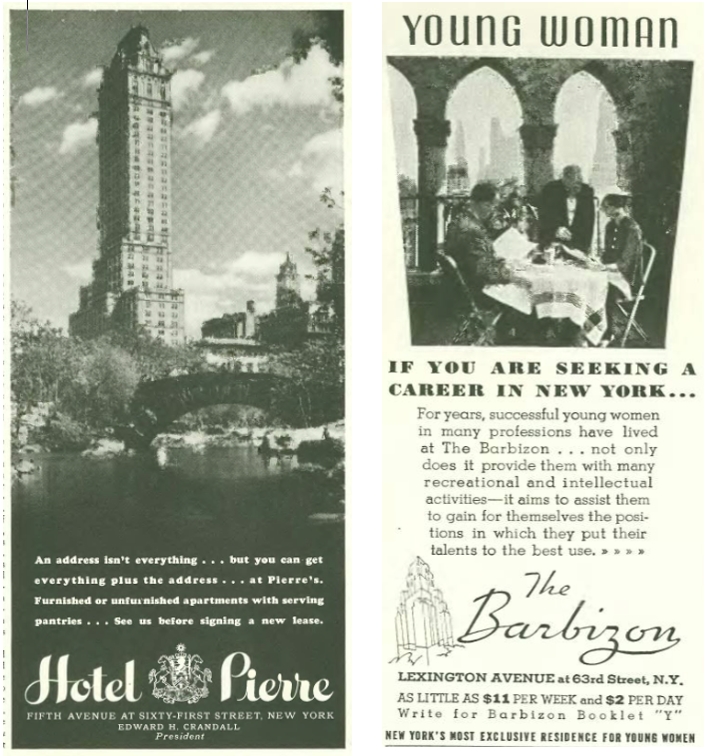
The back of the book was where one could find advertisements for upscale urban living, including these two touting the advantages of the Hotel Pierre and The Barbizon…

…In a joint venture with a group of Wall Street financiers, the former busboy-turned restauranteur Charles Pierre opened the Hotel Pierre in 1930—not the most auspicious time to open a luxury hotel as markets continued to collapse…the Pierre went into bankruptcy in 1932 and was later purchased by oilman J. Paul Getty…the legendary Barbizon Hotel for Women, completed in 1927, was designed as a safe and respectable haven for women seeking to pursue careers in New York, especially in the arts, and would host numerous famous women through the 1970s…

At left, the Barbizon in 1927; right, the Hotel Pierre circa 1930. (loc.gov)

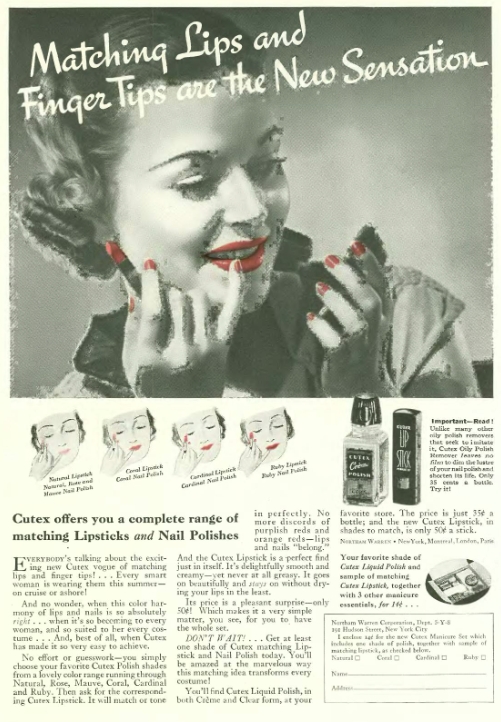
…like the tobacco companies, brewers targeted women as a growth market for a product mostly associated with men…

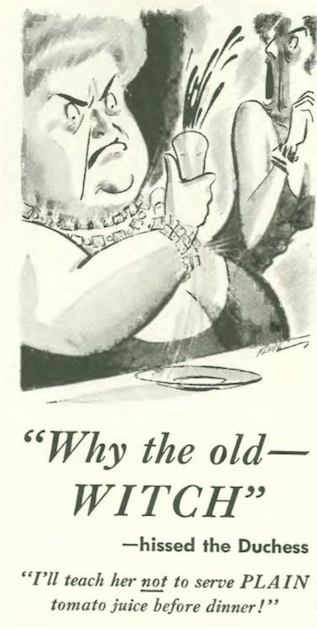
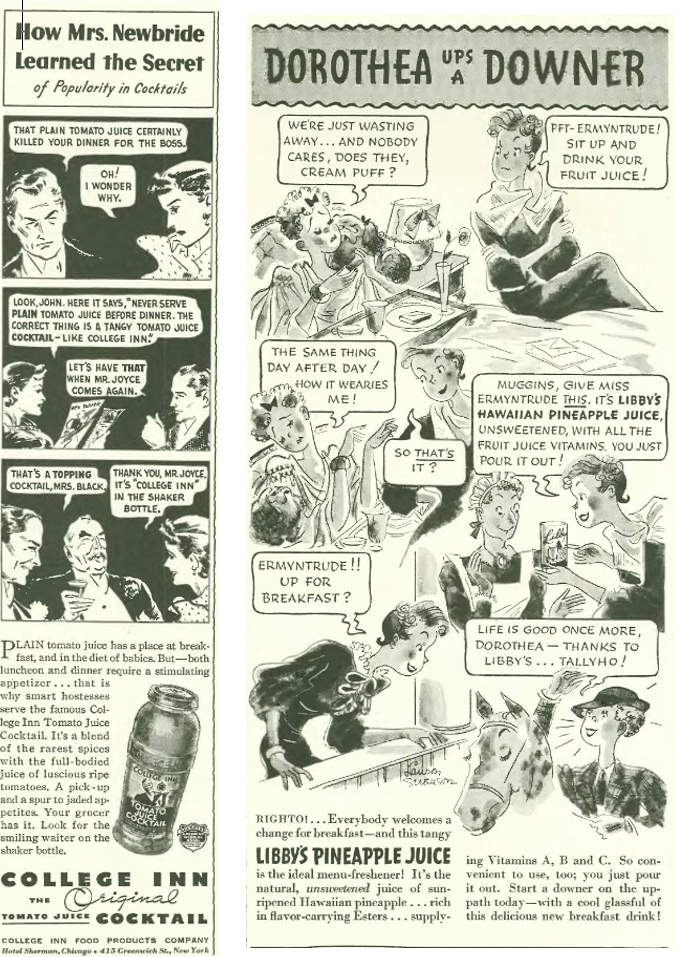
…the makers of juices, meanwhile, created comic strips to promote their products…College Inn still went negative with their ads—recall the violent outbursts of the Duchess…

…here a spiteful husband blames his wife’s choice of tomato juice for his lack of success with the boss…Libby’s, on the other hand, promoted their pineapple juice as a surefire cure for a young woman’s ennui…

…notable in these somewhat thin, late summer issues is the lack of full-color ads…this was on the back inside cover…

…Flit and Dr. Seuss continued to be a weekly presence…

…which brings us to our cartoonists, and a spot drawing by Constantin Alajalov

…also a modest spot by Robert Day, keeping us cool with this polar bear…

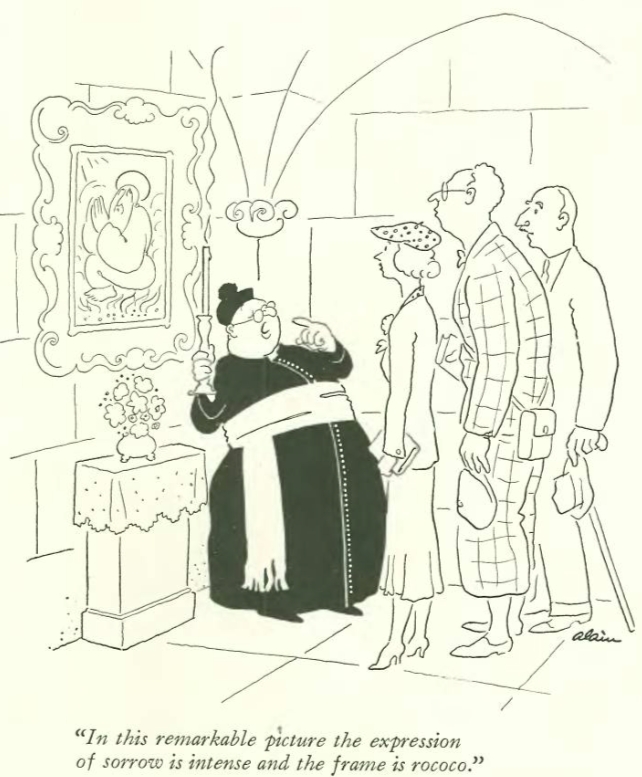
Alain offered a short course in art appreciation…

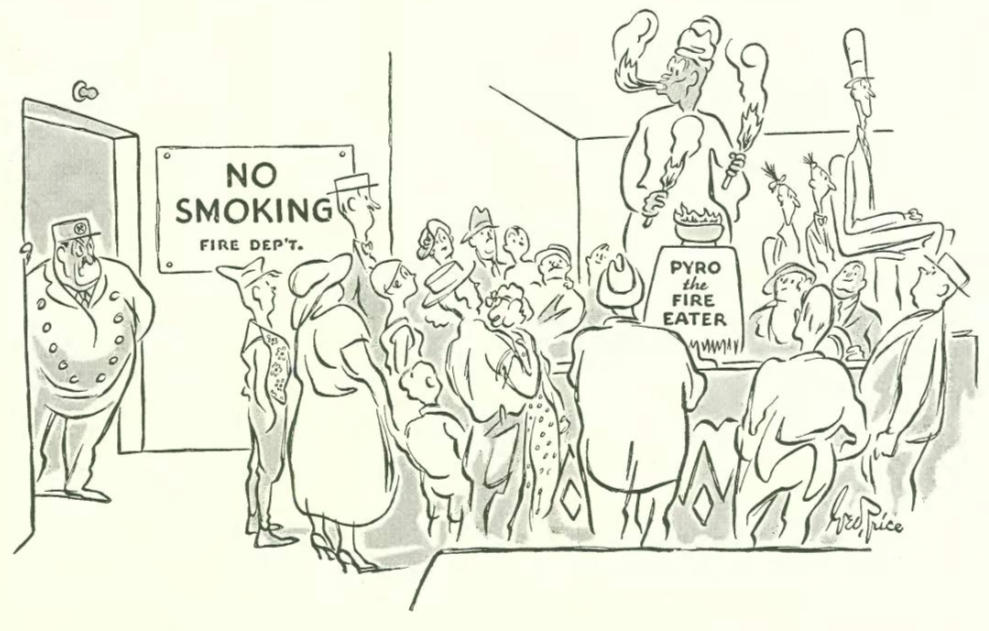
George Price ran afoul of the fire code…

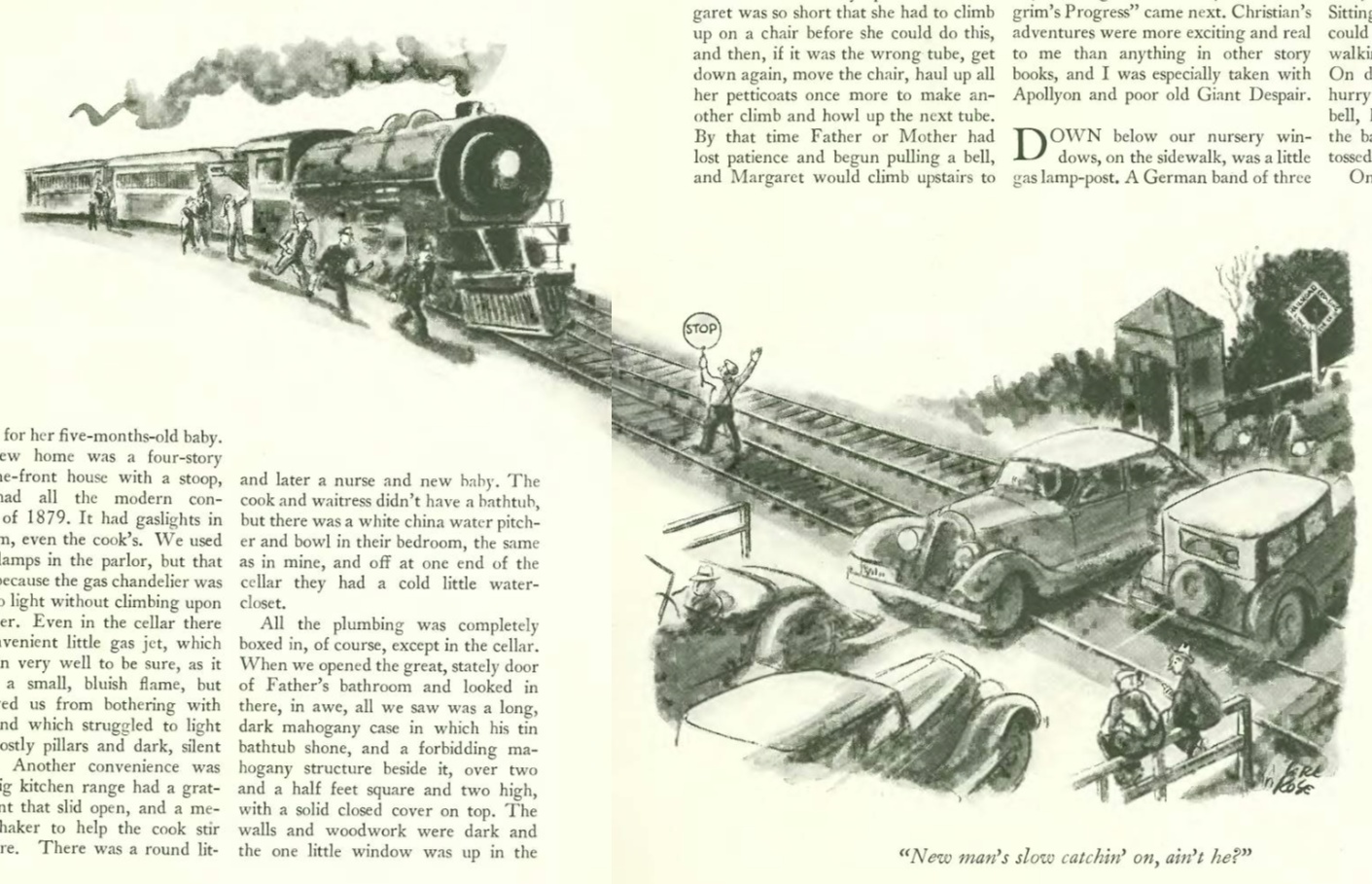
Carl Rose ran his tracks across this two-page spread…

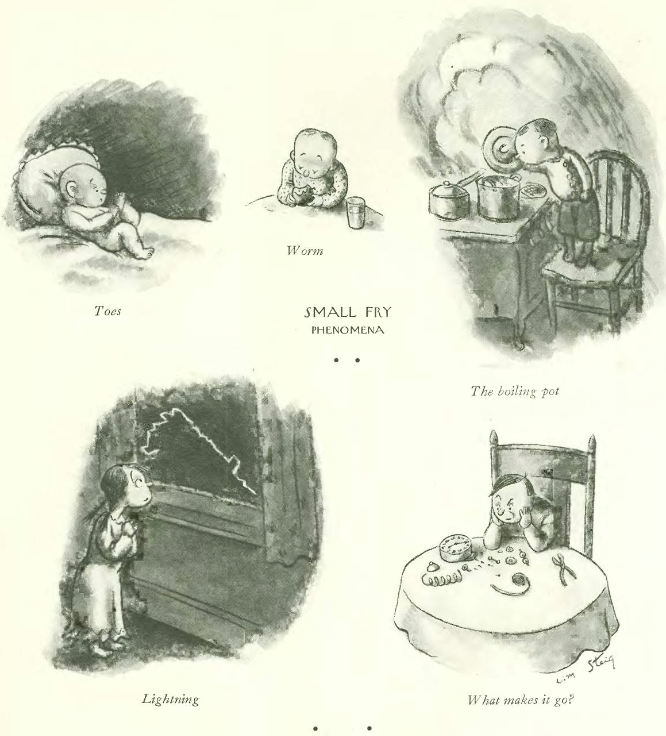
William Steig gave us the small fry’s perspective on the world’s wonders…

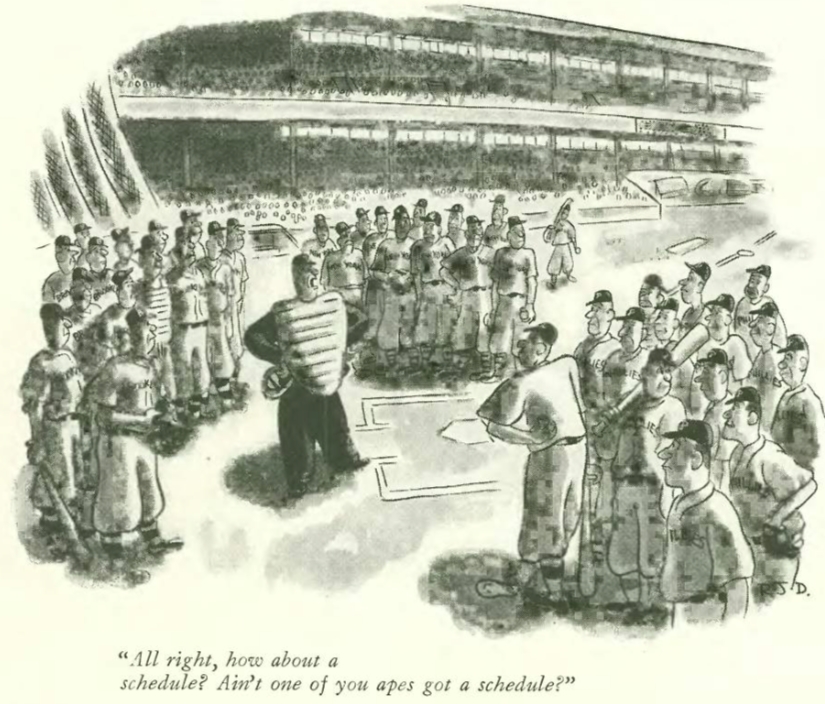
…a rare appearance of baseball in the magazine, thanks to Robert Day...

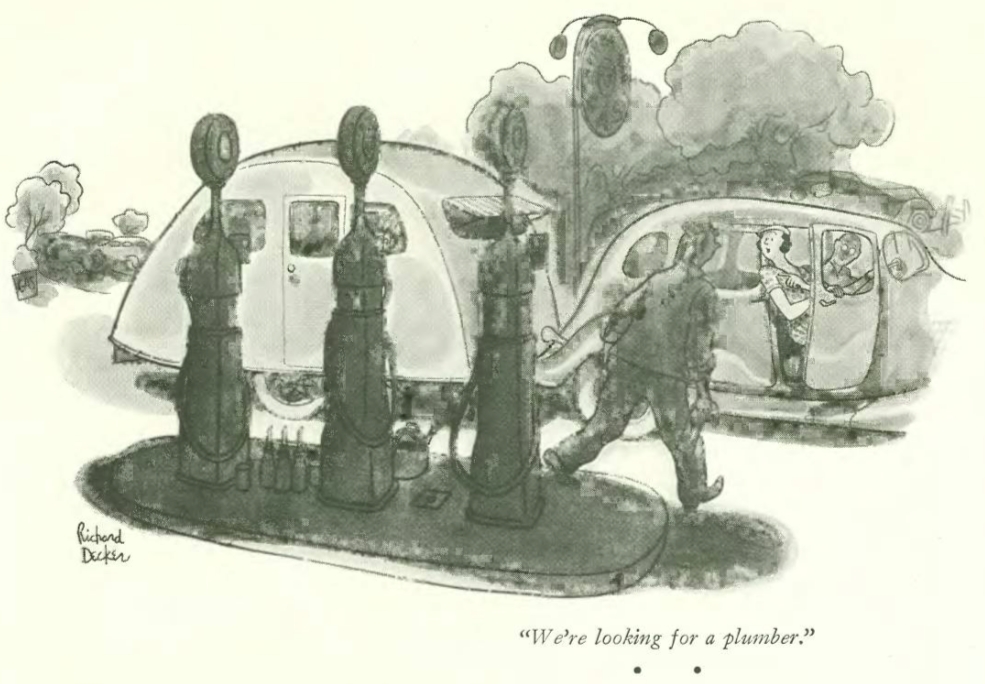
Richard Decker brought a modern world challenge to one filling station…

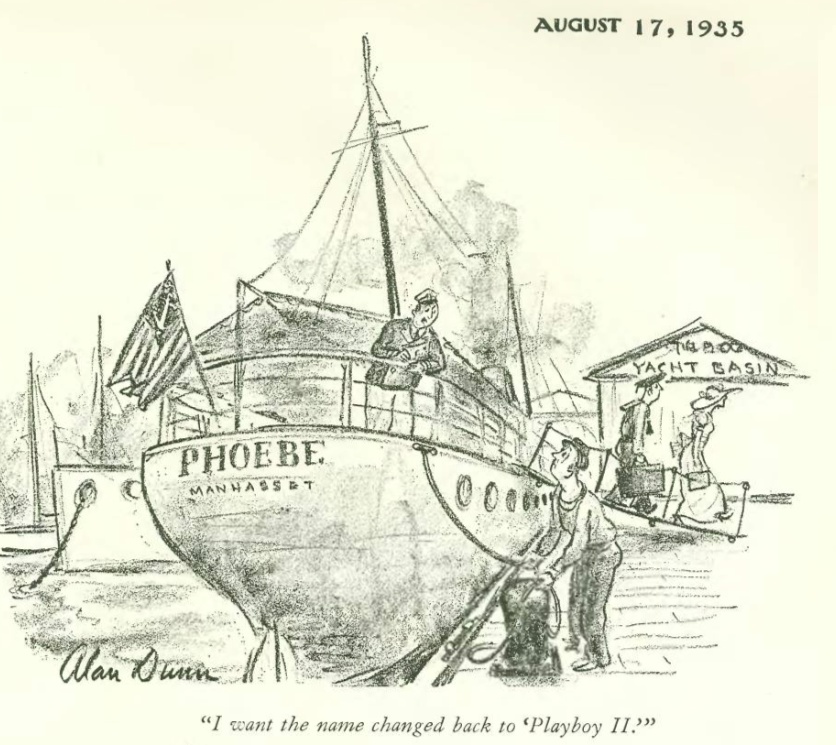
…A sailor’s return to bachelorhood required a new paint job, per Alan Dunn

…and who else but Charles Addams would circle vultures over an amusement park?…

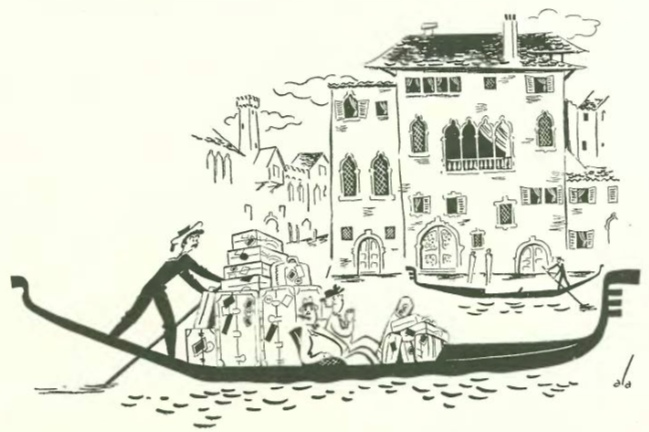
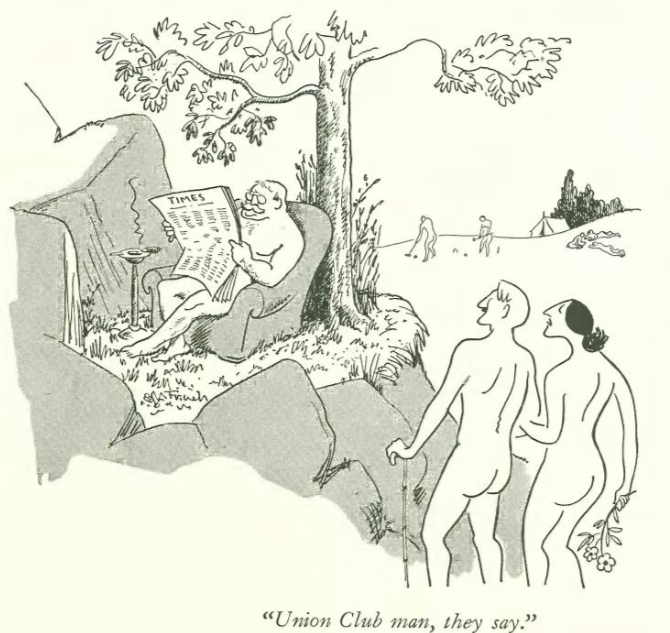
…and we close with Al Frueh, and a Union Club member not concerned with a dress code…

Next Time: The Din and Bustle…