The Wonderful Saloon

McSorley’s Old Ale House is probably best known to New Yorker readers through the work of Joseph Mitchell, who was noted for his distinctive character studies in The New Yorker and who in 1943 published McSorley’s Wonderful Saloon, which was later included in a 1992 collection of Mitchell’s works, Up In the Old Hotel.

Sept. 15, 1934 cover by Rea Irvin.

Among New York’s oldest saloons, McSorley’s was one of the last of the “Men Only” pubs, finally admitting women in 1970 after the state required the saloon to comply with the U.S. Constitution’s Equal Protection Clause. McSorley’s was visited by many famous patrons in its long history, a mixed bunch that included Abraham Lincoln, Teddy Roosevelt, Harry Houdini and John Lennon. Nine years before Mitchell would pen his account of the saloon, “The Talk of the Town” took a look.

MORE THAN A BAR…Folks were (and still are) drawn to McSorley’s Old Ale House for its rustic atmosphere—apparently no piece of memorabilia has been removed from its the walls since 1910. Clockwise, from top left, McSorley’s in 1942; 1937 Berenice Abbott photo of the interior; and two paintings by John Sloan—McSorley’s Bar, 1912; and Cats in McSorley’s, 1928. Sloan was among the Ashcan School of artists that included Stuart Davis and John Luks—all regulars at McSorley’s. (keithyorkcity.wordpress.com)

 * * *

Of the People

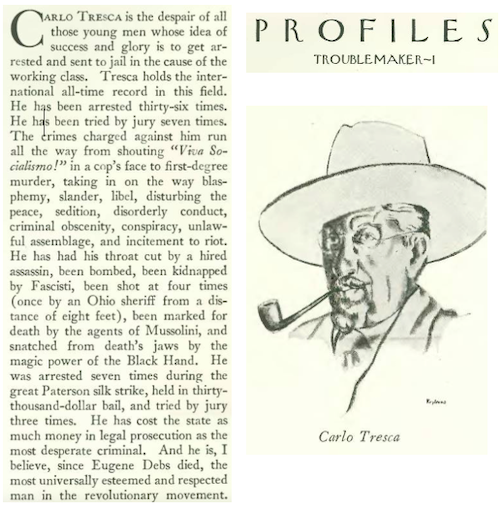
The Italian-American labor organizer Carlo Tresca was a gifted orator and outspoken critic of anyone who stood in his way in his quest for workers’ rights. As political activist and writer Max Eastman pointed out in the lead paragraph of a two-part profile, speaking truth to power also prompted a number of deadly assaults on Tresca (1879–1943), whose campaign for justice was ultimately cut short by an assassin’s bullet in 1943. A brief excerpt:
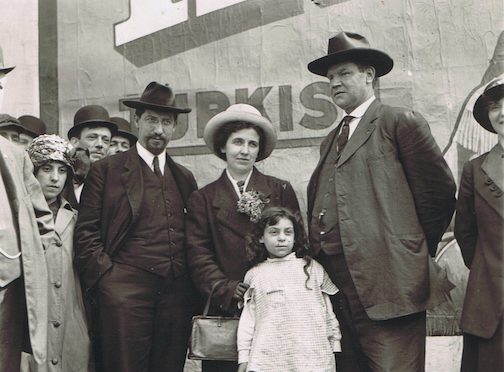
STANDING FIRM…Leaders of the International Workers of the World who led the 1913 Paterson (N.J.) mill strike included, left to right, Carlo Tresca, Elizabeth Gurley Flynn and William D. Haywood. (Photo: News Dept. American Press Association)
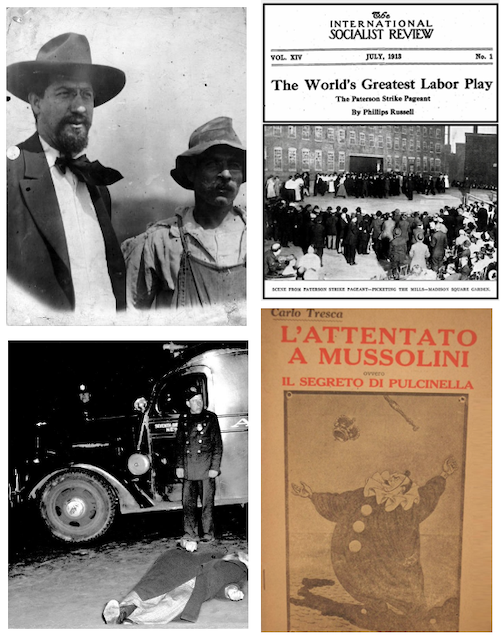
UP TO THE FINAL CURTAIN…Clockwise, from top left: Carlos Tresca with an unidentified worker in the 1910s; labor activists often staged theatrical works to get their point across—in 1913 The International Socialist Review covered a play at Madison Square Garden about the Paterson N. J. mill strike, which featured more than a thousand amateur actors; cover of a 1926 theatrical work, L’attentato a Mussolini, that attacked the fascist dictatorship of Benito Mussolini; police officer guards Tresca’s body after his 1943 assassination. Tresca was crossing Fifth Avenue at 15th Street when an unidentified assailant jumped out of a black Ford and shot him in the back of the head, killing him instantly.  (Wikipedia/weneverforget.org/wetheitalians.com)

* * *

Up In Smoke

Lewis Mumford sniffed at much of the new architecture popping up around his city, but he took an especially big whiff of the new incinerator that rose above the neighborhoods at 215th Street and Ninth Avenue. When the incinerator opened in 1934 the city stopped dumping its garbage into the sea (it was fouling the beaches) and began burning the stuff around the clock in Harlem, where residents had put up with the smoke and cinders that were emitted from the supposedly “odorless” plant. Cole Thompson’s website My Inwood is a great place to read more about it.
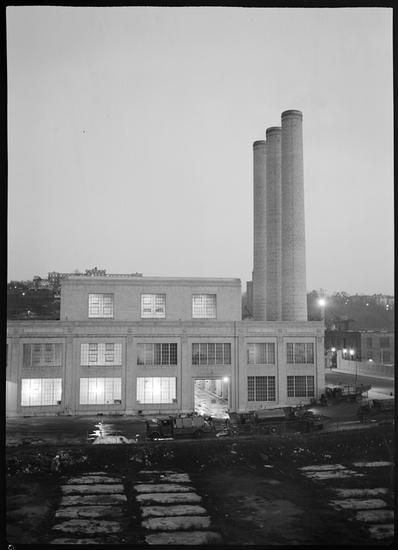
ASHES TO ASHES…New York’s municipal incinerator, located in Harlem, as seen in 1937. The plant closed in 1970 when the city’s rubbish was re-directed to the Fresh Kills landfill on Staten Island. The smokestacks, which had become something of a landmark, were demolished in 2022. (Museum of the City of New York)

Mumford brightened, however, at another development in the Turtle Bay neighborhood, where architect William Lescaze (1896–1969) had slipped a bright, modernist house in between two dusky brownstones on East 48th Street. The house featured extensive use of glass block in its construction, an architectural first in the city.

RADICAL CHIC…William Lescaze’s four-story house, inserted between the brownstones on East 48th Street, is considered to be the first modernist house in city; at right, the Swiss-born American architect, city planner and industrial designer endorses highballs mixed with Lord Calvert Whiskey in a 1948 advertisement. (Wikipedia)
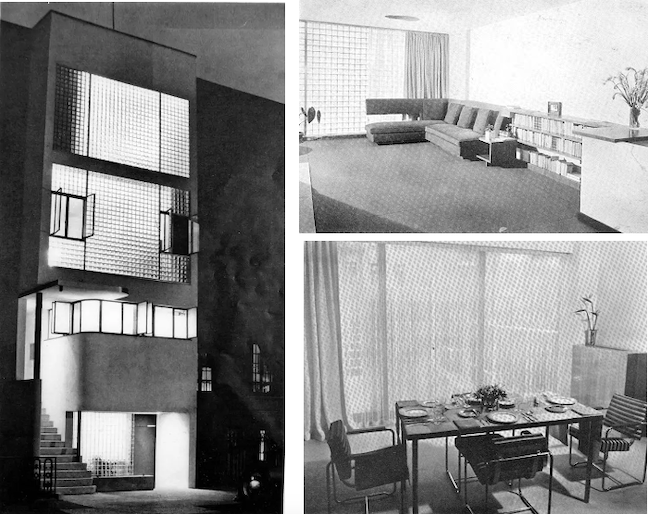
ALL AGLOW…The Lescaze house at night, and two interior views. (From the 1936 issue of Decorative Art, the Annual Issue of the Studio Yearbook via djhuppatz.blogspot.com)
GLASSY EYED…The Lescaze House’s glass block facade, the first to be used on a building in New York City, were installed to provide insulation and privacy while also allowing extensive illumination. At right, the front entrance to the lower level, which contained Lescaze’s office. (6sqft.com)
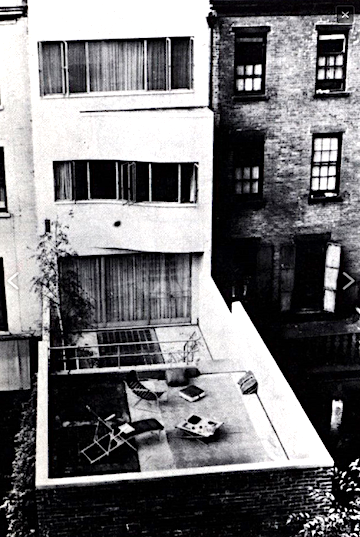
THINK PAD…Lescaze situated the most important rooms to the back of the house (dining, master bedroom and living) to isolate them from street noise and bathe them in northern light. His basement office extended under the back terrace. (hiddenarchitecture.net)

Mumford noted that the recent invention of home air-conditioning systems made it possible for Lescaze to bring light deep into the central core of the building…
HIGH AND LOW…Lescaze’s works in the early 1930s included the 1932 PSFS Building in Philadelphia (today: Loews Philadelphia Hotel); at top, PSFS interior view showing board room conference table; below, the 1930-31 Fredrick Vanderbilt Field House in Connecticut. (Hagley Museum and Library/Wikipedia/djhuppatz.blogspot.com)

* * *

Poser

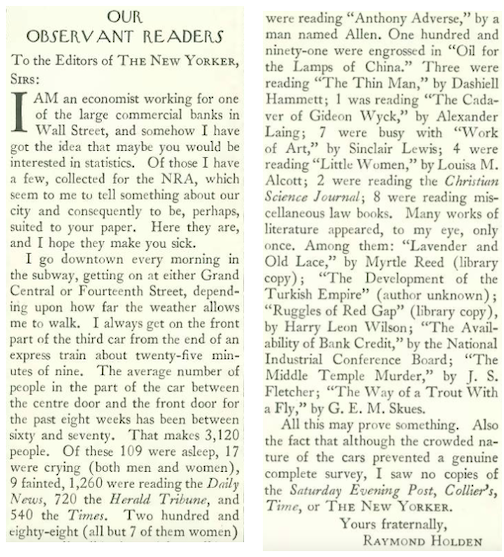
The novelist and poet Raymond Holden (1894–1972) was a regular contributor to The New Yorker from 1929 to 1943. For the Sept.15 issue he assumed the guise of an economist to pen this cheeky letter to the editors:
 * * *

Head in the Clouds

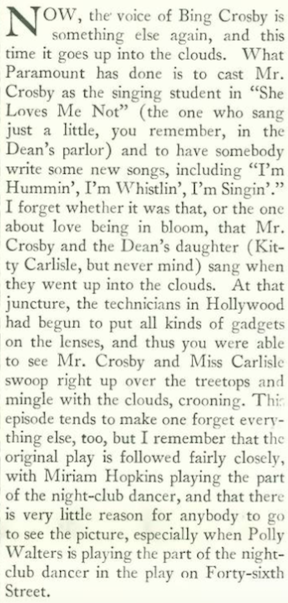
Film critic John Mosher thought Bing Crosby was a fine singer, but he couldn’t quite fathom why the movie-makers at Paramount thought the singer would be even more attractive if he was sent aloft using various camera tricks.
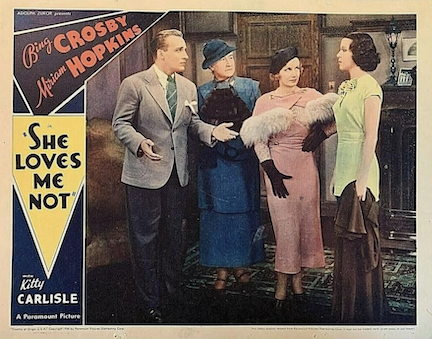
COME FLY WITH ME…Lobby card advertising 1934’s She Loves Me Not starring, from left, Bing Crosby, Maude Turner Gordon, Miriam Hopkins and Kitty Carlisle. (IMDB)

* * *

From Our Advertisers

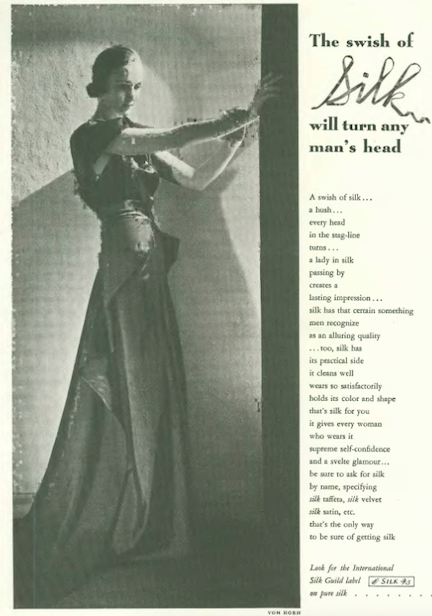
The advertising department must have been thrilled with the flurry of ads that announced the fall and winter fashions…here are three examples, the first two focused on styles supposedly designed attract the opposite sex…the International Silk Guild promised that the “swish” of silk would turn any man’s head…
…while B. Altman’s “Young Colony Shop” claimed you could get your man with the “swish and billow” of taffeta…
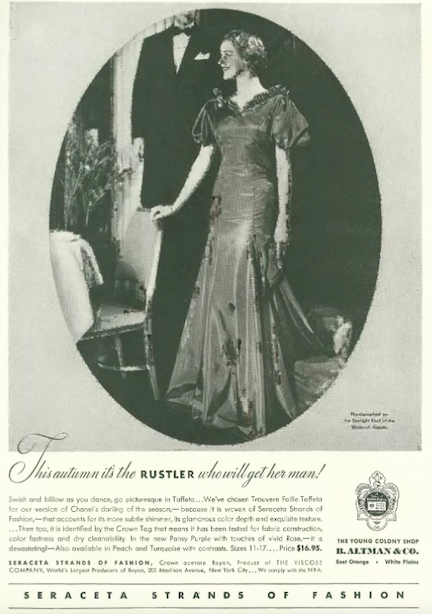
…B. Altman ran a second full-page ad to catch a bit older demographic, less concerned with landing a man and more concerned with sending the proper signals to fellow Anglophiles…

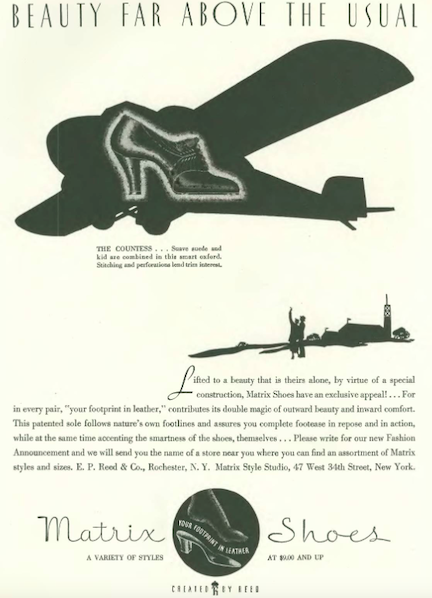
…the folks at Matrix shoes were looking for a way to associate their “Countess” model with modern living, but what they got was an image of people waving farewell to some flying footwear…
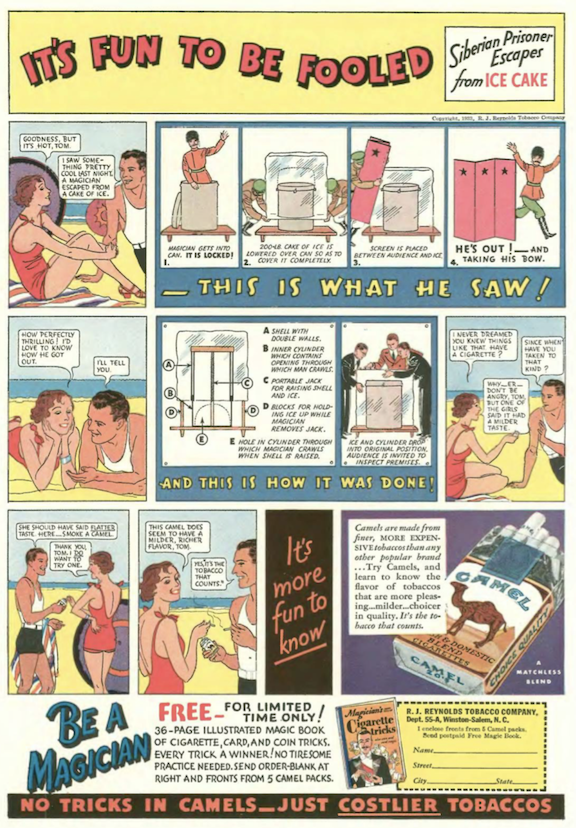
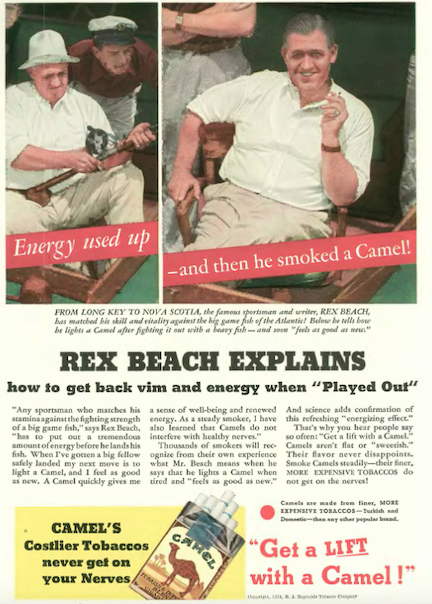
…and here is another in a continuing series of ads from R.J. Reynolds that claimed “science” had confirmed the refreshing, energizing effect of its Camel cigarettes…
…we clear the air with this attractive ad beckoning New Yorkers to sun-kissed Bermuda…

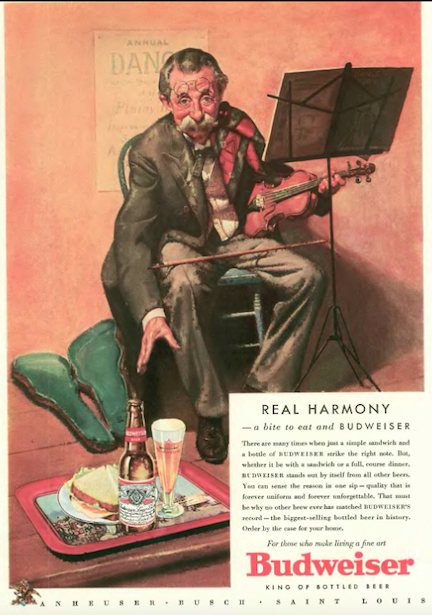
…Budweiser continued its series of Rockwellesque portraits of old men enjoying its product…
…and this two-page spread from Fisher—maker of car bodies for General Motors—shows us how young tots travelled in the days before plastic car seats and other restraining devices…

…on to our cartoonists we begin with a couple examples of spot illustrations from the opening pages…


…on to Peter Arno…the caption reads, “I adore driving at night. Once I caught my foot in a bear trap, though”…the humor is lost on me…I suppose she is referring to a speed trap, perhaps set by an amorous cop…

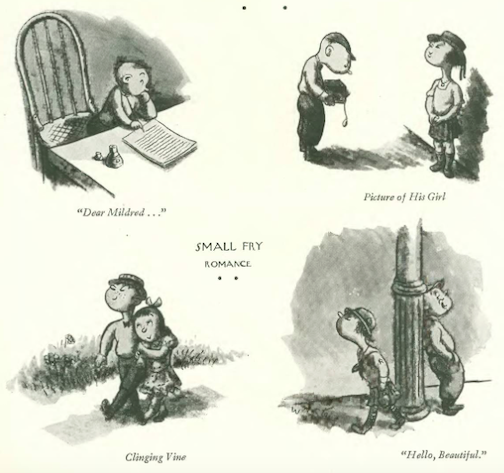
…speaking of amorous, William Steig explored the subject amongst his “Small Fry”…
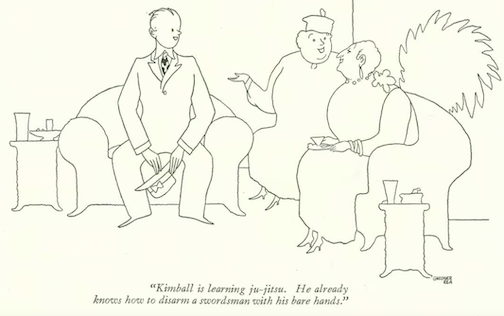
Gardner Rea sat in on an unlikely boast…
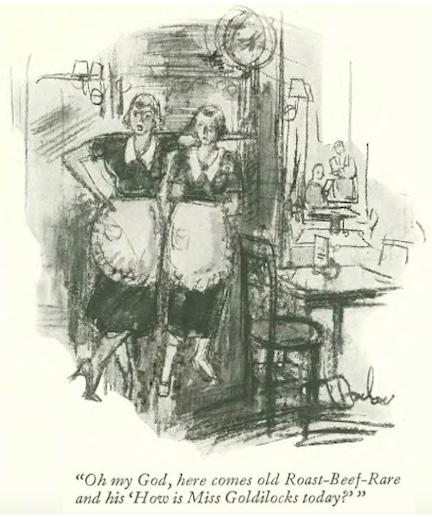
Perry Barlow illustrated the doldrums associated with waitressing…
Garrett Price checked in on the latest developments in deep sea exploration…
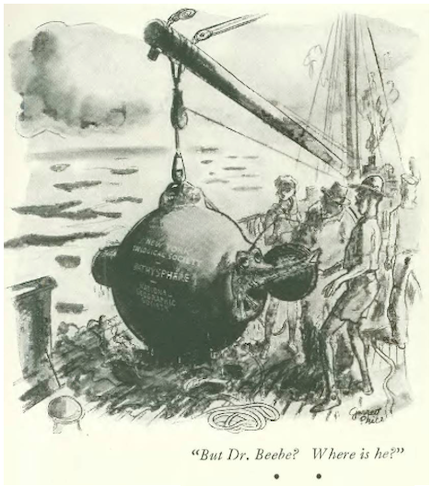
…the cartoon refers to the explorations of William Beebe, who along with engineer Otis Barton descended in a bathysphere to a record 3,028 feet (923 m) on Aug. 15, 1934…
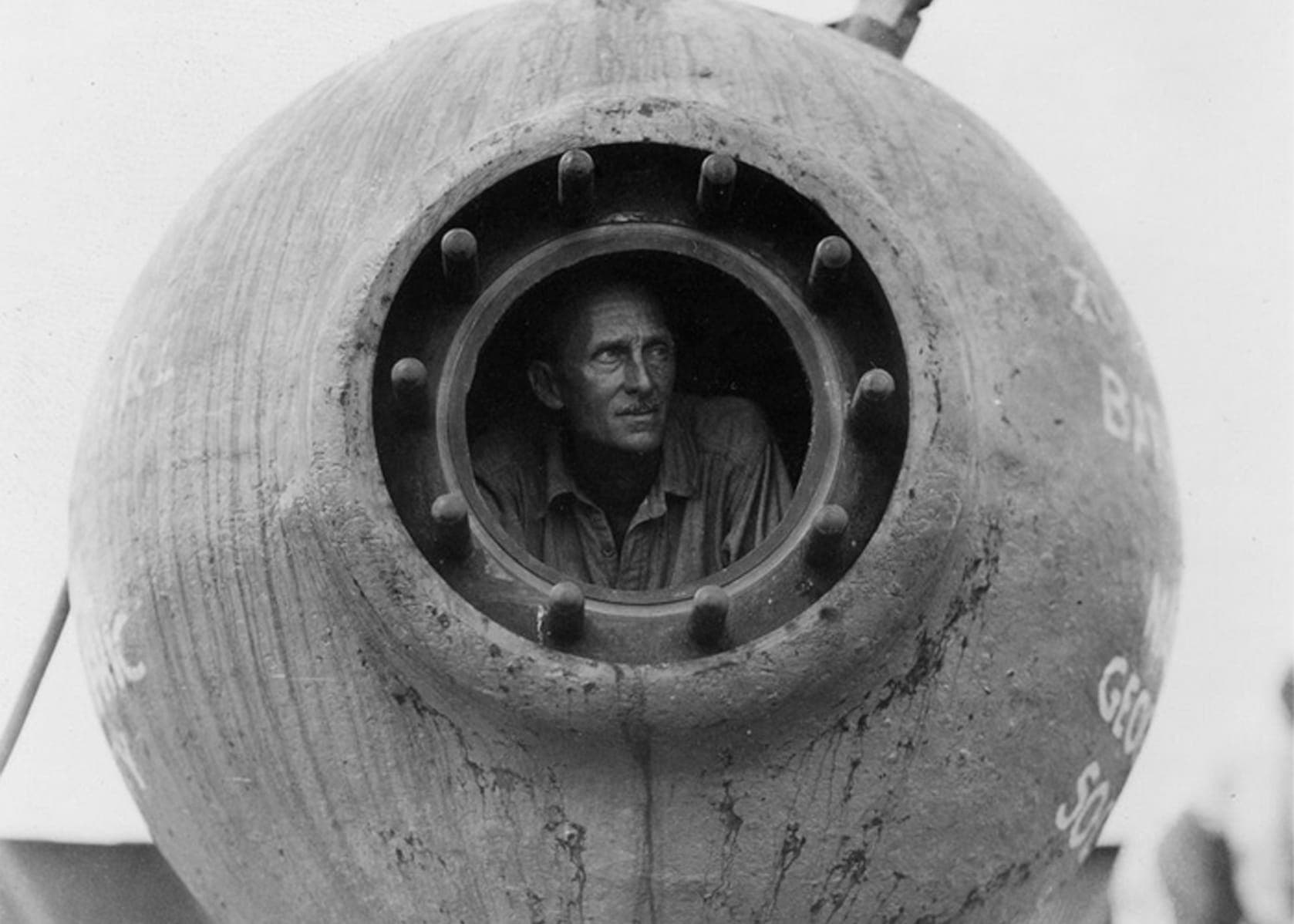
SIT TIGHT…Naturalist William Beebe poses inside the bathysphere in the early 1930s. (msmocean.com/)

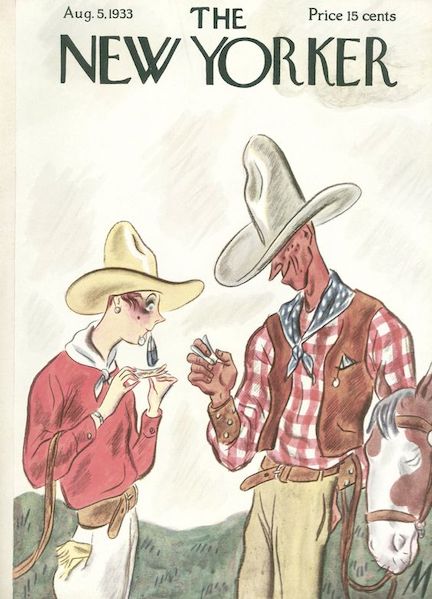
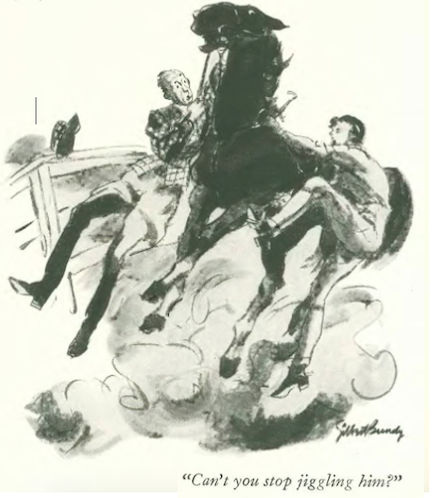
…and we close with Gilbert Bundy, and a couple of horse wranglers…
Next Time: Reel News…
She Wore the Pants

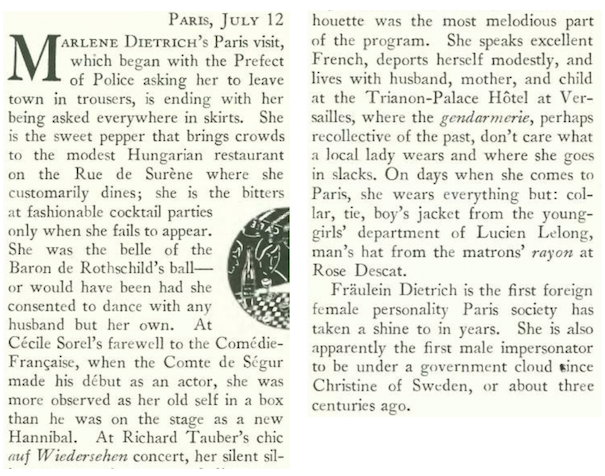
It’s hard to fathom that a woman wearing trousers used to cause such a stir, but for international film star Marlene Dietrich it was an opportunity for the publicity that invariably came with defying the norms of fashion and sexuality in 1930s.

July 22, 1933 cover by Constantin Alajalov.

In May 1933 Dietrich was headed to Paris on a steamer, relaxing on the deck in a white pantsuit. Prior to her arrival, the Paris chief of police announced she would be arrested if she showed up in pants. However when Dietrich arrived at the Gare Saint Lazare wearing a man’s suit and overcoat, she stepped off the train, grabbed the chief of police by his arm, and walked him off the platform.

The New Yorker’s Janet Flanner reported on Dietrich’s comings and goings in her regular column “Letter From Paris”…

TAKING PARIS BY STORM…Clockwise, from top left: Marlene Dietrich in Paris, 1933, accompanied by her husband, Rudolf Sieber; Dietrich on the SS Europa, Cherbourg, France, May 1933; Dietrich arriving at the Gare Saint Lazare station, May 20, 1933 (this photo is often paired with an erroneous caption claiming that Dietrich is being arrested by French authorities. On the contrary, she owned them the moment she stepped onto the platform); Dietrich signing autographs in Paris, 1933. (bygonely.com/Smithsonian/Twitter/Pinterest)

 * * *

Bullish On Office Space

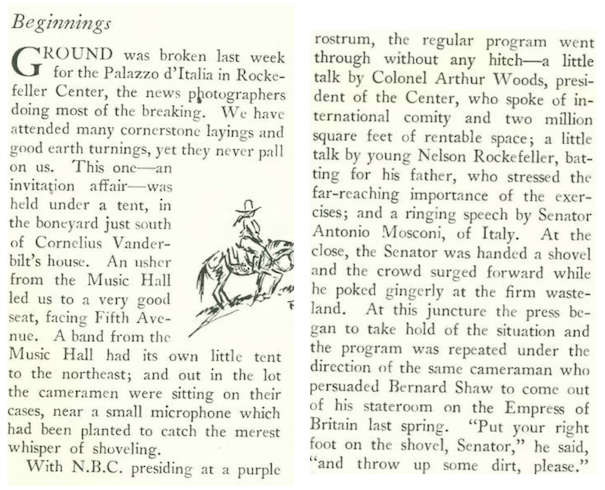
Despite the Depression, millions of square feet of office space were being added to the massive Rockefeller Center complex, including the Palazzo d’Italia at 626 Fifth Avenue. “The Talk of the Town” reported:

THE BIG SHORT…Attached to the International Building at its northwest corner, the Palazzo d’Italia was originally planned as a nine-story building, a fact that impressed the fascist Italian leader Benito Mussolini because it beat the six-story height of the French and British Buildings. In the end Benito only got six as well. (Wikipedia/Pinterest)

* * *

Urban Jungle

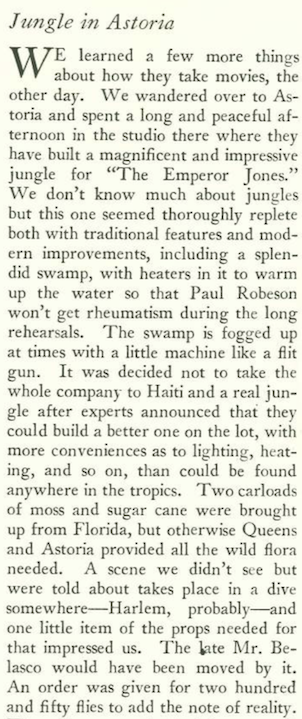
Astoria Studios in Queens was built in 1920 for Famous Players-Lasky and is still home to New York City’s only studio backlot. In 1933 it served as a tropical setting for The Emperor Jones, featuring Paul Robeson in the title role. “The Talk of the Town” looked in on the movie’s faux jungle:

35TH STREET JUNGLE…Paul Robeson in a scene from The Emperor Jones. (flickr.com)

Loosely based on a Eugene O’Neill play and financed with private money, the film was made outside of the Hollywood studio system and distributed by United Artists.

EMPEROR’S NEW CLOTHES…Brutus Jones (Robeson) schemes with colonial trader Smithers (Dudley Digges) on his plan to become emperor in The Emperor Jones. (moma.org)

 * * *

From Our Advertisers

Yes, it’s advertising so we don’t expect it to be realistic, but I can guarantee no one is going to look like that after a ride to the beach in a rumble seat…also the woman behind the car is either floating or has exceedingly long legs…
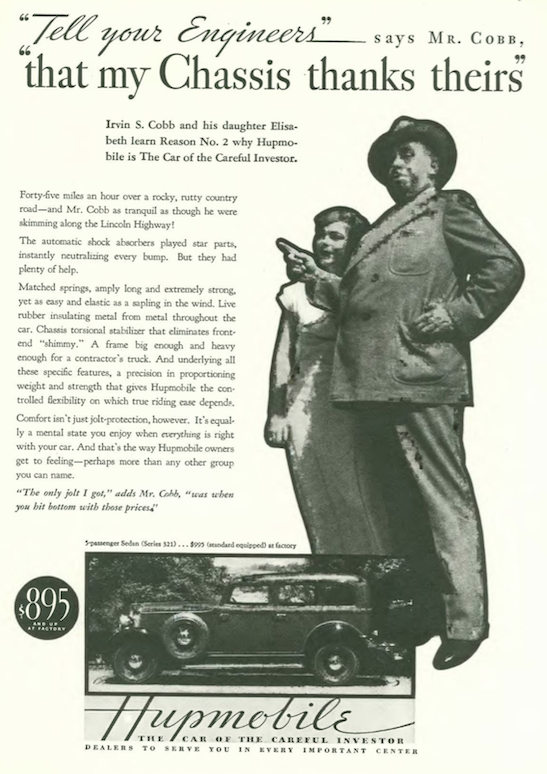
…Hupmobile enlisted humorist Irvin S. Cobb to help boost its sagging sales…
Irvin S. Cobb (1876–1944) wrote for Joseph Pulitzer’s New York World, and was once the highest paid staff reporter in the United States. (carnegiecenterlex.org)

…with the return of legal beer the makers of Budweiser struck a patriotic note in promoting their “King of Bottled Beer” to thirsty New Yorkers…

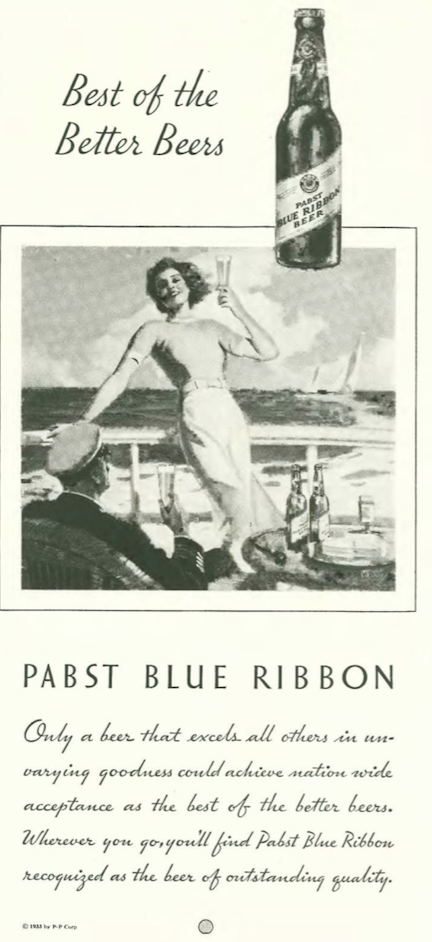
…the makers of Pabst Blue Ribbon claimed the title of “Best of the Better Beers” with this ad featuring a woman who appeared on the verge of going overboard…

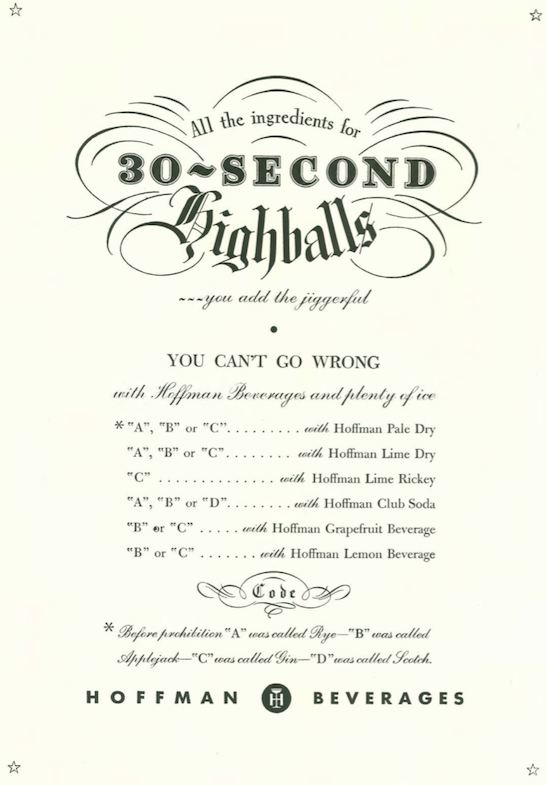
…if beer wasn’t your thing, you could try your hand at mixing a “30-Second Highball” per this Prohibition-themed ad…

…delving into the back pages one finds all sorts of curiosities, including this mail-order “charm school” operated by Margery Wilson

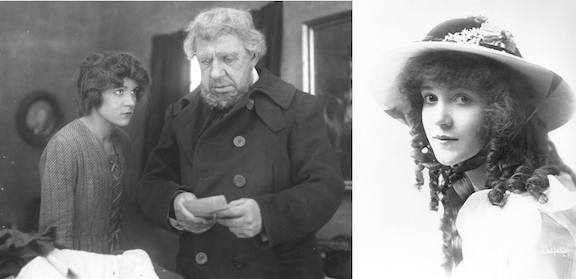
…Wilson (1896–1986) acted in numerous silent pictures (including the 1916 D. W. Griffith epic Intolerance) and in the early 1920s was a writer, director and producer…

Margery Wilson in Eye of the Night (1916). She was among pioneering women filmmakers of the 1920s. (columbia.edu))

…it must have been a hot summer in New York with the abundance of air-conditioner ads…here’s one from Frigidaire for a unit that despite its size (and enormous cost) could cool only one room…

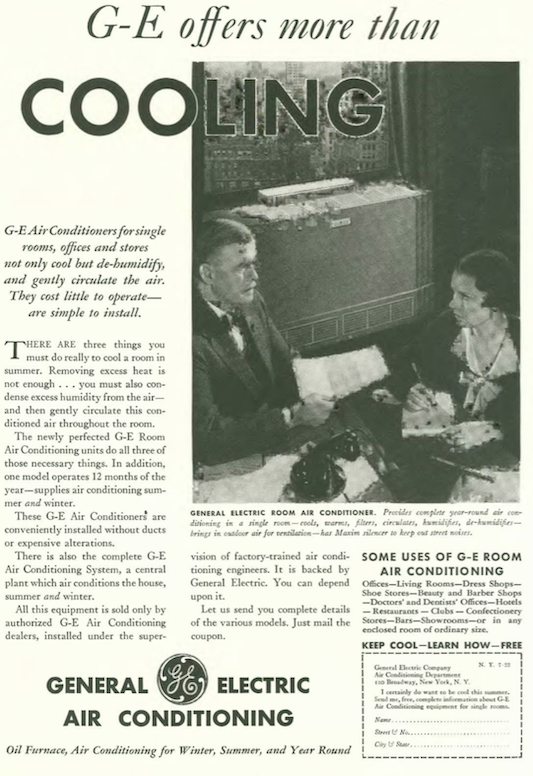
…this next air-conditioner ad from G-E seems poorly conceived…you would think an air-conditioned office would make the boss and his secretary a bit happier than they appear here…maybe they just got the bill from General Electric…

…we begin our cartoons with another pair of sourpusses, courtesy Mary Petty

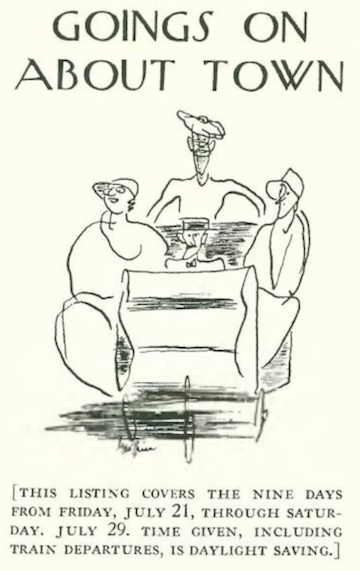
George Price offered up this bit of art for the opening pages…

William Steig headed to the country to escape summer in the city…

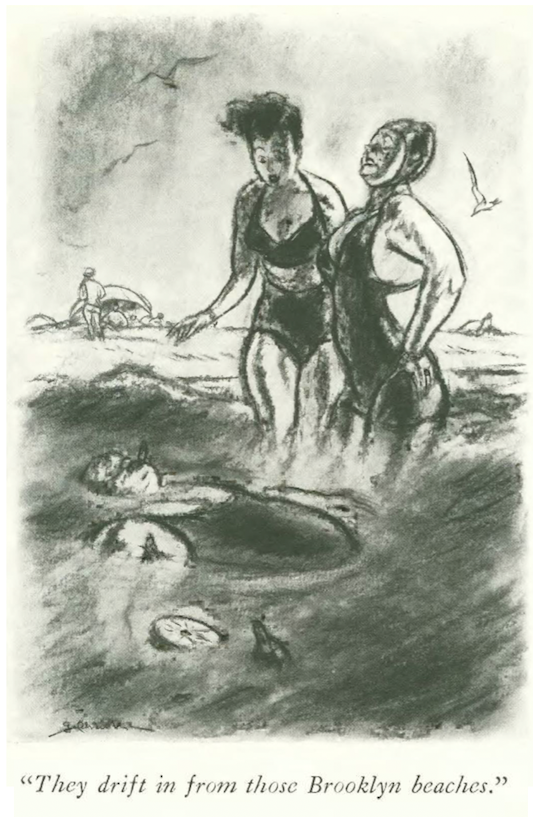
William Crawford Galbraith’s bathers kept cool by examining the flotsam from distant shores…

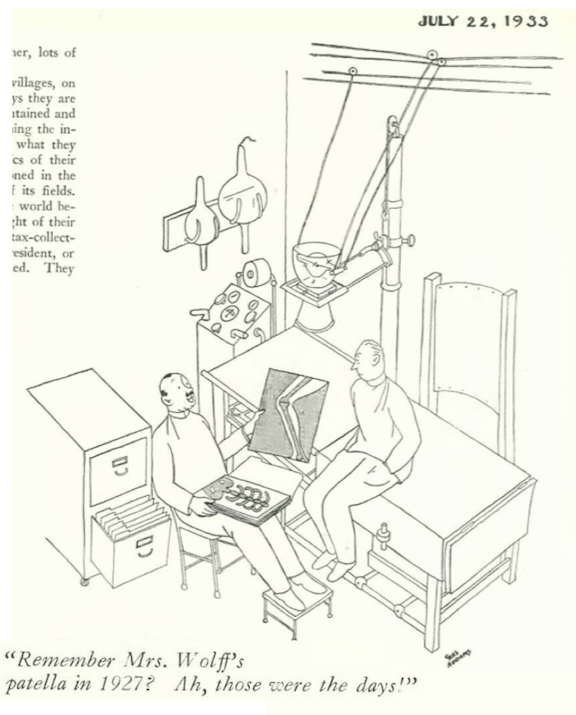
Charles Addams explored various themes before he launched his “Addams Family” in 1938…

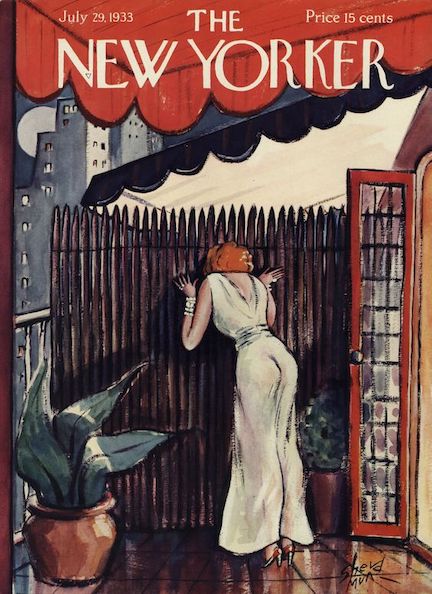
…and we move on to July 29 with a terrific cover by Barbara Shermund

July 29, 1933 cover by Barbara Shermund.

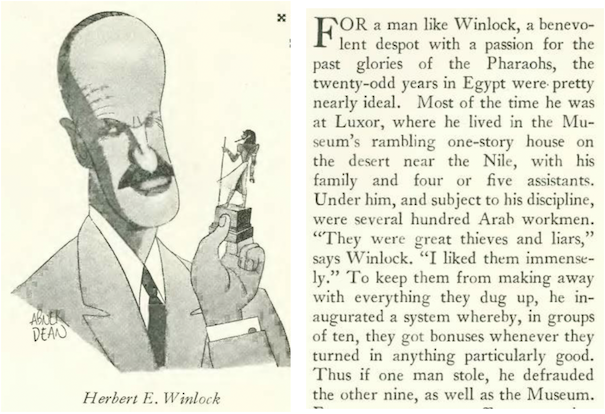
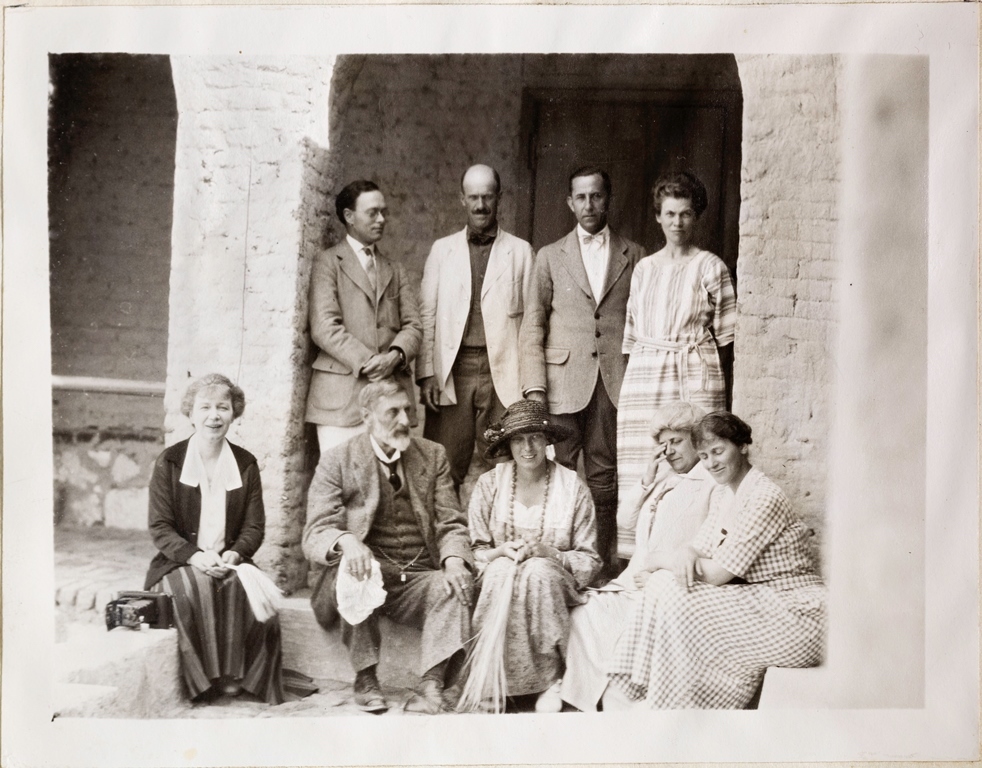
…in this issue Geoffrey T. Hellman penned a profile of Egyptologist Herbert E. Winlock, who made key discoveries about the Middle Kingdom of Egypt and served as director of the Metropolitan Museum from 1932 to 1939, where he was employed his entire career. Excerpt:

CAN YOU DIG IT…Early 1920s photo of the Metropolitan Museum’s Theban expedition team. Herbert E. Winlock is in the back row, second from left. His wife, Helen Chandler Winlock, is in the front row, far right. (Metropolitan Museum of Art)

 * * *

Chilling With U.S. Grant

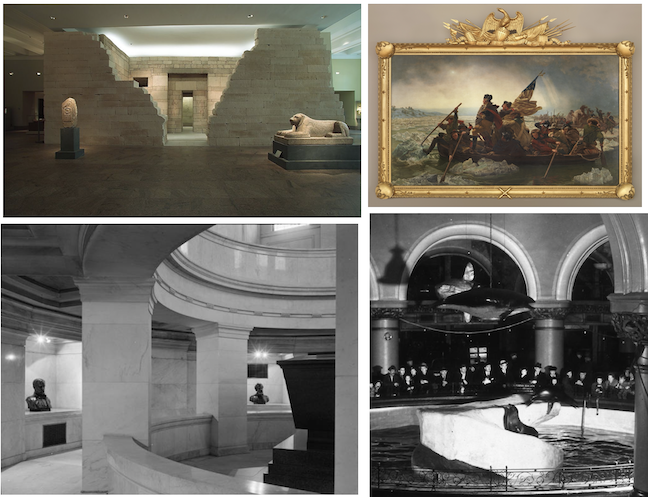
In those days before air-conditioning was widely available or used, “The Talk of the Town” dispatched an investigator to sample indoor temperatures at various public places, finding the coolest spot at Grant’s Tomb:

WHERE THE COOL PEOPLE HANG OUT…Clockwise, from top left: The tomb of Per-neb at the Metropolitan Museum registered a cozy 80 degrees, while in the same museum it was a balmy 84 by Emanuel Leutze’s famed painting Washington Crossing the Delaware; the New York Aquarium in Battery Park was a bit cooler at 79 (pictured is the Sea Lion Pool); while Grant’s Tomb was downright chilly at 70. (Met Museum/Wildlife Conservation Society/grantstomb.org)
 * * *
Node of Gold
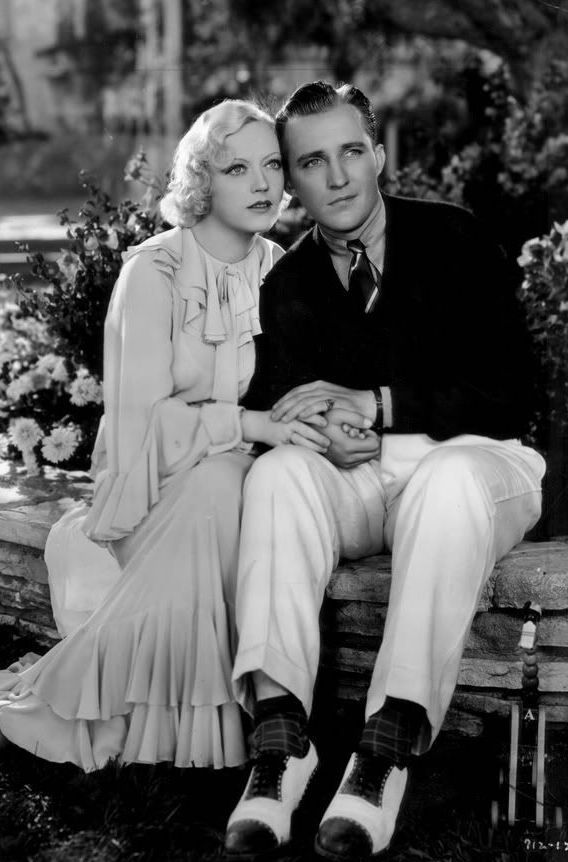
Apparently the famed crooner Bing Crosby had a minor node on one of his vocal cords, and when he consulted a specialist he was advised against removing it, lest he alter his voice in a way that would affect his career. Indeed, the node seemed to add an “appealing timbre” to his signature sound, so Crosby had his voice insured by Lloyd’s of London for $100,000 with a proviso that the node could not be removed. Howard Brubaker made this observation in “Of All Things”…

LUMP IN HIS THROAT…Bing Crosby with Marion Davies in the 1933 film Going Hollywood. (IMDB)

…Brubaker also shared this prescient observation from American astronomer Vesto Slipher

…Slipher (1875–1969) would live long enough to confirm his statement…the first full-disk “true color” picture of the Earth was captured by a U.S. Department of Defense satellite in September 1967:

(USAF/Johns Hopkins University)

 * * *

More From Our Advertisers

This ad was on the inside front cover of the July 29 issue, a rather jarring image following that lovely Barbara Shermund cover…

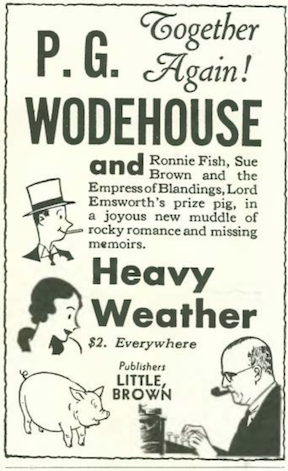
…the hugely popular P.G. Wodehouse was back with more silly antics from the British upper classes…

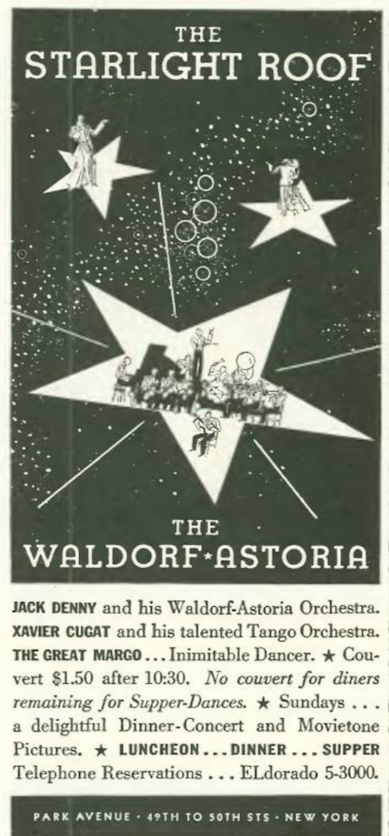
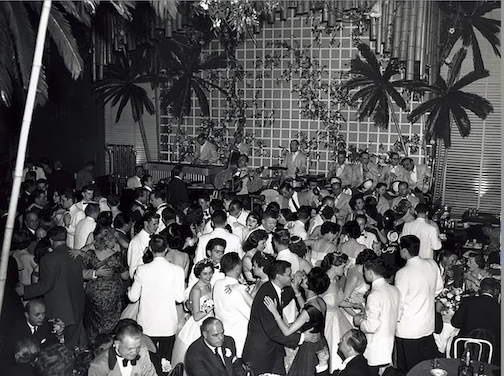
…while some New Yorkers could take a break from their reading and hit the dance floor atop the Waldorf-Astoria…

…and tango to the stylings of bandleader Xavier Cugat

Xavier Cugat and band atop the Waldorf-Astoria. (cntraveler.com)

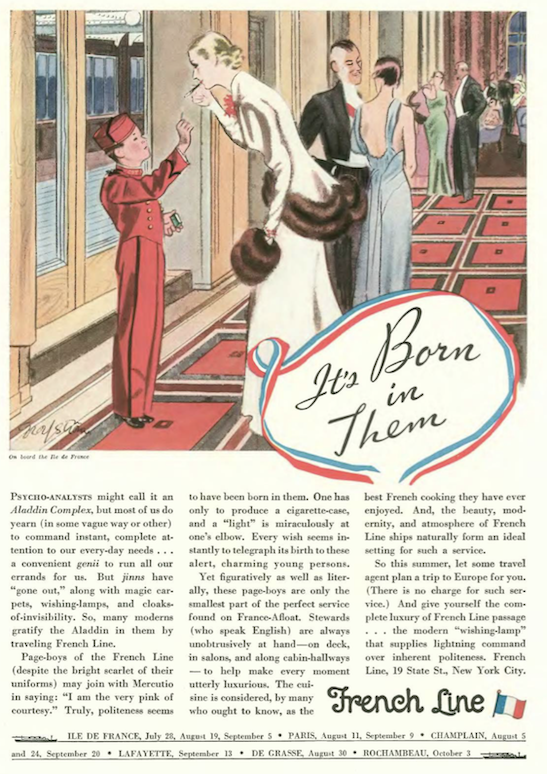
…this ad for the French Line, illustrated by Ruth Sigrid Grafstrom, offered a precious scene of a page-boy lighting a woman’s cigarette, a sight unimaginable today…

…and we close with a cartoon by Gardner Rea, doggone it…

Next Time: The Flying Season…

Chaplin of the Jungle

In the 1920s and 30s the concept of the documentary film was still in its infancy, and beginning with the silent Nanook of the North (1922), the idea that a documentary and a drama were separate things was unknown to filmmakers.

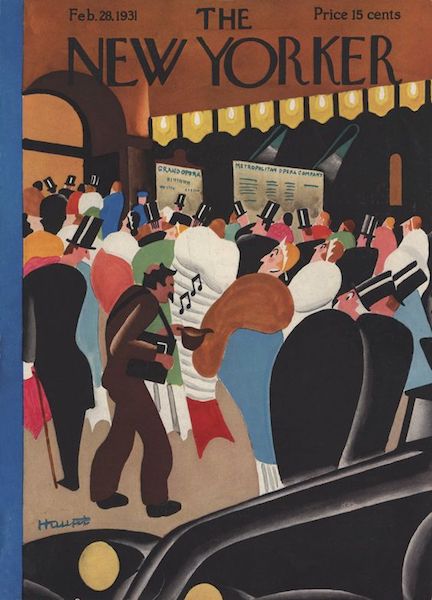
Feb. 28, 1930 cover by Theodore Haupt.

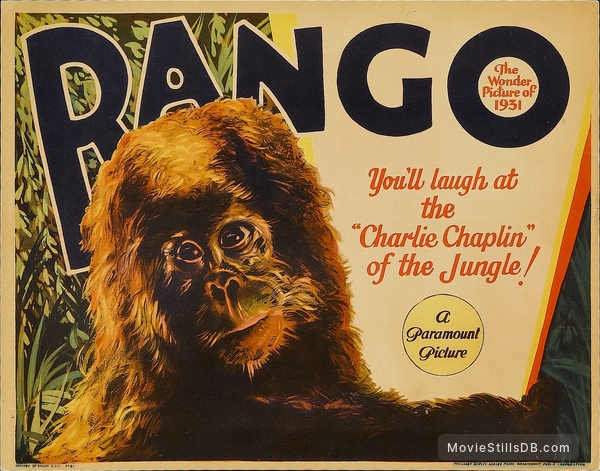
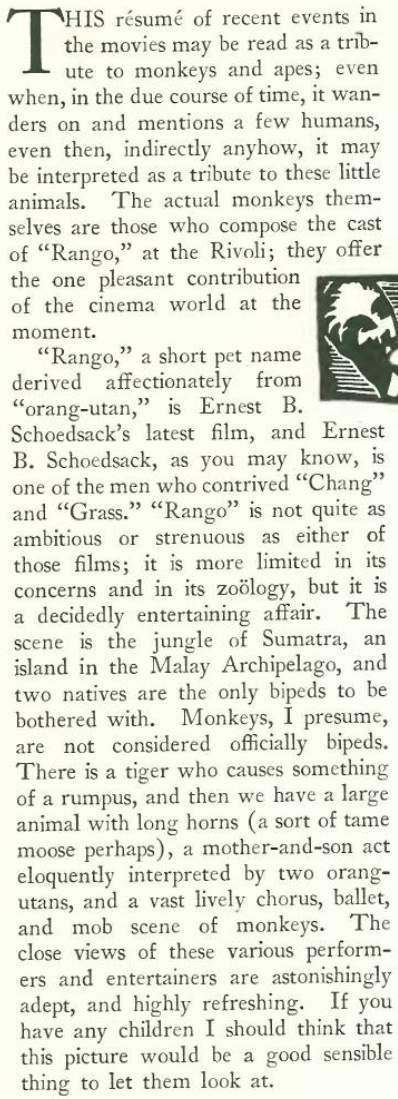
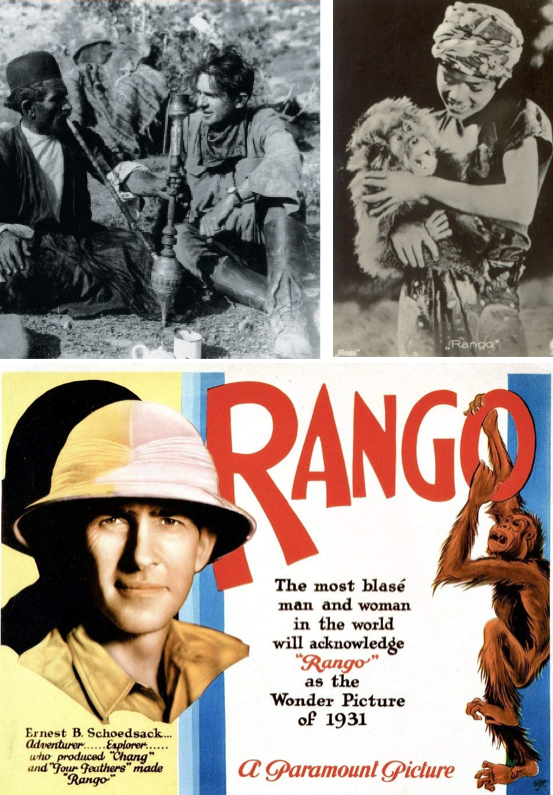
What was known, however, was the box office appeal of films that explored unknown and exotic lands, like Ernest B. Schoedsack’s 1927 blockbuster Chang, which featured a mix of staged events as well as the actual slaughter of wild animals. Audiences (and most critics) seemed little troubled that these films were a mix of fact and fiction. It was a movie, after all, and movies followed a story arc, and they had drama, and sometimes comedy. And so when Schoedsack (1893-1979) introduced audiences to an orangutan named Rango, publicists described the simian star as the “Charlie Chaplin of the Jungle.” The New Yorker’s John Mosher found the performances of the various apes “astonishingly adept”…

MONKEY BUSINESS…Clockwise, from top left, the Iowa-born Ernest B. Schoedsack cut his filmmaking teeth as a producer/director of quasi-documentaries, beginning with 1925’s Grass, which followed a caravan from Angora to Persia; a young Sumatran boy, Bin, bonds with the orangutan Rango; promotional theater card for the film. (filmaffinity.com)
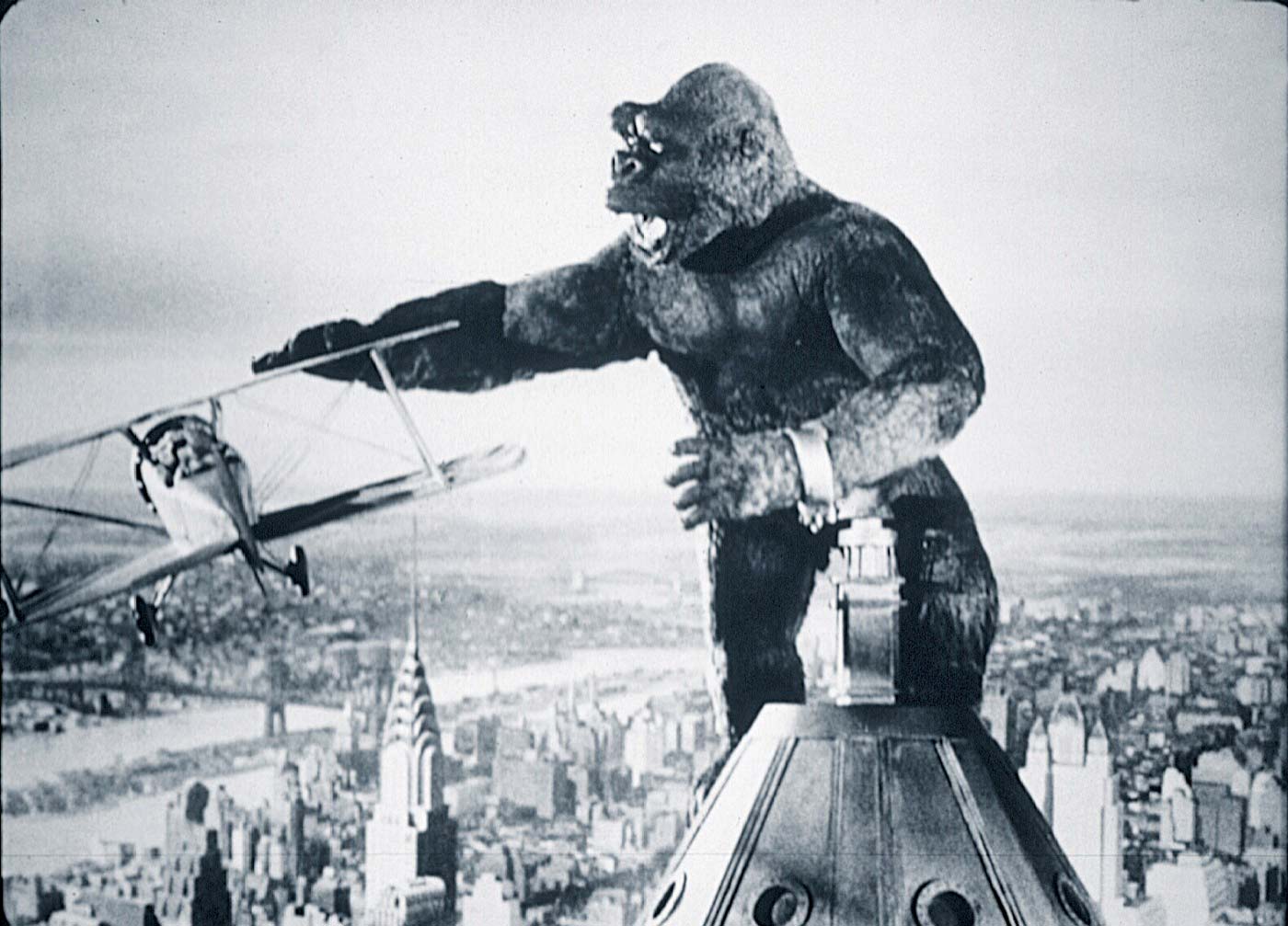
NOT SO CUDDLY…Two years after Rango, Ernest B. Schoedsack would co-produce and co-direct 1933’s King Kong, with Merian C. Cooper. (Britannica)

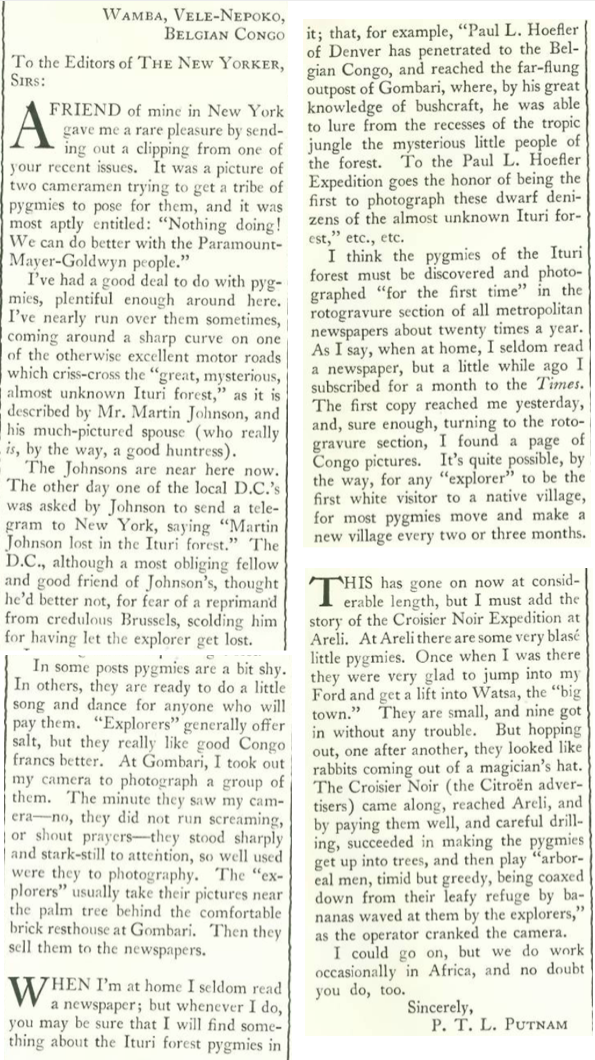
If interpretations of tropical life weren’t accurate in 1931, it wasn’t completely due to filmmakers taking dramatic license. Attitudes toward “exotic” lands and people commonly ranged from naively paternalistic to downright racist. In a letter to The New Yorker, Patrick T.L. Putnam (1904-1953) is decidedly of the former, portraying Congo pygmies as clever, amusing children who hoodwink unsuspecting “explorers”…

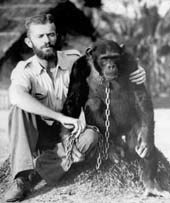
To Putnam’s credit, he showed a genuine interest (and respect for) in the lives of tribal peoples, and particularly the Mbuti of the Congo’s Ituri Forest. He remained in the Congo for the rest of his life. This thumbnail is the only photo I could find of Putnam:

(geni.com)

 *  *  *

Big Bill Turns Pro

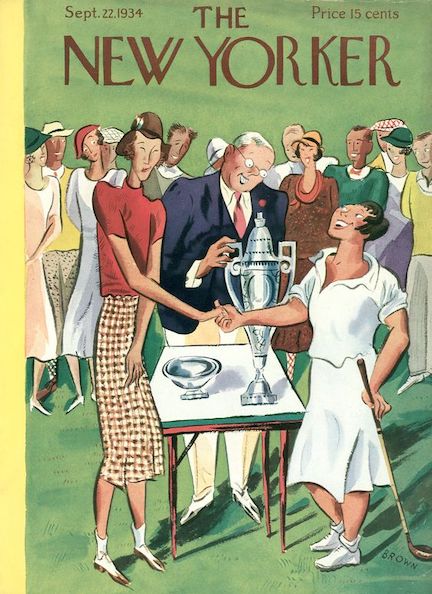
In first decades of the 20th century it was still widely believed that athletic competition should be for its own sake rather than as a means for making money, so many top stars competed as amateurs. Professional golf wasn’t established until 1916, and professional leagues in basketball and football first formed in the 1920s. Amateur status was especially prized in tennis — before the “Open Era” began in 1968, only amateurs were allowed to compete in Grand Slam tournaments.

Sports promoter C. C. Pyle established the first professional tennis tour in 1926 with American and French stars playing exhibition matches in front of paying audiences. According to The New Yorker’s John Tunis, many in the crowd were finely dressed, with men in top hats and women turned out in the latest high fashion.

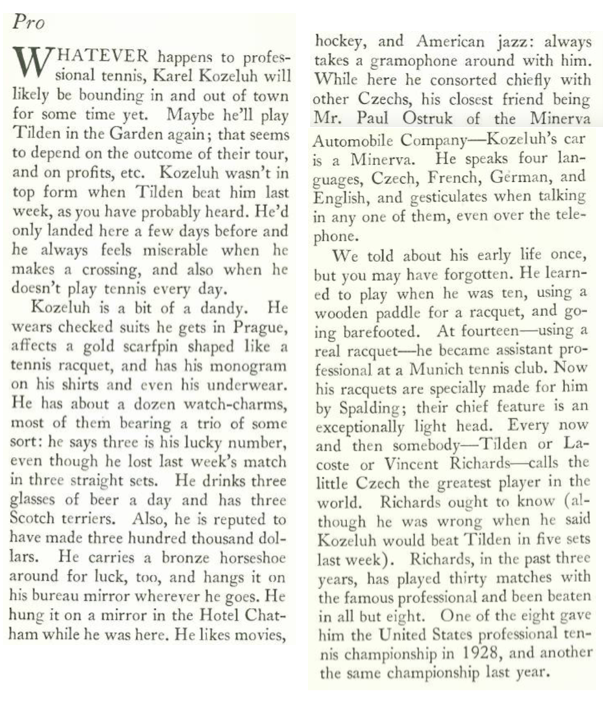
America’s top draw was “Big Bill” Tilden, the world’s number one player from 1920 to 1925 and the first American to win Wimbledon. It caused quite a stir when Tilden went pro on Dec. 31, 1930. He barnstormed across the country,  playing one-night stands with a small group of professionals including the top Czech player Karel Koželuh. “The Talk of the Town” had this to say about the fledging game of professional tennis:

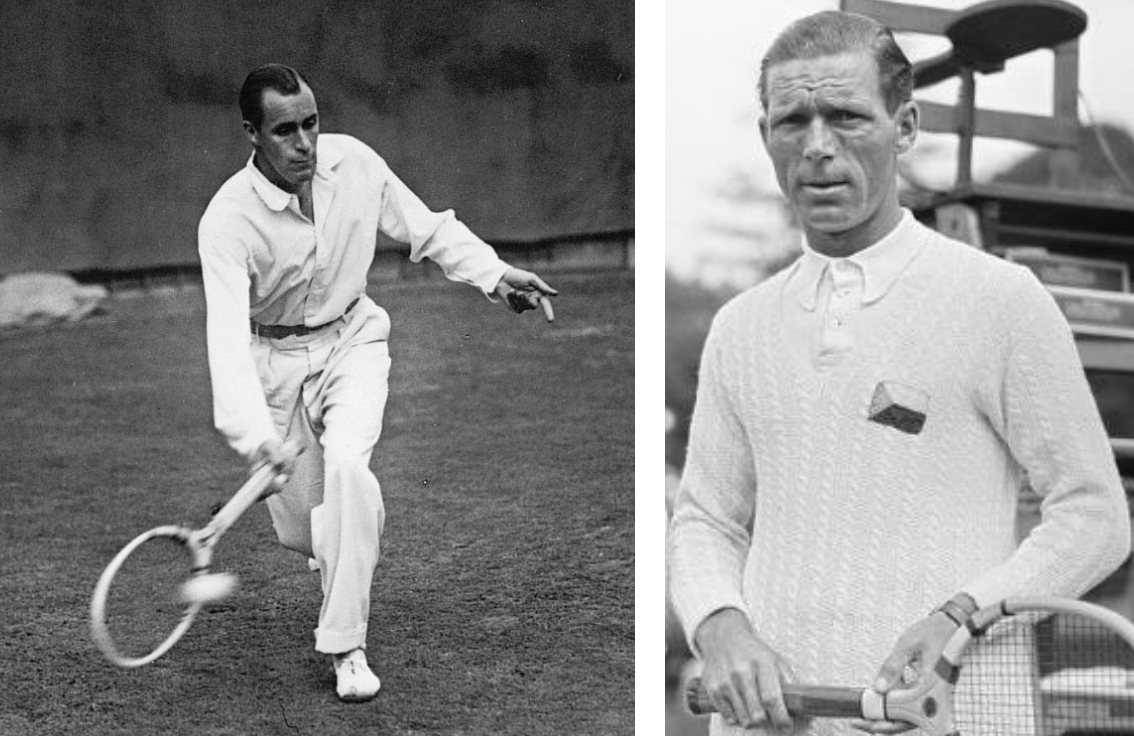
BARNSTORMERS…Bill Tilden (left) and Karel Koželuh toured America and Europe with a handful of other players in a series of exhibition matches in the fledgling professional tennis circuit. (Britannica/cyranos.ch)

In his sports column, John Tunis offered this description of the competitors:

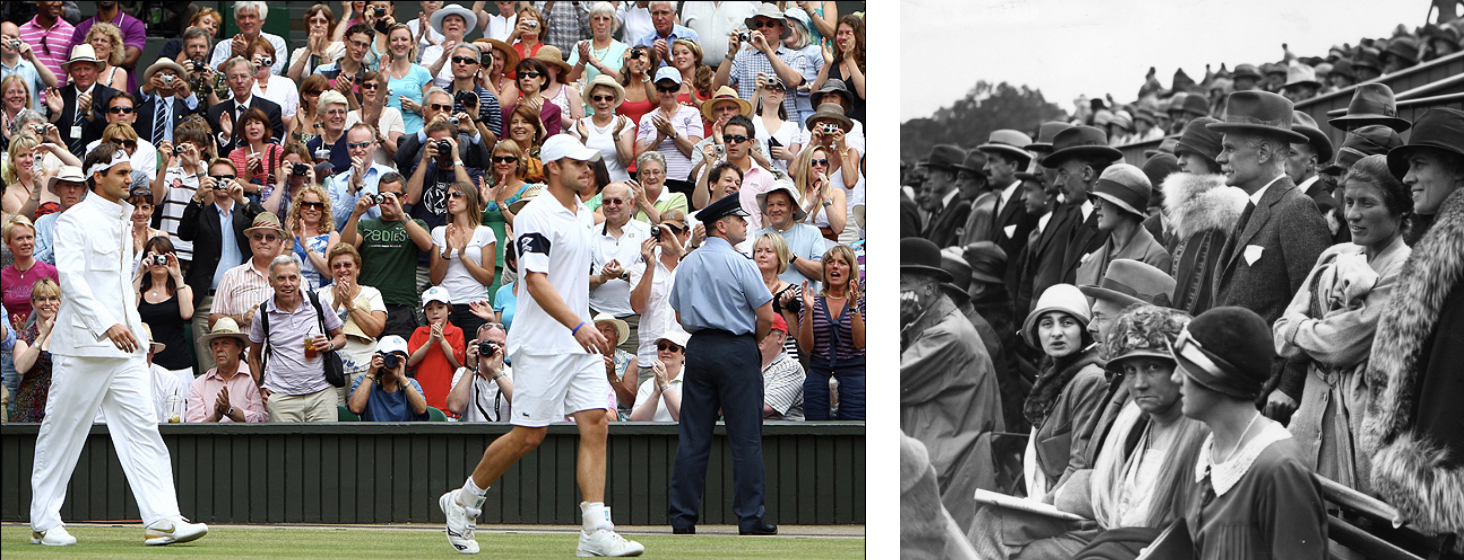
NOW AND THEN…At left, you can still spot a few neckties at Wimbledon as the audience watches Roger Federer and Andy Roddick enter Centre Court in 2009; at right, Wimbledon crowd in 1925. (BBC/Vintage Every Day)

 *  *  *

Triple Tripe

Dorothy Parker continued to sub in the theater column for her friend Robert Benchley, who was traveling abroad. She found little to like on the Great White Way, including three forgettable plays she reviewed in the Feb. 28 issue:

Apparently audiences agreed with Parker’s assessment. The Gang’s All Here closed after just 23 performances, The Great Barrington, after just 16. And Heat Wave was not so hot, closing after a mere 15 performances.

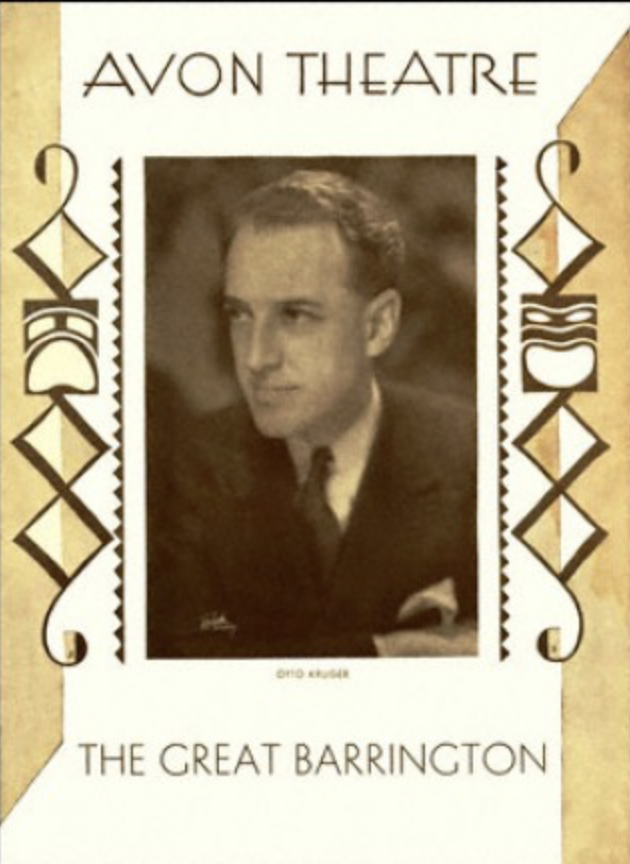
NOT SO GREAT…Program for 1931’s The Great Barrington. It lasted 16 performances. (IBDB)

Parker once again closed the column with a plea to her dear friend:

 *  *  *

To Swash No More

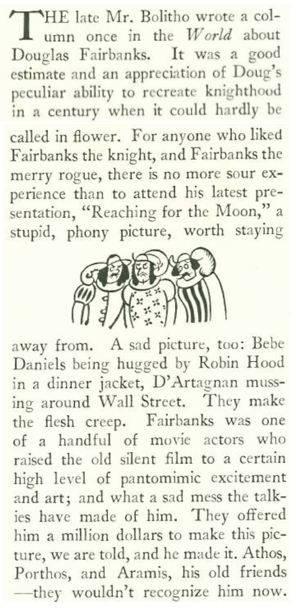
In his “Notes and Comment,” E.B. White lamented the end of Douglas Fairbanks as the swashbuckler of the silents, and rejected the talkie version of the actor in Reaching for the Moon, a film in which Fairbanks portrayed Larry Day, a Wall Street millionaire who later loses his fortune in the 1929 stock market crash.

KEEP YOUR SHIRT ON, DOUG…From left, Douglas Fairbanks in the silent era’s The Thief of Bagdad (1924); Fairbanks on an ocean cruise with Bebe Daniels in Reaching for the Moon. The 47-year-old Fairbanks was still fit enough to pose shirtless, but E.B. White wasn’t having any of it. Despite his fit appearance, Fairbanks would die of a heart attack at the end of the decade. (IMDB)

The film today is perhaps best known for its sumptuous Art Deco sets…

(IMDB)

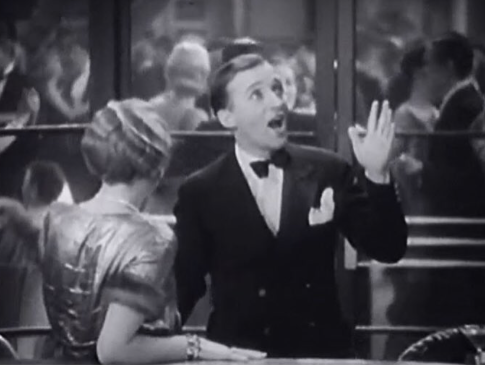
…and for one of Bing Crosby’s earliest film appearances. Reaching for the Moon was originally intended to be a musical featuring numbers by Irving Berlin, however Berlin found director Edmund Goulding difficult to work with, so only one of the original five songs recorded for the film was used, “When the Folks High Up Do the Mean Low Down,” sung by Crosby. It was filmed late at night after he had completed his gig at the Cocoanut Grove.

SINGING WITH BA-BA-BEBE…A young Bing Crosby sings “When the Folks High Up Do the Mean Low Down” with Bebe Daniels in Reaching for the Moon. (IMDB)

 *  *  *

Modern Living

E.B. White also commented on the modern world’s reliance on electric appliances, a habit a mere decade in the making since the gadgets he lists below did not exist before the 1920s:

ELECTRIC SURGE…Prior to the 1920s none of these electric appliances existed. By 1931 many homes were dependent upon them — although many country houses would have to wait for the Rural Electrification Administration (1935) and other New Deal programs get electrical service. (Pinterest)

*  *  *

From Our Advertisers

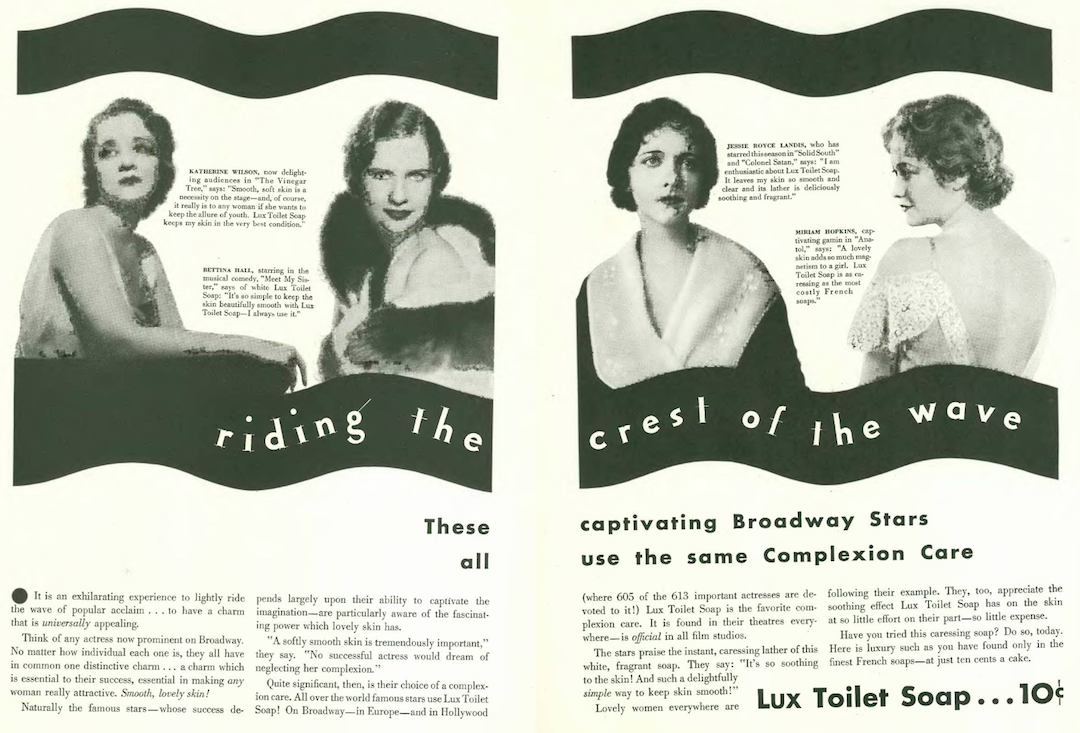
I’ve written before about Lux Toilet Soap’s celebrity-studded ad campaigns, but this two-page ad in the Feb. 28 issue caught my eye because it featured one of my favorite actresses, Jessie Royce Landis

…who appeared in two of my favorite films, both by Alfred Hitchcock: To Catch a Thief (1955) and North by Northwest (1959).

MATERNAL ROLES…Jessie Royce Landis usually played older than she was in real life. Clockwise, from top left, detail of Lux ad; Landis circa 1930; opposite Cary Grant in 1955’s To Catch a Thief; and again with Grant in 1959’s North by Northwest. In the latter film she played Grant’s mother, but in reality she was only seven years older than Grant. (IMDB)

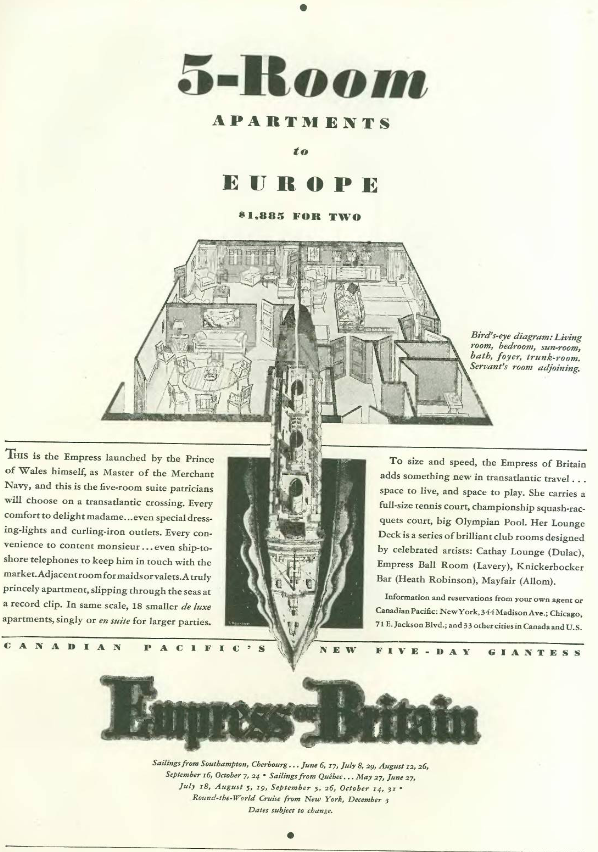
…much of the Douglas Fairbanks/Bebe Daniels film Reaching for the Moon was set on a luxury ocean liner…if the stock market didn’t get you down, you could also afford to travel in style with the Empress of Britain

…or on one of the fine ships of the French Line fleet…

…the Imperial was one of the luxury cars that could get you to the docks…

…among the stranger ads to appear in The New Yorker was this one by the maker of clay plumbing fixtures…

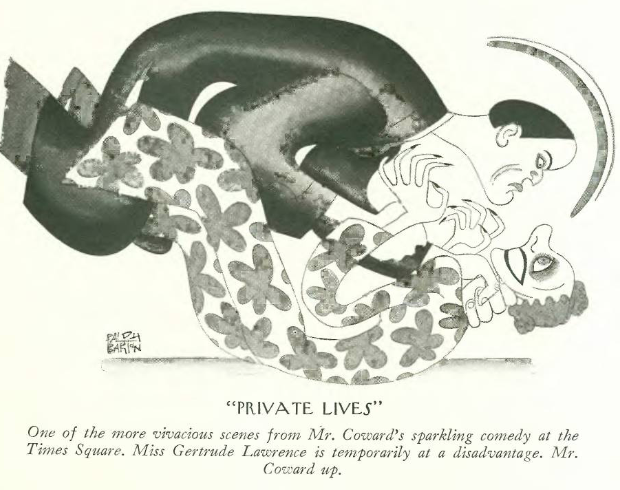
…on to our cartoonists, Ralph Barton returned with this illustration for the theater section…

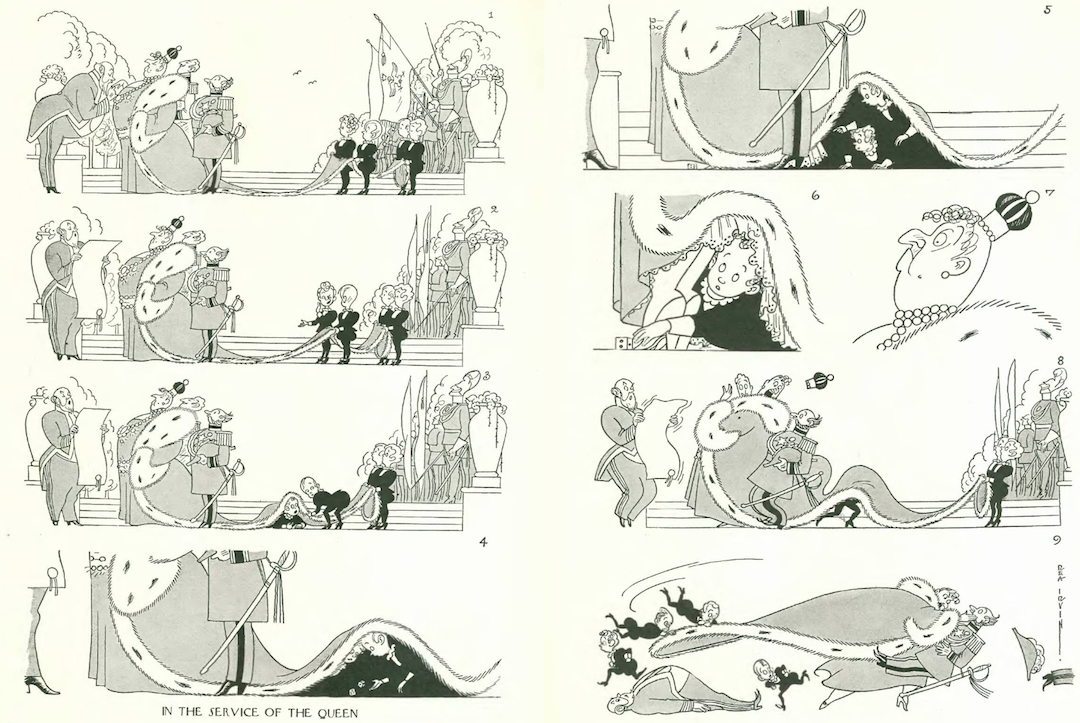
Rea Irvin brought us another of his two-page series cartoons…

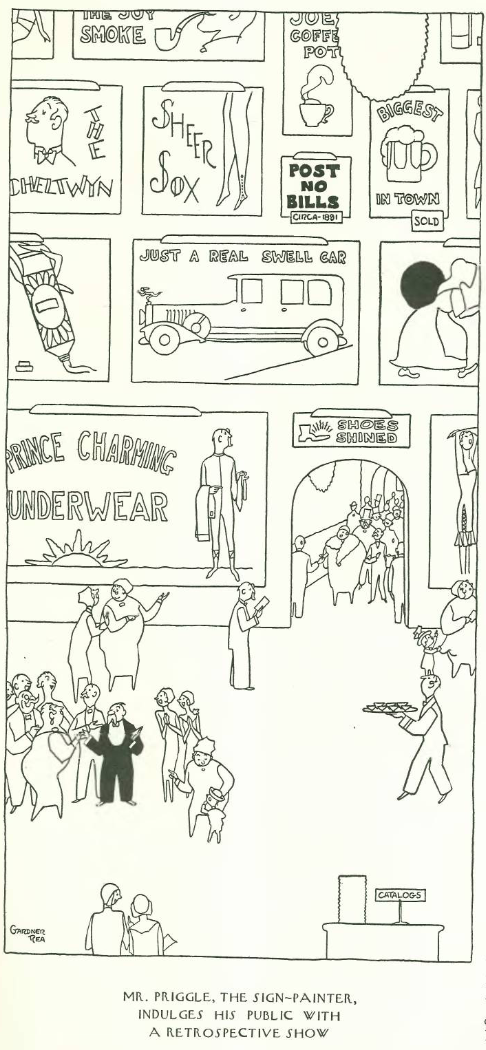
Gardner Rea commented on the state of the art world…

Peter Arno peered in on an unfortunate infant…

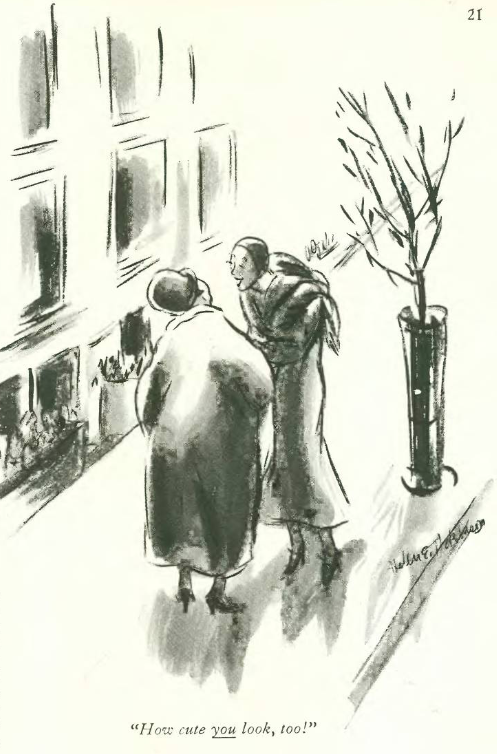
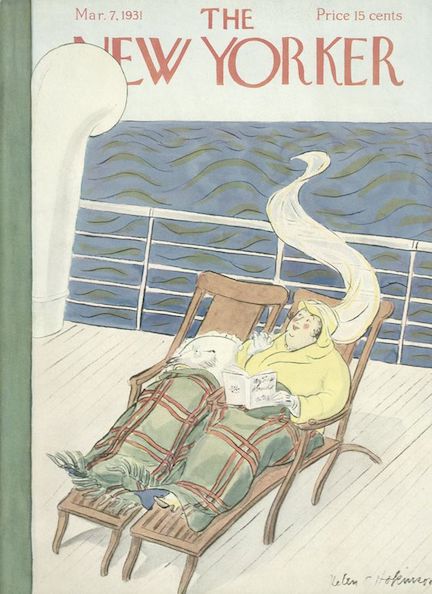
Helen Hokinson gave us this exchange along a city street…

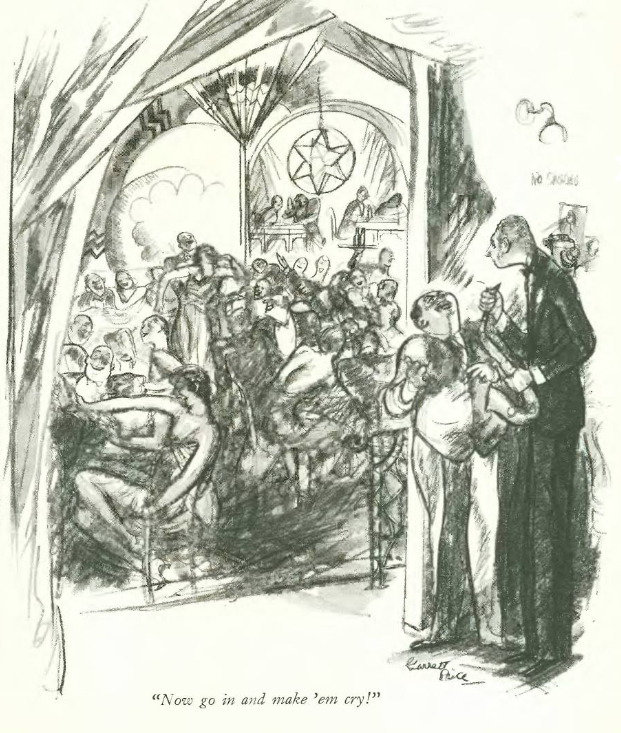
Garrett Price illustrated a tall order for a blues musician…

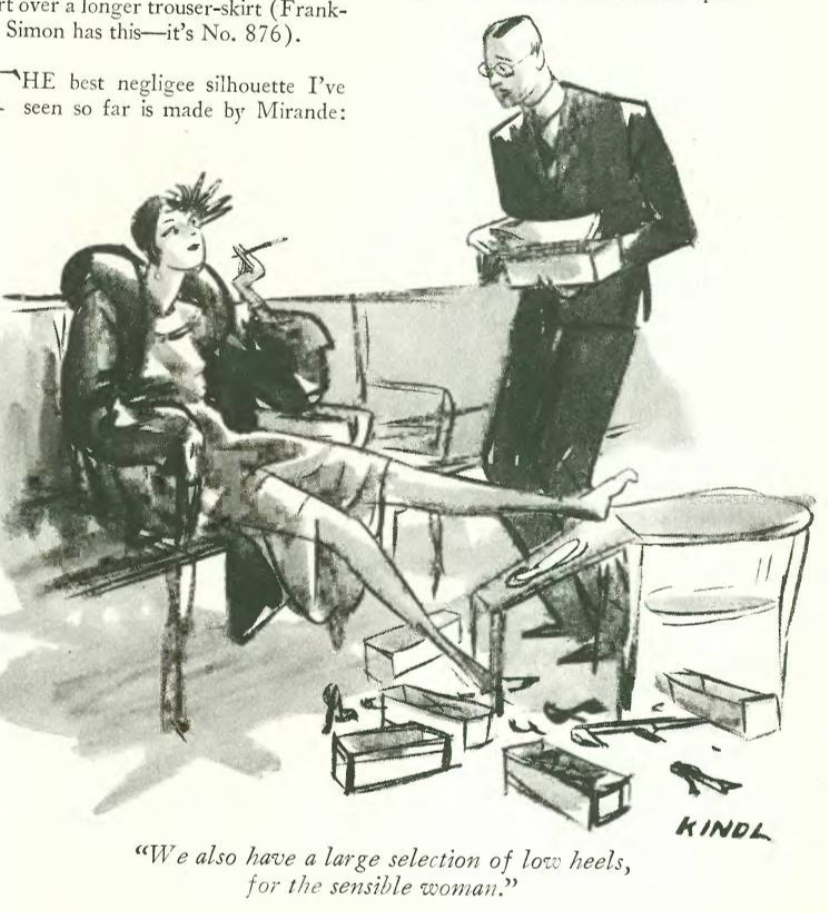
Carl Kindl found clashing styles in the shoe department…

…and James Thurber returned with a prelude to his battle of the sexes…

Next Time: The End of the World…