A Merry Menagerie

It has been a while since we’ve heard from art and design critic Lewis Mumford, who often cast a censorious eye at the rapidly changing world around him.

October 12, 1935 cover by William Steig. From 1930 until his death in 2003 at age 95, Steig contributed 121 covers and 1,676 drawings to The New Yorker.

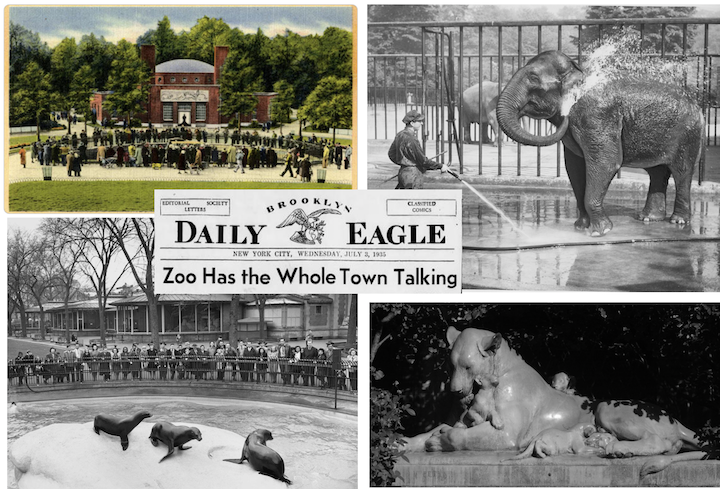
In his column “The Sky Line,” Mumford cast an envious gaze north toward Brooklyn’s Prospect Park Zoo, which he believed had greatly improved upon the recently rebuilt Central Park Zoo.

HE HAD OPINIONS…Lewis Mumford (1895-1990).

Brooklyn’s advantage, according to Mumford, was the superior design of Prospect Park, which offered a better location for a zoo than Central Park. We’ll let Mumford explain in these excerpts:

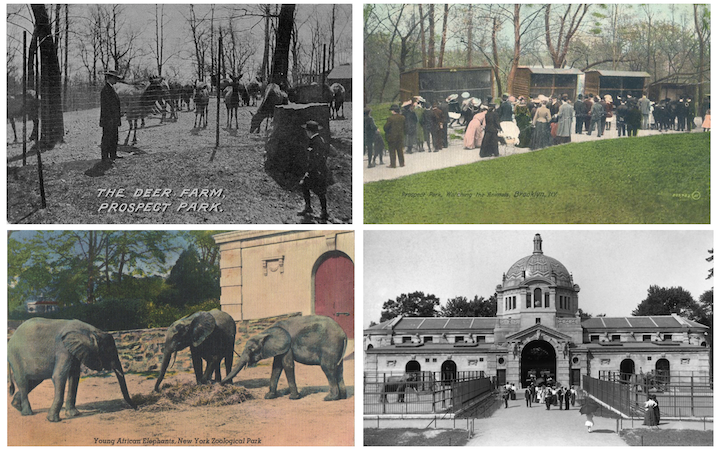
CURIOSITIES, MOSTLY…Clockwise, from top left: Animals were on display at Prospect Park as early as 1866, as seen in this photo of the “Deer Farm”; circa 1900 postcard of Prospect Park’s rather distressing “Menagerie,” which opened around 1890; the park’s Elephant House opened in 1908—modeled after the Hippo Palace at the Antwerp Zoo, the Elephant House also featured rhinoceroses, hippopotamuses, and tapirs; baby elephants (postcard circa 1940s) were a popular attraction until the zoo moved on to smaller creatures in the 1990s. (bklynlibrary.org/untappedcities.com/blog.wcs.org/nycgovparks.org)
LEWIS MUMFORD PRAISED the 1934 plan for the Prospect Park Zoo, designed by architect Aymar Embury II and approved by Parks Commissioner Robert Moses. The zoo was built, in large part, through Civil Works Administration and Works Progress Administration labor and funding. (Brooklyn Public Library)
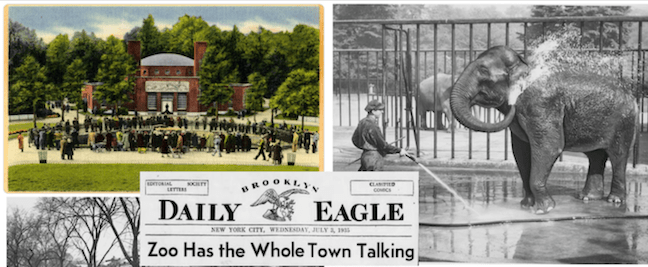
FLATBUSH FAUNA…Clockwise, from top left: Postcard image of Prospect Park Zoo circa 1935; zoo keeper sprays an elephant with a hose, circa 1940; an 1899 bronze sculpture depicting a mother lion nursing her cubs was created by French artist Victor Peter; seal pool, undated photo. (nycgovparks.org/Center for Brooklyn History/Facebook)
CARING OVER CAGES…Prospect Park Zoo today. The zoo closed in 1988 for five-year, $37 million renovation program that, except for the exteriors of the 1930s-era buildings, completely replaced the original zoo. With an emphasis on education and conservation, current exhibits house smaller species rather than elephants, tigers, and lions. (Prospect Park Alliance)

Mumford also looked at the latest developments at Rockefeller Center. As we’ve seen before, he favored smaller-scale developments that were organic and community-focused, and therefore was a strong critic of projects like Rockefeller Center. At its inception he called it a dehumanizing “megamachine,” a product of corporate greed, a “reckless, romantic chaos” that represented the capitalist jungle. Harsh words indeed, so it was something of a surprise to see his approval of the latest piece of the complex—the International Building at 630 Fifth Avenue:

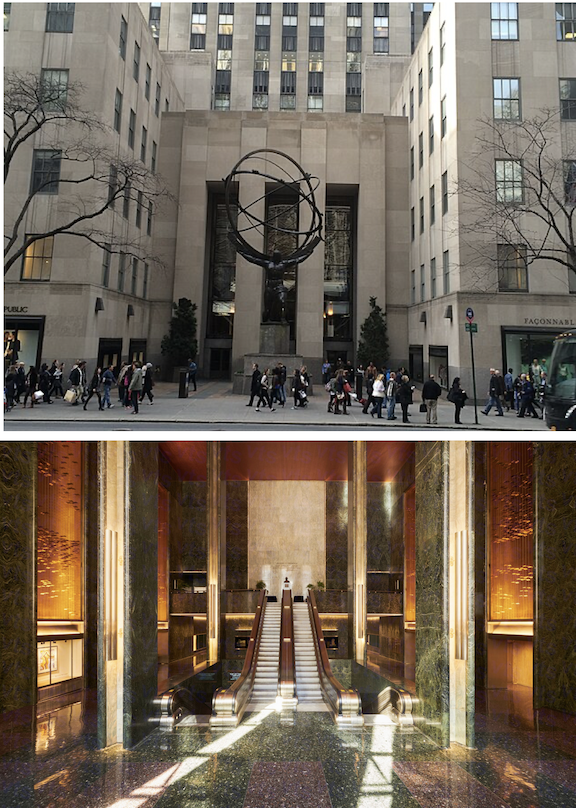
SIMPLE AND CORRECT were the words Lewis Mumford used to describe the interior entrance to 630 Fifth Avenue. (Wikiwand/newyorkoffices.com)

 * * *

Bad Benito

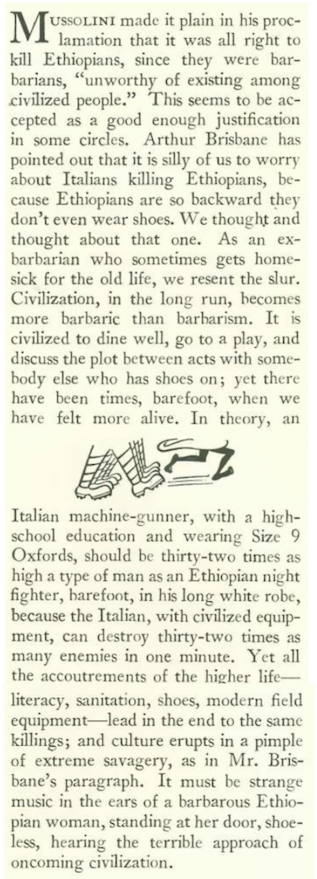
In his “Notes and Comment,” E.B. White had some choice words for the murderous Italian dictator Benito Mussolini and for the newspaper columnist Arthur Brisbane, both unconcerned with the slaughter of “backward” Ethiopians by invading Italian forces:
White also noted the role played by The New Yorker in a new novel by William Farquhar Payson (1876–1939) titled Give Me Tomorrow. Apparently the novel credited the magazine’s unique humor for revealing the banality of an evangelist and delivering a young woman from his clutches…
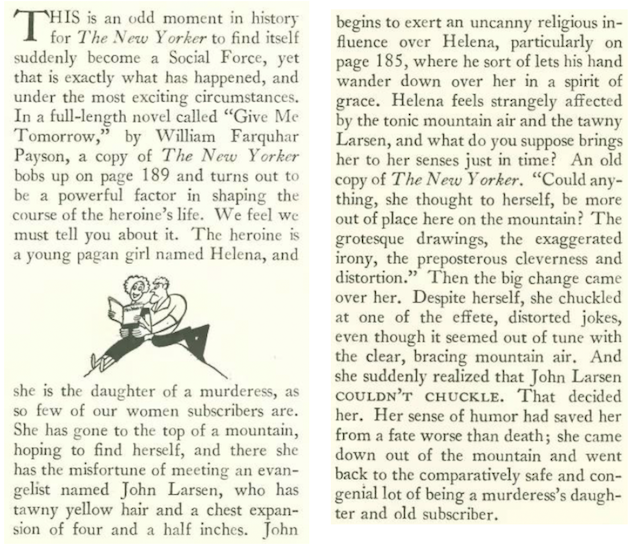
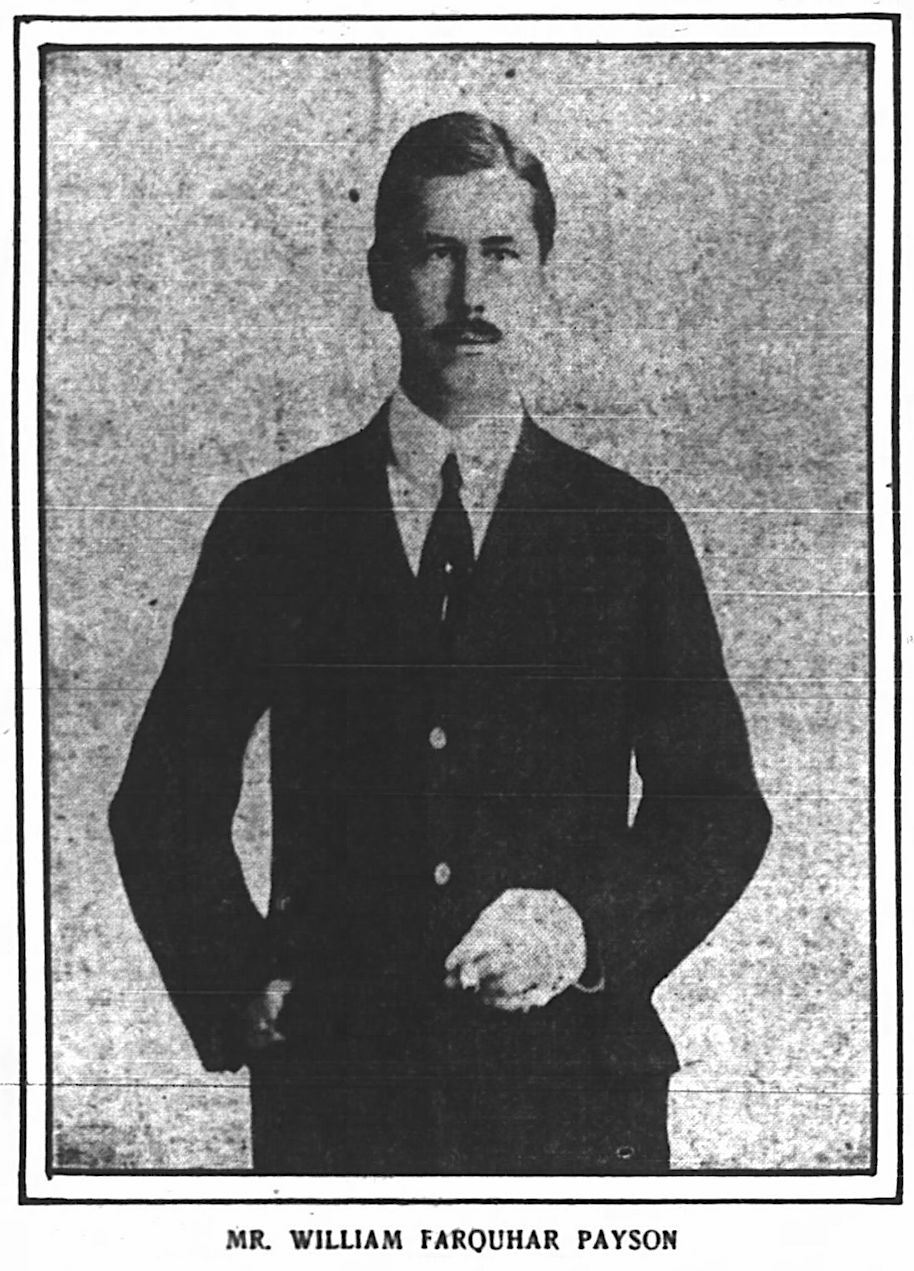
THE NEW YORKER TO THE RESCUE…William Farquhar Payson deployed a copy of the magazine for a pivotal scene in his novel Give Me Tomorrow. (findagrave.com)

 * * *

A Star Is Born

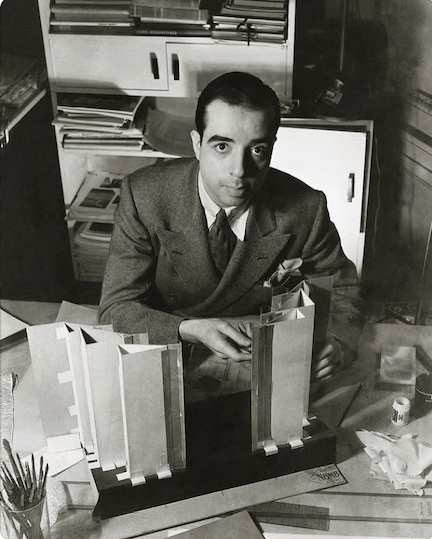
Stage and film director Vincente Minnelli (1903-1986) moved from Chicago to New York in 1931, where he worked as a stage designer for Earl Carroll’s Vanities and costume and set designer for the Ziegfeld Follies before becoming art director at Radio City Music Hall. He got his big break in 1935 when he directed, to critical acclaim, the Broadway musical At Home Abroad. “The Talk of Town” took notice of the rising star (excerpts):
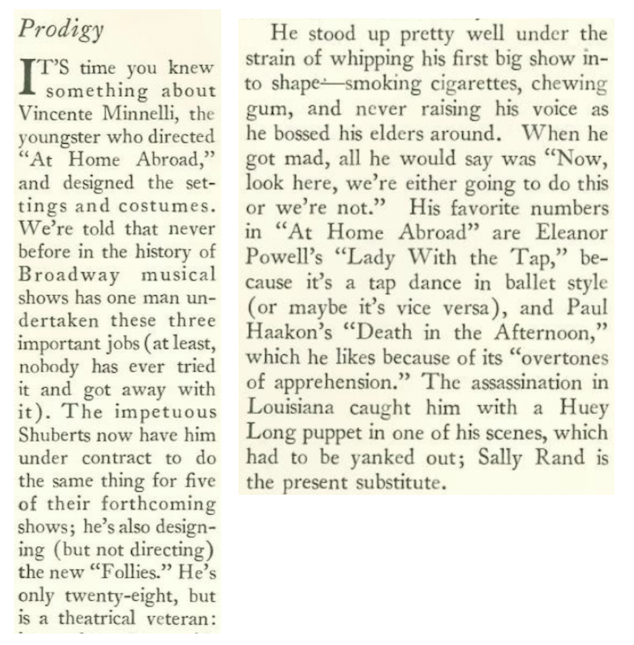
AN EYE FOR DESIGN…Photographer Lusha Nelson photographed Vincente Minnelli at his desk with a miniature stage on Feb. 1, 1936. (James Grissom via threads.com)

 * * *

A Safe Space

Lois Long had mixed feelings regarding the Rockefeller Center’s Rainbow Room, fearing that it was a tourist magnet but also desiring to take in its sumptuous floor shows. In the first excerpt, Long continued her comment on the heated competition she perceived among nightclub owners.

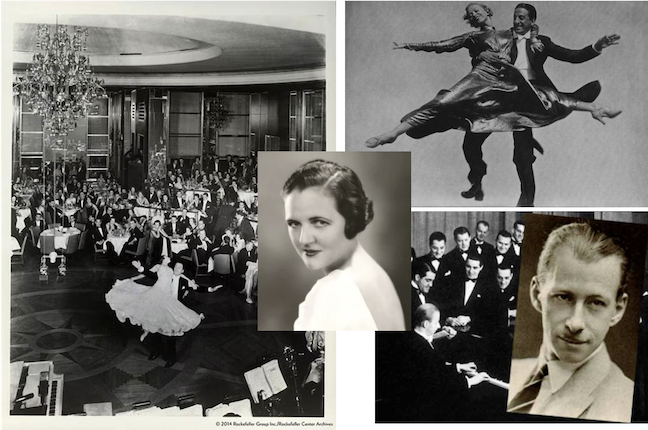
FEAR FACTOR…The entertainment lineup at Rockefeller Center’s Rainbow Room helped Lois Long overcome her fear of encountering tourists. Clockwise, from left, the Rainbow Room in 1934; Ramon and Renita lit up the dance floor (photo from Nov. 1935 Harper’s Bazaar); Ray Noble and his orchestra provided “all-around beauty”; and (inset) cabaret singer Frances Maddox offered her sophisticated warble to the glittering affair. (Rockefeller Center Archives/Pinterest/Shedd Institute)

 * * *

An Untamed Shrew

Theatre critic Wolcott Gibbs had a good time watching Alfred Lunt and Lynn Fontanne take on Shakespeare’s The Taming of the Shrew at the Guild Theatre, especially Lunt’s uproarious take on the play.

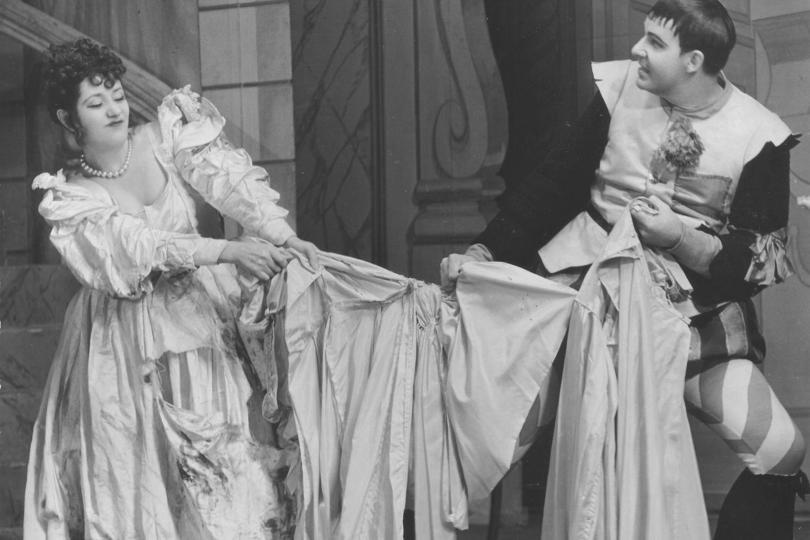
FUN WITH SHAKESPEARE…Alfred Lunt and Lynn Fontanne matched wits in the Theatre Guild’s presentation of The Taming of the Shrew. (minnesotaplaylist.com)

 * * *

At the Movies

Our film critic John Mosher didn’t have much to say about Here’s To Romance, which seemed contrived to introduce the Italian tenor Nino Martini (1905–1976) to a wider audience. To Mosher, the highlight of the film was the appearance of Ernestine Schumann-Heink (1861–1936), the Austrian-American operatic dramatic contralto, who appeared to be having a good time.
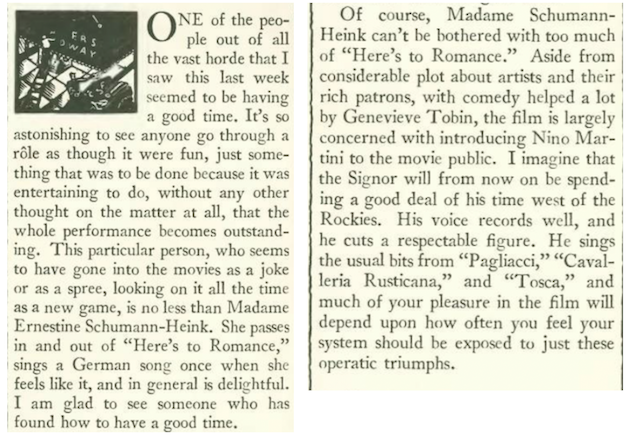
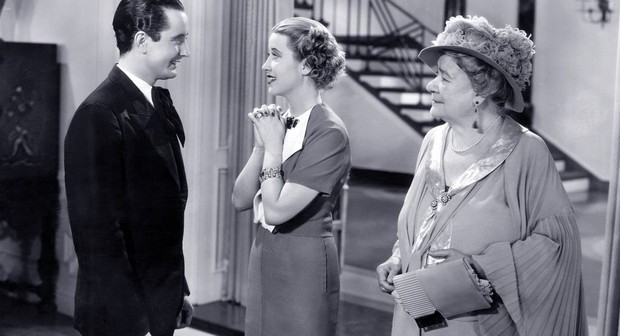
SINGER SANDWICH…Genevieve Tobin (center) stands between tenor Nino Martini and dramatic contralto Ernestine Schumann-Heink in a scene from Here’s to Romance. (rottentomatoes.com)

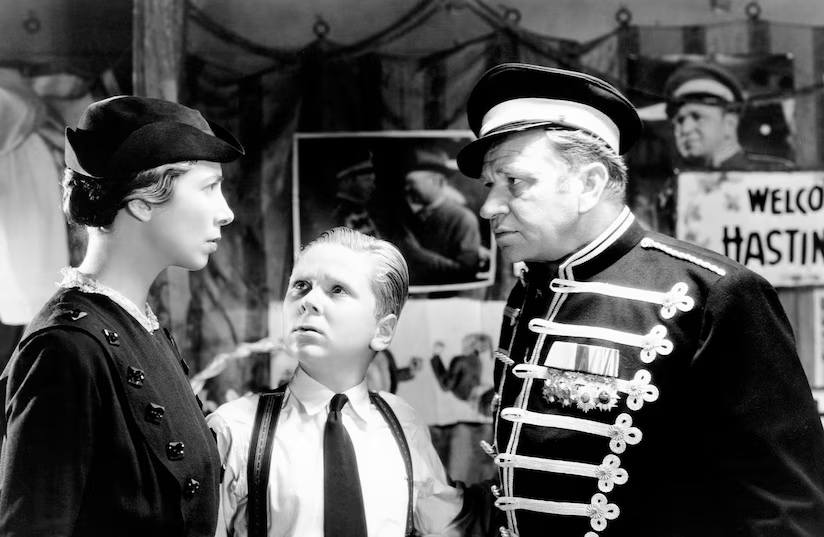
Mosher reviewed two other films that were a bit more dismal: The Last Outpost was a war-themed melodrama starring Cary Grant and Claude Rains; O’Shaughnessy’s Boy featured Wallace Beery as a circus animal trainer who loses his arm as well as his family.

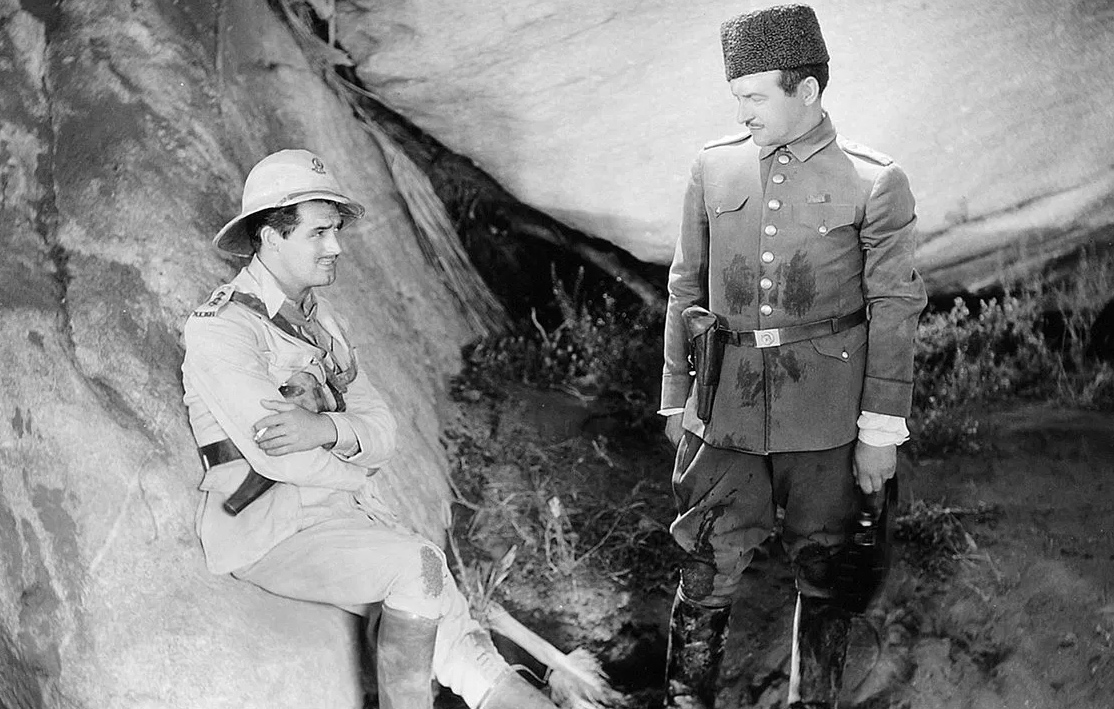
DUELING MUSTACHES…Cary Grant (left) sported a rare mustache in a role opposite Claude Rains in The Last Outpost. (mabumbe.com)
A TOUGH ACT…Sara Haden played a skeptical aunt who sees a one-armed circus animal tamer (Wallace Beery) regain his son (Jackie Cooper) and the confidence he lost along with his wife in O’Shaughnessy’s Boy. (tcm.com)

 * * *

From Our Advertisers

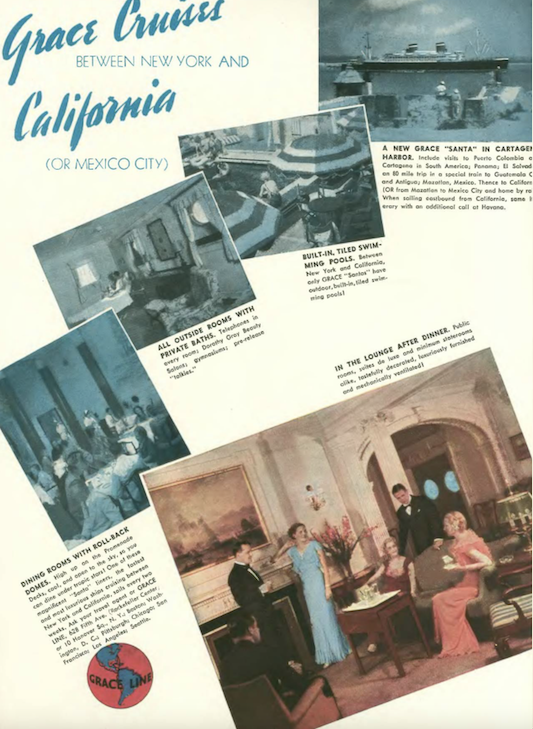
I find these advertisements oddly appealing, because this kind of travel no longer exists. Today there is exactly one ocean liner left in the world—the Queen Mary 2; the cruise ships that rule the 21st century seas are essentially hotel/amusement parks stacked on top of a huge barges…water slides, Vegas-style entertainments, and all-you-can-stuff-into-your-face buffets…
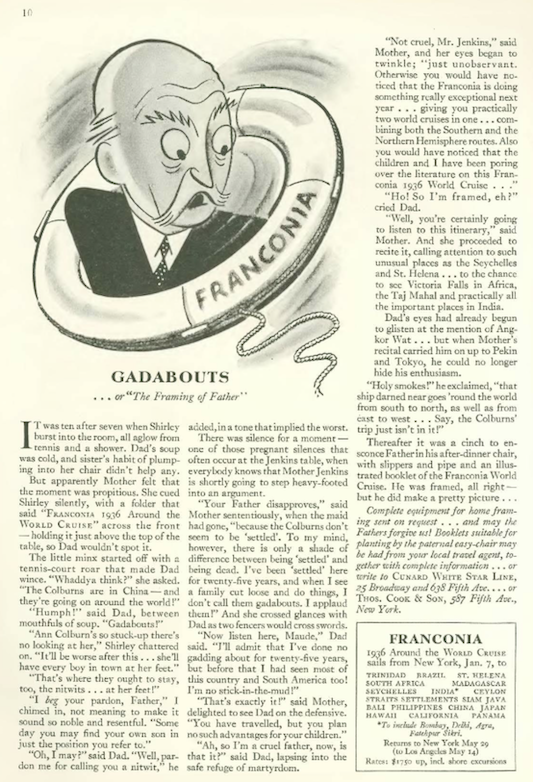
…this curious ad on page 10 mimicked the look of a New Yorker short in the vein of Clarence Day…what it promoted was an around-the-world cruise that would take two-hundred (well-heeled) passengers to more than twenty destinations including Malaysia, Bali and Singapore…
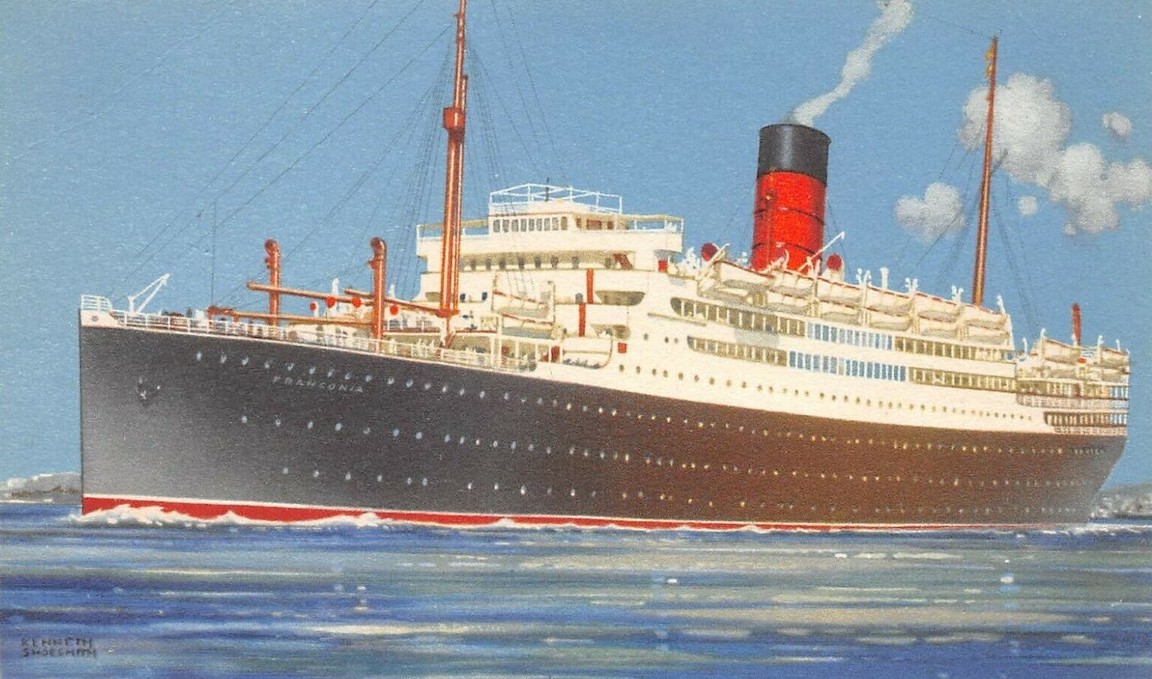
Postcard image of the Franconia. (Pinterest)

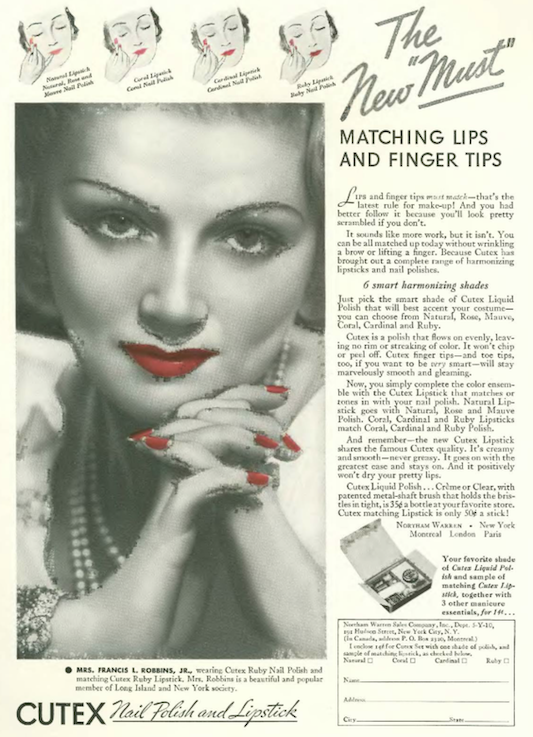
…society women could be counted on to endorse all sorts of things from cigarettes to cold cream…here a “Mrs. Francis L. Robbins, Jr” (I couldn’t find her given name) endorses Cutex nail polish and lipstick…the ad noted that Mrs. Robbins “is a beautiful and popular member of Long Island and New York society”…
…the makers of Spud menthol cigarettes entered the realm of the surreal with a talking cigarette that encouraged chain smoking…

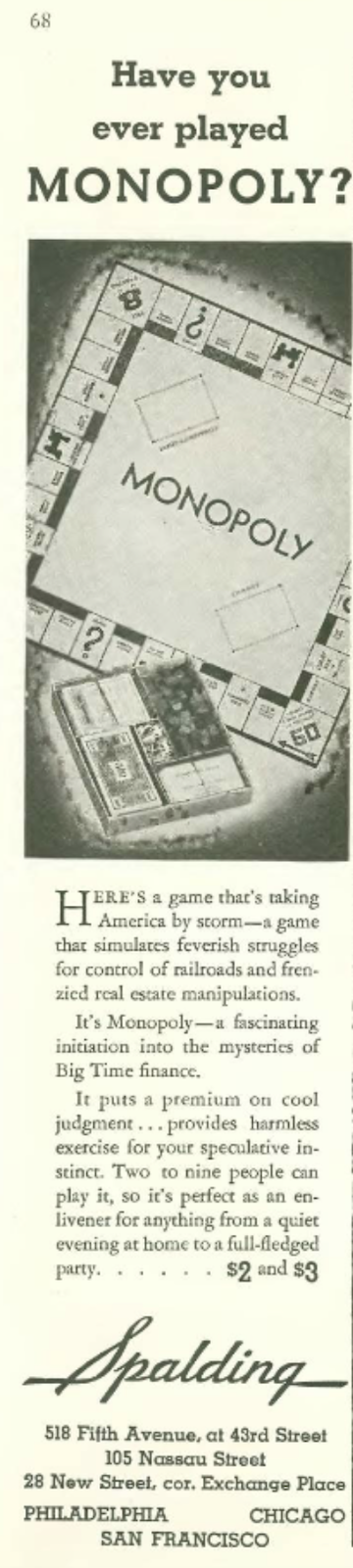
…the board game Monopoly had its origins in The Landlord’s Game, created in 1903 by an anti-monopolist named Lizzie Magie…over the years variants of the game were introduced until Parker Brothers bought the rights from Magie and another inventor and began mass-marketing the game in the fall of 1935…
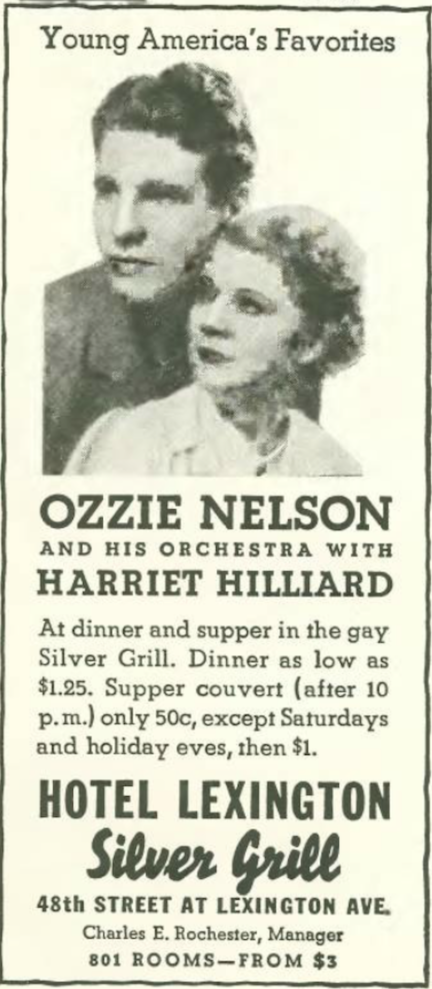
Peggy Lou Snyder was performing in vaudeville when she met the saxophone-playing bandleader Ozzie Nelson in 1932. Nelson hired her to sing with his band (under the name Harriet Hilliard) and then married her three years later…in 1944 the couple would launch a comedy series for radio, The Adventures of Ozzie and Harriet, which made a successful transition to television, appearing on ABC from 1952 to 1966…
…here we have some old-timers offering hunting advice and promoting octane-boosting Ethyl gasoline, which helped prevent engine knock…it also contained the highly toxic additive tetraethyllead, which could cause severe neurological damage, particularly in children…it was completely banned in the U.S. by 1996…

…on to our cartoonists, we start with this delightful spot art by Christina Malman that graced the bottom of the calendar and events page…
Helen Hokinson appeared twice, first at the vet’s…

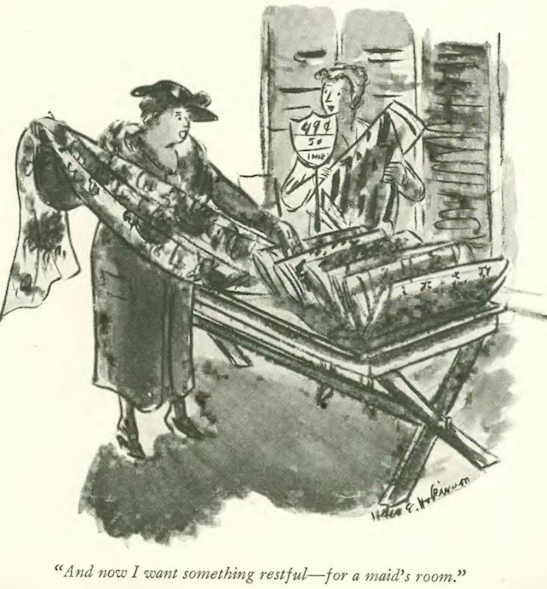
…and later shopping for the maid at a department store…
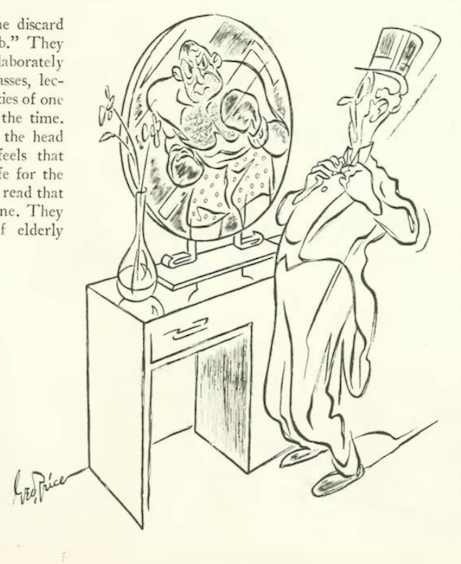
George Price had a surprise in store for this mirror-gazer…
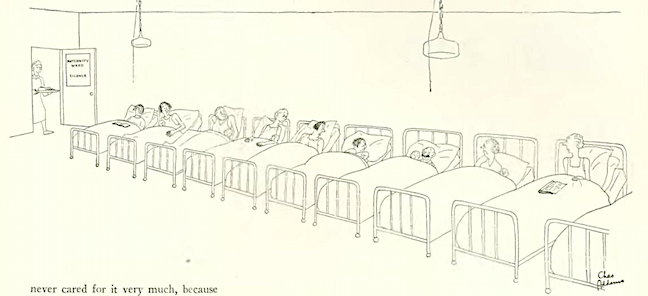
…Charles Addams took the top of page 29 to show us a proud papa in a maternity ward…
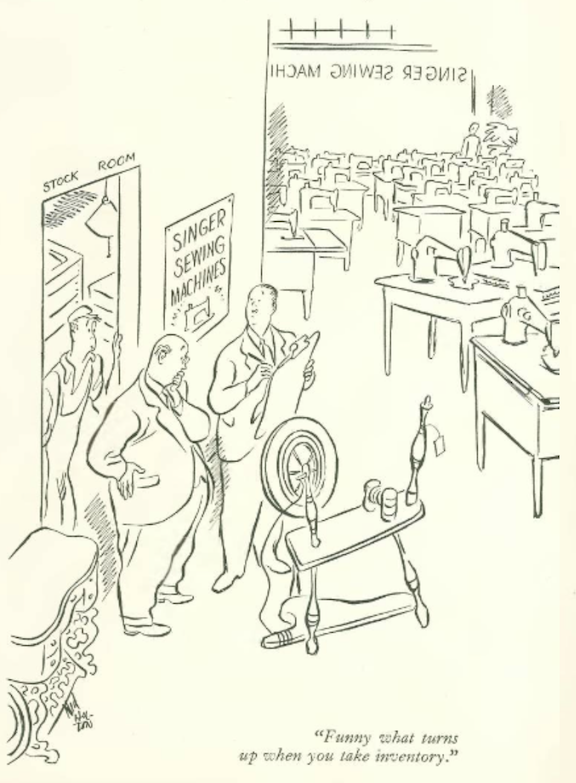
…Ned Hilton uncovered some history at the Singer Building…
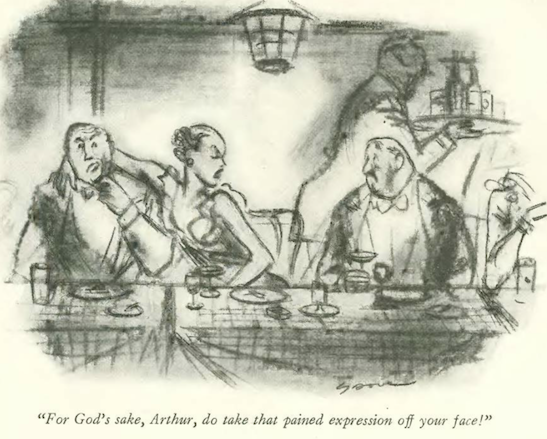
…Mary Petty eavesdropped on a tactless toff…

…Leonard Dove showed us that being a sugar daddy wasn’t so sweet…
…and we close with William Steig, one of his “Small Fry” speaking up for the old man…

Next Time: On Catfish Row…


American Royalty

Although the United States declared its independence from British Empire nearly 250 years ago, the royal family and all of its requisite trappings persist in the American imagination like a phantom limb.

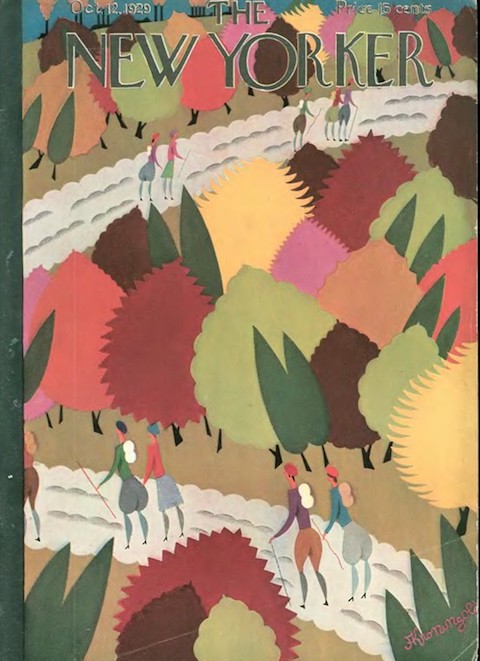
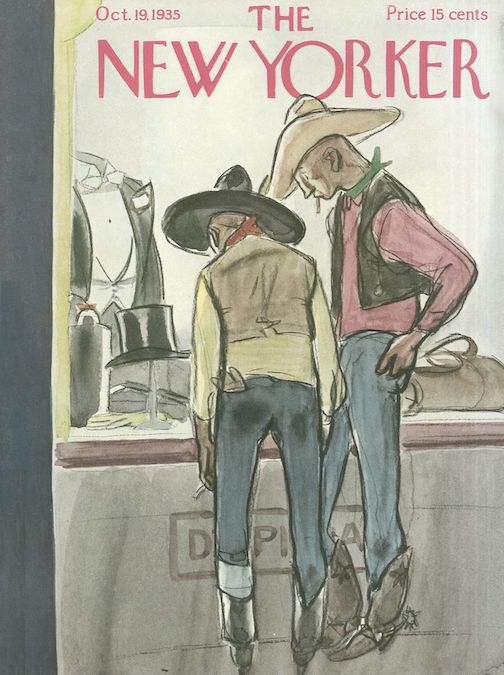
Oct. 5, 1929 cover by Theodore G. Haupt.

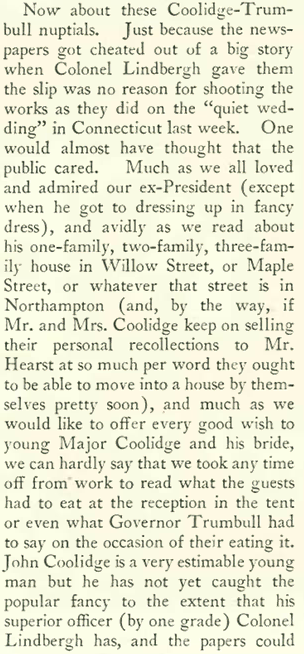
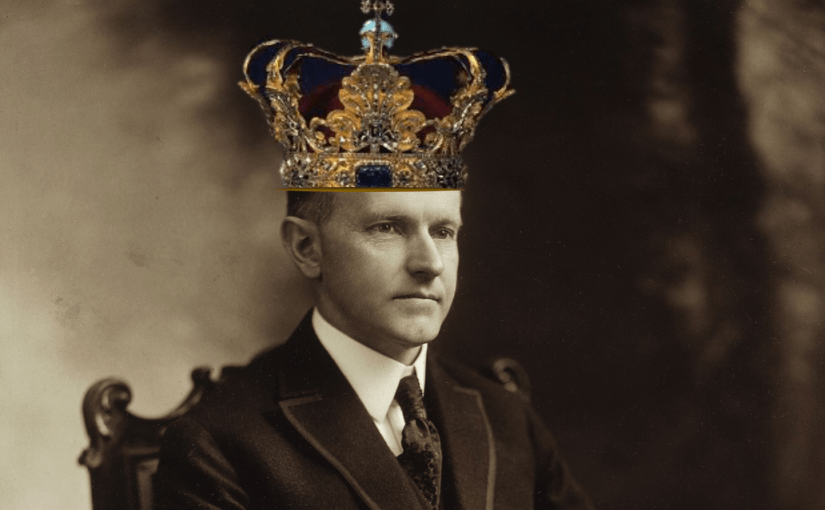
E.B. White observed as much in the “Notes and Comment” section of the Oct. 5 issue, in which he offered his views regarding the “pother” over the wedding of Calvin Coolidge’s son, John, to Florence Trumbull, the daughter of Connecticut Governor John Harper Trumbull

White could have looked no further than the pages of The New Yorker for further evidence to his claims. The bourgeois yearnings of its readers were reflected in countless advertisements laced with anglophilic pretensions. Here are examples from 1929 issues we have previously examined:

LIVE LIKE A BARON…Ads from The New Yorker of the 1920s often featured illustrations of regal, priggish types such as the couple above, deployed to sell everything from apartments and ginger ale…
…to no-frills automobiles and menthol cigarettes. No product was too pedestrian for the royal treatment.

Writing under the pseudonym “Guy Fawkes,” Robert Benchley commented further on the Coolidge-Trumbull nuptials in the “Wayward Press” column:

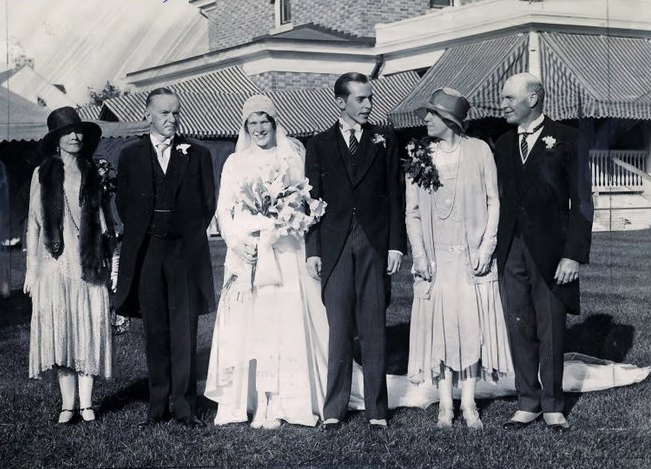
HEY CAL, IT’S A WEDDING, NOT A FUNERAL…The former U.S. President Calvin Coolidge was known as “Silent Cal” for good reason, given his reserved demeanor that rarely produced a smile (although he apparently had a dry wit). He poses here at the wedding of his son, John. Left to right are Grace Goodhue Coolidge, President Coolidge, Florence Trumbull Coolidge, John Coolidge; Maud Pierce Usher Trumbull, and Gov. John Trumbull. (patch.com)
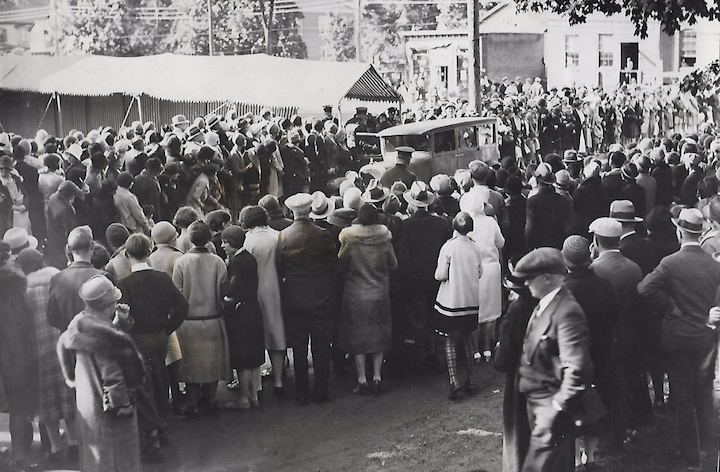
NOT EXACTLY KING’S ROAD…Onlookers line the street near the Congregational church in Plainview, Conn., hoping for a glimpse of the bride and groom, who were united in a simple ceremony. (Associated Press)
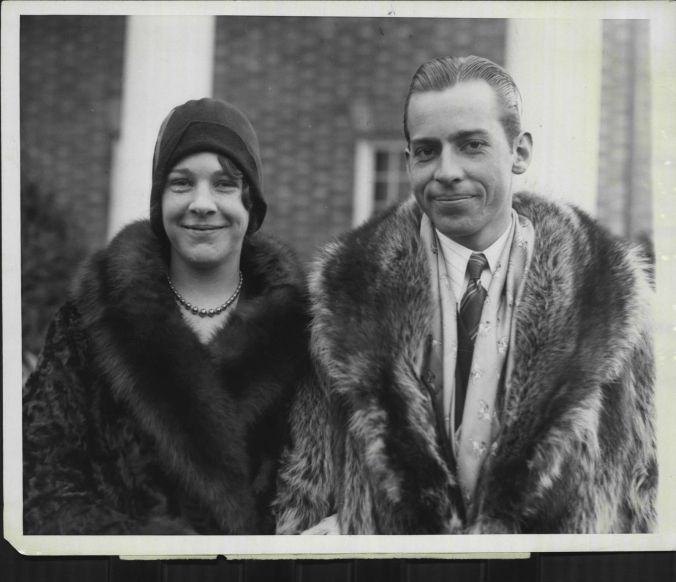
CUTE COUPLE…Florence Trumbull and John Coolidge during their engagement, 1928. (crackerpilgrim.com)

 *  *  *

Modest Mussolini

We go from famous faces to infamous ones, namely the Italian dictator Benito Mussolini, aka Il Duce, who received the adoration of his public while trying to remain inconspicuous at the cinema. “Talk” recounted…

NOW PICTURE HIM UPSIDE DOWN…A 1929 postcard image of the once-revered Italian dictator Benito Mussolini. Sixteen years later he would be shot by his own people and strung up by his feet from the roof of a Milan gas station. (worthpoint.com)

 *  *  *

Going Down

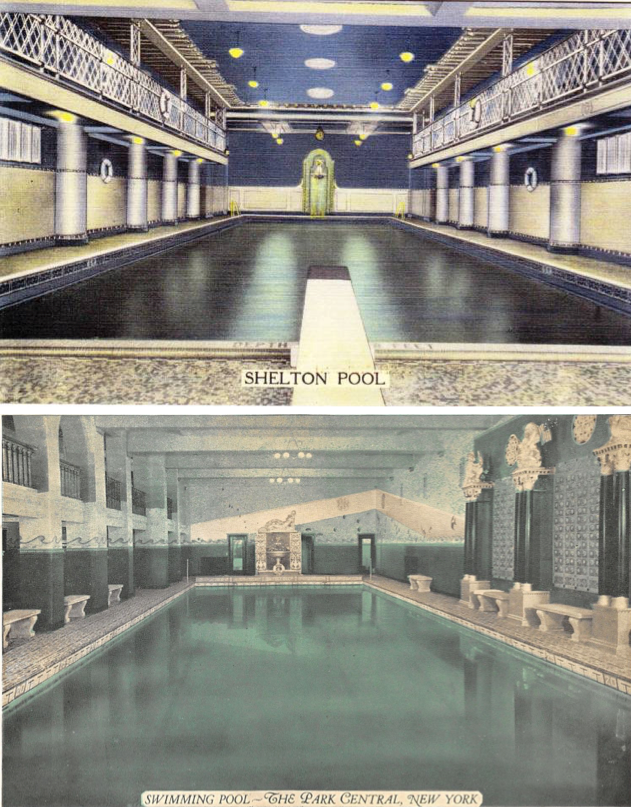
“Talk” also commented on the growing trend for high-rise apartments to provide swimming pools and other amenities below street level:

TAKING THE PLUNGE DOWN UNDER…Few indoor swimming pools were available to New Yorkers during the 1920s. Two of the nicer ones were found underground at the Shelton Hotel (above) and the Park Central. Sadly, both pools no longer exist. In 2007 the Shelton’s pool was removed and the cavernous space was divided into three levels. I’m not sure when Park Central’s disappeared, but it’s fate was doubtless similar to the Shelton’s.(daytoninmanhattan.blogspot.com/hippostcard.com)

 *  *  *

How About a Catch?

As I’ve noted on previous occasions, The New Yorker of the 1920s all but ignored major league baseball. The magazine gave regular coverage to seemingly every sport, from hockey and college football to polo and yacht racing, but regular coverage of baseball was nonexistent, even when the Yankee’s Murderers’ Row (Ruth, Gehrig among others) won back-to-back World Series titles in 1927-28.

Still no coverage in the Oct. 5 issue, but the sport did get a brief mention in Howard Brubaker’s “Of All Things” column…

…and the issue was filled with baseball imagery, including the cover…

The Oct. 5 issue was filled with baseball-related items, but no actual coverage of the games. Images from the issue included, from left, the cover by Theodore Haupt; a filler sketch by Constantin Alajalov; and a Johan Bull illustration of umpire Bill Klem for the issue’s “Profile” section.

 *  *  *

In a Sentimental Mood

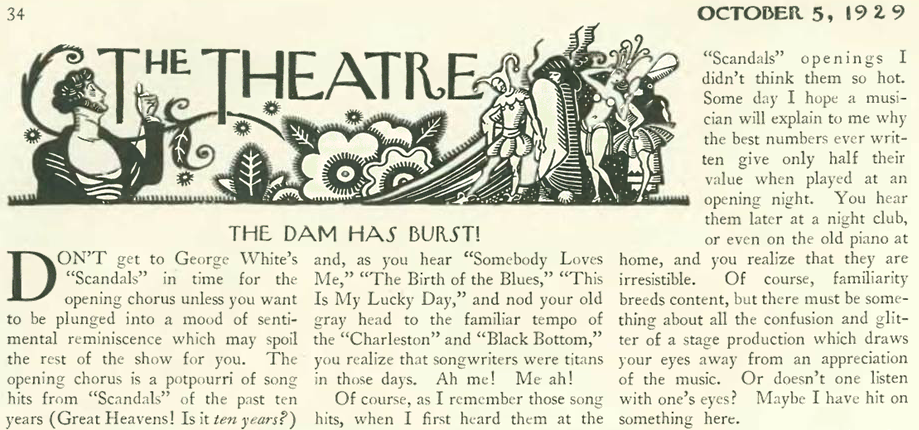
Robert Benchley checked out George White’s latest version of his Scandals revue at the Apollo Theatre, and found the sometimes risqué show to be in a sentimental mood…

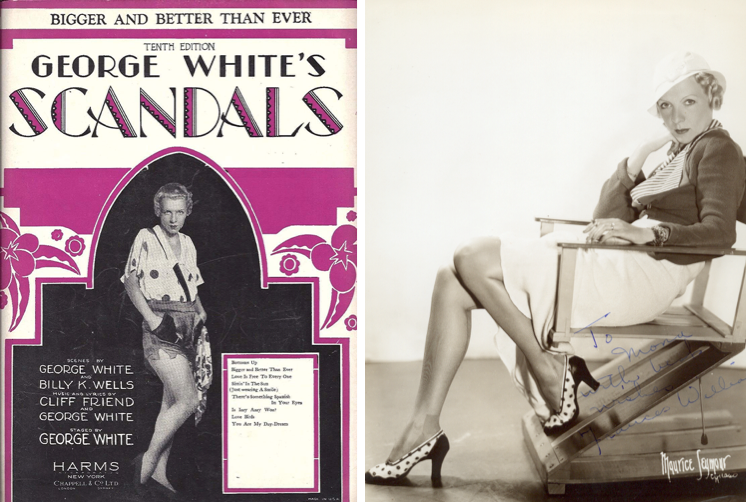
BETTER SENTIMENTAL THAN DEPRESSED…The chanteuse Frances Williams (pictured on the show’s sheet music and at right) likely provided the only spark to the 1929 edition of George White’s Scandals. (amazon/psychotronicpaul.blogspot.com)

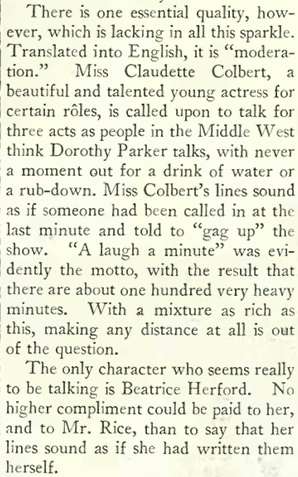
Benchley also looked in on Elmer Rice’s latest, See Naples and Die, featuring veteran English actress Beatrice Herford and the up-and-coming Claudette Colbert

VETERAN AND ROOKIE…Veteran English actress Beatrice Herford and the up-and-coming Claudette Colbert headlined Elmer Rice’s See Naples and Die. Colbert (pictured at right in a 1928 Broadway publicity photo) would go on to massive stardom in the 1930s. (Alchetron/Wikipeda)

Benchley applauded the veteran Herford’s performance, but found the otherwise reliable Colbert miscast as a wisecracking, Dorothy Parker type (Benchley, as we know, was close friends with Parker, so he knew what he was talking about)…

*  *  *

An (Ugly) American in Paris

Off to Paris, we find correspondent Janet Flanner joining with Parisians in deriding the behavior of American tourists, who were on a course to drain every last drop from the ÎledeFrance before departing for the bone-dry USA:

DRINKING IN THE SIGHTS…American tourists at a Parisian café, circa 1920s. (tavbooks.com)

*  *  *

Party Pooper

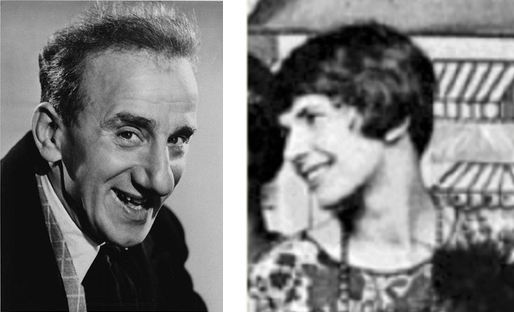
With her infant child (Patricia Arno) at home, it is doubtful Lois Long was seeing as much nightlife as she did during her first weeks at The New Yorker, when “nights were bold.” And indeed, her nightlife column “Tables for Two” would end in June 1930…for awhile anyway. Her Oct. 5 column took a cursory spin through the various nighttime offerings, ending on this note regarding a fan letter and a message from comedian Jimmy Durante:

THE GREAT SCHNOZZOLA Jimmy Durante brought a smile to the face of Lois “Lipstick” Long. 

 * * *

From Our Advertisers

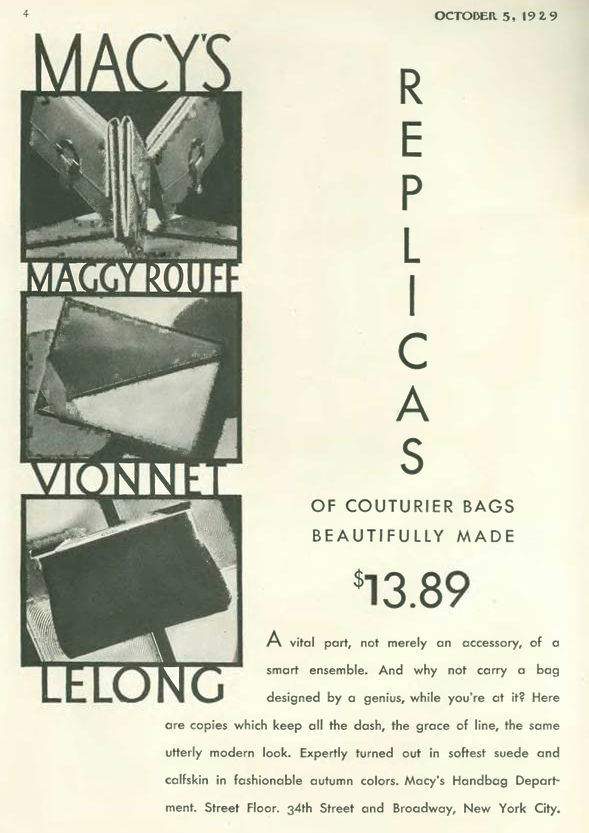
With the latest Paris fashions splattered across newstands all over Manhattan, retailers scrambled to get “replicas” to consumers…Macy’s had “couturier bags”…

…the Hollander Dressmaking Department was ready to make a perfect copy of Patou’s “Quiproquo”…

…and this Chanel frock could be had in misses’ sizes for $145 (roughly equivalent to about $2K today)…

…Philip Morris hadn’t yet discovered the “Marlboro Man,” and were still hawking their cigarettes through a “distinguished handwriting contest.” The latest winner was Edmund Froese

…who would go on to become a popular mid-century landscape painter…

Port of New York, by Edmund Froese (undated)

…another artist in the midst of our ads is Carl “Eric” Erickson, who created these lovely images for R.J. Reynolds that would induce people to take up the habit with a Camel…

…and then we have some rather unlovely ads from the back pages, including these two that would not go over well with today’s readers…

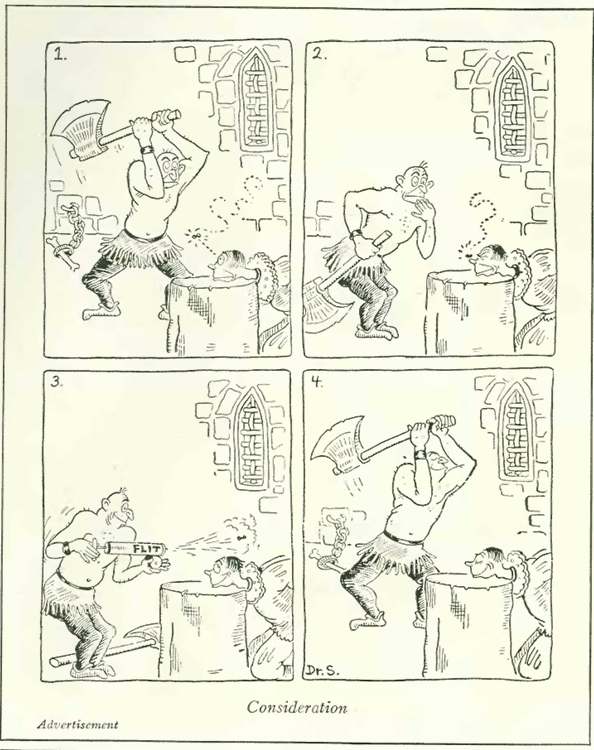
…or this from Dr. Seuss, still sharpening his skills with Flit insecticide…

…or this ad from Abercrombie & Fitch, wrong on so many levels…

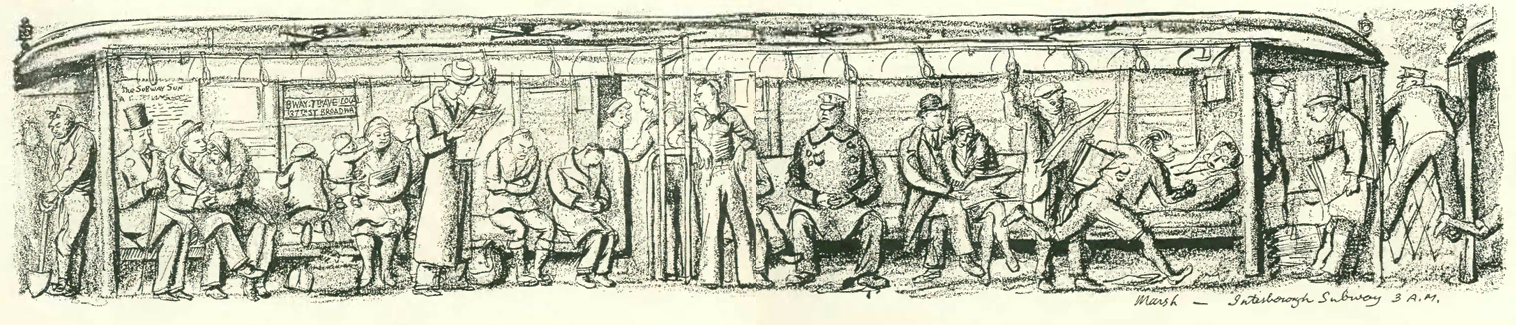
…on to happier things, here’s an illustration by Reginald Marsh that ran along the bottom of “Talk of the Town”…(click to enlarge)

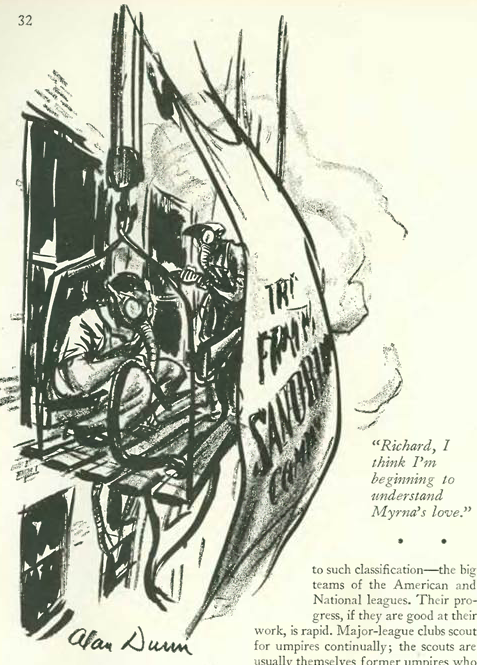
Alan Dunn found love in the air above the streets of Manhattan…

…and Leonard Dove revealed the hazards of apartment rentals…

Next Time: Race to the Sky…

Mussolini’s Romance Novel

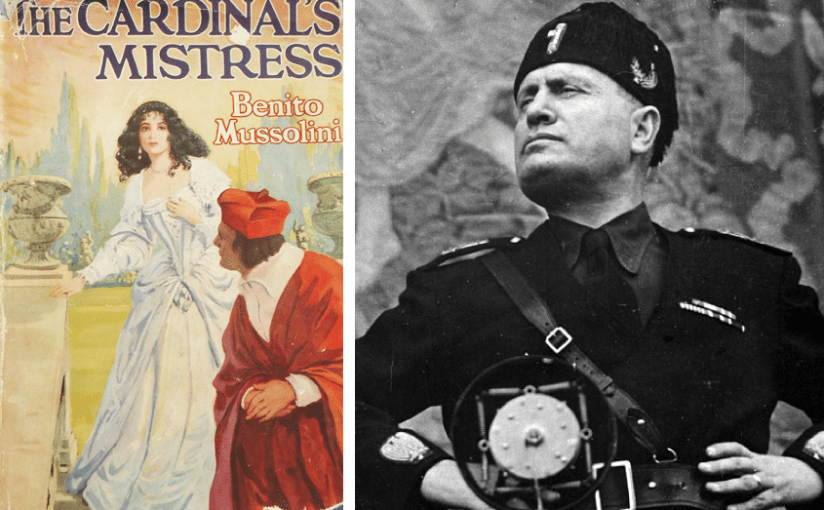
About a decade before he joined the Nazis in spreading the madness of war across the European continent, Italian dictator Benito Mussolini penned a historical novel about a love affair between a Catholic cardinal and his beautiful mistress. Despite the premise, it was not exactly a Harlequin Romance.

Sept. 8, 1928 cover by Julian de Miskey. Sept. 15, 1928 cover by Peter Arno. 

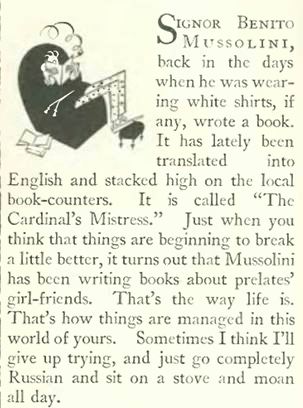
Although many perceived Mussolini as nothing more than a thug, or even a clown when he styled himself as Il Duce, Mussolini thought himself an intellectual, and as a younger man sometimes worked as a journalist and essayist. That was also when he wrote his one and only novel, The Cardinal’s Mistress (1909), serialized in the socialist newspaper Il Popolo under the original title Claudia Particella, l’Amante del Cardinale: Grande Romanzo dei Tempi del Cardinale Emanuel Madruzzo. When it was translated into English in 1928, the distasteful task of reviewing the book (in the Sept. 15, 1928 issue) fell to Dorothy Parker. She began thusly:

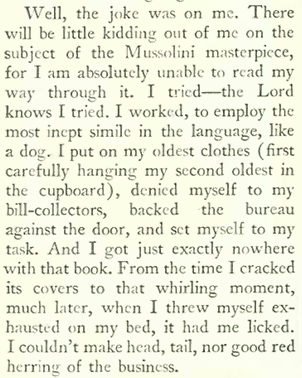
In all fairness, Parker did ask for it. She went on to write “On the memorable day that The Cardinal’s Mistress arrived in the office of this lucky magazine, I was the girl who pled, ‘Please, teacher, may I have it to take home with me? Honest, I don’t want a cent of money for reviewing it. I’ll do it free of charge; I’ll even pay handsomely for the privilege.’ Well, of course, they wouldn’t hear a word of that – or at least I hope to heaven they didn’t – but I got the book. I had all sorts of happy plans about it. I was going to have a lot of fun. I was going to kid what you Americans call the tripe (les tripes) out of it. At last, I thought, had come my big chance to show up this guy Mussolini. A regular Roman holiday, that’s what it was going to be.” But it didn’t quite turn out that way:

Alfred Armstrong, writing for Oddbooks (oddbooks.co.uk) describes The Cardinal’s Mistress as a story about a historical figure, Emanuel Madruzzo, Cardinal of Trent, his mistress Claudia Particella, “and the unhappy course of their love affair.” Armstrong notes that the book was written rather carelessly, with a wandering plot that suggests Mussolini’s only interest in the characters was to place them in a historical setting that provided “an excuse for lengthy anti-clerical rants, and to portray the lust, vengefulness and murderousness of their adversaries.”

Although she could not make heads nor tails out of the book, it did stir Parker’s imagination enough to conjure up an insult for the “old Duce.”

WHERE IS THE LOVE?…Cover of the 1928 translation of The Cardinal’s Mistress, an anti-clerical rant thinly disguised as a love story. At right, Benito Mussolini in 1928. (Amazon/waralbum.ru)

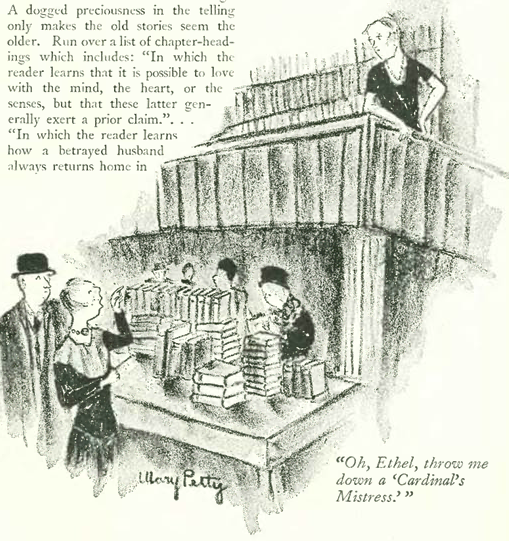
For good measure, I’ll toss in this New Yorker comic by Mary Petty that appeared a few weeks later in the Oct. 20, 1928 issue:

 *  *  *

The Sound Stays in the Picture

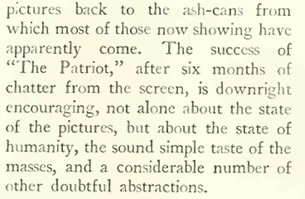
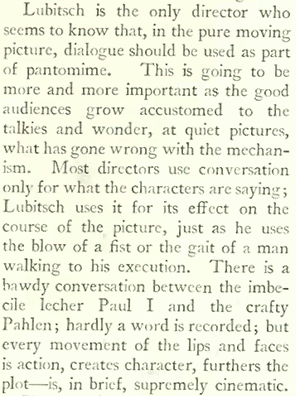
Gilbert Seldes joined the chorus of voices at The New Yorker who decried the advent of sound in motion pictures, particularly when sound was used as a gimmick rather than as an enhancement to the production. So when Paramount’s Jesse Lasky and Adolph Zukor put their hands (and their sounds) on Ernst Lubitsch’s masterpiece The Patriot, Seldes decided he’d had enough of this “talkie” nonsense, taking on the producers in a special feature in the Sept. 15 issue titled “The Old Believers:”

Hugo Gellert paid his own respects to The Patriot with this illustration in the theatre review section of the Sept. 15, 1928 issue.

Following his opening salvo, Seldes told readers why the film was important, how it revived his faith in movies and even in the possibility of intelligence and taste among the masses:

PERNICIOUS INTERFERENCE…Critic Gilbert Seldes took aim at Paramount execs Adolph Zukor, far left, and Jesse Lasky, center, for mucking up Ernst Lubitsch’s The Patriot with unnecessary sound effects. All photos circa 1922. (Wikipedia)

As for the taste and intelligence of producers, that was another matter. Seldes concluded his piece by laying into Zukor and Lasky for their “pernicious interference” with the masterpiece:

Seldes was so disheartened that he wondered if movies, as an imaginative and intelligent art form, would be dead in ten years.

Seldes was wrong about the death of good movies, but ironically his beloved Patriot would not live on, and would disappear into the land of lost films. There are fragments in a UCLA archive, but no negative or set of complete reels are known to exist.

WHY YOU NAUGHTY OLD CZAR…Florence Vidor as Countess Ostermann and Emil Jannings as Czar Paul I in The Patriot. Nominated for five Oscars, the film would win in the “Best Writing” category at the 1930 Academy Awards. (mubi.com)

 *  *  *

Before He Was Kooky and Ooky

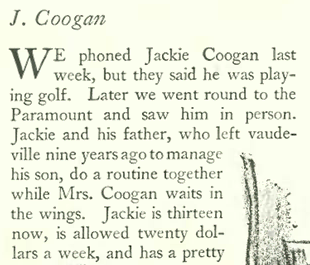
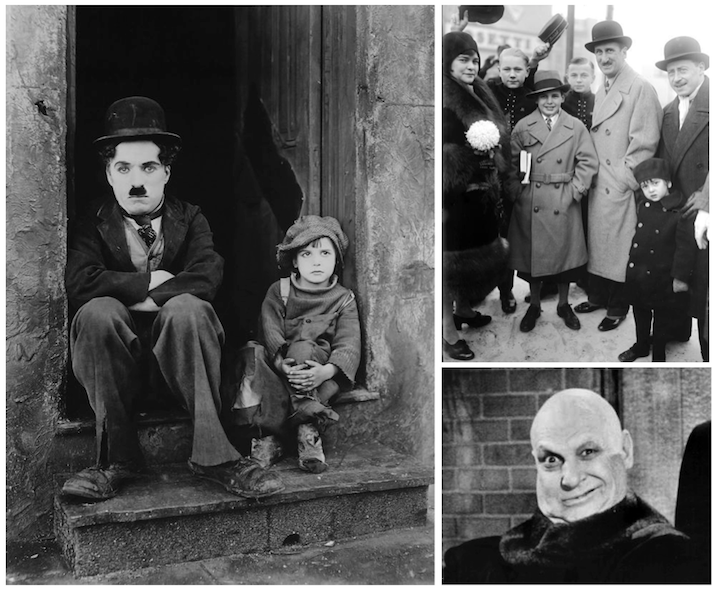
The child actor Jackie Coogan was the focus of a lengthy “Talk of the Town” piece that looked in on the life and habits of the young film star, best known for his role in Charlie Chaplin’s 1921 film classic The Kid.

Coogan was one of the first child stars in film history, earning an estimated $3 to $4 million (roughly more than $50 million in today’s dollars). “Talk” found the 13-year-old star in his dressing room, reading a theatrical newspaper:

The New Yorker couldn’t resist mentioning that the magazine itself proved to be an inspiration to the boy and his father:

As one of the first child stars Coogan also broke some tough ground for other child actors to follow. In early 1935 Jackie’s father, John Henry Coogan, Jr., was killed in a car accident. John Henry conservatively managed Jackie’s assets, but after his death John Henry’s widow, Lillian and her new husband Arthur Bernstein (who was the family lawyer), squandered most of Jackie’s fortune on fur coats, diamonds and expensive cars. Jackie Coogan sued them in 1938, but after legal expenses was only able to recover a mere $126,000 of his earnings. One good outcome was California’s enactment in 1939 of the first known legal protection for the earnings of child performers. The California Child Actor’s Bill, sometimes called the “Coogan Act,” required employers of child actors to set aside 15 percent of their earnings in a trust.

Coogan would go on to perform in mostly supporting roles and would marry four times, most famously to actress Betty Grable from 1937 to 1939. He gained renewed fame in the 1960s by portraying Uncle Fester in the Addams Family TV series.

VARIETY ACT…Clockwise, from left: Publicity photo from Charlie Chaplin’s 1921 movie The Kid, featuring 6-year-old Jackie Coogan; Coogan on a 1928 visit to Berlin with his mother Lillian and father John Henry Coogan, Jr.; as Uncle Fester in TV’s The Addams Family, 1966. (Wikiwand/Wikimedia)

 *  *  *

From Our Advertisers

A mixed bag from the Sept. 15 issue, including this strip of ads near the back of the magazine that indicate not all New Yorker readers were as well-heeled as those who were targeted by the splashier, full-page ads in the magazine’s front section…

…and yet another endorsement for Old Gold cigarettes, this time from the Duchess of Sutherland, who joined fellow blue bloods in the blindfold test:

Nothing like profiting from the misery of others. In this ad, James McCreery & Company offered up rugs from “old Turkish families” who were “forced to sell their rare rugs and jewels in order to exist.” They weren’t cheap: the rug pictured was offered for $3,250, more than $45,000 in today’s buying power.

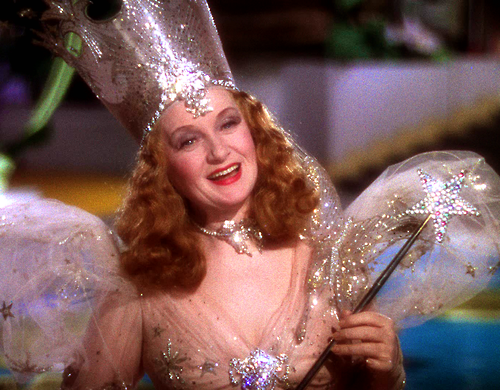
The “famous stage beauty” and early silent film star Billie Burke (who was married to Florenz Ziegfeld of “Follies” fame) shilled for Cutex nail polish…

…and 11 years later would portray Glinda the Good Witch of the North in the movie musical The Wizard of Oz.

Billie Burke as Glinda the Good Witch (cinemagumbo)

Now for the cartoons, Peter Arno from the Sept. 8 issue…

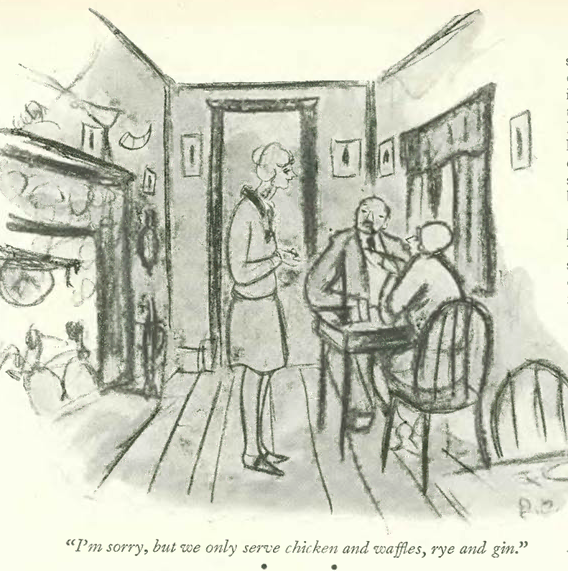
And in the Sept 15 issue, W.P. Trent looked in on a homey café that moonlights as a speakeasy…

…and back to Arno, who looked in on toffs slumming at Coney Island…

Next Time: This Thing Called Baseball…