Seeking Decorative People

Above: New Year’s Eve at the “El Morocco” Night Club at 154 E. 54th Street, New York, 1935. (Posted on Reddit)

Lois Long took her nightlife seriously, and when it didn’t live up to her standards—defined by the wild speakeasy nights she wrote about after joining The New Yorker in 1925 —she was crestfallen, to say the least.
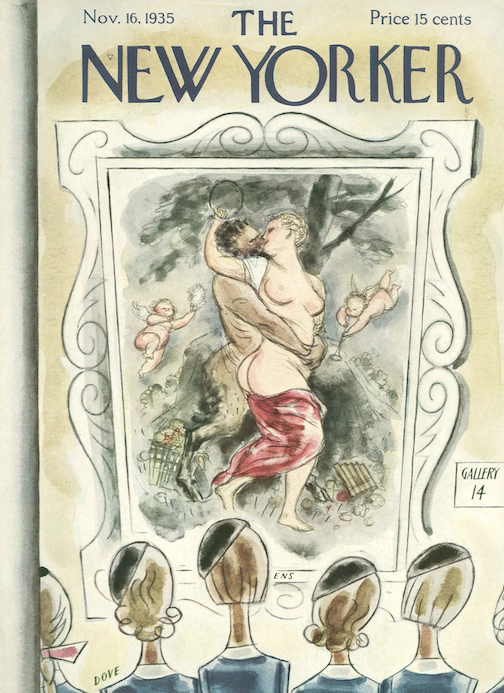
November 16, 1935 cover by Leonard Dove. This is one of Dove’s fifty-seven New Yorker covers; he also contributed 717 cartoons to the magazine.
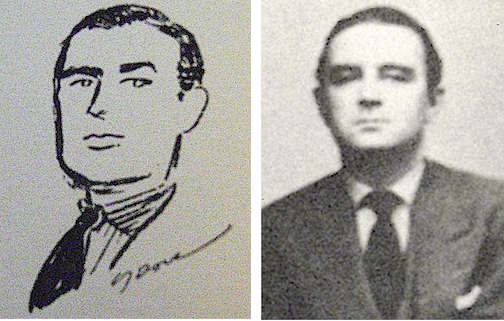
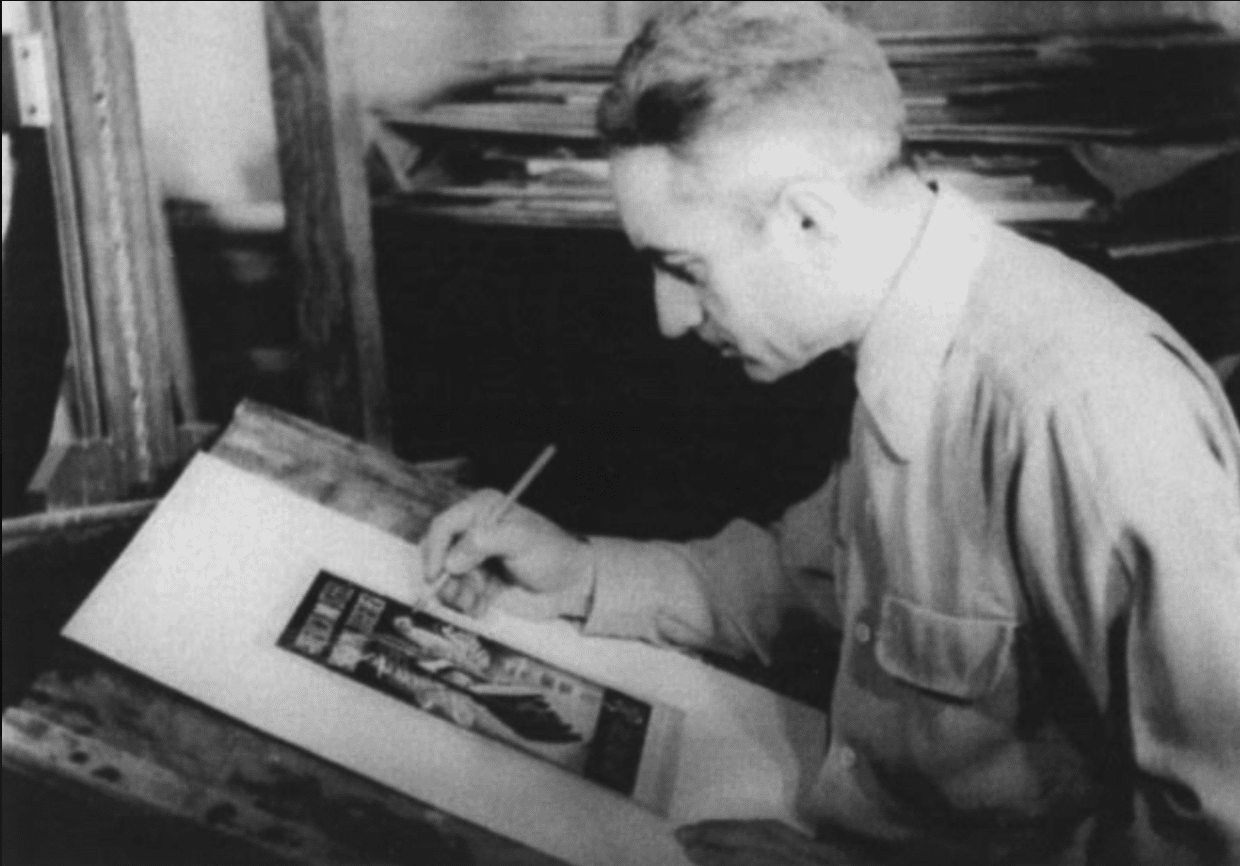
Above: Leonard Dove’s self portrait, 1941; photo: 1947. Born 1906, Great Yarmouth, England. Died, Gramercy Hotel, New York City, 1972. (Thanks to Michael Maslin’s indispensable Ink Spill)

 *

When Long joined The New Yorker she was a 23-year-old Vassar graduate, and at age 34 she was not expecting to re-live those heady days; but nightlife in 1935 made her wonder where all the interesting people had gone. Instead of the smart and beautiful speakeasy set, she found people who couldn’t hold a conversation, who cared more about being mentioned in the newspapers by “Cholly Knickerbocker” (a pseudonym used by society columnists)—they simply lacked the “sparkle” she so craved. In this excerpt from her column, “Tables for Two,” she explained:

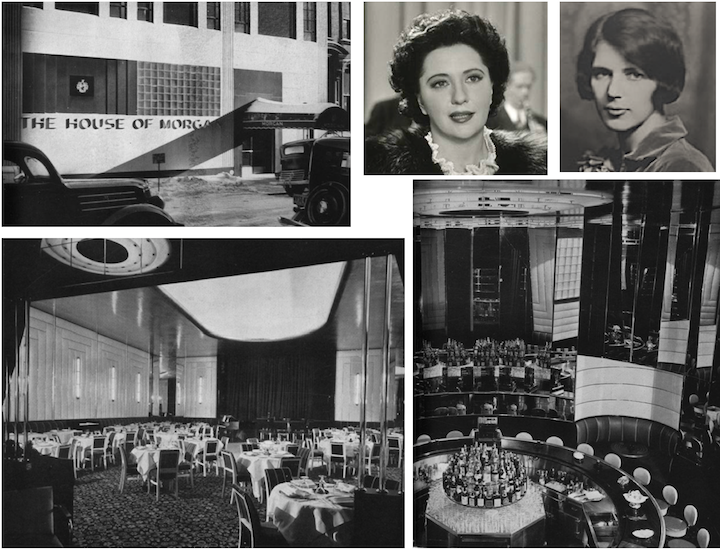
ALL SHOW, NO GO…Lois Long recalled the heady days of the original torch singer Helen Morgan, but her new club, The House of Morgan, offered up tired vaudeville instead of the singer herself. Above, images of the club from Christopher Connelly’s The Helen Morgan Page. Top, center, detail of Morgan from the 1935 film Sweet Music. Next to Morgan is a photo of Long from the PBS documentary Prohibition. (helen-morgan.net/PBS.org)

 * * *

At the Movies

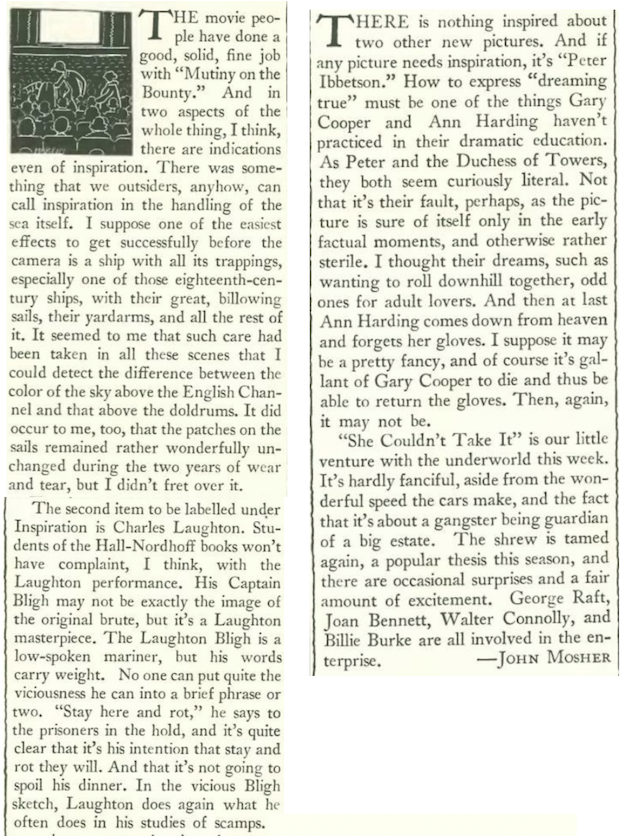
Our film critic John Mosher was in good spirits after taking in MGM’s Mutiny on the Bounty, and especially the inspired performance by Charles Laughton as the cruel, tyrannical Captain Bligh…
LET’S HAVE A STARING CONTEST…Clark Gable (left) portrayed Fletcher Christian, the Bounty’s executive officer, who disapproved of the cruel leadership of Captain Bligh, portrayed by Charles Laughton (right) in Mutiny on the Bounty. (theoscarbuzz.com)

…two other pictures reviewed by Mosher were less than inspired, but at least the George Raft/Joan Bennett gangster film, She Couldn’t Take It, offered a car chase, and the occasional surprise.
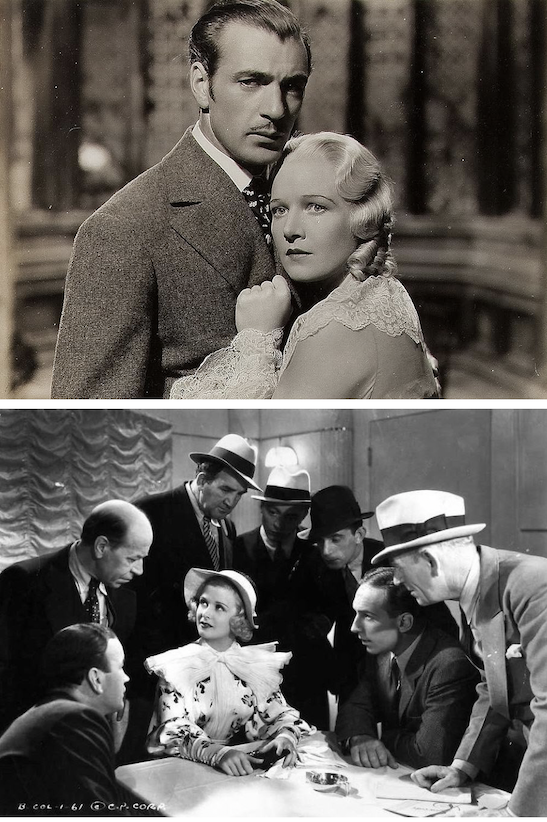
STERILITY ISSUES…Top, Gary Cooper and Ann Harding needed a bit more life in Peter Ibbetson; at least Joan Bennett (bottom photo) found some action in She Couldn’t Take It. (IMDB)

 * * *

From Our Advertisers

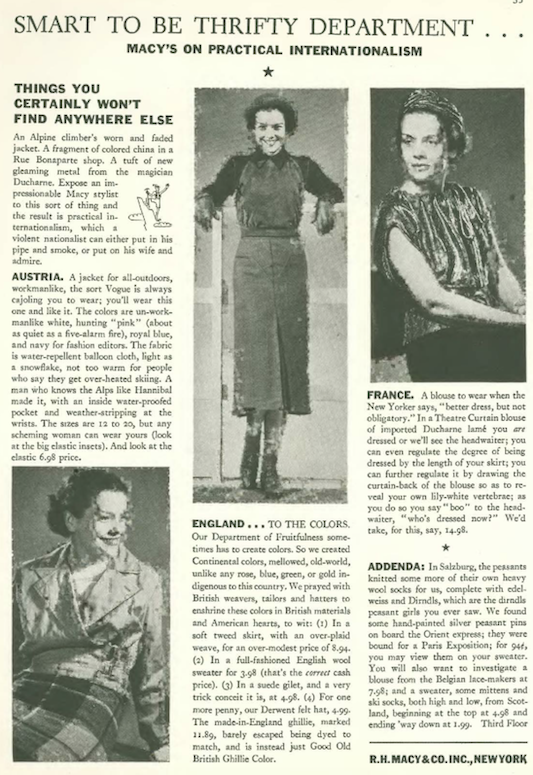
Not all fashion advertisements in The New Yorker were aimed at the posh set…Macy’s offered some thrifty selections, including a French-inspired “Theatre Curtain Blouse” that could be opened in the back “so as to reveal your own lily-white vertebrae”…
…I am puzzled by the “Duchess” types that appeared in food and beverage ads in the back of the magazine…we’ve seen some angry duchesses in ads for tomato and pineapple juice, and here we have one who has stooped so low as to shell her own peas…

…a side note, the Duchess’s peas came in a can bearing the old Green Giant logo, a savage, bearskin-clad figure…he was redesigned by ad executive Leo Burnett in 1935 to become the friendlier “Jolly Green Giant”…

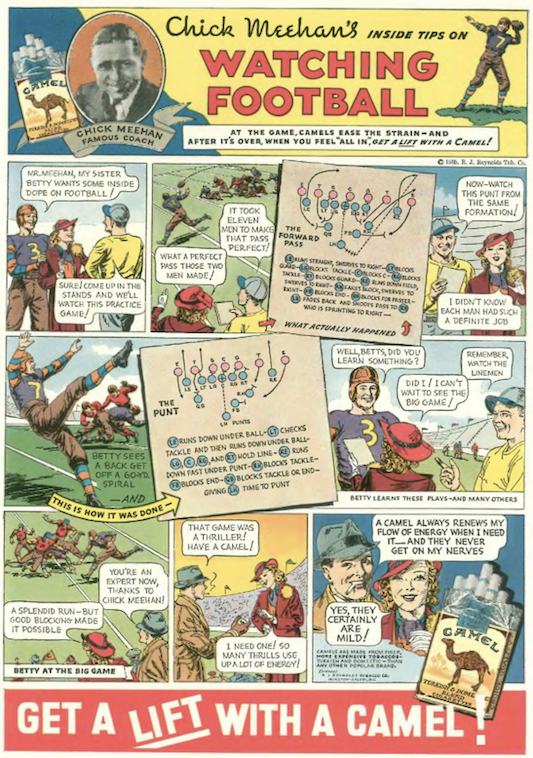
…the makers of Camels presented football coach Chick Meehan in cartoon form to extol the wonders of football and smoking to a young woman…Meehan coached football at Syracuse, NYU and Manhattan College…
…the football theme segues to our cartoon section, beginning with this spot art by James Thurber

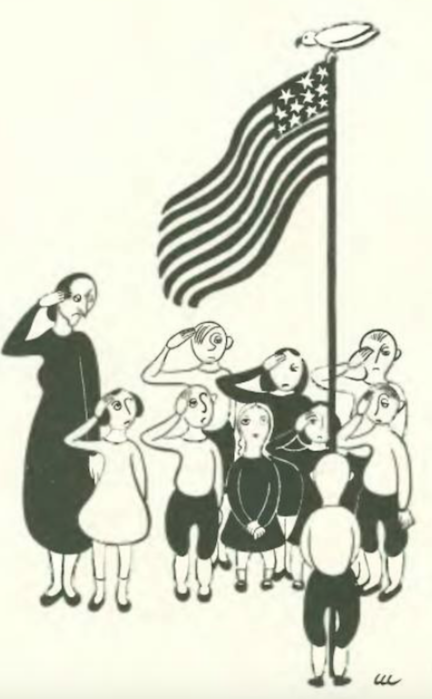
Christina Malman’s spot drawings could now be found in every issue, and usually more than one…
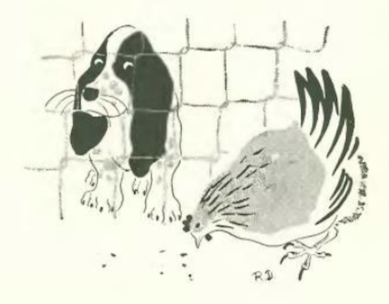
…this one by Robert Day also caught my eye, maybe because I like chickens, and dogs too…
…Day again, on the streets of Manhattan…

Barbara Shermund showed us a wolf in wolf’s clothing…

Alan Dunn seemed to be channelling Barbara Shermund here…or maybe Dunn’s wife Mary Petty had some influence…

William Crawford Galbraith eavesdropped on some wagering waiters…

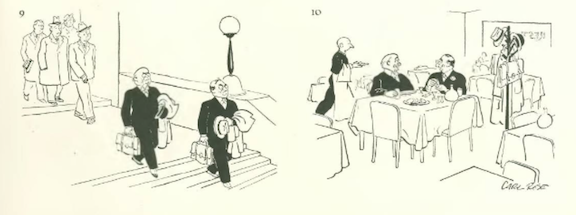
Carl Rose found an outlier at the modern Walker-Gordon Dairy Farm…
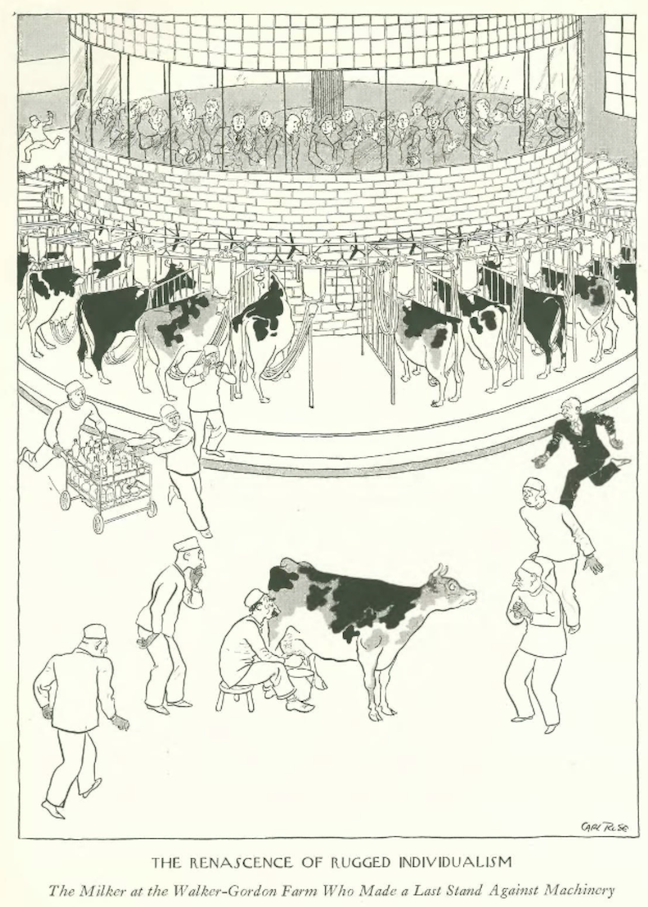
…The Rotolactor featured in Rose’s cartoon was a mostly automatic machine used for milking a large number of cows successively on a rotating platform…first used at the Walker-Gordon Laboratories and Dairy in Plainsboro, New Jersey (pictured below), the Rotolactor held fifty cows at a time, and hosted about 250,000 visitors annually…
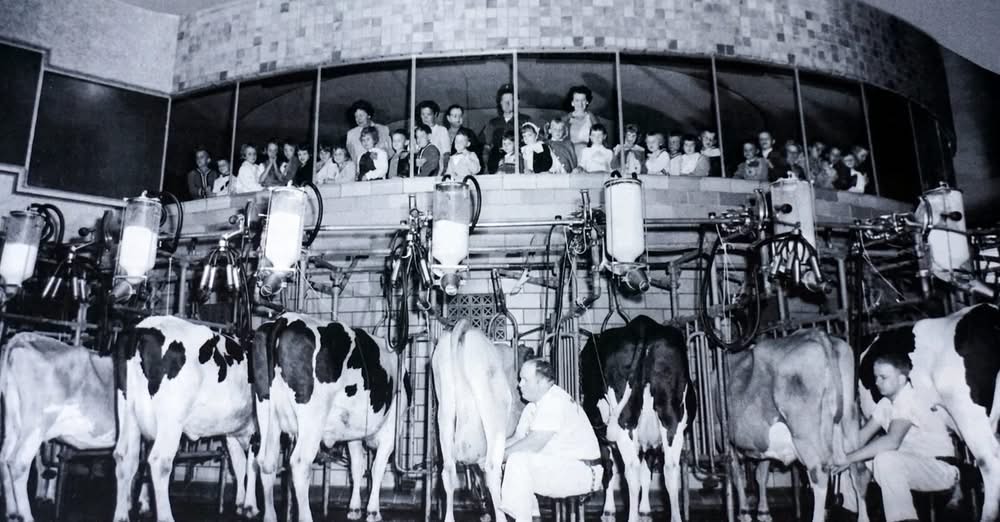
(rawmilkinstitute.org)

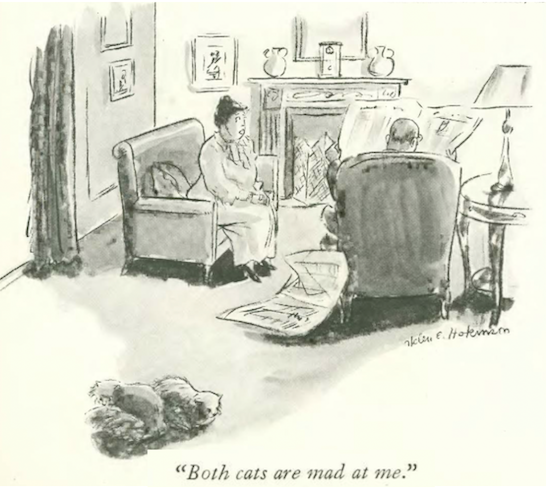
…and we go from cows to cats, courtesy Helen Hokinson

…and Charles Addams booked an unusual perp…

…on to the November 23 issue…

November 23, 1935 cover by Antonio Petruccelli. Petruccelli (1907-1994) began his career as a textile designer, becoming a freelance illustrator in 1932 after winning several House Beautiful cover contests. This is one of four covers he produced for The New Yorker.
Antonio Petruccelli. Here are samples of Petruccelli’s remarkable work. (Helicline Fine Art)

 *

Worth the Wait

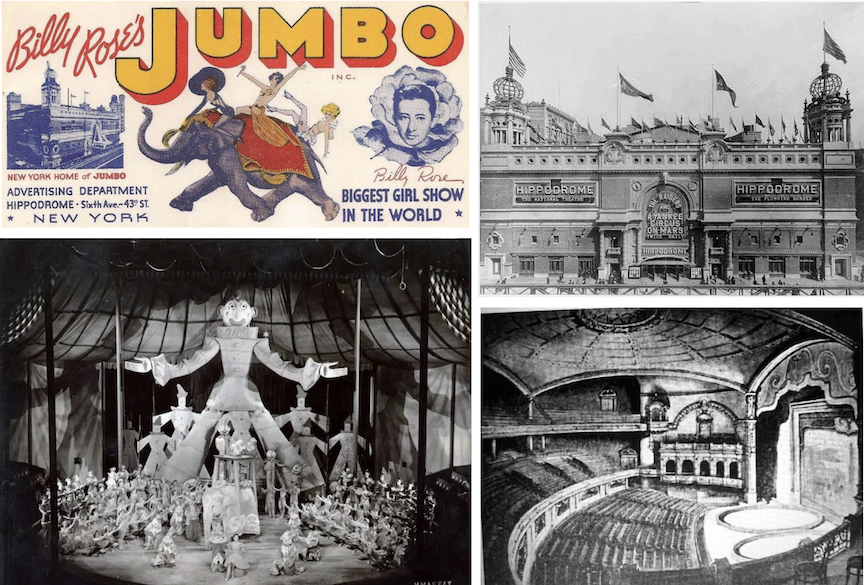
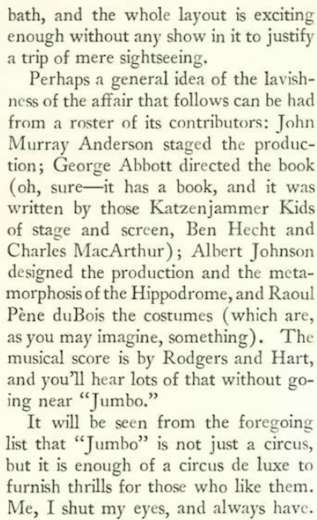
The highly-anticipated circus-themed spectacle Jumbo finally opened at the Hippodrome. In his That’s Entertainment! blog, Jackson Upperco observes that Billy’s Rose’s Jumbo was “more circus than musical comedy,” a production that “was largely an excuse for Mr. Rose to present a circus.” It was headlined by comedian Jimmy Durante and bandleader Paul Whiteman, with a score by Rodgers & Hart. Here are excerpts from a review by Wolcott Gibbs:

JUMB0-SIZED ENTERTAINMENT…Clockwise, from top left, Hippodrome billboard promoting Jumbo; built in 1905, the Hippodrome provided entertainment to thousands who couldn’t afford a Broadway ticket; a circus tent was erected inside the 5,300-seat theatre for the spectacle; Jumbo was one of the most expensive theatrical events of the first half of the 20th century. (Facebook/Library of Congress/Broadway Magazine/jacksonupperco.com)

 * * *

At the Movies

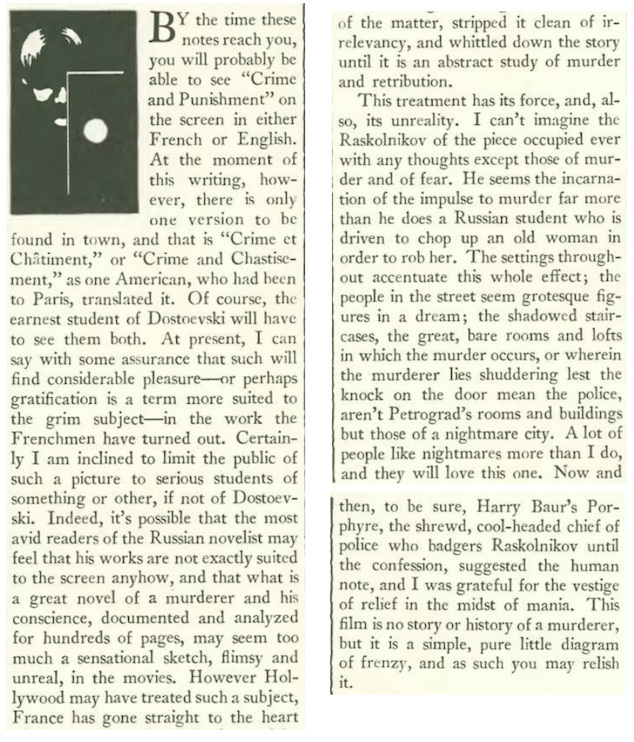
Fyodor Dostoevsky’s 1866 novel Crime and Punishment was adapted to film by both French and American producers in 1935, but critics including The New Yorker’s John Mosher mostly preferred the French version, titled Crime et châtiment.
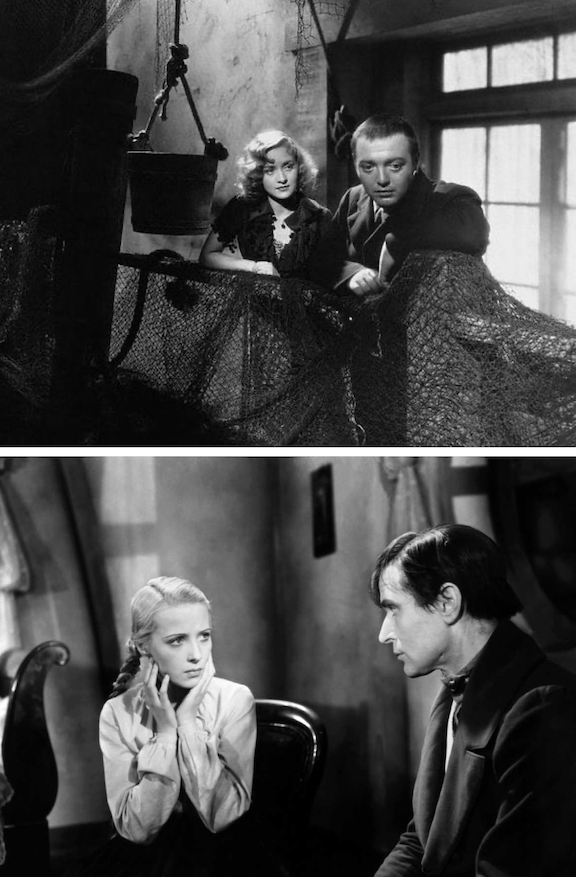
DOUBLE FEATURE…American and French producers each turned out a film adaption of Fyodor Dostoevsky’s novel Crime and Punishment. Top photo, Marian Marsh as Sonya and Peter Lorre as Roderick Raskolnikov in Columbia’s Crime and Punishment; bottom photo, Madeleine Ozeray as Sonia and Pierre Blanchar as Rodion Raskolnikov in Crime et châtiment. (silverscreenmodes.com/SensCritique.com)

…Mosher reviewed another crime thriller, Mary Burns, Fugitive, but found some comic relief in two other films…
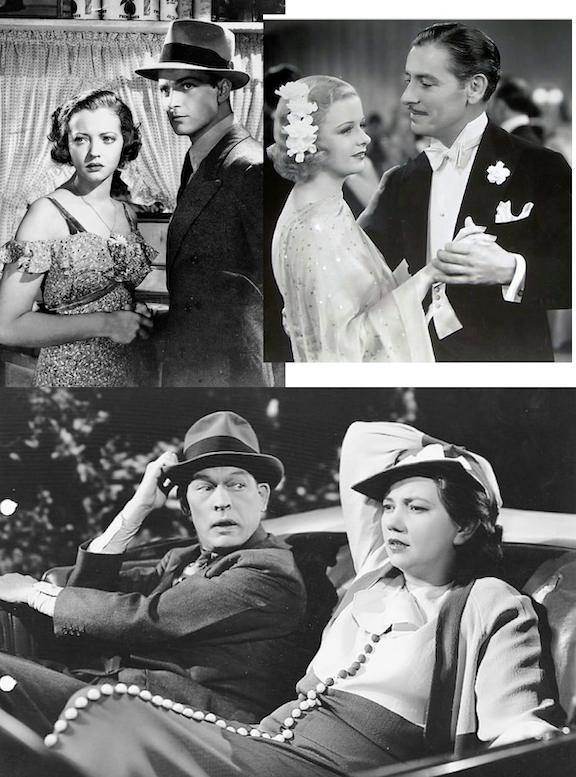
BAD CHOICE IN BOYFRIENDS was the theme of Mary Burns, Fugitive, starring (top left) Sylvia Sidney and Alan Baxter; top right, Joan Bennett and Ronald Colman in the romcom The Man Who Broke the Bank at Monte Carlo; bottom, Fred Allen and Patsy Kelly provided some laughs in musical comedy Thanks a Million. (IMDB)

* * *

From Our Advertisers

Readers of the Nov. 23 issue opened to this lovely image…

…which sharply contrasted with the clunky Plymouth ad on the opposite page…

…not so clunky was this colorful illustration promoting Cadillac’s economy model, the La Salle…

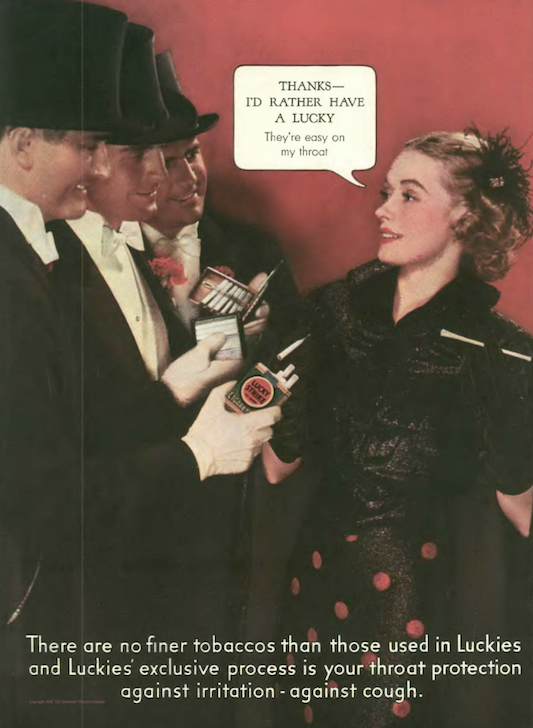
…the back cover was no surprise, with yet another glamorous cigarette ad…
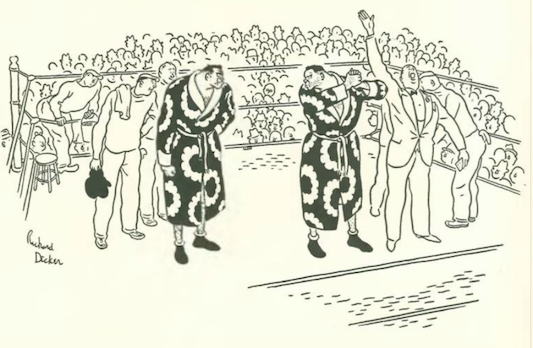
…our cartoonists included Richard Decker, and a fashion faux pas to open a boxing match…
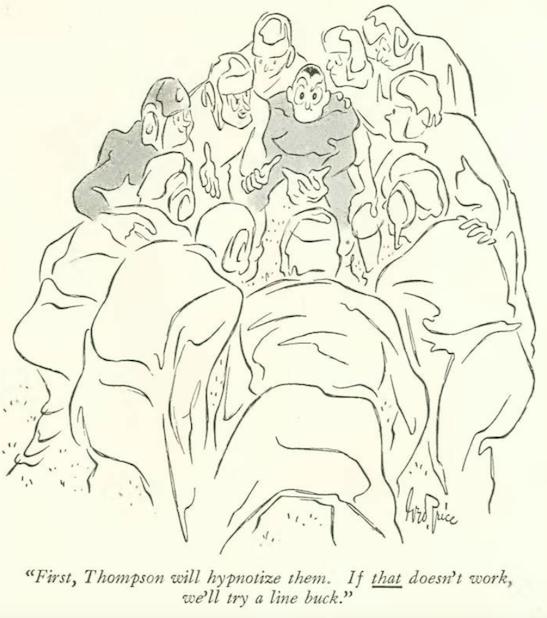
George Price eavesdropped into some football strategy…
Carl Rose spotted a canine unbeliever…

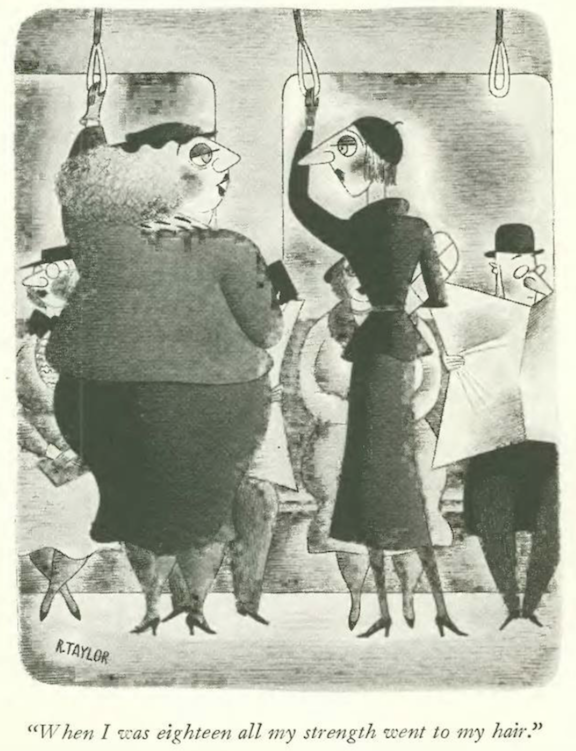
Richard Taylor was back with his distinctive style…
Al Frueh continued to illustrate the latest fare on Broadway…

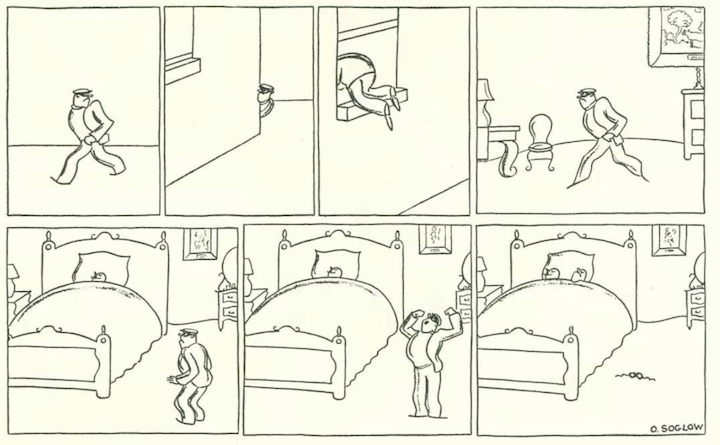
Otto Soglow crept in for a snooze…

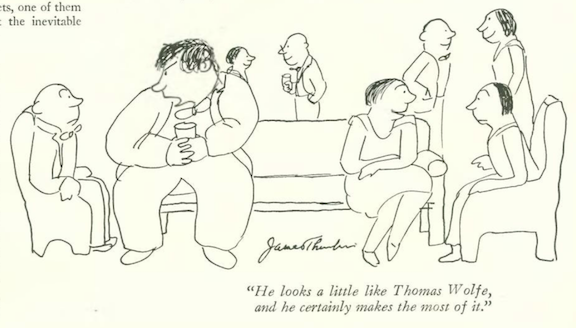
…and we close with James Thurber, and some literary cosplay…
Next Time: Some Holiday Shopping…
Notes and Comment

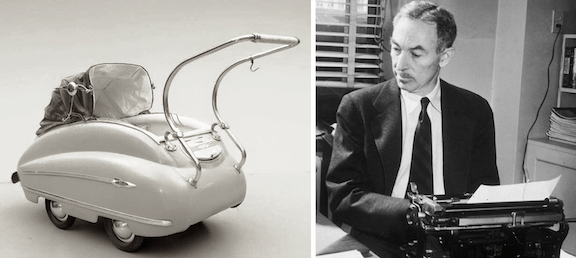
Above: Among E.B. White's notable happenings in the fall of 1935 was a streamlined baby carriage for the toddler of tomorrow. (Pinterest)

Occasionally, E.B. White would allow his seemingly random thoughts to fill out his “Notes and Comment” column, observing in no particular order various happenings of the day.

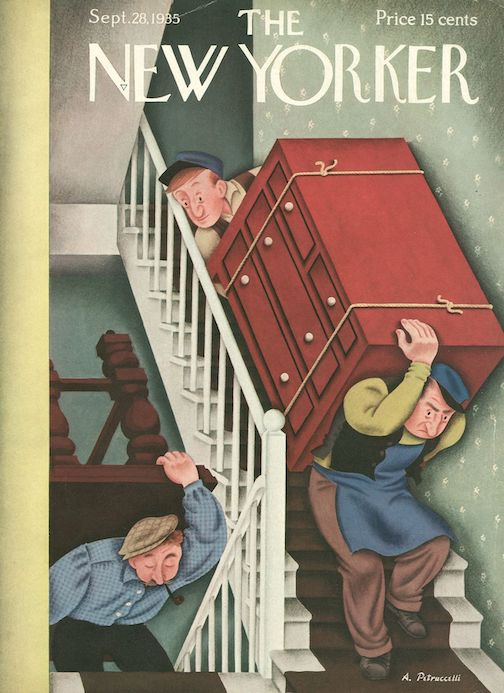
Sept. 28, 1935 cover by Antonio Petruccelli, who began his career as a textile designer. In addition to four New Yorker covers, Petruccelli (1907-1994) illustrated twenty-four Fortune magazine covers as well as several covers for House Beautiful, Collier’s, Life and other magazines.

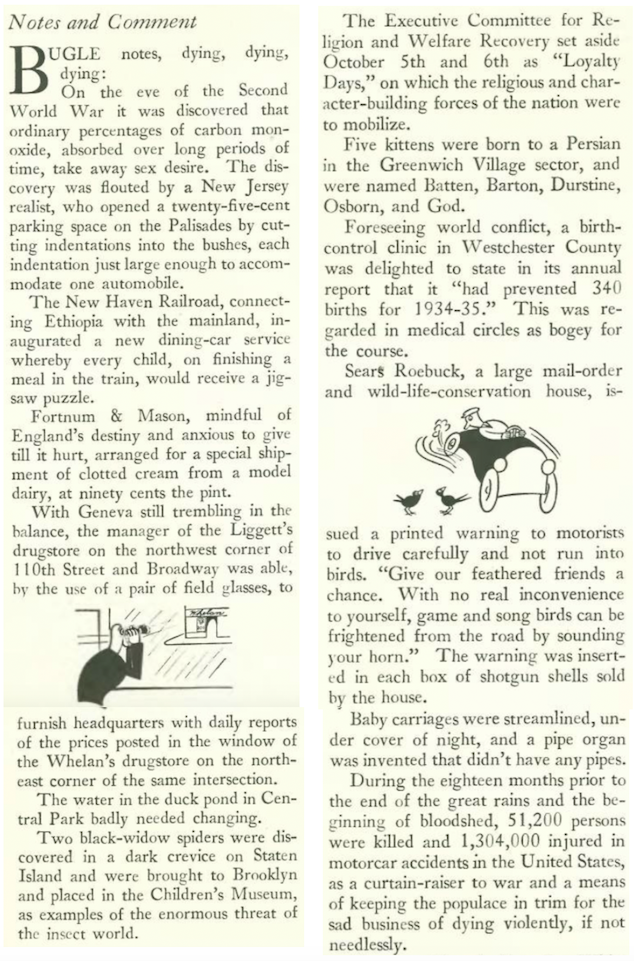
What he accomplished, however, was a collection of snapshots of life in Manhattan and abroad. Here is the first part of E.B. White’s “Notes and Comment” for Sept. 28…
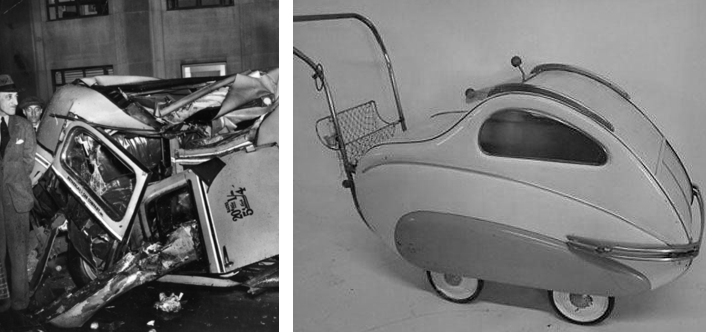
PERENNIAL PROBLEM…E.B. White noted that more than 51,000 Americans died in car accidents in an 18-month span, a number that is oddly similar to today’s statistics (although the U.S. has more than double the population today). At left, photo by Weegee (aka Arthur Fellig) of a wrecked taxicab in New York City, circa 1930s; at right, a streamlined baby buggy, 1930s. (Instagram/Pinterest)

…White also noted a number of cultural events, from airmailed lobsters to a new slogan for the State of Maine…

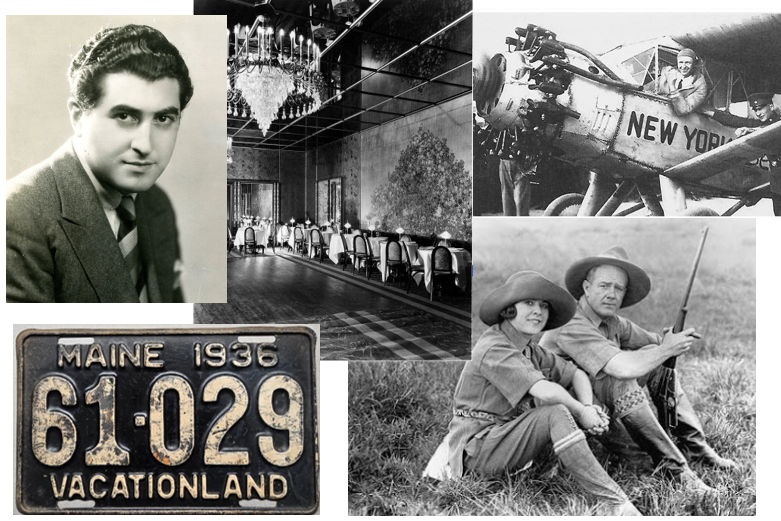
HODGEPODGE…Clockwise, from top left, Leo Reisman brought the sound of music to the beautiful Central Park Casino ballroom (adjoining photo), which was designed by Joseph Urban; in 1927 Clarence Chamberlain became the second man to pilot a fixed-wing aircraft across the Atlantic and the first to carry a transatlantic passenger—in 1935 he accepted a contract from boxer/restauranteur Jack Dempsey to fly two-hundred Maine lobsters to NYC; safari film celebrities Osa and Martin Johnson bought a picnic basket at Abercrombie & Fitch; the state of Maine announced plans to add “Vacationland” to license plates—a slogan still in use today. (IMDB/centralpark.org/alchetron.com/ebay)

 * * *

Class Acts

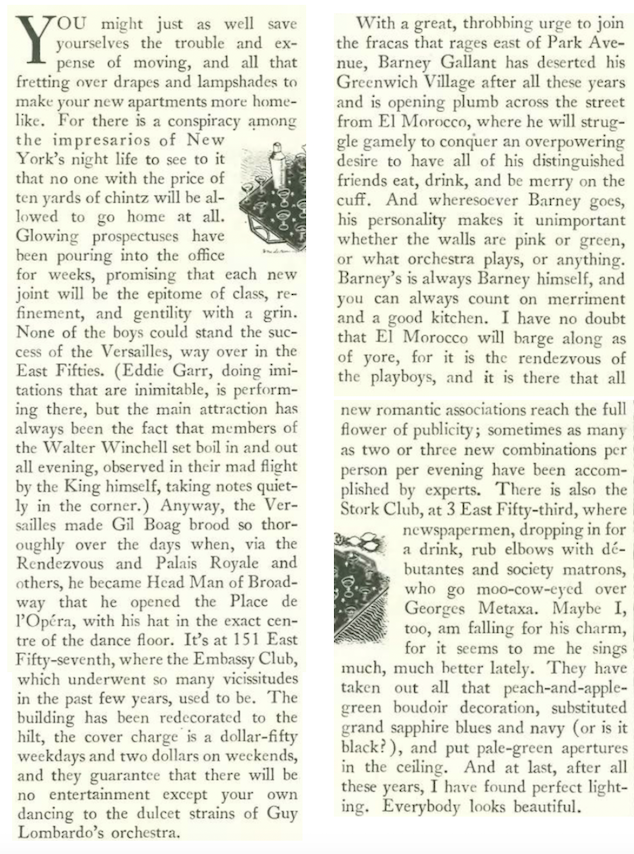
Lois Long continued to chronicle the nightlife scene in her “Tables For Two” column, observing the efforts of nightclub impresarios to promote their establishments as epitomes of sophistication.

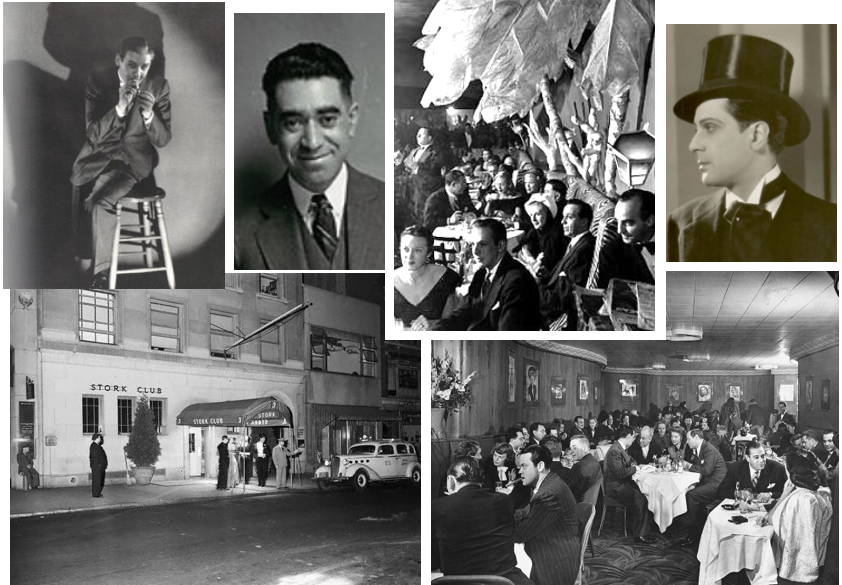
WHY GO HOME?…Lois Long noted the many reasons why New Yorkers might stay out into the wee hours. Clockwise, from top left: Gossip columnist Walter Winchell as photographed by Edward Steichen in 1930; nightclub impersario and former Village speakeasy king Barney Gallant; the exclusive confines of El Morocco; Romanian-born American crooner and actor Georges Metaxa made the society ladies swoon at the Stork Club; the Stork Club’s Cub Room in 1944 occupied by Orson Welles (left) among other notables; entrance to the club, 1930s. (CondeNast/boweryboyshistory.com/Pinterest/Wikipedia/NYPL)

 * * *

From Rough to Refined

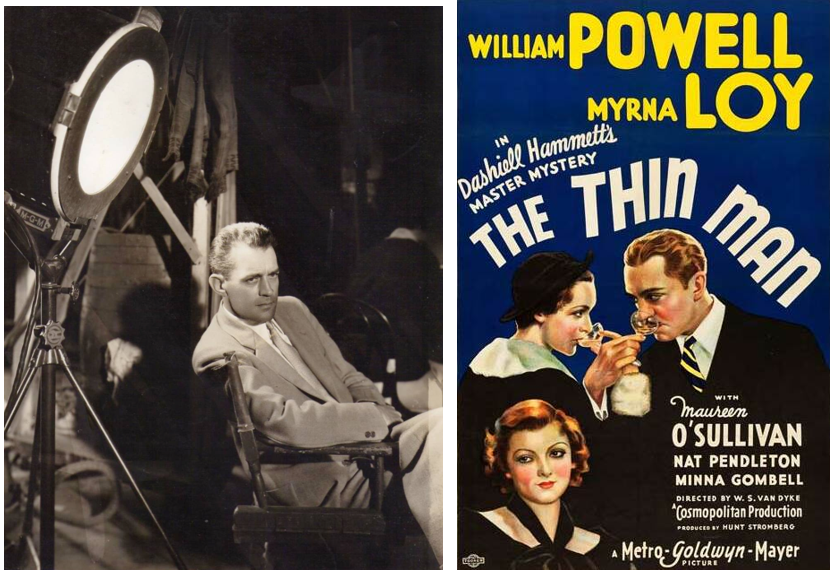
Alva Johnston profiled acclaimed film director W.S. Van Dyke (1889–1943), whom Johnston portrayed as a tough guy who slipped effortlessly from the rough and tumble world of Westerns to the sophisticated heights of high society films such as 1934’s The Thin Man.

LOW TO HIGH…W.S. Van Dyke moved from making Westerns to more sophisticated fare including 1934’s The Thin Man. (Facebook/Wikipedia)

 * * *

Silly Mystification

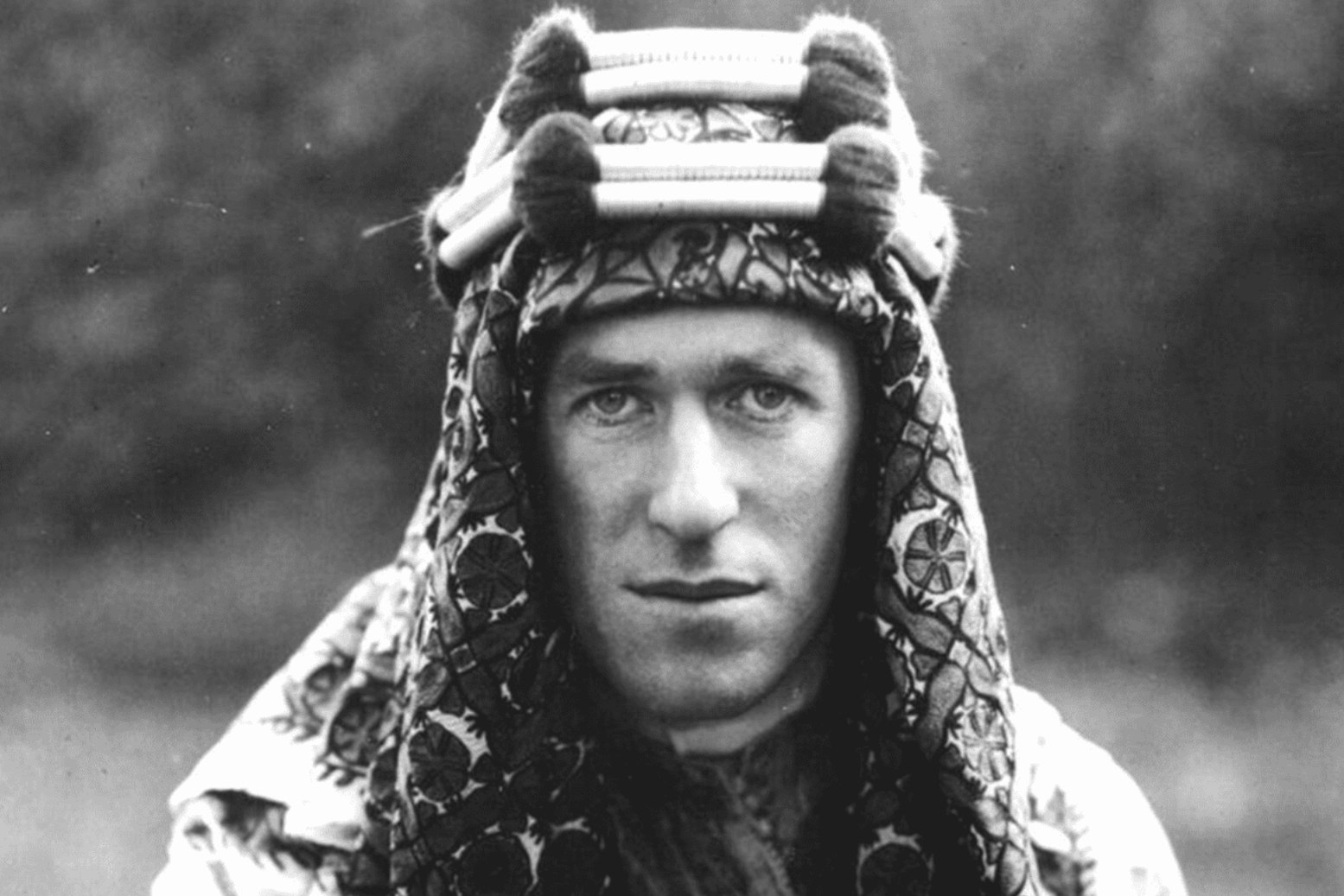
Book reviewer Clifton Fadiman began his review of T.E. Lawrence’s Seven Pillars of Wisdom by first clearing the air about the enigmatic writer and diplomat who had recently died in a motorcycle accident. “Wittingly or unwittingly, willingly or unwillingly, he exhaled during his lifetime a vapor of silly mystification,” Fadiman wrote about Lawrence, who was known to embellish accounts of his adventures in the Arab world. Here is an excerpt of the review:

LITERARY COSPLAY…T.E. Lawrence (1888-1935) in an undated photo. Writing for the New Criterion, David Fromkin noted the importance of Lawrence’s prestige to the British Empire. “T. E…was of his time and ours. Of all the public figures of the twentieth century, across a wide range of interests, issues, and attitudes, he best expresses the century. ” (The New Criterion)

 * * *

At the Movies

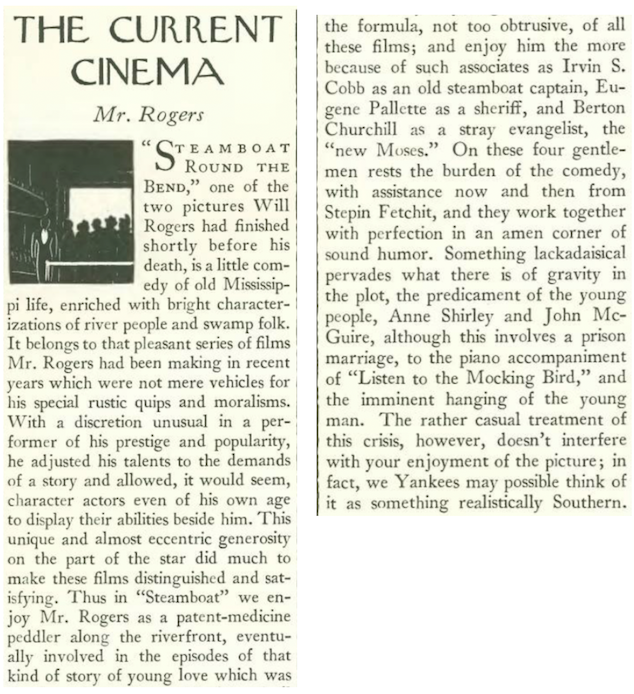
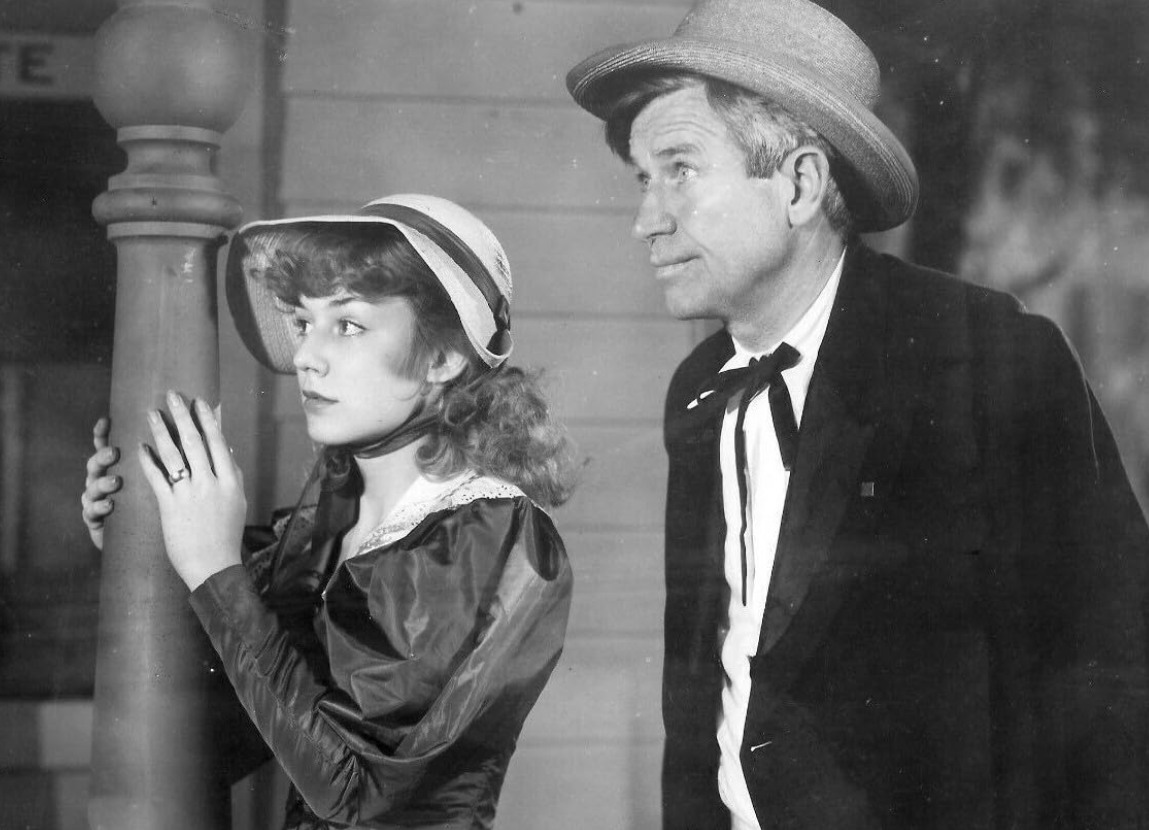
Critic John Mosher reviewed one of Will Rogers’ final films, Steamboat Round the Bend, released just weeks after Rogers’ death in an Alaska plane crash. Mosher found the film “satisfying.”

SOUTHERN CHARM was laid on thick in Steamboat Round the Bend, which featured Anne Shirley and Will Rogers in one of his final film roles (Rogers filmed In Old Kentucky before Steamboat, but In Old Kentucky wasn’t released until Nov. 22, 1935).

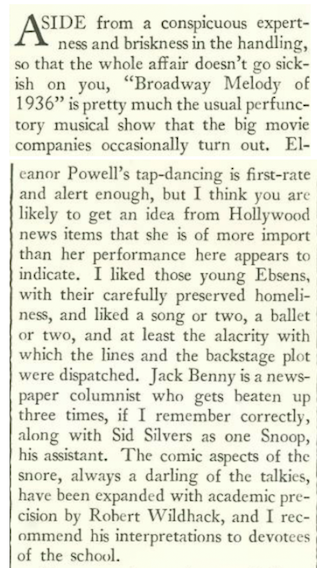
Mosher also took in another “revue” film, Broadway Melody of 1936, which served as a showcase of MGM’s star power.

THE MGM STABLE OF STARS showcased in Broadway Melody of 1936 included, at top, the elegant Eleanor Powell; below, Powell (left) joins brother-sister dancing team Buddy and Vilma Ebsen in a down-home skit. Buddy Ebsen’s “carefully preserved homeliness” (quoting John Mosher) served him well 27 years later when he was cast as Jed Clampett in TV’s The Beverly Hillbillies. (IMDB)

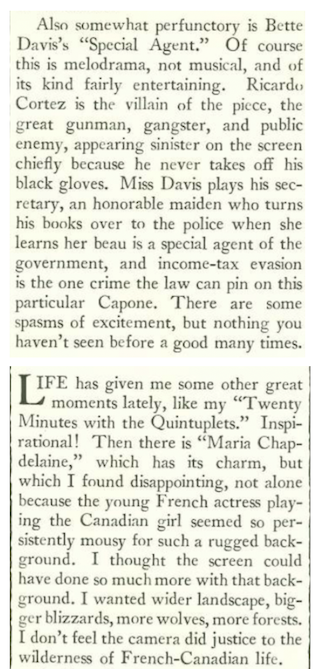
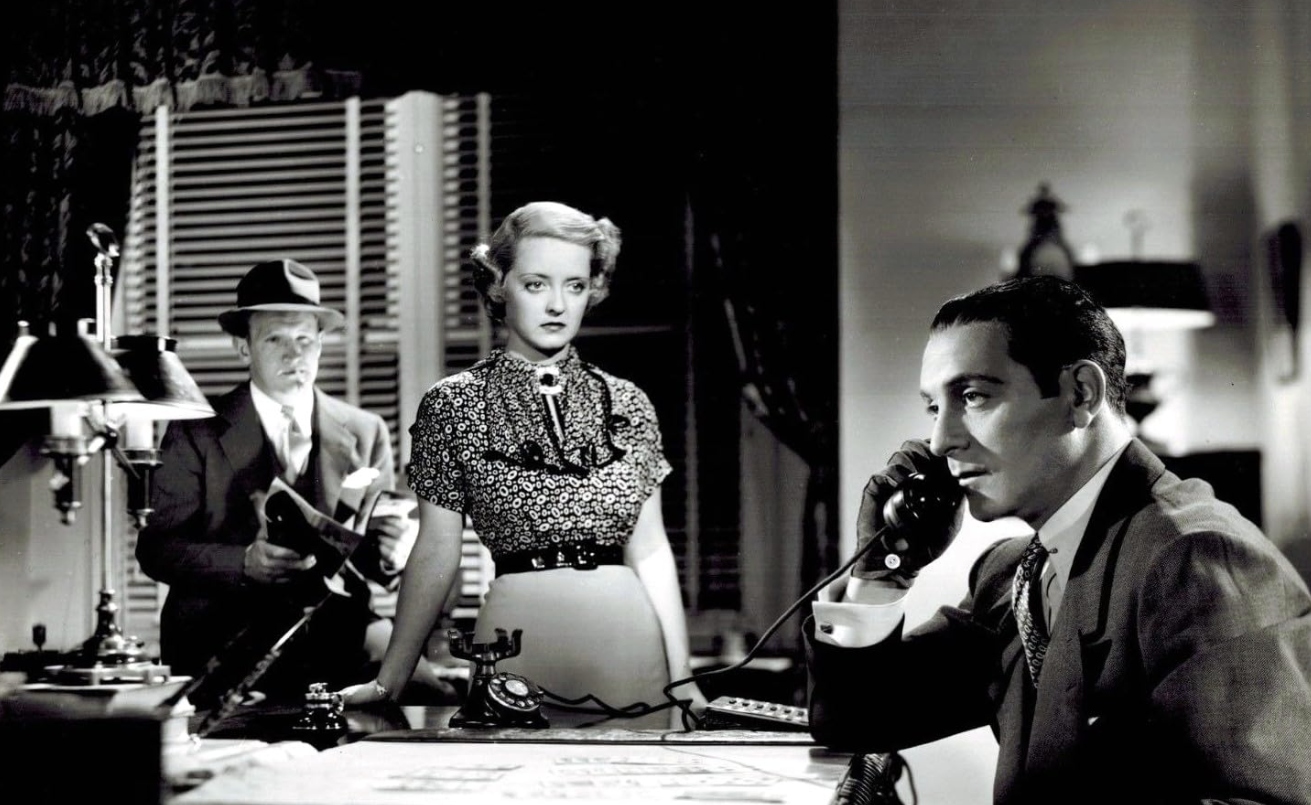
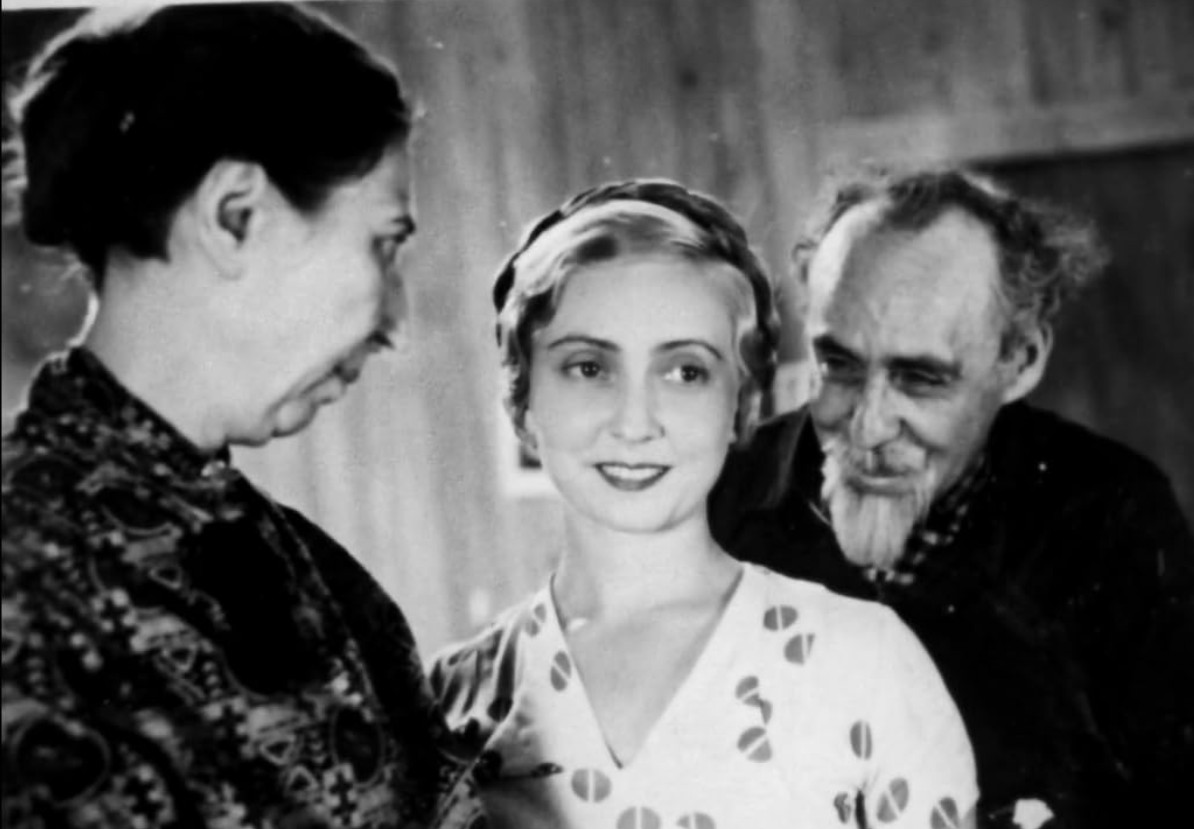
Mosher also endured a “perfunctory” performance by Bette Davis in Special Agent, and a “mousy” Madeleine Renaud in Maria Chapdelaine.

PHONING IT IN…Joe Sawyer, Bette Davis and Ricardo Cortez in Special Agent. (IMDB)
NOT GAGA-WORTHY…Critic John Mosher thought French actress Madeleine Renaud (center) was too “mousy” to be cast against the rugged beauty of the Canadian frontier in 1934’s Maria Chapdelaine. Based on a romance novel written in 1913 by the French writer Louis Hémon, the film cast Renaud as a young woman enduring the hardships of rural Quebec while she is pursued by three suitors. An IMDB reviewer writes that this early Julien Duvivier film “is mostly of pictorial interest: the location shooting in Quebec is impressive, but the story is thin-to-nonexistent. Madeleine Renaud is cute but not magnetic enough to have three men going absolutely gaga over her.” (IMDB)

  * * *

From Our Advertisers

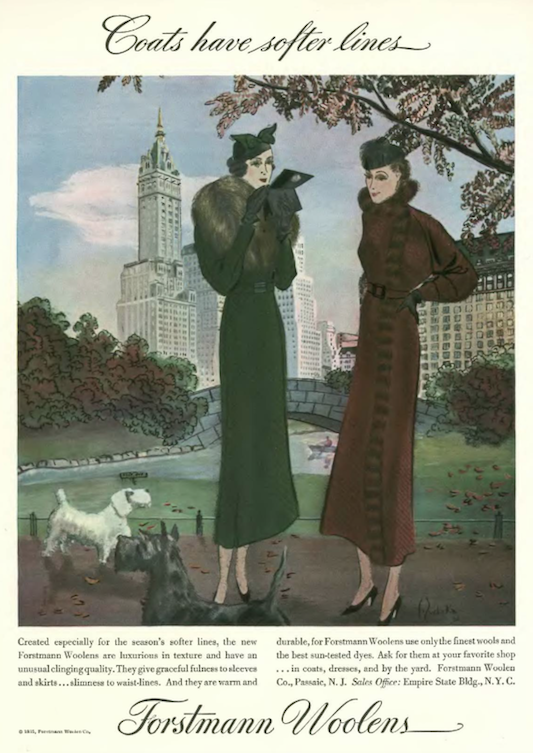
Forstmann Woolens kicks off our advertisements with this image of attenuated women posed in the autumnal landscape of Central Park…

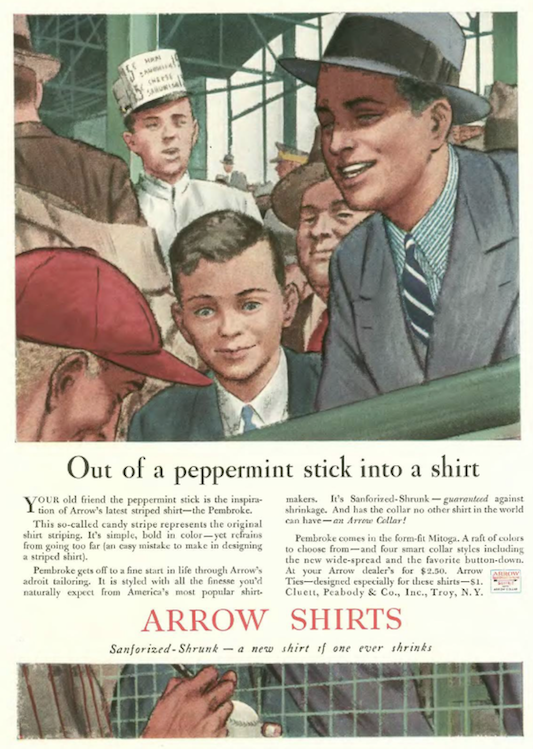
…what is notable about this Arrow Shirts ad is the formal attire of father and son at a baseball game, not at all unusual in 1935…

…Seagram’s continued its aggressive campaign to promote its lineup of seven “masterpieces”…

…Coca-Cola also had a substantial war chest, marketing its product for home consumption, which still seemed to be somewhat novel…

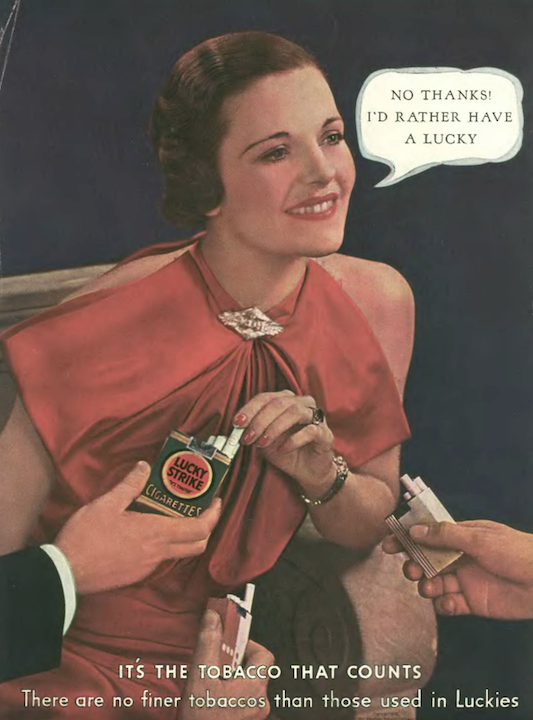
…the back page ad went to the makers of Lucky Strike, pursuing that growing market of women smokers…

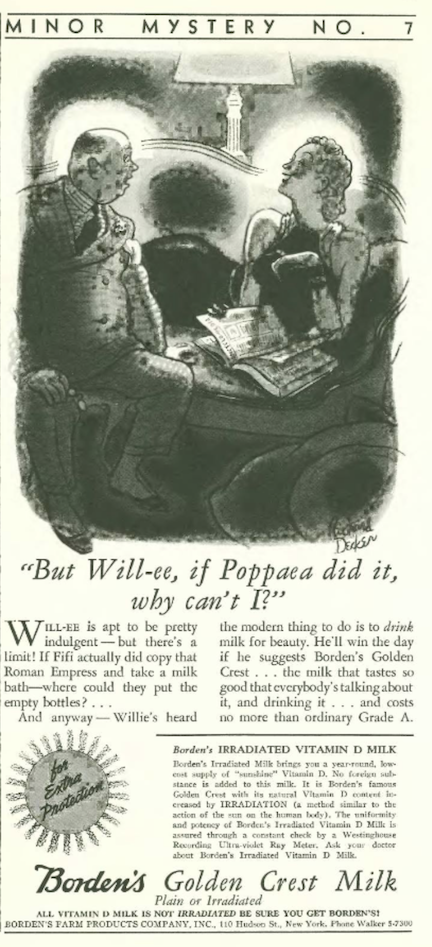
Richard Decker drew up an ad for a more wholesome product…

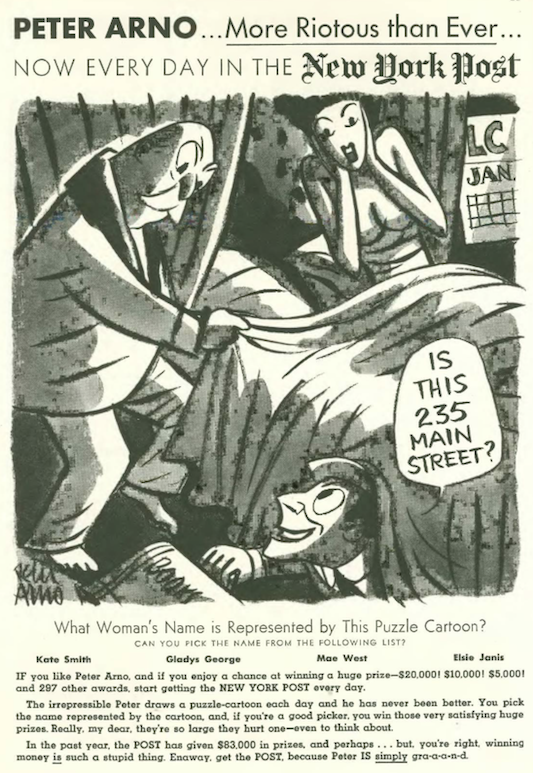
…while Peter Arno put pen to paper to promote his “puzzle-cartoons” in the New York Post

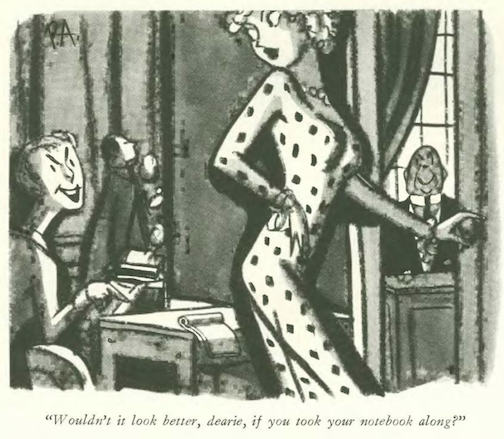
…which segues to our cartoon section, and Arno again with some office hijinks…

Christina Malman’s wonderfully unique spot art was making regular appearances in the magazine’s pages…

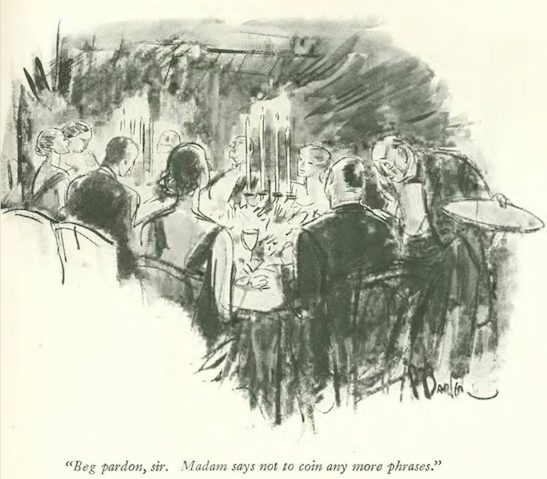
Perry Barlow served up some dinnertime etiquette…

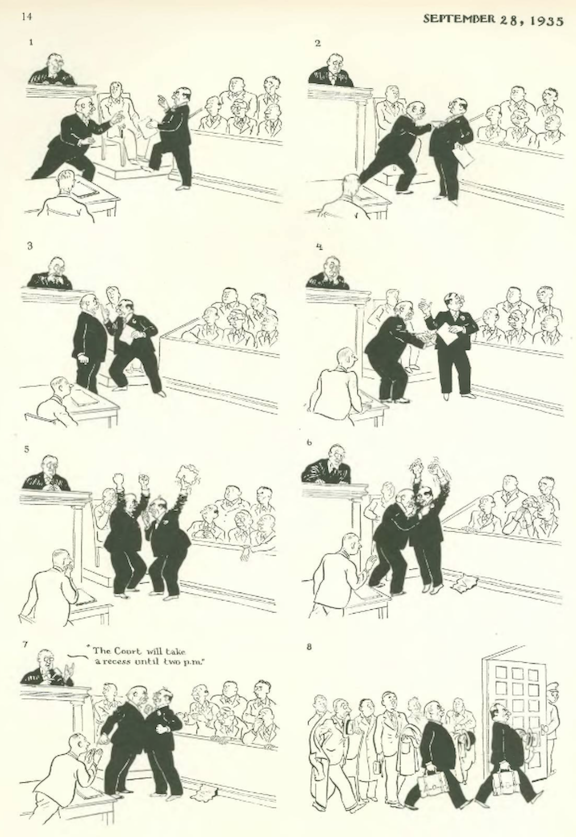
Carl Rose found order in the court…

James Thurber continued to mesmerize…

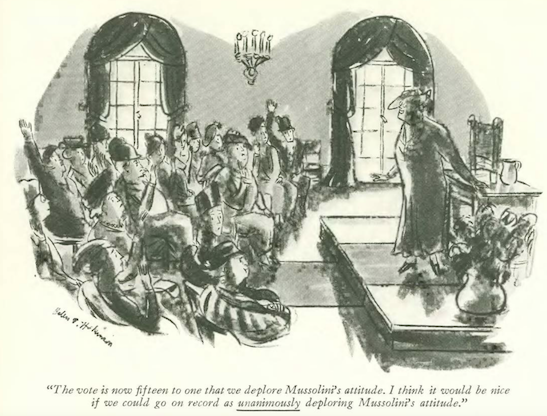
Helen Hokinson’s Ladies Club took a stand against fascism…

Alan Dunn looked in on a polite perp…

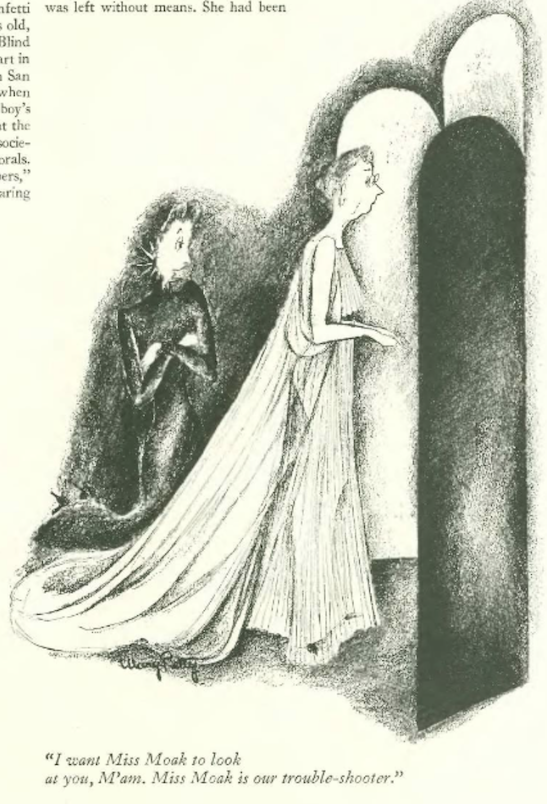
Mary Petty encountered a challenge in a dress shop…

Gilbert Bundy revealed an odd duck among the fox hunters…

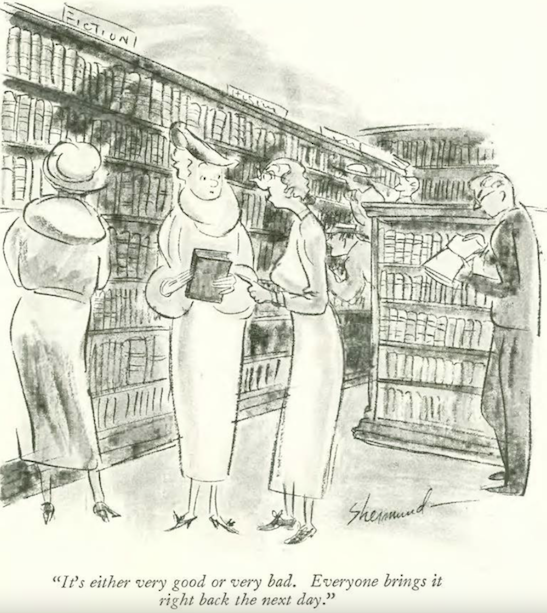
…and we close with Barbara Shermund, ready to curl up with a good (or bad) book…

Next Time: School Days…

Not for the Kiddies

Over the years Tod Browning’s 1932 pre-code film Freaks has been called everything from grotesque and exploitive to sympathetic and compassionate. Now a cult classic, the film’s closing scenes are regarded by some critics as among the most terrifying ever put to film.

July 16, 1932 cover by Rea Irvin.

What disturbed so many about Freaks was Browning’s use of actual sideshow performers with real disabilities to tell the story of a conniving trapeze artist who plots to seduce and then kill a dwarf performer to gain his inheritance. The film was not well-received by audiences and many critics. The Kansas City Star’s John Moffitt wrote, “There is no excuse for this picture. It took a weak mind to produce it and it takes a strong stomach to look at it.” However, The New Yorker’s John Mosher, along several other New York critics, gave the film a rather favorable review:

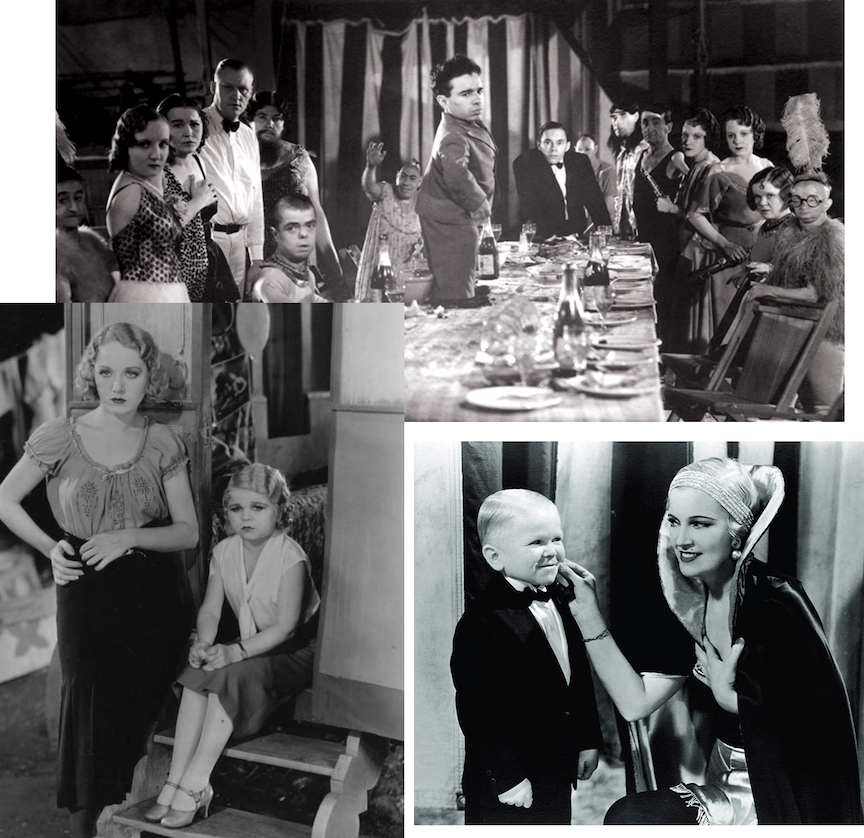
ONE OF US…Although audiences and critics found Tod Browning’s 1932 film Freaks grotesque and exploitive, today many regard the film as a rare (for its time), sympathetic portrayal of persons with disabilities. Clockwise, from top left, Browning with some of the members of his Freaks cast; French-American actress Rose Dione portrayed Madame Tetrallini, operator of the sideshow; Daisy and Violet Hilton with actor Wallace Ford in a scene from Freaks. Born fused at the pelvis, the sisters were joined at their hips and buttocks and shared blood circulation; limbless sideshow performer Prince Randian, who wore a one-piece wool garment over his body, appeared in the film as “The Living Torso.” (IMDB)
IT HAD A PLOT, ACTUALLY…Freaks told the story of a conniving trapeze artist named Cleopatra (portrayed by Russian actress Olga Baclanova, bottom right) who plots to seduce and then kill a dwarf performer, Hans (portrayed by Harry Earles) to gain his inheritance. Top photo: assembled “freaks” chant their acceptance of Cleopatra at the wedding feast of Hans and Cleopatra; bottom left, the kind-hearted seal trainer Venus (portrayed by Leila Hyams) consoles Frieda (Daisy Earles), who worries about Hans (Daisy and Harry Earles were members of a famous quartet of sibling entertainers known as The Doll Family. The quartet also appeared as members of The Munchkins in 1939’s The Wizard of Oz.)(IMDB)
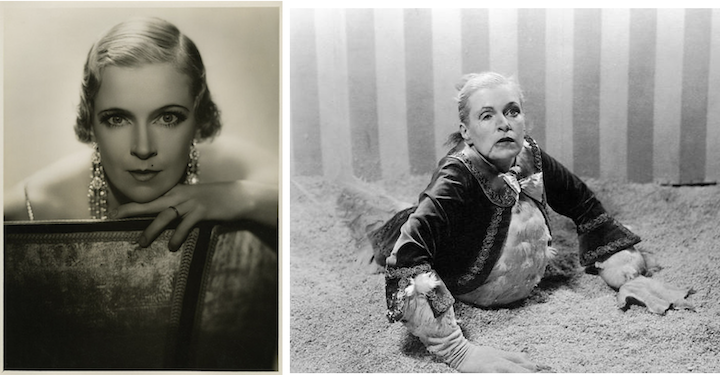
SURPRISE…Leila Hyams (1905–1977) was something of a surprising presence in the controversial film Freaks, given that she was a popular leading lady in the 1920s and 30s. Known for both her comedic and dramatic talents, she retired from films in 1936; another unlikely cast member was Henry Victor (1892–1945) whose physique didn’t necessarily support his role as circus strongman. (dangerousminds.net)
TRUE GRIT…Perhaps only a Russian actress in 1932 had the grit to transform herself from an exotic blonde temptress to a grotesque “human duck” for the movie Freaks. In the film, Olga Baclanova (1893 – 1974) portrayed a conniving trapeze artist named Cleopatra. Near the end of film the “freaks” capture Cleopatra, gouge out her right eye, remove her legs and tongue and melt her hands to look like duck feet. For critics and audiences, the horror was just too much. As for Baclanova — who was a popular silent film actress known as the “Russian Tigress” — her heavy accent did not translate well to talking films, and she left the movie business altogether in 1943. (muni.com/IMDB)

 *  *  *

Tennis Anyone?

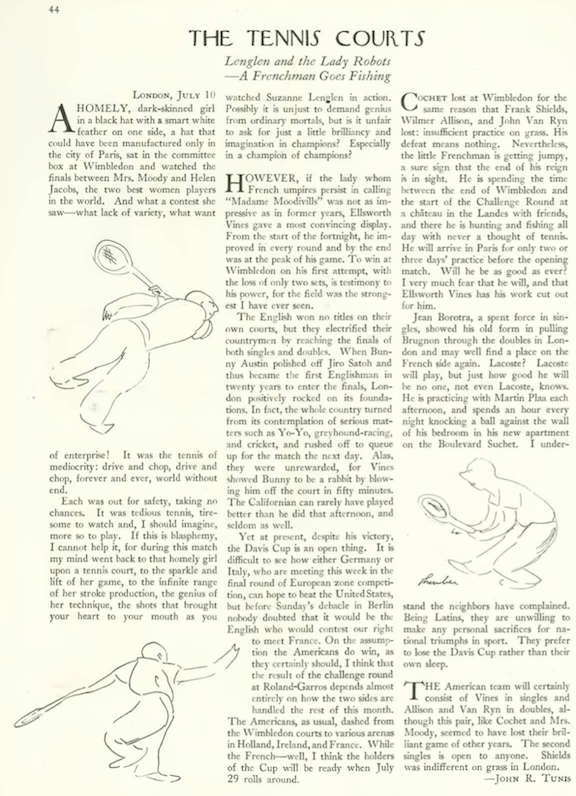
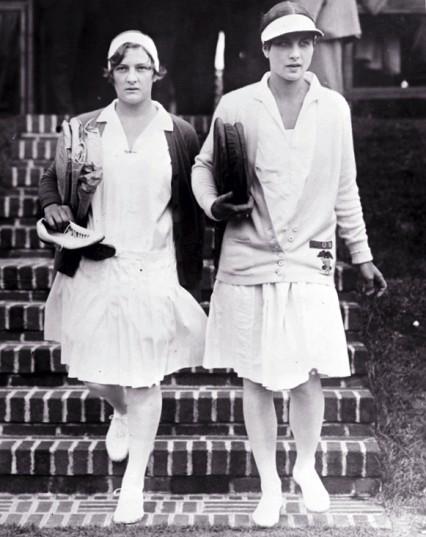
Helen Moody was the top women’s singles tennis player for nearly a decade in the 1920s and 30s, winning Wimbledon eight times, including a match in 1932 against her rival Helen Jacobs. However to sportswriter John Tunis, the women had reached such a level in their play that it had become robotic and tedious to watch. At least James Thurber livened things up with some keen illustrations.

RACKETEERS…Helen Jacobs (left) and Helen Moody (right, in a 1929 photo) were tennis rivals known for their explosive matches. Except, apparently, for the one attended at Wimbeldon in 1932 by John Tunis. (nickelinthemachine.com)

 *  *  *

From Our Advertisers

Sensing that the end of Prohibition was near, the makers of Budweiser reminded readers of the good ol’ days of beer drinking and such…

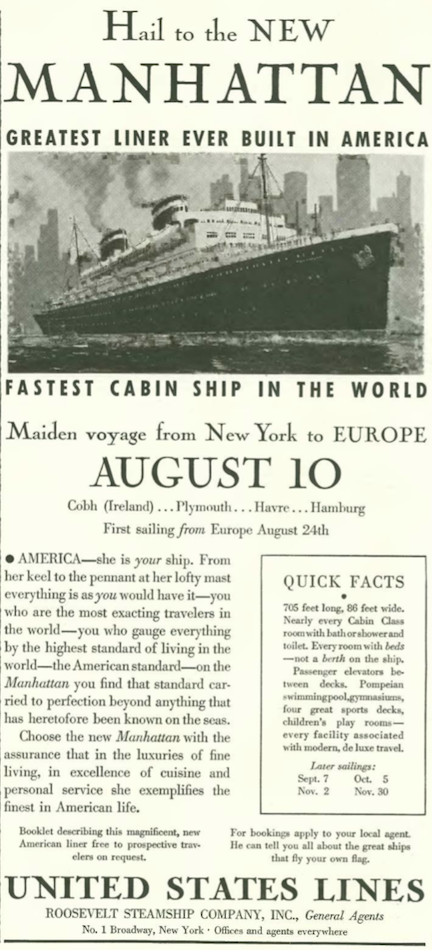
…if you could afford something better than beer, then you might have contemplated a trip on the SS Manhattan, which along with her sister ship SS Washington were the largest liners ever built in the US…

TO AND FRO…Beginning in August 1932 the SS Manhattan operated the New York – Hamburg route until 1939, when instead of taking passengers to Germany the ship began taking Jewish refugees and others away from Nazi-occupied Europe. It was turned into a troopship in 1941 and never returned to commercial service. The SS Manhattan was sold for scrap in 1965. (cruiselinehistory.com)

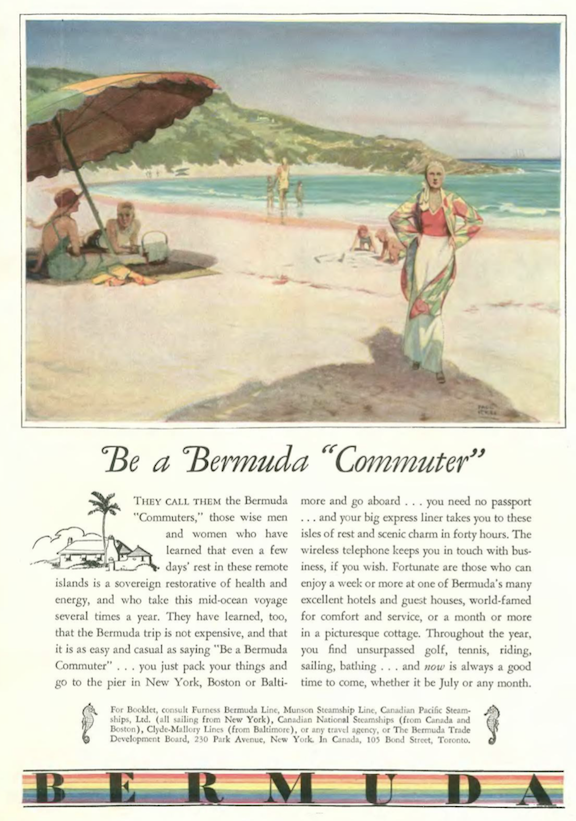
…if your thing wasn’t traveling to Germany to see that country being transformed into the Third Reich, you could instead become a Bermuda “Commuter”…

…back home, William Steig joined other New Yorker cartoonists who earned extra money off of the big tobacco companies…

…which segues into our cartoonists, beginning with Victor Bobritsky’s illustration for “Goings On About Town”…

Otto Soglow offered more Little King adventures…

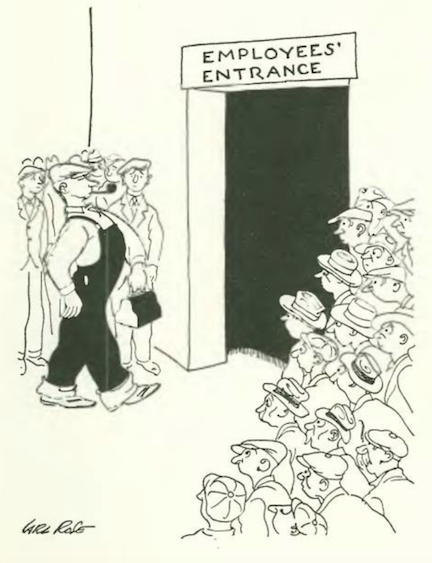
…and Carl Rose gave us a man striding into a factory, apparently a rare sight in 1932…

…on to July 23…

July 23, 1932 cover by Antonio Petruccelli (1907 – 1994). This is the first of six covers Petruccelli created for the New Yorker from 1932 to 1938. He also did numerous covers and illustrations for Fortune, Colliers and other publications.

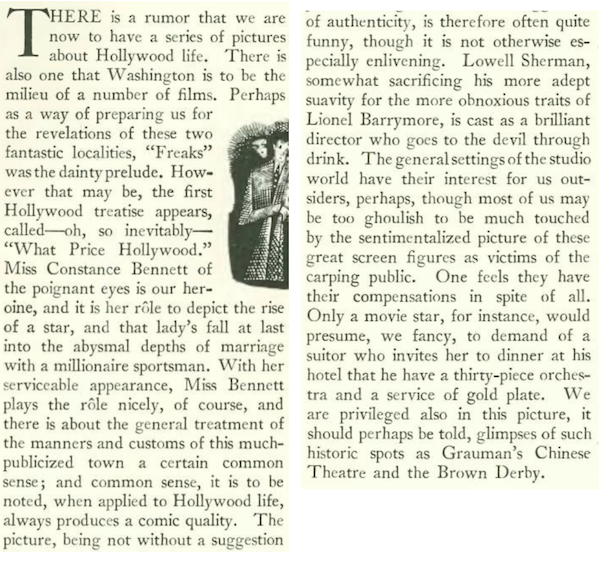
…and we have another John Mosher film review, in which he refers to Freaks as a “dainty prelude” to another film about the lives of entertainers, in this case George Cukor’s What Price Hollywood, a pre-Code drama starring Constance Bennett and Lowell Sherman with a storyline that anticipated 1937’s A Star Is Born—namely, a famous but fading male star who helps an ingénue rise to stardom while he descends into a pit of alcoholic despair.

FUN WHILE IT LASTED…Top image: Waitress and aspiring actress Mary Evans (Constance Bennett) has the good fortune to meet film director Maximillan Carey (Lowell Sherman) when she serves him one night at the Brown Derby. Bottom: Mary and her polo player boyfriend Lonny Borden (Neil Hamilton) look down with pity at the down-on-his-luck Maximillan in What Price Hollywood? (Wikipedia/IMDB)

 *  *  *

From Our Advertisers

Originally published by Adam Budge, Inc. in 1910 and later by Joseph Judd Publishing and others, Arts & Decoration magazine hoped to stay alive in the Depression with a promise that its August 1932 issue would be “compellingly readable”…

…and here is the cover of that issue…Arts & Decoration would hang on for another ten years before folding in 1942…

…one of the stars of Ziegfeld Follies of 1931 was actress and dancer Patricia Boots Mallory (1913 – 1958), who posed for this portrait to demonstrate the wonders of color reproduction…

…and here’s Boots Mallory in a scene from the 1932 film Handle With Care with comedian Elmer “El” Brendel (standing) and actor James Dunn

…not everyone could be a movie star, but you could pretend to be one in this swell new (and low-priced) DeSoto…Walter Chrysler must have laid out some big bucks for this two-page color spread…

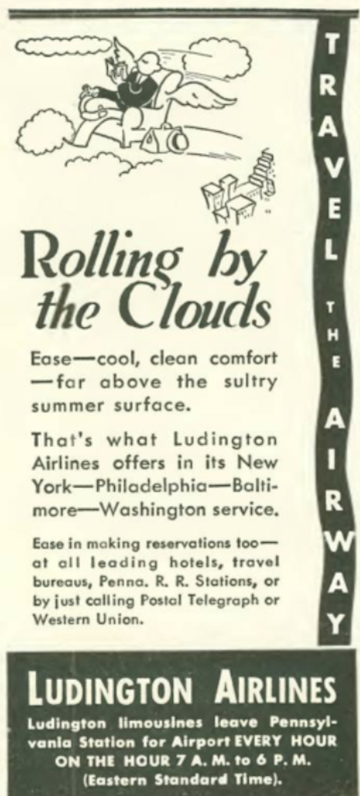
…for those with greater means you could skip the roads altogether and fly the friendly skies of Ludington Airlines…the airline was founded by wealthy New York socialite Charles Townsend Ludington and his brother Nicholas…

…founded in 1929, Ludington Airlines was the first airline with flights every hour on the hour and the first to carry passengers only (others carried mail, an important source of revenue). The airline offered service between Washington, D.C. and New York City—with stops in Philadelphia, Baltimore, Norfolk, Virginia, Nashville and Knoxville, Tennessee—using seven Stinson tri-motor 6000 aircraft in its fleet, each carrying up to ten passengers…the airline went bankrupt in 1933 (mostly due to the lack of mail revenue) but left behind an astonishing record—in its first two years it flew more than 3.4 million miles and carried 133,000 passengers, a record at the time…

A Stinson SM-6000 airliner similar to the type flown by Ludington Airlines from 1929 to 1933.

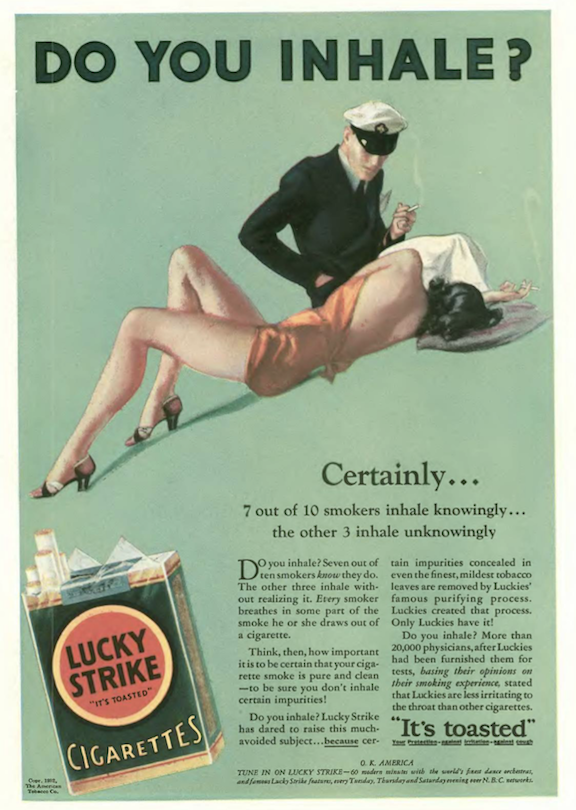
…back to earth, sort of, we have this Lucky Strike ad with the famed “Do You Inhale?” campaign that oozed innuendo and no doubt prompted a few young men to take up the habit posthaste…

…on to cartoons, beginning with this spot art by James Thurber

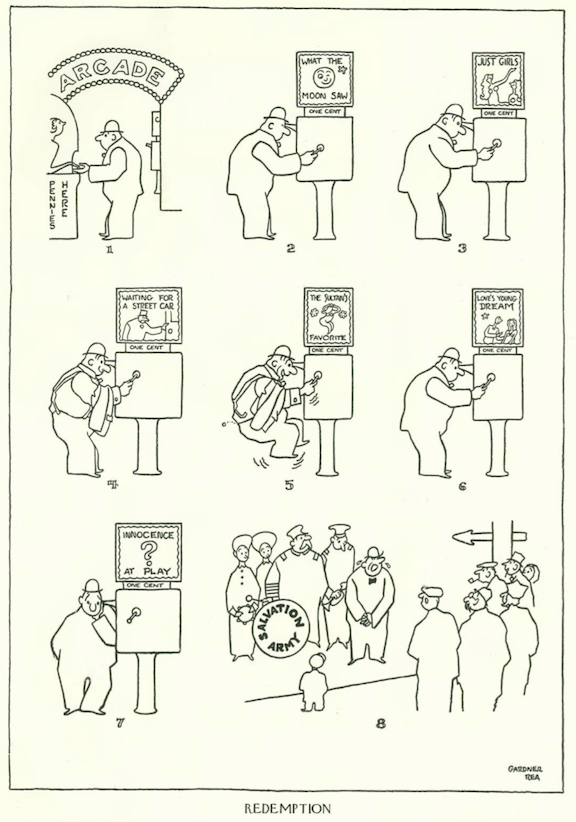
Gardner Rea showed us a man getting his nickel’s worth of sin and repentence…

…and we end with the delightfully unrepentant Peter Arno

Next Time: Rebecca and the Zombies…