The Nov. 6, 1926 issue of The New Yorker was actually two issues, one for the newsstands and subscribers and the other a rare parody issue privately published and presented to founding editor Harold Ross on his 34th birthday.
The cover of the “official” issue (left) for November 6, 1926, was illustrated by William Troy, the parody issue by Rea Irvin.
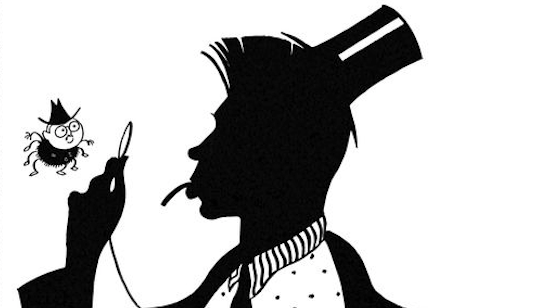
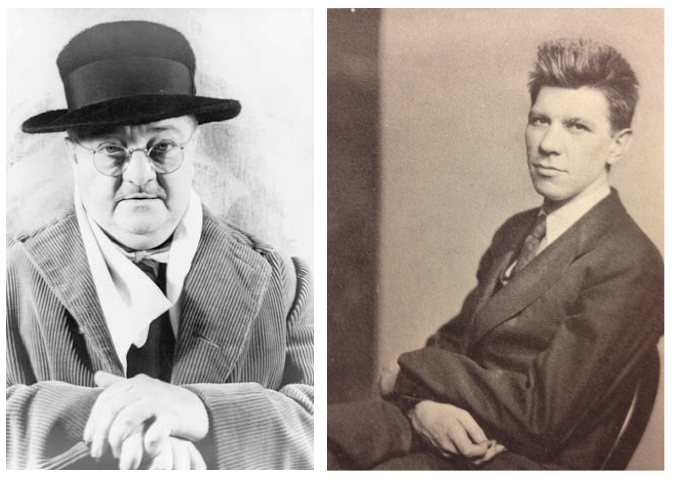
The parody issue’s cover featured a silhouette of Ross (drawn by Rea Irvin, as “Penaninsky”) in the pose of dandy Eustace Tilley, looking at a spider bearing a strong resemblance to Alexander Woollcott, critic and commentator for The New Yorker who first met Ross overseas when the two worked on the fledgling Stars and Stripes newspaper.
OLD PALS…Alexander Woollcott and Harold Ross.(Britannica; Jane Grant Collection, University of Oregon)
Ralph Barton’s contribution to the parody issue…
(From About Town: The New Yorker and the World It Made, By Ben Yagoda)
…and an unsigned contribution that took a poke at Ross’s efforts to create efficient procedures at the magazine’s office:
Excerpt from Defining New Yorker Humor, by Judith Yaross Lee
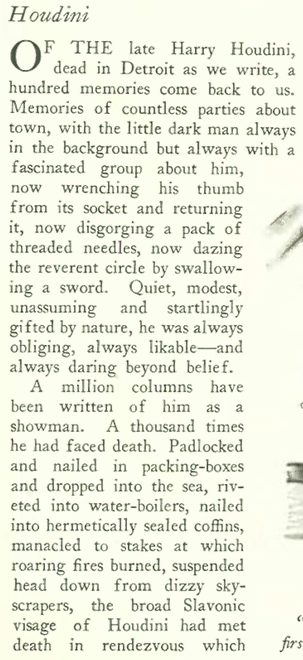
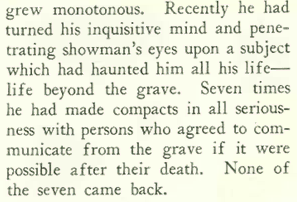
In the other Nov. 6 issue, “The Talk of the Town” editors commented on the death of the famed magician Harry Houdini:
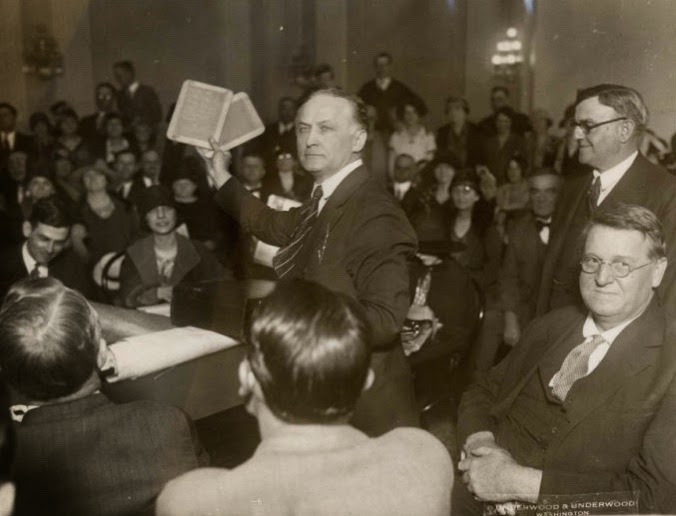
ONE OF HIS FINAL ACTS…Harry Houdini appearing before a Senate committee to expose fake spiritualists in February 1926. (wildabouthoudini.com)
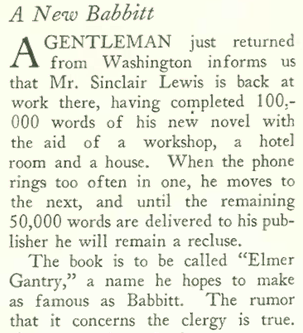
“Talk” also noted a new book called Elmer Gantry was being penned by Sinclair Lewis:
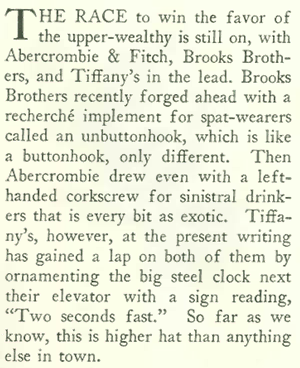
The book was a biting satire of the hypocrisy of fanatical preachers during the 1920s. It created a public furor when it was published in 1927. Another “Talk” item mocked the taste of wealthy New Yorkers for the latest exotic gadgets…
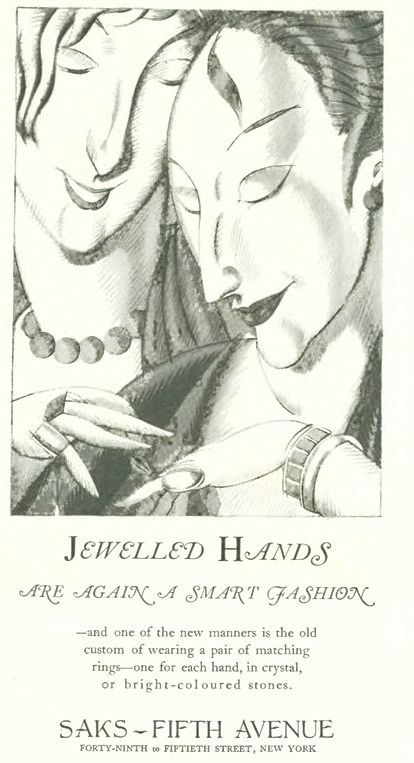
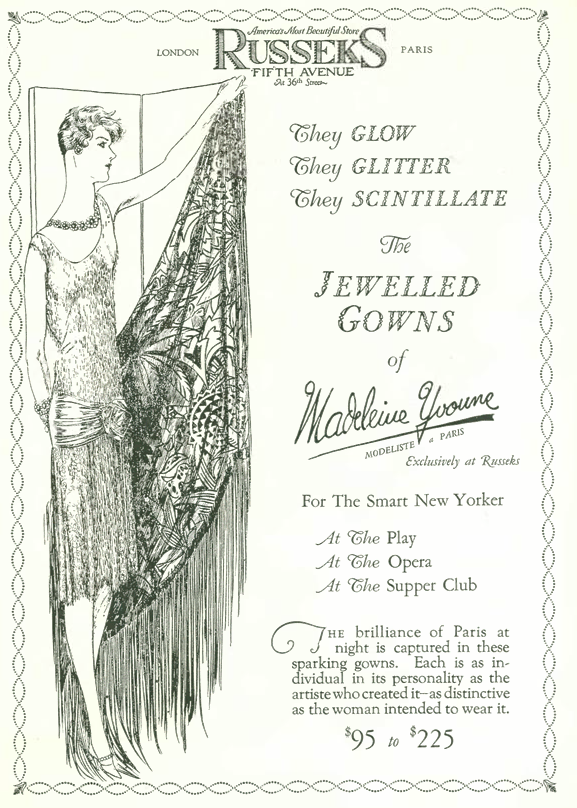
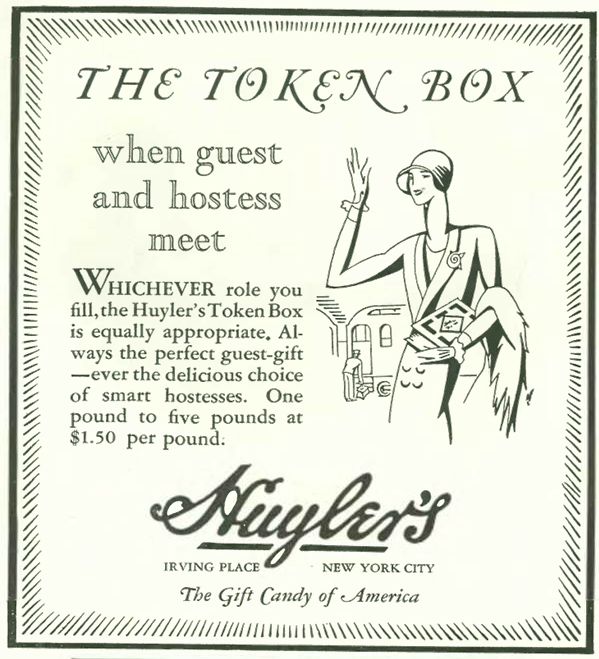
…but the same issue was also filled with the usual advertisements appealing to those very same desires of the Smart Set. Here’s a couple of gems, so to speak…
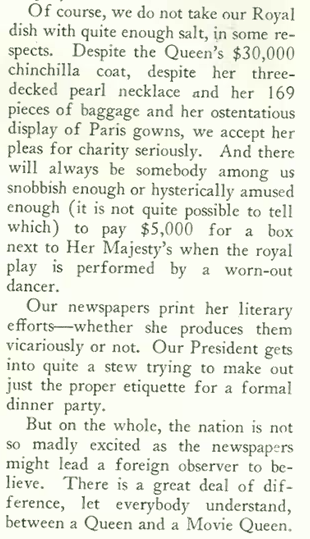
Perhaps because they’ve never had a monarchy, Americans have always been a little nuts over European royalty, even the lesser kings and queens.
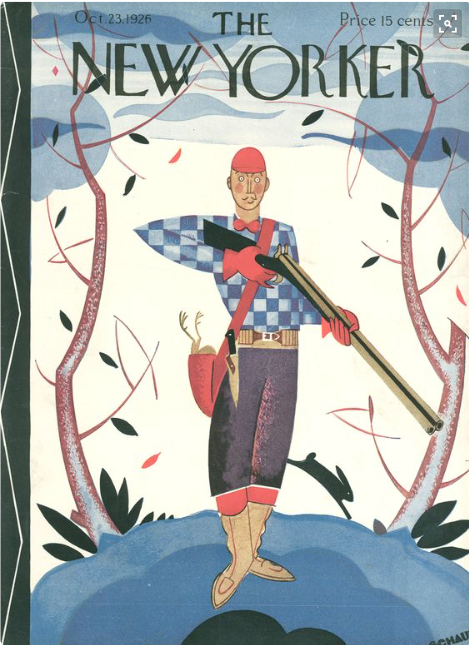
October 23, 1926 cover by Andre De Schaub.
In the lesser category was the Queen Marie of Romania, whose name and exploits appeared frequently in the pages of the early New Yorker. As early as Issue #4 (March 14, 1925), the magazine was reporting that New Yorkers were “agog” about a possible visit from Her Majesty, and that the North American Newspaper Alliance had offered her a contract to write her impressions of the United States.
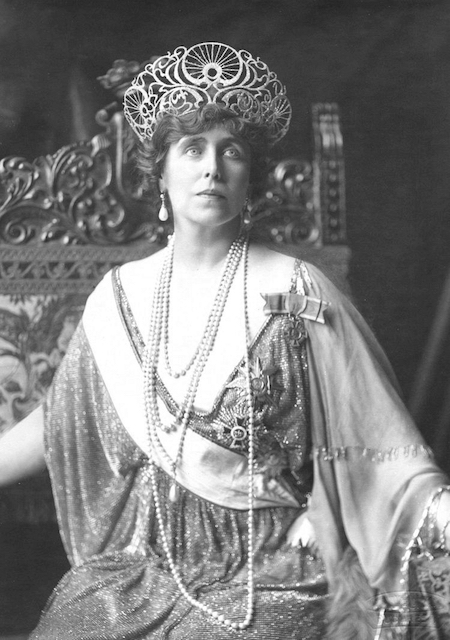
Queen Marie of Romania (Library of Congress)
The Queen filled the pages of both the Oct. 23 and Oct. 30 issues as she finally made her way to the American shores. “Of All Things” observed…
“Trudy” referred to above was New Yorker Gertrude Ederley, still basking in her fame as the first woman to swim the English Channel.
Now some background on The Queen: She born into the British royal family, titled Princess Marie of Edinburgh at birth. After refusing a proposal from her cousin (the future King George V), she was chosen as the future wife of Crown Prince Ferdinand of Romania, the heir apparent of King Carol I, in 1892. She was the last Queen consort of Romania, and her trip to the U.S. would prove to be the last months of her reign (her husband, Crown Prince Ferdinand, would die shortly after her return). Her 5-year-old grandson, Michael, the son of Prince Carol, would ascend to the throne, only to be usurped by his father in 1930 (at this writing Michael is still living. He is currently 94 years old).
Things seemed fairly rosy in October 1926, as Americans awaited the queen and two of her children, Prince Nicholas and Princess Ileana, who were said to be seeking matrimonial matches in the States.
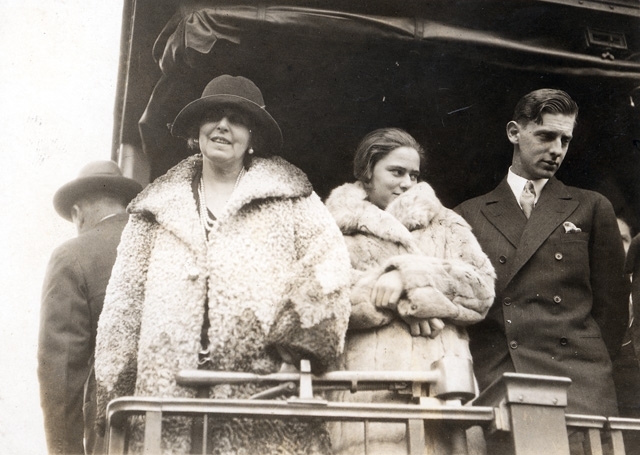
Queen Marie, Princess Ileana, and Prince Nicholas of Romania on their American tour, 1926. (Henley Hamilton)
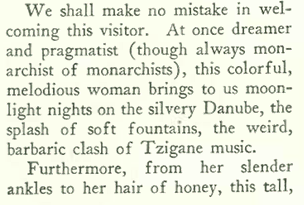
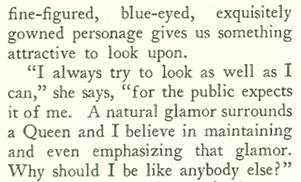
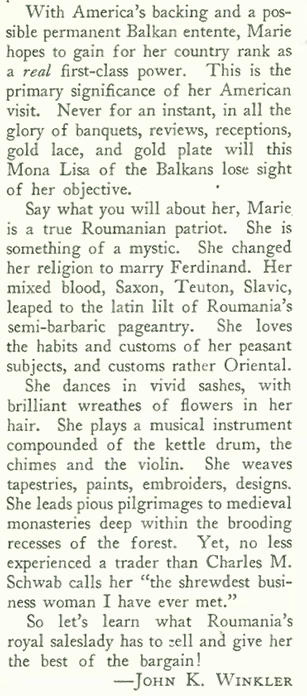
The issue’s “Profile” by John Winkler featured a mostly glowing account of Queen Marie…
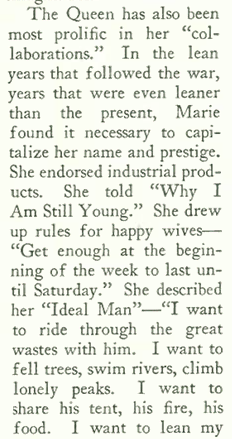
…although it was noted that Queen has to stoop to writing articles and endorsing products for a little extra cash…
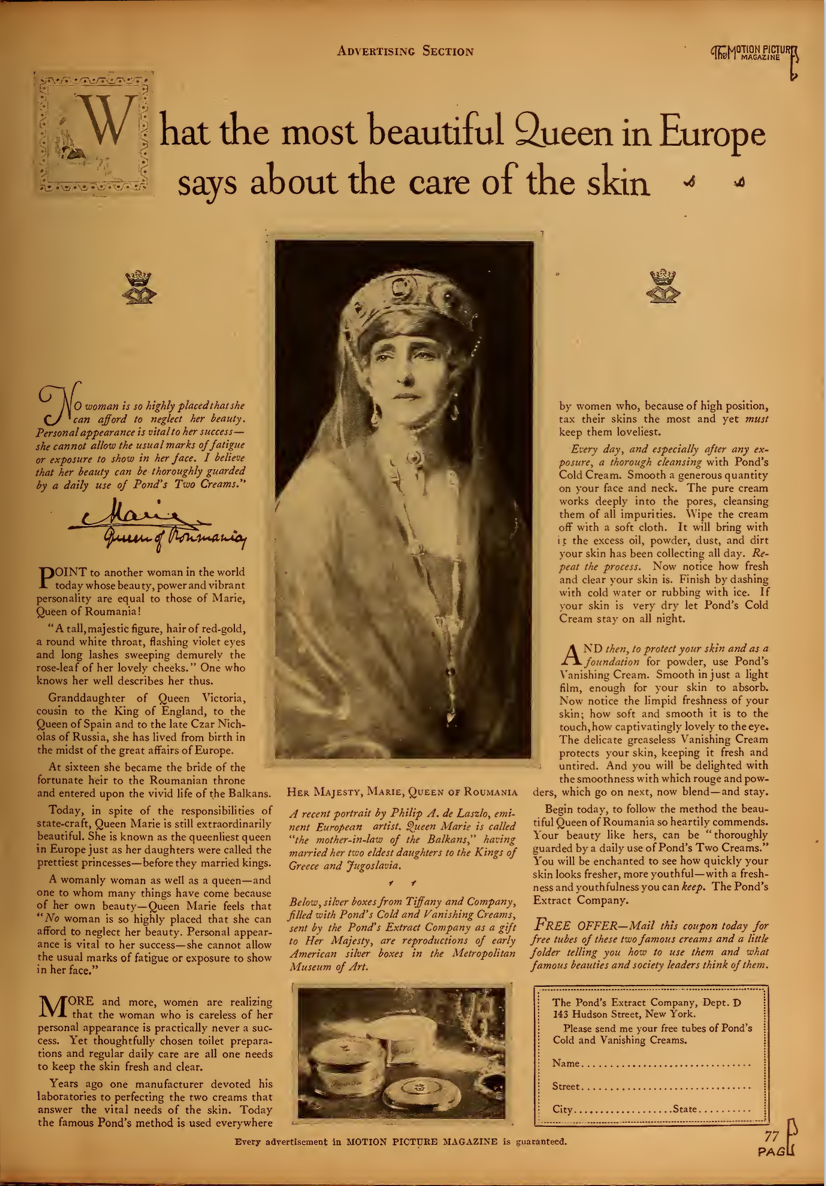
The “Queen of Roumania” and her Pond’s Cold Cream endorsement were featured in this April 1925 ad in Motion Picture magazine. (Image scan)
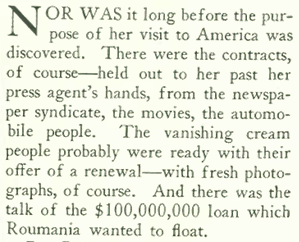
And the Queen would also be seeking a few bucks from Uncle Sam…
The Queen’s visit was even on the mind of one cartoonist (still trying ID):
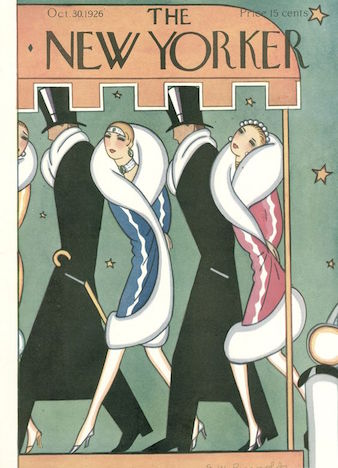
The following week, in the Oct. 30, 1926 issue…
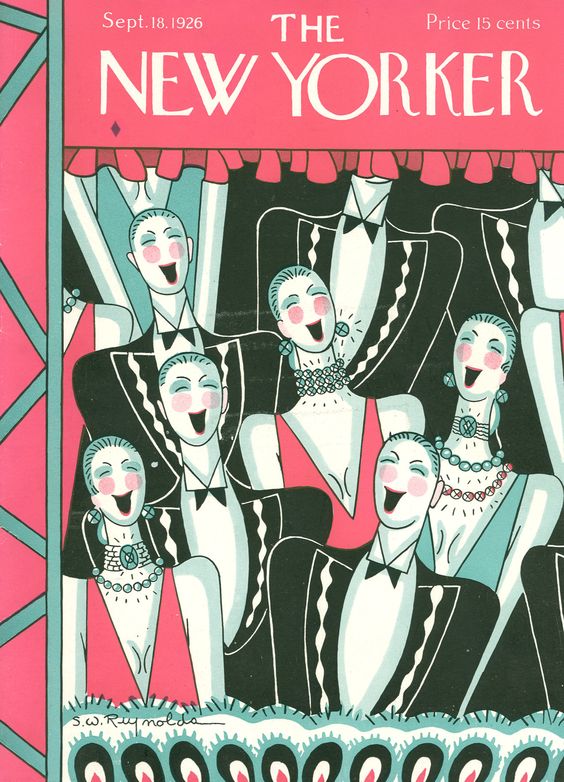
October 30, 1926 cover by Stanley W. Reynolds.
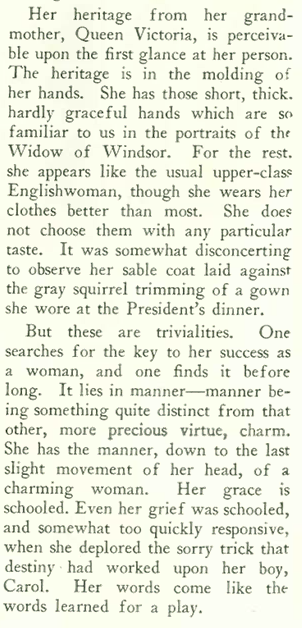
…the magazine offered an account of the Queen’s arrival, courtesy of writer Morris Markey:
Note the observation about the “sorry trick” played on the Queen’s son, Carol. Markey is referring the fact that Carol had waived his rights to succession. Little did anyone know that “her boy” would one day seize the throne and work to discredit her name.
Markey also wryly noted the Queen’s objective to gain financial support from the U.S., even if her outstretched hand was covered in jewels:
No Movie Queen, but she did have a flair for theatrics…
American cinema did little to excite the writers or critics of The New Yorker, who considered European films, and particularly German ones, to be far superior to the glitzy and sentimental fare produced in Hollywood.
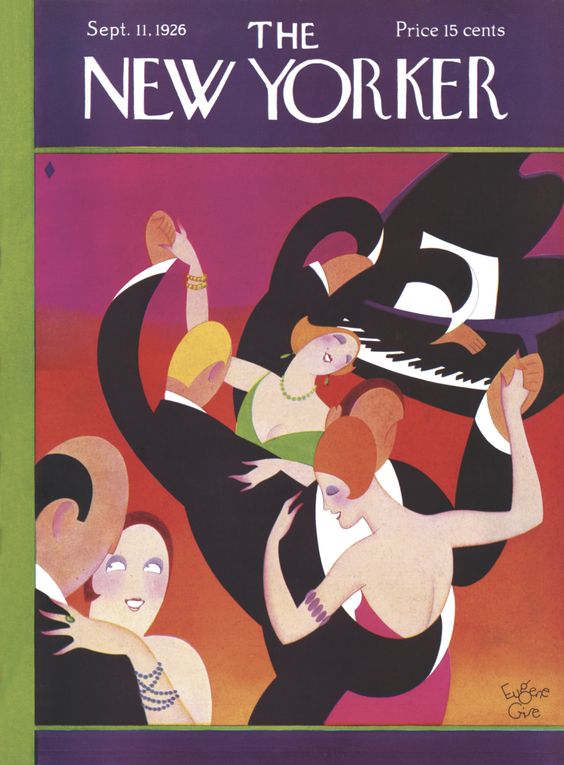
Sept. 11, 1926 cover by Eugene Gise.
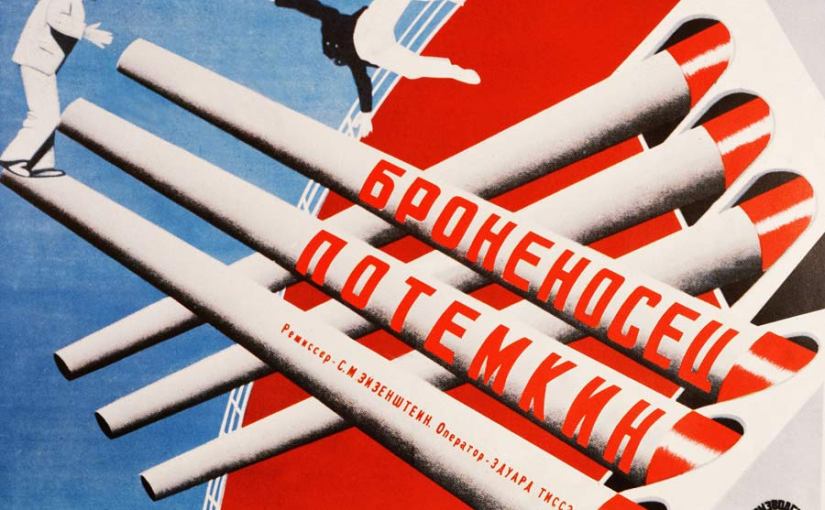
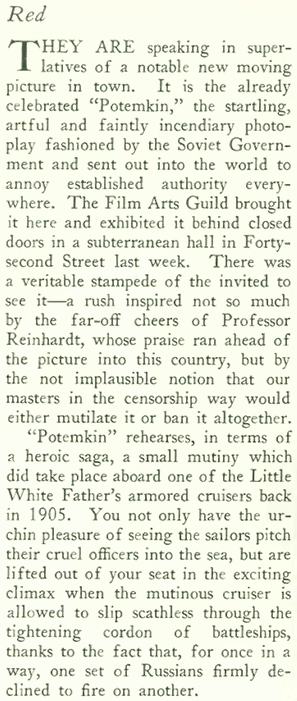
So when it was announced that Russian/Soviet filmmaker Sergei Eisenstein would be releasing Battleship Potemkin in New York City, the magazine’s editors in “The Talk of the Town” expressed both anticipation for the masterpiece as well as worries that American censors would slice the film to bits or even ban it outright.
The magazine’s film critic “OC” also expressed his concerns regarding censors:
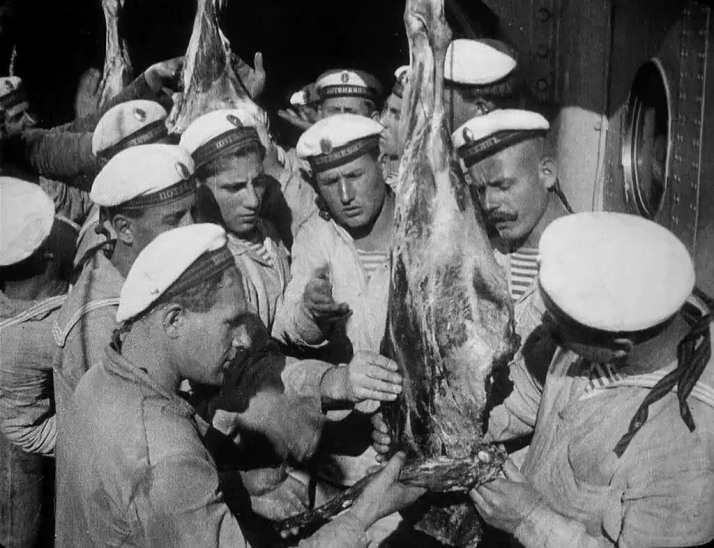
IT’S NOT WHAT’S FOR DINNER…Sailors examine maggot-infested meat in the film Battleship Potemkin. (themoviesnob)
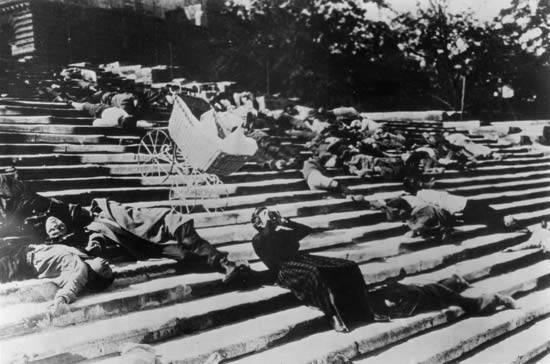
The film was based on an historical event–a mutiny on the battleship Potemkin that occurred after the crew was served rotten meat for dinner. The sailors rebelled, seized the ship, and then attempted to ignite a revolution in their home port of Odessa, which in turn led to a massacre of citizens by Cossack soldiers on the city’s famed Potemkin Stairs.
Mutineers revel in a scene from Battleship Potemkin. (Wall Street Journal)A still from a classic scene in Battleship Potemkin that depicts Odessa citizens being massacred by Cossacks on the city’s famous Potemkin Stairs. The image of the unattended baby carriage tumbling down the staircase has been re-created in a number of films, including Brian De Palma’s 1987 The Untouchables. (Film 4)
The film would ultimately be released in December of 1926. Perhaps more on that in a later post.
The Sept. 11, 1926 issue also noted the passing of famed silent film star Rudolph Valentino, who died at age 31 of peritonitis and other complications. The “Talk” editors suggested that if anything, it was good for newspaper sales:
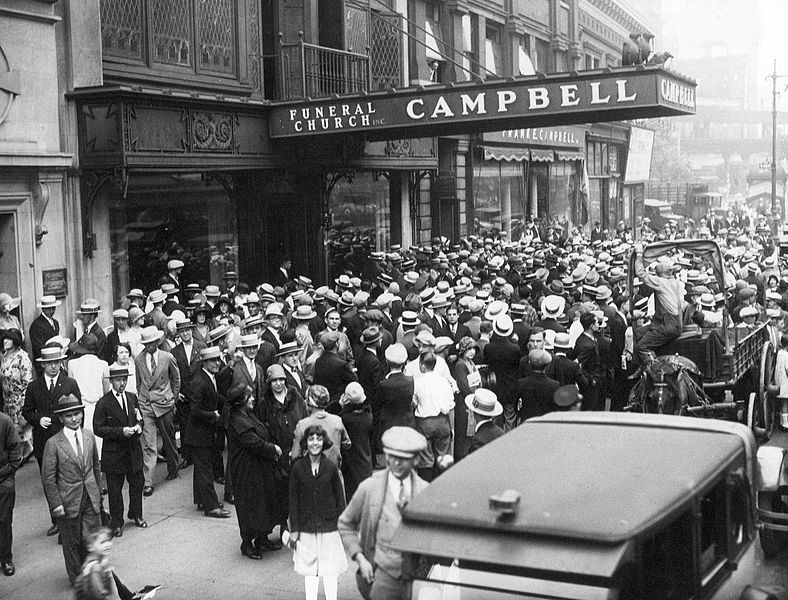
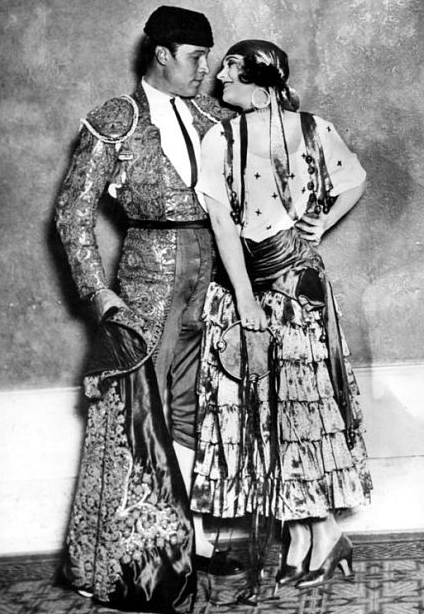
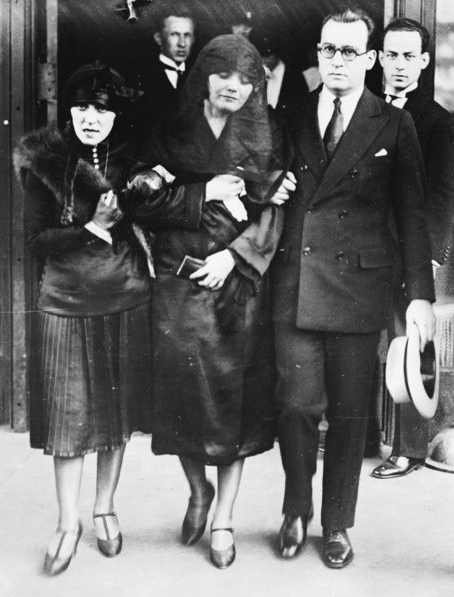
FUNERAL FUN…Rudolph Valentino’s first funeral in New York (the second was in Beverly Hills) drew a huge crowd of in what was described as a “carnival setting”. More than 100,000 fans filed past his open casket at the Frank E. Campbell funeral home. Windows were smashed as fans tried to get in and an all-day riot erupted on August 24. More than a hundred mounted officers and NYPD’s Police Reserve were deployed to restore order. A phalanx of officers would line the streets for the remainder of the viewing. Some media reports claimed the body on display was a wax dummy, and not “The Sheik” himself. (Wikipedia)SWEETHEARTS? Rudolph Valentino and Pola Negri met in early 1926 at a costume party thrown by Marion Davies. Negri claimed she was engaged to be married to the actor at the time of his death. (Wikimedia Commons)DIVA MOMENT…Pola Negri’s grief-stricken performance at Valentino’s New York funeral was considered by most to be over-the-top, even for a famous diva. Supported by a secretary and press agent (photo above), Pola declared to reporters that she and Valentino were secretly engaged to be married. She posed in dramatic fashion for the reporters and then threw herself, weeping and fainting, on Valentino’s open casket. (flickchick1953)
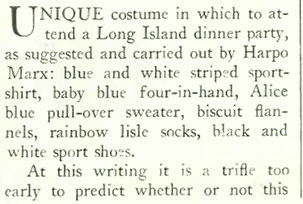
On the lighter side, The New Yorker men’s fashion columnist “Bowler” offered this observation of a new style suggested by Harpo Marx:
Vaudeville star Harpo Marx in 1926. The first Marx Brothers movie was still three years away. (Wikipedia)
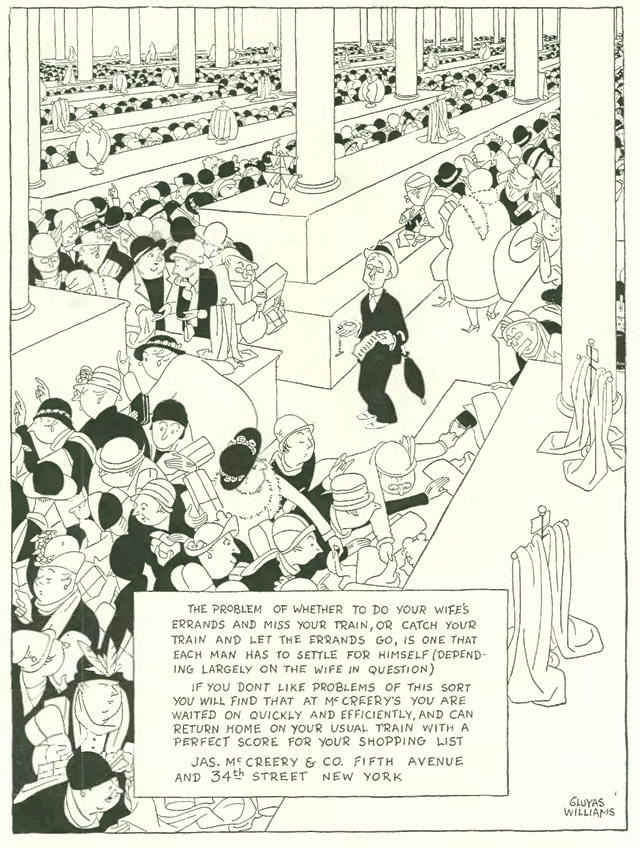
And to close, a couple of advertisements from the Sept. 11 issue…the first is a McCreery & Company ad illustrated by Gluyas Williams. These would become a series, featuring a milquetoast husband facing the daunting task of shopping for his wife, among other challenges…
…and this ad from Park Central Motors, depicting a child who’s all too aware of her standing in society…
Since most of us complain about the sad state of air travel these days, it’s nice to get a little historical perspective on this mode of transportation.
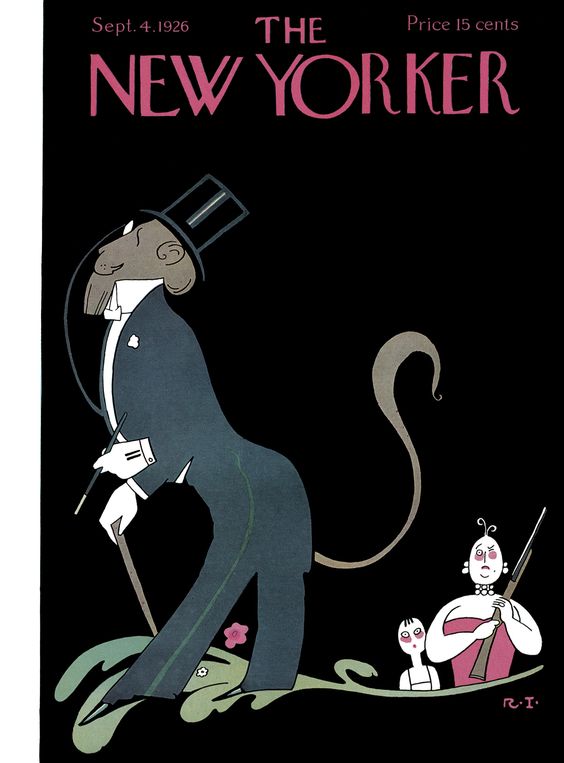
Sept. 4, 1926 cover by Rea Irvin.
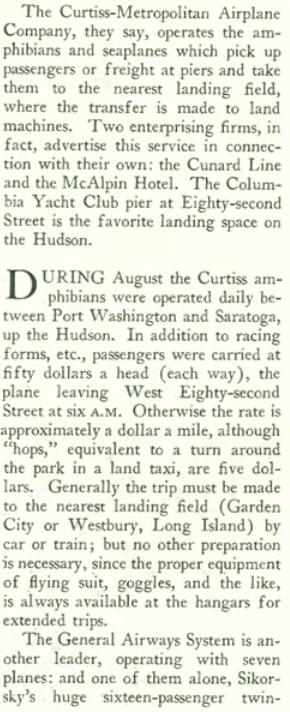
Ninety years ago the editors of The New Yorker were enamored with passenger air service, even though it was only available to those who were wealthy and had the stomach to actually fly in one of these things:
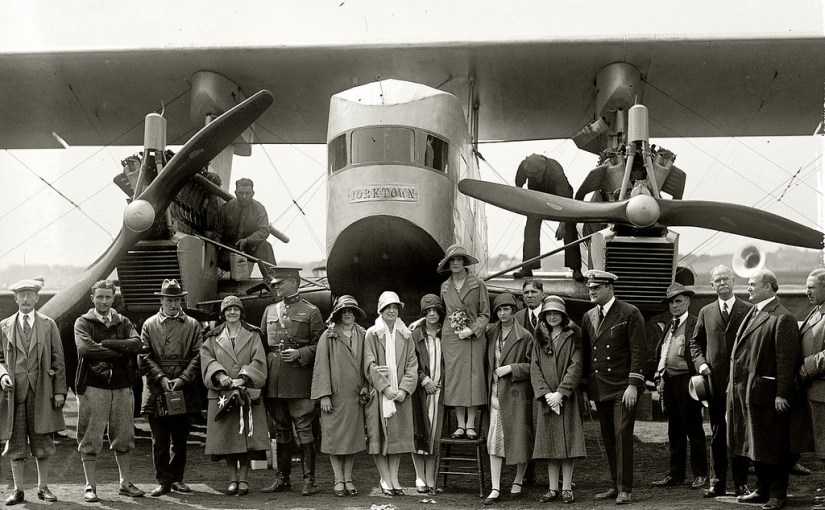
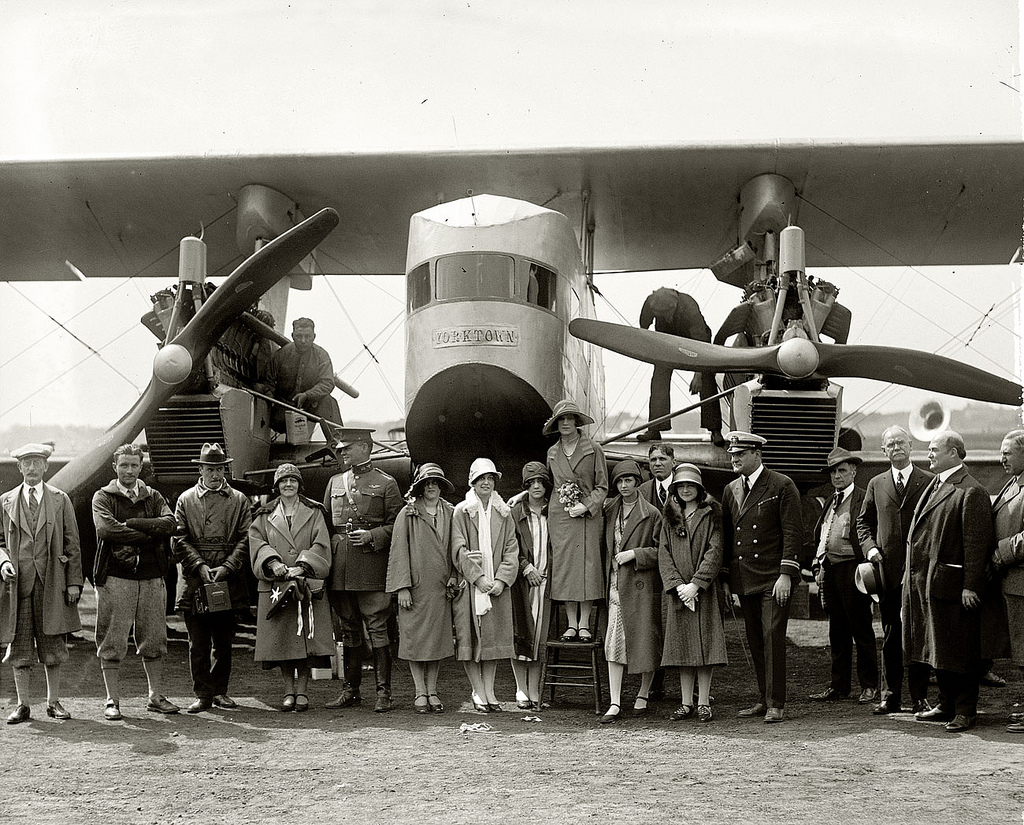
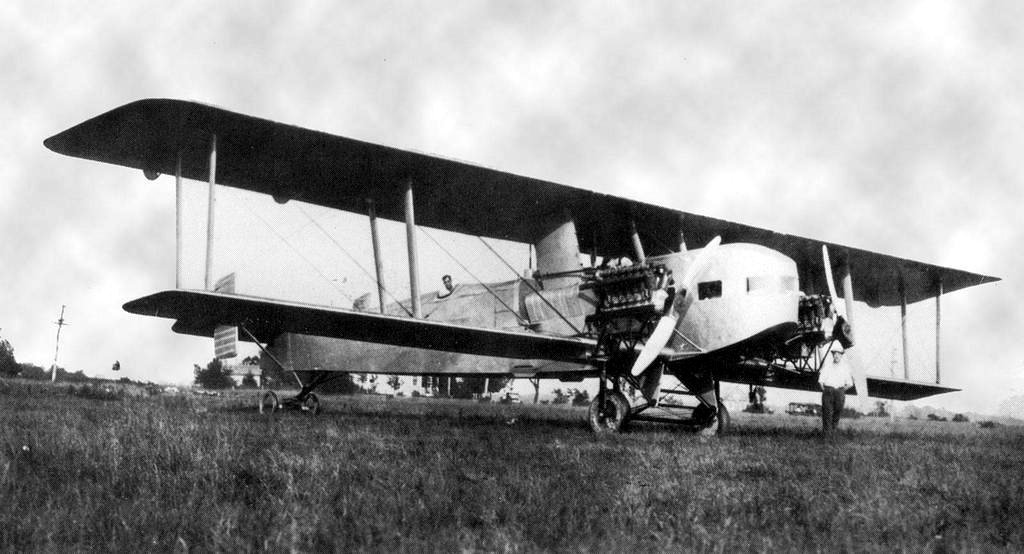
The May 8, 1925 christening of the Sikorsky “Yorktown.” The “huge” plane is referred to in the Sept. 4, 1926 “Talk of the Town.” (Library of Congress)
In the “Talk of the Town” section, The New Yorker editors marveled at the regular air taxi service available to Manhattanites:
The “huge” Yorktown might look crude to a traveler in 2016, but this was advanced stuff considering the Wright Brothers had made their first flight less than 23 years earlier. Planes like the Yorktown looked less like aircraft we know today and more like a trolley car with wings attached. And that window in the front wasn’t for the pilot. He sat up top in the open air:
Side view of the Sikorsky “Yorktown.” Note the pilot seated aft of the wings. (Flickr)
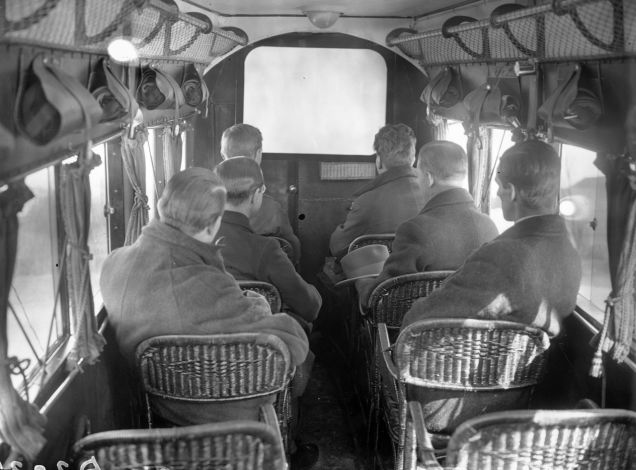
But then again, the interiors of these planes were no picnic, either. Imagine sitting in this while crashing through a storm:
Interior of a Farman Goliath, which would have been similar to the Sikorsky, if not a little nicer. (Historic Wings)Another photo of a 1920s passenger flight. As in the preceding photo, note the wicker chairs. And no leg room. These fellows appear to awaiting the showing of an early in-flight movie. At least movies were silent then, because with giant piston engines flanking the cabin you weren’t going hear anything anyway. (Paleofuture)
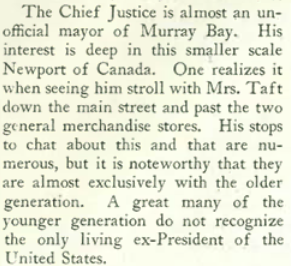
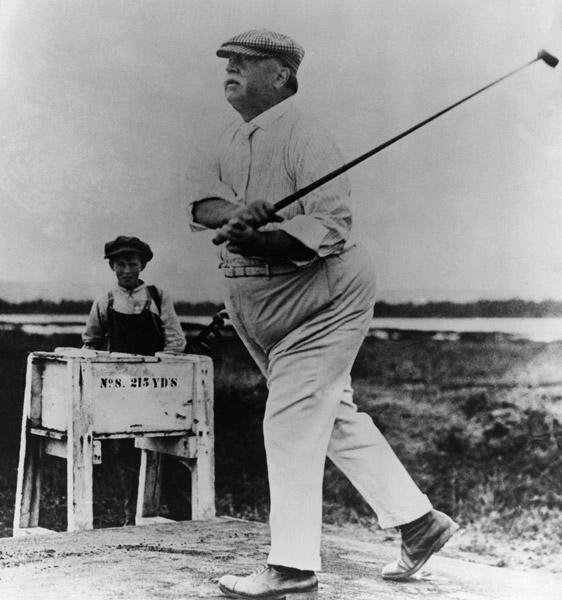
Other items from the Sept. 4, 1926 “Talk” section included a bit about the former president and then Supreme Court Justice William Howard Taft, and his rather ordinary life in Murray Bay. An excerpt:
Ex-President, Supreme Court Justice and avid golfer William Howard Taft follows through on the links in this undated photo (jmarkpowell.com)
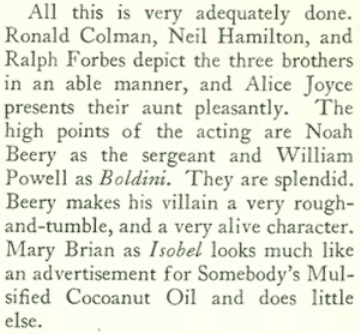
At the movies, The New Yorker gave a lukewarm review of the much-ballyhooed film Beau Geste:
AT LEAST SHE HAD A NICE COMPLEXION…Mary Brian (dubbed “The Sweetest Girl in Pictures”) with Neil Hamilton in Beau Geste, 1926 (classiccinemaimages)
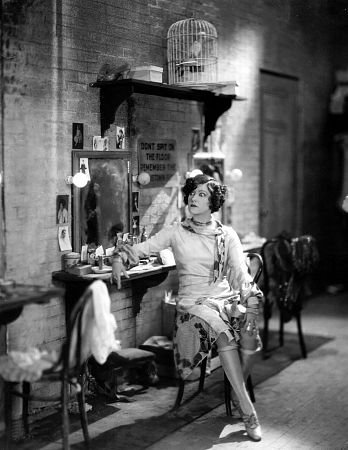
And although Gloria Swanson was one of the biggest stars in the Silent Era, The New Yorker was never a big fan of her films:
Gloria Swanson in Fine Manners, 1926 (IMDB)
And finally, this advertisement from Houbigant, featuring a drawing of an elegant woman with an impossibly long neck. I wouldn’t want her sitting in front of me at the movies…
Another ad (from the Sept. 11 issue) also depicted this ridiculously giraffe-like neckline:
It’s the dog days of summer, and the editors of The New Yorker are seeking various distractions to take their minds off of the broiling late season heat.
August 21, 1926 cover by H.O. Hofman.
In the Aug. 21, 1926 issue (bearing an appropriate cover image by H.O. Hofman of bathers taking a refreshing dip), “The Talk of the Town” suggested that it was a good time for even the natives to take a boat tour of their beloved island:
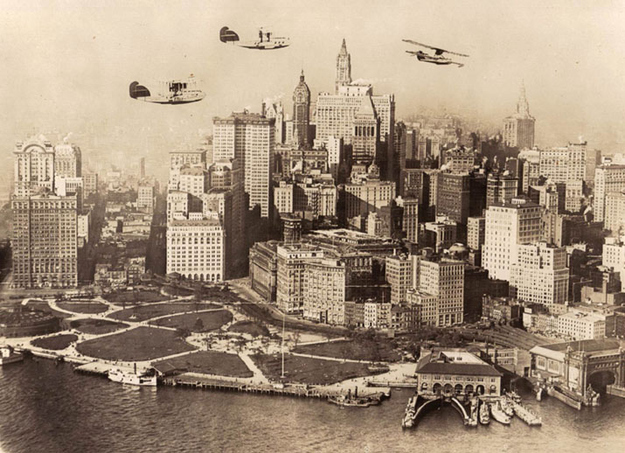
Aerial view of Battery Park Wharf in the early 1920s (Buzzfeed)
In the following Aug. 28 issue, the “Talk” editors ducked out of the sun to visit the American Museum of Natural History.
Aug. 28, 1926 cover by H.O. Hofman.
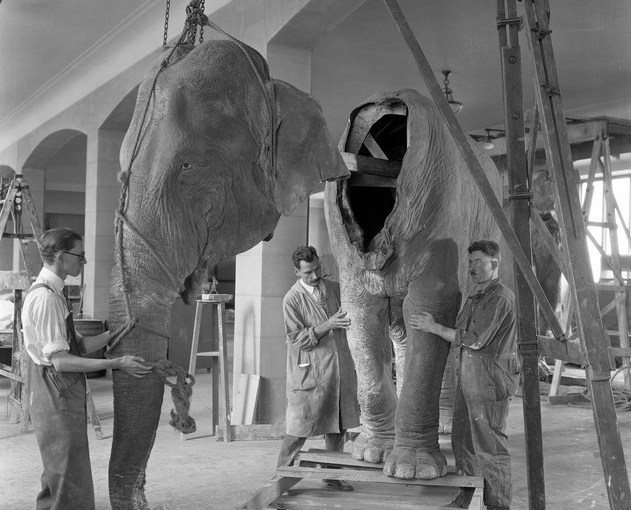
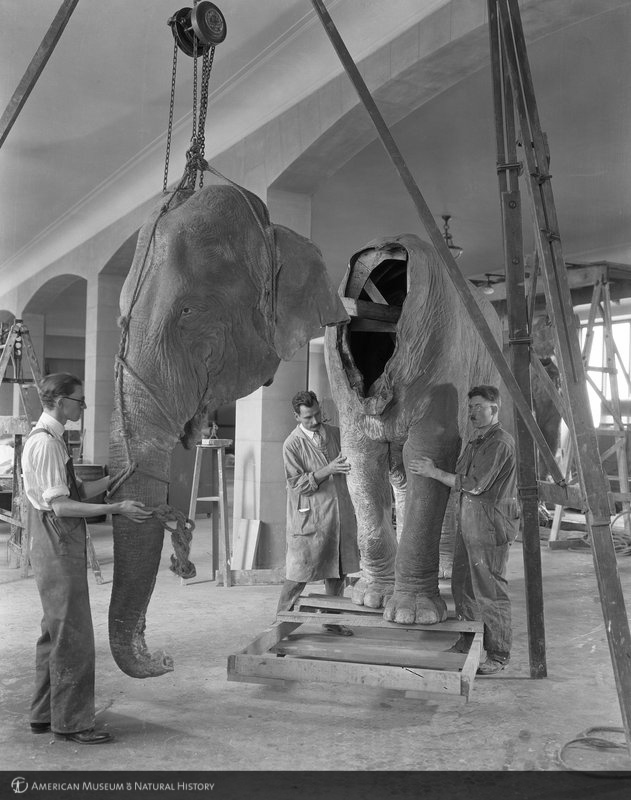
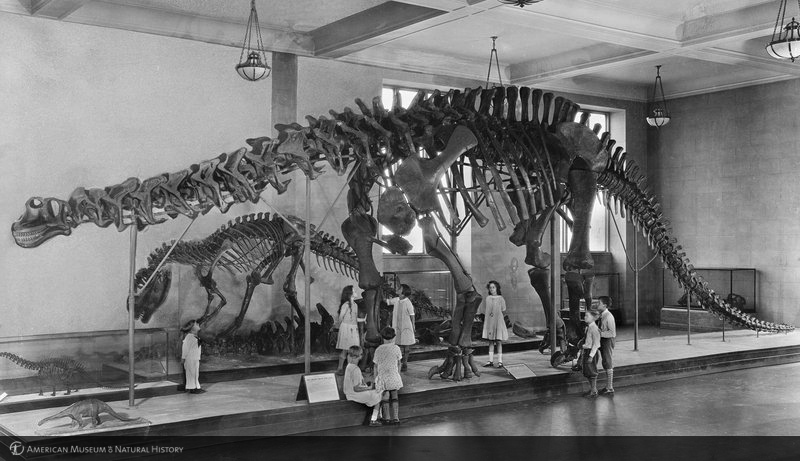
There they found curators busy reorganizing displays of dinosaurs and various stuffed beasts of the wild:
AMNH staff joining head to body of female elephant in Indian Elephant Group, 1926. (AMNH Digital Special Collections)The end result of the 1926 reorganization of displays at the AMNH—children viewing Brontosaurus exhibit in 1927. (AMNH Digital Special Collections)
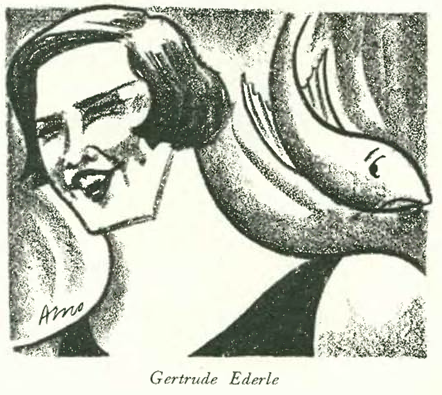
The magazine also profiled New York City native Gertrude Ederle, who became the first woman to swim across the English Channel in August of 1926:
Gertrude Ederle, as rendered by Peter Arno for the “Profile.”
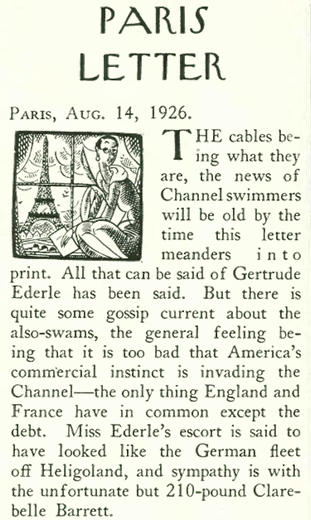
Even Janet Flanner, the magazine’s Paris correspondent, commented on the event, noting Europe’s jealous reaction to an American’s seizing of the record:
Ederle would return home to a ticker tape parade along the Canyon of Heroes in the Financial District, and would also be feted by 5,000 people who turned out on West 65th Street for a block party in her honor.
WHAT FOLKS DID BEFORE TELEVISION…Block party celebrates Gertrude Ederle as “Queen of the Waves.” (Ephemeral New York)
According to the excellent blog Ephemeral New York, Ederle received offers from Hollywood and Broadway and was deluged by marriage proposals. But she returned to a quiet life, moving to Queens and working as a swimming instructor for deaf children–Ederle’s hearing was seriously damaged in the water of the Channel, but otherwise swimming must have been good for her health. She died at age 98 in 2003.
Keeping with the summertime theme, the magazine covered the Gold Cup Regatta, complete with illustrations by Johan Bull:
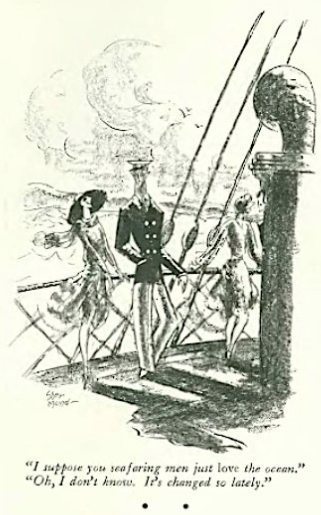
An early Barbara Shermund cartoon, always a delight…
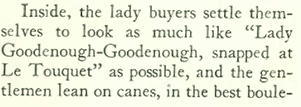
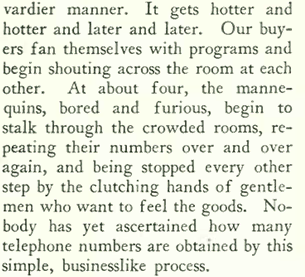
Lois Long took her “On and Off the Avenue” column to Paris, where she cast a jaded eye at the behavior of American buyers of French fashion:
Coco Chanel’s “Little Black Dress” debuted in 1926. (homeecologist.com)
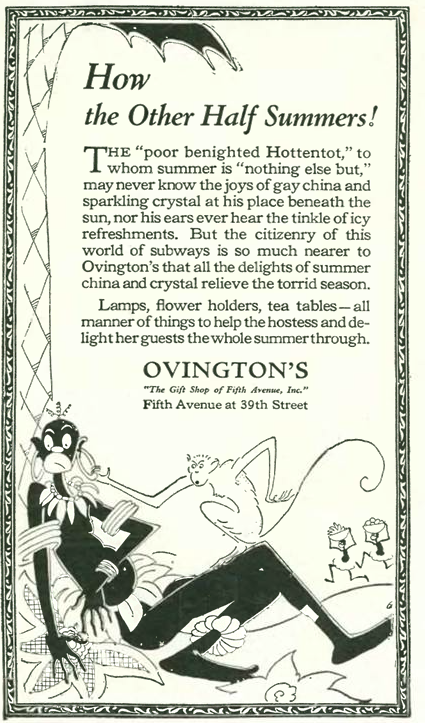
And finally, from the advertising department, this strange ad from Ovington’s, which seemed to be more concerned with promoting racial stereotypes than in selling dinnerware:
It was 1926 and another marvel of science—talking pictures—was unveiled to audiences at Broadway’s Warners’ Theatre. It was here that the Warner Brothers launched their ‘Vitaphone’ talkies including The Jazz Singer, which would premiere the following year.
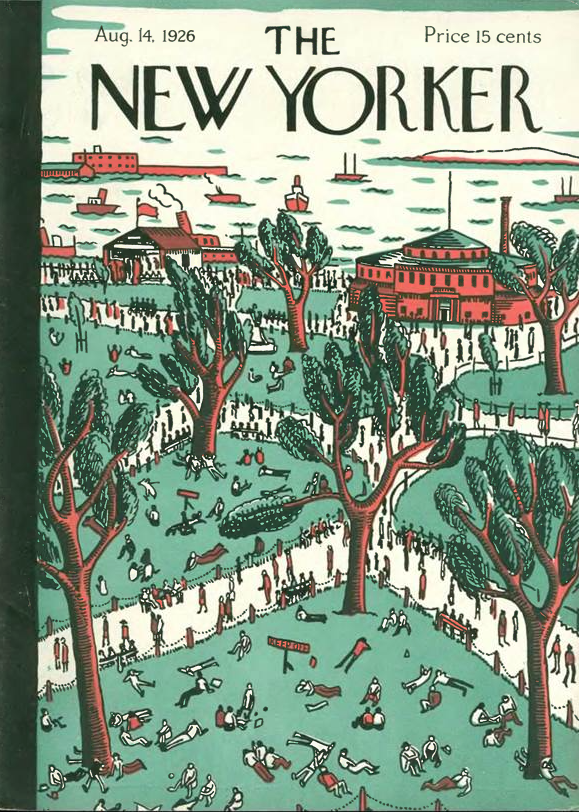
Aug. 14, 1926 cover by Ilonka Karasz.
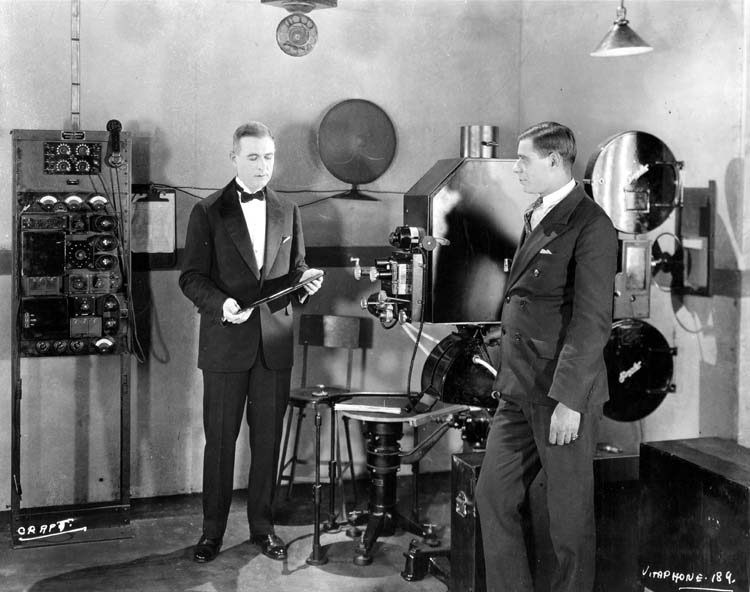
The Vitaphone soundtrack was not printed on the film itself, but rather recorded separately on phonograph record, the sound synchronized by physically coupling the record turntable to the film projection motor.
A Vitaphone projection setup at a 1926 demonstration. Engineer E. B. Craft is holding a soundtrack disc. The turntable, on a massive tripod base, is at lower center. (University of San Diego History Department)
Don Juan was the first feature-length film to use the Vitaphone system, which was not a continuous soundtrack but rather a sprinkling of sound shorts (the musical score, performed by the New York Philharmonic, and various sound effects) throughout the film. No spoken dialogue was recorded.
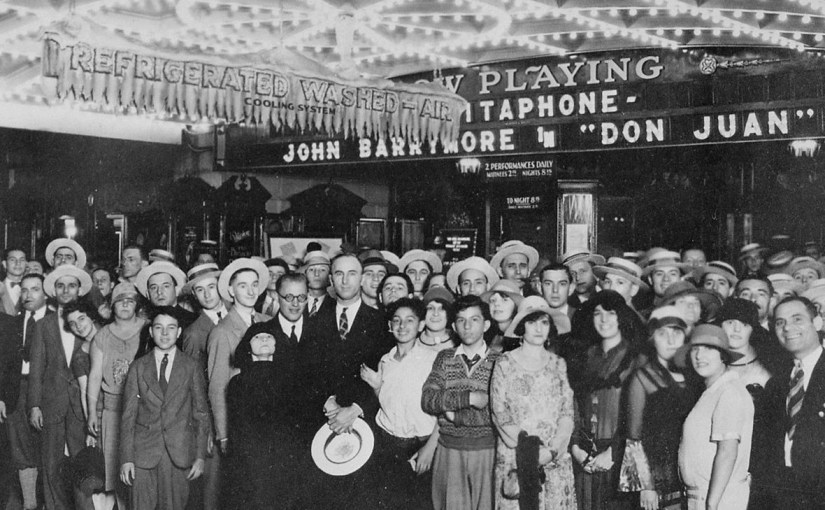
First-nighters pose outside Warners’ Theatre before the premiere of Don Juan, August 6, 1926 (US National Archives)
Produced at a cost of $789,963 (the largest budget of any Warner film up to that point), the film was critically acclaimed and a box-office success. However, and predictably, The New Yorker was not so impressed with Vitaphone…
…or the acting of John Barrymore…
I have to agree with the critic, identified only as O.C., after viewing this TCM clip of the film on YouTube. Lacking a voice, silent actors had to exaggerate emotions onscreen, but Barrymore here is every bit the ham. This screen grab from the clip says it all:
The object of his gaze, Adriana della Varnese (played here by a young Mary Astor), reacts rather dramatically to his advances…can’t say I blame her…(however, the 44-year-old Barrymore and the 20-year-old Astor were having an affair at the time…)
Adriana della Varnese (played here by a young Mary Astor), reacts rather dramatically to Don Juan’s advances.
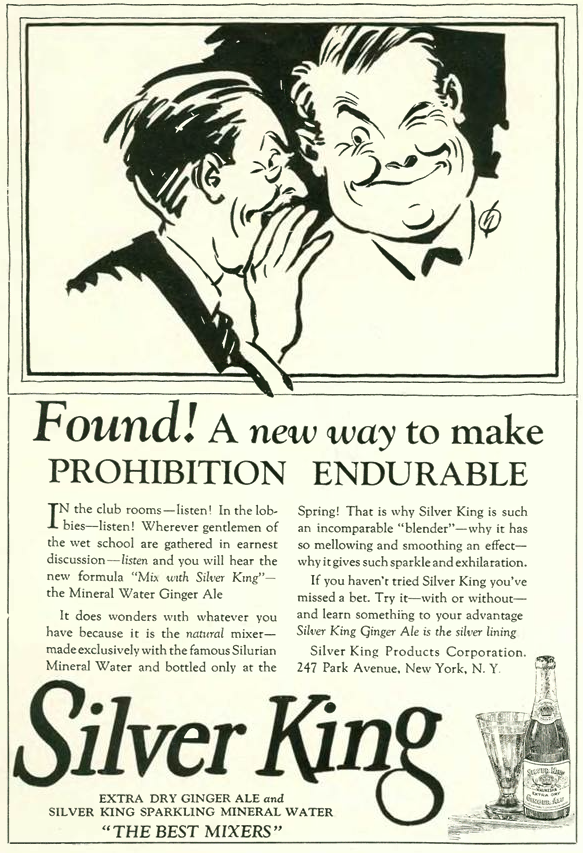
A couple of interesting ads in the Aug. 14, 1926 issue, including this one featuring a couple of sneaky gents who’ve found a solution to life in dry America…
…and this not-too-subtle message from a swanky shop on Fifth Avenue:
The Roaring Twenties were an age when many social norms were challenged, including gender roles. Stars such as Marlene Dietrich wore men’s clothing, and many women went to work (women in the workplace increased by 25 percent) and they smoked in public.
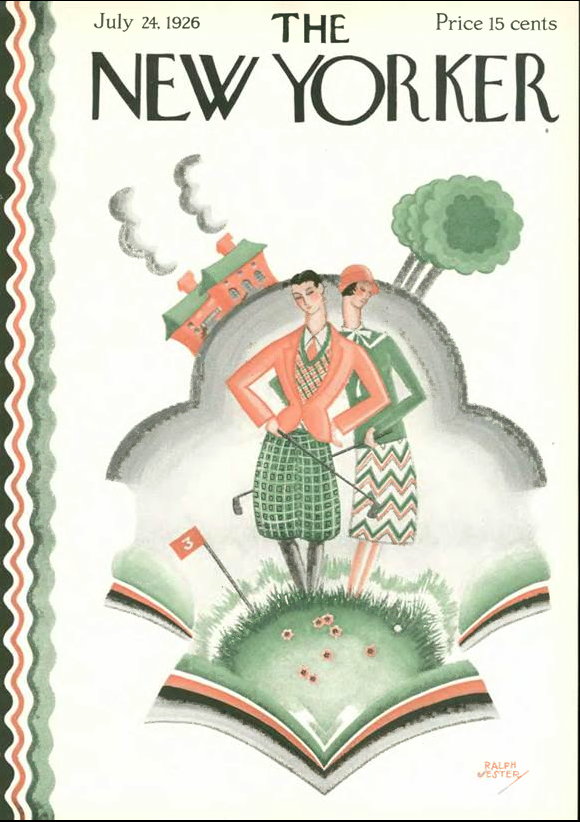
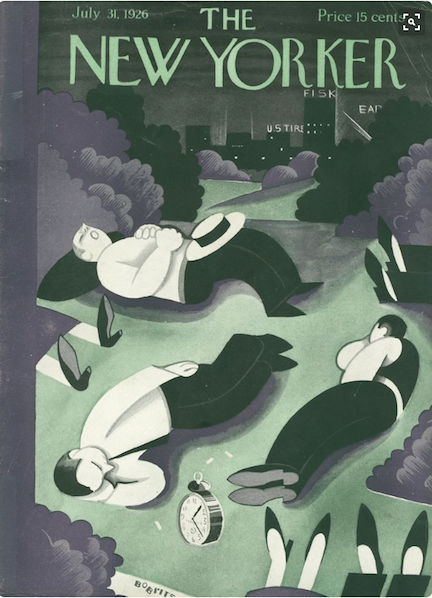
July 24, 1926 cover by Ralph Jester.
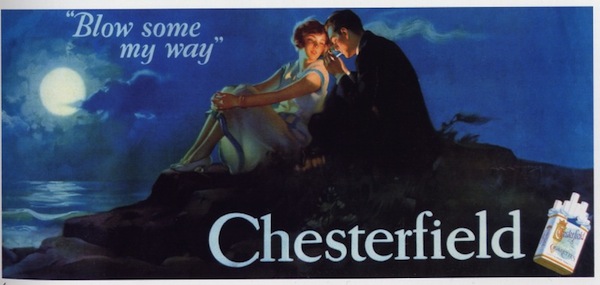
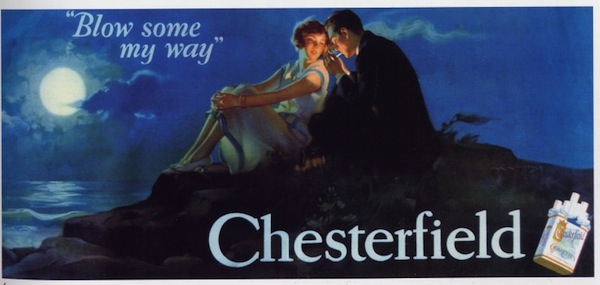
At first smoking in public was associated with the wild behavior of flappers, but thanks to American advertising know-how, things quickly changed. What helped spark that change was this controversial 1926 magazine and billboard advertisement:
Now we call it “second-hand smoke” (History News Network)
Naturally, the editors of “The Talk of the Town” had something to say about all the fuss:
Give dubious credit to Chesterfield for cracking a barrier. And thanks to mass marketing, what was rare and shocking quickly became commonplace. Subsequent cigarette ads featured women who didn’t need a man to blow them any smoke; they were independent, successful and famous:
This is among the earliest cigarette ads to feature endorsements from famous women. In 1927, Lucky Strike began collecting testimonials from female celebrity smokers, ranging from movie stars to celebrities. In this 1928 ad, Amelia Earhart endorses Lucky Strike. (Stanford School of Medicine)
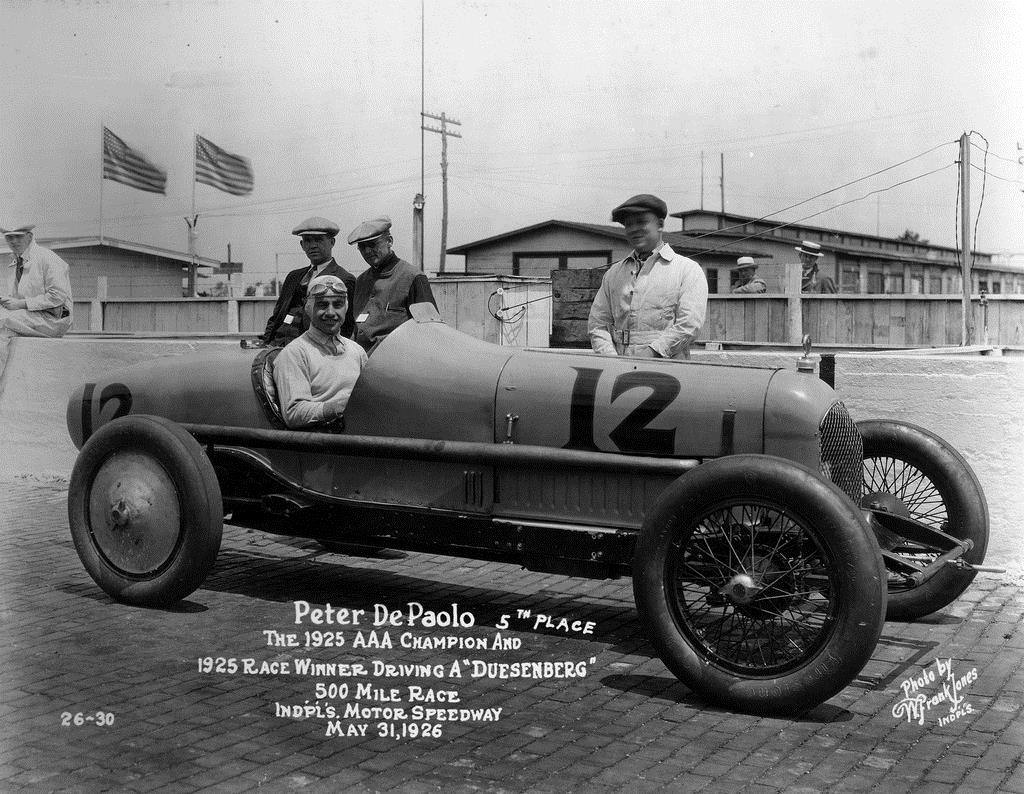
The editors of The New Yorker obviously loved cars and the advertising they attracted, so for the July 24 edition they dispatched a writer and an artist to the motor races at Atlantic City to record the momentous event. However, staff writer Eric Hatch seemed as interested in the attire of the drivers as in the race itself:
According to New Yorker writer Eric Hatch, Peter DePaolo wore a white sweater and bow tie in the Atlantic City race. Here he is seen earlier that year following his victory at the Indianapolis 500. He was the first driver to complete the 500 miles in under five hours, and have an average speed of more than 100 mph. Since 1989, nine Indy races have finished in under three hours. In 2013 Tony Kanaan’s average speed exceeded 187 mph. (flickr/clamshack)
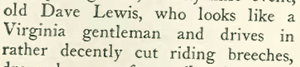
And then there were Dave Lewis’s breeches…
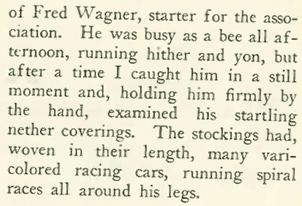
…and the wild stockings worn by the race’s starter, Fred Wagner:
Illustrator Johan Bull offered his own observation about Wagner’s stockings, among other things:
In a separate column in the magazine (simply titled “Motors”) Hatch marveled at the amazing new road to Jamaica (Queens) that featured four lanes, two in each direction, with drivers approaching breakneck speeds near 40 miles per hour:
As for speed, back then a basic car was a far cry from an Indy racer, and strained to do more than 45 mph. Luxury cars could go faster, but the quality of tires, brakes and roads were so poor that anyone exceeding 60 mph would likely blow a tire.
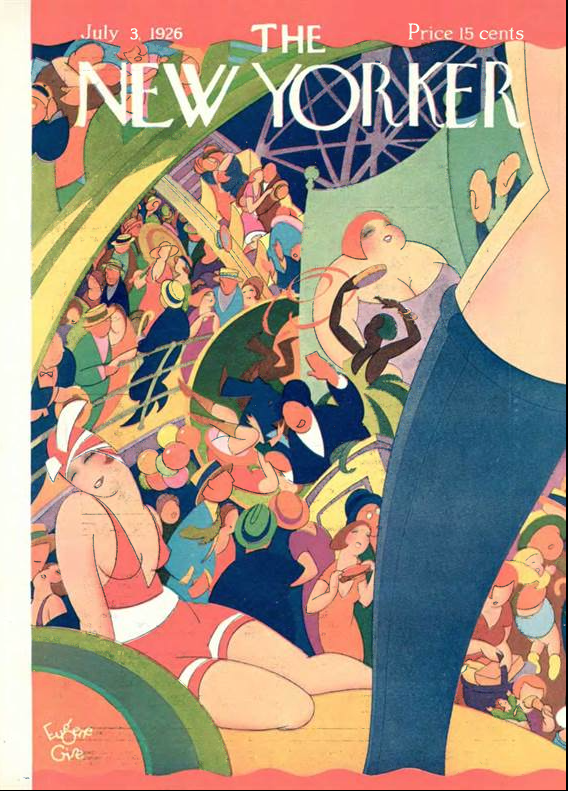
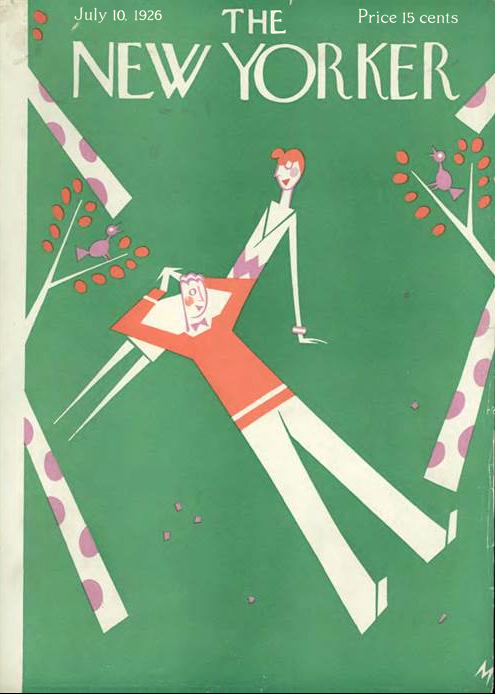
Eugene Gise threw a beach party on the July 3, 1926 cover of The New Yorker with an explosion of color that was a departure from the somewhat spare covers of previous issues. It had been an unseasonably cool June, so folks were ready to frolic in the sun.
July 3, 1926 cover by Eugene Gise.
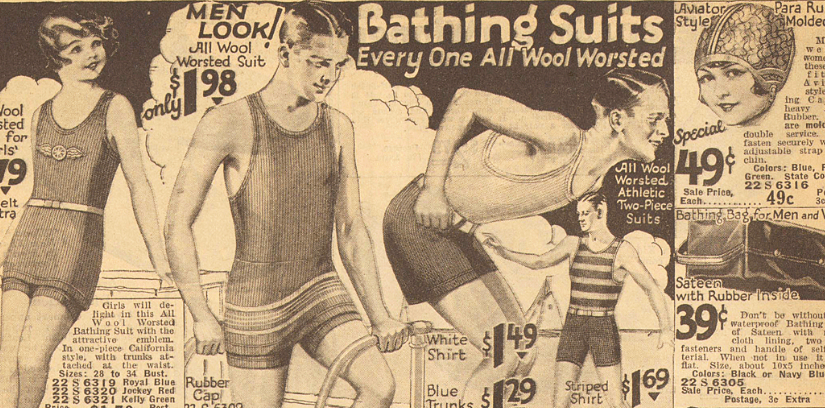
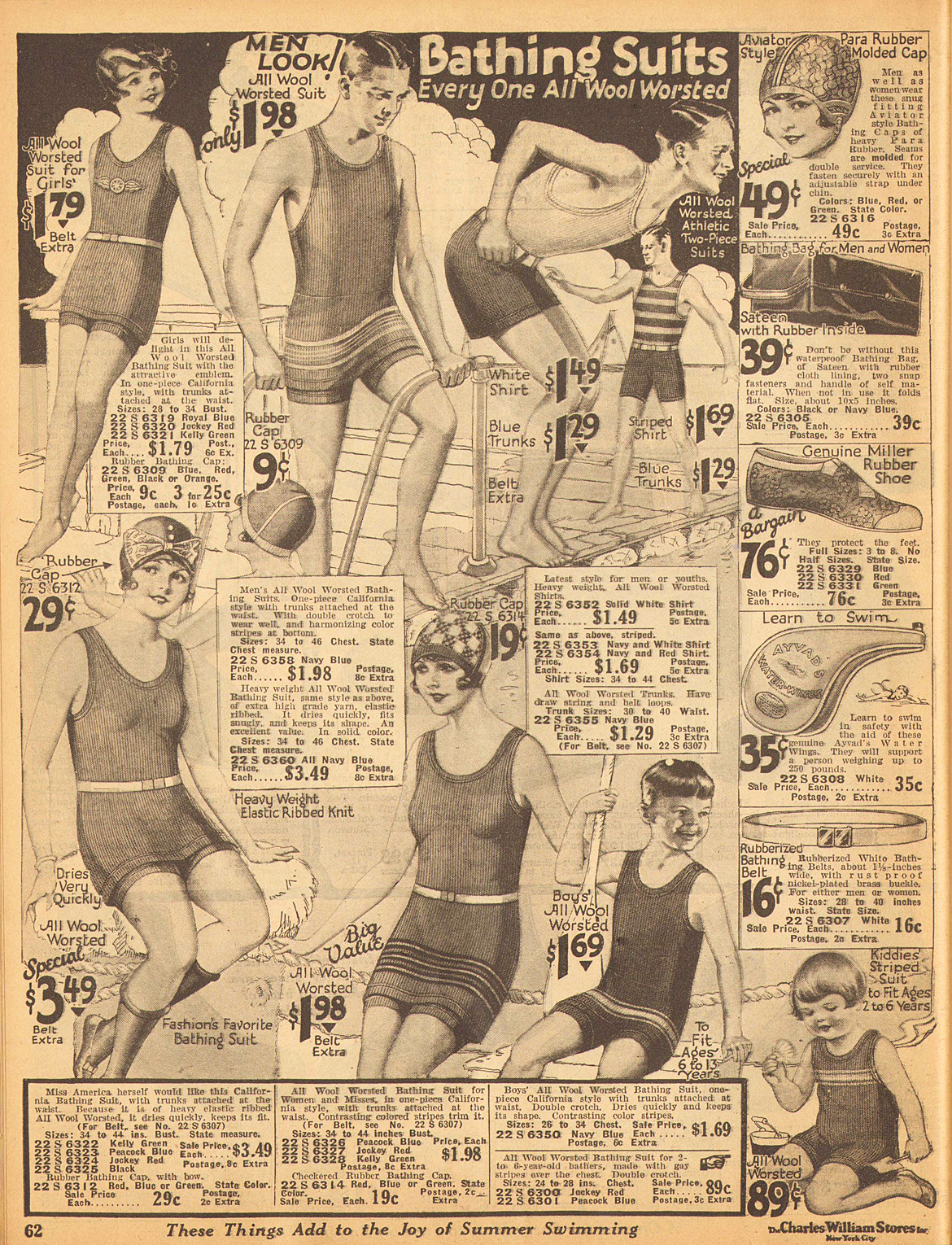
It should be noted that the woman in the foreground basking in the sun is most likely wearing a wool bathing suit. Although Jantzen was making suits you could actually swim in, these wool numbers were still the norm. As the website Vintage Dancer notes, “functionality in swimwear was not as important as fashion, so the prevailing theory was that wool would help keep you warm.” Check out this newspaper advertisement from 1926:
(Vintage Dancer)
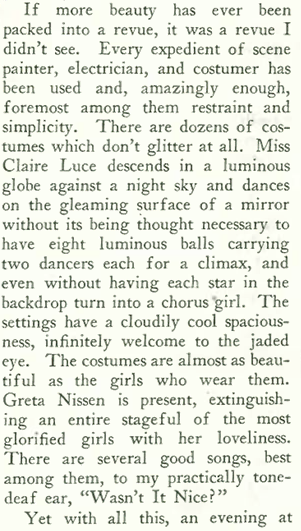
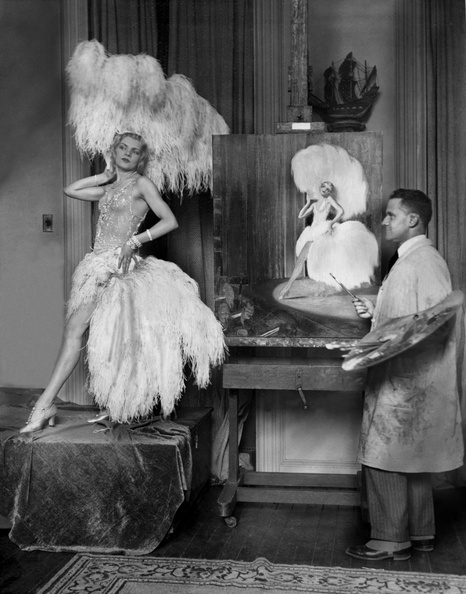
In the previous issue (June 26, 1926) theatre critic Charles Brackett looked at all the fuss over the opening of George White’s Scandals revue, so in this issue he gave the Ziegfeld Follies—the revue show that inspired the Scandals—its proper due.
Claire Luce was a star attraction at the Ziegfeld Follies. Here Clarence F. Busch paints her portrait in an ostrich costume she wore for the Follies (Historical Ziegfeld Group)
Needless to say, Brackett found the Ziegfeld Follies as pointless as its imitator:
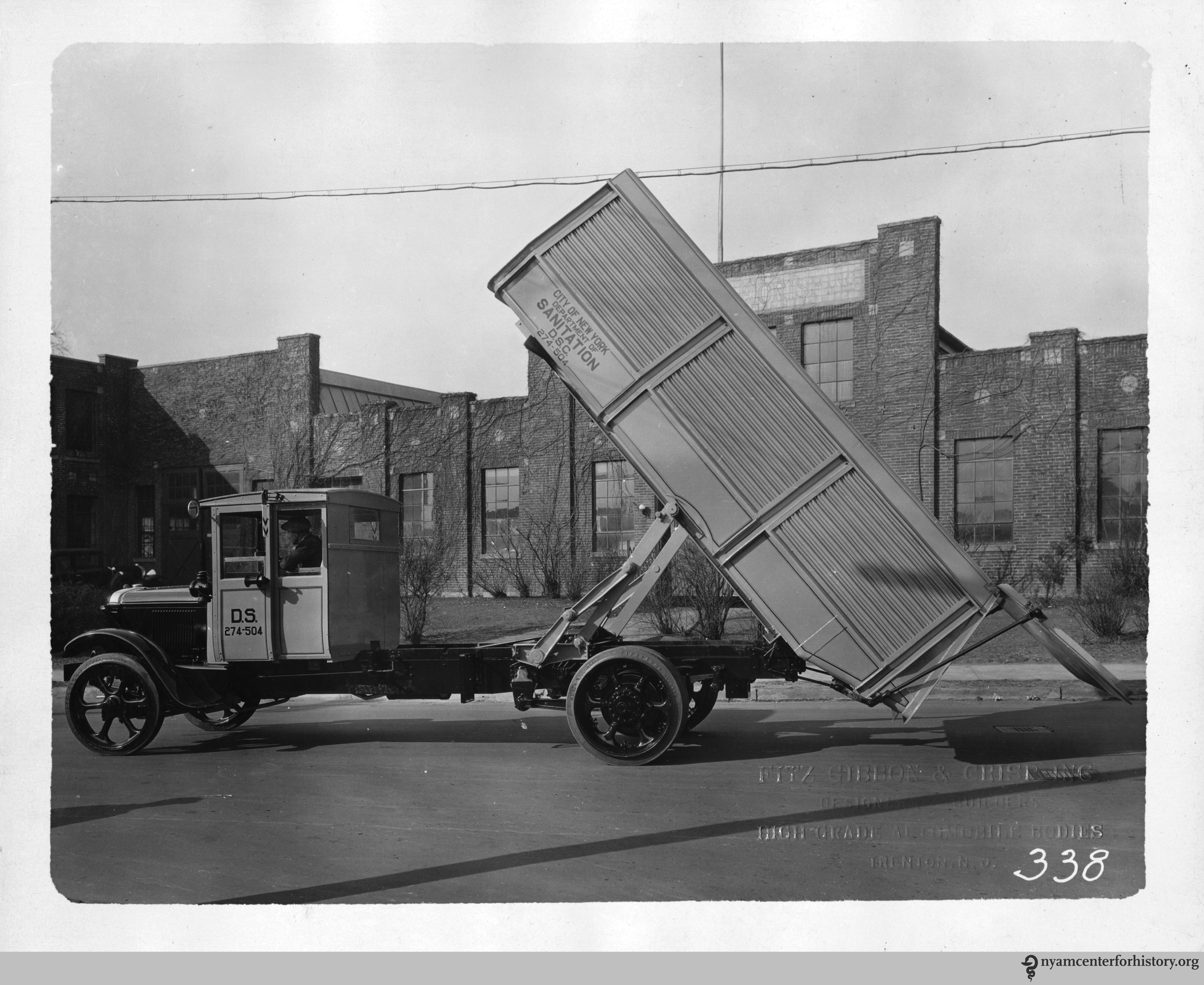
Moving on to other things, I found this tidbit in “The Talk of Town” interesting. Even 90 years ago city dwellers were complaining about having to sort their garbage:
A state-of-the-art garbage truck in 1920s NYC looked like this…
(nyamcenterforhistory.org)
…and since the 1890s the city had employed street sweepers known as “White Wings” to keep things tidy, apparently even in the middle of traffic:
(The New York Times)
After decades of petticoats, the Roaring Twenties marked the beginning of androgynous fashion in America, with actress Marlene Dietrich leading the way in defying standards of femininity. Cartoonist Raymond Thayer took a humorous look at the trend in the July 3 issue:
Fashion advertising in the early New Yorker can tell you a lot about the mood of the city’s smart set. As I’ve observed before, the magazine’s advertisements were rife with Anglo- and Francophile messaging, but they also reveal much about our changing times. A good example is the upscale retailer Abercrombie & Fitch, which these days uses the tagline “Authentic American clothing since 1892.”
In its early days, A&F was known as an elite outfitter of sporting and excursion goods, supplying aspiring country squires with expensive shotguns, fishing rods and the clothing and kit necessary for successful and stylish expeditions beyond the drawing room:
“Sporting goods” meant something a bit different in 1926.
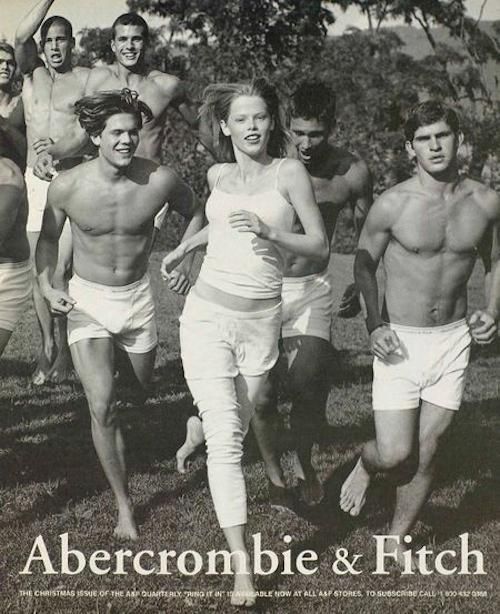
The company went bankrupt in 1976 and operated through mail order until 1988, when the The Limited clothing chain bought the name and operation and turned the focus to the young adult market:
Cover for A&F Fall/Winter 1998, photo by Bruce Weber. (Image Amplified)
Over the past couple of decades there’s been a lot of criticism regarding the abundance of A&L ads featuring shirtless, white men and the corresponding dearth of minority models. The newer ads feature a lot less skin and a sprinkling of minorities, but the product line is still a far cry from the one offered in 1926. Except for the elitist part.
As for other purveyors of fine fashion in the pages of The New Yorker, B. Altman made this stylish pitch for its line of bathing suits:
And here’s an advertisement for Croydon Cravats, featuring the ubiquitous Father’s Day necktie:
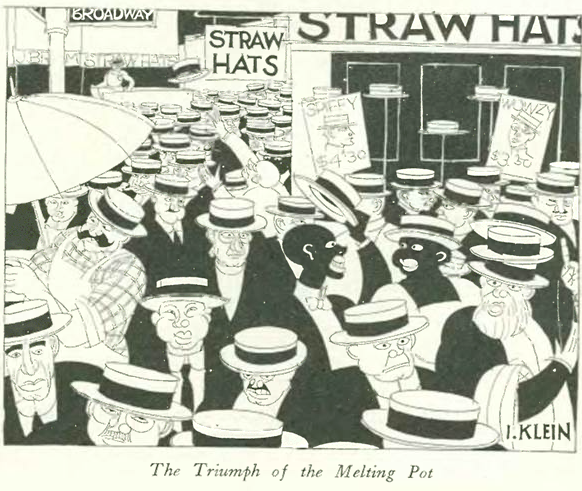
As for fashion in the comics, this drawing by Isadore Klein found humor in the multicultural appeal of the summer straw hat:
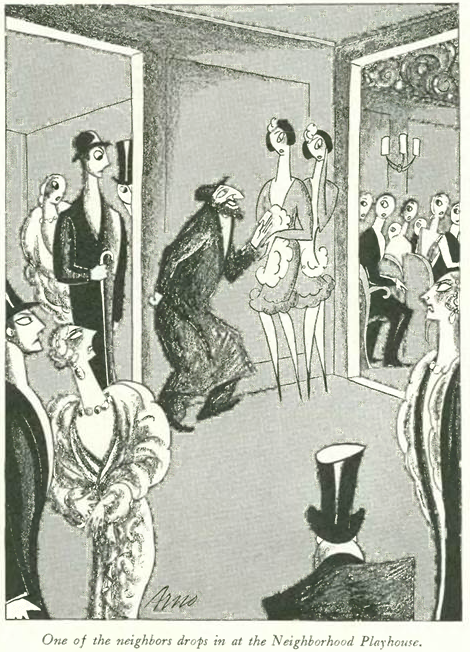
African Americans in the early New Yorker were nearly always depicted in minstrel-style blackface, and Jewish immigrants (such as the one Klein depicted at right) rarely lacked the Orthodox beard. Such is the case in this Peter Arno illustration where cultures clash rather than mix:
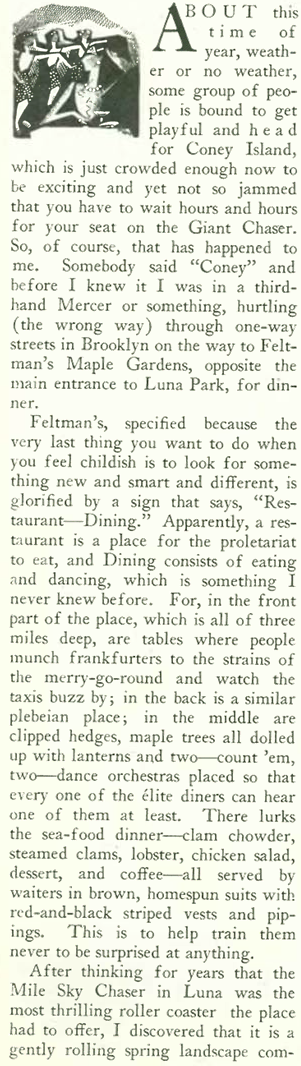
And let’s check in with the New Yorker’s fashion critic (and Arno’s soon-to-be wife) Lois Long, who slummed with the Proles at Coney Island:
CONEY CRONIES…(l to r) Silent film star Charlie Chaplin, Vanity Fair editor Frank Crowninshield, sculptor Helen Sardeau, Lois Long and screenwriter Harry D’Arrast pose in a Coney Island photo booth, 1925. Photo scanned from the book Flapper by Joshua Zeitz.
Finally, given the terrible circumstances in the Middle East and especially Syria, this small item in “Of All Things” is both timely and prescient:
The Roaring Twenties were a strange confluence of the Puritan and libertine, perhaps best represented by Prohibition and the speakeasy night life it inspired. Many if not most of The New Yorker readers of the late 1920s were familiar with these establishments as well as with reliable bootleggers and rum runners. And for those of you following this blog we all know that “Tables for Two” columnist Lois Long was the voice of speakeasy and New York nightlife.
May 29, 1926 cover by Stanley W. Reynolds.
Prohibition did not make consumption of alcohol illegal. The 18th Amendment prohibited the commercial manufacture and distribution of alcoholic beverages, but it did not prohibit their use.
So if you had a connection to a smuggler bringing whisky from Scotland via Canada, for example, you could enjoy a Scotch at home without too much trouble, although the prices could be high. “The Talk of the Town” editors regularly reported black market wine and liquor prices (I include an adjoining Julian de Miskey cartoon):
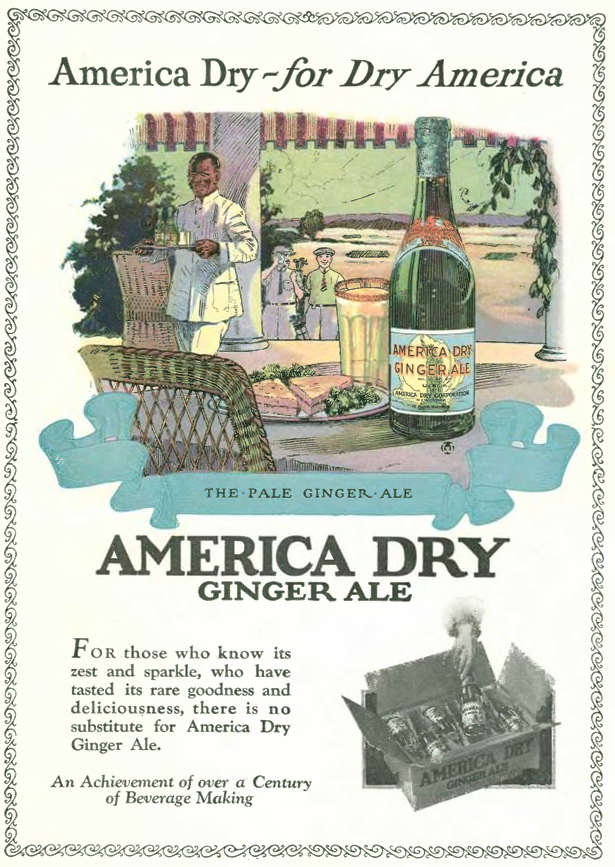
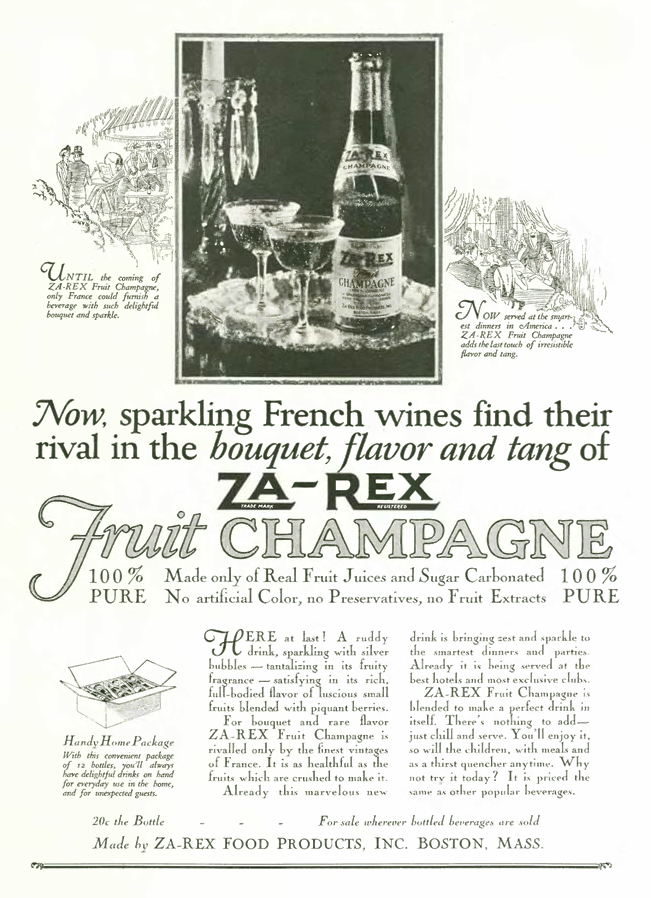
Note the mention of pocket flasks, which were an important item in a purse or vest pocket when one went to a nightclub or restaurant, where White Rock or some other sparkling water was sold as a mixer for whatever you happened to bring with you. You see a lot of this type of advertisement in the Prohibition-era New Yorker:
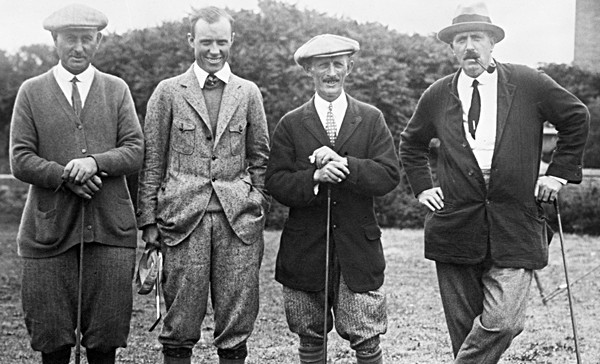
I’ll bet those grinning golfers have something in their bags besides clubs.
And then there were ads like these, which I find quite sad:
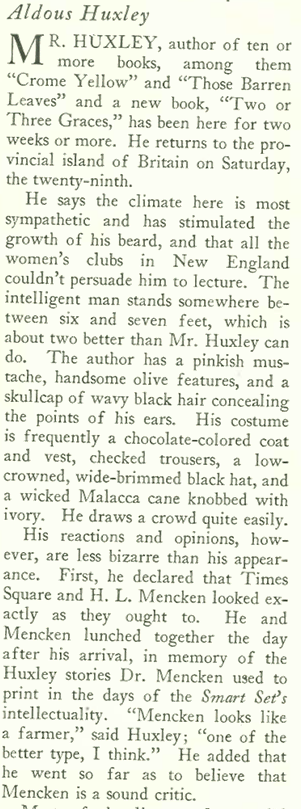
“The Talk of the Town” also commented on the recent visit of British writer Aldous Huxley, who told his New York hosts that he admired American writers Willa Cather and Sherwood Anderson, and he also had praise for writer and critic H.L. Mencken, whom he likened to a farmer “of the better type:”
Aldous Huxley in the 1920s. (Biography.com)
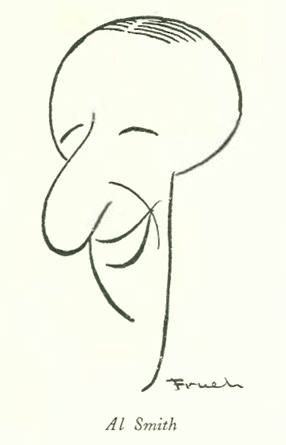
Other odds and ends from this issue…a clever drawing by Al Frueh for the “Profile” feature on New York Governor Al Smith:
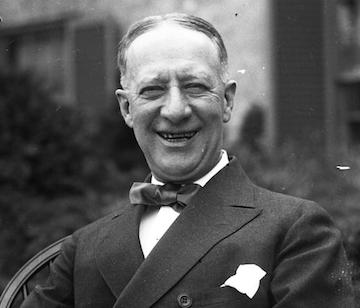
A photo of Al Smith for comparison:
New York Gov. Al Smith (IMDB)
And this bit from “Of All Things,” complete with bad pun/racial slur:
New Yorker readers in 1926 had little reason to believe that in a decade Benito Mussolini would try to make good on his statement and join Adolf Hitler in the next world war.
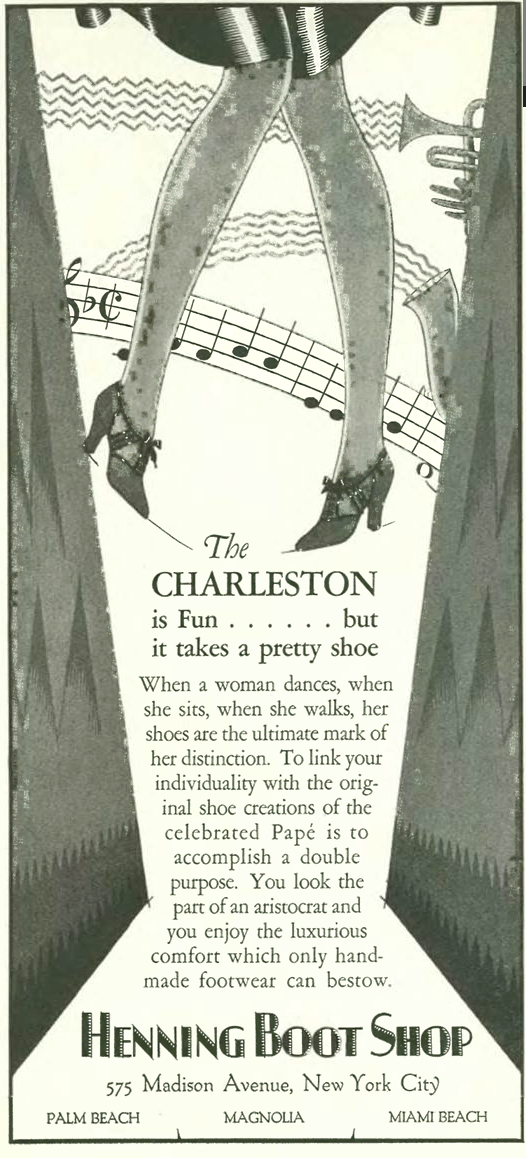
Here’s a couple more ads from the issue that are signs of those times. Note the listing of Florida locations for those New Yorkers who were flocking to that new winter vacation destination:
And this ad for an electric refrigerator…for those who could afford such newfangled things. The ice man was still plenty busy in 1926, but his days were numbered.
And finally, a nod to springtime, and this excerpt of an illustration by Helen Hokinson for the “Talk” section:


















































 A New Yorker State of Mind