She Who Must Be Obeyed

The 1935 film She was one of those old movies you’d see on television during the 1970s when there were only three or four channels (plus UHF) and local stations would tap into the “B” movie vault to fill airtime. One of those films was She.
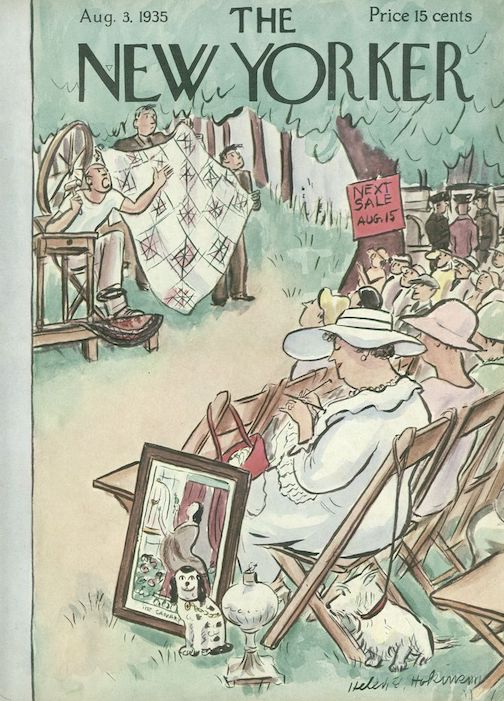
August 3, 1935 cover by Helen Hokinson.

Film critic John Mosher felt a bit sorry for Helen Gahagan, who portrayed “She Who Must Be Obeyed” (aka “She”)—an immortal who ruled an exotic, lost civilization near the Arctic Circle. The challenge for Gahagan was to seem imperious before her co-stars Randolph Scott and Helen Mack, who seemed more suited to the high school hijinks of an Andy Hardy picture. The film was a pretty standard adventure tale, in the mold of producer Marian C. Cooper’s 1933 King Kong, with two explorers falling in love during a perilous journey.

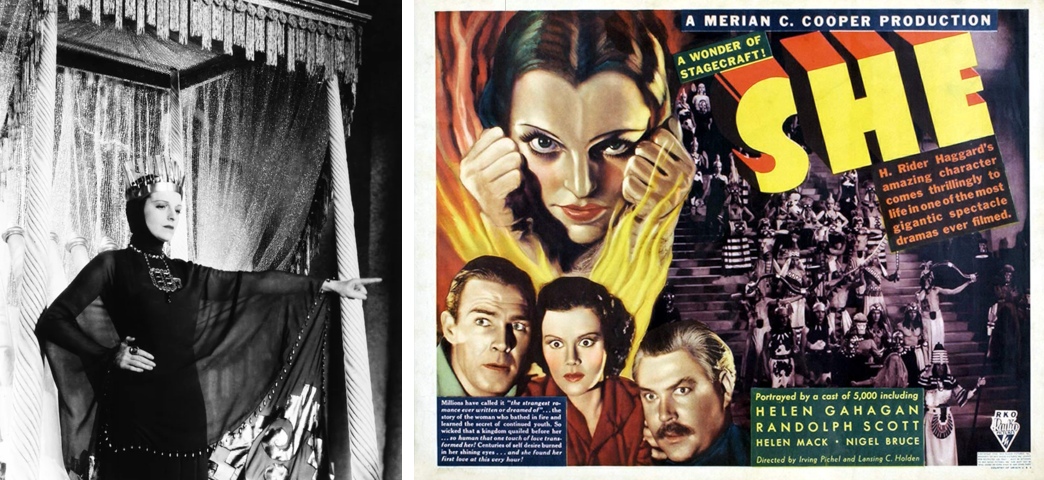
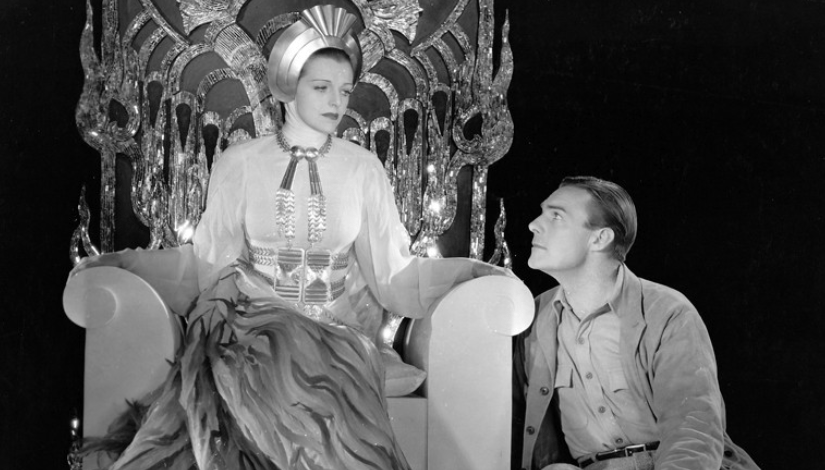
ARCHETYPE…At left, Helen Gahagan as “She” (Who Must Be Obeyed). Her costume possibly inspired the Evil Queen in Disney’s 1937 animated Snow White and the Seven Dwarfs. At right, lobby card that promoted the film. (Scifist.net/Reddit)
WHEN YOU PLAY WITH FIRE…She Who Must Be Obeyed (Helen Gahagan), believing that the explorer Leo Vincey (Randolph Scott) was a reincarnation of his ancestor (whom she loved), and jealous of his girlfriend Tanya (Helen Mack), invites Leo to join her in the eternal flame. Unfortunately, her re-entry into the flame that gave her immortality turned her into a dying, withered crone. (The Nitrate Diva/Scifist.net)

The 1887 H. Rider Haggard novel, She, inspired eponymous silent films in 1908, 1911, 1916, 1917, and 1925. The 1935 film reviewed here received tepid reviews and lost money on its first release, however in a 1949 re-release it fared much better. She was re-made in 1965 with Ursula Andress in the lead role, and again in 1984 in a post-apocalyptic film that had virtually nothing to do with Haggard’s novel.

SHE THROUGH THE YEARS…Clockwise, from top left, “She” (Marguerite Snow) offers a dagger to Leo Vincey (James Cruze) in a 1911 two-reel (24 min.) adaptation; Valeska Suratt as “She” in the 1917 film (now lost); Betty Blythe took the title role in the 1925 production, considered to be the most faithful to the 1887 H. Rider Haggard novel; Sandahl Bergman appeared dressed for a Jazzercise video in the 1984 post-apocalyptic She; and finally, Ursula Andress and John Richardson in the 1965 CinemaScope production of She. (Wikipedia / digitalcollections.lib.washington.edu / cultcelebrities.com / Reddit)

 * * *

Colonial Ambitions

With most of Africa carved up by other European powers (Britain, France, Belgium etc.) in the 19th century, Italy set its sights on Ethiopia, which by the end of the 19th century was the only independent country left on the continent. Ethiopia fought off Italy’s first attempt at conquest in the Battle of Adwa (1896), but with the rise of fascist dictator Benito Mussolini, Italy paid a return visit, this time with heavy artillery and airstrikes that included chemical weapons. E.B. White tried to make sense of this latest invasion in his opening comments.
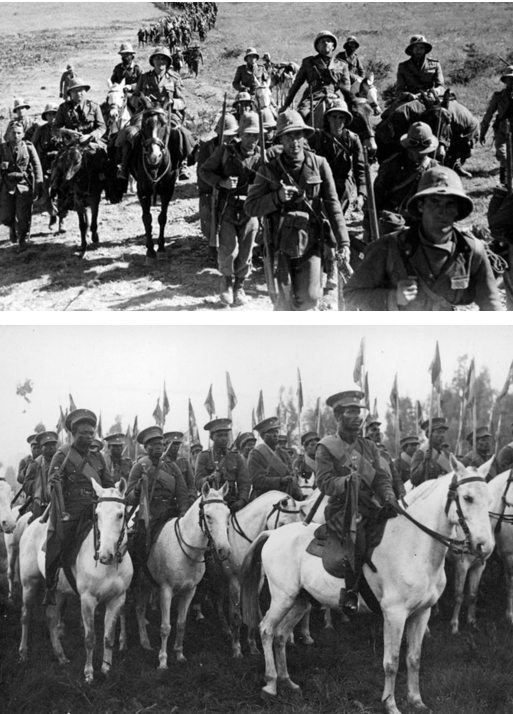
THOSE GUYS AGAIN…Italy invaded Ethiopia on October 3, 1935, a significant act of aggression in the lead up to World War II. Despite facing a technologically superior Italian army (top) equipped with modern weapons, including tanks, aircraft, and chemical weapons, the Ethiopian forces (bottom photo) mounted a strong resistance. (Wikipedia)

In his weekly column, Howard Brubaker mused on the Italian aggressions and other rumblings of the coming European war.

 * * *

Author, Author

The writer Willa Cather was a favorite of New Yorker critics, including Clifton Fadiman, however her latest novel was a bit too mild for his tastes.
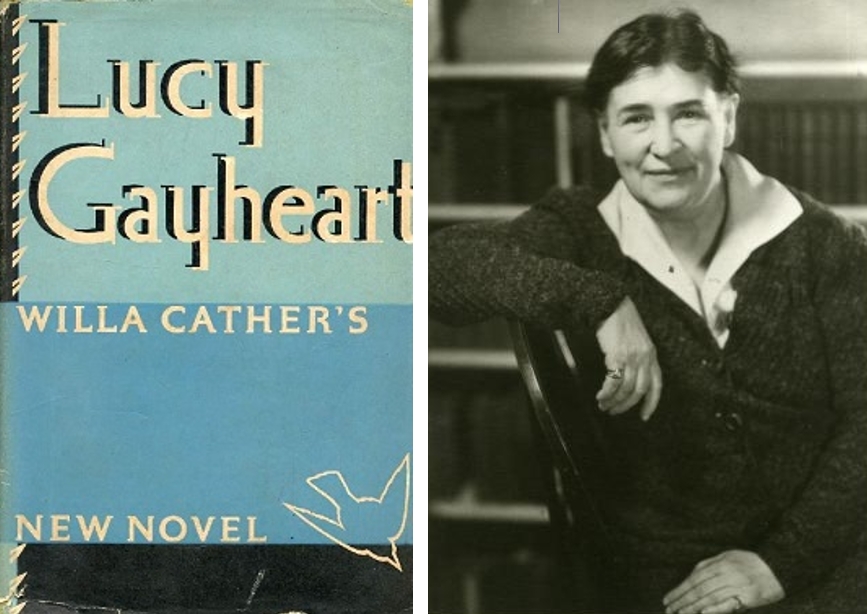
HERE’S LUCY…Clifton Fadiman confessed he was “mortified” to admit that he found Willa Cather’s latest novel a bit too gentle. At right, portrait of Cather on her birthday, December 7, 1936. (willacather.org)

 * * *

From Our Advertisers

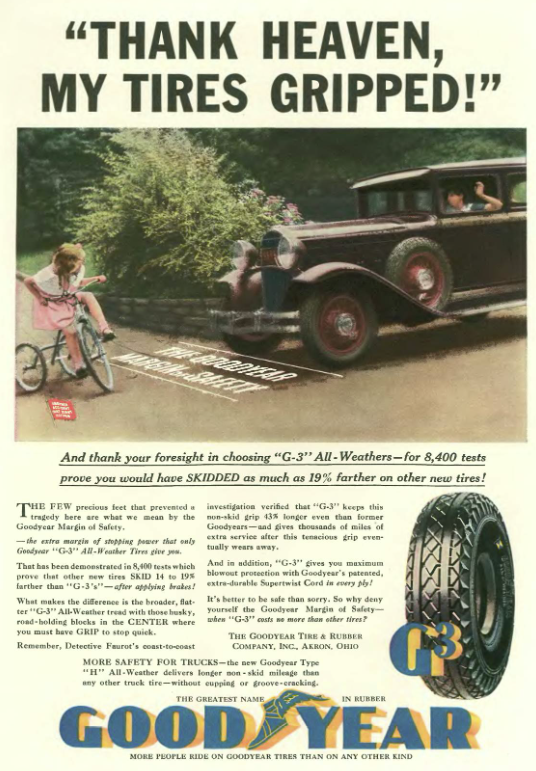
We begin with more fearmongering from the folks at Goodyear, who offered weekly reminders of the perils of not choosing their all-weather tires…
…the Liggett and Myers Tobacco Company conjured up this “naughty maiden” to encourage even timid souls to take up the habit…

…on the other hand, the makers of the upstart KOOL brand kept it simple with their chain-smoking penguin, who was grabbing ever more market share from rival menthol pusher SPUD…
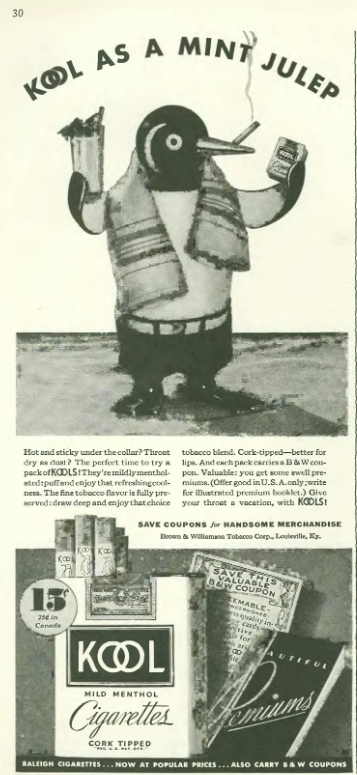
…ads in the back of the book offered up even less sophisticated products, such as Crown Smelling Salts…
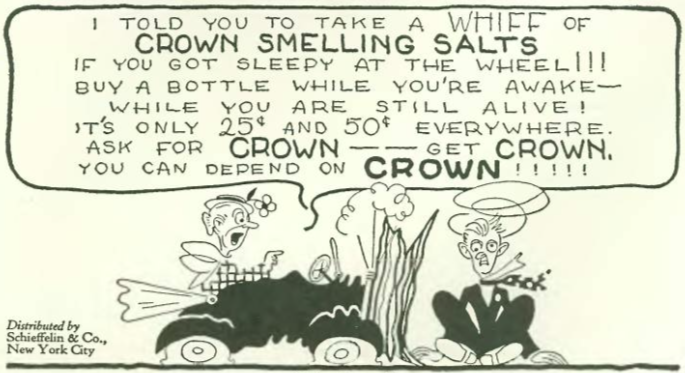
…while Dr. Seuss and Norman Z. McLeod continued to make a living with their distinctive illustrations…

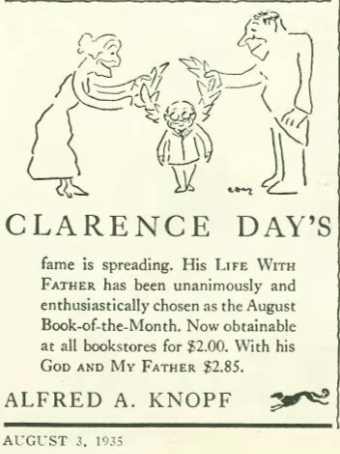
…at the very back of the magazine, this tiny ad from Knopf promoted Clarence Day’s Life With Father, published just months before Day’s death on Dec. 28…
…which brings us to our cartoonists…Constantin Alajalov kicked us off with this happy number…

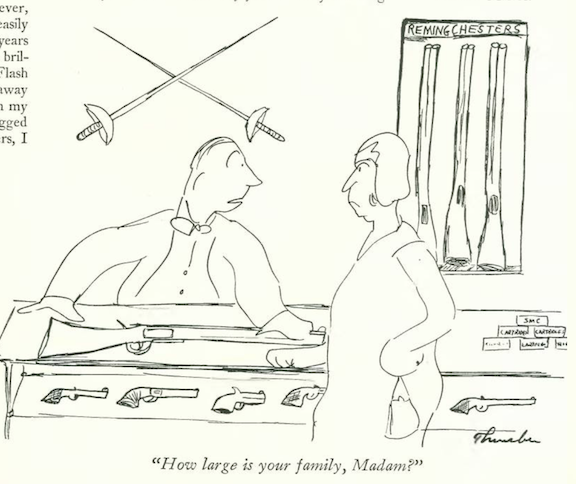
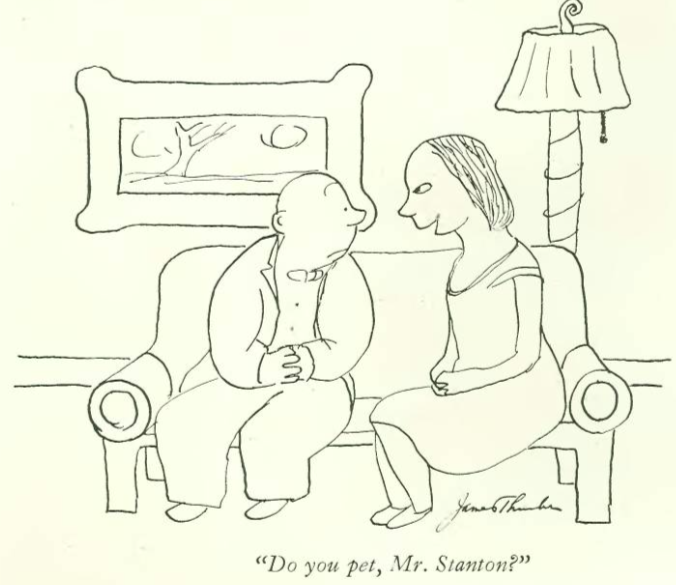
James Thurber found steamy goings on in the parlor…
Charles Addams came down to earth with this pair…

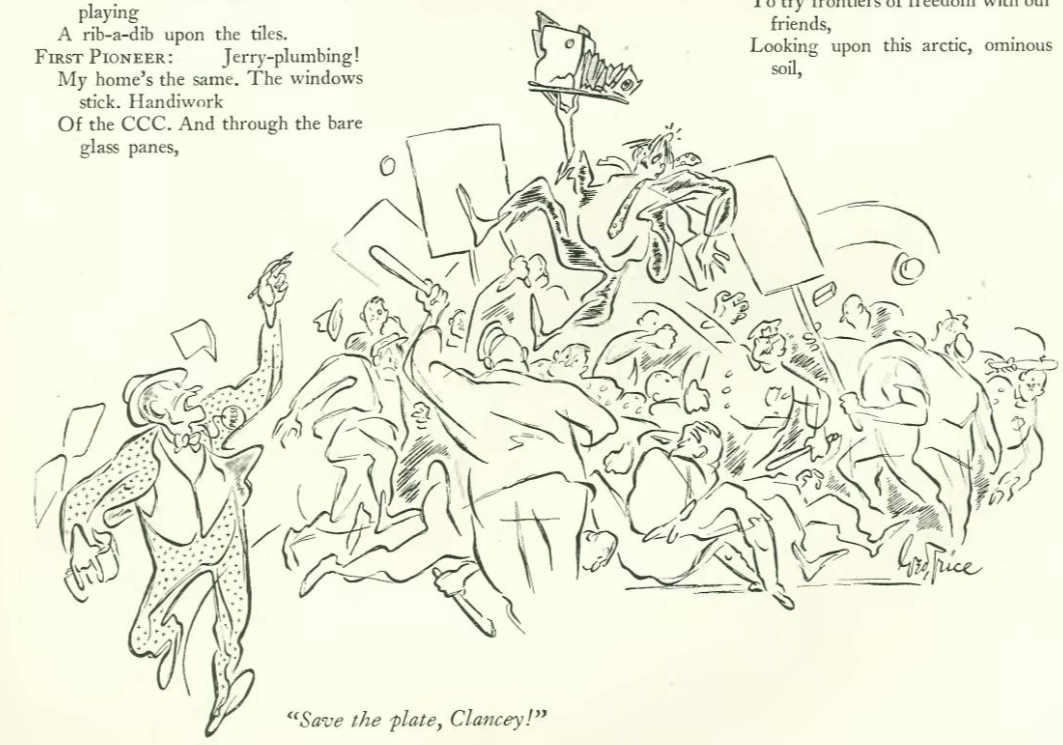
George Price showed us the rough and tumble of news reporting…
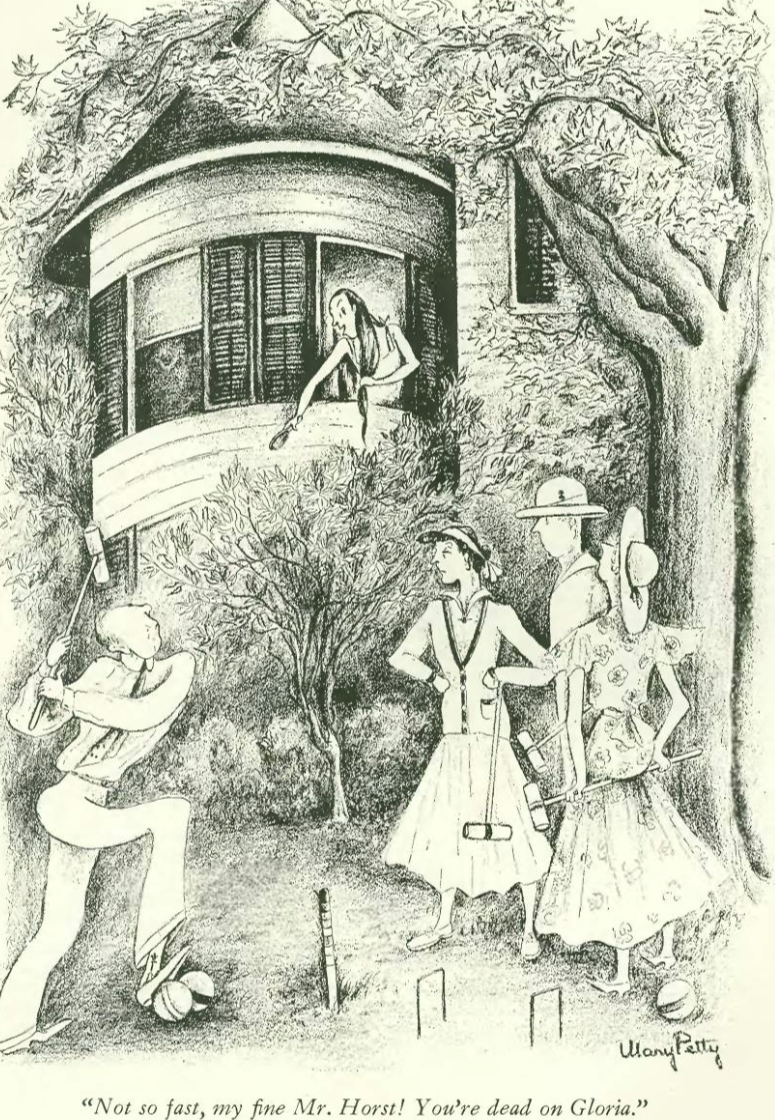
Mary Petty contributed this sumptuous drawing of a croquet match…
Helen Hokinson was in a transcendental mood…

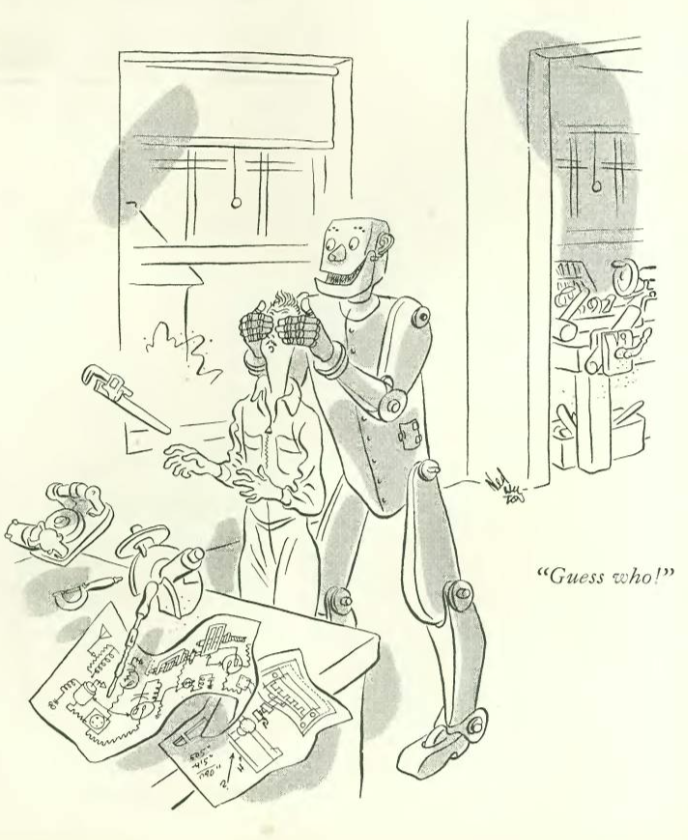
…and Ned Hilton had a big surprise for one garage tinkerer…
…on to August 10 and a rich summer scene by Arnold Hall:
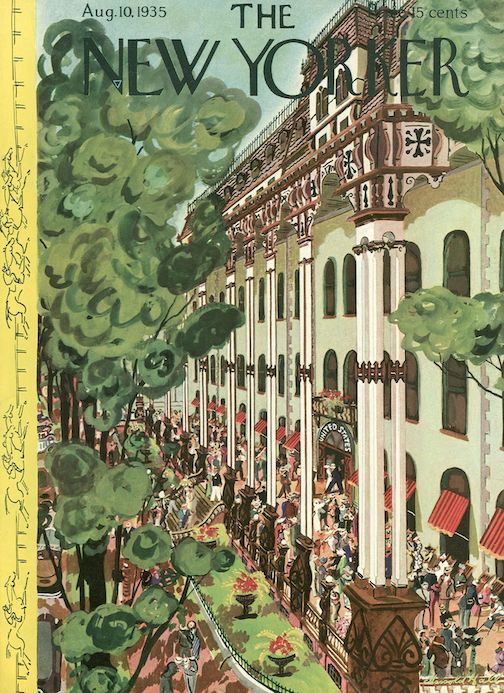
August 10, 1935 cover by Arnold Hall.

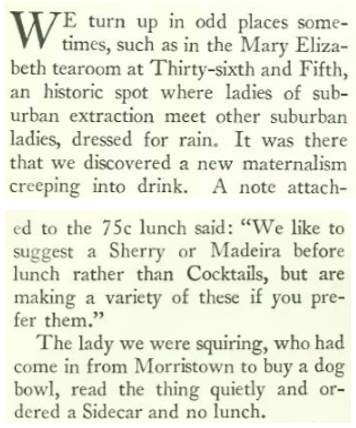
“The Talk of the Town” checked the lunch crowd at Mary Elizabeth’s Tea Room, where some preferred to drink their lunch.
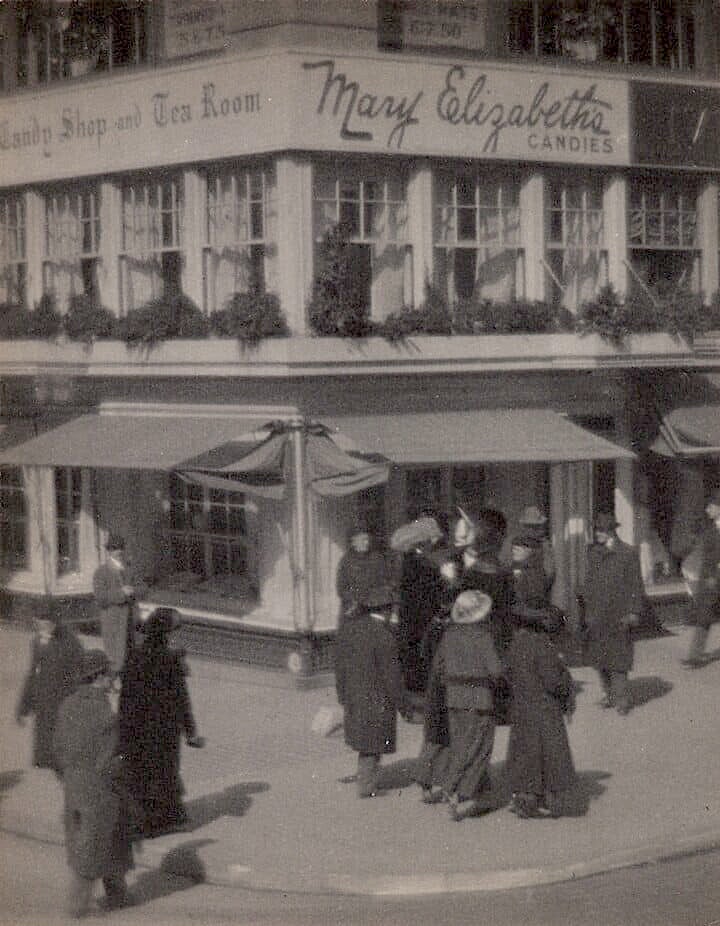
TEA AND SWEETS (and cocktails) were among the offerings at Mary Elizabeth’s Tea Room at 36th and Fifth, seen here circa 1912. (Photo by Karl Struss via Facebook)

 * * *

Comic Relief

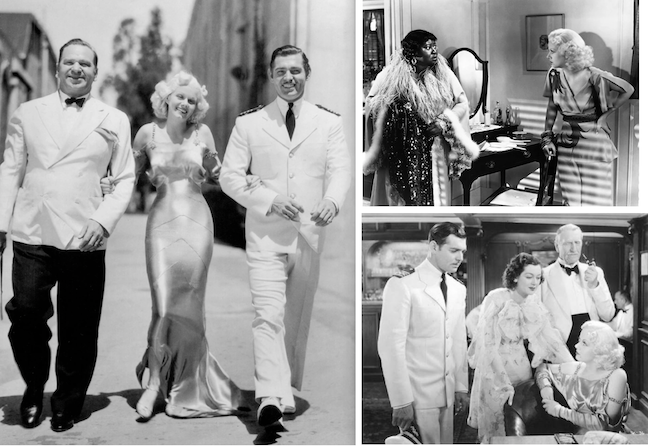
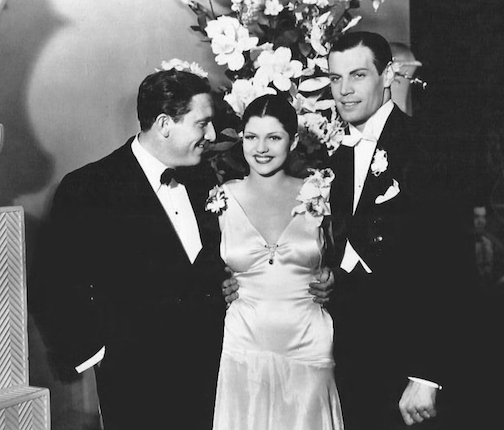
Film critic John Mosher offered an appreciation of W.C. Fields, noting that civilization needed films like Man on the Flying Trapeze during those hard years. Mosher also found some worthy distractions in the Jean Harlow vehicle China Seas, but was prepared to consign Spencer Tracey’s latest offering to the “lower circles of cinema hell.”
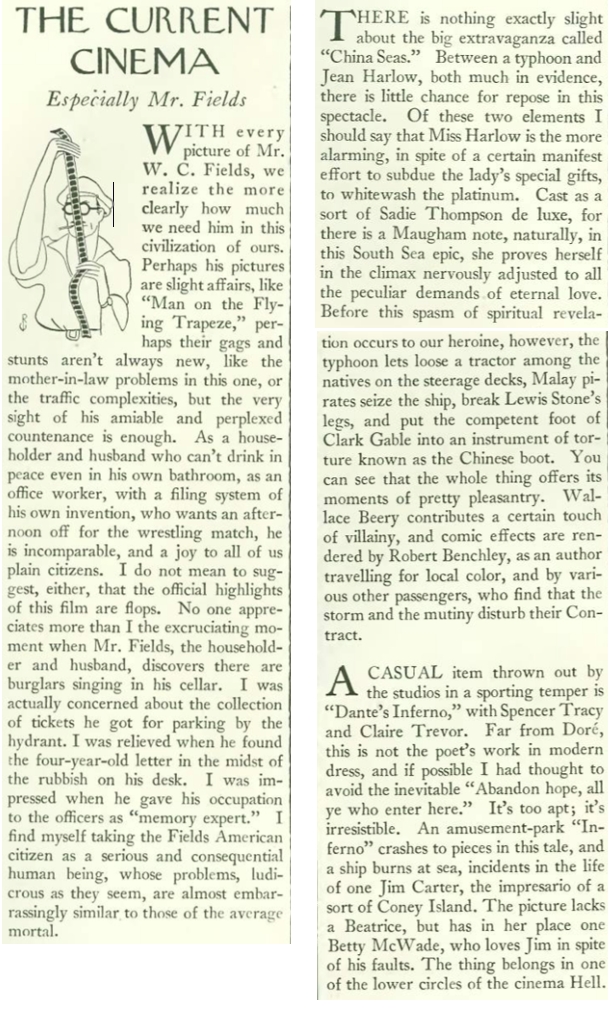
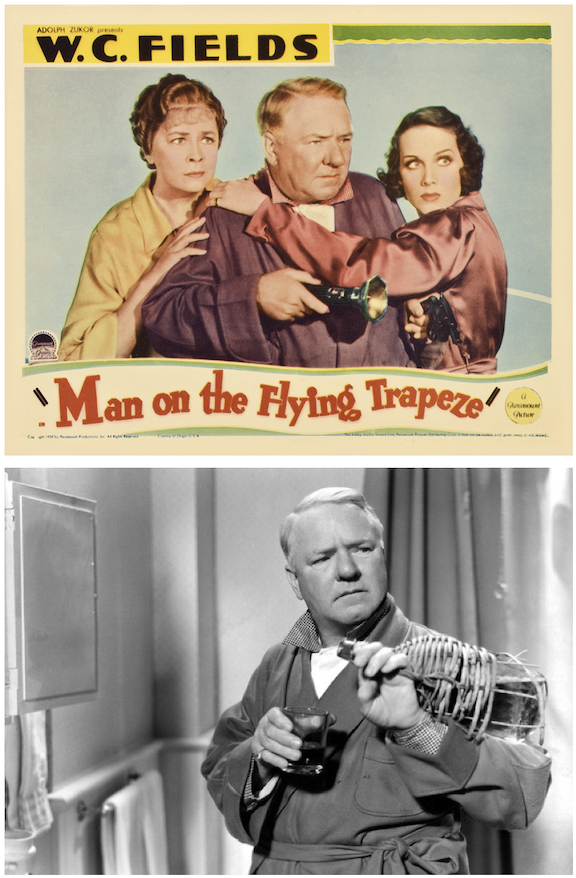
ANSWERING HIS NATION’S CALL…W.C. Fields brought joy to millions during the Depression in movies such as Man on the Flying Trapeze. Above, from left, Kathleen Howard, Fields, and Mary Brian. (IMDB/Rotten Tomatoes)
SHORE LEAVE…At left, Wallace Beery, Jean Harlow, and Clark Gable on the set of China Seas; top right, Hattie McDaniel with Harlow in a scene from the film; below, Gable, Rosalind Russell, and C. Aubrey Smith with Harlow in China Seas. (musingsofaclassicfilmaddict.wordpress.com / Pinterest)
FRESH FACE…Cinema newcomer Rita Hayworth was credited as Rita Cansino (she was born Margarita Carmen Cansino) in Dante’s Inferno. Here she is flanked by Spencer Tracy and Gary Leon. Dante’s Inferno was Spencer Tracy’s final film for 20th Century Fox. It was at MGM where his career really took off. (IMDB)

 * * *

All Wet

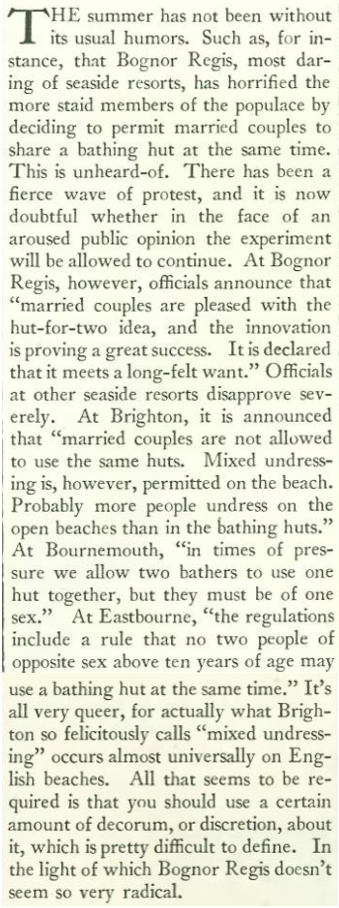
In his London Letter, Conrad Aiken (pen name Samuel Jeake Jr) examined the priggish ways of England’s seaside resorts.
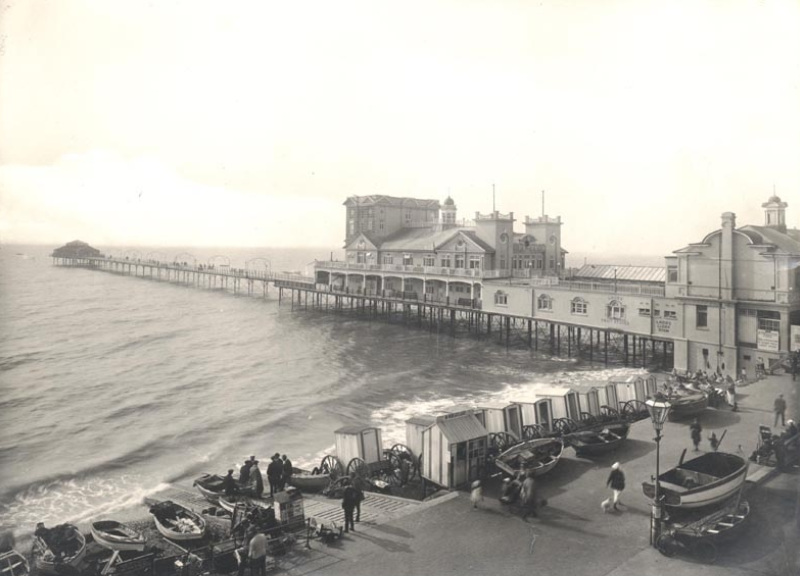
SITE OF SCANDAL…Bathing huts at Bognor Regis, circa 1921. (bognorregistrails.co.uk)

 * * *

Beware the Bachelor

In her “Tables for Two” column, Lois Long examined some of the city’s seasonal escapes for “summer bachelors.”

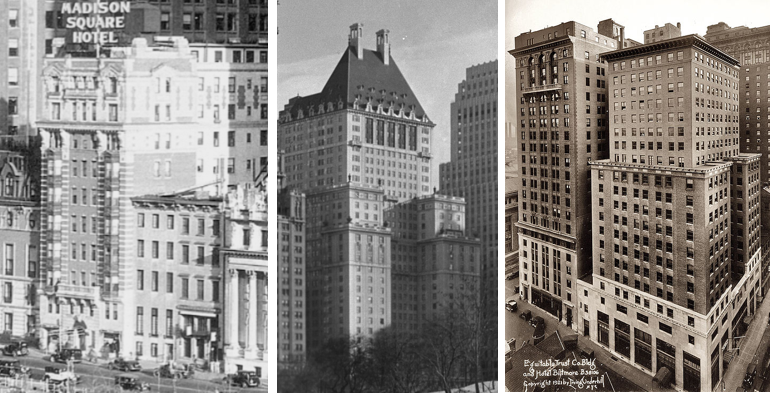
GHOSTS OF THE PAST…Lois Long recommended the air-conditioned lounges of the Madison Square Hotel and the Savoy Plaza (center) or the cooling breezes of the Biltmore roof (right), which featured music by Morton Downey. Sadly, all three of these beautiful buildings have been demolished. (geographicguide.com/Wikipedia)

Other more casual venues recommended by Long included Nick’s Merry-Go-Round…

…a menu from Nick’s dated 1937…

(nypl.org)

…and its cryptic back cover…

From Our Advertisers

…speaking of the Biltmore and Morton Downey, we kick off our advertising section…

…the ad on the left announced the private residences at the Waldorf-Astoria…
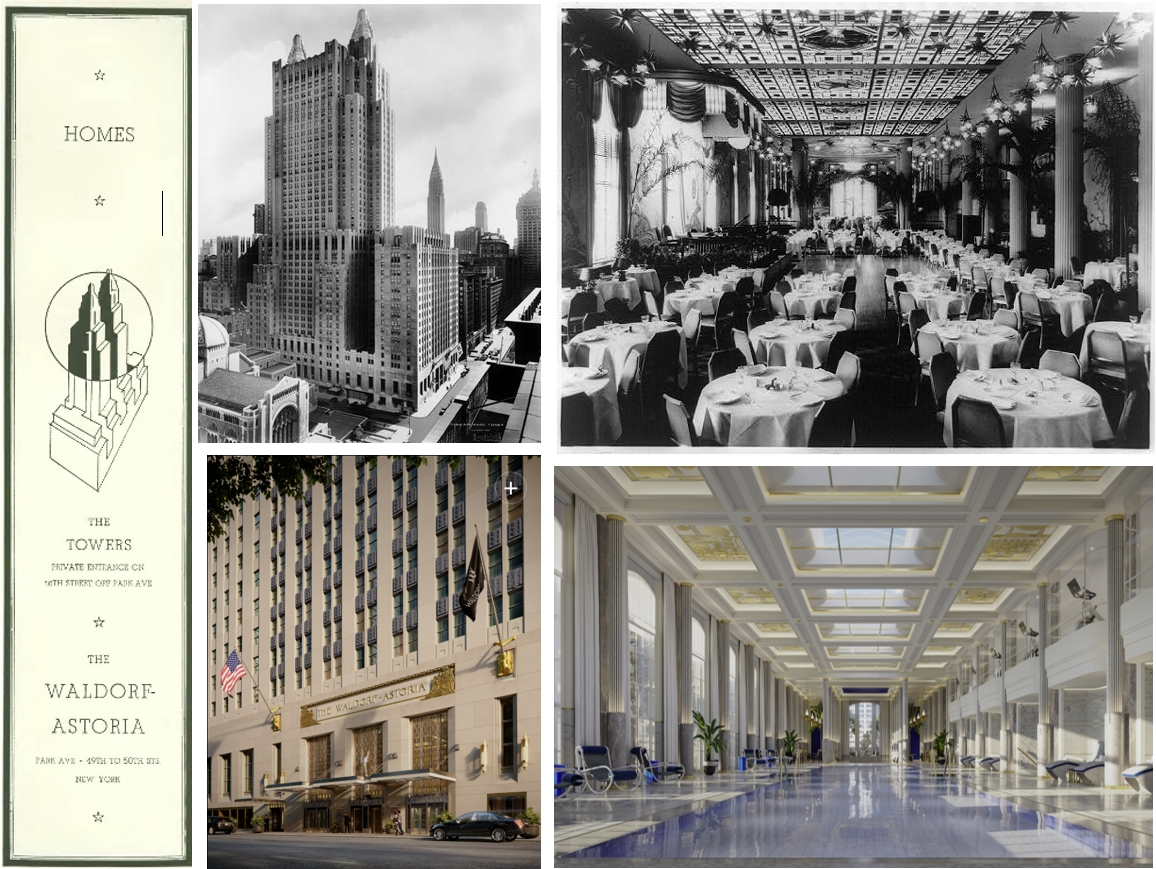
Clockwise, from top left, the Waldorf Astoria circa 1930; the Waldorf’s Starlight Roof in the 1930s; after eight years and billions in restorations and renovations, the hotel has seen many changes including the transformation of the Starlight Roof into a swimming pool. Decades of grime were also cleaned from the building’s exterior. (mcny.org/loc.gov/som.com)

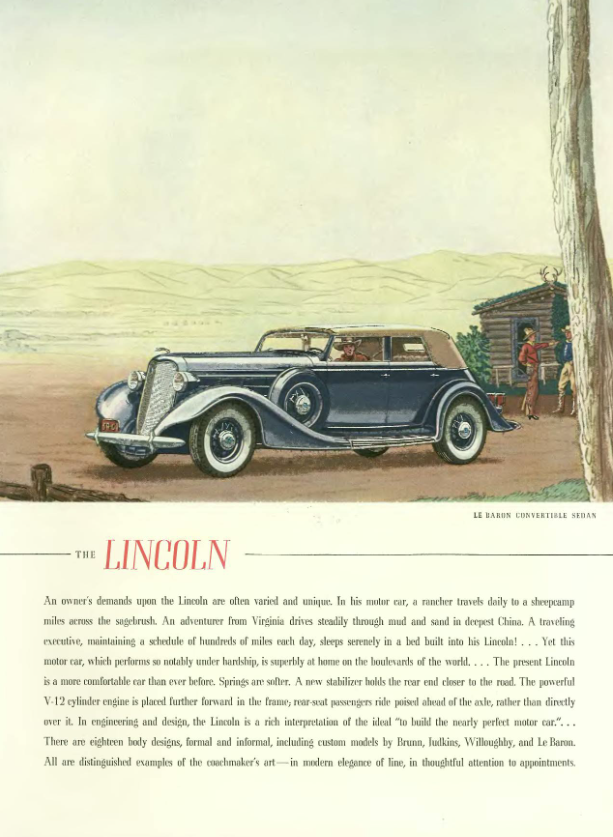
…another ad from the makers of Lincoln suggesting that the market for their luxury auto wasn’t confined to citified execs…
…the Camel folks introduced us to their latest society shill…
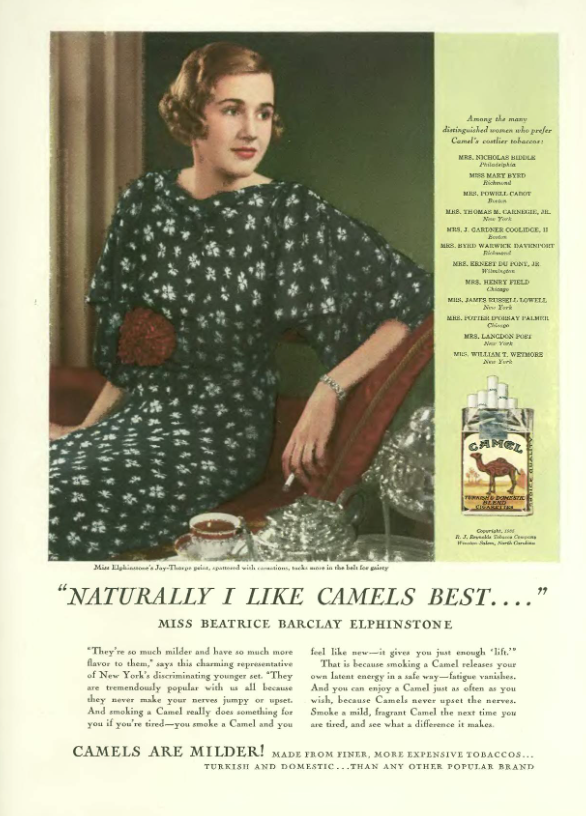
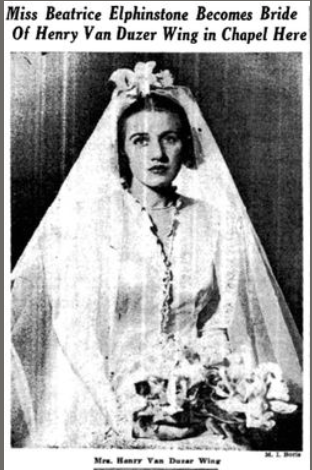
…I didn’t find much about Beatrice Barclay Elphinstone (1916-1977), described in the Camel ad as a “charming representative of New York’s discriminating younger set”…she did make the Times‘ Dec. 10, 1937 society wedding announcements, however…
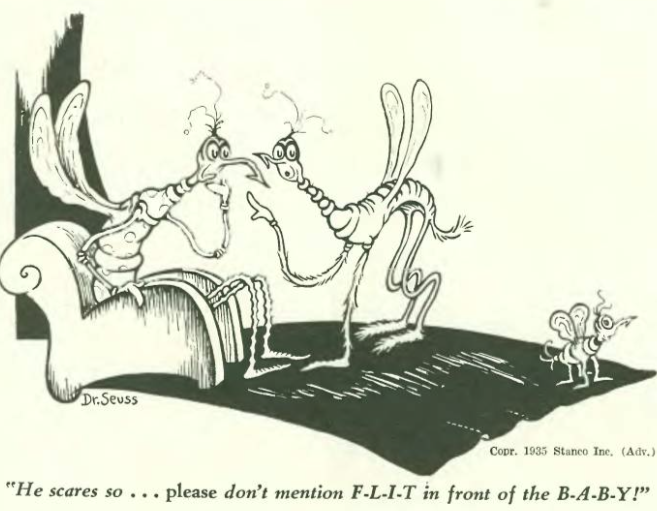
Dr. Seuss was back with another twist on Flit insecticide…
…on to our illustrators and cartoonists, a nice charcoal by Hugo Gellert for a profile titled “Yankee Horse Trader,” written by Arthur C. Bartlett…the harness horse racing legend Walter Cox (1868-1941) was known in New England as “the king of the half-milers”…

James Thurber contributed this cat and dog face-off to the opening pages…

Helen Hokinson offered her perspectives on the summer dog show across pages 16-17…

…and for a closer look…

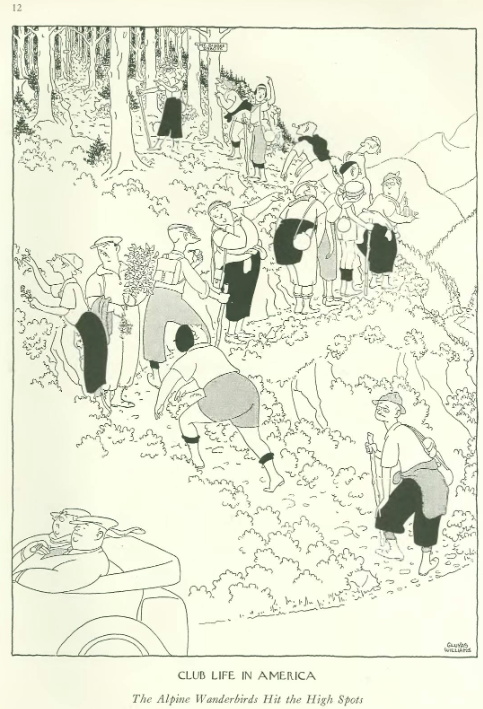
Gluyas Williams went back to nature in his “Club Life” series…
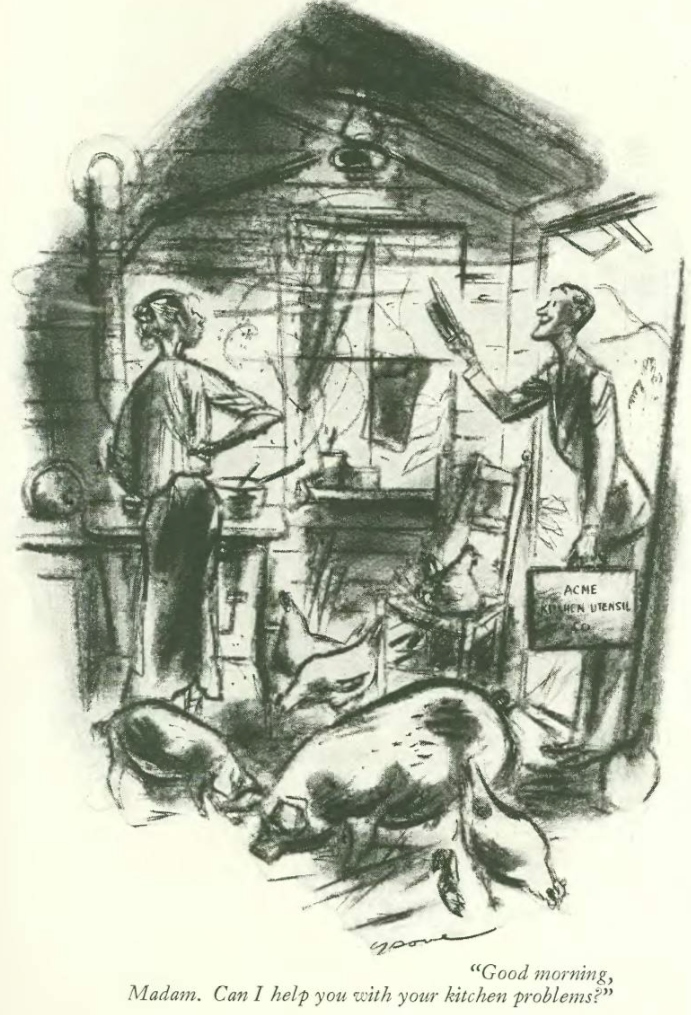
Leonard Dove introduced us to an undaunted salesman…
…in the world of George Price, crime didn’t pay…

Barbara Shermund gave us a rare glimpse into the secret lives of men…

…patronizing words were unwelcome at this chess match, per William Steig

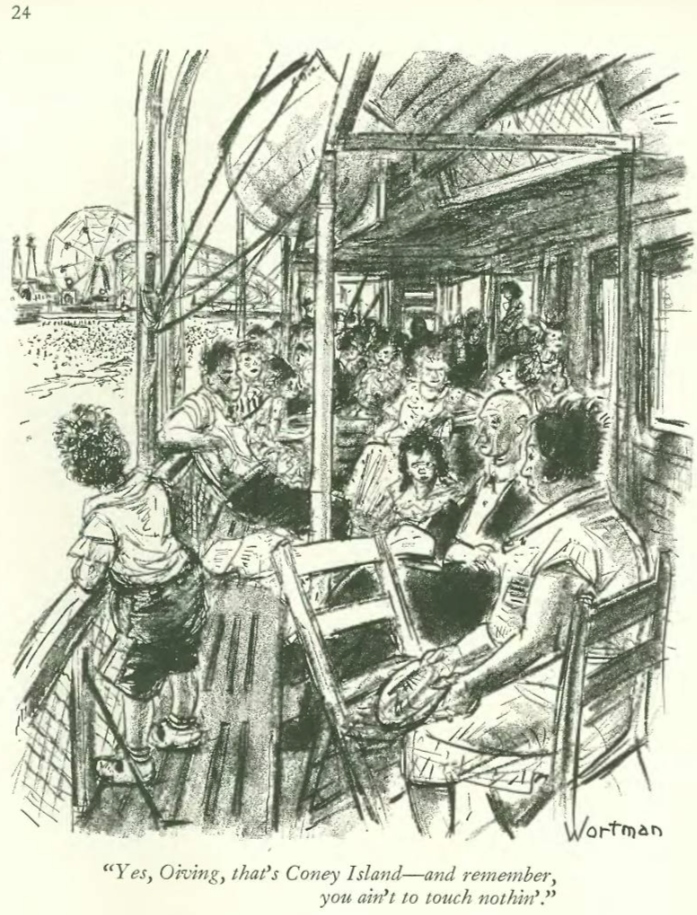
Denys Wortman took us on a family outing…
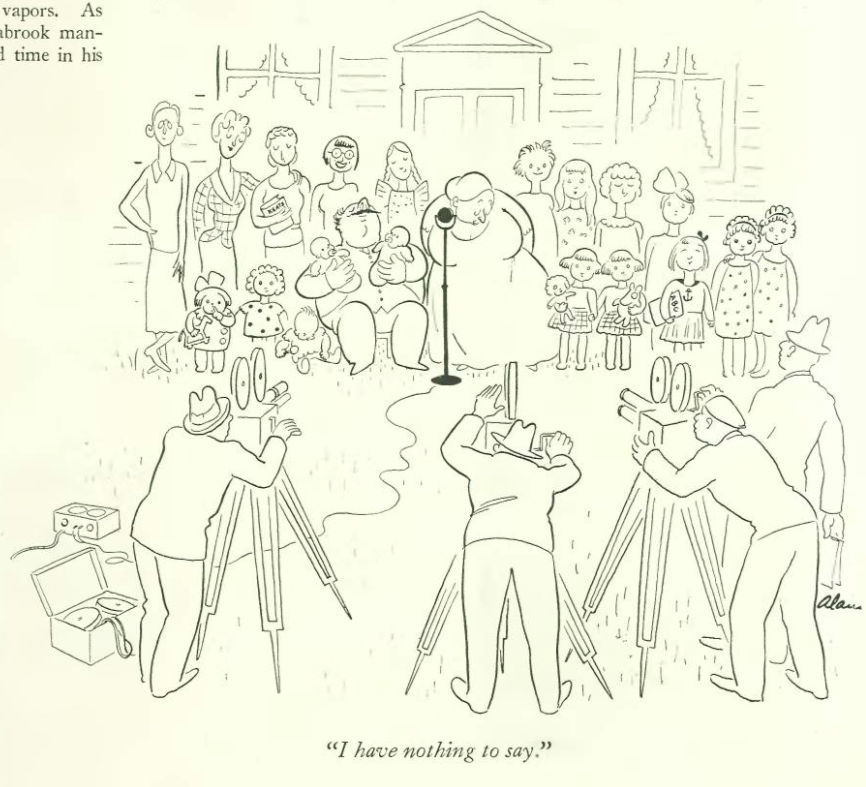
…and we close with Alain, and a mother of multiples…except words…
Next Time: Hays Hokum…

Sounds of Silence

In 1928 both sound and silent films appeared on screens across America, but by 1929 sound was ascendent, and in 1932 silents were mostly a distant memory.

August 13, 1932 cover by Rea Irvin.

The New Yorker was slow to embrace sound—in reviews of early talkies, critic John Mosher found the technology stultifying in both dialogue and action, but as equipment and techniques improved he came to embrace the new medium. E.B. White, however, still missed the silent theatre, and the strains of its pipe organ…

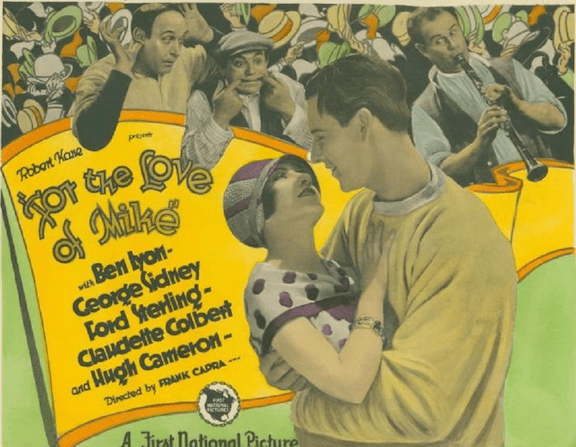
SILENCE IS GOLDEN…E.B. White was likely attending a late evening showing of For the Love of Mike, Claudette Colbert’s only silent film. After the Frank Capra-directed film received poor reviews, the 24-year-old Colbert vowed she would never make another movie. Fortunately for her fans, she changed her mind and signed with Paramount in 1929. At right, promotional photograph of Colbert for the 1928 Broadway production La Gringa. (IMDB/Wikipedia)
VITAL ORGANISTS…Jesse and Helen Crawford both recorded music on Paramount’s mighty Wurlitzer, sounds that were music to the ears of E.B. White. (theatreorgans.com)

 *  *  *

World’s Fastest Man

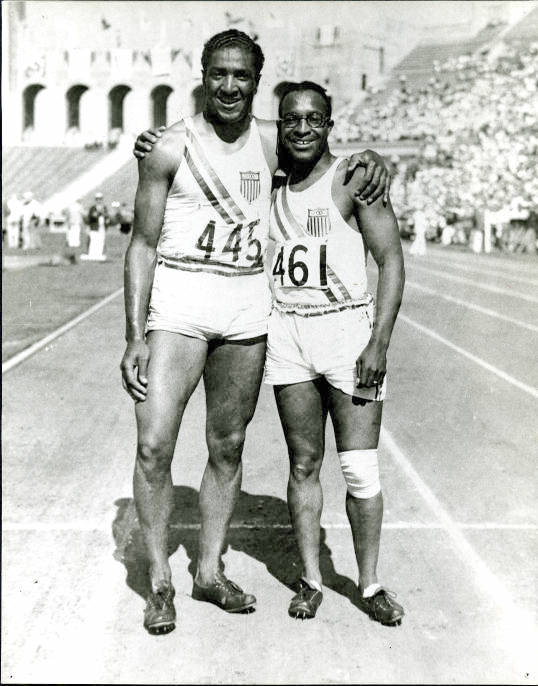
That title went to Eddie Tolan after the 1932 Summer Olympic Games, and his fame won him a long entry in the “The Talk of the Town,” although the column (excerpted) took a patronizing tone toward the athlete:

FASTEST IN THE WORLD…U.S. sprinters Ralph Metcalfe (left) and Eddie Tolan pose on the track at 1932 Los Angeles Olympics. Tolan would receive the title of the “world’s fastest human” after winning gold medals in the 100- and 200- meter events. Metcalfe, who be elected to the U.S. Congress in the 1970s, was considered the world’s fastest human in 1934-35. (Marquette University)

 *  *  *

From Our Advertisers

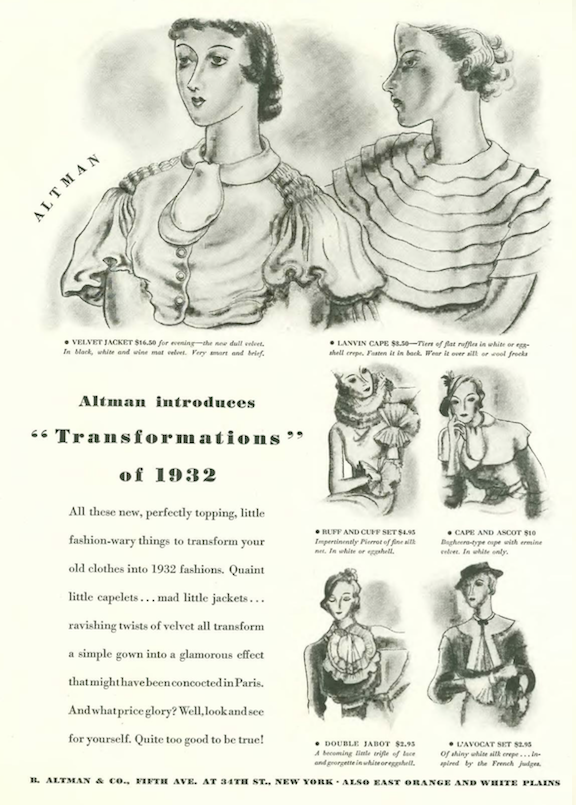
You could tell times were tough when a luxury department store felt the need to sell capes and cuffs designed to “transform” old clothes in to 1932 fashions…

…however, things seemed to be looking up for the folks at Powers Reproduction, who touted the naturalness of their DeSoto ads…

…such as this two-pager that appeared in The New Yorker’s July 23 issue…

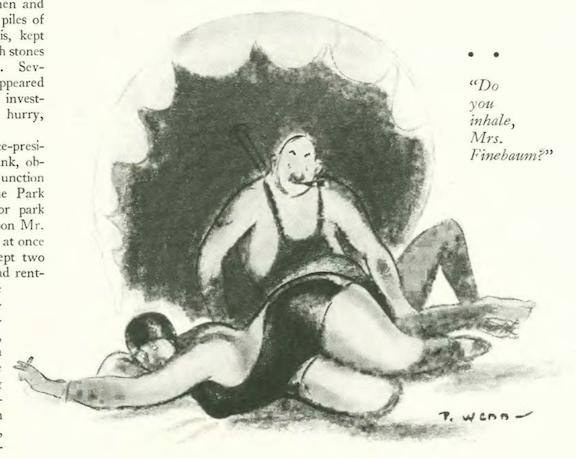
…we move on to our cartoonists, beginning with Paul Webb…

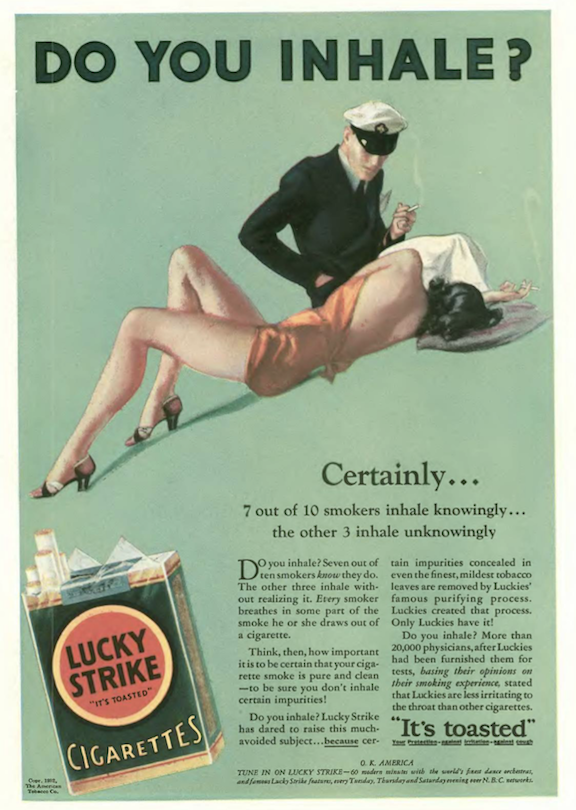
…who referenced a recent New Yorker ad (also from the July 23 issue)…

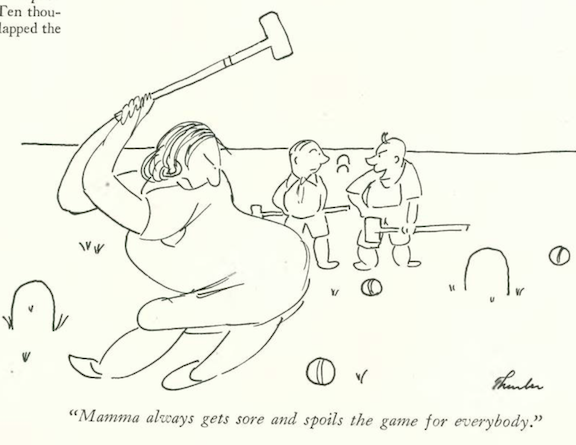
James Thurber gave us two examples of female aggression…

…this one a bit less deadly…

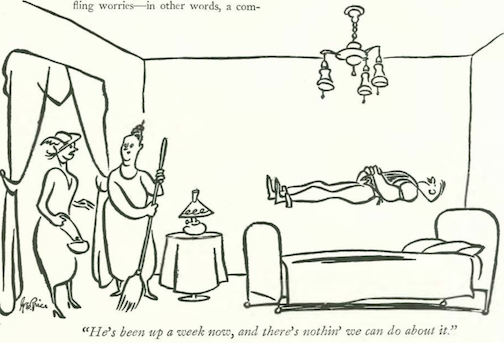
…here’s an early work by the great George Price (1901-1995), who beginning in 1929 contributed New Yorker cartoons for almost six decades…

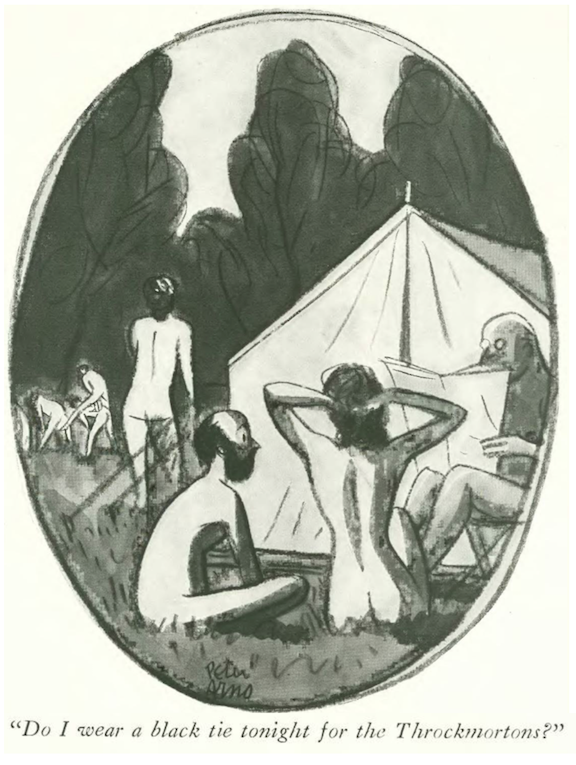
Peter Arno showed us that among the uppers, even nudism had its class distinctions…

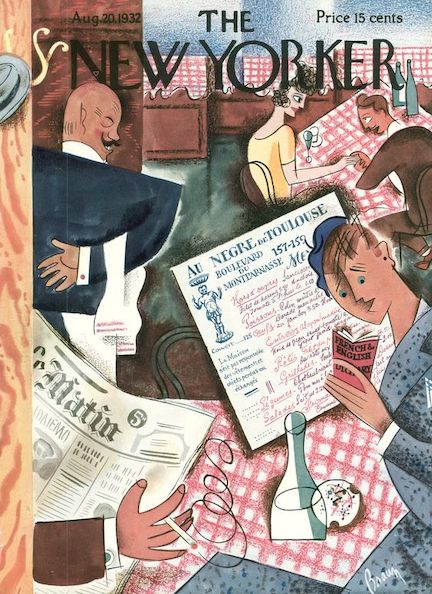
…on to our August 20, 1932 issue, and this terrific cover by Harry Brown. With a style reminiscent of the French artist Raoul Dufy, Brown illustrated a number of memorable New Yorker covers during the 1930s…

August 20, 1932 cover by Harry Brown.

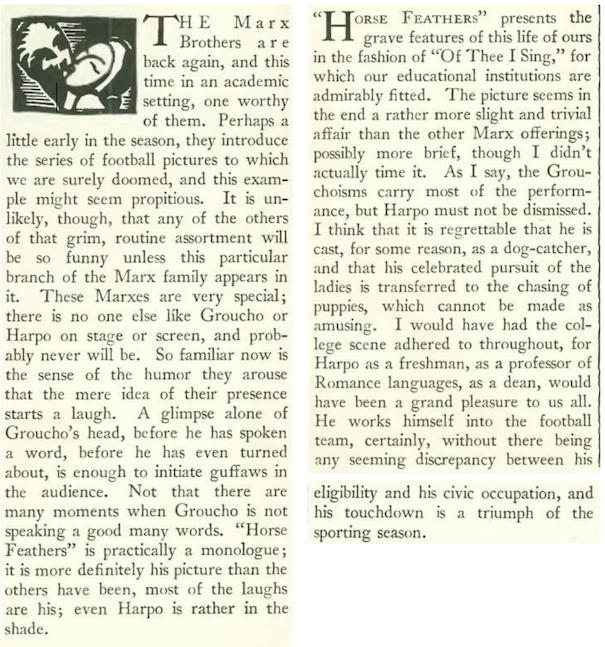
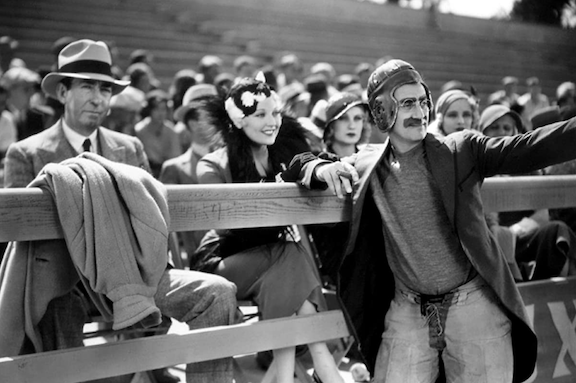
…the Marx Brothers were back in cinemas with Horse Feathers, and, according to critic John Mosher, delivered the comic goods…

Xs AND OsGroucho Marx shows David Landau and Thelma Todd how the game of football is really played in Horse Feathers (1932). (IMDB)

 *  *  *

 Author, Author

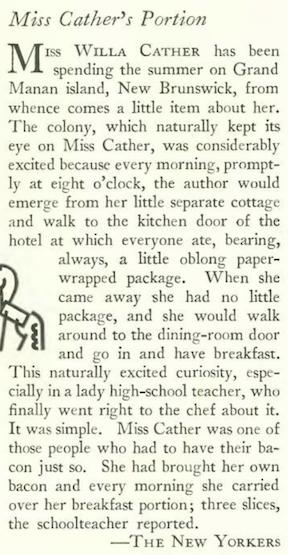
“The Talk of the Town” included this bit of news regarding the Pulitzer Prize-winning author Willa Cather. Beginning in the early 1920s, Cather and her partner, Edith Lewis, spent summers at Manan Island in New Brunswick, Canada:

THESE NEED SOME EDITING…Willa Cather pruning her roses on Manon Island. (University of Nebraska-Lincoln)

 *  *  *

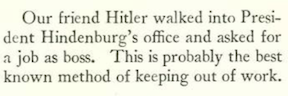
While Cather was enjoying the peace of island life, there were disturbing rumblings on the other side of the ocean, even if Howard Brubaker (writing in his column “Of All Things”) found humor in them…

…the result, however was no laughing matter…
NOT HIS USUAL STYLE…After being appointed as German chancellor, Adolf Hitler greets President Paul von Hindenburg in Potsdam, Germany, on March 21, 1933. This image, intended to project an image of Hitler as non-threatening, was made into a popular postcard. The photo also appeared widely in the international press. (www.ushmm.org)

…Brubaker also commented on the upcoming U.S. presidential elections, and, more importantly, the absence of Greta Garbo, who returned to Sweden after her MGM contract expired…

NOT FEELIN’ IT, PAL…Melvyn Douglas romances Greta Garbo in 1932’s As You Desire Me. Garbo would leave for Sweden after the film wrapped. She would return after a nearly a year of contract negotiations. (IMDB)

 *  *  *

From Our Advertisers

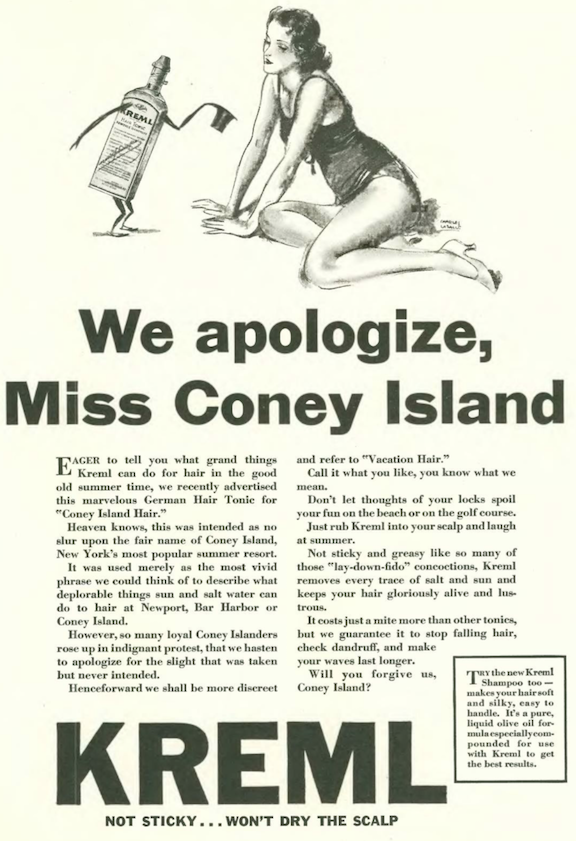
Illustrator Charles LaSalle, who would later be known for his Western-themed art, provided this odd bit of art for the makers of a German hair tonic…

…on to our cartoons, Rea Irvin continued his travelogue of famed tourist destinations…

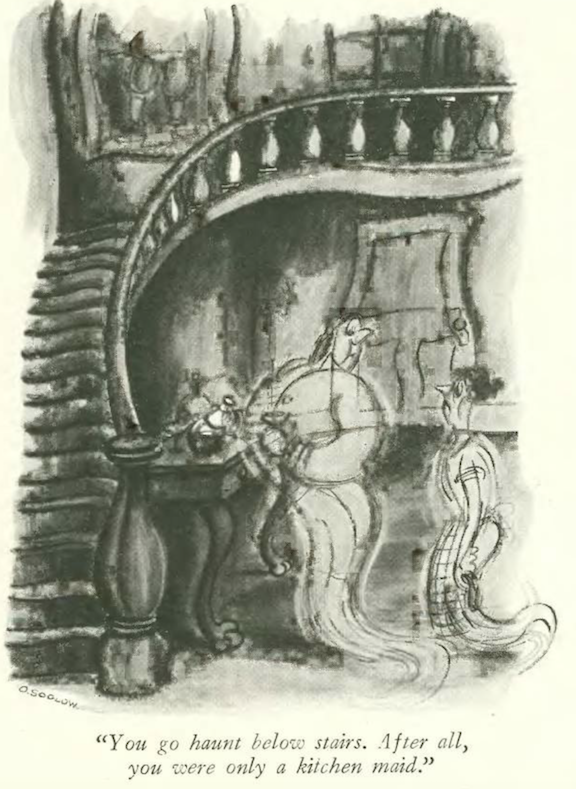
Otto Soglow showed us that even the spirit world has its version of Upstairs, Downstairs

Carl Rose rendered a cow and a calf made homeless for art’s sake…

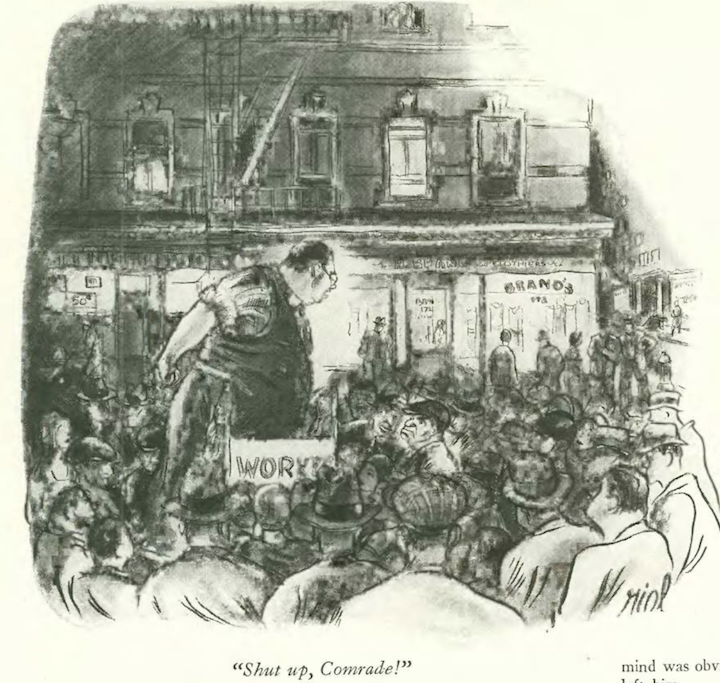
Leo Soretsky contributed only one cartoon to The New Yorker, but it was a doozy…

…on to August 27, 1932…

August 27, 1932 cover by S. Liam Dunne.

…in which the “Talk of the Town” contributors decided to pay homage to Lewis Gaylord Clark (1808–1873), who was editor and publisher of the old The Knickerbocker magazine (1833 – 1865)…

…here is one of the entries, with accompanying artwork, written in the style of the old magazine…

 *  *  *

From Our Advertisers

William Steig had illustrated several ads for Old Gold, and now it was Peter Arno’s turn to entice readers to the national habit…

…Lucky Strike, on the other hand, preferred these illustrations of young women, who also happened to be their biggest growth market…by the way, this is not an official “Miss America”—there was no pageant in 1932…

…and we end with cartoons that ponder the female form by Daniel Brustlein (1904–1996), who contributed cartoons and covers to The New Yorker from the 1930s to the 1950s under the pen name Alain

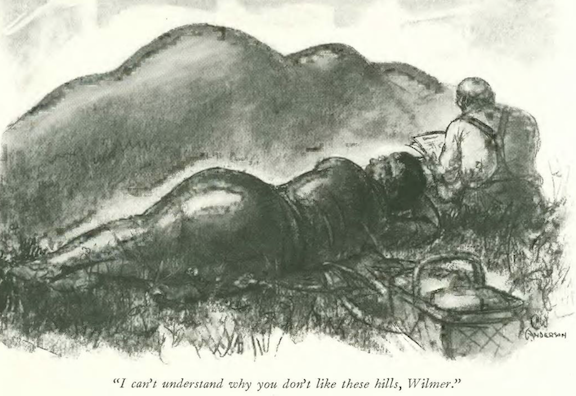
…and C.W. Anderson

Next Time: A New Outlook…

An American Classic

Immigration over the centuries transformed New York City into a cosmopolitan metropolis, with many of those migrants drawn from America’s hinterlands. What they found in the city was not only economic opportunity, but also a place to grow artistically and intellectually.

Aug. 8, 1931 cover by Theodore Haupt.

Such was the case of Willa Cather, who while living in New York City would draw on her Nebraska childhood to write a succession of novels about prairie life and its people (including My Antonia and O Pioneers!) that would culminate in a 1923 Pulitzer Prize.

Louise Bogan, in 1931 a new poetry editor for The New Yorker (and a poet herself), wrote a profile of Cather for the Aug. 8 issue. An excerpt:

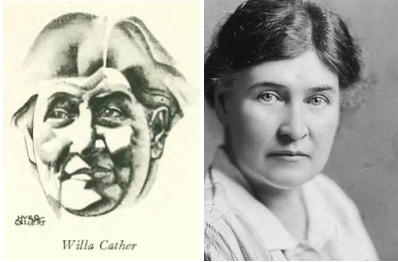
TWO FACES…Hugo Gellert rendering of Willa Cather for the profile; undated photo at right gives you some idea of the look Cather aimed at the affected behavior of others. (The New York Times)
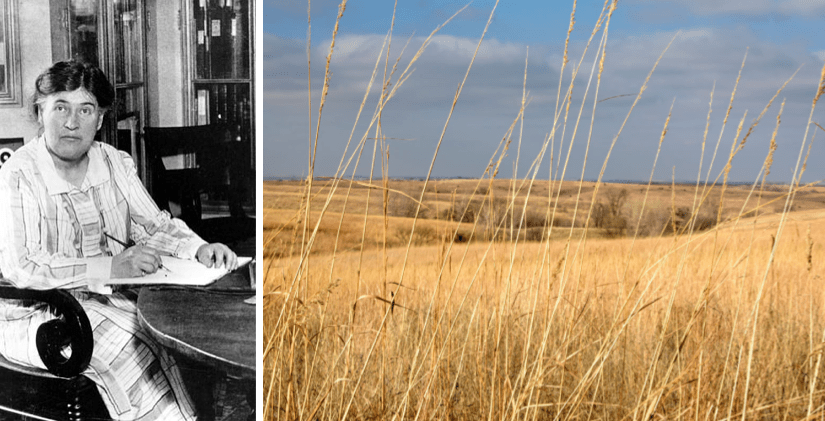
FORMATIVE YEARS…Clockwise, from top left, Willa Cather as a student at the University of Nebraska in the early 1890s; classmates at Nebraska included author and activist Dorothy Canfield Fisher and Alvin Johnson, later a co-founder of New York’s New School. Both Cather and Fisher took fencing lessons from John J. Pershing, who taught military science at Nebraska; Cather’s childhood home in Red Cloud, Neb., and the prairie that inspired much of her writing. (news.unl.edu/Wikipedia/new school.edu/literaryamerica.net)
CITY LIFE…Clockwise, from top: S. S. McClure, Willa Cather, Ida Tarbell, and Will Irvin visit in Washington Square Park, 1924; Cather in the meadow of High Mowing farm near Jaffrey, N.H., where she wrote part of My Antonia; on the cover of Time, Aug. 3, 1931; one of Cather’s New York residences at 82 Washington Place. (Indiana University/Southwick Collection, University of Nebraska/time.com/jschumacher.typepad.com)

Bogan concluded the profile with this note about Lèon Bakst, who was commissioned in 1923 to paint a portrait of Cather while she visiting Paris (image courtesy Omaha Public Library):

My dear late friend Susan Rosowski, who was a preeminent Cather scholar, wrote that Cather was “the first to give immigrants heroic stature in serious American literature.” In these times when immigration is so hotly debated, it is worth revisiting My Antonia and O Pioneers! to recall what once made America truly great.

 *  *  *

One Arm Restaurant

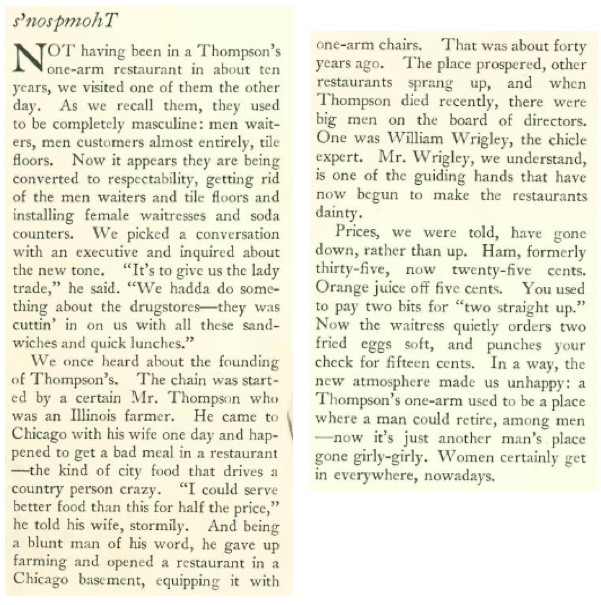
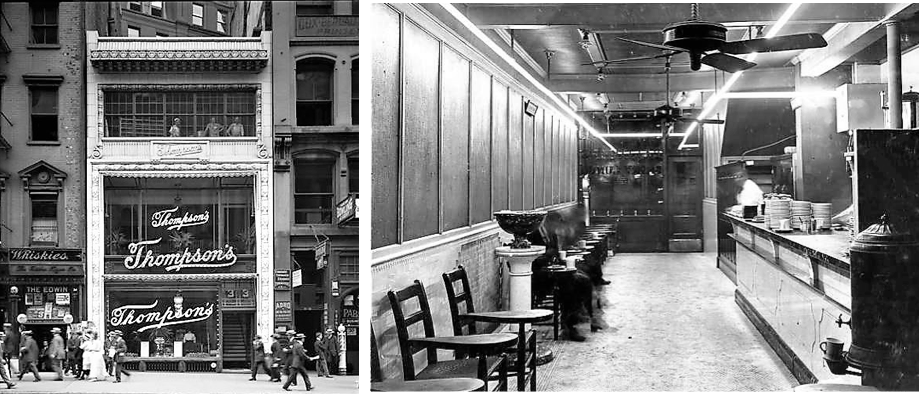
If you wanted to get lunch fast and cheap in 1931 you might have stopped at one of John Thompson’s New York restaurants. According to Tom Miller (daytoninmanhattan.blogspot.com), there were no waiters in Thompson’s restaurants. “Customers purchased foods like cold corned beef, cold boiled ham, smoked boiled tongue or hot frankfurters at a counter. They then took their trays to ‘one arm’ chairs lined up along the wall. There were no tables; instead customers ate at what was similar to turn-of-the-century school desks.” E.B. White stopped in for a visit:

YOU CAN’T MISS IT…John Thompson’s name is emblazoned no less than four times on the front of his restaurant at No. 33 Park Row. No-frills interior featured “one-arm” chairs and a self-service coffee urn. (Museum of the City of New York /daytoninmanhattan.blogspot.com)

 *  *  *

Cinematic Eyeful

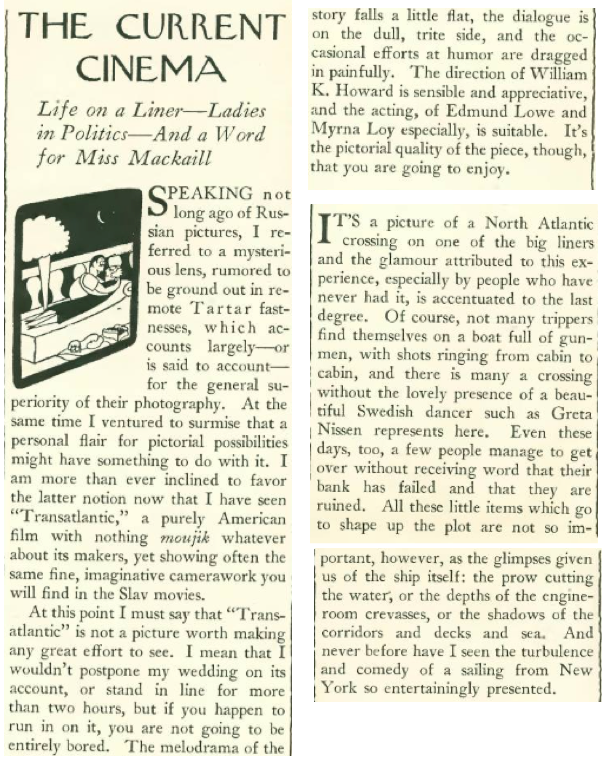
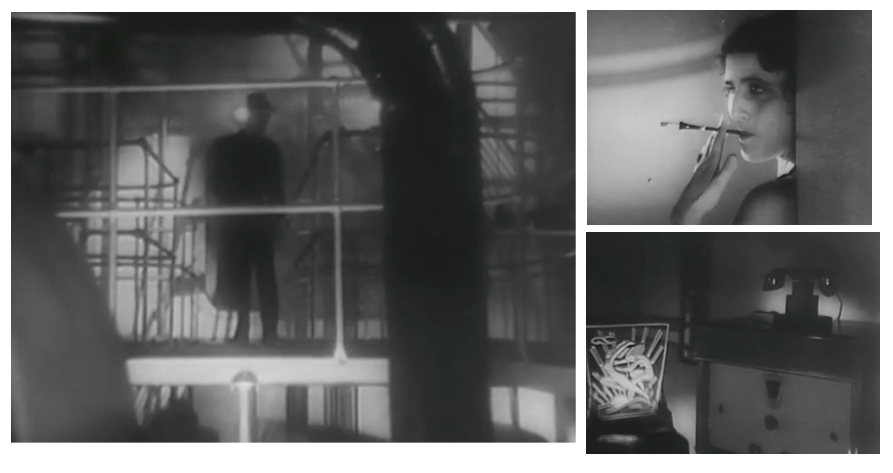
The Pre-Code comedy-drama Transatlantic was light on plot but heavy on deep-focus cinematography (by James Wong Howe) that wowed New Yorker critic John Mosher in 1931…and still wows critics today.

High Seas Hijinks…The pre-code comedy-drama Transatlantic wowed critic John Mosher not so much for its storyline as for its style and cinematography. Clockwise, from left, Edmund Lowe has his hands full with Lois Moran, Greta Nissen and Myrna Loy. (IMDB)
NIFTY NOIR…John Mosher loved the avant-garde, noir-ish stylings of Transatlantic. This film by director William K. Howard and cinematographer James Wong Howe is still admired today. A MoMA cinema site notes that the film’s style anticipates Citizen Kane by ten years. (pre-code.com)

 *  *  *

From Our Advertisers

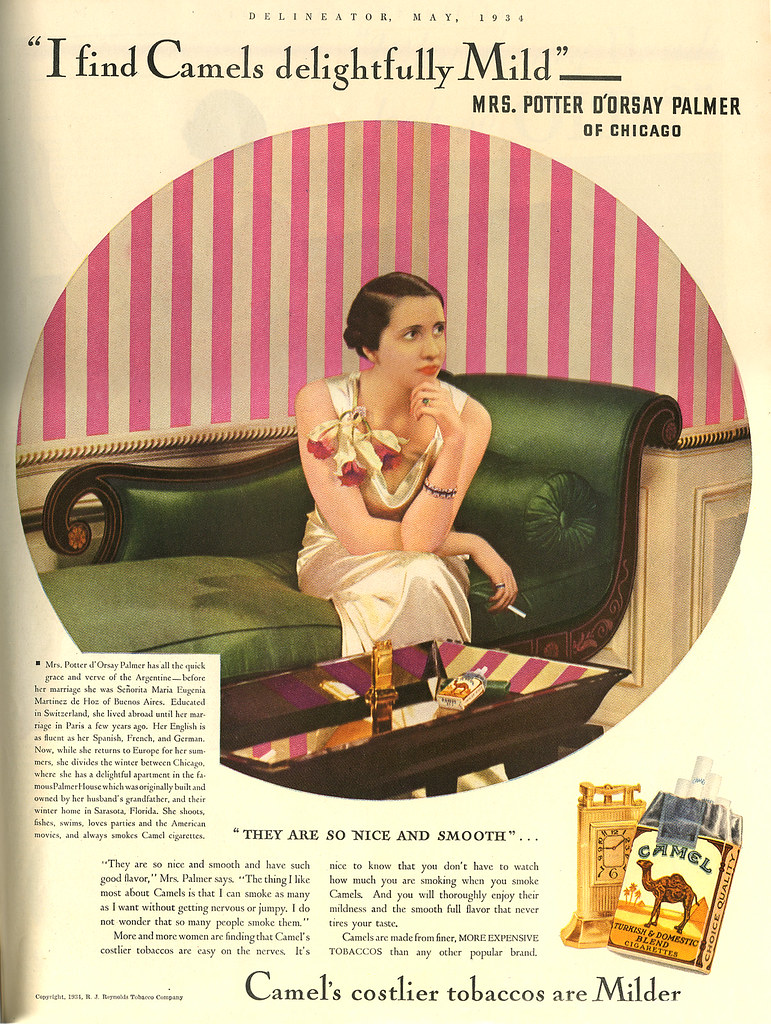
We begin with another socialite endorsing Pond’s Cold Cream — Mrs. Potter d’Orsay Palmer nee Maria Eugenia Martinez de Hoz. She was wife No. 2 of Potter d’Orsay Palmer, son of the wealthy family of Chicago Palmer House fame…they would divorce in 1937, and the playboy Potter would marry two more times before dying of a cerebral hemorrhage in 1939 (the result of a drunken brawl). Maria Eugenia would remarry and return to her homeland of Argentina to raise a family…

…it seems Maria Eugenia didn’t limit herself to endorsing cold cream, as this next ad attests (from the May, 1934 Delineator magazine)…

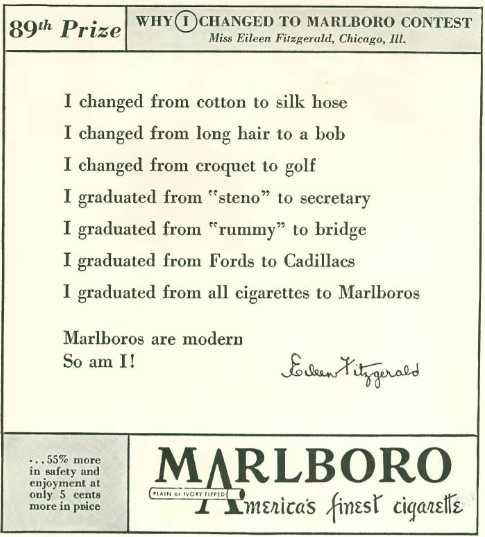
…Maria Eugenia endorsed Camels because they were marketed to women back then, as were Marlboro cigarettes, the makers of which continued their silly handwriting and jingle-writing contests to promote the brand (note the examples “Miss Eileen Fitzgerald” offered of what defined a modern lifestyle)…

…the makers of Chesterfield cigarettes, on the other hand, originally marketed their product to men, but they made sure women were included in the copy beneath the image — “yes, there’s a big woman vote” …

…you may recall the subtle ways Liggett & Myers began to lure women smokers back in 1928 with this ad campaign…

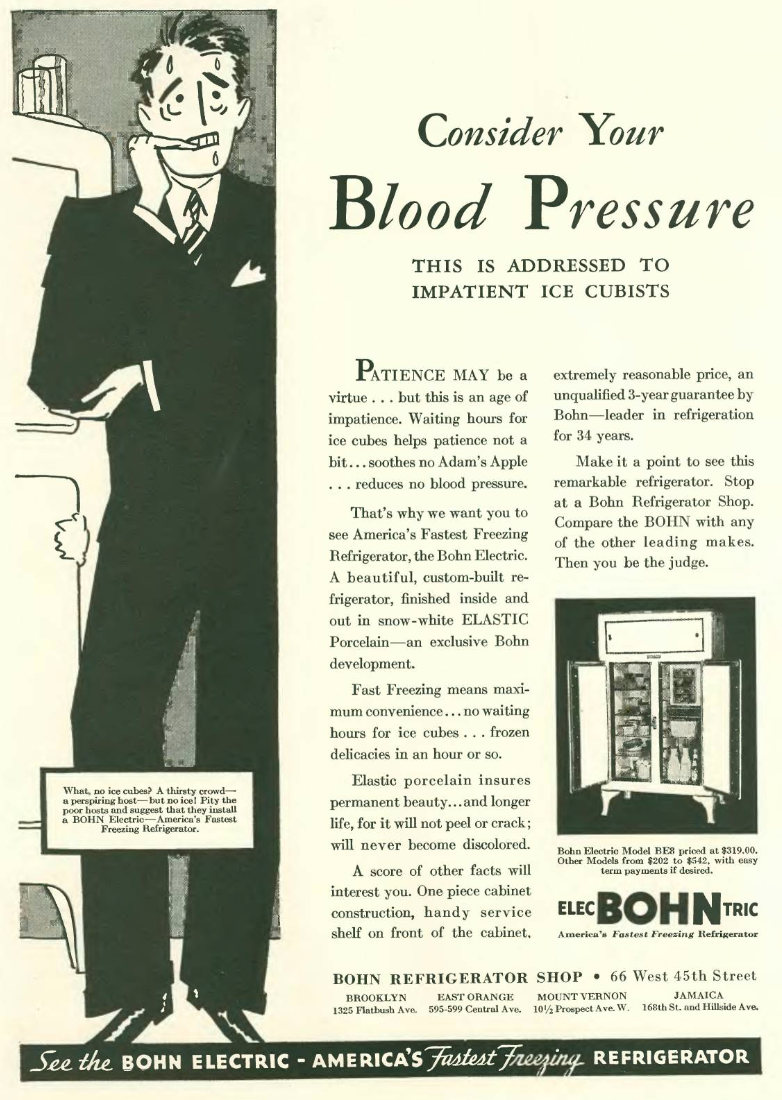
…you see a lot of tobacco ads because cigarette manufacturers were one of the few industries still turning a profit during the first years of the Depression…men and women were smoking like crazy, maybe to calm their nerves over the performance of their refrigerators…

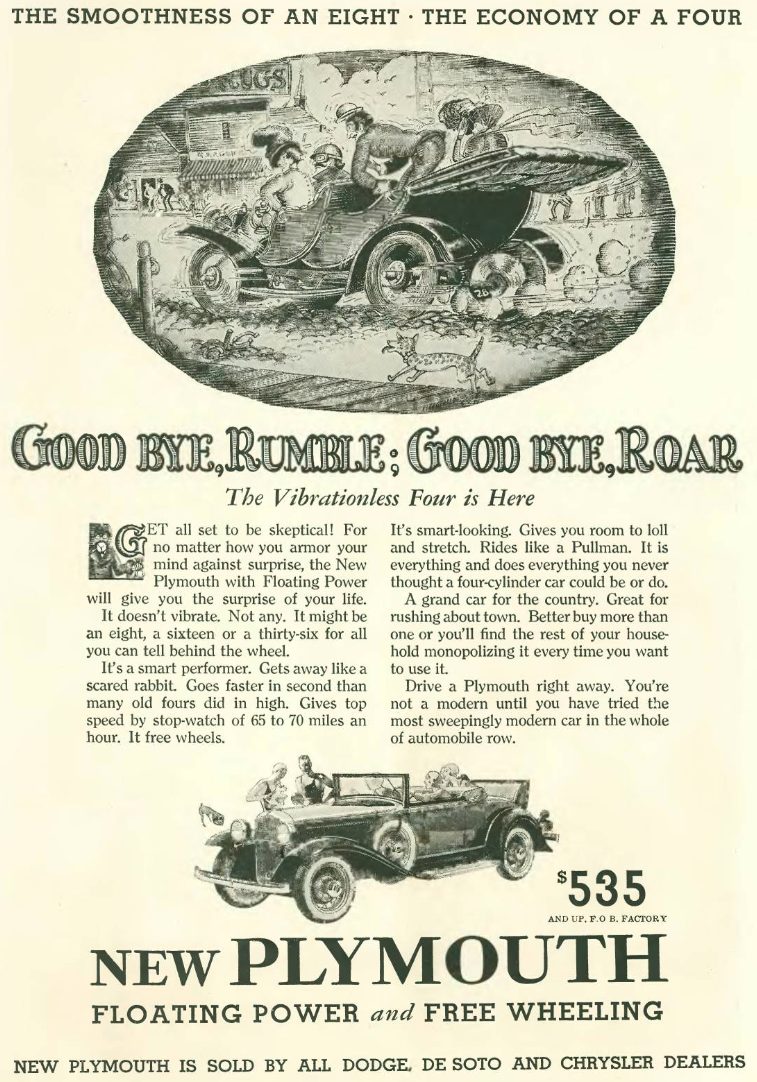
…one could always calm the nerves by taking a spin in a new Plymouth, bargain-priced at just $535…

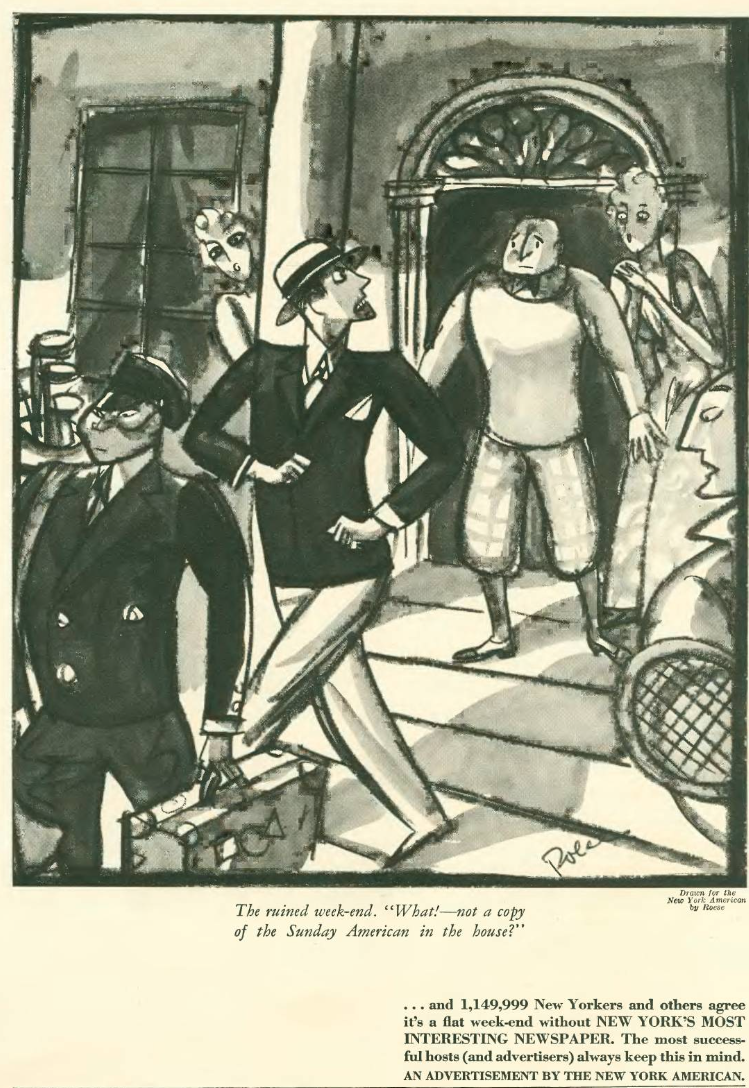
…and we have another Arno-esque ad by Herbert Roese, touting the wonders of “New York’s Most Interesting Newspaper”…

…on to our cartoonists, we begin with this wonderful spot drawing by Barbara Shermund

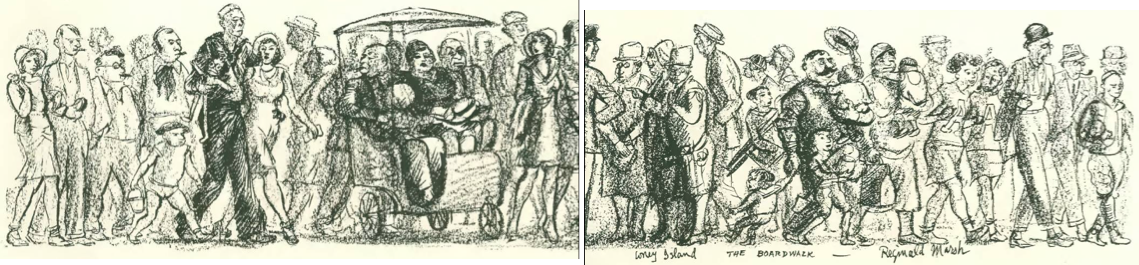
…and an illustration by Reginald Marsh of a Coney Island crowd that graced facing pages in “The Talk of the Town”…

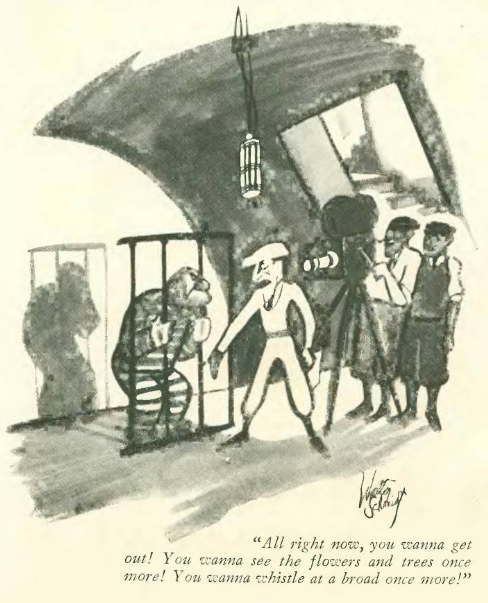
…here’s one of four drawings Walter Schmidt contributed to The New Yorker between 1931 and 1933…

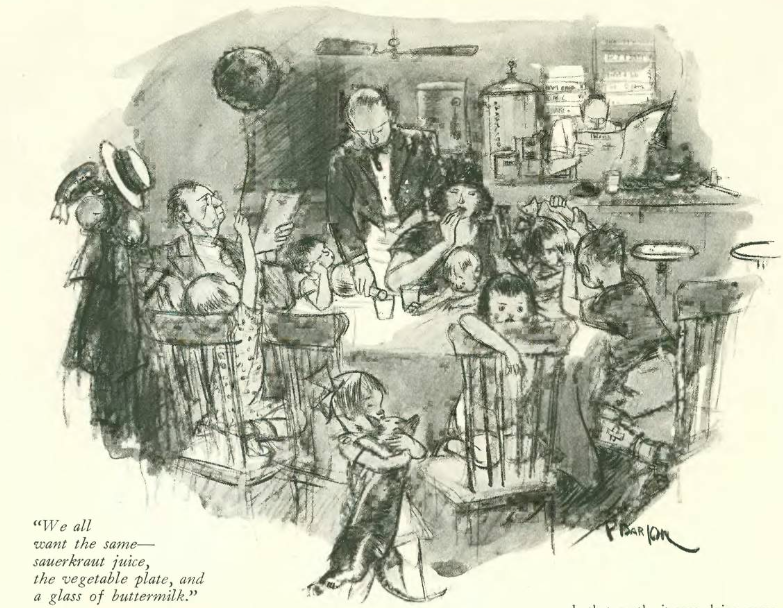
Perry Barlow illustrated the joys of dining out with the kiddies…

…back to Barbara Shermund, who eavesdropped on her debs…

Kemp Starrett gave us a proud moment at the county fair…

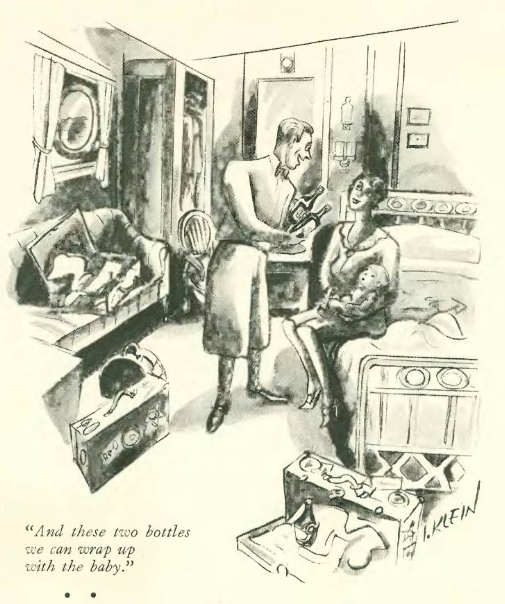
Isadore Klein offered up a new twist on the term “family planning”…

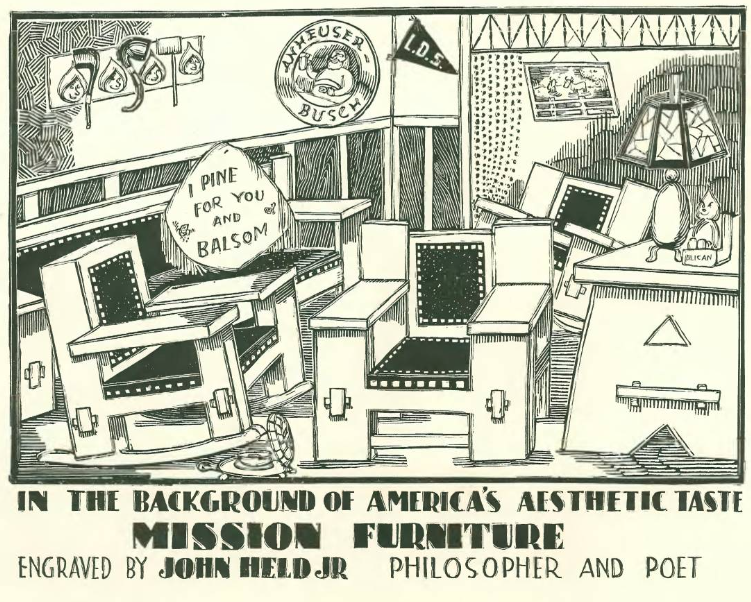
John Held Jr assessed the aesthetic value of chunky mission-style furniture…

…and Peter Arno reappeared in the cartoons with this full-page illustration of some desperate climbers…

Next Time: Asphalt Jungle…

Amateur Beauty

Screenshot 2015-06-24 16.52.50
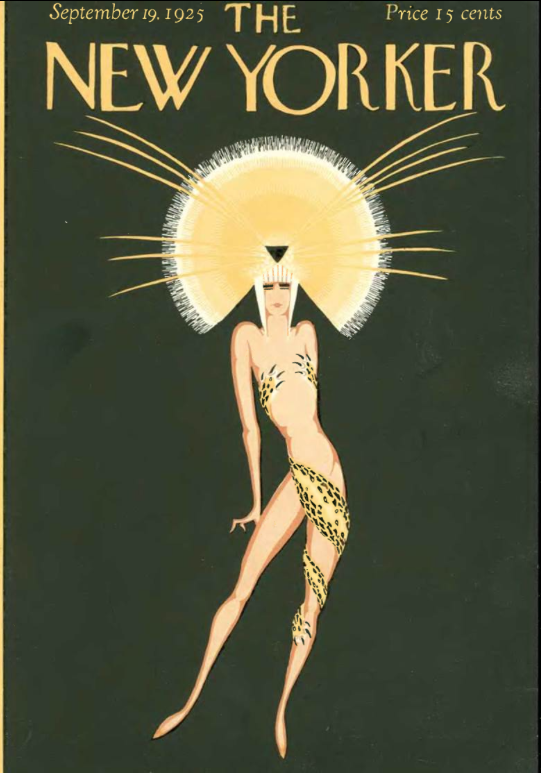
Cover for Sept. 19 by Max Ree.

It was a busy week for the Sept. 19 issue of The New Yorker. “The Talk of the Town” reported that ‘amateur beauties” at the Atlantic City Beauty Pageant (known today as the Miss America Pageant) were “protesting against the presence of professional sisters in the contest.” Talk then posed this question:

“Is beauty, one wondered, ever amateur? Is it not the most professional of all professional matters? To a man it would seem so. But women may know better. And if there is a distinction—if we are to have amateur and professional beauties—why should not the Atlantic City promoters take a leaf from golf’s book and hold an open championship, wherein the two classes may meet?

Talk concluded:

The winner of last year’s beauty contest, Miss Ruth Malcomson, tells how she won it in a recent issue of Liberty; and from these writings we leap hastily to the conclusion that the very beautiful are also very very simple.

Miss America 1924 - Ruth Malcomson (1)
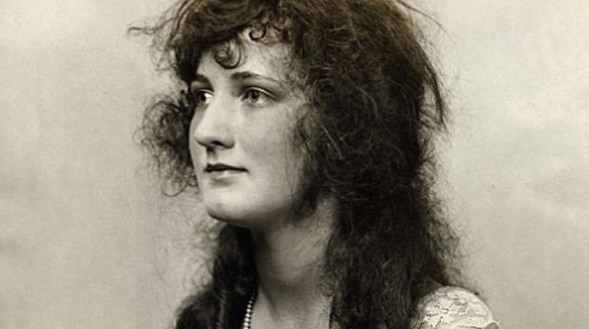
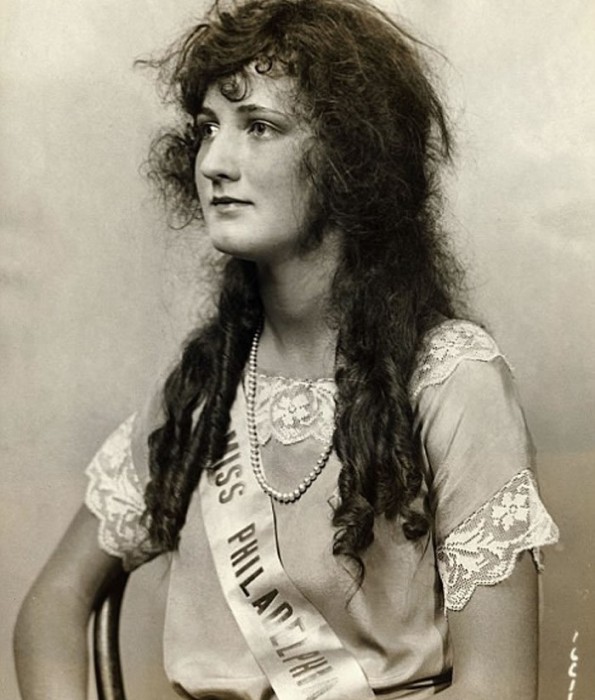
Ruth Malcomson, Miss America 1924. (Vintage Everyday)

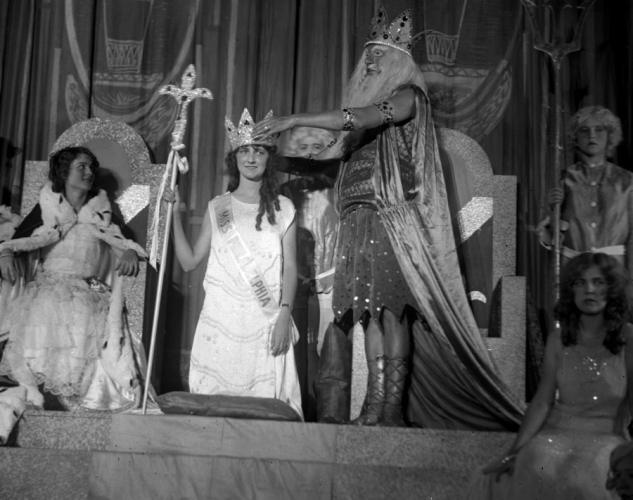
“Talk” was right about Ruth Malcomson, who was just 18 when she won the title. A native of Philadelphia, she defeated 85 fellow contestants including incumbent Mary Campbell, who was seeking her third consecutive crown. At the time the contest was only in its fourth year, and the winner was called “The Golden Mermaid.”

Miss America 1924 - Ruth Malcomson (3)
Malcomson crowned “The Golden Mermaid,” Miss America 1924

Malcomson was among the critics of the “professional” contestants. According to her obituary in the Philadelphia Inquirer (May 28, 1988) Malcomson stated in 1925 that “The pageant now has become nothing but a commercial proposition to exploit the beauties who make their living from their good looks. What chance has an ordinary girl, untrained, to win a contest in which girls who have been trained to make the most of their beauty are competing?”

miss-america-e1410754333210
Ninety-one years later…Miss New York Kira Kazantsev crowned Miss America 2015. (The Blaze)

In her Liberty Magazine interview, she also blasted women’s groups for berating her involvement in the competition.

Malcomson hinted that the women’s groups were exploiting her, not the pageant (yes, there is nothing new under the sun…).

True to her word, Malcomson married an unassuming Carl Schaubel in 1931 and returned to a quiet, simple life in suburban Philadelphia.

Miss America 1924 - Ruth Malcomson (5)
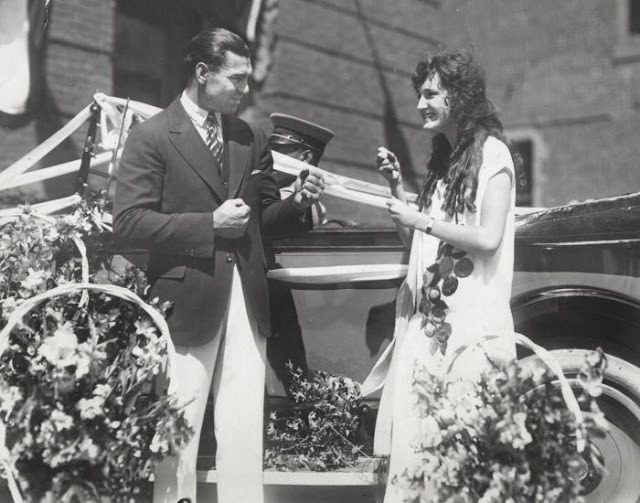
Standing next to the Rickenbacker car she won as Miss America in 1924, Ruth Malcomson playfully spars with World Heavyweight Champion boxer Jack Dempsey. (Vintage Everyday)

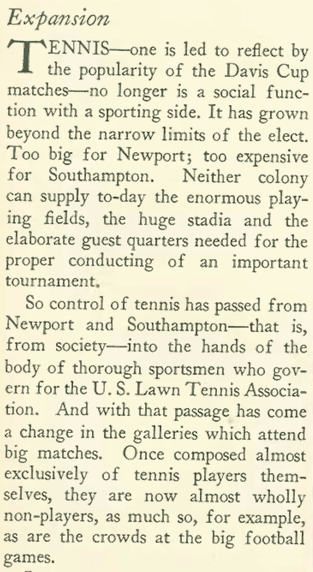
In other “Talk” items, the “No Smoking” rule at the public library was challenged, and arguments were made for special smoking rooms that could be reserved for writers. The column also offered comment on the growing popularity of tennis as a professional spectator sport, rather than merely a side activity for a society weekend:

Screenshot 2015-06-26 13.45.06

“Profiles” turned its attention to bodybuilder and publisher Bernarr McFadden (featured in an earlier post in this blog). McFadden was always at the cutting-edge of scandal, whether for the nearly nude photos featured in his Physical Culture Magazine, or for the celebrity scandal and sensational crime reported in his Evening Graphic.

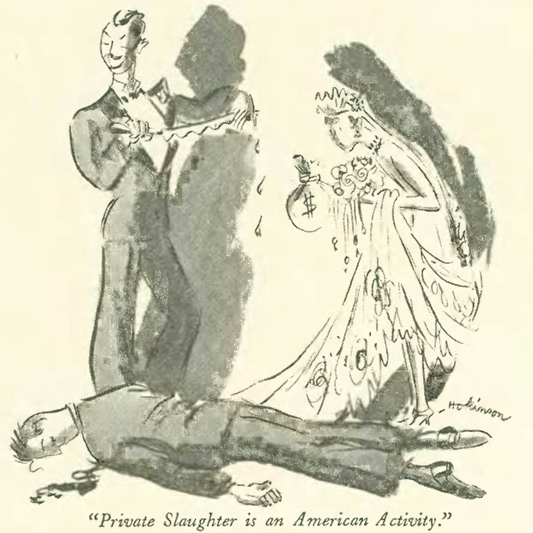
In his essay “Murder As Bad Art,” Waldo Frank pondered America’s high homicide rate, and suggested that murder is an expedient means toward an end for the impatient American. An excerpt, with artwork by Helen Hokinson:

Screenshot 2015-06-26 13.59.42

Screenshot 2015-06-26 13.59.13

Screenshot 2015-06-26 13.59.22

cather
Willa Cather (Nebraska History)

In “Books,” Harry Este Dounce offered a lengthy, thoughtful and positive review of Willa Cather’s latest novel, The Professor’s House, and likened its tone to an Ibsen play. Cather would continue to receive praise from New Yorker critics throughout the remainder of her career.

In “Sports Of The Week” John Tunis offered extensive coverage of the Davis Cup matches, and noted that American star Bill Tilden was hurt and was “far from the Tilden of old.” There were rumors that Tilden was determined to throw his match with French tennis champion Jean Borotra. Tunis wrote that he had his suspicions, but offered that perhaps Tilden was playing carelessly as he had done before “with other less celebrated opponents.”

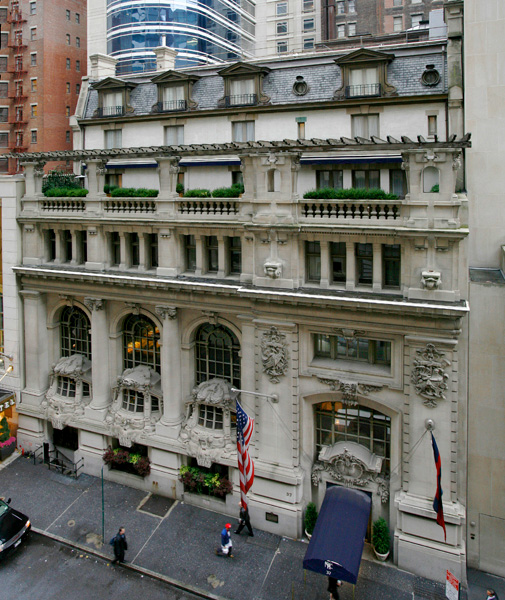
And Lois Long offered her frank opinions on two New York hotspots, the 45th Street Yacht Club and the Owl Club at 125 East 45th:

new-york-city-yacht-club-jeffrey-erb1
The Yacht Club building today (erbology.com)

Screenshot 2015-06-26 14.32.35

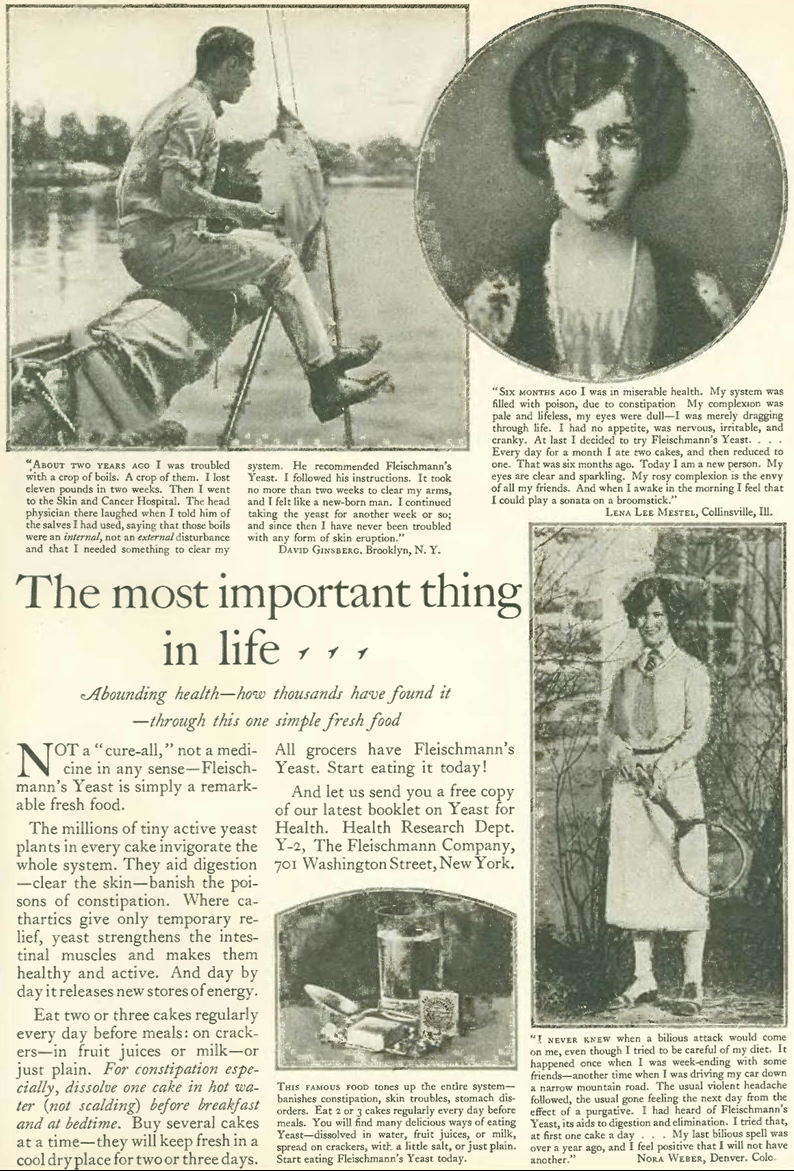
And another ad courtesy of Raoul Fleischmann, with testimonials from a man and two women who credit Fleischmann yeast with curing them of boils, constipation and “bilous” attacks:

Screenshot 2015-06-26 14.36.08

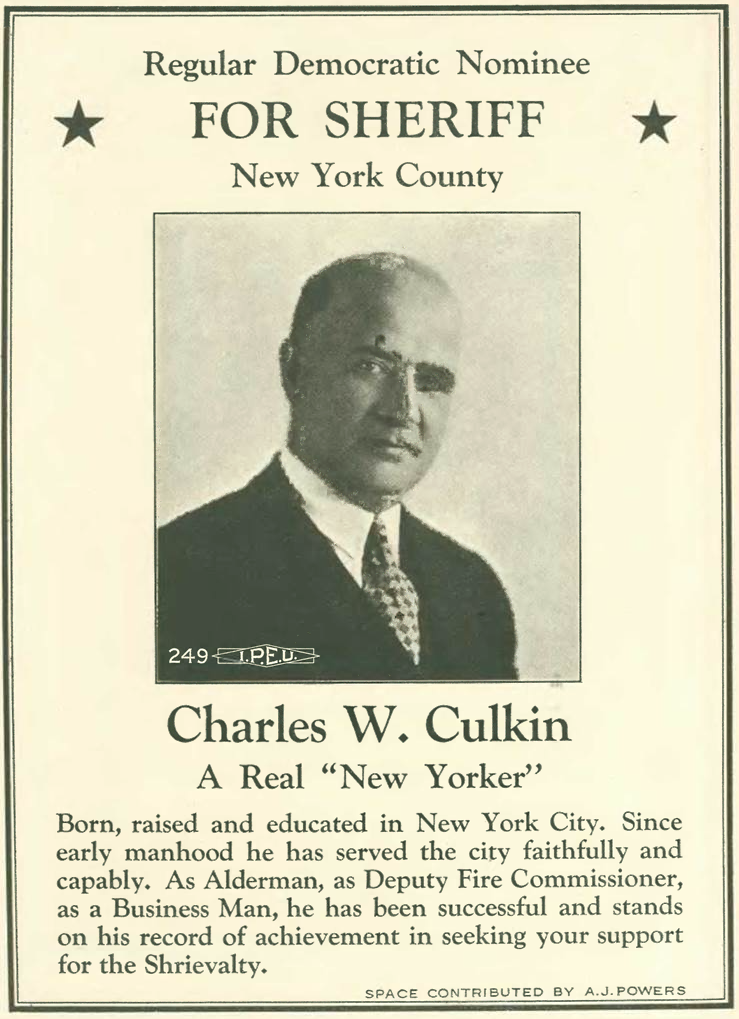
Well, at least advertising revenue is up, but this ad seems out of place in a magazine like The New Yorker:

Screenshot 2015-06-26 14.37.04

Charles Culkin was a Tammany Hall politician who would serve as county sheriff from 1926 to 1929. He was later indicted for embezzling interest money from the sheriff’s office, part of the whole mess that brought down Mayor Jimmy Walker (we will explore that later, I am sure).

Now, for a couple of cartoons by Isadore Klein and Johann Bull, featured on facing pages, that illustrate two very different aspects of New York life in the 1920s:

Screenshot 2015-06-26 14.04.38

Screenshot 2015-06-26 14.04.55

Next time: Fall fashions!

Screenshot 2015-06-26 15.03.49