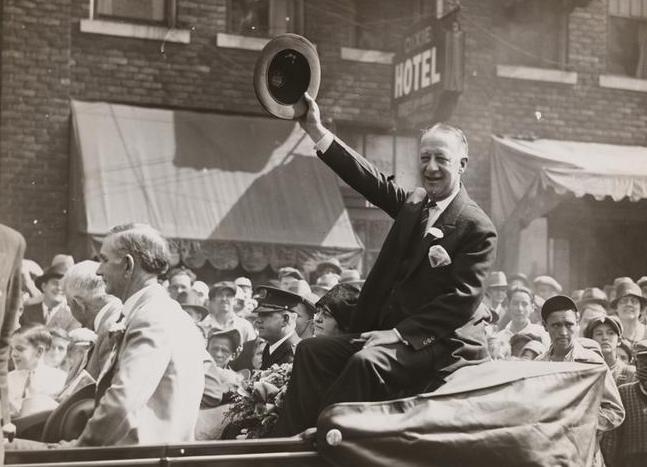
Above: Al Smith waving to crowds on arrival at Chattanooga, Tennessee during his presidential campaign in 1928. (Museum of the City of New York)
It’s hard to not like Al Smith, the governor of New York from 1923 to 1928, a man who avoided the temptations of political power and stayed true to his working class roots of the Lower East Side.
July 14, 1934 cover by Rea Irvin.
The son of Irish, Italian and German immigrants, Alfred Emanuel Smith (1873–1944) was raised in the Tammany Hall-dominated Fourth Ward, and although he was indebted to Tammany’s political machine throughout much of his professional life (including stints in the New York State Assembly and as York County Sheriff, President of the Board of Alderman, and finally Governor) he remained untarnished by corruption. Smith’s unsuccessful bid for the U.S. presidency in 1928 put an end to his political life, but there was still much to do, as “The Talk of the Town” explained:
HALL MONITORS…At left, Charles “Silent Charlie” Murphy with Al Smith in 1915. Murphy was the longest-serving head of Tammany Hall (1902 to 1924), and was known for transforming Tammany’s image from one of corruption to semi-respectability; at right, in 1929, Smith greets Franklin D. Roosevelt, who had just succeeded him as governor. (Library of Congress/Wikipedia)
Smith first sought the Democratic presidential nomination in 1924. According to historian Robert Slayton, Smith advanced the cause of civil liberty by decrying lynching and racial violence at the 1924 Democratic National Convention, where Franklin D. Roosevelt delivered the nominating speech for Smith and saluted him as “the Happy Warrior of the political battlefield.”
Following his 1928 presidential election loss to Herbert Hoover, Smith became president of Empire State, Inc., the corporation that built and also operated the Empire State Building, which was then the tallest building in the world. Smith was also known for his fondness of animals, and in 1934 Parks Commissioner Robert Moses made Smith “Honorary Night Zookeeper” of the renovated Central Park Zoo. Smith was given keys to the zoo and often took guests to see the animals after hours. According to Rebekah Burgess of the NYC Department of Parks and Recreation, “As a resident of 820 Fifth Avenue, directly across the street from the entrance of the Central Park Zoo, Smith was known to appear with snacks for the animals or to launch into impromptu lectures for visitors. Al Smith took his honorary title to heart. Throughout the rest of his life, Smith could often be found attending to the animals at the zookeepers’ sides during open hours. At night, Smith visited with guests, or more often, one-on-one with the animals.”
Smith was also a humanitarian, and in addition to advocating for the working class, he was an early critic of the Nazi regime in Germany, vigorously supporting the Anti-Nazi boycott of 1933. Here is another excerpt from the “Talk” piece:
LIFE OUTSIDE THE OFFICE…Scenes of post-political life, clockwise from top left: Al Smith fishing in 1933; with his family at the May 1, 1931 opening of the Empire State Building—Smith’s grandchildren cut the ribbon; golfing in 1930 with baseball great Babe Ruth in Coral Gables, Florida; with Rosie, the hippopotamus, at the Central Park Zoo, 1928. (Museum of the City of New York/Wikipedia)
* * *
Culture Club
In the Nov. 9, 1929 issue of The New YorkerMurdock Pemberton hailed the opening of the Roerich Museum. For the July 14, 1934 issue, “The Talk of the Town” took another look. A brief excerpt:
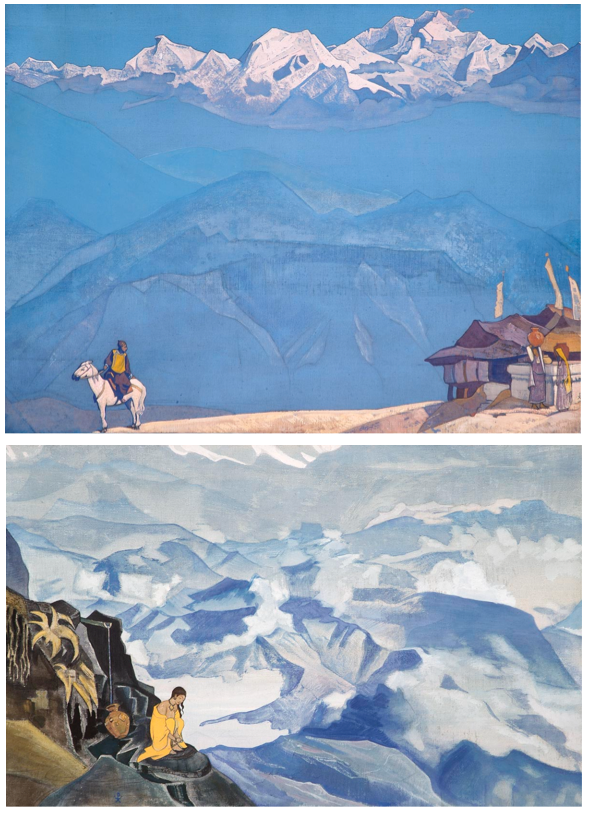
MORE THAN A BUILDING…”The Talk of the Town” noted the changing shades of the art deco landmark Master Building on Riverside Drive (left, in 1929) which originally housed the Nicholas Roerich Museum. Today the Roerich is located in this brownstone at 319 West 107th. (Wikipedia)FOOTNOTES FROM A FULL LIFE…Two of Nicholas Roerich’s paintings from the 1920s: at top, Remember, 1924; below, Drops of Life, 1924. (roerich.org)
* * *
Itinerant Showman
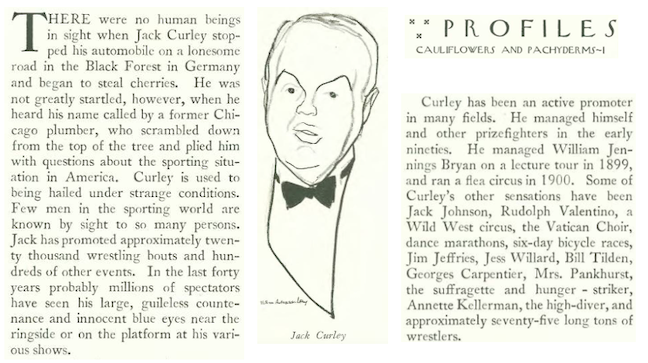
Alva Johnston filed the first installment of a three-part profile of famed sports promoter Jack Curley (1876–1937). A brief excerpt:
FIGHT CLUB…Sports promoter Jack Curley (left) with boxing manager Eddie Kane, circa 1920. (Library of Congress)
* * *
Over There
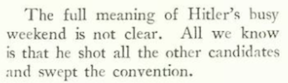
In his column “Of All Things,” Howard Brubaker made this brief mention of the “Night of the Long Knives;” on June 30, 1934 Adolf Hitler ordered SS guards to murder the leaders of the paramilitary SA along with hundreds of other perceived or imagined opponents.
Here is a clip from the front page of The New York Times, July 3, 1934:
(The New York Times)
* * *
Pimm’s and Soda
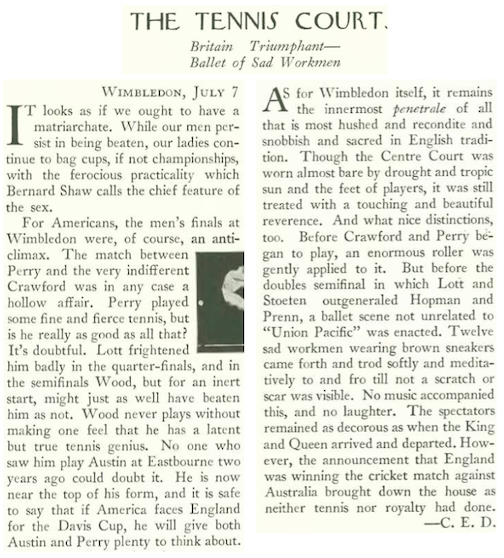
July in England meant Wimbledon, and The New Yorker was there to observe the “snobbish and sacred” rite…
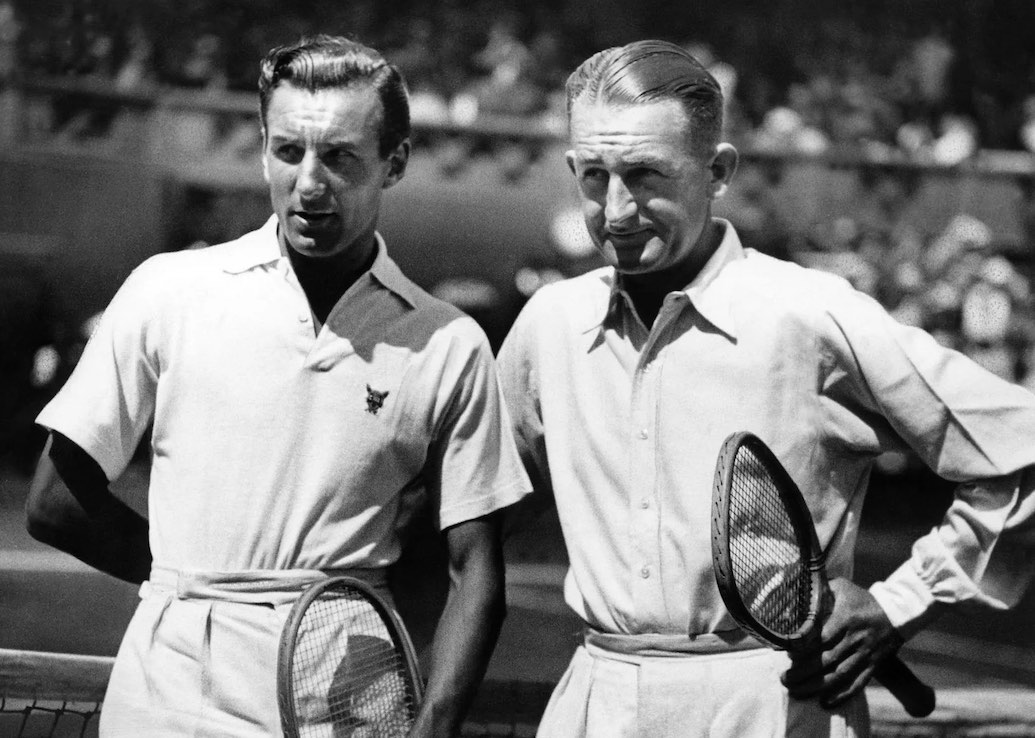
WATCH THE BOUNCING BALL…British tennis great Fred Perry (left) and Australian Jack Crawford before their men’s singles final at the 1934 Wimbledon tournament, which Perry won. Perry would claim three consecutive titles between 1934 and 1936. (Image: Mirrorpix)
* * *
Midsummer Dreams
In the summertime (and before widespread use of air conditioning) stage entertainments such as theater and musical performances took to the outdoors during their off-season, seeking the evening cool of intimate rooftops or large, open venues such as Lewisohn Stadium, A brief excerpt describing a performance of Samson et Dalila:
EVENING SHADE: Andre Kostelanetz conducts at Lewisohn Stadium in 1939. The stadium was demolished in 1973 to make way for City College of New York’s North Academic Center. (PressReader.com)
* * *
From Our Advertisers
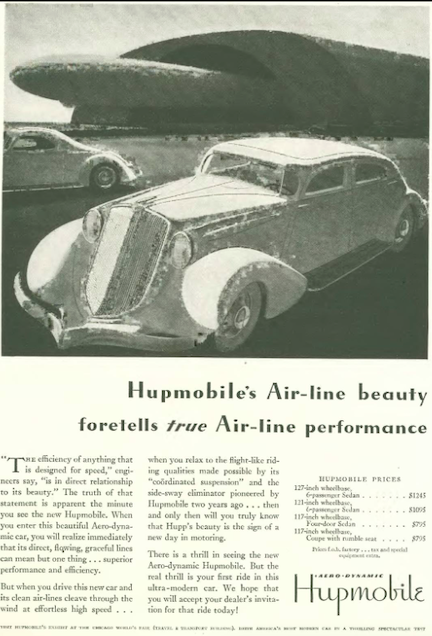
The folks at struggling carmaker Hupmobile took out this bold, full-page ad to tout their flashy “Aero-Dynamic” by noted designer Raymond Loewy…
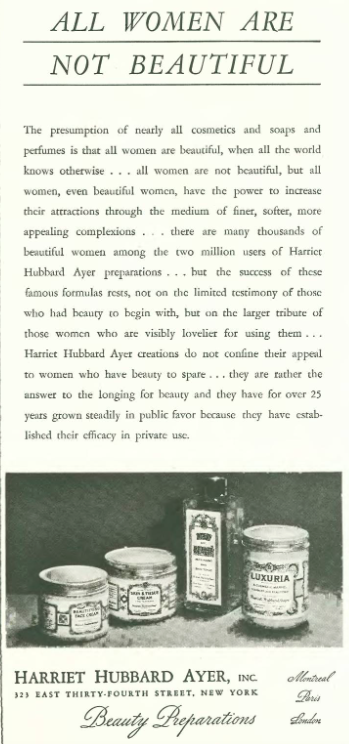
…this ad from Harriet Hubbard Ayer was bold in a very different way, essentially calling some women ugly unless they used the company’s “beauty preparations”…
…consommé, a clear soup that was particularly popular among the upper classes, offered up some keen competition between two food giants…here Heinz enlisted the help of William Steig to move their product…
…while the folks at Campbell’s offered up this lovely patio setting for their “invigorating” consommé…
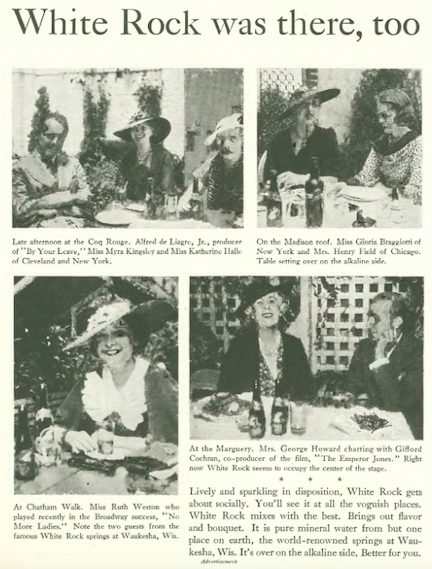
…meanwhile, White Rock mineral water could be found on patios all over Manhattan, as this ad attested…
…this is a reminder that most city folks had their milk and other dairy products delivered in the early part of the 20th century…by the early 1960s about 30 percent of consumers still had their milk delivered, dropping to 7 percent by 1975 and .4 percent by 2005…
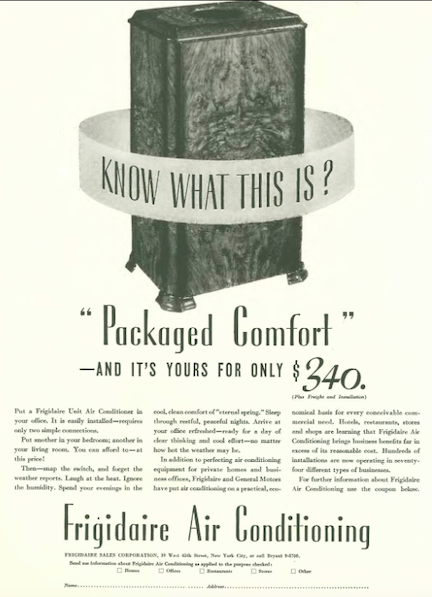
…affordable home air-conditioning wouldn’t be available to the masses until after World War II…this unit (designed for a single room) from Frigidaire retailed for $340 (a little less than $8,000 today)…
…on to our cartoonists, we begin with Robert Day in the “Goings On’ section…
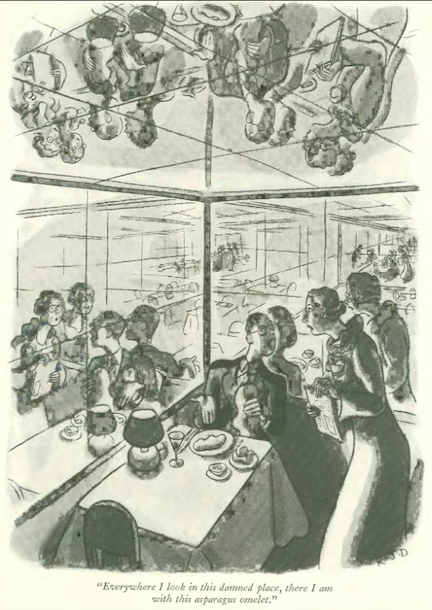
…Day again, exploring the baffling, glassy interiors of modern restaurants…
…the birdwatching continued with Rea Irvin…
…Alain (Daniel Brustlein) gave us a swimming somnambulist…
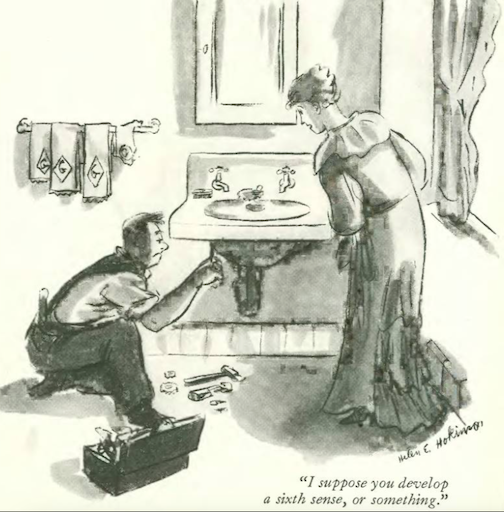
…Helen Hokinson explored the paranormal, via domestic plumbing…
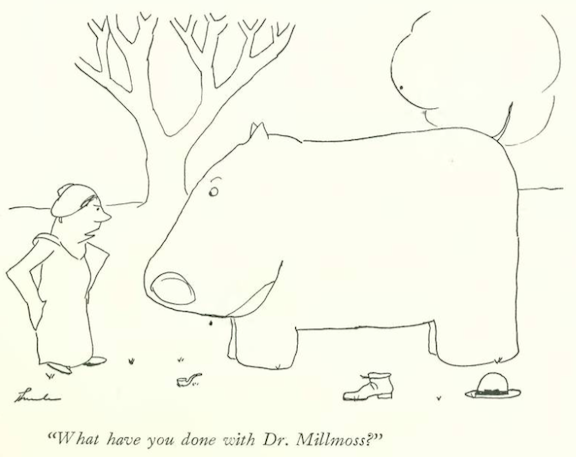
…and we close with James Thurber, and the missing Dr. Millmoss…
The cover of the Nov. 9, 1929 issue belied the mood of New Yorkers still reeling from the stock market crash. But then again, football games and other entertainments would grow in importance as much-needed distractions from the harsh realities that lay ahead.
Nov. 9, 1929 cover by Theodore G. Haupt. The title image is by James Montgomery Flagg, published in Life, November 15, 1929.
The New Yorker editors and writers were as bewildered as anyone in the aftermath of the crash. “The Talk of the Town” only gave it passing mention:
Robert Benchley, writing under the pseudonym “Guy Fawkes,” also looked at the market crash from the angle of the newspapers in “The Wayward Press” column. Naturally, Benchley tried to find humor in the midst of the disaster, noting that the crash provided some relief from tedious election coverage:
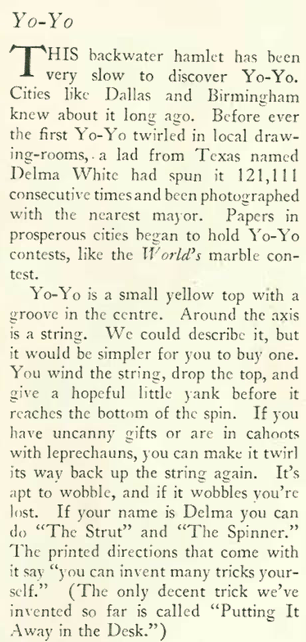
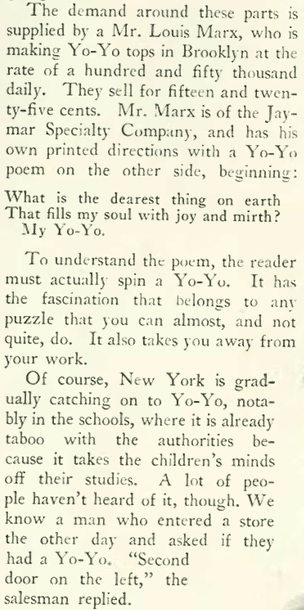
When the Nov. 9 New Yorker went to press, the stock market crash was viewed as a serious setback (in the sixth paragraph Benchley mentioned numerous reports of suicides), but not something that would result in worldwide depression. Indeed, much of the issue was devoted to lighter fare, including a rather lengthy piece in “Talk” about the latest craze among the nation’s youth — the yo-yo:
The Lumar 33, made of tin, was one of the original yo-yos produced by Louis Marx beginning in 1929. Hugely popular, it helped launch the Marx toy company empire. (WorthPoint)
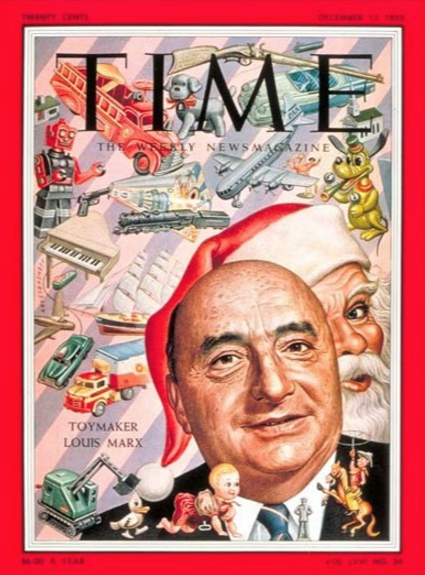
BUT HE’S NO YO-YO…Louis Marx’s version of the yo-yo would help him launch a toy empire and land him on the cover of Time magazine, Dec. 12, 1955. (Time)
* * *
Just Wait Until They Get iPads
The New Yorker showed less enthusiasm for a plan by Fox studios to introduce talking pictures into schools, hospitals and churches. Writing for “Talk,” E.B. White observed:
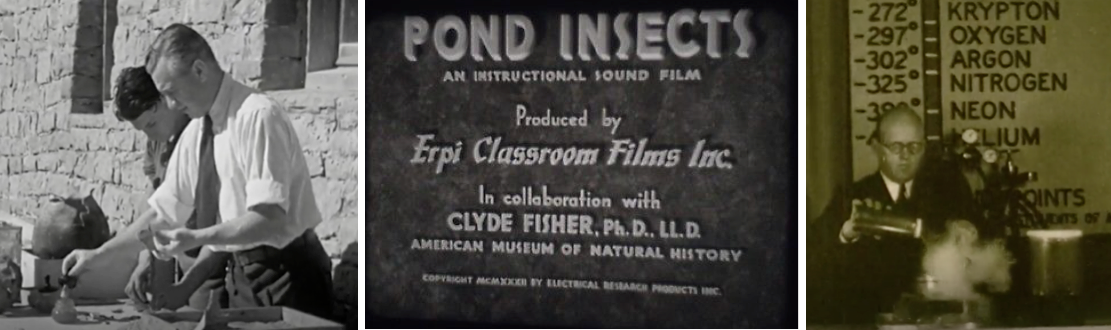
TECHNOLOGY INVADES THE CLASSROOM…Left to right, a still from a 1930 educational film showing archeologist Earl Morris gluing together pottery shards at a dig near Mesa Verde National Monument; ca. 1932 title card for a science film; detail from a ca. 1930 educational film demonstrating the wonders of liquid nitrogen. (archive.org)
* * *
And Then There Was Light
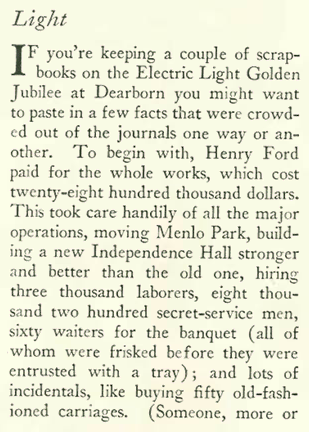
The introduction of talking pictures in the classroom owed something to Thomas Edison (1847-1931), inventor of the incandescent light bulb and a pioneer in the development of motion pictures, among many other things. The invention of the light bulb was commemorated at a “Golden Jubilee” celebration in Dearborn, Michigan, and “The Talk of the Town” offered these observations on the occasion:
GIVING THEIR TWO CENT’S WORTH…Lights were ablaze in Dearborn, Mich., to commemorate the 50th anniversary of the light bulb’s invention. “Light’s Golden Jubilee” was staged by public relations guru Edward Bernays on behalf of General Electric; below, commemorative postage stamp for the occasion. (prmuseum.org/Wikipedia)
The jubilee was the brainchild of Edward Bernays (1891-1995), often referred to as “the father of public relations.” The author of the 1928 book Propaganda, Bernays worked for dozens of corporations, and is known for his efforts in 1929 to promote cigarette smoking among women (branding them “torches of freedom”). Ironically, a man that helped many women develop a habit that led to their early deaths himself lived to the ripe age of 103.
Albert Einstein sent his best wishes from Berlin via transatlantic radio (see below), and special guests at the Jubilee included Henry Ford and Harvey Firestone, seen here talking with the nearly-deaf Thomas Edison about the development of radio in this short “talkie” filmed at the Jubilee on Oct. 21, 1929:
* * *
Please Release Me
Nunnally Johnson (1897-1977) was a journalist and film critic before breaking into the movies himself in the mid-1930s as a writer, producer and director of such films as The Grapes of Wrath (writer, producer) and The Man in the Gray Flannel Suit (writer, producer, director). As a critic Johnson learned what he didn’t like, including Al Jolson’s The Singing Fool, an early talking film that featured Jolson crooning the tear-jerker hit “Sonny Boy” to child actor Davey Lee, who portrayed his dying son. Nunnally responded with this parody titled “Sonny Boy’s Diary.” Some excerpts:
HOLD THE SCHMALTZ, AL…Nunnally Johnson, left, parodied the sentimental scenes Al Jolson shared with child actor Davey Lee in The Singing Fool. Johnson would go on to become a successful screenwriter, producer and director. (in.bookmyshow.com/virtual-history.com)
* * *
Dream Space
New Yorker art critic Murdock Pemberton hailed the opening of a new museum, the Roerich, on the lower floors of the 27-story art deco Master Apartment Building. The building also housed the Master Institute of United Arts, founded in 1920 by Nicholas and Helena Roerich.
The art deco landmark Master Building on Riverside Drive (left, in 1929) originally housed the Roerich Museum in its lower floors. Today the Roerich is located in this brownstone at 319 West 107th. (Wikipedia)
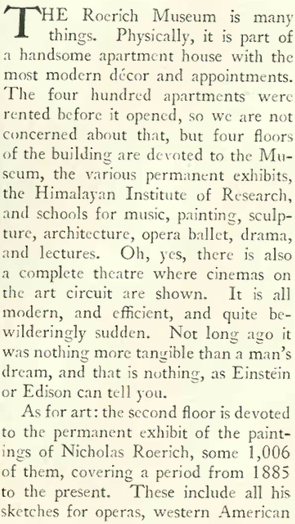
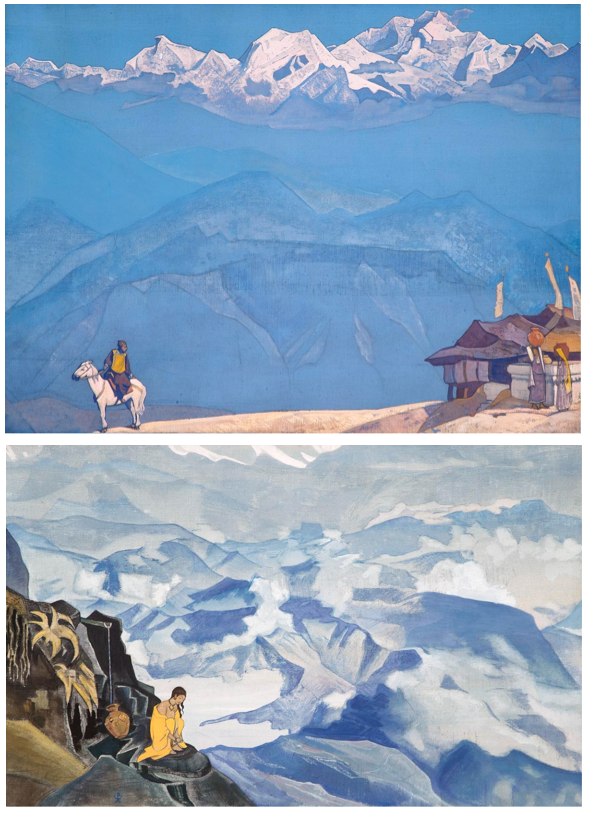
FOOTNOTES FROM A FULL LIFE…Two of Nicholas Roerich’s paintings from the 1920s: at top, Remember, 1924; below, Drops of Life, 1924. (roerich.org)
* * *
A Tenor for the Times
The crooner Rudy Vallée (1901-1986) became an overnight sensation after his Oct. 24, 1929 debut on national radio. Already a popular New York bandleader (and sometime local radio personality), his appearance on NBC’s Fleischmann’s Yeast Radio Hour made him a national sensation, especially among young women. According to Ian Whitcomb in his book, The Coming of the Crooners, Vallée’s thin, wavering tenor was not well-suited to the stage (especially in pre-microphone days when booming voices prevailed) but it worked magic on the radio, soft voices ideal for this more intimate medium (Bing Crosby, Frank Sinatra and other popular crooners would soon follow). The New Yorker’s “On The Air” column (signed “A.S.”) had this to say about Vallée’s return:
BALM FOR WEARY SOULS…Rudy Vallée’s soothing voice and easy-going manner were just what the nation needed days after the stock market crash. According to Anthony Rudel of Old Time Radio, “At 8 pm on the night of October 24th, 1929, just after the ubiquitous Graham McNamee introduced him, Vallée became a national radio star.” It was the debut of NBC’s Fleischmann’s Yeast Radio Hour, which soon came to be known as the Rudy Vallée Show. (Fleischmann was also a major benefactor of the New Yorker). Photo at left, Vallée with McNamee; at right, child actor Dorothy Gray and Vallée in the comedy talkie, The Vagabond Lover (1929). (otrcat.com/IMDB)
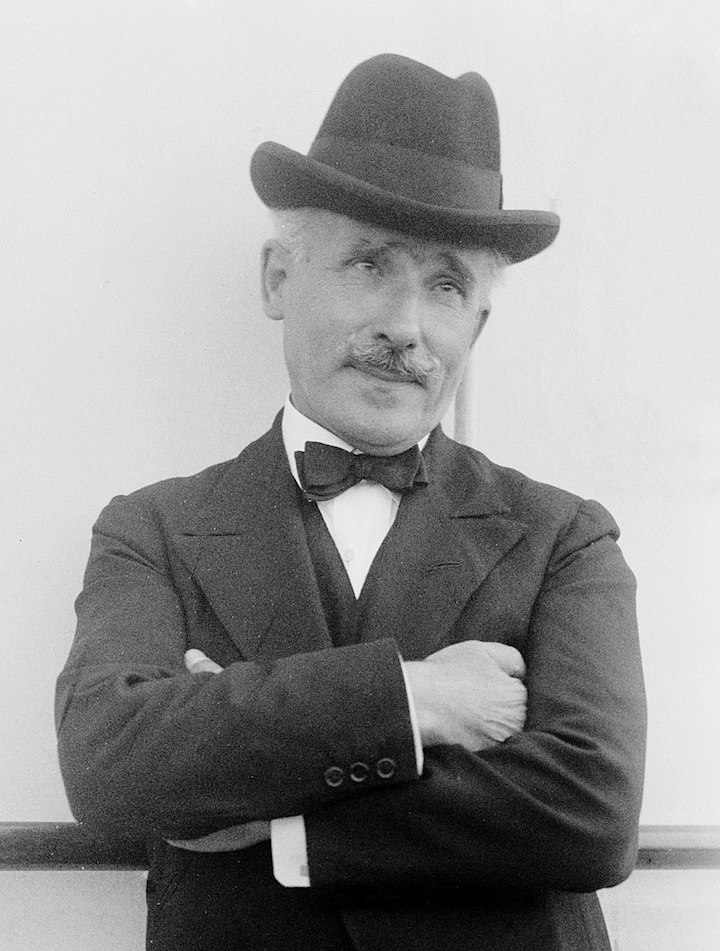
A giant among conductors of the 20th century, Arturo Toscanini (1867-1957) was already well-known to live audiences in New York, having conducted at both the Metropolitan Opera and the New York Philharmonic. Unlike Vallée, the Italian conductor’s radio broadcast was limited to the range of the New York radio station WOR. Toscanini would make his national radio debut in the States in 1937, with the NBC Symphony Orchestra.
THE MAESTRO…Arturo Toscanini, renowned for his intensity and perfectionism, was said to have perfect pitch. After leaving fascist Italy in 1936, he became a household name across the US thanks to the NBC Symphony Orchestra’s presence both on national radio (beginning in 1937) and television (1948-1952). (Library of Congress)
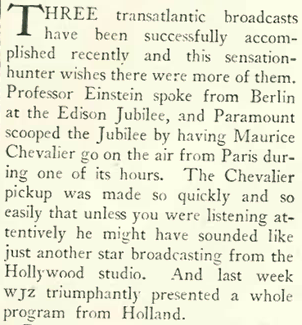
The New Yorker also noted the successful transmission of three transatlantic broadcasts, including remarks spoken by Albert Einstein from Berlin to the Electric Light Golden Jubilee in Dearborn, Michigan:
RELATIVELY SPEAKING…Albert Einstein prepares to congratulate Thomas Edison via transatlantic radio on the 50th anniversary of the incandescent light bulb, Oct. 21, 1929. (UT College of Liberal Arts)
* * *
From Our Advertisers
Now that we are post-market crash, we will be seeing the effects of that crash on New Yorker advertisers. Here are three advertisers from the Nov. 9 issue not long for the world: from left, the high-fashion salon Stewart & Company would file for bankruptcy and go out of business by the spring of 1930; Pierce-Arrow, maker of rolling status symbols for the wealthy, ceased car production in 1933; Hanan & Son, a leader in the mass production of shoes, would go bankrupt and fold by 1935.
Already at this early date advertisers were responding to tightening belts — this appeal from the Cuban Tourism Commission offered “an opportunity to forget business” while traveling on the cheap…
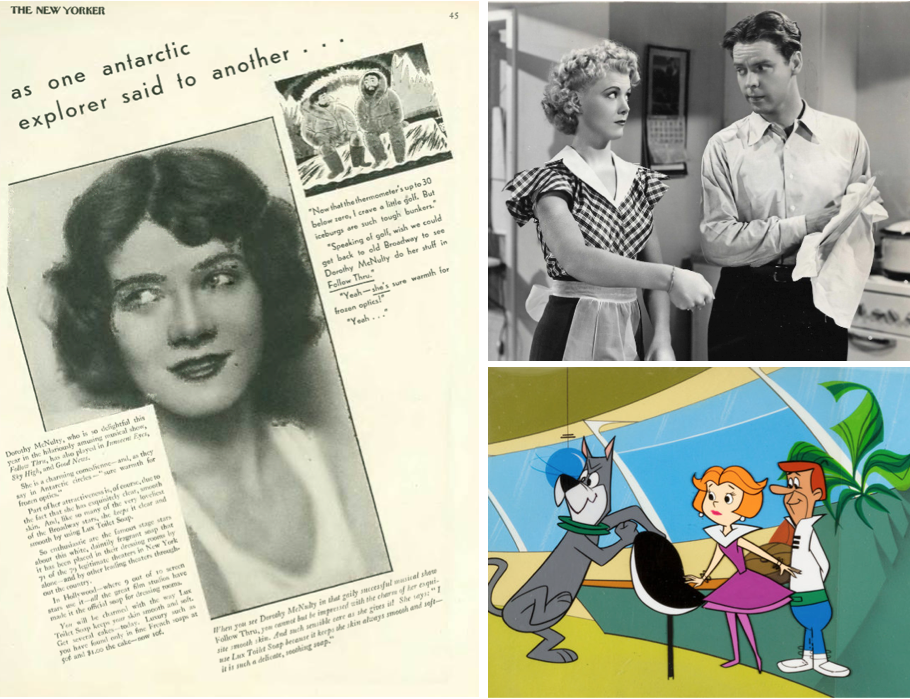
…other ads were the usual fare, this one from Lux Toilet soap featured its latest young celebrity, Dorothy McNulty (1908-2003), who changed her name to Penny Singleton in 1937 before starring in more than two-dozen Blondie-themed comedies (based on the Chic Young comic strip) with co-star Arthur Lake (who portrayed Dagwood Bumstead). She dyed her naturally brunette hair (as seen in the ad) blonde for the first Blondie movie in 1938, and continued to do so for the rest of her long life. A career that truly spanned several generations, she also provided the voice for Jane Jetson in The Jetsons in its original airing in the early 1960s and in later revivals through 1990…
THE MANY FACES OF PENNY SINGLETON…At left, before she was the film star Penny Singleton,Dorothy McNulty was a popular star on Broadway, as this ad from the Nov. 9 New Yorker attests. At top, Singleton with Blondie co-star Arthur Lake in the first installment of that popular 27-film series, 1938; a still from The Jetsons 1962-63, for which Singleton provided the voice of Jane Jetson. (IMDB/Hanna-Barbera)
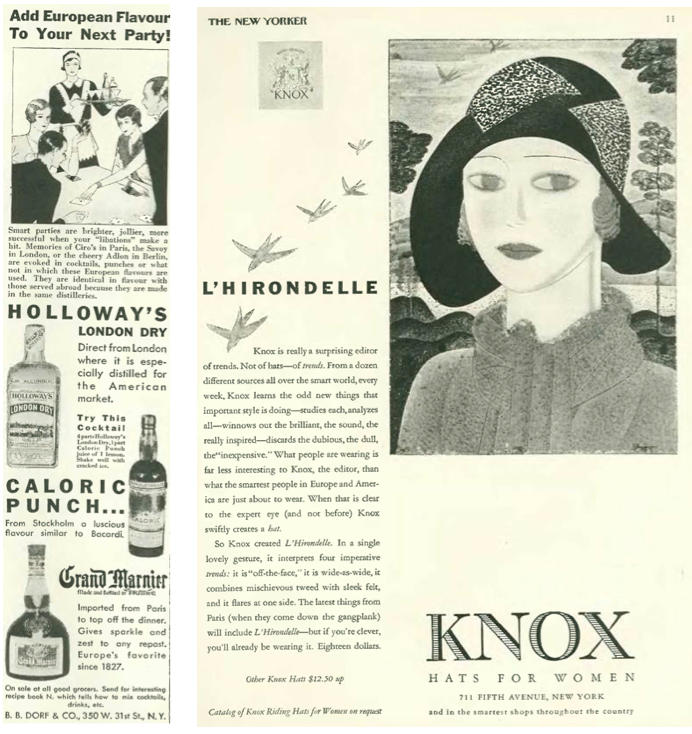
…on to other ads, the one on the left is another sad example of how manufacturers of spirits tried to market non-alcoholic versions of their libations to Prohibition-starved Americans (“especially distilled for the American market”)…at right, an ad from Knox hatters, with a somber rendering of a young woman (maybe she’s headed to the party in the other ad) wearing a fashion that would be popular in the early Thirties…the old flapper hat, along with the Jazz Age, was dead as a doornail…
…oh well, at least you could stay healthy by smoking lots of cigarettes…
…we’ve seen ads illustrated by other New Yorker cartoonists including Peter Arno, Rea Irvin, and Julian De Miskey;Helen Hokinson got in on the action with this ad touting G. Washington instant coffee…the first instant coffee to be produced on a mass scale, G. Washington was so well known it was referred to as a “cup of George.” The brand was discontinued in 1961…
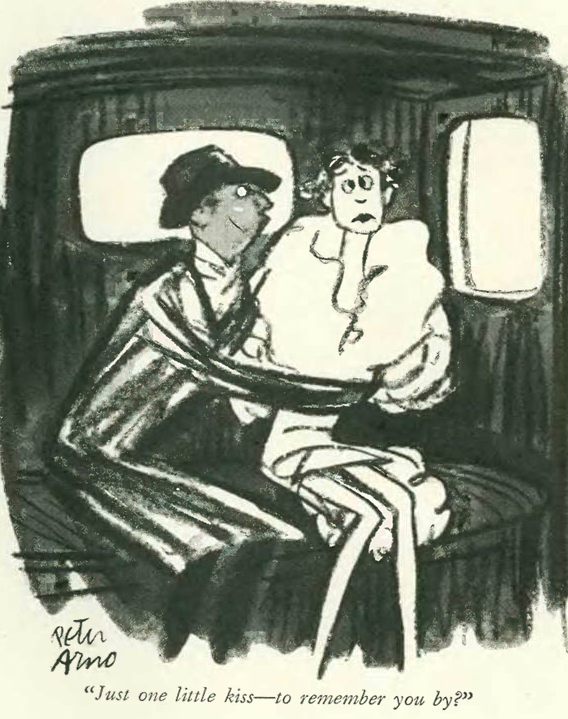
…on to our comics, an awkward moment courtesy Peter Arno…
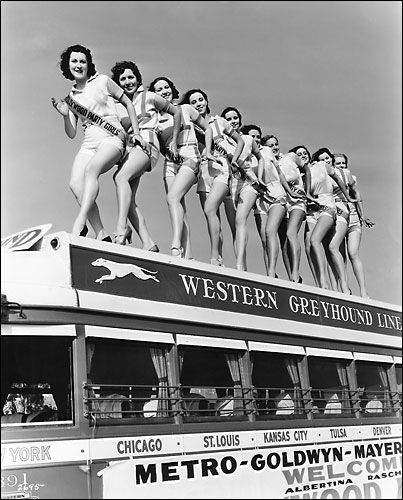
…W.P. Trent illustrated a backstage exchange regarding the ado over a popular dance troupe, the Albertina Rasch Girls…
…for reference…
MGM publicity photo from 1929 of the Albertina Rasch Girls, who traveled to Hollywood to appear in the Technicolor finale of the film Hollywood Revue of 1929. (dimitritiomkin.com)
…and John Reynolds explored the clash of the Old World and the New…






























 A New Yorker State of Mind