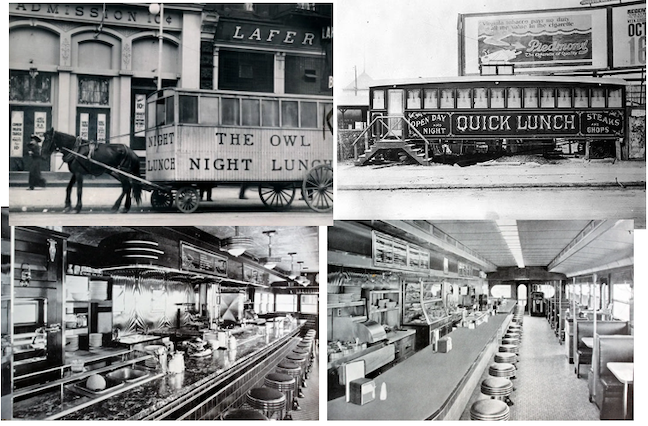
If you think today’s food trailers are the result of some hipster craze, consider that their origins go back more than a century; by 1934 Manhattan was home to 300 of the country’s 5,000 “lunch wagons,” which were commonly called “dog wagons.”
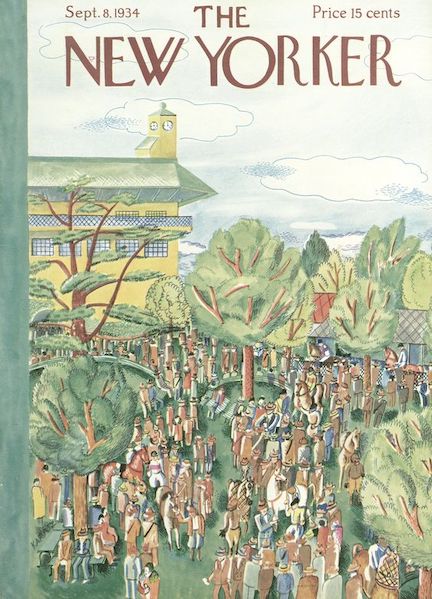
September 8, 1934 cover by Ilonka Karasz.
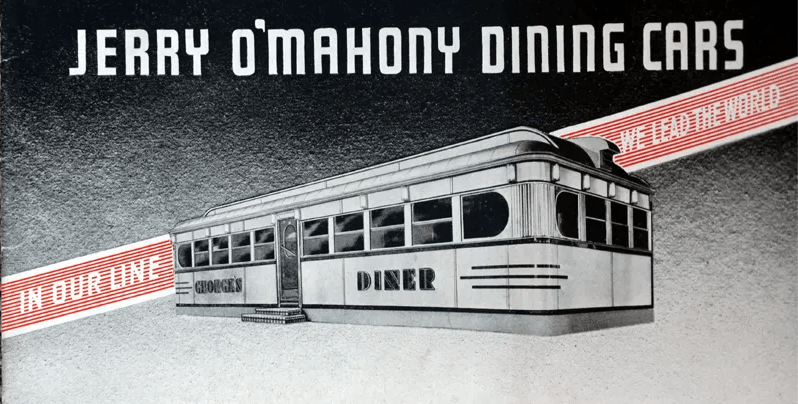
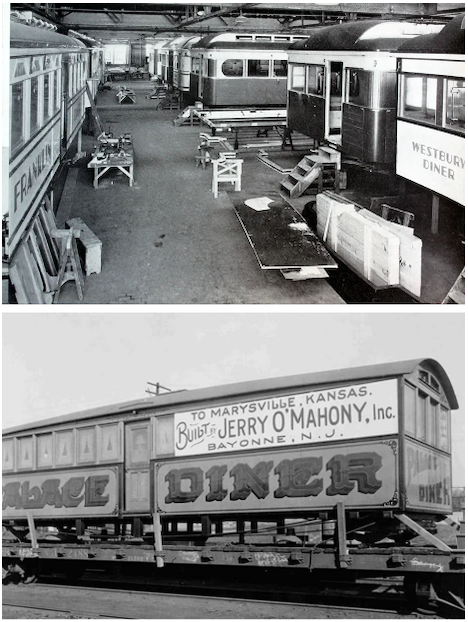
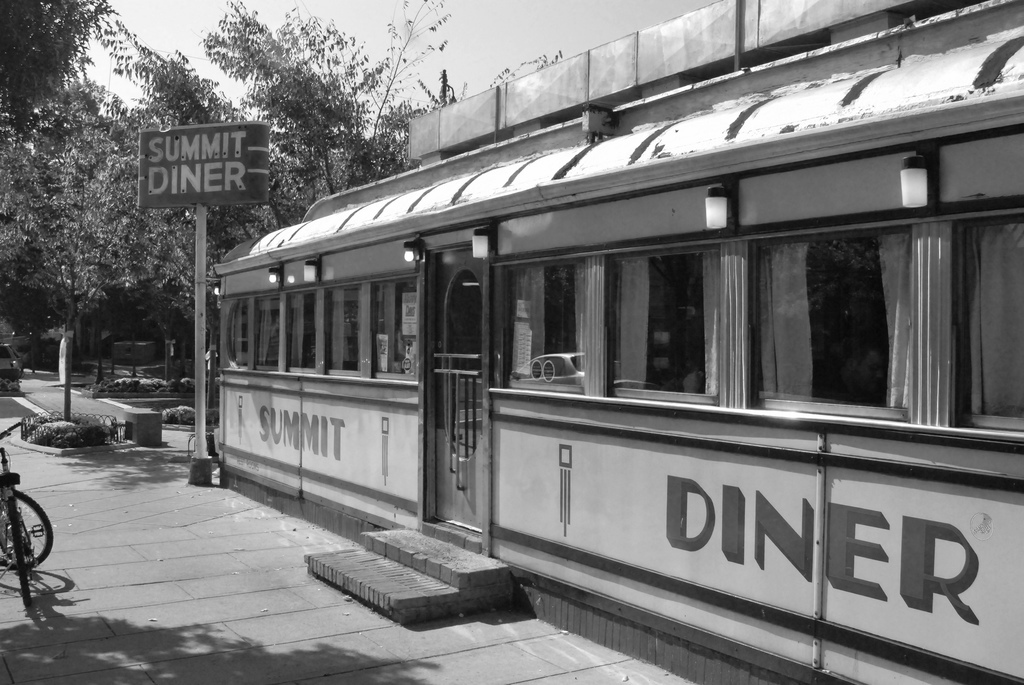
Some of Manhattan’s dog wagons belied the moniker, however, resembling the sleek roadside diners over which many today wax nostalgic. Jerry O’Mahony Diner Company of Elizabeth, New Jersey, produced more of these dining cars than any other concern—2,000 of them between 1917 and 1952 (only about twenty remain today). “The Talk of the Town” had this to say about the dog wagon phenomenon. Excerpts:
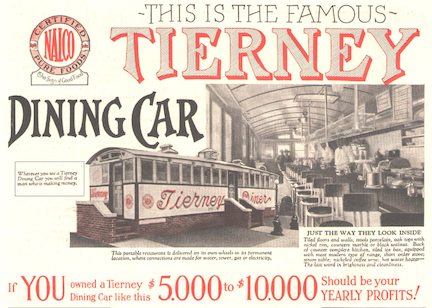
PROMISE OF BIG BUCKS…Tierney, based in New Rochelle and established in 1895, was an early manufacturer of lunch wagons and dining cars. It went out of business in 1933. Above, detail from a Tierney Diner Car Advertisement from the late 1920s. (scalar.usc.edu)LUNCH ON THE RUN…Clockwise, from top left, early “dog wagons” were horse-drawn affairs; the wagons became semi-stationary with the advent of manufactured units designed to resemble old railroad dining cars; bottom photos show interiors of two O’Mahony diners. (restaurantingthroughhistory.com/americanbusinesshistory.org/dinerhunter.com)ALL IN A NAME…Above: The Jerry O’Mahony Diner Company produced 2,000 diners in its Elizabeth, New Jersey, factory. Below, an O’Mahoney dining car headed for its new home in Kansas—the O’Mahony company preferred that patrons give their dining cars elite names, such as this “Palace Diner.” (dinerhunter.com/nyfta.org)LAST CALL…One of the few surviving O’Mahony diners—The Summit Diner in Summit, New Jersey. A prototypical “rail car” style diner, it was built by the O’Mahony Company in 1938. (Jeff Boyce/Wikimedia Commons)
* * *
A Captain’s Curios
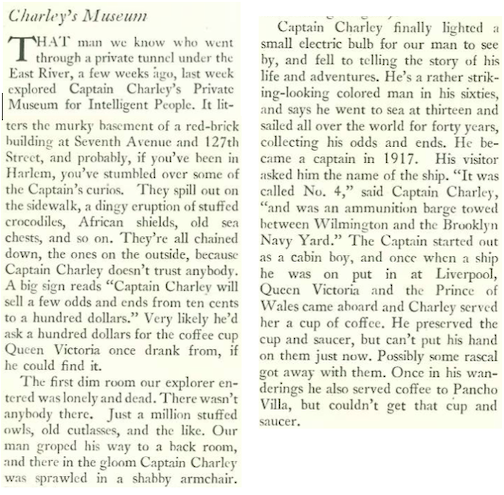
“The Talk of the Town” also paid a visit to Captain Charley’s Private Museum for Intelligent People, a place that would later be visited (and written about) by The New Yorker’s chronicler of the commonplace, Joseph Mitchell. Excerpts:
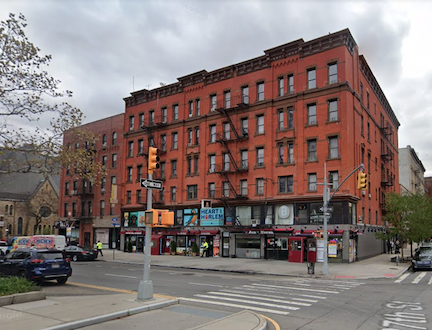
MURKY MUSEUM…This is likely the red brick building on 127th Street where the old mariner Captain Charley held court in the basement with his Private Museum for Intelligent People. (Google Street View)
* * *
Origins of Life
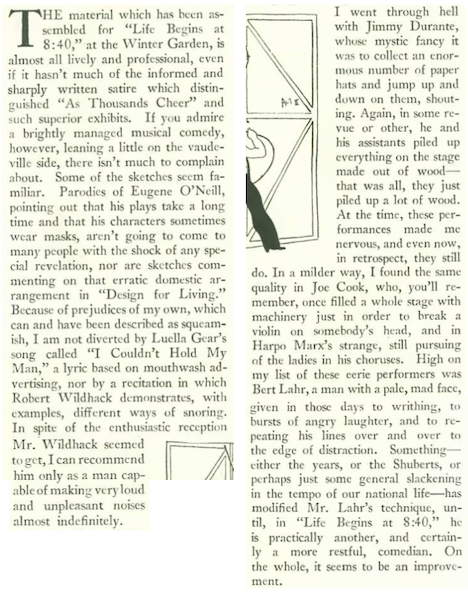
Wolcott Gibbs took his turn as theater reviewer (in relief of Robert Benchley) and managed to sit through Life Begins at 8:40, which had a successful run at the Winter Garden.
GIVING IT A REST…Roy Bolger, Luella Gear, Frances Williams and Bert Lahr headed the cast of Life Begins at 8:40 at the Winter Garden. Critic Wolcott Gibbs appreciated Lahr’s change in tempo, as he was becoming a more “restful” comedian. Lahr was the father of New Yorker theater critic and writer John Lahr. (Library of Congress)
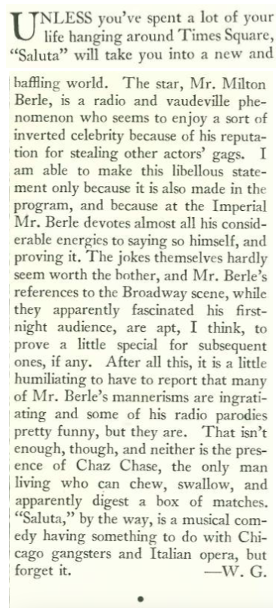
In contrast to Bert Lahr’s new toned-down style, Milton Berle’s outlandish antics over at the Imperial Theatre had Gibbs wondering what the comedian’s vaudeville-style show Saluta was all about, if it was about anything. Whatever it was, it worked—Berle would enjoy a comedy career spanning eight decades, including becoming one of early television’s biggest stars.
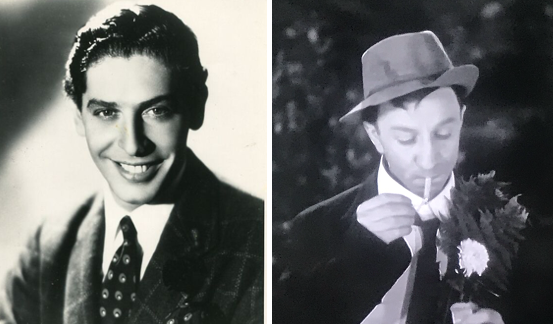
ON FIRE…Milton Berle’s show Saluta featured Chaz Chase (right), famed for gobbling up whatever was placed in front of his mouth, including a box of lit matches. At left, Berle in 1930; right, Chase in the 1935 film Vaudeville. (Pinterest/IMDB)
* * *
From Our Advertisers
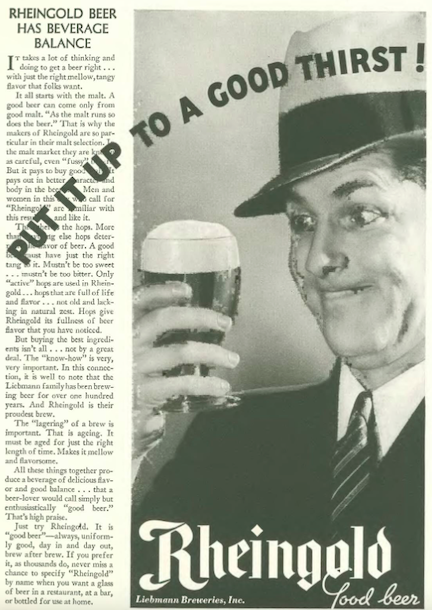
We begin with a cold one from Rheingold, which had “beverage balance” and wasn’t afraid to stamp a slogan right over its ad copy…
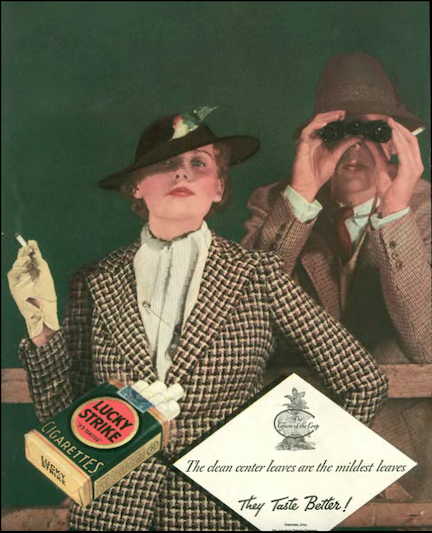
…Lucky Strike gave us another stylish reason for taking up a bad habit…
…Arts & Decoration magazine took out this full page to tout the latest news in modern design…
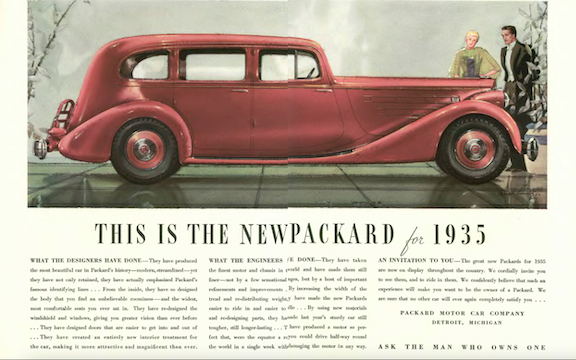
…while the folks at Packard bought this center spread to give ample space to their 1935 model, which must have been a helluva thing to parallel park…
…clothing companies continued use class shaming to goad aspiring toffs to purchase the “correct” attire for school…
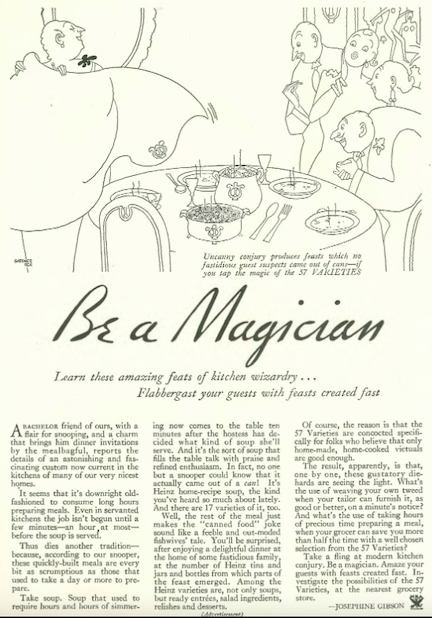
…with the help of Gardner Rea, Heinz suggested that the upper orders would simply swoon over cuisine you managed to scoop out of a can…
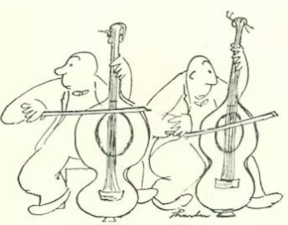
…on to our cartoonists, we begin with spots by James Thurber…
…and Lloyd Coe…
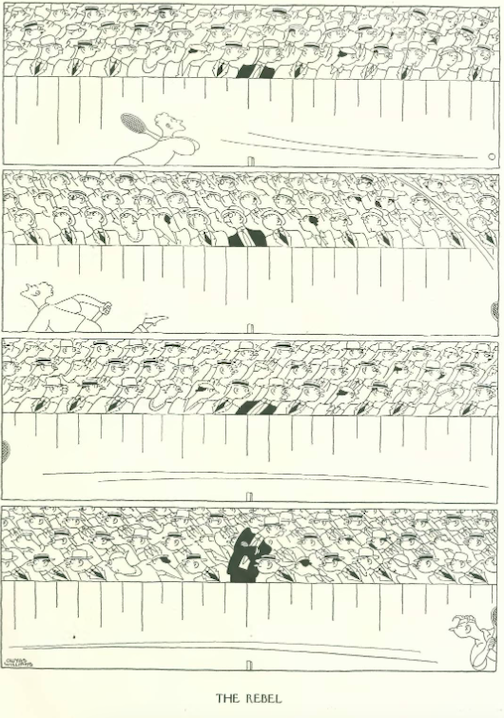
…with the absence of Otto Soglow’sLittle King, Gluyas Williams did his best to fill the void of a full page, something Williams did quite nicely…
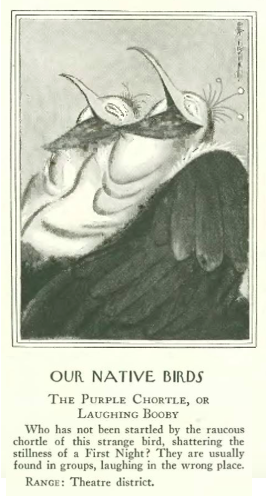
…Rea Irvin gave us yet another local bird sighting…
…Richard Decker found understatement over a reservoir…
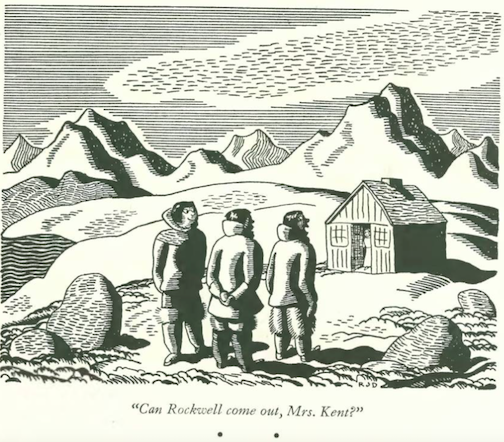
…Robert Day borrowed from the style of Rockwell Kent to offer a bit of humor from the northern climes…
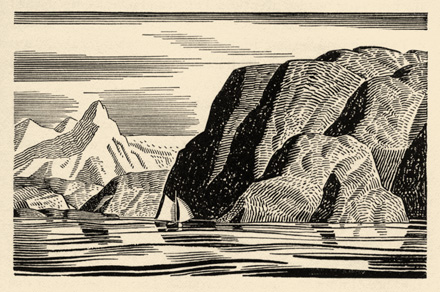
…here is a woodcut from Kent’s N by E is, an illustrated story of his voyage to Greenland…
(From Rockwell Kent’s 1930 book of woodcuts, N by E, via untendedgarden.com)
…Reginald Marsh lent his social realism to an uglier side of American life…
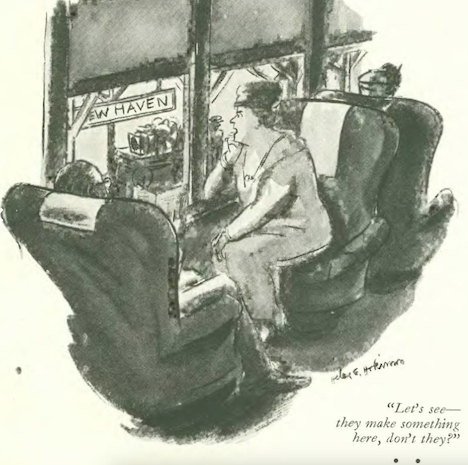
…and we close with Helen Hokinson, just taking in the passing scene…
It’s easy to get into the weeds while digging through The New Yorker archives, as it is filled with a richly interconnected cast of characters whose lives and work still resonate with us today.
March 15, 1930 cover by Rose Silver. (Please see note on this artist at the end of this blog entry)
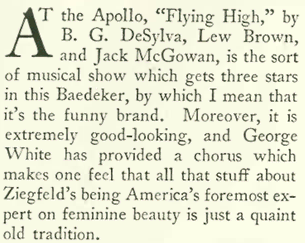
A case in point is Bert Lahr (1895-1967), who at age 15 dropped out of high school and joined the vaudeville circuit, working his way up to top billing in Broadway musical comedies including 1930’s Flying High, which received an enthusiastic welcome from New Yorker critic Charles Brackett…
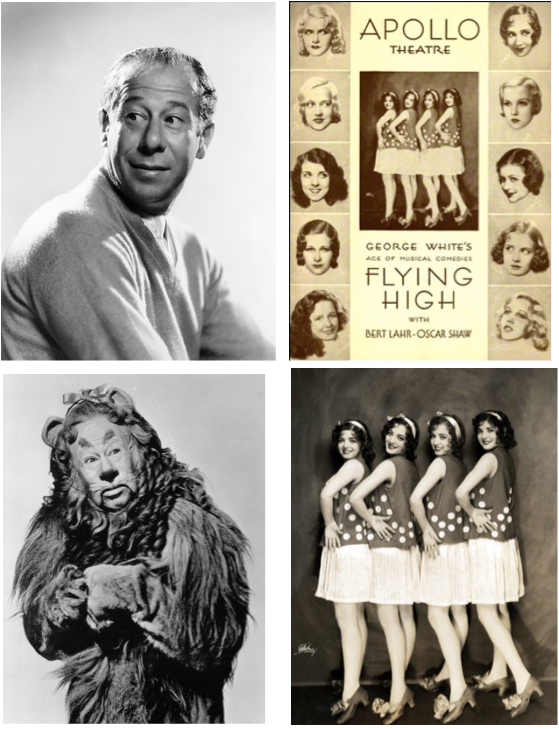
…Brackett enjoyed the “feminine beauty” offered by a George White chorus that included the “Gale Quadruplets,” described in the Playbill as “The only Quadruplets in the world appearing on the stage”…
…although in fact the Gale Quadruplets were actually two sets of twins: June and Jane, and Jean and Joan (real names were Doris, Lenore, Helen and Lorraine Gilmartin). But I digress.
What really caught Brackett’s eye were the antics of Bert Lahr:
ONLY ONE BERT…Clockwise, from top left, publicity photo of Bert Lahr from the 1931 film version of Flying High; cover of the Apollo Theatre Playbill; the Gale Quadruplets, circa 1930; Lahr as the Cowardly Lion in the 1939 film The Wizard of Oz. (Everett/Playbill/Pinterest/Wikiwand)
The Gale Quadruplets are long forgotten, but the work of Bert Lahr still lives on thanks to his role as the Cowardly Lion in The Wizard of Oz (a film, incidentally, that was panned in 1939 by New Yorker critic Russell Maloney, who called it “a stinkeroo” that showed “no trace of imagination, good taste, or ingenuity”).
Lahr also connects us to today’s New Yorker magazine, where his son, John Lahr, has been a staff writer and critic since 1992. Lahr has written a number of stage adaptions (he won a Tony award in 2002, the first drama critic to do so) as well as nearly twenty books, including a 2017 biography of his father, Notes on a Cowardly Lion: The Biography of Bert Lahr.
DRAMATIC DUO…John Lahr with his father, Bert, backstage at the Belasco Theatre in the late 1940s; John Lahr today. (NY Times/Amazon)
* * *
Greener Pastures
We remain on Broadway with another writer who was deeply connected to The New Yorker’s origins. Marc Connelly (1890-1980) was a playwright, director, producer and performer who collaborated with George S. Kaufman on five Broadway comedies in the 1920s. Connelly was also a founding member of the Algonquin Round Table, around which orbited a number of writers, critics and assorted wits who would help bring The New Yorker to life in 1925. Connelly was listed as an advisory editor on the masthead of the very first issue:
Connelly’s play, The Green Pastures (based on stories from the Old Testament), had just opened on Broadway, drawing much acclaim for both Connelly and actor Richard B. Harrison (1864-1935). “The Talk of the Town” looked in on the playwright and the actor:
DID YOU HEAR SOMETHING?...Richard B. Harrison (left) and unidentified actor in 1930’s The Green Pastures. At right, Wesley Hill as the Angel Gabriel. (blackarchives.org/ngv.vic.gov.au)FINAL BOW…Richard B. Harrison in a 1930 publicity photo for the Broadway play, The Green Pastures. At right, Harrison on the cover of the March 4, 1935, Time magazine. He died of heart failure ten days after appearing on the cover. (Henrietta Alice Metcalf Collection/Time)
Connelly would receive the 1930 Pulitzer Prize for Drama for The Green Pastures. And nearly 60 years later he would be featured in a 1987 documentary about the Algonquin Round Table (The Ten-Year Lunch) as the Table’s last survivor. It would win an Academy Award for Best Documentary Feature. During his long career Connelly would act in 21 movies, including the 1960 romantic comedy Tall Story with Jane Fonda and Anthony Perkins. He also did some TV, included a stint from 1962 to 1964 as Judge Rampell in The Defenders.
HE COULD ACT TOO…Clockwise, from top left, Marc Connelly in a 1937 photo by Carl Van Vechten; a page from the Playbill for The Green Pastures; college student June Ryder (Jane Fonda) collides on campus with Professor Charles Osmond (Marc Connelly) in the 1960 romantic comedy Tall Story. (Wikipedia/Playbill/ridesabike.com)
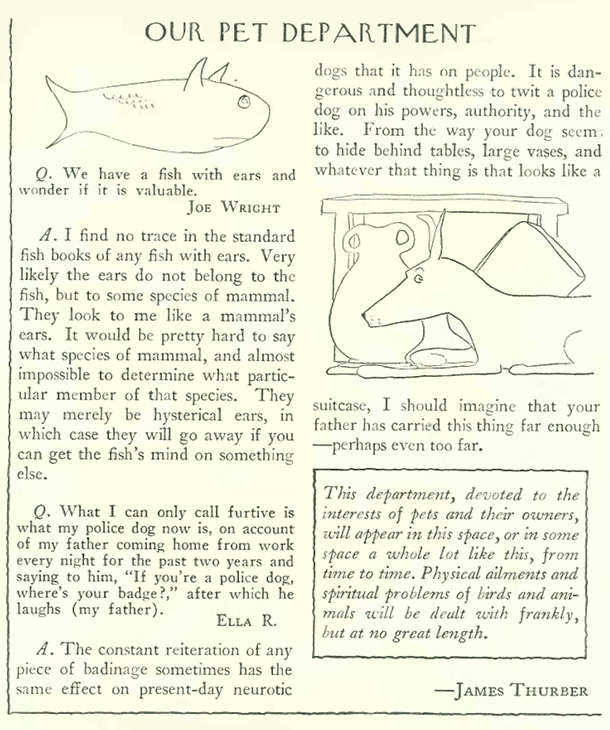
Also in the “Talk of the Town” section of the March 15 issue was James Thurber’s latest installment of pet advice:
* * *
Lipstick’s Lamentations
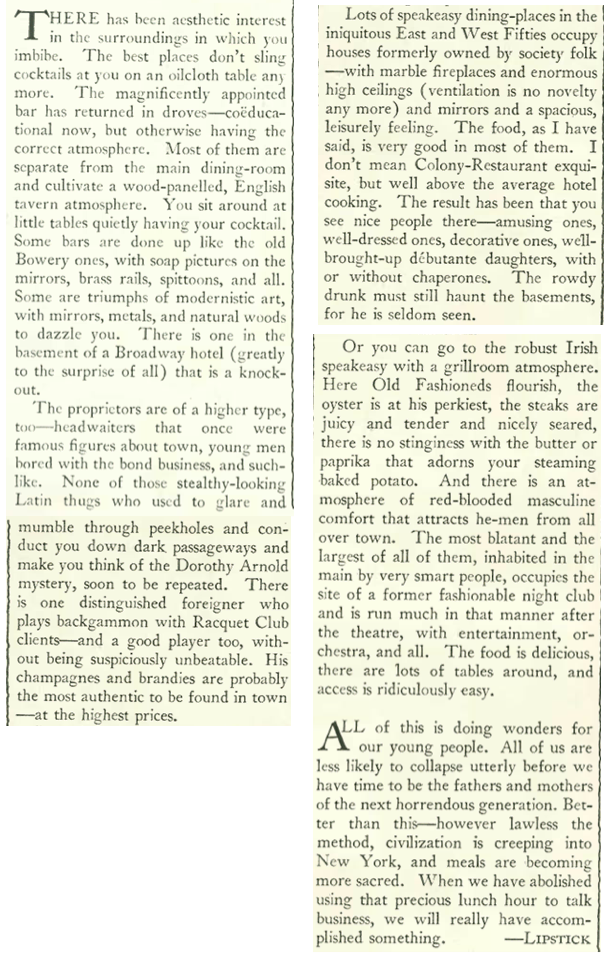
Once the place to read about wild speakeasies and other nighttime diversions of the Roaring Twenties, Lois Long’s “Tables for Two” column had quickly become anachronistic in the Depression years. Although the decade was still young, Long reminisced about her column’s “golden days” as if they had existed in some distant time, and lamented the state of the speakeasy; once a place for cheap and sordid frivolity, it had become staid and even snobbish…
THAT WAS THEN…Lois Long lamented the state of the speakeasy in 1930. Once sordid and given to frivolity, it had become a rather staid institution. (prohibition.themobmuseum.org/Time-Life)
…and Long described some of these new upscale speakeasies, where the oilcloth had been replaced with fine linen…
* * *
Ozark Oeuvre
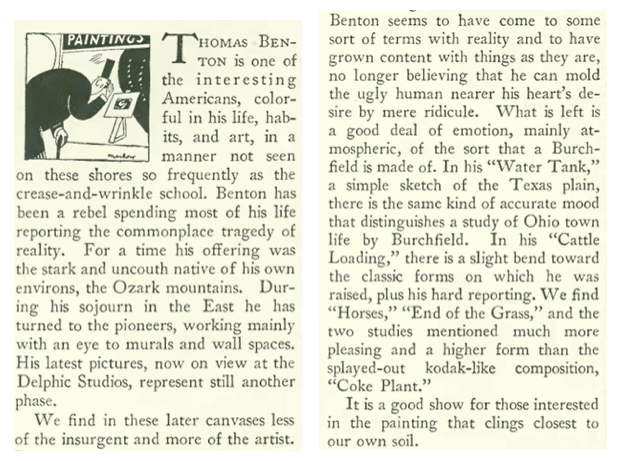
New Yorker art critic Murdock Pemberton, in his ongoing search for America’s best artists, took another look at that once “uncouth native” from the Ozarks, Thomas Hart Benton…
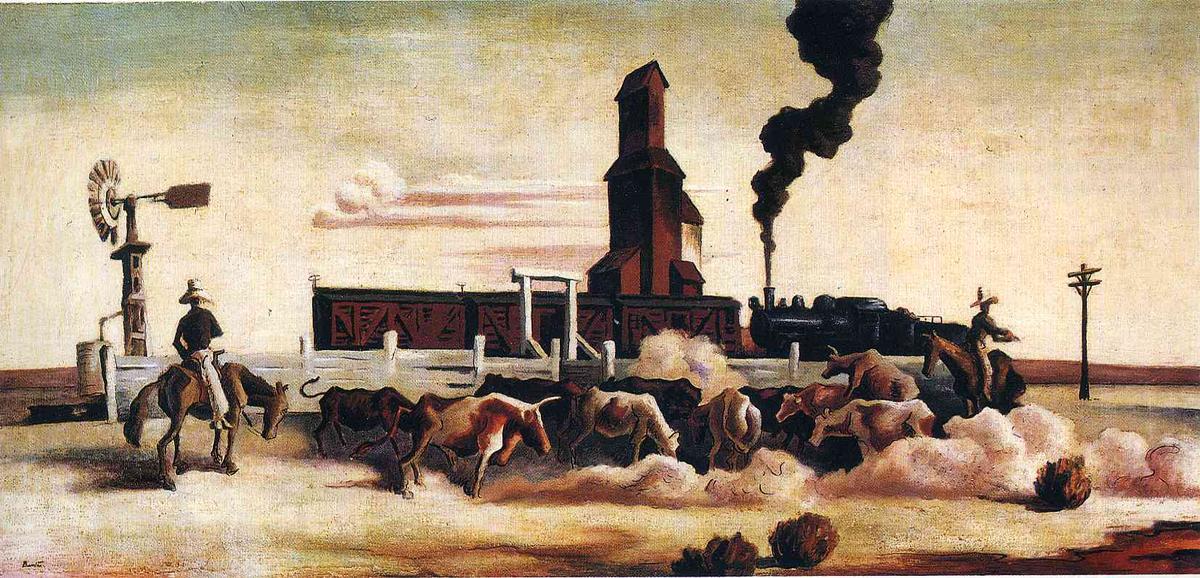
PAINTING FROM THE SOIL…Cattle Loading, oil on canvas, by Thomas Hart Benton, 1930. It was one of the works viewed by critic Murdock Pemberton at the Delphic Studios in New York. (wahooart.com)
* * *
From Our Advertisers
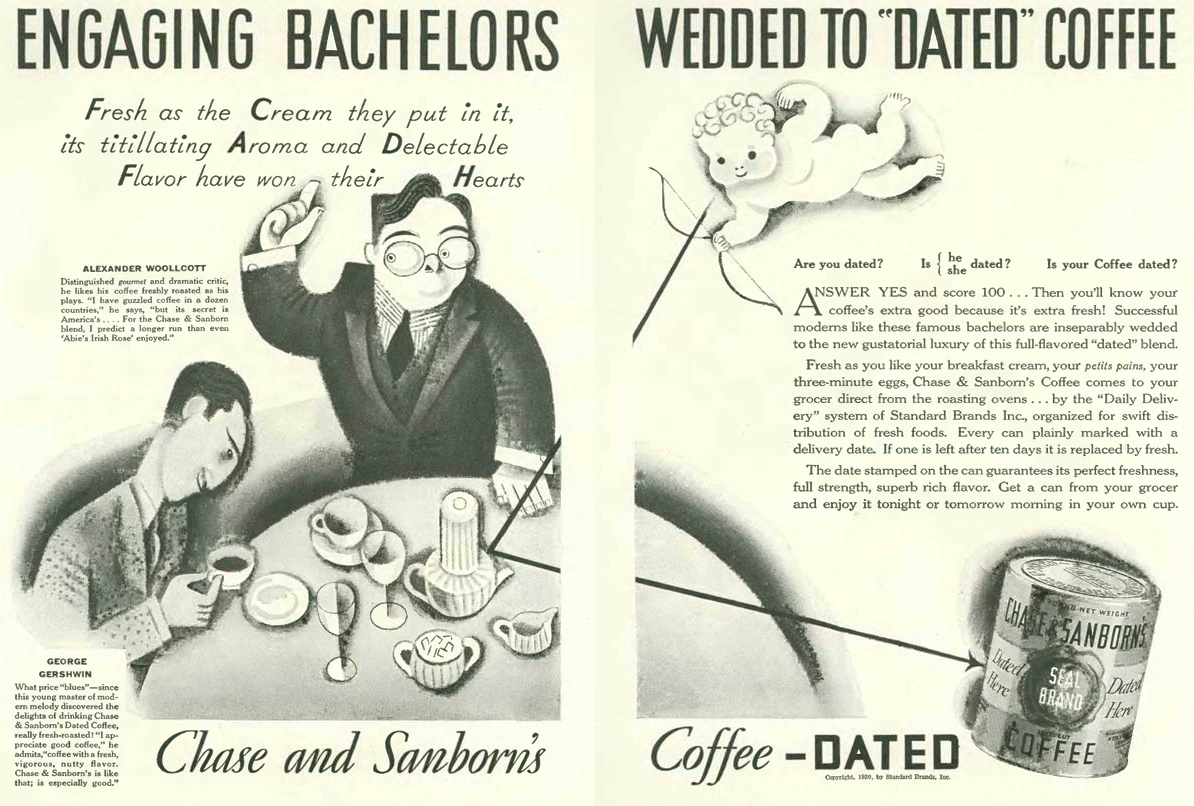
We start off with a couple of two-page ads, the first featuring caricatures of George Gershwin and Alexander Woollcott as rendered by the great Miguel Covarrubias…
click image to enlarge
…and then we have this ad from the makers of Lux Toilet Soap, who must have had a bottomless advertising budget given all the splashy ads and celebrity endorsements…
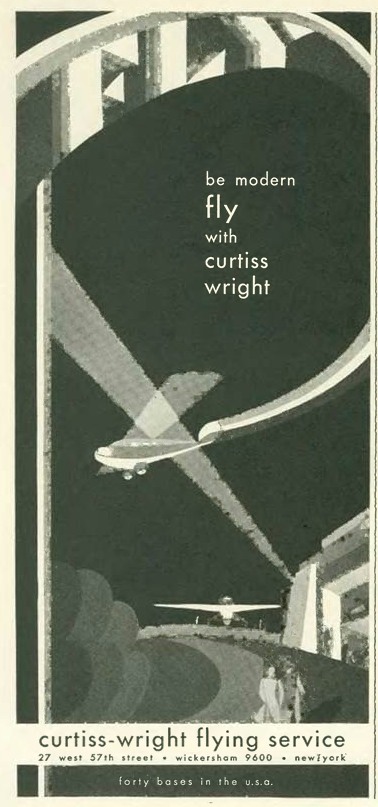
…in the ads we also find clashes between the old and new…the new being this art deco-styled appeal for the newest form of transportation…
…and the old, the makers of the luxury car Pierce-Arrow, still harking back to its patrician origins (“The Tyranny of Tradition”)…the firm would not survive the lean years of the 1930s…
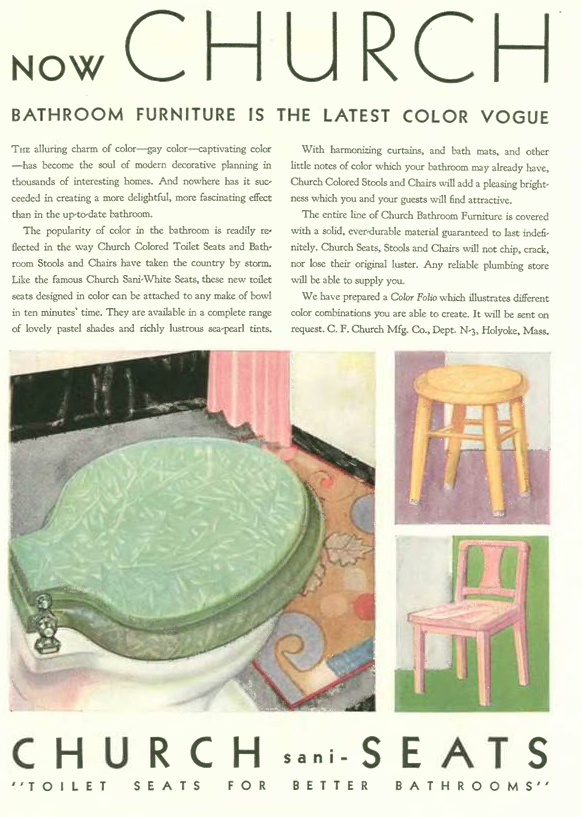
…and once again a colorful ad from Church using snob appeal to sell something as pedestrian as a toilet seat…”Toilet Seats For Better Bathrooms”…
…on to our cartoons, we have a voyeur’s perspective courtesy Helen Hokinson…
…an exploration of the generation gap by Alice Harvey…
…and this terrifically quaint encounter, rendered by Perry Barlow…
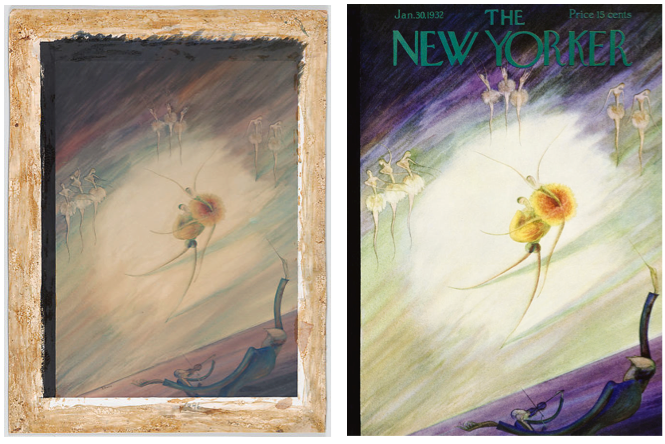
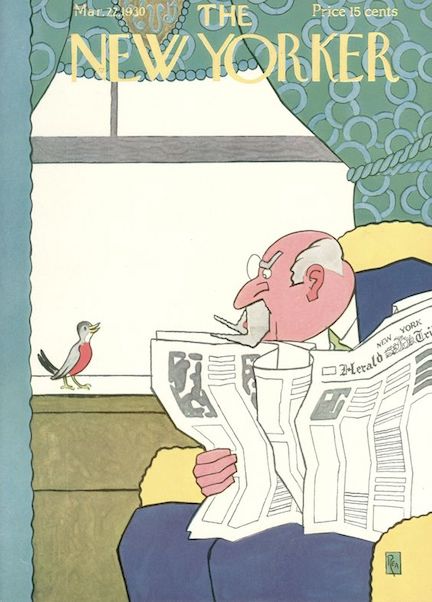
…and before we go, a note about this week’s cover artist, Lisa Rhana, a.k.a. Rose Silver (1902-1985) who illustrated several New Yorker covers in the 1920s and early 30s. Her work is included in the permanent collections at the Whitney Museum, the Museum of the City of New York, and The Metropolitan Museum of Art, which holds this watercolor (left) that graced the cover of the Jan. 30, 1932 issue:



















 A New Yorker State of Mind