Coney Summertime

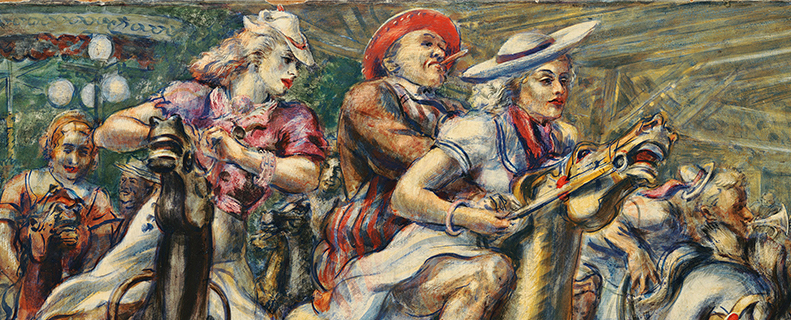
Above: Wooden Horses(detail) by Reginald Marsh, 1936. Marsh was a frequent visitor to Coney Island, a place that inspired numerous sketches and paintings. (Wadsworth Atheneum Museum of Art)

We officially kick off the summer with a visit to Coney Island, where “The Talk of the Town” took in the latest sights and amusements.

June 16, 1934 cover by Constantin Alajalov.

This excerpted “Talk” piece, attributed either to an “ 

CLANKITY CLANK…The mechanical man referred to in the “Talk” piece was likely similar to the one pictured above in this October 1933 feature in Popular Mechanics. Like many “robots” of that era, they were often pictured smoking cigarettes. (Google books)
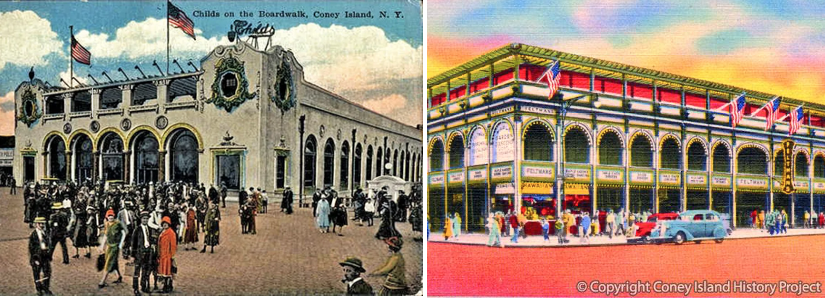
WET YOUR WHISTLE…Beer flowed up and down the boardwalk at Coney Island, but if you wanted something stronger you had to stop by the Half Moon Hotel or one of these establishments, Childs (left) or Feltmans’. (www.coneyislandhistory.org)
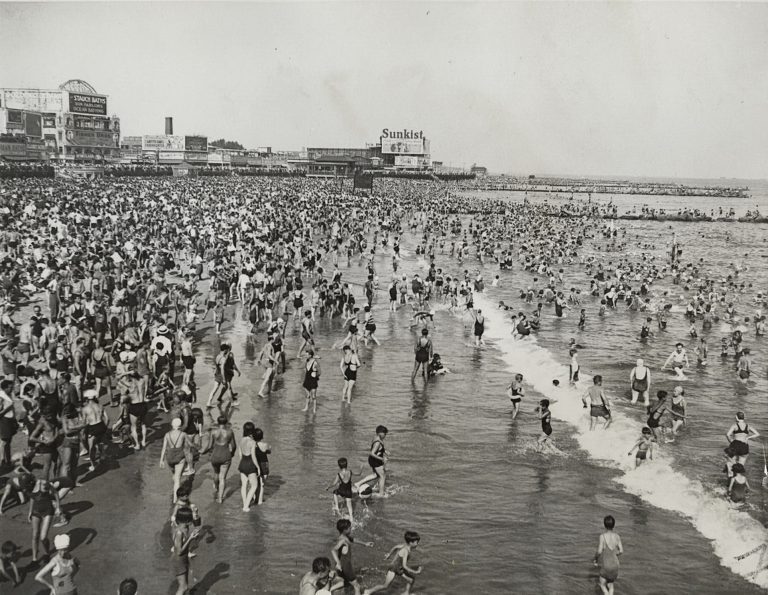
LEAVE SOME FOR ME…An estimated one million New Yorkers visited Coney Island on July 4, 1934 to get away from the heat of the city. (stuffnobodycaresabout.com)
DIFFERING INTERPRETATIONS…In his 1934 painting, Coney Island (left), artist Paul Cadmus portrayed beachgoers as ridiculous and uncouth rabble, while Cadmus’s friend and fellow artist Reginald Marsh took a somewhat kinder approach to the same subject in his 1936 Coney Island (right). (Jon F. Anderson, Estate of Paul Cadmus, licensed by VAGA, obtained via lacma.org / Syracuse University Art Collection)

Of course it wouldn’t be Coney Island without grisly wax museum scenes inspired by the latest sensational headlines…bank robber John Dillinger was still on the run, and “little June Robles” was finally free and apparently unharmed after being kidnapped and locked in a desert cage for 19 days…

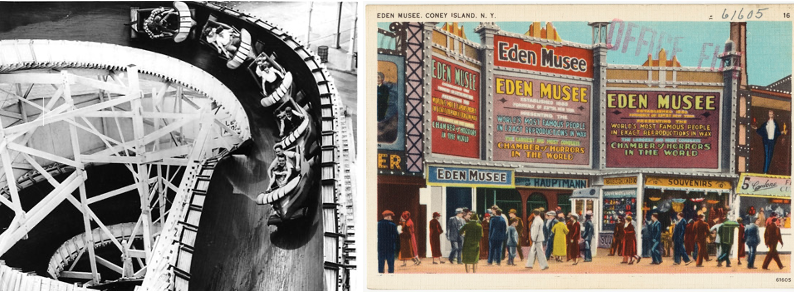
THANKS WINDY CITY…At left, the Chicago World’s Fair inspired Coney Island to build a trackless, bobsled-style “flying turns” coaster in Steeplechase Park (the wooden ride was destroyed by fire after only five years of operation). At right, a postcard image of the Eden Musee wax museum. (riverviewparkchicago.com / New York Public Library)
ON THE BOARDWALK…Another Coney scene by Reginald Marsh, titled Pip and Flip, 1932. (Terra Foundation for American Art, Chicago Daniel J. Terra Collection via artblart.com)

 * * *

Luck of the Irish

The Irish Hospitals’ Sweepstake (more commonly known as the Irish Sweepstakes) was established in 1930 to raise funding for hospitals in Ireland. Although lotteries were generally illegal in the U.S., millions of tickets were sold in the States, many of them in New York and New England. In his “Notes and Comment,” E.B. White wondered what would become of the lottery’s newest American winners, including former Ziegfeld Follies showgirl Alma Mamay, who won $152,000 in the Irish sweepstakes. White might have been pleased to know that Mamay moved to California, married a millionaire oil tycoon, and lived to the age of ninety-one.

CALIFORNY IS THE PLACE YOU OUGHTA BE..Ziegfeld Follies showgirl Alma Mamay took her Sweepstakes winnings and fled to California, where she married a millionaire oil tycoon. (ziegfeldfolliesgirls.com)

 * * *

Rugged Individual

Matthew Alexander Henson (1866–1955) was an African American explorer who accompanied Polar explorer Robert Peary to the Arctic seven times, participating in a 1908–1909 expedition that arguably made Henson the first explorer to reach the geographic North Pole. “The Talk of the Town” caught up with Henson on the feat’s 25th anniversary.
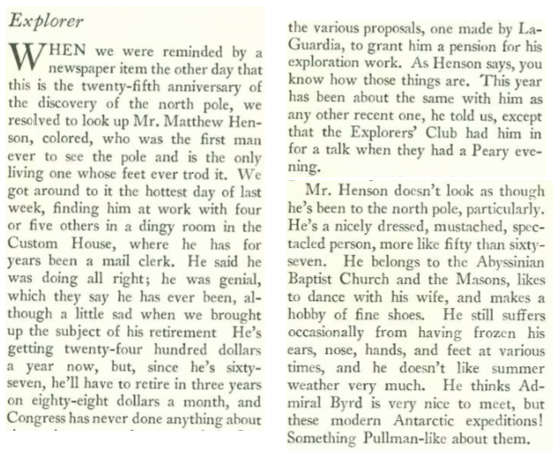
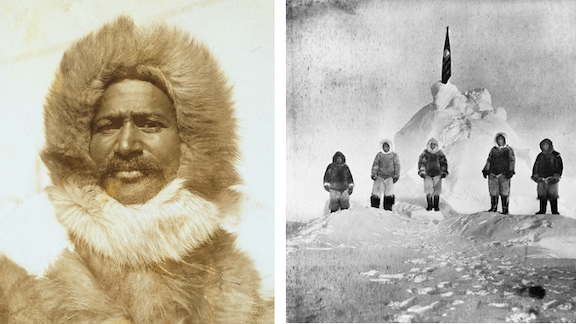
GO NORTH YOUNG MAN…At left, Matthew Henson circa 1910. At right, photograph of Henson and four Inuit guides on the last stretch of their 1908–09 expedition, taken by Robert Peary at what they believed to be the North Pole. Henson (center) planted the flag. (Wikipedia)

 * * *

POTUS Profiled

Pulitizer Prize-winning historian Henry F. Pringle published the first installment of a three-part profile of President Franklin D. Roosevelt. In this excerpt Pringle writes about FDR’s sense of humor (illustration by William Cotton):

 * * *

Mattress Campers

The “About the House” column featured the latest in home-cooling devices. Couldn’t afford the zillions it would cost to install a home air-conditioner? Well the folks at Crosley—an electronics company known for its radios—offered a more affordable solution: an air-conditioned tent that could be erected over one’s bed for $150 (about $3,500 in today’s dollars):

Here is a 1934 ad for the contraption I found at worldradiohistory.com:

…and we continue with more from our advertisers, including the Broadway magazine The Stage, which offered up this idyllic scene showing what folks did in the days before air-conditioning…

…you could also escape the heat by taking to the high seas aboard the Italian liner SS Rex

…seen below arriving in New York in this 1932 photo, the 911-foot SS Rex was the largest ship built in Italy before World War II…it was destroyed by the British RAF in 1944…
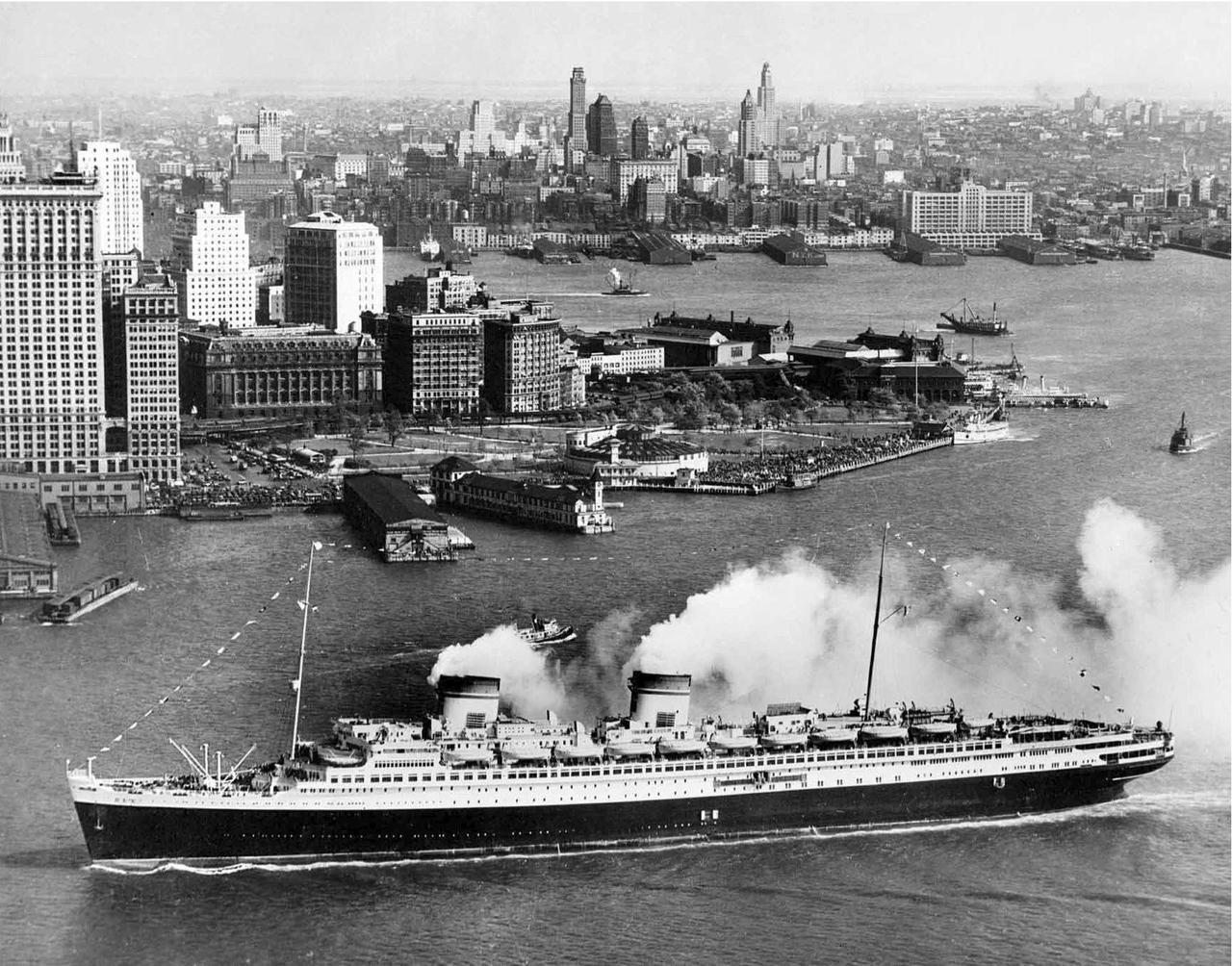
(adventures-of-the-blackgang.tumblr.com)

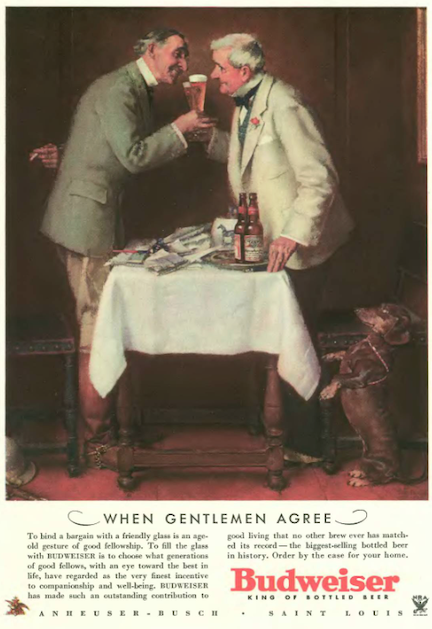
…you could also cool off like these two old gents, sharing a toast and some Budweisers…
…or you could get yourself a jug of applejack brandy and mix it 1:1 with pineapple juice…not sure who or what is being “saved” here…

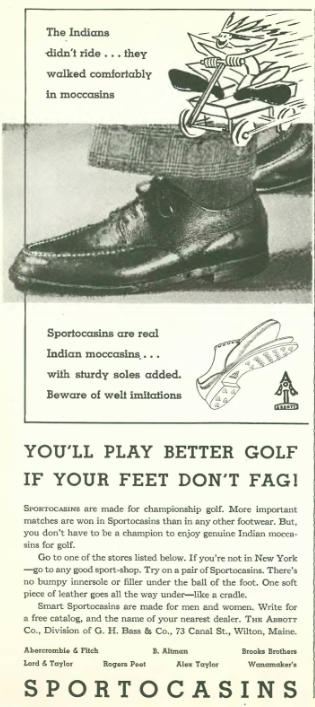
…long before there were Nikes or Adidas, golfers could hit the links in a pair of Sportocasins…
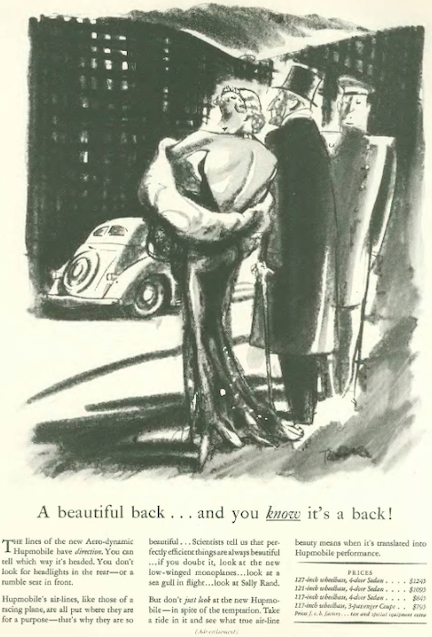
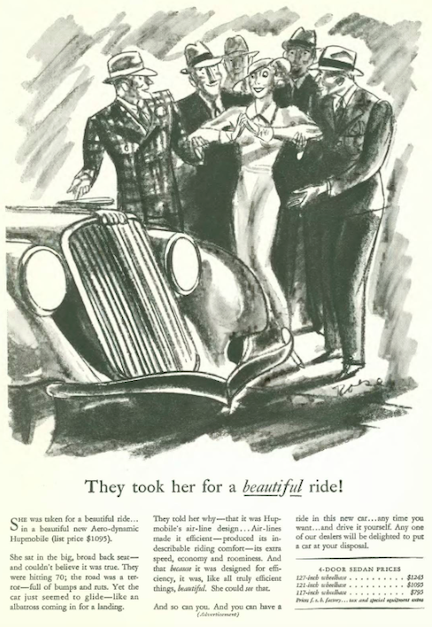
…Hupmobile was still hanging in there, enlisting the talents of illustrator Herbert Roese to extol the comforts and the beauty of its “air-line design”… it isn’t clear why it required five middle-aged men to take her on that beautiful ride…
…the real-life bellboy Johnny Roventini made his debut in the New Yorker as the spokesman for Phillip Morris cigarettes…

…Roventini (1910–1998), who stood less than four feet tall as an adult, was working as a bellboy at the New Yorker Hotel when he was discovered by an advertising executive in 1933. Apparently the exec had Roventini shout the line “Call for Philip Morris!” and learned the bellboy could repeatedly, and on cue, vocalize a perfect B-flat tone. Representing the company for more than forty years, he helped Lucille Ball and Desi Arnaz with the initial success of I Love Lucy (Philip Morris was the show’s sponsor)…

WHAT’S HIS LINE?…TV producers Mark Goodson, left, and Bill Todman greet Johnny Roventini during a 1952 radio broadcast of their quiz show, What’s My Line? The program’s sponsor was Phillip Morris. Note Goodson and Todman both hold cigarettes. (Wikipedia)

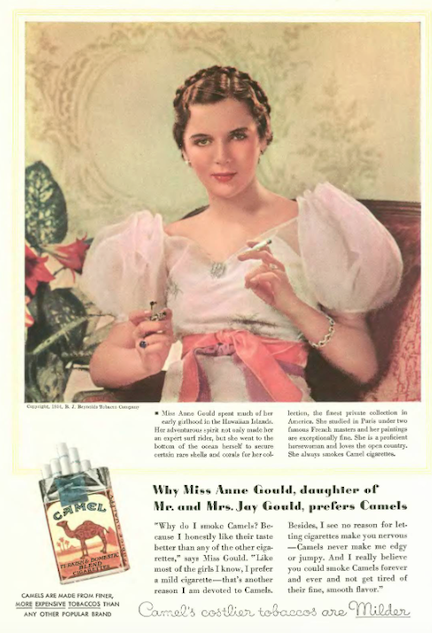
…by the looks of it, Anne Gould (heiress daughter of Jay Gould II and Anne Douglas Graham Gould) didn’t need anyone to tell her what to smoke…
…on to our cartoons, we continue our birdwatching with Rea Irvin…and we also get…

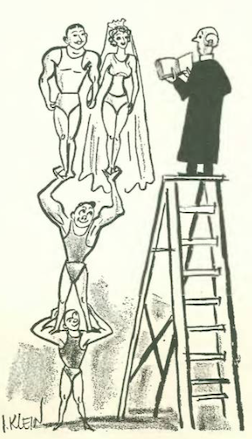
…high-flying nuptials with Isadore Klein

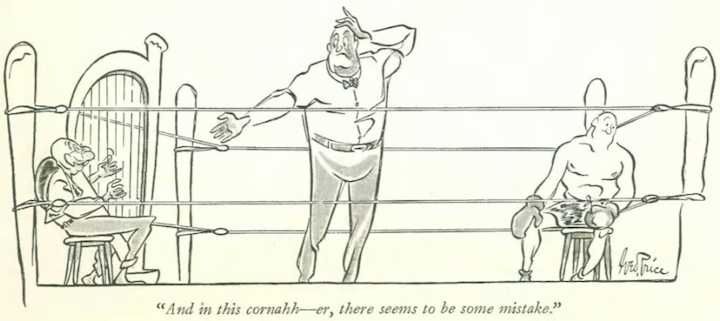
…a mismatch with George Price

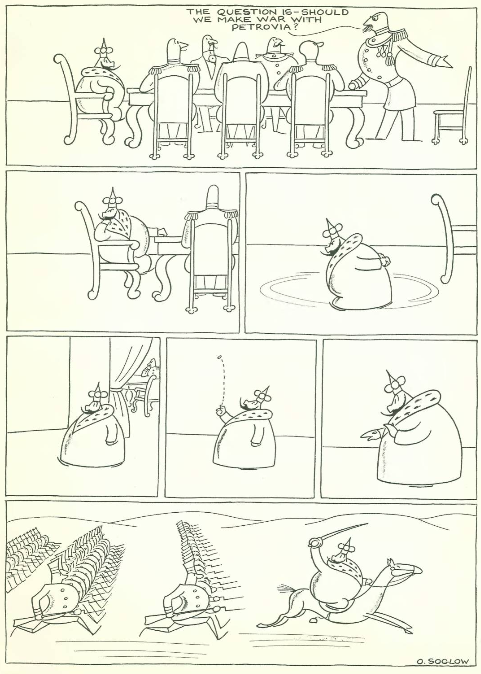
…the prospects for war with Otto Soglow

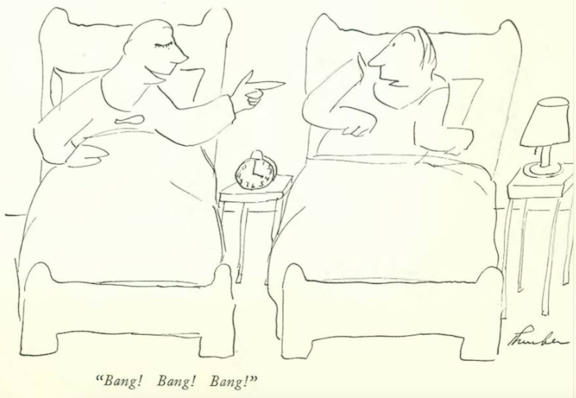
…marital bliss with James Thurber

…and a courtship scene, with an expiration date, from Mary Petty

Next Time: A Ring Ding…

Moses Parts a Yacht Club

Power broker Robert Moses always made sure he was few steps ahead of any possible opposition to his grand development plans in and around New York City. That included the yacht clubbers along the Hudson River, who were more or less erased from the scene by Moses in one fell swoop.

May 19, 1934 cover by Ilonka Karasz.

The Upper West Side’s Columbia Yacht Club probably thought it was just swell that the city was dumping waste and rock along the shores of the Hudson River, since it eventually created driveway access for members who previously had to access the club via a footbridge over the New York Central’s tracks. What hadn’t occurred to them was that nearly 25 years-worth of infill had also created a new strip of land that extended from 79th to 96th street, land that Moses envisioned as an expansion of Riverside Park (and the abrupt end of the West Side yacht club scene). “The Talk of the Town” explained:

LOCATION, LOCATION…Two views of the Columbia Yacht Club at West 86th Street, circa 1930. The club was razed to make room for Robert Moses’s expansion of Riverside Park. Moses’s ambitious project, which cost twice as much as Hoover Dam, put the train tracks underground and topped the park with the Henry Hudson Parkway. (newyorktoursbygary.blogspot.com/NYPL Digital Collections)
HEADS UP…Elsie Henneman dives into the water near the Hudson River Yacht Club, circa 1930. Located at the foot of West 74th Street, the club moved onto a barge at 145th Street to escape Moses’s park expansion plans, but it was eventually banished from the West Side. (Reddit)

 * * *

Ode to the Road

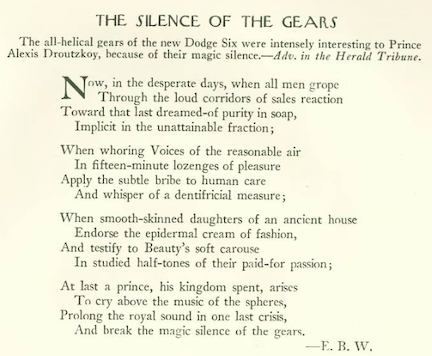
We now shift gears to E.B. White, who was poetically inspired by an advertisement in the Herald Tribune that featured Prince Alexis A. Droutzkoy (a member of the exiled White Russian colony in New York) praising the “magic silence” of the new “Dodge Six” automobile:

SILENCE OF THE CAMS…The 1934 Dodge Six. (detail from a vintage ad)

 * * *

Führer’s Filmmaker

The ability (or inability) to separate art from an artist’s personal conduct or beliefs has been a particular topic of the last two decades, given the litany of stars who have been “cancelled” despite the quality or importance of their work. The work of German filmmaker Leni Riefenstahl (1902–2003), still debated nearly ninety years after her collaboration with Nazi leaders, demonstrates the fine line many a film historian or critic must walk when assessing the career of an innovative artist (for an American example, see filmmaker D. W. Griffith). Riefenstahl’s 1932 film, The Blue Light (Das blaue Licht), made prior to her Nazi collaborations, was praised for its beauty by American critics, including the New Yorker’s John Mosher, when it was released in the U.S. in 1934.

The Blue Light also captivated Adolf Hitler, who saw the attractive and athletic Riefenstahl as an ideal of Aryan womanhood. A subsequent meeting with Hitler would result in Riefenstahl’s controversial 1935 Nazi propaganda film Triumph of the Will (Triumph des Willens). We will explore that film, and Riefenstahl’s role, in a later post.

CAREER MOVE…Clockwise, from top left, Leni Riefenstahl demonstrated her acting ability, athleticism and filmmaking talents in 1932’s The Blue Light (Das blaue Licht); Riefenstahl filming in Nuremberg during the 1934 Nazi Party congress—the footage was used in 1935 Nazi propaganda film Triumph of the Will; working at a film cutting table, 1935; with Adolf Hitler at Nuremberg, 1934. (IMDB/Library of Congress/UTK Cinema Studies/The Irish Times)
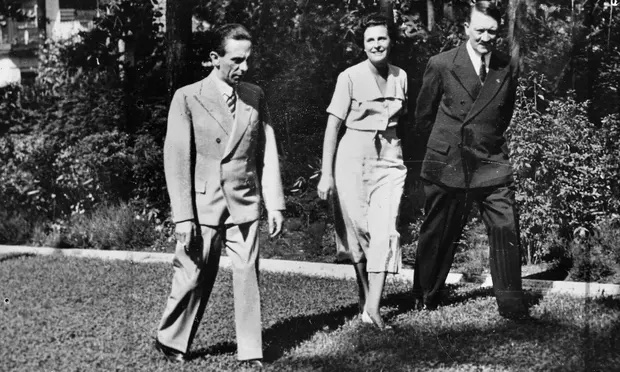
HI HITLER…Nazi propaganda minister Joseph Goebbels and Adolf Hitler pay a visit to Leni Riefenstahl at her Berlin estate, circa 1937. (Roger-Viollet)

 * * *

From Our Advertisers

We begin with more Carl “Eric” Erickson-inspired artwork, here promoting the bygone elegance of transatlantic travel…

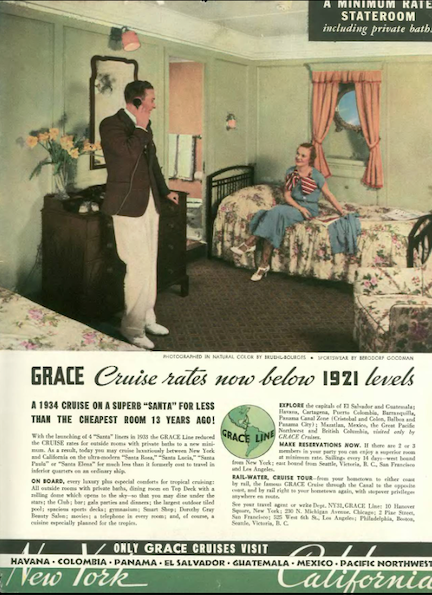
…perhaps a bit less upscale but still pretty nice, the “Santa” line of ships operated by the Grace Line between New York and Latin America included air-conditioned interiors paneled with aluminum (a fireproofing measure) and spacious cabins with private baths that faced to outside…

…this ad must have been a happy sight to folks who had to endure more than a decade of bootleg Scotch during Prohibition…

…Smirnoff vodka had its origins in 1860s Russia, capturing two-thirds of the Moscow market by the mid-1880s…forced to leave Russia in 1904 after the Tsar nationalized the Russian vodka industry…Smirnoff relocated to Turkey, then Poland, and then Paris, each time with limited success…at the end of Prohibition the brand relocated once again to a distillery in Bethel, Connecticut, hence this advertisement…

…the habanero pepper has been used to infuse everything from tequila to vodka to whiskey…this particular product was marketed as something new that could be mixed with a variety of spirits or topped up with club soda or ginger ale…

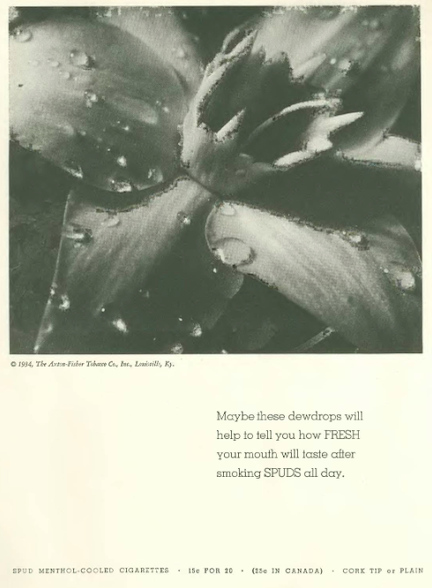
…I include this ad from the maker of Spud cigarettes for its sheer audacity…it claims your mouth will feel dewdrop fresh after an entire day of smoking menthols…

…stunt driver Billy Arnold was one of the “Hell-Drivers” Chrysler employed to tout the safety of its low-priced Plymouths at promotional events…

…including Chicago’s “Century of Progress”…below, a crowd watches Arnold take his Plymouth for a roll and emerge unscathed…

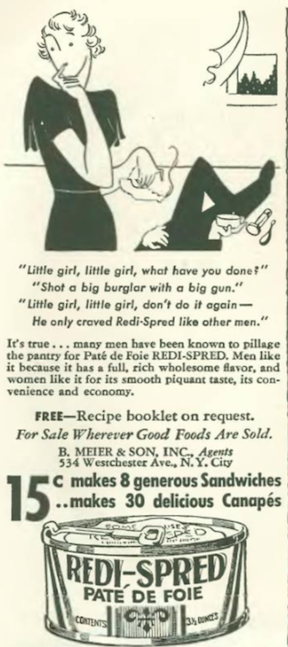
…the folks at Redi-Spred employed a murder theme to promote their “Pâté de Foie”…which foie was used…duck, goose or lord knows what, is not specified…

…the signature is muddled, but this looks like another illustration by Herbert Roese, who never published a cartoon in the New Yorker but sure had its style down, especially Peter Arno’s

Harold Ross’s high school friend and cartoonist John Held Jr. was a frequent contributor to the New Yorker from 1925 to 1932 (he also contributed to LifeVanity FairHarper’s Bazaar), but when demand for his Jazz Age cartoons and illustrations fell off in the 1930s, he turned to painting and illustrating children’s books. So it was a surprise to catch this glimpse of Held’s work in a one-column ad promoting a Held-drawn map of New England inns…

…speaking of elusive illustrators, I am often challenged to discover the identities of spot illustrators in the early issues…this one appears to be signed by “Maurice Dreco”…

…the signature on this one looks like “Saphire,” but again, it is not clear…

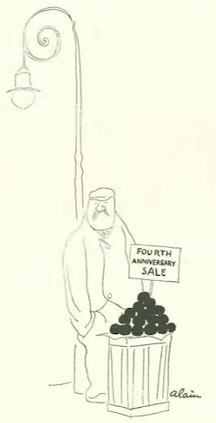
…but there is no doubt this little gem is by Daniel ‘Alain’ Brustlein

…which leads us to Richard Decker, and a hostage situation gone flat…

…and Decker again, with a back-handed compliment…

James Thurber was in his familiar world of dogs and battling sexes…

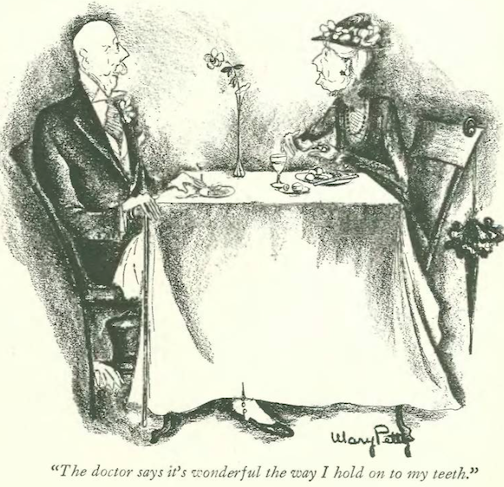
Mary Petty found some good news on the dentistry front…

Otto Soglow’s Little King believed more is merrier…

…and we close with William Crawford Galbraith, and a wedding day surprise…

Next Time: Isle of Ill Repute…


Made In Germany

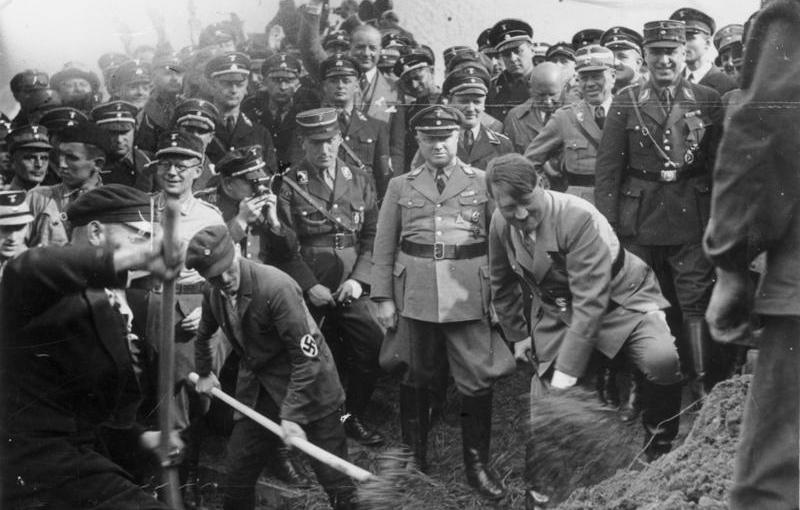
Above: Adolf Hitler at a groundbreaking ceremony for a new section of the Reichsautobahn highway system, 1933. (Bundesarchiv)

Mildred Gilman was one of the highest paid female reporters in the 1920s, interviewing everyone from murderers to heads of state. But when she arranged to interview Adolf Hitler in 1933, the Gestapo got nervous and threw her out of the country.

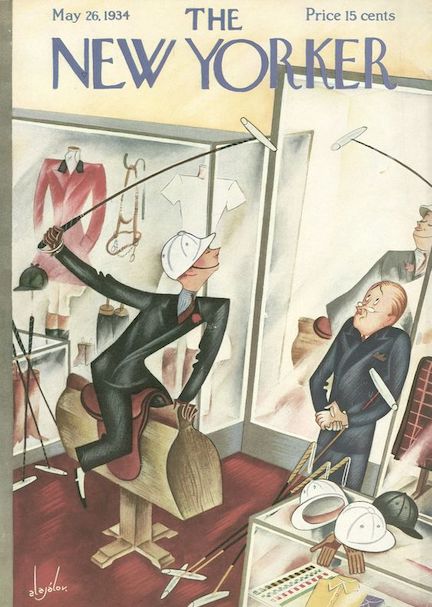
Feb. 10, 1934 cover by Harry Brown.

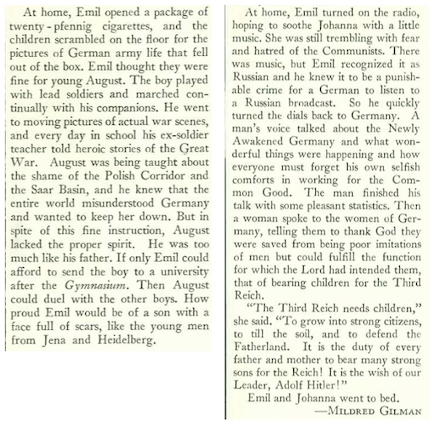
Gilman (1896-1994) doubtless sought a modicum of satisfaction when she penned “Made in Germany” for the Feb. 10, 1934 issue. I am including generous excerpts below, which describe the day in the life of an average Berliner named Emil Pfalz, a man who doesn’t question the omnipresent Nazi propaganda and often worries about his ability to keep in step with the new regime.

THERE’S SOMETHING HAPPENING HERE…Berliners (left) and residents of Worms (top) inspect Nazi propaganda that instructed Germans not to do business with Jewish people (on Jan. 24, 1934, the German government banned Jews from membership in the German Labor Front, depriving them of the opportunity to find employment); below, in early 1934 a simulated uprising was staged in Berlin (with people posing as casualties) as part of Nazi maneuvers. Later that summer SS and Gestapo forces would conduct a purge known as “Night of the Long Knives,” eliminating any known or suspected dissenters of the Nazi regime. Hundreds were murdered and many more arrested. (digitallibrary.usc/Wikipedia)
GRIM FAIRY TALE…As a loyal citizen, Emil Pfalz was sure to teach his children the Nazi salute. Image from a Nazi propaganda booklet. (British Library Board)

Emil’s story continues as he contemplates his duties as a father and husband in the Third Reich…

…and heeds the call to produce more Aryan babies.

What the Nazis did not want more of was chronically ill or disabled persons. The sick minds of Nazi propagandists produced this image below, which argues that for the same daily amount of reichsmarks you could either support an entire Aryan family or a single mentally disabled person…in 1933 the Law for the Prevention of Hereditarily Diseased Offspring was passed, allowing for the forced sterilization of those regarded as ‘unfit’. In 1939 the regime began killing the disabled (up to 250,000 people).

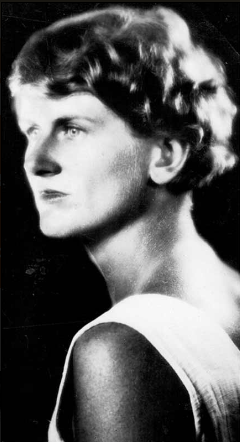
A final note about the writer, Mildred Gilman. In addition to being a journalist of both daring and flair, she wrote eight novels including the bestseller Sob Sister. In her younger days she was employed as a secretary for New York World columnist Heywood Broun and partied with Dorothy Parker, Alexander Woollcott, and Robert Benchley. She wrote a profile of Paul Robeson for the Sept. 21, 1928 issue of The New Yorker.

Mildred Gilman in 1938.

 * * *

Up In Smoke

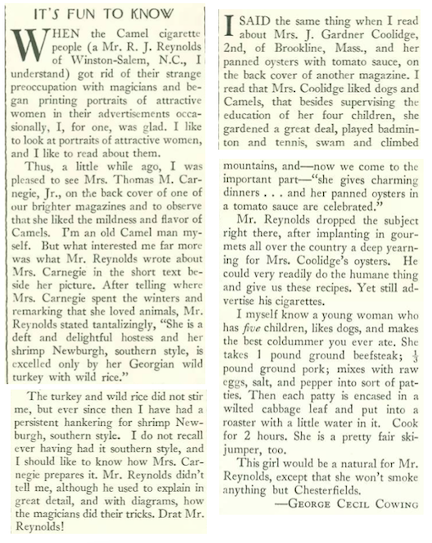
George Cecil Cowing, known for his whimsical “Boulevardier” column for the Pasadena Star-News, commented on the changing themes adopted by cigarette manufacturers, namely the folks at R.J. Reynolds who abandoned their magician-themed ads for their Camel brand (“It’s Fun to Be Fooled”) for spots featuring endorsements from second-tier society women…

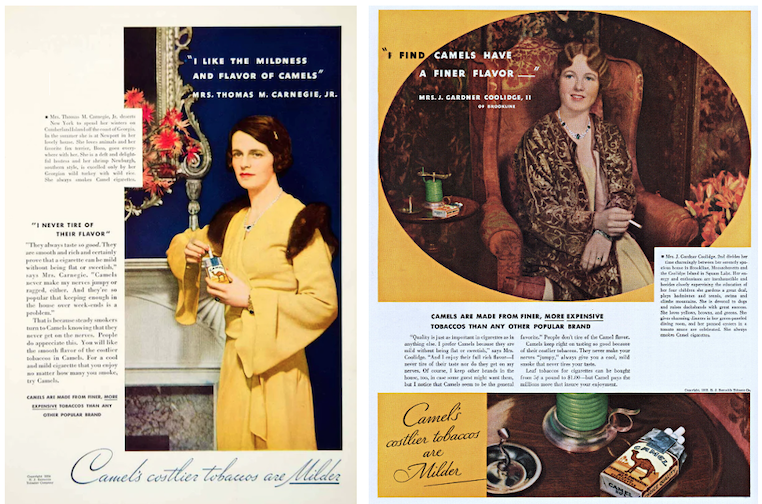
POSH PUFFERS…”Mrs. Thomas M. Carnegie Jr.” (Virginia Beggs) and “Mrs. J. Gardner Coolidge II” (Mary Louise Coolidge) shared their favorite dishes and their love for smoking Camels in these ads, which appeared in The New Yorker in early 1934.

 * * *

From Our Advertisers

Appropriately we turn to our advertisers, where we find the Camel brand trying out a new theme that demonstrated their product’s appeal to plainer folks…

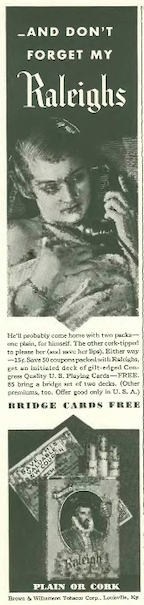
…Brown & Williamson’s first national brand, Raleigh, was launched as a premium cigarette in 1928, here marketed with a plain or cork tip (“to please her and save her lips”)…

…in his parody of Camel ads, George Cecil Cowing wrote that he preferred Chesterfields, a big-time brand of mid-century America…

…the makers of White Rock reveled in the newly found freedoms of legalized alcohol…

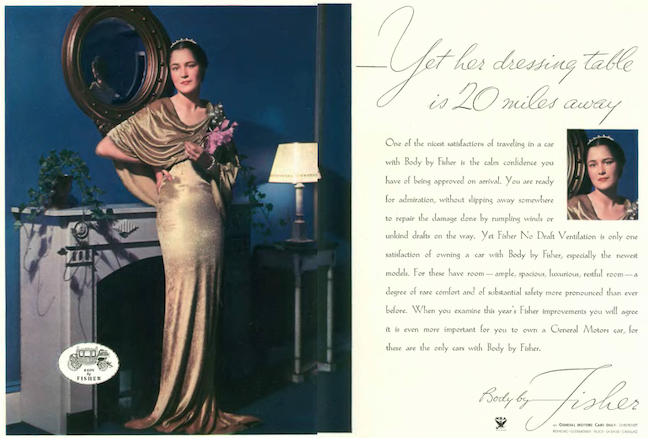
…the folks at Fisher were sticking with their lavish two-page color ads and what has always been a tiresome double entendre…

…Lord & Taylor took to the skies to promote their “country clothes” to the smart set…

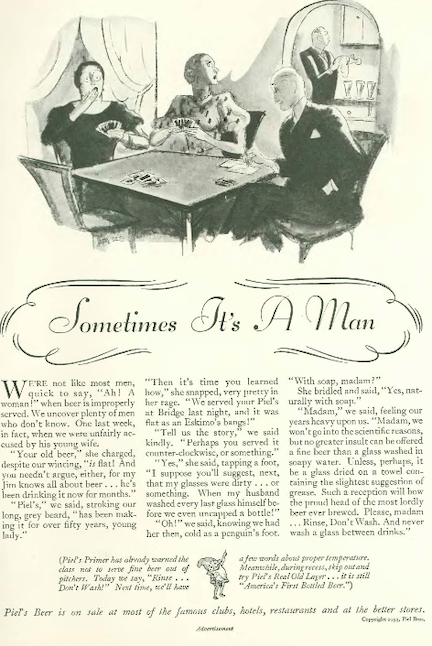
…and cartoonist Herbert Roese, who apparently never published a cartoon in The New Yorker, turned in this very New Yorker-looking illustration for Piel’s…

…on to our cartoonists, we begin with Clarence Day, better known for his Life With Father stories…

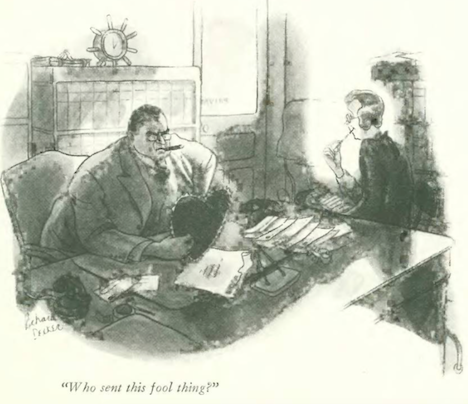
…the Valentine’s issue featured several themed cartoons, including these by Richard Decker

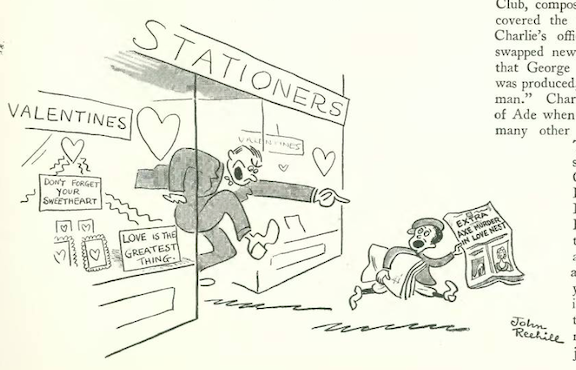
…and John Reehill

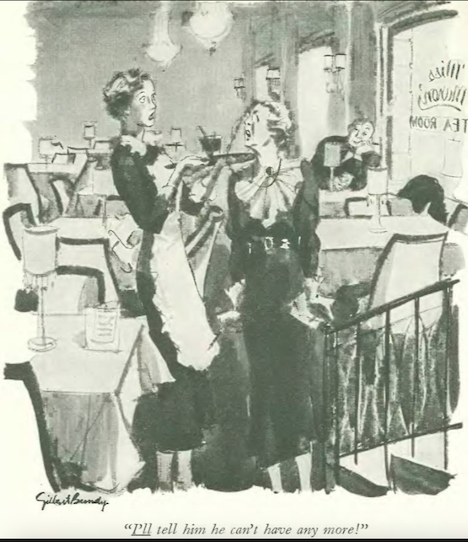
…love was also in the air for Gilbert Bundy

…while William Crawford Galbraith continued to ply the waters of the creepily lustful…

…and we test different waters with Richard Yardley, a popular editorial cartoonist for The Baltimore Sun…this is the only cartoon he published in The New Yorker

…the Westminster Kennel Club dog show was in town, here tapped by Helen Hokinson to also explore the theme of fatherhood…

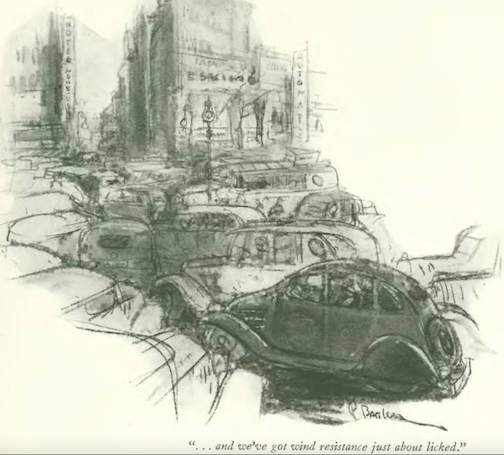
Perry Barlow was the latest New Yorker contributor to mock the futuristic, aerodynamic style of Chrysler’s Airflow

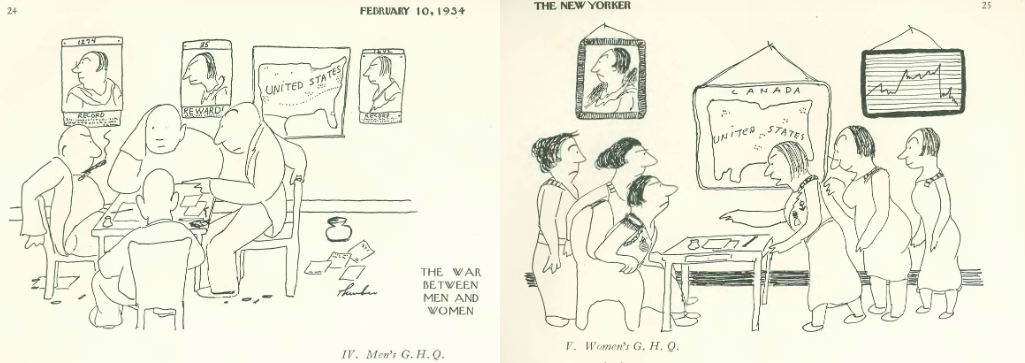
…and James Thurber’s “War Between Men and Women” paused as the two sides made preparations for the next battle…

Next Time: And Now We Are Nine…

An American Classic

Immigration over the centuries transformed New York City into a cosmopolitan metropolis, with many of those migrants drawn from America’s hinterlands. What they found in the city was not only economic opportunity, but also a place to grow artistically and intellectually.

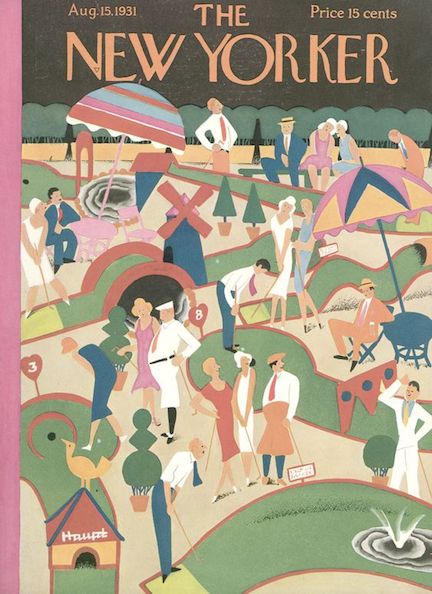
Aug. 8, 1931 cover by Theodore Haupt.

Such was the case of Willa Cather, who while living in New York City would draw on her Nebraska childhood to write a succession of novels about prairie life and its people (including My Antonia and O Pioneers!) that would culminate in a 1923 Pulitzer Prize.

Louise Bogan, in 1931 a new poetry editor for The New Yorker (and a poet herself), wrote a profile of Cather for the Aug. 8 issue. An excerpt:

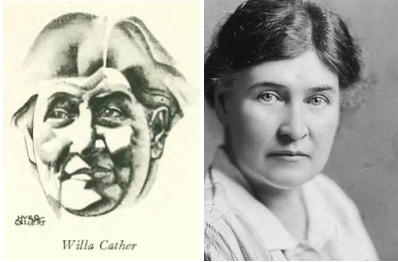
TWO FACES…Hugo Gellert rendering of Willa Cather for the profile; undated photo at right gives you some idea of the look Cather aimed at the affected behavior of others. (The New York Times)
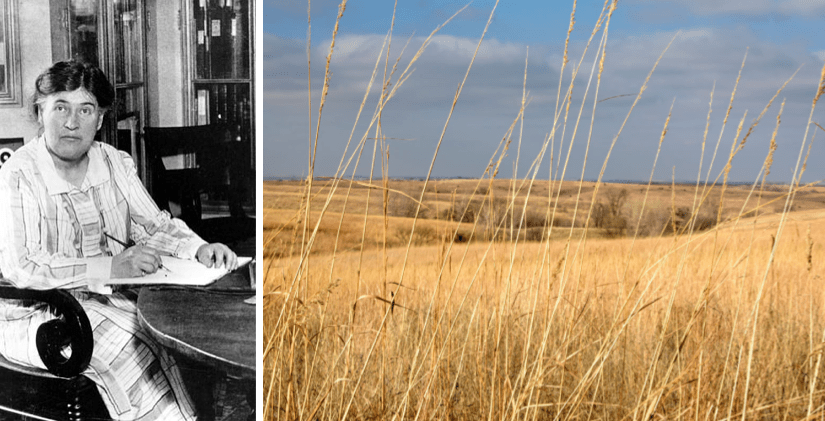
FORMATIVE YEARS…Clockwise, from top left, Willa Cather as a student at the University of Nebraska in the early 1890s; classmates at Nebraska included author and activist Dorothy Canfield Fisher and Alvin Johnson, later a co-founder of New York’s New School. Both Cather and Fisher took fencing lessons from John J. Pershing, who taught military science at Nebraska; Cather’s childhood home in Red Cloud, Neb., and the prairie that inspired much of her writing. (news.unl.edu/Wikipedia/new school.edu/literaryamerica.net)
CITY LIFE…Clockwise, from top: S. S. McClure, Willa Cather, Ida Tarbell, and Will Irvin visit in Washington Square Park, 1924; Cather in the meadow of High Mowing farm near Jaffrey, N.H., where she wrote part of My Antonia; on the cover of Time, Aug. 3, 1931; one of Cather’s New York residences at 82 Washington Place. (Indiana University/Southwick Collection, University of Nebraska/time.com/jschumacher.typepad.com)

Bogan concluded the profile with this note about Lèon Bakst, who was commissioned in 1923 to paint a portrait of Cather while she visiting Paris (image courtesy Omaha Public Library):

My dear late friend Susan Rosowski, who was a preeminent Cather scholar, wrote that Cather was “the first to give immigrants heroic stature in serious American literature.” In these times when immigration is so hotly debated, it is worth revisiting My Antonia and O Pioneers! to recall what once made America truly great.

 *  *  *

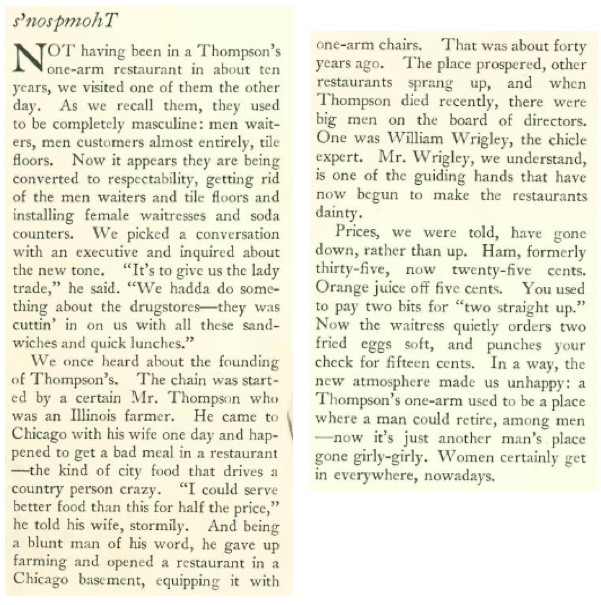
One Arm Restaurant

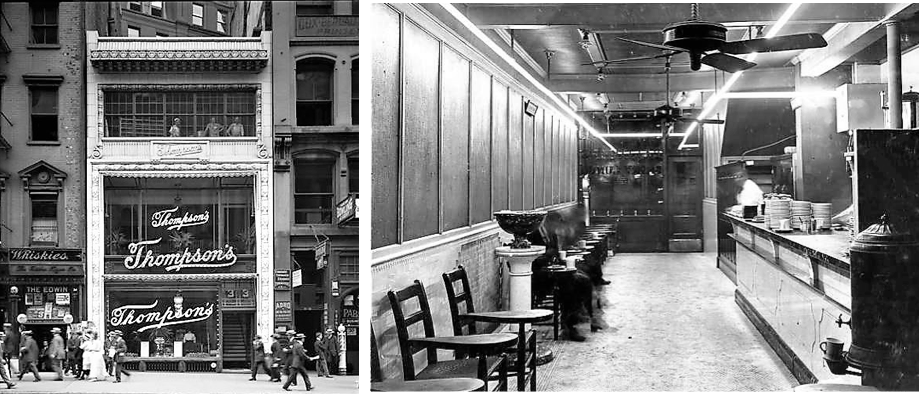
If you wanted to get lunch fast and cheap in 1931 you might have stopped at one of John Thompson’s New York restaurants. According to Tom Miller (daytoninmanhattan.blogspot.com), there were no waiters in Thompson’s restaurants. “Customers purchased foods like cold corned beef, cold boiled ham, smoked boiled tongue or hot frankfurters at a counter. They then took their trays to ‘one arm’ chairs lined up along the wall. There were no tables; instead customers ate at what was similar to turn-of-the-century school desks.” E.B. White stopped in for a visit:

YOU CAN’T MISS IT…John Thompson’s name is emblazoned no less than four times on the front of his restaurant at No. 33 Park Row. No-frills interior featured “one-arm” chairs and a self-service coffee urn. (Museum of the City of New York /daytoninmanhattan.blogspot.com)

 *  *  *

Cinematic Eyeful

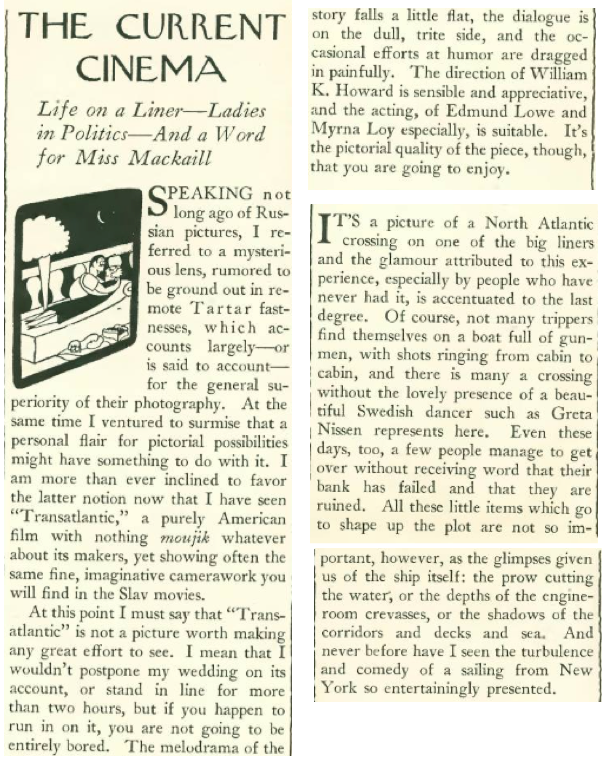
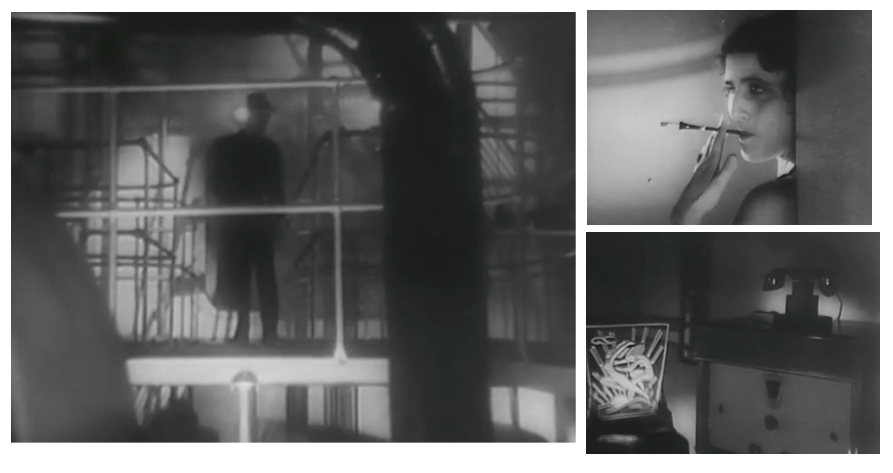
The Pre-Code comedy-drama Transatlantic was light on plot but heavy on deep-focus cinematography (by James Wong Howe) that wowed New Yorker critic John Mosher in 1931…and still wows critics today.

High Seas Hijinks…The pre-code comedy-drama Transatlantic wowed critic John Mosher not so much for its storyline as for its style and cinematography. Clockwise, from left, Edmund Lowe has his hands full with Lois Moran, Greta Nissen and Myrna Loy. (IMDB)
NIFTY NOIR…John Mosher loved the avant-garde, noir-ish stylings of Transatlantic. This film by director William K. Howard and cinematographer James Wong Howe is still admired today. A MoMA cinema site notes that the film’s style anticipates Citizen Kane by ten years. (pre-code.com)

 *  *  *

From Our Advertisers

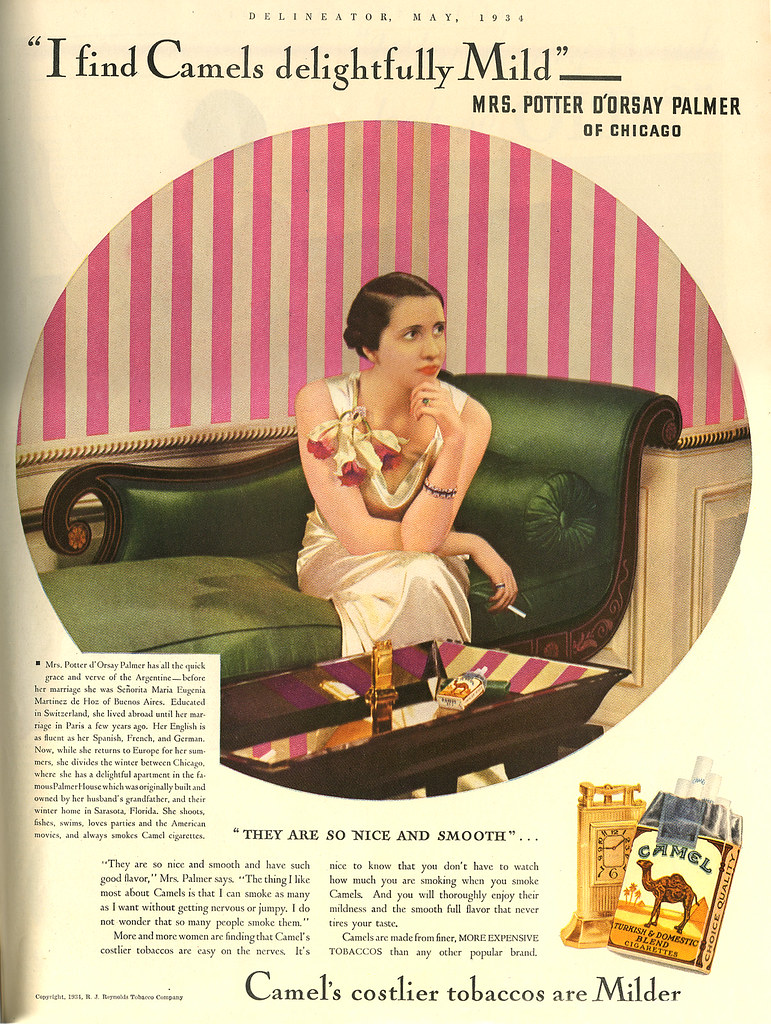
We begin with another socialite endorsing Pond’s Cold Cream — Mrs. Potter d’Orsay Palmer nee Maria Eugenia Martinez de Hoz. She was wife No. 2 of Potter d’Orsay Palmer, son of the wealthy family of Chicago Palmer House fame…they would divorce in 1937, and the playboy Potter would marry two more times before dying of a cerebral hemorrhage in 1939 (the result of a drunken brawl). Maria Eugenia would remarry and return to her homeland of Argentina to raise a family…

…it seems Maria Eugenia didn’t limit herself to endorsing cold cream, as this next ad attests (from the May, 1934 Delineator magazine)…

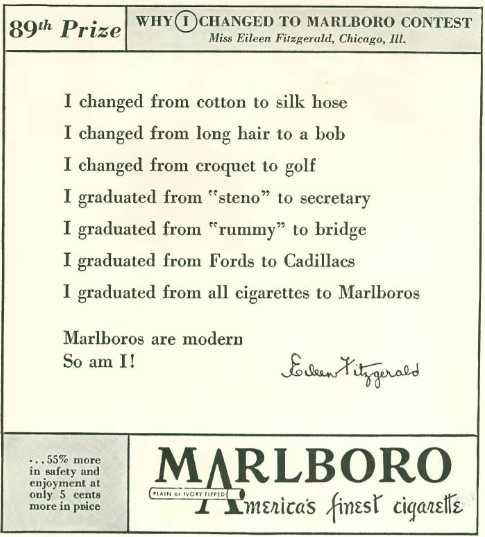
…Maria Eugenia endorsed Camels because they were marketed to women back then, as were Marlboro cigarettes, the makers of which continued their silly handwriting and jingle-writing contests to promote the brand (note the examples “Miss Eileen Fitzgerald” offered of what defined a modern lifestyle)…

…the makers of Chesterfield cigarettes, on the other hand, originally marketed their product to men, but they made sure women were included in the copy beneath the image — “yes, there’s a big woman vote” …

…you may recall the subtle ways Liggett & Myers began to lure women smokers back in 1928 with this ad campaign…

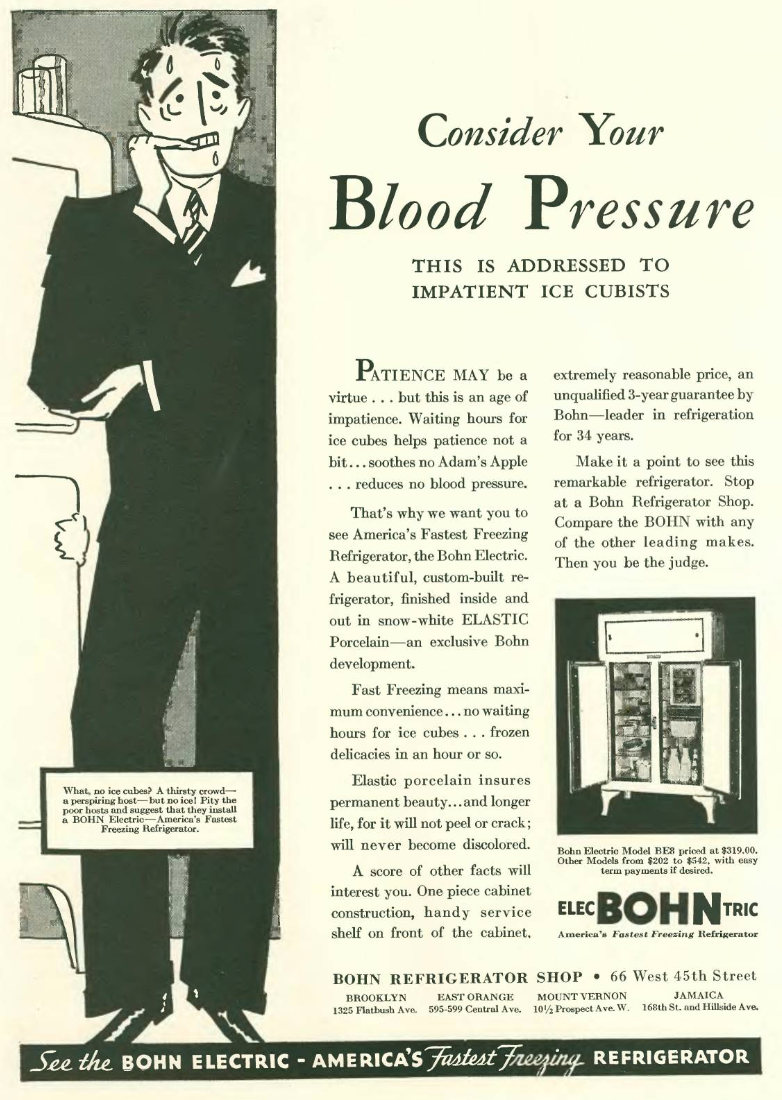
…you see a lot of tobacco ads because cigarette manufacturers were one of the few industries still turning a profit during the first years of the Depression…men and women were smoking like crazy, maybe to calm their nerves over the performance of their refrigerators…

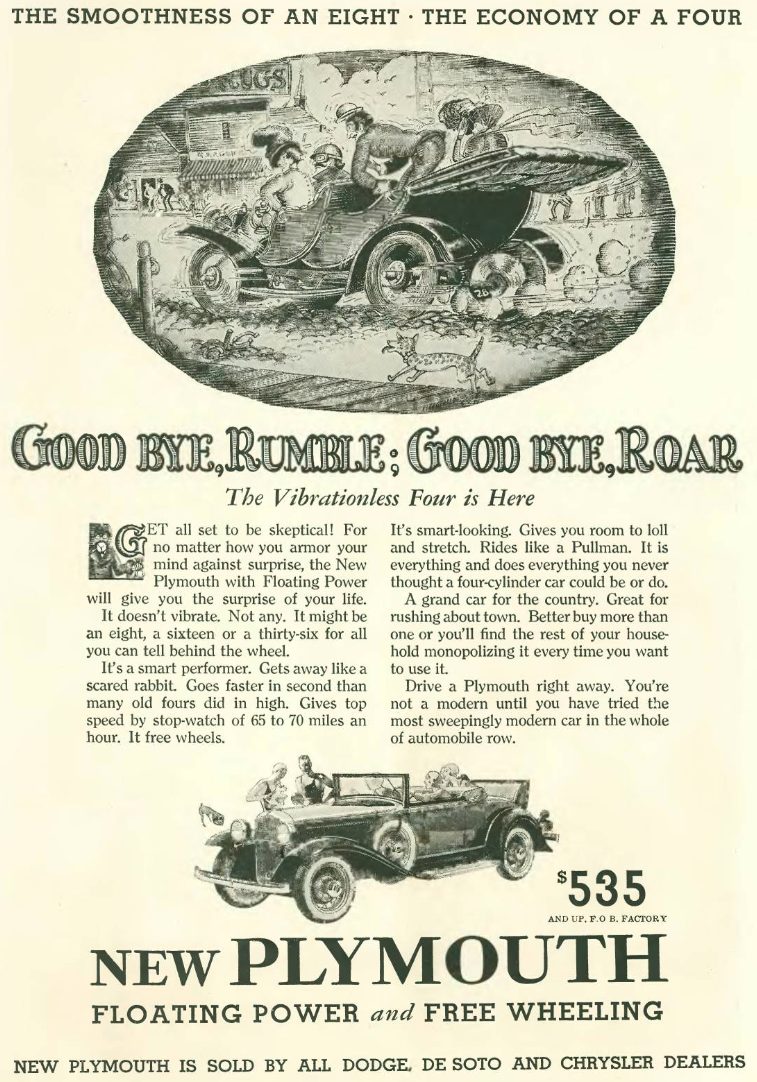
…one could always calm the nerves by taking a spin in a new Plymouth, bargain-priced at just $535…

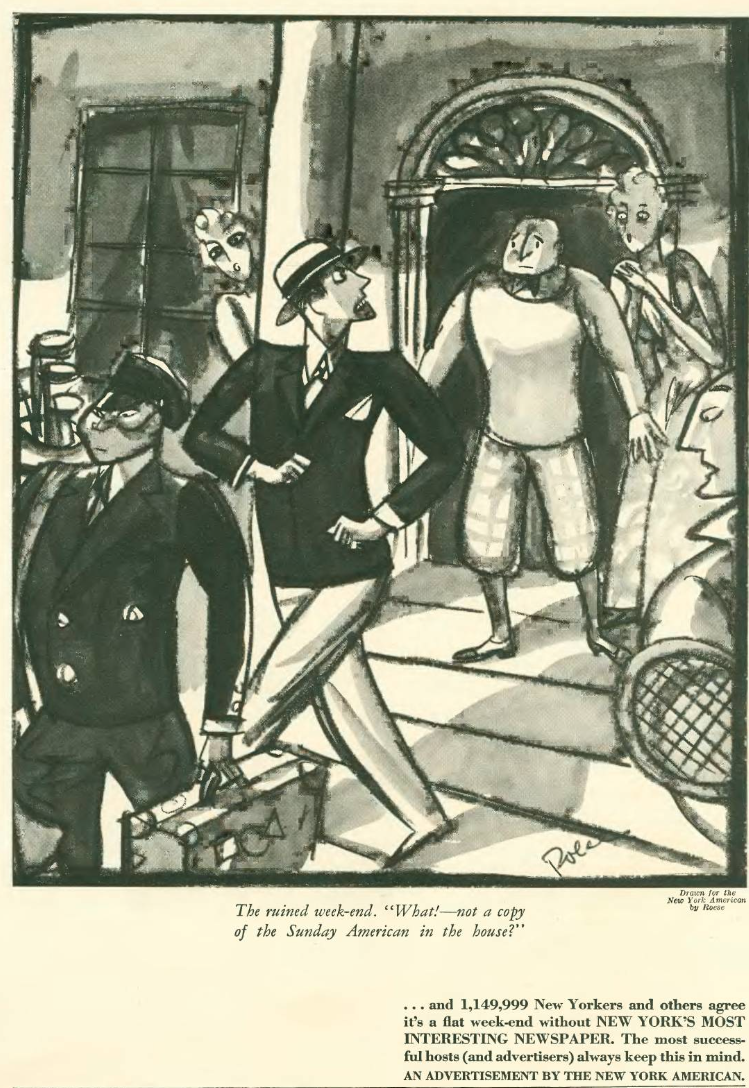
…and we have another Arno-esque ad by Herbert Roese, touting the wonders of “New York’s Most Interesting Newspaper”…

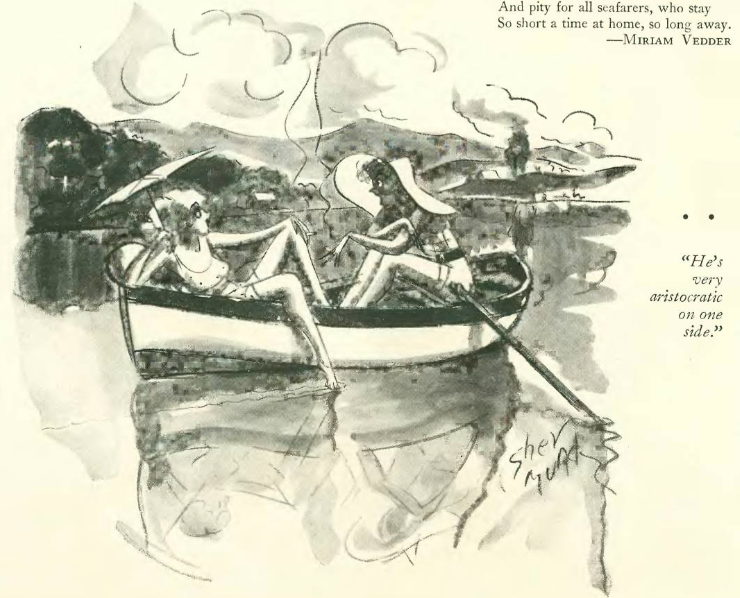
…on to our cartoonists, we begin with this wonderful spot drawing by Barbara Shermund

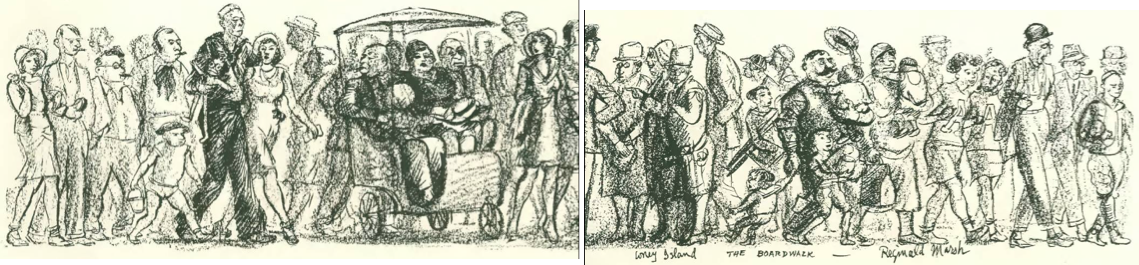
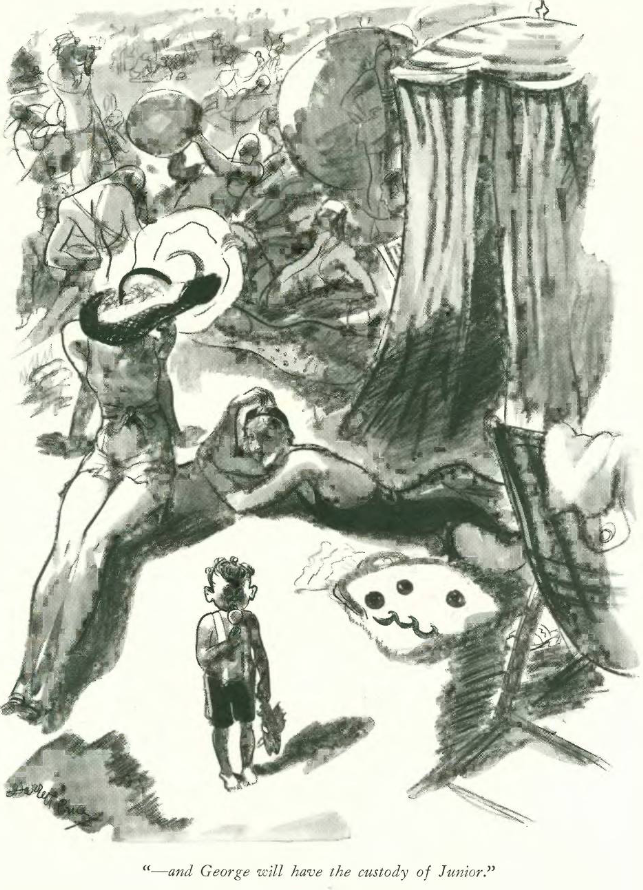
…and an illustration by Reginald Marsh of a Coney Island crowd that graced facing pages in “The Talk of the Town”…

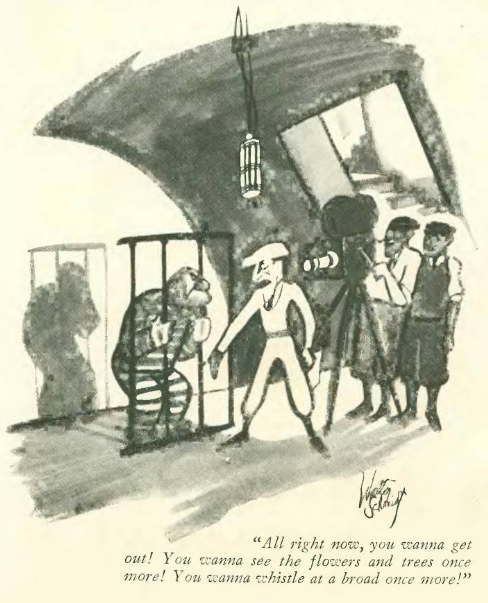
…here’s one of four drawings Walter Schmidt contributed to The New Yorker between 1931 and 1933…

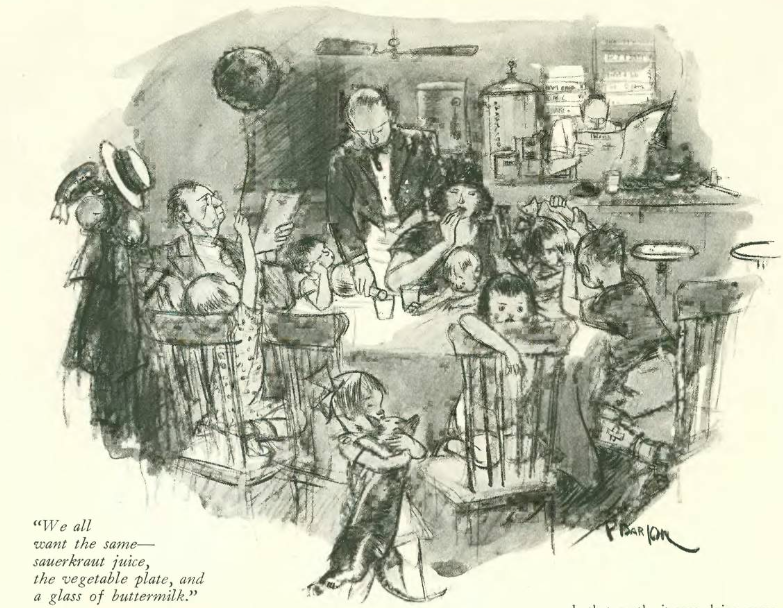
Perry Barlow illustrated the joys of dining out with the kiddies…

…back to Barbara Shermund, who eavesdropped on her debs…

Kemp Starrett gave us a proud moment at the county fair…

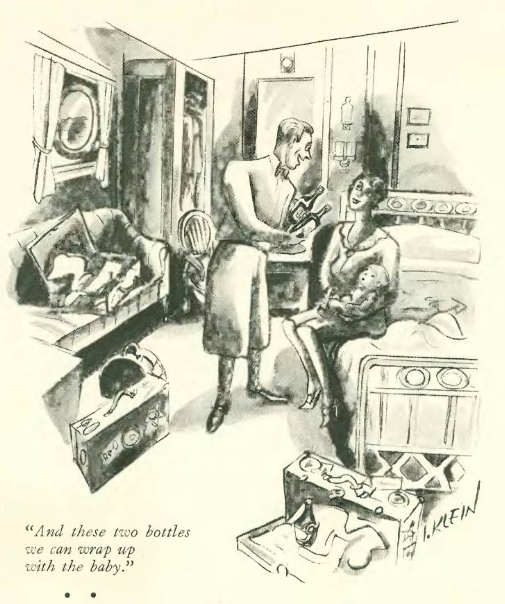
Isadore Klein offered up a new twist on the term “family planning”…

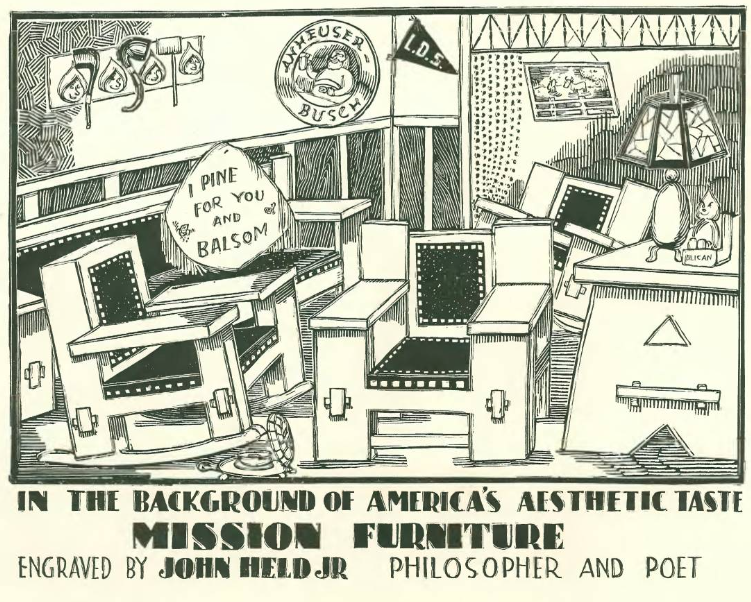
John Held Jr assessed the aesthetic value of chunky mission-style furniture…

…and Peter Arno reappeared in the cartoons with this full-page illustration of some desperate climbers…

Next Time: Asphalt Jungle…

Markey’s Road Trip

With the explosion of car ownership in the 1920s and 30s came improved highways across America, but if one were to undertake a long-distance journey, like The New Yorker’s Morris Markey, you were bound to find a wide range of conditions, from concrete highways to muddy dirt roads.

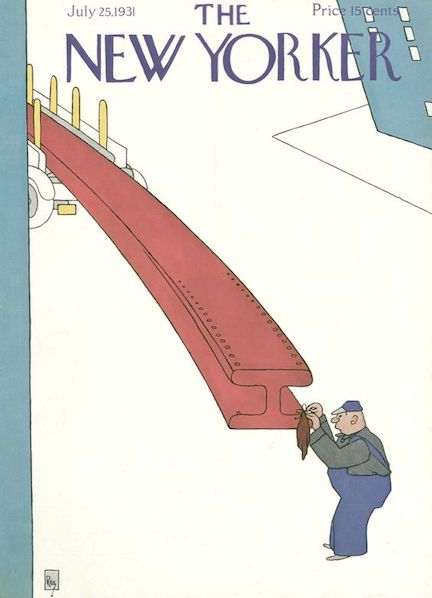
July 25, 1931 cover by Gardner Rea.

Markey wrote about his experience of driving from New York City to Atlanta for his “Reporter at Large” column, noting that stops at filling stations also offered opportunities to fill up on bootleg gin. Drunk driving, it seems, wasn’t a big concern in the early 1930s.

BLUE HIGHWAYS…Although the U.S. launched into major roadbuilding projects in the 1920s and 30s, rutted and muddy roads were still common in many areas of the country. Clockwise, from top left, Route 1 winds through Maryland in the 1920s; marker indicating the Mason and Dixon Line dividing Pennsylvania from Maryland, circa 1930; a 1930s dirt road in the Eastern U.S.; a policeman directs traffic in Richmond, Va., in the 1930s. (Library of Congress/fhwa.dot.gov/theshockoeexaminer.blogspot.com)
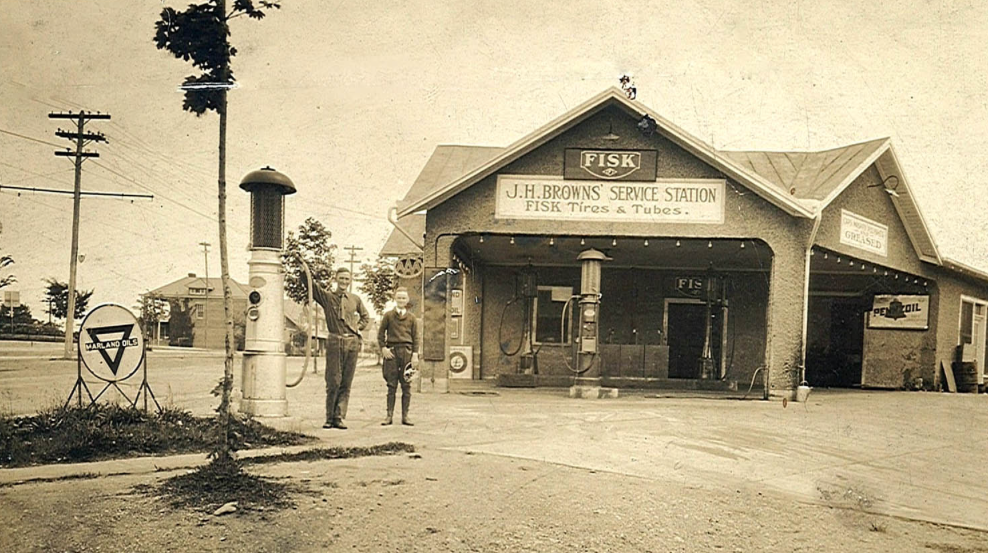
TIME TO GIN UP…James H. Brown (left), at the first of his four service stations in Richmond, Va., circa 1930. Some service stations offered Morris Markey bootleg gin during his journey to Atlanta. My use of this photo, however, does not imply that Mr. Brown offered the same service. (vintagerva.blogspot.com)

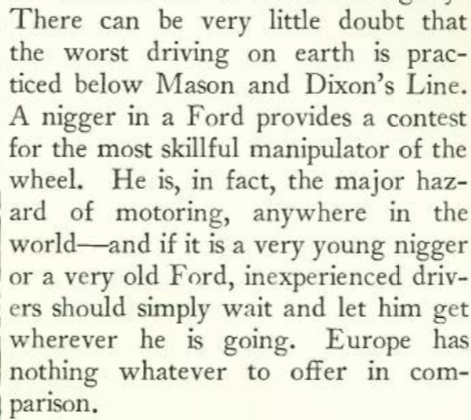
Unfortunately, Markey shared the sensibilities of many of his fellow Americans 89 years ago, and made this observation about drivers below the Mason and Dixon Line:

 *  *  *

Pale Riders

Since the mid-19th century Chelsea’s Tenth Avenue was known as “Death Avenue” due to the killing and maiming of hundreds who got in the way of freight trains that plowed through 10th and 11th Avenues in the service of warehouses and factories in the district. In the 1850s the freight line hired horsemen known as “West Side Cowboys” to warn wagons and pedestrians of oncoming trains, but even with this precaution nearly 450 people were killed by trains between 1852 and 1908, with almost 200 deaths occurring in the decade preceding 1908. Calls for an elevated railroad were finally answered with the opening of the High Line in 1934. “The Talk of the Town” looked in on the last of these urban cowboys:

WESTSIDE COWBOYS…Clockwise, from top left, a steam locomotive rumbles down 11th Avenue in the 1920s; a West Side Cowboy William Connolly rides ahead of a train to warn pedestrians in 1932; George Hayde led the final ride of the West Side cowboys up 10th Avenue on March 24, 1941; aerial view of the High Line from 18th Street heading north. Opened in 1934, the High Line lifted most train traffic 30 feet above the street. Today it serves only pedestrians, and is one of New York’s biggest tourist draws. (Forgotten NY/AP/NY Times/thehighline.org)

 *  *  *

Guys and Dolls

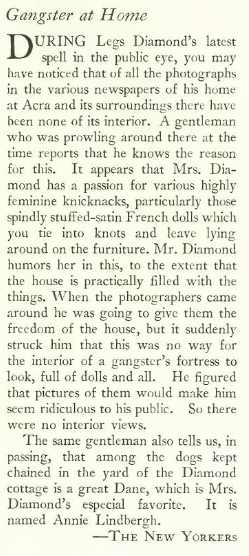
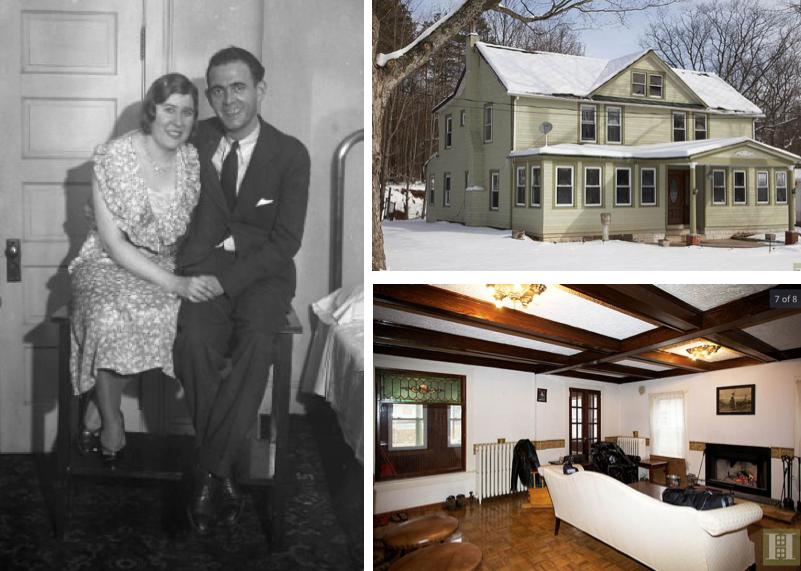
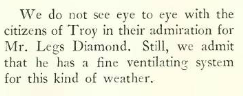
“The Talk of the Town” had some fun with a little-known aspect of a notorious gangster’s life; namely, the doll-filled house belonging to Jack “Legs” Diamond:

DOLL HOUSE…This house on Route 23 near Cairo, New York, once sheltered gangster Jack “Legs” Diamond, his wife, Alice, and her extensive collection of dolls and other knick-knacks. (nydailynews.com/Zillow)

“Talk” also made joking reference to the number of times Diamond had been shot and survived to tell about it.

Diamond’s luck would run out at the end of 1931 — Dec. 18, to be exact — when gunmen would break into his hotel room in Troy, NY, and put three bullets into his head.

 *  *  *

Ziggy’s Stardust

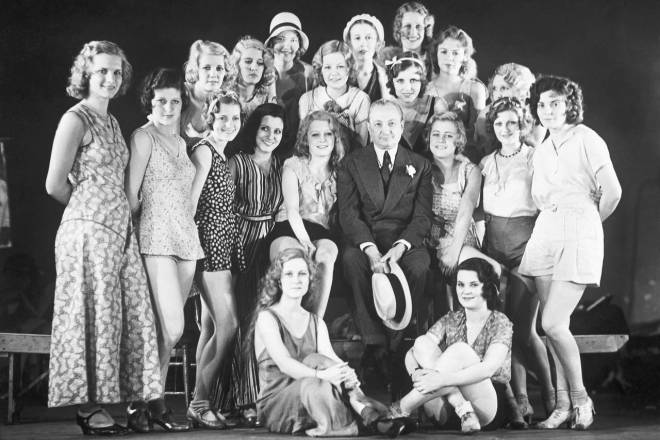
Florenz Ziegfeld (1867-1932) had a knack for show business, launching the careers of many entertainers through his Ziegfeld Follies, which got its start in 1907 during vaudeville’s heyday. The advent of sound movies signaled the end of the vaudeville era and of Ziegfeld himself, who would stage one final Follies before his death in 1932. Gilbert Seldes penned a two-part profile of Ziegfeld under the title “Glorifier” (caricature by the great Abe Birnbaum). An excerpt:

GO WITH THE FLO…Broadway impresario Florenz “Flo” Ziegfeld Jr with his Follies cast, 1931. It would prove to be his last Follies show. Revivals following his death in 1932 would prove to be much less successful. (Wall Street Journal)

 *  *  *

If Looks Could Kill

The New Yorker’s film critic John Mosher had a difficult time making sense of Murder by the Clock and its lead actress, Lilyan Tashman, who gave a tongue-in-cheek performance as the film’s femme fatale.

ARE YOU NUTS?…Irving Pichel and Lilyan Tashman in Murder by the Clock (1931). Tashman was known for her tongue-in-cheek portrayals of villainesses in films she made before her untimely death in 1934. (IMDB)

 *  *  *

Eine Kleine Nachtmusik

Open-air performances of classical music and opera were popular summertime diversions in the days before air-conditioning. In 1931 crowds gathered in Lewisohn Stadium to hear the New York Philharmonic perform under the direction of Willem van Hoogstraten, who conducted the Lewisohn summer concert series from 1922 to 1939. Here is a listing in The New Yorker’s “Goings On About Town” section:

MUSIC IN THE AIR…Cover of the 1931 program for concerts at Lewisohn Stadium, College of the City of New York. Bottom right, signed photo of Willem van Hoogstraten from 1930. (digitalcollections.nypl.org/ebay.com)

 *  *  *

From Our Advertisers

Flo Ziegfeld’s 1931 Follies were lavish productions, but his advertising in The New Yorker was anything but as evidenced in this tiny ad that appeared at the bottom of page 52…

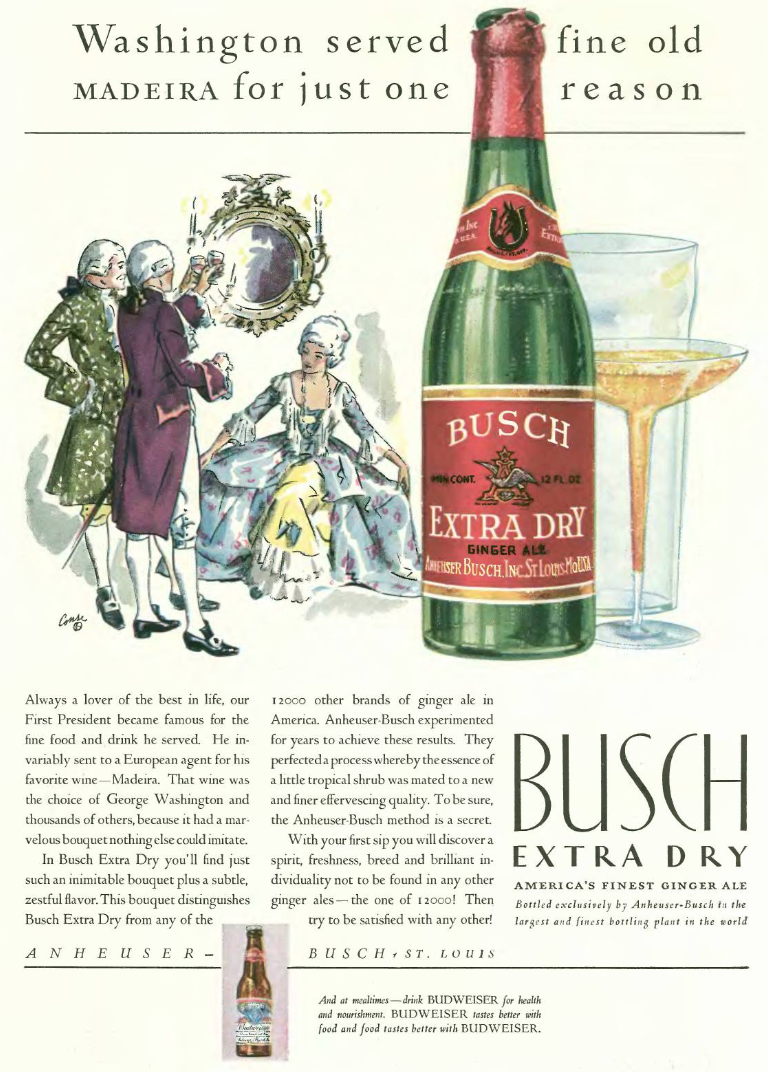
…no doubt anticipating the demise of Prohibition, the makers of Anheuser-Busch beverages ramped up the promotion of their non-alcoholic products to create associations with pre-Prohibition times…

…not to be outdone by the East Coast chocolates giant Schrafft’s, Whitman’s took out this full page ad to suggest how you might enjoy their product…

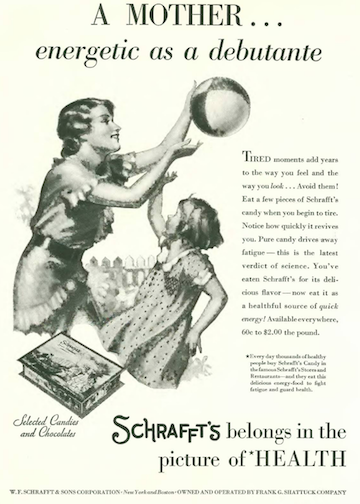
…which was in sharp contrast to the approach Schrafft’s took in this full-page ad featured in the April 25, 1931 New Yorker, which touted the health benefits of its candy…

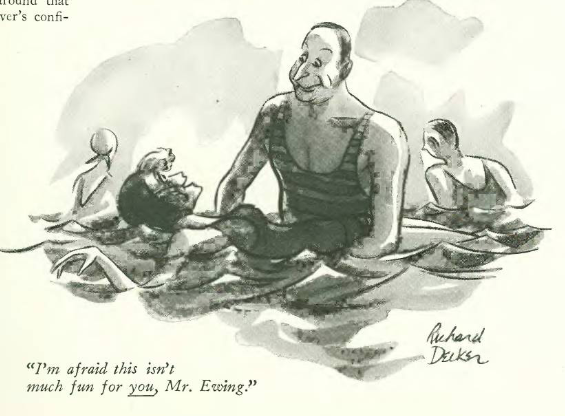
…on to our cartoons, Richard Decker took us swimming with a middle-aged man who was anything but bored…

Barbara Shermund went en plein air with a couple of her ditzy debs…

Garrett Price also went to the country to find a bit of humor…

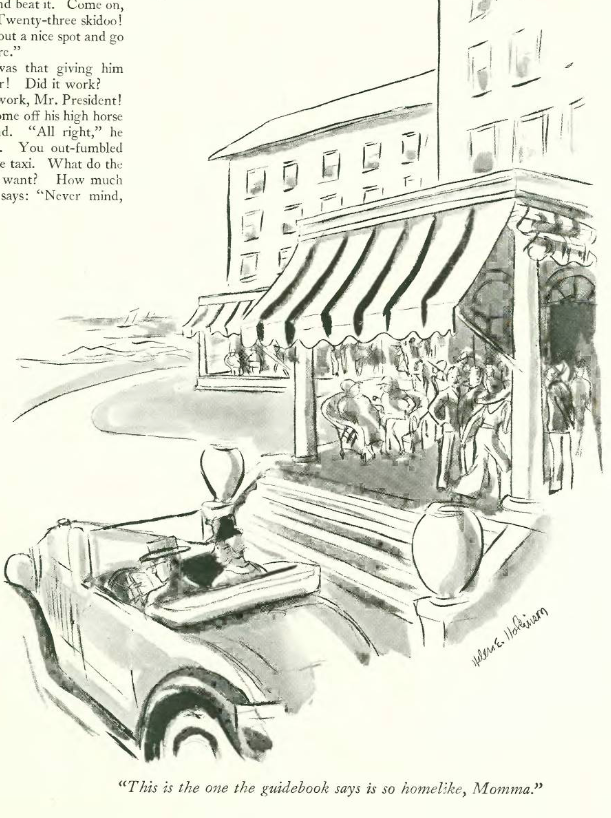
Helen Hokinson found a home away from home for a couple looking to take the sea air…

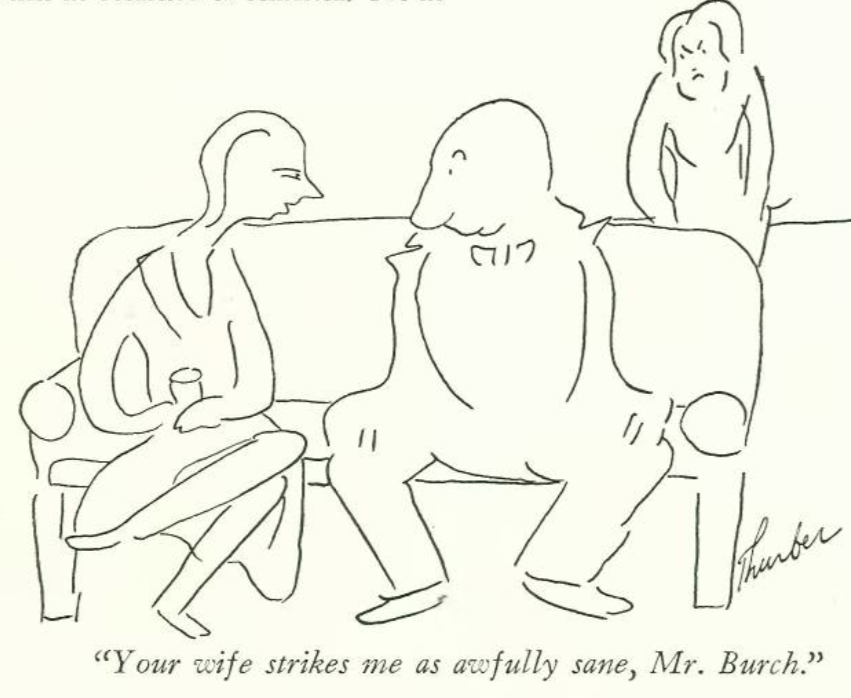
James Thurber continued to explore his brewing war between the sexes…

Harry Haenigsen gave us a novel approach to landing a trophy fish…

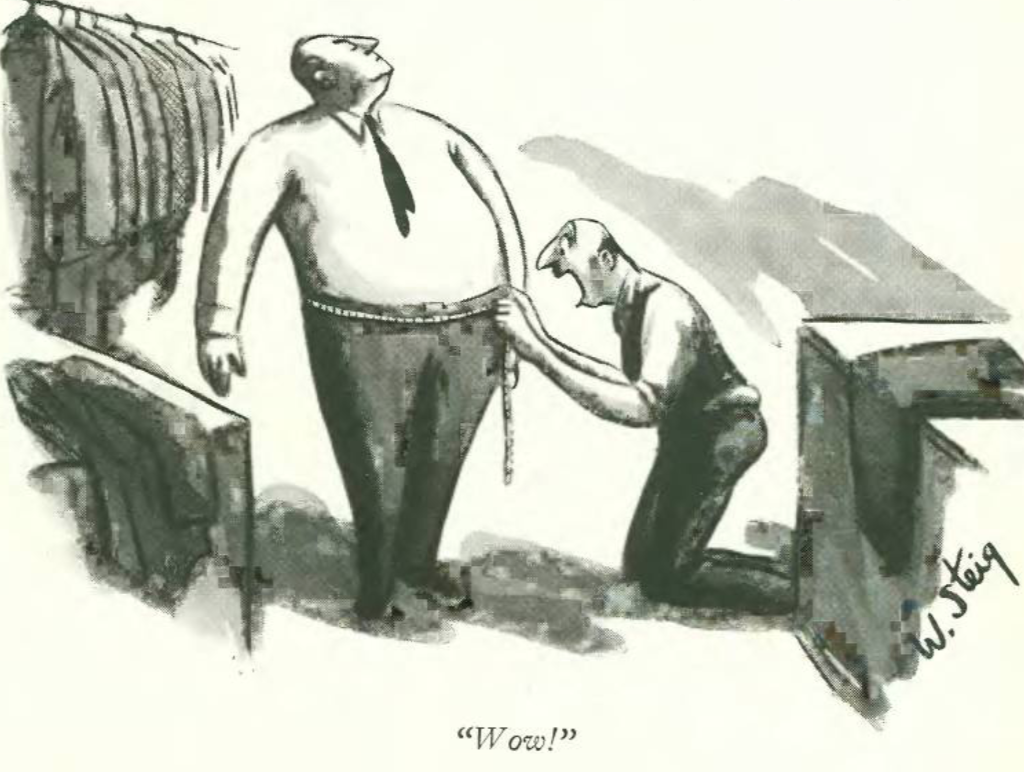
William Steig illustrated the wonders of the tailoring profession…

…and Alan Dunn aptly summed up the generation gap of the 1930s…

…on to the Aug. 1, 1931 issue…

August 1, 1931 cover by Rose Silver.

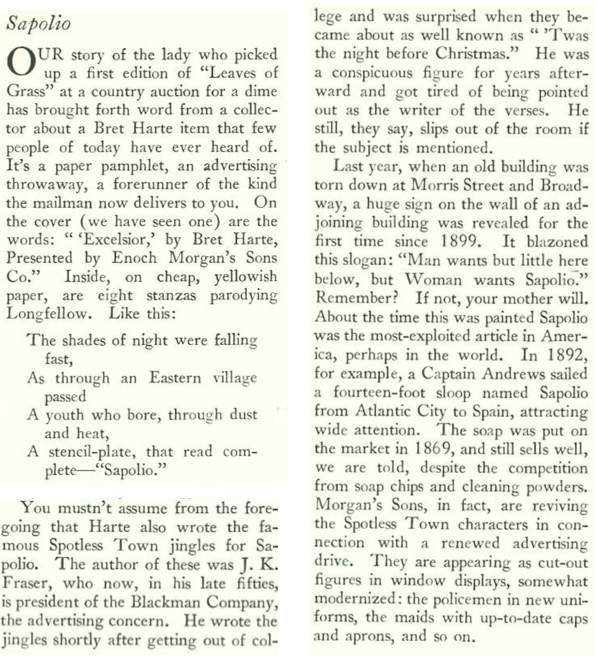
…”The Talk of the Town” mused about the advertising jingles made famous by the makers of Sapolio soap…

…Bret Harte actually did write jingles for the brand, once described by Time magazine as “probably the world’s best-advertised product” in its heyday. With a huge market share, Sapolio was so well known in the early 20th century that its owners decided they no longer needed to spend money on advertising. It was a poor decision, and by 1940 the product disappeared from the marketplace.

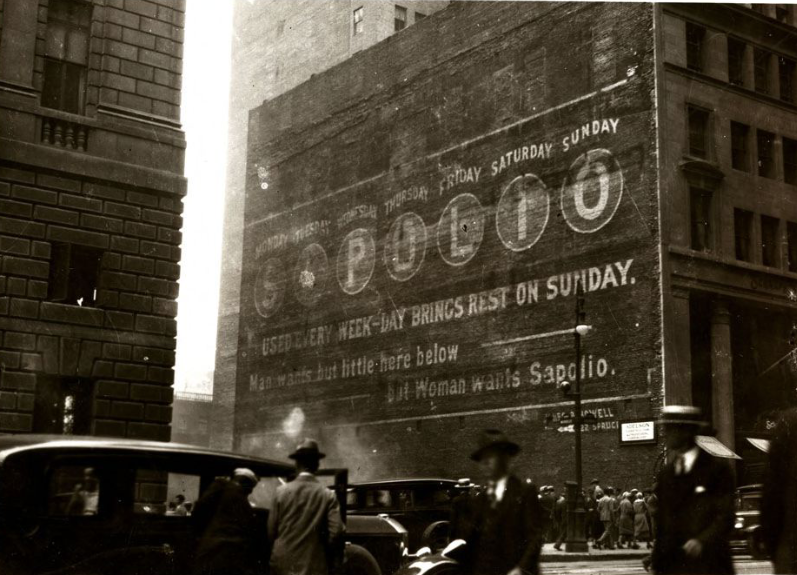
SEEING THE LIGHT OF DAY…A 19th century Sapolio sign on Broadway and Morris Street revealed after an adjoining building was demolished in 1930. (Museum of the City of New York)
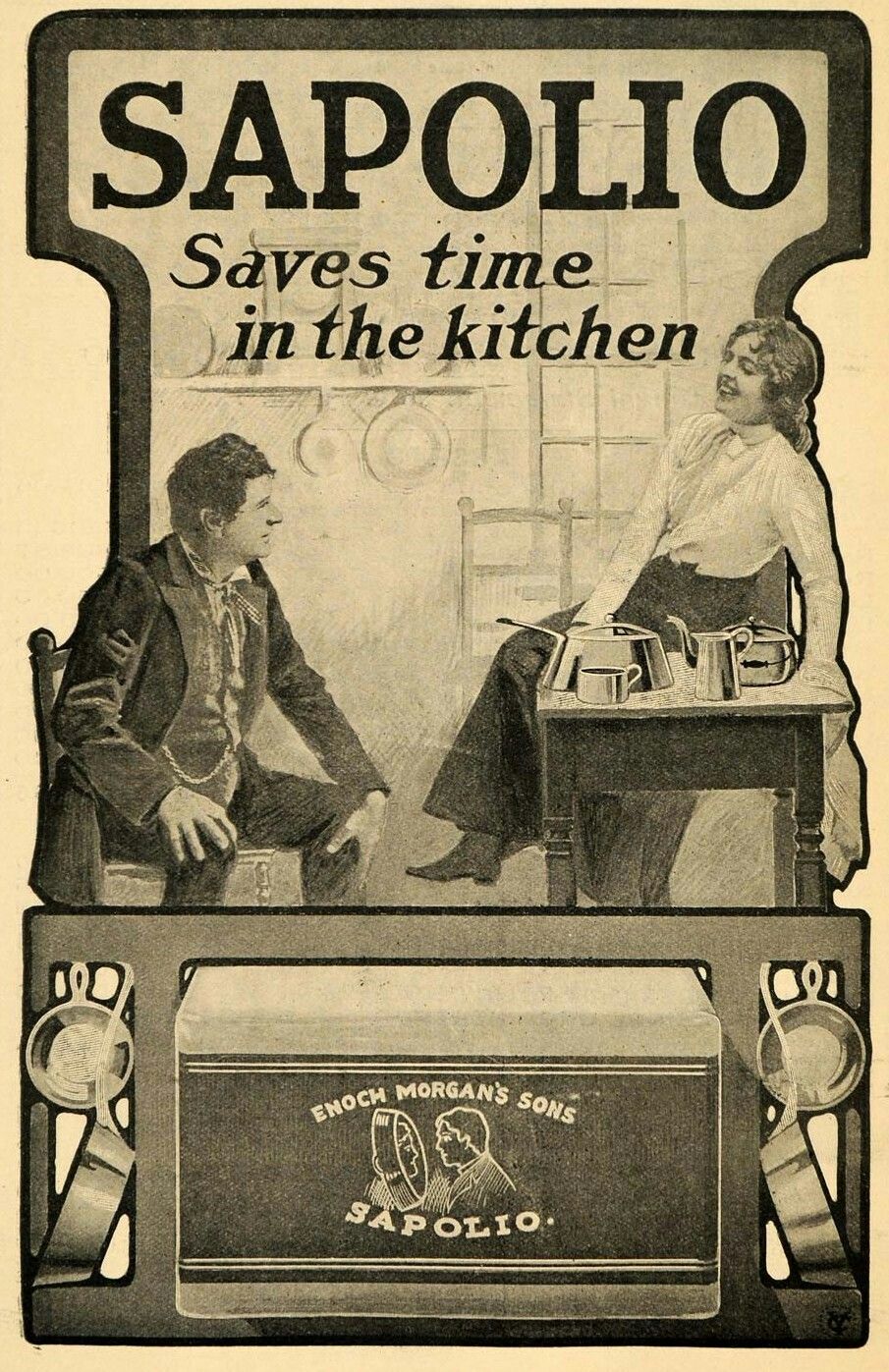
MONEY WELL SPENT…Sapolio ad from its heyday in the early 20th century. (Pinterest)

 *  *  *

Tough Love

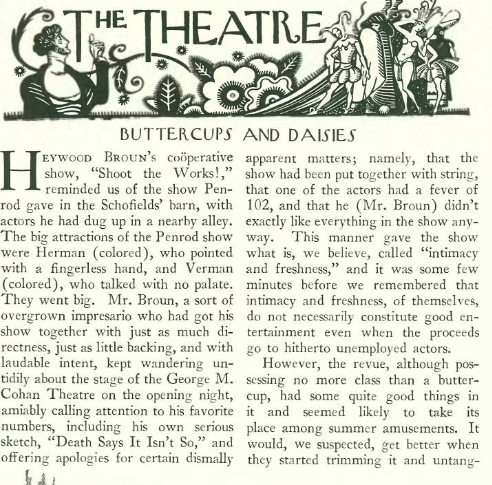
As a charter member of the famed Algonquin Round Table, Heywood Broun was a friend to many of the founding writers and editors of The New Yorker. And so it must have been quite a task to review his play, Shoot the Works, which The New Yorker found wanting in a number of aspects. And because he was so close to Broun himself, Robert Benchley left the review writing to someone who signed the column “S. Finny.” I can’t find any record of an S. Finny at The New Yorker, and I don’t believe this is a Benchley pseudonym (he used “Guy Fawkes” in The New Yorker). At any rate, here is an excerpt:

SHOOT GETS SHOT…The New Yorker wasn’t crazy about Heywood Broun’s play, which ran for 87 performances at George M. Cohan’s Theatre. (Playbill)

 *  *  *

From Our Advertisers

The makers of the “Flexo” ice cube tray continued to tout the wonders of their product with these Ripley-themed ads. This might appear rather mundane to modern eyes, but electric refrigerators with built-in freezers were still rather novel in 1931…

…another way to stay cool in the summer of 1931 was to take an excursion to the Northern climes…

…this ad for the New York American featured an illustration by Herbert Roese, whose early work strongly resembled that of Peter Arno’s

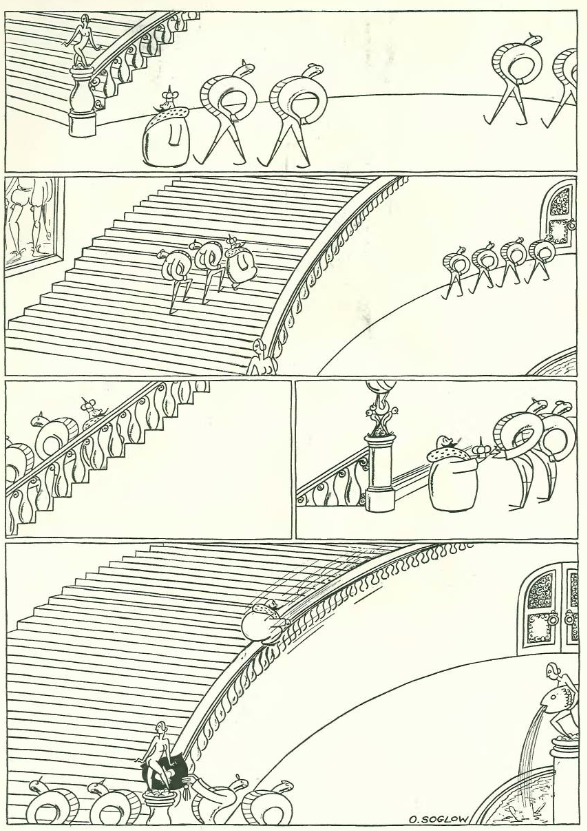
…on to our cartoons, we have the latest antics of the Little King courtesy Otto Soglow

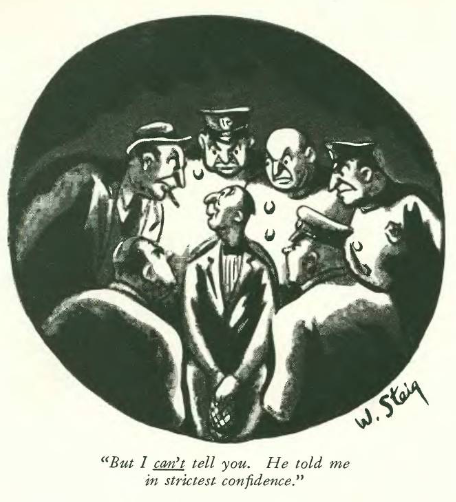
William Steig added levity to a heavy moment…

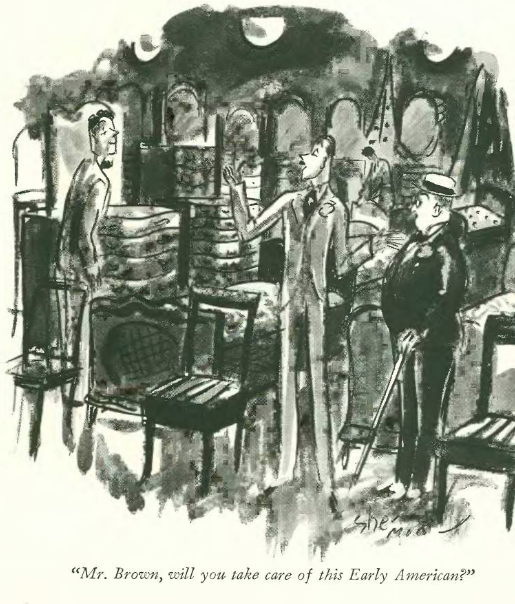
Barbara Shermund found humor at an antiques shop…

...John Held Jr continued his revels into our “naughty” Victorian past…

…and we end with Garrett Price, and a look at the ways of the modern family…

Next Time: An American Classic…


Is Sex Necessary?

James Thurber and E.B. White shared an office at the New Yorker that has been described as “the size of a hall bedroom.” This proximity doubtless supported a rich exchange of ideas that coalesced in their 1929 bestseller, Is Sex Necessary? Or, Why You Feel the Way You Do.

Sept. 28, 1929 cover by Julian De Miskey.

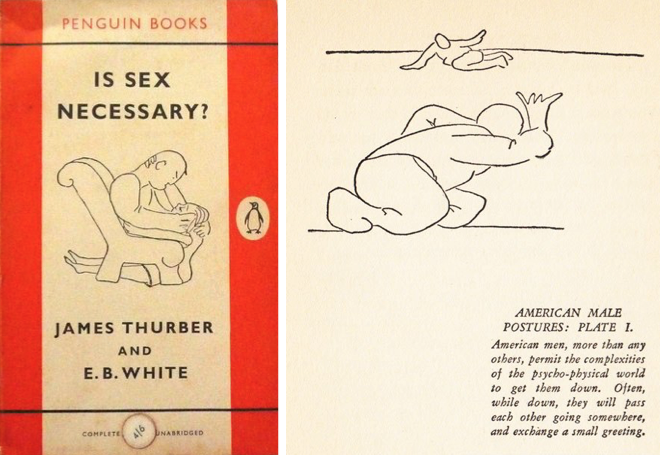
A spoof of popular sex manuals and how-to books that dealt with Freudian theories, the book featured chapters (alternately written by Thurber and White) that delved into pseudo-sexual conditions such as “Frigidity in Men” — the title of a chapter by White excerpted in the Sept. 28, 1929 issue of The New Yorker…

Expanding on the condition known as “recessive knee,” White coined the term “Fuller’s retort,” and claimed it was “now a common phrase in the realm of psychotherapy”…

THE ARTIST EMERGES…Although James Thurber had yet to publish one of his drawings in The New Yorker magazine, Is Sex Necessary? featured 42 of them, including the illustration at right that demonstrated the male greeting posture. (brainpickings.org)

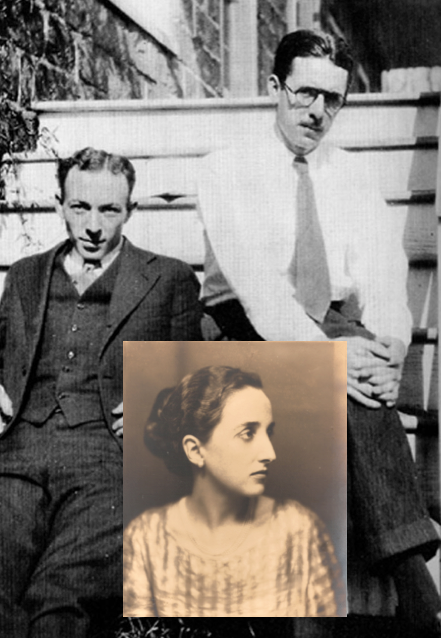
No other editor besides founder Harold Ross did more to give The New Yorker its shape and voice than Katharine Angell, who recommended to Ross the hiring of both White and Thurber. It is worth noting that White would marry Angell in the same month, November 1929, as the publication of Is Sex Necessary? In their case, sex was necessary, as Katharine would give birth to their son, Joel White, the following year.

DYNAMIC TRIO…Katharine Angell (inset) would be instrumental in bringing both E.B. White (left) and James Thurber to The New Yorker. (Pinterest/Wikipedia)

 *  *  *

A New Rabbit Hole

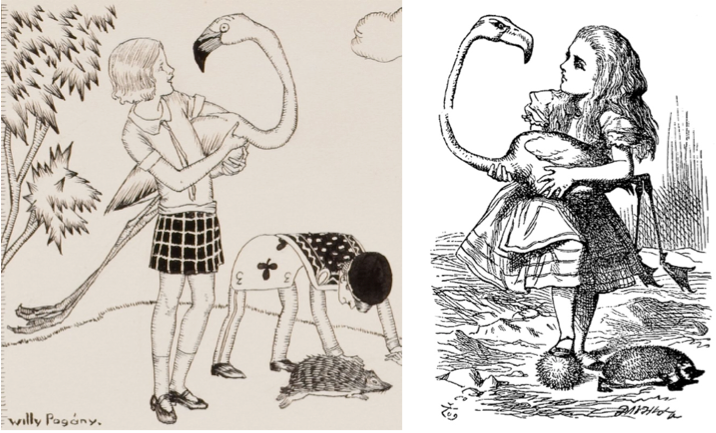
In other news from the world of publishing, “The Talk of the Town” (also largely a product of Thurber and White) noted the publication of a new edition of Alice in Wonderland that featured a re-drawn Alice with bobbed hair and the slender profile of a 1920s flapper. White mused:

NEW ALICE, MEET OLD ALICE…A 1929 edition of Alice and Wonderland featured a Jazz Age Alice (left) as rendered by Willy Pogany. At right, Sir John Tenniel’s original Alice, from the 1866 edition. (comicartfans.com/girlmuseum.org)

 *  *  *

Rise of the Boob Tube

Also in “Talk,” it was reported that the BBC would be putting television on the air “five times a week for a half an hour.” The broadcasts, on a single channel, featured speeches, comic monologues and popular songs. The technology did not allow sound and image to be transmitted together, so “viewers” (there were only a handful of sets) first heard each piece in audio, followed by a mute moving image:

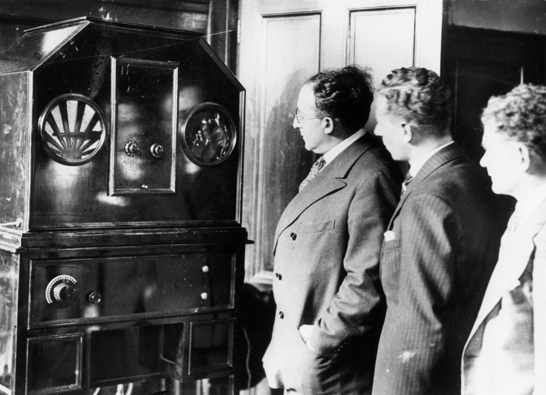
COMMERCIAL-FREE…Early television promotor Sydney Moseley (left) and two employees of the Baird Television Development Co. watch the inaugural television broadcast on a “Noah’s Ark Televisor,” Sept. 30, 1929. The televisor was the invention of British TV pioneer John Logie Baird (1888-1946). (scienceandmediamuseum.org.uk)

 *  *  *

Mutt & Jeff & Peggy

This odd little item in “Talk” focused on the literary interests of Peggy Hopkins Joyce, an actress and dancer best known for her lavish lifestyle and multiple marriages and affairs. She was a Kardashian of her day — famous for being famous. Despite her flamboyant ways, Joyce seemed to have some rather pedestrian tastes, at least when it came to her reading pleasure…

JEEVES, BRING ME SOME LIGHT READING…Peggy Hopkins Joyce (left) might have preferred the high life, but her tastes in reading seemed more of the rabble. She is pictured here in her Hollywood debut, the 1926 silent film The Skyrocket. The film bombed, and Joyce made just one more screen appearance before moving on to other things. (Bizarre Los Angeles/mycomicshop.com)

 *  *  *

Ring Cycle

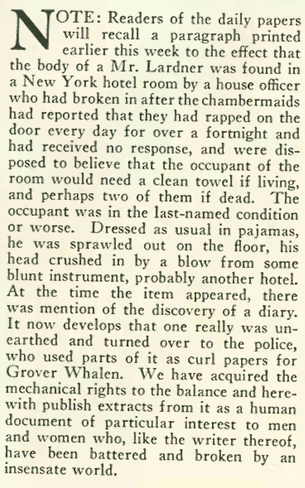
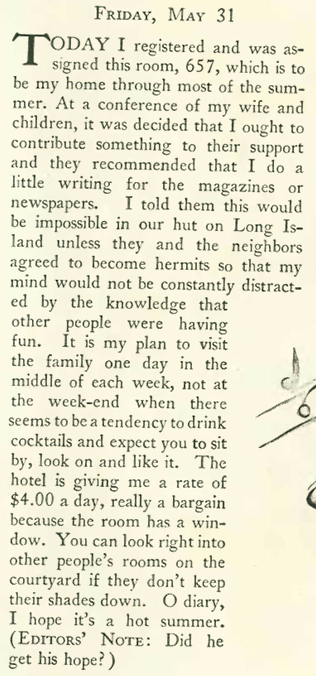
Ring Lardner contributed a casual titled “Large Coffee,” in which he checks into a hotel to escape life’s distractions and get some writing done. The piece consisted of diary entries largely concerned with Lardner’s inability to get a proper order of coffee. He began with an editor’s note that described how his corpse was found in the room, along with the diary. Some excerpts:

COFFEE AND CIGARETTES helped fuel the genius of writer Ring Lardner. (Brittanica)

 *  *  *

Master of the Screwball

Preston Sturges (1898-1959) was known for taking the screwball comedy and turning into something more than a simple farce. Reviewer Robert Benchley saw the potential in this young Broadway producer, whose second play, Strictly Dishonorable, opened to great acclaim:

KEEPING IT LIGHT…Tullio Carminati as Count Di Ruvo and Muriel Kirkland as Isabelle Parry in Broadway’s Strictly Dishonorable, 1929. Producer Preston Sturges reportedly wrote the hit play in just six days. (Museum of the City of New York)

 *  *  *

Have No Fear

Morris Markey (1899-1950) often took on the lurid and sensationalist reporting of his day in a column he established at The New Yorker titled “Reporter at Large.” In his Sept. 28 column titled “Fear, Inc.” Markey chided everyone from the newspapers and Hollywood to the headline-grabbing NYC Police Commissioner Grover Whalen, and painted a picture of organized crime that was less violent and glamorous, and a lot more mundane…

MAKE SURE YOU GET MY GOOD SIDE…NYC Police Commissioner Grover Whalen loved to make headlines with his “get tough on crime” approach. He was was famously quoted as saying, “There is plenty of law at the end of a nightstick.” (wnyc.org)

Markey suggested that rather than screeching tires and blazing Tommy guns, most of the crime in the city was just the humdrum of making money…

Sadly, Markey himself would meet a violent end, dying of a gunshot wound at the age of 51. It is unclear whether it was self-inflicted.

 *  *  *

The Last Laugh

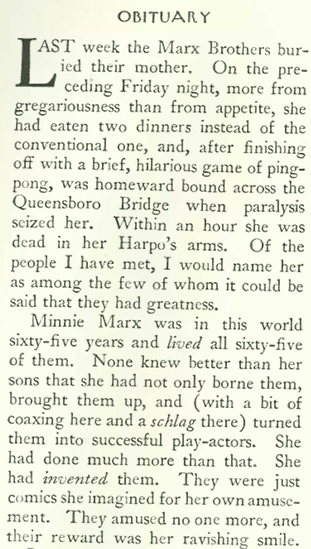
The year 1929 saw the passing of Minnie Marx, the beloved mother of the Marx Brothers comedy troupe. Alexander Woollcott offered this tribute in his “Shouts and Murmurs” column…

MY LITTLE CLOWNS…Minnie Marx with her sons, The Marx Brothers, circa 1920. (Find a Grave)

 *  *  *

From Our Advertisers

Harper’s Bazar began weekly publication in 1867, catering to women in the middle and upper classes. The magazine was a frequent advertiser in the upstart New Yorker, no doubt perceiving a considerable overlap among its readers. This full page ad in the Sept. 28 issue of the New Yorker featured a column by the Bazar’s Paris fashion correspondent, Marjorie Howard

…no doubt The New Yorker’s own fashion editor, Lois Long (1901-1974), read her rival’s column with great interest, and, like the magazine she wrote for, Long was the young upstart compared to the veteran Howard (1878-1958). However, according to future New Yorker editor William Shawn, Long was the superior writer. Upon Long’s death in 1974, Shawn said “Lois Long invented fashion criticism,” adding that she “was the first American fashion critic to approach fashion as an art and to criticize women’s clothes with independence, intelligence, humor and literary style.” Here is a brief excerpt from Long’s fashion column, “On and Off the Avenue,” in the Sept. 28 issue…

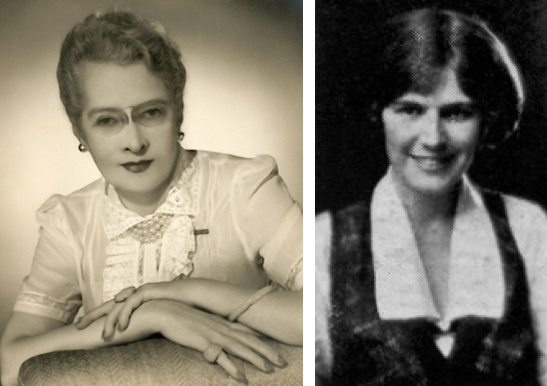
OF A FASHION…Majorie Howard (left) served as fashion editor for Harper’s Bazar in the late 1920s and 1930s. Lois Long (right) wrote the New Yorker fashion column, “On and Off the Avenue,” from 1927 to 1970. (findagrave.com/Vassar College)

…looking at some of the ads from the magazine’s back pages, here’s one from Scribner’s announcing the publication of A Farewell to Arms (a first edition for only $2.50)…

…the back pages of The New Yorker near the theater section were filled with signature ads promoting various entertainments…

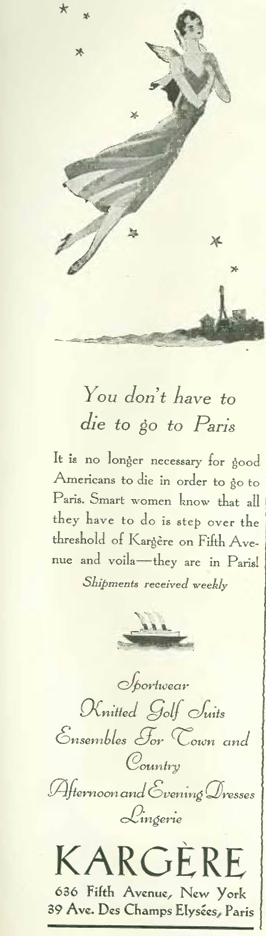
…this ad from Kargère referenced an exchange from Oscar Wilde’s The Picture Of Dorian Gray: “They say that when good Americans die they go to Paris,” chuckled Sir Thomas…” Really! And where do bad Americans go to when they die?” inquired the Duchess. “They go to America,” murmured Lord Henry…

…several ads and filler illustrations from the Sept. 28 issue featured posh folks dressed for fox hunting season, the makers of Spud cigarettes among them…

…this ad from Frigidaire featured an illustration by Herbert Roese, whose style at the time somewhat resembled Peter Arno’s

…for comparison, an Arno cartoon from 1930…

From Peter Arno’s book Hullabaloo, 1930. (attemptedbloggery.blogspot.com)

and Arno’s full-page contribution to the Sept. 28 issue…

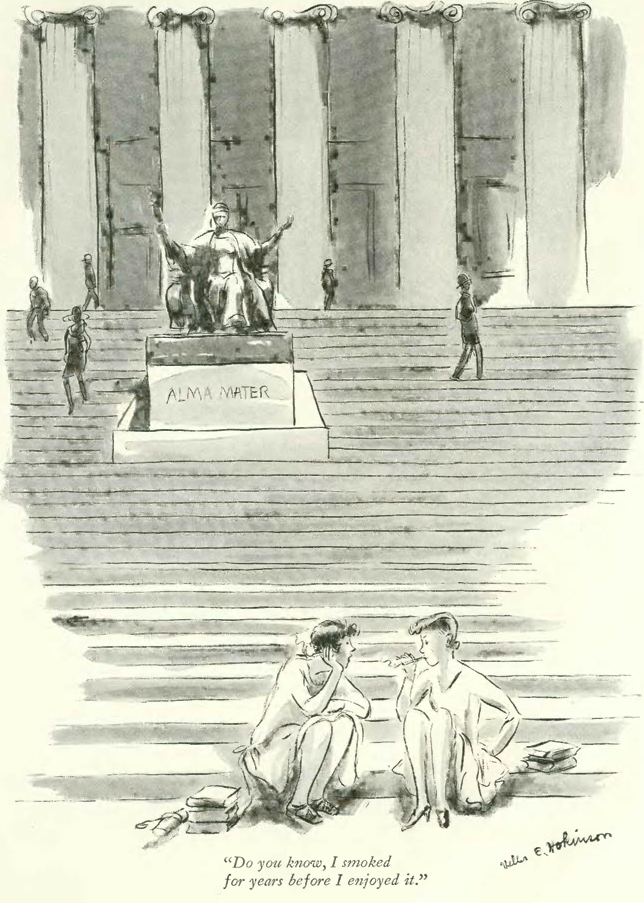
…another artist at The New Yorker who along with Arno often received a full page for her work was Helen Hokinson, here looking in on life at Columbia U…

…and there were artists who were lucky to get any space at all, including Kent Starrett, who probably drew on his own experiences at The New Yorker’s front office for this entry…

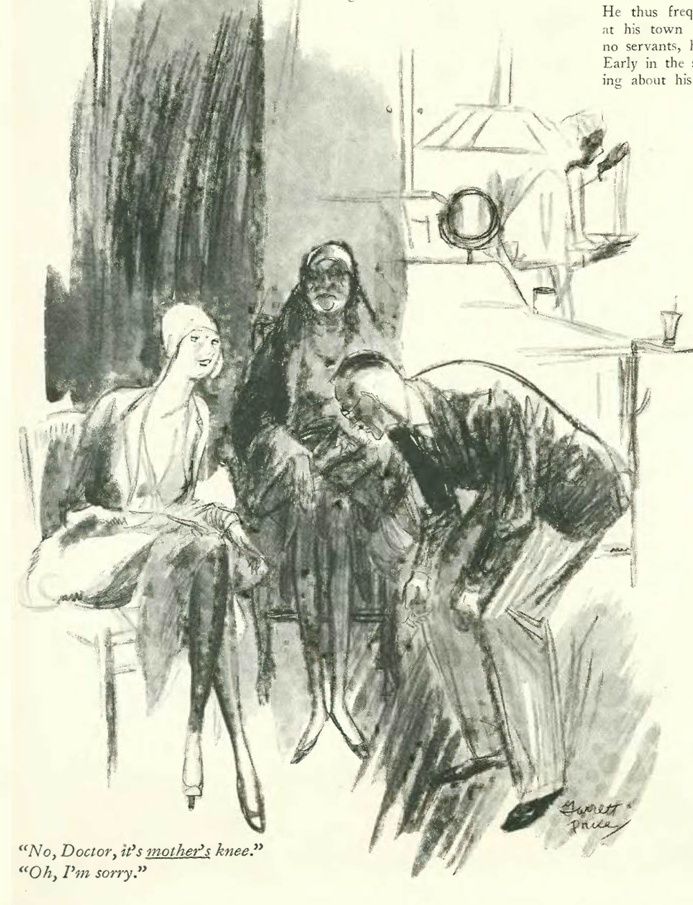
…and finally, Garrett Price illustrated the challenges of the “house call”…

Next Time: American Royalty…