Jimmy’s Jam

New York City Mayor Jimmy Walker (1881-1946) was commonly referred to as “Beau James” for his flamboyant lifestyle and his taste for fine clothes and Broadway showgirls.

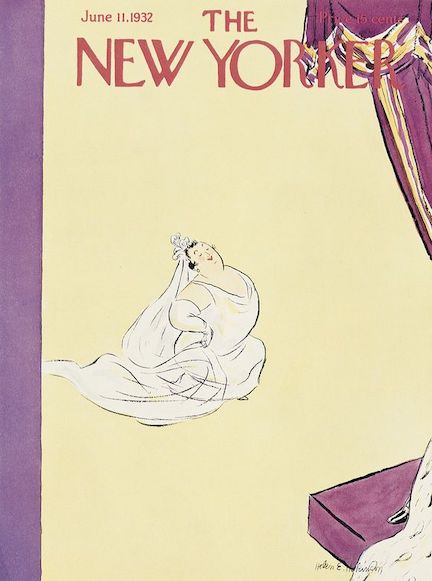
June 4, 1932 cover by Theodore Haupt.

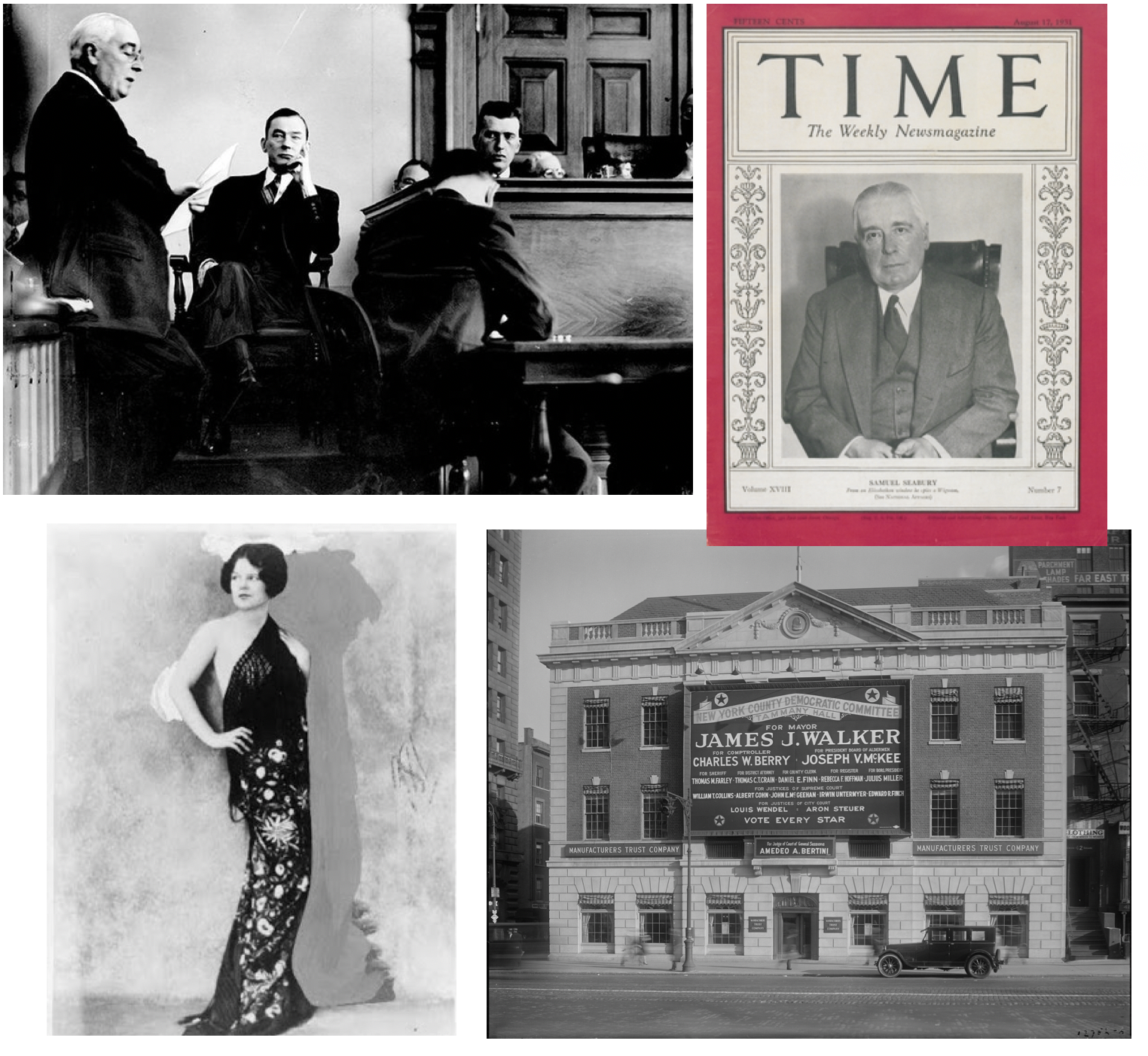
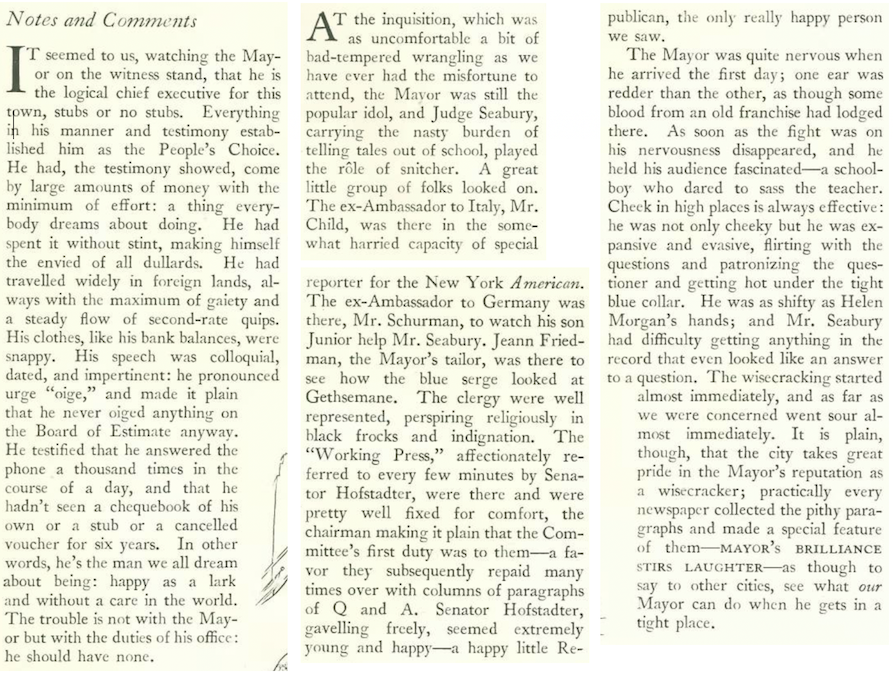
Mayor Walker was also a product of the powerful Tammany Hall machine that traded in political favors and outright bribery. When he took office in 1926, the economy was riding high, and few seemed to care that hizzoner was aloof, partying into the night (while openly flouting Prohibition laws), and taking numerous pleasure trips to Europe. He easily won reelection in 1929, but when the stock market crashed later that year his hijinks began to wear a bit thin, and reform-minded politicians like State Senator Samuel H. Hofstadter began looking into corruption in New York City. The actual investigation was led by another reformer, Samuel SeaburyThe New Yorker’s E.B. White looked in on the proceedings and its star witness, Mayor Walker.
I DO NOT LIKE THIS, SAM I AM…Clockwise, from top left, Mayor Jimmy Walker was full of wisecracks during his testimony before Samuel Seabury, far left; Seabury’s role in the high-profile commission landed him on the cover of Time (Aug. 17, 1931); Tammany Hall’s support was writ large for Walker in the 1920s; Vivian Gordon was a surprise witness in the Seabury investigation, telling investigators police received bonuses for falsely arresting women on prostitution charges. After her testimony Gordon was found strangled in Van Cortland Park, leading many to believe Walker’s corruption played a role in her death. (Daily News/Time/archives.nyc/Pinterest)

Public opinion really started to turn on Walker with the death of star witness Vivian Gordon (see caption above). The final blow came from New York Governor Franklin D. Roosevelt, who like Walker was a Democrat but unlike Walker was not a Tammany product. Roosevelt was also running for president, and rightly seeing Walker as a liability, asked the mayor to resign, which he did on Sept. 1, 1932. That event was still three months away when E.B. White wrote these concluding lines:

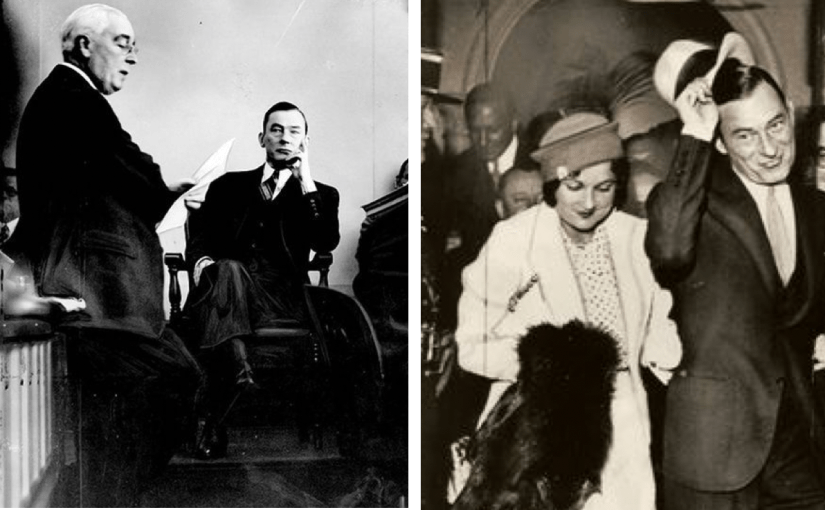
SO LONG, SUCKERS…Eight days after he resigned from office, New York Mayor Jimmy Walker headed for Paris, where his mistress, Ziegfeld star and film actress Betty Compton, awaited with open arms. Clockwise, from top left, Compton and Walker on their wedding day in Cannes, France, April 19, 1933; and a 1920s photo portrait of Compton; Walker’s first wife, Janet Allen Walker, had sued for divorce a month earlier (March 10, 1933) claiming Jimmy had deserted her in 1928 and they had not lived together since; Walker and Compton on the deck of SS Normandie, June 17, 1936. (legacy.isle-of-wight-fhs.co.uk/IMDB/Pinterest/NYC Municipal Archives)

Eight days after Walker resigned from office he caught a boat for Paris, where his mistress, Ziegfeld star and film actor Betty Compton (1904-1944), awaited him. They married the following year in Cannes.

 *  *  *

Out of the Shadows

F. Scott and Zelda Fitzgerald were Jazz Age fixtures, cutting wide swaths through literary and society worlds filled with wild drinking and various infidelities. Francis Scott (1896-1940) was a chronicler of that age, most notably with The Great Gatsby, but Zelda (1900-1948) also took pen in hand, contributing short pieces to various magazines in the 1920s. By 1930 their self-destructive ways caught up with them both, and Zelda was admitted to a sanatorium in France that spring; it was the beginning of a long road of treatments that would end in her death nearly two decades later.
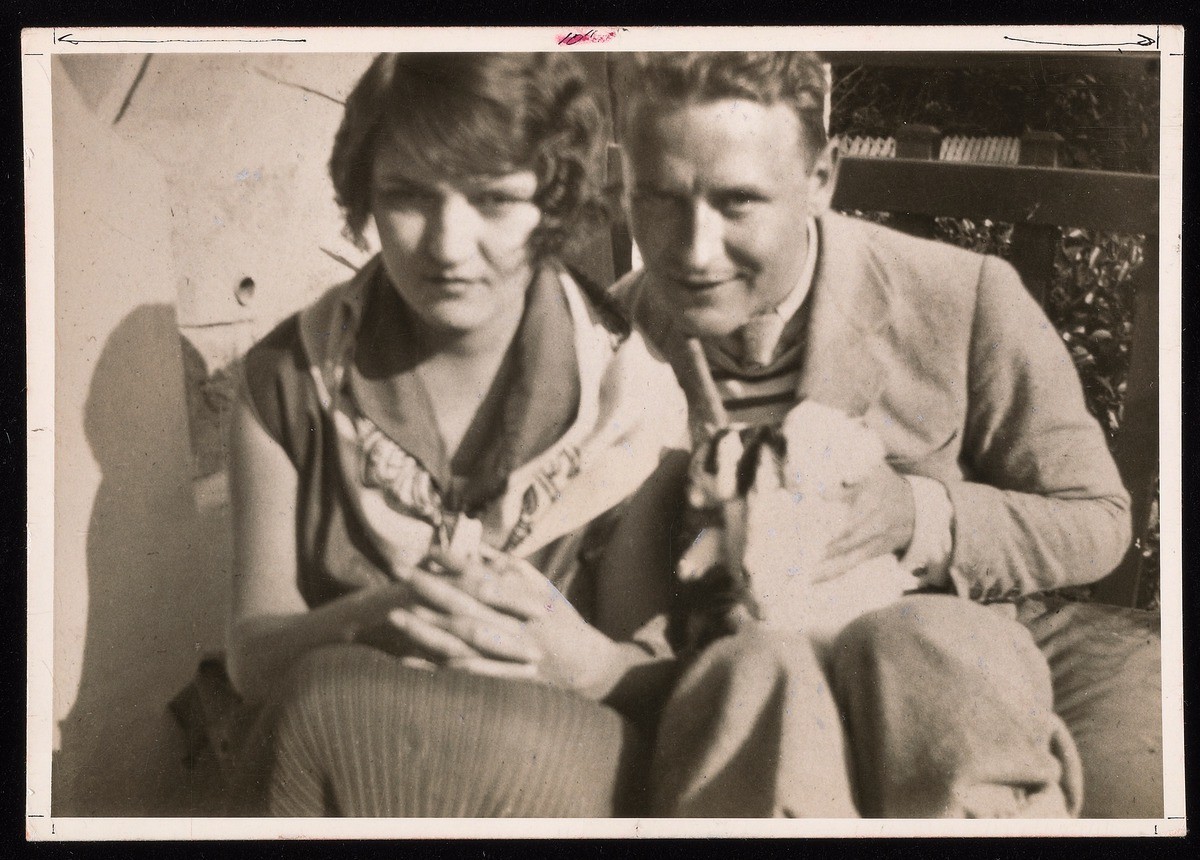
ALL THAT JAZZ…Zelda and F. Scott Fitzgerald (pictured here in 1926) embodied the riotous days of the Roaring Twenties. (beinecke.library.yale.edu)

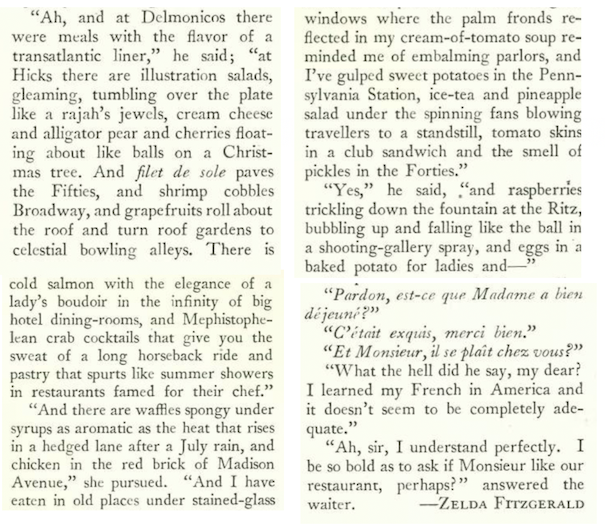
In 1932, during her stay at the Phipps Clinic (Johns Hopkins), Zelda experienced a burst of creativity, writing an entire autobiographical novel — Save Me the Waltz — in just six weeks. Sadly, it was not well-received (by critics or by her husband), and fewer than 1,400 copies of the novel were sold — a crushing blow to Zelda. However, during that same time she published a short story in The New Yorker titled “The Continental Angle.” Here it is:

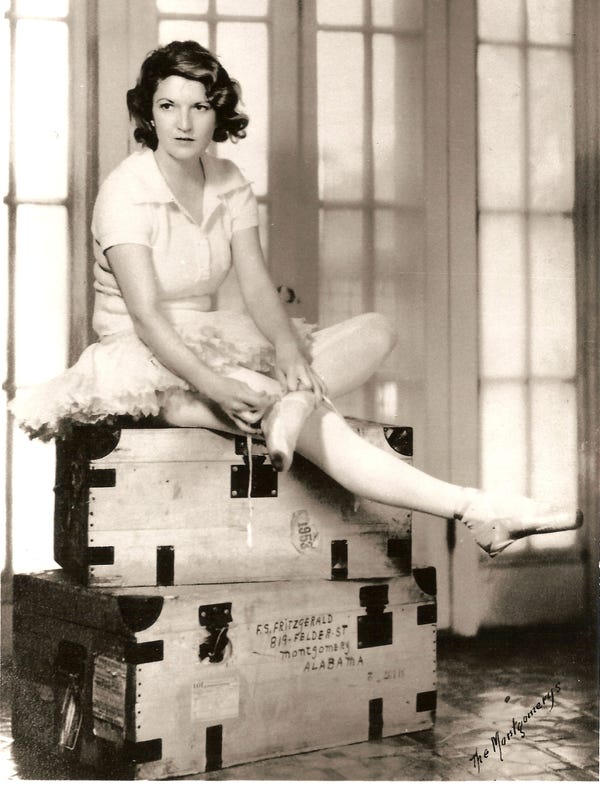
TALENTED AND TROUBLED…Zelda Fitzgerald in 1931, a year before she entered the Phipps Clinic and had a burst of creativity. (citizen-times.com)


 *  *  *

From Our Advertisers

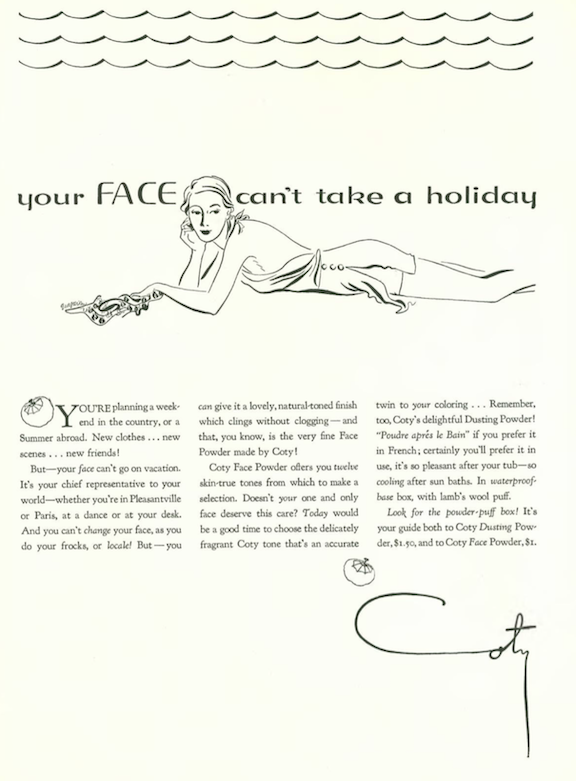
Yet another stylish and very modern-looking ad from Cody, thanks to the artistry of American fashion illustrator Ruth Sigrid Grafstrom…
…while later on in the issue French illustrator Lyse Darcy gave his subject an Art Deco look to promote Guerlain’s face powder…
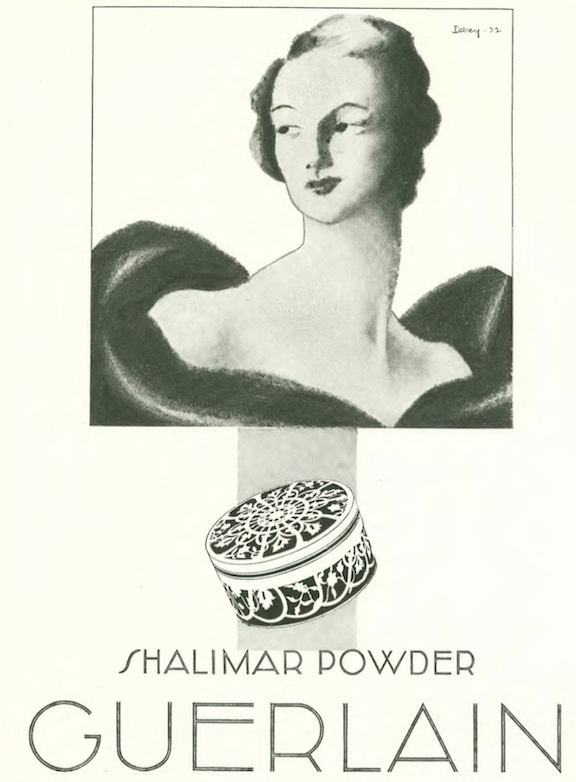
…Darcy was famed for his Guerlain ads from the 1920s to the 1950s…
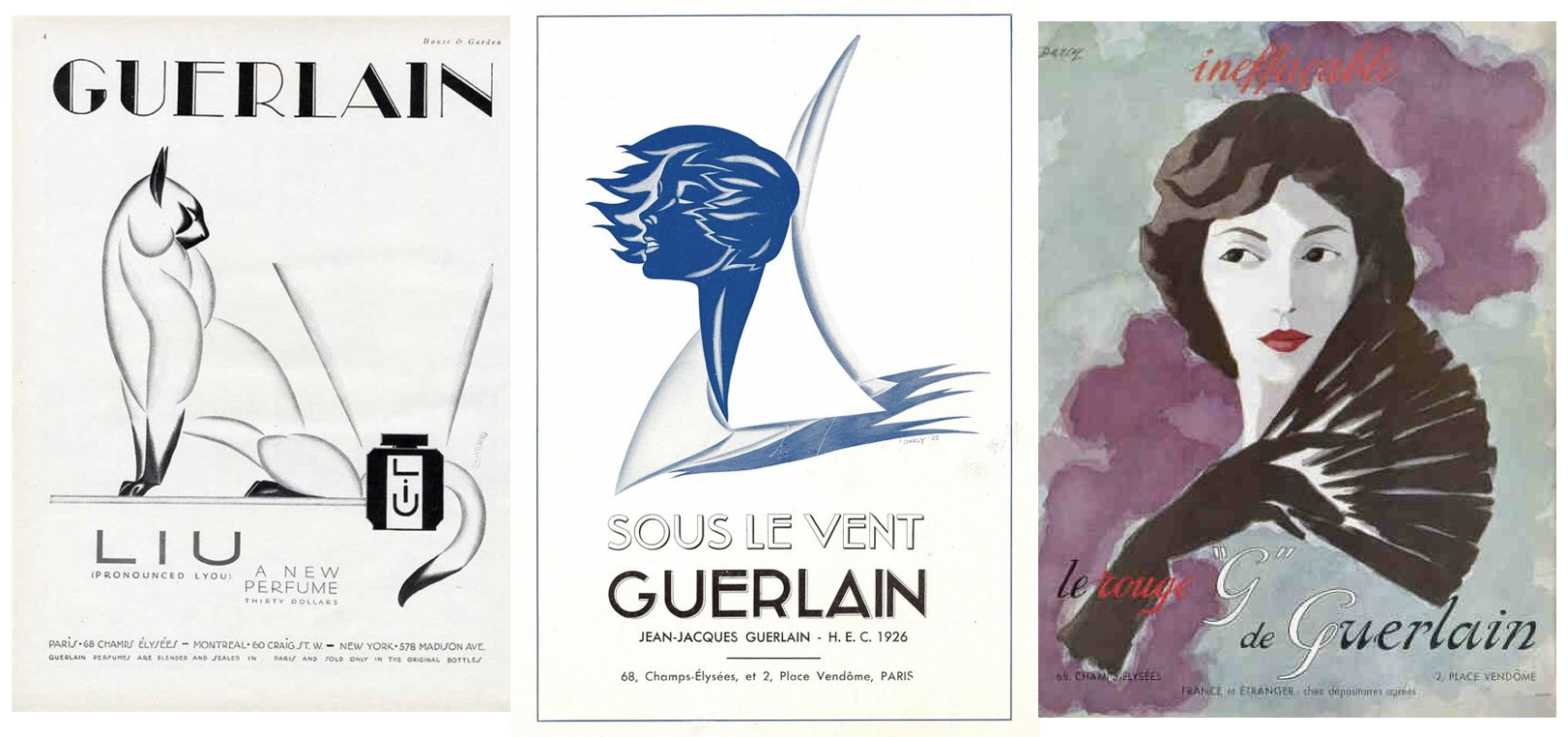
From left to right, Darcy ads from 1929, 1938, 1957…

…Powers Reproduction turned to star power to promote their latest color engraving techniques…
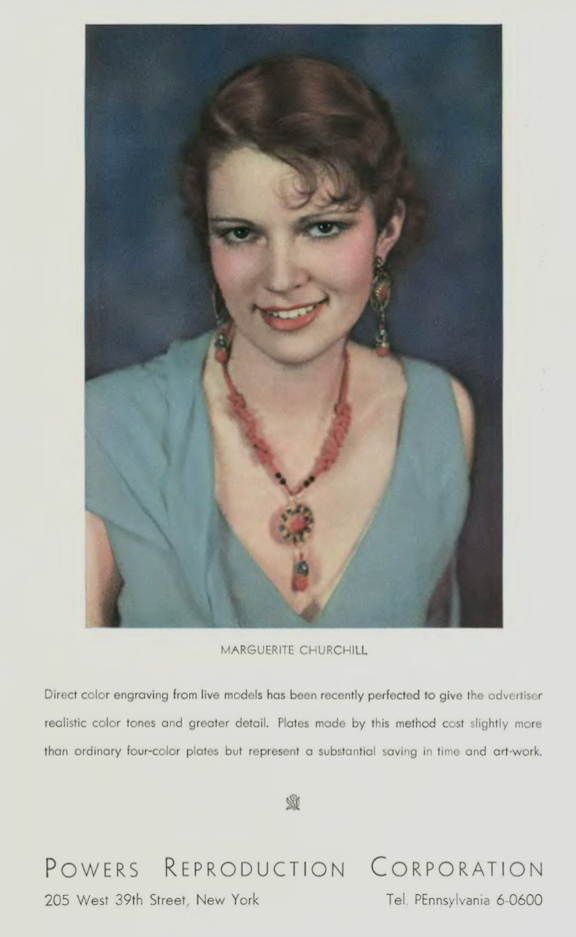
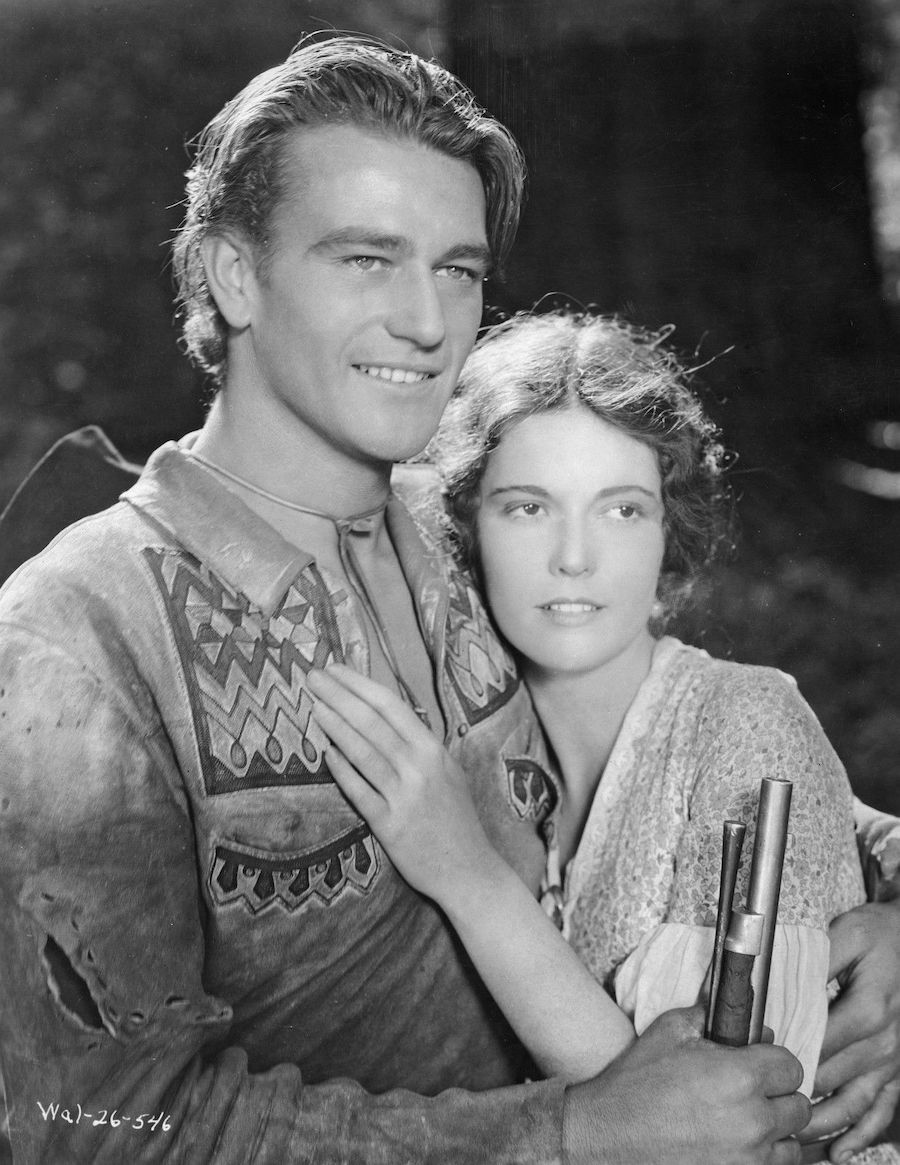
…the actor Marguerite Churchill (1910-2000) had a film career spanning 1929 to 1952, and was John Wayne’s first leading lady in 1930’s The Big Trail

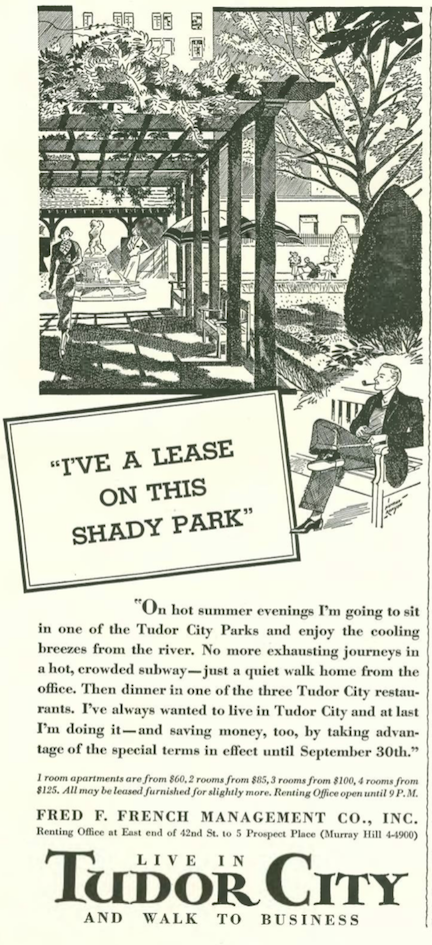
…and we head back to the city, Tudor City, to be precise, where apparently it was common in the 1930s to spot a gent in formalwear relaxing with his pipe…
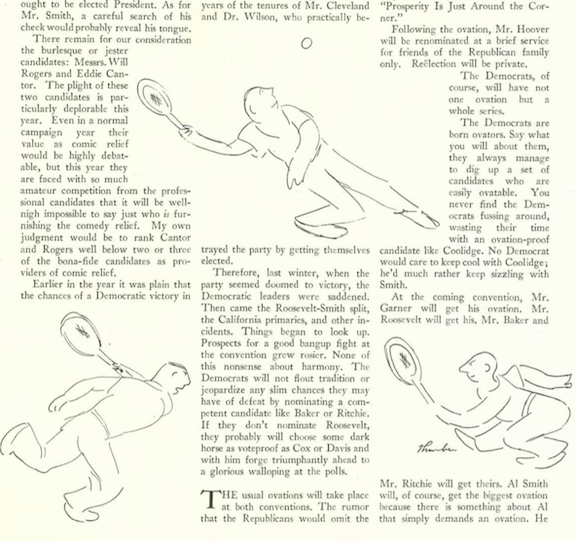
…on to our cartoons, we have James Thurber contributing some spots…
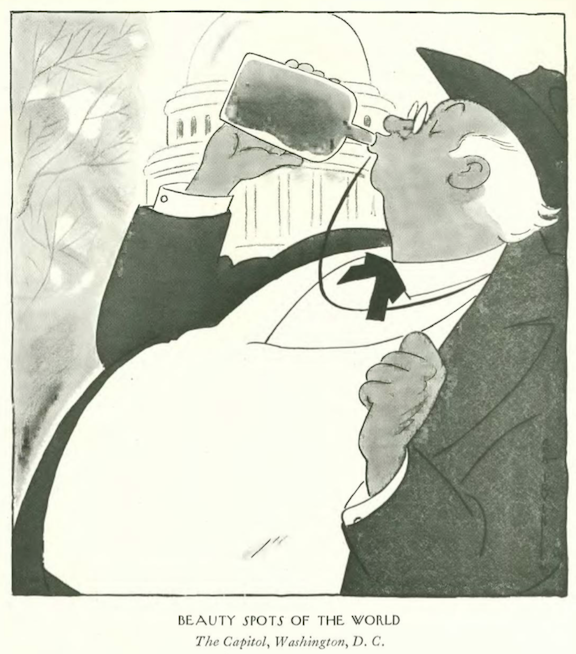
Rea Irvin continued to visit the world’s “Beauty Spots”…
Garrett Price showed us a couple looking for the “We Want Beer” parade…

…which happened three weeks earlier, on May 14, 1932…the parade was organized by none other than Mayor Jimmy Walker, who believed prohibition was making life difficult for New Yorkers…

(brookstonbeerbulletin.com)

Barbara Shermund introduced two men with bigger issues than beer on their minds…

John Held Jr. continued to plumb the depths of the naughty Nineties…
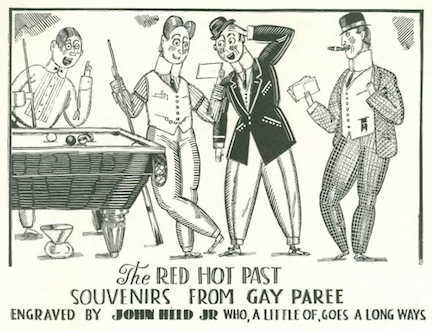
…and some more naughtiness, courtesy Gardner Rea

Next Time: Summer Indulgences…


Asphalt Jungle

The zoos of yesteryear were joyless places, that is, if you were one of the animals. Children squealed with fear and delight at the sight of a caged lion, and many an adult had fun tossing peanuts at elephants or teasing enraged gorillas locked behind bars; but if you were a zoo animal in 1931, life was endless hours of boredom, sprinkled with moments of terror and humiliation.

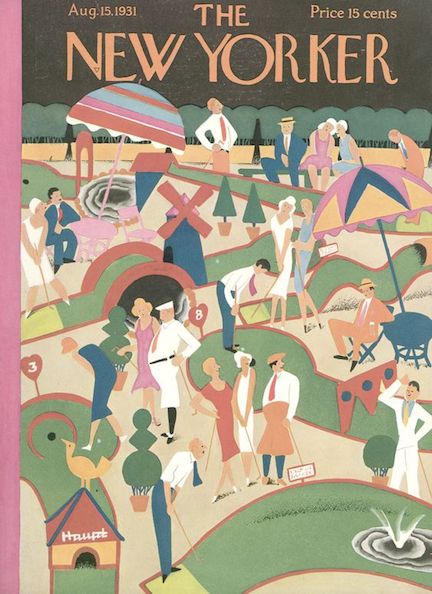
Aug. 15, 1931 cover by Theodore Haupt.

It is instructive to look back 89 years and see how far we’ve come, and how far we still have to go, to see our fellow creatures as more than curiosities and amusements to be captured and gawked at, and to see their environments as something to be preserved, not only for their survival but for ours as well.

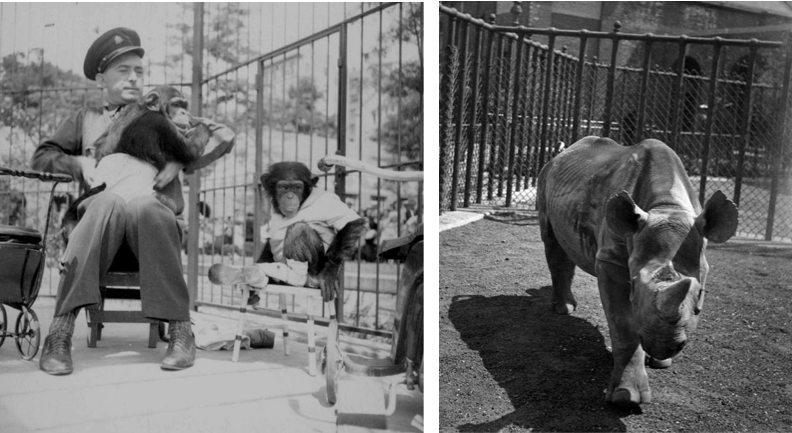
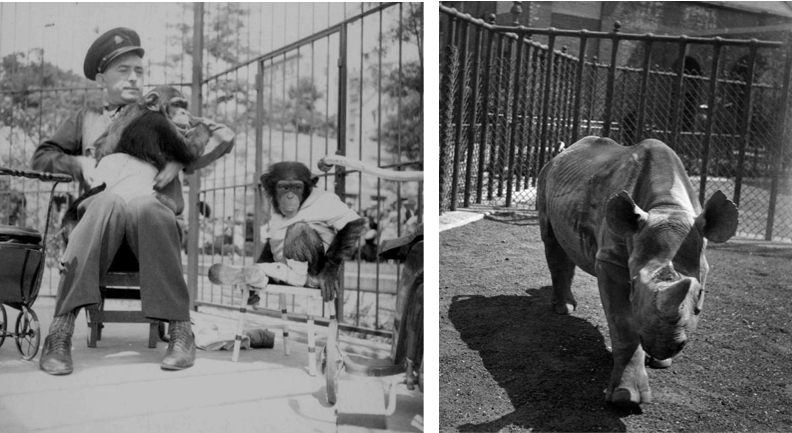
LIFE BEHIND BARS…Left, a zookeeper with chimps at the Central Park Zoo, 1936. Right, a rhino paces in a barred enclosure, 1937. (nycgovparks.org)

E.B. White paid a visit to the Central Park Zoo, and found it wanting in a number of respects:

Many zoos back then were more collections of curiosities than places where you could learn about various habitats. So when David Sarnoff, president of RCA, bagged a live opossum in the South, the critter was given a new home in an antelope enclosure, per this item in the Dec. 20, 1931 New York Times:

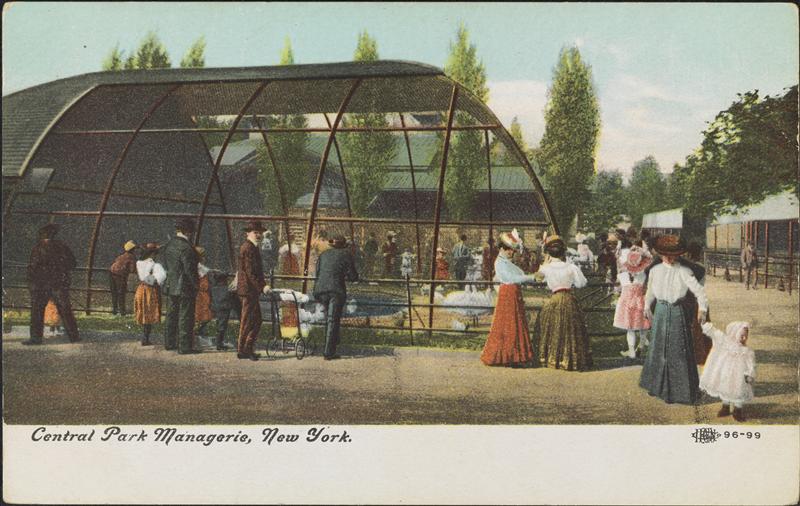
The Central Park Zoo was established in the 1860s as a “menagerie” behind the Arsenal, and by the turn of the century attracted millions of visitors to its displays of exotic animals.

GETTING AWAY FROM IT ALL…Postcard image of the Menagerie in Central Park, New York, 1905. (Museum of the City of New York—MCNY)
ANIMAL ATTRACTION…Postcard image of folks enjoying caged birds at the Menagerie, 1905. (MCNY)
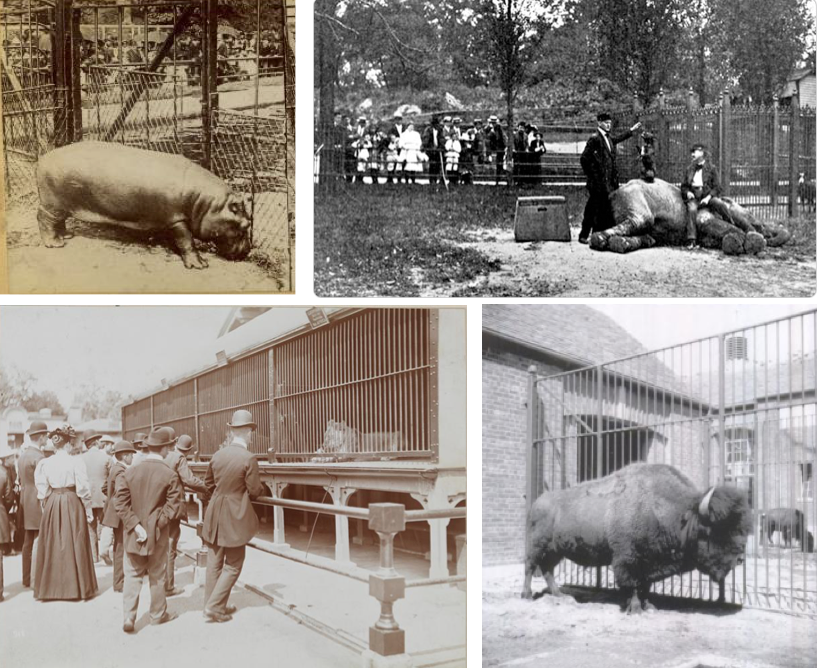
O GIVE ME A HOME…In the early days of zoos, animals were presented in cages and fenced enclosures with no hint as to what their natural habitat might look like. Clockwise, from top left, “Fatima” the hippo, image from an 1896 stereograph card; a 1911 photo of a trainer and a dog perched on top of a hapless elephant; a bull bison around the turn of the century; a group of people observe animals in cages at the Central Park Menagerie, 1895. (Library of Congress/nycgovparks.org/MCNY)

 *  *  *

He’s Your Future

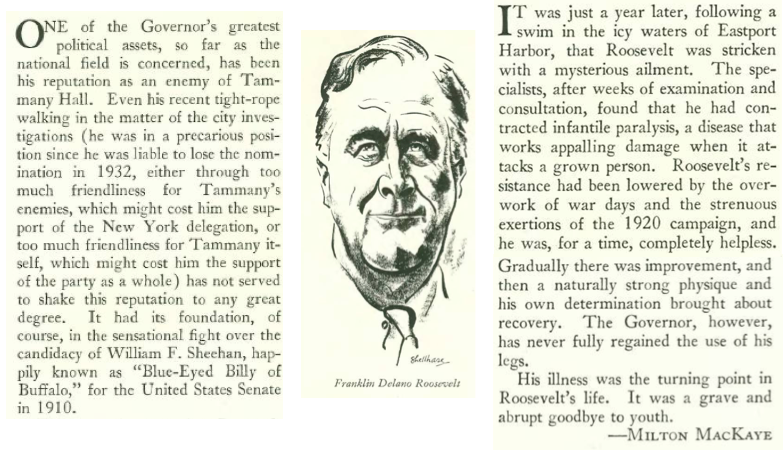
The New Yorker featured two-part profile of the governor of New York, Franklin D. Roosevelt, who unbeknownst to writer Milton MacKaye would soon become the next president of the United States. Two excerpts (not continuous)…

  *  *  *

From Our Advertisers

Ah yes, the first time I visited the Empire State Building’s observation deck (in the 1970s) a heavy smog enveloped the city (the air is much cleaner today). I like how the promoters spin disappointment into an opportunity — “The mysterious beauty of the city has a million constantly changing aspects”…

…if you were looking for bluer skies, Bermuda could have been an option if you had the means…

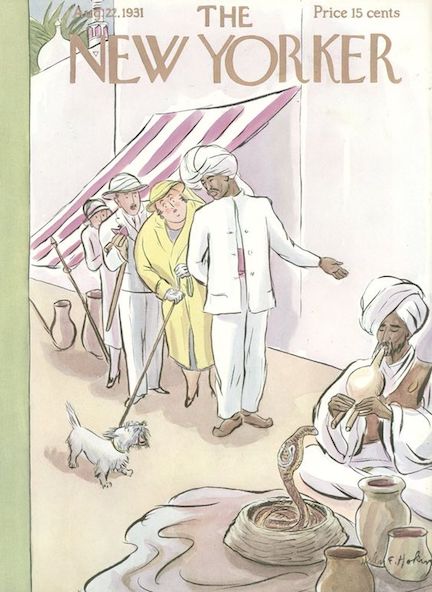
…or you could have stayed closer to home at a Long Island beach resort, as Helen Hokinson illustrated, and as we segue into our cartoons…

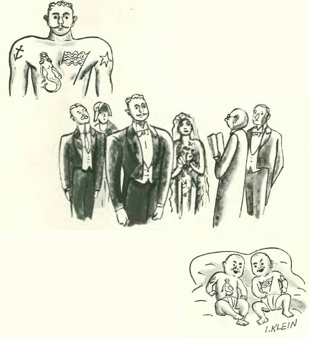
Isadore Klein gave us a very unscientific, albeit humorous view of genetics…

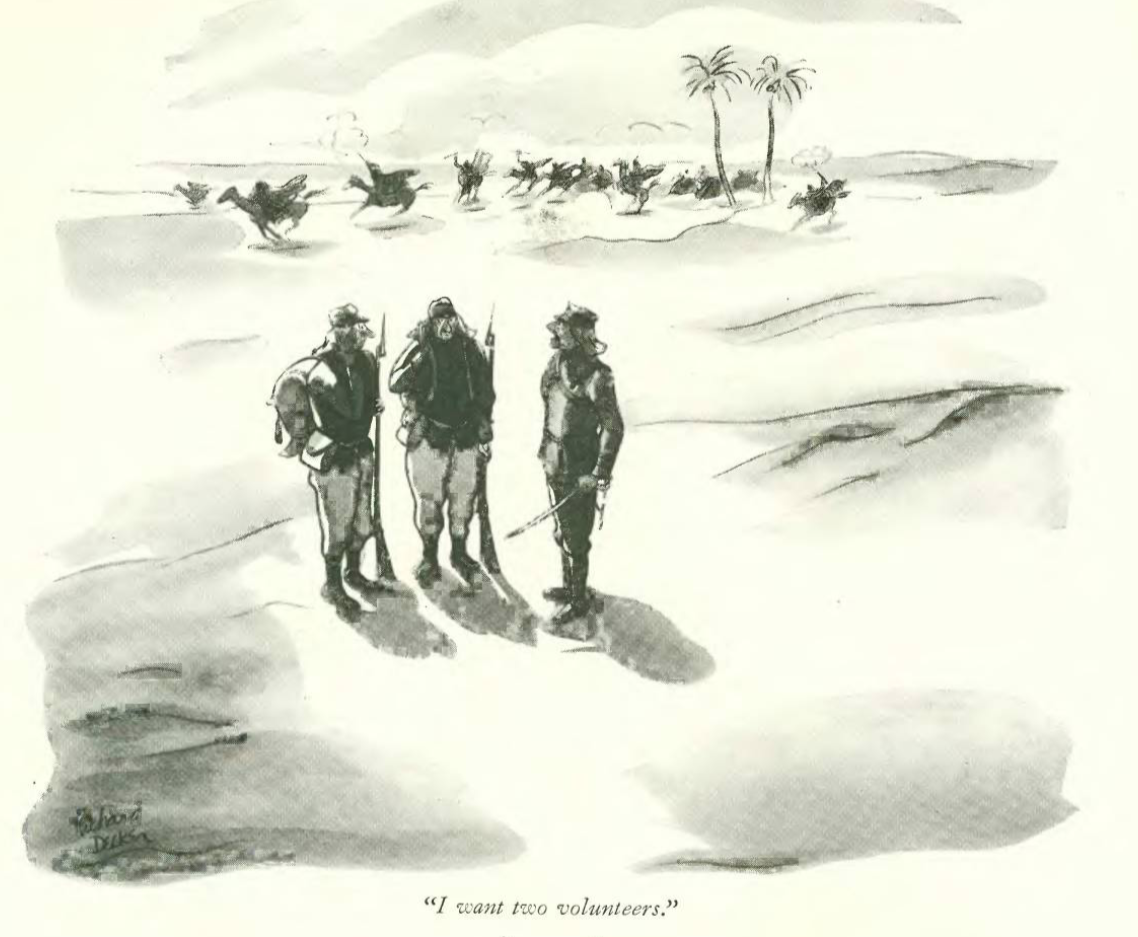
Richard Decker redefined the meaning of “volunteers”…

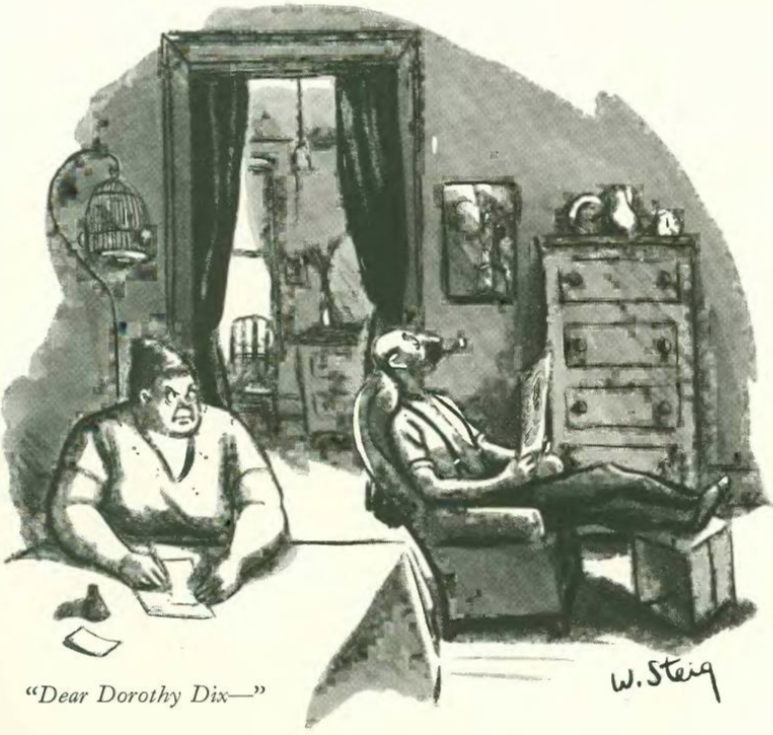
…and William Steig summoned the advice of Dorothy Dix, a forerunner of “Dear Abby” who was the most widely read female journalist of her time…

We move on to the Aug. 22, 1931 issue…

Aug. 22, 1931 cover by Helen Hokinson.

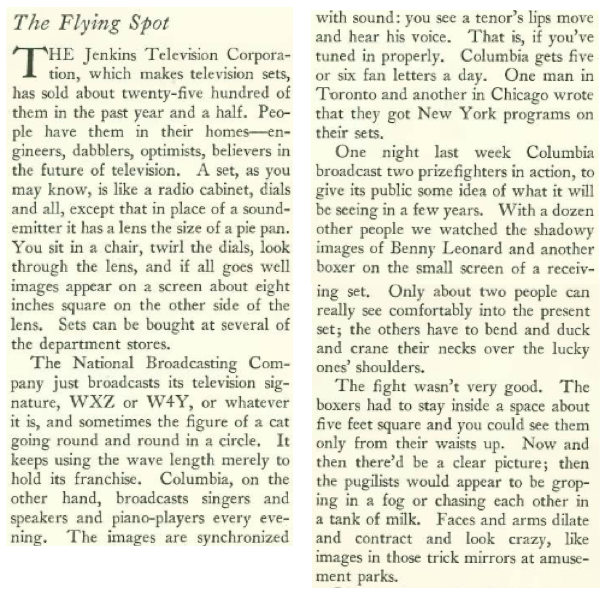
…in which James Thurber wrote about his experience with early television in “The Talk of the Town”…

NO CABLE BILL, YET…Charles Francis Jenkins demonstrates his “Radiovisor” console television in 1929. At right, the inner workings featured a rotating disc punctured with tiny holes, each projecting a line across the glass screen to compose an image. As Thurber noted, the pictures commonly were too dark for viewers to see anything more than silhouettes. Not to mention Thurber’s eyesight was also terrible. (earlytelevision.org)

 *  *  *

The Other Moving Pictures

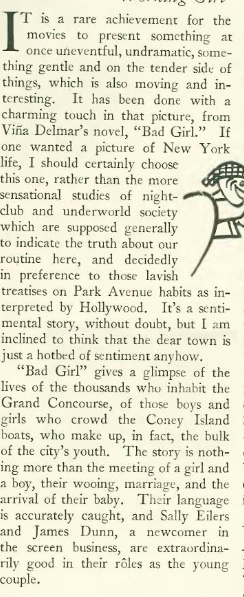
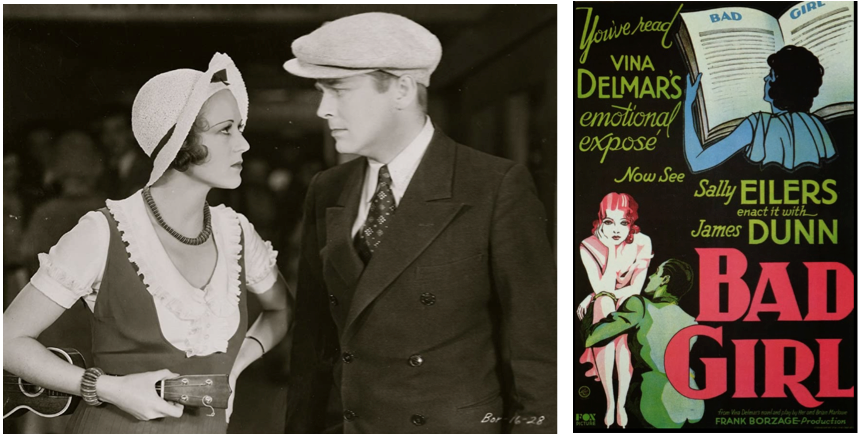
The movies still had nothing to fear from television in 1931, and Hollywood continued to draw large audiences to “Pre-Code” films that featured doses of sex and violence. Novelist Viña Delmar gained famed in 1928 with her suggestively titled book Bad Girl, so when it was adapted into a film, audiences came running—even if the screen adaptation proved to be a bit tamer than the novel that inspired it. Critic John Mosher observed:

I’M JUST A LITTLE BAD…Sally Eilers played the title character in Bad Girl with co-star James Dunn. The film won two Oscars in 1932 for Best Director (Frank Borzage) and Best Writing, Adaptation (Edwin J. Burke). (IMDB)

 *  *  *

Chic Chapeau

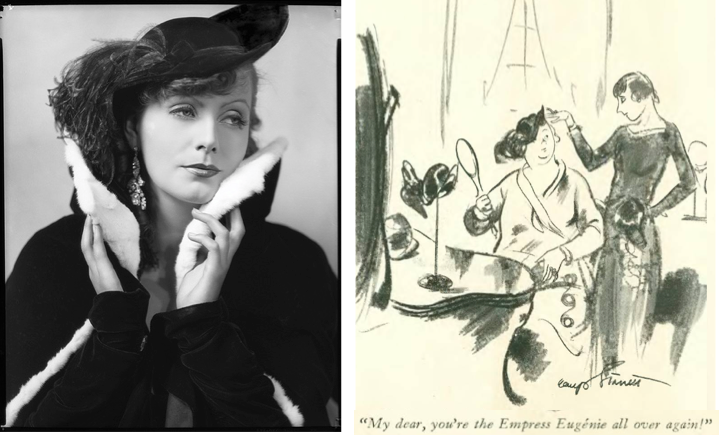
The Empress Eugénie hat was named for 19th century French empress Eugénie de Montijo, who was known as a fashion trendsetter. The hat was revived in 1930 after Greta Garbo was seen wearing a version of one in the popular film Romance. E.B. White was not exaggerating when he noted (in his “Notes and Comment”) that the jaunty hat was seen on “every other head” in the city.
 

LOOK WHAT YOU STARTED…Greta Garbo sported an Empress Eugénie hat in the 1930 film Romance, setting off a fashion craze that persisted through much of the decade. At right, Kemp Starrett referenced the trend in this Aug. 8, 1931 cartoon in The New Yorker. (Pinterest)

 *  *  *

From Our Advertisers

Speaking of trends, these “roughies” were all the rage among the young folks, in the dorms and on the beach…

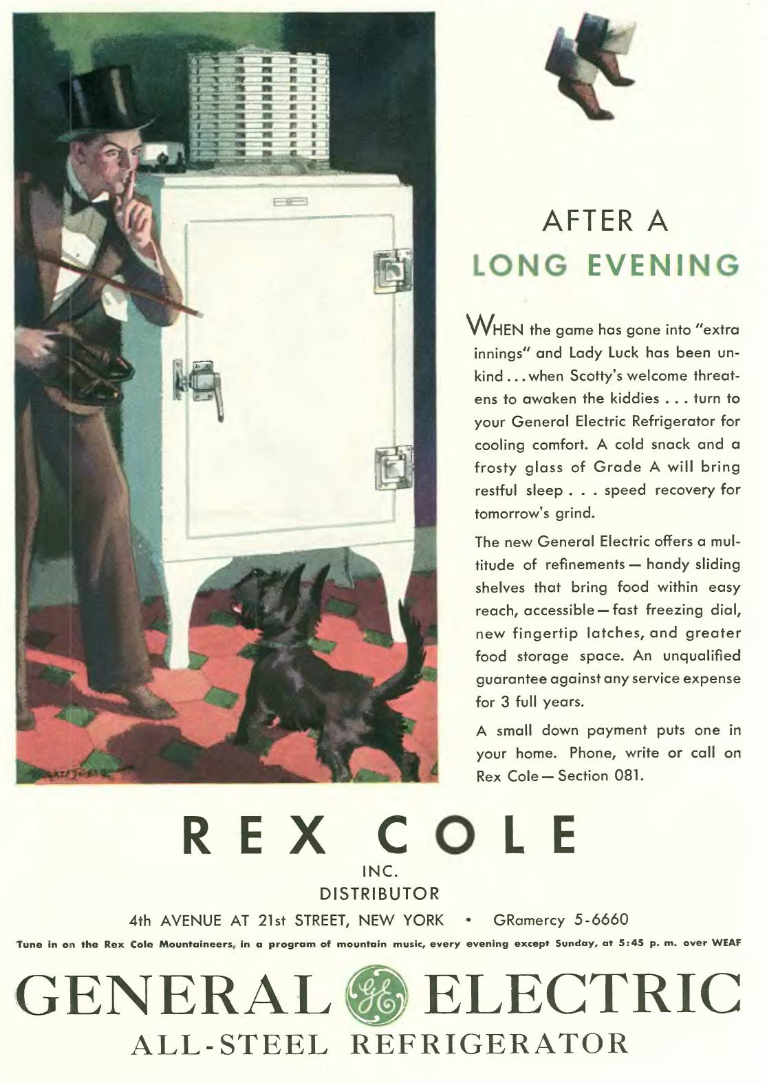
…one trend I wasn’t aware still persisted in 1931 was a top hat and tails for an evening out among the smart set…

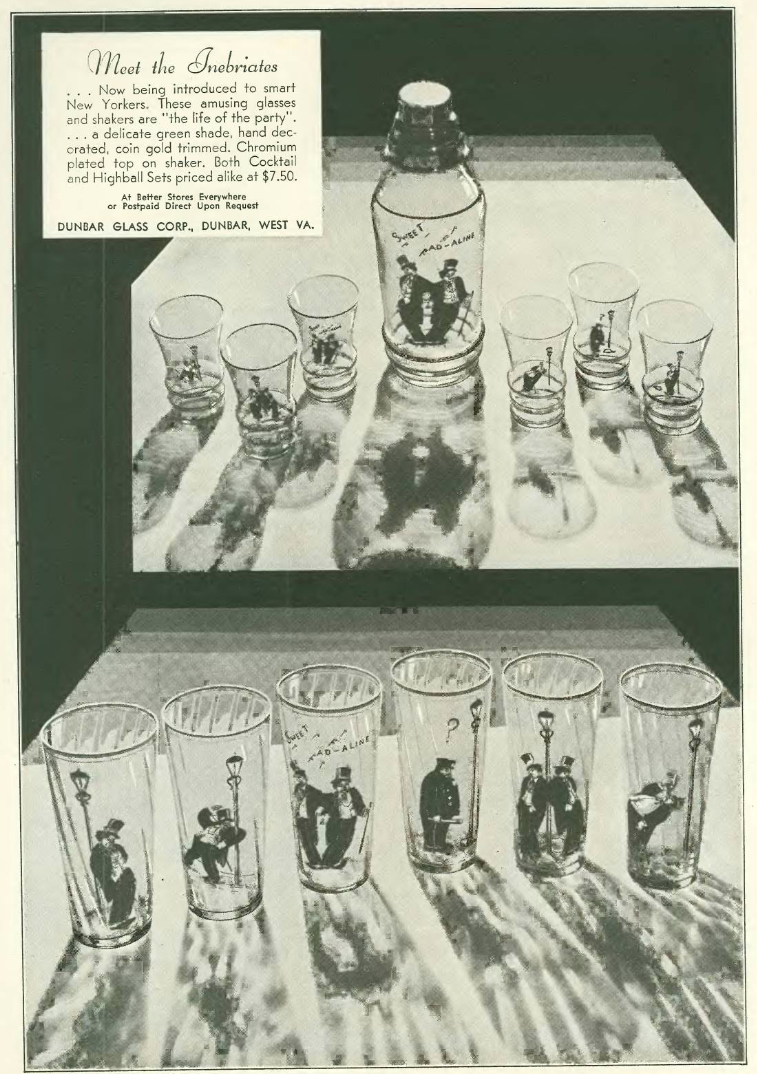
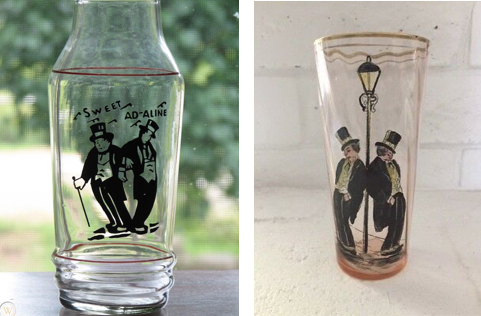
…according to this ad, if you were a “smart” and fashionable New Yorker, then you needed an “Inebriates” themed cocktail set…

…examples of the glassware for sale on Worthpoint…

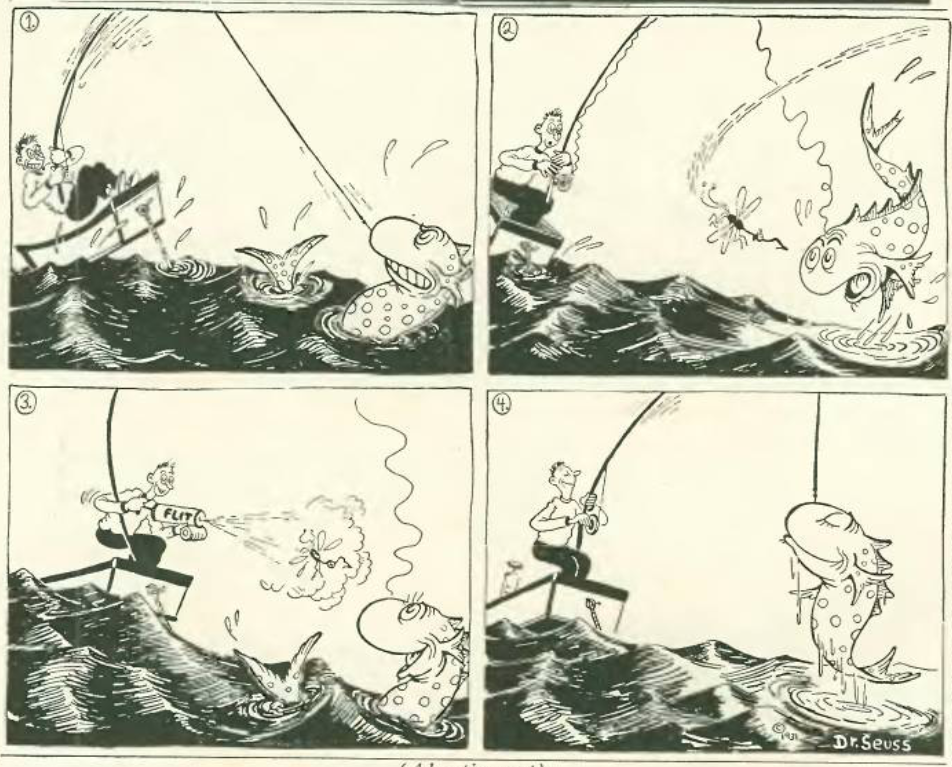
Dr. Seuss was still busy selling pesticide with this four-panel ad…

…on to the cartoons, we start with James Thurber

…and Rea Irvin continued to experiment with various motifs, this time an Egyptian-themed cartoon referencing the “wine bricks” sold by enterprising vineyards during Prohibition…

Peter Arno found a big surprise during a mansion tour…

…and we end with Otto Soglow

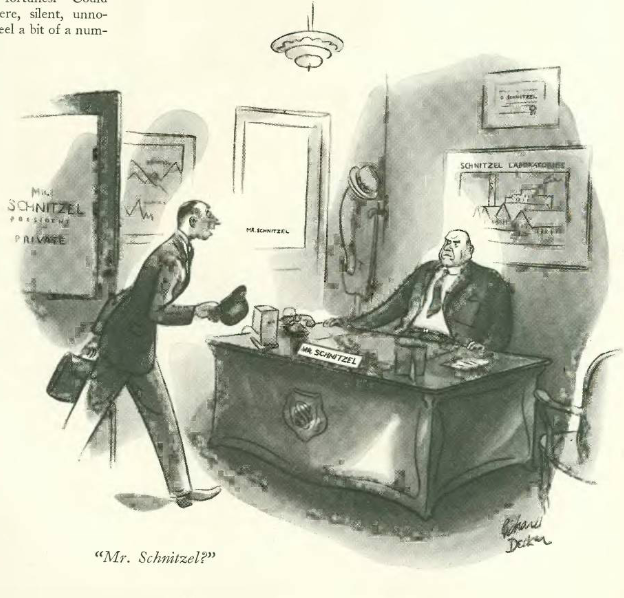
…and Richard Decker…both cartoons reminded me of Al Jaffee’s Snappy Answers to Stupid Questions

…I grew up reading Mad magazine, and always looked forward to Jaffee’s fold-ins…he just retired from Mad at the young age of 99, so we conclude with one of his Snappy Answers panels from Mad #98, Oct. 1965…

Next Time: Unnatural History…