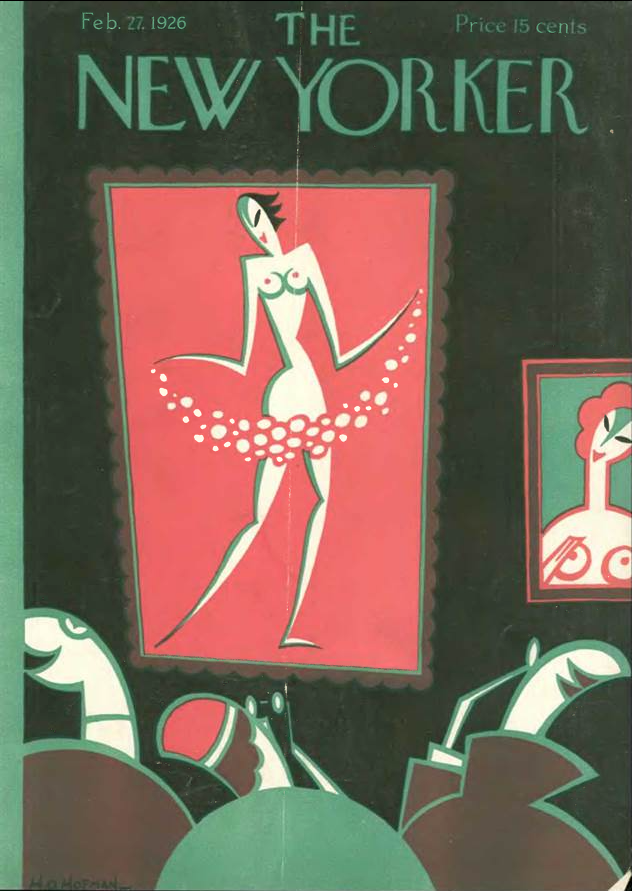
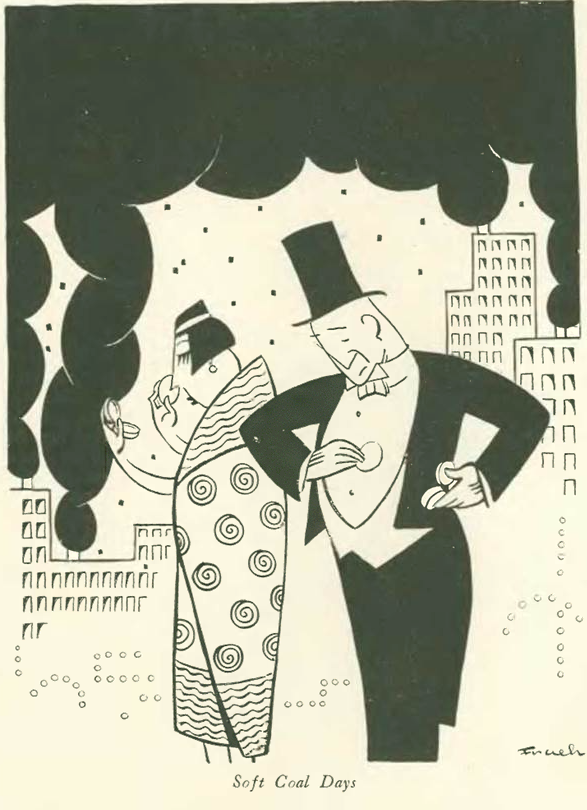
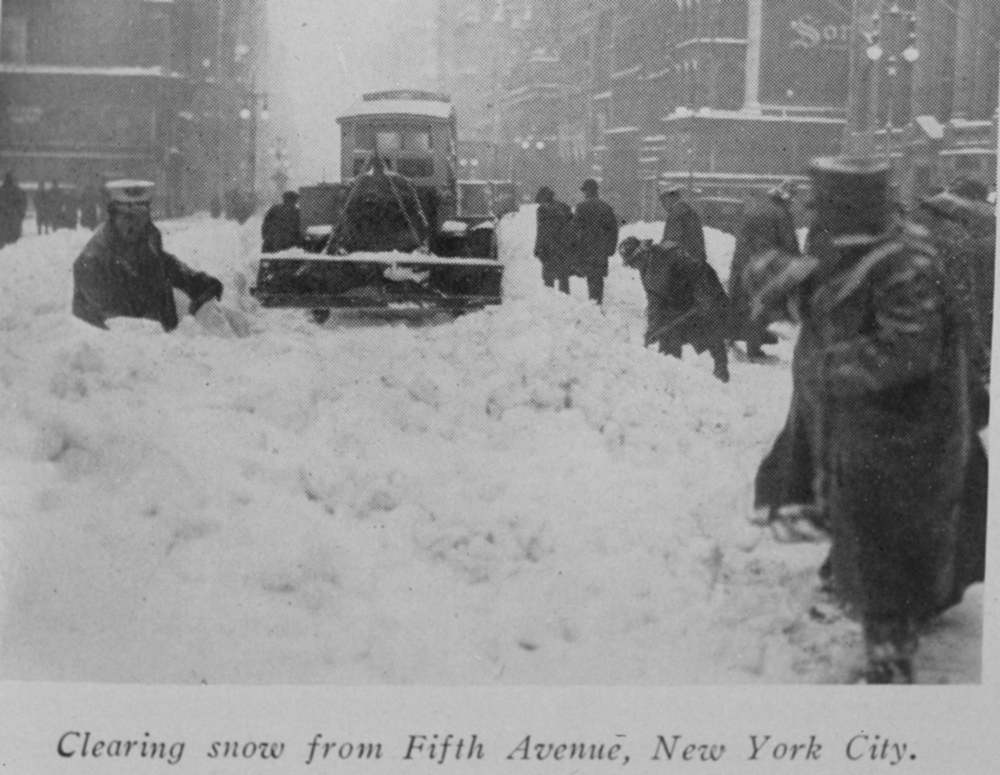
The month of February 1926 must have been miserable in New York City. A massive blizzard made a mess of the streets, which were then topped by a soot-laden smog. The smog was the result of homes and businesses burning soft coal, which produced far more smoke than the hard variety (which was in short supply).
The photo above, from the Daily News archive, shows a chaotic scene on Orchard Street (Manhattan’s Lower East Side) after the storm.
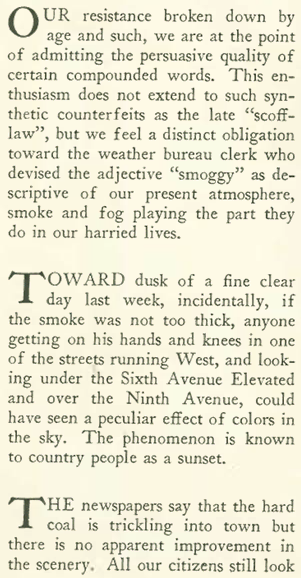
As could be expected, The New Yorker editors tried their best to make light of the situation, although they couldn’t resist making a racist remark regarding the effects of soot on the population. It is also interesting to note that the word “smoggy” was considered by the editors to be a relatively new term:
Al Frueh showed us how the toffs dealt with the situation…
…and Fifth Avenue was not the best place for a fashionable stroll…
Shovelers were hired to clear the streets after 1926 blizzard (National Oceanic and Atmospheric Administration)
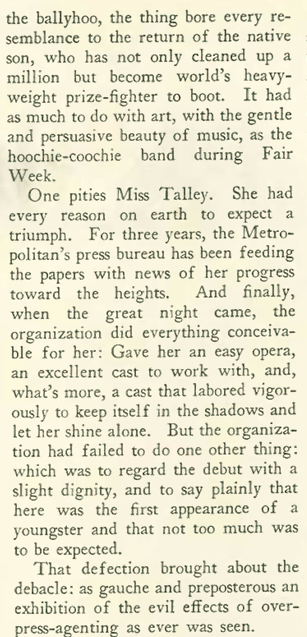
No doubt the foul weather contributed to the mood of the writers and critics at The New Yorker, who reacted rather sourly to the much ballyhooed Feb. 17, 1926 debut of young Marion Talley at the Metropolitan Opera. At the tender age of 19, she was the youngest prima donna to sing at the Met at that time.
In his “A Reporter at Large” column, Morris Markey scoffed at the hype and small-town boosterism that accompanied the young singer from rural Missouri:
Talley’s debut performance was as Gilda, the daughter of the title character in Giuseppe Verdi’s Rigoletto. The Metropolitan Opera’s general manager, Giulio Gatti-Casazza, hoped Talley’s debut would be low-key and not overshadow the production. However, a delegation of two hundred leading citizens of Kansas City, including the mayor, arrived via a special train for the event.
Adding to the chaos, a noisy telegraph machine was set up backstage so Talley’s father could send dispatches to the Associated Press.
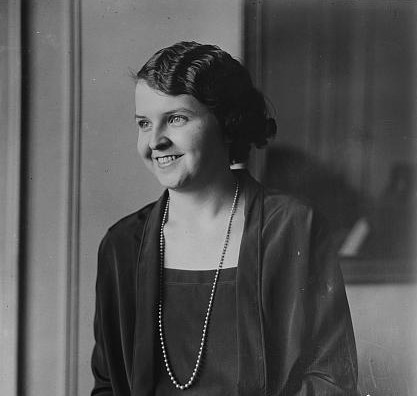
OVER EXPOSED: Marion Talley in 1926. (Library of Congress)
Talley’s swift rise to fame would be followed by a relatively quick return to obscurity. After appearing in seven productions at the Met, her contract was not renewed for the 1929 season.
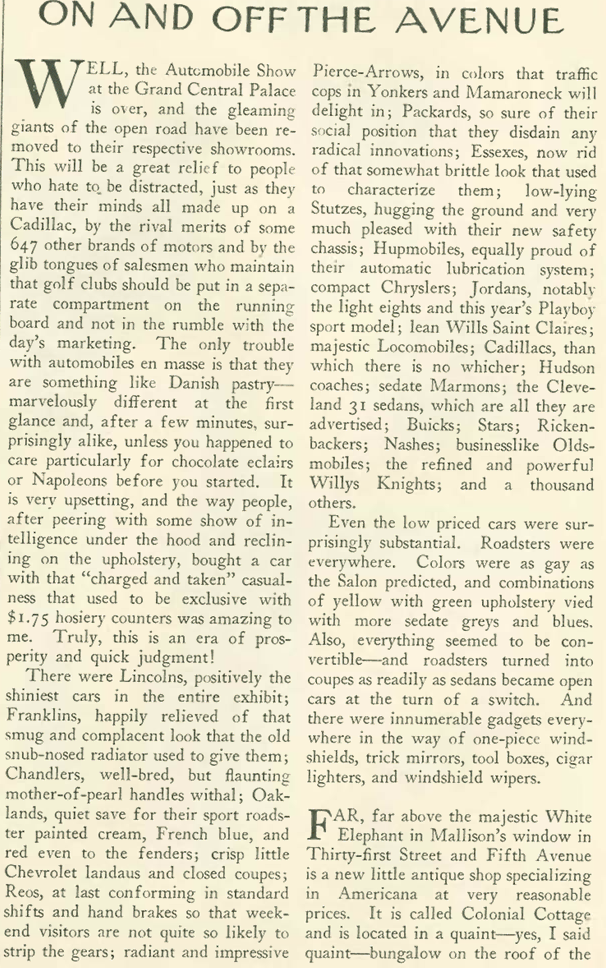
As if covering the nightclub scene and the fashion set wasn’t enough, Lois Long found the time to attend the National Automobile Show at the Grand Central Palace and offer her insights and criticisms on the latest in automotive design.
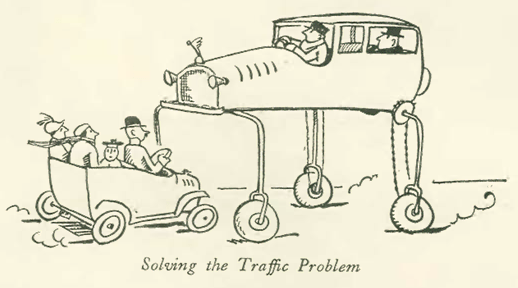
The show featured more than 500 new models, bigger and more powerful cars mounted on new-fangled balloon tires. There were also cheaper cars available–GM introduced the Pontiac line to appeal to the mass market, and other manufacturers lowered their prices in an effort to lure customers. Visitors packed the show despite the fact that the city streets were already hopelessly clogged with traffic and navigating them was difficult and often perilous. Al Frueh offered his take on the traffic situation with a little doodle in “The Talk of the Town” section (featured above).
Long gave readers her usual straightforward assessment of the show (her Danish pastry metaphor in the first paragraph is spot on). Note her list of American car companies, many of which are long gone:
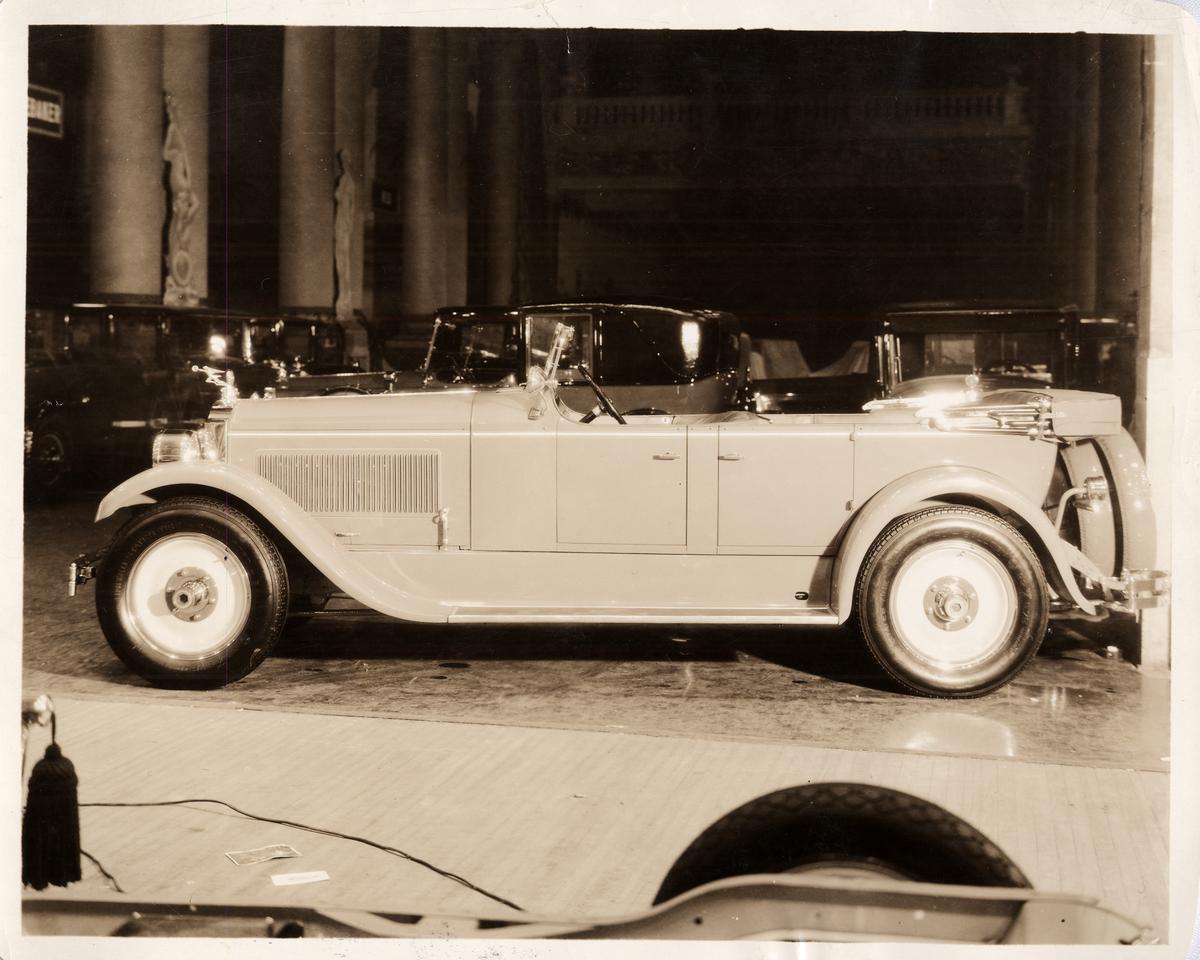
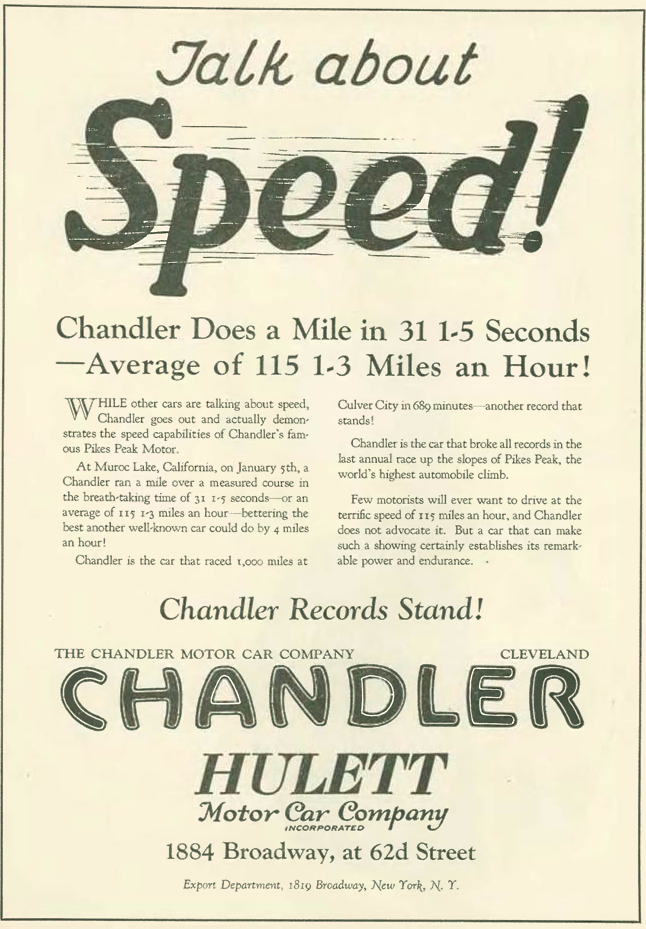
LOOK AT ME…No doubt Lois Long walked by this Packard special sport phaeton, prominently displayed at the 26th National Automobile show. (Wayne State University)GRAND INDEED…The 26th National Automobile Show was at the Grand Central Palace, which occupied the block of Lexington Avenue between 46th and 47th Streets. It was razed in 1963. A 44-story office tower, 245 Park Avenue, took its place. (New York Times)A Cleveland auto manufacturer, Chandler, took advantage of the moment by placing this ad in the Jan. 23 issue of The New Yorker.
***
“The Talk of Town” editors were bemused over the news that artist Maxfield Parrish had received “a check in six figures” following his first-ever exhibition. It was reported that Parrish received $80,000 (roughly equivalent to $1 million today) for a single painting, which the editors suggested made him “the highest paid artist living.” They also wondered “if he gets amusement out of being the highest paid painter,” since Parrish was known for wanting to be left alone, and until recently was “not well off” because no one “could persuade him to the sell the pictures with which he lined his house.”
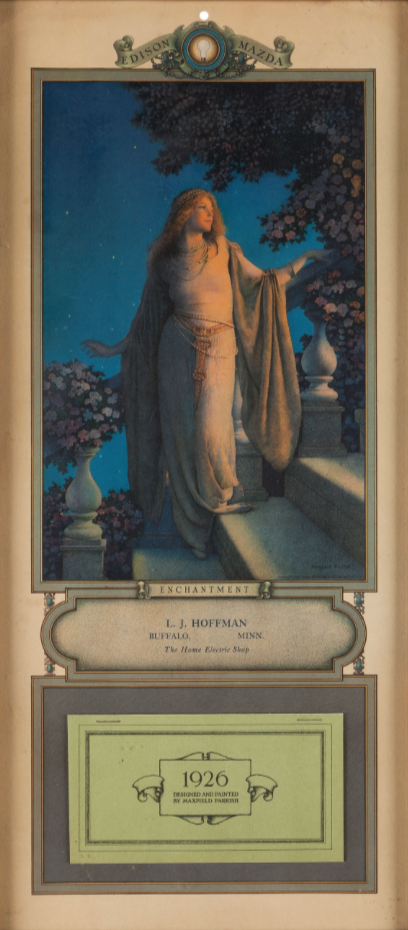
A 1926 Edison MAZDA calendar featuring artwork by Maxfield Parrish. (icollector.com)
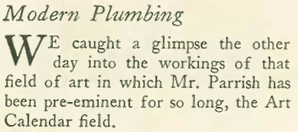
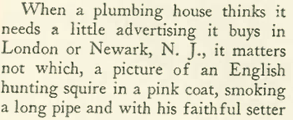
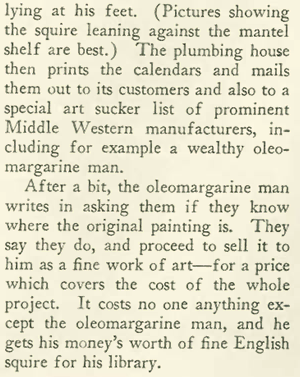
In a previous issue (Dec. 12, 1925), New Yorker art critic Murdock Pemberton wrote a dismissive critique of the young Parrish’s work and noted that the artist was largely glorified in American advertising and not in serious art circles. This was followed by another “Talk” item in which the editors sneered at the trade calendar market that fed the popularity of artists like Parrish:
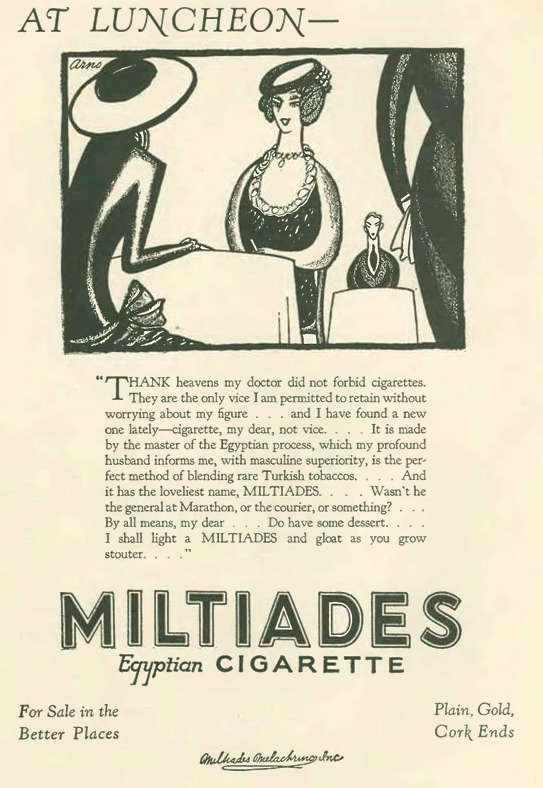
And to close, this message (illustrated by Peter Arno) from Miltiades Egyptian cigarettes. Apparently they empower you to call your non-smoking friend “fatso.”
On the subject of Arno, there was only one drawing with a caption…by Arno…
We close out The New Yorker’s first year with the magazine on firmer footing and many of its mainstay writers and artists firmly in place.
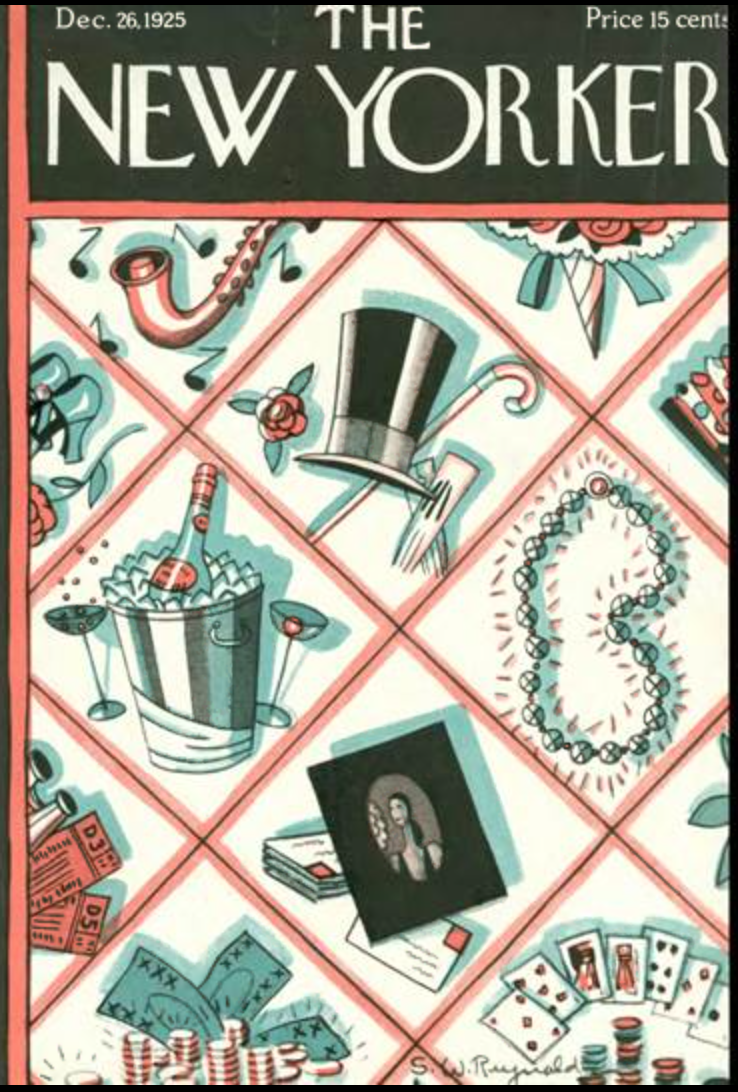
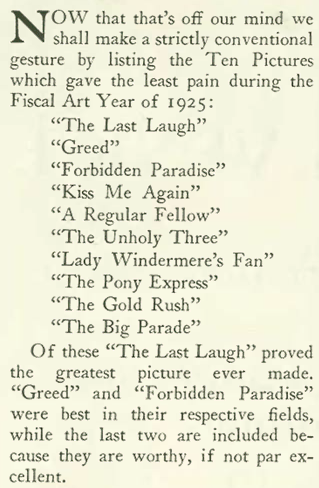
The Dec. 26, 1925 issue was the usual hodgepodge, but some writers did give a nod to the end of the year, including film critic Theodore Shane, who offered his list of the best ten moving pictures of 1925.
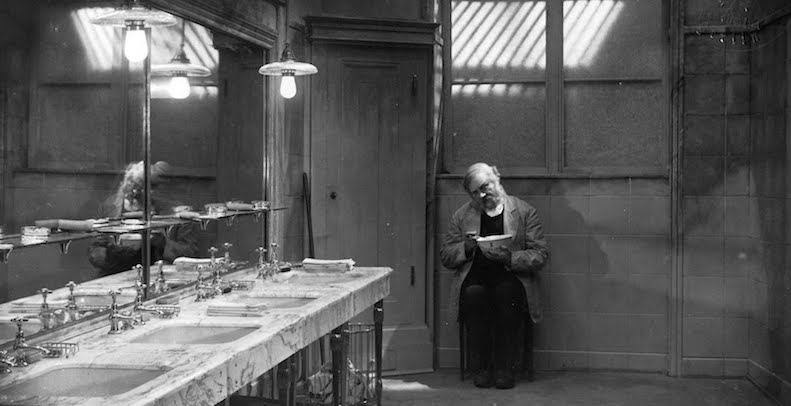
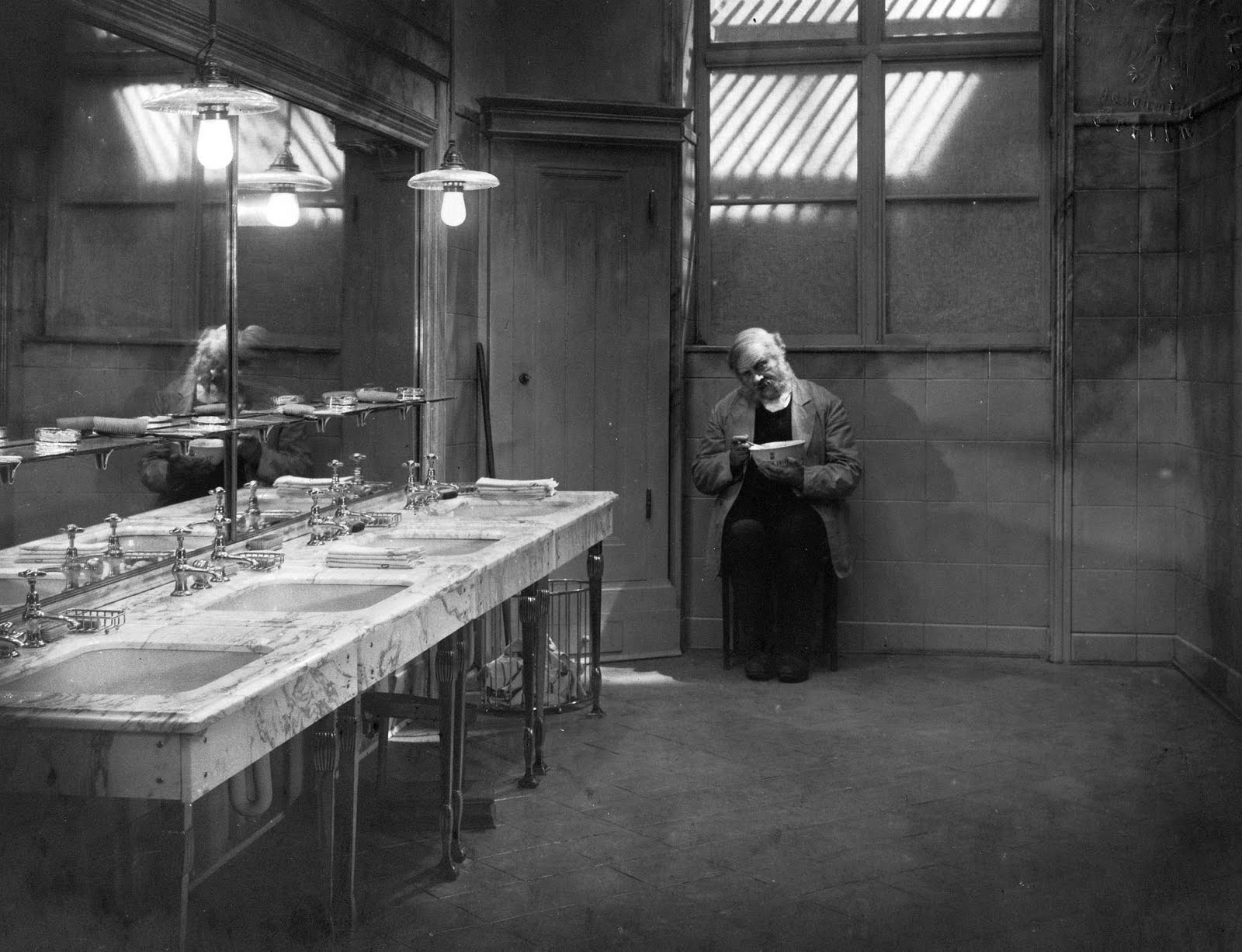
Shane’s favorite film by far was The Last Laugh, (the German title was Der letzte Mann, or The Last Man) a 1924 German film directed by F.W. Murnau and starring Emil Jannings (who would later win the first Academy Award for Best Actor in 1929). Shane referred to it as “the greatest picture ever made.” Released in the U.S. in 1925, the film was about a proud doorman who loses his job and tries to hide the fact from his friends and family. Shane usually reserved his highest praise for German cinema in his columns.
Scene from The Last Laugh (1924) starring Emil Jannings. (Roger Ebert)
Shane’s complete list of the ten best movies of 1925:
For the worst films of the year, Shane suggested a tie between Drusilla With a Million, Lord Jim, Joanna, the Million Dollar Girl or Stella Dallas.
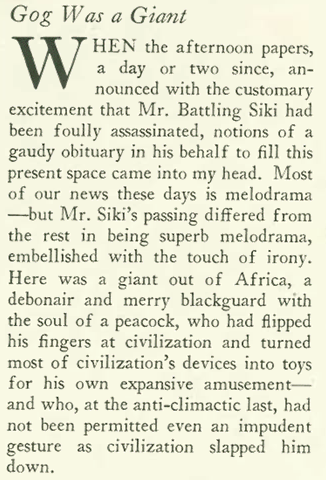
The New Yorker also commented on the murder of the irrepressible boxer Louis Mbarick Fall, popularly known as “Battling Siki.”
“Battling Siki” in his heyday. (Wikipedia)
Born in Senegal, he was a light heavyweight boxer from 1912–1925, and briefly reigned as a light heavyweight champion. Known for his heavy drinking and carousing, on the night of Dec. 15, 1925, he was found dead near his 42nd Street apartment. He had been shot twice in the back at close range. He was 28.
In his column, “A Reporter at Large,” Morris Markey offered this observation on Battling Siki’s passing:
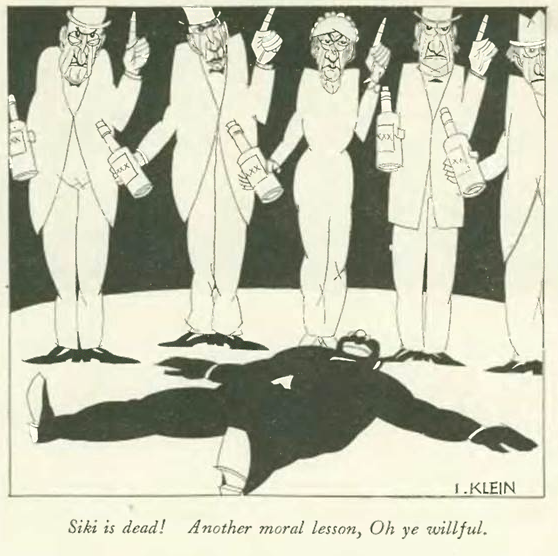
The cartoonist Isadore Klein, on the other hand, contributed this strange stand-alone illustration for “The Talk of the Town” section:
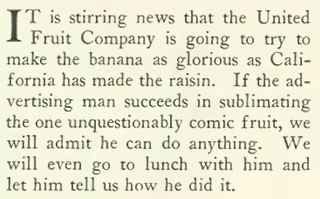
Also in “Talk” was this brief item about the United Fruit Company:
United Fruit would be no laughing matter three years later with the Banana Massacre, which would claim the lives of an unknown number of workers who were striking for better working conditions in Columbia.
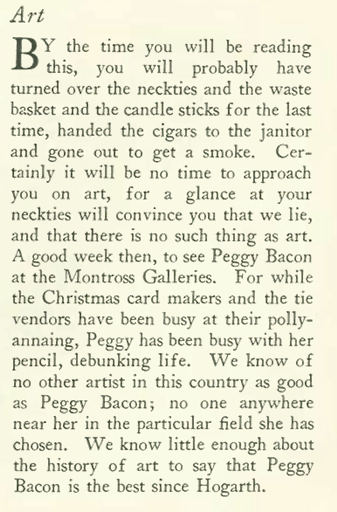
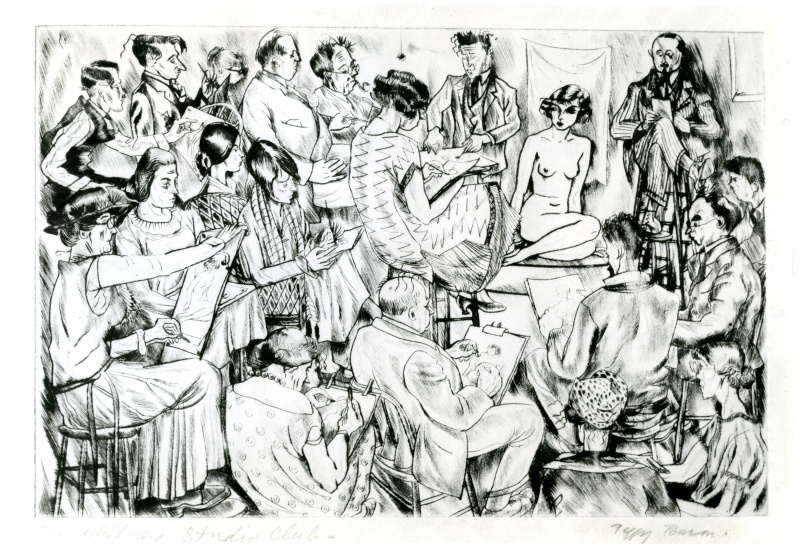
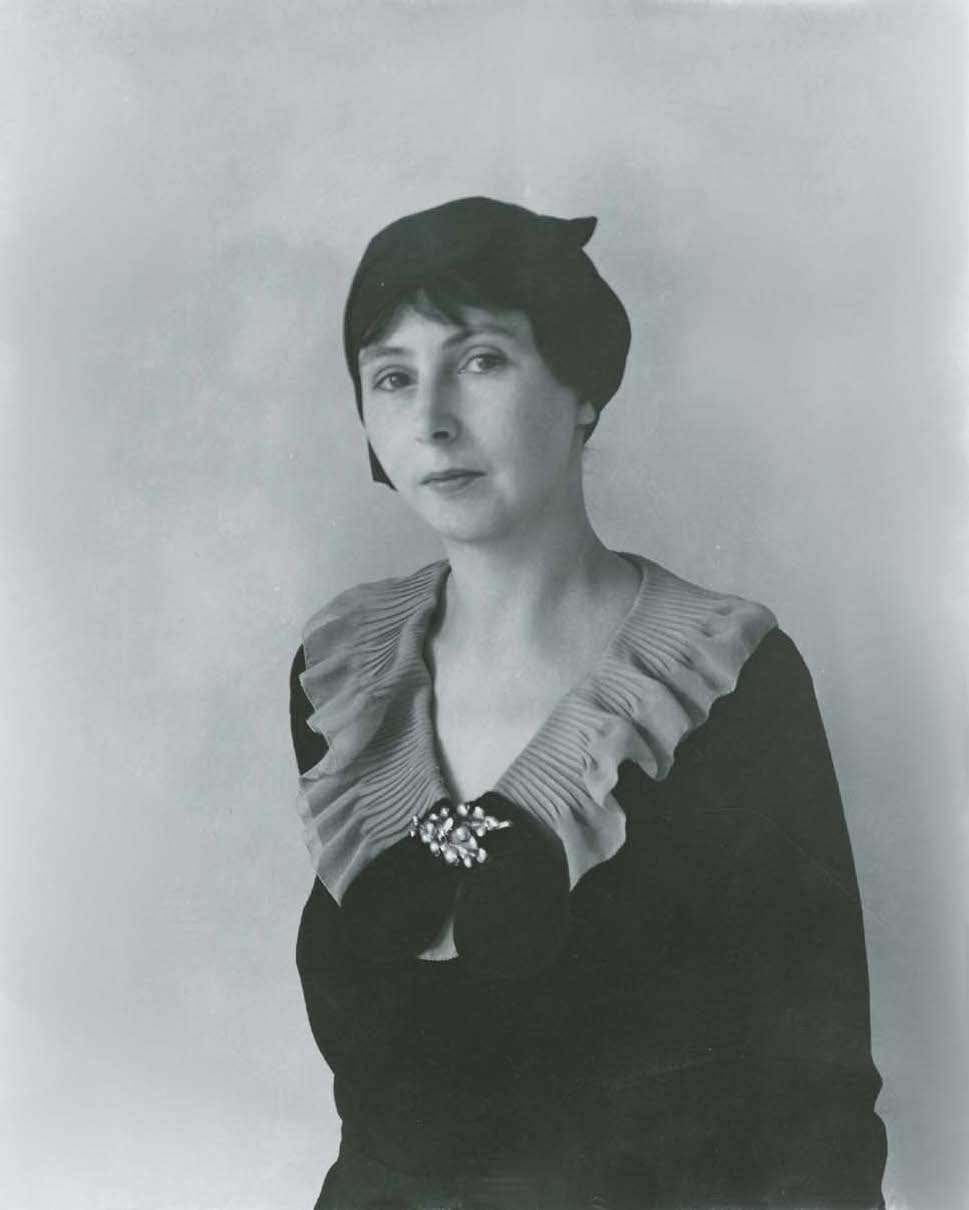
Art critic Murdock Pemberton offered a glowing review of an exhibit at the Montross Galleries by frequent New Yorker contributor Peggy Bacon:
Peggy Bacon, The Whitney Studio Club, 1925. (Whitney Museum of American Art)Peggy Bacon (Smithsonian)
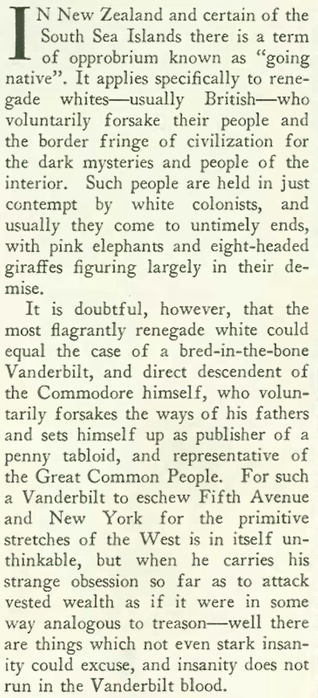
“Profiles” looked at Cornelius Vanderbilt Jr, “The Fifth Avenue Maverick.” William Boardman Knox wrote that the young Vanderbilt “is as alien to his blood as a marmoset to a gorilla.”
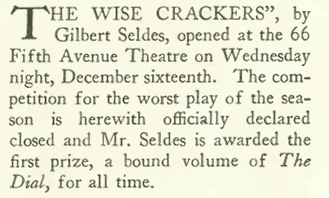
In the “The Theatre,” critic Herman J. Mankiewicz pulled no punches when he declared Gilbert Seldes’ play The Wise Crackers “the worst play of the season” (Seldes was himself a noted critic and sometime New Yorker contributor):
What’s more, the play was about a group of literate New Yorkers who gather to exchange witty barbs and sarcastically comment on the doings of the day. In other words, it was inspired by the Algonquin Round Table, which famously included Mankiewicz as a member.
Another Round Table notable was Robert Benchley, who contributed this piece for the last issue of the year:
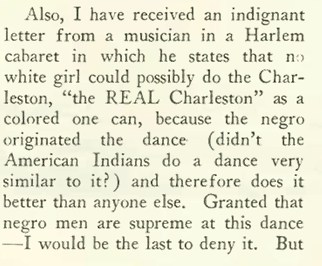
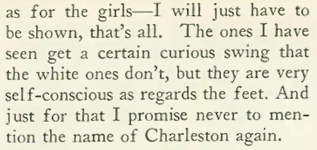
Lois Long offered her regrets for ever bringing up the subject of “The Charleston:”
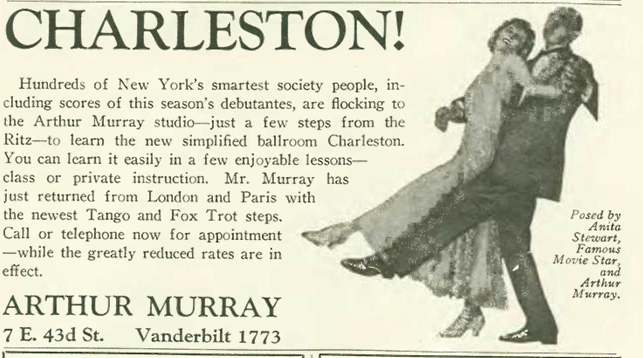
And just a few pages over, lessons were advertised for…The Charleston!
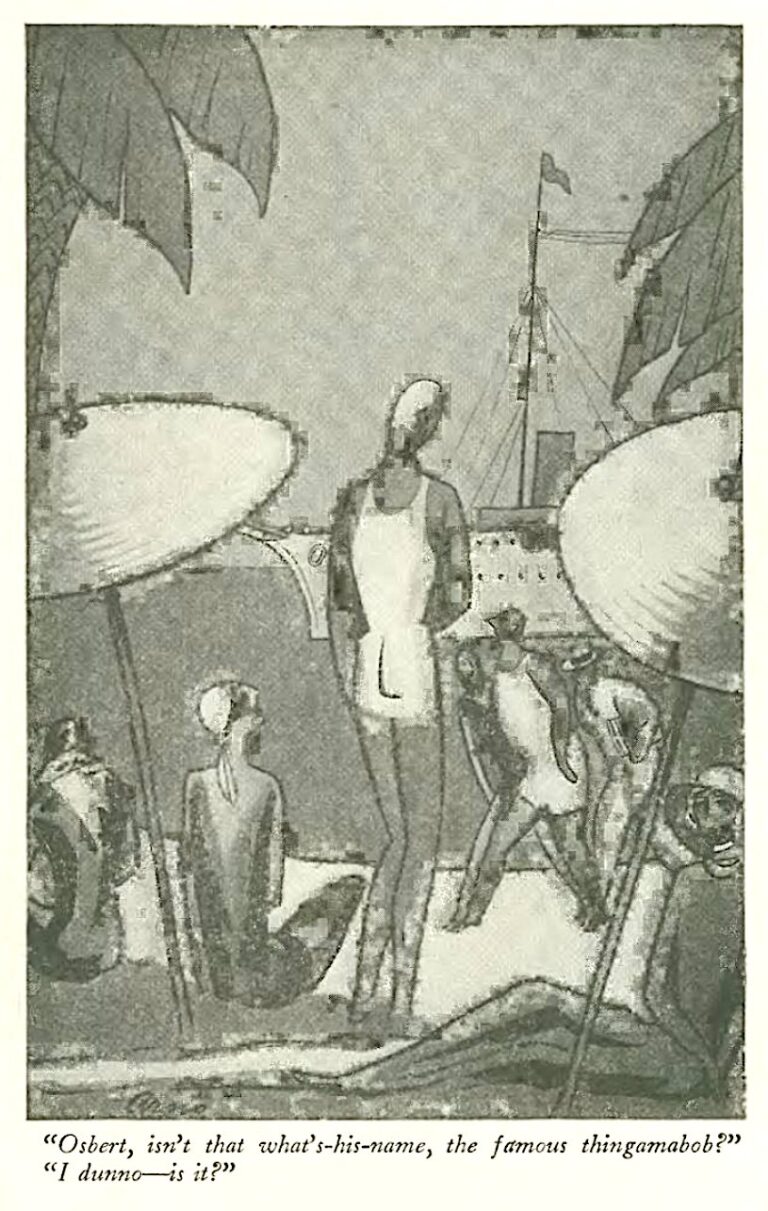
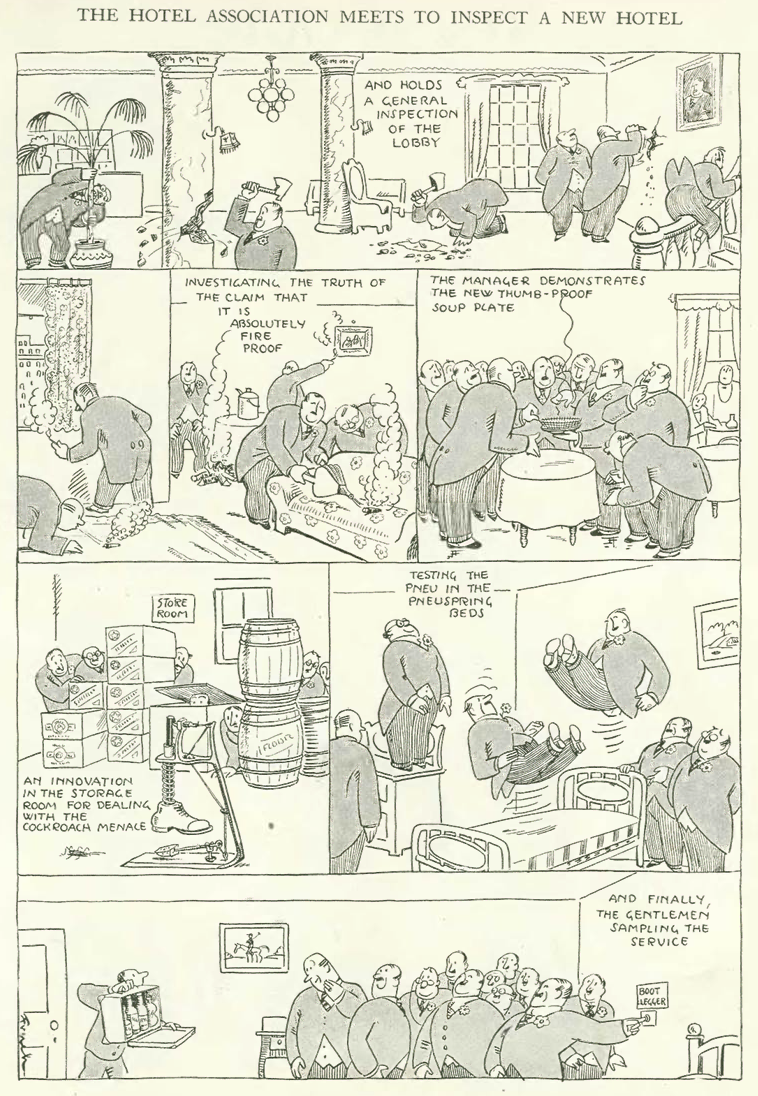
And to close, here’s a little fun with hotel inspectors, courtesy of Al Frueh:
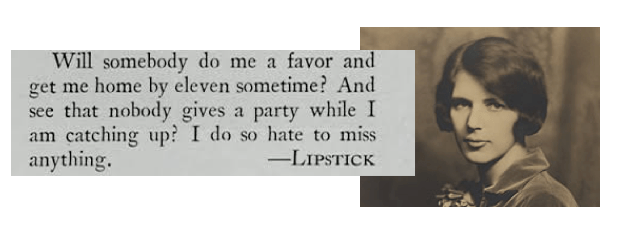
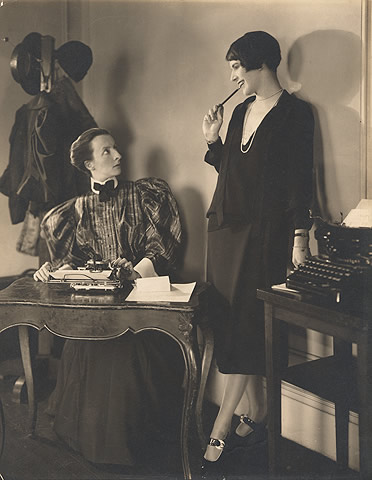
At an age when most students are barely out of college (23), Lois Long was emerging as one of The New Yorker’s most prolific contributors and a prominent voice of Roaring Twenties New York.
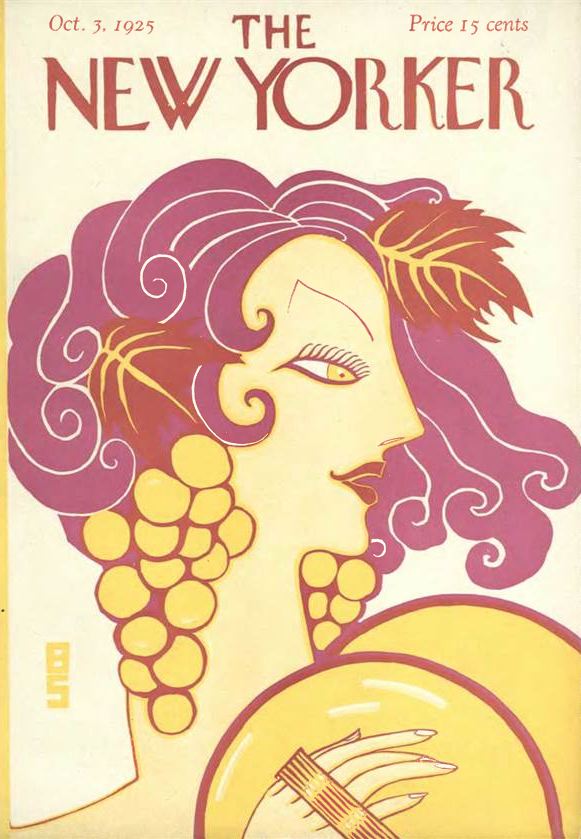
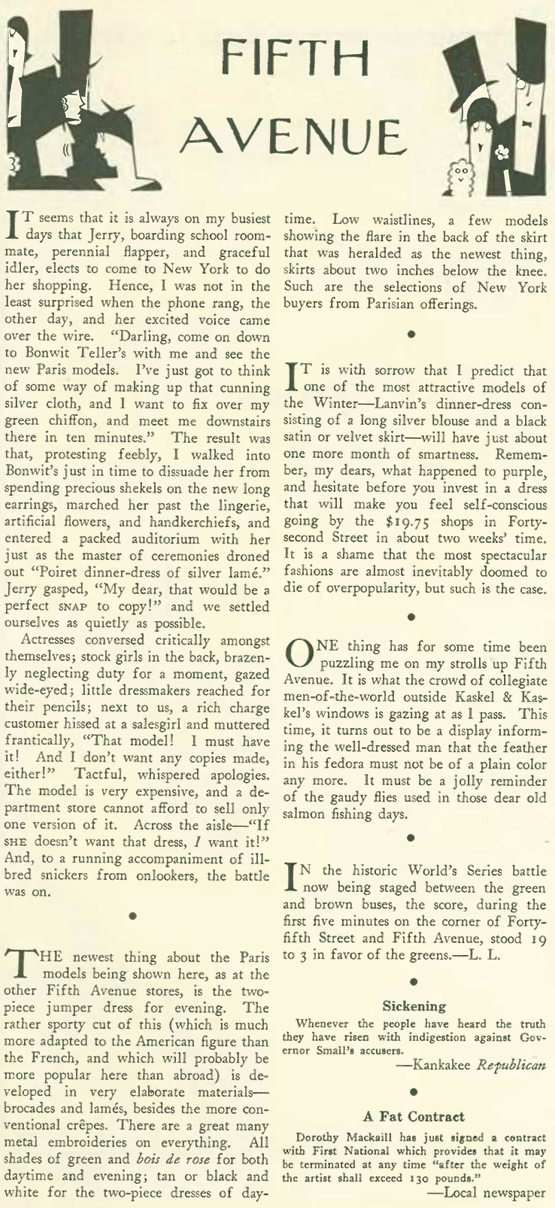
The Oct. 3, 1925 issue not only saw her continuing coverage of night life in “Tables for Two” (which she signed under the pen name “Lipstick”), but also the introduction of her column, “Fifth Avenue” (which she signed L.L.), that would further define her voice at the magazine for years to come.
And The New Yorker wasn’t even her first professional stint as a writer.
Beginning in 1922, Long wrote for both Vanity Fair and Vogue before she caught the eye of New Yorker editor Harold Ross, who hired her to take over the “When Nights Are Bold” column from Charles Baskerville. She later made it her own by changing the name to “Tables for Two.”
Lois Long in the 1920s. Photo from Andrea Long Bush. (Wikipedia)
With the Oct. 3 issue she doubled her workload as both an observer of night life and the fashion scene.
According to Judith Yaross Lee’sDefining New Yorker Humor, the “Fifth Avenue” column took a very different tack from the magazine’s original “Where to Shop” listings that were merely classified ads.
Yaross writes that Long’s first “Fifth Avenue” column relied on “the conceit of her friend Jerry, ‘boarding school roommate, perennial flapper, and graceful idler’ (evidently the department’s target reader)…”
The column would soon be renamed “On and Off the Avenue,” and Long would officially assume the title of fashion editor in 1927.
Her obituary in The New York Times (p. 36, July 31, 1974) quoted New Yorker editor William Shawn, who declared that “Lois Long invented fashion criticism,” and that Long “was the first American fashion critic to approach fashion as an art and to criticize women’s clothes with independence, intelligence, humor and literary style.” The article noted that her task was particularly challenging since The New Yorker did not publish photographs “and more than other writers she had to turn to words alone to describe clothes in detail.”
You can read Long’s first “Fifth Avenue” column, featuring her friend, “Jerry,” here in its entirety:
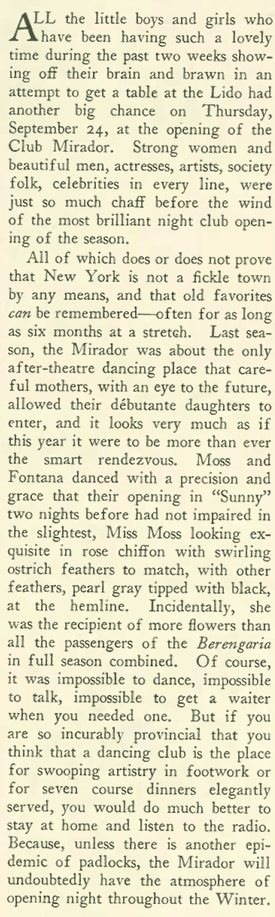
In the same issue, just three pages back, in “Tables for Two,” Long shared these insights on the opening of the Club Mirador:
And she pulled no punches in this erratum item that appeared below this Johan Bull illustration:
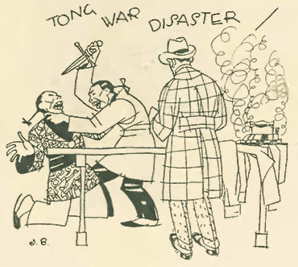
And in “The Talk of the Town,” Bull provided this illustration depicting the flare-up of Tong Wars among New York’s Chinese immigrant population. The main consequence of murderous assault seems to be a patron’s ruined shirt:
“Profiles” featured Reinald Werrenrath, “A New Yorker Who Sings.” Described by writer Clare Peeler as someone who “looks New York,” the baritone opera singer also recorded popular songs and was a regular on early radio broadcasts.
In “Critique” George S. Kaufman’s The Butter and Egg Man received a positive review by Herman J. Mankiewicz, who wrote that the play was “not for the artistically inclined,” but adds:
Gregory Kelly as Peter Jones in The Butter and Egg Man (1925). The Broadway play was a resounding success. Sadly, the beloved Kelly would die of a heart attack in 1927 (at age 36) while on tour with the play. (Museum of the City of New York)
By the way, the queen of New York nightlife, Texas Guinan, has been attributed as the source of the term “Butter and Egg Man” to generally describe generous souls (according to a “Talk” item in the Oct. 31 issue). At the movies, Theodore Shane found little to amuse as he panned The Tower of Lies (“colorless and loose-jointed”). Rather than capturing a Scandanavian setting, Shane wrote that the film “reeks of the studio scenario shops and the pleasant fields of Long Island.”
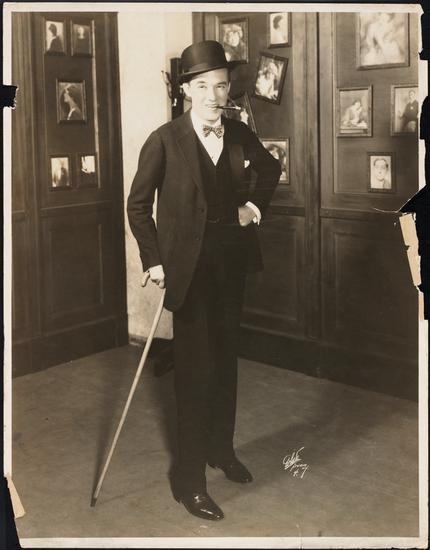
LITTLE TRAMP’S BIG BROTHER Sydney Chaplin performed in 37 films, including The Man on the Box (1925) with actress Alice Calhoun (above). He was Charlie Chaplin’s older brother and business manager. (Ohio State University)
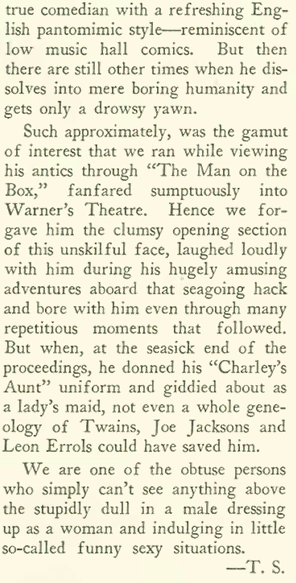
He also took Sydney Chaplin’s attempts at humor to task in the film, The Man on the Box, including his tired “male dressing up as a woman” gag.
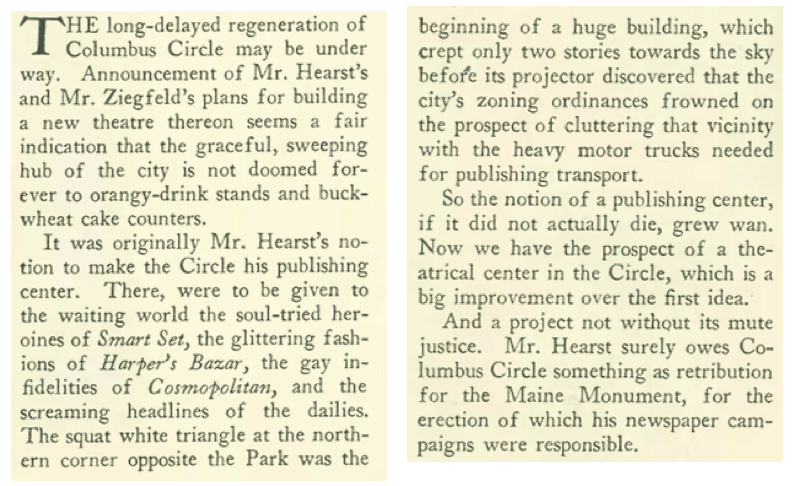
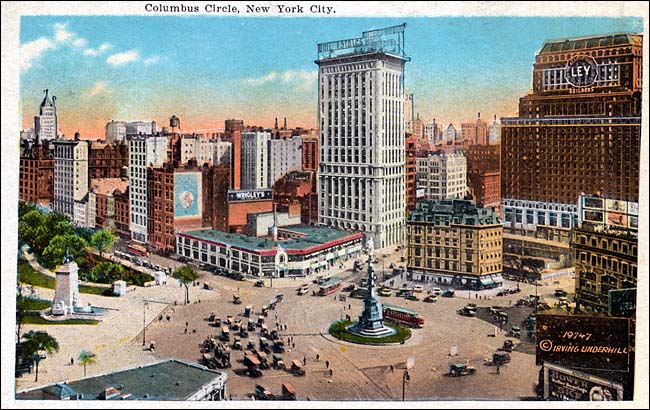
“Talk” also commented on changing face of New York City, including plans for a new Ziegfeld theatre as part of a “regeneration” of Columbus Circle:
According to performingartsarchive.com, Florenz Ziegfeld took over Columbus Circle’s Cosmopolitan theatre in 1925 and updated the interior. The building originally opened in 1903 as the Majestic (where the first musical stage version of The Wizard of Oz and the play Pygmallian debuted). It was briefly a burlesque house in the early 1920s (Minksy’s Park Music Hall) until William Randolph Hearst acquired it as a main venue for his Cosmopolitan Pictures company.
Postcard image of Columbus Circle, circa 1925. The Cosmopolitan is at far lower right. (NYC Architecture)
Under Ziegfeld, the Cosmopolitan returned to “legitimate” theater, but in 1926 he gave it up to focus on the construction of his self-named theatre at Sixth Avenue and 54th Street. The Cosmopolitan (renamed the International in 1944) would continue to serve both as a venue for movies and live performances until 1949, when it was acquired by NBC as a television studio for the TV program Your Show of Shows, featuring Sid Caesar and Imogene Coca. NBC left the International in 1954, and not long afterwards, the former theatre, along with most of its neighbors on Columbus Circle, was razed to make way for the New York Convention Center.
The long-gone Majestic, later Cosmopolitan theatre on Columbus Circle. (performingartsarchive.com)
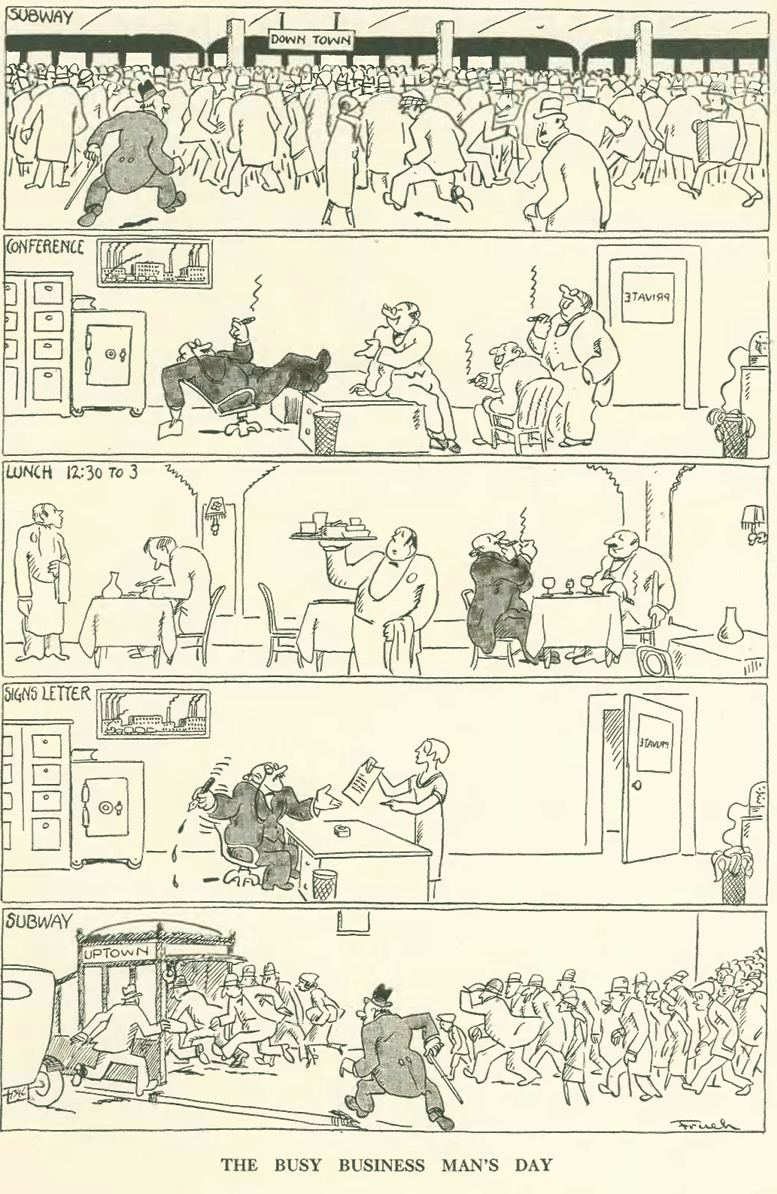
Also from this issue, Al Frueh’s take on a “Busy Business Man’s Day:”
Hans Stengel delivered “Sermons on Sin”…
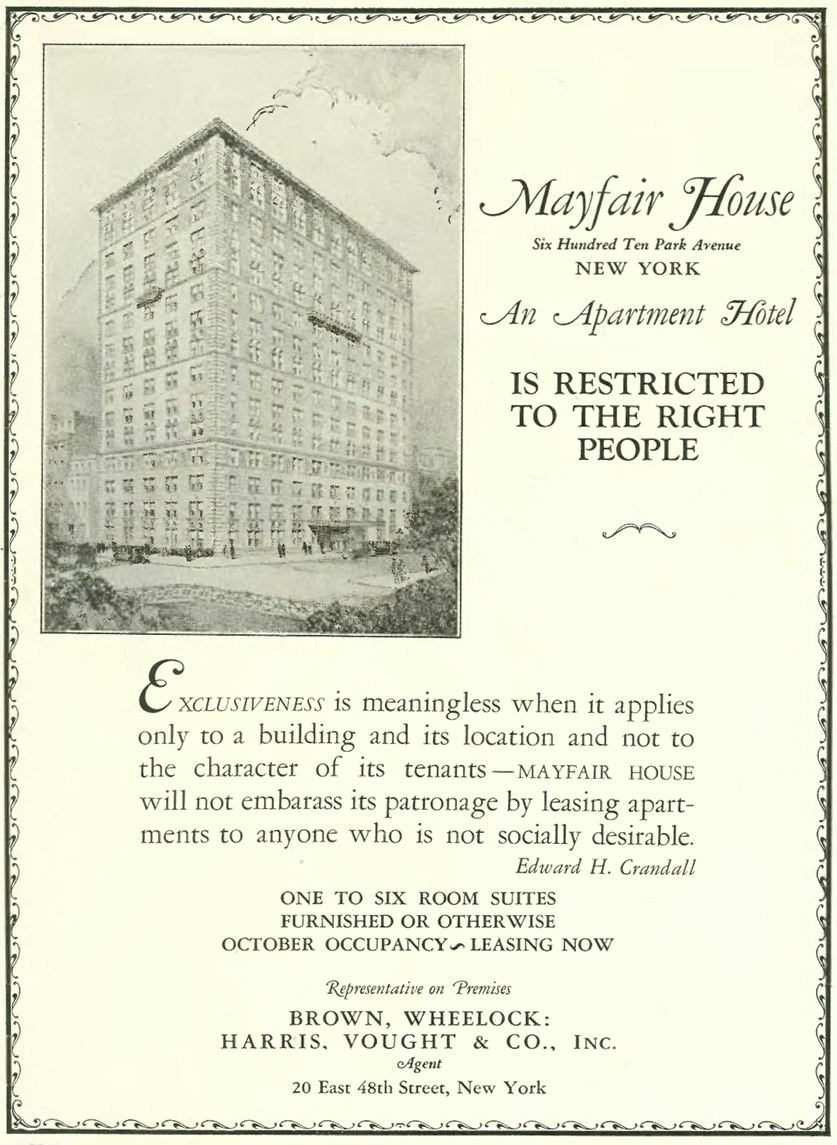
And lest we doubt the snob appeal of our fledgling magazine, check out this advertisement from the Mayfair House assuring that tenants will be kept a safe distance from the proles and other undesirables…
And to close, a back page ad for the Restaurant Crillon, featuring the unmistakable graphic innovation of Winold Reiss:
The dog days of summer were ushered in by the news that “the buyers” had “invaded” the city.
The “buyers” in question were tourists (and no doubt some clothing store merchants) from across the country who had descended upon Gotham in search of the latest fashions that could be bundled off to the hinterlands.
“The Talk of the Town,” speaking through the fictional persona “Van Bibber III,” took a sneering view of this annual migration:
(New Yorker Digital Archive)
In the first issues of The New Yorker, the “Van Bibber III” signature appeared occasionally at the end of “Talk” or other items.
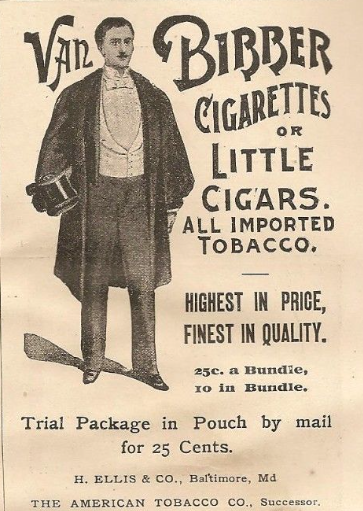
Van Bibber advertisement in Cosmopolitan, 1896
In her book, Defining New Yorker Humor, Judith Yaross Lee wrote that early readers of The New Yorker would have recognized the Van Bibber III persona “as a joke, a personification of Van Bibber cigarettes, whose ads targeted the devil-may-care, swagger young man about town all dressed up for the opening night. As an insiders view of the urban scene, Van Bibber’s accounts featured casual conversation—that is, talk.”
“Of All Things” offered this update on the activities of illusionist Harry Houdini:
Houdini, charged with disorderly conduct after smashing up an office, replied: They locked the door and I had to fight my way out.” Bang goes another illusion! We thought he could open anything but a car window.
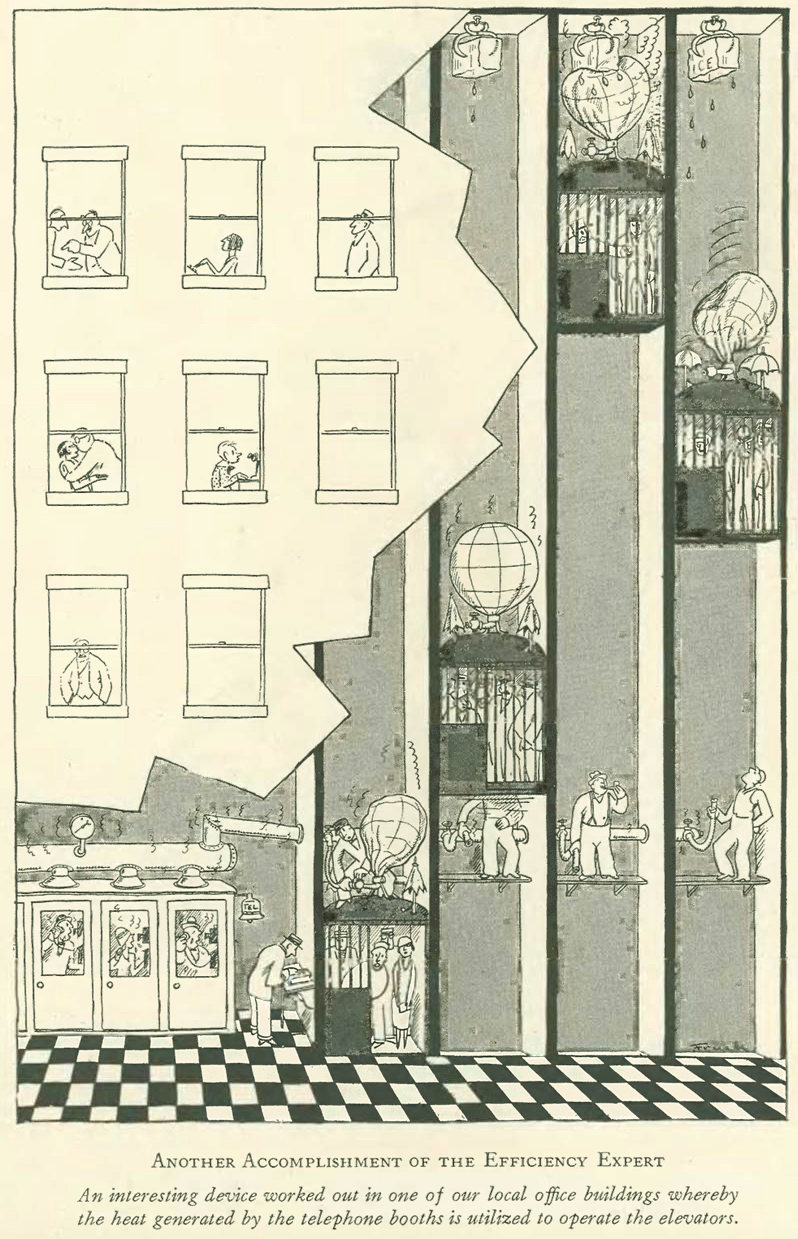
Murdock Pemberton wrote about the life of poet Harry Kemp in “Profiles,” and cartoonist Al Frueh offered this twist on the uses of “hot air:”
(New Yorker Digital Archive)
And more art from Ralph Barton, this time along with his views on the play Artists and Models and the contrasts between life in New York and Paris:
(New Yorker Digital Archive)
“Moving Pictures” offered praise for Sally of the Sawdust, featuring W.C. Fields. Theodore Shane wrote that Fields had distinguished himself from other movie comedians through his act as a “snooty sort of superclown.”
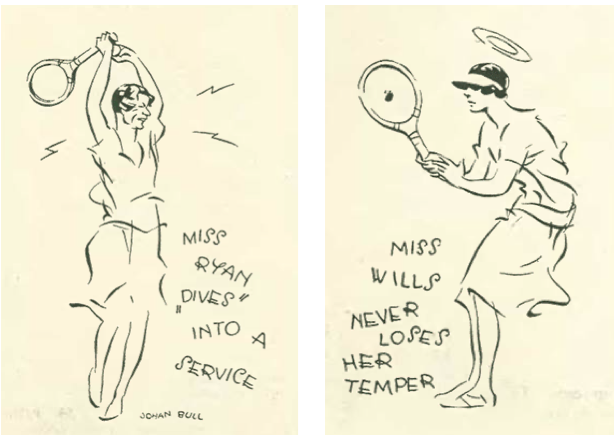
Art work by Johan Bull from “Sports of the Week.” In their careers, Elizabeth Ryan won 30 Grand Slam Titles, and Helen Wills won 31 (New Yorker Digital Archive).
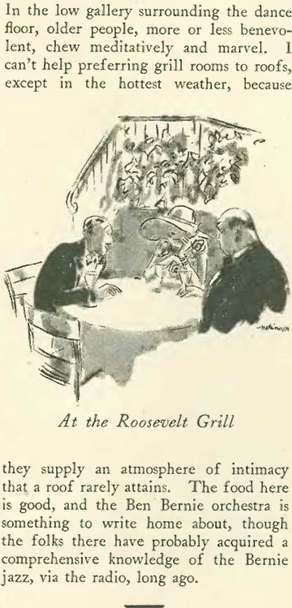
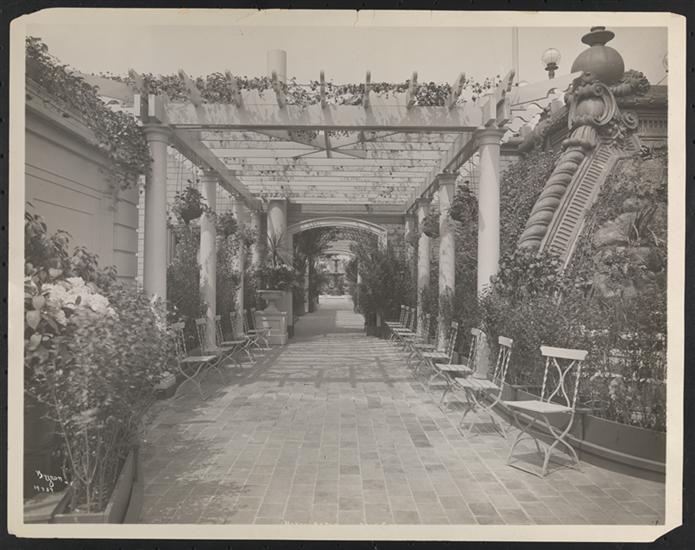
The tennis tournament at Seabright featuring Elizabeth Ryan and Helen Wills was the subject of “Sports of the Week,” and in “When Nights Are Bold,” Lois Long continued her look at nighttime entertainment venues to beat the summer heat:
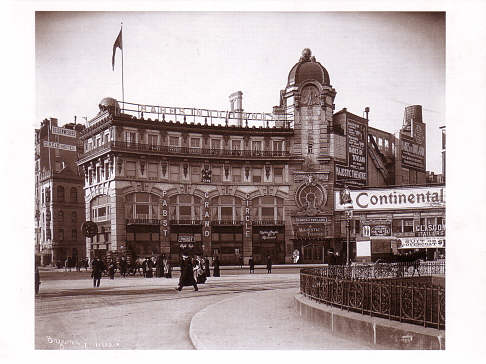
(New Yorker Digital Archive)Hotel Astor Roof Garden in 1905 (Museum of the City of New York)
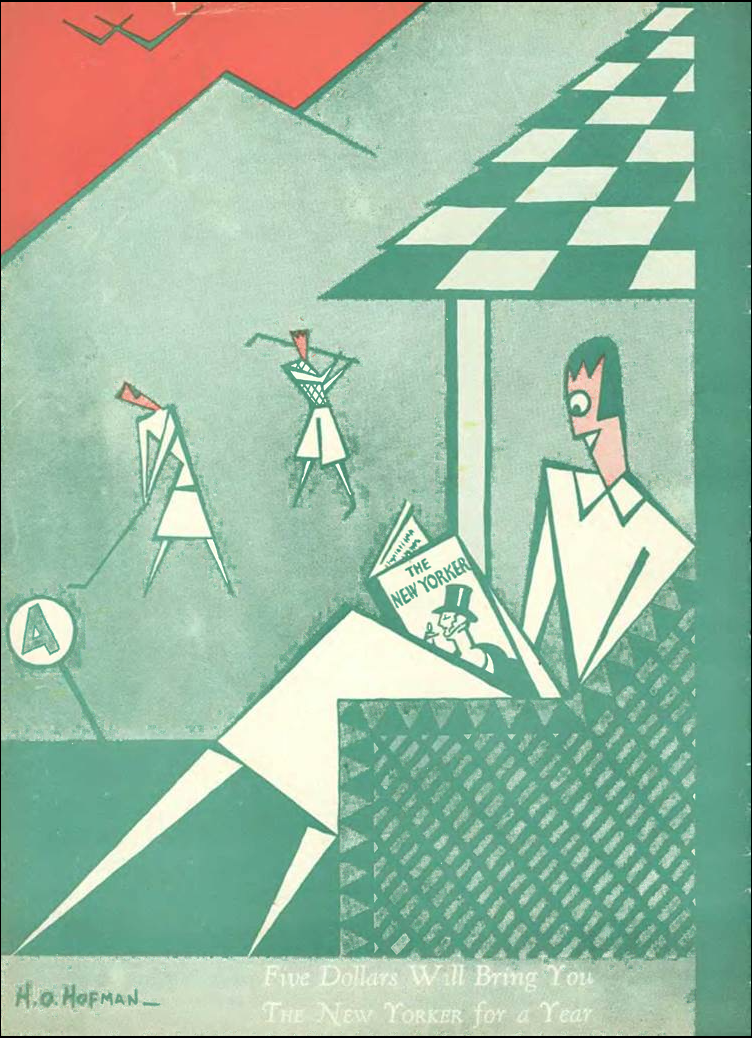
Advertising remained sparse in the pages of The New Yorker, with both inside front and inside back covers devoted to in-house ads promoting the magazine. In addition, the color back cover was also a house ad, featuring a rendering by H. O. Hofman:
The “King of Greenwich Village Bohemians,” Maxwell “Bogie” Bodenheim, was a leading (and notorious) American poet and novelist when “The Talk of the Town” (July 25, 1925) reported on the controversy surrounding his latest novel, Replenishing Jessica, sometimes referred to as one of the infamous “lost” bohemian novels of the 1920s.
Although few consider the book to be great literature (or by today’s standards, scandalous), Replenishing Jessica’s frank portrayal of a woman’s many sexual liaisons was enough to draw the ire of censors.
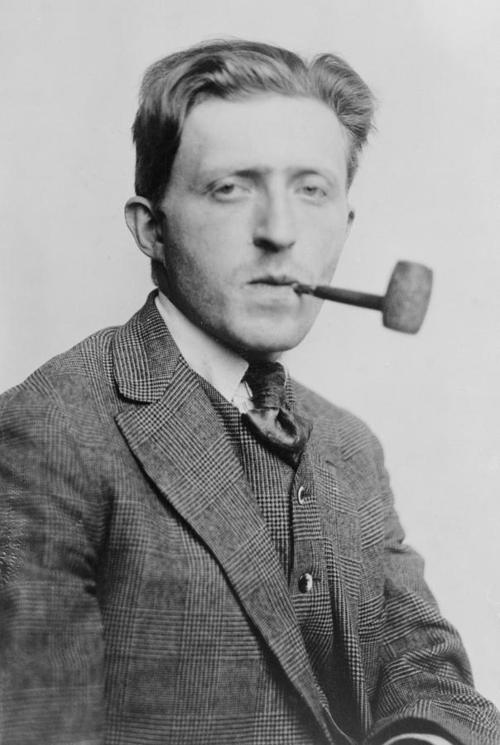
Maxwell “Bogie” Bodenheim (The Chiseler)
Bodenheim’s publisher, Horace Liverwright, even found himself the subject of a grand jury investigation, which had declared the book obscene, although he was never prosecuted (Liverwright’s defense attorney was none other than Arthur Hayes, who would also serve on Clarence Darrow’s defense team in the Scopes Monkey Trial).
The New Yorker reported that Bodenheim was “present under a $2,500 bond” following publication of Replenishing Jessica, and called him “one of our few sincerely colorful literati.” It was also suggested that Bodenheim suffered from a “the same persecution complex which tortured Lafcadio Hearn; in his mind, editors meet to plot means to keep him out of print” (Hearn was a late 19th century writer known for his stories based on Japanese legends).
“Talk” described Bodenheim as “ragged and unkempt,”
his pipe “a burnt corn-cob, wedged in his broken front teeth…Eccentric, erratic, is Mr. Bodenheim, careless of the world’s criticism outside of his work, but there is an air of sincerity about him, cynical sincerity, a brittle sparkle to his conversation, that fascination of exotic, social lawlessness.
There is an interesting New Yorker connection to Bodenheim, who met writer Ben Hecht in Chicago in 1912 and with him co-founded the short-lived Chicago Literary Times, which featured such poets and writers as Carl Sanburg, Theodore Dreiser and Sherwood Anderson.
After his success as a leading American author in the 1920s and 1930s, Bodenheim became a panhandler and was arrested and hospitalized a number of times for vagrancy and drunkenness. In an article for The Chiseler, critic John Strausbaugh wrote that Bodenheim had “a real talent for scandal, easy enough to generate during Greenwich Village’s prolonged drunken orgy in the Prohibition years.”
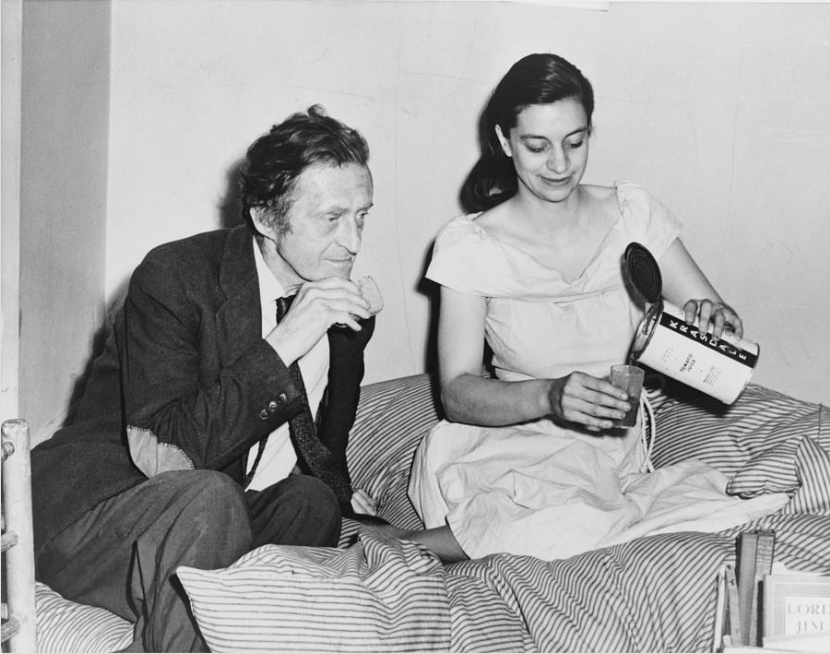
Maxwell Bodenheim and Ruth Fagin sharing a breakfast of tomato juice and sandwiches as they await eviction from their Bleecker Street apartment, circa 1952. (The Chiseler)
In 1952 the 60-year-old Bodenheim married his third wife, Ruth Fagin, who was 28 years his junior. Strausbaugh takes it from there:
In 1953, Ruth took up with a violent, mentally unstable dishwasher named Harold Weinberg. One night in the winter of 1954 the three of them wound up in Weinberg’s room off the Bowery. Bodenheim roused himself from a drunken stupor to see Ruth and Weinberg having sex. He attacked Weinberg, who pulled out a .22 and shot him through the heart. Then Weinberg stabbed Ruth in the chest. The last photos of Bodenheim show him and Ruth lying dead in the squalid room.
Weinberg confessed to the double homicide, was judged insane and sent to a mental institution.
Now on a happier note…
This issue was also replete with various equine diversions. A feature titled “Au Gallop!” looked at groups of New Yorkers who plied the bridal paths of Central Park.
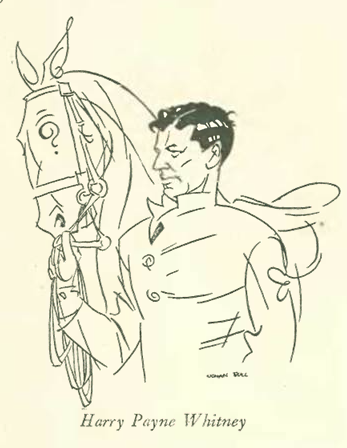
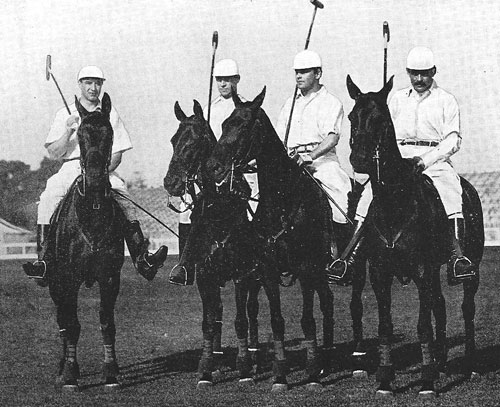
In “Profiles,” Jack Frost wrote admiringly about Harry Payne Whitney (accompanied by an heroic pen-and-ink portrait by Johan Bull). Whitney was a wealthy American businessman, thoroughbred horse breeder, and according to Frost, a “restless impatient force” who “concentrates on success.”
The victorious American team at the 1911 Westchester Cup. Harry Payne Whitney is second from left. (westchestercup.org/archives)
Among other things, The New Yorker credited Whitney with the creation of international-level polo competition in America and considered him the country’s best hope to win the Westchester Cup from England (Whitney was on the 1909, 1911 and 1913 winning American teams). Frost wrote that thanks to Whitney, “we have Homeric contests at Meadow Brook, as blood-stirring as the most epic battles of a Griffith film…”
There was no coverage of the Scopes Monkey Trial in Dayton, Tennessee, but cartoonist Al Frueh provided this reminder:
(New Yorker Digital Archive)
“Of All Things” noted that the population of New York City stood at 6,103,384, the 384 representing “those who have never had ferry-boats named after them” (The current population of the city is about 8.5 million).
View of midtown Manhattan looking southeast from Central Park, May 1925, when the population stood at 6,103,384. (Fairchild Aerial Surveys)
The column also offered this quip about the difference between France and England: “Another difference between the two countries is that England is working on the isolation of germs while France is still concerned with the isolation of Germany.”
Will Rogers was a popular draw as part of the “Follies” cast. (Will Rogers Memorial Museums)
The “Critique” section urged readers to see select Broadway shows before the new fall season. Recommended plays included What Price Glory, They Knew What They Wanted, Desire Under the Elms, Is Zat So?, the Ziegfeld Follies, Artists and Models, Lady Be Good and Rose-Marie.
The “Music’ section praised a new talent, Abram Chasins. “This young man is going to be something. In fifty years you may pat your granddaughter’s hair (if she has any) and tell her that you saw it in THE NEW YORKER first.” Chasins would have a long career as a pianist and composer, and later as a broadcaster and radio executive. He is perhaps best known for his Three Chinese Pieces composition.
The “Moving Pictures” section looked at Lightnin (“all our sentimental friends will find it a charming American epic”), and Rugged Water, starring Wallace Beery, who played a cowardly coast guard captain. Wrote the reviewer: “(Beery) does not seem to know what it is about and funks badly indeed. As for the rest of the picture, a good performance is given by the ocean.”
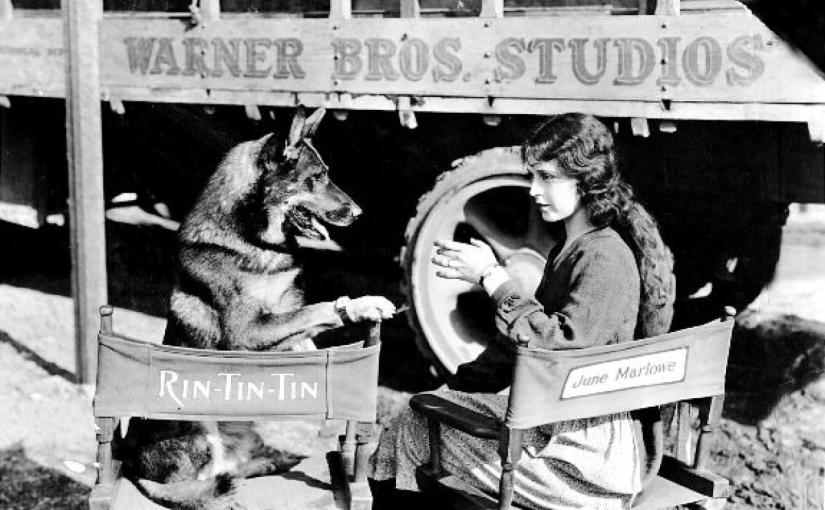
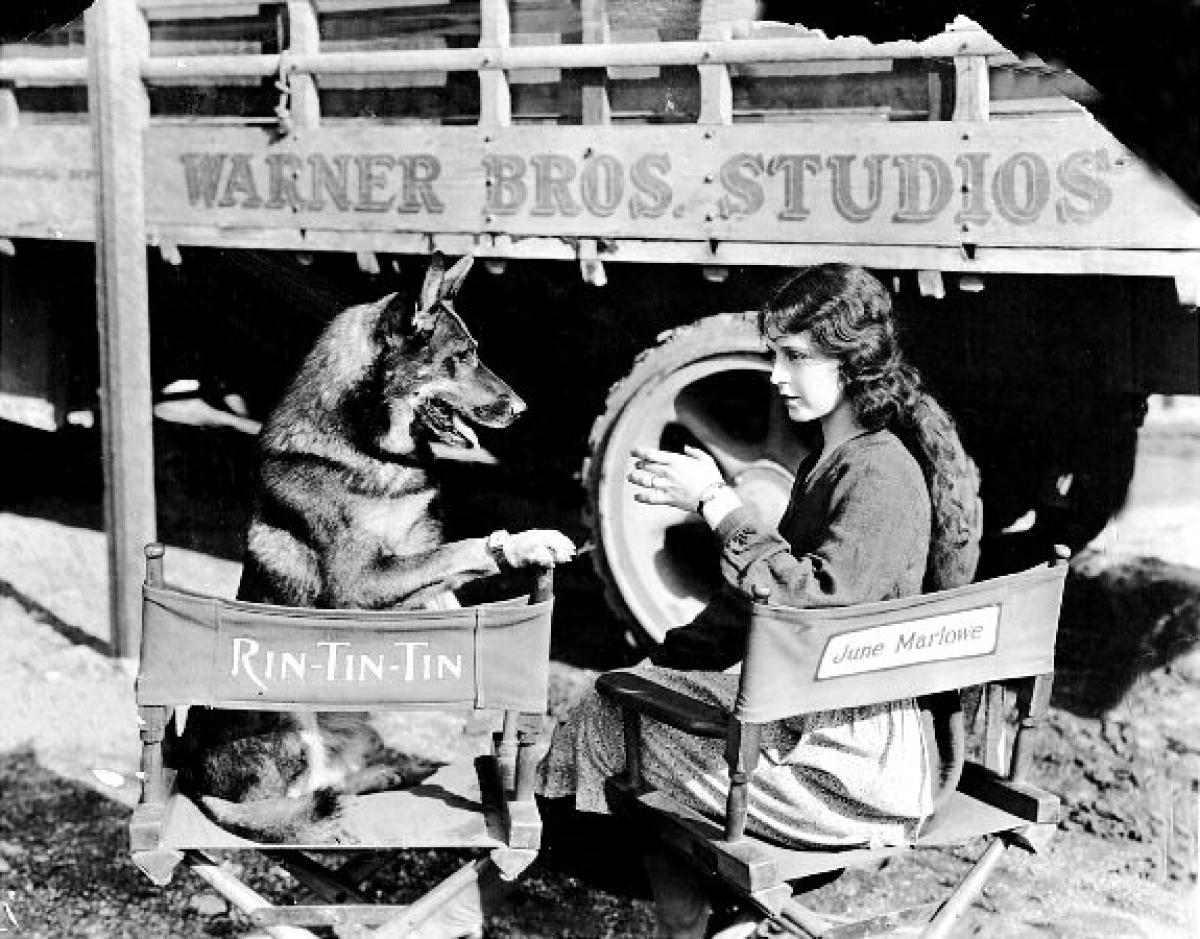
June Marlowe and Rin Tin Tin in a scene from Tracked in the Snow Country. (1925) (Warner Bros.)Rin Tin Tin and June Marlowe appear in an advertisement for wristwatches. They made four films together in 1925-26 (Warner Bros.)
In reviewing the dog superstar Rin Tin Tin’s latest movie, Tracked in Snow Country,Theodore Shane (“TS”) mused “It is questionable as to what a dog would say were he able to appraise the virtue that he defends on the screen. Would he find that gold mine worth fighting for or that gal’s innocence worth saving or that villain’s throat worth chawing?…He is a handsome animal to look on and appealing in every foot of the film he plays, but we wish that all that beauty would get cynical for a change.”
Susan Orlean wrote a terrific article about Rin Tin Tin in the August 29, 2011 issue of The New Yorker titled “The Dog Star: Rin Tin Tin and the making of Warner Bros.” She also published a book, Rin Tin Tin: The Life and the Legend that same year. Highly recommended.
In her column “When Nights Are Bold,” Lois Long offered readers cool escapes from the summer heat at various themed entertainment venues:
(New Yorker Digital Archive)
While advertisers continued to shill exclusive getaways for “carefully selected clientele”…
(New Yorker Digital Archive)
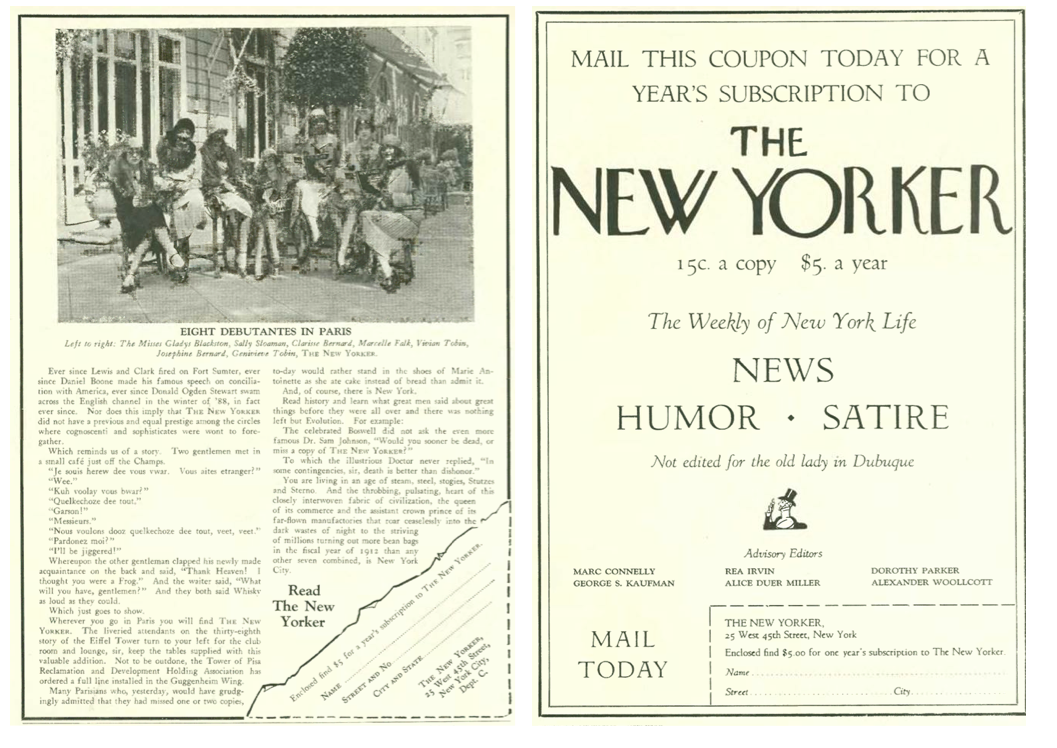
At this point the magazine itself seems to be hanging on by a thread. There is scant advertising in this thin issue (24 pages plus cover). The full-page ads on both the inside front and back covers are in-house ads promoting subscriptions to The New Yorker:
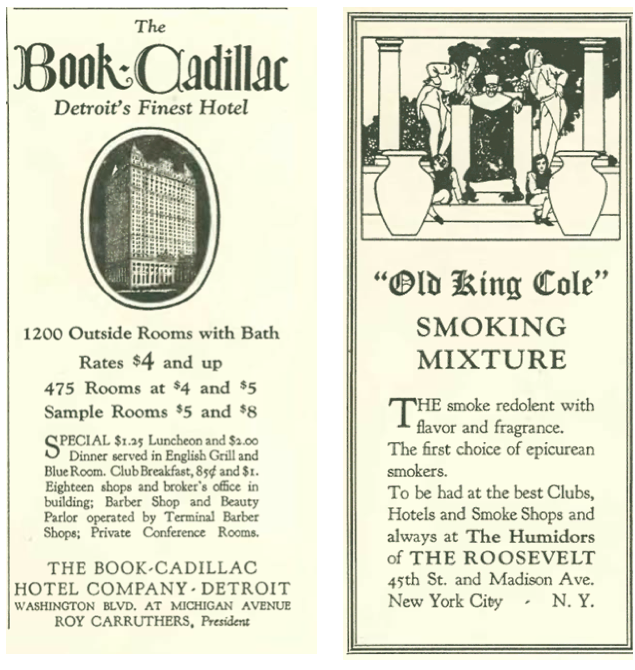
And here are two 1/6 page ads featured in the sports section, one from a Detroit hotel no less:
(New Yorker Digital Archive)
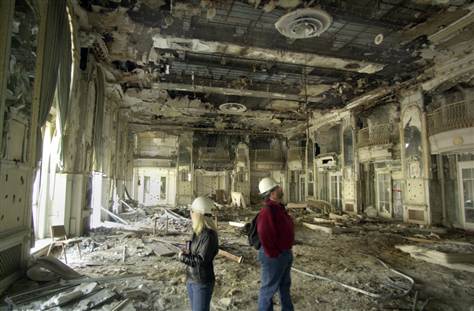
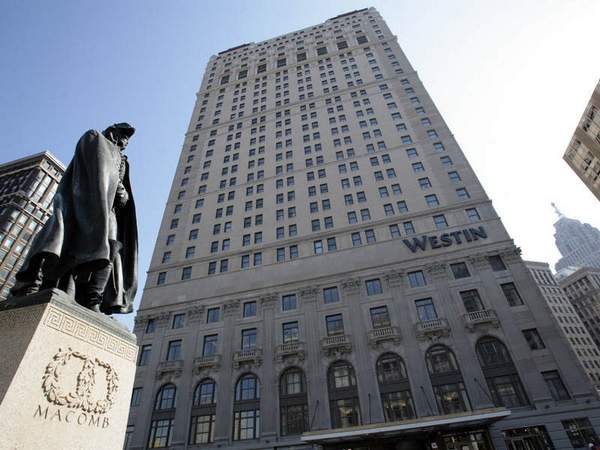
In a final note, I feature a rare non-NYC item. After falling into decay over several decades, Detroit’s Book Cadillac Hotel (advertised above) was restored in 2008 and reopened as a Westin hotel:
Before restoration (NBC News)The same room today after restoration (above), and the hotel’s exterior (Westin/Wikipedia)
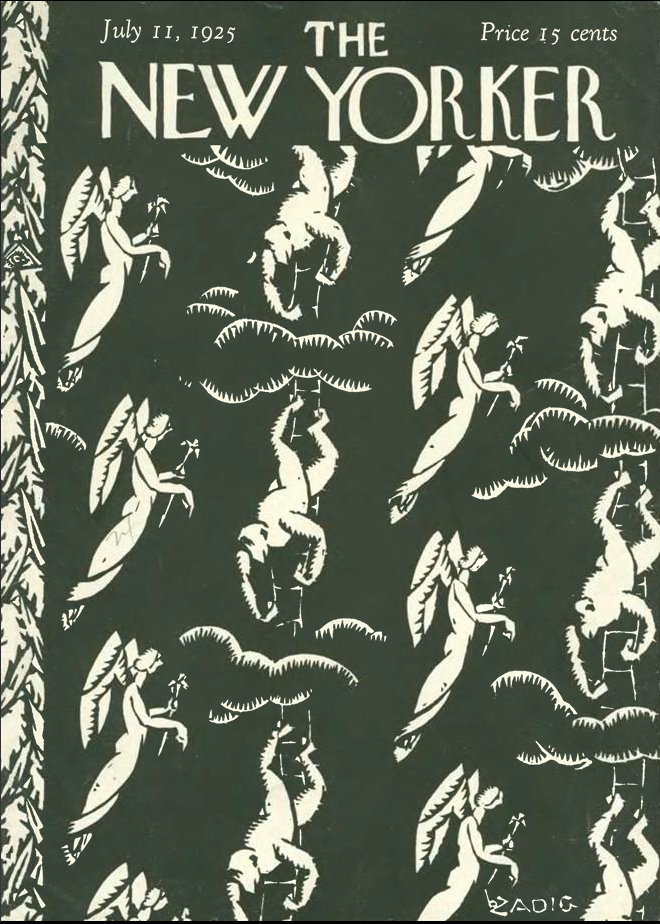
In its 21st issue (July 11, 1925) The New Yorker was back to taking swipes at William Jennings Bryan and the backward ways of Tennesseans as the Scopes “Monkey Trial” drew near.
Cover for July 11, 1925, by Bertrand Zadig. It was a low point for the fledging magazine–funds were so scarce that the cover was printed in black and white. (New Yorker Digital Archive)
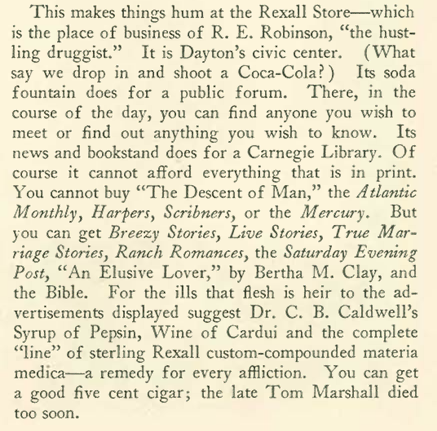
A four-page feature penned by Marquis James (the longest article to appear in The New Yorker since Issue #1), primarily focused on the trial’s setting—Dayton, Tennessee—and the habits and tastes of its countrified citizens:
Prosecutor and famed orator William Jennings Bryan had not yet arrived in Dayton, but the townsfolk were plenty enamored of the other star in their midst, attorney for the defense Clarence Darrow. James reported that the agnostic Darrow mixed surprisingly well with the locals:
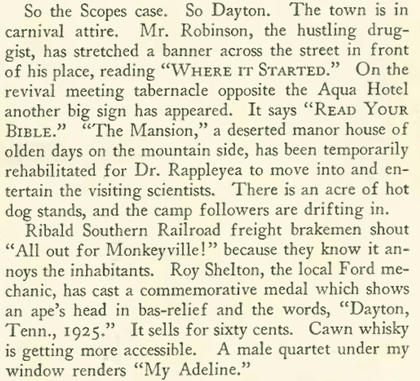
James concluded his piece with a description of the carnival atmosphere that gripped the tiny, formerly unknown town that was now the focus of the entire country:
(New Yorker Digital Archive)
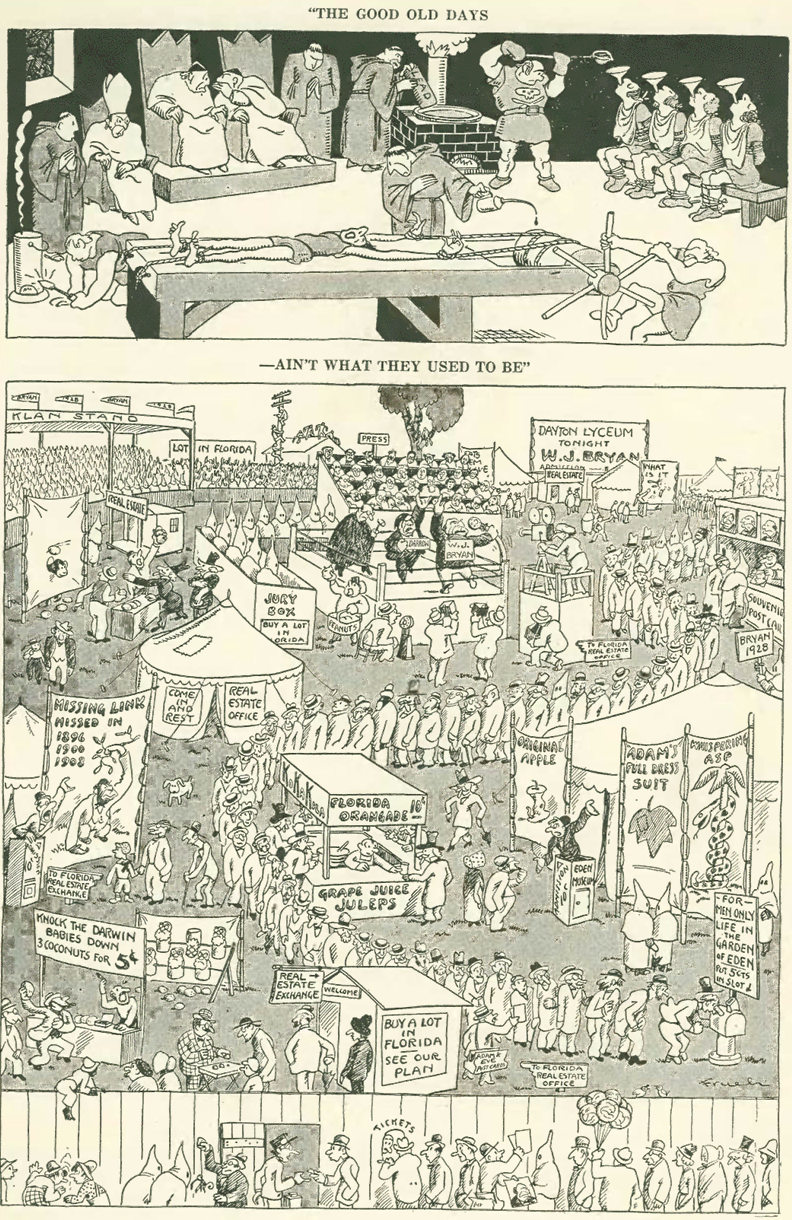
An illustration by Al Frueh that preceded James’s article makes hay of the “carnival atmosphere,” likening it to a modern-day version of the Inquisition:
(New Yorker Digital Archive)
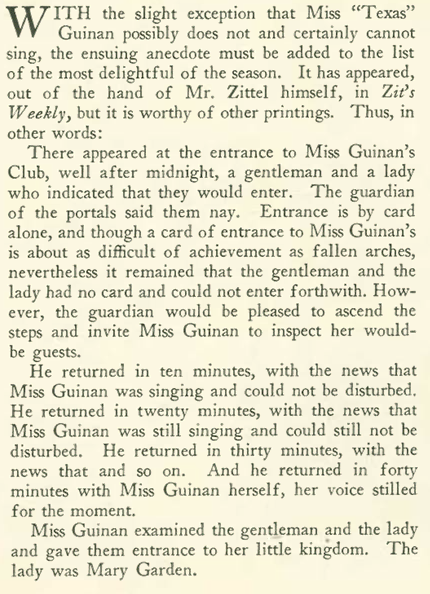
“The Talk of the Town” did its usual breezy wrap up of “The Week” (including the announcement of the birth of Charlie Chaplin’s son (by Lita Grey), and offered a somber note about the dampening effects of Prohibition on the restaurant trade. It also noted that David Belasco had marked 50 years in the theater business (though his influence was waning), and Texas Guinan personally opened the door of her nightclub to opera great Mary Garden after a bit of a misunderstanding:
(New Yorker Digital Archive)
“Profiles” looked at Clinton Peters, “The Daddy of Sunday Painters,” while “Moving Pictures” cheered Edmond Rostand’s “masterpiece,” Cyrano de Bergerac, starring French actor Pierre Magnier in a “magnificently well—seasoned interpretation.”
Pierre Magnier (left) starred in the hand-tinted color film, Cyrano de Bergerac. (Screen capture from YouTube)
The film was also “in color,” actually a cross between two-color technicolor and hand-coloring, sometimes using only one process or the other, sometimes both. According to IMDB:
Parts of the film were hand colored using the Pathécolor stencil process, in which groundstone glass is cut with a pantograph in the shape of an object to conform with what is on the 35mm print. A machine then passes a dye-soaked strip of velvet over the film with the glass stencil on top and the film is colored. Cutting the stencils (a stencil for every different color) was a very long and tedious process which delayed the release of the film by almost two years. The color style/scheme of the movie was to imitate the tone, color and feel of 17th Century Renaissance paintings.
In the review of another film, Paths to Paradise, the critic (TS) wrote that “Mr. Raymond Griffith establishes himself as a genuine comedian of the rank of Menjou and Chaplin.”
Raymond Griffith and Betty Compson in Paths to Paradise (1925) (travsd.wordpress.com)
The “Sports” section of these early issues of The New Yorker covered mostly polo, tennis, golf and yacht races and regattas, which I will explore more in future posts.
Fay Marbe on the cover of the June 28, 1924 issue of Movie Weekly.
In the section “When Nights Are Bold,” Charles Baskerville (signing as “Top Hat”) reviewed the tango dance performance by Fay Marbe at the Beaux Arts Restaurant: “She is easy on the eyes; and after her performance we were all patting her on the back, because it’s one of the most beautiful ones we have ever beheld.”
And now for the funnies: On the inside front cover, the musings of English cartoonist W. Heath Robinson, best known for his drawings of ridiculously complicated machines for achieving simple objectives:
(New Yorker Digital Archive)
And finally, this three-act performance by staff artist Johan Bull. In her book Defining New Yorker Humor, Judith Yaross Lee writes that Bull was a Norwegian immigrant who started out as a caricaturist for the sports department, but was pressed into greater service for his ability to mimic Rea Irvin’s style:
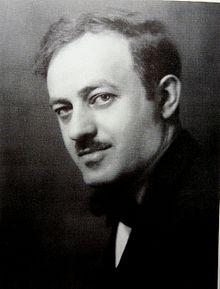
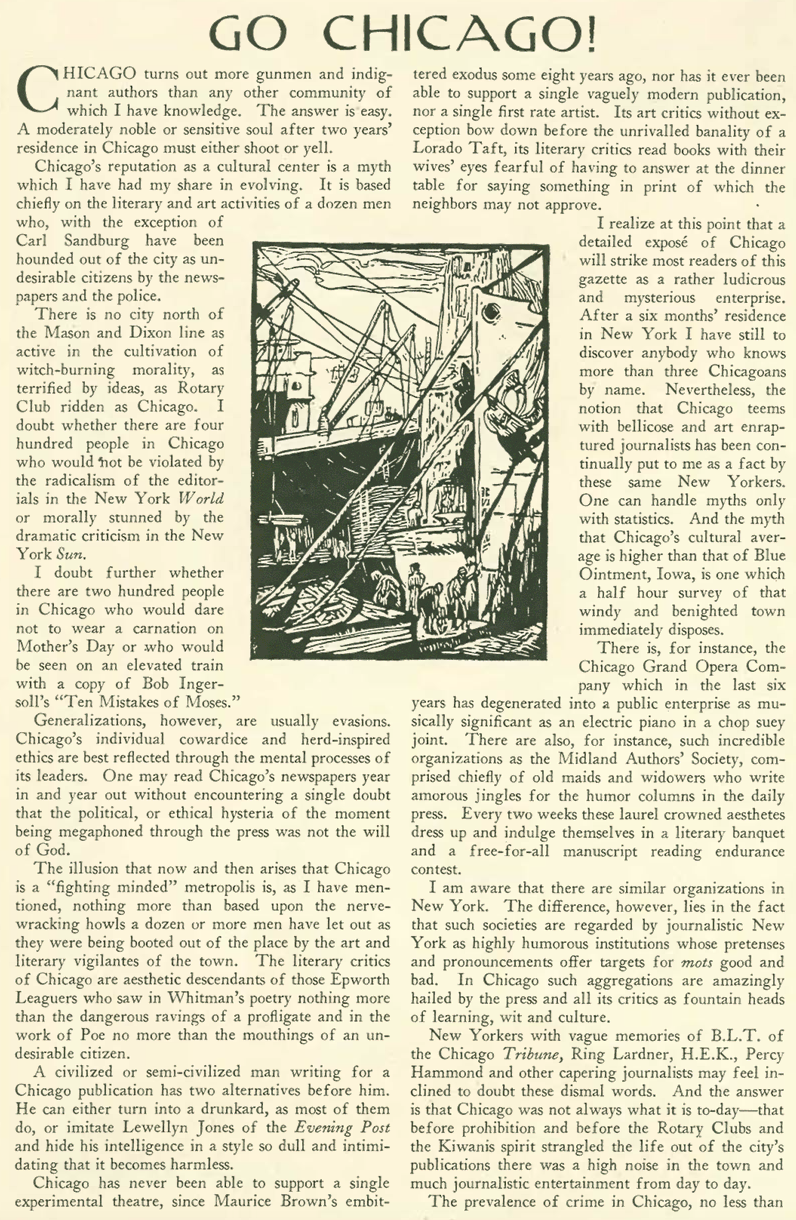
The New Yorker rarely missed an opportunity to take potshots at rival cities such as Philadelphia or Boston, but Chicago was a special target in the magazine’s crosshairs as a notorious Midwestern backwater. The July 4, 1925 issue included a feature titled “Go Chicago,” in which Ben Hecht parodies the city’s pretensions and acts of boosterism.
Ben Hecht in 1919. (Wikipedia)
Among Hecht’s observations:
There is no city north of the Mason and Dixon line as active in the cultivation of witch-burning morality, as terrified by ideas, as Rotary Club ridden as Chicago.
I include below the entire piece for the full effect of Ben’s acid-tipped pen:
(New Yorker Digital Archive)
A note on Hecht: According to IMDB, he is considered one of Hollywood’s and Broadway’s greatest writers. He won an Oscar for best original story for Underworld (1927) at the first Academy Awards in 1929 and had a hand in the writing of many classic plays and films, including the play The Front Page and the film Notorious. Although he received no credit, Hecht was paid $10,000 by David O. Selznick to perform a “fast doctoring” on the script for Gone With The Wind.
The New Yorker celebrated its first Fourth of July with a busy, two-color cover depicting Coney Island’s famous Luna Park:
July 4, 1925 cover by Ilonka Karasz. (New Yorker Digital Archive)
One wonders if the cover art was part of an arrangement for advertising revenue, given that this ad appeared on the back cover of the same issue:
(New Yorker Digital Archive)
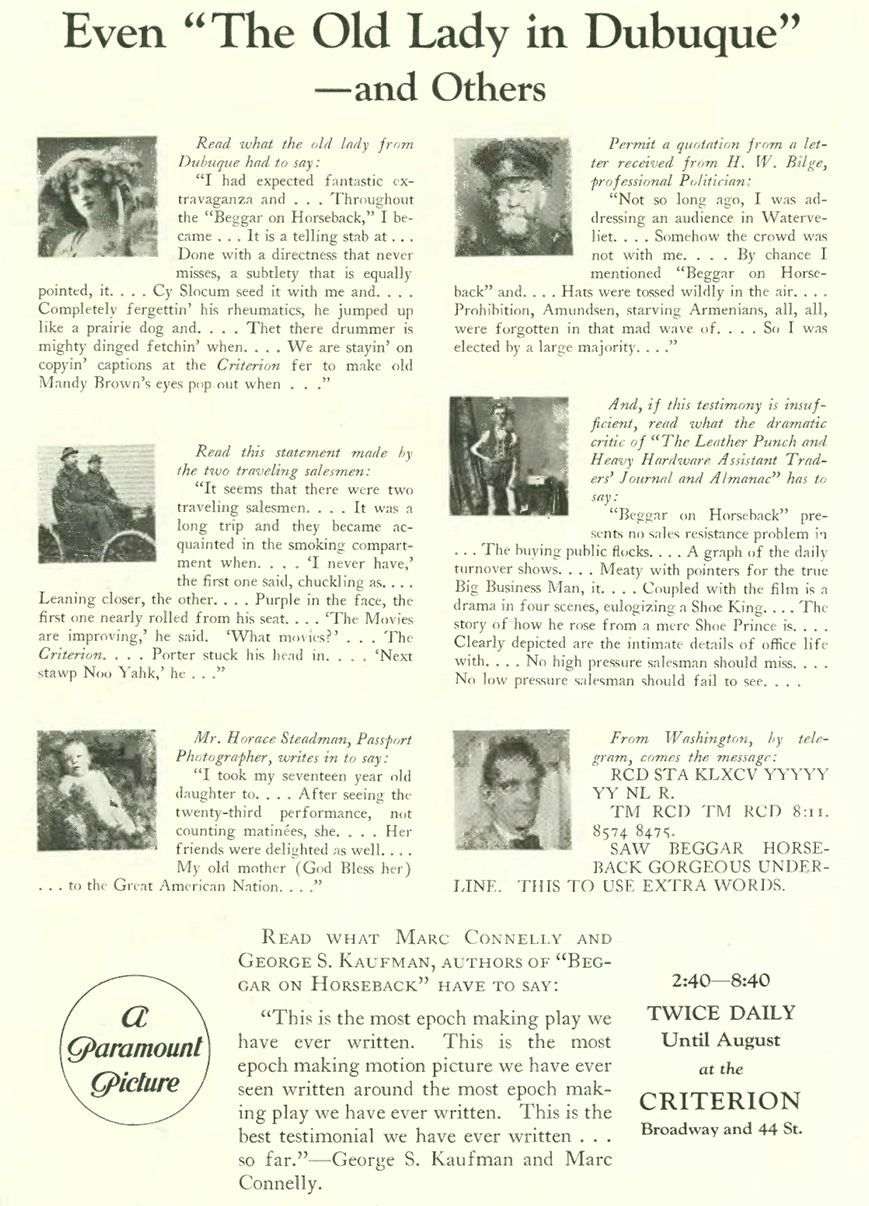
The inside front cover of the issue featured a full-page ad for the Paramount film, Beggar on Horseback, complete with joke reviews from the “Old Lady in Dubuque” and others including the film’s two writers, Marc Connelly and George S. Kaufman, who were also advisory editors of The New Yorker:
(New Yorker Digital Archive)
“Talk of the Town” commented on how modern artists such as Henri Matisse, Marsden Hartley, Charles Demuth and Constantin Brancusi were influencing contemporary fashion: “To-day sees the dress houses and even the Fifth Avenue department stores displaying “Cubist fashions”—scarves patterned like composite photographs of all the abstruse countenances in Euclid’s book of open curves, gowns that are marked with subtle diagrams on the variation of the triangle…sports blouses done in bands of gradated color and roundish forms which proclaim their nepotal relation to Cezanne…”
Dress at left “suggests the fractured and splintered paintings of George Braque, Marcel Duchamp and the early cubist paintings by Picasso. In both art and fashion, Cubism was the modern style” (description and image from Smith College Historic Clothing). At right, a dress from 1924 designed by Paul Poiret (Thierry de Maigret).
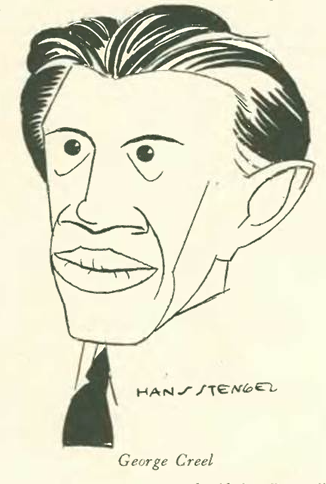
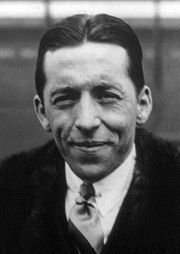
“Profiles” featured George Creel, an investigative journalist and politician who headed President Woodrow Wilson’s propaganda arm, the Committee on Public Information, during World War I. The profile’s author, Harvey O’Higgins, wrote that “The Incredible Mr. Creel” was often unpopular with the press as a war-time propagandist, but Creel himself was not a censor but rather a good-humored, honest man with “the ideals of an adolescent.”
Hans Stengel rendering of George Creel in “Profiles” (New Yorker Digital Archive)
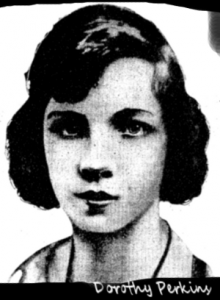
In the “Of All Things” section, Howard Brubaker wryly observed: “Now that Dorothy Perkins has been sentenced to three years in prison we hope that ladies will think twice before killing gentlemen unless they are actually annoying.”
At the time, Perkins was the youngest woman ever charged with murder in New York. She was just 15 when she met 35-year-old Mickey Connors, described by blogger Mark Gribben in The Malefactor’s Register as a “truck driver and spouse-abusing divorced felon.”
Gribben writes that “Connors and Dorothy apparently met in June 1924 when he wed the mother of one of Dorothy’s girlfriends. After that marriage, Connors moved away from Greenwich Village, but kept in contact with Dorothy on the sly.”
According to Gribben, on Valentine’s Day 1925, a rival suitor for Dorothy, 26-year-old Tommy Templeton (who served with Dorothy’s father, Rudolph, in World War I), attended a birthday party for Rudolph at his Greenwich Village house. During the party, the drunken Rudolph apparently asked Dorothy, “Why do you want a bum like Connors when you can have a nice fellow like Tommy?” At some point Dorothy went to her room to fetch a .22-caliber revolver she had stolen from an aunt in Connecticut.
Dorothy Perkins (The Malefactor’s Register)
What ensued was related by the family minister, Rev. Truman A. Kilborne, in testimony to the court. Rev. Kilborne said the family told him that when Rudolph attempted to take the revolver from his daughter, she resisted and in the struggle the revolver went off. Templeton, who was standing nearby, was shot through the heart.
During her trial, Dorothy claimed that her standoffish treatment of Tommy (and being seen with Conners) was an attempt to make “(Tommy) jealous by flirting with someone else.”
On June 17, 1925, the jury rejected the state’s case that the shooting was murder and convicted Dorothy of manslaughter.
Contrary to The New Yorker account, Dorothy was sentenced to 5 to 15 years in the women’s prison at Auburn, but ended up serving just four years of the sentence, during which time she was trained as a stenographer. She was released in January 1929 for good behavior. Mickey Connors served a few months in the Tombs prison for contributing to the delinquency of a minor.
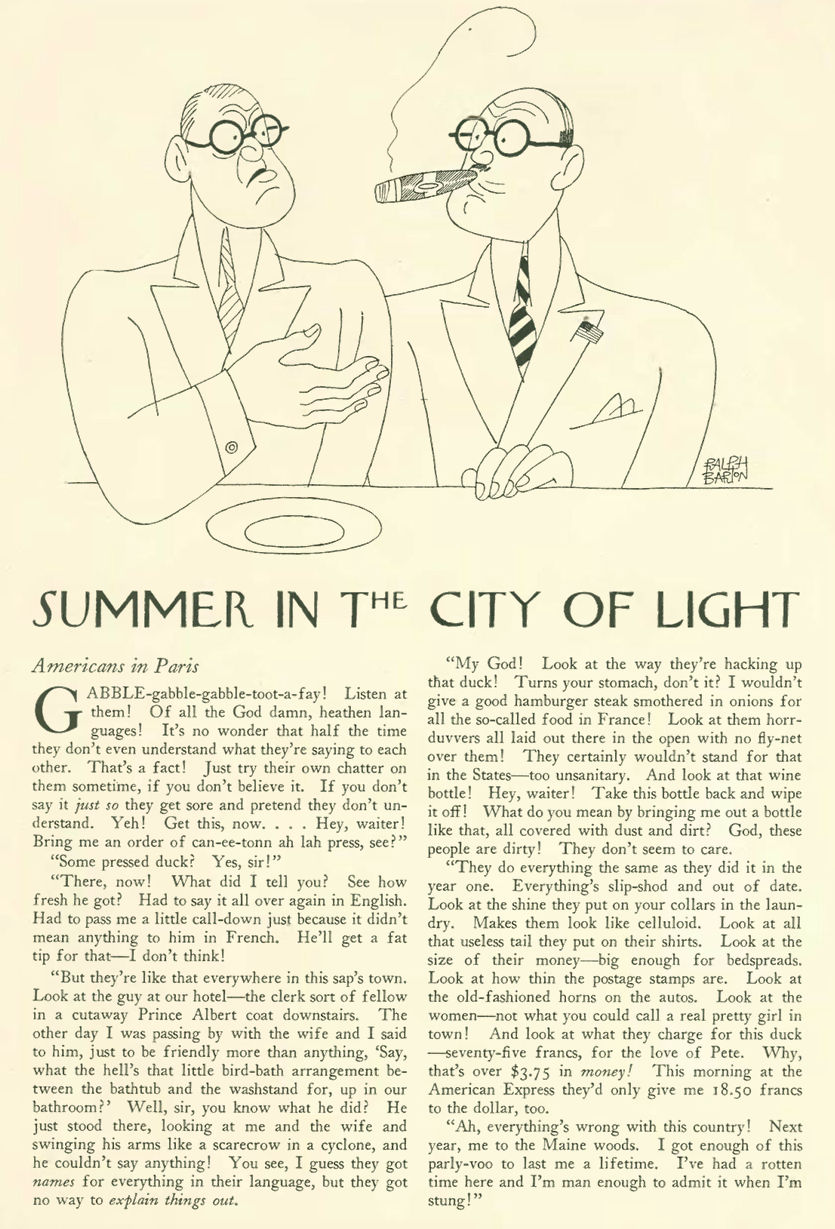
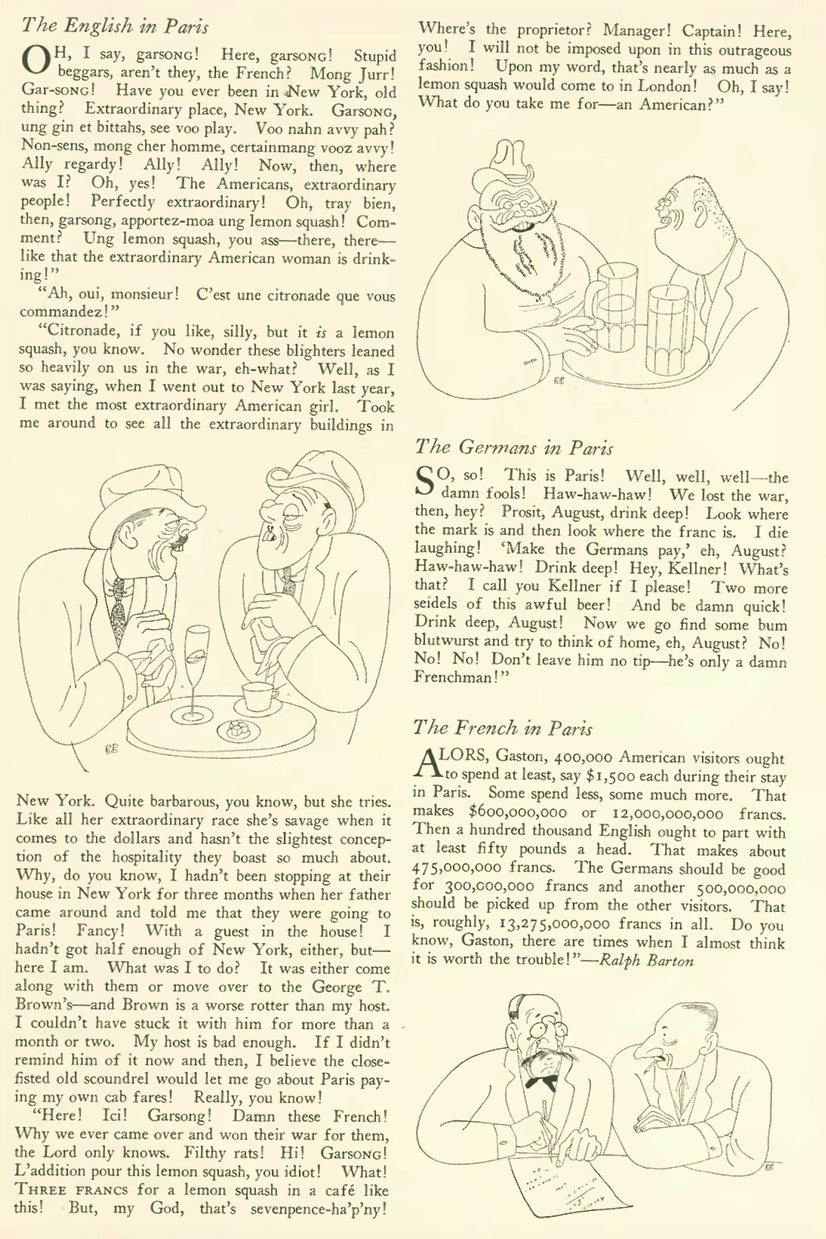
The issue also included this wonderful two-page illustrated feature by Ralph Barton, a subject in my previous blog post, The Vicious Circle. Barton was very familiar with French life and customs. According to Wikipedia, in 1915 Puck magazine “sent Barton to France to sketch scenes of World War I. It was then that Barton developed a great love of all things French, and throughout his life he would return to Paris to live for periods of time. In 1927 the French government awarded Barton the Legion of Honour.”
(New Yorker Digital Archive)
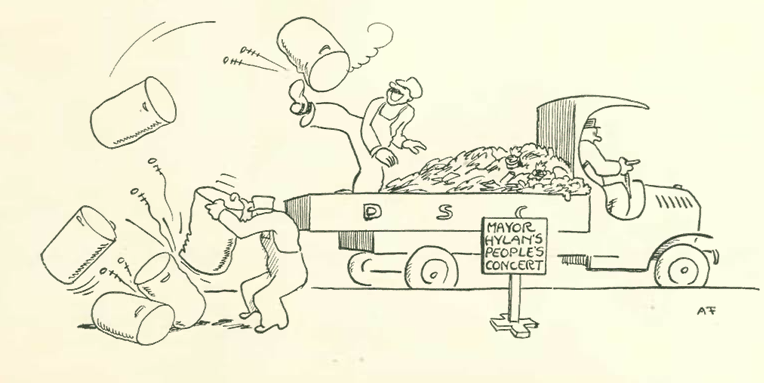
And finally, a cartoon from the issue that takes aim at New York City Mayor John F. Hylan. From the very first issue of The New Yorker (Feb. 21, 1925), the mayor (comically referred to as “Jonef Hylan”) was a frequent target:
The next great figure in the early legends of New York is that of Jonef Hylan. Hylan, in all probability, was not a real person; but it is impossible to understand New York without giving careful study to the Hylan myth. In many respects, it resembles the Sun Myth of other great civilizations; for his head was as a head of flame, and he rose early each morning from beyond the East River, bringing light into all the dark places and heat into the sessions of the Board of Estimate. The populace called their Sun God “Red Mike”; but in the frenzy of their devotions, they simply yelled “Ra! Ra!
Cartoon by Al Frueh from the July 4, 1925 issue (New Yorker Digital Archive)
Anticipation of the upcoming Scopes “Monkey Trial” continued to fill the pages of The New Yorker. In the June 20, 1925 issue, “The Talk of the Town” led with an account (titled “Martyr de Jour”) of trial defendant John T. Scopes’s visit to New York City.
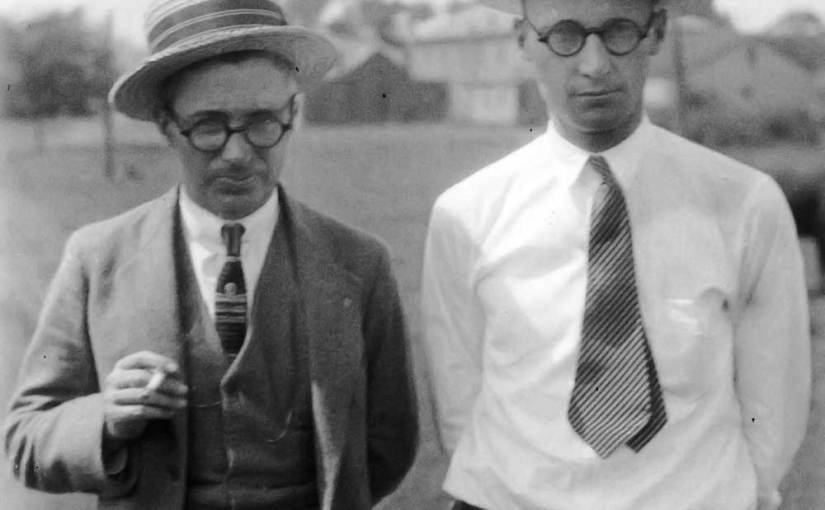
The “Talk” author wrote admiringly of Scopes, if not also with a degree of condescension, noting that the Tennessee schoolteacher was “introduced in circles with which, hitherto, he had been acquainted only through his love for books and periodicals…He was fêted and lionized, this back-country school-teacher, a shrewd, slow-speaking, slow-moving individual such as novelists have misrepresented as being typical of our agricultural regions. He was lionized socially, that is. Although, of course, there was that rather distressful incident of entertainment when Mr. Scopes and Dr. George W. Rappleyea, his devoted friend, attended the “Follies” by invitation of the late press agent for the American Civil Liberties Union, and found, on arrival that while guests they were expected to pay for their own tickets.”
Rappleyea and Scopes in 1925 (Smithsonian Institution)
Scopes and Rappleyea were in town to find scientists who would be willing to testify in Scopes’ legal case. “Talk” noted that despite its humble description of the teacher, Scopes was no meek country boy; indeed he had complained to the press that his importance had been minimized by all the attention paid to the prosecuting and defending attorneys, Clarence Darrow and William Jennings Bryan.
For the record, George Rappleyea was a metallurgical engineer and manager of the Cumberland Coal and Iron Company in Dayton, Tennessee, which was the site of Scopes Trial. It was Rappleyea who convinced a group of Dayton businessmen to sponsor a test case of the Butler Act (which prohibited the teaching of evolution in state schools) and also convinced Scopes to serve as defendant.
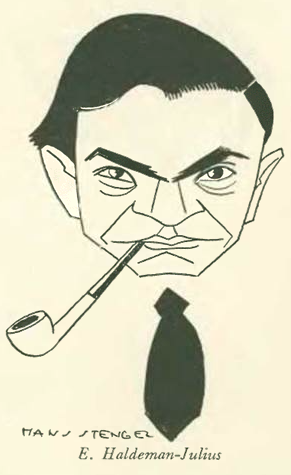
The trial would attract many public figures, including E. Haldeman-Julius, who was coincidentally featured in the issue’s “Profiles” section.
Hans Stengel’s “pen portrait” of E. Haldeman-Julius
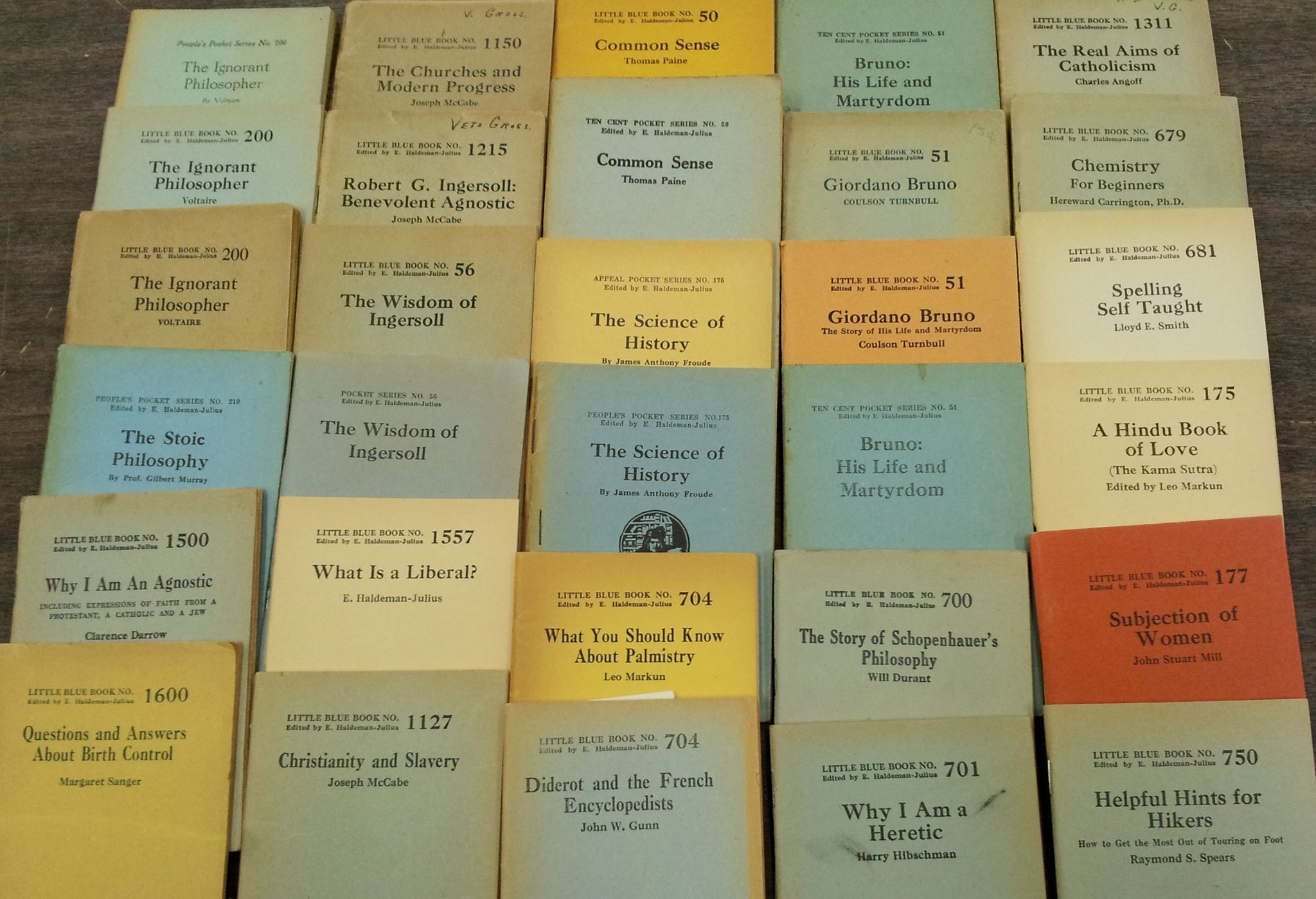
Haldeman-Julius was a socialist reformer and creator of a series of small, staple-bound booklets known as “Little Blue Books,” which featured various writings on social issues and abridged reprints of classic literature.
If a book sold less than 10,000 copies in one year, Haldeman-Julius would remove it from his line. But first he would try out a lurid title for the book, and sometimes the tactic would revive sales. For example, The Tallow Ball by Guy de Maupassant sold 15,000 copies one year, but nearly 55,000 the next year after the title was changed to A French Prostitute’s Sacrifice.
A sampling of Little Blue Books (image: centerforinquiry.net)
The writer of the profile, Alexander Woollcott, noted that 75 million Little Blue Books had been published to date (according to Haldeman-Julius), and one might conclude that the famous socialist pamphleteer had “sold out to Mammon” because of the wealth generated from the sales, but Woollcott concluded that Haldeman-Julius and his wife, Marcet, were accomplished authors themselves (including their 1921 novel Dust) and even a socialist crusader would feel pride at the sight of a workman on a subway train, settling back with “his Little Blue Book.”
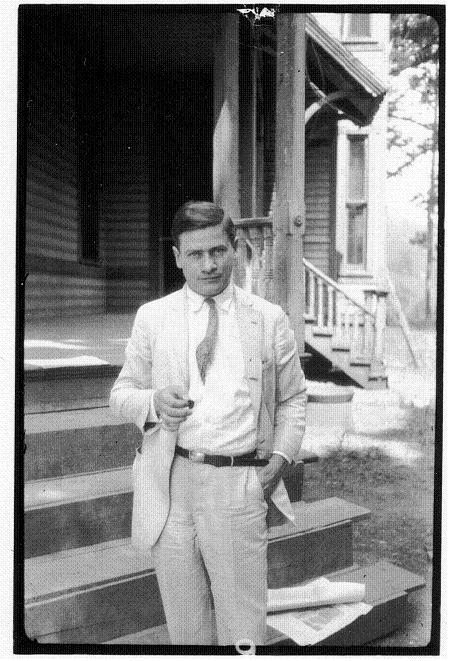
It should be no surprise that Haldeman-Julius was also present in Dayton for the Scopes Monkey Trial. According to the Smithsonian, he and his wife Marcet drove 200 miles from their home in Kansas to observe the trial. In this photo he is shown on the steps of “Defense Mansion,” an old Victorian house owned by Rappleyea’s coal and iron company, which had been quickly restored by Rappleyea to accommodate the defense team and their scientific witnesses. (Smithsonian Institution)
The “Critique” section offered this observation about a new show at the Colonial, featuring Johnny Hudgins (Hudgins was featured in my April 8 blog, Knickerbocker Junction:
(New Yorker Digital Archive)
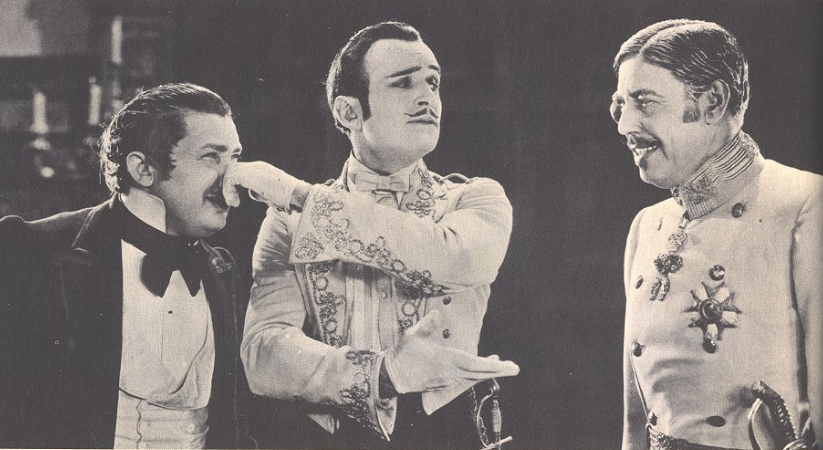
There was also an item about Don Q, Son of Zorro, a film starring Douglas Fairbanks that made its debut at Broadway’s Globe Theatre. The review noted that the movie is full of Fairbanks acrobatics, and “Doug does everything except play the saxophone.”
Don Q (Douglas Fairbanks) tweaks the nose of Don Fabrique (Jean Hersholt), much to the amusement of The Archduke (Warner Oland). (Scan from Jean Hersholt’s Album Of Hollywood Stars, a promotional booklet sponsored by the makers of Vaseline)
It was noted, however, that the best performance of the picture was by Warner Oland, who played a dimwitted archduke. The Swedish actor Oland would gain fame for playing “oriental” characters, most notably Dr. Fu Manchu in the late 20s and early 30s, and the detective Charlie Chan in more than a dozen movies in the 1930s. He also played the role of “The Cantor” in 1927’s The Jazz Singer, one of the first of the “talkies.”
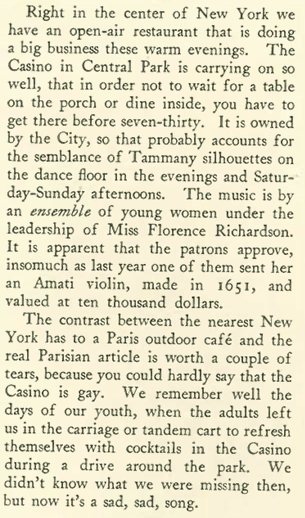
“When Nights Are Bold” featured, among other items, this bit about the growing popularity of an open-air restaurant in Central Park called “The Casino”:
(New Yorker Digital Archive)
The Museum of the City of New York blog notes that the Central Park Casino began in 1864 as the Ladies’ Refreshment Salon. About 20 years later the salon “morphed into a far pricier destination, called The Casino, and was open to both sexes. The name was used to invoke the Italian translation of “little house” rather than denoting a gambling joint.” Because of its park location and then rare outdoor seating option, it was the place to see and be seen. By the early 1920s it had declined into “a somewhat dumpy night-club,” but when flamboyant Mayor Jimmy Walker took office in 1926 he personally revived the Casino (through “a series of somewhat sketchy maneuvers”) and turned it into an exclusive nightclub for high society. The good times quickly ended with the 1929 market crash.
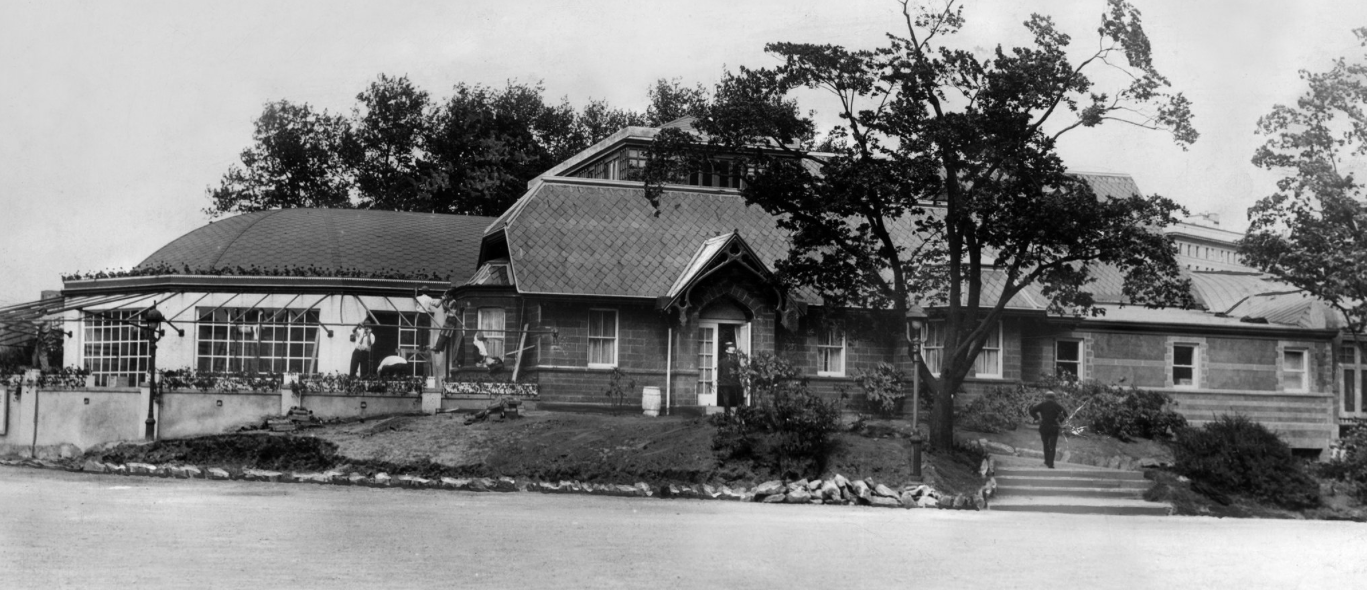
Central Park Casino (The New York Times)
According to centralparkhistory.com, on opening night, June 4, 1929, “a good deal of cynical talk was bandied about among the crowd who watched the socialites arrive. In the fall mayoral campaign Fiorello La Guardia had attacked Walker for leasing the “whoopee joint” in the park to his close friends for a ridiculously low rent — friends who, in turn, obtained some of their financing from gangster Arnold Rothstein (the man who reputedly fixed the 1919 World Series). The stock market crashed that same fall and federal prohibition agents raided the Casino. The elegant playground of the rich had become a symbol of decadence and corruption.” Parks commissioner Robert Moses later replaced the Casino with the Rumsey Playground, which in turn was replaced by the park’s current SummerStage.
Finally we close with some illustrations from the issue. In her book, Defining New Yorker Humor,Judith Yaross Lee writes that the magazine’s “signature caricaturists established the New Yorker’s high sense of humor and gave comic character to the texts…The New Yorker attracted first-rate artists despite its comparatively low rates because photojournalism was restructuring their work, and because art editor Rea Irvin gave it attractive layouts.”
On the inside front cover, this illustration by W. Heath Robinson takes aim at upper-class vanities:
(New Yorker Digital Archive)
And here are some comic trifles; these were usually found in the center pages, sort of a “joke section” for the smart set. Note the ubiquitous “The Optimist” filler, a tired joke featured repeatedly in the first issues until Katharine (Angell) White came on board later that year and put an end to such nonsense. Also note that the second item is contributed by Julius H. Marx, better known as Groucho:
(New Yorker Digital Archive)
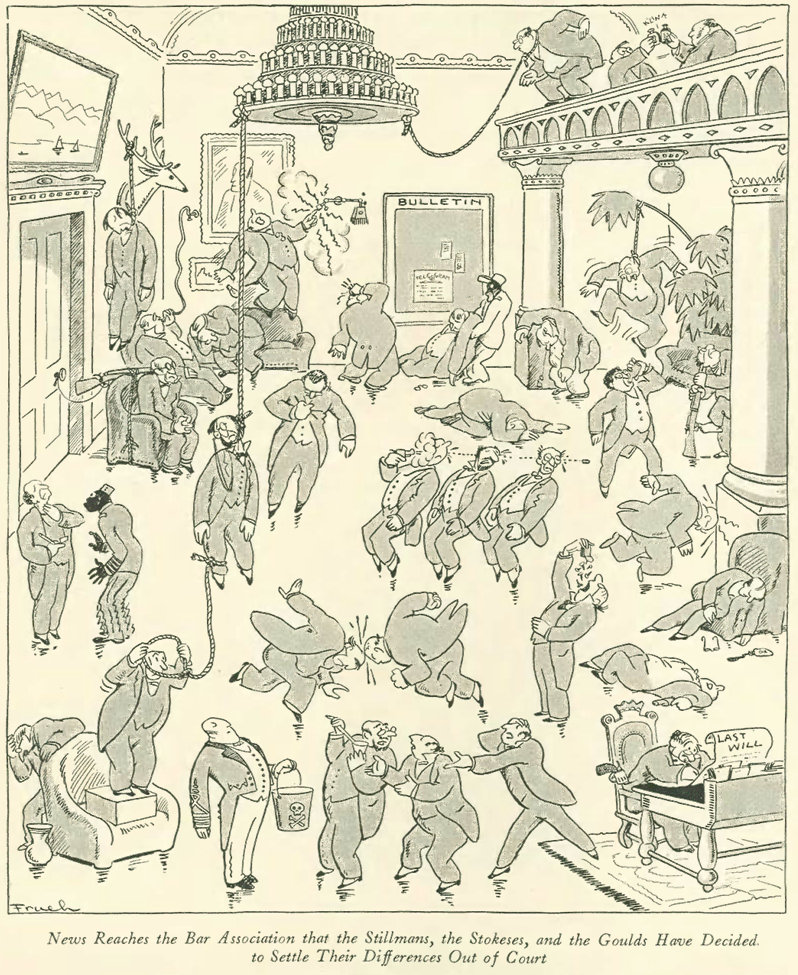
A good example here of how another artist, Al Frueh, finds humor in how the professional elites and the moneyed classes overreact to seemingly minor incidents. In just four years this wouldn’t be so funny:
(New Yorker Digital Archive)
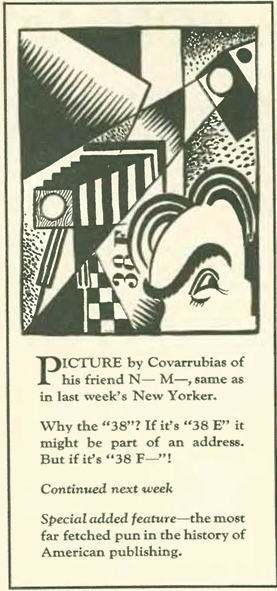
Again we get the mysterious Covarrubias drawing, also featured in my previous post, Bryan’s Planet of the Apes:
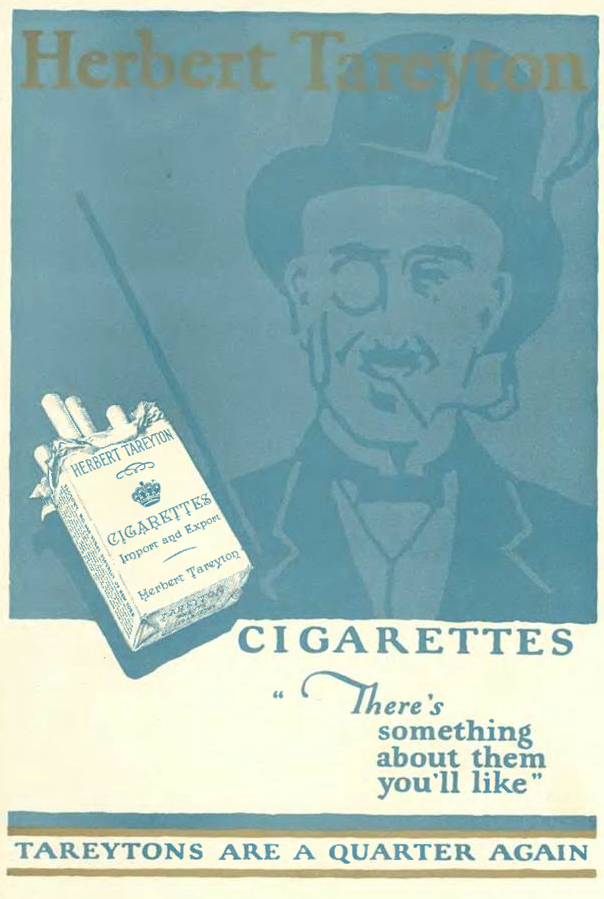
And finally, an advertisement for “Herbert” Tareyton cigarettes. Not exactly the most the persuasive tagline:
May 9, 1925 cover by Rea Irvin (New Yorker Digital Archive)
The passing of Schultz, the head of New York’s claque, was noted in “The Talk in Town” for May 9, 1925. A “claque” is simply a group of people hired to either applaud or heckle a performer, usually in theater or opera, but in the case of Schultz (he was only known by his surname) his claques were known for being heavy handed.
“Talk” continued its reporting on the comings and goings of the writer Dikran Kouyoumdjian, better known by his pen name, Michael Arlen. Exhausted from a busy social schedule (“no visitor has been so lionized since the Prince of Wales”), Arlen had retreated to Farmington to work on a play.
With Madison Square Garden slated for demolition, it was reported that the Diana figure atop MSG’s Italianate tower was to be relocated to the NYU campus. “Talk” noted that the Diana was the only nude ever completed by famed sculptor Augustus Saint-Gaudens. The statue is now at the Philadelphia Museum of Art, and a copy is in New York’s Metropolitan Museum of Art.
Diana atop MSG (Wikipedia)
At the time, the NYU campus was largely based on a design by Stanford White, also the architect of the soon-to-be demolished Madison Square Garden. “Talk” noted that although the manner of White’s death put him “in a poor light among his puritanical countrymen,” many “courageous men” including Saint-Gaudens strongly defended White as a kind, unselfish and loyal friend.
Let’s step back about twenty years for bit more on Stanford White: He was a founding partner of the architectural firm McKim, Mead & White. Although many considered him witty, kind, and generous, he also had the reputation of a middle-aged serial seducer of teenage girls. White’s desire for Evelyn Nesbit, a popular chorus girl and model, would be his undoing.
Stanford White’s Madison Square Garden, razed in 1925. The site is now occupied by the New York Life Building (right). Images courtesy nyc-architecture.com (left) and Wikipedia (right).
On June 25, 1906, White attended a premiere performance of Mam’zelle Champagne at a garden theatre he had designed on the rooftop of Madison Square Garden. Ironically, during the show’s finale, “I Could Love A Million Girls”, Nesbit’s jealous husband, Harry Thaw, shot White three times, point blank.
Madison Square Garden Rooftop Theatre where White was slain by Harry Thaw. (Lost New York)Evelyn Nesbit (Wikipedia)
It was reported that the initial reaction from the crowd was cheerful, since elaborate party tricks were common among the upper classes of New York society. Hysteria would however ensue.
Thaw would be found not guilty by reason of insanity, and would be plagued by mental illness until his death in 1947. Nesbit, who was present at the theatre the night of the shooting, would eventually divorce Thaw. She would go on to a modest career in vaudeville, film and even burlesque (when she was in her fifties). She moved on to a quieter life after World War II and died in 1967 at age 82.
“Profile” examined the life of “Ashcan School” painter George Luks, while this blurb in “Of All Things” gave us a glimpse of things to come:
On a lighter note, we end with comic commentary by Al Frueh on the Liquor Commission’s attempt to lock out patrons of New York’s speakeasies:







































 A New Yorker State of Mind