Blowing Smoke

The Roaring Twenties were an age when many social norms were challenged, including gender roles. Stars such as Marlene Dietrich wore men’s clothing, and many women went to work (women in the workplace increased by 25 percent) and they smoked in public.
Screen Shot 2016-01-15 at 5.49.44 PM
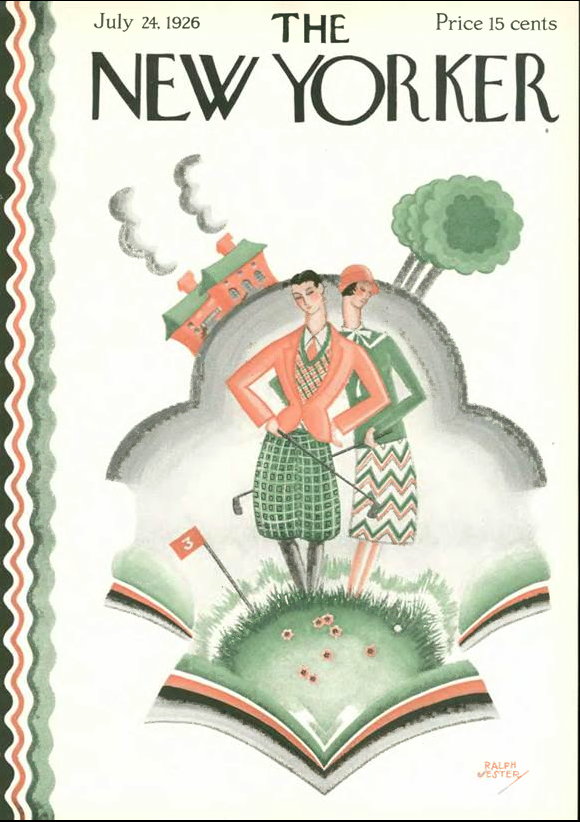
July 24, 1926 cover by Ralph Jester.

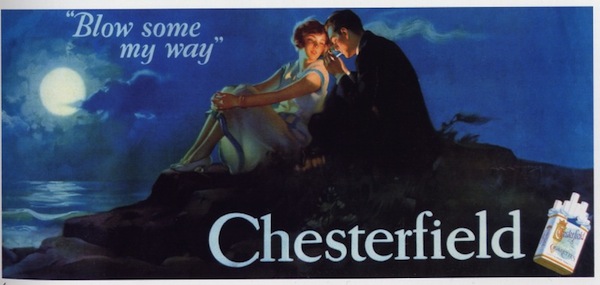
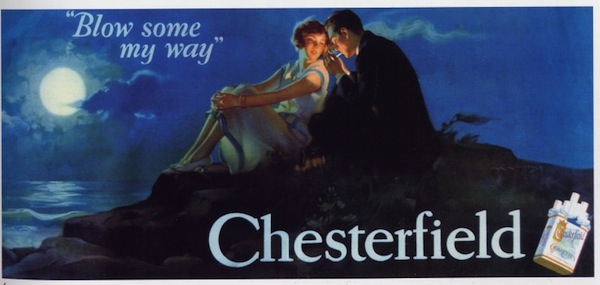
At first smoking in public was associated with the wild behavior of flappers, but thanks to American advertising know-how, things quickly changed. What helped spark that change was this controversial 1926 magazine and billboard advertisement:
154997-chesterfield2
Now we call it “second-hand smoke” (History News Network)

Naturally, the editors of “The Talk of the Town” had something to say about all the fuss:

Screen Shot 2016-01-20 at 5.48.13 PM

Give dubious credit to Chesterfield for cracking a barrier. And thanks to mass marketing, what was rare and shocking quickly became commonplace. Subsequent cigarette ads featured women who didn’t need a man to blow them any smoke; they were independent, successful and famous:

mass_marketing_9
This is among the earliest cigarette ads to feature endorsements from famous women. In 1927, Lucky Strike began collecting testimonials from female celebrity smokers, ranging from movie stars to celebrities. In this 1928 ad, Amelia Earhart endorses Lucky Strike. (Stanford School of Medicine)

The editors of The New Yorker obviously loved cars and the advertising they attracted, so for the July 24 edition they dispatched a writer and an artist to the motor races at Atlantic City to record the momentous event. However, staff writer Eric Hatch seemed as interested in the attire of the drivers as in the race itself:

Screen Shot 2016-01-20 at 5.58.01 PM

15923194155_601babf18c_b
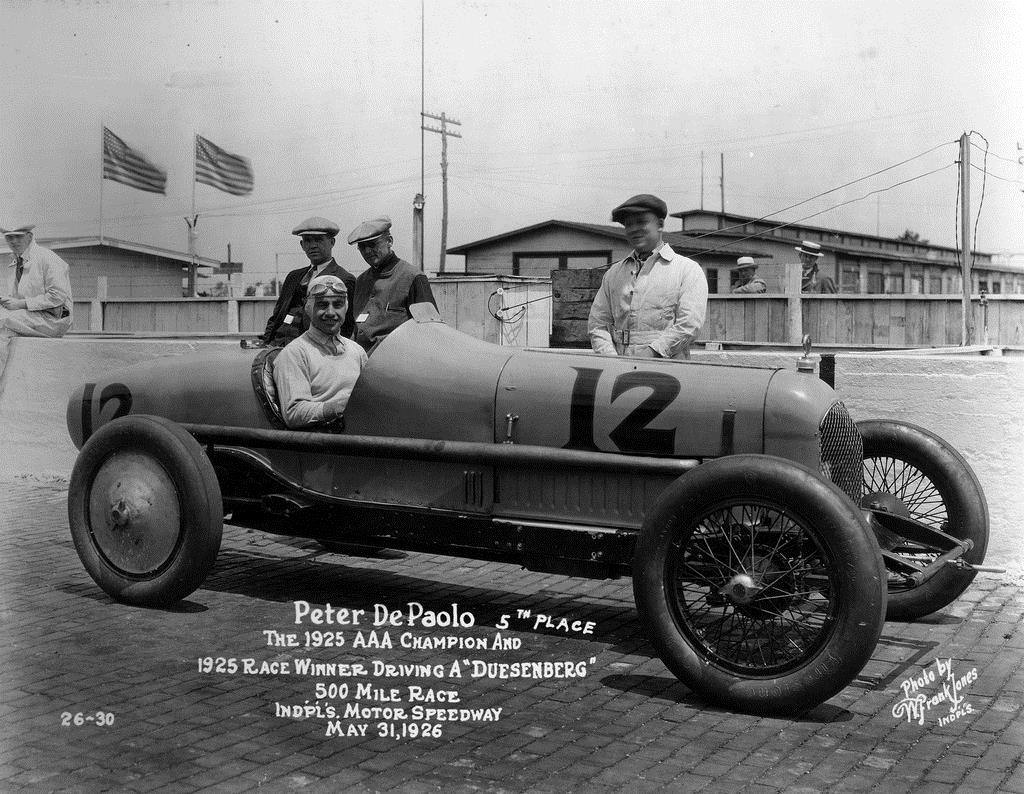
According to New Yorker writer Eric Hatch, Peter DePaolo wore a white sweater and bow tie in the Atlantic City race. Here he is seen earlier that year following his victory at the Indianapolis 500. He was the first driver to complete the 500 miles in under five hours, and have an average speed of more than 100 mph. Since 1989, nine Indy races have finished in under three hours. In 2013 Tony Kanaan’s average speed exceeded 187 mph. (flickr/clamshack)

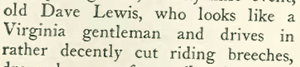
And then there were Dave Lewis’s breeches…
Screen Shot 2016-01-20 at 5.58.59 PM

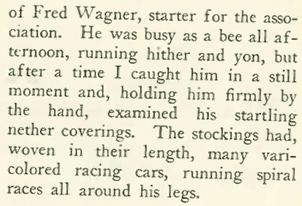
…and the wild stockings worn by the race’s starter, Fred Wagner:

Screen Shot 2016-01-20 at 5.59.10 PM

Screen Shot 2016-01-20 at 5.59.18 PM

Illustrator Johan Bull offered his own observation about Wagner’s stockings, among other things:

Screen Shot 2016-01-20 at 5.53.21 PM

In a separate column in the magazine (simply titled “Motors”) Hatch marveled at the amazing new road to Jamaica (Queens) that featured four lanes, two in each direction, with drivers approaching breakneck speeds near 40 miles per hour:

Screen Shot 2016-01-20 at 6.06.22 PM

Screen Shot 2016-01-20 at 6.06.37 PM

As for speed, back then a basic car was a far cry from an Indy racer, and strained to do more than 45 mph. Luxury cars could go faster, but the quality of tires, brakes and roads were so poor that anyone exceeding 60 mph would likely blow a tire.

Next Time: A Castle in Air…
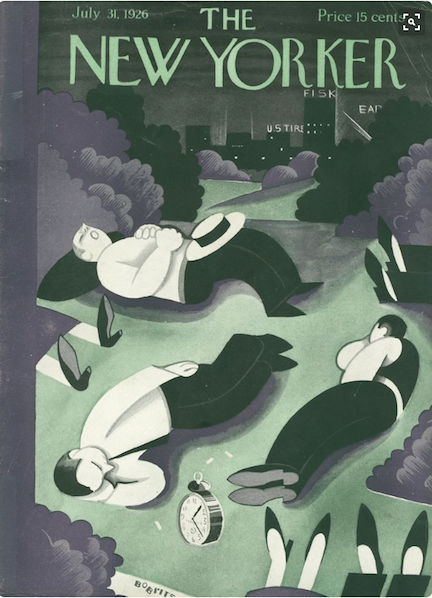
Screen Shot 2016-01-26 at 9.24.04 AM


Good Old Summertime

8762fa732414047f1adc968dd860904b
July 17, 1926 cover by Stanley W. Reynolds.

The glories of summertime filled the pages of the July 17, 1926 issue. The cover featured a stylish young couple enjoying a romantic evening on a moonlit lake, while the inside pages were filled with all sorts of outdoor activities ranging from dining and dancing to open air concerts and golf, lots of it.

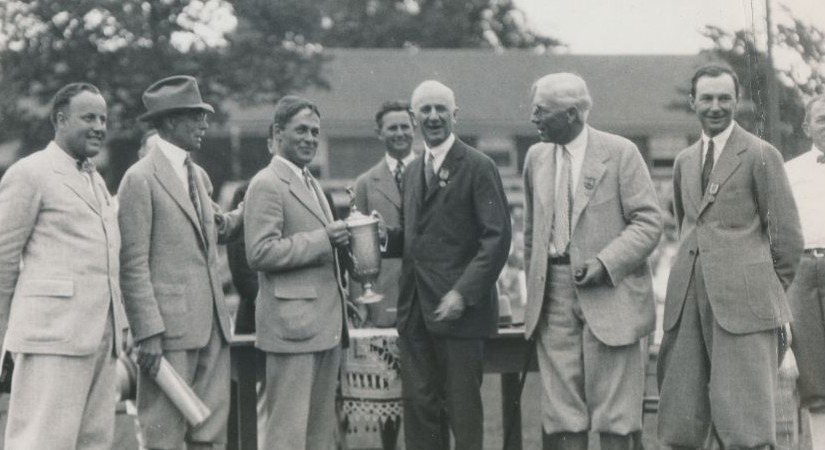
There was a lengthy profile by Herbert Reed on golfing great Bobby Jones, a mere boy of 24 who competed as an amateur but often beat top pros such as Walter Hagen and Gene Sarazen (in a few years Jones would help design the Augusta National Golf Club and co-found the Masters Tournament).

Screen Shot 2016-01-15 at 5.29.23 PM
Rending of Bobby Jones for the “Profile” by illustrator Miguel Covarrubias.

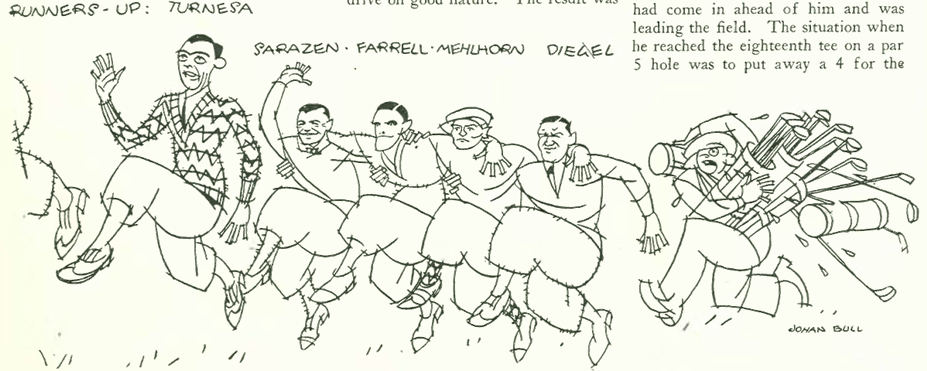
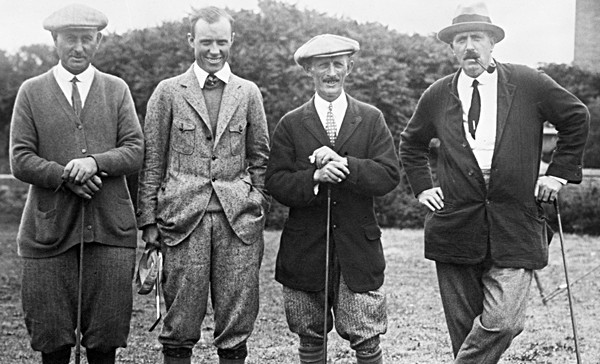
In “Sports of the Week,” Reed wrote about Jones’s second U.S. Open win, in Columbus, Ohio. Johan Bull offered this rendering of the runners-up:

Screen Shot 2016-01-15 at 5.34.15 PM

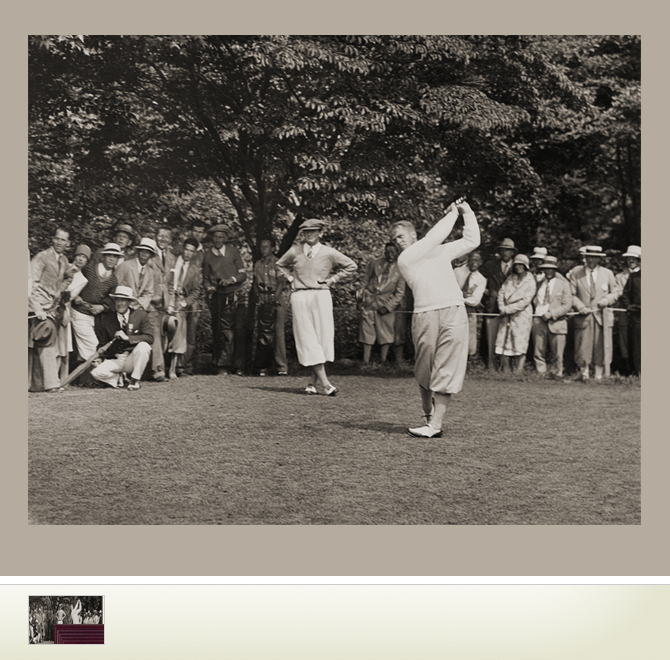
Jones__Bobby___1_515b19833f0f9
Bobby Jones at the 1926 U.S. Open (golfspast.com)

And with the warm weather the tops were open on automobiles for both the rich:

Screen Shot 2016-01-15 at 5.15.46 PM

And the not-so-rich:

Screen Shot 2016-01-15 at 5.36.02 PM

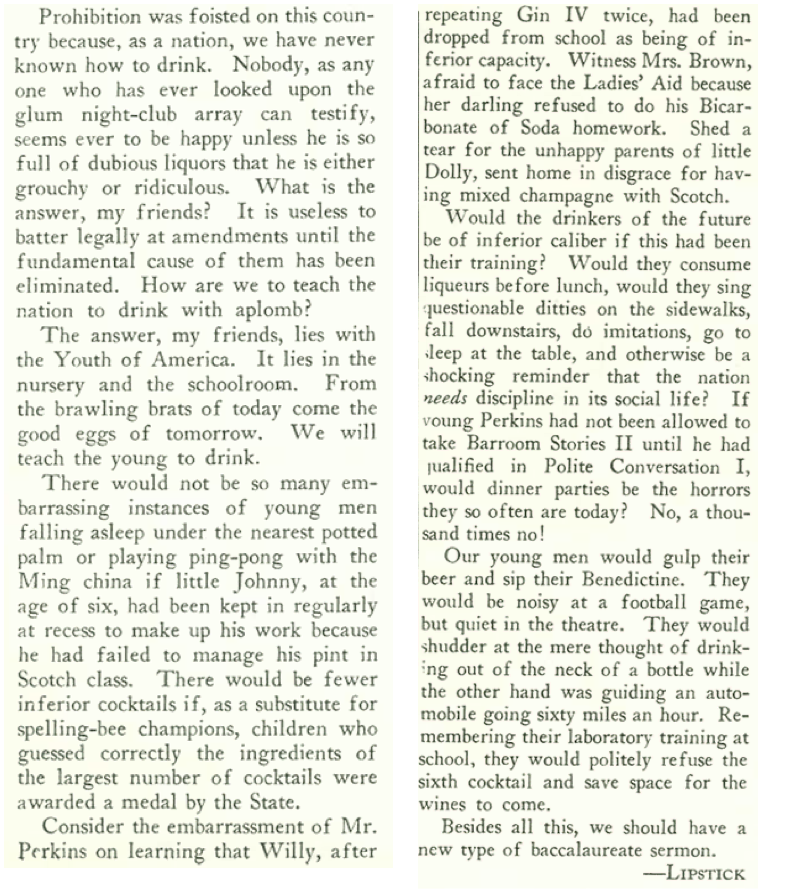
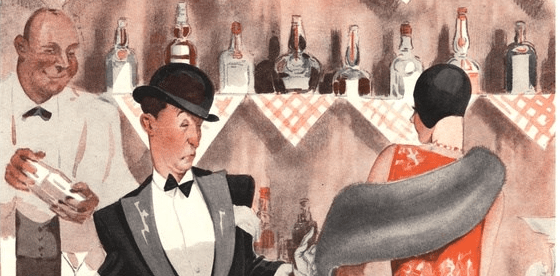
And finally, Lois Long, fed up with reviewing restaurants, fires off a column about the sad state of drinking in America:

Screen Shot 2016-01-15 at 5.47.09 PM

Next Time: Blowing Smoke…

Screen Shot 2016-01-15 at 5.49.44 PM


Wild & Woolly

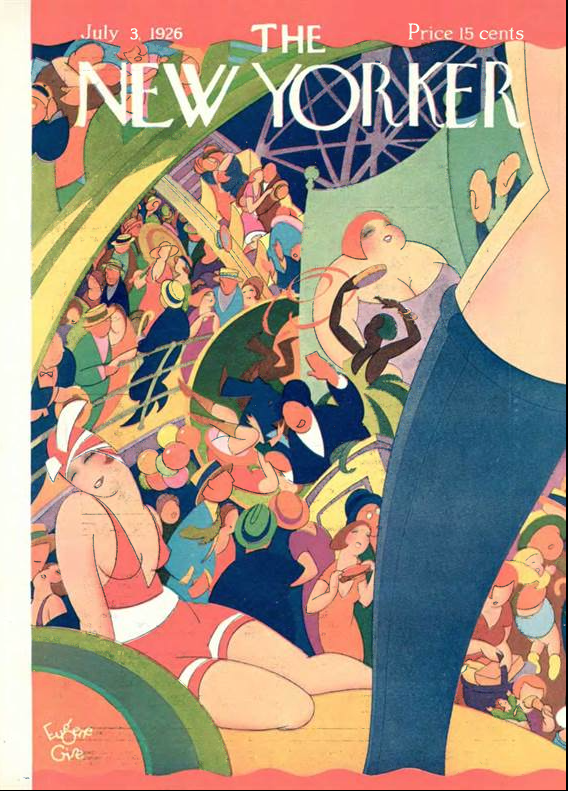
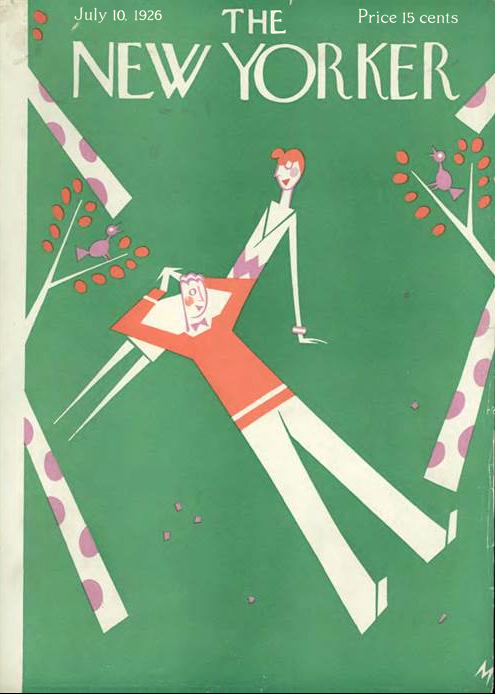
Eugene Gise threw a beach party on the July 3, 1926 cover of The New Yorker with an explosion of color that was a departure from the somewhat spare covers of previous issues. It had been an unseasonably cool June, so folks were ready to frolic in the sun.

Screen Shot 2016-01-12 at 11.17.43 AM
July 3, 1926 cover by Eugene Gise.

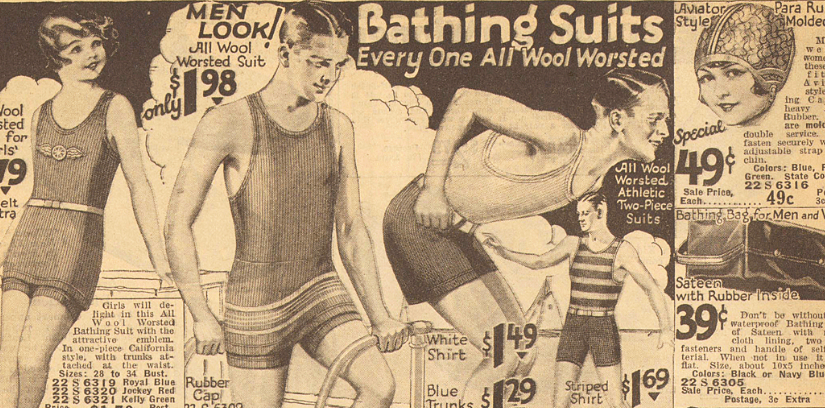
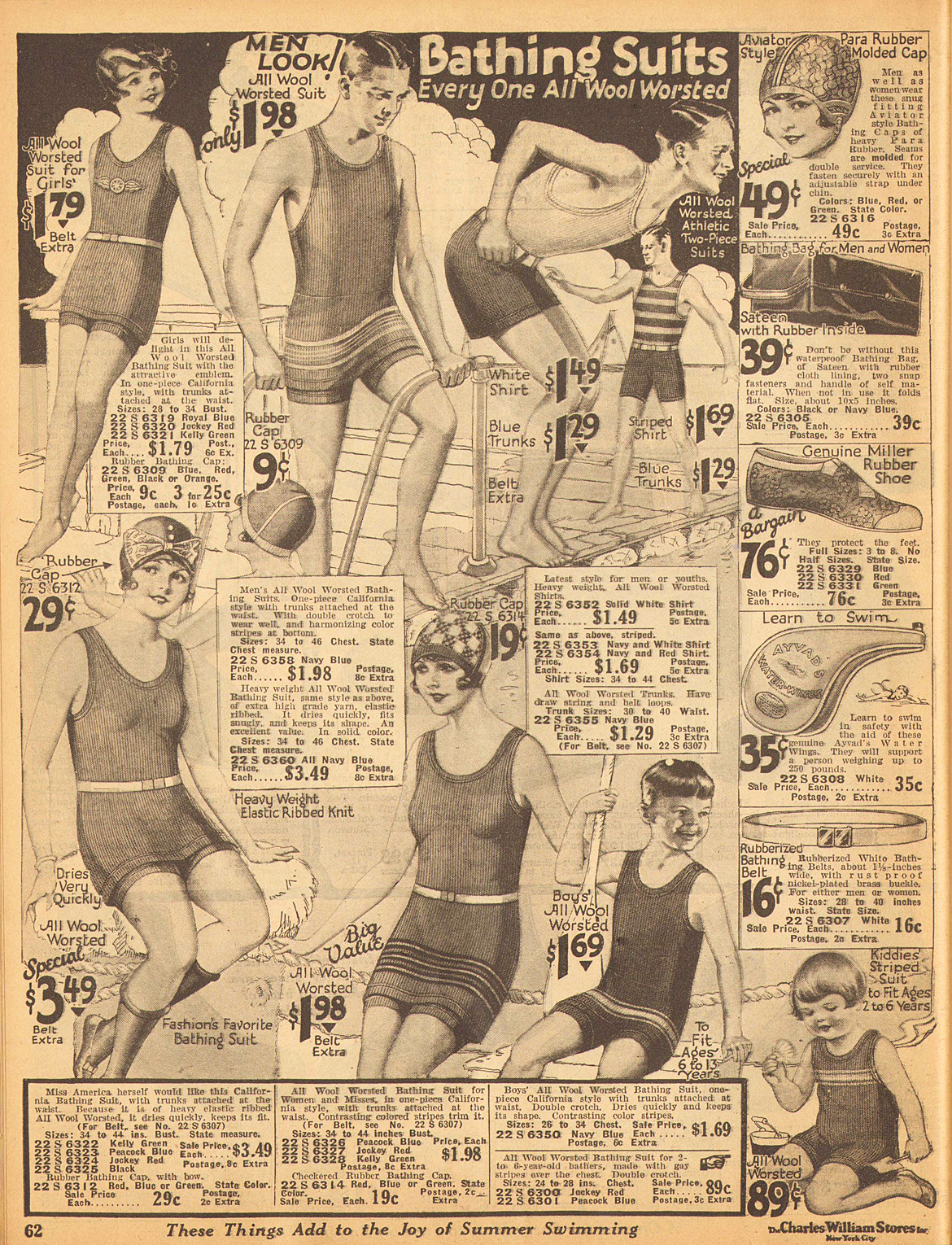
It should be noted that the woman in the foreground basking in the sun is most likely wearing a wool bathing suit. Although Jantzen was making suits you could actually swim in, these wool numbers were still the norm. As the website Vintage Dancer notes, “functionality in swimwear was not as important as fashion, so the prevailing theory was that wool would help keep you warm.” Check out this newspaper advertisement from 1926:

1926-CW-3_Page_19-mens-swimsuit
(Vintage Dancer)

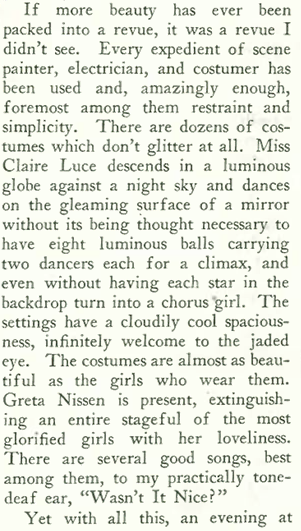
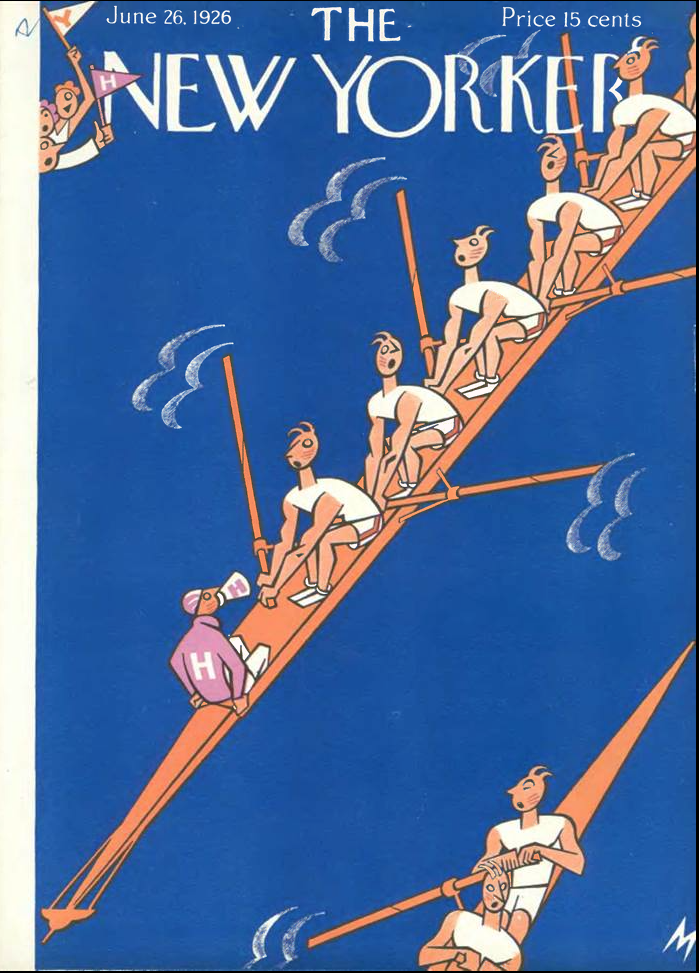
In the previous issue (June 26, 1926) theatre critic Charles Brackett looked at all the fuss over the opening of George White’s Scandals revue, so in this issue he gave the Ziegfeld Follies—the revue show that inspired the Scandals—its proper due.

Screen Shot 2016-01-12 at 12.07.00 PM

Screen Shot 2016-01-12 at 12.07.12 PM

20130923214629-2288ec2c-me
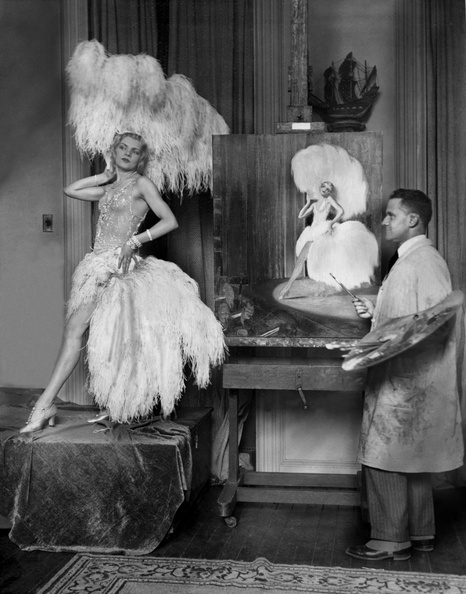
Claire Luce was a star attraction at the Ziegfeld Follies. Here Clarence F. Busch paints her portrait in an ostrich costume she wore for the Follies (Historical Ziegfeld Group)

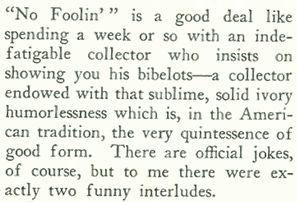
Needless to say, Brackett found the Ziegfeld Follies as pointless as its imitator:

Screen Shot 2016-01-12 at 12.07.30 PM

Moving on to other things, I found this tidbit in “The Talk of Town” interesting. Even 90 years ago city dwellers were complaining about having to sort their garbage:

Screen Shot 2016-01-12 at 12.02.07 PM

Screen Shot 2016-01-12 at 12.02.22 PM

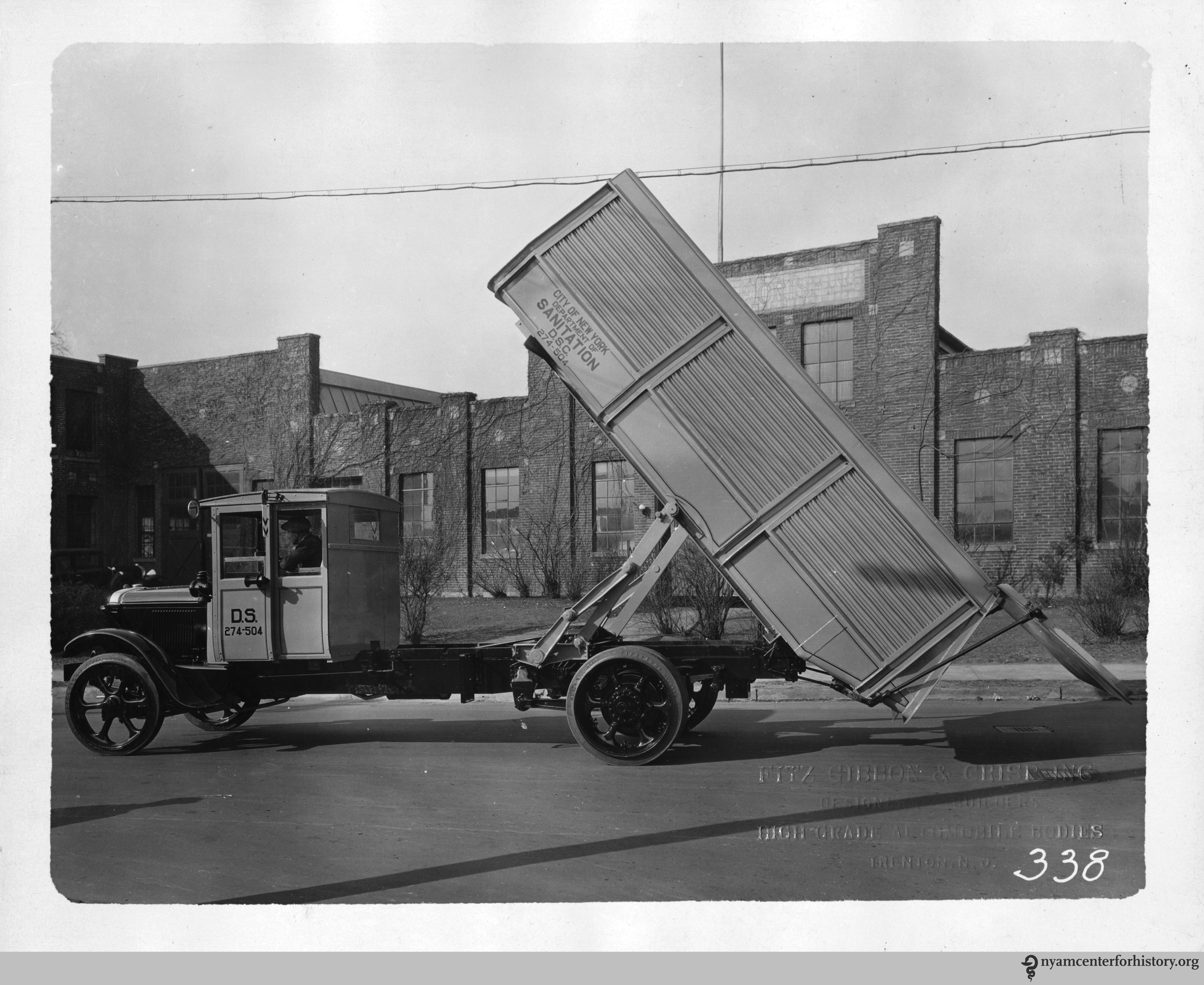
A state-of-the-art garbage truck in 1920s NYC looked like this…

garbagenewtruck
(nyamcenterforhistory.org)

…and since the 1890s the city had employed street sweepers known as “White Wings” to keep things tidy, apparently even in the middle of traffic:

24-BOOK-articleLarge
(The New York Times)

After decades of petticoats, the Roaring Twenties marked the beginning of androgynous fashion in America, with actress Marlene Dietrich leading the way in defying standards of femininity. Cartoonist Raymond Thayer took a humorous look at the trend in the July 3 issue:

Screen Shot 2016-01-12 at 12.00.05 PM

Next Time: A Tarnished Tinseltown…

Screen Shot 2016-01-14 at 9.54.46 AM

Taxi Dancer

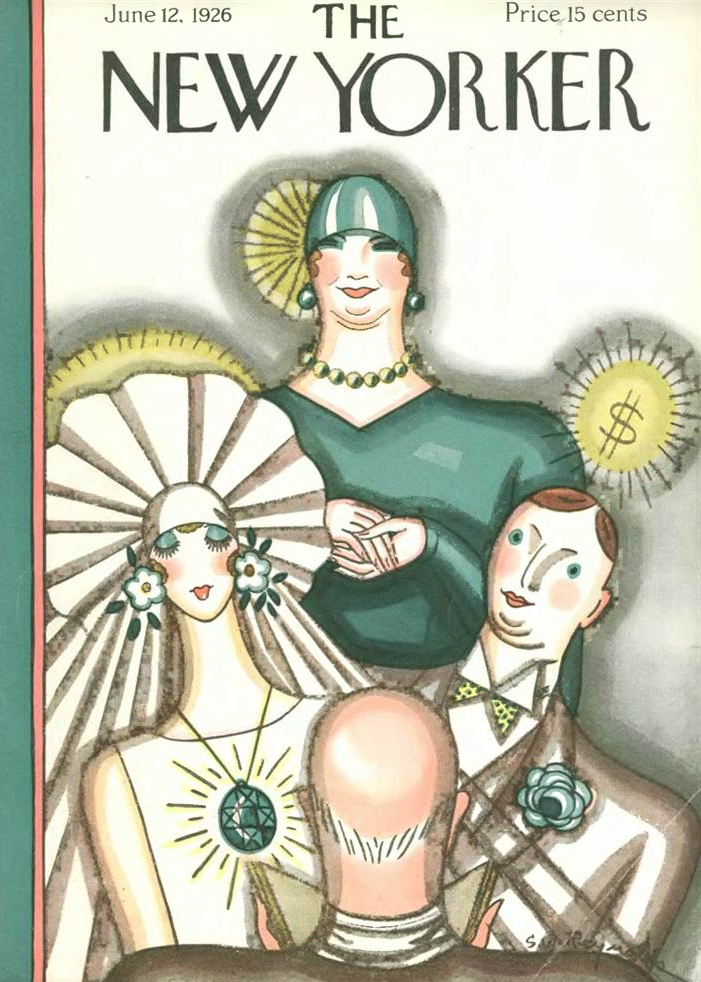
The sad world of “taxi dancers” was explored by Maxwell Bodenheim in the June 12, 1926 edition of The New Yorker.

Screen Shot 2015-12-18 at 4.38.53 PM
June 12, 1926 cover by S.W. Reynolds.

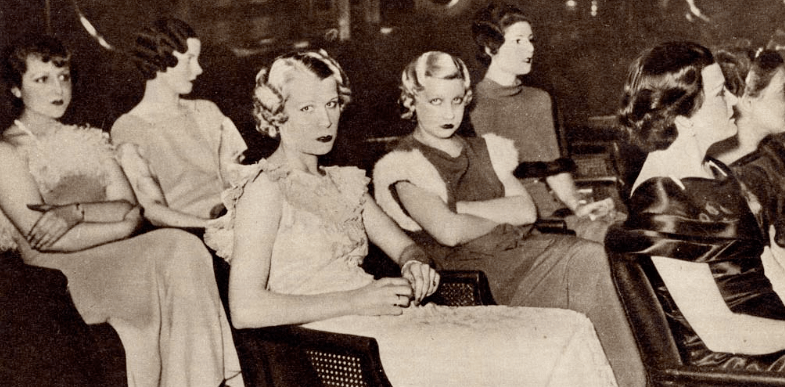
Bodenheim visited a “cheap Broadway dance hall” populated by taxi-dancers and their patrons. It worked something like this: A male patron would buy dance tickets for ten cents apiece, and for each ticket a chosen “hostess-partner” would dance with him for the length of a single song.

Screen Shot 2016-01-08 at 10.54.44 AM

Screen Shot 2016-01-08 at 10.55.11 AM

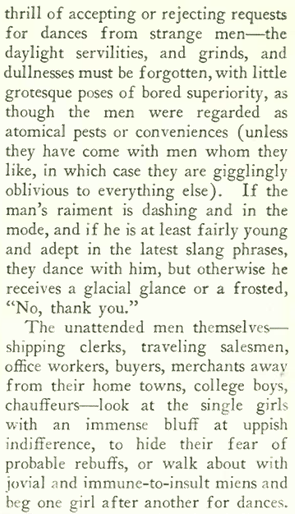
He also described the pathetic strutting and preening rituals of both dancers and patrons:

Screen Shot 2016-01-08 at 10.12.18 AM

Screen Shot 2016-01-08 at 10.12.28 AM

Screen Shot 2016-01-08 at 11.00.59 AM
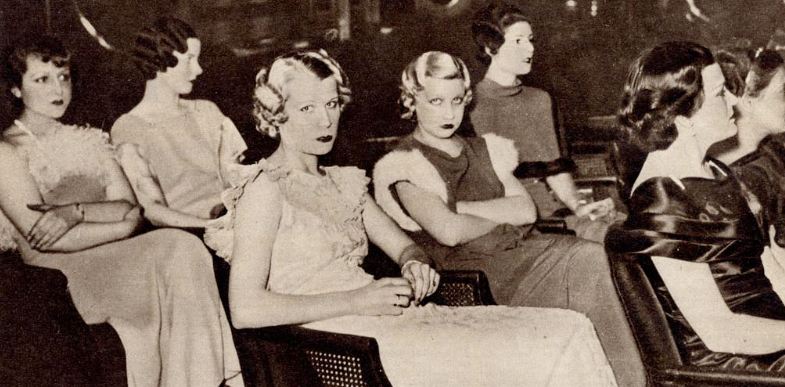
“TAXI-DANCERS” waiting for customers at a Broadway dance hall in the early 1930s. The image was scanned from an article in Weekly Illustrated (Oct. 6, 1934) that described new regulations banning the vocation.

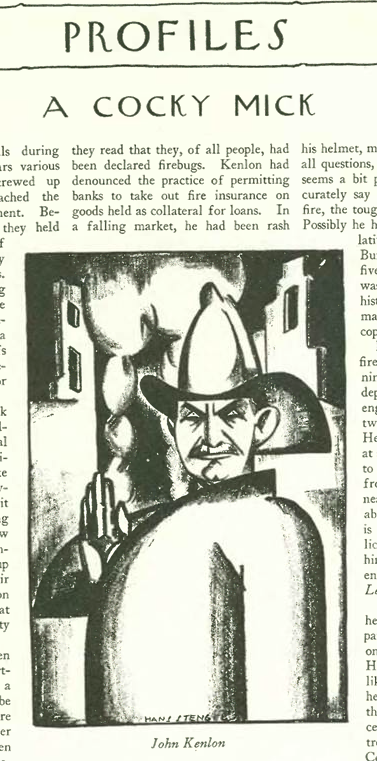
A couple of other bits from the issue: An interesting headline for the profile of NYC Fire Chief John Kenlon

Screen Shot 2016-01-08 at 10.08.58 AM

…and this advertisement for apartments at 1035 Fifth Avenue. I thought the ad was interesting because children are rarely featured in The New Yorker. In case you are wondering about their social class, these are children living on posh Fifth Avenue, and that’s a nurse-maid, not mother, chasing behind them in nearby Central Park.

Screen Shot 2016-01-08 at 10.20.43 AM

On to the June 19th issue, and a couple more items of interest…

Screen Shot 2016-01-08 at 10.22.38 AM
June 19, 1926 cover by Carl Rose.

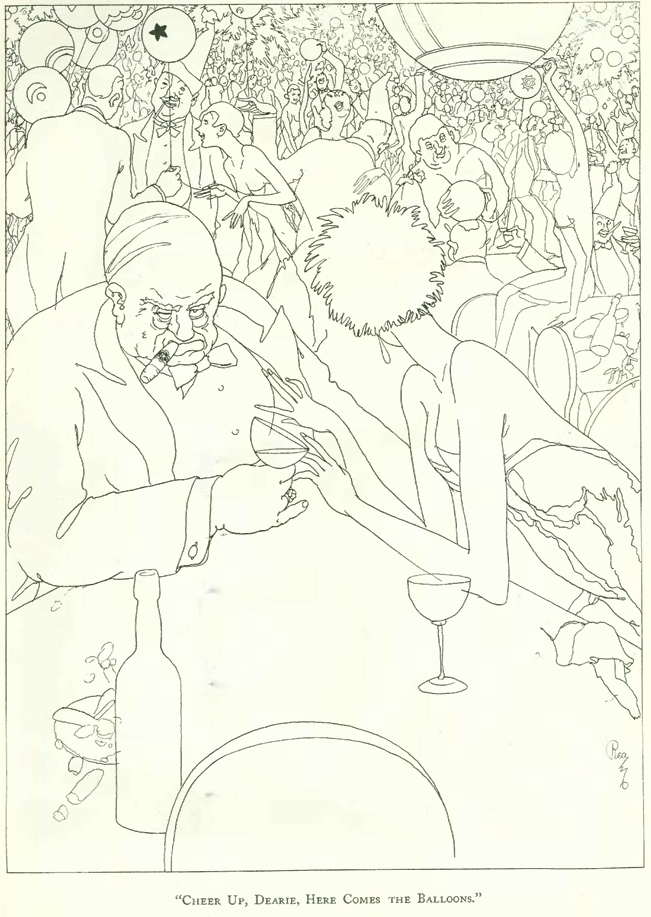
As noted previously, a common theme of the early New Yorker’s cartoons was the comic imbalance of rich old men and their young mistresses. This time Rea Irvin explores the subject with this terrific illustration:

Screen Shot 2016-01-08 at 1.30.30 PM

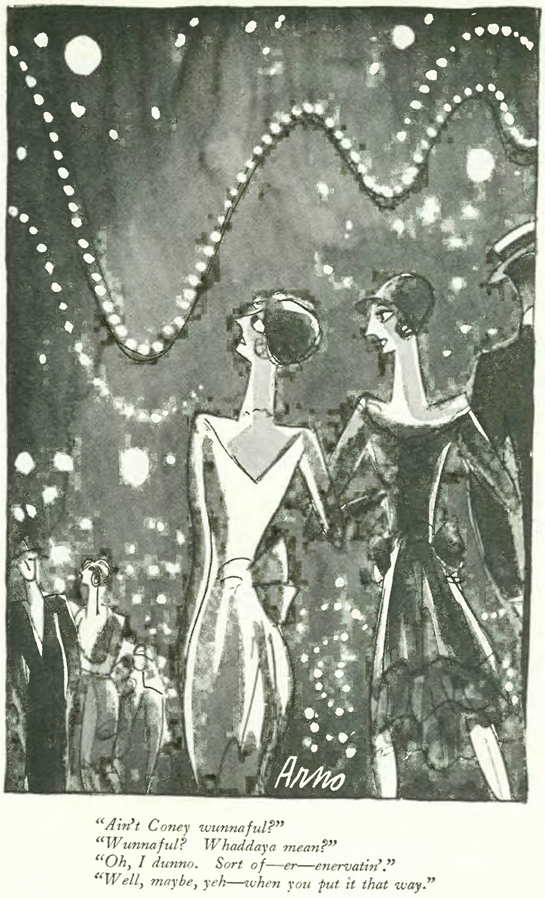
And we close with Peter Arno, and his observations of Coney Island.

Screen Shot 2016-01-08 at 1.32.22 PM

Next Time: The Annual Scandals…

Screen Shot 2016-01-08 at 1.35.03 PM


After a Fashion

Screen Shot 2015-12-18 at 12.12.38 PM
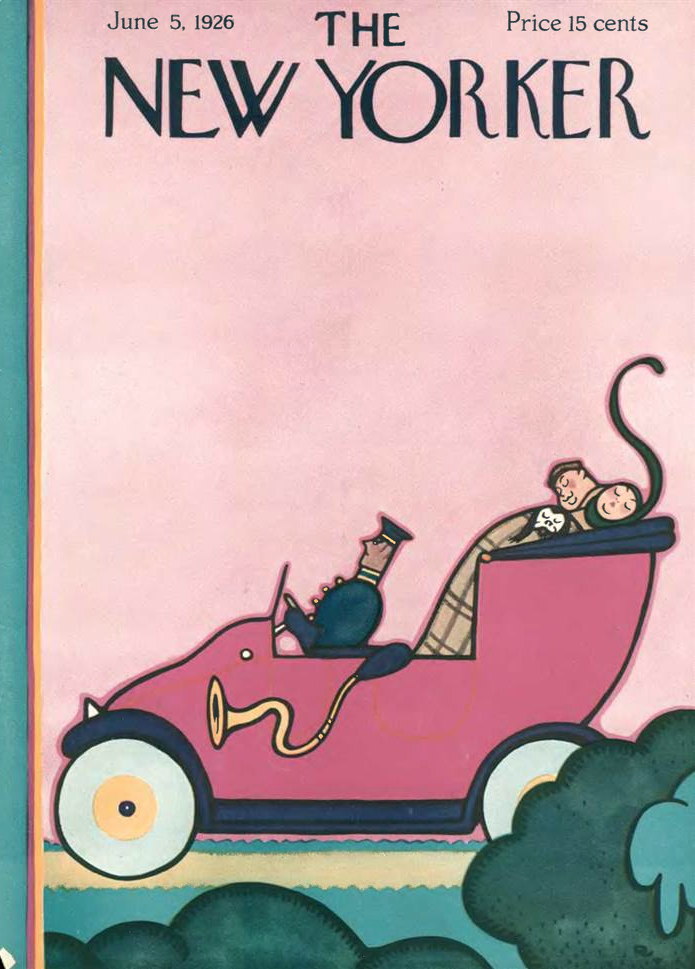
June 5, 1926 cover by Rea Irvin.

Fashion advertising in the early New Yorker can tell you a lot about the mood of the city’s smart set. As I’ve observed before, the magazine’s advertisements were rife with Anglo- and Francophile messaging, but they also reveal much about our changing times. A good example is the upscale retailer Abercrombie & Fitch, which these days uses the tagline “Authentic American clothing since 1892.”

In its early days, A&F was known as an elite outfitter of sporting and excursion goods, supplying aspiring country squires with expensive shotguns, fishing rods and the clothing and kit necessary for successful and stylish expeditions beyond the drawing room:

Screen Shot 2015-12-18 at 1.05.54 PM
“Sporting goods” meant something a bit different in 1926.

The company went bankrupt in 1976 and operated through mail order until 1988, when the The Limited clothing chain bought the name and operation and turned the focus to the young adult market:

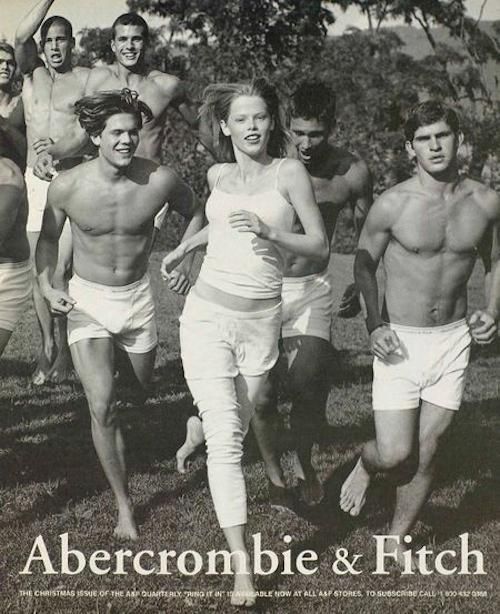
2b1c597b0a5b09ca7477ead9ec5e2e64
Cover for A&F Fall/Winter 1998, photo by Bruce Weber. (Image Amplified)

Over the past couple of decades there’s been a lot of criticism regarding the abundance of A&L ads featuring shirtless, white men and the corresponding dearth of minority models. The newer ads feature a lot less skin and a sprinkling of minorities, but the product line is still a far cry from the one offered in 1926. Except for the elitist part.

As for other purveyors of fine fashion in the pages of The New Yorker, B. Altman made this stylish pitch for its line of bathing suits:

Screen Shot 2015-12-18 at 4.40.10 PM

And here’s an advertisement for Croydon Cravats, featuring the ubiquitous Father’s Day necktie:

Screen Shot 2015-12-18 at 4.48.08 PM

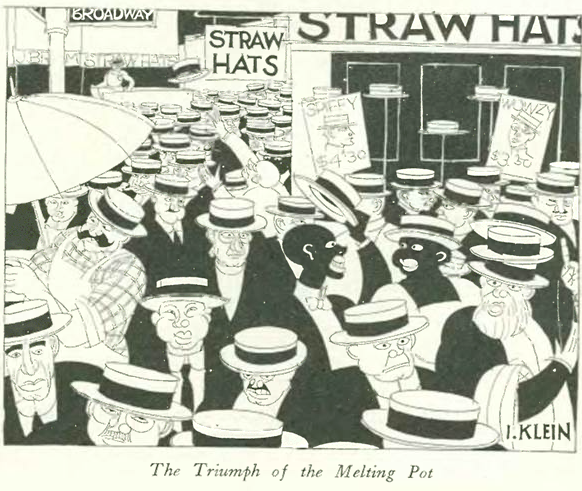
As for fashion in the comics, this drawing by Isadore Klein found humor in the multicultural appeal of the summer straw hat:

Screen Shot 2015-12-18 at 4.43.28 PM

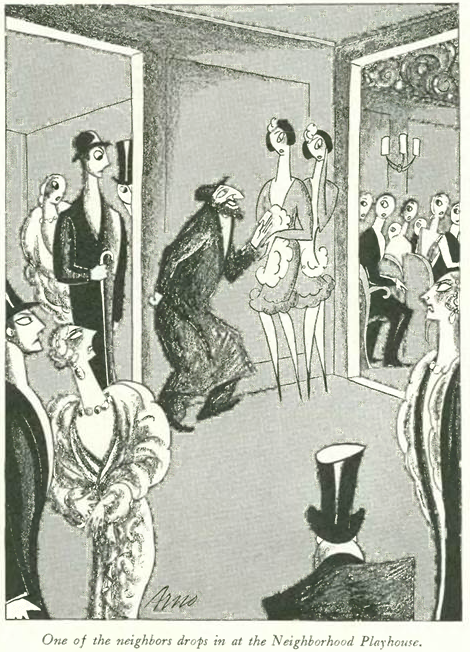
African Americans in the early New Yorker were nearly always depicted in minstrel-style blackface, and Jewish immigrants (such as the one Klein depicted at right) rarely lacked the Orthodox beard. Such is the case in this Peter Arno illustration where cultures clash rather than mix:

Screen Shot 2015-12-18 at 4.42.20 PM

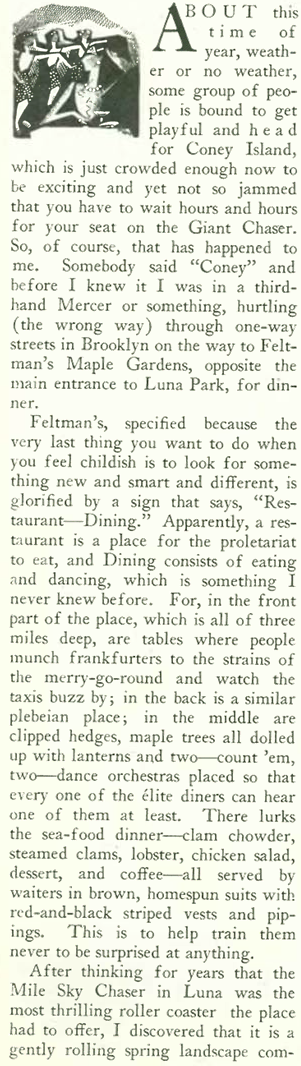
And let’s check in with the New Yorker’s fashion critic (and Arno’s soon-to-be wife) Lois Long, who slummed with the Proles at Coney Island:

Screen Shot 2015-12-18 at 4.45.44 PM

tumblr_lsv5w1uJwH1qgfx0uo1_500
CONEY CRONIES…(l to r) Silent film star Charlie Chaplin, Vanity Fair editor Frank Crowninshield, sculptor Helen Sardeau, Lois Long and screenwriter Harry D’Arrast pose in a Coney Island photo booth, 1925. Photo scanned from the book Flapper by Joshua Zeitz.

Finally, given the terrible circumstances in the Middle East and especially Syria, this small item in “Of All Things” is both timely and prescient:

Screen Shot 2015-12-18 at 4.43.07 PM

Next Time: Taxi Dancers…
Screen Shot 2015-12-18 at 4.38.53 PM

What to Drink During Prohibition

The Roaring Twenties were a strange confluence of the Puritan and libertine, perhaps best represented by Prohibition and the speakeasy night life it inspired. Many if not most of The New Yorker readers of the late 1920s were familiar with these establishments as well as with reliable bootleggers and rum runners. And for those of you following this blog we all know that “Tables for Two” columnist Lois Long was the voice of speakeasy and New York nightlife.

Screen Shot 2015-12-17 at 1.51.20 PM
May 29, 1926 cover by Stanley W. Reynolds.

Prohibition did not make consumption of alcohol illegal. The 18th Amendment prohibited the commercial manufacture and distribution of alcoholic beverages, but it did not prohibit their use.

So if you had a connection to a smuggler bringing whisky from Scotland via Canada, for example, you could enjoy a Scotch at home without too much trouble, although the prices could be high. “The Talk of the Town” editors regularly reported black market wine and liquor prices (I include an adjoining Julian de Miskey cartoon):

Screen Shot 2015-12-18 at 11.53.01 AM

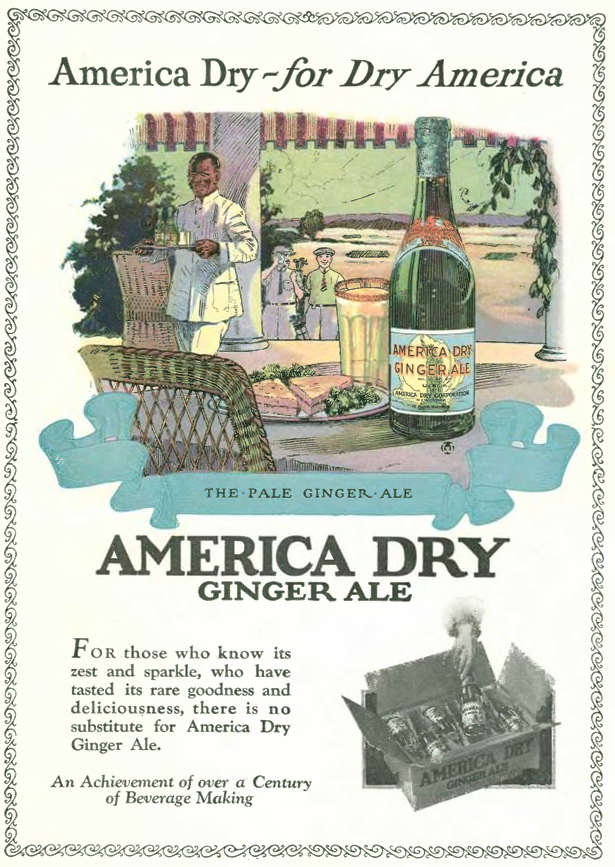
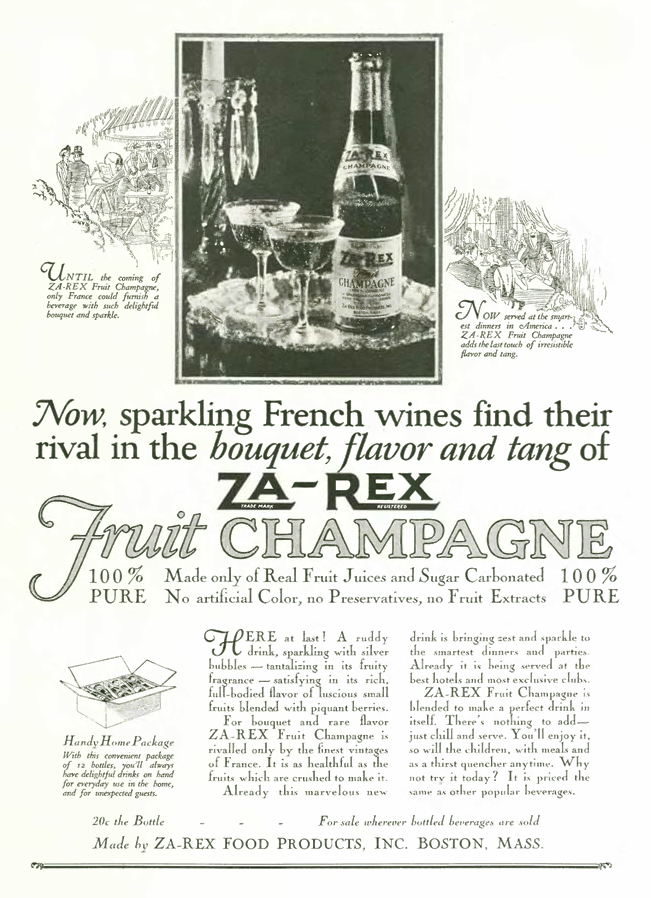
Note the mention of pocket flasks, which were an important item in a purse or vest pocket when one went to a nightclub or restaurant, where White Rock or some other sparkling water was sold as a mixer for whatever you happened to bring with you. You see a lot of this type of advertisement in the Prohibition-era New Yorker:

Screen Shot 2015-12-18 at 12.11.14 PM

I’ll bet those grinning golfers have something in their bags besides clubs.

And then there were ads like these, which I find quite sad:

Screen Shot 2015-12-18 at 12.12.11 PM

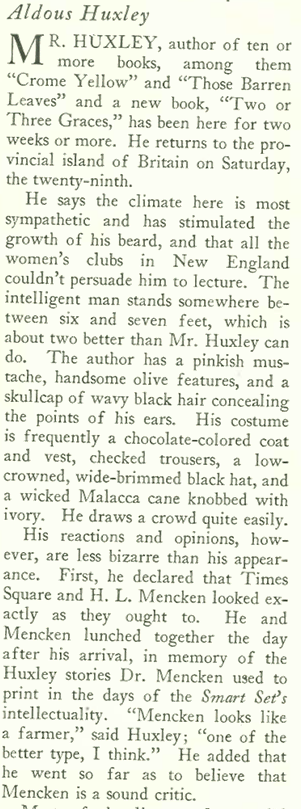
“The Talk of the Town” also commented on the recent visit of British writer Aldous Huxley, who told his New York hosts that he admired American writers Willa Cather and Sherwood Anderson, and he also had praise for writer and critic H.L. Mencken, whom he likened to a farmer “of the better type:”

Screen Shot 2015-12-18 at 11.48.18 AM

Aldous Huxley in the 1920s. (Biography.com)

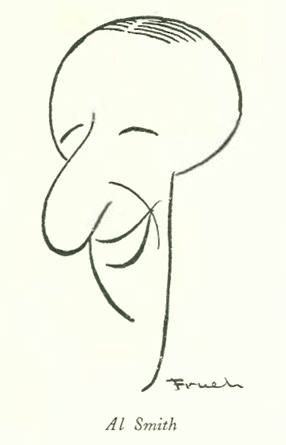
Other odds and ends from this issue…a clever drawing by Al Frueh for the “Profile” feature on New York Governor Al Smith:

Screen Shot 2015-12-18 at 12.06.42 PM

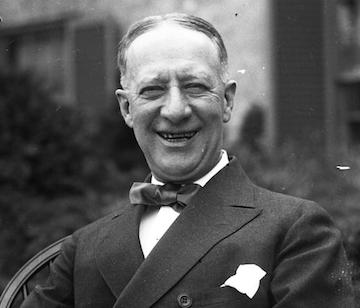
A photo of Al Smith for comparison:

al
New York Gov. Al Smith (IMDB)

And this bit from “Of All Things,” complete with bad pun/racial slur:

Screen Shot 2015-12-18 at 12.05.53 PM

New Yorker readers in 1926 had little reason to believe that in a decade Benito Mussolini would try to make good on his statement and join Adolf Hitler in the next world war.

Here’s a couple more ads from the issue that are signs of those times. Note the listing of Florida locations for those New Yorkers who were flocking to that new winter vacation destination:

Screen Shot 2015-12-18 at 12.09.48 PM

And this ad for an electric refrigerator…for those who could afford such newfangled things. The ice man was still plenty busy in 1926, but his days were numbered.

Screen Shot 2015-12-18 at 12.09.15 PM

And finally, a nod to springtime, and this excerpt of an illustration by Helen Hokinson for the “Talk” section:

Screen Shot 2015-12-18 at 12.07.27 PM

Next Time: After a Fashion…

Screen Shot 2015-12-18 at 12.12.38 PM

Batter Up

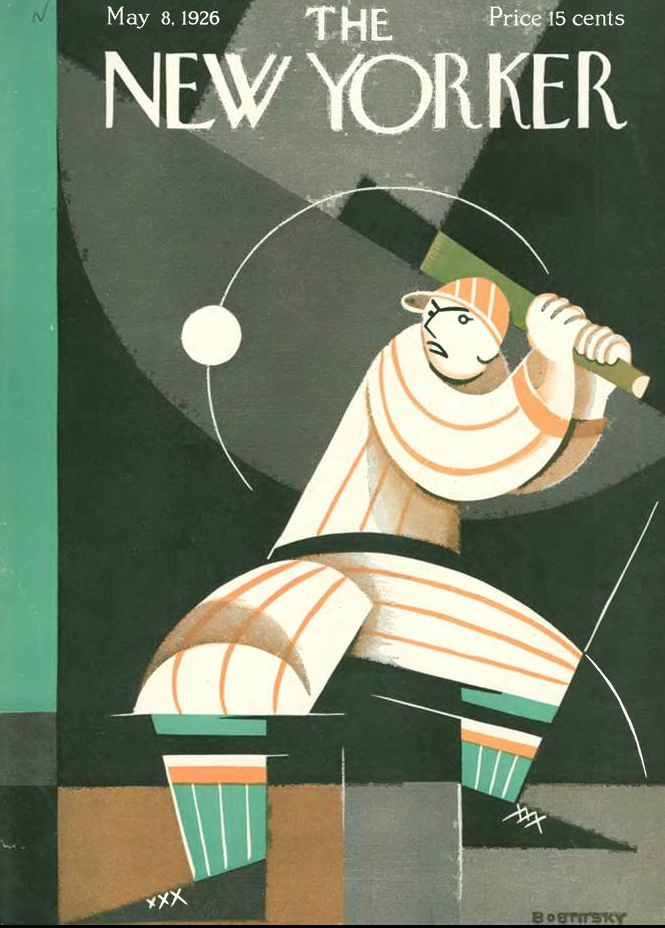
The cover of the May 8, 1926 issue featured this Bauhaus-style rendering of a baseball player by Victor Bobritsky in anticipation of the 1926 season:

Screen Shot 2015-12-11 at 9.24.00 AM
May 8, 1926 cover by Victor Bobritsky.

After a terrible 1925 season (and Babe Ruth’s infamous stomach ache), in 1926 the New York Yankees would begin to form a batting lineup that would become known as “Murderers’ Row.” They won the AL pennant in 1926 (losing to the St. Louis Cardinals in a seven-game World Series) and in 1927 they would go 110-44 and sweep the Pittsburgh Pirates in the World Series. More on that when we actually get to 1927.

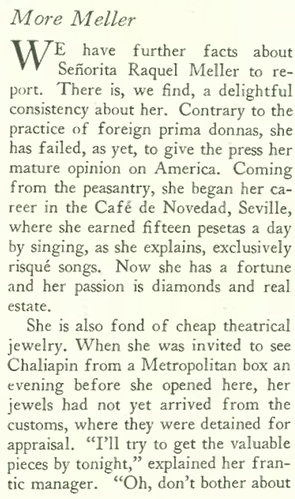
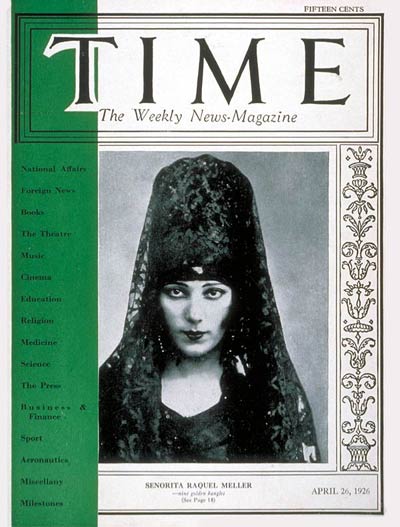
The May 8 issue offered more coverage of Spanish actress-singer Raquel Meller’s first-ever visit to America, which caused quite a sensation:

Screen Shot 2015-12-11 at 9.27.34 AM

Screen Shot 2015-12-11 at 9.28.24 AM

8635eeb0
Raquel Meller

Meller arrived in New York via the SS Leviathan, on which she apparently attempted to book a deluxe suite for her five Pekingese. After New York she also visited Philadelphia, Chicago, Boston, Baltimore and Los Angeles, where she attracted the attention of Charlie Chaplin. Although Chaplin was unsuccessful in landing Meller as a co-star, he did incorporate the melody of her most famous song, La Violetera, as a major theme in his 1931 film City Lights.

Raquel_Meller_Time_magazine_cover_April_26,_1926
Meller’s visit landed her on the cover of the April 26, 1926 Time magazine. (Wikipedia)

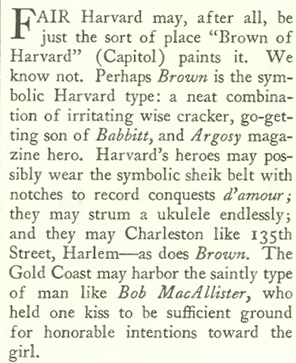
Theodore Shane reviewed the film Brown of Harvard and pondered the accuracy of this portrayal of Harvard student life:

Screen Shot 2015-12-11 at 9.42.48 AM

Screen Shot 2015-12-16 at 11.52.18 AM
(Wikipedia)

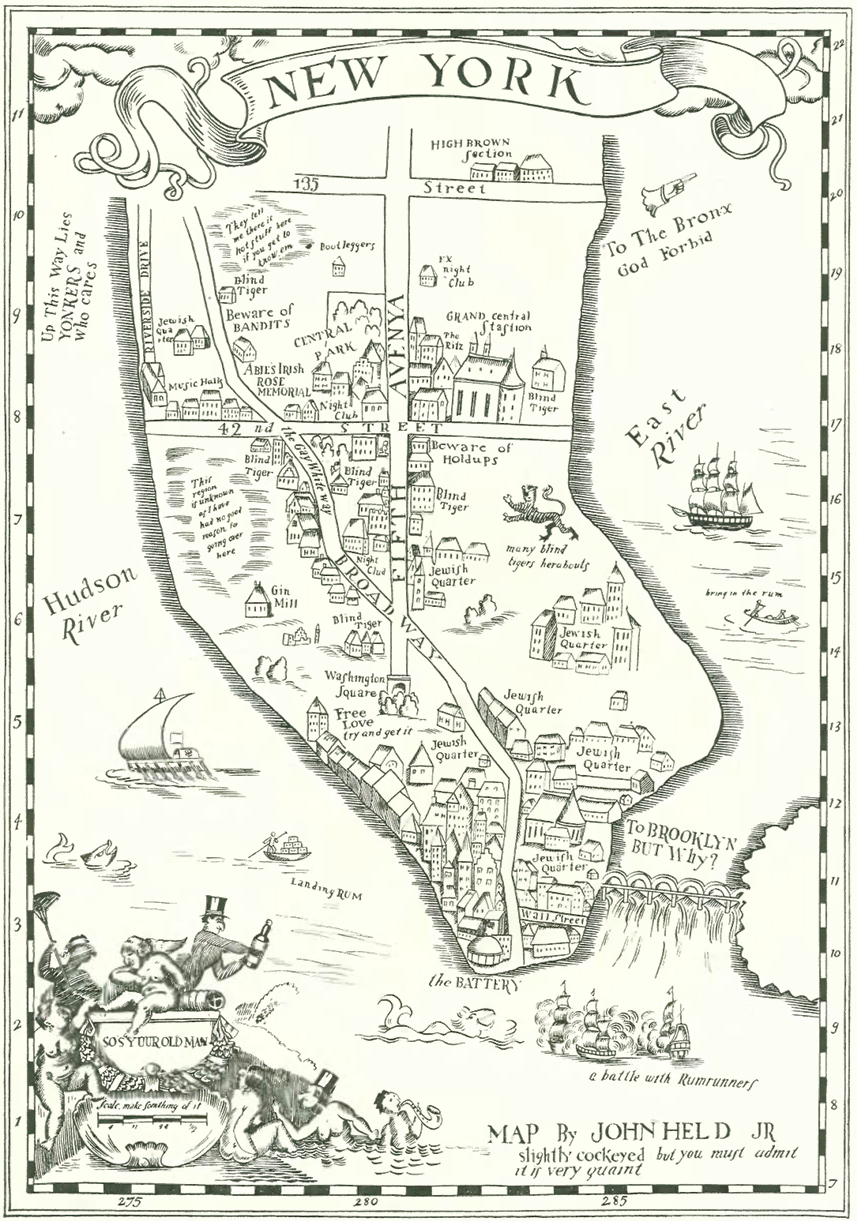
The issue also featured more unique mapmaking by John Held Jr:

Screen Shot 2015-12-11 at 9.31.16 AM

And this W.P. Trent cartoon with a common theme of early New Yorker issues: the comic imbalance of rich old men and their young mistresses:

Screen Shot 2015-12-11 at 9.35.18 AM

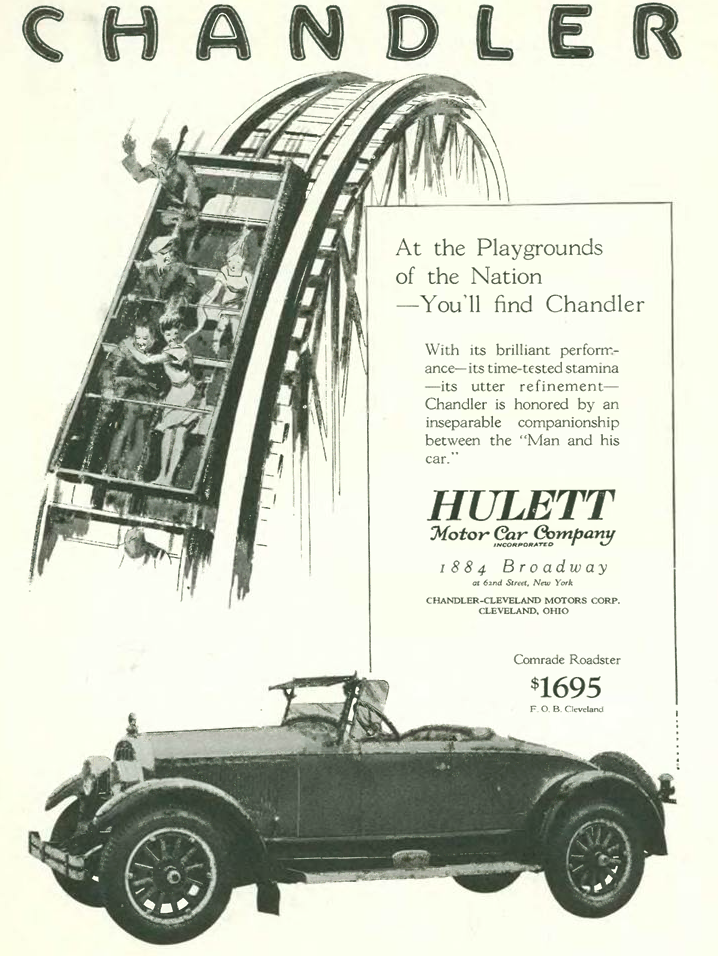
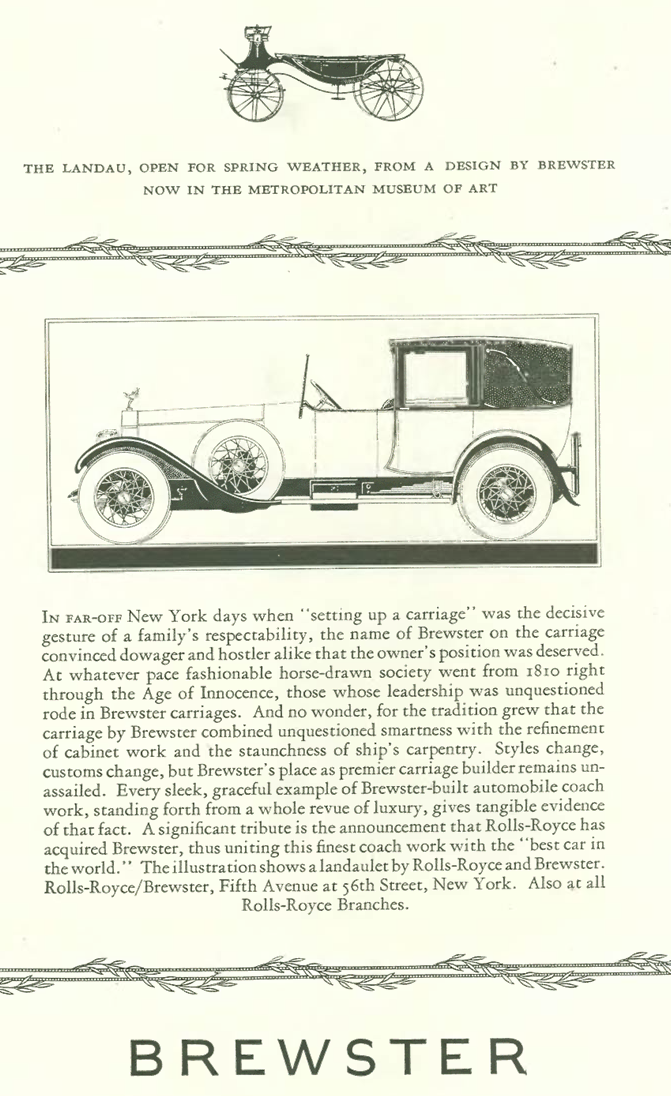
And finally, this advertisement in the May 8 issue caught my eye. Although cars crowded the streets of New York, they were still a recent enough invention to evoke the days of horse-drawn carriages. Even with all of the advances in automobiles in the late 20s, this landau-style Rolls Royce still exposed the driver to the weather, a design feature that signaled class, not practicality.

Screen Shot 2015-12-11 at 9.26.30 AM

Next Time: Nize & Not So Nize…

Screen Shot 2015-12-11 at 9.44.03 AM


Parisians & Puritans

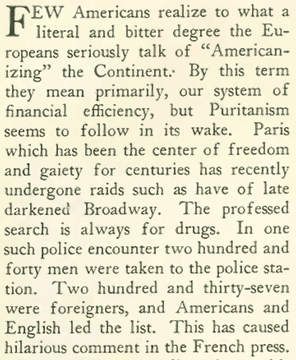
In her latest dispatch from Paris, correspondent Janet Flanner offered New Yorker readers a glimpse into the French mind, its fear of “Americanization” and its perception of America’s Puritanical attitudes behind Prohibition.

Screen Shot 2015-11-13 at 2.25.59 PM
April 3, 1926 cover by Rea Irvin.

All the more reason the French were bemused by reports that American and English citizens led the lists of reported drug raids in the City of Light…

Screen Shot 2015-12-01 at 11.56.02 AM

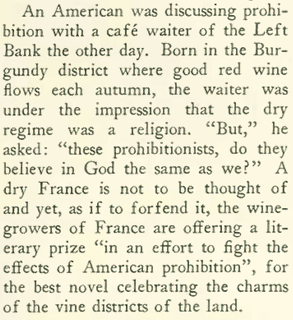
or that somehow Prohibition was a question of theological differences:

Screen Shot 2015-12-01 at 11.56.11 AM

The April 3, 1926 issue also offered up some curious advertisements. Aiming square at the grasping Anglophilia of New Yorker readers, here’s a pitch for a used Rolls Royce:

Screen Shot 2015-12-01 at 11.38.46 AM

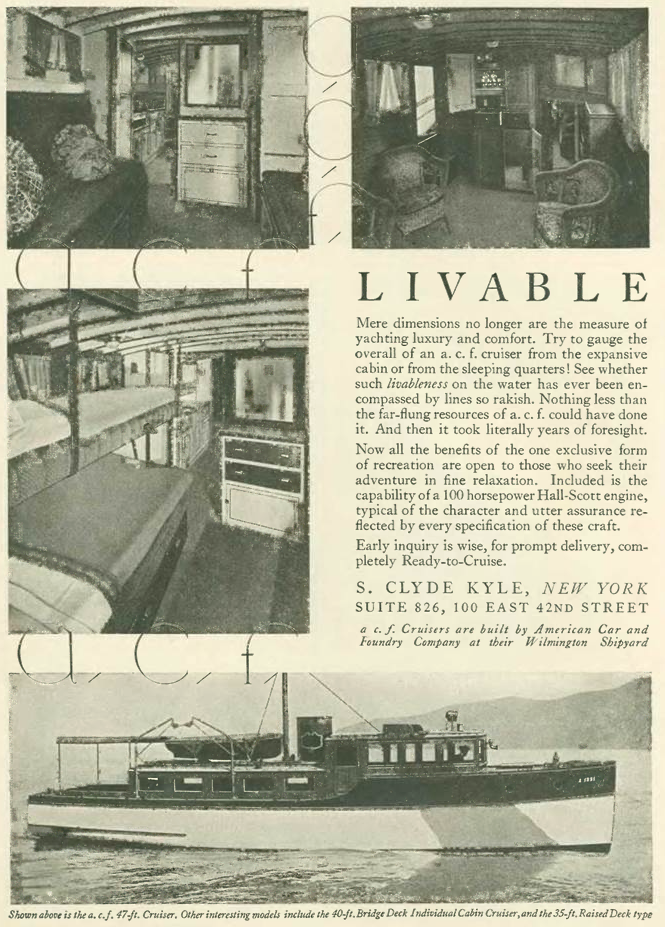
And with the money left over from your savings on the used Rolls, you could buy this 47-foot cruiser from the American Car and Foundry Company:

Screen Shot 2015-12-01 at 11.57.04 AM

Moving along to the April 10, 1926 issue (cover designed by H.O. Hofman)…

Screen Shot 2015-12-01 at 11.57.38 AM
April 10, 1926 cover by H.O. Hofman.

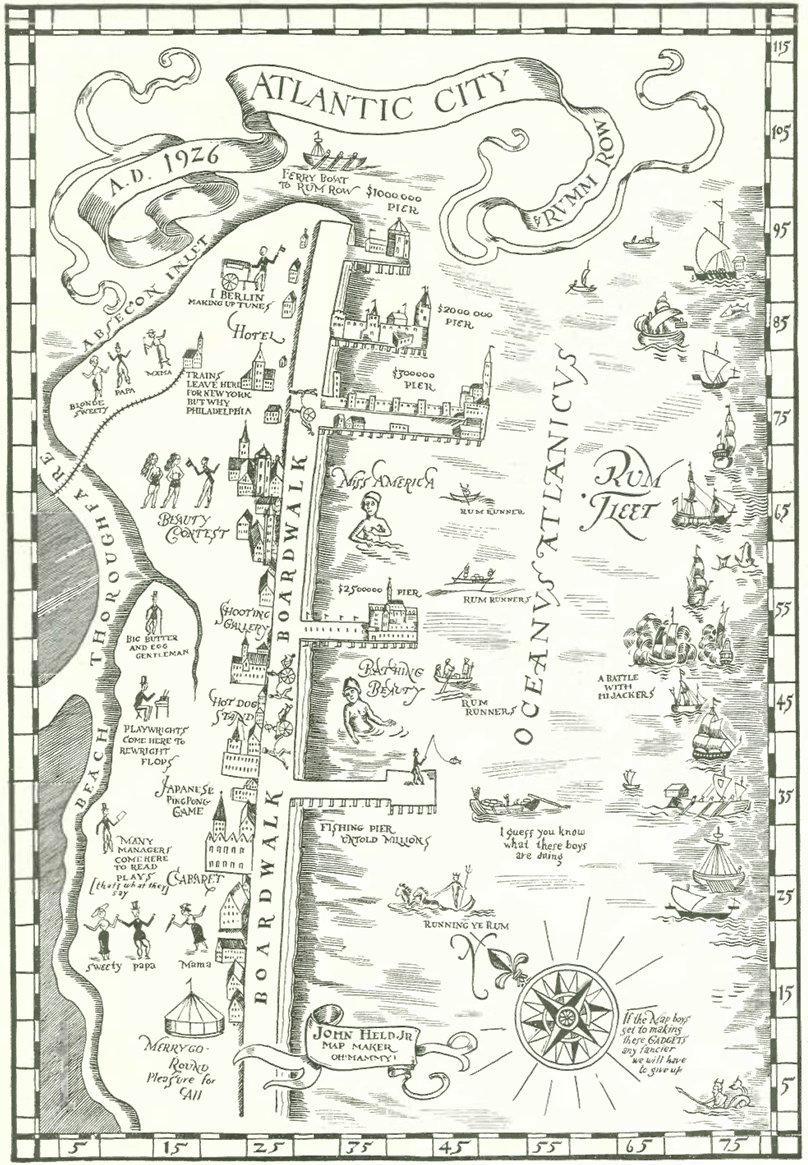
…I discovered this clever “map” by John Held Jr. For fans of “Boardwalk Empire” or other 1920s gangster-themed fare, Held’s map confirms it was no secret that Atlantic City was a major port for rum runners:

Screen Shot 2015-12-01 at 12.06.44 PM

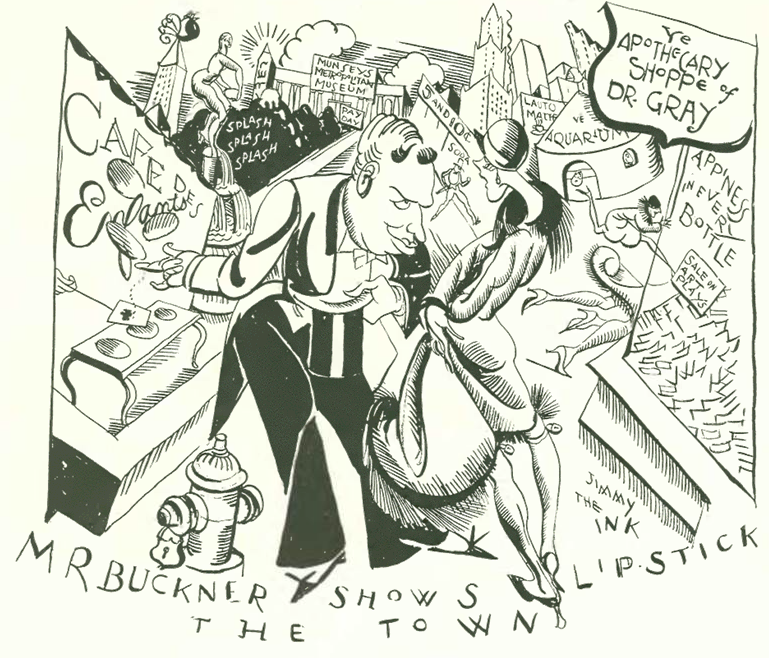
Also on the theme of Prohibition, cartoonist James Daugherty (Jimmy the Ink) had some fun with New Yorker colleague Lois Long (aka Lipstick) by pairing her with New York’s top Prohibition prosecutor Emory Buckner in this unlikely scenerio:

Screen Shot 2015-12-01 at 12.08.38 PM

Note the lock on the fire hydrant. Padlocking restaurants and clubs suspected of selling alcohol was a favorite tactic of Buckner and his agents. Long famously took him task in her Oct. 31, 1925 “Tables for Two” column. You can read about it here in my previous post, “How Dry I Am.”

Next Time: The Great American Novelist…

Screen Shot 2015-12-01 at 12.12.47 PM

Top Dog

Screen Shot 2015-10-23 at 11.29.29 AM
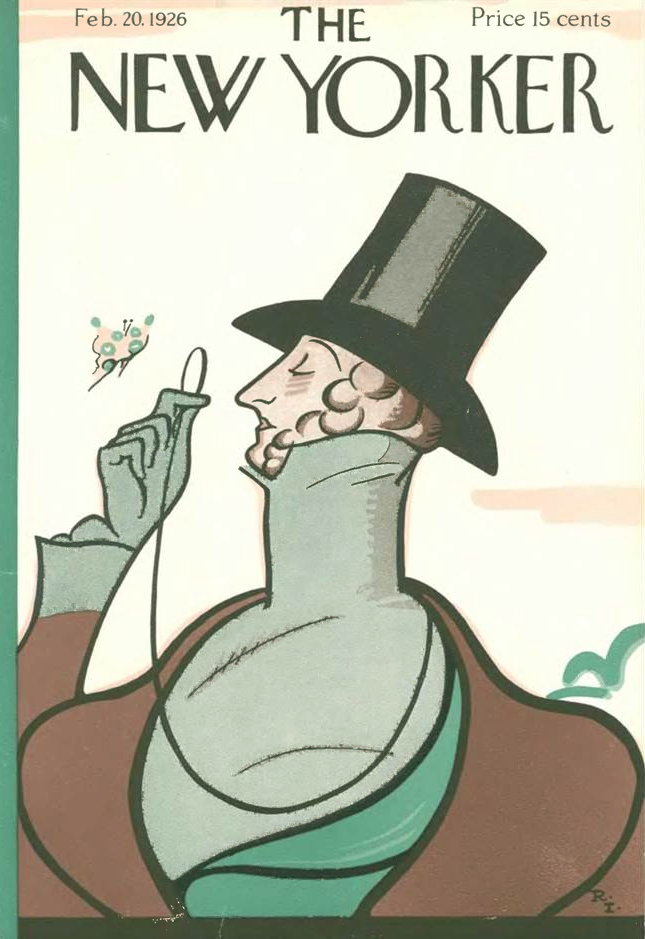
Feb. 20, 1926 cover by Rea Irvin.

Now that I have your attention (at least the dog lovers anyway; and yes, there is a dog-related item if you read on), it is worth mentioning that the Feb. 20, 1926 issue of The New Yorker marked the first anniversary of the magazine, and in what would become an annual tradition, the magazine reprinted the original Rea Irvin cover from its first issue.

The magazine nearly went belly up during the summer of 1925, but a new marketing campaign, along with noticeably better content, put the magazine firmly in the black as it looked to its second year.

In “The Talk of the Town,” the editors couldn’t help but boast about their prosperity, albeit in a winking manner:

Screen Shot 2015-10-26 at 3.22.51 PM

Screen Shot 2015-10-26 at 3.23.06 PM

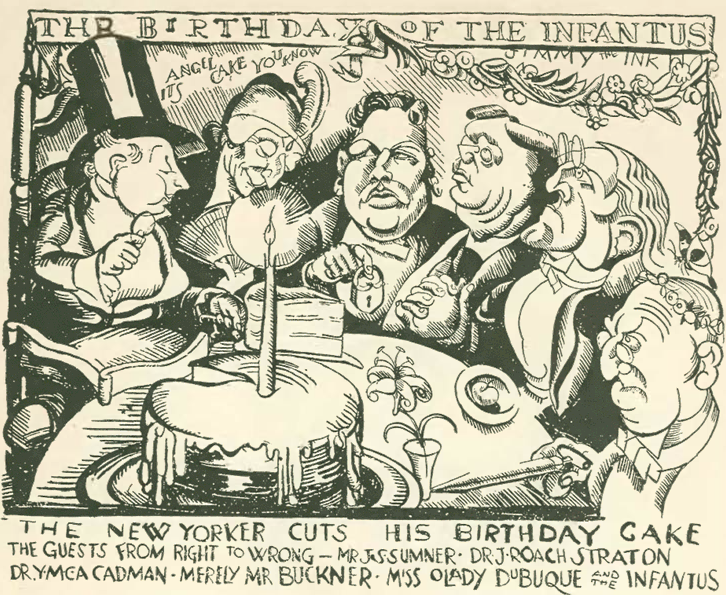
Jimmy the Ink (James Daugherty) marked the anniversary with this drawing…

Screen Shot 2015-10-26 at 4.50.49 PM

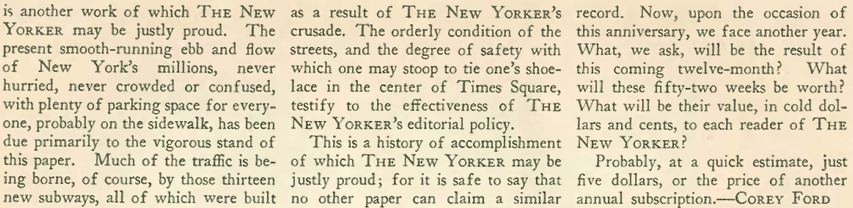
…and Corey Ford, who contributed more than twenty satirical house ads for the magazine under the title, “The Making of the Magazine,” returned to form in this issue with a recollection of the magazine’s imagined past (a device The Onion employs to great effect):

Screen Shot 2015-10-26 at 4.57.10 PM

Screen Shot 2015-10-26 at 4.57.21 PM

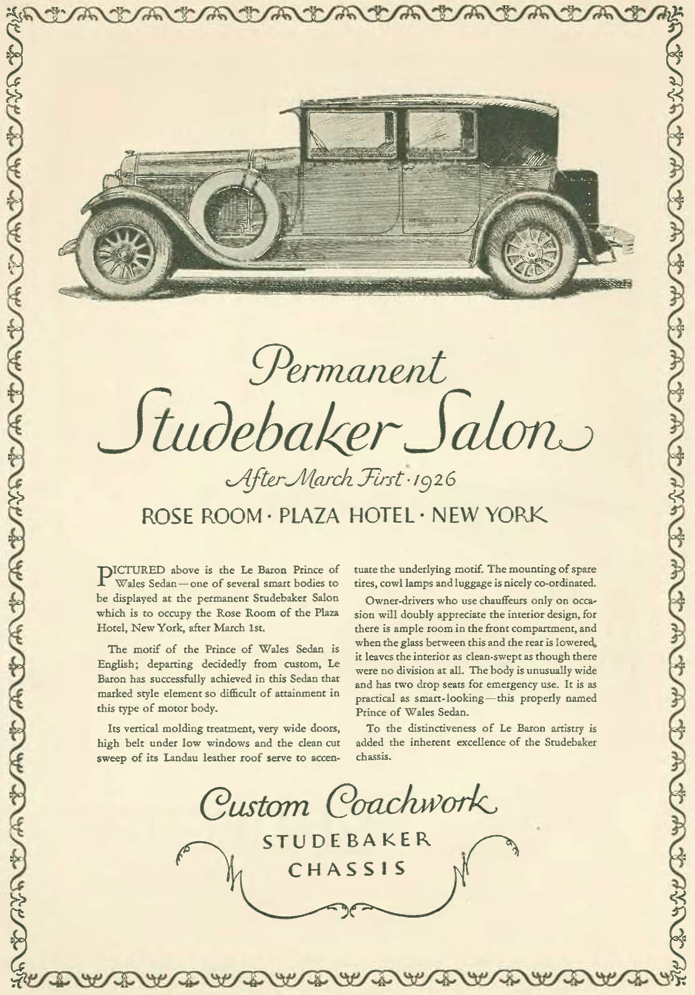
The magazine’s prosperity was evident not only in its talented stable of writers and illustrators, but also in its pages crammed with advertising. As I’ve noted before, much of the advertising is directed at the Anglo- and Franco-phile tastes of the magazine’s readers. For example, this ad from Studebaker suggesting a connection to British royalty:

Screen Shot 2015-10-26 at 3.16.22 PM

Continuing on the theme of royalty, none other than Her Royal Highness, “La Princesse Genevieve” gave her nod to Produits Bertie skin cream (joining the ranks of other royal and society women who hawked moisturizers, cold creams and even cigarettes in those days…)

Screen Shot 2015-10-27 at 9.36.37 AM

Royal endorsements were not limited to France and England, as none other than the Maharajah de Kapurthala put his seal of approval on Melachrino cigarettes in an ad featured on the inside back cover…

Screen Shot 2015-10-27 at 9.36.09 AM

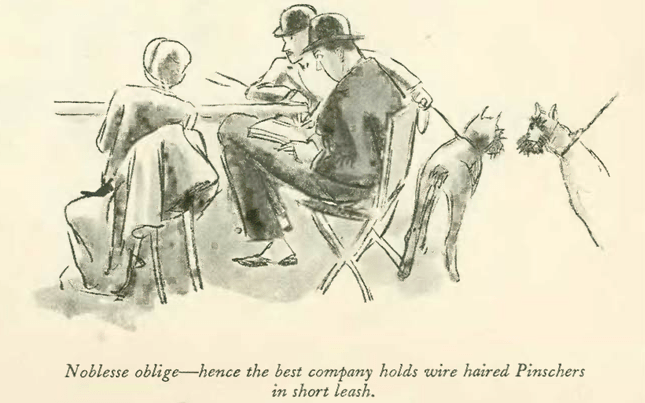
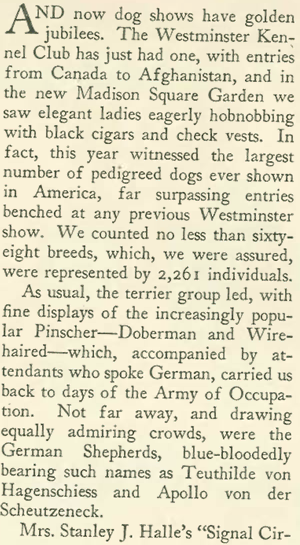
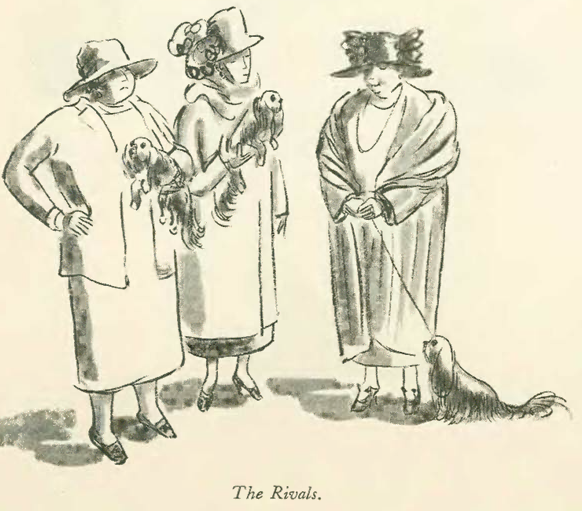
The issue was filled with car ads, appearing in the wake of January’s 26th Annual National Automobile Show at the Grand Central Palace. But the latest spectacle was the Westminster Kennel Club Dog Show at the new Madison Square Garden, with the Terrier Group once again taking the top prize. The “Talk” editors offered this observation on Westminster:

Screen Shot 2015-10-26 at 4.46.08 PM

Screen Shot 2015-10-26 at 4.46.22 PM

Screen Shot 2015-10-26 at 4.46.34 PM

901cd377df88b8559aa31f2564fdcea2
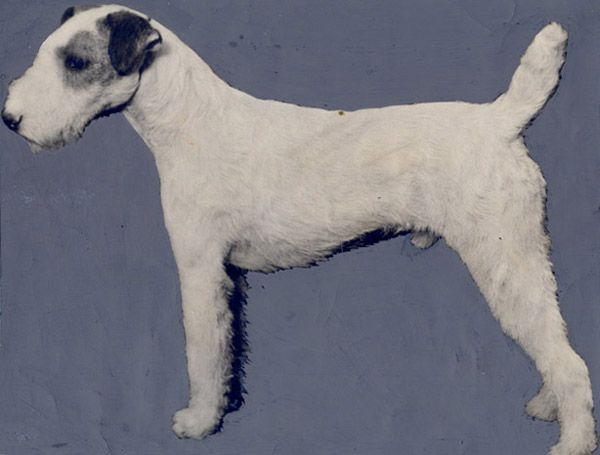
BEST IN SHOW 1926…Signal Circuit of Halleston was a Wire Fox Terrier and winner of the the 50th Westminster Kennel Club Dog Show in 1926. The fourth Fox Terrier to win best in show, Signal Circuit was one of 200 Fox Terriers present at the 1926 Westminster show. He was handled by Percy Roberts, who had imported the dog from England and had just stepped off the boat before the show. The dog was described as having “phenominal length of head and sound movement.” (WKC)
Screen Shot 2015-10-26 at 4.47.31 PM
The New Yorker’s Helen Hokinson offered this illustration to mark the event.

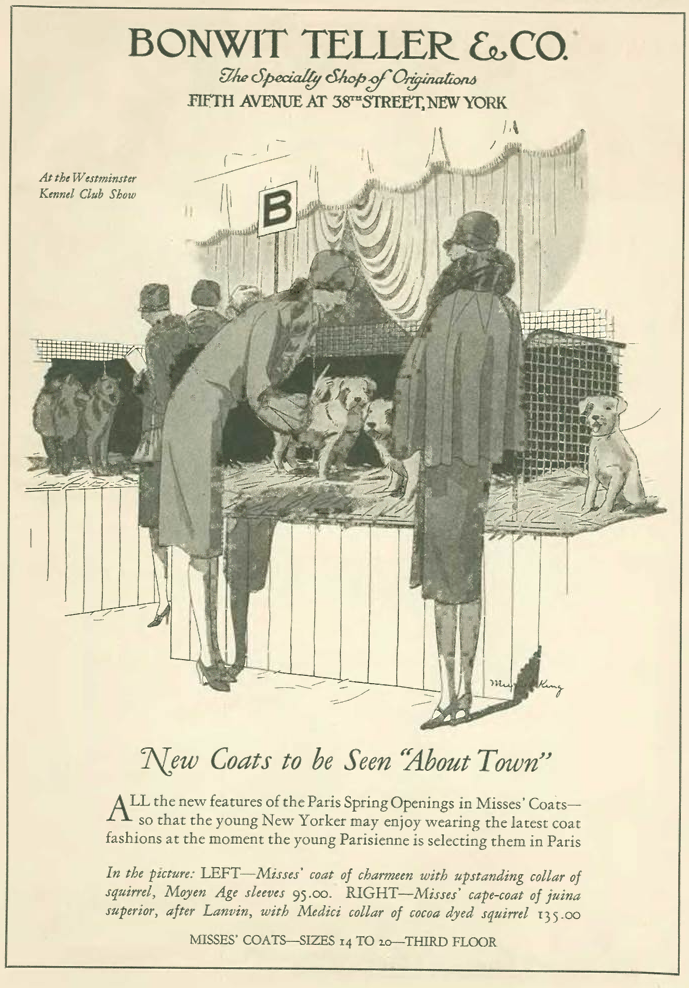
An advertisement from Bonwit Teller even got into the spirit of the thing…
Screen Shot 2015-10-27 at 9.56.10 AM

From my How Times Have Changed department, this ad from Guaranty Trust:

Screen Shot 2015-10-27 at 9.29.05 AM

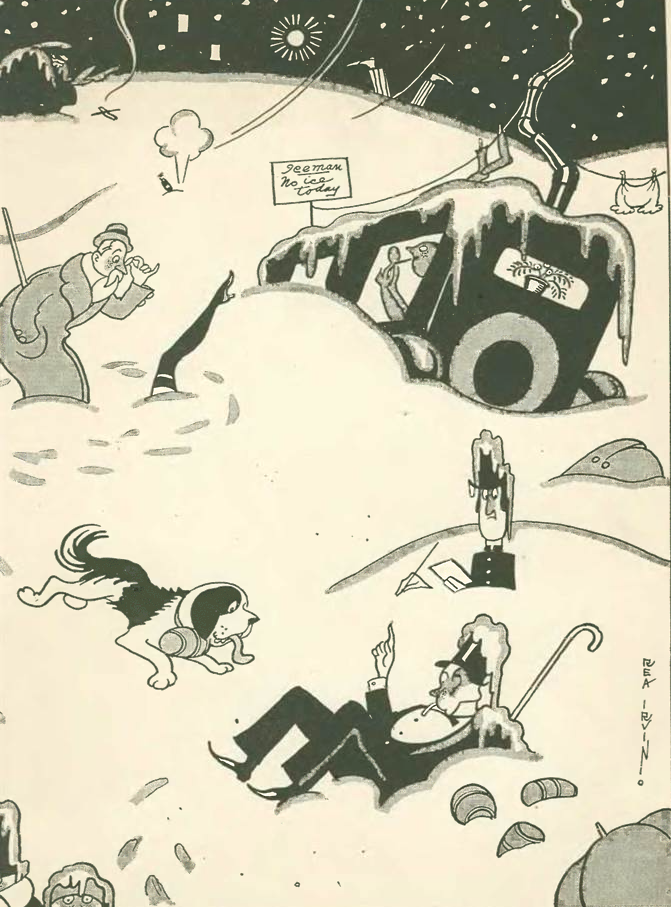
And finally, a detail from a center-page illustration by Rea Irvin depicting the result of a blizzard that blanketed the city in February 1926:

Screen Shot 2015-10-26 at 4.56.12 PM

Next Time: A Fine Mess…
Screen Shot 2015-10-27 at 4.32.20 PM

Cuban Idyll

Screen Shot 2015-10-05 at 5.07.09 PM
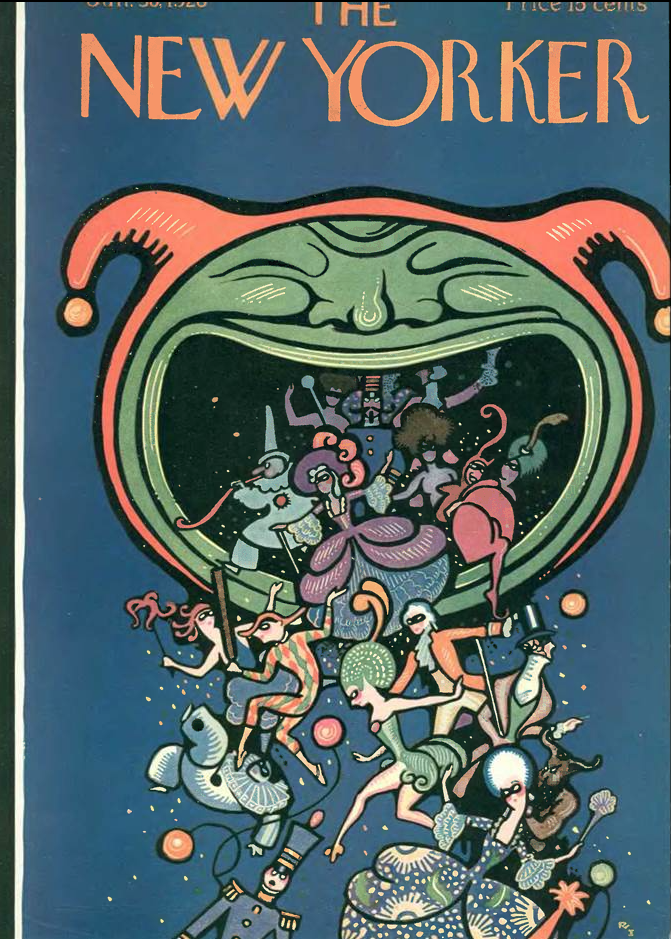
Jan. 30, 1926 cover by Rea Irvin.

Writer and cultural critic Gilbert Seldes apparently wasn’t so put off by The New Yorker’s scathing review of his play, The Wisecrackers (Dec. 26, 1925) that he couldn’t continue writing for the magazine. In the Jan. 30, 1926 issue he offered an interesting essay on the particular appeal of Cuba. Titled “Annexation is the Best Policy,” it is an interesting read given the current reopening of diplomatic relations between Cuba and the U.S.

Given that Seldes penned his article about 30 years before the Cuban revolution, he offers some interesting insights into the independent character of the island nation and, perhaps inadvertently, also reveals American attitudes that helped to fuel the revolutionary fire. Seldes writes “the fact that Cuba has never been officially Americanized is supposed to be proof of our innate idealism; to me it seems more like a proof of the lack of imagination which ran through the whole McKinley period. To have taken the Philippines and passed up Cuba–how incredibly naive!” He goes on to observe that the total lack of “peaceful penetration” is proof that the island “will cling to its character no matter how many Americans do their worst.” Here is the entire article, interspersed with vintage images:

Screen Shot 2015-10-07 at 2.31.37 PM

Havana Club
Havana Club atop the Hotel Sevilla in 1920s Havana (Havana Club)

Screen Shot 2015-10-07 at 2.32.23 PM

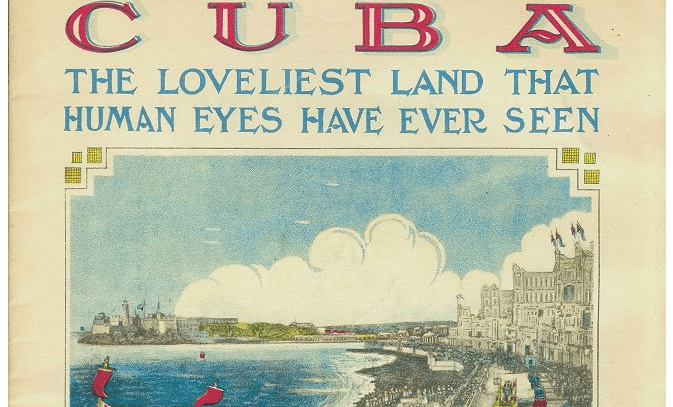
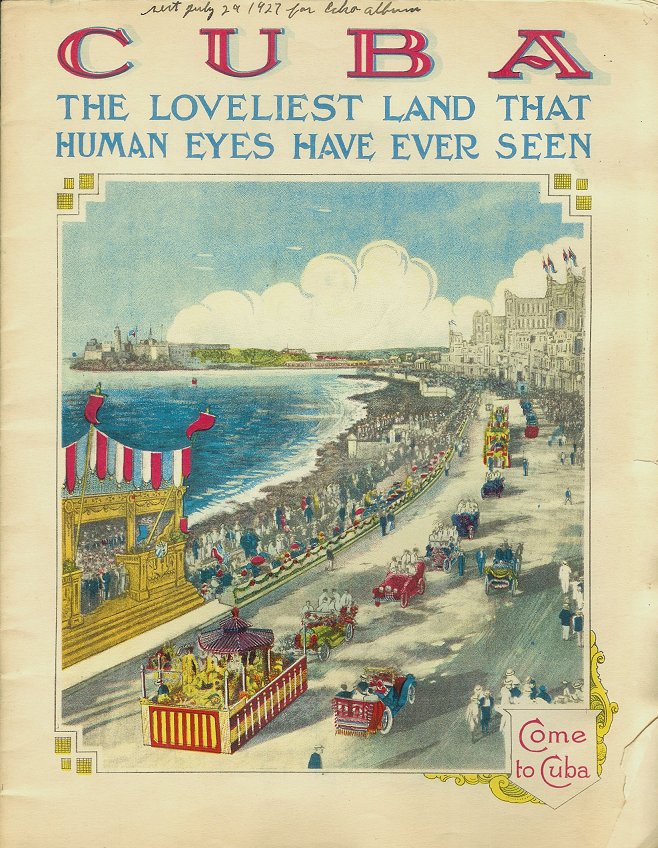
malecon-1927
1927 tourist brochure enticing visitors to Cuba (Havana Journal)

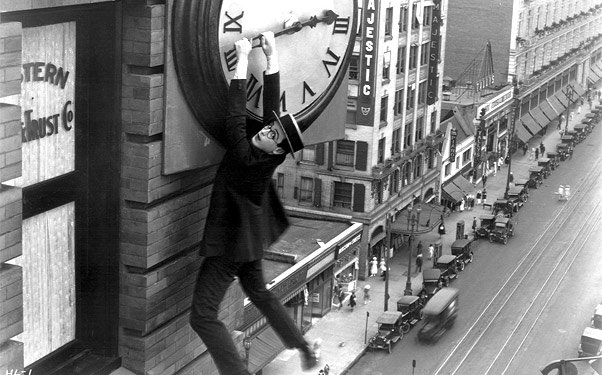
Also in the issue was profile of the life of silent film star Harold Lloyd. The writer R. E. Sherwood marveled at how a man from small town Nebraska became one of Hollywood’s most bankable stars and was even building a home in Beverly Hills for the staggering sum of $1 million.

120711_safetylast
HANG ON HAROLD…Lloyd in Safety Last, 1923. 
Screen Shot 2015-10-07 at 2.35.14 PM
Illustration of Harold Lloyd by James House Jr. for the New Yorker profile.

In his “Of All Things” Column, Howard Brubaker made note of the following:

Screen Shot 2015-10-07 at 2.36.30 PM

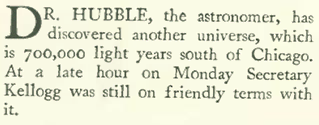
Neither Brubaker, nor Edwin Hubble for that matter, could have ever imagined that in 64 years a telescope bearing Hubble’s name would be launched into space and resolve a number of long-standing problems in astronomy.

To close, a couple of advertisements from the front section of the magazine. Now we know what youth wear at smart tea dances…

Screen Shot 2015-10-07 at 10.31.50 AM

or what to wear to Miami Beach, or possibly Cuba…

Screen Shot 2015-10-07 at 10.31.20 AM

Next time: It’s anniversary month…

Screen Shot 2015-10-07 at 2.40.38 PM