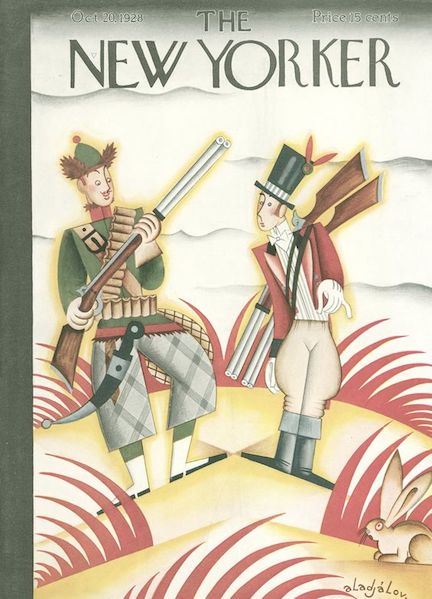
Ring Ding

Back in the days before we had a zillion different entertainment options, almost anyone with a pair of ears would tune in to hear the radio broadcast of a heavyweight title fight.

June 23, 1934 cover by Rea Irvin.

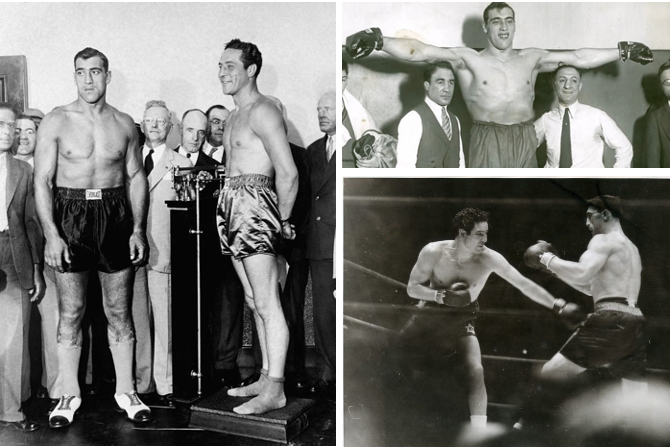
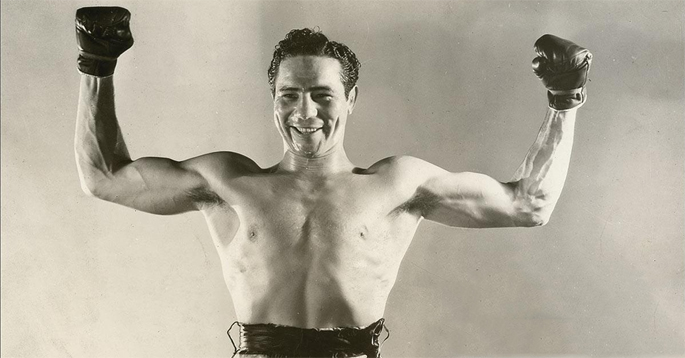
Jack Dempsey and Gene Tunney dominated the late 1920s, while Joe Louis, Max Schmeling and Jack Sharkey were marquee names in the 1930s along with Max Baer and Primo Carnera, who met on June 14, 1934 at the outdoor Madison Square Garden Bowl in Long Island City. The reigning champ Carnera (1906–1967), who stood six-and-a-half feet tall and weighed in at 260 pounds, had won more fights by knockout than any other heavyweight champion. But Baer (1909–1959) was known as a knockout puncher who beat one opponent so savagely that he died the following day.
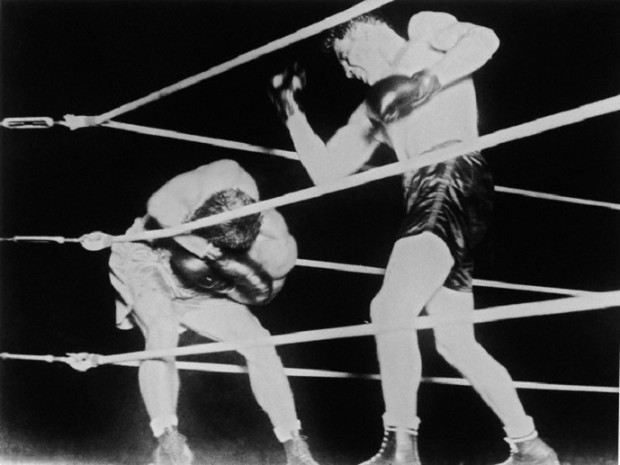
DEADLY DUEL…Max Baer (right) fought Frankie Campbell on Aug. 25, 1930, in San Francisco for the unofficial title of Pacific Coast champion. In the fifth round Baer got Campbell against the ropes and hammered him senseless. Campbell died the next day. An autopsy revealed that Campbell’s brain was “knocked completely loose from his skull.” Baer was profoundly affected by Campbell’s death, and donated purses from succeeding bouts to Campbell’s family. (thefightcity.com)

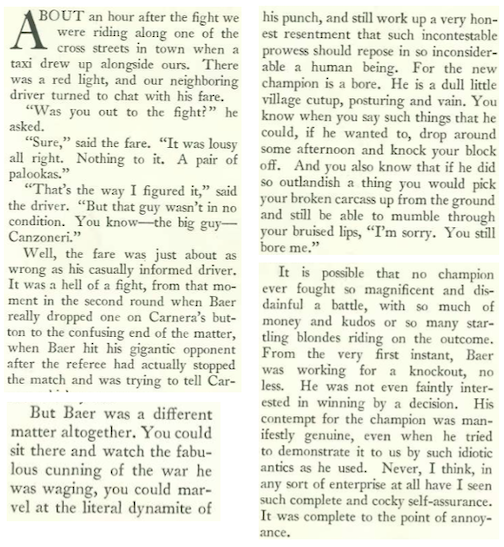
Baer was also something of a showboater, a quality Morris Markey found distasteful when he wrote about the Baer–Carnera bout in “A Reporter at Large.”
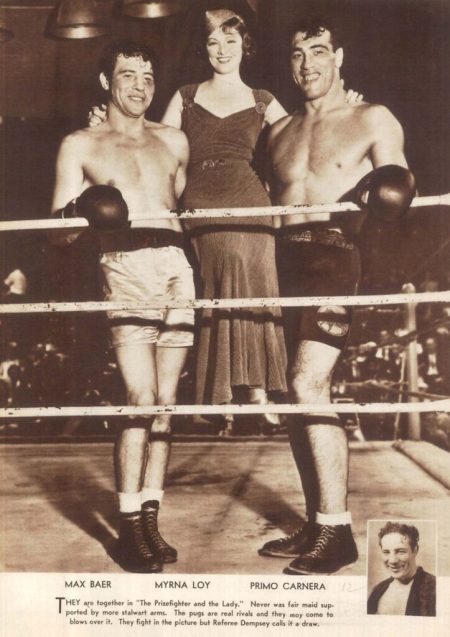
ALL SMILES…A year before their championship bout Max Baer (left) and Primo Carnera starred with Myrna Loy in The Prizefighter and the Lady. (theusaboxingnews.com)

GIANT SLAYER…The Italian prizefighter and wrestler Primo Carnera, nicknamed the “Ambling Alp,” was the reigning heavyweight champion when he faced Max Baer on June 14, 1934 at the Madison Square Garden Bowl. Baer felled the champion eleven times before the fight was stopped in the eleventh round. Baer would only hold the title for a year, losing to James J. Braddock on June 13, 1935, in what has been called one of the greatest upsets in boxing history. (theusaboxingnews.com)

Markey further explained why Baer’s behavior in the ring was so bothersome, and how it differed from the comic antics of other famous athletes:

RETIRING TYPES…Both Primo Carnera and Max Baer acted in films during their boxing careers, and continued acting after their retirements (Carnera in 1944, Baer in 1941). At left, Carnera with Bob Hope in the 1954 American comedy Casanova’s Big Night (Carnera appeared in eleven Italian films and in a half-dozen American films); at right, Max Baer and brother Buddy Baer (also a boxer) with Lou Costello in the 1949 comedy Africa Screams. Baer would appear in more than 20 films.(theusaboxingnews.com/monstermoviemusic.blogspot.com)

Complications from diabetes would take Carnera down for good at age 60. Baer would die even younger, from a heart attack, at age 50. His last words reportedly were, “Oh God, here I go.” Baer’s son, actor and director Max Baer Jr. (best known as Jethro Bodine from TV’s The Beverly Hillbillies) is still with us, at age 85.

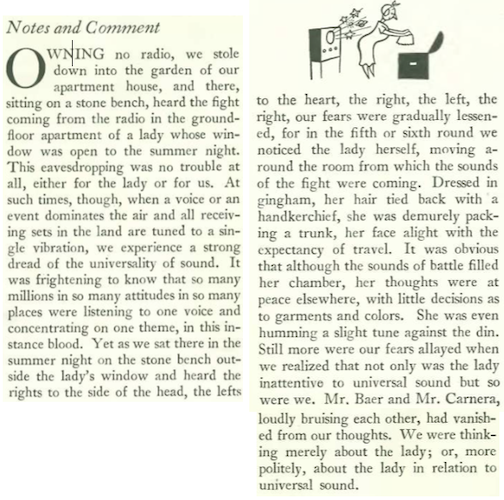
We aren’t quite finished with the Baer–Carnera fight…E.B. White led his “Notes and Comment” with this observation regarding the fight’s mass appeal and seeming universality:
 * * *

Apologies to Ms. Winslow

I seem to have given short shrift to author Thyra Samter Winslow (1886–1961) who published more than 200 stories during her career in magazines such as The Smart Set and The American Mercury. She published more than thirty in The New Yorker, from 1927 to 1942, including the serialization of her short story collection, My Own, My Native Land. The story “Poodles” was featured in the June 23 issue.

According to the Encyclopedia of Arkansas, Winslow’s early life in Fort Smith (Ark.) “provided background for her view of small towns as prejudiced, hypocritical, and suffocating places…many stories expose the hypocrisy, prejudice, and carefully maintained social structures of both small town and urban life. She was particularly adept at portraying women of every social class, often in an unfavorable light. Money, especially the pursuit of it as a means to happiness or status, is an important theme throughout her work.”

THE PURSUIT OF HAPPINESS…Thyra Samter Winslow with friend, 1937. (findagrave.com)

 * * *

Hot Enough For Ya?

So what did New Yorkers do when the summer heat set in? The next few items offer some clues, beginning with this poem by E.B. White:

SUMMER STOCK…Theatergoers fled to shady villages in New York, New Jersey and New England in the 1920s and 30s when summer stock theater was at its height. The above photo shows theatergoers leaving a performance at the Lakewood Theatre near Skowhegan, Maine. The theater was claimed to be the oldest and finest summer stock company in America with a Broadway cast. Nearby Lakewood Inn provided recreation, camping, and tourist bungalows. (mainememory.net)

You could also take in some entertainment while enjoying the cooling breezes of the Hudson River. Robert Benchley hopped aboard the Alexander Hamilton to enjoy Bobby Sanford’s showboat revue:

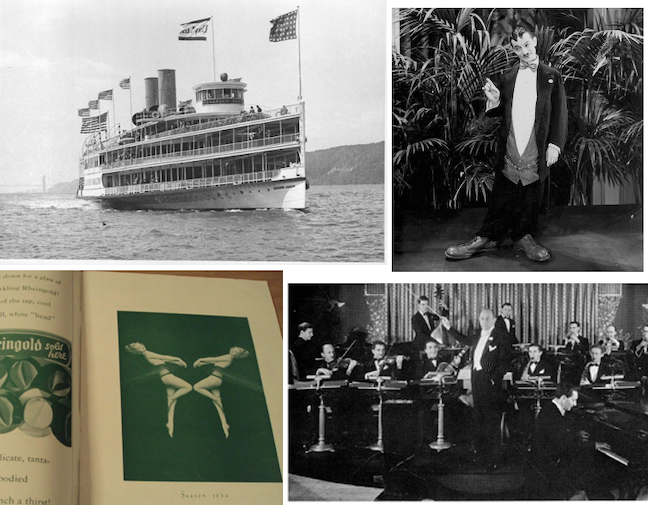
SOME REAL SHOWBOATING…Clockwise, from top left, the steamboat Alexander Hamilton hosted Bobby Sanford’s showboat revue; comedian Lester Allen served as emcee for the show; the Meyer Davis Orchestra supplied the music; the revue featured the “exotic” DuVal sisters (image from program) among other diversions. (Hudson River Maritime Museum/IMDB/vintagebandstand.blogspot.com/Worthpoint)

“Tables for Two” took a look at summer dining options, from sidewalk cafes to hotel rooftops featuring dinner and dancing—this “Tables” was not written by Lois Long, but by Margaret Case Harriman, who knew a thing or two about nightlife (she was the daughter of the Hotel Algonquin’s owner, Frank Case)…

DANCING WITH THE STARS…The Waldorf-Astoria’s “Starlight Roof” was a popular summer restaurant for dining and dancing. Image from a 1935 publication The Waldorf-Astoria by Richard Averill Smith. (The Waldorf-Astoria)
 * * *
Doing Swimmingly
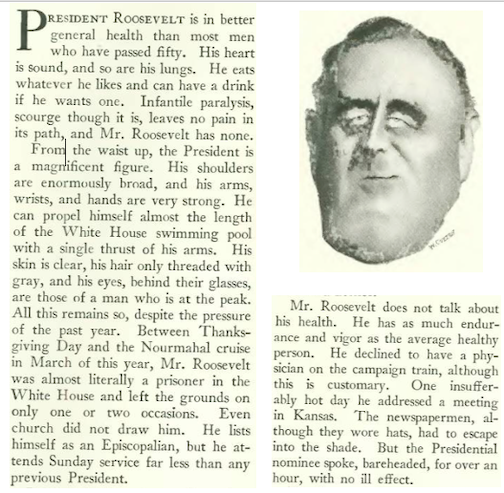
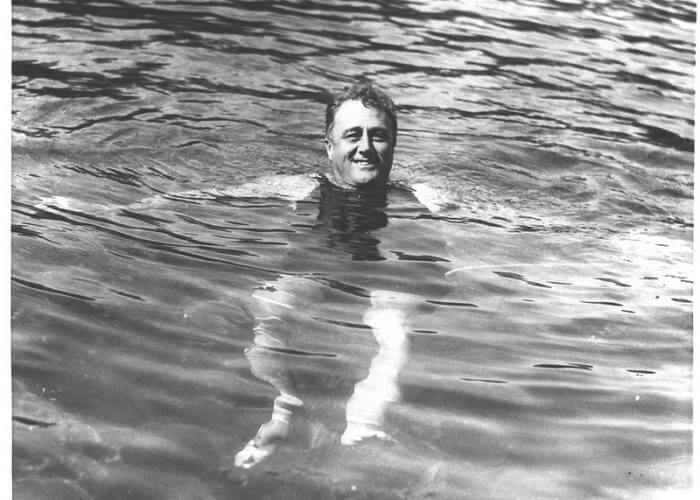
Historian Henry F. Pringle published part two of his series on President Franklin D. Roosevelt, here marveling at the president’s health despite his serious bout with polio (drawing by William Cotton).

TAKING THE WATERS…President Franklin D. Roosevelt took to swimming for therapy and exercise. (FDR Presidential Library and Museum)

* * *

Get Yourself to Chi-Town

The Chicago World’s Fair (The Century of Progress) was in its second and final year, and The New Yorker found everything “terrific.” Excerpt:
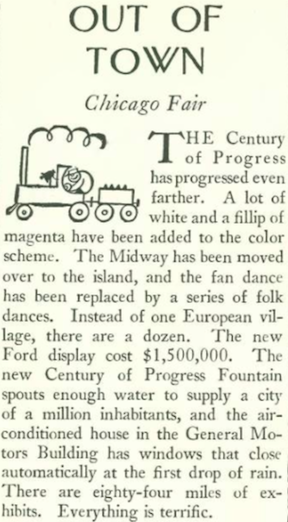
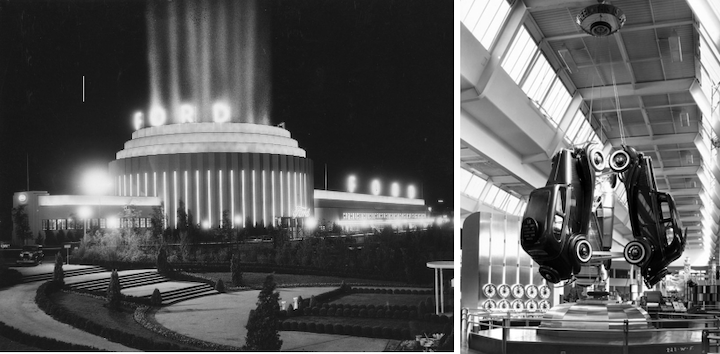
MAKING A SPECTACLE OF ITSELF…The 11-acre Ford Motor Company exhibit at Chicago’s Century of Progress became the most talked-about exhibit of 1934, featuring a central rotunda designed to simulate graduated clusters of gears. At right, Proof of Safety Exhibit in the Ford Building. (chicagology.com)

  * * *

From Our Advertisers

Just a couple of entries this week…You could take a plane to the Chicago World’s Fair on a United Airlines Boeing 247…
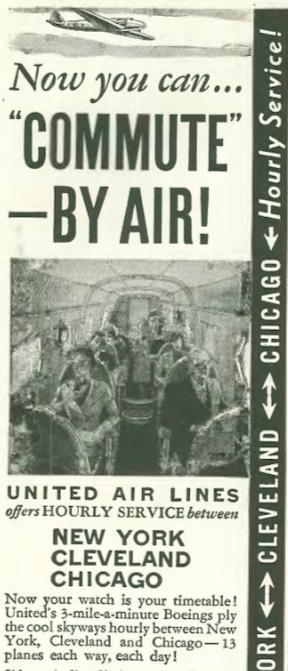
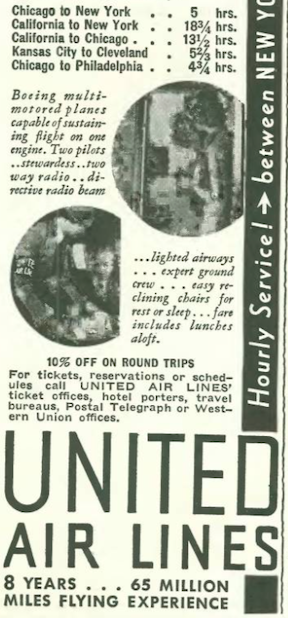
…the lower section of the ad claimed you could fly to Chicago in about five hours in planes featuring “Two pilots…stewardess…two-way radio…directive radio beam”…
TSA? WHAT’S A TSA?…United Airlines Boeing 247-D at an airport terminal with passengers and crew. (digitalcollections.lib.washington.edu)
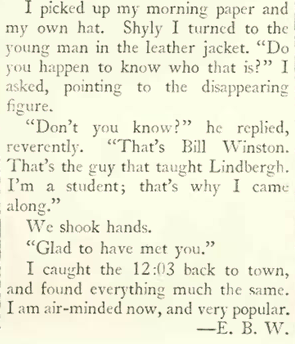
COZY CONFINES…Passengers enjoy a game of checkers aboard a Boeing 247 in 1933. (digitalcollections.lib.washington.edu)

…and what would our advertising section be without two fashionable people lighting up?…

…on to our cartoonists, we begin with Reginald Marsh’s illustration of a Rep Theatre production…

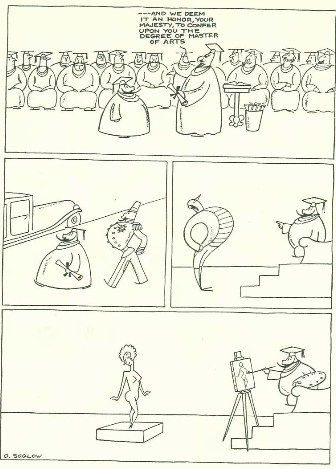
Otto Soglow’s Little King found his artistic side…
Rea Irvin continued his examination of native fauna…

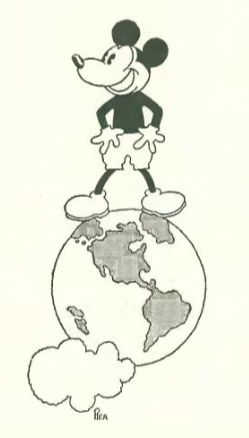
Gardner Rea correctly predicted the global domination of Mickey Mouse…
Peter Arno showed the dizzying effects of a Coney Island ride…

…however at the altar the thrill was gone, per Garrett Price

…another take on the ways of love, with Barbara Shermund...
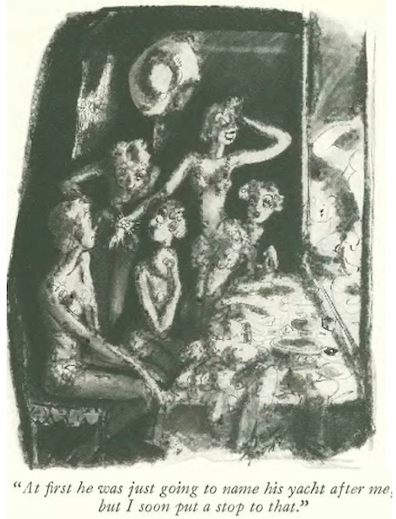
…the newfangled diagonal bathtub continued to dazzle, with George Price

Gardner Rea offered up some subtle irony on the farm…

…and we close with James Thurber, in a poetic moment…

Next Time: A Light in Darkness…
Diamond Mae

Although the Roaring Twenties saw the relaxing of many moral strictures — particularly in major cities like New York — Mae West’s frank portrayals of sex on an off-Broadway stage could still create a stir in the newspapers and among arbiters of American probity.

Nov. 19, 1928 cover by Theodore G. Haupt.

Before she appeared in films (mostly in the 1930s) Mae West was well known to New Yorkers both in vaudeville and on Broadway. Her wider fame came in 1927, when many Americans read about her arrest on obscenity charges linked to a scandalous play simply titled Sex. A story of a Montreal prostitute, Sex opened at Daly’s 63rd Street Theatre on April 1926 to modest audiences and mostly scathing reviews. The New York Times, for examplecalled it a “crude and inept play, cheaply produced and poorly acted.” Perhaps because of the negative reviews, which mostly focused on the play’s morality, curious audiences flocked to see it. Ironically (at least, I imagine, to the critics), Sex was the only play on Broadway in 1926 to stay open through the summer and into the following year.

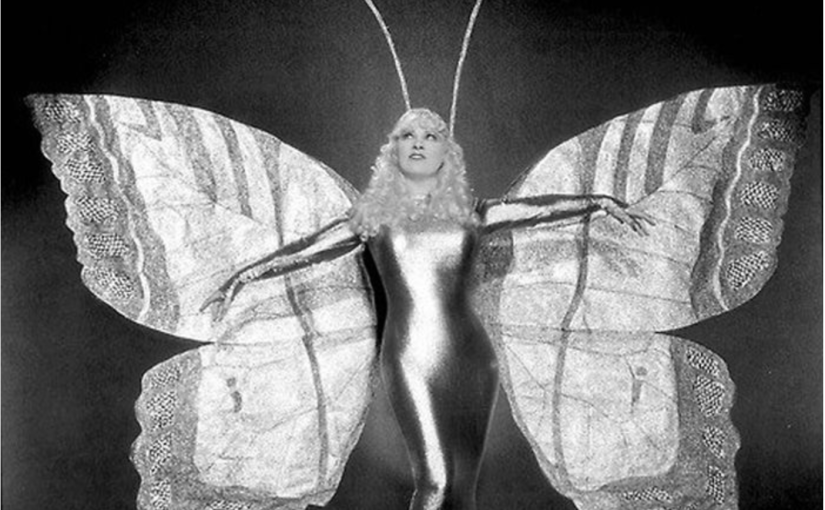
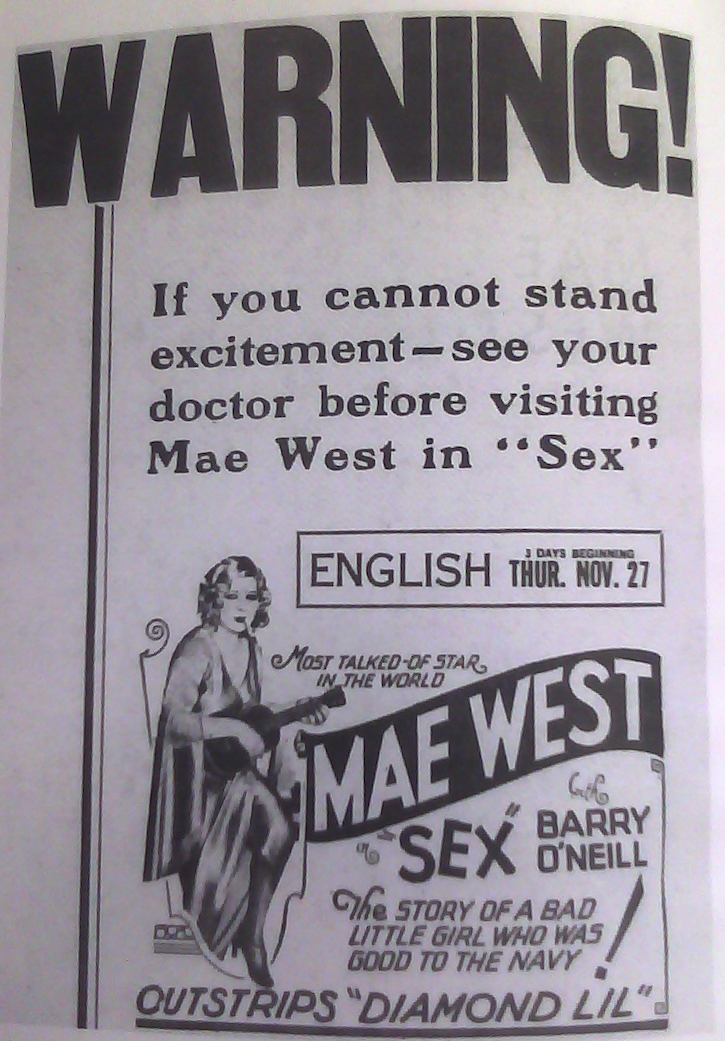
NOW THAT I HAVE YOUR ATTENTION…Mae West in a publicity photo from 1926. At right, promotional poster for Sex, which touted the play as the “Biggest Sensation Since The Armistice.” (maewest.blogspot.com/boweryboyshistory.com)

The fun ended when New York City police raided West’s production company in February 1927 and charged her with obscenity. In another ironic and hypocritical twist (many in the police department and in the city’s court system had enjoyed the play themselves, along with approximately 325,000 others during the play’s 10-month run), authorities fined West $500 and sentenced her to ten days in a workhouse on Welfare Island. Always the entrepreneur, West used the sentence to her advantage, and even arrived at the prison in a limousine. It was during her short stint in prison that she began work on her smash hit Diamond Lil.

Thyra Samter Winslow, a writer who often exposed the hypocrisy and prejudice in American life in her short fiction, profiled West for the Nov. 10, 1928 issue:

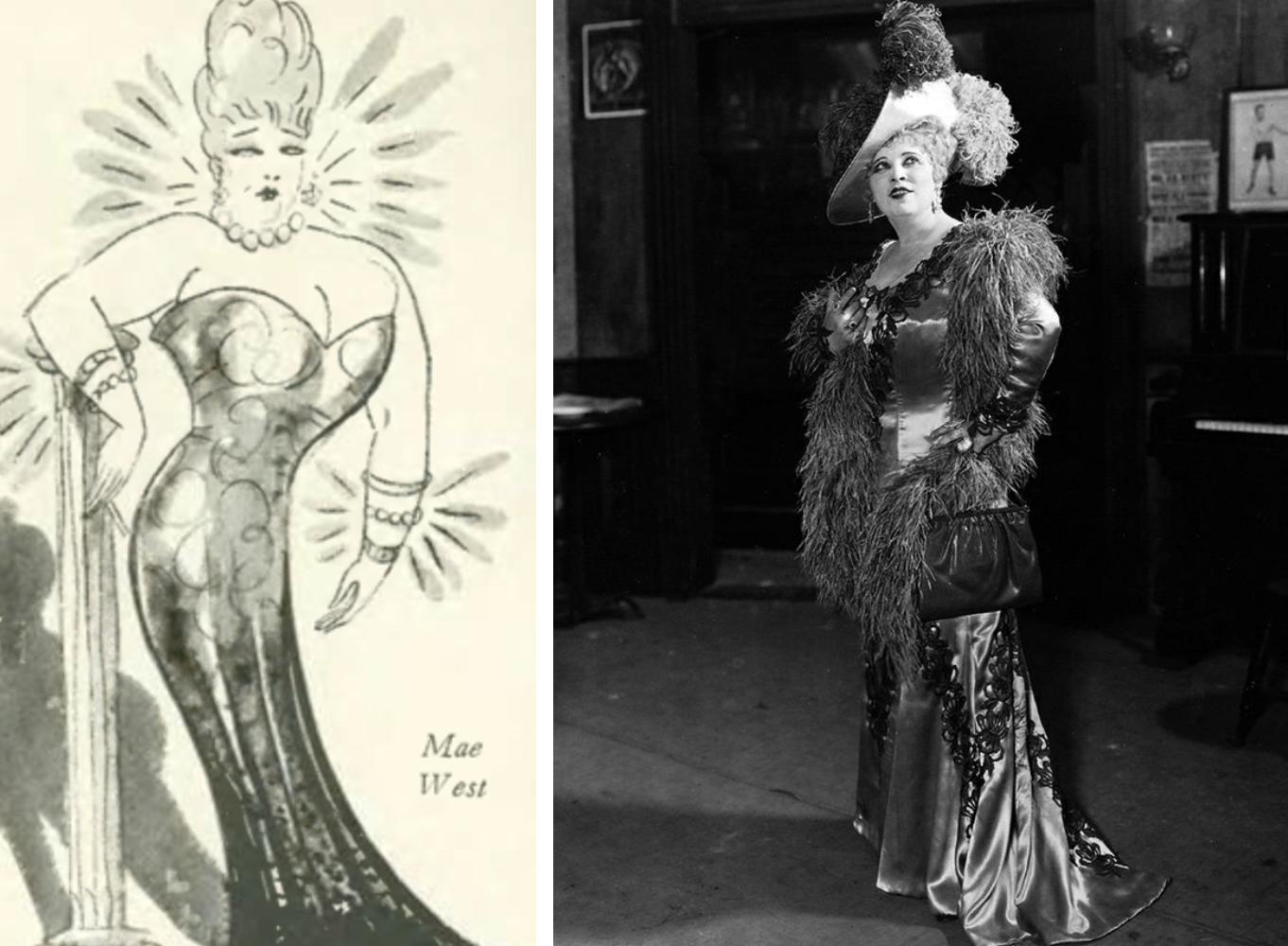
Note Winslow’s surprise to find West to be much smaller than she imagined (indeed, West barely stood five feet tall). Because West preferred a curvy, buxom figure to the thin flapper look, many like Winslow assumed her to be a much larger woman. No doubt her lavish costumes also suggested greater proportions:

West explained to Winslow that she was simply giving the people what they wanted, whether it was outlandish costumes or some “dirt” in their entertainments. Behind this facade, however, was a private, hard-working woman who wrote much of her own material and had the savvy to market it.

BE STILL MY HEART…Page from a 1926 Playbill. (New York Public Library, Shubert Archive)

In her profile, Winslow noted West’s marketing savvy during her incarceration, where she won many new friends along the way:

Winslow concluded her piece wondering if West had peaked in her success, and would “fade out” along with so many other vaudeville stars…
…. In less than seven years, West at age 42 would become Hollywood’s highest paid star and second only to William Randolph Hearst as the highest paid person in America. Ninety-two years after Sex, West remains an icon of popular culture around the world.

ALL THAT GLITTERS…Drawing of Mae West that accompanied the New Yorker profile. At right, publicity photo for Diamond Lil, 1928. (Playbill)

 *  *  *

From Our Advertisers

The Nov. 10 issue featured this all American endorsement for Lucky Strike cigarettes from World Series winning pitcher Waite Hoyt…never mind that The New Yorker itself completely ignored the World Series and baseball in general.

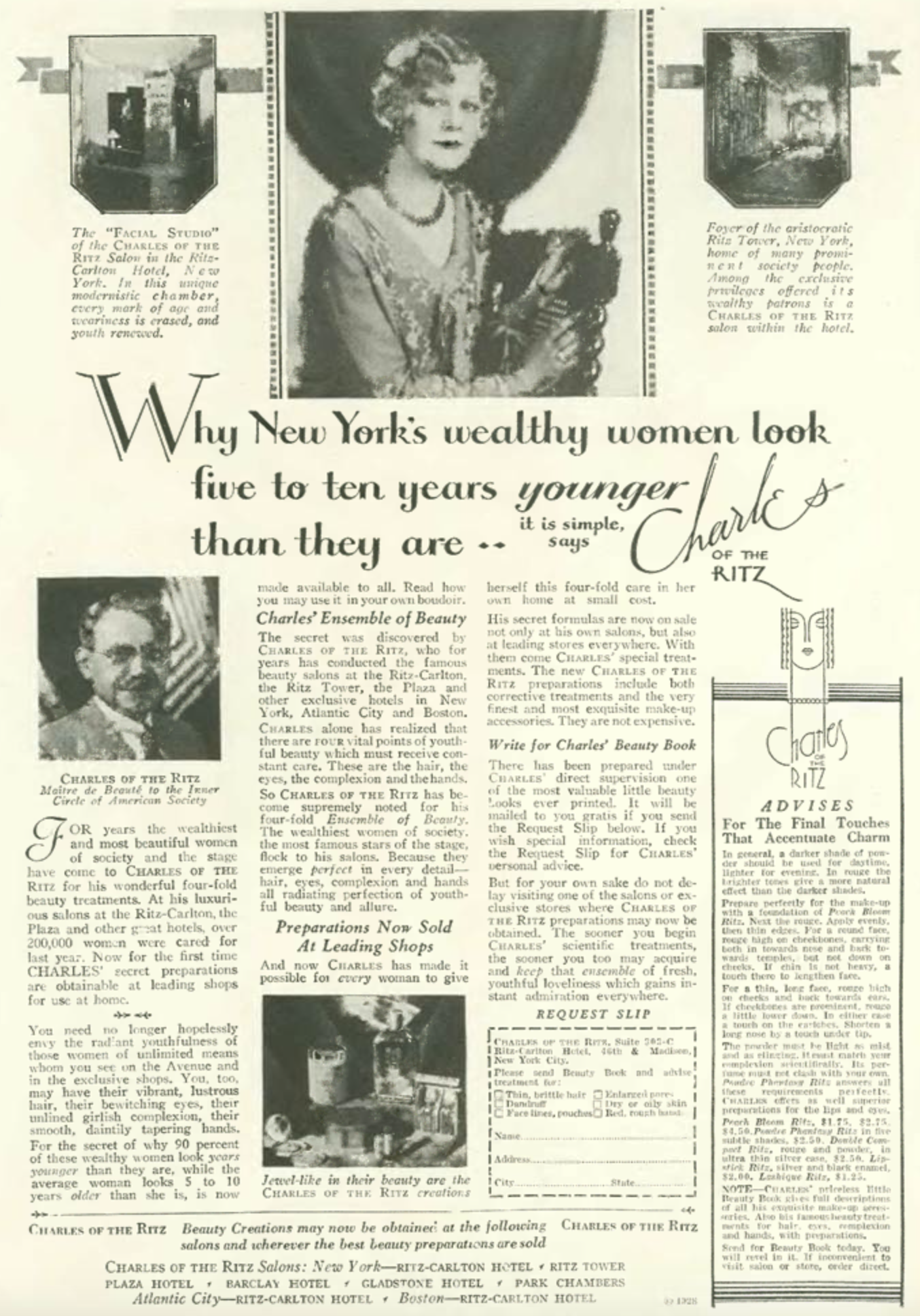
…and Charles of the Ritz used a combination of vanity, snob appeal and class anxiety to promote their latest beauty ensemble…
The comics glimpsed the foibles of the upper classes, including this terrific entry by 22-year-old Ben Hur Baz, a Mexico-born artist who would go on to become famous for his pin-ups in the 1940s and 50s, many of them appearing in Esquire:

…and a game of blind man’s bluff (or some say ‘buff’) as rendered by Peter Arno:

  *  *  *

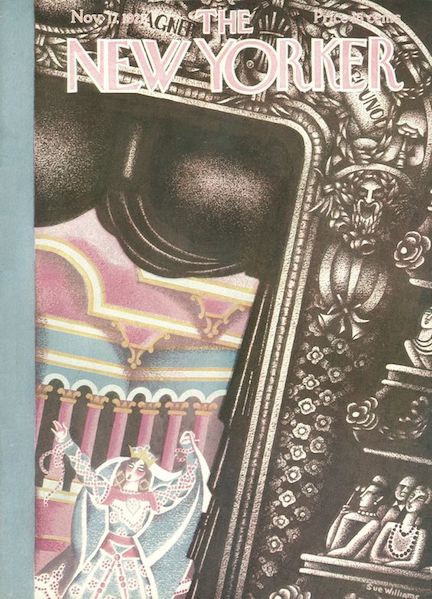
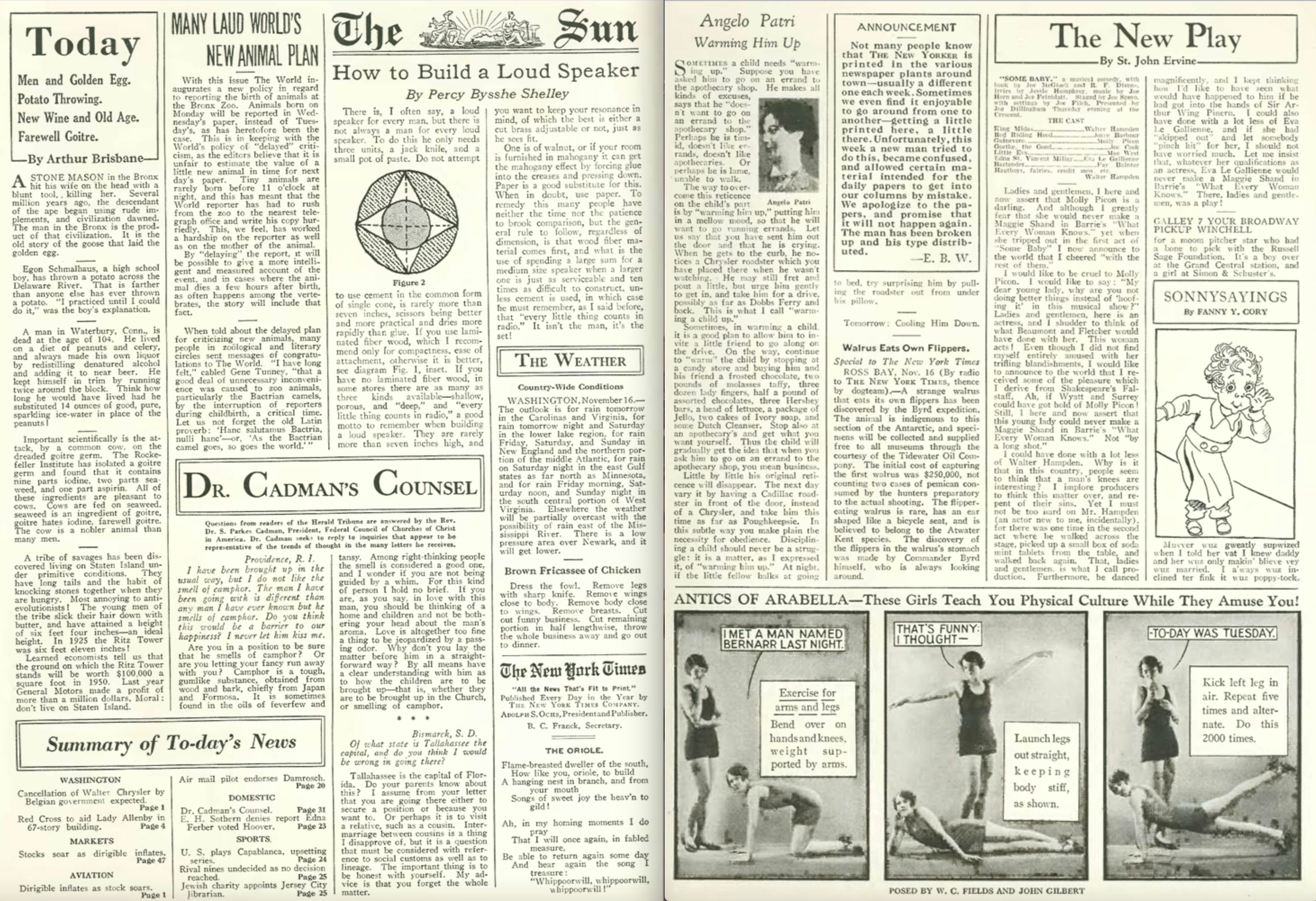
The Nov. 17 issue featured an unusual entry by E.B. White, who, like many of his New Yorker colleagues, found many reasons to be critical of the media, including the dumbing down of newspapers that increasingly favored trivia, sensation and promotion over serious discourse.

Nov. 17, 1928 cover by Sue Williams.

White skewered the news of the day in this two-page spread that parodied the look and language of contemporary newspapers (click to enlarge):

 *  *  *

The issue’s “Talk of the Town” featured a lengthy entry on Notre Dame football coach Knute Rockne, a figure greatly admired and generally lauded by the magazine’s sportswriters. A brief excerpt:

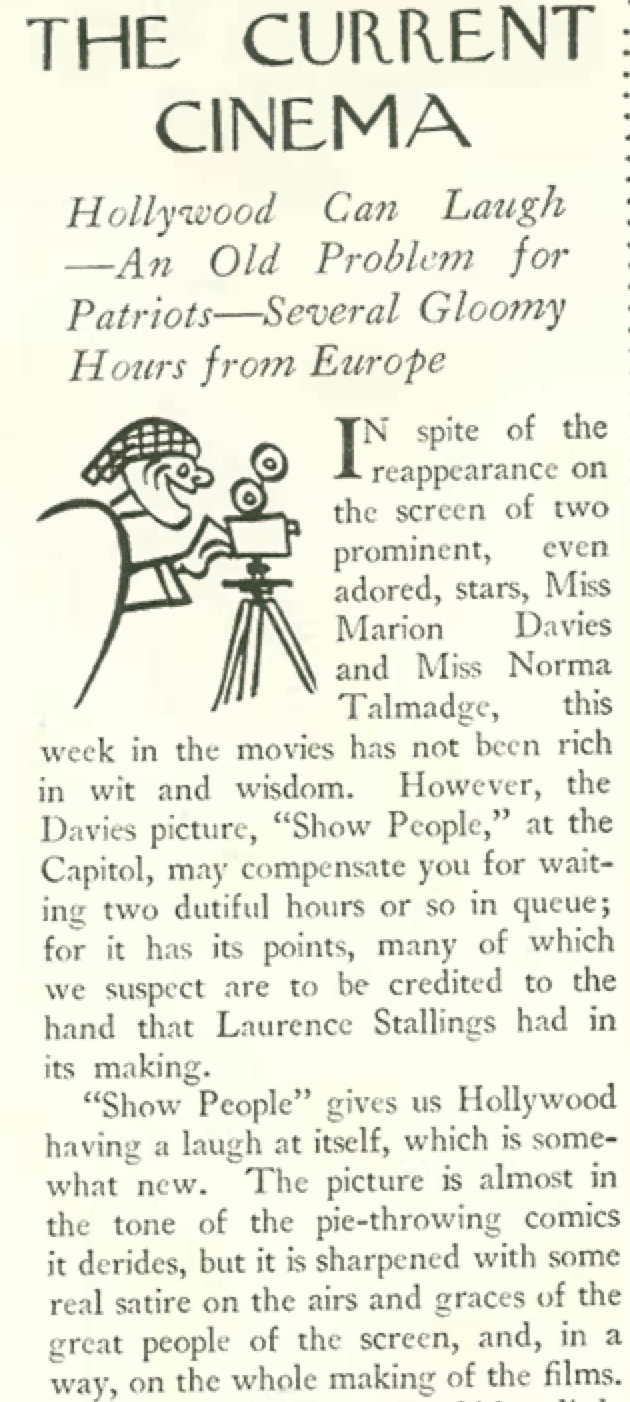
The Nov. 17 film reviews gave a rare thumbs up to an American movie, Show People, which starred Marion Davies.

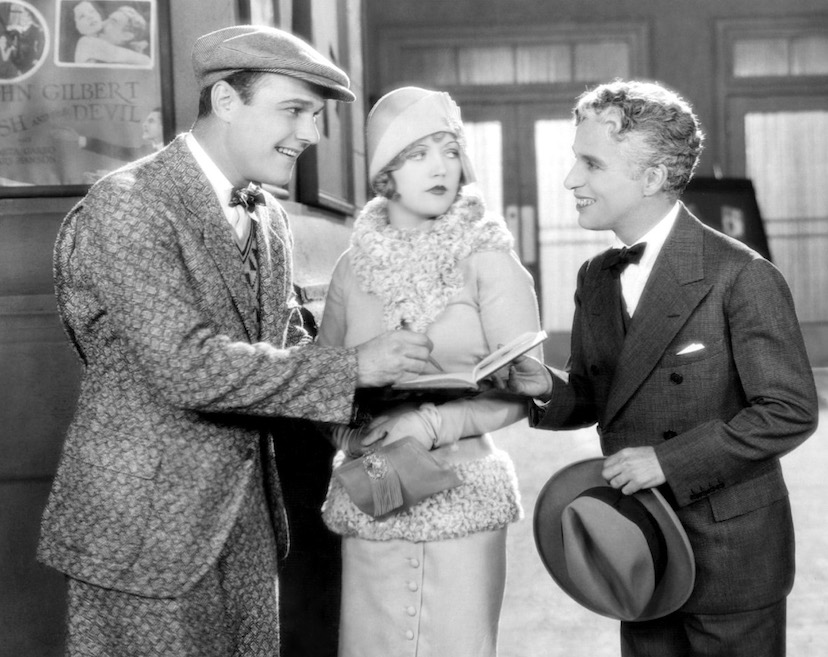
HE LOOKS FAMILIAR…William Haines (left) and Marion Davies meet Charlie Chaplin in the 1928 Hollywood send-up film, Show People, directed by King Vidor. Chaplin made this rare appearance as himself, without his “Little Tramp” makeup. He was uncredited in the film, and asked to be paid the extra’s fee of only $7.50. (silent-volume.blogspot.com)

 *  *  *

From Our Advertisers

Although you couldn’t legally procure a drink in 1928, you could (unlike today) legally purchase of box of Cuban cigars for you special someone:

…or if you preferred, a carton Chesterfields. Apparently someone in marketing thought conjuring up the horrors of trench warfare would help sell some smokes…

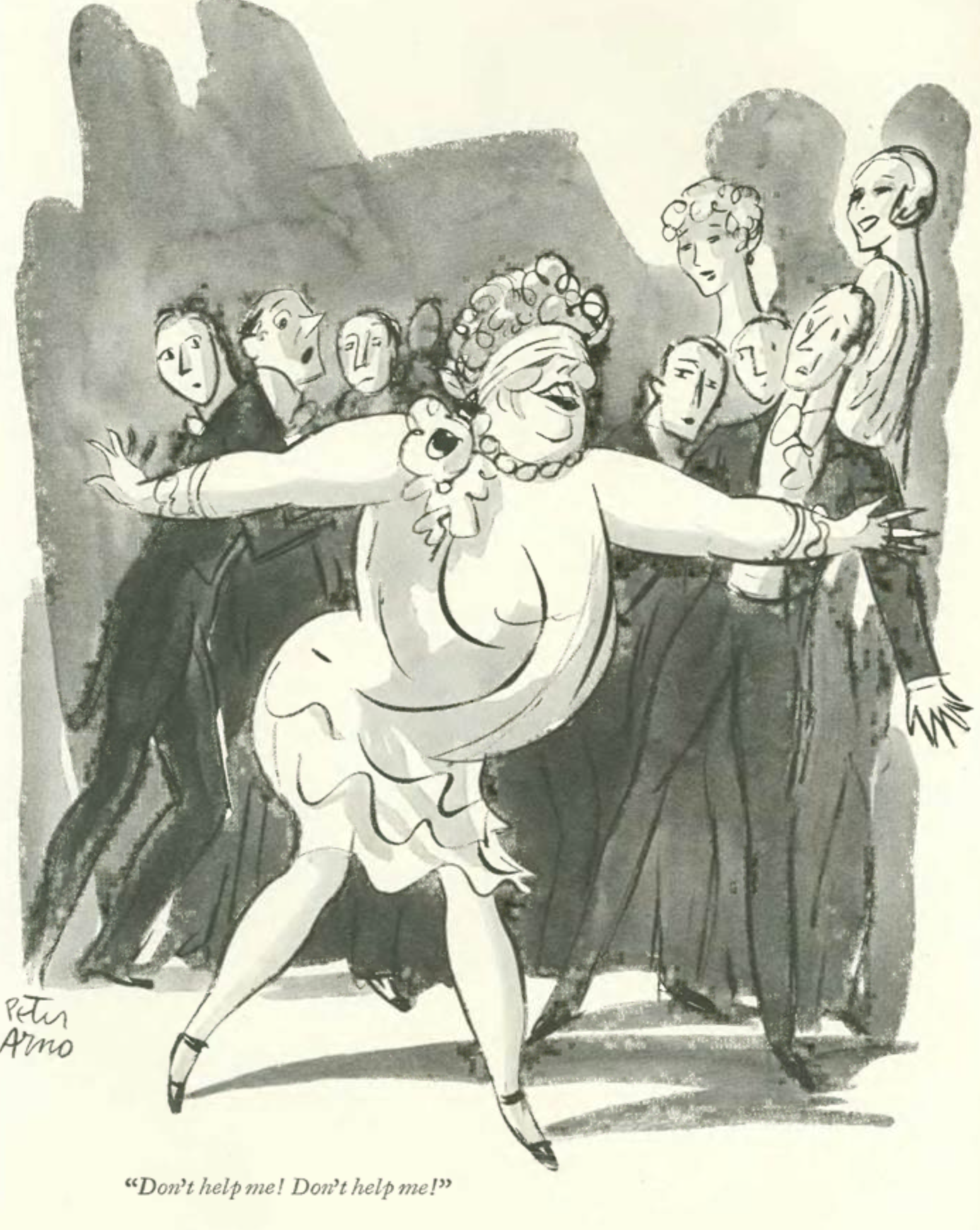
And finally, Peter Arno found out what’s for dinner at the table of a great outdoorsman:

Next Time: What Santa Brought in 1928…


A Bird’s Eye View

The New Yorker’s E.B. White was an aviation enthusiast who rhapsodized about his flights into the clouds, but also had prescience to see the darker side of this modern thrill ride.

October 6, 1928 cover by Ilonka Karasz.

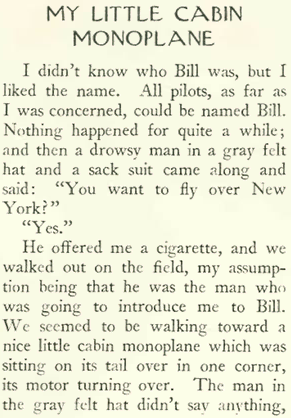
Writing in the “Reporter at Large” column for the Oct. 6, 1928 issue, White described his visit to Curtiss Field, where he inquired about a pilot who could fly him over New York City. He was told someone named Bill would take him up.

EARLY BIRD…This Fairchild FC-2 Cabin Monoplane, with strut-supported wing, was probably similar to the plane E.B. White rode in his flight over New York City. (Quora)

After a half hour wait, a man in a gray felt hat and sack suit offered White a cigarette and said, “You want to fly over New York?” Although the man didn’t look like a pilot, White followed him to a “little cabin monoplane.” Without saying another word the man took the plane up into the air, much to White’s surprise:

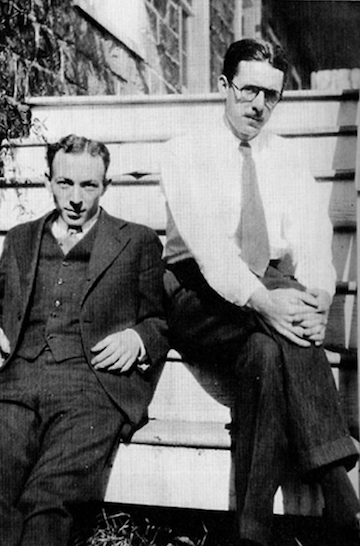
FLYBOY…E.B. White (left) with friend and New Yorker colleague James Thurber in 1929. (University of Virginia)

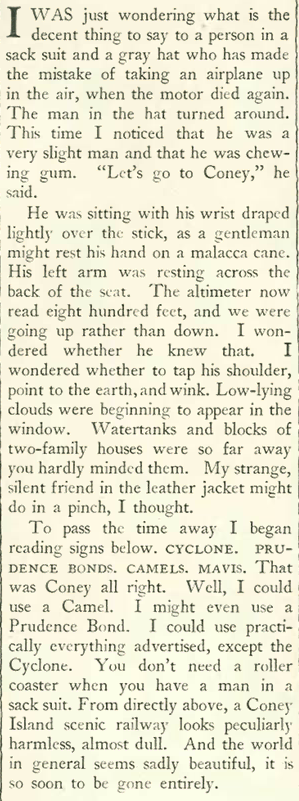
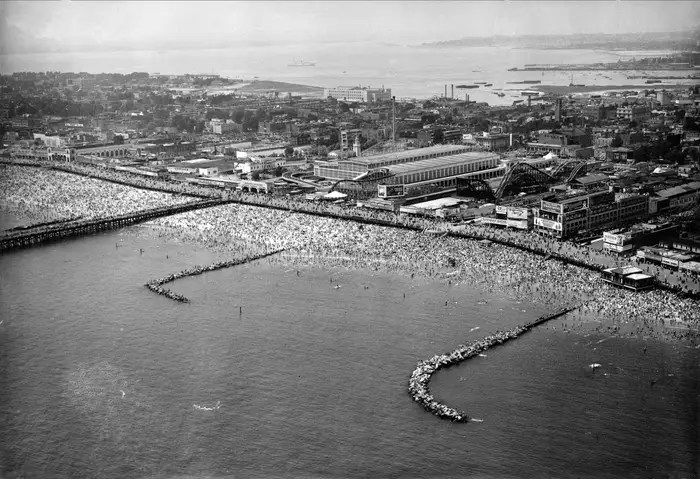
White described the various sites from 800 feet up, including Coney Island, a view at once beautiful and foreboding…

Aerial view of Coney Island, 1937. (AP/lunaparknyc.com)

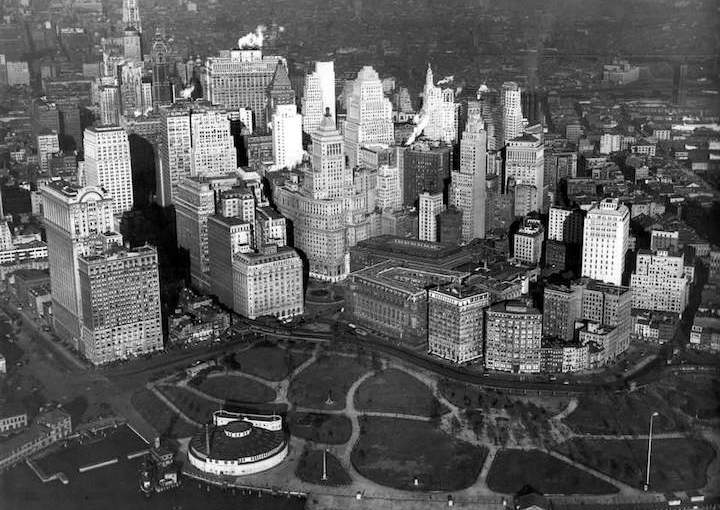
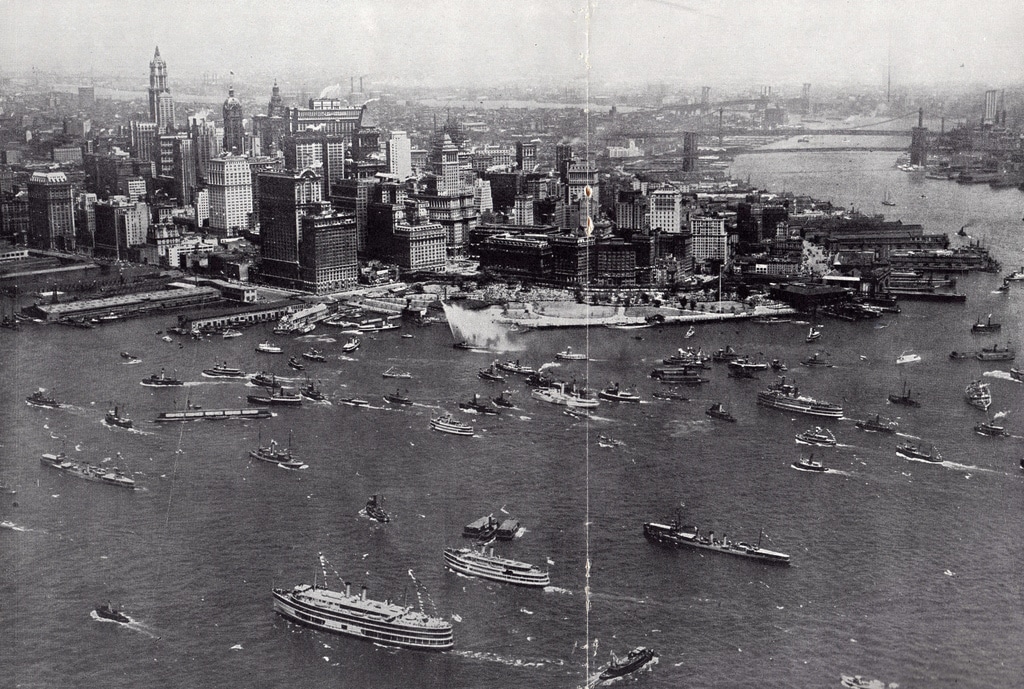
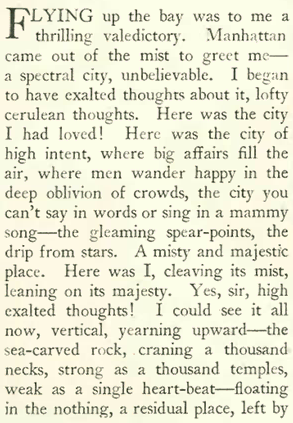
…and the thrill of the approaching city skyline as his plane soared up the Bay toward Manhattan:

Lower Manhattan looking northeast from the Bay in July 1927. This is approximately the view described by E.B. White as his plane approached Manhattan. (Favrify.com)
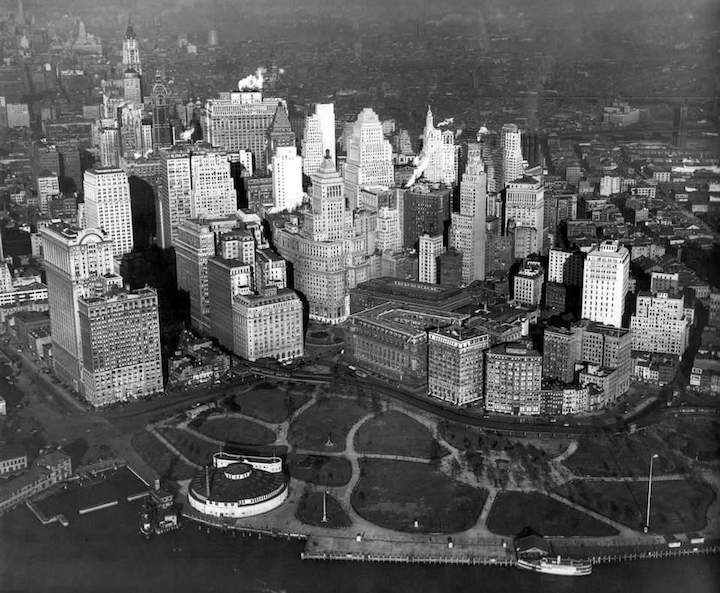
A closer view of lower Manhattan as it would have appeared to E.B. White on his 1928 flight over New York City. (Fairchild Aerial Survey photo, 1928)

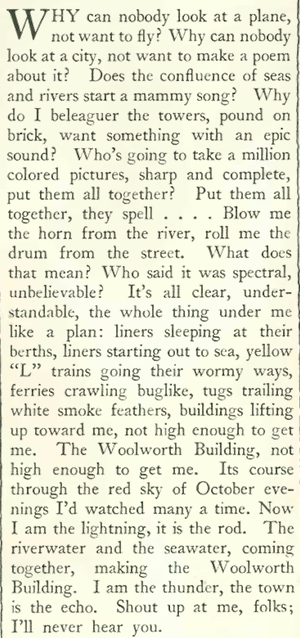
Once over the city, White could not help but contain his exuberance, soaring high above the towering spires and teeming crowds below:

And yet as I noted earlier, his observations were tinged with melancholy and foreboding. In describing his flight over Coney Island, for example, White concluded that “the world in general seems sadly beautiful, it is so soon to be gone entirely.”

Perhaps he referred to the rapid changes seen daily in the city during the 1920s, when nothing seemed permanent. Or did this bird’s eye view suggest something else to White? Twenty years later, in his 1948 essay “Here is New York,” White would write:

A single flight of planes no bigger than a wedge of geese can quickly end this island fantasy, burn the towers, crumble the bridges, turn the underground passages into lethal chambers. The intimation of mortality is part of New York now: in the sound of jets overhead, in the black headlines of the latest edition.

Unlike 1928, White had the hindsight of World War II, of entire cities leveled by waves of heavy bombers, or in the case of Hiroshima and Nagasaki, just a single bomb. The foreshadowing of 9/11 is contained in his words as well.

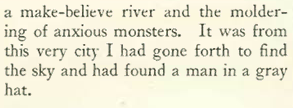
Back on the ground at Curtiss Field, White would finally learn the identity of the man who didn’t look like a pilot, but had just flown him over the city:

Another Vantage Point

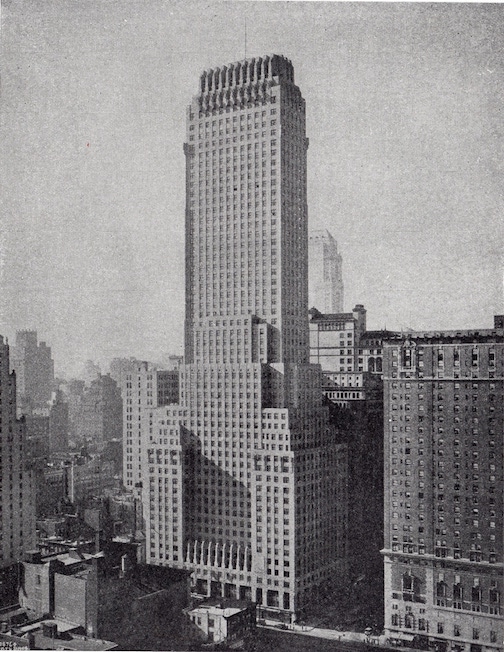
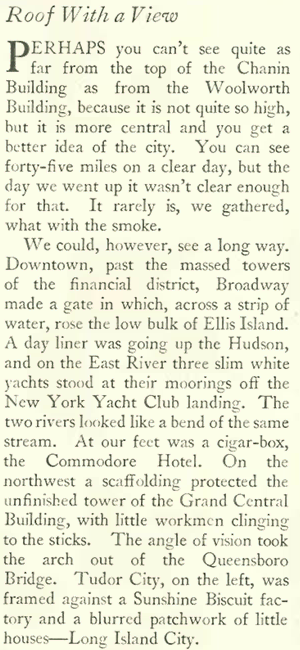
With buildings rising ever higher in Manhattan, you could get a pretty good view of the surrounding city by taking an elevator to the rooftop of the latest skyscraper. The Oct. 6 “Talk of the Town” found a good perch atop the 680-foot-tall Chanin building on the southwestern corner of Lexington Avenue and 42nd Street.

THINGS ARE LOOKING UP…The Chanin Building at Lexington and 42nd. Sloan & Robertson Architects, 1928. (New York Public Library)

 *  *  *

From Our Advertisers

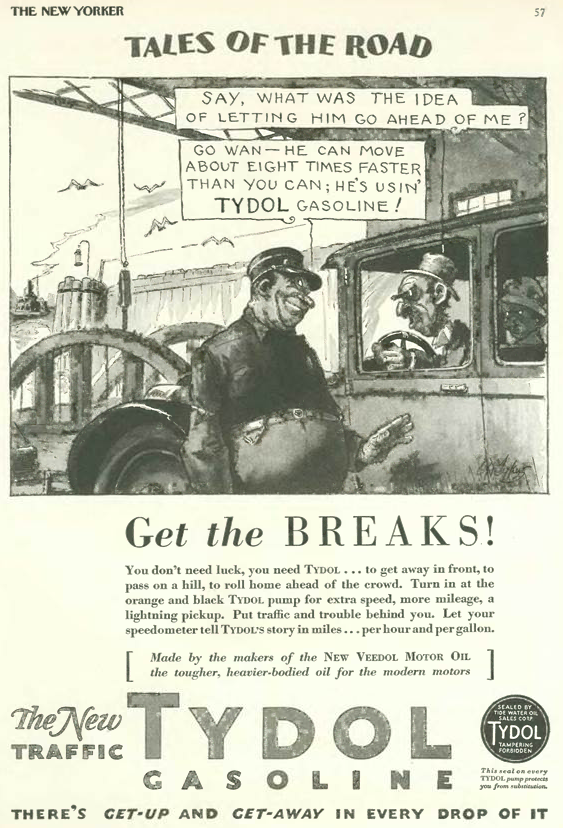
Something you never see in The New Yorker anymore, or in most magazines for that matter, are ads promoting various brands of gasoline. This one touts the benefits of Tydol, produced by the (now defunct) Tide Water Oil Company of New York:

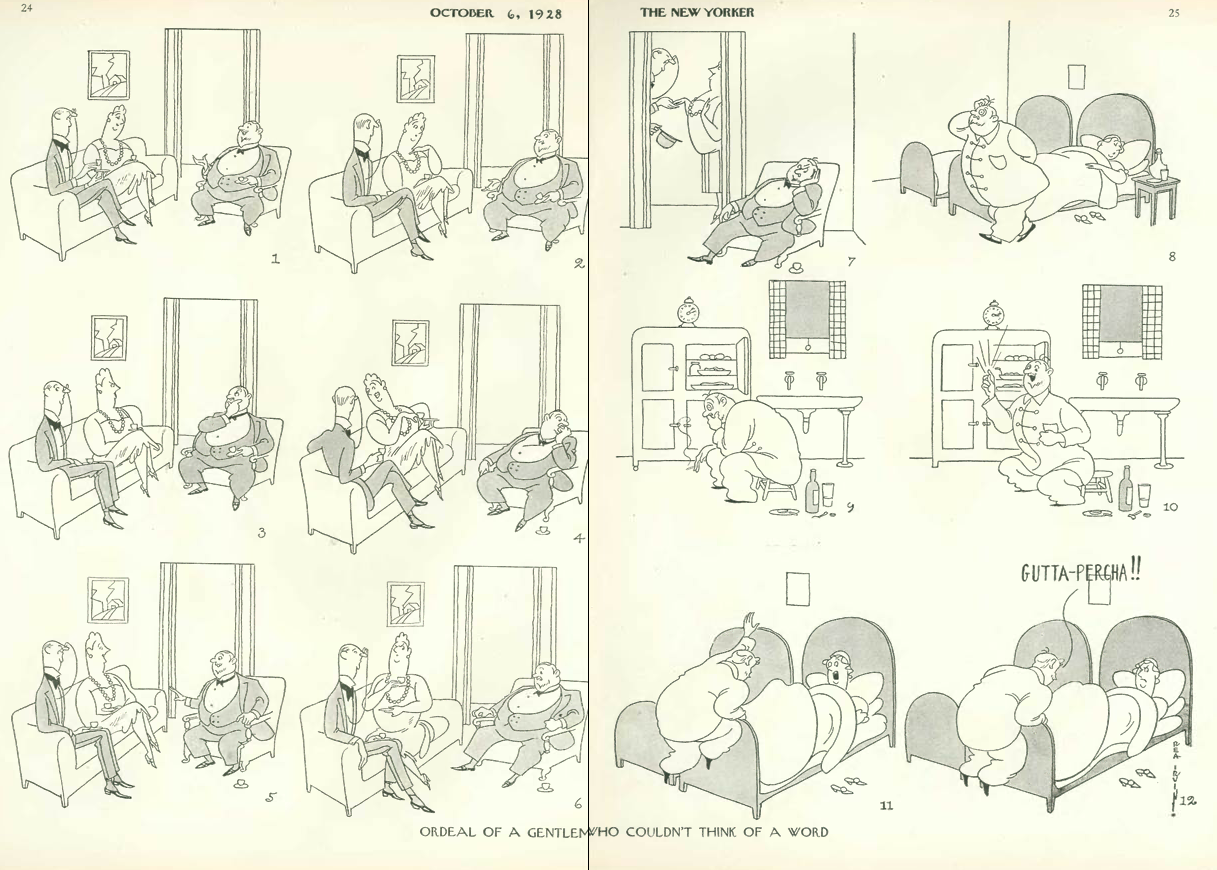
For our Oct. 6 cartoon, here is one of Rea Irvin’s occasional multi-panel, two-page comic spreads, this one exploring the ordeal of a man who couldn’t think of the word for a type of natural plastic used in the 1920s (click to enlarge image):

 *  *  *

The Oct. 13, 1928 issue featured a notable short story by Thyra Samter Winslow, a writer who contributed nearly a dozen pieces to The New Yorker in 1927 and 1928.

October 13, 1928 cover by Julian de Miskey.

Her short story on page 25, “But for the Grace of God,” was a “key transitional work” for the magazine, according to Ben Yagoda in his book About Town: The New Yorker and the World It Made. He writes: “Realistic fiction thrives in periods of social ambiguity and flux, and the attention to class was on of the factors working to propel New Yorker writing from two-dimensional sketches to fleshed out short stories.” Yagoda observes that Winslow’s story, “in its carefully selected details, its mild epiphany, and its attention to the potency of class…is an accomplished and poignant piece of short fiction.” Excerpts:

Thyra Samter Winslow, in 1936. (findagrave.com)

* * *

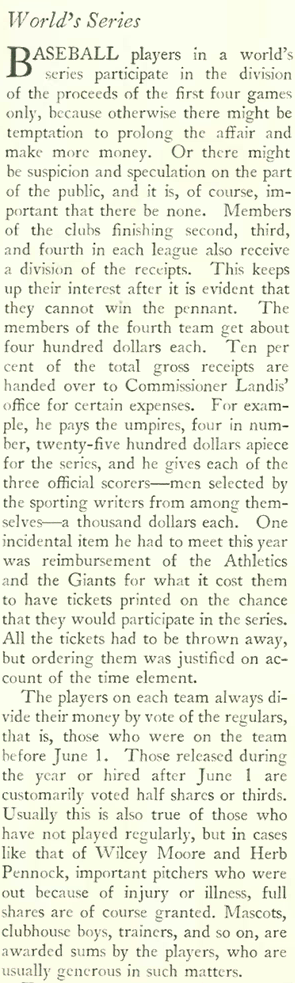
The New Yorker continued its stubborn refusal to report on baseball in its sports section, even though the Yankees were in the process of taking their second consecutive World Series title with a 4-0 sweep over the favored St. Louis Cardinals. The magazine did, however, mention the game in the Oct. 13, 1928 “Talk of the Town” — not on how it was played, but rather on how the championship money was distributed among players and assistants:

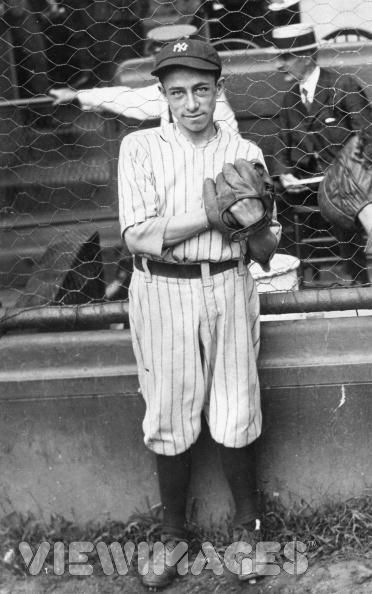
Money matters in the game of sport were more informal 90 years ago, with players themselves divvying up money to other players, trainers, mascots and batboys. For example, in 1927 Yankees batboy Eddie Bennett received $700 for the one-eighth World Series share voted him by the team. This sum earned over the four days of the series nearly equalled a batboy’s pay for a full year.

GOOD LUCK CHARM…Yankee batboy Eddie Bennett in the 1920s. Although a spinal injury as an infant left him hunchbacked, Bennett would serve as Yankee batboy for 12 years — a period that would include seven pennants and four World Series titles. (sabr.org)

 *  *  *

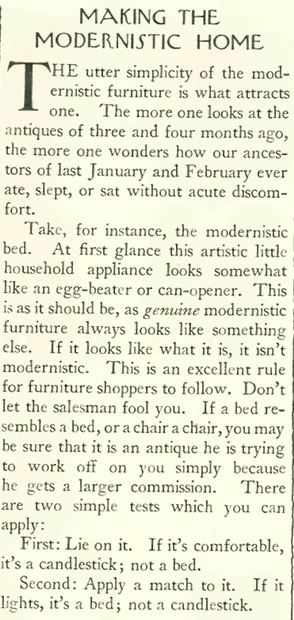
Although European-inspired modern furniture was all the rage among certain members of the New York smart set, writer Joseph Fulling Fishman (best known for his writing on contemporary prison conditions) offered a dissenting view in the Oct. 13 edition. An excerpt:

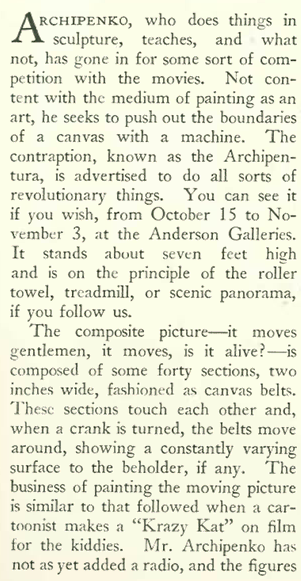
In the art review section, critic Murdock Pemberton also seemed a bit perplexed by modern design, in this case by the work of Ukrainian-born avant-garde artist Alexander Archipenko. His Archipentura was an electronic machine that displayed pre-loaded images of a female undressing by rolling painted canvas through a complex system of sprockets and belts. He intended the machine “to do for painting what the motion picture did for photography.” Pemberton observed:

THINK DIFFERENTLY…Alexander Archipenko (right, circa 1920), intended his intended his Archipentura machine (pictured in front and side views) “to do for painting what the motion picture did for photography.” (Wikipedia/Archipenko Foundation)

*  *  *

From Our Oct. 13 Advertisers

Yet another endorsement for cigarettes from the posh set. This time Melachrino Cigarettes got in on the action with this endorsement by Augusta Barney Harriman.

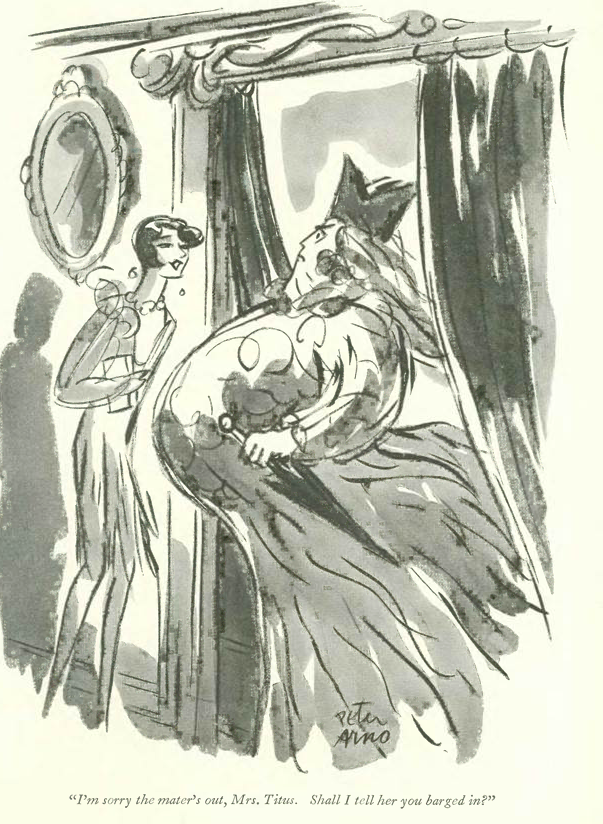
For our cartoon, Peter Arno once again looked in on the mannerisms of the upper class, contrasting a lithe young flapper with the imposing presence of a battle-axe. Note how the young woman uses the archaic British “mater” in reference to her mother…

Next Time: The Prohibition Portia…