The Major’s Amateur Hour

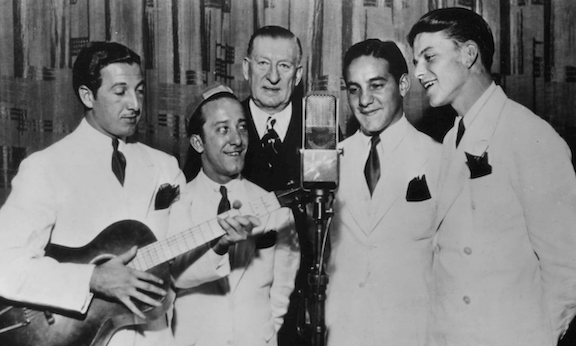
Above: Photo of the Hoboken Four as they appeared on the "Amateur Hour with Major Bowes" in 1935. At center is "Major" Edward Bowes, and at right is Frank Sinatra. The other three members of the Hoboken Four were Frank Tamburro, Patty Prince and Jimmy Petro. (knkx.org)

Nearly seventy years before American Idol appeared on our TV screens, a hugely successful and influential talent show filled the airwaves from NBC’s radio studios at Rockefeller Center.
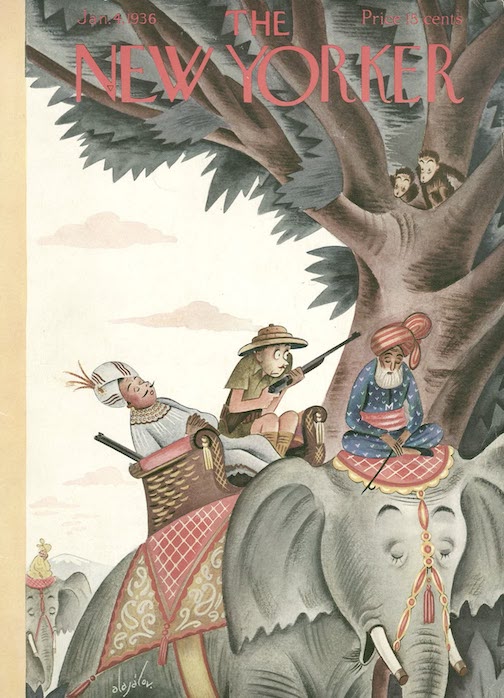
January 4, 1936 cover by Constantin Alajalov.

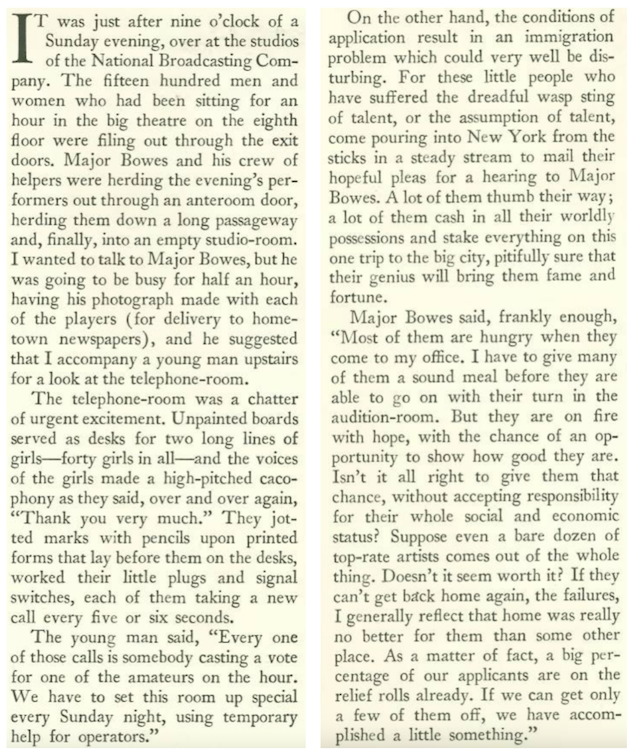
Millions tuned in each week to the Major Bowes Amateur Hour, which got its start in 1934 at radio station WHN before moving to NBC the following year. Created and hosted by “Major” Edward Bowes (1874–1946), Bowes would chat with contestants before listening to their performances, which could be cut short by the Major’s gong (see below). For his “A Reporter at Large” column, Morris Markey paid a visit to Bowes during evening auditions at the NBC studios. Excerpts:
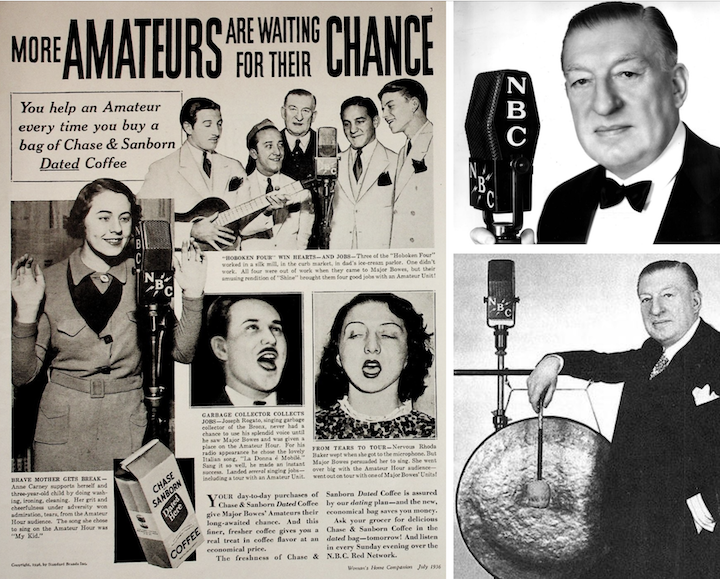
THE GONG SHOW…At bottom right, Edward Bowes with the gong he used to abruptly end acts he deemed poor or inept—he abandoned the prop in 1936 after receiving thousands of letters from listeners who objected to the premature termination of acts (apparently the concept was a direct inspiration for Chuck Barris’s 1970s TV program, The Gong Show). At left, a July 1936 Women’s Home Companion advertisement from the show’s sponsor, Chase & Sanborn. The ads highlighted the rags-to-riches stories of the more successful contestants. (eBay.com/Wikipedia)

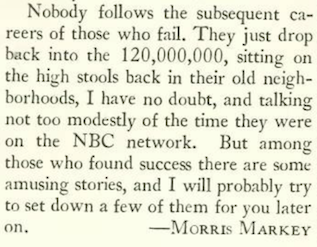
Markey ended his piece noting the reality of the many contestants who, unlike Frank Sinatra, would not go on to successful entertainment careers.
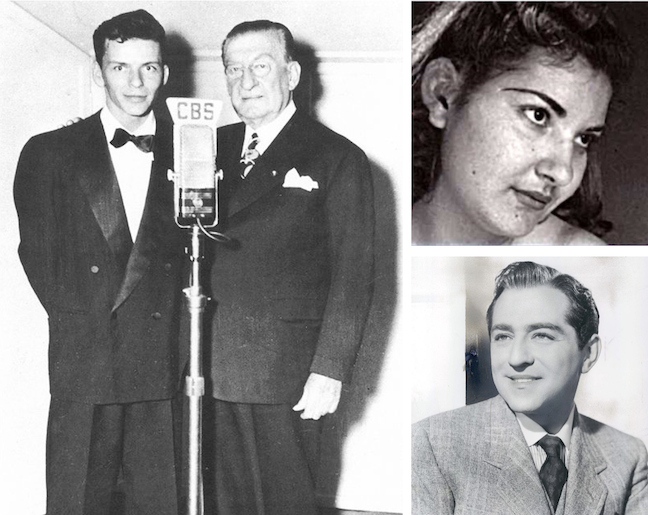
STARMAKER…Clockwise, from left: Major Edward Bowes and returning Amateur Hour performer Frank Sinatra in 1943; in 1935 eleven-year-old Maria Callas performed the Madama Butterfly aria “Un bel dì vedremo,” on the Amateur Hour; actor/baritone Robert Merrill performed on the show in 1936. (winnetoba.com/mariacallasestate.com/Wikipedia)

 * * *

Fleeing the Limelight

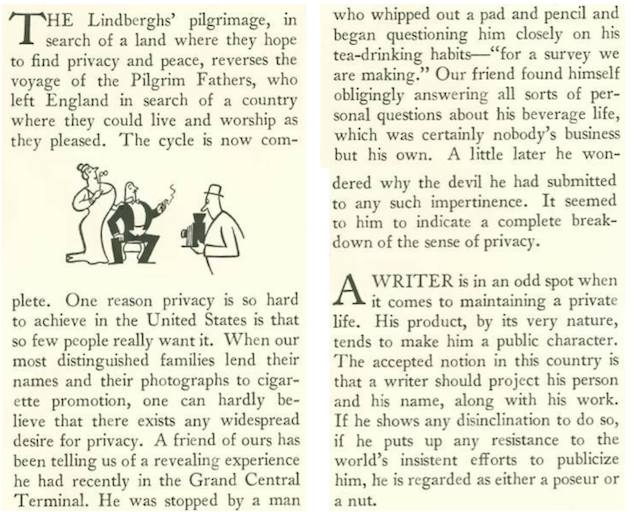
In December 1935 Charles and Anne Morrow Lindbergh secretly boarded a ship in New York and headed to England, seeking to escape the media frenzy that followed their son’s kidnapping and the subsequent trial. Thanks to connections through Anne’s family, they were able to move into a secluded estate in the Kent countryside. In his “Notes and Comment,” E.B. White explained:
HIDEOUT…From 1936 to 1938 Charles and Anne Morrow Lindbergh lived in a secluded English estate called “Long Barn.” The estate in County Kent was owned by a friend of Anne’s family. (waverlyhs.weebly.com)
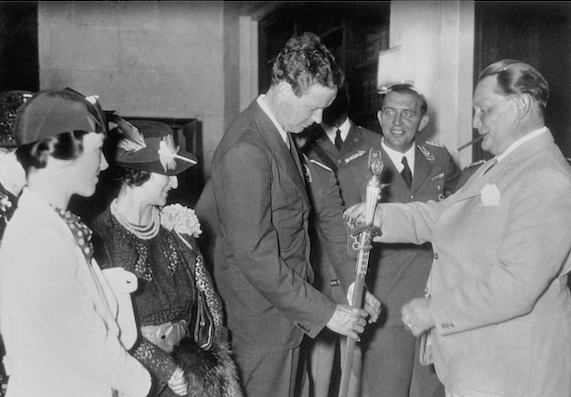
NOT HIS FINEST HOUR…In July 1936 Luftwaffe commander Hermann Goering (right) presented the Sword of Honor of the German Air Force to Charles Lindbergh during a visit to Berlin. Anne Morrow Lindbergh is to the far left. Goering would also present Lindbergh with a high-ranking Nazi-era civilian medal, the Service Cross of the German Eagle, during a 1938 visit. Anne presciently referred to the medal as “the albatross.” (Library of Congress)

According to White, Mayor Fiorello La Guardia cited lax police control of the media in the case of the fleeing Lindberghs. In turn, White attempted to explain the unique temperaments of Irish police officers.

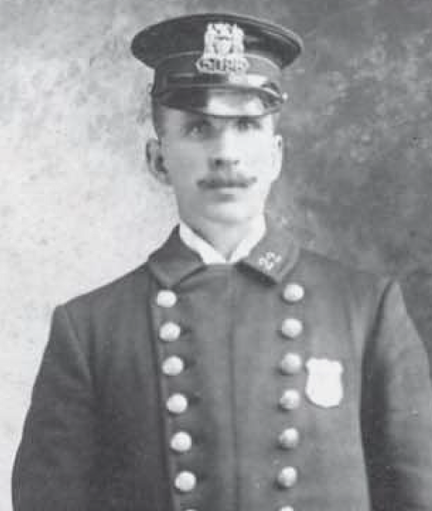
GIVE US A BREAK…E.B. White noted the courage and wisdom of Irish cops, but also found their lassitude “almost theatrical.” Pictured above is Irish immigrant Patrick Leddy, who joined the NYPD in 1910 and remained on the force for more than thirty-five years. (Courtesy of Margaret Fitzpatrick Leddy via nyirishhistory.us)

A final note on the Lindberghs from Howard Brubaker, a snippet from his “Of All Things” column.
 * * *

Italian Swashbuckler

The Italian fencer Aldo Naldi (1899-1965) won three gold medals and one silver at the 1920 Olympics before turning professional. According to West Coast Fencing, Aldo traveled Europe like a prizefighter, “competing in well-attended matches for cash purses…in a world of travel, glamour, drinking, womanizing, gambling and fencing, Aldo Nadi reigned supreme, going nearly eight years without a defeat.” “The Talk of the Town” was on hand for his American debut. Excerpts:
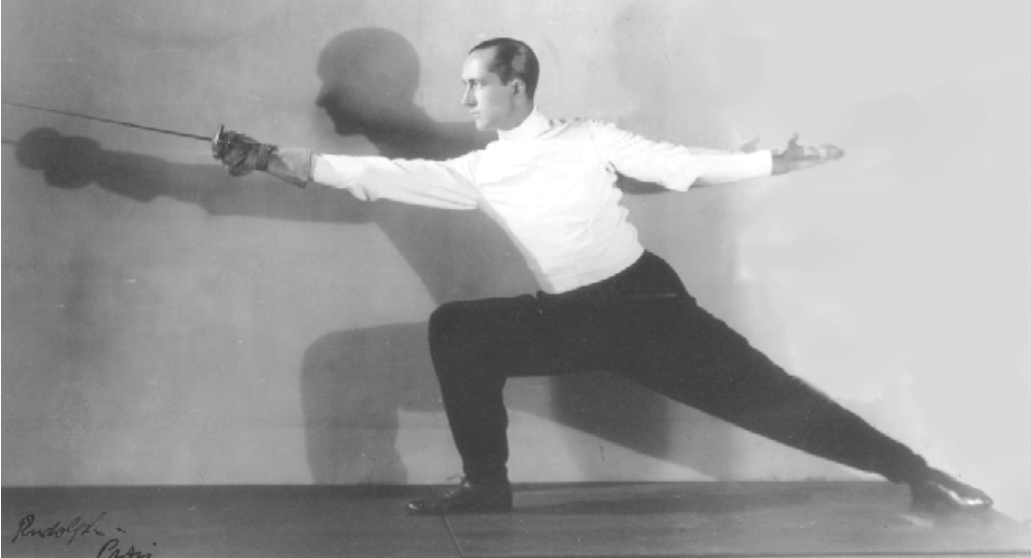
EN GARDE!…During the interwar years Aldo Nadi reigned supreme, going nearly eight years without a defeat. (dennishollingsworth.us)

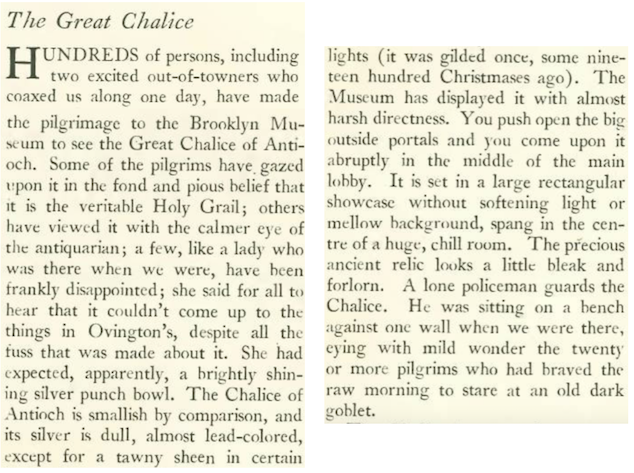
“Talk” also examined the fuss being made over the Great Chalice of Antioch, which was on display at the Brooklyn Museum. Excerpts:
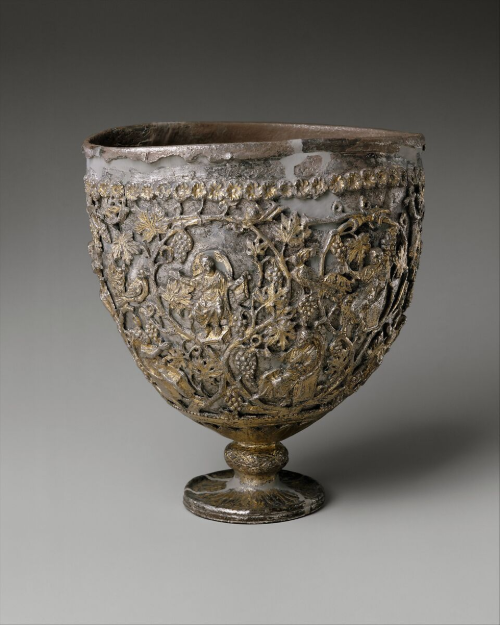
COULD IT BE?…Claimed to have been found in Antioch around 1900, this chalice’s plain silver bowl was ambitiously identified by some as the Holy Grail, the cup used by Christ at the Last Supper. It is displayed with the Metropolitan Museum’s Byzantium collection. (metmuseum.org)

* * *

Year, Schmear

To mark the New Year, Arthur Guiterman offered up one his humorous poems…
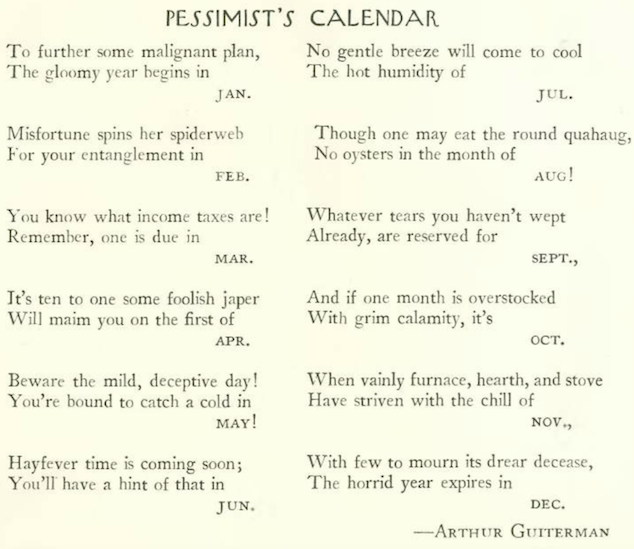
…Guiterman (1871–1943) was an early contributor to The New Yorker—the magazine’s very first issue, Feb. 21, 1925, featured the first installment of Guiterman’s recurring “Lyrics from the Pekinese,” which ran through the first eleven issues.
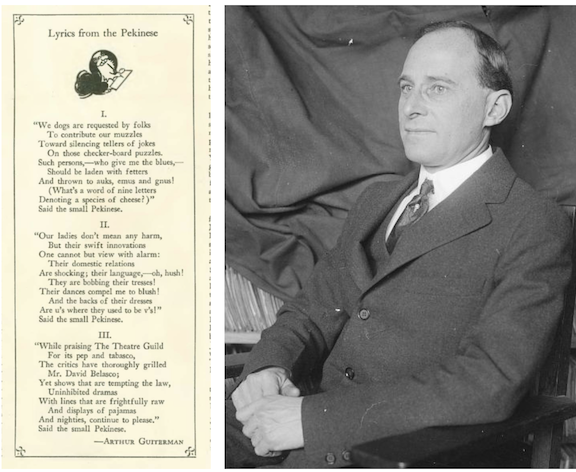
MEOW…Arthur Guiterman’s “Lyrics from the Pekinese,” featured in the first issue of The New Yorker. At right, Guiterman in an undated photo. (Library of Congress)

 * * *

Before He Was Spooky

Robert Benchley’s review of the stage began on a bright note with Victoria Regina, which starred Vincent Price as Prince Albert and Helen Hayes as Queen Victoria. Benchley praised the realism Price and Hayes lent to the production. Excerpts:
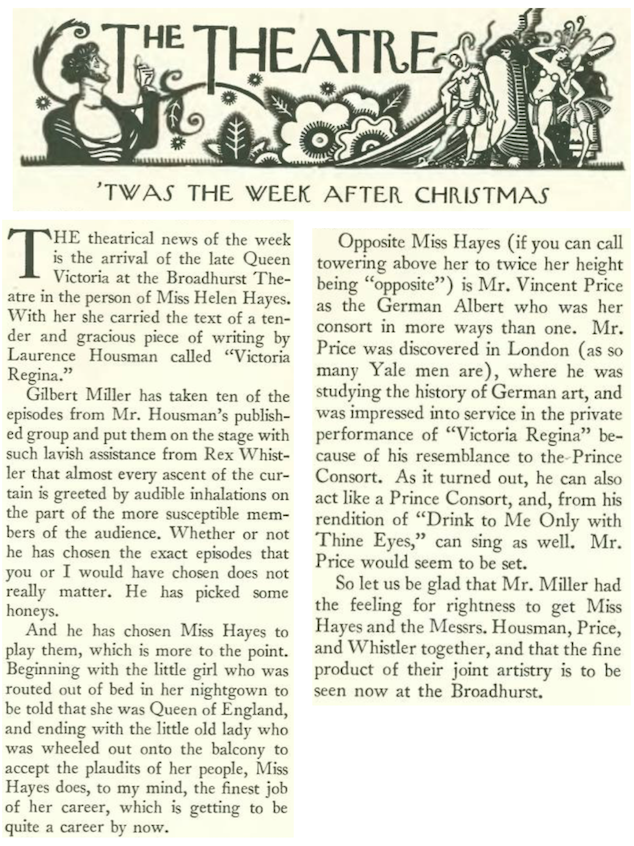
A MATCH MADE ON BROADWAY…The 24-year-old Vincent Price and the 35-year-old Helen Hayes portrayed Prince Albert and Queen Victoria in Victoria Regina, which ran for 203 performances at the Broadhurst Theatre. Robert Benchley thought their casting was ideal. (Pinterest)

Benchley also sat through George White’s latest Scandals revue, finding it similar to White’s older shows—beautiful showgirls, various singers and dancers, and assorted comedians—with Bert Lahr shining above it all.
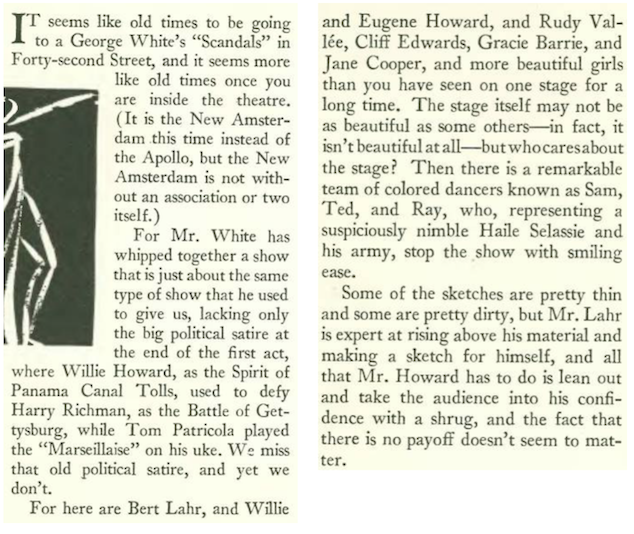
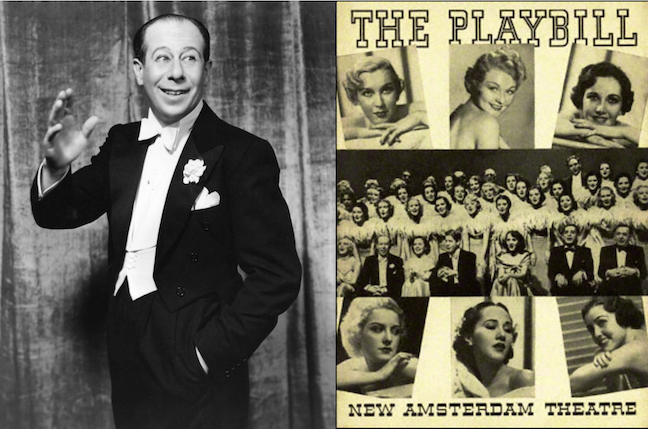
IT SEEMED LIKE OLD TIMES to Robert Benchley as he took in the latest edition of George White’s Scandals. Bert Lahr (left) was among the headliners for the 1936 revue, which ran for 110 performances at the New Amsterdam Theatre before taking to the road. (Wikipedia/Playbill.com)

 * * *

At the Movies

John Mosher had a busy week at the movies, finding “considerable pleasure” in the screen adaptation of Eugene O’Neill’s Ah Wilderness!…
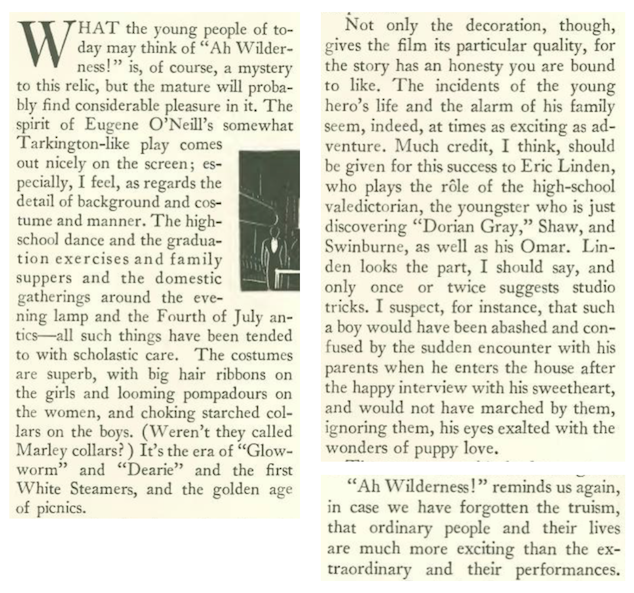
MILLER TIME…The Miller family attends a commencement ceremony that helps kick off the action in Ah Wilderness! From left, Aline MacMahon, Mickey Rooney, Spring Byington, and Bonita Granville. (IMDB)

Mosher also looked at films featuring leading actresses of the day—Barbara Stanwyck in Annie Oakley, Bette Davis in Dangerous, and Claudette Colbert in The Bride Comes Home.
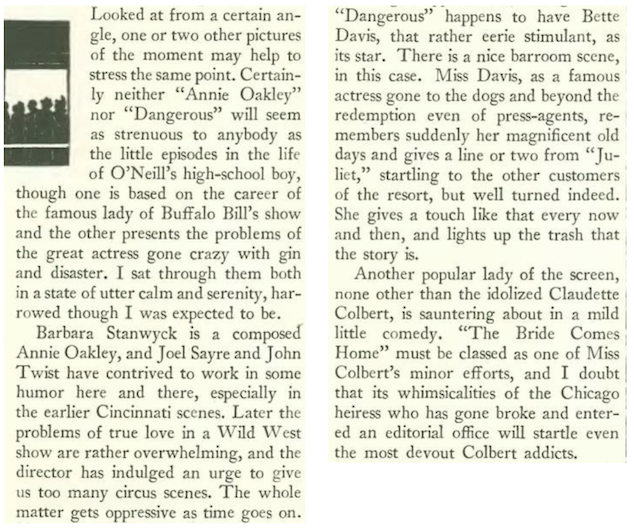
A TRIO OF TALENTS…Clockwise, from top left, Claudette Colbert had her hands full with Robert Young and Fred MacMurray in The Bride Comes Home; Barbara Stanwyck took aim in Annie Oakley; and Bette Davis portrayed a down-and-out actress with trouble on her mind in Dangerous. For her performance, Davis won the Academy Award for Best Actress. (laurasmiscmusings.blogspot.com/girlswithguns.org/vanguardofhollywood.com )

 * * *

Gaming the Games

In her “Paris Letter,” Janet Flanner noted the preparations for the Fourth Olympic Winter games to be held in Garmisch-Partenkirchen, Germany.
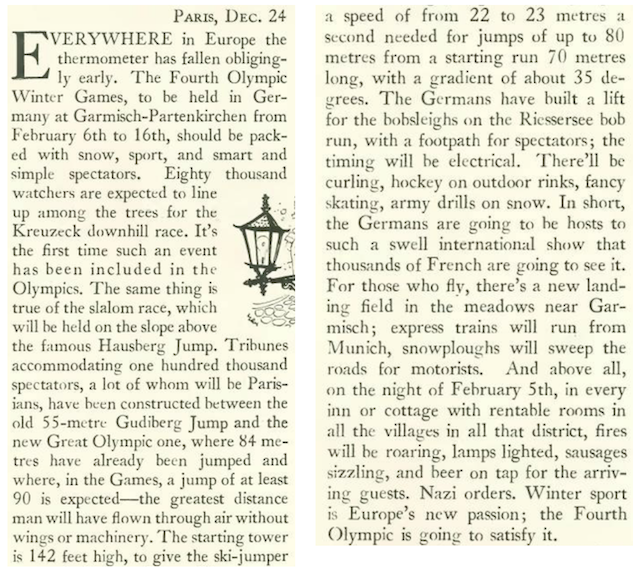
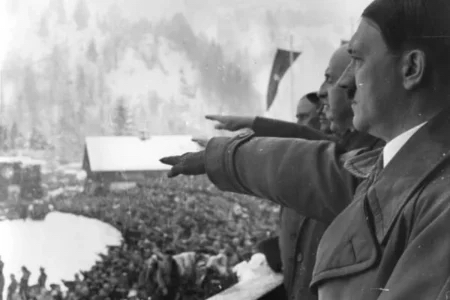
WINTER HAS ARRIVED…Adolf Hitler and his fellow Nazi thugs brought a certain chill to the 1936 Winter Games in Garmisch-Partenkirchen. Garmisch and Partenkirchen were separate communities until Hitler forced them to merge in anticipation of the games. (arolsen-archives.org)

 * * *

From Our Advertisers

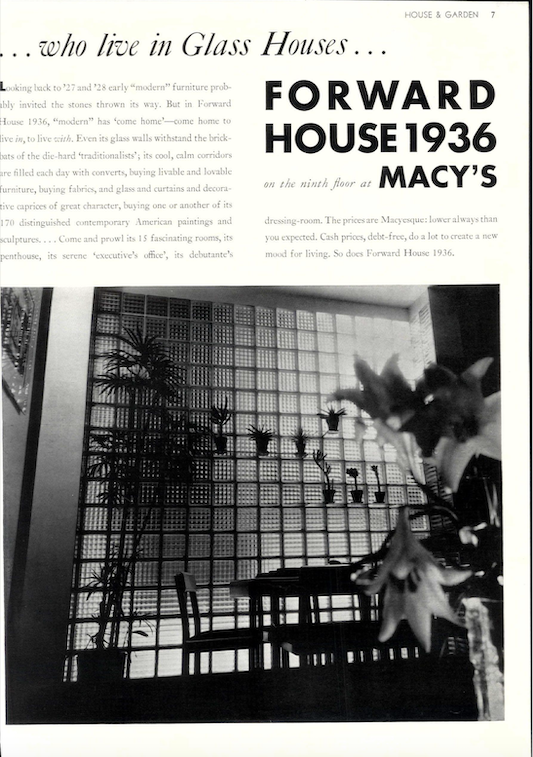
From 1933 to 1939, Macy’s hosted a series of unique design exhibitions under the title “Forward House” that showcased contemporary furniture, decor, and architectural ideas…

…for reference, here is another “Forward House” advertisement from the February 1936 House & Garden magazine…
…the folks at Robbins Island Oysters employed the legend of Giacomo Casanova to market their tasty little rocks…apparently Casanova claimed that he consumed more than fifty oysters each morning to sustain his amorous adventures…

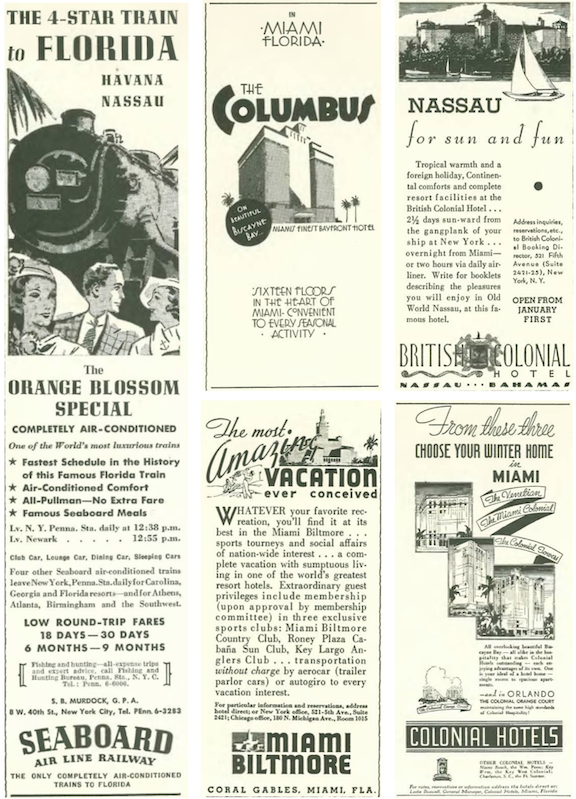
…with the holidays over, the number of ads decreased significantly, leaving readers with a mere sixty pages—less than the half the length of the fat pre-Christmas editions…the theme in the Jan. 4 issue was travel to warmer climes, these examples culled from several back of the book pages…
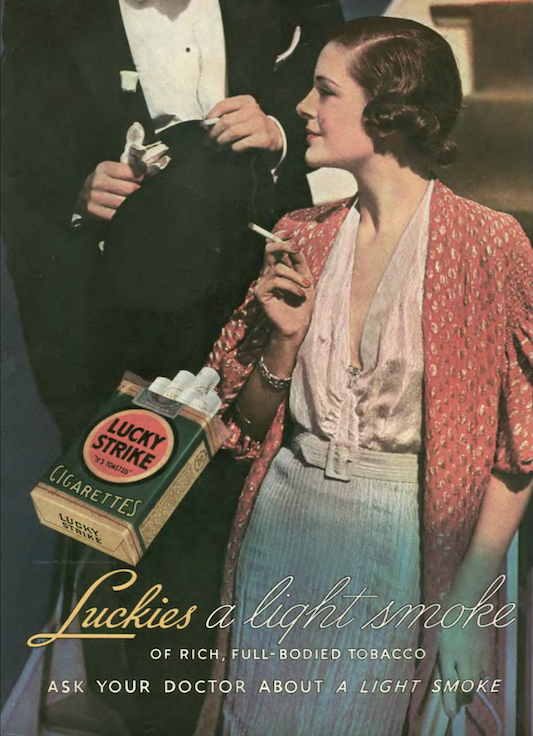
…the end of the holiday season did not stop tobacco companies from taking out lavish full-page advertisements targeting women smokers, this one gracing the back cover…note the implied medical endorsement at the bottom…
…we clear the air and move on to our cartoonists, beginning with spot drawings by D. Krán

…and Christina Malman

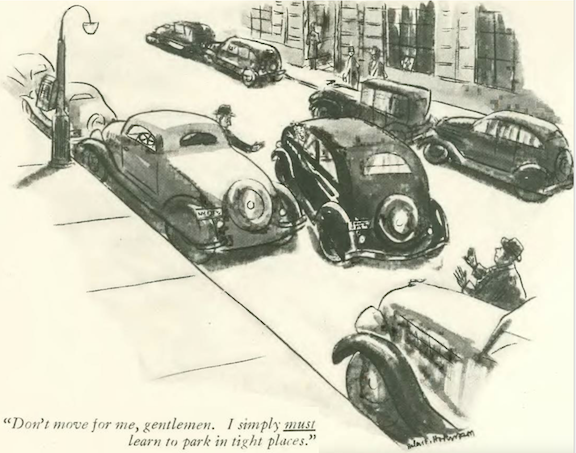
…one of Helen Hokinson’s girls sought an impromptu parking lesson…
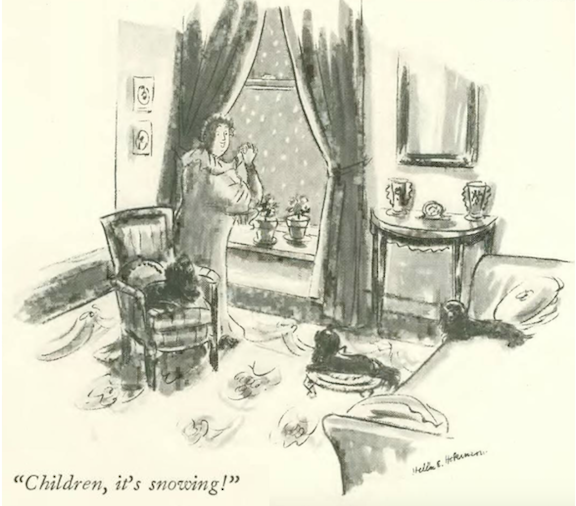
…while another welcomed winter with her furry charges…
Whitney Darrow Jr gave us a full-service information booth…

Mary Petty illustrated a dowager with simple tastes…

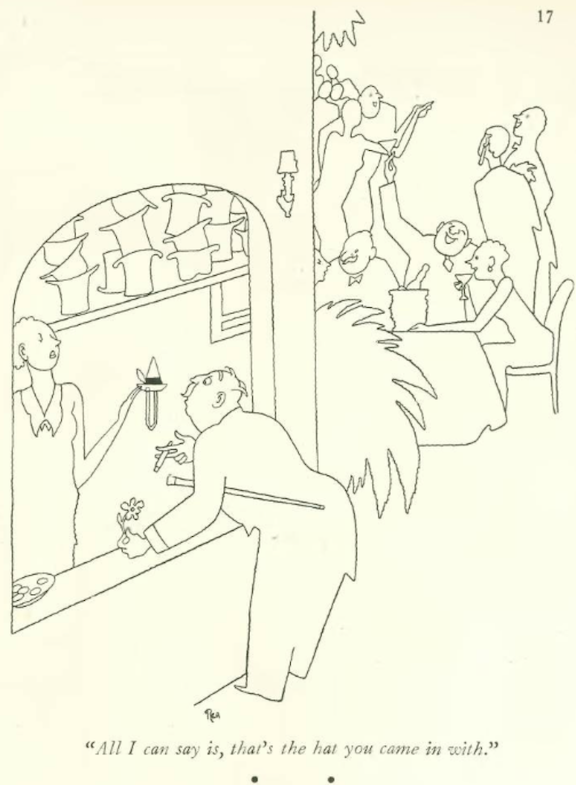
Gardner Rea was confounded at the hat check…
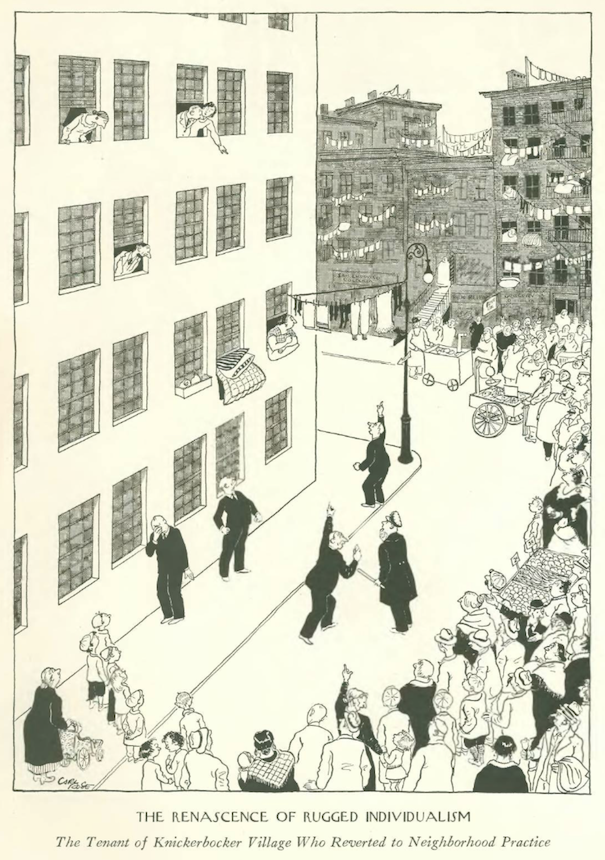
Carl Rose offered up another example of rugged individualism…
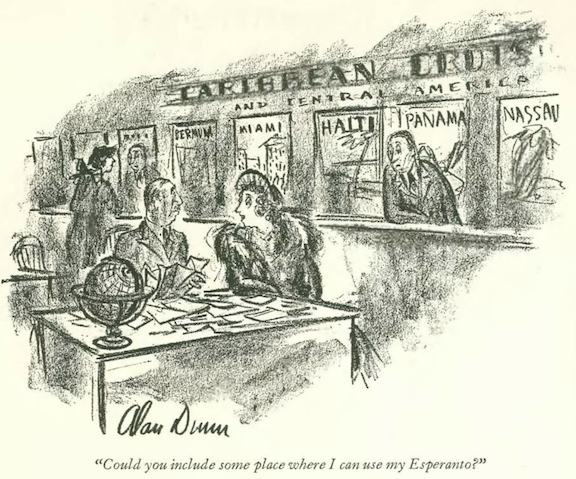
Alan Dunn served up a unique language challenge…
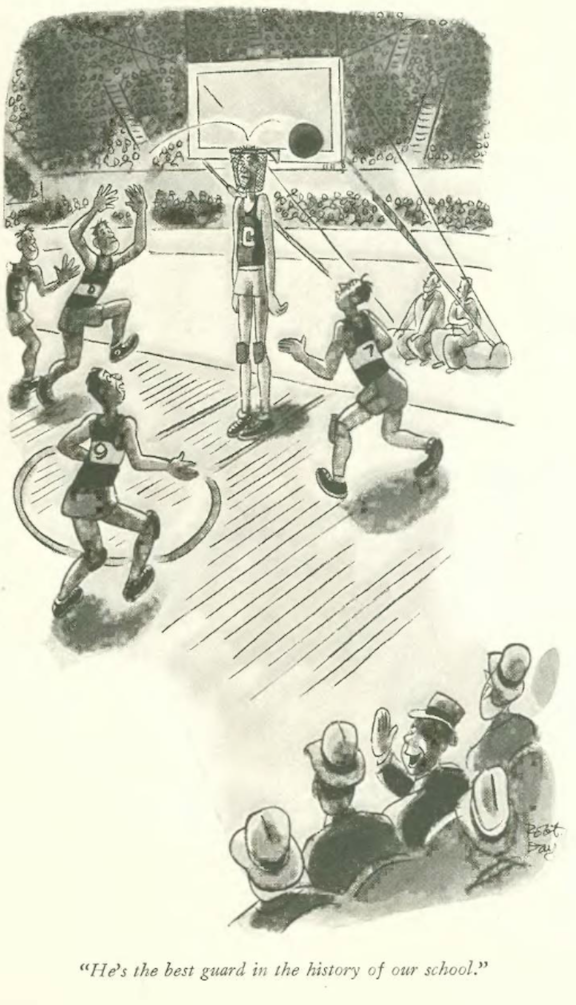
Robert Day stood tall at a basketball game…
William Crawford Galbraith was horsing around…

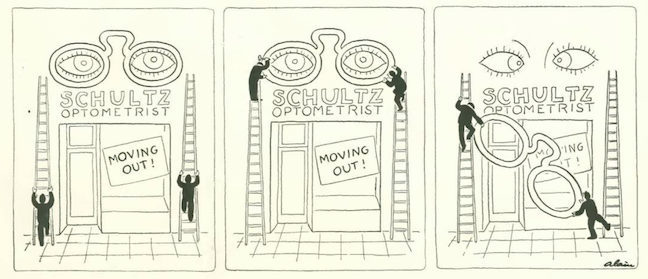
Alain looked crosseyed at a store closing…
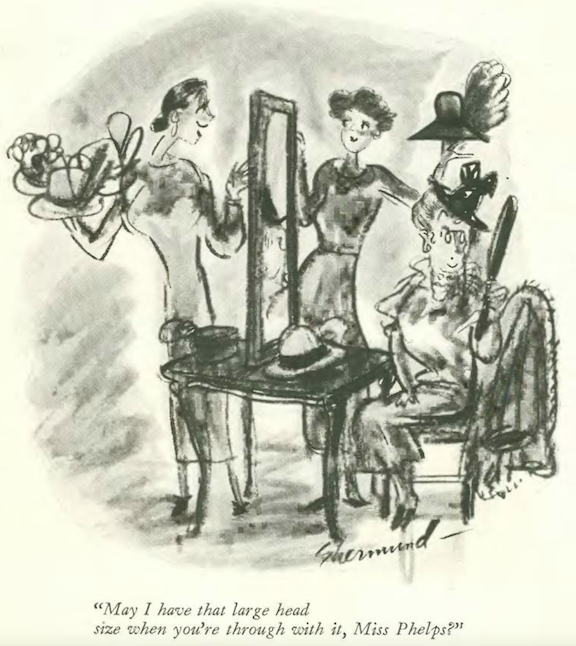
…and we close with Barbara Shermund, who sized up things at a hat shop…
Next Time: Obsessed at the Movies…

As Thousands Cheer

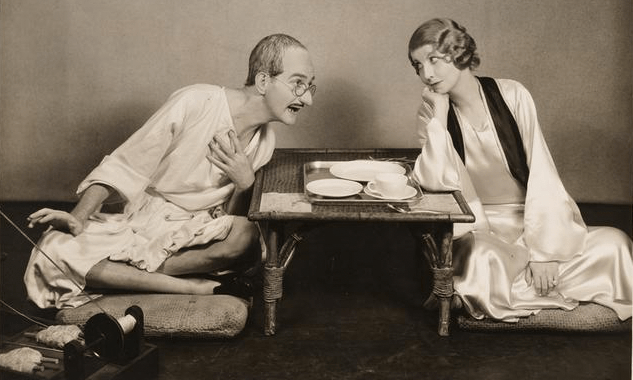
ABOVE: Broadway's As Thousands Cheer (1933) featured evangelist Aimee Semple McPherson (Helen Broderick) trying to persuade Mahatma Gandhi (Clifton Webb) to end his hunger strike and join her act. (NYPL)

Broadway gave Depression audiences a lift with As Thousands Cheer, a revue featuring satirical sketches that skewered the lives and affairs of the rich and famous and served as a precursor to sketch shows like Saturday Night Live.

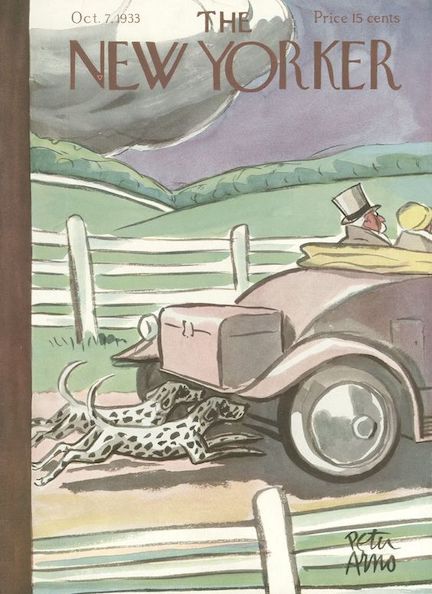
Oct. 7, 1933 cover by Peter Arno.

With a book by Moss Hart and music and lyrics by Irving Berlin, the revue was a big hit, playing for nearly a year on Broadway in its initial run.

TOON TIME…Marilyn Miller led a chorus of cartoon characters in a sketch titled “The Funnies” in As Thousands Cheer; leading the revue were Miller, Clifton Webb and Helen Broderick, here featured on the cover of the Playbill. The production would be Marilyn Miller’s last—one of Broadway’s biggest stars known for playing sunny characters, her personal life was filled with illness and tragedy, and she would go to an early death in 1936. (playbill.com)

Wolcott Gibbs took his turn as Broadway reviewer, and pronounced As Thousands Cheer “the funniest thing in town.”

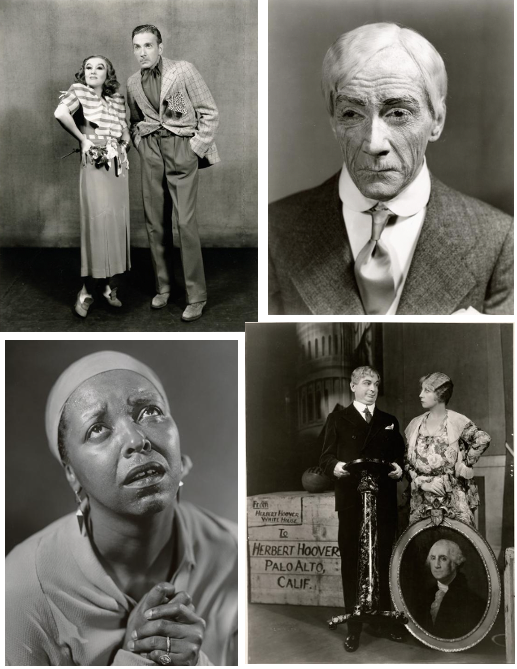
Not everything was roses in As Thousands Cheer: In a poignant star turn, Ethel Waters sang—at Irving Berlin’s request—his famous tune “Supper Time,” a Black woman’s lament for her lynched husband. The revue was the first Broadway show to give an African-American star (Waters) equal billing with whites, however she was segregated from her co-stars and did not appear in any sketches with them. Her co-stars even refused to bow with her at the curtain call until Berlin intervened. According to the James Kaplan biography Irving Berlin, “The show had a successful tryout at Philadelphia’s Forrest Theatre in early September, although opening night was marred by an ugly incident all too in tune with the times: the stars Clifton Webb, Marilyn Miller, and Helen Broderick refused to take a bow with Ethel Waters. To his everlasting credit, Berlin told the three that of course he would respect their feelings—only in that case there needn’t be any bows at all.

“They took their bows with Waters at the next show.”

NEWSMAKERS…Each sketch in As Thousands Cheer was preceded with a newspaper headline. Clockwise, from top left, in the sketch headlined JOAN CRAWFORD TO DIVORCE DOUGLAS FAIRBANKS, JR, Marilyn Miller and Clifton Webb portrayed the stars arguing over publicity rights to their divorce; Webb as 94-year-old John D. Rockefeller; the headline FRANKLIN D. ROOSEVELT INAUGURATED TOMORROW featured Mr. and Mrs. Herbert Hoover on their last day in the White House, portrayed by Leslie Adams and Helen Broderick; Ethel Waters singing Irving Berlin’s “Supper Time.” (New York Public Library)

 * * *

A Final Byline

E.B. White opened his column with a tribute to Ring Lardner, who died at age 48 of a heart attack and other complications. In the months before his death Lardner had contributed a number of comical “Over the Waves” radio reviews.

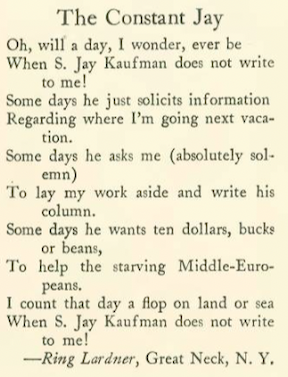
JOURNALIST AT HEART…Ring Lardner (1885-1933) worked for several newspapers before settling at the Chicago Tribune in 1913—it became the home newspaper for his syndicated column, In the Wake of the News. (Chicago Tribune)

Lardner’s first contribution to The New Yorker came shortly after the magazine’s founding. “The Constant Jay” was published in the April 18, 1925 issue: Readers appreciated his subtle wit, including this oft-quoted gem:

“The race is not always to the swift nor the battle to the strong—but that’s the way to bet.”

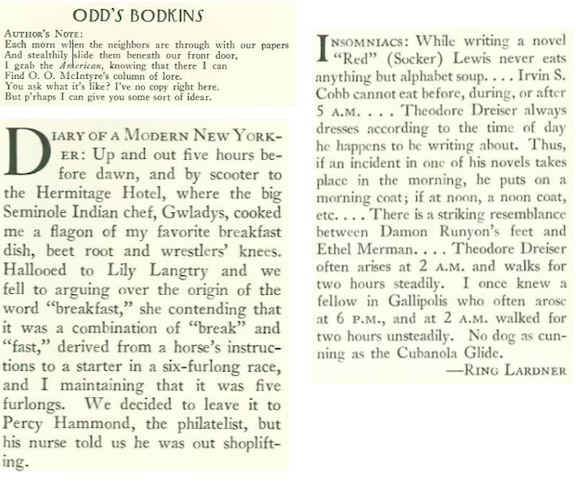
Lardner also liked to poke fun at himself and his aw-shucks view of things. Here are the opening and closing paragraphs of his final New Yorker contribution, “Odd’s Bodkins:”

 * * *

Macy Modernism

As Lewis Mumford observed in his “Skyline” column, Macy’s was the first department store to embrace a modern approach to interior design, but as Marilyn Friedman notes in her book, Making America Modern: Interior Design in the 1930s, Macy’s modernism was a bit toned down to blend into more traditional settings. A case in point was Macy’s 1933 Forward House exhibition, which Mumford described as “a brilliant piece of modern showmanship.”

EASY ON THE EYES…”Living room in the Suburban House of Forward House” at R.H. Macy & Co., New York, 1933, from The Upholsterer and Interior Decorator, October 15, 1933. ​(artdeco.org)

 * * *

Fishing for Commies

Geoffrey Hellman profiled New York House Rep. Hamilton Fish Jr (1888–1991), a staunch anti-communist perhaps best known for establishing the Tomb of the Unknown Soldier at Arlington National Cemetery. I feature this brief excerpt mainly for the great caricature by Abe Birnbaum.

MINDING THE HOME FRONT…Hamilton Fish, Jr making a speech in Los Angeles, 1935. Fish served in the U.S. House of Representatives from 1920 to 1945 and during that time was a prominent opponent of intervention into foreign affairs. (UCLA Special Collections)

 * * *

All Wet

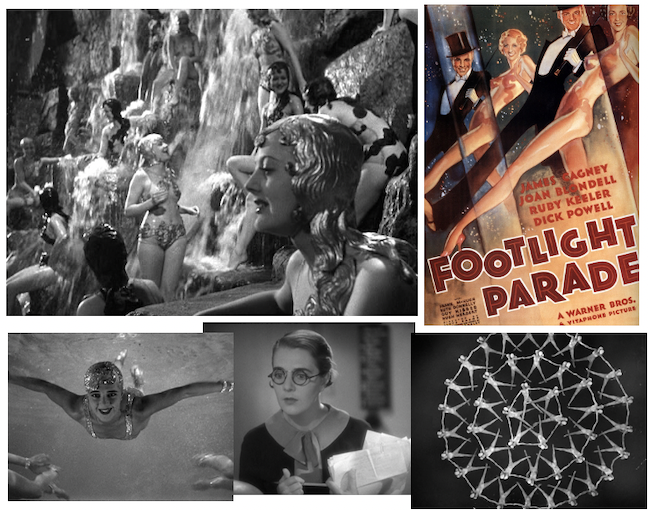
Eleven years before Esther Williams made her first aqua-musical, Ruby Keeler took the dive under Busby Berkeley’s direction in Footlight Parade. E.B. White served as film critic for the Oct. 7 issue, and found Footlight to be a feast for the male gaze, as well as mindless entertainment.

TAKING THE PLUNGE…Clockwise, from top left: According to E.B. White, there was no gainsaying “the general aahhhhh” of the semi-nude waterfall scene in Footlight Parade; promotional poster left no doubt as to what audiences might expect from the film; Busby Berkeley displayed his craft in water-based choreography; Ruby Keeler portrayed a dancer turned secretary who is transformed back into a dancer—just add water. (IMDB)

 * * *

A Dog’s Life

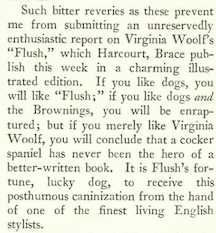
Doubtless drained from writing The Waves, Virginia Woolf followed up with some historical fiction, namely Flush: A Biography, a book about Elizabeth Barrett Browning’s cocker spaniel. Clifton Fadiman had this to say about the unusual biography:

VIRGINIA WOOF…Frontispiece for Flush: A Biography. Virginia Woolf used the tale of a dog to explore social themes ranging from feminism to class conflict. (Heritage Auctions)

 * * *

From Our Advertisers

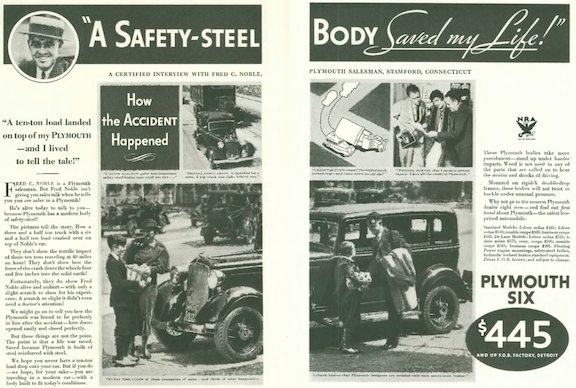
When you market a car for only $445 you aren’t going after the luxury market, but hey, drop a ten-truck truck on this baby and you can live to tell about it…

…with legal beer flooding the market brewers were particularly keen to attract female drinkers of all ages…and apparently social classes…

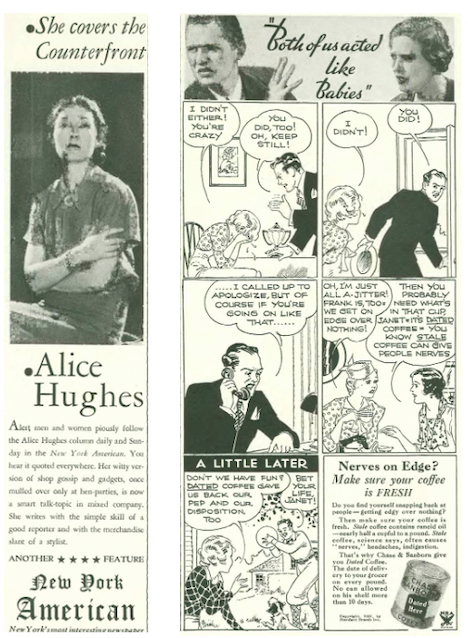
…a couple of ads from the back pages, the first touting the smart-set writing of columnist and foreign correspondent Alice Hughes for the New York American, and the second an advertisement for Chase & Sanborn coffee, which relayed the story of a marriage on the brink due to stale coffee…

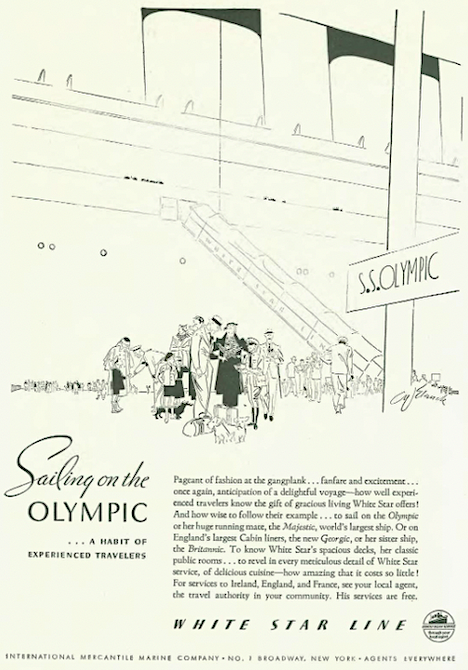
…I include this ad for the heroic scale of the ocean liner, particularly as depicted by the people in the background…

…we bounce on to our cartoons with Otto Soglow’s Little King…

James Thurber continued to explore the unrest among our domestic youth…

…speaking of America’s youth, this gathering (courtesy Gardner Rea) appeared to have trouble finding some…

Helen Hokinson found fun with flounder…

Rea Irvin turned the tables on a life-drawing class…

…and we close with Richard Decker, over the moon with a stranded chorine…

…and in a nod to the approaching holiday, imagery from a 1933 Fleischer Studios animated short film, Betty Boop’s Hallowe’en Party

Next Time: The Wild West…