Magnificently Obsessed

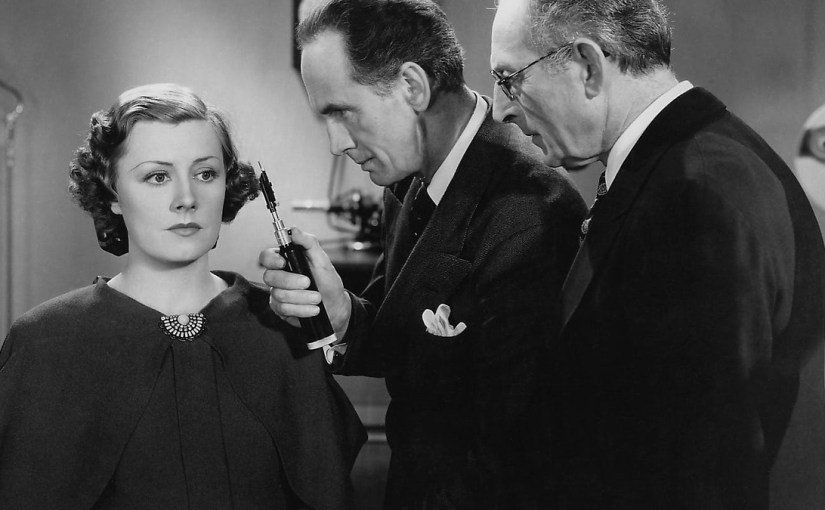
Above: Irene Dunn gets her head examined by Parisian doctors during a scene from the 1935 melodrama Magnificent Obsession. (letterboxd.com)

I can’t think of a better time to escape the world for a few moments and indulge in a bit of frivolity. In this case we take a brief look at a popular film that pushed the envelope of plausibility in true Hollywood style.

January 11, 1936 cover by Helen Hokinson.

Magnificent Obsession featured two of Tinseltown’s leading stars, Irene Dunn and Robert Taylor. Although many critics have called the film’s plot preposterous, it was a fan favorite—at the Radio City Music Hall premiere on Dec. 30, 1935, capacity crowds braved sub-zero weather to see it.

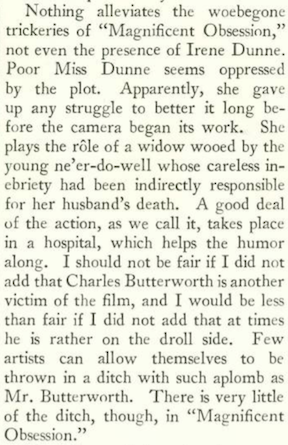
For a film that has been debated and discussed for decades (and remade to some acclaim in 1954 by director Douglas Sirk with Jane Wyman and Rock Hudson in the leads), critic John Mosher barely gave it a glance, feeling sorry for Dunne in her role as a tragically blinded widow.
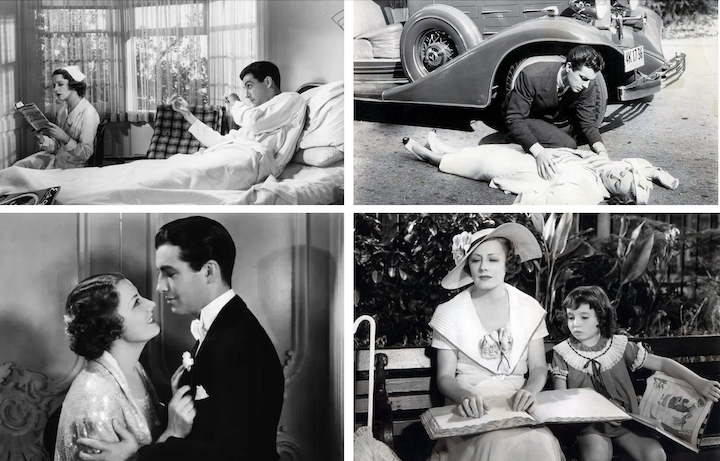
MAGNIFICENT HAPPENSTANCE…In Magnificent Obsession, Robert Taylor played a spoiled playboy, Robert Merrick, who survives a boating accident at the expense of kindly doctor. Clockwise from top left, Taylor in a scene with Margaret Brayton; Taylor and Irene Dunn in the scene where Dunne’s character, Helen Hudson, is struck by a car and blinded; Dunn with child actor Cora Susan Collins (who incidentally passed away in April 2025 at age 98); the end of the film emphasized Merrick’s transformation from a selfish playboy into a selfless, Nobel Prize-winning man of faith and science. (roberttayloractor.blog/mubi.com/rottentomatoes.com/Facebook)

A brief synopsis: Wealthy playboy Robert Merrick (Robert Taylor) drunkenly capsizes his boat. A hospital’s only pulmotor saves his life at the expense of a beloved surgeon who dies without it. Merrick falls in love with the surgeon’s widow, Helen (Irene Dunn). While driving Helen home he makes a pass at her; she exits the car and is struck by another, losing her eyesight. Merrick conceals his identity while watching over Helen; he then follows her to Paris, where she learns her sight is gone forever. Merrick reveals his identity and proposes. Helen flees. Six years later Merrick, now a Nobel Prize-winning brain surgeon, restores Helen’s sight.

In the film’s defense, plots that stretch credibility have been around since the Greeks and deus ex machina, and consider how many films today employ “portals” of various types to get heroes out of sticky situations. Unless you’re talking about a Werner Herzog film, it’s all make believe.
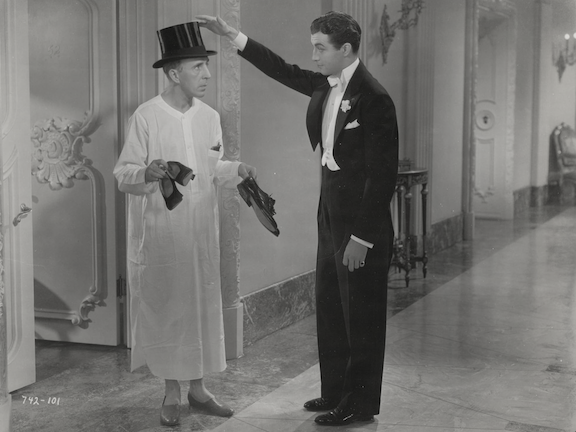
HANDS OFF…John Mosher had particular scorn for the way beloved character actor Charles Butterworth (left) was used in the film. Along with Dunn, Butterworth was another “victim” of Magnificent Obsession, according to Mosher. (IMDB)

 * * *

A Lot On His Mind

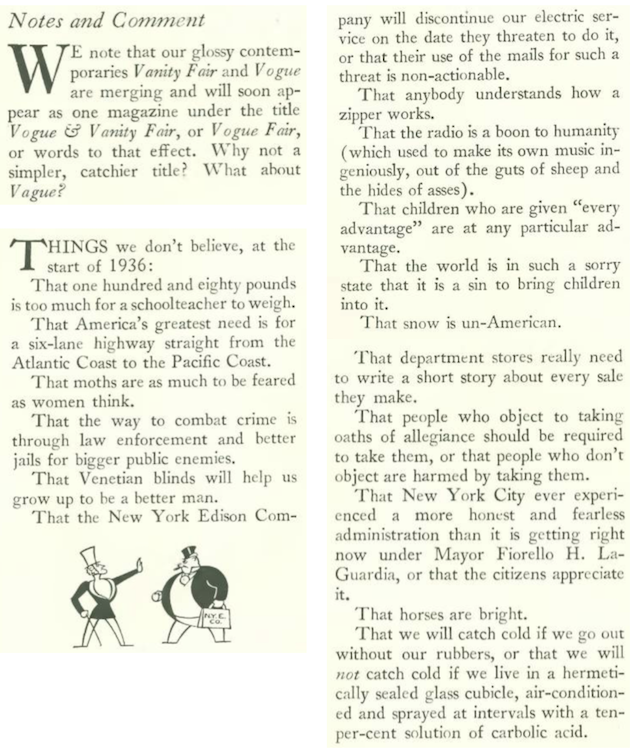
E.B. White had a lot to say in his Jan. 11 “Notes and Comment,” beginning with a paragraph about the impending merger of two Condé Nast publications, Vanity Fair and Vogue. The old Vanity Fair magazine, published from 1913 to 1936, was a casualty of the Great Depression, and it essentially disappeared with the merger (Condé Nast revived the title in 1983).
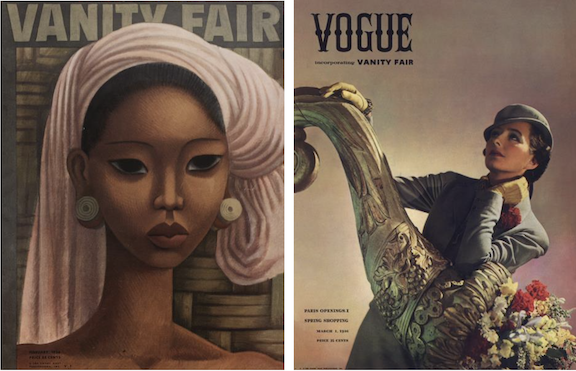
FADE OUT…At left, Bali Beauty by Miguel Covarrubias, on the cover of the final issue of the old Vanity Fair magazine, February 1936. Publisher Condé Nast merged VF with Vogue beginning with its March 1, 1936 issue (at right). The New Yorker, once considered a competitor of the old Vanity Fair, was itself acquired by Condé Nast in 1985. (vanity fair.com/vogue.com)

White also commented on a new book, The Ruling Clawss, which criticized The New Yorker for its “bourgeois attitude.” Interestingly, the book was produced by none other than New Yorker cartoonist Syd Hoff, who wrote and illustrated The Ruling Clawss as “A. Redfield,” a pseudonym he used in the 1930s for his contributions to The Daily Worker and other leftist causes.
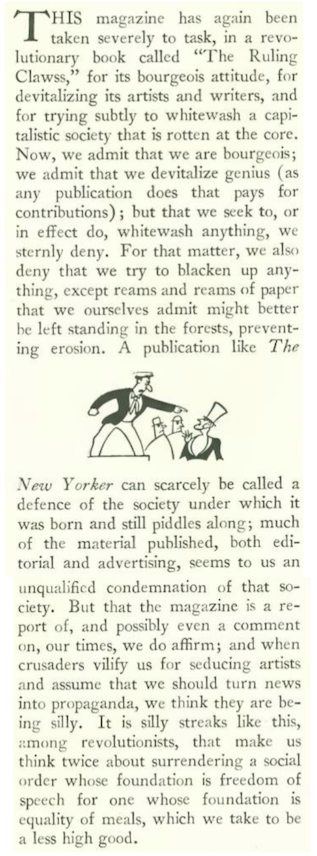
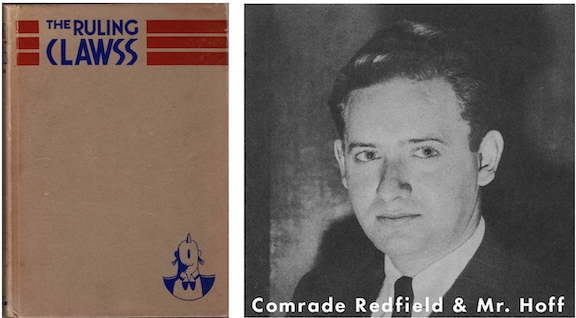
HOFF IN A HUFF…Cover of the 1935 edition of The Ruling Clawss; frontispiece from a 2023 reprint of the book by The New York Review of Books. Syd Hoff (1912–2004) contributed 571 cartoons to The New Yorker between 1931 and 1975. Hoff also drew cartoons for The Daily Worker under the pseudonym “A. Redfield.” (abebooks.com/nyrb.com)

In The Ruling Clawss, Hoff (as Redfield) criticized “bourgeois humor” as an opiate of the masses, citing The New Yorker, Esquire, Judge, and Life as publications that take “the banker boys and politicians, who are the rapers of liberty and democracy,” and present them between perfume ads in whimsical situations. The bourgeoisie makes itself look human, wrote Hoff, “By exposing itself in the boudoir, or the night club, doing foolish things or saying something ‘funny’…In other words, the fascists and warmongers are little lambs who do their parts in contributing to the merriment of a nation.”

Referring to his fellow cartoonists, Hoff concluded: “the Arnos, Soglows, Benchleys and Cantors…are all talented and funny, but…and here, I believe, is the point…their comedy is all too often a whitewash for people and conditions that, in reality, are not funny.”
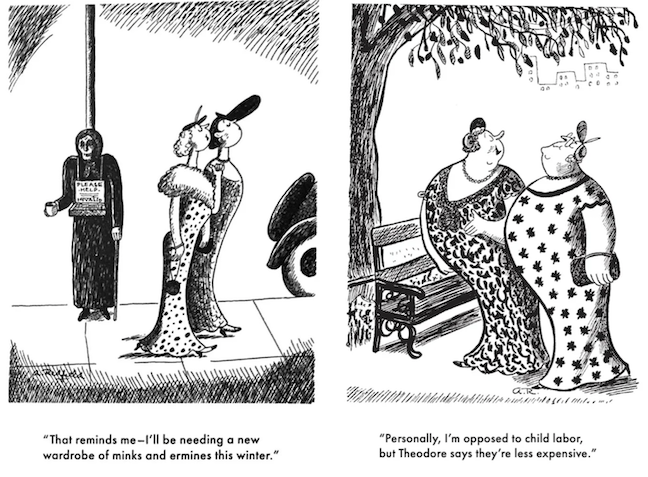
NO LAUGHING MATTER…Examples of Syd Hoff’s cartoons in The Ruling Clawss. (nyrb.com)

Today Hoff is probably best remembered for his children’s books, especially Danny and the Dinosaur. You can read all about his work at this website.

* * *

A Different Kind of Hoff

We move on to another Hoff, namely Mardee Hoff, who was “ungrammatically selected” by the American Society of Illustrators as the possessor of the “most perfect figure in America.” Here is an excerpt from “The Talk of the Town.”
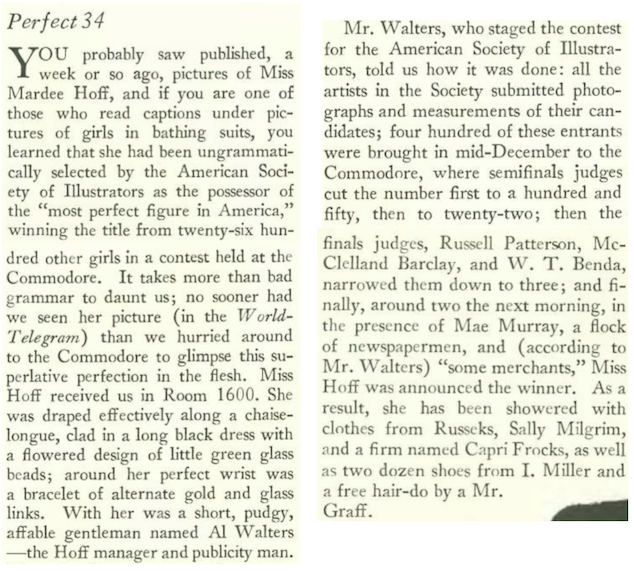
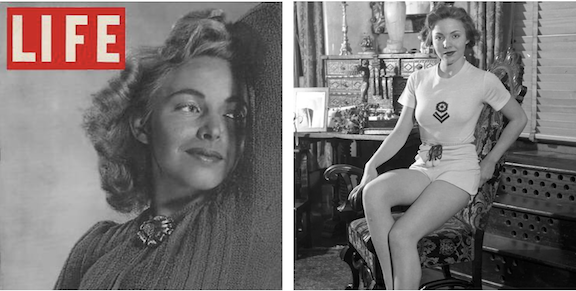
HER BODY OF WORK…Mardee Hoff (1914–2004) possessed the best body shape in America, according to the American Society of Illustrators following a contest involving 2,600 women at New York’s Commodore Hotel. At left, Hoff on the cover of Life, Oct. 21, 1940. At right, circa 1936. (findagrave.com/Reddit)

 * * *

Life With Clarence

“The Talk of the Town” noted the passing of beloved author and cartoonist Clarence Day in a lengthy tribute that highlighted his remarkable output despite crippling arthritis. Excerpts:
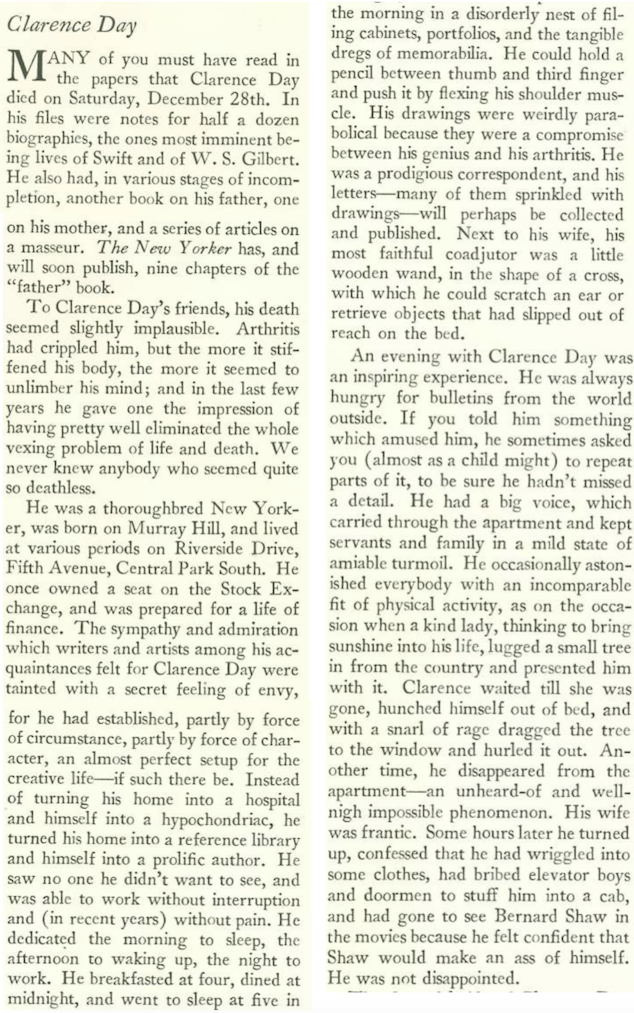
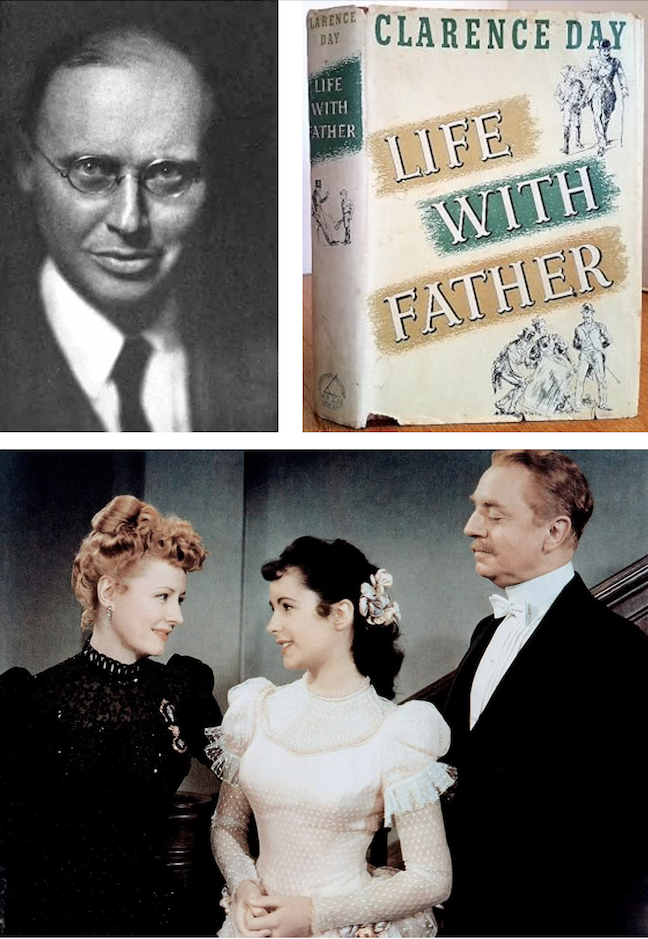
GOOD OLD DAYS…Clarence Day (1874–1935) developed crippling arthritis as a young adult, and spent the remainder of his life as a semi-invalid. Nevertheless, he churned out more than a dozen books, most famously Life With Father, a collection of stories from The New Yorker that were published in book form shortly after Day’s death. The New Yorker continued to publish Day’s stories through August 1937. Above, Day, circa 1920, and a first edition of Life With Father. Below, scene from the 1947 comedy film by the same name featuring William Powell, Irene Dunn, and Elizabeth Taylor. (Wikipedia/abebooks.com/IMDB)

 * * *

At the Movies
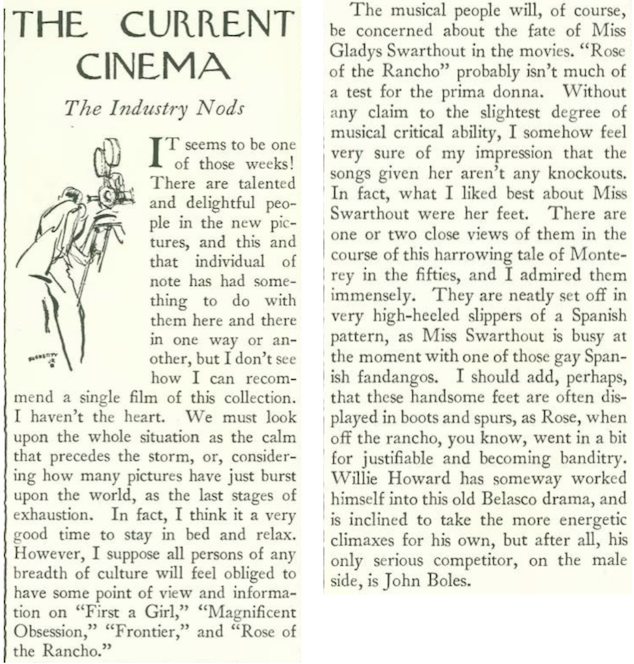
In addition to Magnificent Obsession, John Mosher endured screenings of several other pictures he could not recommend, despite featuring “talented and delightful people”…

…Mosher thought the best thing about mezzo-soprano Gladys Swarthout in Rose of the Rancho was her, um, feet…
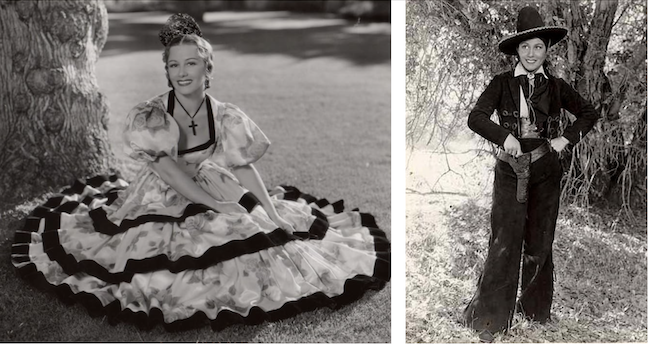
SINGING BANDIT…Gladys Swarthout, a popular Metropolitan Opera mezzo-soprano, portrayed the daughter of landowner besieged by outlaws in Rose of the Rancho. In the film she disguises herself as a man (right) and organizes a band of vigilantes to fight the outlaws. The film was one of five produced by Paramount in the 1930s featuring Swarthout. (IMDB/swarthoutfamily.org)

…and he was frankly mystified by the Soviet Russian film Frontier, featuring lots of beards, collective farms, and a big display of airplanes at the finale…
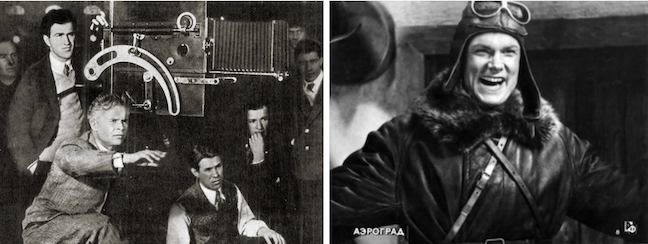
FOR THE FATHERLAND…At left, Aleksandr Dovzhenko directs the Soviet film Frontier (aka Aerograd), about a remote Siberian outpost that comes under threat of attack by the Japanese. At right, Sergey Stolyarov portrayed the pilot Vladimir Glushak, who was filled with wondrous tales about the new city of Aerograd. The film was commissioned by Joseph Stalin. (IMDB/kinorium.com)
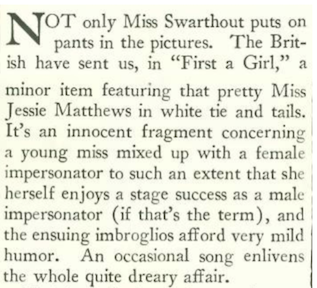
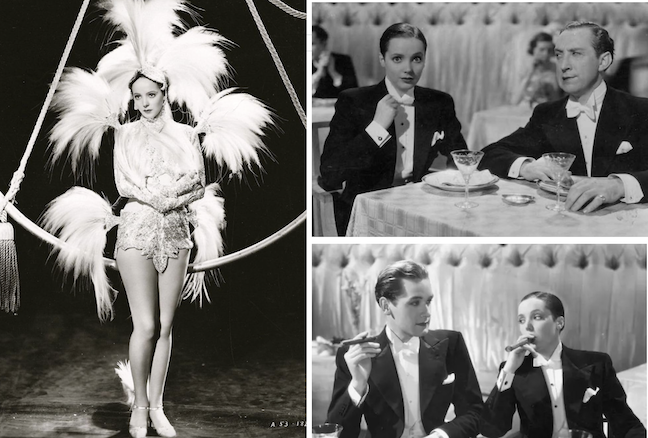
…English actress, dancer and singer Jessie Matthews (1907–1981) also wore the pants in First a Girl, a comedy adapted from the 1933 German film Viktor und Viktoria (which was remade as Victor/Victoria in 1982 with Julie Andrews)…
SHE/HE…At left, Jessie Matthews in First a Girl, a comedy adapted from the 1933 German film Viktor und Viktoria; right top, Matthews with Sonny Hale; and, at bottom, with Griffith Jones. Mosher called the film a “dreary affair.” (IMDB/interwarlondon.com)
* * *
All Aboard
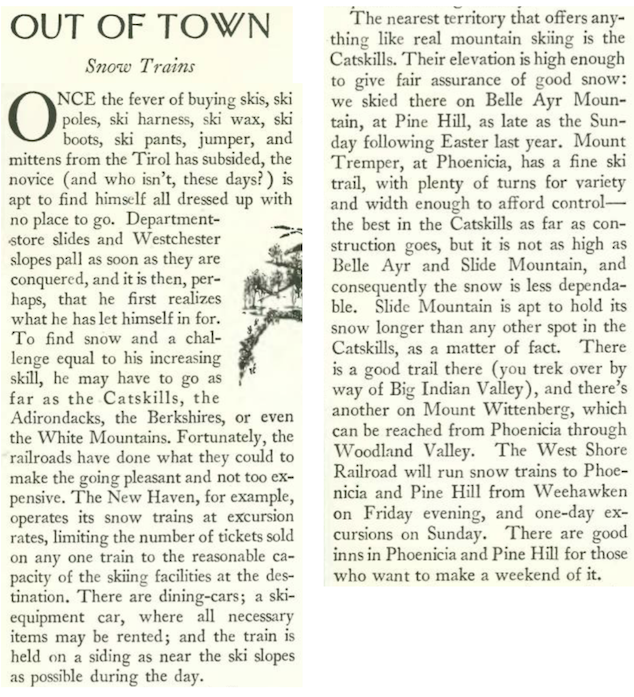
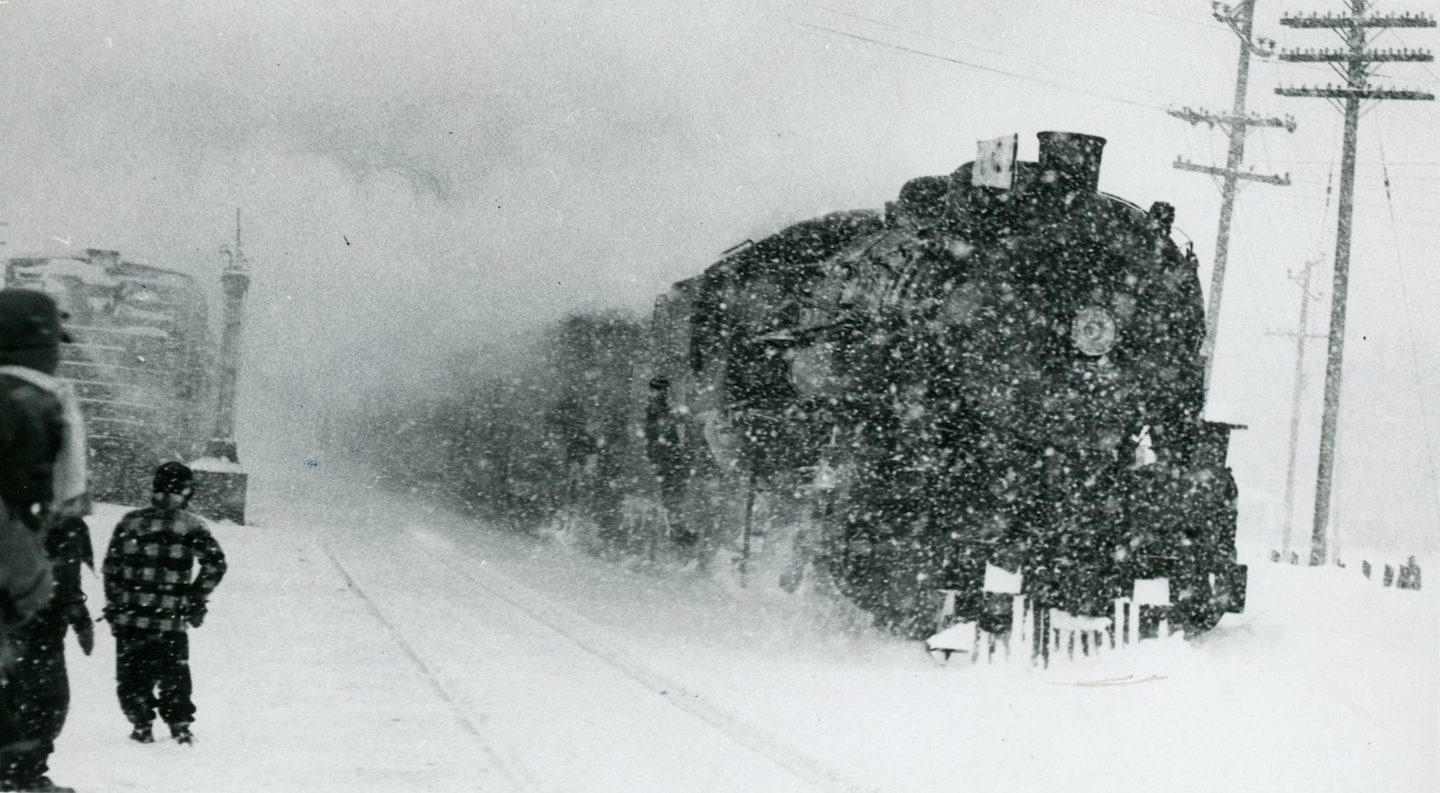
During the 1930s “Snow Trains” carried skiers from Manhattan to the Catskills, the Berkshires and other destinations. Railroads offered travel packages that helped popularize downhill skiing before World War II. Excerpts:

POLAR EXPRESS…A Snow Train arrives at Thendara Station full of skiers headed for the slopes and winter activities in Old Forge. Circa late 1930s. (northcountryatwork.org)

 * * *

From Our Advertisers

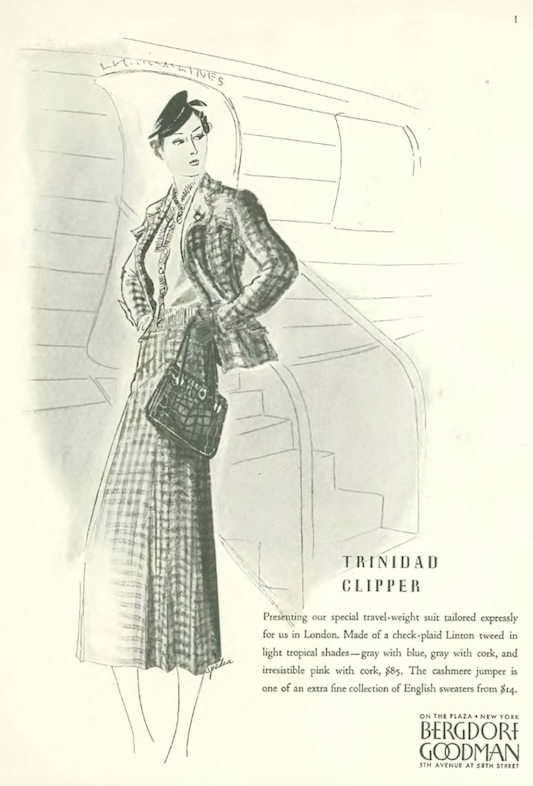
We take wing with Bergdorf Goodman’s stylish “Trinidad Clipper suit…
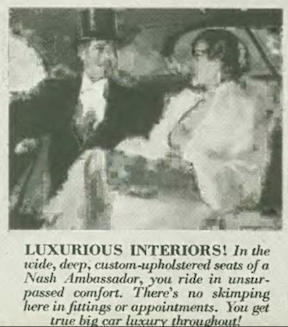
…the folks at Nash took out the center spread to tout their inexpensive yet distinguished Ambassador…
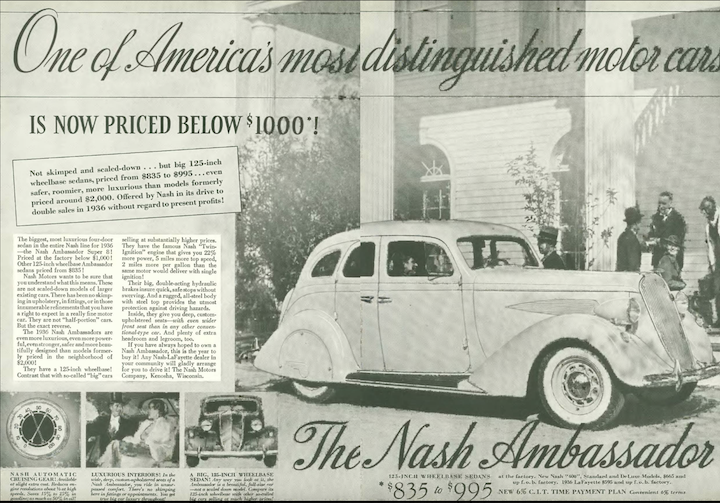
…apparently it was distinguished enough for these toffs…
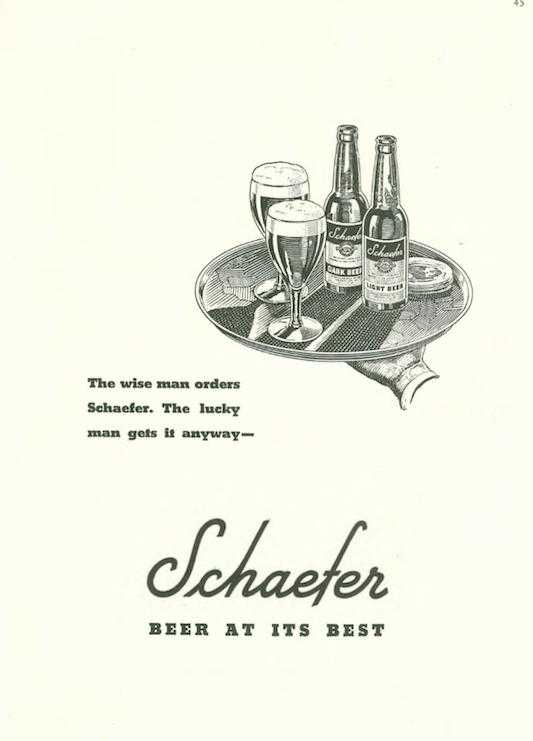
…by contrast, a more spare, minimal style is seen in this ad for Schaefer beer…
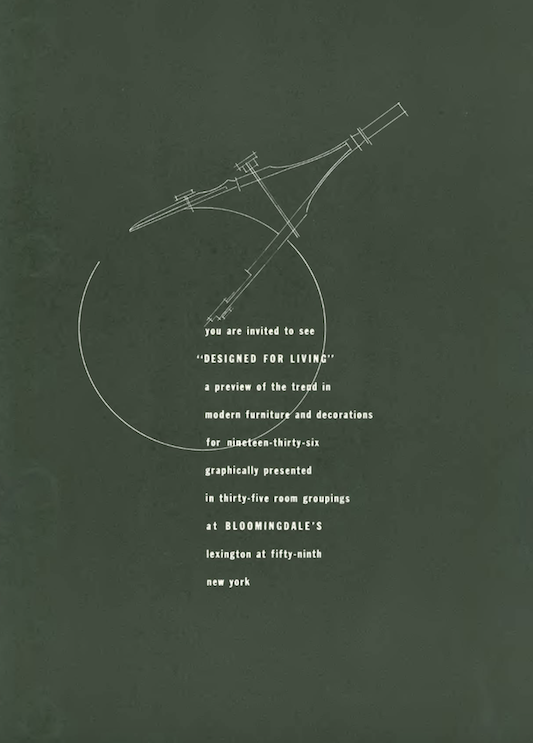
…and in this ad for Bloomingdale’s…this was tricky to reproduce, the lightness of the compass against all that black ink…
…here’s a new marketing ploy from R.J. Reynolds…smoke a half a pack of their Camels, and then send back the rest if you don’t like them…I’m guessing most folks finished them off…

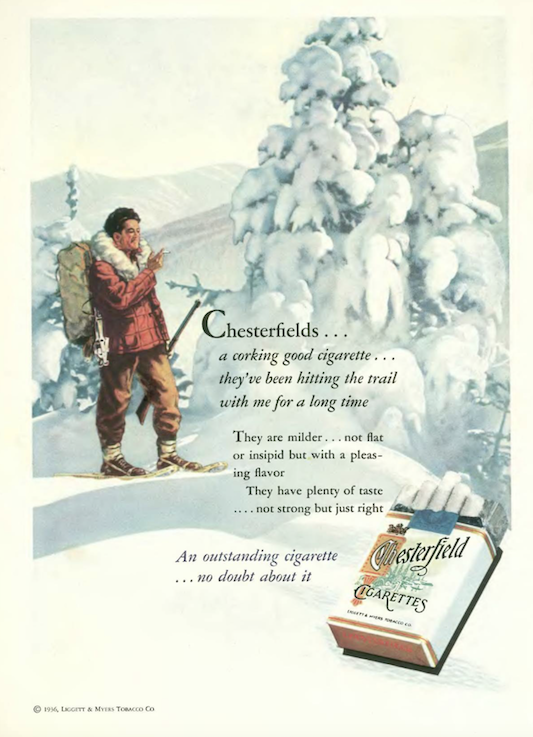
…Liggett & Myers kept it simple, equating smoke in your lungs with clean, crisp winter air…
…on to our cartoonists, we begin with spots by Gregory d’Alessio

Daniel “Alain” Brustlein

and Christina Malman

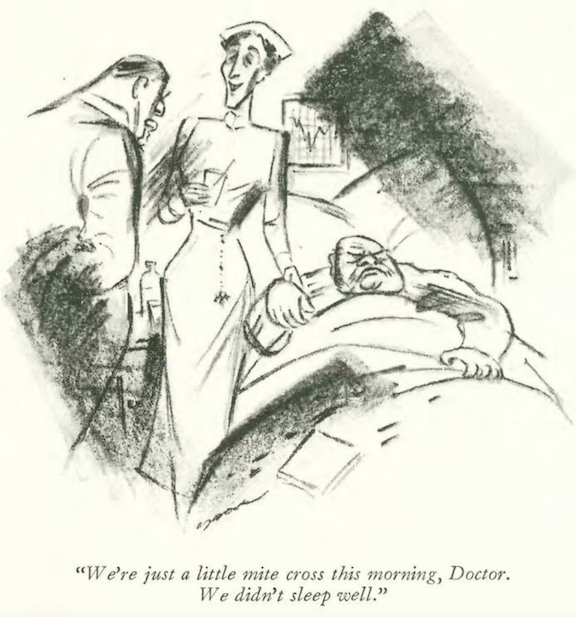
Leonard Dove looked in on an owly patient…
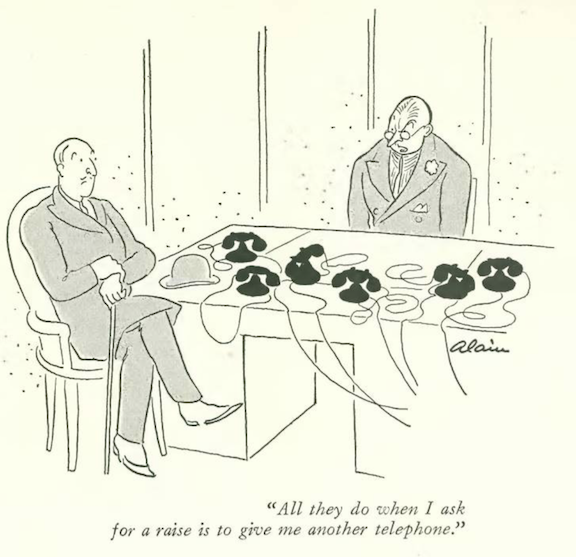
Alain again, seeking an elusive promotion…
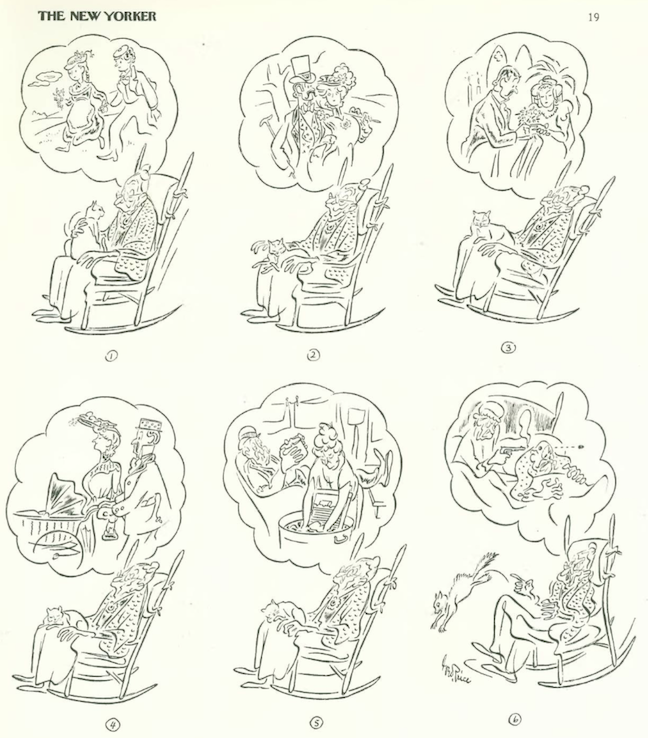
…the stages of love and marriage, per George Price

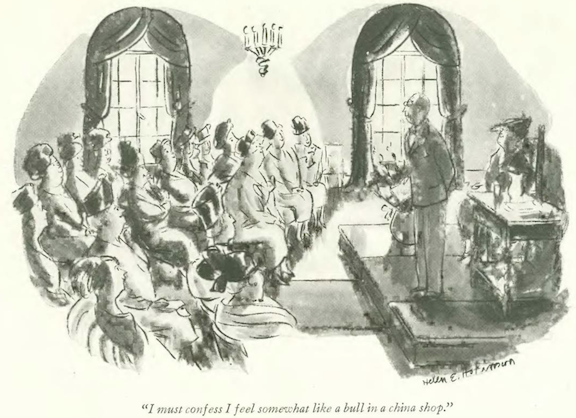
Helen Hokinson reconvened her ladies club…
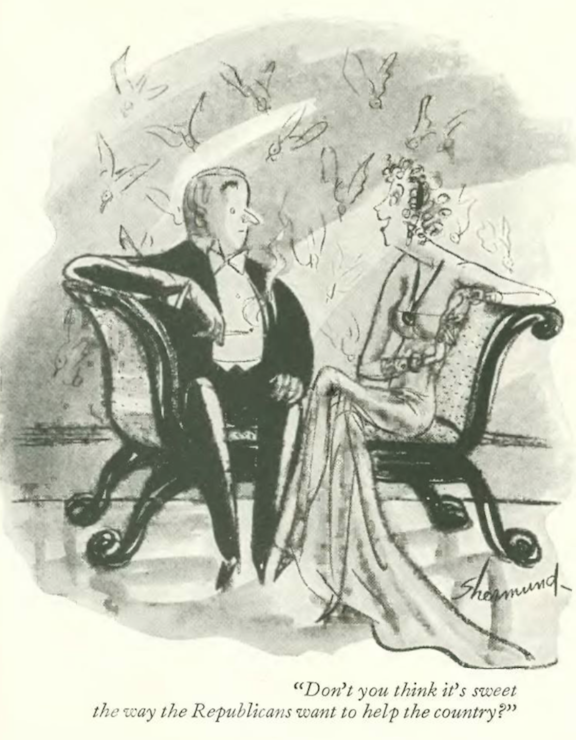
Barbara Shermund discussed politics…

Mary Petty considered the price of great art…
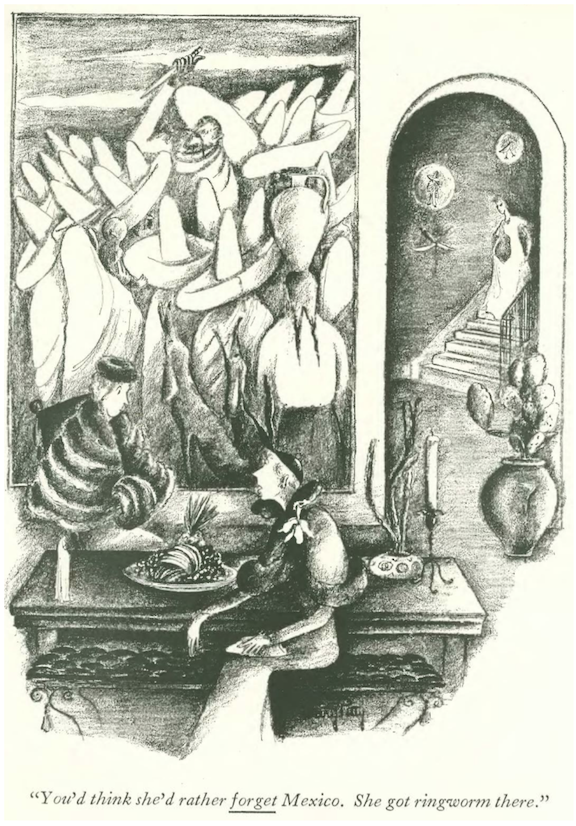
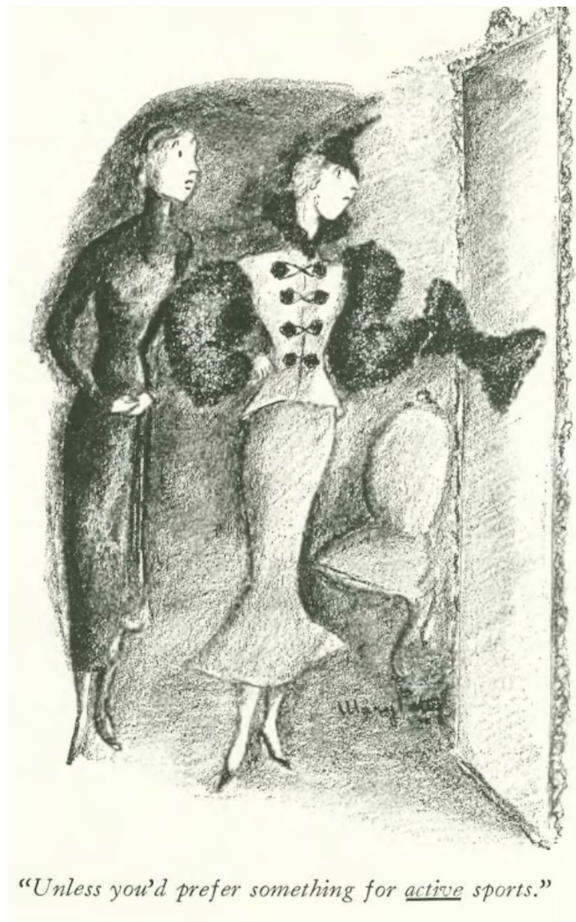
…and Petty again, at the dress shop…
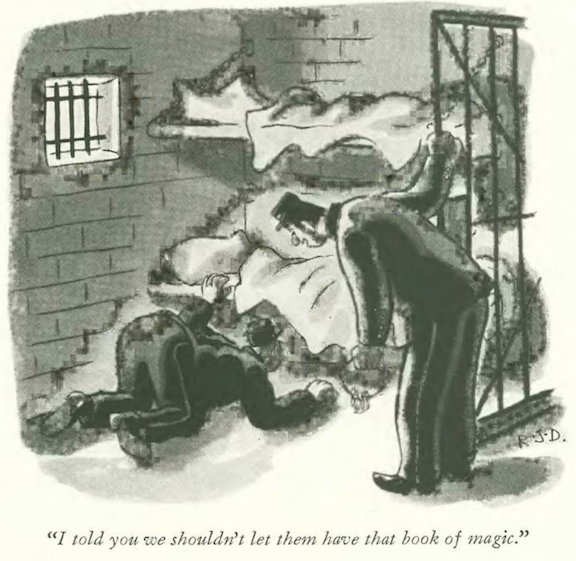
Robert Day illustrated the benefits of “how to” books…
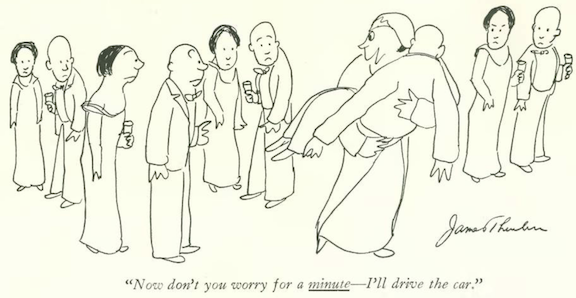
…and we run off with James Thurber...
Next Time: A Profile in the Paint…

 

And the Winner Is…

We lead off with a couple of winners from the Feb. 7, 1931 issue, beginning with a cover by Rea Irvin that takes measure of a lighter moment at the Westminster Kennel Club Dog Show.

Feb. 7, 1931 cover by Rea Irvin.

The 1930 Best of Show winner Pendley Calling of Blarney also took the top honor in 1931, giving the wire fox terrier back-to-back Westminster wins. Overall, terriers have dominated Westminster — wire fox terriers have won Best of Show fifteen times, with Scottish terriers a distant second, with eight wins.

TOP DOG…Pendley Calling of Blarney won back-to-back crowns in 1930-31 at Westminster Kennel Club Dog Show at Madison Square Garden. The dog’s owner, John Grenville Bates, mercifully retired the pooch after the ’31 win. (Westminster Kennel Club)
STANDARD? WHO ARE YOU KIDDING?…Standard poodle Siba won Best in Show at the 144th annual Westminster Kennel Club Dog Show on Feb. 11, 2020, at Madison Square Garden. (Reuters)

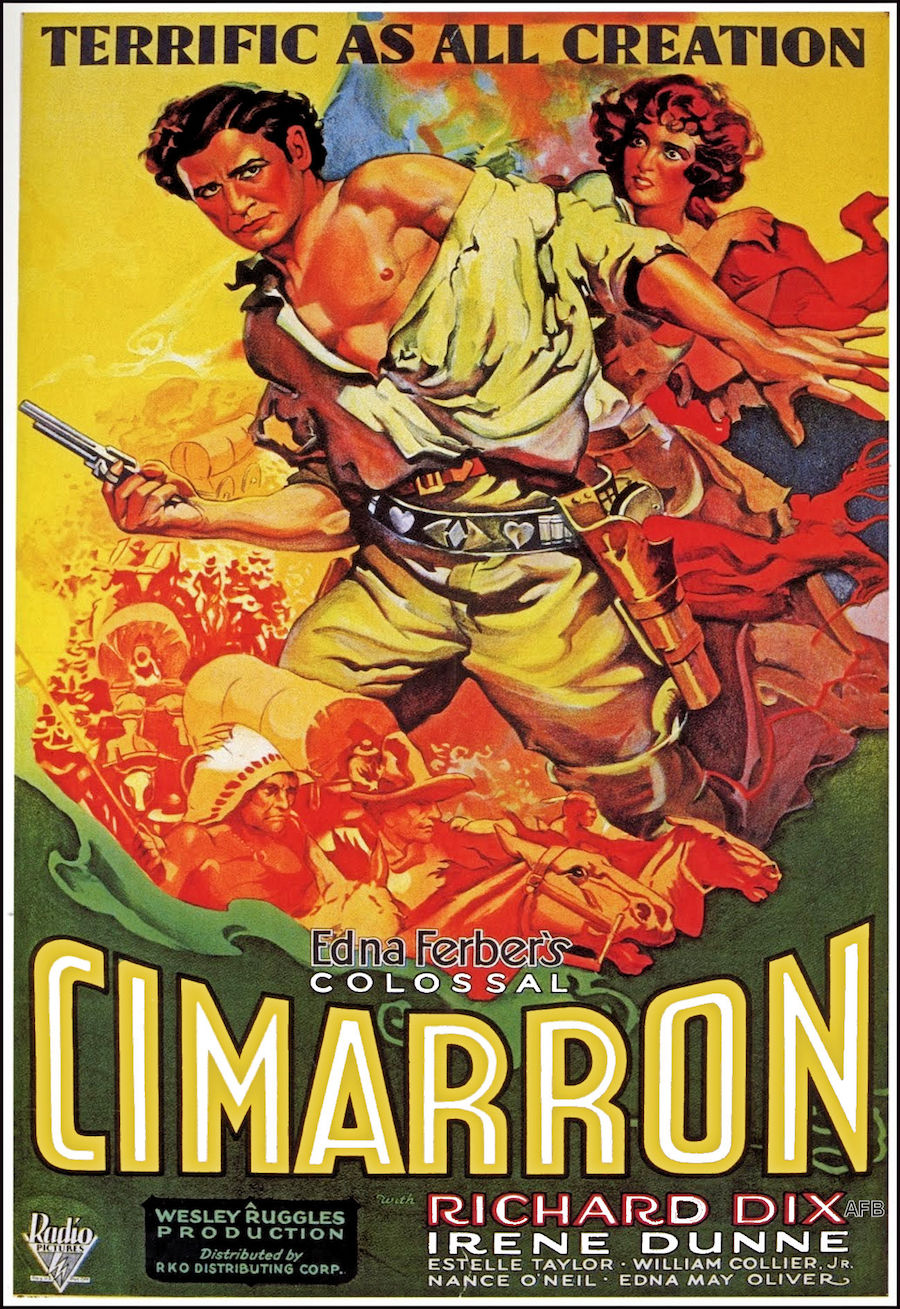
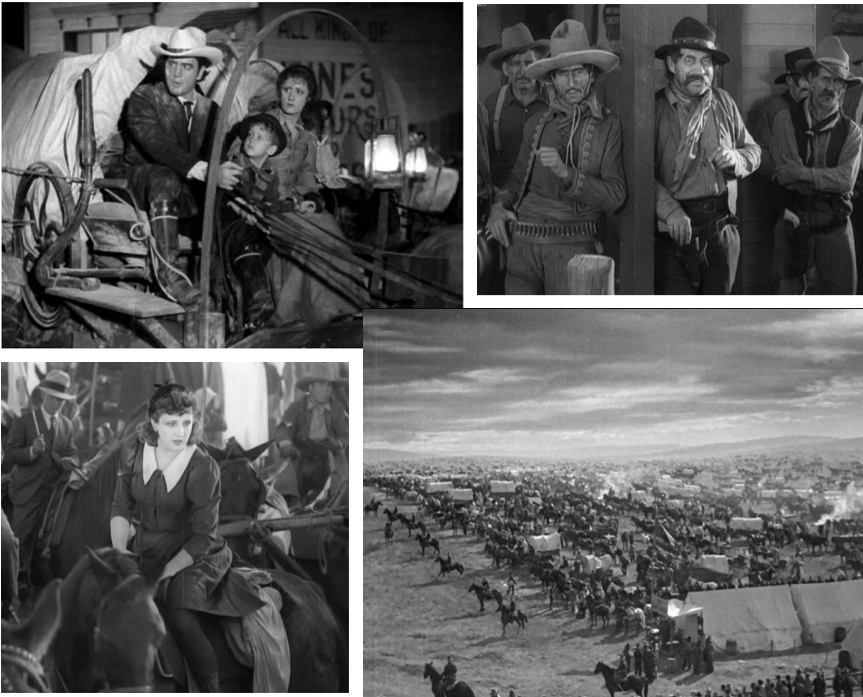
The other winner was Cimarron, the first film to receive more than six Academy Award nominations, winning three including Best Picture (then called Best Production). It was the first Western to win Best Picture, and it would be nearly sixty years until another Western, Dances with Wolves, would take the top honor.

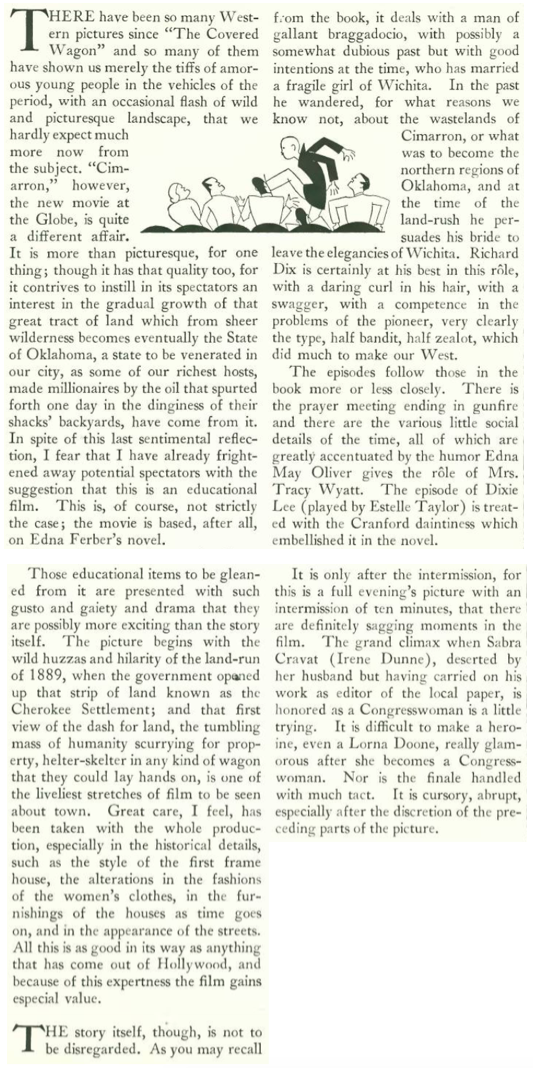
HE LOST HIS SHIRT, TOO…

Despite some “sagging moments,” John Mosher mostly lavished praise on the film, which was showing at the Globe Theatre:

THAT’S NO WELCOME WAGON…Clockwise, from top left, Yancey and Sabra Cravat (Richard Dix and Irene Dunn) join the 1889 Oklahoma Land Rush with their son, Cim (Junior Johnston); a less-than-friendly greeting at a boomer town; wagons line up for the big land grab; a young prostitute, Dixie Lee (Estelle Taylor), outwits Yancey for a piece of prime property. (IMDB)
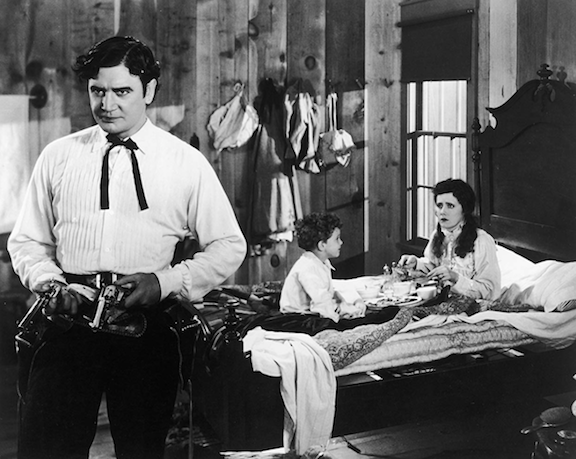
OH DEAR, THERE’S THAT LOOK AGAIN…Yancey (Richard Dix) takes it upon himself to establish order in the boomer town of Osage. On the bed are Yancey’s son, Cim (Junior Johnston) and wife Sabra (Irene Dunn). (IMDB)

 *  *  *

Handy Painter

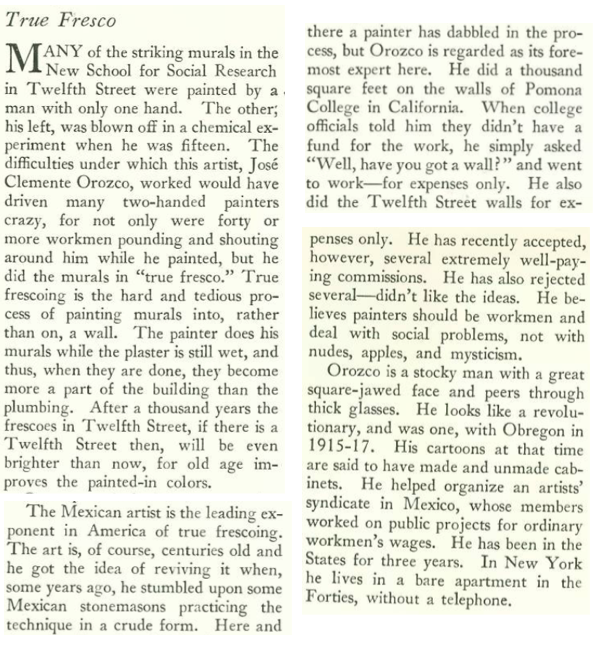
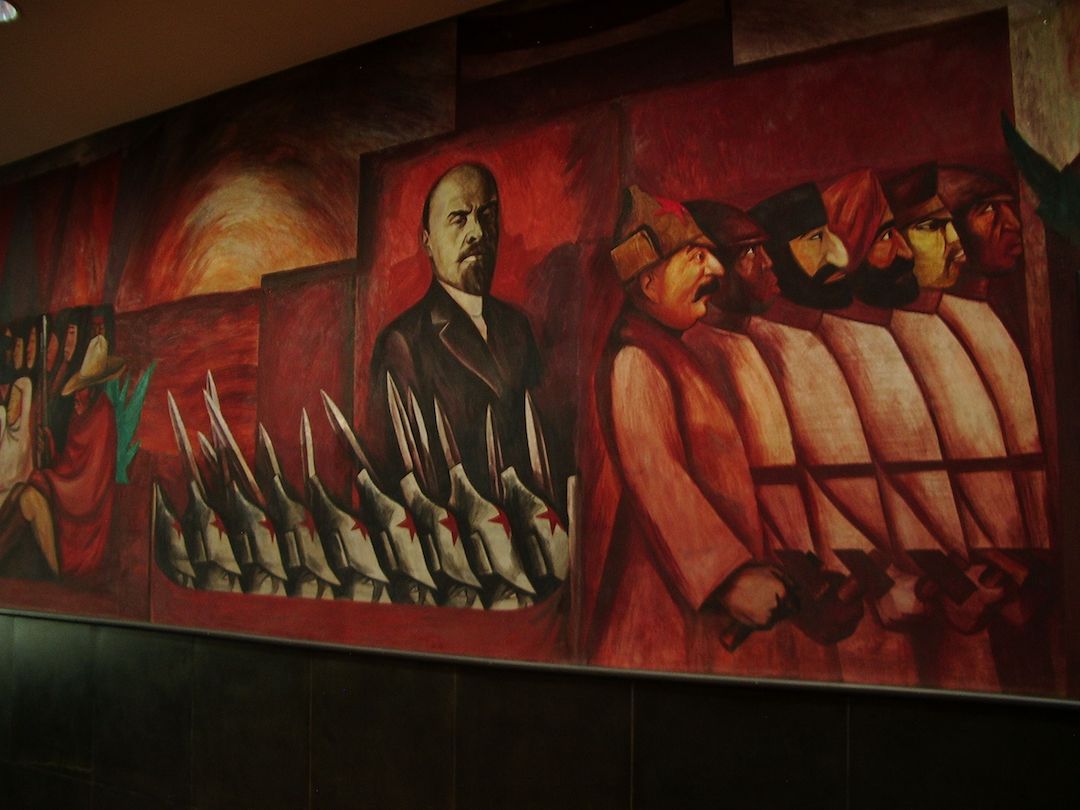
It is hard to imagine the struggles of one-handed painter José Clemente Orozco (1883-1949), who despite his handicap was able to complete huge murals in true fresco style (paint applied quickly on fresh, wet plaster), including five socially-themed frescoes at the Joseph Urban-designed New School. The murals included controversial depictions of Lenin and Stalin, but it wasn’t until the 1950s — during the McCarthy era — that school officials felt compelled to cover the images with a curtain. More protests followed, this time from faculty and students, and the curtains fell along with Joe McCarthy. “The Talk of the Town” looked in on the artist at work:

HE LOOKS FAMILIAR…José Clemente Orozco’s “The Struggle in The Occident”, 1930-1931, one of five frescoes at the New School. (Pinterest)

 *  *  *

Prescience of Mind

News reporter and author Elmer Davis submitted this humorous piece to The New Yorker doubtless thinking how preposterous, and therefore humorous, the following notion would be (a brief excerpt):

 *  *  *

Funny Cigarettes

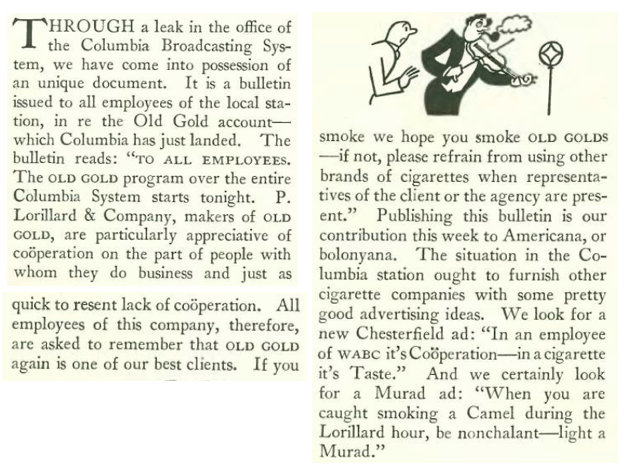
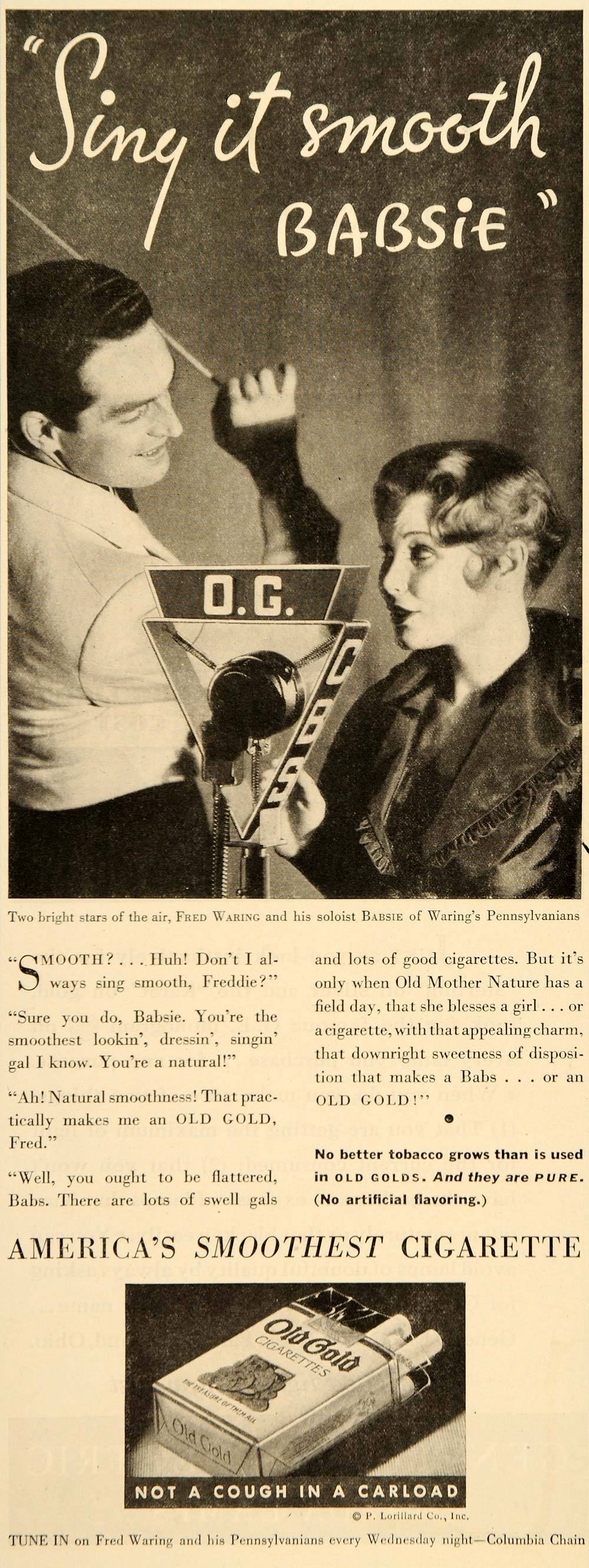
In the early years of broadcast radio (and later TV) tobacco companies rightly saw a huge gold mine in radio show sponsorships. So when CBS radio executives accepted a sponsorship from Lorillard (the makers of Old Gold), they realized they had a challenge on their hands. “Talk” explained:

COUGH ME A MELODY…The makers of Old Gold cigarettes had CBS in their clutches in this September 1933 ad featuring bandleader Fred Waring and singer Babsie. (period paper.com)

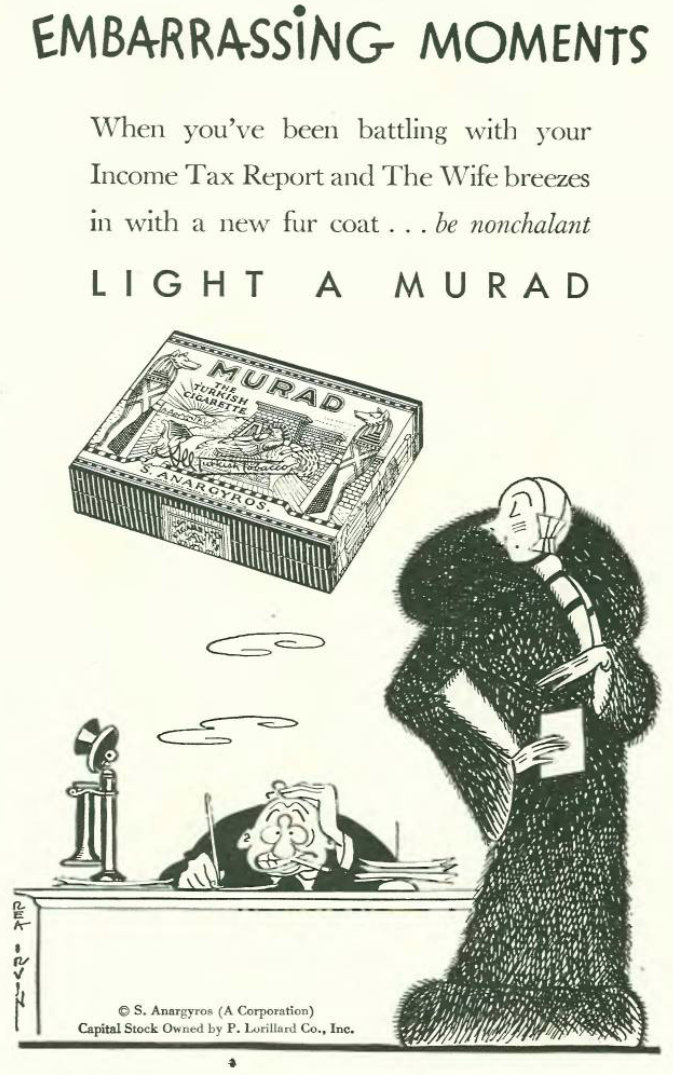
…The above “Talk of the Town” item referred to the famous Murad ads illustrated by The New Yorker’s own Rea Irvin

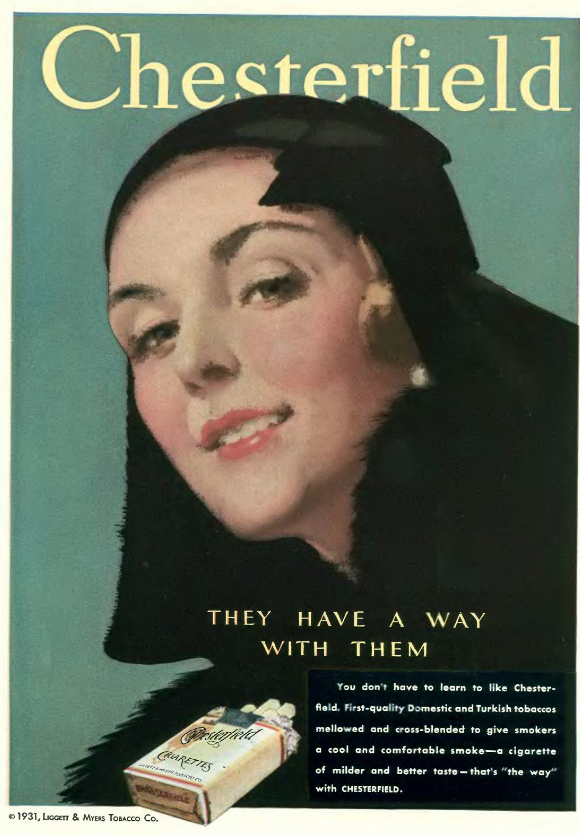
…while other advertisers were scaling back a bit due to the Depression, lovely full-color ads continued to flow from tobacco companies (and oil companies)…

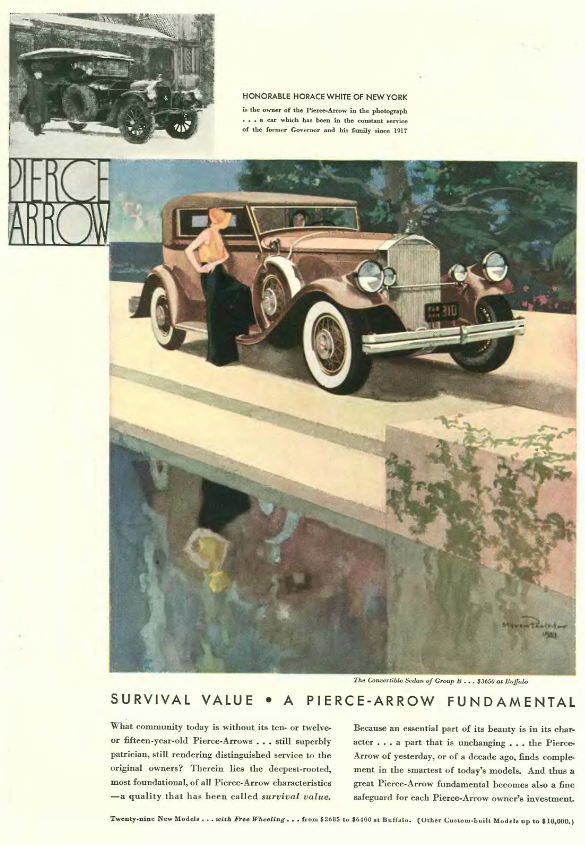
…Pierce-Arrow was also known for its sumptuous ads, but they wouldn’t save the luxury car maker from going under by the mid-1930s…

…Some less expensive black and white ads, such as this hand-lettered ad from Stein & Blaine, could be quite charming…

…speaking of charm, this ad from Arthur Murray could have used a little of it…note the stern visage of the woman, described as “typical of Arthur Murray’s staff of expert teachers”…

…on to our Feb. 7 cartoons, we have one of Peter Arno’s stock characters, the Sugar Daddy, in an awkward moment at a costume party…

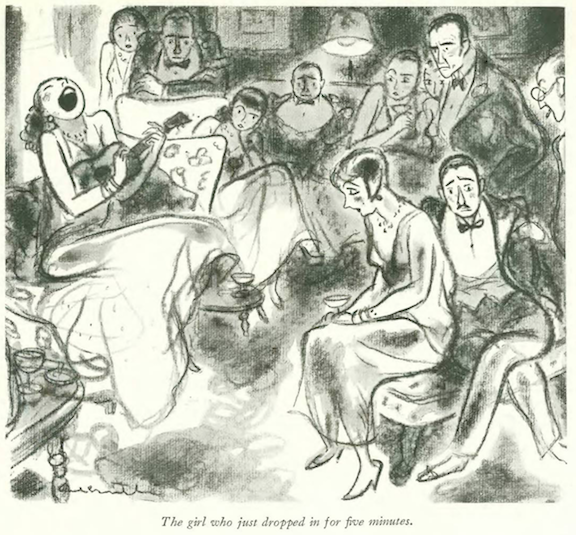
…Arno’s party looked a lot more lively than this affair, illustrated by William Crawford Galbraith...

…and Carl Rose gave us this pair, who seem to having the best time of all…

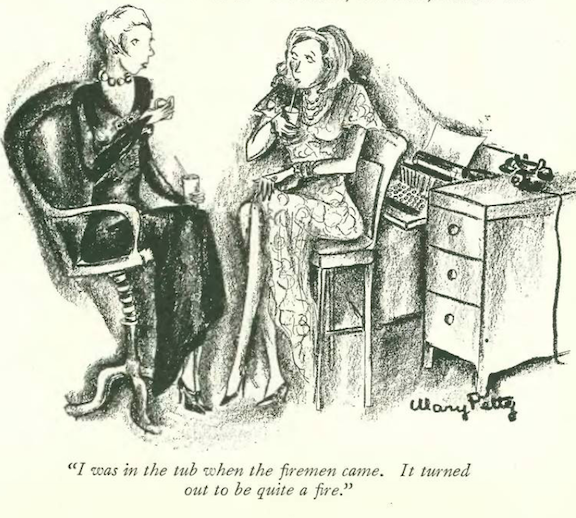
Mary Petty eavesdropped on a guileless young woman…

…and Gardner Rea paid a visit to the Met…
 *  *  *

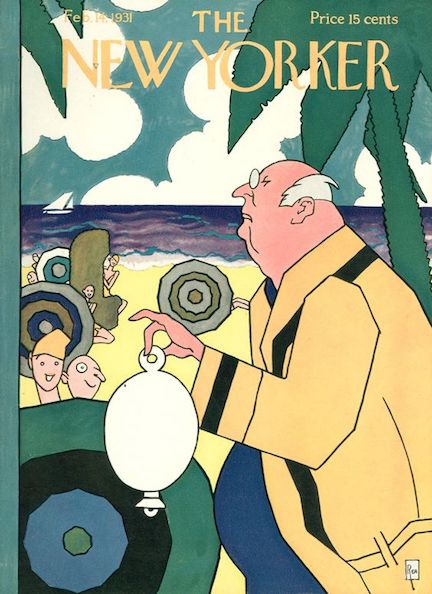
On to our Feb. 14 issue, and Gardner Rea once more…

Feb. 14, 1931 cover by Gardner Rea.

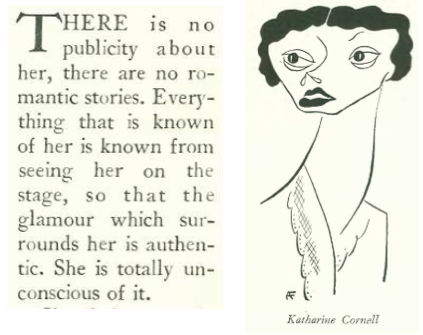
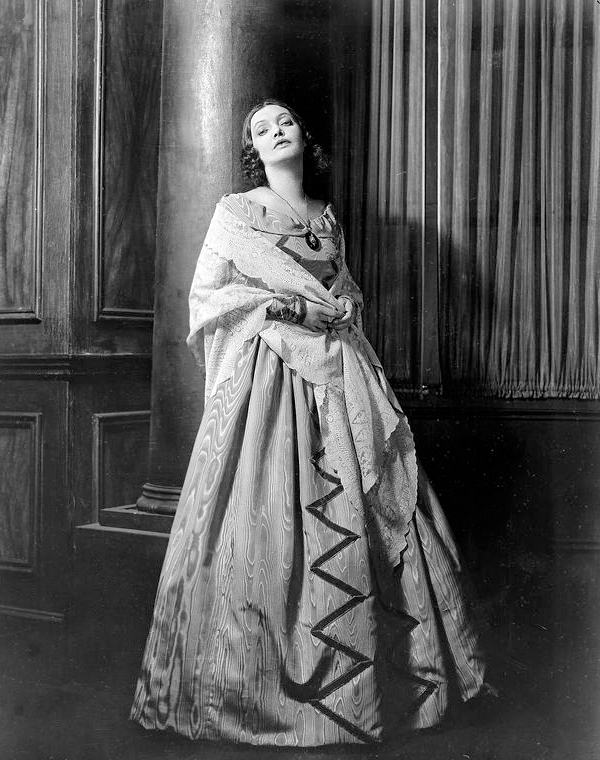
The Feb. 14 issue featured a profile of actress Katharine Cornell (1893-1974), written by cultural critic Gilbert Seldes. The caricature of Cornell is by Al Frueh. Excerpts:

Promotional photograph of Katharine Cornell as Elizabeth Barrett in the original 1931 Broadway production of The Barretts of Wimpole Street. It was her most famous role(Theatre Magazine, March 1931)

Cornell is considered one of the greatest actors of American theater, known for her eloquence and romantic stage presence. Seldes concluded:

 *  *  *

Strange Bedfellows

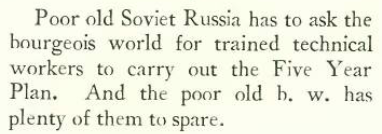
In his column “Of All Things,” Howard Brubaker referred to an exchange between American capitalists and Soviet Russians that resulted in the rapid industrialization of the Soviet Union. That actual story behind this effort is pretty amazing.

 *  *  *

Sneak Peek

Film critic John Mosher was so excited about Charlie Chaplin’s latest film that he offered this teaser to readers…

 *  *  *

From Our Advertisers

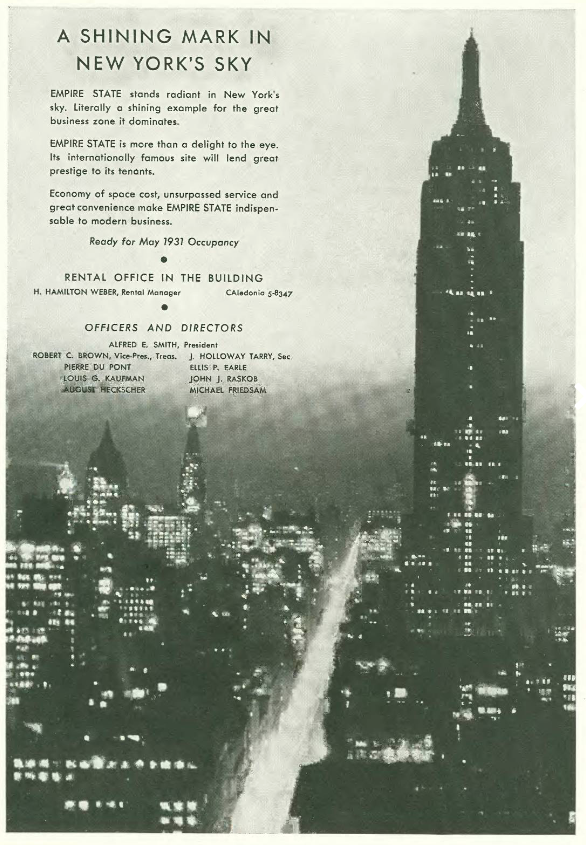
We have this ad from the developers of the Empire State Building, which was being readied for a May 1931 opening…

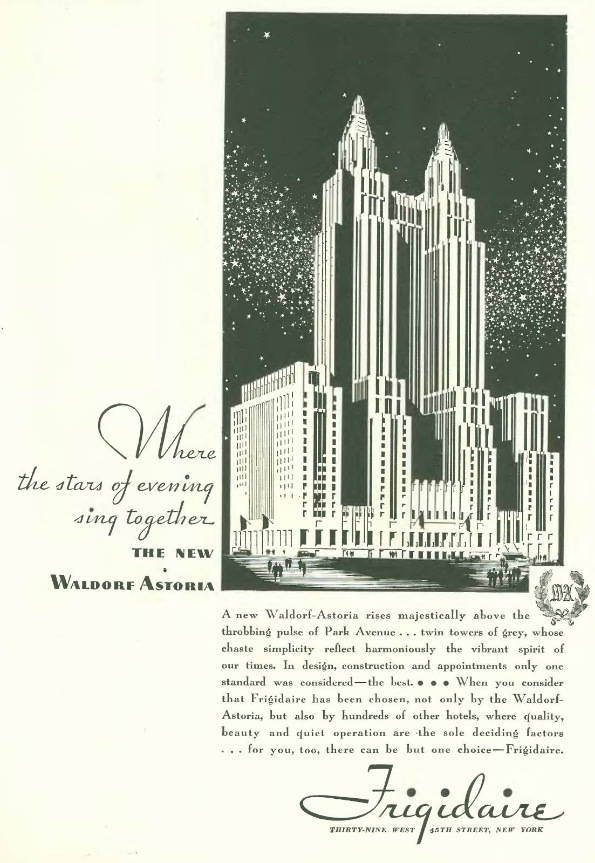
…the Empire State Building was erected on the site of the old Waldorf-Astoria Hotel. The new Waldorf-Astoria, also completed in 1931, was located more than 15 blocks away from its original site. Both the Empire State Building and the Waldorf Astoria would become Art Deco landmarks, and both shared the distinction of holding world records: the Empire State was the world’s tallest building (a record it would keep until 1970), and the Waldorf would claim the title of the world’s tallest hotel (until 1963)…

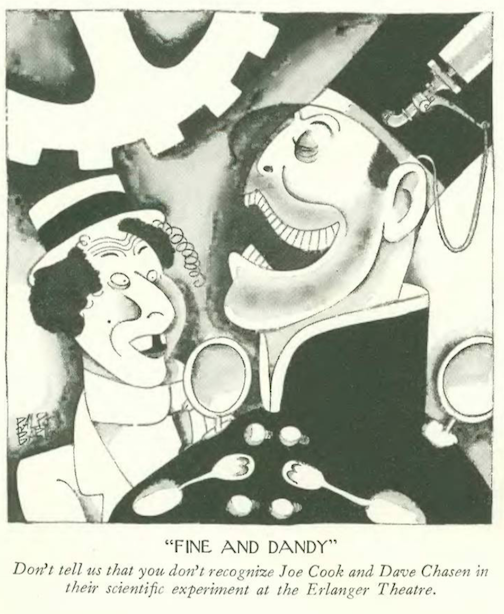
…on to our cartoonists, we have Ralph Barton contributing one of his last illustrations to the theater review section…

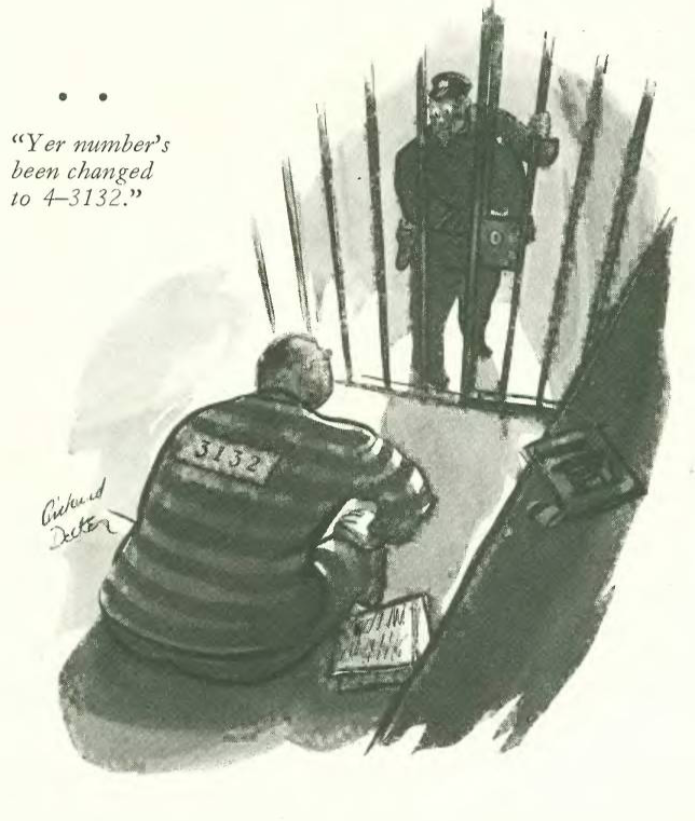
Richard Decker references a recent change in New York telephone numbers with this prison scene…

…Decker was referring to this bit of news, here interpreted by E.B. White in his Feb. 14 “Notes and Comment.”

James Thurber returned with his second-ever stand-alone cartoon for the New Yorker

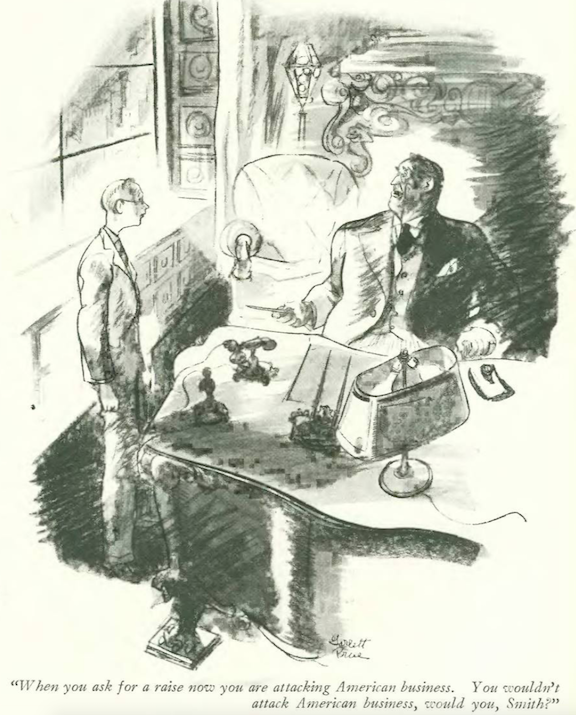
Garrett Price mined a theme that would become common in New Yorker cartoons: the tycoon vs. meek employee…

Nancy Fay gave us a glimpse of the seamier side of family life…

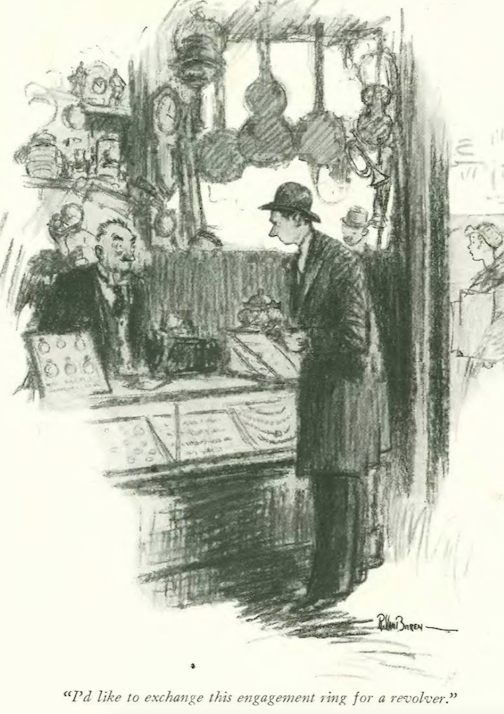
R. Van Buren goes even darker with this entry…

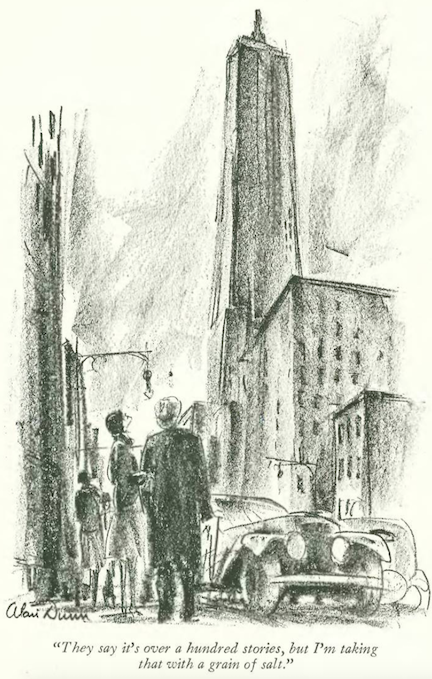
…and we end on a high note, with Alan Dunn

Next Time: Super Tramp…