The Lighter Side of George Grosz

Above: Landscape in Bayside, 1935, by George Grosz (Phillips Collection)

Knowing that the Nazis would not look kindly on his art, George Grosz took a job teaching drawing in New York in 1932, and by 1933 he had become a permanent resident of the city.

March 30, 1935 cover by Garrett Price celebrated the traditional “Bock” beer of spring.

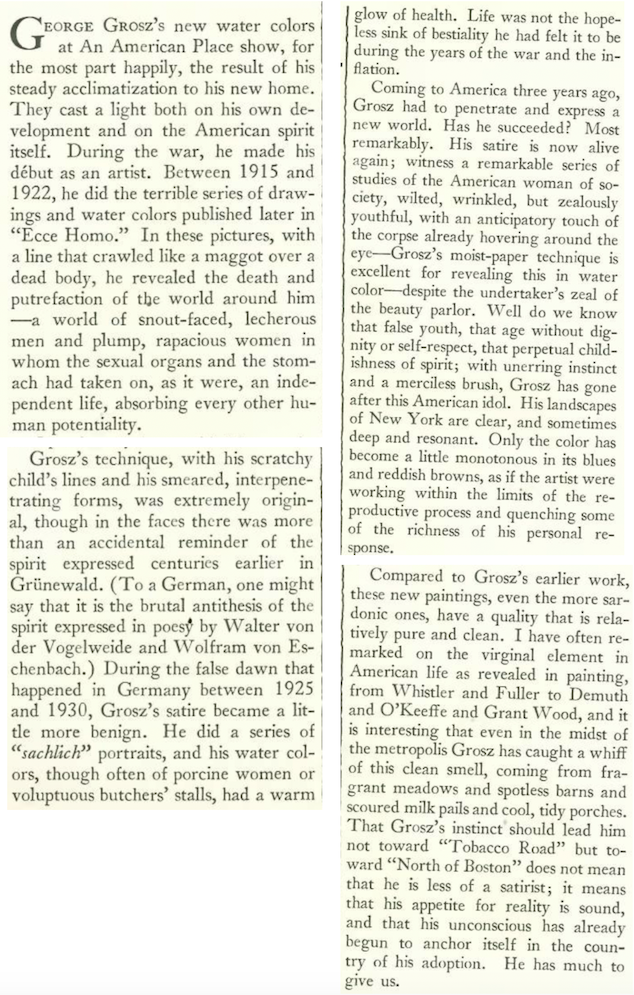
Grosz (1893–1959) was overwhelmed by the size and pace of his adopted city, and for the most part he left behind his bitter caricatures and paintings of Berlin’s Weimar years and turned to other subjects, including landscapes and New York’s urban life. Critic Lewis Mumford took in a show of Grosz’s new water colors at An American Place, a small gallery run by photographer and art dealer Alfred Stieglitz. 
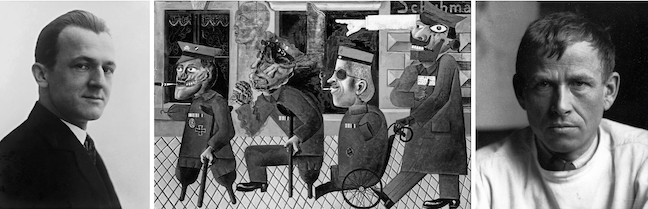
THE NEW OBJECTIVITY…George Grosz (left, circa 1921), was not alone in his harsh depictions of war and of German society during the Weimar Republic. Other key figures in the New Objectivity (Neue Sachlichkeit) movement included Max Beckmann and Otto Dix (right, circa 1929). Dix’s oil on canvas War Cripples (Kriegskrüppel), 1920, which is pictured above, was exhibited at the First International Dada Fair in Berlin in 1920. Only black and white images exist of the painting, which is believed to have been destroyed by Nazis who condemned it as degenerate art. (Wikimedia Commons/CUNY)

OH THE HUMANITY…Three selections from the “Ecco Homo” series by George Grosz. From left, Gruß aus Sachsen (Greetings from Saxony) 1920; Nachts, (At Night) 1919; and Schwere Zeiten (Hard Times) 1919. Grosz took a dim view of the corruption and moral decline he found in Weimar Berlin. (MoMA)
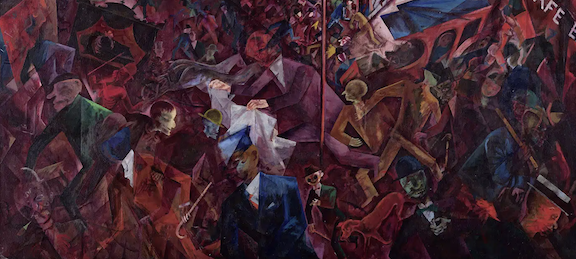
SEEING RED…Detail from George Grosz’s Metropolis, Oil on Canvas, 1916-1917. A blood-like shade of red could be seen in many of the artist’s paintings during World War I and the Weimar Republic. In this painting and in others, death is omnipresent. (Thyssen-Bornemisza Museum, Madrid)
A SOFTER SIDE could be found in George Grosz’s later watercolors, although he hadn’t entirely lost his sense of the satirical, or his taste for red paint. From left, Street in Harlem, circa mid-1930s; Ehepaar (A Married Couple), 1930; Central Park at Night, 1936. (Phillips Collection/Tate Gallery/Art Institute Chicago)
 * * *
Not the Bee’s Knees
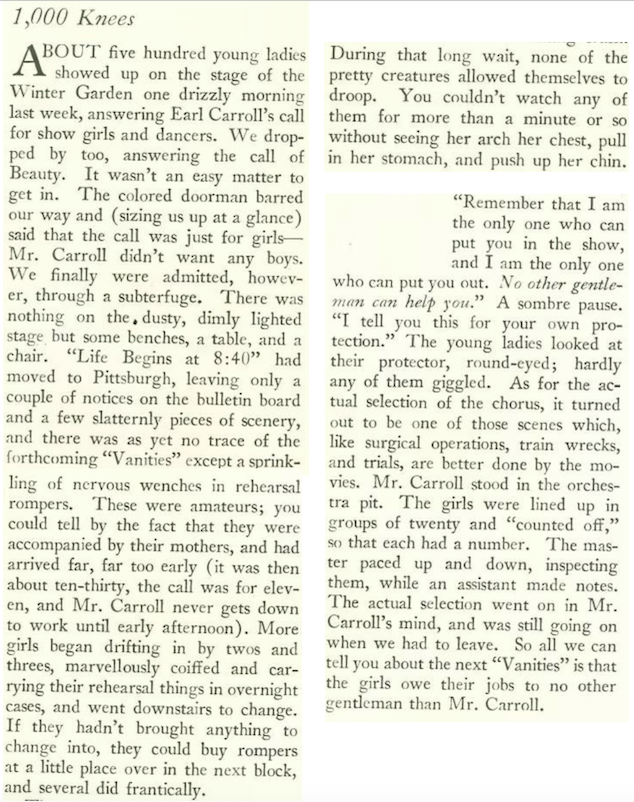
For all the progressive thinking that was on display in the early New Yorker, we also reminded that it was also a creature of its time in 1935. Here are excerpts from a lengthy “Talk of the Town” entry that described the sad winnowing process of Broadway revue producer Earl Carroll

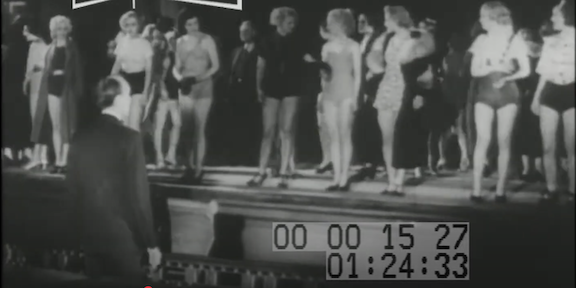
JUDGEMENT DAY…Here is a screenshot from a short film featuring the 1935 audition described in the “Talk” segment. At left is Earl Carroll. You can watch the film here. (YouTube)

 * * *

Too Little For Too Much

Film critic John Mosher gave Alfred Hitchcock’s 1934 version of The Man Who Knew Too Much just five lines in his review. He described it as “one of those preposterous adventure stories which Englishmen are always writing…” The film, however, was an international success, and it would define the rest of Hitchcock’s career as a director of thrillers with a unique sense of humor.
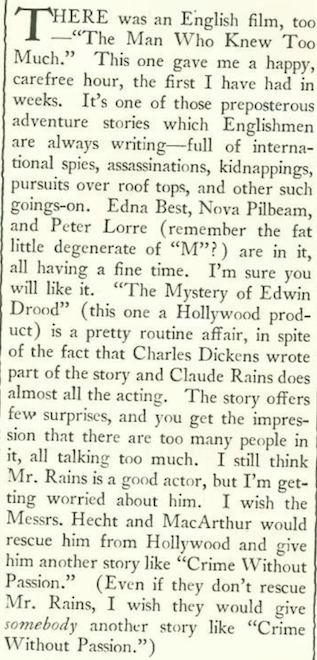
A HAPPY, CAREFREE HOUR is how critic John Mosher described his experience watching 1934’s The Man Who Knew Too Much. Clockwise, from top right, director Alfred Hitchcock with the film’s German star, Peter Lorre, who learned his part phonetically; Lorre and Cicely Oates; Edna Best did her best at playing a grieving mother. The film was remade by Paramount in 1956, starring James Stewart and Doris Day. (Wikipedia/aurorasginjoint.com/IMDB)

 * * *

Dizzy Nor Dazzled

In 1935 Lois Long had been divorced from cartoonist Peter Arno for about four years, and she was the mother of six-year-old daughter from that marriage. That didn’t keep her from sampling the city’s night life, but the days of speakeasies and drinking sessions that lasted into the wee hours were over for the 34-year-old Long. For her “Tables for Two” column she took the elevator up to the 65th floor of 30 Rockefeller Plaza to take in the entertainment at the Rainbow Room…as well as the pedestrian crowd…
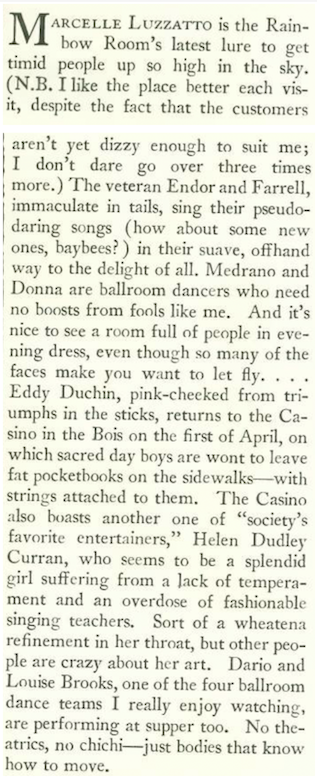
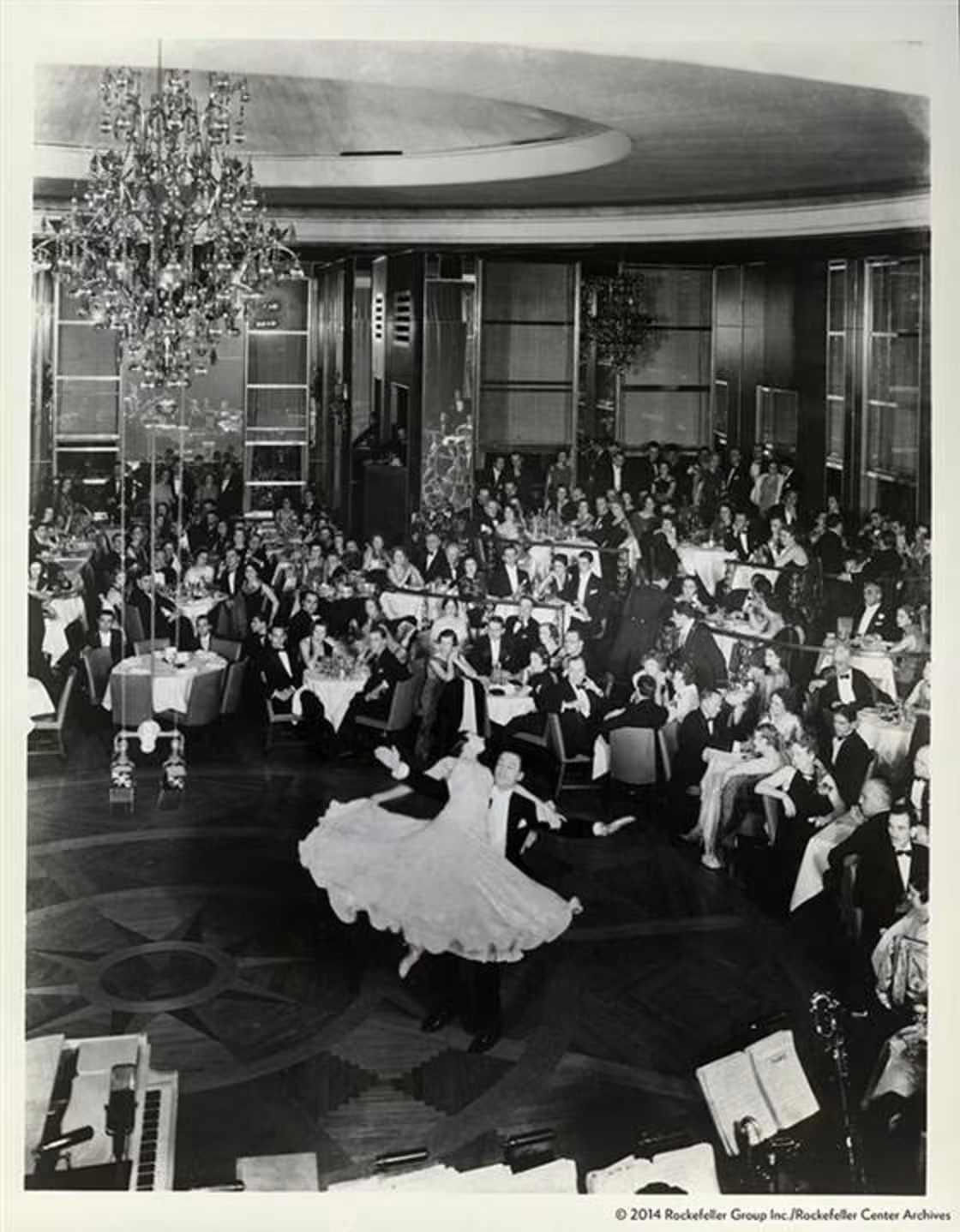
WHAT A WHIRL…Above, diners watch a performance by ballroom dancers Lydia and Joresco in the then newly opened Rainbow Room in 1934. Lois Long enjoyed the Rainbow Room in its 1930s heyday, but she missed her old speakeasy crowd, noting that the Rainbow Room’s customers weren’t “dizzy enough” to suit her tastes. (Rockefeller Center Archives)

…her speakeasy days were over, but it appears Long still enjoyed a bit of indulgence…here is how she concluded her column:

 * * *

From Our Advertisers

Step into a crowded mid-century elevator and you were bound to catch a whiff of the menthol-tinged scent of Aqua Velva, not objectionable if properly applied…

…speaking of menthol, the makers of Spud cigarettes were now competing with upstart menthol cigarette makers including Kool…this ad has all kinds of problems, including the suggestion that the occasional Spud not only inspires one’s nuptials, but also ensures marital bliss, as well as a lifetime of chain-smoking…

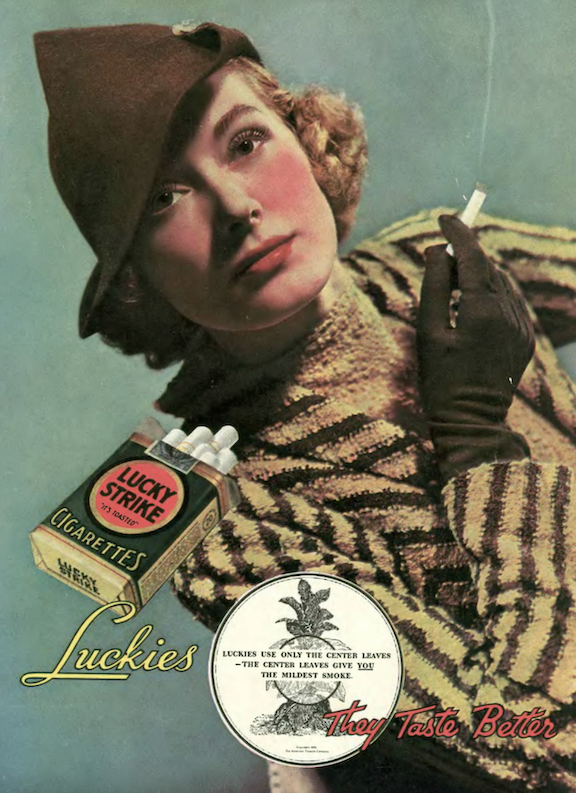
…Luckies, on the other hand, continued to appeal to the modern woman, and what impressionable young woman wouldn’t be inclined to pick up the habit to complete her ensemble?…
…the makers of College Inn tomato juice gave their raving Duchess the week off, but we get another old sourpuss in the form of a “Dowager” who demands that her servant remove a glass of what very well could have been tomato juice…enter the old bat’s niece, Dorothea, who suggests that the cook, Clementina, serve some Libby’s pineapple juice instead, probably spiked with vodka given the Dowager’s sudden change of demeanor…

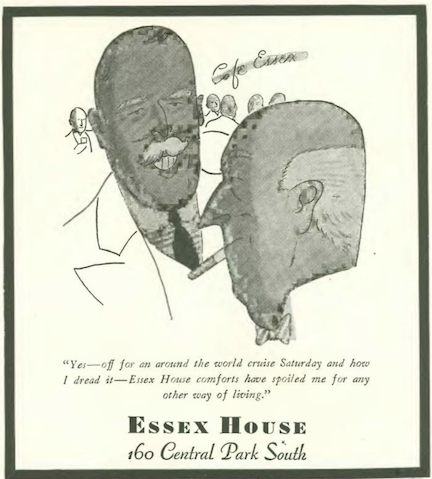
…Essex House continued their class-ridden ad campaign, this time with some stuff-shirt dreading his world cruise
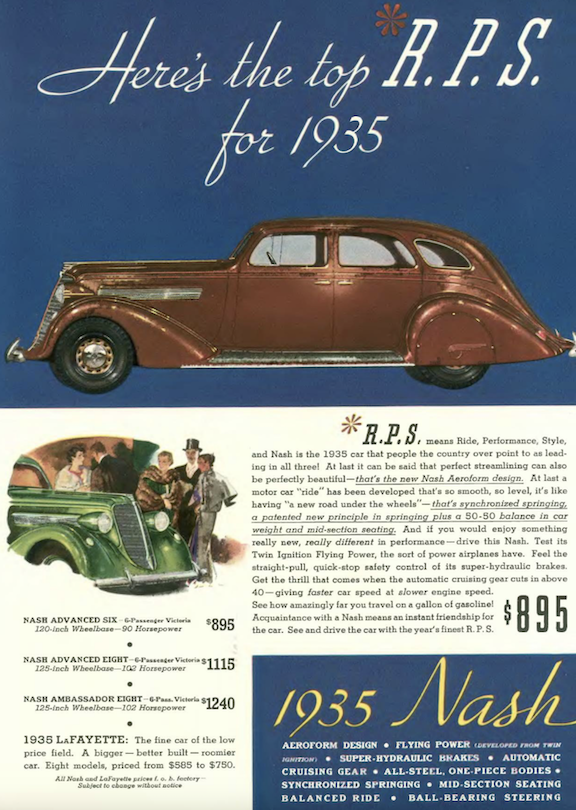
…carmakers continued to emphasize economy and price to move their latest models, including the 1935 Nash with “Aeroform Design”…
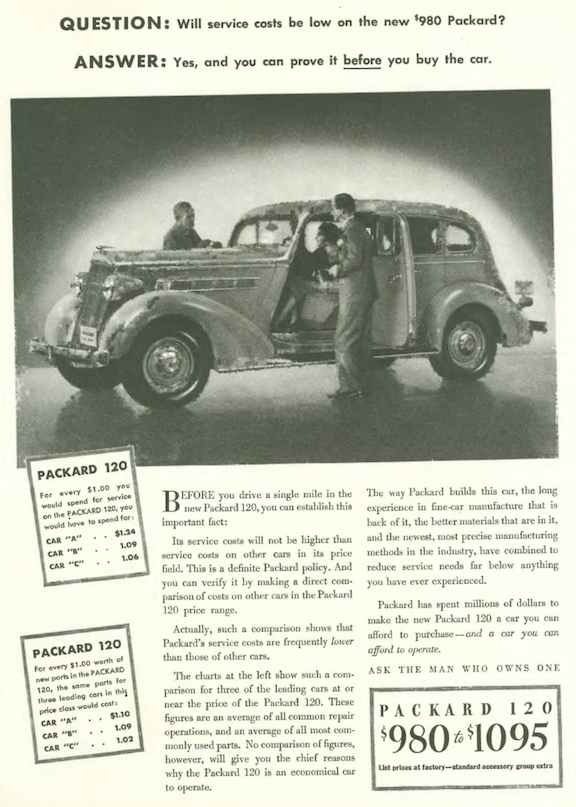
…last week I noted that Packard was doubling down on promoting the elite status of its premium automobile; however, the carmaker did introduce a “120” that cost a fraction of its luxury models and helped the company’s bottom line…
 

…Packard’s competition was Lincoln and Cadillac, among other luxury brands, but Pierce Arrow represented the pinnacle of luxury and craftsmanship, the American equivalent of Rolls Royce…unlike the other luxury brands, Pierce Arrow did not offer a lower-priced car, and the company folded it 1938…

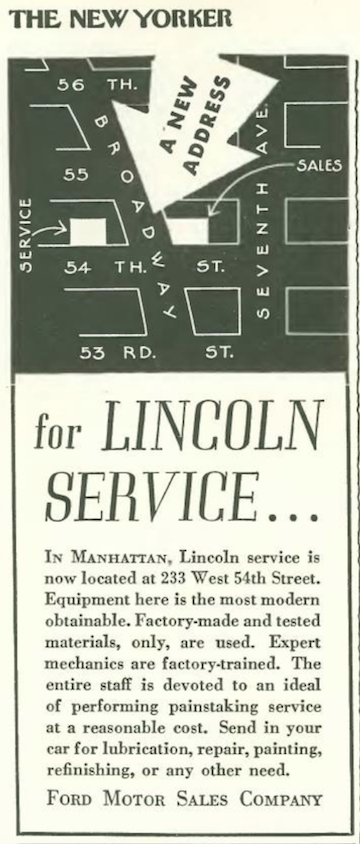
…speaking of luxury cars, if you owned a Lincoln, this little ad tucked into the top corner of page 55 showed you were to go to get a tune-up…
…the publishers at Street & Smith announced the launch of a new fashion magazine, Mademoiselle, a seemingly daring move in Depression America…the cover featured an illustration by Melisse (aka Mildred Oppenheim Melisse)…the magazine was later acquired by Condé Nast, and folded in November 2001…
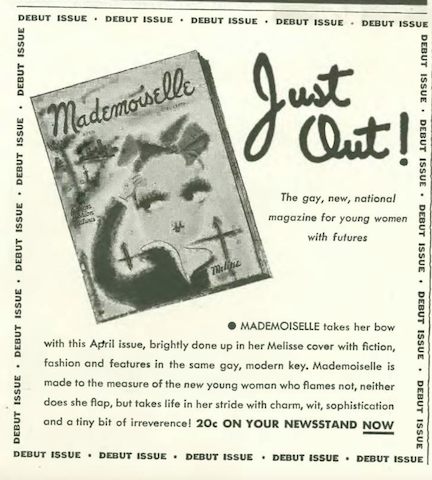
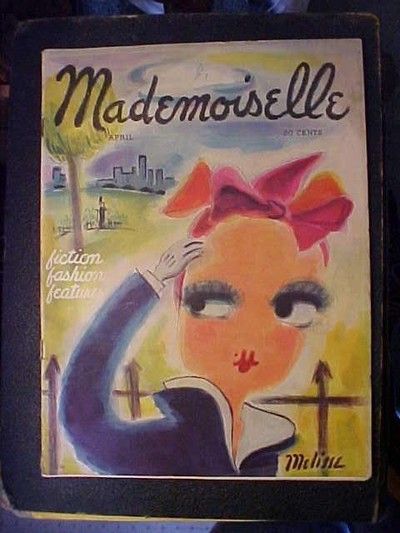
Mildred Oppenheim Melisse’s cover for the debut issue of Mademoiselle, April 1935. Melisse also supplied the cover art for the May and June issues that year. (Pinterest)

Otto Soglow was on his way to becoming a wealthy man thanks to his “Little King” cartoon…William Randolph Hearst lured Soglow and the cartoon away from The New Yorker in 1934, so the only way the wee potentate could appear in the magazine was in an ad, like this one for Bloomingdale’s…

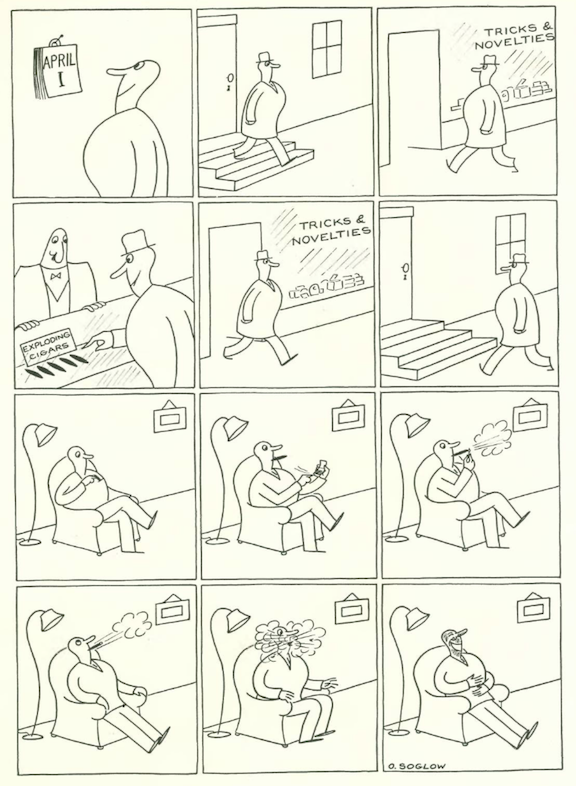
…Soglow continued to contribute to The New Yorker, and we kick off our cartoons with an April Fool’s joke…
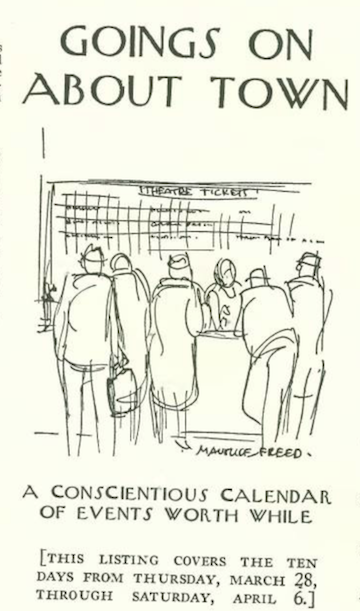
…for the second week in a row Maurice Freed supplied the opening spot art for “Goings On About Town”…
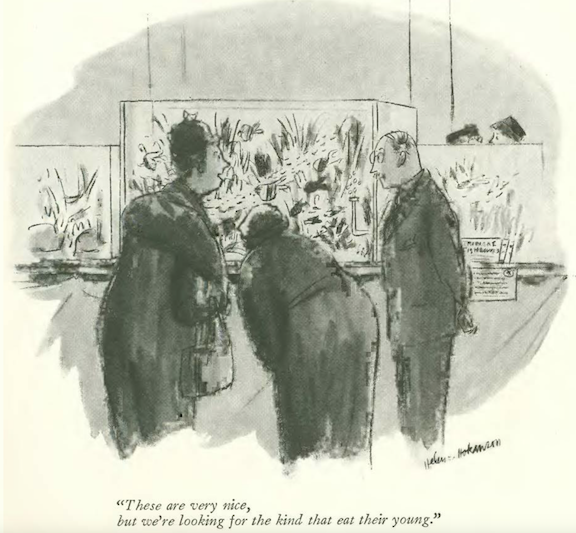
Helen Hokinson was on the hunt for some predatory fish…
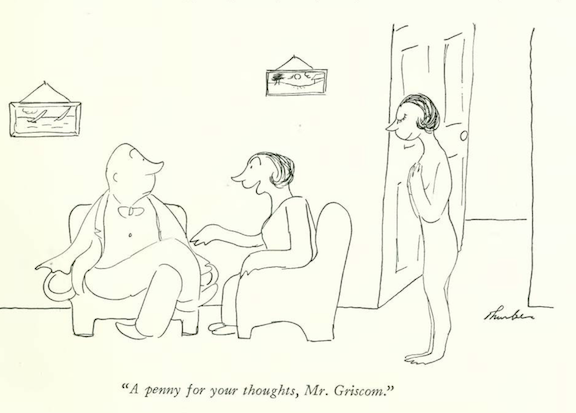
James Thurber looked in on the nudist fad that emerged in the 1930s…

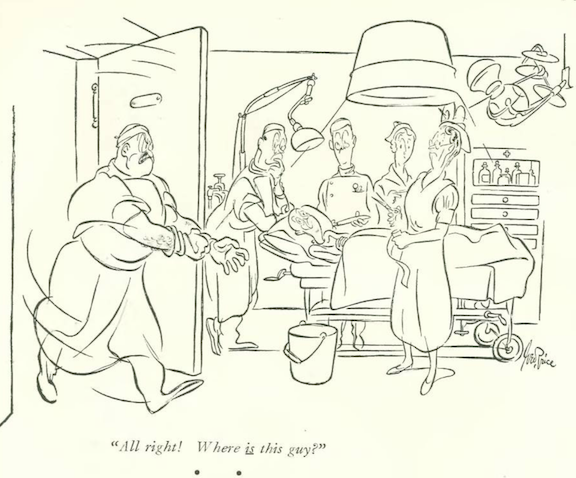
…and we close with George Price, an some alarming bedside manners…
Next Time: Keep Calm and Carry On…
An Instant Star

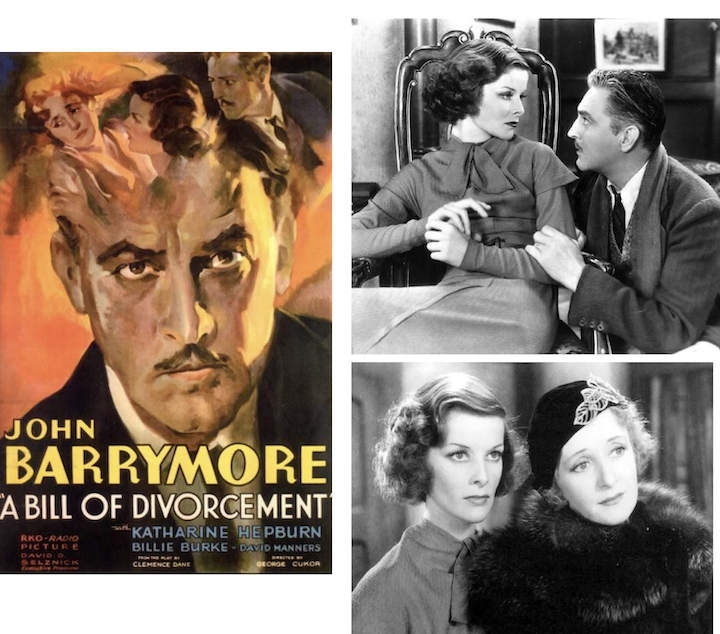
George Cukor’s 1932 pre-Code film A Bill of Divorcement would make Katharine Hepburn an instant star in her screen debut…

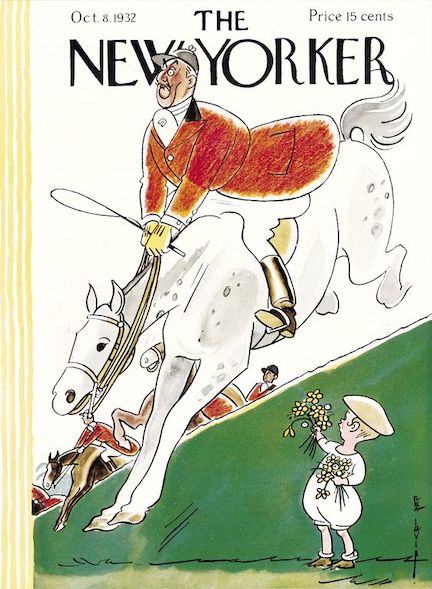
Oct. 8, 1932 cover by Rea Irvin.

… but New Yorker critic John Mosher seems to have missed the boat in spotting this new talent, who would go on to be—at least according to the American Film Institute, “the greatest female star of classic Hollywood cinema.” In A Bill of Divorcement, Hepburn portrays a young woman who fears she has inherited the same psychiatric problems that plague her father (John Barrymore). Mosher wrote:

A LOT ON HIS MIND…In A Bill of Divorcement, John Barrymore portrays a man who escapes from a mental hospital after 15 years of confinement, seeking to return to wife and family; his daughter, Sydney (Katharine Hepburn), fears she has inherited his psychiatric problems, while Sydney’s mother, Meg (Billie Burke) wants to start a new life with another man. (IMDB)

Although Mosher offered a rather tepid response to Hepburn’s debut role, critic Mordaunt Hall of The New York Times called the film “intelligent, restrained and often stirring.” Of Hepburn he wrote: “Miss Hepburn’s characterization is one of the finest seen on the screen and the producers have been wise in not minimizing the importance of her part because Mr. Barrymore is the star of the film.”

 *  *  *

On Shaky Ground

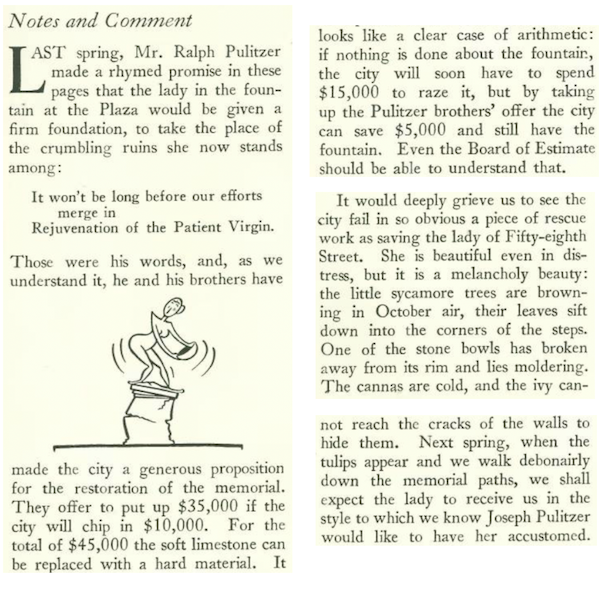
E.B. White noted the sad state of the Pulitzer Fountain, which had stood at the Plaza since 1916. Although Joseph Pulitzer’s sons had put up funds to restore the landmark, the city had yet to act on a plan.

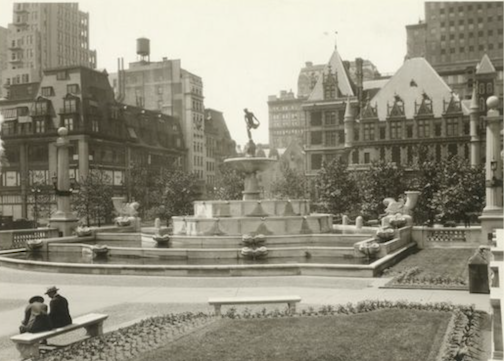
Fortunately the fountain still stands, thanks to restorations in 1933-35, 1971 and 1985-90. As to White’s concerns, the city finally accepted the Pulitzers’ offer, and after delays due to labor disputes it was completed in June 1935. The original limestone basin was rebuilt in Italian marble, and a limestone balustrade and columns that surrounded the fountain were demolished.

WHEN WE WERE YOUNG…The Pulitzer Fountain after it was completed in 1916. (New York Public Library)

White also mused about the nature of Long Island, soon to be transformed under Robert Moses’ system of parkways that would stretch across the island’s vast expanses.

EAT ME…Hundreds of truck farms dotted Long Island in the early 20th century, especially known for their potatoes. (Newsday)

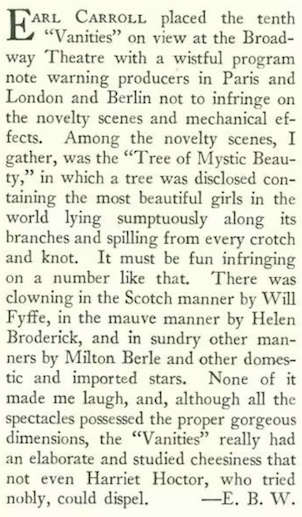
…and we have more from White, also serving as the magazine’s theater critic and taking in the latest installment of Earl Carroll’s Vanities…I include this mainly to note the young vaudevillian Milton Berle’s first appearance on a big stage…

BEFORE UNCLE MILTIE…Milton Berle (1908–2002) made his first appearance on a big stage with Earl Carroll’s 1932 Vanities. It is also noteworthy that in that same year Chicago native Vincente Minnelli (see program cover) was getting his first breaks on Broadway as a stage and costume designer. (tralfaz.blogspot.com/Playbill)

 *  *  *

Delirious Nights

Although Lois Long was primarily focused on her fashion column, she continued to file an occasional “Tables for Two” that gave readers a glimpse into New York nightlife, including the star-studded (Walter Chrysler, Howard Hughes, among others) opening of the Pierrette Club in the Waldorf-Astoria’s Sert Room…

DANCING WITH THE STARS…Lois Long reported on the star-studded opening of the Pierrette Club in the Waldorf-Astoria’s Sert Room, which featured a series of Saturday night supper dances; images of the Sert Room left and right; at center, The New York Times’ account of the club’s opening, Oct. 2, 1932. (geographicguide.com/The New York Times/jstor.org)

 *  *  *

From Our Advertisers

Simon & Schuster promoted George Gershwin’s Song Book, illustrated by New Yorker regular Constantin Alajalov

…signed first editions go for up to $8000 these days…

(raptisrarebooks.com)

…meanwhile, Farrar & Rinehart trumpeted the release of Evelyn Waugh’s latest novel (his third)…Black Mischief satirized the ways Europeans attempted to impose their customs and beliefs on other cultures…

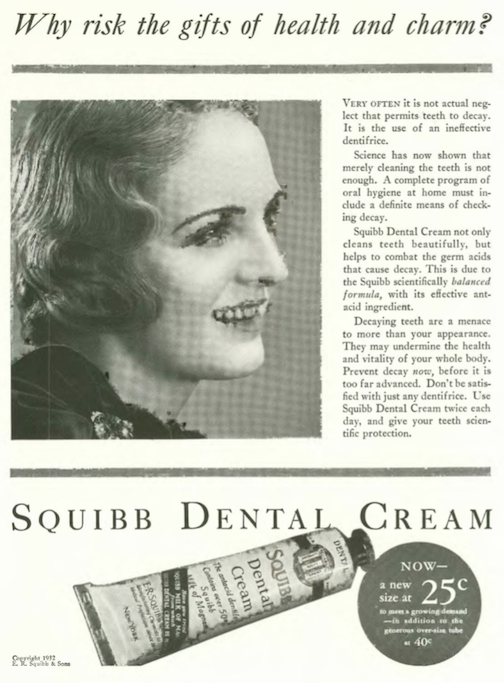
…Squibb helped The New Yorker’s bottom line with three separate ads scattered throughout the magazine…back in the day the Squibb brand was associated with everything from toothpaste…

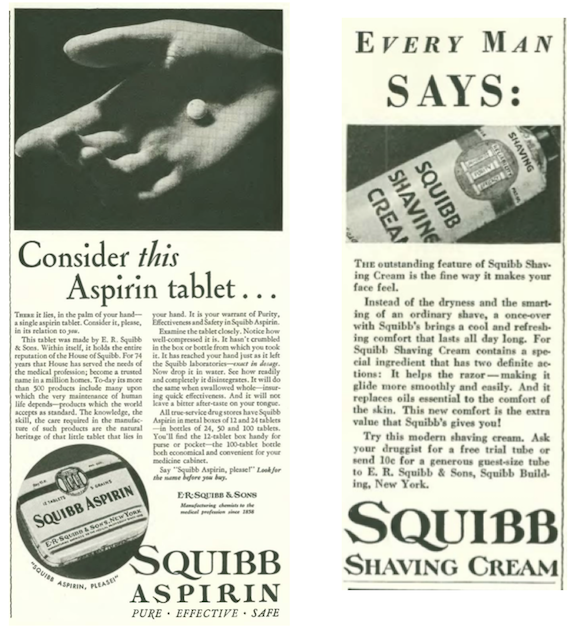
…to aspirin and shaving cream…founded in 1858, it merged with Bristol Meyers in 1989 to form one of the world’s largest pharmaceutical companies, Bristol Myers Squibb, which today is mostly known for manufacturing dozens of prescription pharmaceuticals and biologics…

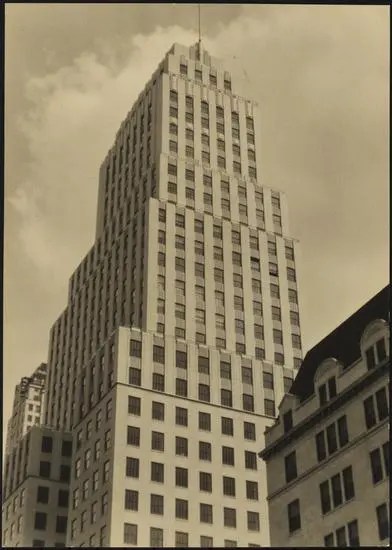
…Squibb & Sons were the primary tenant (the top 12 floors) of New York’s landmark Squibb Building when it opened its doors in 1930…

(Museum of the City of New York)

…moving on, here are a couple of ads that show us one thing that has definitely changed in the past 89 years…when was the last time you wore a fur coat to a football game?…

…cigarette manufacturers had plenty of money to advertise during the depths of the Depression, but apparently so did the folks at Wamsutta Mills…Wamsutta sheets are no longer made in New Bedford—part of the circa 1847 mill complex is now loft-style housing…however, the Wamsutta brand still exists in the U.S. through Bed, Bath & Beyond and internationally as part of a Brazilian textile conglomerate…

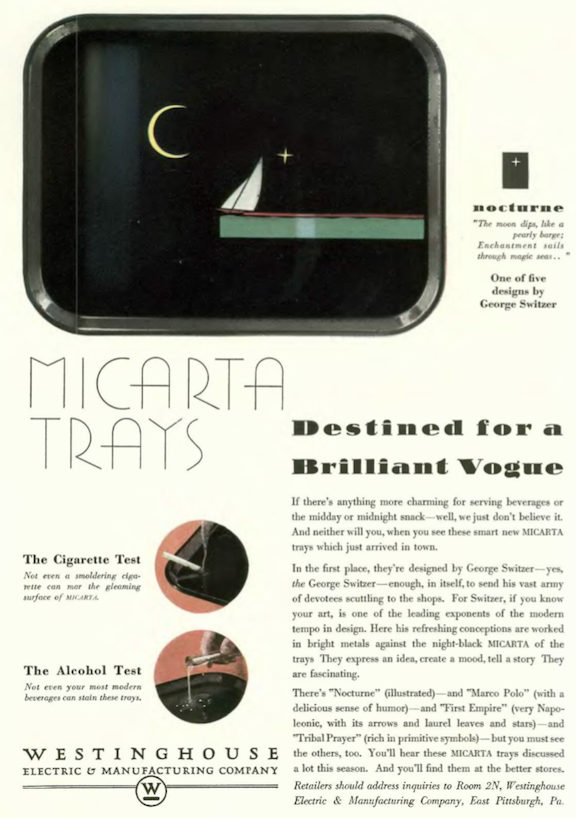
…Micarta was a substance developed by Westinghouse in the early 20th century for use with electrical equipment…produced from a combination of linen, canvas, paper, fiberglass and other materials processed under heat and pressure, Westinghouse found a new use for this laminate — serving trays designed by George Switzer…you can read more about Micarta trays at Driving for Deco…reader Chris notes that Micarta is “still available in a wide range of grades and designer colors and is popular with hobbyists and craftsmen the world over”…

…in the Oct. 29 issue, E.B. White made this observation about Micarta trays…

…on to our cartoons, William Steig’s “Small Fry” learned about the birds and the bees…

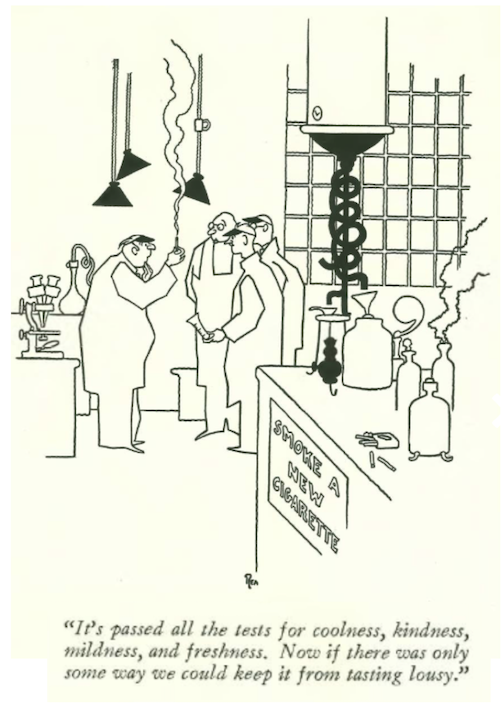
Gardner Rea visited some tobacco researchers challenged to keep pace with advertising claims…

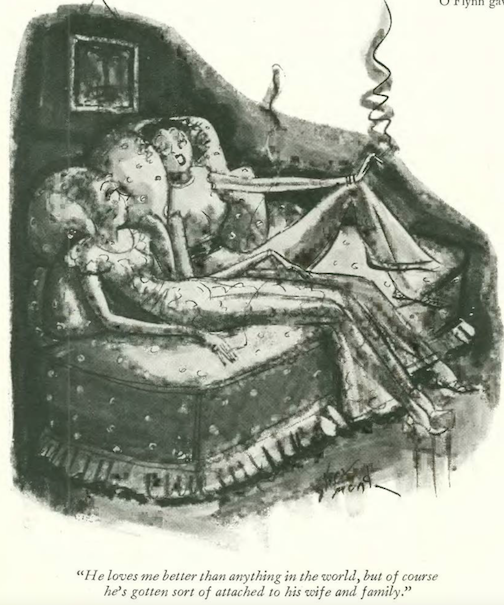
Barbara Shermund looked into the love lives of the modern woman…

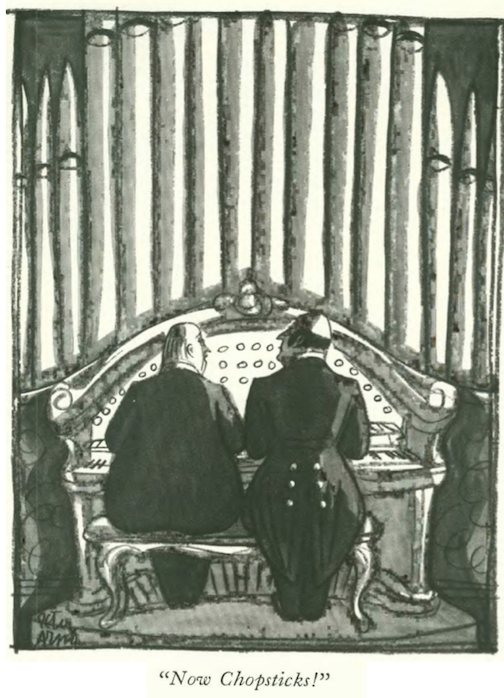
…and Peter Arno got playful at the pipe organ…

…on to our Oct. 15, 1932 issue…

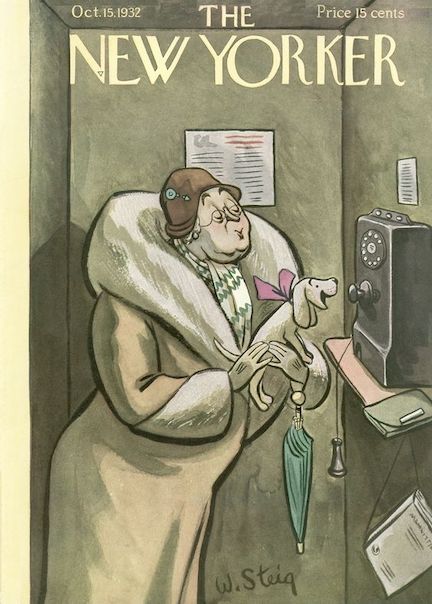
Oct. 15, 1932 cover by William Steig.

…where we check in on John O’Hara (1905–1970), who defined the short story at The New Yorker (and contributed more shorts to the magazine than any other writer). For the Oct. 15 issue O’Hara submitted a profile titled “Of Thee I Sing, Baby.” The profile is unusual because it is told as a story rather than as a biography, and the subject, a chorus girl, is not identified by her real name. A brief excerpt:

WRITING MACHINE…John O’Hara (pictured here in 1945) contributed more short stories to The New Yorker than any other writer. (Library of Congress)

 *  *  *

William Steig (1907–2003) was both a writer and illustrator, and every bit as prolific as O’Hara, publishing more than 50 books during his long life and career, including his very first, which received this mention at the end of the Oct. 15 book review section:

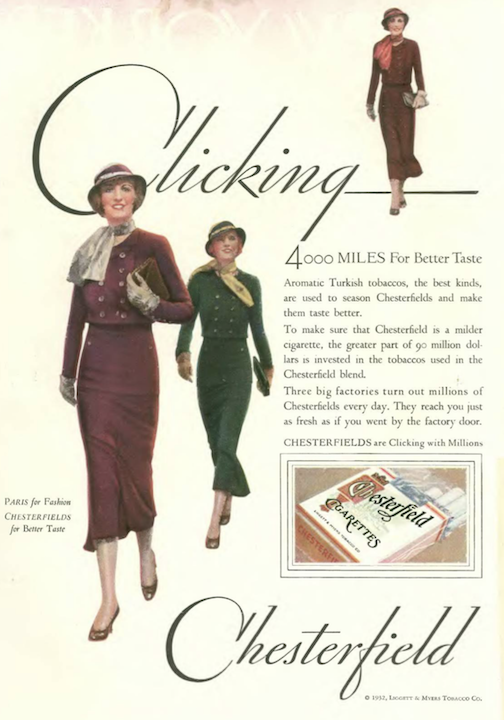
…on to our Oct. 15 advertisers, we have the makers of Chesterfields pairing their product with the sophistication of Paris fashions…

Carl “Eric” Erickson illustrated a number of ads for R.J. Reynolds’ Camel cigarettes in the late 1920s and early 1930s…here he employed his signature sophisticated style for the French Line…

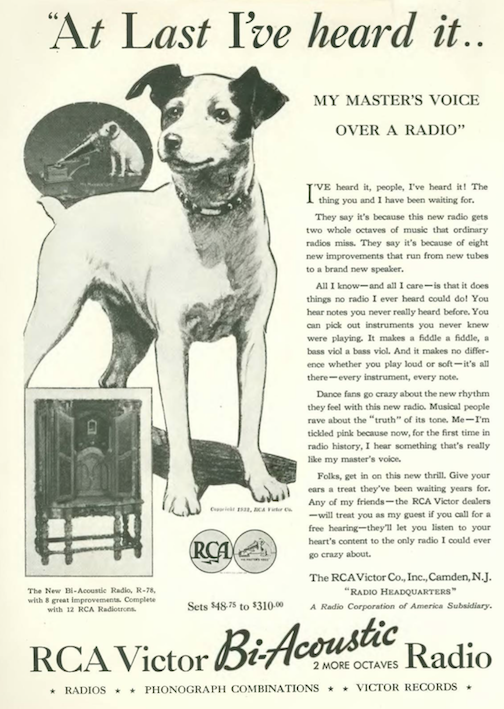
…RCA promoted the next great advance in radio technology—”bi-acoustic” sound that added “two more octaves” to radio broadcasts…it would take thirty more years to roll out something we take for granted today—stereo…

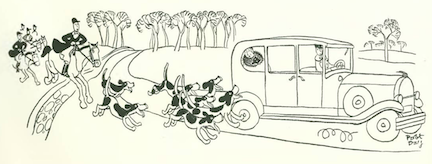
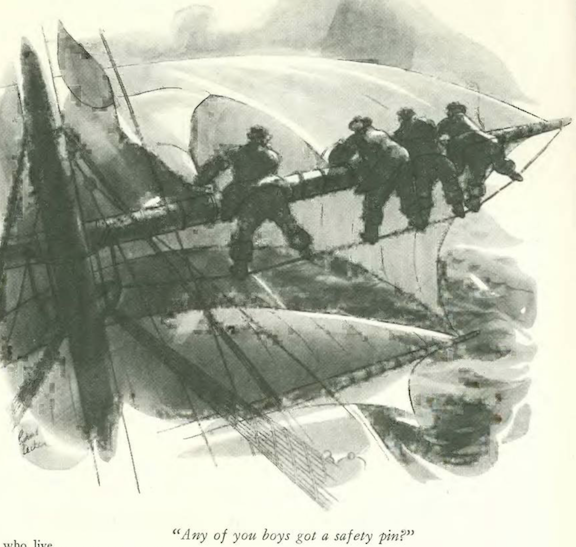
…on to our cartoons, Robert Day joined a misdirected fox hunt…

Richard Decker gave us one man’s simple solution to a perilous situation…

…and we close with a classic from James Thurber

Next Time: City On a Hill…

Bonfire of the Vanities

When Earl Carroll’s Vanities hit the Broadway revue scene in 1923, it faced strong competition from George White’s Scandals and the long-running Ziegfeld Follies. Carroll’s answer: More of everything.

Sept. 5, 1931 cover by Theodore Haupt.

That included more nudity than the other revues. Critics, including the New Yorker’s Robert Benchley, found the nudity gratuitous, a titillating distraction from what was otherwise a mess of a show. It also landed Carroll in court from time to time on charges of public indecency. All of this, of course, was just more publicity to drive audiences to his theatre at 753 Seventh Avenue, which he built in 1922 and then partially tore down just nine years later to replace it with an even grander venue. This is where Benchley found himself on the evening of August 27 — at the grand opening of the Earl Carroll Theatre and the 1931 edition of the Vanities. Benchley found nothing grand about it:

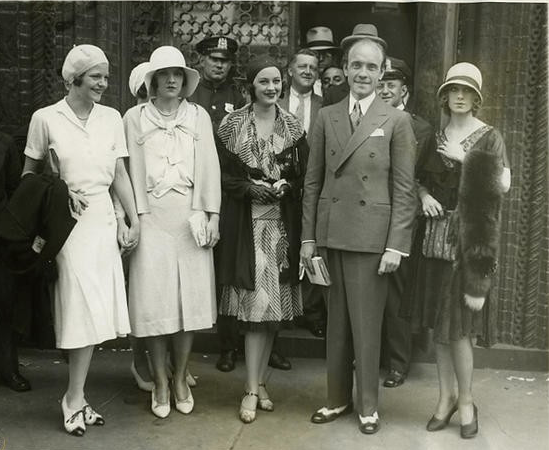
AUTOGRAPHS, ANYONE?…Accompanied by his Vanities showgirls, Earl Carroll leaves the Essex Market Police Court on July 20,1930, after appearing to answer charges of public indecency. Police raided a Vanities matinee on July 9, arresting eleven including famed burlesque dancer Faith Bacon, who performed in nothing but fans made of ostrich feathers. No doubt police were tipped off by critics who called the 1930 edition the “nudest” cast in American theatre history. From the looks on their faces, it seems even the police enjoyed the spectacle. (Worthpoint)
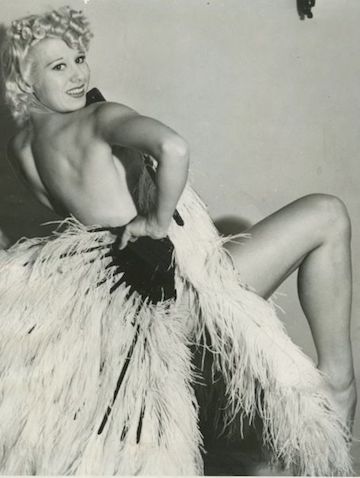
IS THERE A PROBLEM, OFFICER?…Faith Bacon in a less-revealing pose with the ostrich-feather fans that brought the police ‘a calling. (fanpix.net)

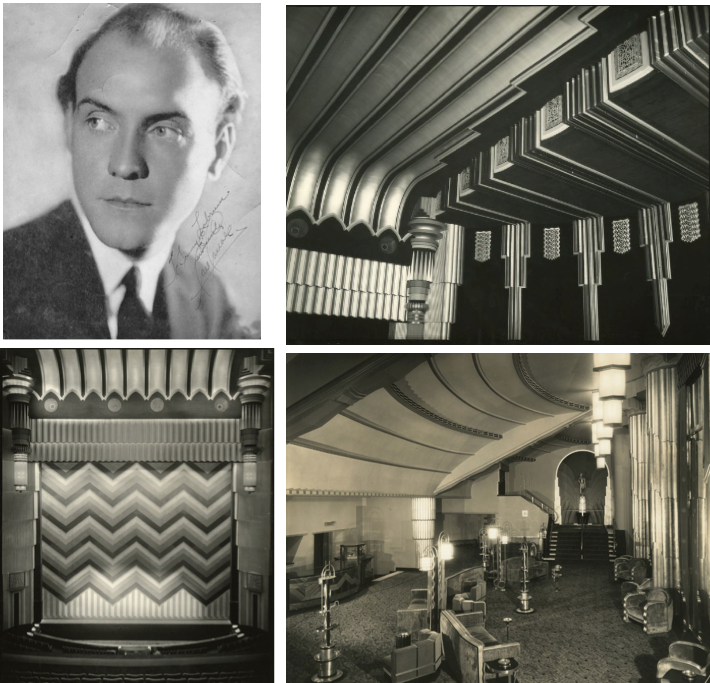
Carroll’s ambitions were always big, whether it was the size or lavishness of his stage shows or the Art Deco theatre (designed by George W. Keister) he erected in 1931 in answer to Flo Ziegfeld’s 1927 Joseph Urban-designed theatre on Sixth Avenue. With 3,000 seats, Carroll’s theatre was nearly twice the size of Ziegfeld’s.

THEY DON’T COME FOR THE SCRIPTWRITING…Earl Carroll made it clear what audiences could expect in his 1931 Art Deco-style theatre, which featured black velvet-covered walls relieved with gold and silver-colored highlights. Its 3,000 seats made it one of the largest theatres in the world. Clockwise, from top left, portrait of Carroll (a gift from the 1930 Vanities showgirls) flanked by busts of Vanities girls Doris Andrese and Beryl Wallace in the theatre lobby; sign above theatre entrance; a two-page spread from the theatre’s “Beauty Souvenir” booklet; cover of the booklet, featuring singer Lillian Roth. (New York Historical Society).
DECO DRAMA…Clockwise, from top left, Earl Carroll circa 1925; ceiling detail inside the Earl Carroll Theatre; mezzanine lounge; the stage. (New York Historical Society).

The show itself left Benchley baffled, a mishmash of lights, colors, and effects including a drooling dinosaur that dropped a naked woman on stage for a dance number…

LAUNCH SITE….The Vanities stage helped launch the careers of many entertainers. Clockwise, from top left, undated photo of a Vanities production — some shows would feature more than 100 women on stage at one time; singer Lillian Roth was a star attraction; Vanities alumni included William Demarest (Uncle Charlie!), Jack Benny and Vincente Minnelli. (assumption.edu/flickr.com/classicmoviehub.com/amazon.com/sensesofcinema.com)

This wasn’t last word from The New Yorker on the new theatre; the Sept. 12 issue featured these observations by Creighton Peet:

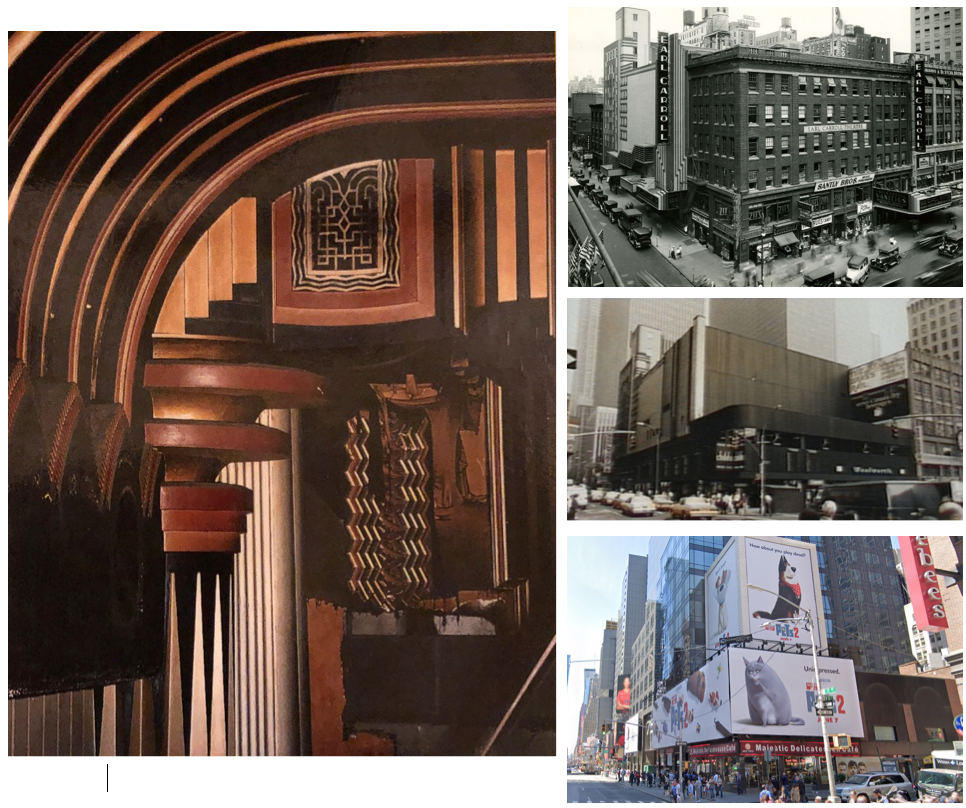
In the end, Carroll’s ambitions were too big for the deepening Depression, and just six months after his theatre’s opening he would lose it to creditors. The property would be snapped up by rival Florenz Ziegfeld and renamed the Casino, but the Ziegfeld connection would be short-lived; Ziegfeld would die a few months later in July 1932. Later that year another rival, George White, would take over the venue to stage his Music Hall Varieties, which ended in 1933 with middling results. The theatre would go through several more tenants—including Billy Rose—until 1940 when the discount “dime store” Woolworth’s would move in, demolishing the lobby and walling off the remaining ceiling and walls. Woolworth’s would close the location in the late 1980s—the store, and the last remnants of the Earl Carroll Theatre, would be demolished in 1990.

CLOSING NUMBER…At left, a sneak peek behind the false walls of Woolworth’s in 1988 shows a detail of the theatre’s proscenium, ceiling and sidewall. At right, top to bottom, the second Earl Carroll Theatre at 7th Avenue & 50th Street; the Woolworth’s store that replaced it, circa 1980; the site today. (Large image from the book Lost Broadway Theatres, via drivingfordeco.com/Google Maps)

*  *  *

From Our Advertisers

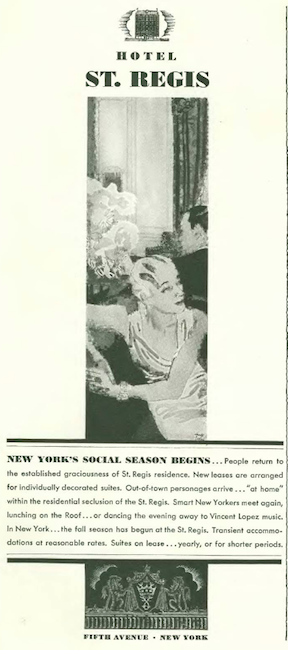
Fall is upon us, and so the social season begins, according to the Hotel St. Regis…

…and what better way to prepare for the season than to acquire a new mink coat…

…maybe politics and world affairs were more your bag, in which case you probably wanted to get a subscription to the Herald Tribune and read the latest from commentator Walter Lippmann

…the makers of Marlboro cigarettes, an upstart brand that initially targeted women, continued with their prize contests, but now they began courting men as well…

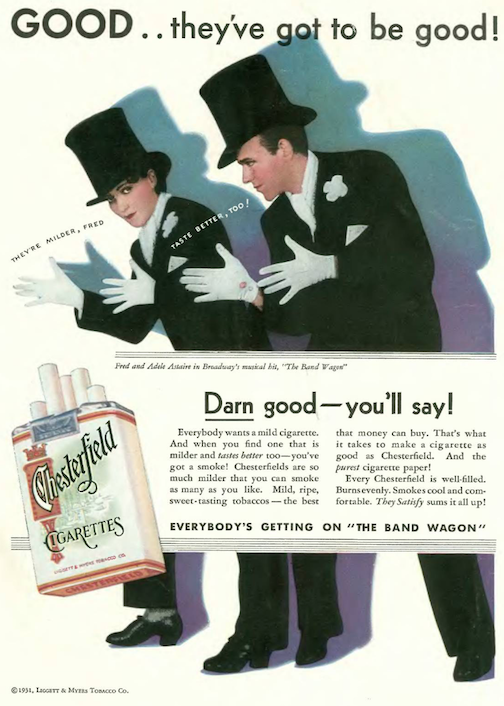
…on the other hand, the more established brand Chesterfield had the resources to run a color back-cover ad with endorsements from the brother-sister dance team Fred and Adele Astaire

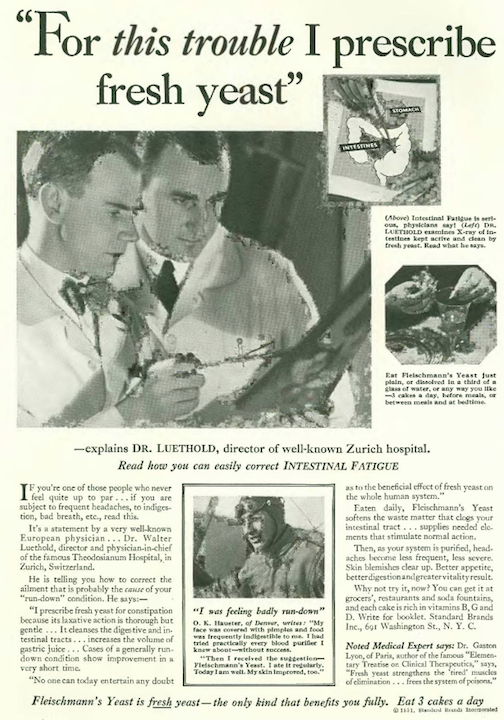
…Fleishmann’s continued to run their full-page ads touting the wonders of daily yeast consumption (“Eat three cakes a day”). The ads were there because Raoul Fleishmann used his wealth from the family baking business to keep the New Yorker afloat during its fledgling years…

…Farrar and Rinehart announced the arrival of Otto Soglow’s first book, Pretty Pictures

…here is the cover of the book…

…and we move on to the cartoons with the character that would make Soglow rich and famous…The Little King

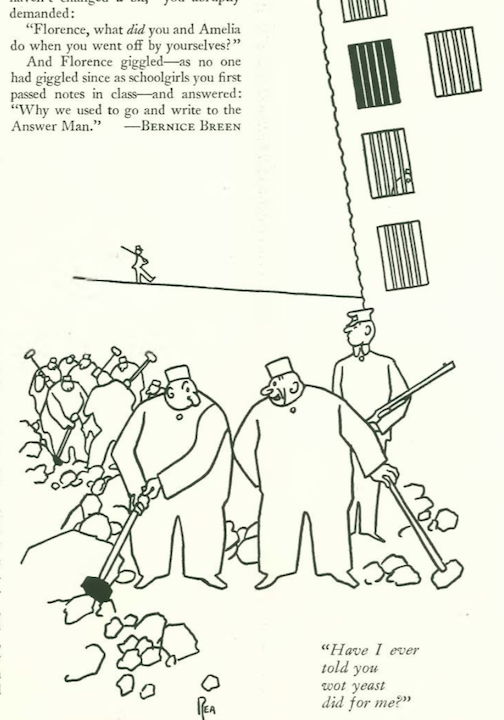
…although Fleischmann likely saved The New Yorker with large infusions of cash, its cartoonists, including Gardner Rea, still took an occasional poke at the company’s health claims…

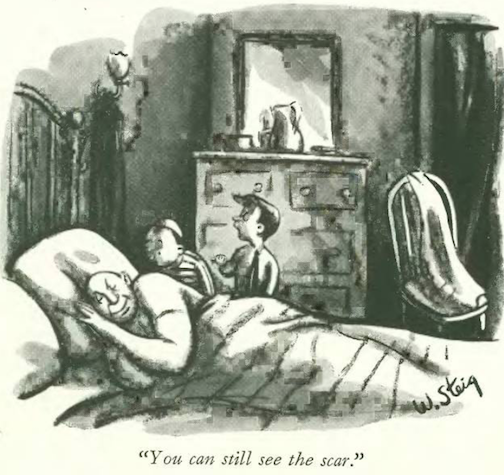
…anticipating his “Small Fry” cartoons, William Steig finds two of them examining the wonders of human physiology…

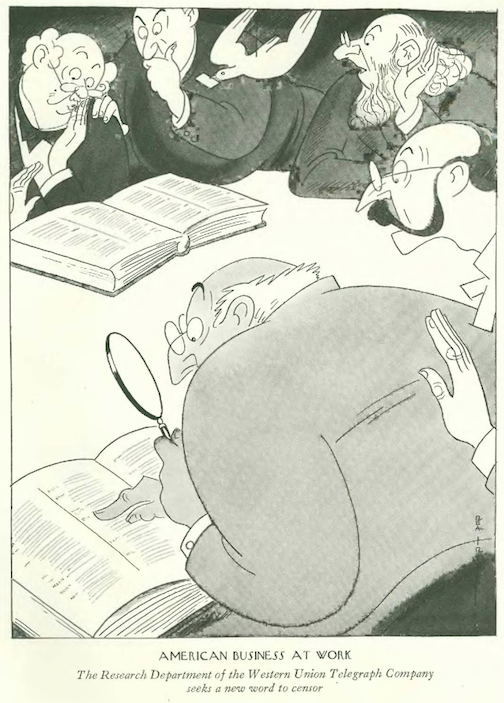
Rea Irvin looked in on some stuffy Western Union censors…

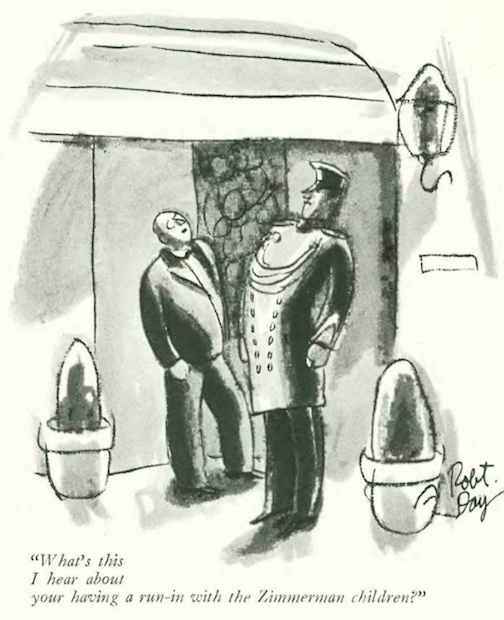
…newcomer Robert Day illustrated the challenges of a doorman (Day would be a longtime contributor)…

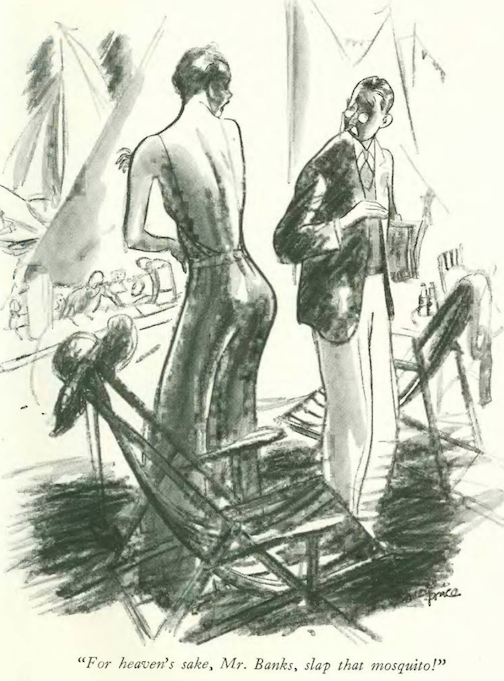
Garrett Price found humor abuzz between the bold and the meek…

Alan Dunn tracked down a clueless hunter…

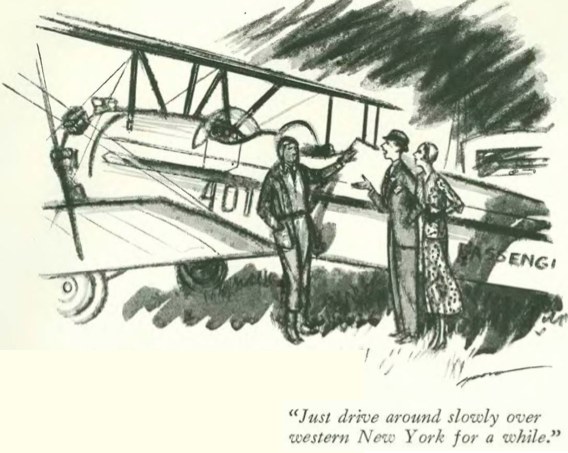
…and we end with Leonard Dove, who takes flight and anticipates our next installment…

Next Time: A Big Bird…