Those Restless Natives

The evolution of filmmaking in the 1920s included the development of “docudramas.” Nanook of the North (1922), which captured the struggles of an Inuit hunter and his family, was received with great acclaim. A few years later Grass (1925), directed by Merian C. Cooper and Ernest B. Schoedsack, followed a tribe in Iran as they guided herds to greener pastures. So when Chang: A Drama of the Wilderness opened at the Rivoli, The New Yorker was there (May 7, 1927) to share in the adventure.

43b9e74a7197a3d27d520d251a303549
May 7, 1927 cover by Ilonka Karasz.

Chang, also directed by Cooper and Schoedsack, told the story of a poor farmer and his family (native, nonprofessional actors) in Issan—now northeastern Thailand—and their constant struggle for survival in the jungle. Cooper and Schoedsack attempted to depict real life but often re-staged events. The danger, however, was real to all involved, as was the slaughter of animals in the film.

chang_poster
(Wikipedia)

According to Ray Young, writing for Viennale, the website for the Vienna International Film Festival (which is screening a retrospective of Chang this fall) Cooper and Schoedsack “open with scenes of domestic bliss and, offsetting title card warnings of the dangers of the jungle, a bucolic Eden ripe for development. But the tone soon shifts as tigers and leopards attack, and the picture evolves into a succession of episodes concerning their survival.”

The perils in Chang often feel rigged, notes Young, “most conspicuously in places where animals appear to have been killed simply for the benefit of the camera. By most accounts, Schoedsack did most of the filming while Cooper covered him with a rifle.”


chang-criticsroundup
I’D BE WARY OF THOSE GUYS TOO…Image from the filming of Chang. (criticsroundup.com)
elephant-stampede-from-chang-1927
JUST PASSING THROUGH…Elephants stampede a village in the film’s finale. (image capture from film)

Chang was nominated for the Academy Award for Unique and Artistic Production at the first Academy Awards in 1929. It was the only year when that award was presented (It lost to F.W. Murnau’s Sunrise: A Song of Two Humans).

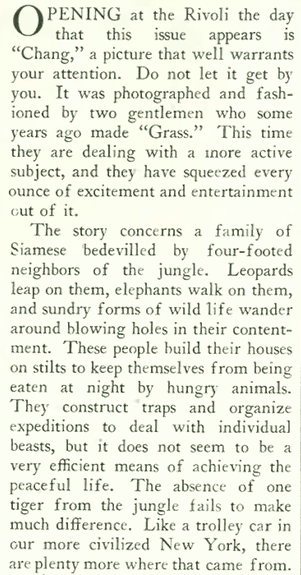
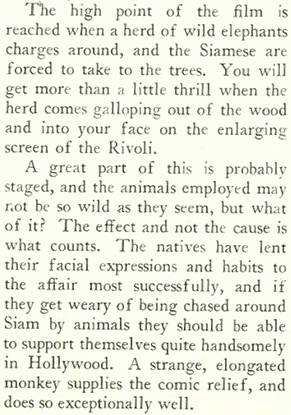
However appalled as we are today by the film’s exploitation of humans and animals alike, those were different times, even for the usually discerning eye of The New Yorker:
chang-1

In 1927 most people had a very limited view of the non-Western world, which was perceived as both savage and exotic, populated by child-like “natives” who in this case “lent their facial expressions and habits to the affair most successfully…”
chang-2And so in 1927 we also encounter cartoons like this one by Alan Dunn that at once dismisses out-of-town conventioneers (here: an Elks Lodge) as a bunch of ignorant racists, yet the early New Yorker’s own depictions of Blacks were usually minstrel-era stereotypes.

screen-shot-2016-09-06-at-1-06-50-pm

 *  *  *

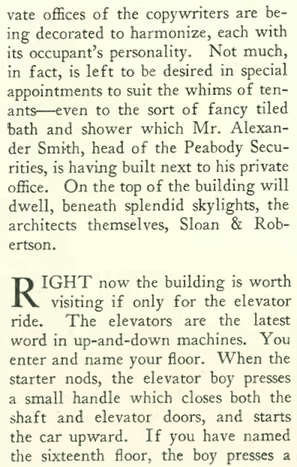
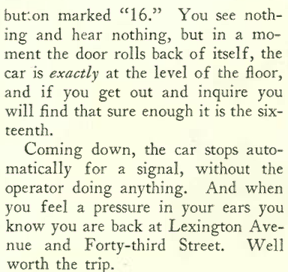
The massive Graybar Building made its debut at 420 Lexington Avenue, the multi-tiered edifice impressing the “Talk of the Town” editors with the latest technology, including push-button elevators: 
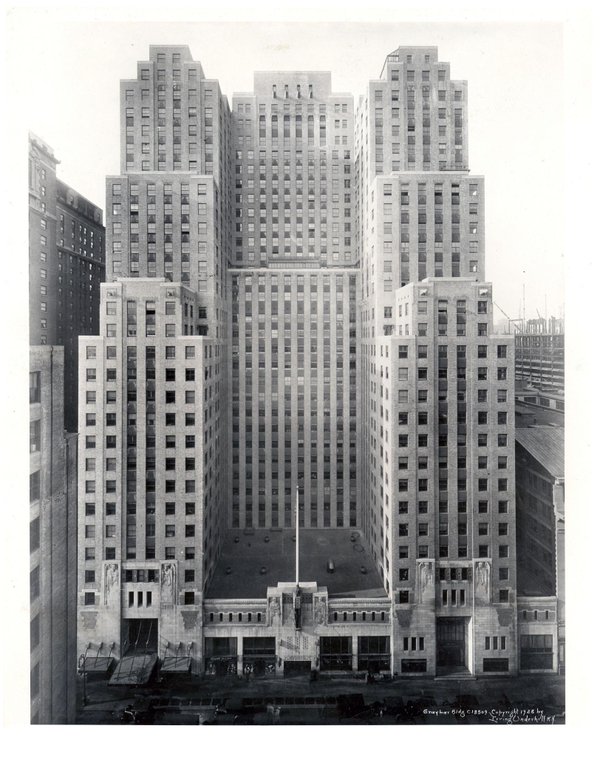
The Graybar Building (history.graybar.com)

screen-shot-2016-09-06-at-1-04-11-pm

screen-shot-2016-09-06-at-1-04-38-pm

screen-shot-2016-09-06-at-1-04-45-pm

graybar-building-2
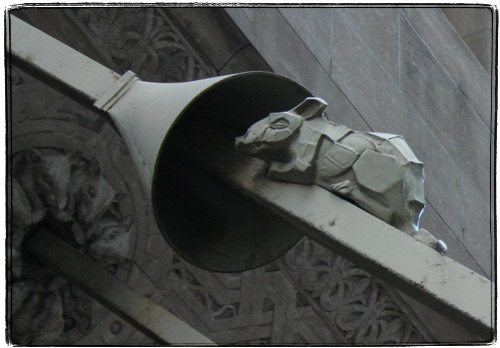
PERMANENT INFESTATION…The Graybar’s rain canopy cables include anti-rat devices (cones) decorated with rats. If you look carefully, the rosettes anchoring the cables are also decorated with rat heads. (deadprogrammer.com)

 *  *  *

The following advertisement needs some explanation: The 1867 Tenement House Act imposed constraints on height and lot coverage that large apartment buildings routinely violated.

According to an article in the Observer by Stephen Jacob Smith (April 30, 2013), “Some developers got out of these requirements by building co-operative buildings, without rental units, but others wanted to retain the revenue and control that came with rentals, while at the same time building larger structures than the tenement laws allowed. And thus was born the ‘apartment hotel.'”

The New York Times’s columnist Christopher Gray wrote (Oct. 4, 1992) that Apartment Hotels were a “widespread fiction of the period,” and “tenants in fact usually set up full kitchens in the serving pantries.” Smith adds that “one of the reasons apartment hotels were allowed to be built more densely than their fully residential counterparts was that there would be no cooking—a fire hazard in those days—in the units.” An so the ad:
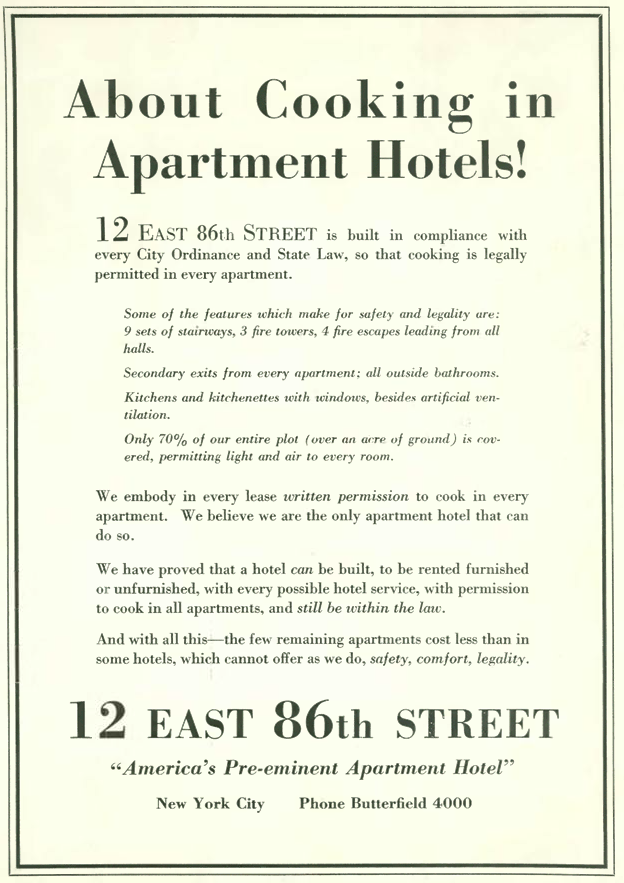
screen-shot-2016-09-06-at-1-08-22-pm

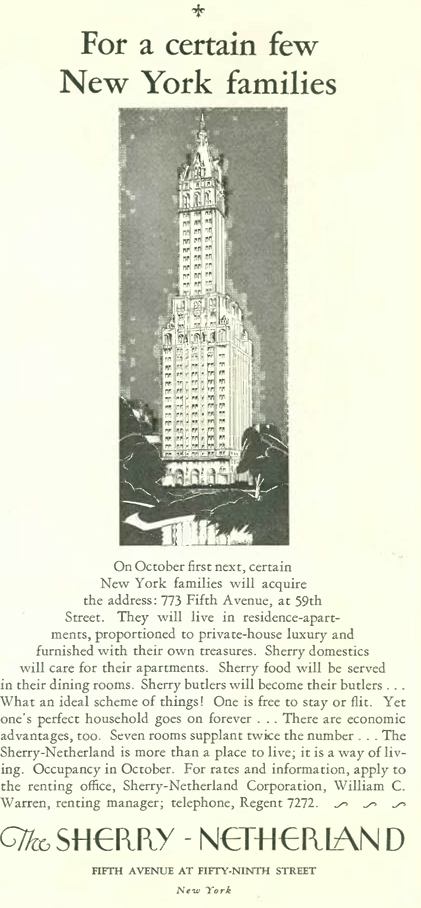
Smith writes that by calling their buildings ‘apartment-hotels,’ builders could claim that as hotels they were outside of the rules of tenement legislation. He notes that “some of Manhattan’s most illustrious buildings were constructed using this legal sleight of hand,” including the Sherry-Netherland on Park Avenue.

The famous scaffolding fire at the Sherry-Netherland, which I featured in my last post, no doubt prompted developers to run the following ad in hopes that people would soon forget about the giant roman candle that burned bright near Central Park on the evening of April 12, 1927.
screen-shot-2016-09-06-at-1-09-30-pm

If you are ever in New York, check out the Sherry Netherland. It is a beautiful building.

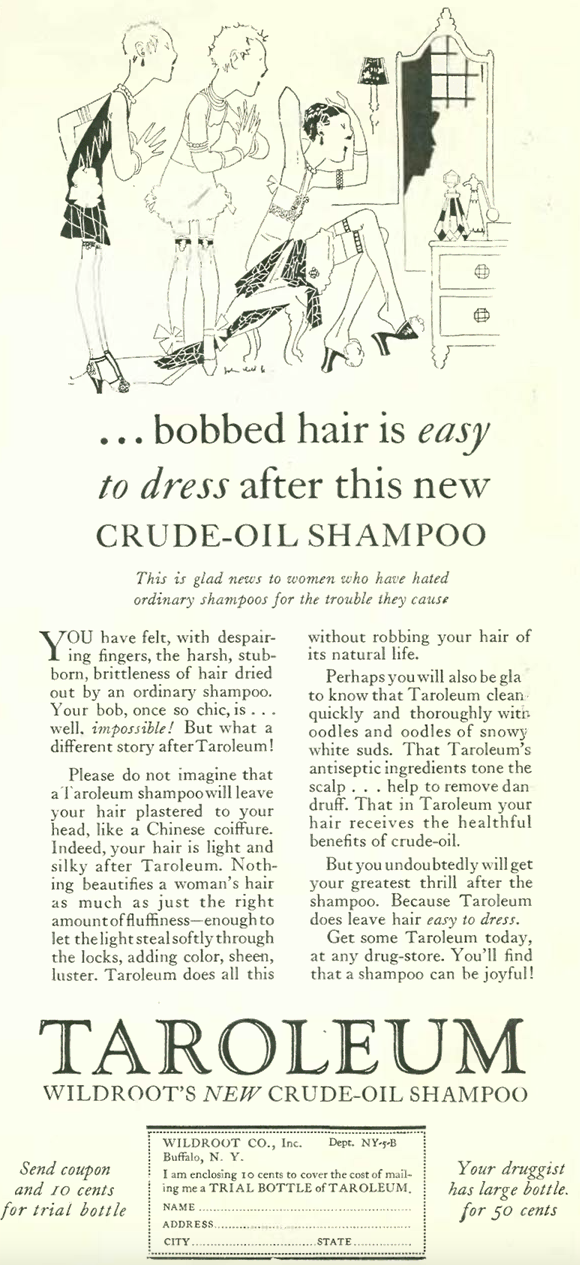
And finally, this ad from the makers of Wildroot hair care products. I love the flapper artwork by John Held Jr., and even better the words “CRUDE-OIL SHAMPOO” displayed prominently as a selling point.
screen-shot-2016-09-06-at-1-12-51-pm

Next Time: Mode de Vie…
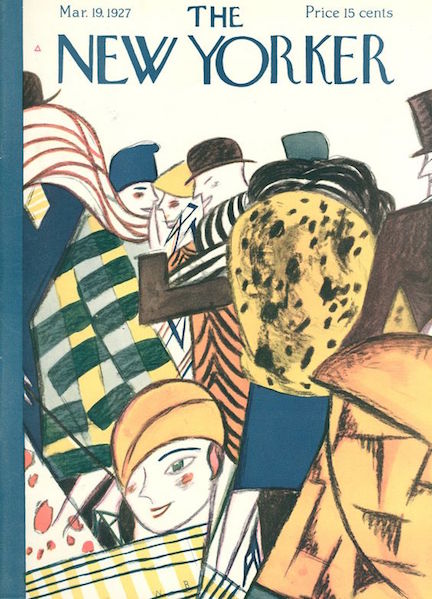
304b9308de906b0c02f50b14add69c6d

World of Tomorrow

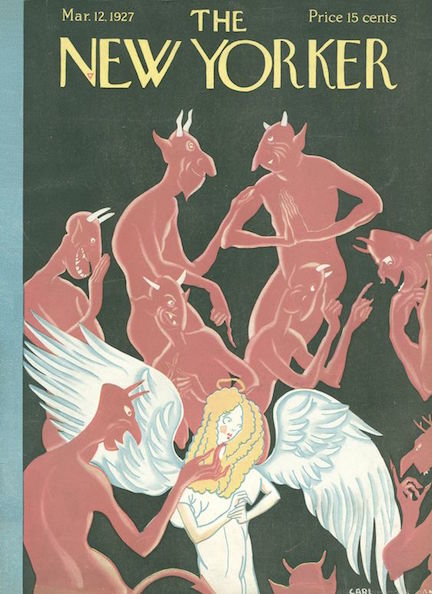
The much-anticipated German expressionist film, Metropolis, opened at Manhattan’s Rialto Theatre. Although considered today to be a classic of the silent era, the March 12, 1927 New Yorker found Fritz Lang’s film to be overlong and preachy despite its fantastic setting and complex special effects.

2ab7711b486573bd3d0e3be1880afe36
March 12, 1927 cover by Carl Rose.

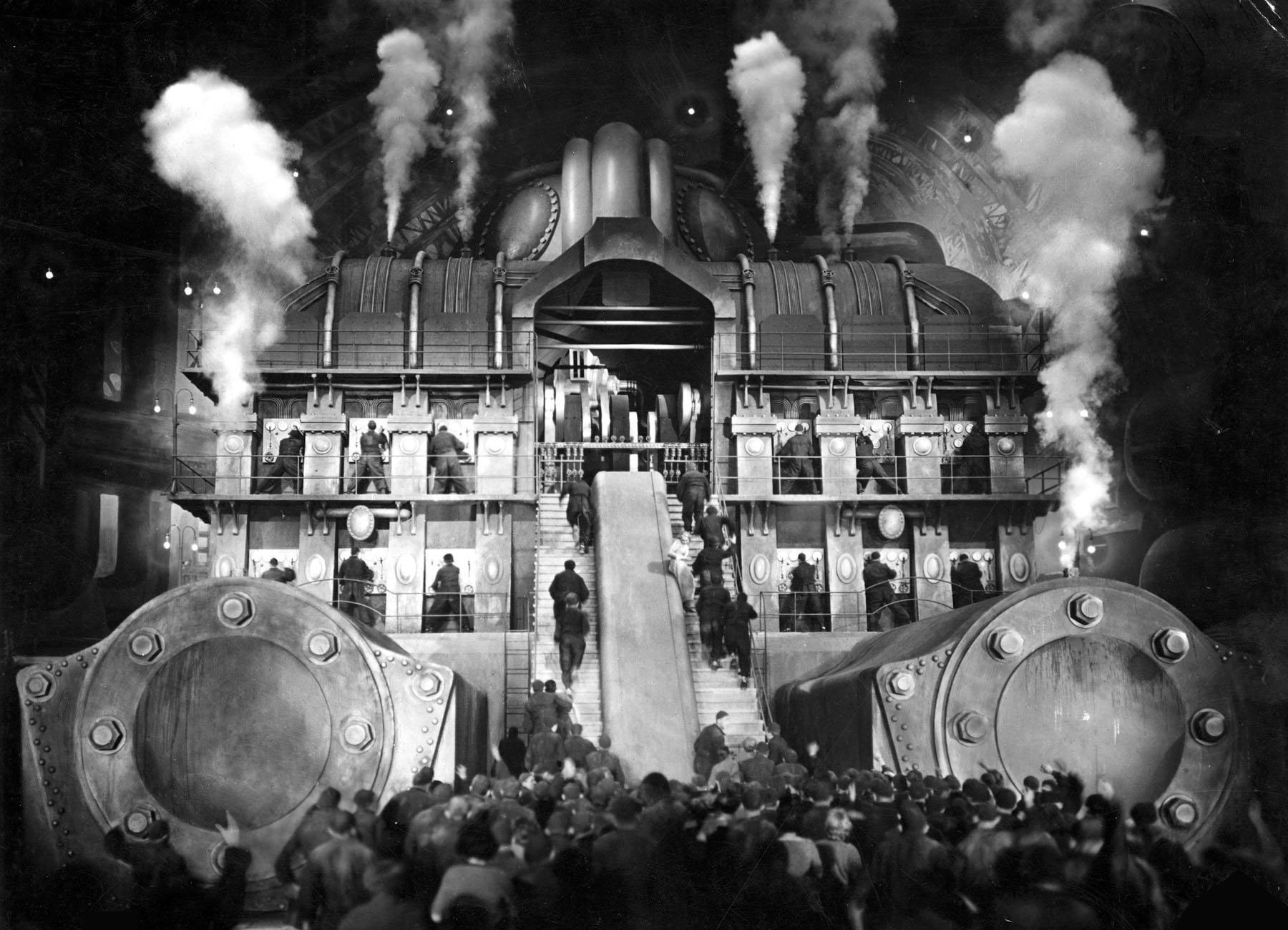
Set in a futuristic dystopia in which the wealthy ruling classes lived high above the toiling masses, the film followed the attempts of a wealthy son of the city’s ruler and a poor working woman named Mary to overcome the city’s gaping class divisions.

b6d411dd22f66f0a43e8f2dbf076f470
The city of tomorrow as portrayed in the opening scenes of Fritz Lang’s Metropolis. The New Yorker encouraged readers to see the film mostly for the special effects, but lamented its “Teutonic heaviness” and uninspired acting. (archhistdaily)

An excerpt from the New Yorker review:

Screen Shot 2016-08-04 at 9.20.57 AM

metro_41
The working masses toil in the dank world beneath the city in Metropolis. (myfilmviews.com)
Screen Shot 2016-08-05 at 12.20.33 PM
Brigette Helm’s duo portrayal of the noble Mary and her robotic double (here being created through cinematic magic) in Metropolis was praised by The New Yorker, which otherwise found the film’s acting subpar. (cinemagraphe.com)

Considered one of the most expensive movies of its time, Metropolis cost $5 million to film in 1925 (roughly about $70 million today).

*  *  *

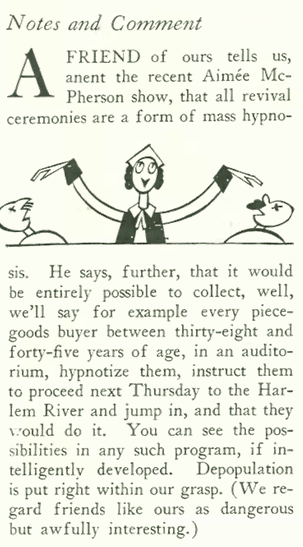
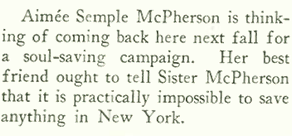
The famous 1920s evangelist Aimee Semple McPherson had been holding a series of revival meetings in New York, which were often (and derisively) noted by the New Yorker editors. In the previous issue “Talk of the Town” observed:

Screen Shot 2016-07-26 at 8.55.01 AM

And in the March 12 issue they offered this parting note in “Of All Things”….

Screen Shot 2016-08-04 at 8.56.43 AM

Aimee Semple McPherson (left) leading a service at her Angelus Temple in Los Angeles in the 1920s. (Los Angeles Public Library Photo Collection)

A pioneer in the use of modern media, McPherson was in New York on a “vindication tour,” taking advantage of the publicity from her alleged kidnapping  a year earlier that led to investigations that she had staged her disappearance to bolster her flagging ministry.

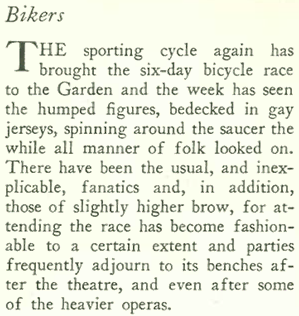
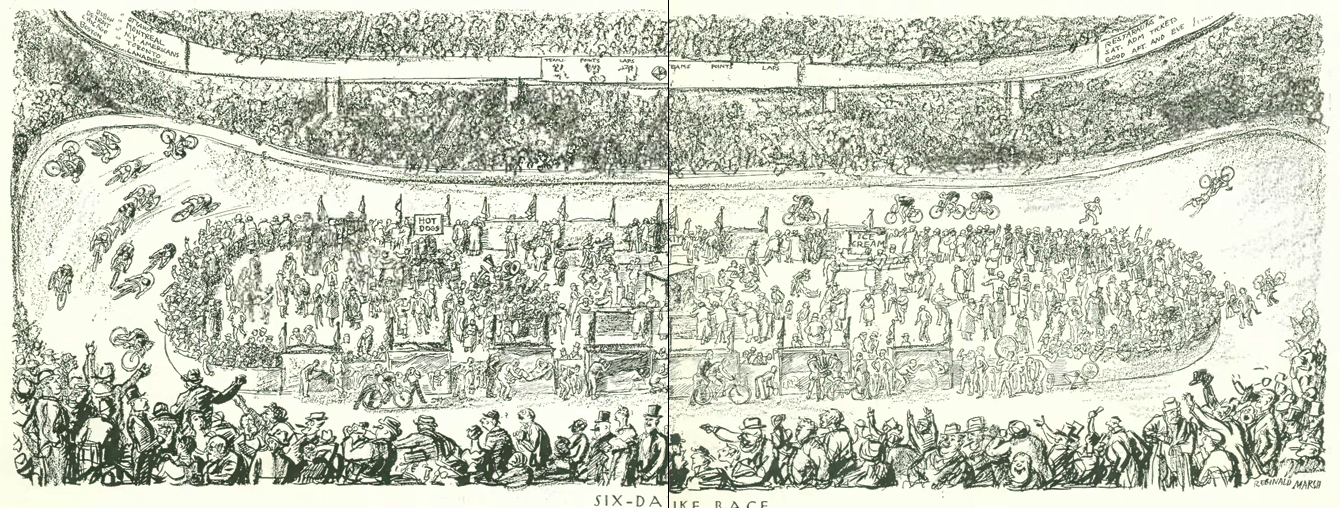
In other diversions, bicycle racing had come to Madison Square Garden, as noted in “Talk of the Town” with an illustration by Reginald Marsh:

Screen Shot 2016-08-04 at 8.56.01 AM

Screen Shot 2016-08-04 at 8.56.11 AM
click to enlarge

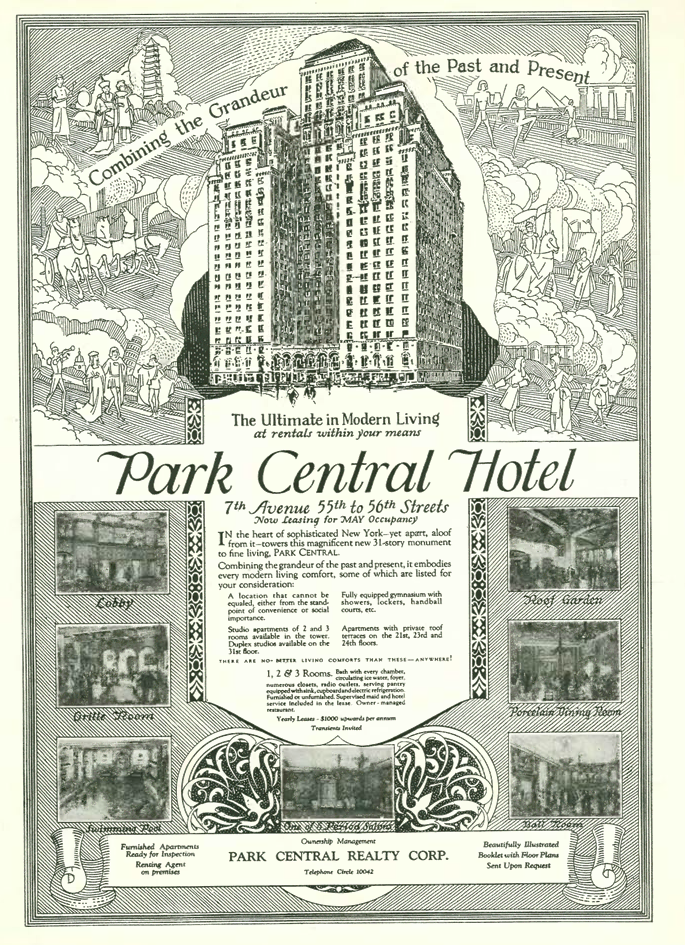
Advertisements in this issue included this announcement for the opening of the Park Central Hotel, still a grand landmark on 7th Avenue…
Screen Shot 2016-08-04 at 8.58.15 AM

…and this ad from Nestle touting the latest method for achieving success in the latest hair style…
Screen Shot 2016-08-04 at 8.53.24 AM

Next Time: Nothing Like the Roxy…

ef3893e952639f635327190b41ee6ea3

Spring Fever

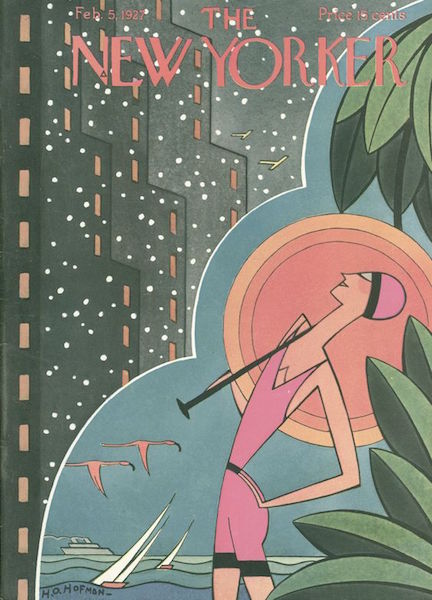
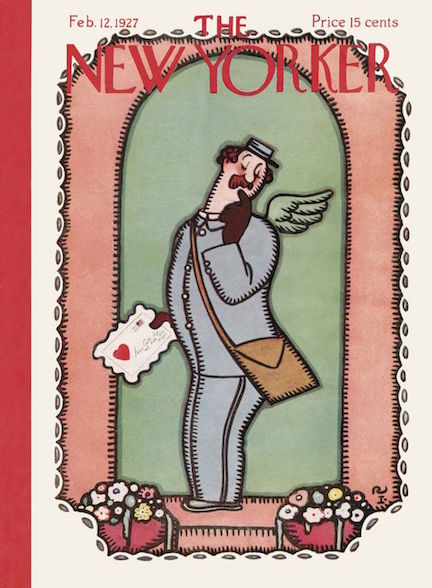
Piles of snow and slushy streets had many New Yorkers dreaming of spring, including H.O. Hofman, who illustrated the cover for the Feb. 5, 1927 issue.

e4051b8c99ab27eb2272f12bb1634373
Feb. 5, 1927 cover by H.O. Hofman.

Another New Yorker illustrator and cartoonist, Barbara Shermund, offered a different take on the idea in this drawing for the “On and Off the Avenue” column on page 56:

Screen Shot 2016-06-29 at 9.44.41 AM

At least New Yorkers had plenty of activities to take their minds off of the weather, including two important balls:

Screen Shot 2016-06-29 at 8.38.15 AM

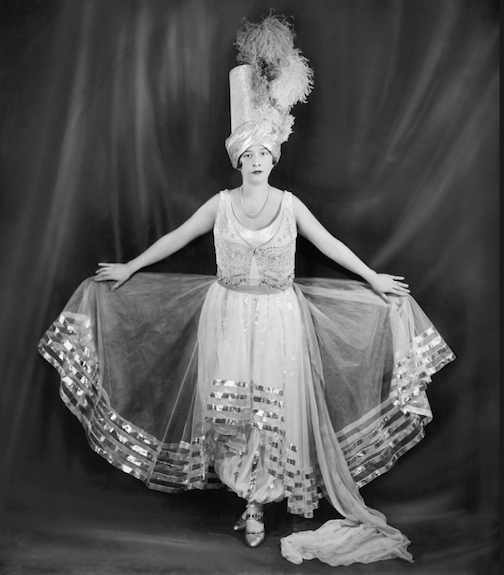
Inspired by the annual springtime costume ball given by the students of the École nationale supérieure des Beaux-Arts in Paris, American students held an annual ball to raise funds for their Beaux-Arts Institute of Design. The balls featured elaborate costumes and performances that were extensively reported in the city’s society pages.

Beuax arts 1928 NYT
LOOK AT ME…Margaret Thaw dressed as a “White Sultana” for the 1928 Beaux Arts Ball held at the Astor Hotel. The theme was “The French Occupation of Northern Africa — 1847.” A doyenne of international high society perennially named to best-dressed lists, Margaret and her husband, Lawrence Copley Thaw, were world-famous explorers of Africa and Asia and correspondents for National Geographic magazine. (New York Times)

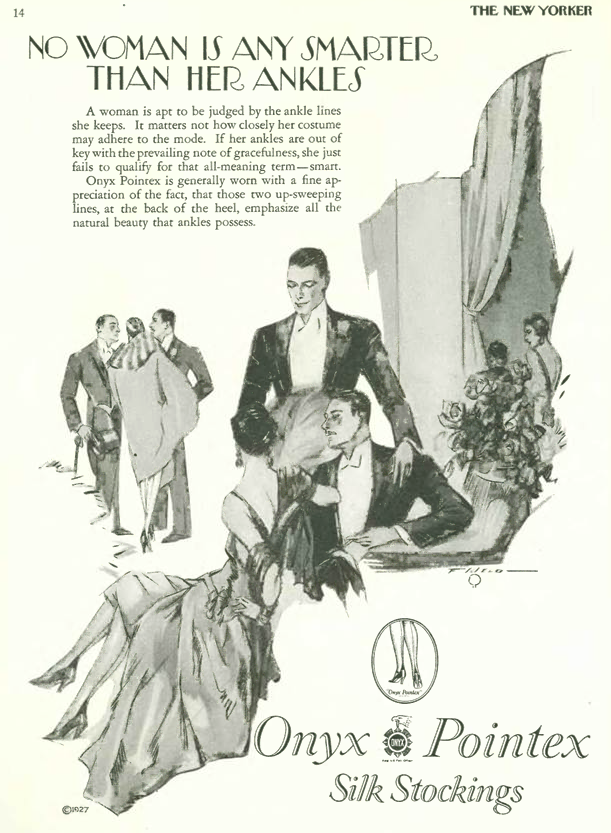
Contrary to the ad pictured below, fashion plate Margaret Thaw was doubtless smarter than her ankles…

Screen Shot 2016-06-29 at 8.36.57 AM

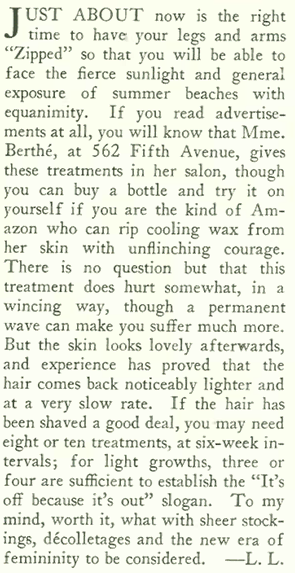
If you were investing in fine Onyx Pointex silk stockings, you probably wanted to get your legs “Zipped” in a new method described by fashion correspondent Lois Long:

Screen Shot 2016-06-29 at 9.46.13 AM

If Lois Long were around today she would have to note that both men and women are getting “Zipped,” waxing everything including their nethers.

And these days few of us are washing our hair with bar soap, as depicted in the ad below for Lux. Like so many other ads in the early New Yorker, this one makes a strong appeal to Francophile readers; if it’s French then it must be good (note that every paragraph and headline in the ad mentions either France or French at least once):

Screen Shot 2016-06-29 at 9.41.22 AM

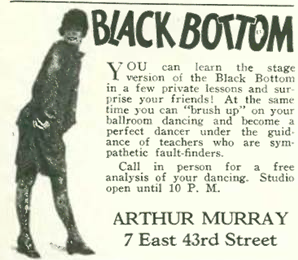
While we are on the topic of advertisements, here is another installment of ads from the back pages of the magazine. Arthur Murray was a frequent advertiser in the magazine, mostly small ads like this that exploited the latest dance craze:

Screen Shot 2016-06-29 at 9.51.23 AM

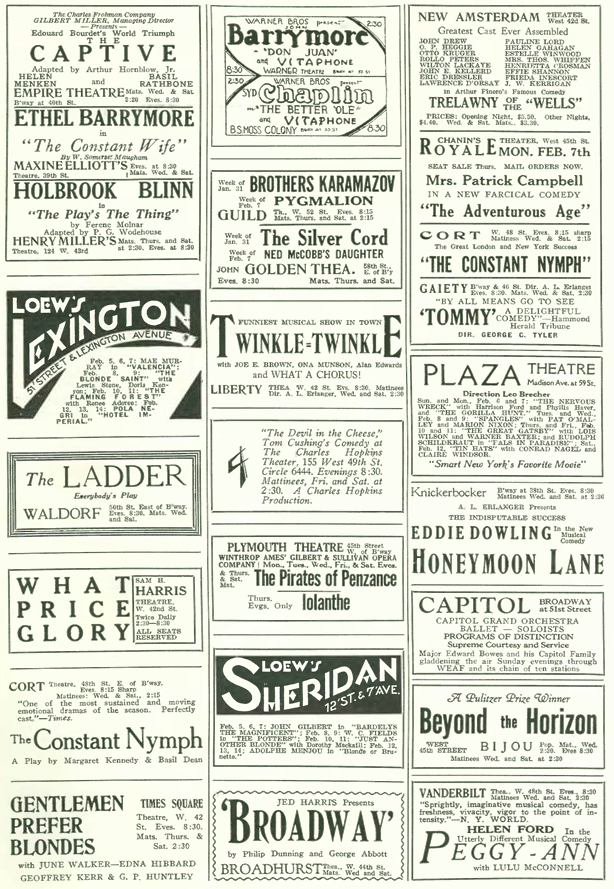
The offerings of the stage and screen were also prominent in the back pages:

Screen Shot 2016-06-29 at 9.48.59 AM

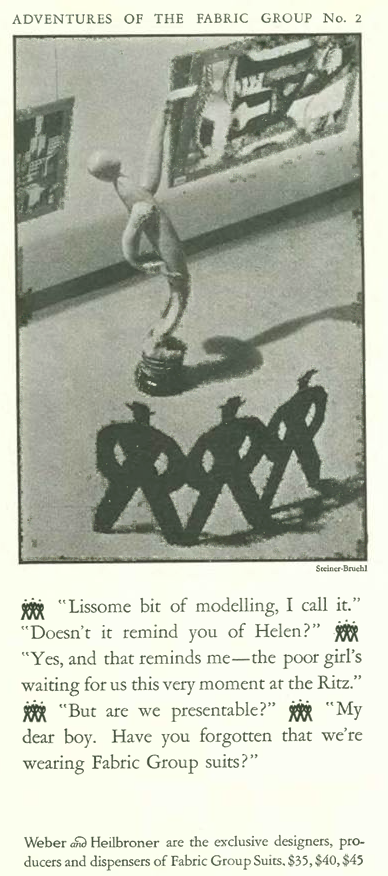
And finally, these strange little ads (run as series) that were designed by photographers Anton Bruehl and Ralph Steiner to promote Weber and Heilbroner suits:

Screen Shot 2016-06-29 at 9.43.00 AM

Specializing in elaborately designed and lit tableaux, Bruehl won top advertising awards throughout the late 1920s and early 1930s. He also co-developed the Bruehl-Bourges color process, which gave publisher Condé Nast a monopoly on color magazine reproduction in the early 1930s.

Next Time: Papa Pens a Parody…

7532b3c65dcb4c041db31d7c0c75b4c4

Upstairs, Downstairs

As the New Yorker was a magazine of the city’s new money smart set, it poked fun at their faddish tastes and patronizing attitudes while at the same time feeding their Anglophilia and WASPish sense of superiority.

015737c92d9c339b44b3805c311dd478
January 22, 1927 cover by Andre De Schaub.

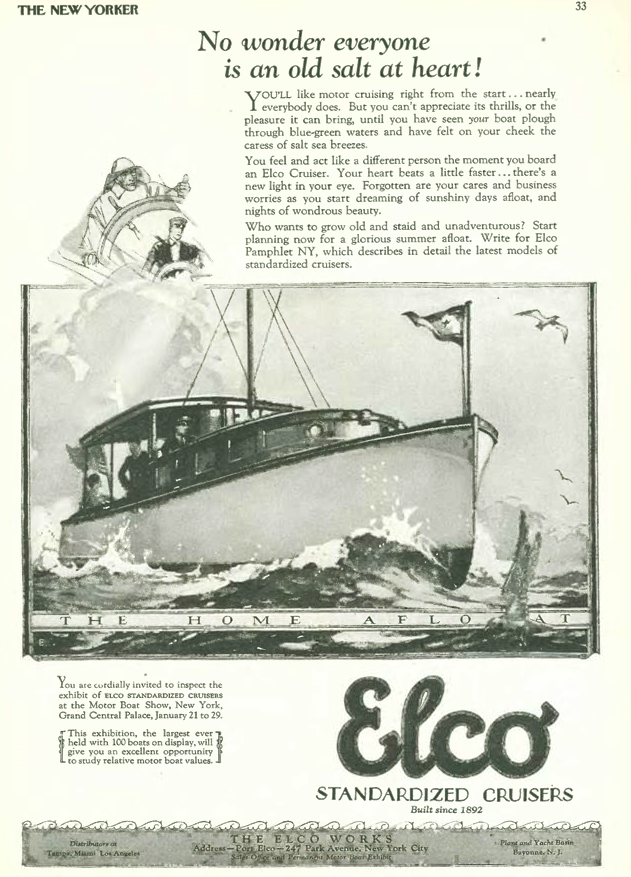
The magazine’s pages were filled with ads for English-style clothes, French perfumes and expensive cars. And in the Jan. 22 issue there were many ads for the motorboats that had displaced the automobile show at Grand Central Palace:

Screen Shot 2016-06-14 at 9.25.59 AM

It is important to note that this ad is an appeal to new money; old money would have found this motorized vessel quite vulgar.

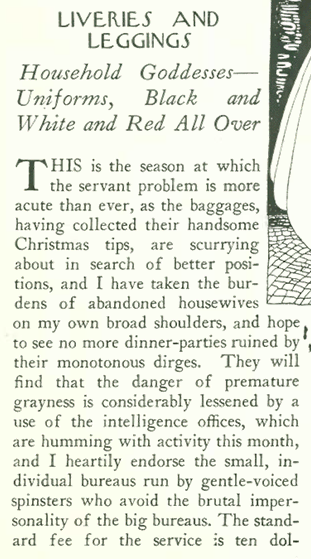
As it were, the new money needed some guidance if they hoped to live a lifestyle of ease and sophistication. And thus the issue’s “On and Off the Avenue” column, guest-written by Gretta Palmer (Lois Long took the week off), offered advice on how to hire and clothe the help:

Screen Shot 2016-06-14 at 9.27.59 AMScreen Shot 2016-06-14 at 9.28.35 AM

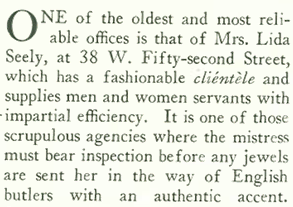
Perhaps you wanted a proper English butler. Lida Seely had your man:

Screen Shot 2016-06-14 at 9.28.53 AM

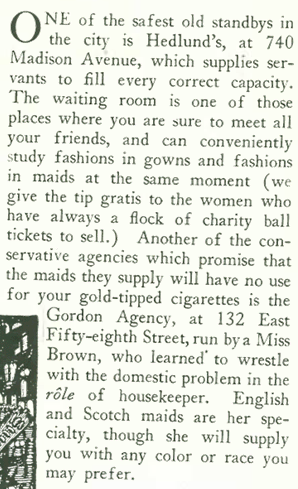
Or a Scotch maid, or choose from a selection of “any color or race”…

Screen Shot 2016-06-14 at 9.30.18 AM

In case you found that last sentence a bit callous, Gretta reassured:

Screen Shot 2016-06-14 at 9.30.55 AM

Screen Shot 2016-06-14 at 9.31.27 AM

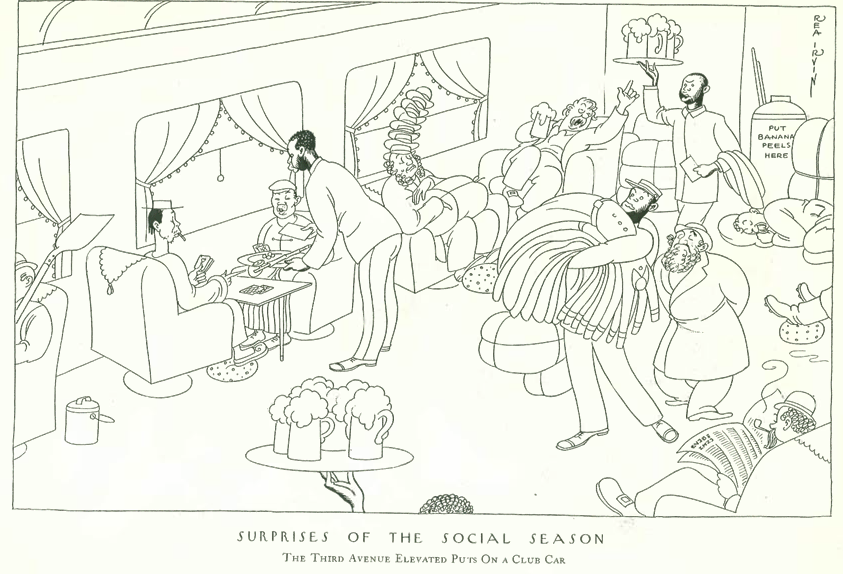
The issue also featured a cartoon by Rea Irvin (displayed full-page, sideways in the original magazine) depicting the “lower orders” aping the lifestyle of the upper classes. Note that of all the racial and ethnic types shown here, only Blacks remain in the servant class.

Screen Shot 2016-06-14 at 9.18.03 AM

As I noted in a previous post, “Race Matters,” the New Yorker of the 1920s was decidedly mainstream in engaging in casual bigotry common in those days, including treating blacks as racial “others.” There is, perhaps, a subtle jab here by Irvin at the pretensions of the uppers, but he’s not around anymore to clarify this.

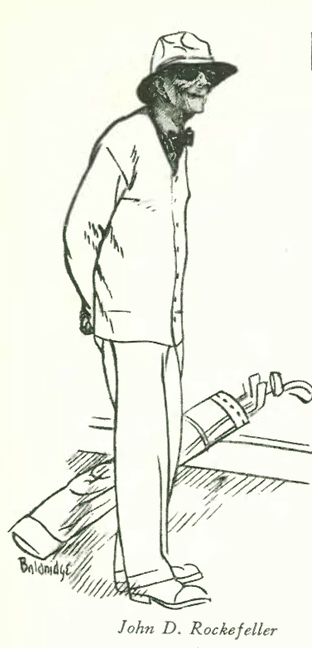
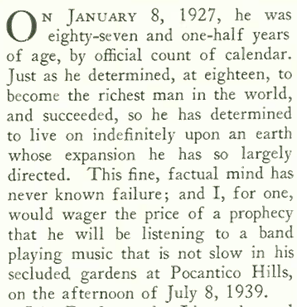
The issue also featured the first of a series of articles (“Profiles”) on the 87-year-old John D. Rockefeller. A brief excerpt, with illustration by Cyrus Baldridge:

Screen Shot 2016-06-14 at 9.19.18 AM

Rockefeller

The writer’s prediction wasn’t too far off: Rockefeller would live another ten years, and die at age 97 in 1937. His grandson, David Rockefeller, apparently inherited both his money and his genes: he recently celebrated his 101st birthday (update: David Rockefeller died in 2017 at age 101).

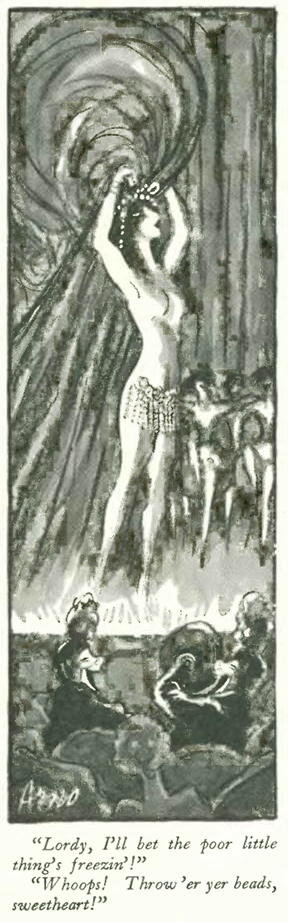
Finally, a cartoon by Peter Arno, famed for his drawings of women, usually scantily clad. Here we see an early example in one of his “Whoops Sisters” panels:

Screen Shot 2016-06-14 at 9.22.05 AM

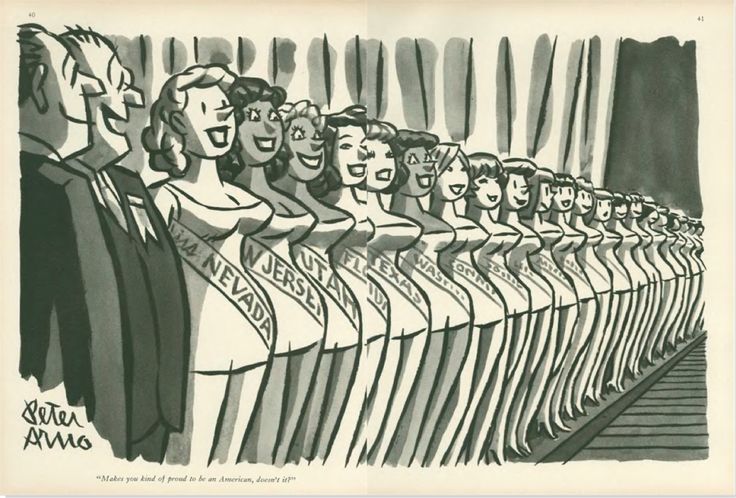
By comparison, here is a cartoon by Arno 33 years later, from the September 10, 1960 issue of the New Yorker:

869a0a6de1edde2e7479b79d285bd73a
Caption: “Makes you kind of proud to be an American, doesn’t it?”

Next Time: All That Jazz…

b8a47deb10bba89d024899c9500bba81

Holiday Shopping

Photo above via themindcircle.com

With Christmas fast approaching, The New Yorker was getting into the spirit of holidays, especially with all of the advertising revenue it gained from merchants who targeted its well-heeled readership.

8912823cfdc5626785b13a431ae590de
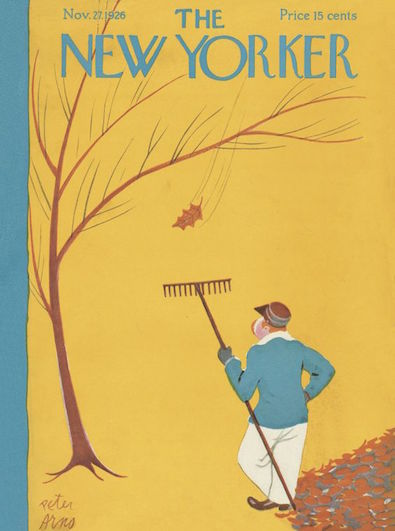
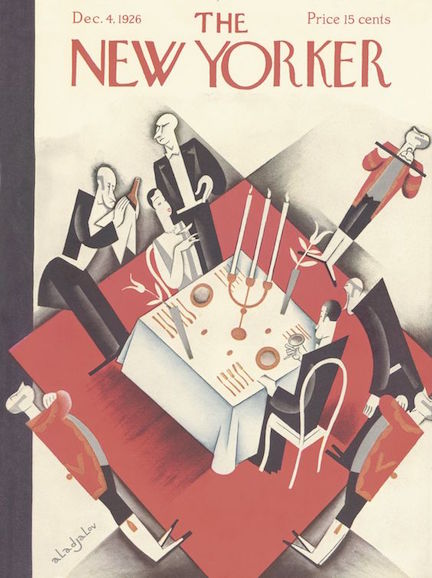
November 27, 1926—Peter Arno’s first cover for the New Yorker. He would do 98 more.

Lois Long continued to write both of her weekly columns for the magazine–her observations on fashion along with ideas for Christmas shoppers in “On and Off the Avenue” (“Saks’ toy department has some of the loveliest French notepaper for tiny children…”) and her musings on nightlife in “Tables for Two.”

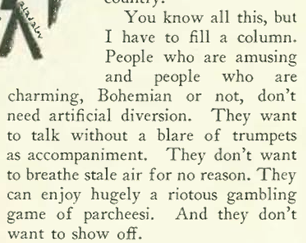
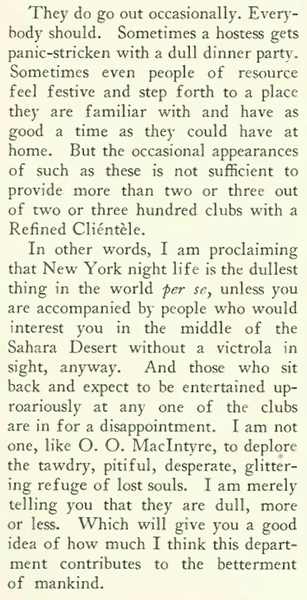
In contrast to her rather light mood expressed in the fashion column, Long was feeling far from jolly in her “Tables” observations of New York’s nightlife:

Screen Shot 2016-04-25 at 5.01.46 PM

Screen Shot 2016-04-25 at 5.02.43 PM

As you might recall, in a previous column Long tossed a “ho-hum” in the direction of the famed Cotton Club. Perhaps Prohibition was taking its toll on the hard-partying columnist.

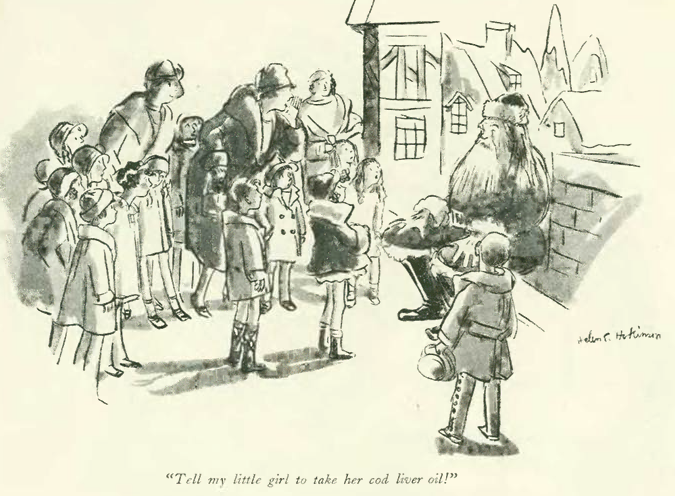
Nevertheless, the holiday spirit was upon with The New Yorker, in the cartoons (this one by Helen Hokinson)…

Screen Shot 2016-04-25 at 4.54.16 PM

…and in various advertisements.

Screen Shot 2016-04-25 at 4.50.49 PM

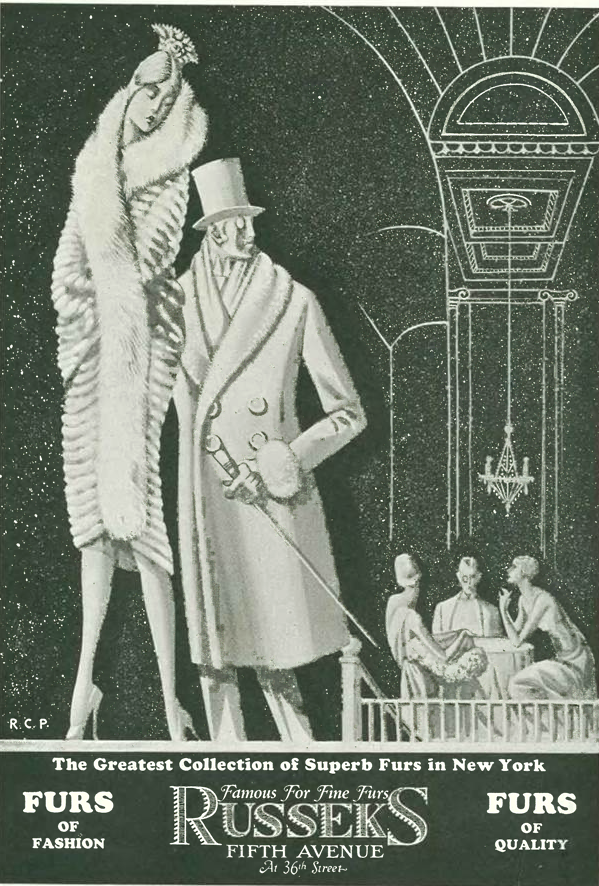
Note this advertisement (below) from Russeks. The comics in The New Yorker famously poked fun at the comic pairings of rich old men and their young mistresses, but this ad seemed to glorify such a pairing while suggesting that an older man of means must invest in fine furs if he is going to hang on to his trophy wife or mistress, in this case a young woman who appears to be nearly eight feet tall…

Screen Shot 2016-04-25 at 4.51.10 PM

I liked this ad from Nat Lewis for the simple line drawing…
Screen Shot 2016-04-25 at 4.57.27 PM

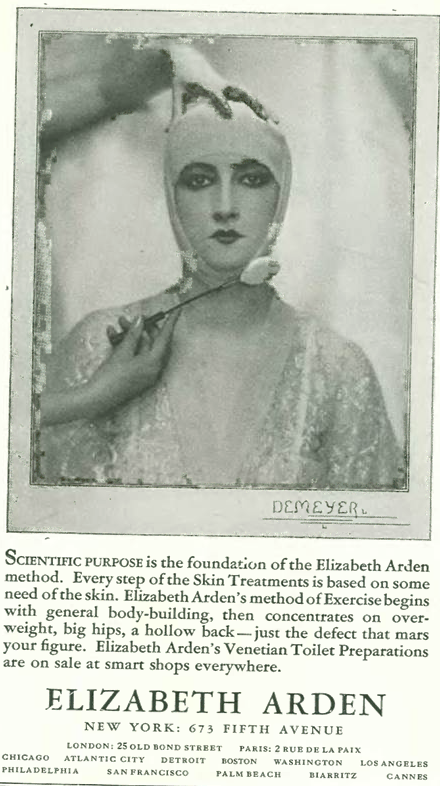
…but the ads for Elizabeth Arden, which for years featured this “Vienna Youth Mask” image, always creep me out.

Screen Shot 2016-04-25 at 4.56.41 PM

The mask was made of papier-mâché lined with tinfoil. Although not pictured in the ad, it was also fitted to the client’s face. The Vienna Youth Mask used diathermy to warm up the facial tissues and stimulate blood circulation.

1937-arden-vienna
SLEEP TIGHT…The full “Youth Mask” applied to an Elizabeth Arden client in the mid 1930s. (cosmeticsandskin.com)

In a 1930 advertisement, Elizabeth Arden claimed that “The Vienna Youth Mask stimulates the circulation, producing health as Nature herself does, through a constantly renewed blood supply. The amazing value of this treatment lies in the depth to which it penetrates, causing the blood to flow in a rich purifying stream to underlying tissues and muscles…charging them with new youth and vigor. It stirs the circulation as no external friction or massage can possible do.”

I don’t believe this claim was backed up by medical research, but as we all know, Elizabeth Arden made a bundle from these treatments and the various creams and potions that came with it.

Next Time: Race Matters…

e0fa6079facd04a1d0611e2da7cd2519

Fun With Harold

The Nov. 6, 1926 issue of The New Yorker was actually two issues, one for the newsstands and subscribers and the other a rare parody issue privately published and presented to founding editor Harold Ross on his 34th birthday.

Screen Shot 2016-04-01 at 3.03.49 PM
The cover of the “official” issue (left) for November 6, 1926, was illustrated by William Troy, the parody issue by Rea Irvin.

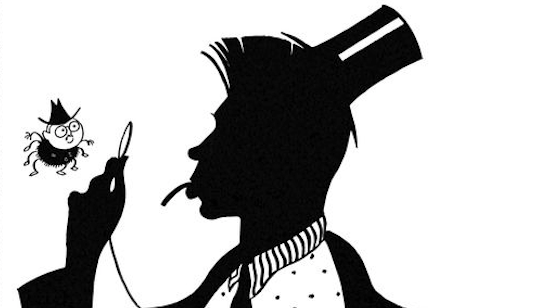
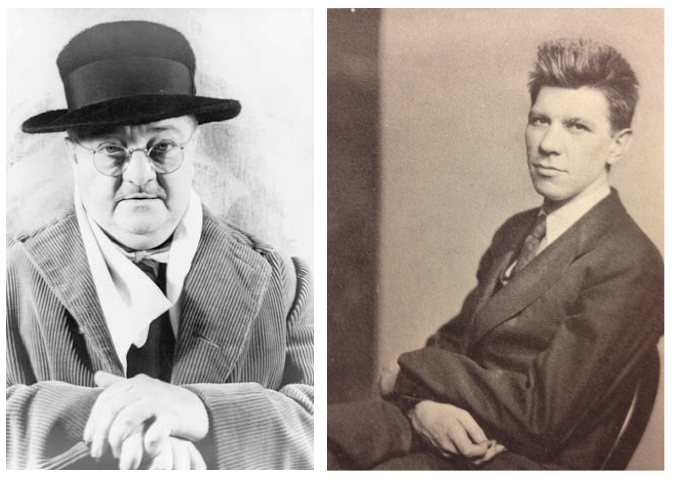
The parody issue’s cover featured a silhouette of Ross (drawn by Rea Irvin, as “Penaninsky”) in the pose of dandy Eustace Tilley, looking at spider bearing a strong resemblance to Alexander Woollcott, critic and commentator for The New Yorker who first met Ross overseas when the two worked on the fledgling Stars and Stripes newspaper.

Screen Shot 2016-04-07 at 3.16.19 PM
OLD PALS…Alexander Woollcott and Harold Ross (Britannica; Jane Grant Collection, University of Oregon)

Ralph Barton’s contribution to the parody issue…

Screen Shot 2016-04-07 at 2.44.38 PM
(From About Town: The New Yorker and the World It Made, By Ben Yagoda)

…and an unsigned contribution that took a poke at Ross’s efforts to create efficient procedures at the magazine’s office:

Screen Shot 2016-04-07 at 3.32.46 PM
Excerpt from Defining New Yorker Humor, by Judith Yaross Lee

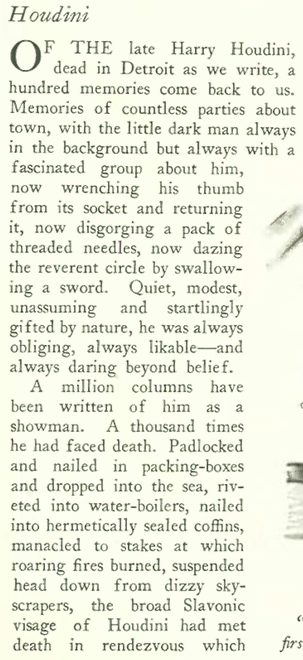
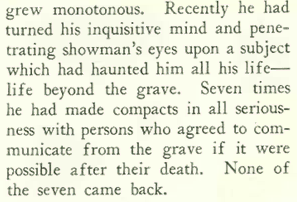
In the other Nov. 6 issue, “The Talk of the Town” editors commented on the death of the famed magician Harry Houdini:

Screen Shot 2016-04-07 at 3.43.59 PM

Screen Shot 2016-04-07 at 3.44.26 PM

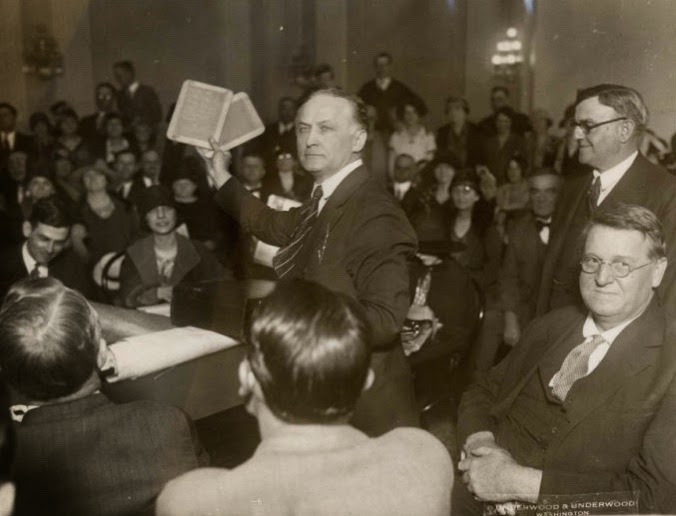
ONE OF HIS FINAL ACTS…Harry Houdini appearing before a Senate committee to expose fake spiritualists in February 1926. (wildabouthoudini.com)

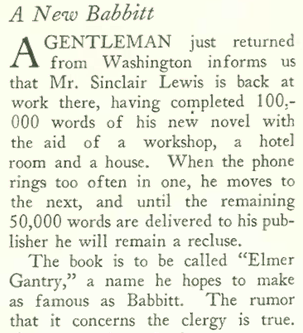
“Talk” also noted a new book called Elmer Gantry was being penned by Sinclair Lewis:

Screen Shot 2016-04-07 at 3.45.20 PM

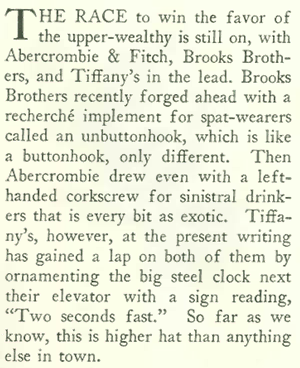
The book was a biting satire of the hypocrisy of fanatical preachers during the 1920s. It created a public furor when it was published in 1927. Another “Talk” item mocked the taste of wealthy New Yorkers for the latest exotic gadgets…

Screen Shot 2016-04-07 at 3.40.08 PM

…but the same issue was also filled with the usual advertisements appealing to those very same desires of the Smart Set. Here’s a couple of gems, so to speak…

Screen Shot 2016-04-07 at 3.37.43 PM

Screen Shot 2016-04-07 at 3.38.34 PM

Next Time: The Cotton Club & Other Distractions…

8a3e8956e7cf51e58975801865fdce55

After a Fashion

Screen Shot 2015-12-18 at 12.12.38 PM
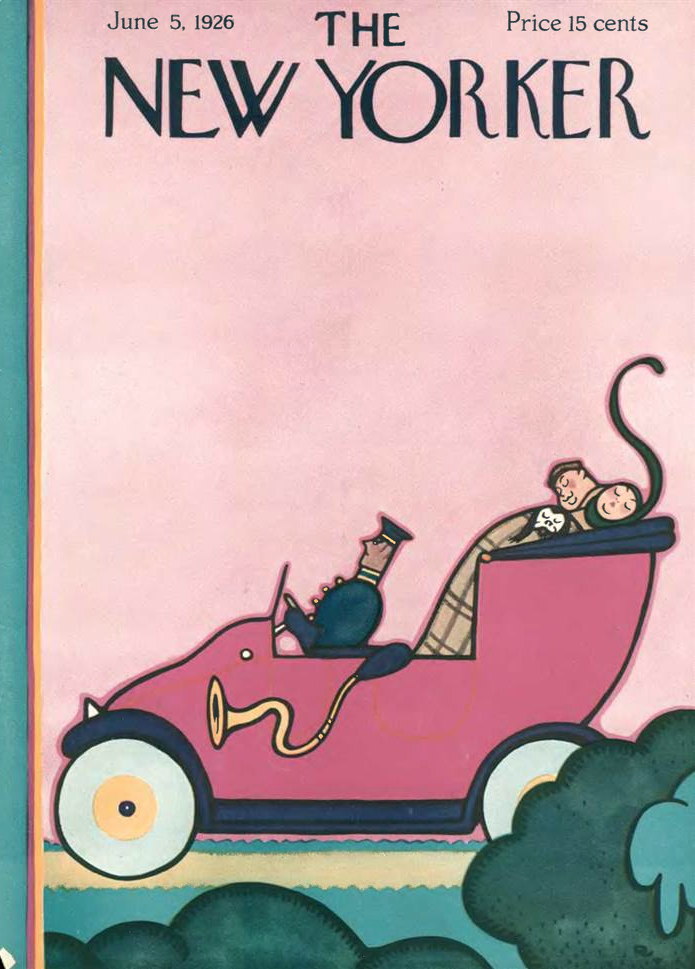
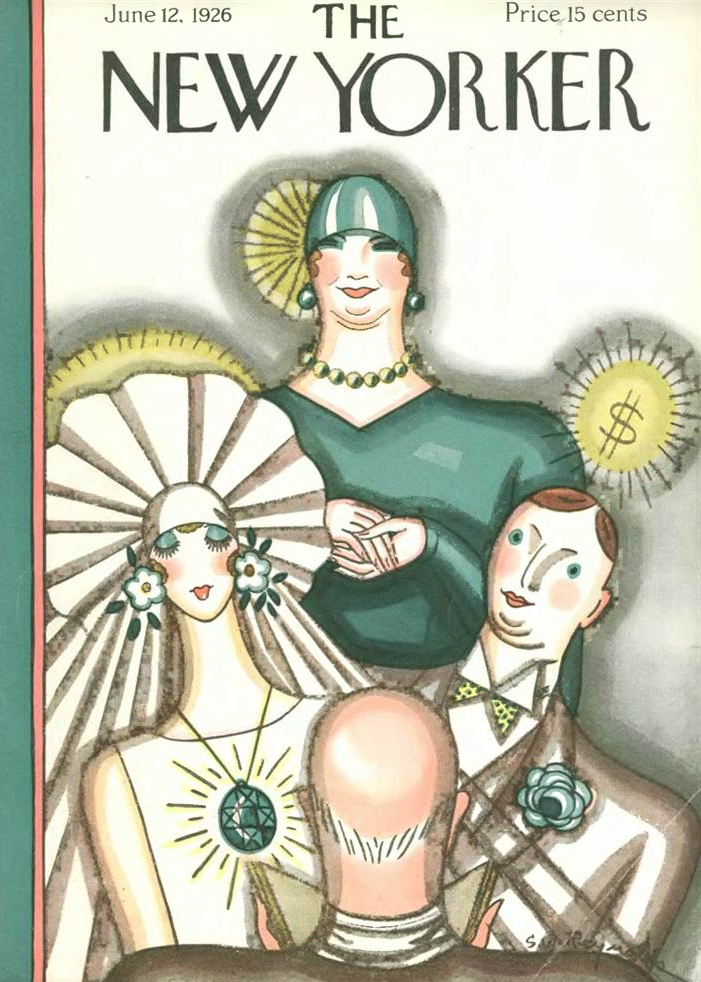
June 5, 1926 cover by Rea Irvin.

Fashion advertising in the early New Yorker can tell you a lot about the mood of the city’s smart set. As I’ve observed before, the magazine’s advertisements were rife with Anglo- and Francophile messaging, but they also reveal much about our changing times. A good example is the upscale retailer Abercrombie & Fitch, which these days uses the tagline “Authentic American clothing since 1892.”

In its early days, A&F was known as an elite outfitter of sporting and excursion goods, supplying aspiring country squires with expensive shotguns, fishing rods and the clothing and kit necessary for successful and stylish expeditions beyond the drawing room:

Screen Shot 2015-12-18 at 1.05.54 PM
“Sporting goods” meant something a bit different in 1926.

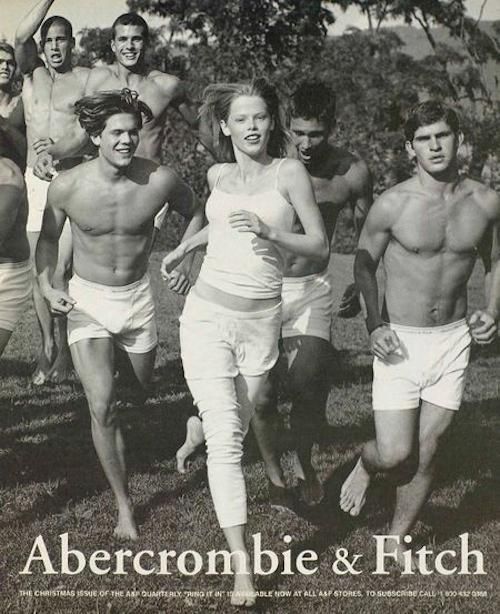
The company went bankrupt in 1976 and operated through mail order until 1988, when the The Limited clothing chain bought the name and operation and turned the focus to the young adult market:

2b1c597b0a5b09ca7477ead9ec5e2e64
Cover for A&F Fall/Winter 1998, photo by Bruce Weber. (Image Amplified)

Over the past couple of decades there’s been a lot of criticism regarding the abundance of A&L ads featuring shirtless, white men and the corresponding dearth of minority models. The newer ads feature a lot less skin and a sprinkling of minorities, but the product line is still a far cry from the one offered in 1926. Except for the elitist part.

As for other purveyors of fine fashion in the pages of The New Yorker, B. Altman made this stylish pitch for its line of bathing suits:

Screen Shot 2015-12-18 at 4.40.10 PM

And here’s an advertisement for Croydon Cravats, featuring the ubiquitous Father’s Day necktie:

Screen Shot 2015-12-18 at 4.48.08 PM

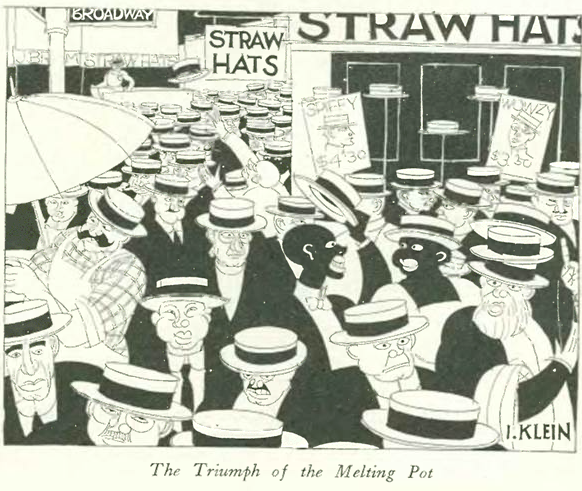
As for fashion in the comics, this drawing by Isadore Klein found humor in the multicultural appeal of the summer straw hat:

Screen Shot 2015-12-18 at 4.43.28 PM

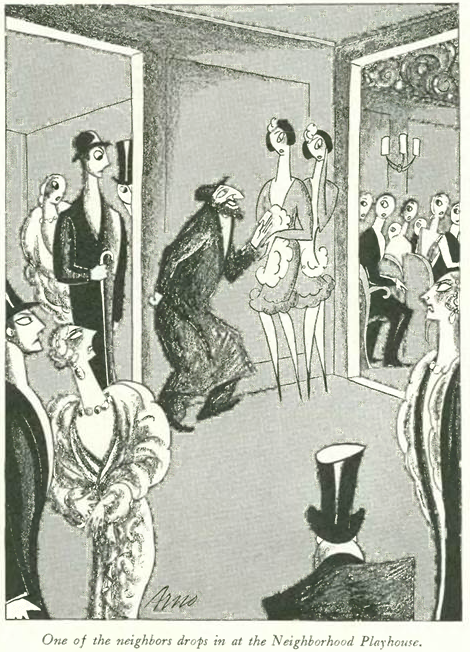
African Americans in the early New Yorker were nearly always depicted in minstrel-style blackface, and Jewish immigrants (such as the one Klein depicted at right) rarely lacked the Orthodox beard. Such is the case in this Peter Arno illustration where cultures clash rather than mix:

Screen Shot 2015-12-18 at 4.42.20 PM

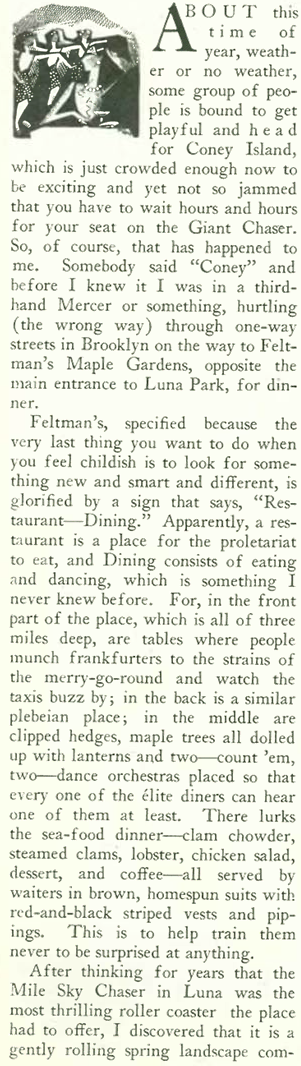
And let’s check in with the New Yorker’s fashion critic (and Arno’s soon-to-be wife) Lois Long, who slummed with the Proles at Coney Island:

Screen Shot 2015-12-18 at 4.45.44 PM

tumblr_lsv5w1uJwH1qgfx0uo1_500
CONEY CRONIES…(l to r) Silent film star Charlie Chaplin, Vanity Fair editor Frank Crowninshield, sculptor Helen Sardeau, Lois Long and screenwriter Harry D’Arrast pose in a Coney Island photo booth, 1925. Photo scanned from the book Flapper by Joshua Zeitz.

Finally, given the terrible circumstances in the Middle East and especially Syria, this small item in “Of All Things” is both timely and prescient:

Screen Shot 2015-12-18 at 4.43.07 PM

Next Time: Taxi Dancers…
Screen Shot 2015-12-18 at 4.38.53 PM