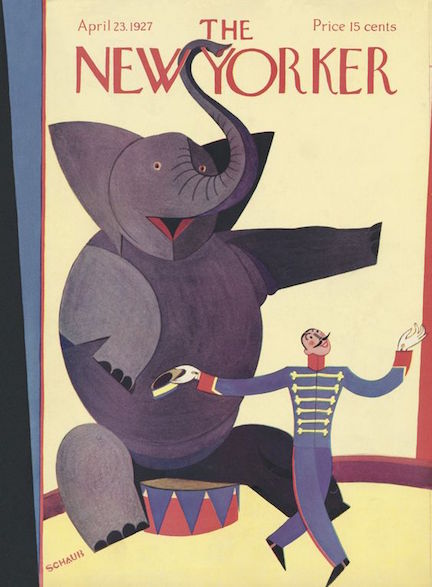
If you’ve been following the cover credits of the 113 issues I have featured so far, you’ll notice that many of the covers were illustrated by Ilonka Karasz, including the cover of the April 16, 1927 issue featured in this post.
April 16, 1927 cover by Ilonka Karasz. She would design 186 covers for TheNew Yorker between 1925 and 1973.
During her long and varied career Karasz would design 186 covers for the New Yorker. A native of Hungary, she moved to the U.S. in 1913 and settled in Greenwich Village, where she quickly rose to become a prominent practitioner of modern design and the decorative arts.
She created paintings, prints and drawings in her early years before moving on to a variety of machine- and hand-made objects rendered in silver and ceramic. She designed furniture strongly influenced by the European De Stijl movement, and was also a pioneer of modern textile design, even developing textiles for use in airplanes and automobiles.
Beginning in the 1940s Karasz would emerge as one of the country’s leading wallpaper artists. Her younger sister, Mariska Karasz, would also become a noted American fashion designer and textile artist.
The range of Ilonka Karasz’s work is astonishing—from homespun images of rural America to the sleek, hard edges of modern design; from textiles and wallpaper to silver sets and large-scale furniture.
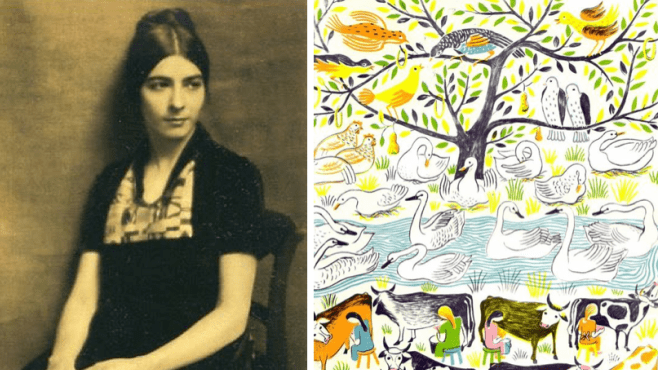
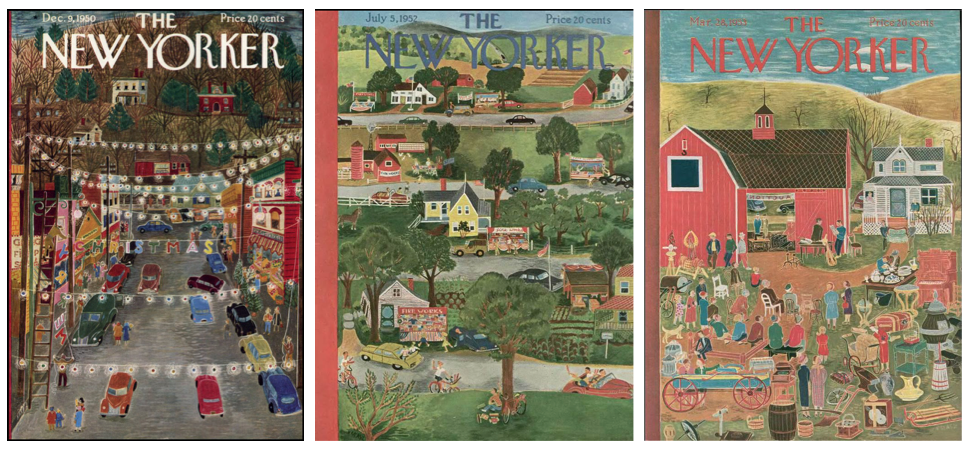
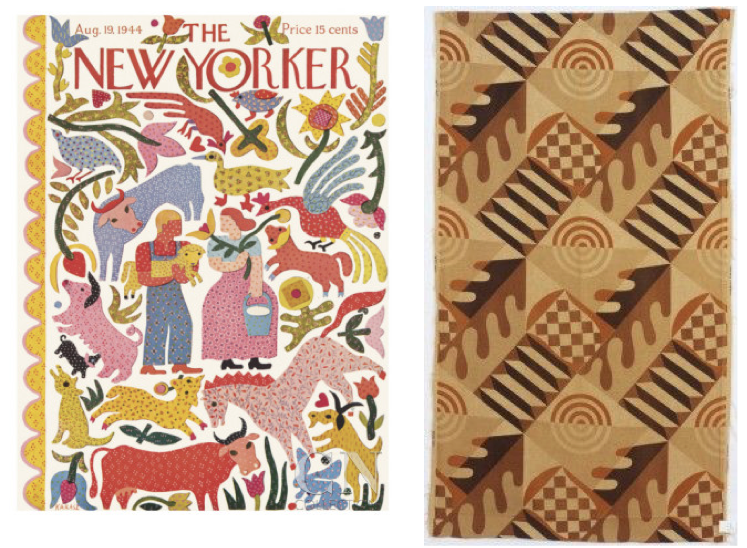
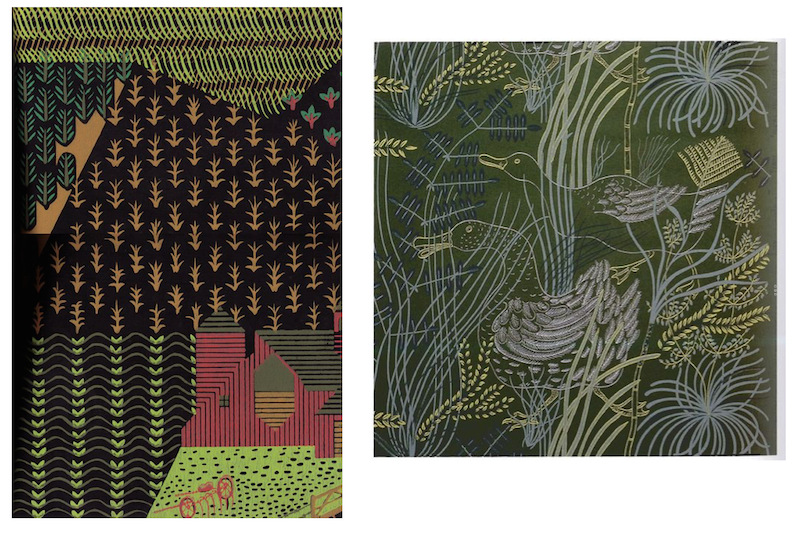
Ilonka Karasz’s first and last covers for The New Yorker: April 4, 1925 (left) and Oct. 22, 1973.Many of Karasz’s covers were scenes of Americana—small towns, villages and farms. From left to right, covers from Dec. 9, 1950, July 5, 1952, and March 28, 1953.Ilonka Karasz, circa 1920s. At right, an illustration from her 1949 book, The Twelve Days of Christmas. (Wikipedia/Harper and Row)TEXTILE ARTIST…Karasz’s cover design for the Aug. 19, 1944 New Yorker (left), and an oak leaf-pattern textile in Mohair, 1928 (RISD)WALLPAPER…“Wisconsin,” a mid-century wallpaper design by Ilonka Karasz (left), and her “Ducks & Grasses” wallpaper from 1948. (Pinterest)Candlestick and small bowl by Karasz from a set designed for Paye & Baker, 1928. (Cooper Hewitt)Karasz’s mahogany desk from 1928 (Minneapolis Institute of Arts)
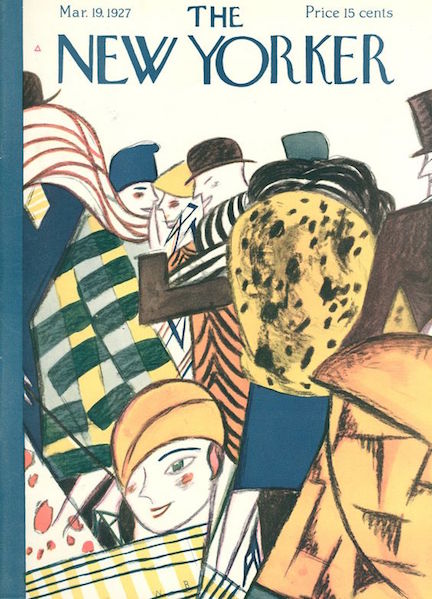
The much-anticipated German expressionist film, Metropolis, opened at Manhattan’s Rialto Theatre. Although considered today to be a classic of the silent era, the March 12, 1927 New Yorker found Fritz Lang’s film to be overlong and preachy despite its fantastic setting and complex special effects.
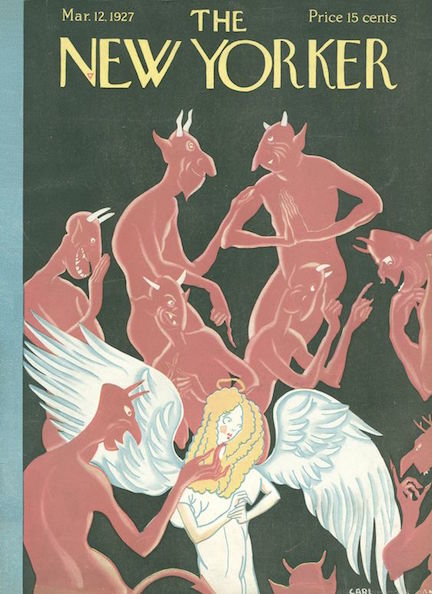
March 12, 1927 cover by Carl Rose.
Set in a futuristic dystopia in which the wealthy ruling classes lived high above the toiling masses, the film followed the attempts of a wealthy son of the city’s ruler and a poor working woman named Mary to overcome the city’s gaping class divisions.
The city of tomorrow as portrayed in the opening scenes of Fritz Lang’sMetropolis. The New Yorker encouraged readers to see the film mostly for the special effects, but lamented its “Teutonic heaviness” and uninspired acting. (archhistdaily)
An excerpt from the New Yorker review:
The working masses toil in the dank world beneath the city in Metropolis. (myfilmviews.com)Brigette Helm’s duo portrayal of the noble Mary and her robotic double (here being created through cinematic magic) in Metropolis was praised by The New Yorker, which otherwise found the film’s acting subpar. (cinemagraphe.com)
Considered one of the most expensive movies of its time, Metropolis cost $5 million to film in 1925 (roughly about $70 million today).
* * *
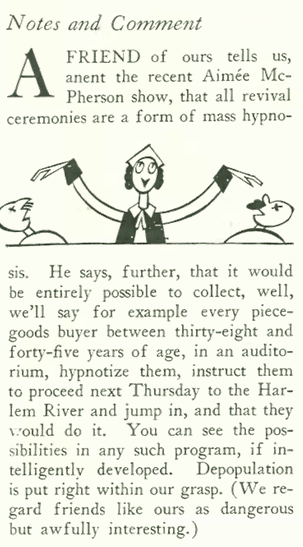
The famous 1920s evangelist Aimee Semple McPherson had been holding a series of revival meetings in New York, which were often (and derisively) noted by the New Yorker editors. In the previous issue “Talk of the Town” observed:
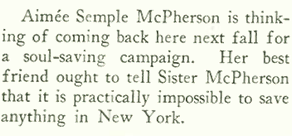
And in the March 12 issue they offered this parting note in “Of All Things”….
Aimee Semple McPherson (left) leading a service at her Angelus Temple in Los Angeles in the 1920s. (Los Angeles Public Library Photo Collection)
A pioneer in the use of modern media, McPherson was in New York on a “vindication tour,” taking advantage of the publicity from her alleged kidnapping a year earlier that led to investigations that she had staged her disappearance to bolster her flagging ministry.
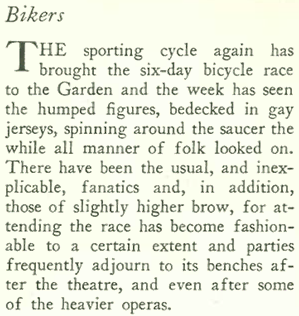
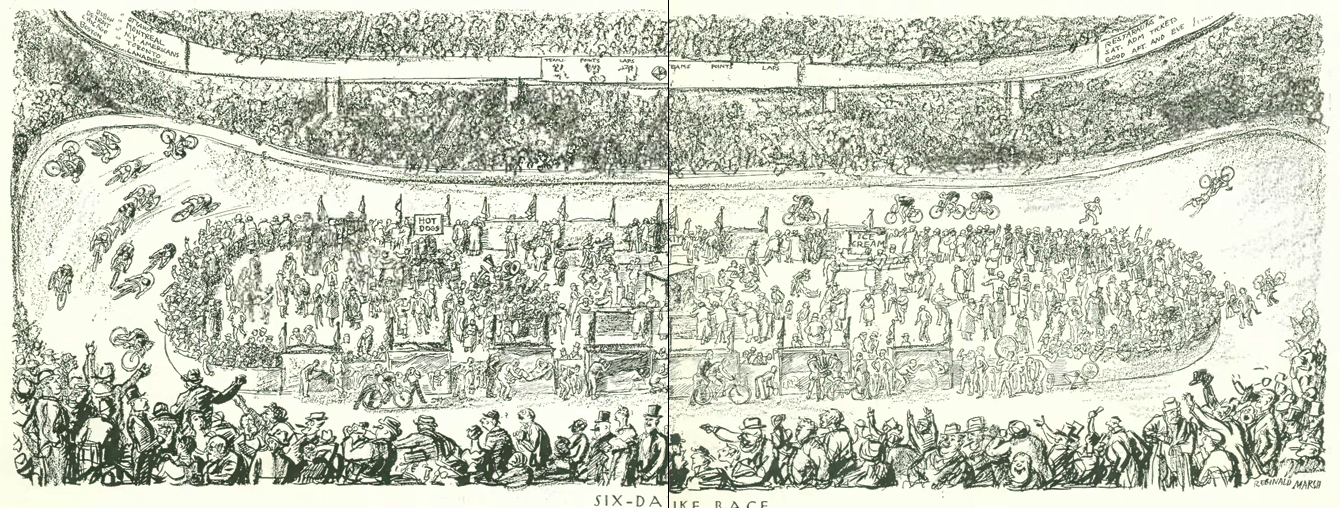
In other diversions, bicycle racing had come to Madison Square Garden, as noted in “Talk of the Town” with an illustration by Reginald Marsh:
click to enlarge
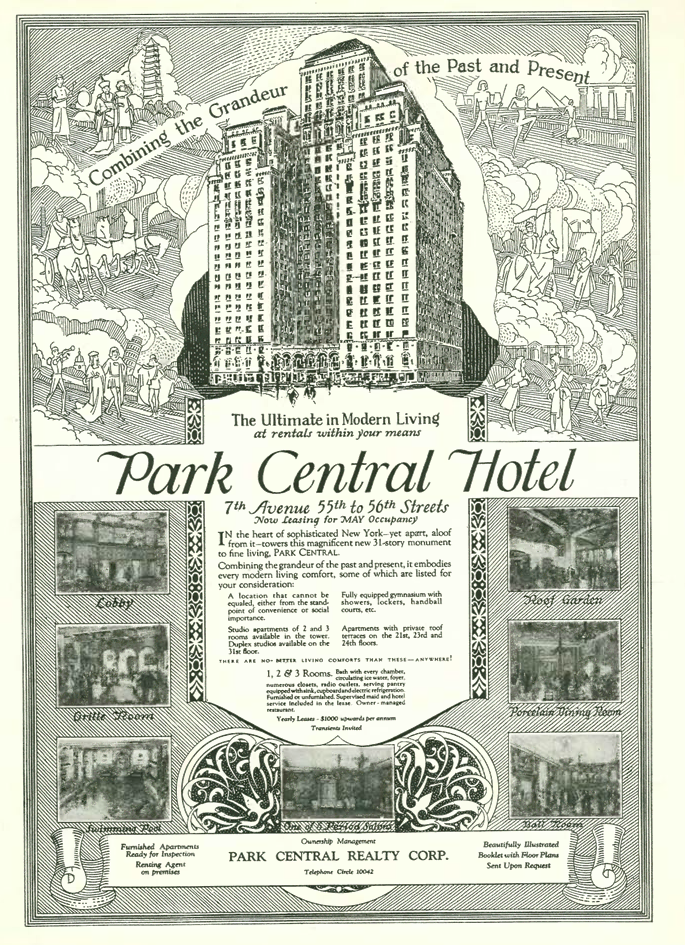
Advertisements in this issue included this announcement for the opening of the Park Central Hotel, still a grand landmark on 7th Avenue…
…and this ad from Nestle touting the latest method for achieving success in the latest hair style…
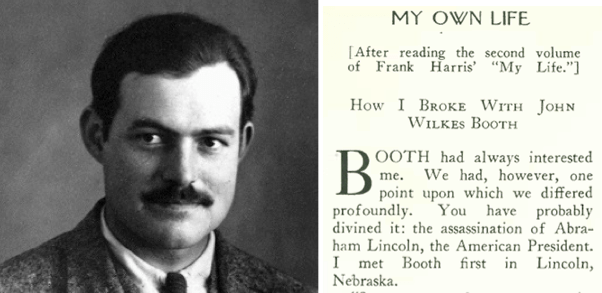
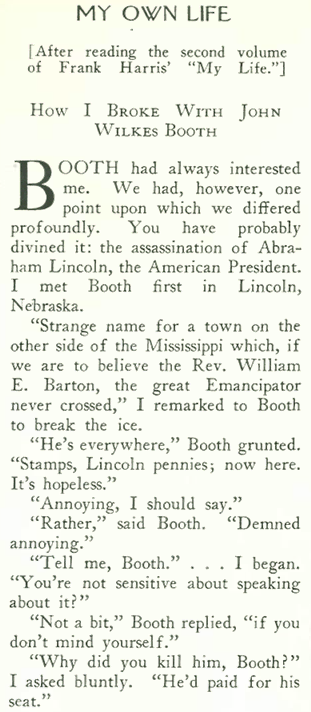
Ernest Hemingway wrote his lone New Yorker piece for the Feb. 5, 1927 issue. Titled “My Own Life,” it was a short parody of the 3-volume My Life and Loves by Irish writer Frank Harris.
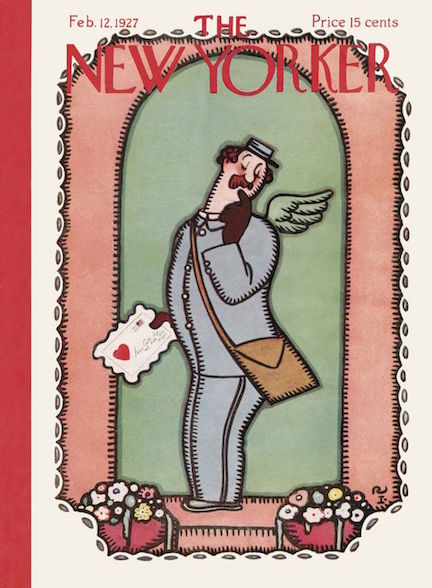
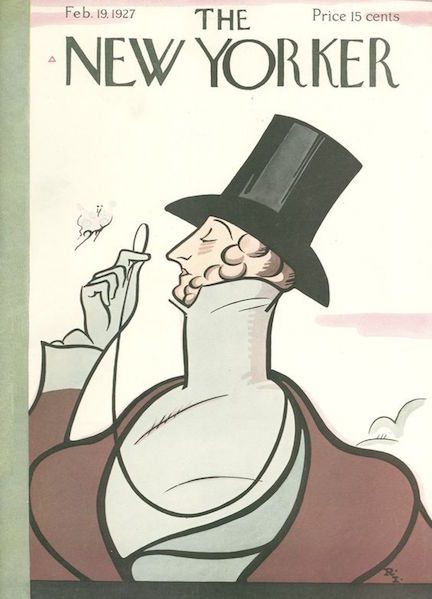
February 12, 1927 cover by Rea Irvin.
Writing for The Hemingway Review (Fall 2001), Francis Bosha notes in “The Harold Ross Files” that Hemingway’s sole contribution to the New Yorker is striking given that the magazine was such a major influence on fiction in the 20th century.
Money, or the shortage thereof, appears to be the main reason why Hemingway was not a regular contributor. Although the young magazine was doing well, Bosha writes that it was not yet ready to compete financially with more established mass market magazines. Indeed, Hemingway’s “My Own Life” landed in the New Yorker because it had already been rejected by both Scribner’s and The New Republic.
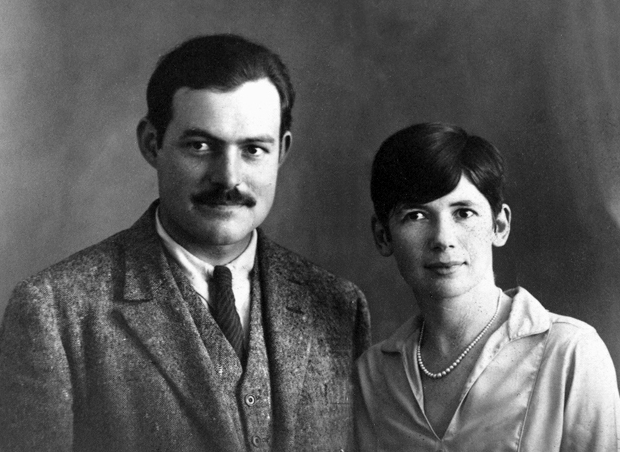
Ernest Hemingway and his second wife, Pauline Pfeiffer, in Paris, 1927. (Wikipedia)
If you read the piece you can see why it was rejected. The famed fiction writer, hot off the success of The Sun Also Rises, was not a great parodist. An excerpt:
And so on. Hemingway wisely stuck with serious fiction, which might explain his fleeting association with TheNew Yorker, which in its first years was bent toward humor in the Punch or Judge vein and not toward serious writing.
Nevertheless, the New Yorker’s founding editor, Harold Ross, maintained a friendship and a regular correspondence with Hemingway during the writer’s years in Cuba in the 1940s. On several occasions Ross invited Hemingway to submit something to the magazine, but nothing came of it. It didn’t help that Hemingway publicly stated in 1942 that he “was out of business as a writer,” and was suffering from depression, weight gain, and bouts of heavy drinking.
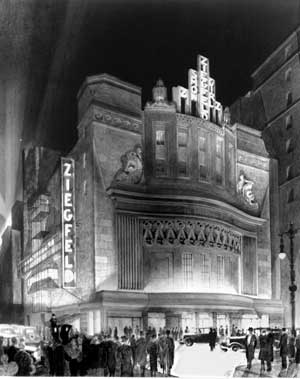
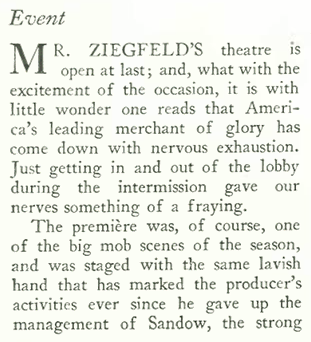
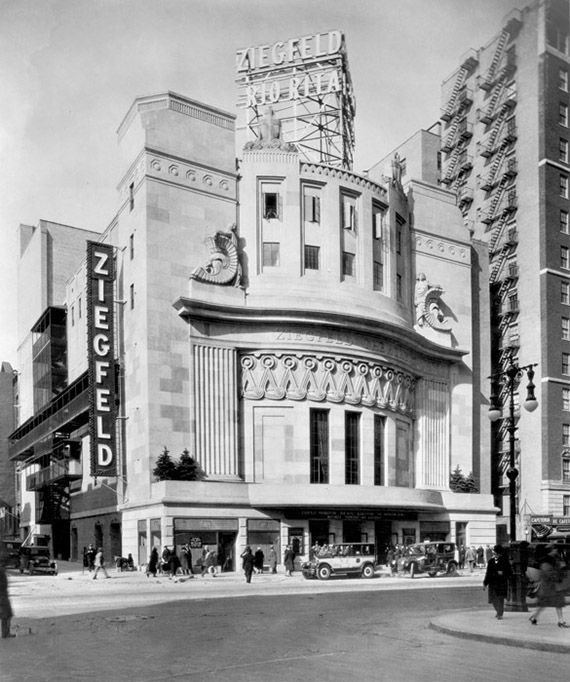
The Great Ziegfeld Finally Opens His New Theatre
“The Talk of the Town” reported the premiere of Florenz Ziegfeld’s new art deco theatre was “one of the big mob scenes of the season,” attracting celebrities and celebrity-gawkers alike:
Opening Night…
DECKED IN DECO…The Ziegfeld Theatre at Sixth Avenue and 54th Street, 1927. Joseph Urban’s design of the facade suggests open curtains flanking a stage. (nyc-architecture.com)HELLO DOLLY…On the Ziegfeld Theatre’s opening night Ada May played Dolly in Rio Rita (Museum of the City of New York)
The opening drew the likes of Charlie Chaplin and polar explorer Roald Amundsen, who perhaps found a line of chorus girls a welcome sight after years of trekking through frozen landscapes.
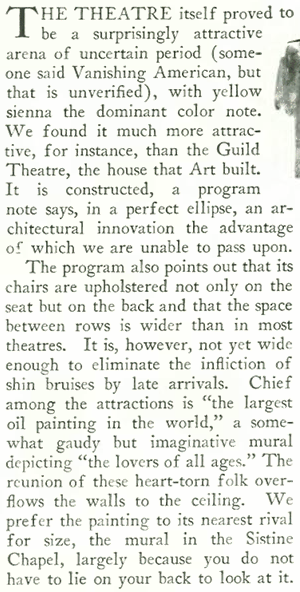
Among the attractions of the new theatre was what was claimed to be the largest oil painting in the world:
AN EYEFUL…A section of the interior wall of the Ziegfeld Theatre, decorated with “the largest oil painting in the world.” (nyc-architecture.com)
Sadly, despite public protests, the theatre was razed in 1966, bulldozed into rubble. The Burlington House stands on the site today:
Burlington House. (Wikipedia)
But we will end on a happier note, a cartoon by Barbara Shermund:
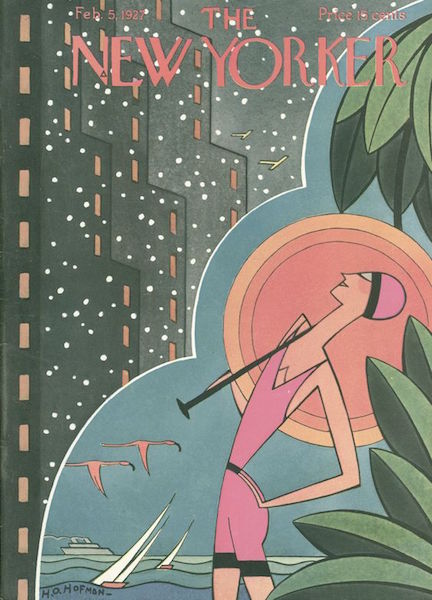
Piles of snow and slushy streets had many New Yorkers dreaming of spring, including H.O. Hofman, who illustrated the cover for the Feb. 5, 1927 issue.
Feb. 5, 1927 cover by H.O. Hofman.
Another New Yorker illustrator and cartoonist, Barbara Shermund, offered a different take on the idea in this drawing for the “On and Off the Avenue” column on page 56:
At least New Yorkers had plenty of activities to take their minds off of the weather, including two important balls:
Inspired by the annual springtime costume ball given by the students of the École nationale supérieure des Beaux-Arts in Paris, American students held an annual ball to raise funds for their Beaux-Arts Institute of Design. The balls featured elaborate costumes and performances that were extensively reported in the city’s society pages.
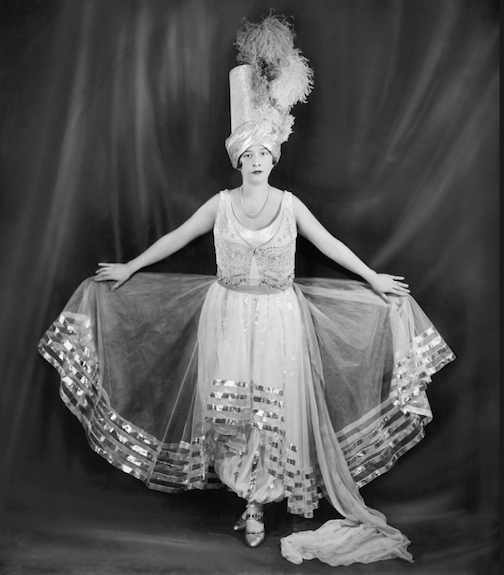
LOOK AT ME…Margaret Thaw dressed as a “White Sultana” for the 1928 Beaux Arts Ball held at the Astor Hotel. The theme was “The French Occupation of Northern Africa — 1847.” A doyenne of international high society perennially named to best-dressed lists, Margaret and her husband, Lawrence Copley Thaw, were world-famous explorers of Africa and Asia and correspondents for National Geographic magazine. (New York Times)
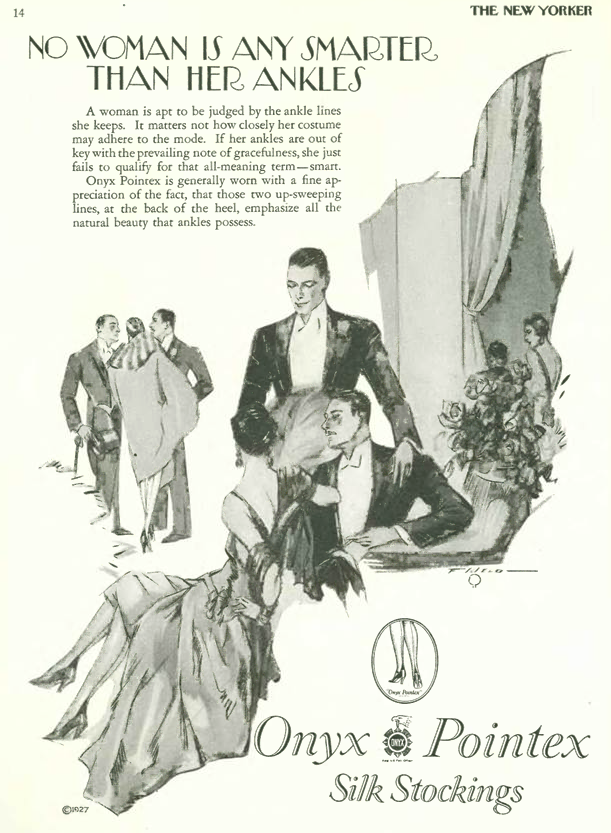
Contrary to the ad pictured below, fashion plate Margaret Thaw was doubtless smarter than her ankles…
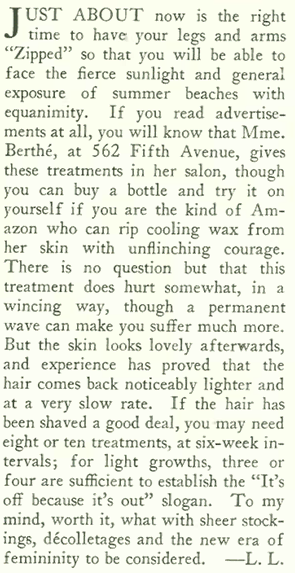
If you were investing in fine Onyx Pointex silk stockings, you probably wanted to get your legs “Zipped” in a new method described by fashion correspondent Lois Long:
If Lois Long were around today she would have to note that both men and women are getting “Zipped,” waxing everything including their nethers.
And these days few of us are washing our hair with bar soap, as depicted in the ad below for Lux. Like so many other ads in the early New Yorker, this one makes a strong appeal to Francophile readers; if it’s French then it must be good (note that every paragraph and headline in the ad mentions either France or French at least once):
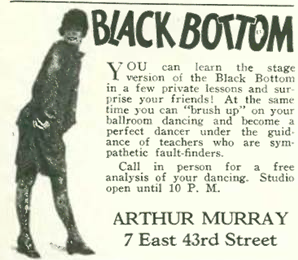
While we are on the topic of advertisements, here is another installment of ads from the back pages of the magazine. Arthur Murray was a frequent advertiser in the magazine, mostly small ads like this that exploited the latest dance craze:
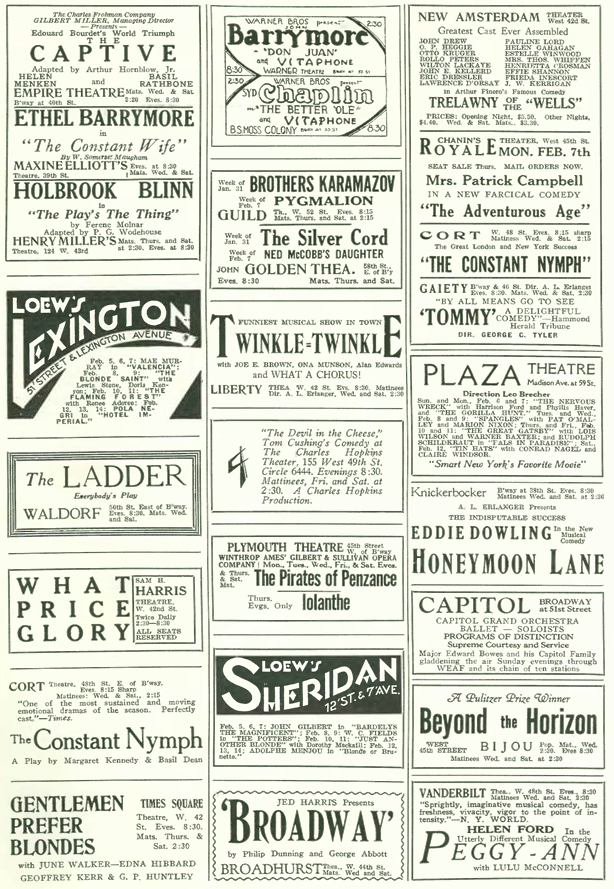
The offerings of the stage and screen were also prominent in the back pages:
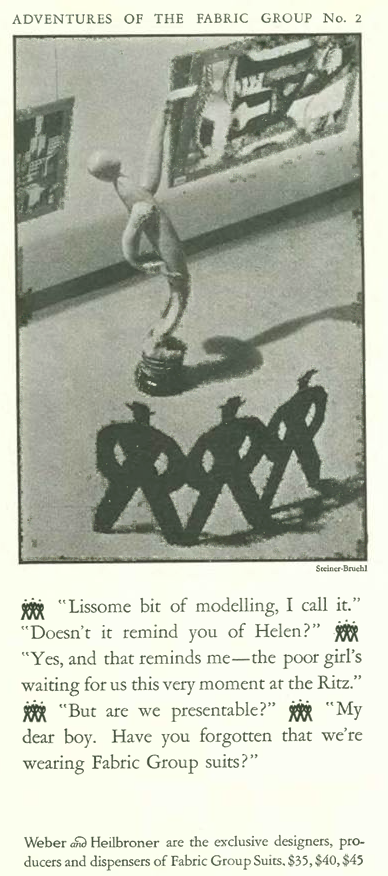
And finally, these strange little ads (run as series) that were designed by photographers Anton Bruehl and Ralph Steiner to promote Weber and Heilbroner suits:
Specializing in elaborately designed and lit tableaux, Bruehl won top advertising awards throughout the late 1920s and early 1930s. He also co-developed the Bruehl-Bourges color process, which gave publisher Condé Nast a monopoly on color magazine reproduction in the early 1930s.
It’s 1927 and the New Yorker is almost two years old. After a shaky start the magazine found its voice (and a lot of advertising revenue) and moved forward with a solid stable of contributors that would give the magazine a style that persists to this day.
Jan. 1, 1927 cover by Rea Irvin.
Before I dive in, let’s get a snapshot of the country in 1927, courtesy of Bill Bryson’s terrific book, One Summer: America, 1927.
Bryson describes America as “staggeringly well-off in 1927,” with homes (especially in urban areas) shining with sleek appliances—refrigerators, radios, telephones, electric fans and razors—“that would not become standard in other countries for a generation or more.”
He writes that “of the nation’s 26.8 million households, 11 million had a phonograph, 10 million had a car, 17.5 million had a phone…42 percent of all that was produced in the world was produced in the United States.” Bryson also notes that in 1927 the U.S. made 80 percent of the world’s movies and 85 percent of the world’s cars, and that the state of Kansas alone had more cars than France.
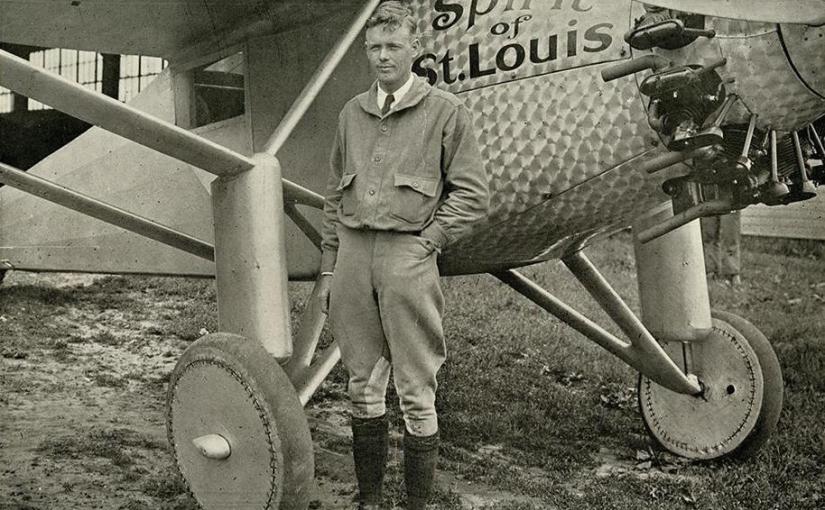
It was also the year Babe Ruth would hit a record 60 home runs, and Charles Lindbergh would fly the Spirit of St. Louis across the Atlantic.
* * *
The Jan. 1 issue featured a profile of world-famous dancer Isadora Duncan, who was living in sad decline in Paris. Particularly acclaimed in Europe for her free dance style, the California-born Duncan also gained notoriety (mostly in puritanical America) for her flouting of traditional mores and morality. Today, she is mostly known for the freak accident that killed her. More on that below.
“Profiles” illustration of Isadora Duncan by Hugo Gellert.
The profile, written by Paris correspondent Janet Flanner under the pen name “Hippolyta,” noted that Duncan was “the last of the trilogy of great female personalities our century produced. Two of them, [Eleanora] Duse and [Sarah] Bernhardt, have gone to their elaborate national tombs. Only Isadora Duncan, the youngest, the American, remains wandering the European earth.”
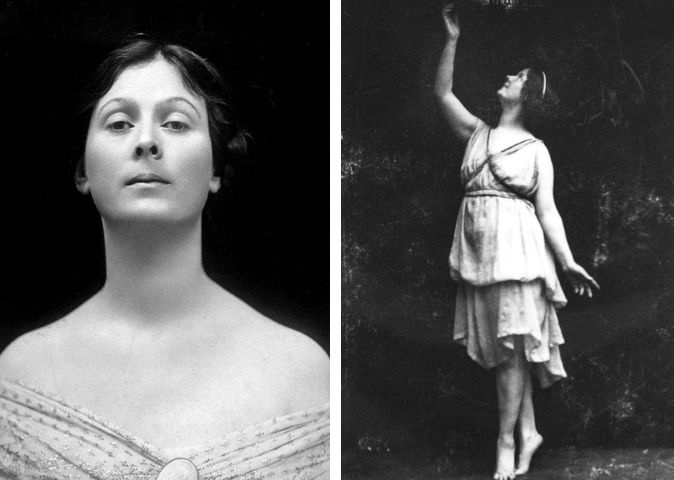
WANDERING THE EARTH…At left, portrait of Isadora Duncan, circa 1910. At right, a 1904 photograph Photograph by Hof-Atelier Elvira shows Duncan in her favored costume, which was inspired by classical drapery. The look was considered shocking at the time for the way it showed off her legs. (Wikipedia/New York Public Library)
Little did Flanner know that Duncan would also be dead before the year was over. Here is how the Wikipedia entry on Duncan describes her death:
On the night of September 14, 1927 in Nice, France, Duncan was a passenger in an Amilcar automobile owned by Benoît Falchetto, a French-Italian mechanic. She wore a long, flowing, hand-painted silk scarf, a gift from her friend Mary Desti, the mother of American film director Preston Sturges. Desti, who saw Duncan off, had asked Duncan to wear a cape in the open-air vehicle because of the cold weather, but Duncan would only agree to wear the scarf.
As they departed, Duncan reportedly said to Desti and some companions, “Adieu, mes amis. Je vais à la gloire!” (“Farewell, my friends. I go to glory!”); but according to American novelist Glenway Wescott, Desti later told him that Duncan’s actual last words were, “Je vais à l’amour” (“I am off to love”). Desti considered this embarrassing, as it suggested that she and Falchetto were going to her hotel for a tryst.
Her silk scarf, draped around her neck, became entangled around the open-spoked wheels and rear axle, hurling her from the open car and breaking her neck. Desti said she called out to warn Duncan about the shawl almost immediately after the car left.
NO SEAT BELTS, EITHER…A 1927 Italian Amilcar, similar to the one in which Duncan met her end. (irrational geographic)
Referring to Duncan’s demise, the writer Gertrude Stein remarked: “Affectations can be dangerous.”
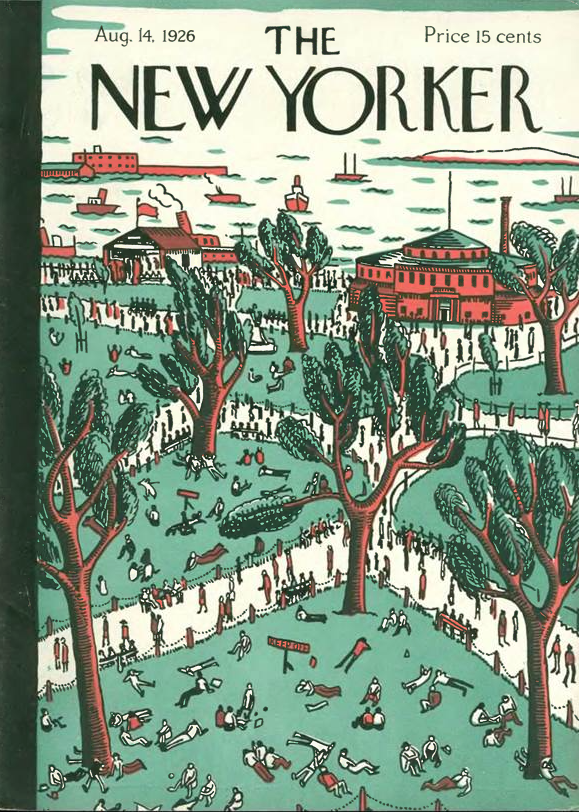
It was 1926 and another marvel of science—talking pictures—was unveiled to audiences at Broadway’s Warners’ Theatre. It was here that the Warner Brothers launched their ‘Vitaphone’ talkies including The Jazz Singer, which would premiere the following year.
Aug. 14, 1926 cover by Ilonka Karasz.
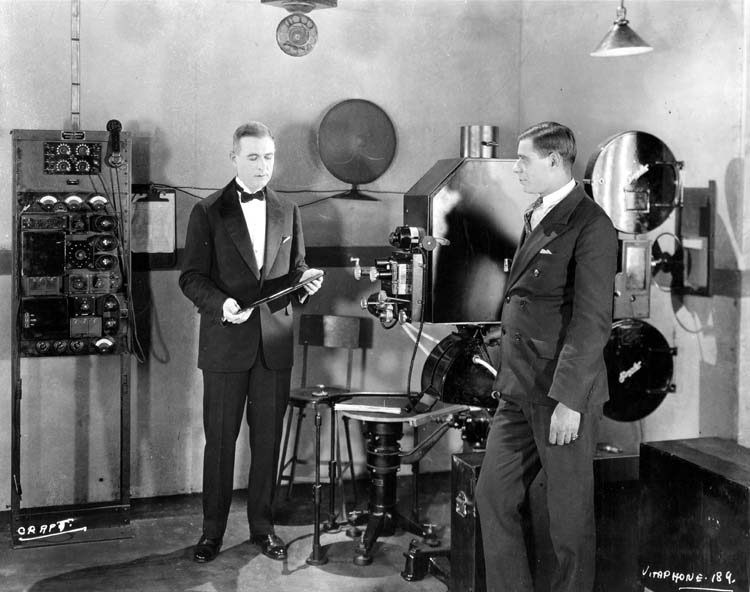
The Vitaphone soundtrack was not printed on the film itself, but rather recorded separately on phonograph record, the sound synchronized by physically coupling the record turntable to the film projection motor.
A Vitaphone projection setup at a 1926 demonstration. Engineer E. B. Craft is holding a soundtrack disc. The turntable, on a massive tripod base, is at lower center. (University of San Diego History Department)
Don Juan was the first feature-length film to use the Vitaphone system, which was not a continuous soundtrack but rather a sprinkling of sound shorts (the musical score, performed by the New York Philharmonic, and various sound effects) throughout the film. No spoken dialogue was recorded.
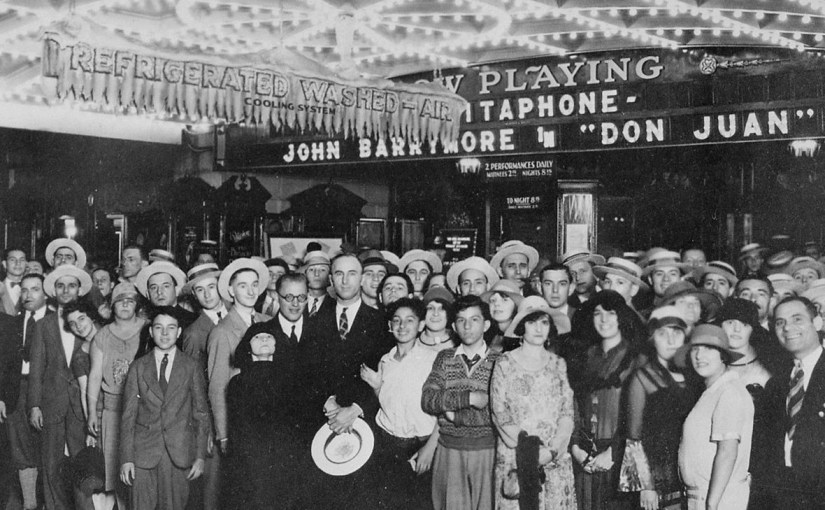
First-nighters pose outside Warners’ Theatre before the premiere of Don Juan, August 6, 1926 (US National Archives)
Produced at a cost of $789,963 (the largest budget of any Warner film up to that point), the film was critically acclaimed and a box-office success. However, and predictably, The New Yorker was not so impressed with Vitaphone…
…or the acting of John Barrymore…
I have to agree with the critic, identified only as O.C., after viewing this TCM clip of the film on YouTube. Lacking a voice, silent actors had to exaggerate emotions onscreen, but Barrymore here is every bit the ham. This screen grab from the clip says it all:
The object of his gaze, Adriana della Varnese (played here by a young Mary Astor), reacts rather dramatically to his advances…can’t say I blame her…(however, the 44-year-old Barrymore and the 20-year-old Astor were having an affair at the time…)
Adriana della Varnese (played here by a young Mary Astor), reacts rather dramatically to Don Juan’s advances.
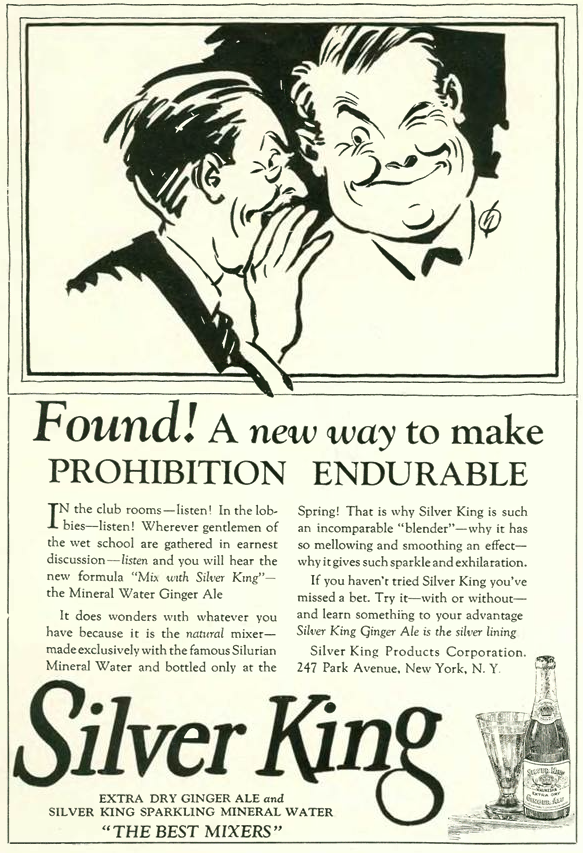
A couple of interesting ads in the Aug. 14, 1926 issue, including this one featuring a couple of sneaky gents who’ve found a solution to life in dry America…
…and this not-too-subtle message from a swanky shop on Fifth Avenue: