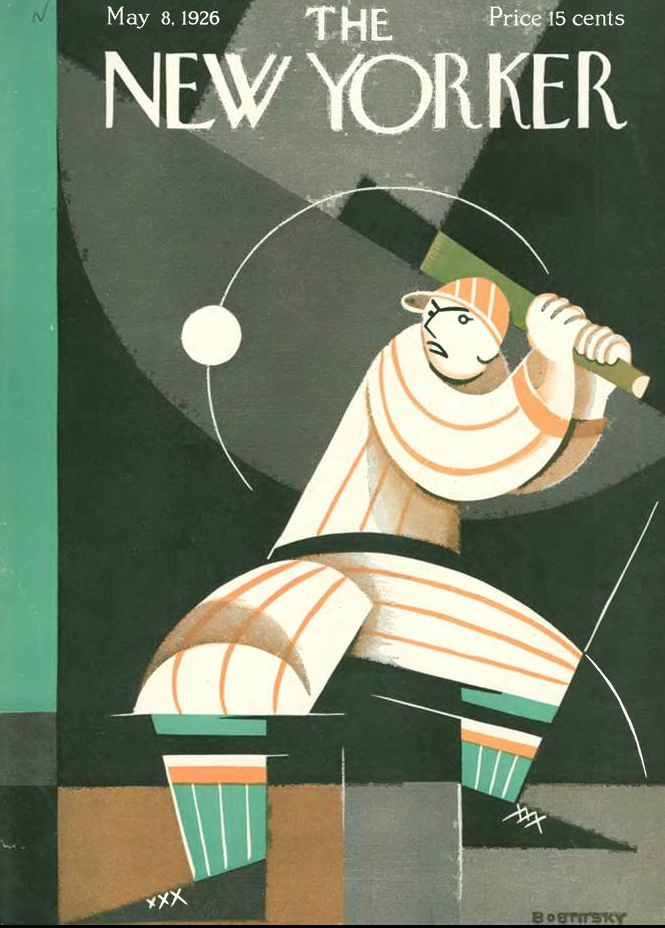
The cover of the May 8, 1926 issue featured this Bauhaus-style rendering of a baseball player by Victor Bobritsky in anticipation of the 1926 season:
May 8, 1926 cover by Victor Bobritsky.
After a terrible 1925 season (and Babe Ruth’s infamous stomach ache), in 1926 the New York Yankees would begin to form a batting lineup that would become known as “Murderers’ Row.” They won the AL pennant in 1926 (losing to the St. Louis Cardinals in a seven-game World Series) and in 1927 they would go 110-44 and sweep the Pittsburgh Pirates in the World Series. More on that when we actually get to 1927.
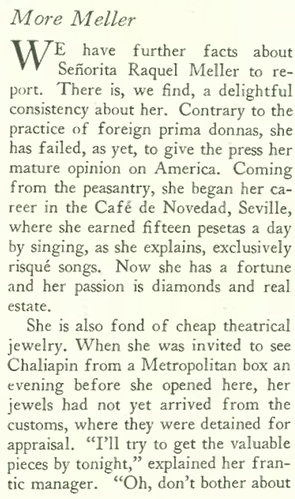
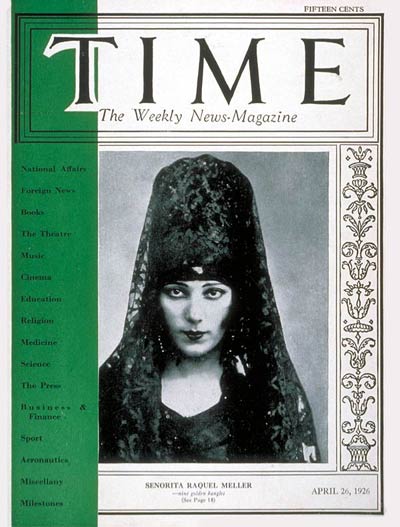
The May 8 issue offered more coverage of Spanish actress-singer Raquel Meller’s first-ever visit to America, which caused quite a sensation:
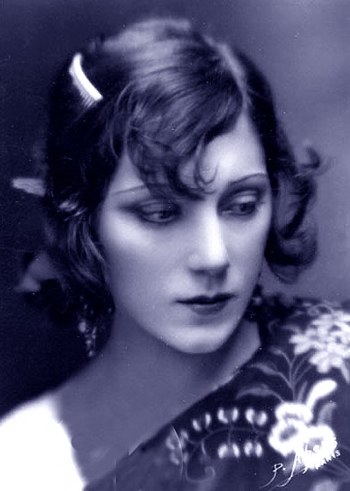
Raquel Meller
Meller arrived in New York via the SS Leviathan, on which she apparently attempted to book a deluxe suite for her five Pekingese. After New York she also visited Philadelphia, Chicago, Boston, Baltimore and Los Angeles, where she attracted the attention of Charlie Chaplin. Although Chaplin was unsuccessful in landing Meller as a co-star, he did incorporate the melody of her most famous song, La Violetera, as a major theme in his 1931 film City Lights.
Meller’s visit landed her on the cover of the April 26, 1926 Time magazine. (Wikipedia)
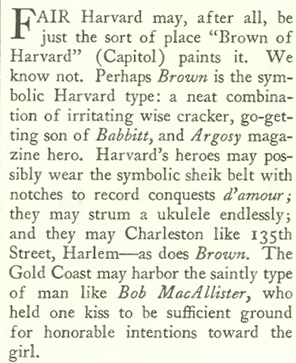
Theodore Shane reviewed the film Brown of Harvard and pondered the accuracy of this portrayal of Harvard student life:
(Wikipedia)
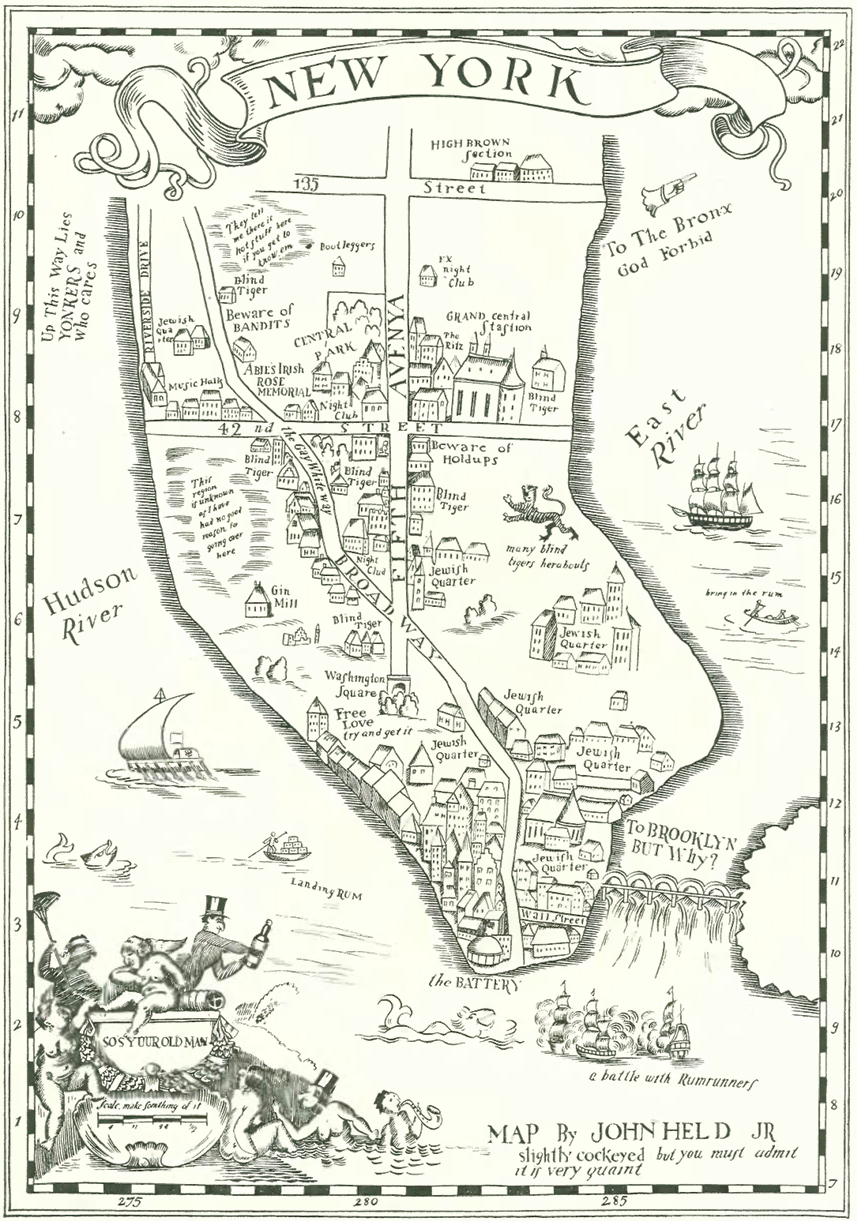
The issue also featured more unique mapmaking by John Held Jr:
And this W.P. Trent cartoon with a common theme of early New Yorker issues: the comic imbalance of rich old men and their young mistresses:
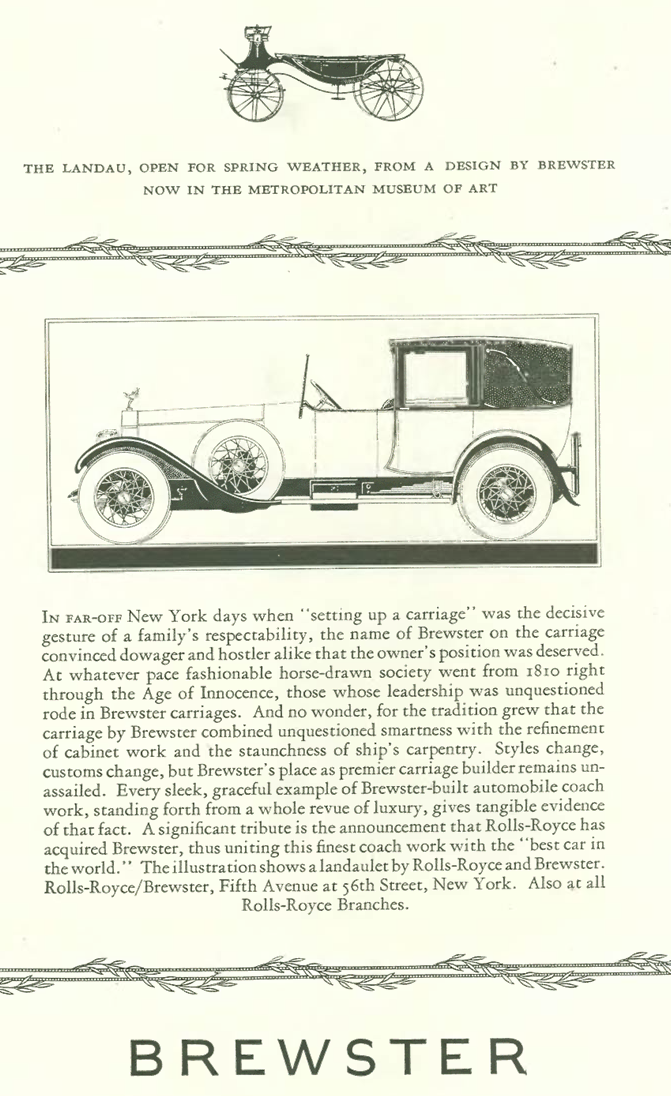
And finally, this advertisement in the May 8 issue caught my eye. Although cars crowded the streets of New York, they were still a recent enough invention to evoke the days of horse-drawn carriages. Even with all of the advances in automobiles in the late 20s, this landau-style Rolls Royce still exposed the driver to the weather, a design feature that signaled class, not practicality.
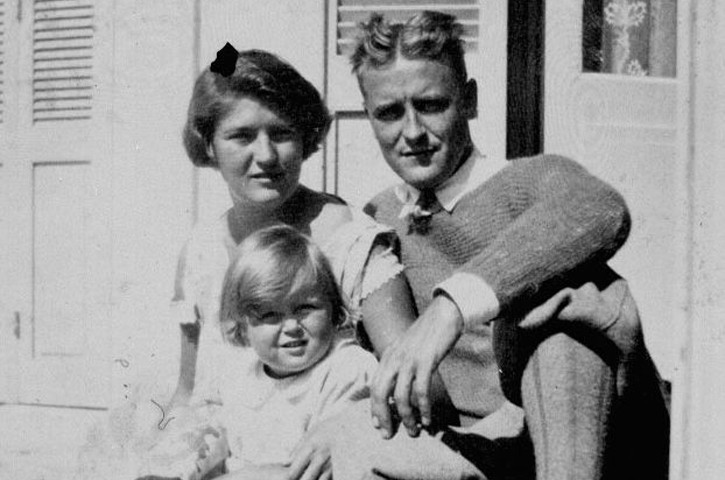
The “sad young man” in question was none other than F. Scott Fitzgerald, who was profiled by John Mosher (who would succeed Theodore Shane as film critic) in the April 17, 1926 issue of The New Yorker.
April 17, 1926 cover by Clayton Knight.
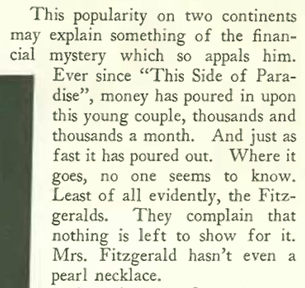
Mosher wrote that Scott believed he was “getting on in years,” even though he was only 29 years old and had recently published The Great Gatsby (which had received a brief, lukewarm review from The New Yorker in 1925). Mosher observed that the novelist and his wife, Zelda, famous on two continents and with money pouring in from the publication of This Side of Paradise, nevertheless complained of being broke:
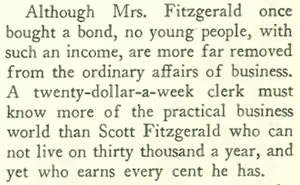
It was noted however that the couple had little financial sense:
Mosher found Fitzgerald to be a grave, hardworking man, and seemed to sense the melancholy that would lead to madness (in Zelda’s case), alcoholism and an early grave (Fitzgerald would be dead in 14 years).
Illustration of Fitzgerald by Victor De Pauw for the April 17 “Profile.”
In this issue we were also introduced to Peter Arno’s “Whoops Sisters,” although they are not yet identified here by that title:
According to New Yorker cartoonist Michael Maslin, “in 1925, The New Yorker published nine Arno drawings. In 1926, it ran seventy-two. The enormous jump was due to the wild success of two cartoon sisters Arno created: Pansy Smiff and Mrs. Abagail Flusser, otherwise known as The Whoops Sisters. The Sisters were not sweet little old ladies — they were naughty boisterous grinning “wink wink, nudge nudge” sweet little old ladies, their language laced with double entendres.”
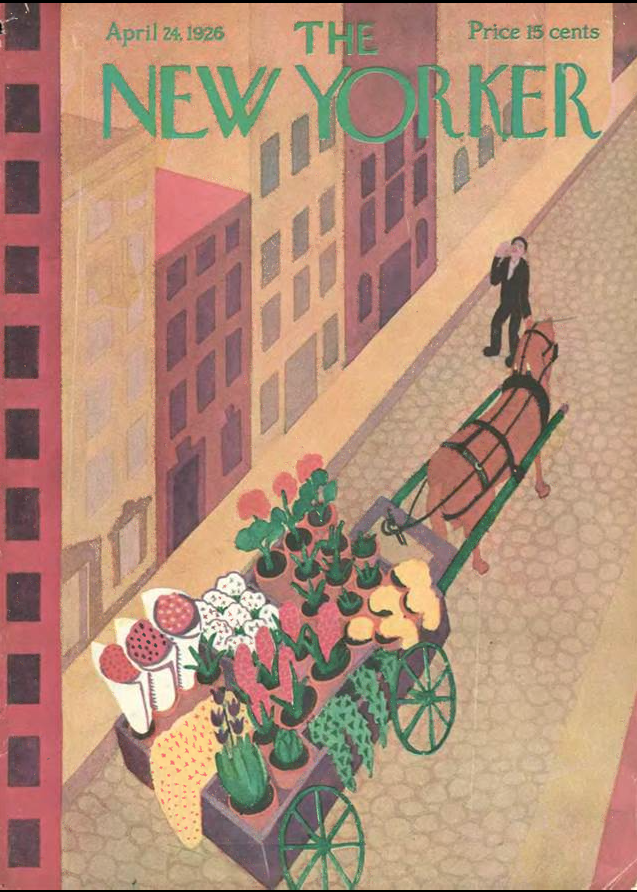
April 24, 1926 cover by Ilonka Karasz.
In the April 24, 1926 issue, the dyspeptic film critic Theodore Shane took aim at Cecil B. DeMille’sThe Volga Boatman:
VOLGA HOKUM…Elinor Fair and Victor Varconi in The Volga Boatman. (Virtual History)
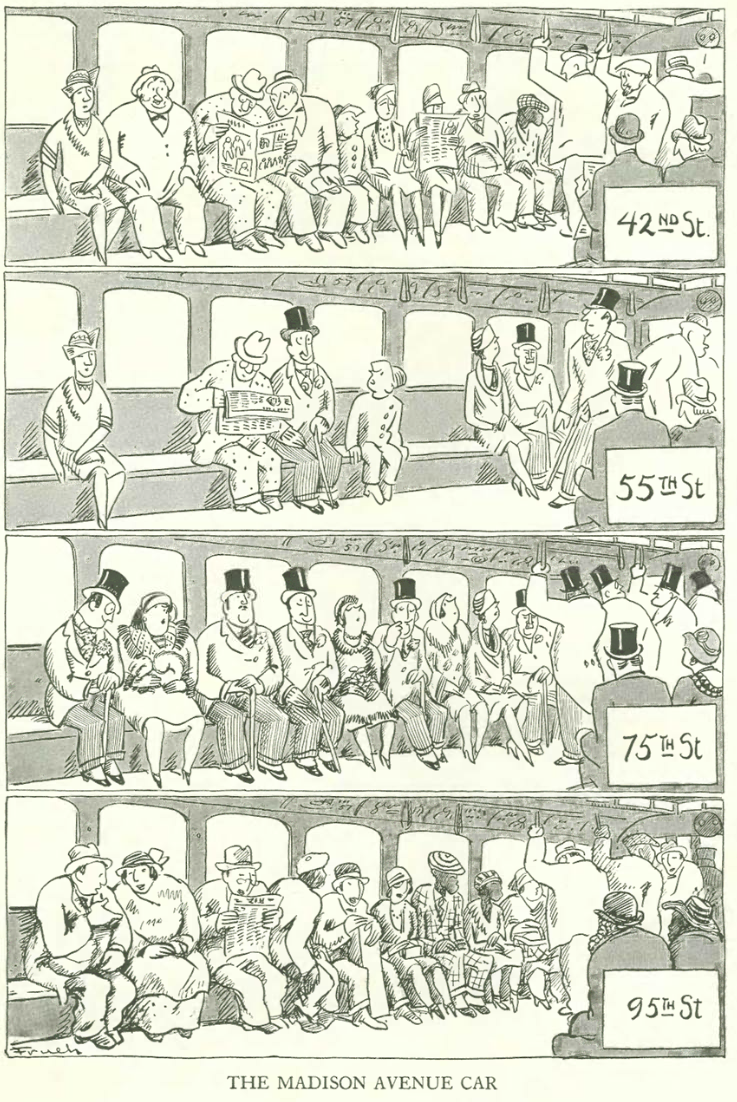
Also in this issue, Al Frueh’s interpretation of New York’s social strata via the city’s Madison Avenue train stops:
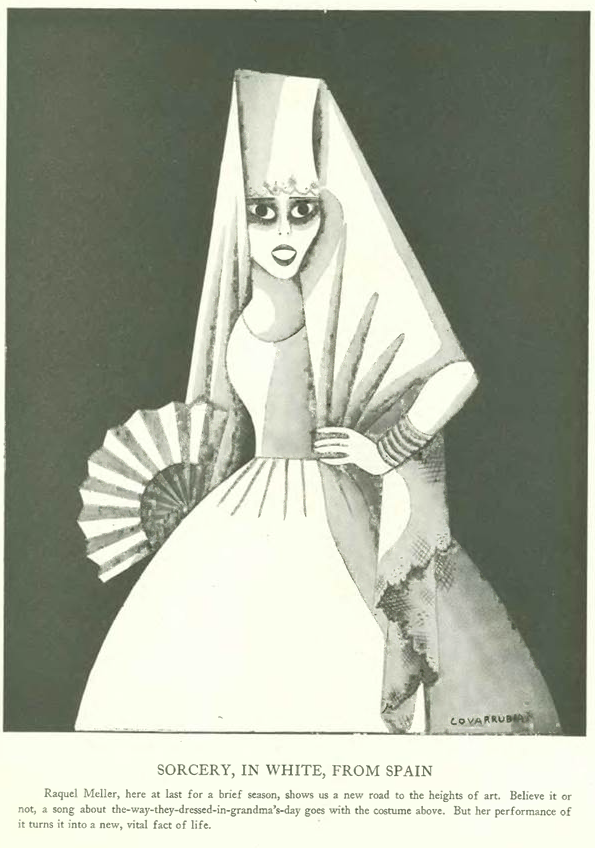
Near the theatre section, this illustration of famed Spanish singer and actress Raquel Meller, as rendered by Miguel Covarrubias:
And a photo of Meller from the 1920s that looks like it could have been taken yesterday:
(rameller.tripod.com)
An international star in the 1920s and 1930s, Meller appeared in several films and sang the original version of the well known song La Violetera.
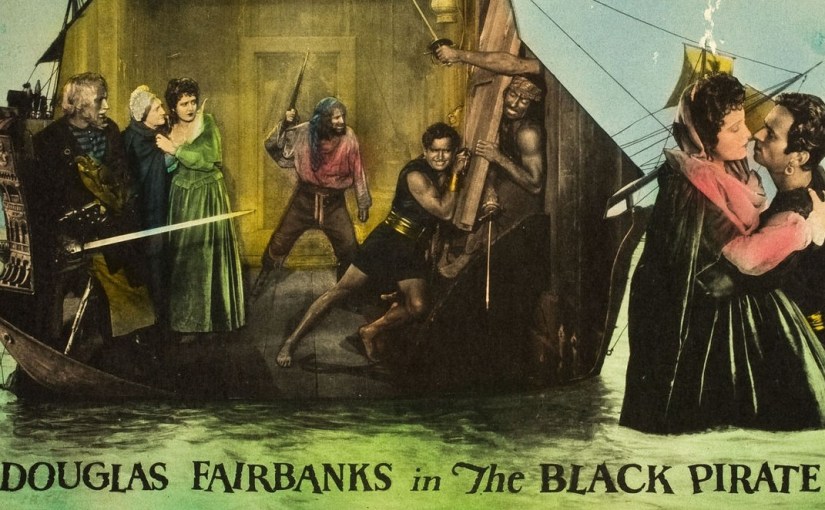
Although the trade name “Technicolor” conjures up images of mid-century Hollywood, the process was actually invented in 1916 and developed over subsequent decades.
Early Technicolor was a complicated process, using a prism beam-splitter behind the camera lens to simultaneously expose two consecutive frames of a single strip of black-and-white negative–one behind a red filter, the other behind a green filter. A projectionist had to be highly skilled to keep the film aligned during its showing. The Black Pirate, however, used a later technique that cemented the two prints together, making for a thick film that was prone to bulging and distortion.
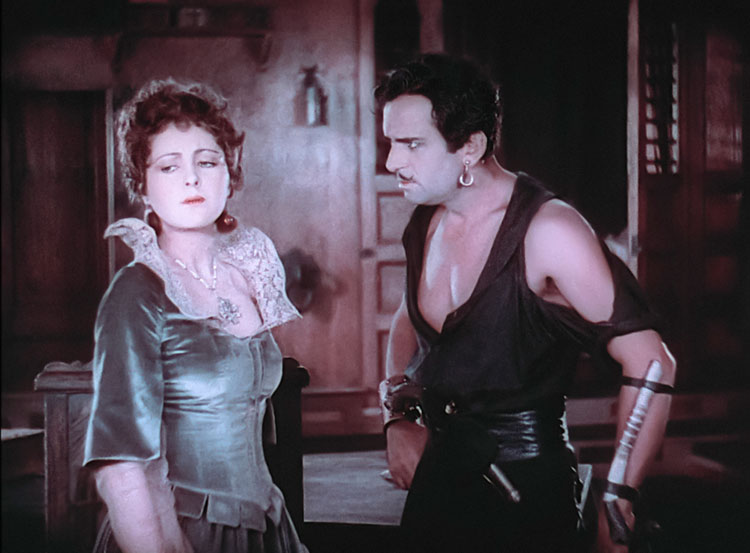
When the New Yorker’sTheodore Shane reviewed Douglas Fairbanks’ latest swashbuckler film, The Black Pirate, in the March 13, 1926 issue, it appeared that after ten years of development the Technicolor process had a long way to go:
DEAR, YOU LOOK A BIT PEAKY…Billy Dove and Douglas Fairbanks rendered in early Technicolor in The Black Pirate. (MovieMail.com)
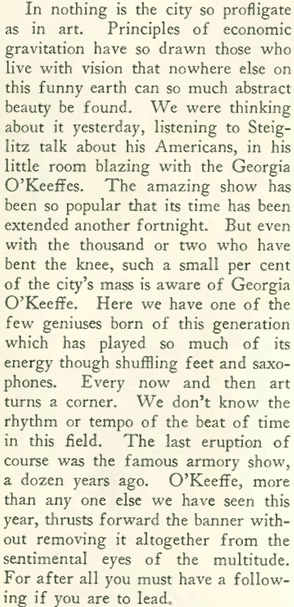
Art critic Murdock Pemberton wrote about the genius of the young artist Georgia O’Keeffe, whose work was on display at husband Alfred Stieglitz’s new exhibition space, the Intimate Gallery:
Georgia O’Keeffe’sBlack Iris, 1926. (Metropolitan Museum of Art)
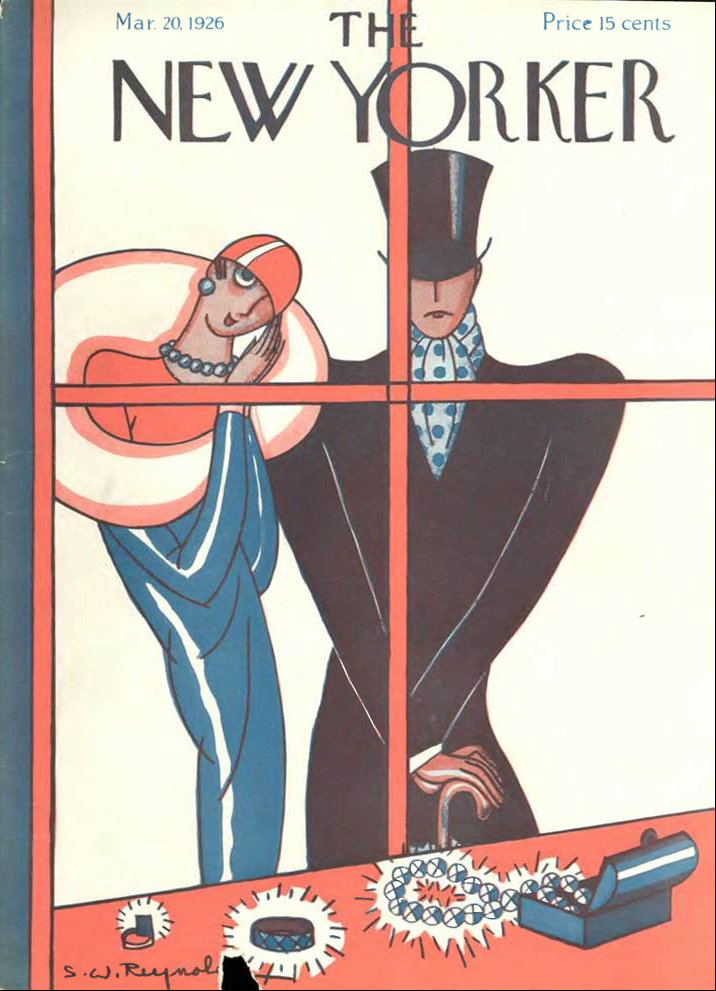
On to the March 20 issue, boldly illustrated by S.W. Reynolds, who contributed a number of deco-themed covers for the magazine:
March 20, 1926 cover by S.W. Reynolds.
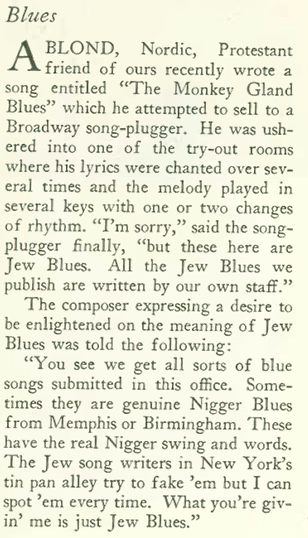
For all The New Yorker’s progressive wit and style, you are occasionally reminded that some of its sensibilities were still very much mired in those times. For example, this bit from the issue’s “The Talk of the Town” segment:
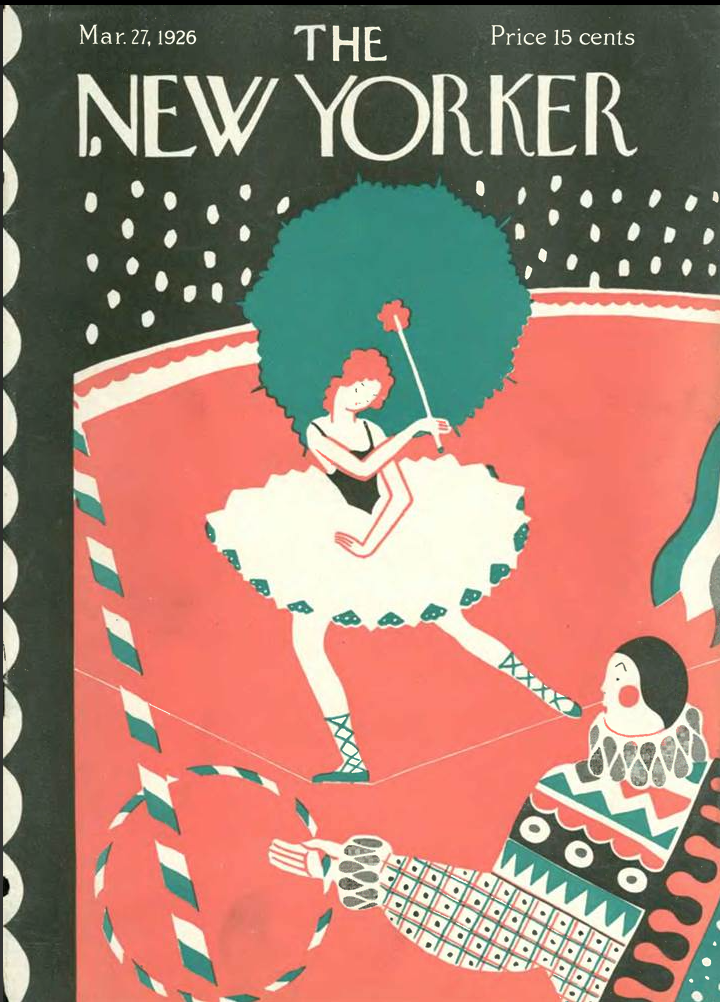
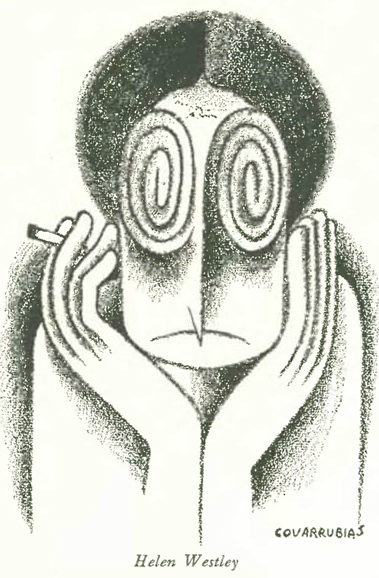
The March 27 issue offered a profile of actress Helen Westley, who was described by writer Waldo Frank (pen name “Search-light”) as “a goddess of our city” whose “true value and her art (was) her personal life.”
March 27 cover by Ilonka Karasz.
Wesley often played a stern, indomitable character who wore a hawk-like glare, and in her later years portrayed dour dowagers and no-nonsense matrons. Frank wrote that while Wesley was not a particularly good actress, she lived her life with a spirit for adventure and a need to plunge her fine-born, gracious manner into the “frowsy” world of Broadway.
A Miguel Covarrubias rendering of Helen Wesley for the “Profiles” piece.
And to close, Al Frueh’s take on a day in the life of a doorman:
Although they didn’t know it, thirsty New Yorkers still had more than six and half of years of Prohibition to endure, and business was brisk for the rum runners who plied the coastal waters.
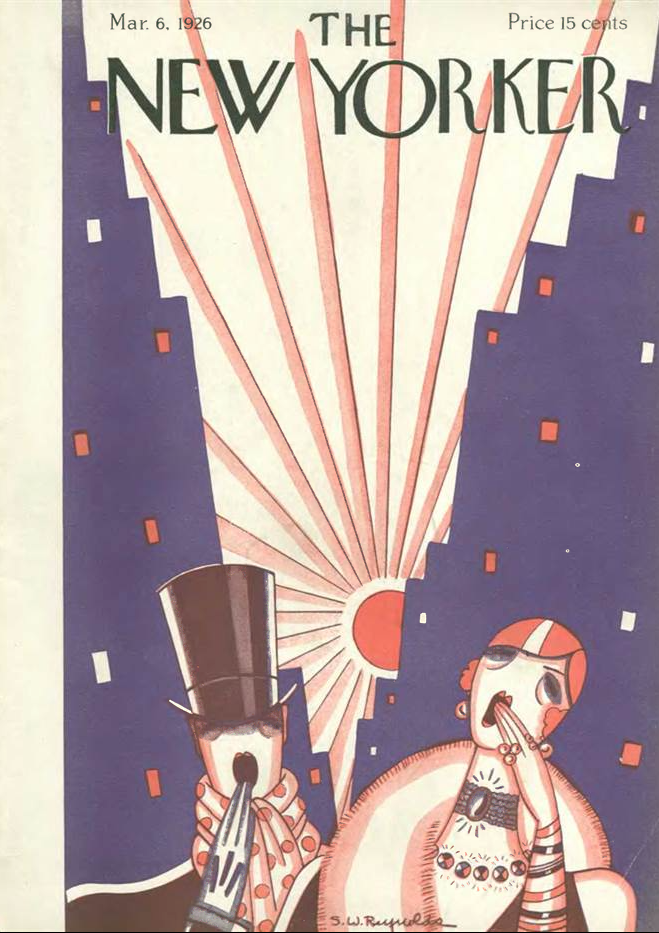
The March 6, 1926 issue featured the article “Rum Runners Must Live,” in which writer Emile C. Schnurmacher described the heroic efforts of bootleggers and rum runners in keeping New York’s countless speakeasies (and many home liquor cabinets) well stocked. Some 30,000 speakeasies were opened in New York City alone during the Prohibition era.
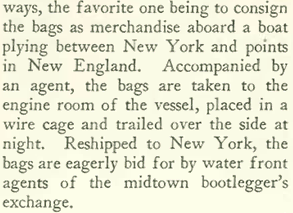
Schnurmacher described the risky game of running “overboard stuff:”
He told of how one rum-running boat, the Sea Bird, made its way through Flushing Bay (to pick up bootleg Scotch) while evading the Coast Guard:
The boat later successfully delivered the “Scotch” near Yankee Stadium:
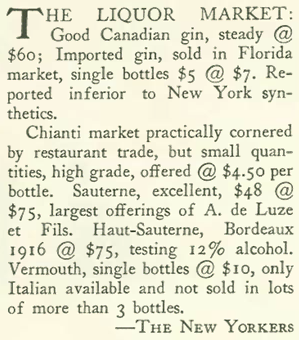
“The Talk of the Town” offered its regular update on bootleg prices. The local “synthetic” gin was reported to be of better quality than the imports, surprising given that synthetics poisoned a good number of folks back then:
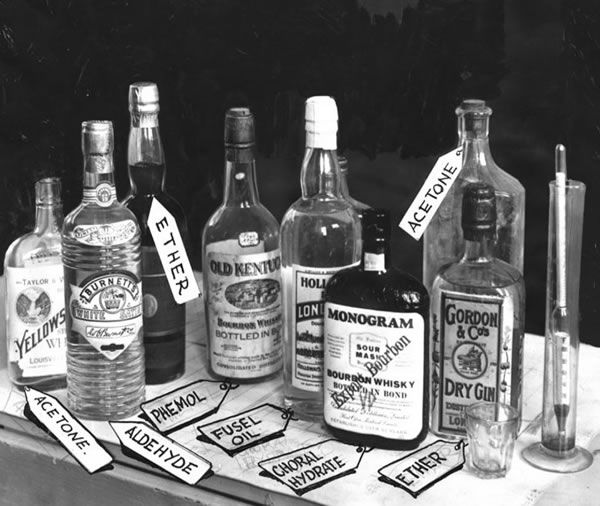
The blog Speakeasy Science notes that during Prohibition, police department chemists, “analyzing the so-called gin in the Brooklyn bar and around the city, reported that much of it was industrial alcohol, re-distilled to try to remove the wood alcohol content. The re-distilling was not notably successful. The poisonous alcohol remained and there was more: the chemists had detected traces of kerosene and mercury, and disinfectants including Lysol and carbolic acid in the beverages.”
HE HAD THE GOOD STUFF…Not all bootleg was poison. Until he was busted in 1923 by government agents, one of the most famous purveyors to wealthy buyers was rum-runner William McCoy. (US Coast Guard)In order to destroy evidence, the crew of the rum-runner Linwood set fire to their vessel after being pursued by a patrol boat. (Photo circa 1923, U.S. Coast Guard)
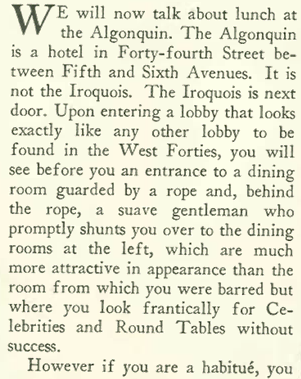
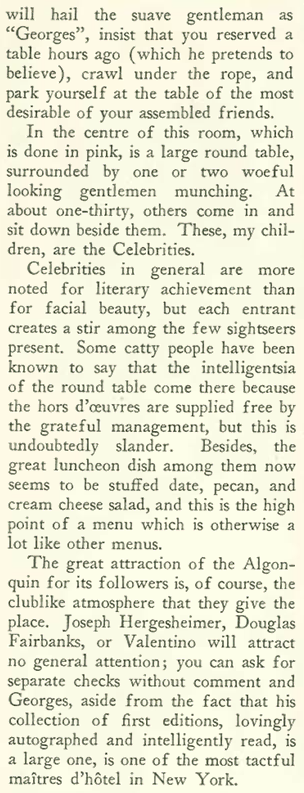
In “Tables for Two,” Lois Long paid a visit to the Algonquin hotel and took some playful swipes at the denizens the famed Round Table:
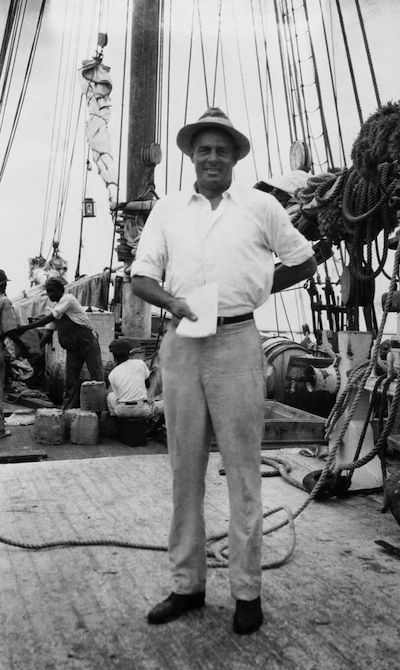
IS THAT YOU DOUG? Silent screen star Douglas Fairbanks could relax unmolested in the quiet confines of the Algonquin. (Meredy.com)
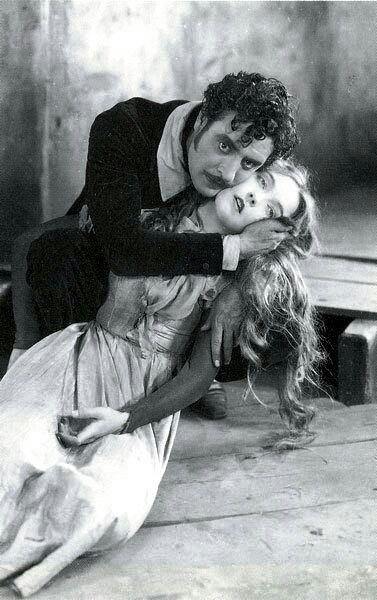
At the movies, Theodore Shane took deadly aim at the silent film version of the opera La Bohème:
A “pop-eyed” John Gilbert and Lillian Gish in the 1926 silent film version of La Bohème. (IMDB)
And finally, Al Frueh’s sympathetic take on the wintertime toils of the rich:
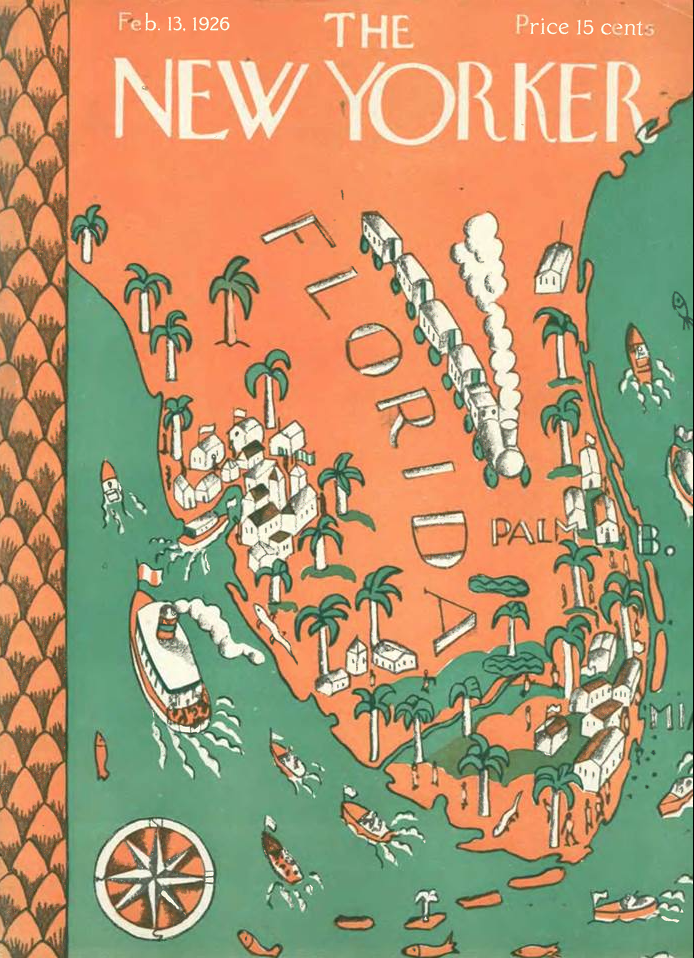
Feb. 13, 1926 cover by Ilonka Karasz. Image at the top of this entry is by Russell Patterson, circa 1930.
In reading all of these past issues of The New Yorker (a year’s worth, as of this post) one writer in particular jumps from the pages: Lois Long.
Perhaps it was her irreverent, high-spirited style and her fearless forays into any topic. She was the most modern of the New Yorker writers, developing a style that communicated directly to the reader as a confidant.
Her output was also impressive, writing about nightlife in “Tables for Two” under the pseudonym “Lipstick” and also about fashion in “One and Off the Avenue.” In his autobiography, Point of Departure, colleague Ralph Ingersoll wrote that Long “did a wheel-horse job of pulling The New Yorker through its first years,” with an “almost infinite capacity for being childishly delighted” while also possessing a “native shrewdness, an ability to keep her head.”
THE GANG…(l to r) Silent film star Charlie Chaplin,Vanity Fair editor Frank Crowninshield, sculptor Helen Sardeau, Lois Long and screenwriter Harry D’Arrast pose in a Coney Island photo booth, 1925. Photo scanned from the book Flapper by Joshua Zeitz.
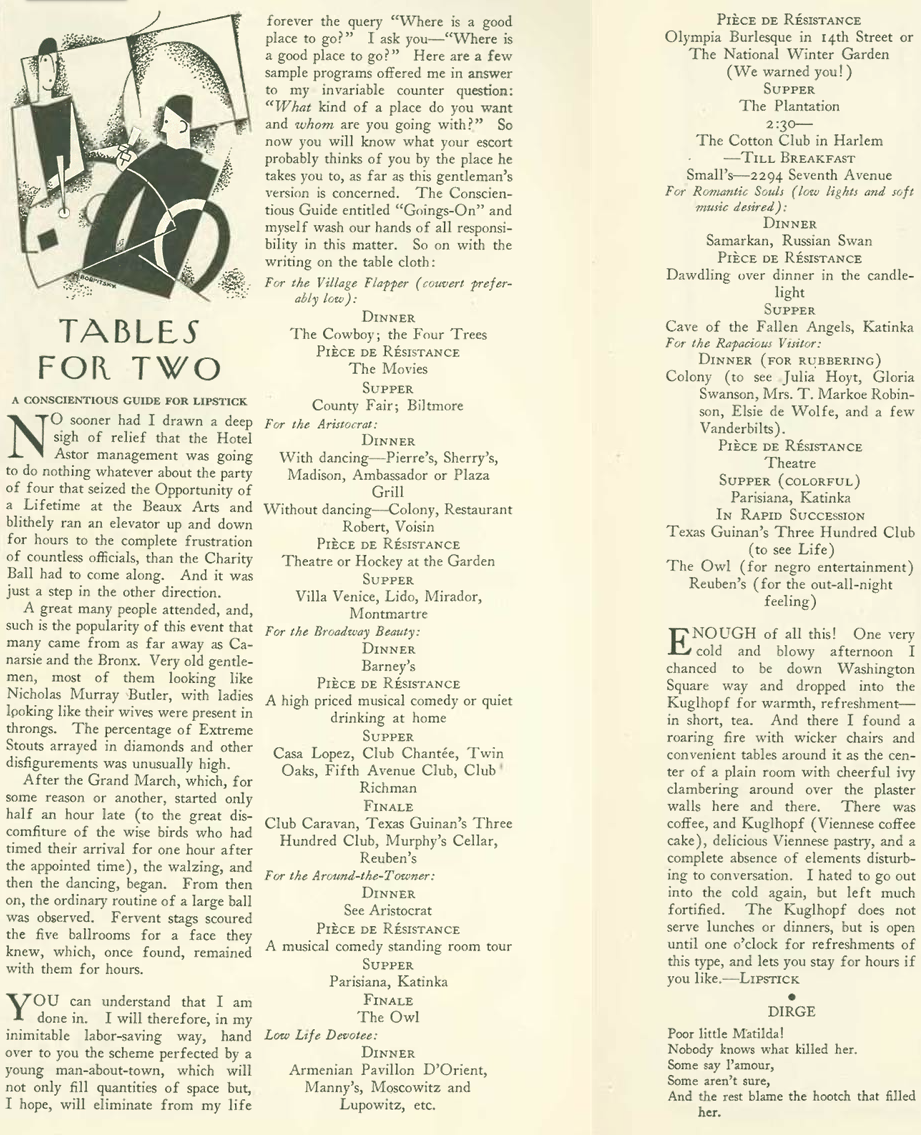
Long was in rare form in the Feb. 13, 1926 issue, offering a comprehensive list of evening entertainments for everyone from a flapper to an aristocrat. Here’s the entire column:
According to Long, if you were an aristocrat, or a “rapacious visitor” wishing to rubberneck at the rich and famous, The Colony restaurant was a good choice for the dinner hour.
The Colony, which began as a speakeasy in the early 1920s, was one of the places to be seen in New York for many decades. According to the blog Lost Past Remembered, “there was a Colony ‘crowd’ that included Hollywood royalty Errol Flynn, Gary Cooper, and Joan Crawford as well as the real deal ––The Duke and Duchess of Windsor were great fans (as were assorted bankers, brokers, wheeler dealers and gangsters and socialites).”
In those days you could display your status by where you were seated at The Colony. In later years the place was frequented by the likes of Jackie O and her sister Lee Radziwill. Writer Truman Capote, who enjoyed a special back table under a TV set, reportedly wept when the restaurant closed in 1971.
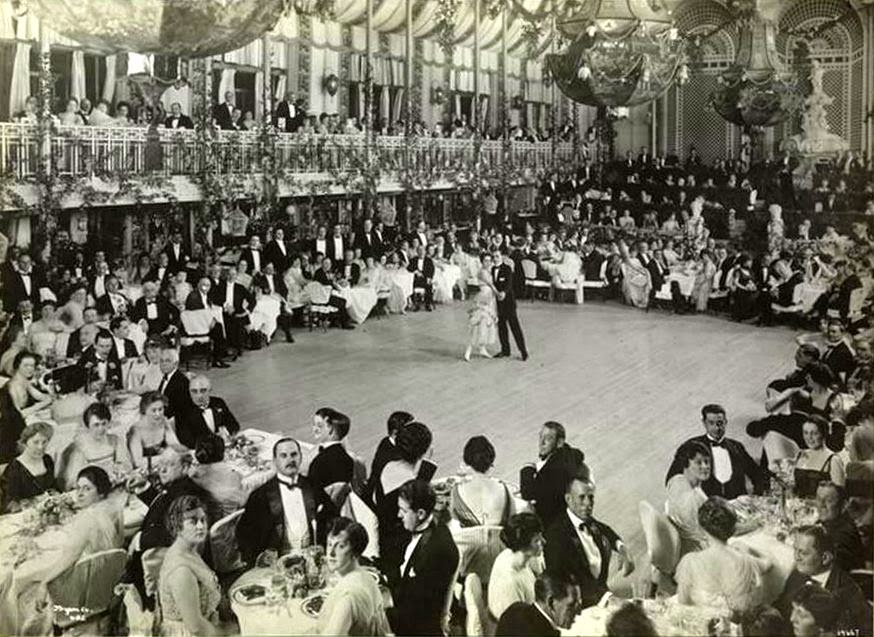
FLAPPER FARE…Long suggested that the Biltmore might be a suitable dining destination for the “Village Flapper.” Pictured here is the Biltmore’s Cascades ballroom and dining area, circa 1915. (Museum of the City of New York)
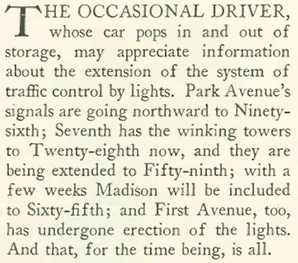
On to a less glamorous subject, “The Talk of the Town” made note of the extension of traffic lights in the city:
In 1926 traffic lights were still something of a novelty in New York, which didn’t install its first traffic light until 1920.
According to the New York Times (May 16, 2014), the first permanent traffic lights in New York went up in 1920, a gift from millionaire physician Dr. John A. Harriss who was fascinated by street conditions. His design “was a homely wooden shed on a latticework of steel, from which a police officer changed signals, allowing one to two minutes for each direction. Although the meanings we attach to red and green now seem like the natural order of things, in 1920 green meant Fifth Avenue traffic was to stop so crosstown traffic could proceed; white meant go. Most crosstown streets and Fifth Avenue were still two-way.”
The signals were so popular that in 1922 “the Fifth Avenue Association gave the city, at a cost of $126,000, a new set of signals, seven ornate bronze 23-foot-high towers (designed by Joseph H. Freedlander) placed at intersections along Fifth from 14th to 57th Streets.”
Bronze traffic signal tower designed by Joseph H. Freedlander at 42nd Street and Fifth Avenue, 1922. (New York Times)
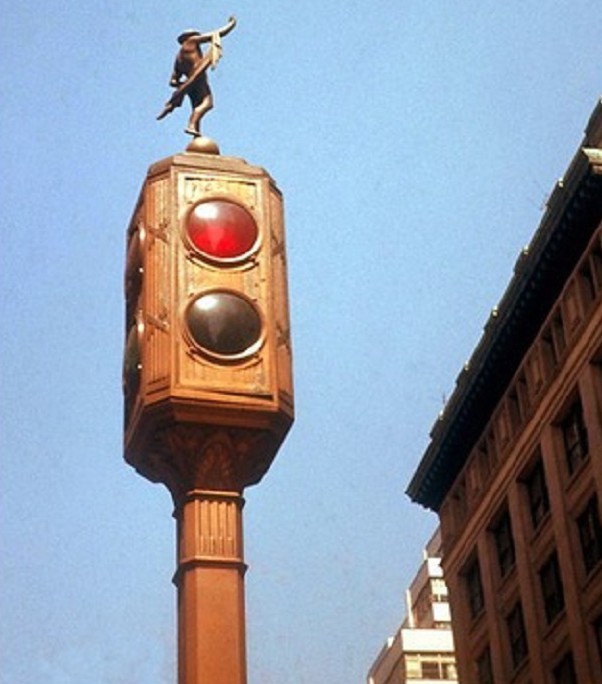
Within a few years it was determined that the towers were blocking the roadway, so in 1929 Freedlander was “called back to design a new two-light traffic signal, also bronze, to be placed on the corners. These were topped by statues of Mercury and lasted until 1964. A few of the Mercury statues have survived, but Freedlander’s 1922 towers have completely vanished.”
Freedlander’s bronze corner traffic signal, topped by a statute of Mercury. (Untapped Cities)
Skipping ahead a few issues, this Hulett advertisement from the March 20, 1926 issue features a drawing of the Freelander signal:
* * *
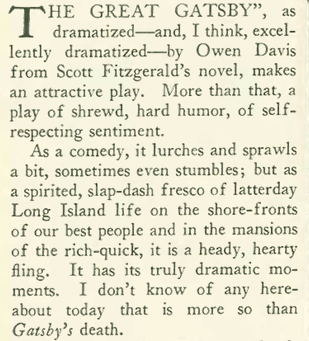
Although F. Scott Fitzgerald’s novel The Great Gatsby received a brief, dismissive review from the magazine in 1925, a stage adaptation of the novel was received favorably by theatre critic Gilbert W. Gabriel:
A Page From Playbill...The Great Gatsby, February 22, 1926 at Ambassador Theatre (Playbill Vault)
In the movies, critic Theodore Shane gushed over a new film by Robert Flaherty, famed director of Nanook of the North. This time around Flaherty turned his lens on a Polynesian paradise in Moana:
Still image from Moana (Indiewire)
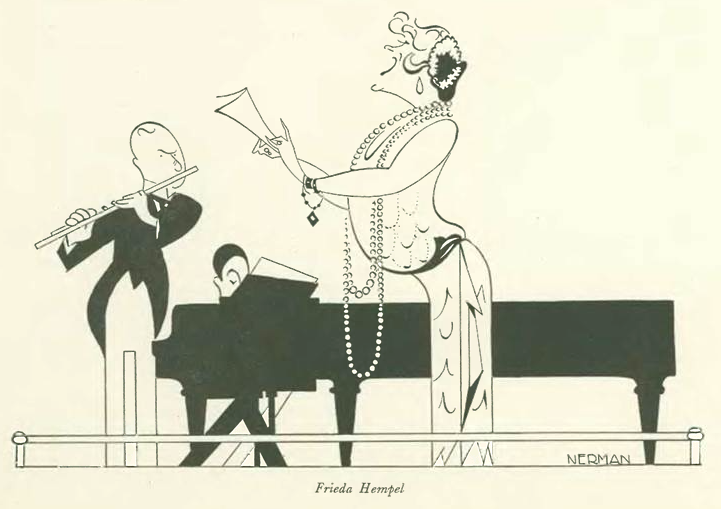
And to wrap things up, a drawing by Einer Nerman of German soprano Frieda Hempel…
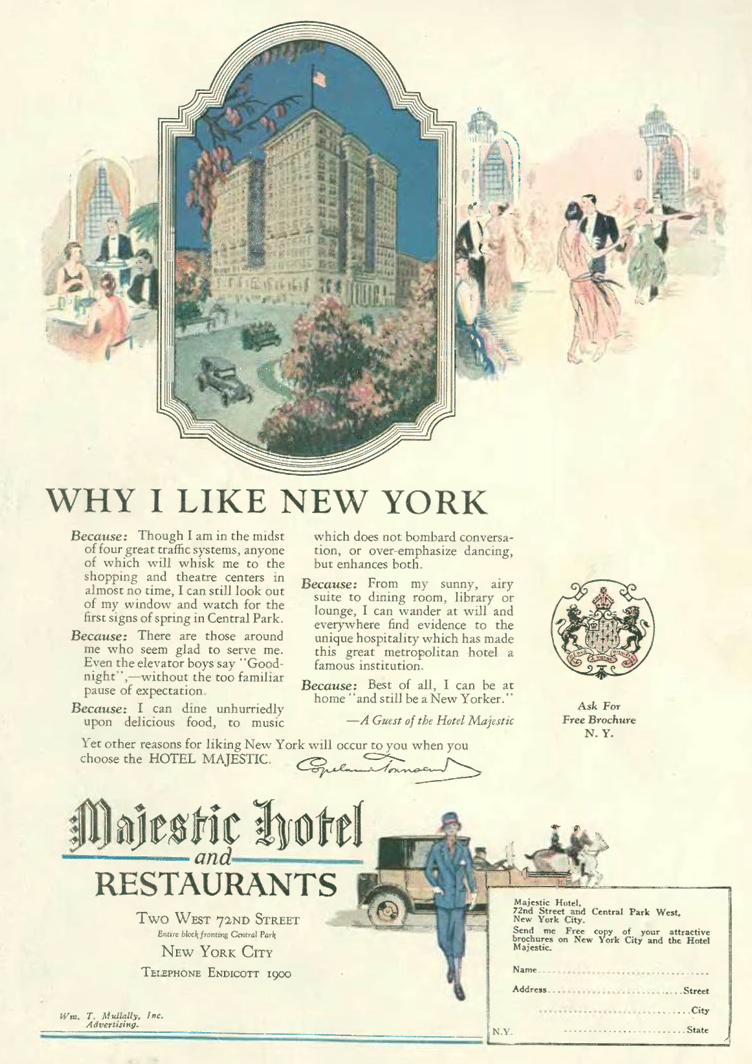
And this advertisement exhorting readers to stay at the Hotel Majestic. The hotel, built in 1894, would fall to a wrecking ball in 1929, just three years after this ad appeared:
MGM spent nearly $5 million (about $70 million today) to make the silent epic Ben-Hur, filming the movie on location in Egypt, Italy and the United States. The New Yorker’s film critic Theodore Shane was not impressed.
Shane wrote that $4,999,999.95 had been spent “on massive effects and the remaining $.05 on drama.”
He noted, however, that the original story, an 1880 novel by Lew Wallace (who was a Union general in the Civil War, among other things), was pretty lacking in drama to begin with, just a “piece of bric-à-brac romance (that was) nothing more than a super Rover Boys story touched up with a Biblical background.” Here’s Shane’s entire review of the film, which was released by MGM on December 30, 1925:
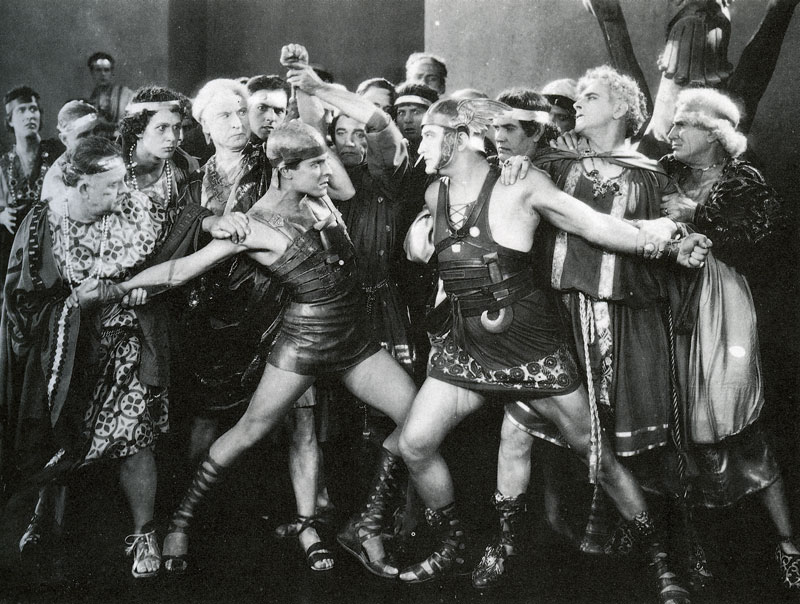
A Nickel’s Worth of Drama…Ramon Novarro (left) and Francis X. Bushman mix it up in Ben-Hur (1925) (Virtual History)
This was actually the second Ben Hur film. The first was made in 1907, a 15-minute silent costing $500 (and it really was made on the cheap; the producers stole some shots of a mock chariot race at a fireworks show at Sheepshead Bay, Brooklyn, and then added some interior shots to complete the picture).
For the 1925 Ben Hur, filming on location proved difficult from the start. Italy’s new leader, Benito Mussolini, was in an anti-American mood when production began, and labor disputes often delayed filming. By all accounts, conditions were miserable. Kevin Hagopian, in an essay for the New York State Writers Institute, observed “The worst agonies were reserved for the film’s climax, the chariot race. Legendary second unit director B. Reeves Eason’s nickname “Breezy” was certainly not earned by his work on the Ben-Hur set, for his merciless pace cost the lives of over a hundred horses. As [actor Francis X.] Bushman said sadly, “If it limped, they shot it.” A stunt man was killed in a chariot crash, and [actor Ramon] Navarro himself only narrowly escaped death.”
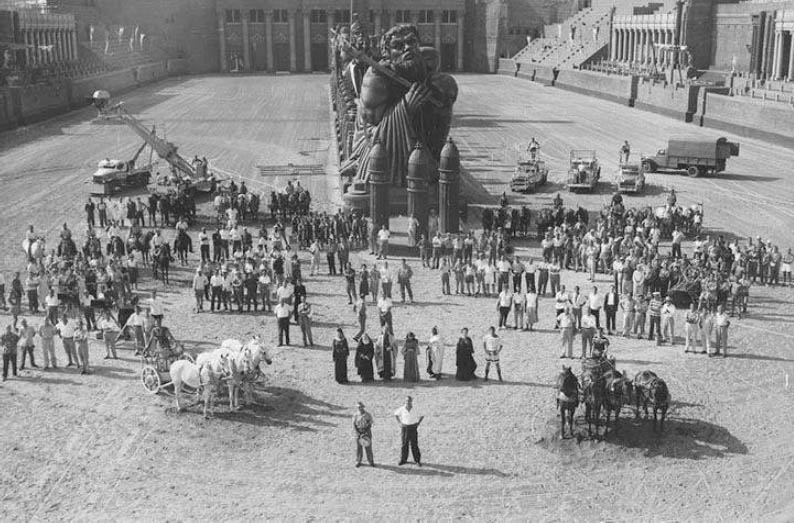
The troubled Italian set was eventually torn down and a new one built in Culver City, California. The crowd scenes and master shots for the race were done in a single day, with forty-two cameras covering the action.
The famed chariot race staged in Culver City, California, was shot with 42 cameras.
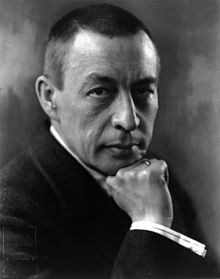
In “Profiles” Esther Carples looked at the life of Sergei Rachmaninoff, who was widely considered one of the great pianists of his day, and as a composer represented the last vestiges of Romanticism in Russian classical music. Carples painted a portrait of a brooding genius, a man with aristocratic bearing who lived in lonely exile from his native Russia.
Sergei Rachmaninoff in 1921. (Library of Congress)
In 1921, Rachmaninoff bought a house on 33 Riverside Drive in New York City, where he lived until 1925. There he consciously recreated the atmosphere of Ivanovka (his beloved Russian summer house) entertaining Russian guests, employing Russian servants, and observing old Russian customs.
*****
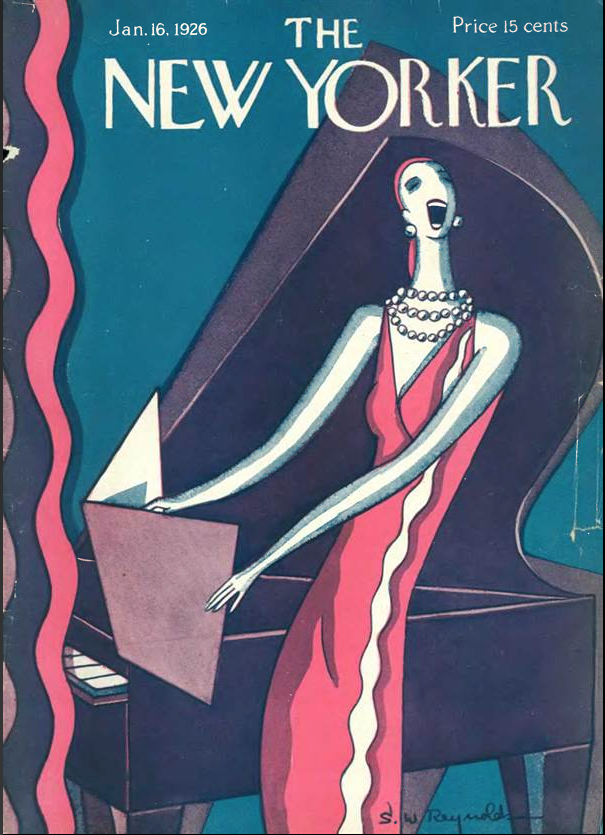
Jan. 16, 1926 cover by S.W. Reynolds.
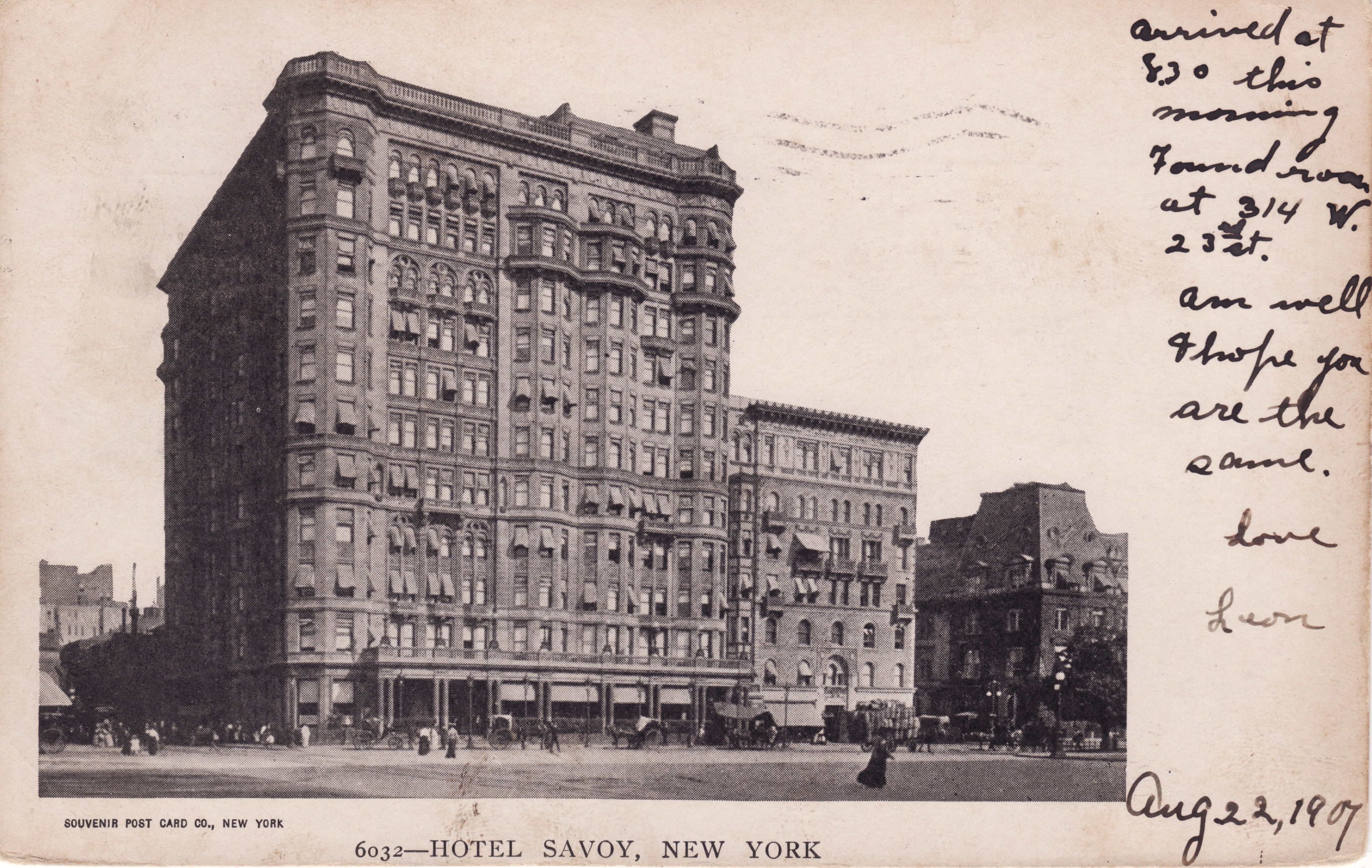
Let’s move on to the next issue, Jan. 16, 1926. “The Talk of the Town” noted another loss of a Fifth Avenue landmark with the Savoy Hotel was falling to the wrecking ball.
The Savoy, built in 1891-92, was slated to be replaced by The Savoy Plaza Hotel, which itself would be demolished in 1965-66 (amid significant public outcry and protest) to make way for the eastern headquarters building of General Motors.
It was observed that the new year would see a boon in construction of huge new buildings along the Avenue, and buildings only five years old (such as Heckscher Building) would be dwarfed by the new towers.
Another One Bites The Dust…The Savoy Hotel (stuffnobodycaresabout.com)
The New Yorker continued to have fun with actress Gloria Swanson‘s pretensions to royalty (she was married to the Marquis de La Coudraye at the time). This time it came from the pen of Jimmie the Ink (James Daugherty), part of his series of drawings that coupled famous people of the day in comic situations:
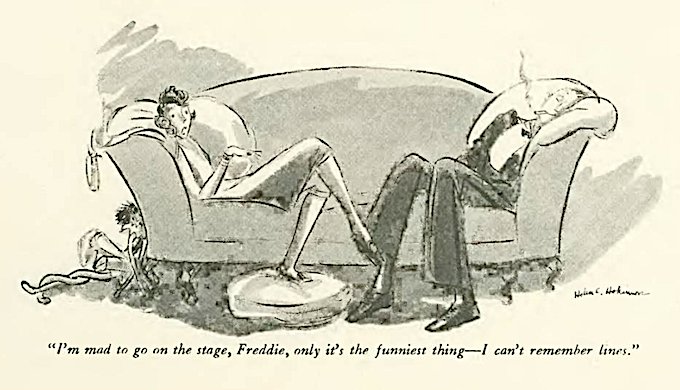
The issue also featured Helen Hokinson with a cartoon that seemed more in Barbara Shermund’s wheelhouse…
…a Julian de Miskey drawing for the theatre section…
…and a Peter Arno illustration…
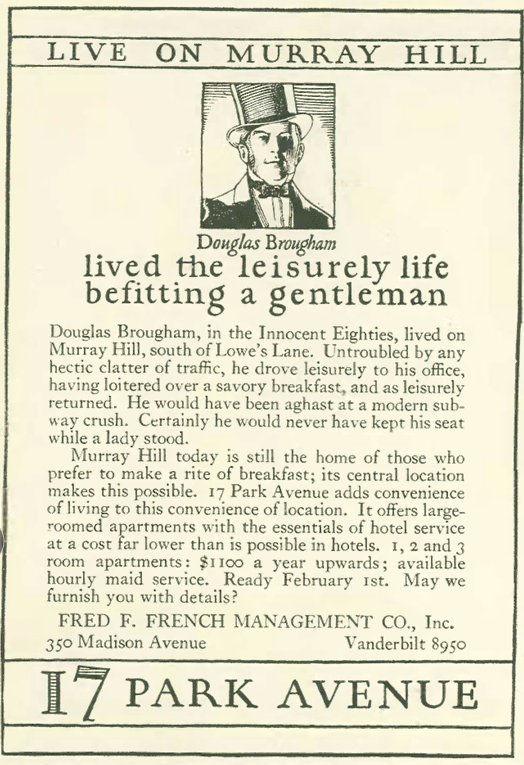
To close, two ads from the Jan. 16 issue, this one appealing to Anglophilic, aristocratic aspirations of certain readers…
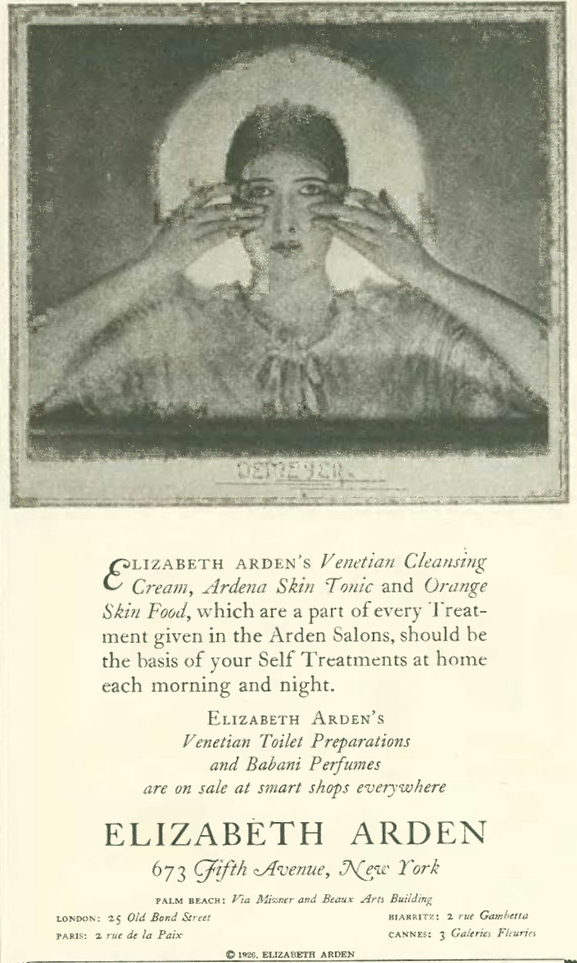
And this one from Elizabeth Arden, who will become a mainstay in the magazine with these ads featuring women with ghostly stares, usually with their heads wrapped tightly to combat sagging skin. Thanks to Hollywood, it was the age of the close-up, so wrinkles and blemishes be gone!
As we begin a new year of The New Yorker, it strikes me how little things have changed in 90 years, at least when it comes to human nature–wars and rumors of wars, celebrity gossip, the latest fads in music and fashion, fights over politics and religion. It’s all still with us. And yet, a person from 2015 would be seem like an extraterrestrial in 1926.
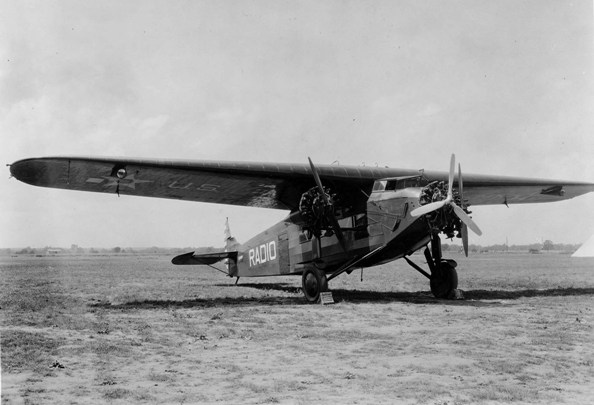
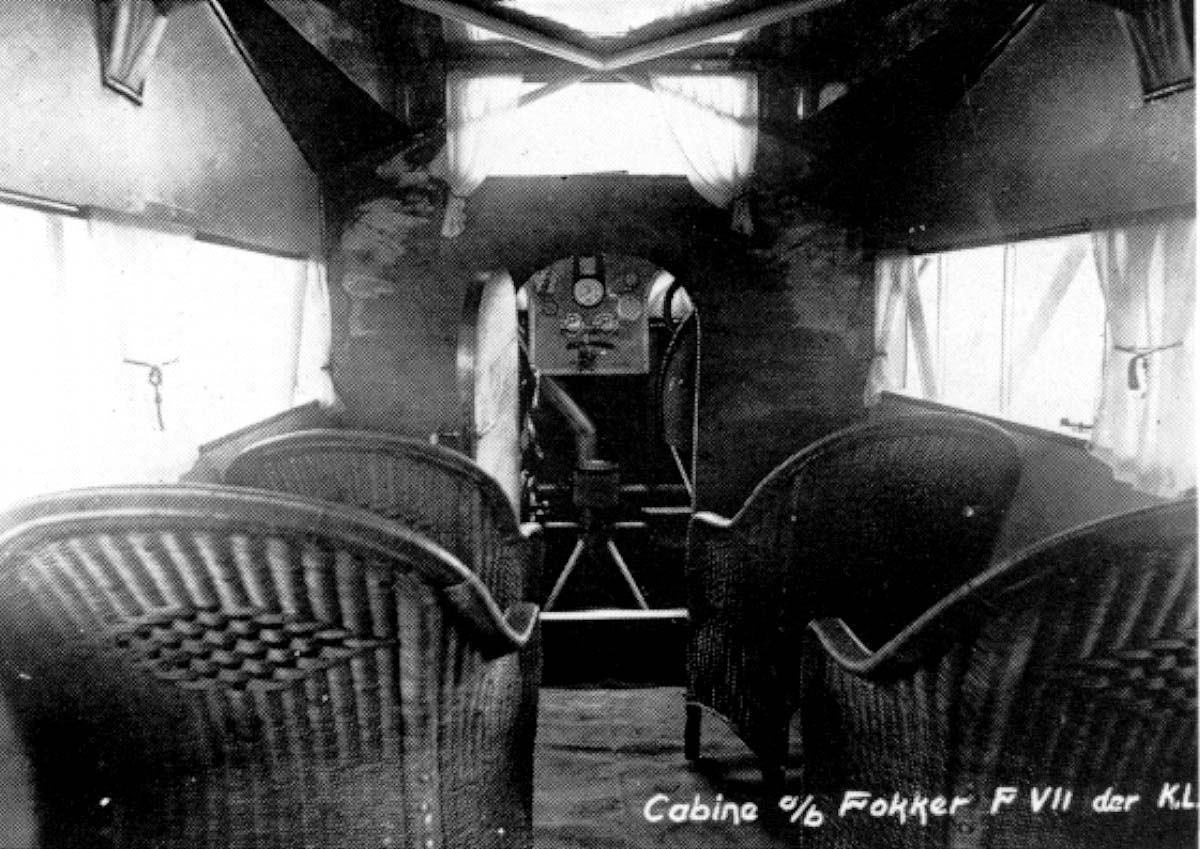
January 1926 was still a year and a half away from Charles Lindbergh’s Atlantic flight. Today we think so little of jumping on a plane that soars seven miles above the earth and whisks us anywhere in a matter of hours.
The Fokker F7. If you could even afford to fly in the mid-1920s, this is your ride. Buckle up! (Top, aviation history.com; bottom, dutchaviation.nl)
People in 1926 lived very differently, with far fewer distractions. No TV, only sporadic music on mono-tinny radios (or from mostly scratchy, hand-cranked records). Electric lights, but only if you lived in a city or town. The metropolis was noisy, but there was also silence. No cellphones or earphones, no CNN or ESPN blaring from every vertical surface. Your health? Forget it. Going to the dentist, regardless of your station in life, was a chamber of horrors. Ditto the doctor. Ever look at an antique doctor’s bag? Just some brown bottles, weird clamps and a saw. Penicillin wouldn’t be discovered until 1928, and for some reason lots of people died back then of peritonitis. It would claim both Rudolph Valentino and Harry Houdini in 1926. Finally, if you lived in 1926 you probably thought The War to End All Wars was just that. Only a few of the very sage saw the annihilation yet to come.
Anyway…
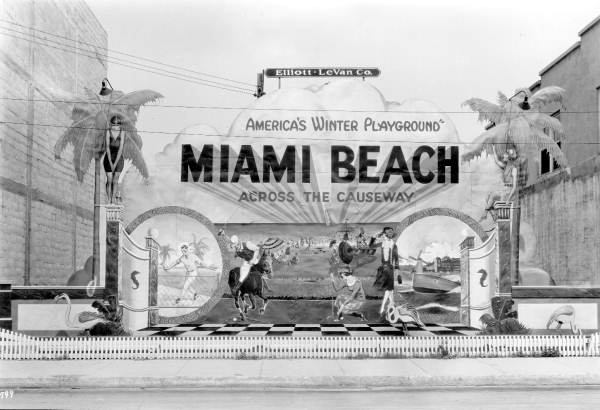
I titled this edition “Fun in the Sun” because the Jan. 2 issue opens with back-to-back ads enticing freezing New Yorkers to go south for the winter:
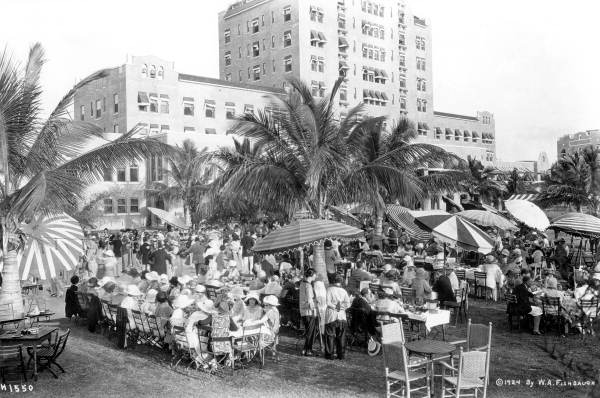
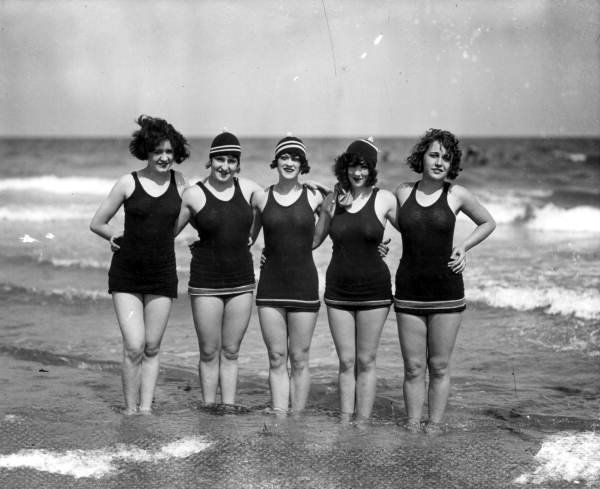
These were boom years for places like Miami Beach, formerly a quiet backwater but fast becoming a popular vacation getaway for New Yorkers and other Northeasterners. During the 1920s many wealthy industrialists from the north and Midwest also built their winter homes there.
Japanese tea garden at the Flamingo Hotel in 1923 – Miami Beach (State Archives of Florida, Florida Memory)Bathers on Miami Beach in 1925 (State Archives of Florida, Florida Memory)
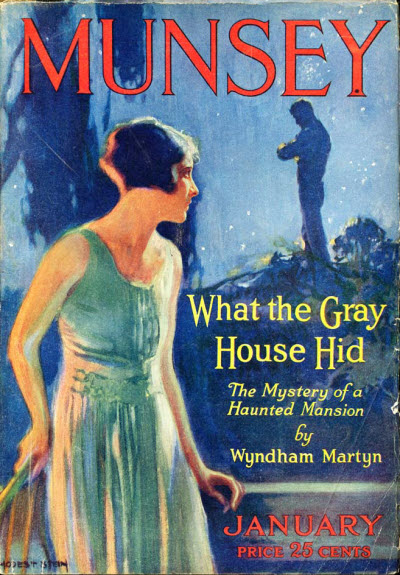
In other items, the “Reporter at Large” Morris Markey commented on the death of Frank Munsey, American newspaper and magazine publisher. Munsey had a reputation for extreme frugality and was widely disliked by employees who blamed him for their “shoddy recompense.” Munsey is credited with the idea of using new high-speed printing presses to print cheap, ragged pulp magazines, especially for working-class readers. Magazines such as Munsey and Argosy werefilled with various genres of action and adventure fiction.
Munsey’s Magazine January 1925 (philsp.com)
Markey wrote that Munsey would fire people on a whim for reasons that included being left-handed, too old, too young, or too fat. During his ownership of the New York Sun, Munsey gave “a peremptory order that all fat men, being inefficient and probably lazy, be expelled from the Sun staff.” Markey was no fan of Munsey as is clear in this excerpt:
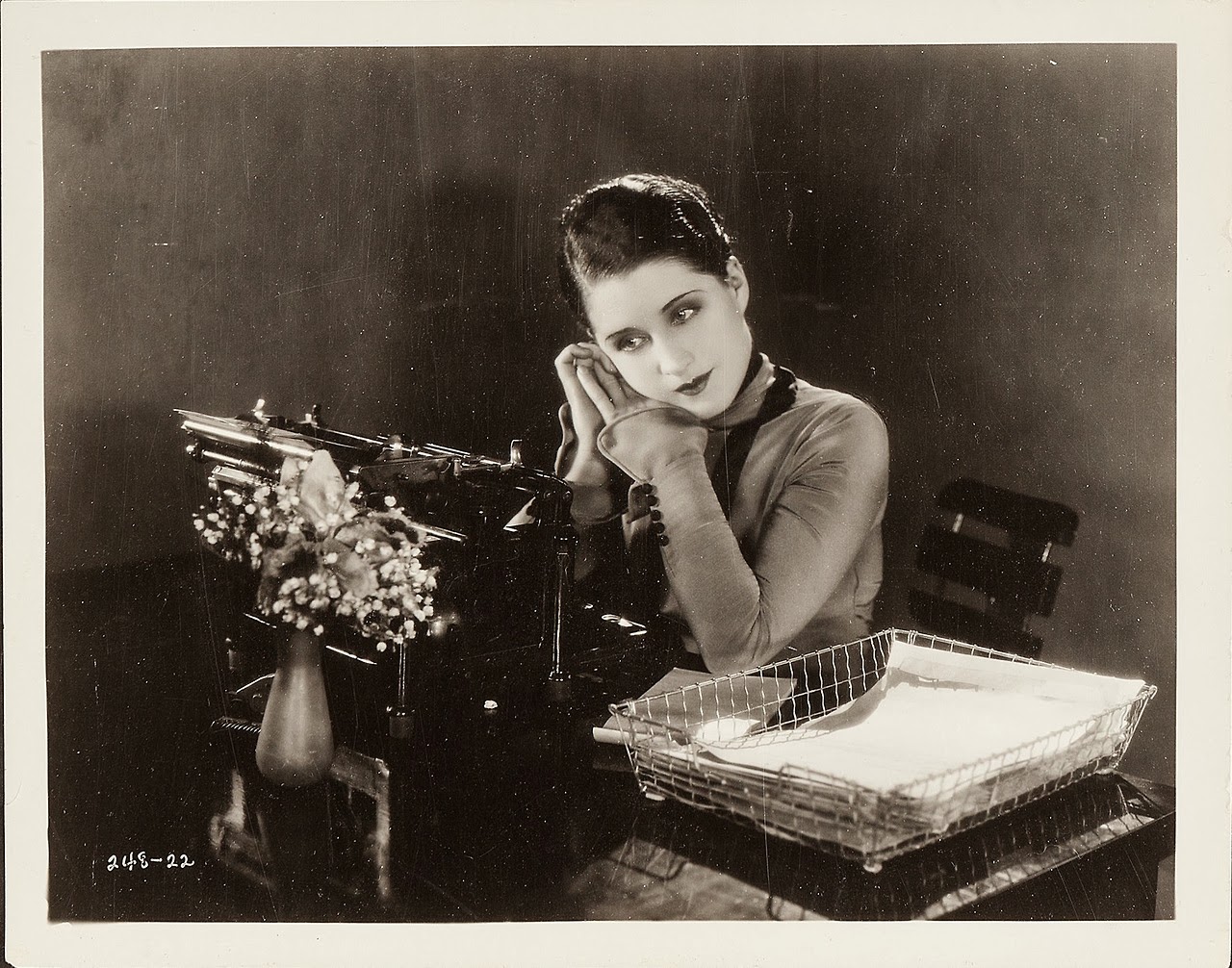
Theodore Shane continued to be disappointed with films coming out of Hollywood. He described Norma Shearer’s latest picture His Secretary as “poor.”
A stenographer, and a vamp! Norma Shearer in His Secretary, 1925 (silent beauties)
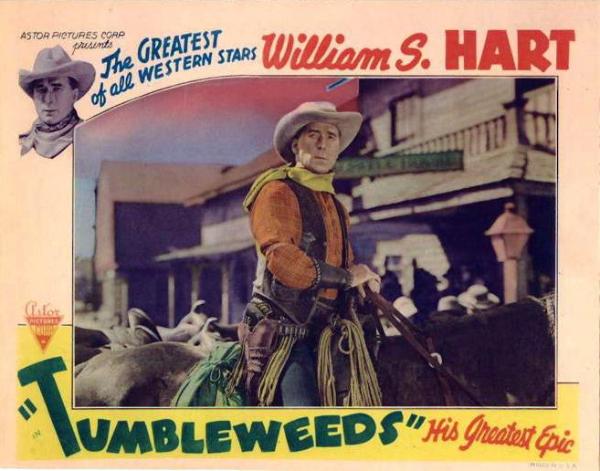
The film was about a humble stenographer who suddenly transforms into a ravishing sex symbol, a “Cinderella theme” that Shane believed had been thoroughly worn out by the actress. He was also underwhelmed by the return to the screen of William S. Hart, once a big star of the early silents.
The old cowboy isn’t done yet, durn it! (silenthollywood.com)
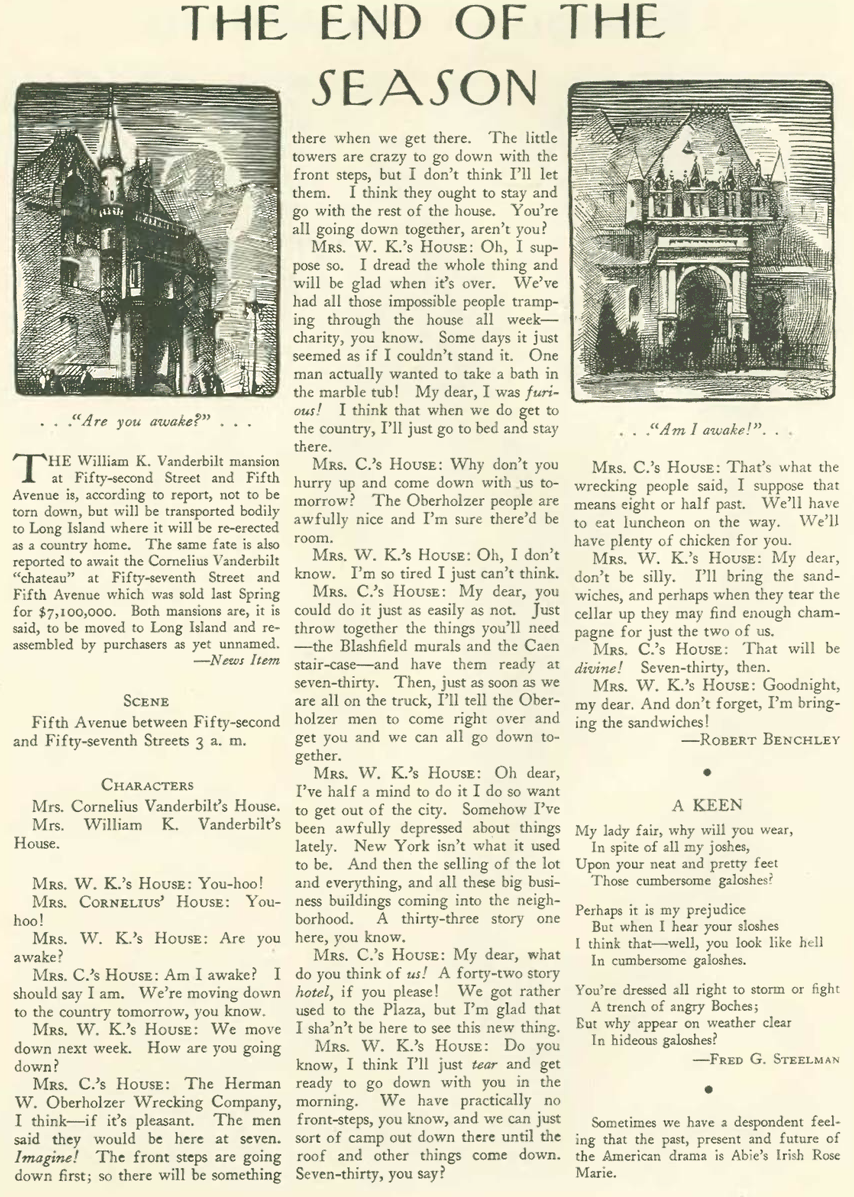
I have written several entries about the changing face of Fifth Avenue (the old mansions being destroyed, that is). Here is Robert Benchley’s take on the subject:
To close, an illustrated feature by Helen Hokinson, once again showing us how a college student of the 1920s looks (to my eyes anyway) as ancient and remote as a mastodon:
We close out The New Yorker’s first year with the magazine on firmer footing and many of its mainstay writers and artists firmly in place.
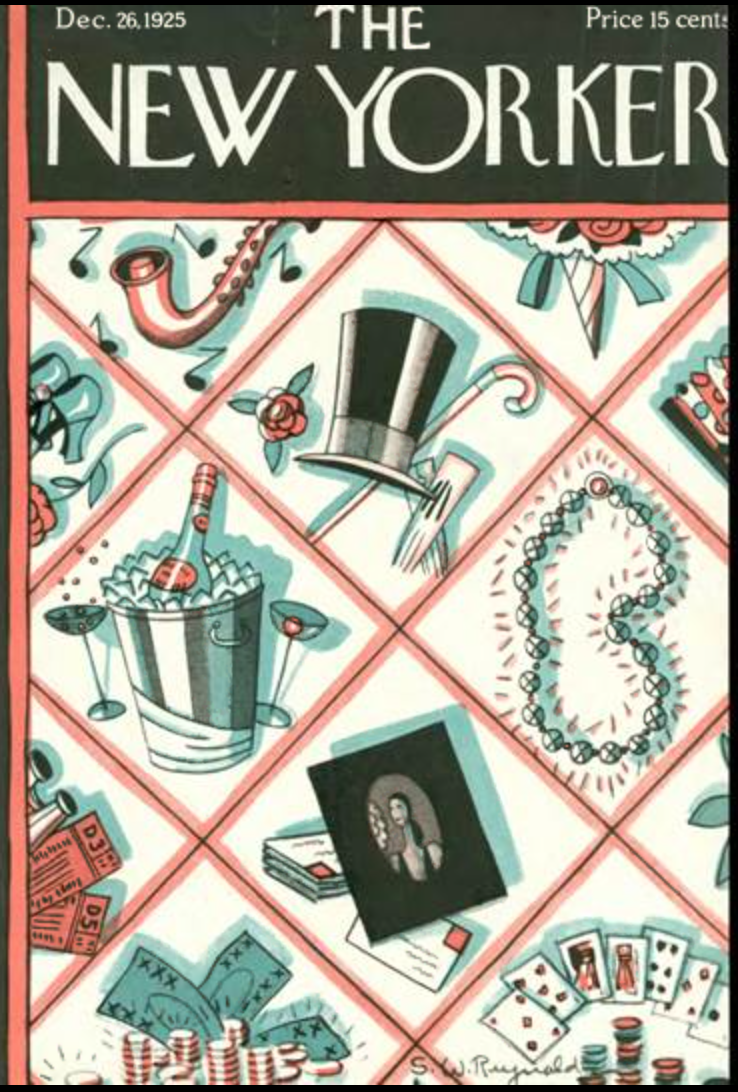
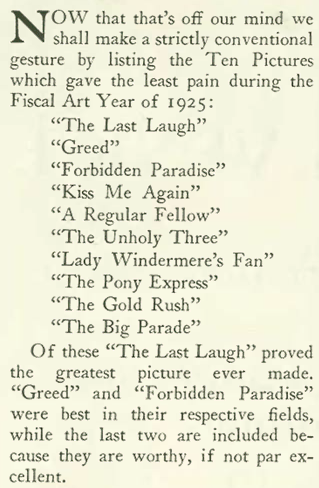
The Dec. 26, 1925 issue was the usual hodgepodge, but some writers did give a nod to the end of the year, including film critic Theodore Shane, who offered his list of the best ten moving pictures of 1925.
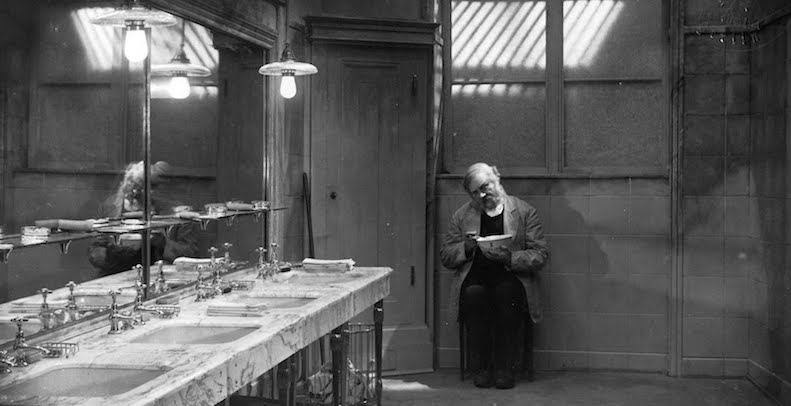
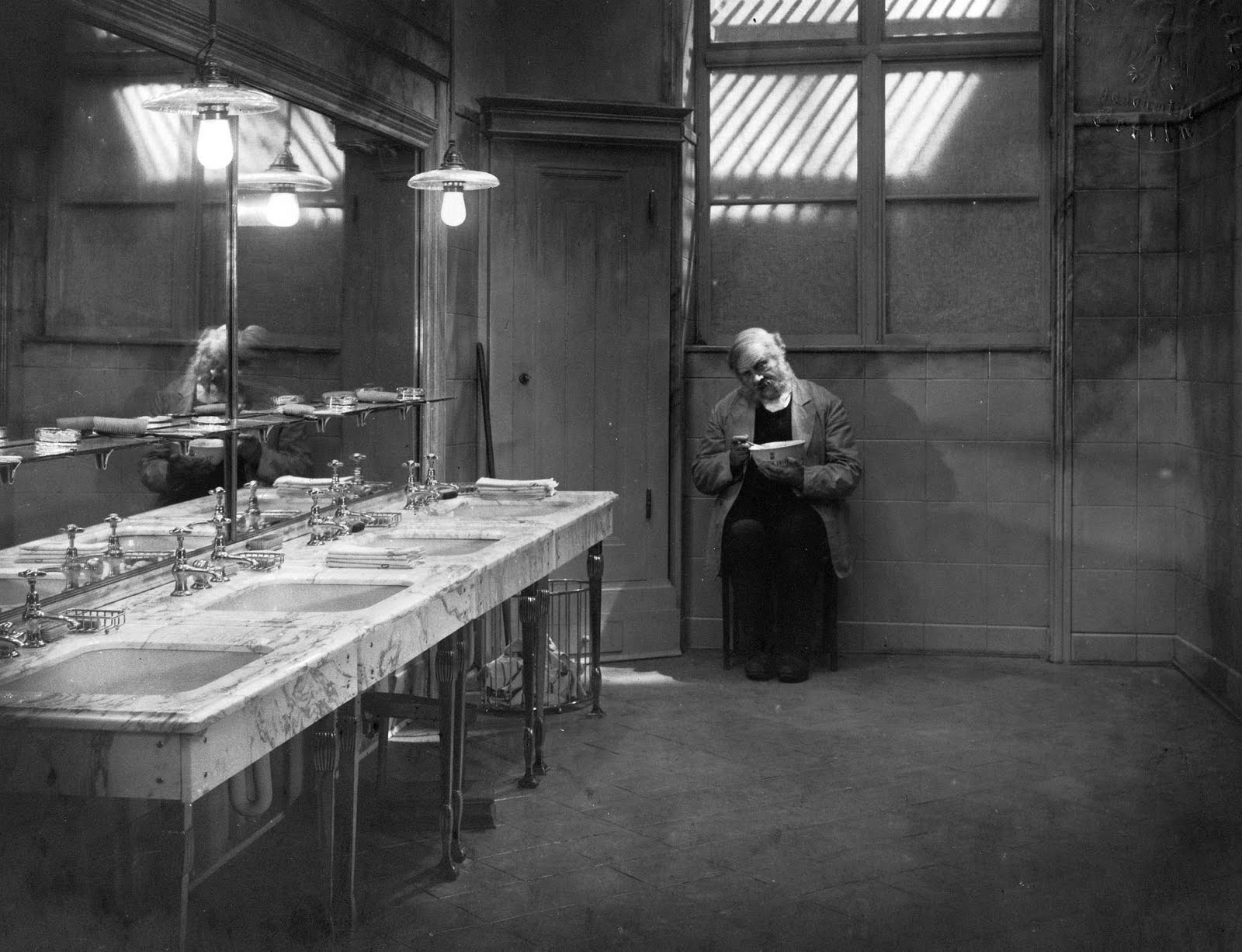
Shane’s favorite film by far was The Last Laugh, (the German title was Der letzte Mann, or The Last Man) a 1924 German film directed by F.W. Murnau and starring Emil Jannings (who would later win the first Academy Award for Best Actor in 1929). Shane referred to it as “the greatest picture ever made.” Released in the U.S. in 1925, the film was about a proud doorman who loses his job and tries to hide the fact from his friends and family. Shane usually reserved his highest praise for German cinema in his columns.
Scene from The Last Laugh (1924) starring Emil Jannings. (Roger Ebert)
Shane’s complete list of the ten best movies of 1925:
For the worst films of the year, Shane suggested a tie between Drusilla With a Million, Lord Jim, Joanna, the Million Dollar Girl or Stella Dallas.
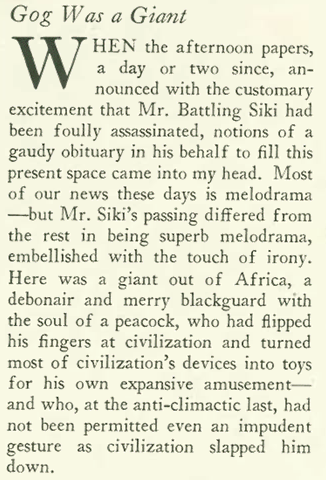
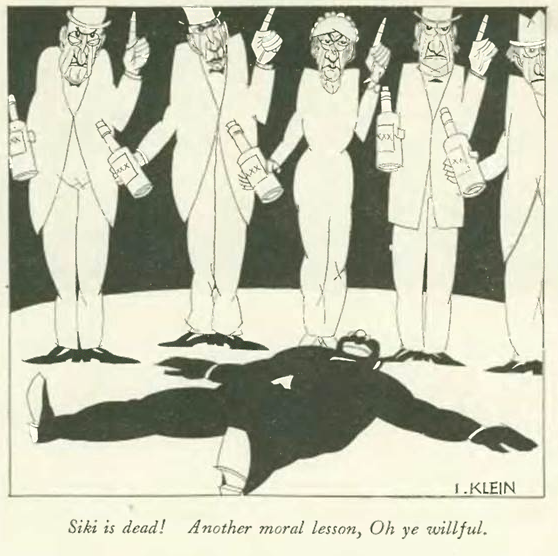
The New Yorker also commented on the murder of the irrepressible boxer Louis Mbarick Fall, popularly known as “Battling Siki.”
“Battling Siki” in his heyday. (Wikipedia)
Born in Senegal, he was a light heavyweight boxer from 1912–1925, and briefly reigned as a light heavyweight champion. Known for his heavy drinking and carousing, on the night of Dec. 15, 1925, he was found dead near his 42nd Street apartment. He had been shot twice in the back at close range. He was 28.
In his column, “A Reporter at Large,” Morris Markey offered this observation on Battling Siki’s passing:
The cartoonist Isadore Klein, on the other hand, contributed this strange stand-alone illustration for “The Talk of the Town” section:
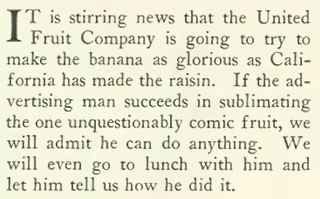
Also in “Talk” was this brief item about the United Fruit Company:
United Fruit would be no laughing matter three years later with the Banana Massacre, which would claim the lives of an unknown number of workers who were striking for better working conditions in Columbia.
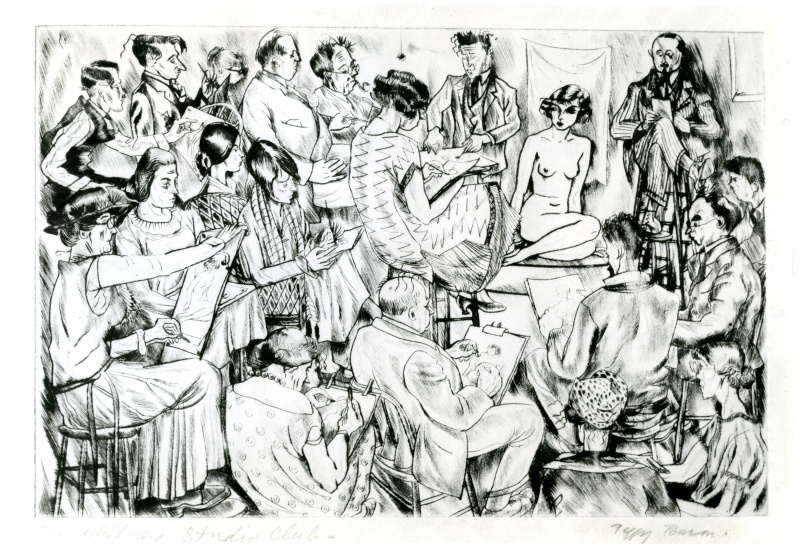
Art critic Murdock Pemberton offered a glowing review of an exhibit at the Montross Galleries by frequent New Yorker contributor Peggy Bacon:
Peggy Bacon, The Whitney Studio Club, 1925. (Whitney Museum of American Art)Peggy Bacon (Smithsonian)
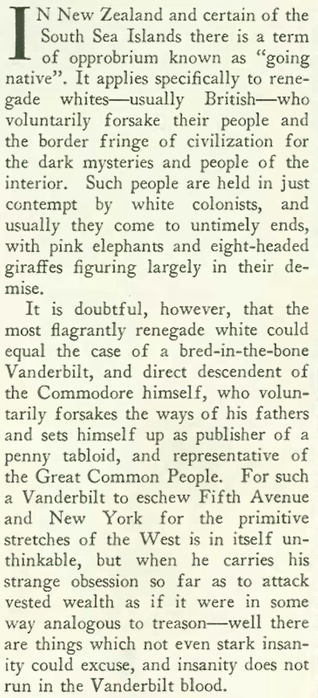
“Profiles” looked at Cornelius Vanderbilt Jr, “The Fifth Avenue Maverick.” William Boardman Knox wrote that the young Vanderbilt “is as alien to his blood as a marmoset to a gorilla.”
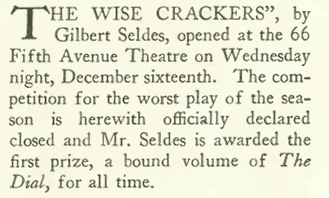
In the “The Theatre,” critic Herman J. Mankiewicz pulled no punches when he declared Gilbert Seldes’ play The Wise Crackers “the worst play of the season” (Seldes was himself a noted critic and sometime New Yorker contributor):
What’s more, the play was about a group of literate New Yorkers who gather to exchange witty barbs and sarcastically comment on the doings of the day. In other words, it was inspired by the Algonquin Round Table, which famously included Mankiewicz as a member.
Another Round Table notable was Robert Benchley, who contributed this piece for the last issue of the year:
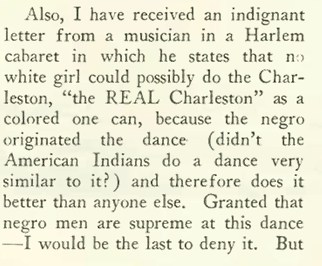
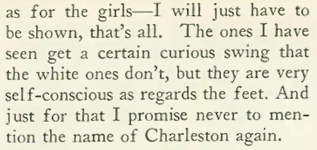
Lois Long offered her regrets for ever bringing up the subject of “The Charleston:”
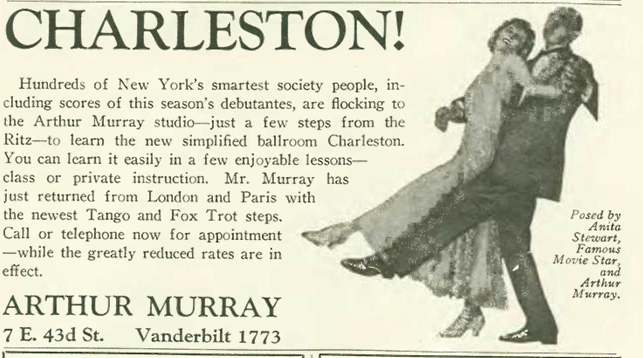
And just a few pages over, lessons were advertised for…The Charleston!
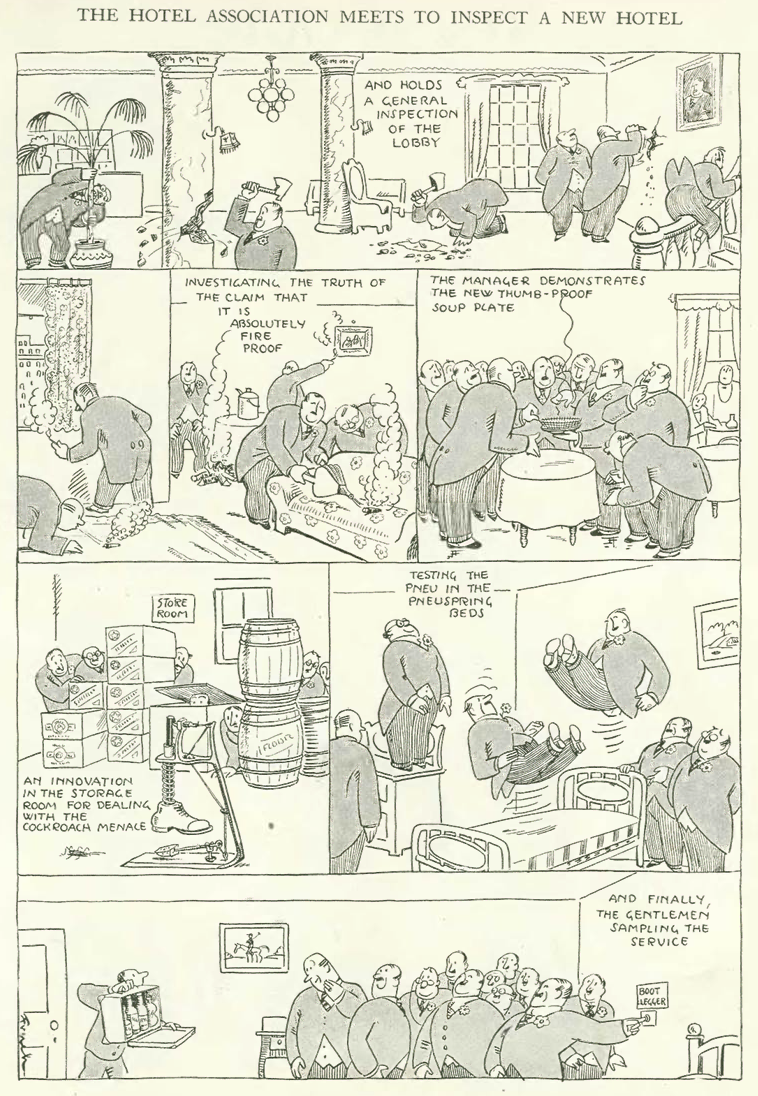
And to close, here’s a little fun with hotel inspectors, courtesy of Al Frueh:
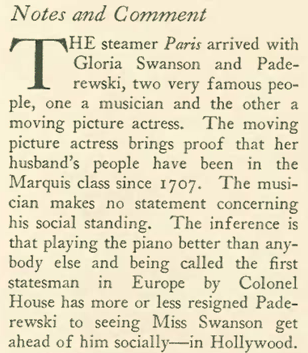
Silent film star (and sometime French “noble”) Gloria Swanson was back in the States after a summer sojourn at her Paris residence.
Nov. 14, 1925 cover by Joseph Fannel.
“The Talk of the Town” reported that she had arrived on the steamer Paris, with the great Polish pianist and statesman Jan Paderewski in tow…
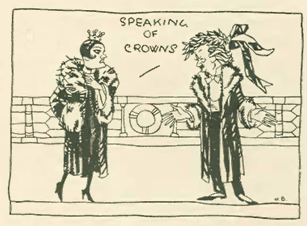
Johan Bull’s take on Swanson’s grand arrival with Paderewski, who was much decorated as both a statesman and artist:
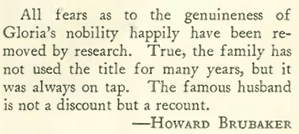
The New Yorker made light of the fact that Swanson assumed a rather regal bearing not only as a famous film star but also as the new wife of French aristocrat Henri, Marquis de la Falaise de la Coudraye, her third husband. In his column, “Of All Things,” Howard Brubaker added this swipe at the Swanson’s pretensions to royalty:
Although a marquis and member of the famous Hennessy Cognac family, Henri was not wealthy and worked for a living. He met Swanson when he was hired to be her assistant and interpreter during the filming of Madame Sans-Gêne (1925) in France. The match of a Hollywood star with European nobility made the marriage a global sensation.
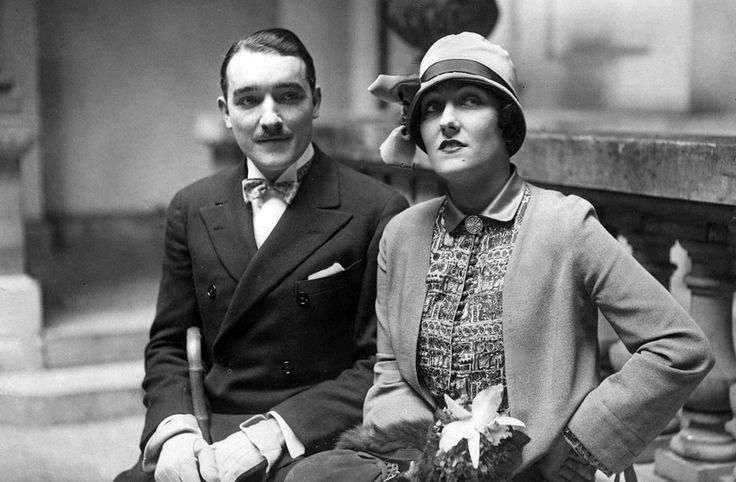
MON CHÉRI…Photo taken around the time of the wedding of Marquis Henri de la Falaise and Gloria Swanson, January 1925. (indypendent-thinking.tumblr.com)
The marriage ended in divorce in 1930. According to Wikipedia, (citing two books on the subject), Swanson had an affair with Joseph P. Kennedy Sr. for several years during her marriage to Henri:
Henri became a film executive representing Pathé (USA) in France through Joseph P. Kennedy, Sr., who was running the studio. Many now assume he was given the position, which kept him in France for ten months a year, to simply keep him (Henri) out of the way…(Kennedy) became her business partner and their relationship was an open secret in Hollywood. He took over all of her personal and business affairs and was supposed to make her millions. Unfortunately, Kennedy left her after the disastrous “Queen Kelly” and her finances were in worse shape than when he came into her life.
GOOD OLD DAYS…Life beneath the Sixth Avenue El (Wikipedia)
In another Talk item, the Sixth Avenue Elevated rail line continued to serve as a “blot” upon the city of New York (Johan Bull illustration):
According to a Wikipedia, the old Sixth Avenue El (constructed during the 1870s) was notoriously noisy, made buildings shake, and bombarded pedestrians underneath with dropping ash, oil, and cinders. Eventually, a coalition of commercial establishments and building owners would stage a successful campaign to have the El removed because it was hurting business and property values. It would be razed in 1939 and replaced by the underground IND Sixth Avenue Line.
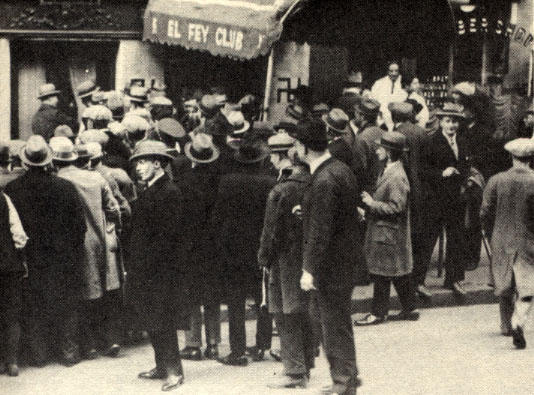
SPOIL SPORTS…Buckner’s agents padlock New York’s El Fey Club in 1925 before a gathering crowd.
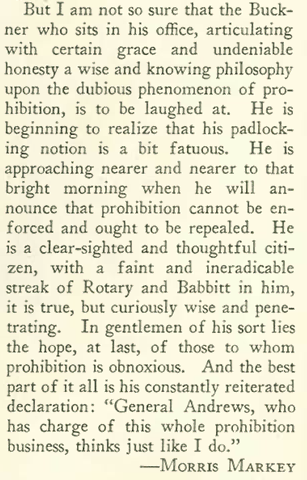
The New Yorker also featured a lengthy interview with Emory Buckner (conducted by Morris Markey), in which the New York District Attorney discussed his approach to Prohibition enforcement, including the padlocking of restaurants and clubs found to be serving alcohol. In a surprisingly frank interview, Buckner said his zealous crusade had nothing to do with moral conviction:
Buckner also admitted that the government wasn’t making a serious effort to enforce Prohibition (e.g. low salaries for agents), and if it wasn’t going to make the effort then the law should be repealed. Markey concluded his article with words of surprising admiration for a man who had been so thoroughly excoriated in previous issues of The New Yorker.
In other items, theatre critic Herman J. Mankiewicz stepped out of the “Critique” section to write about his experience travelling by train to a football game. He found the whole spectacle (especially the coonskin coat-clad fans) wanting.
No doubt Mankiewicz’s fellow travellers were clad in something similar to this. The ad appeared in the same issue as Mankiewicz’s article.
Waldo Frank contributed a profile of the popular poet Carl Sandburg, whom he described as moving “through the Machine of our world” with “a peasant’s mind.” Frank used the term not necessarily as a criticism but as a way to describe Sandburg’s Midwestern simplicity. However, a drawing by James House Jr. that accompanied the article depicted Sandburg not as a man of letters, but more like some dim-witted forebear of Homer Simpson:
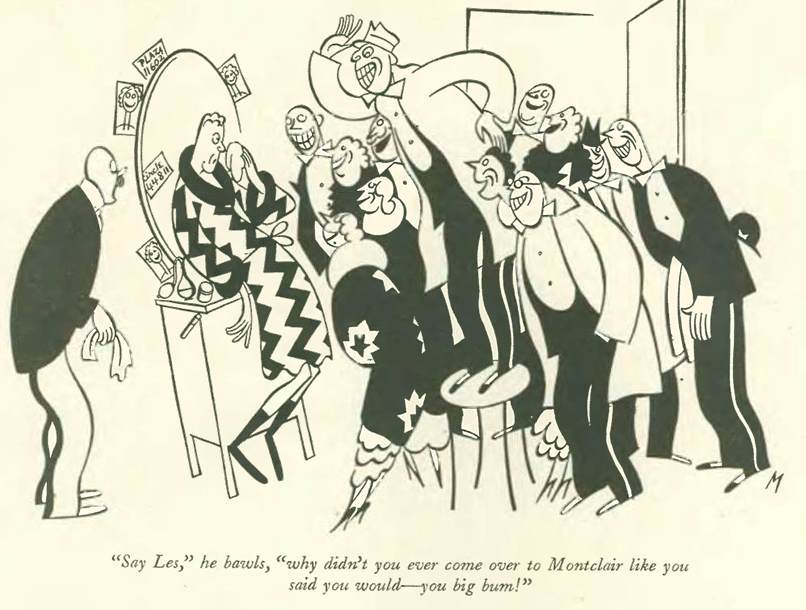
The actor Leslie Howard contributed another humorous piece to The New Yorker titled “Such is Fame,” accompanied by this Julian de Miskey illustration:
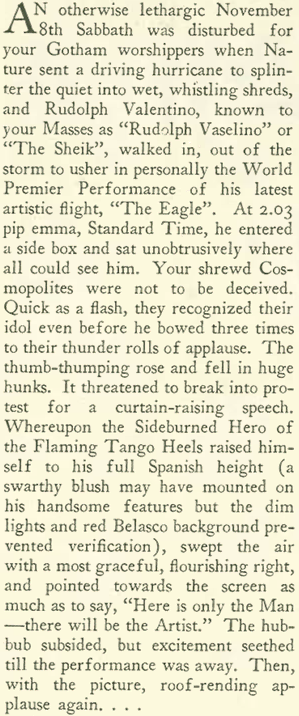
Theodore Shane reported in “Motion Pictures” that Rudolph Valentino appeared in person at the opening of his new film, The Eagle. Known for his aversion to public appearances, Valentino handled the occasion with a silent flourish:
Vilma Bánky and Rudolph Valentino in The Eagle. (Wikimedia Commons)
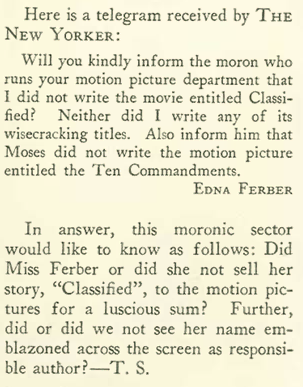
At the end of his column Shane included this exchange with novelist and playwright Edna Ferber, who was also one of the regular wits at the Algonquin Round Table:
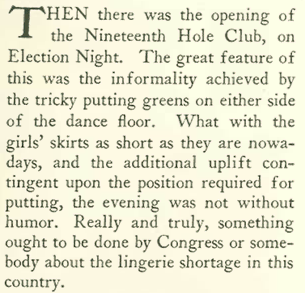
In “Tables for Two,” Lois Long wrote about the opening of the Nineteenth Hole Club at the Roosevelt Hotel, and noted that the putting greens on either side of the dance floor offered “additional uplift” to short skirts worn by some female patrons:
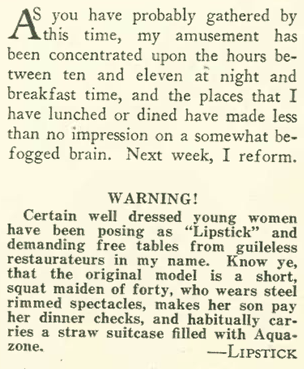
She closed her column with this observation and a “warning” about “Lipstick” imposters:
This was a familiar jest by Long in her “Tables for Two” column–describing herself as short and squat–since most readers did not know her true identity or appearance, which was quite the opposite.
In Long’s other column, “On And Off The Avenue,” she offered this advice to women who were fashion-conscious but also thrifty:
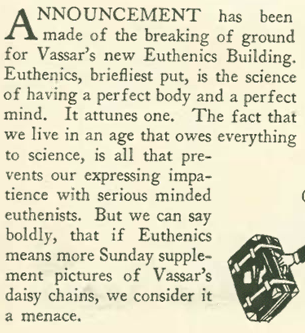
A brief item in “The Talk of the Town” for Nov. 7, 1925, mentioned the groundbreaking for a new building at Vassar dedicated to the study of something called “Euthenics.” The term was used by Ellen H. Swallow Richards (Vassar, Class of 1870), based on the Greek Euthenia, which described a good state of the body, including prosperity, good fortune and abundance.
After Richards died in 1911, the idea was taken up by another Vassarite Julia Lathrop (’80) who teamed up with fellow alumnae Minnie Cumnock Blodgett (’84) to create a program of Euthenics at Vassar, against the protestations of some faculty who found this new field of interdisciplinary study suspect. It didn’t help that some even confused it with the racist “eugenics” movement.
At a time when many academic disciplines were moving in the direction of specialization, students in euthenics could study horticulture, food chemistry, sociology, statistics, education, child study (Lathrop would serve as the first chief of the U.S. Children’s Bureau), economics, economic geography, physiology, hygiene, public health, psychology, domestic architecture and furniture. The New Yorker had this to say about the new area of study:
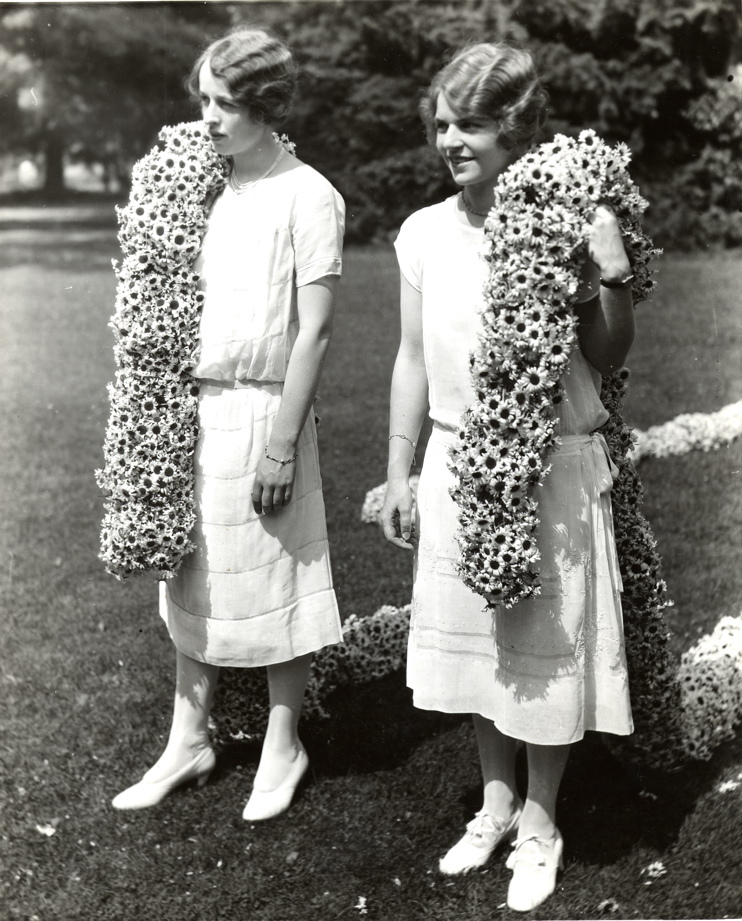
The “daisy chains” referred to above are one of the oldest traditions at Vassar. Every year, the senior class chooses sophomore women who demonstrate superior leadership and class spirit to carry a 150-foot chain of daisies and laurel at Commencement.
Carrying the “Daisy Chain” at Vassar, 1925 (Vassar College)
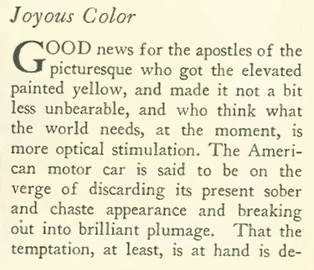
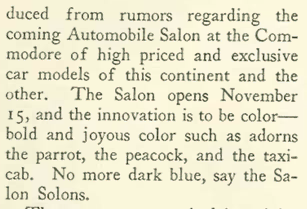
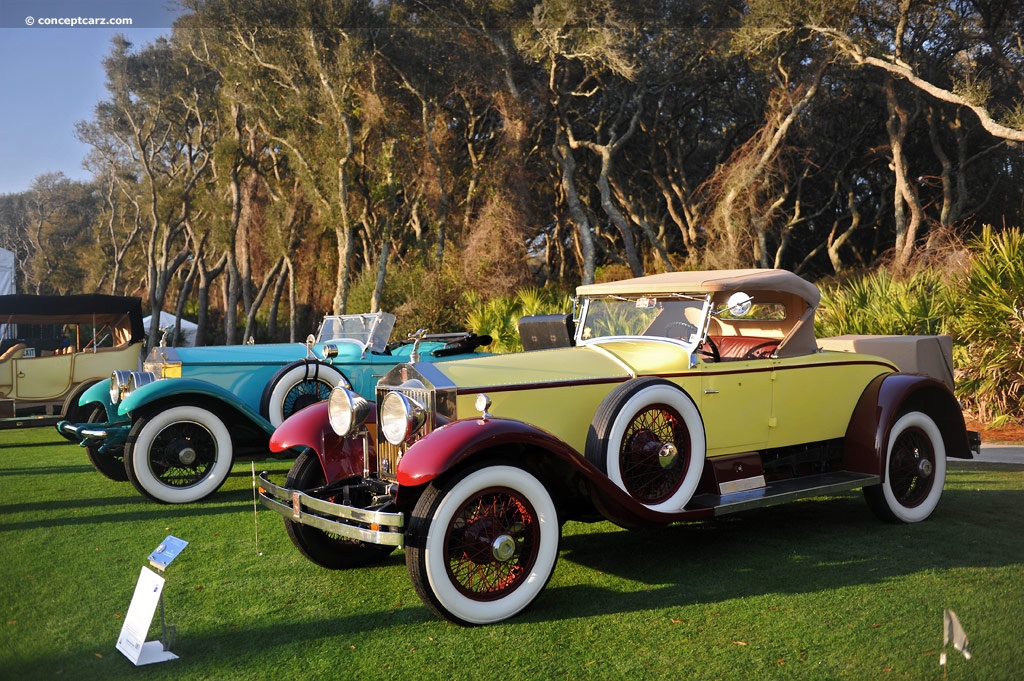
The New Yorker was also anticipating the upcoming Automobile Salon at the Commodore Hotel, including the news that autos would break from sober black and navy into a palette of colors:
1925 Rolls Royce Silver Ghost (conceptcarz.com)
“Profiles” featured Gen. John J. Pershing, while “Sports of the Week” featured the Oct. 31 “Cornell-Columbia battle” at the Polo Grounds (Cornell prevailed 17-14). That same day in New Haven, Yale humbled Army 28-7.
In her fashion column “Fifth Avenue,” Lois Long paid a visit to designer Paul Frankl’s store, where she admired his collection of “four-dimensional furniture, including his “skyscraper” bookcases:
Paul Frankl “skyscraper” bookcase, ca. 1927. Fashioned from maple and trimmed with Bakelite (Metropolitan Museum of Art).
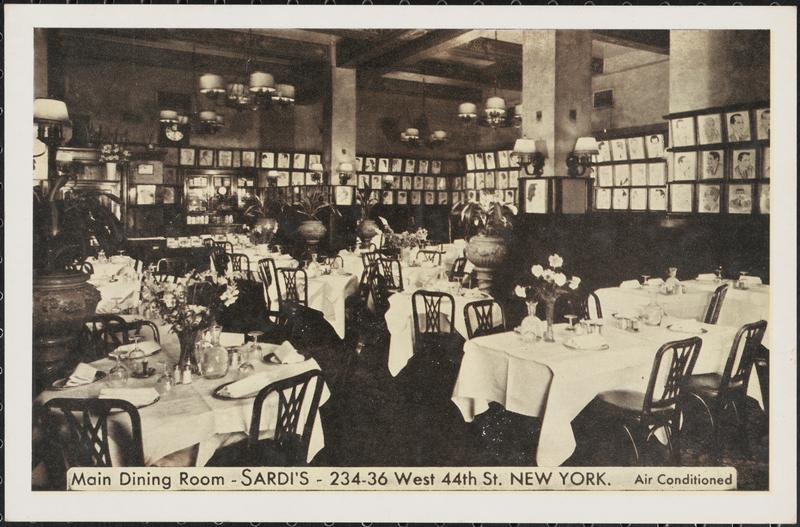
In her “Tables For Two” column, Long’s previous criticism of Sardi’s (lack of celebrity sightings) received this reply:
Main Dining Room of the old Sardi’s, 234-36 West 44th St. New York. (Museum of the City of New York)
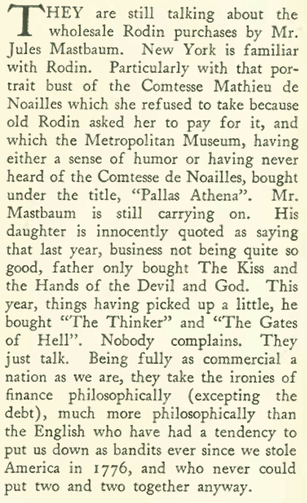
In her latest dispatch from Paris, Janet Flanner wrote that Philadelphia movie theater magnate Jules Mastbaum was making a haul of Rodin sculptures. The French found it interesting but not alarming:
Mastbaum would die the following year and donate his Rodin collection to the city of Philadelphia. It is the largest collection of Rodin’s works outside Paris. Flanner also offered this tidbit on a new, scandalous book by Texan Gertrude Beasley:
In a 2000 article for Texas Monthly (“A Woman of Independent Means”), Don Graham wrote that “no other book in Texas literature is quite like Gertrude Beasley’s little-known memoir, My First Thirty Years. For one thing, it was published in Paris in 1925 by the avant-garde press Contact Editions (it was banned in Britain and America), which included among its authors Ernest Hemingway.” He wrote that Beasley’s book established itself “as a provocative and highly subversive text: She recounts her birth as the violent outcome of marital rape by her father…Things go downhill from there…” You can read more about Beasley, and her “disappearance,” in this Texas Observer article.
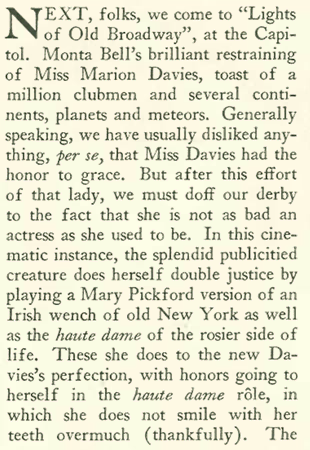
In “Motion Pictures,” The New Yorker (via critic Theodore Shane) cut actress Marion Davies a little slack:
Channelling her inner Pickford: Marion Davies in The Lights of Old Broadway. (Wikipedia)
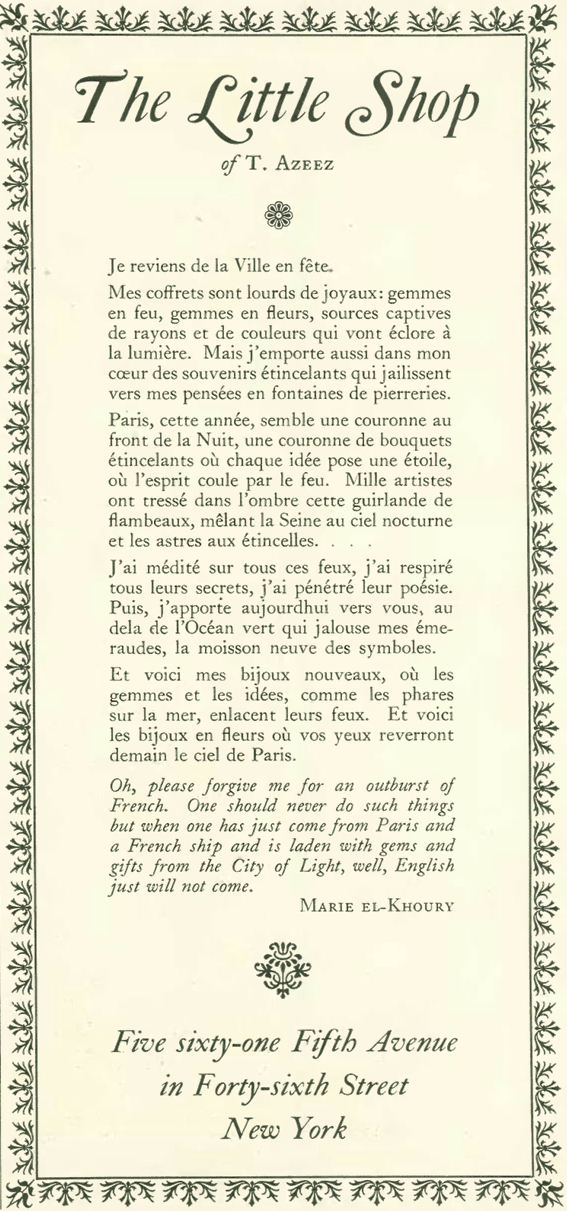
And if you doubt the Francophile ambitions of New Yorker readers, here are two ads written almost entirely in French:
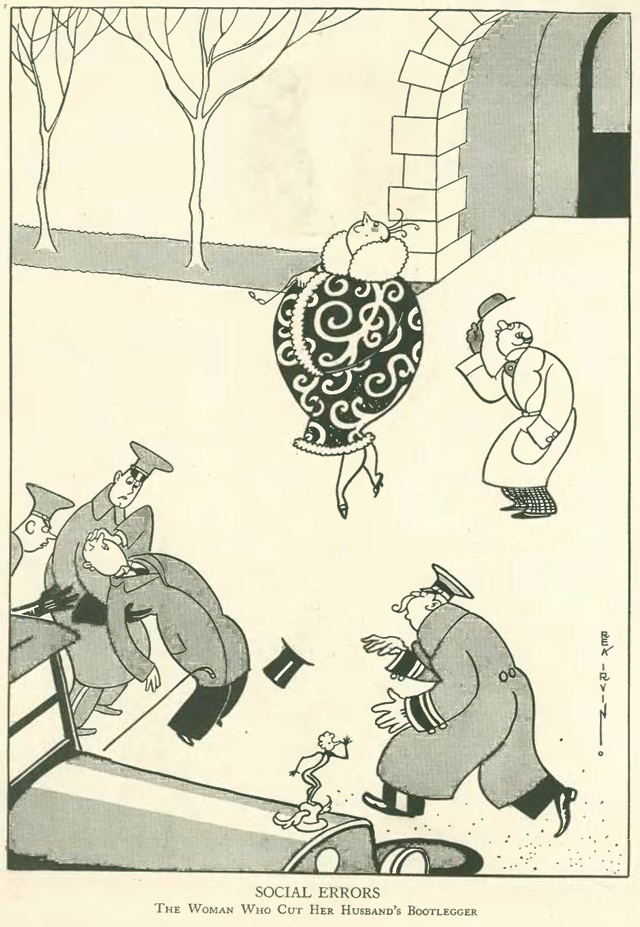
And to end on an amusing note, more perils of Prohibition, courtesy of Rea Irvin:


























































 A New Yorker State of Mind