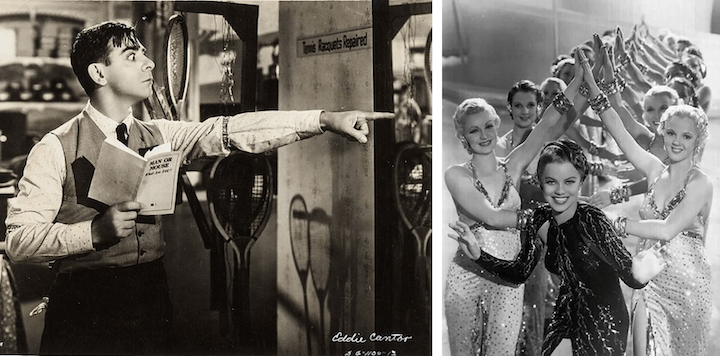
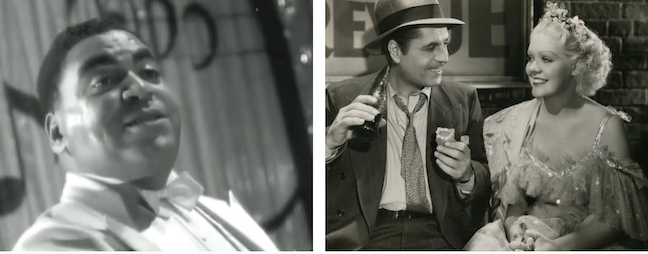
Above: Eddie Cantor (left) consulting his "confidence book" in Strike Me Pink; at right, Dona Drake and the “Goldwyn Girls” performing “The Lady Dances." (cometoverhollywood.com)
You don’t hear much about him today, but in 1936 Eddie Cantor was a household name, an entertainer who seemed to do it all—comedian, actor, dancer, singer, and songwriter were just a few of his trades.
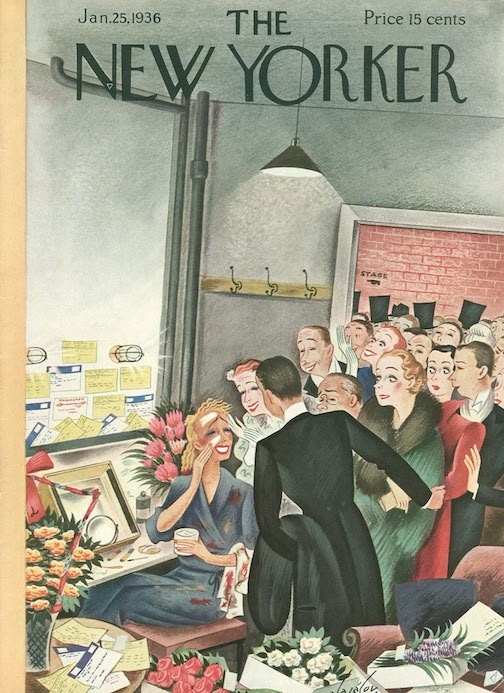
Critic John Mosher marveled at the energy Cantor (1892–1964) brought to his latest film, Strike Me Pink, in which Cantor played a mild-mannered manager of an amusement park infested with mobsters. The film was a “convulsion,” Mosher wrote, packed with action on “the grand scale” with occasional interludes by co-star Ethel Merman, who portrayed Cantor’s love interest.
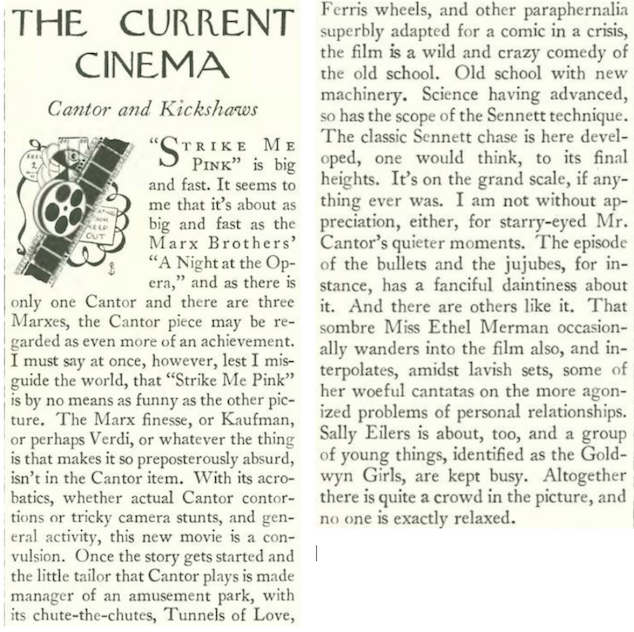
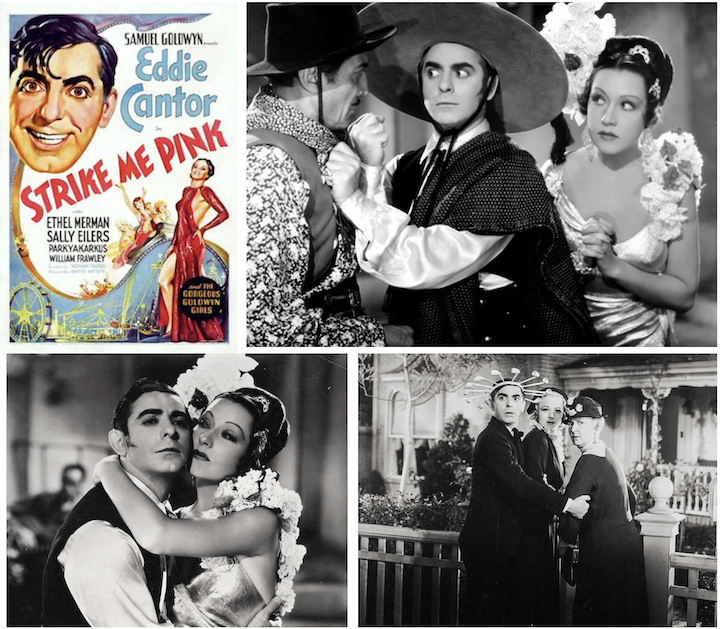
Bette Davis wasn’t the only Hollywood celeb known for her peepers. After artist Frederick J. Garner published a big-eyed caricature of Cantor in 1933, those “Banjo Eyes” became Cantor’s trademark.
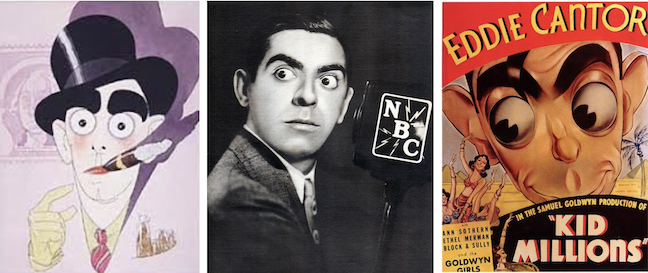
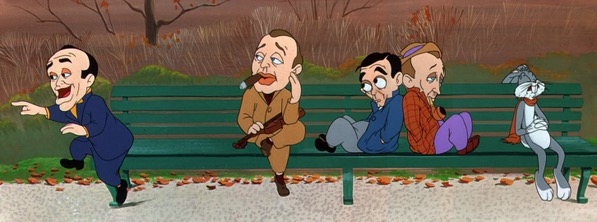
Cantor would pack a lot into his seventy-two years, a regular with the Ziegfeld Follies (he would repeat his routines in numerous films), he would also appear in other stage productions, on the radio, on television (hosting The Colgate Comedy Hour) and recording hit songs like “Makin’ Whoopee.” He wrote or co-wrote seven books, was the second president of the Screen Actors Guild, and a co-founder of the March of Dimes (Cantor came up with the name as well). He also appeared in numerous cartoons, and even wrote the Merrie Melodies/LooneyTunes theme song, “Merrily We Roll Along.”
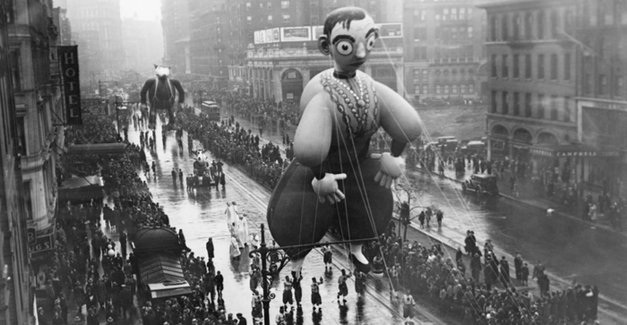
In 1934 Cantor was depicted as a balloon in the Macy’s Thanksgiving Day Parade, the only full-size balloon to represent a real person.
* * *
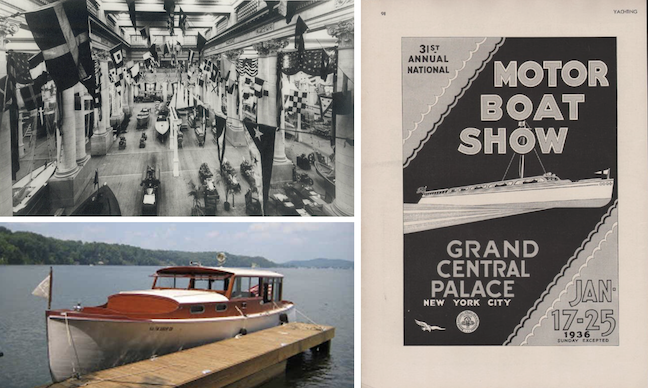
Fishing For Buyers
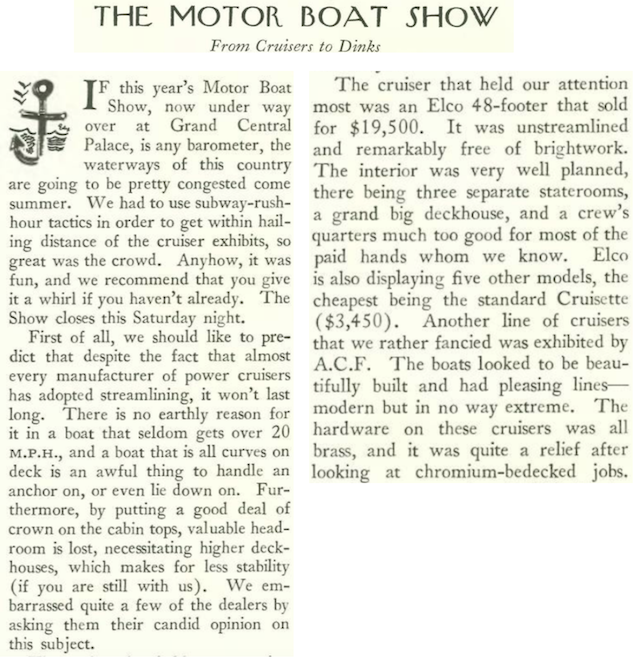
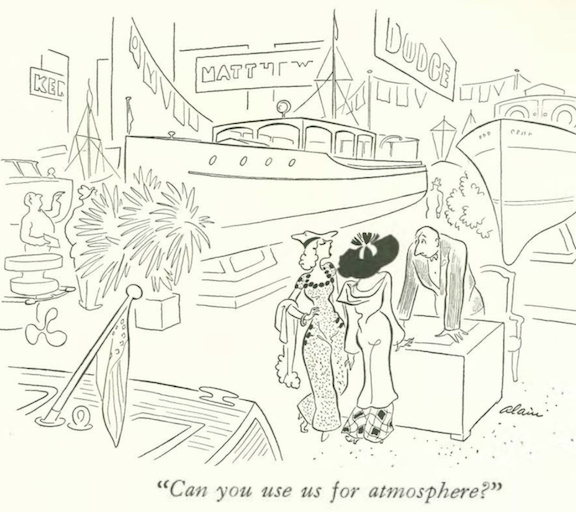
The Thirty-first annual Motor Boat Show was on at the Grand Central Palace, featuring everything from yachts to tiny sailboats. Excerpts from a report by a correspondent who wrote under the name “Bosun.”
* * *
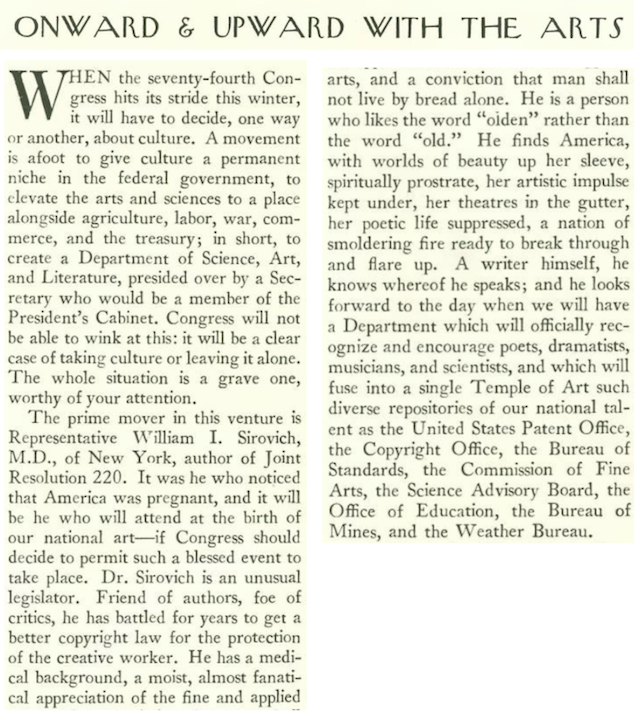
Cultured Congress
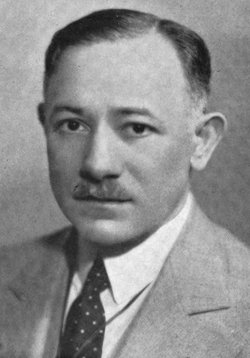
Hard to believe that ninety years ago the U.S. House of Representatives devoted considerable time and attention to a proposed bill for a “Department of Science, Art and Literature.” E.B. White covered the hearings in an extensive two-part report for “Onward & Upward With the Arts.” Here is a brief excerpt from part one.
* * *
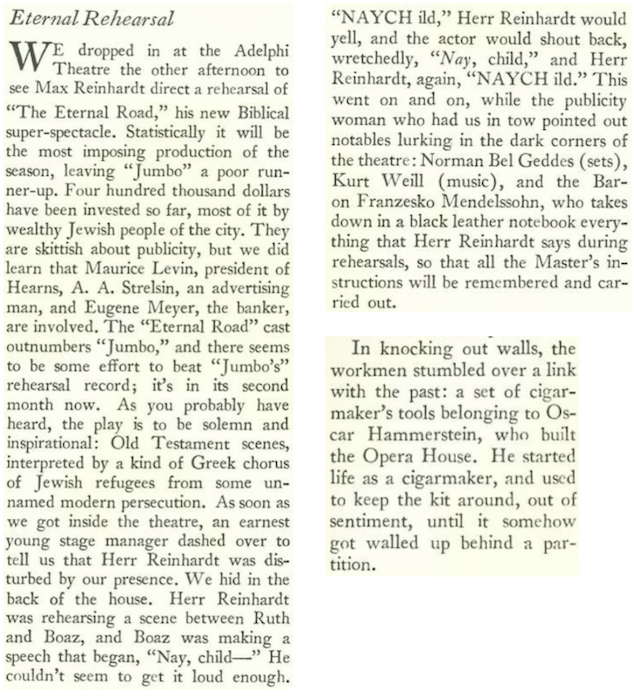
A Really Big Show
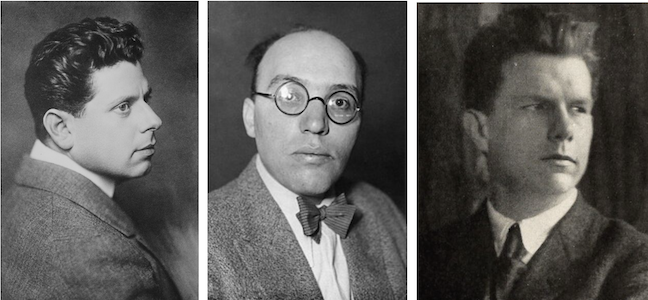
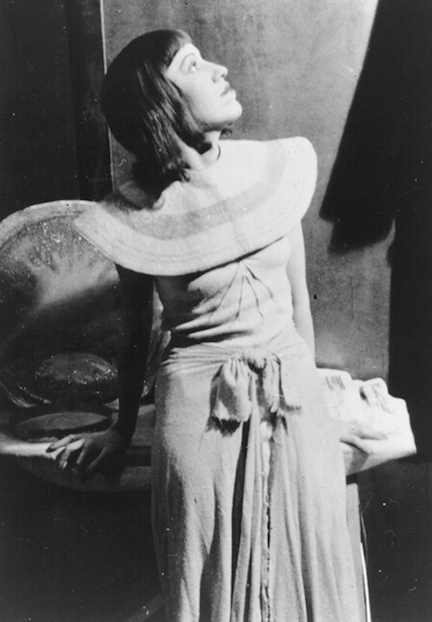
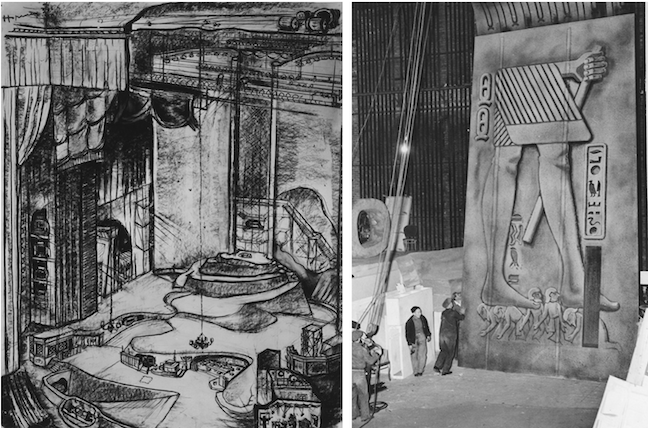
“The Talk of the Town” paid a visit to the Adelphi Theatre to see how preparations were going for opera-oratorio The Eternal Road. Conceived by journalist and playwright Meyer Weisgal to alert the public to the persecution of Jews in Nazi Germany, it featured a score by Kurt Weill with libretto by Franz Werfel (translated into English by Ludwig Lewisohn).
Directed by Max Reinhardt on an imposing set designed by Norman Bel Geddes, The Eternal Road would take time to produce, finally premiering at the Manhattan Opera House on Jan. 7, 1937. It ran for 153 performances.
* * *
Location, Location, Location
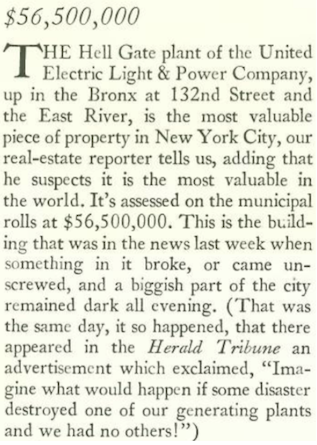
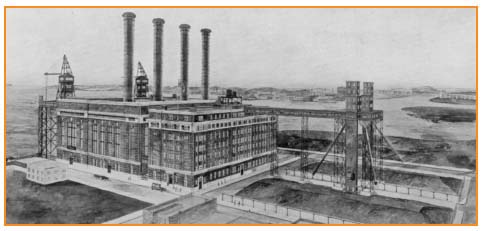
“Talk” also looked at property values in the city, noting that the site occupied by the Hell Gate power plant was assessed at nearly $57 million (roughly $1.3 billion today). Excerpt:
* * *
A New, Improved Carmen
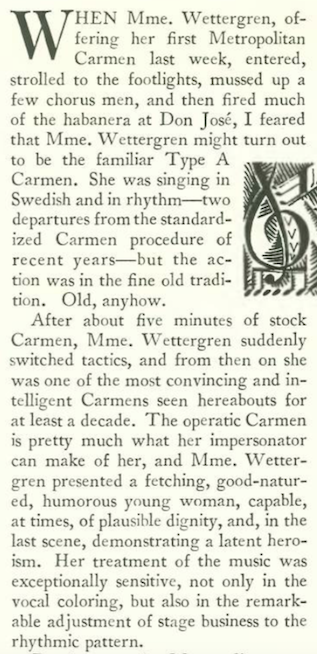
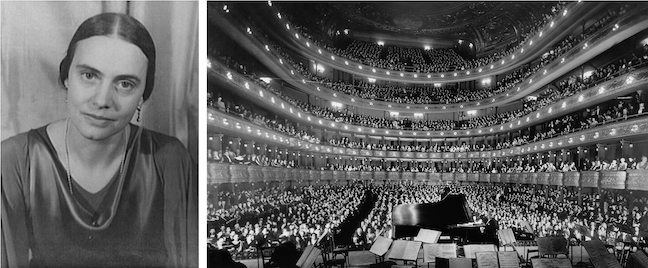
Music critic Robert Simon (writing for “Musical Events”) was delightfully surprised by the Met’s latest production of Carmen, and namely by the performance of Swedish mezzo-soprano Gertrud Pålson-Wettergren:
* * *
At the Movies
We rejoin critic John Mosher for a look at the rest of the cinema lineup, beginning with King of Burlesque, which featured Alice Faye and “everything but the kitchen stove.”
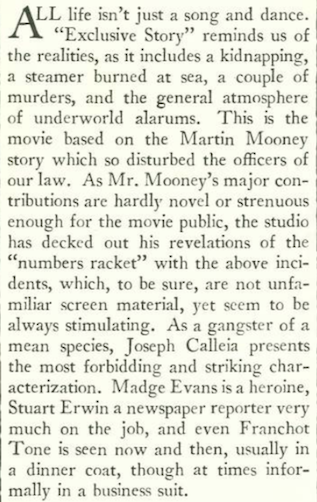
Mosher found a “stimulating” gangster flick in Exclusive Story…
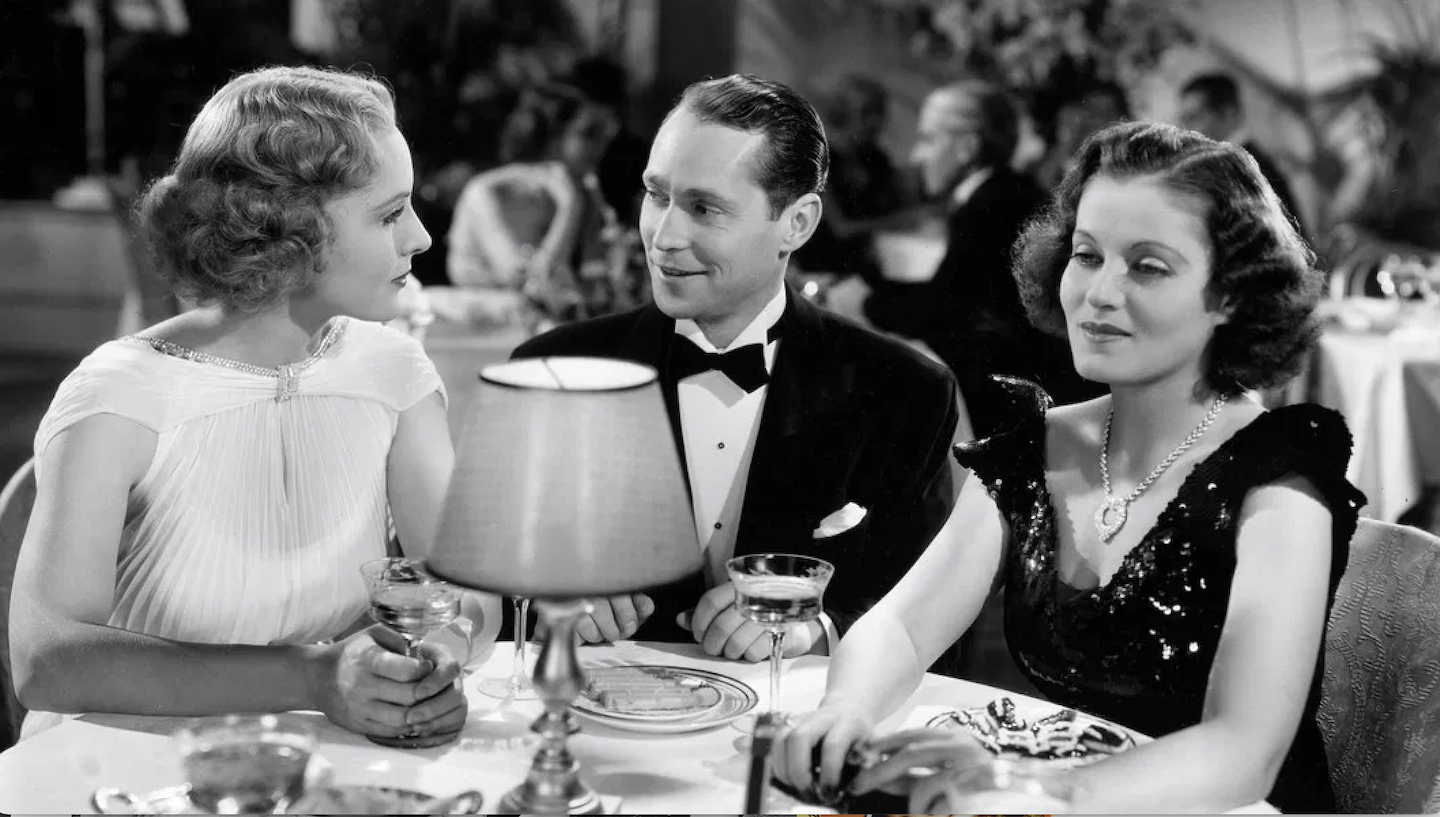
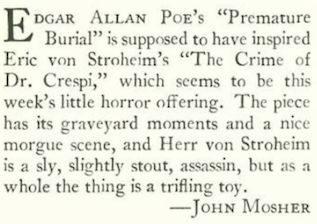
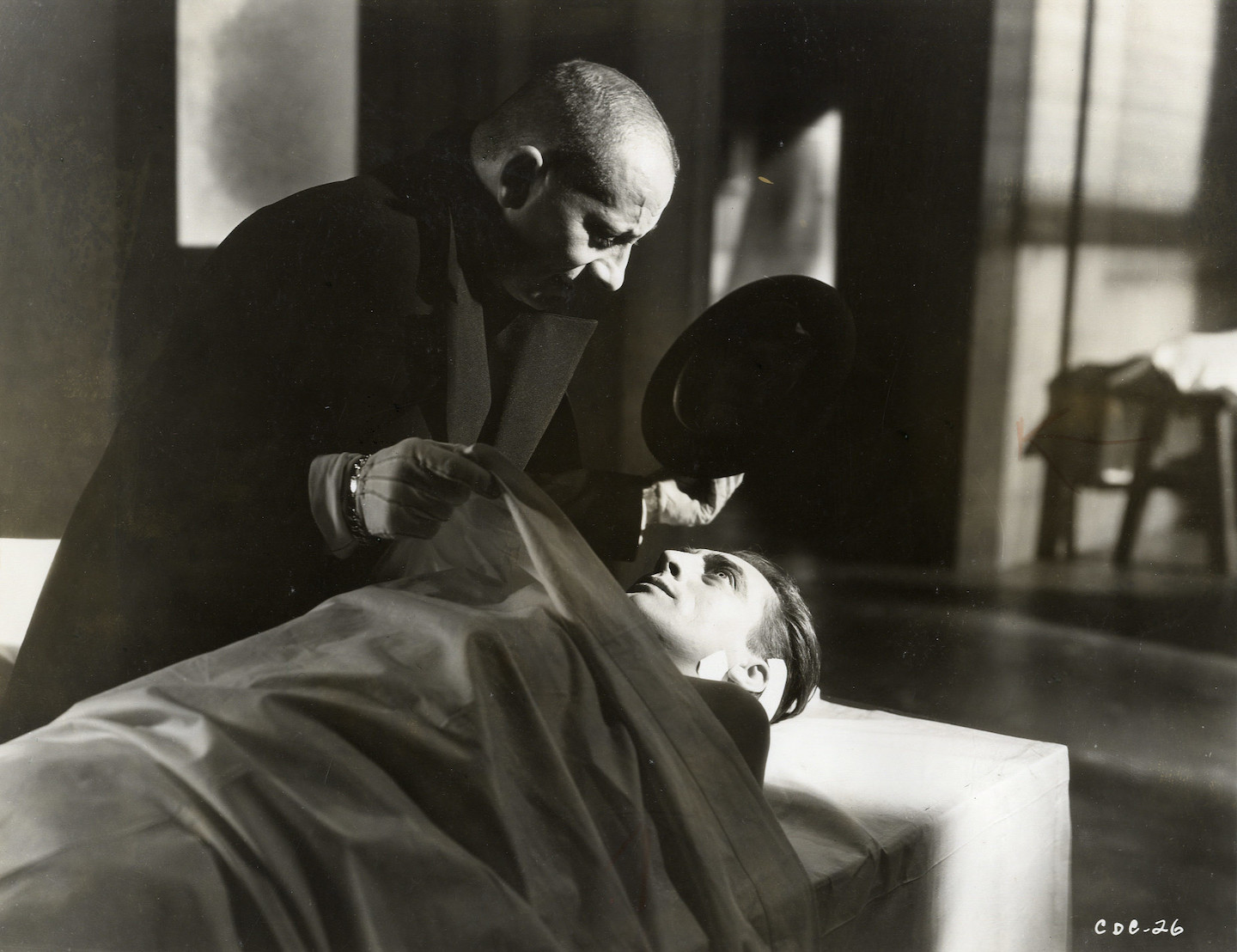
…and a “trifling” horror movie, The Crime of Dr. Crespi…
* * *
A Hot Hobby
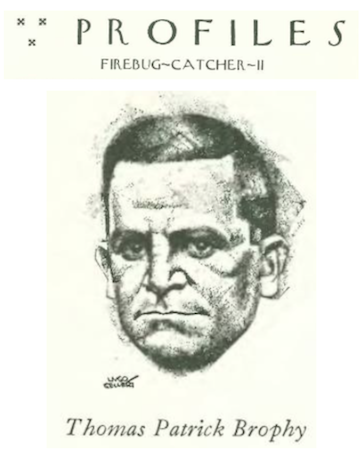
St. Clair McKelway filed the second of a two-part profile on New York’s Chief Fire Marshal Thomas P. Brophy (1880-1962). McKelway wrote, “How to stop a fire is the fire chief’s problem; how it got started, that of the fire marshal, Thomas Brophy…Brophy’s specialty, however, is pyromaniacs— it is almost his hobby.” Hugo Gellert supplied the drawing.
* * *
From Our Advertisers
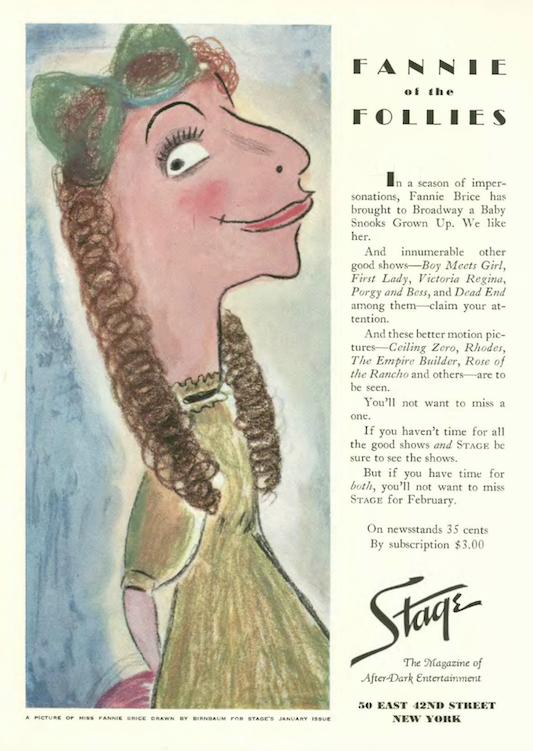
We begin with the inside front cover, and this colorful illustration of Fanny Brice by Abe Birnbaum for Stage magazine…
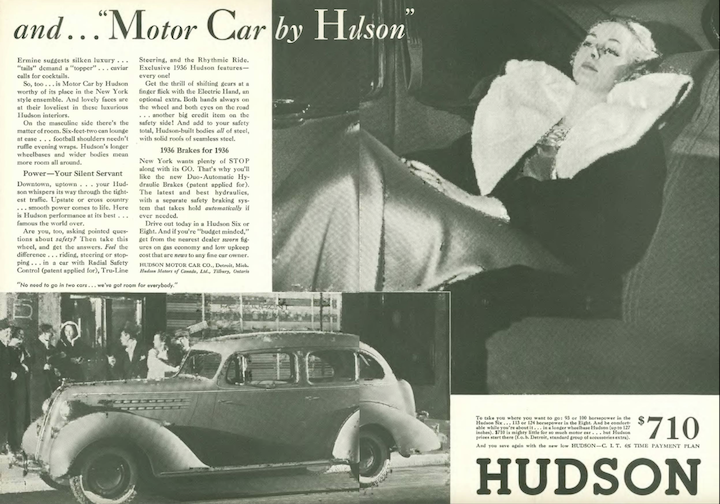
…the makers of budget automobiles such as Nash, Plymouth and Hudson were all on the same page when it came to marketing their automobiles, namely, that their products suggested luxury despite the bargain price…a “Motor Car by Hudson,” the ad proclaimed, is “worthy of its place in the New York style ensemble”…
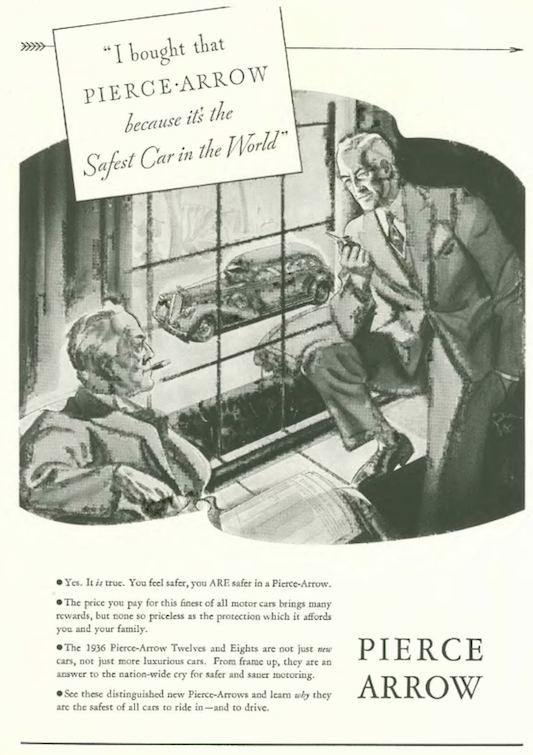
…the makers of Pierce Arrow had a solid reputation as the Rolls-Royce of American automobiles, so they took the safety angle in this understated, hyperbole-free advertisement…(however, cheaper cars like Hudson would survive the Depression, Pierce-Arrow would not)…
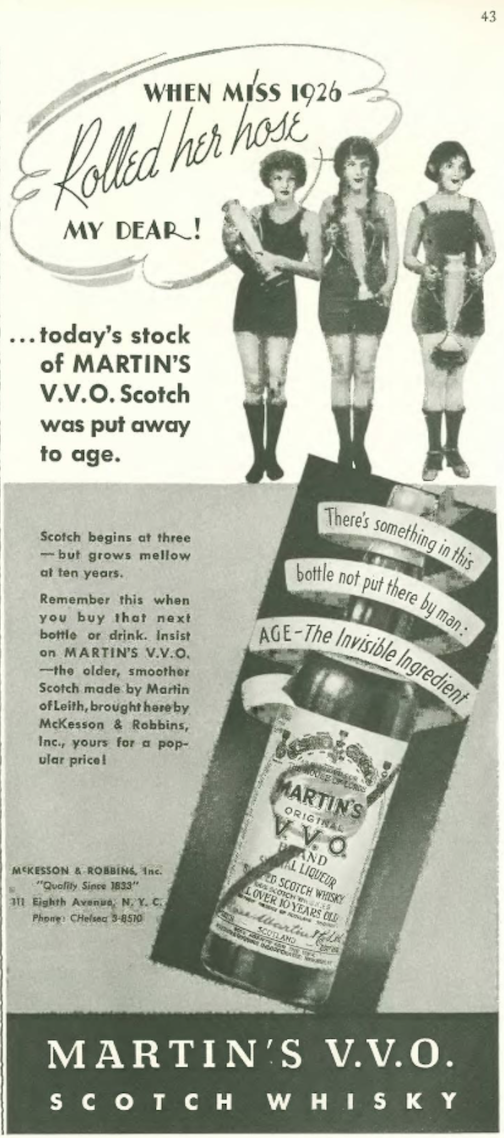
…this Scotch whisky ad recalled the days when “rolled hose” could create a scandal, underscoring how things can mellow after ten years, including whisky…
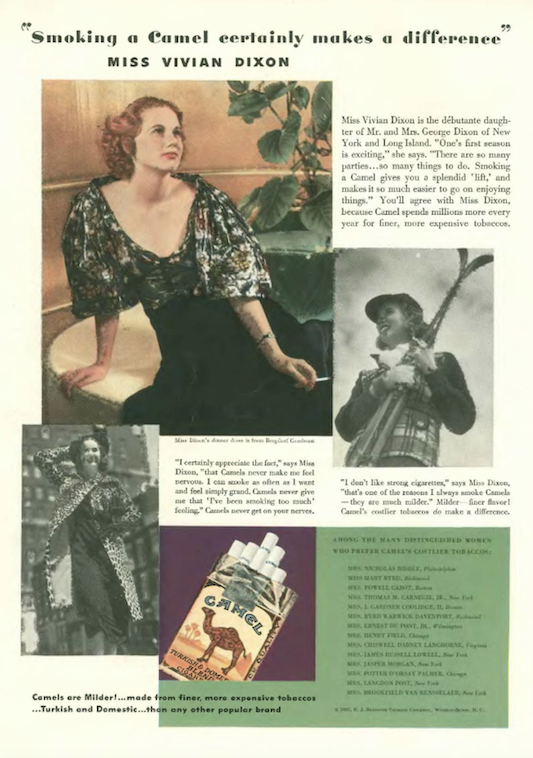
…in this back cover advertisement, Vivian Dixon (apparently just eighteen years old) was the latest New York debutante to invite young women to join her in smoking Camels…
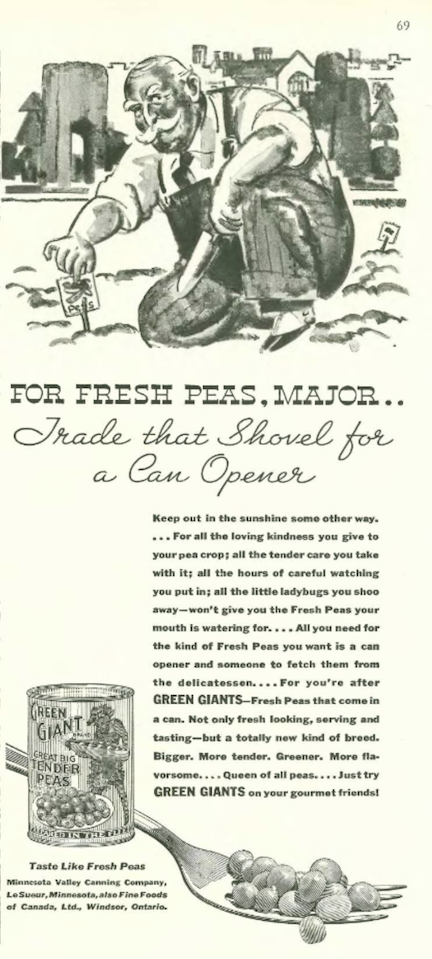
…the Major continued his quest for fresh peas in this ad from the Minnesota Valley Canning Company (aka Green Giant)…
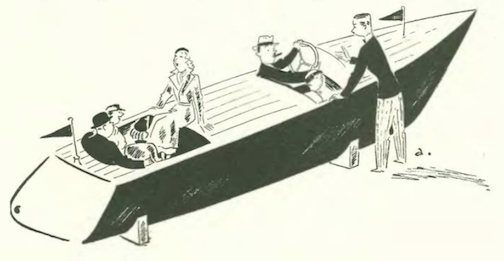
…on to our cartoonists, beginning with this spot drawing for the boat show by Constantin Alajálov…
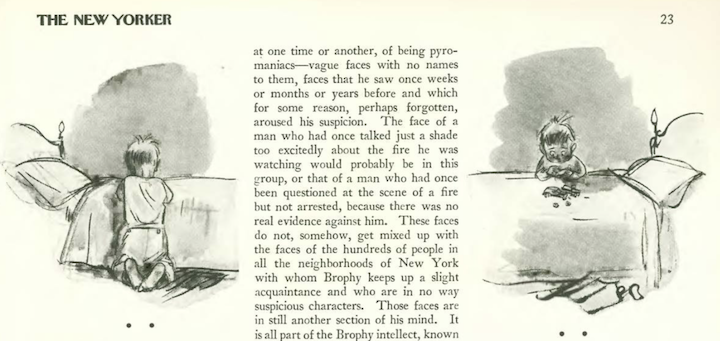
…this spot by Abe Birnbaum broke up the text for James Thurber’s “Nine Needles” short story…

…Perry Barlow gave us a gentleman attempting to explain the subtleties of ice hockey…
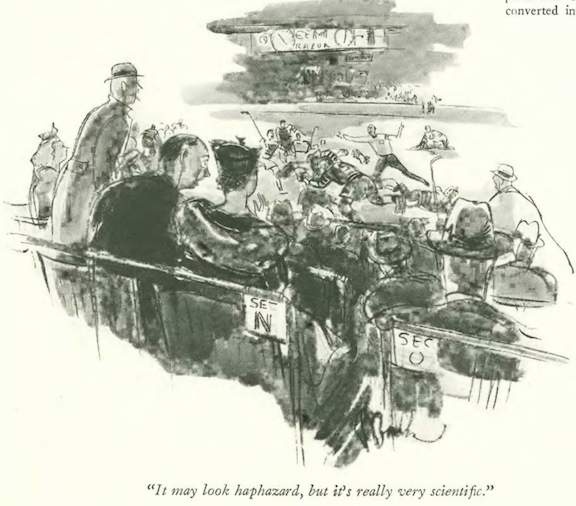
…Barlow again, where seeing is not necessarily believing…
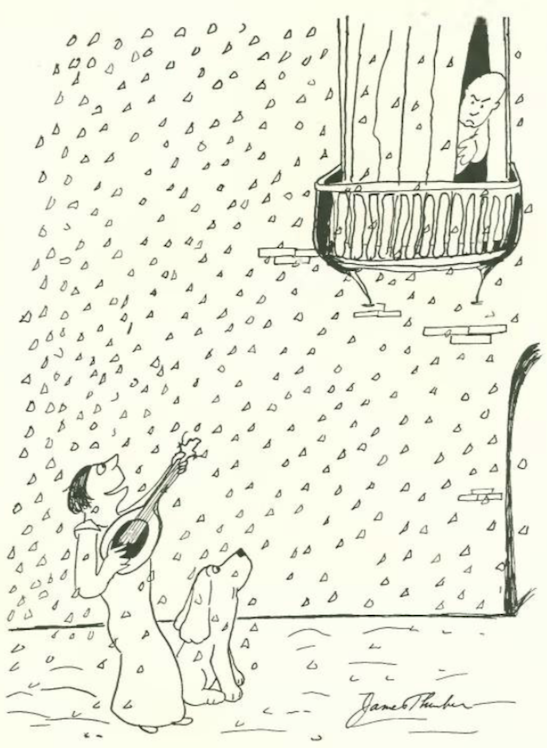
…James Thurber contributed a serenade, accompanied by dog…
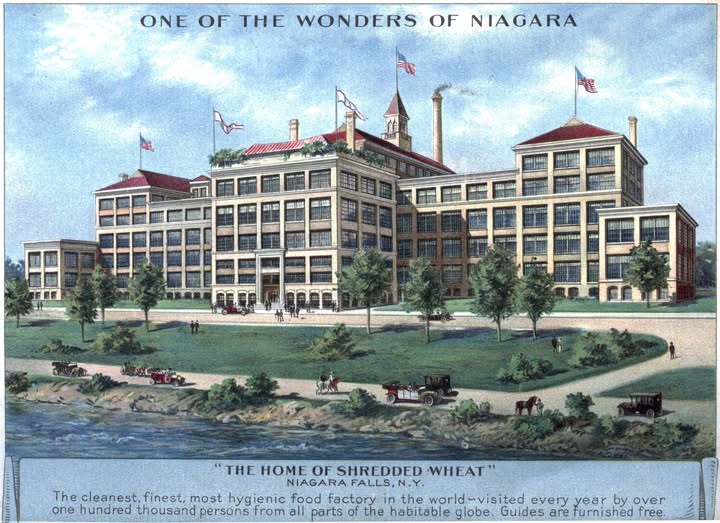
…Peter Arno bid farewell to honeymooners destined for Niagara Falls and the Shredded Wheat factory…

…besides the falls, the Shredded Wheat factory was a big attraction in the early 20th century…
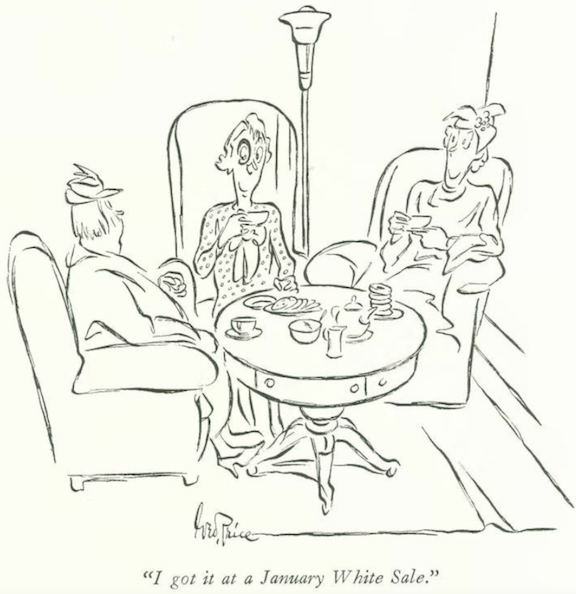
…George Price illustrated the hazards of bargain shopping…
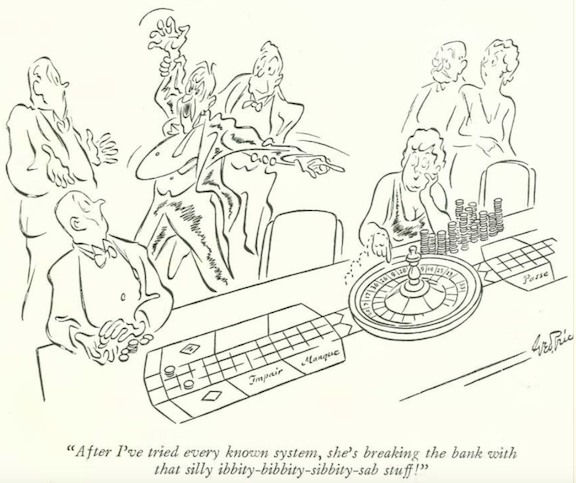
…and Price again, with a lucky streak in Atlantic City…
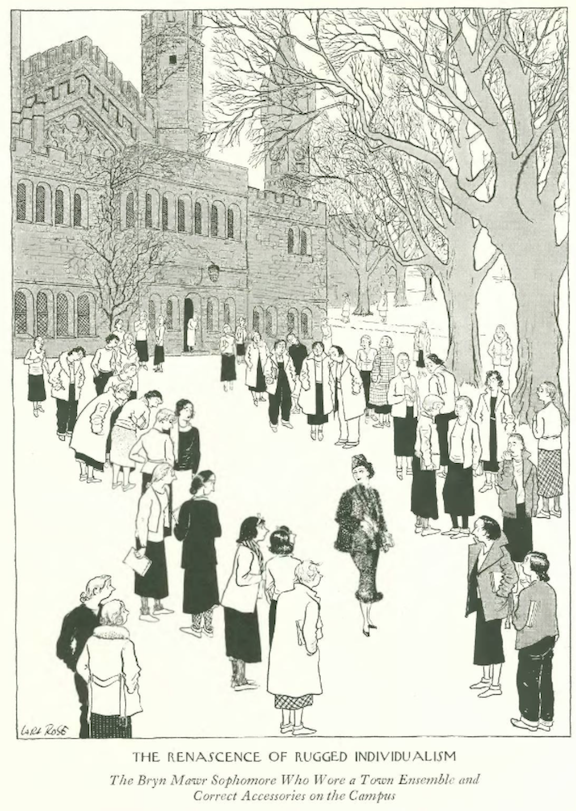
…Carl Rose continued to offer examples of rugged individualism…
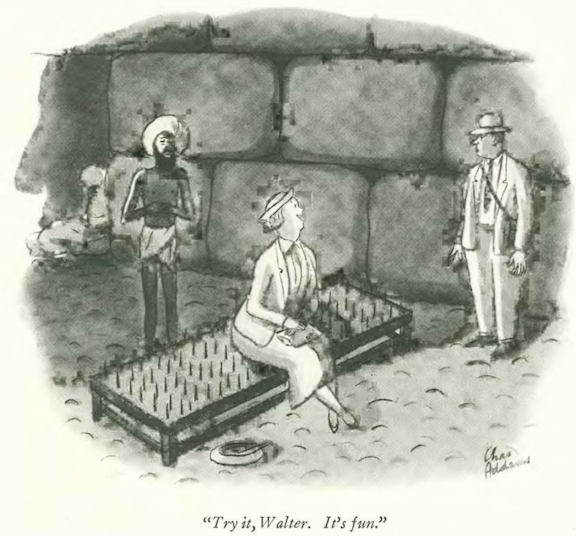
…Charles Addams explored some exotic thrills…
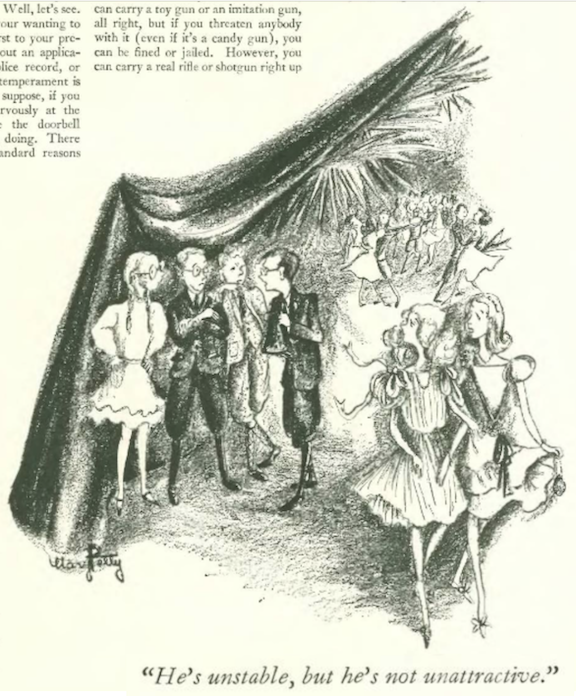
…Mary Petty found nuance among youthful suitors…
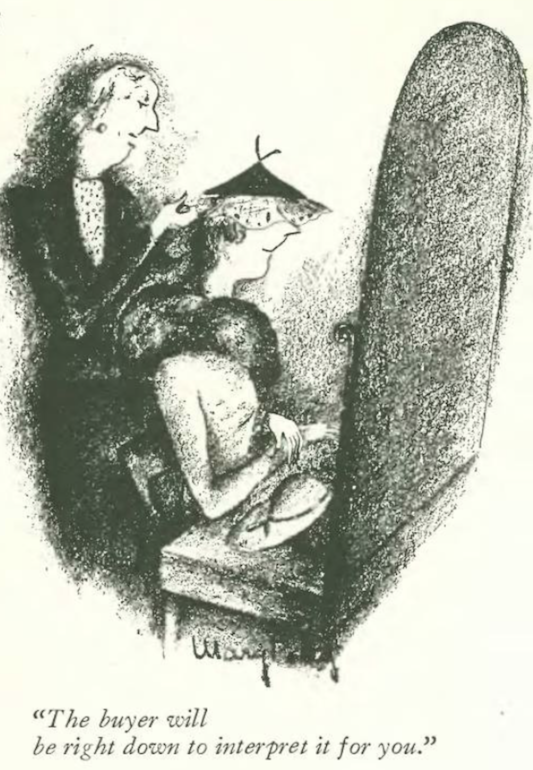
…and Petty again, and the complexities of hat shopping…
…Alain paid a visit to the boat show…
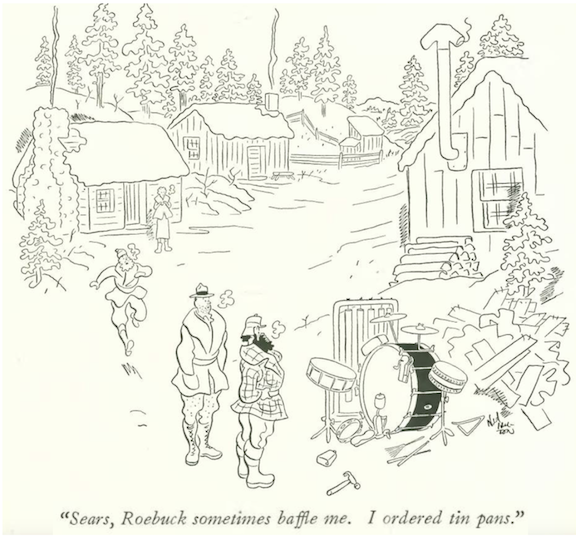
…Ned Hilton drew up a mail-order mix-up…
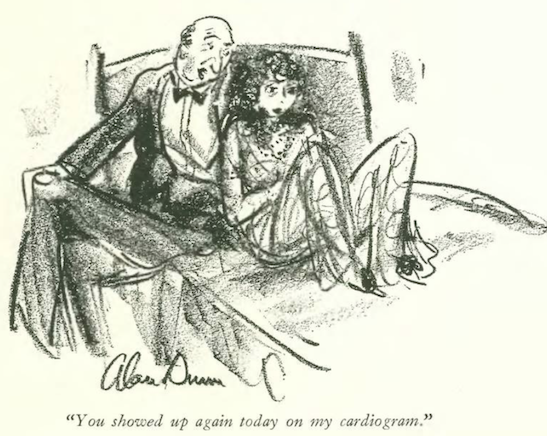
…and we close with Alan Dunn, and a matter of the heart…
Next Time: Having a Ball…
 A New Yorker State of Mind