Picking on Charlie Chaplin

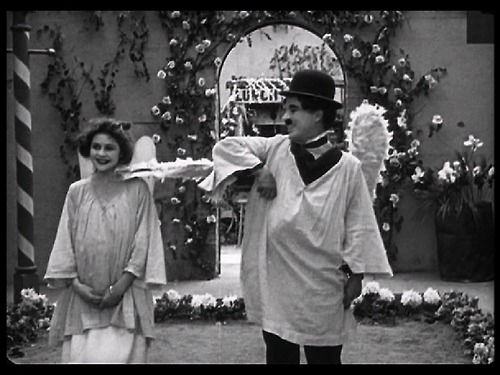
In 1927 silent film star Charlie Chaplin was working on his latest film, The Circus, when his second wife, Lita Grey, filed for divorce, accusing her husband of infidelity, abuse, and of harbouring “perverted sexual desires.” Life imitated art, and Charlie’s own life became a circus.
5128947dc365cb603134bbb6e56f67aa
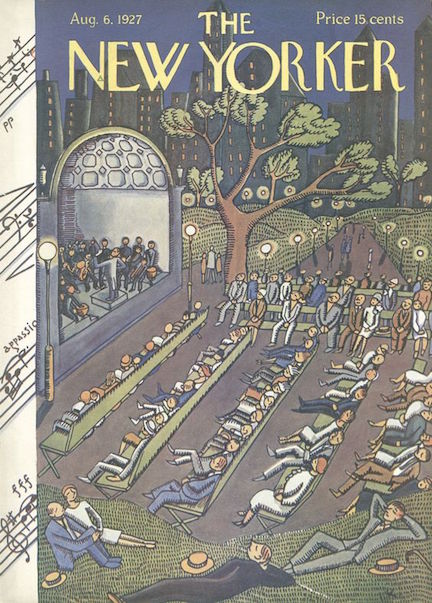
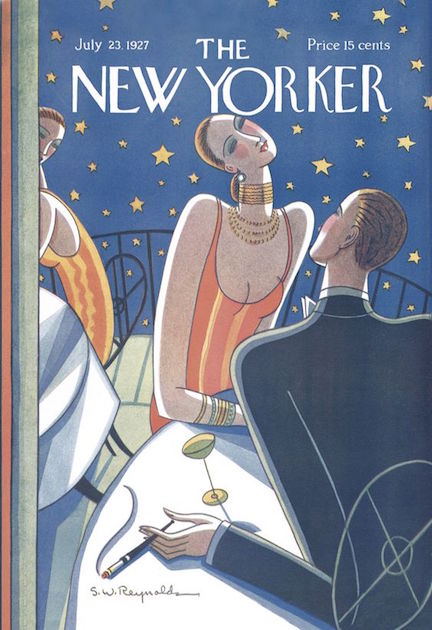
July 23, 1927 cover by Stanley W. Reynolds.

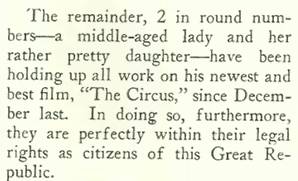
The New Yorker’s Ralph Barton, who contributed countless illustrations for the magazine (and was a close friend of Chaplin’s), wrote about Chaplin’s latest travails in a column titled “Picking on Charlie Chaplin.”

screen-shot-2016-11-01-at-9-59-23-am

screen-shot-2016-11-01-at-9-59-43-am

chaplin1928circus
LIFE ON THE HIGH WIRE…Charlie Chaplin in The Circus (1928). (MoMA)

The “2” Barton mentioned were teenaged actress Lita Grey and her mother, Lillian Parker.

In 1924 the 35-year-old Chaplin married the 16-year-old Grey in a discreet ceremony in Mexico — because Grey was pregnant, Chaplin could have been charged with statutory rape under California law (it was Chaplin’s second marriage, and his second to a teenaged actress). Chaplin and Grey had two sons from their brief union–Charles Spencer Chaplin, Jr., was born in 1925, followed by Sydney Earl Chaplin in 1926.

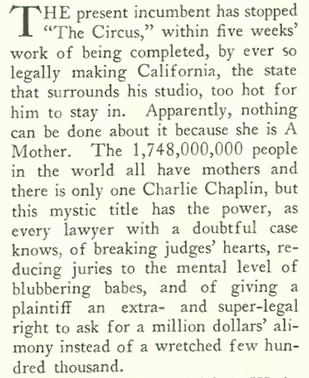
The divorce made headline news as Chaplin was reported to be in a state of nervous breakdown. Filming for The Circus was suspended for ten months while he dealt with the mess:
screen-shot-2016-11-01-at-10-02-50-am

Chaplin’s lawyers agreed to a cash settlement of $600,000—the largest awarded by American courts at that time (Roughly equivalent to more than $8 million today). Groups formed across America calling for his films to be banned (no doubt the same groups that had earlier protested his marriage to a pregnant, teenaged minor). Barton mused that the protests might cause Chaplin to abandon America for the more permissive atmosphere in Europe:

screen-shot-2016-11-01-at-10-03-56-am

screen-shot-2016-11-01-at-10-04-47-am

lita-charlie-flirtatious-angel
HERE’S LOOKING AT YOU…Charlie Chaplin first became acquainted with the 12-year-old Lillita McMurray (later Lita Grey) during the filming of The Kid (1921).
Charlie-Chaplin-and-Lita-Grey
PRATFALL…Charlie Chaplin and Lita Grey during their brief, tumultuous marriage. (The Artifice)

The Circus was released in January 1928 to positive reviews, and during the first-ever Academy Awards Chaplin received a special trophy, “For versatility and genius in acting, writing, directing and producing The Circus. Despite the film’s success, he rarely spoke of it again. For Charlie, it was a time best forgotten.

 *  *  *

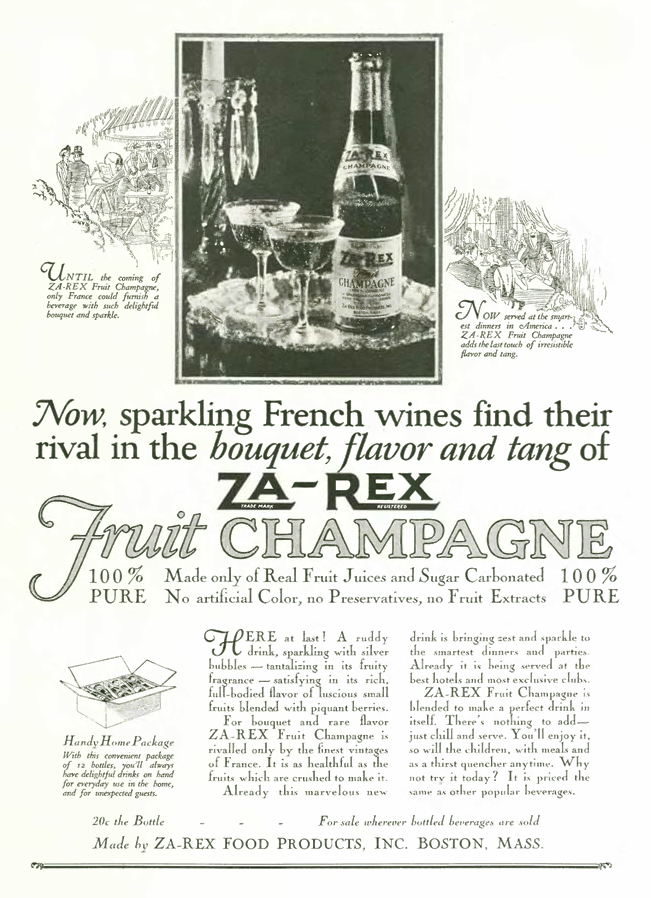
And now, an advertisement from the July 23 issue urging readers to buy the 1920s equivalent of “Smart Water” endorsed by the Sun King himself…
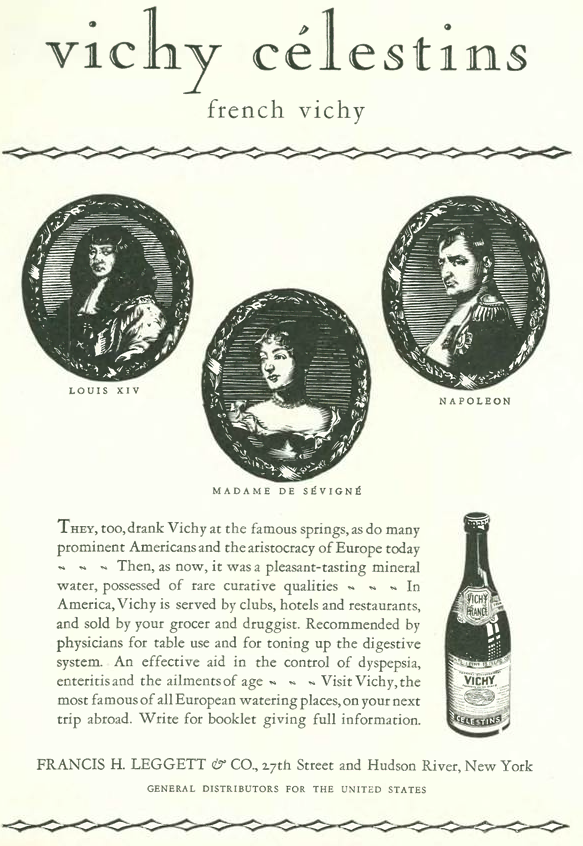
smart-water

…and a cartoon by Reginald Marsh, portraying a distinctly American view of the grandeur of Niagara Falls…
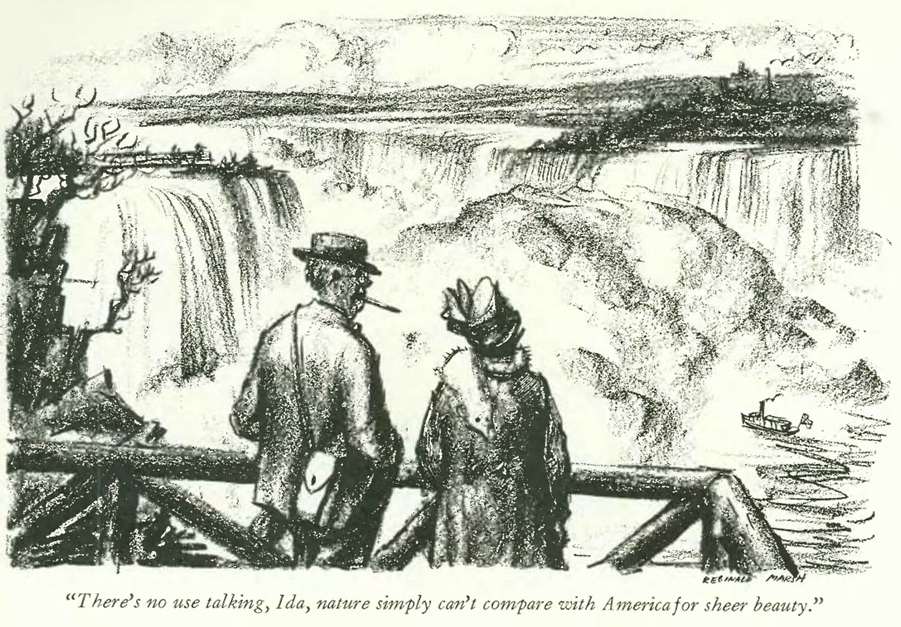
screen-shot-2016-11-01-at-10-06-41-am

*  *  *

On to July 30, 1927 issue, in which The New Yorker once again takes a poke at our 30th President…
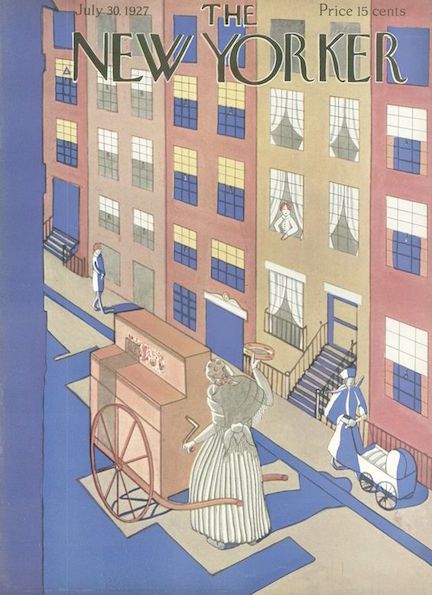
a5bc3067a36eb35927e56509e2fd7092
July 30, 1927. (Cover is unsigned, but I suspect it is by John Held Jr.)

…and his latest adventures in the wilds of South Dakota’s Black Hills:
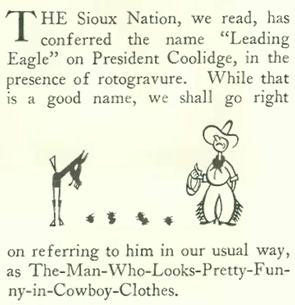
screen-shot-2016-11-02-at-1-03-12-pm

90
BIG CHIEF…President Calvin Coolidge donned a headdress while being named an honorary Sioux chief (“Leading Eagle”) in Deadwood, South Dakota. His advisers cautioned that the headdress would make him look funny, but he apparently replied, “Well it’s good for people to laugh, isn’t it?” (AP)

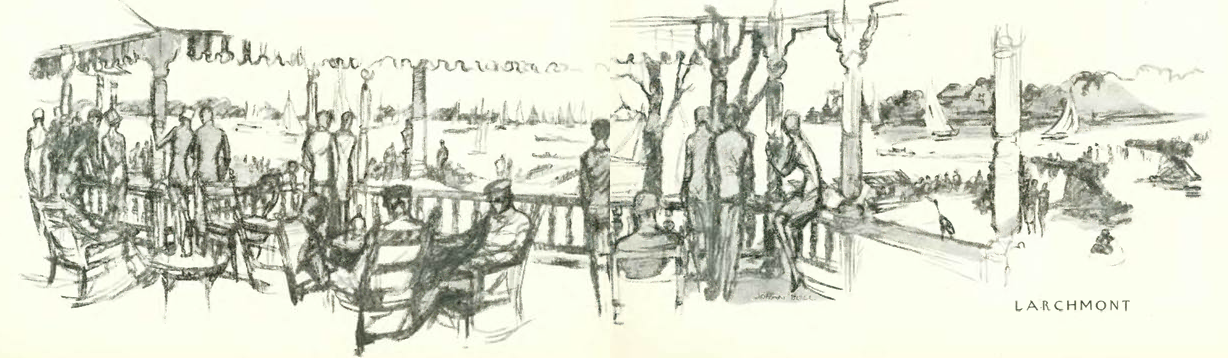
Safely back in the environs of the big city, The New Yorker continued to take stock of summer sports such as tennis, polo, and the yacht races at Larchmont (but still no mention of the legendary ’27 Yankees). This illustration of the races (unsigned, but I guess it is Reginald Marsh) graced a double-spread below “The Talk of the Town”…
screen-shot-2016-11-02-at-1-02-09-pm
(click to enlarge)

…and if you were attending the races, or wanted to look stylish on your yacht (or if you just wanted to dress this way to appear that you owned one), you could check out the selections at B. Altman’s…

screen-shot-2016-11-02-at-12-59-24-pm

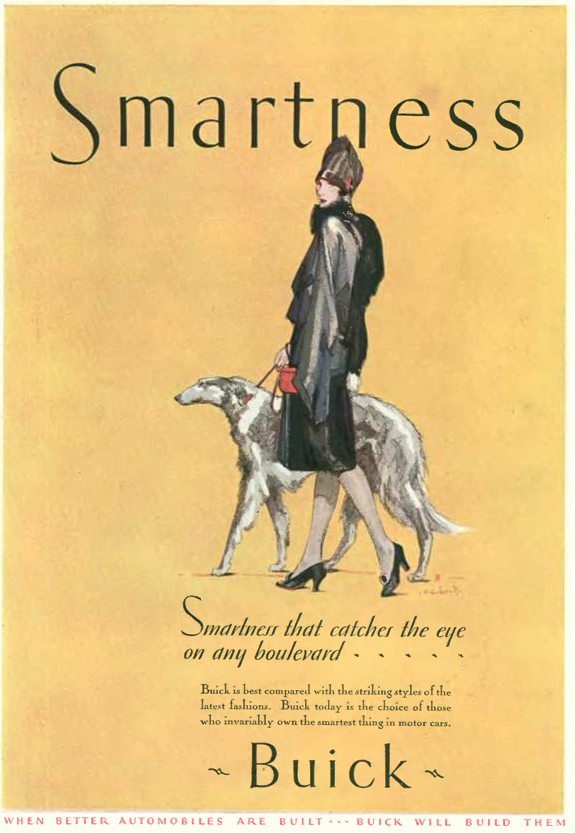
…looking smart was everywhere in the issue, from multiple ads for fall furs, to this come-on from Buick, which suggests that even though it is no Cadillac, and certainly not a Rolls, its smartness will prevail “on any boulevard”…
screen-shot-2016-11-02-at-12-59-32-pm

The Buick ad is somewhat revolutionary for an early automobile ad in that it doesn’t actually show the product advertised.

As for those not among the smart set, and not enjoying the races at Larchmont, there were other summer diversions, as rendered here by J.H. Fyfe:

screen-shot-2016-11-02-at-1-07-23-pm

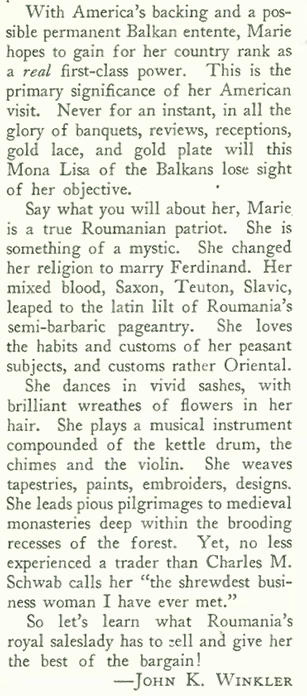
Next Time: Babe Comes Home…
447032a734d61215ca61a95a205dd7da


A Royal Flush

Perhaps because they’ve never had a monarchy, Americans have always been a little nuts over European royalty, even the lesser kings and queens.

Screen Shot 2016-03-31 at 9.58.22 AM
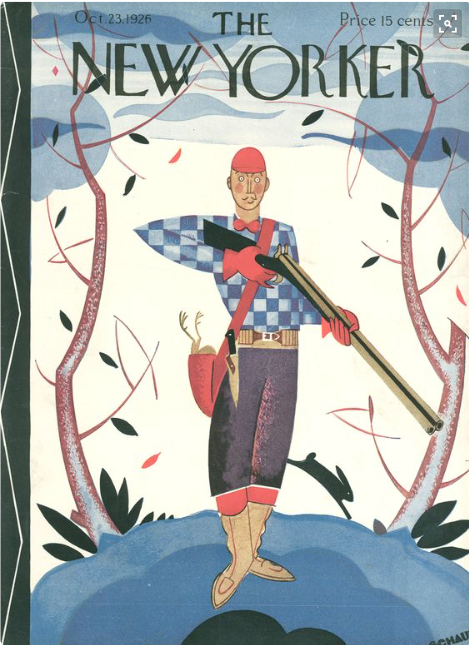
October 23, 1926 cover by Andre De Schaub.

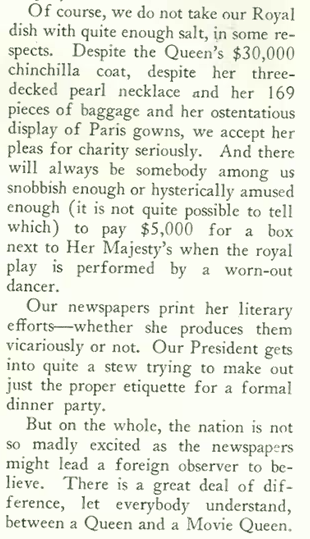
In the lesser category was the Queen Marie of Romania, whose name and exploits appeared frequently in the pages of the early New Yorker. As early as Issue #4 (March 14, 1925), the magazine was reporting that New Yorkers were “agog” about a possible visit from Her Majesty, and that the North American Newspaper Alliance had offered her a contract to write her impressions of the United States.

queen-marie-of-romania-photo-232
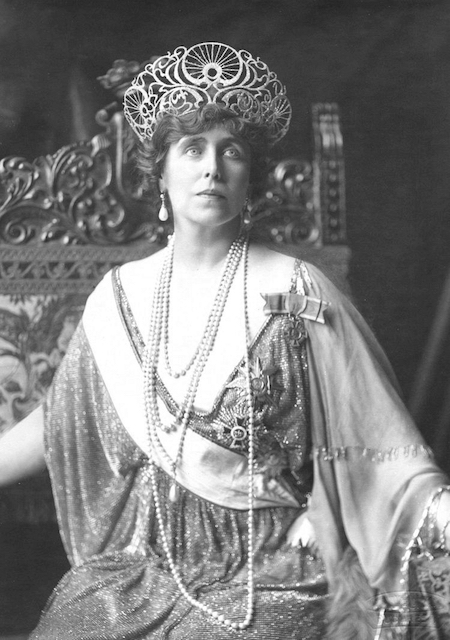
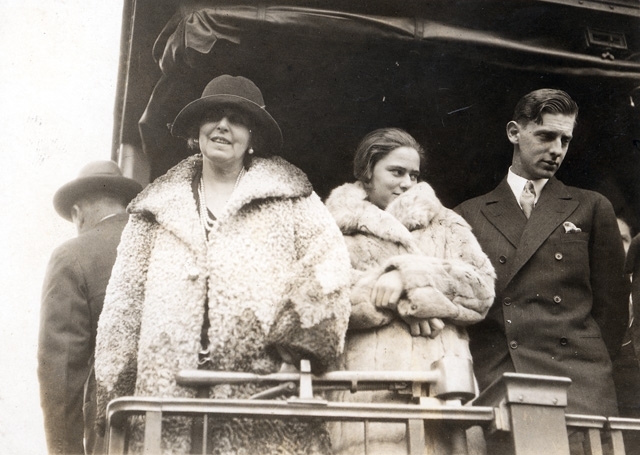
Queen Marie of Romania (Library of Congress)

The Queen filled the pages of both the Oct. 23 and Oct. 30 issues as she finally made her way to the American shores. “Of All Things” observed…

1
“Trudy” referred to above was New Yorker Gertrude Ederley, still basking in her fame as the first woman to swim the English Channel.

Now some background on The Queen: She born into the British royal family, titled Princess Marie of Edinburgh at birth. After refusing a proposal from her cousin (the future King George V), she was chosen as the future wife of Crown Prince Ferdinand of Romania, the heir apparent of King Carol I, in 1892. She was the last Queen consort of Romania, and her trip to the U.S. would prove to be the last months of her reign (her husband, Crown Prince Ferdinand, would die shortly after her return). Her 5-year-old grandson, Michael, the son of Prince Carol, would ascend to the throne, only to be usurped by his father in 1930 (at this writing Michael is still living. He is currently 94 years old).

Things seemed fairly rosy in October 1926, as Americans awaited the queen and two of her children, Prince Nicholas and Princess Ileana, who were said to be seeking matrimonial matches in the States.

1926-1
Queen Marie, Princess Ileana, and Prince Nicholas of Romania on their American tour, 1926. (Henley Hamilton)

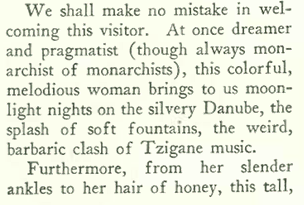
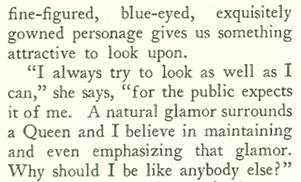
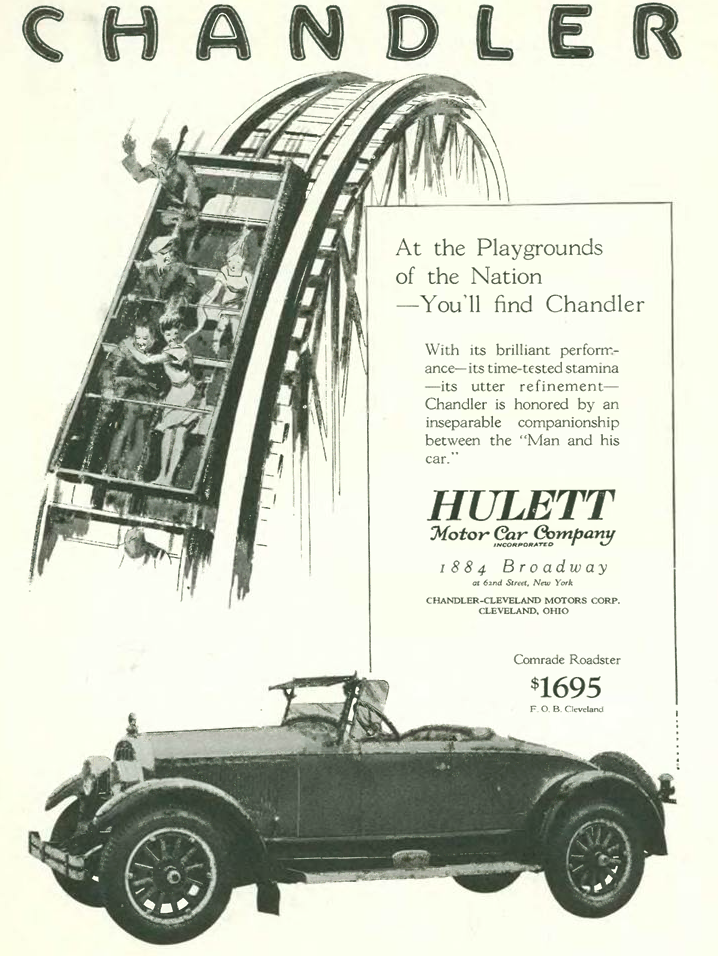
The issue’s “Profile” by John Winkler featured a mostly glowing account of Queen Marie…
2

3

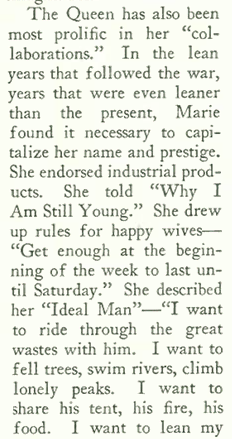
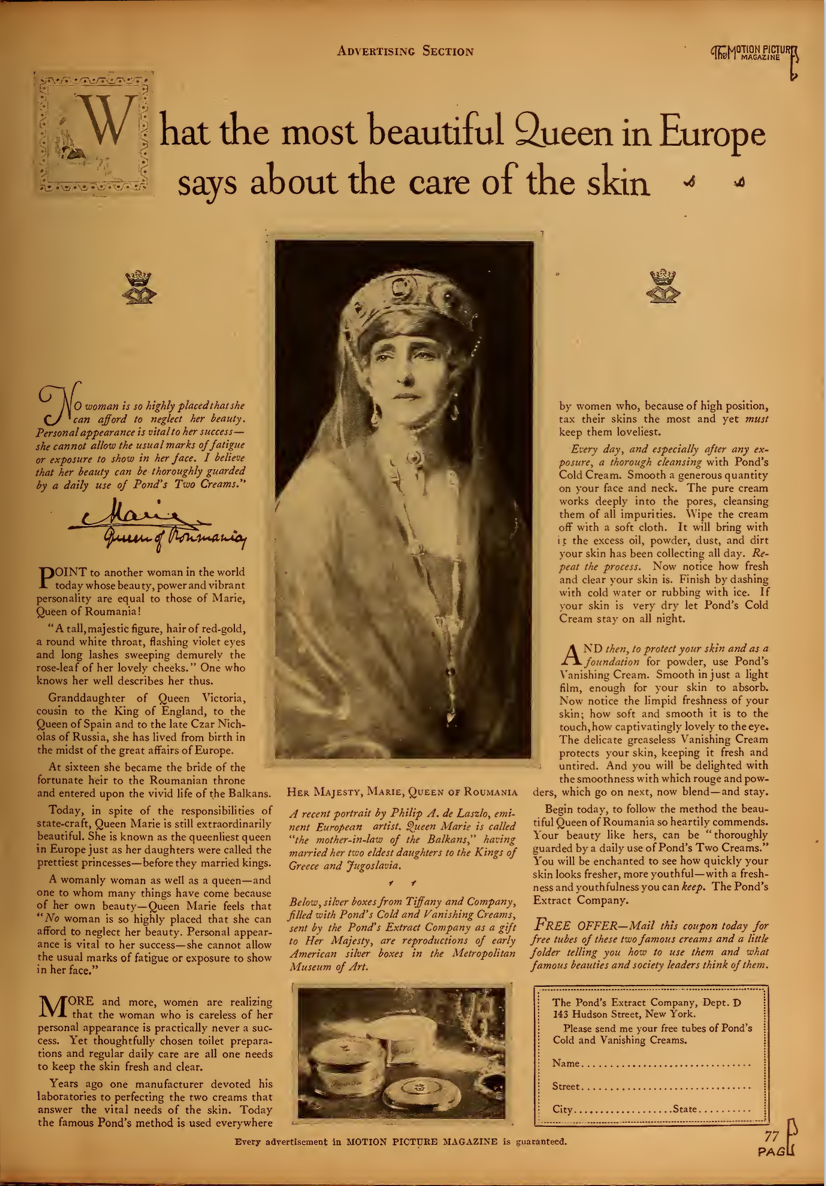
…although it was noted that Queen has to stoop to writing articles and endorsing products for a little extra cash…
4

5

Screenshot 2015-04-21 13.18.41
The “Queen of Roumania” and her Pond’s Cold Cream endorsement were featured in this April 1925 ad in Motion Picture magazine. (Image scan)

And the Queen would also be seeking a few bucks from Uncle Sam…

6

The Queen’s visit was even on the mind of one cartoonist (still trying ID):

Screen Shot 2016-04-01 at 1.27.00 PM

The following week, in the Oct. 30, 1926 issue…

a3dbcac2108e4dce47a2ca56e55b1e62
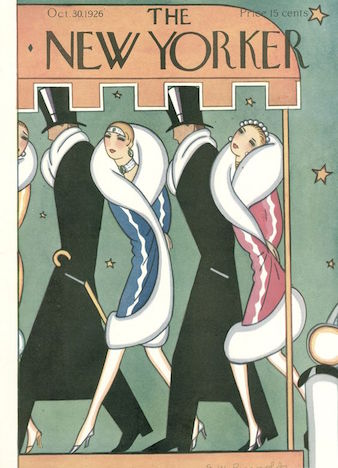
October 30, 1926 cover by Stanley W. Reynolds.

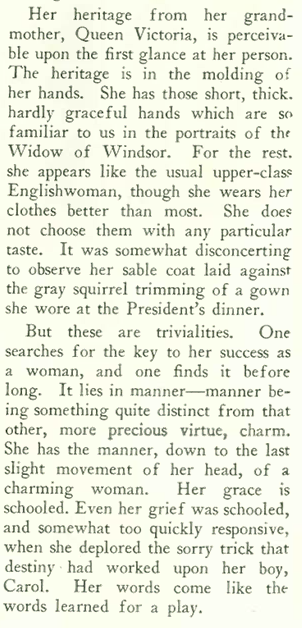
…the magazine offered an account of the Queen’s arrival, courtesy of writer Morris Markey:

1

Note the observation about the “sorry trick” played on the Queen’s son, Carol. Markey is referring the fact that Carol had waived his rights to succession. Little did anyone know that “her boy” would one day seize the throne and work to discredit her name.

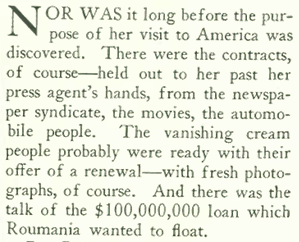
Markey also wryly noted the Queen’s objective to gain financial support from the U.S., even if her outstretched hand was covered in jewels:

S2

3

No Movie Queen, but she did have a flair for theatrics…

qmf20
(Kent State University)

Next Time: Fun With Harold…

Screen Shot 2016-04-01 at 3.03.49 PM

The Lights of Broadway

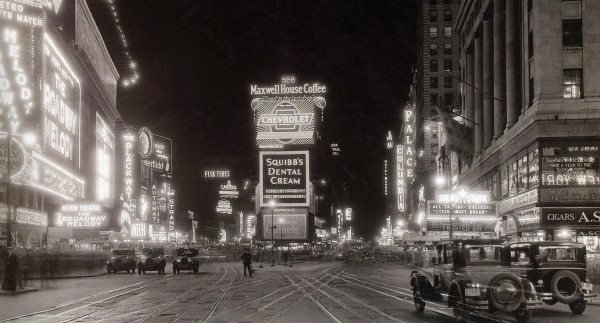
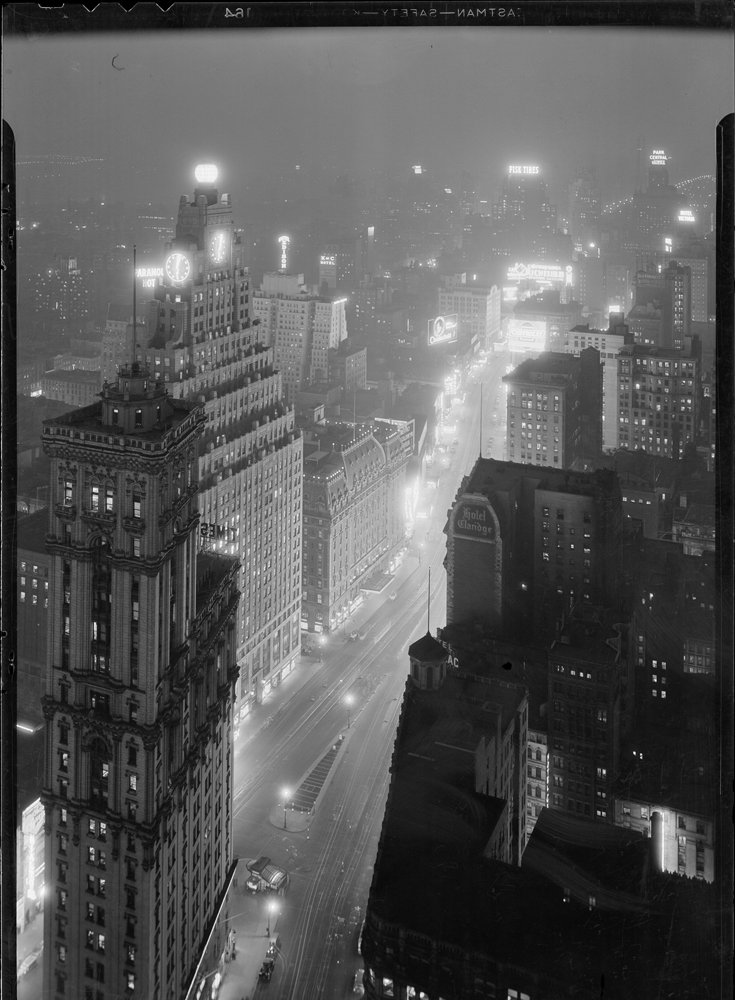
Above: Samuel Herman Gottscho photograph, New York City, Times Square South from 46th Street. General view of “Whiteway” toward Times Building, December 9, 1930. Museum of the City of New York

The lights of Broadway dazzled the editors of “The Talk of Town,” who commented on the changing displays that brightened The Great White Way.

Screen Shot 2016-01-25 at 5.31.10 PM
Cover of August 7, 1926 issue by Stanley W. Reynolds.

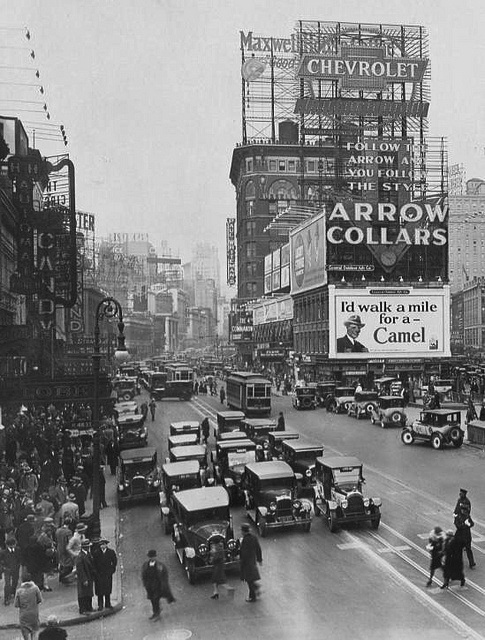
Broadway hit its prime in the 1920s, when many old buildings originally used for housing or commercial interests became more valuable as places to hang brightly lit signs.

NYC-at-Night131-600x323
Broadway in the 1920s (TimesSquareNYC.org)

The “Talk” editors were more or less impressed by the displays. Despite their garishness, the Broadway lights were also a symbol of the youthful exuberance of Roaring Twenties New York:

Screen Shot 2016-01-28 at 4.31.47 PM

Screen Shot 2016-01-28 at 4.32.03 PM

Samuel Herman Gottscho photo of Times Square from 41st Story [of the] Continental Building, at night, February 16, 1932. (Museum of the City of New York.)
tumblr_nw4uc5kmEh1ti90t5o1_500
Daytime view of Times Square in the 1920s (Tumblr)

The “Talk” editors sang the praises of the “aortic” Grand Central Station, which they dubbed a place of both dignity and efficiency that sorts a “surprisingly cheerful stream” of travelers with a certain rhythm, set in motion by an impassive gateman:

Screen Shot 2016-01-28 at 4.28.56 PM

gc
The main concourse at Grand Central Terminal, 1929. (New York Transit Museum)

The Talk writers also added this lyrical observation of the traveling masses:

Screen Shot 2016-01-28 at 4.30.39 PM

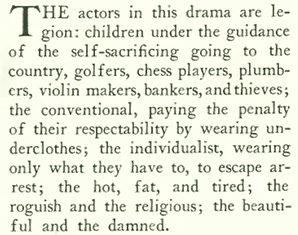
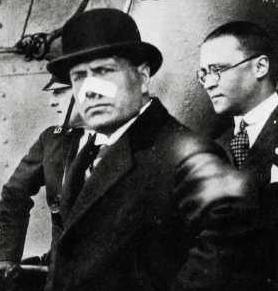
Talk also noted the recent travels of Cornelius Vanderbilt Jr., who was an apparent heir to the Vanderbilt fortune until he shunned high society and was disinherited by his parents for becoming a journalist and newspaper publisher. The Talk segment noted that Vanderbilt had returned from travels in Europe, where among other things until he rubbed elbows the Italian dictator Benito Mussolini and observed the curious habits of people under his fascist rule:

Screen Shot 2016-01-28 at 4.23.59 PM

Italian Premier Benito Mussolini (before he started wearing the fascist uniform) leaving for Tripoli on May 13, 1926. His nose was bandaged after an assassination attempt on April 26 by a British woman, Violet Gibson, who shot him with a revolver at close range. She was ruled insane and deported to England (strangehistory.net))

Next Time: Talking Pictures…

Screen Shot 2016-01-28 at 4.34.57 PM

Good Old Summertime

8762fa732414047f1adc968dd860904b
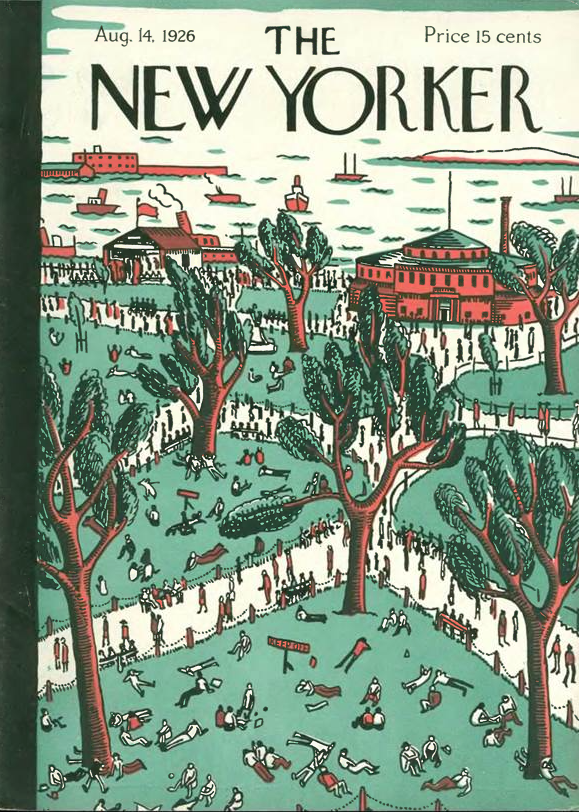
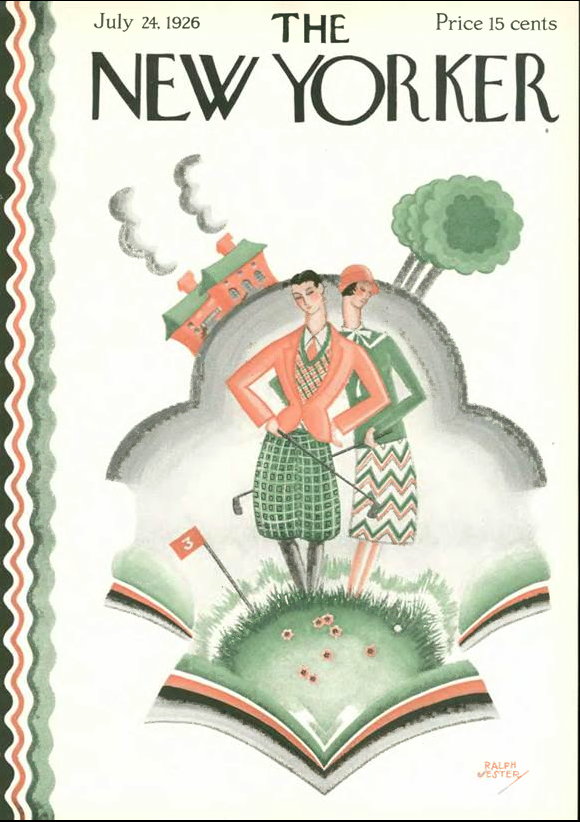
July 17, 1926 cover by Stanley W. Reynolds.

The glories of summertime filled the pages of the July 17, 1926 issue. The cover featured a stylish young couple enjoying a romantic evening on a moonlit lake, while the inside pages were filled with all sorts of outdoor activities ranging from dining and dancing to open air concerts and golf, lots of it.

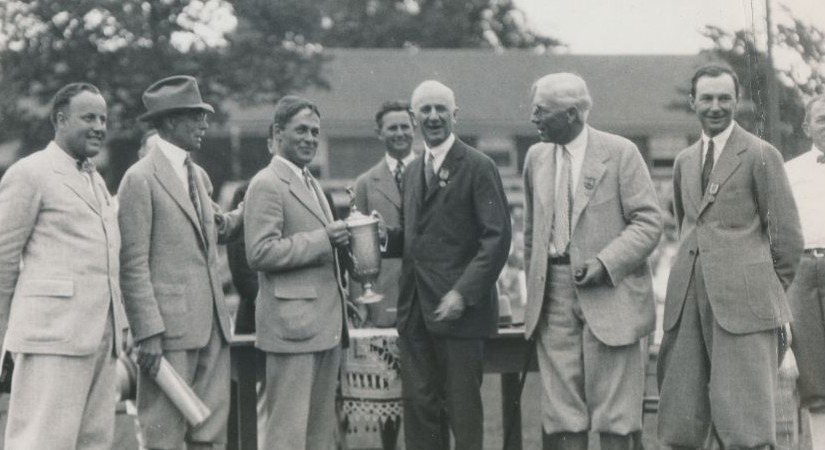
There was a lengthy profile by Herbert Reed on golfing great Bobby Jones, a mere boy of 24 who competed as an amateur but often beat top pros such as Walter Hagen and Gene Sarazen (in a few years Jones would help design the Augusta National Golf Club and co-found the Masters Tournament).

Screen Shot 2016-01-15 at 5.29.23 PM
Rending of Bobby Jones for the “Profile” by illustrator Miguel Covarrubias.

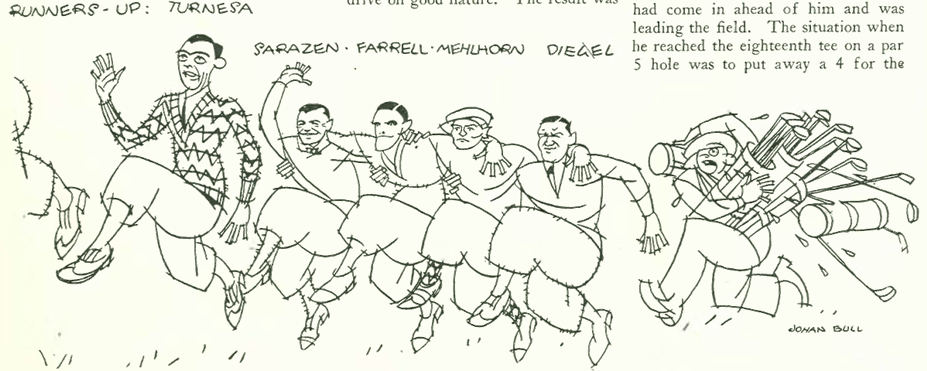
In “Sports of the Week,” Reed wrote about Jones’s second U.S. Open win, in Columbus, Ohio. Johan Bull offered this rendering of the runners-up:

Screen Shot 2016-01-15 at 5.34.15 PM

Jones__Bobby___1_515b19833f0f9
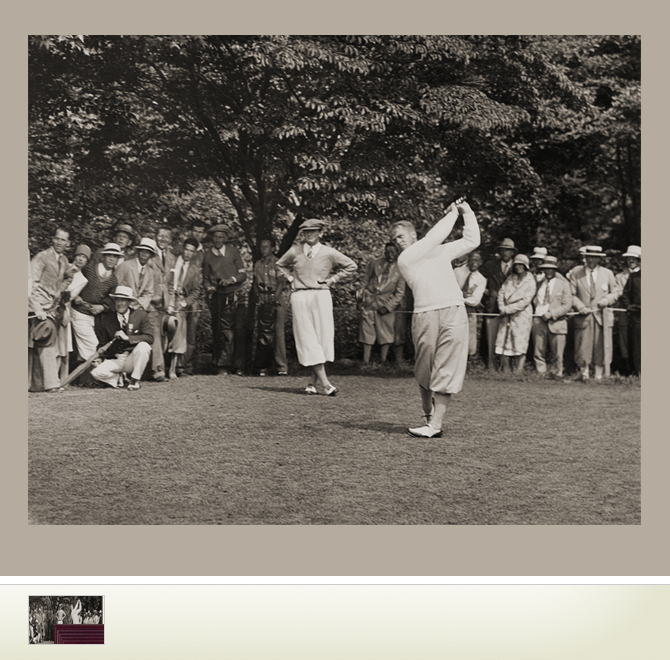
Bobby Jones at the 1926 U.S. Open (golfspast.com)

And with the warm weather the tops were open on automobiles for both the rich:

Screen Shot 2016-01-15 at 5.15.46 PM

And the not-so-rich:

Screen Shot 2016-01-15 at 5.36.02 PM

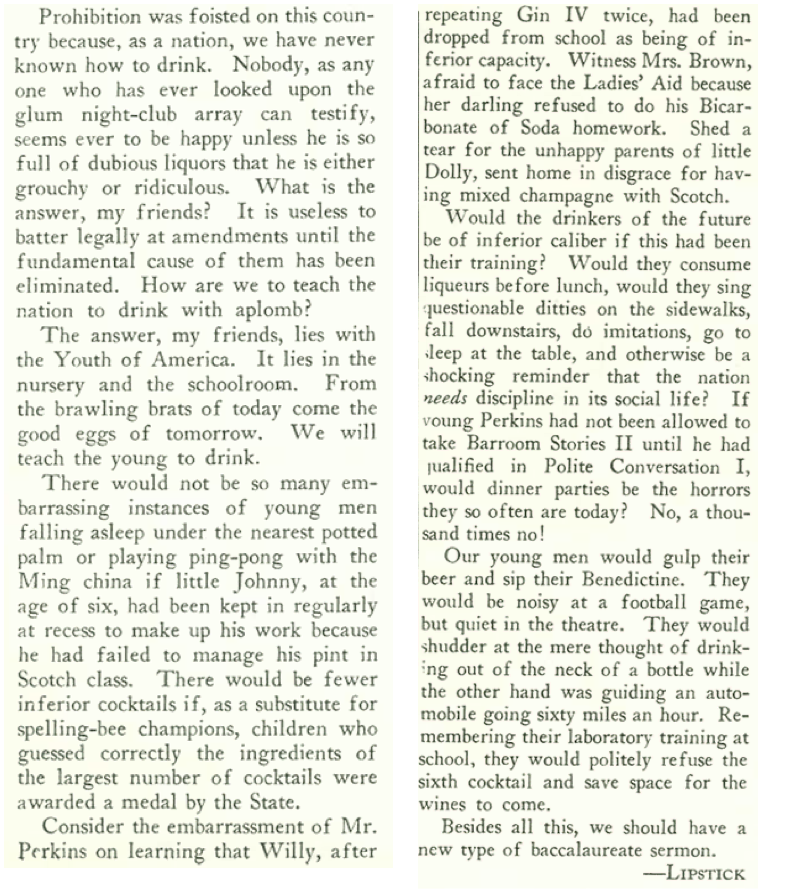
And finally, Lois Long, fed up with reviewing restaurants, fires off a column about the sad state of drinking in America:

Screen Shot 2016-01-15 at 5.47.09 PM

Next Time: Blowing Smoke…

Screen Shot 2016-01-15 at 5.49.44 PM


What to Drink During Prohibition

The Roaring Twenties were a strange confluence of the Puritan and libertine, perhaps best represented by Prohibition and the speakeasy night life it inspired. Many if not most of The New Yorker readers of the late 1920s were familiar with these establishments as well as with reliable bootleggers and rum runners. And for those of you following this blog we all know that “Tables for Two” columnist Lois Long was the voice of speakeasy and New York nightlife.

Screen Shot 2015-12-17 at 1.51.20 PM
May 29, 1926 cover by Stanley W. Reynolds.

Prohibition did not make consumption of alcohol illegal. The 18th Amendment prohibited the commercial manufacture and distribution of alcoholic beverages, but it did not prohibit their use.

So if you had a connection to a smuggler bringing whisky from Scotland via Canada, for example, you could enjoy a Scotch at home without too much trouble, although the prices could be high. “The Talk of the Town” editors regularly reported black market wine and liquor prices (I include an adjoining Julian de Miskey cartoon):

Screen Shot 2015-12-18 at 11.53.01 AM

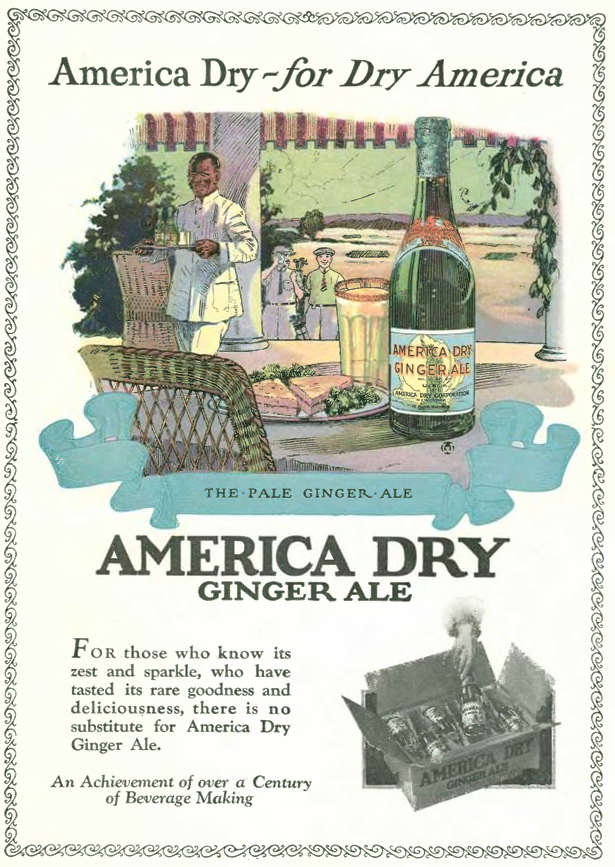
Note the mention of pocket flasks, which were an important item in a purse or vest pocket when one went to a nightclub or restaurant, where White Rock or some other sparkling water was sold as a mixer for whatever you happened to bring with you. You see a lot of this type of advertisement in the Prohibition-era New Yorker:

Screen Shot 2015-12-18 at 12.11.14 PM

I’ll bet those grinning golfers have something in their bags besides clubs.

And then there were ads like these, which I find quite sad:

Screen Shot 2015-12-18 at 12.12.11 PM

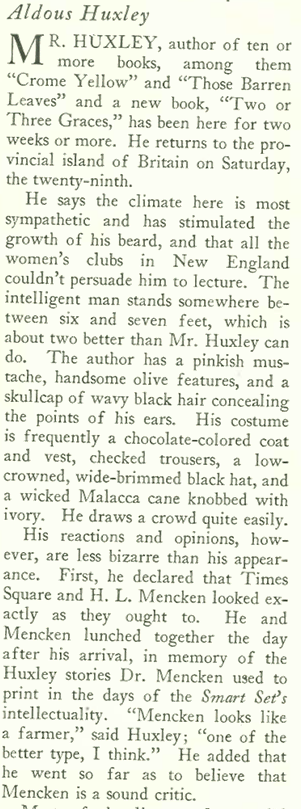
“The Talk of the Town” also commented on the recent visit of British writer Aldous Huxley, who told his New York hosts that he admired American writers Willa Cather and Sherwood Anderson, and he also had praise for writer and critic H.L. Mencken, whom he likened to a farmer “of the better type:”

Screen Shot 2015-12-18 at 11.48.18 AM

Aldous Huxley in the 1920s. (Biography.com)

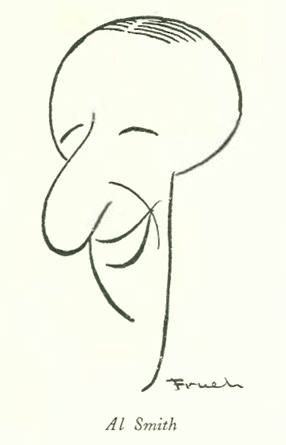
Other odds and ends from this issue…a clever drawing by Al Frueh for the “Profile” feature on New York Governor Al Smith:

Screen Shot 2015-12-18 at 12.06.42 PM

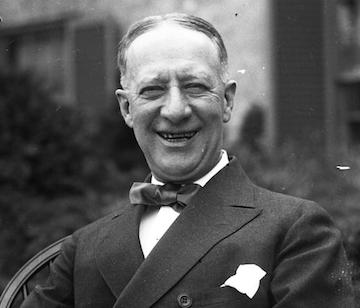
A photo of Al Smith for comparison:

al
New York Gov. Al Smith (IMDB)

And this bit from “Of All Things,” complete with bad pun/racial slur:

Screen Shot 2015-12-18 at 12.05.53 PM

New Yorker readers in 1926 had little reason to believe that in a decade Benito Mussolini would try to make good on his statement and join Adolf Hitler in the next world war.

Here’s a couple more ads from the issue that are signs of those times. Note the listing of Florida locations for those New Yorkers who were flocking to that new winter vacation destination:

Screen Shot 2015-12-18 at 12.09.48 PM

And this ad for an electric refrigerator…for those who could afford such newfangled things. The ice man was still plenty busy in 1926, but his days were numbered.

Screen Shot 2015-12-18 at 12.09.15 PM

And finally, a nod to springtime, and this excerpt of an illustration by Helen Hokinson for the “Talk” section:

Screen Shot 2015-12-18 at 12.07.27 PM

Next Time: After a Fashion…

Screen Shot 2015-12-18 at 12.12.38 PM

Party With Gentleman Jimmy

Screen Shot 2015-07-23 at 12.08.59 PM
Nov. 21, 1925 cover by Stanley W. Reynolds.

Mayor Jimmy Walker wasn’t known for being cerebral. But as the voters’ choice to lead the City of New York, he could not have been more well-suited (pun intended) to the zeitgeist of the final, dizzying, roaring years of The Jazz Age.

Walker was a flamboyant man-about-town, a clothes horse who was no stranger to speakeasies or the backroom politics of Tammany Hall.

As Jonathan Mahler wrote in New York magazine (April 1, 2012), Gentleman Jimmy “perfectly embodied that moment of indulgence: the public servant who favored short workdays and long afternoons at Yankee Stadium, who was loath to miss a big prizefight or Broadway premiere, who left his wife and Greenwich Village apartment for a chorus girl and a suite at the Ritz-Carlton.”

Not that there weren’t some concerns. “The Talk of the Town” offered this early observation of the incoming mayor:

Screen Shot 2015-07-24 at 9.38.52 AM

Screen Shot 2015-07-24 at 1.01.10 PM
New York City Mayor Jimmy Walker during a visit to Boston. (Boston Public Library)

Mahler quoted a columnist from Walker’s time, who noted that “No man could hold life so carelessly without falling down a manhole before he is done.” And Walker would fall to scandal by 1932. But we will get to that. For now, it’s party time in Gotham.

The New Yorker continued to have fun with President Calvin Coolidge, publishing this cartoon by Isadore Klein that took a poke at Coolidge’s Thanksgiving Day Proclamation, in which Coolidge spoke at length about the nation’s abundance:

Screen Shot 2015-07-24 at 9.51.44 AM

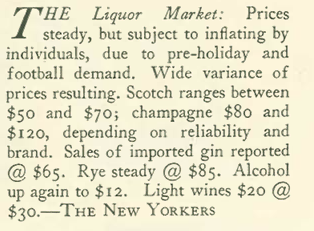
Talk also reported the latest bootleg prices in “The Liquor Market…”

Screen Shot 2015-07-24 at 9.52.59 AM

“Profiles” examined the life of New York Times owner Adolph Ochs. The writer Elmer Davis observed that “More than any other newspaper owner, he is his paper, and his paper is himself…”

Screen Shot 2015-07-24 at 12.23.11 PM
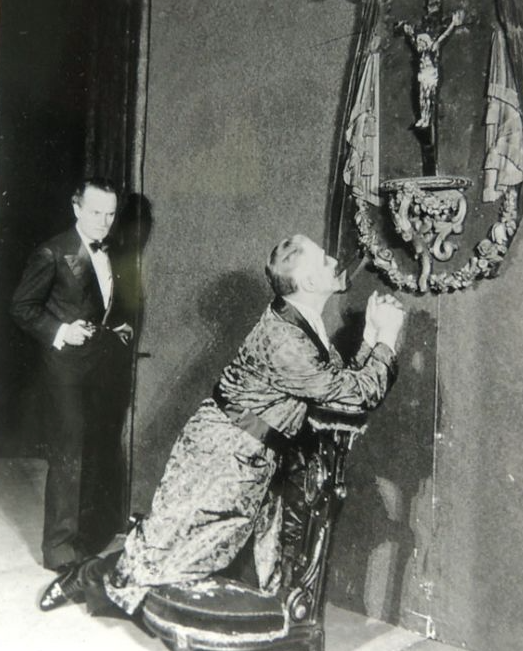
Detail from a lantern slide depicting Basil Sydney as Hamlet and Charles Waldron as Claudius in the Booth Theatre’s 1925 production of Hamlet in “modern dress.” (Graphic Arts Collection, Princeton)

In “The Theatre,” critic Herman J. Mankiewicz addressed criticisms of the Booth Theatre’s new approach to Hamlet, which was presented “in modern dress.” Mankiewicz wrote that the departure from traditional Elizabethan costumes had brought the play “into the open,” and that Basil Sydney was a “splendid” Hamlet.

In “Books,” reviewer Harry Este Dounce recommended Ford Madox Ford’s No More Parades (“a fine display of virtuoso writing”) and Arthur Schnitzler’s Fraulein Else (“a scintillant little firework”).

tumblr_mqej7s8XOl1qzx4bjo1_1280
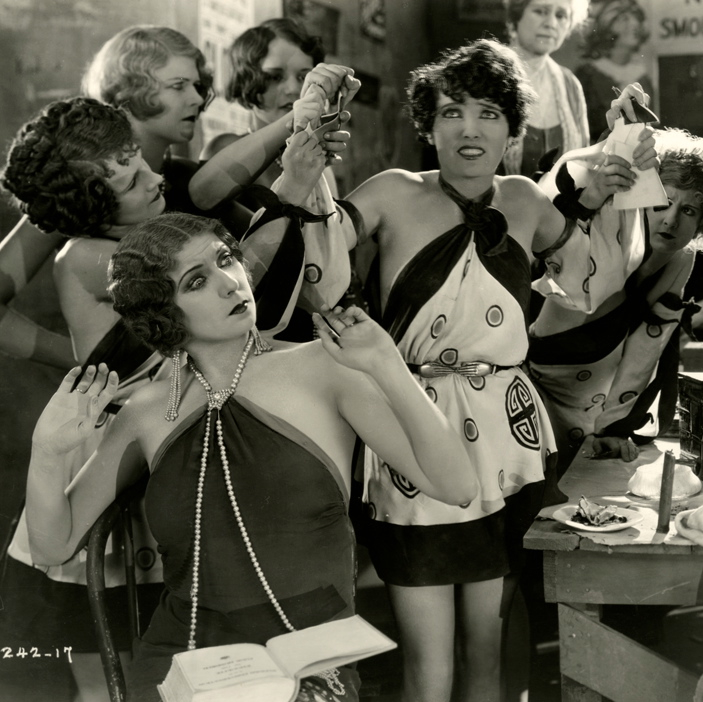
Lilyan Tashman, left, and Pauline Starke in Robert Z. Leonard’s Bright Lights, 1925 (Tumblr)

In “Motion Pictures,” Theodore Shane panned the movie Lord Jim (based on the Joseph Conrad novel), but he enjoyed the “simple hokum tale” of Bright Lights and the “restrained” performance of Pauline Starke, “a perfect miniature Gloria Swanson.”

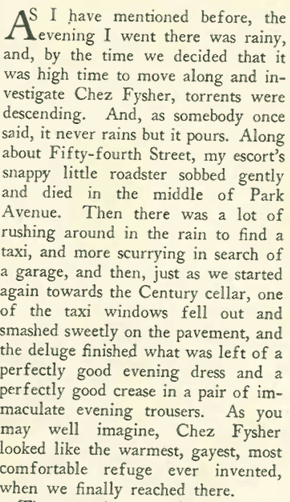
In “Tables for Two,” Lois Long despaired of finding a decent “swank dinner” on a rainy autumn evening, and finally headed to a Viennese restaurant (Frau Greta’s) for some German comfort food. The rain turned to torrents as she then headed out for some nightlife:

Screen Shot 2015-07-24 at 10.19.47 AM

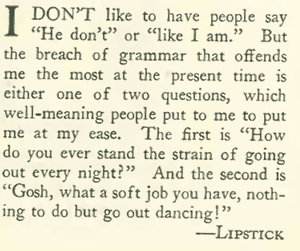
Long concluded her “Tables” column with this peevish note on “grammar:”

Screen Shot 2015-07-24 at 10.21.43 AM

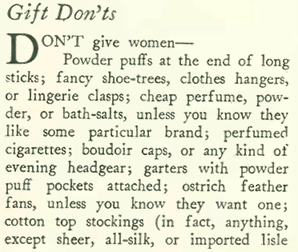
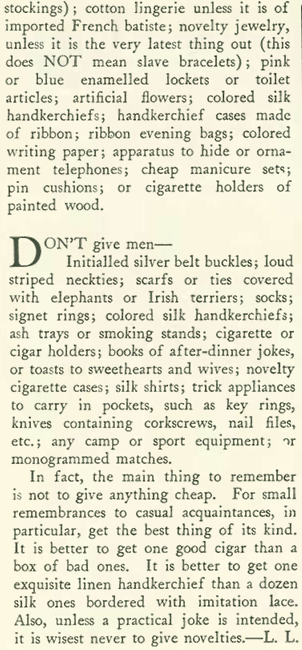
In her other column, “On And Off The Avenue,” Long wrote about the increasing popularity of New Yorkers traveling to Florida for the winter, and in anticipation of the Christmas holiday, offered this advice on what not to give as gifts:

Screen Shot 2015-07-24 at 10.27.34 AM

Screen Shot 2015-07-24 at 10.27.47 AM

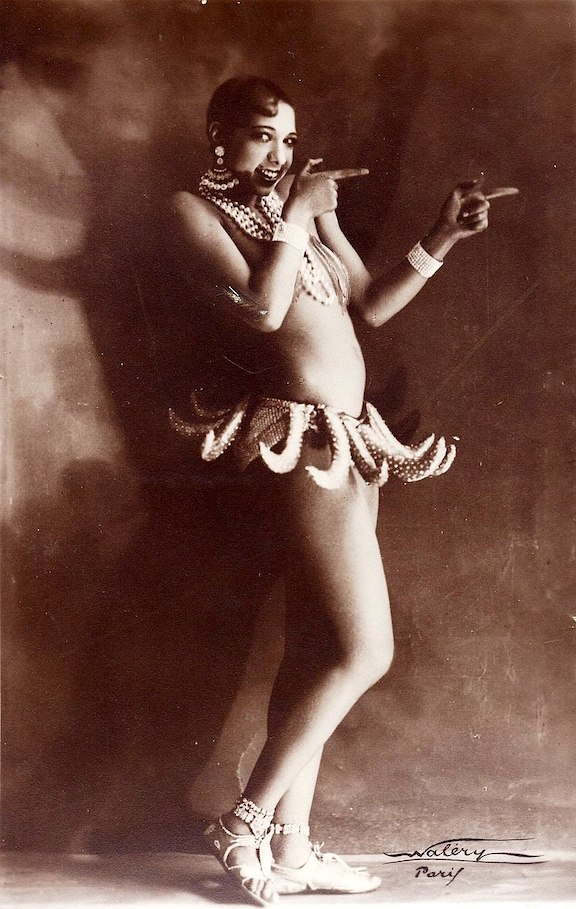
In her report from Paris, Janet Flanner commented on the popularity of Josephine Baker at the Champs Elysees Theater:

Screen Shot 2015-07-24 at 12.09.00 PM

Josephine Baker in 1927. (Wikimedia Commons)

Flanner also commented on the growing appreciation of paintings by Henri Rousseau, who just a decade or so earlier was considered something of a joke among art circles:

Screen Shot 2015-07-24 at 12.09.43 PM

60.1583
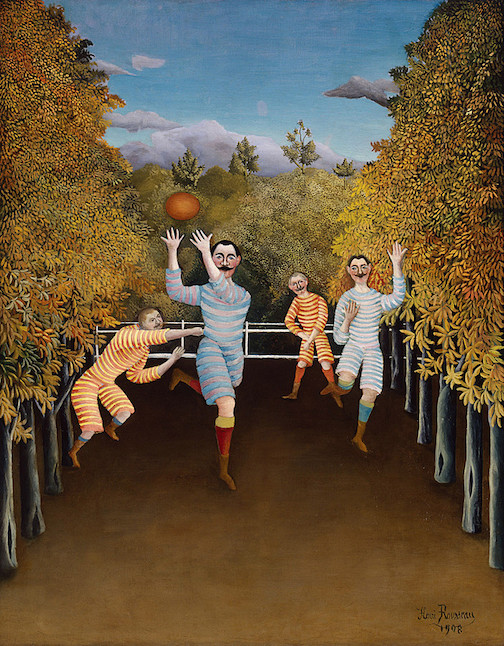
Henri Rousseau’s The Football Players, 1908. Today even Rosseau’s lesser-known works are valued in the millions (Wikimedia)

And finally, Julian de Miskey’s take on The Big Game:

Screen Shot 2015-07-24 at 9.58.04 AM

Next Time: A Debutante’s Diatribe…

Screen Shot 2015-07-24 at 9.36.48 AM