Thackeray, In Color

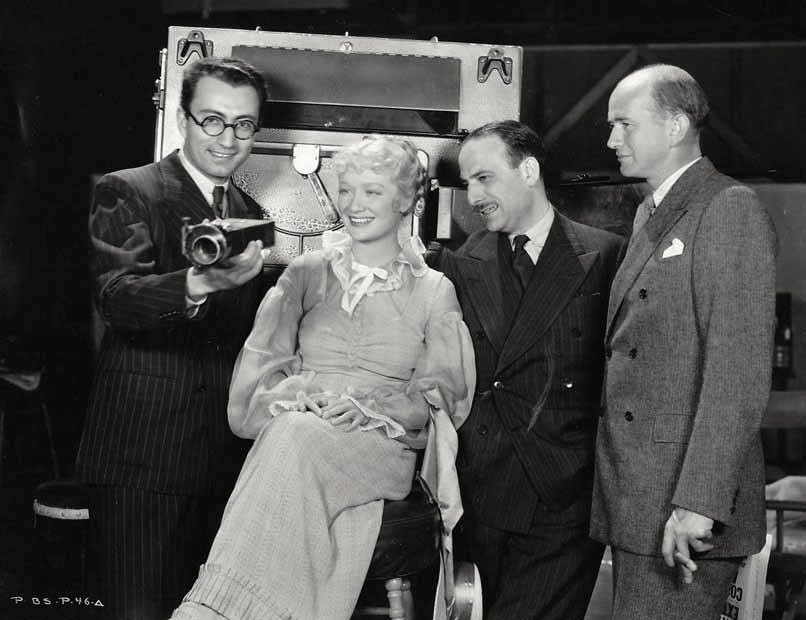
Above: Seated in front of a massive Technicolor camera, Rouben Mamoulian directs Miriam Hopkins (also inset) in Becky Sharp, the first feature shot entirely in three-color Technicolor. The film was based on character from William Makepeace Thackeray's 1848 novel Vanity Fair. (UCLA Film & Television Archive)

Rouben Mamoulian’s 1935 production of Becky Sharp wasn’t the first color film, but it was the first feature film to use the newly developed three-strip Technicolor process throughout, setting a standard for color films to come.

June 22, 1935 cover by Constantin Alajalov. A New Yorker contributor for thirty-four years, Alajalov (1900–1987) illustrated 170 covers for the magazine. Check out the treasure trove at Ink Spill for more on Alajalov and all things New Yorker.

Earlier color processes included films that were hand-tinted. Others used various dyes and techniques that included photographing a black-and-white film behind alternating red/orange and blue/green filters, and then projecting them through red and green filters. The inability to reproduce the full color spectrum, among other issues, had many critics dismissing the idea of color films altogether.

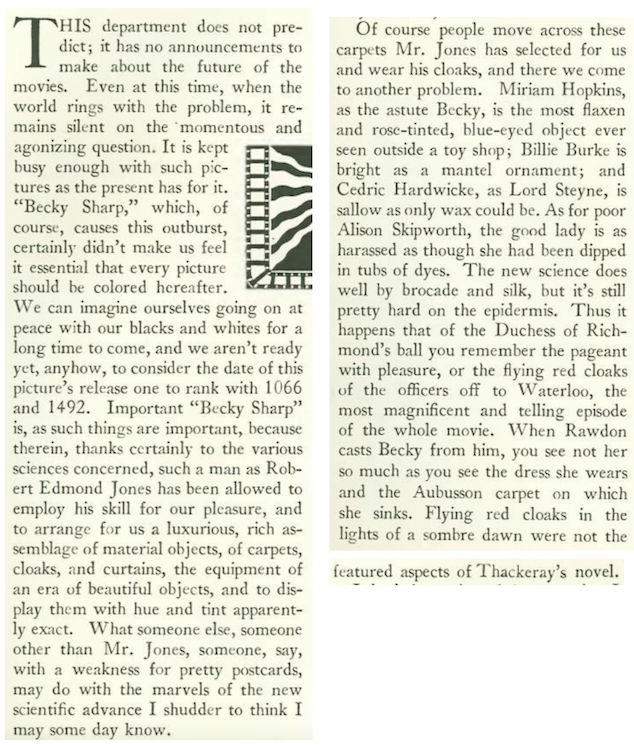
Mamoulian was fascinated by the possibilities of color film; by producing (and later directing) the film, he showcased the advancements in Technicolor. Film critic John Mosher had these observations:
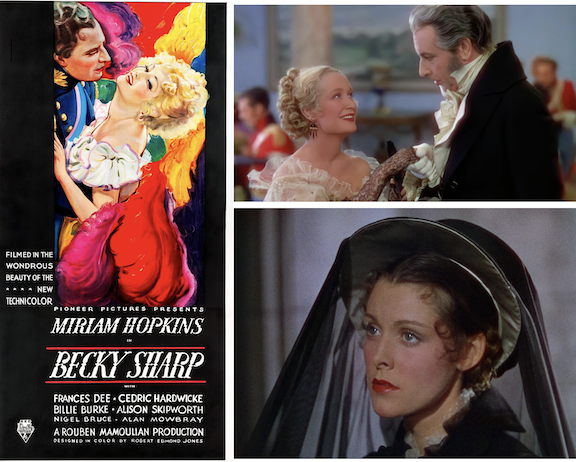
THIS IS A TEST…Considered a landmark in cinema as the first feature film to use the newly developed three-strip Technicolor production throughout, in many ways the film validated this advanced color technology. Top photo, Miriam Hopkins portrayed Becky Sharp, a socially ambitious woman (seen here with Cedric Hardwicke) who climbs the British social ladder with the help of her best friend, Amelia Sedley (Frances Dee, bottom photo). (Wikipedia/Amazon)
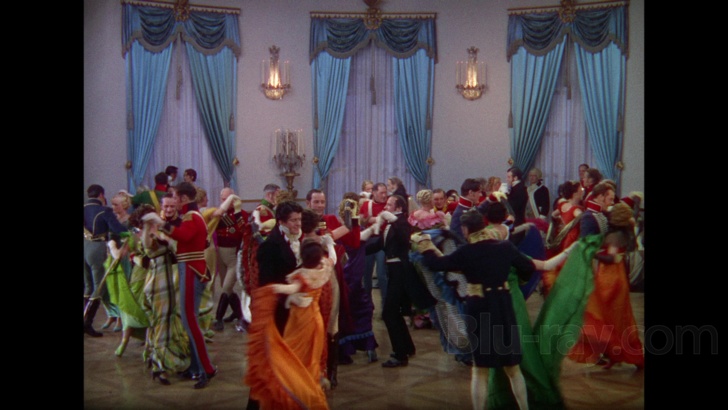
IT WAS FUN ANYWAY…Critic John Mosher was thrilled by the swirl of colors in the ballroom scene, even if flying red cloaks weren’t an aspect of William Makepeace Thackeray’s 1848 novel Vanity Fair. The film, however, was actually based on an 1899 play by Langdon Mitchell, who named his play after one of the characters in Thackeray’s novel. (blu-ray.com)
WHOLE NEW WORLD…Rouben Mamoulian, Miriam Hopkins, visitor Michael Balcon, and Kenneth Macgowan on the set of Becky Sharp. According to film historian Marc Spergel, “Mamoulian was fascinated by color…He saw in the color process another opportunity for innovations that would set a standard for the new technology…His interest lay in choosing color for psychological effect rather than mere realistic reproduction or decorative dividends. With the advent of color processing, particularly Technicolor processing—with its non-realistic, supersaturated color—Mamoulian could approach the film medium like a painter with a palette.” (Wikipedia)

Mosher also checked out the latest from Robert Montgomery and Joan Crawford, who exchanged marital banter in No More Ladies, while George Raft went all gangster in Dashiell Hammett’s The Glass Key.

HIGH FIDELITY…Top photo, socialite Marcia (Joan Crawford) is determined to keep her husband (Robert Montgomery) faithful in No More Ladies; below, George Raft does what he does best (playing a gangster) in The Glass Key. (jacksonupperco.com/notesoncinematograph.blogspot.com)

 * * *

Astor’s Risk

“The Talk of the Town” paid a visit to the Real Estate Exchange, where Vincent Astor re-acquired the St. Regis Hotel for five million and change. He then sunk another $500,000 (roughly $12 million today) into the hotel to further its luxurious status (including adding air-conditioning). The hotel’s famed King Cole Room and the Maisonette Russe restaurant opened in October 1935. Excerpts:
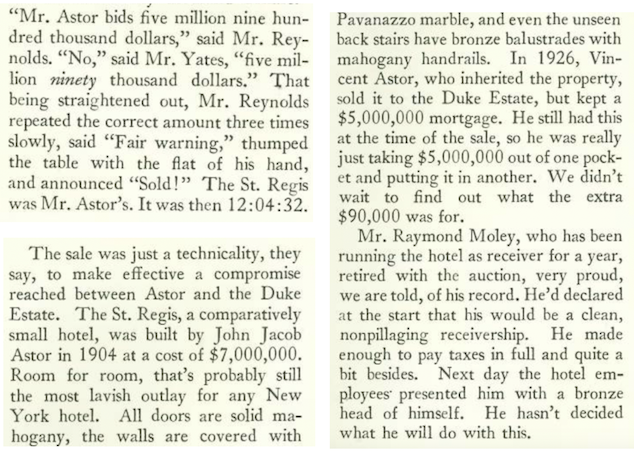
GOOD INVESTMENT…At left, Fifth Avenue facade of the St. Regis as seen in 2022. Right, entrance to the King Cole bar in the 55th Street annex. Thanks in part to the repeal of Prohibition, the hotel’s restaurant business increased by 300 percent between 1935 and 1937. (Wikipedia)

 * * *

School Days

James Thurber recalled his “tough” years at Sullivant School in Columbus, Ohio, in the essay, “I Went to Sullivant.” Brief excerpts:
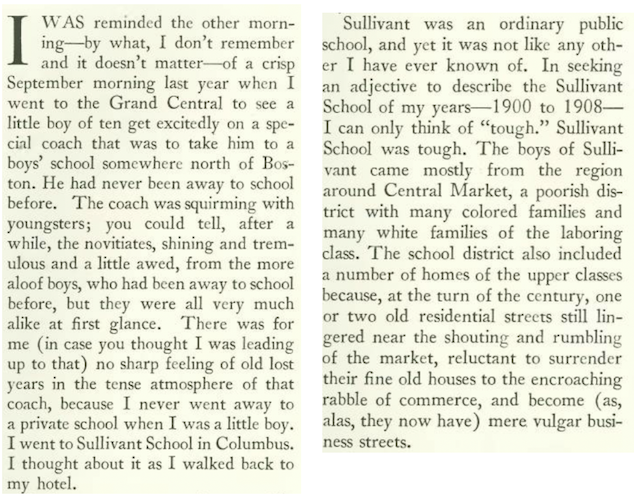
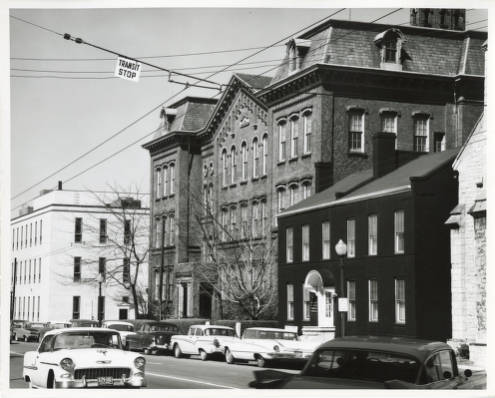
ALMA MATER…The Sullivant School James Thurber attended was completed in 1871 and was a school until 1923 when it became the offices for Columbus City Schools. This photo was taken shortly before it was demolished in 1961. (columbuslibrary.org)

 * * *

Avril en juin

Paris correspondent Janet Flanner gave a rundown on the latest happenings, including the Toulouse-Lautrec costume ball that attracted none other than Jane Avril, the famed French can-can dancer of the 1890s who could still kick up her heels. Flanner gave Avril’s age at 80, but records indicate she was closer to 70.

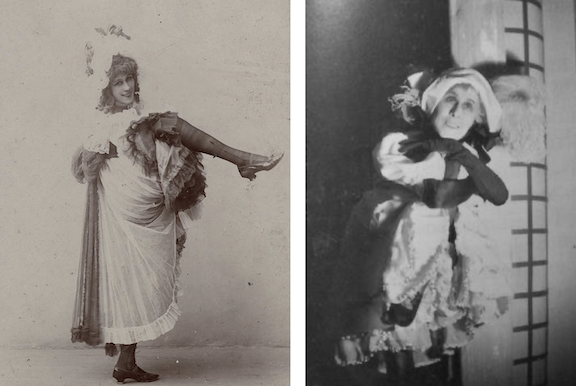
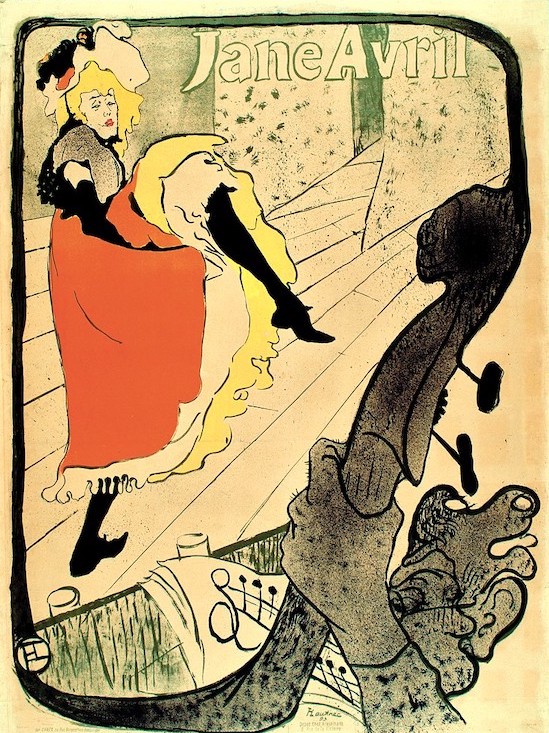
STILL KICKING…Jane Avril (1868–1943) was a French can-can dancer at the Moulin Rouge in Paris and a frequent subject of painter Henri de Toulouse-Lautrec. The wispy Avril, known for her jerky movements and sudden contortions, was nicknamed La Mélinite, after an explosive. At top left, Avril in her heyday circa 1890s; at right, Avril at the 1935 Toulouse-Lautrec costume ball. Read more about Avril’s strange life at one of my favorite “rabbit hole” sites, Messy Nessy. (messynessychic.com/Pinterest)
An 1893 Toulouse-Lautrec lithograph featuring Jane Avril, a lifelong friend of the artist. Avril commissioned this print to advertise her cabaret show at the Jardin de Paris. (met museum.org)

 * * *

From Our Advertisers

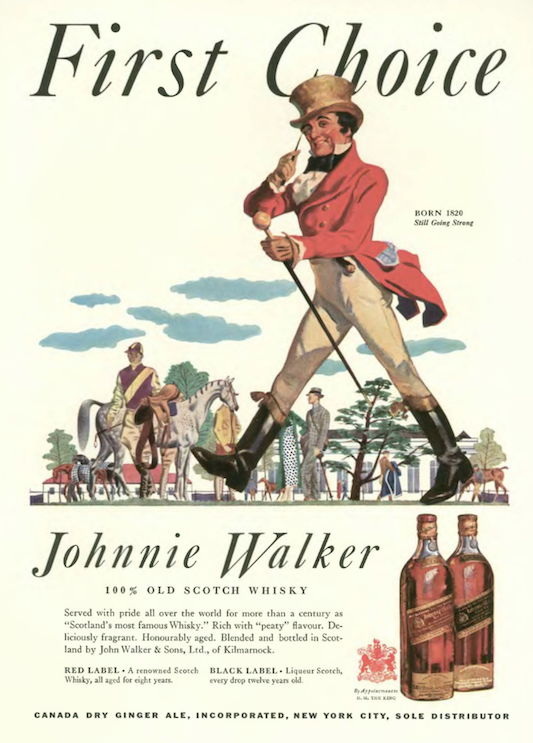
We begin with the inside front cover, Johnnie Walker strutting along at the horse races…
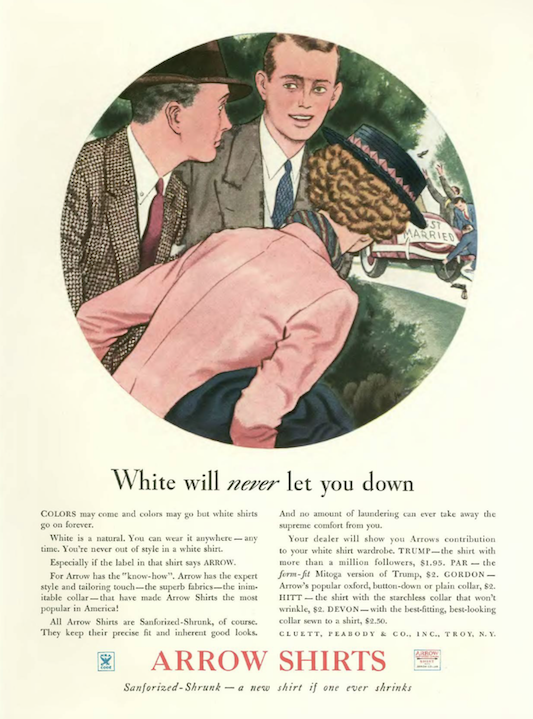
…the inside back cover belonged to Arrow Shirts…
…and no surprise that the back cover featured a stylish woman enjoying a cigarette, in this case a Lucky…

…Packard continued to run these colorful, wordy ads that made the case for owning a lower-priced Packard, which I’m sure was a fine automobile…
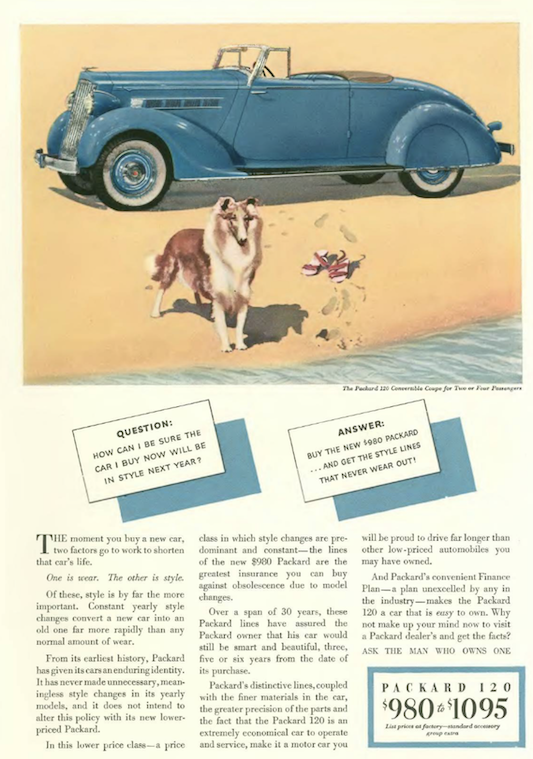
John Hanrahan, who early on served as The New Yorker’s policy council and guided it through its lean first years, be­came the publisher of Stage magazine (formerly The Theatre Guild Magazine) in 1932. In 1933 Stage became part of the Ultra-Class Magazine Group’s line-up that included Arts & Decoration and The Sportsman. Stage published its last issue in 1939, and I don’t believe the other two survived the 1930s either…this Mark Simonson site looks at the striking design elements of an issue from 1938…

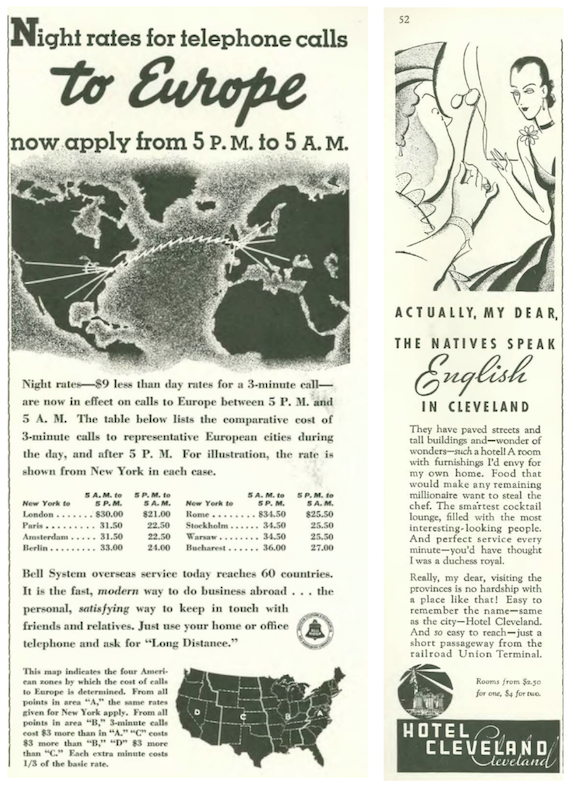
…a couple from back of the book…calling Europe by telephone in 1935 was an impressive feat, however it could cost you roughly $700 in today’s dollars to make a three-minute call to London…the one-column ad at right offered an Anglophilic appeal to those visiting Cleveland…
…this simple spot for Dole pineapple juice caught my eye because it was illustrated by Norman Z. McLeod (1898–1964), who drew Christie Comedy title cards during the Silent Era…
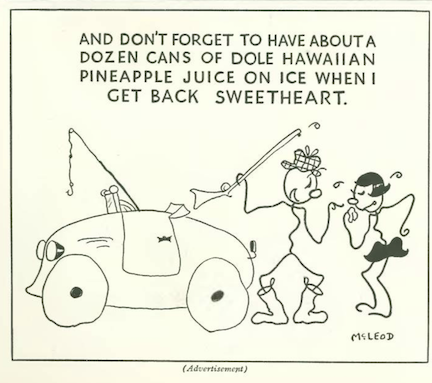
McLeod was also an acclaimed director of Marx Brothers comedies Monkey Business (1931) and Horse Feathers (1932), W.C. Fields’ It’s a Gift (1934), Danny Kaye’s The Secret Life of Walter Mitty (1947) and two of the Topper films.

HE GOT AROUND…Clockwise, from top left, director Norman Z. McLeod on the set of 1941’s Lady Be Good with actress Ann Sothern; Young’s familiar stick figure drawings on title cards for the 1928 silent short Loose Change; Cary Grant and Constance Bennett with Roland Young in 1937’s Topper. (TCM.com/silentology.wordpress.com/charlesmatthews.blogspot.com)

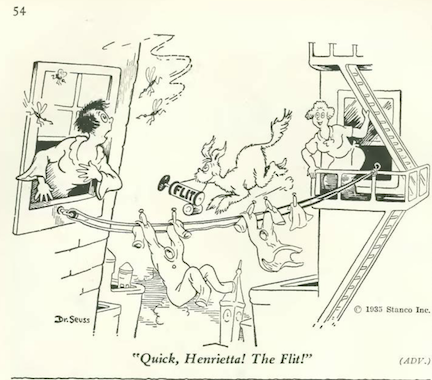
Dr. Seuss was back with his Flit advertisements…
Richard Decker illustrated this ad for Borden’s “Golden Crest” Farm Products…

…which segues into our cartoonists, and this curious spot drawing by James Thurber

Perry Barlow gave us the early days of the “Bed and Breakfast”…

Peter Arno, and no rest for the titans of industry…

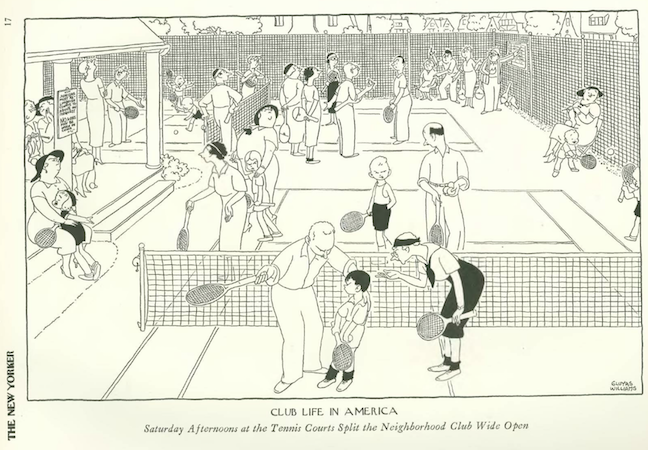
Gluyas Williams continued to take a sideways glance at Club Life in America”…
…from George Price…back in the day, tattoos were usually confined to sailors and longshoreman…this particular fellow found himself with some outdated ink…

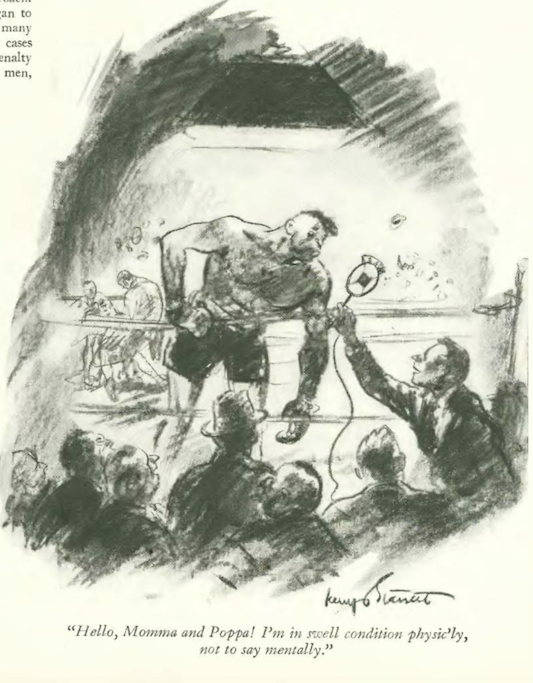
Kemp Starrett took us ringside…

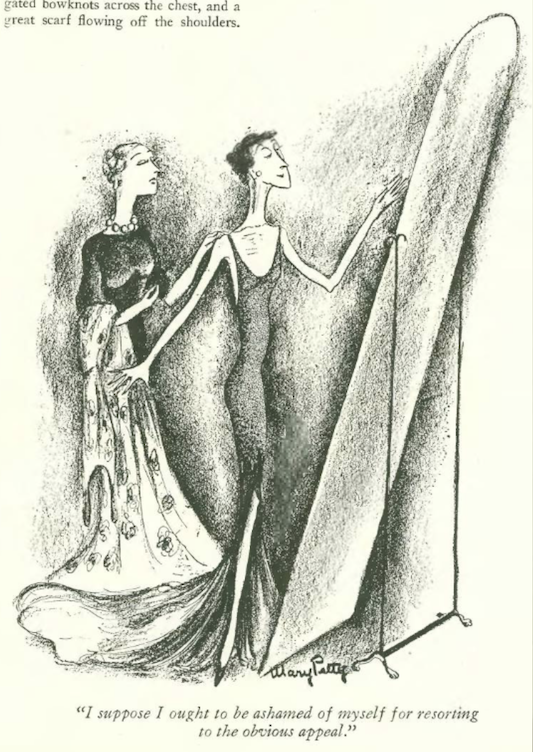
Mary Petty reflected on a bit of narcissism…
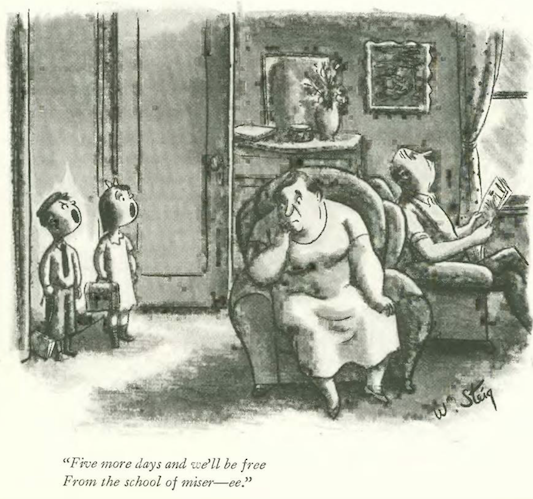
…and we close with William Steig, and mixed feelings about the summer season…
Next Time: Happy Motoring…
Summer Breeze

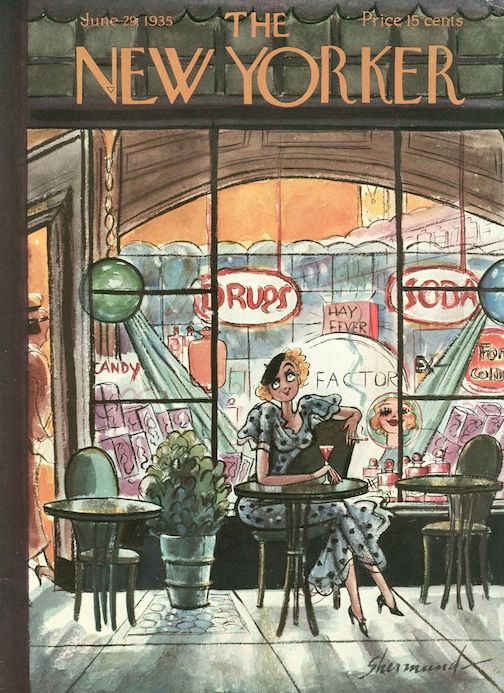
In the days before air conditioning, summertime city dwellers escaped the heat by fleeing to the countryside or the coast, or, if they lacked the time or the means, by taking their dining and dancing to one of Gotham’s breezy rooftop nightclubs.

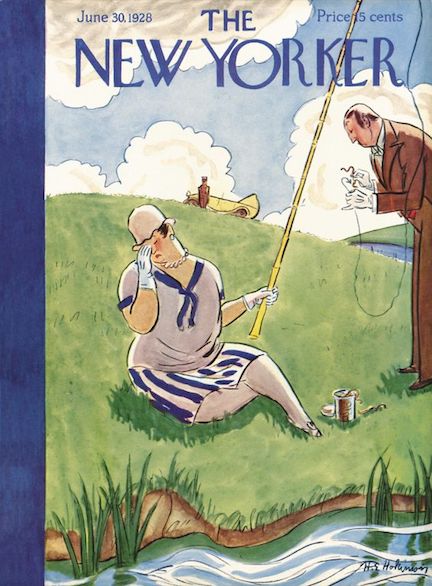
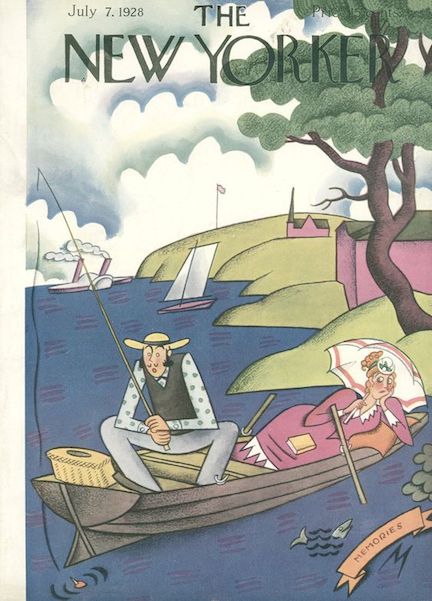
June 30, 1928 cover by Helen Hokinson.

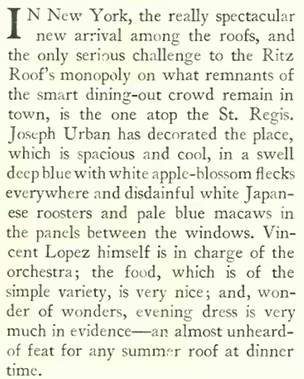
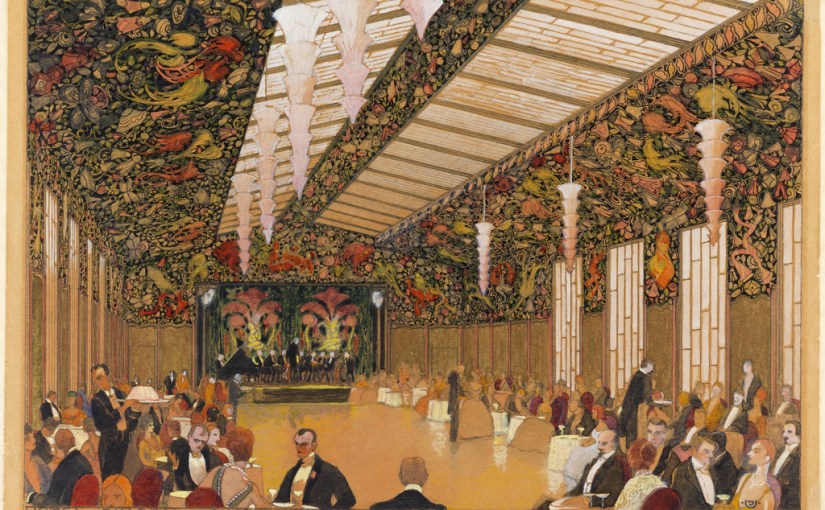
In her column “Tables for Two,” nightlife correspondent Lois Long welcomed the addition of rooftop dining atop the St. Regis Hotel, which featured decor by the famed theatrical set designer and architect Joseph Urban:

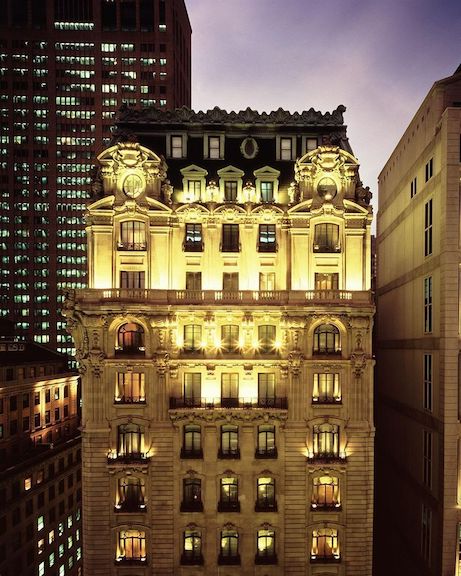
The St. Regis Hotel in New York City. (StreetEasy)

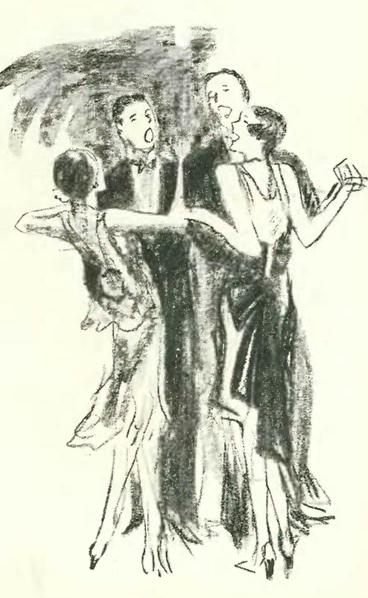
Illustrations by Alice Harvey (in the July 7, 1928 issue) depicted diners and dancers on the St. Regis rooftop…

“DISDAINFUL ROOSTERS” looked down upon diners from Joseph Urban’s roof garden murals at the St. Regis. At right, Urban in 1920. Urban was right at home at the St. Regis, and even died there in 1933 after suffering a heart attack in his apartment. (artcontrarian.blogspot.com / Columbia University, Butler Rare Book and Manuscript Library)
CONTINENTAL INSPIRATION…Joseph Urban’s 1928 design for the Roof Garden at the Hotel Gibson in Cincinnati, Ohio, was inspired by 19th century European pleasure gardens. (Cooper Hewitt)

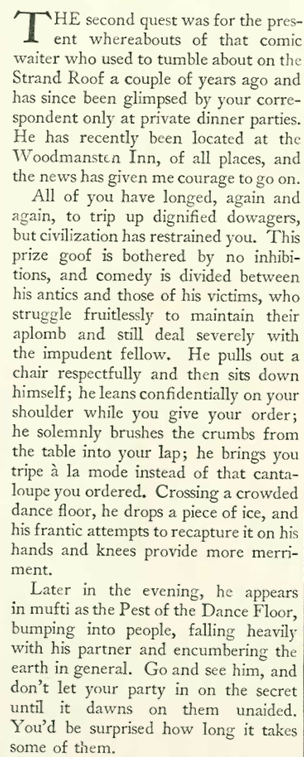
Long also fondly recalled a “comic waiter” who entertained patrons of another popular rooftop destination, The Cascades atop the Strand:

CASCADES…A 1920s postcard image of the Strand’s rooftop dining room, known as “The Cascades.” The room once featured a comical waiter who entertained diners with various gags and pratfalls. (thejumpingfrog.com)

 *  *  *

The June 30 issue featured a Profile of cosmetics entrepreneur Helena Rubinstein, who began her cosmetics empire with a dozen jars of face cream. Writer Jo Sterling described a businesswoman of limitless energy whose habits could be described as restless and haphazard but also revealed a woman of great generosity. Sterling noted that this woman of great wealth and a renowned collector of fine art and other rare objects preferred riding the bus to owning an automobile (illustration by Hugo Gellert).

IT STARTED WITH A DOZEN JARS OF FACE CREAM…Polish American businesswoman, art collector, and philanthropist Helena Rubenstein in the 1920s. (Womanology)

*  *  *

Portents of War (to be continued…)

In the Roaring Twenties most believed the Great War was indeed the “War to End All Wars,” so when militarism was clearly on the rise in Shōwa Japan few took it seriously, including New Yorker cartoonist Al Fruh:

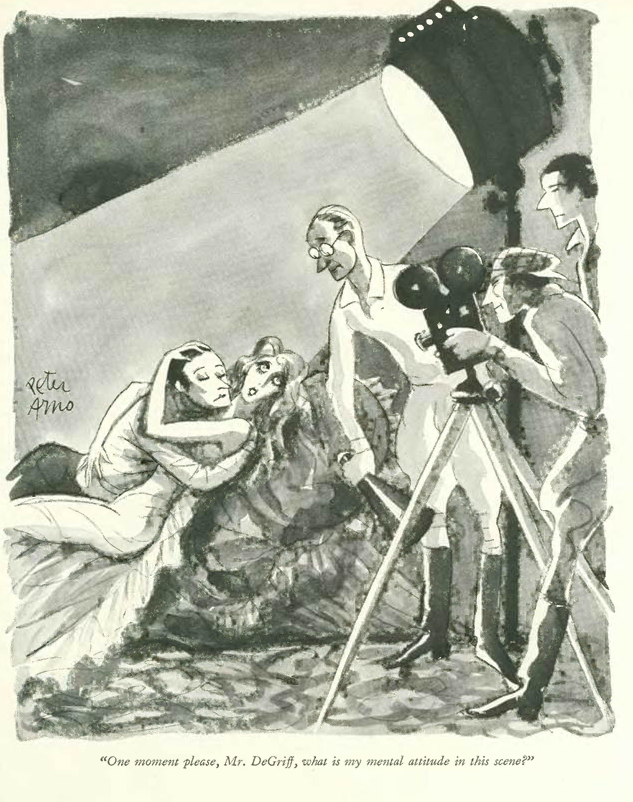
On the lighter side, Peter Arno offered up his take on a cinematic love scene:

Next Time: A Familiar Ring…

A Dry Manhattan

Prohibition posed one the biggest challenges to the life of an urban sophisticate in the 1920s, but also provided opportunities for sophisticated behavior through the flaunting of the Volstead Act.

Screenshot 2015-03-17 12.29.14
March 21, 1925 cover by Carl Fornaro (New Yorker Digital Archive)

“The Talk of the Town” for March 21, 1925 opens with an attack on the new U.S. Attorney for the Southern District of New York, Emory C. Buckner. He took office with the promise to “debunk” Prohibition enforcement by collecting evidence of liquor sales in nightclubs and speakeasies. Bypassing both the police and the Bureau of Prohibition, he would file injunctions in federal court and have the offending establishments padlocked for up to a year as a “public nuisance.”

(In “The Hour Glass” section of the same issue, the magazine observes that “Minister’s sons always go one way or the other, mostly the other.” It also notes that along with William Jennings Bryan, “Nebraska gave Emory Buckner to the Union.”)

According to the book Dry Manhattan: Prohibition in New York City, by Michael Lerner, Buckner hoped that his method would break the endless cycle of arrests, plea bargains and fines that had come to define prohibition. His approach took the focus off the city’s working class; rather than throwing bartenders into jail, he would threaten owners and landlords with financial losses and would “pinch the pocketbook of the man higher up.”

1924_El_Fey_107_W45
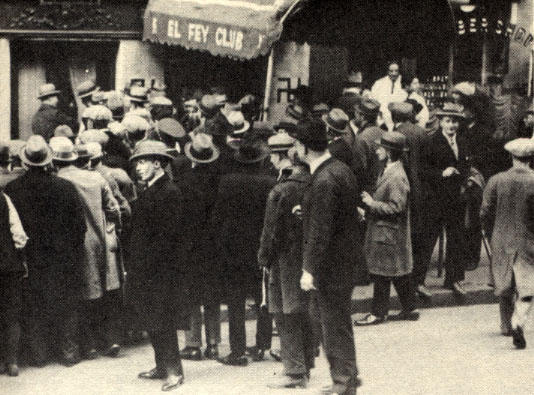
A crowd gathers at the padlocking of The El Fey Club, soon to reborn nearby as “The Del Fey Club.”

Lerner writes that Buckner targeted high-profile nightclubs and speakeasies in the upscale theater district rather than focusing on working class saloons that had been previously singled out by the dry lobby. The goal was to “hold the city’s more cosmopolitan social circles accountable for their drinking.”

In other words, this hit The New Yorker readership, and its writers and editors, right where they lived.

“The Talk of the Town” suggested that Buckner’s motivation was self-promotion, and predicted that his padlocking tactic would backfire, since previous attempts at padlocking actually lent “prestige” to the closed establishments.

That prediction would indeed become true. Instead of curtailing liquor consumption, Lerner writes that the padlocking actually increased the allure of nightclubs: “The leading lady of New York’s nightlife, Texas Guinan, went so far as to adopt the padlock as her personal trademark.”

Screenshot 2015-03-17 14.00.01
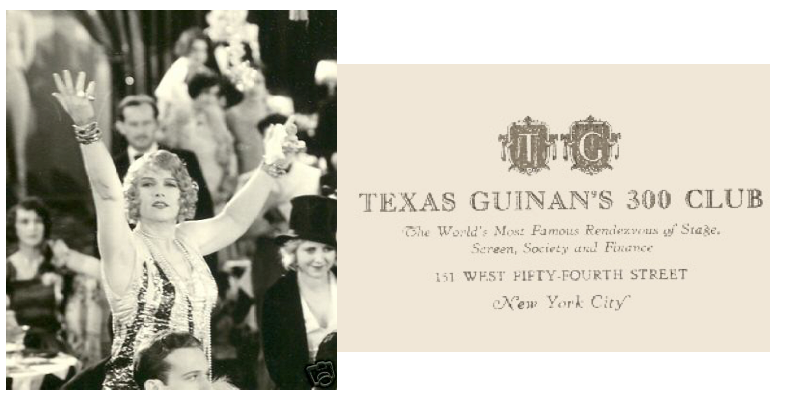
Texas Guinan’s 300 Club was a favorite of Broadway and Hollywood agents. Constantly raided by police, it closed in 1929.
Texas_Guinan_1919
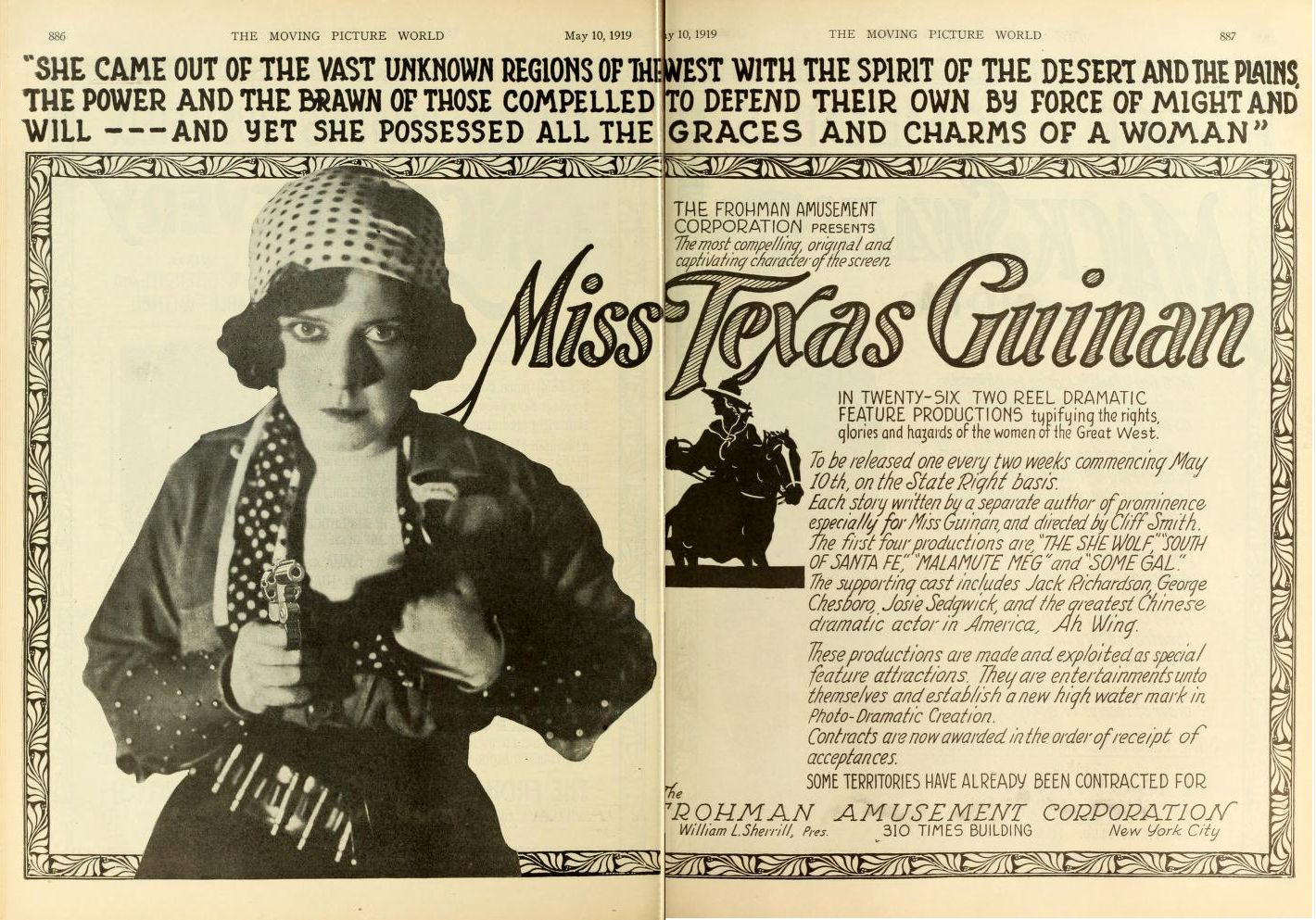
Advertisement from Moving Picture World, May 1919, for actress Texas Guinan’s films

Nevertheless, the “Talk of the Town” entry concluded with wistful remembrances of pre-Prohibition days, the Hoffman House taproom and the (Maxfield Parrish) Old King Cole mural above the Knickerbocker Bar, now “reposing disconsolately in the gloom of a warehouse.”

The writer would be happy to know that today the Maxfield Parrish mural (recently restored) graces The King Cole Bar at the St. Regis Hotel (if you are in NYC you should put on a nice jacket and grab an old school martini there).

The-King-ColeA final tidbit from Gotham magazine regarding the mural: “John Jacob Astor IV originally opened the St. Regis Hotel in 1904. Two years later, he commissioned the Old King Cole mural for his Knickerbocker hotel. Apparently Parrish, a Quaker, was reluctant to accept the gig, until Astor upped the offer to $5,000. Astor was tragically lost aboard the Titanic in 1912. And the Parrish mural was installed at The King Cole Bar at the St. Regis in 1932.”

Gotham magazine also offers a secret about the mural revealed at an unveiling following the restoration: under his regal robe, King Cole is breaking wind, therefore the smirks of the jesters.

This is what I love about history—its endless digressions.