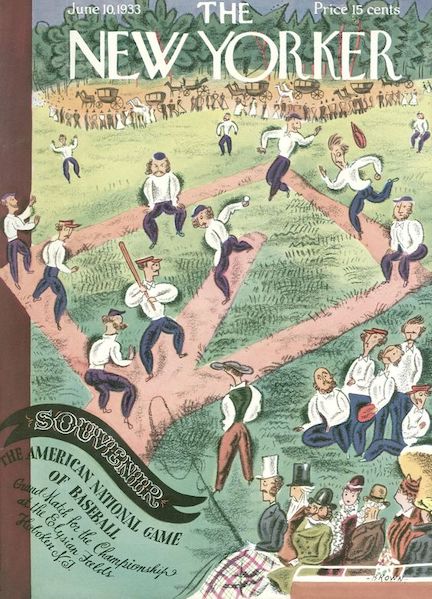
The High Life

Above, Stewart's Cafeteria in Greenwich Village, May 1933. (New York Public Library)

Although Sherwood Anderson is mostly known for his short story collections and novels, in the 1930s he also worked as a journalist, and for the June 9, 1934 issue of the New Yorker he explored the “centre of proletarian high life,” Stewart’s Cafeteria in Greenwich Village.

June 9, 1934 cover by Helen Hokinson.

What is particularly interesting about Anderson’s page 77 article for the “A Reporter at Large” column is what it doesn’t report, namely, that Stewart’s Cafeteria (later the Life Cafeteria) was known as a popular gay and lesbian hangout in addition to being a place for gawkers, assorted bohemians, and bohemian wannabes.

Anderson was a man of the world, so he knew exactly what Stewart’s was all about. But even the New Yorker wasn’t in the business of outing anyone, and editor Harold Ross, whose eccentricities included a puritanical strain, would not have allowed anything associated with “sexual deviance” to be printed in his magazine. Here is an excerpt from Anderson’s article, “Stewart’s, On the Square,” in which he subtly hints at the cafeteria’s “third life.”

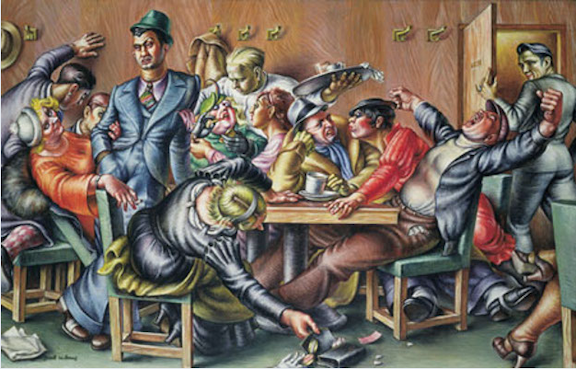
NIGHT LIFE…Paul Cadmus depicted Stewart’s in this sexually charged painting, Greenwich Village Cafeteria, 1934, oil on canvas, Museum of Modern Art. (All archival images for this entry were obtained via nyclgbtsites.org/site/stewarts-cafeteria)

While Anderson tiptoed around the topic of homosexuality, gossip rags such as Stephen Clow’s Broadway Brevities put it front and center. Described as one of the most vicious show business gossip magazines ever published, Brevities also provided Clow with some side income: Clow and his collaborators often threatened to blackmail wealthy businesspeople and show business figures who frequented places like Stewart’s—outing them in his tabloid unless payment was made.

(McGill Institute via HuffPost.com)

Naturally such reporting helped attract gawkers to Stewart’s and its successor, Life Cafeteria. According to the NYC LGBT Historic Sites Project, “Stewart’s closed in the mid-1930s and was subsequently reopened as the equally popular Life Cafeteria. Regulars included a young Tennessee Williams and Marlon Brando (though they didn’t meet each other until years later on a beach in Provincetown). Of the space, Brando later recalled, ‘The rednecks [on the street] were pointing at the diners like animals in a zoo. I was immediately intrigued and ventured in. Before I left that afternoon, I discovered that many of the homosexual men were actually putting on a show for the jam .'”

ON DISPLAY...According to the NYC LGBT Historic Sites Project, the large plate glass windows at Stewart's (later renamed Life Cafeteria) put gay life on full display to the late-night crowds who frequented the busy intersection. Artist Vincent La Gambina depicted one scene that gawkers might have taken in: Life Cafeteria, Greenwich Village, 1936. (Museum of the City of New York)
TODAY, the building still stands, although it is a bit less lively as a home for a CVS store and a Bank of America branch. Just around the corner is the famed Stonewall Inn. (Google Maps Image)

According to the NYC LGBT Historic Sites Project:

...in 1935 the manager of Stewart’s was convicted of operating a “public nuisance” and “disorderly house” and “openly outraging public decency” by allowing objectionable behavior in the interior and large crowds to gather outside. Specifically, the district attorney’s complaint cited “certain persons of the homosexual type and certain persons of the Lesbian type, to remain therein and engage in acts of sapphism and divers [sic] other lewd, obscene, indecent and disgusting acts” and that the cafeteria was “used as a rendezvous for perverts, degenerates, homosexuals and other evil-disposed persons.” Much of the testimony centered on the gender non-conforming dress and behavior of the patrons.

Here is another excerpt from Anderson's article, where he delves into the nighttime scene at Stewart's:

 * * *

Nightlife, Part II

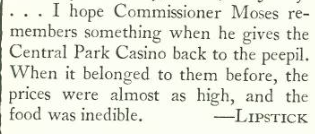
In my previous post E.B. White pondered the fate of the Central Park Casino, a favorite haunt of deposed Mayor Jimmy Walker and other members of the smart set who openly flouted Prohibition laws. In "Tables for Two," Lois Long made this observation (below) at the conclusion of her nightlife column, believing that Parks Commissioner Robert Moses would give the management a chance to lower food prices and allow common folks to enjoy its sumptuous atmosphere. Little did she know that Moses was feasting on a diet of revenge rather than food, and had plans to tear the place down, regardless of its lower prices.
 * * *

From Our Advertisers

We kick off the ads with another Ponds celebrity endorsement from dancer and actress Francesca Braggiotti (1902-1998), who was married to actor, politician, and diplomat John Davis Lodge...
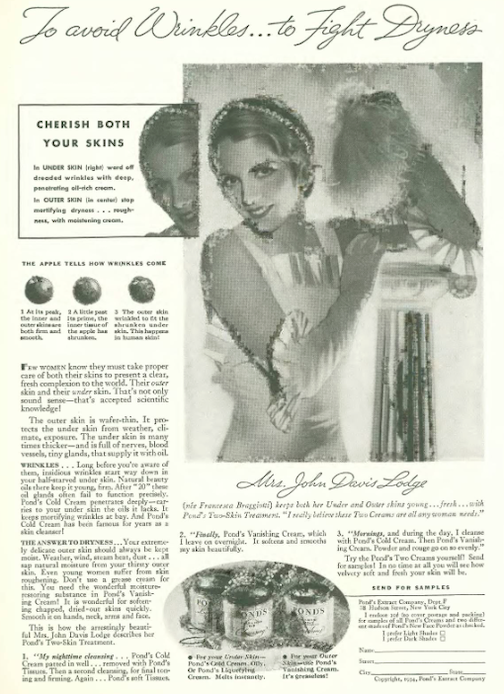
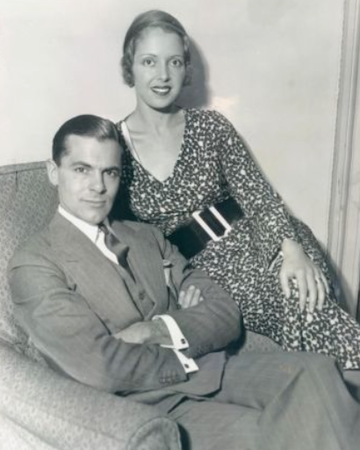
POWER COUPLE...John Davis Lodge and Francesca Braggiotti in 1932. They were married for 56 years. (Pinterest)

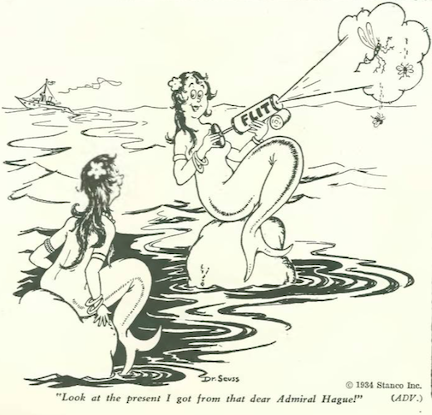
...Dr. Seuss was back with more ads for Flit insecticide...he was still two years away from his first children's book: And to Think That I Saw It on Mulberry Street...
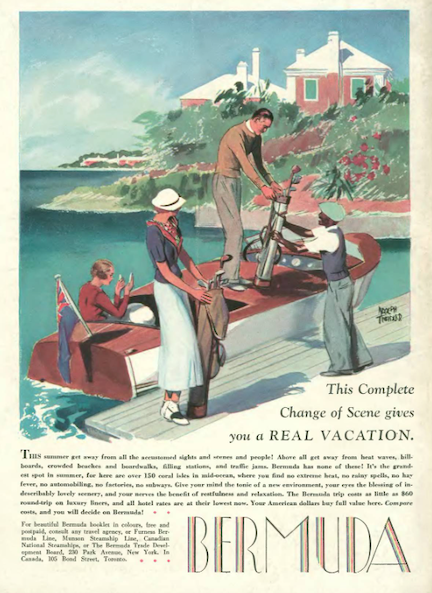
...and with a splash of color, Bermuda beckoned New Yorkers to a "Real Vacation"...
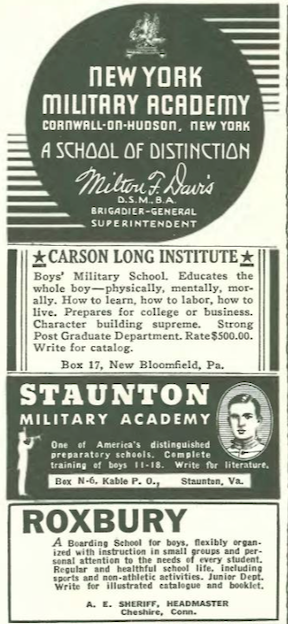
...however, before you headed to Bermuda, you'd needed to do something with the kids...
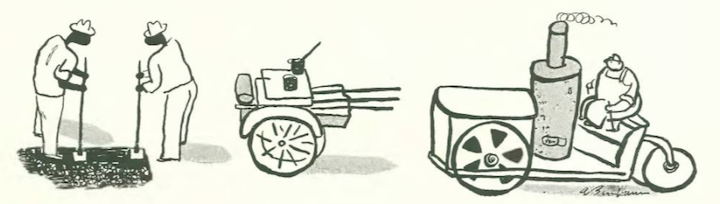
...on to our cartoonists, we start with spot art from Abe Birnbaum...
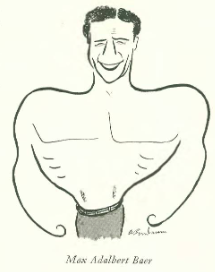
...Birnbaum again with an illustration of boxer Max Baer for the profile section...
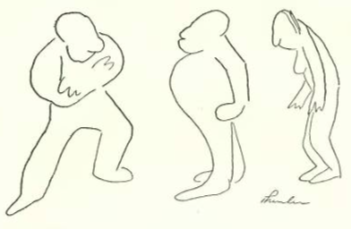
...more spot art from James Thurber in the "Goings On About Town" section...
...and Thurber again with some alarming news for a potential suitor...

...Rea Irvin kicked off his series, "Our Native Birds"...

...a famed advertising agency launched a new door-to-door survey, per Perry Barlow...

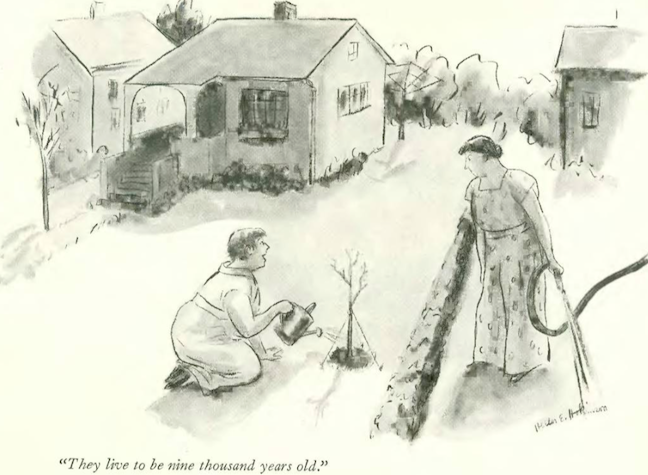
...Helen Hokinson gave us a hopeful gardener...
...Barbara Shermund looked in on the "modern girl" scene...
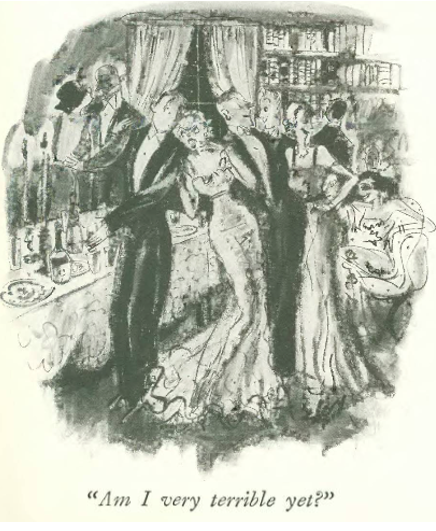
...and Peter Arno examined a sad medical case...

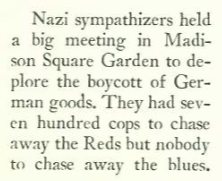
...and we close the June 9 issue with this item from E.B. White, who commented on a recent rally of American Nazis and some fighting Irish...

...the Nazi rally was also alluded to in the June 2 issue (I have the issues reversed this time to support the narrative)...

June 2, 1934 cover by Harry Brown.

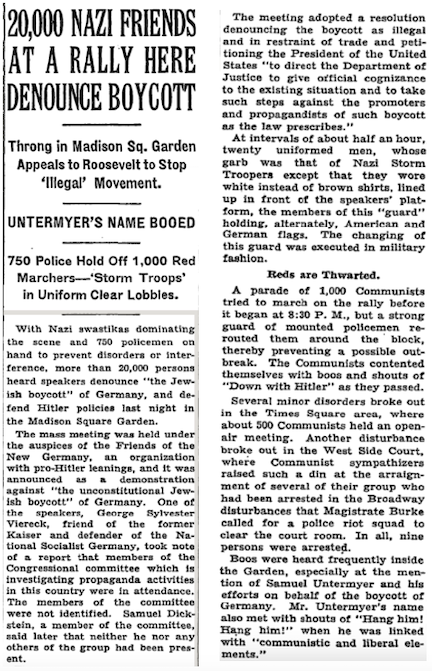
...where Howard Brubaker was keeping things light in his column "Of All Things." I was surprised how little was mentioned in either issue about the meeting of 20,000 Nazi sympathizers on May 17, 1934, at Madison Square Garden.
Let's explore further: According to the Jewish Virtual Library, America's first established anti-Nazi boycott group was the Jewish War Veterans (March 19, 1933), followed by the American League for the Defense of Jewish Rights (ALDJR), which was founded by the Yiddish journalist Abraham Coralnik in May 1933. By 1934 the ALDJR was led by Samuel Untermyer, who changed the organization's name to the "Non-Sectarian Anti-Nazi League to Champion Human Rights." Nazi sympathizers targeted Untermyer as the face of boycott efforts, and at the May 17 rally the mere mention of his name prompted shouts of "Hang him!"
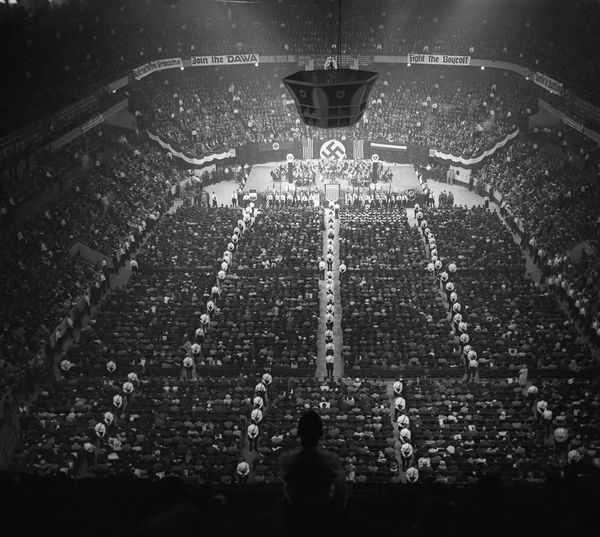
AMERIKA...The site for hockey games and dog shows became a site for ugliness on May 17, 1934, when 20,000 Nazi sympathizers gathered in Madison Square Garden to denounce boycotts against Adolf Hitler's regime. (The Archive Project)

This excerpt from the May 18, 1934 edition of The New York Times gives some idea of what transpired at the rally:
REALLY? Americans gathered at Madison Square Garden on May 17, 1934 to show their support for Nazi Germany and denounce American boycotts. (The Archive Project)

  * * *

Dueling Muses

Film critic John Mosher always seemed upbeat about anything involving Disney, but given that animation was still in its infancy (its plastic trickery still rather novel), it didn't take much to outshine the otherwise drab fare (the "Grim") being coughed up by Tinseltown.

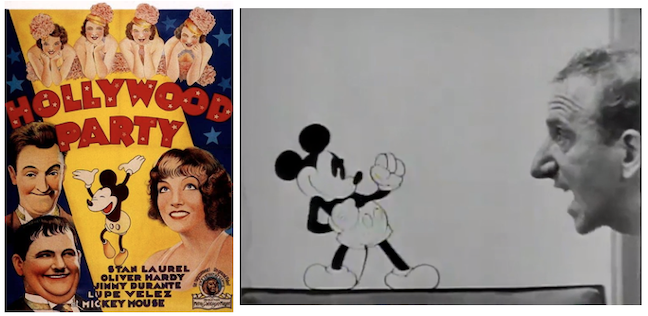
MAN OR MOUSE? The star-studded cast of Hollywood Party included Jimmy Durante, seen here duking it out with Mickey Mouse. (IMDB)

The grim included the Pre-Code drama, Upper World, about a rich, married man who falls to his ruin via a romance with a stripper (don't they always?), and Now I'll Tell, another Pre-Code drama, this one loosely based on the doings of racketeer and crime boss Arnold Rothstein.

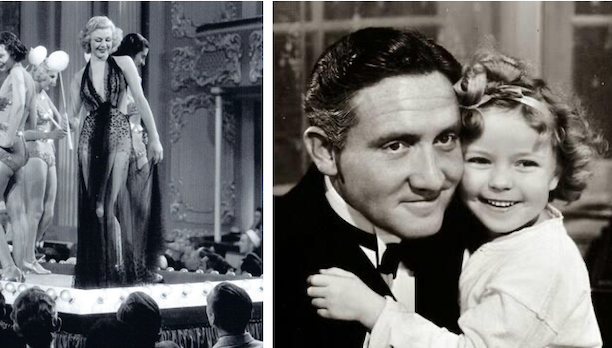
SHAKE IT WHILE YOU CAN...Ginger Rogers performs “Shake Your Powder Puff” in a burlesque show in the film Upper World, one of the last of the Pre-Code dramas. It featured Warren William as a wealthy married railroad tycoon whose friendship with a showgirl (Rogers) leads to blackmail and murder; at right, five-year-old future child star Shirley Temple with Spencer Tracy in Now I'll Tell, which was loosely based on the autobiography of Carolyn Green Rothstein, wife of New York gambler Arnold Rothstein. Temple's role was a minor one, however her appearance in the musical Stand Up and Cheer!, which was released a month earlier, would make her a star. (IMDB)

 * * *

More From Our Advertisers

We cool off by a taking a dip in the pool...er, rather by enjoying the "No Draft Ventilation" of a car body by Fisher...the model might want to stay in the pool, since air-conditioning in cars was still a good twenty years away...

...and yes, this is also a car-related ad, if you can believe it, the bride looking forward not to years of wedded bliss but rather her new La Salle (a Cadillac product)...

...another bride, and a car...is that a car body by Fisher? Who cares, the wedding is over and its time to fire one up...

...this woman seems to have it all thanks to Daggett & Ramsdell of Park Avenue, who are prepared to coat her in a "complete range of all the essential creams, lotions, face powder...cold cream soap, dusting powder" etc. etc....

...Dr. Seuss again for Flit, with baby in tow...

...on to our cartoons, we have Robert Day checking on the progress at Mt. Rushmore...

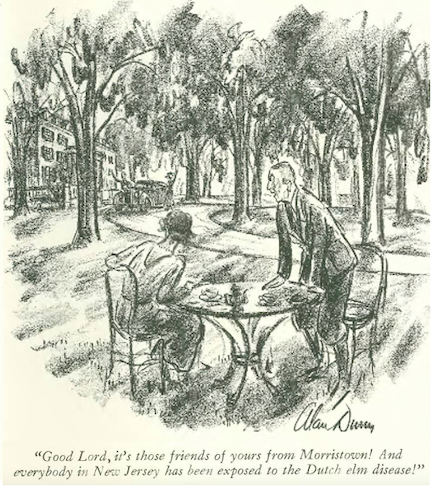
...Alan Dunn reveals pandemic worries of a different nature...
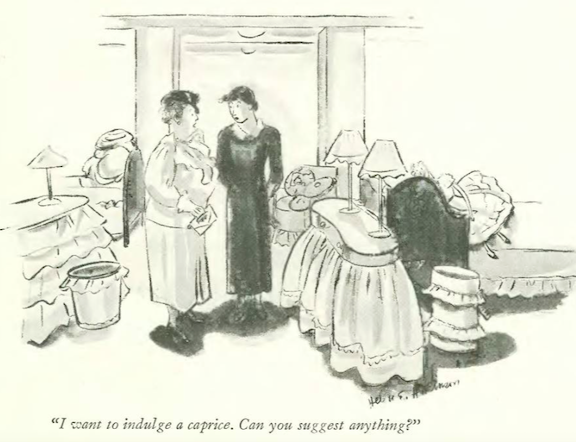
...and we close with Helen Hokinson, and a sudden change of mood...
Next Time: Coney Summertime...


Disappearing Act

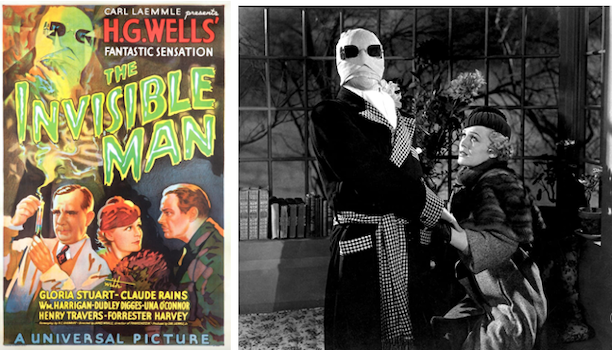
British actor Claude Rains made his American film debut in a 1933 movie where the actor’s face isn’t revealed until the final scene.

Nov. 25, 1933 cover by Gardner Rea.

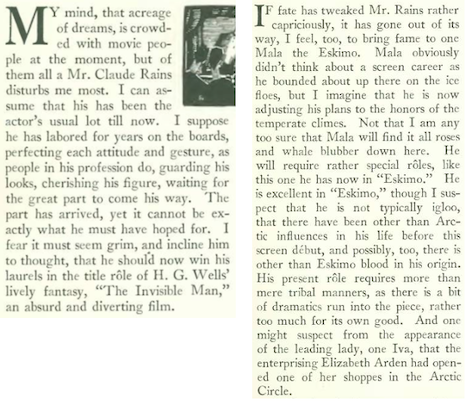
Although praised by critics in 1933 and today, The New Yorker’s John Mosher had but a paragraph to offer on the The Invisible Man, calling it a “bright little oddity” and an “absurd and diverting film.” Mosher also reviewed the Arctic adventure Eskimo, a film he found to be less than convincing about life on the frozen tundra.

FROM A TEST TUBE, BABY…Dr. Jack Griffin (Claude Rains) develops a secret formula that renders him invisible, much to the distress of his former fiancée Flora Cranley (Gloria Stuart). Some of you may recall Stuart from 1997’s Titanic, in which she portrayed the 100-year-old Rose. In real life Stuart had a career spanning nearly eighty years. And wouldn’t you know, she died in 2010 at age 100. (IMDB)
NOW YOU SEE HIM…Special effects in 1933 were no mean feat. To create the effect of invisibility, Rains was covered head to foot with black velvet tights and wore whatever clothes he required for the scene. The invisibility scenes were then shot against a black set, the negative areas later manually masked to create the effect of invisibility. (IMDB)

…on to our other film, Eskimo…Mosher had doubts about the authenticity of the Eskimo family portrayed in the movie, suggesting (rather unkindly) that the lead actress, Lotus Long, looked like a client of the noted beautician Elizabeth Arden. The film was well-received by critics, but did poorly at the box office. However, it did receive the first-ever Oscar for Best Film Editing.

ICEBREAKER…Although MGM publicists portrayed Eskimo as a steamy love story set against a backdrop of adventure in the wild, the film was ahead of its time in some ways, including the use of Inuit dialogue, which was translated in English intertitles. Directed by W.S. Van Dyke, who also directed 1932’s Tarzan the Ape Man, the cast included (top photo, from left), Ray Mala and Lulu Long Wing (older sister of famed Hollywood actress Anna May Wong) with unidentified child actors. Bottom right, Mala with actress Lotus Long. (IMDB)

 * * *

Numbers Racket

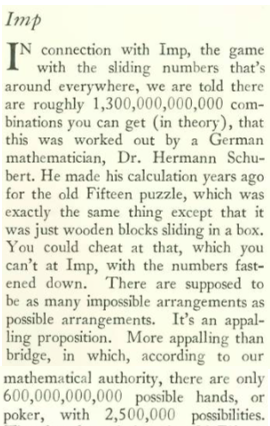
Little known today, the sliding number puzzle “Imp” was hugely popular in the late 19th and early 20th centuries. Plastic versions were produced following World War II—I recall one of them being quietly deployed from my mother’s purse during church, to keep me occupied during lengthy sermons.

 * * *

Hammered and Sickled

“The Talk of the Town” commented on a Union Square riot in which American communists attacked a group of Ukrainians protesting the Soviet-imposed mass starvation in their country. Following is an excerpt from a longer piece that also noted the arrival of New York police, who “charged into the Square, riding their horses into the crowd and taking a crack at a head here and there.”

SEE NO EVIL…American Communists attack a group of Ukrainians protesting the Soviet-caused Holodomor famine in 1933, which killed at least four million Ukrainians. (Public domain)

 * * *

Party Girl

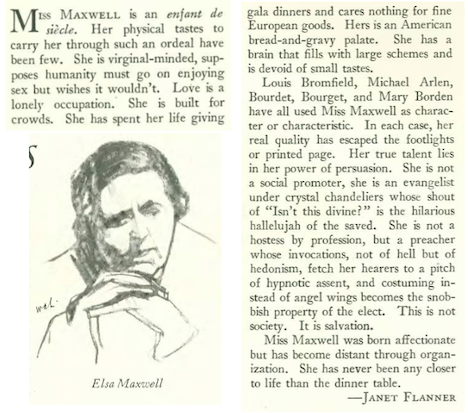
Elsa Maxwell (1883–1963) was an Iowa girl who grew up to become a gossip columnist and a hostess of high society parties—throughout the 1920s she was known for throwing lavish affairs for Europe’s wealthy and entitled. A 1963 Time magazine obituary noted that Maxwell developed a gift for staging games and diversions for the rich, making a living devising treasure-hunt parties, including a 1927 Paris scavenger hunt that created disturbances all over the city. Excerpts from a profile by Janet Flanner:

GETTING AN EARFUL…Elsa Maxwell hobnobbing with actress Constance Bennett and producer Darryl Zanuck in 1939. (Pinterest)

 * * *

Masked Man

Novelist Sherwood Anderson offered his impressions of the late Ring Lardner in a piece titled “Meeting Ring Lardner.” Anderson wrote that although Lardner “seemed surrounded by a little halo of something like worship wherever he went,” he had no satisfaction in his achievements. Anderson recounted Lardner’s encounter with a shy banker, when for a moment Lardner dropped the “mask” that he often wore to shield himself from humanity. Excerpts: 

SPHINX…Sherwood Anderson (right) wrote of Ring Lardner: “You wanted him not to be hurt, perhaps to have some freedom he did not have.” (AP/hilobrow.com)

 * * *

Phooey on Huey

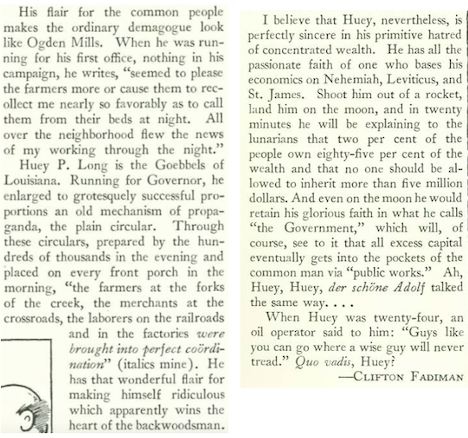
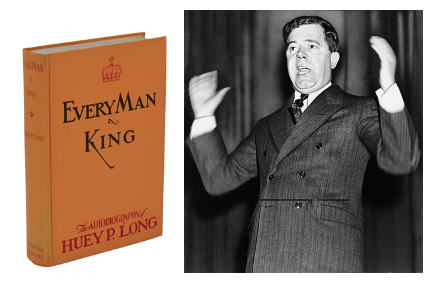
When Louisiana Senator and former Governor Huey Long published his autobiography, Every Man a King, the reaction from the press was resoundingly negative; in the Saturday Review, Allan Nevins wrote that Long “is unbalanced, vulgar, in many ways ignorant, and quite reckless.” The New Yorker’s Clifton Fadiman went further, calling him the “Goebbels of Louisiana” and compared the senator to Adolf Hitler. Excerpts:

IT’S ALL ABOUT ME, REALLY…Huey Long’s 1933 autobiography, Every Man a King, was excoriated by the press, which largely viewed the senator as a fascistic demagogue. Long was assassinated in 1935. (Wikipedia)

* * *

From Our Advertisers

Christmas was coming, and parents with the means could consider buying a “Skippy” brand racer for their little tykes. The cartoon character at the top of the ad—Skippy—was the star of one of the most popular American comic strips of its day…

…written and drawn by Percy Crosby (1891–1964) from 1923 to 1945, the Skippy comic was a big influence on later cartoonists including Charles Schulz (Peanuts) and Bill Watterson (Calvin and Hobbes)…note the football gag below later made famous by Schulz’s Lucy and Charlie Brown…

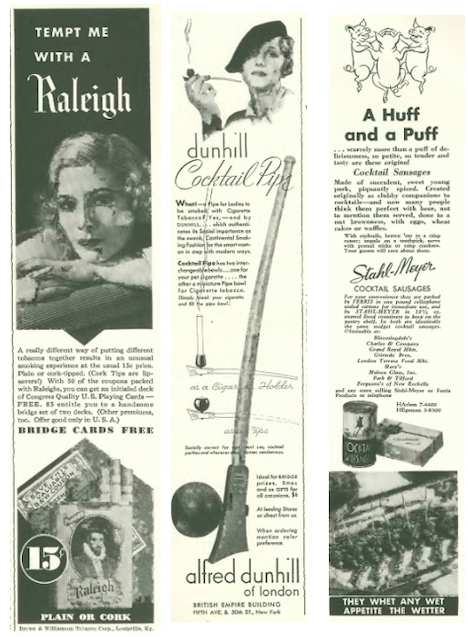
…on to some of our one-column ads…Raleigh cigarettes were promoted to the growing women’s market, while Dunhill touted a “cocktail pipe” that allowed women to get in on the fun of pipe smoking…and with Disney’s Three Little Pigs penetrating every nook and cranny of America, the makers of Stahl-Meyer sausages decided to join in the fun…

…I include this razor ad mainly for the bold typography…advertisers were in a transitional phase, experimenting with new forms and more white space, but still holding on text-heavy pitches…

…in the case of Goodyear, if you wanted to inspire confidence in your product, you propped an old codger in a rocking chair and offered some homespun wisdom…

…here is a closer look at the old-timer’s advice…

…another tobacco ad, this one displaying the glorious blooms of a tobacco plant…how could something so lovely be bad for you?…

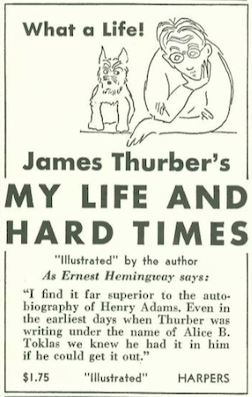
…a small back page ad announced a big-time book for James Thurber, including a satirical blurb from Ernest Hemingway

…and that makes a nice segue to our cartoons, with Thurber again…

Otto Soglow demonstrated the unexpected effectiveness of hair tonic…

Perry Barlow gave us a look at the posh and precocious set…

…and we close with George Price, and 1933’s version of Black Friday…

Next Time: Genesis of a Genius…

Rebirth of a Nation?

As we enter the summer months we find the recurring themes of June brides…and German Nazis…

May 27, 1933 cover by Constantin Alajalov.

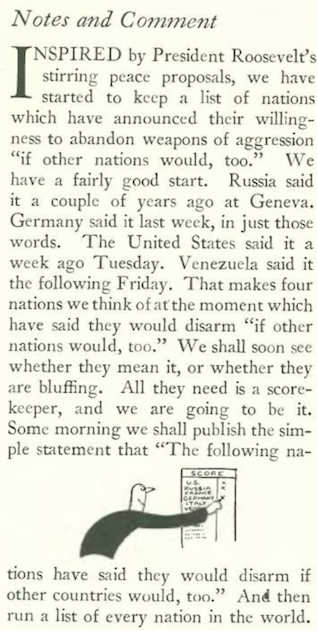
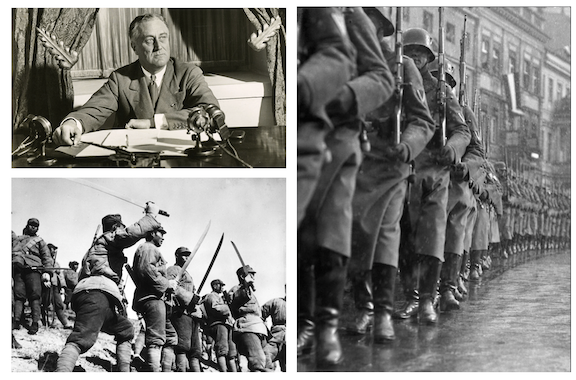
Those Nazis were on the mind of U.S. President Franklin D. Roosevelt when he wrote to the sixty participating nations at the Geneva Disarmament Conference, imploring them to eliminate all weapons of offensive warfare. As we now know, it was a plea that mostly fell on deaf ears, notably those of the leaders of Japan and Germany. E.B. White offered this observation:

GIVE PEACE A CHANCE?…Sixty countries sent delegates to the Geneva Disarmament Conference in 1932–33. Germany was represented by Nazi Minister of Public Enlightenment and Propaganda Joseph Goebbels (front row, center), that is until his country pulled out of the conference and continued its massive arms buildup. (Library of Congress)

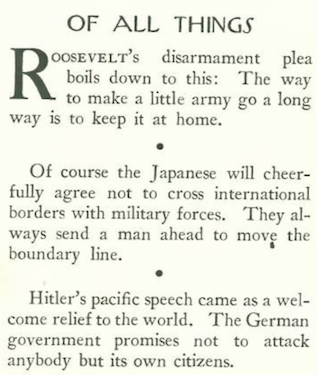
Howard Brubaker was also keeping an eye on FDR’s efforts to hold off the rising powers in Europe and Asia…

WAR AND PEACE…On May 16, 1933, Franklin D. Roosevelt pleaded with the world’s nations to consider total disarmament of all offensive weapons. In the meantime, Adolf Hitler led the rapid rearmament of Germany (right) while Chinese soldiers (below) did what they could to counter the latest Japanese offensive—the invasion of Jehol Province. (Wikimedia/Pinterest)

*  *  *

Writer of Lost Causes

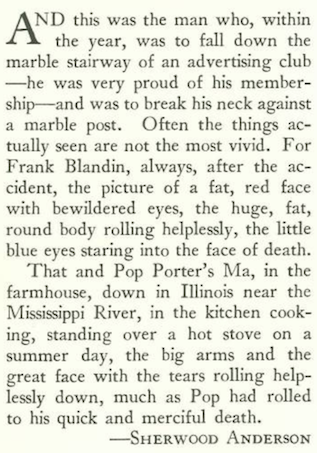
The short story “Pop” would be Sherwood Anderson’s first contribution to The New Yorker. Anderson was known for his stories about loners and losers in American life, including Pop Porter, whose sad, drunken death is described in the closing lines:

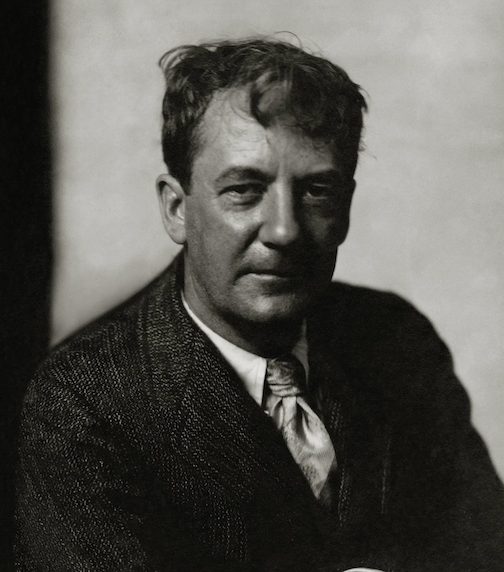
NO EXIT…Best known for his 1919 novel Winesburg, Ohio, Sherwood Anderson (1876–1941) took an unsentimental view of American life. He would contribute six short stories to The New Yorker from 1933 to 1936. Photo above by Edward Steichen, circa 1926. (The New York Times)

*  *  *

From Our Advertisers

The German Tourist Information Office welcomed visitors to “witness the rebirth of a nation,” promising a land of “new ideas and broader visions” that would bestow on travelers “undying memories endlessly renewed”…

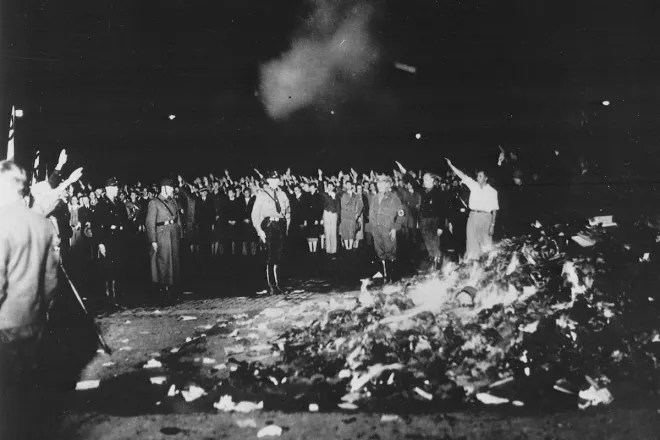
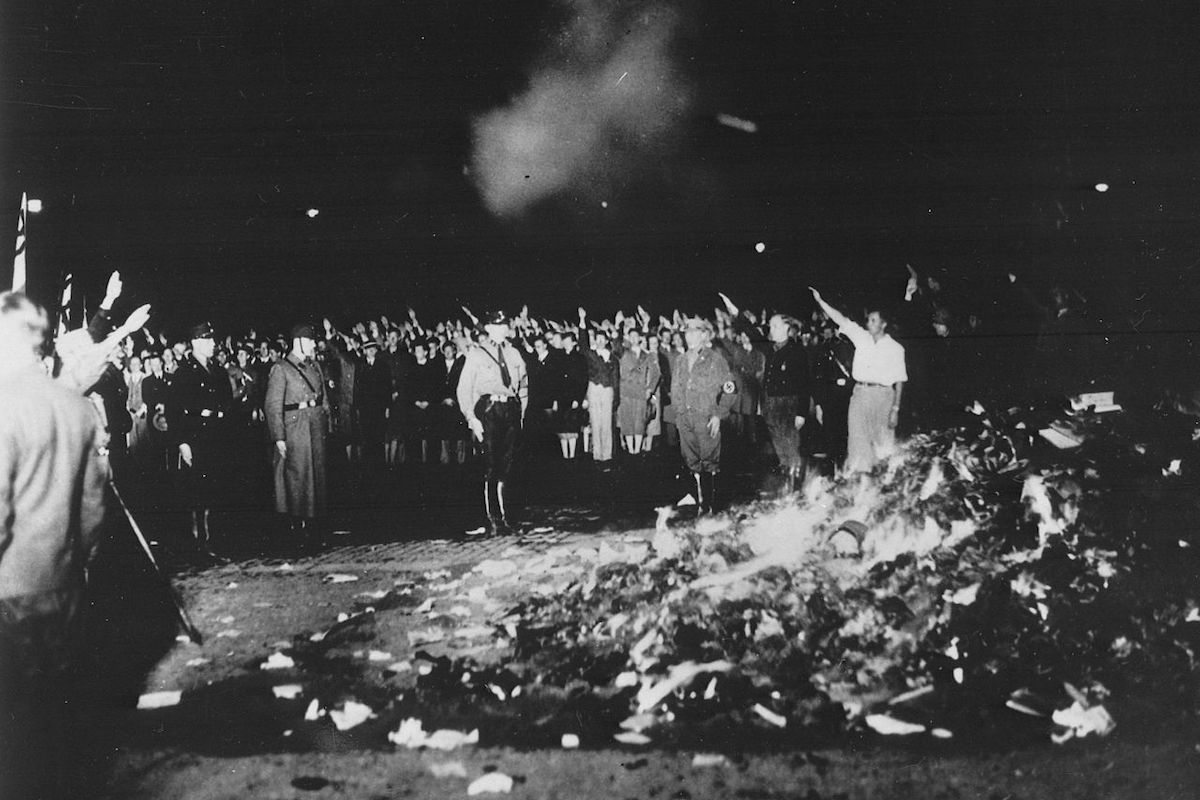
…Those “undying memories” might have included massive, country-wide book burnings that took place on May 10, 1933, when students in 34 university towns across Germany burned more than 25,000 “un-German” books…

FANNING FLAMES OF HATE…On May 10, 1933, student supporters of the Nazi Party burned thousands of volumes of “un-German” books in the square in front of the Berlin State Opera. (Bundesarchiv)

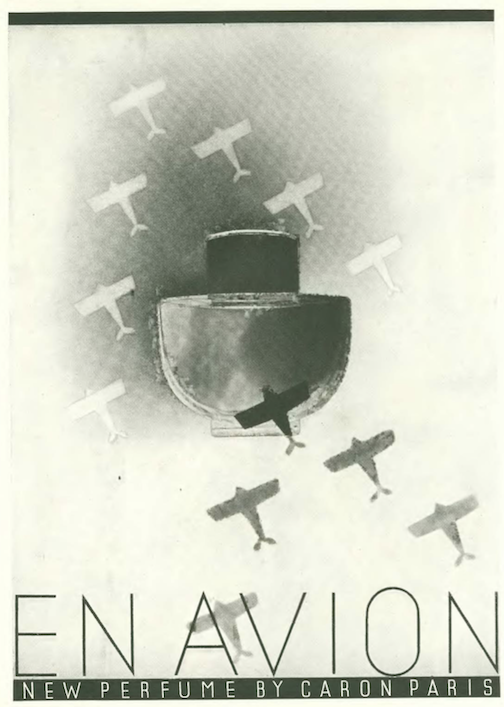
…knowing where all of this would lead, it is hard to look at this next ad and not think of the Luftwaffe raining death from the skies later in that decade…

…so for the time being we’ll turn to something less menacing, like checkered stockings, here resembling one of John Held Jr’s woodcuts…

…and this crudely illustrated ad (which originally appeared in one column)…call your buddy a fatso and the next thing you know he’s moving to Tudor City…

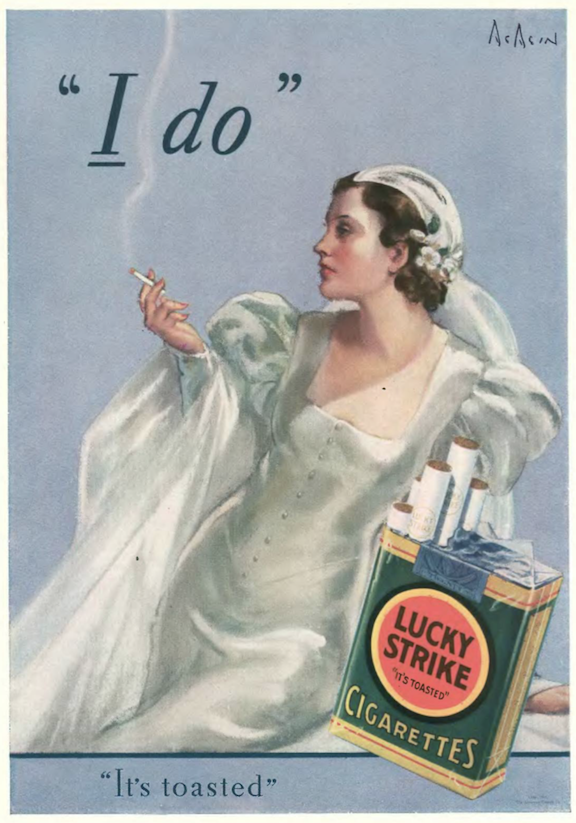
…and from the makers of Lucky Strikes, a back cover ad that provided a thematic bookend to Constantin Alajalov’s cover art…

James Thurber kicks off the cartoons with this sad clown…

…atop the Empire State Building, Daniel ‘Alain’ Brustlein found more than just a view of the city (it’s former governor Al Smith!)…

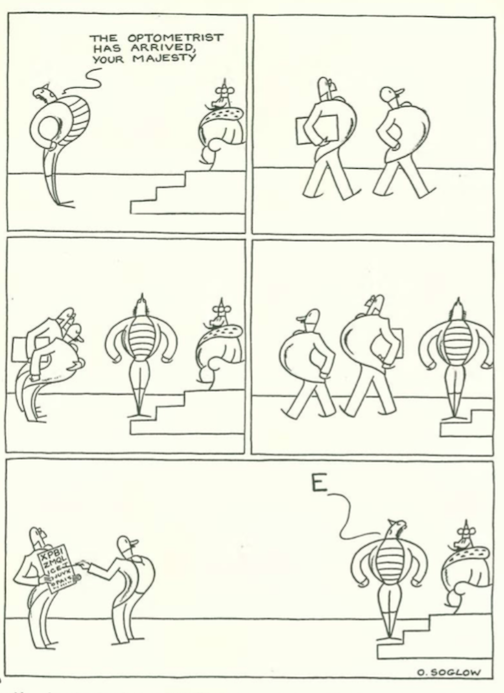
Otto Soglow’s Little King got his vision checked, in his own way…

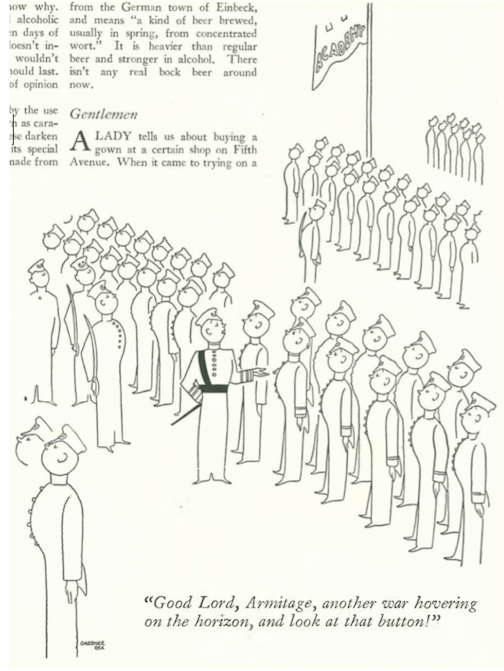
…a loose button threatened to bring down a nation…per Gardner Rea

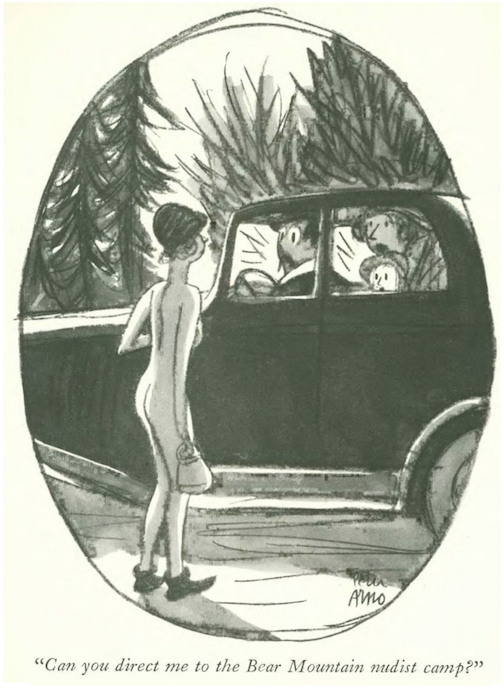
…and we take a leisurely Sunday drive, Peter Arno style…

…on to the June 3, 1933 issue…

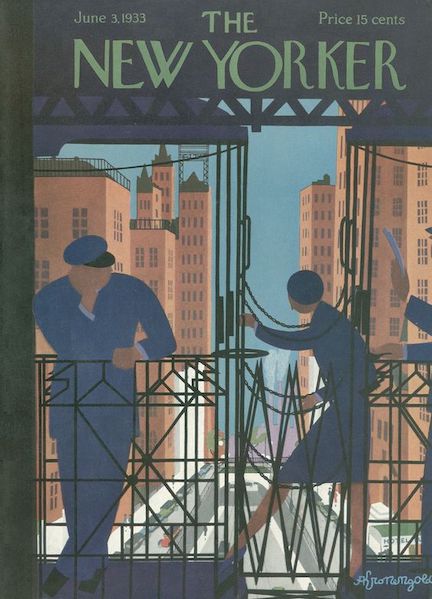
June 3, 1933 cover by Adolph K. Kronengold.

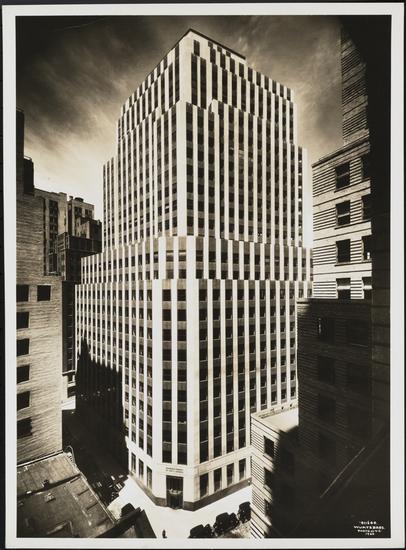
…where we appropriately look to the skyline, which was giving Lewis Mumford a crick in the neck…

THAT’LL DO…Lewis Mumford was not a fan of giant skyscrapers, but when the architects of the Empire State Building turned their attention to the Insurance Company of North America building at 99 John Street, Mumford found a design that could serve as a model for future business buildings. (Museum of the City of New York)

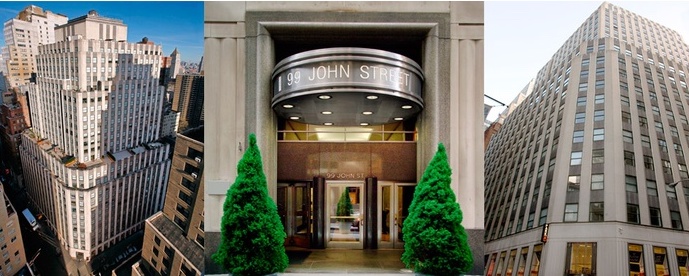
CONVERSION THERAPY…the Insurance Company of North America building now houses modern loft condominiums known as 99 John Deco Lofts. (nest seekers.com).

Later in the column Mumford called skyscrapers “insupportable” luxuries, arguing instead for long, shallow buildings rising no more than ten stories.

*  *  *

The Stars Align

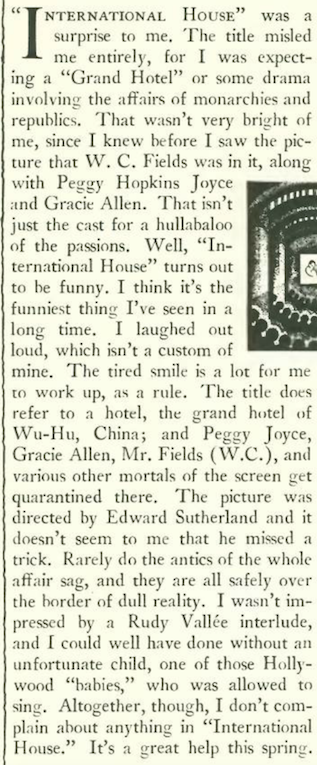
Film critic John Mosher was delightfully surprised by International House, a film loaded with some of the era’s top comedic stars along with other entertainers.

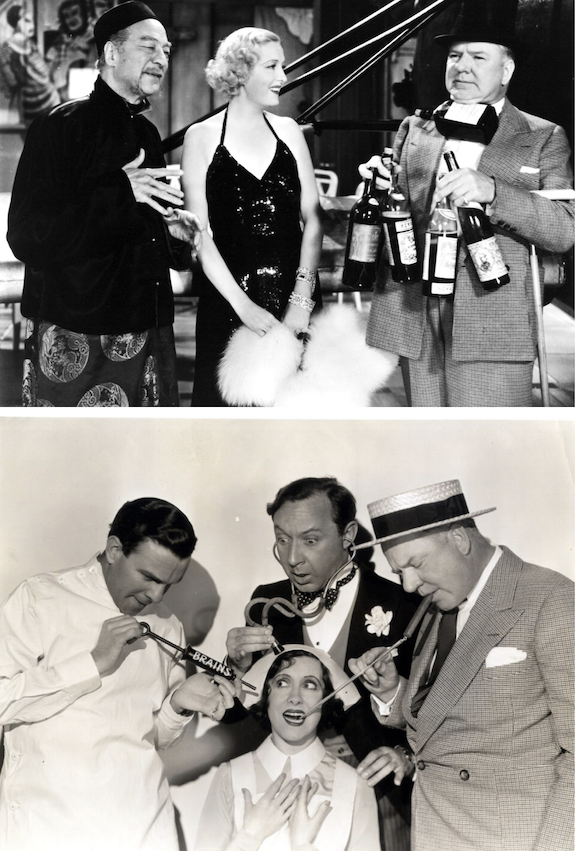
CLUTCH THOSE PEARLS…The risqué subject matter of International House had the Legion of Decency up in arms, but it left critic John Mosher in stitches thanks to the antics of Edmund Breese, Peggy Hopkins and W.C. Fields (top photo). Below, a publicity photo for International House with George Burns, Gracie Allen, Franklin Pangborn and W.C. Fields. (IMDB)

The film featured an array of entertainers including Peggy Hopkins (more famous as a real-life golddigger than an actress), the comedy duo Burns and Allen, W.C. Fields, Bela Lugosi, Cab Calloway, Rudy Valley and Baby Rose Marie.

ALL THE WORLD’S A STAGE…Ten-year-old Rose Marie Mazzetta, known in 1933 as the child performer Baby Rose Marie, sings a number atop a piano in a scene from International House. Thirty years later Rose Marie would appear on The Dick Van Dyke Show as television comedy writer Sally Rogers, pictured here with co-stars Dick Van Dyke and Morey Amsterdam. (WSJ/LA Times)

*  *  *
The New Germany, Part II
The June 3 “Out of Town” column took a look at life in Berlin as well as the 1933 Chicago World’s Fair. The piece is signed “A.L.”, leading me to believe it might be A.J. Liebling (author of the terrific Between Meals), but he didn’t start at The New Yorker until 1935. At any rate the article seems to dismiss the crackdown on Berlin’s cultural life as a mere inconvenience.

NEW THEME, NEW OWNERSHIP…The article mentions the closing of the Eldorado night club in Berlin, famed for its drag shows and other naughty diversions. Images above show the before and after the Nazis redecorated. (lonesomereader.com)

*  *  *

From Our Advertisers

More propaganda from Germany, where everything is sweet and bright away from the din of the city and the sound of marching jackboots and the crash of broken glass…


…an unusual ad from Cadillac, which barely mentions the automobile but goes full bore on the June bride theme…

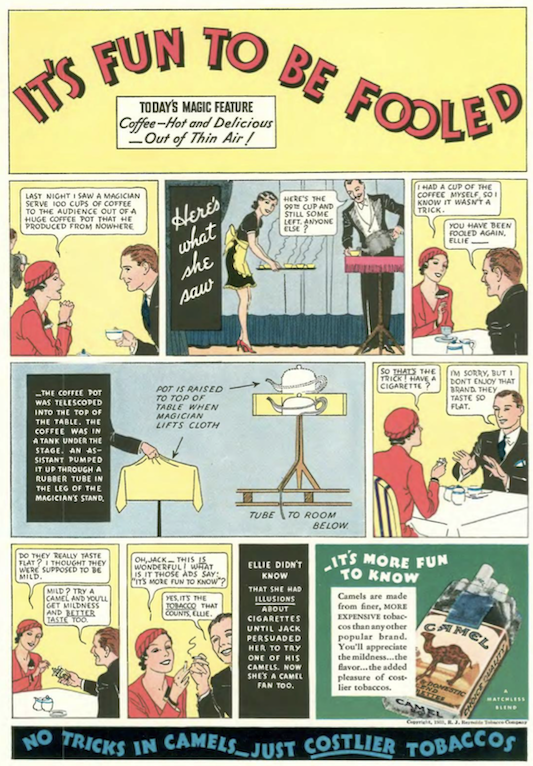
…the folks at Camel went full color in their latest installment of “It’s Fun to be Fooled”…in this strip Jack gets his friend Ellie hooked on his cigarette brand…

…looking for fresher air, well you could get a window air conditioner from the folks at Campbell Metal Window Corporation…however, these units were only available to the very wealthy, roughly costing more than $25,000 apiece (more than half a million today)…

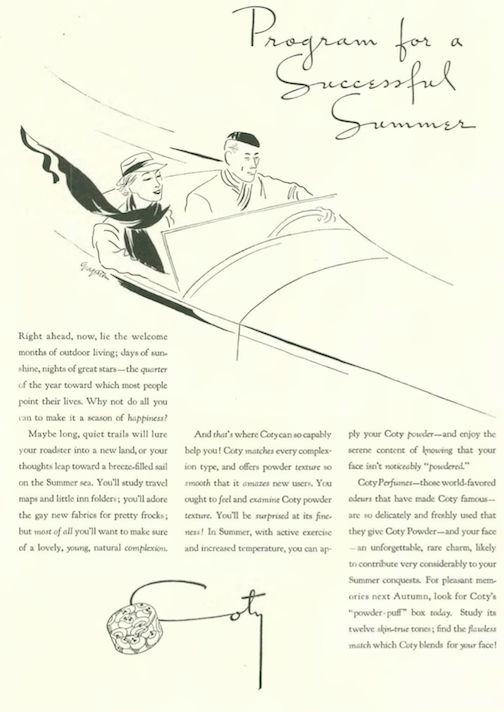
…better to take a drive a catch the breeze with this smart pair…

…and fight off those pesky bugs with a blast of Flit, as illustrated by Dr. Seuss before he became a children’s author…

Richard Decker picked up some extra cash illustrating this ad for Arrow shirts…

…which segues to our other New Yorker cartoonists, such as H.O. Hoffman…

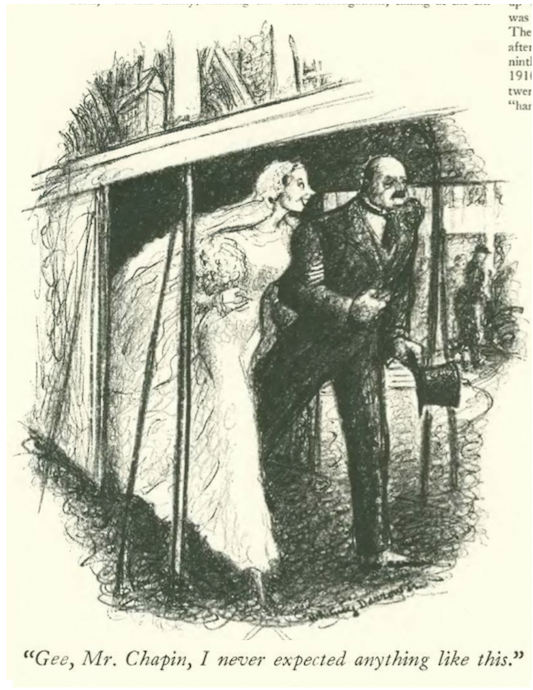
…and yet another bride, with sugar daddy, courtesy of Whitney Darrow Jr

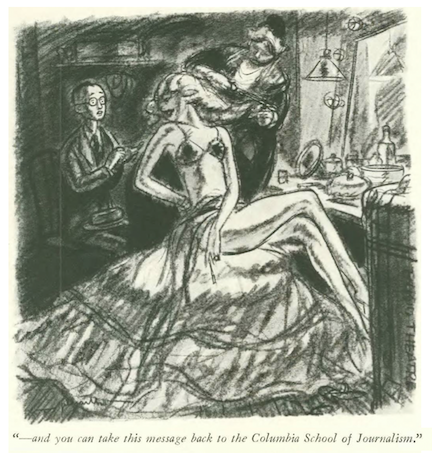
William Crawford Galbraith continued his exploration into the lives of showgirls…

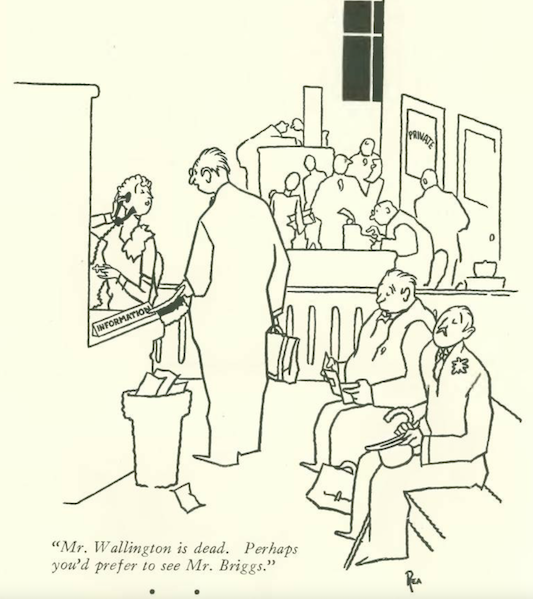
Gardner Rea gave us this helpful switchboard operator…

Carl Rose showed us how the posh set got into the spirit of the Depression-era farm program…

George Price was getting into familiar domestic territory…

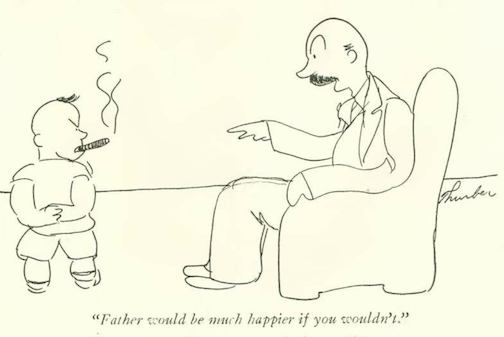
…and on this Father’s Day, we close with some fatherly advice from James Thurber

Next Time: Making Hays…