Home Sweet Motohome

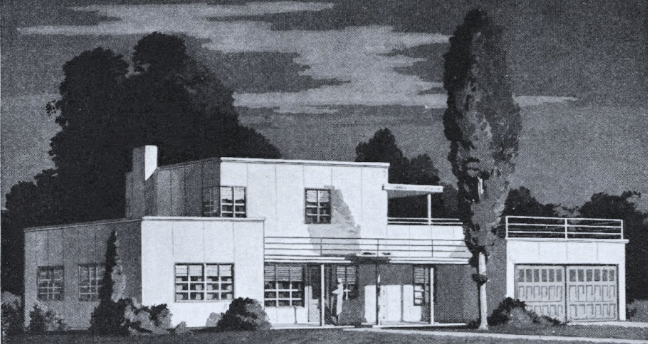
Morris Markey thought he was getting a glimpse of the future when he attended an exhibit of “machines to live in” at New York’s Grand Central Palace.

March 16, 1935 cover by Constantin Alajalov.

The Great Depression created a housing shortfall in the U.S. of nearly two million units, so many idled architects and builders turned to industrialized housing as a way to boost the building industry. In “A Reporter At Large,” Markey described his encounter with one type of “machine to live in”––the Motohome.
The idea of pre-fab living wasn’t exactly new in 1935, originating in the 1920s with the German Bauhaus school and with notables such as Swiss architect Le Corbusier.
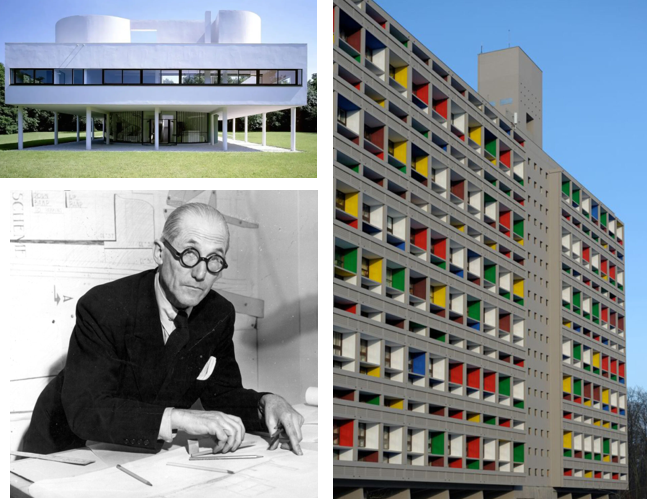
NOT THRILLED WITH FRILLS…Charles-Édouard Jeanneret (1887-1965), better known as Le Corbusier, stated in 1923 that “a house is a living machine.” He believed the world had evolved beyond the need for decorative frills, and that homes and furnishings should reflect their functions. Top left, Corbu’s 1929 Villa Savoye in Poissy, France; at right, his 1947-52 Unité d’habitation de Marseille. (Fondation Le Corbusier/Architectural Digest/Le Corbusier World Heritage)

Markey correctly surmised that the American twist on Le Corbusier’s vision was largely driven by big corporations, and in the case of the Motohome, by General Electric.
GET YOUR MOTO RUNNING…Clockwise, from bottom left, New York’s Grand Central Palace; the Eggiman House in Madison, Wisconsin, a 1936 Motohome listed in the National Register of Historic Places; Long Island Motohome featured on a brochure; Popular Mechanics article on the Motohome. A common wall “core” was prefabricated with all kitchen and bath fixtures, as well as the HVAC system. (Wikipedia/makeitmidcentury.com/books.google.com)

 * * *

Strange and Wonderful

That is how E.B. White described the 3,664-seat Paramount Theatre, which opened on 43rd and Broadway in 1926. After nine years White was still in awe of its palatial trappings. In his “Notes and Comment,” White offered some thoughts after an evening at the movies.
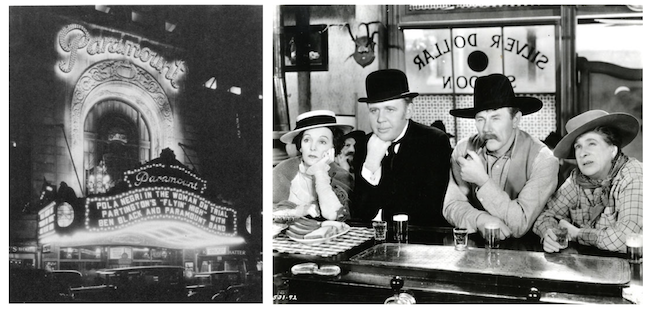
CINEMA GLORY DAYS…E.B. White visited the Paramount Theatre to take in Charles Laughton’s hit film, Ruggles of Red Gap. From left, Zasu Pitts, Laughton, Charles Ruggles and Maude Eburne in Ruggles. (nyc.gov/TCM)
PALACE FOR THE PICTURES…The Paramount Theatre’s Grande Hall featured a 75-foot-long ceiling mural by artist Louis Grell above the Italian marble-lined entrance. In 1966, after a run of the James Bond film Thunderball, the Paramount was closed for good and later gutted and turned into retail and office space. (Louis Grell Foundation)

 * * *

Bad Guys

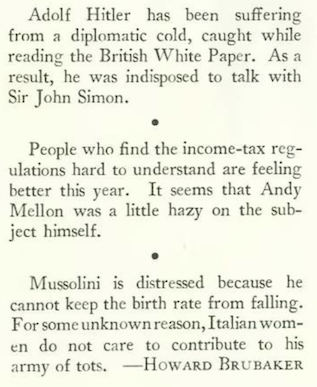
Andrew Mellon’s tax fraud troubles were sandwiched between the woes of a fascist bromance in Howard Brubaker’s “Of All Things”…Mellon would soon be dead, Adolf Hitler would lie his way around the Brits, and Benito Mussolini would struggle to inspire Italian women to produce his “army of tots”…
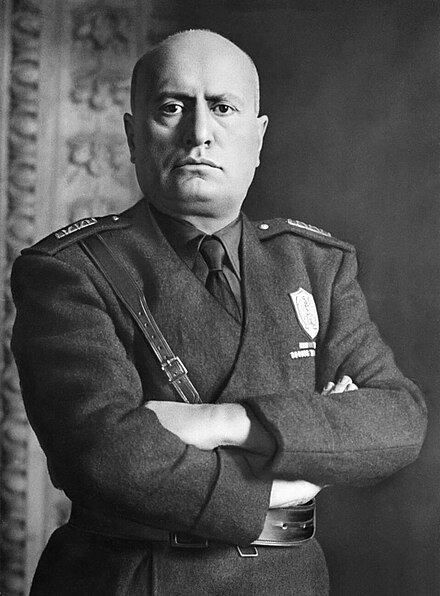
NOT TONIGHT, WE HAVE A HEADACHE…Little wonder fascist dictator Benito Mussolini couldn’t inspire a baby boom. (Wikipedia)

 * * *

Zoom Zoom

In his “Motors” column, writer “Speed” looked in on Sir Malcolm Campbell (1885-1948), who was attempting to break the 300-mph mark at Daytona in his 2,500-horsepower Blue Bird.
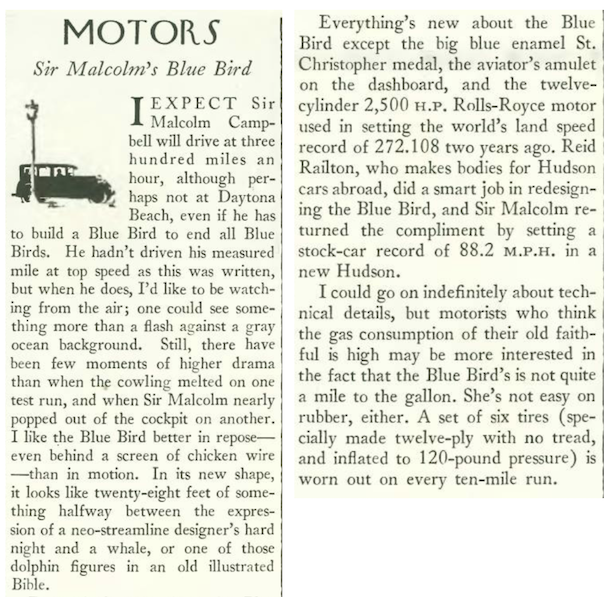
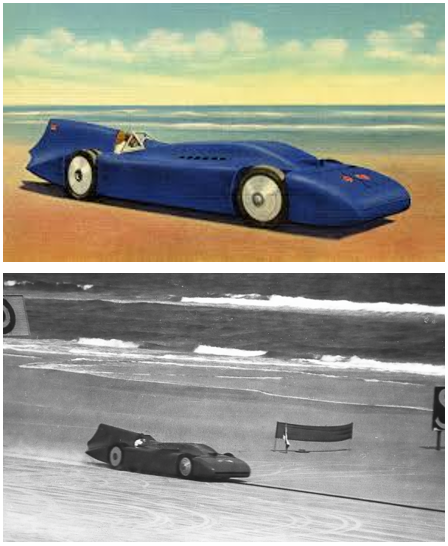
BLUE STREAK…Sir Malcolm Campbell’s bid for a land speed record surpassing 300 mph began at Daytona Beach in March 1935 in his Campbell-Railton Blue Bird, powered by a 2,500 hp supercharged Rolls-Royce V-12. He managed to hit 276 mph (combined runs in each direction), but conditions at the beach (bottom photo) left him short of his goal. He found a smoother, longer run at Utah’s Bonneville Salt Flats in September, where he would average 301.337 mph (484.955 km/h) in two passes to set the new record. (floridamemory.com/oldmachinepress.com)
ONCE IS NOT ENOUGH…Sir Malcolm Campbell MBE was a British racing motorist and motoring journalist. He gained the world speed record on land and on water several times. He was also one of the few land speed record holders of his era to die of natural causes. (Wikipedia)

 * * *

From Our Advertisers

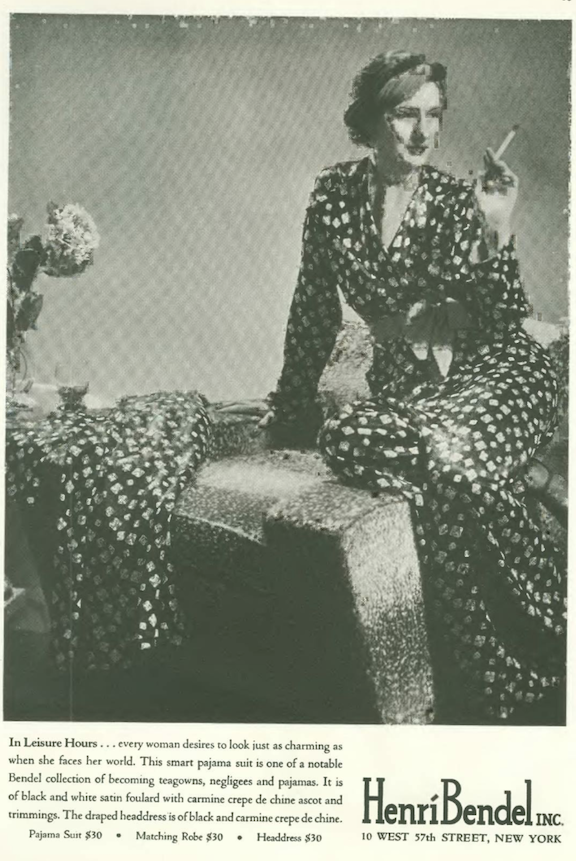
For ninety bucks you could get this swell pajama suit and matching robe (plus headdress) at Henri Bendel, the perfect ensemble for having a leisurely smoke after a day facing the world…For more than 100 years, Henri Bendel’s flagship and only store was located at 10 West 57th Street…it closed in 2018…
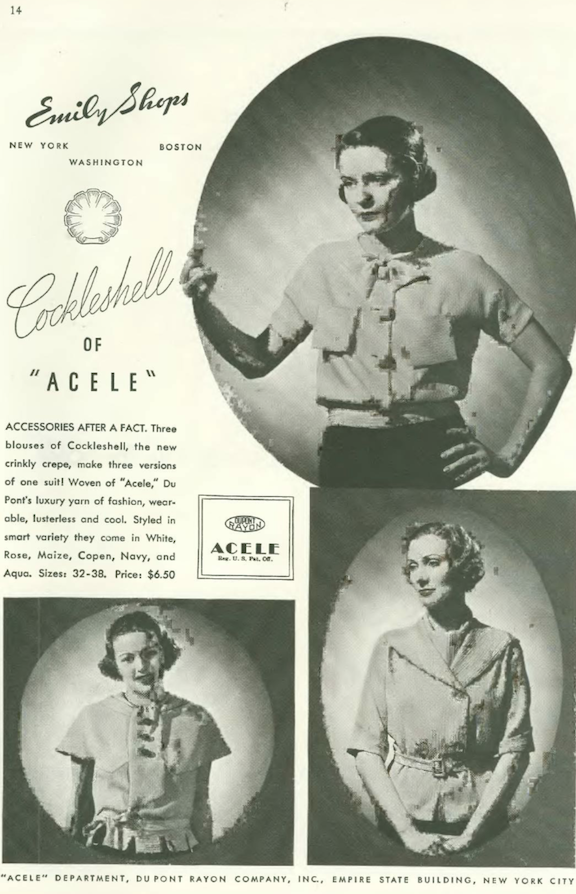
…I doubt the woman in the Bendel ad would have been interested in clothes made with Acele…it was without question that the uppers only wore clothes derived from living things…
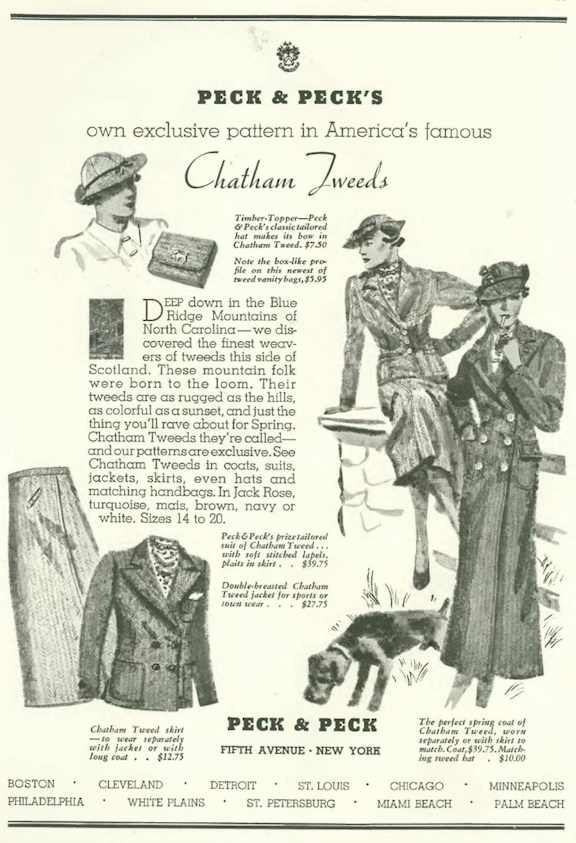
…this Anglophilic Peck & Peck ad is notable for its condescending reference to the “mountain folk” in Appalachia who “were born to loom”…
…while we are on the subject, check out this ad for Grace Cruises…this was a common theme in mid-century travel advertising, Westerners dressed in their Sunday best while having a gander at the colorful natives…
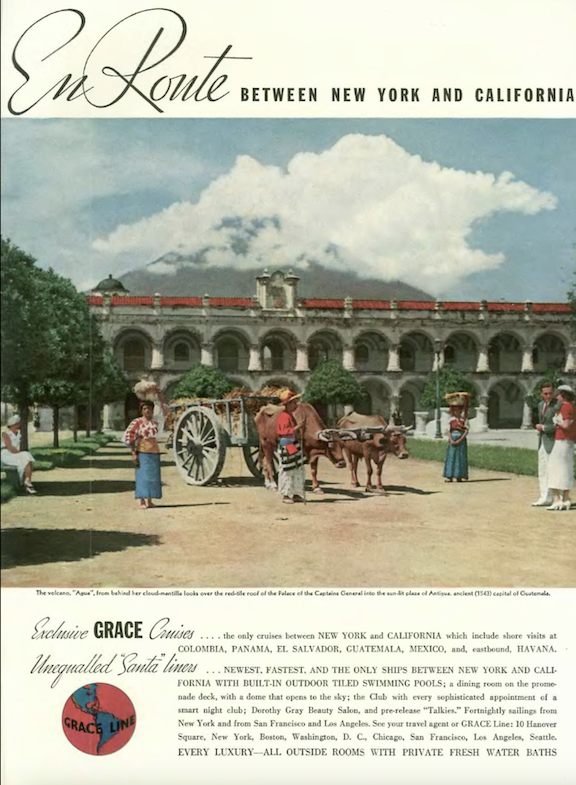
…who are just part of the scenery…

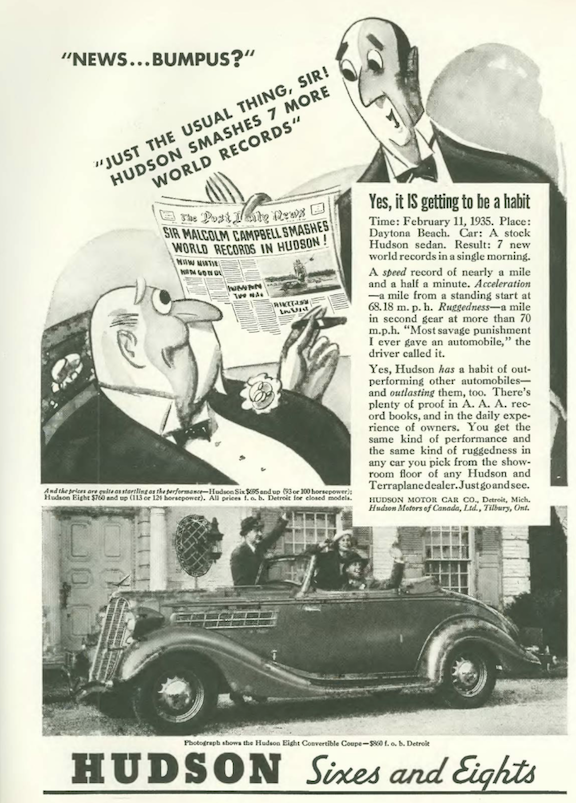
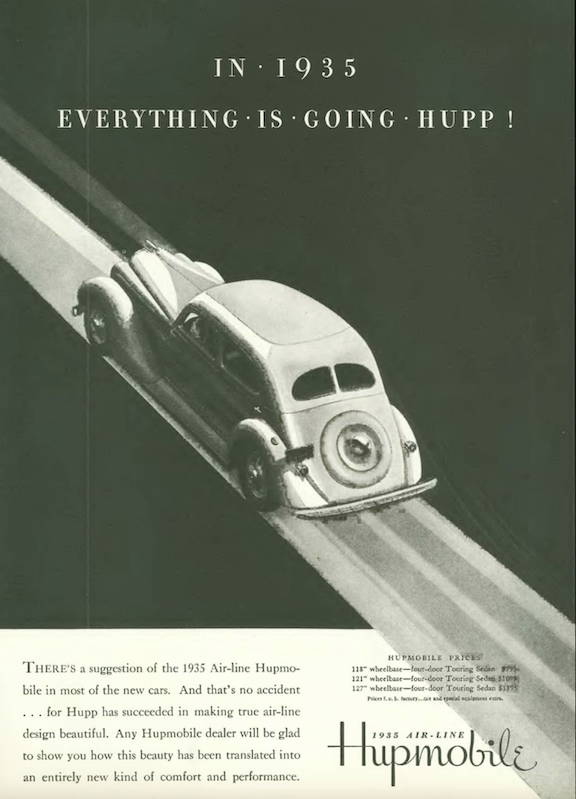
…all four of the automobile ads in this issue come from long-gone companies…the luxury carmaker Packard made beautiful, quality cars that outsold Cadillacs up until 1950, but competition from the Big Three (GM, Ford, Chrysler) plus Packard’s decision in 1954 to buy failing Studebaker led to Packard’s demise four years later…

…a more successful merger took place in 1954 between Nash…
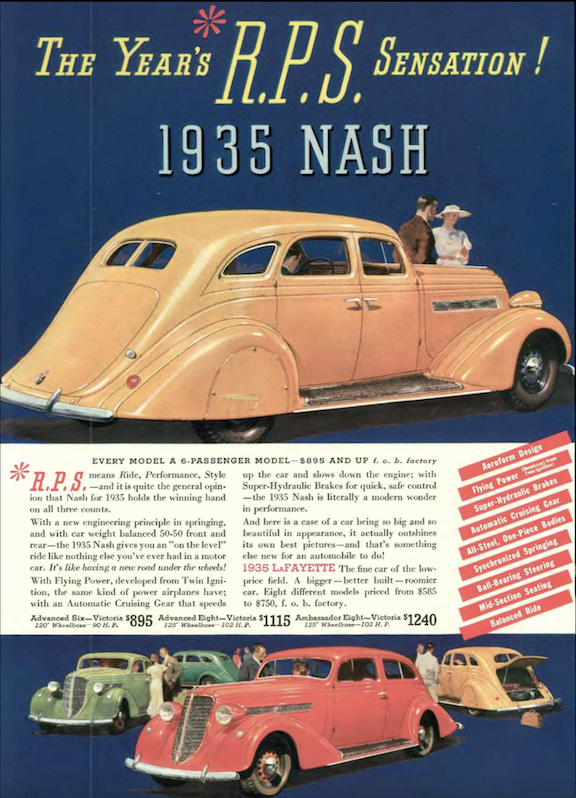
…and Hudson, the two forming the new American Motors Corporation…
…contrary to this ad’s tagline, everything was actually going down for Hupmobile, which would go out of business in 1939…
…the makers of College Inn Tomato Juice Cocktail apparently thought an angry old “Duchess” would boost sales…she first appeared in the Feb. 23 issue…
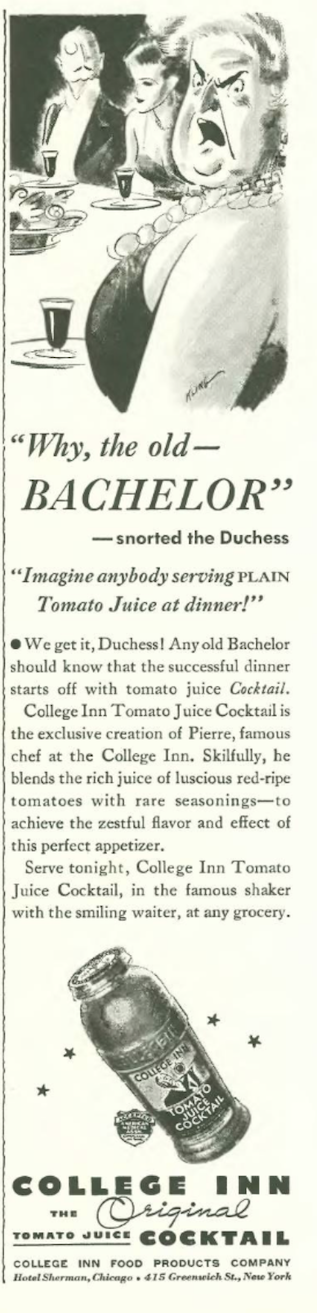
…in the March 16 issue she appears to be psychotic, threatening, “I’ll teach her not to serve PLAIN tomato juice before dinner!” Will she break the glass on the table and lunge at her host (the old WITCH) with a glass shard?…Stay tuned…

…better to calm down and have a Guinness, which, by Jove, was affordable and good for you!…

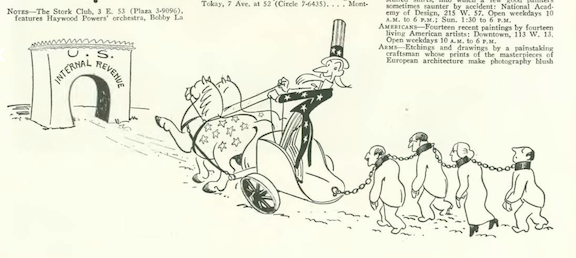
New Yorker cartoons are also good for you, and we begin with Al Frueh and this taxing illustration at the bottom of page 4…
…Frueh again, for the theater review section…in the center is Shirley Booth, known to Baby Boomers as the star of the old TV series Hazel (1961-66)…
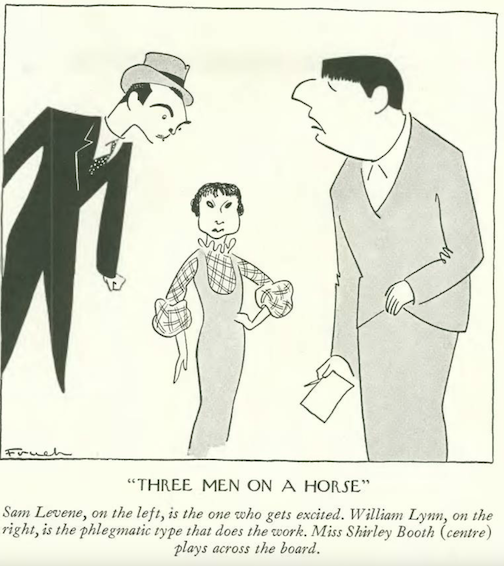
…Booth was much more than a sitcom star, achieving the Triple Crown of Acting––an Academy Award, two Primetime Emmy Awards and three Tony Awards…
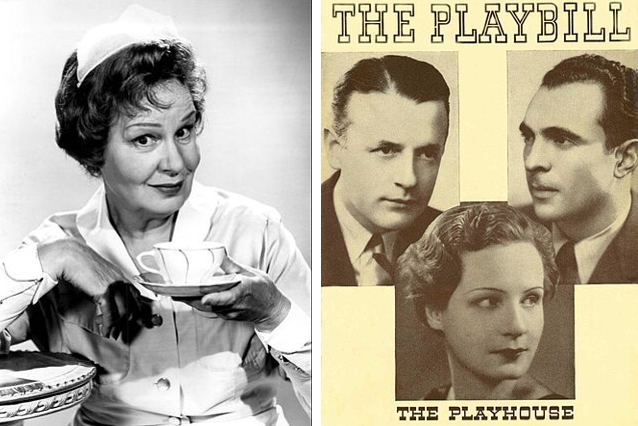
ACTING CHOPS…Shirley Booth (1898-1992) as Hazel in 1962; on the cover of the 1935 Playbill featuring Three Men on a Horse. (Wikipedia)

…we continue with Daniel ‘Alain’ Brustlein, and a term of endearment from someone well known to the police…

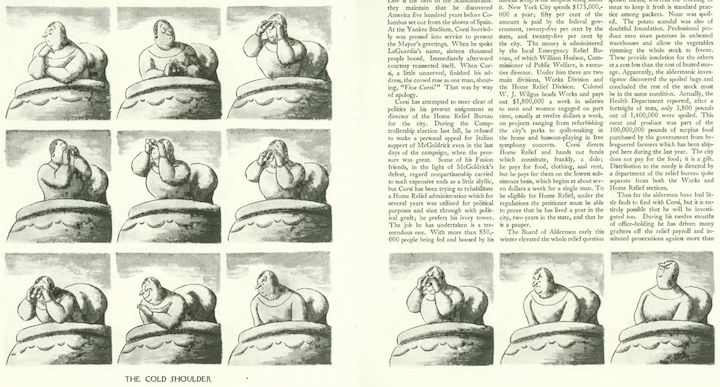
William Steig took up two pages to give one opera patron the cold shoulder…
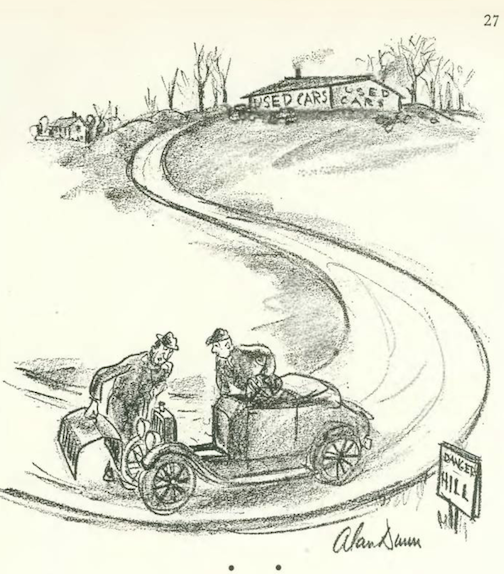
Alan Dunn cautioned against car dealers perched on high hills…
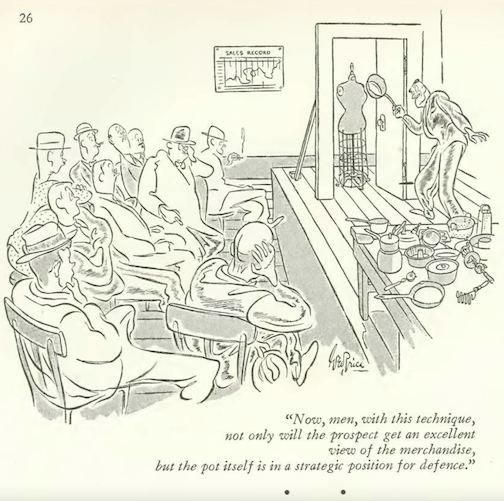
George Price examined the finer points of salesmanship…
Helen Hokinson headed for the high seas…

…and we close with an all-time classic from James Thurber

Next Time: Something Frivolous…

The Cotton Club & Other Distractions

Of all the nightclubs made famous in the Roaring Twenties, none were quite so famous as Harlem’s Cotton Club. Frequented by many celebrities, the club was a whites-only establishment even though it featured many of the most popular black entertainers of the day including Fletcher Henderson, Duke Ellington and Cab Calloway.

8a3e8956e7cf51e58975801865fdce55
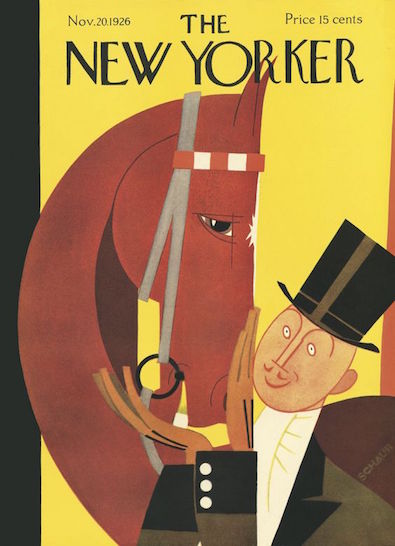
November 13, 1926, Issue # 91, cover by Julian de Miskey.

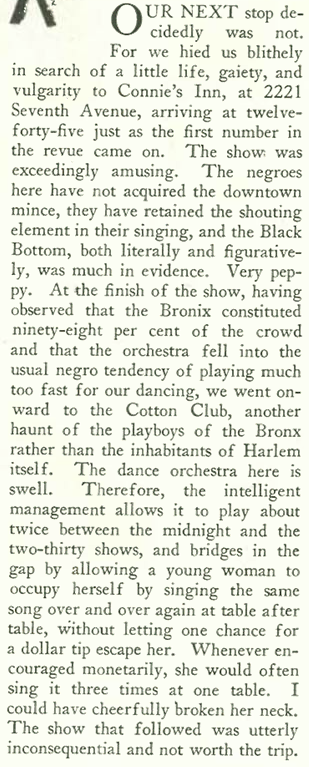
So leave it to The New Yorker, and specifically its nightlife correspondent, Lois Long, to take a blasé view of the famed hot spot. Perhaps she was just tired, having already visited three other nightclubs that evening—the Montmartre, the Yacht Club, and Connie’s Inn—before seeking out the Cotton Club:

Screen Shot 2016-04-14 at 6.16.45 PM

Screen Shot 2016-04-14 at 6.49.42 PM
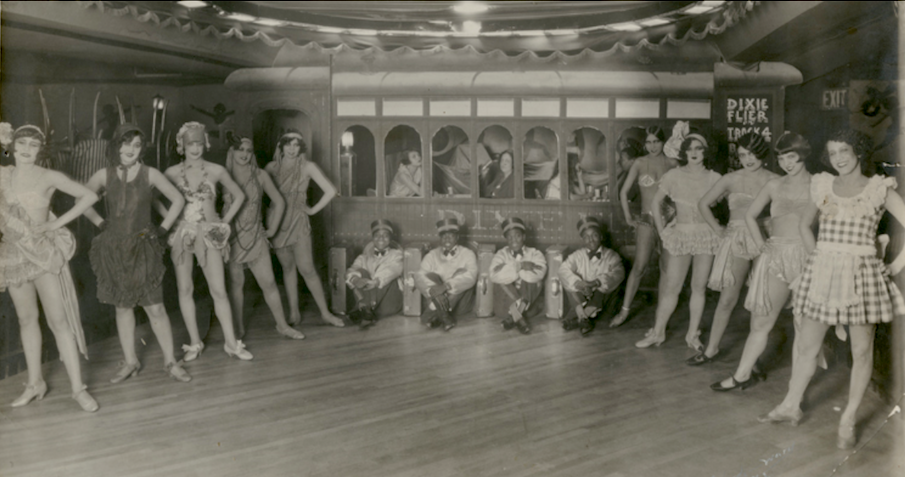
Performers on stage at Connie’s Inn, Harlem, 1920s. (New York Public Library)
Duke-Ellington-band-Cotton-Club-NYC-New-York-Untapped-Cities
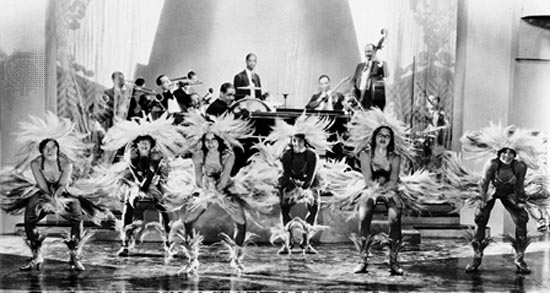
Duke Ellington and dancers at the Cotton Club in the late 1920s. (Untapped-Cities)
dadanycottonclubflyer
Program from the 1920s designed to attract white patrons to the Cotton Club. (Women of the Harlem Renaissance)

* * *

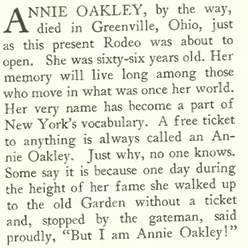
“The Talk of the Town” noted the passing of rodeo star and sharp-shooter Annie Oakley (next time you get a free ticket with a hole punched in it, you’ll know what to call it):

Screen Shot 2016-04-13 at 4.54.06 PMScreen Shot 2016-04-13 at 4.54.49 PM

If nightclubs weren’t your thing, there were plenty of movie houses screening the latest offerings from Tinseltown. The opening pages of the magazine featured this advertisement for the new 3,664-seat Paramount Theatre, located at 43rd Street and Broadway in the Times Square.

Screen Shot 2016-04-13 at 4.52.30 PM

It’s a reminder that Paramount, a venerable old Hollywood studio (which these days is owned by Viacom) had its origins in New York as the Famous Players-Lasky Corporation. Founded in 1916, Famous Players-Lasky was primarily located at the Kaufman Astoria Studios in Queens (after 1920). It would eventually become Paramount Pictures and relocate to Hollywood in 1932.

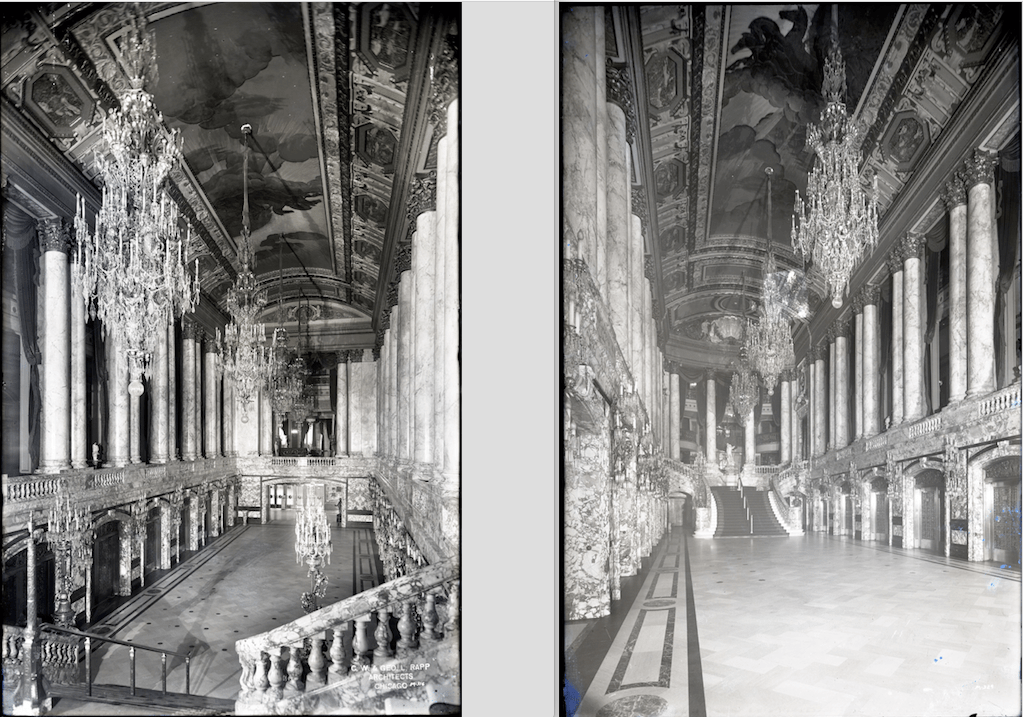
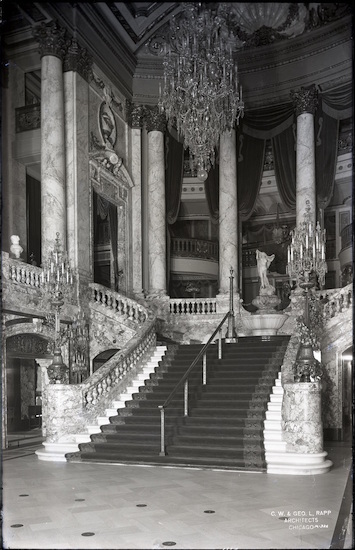
The Paramount Theatre was closed in 1964. Sadly, the interior was gutted and converted to office and retail use. Here are a couple of interior shots of the theatre’s Grand Hall as it appeared following its opening:

NY-NYC-MAN-Paramount-CAPC-M0316

NY-NYC-MAN-Paramount-CAPC-M0326
NOT YOUR LOCAL CINEPLEX…Grand Hall of the Paramount Theatre, featuring imported Italian marble columns. (American Theatre Architecture Archive)

The theatre’s huge pipe organ, one of the largest and most admired theatre organs ever built by the Wurlitzer company, was removed and later installed in a convention hall in Wichita, Kansas.

ParamountThCon
Keyboard array of the Paramount Theatre’s huge pipe organ, one of the largest theatre organs ever built by the Wurlitzer company. (nycago)

Paramount would open theatres around the country (in the chain of Publix Theatres), and a number of them survive today. The original Paramount Building in New York is still there, but all that’s left of the theatre is the marquee.

The marquee in 1927:

Copy of New York's Paramount Theater - 1930s
(nyc.gov)

And today:

(Wikipedia)

Next Time: The Sporting Life…

cb57ca46d50ab47f3acf02be954149b6