Down to Earth

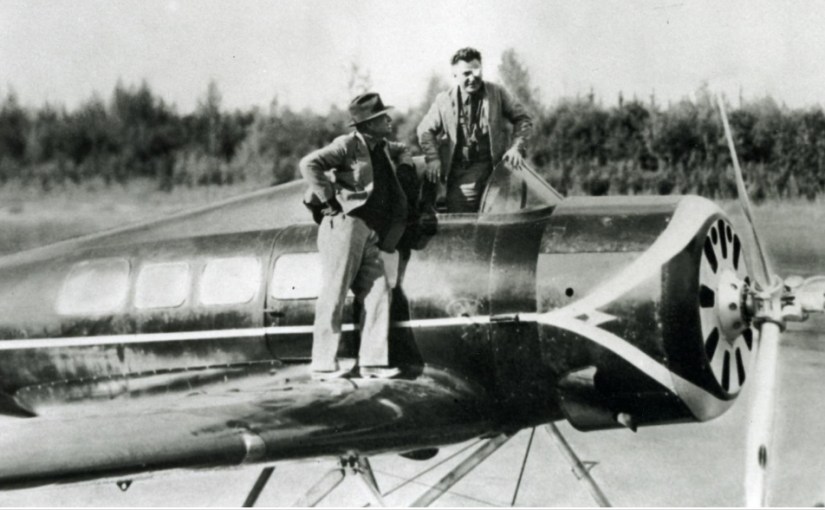
Above: Will Rogers (with hat) visits with pilot Wiley Post near Fairbanks, Alaska, hours before their fatal crash on August 15, 1935. (okhistory.org)

It would be a challenge to find a place for a multi-talented, mega-star like Will Rogers in today’s over-saturated and segmented media landscapehe was a trick roper, vaudevillian, social commentator, comedian, journalist, author, and radio and film celebrity. His early fame on the vaudeville circuit, including the Ziegfeld Follies, would spark a film career in 1918 (he would appear in 71 films), and a 1922 town hall speech would lead to a nationally syndicated newspaper column. When radio became a nationwide phenomenon his voice could heard coast-to-coast. He was seemingly everywhere.
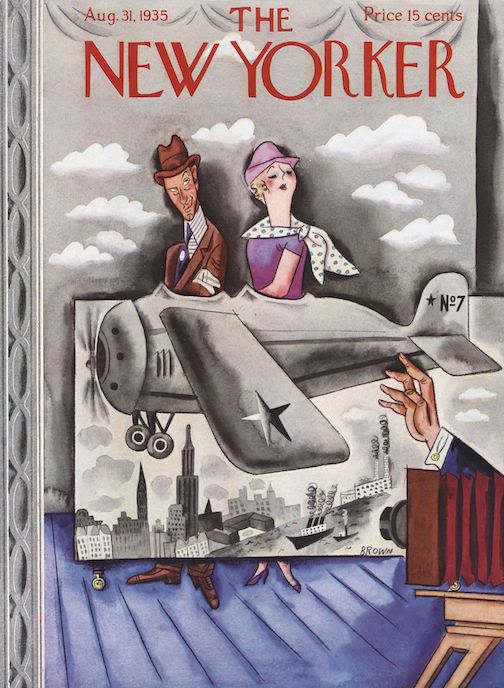
August 31, 1935 cover by Harry Brown. Brown illustrated eighteen covers for The New Yorker.

Rogers (1879-1935) was also a big promoter of aviation, and he gave his audiences many entertaining accounts of his world travels. In the summer of 1935 he announced plans to join famed aviator Wiley Post (1898-1935) on a flight to Alaska and beyond. It appeared to be routine, making the trip’s tragic ending all the more poignant.

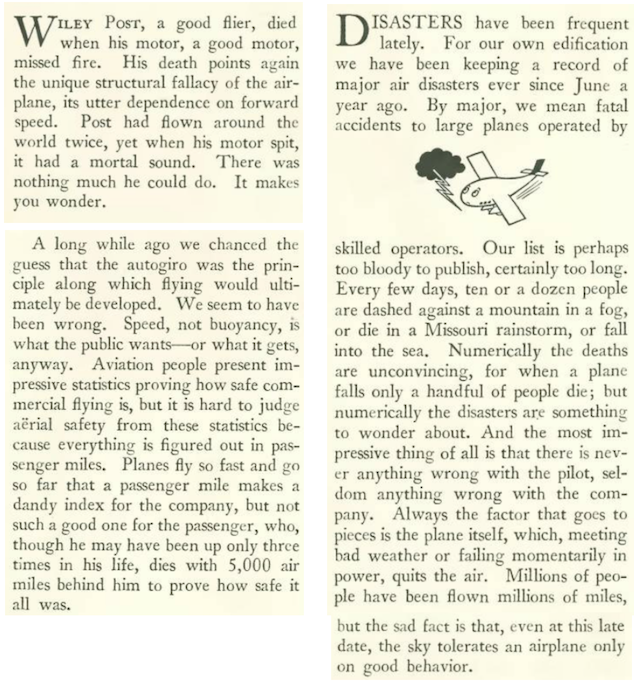
Although E.B. White often seemed stuck in the past—he preferred Model Ts and rattily omnibuses to more more modern conveyances—he was a flying enthusiast, never missing a chance to hop aboard an airplane and marvel at the scene far below. However, when tragedy struck, White would become circumspect. When Notre Dame coach Knute Rockne’s Fokker Trimotor crashed into a Kansas wheatfield, White expressed doubts about air safety and pondered “safer” alternatives such as autogiros (a kind of early helicopter that wasn’t so safe or practical). Such doubts returned in his “Notes and Comment” for August 31, 1935:
The fated aircraft, a Lockheed Orion, was heavily modified by Post into a floatplane; one wing was even salvaged from a wrecked Explorer (an older Lockheed model). The pontoon floats he attached were also designed for a larger aircraft, which made the nose-heavy Orion even more unwieldy.

BUILT FOR SPEED…A Lockheed Model 9 Orion parked at Boeing Field, Seattle, in May 1935. With 200-mph speed, the single-engine passenger aircraft (5 to 6 passengers) was faster than any American military aircraft of the time. It was Lockheed’s last aircraft to use wood construction in the frame, which was lightweight but not designed for longevity on major airlines. (James Borden Photography Collection)
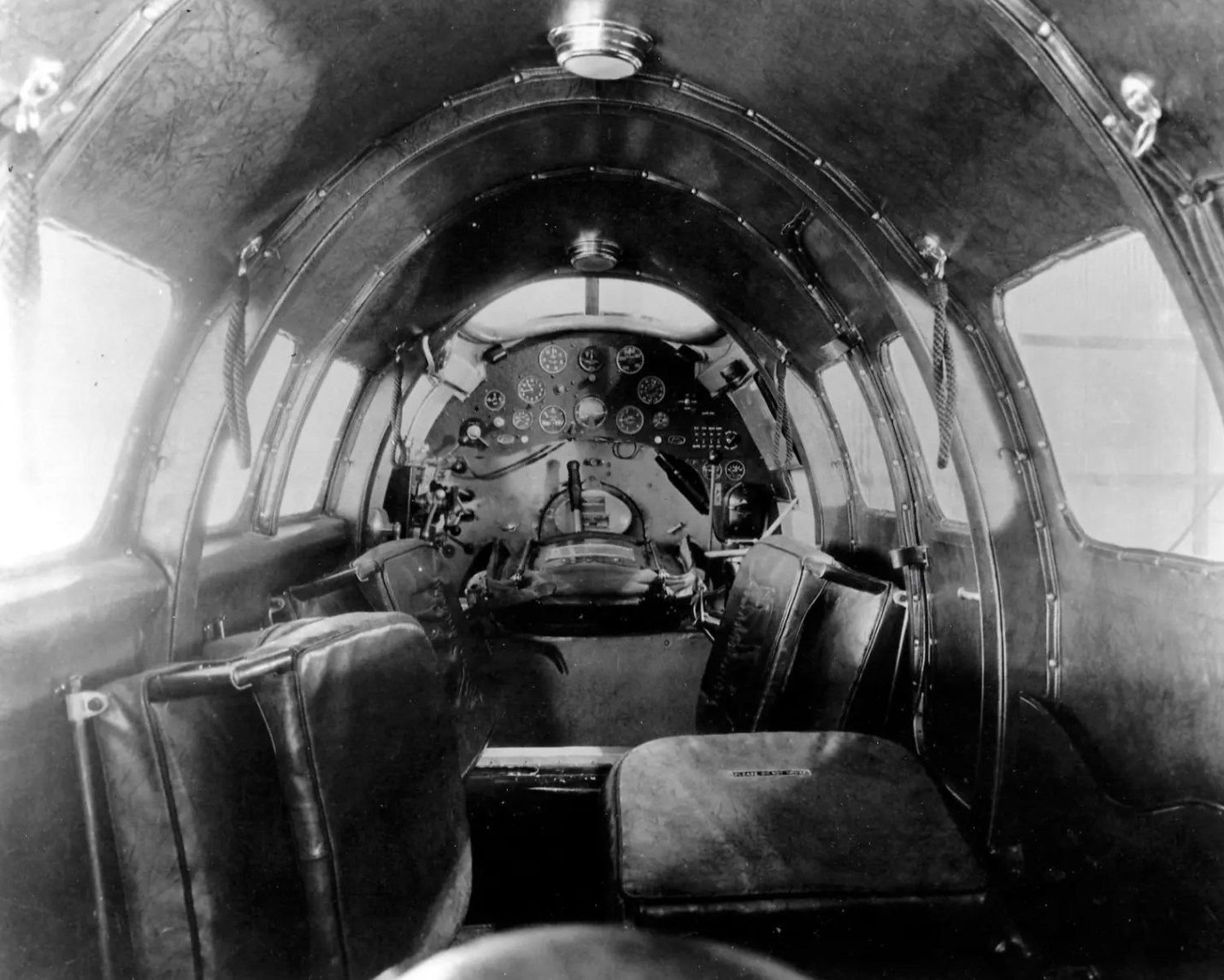
TIGHT QUARTERS….Interior view of a Lockheed Orion 9. No doubt much of the passenger space was loaded with gear for the trip to Alaska. (James Borden Photography Collection)

When Post and Rogers arrived in Juneau, local bush pilots doubtfully regarded the Orion and asked Rogers about the flight plan. “Wiley and I are like a couple of country boys in an old Ford—don’t know where we’re going and don’t care,” he said. They were actually headed to Point Barrow, and from there planned to hop over to Siberia.

After stopping in Fairbanks they set off for Point Barrow in bad weather. Lost in the murk, they landed short of their destination in the shallow waters of Walakpa Lagoon, fifteen or so miles southwest of Point Barrow. Post and Rogers then took off—despite warnings from locals about the conditions. But the weather wasn’t the worst problem: Post had a bad habit of taking to the air in an abrupt, steep climb, which likely caused the engine to stall. Powerless, the ungainly aircraft plunged into the lagoon and landed on its top. Post and Rogers were killed instantly.
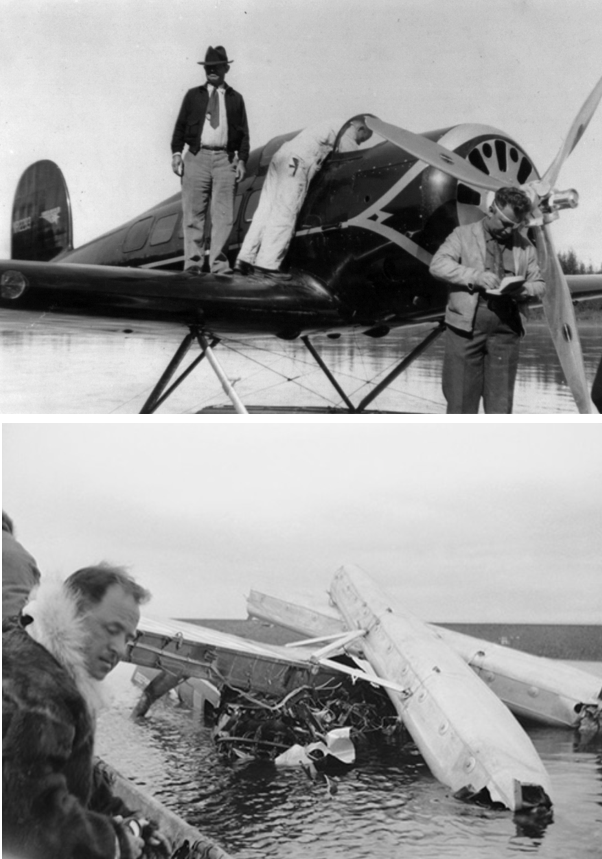
JUST A COUPLE OF COUNTRY BOYS…Top photo, Will Rogers on the wing of the Lockheed floatplane belonging to famed aviation pioneer Wiley Post, hours before their fatal crash on August 15, 1935. Below photo, inverted wreckage of the float plane in Walakpa Lagoon.  (Wikipedia/vintageaviationnews.com)

Rather than eulogize the fallen Rogers, “The Talk of Town” offered up an anecdote about his rise as a newspaper columnist, which was sparked by a backhanded endorsement speech:

A HUMAN FACE…Top left, Will Rogers backstage with the 1924 Ziegfeld Follies cast. At right, Rogers made his film debut in the now lost silent film Laughing Bill Hyde (1918) with co-star Anna Lehr. The magazine ad at right quoted producer Rex Beach, who called Rogers “the most human player who ever faced a camera.” (Will Rogers Memorial Museum/Wikipedia/IMDB)
FINAL CURTAIN…Top photo, Will Rogers with co-star Anne Shirley in Steamboat Round the Bend. Rogers wrapped filming just before heading to Alaska. The film was released posthumously on September 6,1935. Bottom image is a detail from a full-page ad in the October 1935 issue of Picture Play Magazine. Oddly, the ad makes no mention of Rogers’ death, proclaiming that “Will blazes a new path in his screen career as he scores his greatest triumph!”  (theretrorocket.blogspot.com/IMDB)

 * * *

Putting it Mildly

In “Onward & Upward With the Arts,” H.L. Mencken continued to explore the quirks of American language, this time looking at the pervasive (and evasive) use of euphemisms by “professional uplifters.” Excerpts:

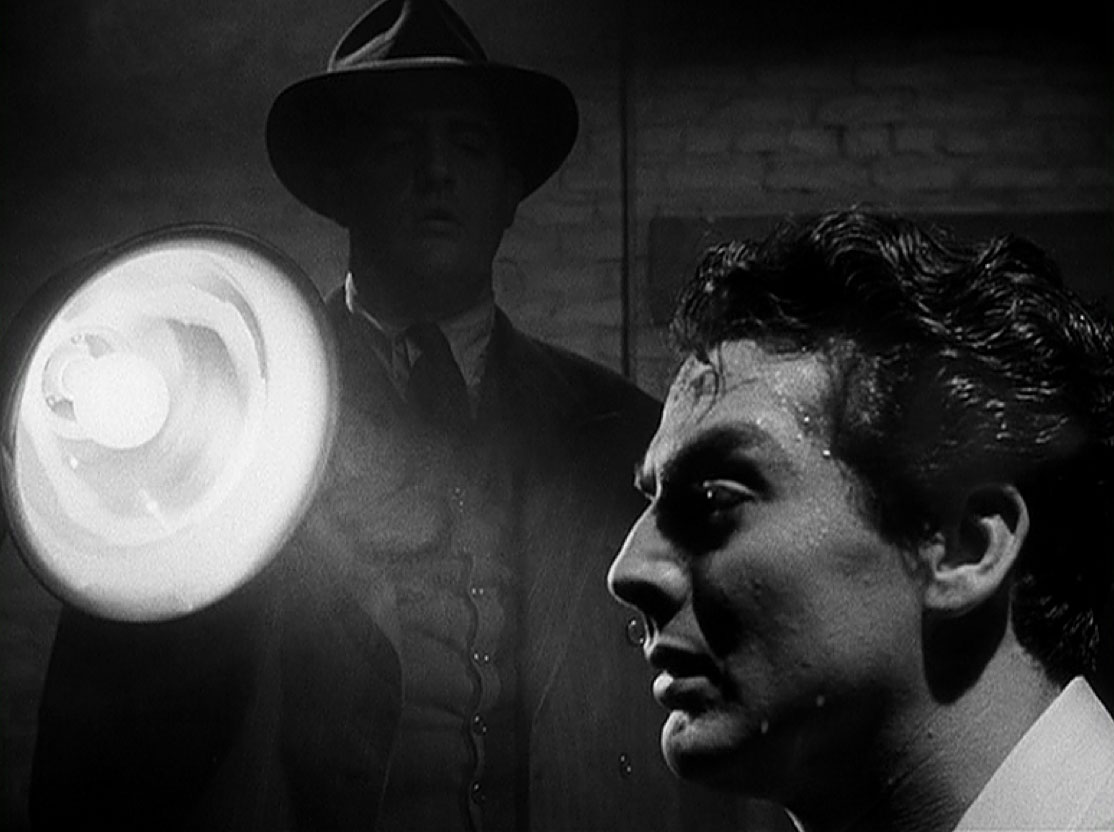
INTELLIGENCE TEST was suggested by “professional uplifters” as a polite replacement for giving someone “The Third Degree.” Image is from the 1941 noir thriller I Wake Up Screaming, starring Victor Mature, pictured here getting his “intelligence test.” (cinematography.com)

 * * *

At the Movies

We join film critic John Mosher to take a look at the latest epic from Cecil B. DeMille, The Crusades, which to Mosher’s disappointment was a rather mild epic, with little to astonish. However, our critic did find something to admire in a more recent historical drama, Diamond Jim.
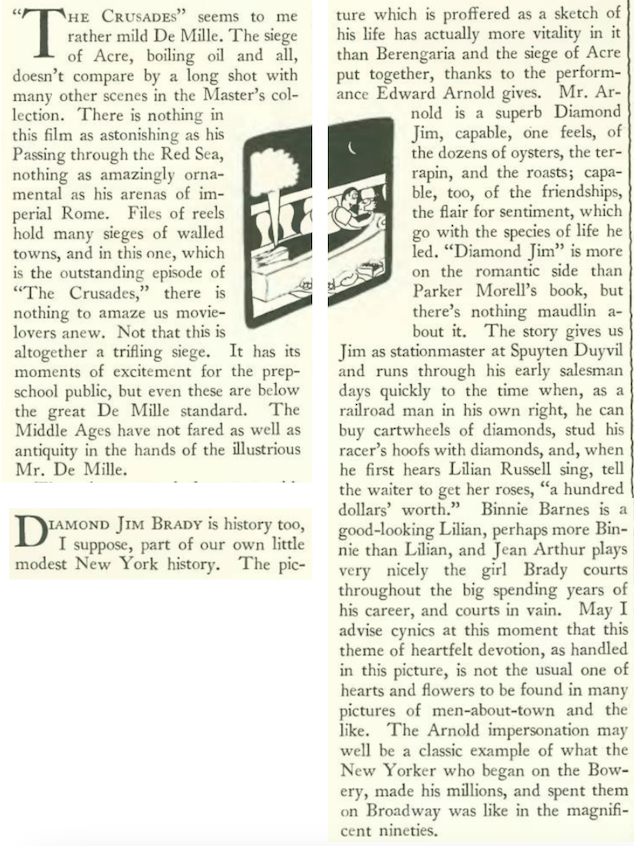
ANTISEPTIC EPIC?…Clockwise, from top left, movie poster for The Crusades offered up an image one typically does not associate with religious warfare, but you had to bring ’em in somehow; Henry Wilcoxon and Ian Keith in a scene from the film; co-stars Loretta Young as Berengaria of Navarre and Wilcoxon as Richard the Lionheart; the film also featured Joseph Schildkraut as Conrad of Montferrat and Katherine DeMille as Princess Alice of France (bottom left). A talented actress, Katherine reportedly landed the role as a Christmas gift from her adoptive father, Cecil B. DeMille. (cecilbdemille.com)
HEY BIG SPENDER…At right, Edward Arnold in the title role (here with Eric Blore) in Diamond Jim. At left, Cesar Romero moves in on Diamond Jim’s love interest, portrayed by Jean Arthur. (Rotten Tomatoes/IMDB)

 * * *

From Our Advertisers

We begin with this advertisement from Lord & Taylor, featuring the latest fall fashions for young women heading to college…notable here is the inclusion of Mickey Mouse in the illustration…the animated rodent was in vogue as much the latest fashions…


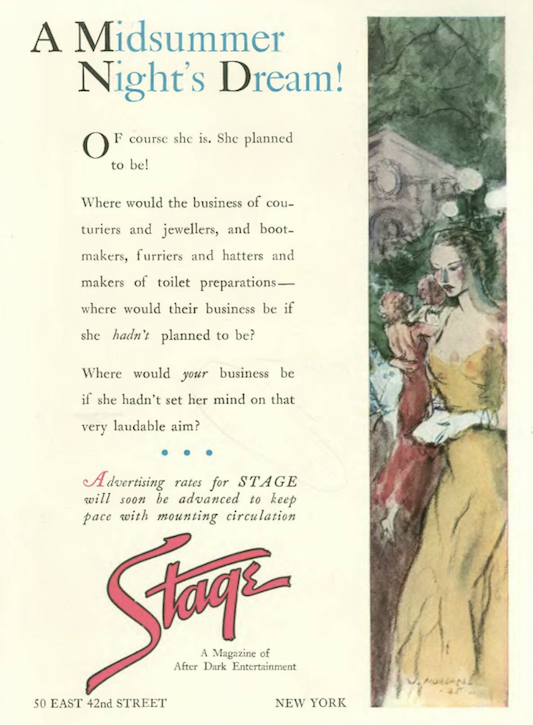
John Hanrahan, whose advertising savvy helped guide The New Yorker through its lean early years, was publisher of the richly designed Stage magazine, promoted here on the inside front cover…
…soft drink giant Coca-Cola recalled its soda fountain origins in this ad that promoted its 6.5-ounce bottled product…

…on the inside back cover Goodyear continued its series of perilous ads illustrating the dangers of tire blowouts (but not the obvious hazard of children riding untethered in a rumble seat, where they doubtless inhaled all manner of noxious fumes)…

…the majority of back covers in 1935 featured tobacco companies…here we learn that Lucky Strikes were more than cigarette; they were your “best friend”…

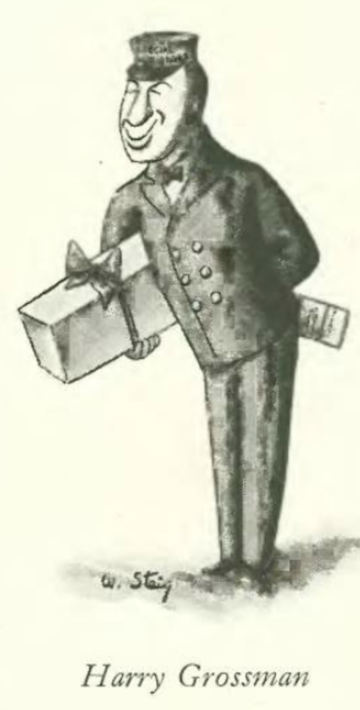
…on to our cartoonists, we start with this “Profile” illustration by William Steig…the profile was a two-parter featuring a clever summons server…
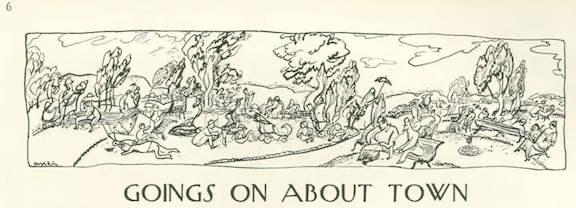
Adolph Dehn adorned the “Goings On” section with this illustration…
…unsigned, but I’m pretty sure this is H.O. Hofman

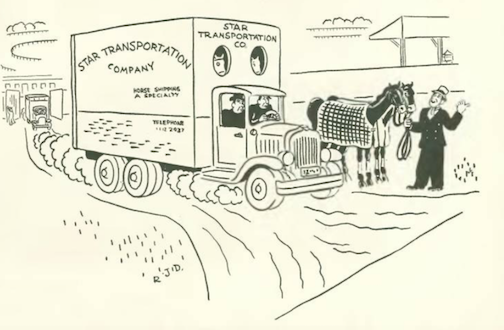
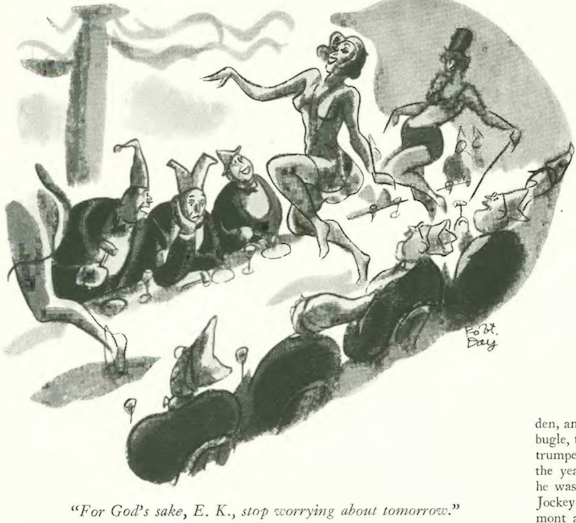
…here we get a lift from Robert Day

Al Frueh conjured up a nightmare of leaping sheep…

Helen Hokinson gave us some famous footwear…
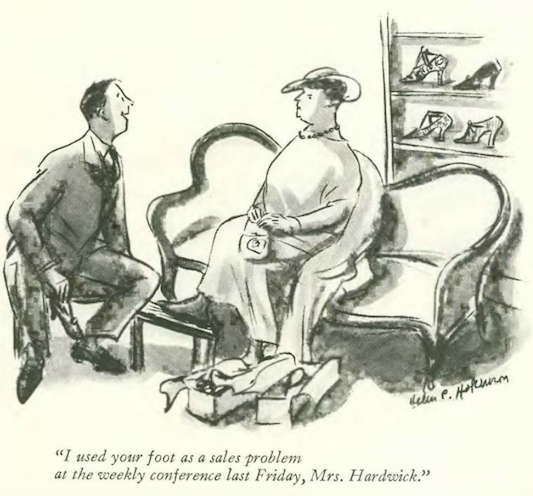
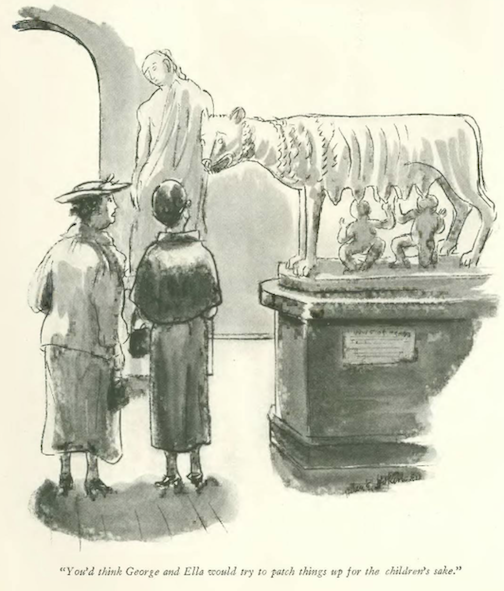
…Hokinson again, with Romulus and Remus providing a convenient metaphor…
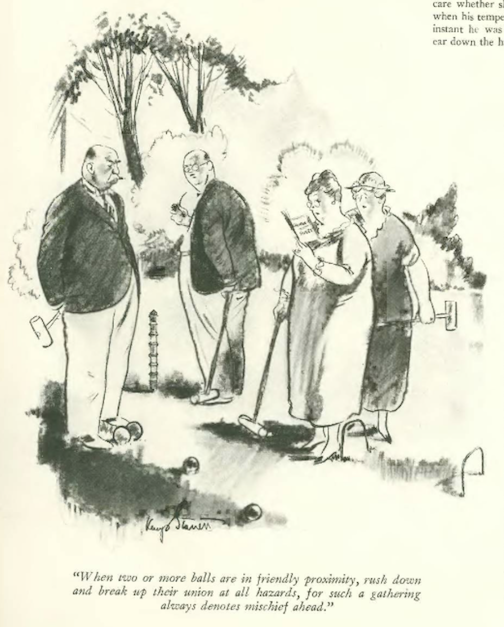
Kemp Starrett was bogged down in the rules of a game…
George Price discovered a budding talent…

Richard Decker took to the back roads…(reminds me of a scene from The Long, Long Trailer with Lucy and Desi)…

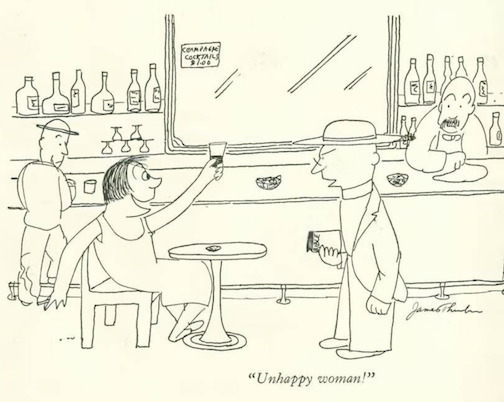
James Thurber raised a glass to a dry do-gooder…
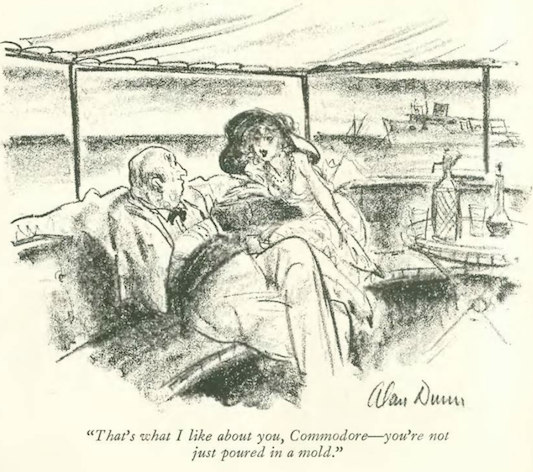
Alan Dunn brought an unexpected windfall to Westchester…
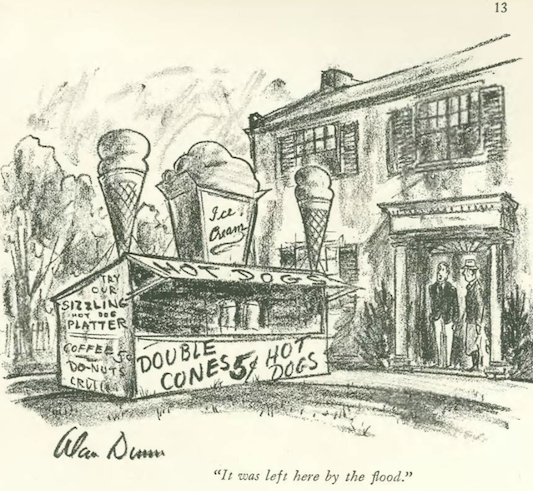
…and to close we Dunn again, and a bit of flattery…
Next Time: A Summer Night…
Bohemian Rhapsody

Part love story and part wildlife protection fable, the pre-Code romance and melodrama Zoo in Budapest was that rare film that pleased critics and audiences alike.

May 6, 1933 cover by Richard Decker. This is one of four covers Decker (1907–1988) contributed to The New Yorker; he also contributed more than 900 cartoons in his nearly 40-year run with the magazine.

Jesse L. Lasky’s first production for Fox (Lasky was the founder of Paramount Pictures), Zoo in Budapest starred relative newcomer Gene Raymond as a young man (Zani) keenly attuned to nature and particularly to the animals he cares for in the Budapest Zoo. In the course of the film he becomes an anti-fur industry activist and rescues a beautiful orphan girl, Eve (Loretta Young) from a life of servitude. Although the film is little known today, in 1933 it had quite a winning effect on critic John Mosher, who usually found little to like from Hollywood’s output:

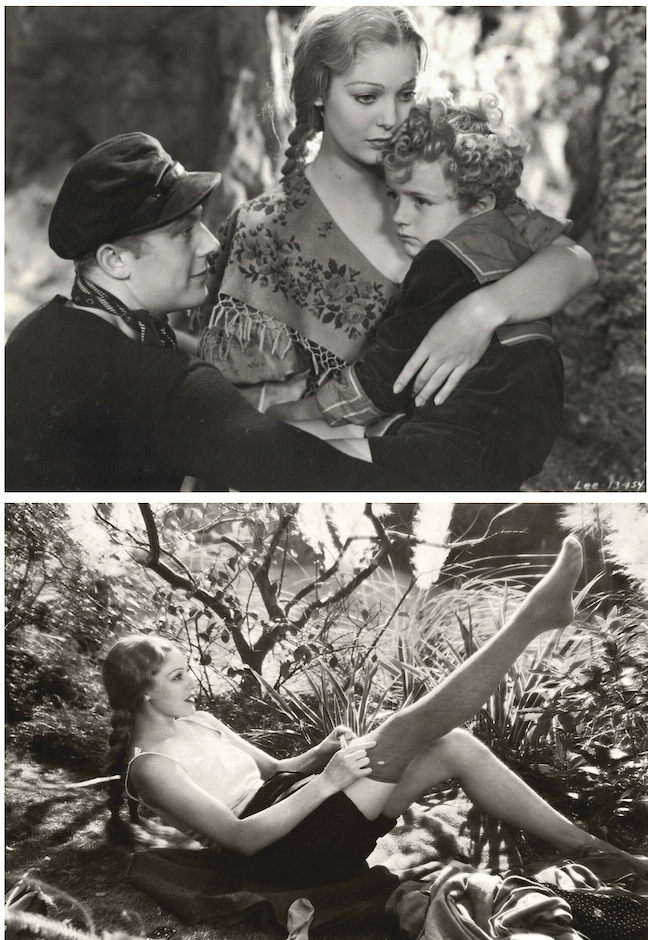
HE TALKS TO THE ANIMALS…Top, zoo worker Zani (Gene Raymond) rescues a beautiful orphan girl, Eve (Loretta Young) from a life of servitude, and both come to the aid of a little boy named Paul, played by Wally Albright, who escapes the clutches of his harsh governess. Below, hidden in the bushes, Eve changes her clothes after escaping from a group of orphans visiting the zoo. (IMDB)

The film made such an impression that even E.B. White had to mention it in the opening lines of his “Notes and Comment”…

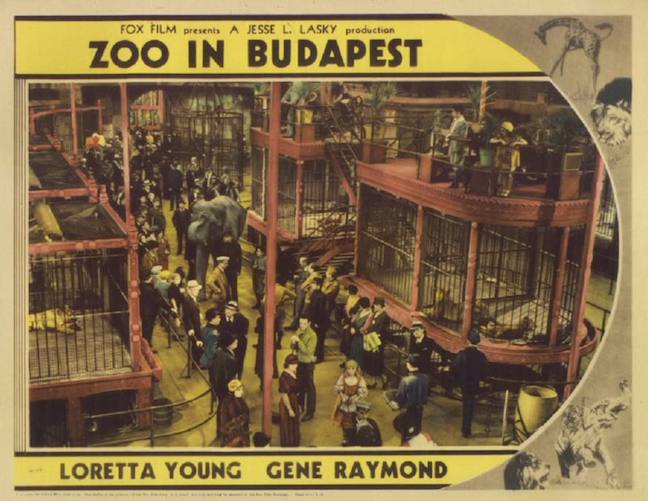
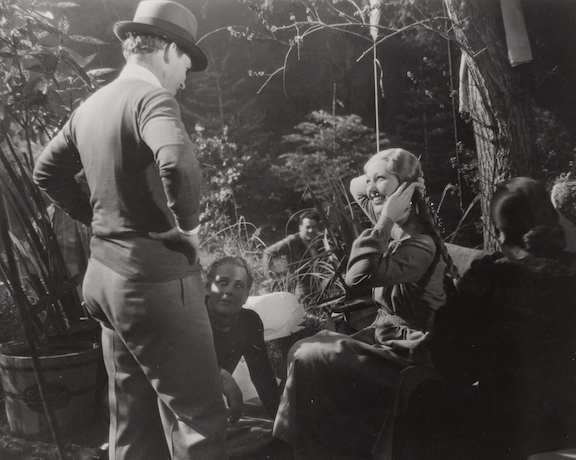
ANIMAL CRACKERS…Filmmakers went all out in creating elaborate sets for Zoo in Budapest. The film was likened to Grand Hotel because the drama took place in less than 24 hours, almost entirely in one location. Below, Loretta Young converses with director Rowland Lee on the set. (IMDB)
(IMDB)

 * * *

High Anxiety

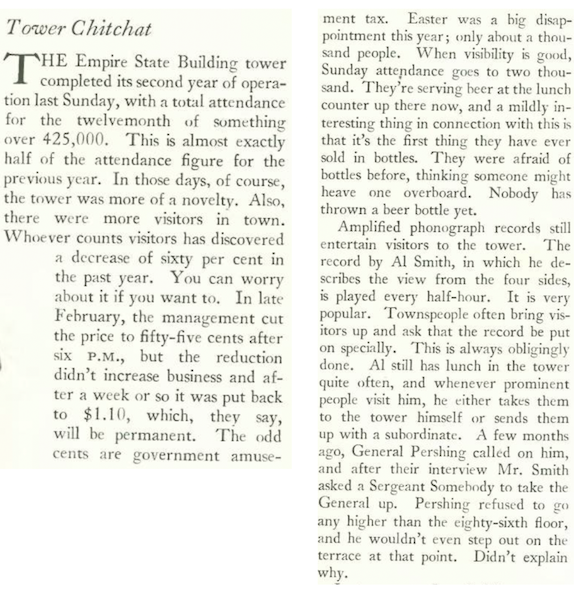
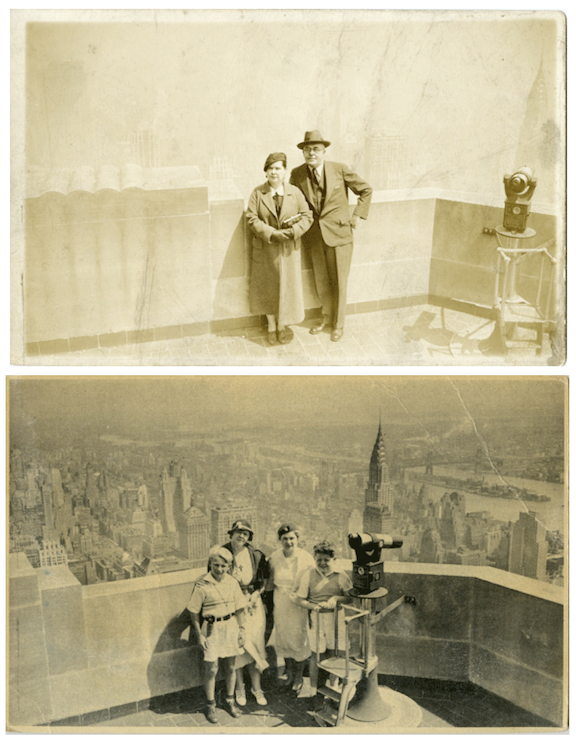
The Depression was hard on the Empire State Building, which opened its doors during some of the darkest days of the economic crisis. Visitation was down, and a lot of the office space in the world’s tallest building remained vacant. It would remain in the red into the 1940s.

BEEN THERE, DONE THAT…To this day the 86th floor observation deck has been a popular destination for tourists. In the 1930s a photographer stationed on the deck captured the moment for tourists on a souvenir postcard. The image at top is from 1934, the one below circa 1930s. Fencing to deter suicide attempts (or people chucking things over the side) wouldn’t be erected until 1947. (nyccirca.blogspot.com)

 * * *

As the World Churns

Howard Brubaker continued to comment on the deteriorating conditions of the German people in his column “Of All Things”…

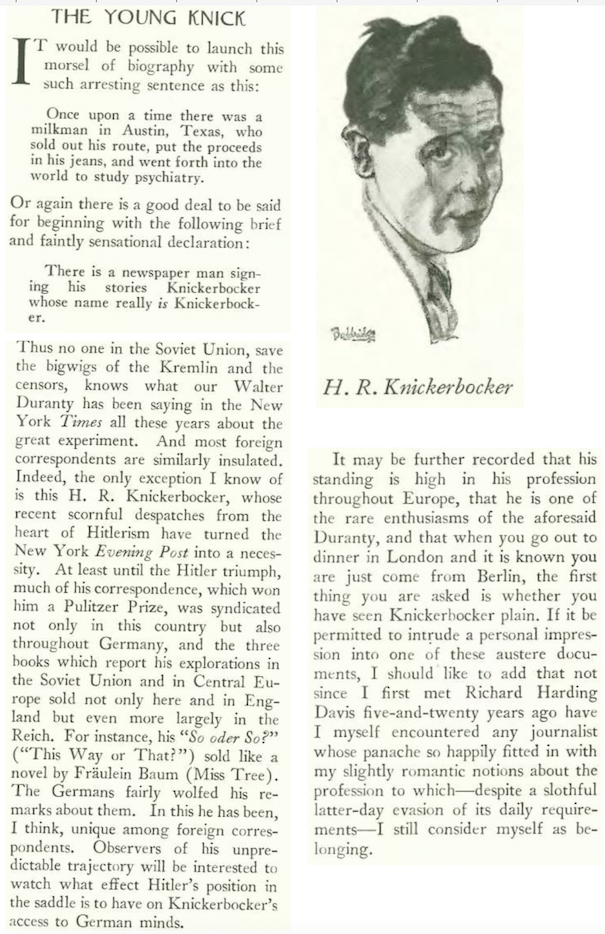
…and speaking of the Third Reich, Alexander Woollcott profiled (in his column “Shouts and Murmurs”) an enterprising young journalist Hubert R. Knickerbocker (1898–1949), who reported from Berlin from 1923 to 1933 and wrote about the threat of Nazism. In April 1933, after fleeing Germany, he reported in the New York Evening Post that “an indeterminate number of Jews [had] been killed.” A brief excerpt (with illustration by Cyrus Baldridge):

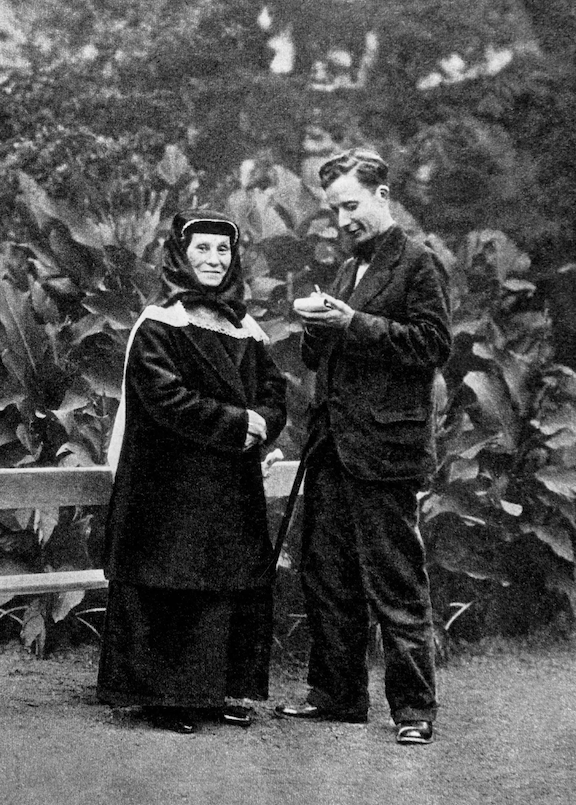
MYSTERY WRITER…In December 1930, H.R. Knickerbocker interviewed Josef Stalin’s mother, Keke Geladze, for the New York Evening Post. The resulting article was titled, “Stalin Mystery Man Even to His Mother.” (The New Yorker)

A graduate of Southwestern University in Georgetown, Texas and a 1931 Pulitzer Prize winner, Knickerbocker kept his word with Woollcott and entered Columbia University to study psychiatry.

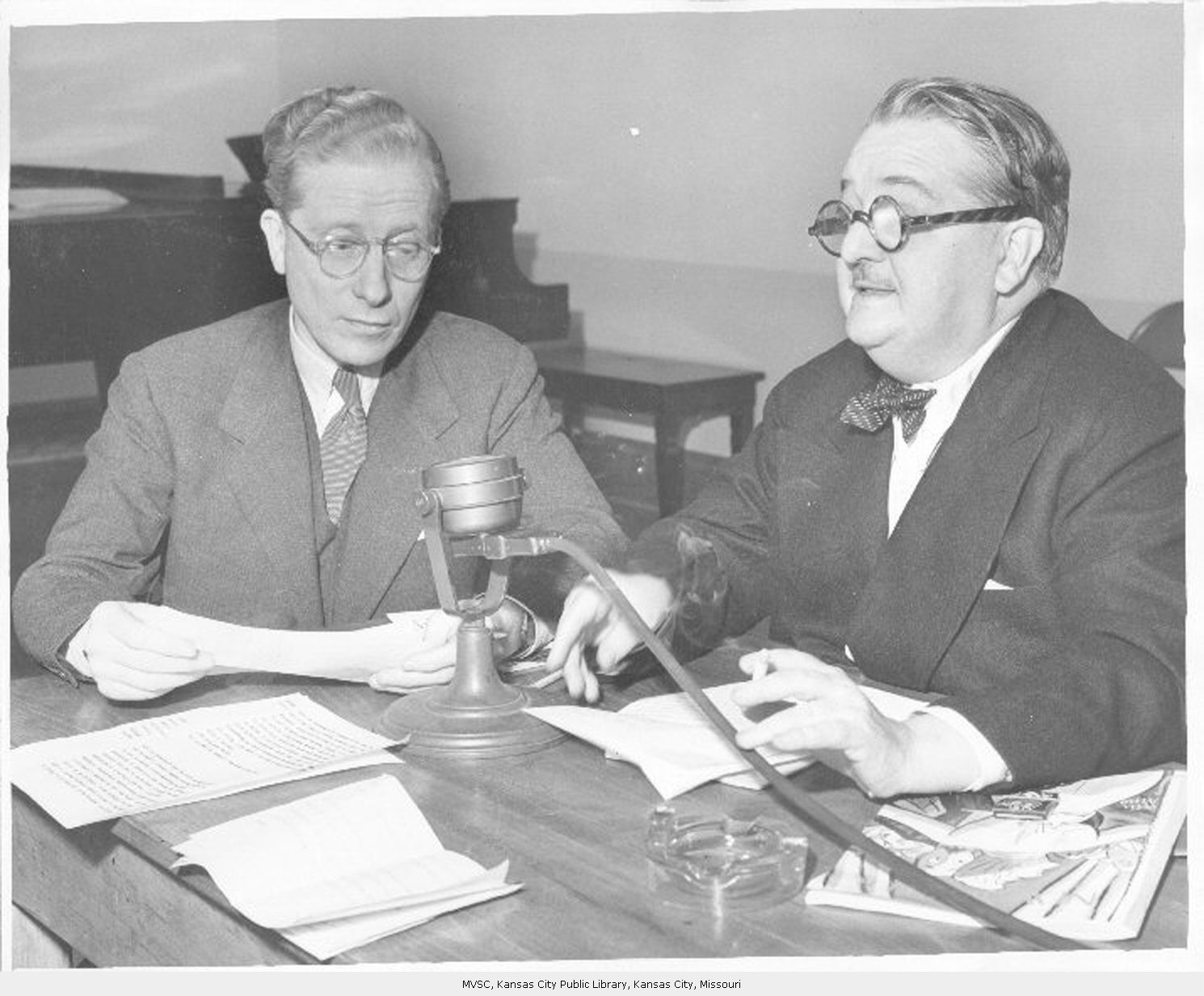
TALES TO TELL…H.L. Knickerbocker (at the microphone) with Alexander Woollcott circa 1940. (Kansas City Public Library)

 * * *

From Our Advertisers

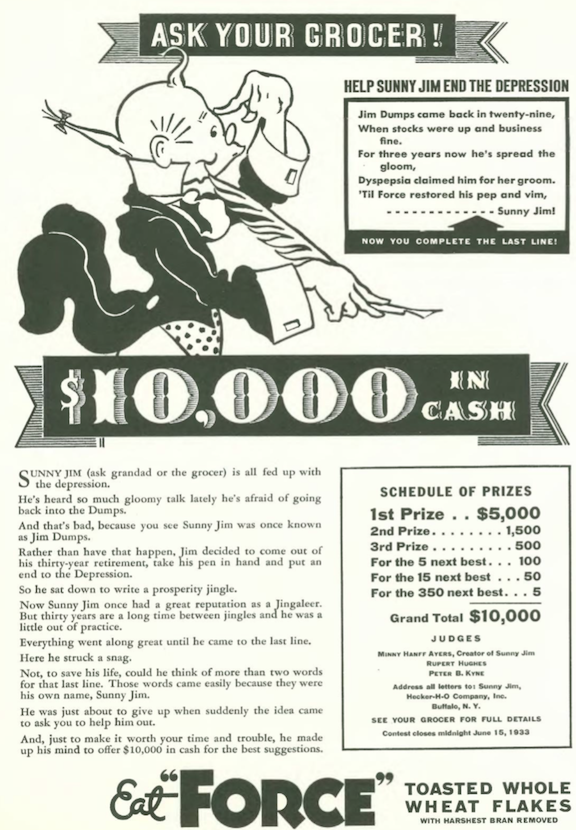
We begin with an ad from the makers of the first commercially successful wheat flake breakfast cereal…before there were Wheaties (created in 1921) there was Force, invented in 1901…almost from the beginning the Force brand was wildly successful thanks to a series of jingles featuring a morose character, Jimmy Dumps, who was transformed into Sunny Jim by consuming Force flakes…in 1933 the makers of Force were still big on jingles, sponsoring contests such as the one below…

…here is a box from that period, promoting cash prizes for winning jingles…

(worthpoint)

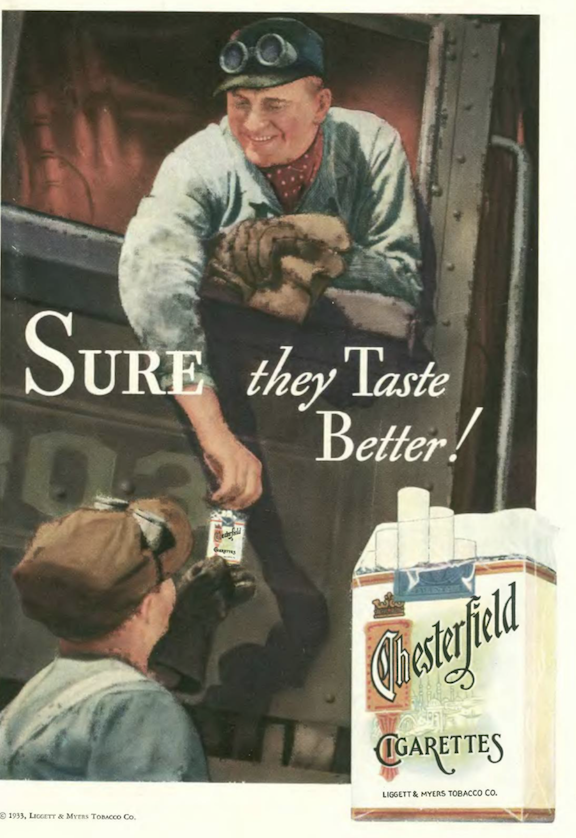
…the folks at Chesterfield began targeting the working man in their advertising…

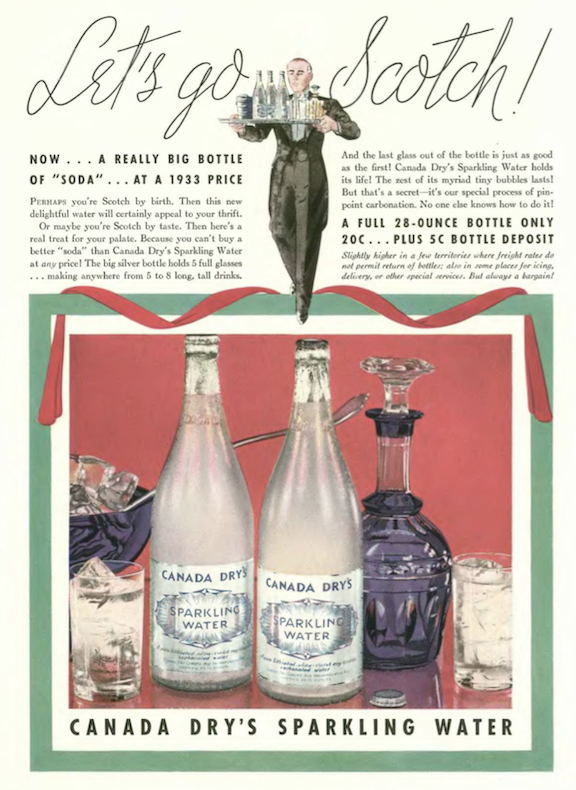
…while Canada Dry was anticipating the end of Prohibition…

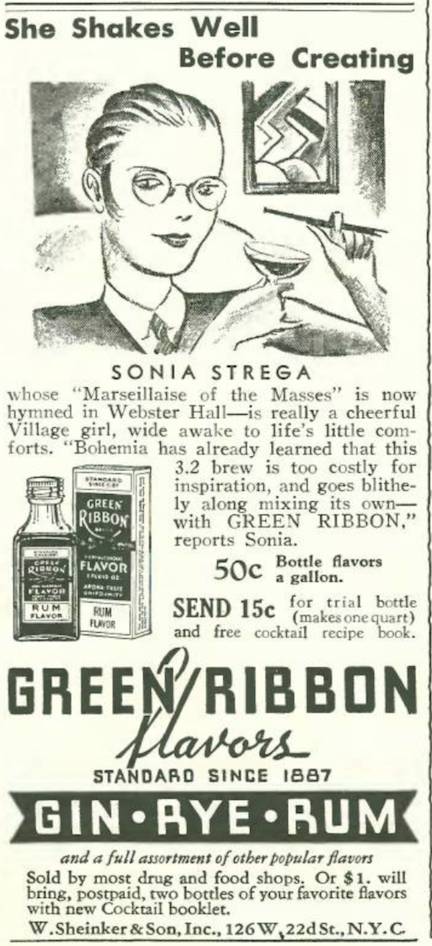
…but until that day, you could mix some Green Ribbon with your bootleg alcohol, according to Sonia Strega, who was likely an invention by the advertisers rather than an actual living endorser…

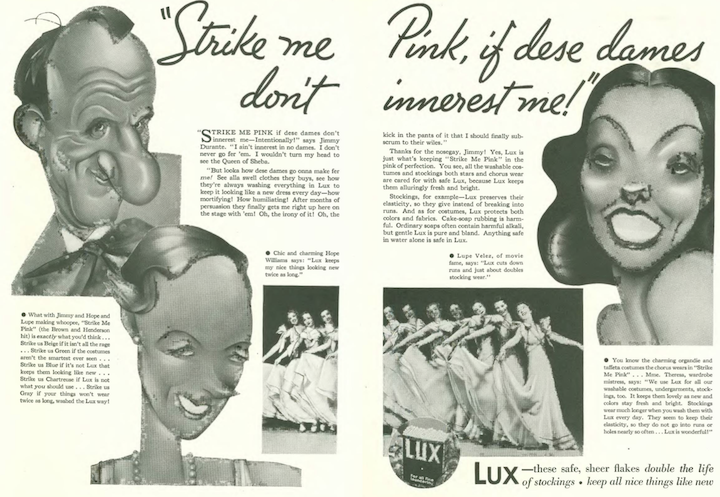
…Lux, on the other hand, had piles of money to spend on real life endorsers including Jimmy Durante, Hope Williams and Lupe Velez

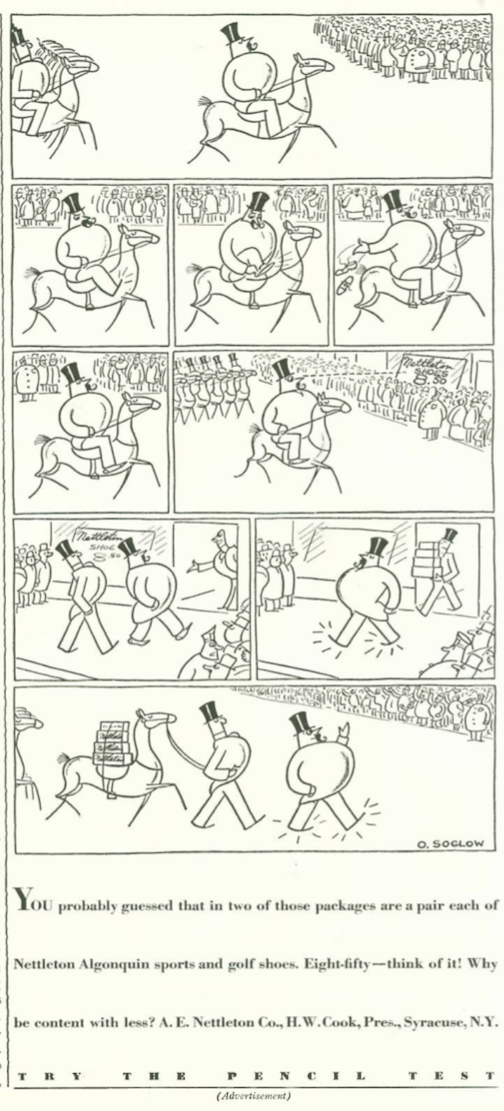
Otto Soglow drew up this strip for the makers of Nettleton shoes, creating a character similar to his famed “Little King” to promote the company’s sports and golf shoes…

James Thurber continued his work for the French Line, replete with his familiar dogs…

…and we also find Thurber in the cartoons…

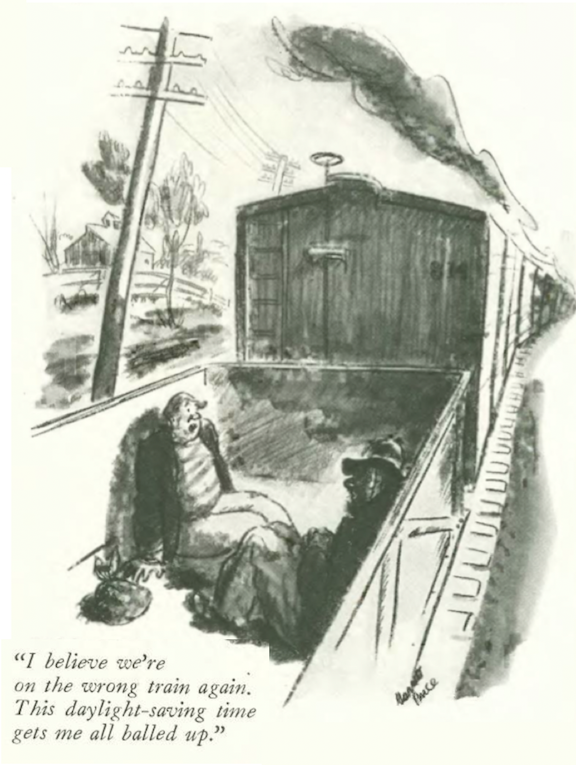
…joined  by Garrett Price

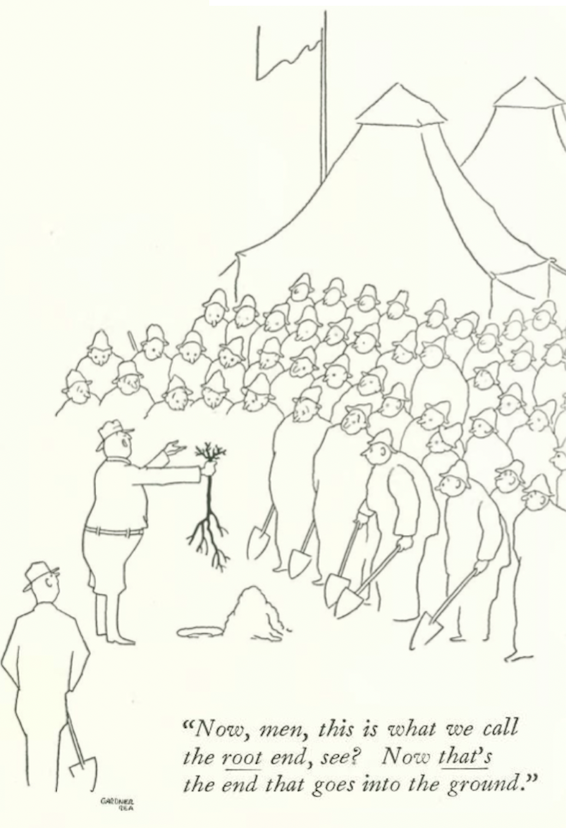
Gardner Rea

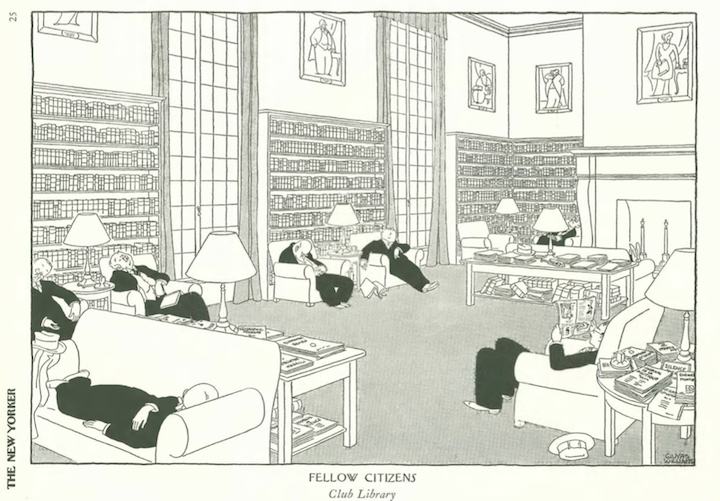
Gluyas Williams (originally this ran sideways)…

…and we close with a frolic by Robert Day

Next Time: Headline News…