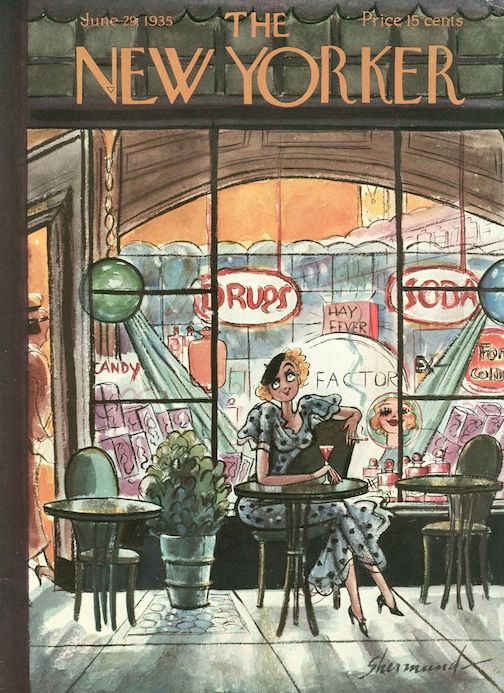
In 1933 the U.S. economy began a slow recovery from the 1929 market crash, but the recovery stalled in 1934 and 1935, and folks including E.B. White were looking for any indication of brighter days ahead.
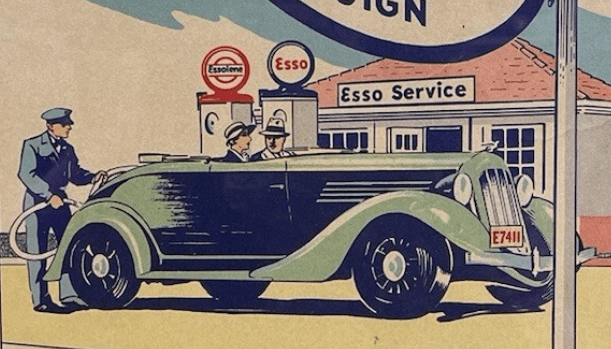
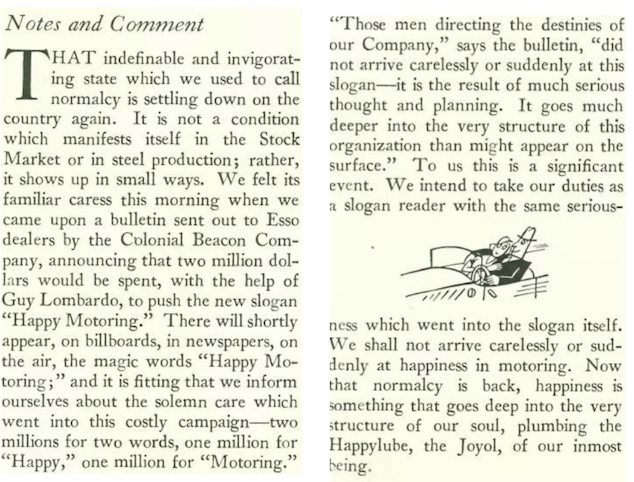
White suggested that Americans look for smaller signs of normalcy, such as the new slogan, “Happy Motoring,” that was being rolled out by Standard Oil’s Esso.

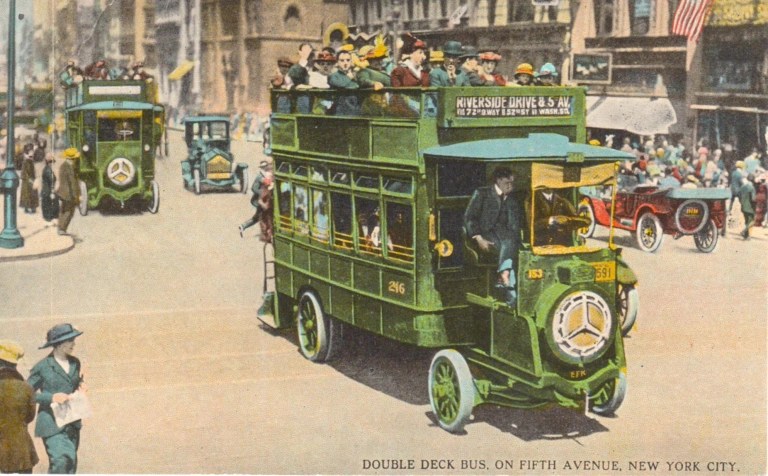
Like many of us, White was a study in contradictions, enthusiastically embracing the age of air travel while rejecting the style and comforts of modern automobiles (he famously loved his Model T). It is no surprise that he also preferred Fifth Avenue’s spartan green and yellow omnibuses over the new streamlined buses that would soon be plying the streets of Manhattan.
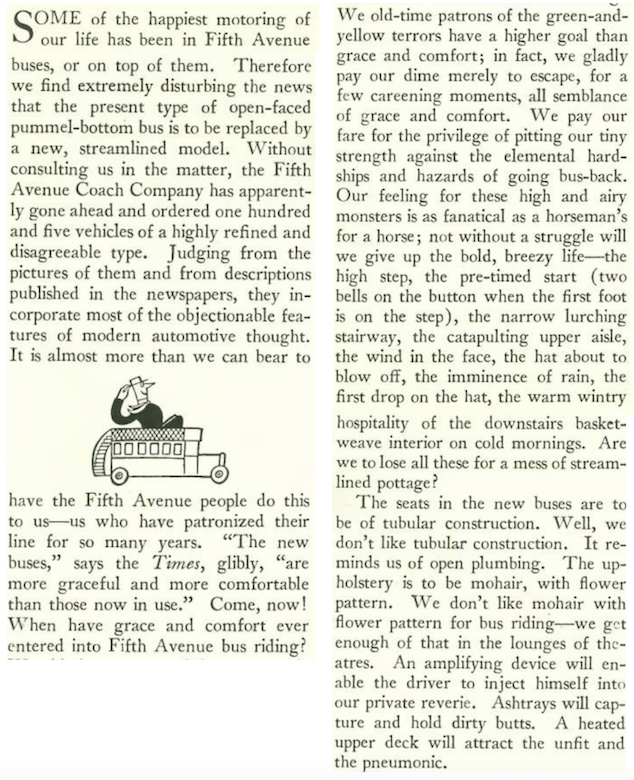
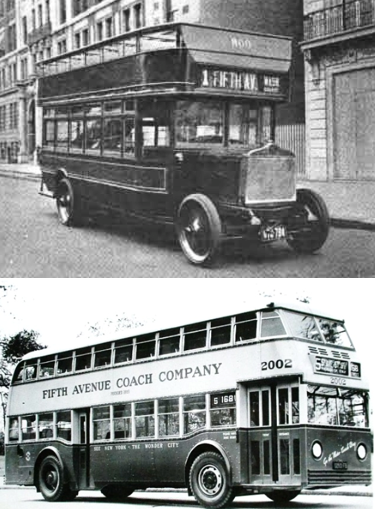
White elaborated on the advantages of the older buses:

* * *
Cinderella Story
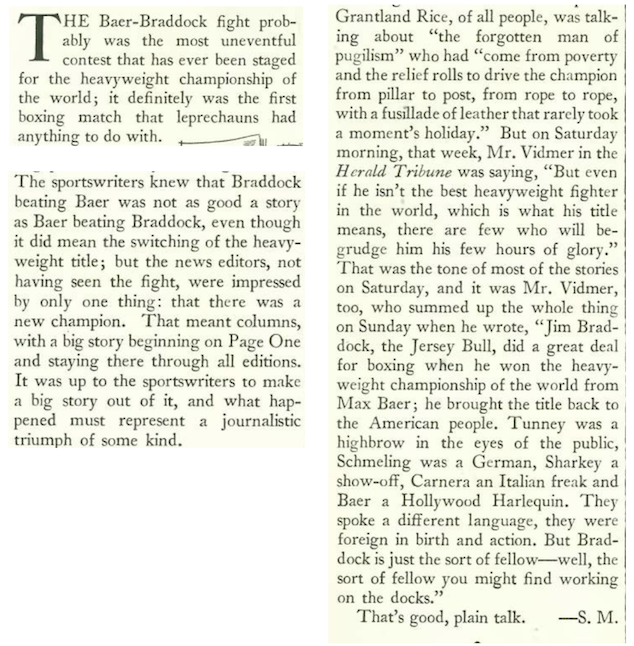
Challenger James J. Braddock achieved one of boxing’s greatest upsets by defeating the heavily favored (and reigning champ) Max Baer. For this feat he was given the nickname “Cinderella Man” by journalist Damon Runyon. The writer of the “Wayward Press” (byline “S.M.”) seemed less impressed, and mocked the national media for their sudden pivot on the bout’s unlikely outcome.

* * *
Seemed Like a Nice Guy
Henry Pringle penned the first part of a three-part profile of Supreme Court Chief Justice Charles Evans Hughes (1862–1948), who was also a former New York governor and U.S. secretary of state. William Cotton rendered a rather severe-looking Hughes in this caricature for the profile…
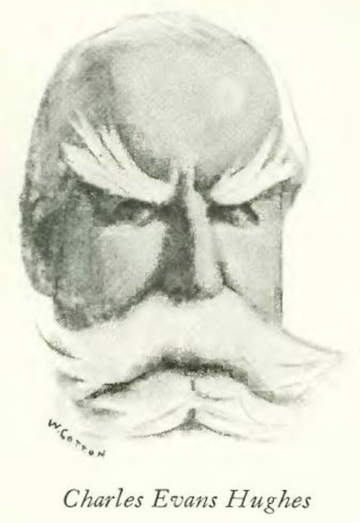
…although in reality he tended to look more like this…

* * *
From Our Advertisers
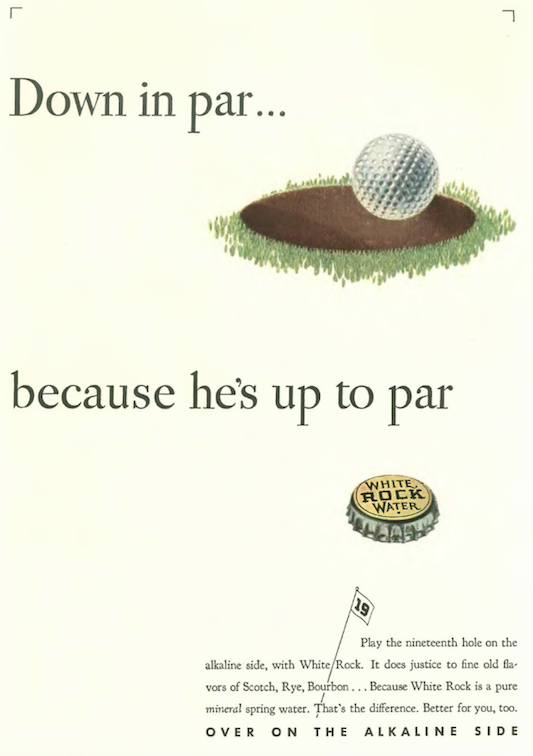
We begin with an advertisement that goes down easy, with its minimal style…
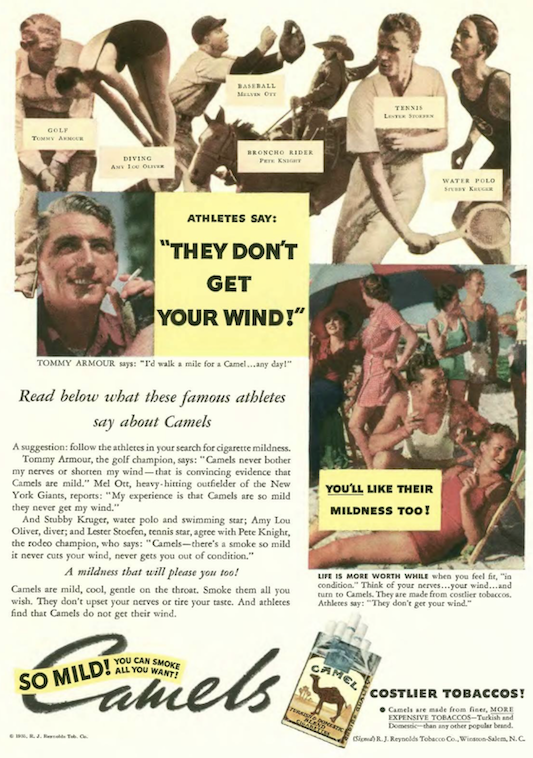
…by contrast, a busy Camel advertisement…R.J. Reynolds alternated full-page ads featuring society women with these health-themed spots that linked smoking with athletic prowess…
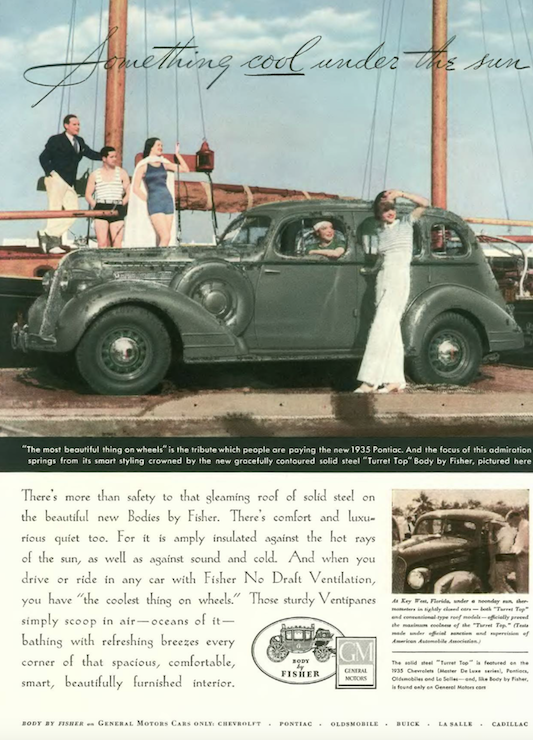
…this advertisement by Fisher claimed the 1935 Pontiac was “The most beautiful thing on wheels,” however here it looks perfectly ancient…
…as does this Nash on the inside back cover…

…the back cover was claimed by Highland Queen, a blend of some very fine distilleries…

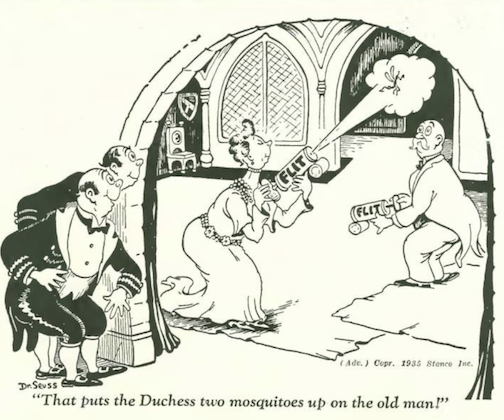
…Theodore Seuss Geisel continued his ongoing saga against the mighty mosquito…
…and we have this back of the book ad for Webster cigars, who enlisted the talents of Peter Wells…
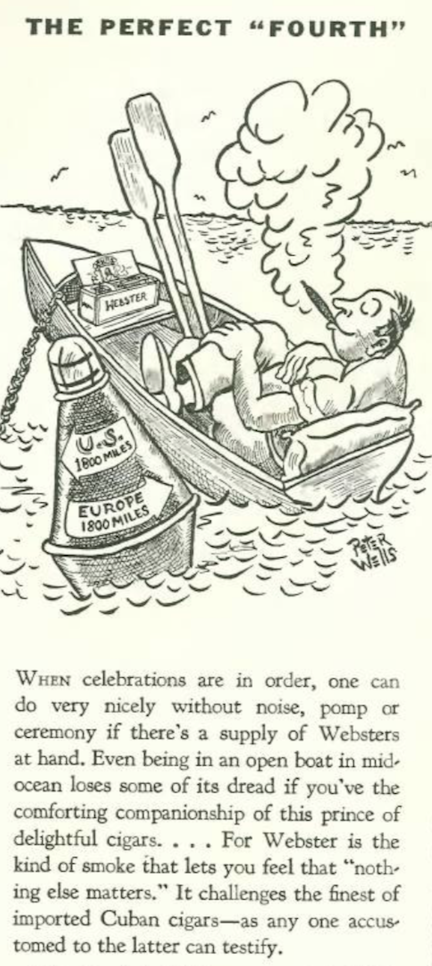
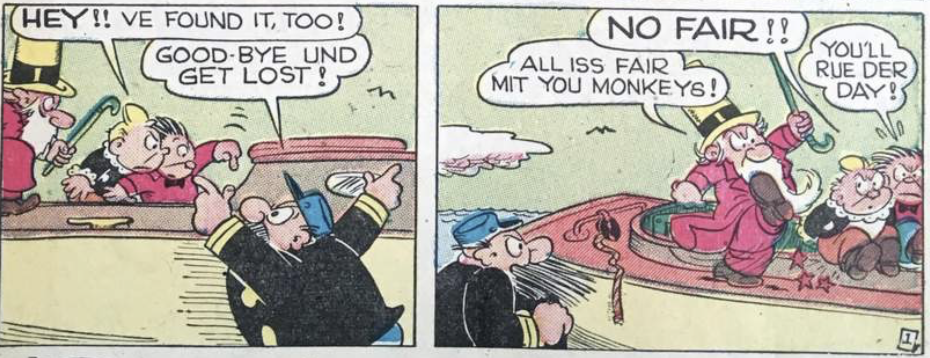
…Wells (1912–1995) was also a children’s book writer, most famous for contributing drawings to the Katzenjammer Kids comic strip …
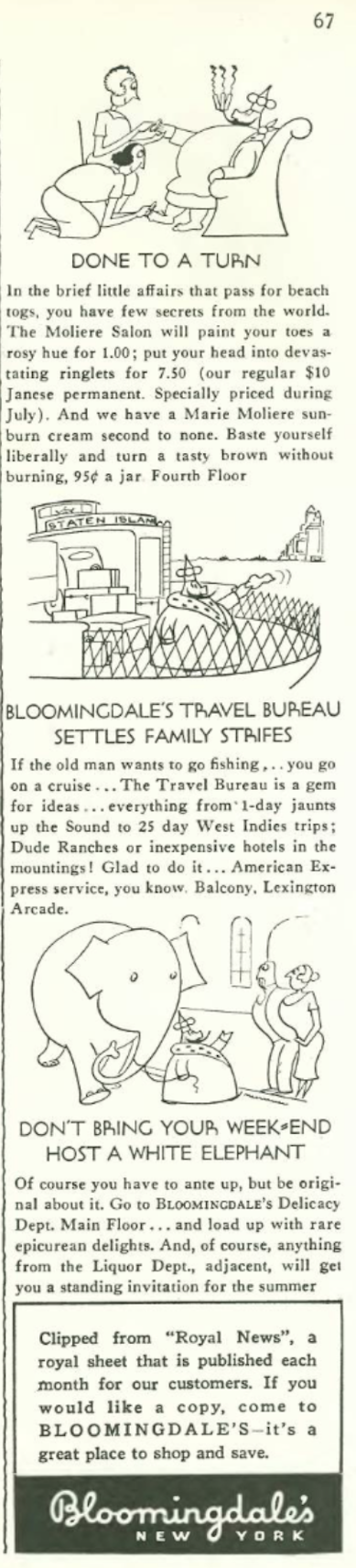
…and of course we are all familiar with Otto Soglow, who sold his beloved Little King to Hearst (and made a pile) but was still able to feature his diminutive potentate in the The New Yorker in a series of ads for Bloomingdales…
…which brings us to our cartoonists, and a familiar torment for our beloved James Thurber…

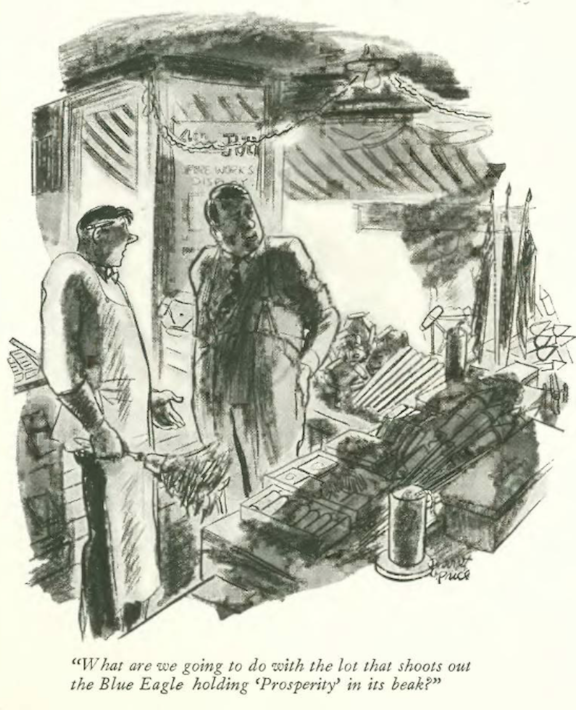
…Independence Day offered a marketing challenge to these shopkeepers, per Garrett Price…
…Peter Arno was at his best, in his element…
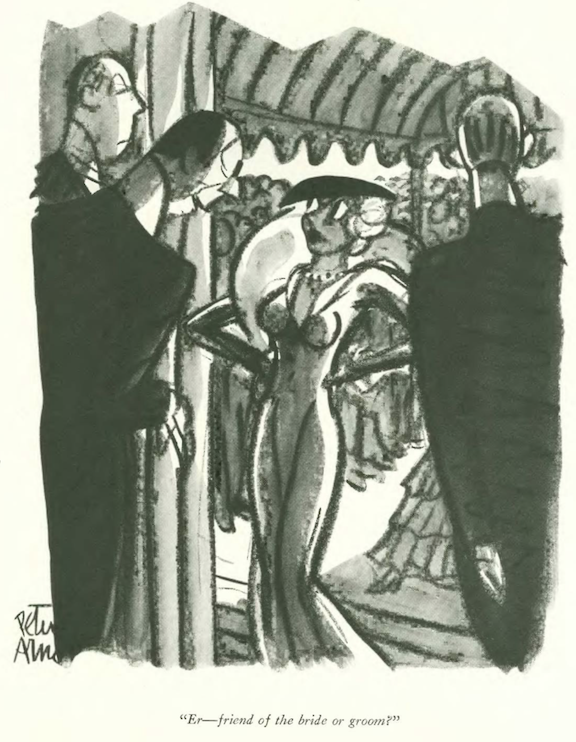
…Charles Addams explored the unnatural, which would become his calling card…

…Robert Day offered a new twist to the tonsorial arts…

…William Steig gave examples of some budding “tough guys”…

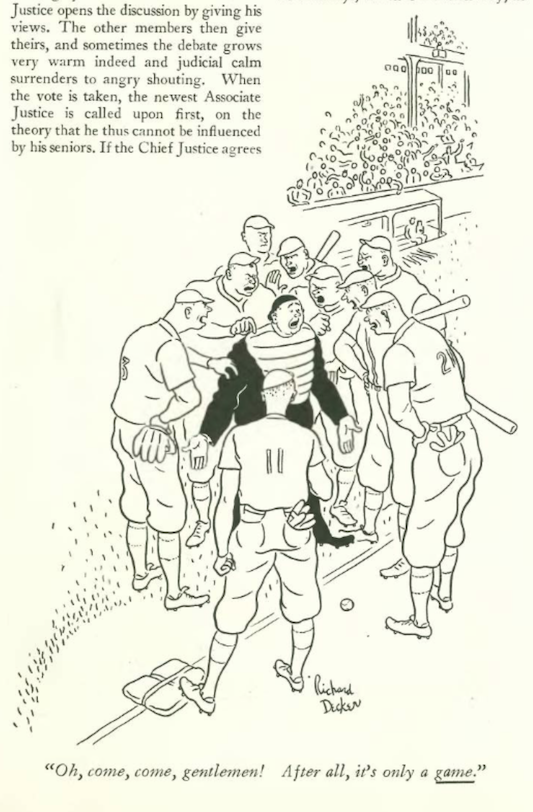
…a rare baseball-themed cartoon from Richard Decker (editor Harold Ross was not a baseball fan)…
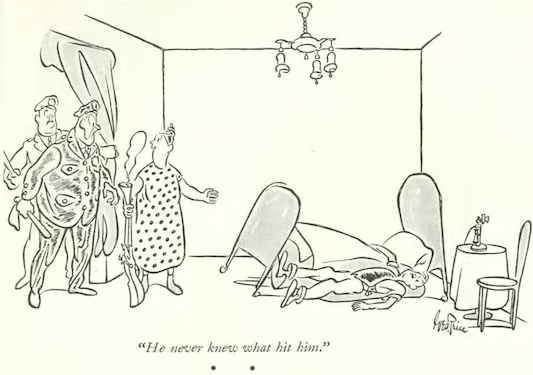
…from George Price, what appears to be the end of his “floating man” series, which began in September 1934…
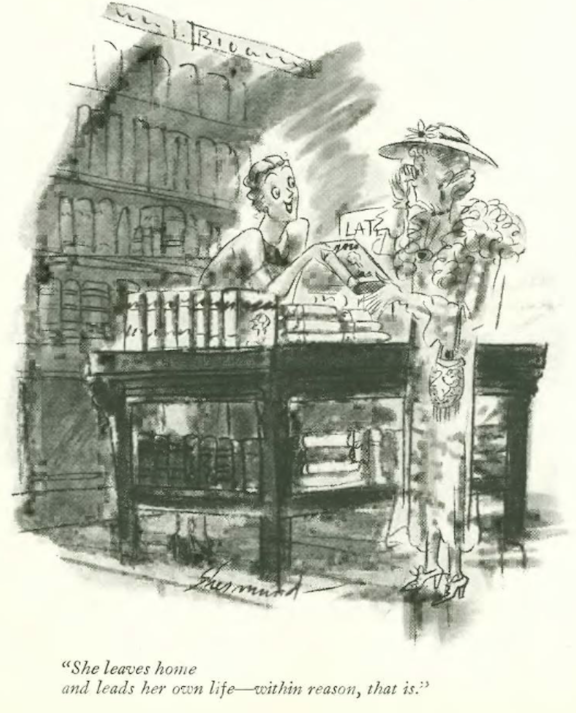
…and we close with one my favorite cartoonists, Barbara Shermund, here at the bookstore…
…and on vacation…

Next Time: Independence Day 1935…
 A New Yorker State of Mind