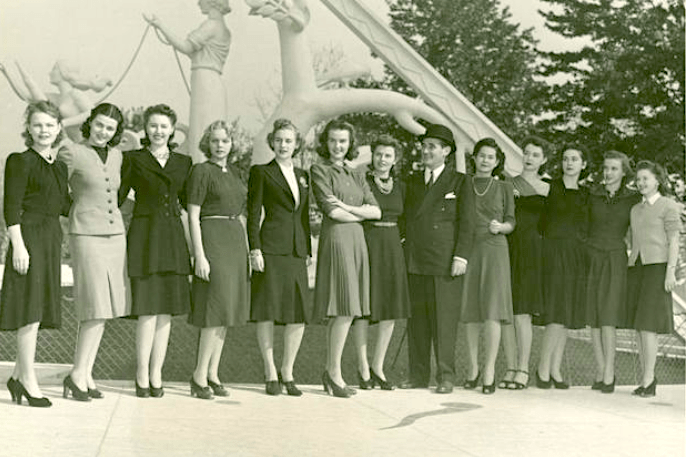
Model Citizens

Above: Modeling agency founder John Robert Powers poses with participants of a fashion queen contest at the 1939 New York World's Fair. (NYPL)

John Robert Powers was a household name in the 1930s, founder of one of the world’s first modeling agencies—he supplied countless advertisers with mostly female models, some moving on to Hollywood careers.

April 21, 1934 cover by Abner Dean.

Writing for “A Reporter at Large” under the title “Perfect 36,” frequent New Yorker short story contributor Nancy Hale (1908 –1988) looked into the mysteries behind the fabled “John Powers Book” and its collection of sophisticated models.

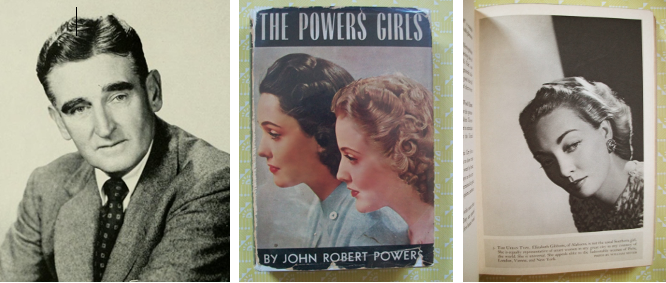
TYPING BOOK…John Robert Powers (1892–1977) wrote a bestselling 1941 book, The Powers Girls, that told “the story of models and modeling and the natural steps by which attractive girls are created,” organizing various models by type; at right, a page from the book featuring Elizabeth ‘Liz’ Gibbons—despite her Alabama roots, she was described by Powers as being “The Urban Type.” (Wikipedia/lastyeargirl.blogspot.com)

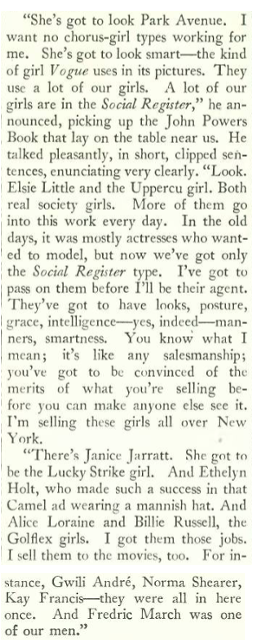
Hale was given a tour by a company representative who described the types of women the Powers company represented, noting the successes of women who landed in major cigarette ads or went on to become Hollywood stars:
SMOKE AND MIRRORS…Clockwise, from top left: Powers model Janice Jarratt (in a 1934 publicity photo from her only film, Kid Millions), who for a time was known as the “Lucky Strike Girl” as well as the “most photographed woman in the world”; Jarratt offering a Lucky to a nervous young man in a 1935 ad; Powers model Ethelyn Holt in a publicity photo for the Billy Rose Theatre; Holt in a 1933 ad for Camel cigarettes. (MGM/NPR/NYPL/propadv.com)

A number of Hollywood stars got their start or were discovered through their work with Powers, who himself was a sometime actor and the subject of a 1943 musical comedy, The Powers Girl.

POWER STARS…Former Powers models turned Hollywood stars included, from left, Norma Shearer, Frederic March and Kay Francis. (TCM/TMDB)

A note about the author, Nancy Hale: A brilliant short story writer, Hale published her first short story in The New Yorker in 1929 (when she was just 21) and would publish more than eighty stories in the magazine through 1969—she holds the record for the most stories in the magazine in a single year, publishing twelve between July 1954 and July 1955. New Yorker editor William Maxwell regarded Hale’s writing technique as “flawless.”

PROLIFIC…Nancy Hale published more than a hundred short stories in her lifetime, ten of which were recipients of an O. Henry Prize. Writer Joanne O’Leary (London Review of Books) notes that Hale also worked for Vogue (where she “pinch-hit as a model”) and became the first female news reporter at the New York Times. Above left, Hale in an undated photo; at right, Hale photographed in 1936 for Harper’s Bazaar. (Nancy Hale Papers, Sophia Smith Collection, Smith College)

* * *

Tat For Tat

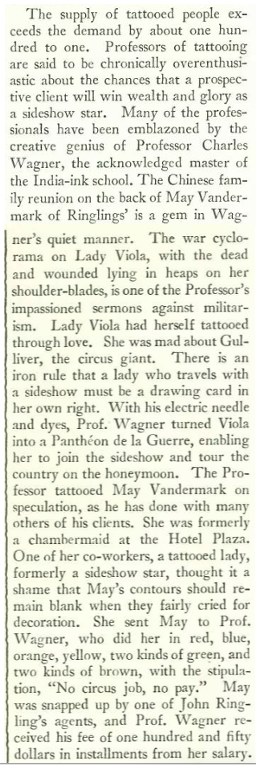
Alva Johnston explored the world of “tattooed people” in his second installment of a three-part profile series titled “Sideshow People”…
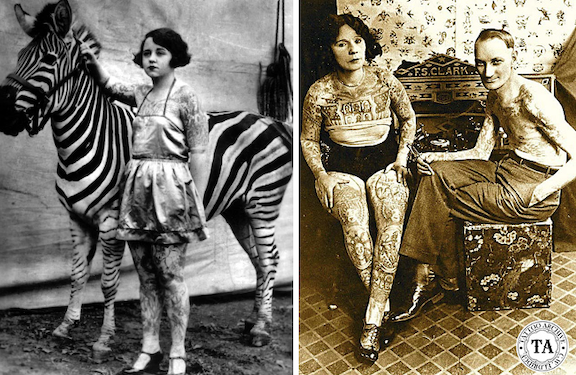
MARKED FOR LIFE…Alva Johnston noted such celebrated tattooed ladies as Mae Vandermark (left, circa 1920s), and Lady Viola, pictured at right with tattoo artist Fred Clark, 1930s. (Vintage Everyday)
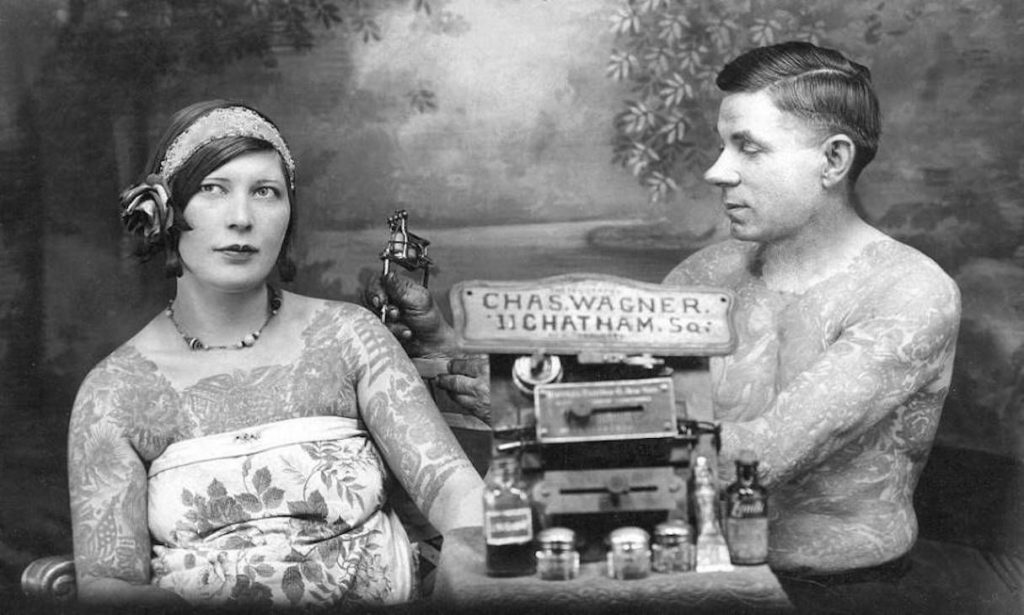
INKSLINGER…Charlie Wagner, a tattoo artist who lived from 1875 to 1953, is considered one of the kings of American tattooing. Practicing his art in New York’s Bowery, he not only developed an influential art style; he invented new machinery that helped spread the art of modern tattooing. (nyctattooshop.com)

 * * *

Bloody Satisfying

Film critic John Mosher declared David O. Selznick’s production Viva Villa! to be “thoroughly satisfying”—with a screenplay by Ben Hecht and starring actor Wallace Beery as Mexican revolutionary Pancho Villa, the film was considered violent and bloody by 1934 standards.
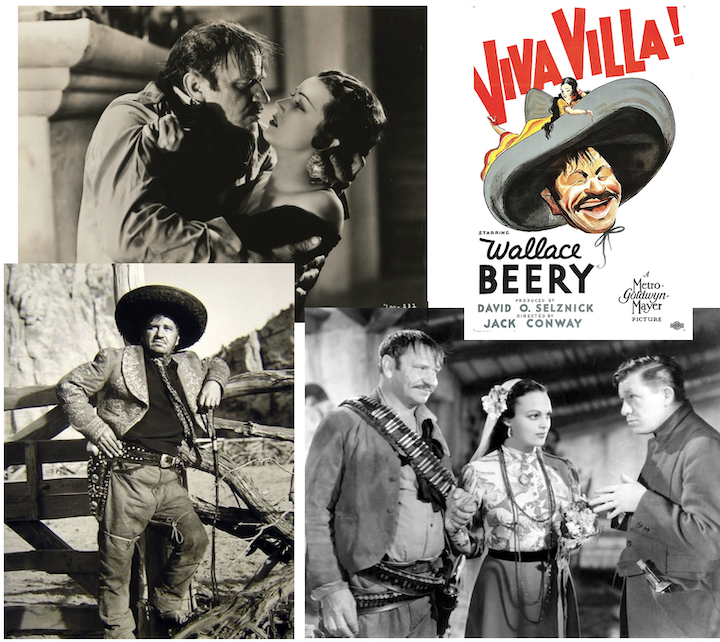
REVOLUTIONARY…Clockwise, from top left, Pancho Villa (Wallace Beery) finds himself attracted to a benefactor’s sister (Fay Wray); MGM film poster; Beery with Katherine DeMille (who was Cecil B. DeMille’s adopted daughter) and Stuart Erwin; Beery striking a pose on the set of Viva Villa! (IMDB)

Mosher found some of the film’s violence to be startling. Being one the last Pre-Code films, censors would start clamping down on such scenes in the coming years.

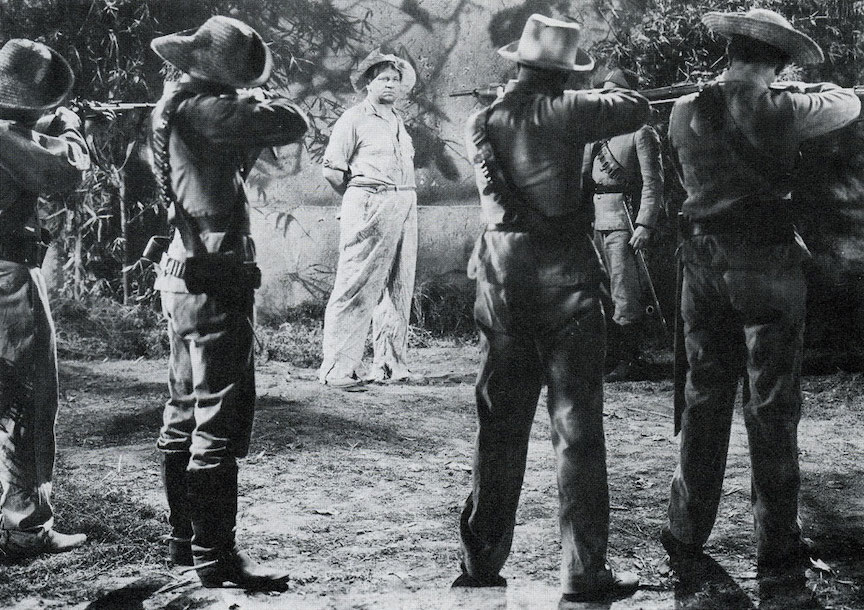
MAKE SURE YOU GET MY GOOD SIDE…Pancho Villa (Wallace Beery) faces a firing squad before receiving a last-minute reprieve in Viva Villa! (IMDB)

 * * *

From Our Advertisers

MGM took out a full-page ad to tout the success of Viva Villa and other MGM “hits”…
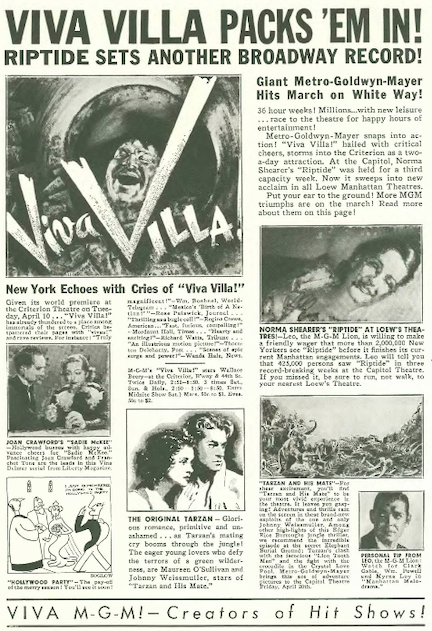
…note the bottom left hand corner of the MGM ad—a cartoon by Otto Soglow promoting the upcoming film Hollywood Party, a star-studded comedy musical featuring Laurel & Hardy, Jimmy Durante, Lupe Velez and Mickey Mouse

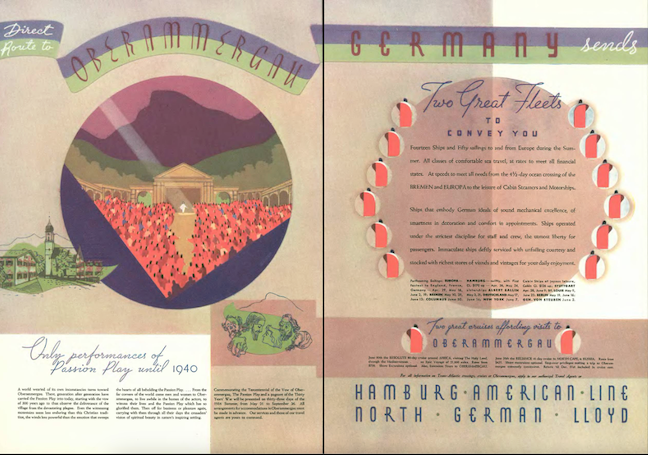
…those looking for a different kind of entertainment could have been enticed by this lavish center-page spread from German ocean liner companies…they were inviting Americans to Oberammergau, Germany to witness the “only performances of the Passion Play until 1940″…the play was usually performed every ten years (years ending in the digit zero) but in 1934 a special performance was supported by the Nazi Party…incidentally, the 1940 play was cancelled due to World War II…
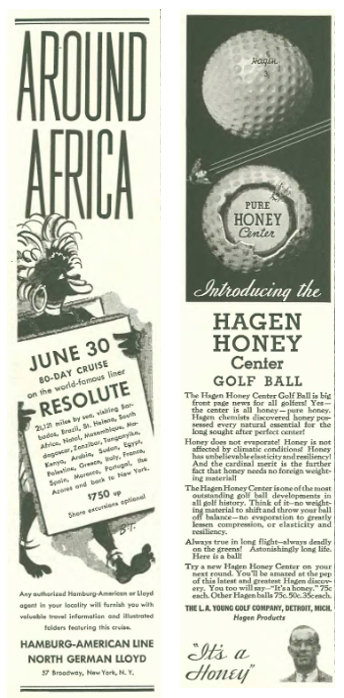
…the same German-American shipping companies also advertised an African cruise…with some racist imagery…
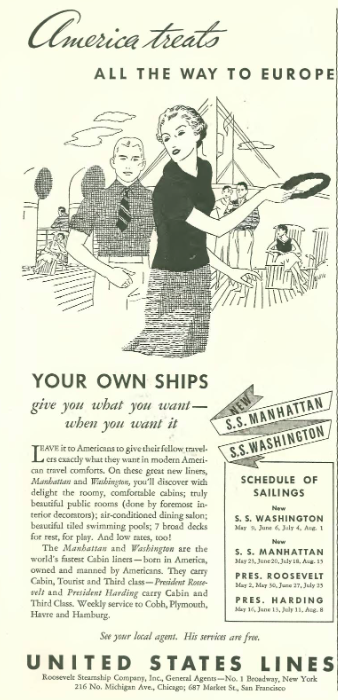
…perhaps you wanted to go to Europe on a ship with fewer Nazis on board…in that case you could grab a berth on a ship with the United States Lines, and hang out with these stiffs…
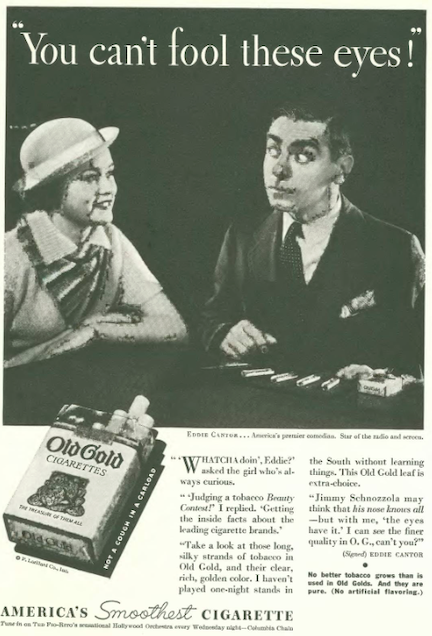
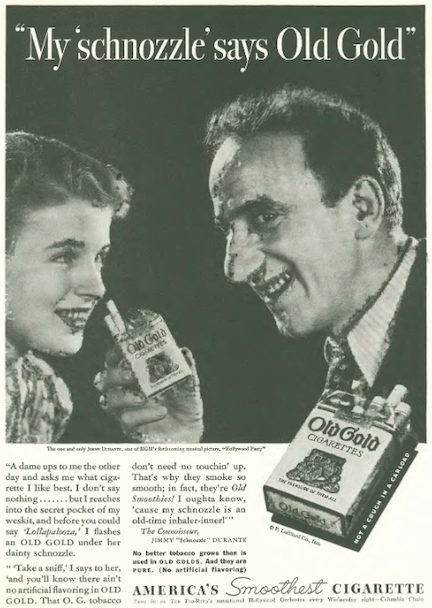
…the makers of Old Gold referenced a previous ad featuring Jimmy Durante with a new spot starring actor/comedian Eddie Cantor…both ads depicted impressionable young women admiring the smoking wisdom of older men…
…for reference, the creepy Durante ad…
…the famous “Call for Philip Morris” advertising campaign began during World War I, but in 1933 Johnny Roventini, a bellhop at the Hotel New Yorker, would become the living symbol of the cigarette brand…

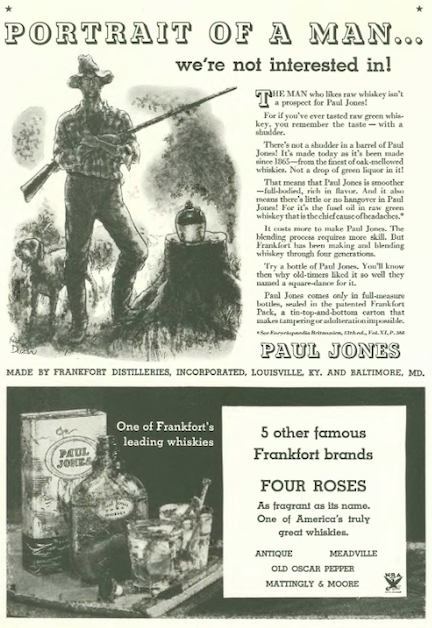
…by contrast, Frankfort Distilleries showed us an image of man who would not represent them, namely Jed Clampett…
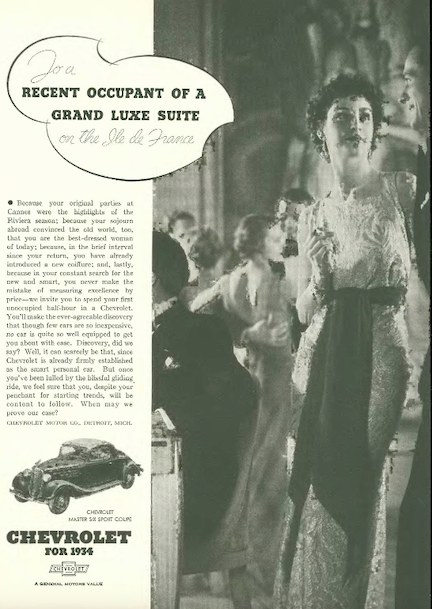
…Chevrolet continued its rebranding campaign, positioning itself as an affordable choice that was nevertheless favored by the posh set…
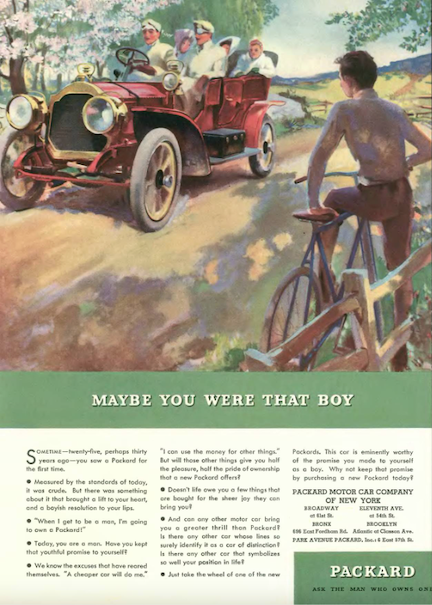
…who would rather be driving a Packard, here appealing to the nostalgic sensibilities of old-timers who had the means to afford one…
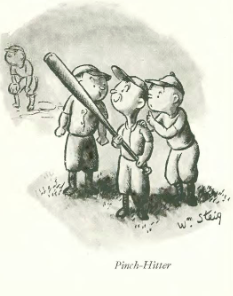
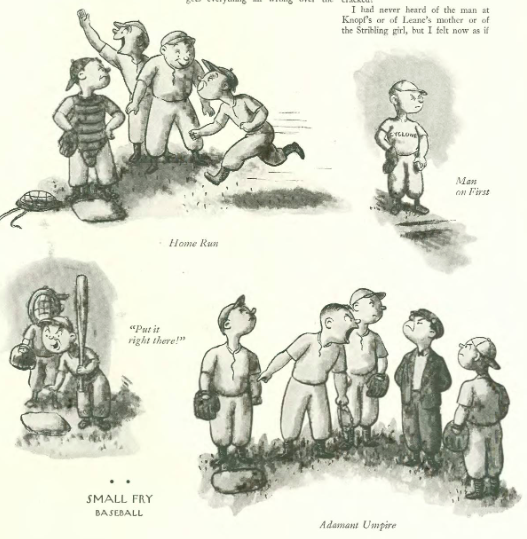
…on to our cartoons, and some “Small Fry” baseball from William Steig

…an unusual captioned cartoon (from George Price) featured in the opening “Goings On About Town” section…

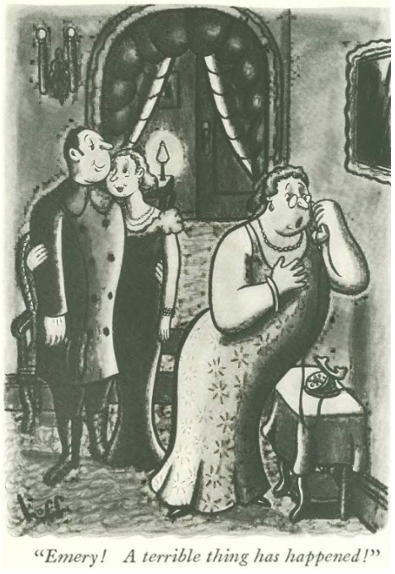
Syd Hoff gave us an alarmed matron confronting the unthinkable…a doorman as a son-in-law…
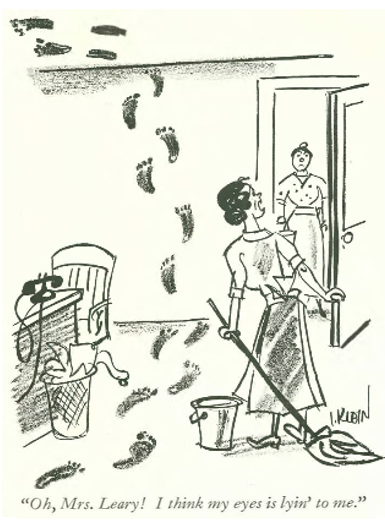
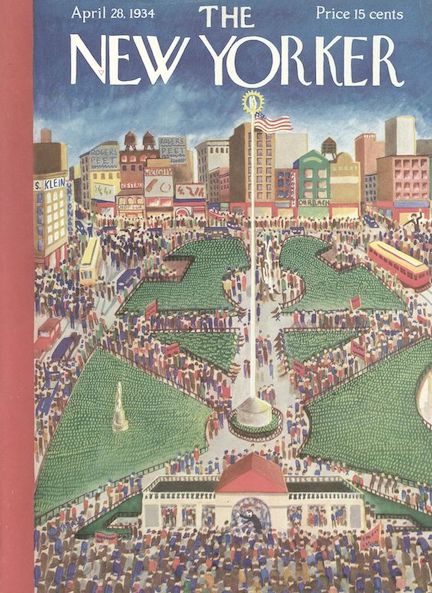
…we haven’t seen Isadore Klein’s work in awhile—understandable, as he was busy in his career as an animator––in 1934 he worked on films for Van Beuren Studios (Rainbow Parade Cartoons) and in 1936 he would move to Disney’s Silly Symphonies

Paul Manship’s Prometheus at Rockefeller Center is iconic today, but when it was installed in 1934 it puzzled more than a few onlookers, including Robert Day

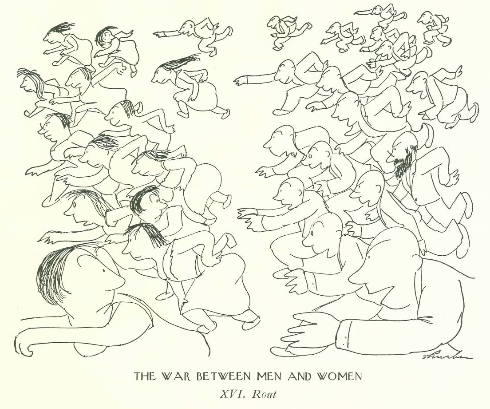
…and we close with James Thurber, and a turn of events in his “war”…
Next Time: Lord of the Apes…
Beauty and the Beast

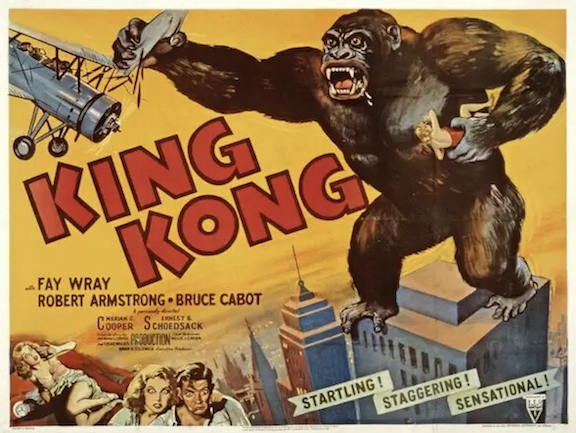
One of Hollywood’s most famous motion pictures was a story about a giant ape that (literally) falls for a beautiful woman.

March 11, 1933 cover by Rea Irvin.

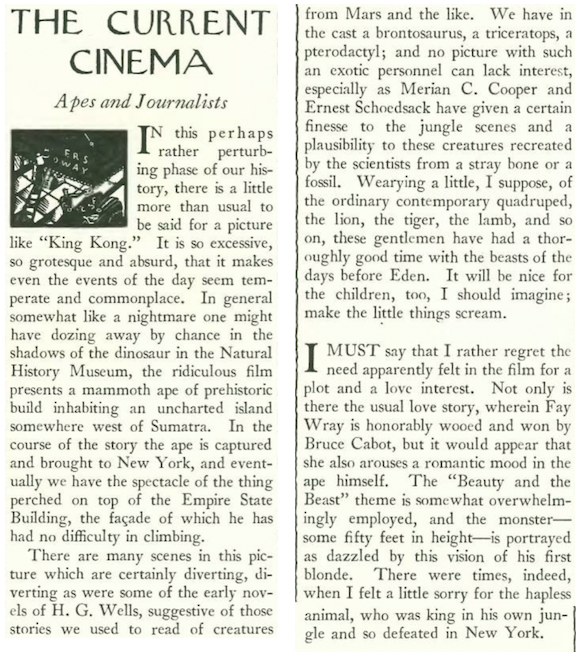
New Yorker film critic John Mosher found the premise of King Kong ridiculous, but he also found many of its scenes diverting, especially those featuring Kong and a number of prehistoric creatures (created by Marcel Delgado), miniature models brought to life through stop-motion animation techniques pioneered by Willis O’Brien and his assistant, Buzz Gibson. Mosher’s review:

THE TRIALS OF GIANT APEHOOD…King Kong battled nature and man in the eponymous 1933 film that featured a silly love story between actors Bruce Cabot and Fay Wray (lower right, with Robert Armstrong); this being a pre-Code film, Wray had trouble keeping on her blouse, although a scene depicting Kong undressing her and sniffing his fingers was cut, as were some of the more gruesome scenes featuring Kong stomping and chomping his way through Manhattan. (IMDB)

By today’s standards the film’s special effects are quite dated, but they astonished audiences in 1933 and again in a 1952 re-release.

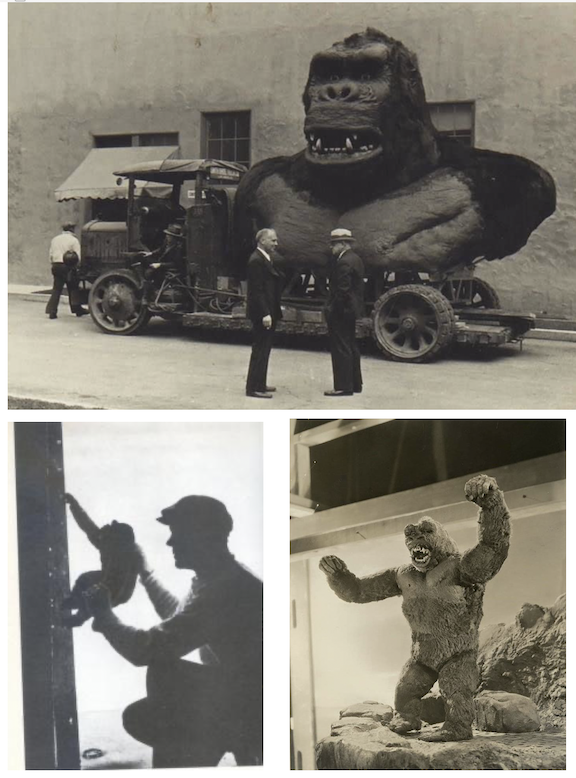
NEW YORK OR BUST…A huge bust of King Kong’s head and torso was fashioned from wood, cloth, rubber and bearskin by Marcel Delgado, Buzz Gibson and Fred Reese. Three operators inside the bust used metal levers, hinges, and an air compressor to manipulate the mouth and facial expressions. In addition, two versions of the ape’s right arm were constructed of steel, rubber and bearskin — one was non-articulated, mounted on a crane, and the other had articulated fingers that allowed Kong to grasp Fay Wray in close-ups (below). A separate non-articulated leg was also mounted on a crane for scenes depicting Kong stomping on villagers. (reddit.com/Pinterest)

 *  *  *

Oh Baby

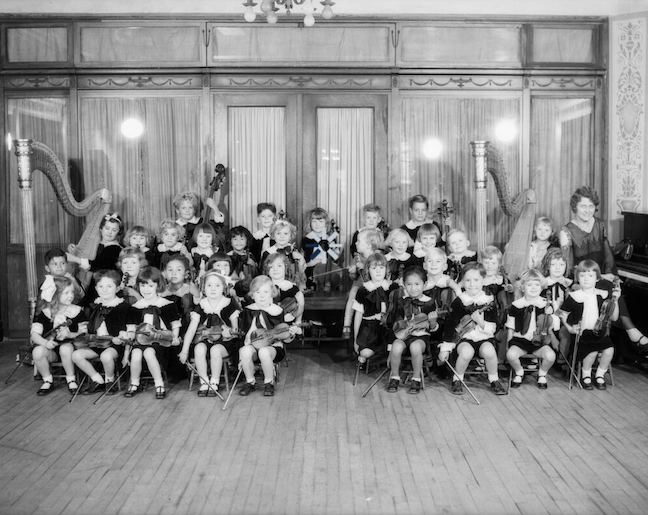
Before child labor laws were finally enforced in the late 1930s, children were routinely exploited for profit, most famously the Dionne quintuplets by Dr. Allan Roy Defoe, not to mention the many child stars fed into the Hollywood meat grinder. For a public seeking novelty as a distraction from the Depression, there were also numerous “baby orchestras” organized by one Karl Moldrem. “The Talk of the Town” commented:

NURSERY SONGS…One of Karl Moldrem’s baby orchestras assembled in Southern California, 1931. (digitallibrary.usc.edu)

 *  *  *

Edible Art

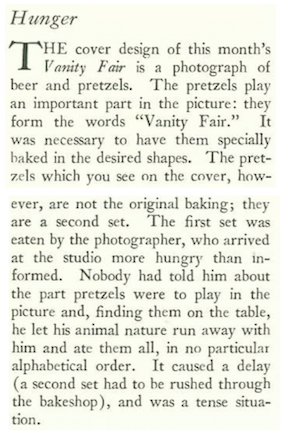
“The Talk of the Town” has always been a source for light anecdotes, including this brief account of a hungry Vanity Fair photographer:

MMM, PRETZEL ART…Vanity Fair’s edible cover, March 1933. (Vanity Fair Archive)

 *  *  *

Lend Me An Ear

Alexander Woollcott led his “Shouts and Murmurs” column with an account from a recent benefit performance, during which his friend Noël Coward decided to strike up a conversation regarding the survival of the stage in an era of talking films:

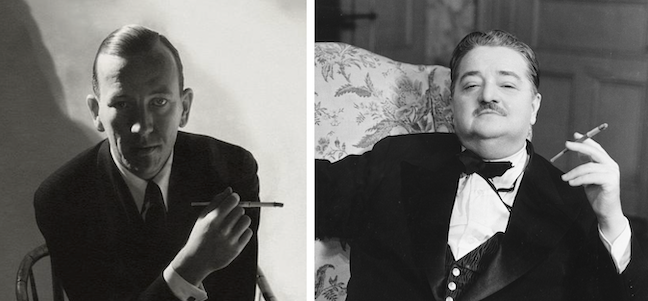
TALKING TALKIES… Noël Coward (left) voiced his concerns about the future of stage entertainment with Alexander Woollcott during a benefit performance likely held on behalf of the theatrical world. (npg.org)

 *  *  *

From Our Advertisers

Ah, we begin with signs of spring, glimpsed beyond the gleaming cowl of a 12-cylinder Lincoln…

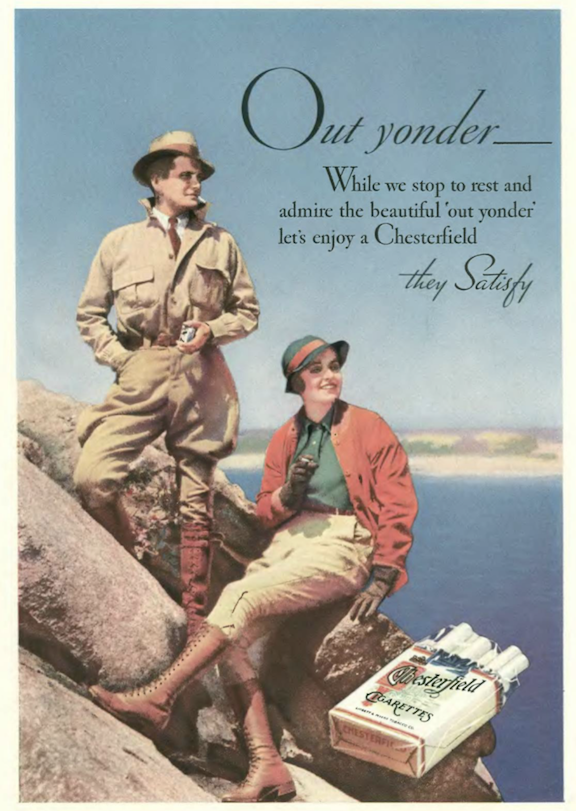
…and catch a whiff of that springtime breeze, savored between puffs of your Chesterfield…

…this guy has some spring in his step thanks to the sparkling water he just splashed into his bootleg gin…

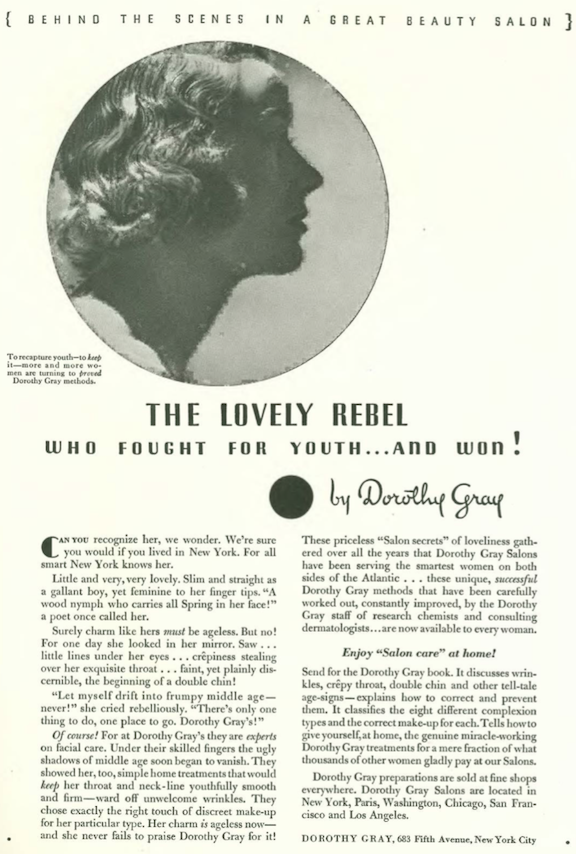
…the folks at Dorothy Gray presented a nameless woman (“slim and straight as a gallant boy, yet feminine to her finger tips”) who was ready to greet spring until she saw those “little lines under her eyes”…the horror indeed…

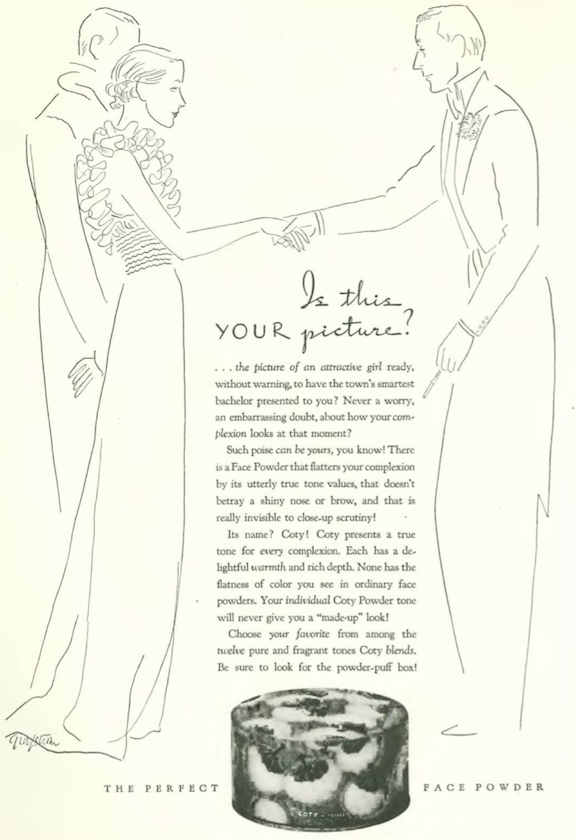
…Coty again presented an attenuated trio in a sexless courtship dance, oozing with anglophilic longing…

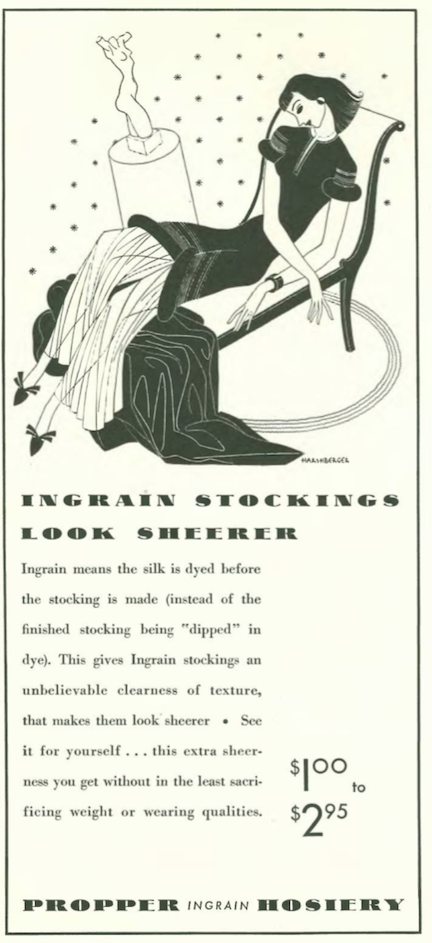
…I include this ad solely for the terrific illustration by Mac Harshberger, famed for his elegant, simplified line…

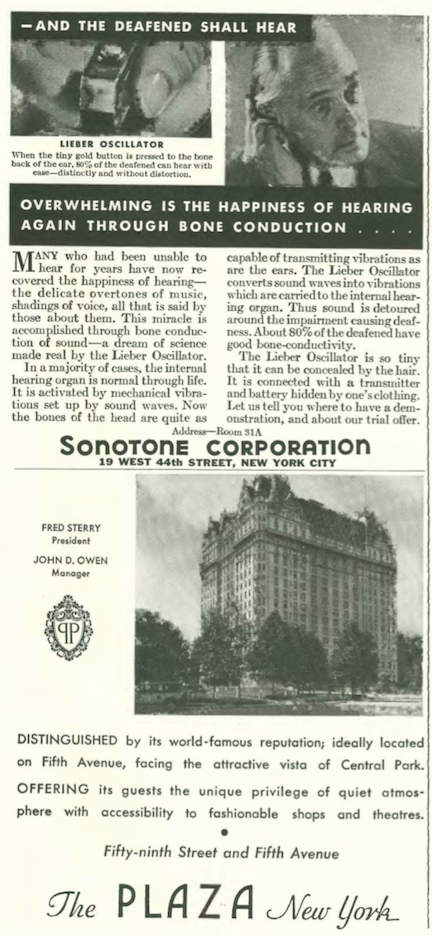
…and a couple of back pagers…thanks to Sonotone, the deafened shall not only hear but will also be stricken by a sudden voiding of the bowels…and below, a surprising ad from the Plaza, one place I never thought would need to advertise…but those were tough times…

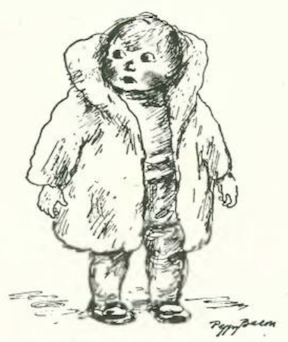
…and on to our cartoons, and this spot drawing from Peggy Bacon, whom we haven’t seen in awhile…

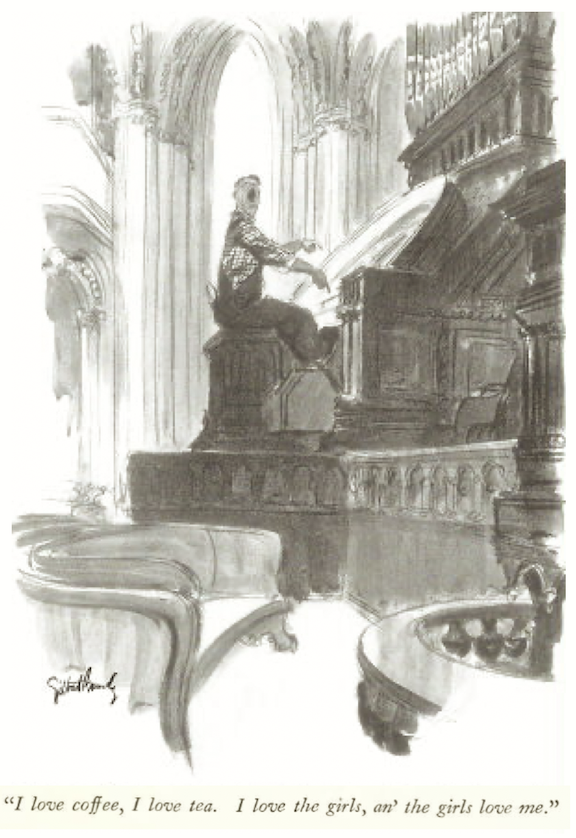
Gilbert Bundy took us to a sanctuary of song…

…another day with our fellow citizens, and Gluyas Williams

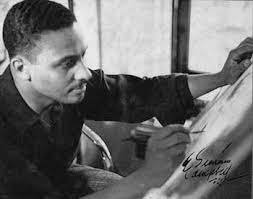
…one from E. Simms Campbell

…who was the first Black cartoonist published in nationally distributed, “slick” magazines…

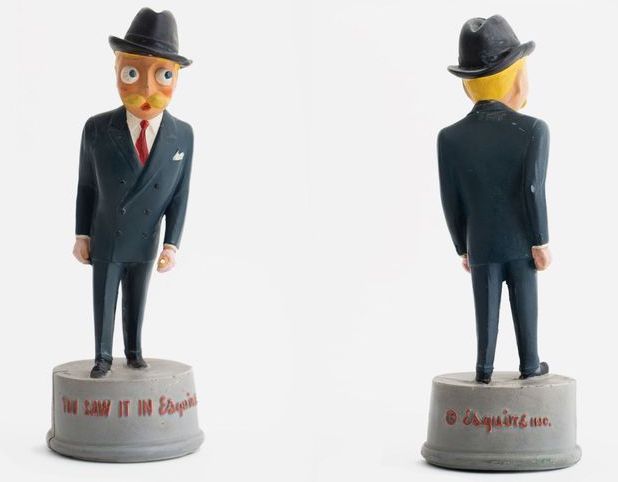
…and also the creator of Esky, the pop-eyed mascot of Esquire magazine…

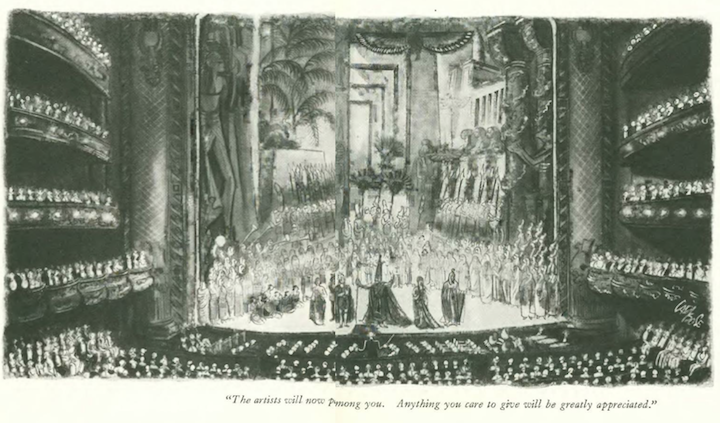
Carl Rose gave us a night at the opera in this two-page cartoon with the Depression-inspired caption: The artists will now pass among you. Anything you can give will be greatly appreciated….

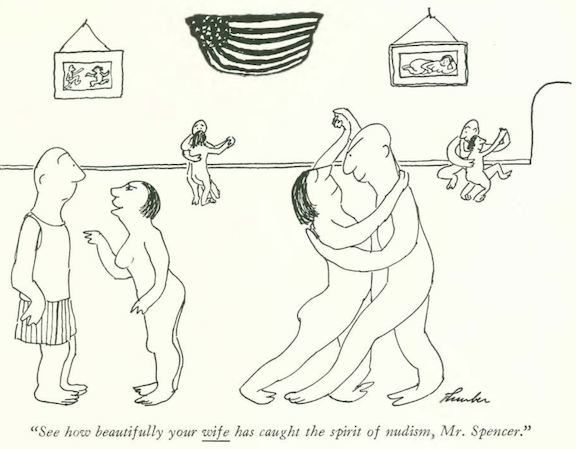
…and James Thurber returned to the nudist colony for another look at the age-old struggle between the sexes…

Next Time: Not Even Funny…