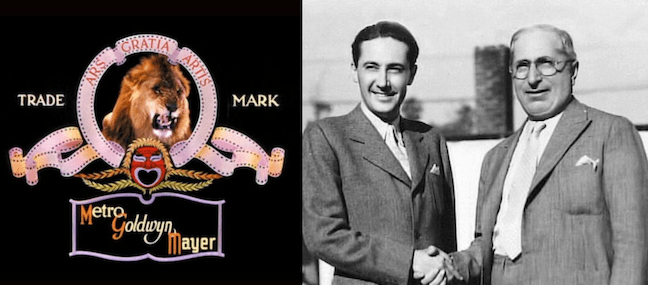
Above: Although MGM head Louis B. Mayer (right) had a strong business sense, he needed Irving Thalberg's keen ability to combine artistic quality with commercial success. During his twelve years at MGM, Thalberg supervised the production of more than four hundred films. (artsfuse.org)
Born in a Ukrainian village in 1884, Louis B. Mayer grew up poor in Canada and dropped out of school at age twelve to support his family. Nearly three decades later he co-founded Metro-Goldwyn-Mayer, lured the “boy genius” Irving Thalberg from Universal, and went on to lead one Hollywood’s most prestigious filmmaking companies.
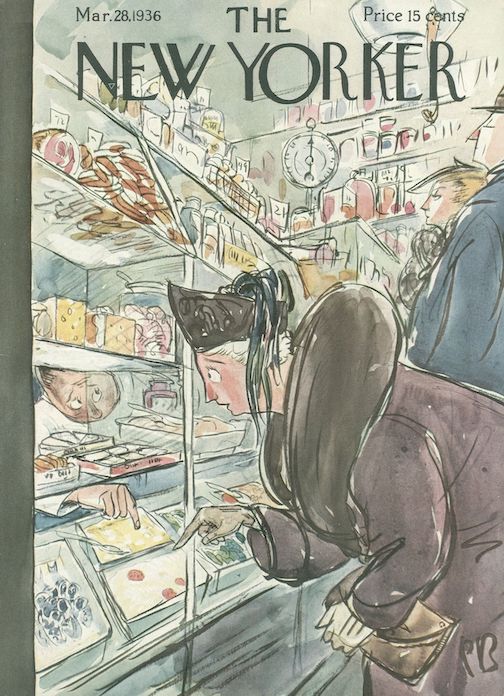
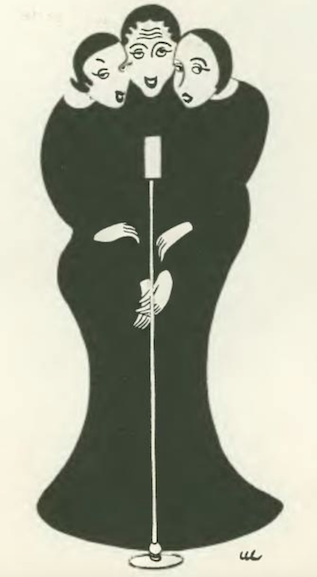
Pulitzer Prize-winning journalist Henry F. Pringle (1897–1958) looked into Mayer’s life in a two-part profile, leading with a look into the movie mogul’s ability to control his vast stable of stars (illustration by Hugo Gellert):

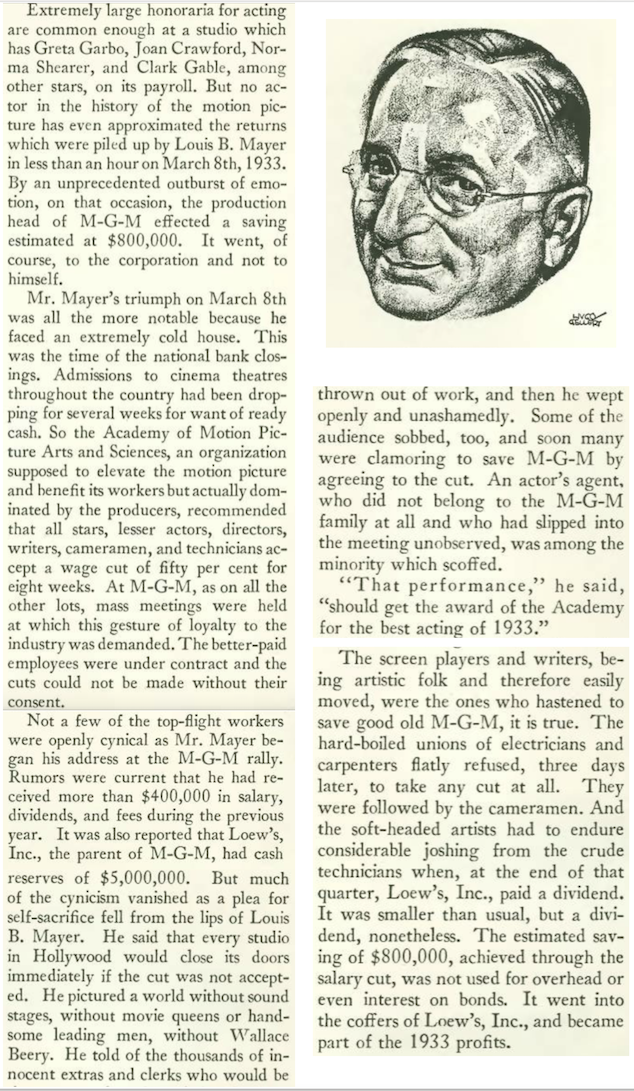
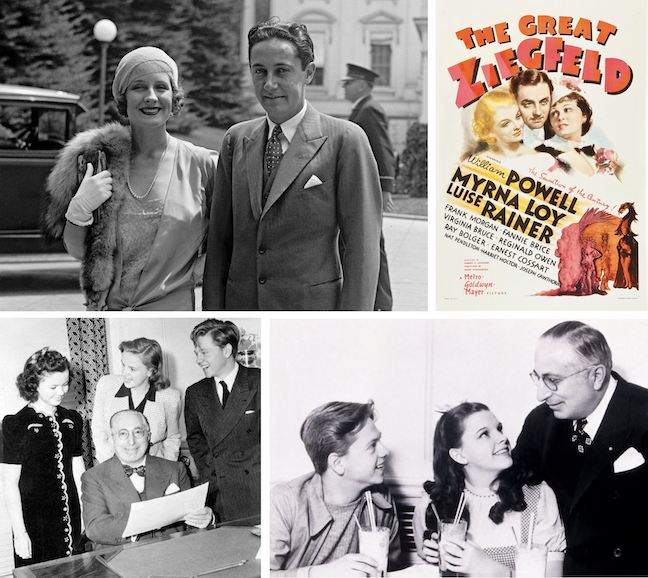
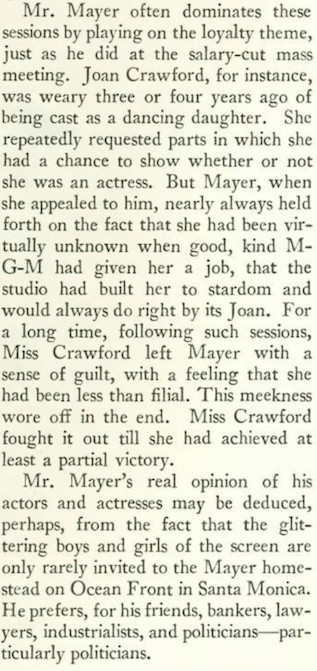
Mayer (1884–1957) is credited with helping to create the “star system” in Hollywood. “The idea of a star being born is bush-wah,” Mayer once said. “A star is made, created; carefully and cold-bloodedly built up from nothing, from nobody.” Mayer believed he “made” his stars, and therefore had the right to control their careers as well as their very lives. Pringle explained the predicament of actress Joan Crawford:
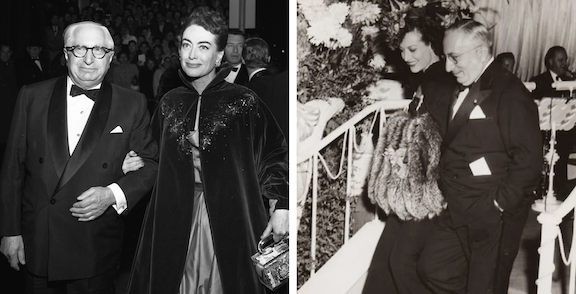
Many stars were less forgiving than Crawford regarding Mayer’s controlling behavior. Although many male actors saw him as a father figure, women often had a very different view. A young Elizabeth Taylor called him a “monster” for his attempts to oversee her life, while Judy Garland was forced to go on diets and take amphetamines and barbiturates to meet Mayer’s punishing work schedules. Many believe this led to Garland’s lifelong addiction issues.
* * *
Water Water Everywhere
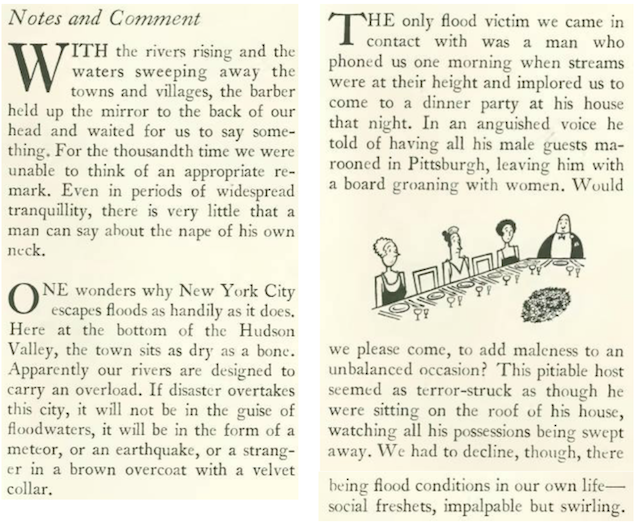
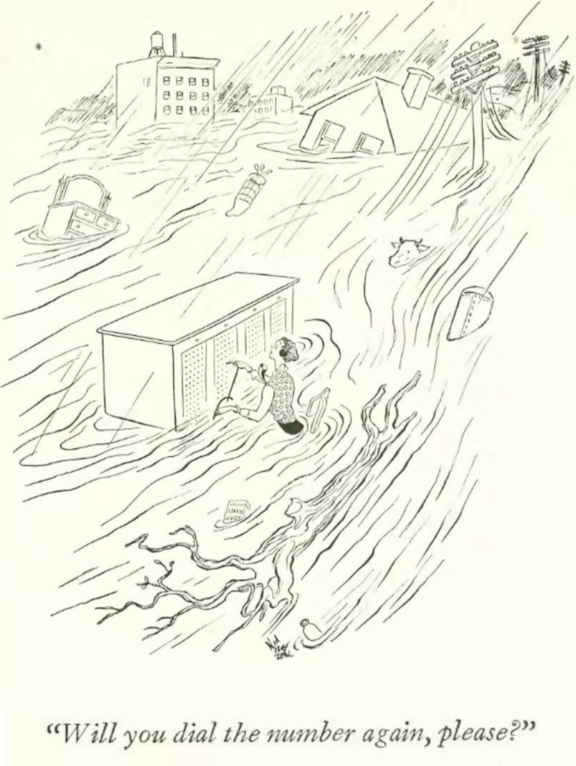
In his “Notes and Comment,” E.B. White was at a loss for words to describe the floods in the northeastern U.S. that followed a bitter winter. A combination of rain and the melting of heavy snowpack caused massive damage in the Connecticut and Merrimack River valleys as well as in the Pittsburgh area. In addition to approximately two hundred fatalities, hundreds of thousands were left homeless.

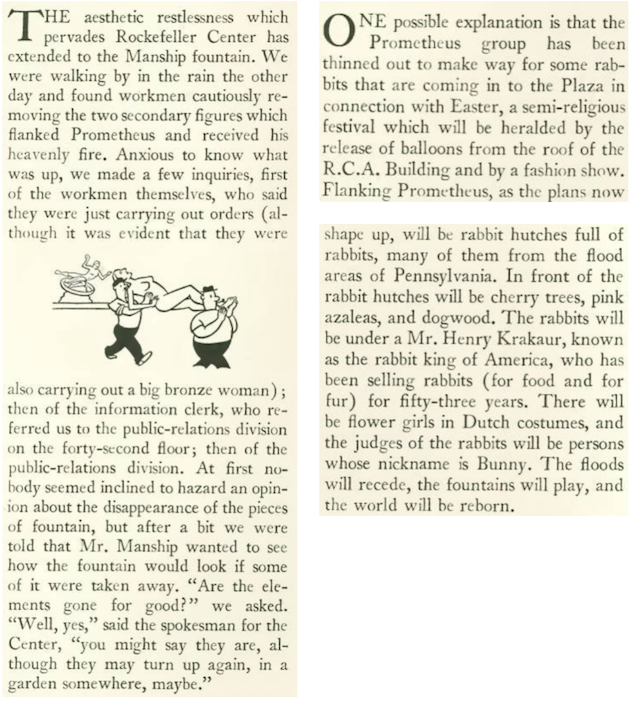
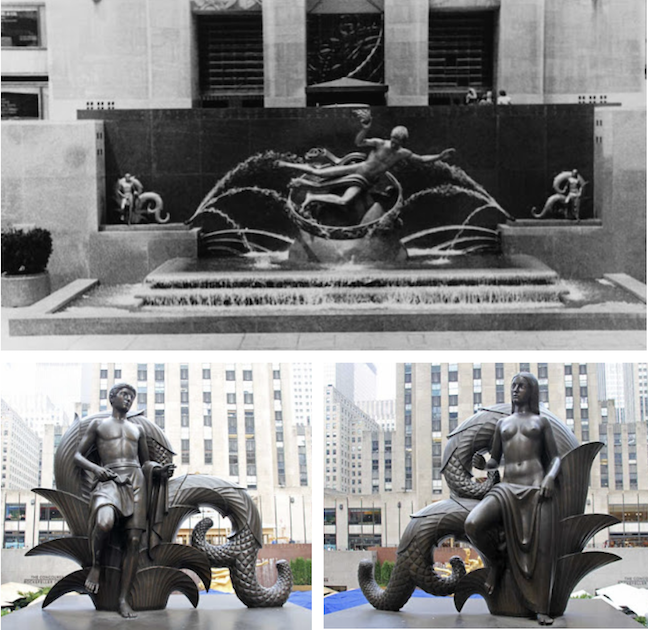
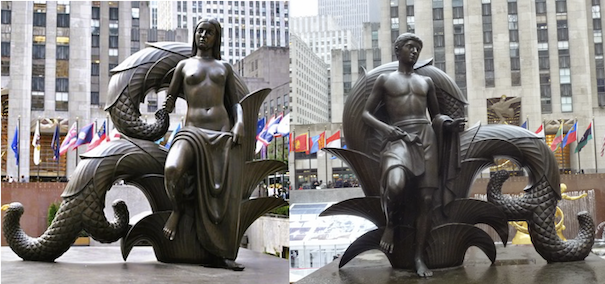
White’s “Notes” also included an update on the “aesthetic restlessness” at Rockefeller Center, where the statues Youth and Maiden were removed from the Paul Manship-designed Prometheus fountain. The artist decided the two bronze figures did not fit well in the fountain, so they were moved to the roof garden of the Palazzo d’Italia.
* * *
Pyramid Scheme
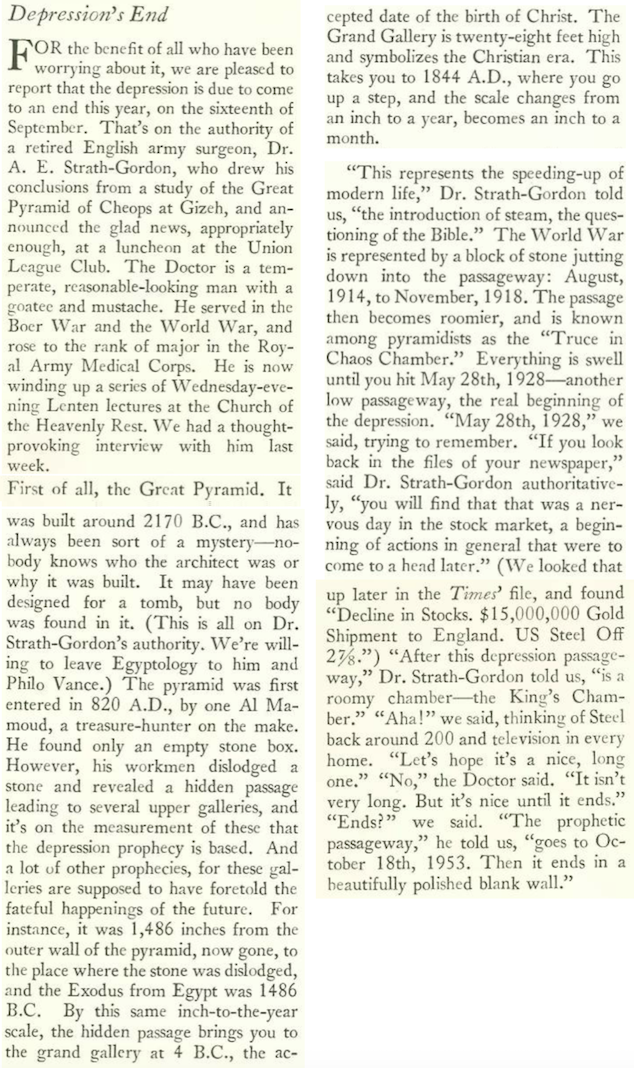
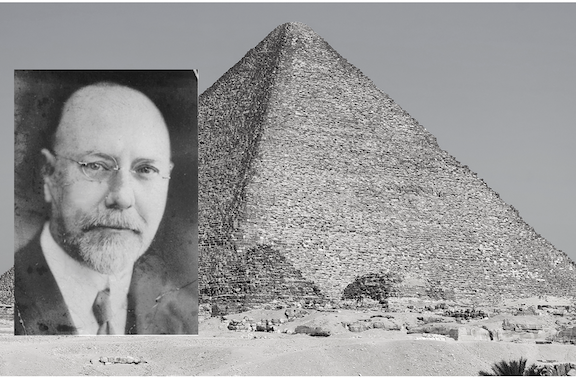
“The Talk of the Town” commented on some unusual research conducted by Dr. A.E. Strath-Gordon, in which he used measurements from the Great Pyramid to predict the end of the Depression. Excerpts:
* * *
Deeper South
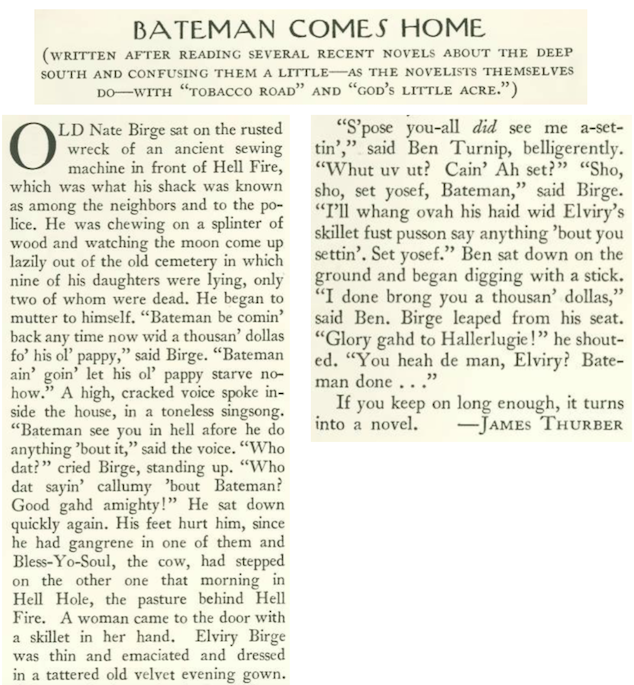
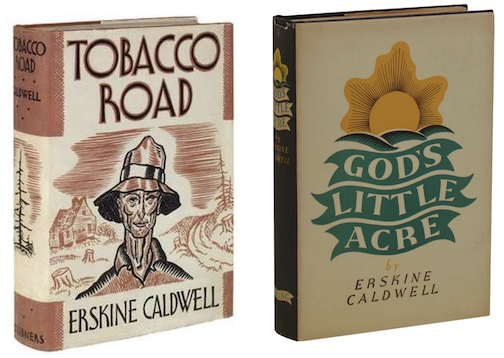
James Thurber had some fun with novels about the Deep South that sought to employ authentic dialogue—but not as successfully as novelist Erskine Caldwell. These excerpts are the first and last paragraphs from the piece.
* * *
An Introduction
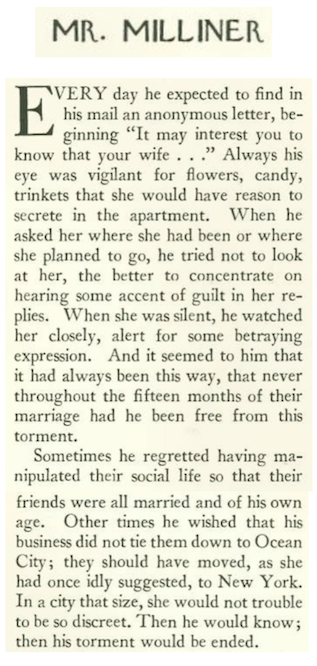
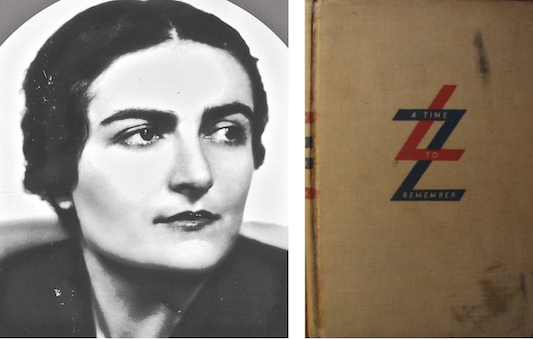
I didn’t know much about the novelist Leane Zugsmith until I read her short story in the March 28, 1936 edition of The New Yorker. During the 1930s she was prominent among writers who focused on the struggles of the working class during the Great Depression. “Mr. Milliner” was the eighth short story she published in the magazine, out of a total of fifteen from 1934 to 1949. Here are the opening lines:
* * *
Over There
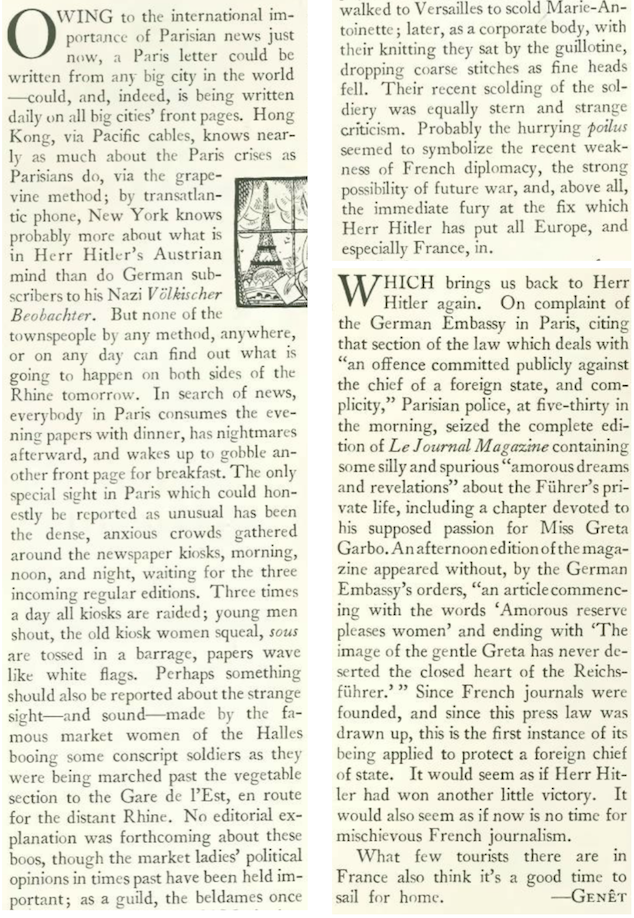
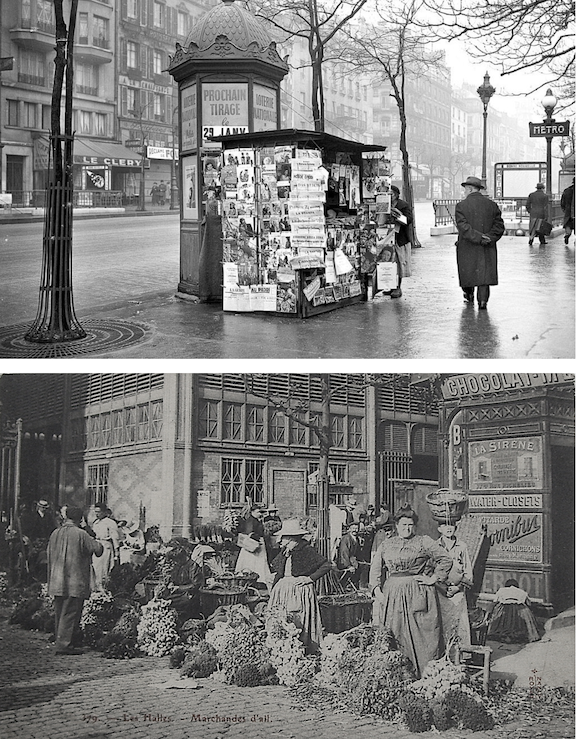
In her latest dispatch from Paris, Janet Flanner noted the growing anxiety among Parisians over Germany’s arms buildup and its re-occupation of the Rhineland.
* * *
At the Movies
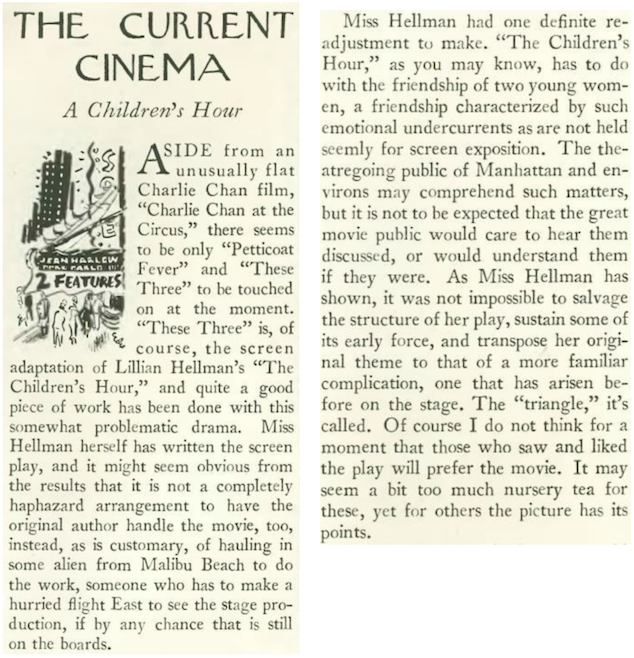
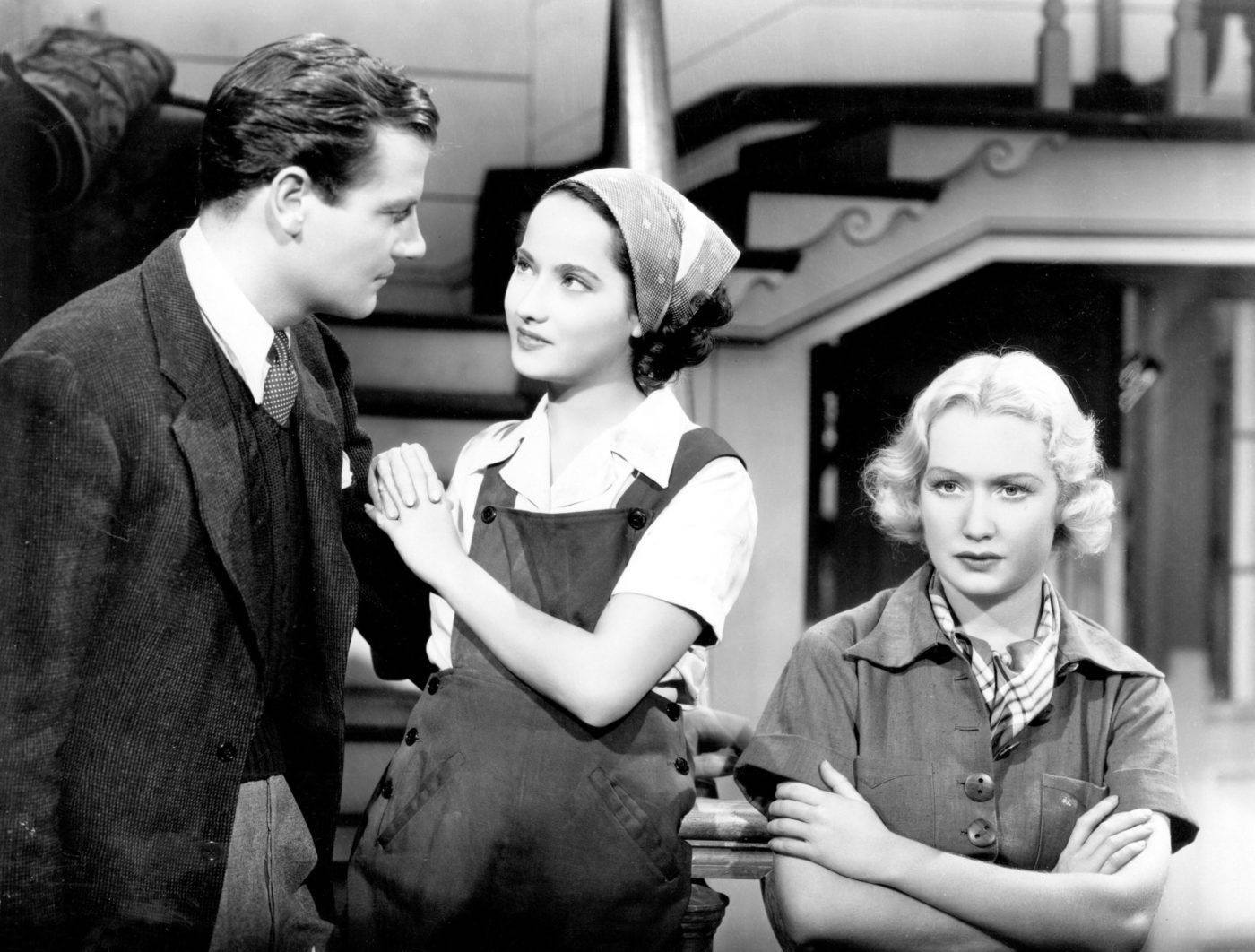
Lillian Hellman’s drama The Children’s Hour premiered on Broadway on Nov. 24, 1934, and ran for 691 performances—but bringing it to the screen in the era of the Motion Picture Production Code (aka Hays Code) proved a bit tricky, according to film critic John Mosher. Hellman’s play centered on a schoolgirl’s false accusation of lesbianism against two of her teachers, or as Mosher put it rather delicately, “a friendship of two young women…characterized by such emotional undercurrents as are not held seemly for screen exposition.”
Hellman rewrote the play to conform to the Code, removing any mention of lesbianism and changing the dramatic focus to a schoolteacher accused of having sex with another’s fiance. It appeared in 1936 under the title These Three.
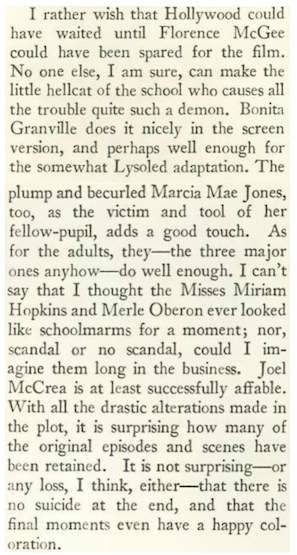
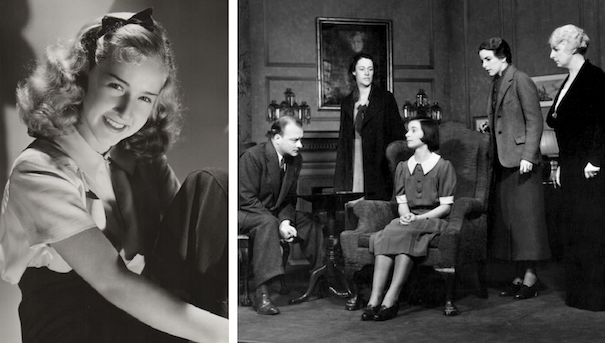
Mosher wished the film could have included Florence McGee, who portrayed the conniving student protagonist Mary Tilford in the original play. The part in These Three went instead to Bonita Granville, who at age fourteen earned an Academy Award nomination for her performance as Mary Tilford.
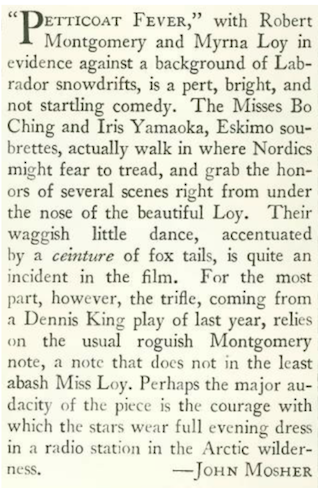
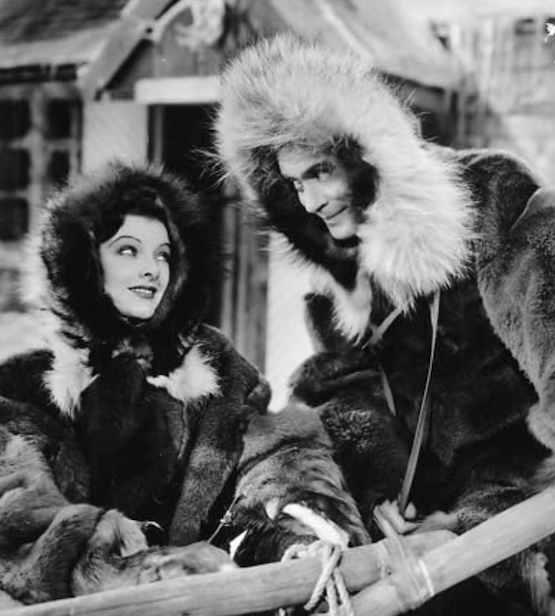
Mosher also reviewed Petticoat Fever, a “trifle” starring Myrna Loy and Robert Montgomery.
* * *
From Our Advertisers
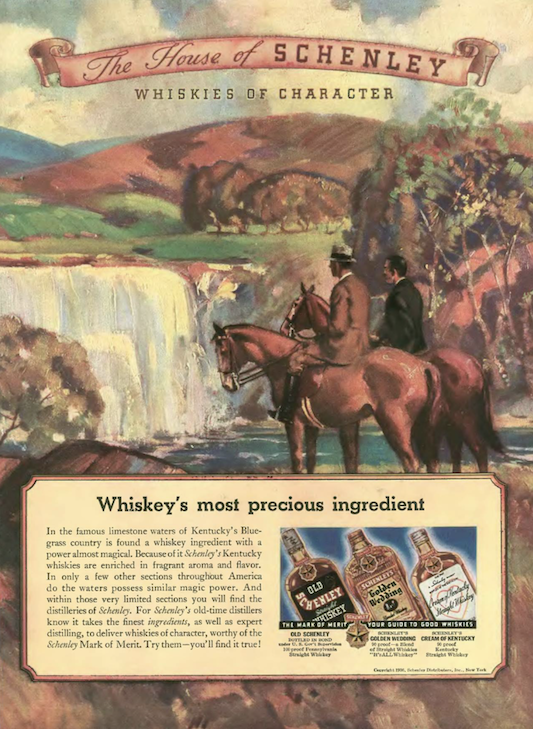
The inside front cover advertisement belonged to the “House of Schenley,” which emphasized the purity of Kentucky’s “limestone waters”…
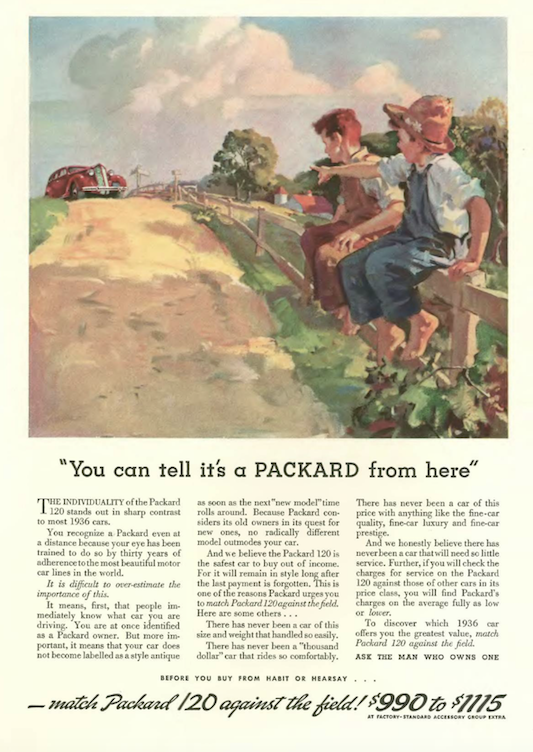
…the makers of Packard automobiles also appealed to bucolic sensibilities with this homespun image…
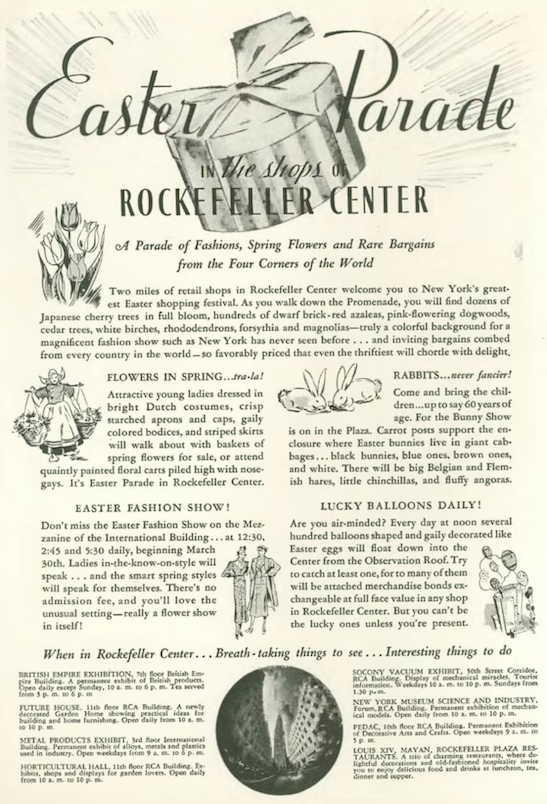
…the Easter Parade has been a New York tradition since the 1870s, when New York’s elite would walk down Fifth Avenue to show off the latest European fashions…the event was largely centered around churches like St. Patrick’s, hence the ad from its neighbor across the street, Rockefeller Center…today the event is called the Easter Parade and Bonnet Festival, a more inclusive event featuring eccentric, handcrafted bonnets…
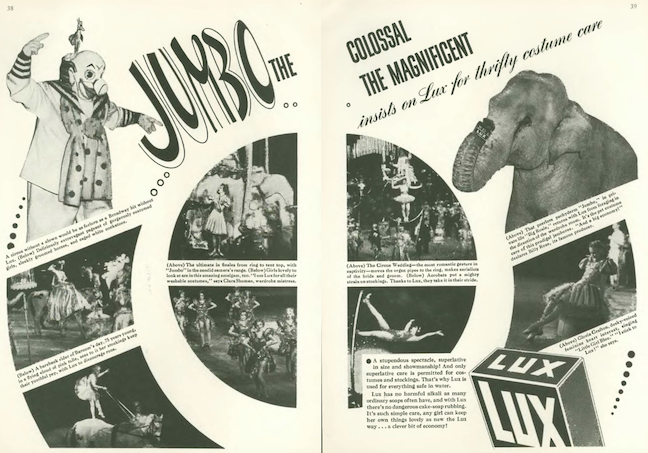
…Lux Soap Flakes were featured in big, celebrity-filled ads in mid-century America, soap being one product (like whiskey and cigarettes) that proved to be mostly Depression-proof…
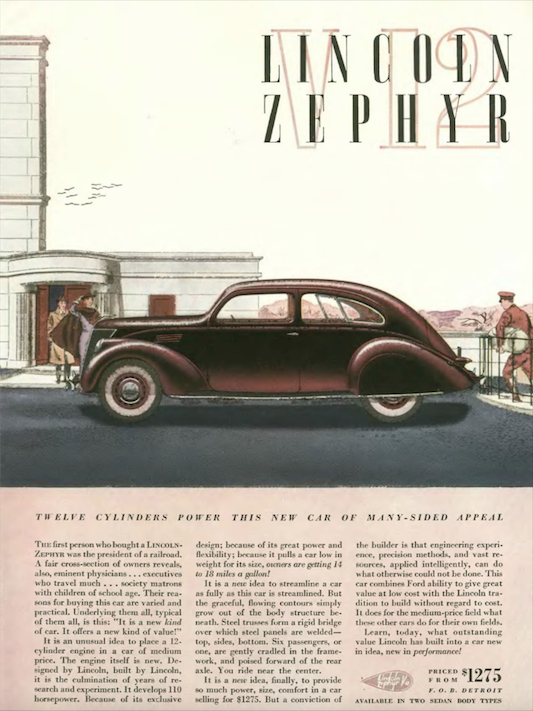
…a twelve-cylinder engine was usually a feature of top-of-the-line luxury automobiles, but the folks at Lincoln put one into their medium-priced Zephyr…the car succeeded in reigniting sales at Lincoln dealerships during the Depression…
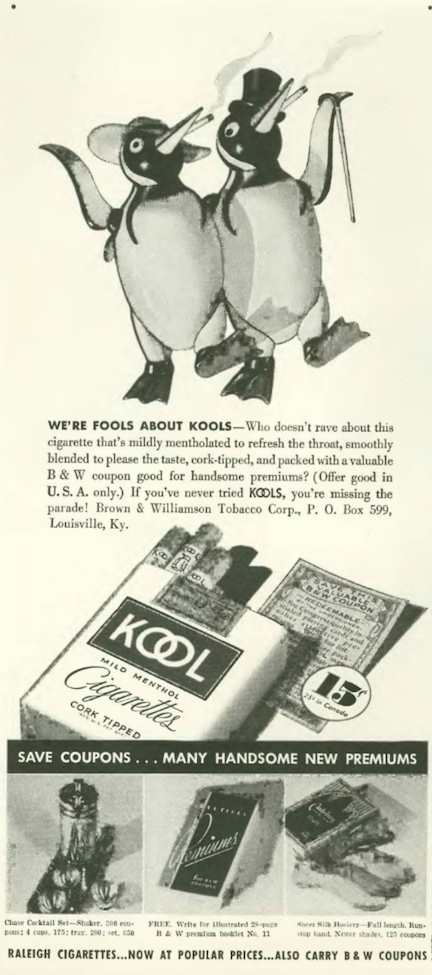
…beginning in the late nineteenth century cigarette companies included coupons that could be redeemed for items ranging from cocktail sets to silk stockings (per this ad)…Brown & Williamson, the makers of Raleigh and Kool cigarettes, featured coupons on the back of every pack, and smokers could write the company for a free premium catalog…
…this Raleigh catalog from the early 1950s even featured toys…250 coupons could get you a “Teddy bear with plastic nose”…so keep on puffing…

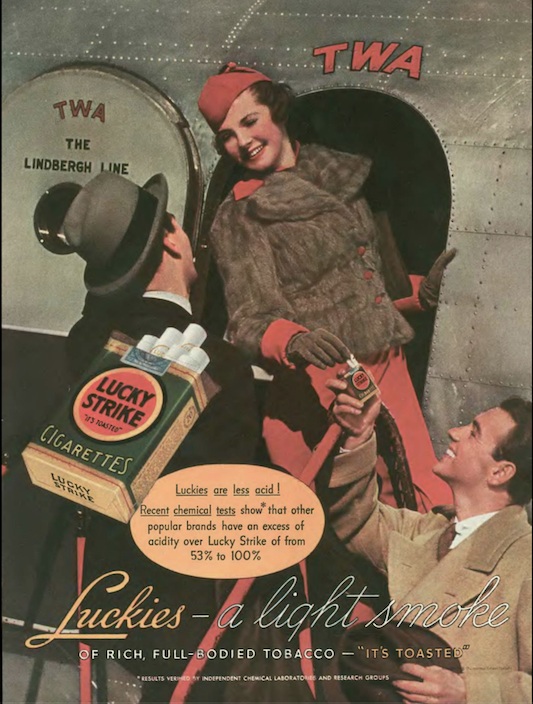
…Luckies went with the glamour of flying, an experience only the well-heeled could afford…
…on to our cartoonists, we have Richard Taylor…
…and Barbara Shermund welcoming us into the issue…

…and a this nice spot from Christina Malman…
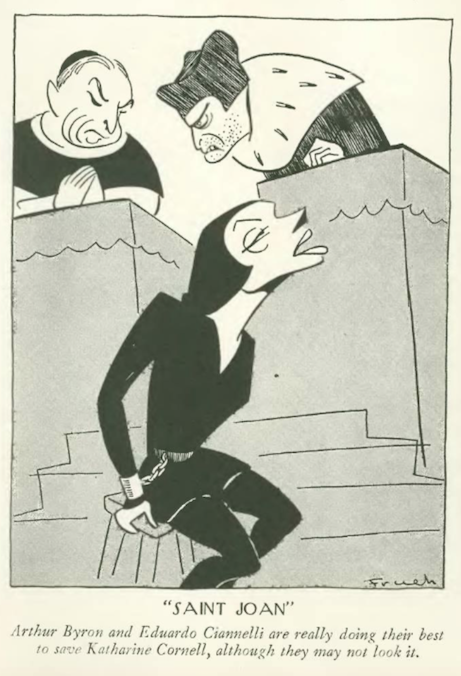
…Al Frueh gave us his interpretation of Saint Joan…
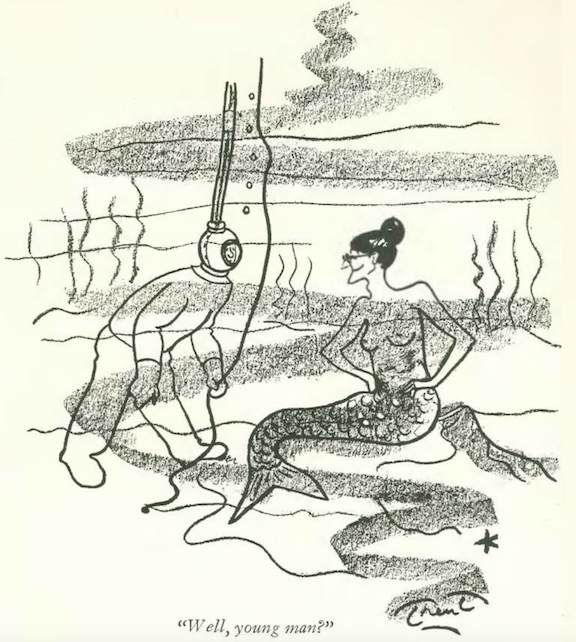
…W.P. Trent explored the deep seas…
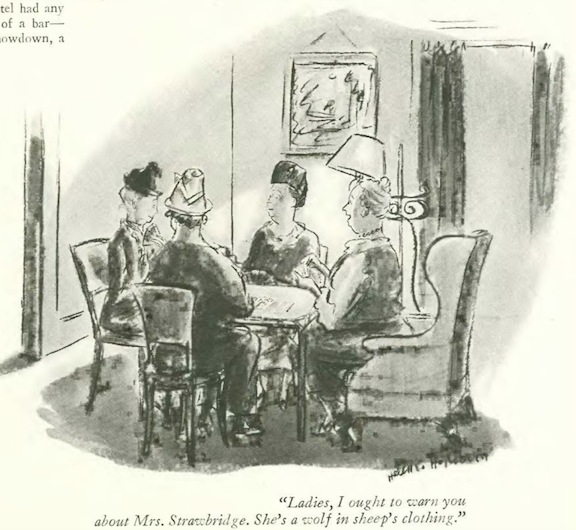
…Helen Hokinson revealed a secret…
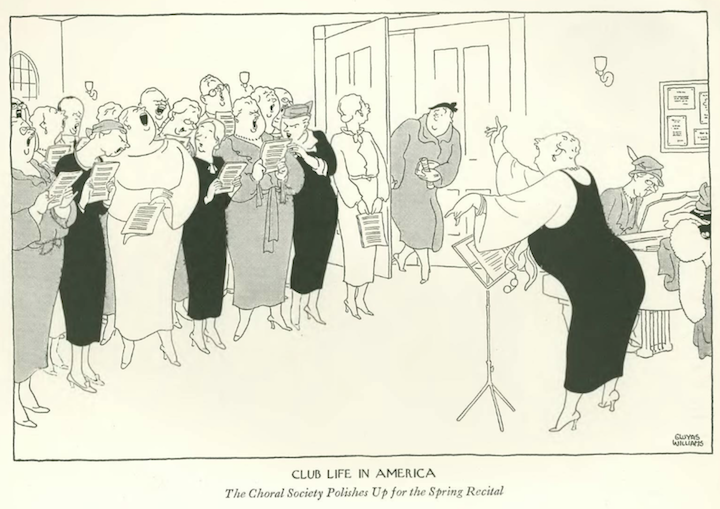
…Gluyas Williams was still examining club life…
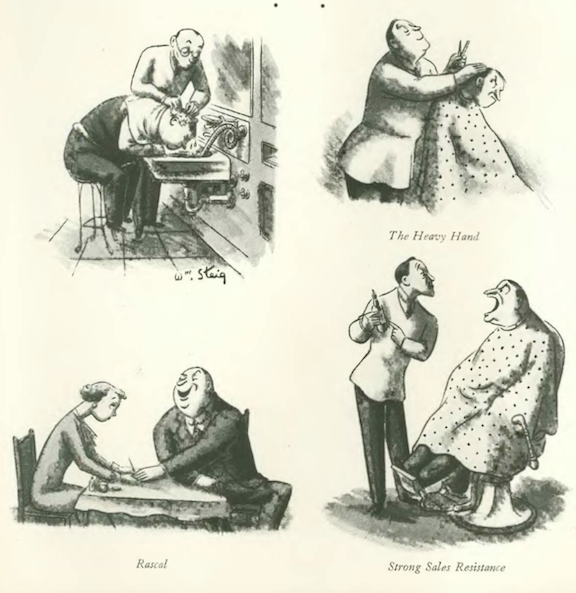
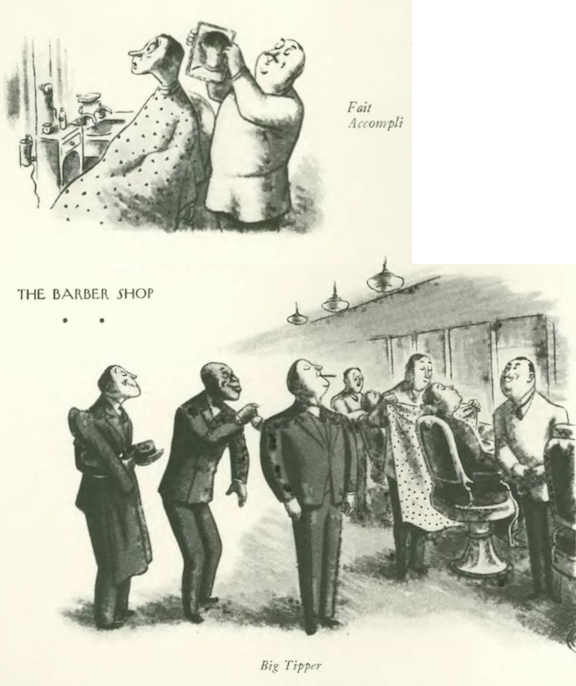
…William Steig went for a haircut (across two pages)…
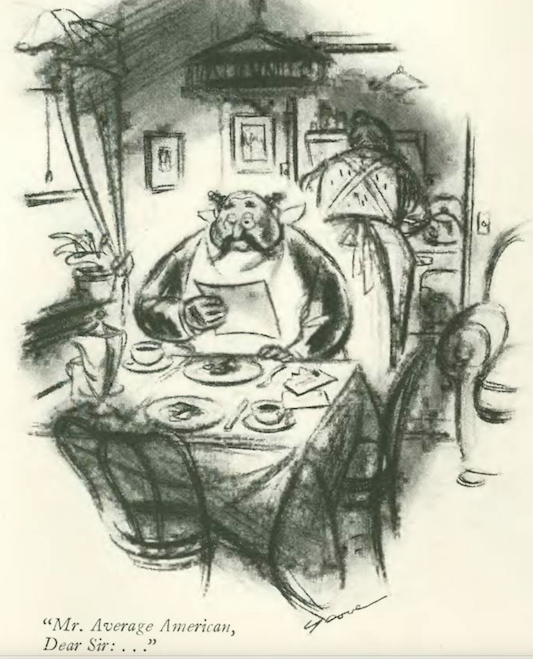
…Leonard Dove received some junk mail…
…George Price uncovered a spy…
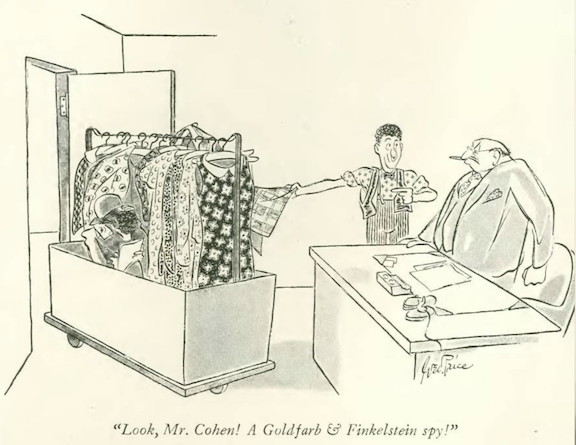
…Garrett Price assessed the price of fame…
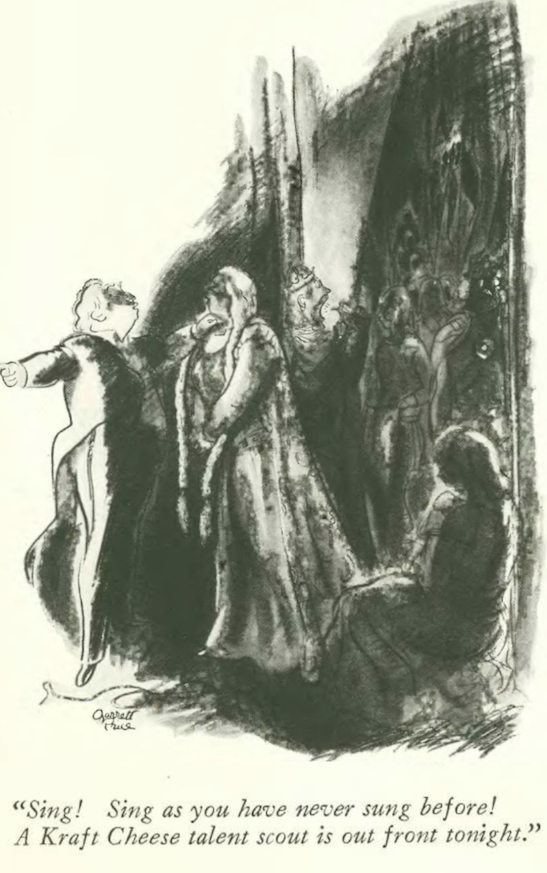
…William Crawford Galbraith continued to explore the world of sugar daddies and chlorines…
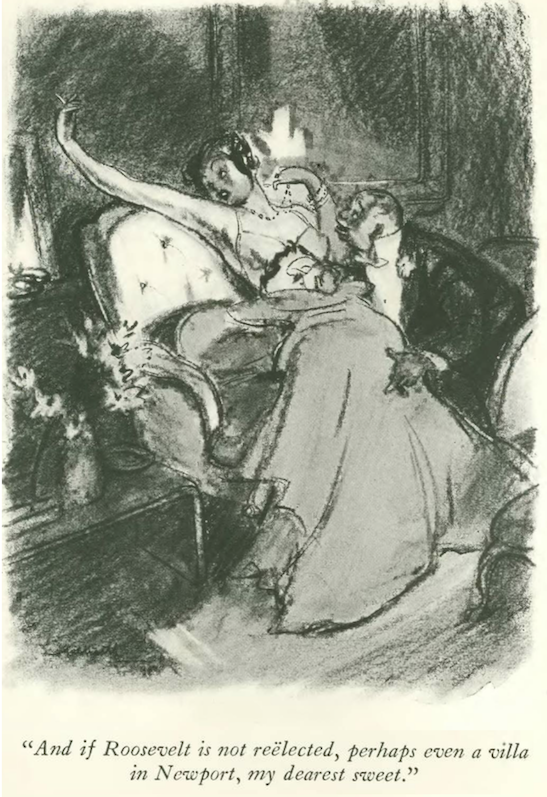
…and we close with Ned Hilton, and those floods…
Next Time: Idiot’s Delight…
 A New Yorker State of Mind