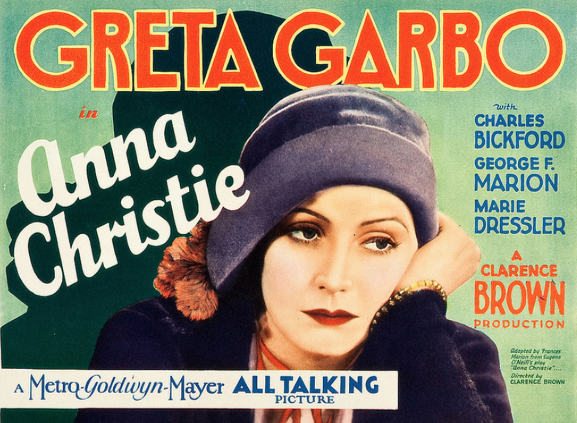
Imagine your favorite Hollywood actress, maybe someone like Julia Roberts, Meryl Streep or Judi Dench. You’ve followed their careers and watched most of their movies, but you’ve never heard their voices.
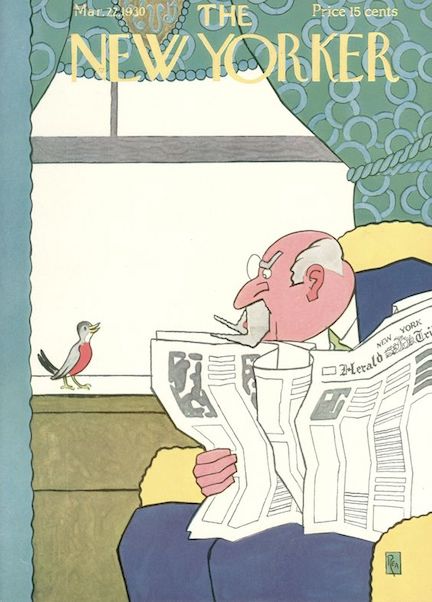
That’s what it was like for Greta Garbo fans before March 1930, when she spoke her first onscreen words in the 1930 MGM drama Anna Christie, which was adapted from a 1922 play by Eugene O’Neill.
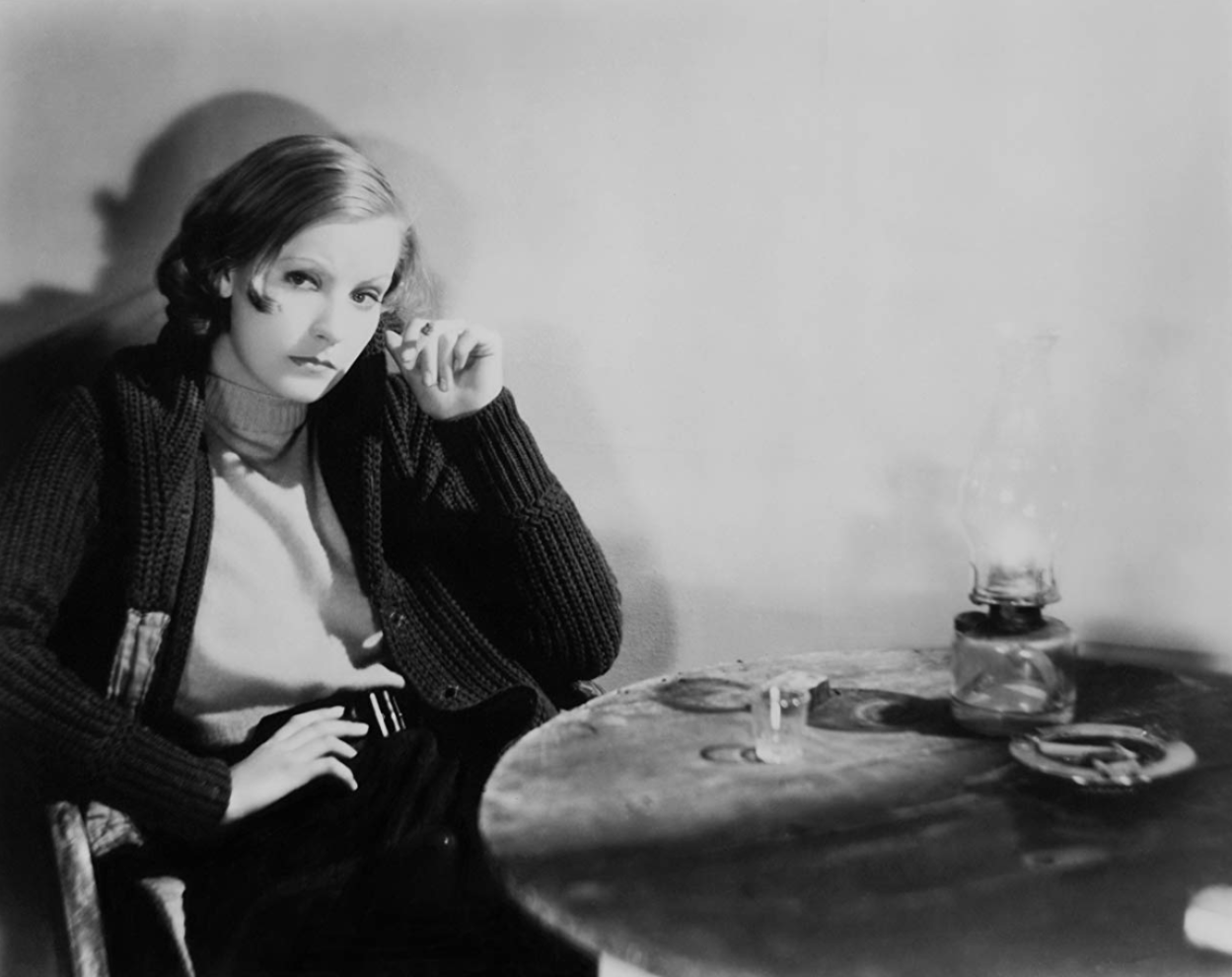
The New Yorker’s film critic John Mosher, not always a fan of Garbo’s silent work, found a “special kind of glamour” in her first talking picture, even tossing out the word “legend” to describe this Swede who avoided publicity like a bad cold…
 No doubt a few moviegoers saw the movie just to finally hear that voice, which Mosher described as “a surprise…a deep, low voice, a boy’s voice really, rather flat, rather toneless, yet growing more attractive as the picture advances”…
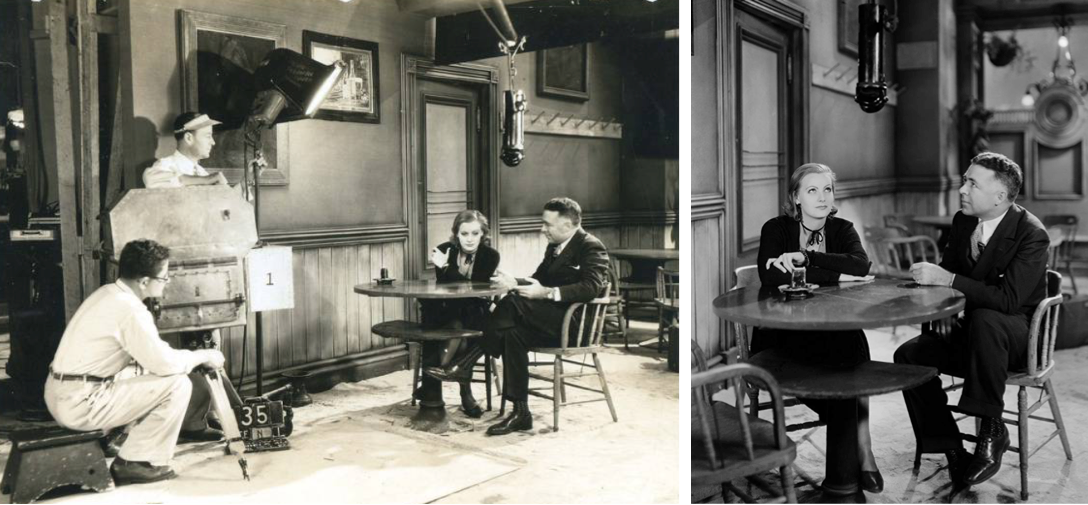
Publicized with the tag line “Garbo talks!,” Anna Christie premiered in New York City on Feb. 21 and would become the highest-grossing film of 1930. Later that year a German language version would be filmed featuring Garbo but with a different director and supporting cast.



* * *
What Depression?
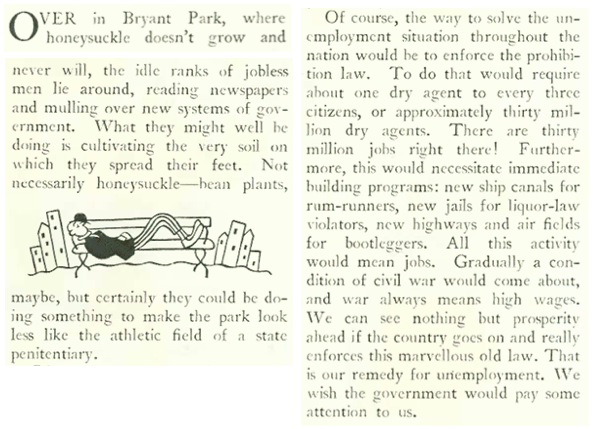
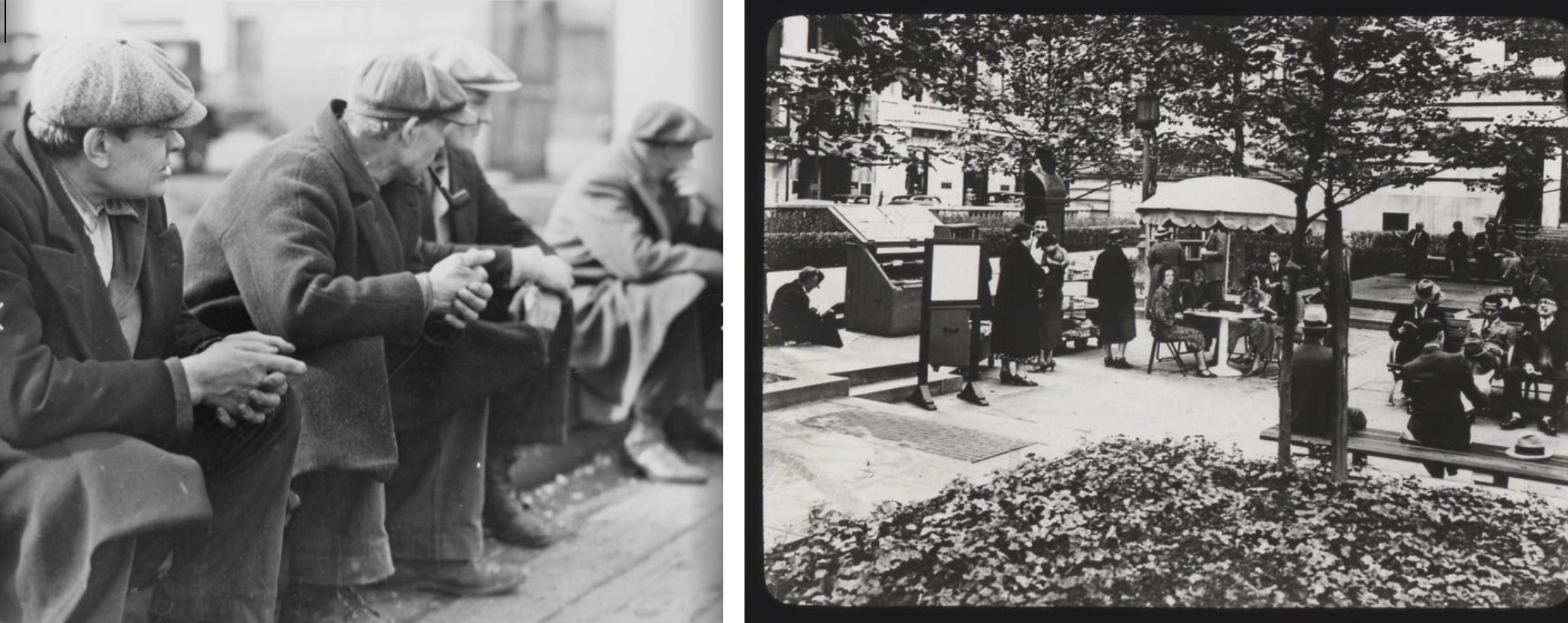
We are nearly five months into the Great Depression, yet there is little evidence in The New Yorker of the catastrophe that was unfolding across the land. And true to form, the approach to the topic was made with humor, via E.B. White in “Notes and Comment”…
* * *
Cathedrals of Commerce
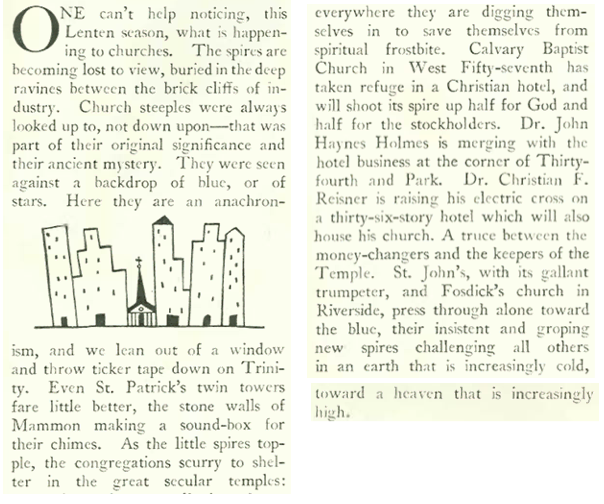
E.B. White also observed the changing skyline, and how the towering skyscrapers were quickly overshadowing the once prominent steeples of the city’s churches…

* * *
The Other House of Worship
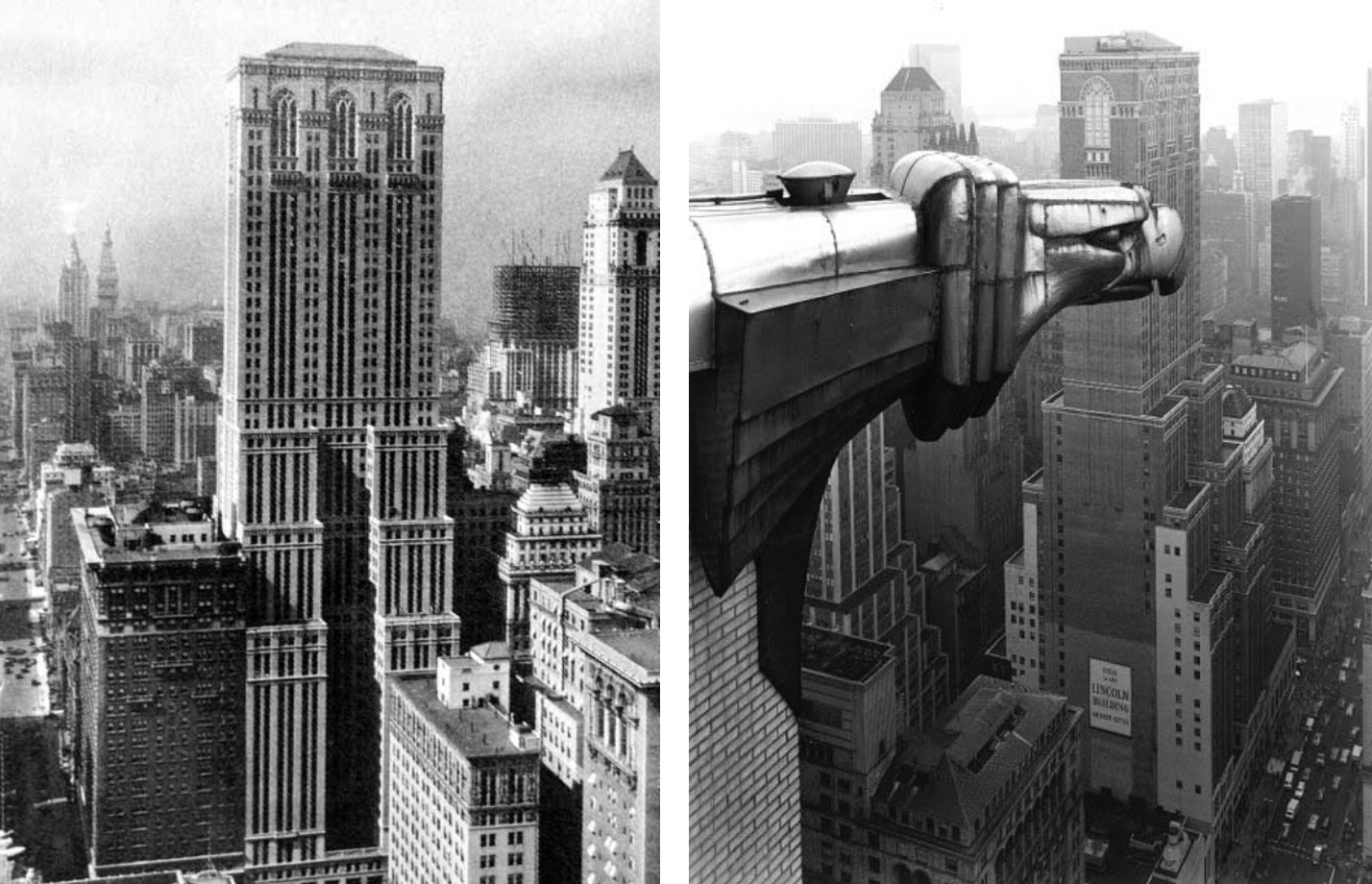
Perhaps a certain skyscraper ennui settled in, as architecture critic George S. Chappell was not all that impressed by the “huge” Lincoln Building (which today still seems huge)…

* * *
From Our Advertisers
We have a bit more evidence of the Depression in the ads, including this one from Abercrombie & Fitch, with two sporting gents opting to go fishing to take their minds off the markets…

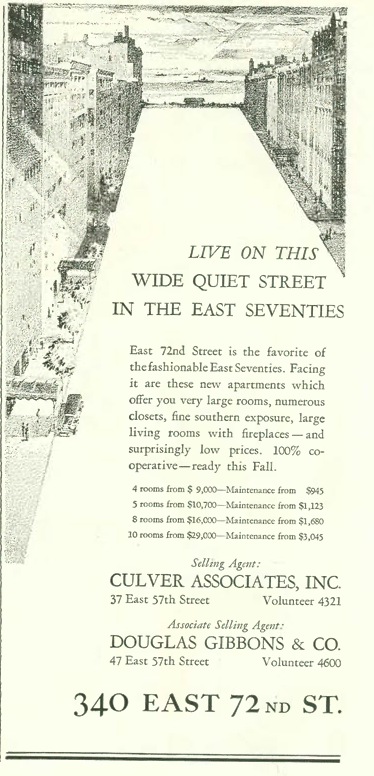
…if fishing wasn’t your thing, perhaps you just wanted to escape into the “quiet” of the wide streets in the East Seventies…
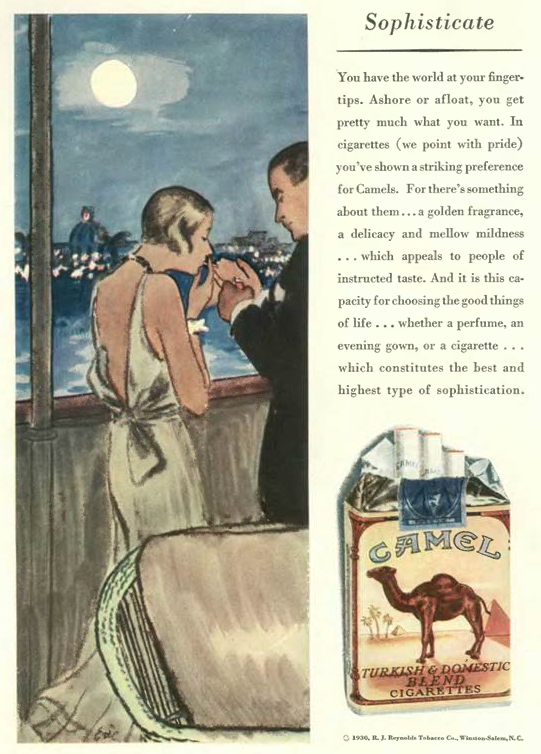
…or relax with a smoke, which artist Carl Erickson made so appealing with his Camel ad illustrations…
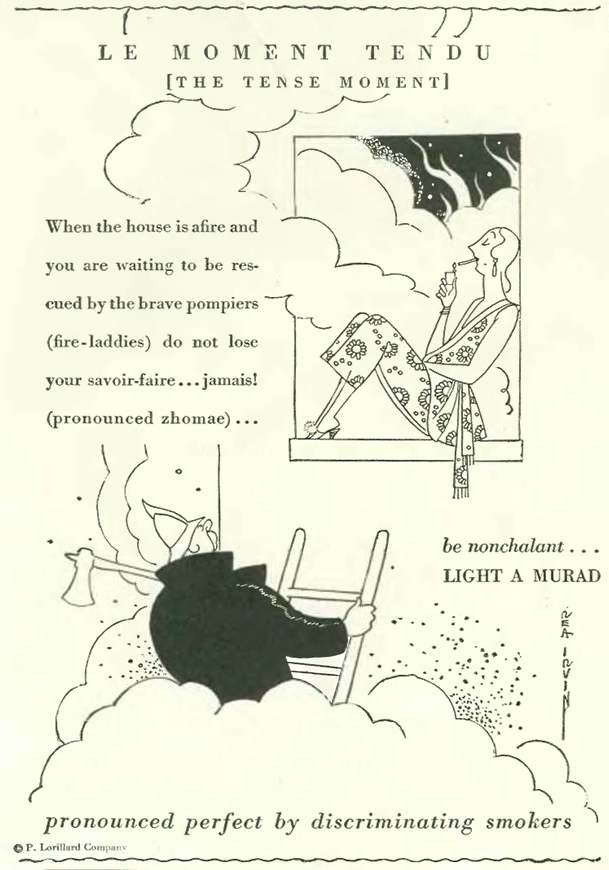
…or take the humorous route to a relaxing smoke, with this ad for Murad as illustrated by Rea Irvin…
…on to our cartoonists, Garrett Price captured the mood of the times…
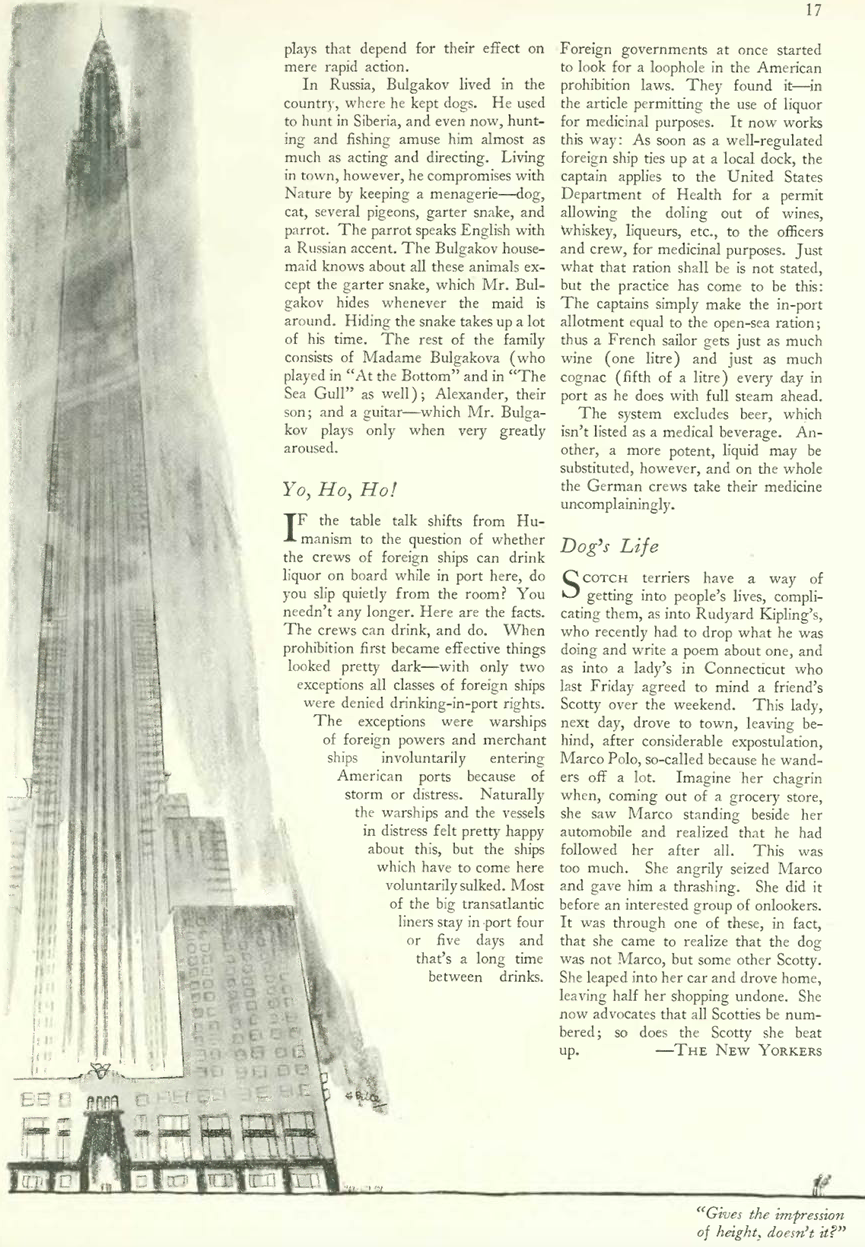
…while Alfred Krakusin captured an altogether different mood…
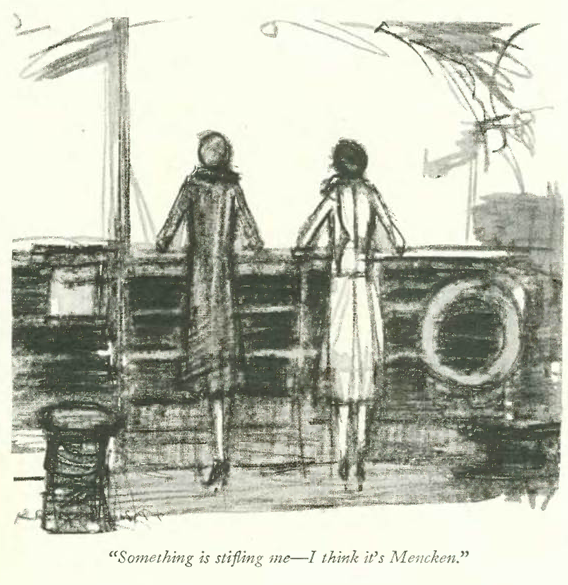
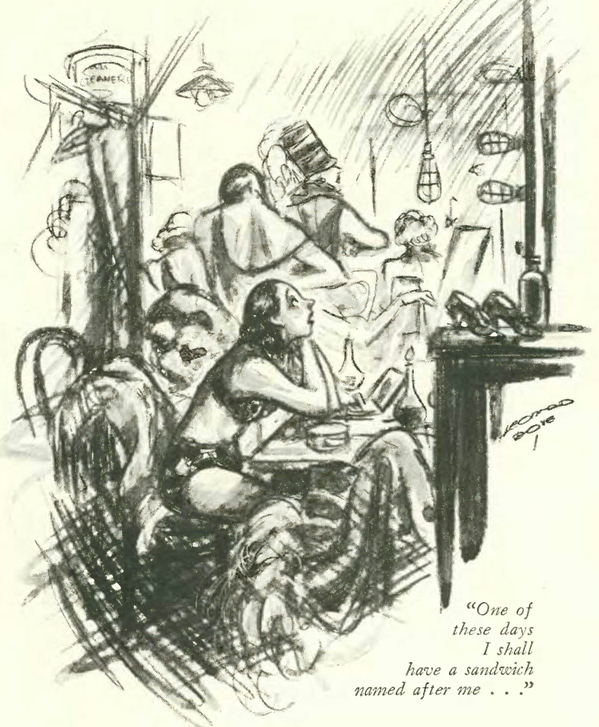
...Leonard Dove examined the path to stardom…
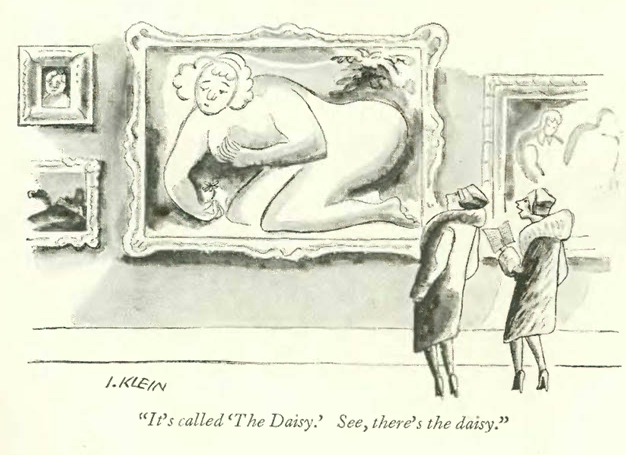
…Isadore Klein pondered modern art…
…William Crawford Galbraith found an unlikely victim of religious zeal…

…Mary Petty gave us a glimpse of a doctor’s office…

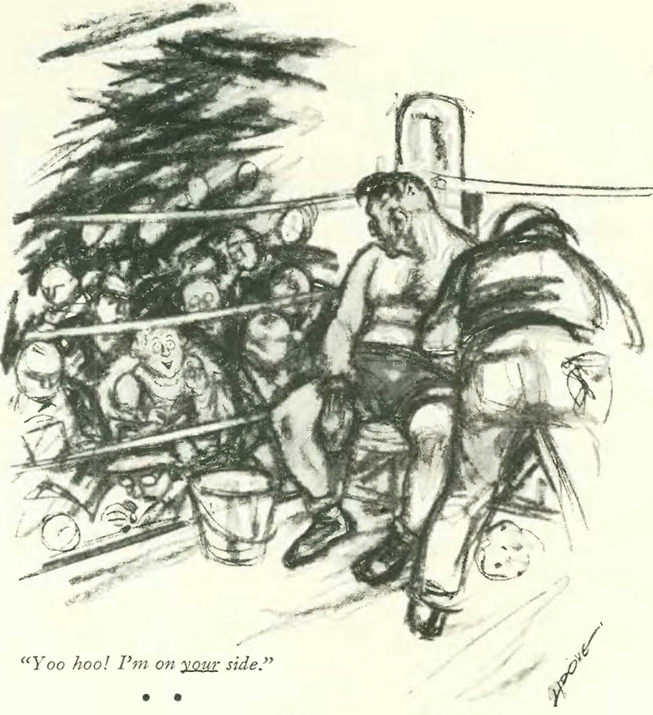
…and Leonard Dove again, this time at ringside…
Next Time: Noblesse Oblige…
 A New Yorker State of Mind