The writer Michael Arlen was back in pages of The New Yorker on the occasion of his second visit to the U.S. The magazine also heralded his first visit in March 1925, when he was liberally feted by various literary hangers-on and assorted socialites.
This time around Arlen was the guest of Charles Dillingham, “being at the moment deeply engaged in his host’s forthcoming presentation of Mr. Cyril Maude in “The Charming People.” And, between times, casting watchful eyes on “The Green Hat,” whose New York premiere next week comes just in the nick of time to save many of Mr. Arlen’s admirers from collapses fomented by anguished anticipation.”
With Arlen’s return, and with new works by the “youngster” Noel Coward (he was 26), ‘The Talk of the Town” noted that the fall theater season “will have a distinctly British flavor.”
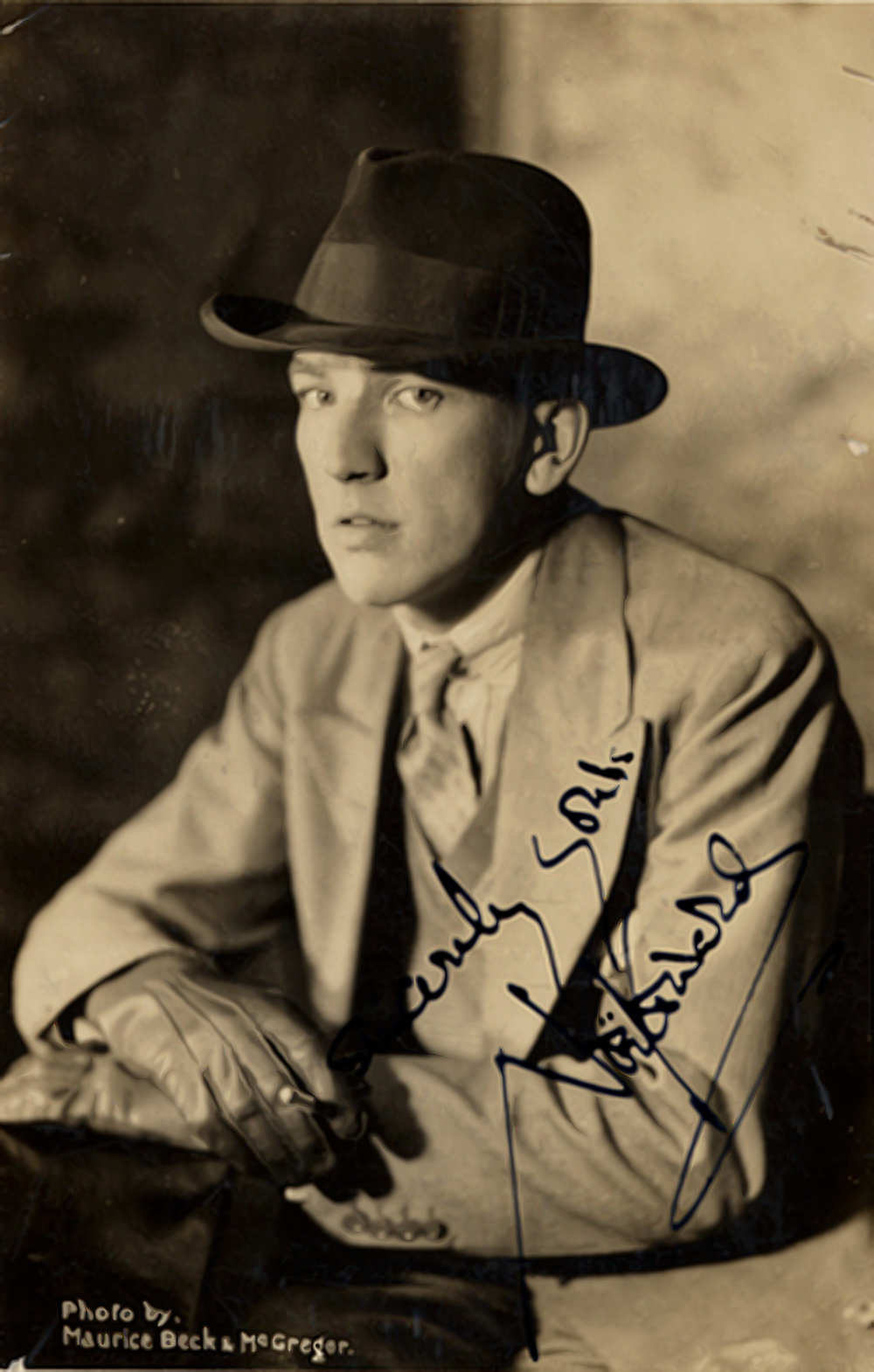
The young Noel Coward. (Victoria & Albert Museum)
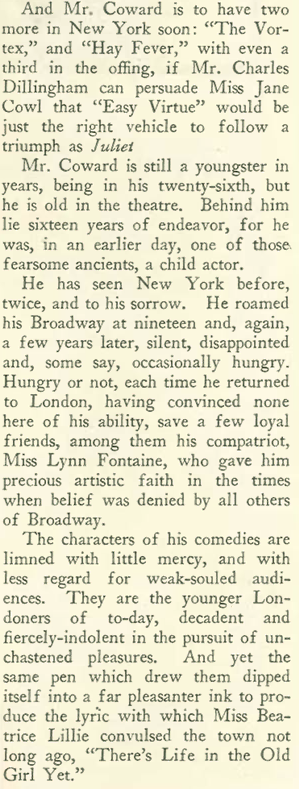
“Talk” called Coward “the rage of the London dramatic season,” in anticipation of his upcoming New York presentations:
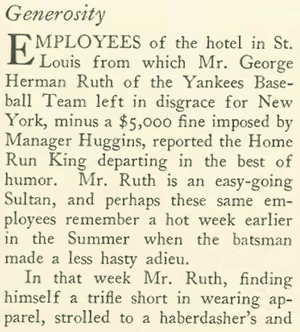
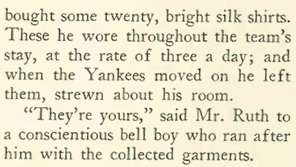
Babe Ruth also returned to “Talk” with another tale of mischief:
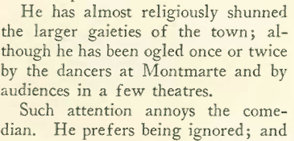
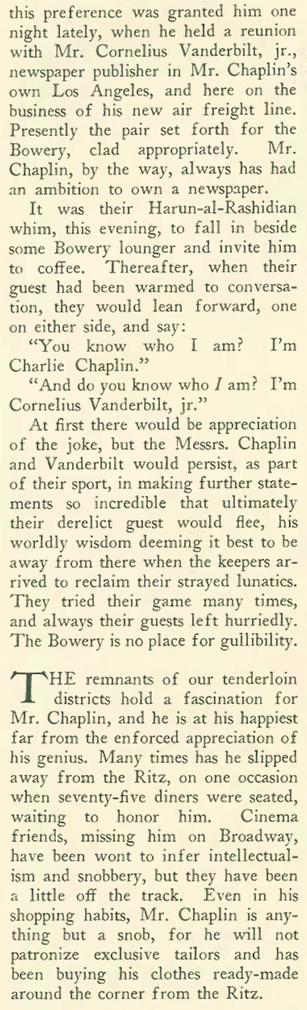
It was also reported that Charlie Chaplin was still playing the melancholy, holed up in his room at the Ritz with his telephone disconnected:
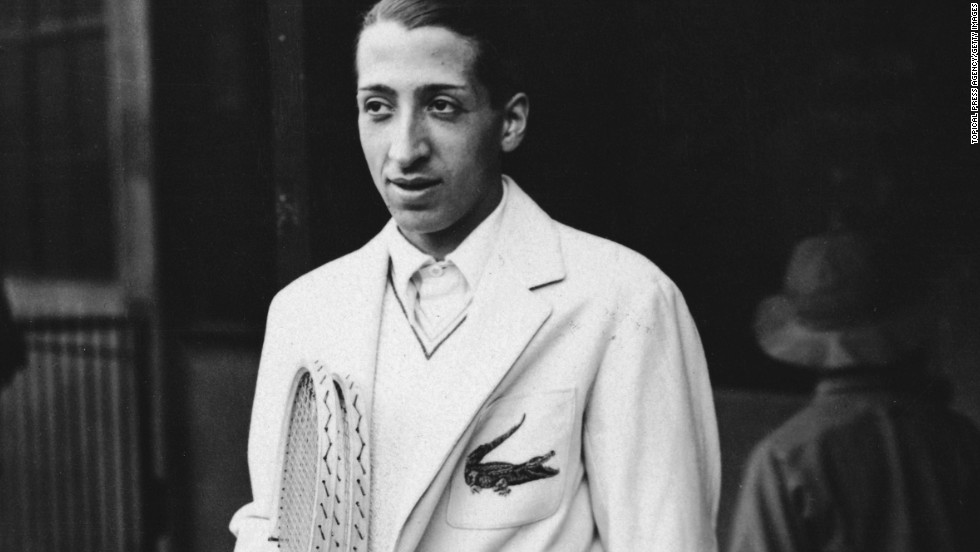
French tennis star Rene Lacoste was the subject in “Profiles.” John Tunis wrote, “The French are supposed to be a volatile people. Rene Lacoste us about as volatile as Swiss cheese. His is the most perfect self-control imaginable; both on the court and off, his is the demeanor of a real champion…he will go a very long way.”
Rene Lacoste was one of “The Four Musketeers” with Jean Borotra, Jacques Brugnon, and Henri Cochet, French tennis stars who dominated the game in the 1920s and early 1930s. He won seven Grand Slam singles titles at the French, American, and British championships, and was the World’s No. 1 player for both 1926 and 1927. Today he is still known worldwide as the creator of the Lacoste tennis shirt, which he introduced in 1929. (Biography.com)
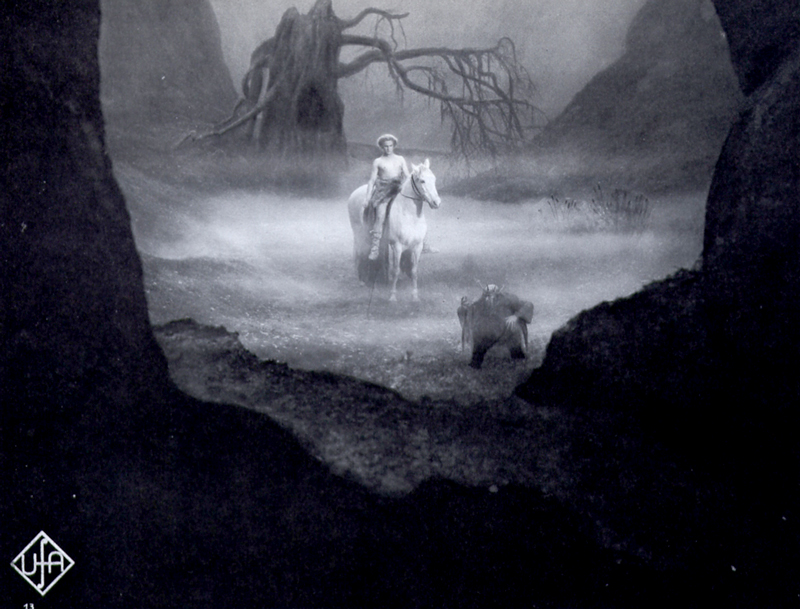
“Moving Pictures” announced the arrival of the German film Siegfried at the Century Theatre. An advertisement in the magazine proclaimed that a “Symphonic Orchestra of 60 musicians from the Metropolitan Opera Co. render a special score compiled with Wagner’s Immortal Music…”
Still from 1924’s Die Nibelungen: Siegfried (UFA)
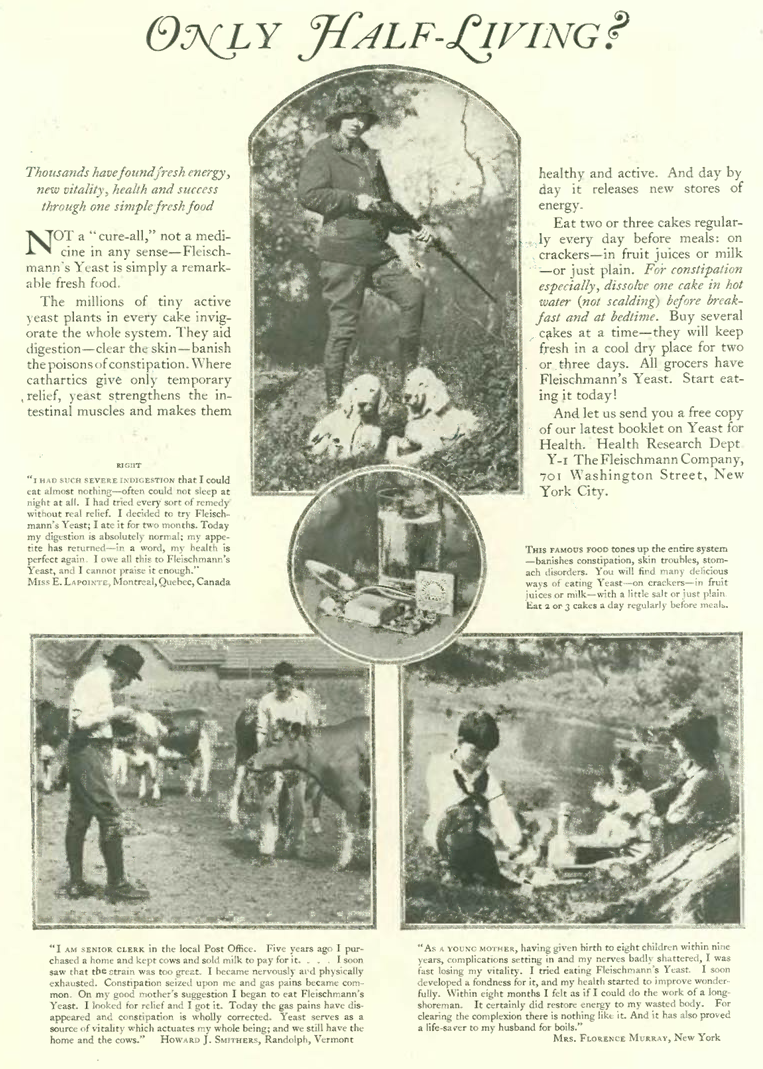
In my last post I wrote about Raoul Fleischmann’s investment in The New Yorker, and how his initial $25,000 led to subsequent infusions of hundreds of thousands of dollars. No doubt in an effort to recoup some of his investment, he started placing these full-page ads in the magazine that promoted health benefits of consuming his company’s product: yeast.
Before we jump into the autumn issues of 1925, I want to briefly look back at The New Yorker’s first summer, when the magazine limped along week to week but managed to survive thanks to a fortuitous meeting between Harold Ross and Raoul Fleischmann during a bridge game.
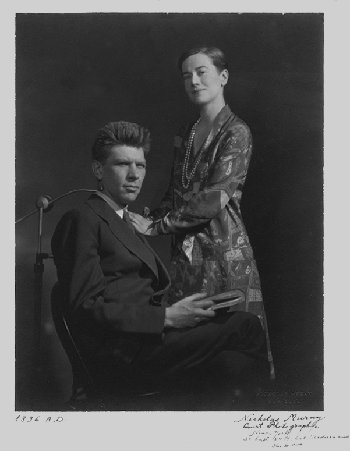
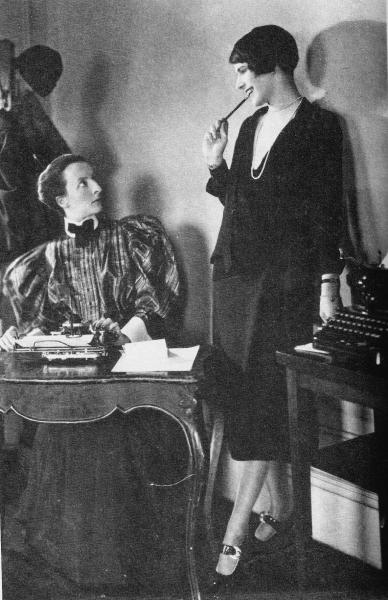
Harold Ross and Jane Grant in 1926 (University of Oregon Libraries)
According to Thomas Kunkel’sGenius in Disguise, Fleischmann was the wealthy scion of a New York yeast and baking family, and a frequent guest of the Algonquin Round Table. He hated the baking business, so when Ross pitched the idea of investing in his new magazine, Fleischmann obliged with $25,000. Ross and his wife, Jane Grant, together put up the other $25,000 (which included some IOU’s), but after the magazine was launched and struggled during its first months, Fleischmann was further obliged to pour in many hundreds of thousands of dollars to keep the magazine afloat (and in spite teasing from his friends that he might as well dump the money in the river).
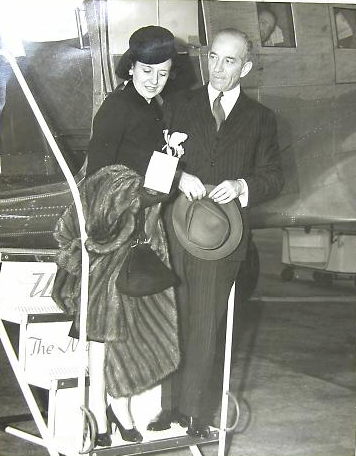
Raoul Herbert Fleischmann with a woman identified as “Bride Mrs. Louis D. Munds” in a United Air Lines photo from Nov 30, 1939. (Oakland Museum of California)
The magazine was actually killed as early as May 8, when Fleischmann called Ross and other magazine directors together after Ross lost a large amount of money in a poker game (money he’d plan to invest in the magazine).
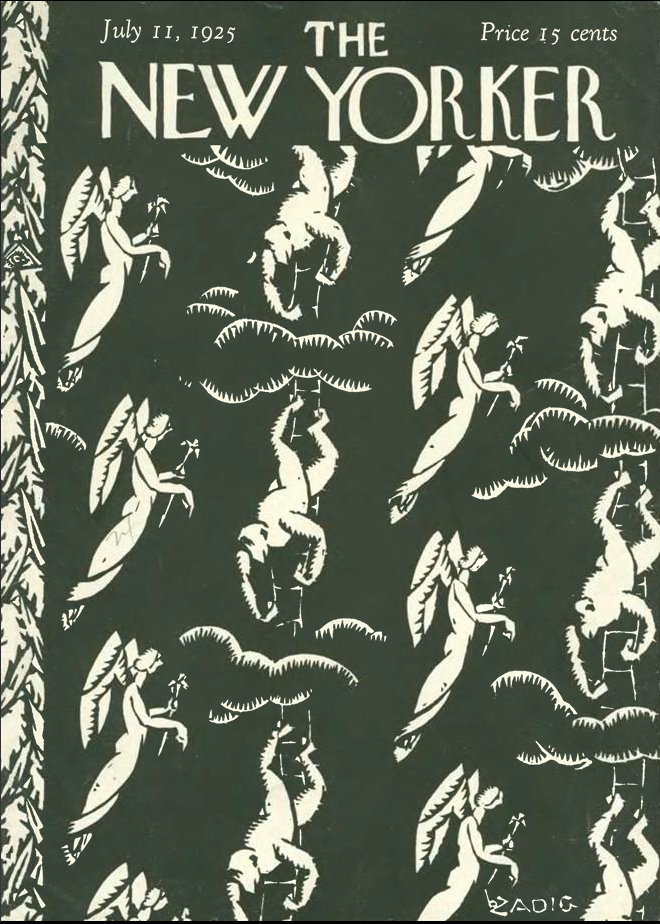
Cover for July 11, 1925, by Bertrand Zadig. Funds were so scarce that the cover was printed in black and white.
Fortunately, the following day was fellow Round Tabler Franklin P. Adams’ wedding, and in the convivial atmosphere Ross and Fleishmann agreed to give the magazine another go.
As I’ve mentioned in previous posts, the magazine struggled mightily through the summer, with thin issues featuring in-house promotional ads that claimed the most prime advertising spots (including inside front and back covers).
However, the house ads were clever and fun to read, as Kunkel explains:
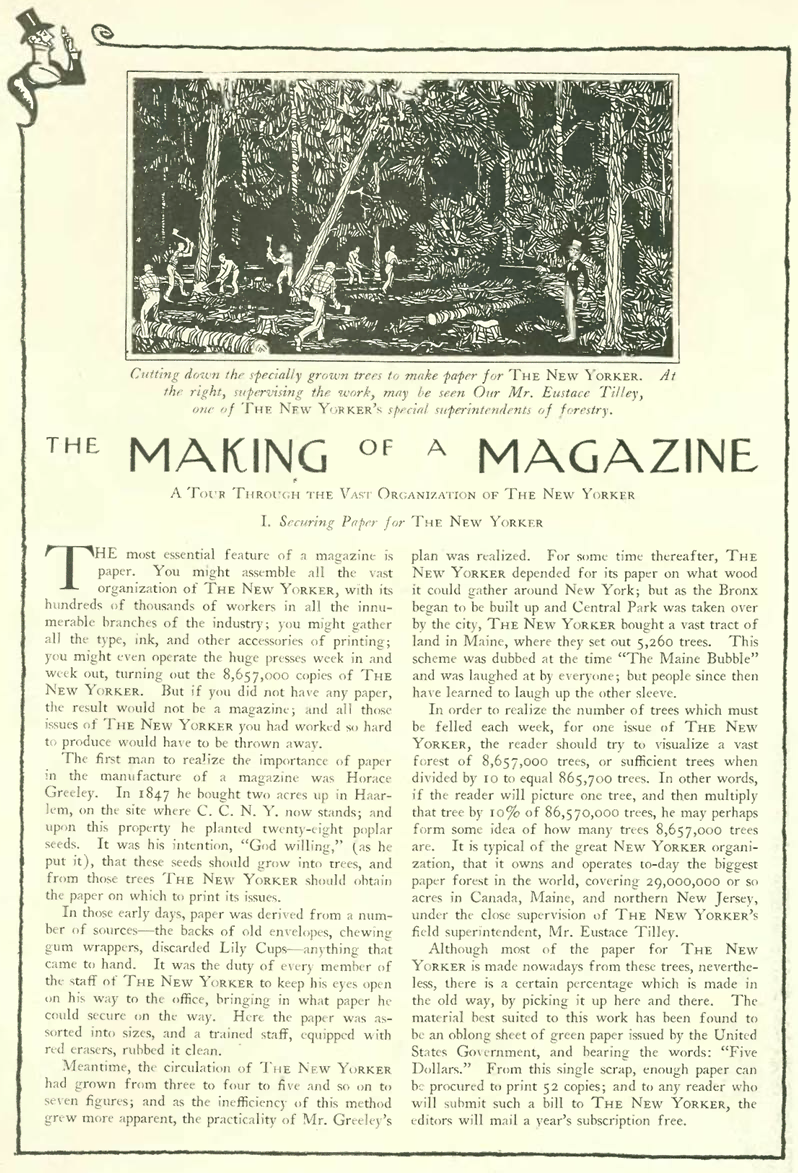
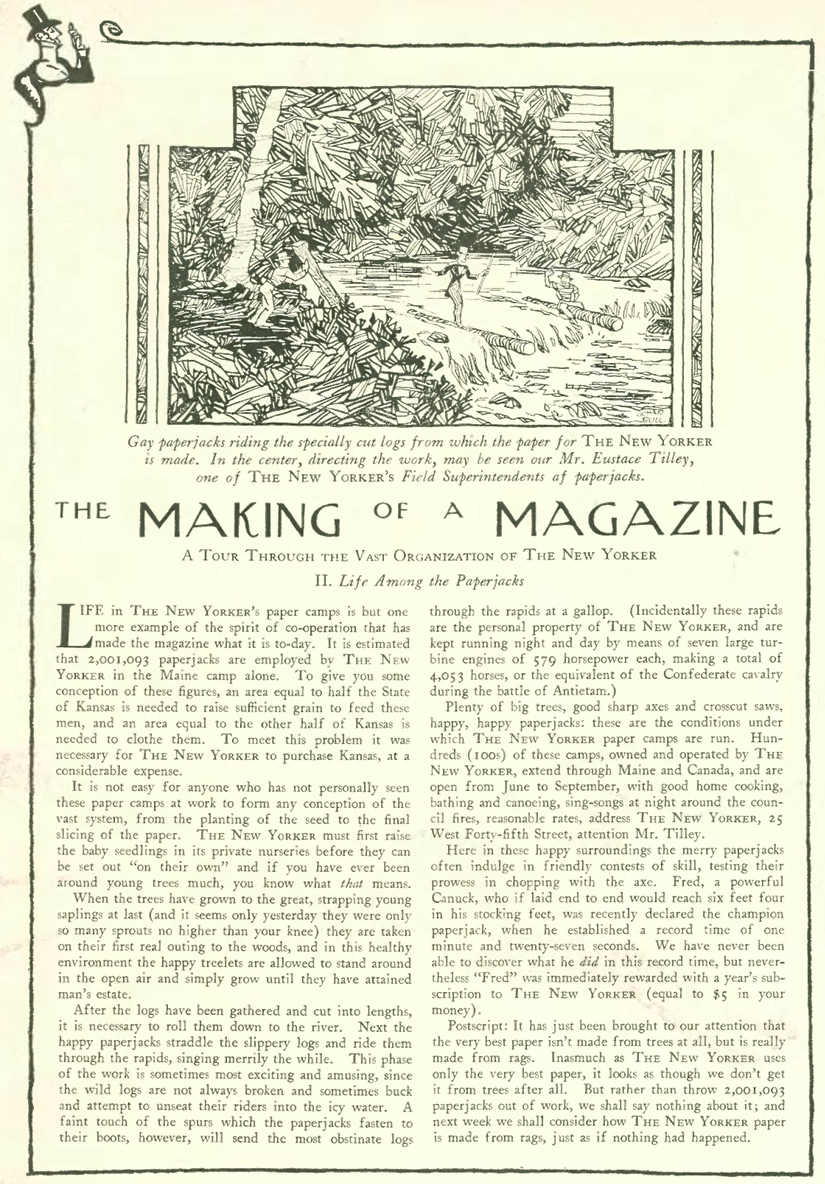
To help camouflage the dearth of advertising, Ross asked (New Yorker humor writer) Corey Ford to come up with some promotional, or “house” ads. Ford’s response was the “Making of the Magazine” series, which not only represented some of the cleverest writing in the 1925 New Yorker but went a long way toward establishing the magazine’s droll, self-deprecating tone… Each article was accompanied by a Johann Bull illustration featuring the ubiquitous (Eustace) Tilley, who was based on the Rea Irvin dandy (who was featured on the magazine’s first cover). Ford had simply made up the moniker (“’Tilley’ was the name of a maiden aunt,” he explained, “and I chose ‘Eustace’ because it sounded euphonious”), and soon it came to be identified with Irvin’s monocled figure. Tilley began turning up by name in Talk items and Ross listed him in the telephone directory.
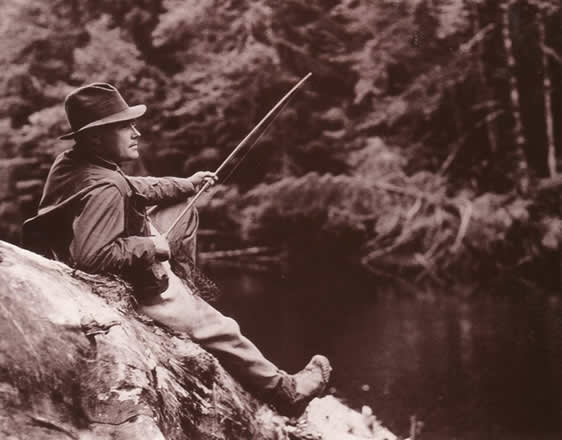
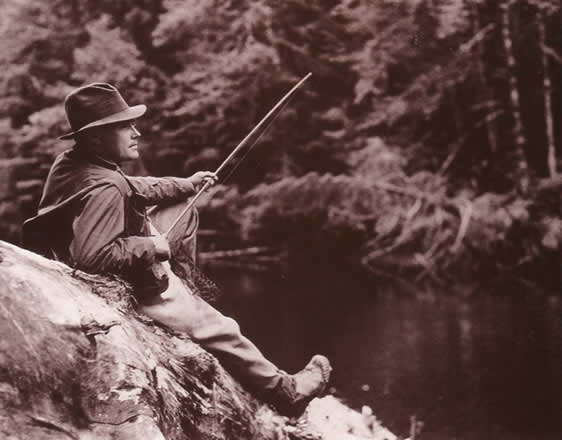
The creator of the name “Eustace Tilley,” humorist Corey Ford was an avid outdoorsman who would go on to write a monthly column for Field & Stream in the 1950s and 60s. (Image from 1952 True magazine)
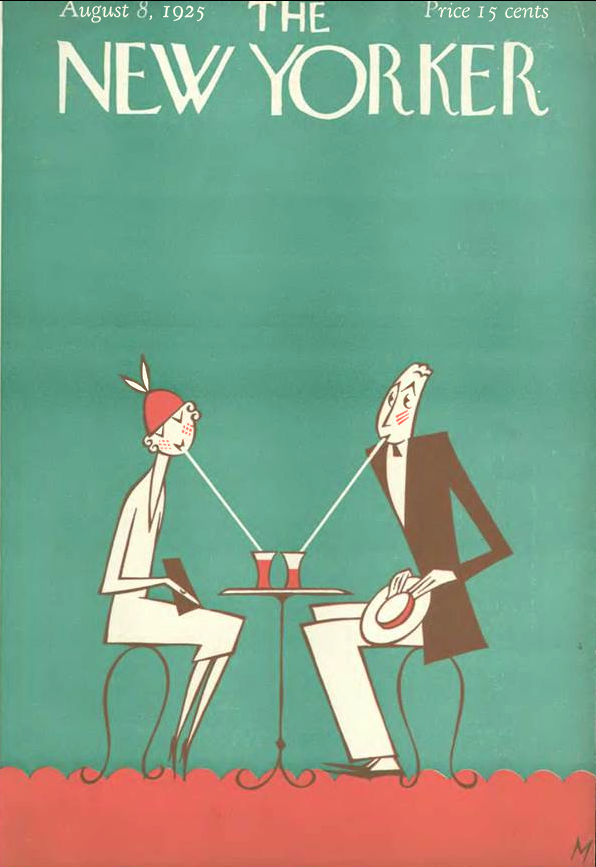
More than 20 of these house ads were featured through the end of 1925. What follows are the first ads in the series from issues dated August 8, 15, 22, 29.
In a previous post I briefly looked at the Algonquin Round Table–writers, critics, artists, some of them New Yorker contributors–who had been exchanging witticisms over lunch at the Algonquin Hotel since 1919.
Like so many things connected to The New Yorker, Alexander Woollcott was at the center of the famed table’s origin story. According to Wikipedia, the group that would become the Round Table began meeting as the result of a practical joke carried out by theatrical press agent John Peter Toohey, who was annoyed at Woollcott (a New York Times drama critic) for refusing to plug one of his clients (Eugene O’Neill) in his column. Toohey organized a luncheon supposedly to welcome Woollcott back from World War I, where he had been a correspondent for Stars and Stripes (and where Woollcott first met Harold Ross and Jane Grant). Instead Toohey used the occasion to poke fun at Woollcott on a number of fronts, including his long-winded war stories. Woollcott’s enjoyment of the joke and the success of the event prompted Toohey to suggest that the group meet every day at the Algonquin for lunch.
An illustrated feature by Ralph Barton in the August 29, 1925 issue (titled “The Enquiring Reporter”) thumbs its nose at critics of the Round Table who accused its members of “logrolling” (exchanging favorable plugs of one another’s works). Barton’s feature spoofs the man-on-the-street interviews that were popular in the 1920s. The persons chosen “at random” are none other than members of the Algonquin Round Table who take turns denying that any logrolling takes place at the famed gathering:
In fact, there was quite a bit of logrolling taking place in this “Vicious Circle.” As Thomas Kunkel writes in Genius in Disguise, in addition to New Yorker contributors, the Algonquin Round Table variously included representatives of the New York Times, the New York Tribune, Vanity Fair, Harpers Bazaar and Life.
“The wits cross-pollinated feverishly. Shrugging off charges of logrolling, they quoted one another in their columns, reviewed one another’s shows, publicized one another’s books. To be fair many of the glowing notices were deserved—and in any case not all the notices were glowing.”
The four writers featured in Barton’s fictitious “man on the street” feature. Clockwise, from top left: Alexander Woollcott, Heywood Broun, George Jean Nathan, and Franklin P. Adams. (reocities.com, Wikipedia, artsfuse.com, electronpencil.com)
Kunkel also observes, “By far the most powerful transmitter of Round Table wit was (Franklin) Adams (known to most as F.P.A.), whose column in the Tribune (and later the World), “The Conning Tower,” was scoured by tens of thousands of New Yorkers for its dollops of quippery and clever verse. Young writers conspired to break into the column, and the appearance of even a four-line snippet was regarded as a triumph…the Round Table supplied F.P.A. with a freshet of material, and he wasn’t bashful about using it. A particularly good line from Parker or Kaufman or Benchley might turn up in “The Conning Tower” within hours of its utterance.”
In other happenings, “The Talk of the Town” noted that the last meal served at Delmonico’s–which was fated for the wrecking ball–was less a cause for mourning and more one of scorn for the bad taste of the site’s owners:
The New Yorker bids a bitter farewell to Delmonico’s.
Among other items, O.H.P. Garrett penned a “Profile” about flamboyant mayoral candidate Jimmie Walker that seemed to anticipate the raucous career that would follow after his election.
Garrett observed that “his life is constructed of minutes and seconds. He can be clocked with a stop watch,” and that Walker’s main concerns seemed to be Sunday baseball, boxing and the repeal of movie censorship.
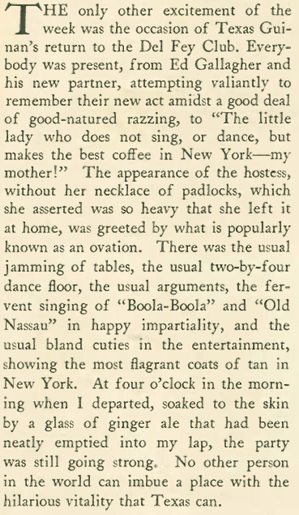
Lois Long seemed a bit bored with the week’s diversions in her column, “When Nights Are Bold,” but did welcome the reappearance of Texas Guinan after yet another club was threatened with padlocks by the Prohibition Authority:
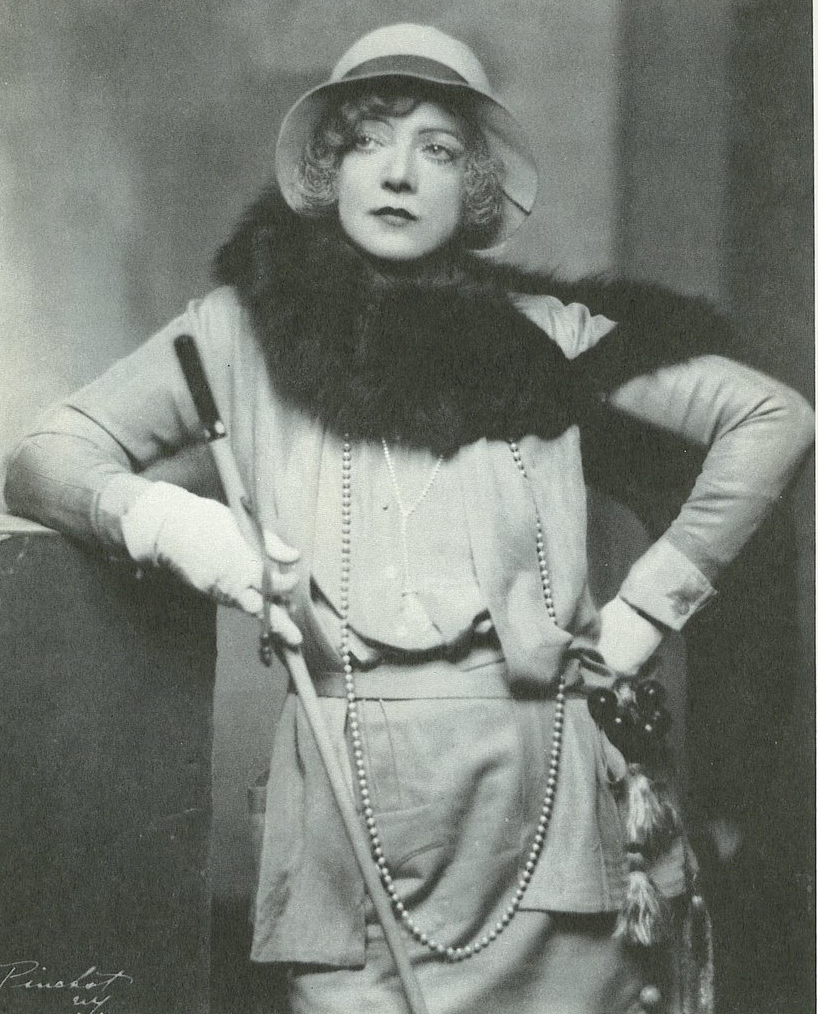
She just wants to have fun…Texas Guinan was well known to New Yorker writers and editors and was a frequent guest of the numerous parties hosted by Harold Ross and Jane Grant in the Hell’s Kitchen brownstone they shared with Alexander Woollcott and Hawley Truax. (texasguinan.blogspot)
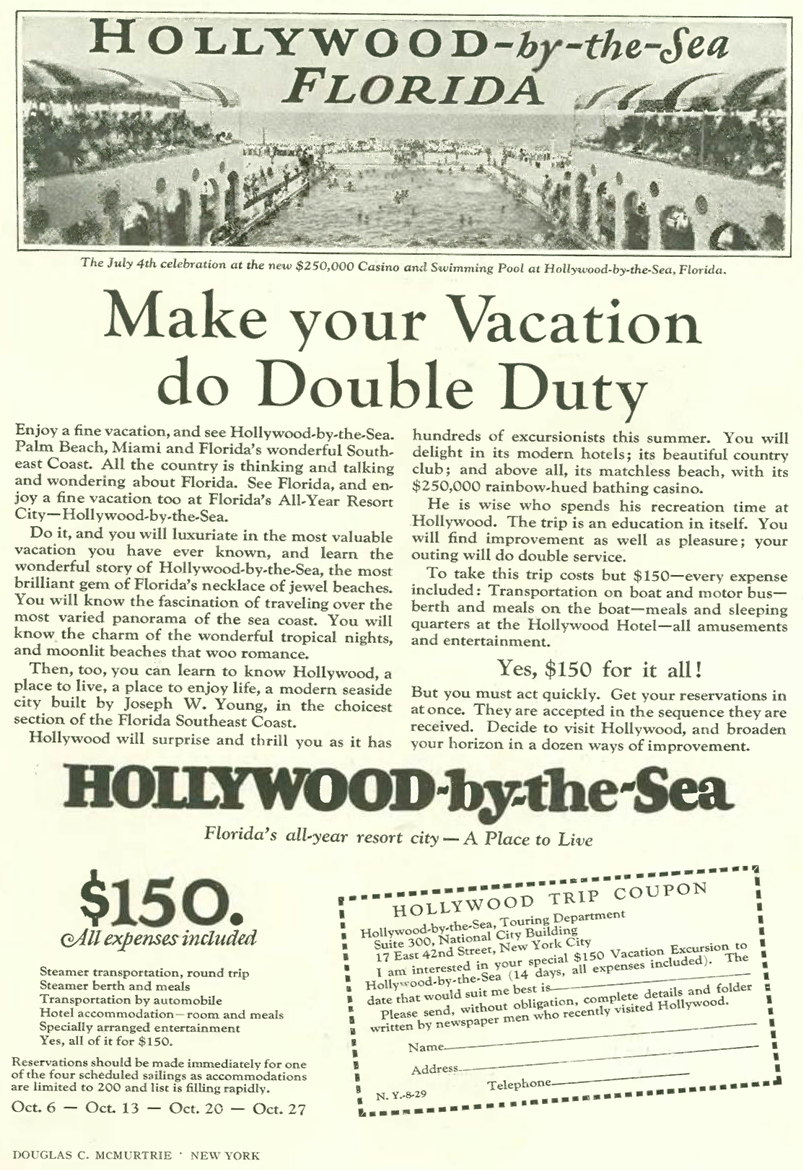
On the advertising front, the back inside cover and back cover were graced with paid advertising. As with most ads in The New Yorker, the target audience had some money to spend on travel:
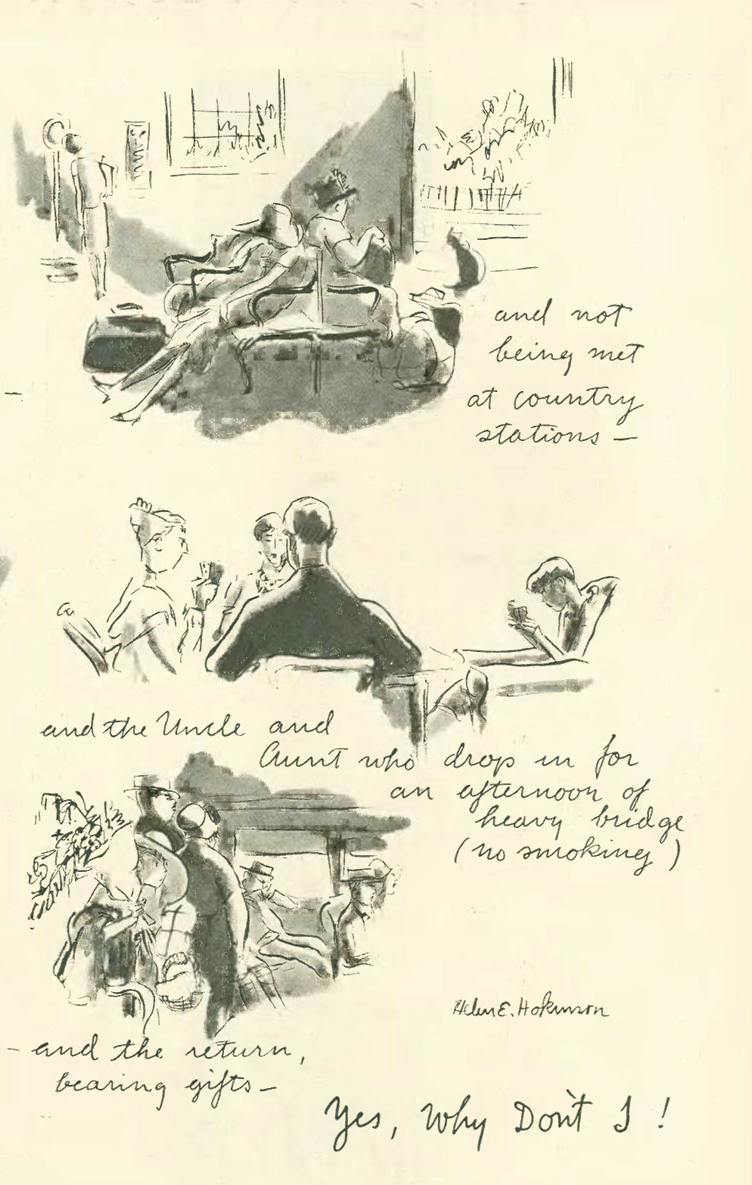
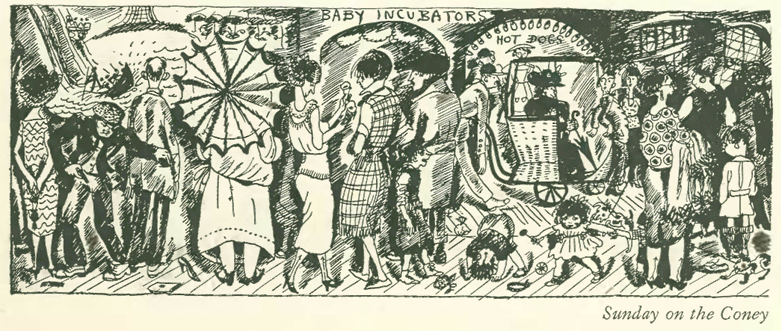
And we end with these weekend scenes from the magazine’s center spread, drawn by Helen Hokinson:
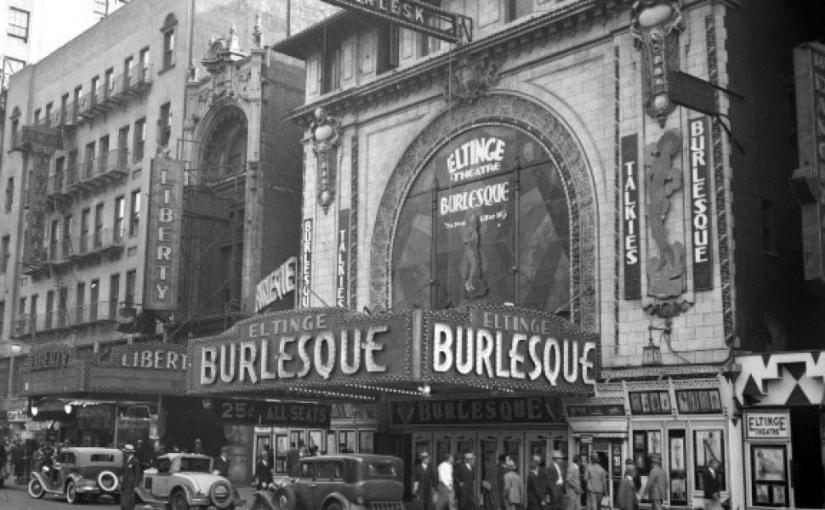
The critic Gilbert W. Gabriel was more than a bit appalled by the spectacle at the old Olympic Theatre, where a tired and “degenerated” cast of burlesque performers took turns shaking their ancient haunches in the direction of the former Julliard student.
Gilbert’s article in the August 22, 1925 New Yorker, “They Call It Burlesque,” described the performance at the Olympic on East Fourteenth Street as “on its last legs.” The once “honest animalistic, gorgeously orgiastic burlesque show of ten or twenty years ago” had “degenerated in decency,” he wrote.
Illustration in The New Yorker of the Olympic Burlesque by Reginald Marsh.
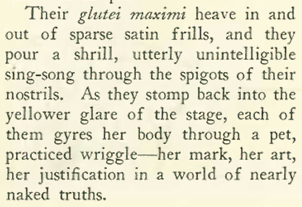
As the performers wiggled up and down the runways, Gilbert noted:
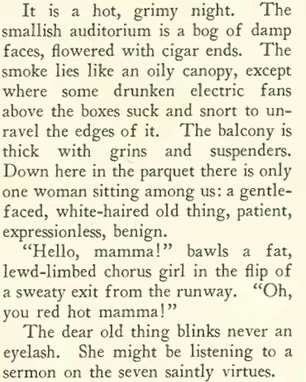
The audience was an equally sad lot:
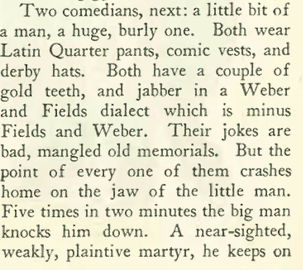
There is some relief expressed when two comedians appeared, but they offer an unimaginative routine:
And then back to the dancers:
And still more…
Happier news over in “The Talk of the Town,” where jazz was getting some respect: “Jazz, successor to the outcast ragtime, each day is becoming acceptable. It is the young brother of the musical family, irresponsible and at time highly irritating, but, nevertheless, acknowledged.”
It was reported that even famed violinist Jascha Heifetz “dabbled” in jazz as an amusement, and writers of jazz were “no longer those products of East Side dives,” but rather included the likes of Buddy de Sylva, lyrist to Al Jolson, and George Gershwin, “high priest of jazz,” who was besieged by symphony conductors for his “Symphony in Blue” (better known today as Rhapsody In Blue).
“Talk” continued its lament of the changing face of Fifth Avenue:
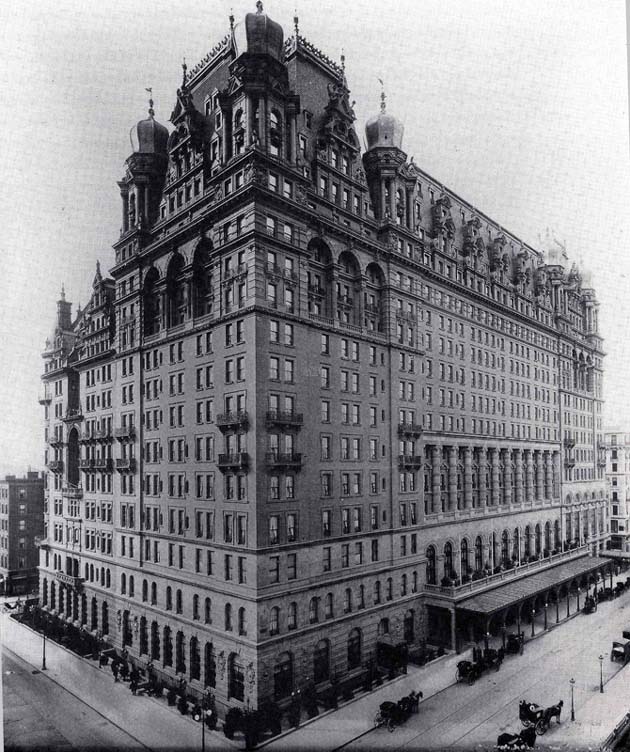
And the Waldorf Astoria was being remodeled in order to add shops on the ground floor along with “125 bathrooms,” giving the famed hotel “a bath for almost every room.” In just four years the old Waldorf would be torn down and replaced by the Empire State Building.
The old Waldorf Astoria was getting an upgrade, but it would fall to a wrecking ball in only four years. (nycago.org)
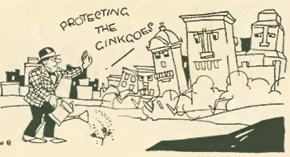
“Talk” also noted the planting of Ginkgo trees in the city:
Although prized today for their beauty and hardiness, not all New Yorkers are in love with the strong odor of its fruit. In the June 30, 2008 issue of The New Yorker, Lauren Collins examined the activities of the “Anti-Ginkgo Tolerance Group” in her article“Smelly Trees.”
“Talk” also offered a brief glimpse into the latest adventures of Pola Negri, noting in its “This Week” section that the actress had paid “$57,000 customs dues in seized jewels…”
Pola Negri liked nice things (Edward Steichen for Vanity Fair, 1925)
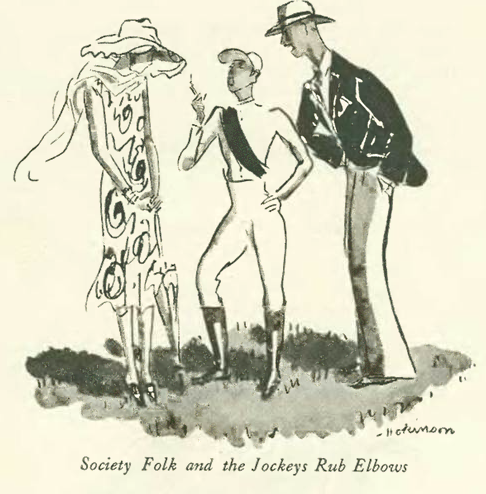
In other items, Helen Hokinson provided illustrations for an article on the horse races at Saratoga…
…John Tunis examined the life of tennis star Elizabeth “Bunny” Ryan in “Profiles” … and E.B. White and Alice Duer Miller offered their thoughts on why they liked New York:
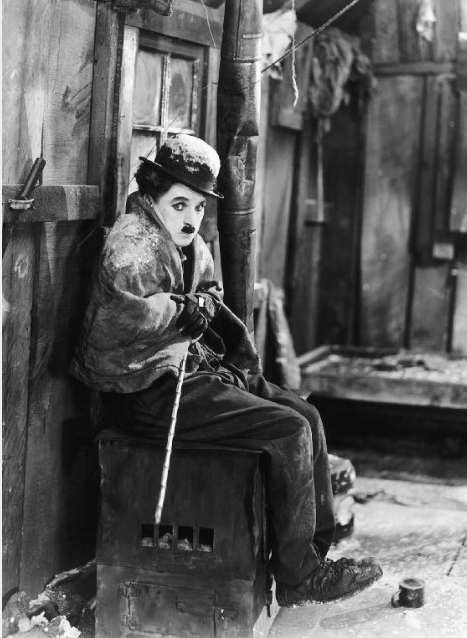
“Moving Pictures” featured a lengthy review of Charlie Chaplin’sThe Gold Rush. Theodore Shane (“T.S.”) wrote that the film’s opening night at the Strand attracted such celebrities as Will Rogers and Constance Bennett.
Cheer Up Charlie…Chaplin in The Gold Rush (1925) (United Artists)
Shane observed that this “dramatic comedy” was a “serviceable picture,” but perhaps Chaplin was getting “too metaphysical about his pathos” and could have used some old-fashioned pie-in-the-face slapstick.
As an example, in a scene in a typical Klondike town, Shane wrote that “one might be given to expect wonders of Gold Rush burlesque with the old Chaplin at the receiving end of the Klondike equivalent of a custard. But one is doomed to disappointment, for Chaplin has seen fit to turn on his onion juices in a Pierrot’s endeavor to draw your tears…We cannot help but recall with a tinge of sadness, the old days when custard was young.”
(Wikipedia)
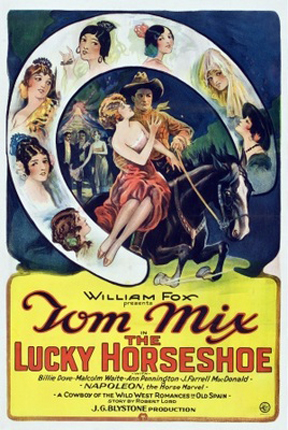
Shane went on to give short but favorable reviews to Rex Reach’sWinds of Chance (at the Piccadilly Theatre), the film’s chief props consisting of “string ties, wooden saloons, ½ dozen cold-blooded murders and the tenderfoot who conquers everything…Shane also noted that the “spiritual features” of Tom Mix in The Lucky Horseshoe (at the Rialto) lent themselves delightfully to “a lovely and sensitive drama of moyen age and modern machinations in the Fairbanks style.”
In “Books,” Harry Este Dounce (“Touchstone”) suggested readers take a look at Carl Van Vechten’sFirecrackers as a good introduction to the writer’s unique style, while J.D. Bereford’sThe Monkey Puzzle was deemed only “partly good” but worth reading.
Lois “Lipstick” Long and Herman J. Mankiewicz. (PBS/Wikipedia)
In her regular nightlife review (“When Nights Are Young”), Lois Long (“Lipstick”) playfully sparred with her New Yorker colleague, theater critic Herman J. Mankiewicz:
Long was referencing this Mankiewicz review in a previous issue (Aug. 8):
And it all started when Long offered this observation in her July 25 “When Nights Bold” column:
I hope you are fully sated. As a palate cleanser, I offer yet another droll observation of the world of old money by Gardner Rea:
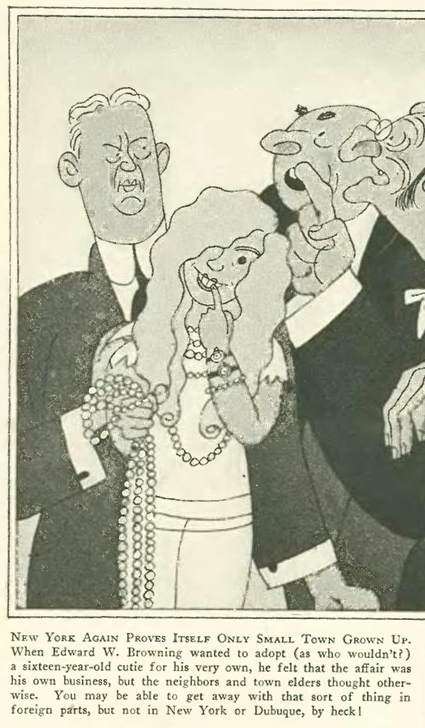
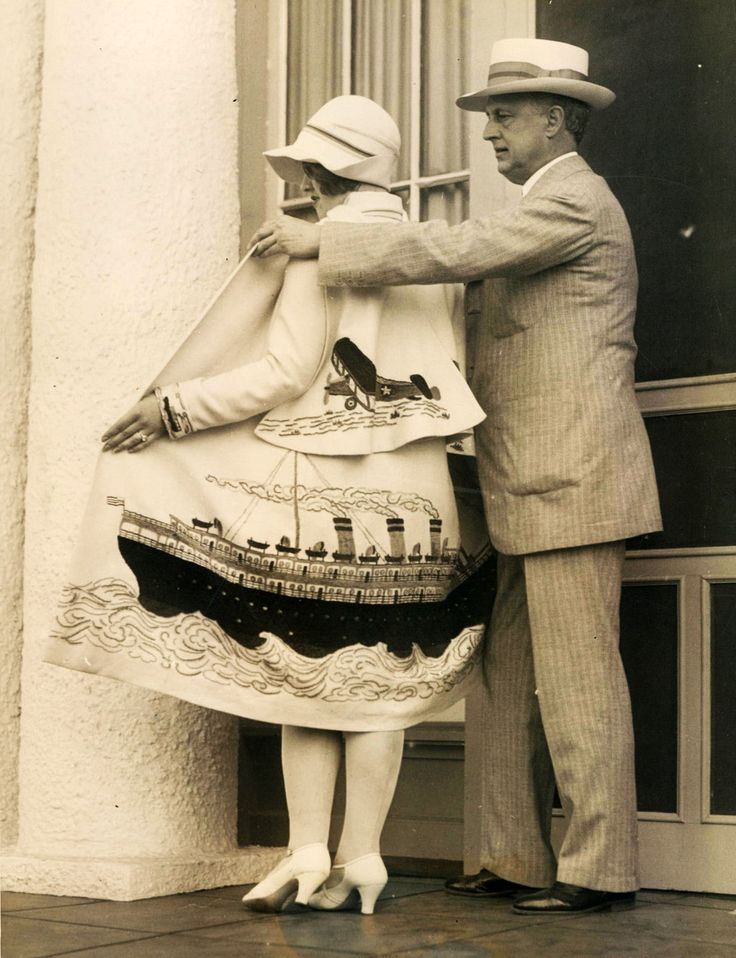
Ralph Barton’s “The Graphic Section” in the August 15, 1925 edition of The New Yorker gave readers their first whiff of one of the sensational scandals of the Roaring Twenties. Barton reported that wealthy, middle-aged bachelor Edward Browning (then 51 years old) wanted to “adopt” a “sixteen-year-old cutie for his very own.”
What Barton referenced in his comic illustration foreshadowed the “Peaches” scandal that would occur the following year.
According to an April 1, 2012 article by Dan Lee in New York Magazine (titled with the subhead, “She was 16, he was 52, what could go wrong?”), Browning was well known in New York City “as perhaps the most idiosyncratic of the city’s eligible bachelors…worth what would now be an estimated $300 million.”
Ralph Barton illustrates Edward Browning’s predicament in “adopting” Mary Louise Spas. (New Yorker Digital Archive)
Lee writes that Browning was already a tabloid fixture at age 40 when he married his first wife, Adele, a considerably younger file clerk. They adopted two daughters, Marjorie and “little Dorothy Sunshine,” Browning’s favorite. When Adele left him for a “28-year-old playboy dentist,” they split the girls between them. Browning, of course, chose “Sunshine,” and vowed never to marry again. Lee takes it from there:
In what the tabloids quickly helped morph into a Willy Wonka–style lottery, Daddy set about finding a sister for Sunshine: After personally reviewing 12,000 applications and interviewing scores of would-be daughters, he chose Mary Louise Spas of Queens, who, despite being 16 and therefore two years older than the cutoff, bore a charming gold tooth and stole his heart. A My Fair Lady transformation ensued, rapturously reported by the press, which continued trolling Spas’s past, ultimately uncovering revealing swimsuit photos that led to school records that led to the disclosure that Mary was actually 21 and not poor. Daddy moved to have the adoption annulled. Mary responded with a tabloid tell-all and lawsuit, alleging Daddy was a pervert.
“Daddy” helps “Peaches” with her coat. If that is an image of the Titanic, the irony is just too rich…(Retronaut)
According to Lee, Browning then turned his attention to charity, “especially for a local chapter of the Phi Lambda Tau social sorority for high-school girls, of which he was the main benefactor.” Lee continues:
The sorority’s primary function was throwing dances across Manhattan for girls in scanty flapper dress, where Daddy, with his long, sagging face and steep W-collared dress shirts, smoked cigars and held court. And so it went that one night, inside the ballroom of the Hotel McAlpin on 34th and Broadway, Browning’s life intersected with Frances Heenan’s, whom the press would describe as a “chubby,” strawberry-blonde high-school dropout with “piano legs” but an inexplicably “magnetic” smile who worked as a shop clerk and lived with her single mother in Washington Heights. He likened her to peaches and cream, securing her lifelong nickname. Thirty-seven days later to thwart a child-protective-services investigation, they were married.
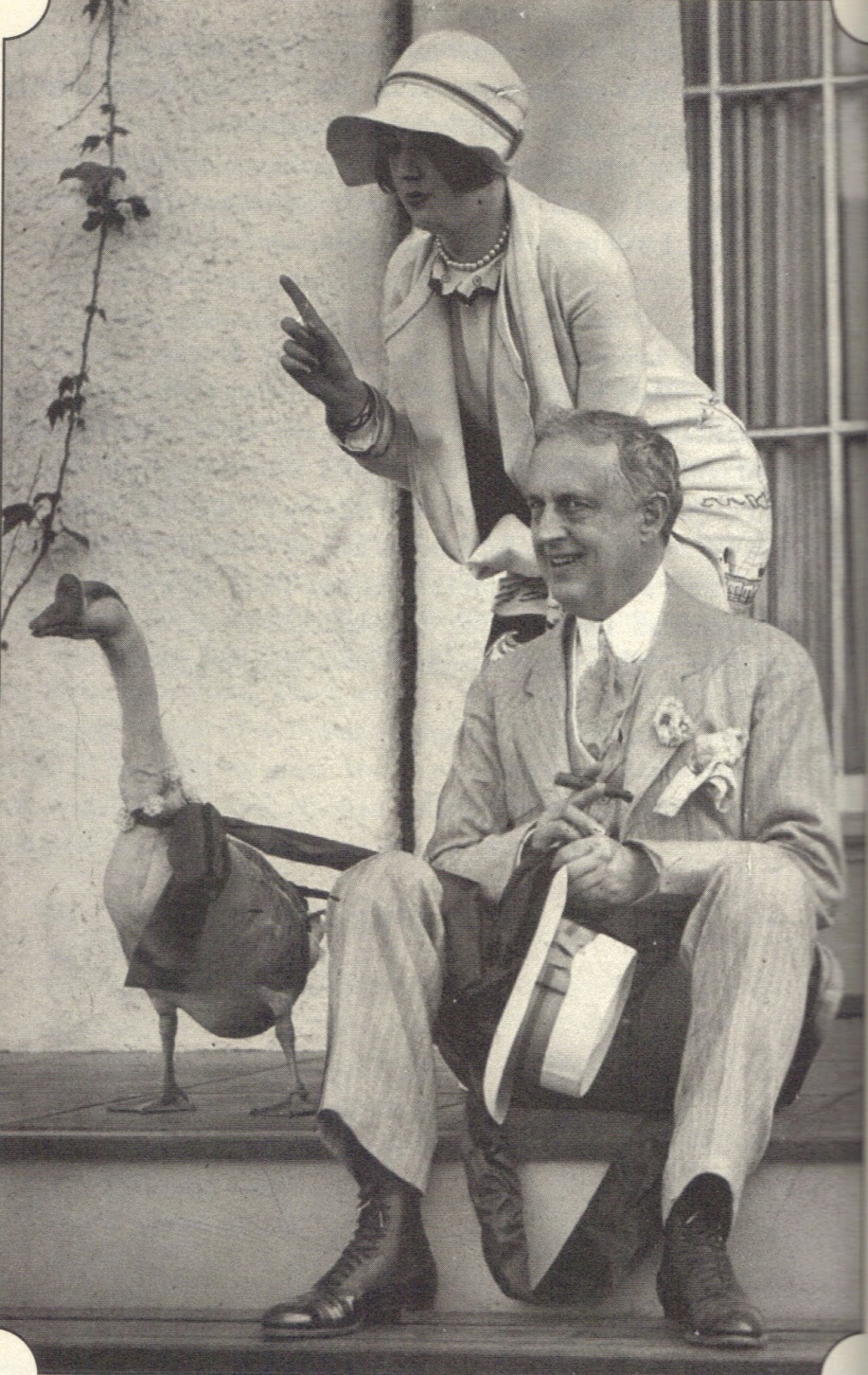
Peaches and Daddy with African goose. (brandypurdy.blogspot)
The wedding took place on June 23, 1926, Peaches’ 16th birthday, but later that year, Peaches would seek a divorce.
The divorce trial in White Plains, New York drew intense coverage by the tabloids including Bernarr McFadden’s notorious New York Graphic, which published “composographs” of the couple, including this one:
Composographs, forerunners of photo manipulation, were retouched photographic collages popularized by publisher and physical culture advocate Bernarr Macfadden in his New York Evening Graphic. The Graphic was dubbed “The Porno-Graphic” by critics of the time and has been called “one of the low points in the history of American journalism.” The images were cut and pasted together using the heads or faces of current celebrities, glued onto staged images created by employees in Macfadden’s in-house studio. (Image: dhtinshakerheights.blogspot.com, Text: Wikipedia)
The story was featured in newspapers across the country, including reports of Peaches’ testimony regarding her husband’s odd sexual behavior and the fact that he kept an African goose in their bedroom. According to Wikipedia, the phrase “Don’t be a goof,” which Browning allegedly used to insult Peaches, came into national vogue, and later turned up in the lyrics of the song “On Your Toes,” by Rodgers and Hart.
In the end, the judge ruled that Peaches had abandoned her husband without cause, and released Browning from the marriage. She was however awarded a $6,000 “widow’s portion” when Browning died in 1934.
Peaches in her vaudeville days. (travsd.wordpress.com)
According to Lee, Peaches pursued a successful career in vaudeville, “had an affair with Milton Berle,” would marry and divorce three more times, and would become an alcoholic. On August 23, 1956, her mother heard a crashing sound in the bathroom of their New York City apartment and found Peaches unconscious with a large contusion above her ear. She was dead at 46.
If you want to read more about this strange coupling, Michael Greenburg has written a book, Peaches and Daddy: A Story of the Roaring 20s, the Birth of Tabloid Media, and the Courtship that Captured the Hearts and Imaginations of the American Public.
And so on to the rest of the issue…
“Profiles” featured Theodore Dreiser, whom Waldo “Search-light” Frank dubbed “the martyr of the American Novel” and a “heroic warrior against legions of a commercial and Puritan world.”
“The Talk of the Town” offered this postscript on the “Scopes Monkey Trial,” observing that the small Tennessee town was suffering a bit of hangover (and attendant humiliation) from all of the trial publicity:
“Sports of the Week” covered the annual “Dog Show of the Consolidated Hamptons,” featuring illustrations by Johan Bull:
In her column, “When Nights Are Bold,” Lois Long offered the Montmartre as a venue for summer entertaining:
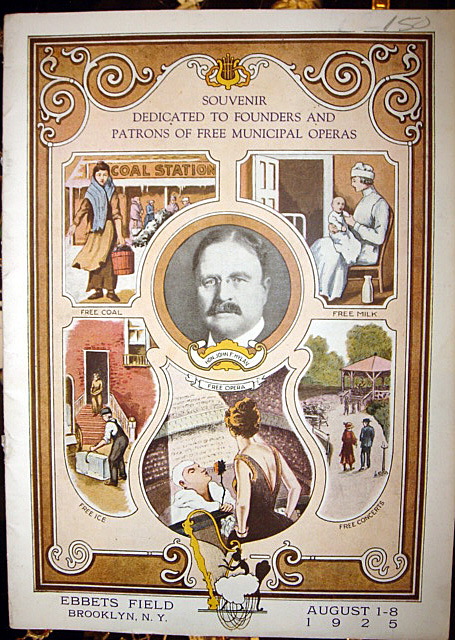
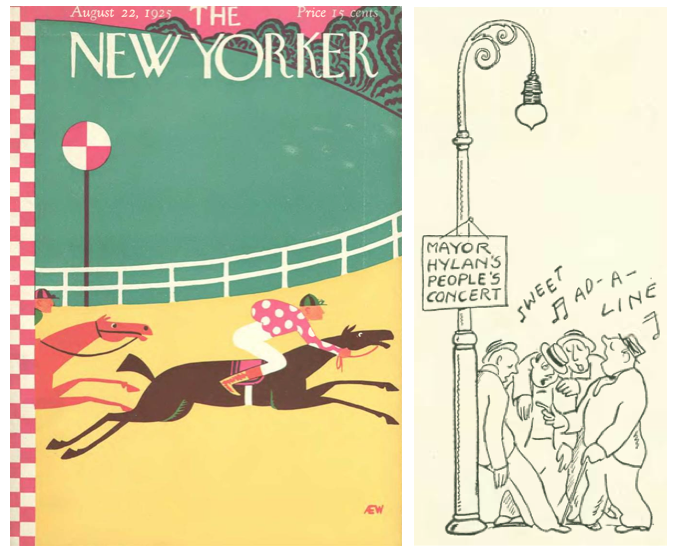
“Music” featured a brief review of Mayor John F. Hylan’s “free people’s concert,” Aida, at Ebbett’s Field, taking the usual shots at the mayor’s grasping attempts at publicity:
Program promoting Mayor Hylan’s public operas and other services from August 1925
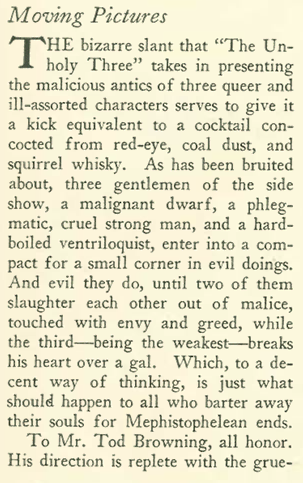
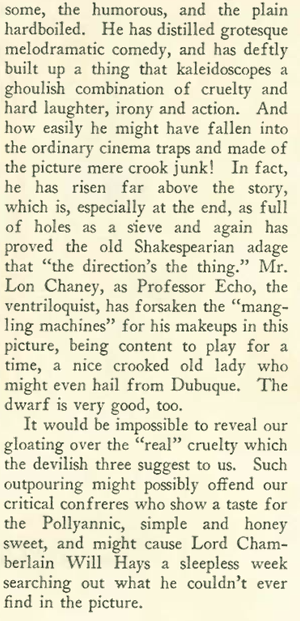
“Moving Pictures” peered between fingers at Tod Browning’s latest picture, The Unholy Three (the same Tod Browning who would go on to direct Dracula with Bela Lugosi in 1931 and the creepy 1932 cult classic, Freaks):
Lon Chaney and friend in The Unholy Three (1925) (Alamo Drafthouse)
Sweet dreams!
Next time, more horseplay, and another jab at the mayor:
The dog days of summer were ushered in by the news that “the buyers” had “invaded” the city.
The “buyers” in question were tourists (and no doubt some clothing store merchants) from across the country who had descended upon Gotham in search of the latest fashions that could be bundled off to the hinterlands.
“The Talk of the Town,” speaking through the fictional persona “Van Bibber III,” took a sneering view of this annual migration:
(New Yorker Digital Archive)
In the first issues of The New Yorker, the “Van Bibber III” signature appeared occasionally at the end of “Talk” or other items.
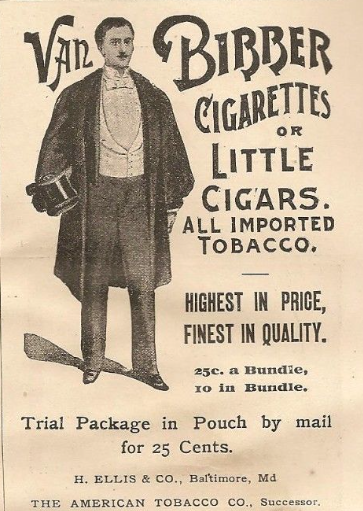
Van Bibber advertisement in Cosmopolitan, 1896
In her book, Defining New Yorker Humor, Judith Yaross Lee wrote that early readers of The New Yorker would have recognized the Van Bibber III persona “as a joke, a personification of Van Bibber cigarettes, whose ads targeted the devil-may-care, swagger young man about town all dressed up for the opening night. As an insiders view of the urban scene, Van Bibber’s accounts featured casual conversation—that is, talk.”
“Of All Things” offered this update on the activities of illusionist Harry Houdini:
Houdini, charged with disorderly conduct after smashing up an office, replied: They locked the door and I had to fight my way out.” Bang goes another illusion! We thought he could open anything but a car window.
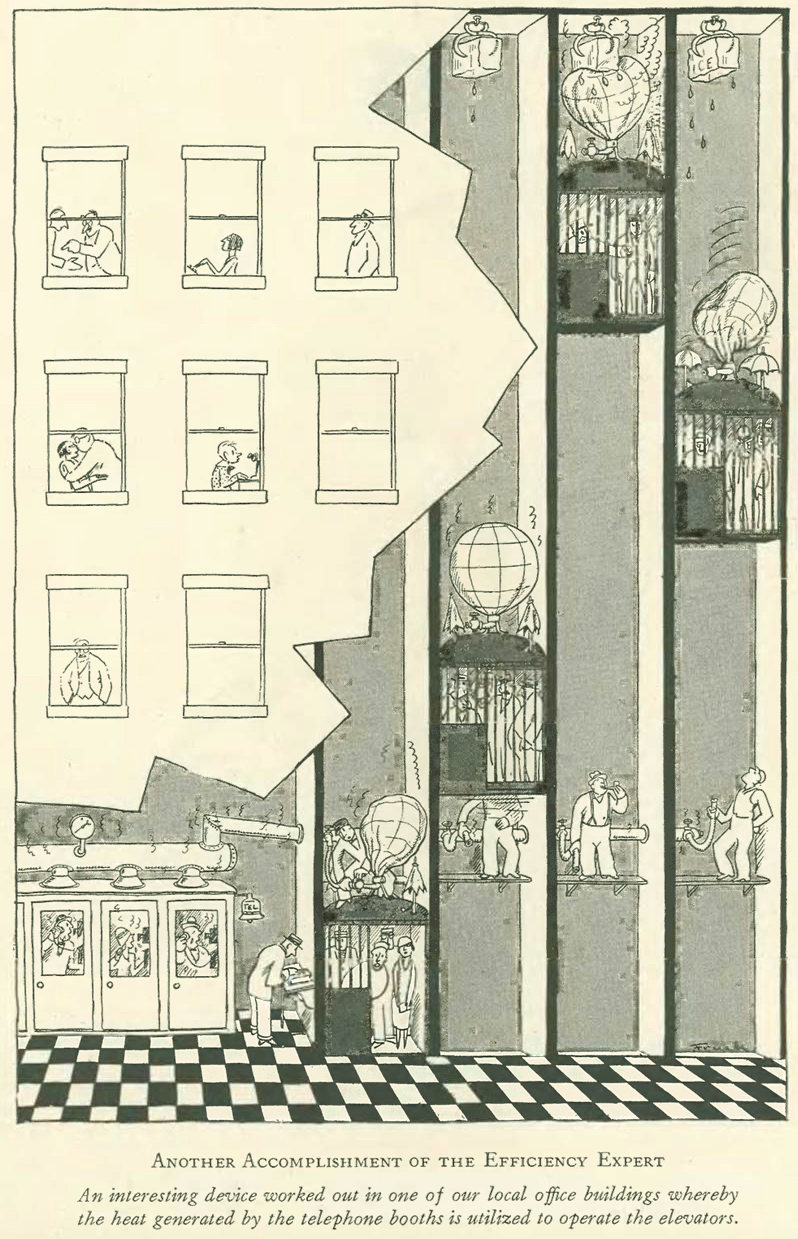
Murdock Pemberton wrote about the life of poet Harry Kemp in “Profiles,” and cartoonist Al Frueh offered this twist on the uses of “hot air:”
(New Yorker Digital Archive)
And more art from Ralph Barton, this time along with his views on the play Artists and Models and the contrasts between life in New York and Paris:
(New Yorker Digital Archive)
“Moving Pictures” offered praise for Sally of the Sawdust, featuring W.C. Fields. Theodore Shane wrote that Fields had distinguished himself from other movie comedians through his act as a “snooty sort of superclown.”
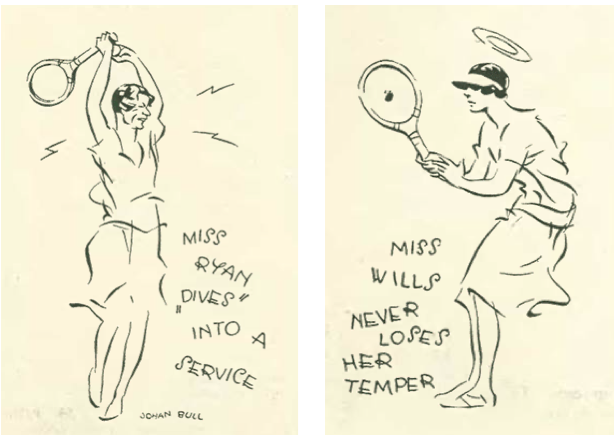
Art work by Johan Bull from “Sports of the Week.” In their careers, Elizabeth Ryan won 30 Grand Slam Titles, and Helen Wills won 31 (New Yorker Digital Archive).
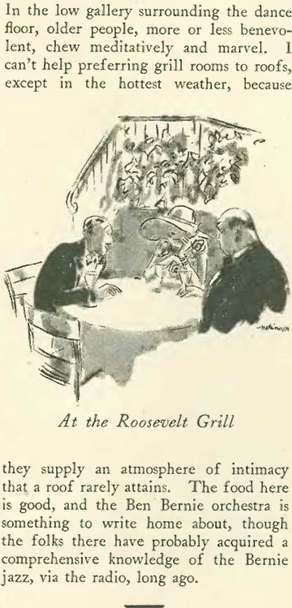
The tennis tournament at Seabright featuring Elizabeth Ryan and Helen Wills was the subject of “Sports of the Week,” and in “When Nights Are Bold,” Lois Long continued her look at nighttime entertainment venues to beat the summer heat:
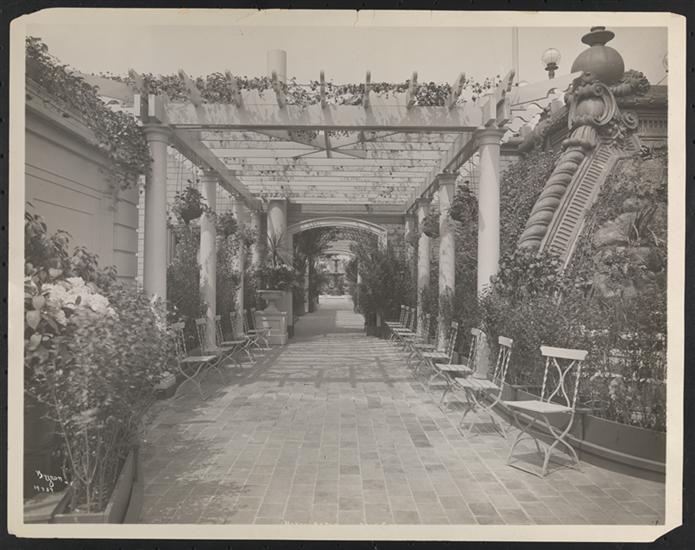
(New Yorker Digital Archive)Hotel Astor Roof Garden in 1905 (Museum of the City of New York)
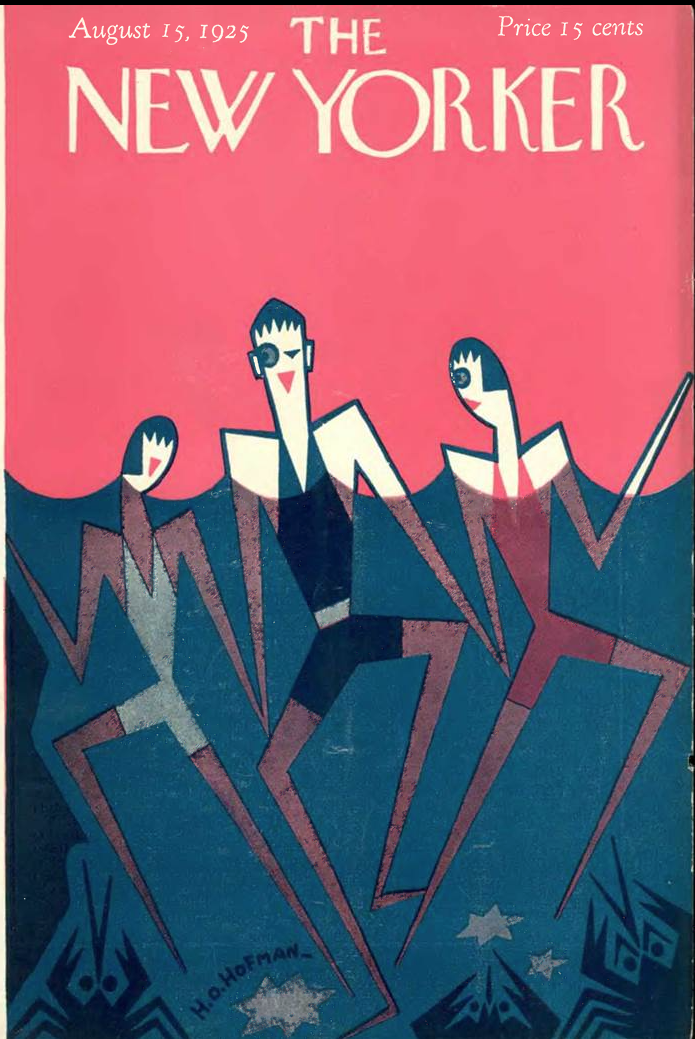
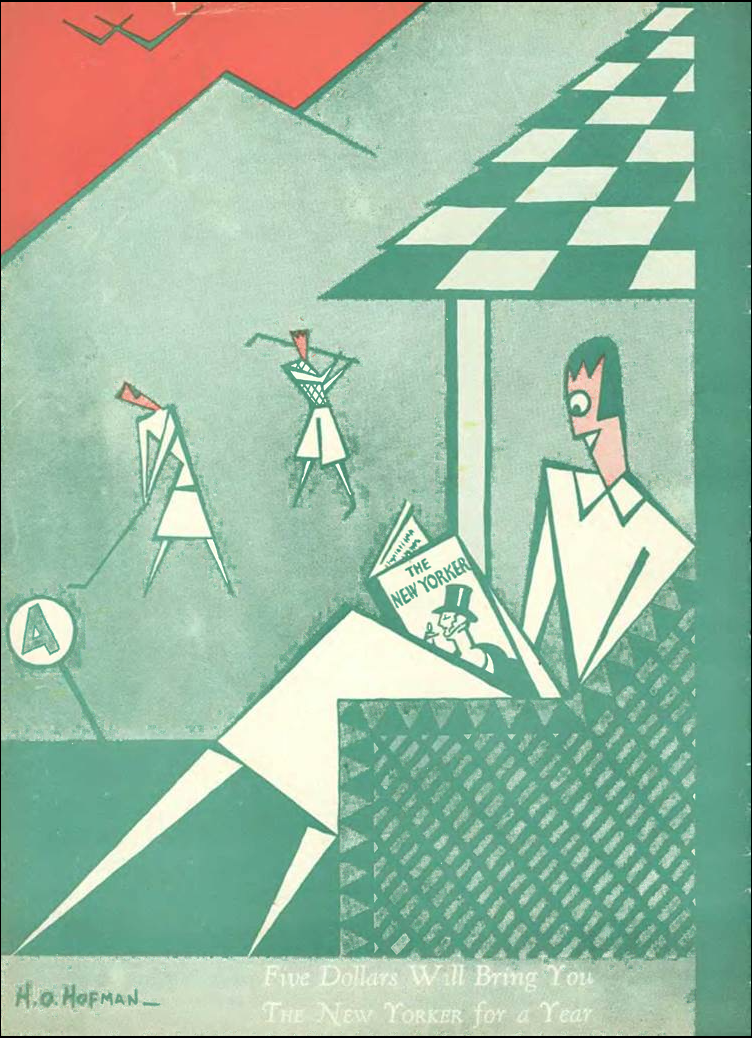
Advertising remained sparse in the pages of The New Yorker, with both inside front and inside back covers devoted to in-house ads promoting the magazine. In addition, the color back cover was also a house ad, featuring a rendering by H. O. Hofman:
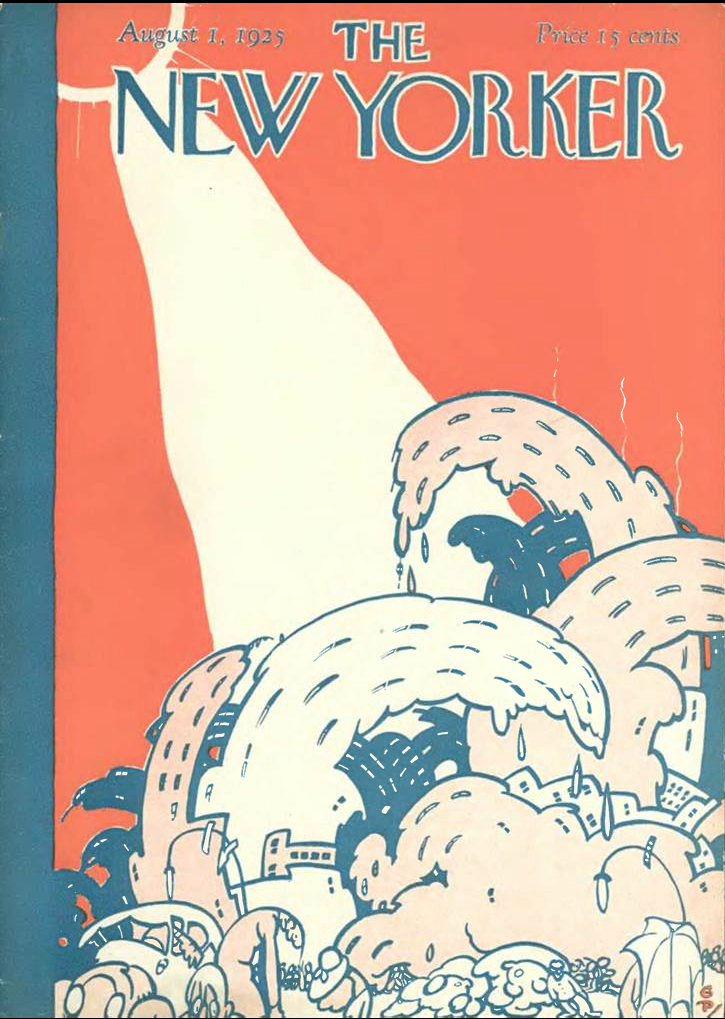
For all of TheNew Yorker’s attention to the Scopes Monkey Trial, the August 1, 1925 issue had little to say about the trial’s outcome.
The State of Tennessee v. John Thomas Scopes was decidedin the Criminal Court of Tennessee on July 21, 1925, with Scopes found guilty and fined $100 (equivalent to $1,345 in 2015), but the verdict was overturned on a technicality.
“The Talk of the Town” offered this brief observation under its weekly wrap-up column: “Mr. Scopes, found guilty, goes home to Paducah, Kentucky…”
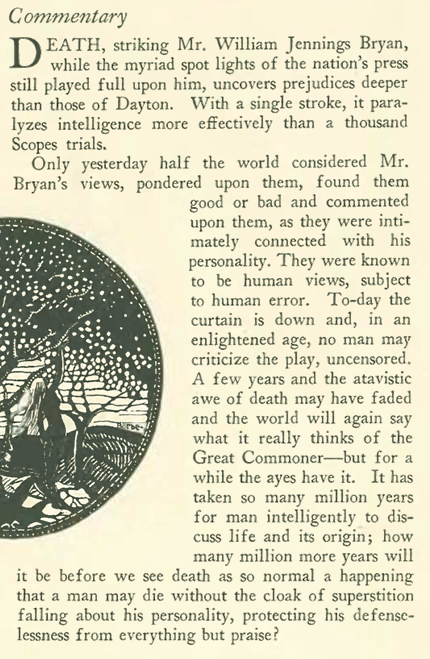
And then this item toward the end of “Talk,” announcing the death of the Scopes Trial defense attorney (and one of the magazine’s favorite punching bags) William Jennings Bryan:
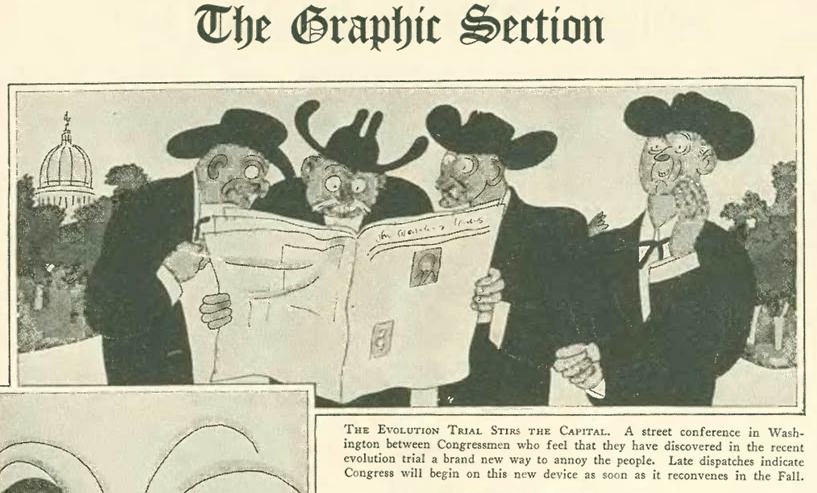
“The Graphic Section” offered this cynical twist on the trial’s outcome:
(New Yorker Digital Archive)
In a related item under “Of All Things,” Howard Brubaker wrote, “Representative Upshaw of Georgia will introduce an anti-evolution bill in Congress. Upshaw is never happy unless the Ship of State is making twenty thou-shalt-nots an hour.”
Clarence Darrow and William Jennings Bryan have a friendly chat during the Scopes Monkey Trial. Following the trial Bryan traveled hundreds of miles, delivering speeches in multiple towns. On July 26, 1925, he returned from Chattanooga, Tennessee to his home in Dayton. After attending church services he ate a large meal, then died during a nap that afternoon, five days after the trial’s conclusion. When someone remarked to Darrow that Bryan died from a “broken heart”, Darrow responded, “Broken heart, hell, he died of a busted belly!” (Wikipedia)
Brubaker also quipped, “Tennessee is not the only State where there is arrested mental development, but it is the only one so far where it has been fined.”
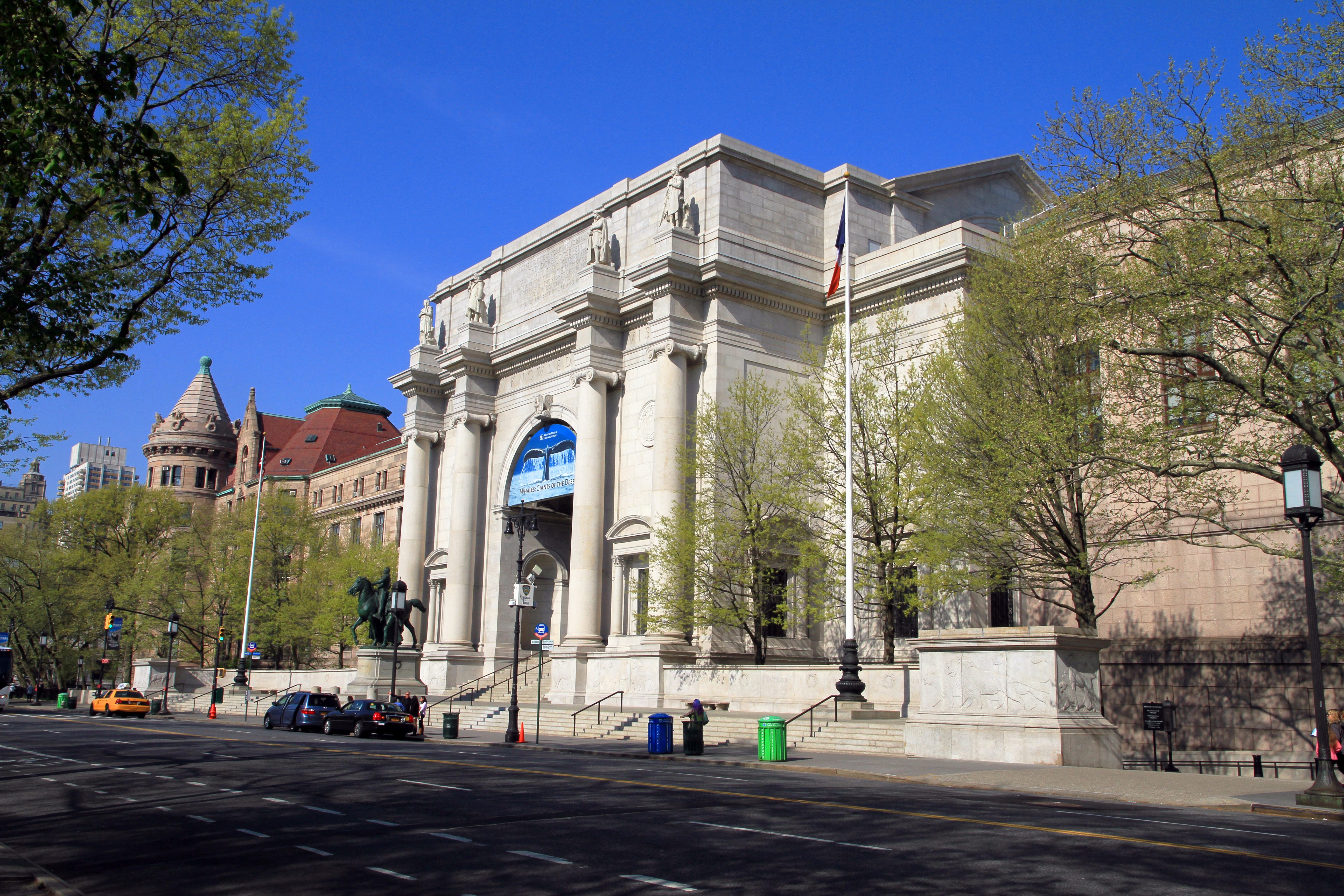
Back to “The Talk of the Town,” the design for a memorial to Teddy Roosevelt was approved, to be erected as part of the east façade of the Museum of Natural History. It was noted that the design featured Ionic columns that Roosevelt “would have detested in favor of a “native expression of the arts…”
The Museum of Natural History façade designed by John Russell Pope. (Wikimedia Commons)
“Talk” continued: “One recalls that Colonel Roosevelt wrote the American Institute of Architects deprecating the use of the lions which doze at the entrance to the Public Library, and advocating the placing there of bisons instead…The memorial to the man who insisted thus on American art, rather than imitation of foreign models, is to be a severely classic as the facade of –let us say—the First National Bank of Dubuque, Iowa.”
Lion guards New York Public Library entrance. Teddy would have preferred the native bison. (Wikimedia Commons)
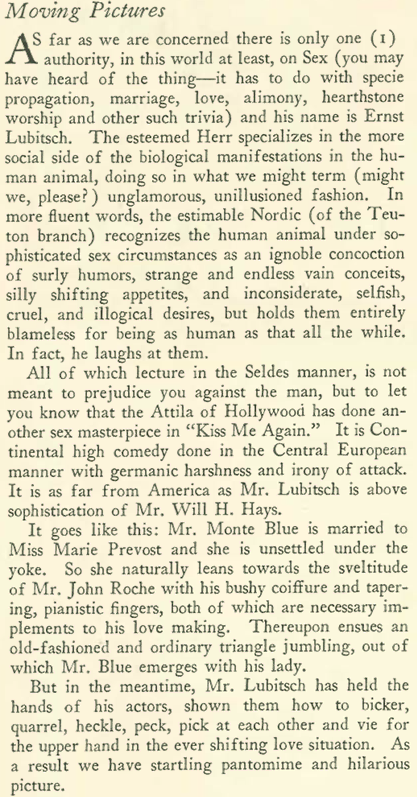
“Profiles” featured Walter L. Clark, a “genius who made art into business.” The movie reviews included Theodore Shane’s fumings on prudishness of American censors (Will Hays in particular) especially when compared to more liberal European productions by directors such as Ernst Lubitsch:
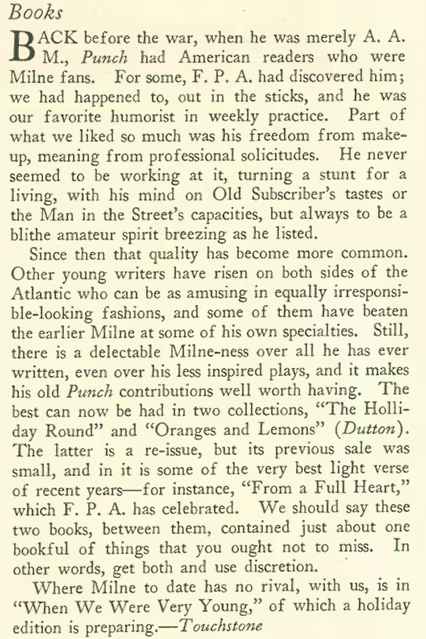
In books, the magazine continued its admiration for the jottings of A.A. Milne:
(New Yorker Digital Archive)
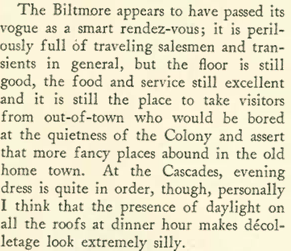
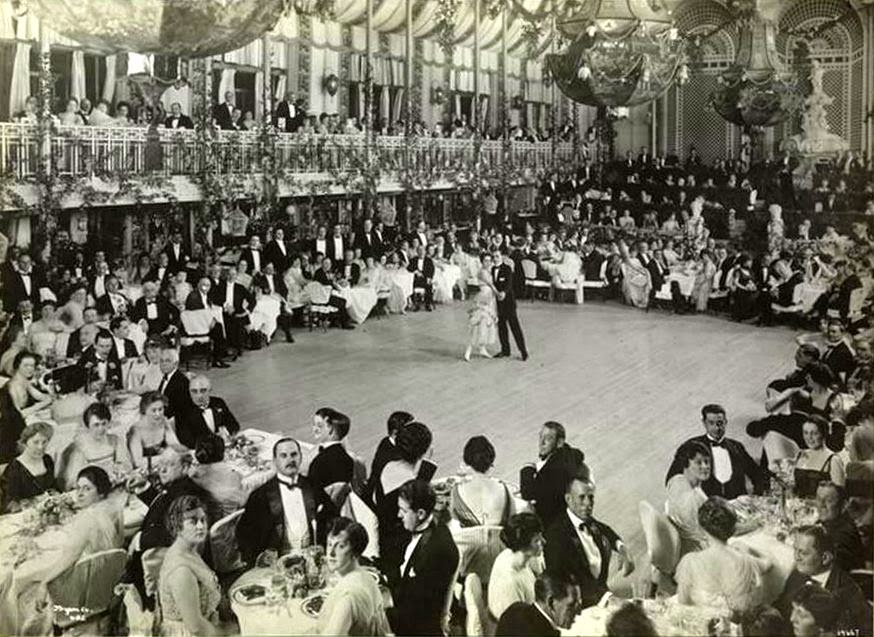
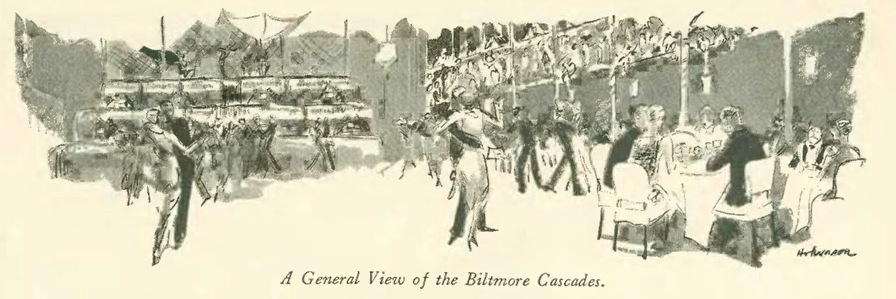
As for night life, The New Yorker lamented (“When Nights Are Bold) that the rooftop garden at the Biltmore “was the only bower worthy of the name left in town where quiet or startling simplicity reigns”:
The Biltmore Cascades (Museum of the City of New York)Illustration of the Cascades by Helen Hokinson.(New Yorker Digital Archive)
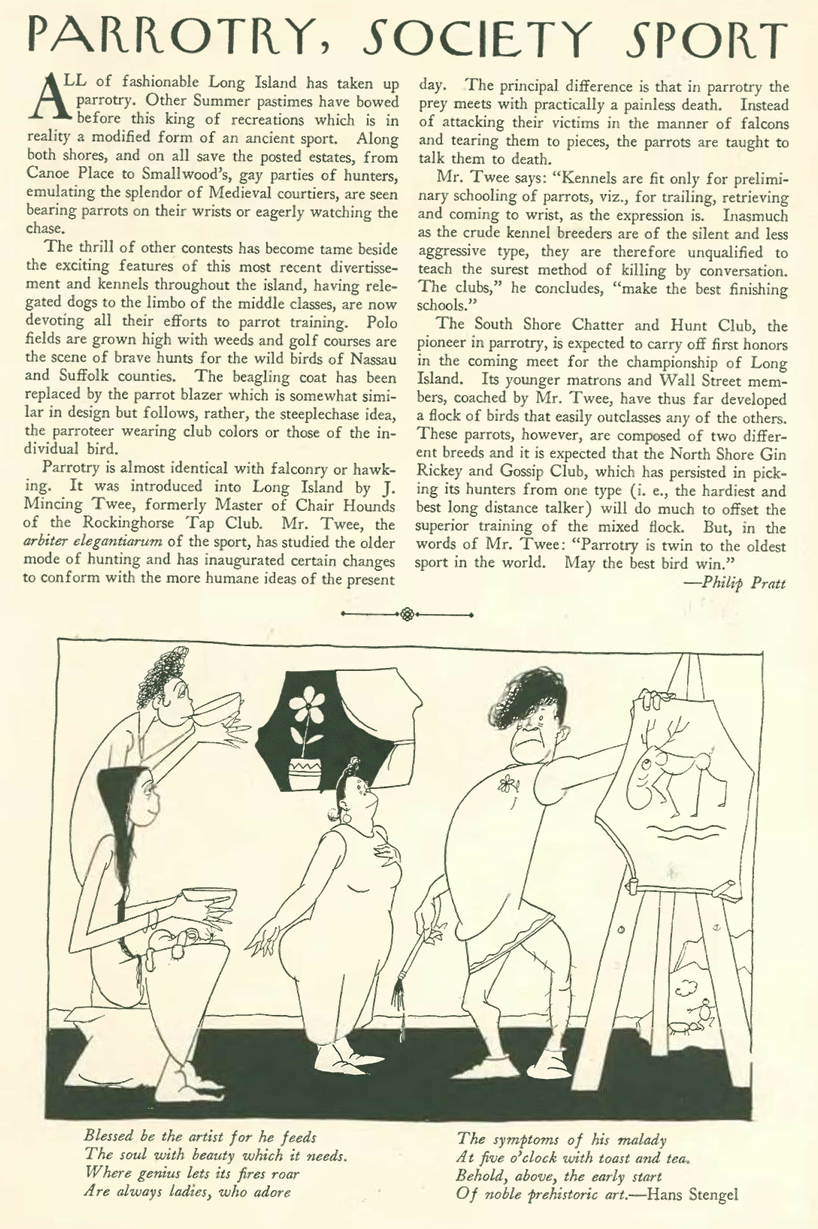
And speaking of society pursuits, Philip Pratt offered this parody on falconry, while Hans Stengel took aim at the starving artists:
(New Yorker Digital Archive)
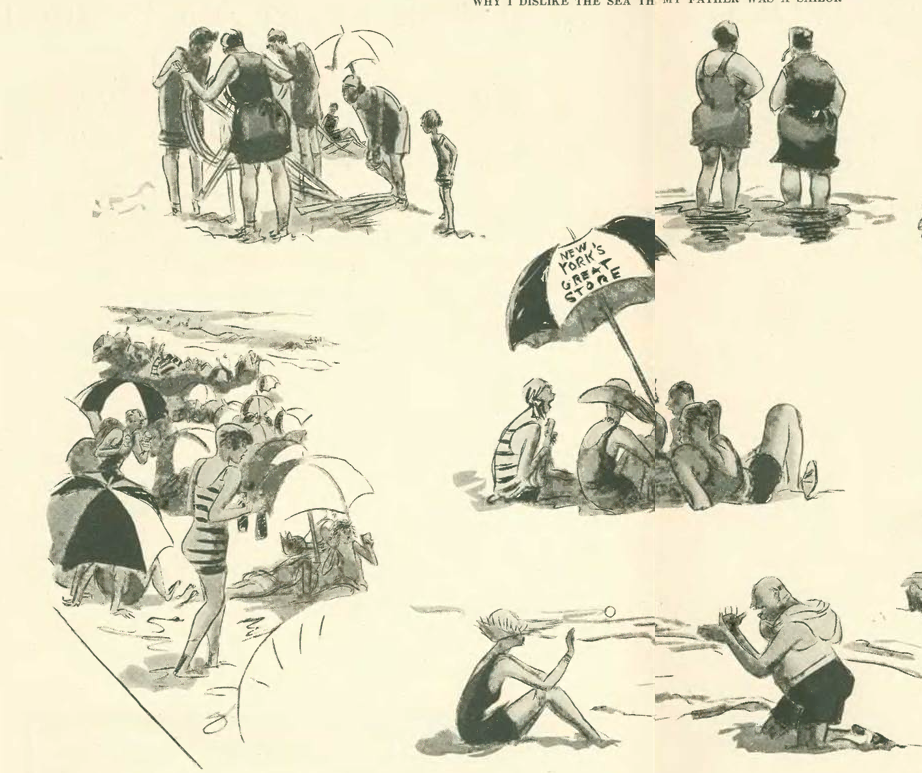
And we end with a detail of summertime images (by Helen Hokinson) from the center spread of the August 1 issue:
The “King of Greenwich Village Bohemians,” Maxwell “Bogie” Bodenheim, was a leading (and notorious) American poet and novelist when “The Talk of the Town” (July 25, 1925) reported on the controversy surrounding his latest novel, Replenishing Jessica, sometimes referred to as one of the infamous “lost” bohemian novels of the 1920s.
Although few consider the book to be great literature (or by today’s standards, scandalous), Replenishing Jessica’s frank portrayal of a woman’s many sexual liaisons was enough to draw the ire of censors.
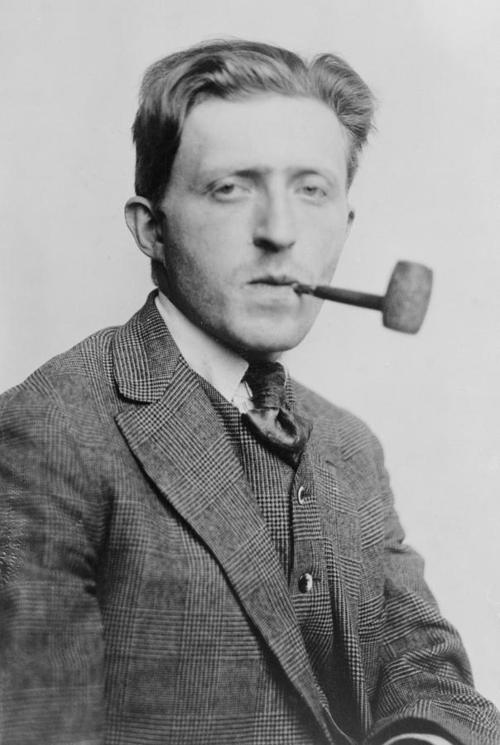
Maxwell “Bogie” Bodenheim (The Chiseler)
Bodenheim’s publisher, Horace Liverwright, even found himself the subject of a grand jury investigation, which had declared the book obscene, although he was never prosecuted (Liverwright’s defense attorney was none other than Arthur Hayes, who would also serve on Clarence Darrow’s defense team in the Scopes Monkey Trial).
The New Yorker reported that Bodenheim was “present under a $2,500 bond” following publication of Replenishing Jessica, and called him “one of our few sincerely colorful literati.” It was also suggested that Bodenheim suffered from a “the same persecution complex which tortured Lafcadio Hearn; in his mind, editors meet to plot means to keep him out of print” (Hearn was a late 19th century writer known for his stories based on Japanese legends).
“Talk” described Bodenheim as “ragged and unkempt,”
his pipe “a burnt corn-cob, wedged in his broken front teeth…Eccentric, erratic, is Mr. Bodenheim, careless of the world’s criticism outside of his work, but there is an air of sincerity about him, cynical sincerity, a brittle sparkle to his conversation, that fascination of exotic, social lawlessness.
There is an interesting New Yorker connection to Bodenheim, who met writer Ben Hecht in Chicago in 1912 and with him co-founded the short-lived Chicago Literary Times, which featured such poets and writers as Carl Sanburg, Theodore Dreiser and Sherwood Anderson.
After his success as a leading American author in the 1920s and 1930s, Bodenheim became a panhandler and was arrested and hospitalized a number of times for vagrancy and drunkenness. In an article for The Chiseler, critic John Strausbaugh wrote that Bodenheim had “a real talent for scandal, easy enough to generate during Greenwich Village’s prolonged drunken orgy in the Prohibition years.”
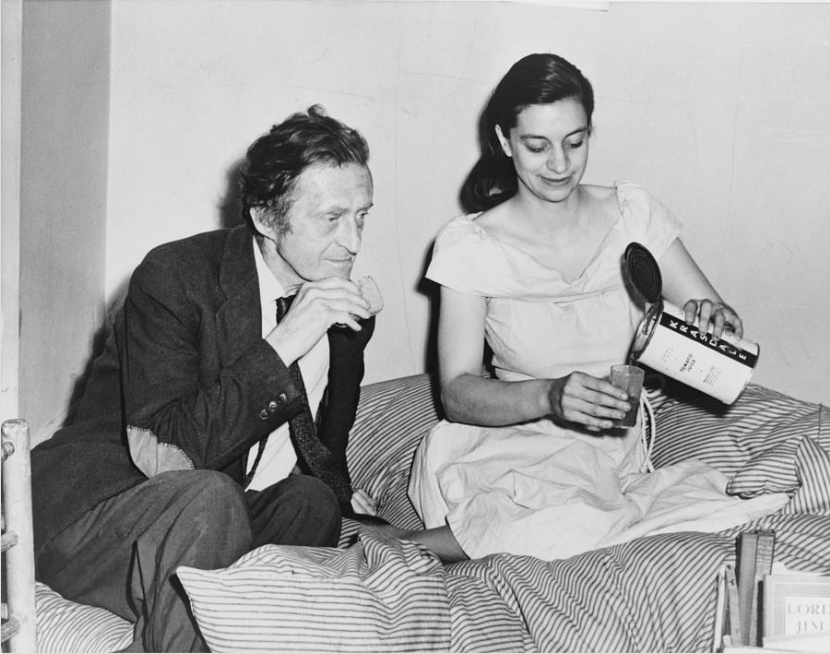
Maxwell Bodenheim and Ruth Fagin sharing a breakfast of tomato juice and sandwiches as they await eviction from their Bleecker Street apartment, circa 1952. (The Chiseler)
In 1952 the 60-year-old Bodenheim married his third wife, Ruth Fagin, who was 28 years his junior. Strausbaugh takes it from there:
In 1953, Ruth took up with a violent, mentally unstable dishwasher named Harold Weinberg. One night in the winter of 1954 the three of them wound up in Weinberg’s room off the Bowery. Bodenheim roused himself from a drunken stupor to see Ruth and Weinberg having sex. He attacked Weinberg, who pulled out a .22 and shot him through the heart. Then Weinberg stabbed Ruth in the chest. The last photos of Bodenheim show him and Ruth lying dead in the squalid room.
Weinberg confessed to the double homicide, was judged insane and sent to a mental institution.
Now on a happier note…
This issue was also replete with various equine diversions. A feature titled “Au Gallop!” looked at groups of New Yorkers who plied the bridal paths of Central Park.
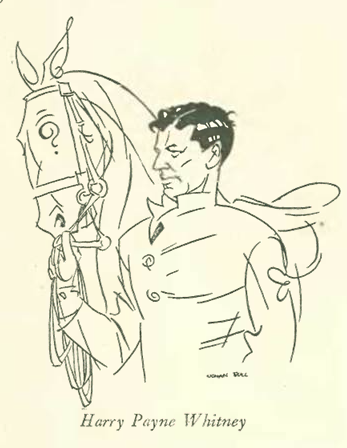
In “Profiles,” Jack Frost wrote admiringly about Harry Payne Whitney (accompanied by an heroic pen-and-ink portrait by Johan Bull). Whitney was a wealthy American businessman, thoroughbred horse breeder, and according to Frost, a “restless impatient force” who “concentrates on success.”
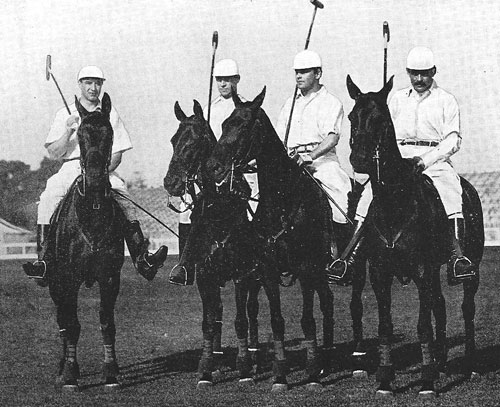
The victorious American team at the 1911 Westchester Cup. Harry Payne Whitney is second from left. (westchestercup.org/archives)
Among other things, The New Yorker credited Whitney with the creation of international-level polo competition in America and considered him the country’s best hope to win the Westchester Cup from England (Whitney was on the 1909, 1911 and 1913 winning American teams). Frost wrote that thanks to Whitney, “we have Homeric contests at Meadow Brook, as blood-stirring as the most epic battles of a Griffith film…”
There was no coverage of the Scopes Monkey Trial in Dayton, Tennessee, but cartoonist Al Frueh provided this reminder:
(New Yorker Digital Archive)
“Of All Things” noted that the population of New York City stood at 6,103,384, the 384 representing “those who have never had ferry-boats named after them” (The current population of the city is about 8.5 million).
View of midtown Manhattan looking southeast from Central Park, May 1925, when the population stood at 6,103,384. (Fairchild Aerial Surveys)
The column also offered this quip about the difference between France and England: “Another difference between the two countries is that England is working on the isolation of germs while France is still concerned with the isolation of Germany.”
Will Rogers was a popular draw as part of the “Follies” cast. (Will Rogers Memorial Museums)
The “Critique” section urged readers to see select Broadway shows before the new fall season. Recommended plays included What Price Glory, They Knew What They Wanted, Desire Under the Elms, Is Zat So?, the Ziegfeld Follies, Artists and Models, Lady Be Good and Rose-Marie.
The “Music’ section praised a new talent, Abram Chasins. “This young man is going to be something. In fifty years you may pat your granddaughter’s hair (if she has any) and tell her that you saw it in THE NEW YORKER first.” Chasins would have a long career as a pianist and composer, and later as a broadcaster and radio executive. He is perhaps best known for his Three Chinese Pieces composition.
The “Moving Pictures” section looked at Lightnin (“all our sentimental friends will find it a charming American epic”), and Rugged Water, starring Wallace Beery, who played a cowardly coast guard captain. Wrote the reviewer: “(Beery) does not seem to know what it is about and funks badly indeed. As for the rest of the picture, a good performance is given by the ocean.”
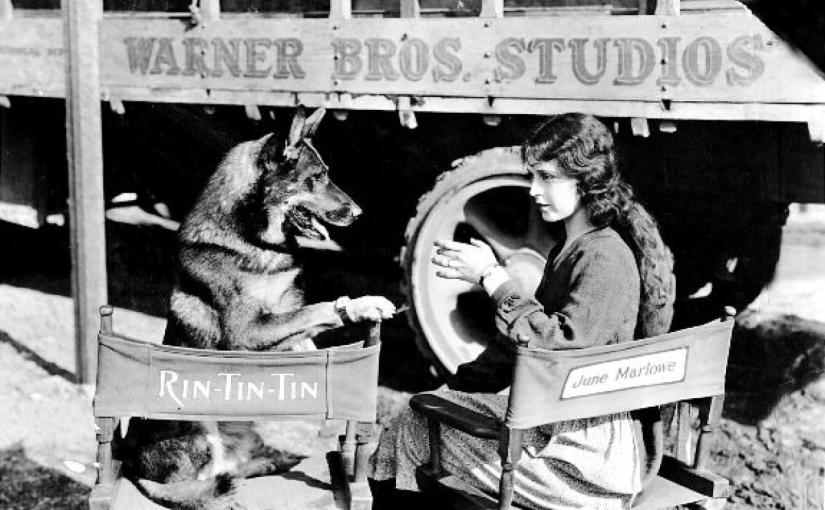
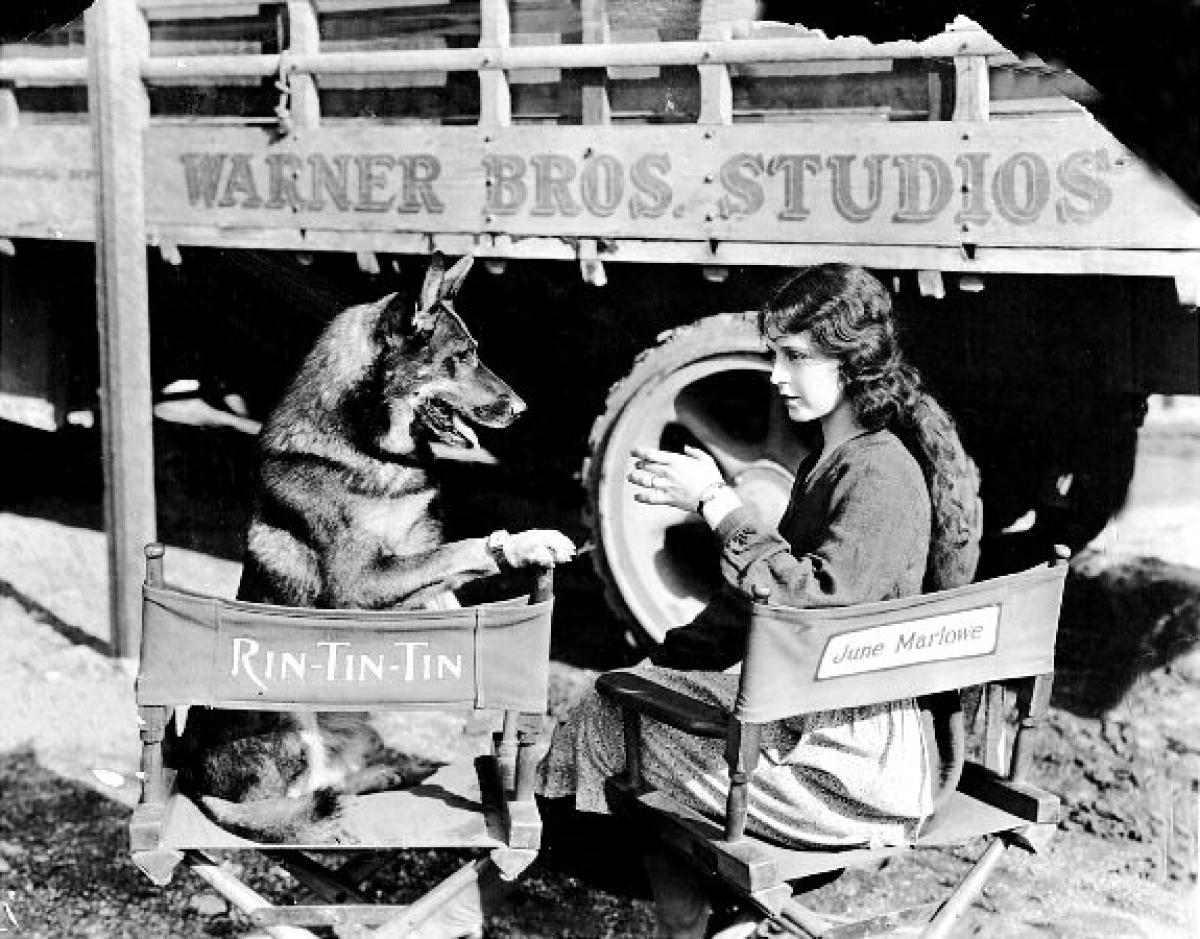
June Marlowe and Rin Tin Tin in a scene from Tracked in the Snow Country. (1925) (Warner Bros.)Rin Tin Tin and June Marlowe appear in an advertisement for wristwatches. They made four films together in 1925-26 (Warner Bros.)
In reviewing the dog superstar Rin Tin Tin’s latest movie, Tracked in Snow Country,Theodore Shane (“TS”) mused “It is questionable as to what a dog would say were he able to appraise the virtue that he defends on the screen. Would he find that gold mine worth fighting for or that gal’s innocence worth saving or that villain’s throat worth chawing?…He is a handsome animal to look on and appealing in every foot of the film he plays, but we wish that all that beauty would get cynical for a change.”
Susan Orlean wrote a terrific article about Rin Tin Tin in the August 29, 2011 issue of The New Yorker titled “The Dog Star: Rin Tin Tin and the making of Warner Bros.” She also published a book, Rin Tin Tin: The Life and the Legend that same year. Highly recommended.
In her column “When Nights Are Bold,” Lois Long offered readers cool escapes from the summer heat at various themed entertainment venues:
(New Yorker Digital Archive)
While advertisers continued to shill exclusive getaways for “carefully selected clientele”…
(New Yorker Digital Archive)
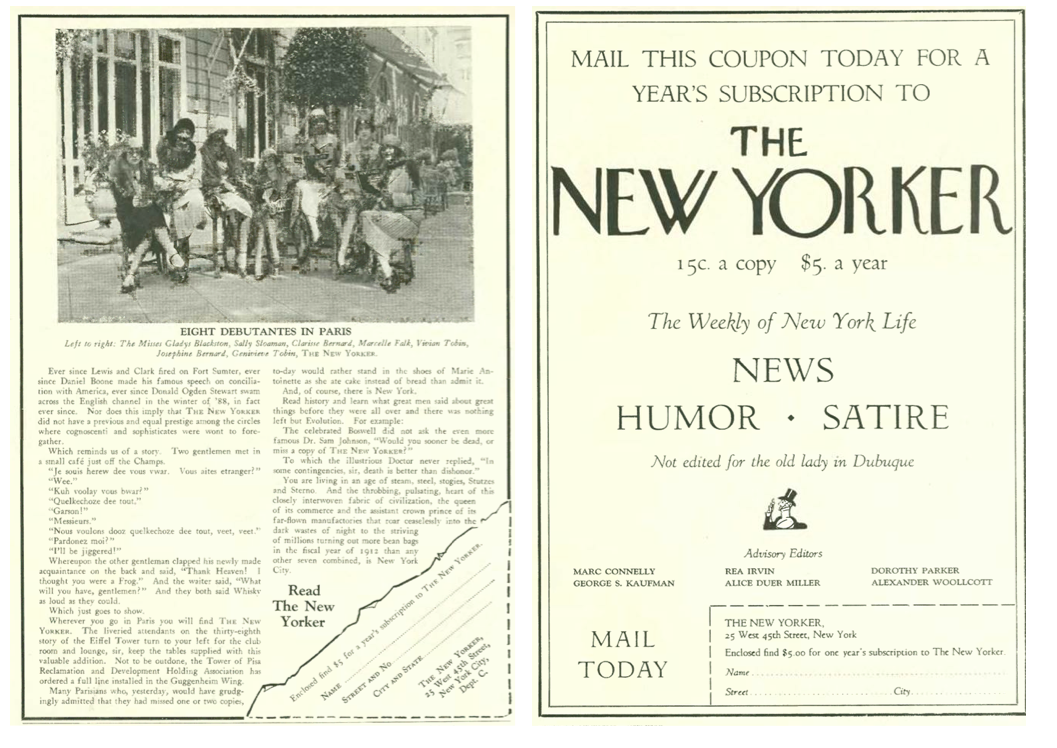
At this point the magazine itself seems to be hanging on by a thread. There is scant advertising in this thin issue (24 pages plus cover). The full-page ads on both the inside front and back covers are in-house ads promoting subscriptions to The New Yorker:
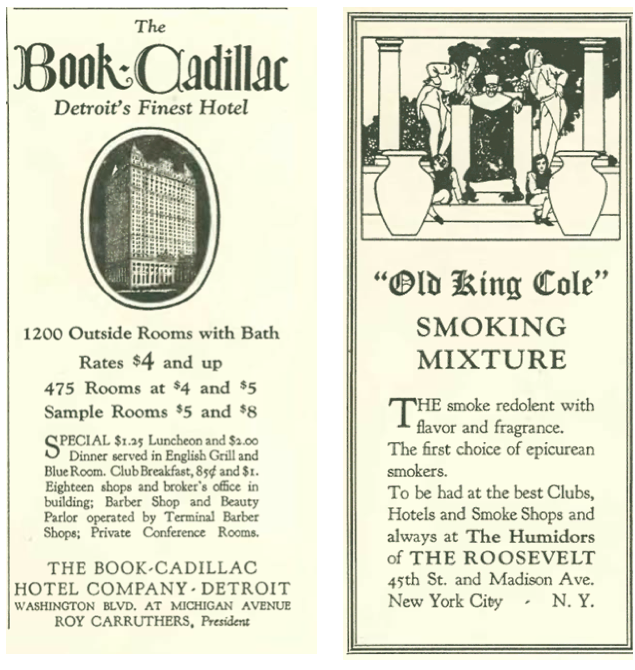
And here are two 1/6 page ads featured in the sports section, one from a Detroit hotel no less:
(New Yorker Digital Archive)
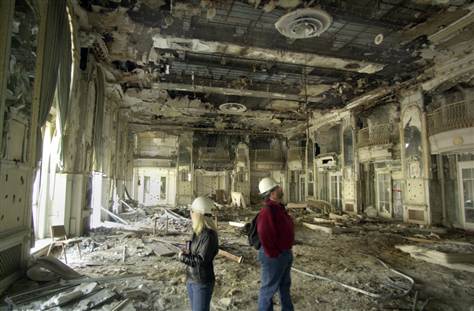
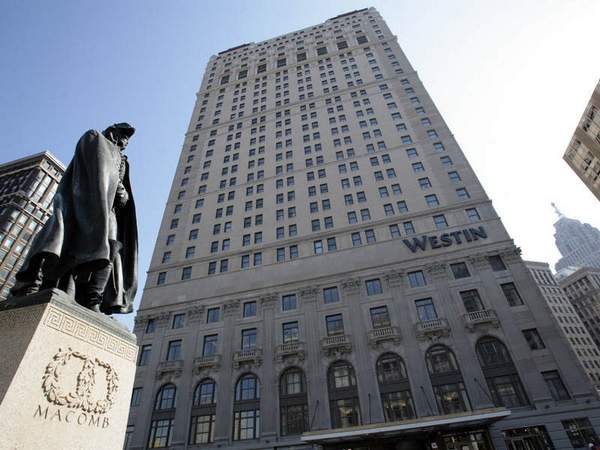
In a final note, I feature a rare non-NYC item. After falling into decay over several decades, Detroit’s Book Cadillac Hotel (advertised above) was restored in 2008 and reopened as a Westin hotel:
Before restoration (NBC News)The same room today after restoration (above), and the hotel’s exterior (Westin/Wikipedia)
“The Talk of the Town” welcomed midsummer by noting the changes in the “new Summer Social Register…A long, slow swing of the same pendulum-like power which shifts the vogue in night clubs and restaurants is the migration to inland resorts…The Hamptons have fallen off, Newport has weakened and of the coasts only New England, boasting ‘the prestige of the Summer White House,’ has held its own.”
It was thought that perhaps financial pressures on waterfront acreage “had added zeros to the 400” and “The fragments of our battered conservatives turn and twist uneasily, seeking readjustment, new barriers (translation: old money responds to the invasion of new money).
There goes the neighborhood…
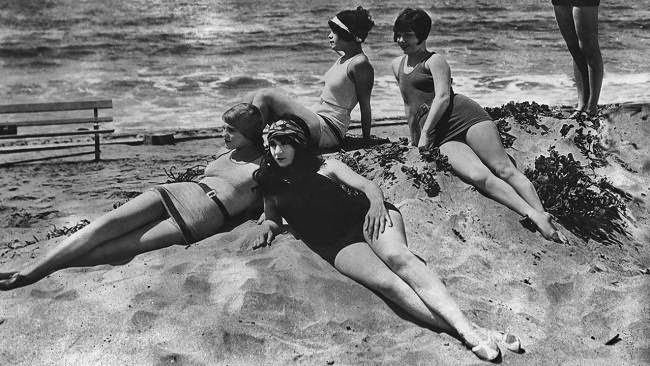
This siege on the sanctity of “the 400” – a reference to the number limited to Mrs. John Jacob Astor’s social circle – included the appearance of “scanty” bathing suits on Southampton beaches:
Corroborative evidence of the storming of the conservative fortresses by Undesirables comes with Southampton’s latest protest against scanty bathing costumes, “usually worn by strangers.”
Just what these costumes were or were not, the Southampton Bathing Corporation did not say, but they ruled that stockings and cape must be worn “while walking down to the water.” This ordinance to apply “especially at week-ends and during tennis week.
Arrowhead Inn Dining Terrace (Museum of the City of New York)
Beginning with this issue, the “When Nights Are Bold” feature was passed from Charles Baskerville (pen name “Top Hat”) to the newly hired Lois Long (pen name “Lipstick”). In her first column for The New Yorker, Long suggested that for those “who can get out of town at will,” the Arrowhead Inn “up Riverdale way” and high on a bluff above the Hudson, was a popular destination for dining and dancing, even if the dancing crowd left something to be desired:
Another recommended Hudson River location was the Claremont (but alas, no dancing!), while for those staying in the city, Long recommended the Embassy Club at 695 Fifth Avenue.
Lois Long at work in the 1920s (Wikipedia)
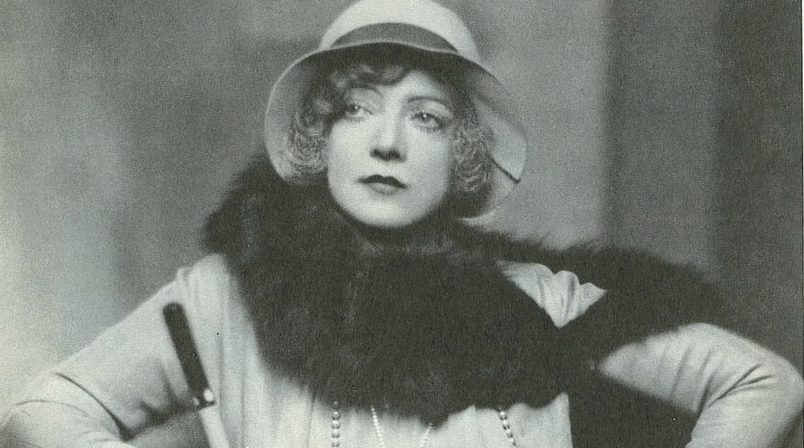
According to Here At The New Yorker by Brendan Gill, Long chronicled nightly escapades of drinking, dining, and dancing for The New Yorker, and because her readers did not know who she was, she often jested in her columns about being a “short squat maiden of forty” or a “kindly, old, bearded gentleman.” However, in the announcement of her marriage to The New Yorker cartoonist Peter Arno, she revealed her true identity.
Harold Ross hired Long in the summer of 1925 as part of a group of “saviors” he hoped would help boost his struggling magazine. The group included Arno, Katharine Angell, managing editor Ralph Ingersoll, and cartoonist Helen Hokinson.
Although she was a favorite of Ross’s, the two couldn’t be more different, as historian Joshua Zeitz explains in Flapper: A Madcap Story of Sex, Style, Celebrity, and the Women Who Made America Modern (2006), Long knew just how to embarrass the girl-shy editor, and loved to do it:
(Ross) was a staid and proper Midwesterner, and she was absolutely a wild woman. She would come into the office at four in the morning, usually inebriated, still in an evening dress and she would, having forgotten the key to her cubicle, she would normally prop herself up on a chair and try to, you know, in stocking feet, jump over the cubicle usually in a dress that was too immodest for Harold Ross’ liking. She was in every sense of the word, both in public and private, the embodiment of the 1920s flapper. And her readers really loved her.
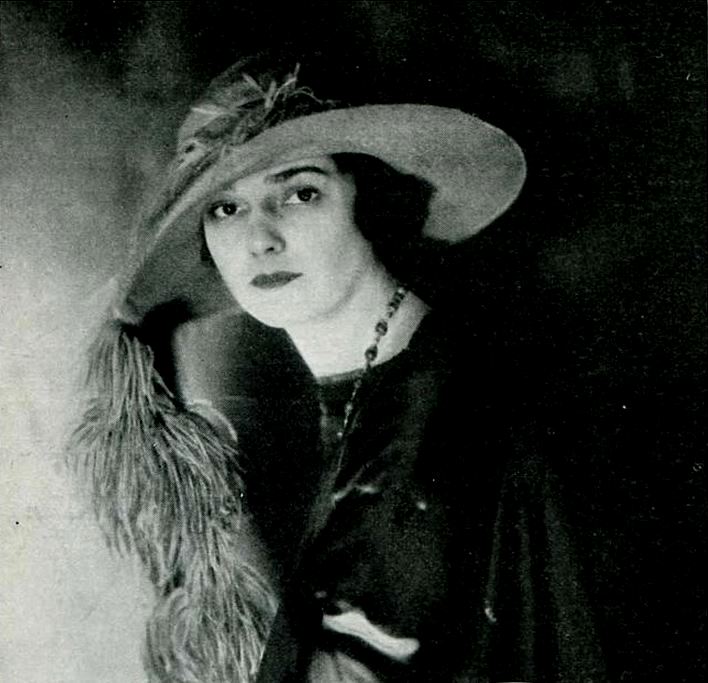
Julia Lydig Hoyt in 1922 (Wikimedia Commons)
“Talk” also reported that Mrs. (Julia Lydig) Hoyt had “very nearly arrived,” and was capitalizing on her stage career through endorsements for cold creams and articles on social etiquette. “The motion picture industry and stage know her and now she is a designer at highest salary ever paid to an American.”
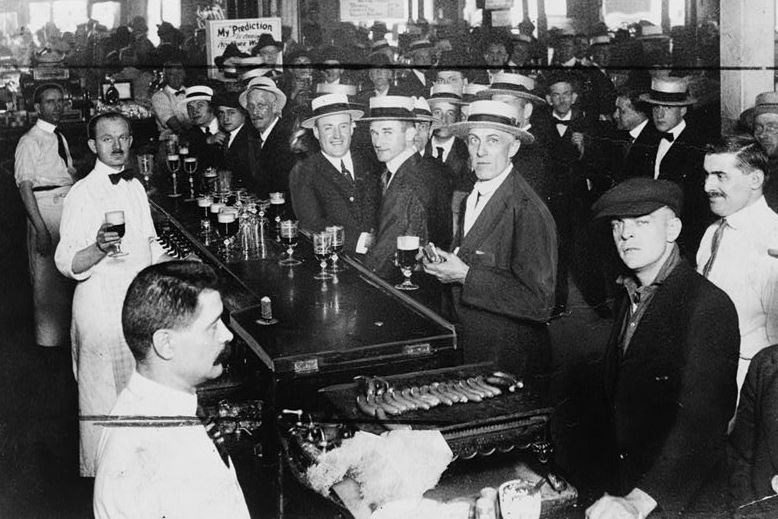
Last Call…A rather dour-looking crowd at a New York City bar moments before midnight, June 30, 1919, when Prohibition went into effect. (Library of Congress Archives)
Prohibition continued to dampen the spirits (pun intended) of New Yorkers, particularly during the summer season. The editors noted that of 36 random summer reminiscences submitted to the magazine, eighteen were “direct references to alcoholic concoctions and all but a few theatrical recollections directly suggested indulgence. Then the editors offered their own wistful recollections:
Of course we remember “The Doctor’s cocktails” mixed by the “Commissioner” at the Astor…the highball sign at Forty-second and Broadway…the “Old Virginia Mountain” between the acts under the smile of Old King Cole…the Sunday afternoon absinthe drips at the Lafayette…Champagne at the Claremont on a June night…the Manhattan bar at cocktail time…the Ancient and Honorables in the Buckingham bar….the Navy in mufti at Shanley’s…the horseshoe bar at the Waldorf…the blue dawn of the West Forties…
Of course…but why bring that up again? It’s merely driving us down the street to that place that gave us the card last week and the rumor has just reached us that they are back serving Scotch in teacups, accompanied by a large earthenware teapot filled with soda.
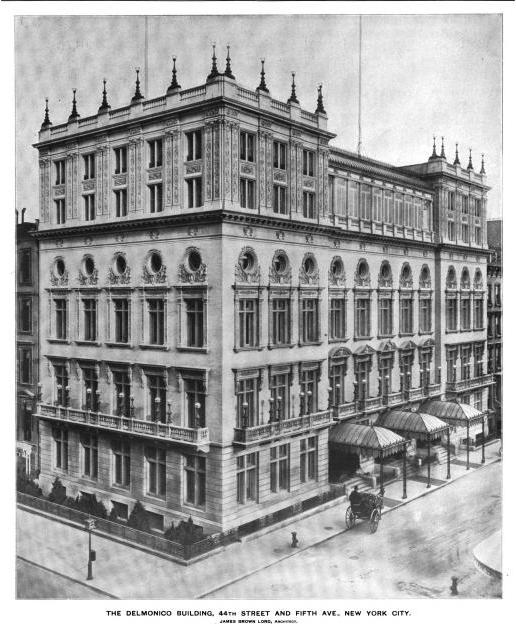
Left, Delmonico Building at Fifth Avenue and 44th Street (photo from The Brickbuilder, 1899), razed in 1925 and replaced by the building at right (Google Maps screen image)
Also lamented was the loss of renown restaurant Delmonico’s, which had been closed for some time (due mostly to alcohol sales lost to Prohibition; its famous rival across the street, Sherry’s, closed in 1919 for the same reason) but was now yielding to the wrecking ball: “Possibly, Delmonico’s might have been saved as a tradition, but finances and the changes of Fifth Avenue’s complexion forbade…Now we are to see yet another skyscraper, this one on the site where once they dined; where once they danced; across the street from old Sherry’s, long since a bank; orchestraed only by adding machines.”
“The Talk of the Town” concluded with a price list for various bootleg spirits, a feature that would continue through the Prohibition:
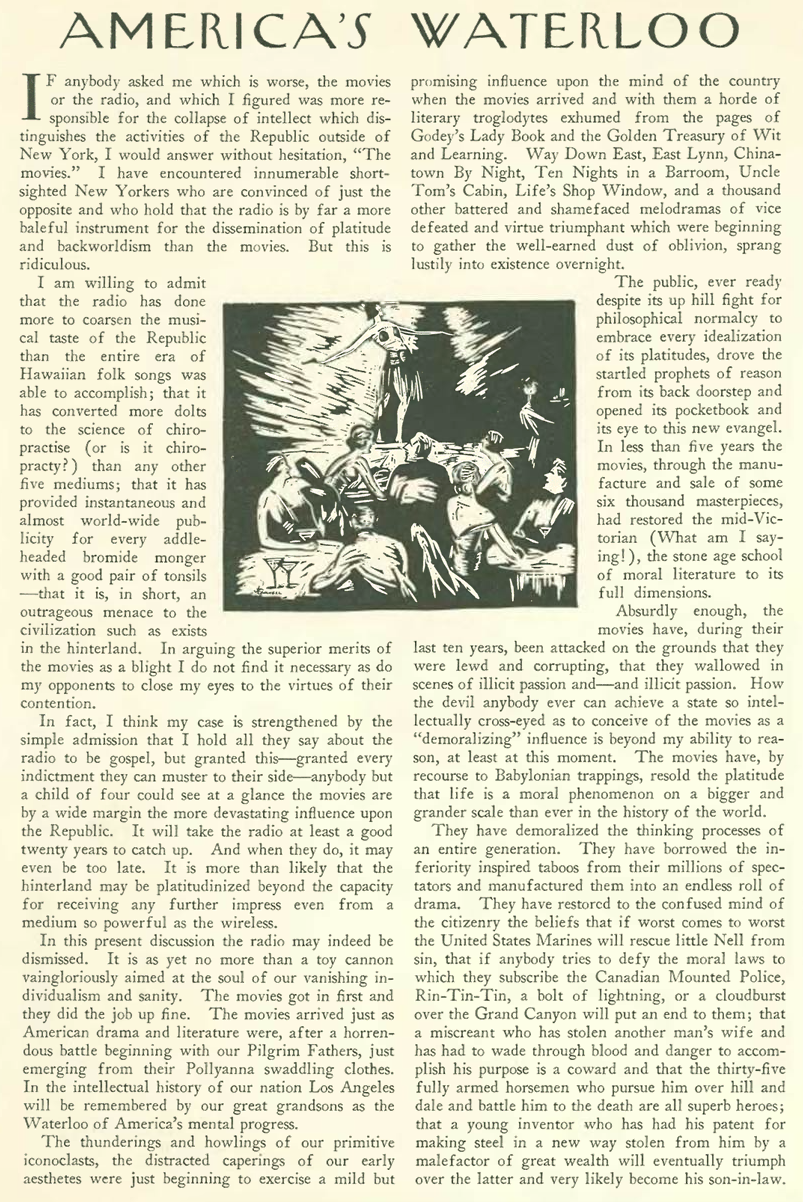
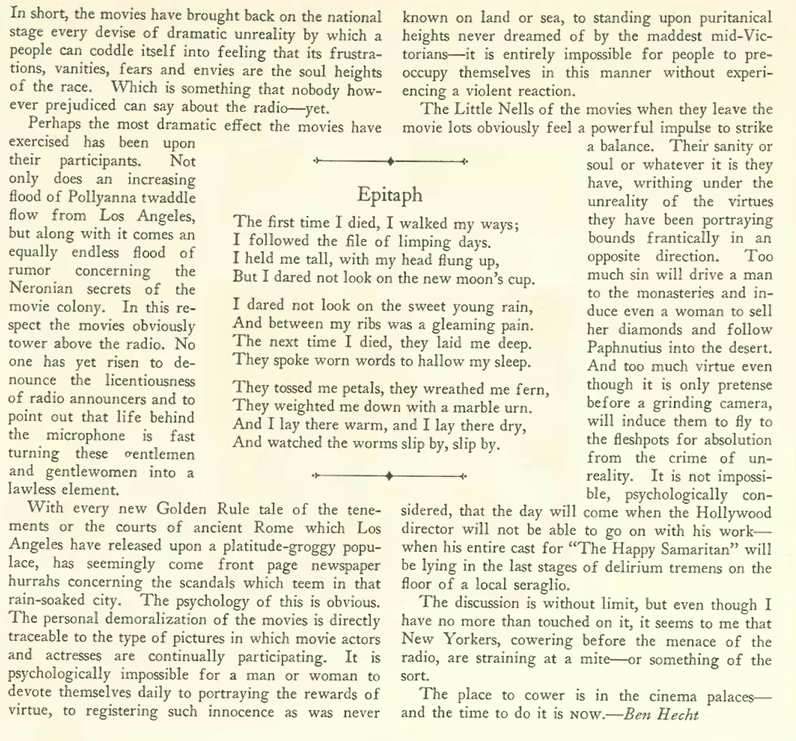
Fresh off his dismantling of those clod-kickers in Chicago, Ben Hecht continued his dyspeptic tirade on the America that lay beyond Gotham, specifically attacking its love of the “Pollyanna twaddle flow” of entertainment from Hollywood:
(New Yorker Digital Archive)
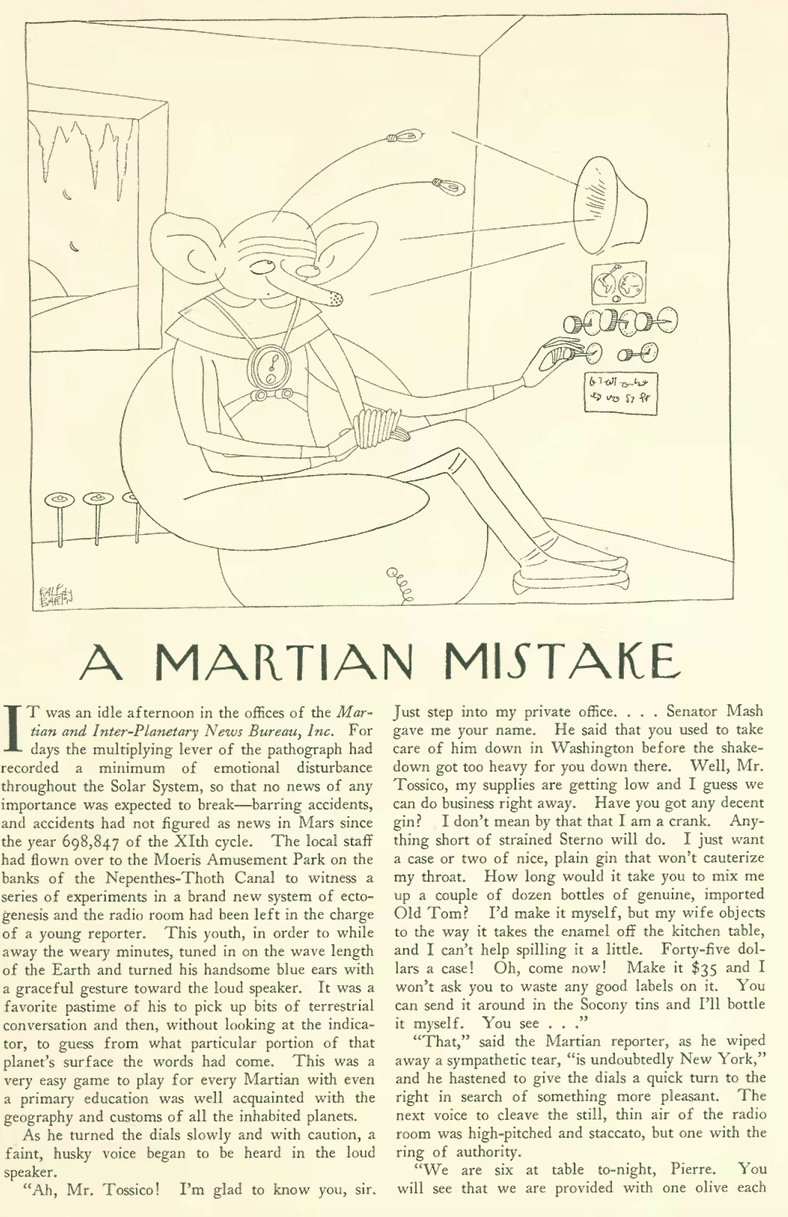
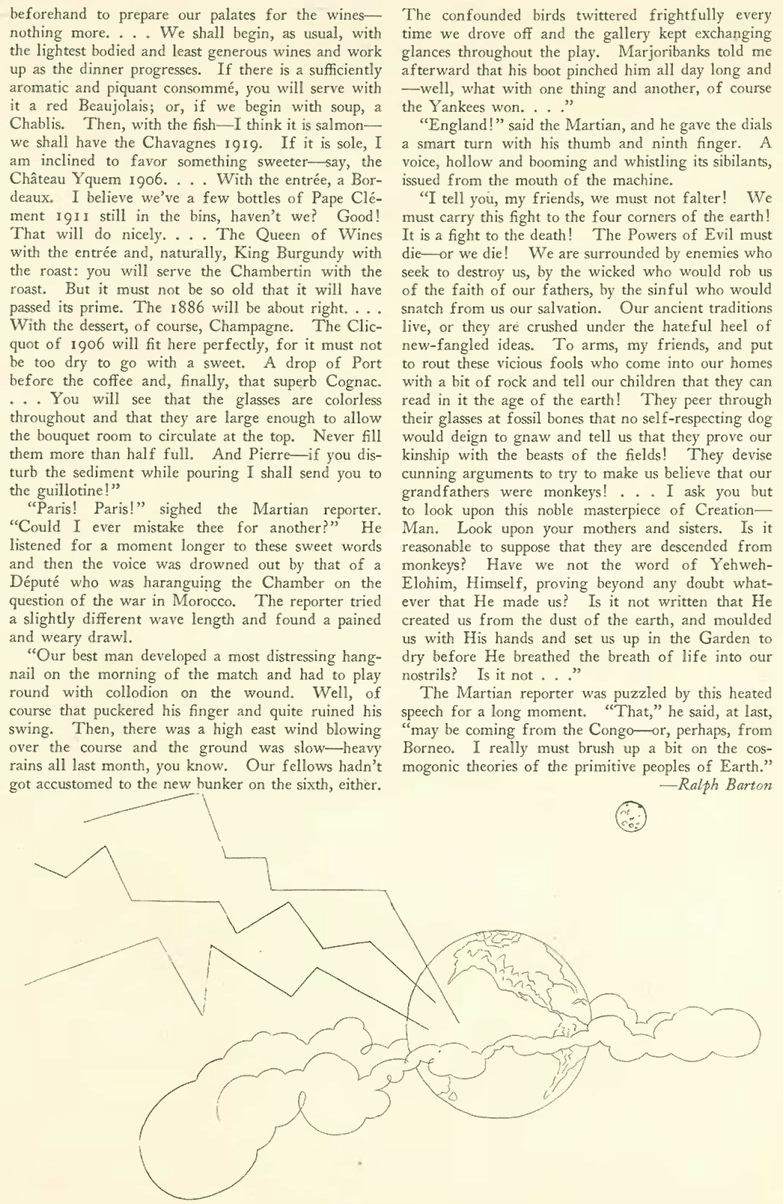
Ralph Barton, on the other hand, offered of a view of the entire earth, from the vantage point of a Martian observer:
(New Yorker Digital Archive)
In “Profiles,” Waldo Frank (writing under the pen-name “Searchlight”) looked askance at the life and work of writer Sinclair Lewis.
Frank offered these observations: “Once upon a time, America created a man-child in her own image…
There’s a strange thing about America. She is passionately in love with herself, and is ashamed of herself…Here was a dilemma, Could not her self be served up to America in such a way that she could love herself—and save her shame? Sinclair Lewis, true American son, was elect to solve it.”
And for those rising young men who did not wish to mix with the unwashed during the summer social season, membership to the Allerton Club Residences was recommended in this back page advertisement:
(New Yorker Digital Archive)
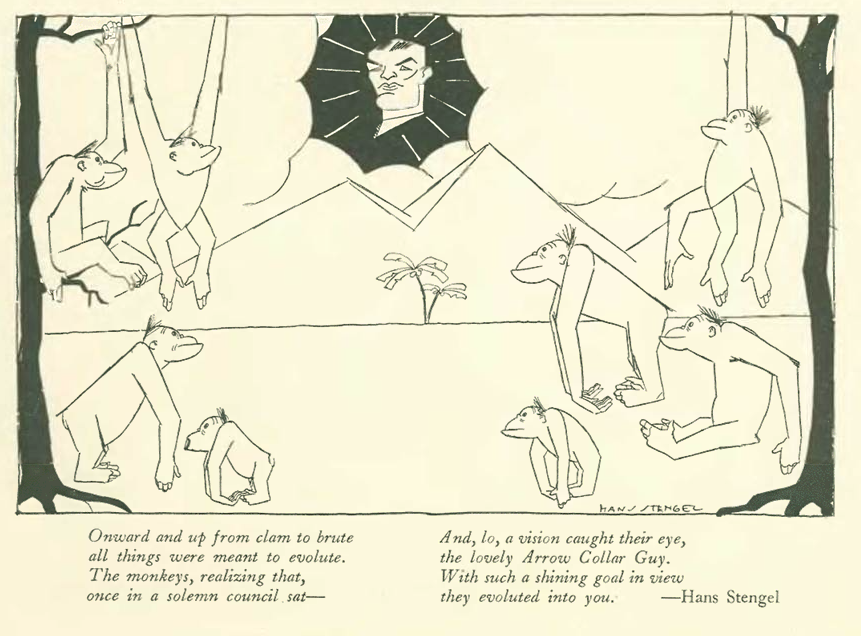
And yes, the Scopes Monkey Trial is still on the minds of the editors:
(New Yorker Digital Archive)
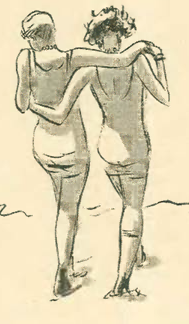
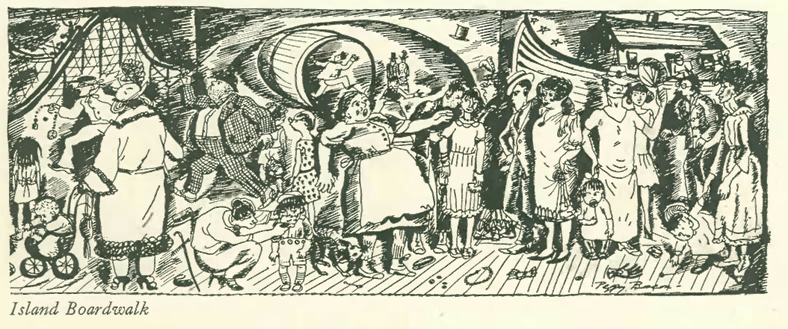
And finally, to close out with a beach theme, a two-page illustration from “The Talk of the Town” section, an early work by illustrator Peggy Bacon:
In its 21st issue (July 11, 1925) The New Yorker was back to taking swipes at William Jennings Bryan and the backward ways of Tennesseans as the Scopes “Monkey Trial” drew near.
Cover for July 11, 1925, by Bertrand Zadig. It was a low point for the fledging magazine–funds were so scarce that the cover was printed in black and white. (New Yorker Digital Archive)
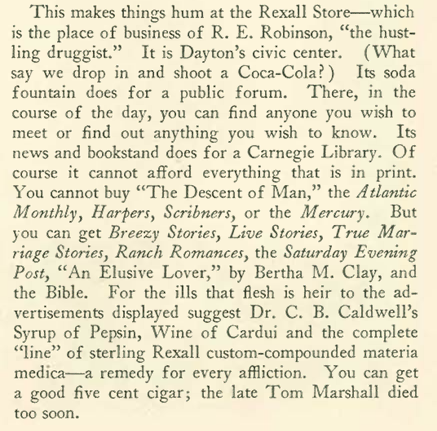
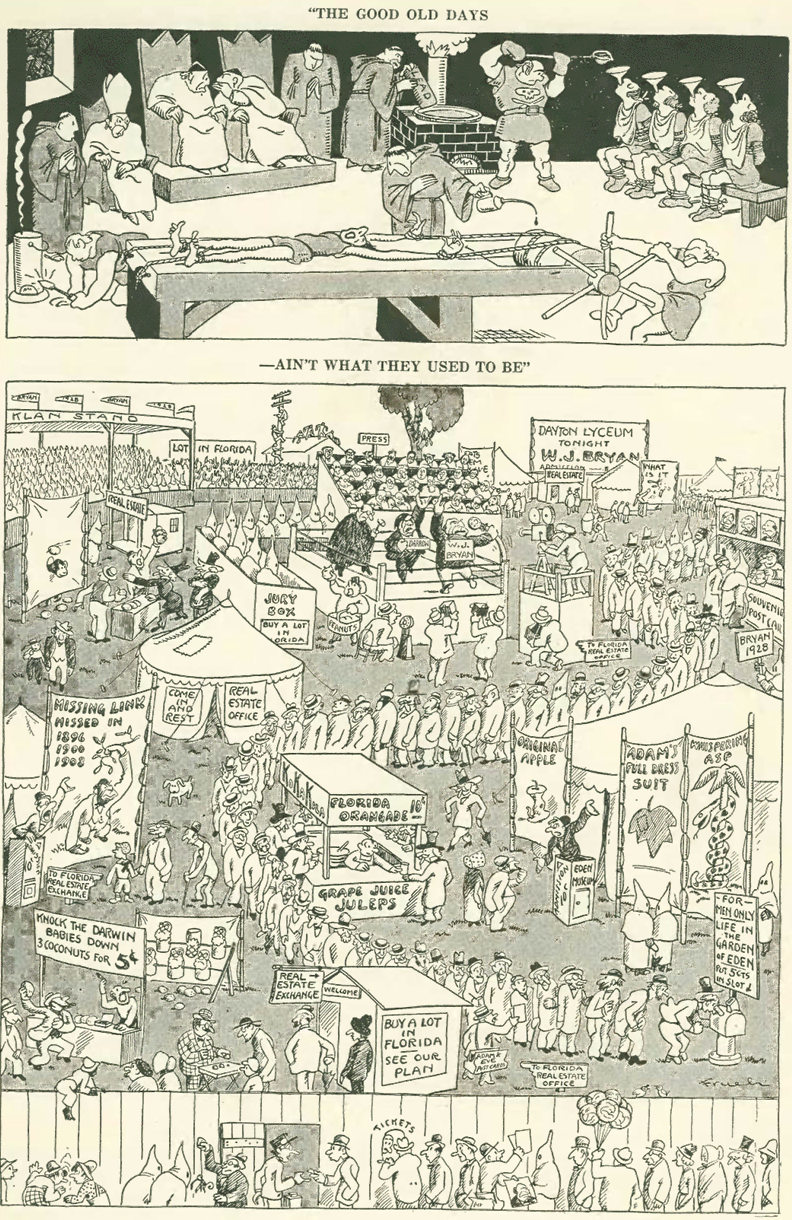
A four-page feature penned by Marquis James (the longest article to appear in The New Yorker since Issue #1), primarily focused on the trial’s setting—Dayton, Tennessee—and the habits and tastes of its countrified citizens:
Prosecutor and famed orator William Jennings Bryan had not yet arrived in Dayton, but the townsfolk were plenty enamored of the other star in their midst, attorney for the defense Clarence Darrow. James reported that the agnostic Darrow mixed surprisingly well with the locals:
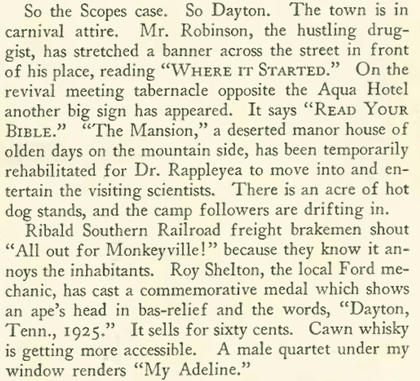
James concluded his piece with a description of the carnival atmosphere that gripped the tiny, formerly unknown town that was now the focus of the entire country:
(New Yorker Digital Archive)
An illustration by Al Frueh that preceded James’s article makes hay of the “carnival atmosphere,” likening it to a modern-day version of the Inquisition:
(New Yorker Digital Archive)
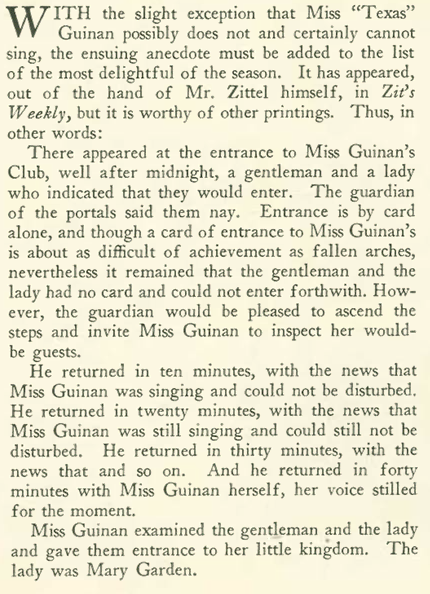
“The Talk of the Town” did its usual breezy wrap up of “The Week” (including the announcement of the birth of Charlie Chaplin’s son (by Lita Grey), and offered a somber note about the dampening effects of Prohibition on the restaurant trade. It also noted that David Belasco had marked 50 years in the theater business (though his influence was waning), and Texas Guinan personally opened the door of her nightclub to opera great Mary Garden after a bit of a misunderstanding:
(New Yorker Digital Archive)
“Profiles” looked at Clinton Peters, “The Daddy of Sunday Painters,” while “Moving Pictures” cheered Edmond Rostand’s “masterpiece,” Cyrano de Bergerac, starring French actor Pierre Magnier in a “magnificently well—seasoned interpretation.”
Pierre Magnier (left) starred in the hand-tinted color film, Cyrano de Bergerac. (Screen capture from YouTube)
The film was also “in color,” actually a cross between two-color technicolor and hand-coloring, sometimes using only one process or the other, sometimes both. According to IMDB:
Parts of the film were hand colored using the Pathécolor stencil process, in which groundstone glass is cut with a pantograph in the shape of an object to conform with what is on the 35mm print. A machine then passes a dye-soaked strip of velvet over the film with the glass stencil on top and the film is colored. Cutting the stencils (a stencil for every different color) was a very long and tedious process which delayed the release of the film by almost two years. The color style/scheme of the movie was to imitate the tone, color and feel of 17th Century Renaissance paintings.
In the review of another film, Paths to Paradise, the critic (TS) wrote that “Mr. Raymond Griffith establishes himself as a genuine comedian of the rank of Menjou and Chaplin.”
Raymond Griffith and Betty Compson in Paths to Paradise (1925) (travsd.wordpress.com)
The “Sports” section of these early issues of The New Yorker covered mostly polo, tennis, golf and yacht races and regattas, which I will explore more in future posts.
Fay Marbe on the cover of the June 28, 1924 issue of Movie Weekly.
In the section “When Nights Are Bold,” Charles Baskerville (signing as “Top Hat”) reviewed the tango dance performance by Fay Marbe at the Beaux Arts Restaurant: “She is easy on the eyes; and after her performance we were all patting her on the back, because it’s one of the most beautiful ones we have ever beheld.”
And now for the funnies: On the inside front cover, the musings of English cartoonist W. Heath Robinson, best known for his drawings of ridiculously complicated machines for achieving simple objectives:
(New Yorker Digital Archive)
And finally, this three-act performance by staff artist Johan Bull. In her book Defining New Yorker Humor, Judith Yaross Lee writes that Bull was a Norwegian immigrant who started out as a caricaturist for the sports department, but was pressed into greater service for his ability to mimic Rea Irvin’s style:















































 A New Yorker State of Mind
