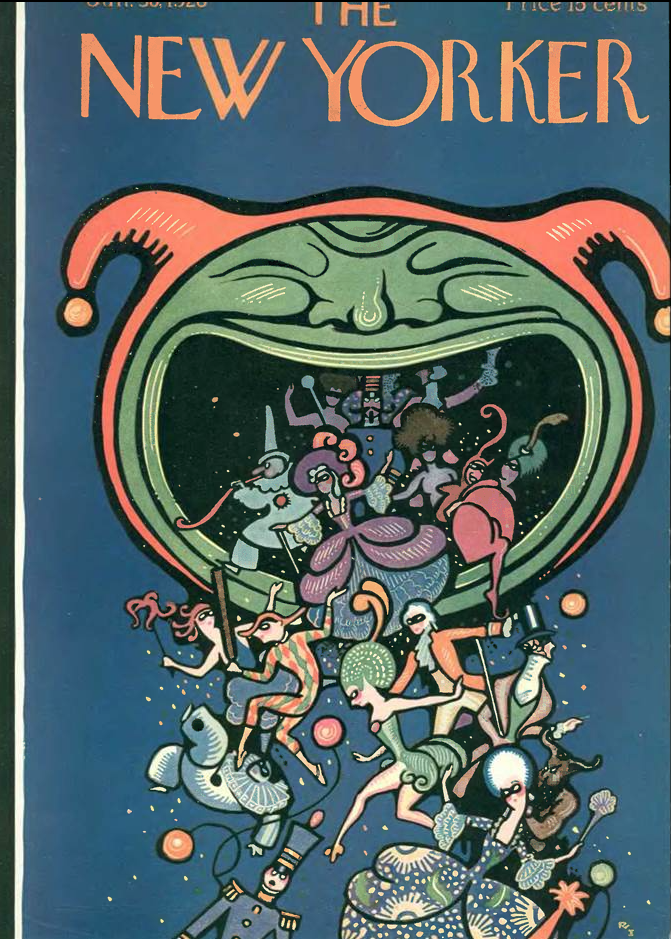
Writer and cultural critic Gilbert Seldes apparently wasn’t so put off by The New Yorker’s scathing review of his play, The Wisecrackers (Dec. 26, 1925) that he couldn’t continue writing for the magazine. In the Jan. 30, 1926 issue he offered an interesting essay on the particular appeal of Cuba. Titled “Annexation is the Best Policy,” it is an interesting read given the current reopening of diplomatic relations between Cuba and the U.S.
Given that Seldes penned his article about 30 years before the Cuban revolution, he offers some interesting insights into the independent character of the island nation and, perhaps inadvertently, also reveals American attitudes that helped to fuel the revolutionary fire. Seldes writes “the fact that Cuba has never been officially Americanized is supposed to be proof of our innate idealism; to me it seems more like a proof of the lack of imagination which ran through the whole McKinley period. To have taken the Philippines and passed up Cuba–how incredibly naive!” He goes on to observe that the total lack of “peaceful penetration” is proof that the island “will cling to its character no matter how many Americans do their worst.” Here is the entire article, interspersed with vintage images:
Havana Club atop the Hotel Sevilla in 1920s Havana (Havana Club)
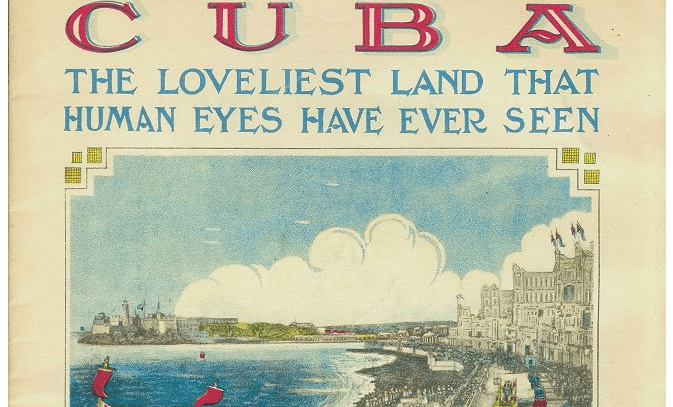
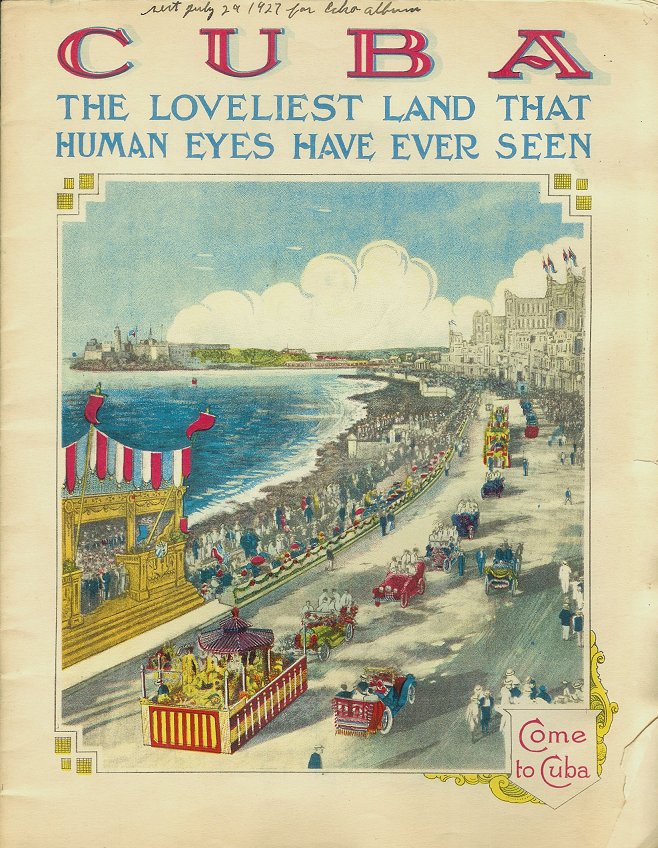
1927 tourist brochure enticing visitors to Cuba (Havana Journal)
Also in the issue was profile of the life of silent film star Harold Lloyd. The writer R. E. Sherwood marveled at how a man from small town Nebraska became one of Hollywood’s most bankable stars and was even building a home in Beverly Hills for the staggering sum of $1 million.
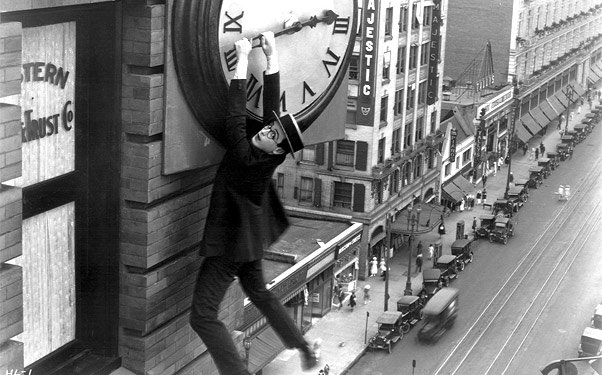
HANG ON HAROLD…Lloyd in Safety Last, 1923. Illustration of Harold Lloyd by James House Jr. for the New Yorker profile.
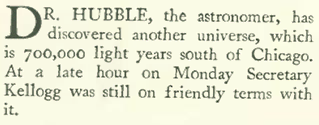
In his “Of All Things” Column, Howard Brubaker made note of the following:
Neither Brubaker, nor Edwin Hubble for that matter, could have ever imagined that in 64 years a telescope bearing Hubble’s name would be launched into space and resolve a number of long-standing problems in astronomy.
To close, a couple of advertisements from the front section of the magazine. Now we know what youth wear at smart tea dances…
As if covering the nightclub scene and the fashion set wasn’t enough, Lois Long found the time to attend the National Automobile Show at the Grand Central Palace and offer her insights and criticisms on the latest in automotive design.
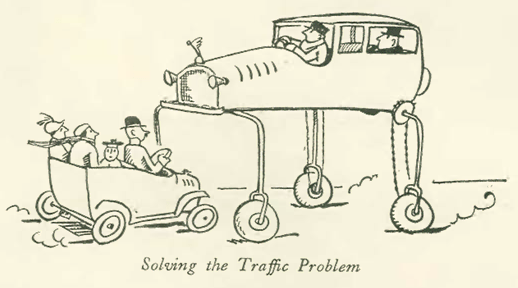
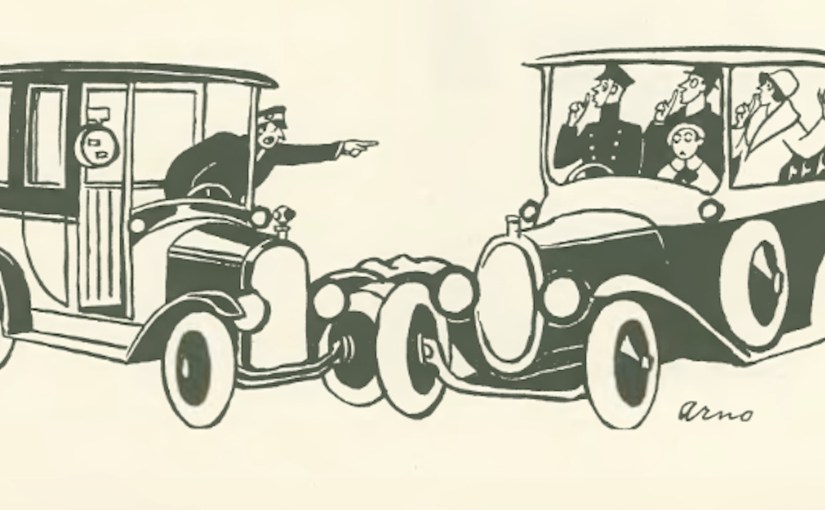
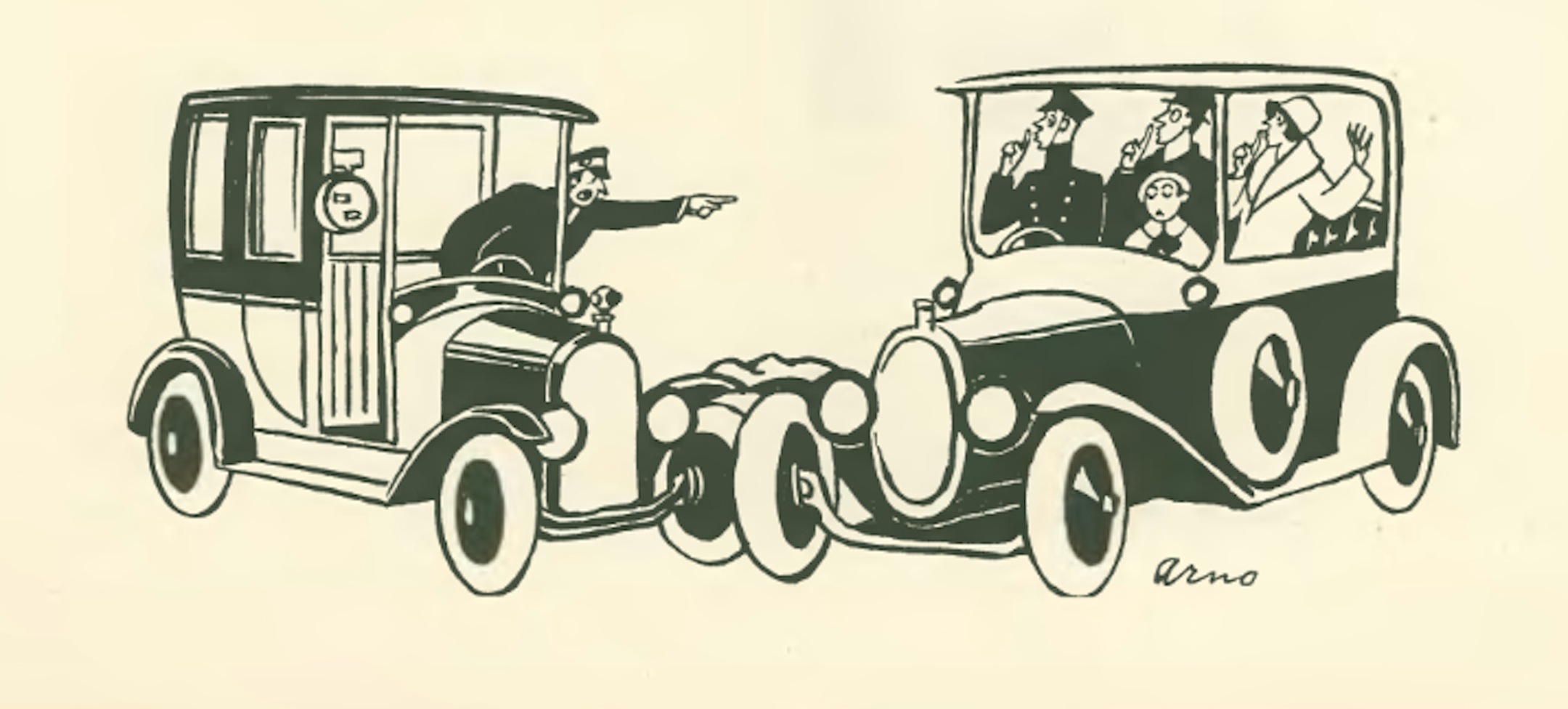
The show featured more than 500 new models, bigger and more powerful cars mounted on new-fangled balloon tires. There were also cheaper cars available–GM introduced the Pontiac line to appeal to the mass market, and other manufacturers lowered their prices in an effort to lure customers. Visitors packed the show despite the fact that the city streets were already hopelessly clogged with traffic and navigating them was difficult and often perilous. Al Frueh offered his take on the traffic situation with a little doodle in “The Talk of the Town” section (featured above).
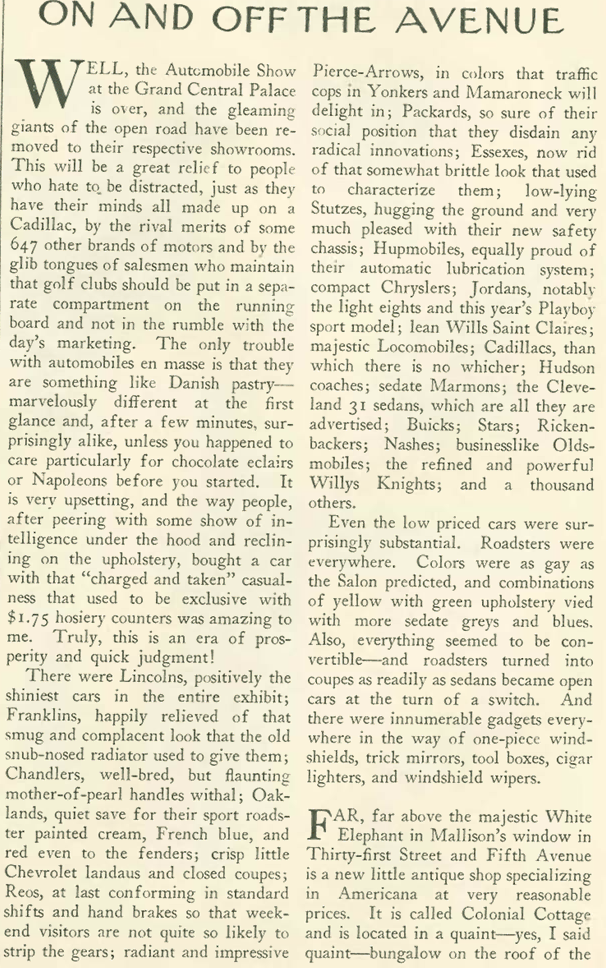
Long gave readers her usual straightforward assessment of the show (her Danish pastry metaphor in the first paragraph is spot on). Note her list of American car companies, many of which are long gone:
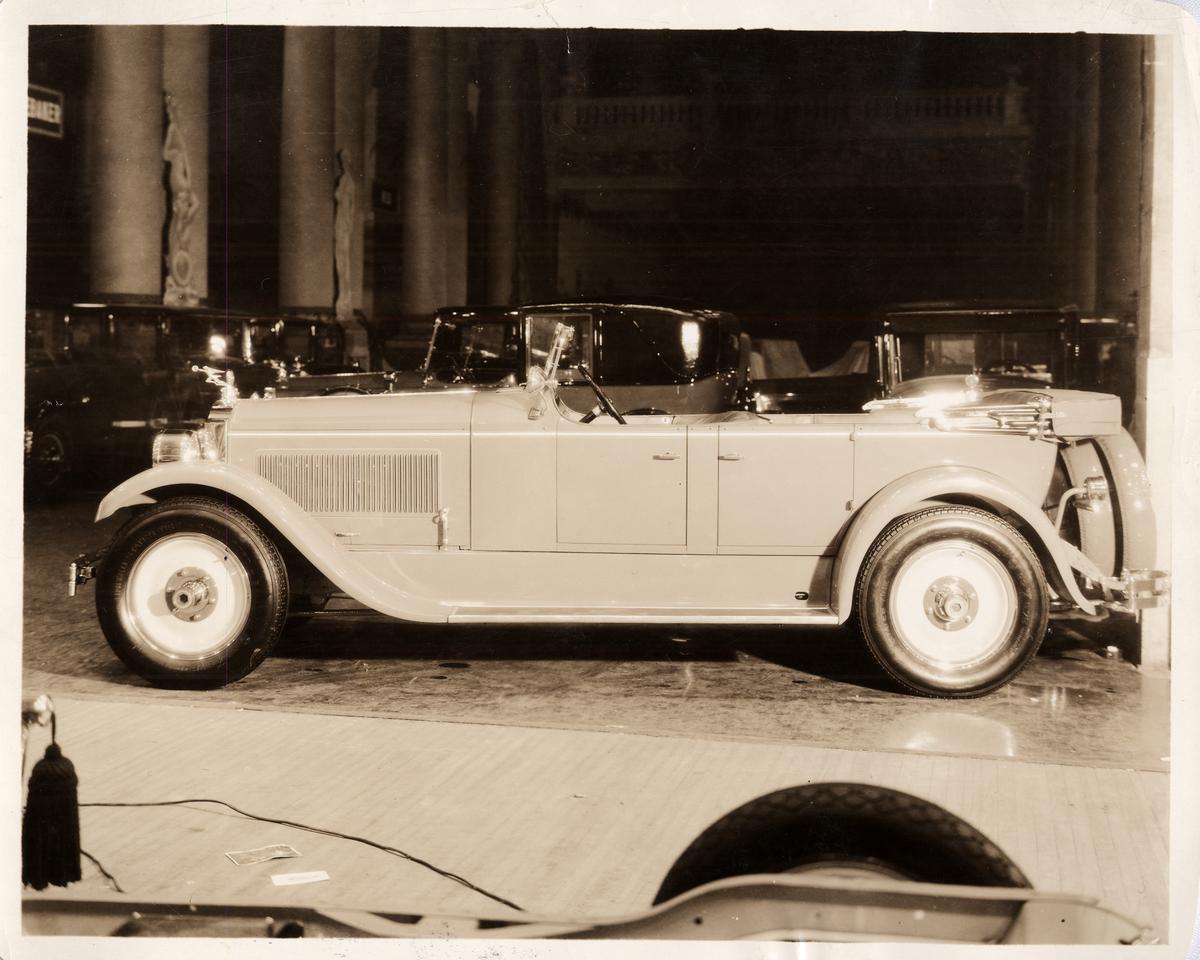
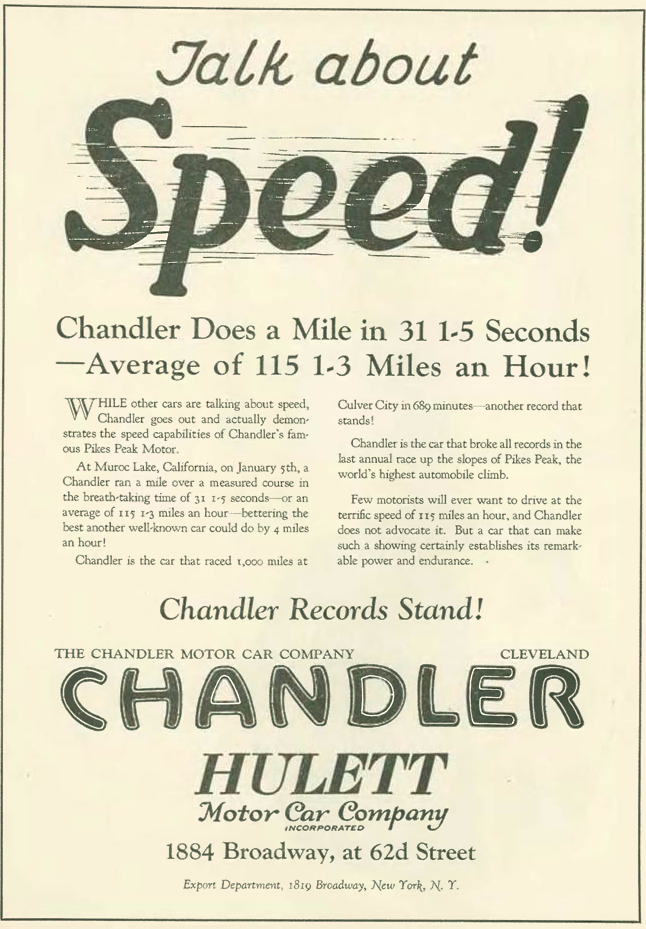
LOOK AT ME…No doubt Lois Long walked by this Packard special sport phaeton, prominently displayed at the 26th National Automobile show. (Wayne State University)GRAND INDEED…The 26th National Automobile Show was at the Grand Central Palace, which occupied the block of Lexington Avenue between 46th and 47th Streets. It was razed in 1963. A 44-story office tower, 245 Park Avenue, took its place. (New York Times)A Cleveland auto manufacturer, Chandler, took advantage of the moment by placing this ad in the Jan. 23 issue of The New Yorker.
***
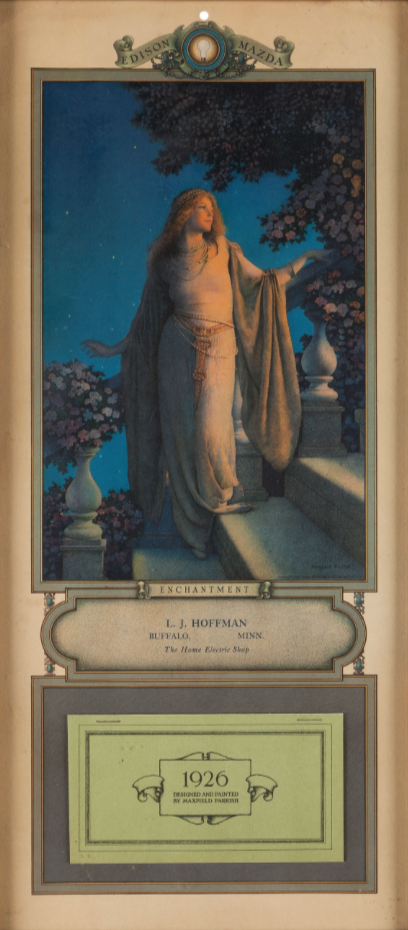
“The Talk of Town” editors were bemused over the news that artist Maxfield Parrish had received “a check in six figures” following his first-ever exhibition. It was reported that Parrish received $80,000 (roughly equivalent to $1 million today) for a single painting, which the editors suggested made him “the highest paid artist living.” They also wondered “if he gets amusement out of being the highest paid painter,” since Parrish was known for wanting to be left alone, and until recently was “not well off” because no one “could persuade him to the sell the pictures with which he lined his house.”
A 1926 Edison MAZDA calendar featuring artwork by Maxfield Parrish. (icollector.com)
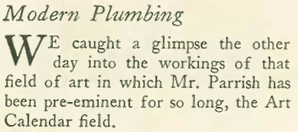
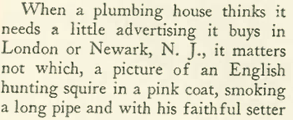
In a previous issue (Dec. 12, 1925), New Yorker art critic Murdock Pemberton wrote a dismissive critique of the young Parrish’s work and noted that the artist was largely glorified in American advertising and not in serious art circles. This was followed by another “Talk” item in which the editors sneered at the trade calendar market that fed the popularity of artists like Parrish:
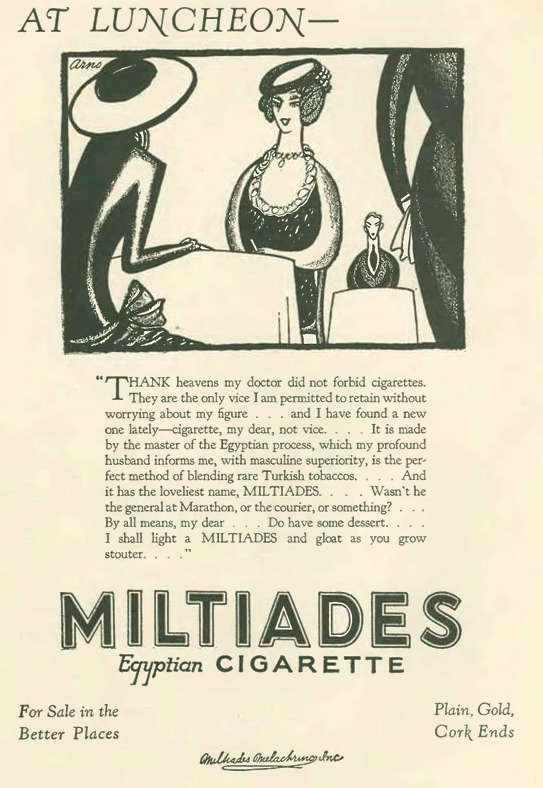
And to close, this message (illustrated by Peter Arno) from Miltiades Egyptian cigarettes. Apparently they empower you to call your non-smoking friend “fatso.”
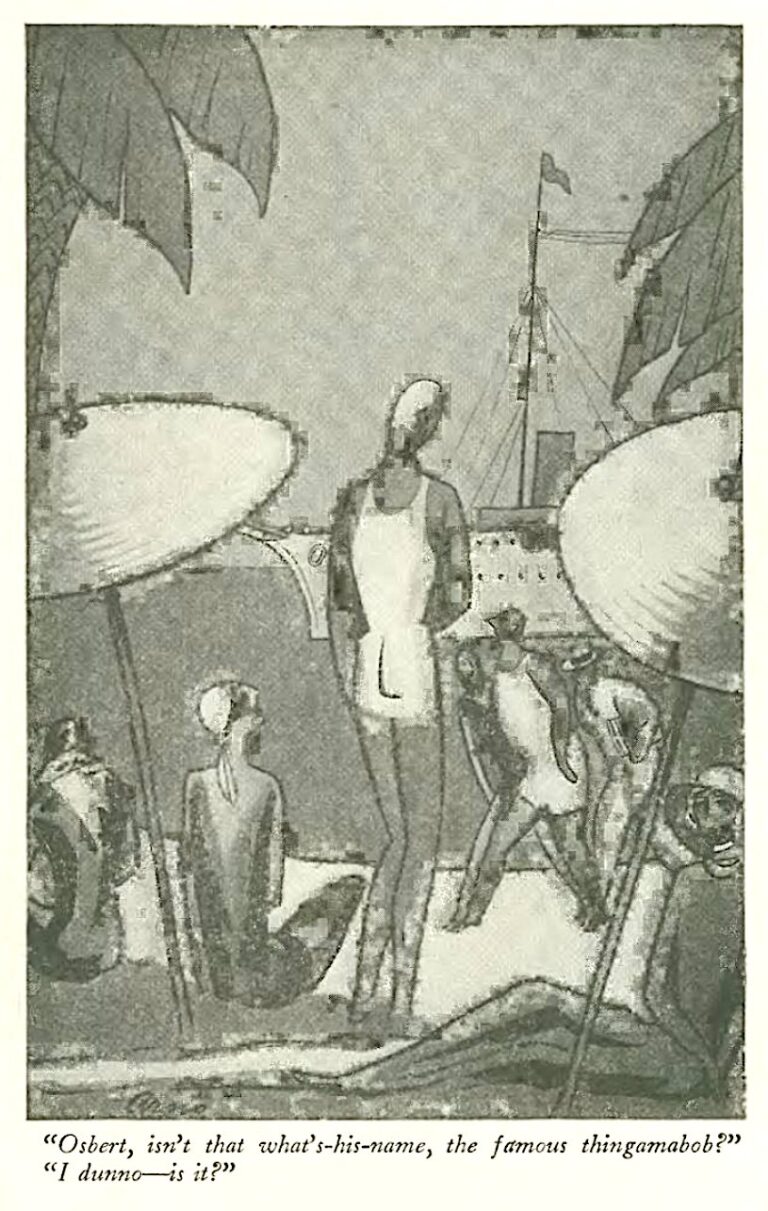
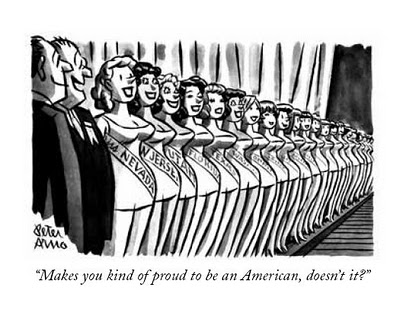
On the subject of Arno, there was only one drawing with a caption…by Arno…
MGM spent nearly $5 million (about $70 million today) to make the silent epic Ben-Hur, filming the movie on location in Egypt, Italy and the United States. The New Yorker’s film critic Theodore Shane was not impressed.
Shane wrote that $4,999,999.95 had been spent “on massive effects and the remaining $.05 on drama.”
He noted, however, that the original story, an 1880 novel by Lew Wallace (who was a Union general in the Civil War, among other things), was pretty lacking in drama to begin with, just a “piece of bric-à-brac romance (that was) nothing more than a super Rover Boys story touched up with a Biblical background.” Here’s Shane’s entire review of the film, which was released by MGM on December 30, 1925:
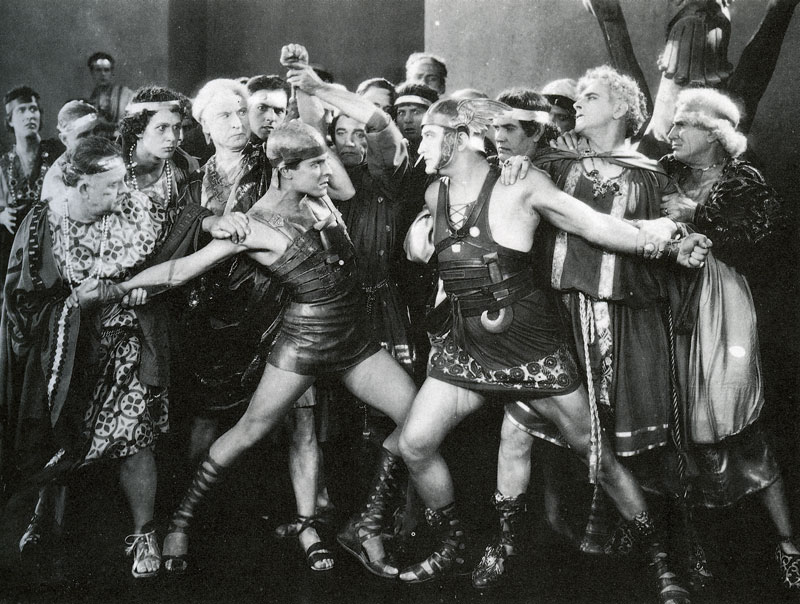
A Nickel’s Worth of Drama…Ramon Novarro (left) and Francis X. Bushman mix it up in Ben-Hur (1925) (Virtual History)
This was actually the second Ben Hur film. The first was made in 1907, a 15-minute silent costing $500 (and it really was made on the cheap; the producers stole some shots of a mock chariot race at a fireworks show at Sheepshead Bay, Brooklyn, and then added some interior shots to complete the picture).
For the 1925 Ben Hur, filming on location proved difficult from the start. Italy’s new leader, Benito Mussolini, was in an anti-American mood when production began, and labor disputes often delayed filming. By all accounts, conditions were miserable. Kevin Hagopian, in an essay for the New York State Writers Institute, observed “The worst agonies were reserved for the film’s climax, the chariot race. Legendary second unit director B. Reeves Eason’s nickname “Breezy” was certainly not earned by his work on the Ben-Hur set, for his merciless pace cost the lives of over a hundred horses. As [actor Francis X.] Bushman said sadly, “If it limped, they shot it.” A stunt man was killed in a chariot crash, and [actor Ramon] Navarro himself only narrowly escaped death.”
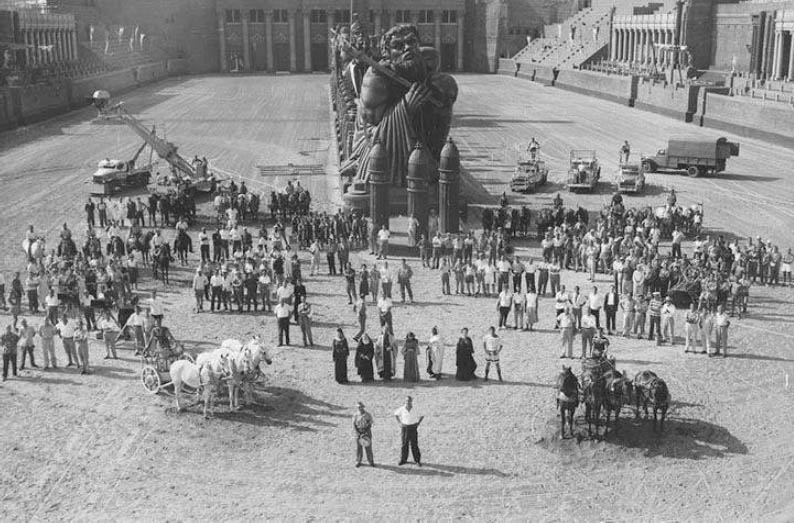
The troubled Italian set was eventually torn down and a new one built in Culver City, California. The crowd scenes and master shots for the race were done in a single day, with forty-two cameras covering the action.
The famed chariot race staged in Culver City, California, was shot with 42 cameras.
In “Profiles” Esther Carples looked at the life of Sergei Rachmaninoff, who was widely considered one of the great pianists of his day, and as a composer represented the last vestiges of Romanticism in Russian classical music. Carples painted a portrait of a brooding genius, a man with aristocratic bearing who lived in lonely exile from his native Russia.
Sergei Rachmaninoff in 1921. (Library of Congress)
In 1921, Rachmaninoff bought a house on 33 Riverside Drive in New York City, where he lived until 1925. There he consciously recreated the atmosphere of Ivanovka (his beloved Russian summer house) entertaining Russian guests, employing Russian servants, and observing old Russian customs.
*****
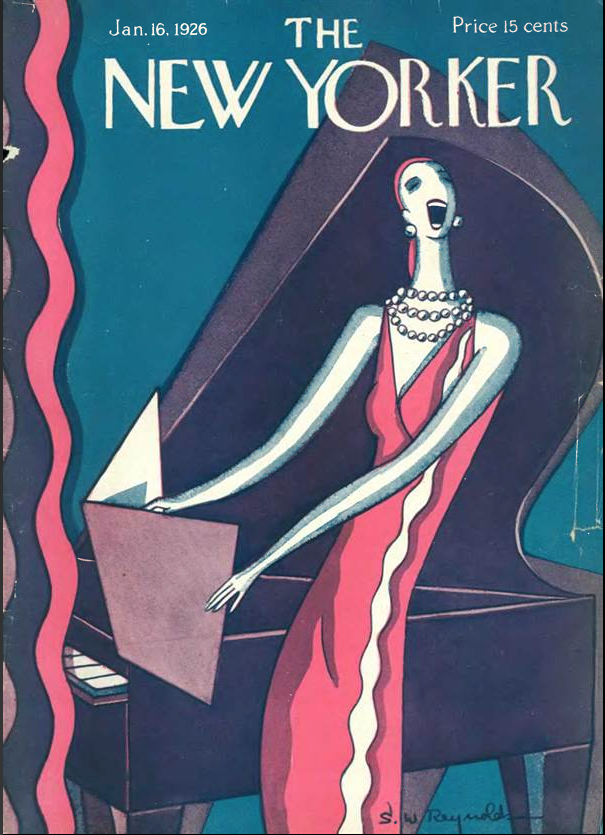
Jan. 16, 1926 cover by S.W. Reynolds.
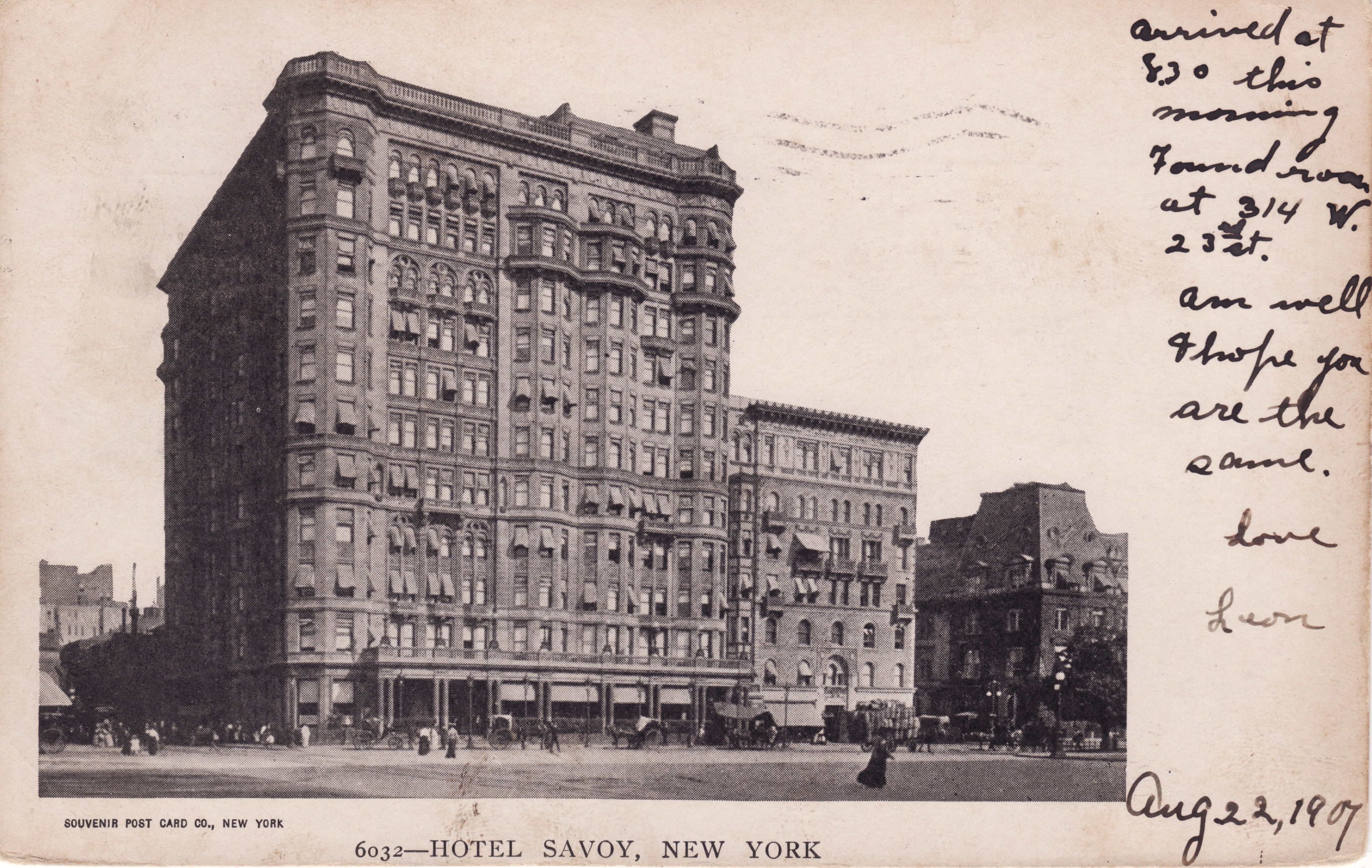
Let’s move on to the next issue, Jan. 16, 1926. “The Talk of the Town” noted another loss of a Fifth Avenue landmark with the Savoy Hotel was falling to the wrecking ball.
The Savoy, built in 1891-92, was slated to be replaced by The Savoy Plaza Hotel, which itself would be demolished in 1965-66 (amid significant public outcry and protest) to make way for the eastern headquarters building of General Motors.
It was observed that the new year would see a boon in construction of huge new buildings along the Avenue, and buildings only five years old (such as Heckscher Building) would be dwarfed by the new towers.
Another One Bites The Dust…The Savoy Hotel (stuffnobodycaresabout.com)
The New Yorker continued to have fun with actress Gloria Swanson‘s pretensions to royalty (she was married to the Marquis de La Coudraye at the time). This time it came from the pen of Jimmie the Ink (James Daugherty), part of his series of drawings that coupled famous people of the day in comic situations:
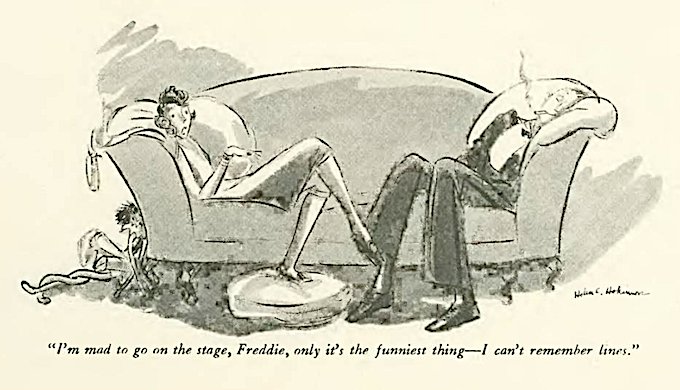
The issue also featured Helen Hokinson with a cartoon that seemed more in Barbara Shermund’s wheelhouse…
…a Julian de Miskey drawing for the theatre section…
…and a Peter Arno illustration…
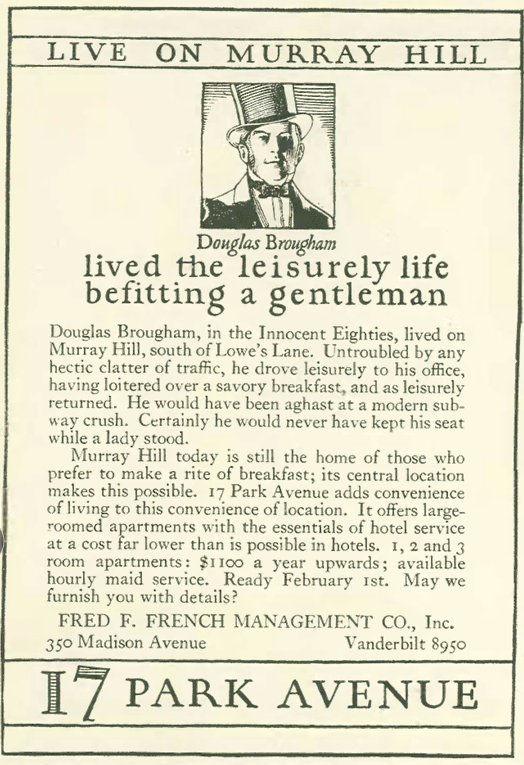
To close, two ads from the Jan. 16 issue, this one appealing to Anglophilic, aristocratic aspirations of certain readers…
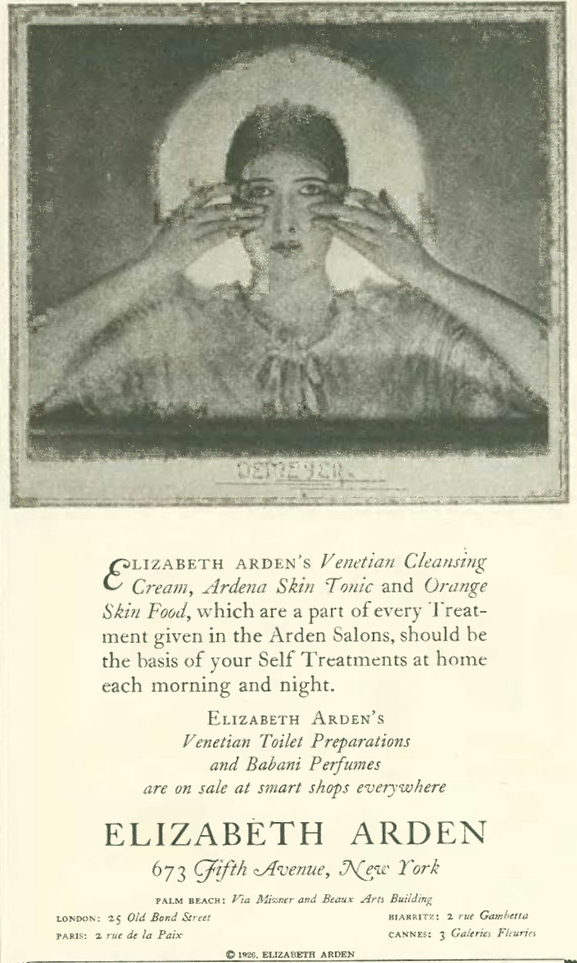
And this one from Elizabeth Arden, who will become a mainstay in the magazine with these ads featuring women with ghostly stares, usually with their heads wrapped tightly to combat sagging skin. Thanks to Hollywood, it was the age of the close-up, so wrinkles and blemishes be gone!
As we begin a new year of The New Yorker, it strikes me how little things have changed in 90 years, at least when it comes to human nature–wars and rumors of wars, celebrity gossip, the latest fads in music and fashion, fights over politics and religion. It’s all still with us. And yet, a person from 2015 would be seem like an extraterrestrial in 1926.
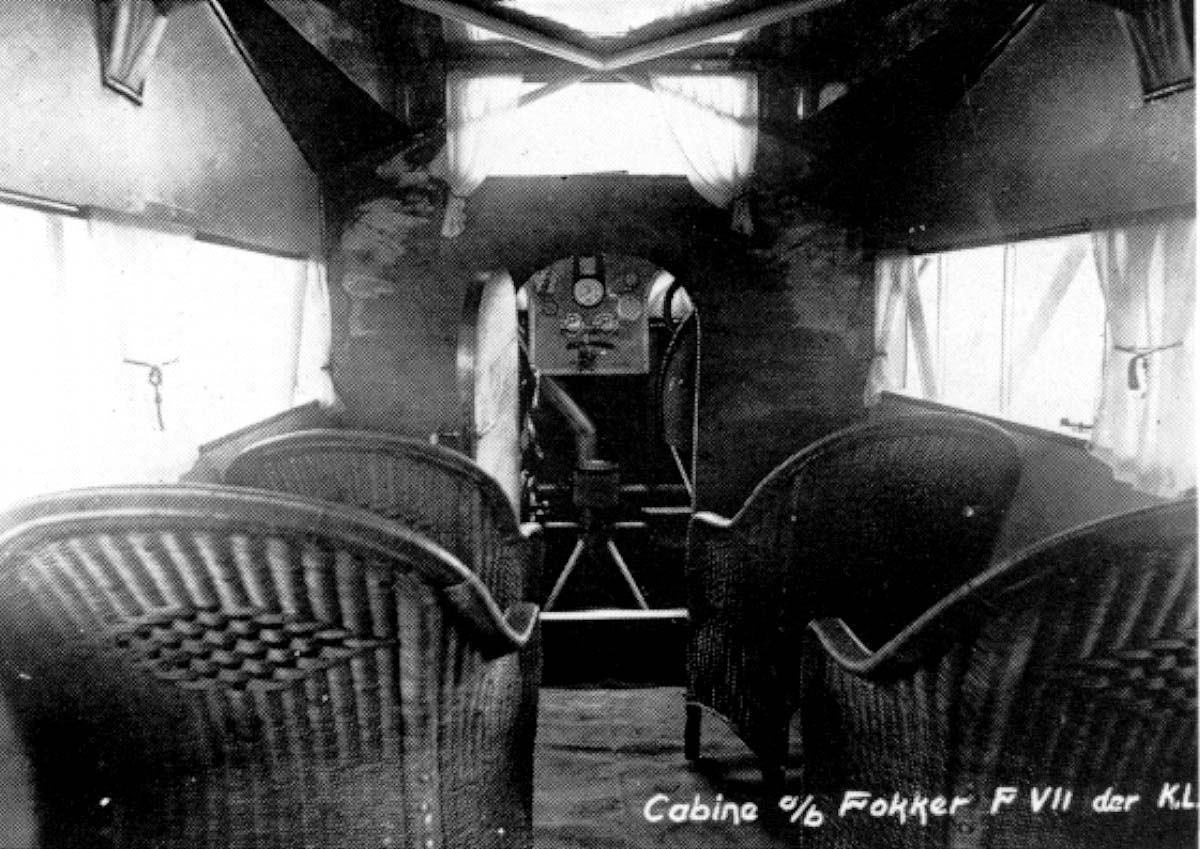
January 1926 was still a year and a half away from Charles Lindbergh’s Atlantic flight. Today we think so little of jumping on a plane that soars seven miles above the earth and whisks us anywhere in a matter of hours.
The Fokker F7. If you could even afford to fly in the mid-1920s, this is your ride. Buckle up! (Top, aviation history.com; bottom, dutchaviation.nl)
People in 1926 lived very differently, with far fewer distractions. No TV, only sporadic music on mono-tinny radios (or from mostly scratchy, hand-cranked records). Electric lights, but only if you lived in a city or town. The metropolis was noisy, but there was also silence. No cellphones or earphones, no CNN or ESPN blaring from every vertical surface. Your health? Forget it. Going to the dentist, regardless of your station in life, was a chamber of horrors. Ditto the doctor. Ever look at an antique doctor’s bag? Just some brown bottles, weird clamps and a saw. Penicillin wouldn’t be discovered until 1928, and for some reason lots of people died back then of peritonitis. It would claim both Rudolph Valentino and Harry Houdini in 1926. Finally, if you lived in 1926 you probably thought The War to End All Wars was just that. Only a few of the very sage saw the annihilation yet to come.
Anyway…
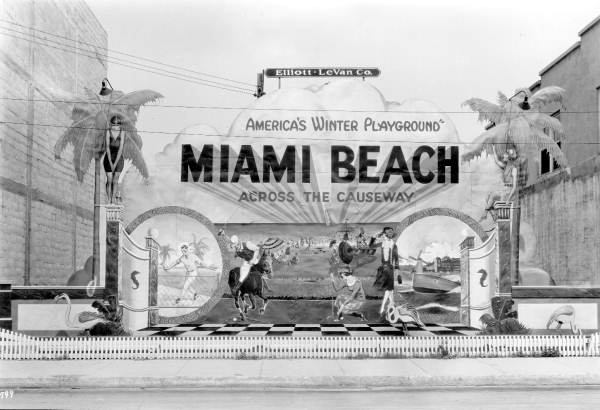
I titled this edition “Fun in the Sun” because the Jan. 2 issue opens with back-to-back ads enticing freezing New Yorkers to go south for the winter:
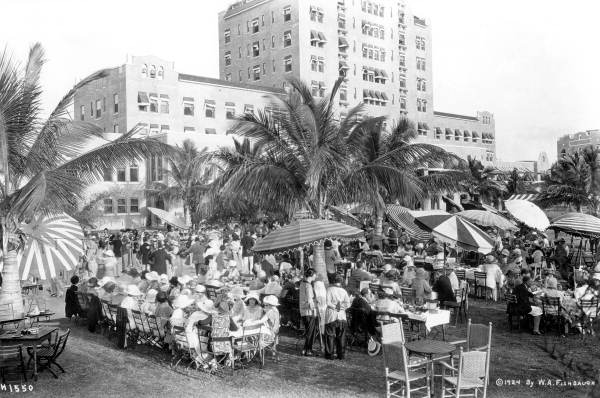
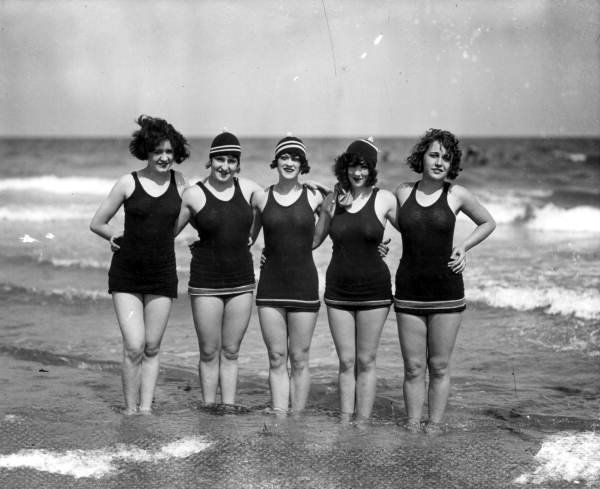
These were boom years for places like Miami Beach, formerly a quiet backwater but fast becoming a popular vacation getaway for New Yorkers and other Northeasterners. During the 1920s many wealthy industrialists from the north and Midwest also built their winter homes there.
Japanese tea garden at the Flamingo Hotel in 1923 – Miami Beach (State Archives of Florida, Florida Memory)Bathers on Miami Beach in 1925 (State Archives of Florida, Florida Memory)
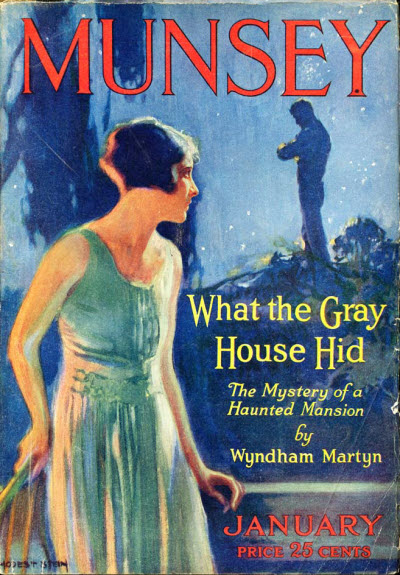
In other items, the “Reporter at Large” Morris Markey commented on the death of Frank Munsey, American newspaper and magazine publisher. Munsey had a reputation for extreme frugality and was widely disliked by employees who blamed him for their “shoddy recompense.” Munsey is credited with the idea of using new high-speed printing presses to print cheap, ragged pulp magazines, especially for working-class readers. Magazines such as Munsey and Argosy werefilled with various genres of action and adventure fiction.
Munsey’s Magazine January 1925 (philsp.com)
Markey wrote that Munsey would fire people on a whim for reasons that included being left-handed, too old, too young, or too fat. During his ownership of the New York Sun, Munsey gave “a peremptory order that all fat men, being inefficient and probably lazy, be expelled from the Sun staff.” Markey was no fan of Munsey as is clear in this excerpt:
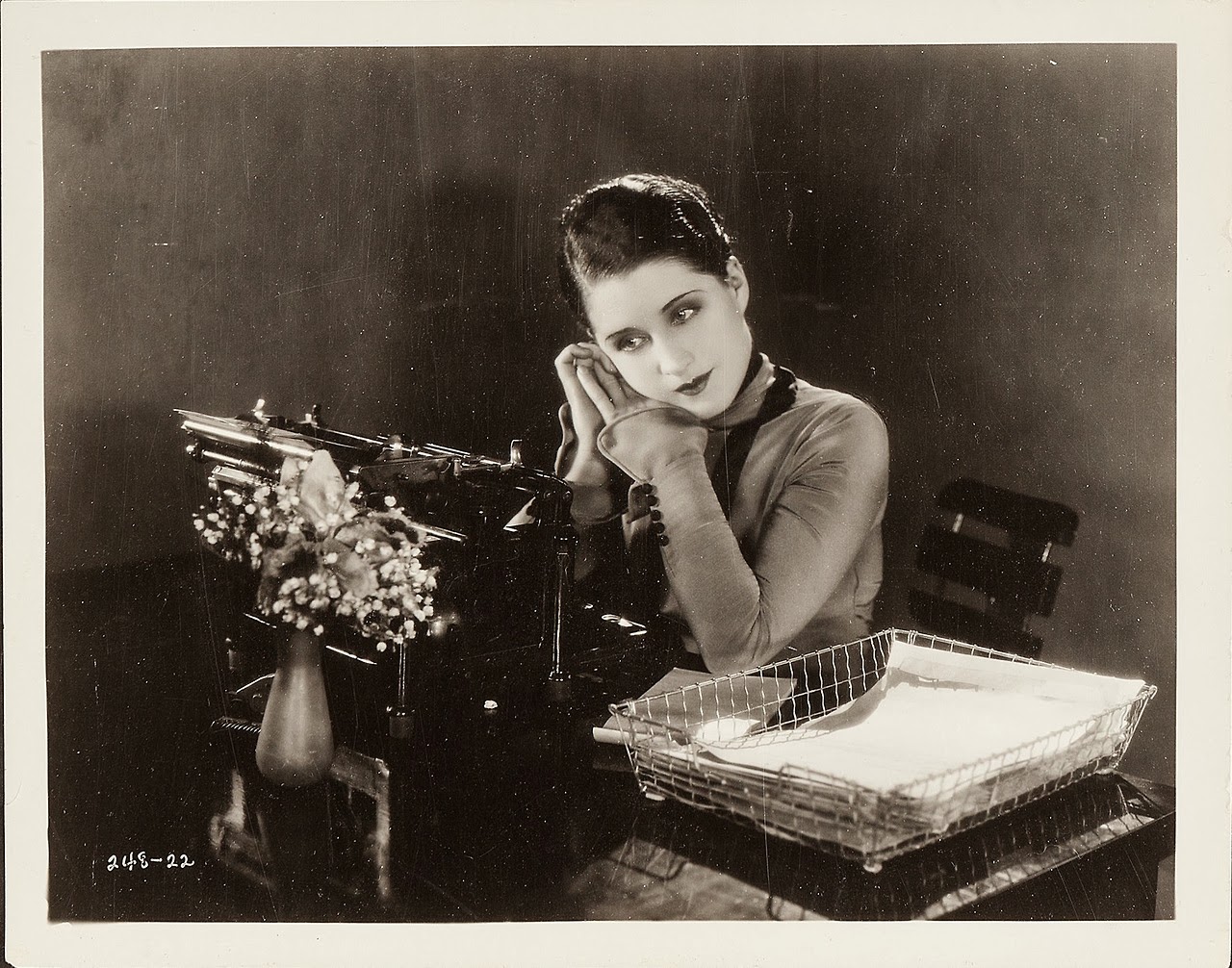
Theodore Shane continued to be disappointed with films coming out of Hollywood. He described Norma Shearer’s latest picture His Secretary as “poor.”
A stenographer, and a vamp! Norma Shearer in His Secretary, 1925 (silent beauties)
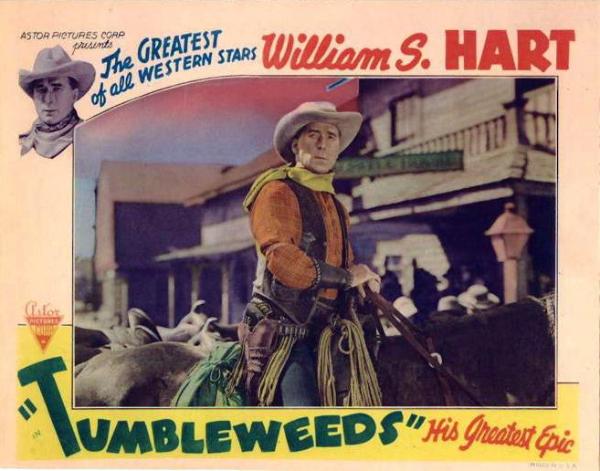
The film was about a humble stenographer who suddenly transforms into a ravishing sex symbol, a “Cinderella theme” that Shane believed had been thoroughly worn out by the actress. He was also underwhelmed by the return to the screen of William S. Hart, once a big star of the early silents.
The old cowboy isn’t done yet, durn it! (silenthollywood.com)
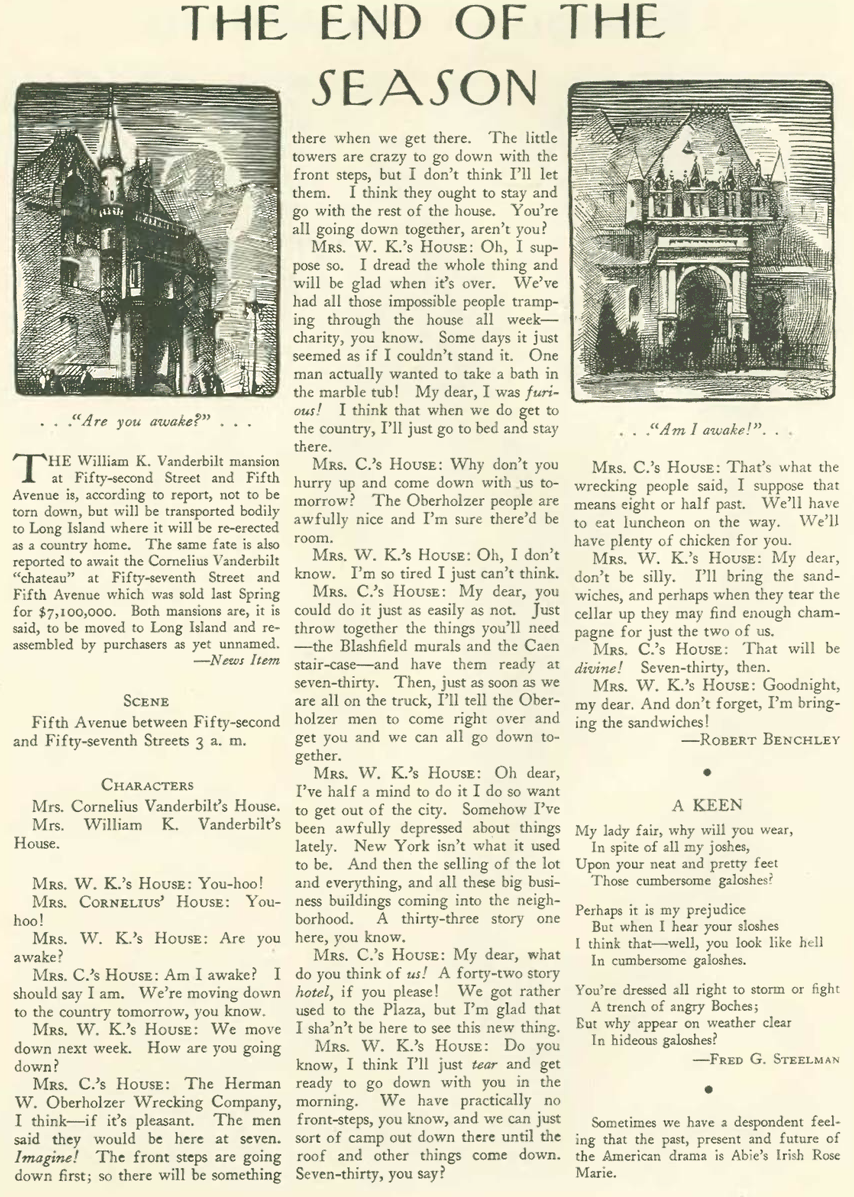
I have written several entries about the changing face of Fifth Avenue (the old mansions being destroyed, that is). Here is Robert Benchley’s take on the subject:
To close, an illustrated feature by Helen Hokinson, once again showing us how a college student of the 1920s looks (to my eyes anyway) as ancient and remote as a mastodon:
We close out The New Yorker’s first year with the magazine on firmer footing and many of its mainstay writers and artists firmly in place.
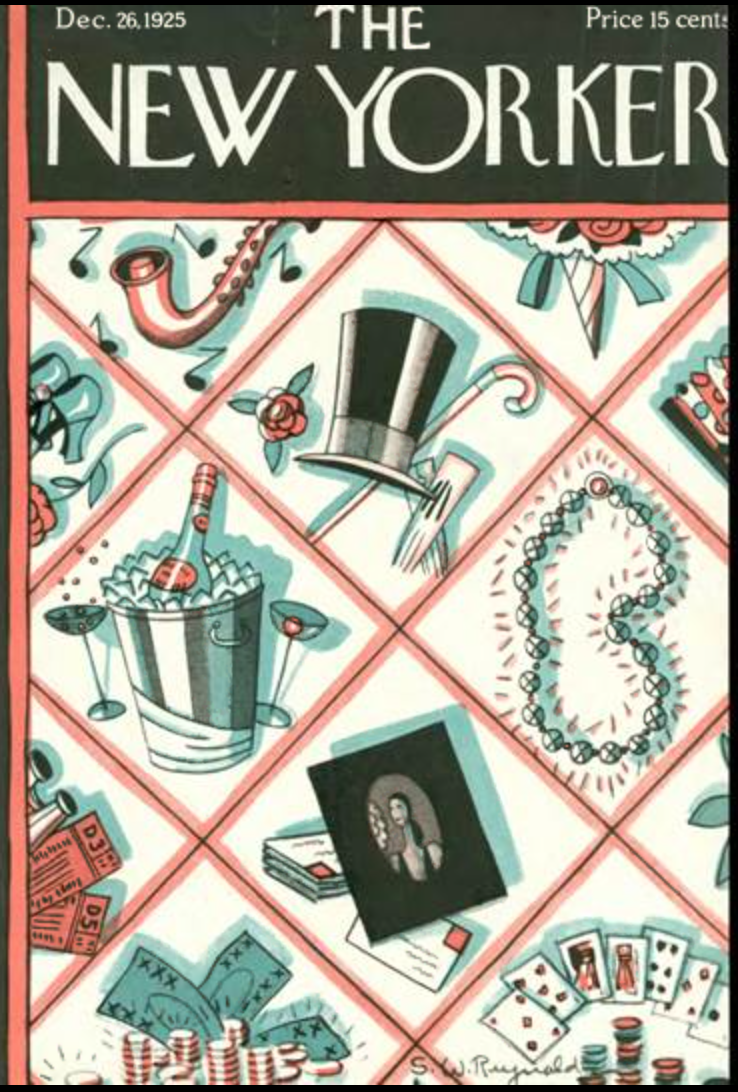
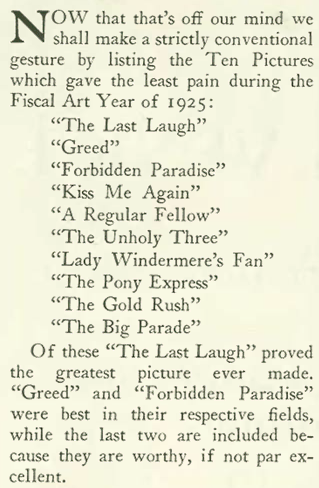
The Dec. 26, 1925 issue was the usual hodgepodge, but some writers did give a nod to the end of the year, including film critic Theodore Shane, who offered his list of the best ten moving pictures of 1925.
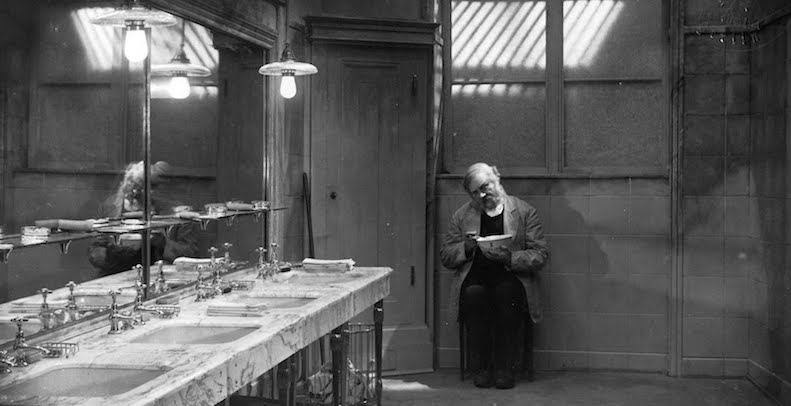
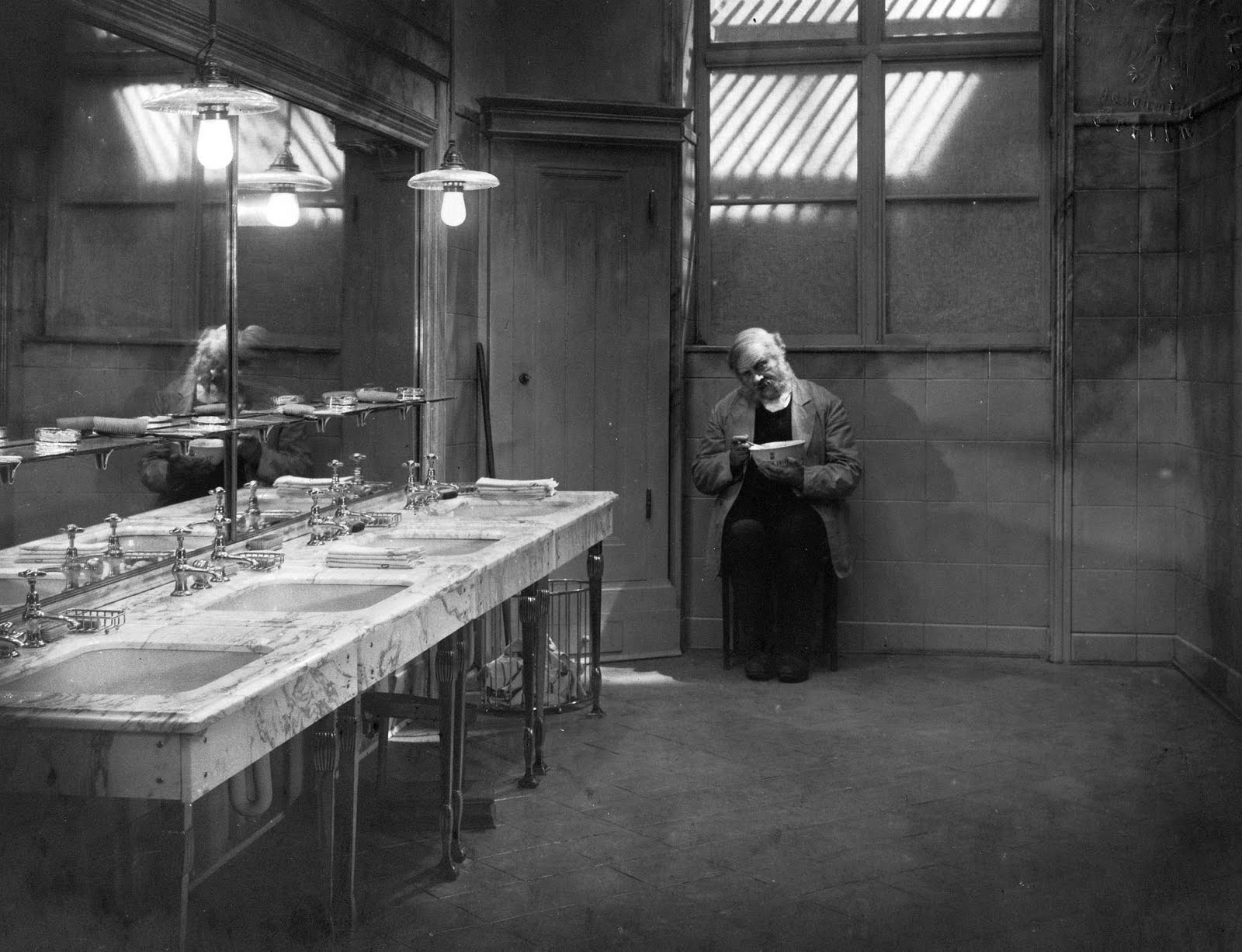
Shane’s favorite film by far was The Last Laugh, (the German title was Der letzte Mann, or The Last Man) a 1924 German film directed by F.W. Murnau and starring Emil Jannings (who would later win the first Academy Award for Best Actor in 1929). Shane referred to it as “the greatest picture ever made.” Released in the U.S. in 1925, the film was about a proud doorman who loses his job and tries to hide the fact from his friends and family. Shane usually reserved his highest praise for German cinema in his columns.
Scene from The Last Laugh (1924) starring Emil Jannings. (Roger Ebert)
Shane’s complete list of the ten best movies of 1925:
For the worst films of the year, Shane suggested a tie between Drusilla With a Million, Lord Jim, Joanna, the Million Dollar Girl or Stella Dallas.
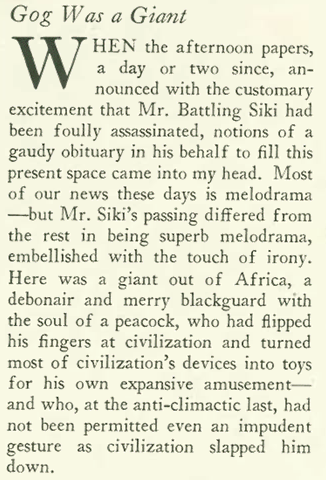
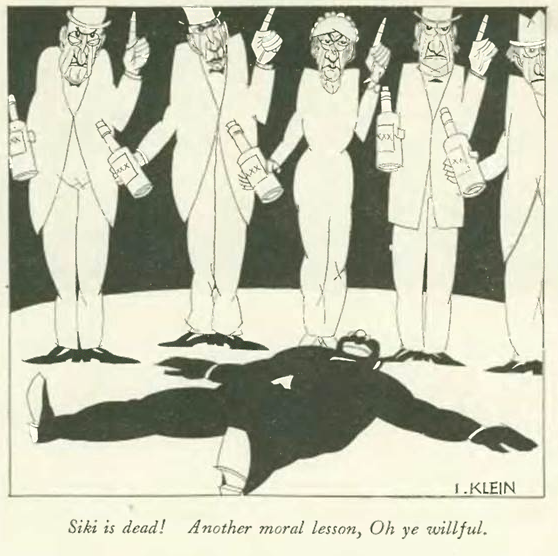
The New Yorker also commented on the murder of the irrepressible boxer Louis Mbarick Fall, popularly known as “Battling Siki.”
“Battling Siki” in his heyday. (Wikipedia)
Born in Senegal, he was a light heavyweight boxer from 1912–1925, and briefly reigned as a light heavyweight champion. Known for his heavy drinking and carousing, on the night of Dec. 15, 1925, he was found dead near his 42nd Street apartment. He had been shot twice in the back at close range. He was 28.
In his column, “A Reporter at Large,” Morris Markey offered this observation on Battling Siki’s passing:
The cartoonist Isadore Klein, on the other hand, contributed this strange stand-alone illustration for “The Talk of the Town” section:
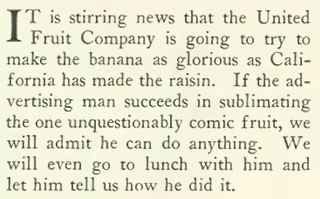
Also in “Talk” was this brief item about the United Fruit Company:
United Fruit would be no laughing matter three years later with the Banana Massacre, which would claim the lives of an unknown number of workers who were striking for better working conditions in Columbia.
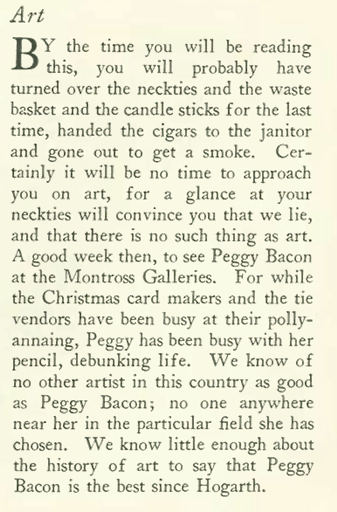
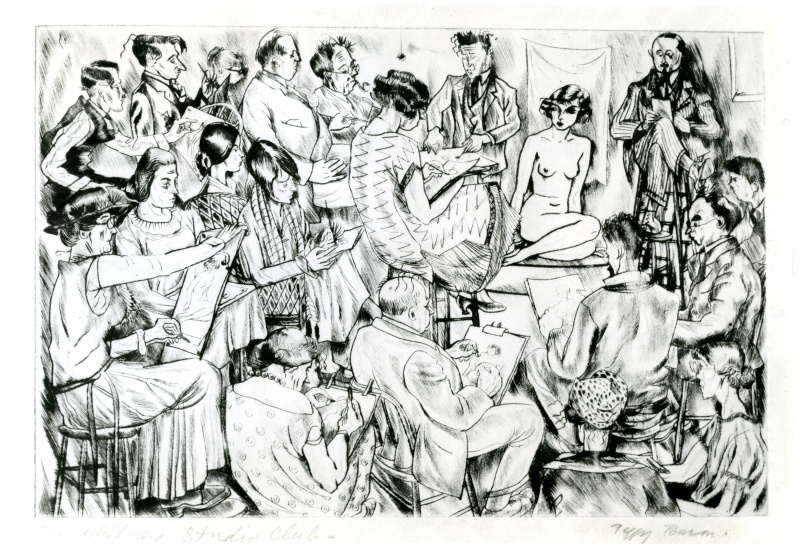
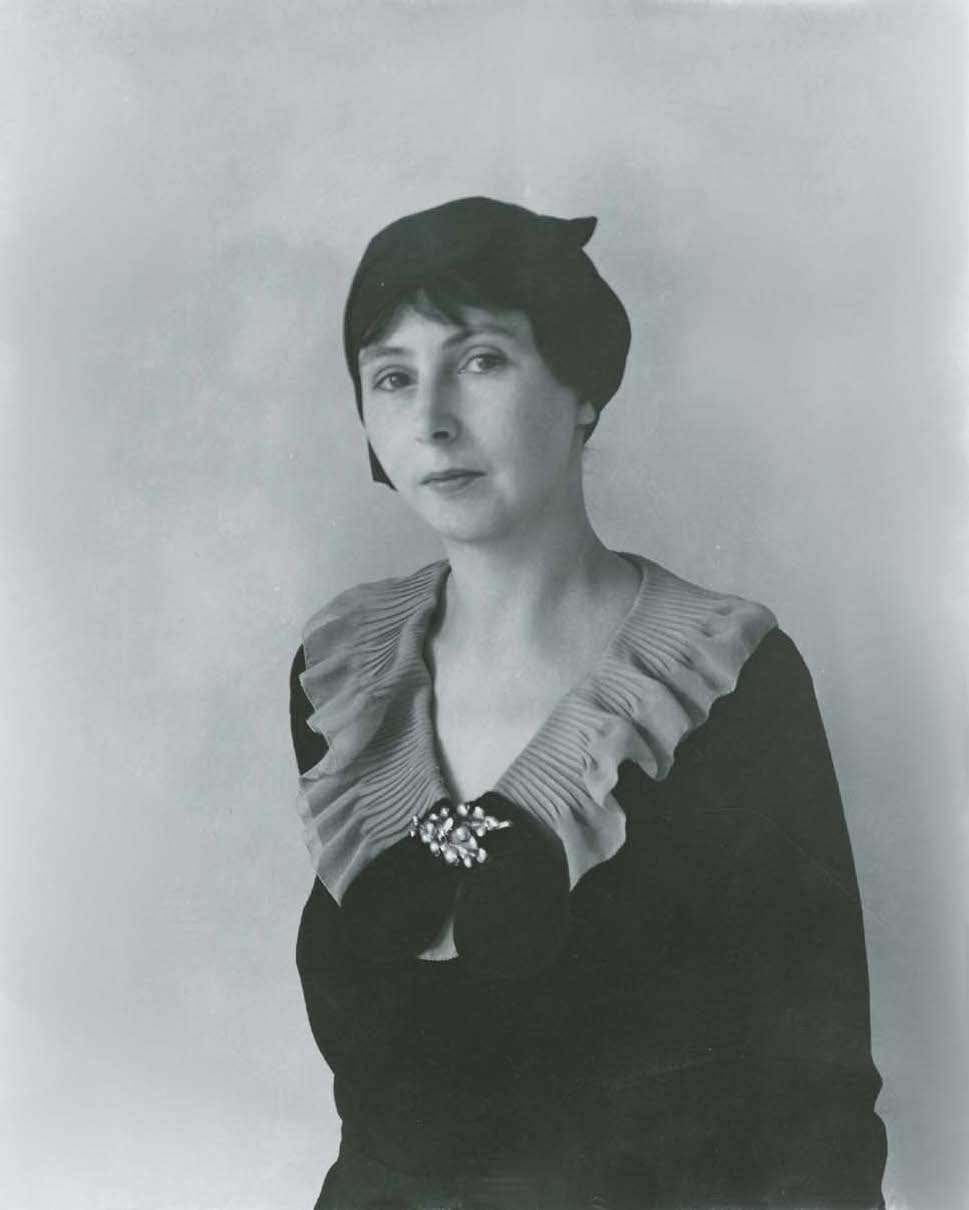
Art critic Murdock Pemberton offered a glowing review of an exhibit at the Montross Galleries by frequent New Yorker contributor Peggy Bacon:
Peggy Bacon, The Whitney Studio Club, 1925. (Whitney Museum of American Art)Peggy Bacon (Smithsonian)
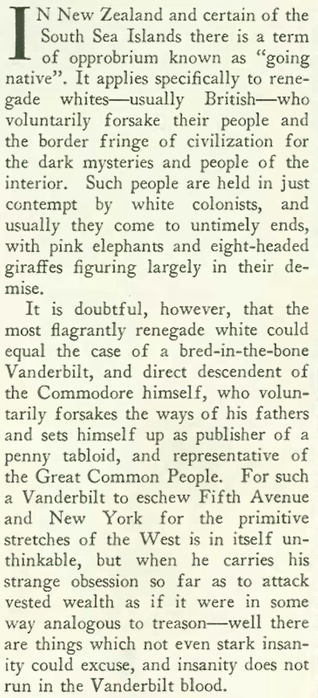
“Profiles” looked at Cornelius Vanderbilt Jr, “The Fifth Avenue Maverick.” William Boardman Knox wrote that the young Vanderbilt “is as alien to his blood as a marmoset to a gorilla.”
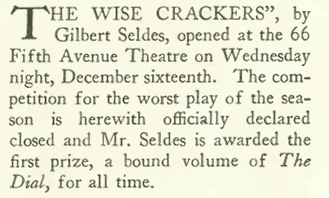
In the “The Theatre,” critic Herman J. Mankiewicz pulled no punches when he declared Gilbert Seldes’ play The Wise Crackers “the worst play of the season” (Seldes was himself a noted critic and sometime New Yorker contributor):
What’s more, the play was about a group of literate New Yorkers who gather to exchange witty barbs and sarcastically comment on the doings of the day. In other words, it was inspired by the Algonquin Round Table, which famously included Mankiewicz as a member.
Another Round Table notable was Robert Benchley, who contributed this piece for the last issue of the year:
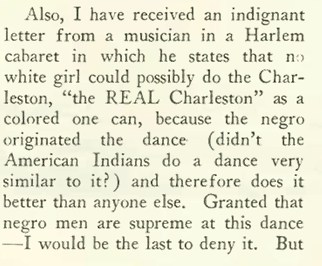
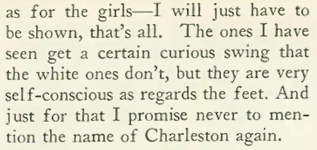
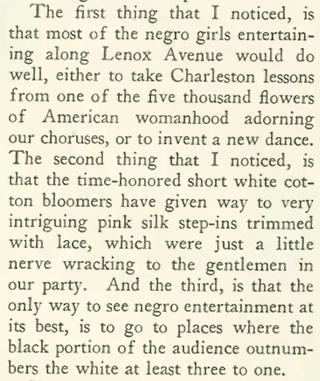
Lois Long offered her regrets for ever bringing up the subject of “The Charleston:”
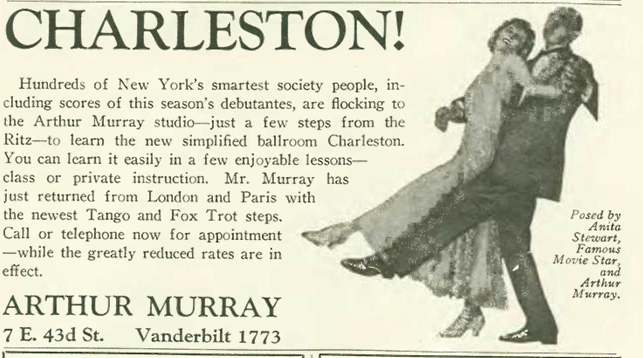
And just a few pages over, lessons were advertised for…The Charleston!
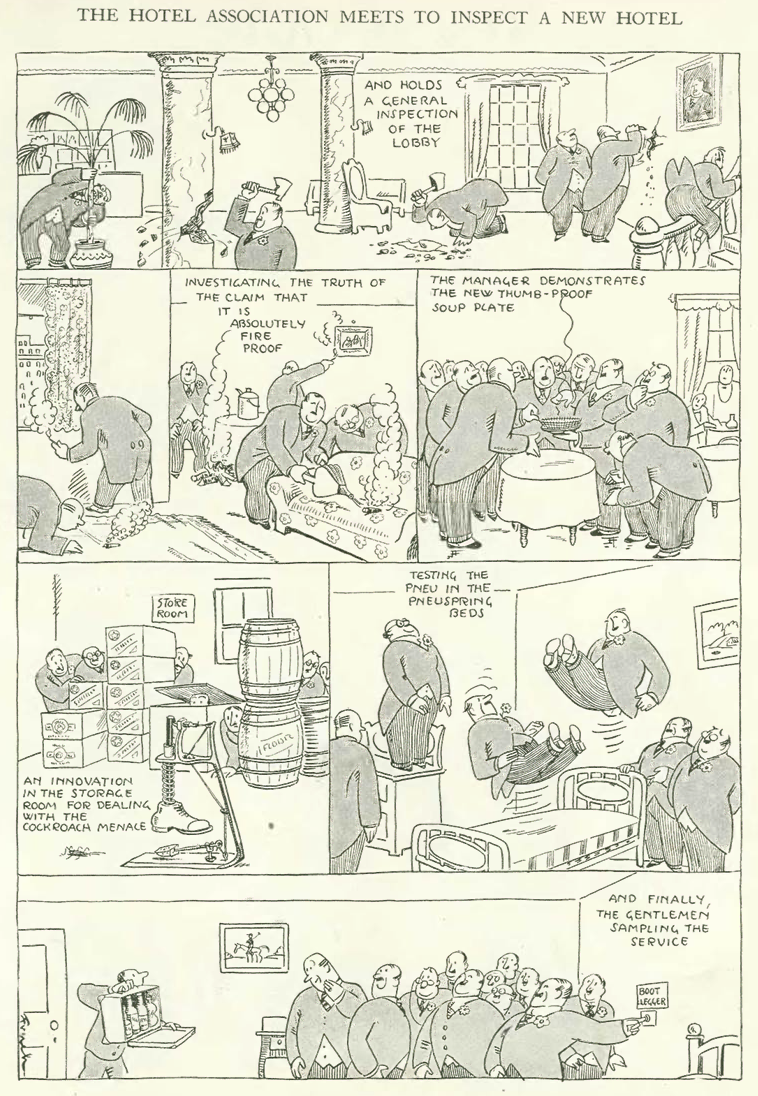
And to close, here’s a little fun with hotel inspectors, courtesy of Al Frueh:
In my previous post, I hinted that “social errors” would be the topic of this entry, and in a sense that title describes the stance New Yorker editors were taking toward the continued demolition and remodeling of old city landmarks.
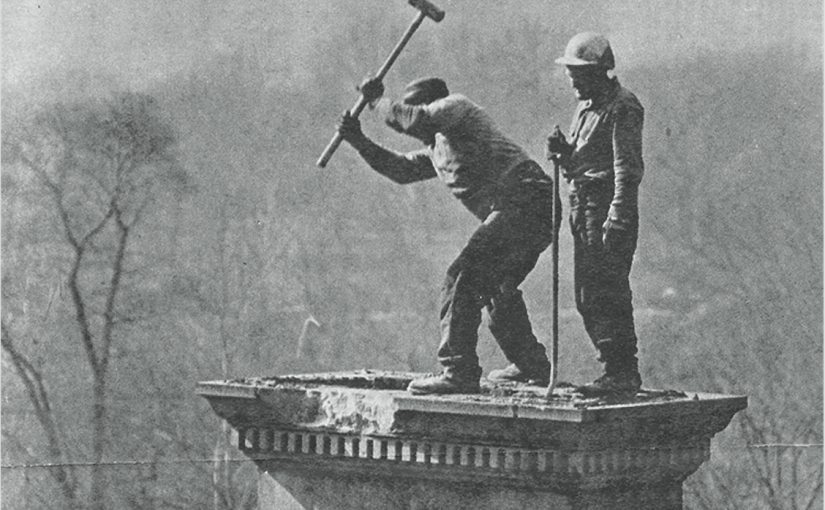
“The Talk of the Town” reported that two more Fifth Avenue mansions on “Millionaries Row” were soon to be demolished: the Brokaw and Yerkes mansions (the photo at the top of this entry depicts workmen taking a sledgehammer to a chimney atop the Brokaw house–not in 1925, but in 1965–more on that later).
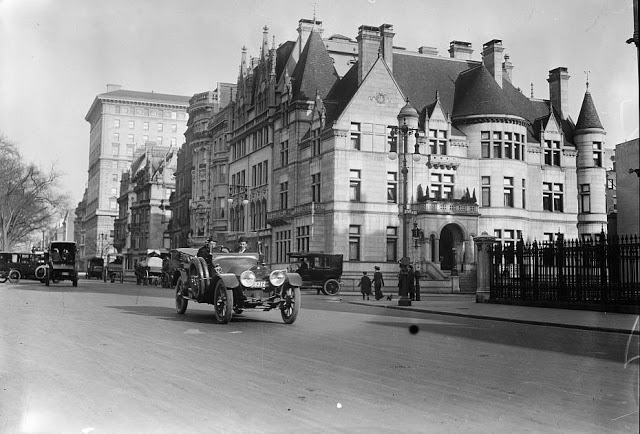
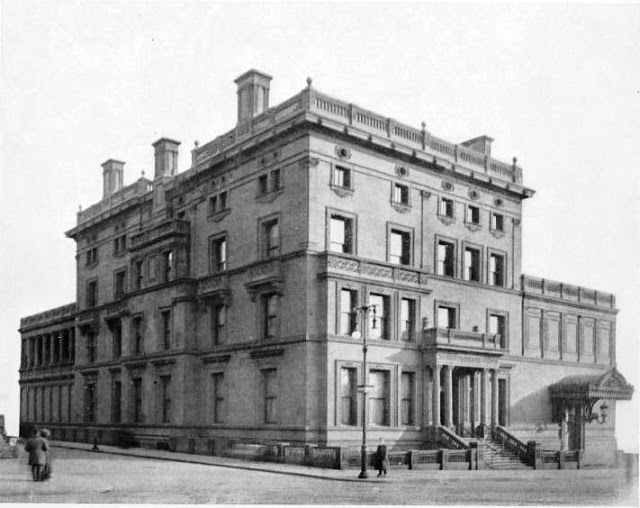
The Isaac Brokaw mansion at 79th and 5th Avenue, completed in 1890. Behind the mansion are the twin residences of two Brokaw sons, Howard and Irving. Daughter Elvira would also erect a residence next door. Although the Dec. 19, 1925 edition of The New Yorker lamented the imminent destruction of the house, it would actually stand another 40 years. (Library of Congress)The Yerkes Mansion, erected in 1896, would not be so fortunate…it would fall to the wrecking ball in 1926. (Collection of Charles T. Yerkes)
In his excellent blog site, Dayton in Manhattan, Tom Miller writes that the Isaac Brokaw mansion first faced the wrecking ball after Isaac’s eldest son, George, moved out in 1925. George “intensely disliked the house” because of its size and maintenance costs, and petitioned the courts to allow him to mortgage the property for $800,000 and use the money to demolish the mansion and erect a modern apartment house.
His brother, Howard, blocked the move. Three years later, the court ruled that the house could not be sold nor razed without the mutual agreement of all the Brokaw siblings, so George moved back in.
George died seven years later of a heart attack. His wife, Frances Ford Seymour would marry Henry Fonda a year later and have two children, Jane and Peter (George was married twice, the first time to Clare Boothe, who would later become Clare Boothe Luce).
The mansion was then occupied as offices for the Institute of Radio Engineers. When it was announced in 1965 that the mansion (and the adjacent mansions of the Brokaw children) were to be demolished to make way for a high-rise apartment building, there was an outcry from members of the city’s nascent Landmarks Preservation Commission, still stinging from the destruction of Penn Station. Miller writes that demolition workers were paid overtime to begin immediate destruction of the mansions in order to preclude the possibility of a court order to stop the work.
The Yerkes mansion, on the other hand, disappeared rather unceremoniously. According to Miller, a neighbor, Thomas Fortune Ryan, bought the house in 1925 and tore it down in order to enlarge his flower garden. In 1937 an apartment building was erected on the site. I recommend that you check out Miller’s entertaining and informative posts on both the Brokaw and Yerkes mansions.
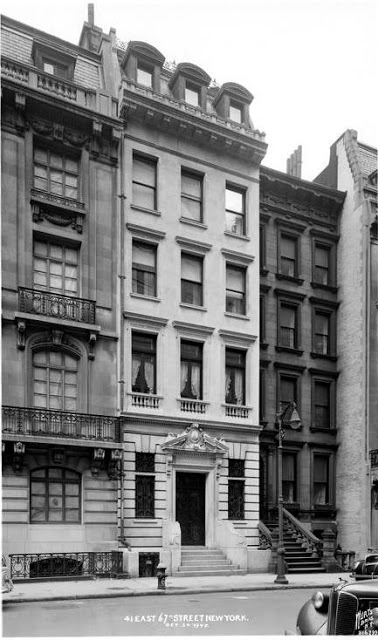
The Dec. 19 issue also featured a column by Gilbert Seldes titled “Complaint.” Seldes bemoaned the remodeling of “sober, decent” brownstones at Fiftieth Street and beyond (Beekman Place) into overly ornamented facades favored by the Babbitt set:
A remodeled brownstone at No. 41 E. 67th Street. Note the original brownstone next door. (Museum of the City of New York)
With the much-publicized signing of famed halfback Red Grange to the Chicago Bears (a $100,000 annual contract), the professionalization of football and the money attached to it were frequent topics in the magazine. Howard Brubaker, in “Of All Things,” noted:
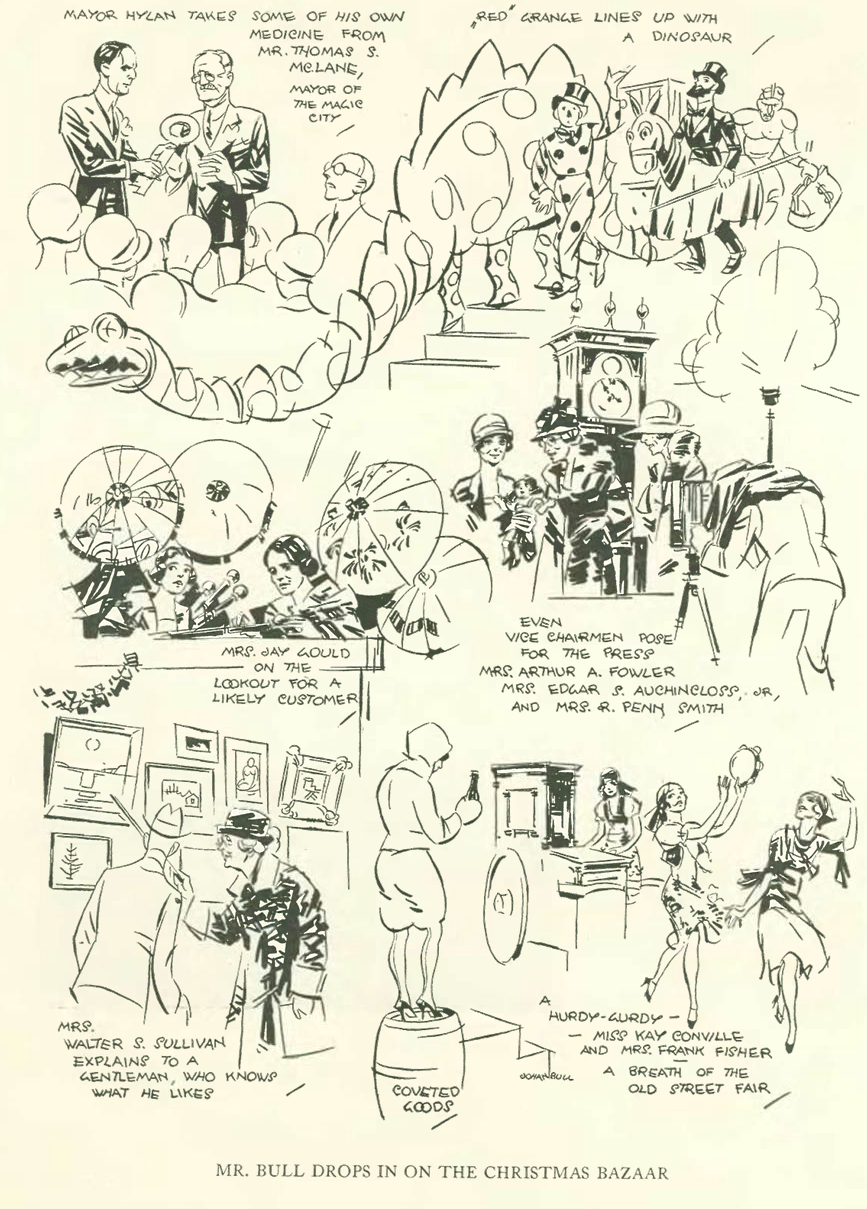
And in this illustration by Johan Bull, Grange is depicted carrying a large money bag at New York’s annual Christmas Bazaar:
“Profiles” looked at the life of pianist and composer Leo Ornstein, noted for performing and composing avant-garde works. Ornstein would have a long career, completing his eighth and final piano sonata at the age of 97. He died in 2002 at age 108.
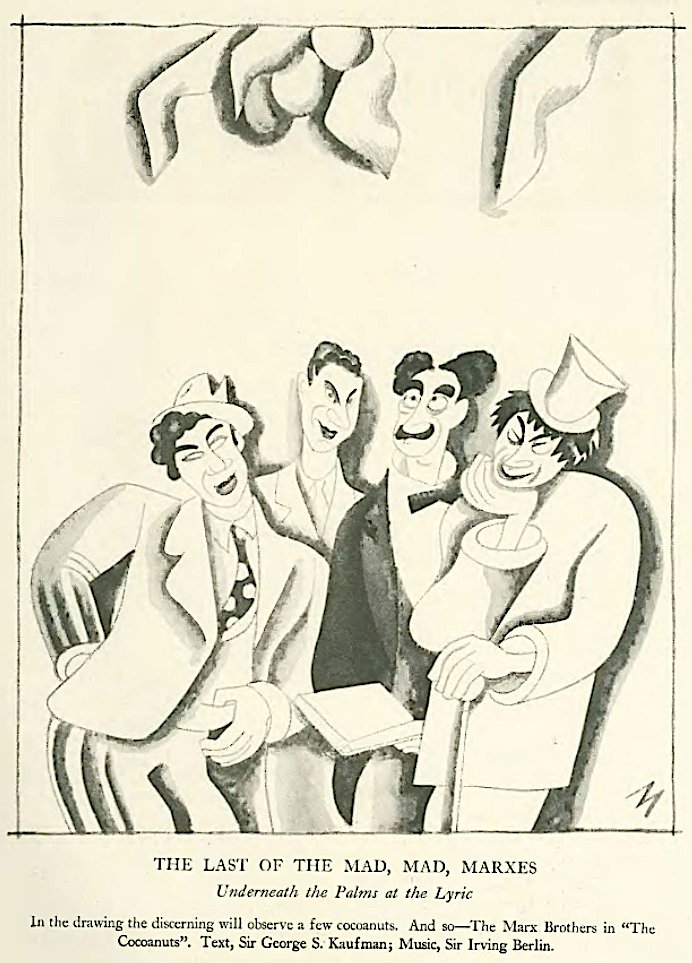
The Marx Brothers’s broadway musical The Cocoanuts wowed audiences (and New Yorker theatre critic Herman J. Mankiewicz) at the Lyric Theatre:
In her Paris Letter, Janet Flanner announced the deaths of “two great servers of the French palate”—Emile Pruinier (famed for his Portuguese oysters) and Mother Soret of Lyons, who “died with a knife in her hand” and whose death was “solemnly listed in Comoedia as that of an artist.”
And to stay in the spirit of the holidays, this Christmas advertisement from the back cover:
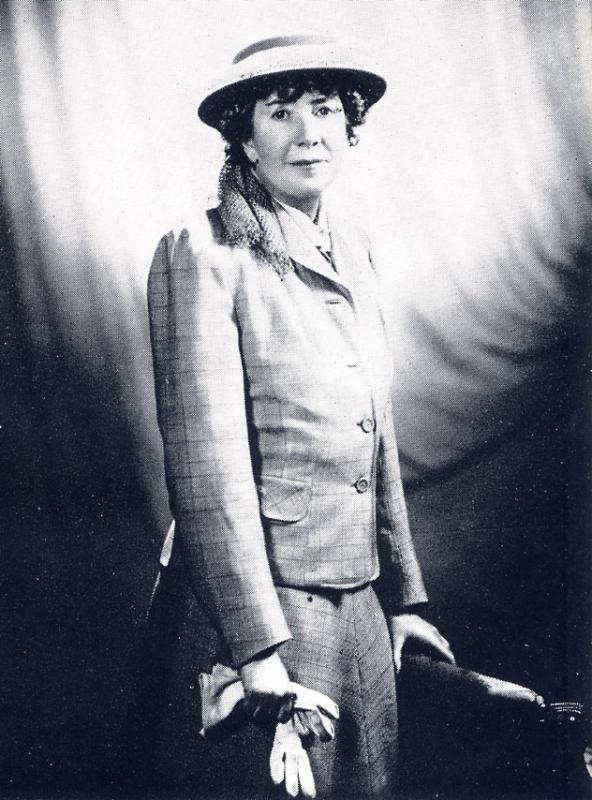
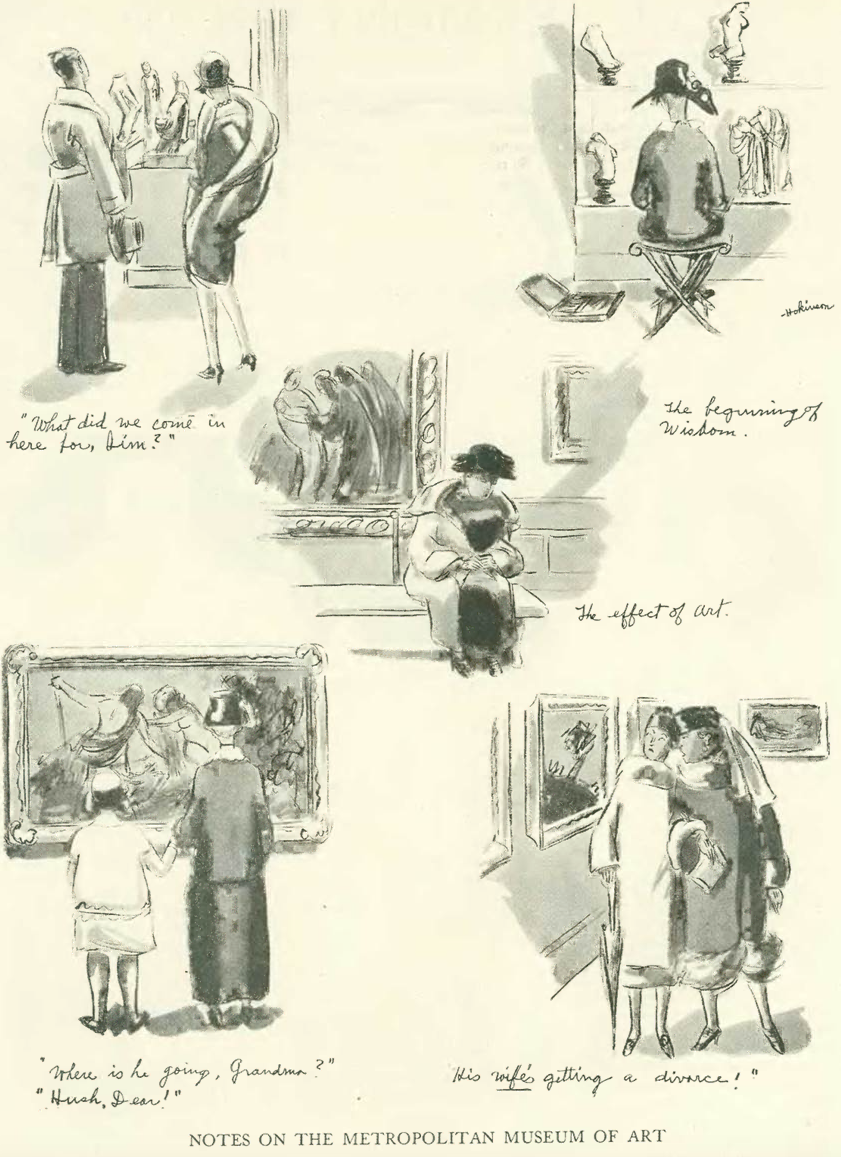
Last time we looked at one of The New Yorker’s most prolific artists, Peter Arno. Equally prolific was Helen E. Hokinson, who preceded Arno at the magazine by several months as one of the magazine’s first regular artists.
Hokinson’s signature cartoons of often plump society women engaged in their various activities–clubs, shopping, dining out and gardening–were hugely influential in giving The New Yorker a distinct look and style.
In all she contributed 68 covers to the magazine and more than 1,800 cartoons (including the one that heads this blog entry). So strong was Hokinson’s identity with the magazine, a number of her cartoons were published after her death in 1949.
Helen Hokinson (pbase.com)
New Yorker artist Richard Merkin later wrote (The New Yorker, Feb. 14, 1994) that Hokinson was “something of a stay-at-home, preferring the rewards and routines of her work and of an apartment near Gramercy Park and a cottage in Connecticut.” He observed that it was a “dismal irony” when this homebody died in a plane crash en route to a speaking engagement in Washington, D.C.
But let us remember the joys she brought to so many through her work. Merkin wrote that Hokinson was “a beloved aunt among the family of New Yorker artists…(she) created a type that will forever bear her name–the Hokinson Woman.” Here is Hokinson’s contribution to the Dec. 12, 1925 issue:
The reluctant debutante Ellin Mackay was back for the Dec. 12 issue with a follow-up piece, “The Declining Function: A Post-Debutante Rejoices.” It would be her final word on the topic. As I reported earlier, Mackay went on to marry famed songwriter Irving Berlin, but would continue writing, most notably a number of short stories for the Saturday Evening Post and other publications.
FREE AT LAST…Newlyweds Ellin Mackay and Irving Berlin on their honeymoon in Atlantic City. They were married on Jan. 4, 1926. (www.kuaike.co)
In this her second and final New Yorker piece, Mackay drove the final nail into her past debutante life, writing that balls and other society events were “no longer a recognition of any kind of distinction.” She concluded:
People are bored, at least for a while, with being sheep; they are weary of filling their hours of ease with tiresome duties; they have learned to go where they want to go, not where they want to be seen.
* * *
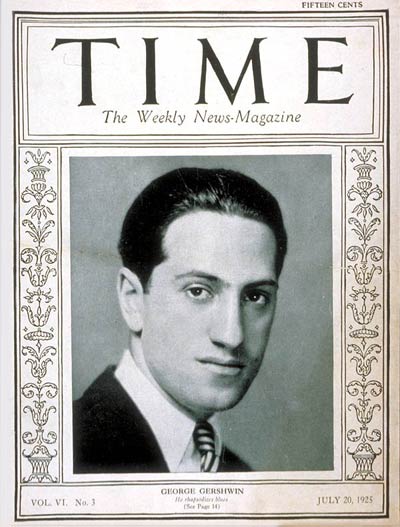
“The Talk of the Town “ reported on George Gershwin’s latest work of “ambitious jazz,” his Concerto in F, which premiered at Carnegie Hall with Walter Damrosch conducting.
George Gershwin on the cover of the July 20, 1925, issue of Time magazine. (Time.com)
It was noted that Gershwin’s new work had the “beat of the Charleston stirring it.” Later in the “Critique” section, the work was applauded as an “advance on Rhapsody in Blue” and “sharply effective.”
“Profiles” featured Tex Rickard, proprietor of the new Madison Square Garden. The profile’s writer, W. O. McGeehan, suggested that Rickard had assumed the mantle of P. T. Barnum, and although he had given up his saloon-dealing days (promoting gambling and boxing) and now feigned “respectability and elegance,” his primary talent remained in rounding up the gullible masses for popular entertainments:
He will promote anything that will gather a sufficient number of Rubes for profit or for prestige…Behind his guileless exterior, there is a deep guile that is half benevolent and half Satanic…
Tex Rickard (Library of Congress)
The following year (1926) Rickard would be awarded an NHL franchise to compete with the (now defunct) New York Americans hockey team. Rickard’s team would immediately be nicknamed ‘Tex’s Rangers,” a moniker that remains to this day.
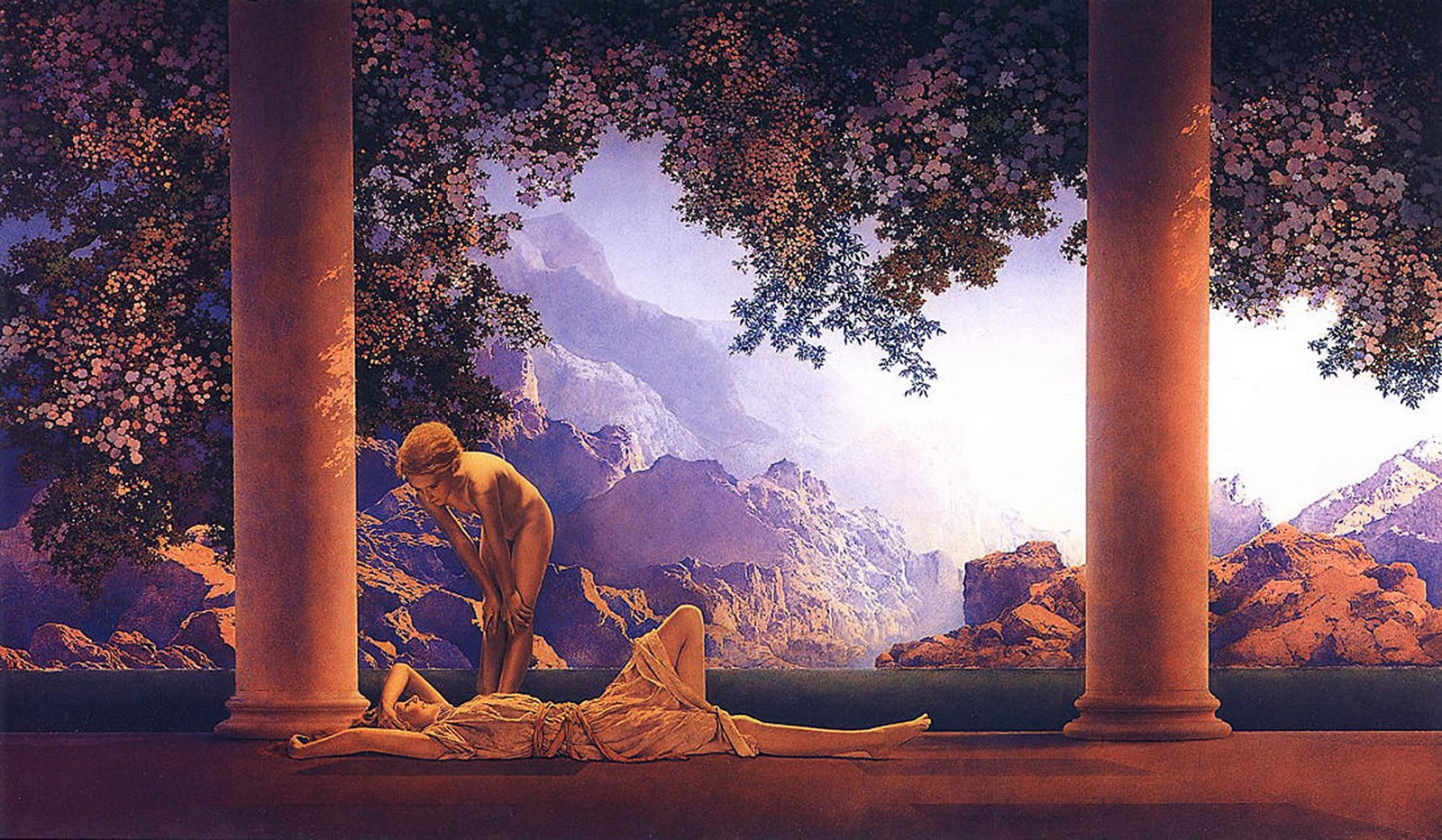
Maxfield Parrish’sDaybreak (1922) is regarded as the most popular art print of the 20th century, based on number of prints made: one for every four American homes. The original sold in 2010 for $5.2 million. (artsycraftsy.com)
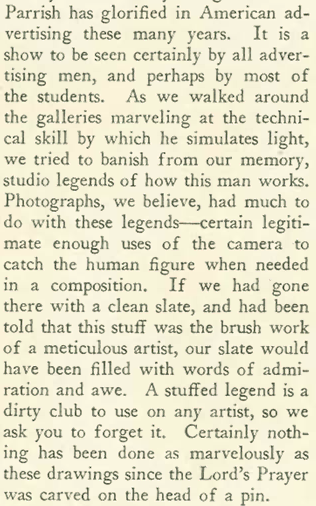
In “Art,” Murdock Pemberton wrote a dismissive critique of the young Maxfield Parrish’s work, which was on display at Scott & Fowles gallery. It was Parrish’s first exhibition. Pemberton took pains to point out that although the work had technical merit, it was by an artist largely glorified in American advertising and not in serious art circles:
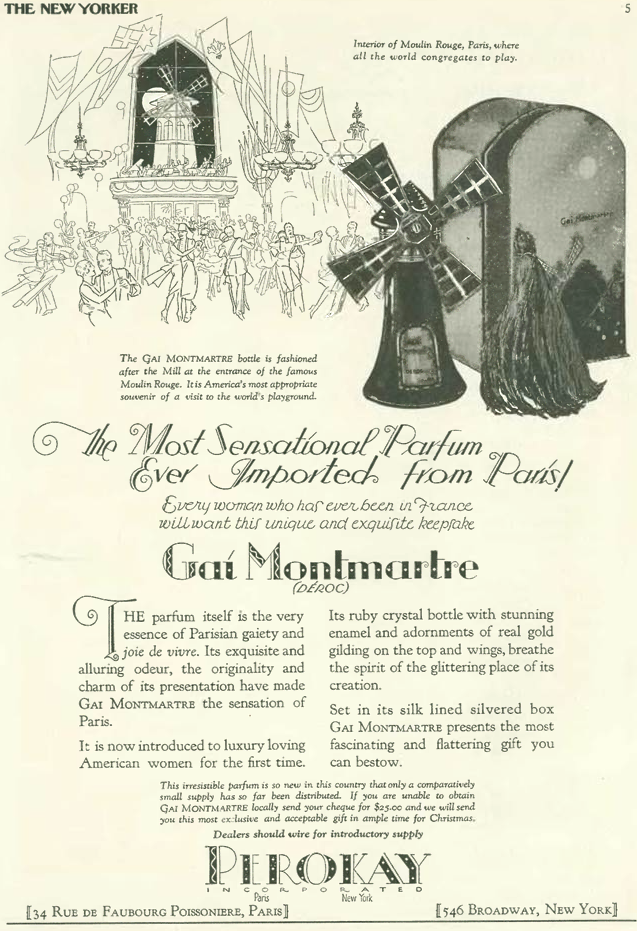
The Dec. 12 issue was filled with Christmas advertisements, including this one that suggests even “sophisticated” readers of the magazine had a taste for kitsch:
Included in the back pages was an extensive list of “Christmas Shopping Suggestions” compiled by Lois Long (who noted that the list was “not compiled for the benefit of the Old Lady from Dubuque”), while in “Tables for Two” she confessed something akin to horror that she had not yet visited Harlem in the fall season. Among her observations:
And in the spirit of the season, the “Old Lady from Dubuque” made an appearance in the magazine courtesy of cartoonist Ralph Barton:
In the fall of 1925, Peter Arno’s illustrations began to pop up in the pages of The New Yorker magazine.
Arno’s early illustrations were surprisingly understated, given that he would go on to become one of the magazine’s best known cartoonists, contributing many memorable illustrations and cartoons–and 99 covers–to the magazine from 1925 until 1968, the year of his death.
Recently described by longtime New Yorker writer Roger Angell as “the magazine’s first genius,” in 1927 Arno would marry fellow New Yorker contributor Lois Long (“Tables for Two” and “On and Off the Avenue”).
Peter Arno
In his memoir Here at The New Yorker, Brendan Gill wrote that editor Harold Ross frowned on office romances, but “it was perhaps inevitable that Arno and Miss Long should have fallen in love.”
To keep his party-loving contributors close to the workplace, Ross opened a staff speakeasy in the basement of a near-by property. Long later relayed this story to writer Harrison Kinney about Ross’s ill-fated experiment:
Lois Long
“(Ralph) Ingersoll came in one morning and found Arno and me stretched out on the sofa nude and Ross closed the place down…Arno and I may have been married to one another then; I can’t remember. Maybe we began drinking and forgot that we were married and had an apartment to go to.”
The marriage would last only three years (and produce a daughter…more on that in a later post), but they would collectively give more than eight decades of their lives to the magazine.
Examples of Arno’s early contributions:
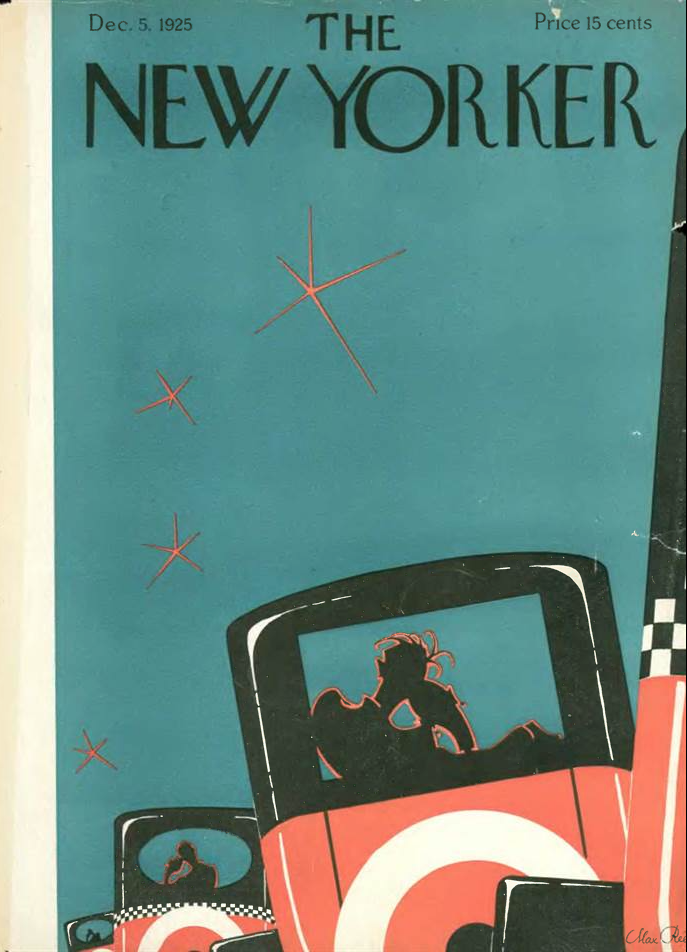
August 1925Dec. 5, 1925
And his later work…a cartoon from 1960:In other news, “The Talk of the Town” editors also joined the throng of gapers taking one last look at the Vanderbilt mansion:
And they rhapsodized about the new Madison Square Garden, which was nearing completion at Eighth Avenue between 49th and 50th streets:
Postcard image of New York City’s Madison Square Garden No. 3, which remained in use until 1968. (Wikipedia)
“Profiles” featured the “Apostle of Perfection,” Dutch conductor Willem Mengelberg, famed for his performances of Mahler and Strauss. “The Current Press” noted the first-ever coverage of a professional football game by a New York newspaper (NY Times):
An excerpt from the lengthy Times article referenced by The New Yorker:
THE GALLOPING GHOST…Red Grange with the Chicago Bears in 1925. (Library of Congress)
In “On and Off the Avenue,” Lois Long wrote about the wonders of children’s toys on display for the Christmas season:
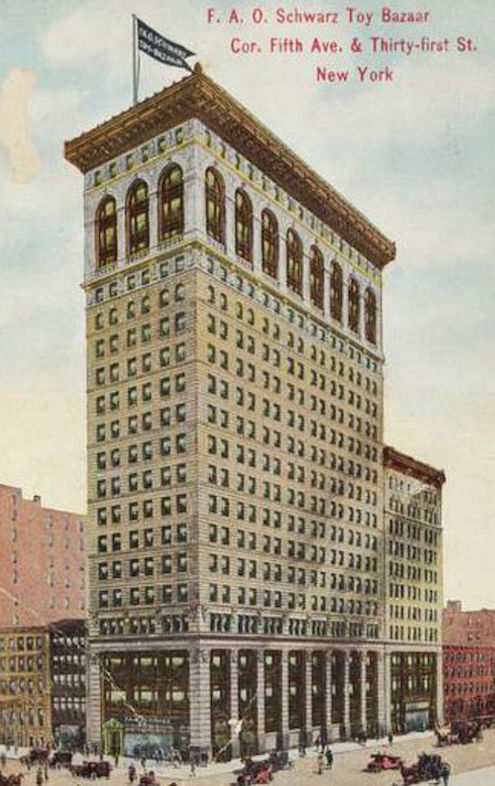
It is worth noting that the “Schwartz” store to which she referred (known to most of us as FAO Schwartz) will be closing its current Fifth Avenue store at the end of 2016. The name will live on (sadly) in online retailing as a unit of Toy’s R Us.
This is the F.A.O. Schwarz store that would have been familiar to Lois Long. (6sqft.com)
And in her “Tables for Two” column, Long referred to the previous issue’s blockbuster article penned by the reluctant debutant, Ellin Mackay, which perhaps made Long’s nighttime forays a bit less novel:
The Dec. 5 issue also carried a response to Mackay’s article, written by a young Yale alumnus named William Adee. A couple of brief excerpts:
Later in his lengthy rebuttal, Adee offers this (exasperated) observation:
In “Motion Pictures,” Theodore Shane found little to recommend: Cecille B. DeMille’sThe Road to Yesterday was “hokum,” The Masked Bride tame, and the new Tom Mix picture, The Best Bad Man, was in need of a plot.
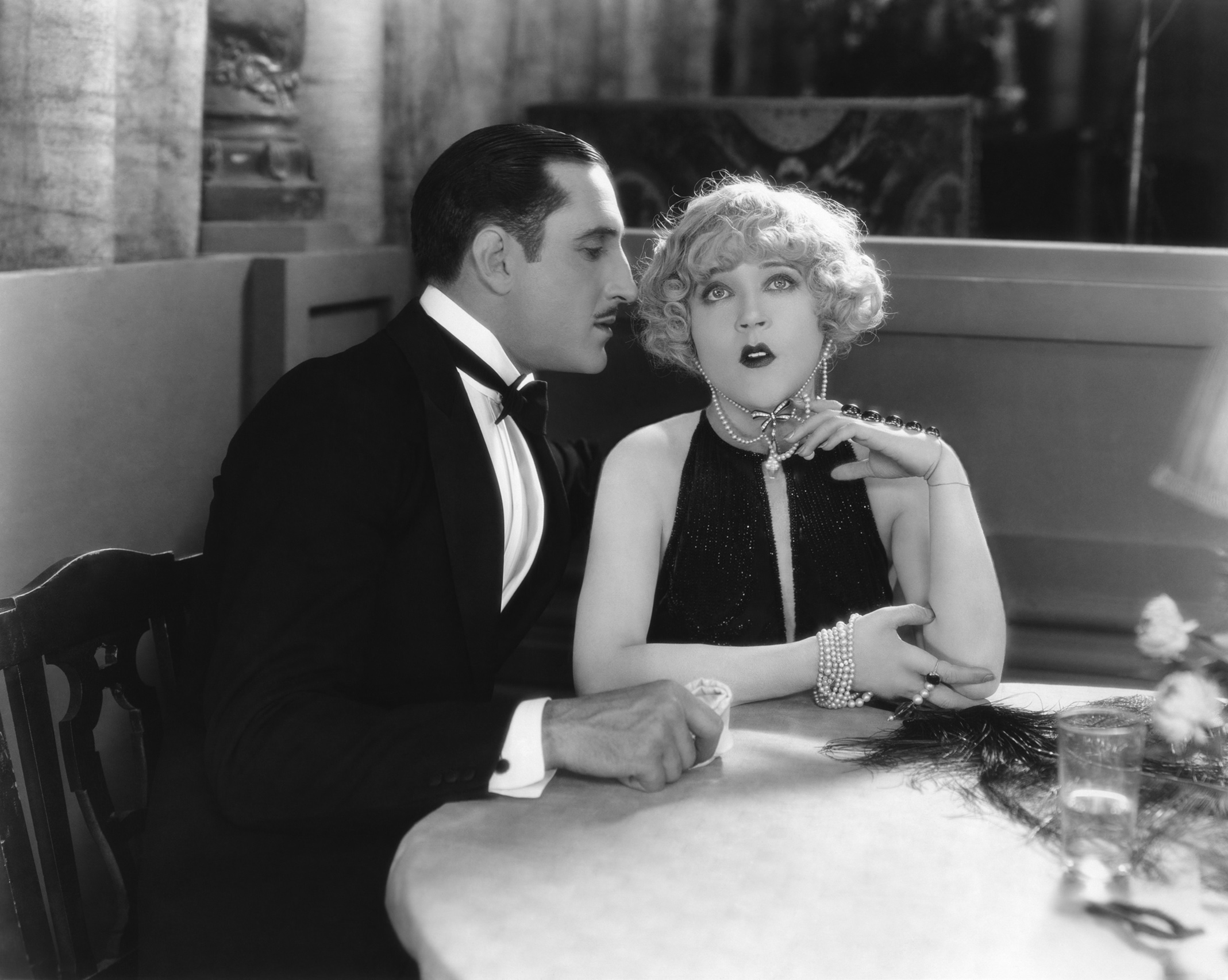
HO HUM…Basil Rathbone and Mae Murray in The Masked Bride. The film is now lost. (doctormacro.com)
If you are looking for a watershed moment in the history of The New Yorker, this is one of them. The issue of Nov. 28, 1925, featured an article written by 22-year-old Ellin Mackay titled “Why We Go To Cabarets: A Post-Debutante Explains.”
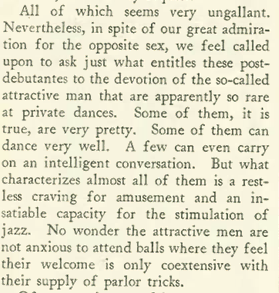
Mackay was the daughter of a Catholic multi-millionaire, Clarence McKay, who was threatening to disinherit his daughter because of her romance with Jewish songwriter Irving Berlin. Mackay’s essay explained why modern women were abandoning the forced social matchmaking of débutante balls in favor of the more egalitarian (and fun-loving) night club scene:
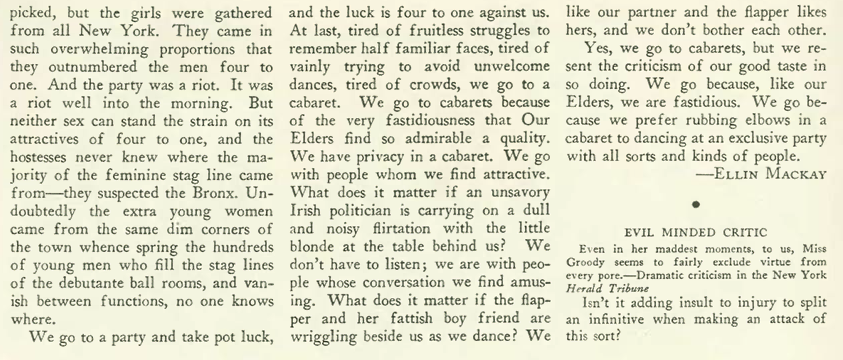
At last, tired of fruitless struggles to remember half familiar faces, tired of vainly try to avoid unwelcome dances, tired of crowds, we go to a cabaret. We go to cabarets because of the very fastidiousness that Our Elders find so admirable a quality. We have privacy in a cabaret…What does it matter if an unsavory Irish politician is carrying on a dull and noisy flirtation with the little blonde at the table behind us? We don’t have to listen; we are with people whose conversation we find amusing. What does it matter if the flapper and her fattish boy friend are wriggling beside us as we dance? We like our partner and the flapper likes hers, and we don’t bother each other.
Mackay’s piece provided a huge boost to The New Yorker’s circulation, which had dipped below a death-rattle low of 3,000 in August 1925 before it rebounded a bit with new and more aggressive advertising and marketing strategies.
The “Debutante” article was featured on the front page of the New York Times, and was also covered on the front pages of other New York newspapers and even in papers across the country. By the end of the year circulation of The New Yorker neared 30,000.
TIME magazine later observed that with the Mackay piece, The New Yorker “suddenly found that it had succeeded in storming the penthouses of High Society. Its success opened the eyes of Editor (Harold) Ross to the importance of the Manhattan socialite, to the fact that Broadway gossip sounds dull on Park Avenue.”
In The New Yorker’s 90th anniversary issue (Feb. 23, 2015), Ian Frazier wrote about the “débutante to the rescue in the Harold Ross era…”
Sometime during the magazine’s early months, Alice Duer Miller gave him (Ross) Ellin Mackay’s “Cabarets” essay. Jane Grant recalled that Ross kept it at the bottom of the pile of manuscripts he brought home, procrastinating because he liked Ellin and expected he would have to reject it, as he often did with others. Grant urged him to run the piece. “It will make wonderful publicity,” she said. Alexander Woollcott, the Times drama critic, with whom the Rosses shared a house…also championed Ellin’s piece. Woollcott knew her through Berlin, whose worshipful biography he had written.
Frazier writes, “In 1,076 words, the “Cabarets” essay had hit precisely the sophisticated young night-club-going, speakeasy-patronizing, up-and-coming, unimpressed-by-their-elders readership Ross was aiming for. The grateful editor gave Ellin Mackay a lifetime subscription to the magazine.” You can read Frazier’s entire article about Mackay and Berlin here.
Mackay and Berlin pose for Cecil Beaton in the June 1930 Vanity Fair. (LIVEJOURNAL/Conde Nast)
Mackay, who would publish several novels, would marry Berlin on Jan. 4, 1926. The marriage would last until her death in 1988 at age 85. Berlin would die the following year at age 101.
Here is Mackay’s full article:
* * *
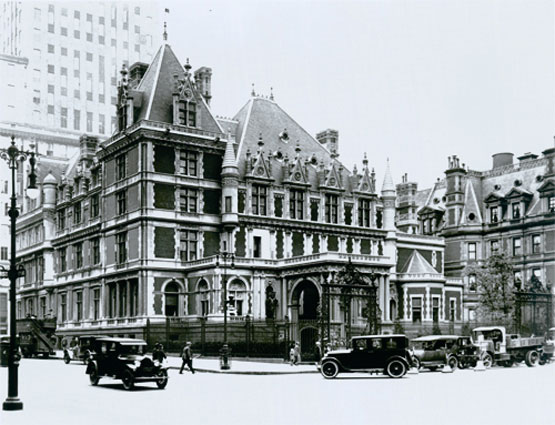
Even as one grand house after another fell to the wrecking ball along “Millionaires Row,” it was hard to believe that the Vanderbilt Mansion between 57th & 58th Streets would also succumb to the commercial interests transforming Fifth Avenue seemingly overnight.
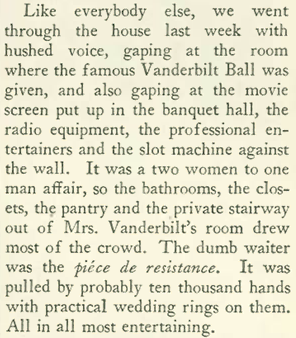
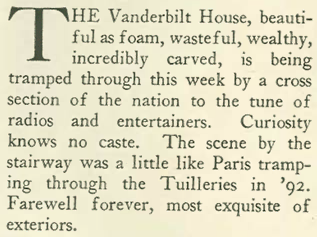
“The Talk of the Town” noted that the doomed mansion, once the largest private home in New York City, was being descended upon by all manner of curiosity seekers:
According to writer Adrian Dannatt, the 130-room, full-scale Renaissance-style château was “originally built to accommodate an entire regal court, a small army, huntsmen and ladies in-waiting, but it was given over instead to a family of eight.”
A photo of the 58th Street side of the house, taken shortly before the house was sold for $7.1 million, demolished and replaced by the Bergdorf Goodman store. (newyorksocialdiary.com)
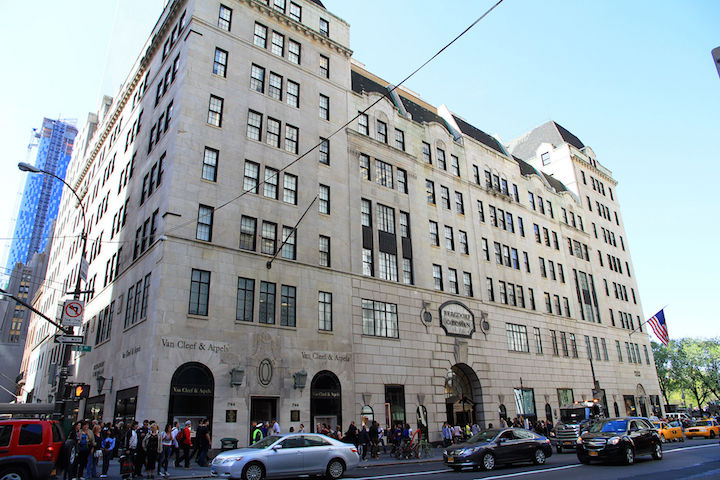
This grand pile was designed by George B. Post in 1882, with interior design by John LaFarge and Augustus Saint-Gaudens among others. Post, along with Richard Morris Hunt, substantially expanded the house in 1893. Demolished in 1926, Bergdorf Goodman Department Store now occupies the site.
Opened in 1928, the Bergdorf Goodman store occupies the Vanderbilt site today. (Wikipedia)
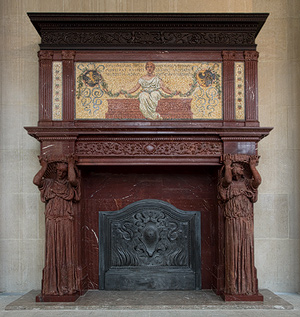
According to Benjamin Waldman, writing for untappedcities.com, a few remnants from the mansion weren’t reduced to dust, including a pair of monumental gates relocated to Central Park and two of six bas-relief sculptures by Karl Bitter that were relocated to the lobby of the Sherry-Netherland Hotel. Apparently the other four disappeared without a trace.
REMNANT…Caryatid-flanked fireplace designed by Augustus Saint-Gaudens, topped with a John LaFarge mosaic, at the Metropolitan Museum of Art. (Metropolitan Museum)
A fireplace designed by Augustus Saint-Gaudens, topped with a John LaFarge mosaic, was donated to the Metropolitan Museum of Art and is displayed in the courtyard of the museum’s American Wing.
EPIC…In 1923 Cecil. B. DeMille built the largest set in movie history near Guadalupe, California, for his silent epic, The Ten Commandments. (Santa Barbara Historical Museum)
“Profiles” looked at the life and work of movie director Cecil B. De Mille. Wrote R. E. Sherwood: De Mille was the “archetype of the motion picture director—a composite photograph of all the Olympian gods who have descended from Mount Hollywood to dominate the earth.”
Harry Este Dounce (“Touchstone”) reviewed John Dos Passos’ new novel, Manhattan Transfer, and noted that Dos Passos’ version of Manhattan was “not the hypothetical typical New Yorker reader’s, but as far as this department knows, it is very much like the real, complete thing—which is to say, like a hell of chaotic futility.”
In “Sports of the Week,” football continued to dominate the column, with a report on Harvard and Yale battling to a 0-0 tie.
With this issue, “Motion Pictures” was moved from the “Critique” section and given its own page under the Johan Bull-illustrated heading “The Current Cinema.” Theodore Shane wrote that he found Laurence Stalling’s The Big Parade “utterly satisfying,” but he was less impressed with the much-hyped Stella Dallas, which he viewed as a contrived weeper designed to draw lovers of such fare to the box office.
BOO HOO…Belle Bennett and Lois Moran in Stella Dallas, 1925 (IMDB)
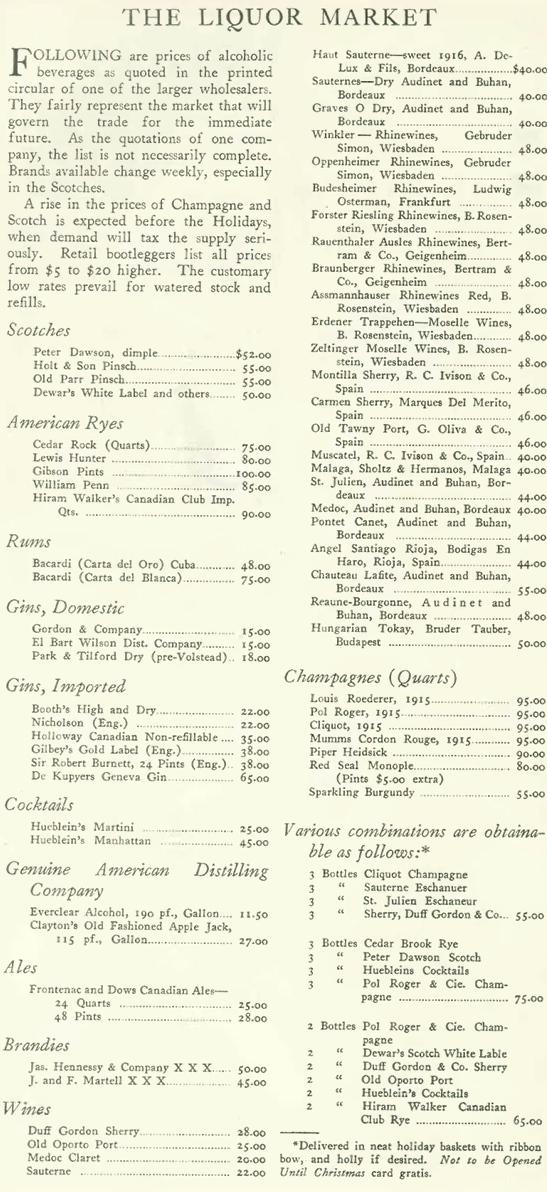
Near the back of the magazine the editors printed an exhaustive list of prices on the bootleg liquor market. The prices are quite astonishing, given that $50 in 1925 would be the equivalent of roughly $675 today, based on inflation. Of course that number could vary depending on all sorts of other economic and historic factors, but nevertheless fascinating reading if you are into that sort of thing:
At the conclusion of “The Talk of the Town,” the editors offered this qualifying note regarding their liquor market list:
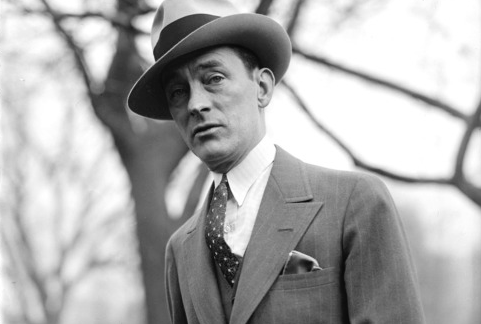
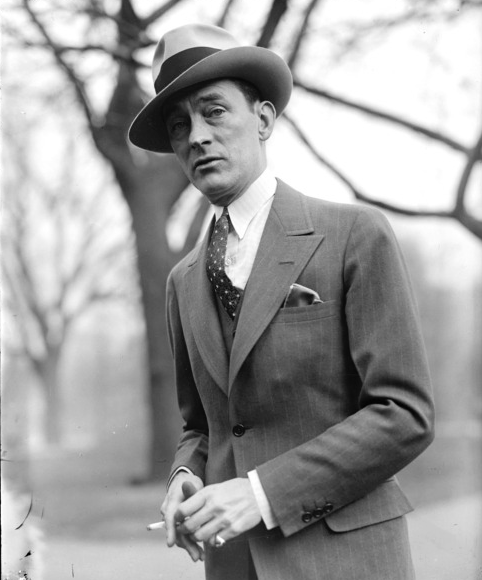
Mayor Jimmy Walker wasn’t known for being cerebral. But as the voters’ choice to lead the City of New York, he could not have been more well-suited (pun intended) to the zeitgeist of the final, dizzying, roaring years of The Jazz Age.
Walker was a flamboyant man-about-town, a clothes horse who was no stranger to speakeasies or the backroom politics of Tammany Hall.
As Jonathan Mahler wrote in New York magazine (April 1, 2012), Gentleman Jimmy “perfectly embodied that moment of indulgence: the public servant who favored short workdays and long afternoons at Yankee Stadium, who was loath to miss a big prizefight or Broadway premiere, who left his wife and Greenwich Village apartment for a chorus girl and a suite at the Ritz-Carlton.”
Not that there weren’t some concerns. “The Talk of the Town” offered this early observation of the incoming mayor:
New York City Mayor Jimmy Walker during a visit to Boston. (Boston Public Library)
Mahler quoted a columnist from Walker’s time, who noted that “No man could hold life so carelessly without falling down a manhole before he is done.” And Walker would fall to scandal by 1932. But we will get to that. For now, it’s party time in Gotham.
The New Yorker continued to have fun with President Calvin Coolidge, publishing this cartoon by Isadore Klein that took a poke at Coolidge’s Thanksgiving Day Proclamation, in which Coolidge spoke at length about the nation’s abundance:
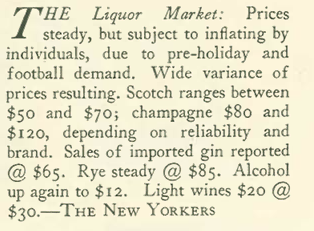
Talk also reported the latest bootleg prices in “The Liquor Market…”
“Profiles” examined the life of New York Times owner Adolph Ochs. The writer Elmer Davis observed that “More than any other newspaper owner, he is his paper, and his paper is himself…”
Detail from a lantern slide depicting Basil Sydney as Hamlet and Charles Waldron as Claudius in the Booth Theatre’s 1925 production of Hamlet in “modern dress.” (Graphic Arts Collection, Princeton)
In “The Theatre,” critic Herman J. Mankiewicz addressed criticisms of the Booth Theatre’s new approach to Hamlet, which was presented “in modern dress.” Mankiewicz wrote that the departure from traditional Elizabethan costumes had brought the play “into the open,” and that Basil Sydney was a “splendid” Hamlet.
In “Books,” reviewer Harry Este Dounce recommended Ford Madox Ford’sNo More Parades (“a fine display of virtuoso writing”) and Arthur Schnitzler’sFraulein Else (“a scintillant little firework”).
Lilyan Tashman, left, and Pauline Starke in Robert Z. Leonard’sBright Lights, 1925 (Tumblr)
In “Motion Pictures,” Theodore Shane panned the movie Lord Jim (based on the Joseph Conrad novel), but he enjoyed the “simple hokum tale” of Bright Lights and the “restrained” performance of Pauline Starke, “a perfect miniature Gloria Swanson.”
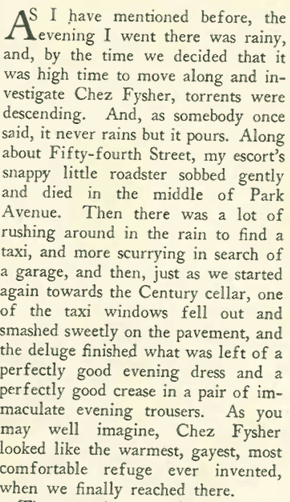
In “Tables for Two,” Lois Long despaired of finding a decent “swank dinner” on a rainy autumn evening, and finally headed to a Viennese restaurant (Frau Greta’s) for some German comfort food. The rain turned to torrents as she then headed out for some nightlife:
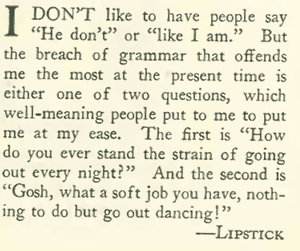
Long concluded her “Tables” column with this peevish note on “grammar:”
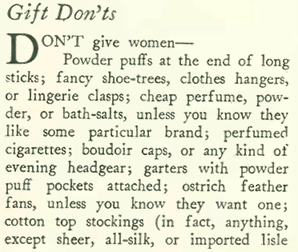
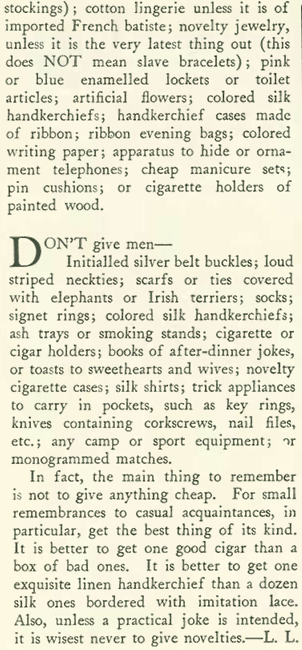
In her other column, “On And Off The Avenue,” Long wrote about the increasing popularity of New Yorkers traveling to Florida for the winter, and in anticipation of the Christmas holiday, offered this advice on what not to give as gifts:
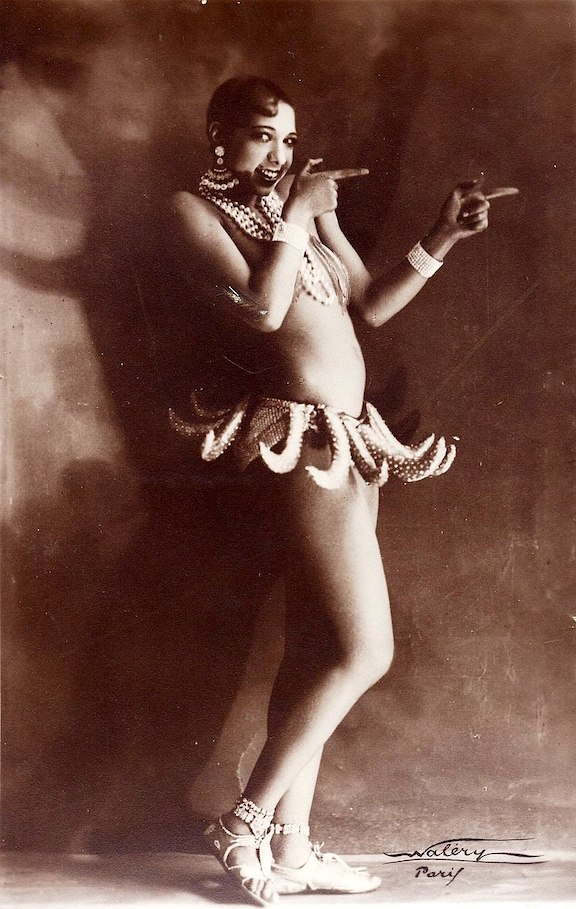
In her report from Paris, Janet Flanner commented on the popularity of Josephine Baker at the Champs Elysees Theater:
Josephine Baker in 1927. (Wikimedia Commons)
Flanner also commented on the growing appreciation of paintings by Henri Rousseau, who just a decade or so earlier was considered something of a joke among art circles:
Henri Rousseau’sThe Football Players, 1908. Today even Rosseau’s lesser-known works are valued in the millions (Wikimedia)
And finally, Julian de Miskey’s take on The Big Game:















































 A New Yorker State of Mind