Shock of the New

Above: The Bauhaus in Dessau, Germany (photo credit: Andreas Meichsner for The New York Times)

The Roaring Twenties saw astonishing changes to American life, including a dramatic break from the technologies and habits of the past. Icemen gave way to electric refrigerators, broadcast radio brought entertainment and news into living rooms, and Charles Lindbergh made flying something everyone wanted to try.

may-21
May 21, 1927 cover by Ilonka Karasz.

Despite the mechanized horrors of World War I, most people were enchanted by the idea of man and machine coming together to make a better world. In the U.S. the machine-age exuberance was expressed largely in capitalist terms, while many European and Soviet intellectuals saw the machine as integral to the progress of socialism. The Machine-Age Exposition in New York City (May 16-28 at 119 West 57th Street) celebrated all facets through a unique event that brought together architecture, engineering, industrial arts and modern art from a number of nations.

machine-age_exposition_catalogue
Cover of the Exposition Catalogue. (monoskop.org)
screen-shot-2016-09-27-at-10-05-00-am
Scanned illustration of an airplane from the Exposition catalogue.

The exhibition, initiated by Jane Heap of the literary magazine The Little Review, included exhibits from the U.S., Austria, Belgium, France, Germany, Poland and the Soviet Union. Artists in the exhibition represented a Who’s Who of modernists and futurists—Alexander Archipenko, Marcel Duchamp, Hugh Ferriss, Man Ray and others who celebrated the aural and visual cacophony of the age as well as the gleaming precision of machines and machine-like buildings.

screen-shot-2016-09-28-at-4-38-04-pm
Model of a futuristic parking garage by the Luckhardt brothers and Alfons Anker on display at the Exposition. (Scanned  image from the Exposition catalogue)

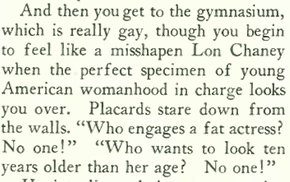
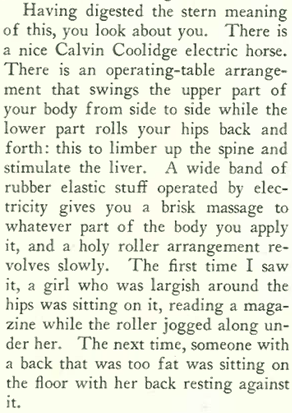
New Yorker writer E.B. White shared in the enthusiasm with this bit for “The Talk of the Town…”

screen-shot-2016-09-26-at-3-38-06-pm

screen-shot-2016-09-27-at-10-04-31-am
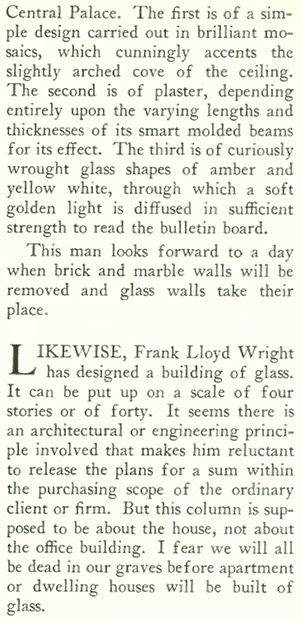
The Futurist Hugh Ferriss contributed this design of a glass skyscraper to the Machine Age Exposition. A thing of dreams in the 1920s, such buildings are now commonplace in cities around the world. (Scanned from the Exposition catalogue)

The sleek and glass-walled buildings featured at the Exhibition were fantastic images in 1927, when most large-scale buildings were still being rendered in brick and stone in various neoclassical, federal or gothic styles.

screen-shot-2016-09-28-at-4-36-30-pm
Image from Exposition featured Walter Gropius-designed student studio apartments at the Bauhaus in Dessau, Germany. (Scan from the Exposition catalogue)

Little did Exposition visitors realize that the radical Bauhaus style on display would become ubiquitous in the U.S. in the second half of their century, thanks not to some new machine age of peace and harmony but rather because of the annihilation of the Second World War and the mass migration from Europe of architects, artists, scientists and other professionals fleeing Nazi oppression.

screen-shot-2016-09-28-at-4-38-35-pm
This image of giant steam boilers from Russia was displayed at the Exposition. (Scan from the Exposition catalogue)

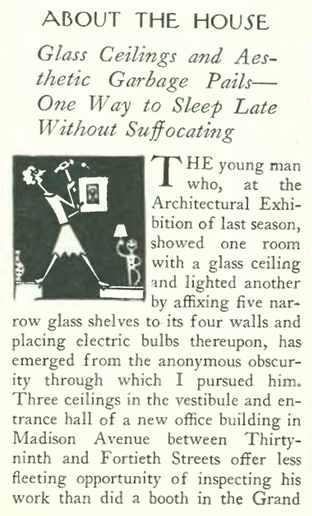
It was also a time when it was believed technology was on the verge of conquering nature, and that the invention of air-conditioning and “Vita-Glass” would create indoor environments with all of the health benefits but none of the discomforts of the outdoors:

screen-shot-2016-09-26-at-3-38-27-pm

screen-shot-2016-09-26-at-3-38-36-pm

hosp-stan-11-01-31
Children at rest in a “Vita-Glass” pavilion, built in 1927 at Stannington Sanatorium, Northumberland. Used primarily in the treatment of those with pulmonary TB, the glass was designed to allow ultraviolet rays to penetrate easily while protecting patients from the elements. (northumberlandarchives.com)

The invention of sulfa drugs and antibiotics was still a few years away, so health providers were excited about the possibilities of these artificial environments.

 *  *  *

In the “A Reporter at Large” column, Russell Owen wrote about the intrepid aviators who were vying to become the first to fly nonstop across the Atlantic. He began the piece with a tribute to French ace pilot Charles Nungesser and his one-eyed wartime buddy François Coli, who disappeared during their May 8 attempt to fly from Paris to New York.

carte_postale-nungesser_et_coli-1927
A 1927 postcard commemorating Nungesser, Coli and their airplane, The White Bird (L’Oiseau Blanc).

screen-shot-2016-09-26-at-3-58-11-pm

Owen also wrote about those who would soon be taking the same daring leap into “the illimitable terror of space”…

screen-shot-2016-09-26-at-3-57-16-pm

screen-shot-2016-09-26-at-3-57-24-pm

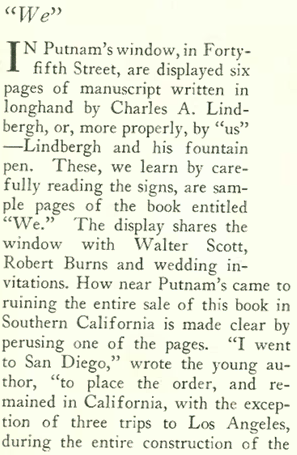
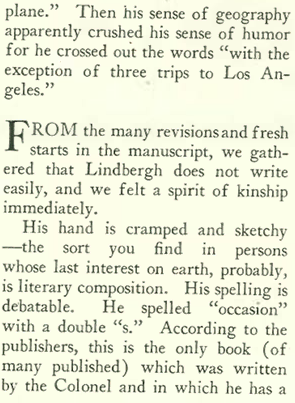
Although Charles Lindbergh had yet to accomplish his transatlantic feat, he had already been singled out as a loner and a bit of an odd duck:

screen-shot-2016-09-26-at-3-53-40-pm

screen-shot-2016-09-26-at-3-53-51-pm

Charles Lindbergh preparing for his transatlantic flight. (Long Island Press)

 *  *  *

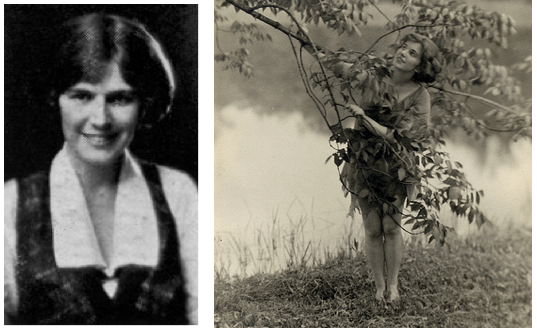
Editors of “The Talk of the Town” also checked in on famed dancer Isadora Duncan, her eldest daughter Anna, and Isadora’s “amazing dancing family…”

screen-shot-2016-09-26-at-3-37-13-pm

anna-duncan-dans-la-berceuse-choregraphie-d-isadora-duncan-musique-frederic-chopin-photo-arnold-genthe-1920-courtesy-of-tanzarchiv-koln-allemagne
Anna Duncan dances La Berceuse, choreographed by Isadora Duncan with music by Frédéric Chopin, in 1920. Photo by Arnold Genthe. (Tanzarchiv, Cologne, Germany)

screen-shot-2016-09-26-at-3-37-32-pm

isadora-s-dancers-by-frances-benjamin-johnston-1864-1952-photographer-public-domain-via-wikimedia-commons
Isadora’s Dancers, by photographer Frances Benjamin Johnston. (Wikimedia Commons)

 *  *  *

And finally, an excerpt of a poem contributed by Marion Clinch Calkins—who often wrote humorous rhymes for the New Yorker under the pen name Majollica Wattles. Here she riffs on Horace’s “poetry of pleasure…”

screen-shot-2016-09-26-at-3-49-19-pm

Next Time: The Flying Fool…

may-28

Mode de Vie

We cross the pond for the May 14, 1927 issue, for a look at all things French. As I’ve previously noted, New Yorker readers of the 1920s had a decidedly Francophile bent when it came to food, fashion and general joie de vivre.

304b9308de906b0c02f50b14add69c6d
May 14, 1927 cover by Rea Irvin.

In fact, readers were so enamored with France that the country merited its own New Yorker correspondent, Janet Flanner, who wrote under the nom de plume “Genêt.”

In the May 14 issue Flanner casually mused about the racing season at Longchamps, which attracted the likes of Anne Harriman Vanderbilt (identified here as Mrs. W. K. Vanderbilt), who was well-known in France for her philanthropic work during World War I, including her founding of an ambulance service and a hospital at Neuilly. Vanderbilt received the class of the Legion of Honor in 1919 in recognition of her war work, and in 1931 she was made an officer of the legion.

screen-shot-2016-09-21-at-9-04-27-am

11733033805_35c6a9f8d5_b
BLUE BLOODS…Anne Harriman Vanderbilt (left) with Martha Waldron Cowdin Bacon, circa 1915-1920. Bacon served as chairman of the American Ambulance Committee. (Library of Congress)

In “Talk of the Town,” the editors suggested that readers go to Madison Square Garden and check out the world’s largest canvas painting, Panthéon de la Guerre, more for the spectacle than for any artistic merit:

pantheon_de_la_guerre_panorama_smaller
Section of Panthéon de la Guerre showing allies of World War I, now in Memory Hall, Liberty Memorial, Kansas City, Missouri. (theworldwar.com) Click to enlarge

screen-shot-2016-09-21-at-8-57-10-am

screen-shot-2016-09-21-at-8-57-22-am

Panthéon de la Guerre was painted during World War I as a circular panorama—402 feet in circumference and 45 feet high—displayed in Paris in a specially built building next to the Hôtel des Invalides. It was visited by an estimated eight million people between 1918 and 1927.

The painting was acquired by American businessmen in 1927 and exported to New York, where it was displayed at Madison Square Garden. Some changes were made to the painting for the benefit of an American audience, including the addition of an African-American soldier. The work later toured the U.S.—from 1932 to 1940 it went to Washington DC, Chicago, Cleveland, and San Francisco. It was then acquired by restaurant entrepreneur William Haussner for $3,400.

In 1956 Haussner donated the work to Leroy MacMorris to be adapted for display at the Liberty Memorial in Kansas City. MacMorris drastically reduced the size of the work and modified it to emphasize America’s contribution to WWI: Only seven percent of the original work was retained, and large French sections were left out. MacMorris likened it to “whittling down a novel to Reader’s Digest condensation.” And he didn’t stop there. He also modified some figures to represent post-WWI figures such as Presidents Franklin Roosevelt and Harry Truman.

exhibithall
A BIT OF THIS, A DASH OF THAT…Figure of Victory from the Temple to Glory cut to fit above a doorway at Memory Hall, Liberty Memorial, Kansas City, Missouri, with the staircase of heroes to either side. Compare to original below:
129-2
(trenchartcollection.com)

To reduce and reconfigure the painting, MacMorris first photographed it in detail, then cut out the figures in the photos and used them like puzzle pieces to work out his new condensed version, which was dedicated on Nov. 11, 1959.

As for the unused portions, what MacMorris did not use he threw away, sending several of the larger excised passages back to Haussner for display in his Baltimore restaurant. MacMorris also gave pieces to the art students who helped him reconfigure the painting and to a number of prominent Kansas Citians.

2qaatdogmghsne7v2y1e
Fragment from Panthéon de la Guerre depicting a British nursing sister. (theworldwar.org)

The National World War I Museum and Memorial in Kansas City recently held an exhibition on the painting and its recovered fragments.

 * * *

Lois Long had returned from Paris and advised readers on where to shop in the City of Light. Her fashion column, “On and Off the Avenue,” featured recommendations for many stores and bargains. It began with a brief note from “Parisite,” aka Elizabeth Hawes, who occasionally contributed to Long’s column with cables sent from Paris).

screen-shot-2016-09-21-at-9-01-58-am

And now for the advertisements, all from the May 14 issue, featuring various French themes, such as this one for Krasny makeup that evokes the glamour of Paris and the intrigue of Russian women…

screen-shot-2016-09-21-at-8-48-43-am

…or exotic perfumes for only the most exclusive set…

screen-shot-2016-09-21-at-8-54-15-am

…or the chic look of Revillon Freres spring coats and wraps…

screen-shot-2016-09-21-at-8-55-10-am

…or fake vermouth…this odd little illustration in the back pages for non-alcoholic vermouth, served by a dutiful French maid to what appears to be a giant. You have to feel sorry for the writers of such ads during Prohibition, trying so hard to make this sad libation appealing to thirsty New Yorkers…

screen-shot-2016-09-21-at-9-08-34-am

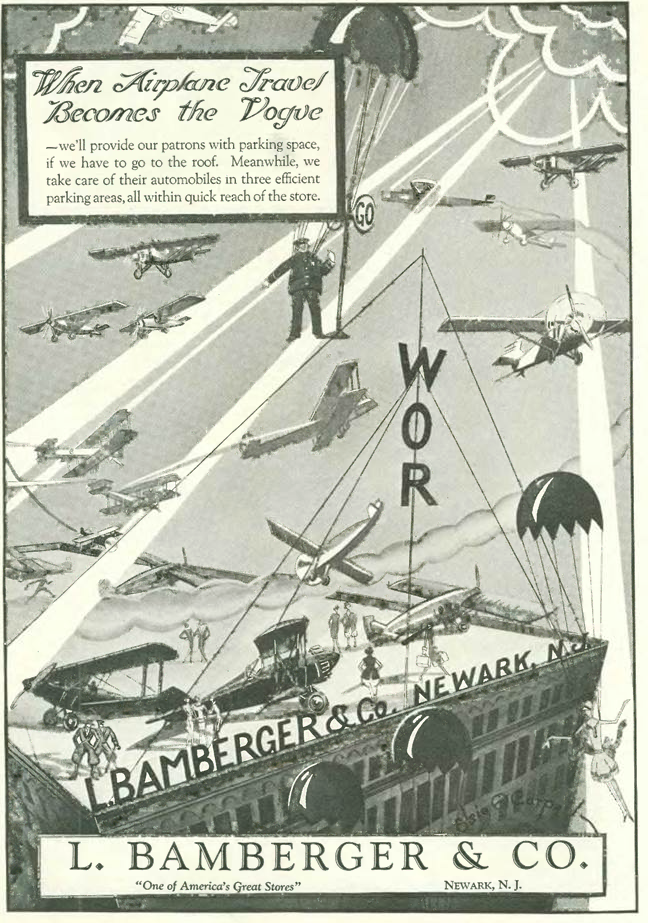
…but there were those lucky few who could actually travel to France and drink the real stuff, you could get a really swell send-off with a “Bon Voyage Basket” from L. Bamberger & Co…

screen-shot-2016-09-21-at-8-54-37-am

…and while you were in France (at least for the men), Peter Arno could show you how to give the glad eye to the mesdemoiselles…

screen-shot-2016-09-21-at-9-09-42-am

Next Time: Shock of the New…

may-21


Those Restless Natives

The evolution of filmmaking in the 1920s included the development of “docudramas.” Nanook of the North (1922), which captured the struggles of an Inuit hunter and his family, was received with great acclaim. A few years later Grass (1925), directed by Merian C. Cooper and Ernest B. Schoedsack, followed a tribe in Iran as they guided herds to greener pastures. So when Chang: A Drama of the Wilderness opened at the Rivoli, The New Yorker was there (May 7, 1927) to share in the adventure.

43b9e74a7197a3d27d520d251a303549
May 7, 1927 cover by Ilonka Karasz.

Chang, also directed by Cooper and Schoedsack, told the story of a poor farmer and his family (native, nonprofessional actors) in Issan—now northeastern Thailand—and their constant struggle for survival in the jungle. Cooper and Schoedsack attempted to depict real life but often re-staged events. The danger, however, was real to all involved, as was the slaughter of animals in the film.

chang_poster
(Wikipedia)

According to Ray Young, writing for Viennale, the website for the Vienna International Film Festival (which is screening a retrospective of Chang this fall) Cooper and Schoedsack “open with scenes of domestic bliss and, offsetting title card warnings of the dangers of the jungle, a bucolic Eden ripe for development. But the tone soon shifts as tigers and leopards attack, and the picture evolves into a succession of episodes concerning their survival.”

The perils in Chang often feel rigged, notes Young, “most conspicuously in places where animals appear to have been killed simply for the benefit of the camera. By most accounts, Schoedsack did most of the filming while Cooper covered him with a rifle.”

chang-criticsroundup
I’D BE WARY OF THOSE GUYS TOO…Image from the filming of Chang. (criticsroundup.com)
elephant-stampede-from-chang-1927
JUST PASSING THROUGH…Elephants stampede a village in the film’s finale. (image capture from film)

Chang was nominated for the Academy Award for Unique and Artistic Production at the first Academy Awards in 1929. It was the only year when that award was presented (It lost to F.W. Murnau’s Sunrise: A Song of Two Humans).

However appalled as we are today by the film’s exploitation of humans and animals alike, those were different times, even for the usually discerning eye of The New Yorker:

chang-1

In 1927 most people had a very limited view of the non-Western world, which was perceived as both savage and exotic, populated by child-like “natives” who in this case “lent their facial expressions and habits to the affair most successfully…”

chang-2And so in 1927 we also encounter cartoons like this one by Alan Dunn that at once dismisses out-of-town conventioneers (here: an Elks Lodge) as a bunch of ignorant racists, yet the early New Yorker’s own depictions of Blacks were usually minstrel-era stereotypes.

screen-shot-2016-09-06-at-1-06-50-pm

 *  *  *

The massive Graybar Building made its debut at 420 Lexington Avenue, the multi-tiered edifice impressing the “Talk of the Town” editors with the latest technology, including push-button elevators: 

The Graybar Building (history.graybar.com)

screen-shot-2016-09-06-at-1-04-11-pm

screen-shot-2016-09-06-at-1-04-38-pm

screen-shot-2016-09-06-at-1-04-45-pm

graybar-building-2
PERMANENT INFESTATION…The Graybar’s rain canopy cables include anti-rat devices (cones) decorated with rats. If you look carefully, the rosettes anchoring the cables are also decorated with rat heads. (deadprogrammer.com)

 *  *  *

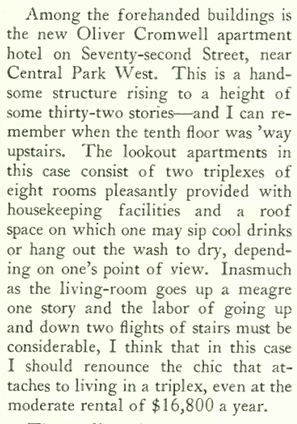
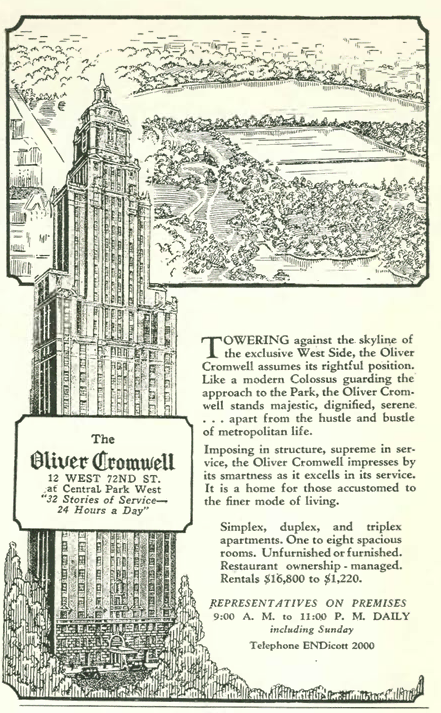
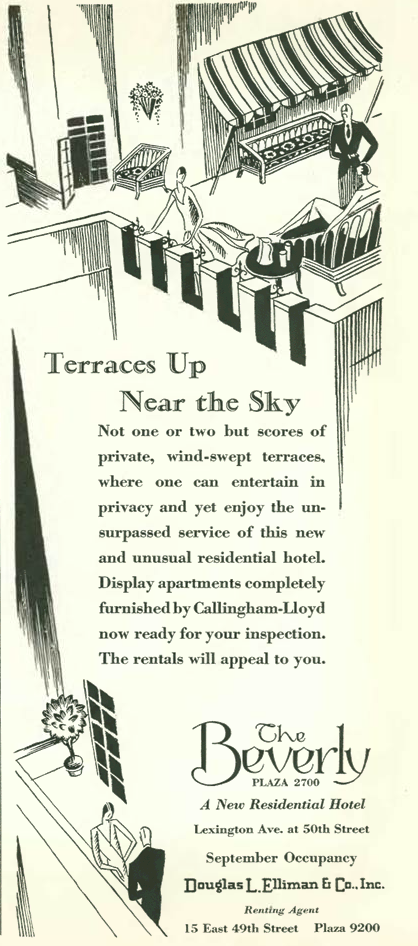
The following advertisement needs some explanation: The 1867 Tenement House Act imposed constraints on height and lot coverage that large apartment buildings routinely violated.

According to an article in the Observer by Stephen Jacob Smith (April 30, 2013), “Some developers got out of these requirements by building co-operative buildings, without rental units, but others wanted to retain the revenue and control that came with rentals, while at the same time building larger structures than the tenement laws allowed. And thus was born the ‘apartment hotel.'”

The New York Times’s columnist Christopher Gray wrote (Oct. 4, 1992) that Apartment Hotels were a “widespread fiction of the period,” and “tenants in fact usually set up full kitchens in the serving pantries.” Smith adds that “one of the reasons apartment hotels were allowed to be built more densely than their fully residential counterparts was that there would be no cooking—a fire hazard in those days—in the units.” An so the ad:

screen-shot-2016-09-06-at-1-08-22-pm

Smith writes that by calling their buildings ‘apartment-hotels,’ builders could claim that as hotels they were outside of the rules of tenement legislation. He notes that “some of Manhattan’s most illustrious buildings were constructed using this legal sleight of hand,” including the Sherry-Netherland on Park Avenue.

The famous scaffolding fire at the Sherry-Netherland, which I featured in my last post, no doubt prompted developers to run the following ad in hopes that people would soon forget about the giant roman candle that burned bright near Central Park on the evening of April 12, 1927.

screen-shot-2016-09-06-at-1-09-30-pm

If you are ever in New York, check out the Sherry Netherland. It is a beautiful building.

And finally, this ad from the makers of Wildroot hair care products. I love the flapper artwork by John Held Jr., and even better the words “CRUDE-OIL SHAMPOO” displayed prominently as a selling point.

screen-shot-2016-09-06-at-1-12-51-pm

Next Time: Mode de Vie…

304b9308de906b0c02f50b14add69c6d

Unfit to Print

The journalist and screenwriter Ben Hecht wrote the “Reporter at Large” column for the early New Yorker, and for the April 30, 1927 issue took aim at the shoddy coverage of the Ruth Snyder murder trial at the Long Island City Courthouse.

e83e83f37e5b2787e23dd4ee7a85c62d
April 30, 1927 cover by Carl Rose.

Hecht was appalled by the media’s use of celebrity “experts” to cover the trial, which only served to sensationalize and trivialize the proceedings:

Ben Hecht (Wikipedia)

hecht-1

hecht-2

The Ruth Snyder trial dominated headlines in 1927. A housewife from Queens, Snyder began an affair in 1925 with Henry Judd Gray, a married corset salesman. After she persuaded her husband, Albert Snyder, to purchase life insurance, she enlisted Gray’s help to murder him. On March 20, 1927 the couple garrotted Albert (after bludgeoning him with a sash weight) and then staged the murder scene to look like a burglary.

The trial was covered by such figures as former Ziegfeld Follies showgirl Peggy Hopkins Joyce, the radio evangelist Aimee Semple McPherson, movie director D. W. Griffith, author Damon Runyon, popular philosopher Will Durant, and James M. Cain, a crime reporter who went on to write Double Indemnity, which was later made into a major Hollywood movie. Hecht (who would go on to co-write a hugely successful play about newspaper reporters, The Front Page) would have none of this celebrity circus. Some excerpts:

hecht-3

hecht-4

hecht-5

hecht-6

hecht-8

Ruth Snyder would not be acquitted (or live to write reviews), but instead would go to Sing Sing’s electric chair on Jan. 12, 1928. The 32-year-old Snyder would go to the chair first, followed shortly thereafter by her former lover and accomplice, 35-year-old Henry Judd Gray. The pair had sealed each other’s fate: During the trial, Snyder and Gray had turned on each other, contending the other was responsible for killing Albert Snyder.

screen-shot-2016-09-08-at-12-22-48-pm
BUSTED…Ruth Snyder in custody and behind bars at the Queens County Jail. (Criminal Encyclopedia/NY Daily News)
snyder-and-gray
END OF THE LINE…Mugshots of Ruth Snyder and Henry Judd Gray taken at Sing Sing Prison following their conviction. (Lloyd Sealy Library, CUNY)
connect_blog_ruth-snyder
NATIONAL SENSATION…The cover of Jan. 13, 1928, issue of the New York Daily News. Although photographs of the execution were not allowed, photographer Tom Howard took this now-famous photo of Snyder at the moment of her execution with the aid of a miniature camera strapped to his ankle. (newseum.org)

 *  *  *

On to a lighter topic…The Sherry-Netherland Hotel has graced the corner of Fifth Avenue and East 59th Street since 1927, and when it was built it was the tallest apartment-hotel in New York City.

The building was nearing completion when around 8 pm on April 12, 1927, fire broke out on wood plank scaffolding surrounding the top floors. Firefighters responded only to find they lacked water pressure to fight the blaze.

According to the New York Times (“The Night a Hotel Turned Into a Torch,” Nov. 15, 2012), the fire was watched by hundreds of thousands, and “the windows of the Plaza Hotel across the street were ‘black with people’; every front room was engaged, either by news organizations or for spontaneous parties to watch the fire.”

Planks tumbled to the street for hours, and The Times said one “sailed in a crazy parabola” and crashed against the Savoy-Plaza, also nearly finished; occasionally minor collapses of the scaffolding turned the picturesque top into a “lofty Roman candle.” The crowds on the street could feel the heat on their faces, and the roar and crackle of the fire could be heard for blocks around. The fire burned itself out around midnight.

Oddly, the New Yorker had little to say about the fire, mentioning it only in passing in this “Talk of the Town” item:

screen-shot-2016-09-06-at-12-48-11-pm

screen-shot-2016-09-08-at-1-14-21-pm
HOT TIME IN THE CITY…In 1927 the Sherry-Netherland caught on fire, creating what The New York Times called “the best show of the season.” The newspaper ran this photo (left), retouching it for contrast (New York Times). At right, the hotel as it appears today (Wikipedia)

An interesting side note…at the time of the Sherry-Netherland’s construction, the nearby Vanderbilt mansion was being demolished. Carved limestone panels from the mansion’s porte-cochere as well as ornamental frieze roundels were salvaged and installed in the Sherry-Netherland’s lobby.

Hollywood movies continued to disappoint New Yorker critics, including Cecil B. DeMille’s silent epic The King of Kings.

screen-shot-2016-09-06-at-12-58-11-pm

screen-shot-2016-09-06-at-12-58-48-pm

screen-shot-2016-09-06-at-12-59-22-pmFinally, a couple of advertisements from the April 30 issue. It was spring, and time to hit the links…

screen-shot-2016-09-06-at-12-44-22-pm

…and New Yorker cartoonist Peter Arno plugged his new book featuring the Whoops Sisters:

screen-shot-2016-09-06-at-12-51-37-pm

Next time: Those Restless Natives…

43b9e74a7197a3d27d520d251a303549

The Castle Builder

Publisher William Randolph Hearst was a larger-than-life personality who inspired writer Herman Mankiewicz* —an early New Yorker contributor—to pen the screenplay for Orson Welles’s film Citizen Kane.

8ccd85e651ca664aba48a8264a536d7a
April 23, 1927 cover by Andre De Schaub.

* Stuart Cooke adds this clarification: Herman Mankiewicz did not write the screenplay of Citizen Kane. He contributed to it along with many others. (See Citizen Welles by Frank Brady). However, Welles credited him as the co-writer and at the last minute, graciously put Mankiewicz’s before his in the credits.

So when the New Yorker featured Hearst in its April 23, 1927 “Profile,” it required five lengthy installments by the writer (and Hearst biographer) John K. Winkler, who began the profile with this observation:

Screen Shot 2016-09-01 at 10.48.03 AM

Hearst_and_Morgan
MAKE NO SMALL PLANS…William Randolph Hearst reviews blueprints with Julia Morgan, architect of Hearst Castle, in 1926. (Wikipedia)

Winkler detailed Hearst’s plunder of European art and architecture—much of it sitting on a wharf below his “castle” at San Simeon on California’s Central Coast—awaiting architect Julia Morgan’s decision on where it might fit into the fabric of what became one of America’s most famous “homes.” Later in the profile Winkler described Hearst’s purchase of St. Donat’s Castle in Wales, and his acquisition of another castle that he had dismantled and shipped to San Simeon.

Screen Shot 2016-09-01 at 10.50.08 AM

920x920
Hearst Castle at San Simeon. (sfgate)
hccparty9
LEGENDARY PARTIES FOR THE LEGENDS…Hollywood actors pose for a photo at one of the famed Hearst costume parties…(back row) Douglas Montgomery, Leslie Howard, Marion Davies, unidentified man; (front row) Bruce Cabot, George K. Arthur, Ramon Navarro & Eileen Perry. (moviemorlocks.com)
3471550307872146b19487864f6cbdc2
HOST & HOSTESS…Hearst and his mistress, actress Marion Davies, at one of their famous San Simeon costume balls (oldloves.tumblr.com)

The mid-1920s to the mid-1930s were glory days at San Simeon. In his Great Hall Hearst “held court” with movie stars and statesmen who also attended famous costume parties hosted by Hearst and actress Marion Davies.

The profile writer, John K. Winkler, would publish two books on Hearst in 1928 and 1955, as well as books on other captains of industry including Andrew Carnegie, John D. Rockefeller, F.W. Woolworth, J. Pierpont Morgan and the DuPont family.

 *  *  *

The Germany-based Hamburg America Line had been a major player in moving both passengers and freight between Europe and North America since 1847. In 1914, its passenger flagship, the Vaterland, was caught in port at Hoboken, New Jersey at the outbreak of World War I. She was later seized, renamed Leviathan after the declaration of war on Germany in 1917, and served as a U.S. troopship. So it was significant to European travelers (including many New Yorker readers) that the line was out to regain its former glory with the launch of the New York.

Screen Shot 2016-09-01 at 10.45.15 AM

Screen Shot 2016-09-01 at 10.45.21 AM

FrontCover-250
Cover of the passenger list for the, SS New York.
Photo01-DepartureOfTheSteamshipNewYork-500
Photo of the departure of the steamship SS New York.

 * * *

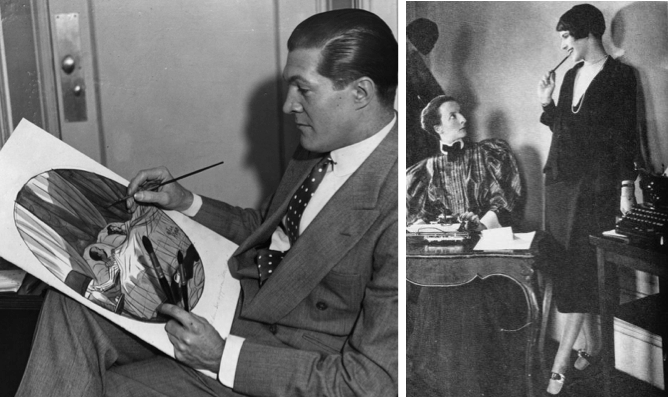
Lois Long chronicled nightly escapades of drinking, dining, and dancing for The New Yorker in her column “Tables for Two,” and she often teased her readers about her true identity. Although in reality she was young (26), attractive and a big partier, she often described herself to readers as a bit of wallflower, or a “short squat maiden of forty.” When her marriage to cartoonist Peter Arno was announced in August 1927, her true identity was revealed.

Long seemed to be growing bored with New York nightlife, as evidenced by shorter “Tables” columns (the feature would go on hiatus in 1930) while her fashion column—On and Off the Avenue—took on more importance. In her “Tables” column for the April 23, 1927 issue, she devoted most of it to yet another playful deception for her readers.

Screen Shot 2016-09-02 at 10.26.29 AM
The artwork that accompanied Lois Long’s “Tables for Two” column often featured this pair of bored nightclub patrons. Long, with stylish bob, shown during her New Yorker days in the 1920s.

Screen Shot 2016-09-01 at 10.58.52 AM

Screen Shot 2016-09-01 at 10.59.01 AM

This time she portrays herself as a bookish spinster…

Screen Shot 2016-09-01 at 10.59.14 AM

Screen Shot 2016-09-01 at 10.59.51 AM

In other diversions, “Talk of the Town” made this mention of the Orteig Prize, a reward offered to the first aviator to fly non-stop from New York City to Paris or vice versa. Of course we know Charles Lindbergh would capture the prize the following month (and six others would die trying):

Screen Shot 2016-09-01 at 10.40.59 AM

Screen Shot 2016-09-01 at 10.41.09 AM

In advertising, the issue featured this promotion for radio station WOR. Broadcast radio was in its infancy in 1927, and this is one of the first ads of its kind to appear in The New Yorker:

Screen Shot 2016-09-01 at 10.35.57 AM

The following advertisement for Balcrank auto bumpers tells you a lot about the bourgeois New Yorker reader it is trying to reach. It suggests the addition of these bumpers to your car will lend an upper class touch people will admire and notice—everyone from the traffic cop in the signal tower to the smart couple who seem to be inches away from having their feet run over.

I love the smug expression worn by the female passenger. Of course the actual old money upper class wouldn’t see this ad—they could care less about bumpers or literature—and would be reading Town & Country, the Social Register, or nothing at all. Funny how the early New Yorker loved to tweak the nose of the upper class, all the while running ads that appealed to a grasping bourgeois desire for status. The bumper ad says it all.

Screen Shot 2016-09-01 at 10.37.56 AM

The issue included this cartoon by Wallace Morgan, set in Central Park. Displayed across a two-page spread, the caption reads: SHE: “Let’s just sit back Wilmot, and pretend we’re living in grandmother’s day.” (click to enlarge)

Screen Shot 2016-09-01 at 10.52.43 AM

And finally, the Barnum and Bailey Circus was in town, so we end with this cartoon by Carl Rose:

Screen Shot 2016-09-01 at 10.47.03 AM

Next Time: Unfit to Print…

e83e83f37e5b2787e23dd4ee7a85c62d

The Enchanting Modernist

If you’ve been following the cover credits of the 113 issues I have featured so far, you’ll notice that many of the covers were illustrated by Ilonka Karasz, including the cover of the April 16, 1927 issue featured in this post.

1eeb12ad3b9cff3f5e529a466432adbe
April 16, 1927 cover by Ilonka Karasz. She would design 186 covers for The New Yorker between 1925 and 1973.

During her long and varied career Karasz would design 186 covers for the New Yorker. A native of Hungary, she moved to the U.S. in 1913 and settled in Greenwich Village, where she quickly rose to become a prominent practitioner of modern design and the decorative arts.

She created paintings, prints and drawings in her early years before moving on to a variety of machine- and hand-made objects rendered in silver and ceramic. She designed furniture strongly influenced by the European De Stijl movement, and was also a pioneer of modern textile design, even developing textiles for use in airplanes and automobiles.

Beginning in the 1940s Karasz would emerge as one of the country’s leading wallpaper artists. Her younger sister, Mariska Karasz, would also become a noted American fashion designer and textile artist.

The range of Ilonka Karasz’s work is astonishing—from homespun images of rural America to the sleek, hard edges of modern design; from textiles and wallpaper to silver sets and large-scale furniture.

Screen Shot 2016-08-26 at 12.56.52 PM
Ilonka Karasz’s first and last covers for The New Yorker: April 4, 1925 (left) and Oct. 22, 1973.
Screen Shot 2016-08-26 at 1.01.44 PM
Many of Karasz’s covers were scenes of Americana—small towns, villages and farms. From left to right, covers from Dec. 9, 1950, July 5, 1952, and March 28, 1953.
Screen Shot 2016-08-26 at 1.40.05 PM
Ilonka Karasz, circa 1920s. At right, an illustration from her 1949 book, The Twelve Days of Christmas. (Wikipedia/Harper and Row)
Screen Shot 2016-08-26 at 1.24.21 PM
TEXTILE ARTIST…Karasz’s cover design for the Aug. 19, 1944 New Yorker (left), and an oak leaf-pattern textile in Mohair, 1928 (RISD)
Screen Shot 2016-08-26 at 1.28.38 PM
WALLPAPER…“Wisconsin,” a mid-century wallpaper design by Ilonka Karasz (left), and her “Ducks & Grasses” wallpaper from 1948. (Pinterest)
Screen Shot 2016-08-26 at 1.50.11 PM
Candlestick and small bowl by Karasz from a set designed for Paye & Baker, 1928. (Cooper Hewitt)
Screen Shot 2016-08-26 at 1.47.41 PM
Karasz’s mahogany desk from 1928 (Minneapolis Institute of Arts)

For more on Ilonka Karasz’s amazing career, see the Core77 article, Ilonka Karasz, 20th-Century Design Polymath, by Rebecca Veit.

Next Time: The Castle Builder…

8ccd85e651ca664aba48a8264a536d7a


The Dinosaurs of Upper West Side

New York’s American Museum of National History unveiled its new Hall of Dinosaurs, and it was so impressive that even The New Yorker set aside its usual blasé tone toward popular attractions…

deb15aac127a5a9b06b890362c4878a1
April 2, 1927 cover by Toyo San.

…and found its “Talk of the Town” editors to be quite taken with “sacred bones:”dinosaurs

2007 METRO Project | ImageDigitizationSpecifications v1.0 | Epson Perfection V750 Pro
NEW DIGS…Children studying a Brontosaurus skeleton in the American Museum of National History’s Hall of Dinosaurs, 1927. (AMNH Research Library)

Screen Shot 2016-08-12 at 5.05.45 PM

Screen Shot 2016-08-12 at 5.06.04 PM

2007 METRO Project | ImageDigitizationSpecifications v1.0 | Epson Perfection V750 Pro
Tyrannosaurus and Triceratops in the Hall of Dinosaurs, 1927. (AMNH Research Library)

 *  *  *

The April 2, 1927 issue also found New Yorkers to be agog over “French-style” telephones:
French phone II

Screen Shot 2016-08-22 at 12.39.27 PM
FRANCOPHONE…Trendy New Yorkers were switching from their old reliable candlestick telephones (left) to “French-style” phones (center) that were common throughout Europe. Western Electric answered their call with a sleek American version in 1928, right.

 *  *  *

The April 9, 1927 issue featured the second of Peter Arno’s 99 covers for the New Yorker. His first cover appeared eighteen issues earlier (Nov. 22, 1926) and featured the same gardener, but this time he was inspecting a newly budded leaf rather than the last one to fall:

Screen Shot 2016-08-22 at 4.20.14 PM

Note the difference in style between the two covers–the April 9 cover is rendered with more detail, depth and texture. These would be Arno’s only covers with rather sedate subjects. Subsequent covers would have more action and humor, such as this one from 1954, one of my favorites:

Screen Shot 2013-06-01 at 5.17.30 PM

 *  *  *

And now for a note about Paul Whiteman. One cannot write about the Jazz Age without mentioning the Paul Whiteman Orchestra. It was Whiteman who in 1924 commissioned George Gershwin’s Rhapsody in Blue, which premiered with Whiteman’s orchestra (and with Gershwin himself at the piano).

Whitemasn feb 26
This ad in the Feb. 26, 1927 New Yorker announced the much-anticipated return of Paul Whiteman and his orchestra. The caricature of Whiteman was his trademark.

Even Lois Long, who seemed to be growing bored with New York nightlife, found reason to celebrate Whiteman in this column that appeared alongside the ad:

Feb. 26

Whiteman had 28 number one records during the 1920s and dominated sheet music sales. He provided music for six Broadway shows and produced more than 600 recordings. Dubbed “King of Jazz” his style was actually a blending of jazz and symphonic music.

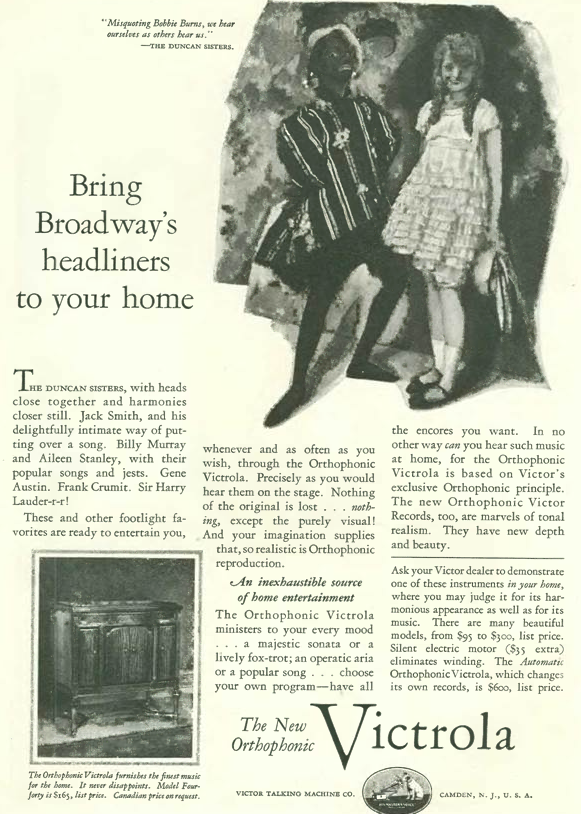
The folks at Victor Talking Machines played on Whiteman’s fame with this advertisement for their latest “Orthophonic” Victrola. Although it was the first consumer phonograph designed specifically to play “electrically” recorded discs and was recognized as a major step forward in sound reproduction, the claim that the machine would reproduce sounds “exactly as you would hear them at the smart supper clubs” seemed a little far-fetched.

Screen Shot 2016-08-23 at 12.27.26 PM

And finally, in celebration of spring, Constantin Alajalov illustrated an April day in Central Park, which was featured in a two-page spread in “Talk of the Town.”

Screen Shot 2016-08-23 at 12.26.22 PM
(click to enlarge)

Next Time: The Enchanting Modernist…

1eeb12ad3b9cff3f5e529a466432adbe

The Garden City

The last days of winter on the streets of 1920s Manhattan — remnants of snow and slush mixed with coal soot and car exhaust — were quickly forgotten with the advent of spring. The New Yorker (March 26, 1927) turned its attention to more pleasant diversions including the annual Madison Square Garden flower show…

232025ffa678f70369b2642ceae085d0
March 26, 1927 cover by unknown artist.

…and to the people it attracted, rendered in illustrations for “The Talk of the Town” by Alice Harvey

Screen Shot 2016-08-12 at 11.41.40 AM

Screen Shot 2016-08-12 at 11.41.53 AM

Backyard gardens and window boxes also welcomed spring, as did a two-part feature that offered helpful advice to amateur urban gardeners. An excerpt:

Screen Shot 2016-08-12 at 12.02.45 PM

No doubt the writer saw something akin to what we can see in Frances Benjamin Johnston’s rare color photographs of backyard gardens in the early 1920s Manhattan (all photos courtesy Library of Congress):

turtle-bay-secret-gardens-nyc
Turtle Bay Gardens, 227-247 East 48 Street and 228-46 East 49 Street. View east to common garden.
Ingalls
George Hoadly Ingalls house, 154 East 78 Street.
Stafford
Laura Stafford Stewart house, 205 West 13th Street.
jones-wood-nyc
“Jones Wood” townhouses, north terrace fountain.

 * * *

Let’s look at a couple of advertisements from March 26 issue…why fight the crowds on the commuter train? — you could live a life of ease and convenience in the new Tudor City…
Screen Shot 2016-08-12 at 12.06.34 PM

…and perhaps you could afford a car almost as prestigious as a Cadillac…introducing the new LaSalle, manufactured by Cadillac but priced lower to “satisfy that other great market”…

Screen Shot 2016-08-12 at 11.59.47 AM

For industrial design buffs, the 1927 LaSalle in many ways marked the beginning of modern American automotive styling. The LaSalle line, designed by Harley Earl, would be eliminated in 1940, but Earl’s career as the man in charge of design at General Motors would last into the late 1950s.

Earl was a pioneer in auto design, one of the first to use modeling clay to develop forms for cars. He also established an “Art and Color Section at GM,” a radical notion at a time when American automobile manufacturers paid little attention to the appearance of automobile bodies, which were merely engineered for functionality and cost.

Earl also pioneered the idea of planned obsolescence in cars (which he termed “Dynamic Obsolescence”) in which annual model changes were used to induce sales. It was Earl who convinced GM to build a sports car—the Corvette—and it was Earl who also oversaw the introduction of the tail fin—culminating in the 1959 Cadillac—the year he retired from GM.

In the course of just 32 years, Earl’s designs went from this…

1926-Harley-Earl-at-the-wheel-of-a-1927-LaSalle-Series-303-Roadster-720x500
Harley Earl at the wheel of a 1927 LaSalle Series 303 Roadster. (carbodydesign.com)

…to this…

1959-Cadillac-Eldorado-1024
Harley Earl’s swan song, a 1959 Cadillac Eldorado. (photobucket.com)

Next Time: Dinosaurs of Upper West Side…

deb15aac127a5a9b06b890362c4878a1

Nothing Like the Roxy

Above: Actress Gloria Swanson amid the ruins of the Roxy, 1960. The famed theater opened with Swanson's silent film, "The Love of Sunya."(Time Inc.)

Jazz Age New York City was all about the big and grand, and nothing was bigger and grander than the new Roxy Theatre near Times Square.

ef3893e952639f635327190b41ee6ea3
March 19, 1927 cover by W. Boethling.

The nearly 6,000-seat theatre was such big news that the March 19, 1927 edition of The New Yorker heralded its arrival in three separate columns.

RXYMARQ
OPENING NIGHT at the Roxy Theatre. (elixinhollywood.blogspot.com)

The Roxy opened with the silent film The Love of Sunya, produced by and starring Gloria Swanson. The film, naturally, was panned by the magazine. Perhaps the critic’s distaste for the film also prompted a certain aloofness about the theatre itself:

Screen Shot 2016-08-09 at 9.19.38 AM

roxylobby
NOT EXACTLY YOUR LOCAL CINEPLEX…The Roxy Theatre lobby featuring the “world’s largest oval rug” manufactured by Mohawk Carpets. The theatre was torn down in 1960 and replaced by an office building. A TGI Friday’s restaurant is now located in the space that once housed this grand lobby. (screensonhigh.wordpress.com)
8011897_orig
NOT ANOTHER BAD NEW YORKER REVIEW?…Gloria Swanson consults a crystal ball to learn her future with three different men in The Love of Sunya. (gswanson.weebly.com)

“The Talk of the Town” described the Roxy in similar dispassionate terms, tossing a wet blanket not on the film but rather on the rude, gawking masses who shelled out eleven bucks apiece (equivalent to $150 today) for a seat on opening night:

Screen Shot 2016-08-09 at 9.06.07 AM

Screen Shot 2016-08-09 at 9.08.24 AM

Screen Shot 2016-08-09 at 9.08.38 AM

Roxy_1927_1
THEY WERE AWESTRUCK…The stage and orchestra pit of the Roxy Theatre (elixinhollywood.blogspot.com)

New Yorker architecture critic George S. Chappell (aka “T-Square”) was a bit more generous in his column, “The Sky Line.”

Screen Shot 2016-08-09 at 9.17.37 AM

RoxyTheatreExt
DUBBED ‘THE CATHEDRAL OF THE MOTION PICTURE’ by creator and namesake Samuel ‘Roxy’ Rothafel, the Roxy was located at 153 West 50th Street between 6th and 7th Avenues. It was torn down in 1960. (nycago.com)
photoby-Eliot-elisofon_large792x1024
COMING FULL CIRCLE…Gloria Swanson was photographed by Eliot Elisofon in the ruins of the Roxy Theatre on October 14, 1960 for Life Magazine. (Time Inc.)

 *  *  *

The magazine took an unusual approach to its “Profile” section by featuring an autobiographical profile of poet Elinor Wylie in verse, a portion of which is shown below with an illustration by Peter Arno:

Screen Shot 2016-08-09 at 9.13.06 AM

 *  *  *

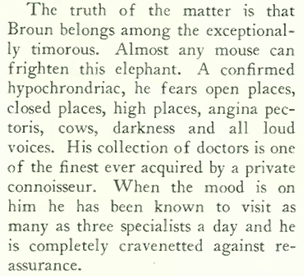
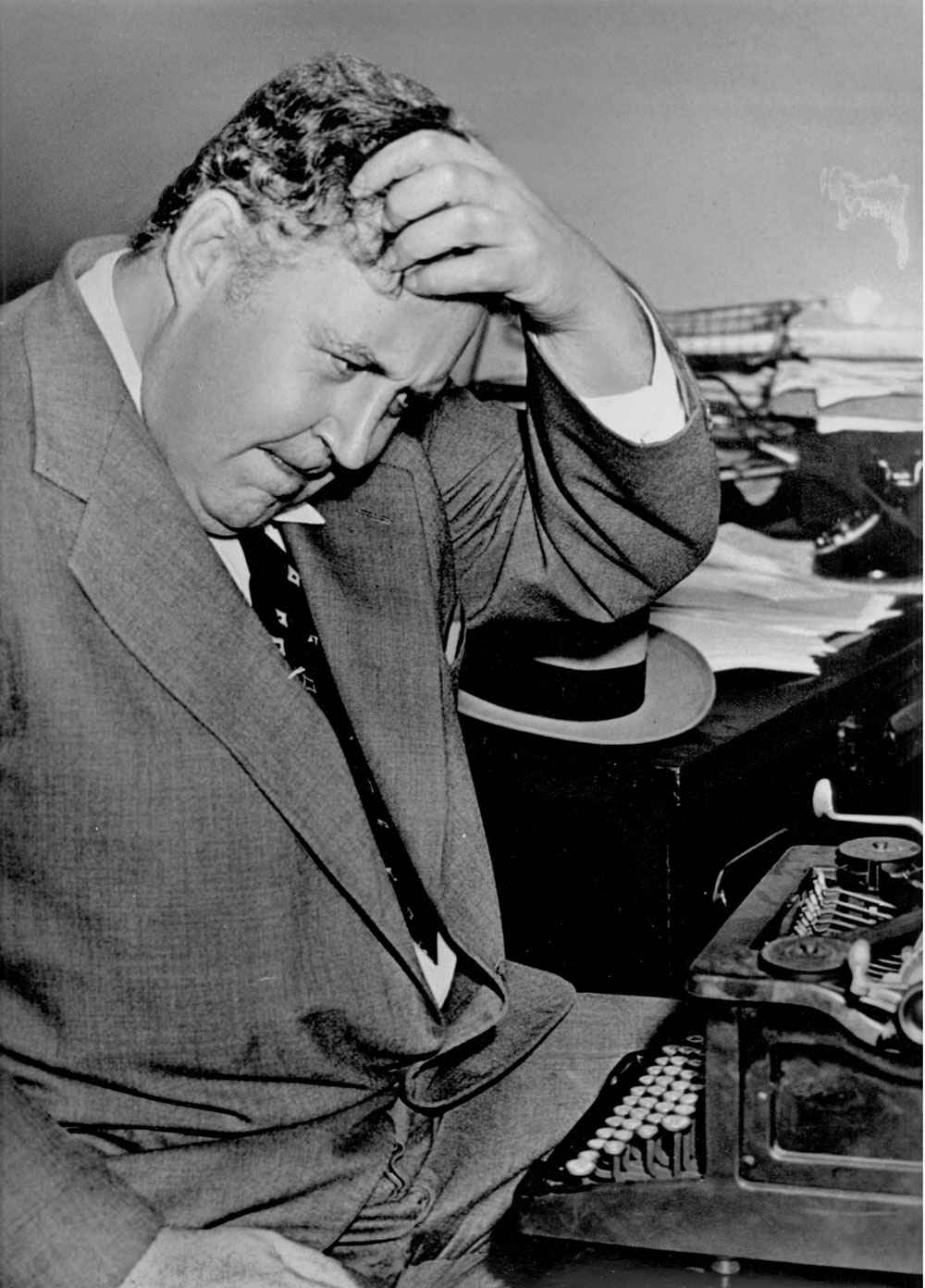
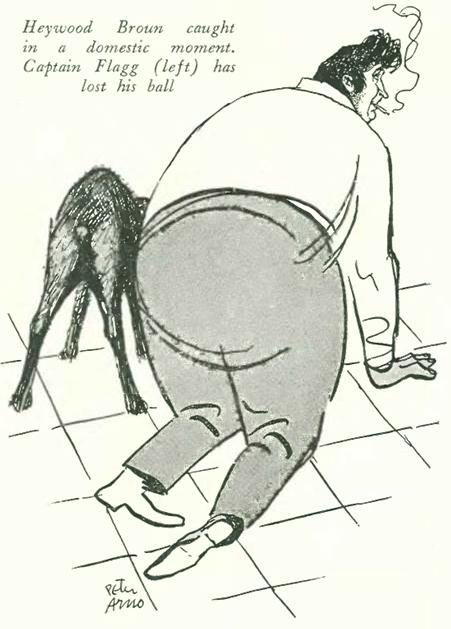
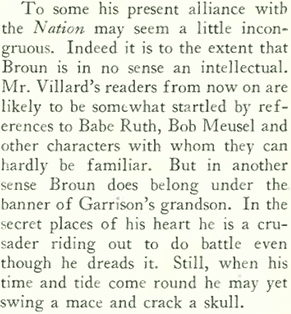
Morality-themed books got the attention of New Yorker book reviewer Ernest Boyd (pen name “Alceste), who devoted considerable ink to Anthony Comstock: Roundsman of the Lord by Heywood Broun and Margaret Leech (both of Algonquin Round Table fame). Comstock was a United States Postal Inspector and politician known for the “Comstock Law,” which sought to censor materials he considered indecent and obscene. That included birth control information, which led to famous clashes between Comstock and family planning advocate Margaret Sanger.

An advertisement for the book appeared in the back pages of the magazine:

Screen Shot 2016-08-09 at 9.31.58 AM

Boyd also reviewed Sinclair Lewis’s Elmer Gantry, a controversial novel that exposed the hypocrisy of some 1920s evangelical preachers:

Screen Shot 2016-08-09 at 9.28.52 AM

Screen Shot 2016-08-09 at 9.29.04 AM

  *  *  *

This advertisement began to appear in the pages of the New Yorker for a new restaurant that claimed to replace the beloved Delmonico’s. Despite its status as a New York institution, Delmonico’s had fallen victim to the changing dining habits of Prohibition New York and had closed its doors in 1923:

Screen Shot 2016-08-09 at 9.01.48 AM

The restaurant was operated by the Happiness Candy Stores chain, which according to the ad also operated restaurants in two other locations in the city. The restaurants must have been short-lived, as I could find no record of them apart from the ads.

Next Time: The Garden City…
232025ffa678f70369b2642ceae085d0

World of Tomorrow

The much-anticipated German expressionist film, Metropolis, opened at Manhattan’s Rialto Theatre. Although considered today to be a classic of the silent era, the March 12, 1927 New Yorker found Fritz Lang’s film to be overlong and preachy despite its fantastic setting and complex special effects.

2ab7711b486573bd3d0e3be1880afe36
March 12, 1927 cover by Carl Rose.

Set in a futuristic dystopia in which the wealthy ruling classes lived high above the toiling masses, the film followed the attempts of a wealthy son of the city’s ruler and a poor working woman named Mary to overcome the city’s gaping class divisions.

b6d411dd22f66f0a43e8f2dbf076f470
The city of tomorrow as portrayed in the opening scenes of Fritz Lang’s Metropolis. The New Yorker encouraged readers to see the film mostly for the special effects, but lamented its “Teutonic heaviness” and uninspired acting. (archhistdaily)

An excerpt from the New Yorker review:

Screen Shot 2016-08-04 at 9.20.57 AM

metro_41
The working masses toil in the dank world beneath the city in Metropolis. (myfilmviews.com)
Screen Shot 2016-08-05 at 12.20.33 PM
Brigette Helm’s duo portrayal of the noble Mary and her robotic double (here being created through cinematic magic) in Metropolis was praised by The New Yorker, which otherwise found the film’s acting subpar. (cinemagraphe.com)

Considered one of the most expensive movies of its time, Metropolis cost $5 million to film in 1925 (roughly about $70 million today).

*  *  *

The famous 1920s evangelist Aimee Semple McPherson had been holding a series of revival meetings in New York, which were often (and derisively) noted by the New Yorker editors. In the previous issue “Talk of the Town” observed:

Screen Shot 2016-07-26 at 8.55.01 AM

And in the March 12 issue they offered this parting note in “Of All Things”….

Screen Shot 2016-08-04 at 8.56.43 AM

Aimee Semple McPherson (left) leading a service at her Angelus Temple in Los Angeles in the 1920s. (Los Angeles Public Library Photo Collection)

A pioneer in the use of modern media, McPherson was in New York on a “vindication tour,” taking advantage of the publicity from her alleged kidnapping  a year earlier that led to investigations that she had staged her disappearance to bolster her flagging ministry.

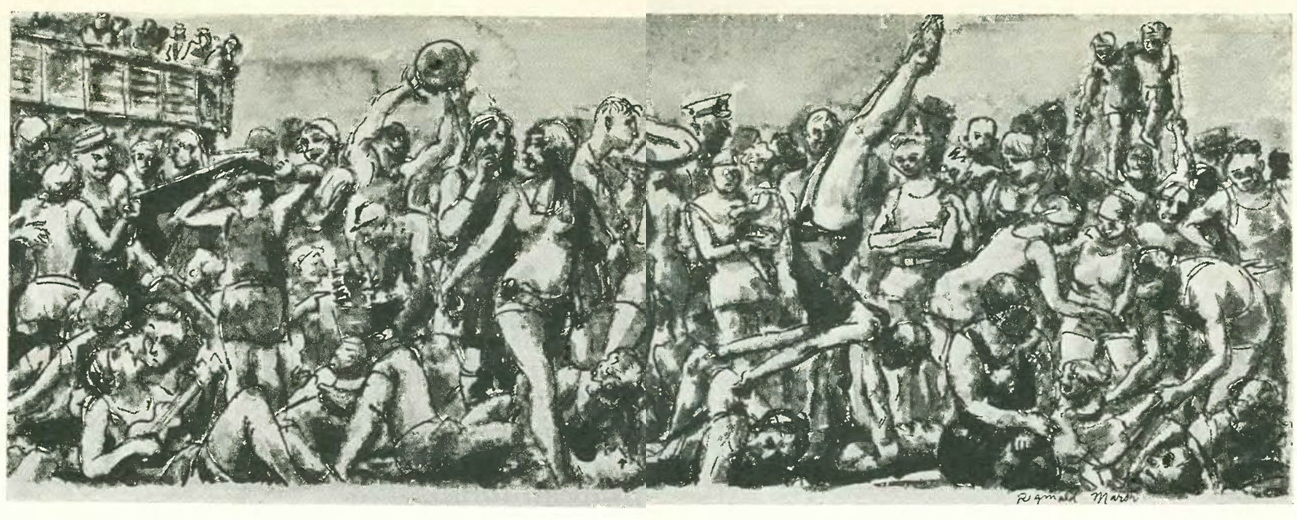
In other diversions, bicycle racing had come to Madison Square Garden, as noted in “Talk of the Town” with an illustration by Reginald Marsh:

Screen Shot 2016-08-04 at 8.56.01 AM

Screen Shot 2016-08-04 at 8.56.11 AM
click to enlarge

Advertisements in this issue included this announcement for the opening of the Park Central Hotel, still a grand landmark on 7th Avenue…

Screen Shot 2016-08-04 at 8.58.15 AM

…and this ad from Nestle touting the latest method for achieving success in the latest hair style…

Screen Shot 2016-08-04 at 8.53.24 AM

Next Time: Nothing Like the Roxy…
ef3893e952639f635327190b41ee6ea3