Holiday Shopping

Photo above via themindcircle.com

With Christmas fast approaching, The New Yorker was getting into the spirit of holidays, especially with all of the advertising revenue it gained from merchants who targeted its well-heeled readership.
8912823cfdc5626785b13a431ae590de
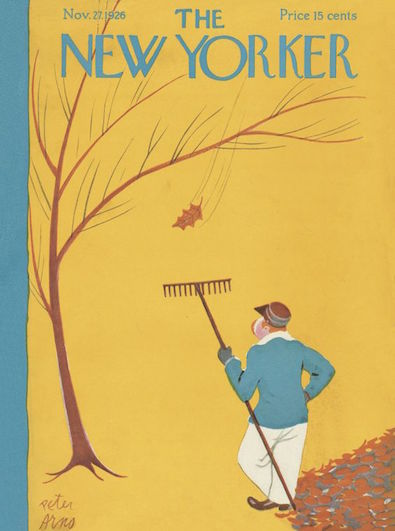
November 27, 1926—Peter Arno’s first cover for the New Yorker. He would do 98 more.

Lois Long continued to write both of her weekly columns for the magazine–her observations on fashion along with ideas for Christmas shoppers in “On and Off the Avenue” (“Saks’ toy department has some of the loveliest French notepaper for tiny children…”) and her musings on nightlife in “Tables for Two.”

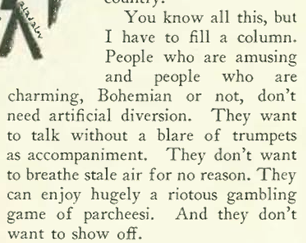
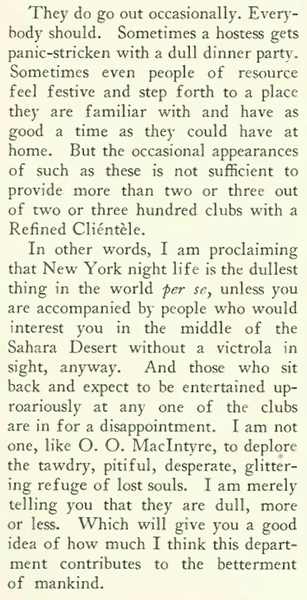
In contrast to her rather light mood expressed in the fashion column, Long was feeling far from jolly in her “Tables” observations of New York’s nightlife:
Screen Shot 2016-04-25 at 5.01.46 PM

Screen Shot 2016-04-25 at 5.02.43 PM

As you might recall, in a previous column Long tossed a “ho-hum” in the direction of the famed Cotton Club. Perhaps Prohibition was taking its toll on the hard-partying columnist.

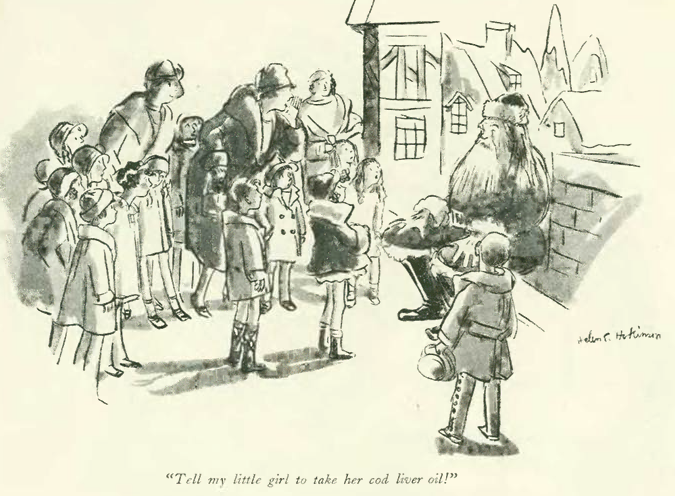
Nevertheless, the holiday spirit was upon with The New Yorker, in the cartoons (this one by Helen Hokinson)…
Screen Shot 2016-04-25 at 4.54.16 PM

…and in various advertisements.

Screen Shot 2016-04-25 at 4.50.49 PM

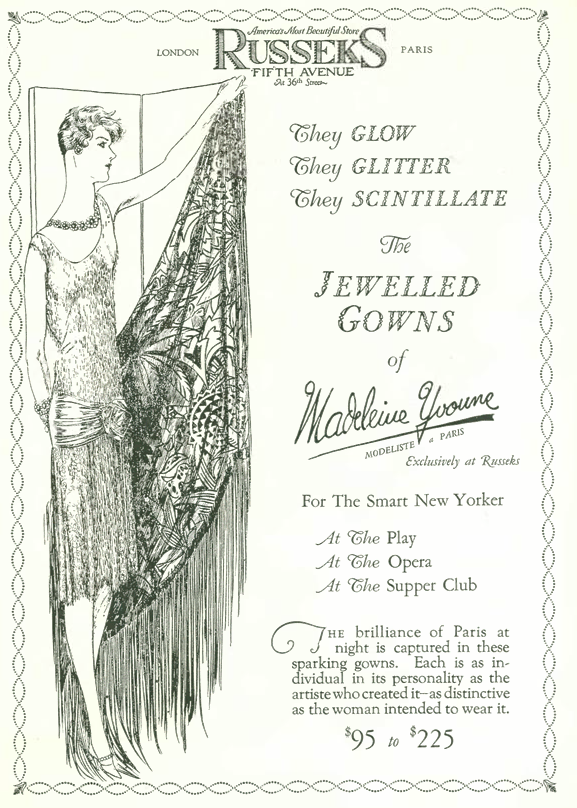
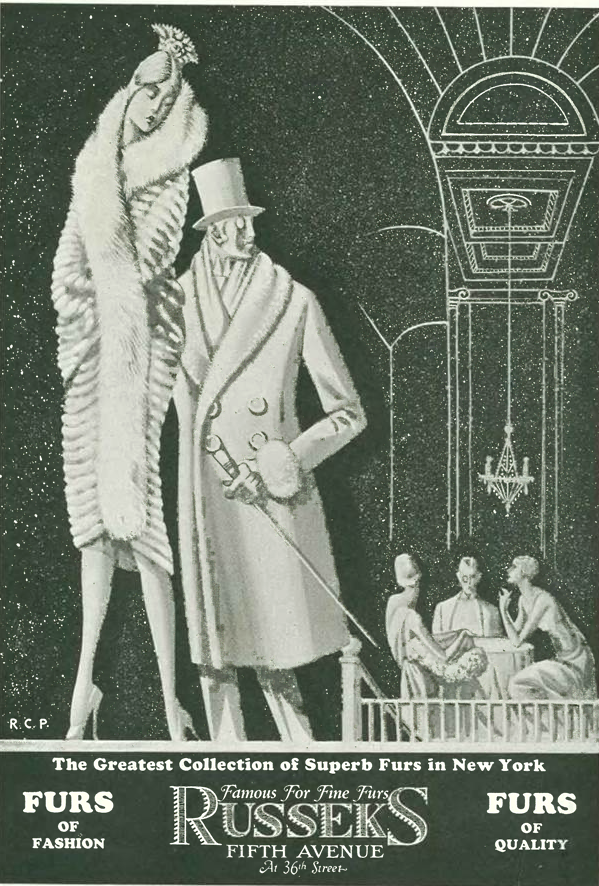
Note this advertisement (below) from Russeks. The comics in The New Yorker famously poked fun at the comic pairings of rich old men and their young mistresses, but this ad seemed to glorify such a pairing while suggesting that an older man of means must invest in fine furs if he is going to hang on to his trophy wife or mistress, in this case a young woman who appears to be nearly eight feet tall…
Screen Shot 2016-04-25 at 4.51.10 PM

I liked this ad from Nat Lewis for the simple line drawing…
Screen Shot 2016-04-25 at 4.57.27 PM

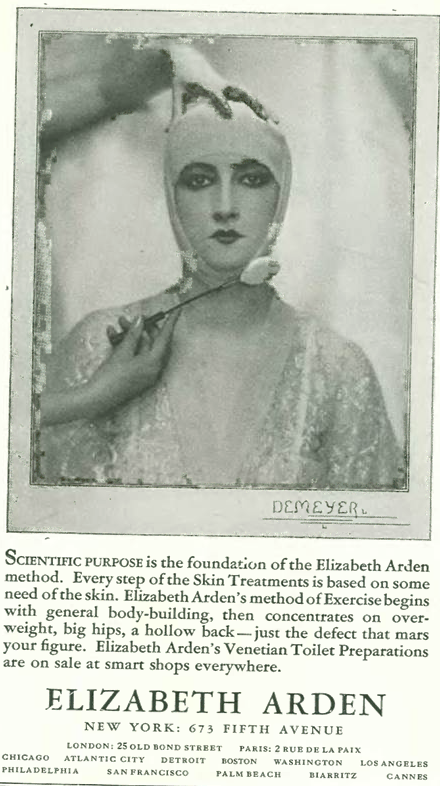
…but the ads for Elizabeth Arden, which for years featured this “Vienna Youth Mask” image, always creep me out.
Screen Shot 2016-04-25 at 4.56.41 PM

The mask was made of papier-mâché lined with tinfoil. Although not pictured in the ad, it was also fitted to the client’s face. The Vienna Youth Mask used diathermy to warm up the facial tissues and stimulate blood circulation.

1937-arden-vienna
SLEEP TIGHT…The full “Youth Mask” applied to an Elizabeth Arden client in the mid 1930s. (cosmeticsandskin.com)

In a 1930 advertisement, Elizabeth Arden claimed that “The Vienna Youth Mask stimulates the circulation, producing health as Nature herself does, through a constantly renewed blood supply. The amazing value of this treatment lies in the depth to which it penetrates, causing the blood to flow in a rich purifying stream to underlying tissues and muscles…charging them with new youth and vigor. It stirs the circulation as no external friction or massage can possible do.”

I don’t believe this claim was backed up by medical research, but as we all know, Elizabeth Arden made a bundle from these treatments and the various creams and potions that came with it.

Next Time: Race Matters…
e0fa6079facd04a1d0611e2da7cd2519

Fun With Harold

The Nov. 6, 1926 issue of The New Yorker was actually two issues, one for the newsstands and subscribers and the other a rare parody issue privately published and presented to founding editor Harold Ross on his 34th birthday.

Screen Shot 2016-04-01 at 3.03.49 PM
The cover of the “official” issue (left) for November 6, 1926, was illustrated by William Troy, the parody issue by Rea Irvin.

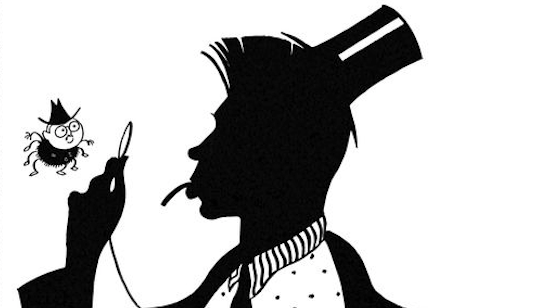
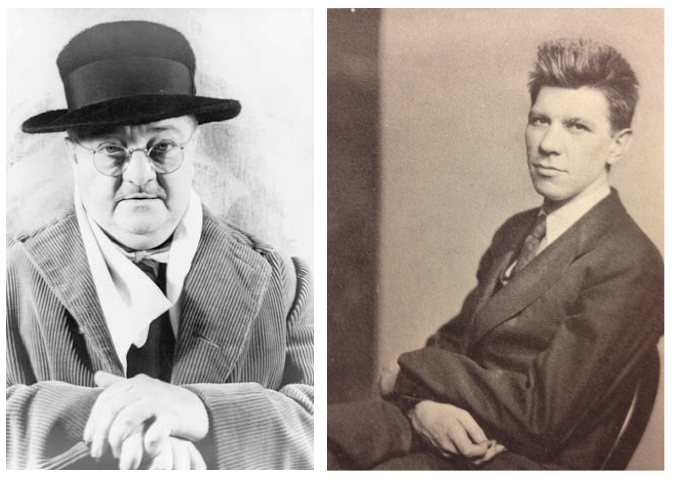
The parody issue’s cover featured a silhouette of Ross (drawn by Rea Irvin, as “Penaninsky”) in the pose of dandy Eustace Tilley, looking at a spider bearing a strong resemblance to Alexander Woollcott, critic and commentator for The New Yorker who first met Ross overseas when the two worked on the fledgling Stars and Stripes newspaper.

Screen Shot 2016-04-07 at 3.16.19 PM
OLD PALS…Alexander Woollcott and Harold Ross. (Britannica; Jane Grant Collection, University of Oregon)

Ralph Barton’s contribution to the parody issue…

Screen Shot 2016-04-07 at 2.44.38 PM
(From About Town: The New Yorker and the World It Made, By Ben Yagoda)

…and an unsigned contribution that took a poke at Ross’s efforts to create efficient procedures at the magazine’s office:

Screen Shot 2016-04-07 at 3.32.46 PM
Excerpt from Defining New Yorker Humor, by Judith Yaross Lee

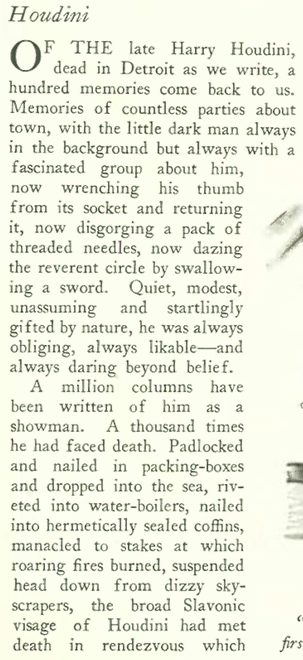
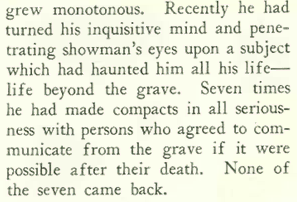
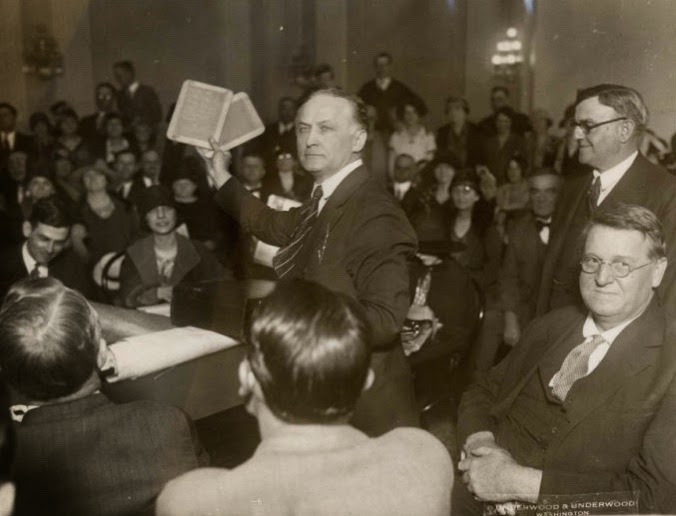
In the other Nov. 6 issue, “The Talk of the Town” editors commented on the death of the famed magician Harry Houdini:

Screen Shot 2016-04-07 at 3.43.59 PM

Screen Shot 2016-04-07 at 3.44.26 PM

ONE OF HIS FINAL ACTS…Harry Houdini appearing before a Senate committee to expose fake spiritualists in February 1926. (wildabouthoudini.com)

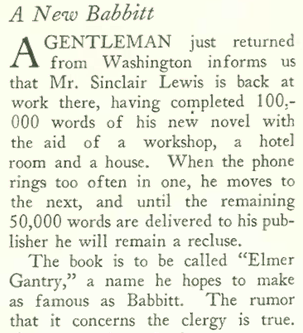
“Talk” also noted a new book called Elmer Gantry was being penned by Sinclair Lewis:

Screen Shot 2016-04-07 at 3.45.20 PM

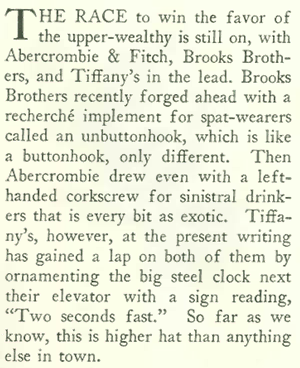
The book was a biting satire of the hypocrisy of fanatical preachers during the 1920s. It created a public furor when it was published in 1927. Another “Talk” item mocked the taste of wealthy New Yorkers for the latest exotic gadgets…

Screen Shot 2016-04-07 at 3.40.08 PM

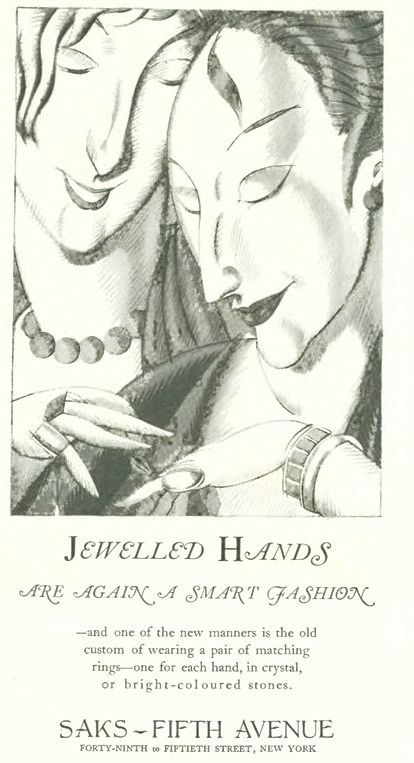
…but the same issue was also filled with the usual advertisements appealing to those very same desires of the Smart Set. Here’s a couple of gems, so to speak…

Screen Shot 2016-04-07 at 3.37.43 PM

Screen Shot 2016-04-07 at 3.38.34 PM

Next Time: The Cotton Club & Other Distractions…

8a3e8956e7cf51e58975801865fdce55

On the Air

As much as they affected a refined disinterest in the latest fads, The New Yorker editors were nevertheless impressed by the many electronic innovations in the 1920s consumer market. Although electricity in cities had been around for awhile, inventions to exploit this new resource would come into their own in the Jazz Age with the advent of mass-produced electrical appliances (refrigerators, toasters etc.).

9d9134fa5d5971983bdff56839082757
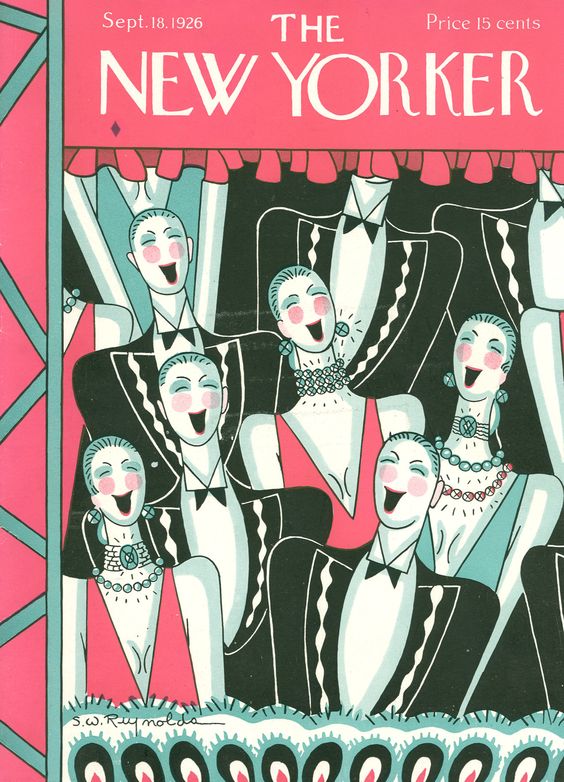
Sept. 18, 1926 cover by Stanley W. Reynolds.

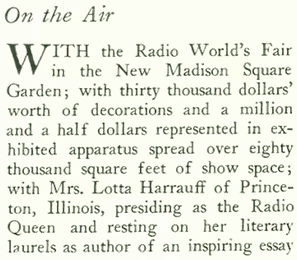
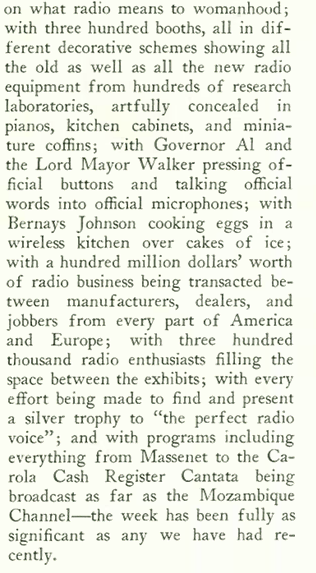
So when the 1926 Radio World’s Fair opened at Madison Square Garden, the magazine was there to report on its many marvels in the Sept. 18 issue:

Screen Shot 2016-02-17 at 4.33.11 PM

Screen Shot 2016-02-17 at 4.33.20 PM

1920s-radio
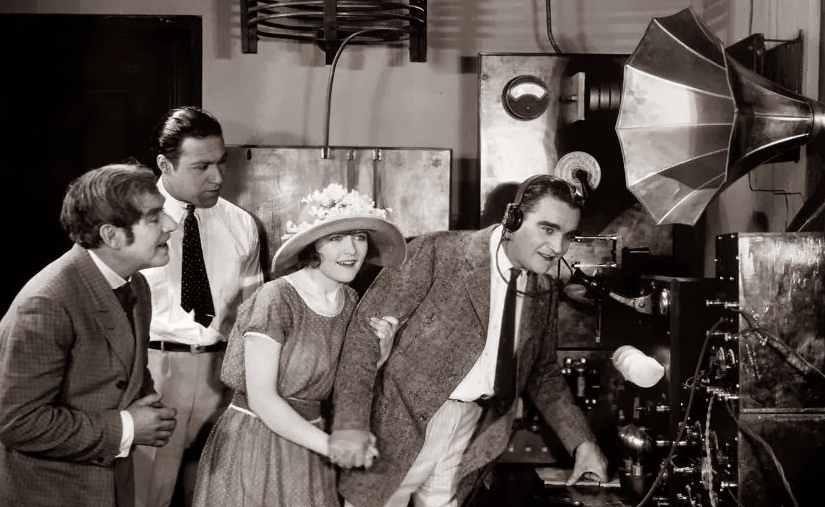
IF ONLY THEY HAD SPOTIFY…Teens tuning in, mid 1920s. (hancockhistoricalmuseum.org)

Although New York’s radio fair was doubtless the largest (akin to today’s annual Consumer Electronics Show), similar fairs were held in other major cities where broadcast radio was taking hold.

tumblr_m1upqvc8Eb1rq0v7oo1_500
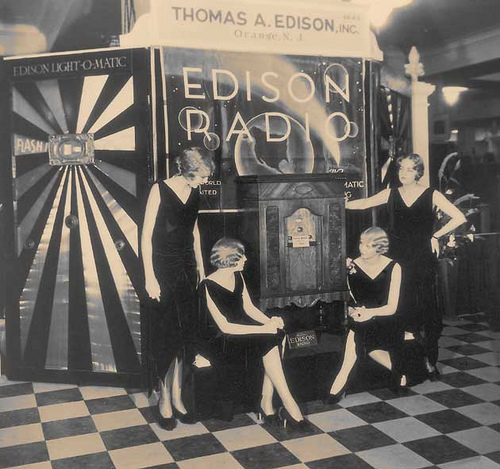
Promotional image for Edison Radio from the 1926 New York Radio World’s Fair. (artdecoblog.com)

…and for comparison, an image from the 2016 Consumer Electronics Show in Las Vegas:

cf4c9628
(CES)

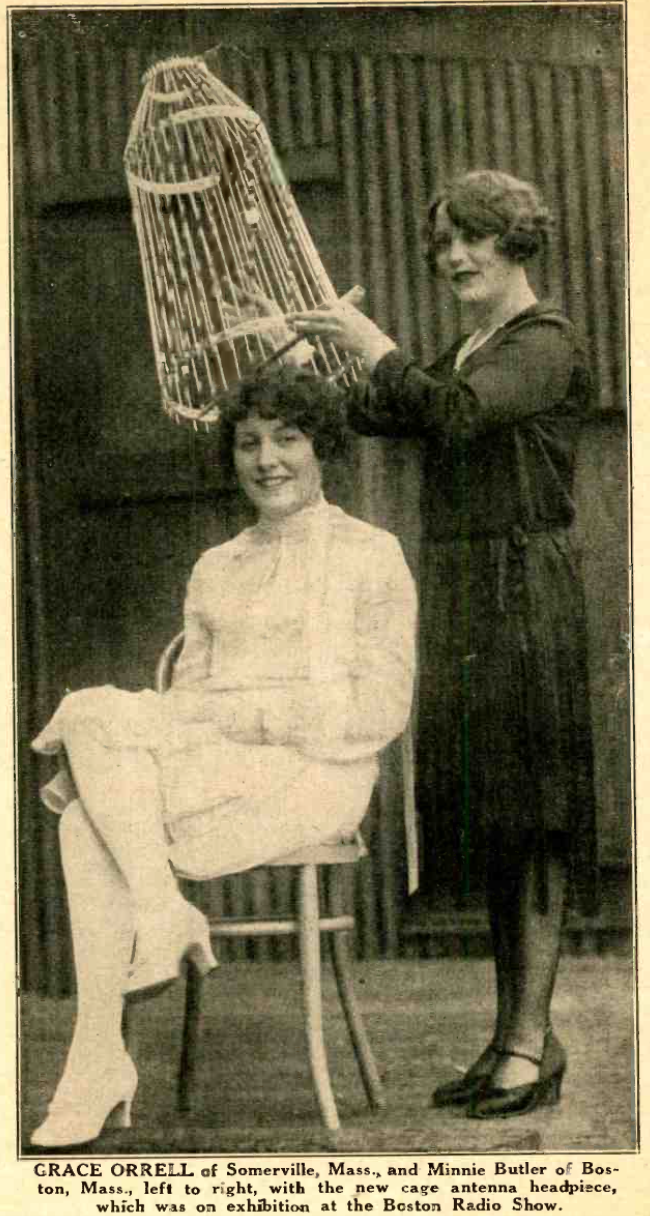
To give you an idea of some of the stranger innovations in the world of 1920s radio, here is an image scanned from the Oct. 16, 1926 issue of Radio World magazine demonstrating the wonders of a wearable cage antenna, apparently through which the wearer could make or receive wireless broadcasts…

Screen Shot 2016-02-22 at 9.43.31 AM

…and a detail of an advertisement from the same issue depicting a typical household radio for the time:

Screen Shot 2016-02-22 at 9.45.24 AM
Before tuning in for the first time, the radio’s owner needed to string a 100-foot outside aerial. Until 1927, when owners could plug their radios into electric sockets, radios required two types of batteries—a storage battery that required recharging every two weeks and a set of dry-cell batteries that needed to be replaced about every three weeks.

If all this looks crude, remember that in September 1926 broadcast radio was less than six years old. But it was big year for radio, with the National Broadcasting Company (NBC) establishing a network of stations that distributed daily programs. Columbia Broadcasting System (CBS) would establish a rival network in 1928.

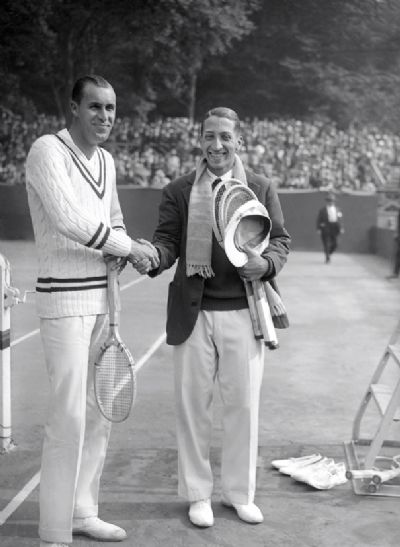
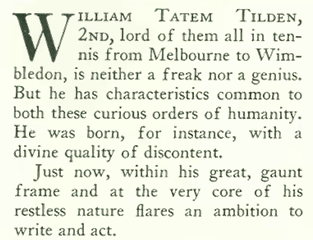
In other items, the magazine offered a lengthy profile on tennis legend Bill Tilden, and later in the sports section described his Davis Cup loss to Frenchman René Lacoste.

lacoste-france-etats-unis_360
Tennis rivals Bill Tilden and René Lacoste meet in Philadelphia, 1927. (greensleevestoaground.)
Tilden is often considered one of the greatest tennis players of all time. However, The New Yorker “Profile” described him as a reluctant star with artistic ambitions…
Screen Shot 2016-02-19 at 12.33.55 PM
…who distained the life of a sports hero…
Screen Shot 2016-02-19 at 12.35.08 PM
Samuel Merwin, referred to above, was a playwright and novelist.
Tilden was the world’s number one player for six years (1920-1925). He won 14 Major singles titles including ten Grand Slams. He also won a record seven US Open titles.
There is a sad footnote to Tilden’s career, however. Twenty years after The New Yorker profile, Tilden would be arrested for soliciting sex from an underage male, an offense he would arrested for again three years later, in 1949. He was subsequently shunned by the tennis and Hollywood world, although old friend Charlie Chaplin allowed Tilden to use his private court for lessons, which helped him financially as he dealt with legal and financial problems.
* * *
Going Going Gone
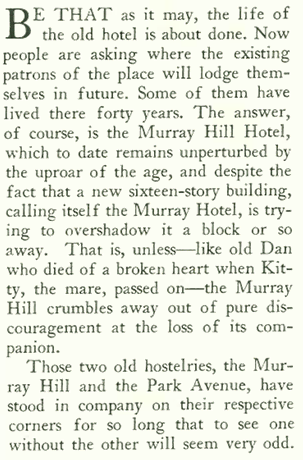
The magazine editors continued to watch the rapidly changing skyline of the city, as beloved old buildings were demolished to make way for new skyscrapers. This time it was the old Park Avenue Hotel:
 Screen Shot 2016-02-19 at 12.30.45 PM
The editors of “Talk of the Town” fondly recalled the time when the hotel, with its spacious courtyard of flowers and fountains, attracted “almost every dinner party of consequence in New York.”
Screen Shot 2016-02-19 at 12.32.03 PM
parkavenuesouth1890
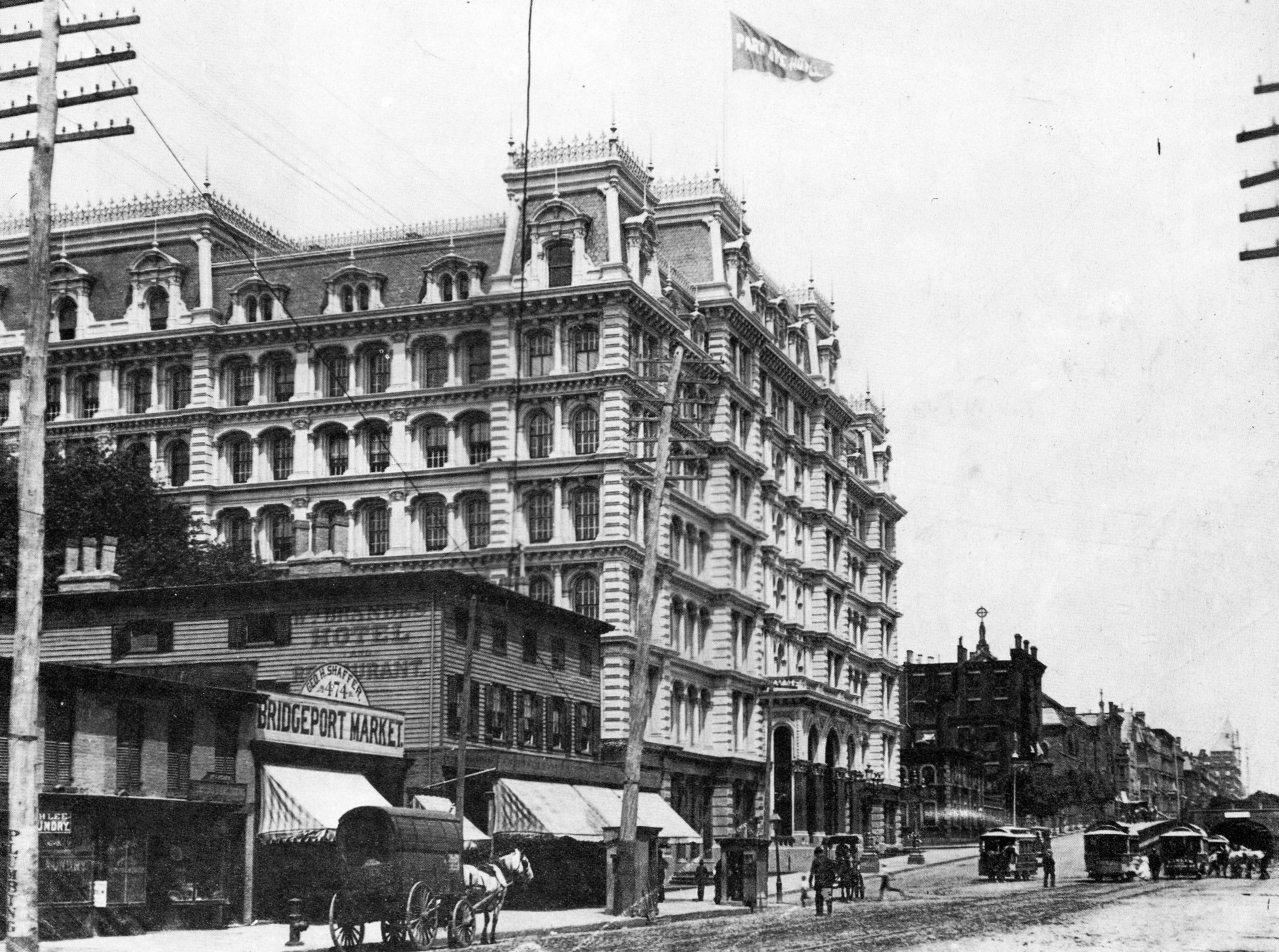
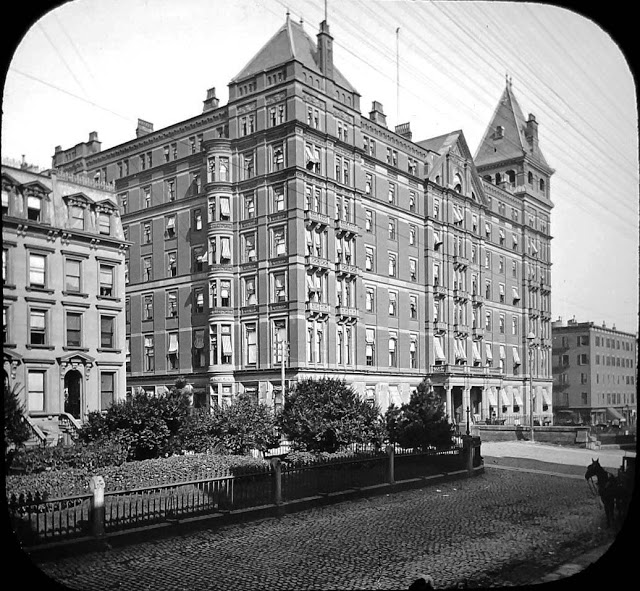
This photo of the old Park Avenue Hotel was taken in 1890, only two years after Fourth Avenue was renamed Park Avenue. Constructed in 1877, the hotel was originally called Stewart’s Hotel for Working Women, designed to provide safe housing for the influx of single working women pouring into New York City. The name didn’t last long: the hotel was opened in April 1878, closed in May and reopened in June as the Park Avenue Hotel. It was razed in 1927. (Ephemeral New York)

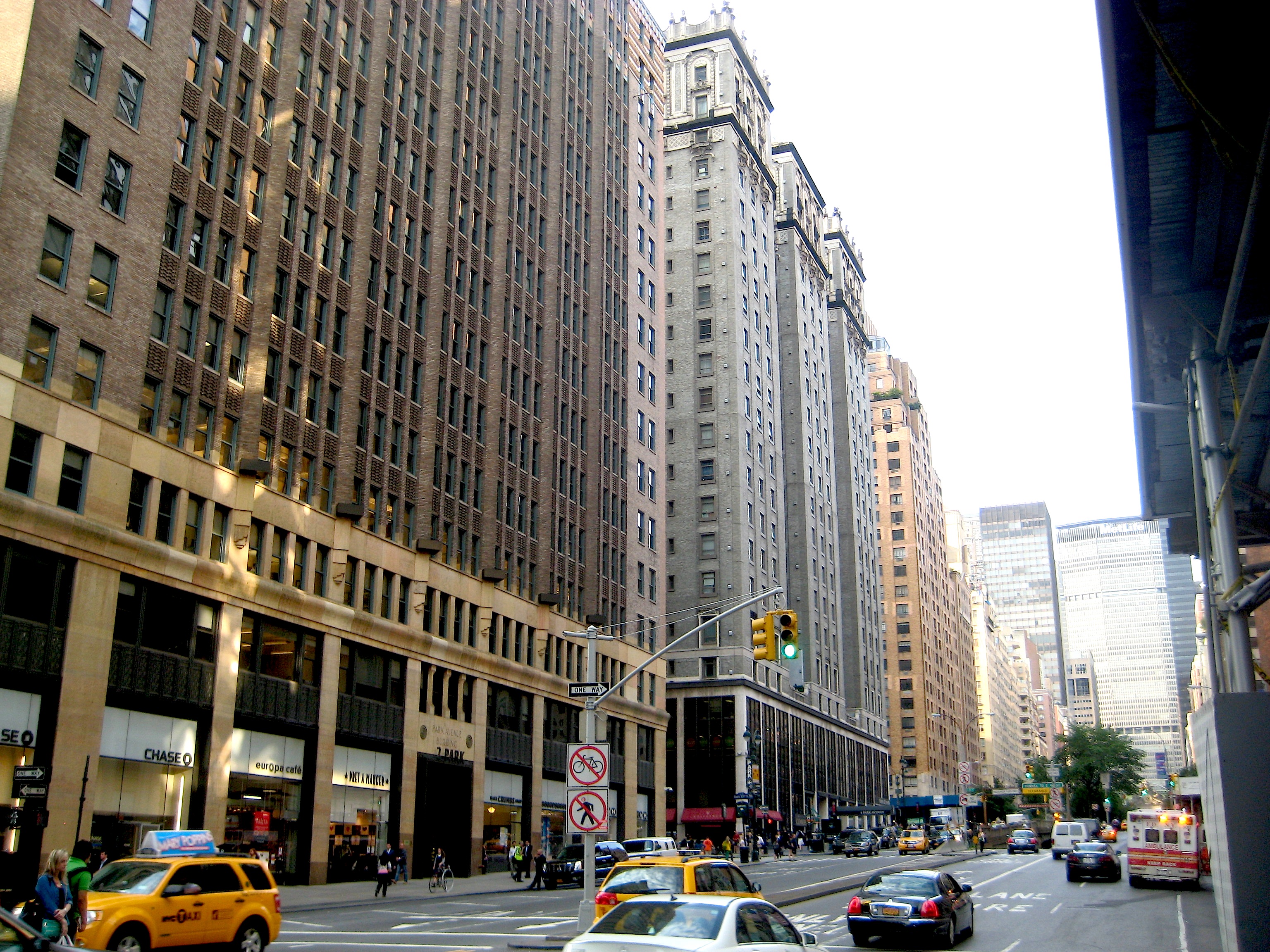
The same site today:

parkavenuesouth2012
(Ephemeral New York)

The nearby Murray Hill Hotel mentioned in the article would last another 20 years, falling to the wrecking ball in 1947:

$(KGrHqZ,!jgE7jIy3h0zBO+884Q5Mw~~60_57
The Murray Hill Hotel, built in 1884, would outlive the Park Avenue Hotel by 20 years, falling to a wrecking ball in 1947. (Library of Congress)
 Next Time: Fight Night in Philly…
d9f3d5507a7bade4fc28276d12a63260