In 1933 the U.S. economy began a slow recovery from the 1929 market crash, but the recovery stalled in 1934 and 1935, and folks including E.B. White were looking for any indication of brighter days ahead.
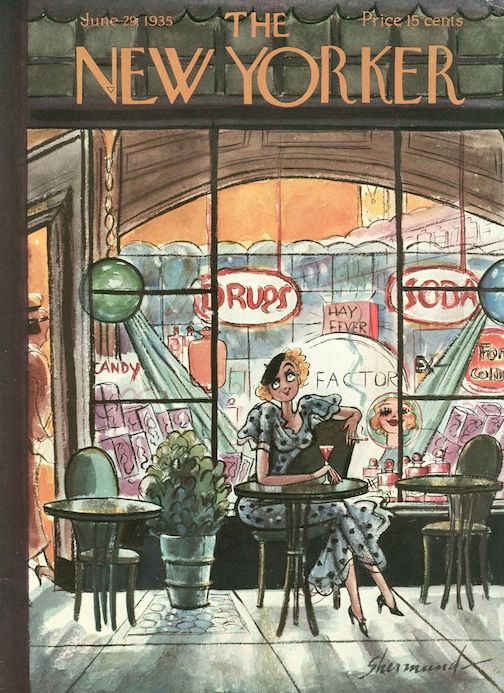
June 29, 1935 cover by Barbara Shermund. A prolific contributor of cartoons to The New Yorker (600 in all), Shermund also illustrated eight covers, including this charmer.
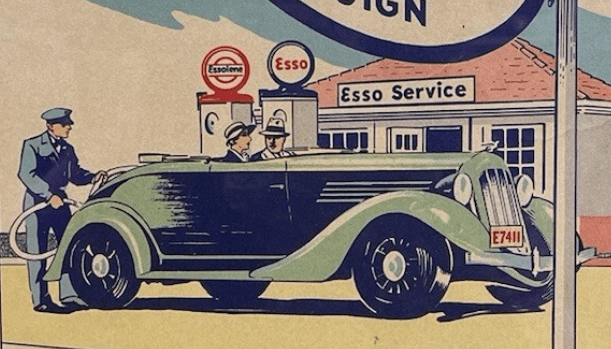
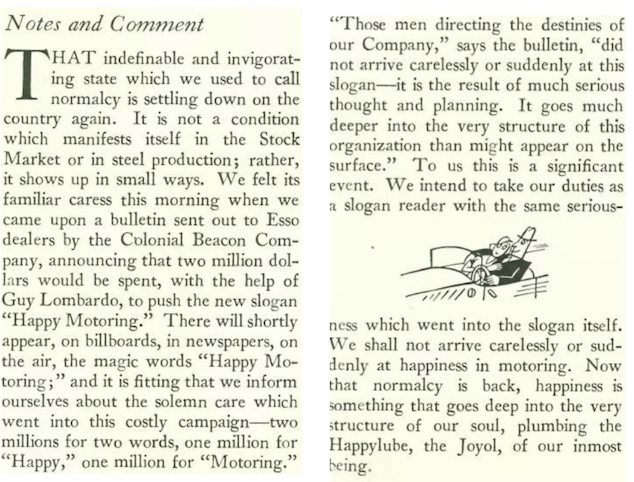
White suggested that Americans look for smaller signs of normalcy, such as the new slogan, “Happy Motoring,” that was being rolled out by Standard Oil’s Esso.
IT’S A GAS…At left, Gasoline Station, Tenth Avenue, photo by Berenice Abbott, 1935; at right, newspaper ad, May 1935. (metmuseum.org/wataugademocrat.com)
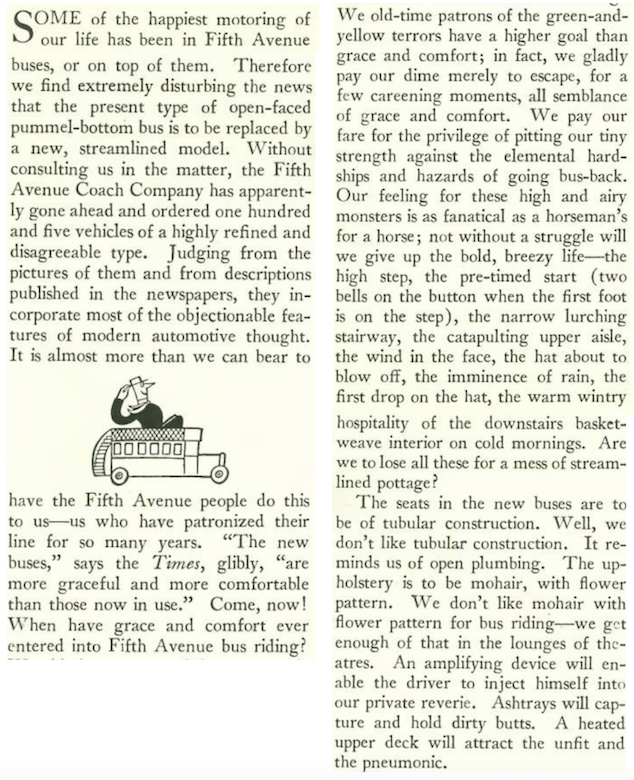
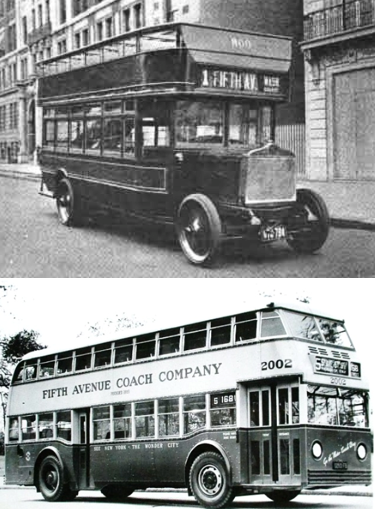
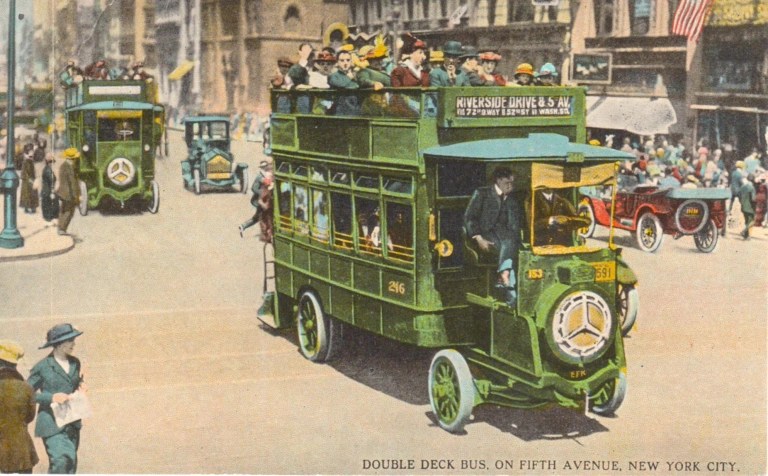
Like many of us, White was a study in contradictions, enthusiastically embracing the age of air travel while rejecting the style and comforts of modern automobiles (he famously loved his Model T). It is no surprise that he also preferred Fifth Avenue’s spartan green and yellow omnibuses over the new streamlined buses that would soon be plying the streets of Manhattan.
NO THANKS…E.B. White preferred the spartan accommodations of the old Fifth Avenue buses to the comforts of their replacements. (coachbuilt.com)
White elaborated on the advantages of the older buses:
STYLE OVER COMFORT…Of the old Fifth Avenue buses, E.B. White wrote that he preferred the “hard wooden benches on the sun deck, conducive to an erect posture, sparkling clean after a rain.” (Ephemeral New York)
* * *
Cinderella Story
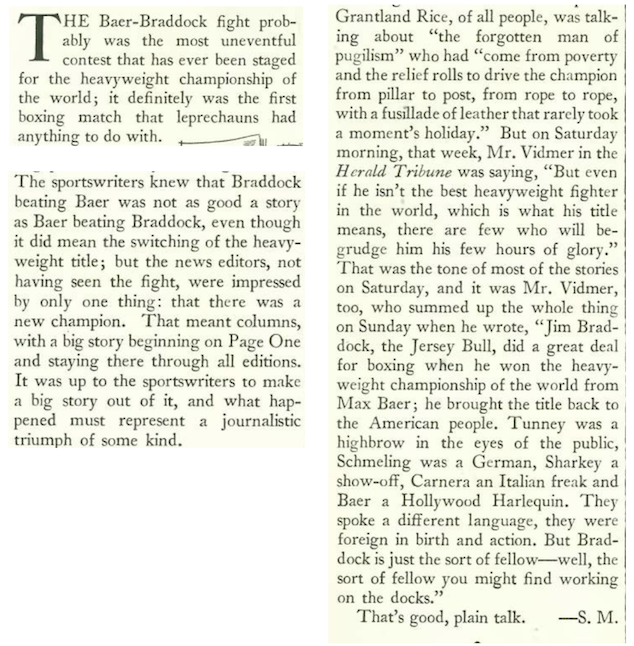
Challenger James J. Braddock achieved one of boxing’s greatest upsets by defeating the heavily favored (and reigning champ) Max Baer. For this feat he was given the nickname “Cinderella Man” by journalist Damon Runyon. The writer of the “Wayward Press” (byline “S.M.”) seemed less impressed, and mocked the national media for their sudden pivot on the bout’s unlikely outcome.
BRINGING THE FIGHT…Challenger James J. Braddock lays into defending champ Max Baer during a heavyweight boxing title match on June 13, 1935, at the Madison Square Garden Bowl in Long Island City. Although the national media dismissed Braddock’s chances of winning, Braddock trained hard for the fight while Baer spent more time clowning around than training. Braddock won by unanimous decision, eight rounds to six. (thefightcity.com)
* * *
Seemed Like a Nice Guy
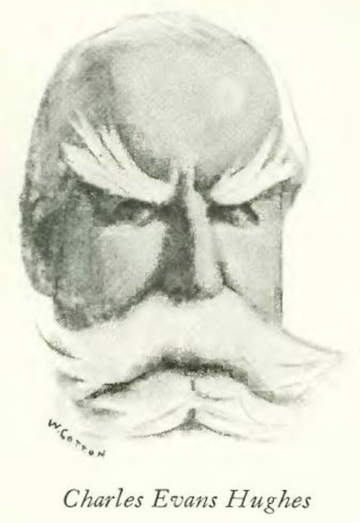
Henry Pringle penned the first part of a three-part profile of Supreme Court Chief Justice Charles Evans Hughes (1862–1948), who was also a former New York governor and U.S. secretary of state. William Cotton rendered a rather severe-looking Hughes in this caricature for the profile…
…although in reality he tended to look more like this…
PROGRESSIVE THINKER…Supreme Court Chief Justice Charles Evans Hughes in 1931. Known as a reformer who fought corruption, Hughes was a popular public figure in New York. (Wikipedia)
* * *
From Our Advertisers
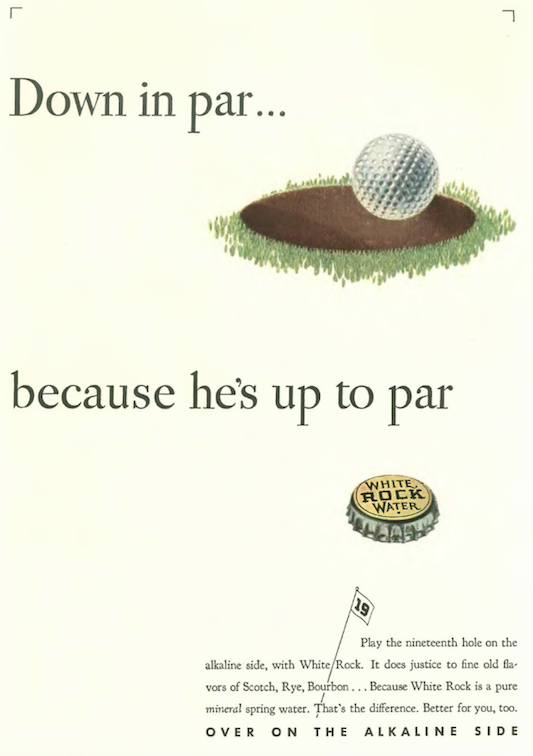
We begin with an advertisement that goes down easy, with its minimal style…
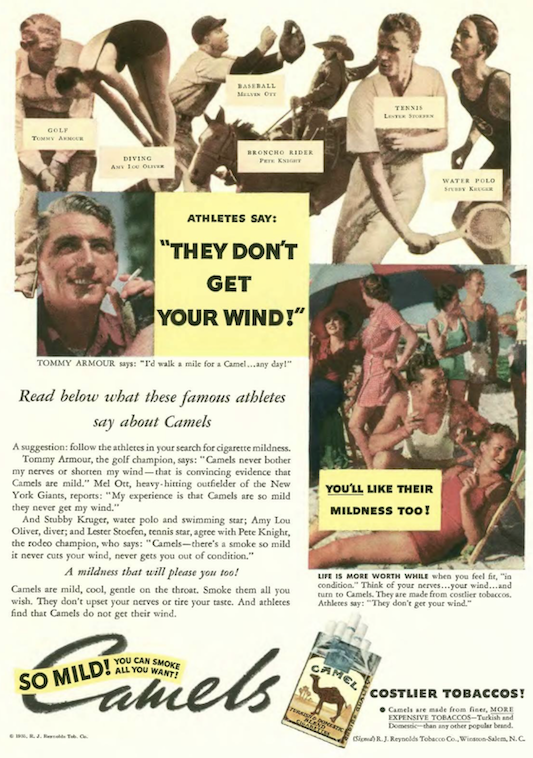
…by contrast, a busy Camel advertisement…R.J. Reynolds alternated full-page ads featuring society women with these health-themed spots that linked smoking with athletic prowess…
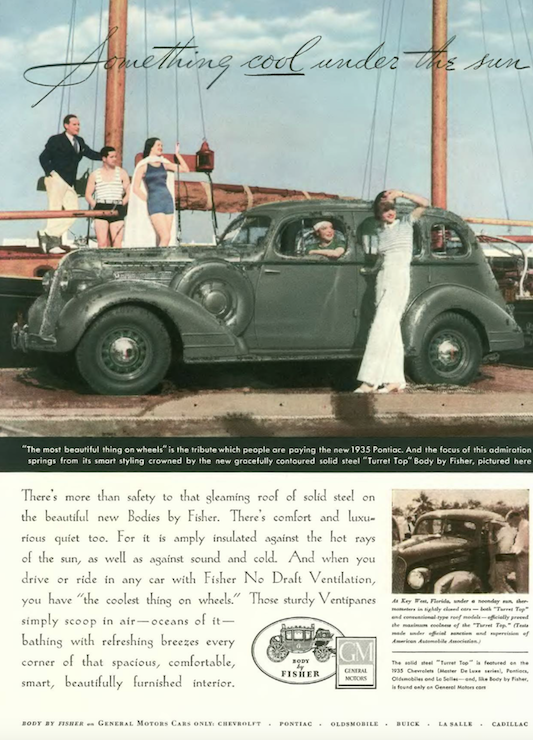
…this advertisement by Fisher claimed the 1935 Pontiac was “The most beautiful thing on wheels,” however here it looks perfectly ancient…
…as does this Nash on the inside back cover…
…the back cover was claimed by Highland Queen, a blend of some very fine distilleries…
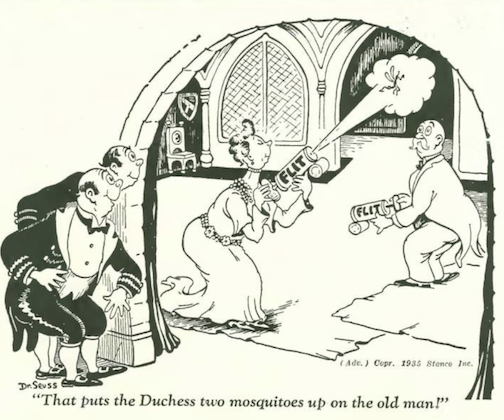
…Theodore Seuss Geisel continued his ongoing saga against the mighty mosquito…
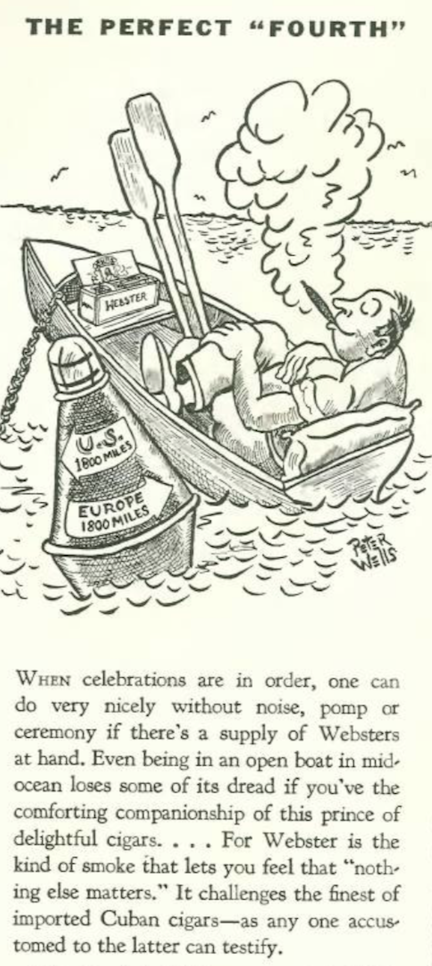
…and we have this back of the book ad for Webster cigars, who enlisted the talents of Peter Wells…
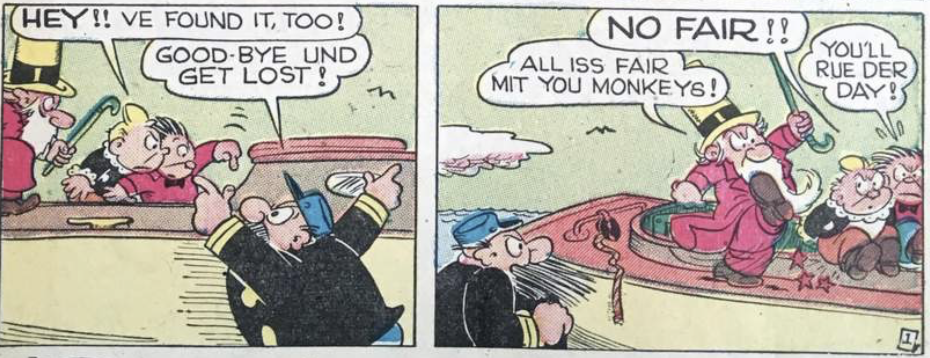
…Wells (1912–1995) was also a children’s book writer, most famous for contributing drawings to the Katzenjammer Kids comic strip …
Peter Wells, detail from the opening page from “The Katzenjammer Kids,” #16, Spring 1951, King Features Syndicate, Inc.
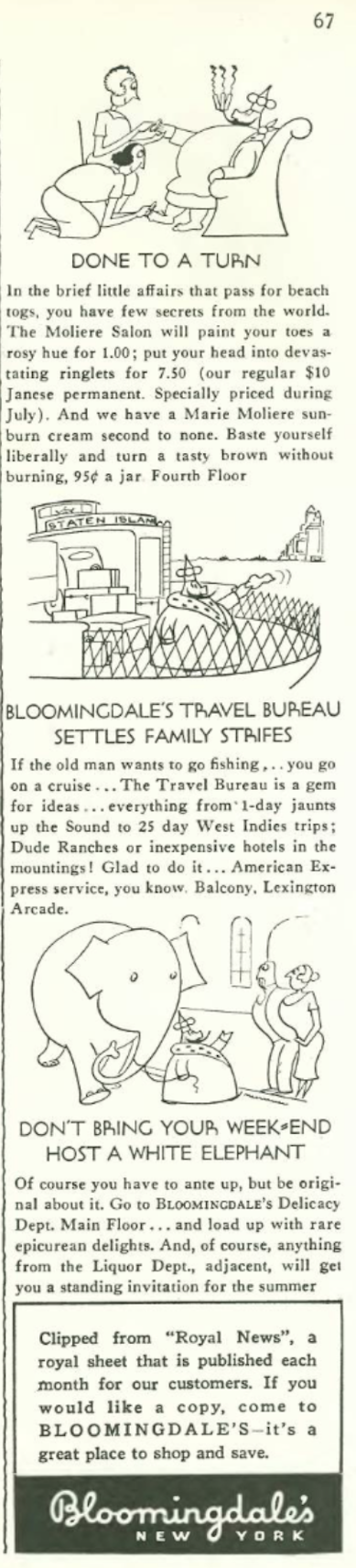
…and of course we are all familiar with Otto Soglow, who sold his beloved Little King to Hearst (and made a pile) but was still able to feature his diminutive potentate in the The New Yorker in a series of ads for Bloomingdales…
…which brings us to our cartoonists, and a familiar torment for our beloved James Thurber…
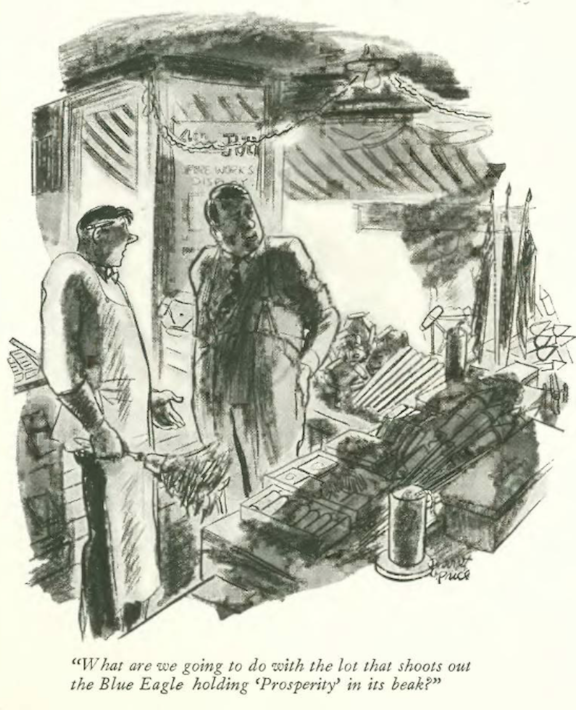
…Independence Day offered a marketing challenge to these shopkeepers, per Garrett Price…
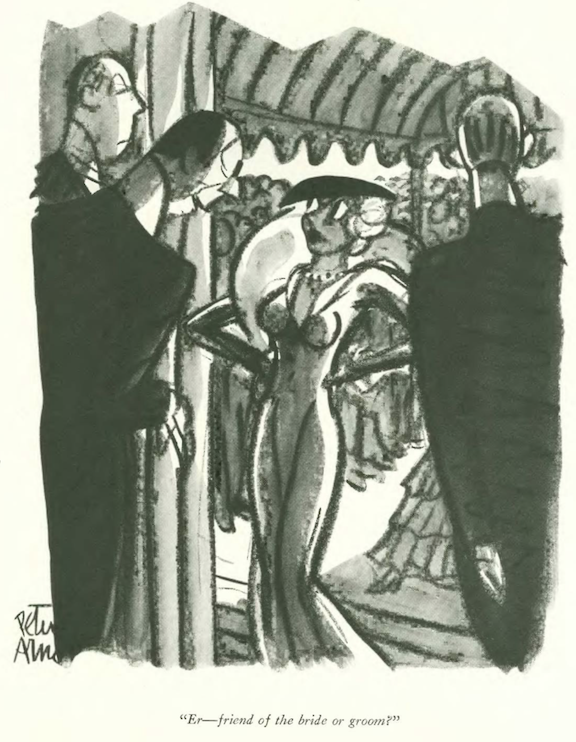
…Peter Arno was at his best, in his element…
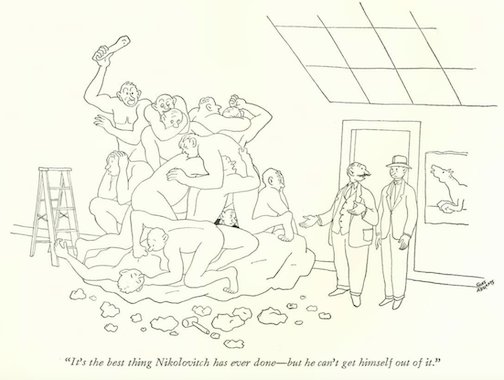
…Charles Addams explored the unnatural, which would become his calling card…
…Robert Day offered a new twist to the tonsorial arts…
…William Steig gave examples of some budding “tough guys”…
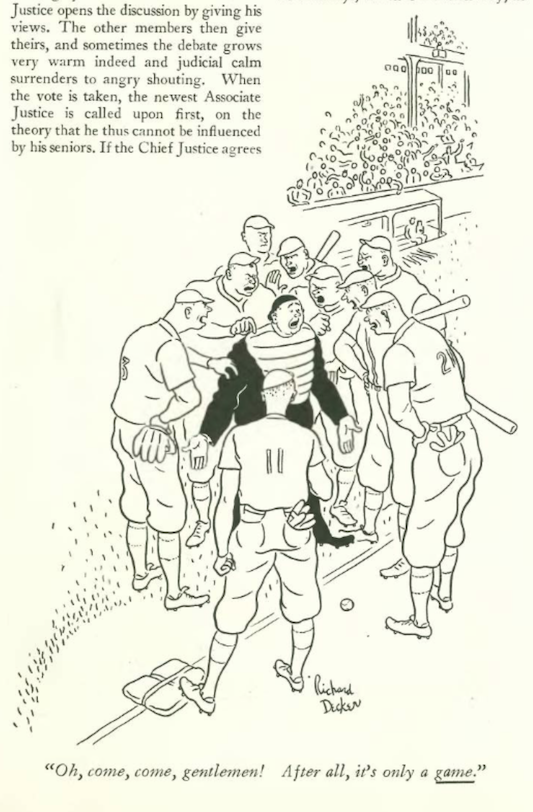
…a rare baseball-themed cartoon from Richard Decker (editor Harold Ross was not a baseball fan)…
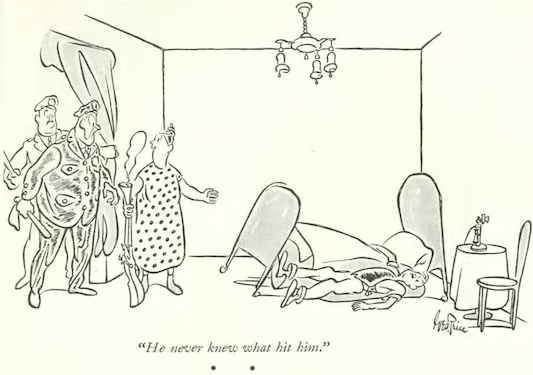
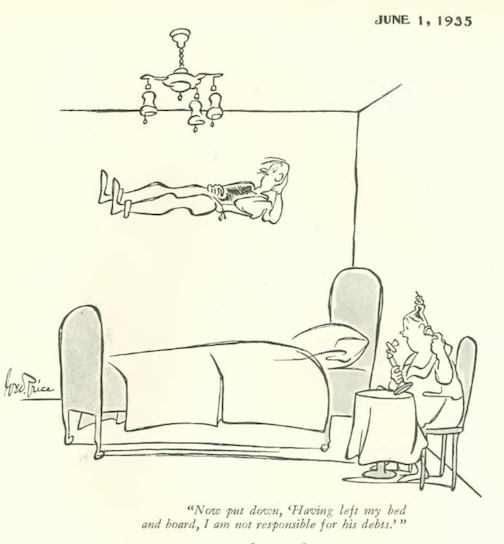
…from George Price, what appears to be the end of his “floating man” series, which began in September 1934…
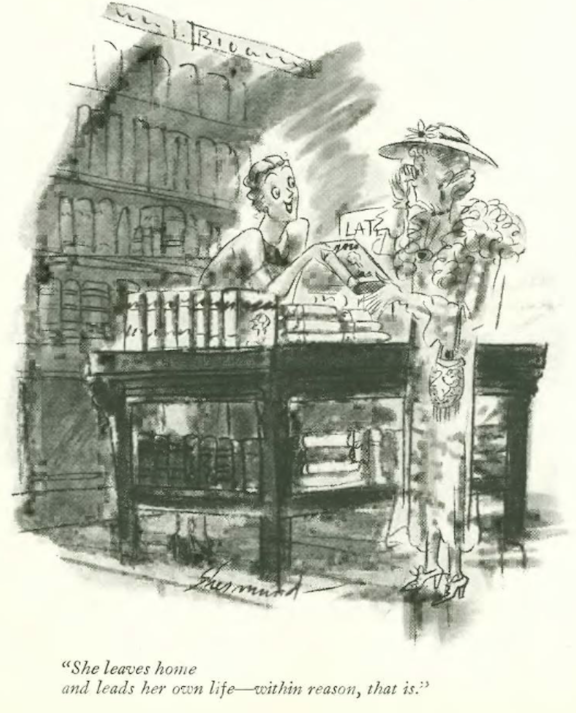
…and we close with one my favorite cartoonists, Barbara Shermund, here at the bookstore…
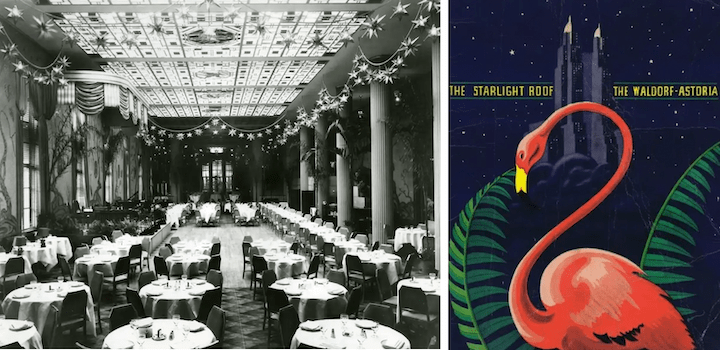
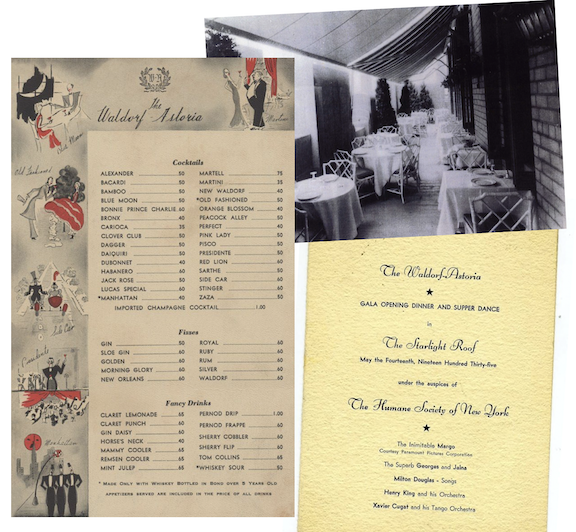
Above: The Waldorf-Astoria's Starlight Roof, and a 1930s menu cover. (Facebook/Pinterest)
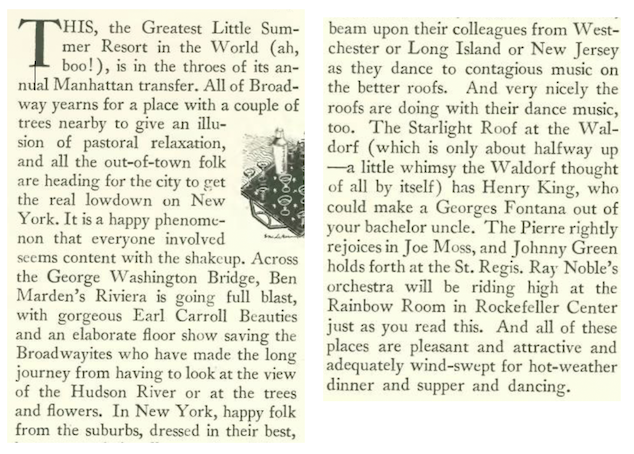
With summer approaching, the rooftop restaurants were in full swing, and Lois Long continued her exploration of favorite haunts, including one nightclub that drew many Manhattanites across the Hudson to the cliffs of the New Jersey Palisades.
June 1, 1935 Cover by Rea Irvin.
Ben Marden couldn’t wait for the official end of Prohibition when he opened his Riviera Night Club in Fort Lee in 1931. The frequent site of raids until the repeal of the 18th Amendment, the Riviera continued to be a place well known to Bergen County police thanks to clientele that included racketeers and other unsavory types. But to New Yorkers like Long, it was a break from the din of the city to the relative green of the Garden State. Long wrote:
The Riviera closed during the first years of World War II, but it reopened in 1945 after Bill Miller bought it from Marden and apparently cleaned it up. It then attracted the likes of Frank Sinatra, Dean Martin, Jerry Lewis, Martha Rae, Sammy Davis, Jr., and Pearl Bailey until it closed in 1953. It was demolished the following year.
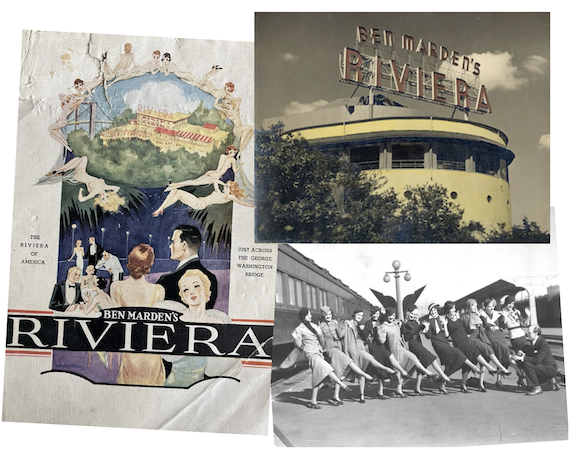
THEY HAD FOOD, TOO…Clockwise, from left, the1936 spring menu cover of Ben Marden’s Riviera featured an illustration of the original Riviera (ringed by nude showgirls), which burned to the ground on Thanksgiving night, 1936; the building that replaced it was called an architectural wonder with its retractable roof, rotating stage, and glass windows that slid down to the floor; Earl Carroll and his “Beauties” performed at the Riviera in 1935–they are pictured here at a train station in Los Angeles, 1934. (ebay.com/patch.com/lapl.org)
Long also stayed in town to visit the Waldorf-Astoria’s Starlight Roof.
WITH THE STARS, UNDER THE STARS…Clockwise, from left, cocktail menu from the Waldorf’s Starlight Roof, 1935; outdoor seating on the Starlight Roof Terrace; special menu for the Gala Opening Dinner and Supper Dance on the Starlight Roof, May 14, 1935. It was a favorite destination of Frank Sinatra, Cole Porter, Katharine Hepburn, and Ella Fitzgerald, among others. (Pinterest)
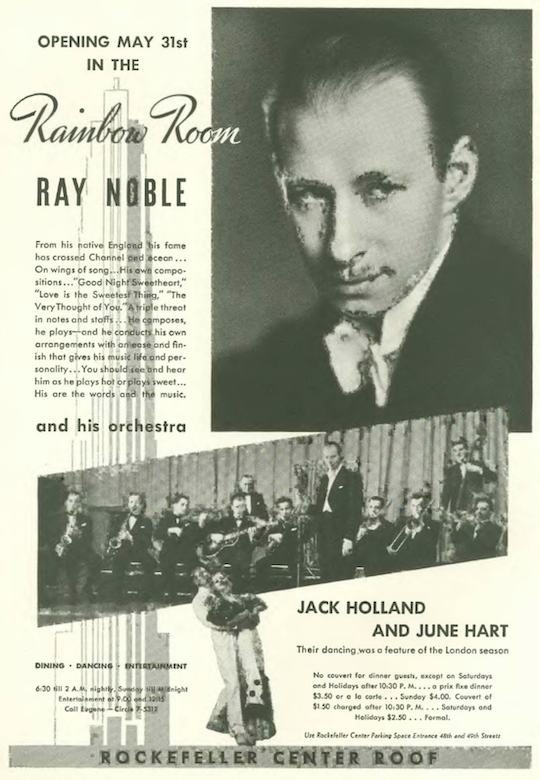
Long also mentioned the appearance of Ray Noble in the Rockefeller Center’s Rainbow Room. This full-page ad appeared in the June 1 issue:
Other summer season attractions were advertised in numerous back-of-the-book, one-column advertisements:
…and at the bottom of page 64…
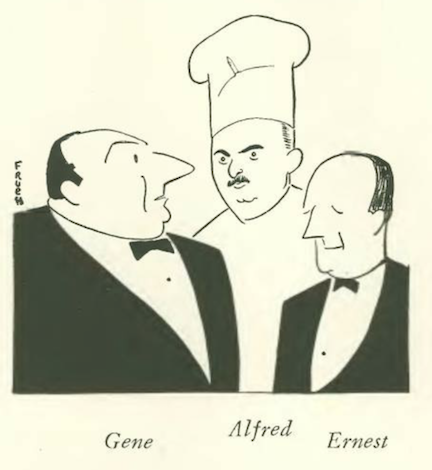
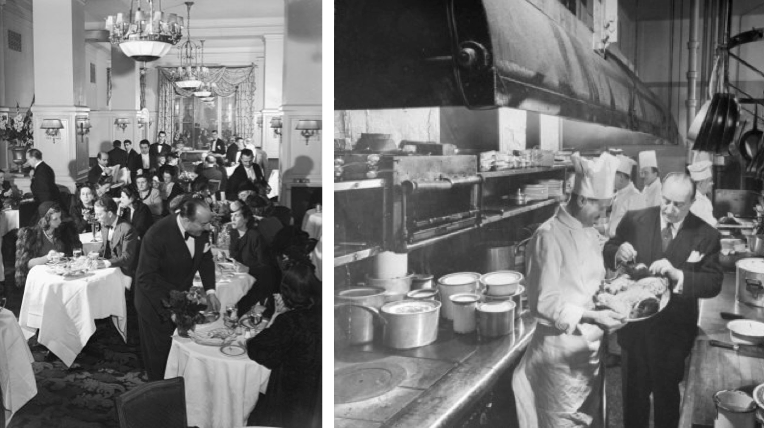
Wining and dining were also the topic of the profile, a two-parter penned by Margaret Case Harriman, who took a look at New York’s famed Colony Restaurant.
ORIGINAL TRIO…Al Frueh’s caricatures of the Colony’s owners/headwaiters Gene Cavallero and Ernest Cerutti, who flank chef Alfred Hartmann, who was also part owner until he sold his interest to the other two in 1927 and retired to a farm in France. Harriman wrote that Cavallero and Cerutti were “born headwaiters—suave, solicitous, infallible.”A PLACE TO BE SEEN…From the 1920s to the 1960s New York’s café society dined at the Colony. Rian James, in Dining In New York (1930) wrote “the Colony is the restaurant of the cosmopolite and the connoisseur; the rendezvous of the social register; the retreat of the Four Hundred.” Critic George Jean Nathan said the Colony was one of “civilization’s last strongholds in the department of cuisine.” Photo at left of the dining room around 1940; at right, co-owner Eugene Cavallero consults with a chef. (lostpastremembered.blogspot.com)
* * *
The Business of News
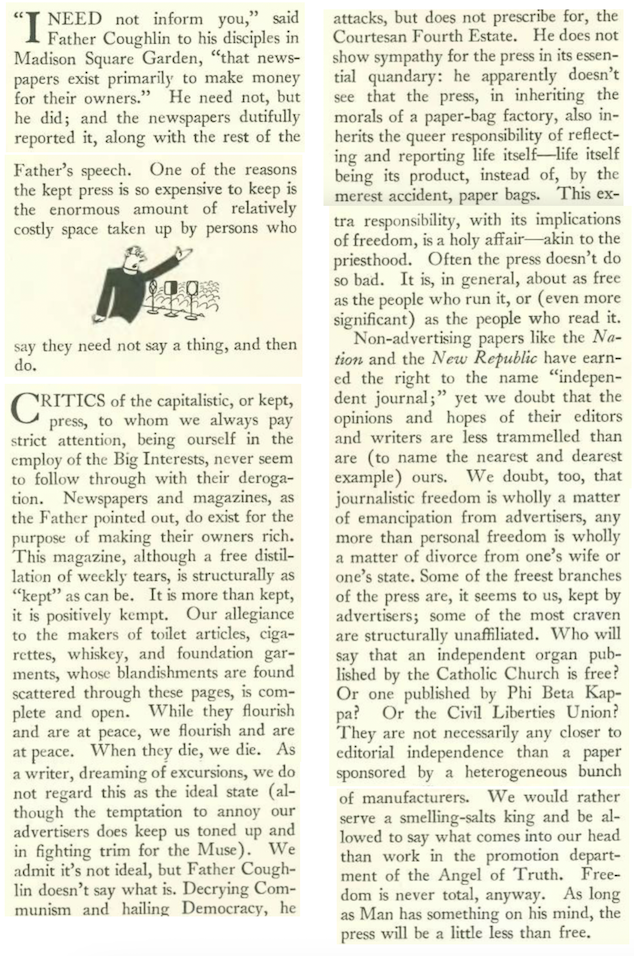
In his “Notes and Comment,” E.B. White contemplated the meaning of a free press, noting that nearly all media was at the mercy of advertisers. That included The New Yorker, which owed allegiance “to the makers of toilet articles, cigarettes, whiskey, and foundation garments.”
* * *
Cat Lady
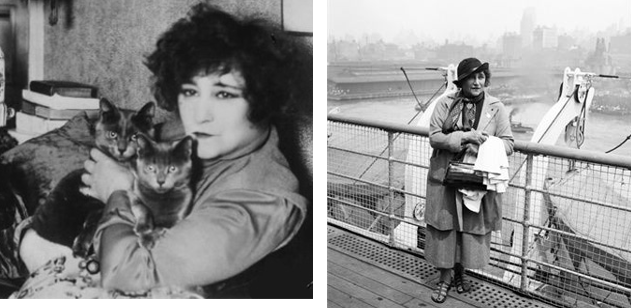
“The Talk of the Town” anticipated the arrival of French writer Colette (1873-1954) aboard the S.S. Normandie. This excerpt makes note of her high standing in society as well as her love of cats.
SHE ONCE OWNED AN OCELOT….Colette with her cats in an undated photo; at right, entering New York Harbor on the S.S. Normandie, 1935. (Pinterest)
* * *
Public Artists
“The Talk of the Town” noted the latest Washington Square Outdoor Art Exhibition…
LENDING THEIR TALENTS…New Yorker cartoonists who helped promote the Outdoor Art Exhibition in Washington Square included James Thurber, Otto Soglow, and William Steig.
* * *
Cutting Remarks
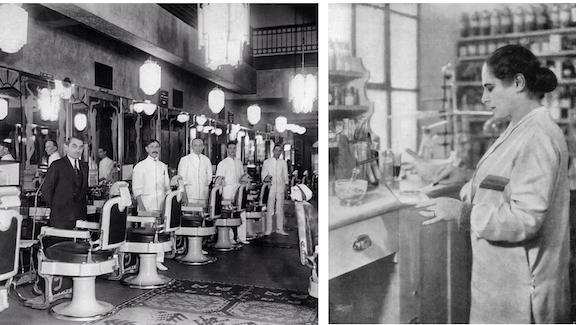
S.J. Perelman offered his thoughts on the decline of the tonsorial arts. In this excerpt, he sees his beloved Italian barber give way to a “knifelike individual in a surgical apron.” Excerpts:
IT’S A SCIENCE NOW, SIDNEY…S.J. Perelman worried about the displacement of Italian barbershops by cosmetologists in “surgical aprons,” such as the one modeled by Helena Rubinstein at right. (Pinterest)
* * *
Even Those Eyes Couldn’t Help
Film critic John Mosher was sad to report that disappointment was in store for moviegoers who enjoyed seeing Bette Davis in Of Human Bondage. Her latest flick, The Girl from 10th Avenue, featured Davis murmuring “gentle nothings of a vaguely noble monotony.”
GET ME OUT OF THIS PICTURE…Left, Bette Davis with Ian Hunter in the uninspired The Girl from 10th Avenue; at right, screen shot of Davis in 1934’s Of Human Bondage, the film that made Davis a star. (thefilmexperience.net)
Other items in the editorial section included a casual by Dorothy Parker’s husband Alan Campbell (titled “Loyalty at Pool-Wah-Met”), and Morris Markey examined the Christian Science movement inspired of Mary Baker Eddy, in “A Reporter at Large” piece titled “But Thinking Makes It So.”
* * *
From Our Advertisers
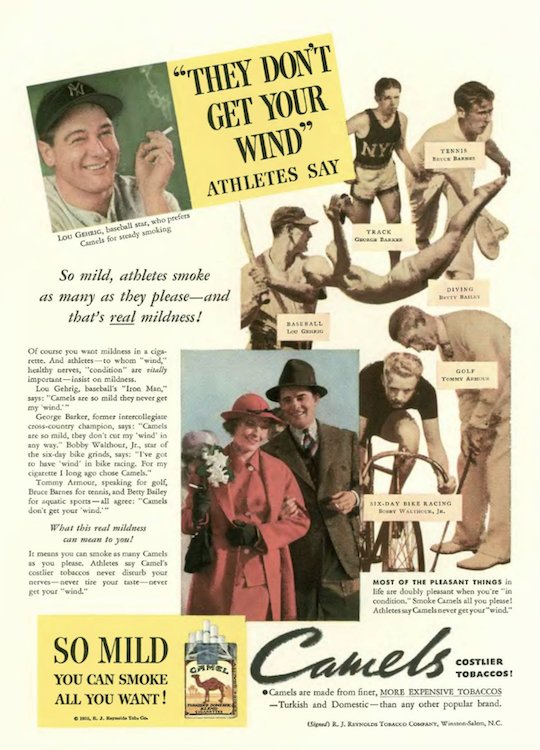
We begin with an advertising theme common through midcentury, namely, that you could smoke certain brands as much as you liked and still be a star athlete (as opposed to a wheezing husk of a human being)…
…not only did these cigarettes “steady your nerves” and preserve your “wind,” they also made for sweet, romantic moments…
…in between puffs you could also enjoy breathing in fumes from leaded gasoline…lead pollution increased by more than 625 times previous levels after leaded fuels were introduced in 1924…
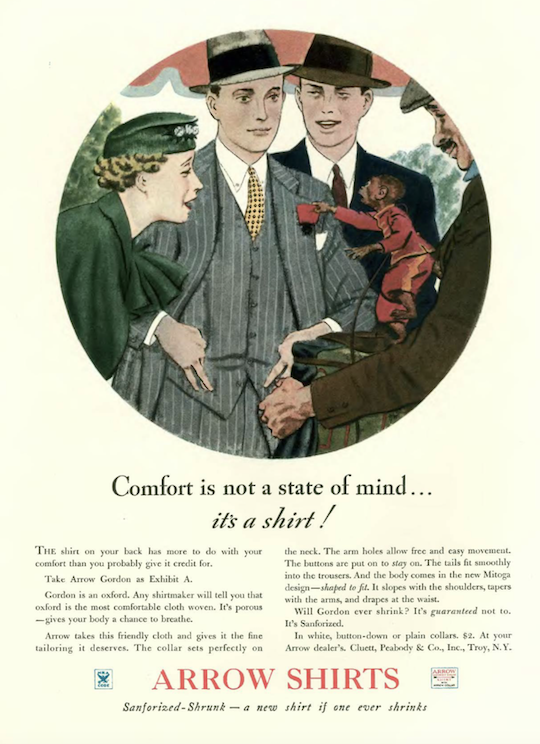
…although they were being outlawed by New York Mayor Fiorello Henry La Guardia, an organ grinder nevertheless made an appearance in an Arrow Shirt ad that offered a lighthearted moment for all involved (except for the dude on ketamine)…
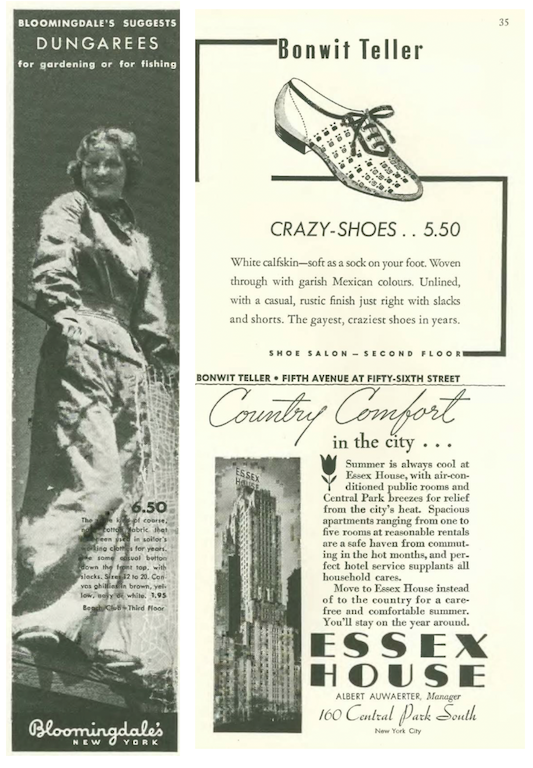
…when jeans were called “dungarees” they were reserved for gardening or fishing…at right you could land a pair of “Crazy Shoes” woven with “garish Mexican colours” for five-and-a-half bucks…
…the makers of White Rock kept it cool with this minimalist ad…
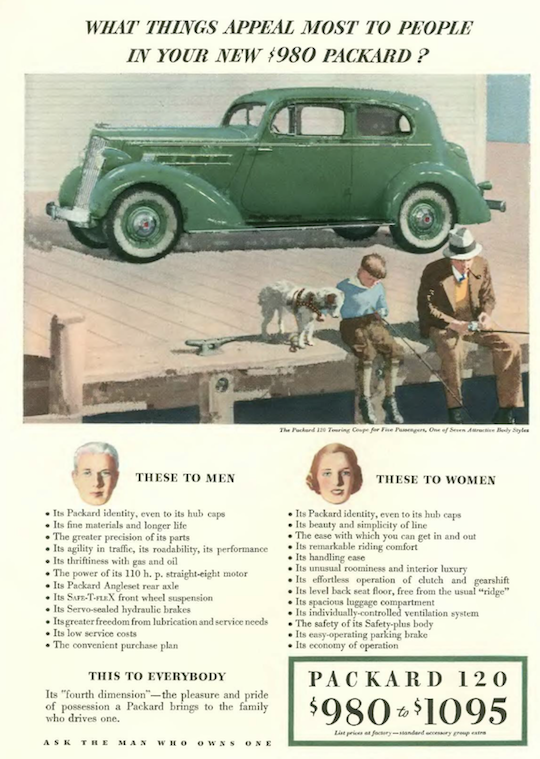
…luxury automaker Packard continued to hang on through the Depression by offering a downscale version…it appears their demographic was middle-aged men and women who still preferred the finer things even if they couldn’t afford them…
…now the property of Hearst, Otto Soglow’s Little King could still appear in The New Yorker via the advertising sections…
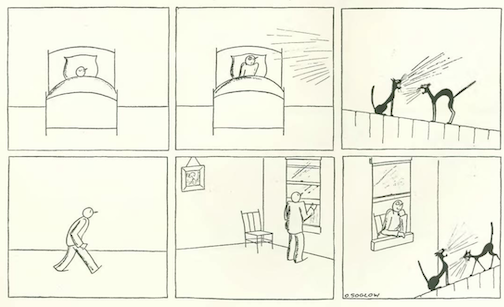
…and Soglow continued his contribution to the magazine’s cartoons with other multi-panel subjects…
…James Thurber kicked off the cartoonists with this tender spot…
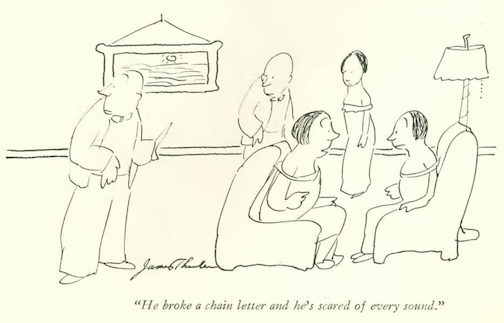
…and contributed this cartoon…
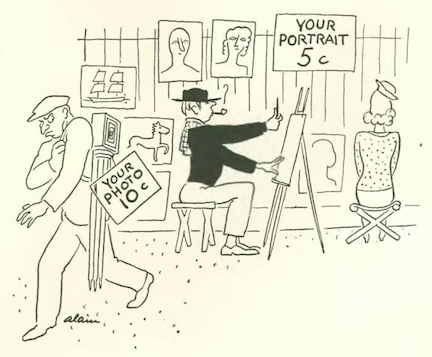
…Alain found competition in the portrait trade…
…George Price was still afloat…
…Charles Addams was tied up with the sculptural arts…
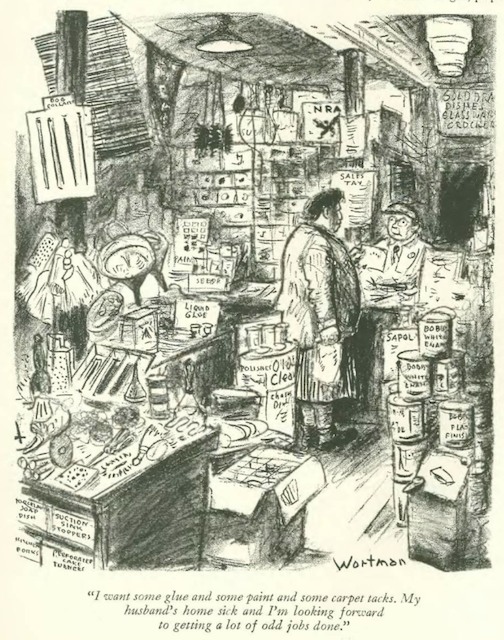
…Denys Wortman shopped for DIY projects…
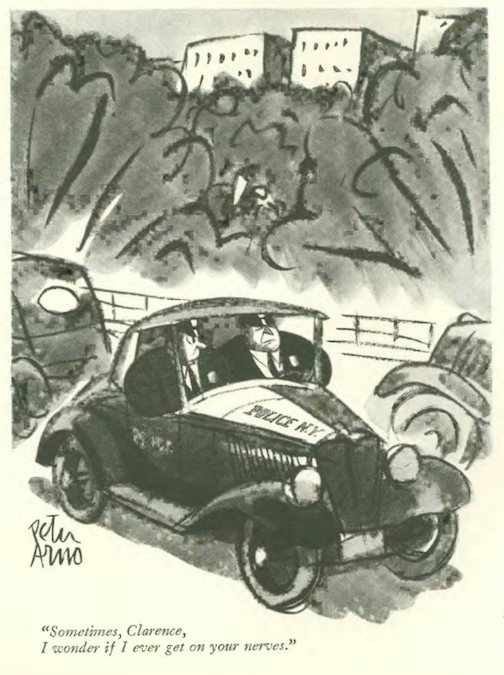
…Peter Arno found a sensitive side in one member of the NYPD…
…Mary Petty made some alterations…
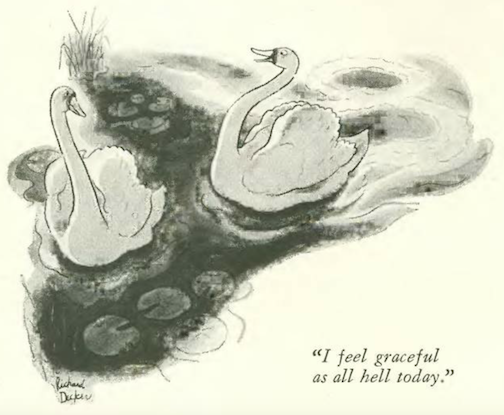
…and we close with this terrific cartoon by Richard Decker…
























 A New Yorker State of Mind