Looking For Mister Wrong

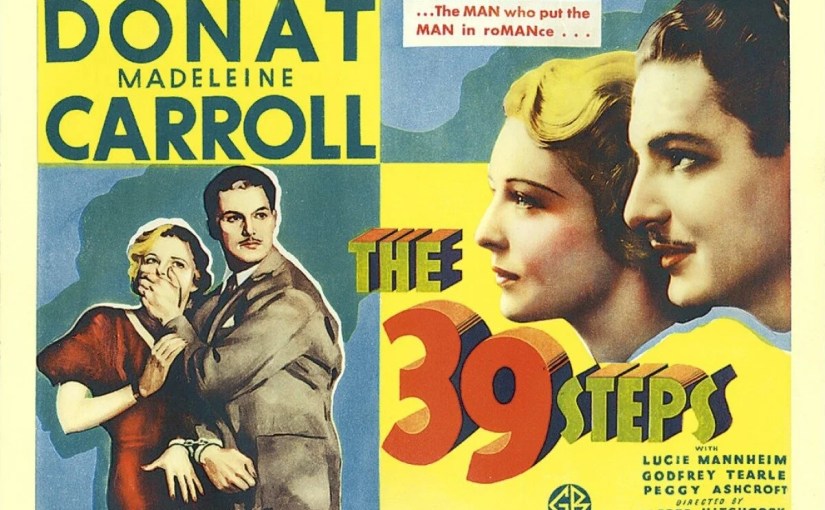
Widely acknowledged as a classic, The 39 Steps further solidified British director Alfred Hitchcock’s image as a master of suspense with American film audiences.
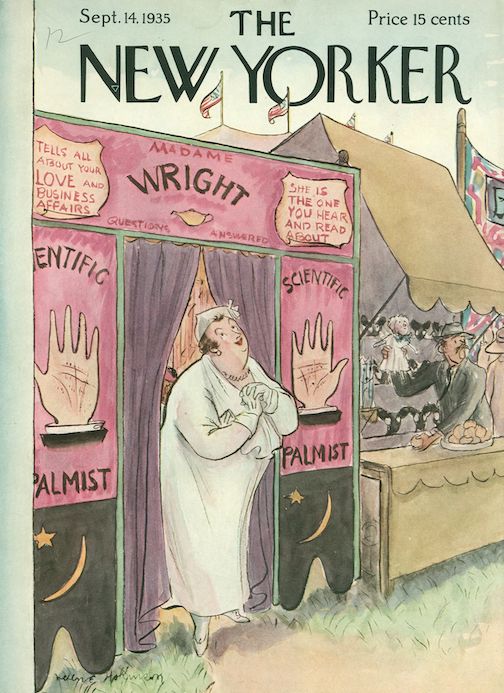
September 14, 1935 cover by Helen Hokinson. Over a twenty-year span, she contributed 68 covers and more than 1,800 cartoons to The New Yorker.

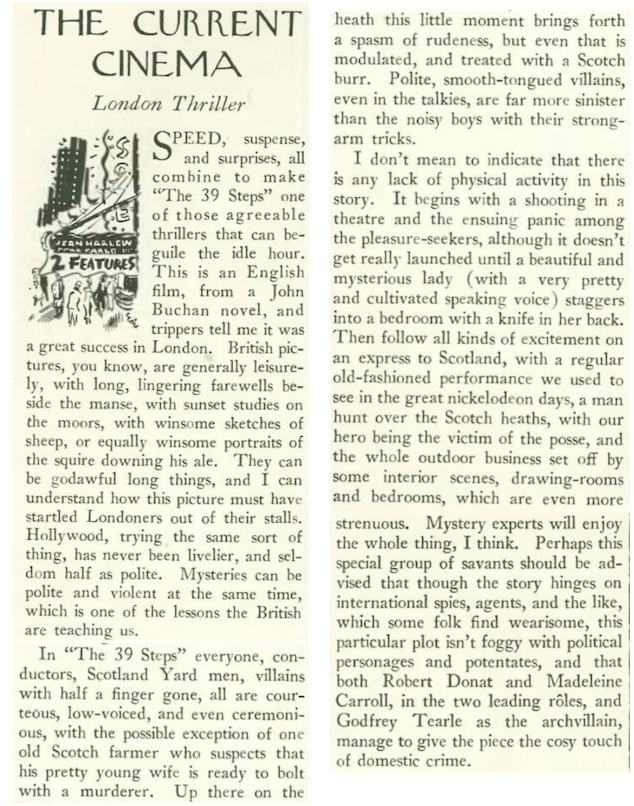
A successful follow up to 1934’s The Man Who Knew Too Much, Hitchcock’s The 39 Steps was conceived and cast by the Gaumont-British Picture Corporation as a vehicle to establish British films in America. The film also featured one of Hitchcock’s favorite plot devices—an innocent man forced to go on the run—seen in such notable films as 1942’s Saboteur and 1959’s North by Northwest. New Yorker film critic John Mosher was among the film’s many admirers:
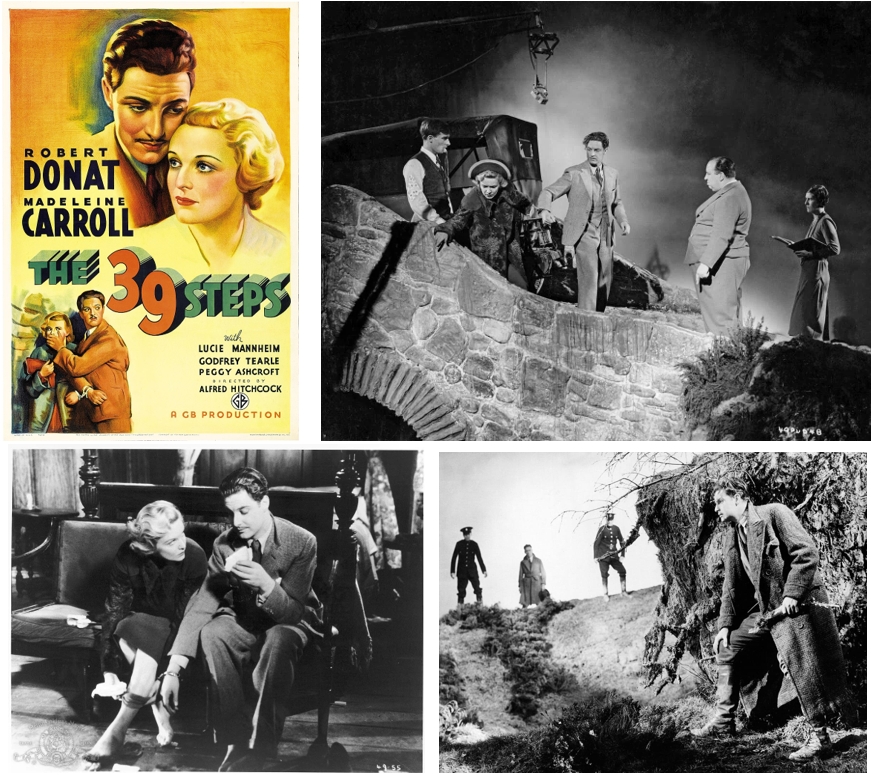
WE’LL TAKE THE STAIRS…Clockwise, from top left, poster for The 39 Steps; Alfred Hitchcock (second from right) directing the handcuffed Madeleine Carroll (as Pamela) and Robert Donat (as Richard Hannay) on the first day of filming; Hannay evades police on the heath; Pamela and Richard make the best of their predicament as handcuffed escapees. (Wikipedia/jimcarrollsblog.com/criterion.com)

 * * *

Pop-Up Stores

“The Talk of the Town” had a look at the “madhouse” on Nassau Street that daily erupted from noon to 2 p.m. as peddlers took over the street to hawk their wares.
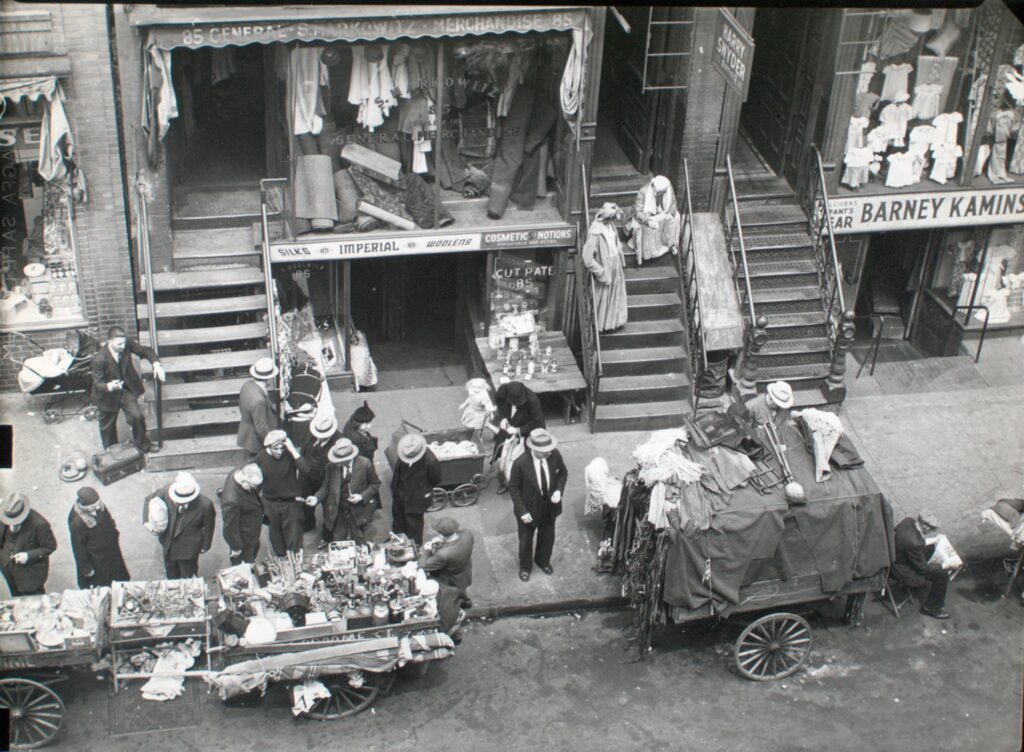
IF WE DON’T HAVE IT, YOU DON’T NEED IT…Hester Street peddlers in 1936. Photo by Berenice Abbott. (boweryboyshistory.com)

* * *

Art of the Artless

James Thurber dissected the workings of a “bad play,” examining varied techniques and familiar tropes. Excerpts:

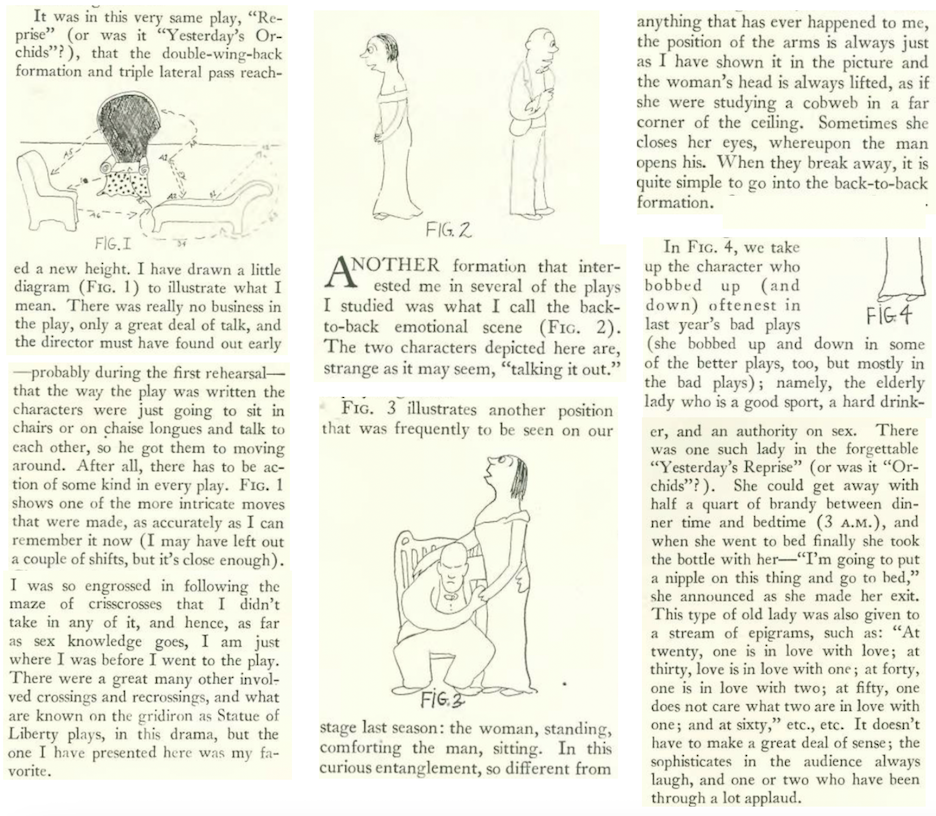
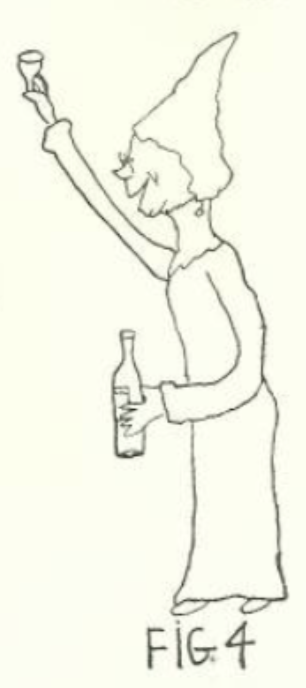
…below is the complete illustration for Fig. 4, which got cut off in the excerpt above…Thurber depicted “the elderly lady who is a good sport, a hard drinker, and an authority on sex.”
 * * *

The Petulant Painter

Known for a primitive style that included bizarre scenes of frolicking (or floating) voluptuous nudes, the painter Louis Michel Eilshemius (1864–1941) had a style all his own, and had no trouble telling anyone that his work was better than anything hanging in the finest museums (which would not consider him at all until after his death). In 1931 he began calling himself “Mahatma,” hence the title of this profile by Milton MacKaye (illustration by Hugo Gellert). Some brief excerpts:

IRASCIBLE RASCAL…Clockwise, from top left, Louis Michel Eilshemius in 1913; Standing and Reclining Nymphs (1908), Self-portrait (1915); Nymphs Sleeping (1920). Known for his numerous and vitriolic letters to newspaper editors, his letterheads would proclaim such accomplishments as “Educator, Ex-actor, Amateur All-around Doctor, Mesmerist-Prophet and Mystic, Reader of Hands and Faces, Linguist of 5 languages, Spirit-Painter Supreme.” He also claimed to be a world-class athlete and marksman as well as a musician who rivaled Chopin. (Wikipedia/Smithsonian American Art Museum/National Portrait Gallery)

Eilshemius regularly visited art galleries, loudly condemning the works on display. No wonder museums would not consider his odd paintings, which were probably best received by the French, including the artists Henri Matisse and Marcel Duchamp; the latter invited Eilshemius to exhibit with him in Paris in 1917.

Eilshemius’ mental stability had deteriorated substantially by the time MacKaye wrote the profile, which concluded with this sad, final accounting of the man’s life.

Eilshemius would die in the psychopathic ward of Bellevue Hospital in 1941. In the years since, his work has gained a wide audience and can be found in such collections as the Smithsonian, The Phillips Collection, MoMA and the Metropolitan Museum of Art.
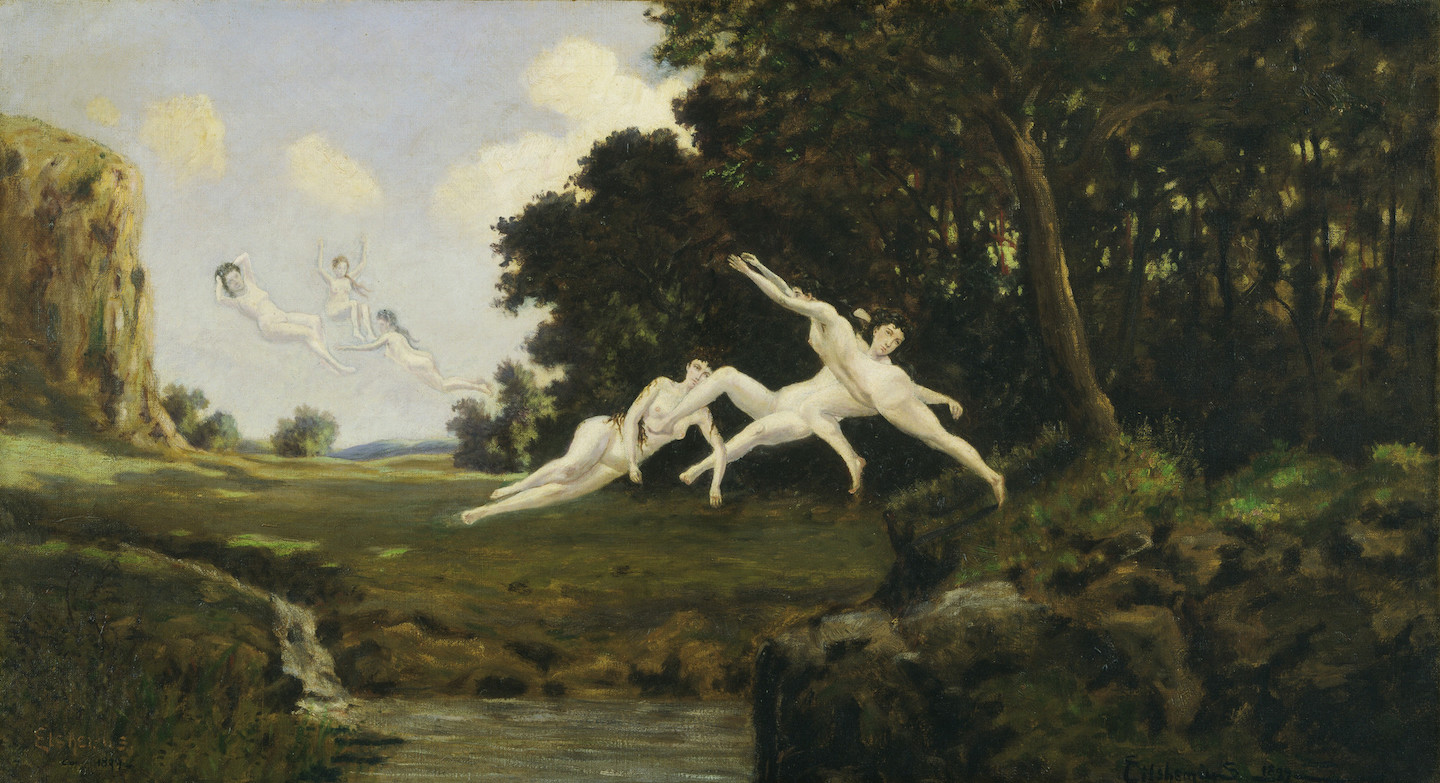
SINGULAR VISION…Louis Michel Eilshemius, Afternoon Wind, 1899. (MoMA)

 * * *

In Good Company

In her “Letter From Paris,” Janet Flanner noted that even the French honored the memory of Will Rogers, who had died in a plane crash with aviator Wiley Post on Aug. 15, 1935.

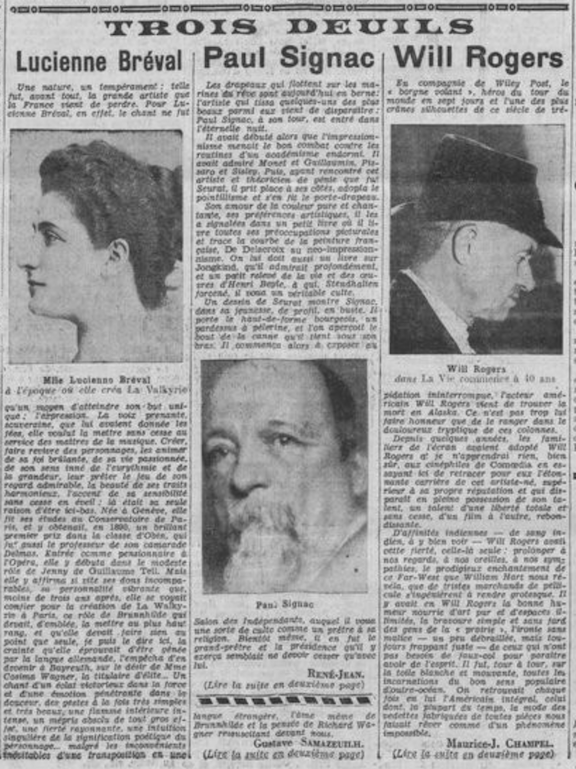
NOTED AND NOTABLE…As an example of Will Rogers’ worldwide fame, Janet Flanner noted that the Paris entertainment newspaper Comœdia published Rogers’ obituary next to that of famed neoimpressionist painter Paul Signac. The other obituary remembered the renowned Swiss soprano Lucienne Bréval. (gallica.bnf.fr via onlinebooks.library.upenn.edu)

 * * *

At the Movies

Coming down from The 39 Steps, John Mosher also sampled some of latest comedies gracing the silver screen…
…Mosher didn’t understand why Marion Davies, nearing the end of her film career, even bothered to appear in the romantic comedy Page Miss Glory (although she was also the producer), in which she portrayed a country girl who stumbles into fame while working as a chambermaid in a luxury hotel…
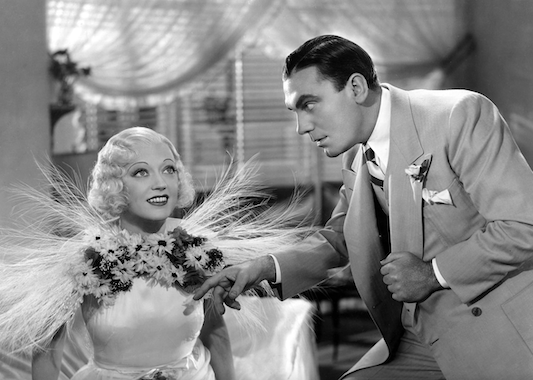
JUST LIKE CINDERELLA…Marion Davies and Pat O’Brien in Page Miss Glory. (IMDB)

Two For Tonight featured a lot of fine crooning from Bing Crosby, and some hijinks, but fizzled out in the end…

Bing Crosby (right) takes aim in Two For Tonight. (IMDB)

…of the three comedies, Mosher found The Gay Deception to be the most winning. Directed by William Wyler, the film featured a sweepstakes winner pretending to be a rich lady (Frances Dee) who encounters a prince masquerading as a bellboy (Francis Lederer)…hilarity ensued…
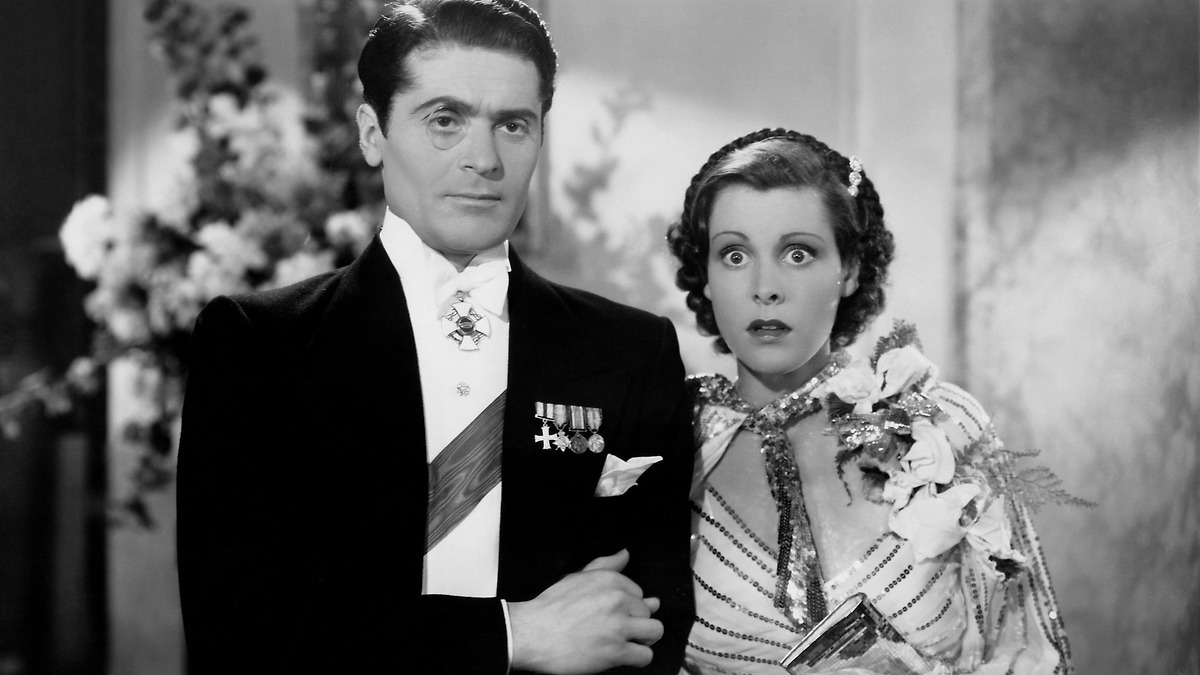
THE WYLER TOUCHWilliam Wyler’s The Gay Deception, starring Francis Lederer (left) and Frances Dee, anticipated Wyler’s 1953 Roman Holiday, also a tale about a royal wanting to be a normal person. (letterboxd.com)

 * * *

From Our Advertisers

We welcome fall with the latest fashion from Forstmann Woolens…

…and here is where those wool dresses were spun…
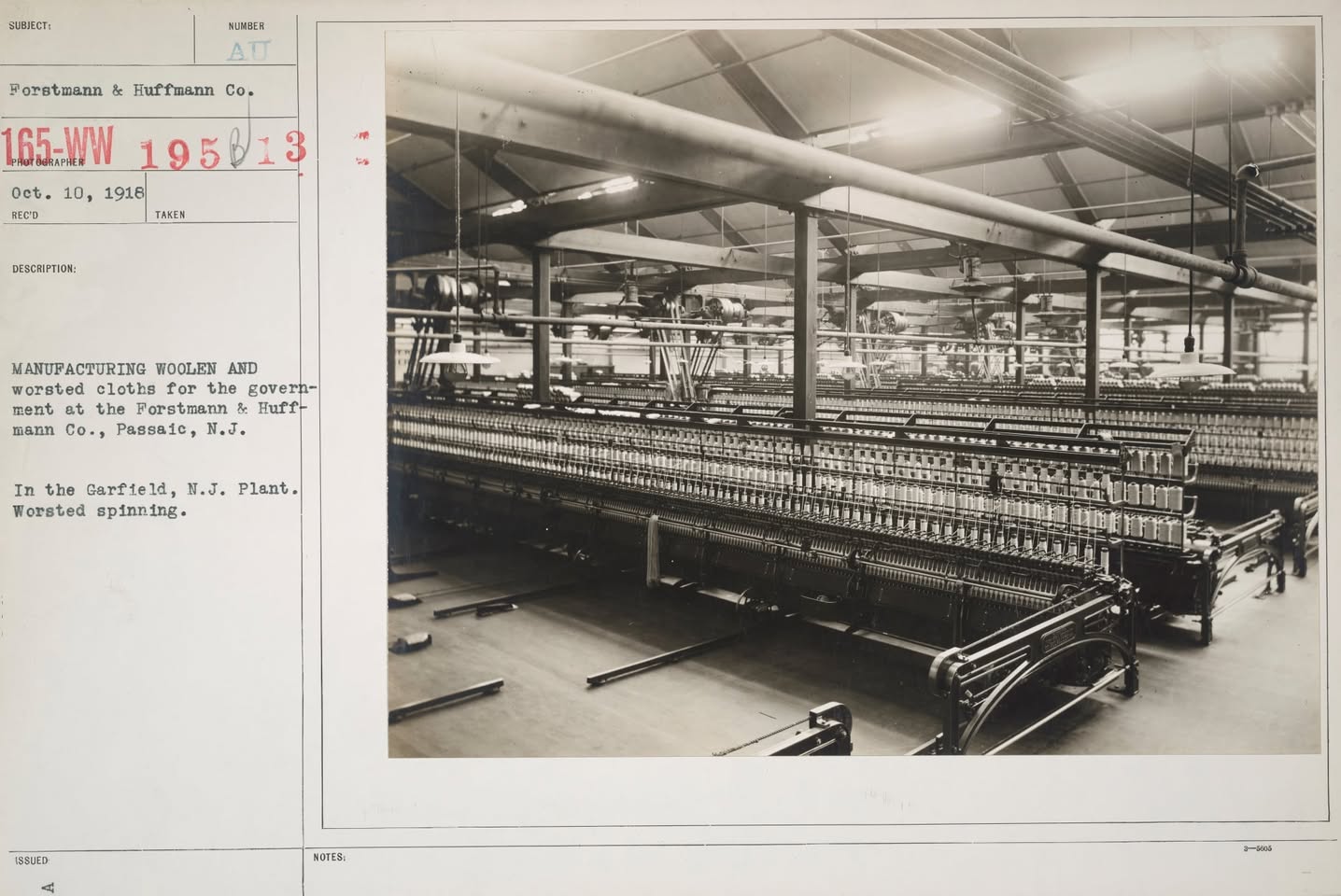
Image from the National Archives depicts the spinning room at Forstmann & Huffman in Passaic, N.J., 1918. The Passaic plant closed in 1958. (Historical Society of Garfield, NJ)

…the makers of leaded gasoline continued to promote their product in full-color spots…

…General Tire (like competitor Goodyear) played up the safety theme and potential perils to loved ones to tout their “blow-out proof” tires…

…like many advertisers in The New Yorker, United Air Lines appealed to the affluent, hoping some of them would take to the air, since only they could afford it…
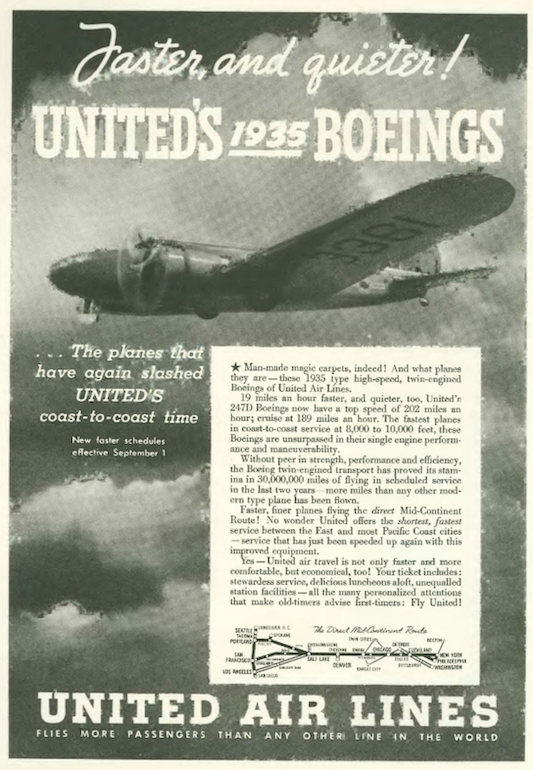
…for reference…
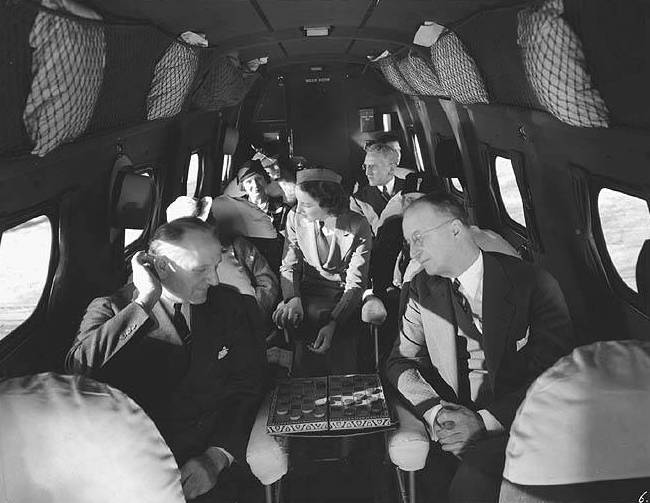
COZY…Interior of the Boeing 247. (Wikimedia Commons)

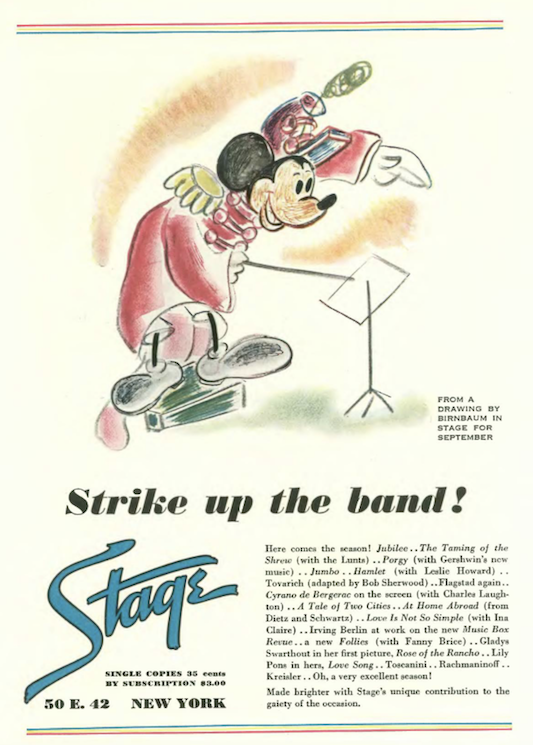
Abe Birnbaum, who contributed nearly 200 covers to the New Yorker, offered this rendition of Mickey Mouse to Stage magazine…
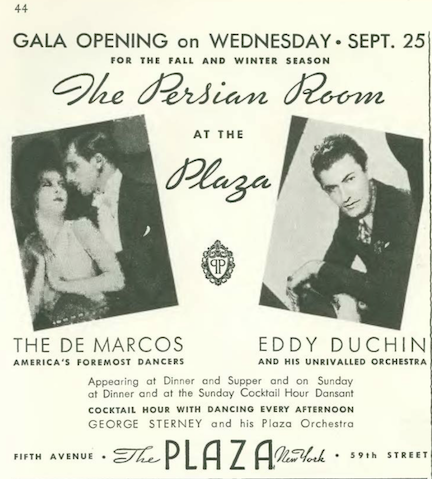
…heading to the back of the book we find the latest in entertainment at the Plaza…
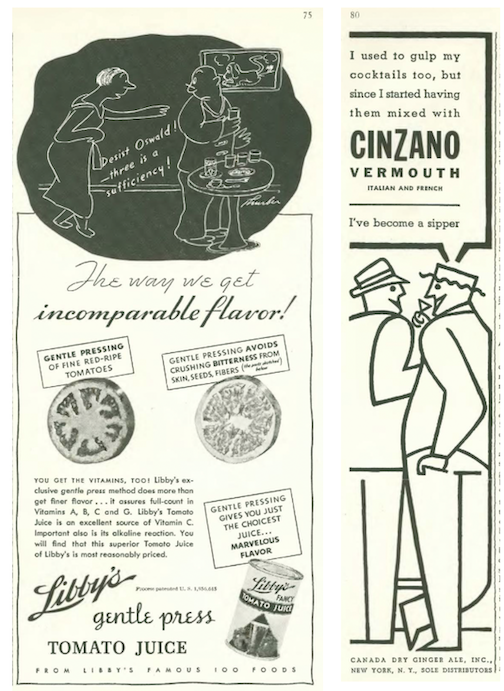
James Thurber contributed the drawing at left (rendered in negative) on behalf of Libby’s tomato juice on page 75, and page 80 featured the spare, modern lines of a Cinzano ad…
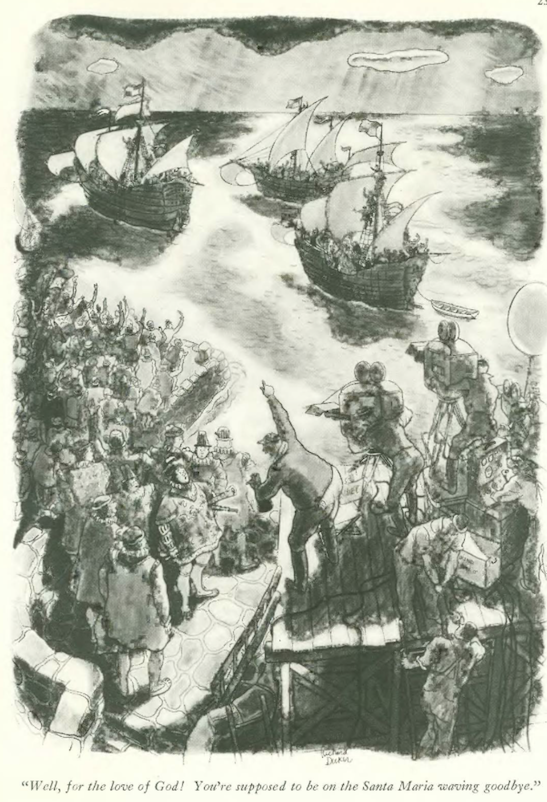
…our cartoonists include Richard Decker, on the set with a missing extra…

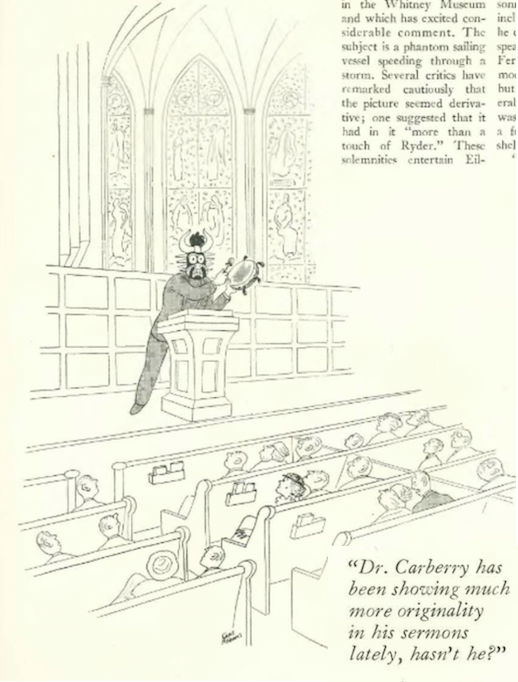
Charles Addams offered a new twist on the Sunday sermon…
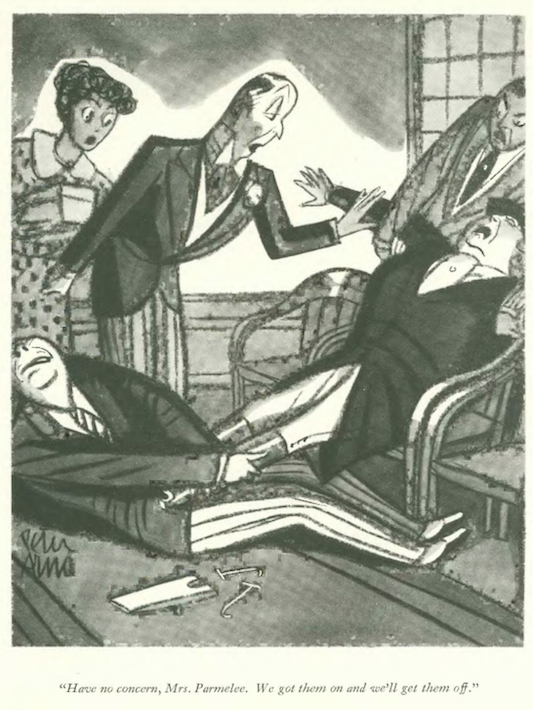
Peter Arno found an epic struggle in the shoe department…
Robert Day offered this energy-saving tip…

…and we close with Helen Hokinson, and a lively game of charades…

Next Time: All Dogs Go to Heaven…
A Summer Night

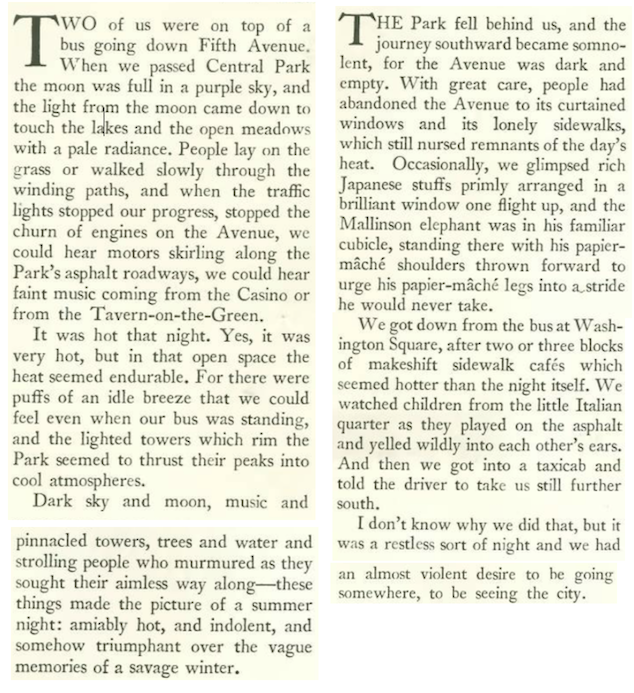
Morris Markey embodied the ideal of “A Reporter at Large,” and for his Sept. 7 column he decided to stroll the steamy streets of Manhattan on a late summer night, finding the sidewalks alive with folks seeking a break from their stifling dwellings.

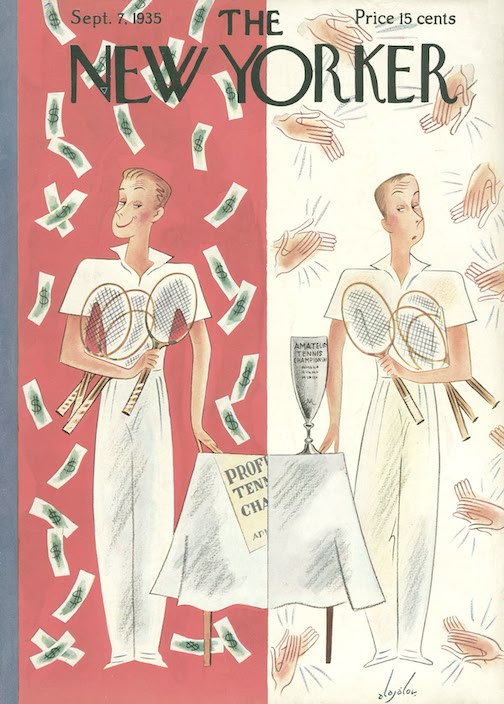
September 7, 1935 cover by Constantin Alajalov.

Markey (1899-1950) began “Summer Night” by describing a bus ride from Midtown to Washington Square with (I assume) his wife, Helen Turman Markey. They enjoyed the breeze atop the bus as they passed Central Park and heard the faint strains of music in the air.

FINAL NOTES…Morris Markey thought he heard music coming from the Central Park Casino (left) on that hot summer night; it would prove to be one of the Casino’s last summer nights since Robert Moses would have it demolished the following May; at right, Adolf Dehn lithograph Central Park at Night, 1934. (NYC Parks/Art Institute of Chicago)
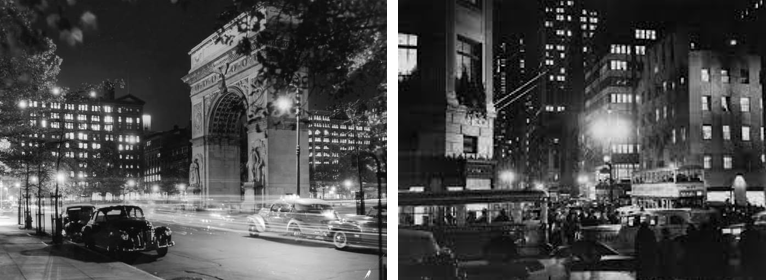
AMID THE BUSTLE the Markeys hopped off the bus at Washington Square and set out on foot. At left, Washington Square by night, 1945; at right, cacophony on Fifth Avenue, circa 1940. (Facebook)

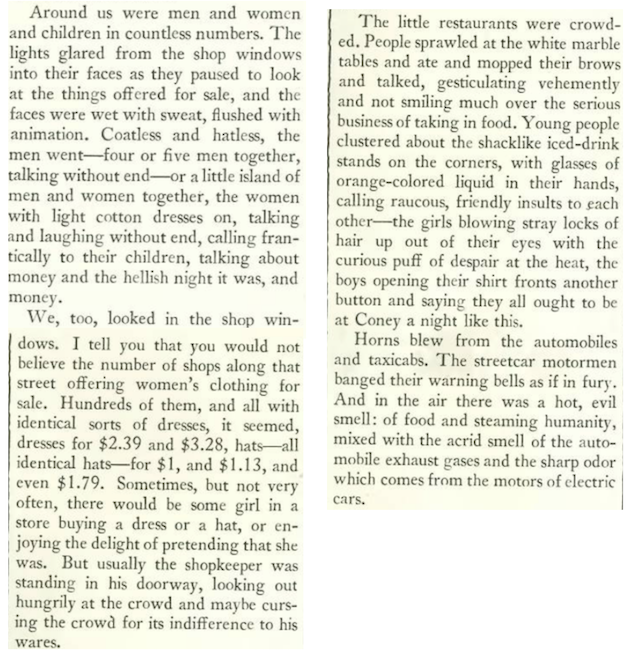
The scenes described by Markey offer a glimpse of what has changed and what still remains of Manhattan night life after ninety years.

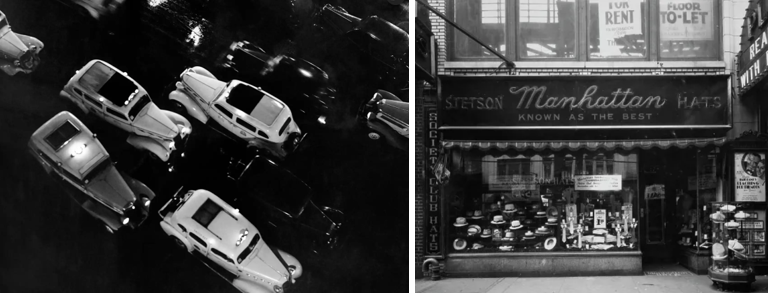
GO BLOW YOUR HORN…Something taxis did then and do now; Markey described folks looking at hats in a shop window, probably similar to this 1930s store at right. (theguardian.com/Pinterest)

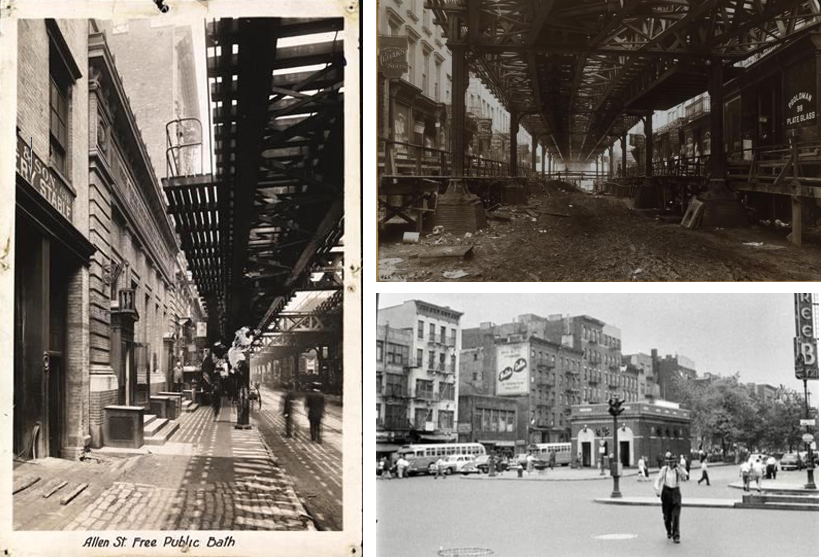
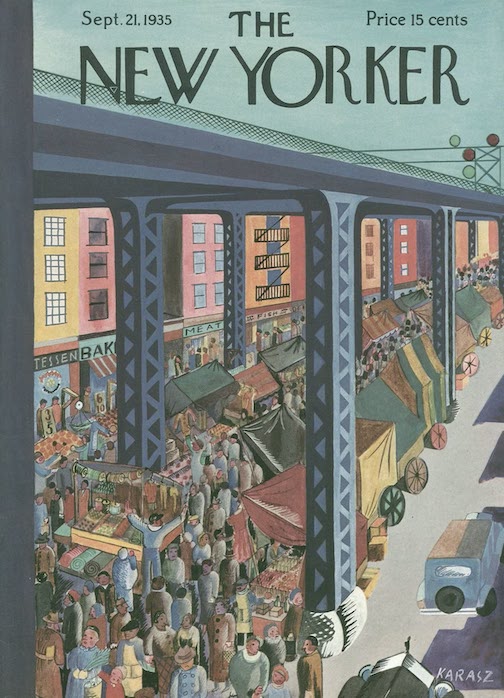
They concluded their stroll on the Lower East Side, where Markey noted a tenement clearance project on Allen Street. Considered one of the most densely populated places in the world, the street was widened by demolishing all of the buildings on its east side from Division to Houston Street.

HERE COMES THE SUN…The densely populated Allen Street was called “a place where the sun never shines.” The narrow street was mostly under the shadow of the elevated train tracks until it was widened in 1930s by demolishing all of buildings on its east side. Photo at left shows the public bath at 133 Allen Street (now used as a church). The demolition project, and the removal of the overhead “El” tracks in 1942, created a broad thoroughfare with a meridian mall in the center, as seen in the bottom photo of the intersection of Allen and Delancey circa 1950. (mcny.org/leshp.org/Facebook)

 * * *

At the Movies

Film critic John Mosher finally found a film he could gush about in Anna Karenina, and most notably its star Greta Garbo, who in Mosher’s words “sets the pace and the tone for the whole thing.” Mosher was not alone in his praise: Writing for The Spectator in 1935, Graham Greene wrote that Garbo’s acting in the film overwhelmed the acting of all the supporting cast save that of Basil Rathbone. This observation was later echoed by Roland Barthes, who wrote in 1957 that Garbo belonged “to that moment in cinema when the apprehension of the human countenance plunged crowds into the greatest perturbation, where people literally lost themselves in the human image.” Here is Mosher’s review:

GARBO AND THE OTHERS…Greta Garbo dominated the screen in 1935’s Anna Karenina. Clockwise, from top left, MGM poster for the film; Garbo with Fredric March as Anna’s lover, Count Vronksy; Garbo with Basil Rathbone, who portrayed Anna’s husband Karenin, and child actor Freddie Bartholomew as their son, Sergei; Maureen O’Sullivan took a break from the Tarzan films to portray Anna’s friend Kitty (here with Gyles Isham as Levin). (filmforum.org/Wikipedia/IMDB)

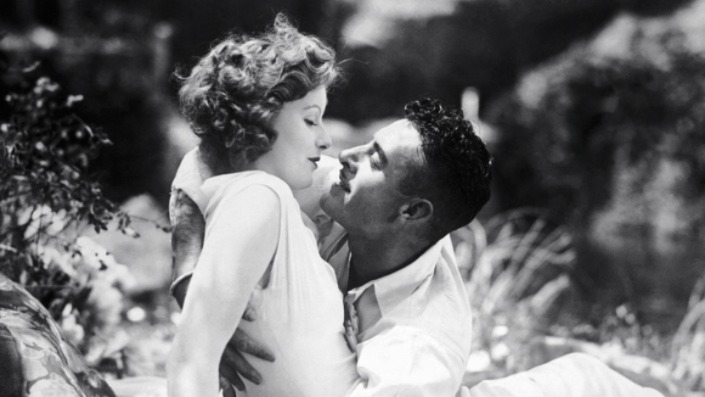
As Mosher noted, Garbo also portrayed Anna Karenina in the 1927 silent film Love, in which she co-starred with John Gilbert as Count Vronsky.

BEEN HERE BEFORE…Greta Garbo as Anna Karenina and John Gilbert as Count Vronsky in the 1927 silent film Love, the second of four films they made together. They were also lovers off-screen in the 1920s, but with the advent of sound pictures her star rose as his began to fall; in their last film together, Queen Christina (1933), Garbo insisted that Gilbert be cast opposite her in a final attempt to revive his declining career. He essentially drank himself to an early grave, dying of a heart attack in January 1936. (rottentomatoes.com)

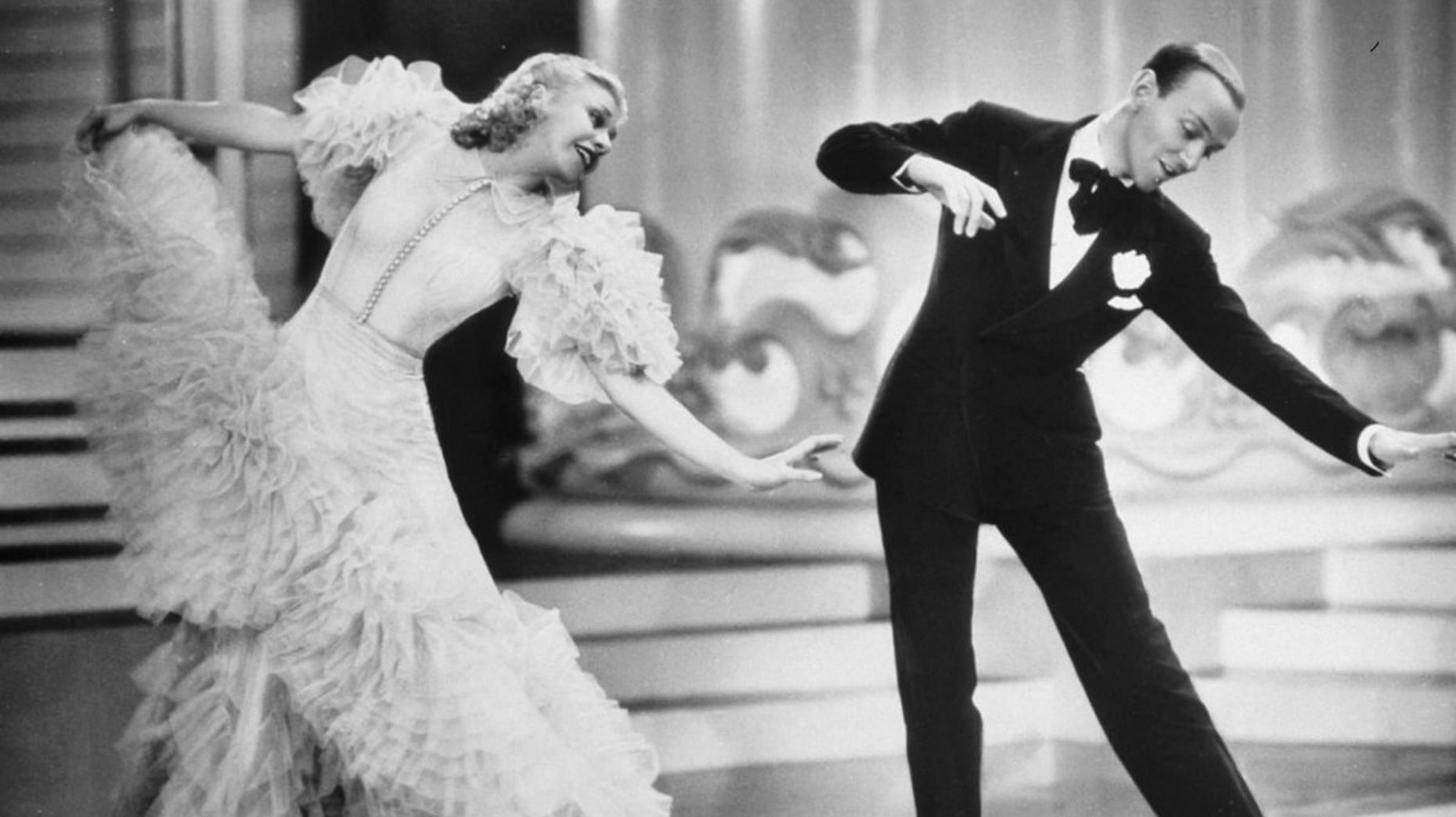
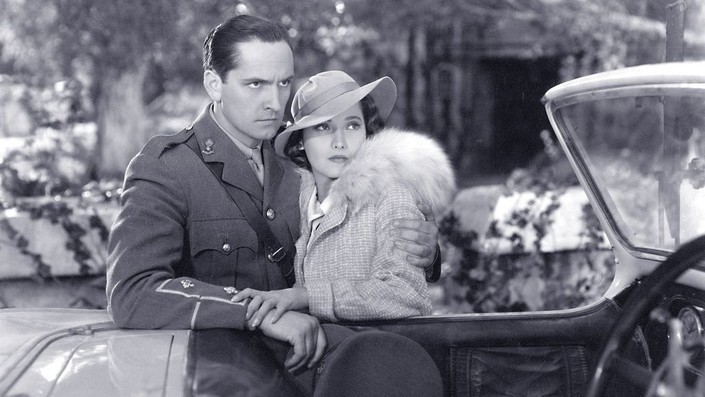
Mosher also enjoyed the dance moves of Fred Astaire and Ginger Rogers in Top Hat (although it could have used less “patter and piffle”), and brought out his hankie for The Dark Angel, where he once again encountered the acting of Fredric March.

DEFYING GRAVITY…Ginger Rogers and Fred Astaire made their complex dance moves look effortless as they glided through Top Hat, the fourth of ten films they made together. (americancinematheque.com)
TEARS FOR FEARS…Fredric March and Merle Oberon portrayed old friends and lovers facing a rival lover and the horrors of World War I in the 1935 weeper The Dark Angel. (rottentomatoes.com)

 * * *

From Our Advertisers

We begin with a splash of color from the makers of Imperial washable wallpapers…not sure why a wire fox terrier is featured in the advertisement…they were a popular breed, and maybe Fido was the reason one needed washable walls…

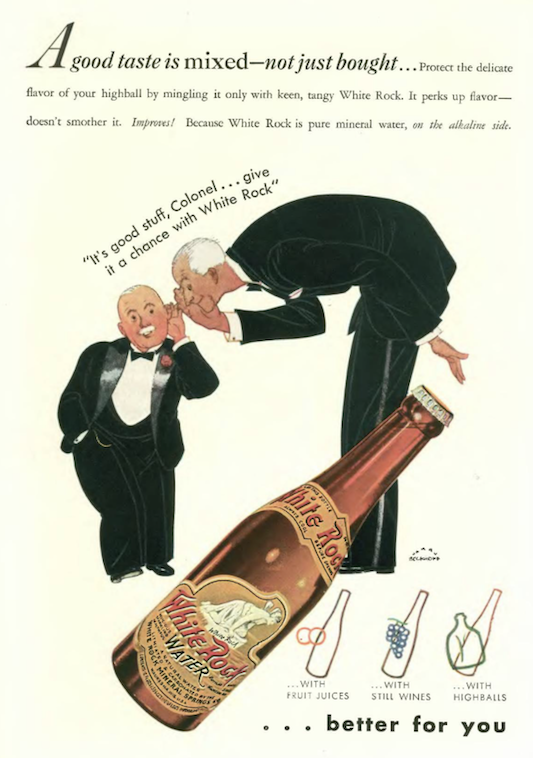
…White Rock rolled out their tiny Colonel to promote mineral water as an ideal mixer…

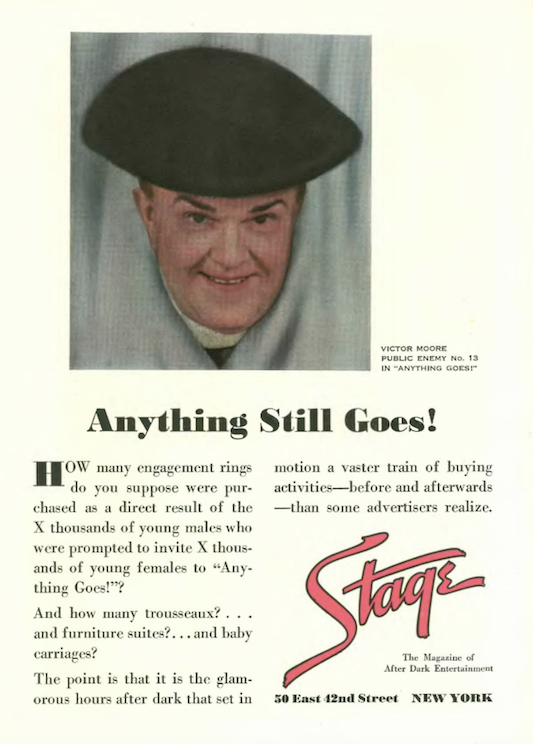
…ever heard of Victor Moore?…well, he was quite the comedian back in the day, playing timid, mild-mannered characters on stage and screen…Moore (1876-1962) was also famous for his 1942 marriage to dancer Shirley Paige when Moore was 65 and Paige was 20…

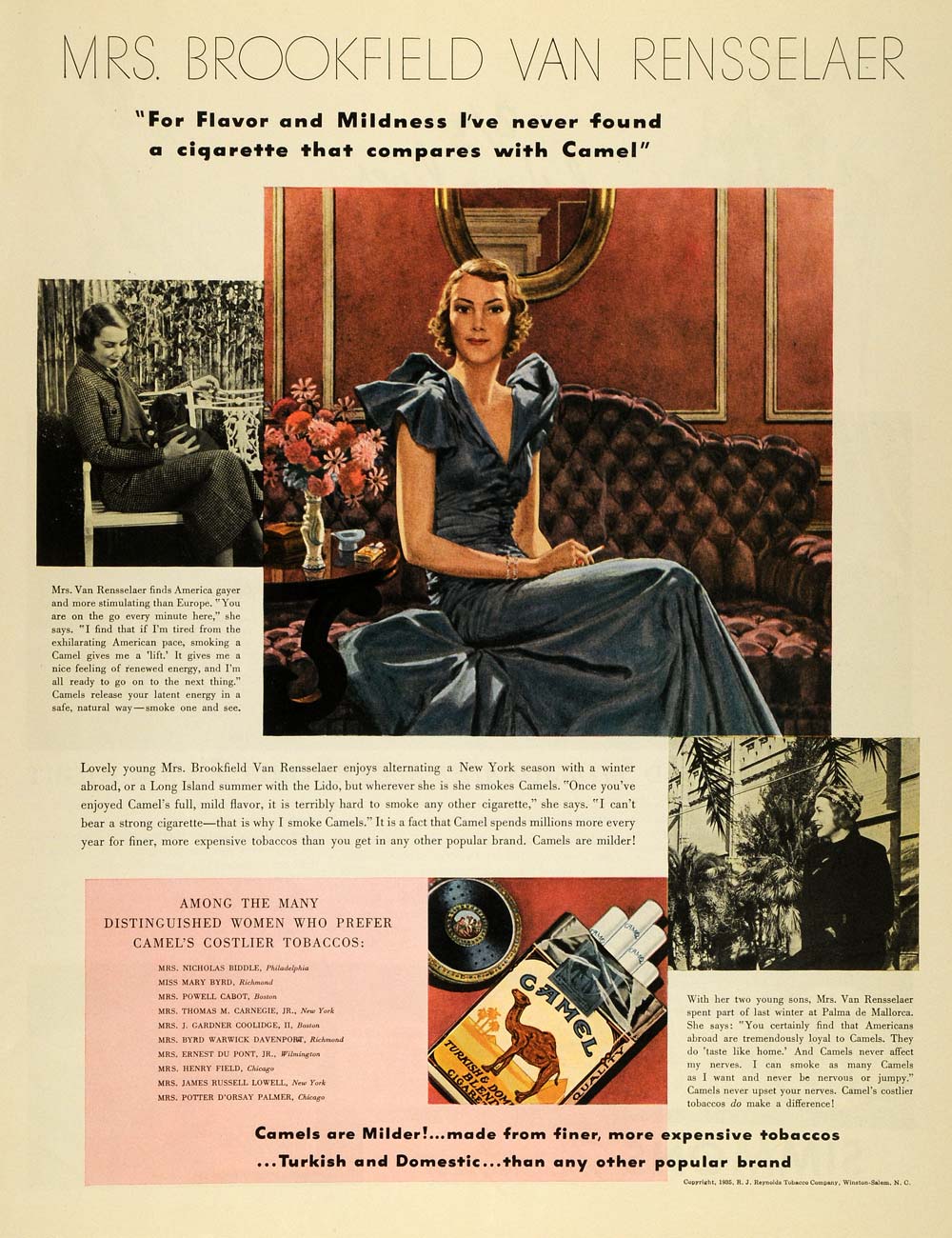
…Camel rolled out another high society endorser, Maude Adele Brookfield van Rensselaer (1904-1945)…her color image is a watercolor by Leslie Saalburg

…on to our cartoonists, we begin with spot art by Abe Birnbaum

and Maurice Freed

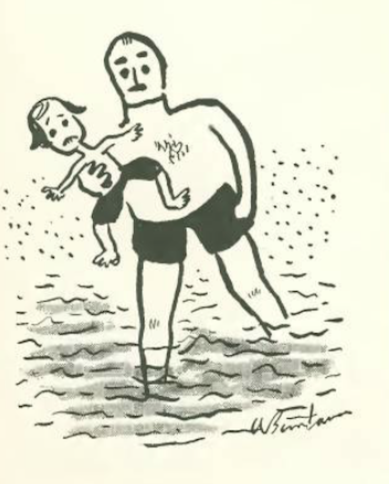
…also in the opening pages this wordless contribution by James Thurber

Gluyas Williams found this midday repast anything but relaxing…

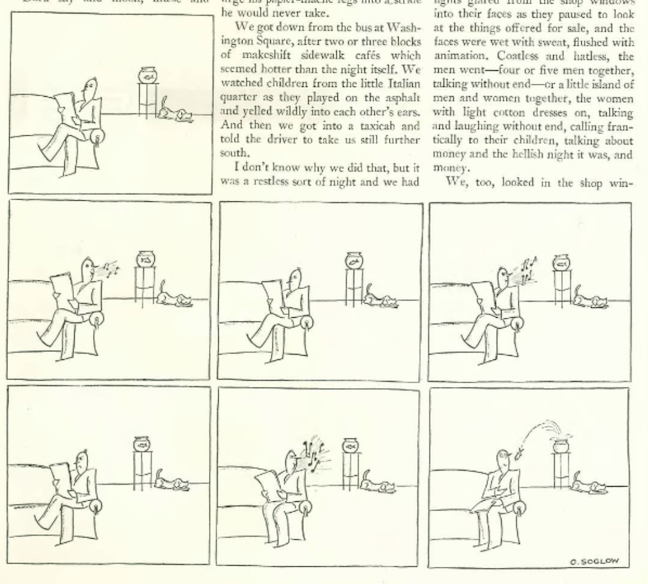
Otto Soglow found a new “man’s best friend”…

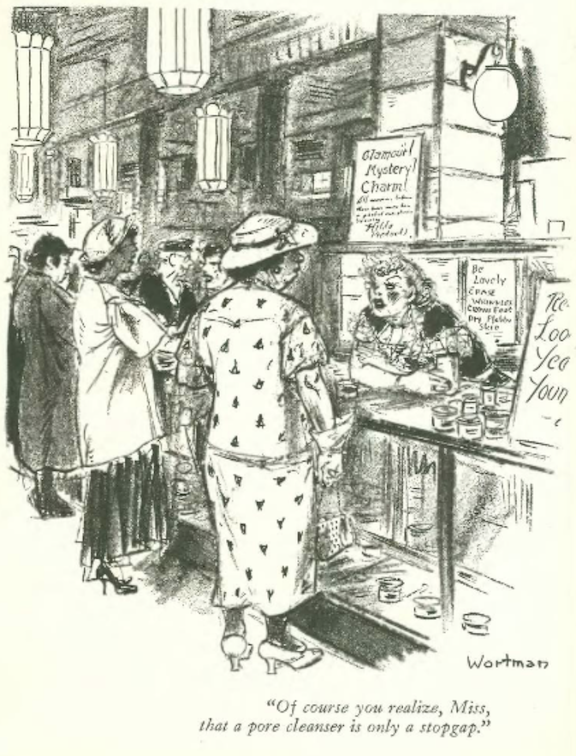
Denys Wortman encountered some frank advice at the cosmetics counter…

Helen Hokinson found appreciation for the “strong and silent” acting style…

Peter Arno gave us a department store clerk in need of some time off…

…and we close with Richard Decker, finding some truth in advertising…

Next Time: Looking For Mister Wrong…

Down to Earth

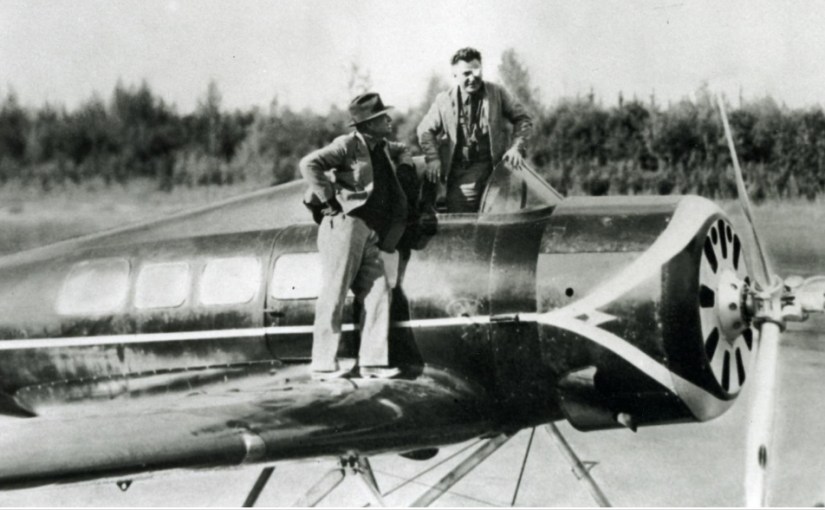
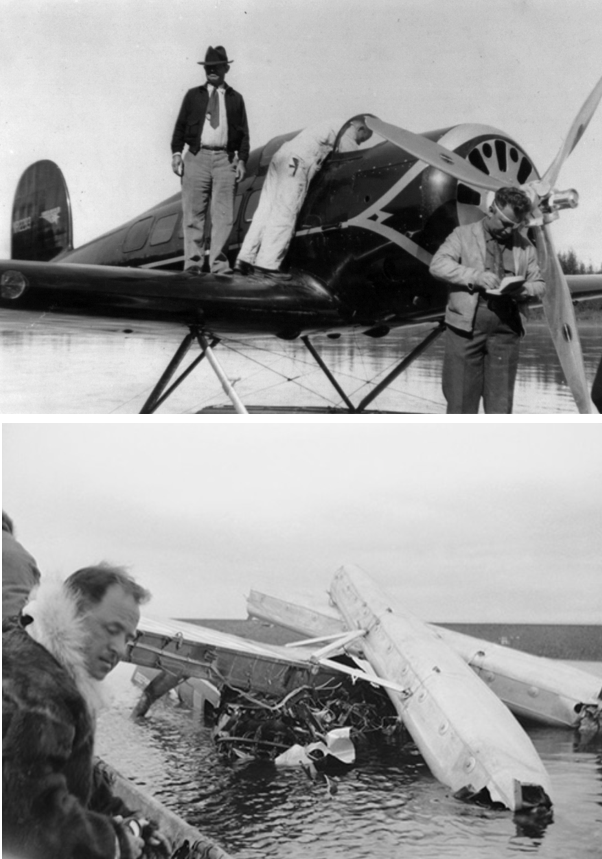
Above: Will Rogers (with hat) visits with pilot Wiley Post near Fairbanks, Alaska, hours before their fatal crash on August 15, 1935. (okhistory.org)

It would be a challenge to find a place for a multi-talented, mega-star like Will Rogers in today’s over-saturated and segmented media landscapehe was a trick roper, vaudevillian, social commentator, comedian, journalist, author, and radio and film celebrity. His early fame on the vaudeville circuit, including the Ziegfeld Follies, would spark a film career in 1918 (he would appear in 71 films), and a 1922 town hall speech would lead to a nationally syndicated newspaper column. When radio became a nationwide phenomenon his voice could heard coast-to-coast. He was seemingly everywhere.

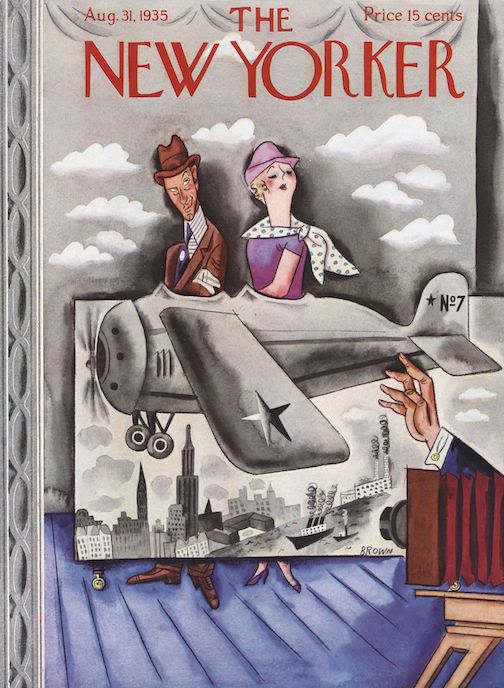
August 31, 1935 cover by Harry Brown. Brown illustrated eighteen covers for The New Yorker.

Rogers (1879-1935) was also a big promoter of aviation, and he gave his audiences many entertaining accounts of his world travels. In the summer of 1935 he announced plans to join famed aviator Wiley Post (1898-1935) on a flight to Alaska and beyond. It appeared to be routine, making the trip’s tragic ending all the more poignant.

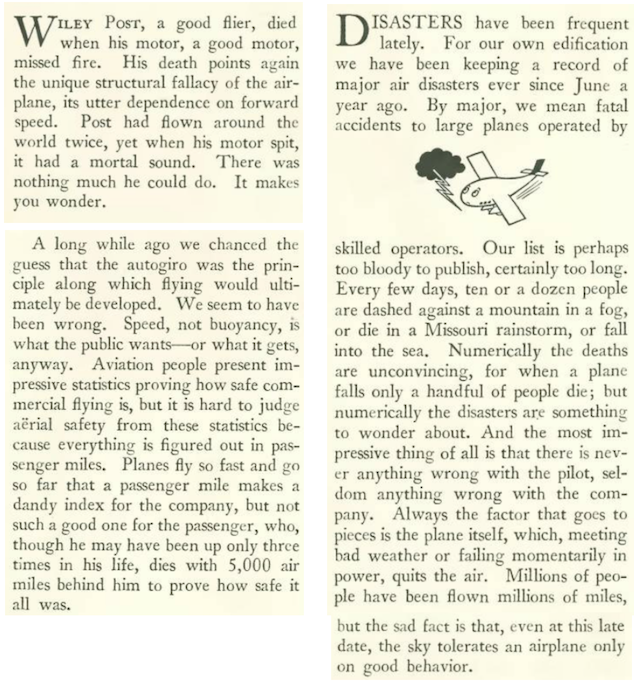
Although E.B. White often seemed stuck in the past—he preferred Model Ts and rattily omnibuses to more more modern conveyances—he was a flying enthusiast, never missing a chance to hop aboard an airplane and marvel at the scene far below. However, when tragedy struck, White would become circumspect. When Notre Dame coach Knute Rockne’s Fokker Trimotor crashed into a Kansas wheatfield, White expressed doubts about air safety and pondered “safer” alternatives such as autogiros (a kind of early helicopter that wasn’t so safe or practical). Such doubts returned in his “Notes and Comment” for August 31, 1935:

The fated aircraft, a Lockheed Orion, was heavily modified by Post into a floatplane; one wing was even salvaged from a wrecked Explorer (an older Lockheed model). The pontoon floats he attached were also designed for a larger aircraft, which made the nose-heavy Orion even more unwieldy.

BUILT FOR SPEED…A Lockheed Model 9 Orion parked at Boeing Field, Seattle, in May 1935. With 200-mph speed, the single-engine passenger aircraft (5 to 6 passengers) was faster than any American military aircraft of the time. It was Lockheed’s last aircraft to use wood construction in the frame, which was lightweight but not designed for longevity on major airlines. (James Borden Photography Collection)
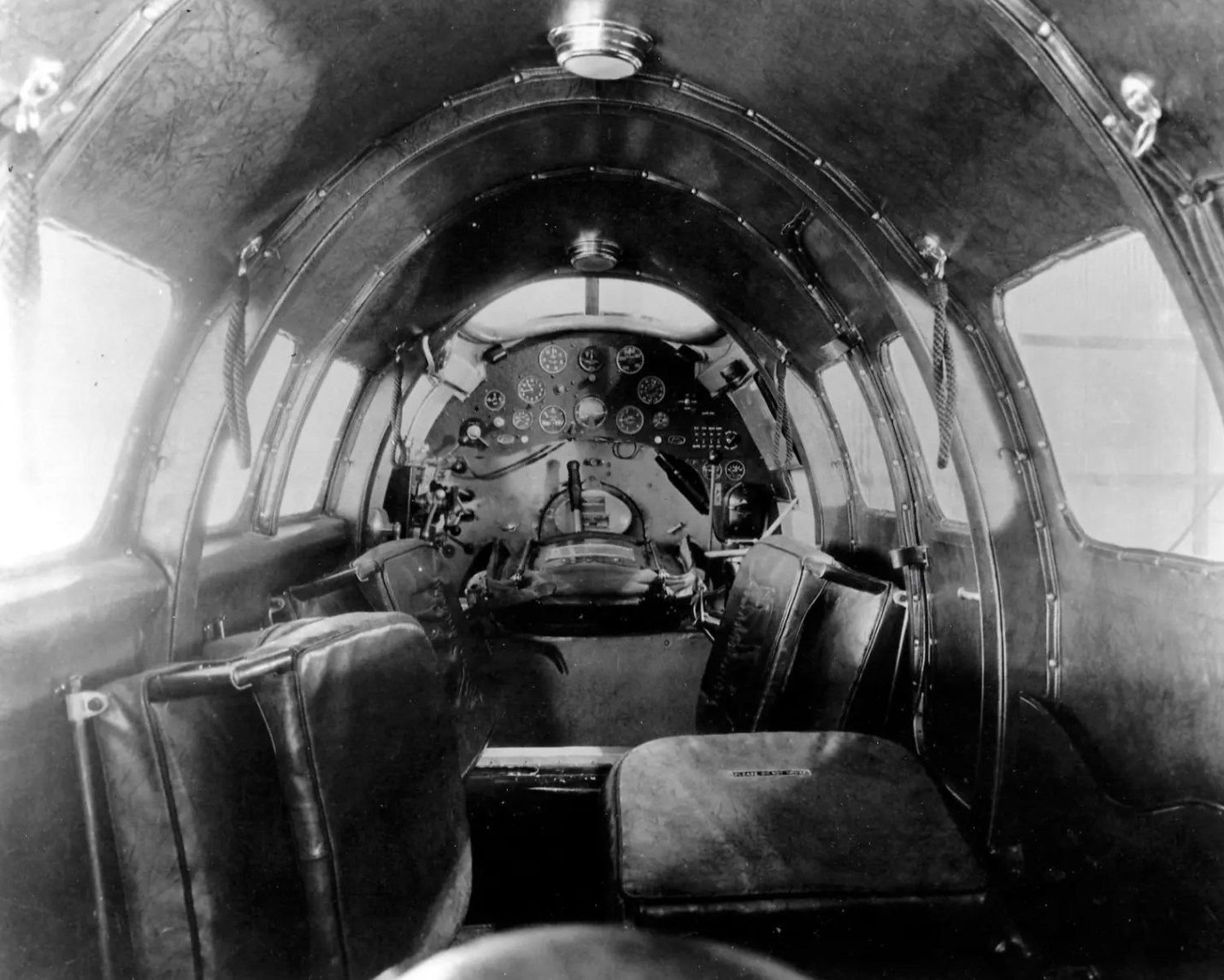
TIGHT QUARTERS….Interior view of a Lockheed Orion 9. No doubt much of the passenger space was loaded with gear for the trip to Alaska. (James Borden Photography Collection)

When Post and Rogers arrived in Juneau, local bush pilots doubtfully regarded the Orion and asked Rogers about the flight plan. “Wiley and I are like a couple of country boys in an old Ford—don’t know where we’re going and don’t care,” he said. They were actually headed to Point Barrow, and from there planned to hop over to Siberia.

After stopping in Fairbanks they set off for Point Barrow in bad weather. Lost in the murk, they landed short of their destination in the shallow waters of Walakpa Lagoon, fifteen or so miles southwest of Point Barrow. Post and Rogers then took off—despite warnings from locals about the conditions. But the weather wasn’t the worst problem: Post had a bad habit of taking to the air in an abrupt, steep climb, which likely caused the engine to stall. Powerless, the ungainly aircraft plunged into the lagoon and landed on its top. Post and Rogers were killed instantly.

JUST A COUPLE OF COUNTRY BOYS…Top photo, Will Rogers on the wing of the Lockheed floatplane belonging to famed aviation pioneer Wiley Post, hours before their fatal crash on August 15, 1935. Below photo, inverted wreckage of the float plane in Walakpa Lagoon.  (Wikipedia/vintageaviationnews.com)

Rather than eulogize the fallen Rogers, “The Talk of Town” offered up an anecdote about his rise as a newspaper columnist, which was sparked by a backhanded endorsement speech:

A HUMAN FACE…Top left, Will Rogers backstage with the 1924 Ziegfeld Follies cast. At right, Rogers made his film debut in the now lost silent film Laughing Bill Hyde (1918) with co-star Anna Lehr. The magazine ad at right quoted producer Rex Beach, who called Rogers “the most human player who ever faced a camera.” (Will Rogers Memorial Museum/Wikipedia/IMDB)
FINAL CURTAIN…Top photo, Will Rogers with co-star Anne Shirley in Steamboat Round the Bend. Rogers wrapped filming just before heading to Alaska. The film was released posthumously on September 6,1935. Bottom image is a detail from a full-page ad in the October 1935 issue of Picture Play Magazine. Oddly, the ad makes no mention of Rogers’ death, proclaiming that “Will blazes a new path in his screen career as he scores his greatest triumph!”  (theretrorocket.blogspot.com/IMDB)

 * * *

Putting it Mildly

In “Onward & Upward With the Arts,” H.L. Mencken continued to explore the quirks of American language, this time looking at the pervasive (and evasive) use of euphemisms by “professional uplifters.” Excerpts:

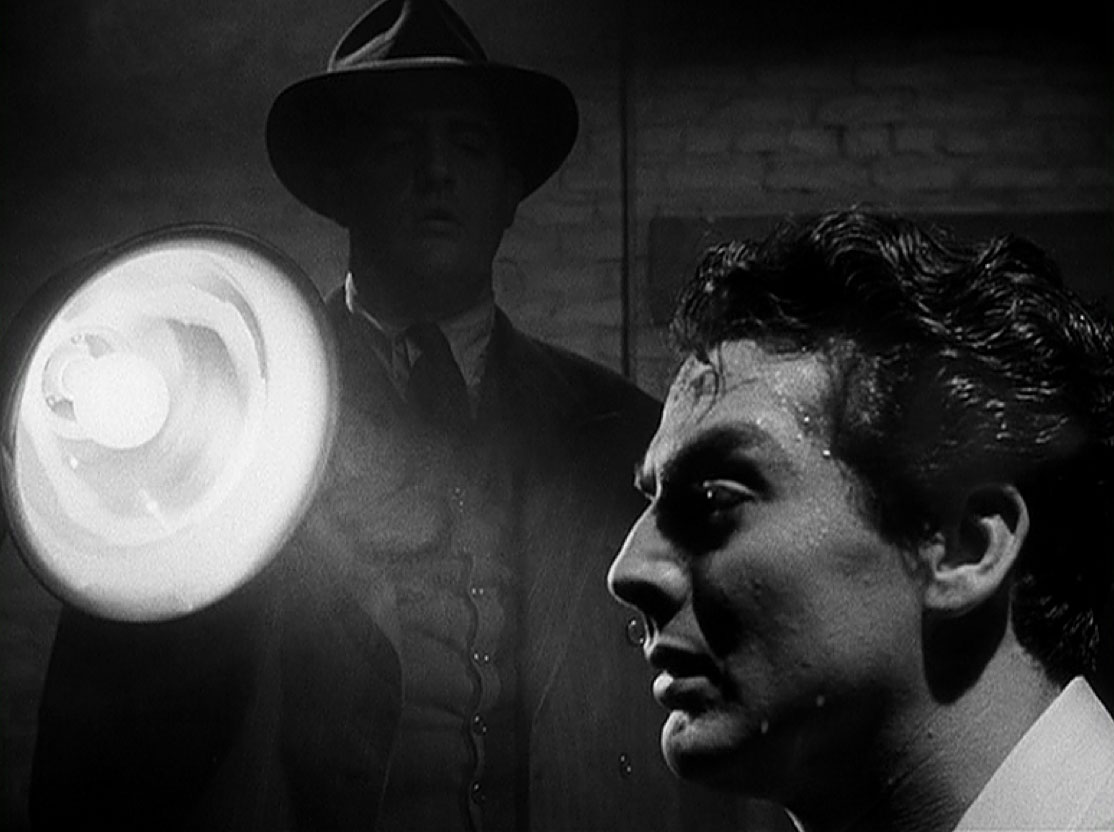
INTELLIGENCE TEST was suggested by “professional uplifters” as a polite replacement for giving someone “The Third Degree.” Image is from the 1941 noir thriller I Wake Up Screaming, starring Victor Mature, pictured here getting his “intelligence test.” (cinematography.com)

 * * *

At the Movies

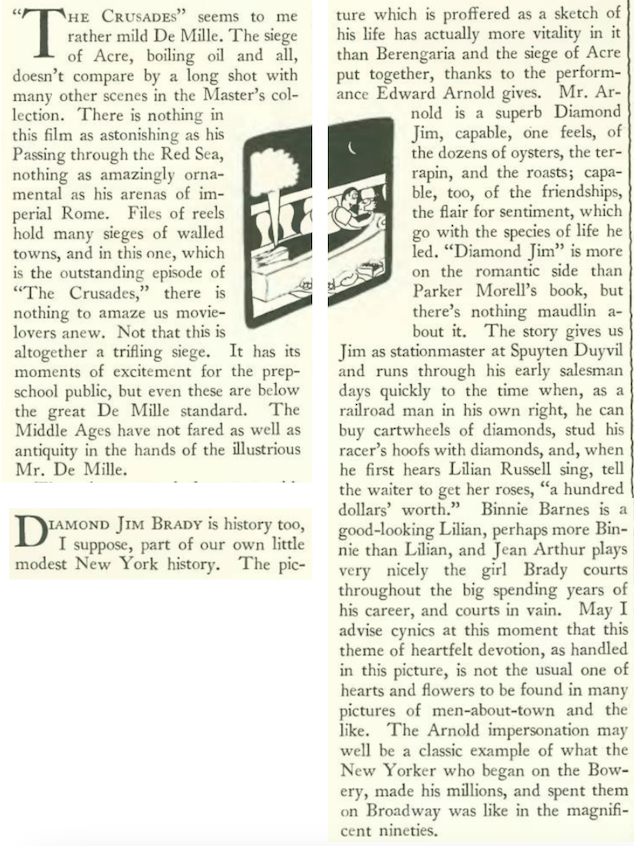
We join film critic John Mosher to take a look at the latest epic from Cecil B. DeMille, The Crusades, which to Mosher’s disappointment was a rather mild epic, with little to astonish. However, our critic did find something to admire in a more recent historical drama, Diamond Jim.

ANTISEPTIC EPIC?…Clockwise, from top left, movie poster for The Crusades offered up an image one typically does not associate with religious warfare, but you had to bring ’em in somehow; Henry Wilcoxon and Ian Keith in a scene from the film; co-stars Loretta Young as Berengaria of Navarre and Wilcoxon as Richard the Lionheart; the film also featured Joseph Schildkraut as Conrad of Montferrat and Katherine DeMille as Princess Alice of France (bottom left). A talented actress, Katherine reportedly landed the role as a Christmas gift from her adoptive father, Cecil B. DeMille. (cecilbdemille.com)
HEY BIG SPENDER…At right, Edward Arnold in the title role (here with Eric Blore) in Diamond Jim. At left, Cesar Romero moves in on Diamond Jim’s love interest, portrayed by Jean Arthur. (Rotten Tomatoes/IMDB)

 * * *

From Our Advertisers

We begin with this advertisement from Lord & Taylor, featuring the latest fall fashions for young women heading to college…notable here is the inclusion of Mickey Mouse in the illustration…the animated rodent was in vogue as much the latest fashions…


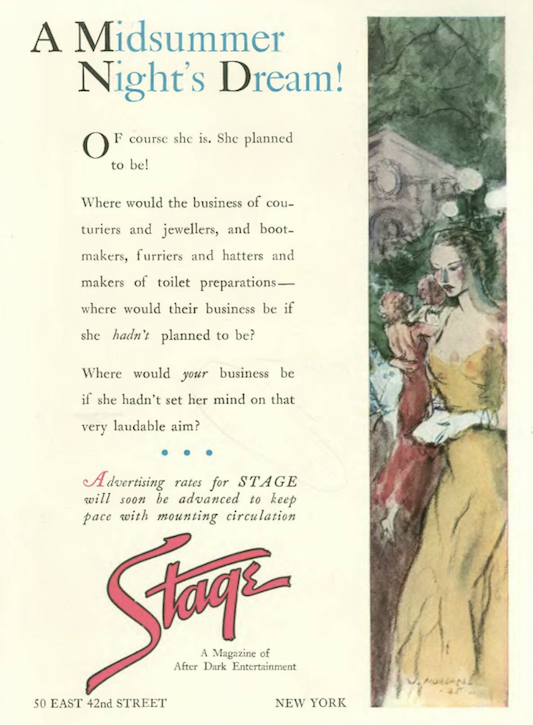
John Hanrahan, whose advertising savvy helped guide The New Yorker through its lean early years, was publisher of the richly designed Stage magazine, promoted here on the inside front cover…

…soft drink giant Coca-Cola recalled its soda fountain origins in this ad that promoted its 6.5-ounce bottled product…

…on the inside back cover Goodyear continued its series of perilous ads illustrating the dangers of tire blowouts (but not the obvious hazard of children riding untethered in a rumble seat, where they doubtless inhaled all manner of noxious fumes)…

…the majority of back covers in 1935 featured tobacco companies…here we learn that Lucky Strikes were more than cigarette; they were your “best friend”…

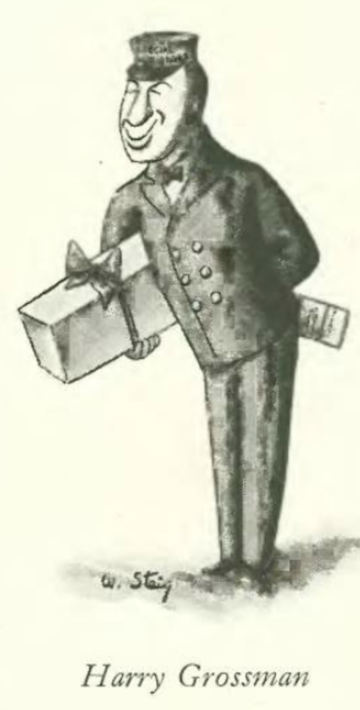
…on to our cartoonists, we start with this “Profile” illustration by William Steig…the profile was a two-parter featuring a clever summons server…

Adolph Dehn adorned the “Goings On” section with this illustration…

…unsigned, but I’m pretty sure this is H.O. Hofman

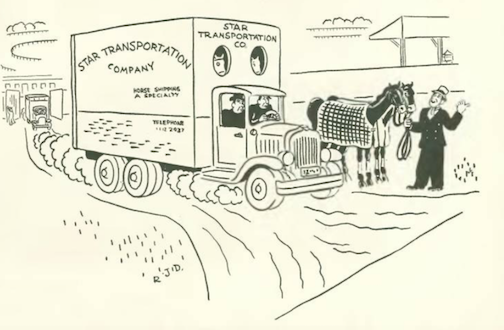
…here we get a lift from Robert Day

Al Frueh conjured up a nightmare of leaping sheep…

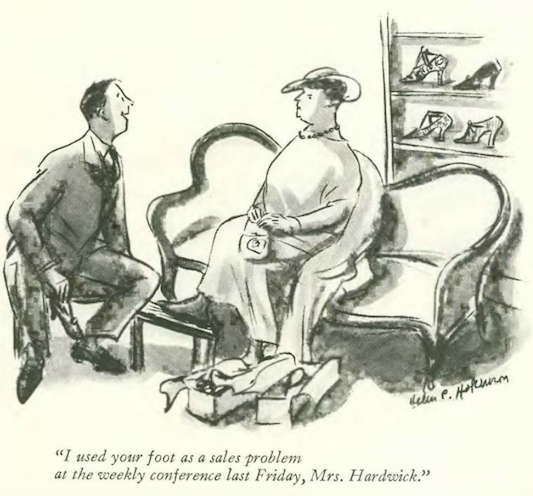
Helen Hokinson gave us some famous footwear…

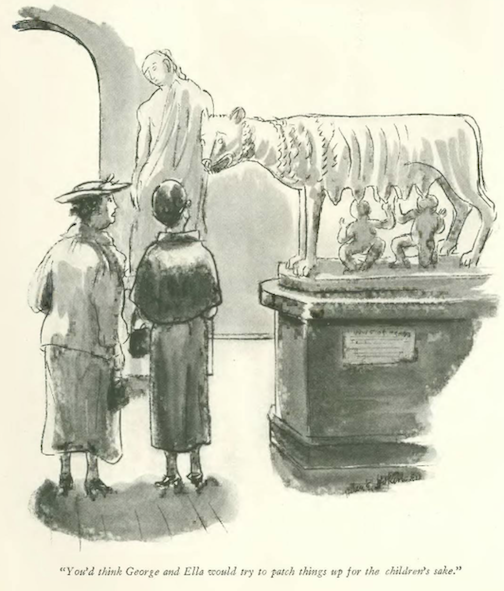
…Hokinson again, with Romulus and Remus providing a convenient metaphor…

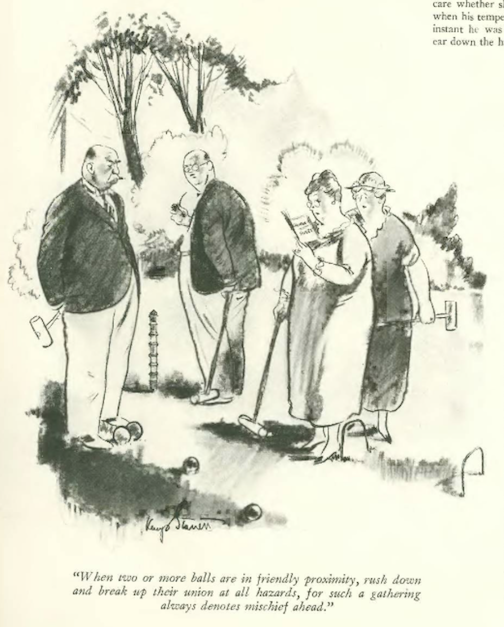
Kemp Starrett was bogged down in the rules of a game…

George Price discovered a budding talent…

Richard Decker took to the back roads…(reminds me of a scene from The Long, Long Trailer with Lucy and Desi)…

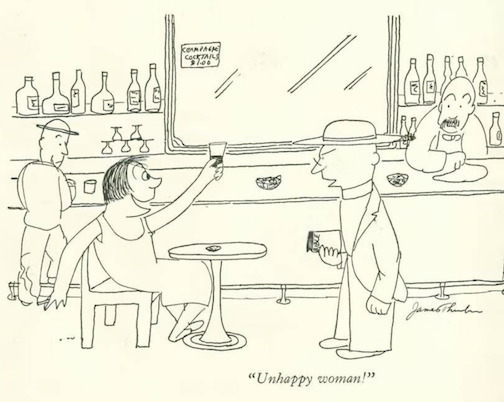
James Thurber raised a glass to a dry do-gooder…

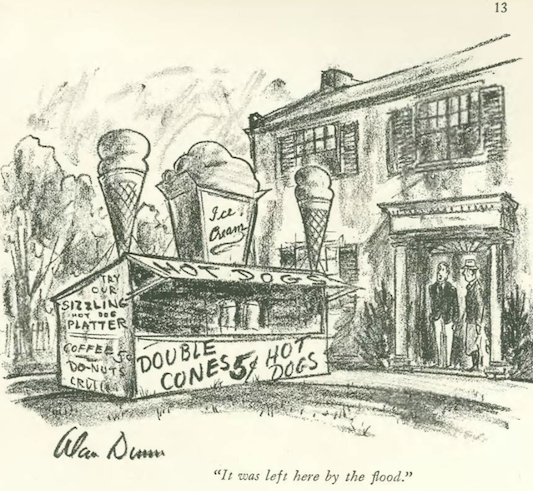
Alan Dunn brought an unexpected windfall to Westchester…

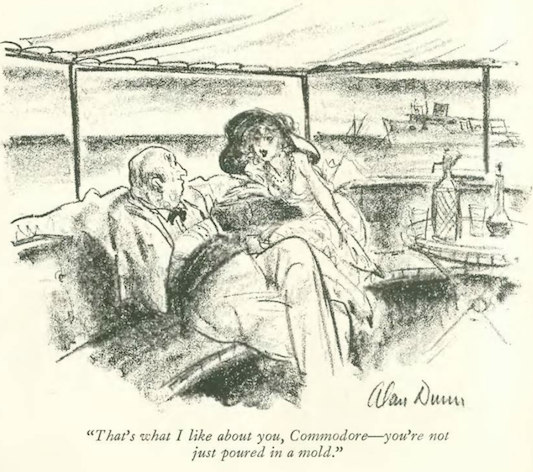
…and to close we Dunn again, and a bit of flattery…

Next Time: A Summer Night…