The sad world of “taxi dancers” was explored by Maxwell Bodenheim in the June 12, 1926 edition of The New Yorker.
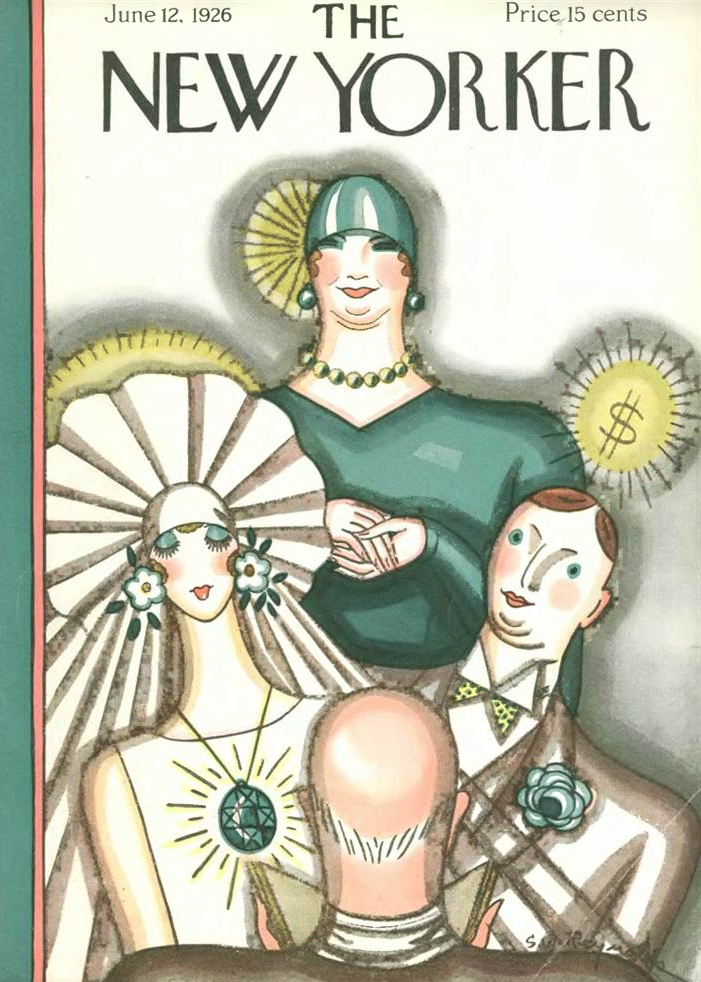
June 12, 1926 cover by S.W. Reynolds.
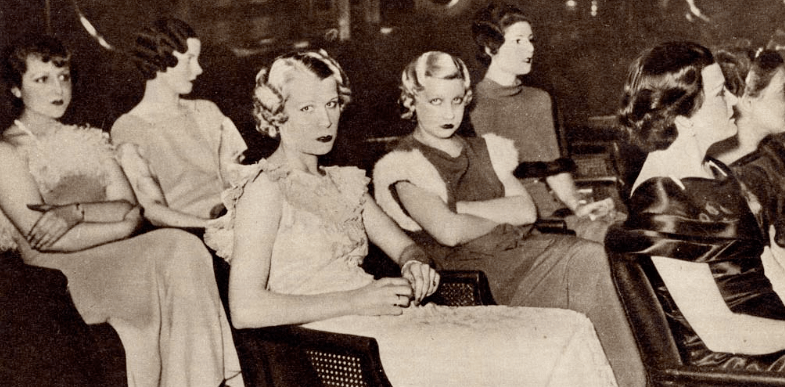
Bodenheim visited a “cheap Broadway dance hall” populated by taxi-dancers and their patrons. It worked something like this: A male patron would buy dance tickets for ten cents apiece, and for each ticket a chosen “hostess-partner” would dance with him for the length of a single song.
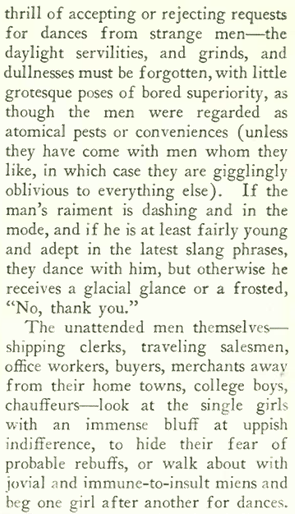
He also described the pathetic strutting and preening rituals of both dancers and patrons:
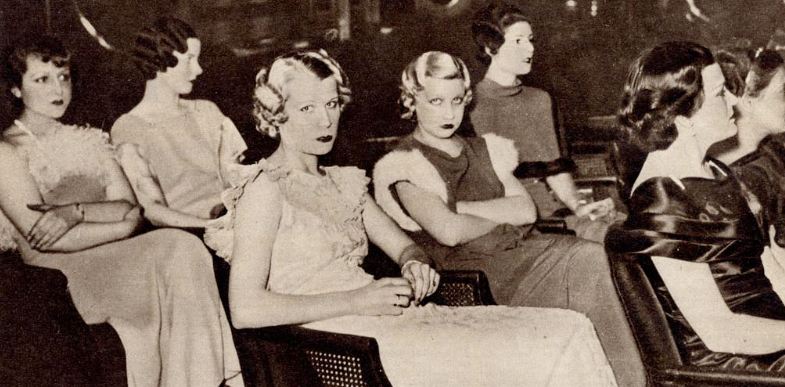
“TAXI-DANCERS” waiting for customers at a Broadway dance hall in the early 1930s. The image was scanned from an article in Weekly Illustrated (Oct. 6, 1934) that described new regulations banning the vocation.
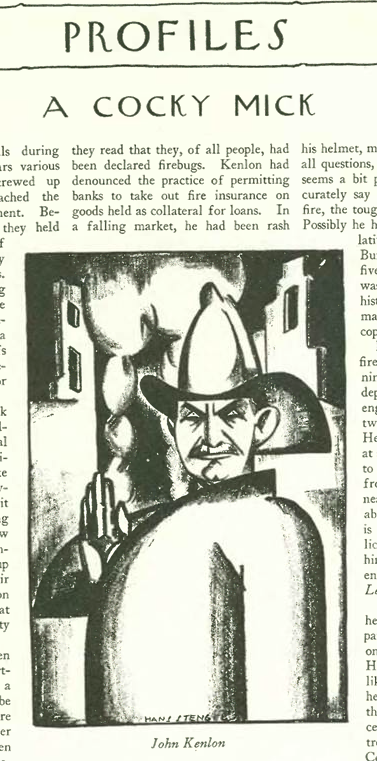
A couple of other bits from the issue: An interesting headline for the profile of NYC Fire Chief John Kenlon…
…and this advertisement for apartments at 1035 Fifth Avenue. I thought the ad was interesting because children are rarely featured in The New Yorker. In case you are wondering about their social class, these are children living on posh Fifth Avenue, and that’s a nurse-maid, not mother, chasing behind them in nearby Central Park.
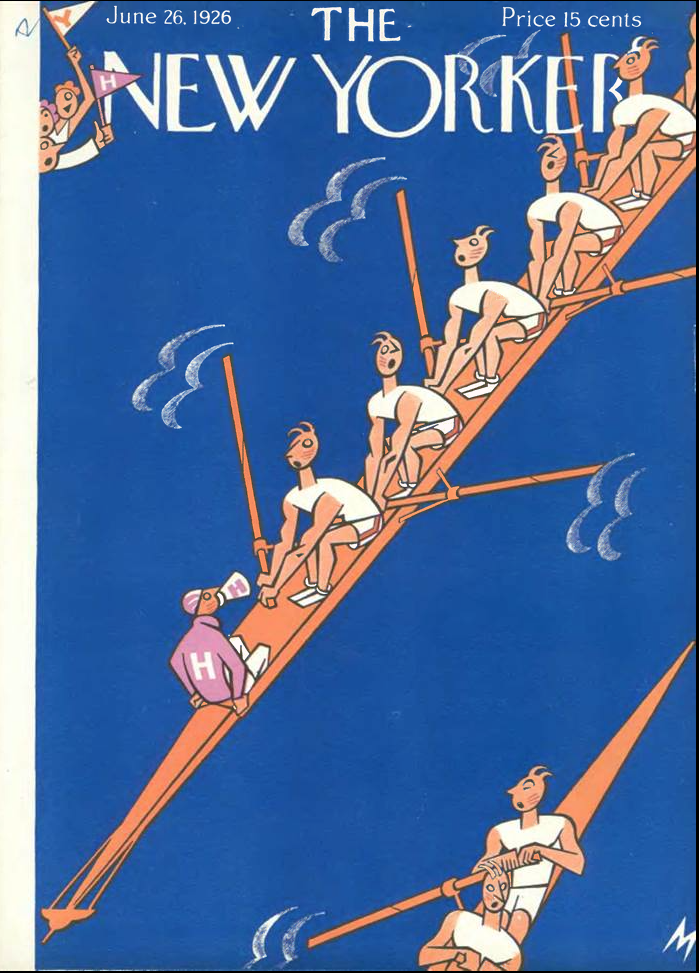
On to the June 19th issue, and a couple more items of interest…
June 19, 1926 cover by Carl Rose.
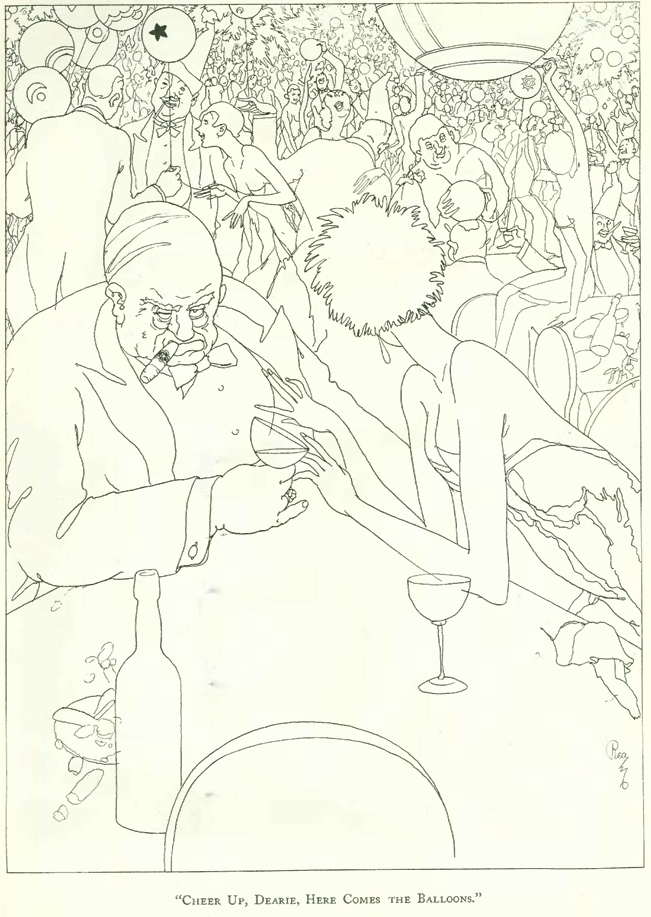
As noted previously, a common theme of the early New Yorker’s cartoons was the comic imbalance of rich old men and their young mistresses. This time Rea Irvin explores the subject with this terrific illustration:
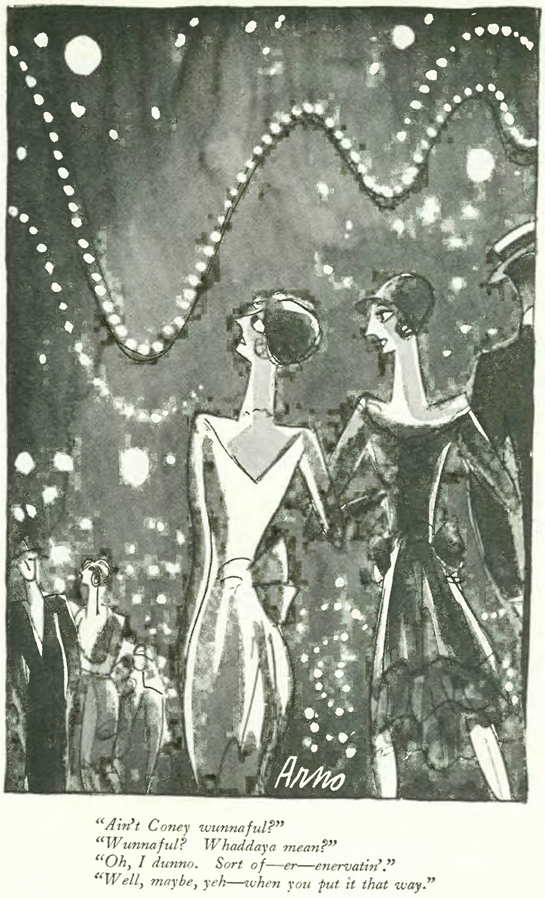
And we close with Peter Arno, and his observations of Coney Island.
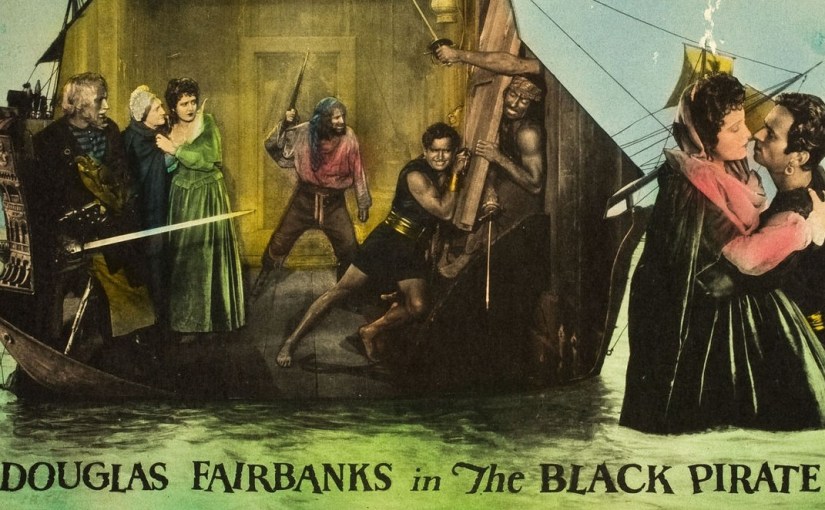
Although the trade name “Technicolor” conjures up images of mid-century Hollywood, the process was actually invented in 1916 and developed over subsequent decades.
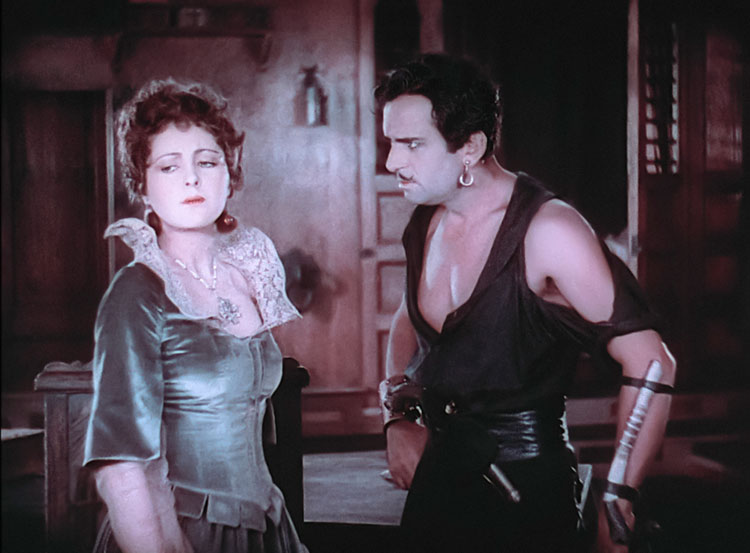
Early Technicolor was a complicated process, using a prism beam-splitter behind the camera lens to simultaneously expose two consecutive frames of a single strip of black-and-white negative–one behind a red filter, the other behind a green filter. A projectionist had to be highly skilled to keep the film aligned during its showing. The Black Pirate, however, used a later technique that cemented the two prints together, making for a thick film that was prone to bulging and distortion.
When the New Yorker’sTheodore Shane reviewed Douglas Fairbanks’ latest swashbuckler film, The Black Pirate, in the March 13, 1926 issue, it appeared that after ten years of development the Technicolor process had a long way to go:
DEAR, YOU LOOK A BIT PEAKY…Billy Dove and Douglas Fairbanks rendered in early Technicolor in The Black Pirate. (MovieMail.com)
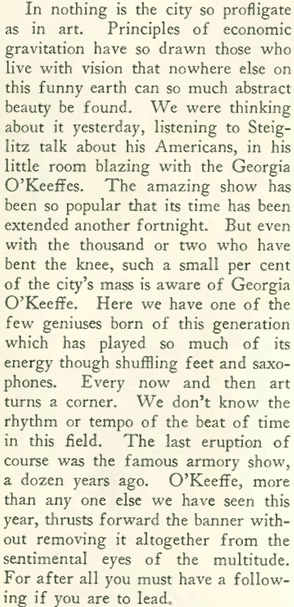
Art critic Murdock Pemberton wrote about the genius of the young artist Georgia O’Keeffe, whose work was on display at husband Alfred Stieglitz’s new exhibition space, the Intimate Gallery:
Georgia O’Keeffe’sBlack Iris, 1926. (Metropolitan Museum of Art)
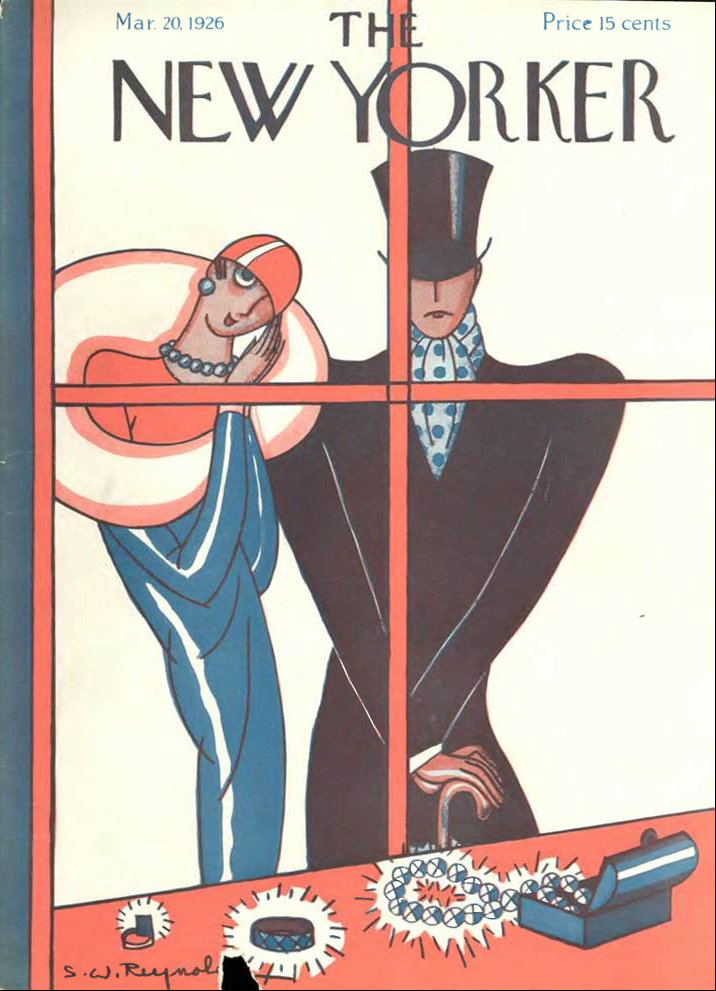
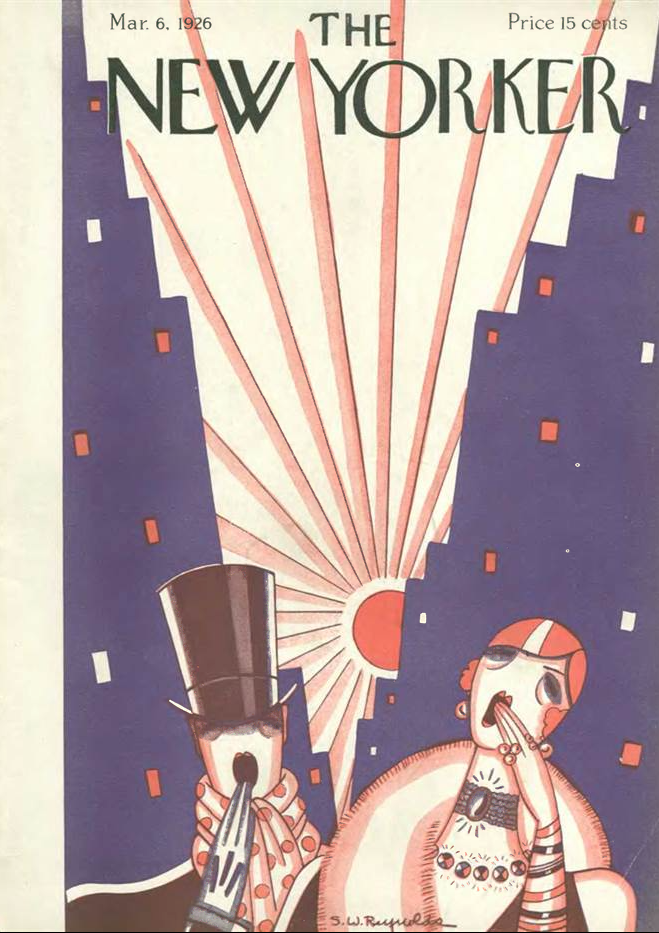
On to the March 20 issue, boldly illustrated by S.W. Reynolds, who contributed a number of deco-themed covers for the magazine:
March 20, 1926 cover by S.W. Reynolds.
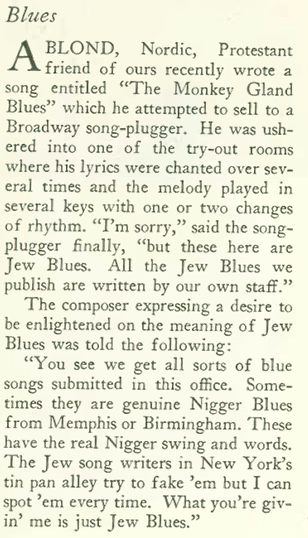
For all The New Yorker’s progressive wit and style, you are occasionally reminded that some of its sensibilities were still very much mired in those times. For example, this bit from the issue’s “The Talk of the Town” segment:
The March 27 issue offered a profile of actress Helen Westley, who was described by writer Waldo Frank (pen name “Search-light”) as “a goddess of our city” whose “true value and her art (was) her personal life.”
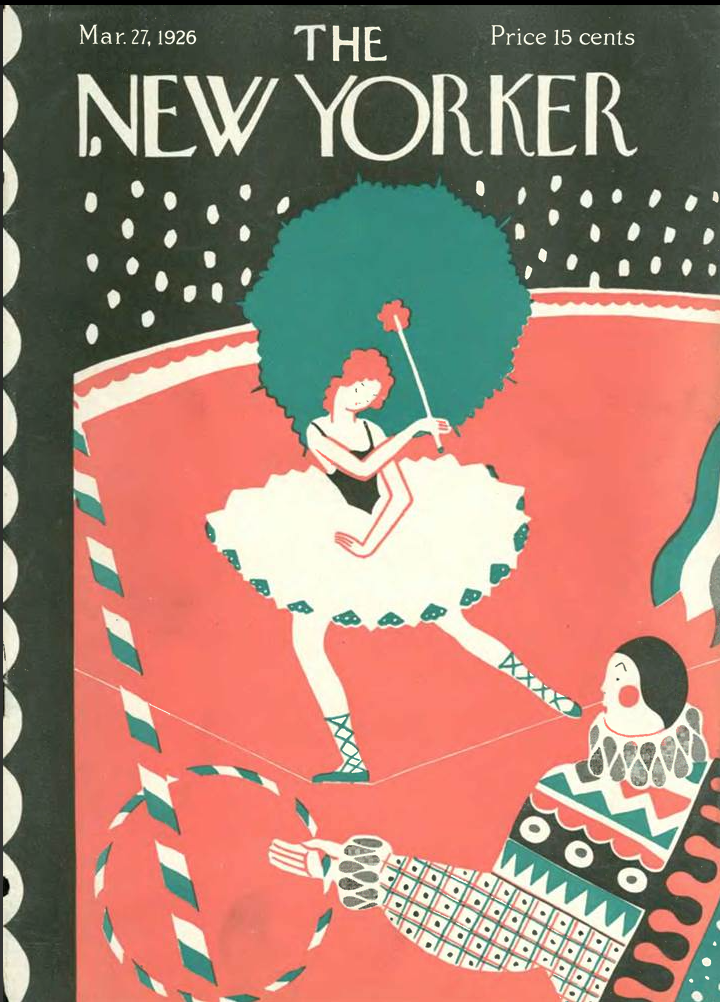
March 27 cover by Ilonka Karasz.
Wesley often played a stern, indomitable character who wore a hawk-like glare, and in her later years portrayed dour dowagers and no-nonsense matrons. Frank wrote that while Wesley was not a particularly good actress, she lived her life with a spirit for adventure and a need to plunge her fine-born, gracious manner into the “frowsy” world of Broadway.
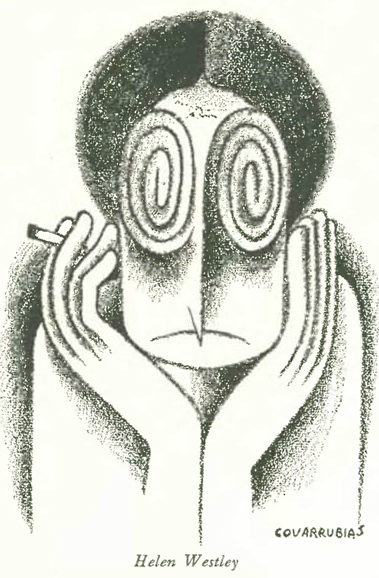
A Miguel Covarrubias rendering of Helen Wesley for the “Profiles” piece.
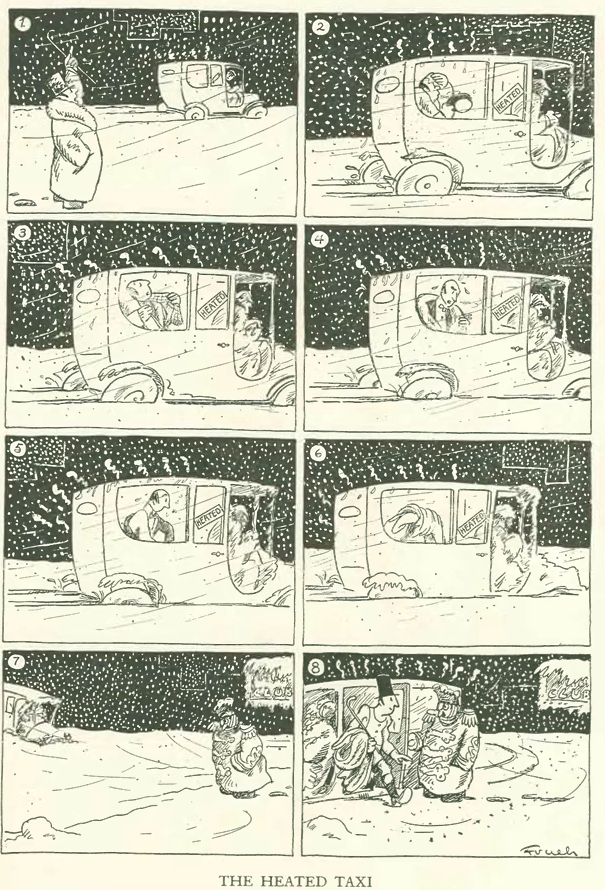
And to close, Al Frueh’s take on a day in the life of a doorman:
Although they didn’t know it, thirsty New Yorkers still had more than six and half of years of Prohibition to endure, and business was brisk for the rum runners who plied the coastal waters.
The March 6, 1926 issue featured the article “Rum Runners Must Live,” in which writer Emile C. Schnurmacher described the heroic efforts of bootleggers and rum runners in keeping New York’s countless speakeasies (and many home liquor cabinets) well stocked. Some 30,000 speakeasies were opened in New York City alone during the Prohibition era.
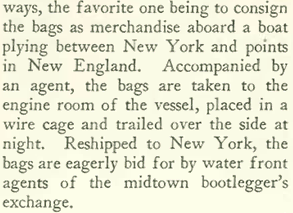
Schnurmacher described the risky game of running “overboard stuff:”
He told of how one rum-running boat, the Sea Bird, made its way through Flushing Bay (to pick up bootleg Scotch) while evading the Coast Guard:
The boat later successfully delivered the “Scotch” near Yankee Stadium:
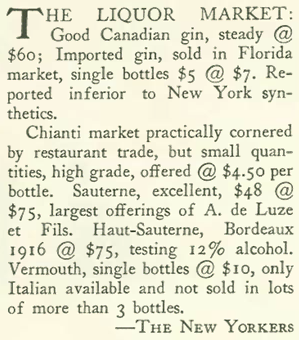
“The Talk of the Town” offered its regular update on bootleg prices. The local “synthetic” gin was reported to be of better quality than the imports, surprising given that synthetics poisoned a good number of folks back then:
The blog Speakeasy Science notes that during Prohibition, police department chemists, “analyzing the so-called gin in the Brooklyn bar and around the city, reported that much of it was industrial alcohol, re-distilled to try to remove the wood alcohol content. The re-distilling was not notably successful. The poisonous alcohol remained and there was more: the chemists had detected traces of kerosene and mercury, and disinfectants including Lysol and carbolic acid in the beverages.”
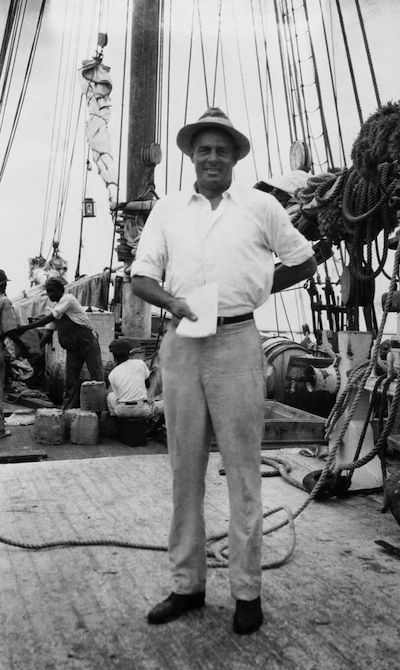
HE HAD THE GOOD STUFF…Not all bootleg was poison. Until he was busted in 1923 by government agents, one of the most famous purveyors to wealthy buyers was rum-runner William McCoy. (US Coast Guard)In order to destroy evidence, the crew of the rum-runner Linwood set fire to their vessel after being pursued by a patrol boat. (Photo circa 1923, U.S. Coast Guard)
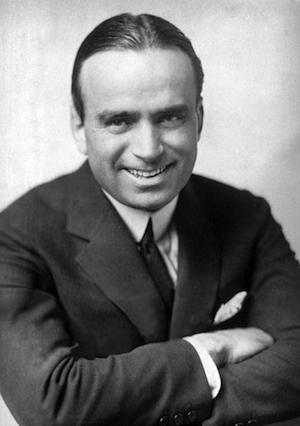
In “Tables for Two,” Lois Long paid a visit to the Algonquin hotel and took some playful swipes at the denizens the famed Round Table:
IS THAT YOU DOUG? Silent screen star Douglas Fairbanks could relax unmolested in the quiet confines of the Algonquin. (Meredy.com)
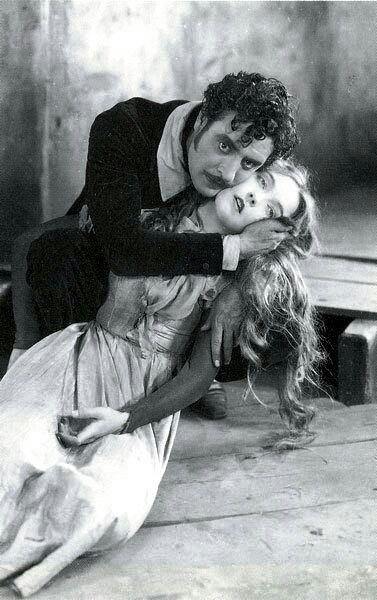
At the movies, Theodore Shane took deadly aim at the silent film version of the opera La Bohème:
A “pop-eyed” John Gilbert and Lillian Gish in the 1926 silent film version of La Bohème. (IMDB)
And finally, Al Frueh’s sympathetic take on the wintertime toils of the rich:
MGM spent nearly $5 million (about $70 million today) to make the silent epic Ben-Hur, filming the movie on location in Egypt, Italy and the United States. The New Yorker’s film critic Theodore Shane was not impressed.
Shane wrote that $4,999,999.95 had been spent “on massive effects and the remaining $.05 on drama.”
He noted, however, that the original story, an 1880 novel by Lew Wallace (who was a Union general in the Civil War, among other things), was pretty lacking in drama to begin with, just a “piece of bric-à-brac romance (that was) nothing more than a super Rover Boys story touched up with a Biblical background.” Here’s Shane’s entire review of the film, which was released by MGM on December 30, 1925:
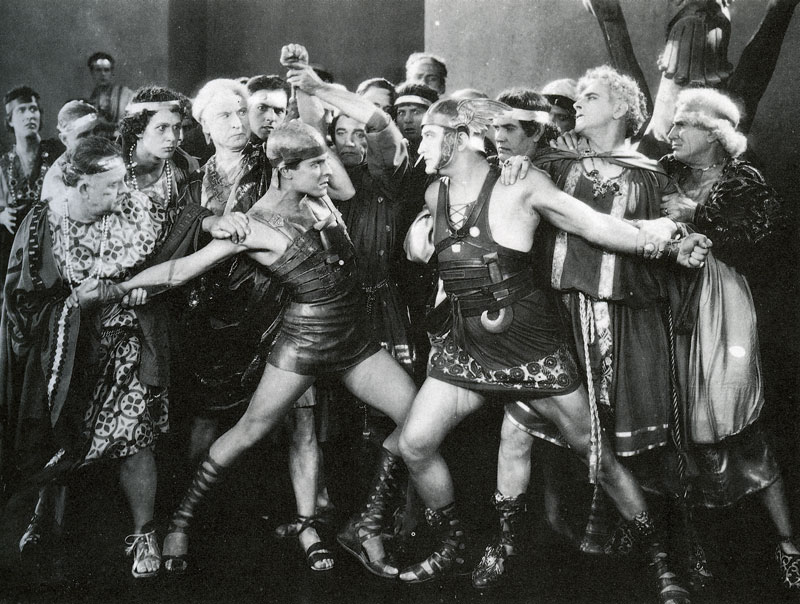
A Nickel’s Worth of Drama…Ramon Novarro (left) and Francis X. Bushman mix it up in Ben-Hur (1925) (Virtual History)
This was actually the second Ben Hur film. The first was made in 1907, a 15-minute silent costing $500 (and it really was made on the cheap; the producers stole some shots of a mock chariot race at a fireworks show at Sheepshead Bay, Brooklyn, and then added some interior shots to complete the picture).
For the 1925 Ben Hur, filming on location proved difficult from the start. Italy’s new leader, Benito Mussolini, was in an anti-American mood when production began, and labor disputes often delayed filming. By all accounts, conditions were miserable. Kevin Hagopian, in an essay for the New York State Writers Institute, observed “The worst agonies were reserved for the film’s climax, the chariot race. Legendary second unit director B. Reeves Eason’s nickname “Breezy” was certainly not earned by his work on the Ben-Hur set, for his merciless pace cost the lives of over a hundred horses. As [actor Francis X.] Bushman said sadly, “If it limped, they shot it.” A stunt man was killed in a chariot crash, and [actor Ramon] Navarro himself only narrowly escaped death.”
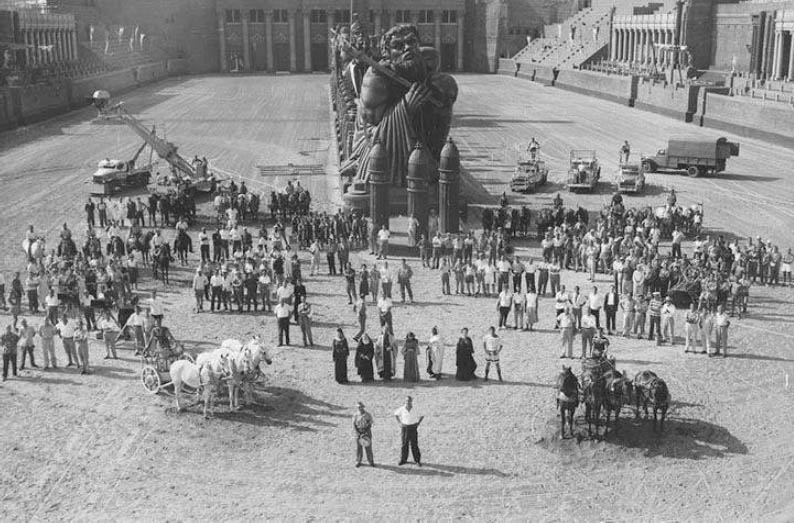
The troubled Italian set was eventually torn down and a new one built in Culver City, California. The crowd scenes and master shots for the race were done in a single day, with forty-two cameras covering the action.
The famed chariot race staged in Culver City, California, was shot with 42 cameras.
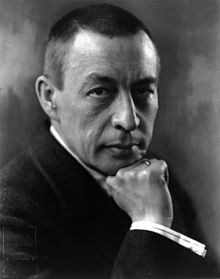
In “Profiles” Esther Carples looked at the life of Sergei Rachmaninoff, who was widely considered one of the great pianists of his day, and as a composer represented the last vestiges of Romanticism in Russian classical music. Carples painted a portrait of a brooding genius, a man with aristocratic bearing who lived in lonely exile from his native Russia.
Sergei Rachmaninoff in 1921. (Library of Congress)
In 1921, Rachmaninoff bought a house on 33 Riverside Drive in New York City, where he lived until 1925. There he consciously recreated the atmosphere of Ivanovka (his beloved Russian summer house) entertaining Russian guests, employing Russian servants, and observing old Russian customs.
*****
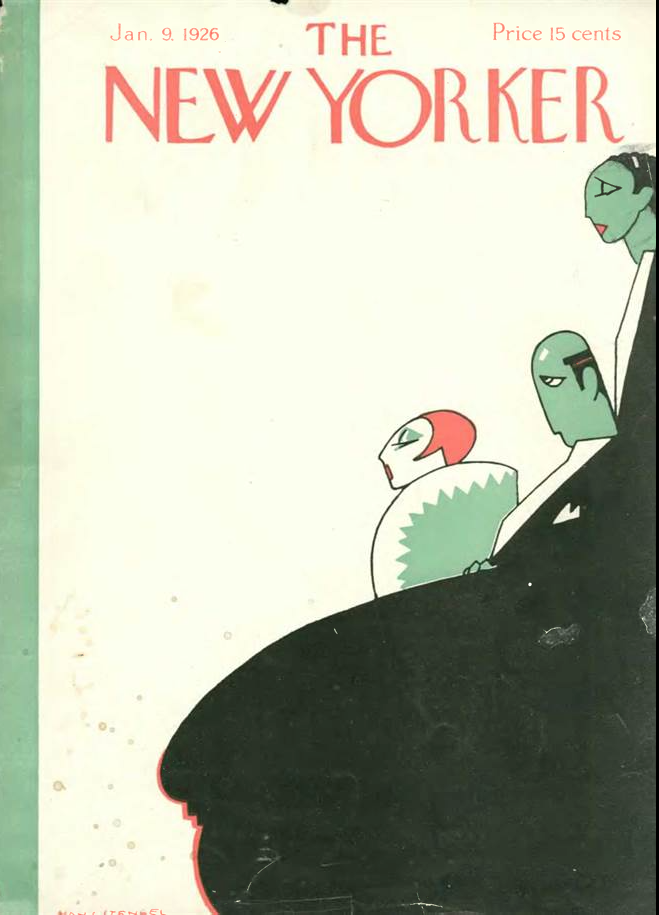
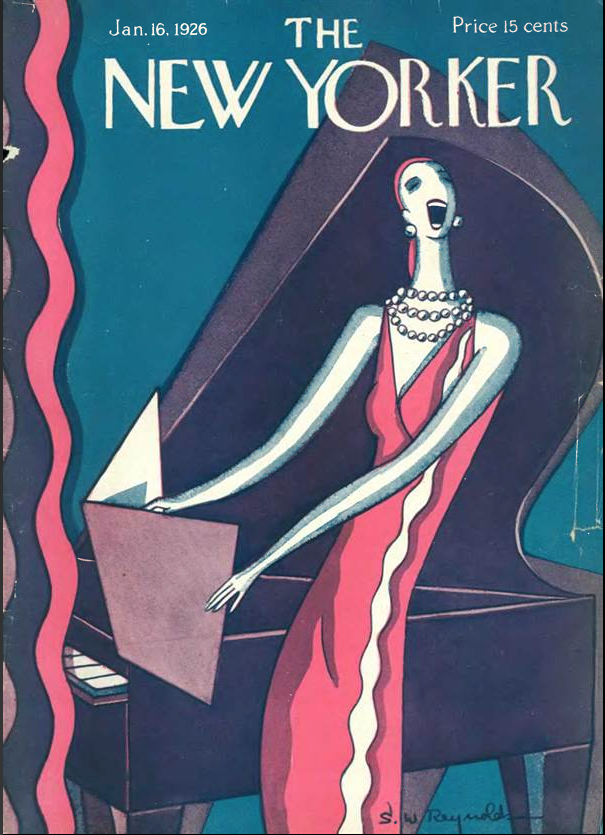
Jan. 16, 1926 cover by S.W. Reynolds.
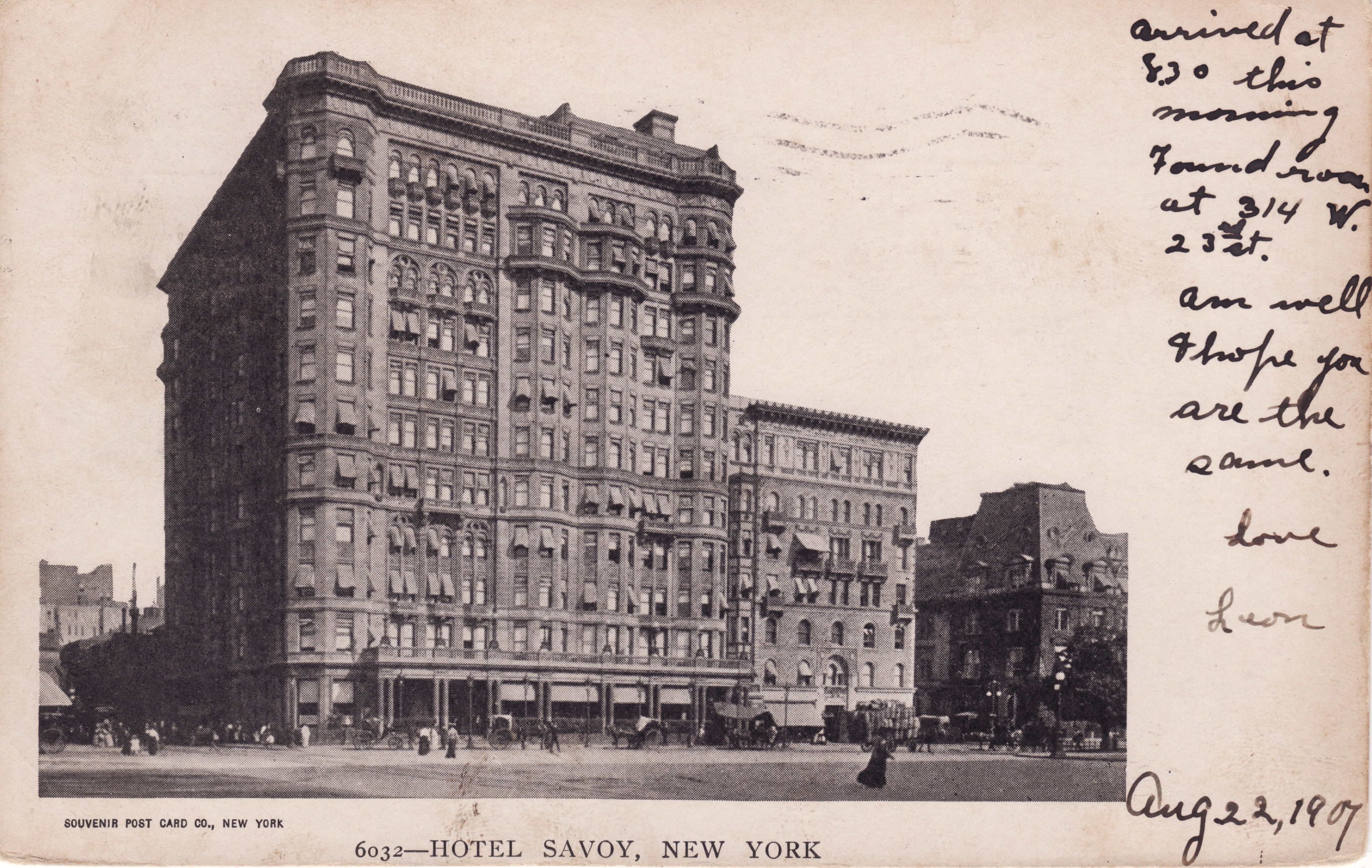
Let’s move on to the next issue, Jan. 16, 1926. “The Talk of the Town” noted another loss of a Fifth Avenue landmark with the Savoy Hotel was falling to the wrecking ball.
The Savoy, built in 1891-92, was slated to be replaced by The Savoy Plaza Hotel, which itself would be demolished in 1965-66 (amid significant public outcry and protest) to make way for the eastern headquarters building of General Motors.
It was observed that the new year would see a boon in construction of huge new buildings along the Avenue, and buildings only five years old (such as Heckscher Building) would be dwarfed by the new towers.
Another One Bites The Dust…The Savoy Hotel (stuffnobodycaresabout.com)
The New Yorker continued to have fun with actress Gloria Swanson‘s pretensions to royalty (she was married to the Marquis de La Coudraye at the time). This time it came from the pen of Jimmie the Ink (James Daugherty), part of his series of drawings that coupled famous people of the day in comic situations:
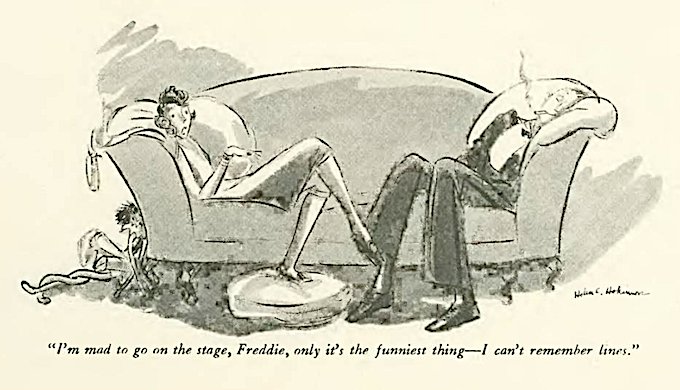
The issue also featured Helen Hokinson with a cartoon that seemed more in Barbara Shermund’s wheelhouse…
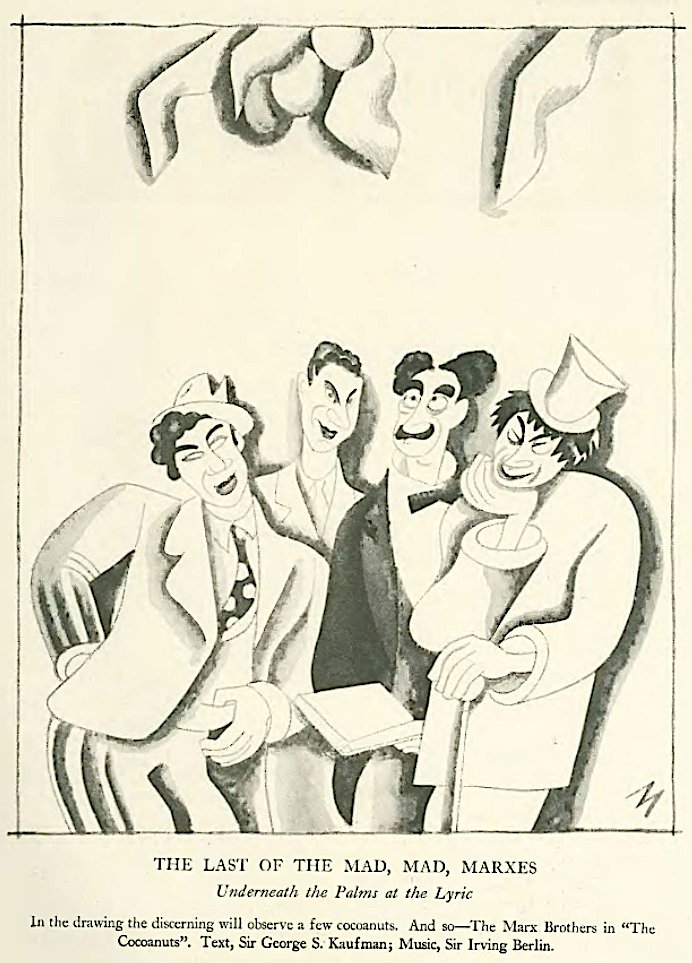
…a Julian de Miskey drawing for the theatre section…
…and a Peter Arno illustration…
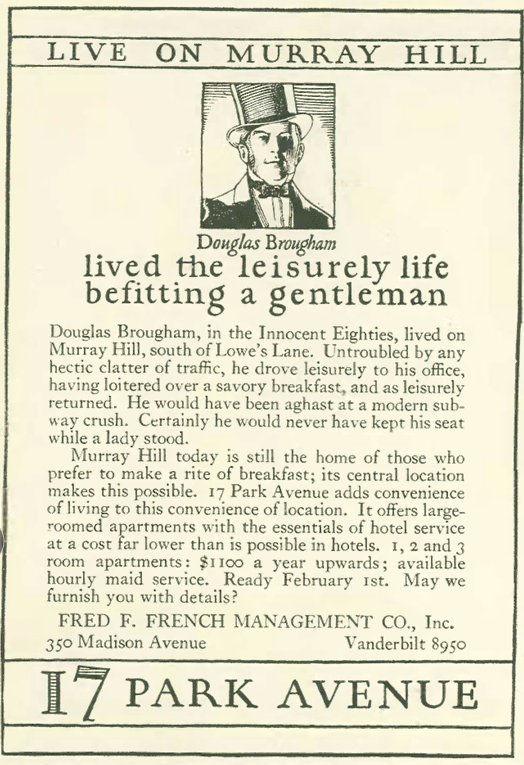
To close, two ads from the Jan. 16 issue, this one appealing to Anglophilic, aristocratic aspirations of certain readers…
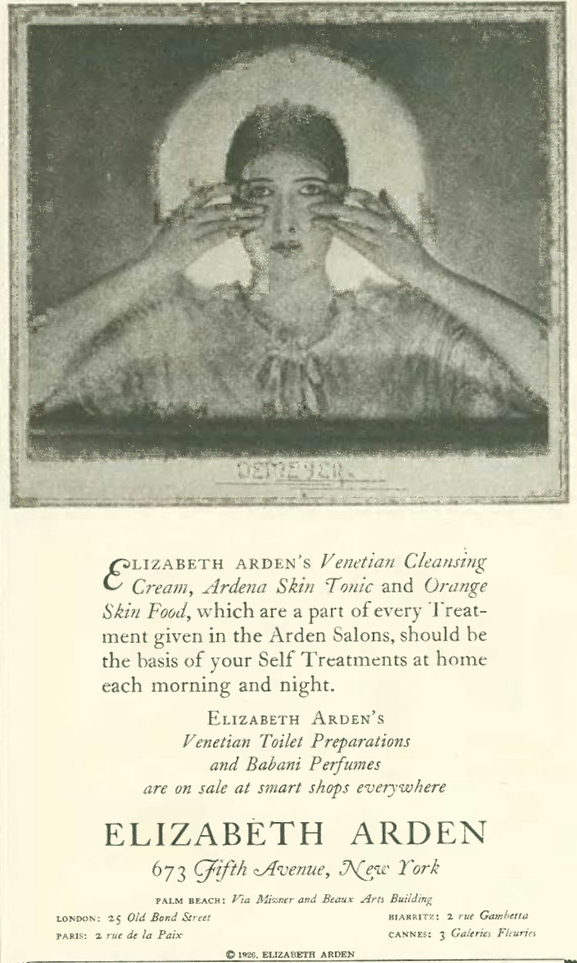
And this one from Elizabeth Arden, who will become a mainstay in the magazine with these ads featuring women with ghostly stares, usually with their heads wrapped tightly to combat sagging skin. Thanks to Hollywood, it was the age of the close-up, so wrinkles and blemishes be gone!
We close out The New Yorker’s first year with the magazine on firmer footing and many of its mainstay writers and artists firmly in place.
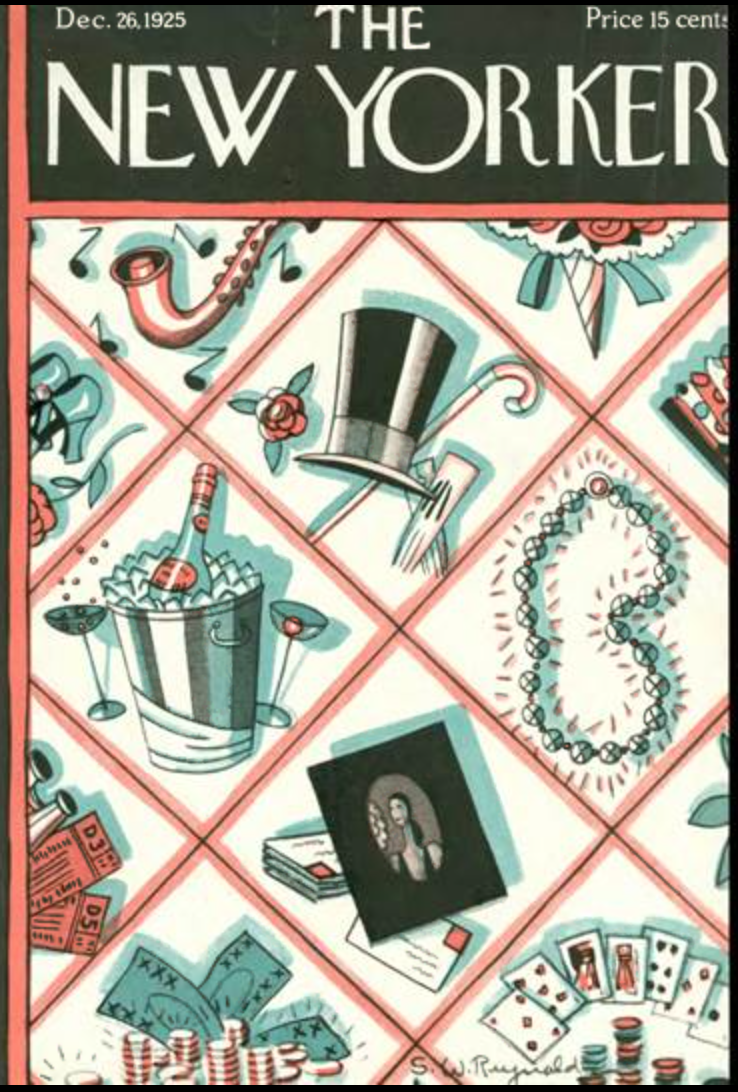
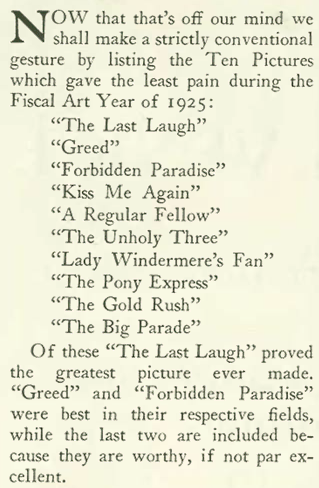
The Dec. 26, 1925 issue was the usual hodgepodge, but some writers did give a nod to the end of the year, including film critic Theodore Shane, who offered his list of the best ten moving pictures of 1925.
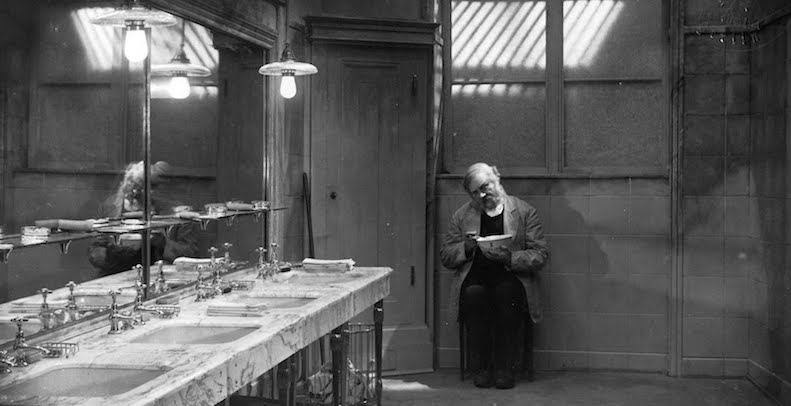
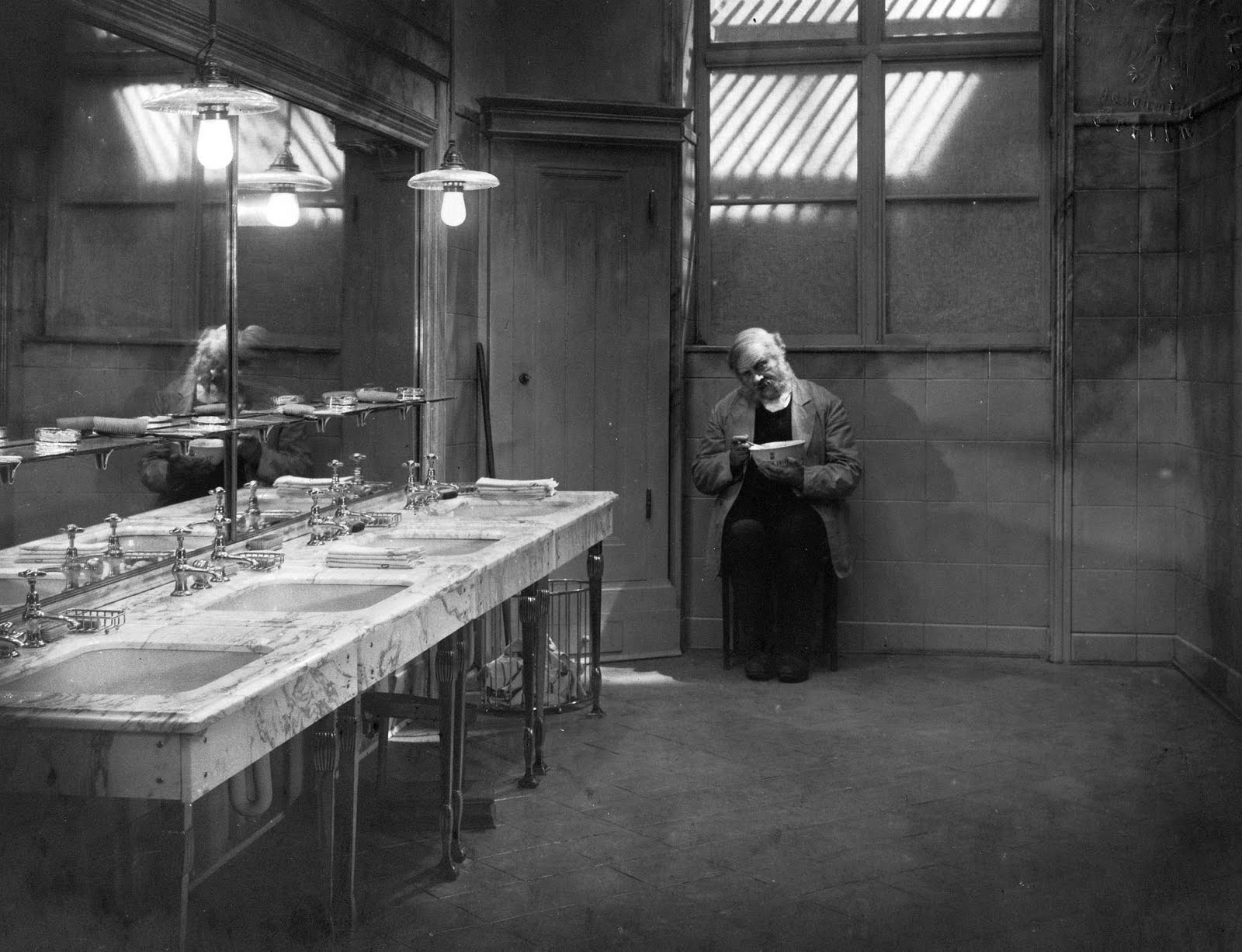
Shane’s favorite film by far was The Last Laugh, (the German title was Der letzte Mann, or The Last Man) a 1924 German film directed by F.W. Murnau and starring Emil Jannings (who would later win the first Academy Award for Best Actor in 1929). Shane referred to it as “the greatest picture ever made.” Released in the U.S. in 1925, the film was about a proud doorman who loses his job and tries to hide the fact from his friends and family. Shane usually reserved his highest praise for German cinema in his columns.
Scene from The Last Laugh (1924) starring Emil Jannings. (Roger Ebert)
Shane’s complete list of the ten best movies of 1925:
For the worst films of the year, Shane suggested a tie between Drusilla With a Million, Lord Jim, Joanna, the Million Dollar Girl or Stella Dallas.
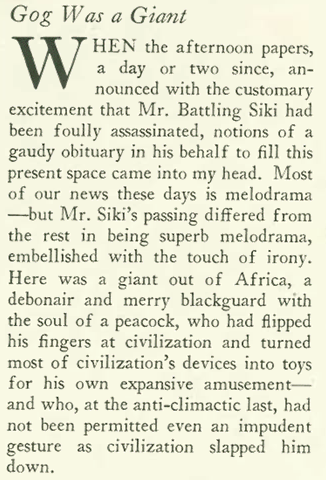
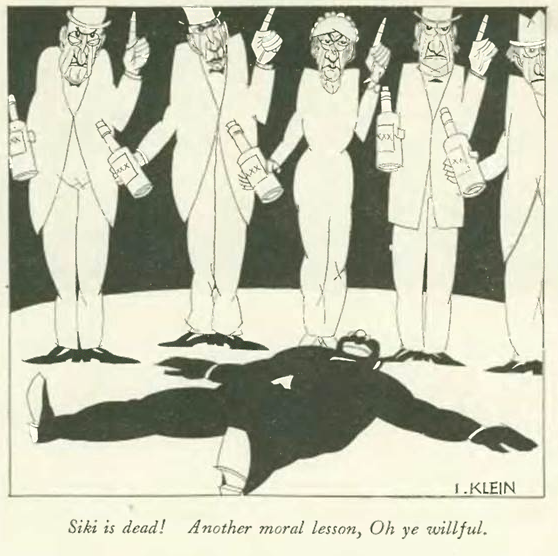
The New Yorker also commented on the murder of the irrepressible boxer Louis Mbarick Fall, popularly known as “Battling Siki.”
“Battling Siki” in his heyday. (Wikipedia)
Born in Senegal, he was a light heavyweight boxer from 1912–1925, and briefly reigned as a light heavyweight champion. Known for his heavy drinking and carousing, on the night of Dec. 15, 1925, he was found dead near his 42nd Street apartment. He had been shot twice in the back at close range. He was 28.
In his column, “A Reporter at Large,” Morris Markey offered this observation on Battling Siki’s passing:
The cartoonist Isadore Klein, on the other hand, contributed this strange stand-alone illustration for “The Talk of the Town” section:
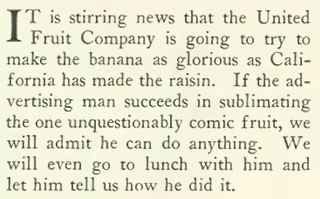
Also in “Talk” was this brief item about the United Fruit Company:
United Fruit would be no laughing matter three years later with the Banana Massacre, which would claim the lives of an unknown number of workers who were striking for better working conditions in Columbia.
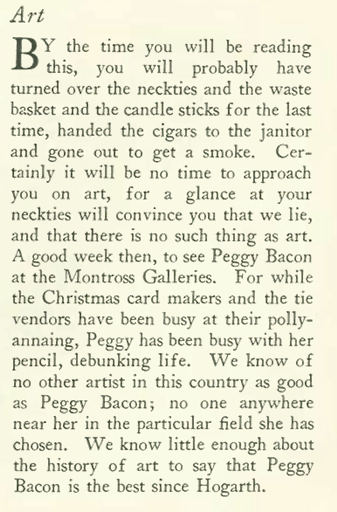
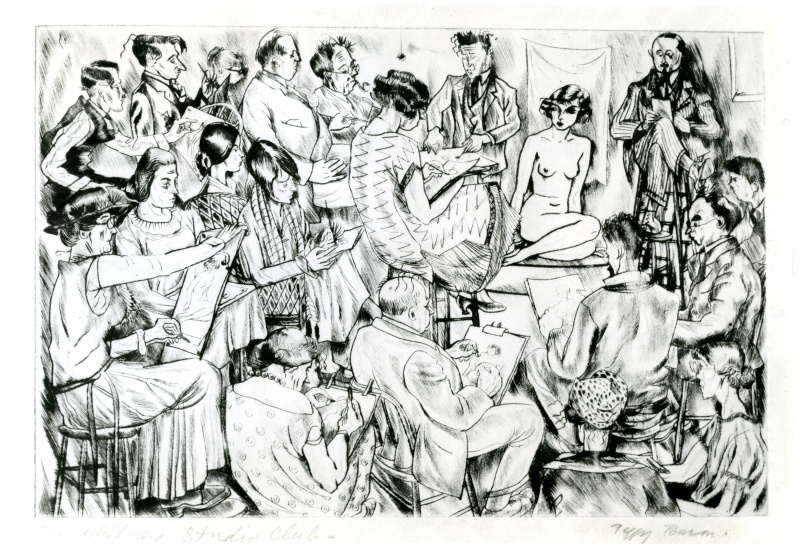
Art critic Murdock Pemberton offered a glowing review of an exhibit at the Montross Galleries by frequent New Yorker contributor Peggy Bacon:
Peggy Bacon, The Whitney Studio Club, 1925. (Whitney Museum of American Art)Peggy Bacon (Smithsonian)
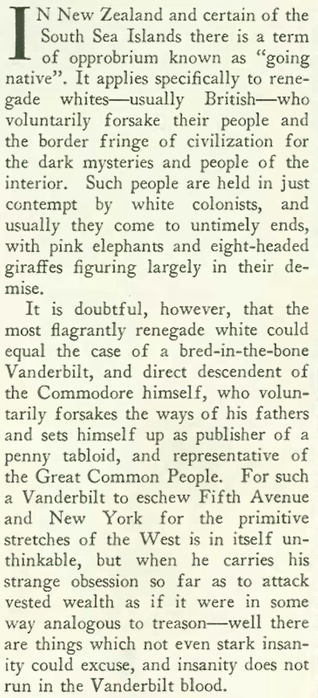
“Profiles” looked at Cornelius Vanderbilt Jr, “The Fifth Avenue Maverick.” William Boardman Knox wrote that the young Vanderbilt “is as alien to his blood as a marmoset to a gorilla.”
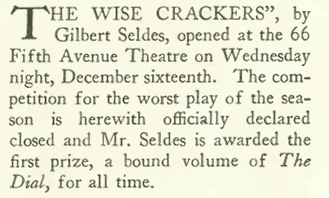
In the “The Theatre,” critic Herman J. Mankiewicz pulled no punches when he declared Gilbert Seldes’ play The Wise Crackers “the worst play of the season” (Seldes was himself a noted critic and sometime New Yorker contributor):
What’s more, the play was about a group of literate New Yorkers who gather to exchange witty barbs and sarcastically comment on the doings of the day. In other words, it was inspired by the Algonquin Round Table, which famously included Mankiewicz as a member.
Another Round Table notable was Robert Benchley, who contributed this piece for the last issue of the year:
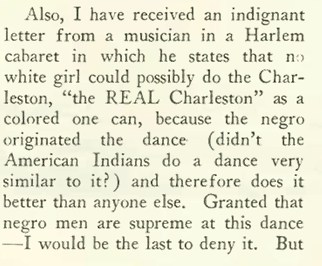
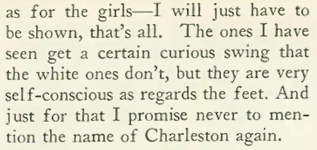
Lois Long offered her regrets for ever bringing up the subject of “The Charleston:”
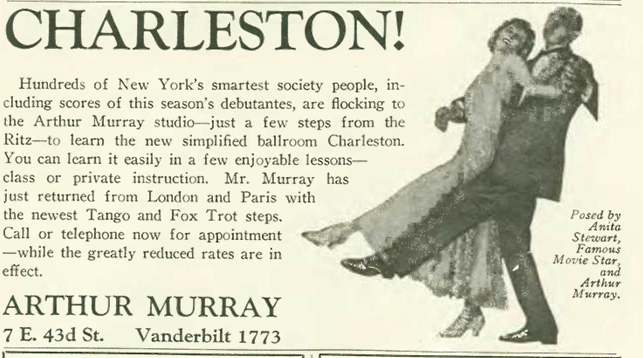
And just a few pages over, lessons were advertised for…The Charleston!
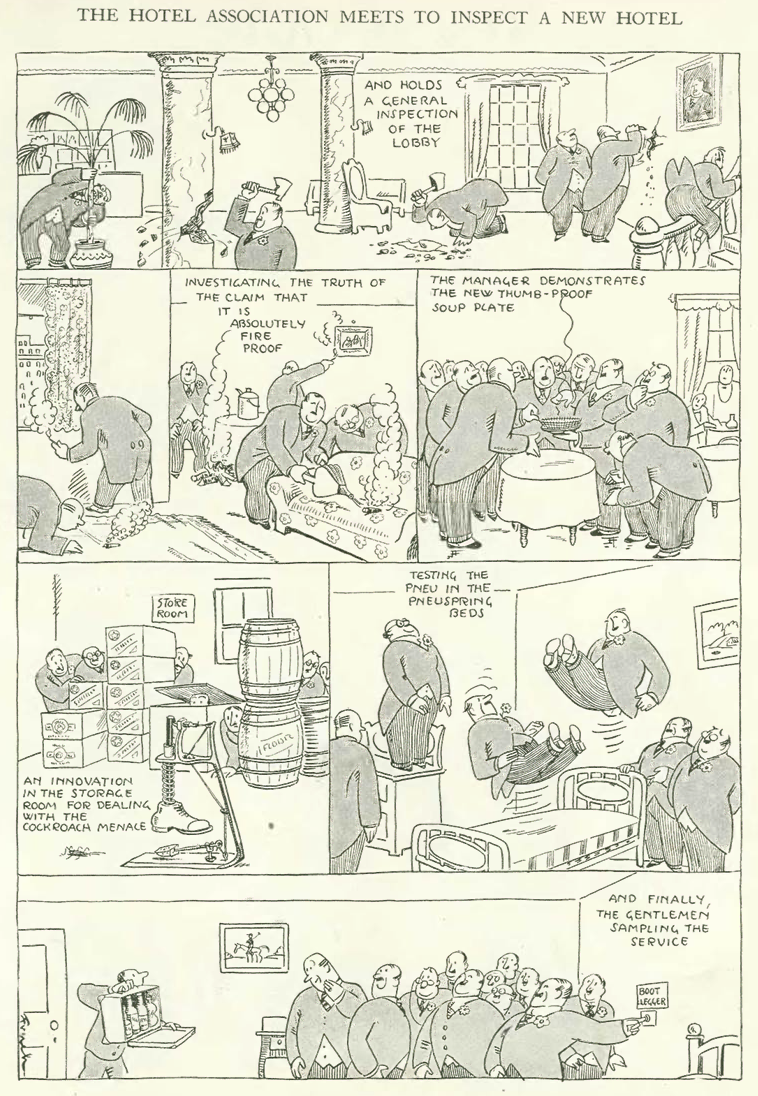
And to close, here’s a little fun with hotel inspectors, courtesy of Al Frueh:























 A New Yorker State of Mind