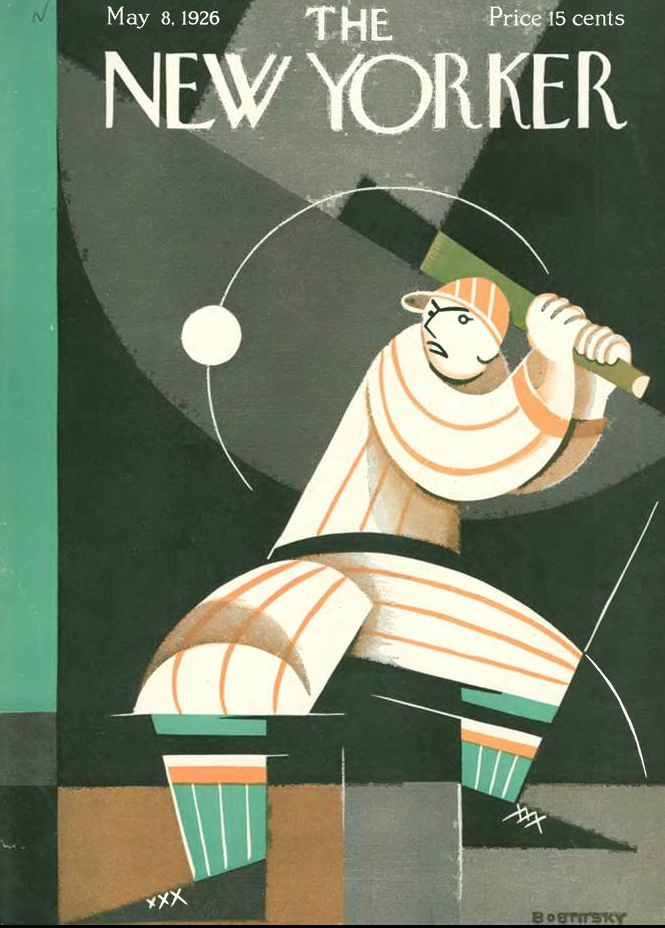
The Last Impressionist

The death of artist Claude Monet prompted the editors of the New Yorker’s “Talk of the Town” to speculate on the true origins of the “Impressionist” movement of the late 19th century.

586fbe11df96b63350793a3341bc3dcf
December 18, 1926 cover by Ottar Gaul. Once again, the theme of the doddering sugar daddy out on the town with his young mistress.

Note how the “Talk” editors lightly regarded the artist’s late period, during which he painted his famous “Water Lilies” series:
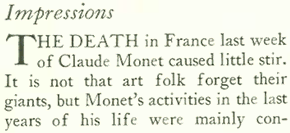
Screen Shot 2016-05-25 at 9.11.05 AM

Screen Shot 2016-05-25 at 9.11.30 AM

The editors also used the occasion to clear up the confusion (in the lay mind) between Édouard Manet and Monet, identifying them not only as two distinct persons but also crediting the former with the founding of the Impressionism technique while giving Claude his due for actually giving it a name:
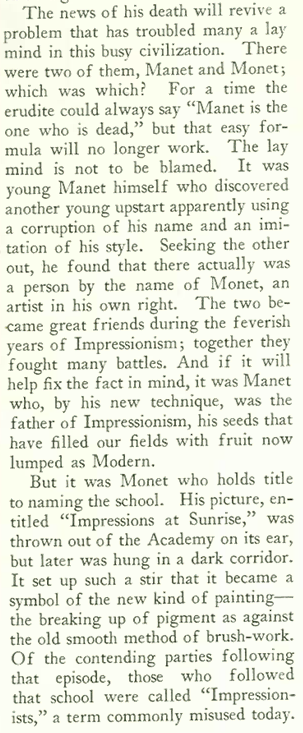

Screen Shot 2016-05-25 at 9.12.03 AM

Claude_Monet,_Water_Lilies,_ca._1915-1926
Water Lilies, a late period painting by Claude Monet, circa 1915-26. (Nelson-Atkins Museum of Art)
Monet_in_Garden,_New_York_Times,_1922
Monet, right, in his garden at Giverny, 1922. (New York Times)

Another much younger notable of the age, Ernest Hemingway, was the talk of literary society on both sides of the Atlantic with the publication of his latest novel, The Sun Also Rises. According to the New Yorker’s Paris correspondent Janet “Genêt” Flanner, the novel was creating a buzz in Montparnasse over the origins of the book’s colorful characters:

Screen Shot 2016-05-25 at 9.36.54 AM

Screen Shot 2016-05-25 at 9.37.08 AM

Keeping in mind that the Christmas shopping season was still in full swing, Frigidaire thought it the perfect time for New Yorker readers to buy a newfangled electric refrigerator:

Screen Shot 2016-05-25 at 9.09.03 AM

And we ring out the year with the final issue of 1926:

a891b86b245caf69b30eda2d09544bba
December 25, 1926 cover by Rea Irvin.

It was a tough year for New Yorker film critic “OC”, who summed up his  disappointment with the movies by offering a Top Ten list that included only two films:
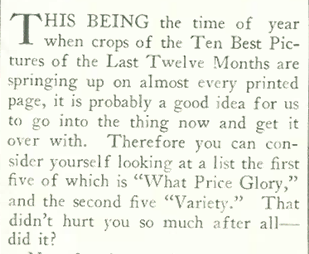
Screen Shot 2016-05-25 at 9.46.08 AM

Variety_(1925_film)
The 1925 German film Variety (released in the U.S. in 1926) was one of only two films worth watching in 1926, according to the New Yorker’s film critic. (Wikipedia)

And to close, this cartoon by Helen Hokinson, which in the original magazine filled all of page 14 and therefore had to be printed sideways:
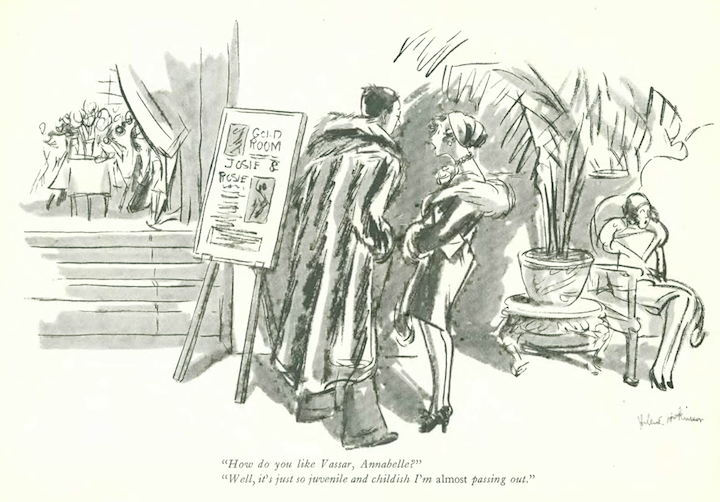
Screen Shot 2016-05-25 at 9.48.28 AM

Next Time: 1927-A Year to Remember…

3d2b321563197a6b5234717d2c47259b


The Circus Comes to Town

The Ringling Brothers Circus was in town, and The New Yorker marked the occasion with a profile of the surviving Ringlings, John and Charles. Writer Helena Huntington Smith noted that the brothers used a lowbrow profession to become multimillionaires, real estate kings (“They own “most of the west coast of Florida”) and even occasional patrons of the arts.

May 1, 1926 cover by Ottar Gaul.

Speaking of lowbrow, circus freaks remained a big attraction in 1920s New York. Here is an image of the Ringling Brothers “Congress of Freaks” lineup from two years earlier, in 1924:

Congress of Freaks 1924
Photograph by Edward Kelty, who took photos of the “Congress of Freaks” every year from 1924 to the mid 1930s. (artblart.com)

The 1926 show at Madison Square Garden also featured elephants “dancing” the Charleston. One wonders how much these poor beasts were abused:

7341-1 Dansende olifant 1926
(Vintage Everyday)

And from the “Remember it’s 1926 Department,” we have this New Yorker obituary for famed Ringling circus freak Zip the Pinhead. Note that Zip was “owned” by a Captain O.K. White:

Screen Shot 2015-12-10 at 4.41.53 PM

Screen Shot 2015-12-10 at 4.42.13 PM

Zip’s real name was William Henry Johnson. Thought to have been born with microcephaly (those with the condition were commonly called “pinheads), he might have merely possessed an oddly shaped head.

Zip_the_pinhead
William Henry Johnson. (Wikipedia)

Audiences were often told that he was a wild man, or a missing link, and although it was assumed he was mentally deficient (the New Yorker article above suggested he had the mentality of a two-year-old child), Johnson’s sister said he could “converse like the average person, and with fair reasoning power.” She claimed his last words (he died at age 83) were, “Well, we fooled ’em for a long time, didn’t we?”

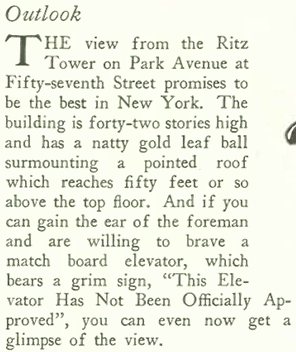
The New Yorker editors continued to marvel at the heights of new buildings, the latest being the Ritz Tower, which was to be the tallest residential building in the city:

Screen Shot 2015-12-10 at 4.40.43 PM

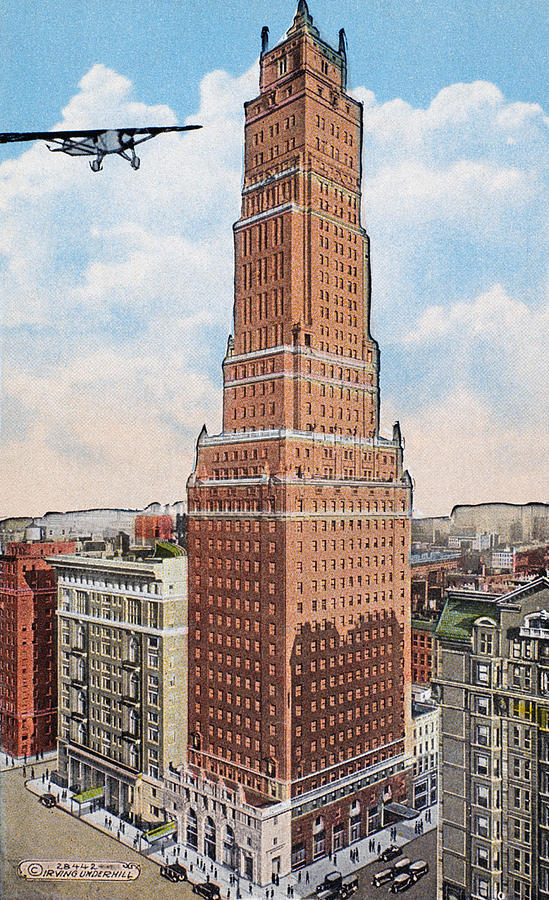
Here’s a postcard image of the Ritz Tower from the late 1920s. Note the airplane at left, added to emphasize the building’s height:

new-york-ritz-tower-granger
(geographicguide.com)

At 41 stories and 541 feet, the Ritz was city’s tallest residential tower at the time. The tallest residential tower in NYC today is 432 Park Avenue. The 96-story tower is just shy of 1,400 feet:

432PA_NW-View_copyright-dbox-for-CIM-Group-Macklowe-Properties-1024x682
(Forbes)

Even taller residential towers are in the works.

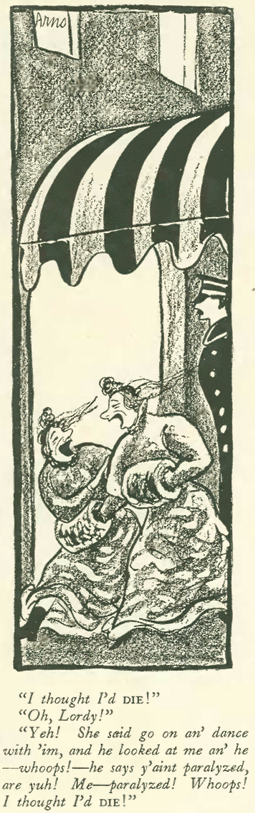
Now, to end on a lighter note, a Whoops Sisters cartoon by Peter Arno—this is the first in which their trademark “Whoops” is uttered.

Screen Shot 2015-12-10 at 4.49.34 PM

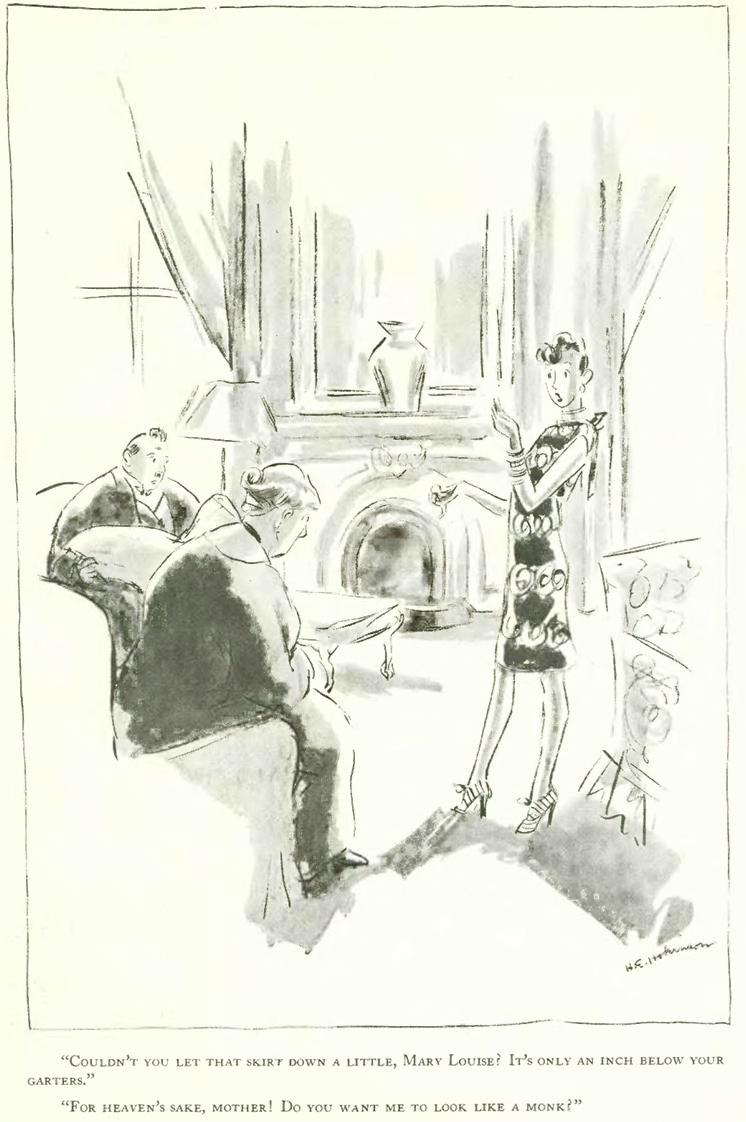
and this “generation gap” observation by Helen Hokinson:

Screen Shot 2015-12-10 at 4.45.46 PM

Next Time: Batter Up

Screen Shot 2015-12-11 at 9.24.00 AM