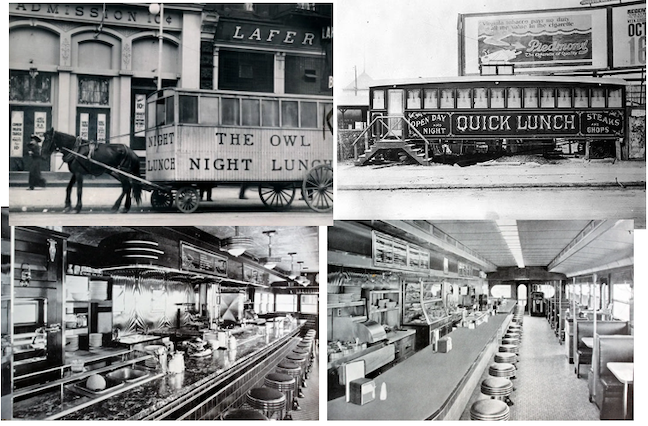
If you think today’s food trailers are the result of some hipster craze, consider that their origins go back more than a century; by 1934 Manhattan was home to 300 of the country’s 5,000 “lunch wagons,” which were commonly called “dog wagons.”
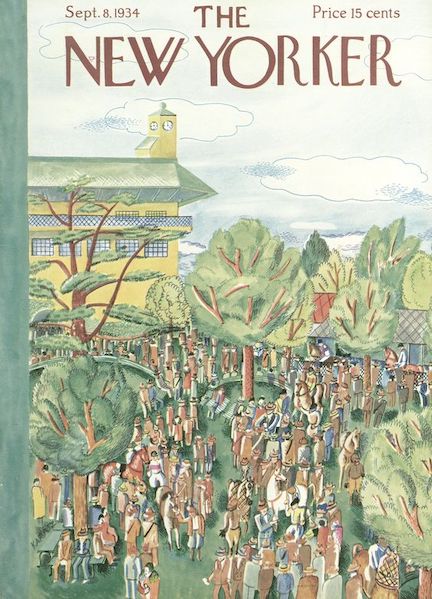
September 8, 1934 cover by Ilonka Karasz.
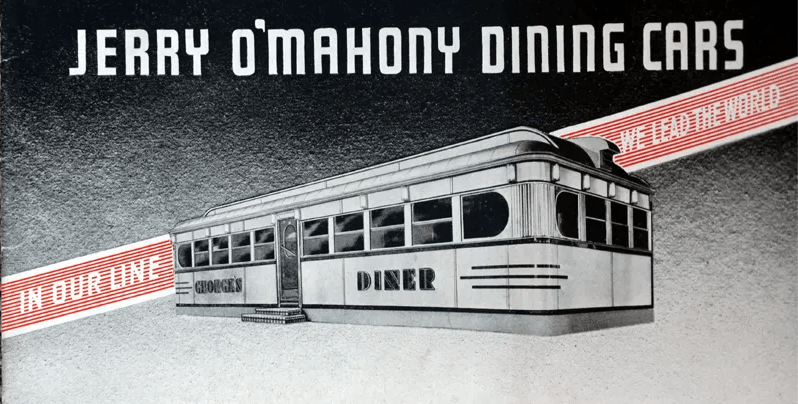
Some of Manhattan’s dog wagons belied the moniker, however, resembling the sleek roadside diners over which many today wax nostalgic. Jerry O’Mahony Diner Company of Elizabeth, New Jersey, produced more of these dining cars than any other concern—2,000 of them between 1917 and 1952 (only about twenty remain today). “The Talk of the Town” had this to say about the dog wagon phenomenon. Excerpts:
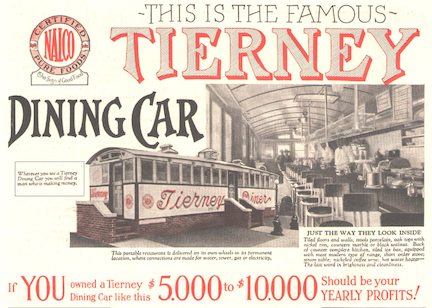
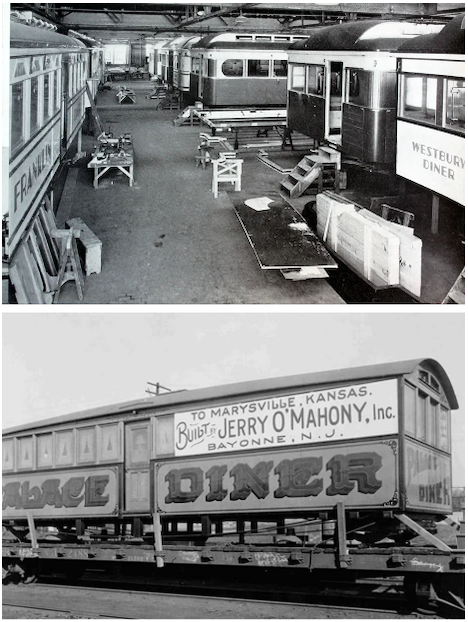
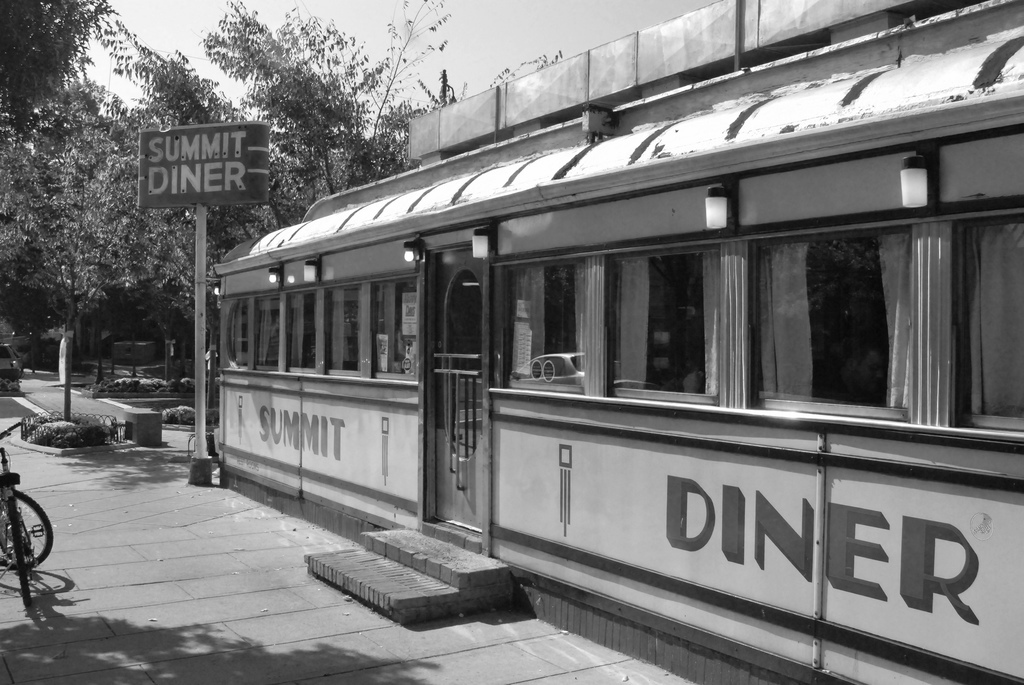
PROMISE OF BIG BUCKS…Tierney, based in New Rochelle and established in 1895, was an early manufacturer of lunch wagons and dining cars. It went out of business in 1933. Above, detail from a Tierney Diner Car Advertisement from the late 1920s. (scalar.usc.edu)LUNCH ON THE RUN…Clockwise, from top left, early “dog wagons” were horse-drawn affairs; the wagons became semi-stationary with the advent of manufactured units designed to resemble old railroad dining cars; bottom photos show interiors of two O’Mahony diners. (restaurantingthroughhistory.com/americanbusinesshistory.org/dinerhunter.com)ALL IN A NAME…Above: The Jerry O’Mahony Diner Company produced 2,000 diners in its Elizabeth, New Jersey, factory. Below, an O’Mahoney dining car headed for its new home in Kansas—the O’Mahony company preferred that patrons give their dining cars elite names, such as this “Palace Diner.” (dinerhunter.com/nyfta.org)LAST CALL…One of the few surviving O’Mahony diners—The Summit Diner in Summit, New Jersey. A prototypical “rail car” style diner, it was built by the O’Mahony Company in 1938. (Jeff Boyce/Wikimedia Commons)
* * *
A Captain’s Curios
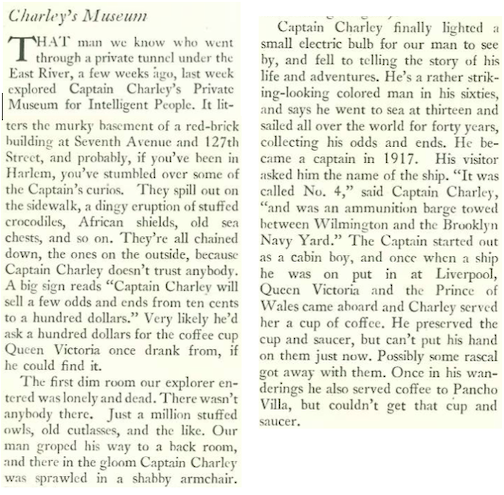
“The Talk of the Town” also paid a visit to Captain Charley’s Private Museum for Intelligent People, a place that would later be visited (and written about) by The New Yorker’s chronicler of the commonplace, Joseph Mitchell. Excerpts:
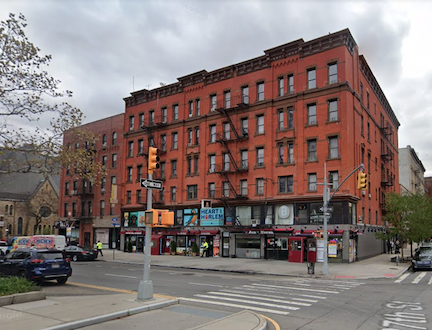
MURKY MUSEUM…This is likely the red brick building on 127th Street where the old mariner Captain Charley held court in the basement with his Private Museum for Intelligent People. (Google Street View)
* * *
Origins of Life
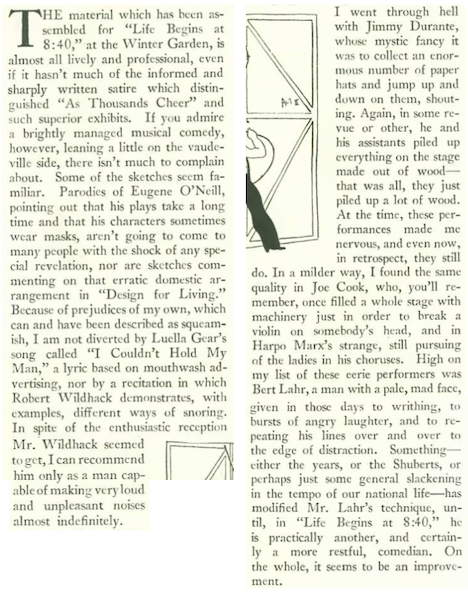
Wolcott Gibbs took his turn as theater reviewer (in relief of Robert Benchley) and managed to sit through Life Begins at 8:40, which had a successful run at the Winter Garden.
GIVING IT A REST…Roy Bolger, Luella Gear, Frances Williams and Bert Lahr headed the cast of Life Begins at 8:40 at the Winter Garden. Critic Wolcott Gibbs appreciated Lahr’s change in tempo, as he was becoming a more “restful” comedian. Lahr was the father of New Yorker theater critic and writer John Lahr. (Library of Congress)
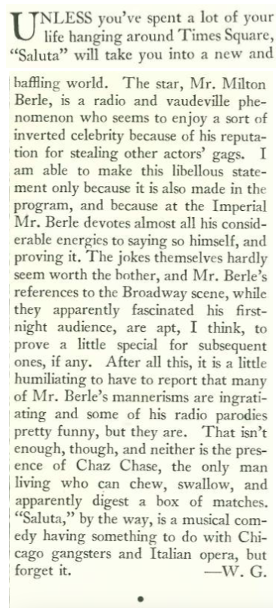
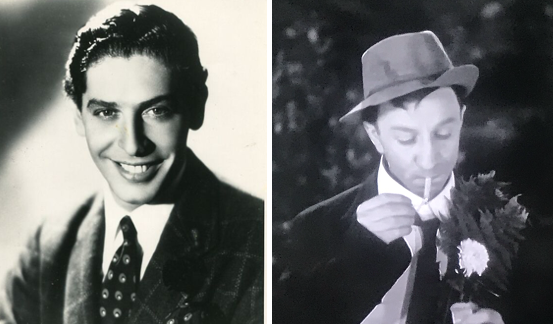
In contrast to Bert Lahr’s new toned-down style, Milton Berle’s outlandish antics over at the Imperial Theatre had Gibbs wondering what the comedian’s vaudeville-style show Saluta was all about, if it was about anything. Whatever it was, it worked—Berle would enjoy a comedy career spanning eight decades, including becoming one of early television’s biggest stars.
ON FIRE…Milton Berle’s show Saluta featured Chaz Chase (right), famed for gobbling up whatever was placed in front of his mouth, including a box of lit matches. At left, Berle in 1930; right, Chase in the 1935 film Vaudeville. (Pinterest/IMDB)
* * *
From Our Advertisers
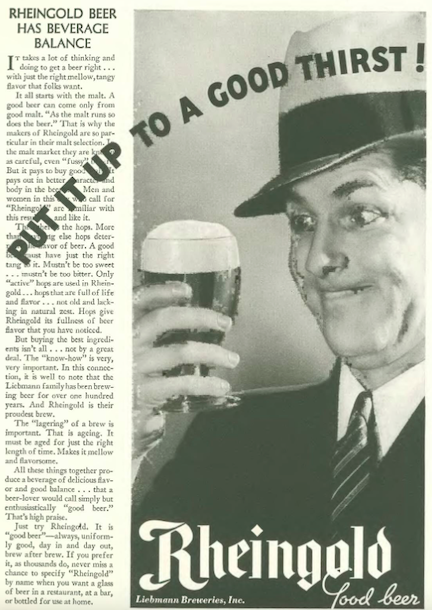
We begin with a cold one from Rheingold, which had “beverage balance” and wasn’t afraid to stamp a slogan right over its ad copy…
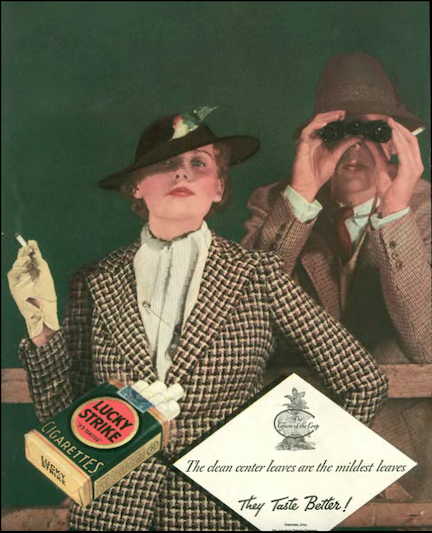
…Lucky Strike gave us another stylish reason for taking up a bad habit…
…Arts & Decoration magazine took out this full page to tout the latest news in modern design…
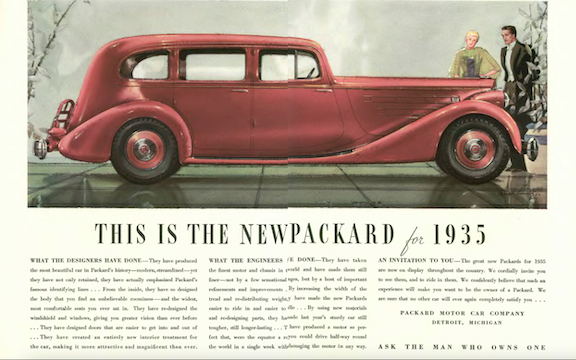
…while the folks at Packard bought this center spread to give ample space to their 1935 model, which must have been a helluva thing to parallel park…
…clothing companies continued use class shaming to goad aspiring toffs to purchase the “correct” attire for school…
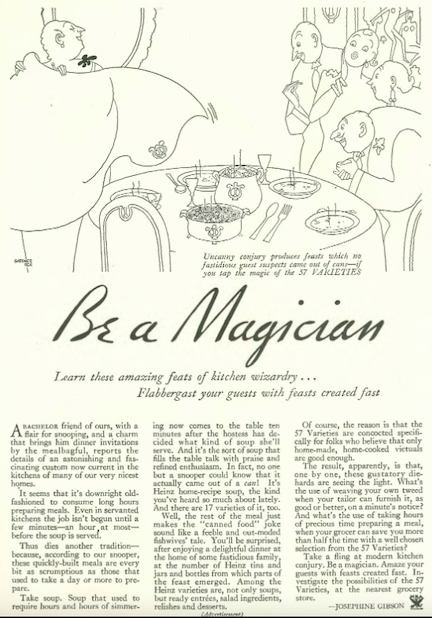
…with the help of Gardner Rea, Heinz suggested that the upper orders would simply swoon over cuisine you managed to scoop out of a can…
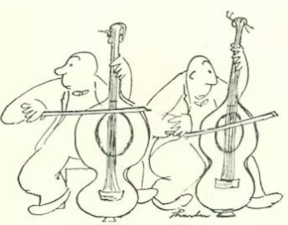
…on to our cartoonists, we begin with spots by James Thurber…
…and Lloyd Coe…
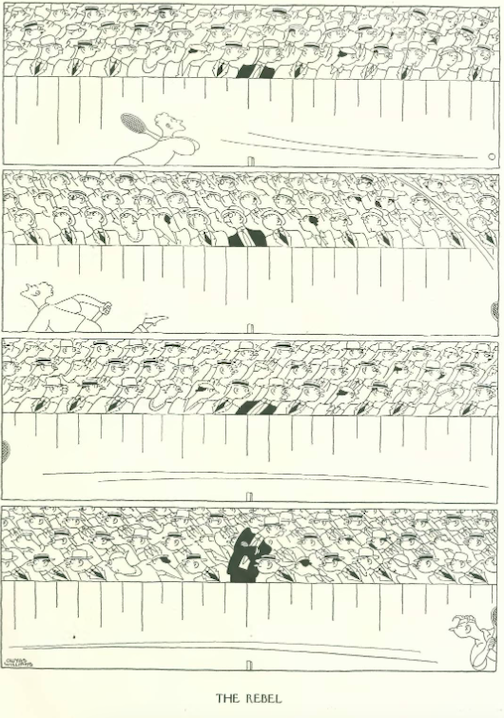
…with the absence of Otto Soglow’sLittle King, Gluyas Williams did his best to fill the void of a full page, something Williams did quite nicely…
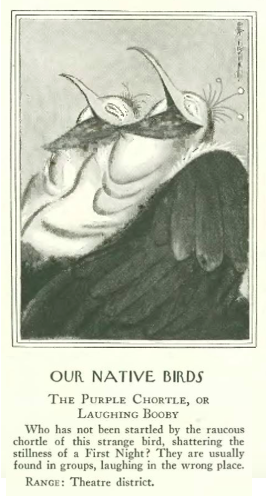
…Rea Irvin gave us yet another local bird sighting…
…Richard Decker found understatement over a reservoir…
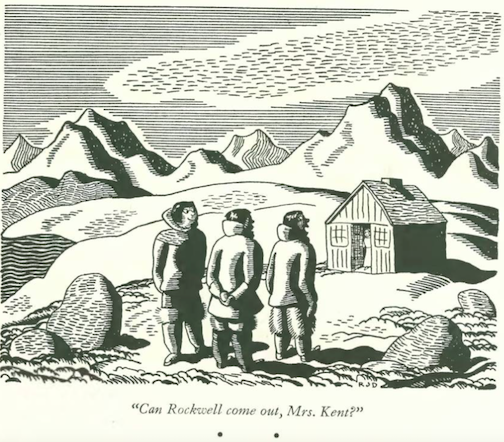
…Robert Day borrowed from the style of Rockwell Kent to offer a bit of humor from the northern climes…
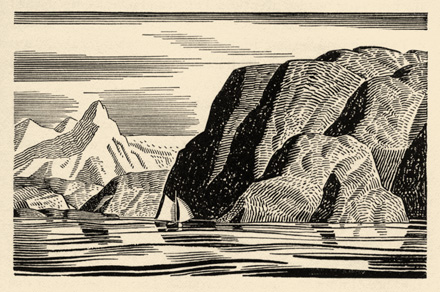
…here is a woodcut from Kent’s N by E is, an illustrated story of his voyage to Greenland…
(From Rockwell Kent’s 1930 book of woodcuts, N by E, via untendedgarden.com)
…Reginald Marsh lent his social realism to an uglier side of American life…
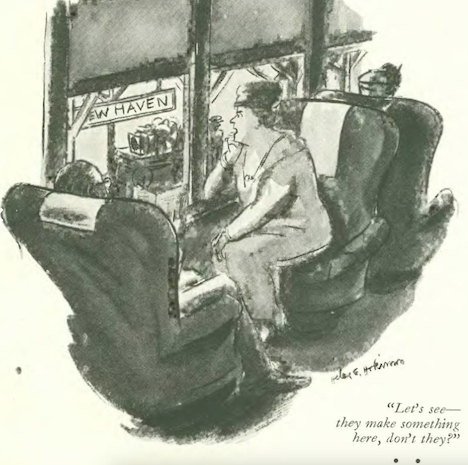
…and we close with Helen Hokinson, just taking in the passing scene…
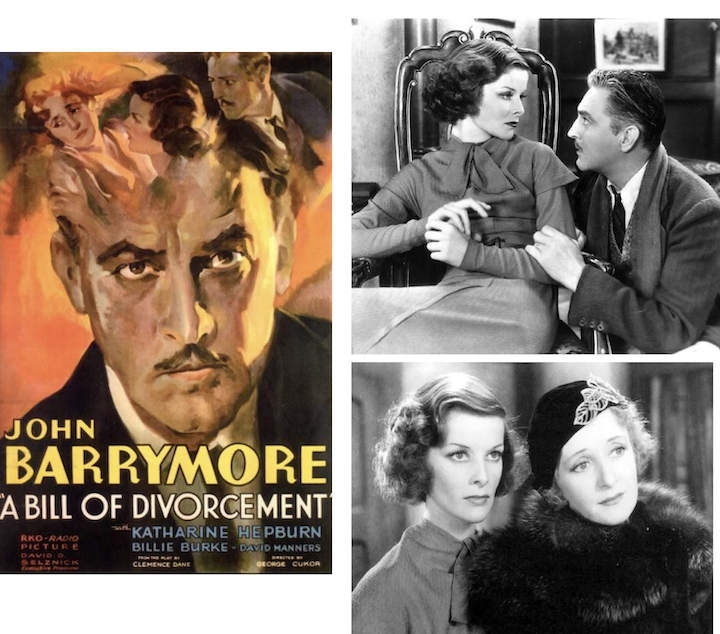
George Cukor’s 1932 pre-Code film A Bill of Divorcement would make Katharine Hepburn an instant star in her screen debut…
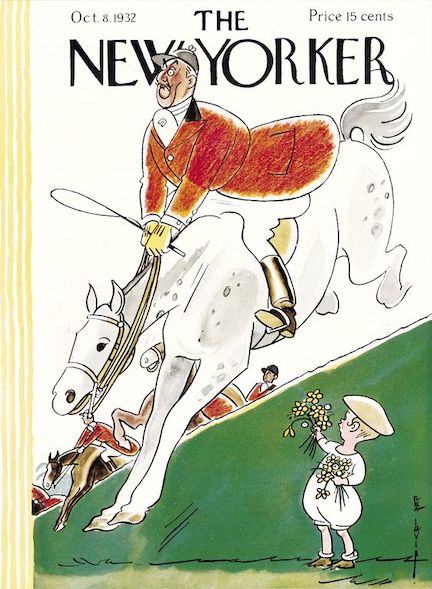
Oct. 8, 1932 cover by Rea Irvin.
… but New Yorker critic John Mosher seems to have missed the boat in spotting this new talent, who would go on to be—at least according to the American Film Institute, “the greatest female star of classic Hollywood cinema.” In A Bill of Divorcement, Hepburn portrays a young woman who fears she has inherited the same psychiatric problems that plague her father (John Barrymore). Mosher wrote:
A LOT ON HIS MIND…In A Bill of Divorcement, John Barrymore portrays a man who escapes from a mental hospital after 15 years of confinement, seeking to return to wife and family; his daughter, Sydney (Katharine Hepburn), fears she has inherited his psychiatric problems, while Sydney’s mother, Meg (Billie Burke) wants to start a new life with another man. (IMDB)
Although Mosher offered a rather tepid response to Hepburn’s debut role, critic Mordaunt Hall of The New York Times called the film “intelligent, restrained and often stirring.” Of Hepburn he wrote: “Miss Hepburn’s characterization is one of the finest seen on the screen and the producers have been wise in not minimizing the importance of her part because Mr. Barrymore is the star of the film.”
* * *
On Shaky Ground
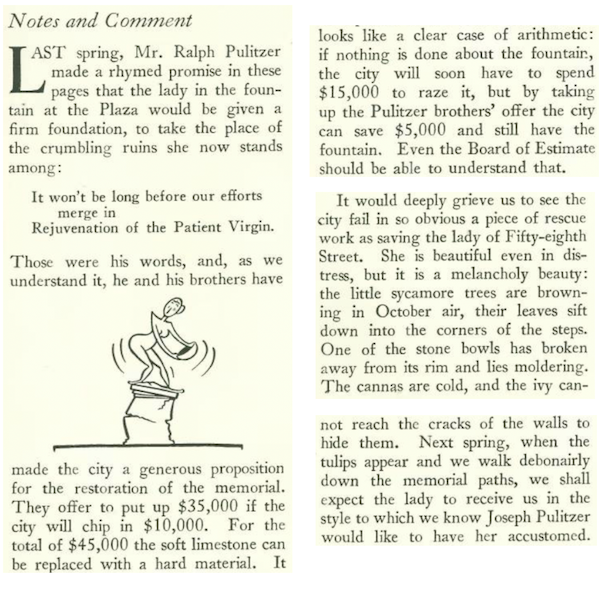
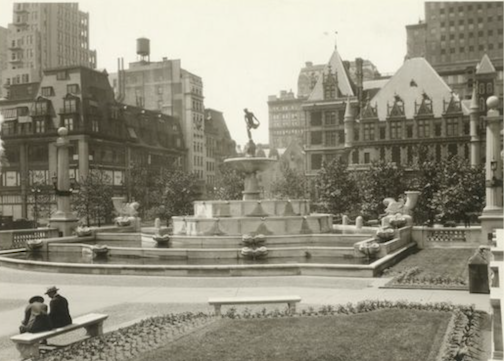
E.B. White noted the sad state of the Pulitzer Fountain, which had stood at the Plaza since 1916. Although Joseph Pulitzer’s sons had put up funds to restore the landmark, the city had yet to act on a plan.
Fortunately the fountain still stands, thanks to restorations in 1933-35, 1971 and 1985-90. As to White’s concerns, the city finally accepted the Pulitzers’ offer, and after delays due to labor disputes it was completed in June 1935. The original limestone basin was rebuilt in Italian marble, and a limestone balustrade and columns that surrounded the fountain were demolished.
WHEN WE WERE YOUNG…The Pulitzer Fountain after it was completed in 1916. (New York Public Library)
White also mused about the nature of Long Island, soon to be transformed under Robert Moses’ system of parkways that would stretch across the island’s vast expanses.
EAT ME…Hundreds of truck farms dotted Long Island in the early 20th century, especially known for their potatoes. (Newsday)
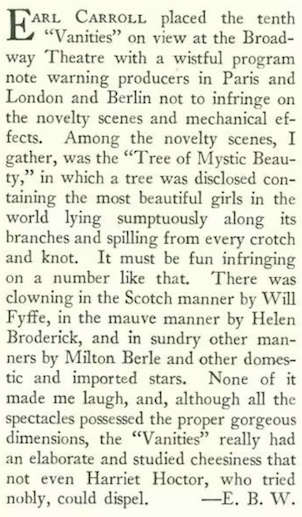
…and we have more from White, also serving as the magazine’s theater critic and taking in the latest installment of Earl Carroll’sVanities…I include this mainly to note the young vaudevillian Milton Berle’s first appearance on a big stage…
BEFORE UNCLE MILTIE…Milton Berle (1908–2002) made his first appearance on a big stage with Earl Carroll’s 1932 Vanities. It is also noteworthy that in that same year Chicago native Vincente Minnelli (see program cover) was getting his first breaks on Broadway as a stage and costume designer. (tralfaz.blogspot.com/Playbill)
* * *
Delirious Nights
Although Lois Long was primarily focused on her fashion column, she continued to file an occasional “Tables for Two” that gave readers a glimpse into New York nightlife, including the star-studded (Walter Chrysler, Howard Hughes, among others) opening of the Pierrette Club in the Waldorf-Astoria’s Sert Room…
DANCING WITH THE STARS…Lois Long reported on the star-studded opening of the Pierrette Club in the Waldorf-Astoria’s Sert Room, which featured a series of Saturday night supper dances; images of the Sert Room left and right; at center, The New York Times’ account of the club’s opening, Oct. 2, 1932. (geographicguide.com/The New York Times/jstor.org)
* * *
From Our Advertisers
Simon & Schuster promoted George Gershwin’s Song Book, illustrated by New Yorker regular Constantin Alajalov…
…signed first editions go for up to $8000 these days…
(raptisrarebooks.com)
…meanwhile, Farrar & Rinehart trumpeted the release of Evelyn Waugh’s latest novel (his third)…Black Mischief satirized the ways Europeans attempted to impose their customs and beliefs on other cultures…
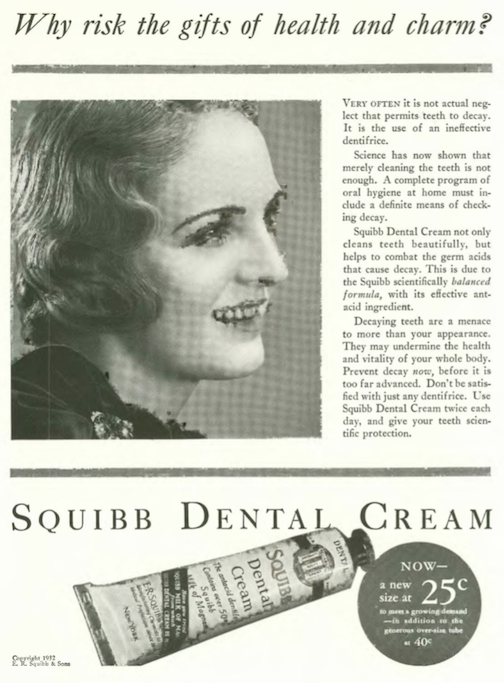
…Squibb helped The New Yorker’s bottom line with three separate ads scattered throughout the magazine…back in the day the Squibb brand was associated with everything from toothpaste…
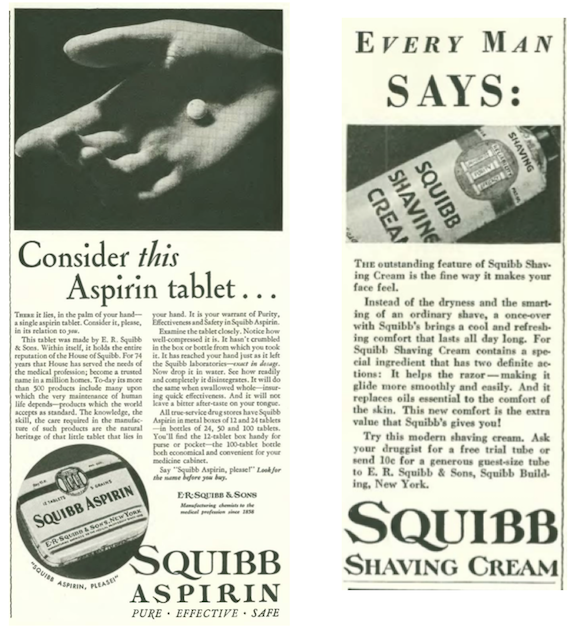
…to aspirin and shaving cream…founded in 1858, it merged with Bristol Meyers in 1989 to form one of the world’s largest pharmaceutical companies, Bristol Myers Squibb, which today is mostly known for manufacturing dozens of prescription pharmaceuticals and biologics…
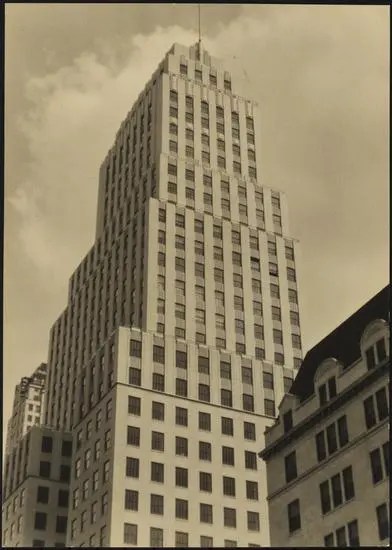
…Squibb & Sons were the primary tenant (the top 12 floors) of New York’s landmark Squibb Building when it opened its doors in 1930…
(Museum of the City of New York)
…moving on, here are a couple of ads that show us one thing that has definitely changed in the past 89 years…when was the last time you wore a fur coat to a football game?…
…cigarette manufacturers had plenty of money to advertise during the depths of the Depression, but apparently so did the folks at Wamsutta Mills…Wamsutta sheets are no longer made in New Bedford—part of the circa 1847 mill complex is now loft-style housing…however, the Wamsutta brand still exists in the U.S. through Bed, Bath & Beyond and internationally as part of a Brazilian textile conglomerate…
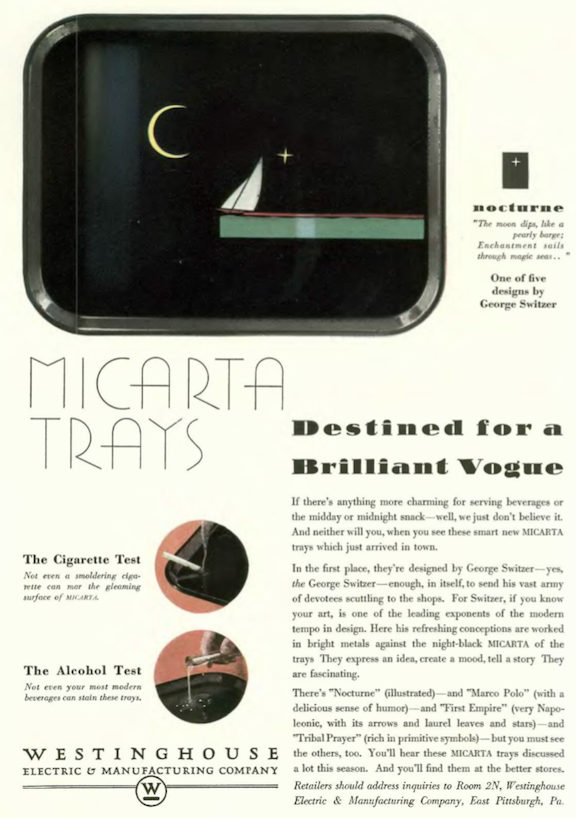
…Micarta was a substance developed by Westinghouse in the early 20th century for use with electrical equipment…produced from a combination of linen, canvas, paper, fiberglass and other materials processed under heat and pressure, Westinghouse found a new use for this laminate — serving trays designed by George Switzer…you can read more about Micarta trays at Driving for Deco…reader Chris notes that Micarta is “still available in a wide range of grades and designer colors and is popular with hobbyists and craftsmen the world over”…
…in the Oct. 29 issue, E.B. White made this observation about Micarta trays…
…on to our cartoons, William Steig’s “Small Fry” learned about the birds and the bees…
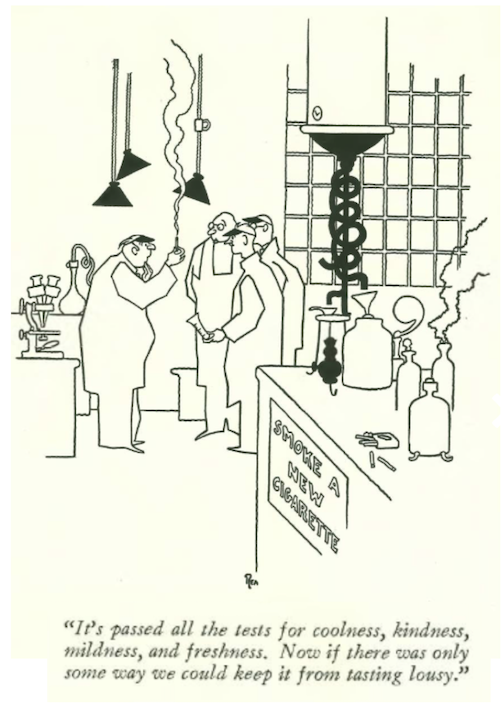
…Gardner Rea visited some tobacco researchers challenged to keep pace with advertising claims…
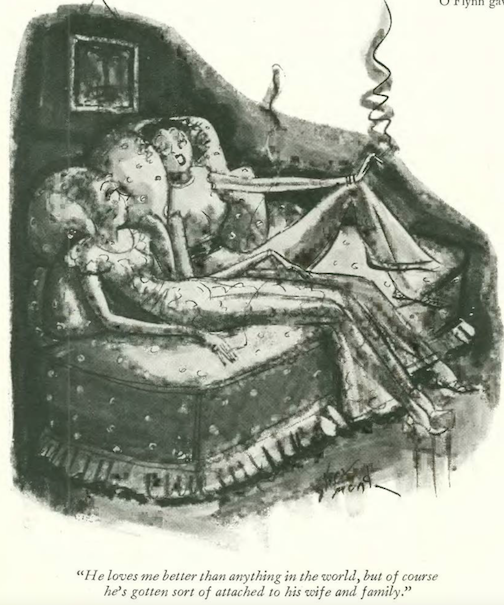
…Barbara Shermund looked into the love lives of the modern woman…
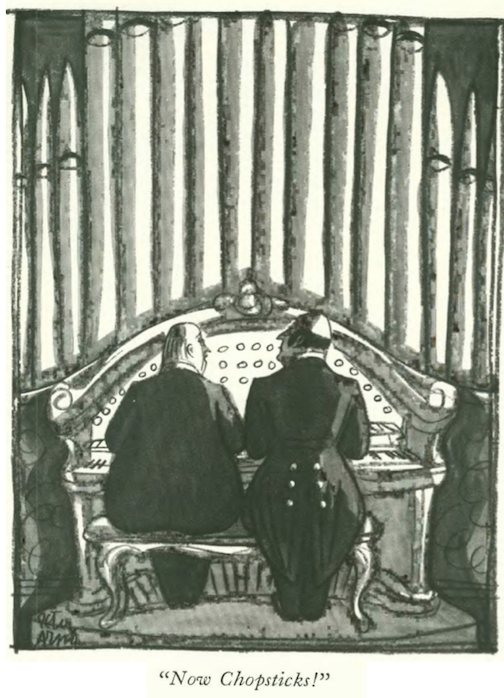
…and Peter Arno got playful at the pipe organ…
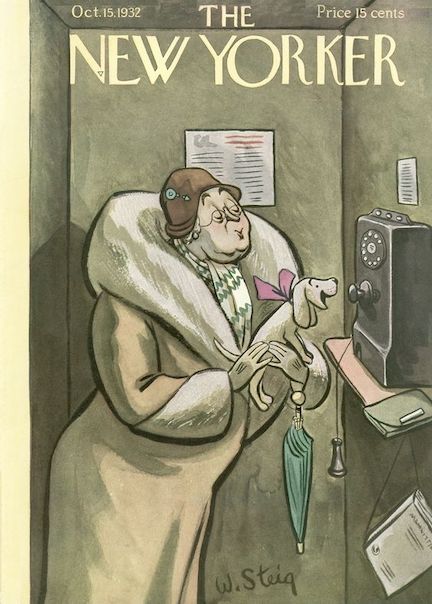
…on to our Oct. 15, 1932 issue…
Oct. 15, 1932 cover by William Steig.
…where we check in on John O’Hara (1905–1970), who defined the short story at The New Yorker (and contributed more shorts to the magazine than any other writer). For the Oct. 15 issue O’Hara submitted a profile titled “Of Thee I Sing, Baby.” The profile is unusual because it is told as a story rather than as a biography, and the subject, a chorus girl, is not identified by her real name. A brief excerpt:
WRITING MACHINE…John O’Hara (pictured here in 1945) contributed more short stories to The New Yorker than any other writer. (Library of Congress)
* * *
…William Steig (1907–2003) was both a writer and illustrator, and every bit as prolific as O’Hara, publishing more than 50 books during his long life and career, including his very first, which received this mention at the end of the Oct. 15 book review section:
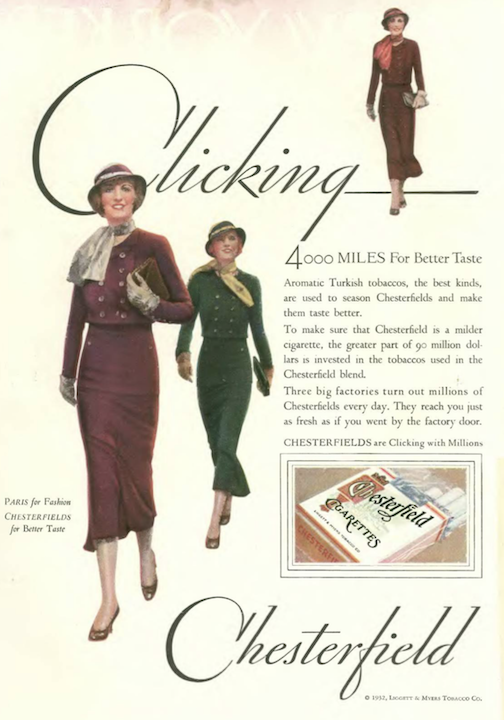
…on to our Oct. 15 advertisers, we have the makers of Chesterfields pairing their product with the sophistication of Paris fashions…
…Carl “Eric” Erickson illustrated a number of ads for R.J. Reynolds’ Camel cigarettes in the late 1920s and early 1930s…here he employed his signature sophisticated style for the French Line…
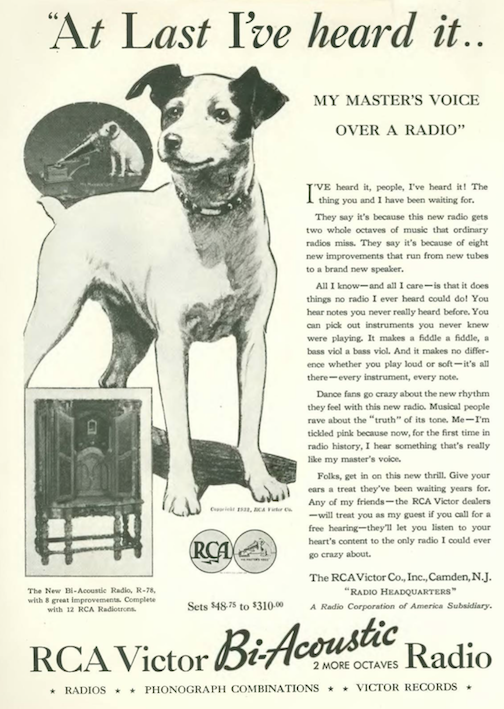
…RCA promoted the next great advance in radio technology—”bi-acoustic” sound that added “two more octaves” to radio broadcasts…it would take thirty more years to roll out something we take for granted today—stereo…
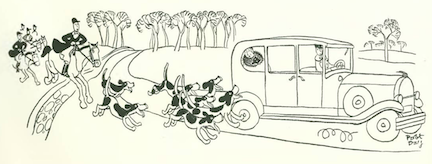
…on to our cartoons, Robert Day joined a misdirected fox hunt…
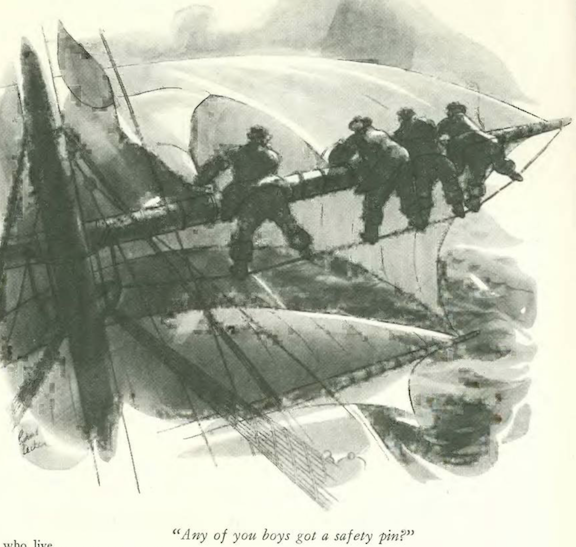
…Richard Decker gave us one man’s simple solution to a perilous situation…






















 A New Yorker State of Mind