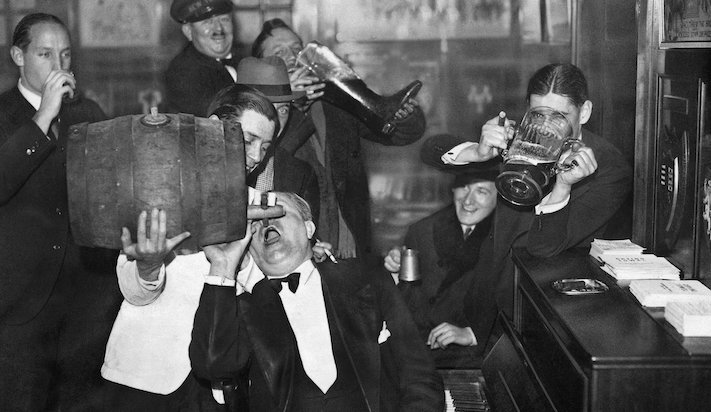
Settling Down

Above: Celebrating the repeal of the 18th Amendment, 1933. (New York Times)

“Settling Down” was the title given to Morris Markey’s examination of the post-Prohibition world, which to no one’s surprise heartily embraced (and imbibed) everything this world had to offer.
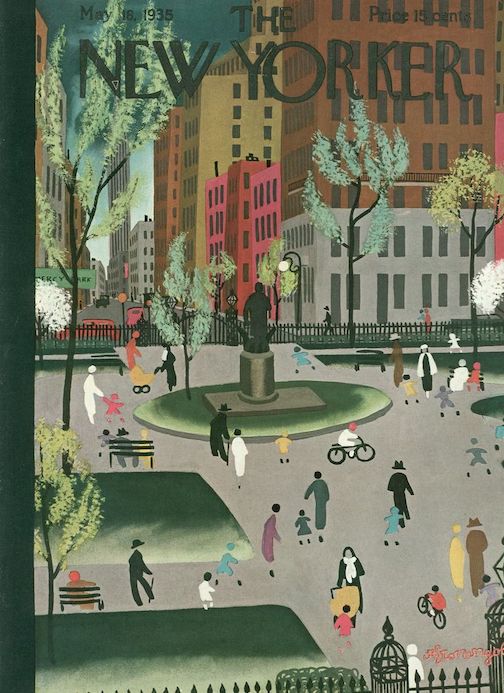
May 18, 1935 cover by Adolph K. Kronengold.

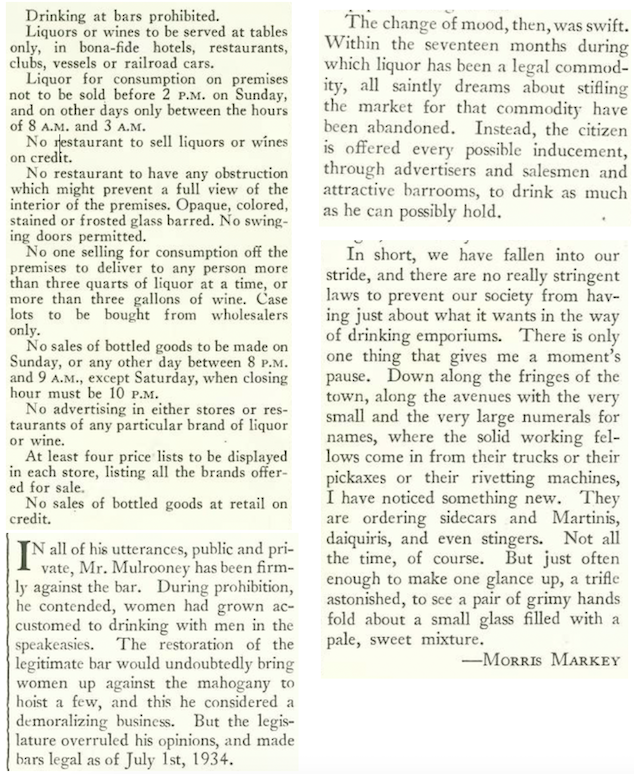
In his column, “A Reporter at Large,” Markey examined the challenges faced by local and federal governments in reestablishing old liquor control laws, in many cases creating new ones to address the technological, economic and social changes that transpired during the fourteen years of Prohibition. Facing this challenge in New York was Edward P. Mulrooney (1874-1960), a former police commissioner tapped in 1933 to head the State Alcoholic Beverage Control Board. Markey explained how Mulrooney and New York regulators tried to create new standards for alcohol consumption that would encourage moderation. Excerpts:

CAN’T HAVE A BELT IN THE BIBLE BELT…Published by The United States News on Nov. 11, 1933, this map shows how liquor laws varied by state following Prohibition. After Prohibition ended with the ratification of the 21st Amendment, states gained the authority to regulate alcohol sales, leading to a wide variety of state and local laws. Many states adopted local option laws, allowing cities and counties to decide whether to allow alcohol sales, resulting in “wet,” “dry,” and “moist” jurisdictions. (us news.com)

Seventeen chief provisions for moderating alcohol use were published in The New York Times on Nov. 10, 1933, but ten of those provisions were quickly abandoned. Less than a year and a half after repeal, Markey noted that “the citizen is offered every inducement…to drink as much as he can possibly hold.”
SO MUCH FOR RULES…Celebrations for the repeal of Prohibition in bars and former speakeasies began when Franklin Roosevelt signed the Cullen-Harrison Act on March 22, 1933; the president himself was known to enjoy a dry martini; former New York Police Commissioner Edward P. Mulrooney had the unlucky task of figuring out how to regulate the juice of the grape and the grain. In the end, people seemed to be drinking more than ever. (themobmuseum.org/thrillist.com/Condé Nast)

 * * *

Hordes From the Hinterland

There was a time, long ago, when Broadway catered mostly to New Yorkers, but with the advent of mass media and better transportation options folks from the hinterlands (from beyond the Hudson) began to descend on the Great White Way. Then as now, certain shows attracted thousands, including The Great Waltz, a musical based on the works of Johann Strauss I and Johann Strauss II. It opened in September 1934 at the Center Theatre and ran for 289 performances. “The Talk of the Town” sniffed that “People who literally have never seen a play before in their lives turn up at Sixth Avenue and Forty-ninth Street, ready for anything.”

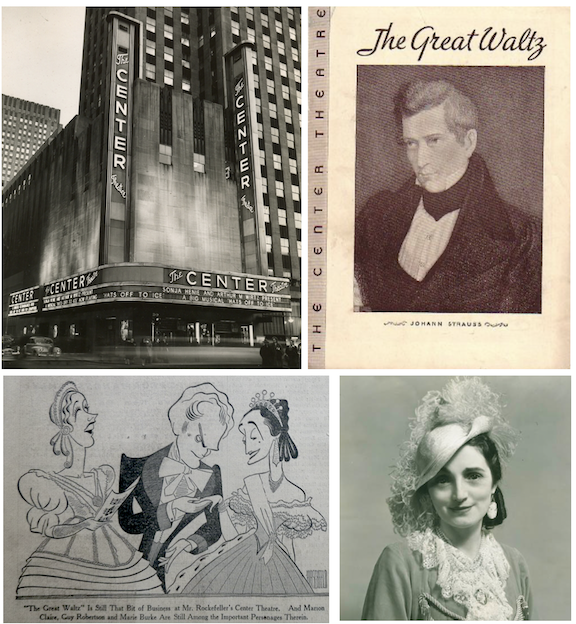
MANY AMERICANS WERE AGOG over the The Great Waltz…Clockwise, from top left, the play was performed at the Center Theatre (formerly the RKO Roxy Theatre) at 49th Street and 6th Avenue—sadly, it was demolished in 1954, the only building to ever be demolished from the original Rockefeller Center complex; cover of the Playbill; actress Marie Burke portrayed Countess Olga Baranskaja; Al Hirschfeld illustration of Burke and fellow actors Guy Robertson (as Johann Strauss) and Marion Claire as Therese. (cinematreasures.org/playbill.com/nyt.com)

 * * *

From Our Advertisers

Appropriately, this full-page advertisement for Gordon’s Gin appeared opposite the opening page of Morris Markey’s exploration of the post-Prohibition world…

…and business was booming in the liquor trades…most of the full-color ads in The New Yorker were placed by liquor companies, cigarette manufacturers, and automakers…the inside back cover shilled for Penn Maryland…

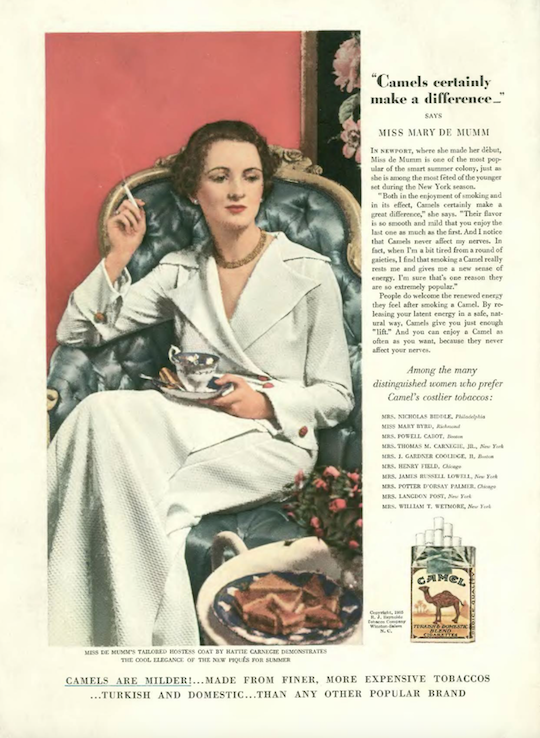
…while the back cover was once again claimed by big tobacco…here we have Newport deb Mary De Mumm expounding on wonders of Camel cigarettes, which somehow helped her feel both restful and energetic…
…those who enjoyed the finer things could buy this Packard for about $3,000 (nearly $90K today).

…anticipation was building for the June arrival of the new French liner S.S. Normandie, the largest and fastest passenger ship afloat…
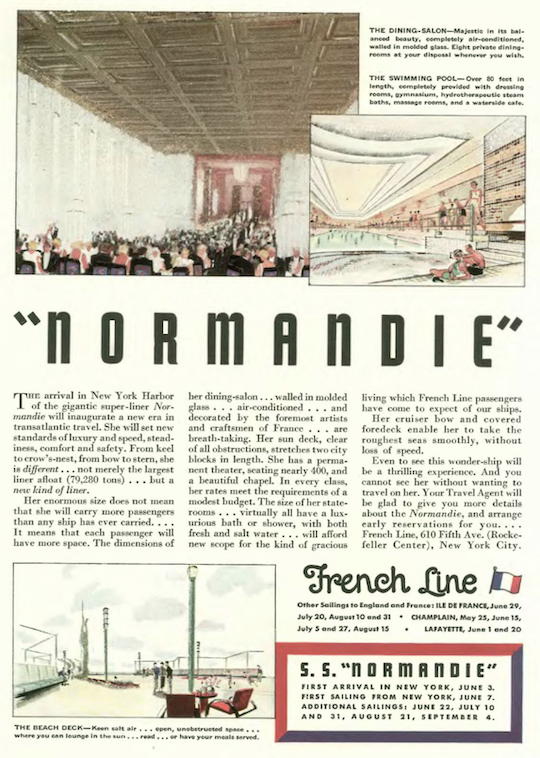
S.S. Normandie on the high seas. (Wikipedia)

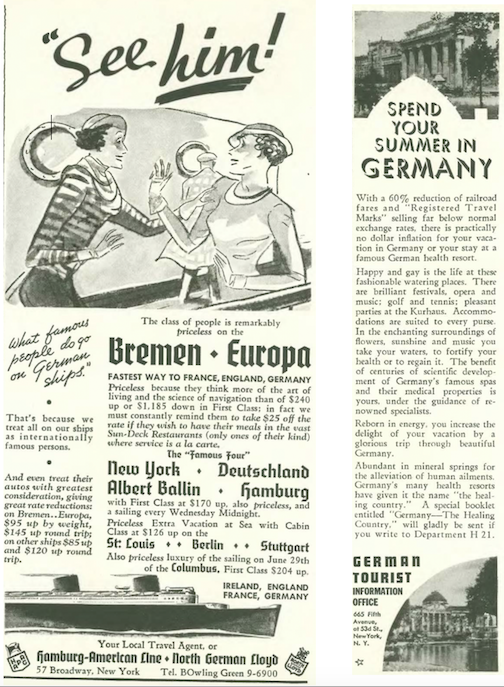
…the Hamburg-American Line was another way to get across the pond, and it promised a ship filled with famous and classy people (and likely more than a few Nazis)…the single-column ad on the right suggested you could spend your summer in Germany…the tourist bureau claimed that Germany was known as “the healing country,” and doubtless many needed healing after being beaten by Brownshirts…
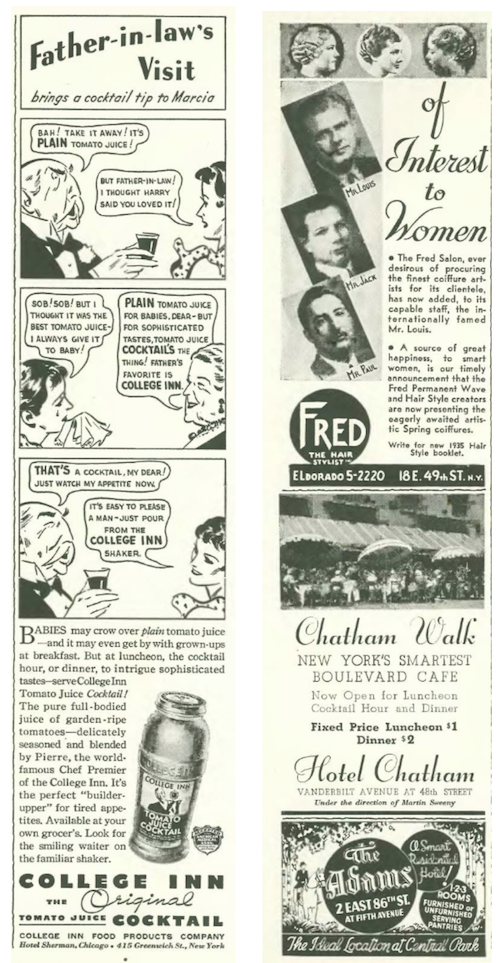
…a couple more single-column ads, first from our friends at College Inn, who dumped the furious Duchess in favor of a dyspeptic father-in-law who brings his daughter-in-law to tears over her choice of tomato juice…the ad at right advertised the services of Mr. Louis, Mr. Jack, and Mr. Paul at the hair stylist Fred, while a tiny ad at the bottom offered a luncheon for a buck at New York’s “Smartest Boulevard Cafe”…
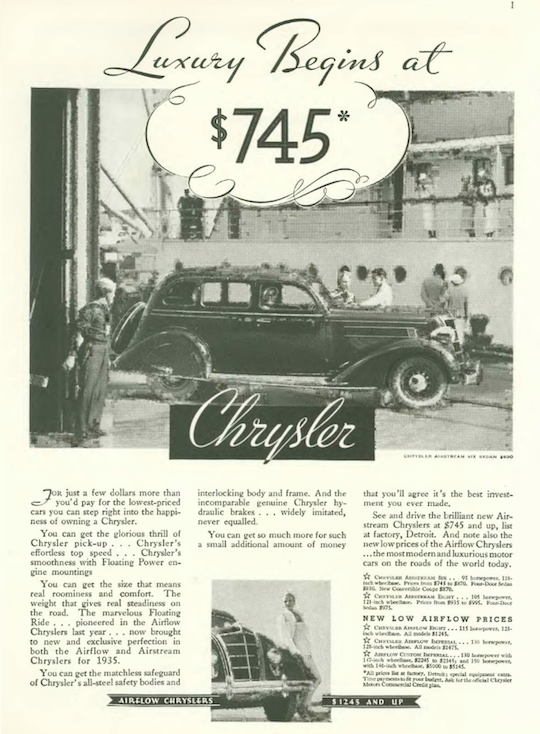
…the key word in many New Yorker advertisements was luxury, and for a fraction of what you would pay for a Packard, you could, apparently, experience luxury for as little as $745…
…or you could enjoy a bit of elegance by opening a some cans of Heinz soup, chili sauce, stuffed olives and other delectables…here a couple of shady-looking butlers are serving nothing but canned goods at a swanky party, much to the annoyance of the cook, who appears poised to take a cleaver to the scheming pair…

…and look what else you can get from a can, some soup with a “personality”…

…enough of that nonsense, on to our cartoonists, with two spots from James Thurber

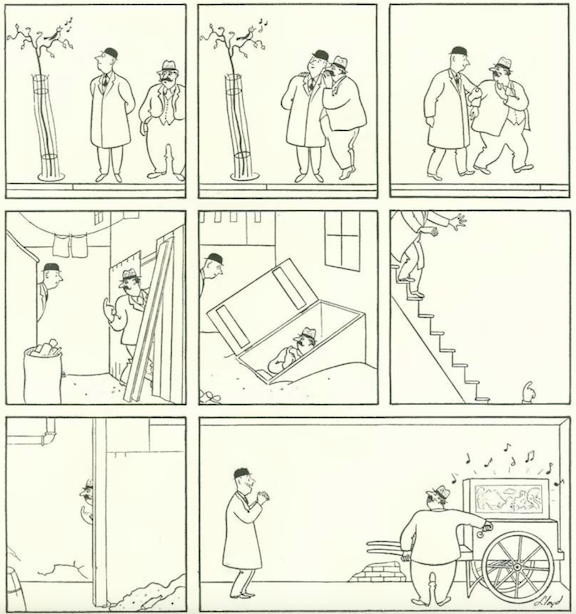
...Lloyd Coe gave us this musical multi-panel…
Leonard Dove looked in on the complex world of young love…
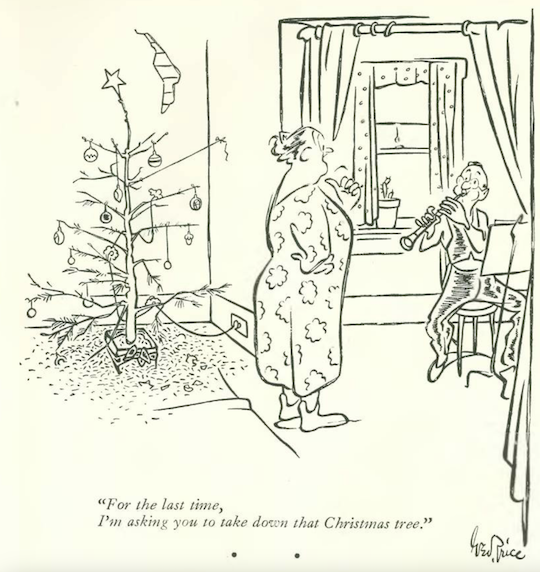
George Price found the Yuletide spirit still alive among procrastinators…
…and we close with Alan Dunn, and some earthy reading…

Next Time: Vive La Normandie…

Lunch at the Dog Wagon

If you think today’s food trailers are the result of some hipster craze, consider that their origins go back more than a century; by 1934 Manhattan was home to 300 of the country’s 5,000 “lunch wagons,” which were commonly called “dog wagons.”

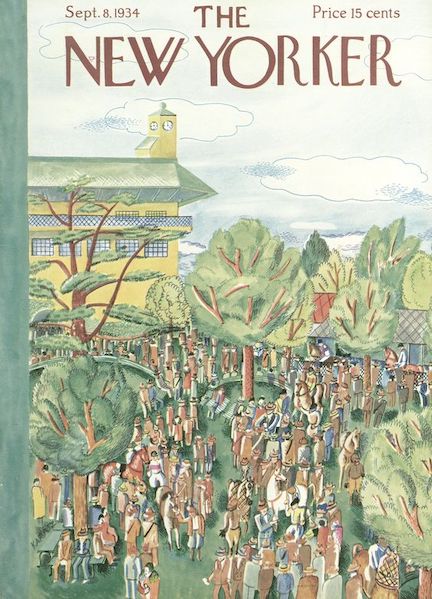
September 8, 1934 cover by Ilonka Karasz.

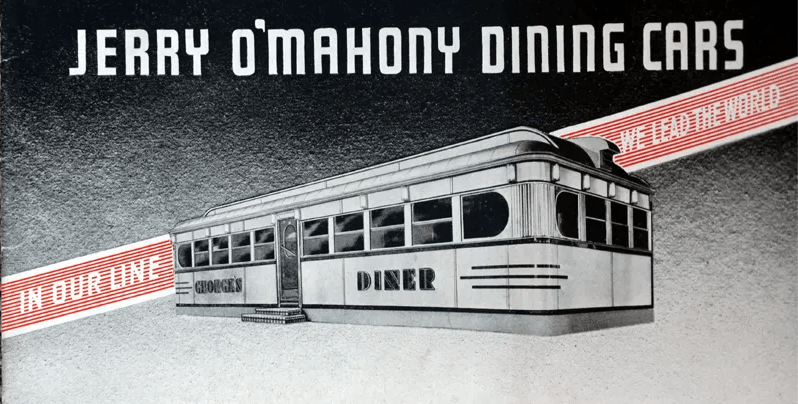
Some of Manhattan’s dog wagons belied the moniker, however, resembling the sleek roadside diners over which many today wax nostalgic. Jerry O’Mahony Diner Company of Elizabeth, New Jersey, produced more of these dining cars than any other concern—2,000 of them between 1917 and 1952 (only about twenty remain today). “The Talk of the Town” had this to say about the dog wagon phenomenon. Excerpts:

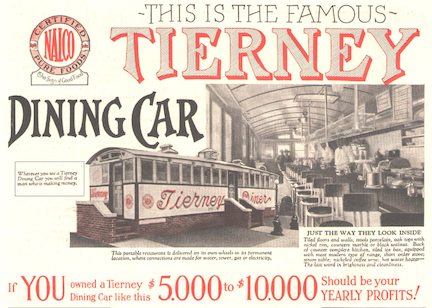
PROMISE OF BIG BUCKS…Tierney, based in New Rochelle and established in 1895, was an early manufacturer of lunch wagons and dining cars. It went out of business in 1933. Above, detail from a Tierney Diner Car Advertisement from the late 1920s. (scalar.usc.edu)
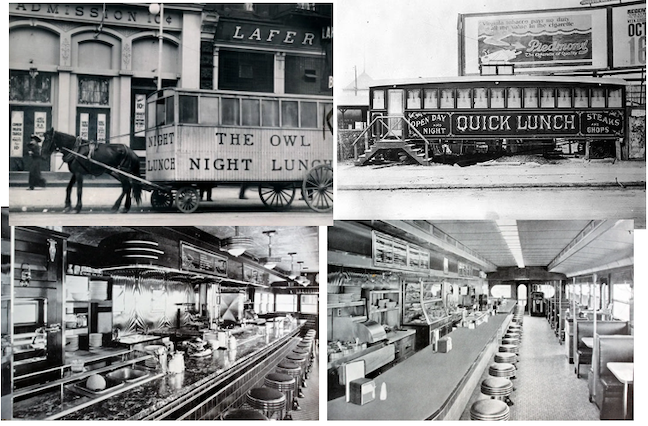
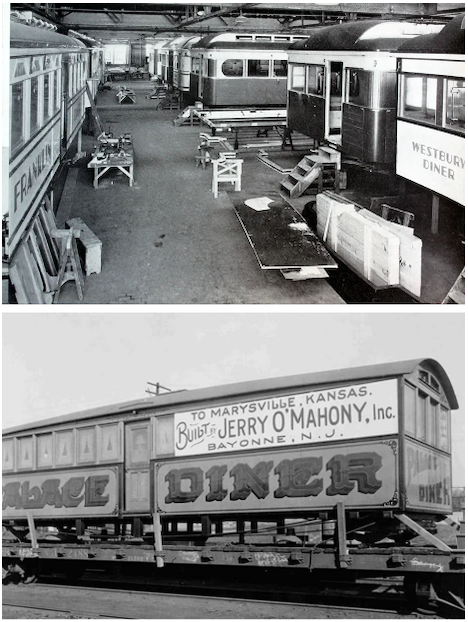
LUNCH ON THE RUN…Clockwise, from top left, early “dog wagons” were horse-drawn affairs; the wagons became semi-stationary with the advent of manufactured units designed to resemble old railroad dining cars; bottom photos show interiors of two O’Mahony diners. (restaurantingthroughhistory.com/americanbusinesshistory.org/dinerhunter.com)
ALL IN A NAME…Above: The Jerry O’Mahony Diner Company produced 2,000 diners in its Elizabeth, New Jersey, factory. Below, an O’Mahoney dining car headed for its new home in Kansas—the O’Mahony company preferred that patrons give their dining cars elite names, such as this “Palace Diner.” (dinerhunter.com/nyfta.org)
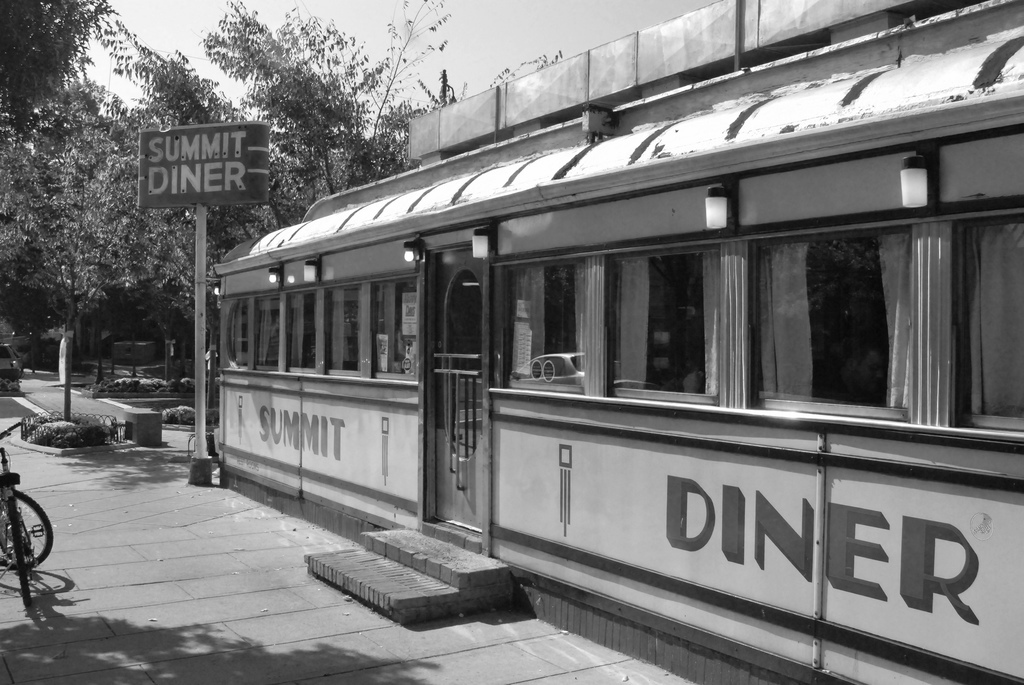
LAST CALL…One of the few surviving O’Mahony diners—The Summit Diner in Summit, New Jersey. A prototypical “rail car” style diner, it was built by the O’Mahony Company in 1938. (Jeff Boyce/Wikimedia Commons)

 * * *

A Captain’s Curios

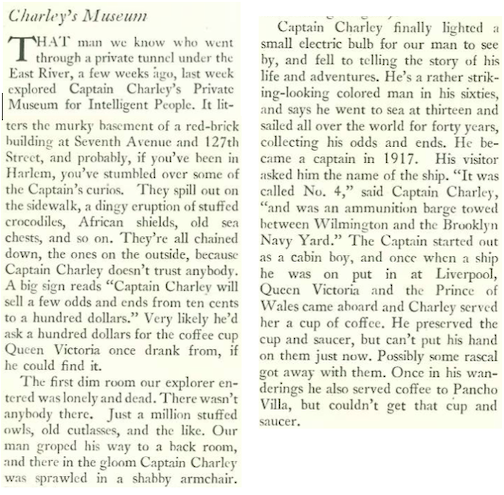
“The Talk of the Town” also paid a visit to Captain Charley’s Private Museum for Intelligent People, a place that would later be visited (and written about) by The New Yorker’s chronicler of the commonplace, Joseph Mitchell. Excerpts:

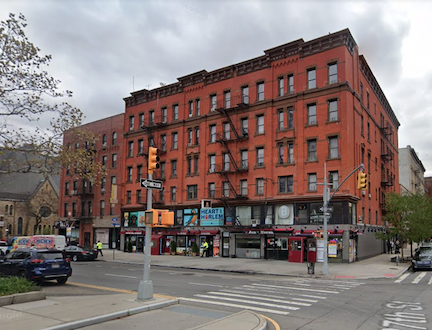
MURKY MUSEUM…This is likely the red brick building on 127th Street where the old mariner Captain Charley held court in the basement with his Private Museum for Intelligent People. (Google Street View)

 * * *

Origins of Life

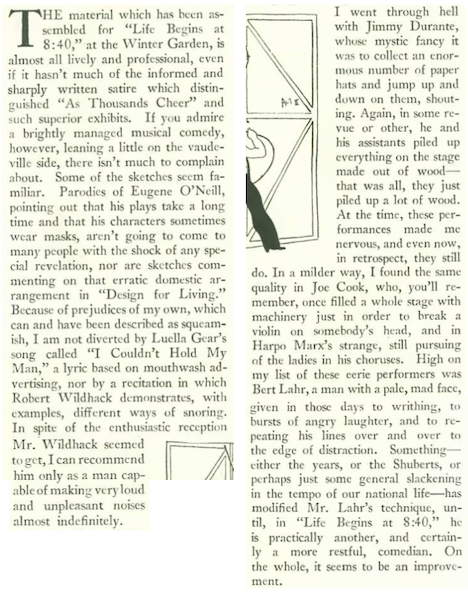
Wolcott Gibbs took his turn as theater reviewer (in relief of Robert Benchley) and managed to sit through Life Begins at 8:40, which had a successful run at the Winter Garden.

GIVING IT A REST…Roy Bolger, Luella Gear, Frances Williams and Bert Lahr headed the cast of Life Begins at 8:40 at the Winter Garden. Critic Wolcott Gibbs appreciated Lahr’s change in tempo, as he was becoming a more “restful” comedian. Lahr was the father of New Yorker theater critic and writer John Lahr. (Library of Congress)

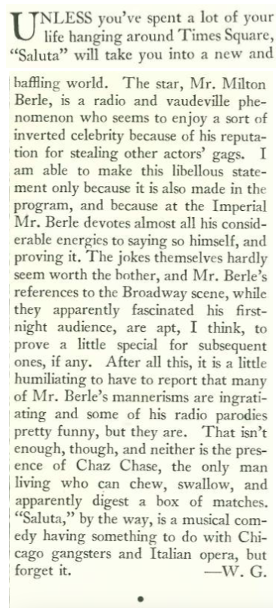
In contrast to Bert Lahr’s new toned-down style, Milton Berle’s outlandish antics over at the Imperial Theatre had Gibbs wondering what the comedian’s vaudeville-style show Saluta was all about, if it was about anything. Whatever it was, it worked—Berle would enjoy a comedy career spanning eight decades, including becoming one of early television’s biggest stars.

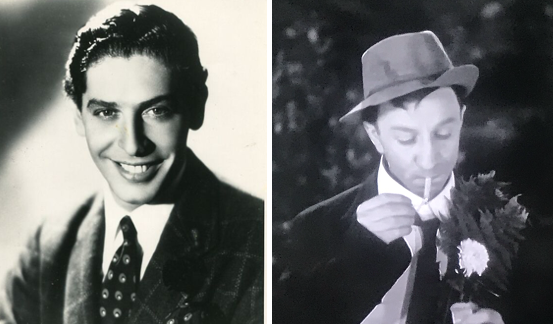
ON FIRE…Milton Berle’s show Saluta featured Chaz Chase (right), famed for gobbling up whatever was placed in front of his mouth, including a box of lit matches. At left, Berle in 1930; right, Chase in the 1935 film Vaudeville. (Pinterest/IMDB)

 * * *

From Our Advertisers

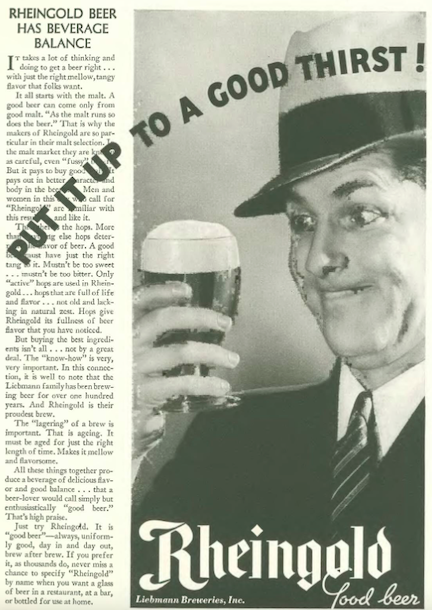
We begin with a cold one from Rheingold, which had “beverage balance” and wasn’t afraid to stamp a slogan right over its ad copy…

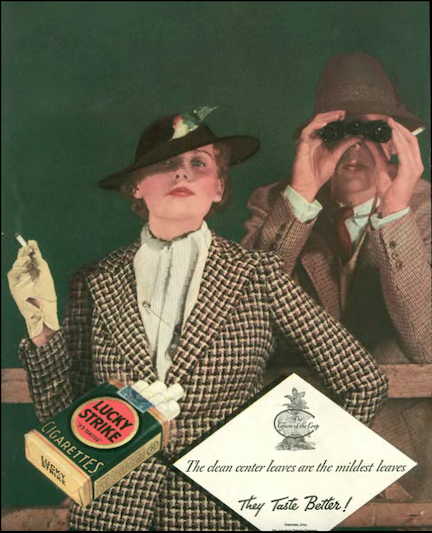
…Lucky Strike gave us another stylish reason for taking up a bad habit…

Arts & Decoration magazine took out this full page to tout the latest news in modern design…

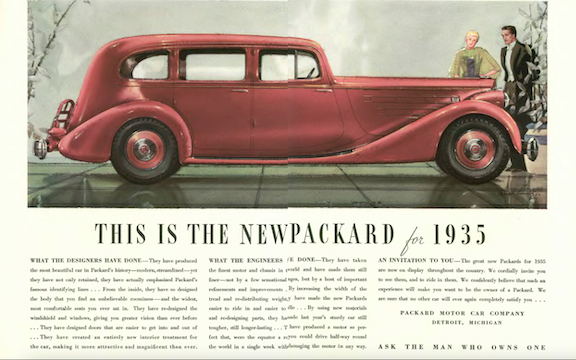
…while the folks at Packard bought this center spread to give ample space to their 1935 model, which must have been a helluva thing to parallel park…

…clothing companies continued use class shaming to goad aspiring toffs to purchase the “correct” attire for school…

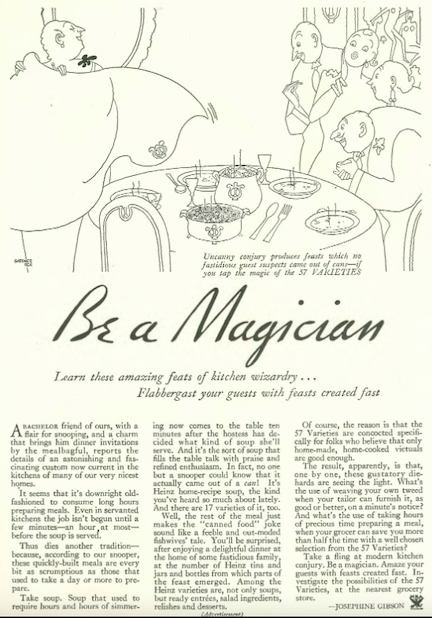
…with the help of Gardner Rea, Heinz suggested that the upper orders would simply swoon over cuisine you managed to scoop out of a can…

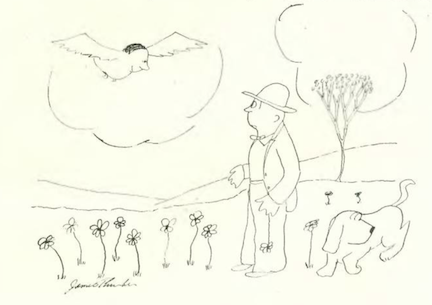
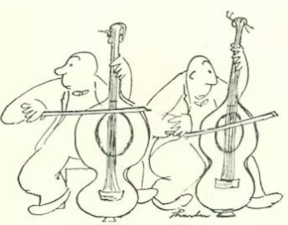
…on to our cartoonists, we begin with spots by James Thurber

…and Lloyd Coe

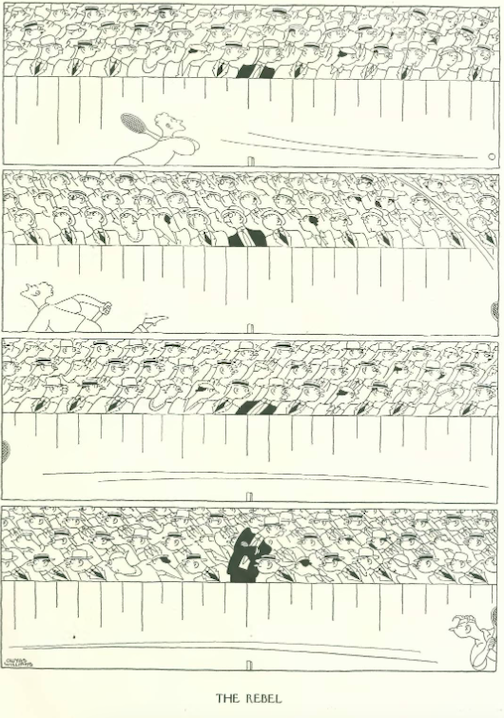
…with the absence of Otto Soglow’s Little King, Gluyas Williams did his best to fill the void of a full page, something Williams did quite nicely…

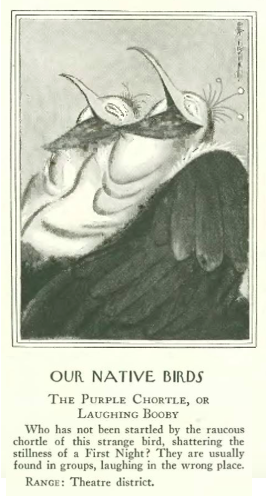
Rea Irvin gave us yet another local bird sighting…

Richard Decker found understatement over a reservoir…

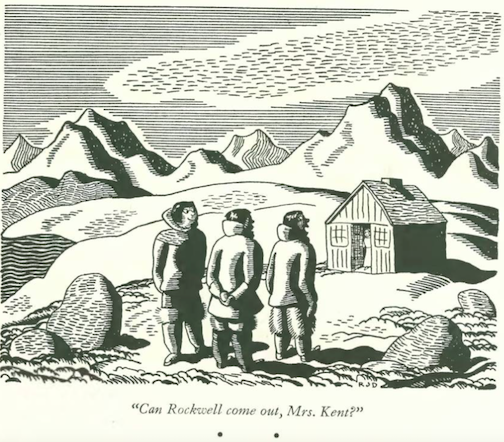
Robert Day borrowed from the style of Rockwell Kent to offer a bit of humor from the northern climes…

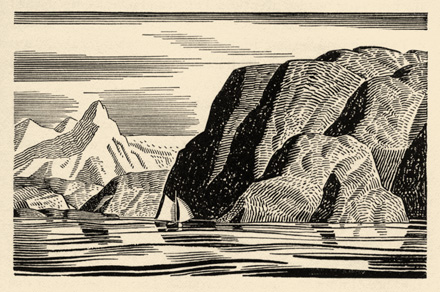
…here is a woodcut from Kent’s N by E is, an illustrated story of his voyage to Greenland…

(From Rockwell Kent’s 1930 book of woodcuts, N by E, via untendedgarden.com)

Reginald Marsh lent his social realism to an uglier side of American life…

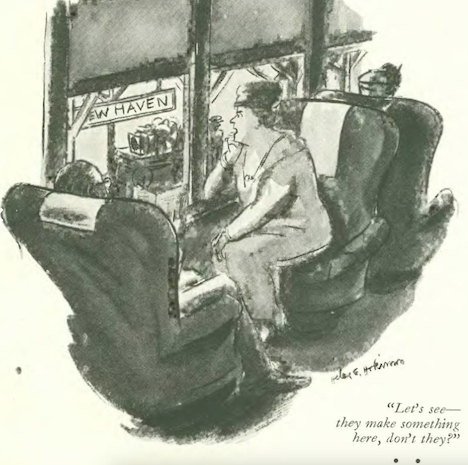
…and we close with Helen Hokinson, just taking in the passing scene…

Next Time: Sticks and Stones…