Magnificently Obsessed

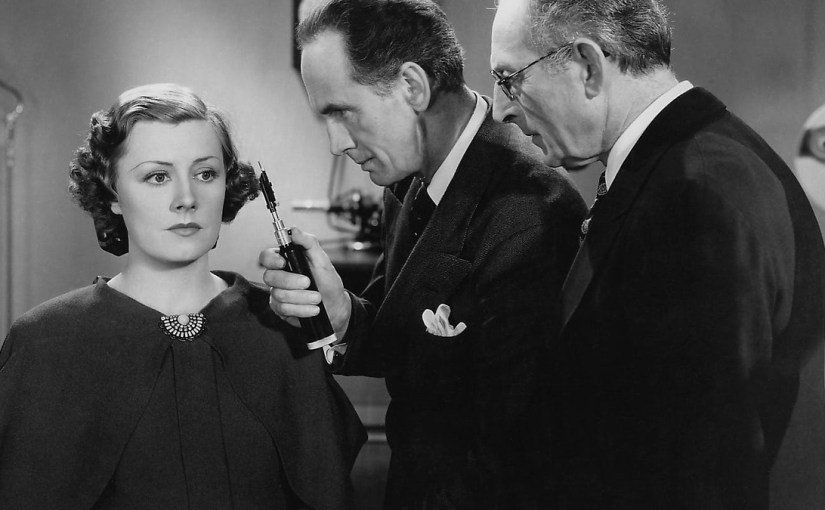
Above: Irene Dunn gets her head examined by Parisian doctors during a scene from the 1935 melodrama Magnificent Obsession. (letterboxd.com)

I can’t think of a better time to escape the world for a few moments and indulge in a bit of frivolity. In this case we take a brief look at a popular film that pushed the envelope of plausibility in true Hollywood style.

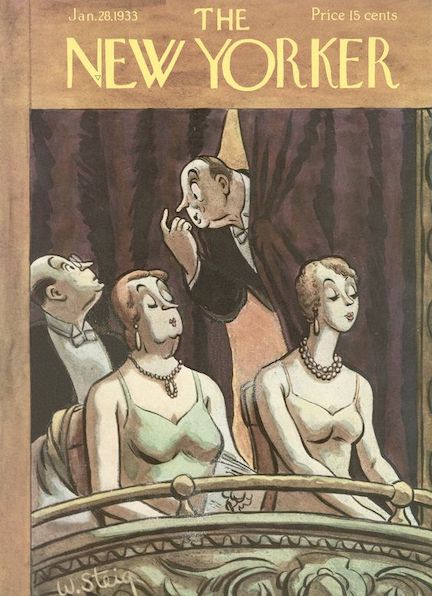
January 11, 1936 cover by Helen Hokinson.

Magnificent Obsession featured two of Tinseltown’s leading stars, Irene Dunn and Robert Taylor. Although many critics have called the film’s plot preposterous, it was a fan favorite—at the Radio City Music Hall premiere on Dec. 30, 1935, capacity crowds braved sub-zero weather to see it.

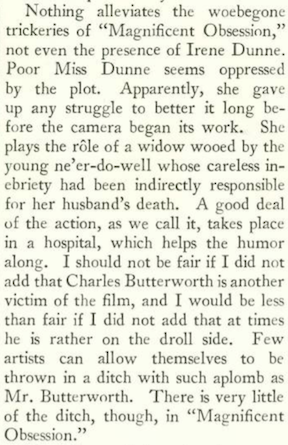
For a film that has been debated and discussed for decades (and remade to some acclaim in 1954 by director Douglas Sirk with Jane Wyman and Rock Hudson in the leads), critic John Mosher barely gave it a glance, feeling sorry for Dunne in her role as a tragically blinded widow.
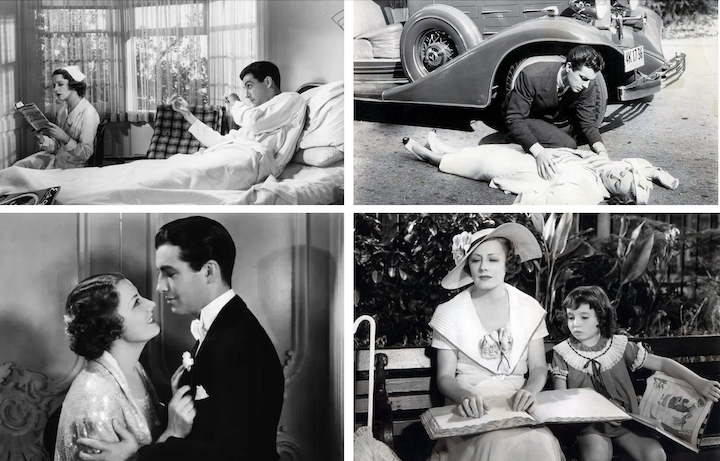
MAGNIFICENT HAPPENSTANCE…In Magnificent Obsession, Robert Taylor played a spoiled playboy, Robert Merrick, who survives a boating accident at the expense of kindly doctor. Clockwise from top left, Taylor in a scene with Margaret Brayton; Taylor and Irene Dunn in the scene where Dunne’s character, Helen Hudson, is struck by a car and blinded; Dunn with child actor Cora Susan Collins (who incidentally passed away in April 2025 at age 98); the end of the film emphasized Merrick’s transformation from a selfish playboy into a selfless, Nobel Prize-winning man of faith and science. (roberttayloractor.blog/mubi.com/rottentomatoes.com/Facebook)

A brief synopsis: Wealthy playboy Robert Merrick (Robert Taylor) drunkenly capsizes his boat. A hospital’s only pulmotor saves his life at the expense of a beloved surgeon who dies without it. Merrick falls in love with the surgeon’s widow, Helen (Irene Dunn). While driving Helen home he makes a pass at her; she exits the car and is struck by another, losing her eyesight. Merrick conceals his identity while watching over Helen; he then follows her to Paris, where she learns her sight is gone forever. Merrick reveals his identity and proposes. Helen flees. Six years later Merrick, now a Nobel Prize-winning brain surgeon, restores Helen’s sight.

In the film’s defense, plots that stretch credibility have been around since the Greeks and deus ex machina, and consider how many films today employ “portals” of various types to get heroes out of sticky situations. Unless you’re talking about a Werner Herzog film, it’s all make believe.
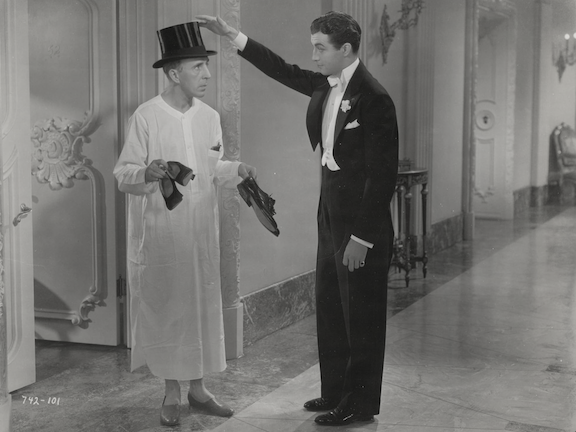
HANDS OFF…John Mosher had particular scorn for the way beloved character actor Charles Butterworth (left) was used in the film. Along with Dunn, Butterworth was another “victim” of Magnificent Obsession, according to Mosher. (IMDB)

 * * *

A Lot On His Mind

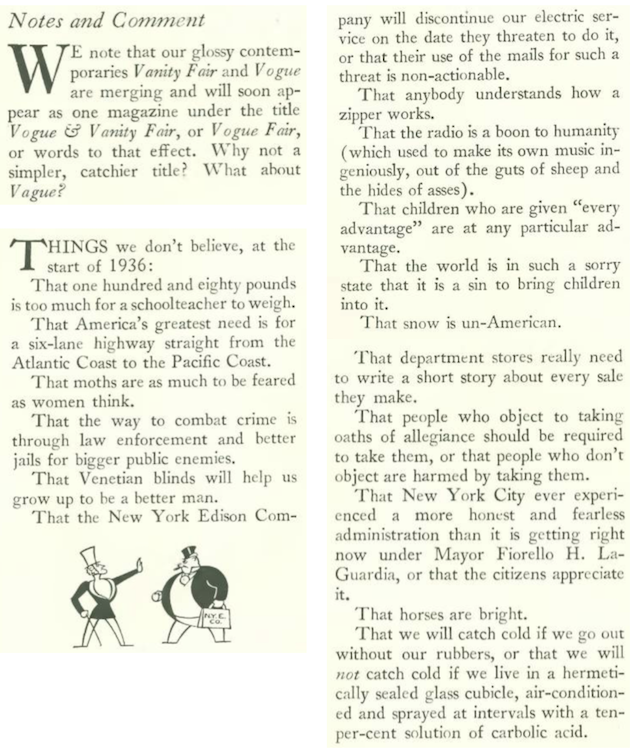
E.B. White had a lot to say in his Jan. 11 “Notes and Comment,” beginning with a paragraph about the impending merger of two Condé Nast publications, Vanity Fair and Vogue. The old Vanity Fair magazine, published from 1913 to 1936, was a casualty of the Great Depression, and it essentially disappeared with the merger (Condé Nast revived the title in 1983).
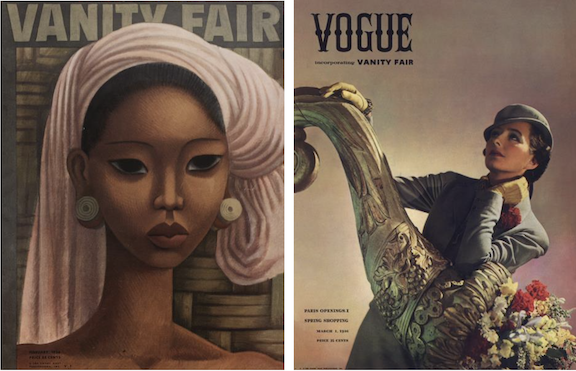
FADE OUT…At left, Bali Beauty by Miguel Covarrubias, on the cover of the final issue of the old Vanity Fair magazine, February 1936. Publisher Condé Nast merged VF with Vogue beginning with its March 1, 1936 issue (at right). The New Yorker, once considered a competitor of the old Vanity Fair, was itself acquired by Condé Nast in 1985. (vanity fair.com/vogue.com)

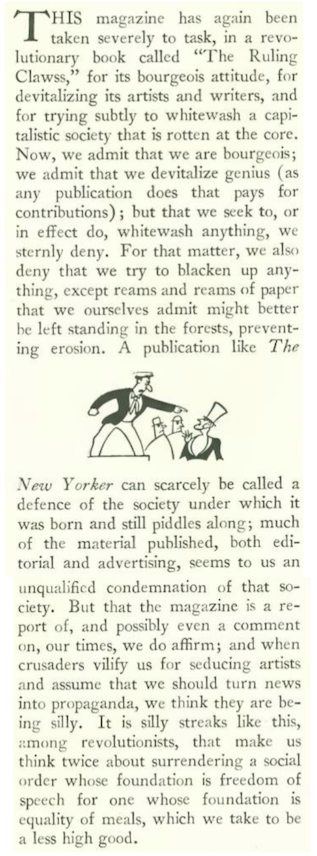
White also commented on a new book, The Ruling Clawss, which criticized The New Yorker for its “bourgeois attitude.” Interestingly, the book was produced by none other than New Yorker cartoonist Syd Hoff, who wrote and illustrated The Ruling Clawss as “A. Redfield,” a pseudonym he used in the 1930s for his contributions to The Daily Worker and other leftist causes.
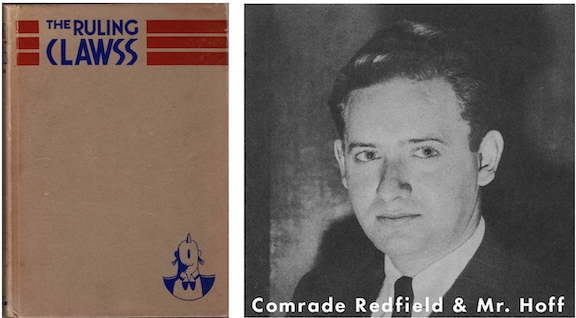
HOFF IN A HUFF…Cover of the 1935 edition of The Ruling Clawss; frontispiece from a 2023 reprint of the book by The New York Review of Books. Syd Hoff (1912–2004) contributed 571 cartoons to The New Yorker between 1931 and 1975. Hoff also drew cartoons for The Daily Worker under the pseudonym “A. Redfield.” (abebooks.com/nyrb.com)

In The Ruling Clawss, Hoff (as Redfield) criticized “bourgeois humor” as an opiate of the masses, citing The New Yorker, Esquire, Judge, and Life as publications that take “the banker boys and politicians, who are the rapers of liberty and democracy,” and present them between perfume ads in whimsical situations. The bourgeoisie makes itself look human, wrote Hoff, “By exposing itself in the boudoir, or the night club, doing foolish things or saying something ‘funny’…In other words, the fascists and warmongers are little lambs who do their parts in contributing to the merriment of a nation.”

Referring to his fellow cartoonists, Hoff concluded: “the Arnos, Soglows, Benchleys and Cantors…are all talented and funny, but…and here, I believe, is the point…their comedy is all too often a whitewash for people and conditions that, in reality, are not funny.”
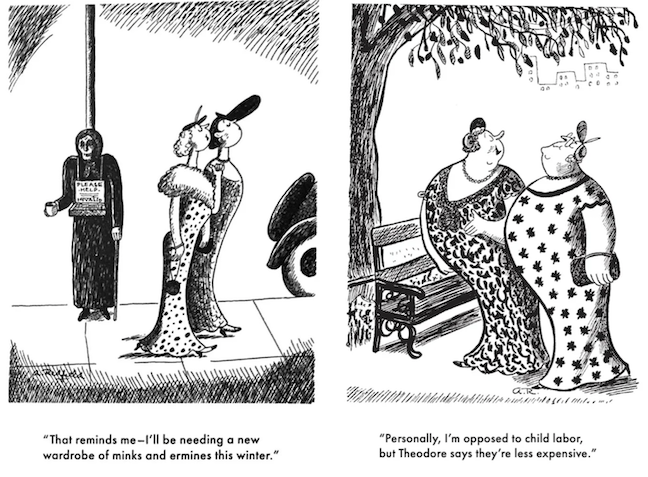
NO LAUGHING MATTER…Examples of Syd Hoff’s cartoons in The Ruling Clawss. (nyrb.com)

Today Hoff is probably best remembered for his children’s books, especially Danny and the Dinosaur. You can read all about his work at this website.

* * *

A Different Kind of Hoff

We move on to another Hoff, namely Mardee Hoff, who was “ungrammatically selected” by the American Society of Illustrators as the possessor of the “most perfect figure in America.” Here is an excerpt from “The Talk of the Town.”
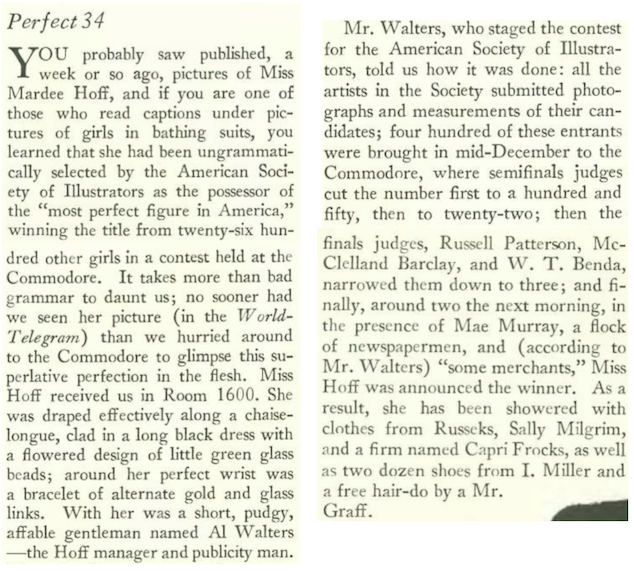
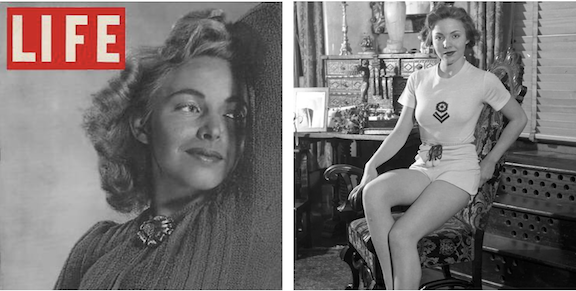
HER BODY OF WORK…Mardee Hoff (1914–2004) possessed the best body shape in America, according to the American Society of Illustrators following a contest involving 2,600 women at New York’s Commodore Hotel. At left, Hoff on the cover of Life, Oct. 21, 1940. At right, circa 1936. (findagrave.com/Reddit)

 * * *

Life With Clarence

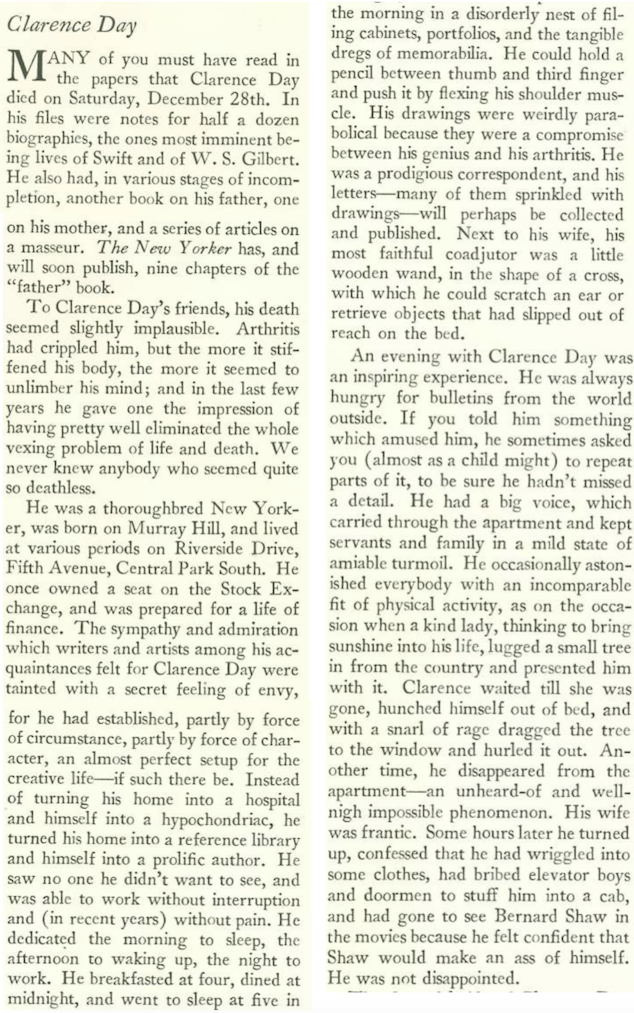
“The Talk of the Town” noted the passing of beloved author and cartoonist Clarence Day in a lengthy tribute that highlighted his remarkable output despite crippling arthritis. Excerpts:
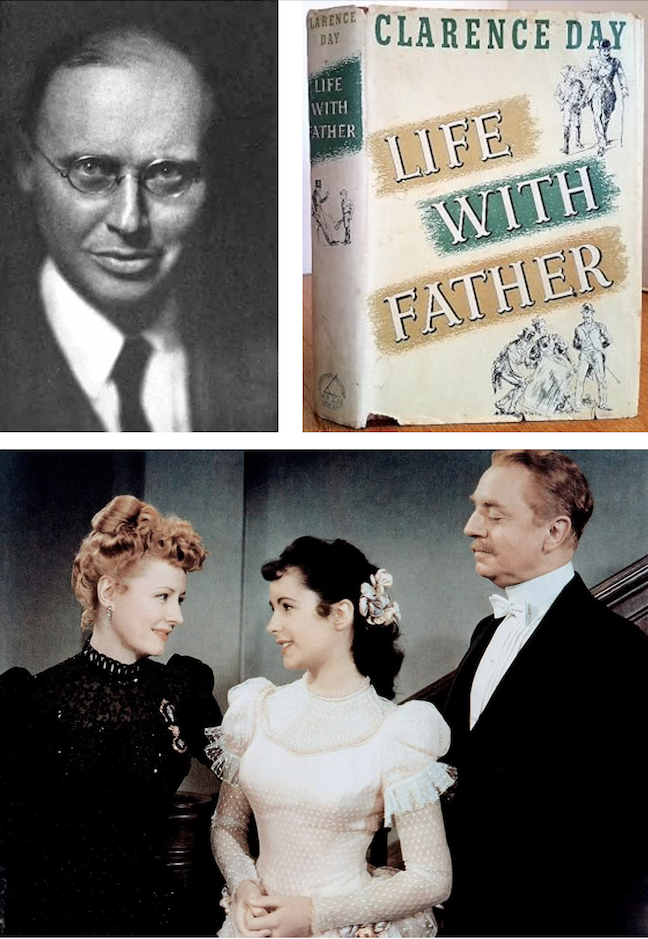
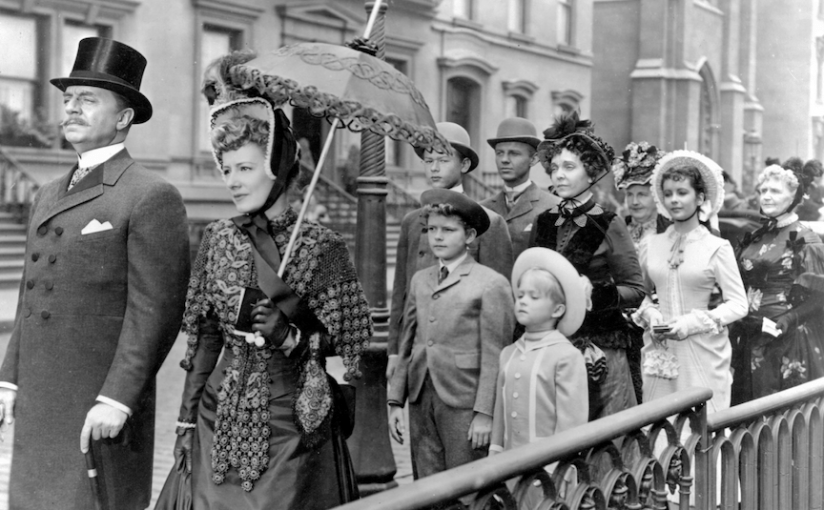
GOOD OLD DAYS…Clarence Day (1874–1935) developed crippling arthritis as a young adult, and spent the remainder of his life as a semi-invalid. Nevertheless, he churned out more than a dozen books, most famously Life With Father, a collection of stories from The New Yorker that were published in book form shortly after Day’s death. The New Yorker continued to publish Day’s stories through August 1937. Above, Day, circa 1920, and a first edition of Life With Father. Below, scene from the 1947 comedy film by the same name featuring William Powell, Irene Dunn, and Elizabeth Taylor. (Wikipedia/abebooks.com/IMDB)

 * * *

At the Movies
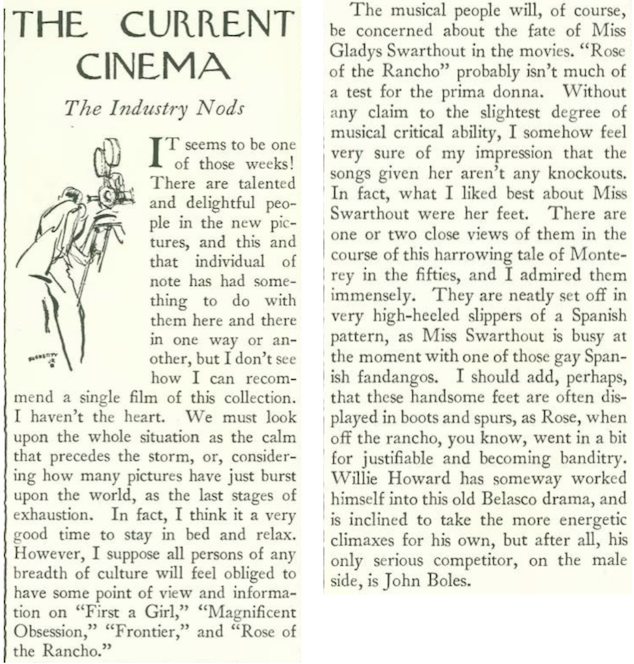
In addition to Magnificent Obsession, John Mosher endured screenings of several other pictures he could not recommend, despite featuring “talented and delightful people”…

…Mosher thought the best thing about mezzo-soprano Gladys Swarthout in Rose of the Rancho was her, um, feet…
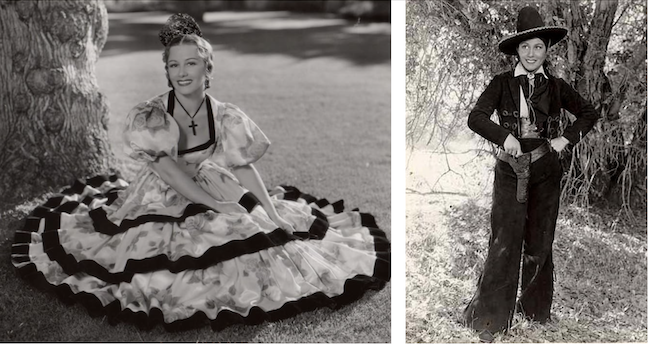
SINGING BANDIT…Gladys Swarthout, a popular Metropolitan Opera mezzo-soprano, portrayed the daughter of landowner besieged by outlaws in Rose of the Rancho. In the film she disguises herself as a man (right) and organizes a band of vigilantes to fight the outlaws. The film was one of five produced by Paramount in the 1930s featuring Swarthout. (IMDB/swarthoutfamily.org)

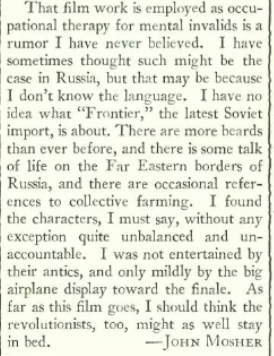
…and he was frankly mystified by the Soviet Russian film Frontier, featuring lots of beards, collective farms, and a big display of airplanes at the finale…
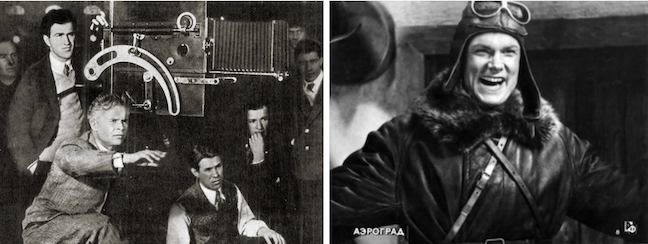
FOR THE FATHERLAND…At left, Aleksandr Dovzhenko directs the Soviet film Frontier (aka Aerograd), about a remote Siberian outpost that comes under threat of attack by the Japanese. At right, Sergey Stolyarov portrayed the pilot Vladimir Glushak, who was filled with wondrous tales about the new city of Aerograd. The film was commissioned by Joseph Stalin. (IMDB/kinorium.com)
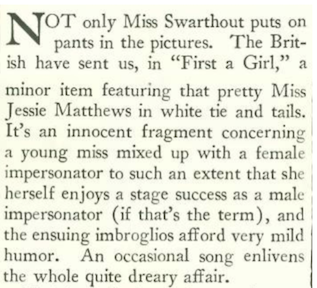
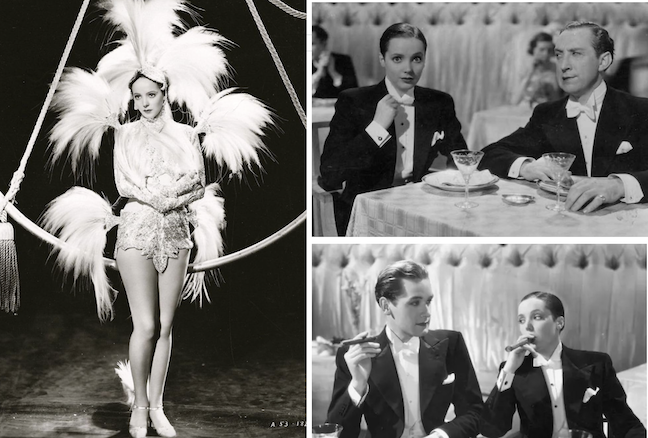
…English actress, dancer and singer Jessie Matthews (1907–1981) also wore the pants in First a Girl, a comedy adapted from the 1933 German film Viktor und Viktoria (which was remade as Victor/Victoria in 1982 with Julie Andrews)…
SHE/HE…At left, Jessie Matthews in First a Girl, a comedy adapted from the 1933 German film Viktor und Viktoria; right top, Matthews with Sonny Hale; and, at bottom, with Griffith Jones. Mosher called the film a “dreary affair.” (IMDB/interwarlondon.com)
* * *
All Aboard
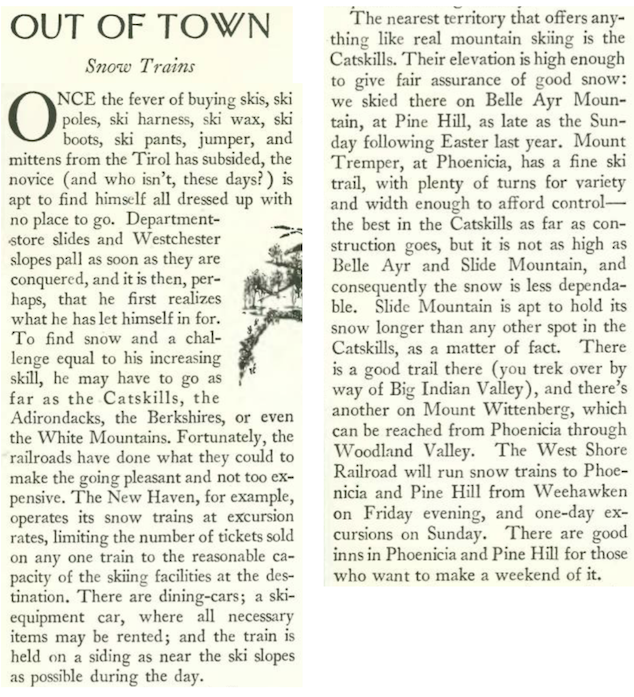
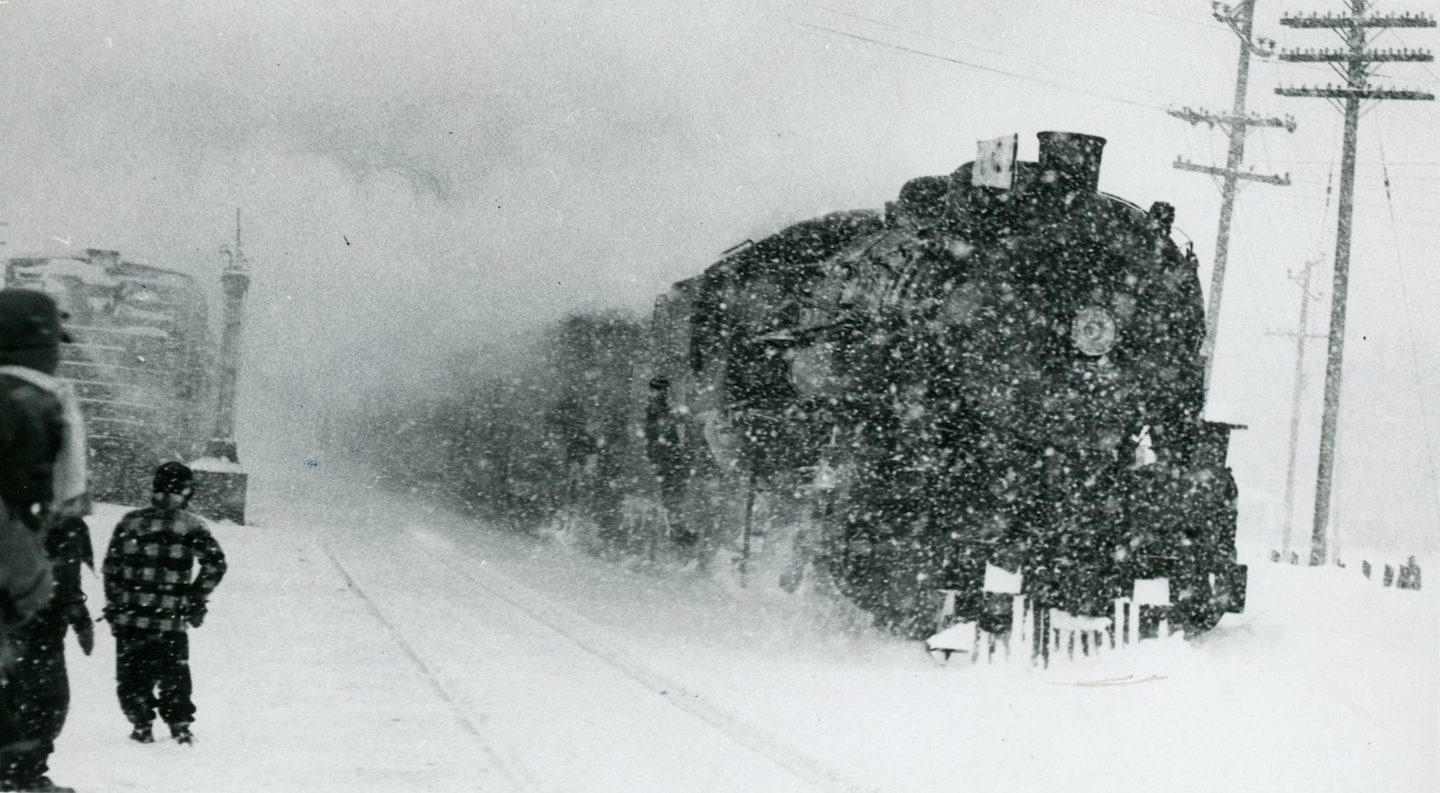
During the 1930s “Snow Trains” carried skiers from Manhattan to the Catskills, the Berkshires and other destinations. Railroads offered travel packages that helped popularize downhill skiing before World War II. Excerpts:

POLAR EXPRESS…A Snow Train arrives at Thendara Station full of skiers headed for the slopes and winter activities in Old Forge. Circa late 1930s. (northcountryatwork.org)

 * * *

From Our Advertisers

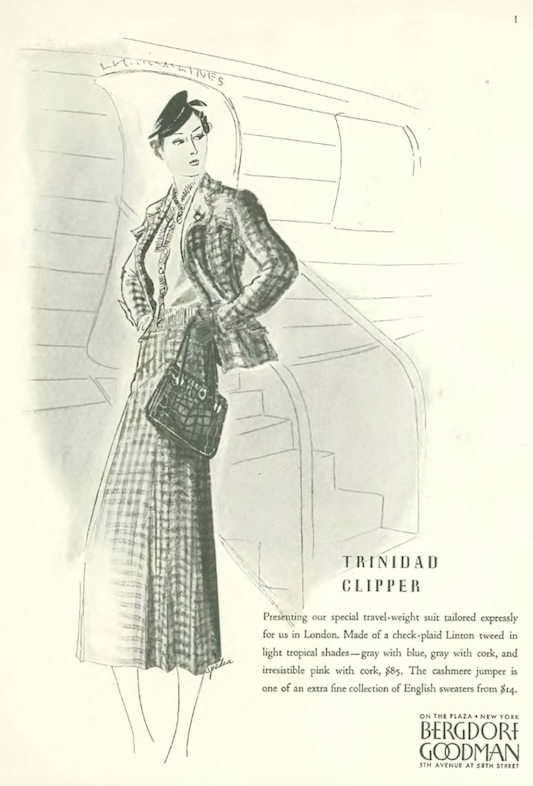
We take wing with Bergdorf Goodman’s stylish “Trinidad Clipper suit…
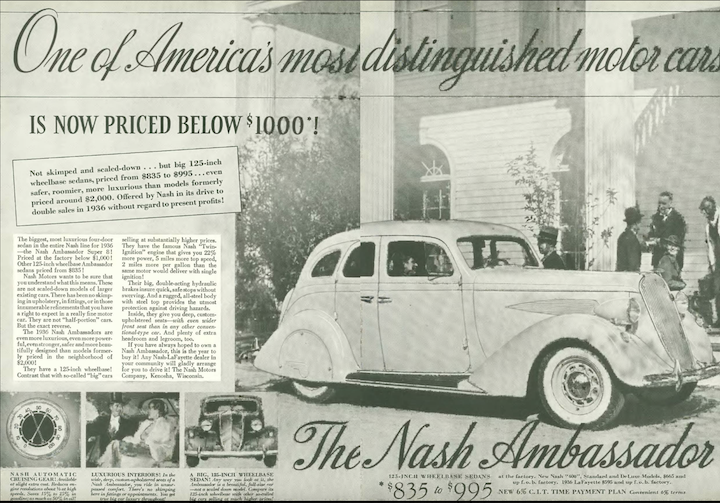
…the folks at Nash took out the center spread to tout their inexpensive yet distinguished Ambassador…
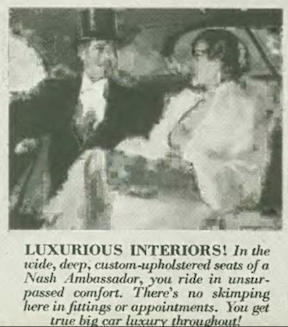
…apparently it was distinguished enough for these toffs…
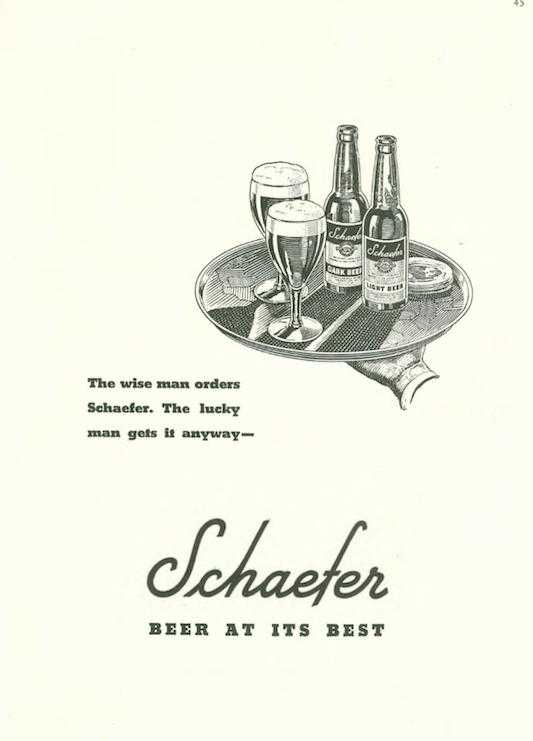
…by contrast, a more spare, minimal style is seen in this ad for Schaefer beer…
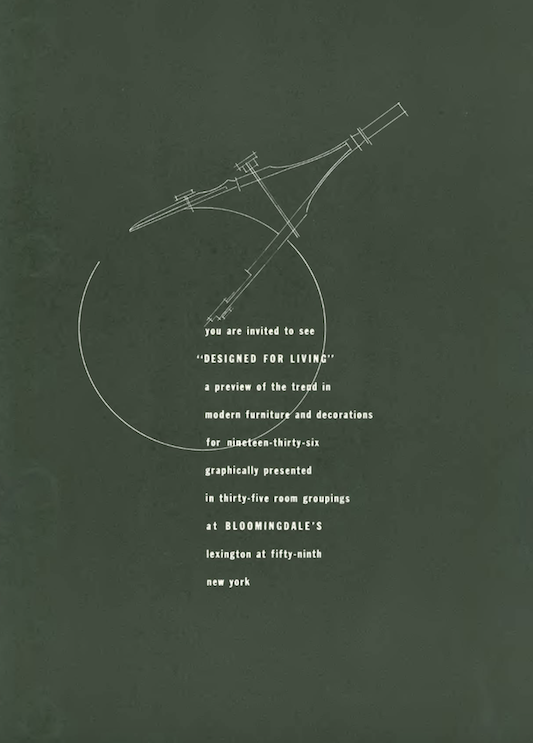
…and in this ad for Bloomingdale’s…this was tricky to reproduce, the lightness of the compass against all that black ink…
…here’s a new marketing ploy from R.J. Reynolds…smoke a half a pack of their Camels, and then send back the rest if you don’t like them…I’m guessing most folks finished them off…

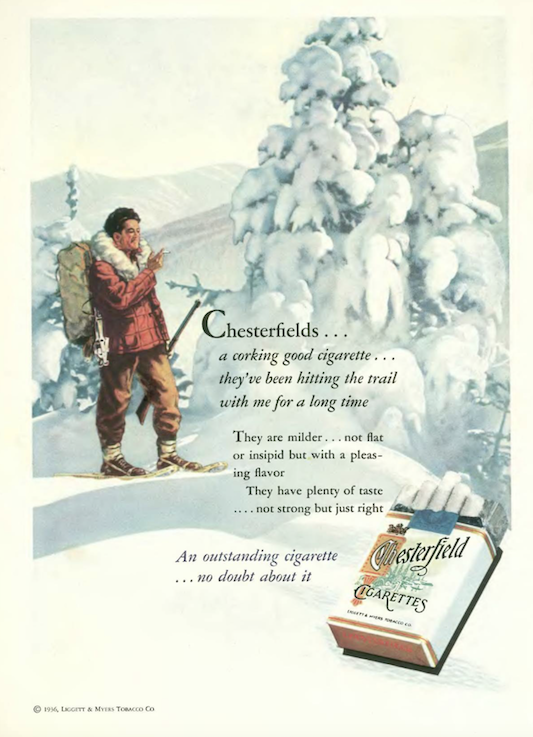
…Liggett & Myers kept it simple, equating smoke in your lungs with clean, crisp winter air…
…on to our cartoonists, we begin with spots by Gregory d’Alessio

Daniel “Alain” Brustlein

and Christina Malman

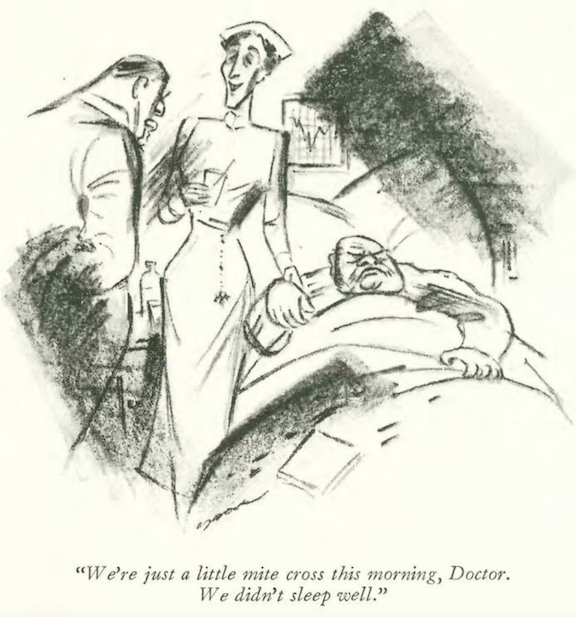
Leonard Dove looked in on an owly patient…
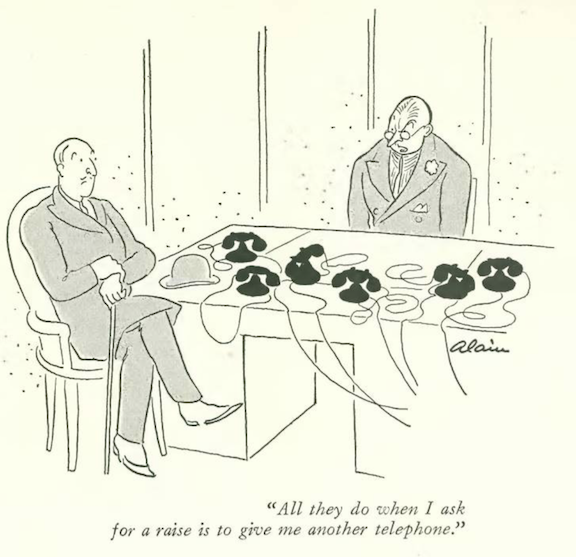
Alain again, seeking an elusive promotion…
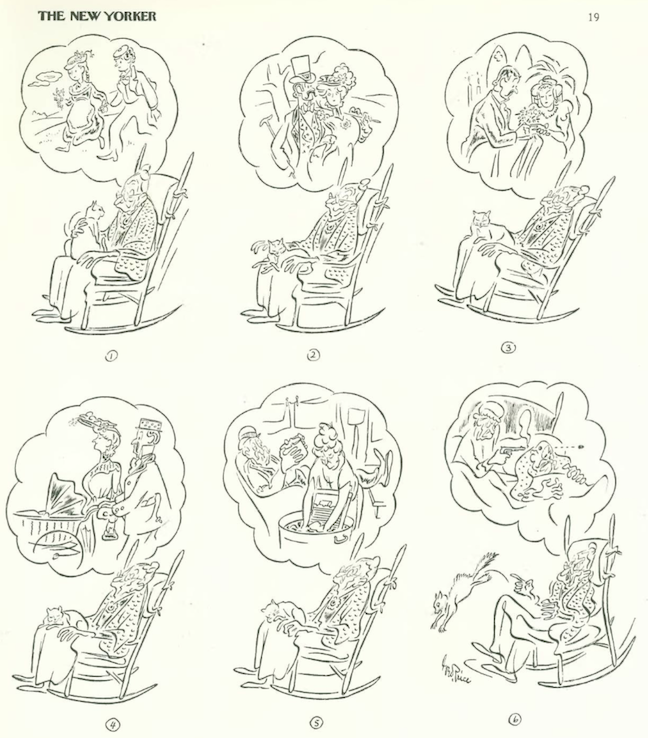
…the stages of love and marriage, per George Price

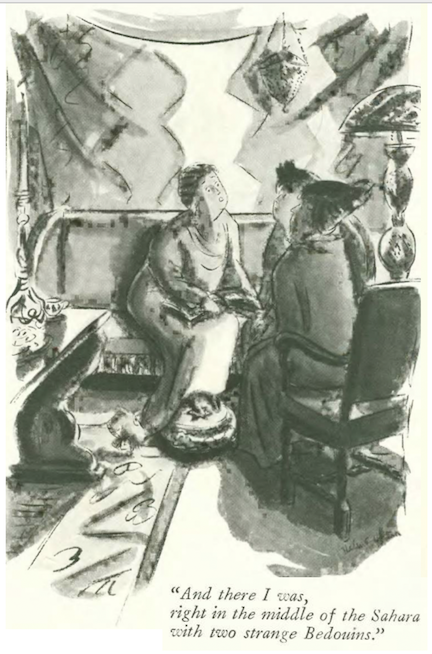
Helen Hokinson reconvened her ladies club…
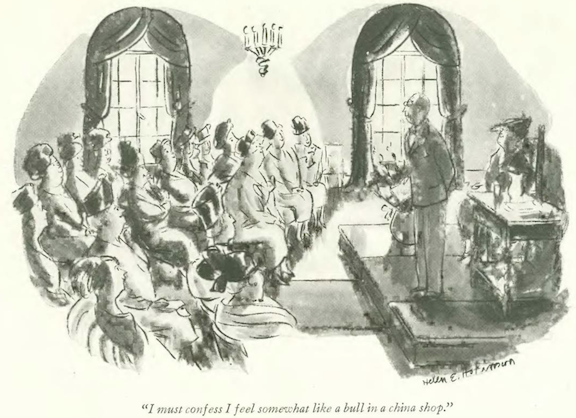
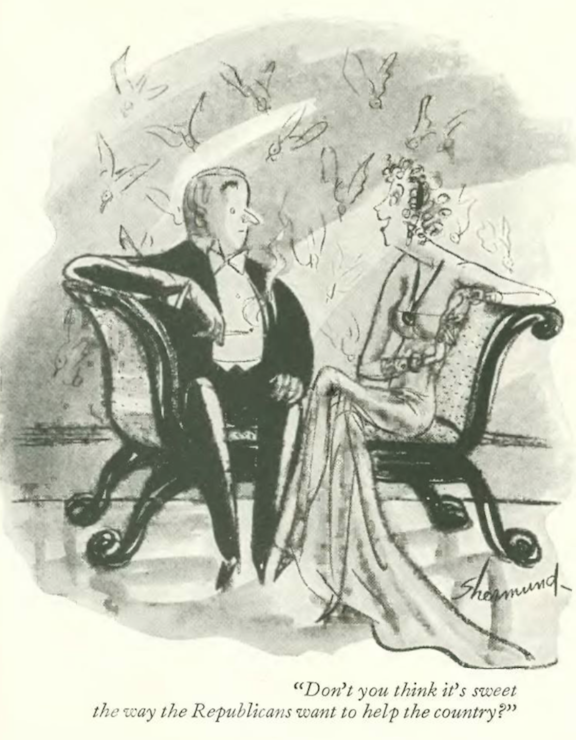
Barbara Shermund discussed politics…

Mary Petty considered the price of great art…
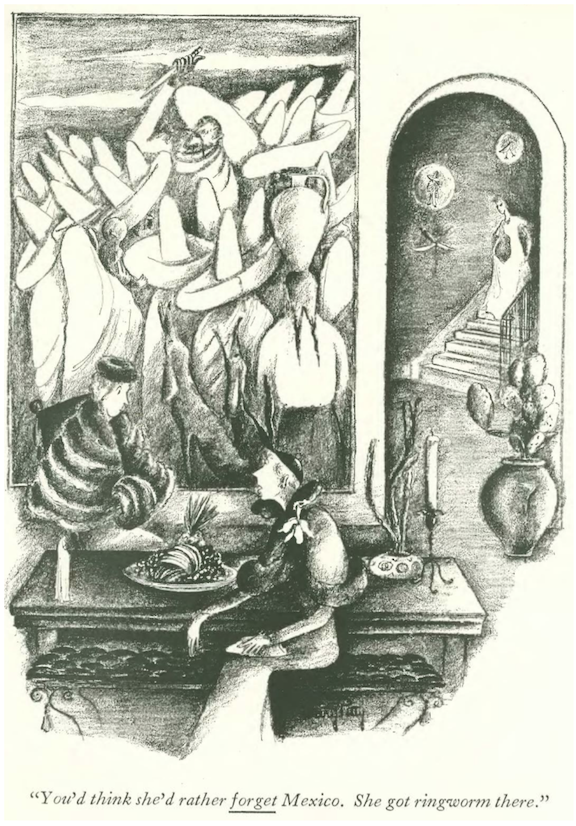
…and Petty again, at the dress shop…
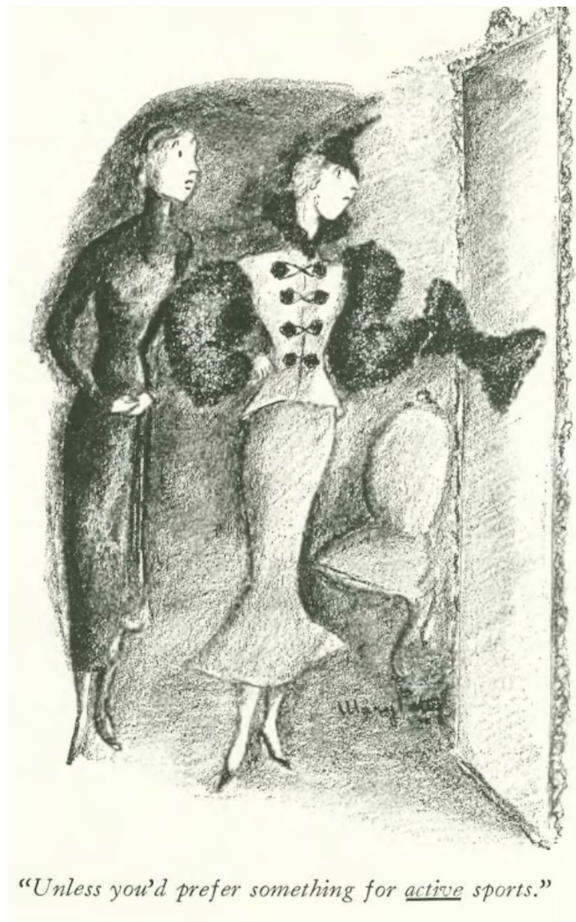
Robert Day illustrated the benefits of “how to” books…
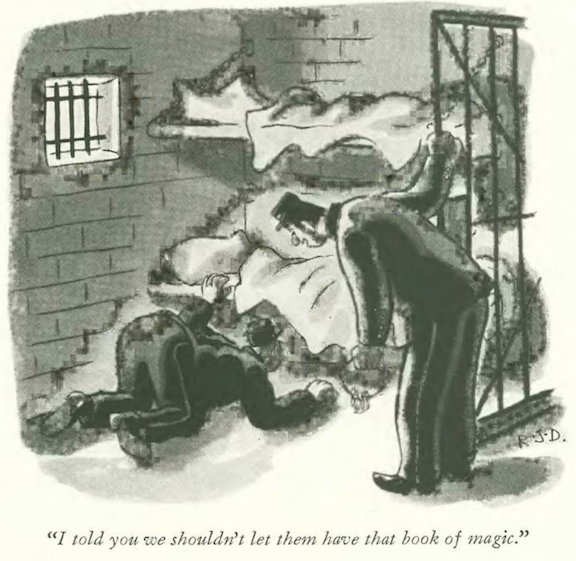
…and we run off with James Thurber...
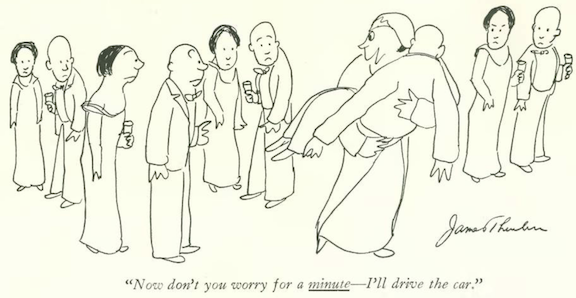
Next Time: A Profile in the Paint…

 

Life With Father

If you’ve ever come across the byline B.H. Arkwright, you were most likely reading the work of Clarence Day Jr., who in February 1931 began writing for The New Yorker under that pseudonym and also under his given moniker, which in four short years would become a household name.

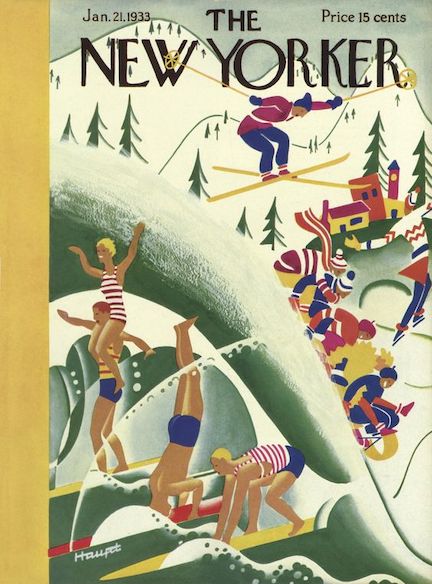
Jan. 21, 1933 cover by Theodore Haupt.

In the Jan. 21, 1933 issue Day would publish his first humorous story in The New Yorker about upper-middle-class family life in the 1890s. A subsequent collection of these stories would be published in 1935 under the title Life with Father. Sadly, Day would die shortly thereafter and wouldn’t witness the enormous cultural impact his stories would have on mid-century America.

Here is an excerpt of Day’s first story about his father, describing an exchange between his parents that would set the tone for the series:

Life with Father was a hit with readers, inspiring a 1939 Broadway production by Howard Lindsay and Russel Crouse that would run for 3,224 performances over 401 weeks—it was, and still is, the longest-running non-musical play on Broadway. The play would be adapted into a 1947 film featuring Irene Dunne and William Powell in the leading roles. The stories even made it to the small screen in a CBS TV series that ran from 1953 to 1955.

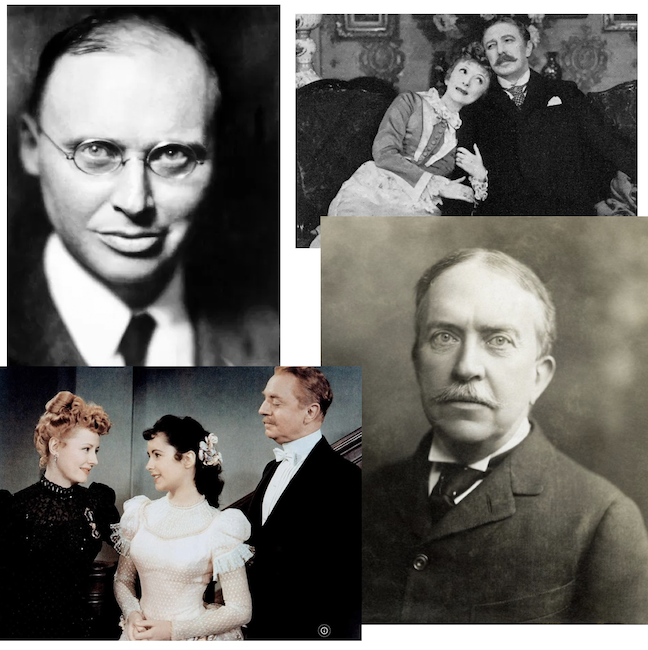
ALL IN THE FAMILY…Clockwise, from top left, Clarence Day, Jr. (1874-1935) in undated photo; Dorothy Stickney and Howard Lindsay in the Broadway production of Life with Father, 1939; Day’s father and inspiration, stockbroker Clarence Day, Sr. (1844-1927); scene from the 1947 feature film Life with Father with Irene Dunne, William Powell, and a 14-year-old Elizabeth Taylor. (britannica.com/theguardian.com/IMDB)

Day was also a cartoonist, contributing satirical cartoons for U.S. suffrage publications in the 1910s and also publishing collections of humorous essays including a Darwinian satire on the origins of human nature, This Simian World (1920), and the rambling, whimsical The Crow’s Nest (1921). Both featured Day’s simplistic cartoons and anthropomorphic tales that anticipated the work of James Thurber later in the decade.

CATTAIL…Self-portrait of Clarence Day rendered as a cat in a selection from The Crow’s Nest (1921). The entire book is available as a free e-book from The Project Gutenberg.

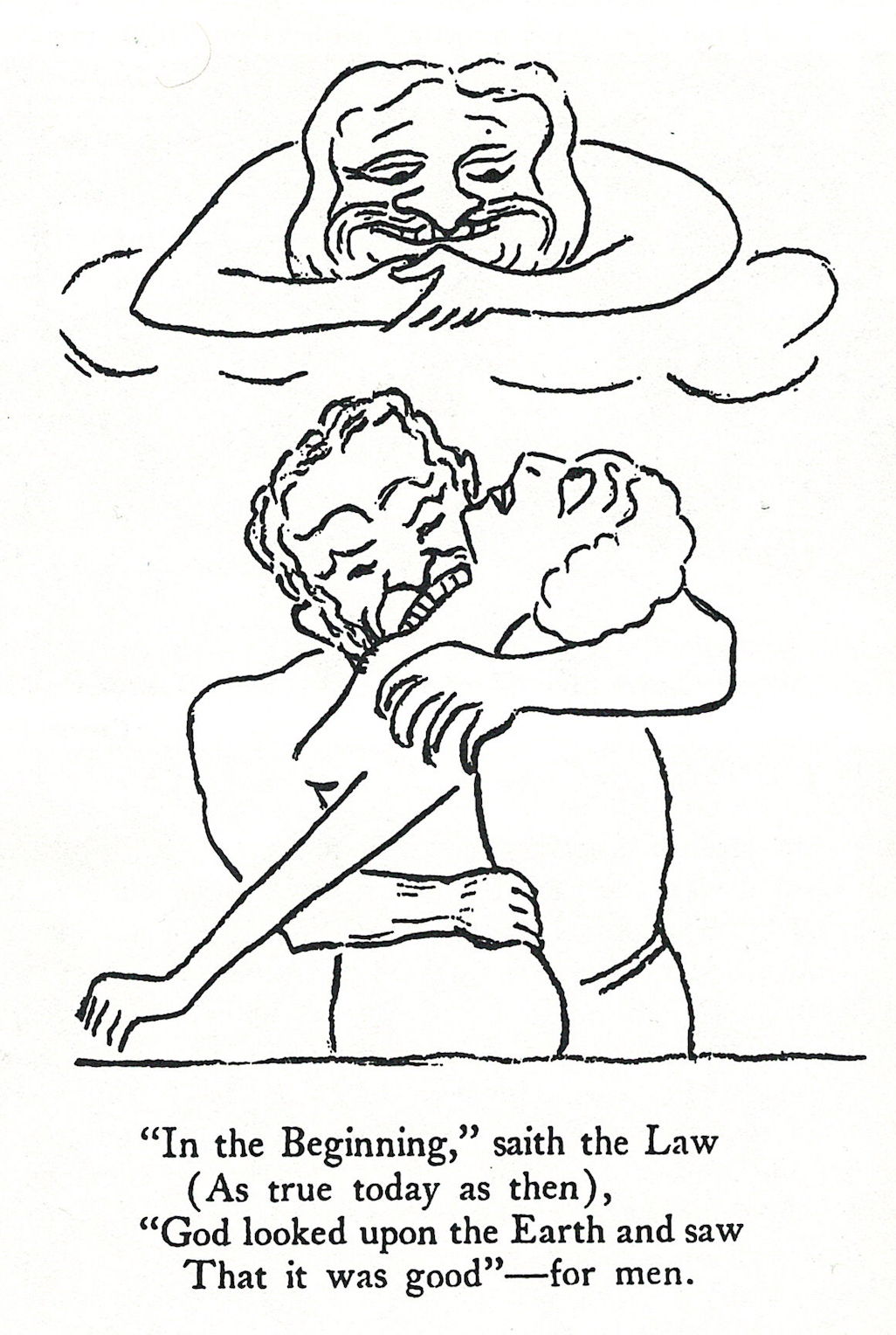
As we know, New Yorker founding editor Harold Ross was a man of contradictions, at once profane and puritanical, the latter on display when it came to one of Day’s cartoon submissions for the magazine. According to Brendan Gill’s memoir Here at The New Yorker, Ross balked at publishing the drawing below because it showed an exposed breast. Either Day or an editor simply removed the nipple (note the broken line in the nipple’s place) and the cartoon was published.

 *  *  *

Big Man’s Big Man

August Gennerich not only served as President Franklin D. Roosevelt’s bodyguard, he was also a close family friend. “The Talk of the Town” featured a lengthy account of the man, an excerpt of which is below:

ON GUARD…Augustus “Gus” Gennerich (1887-1936) was a friend of Franklin and Eleanor Roosevelt’s as well as one of FDR’s most trusted guards. He began his career in 1909 as a NYC policeman and in 1929 was assigned to be then-Governor Roosevelt’s bodyguard in the city. The Roosevelts were heartbroken when Gus died unexpectedly at age 50 from a heart attack. (picryl.com)

*  *  *

Desert Solitude

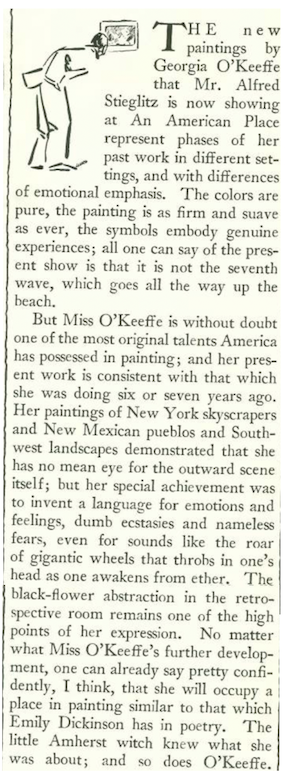
In 1933 Georgia O’Keeffe (1887–1986) was well into her Southwestern phase when her husband Alfred Stieglitz staged a show of her work at his last New York gallery, An American Place. O’Keeffe and Stieglitz lived together in New York until 1929, when O’Keeffe began spending more time in the Southwest—most likely to put some distance between herself and Stieglitz, who was in a long-term affair with photographer and writer Dorothy Norman. After this show opened O’Keeffe would suffer a nervous breakdown (per the above) and not return to painting until 1934. Lewis Mumford visited An American Place and had this to say about O’Keeffe’s work:

ANOTHER AMERICAN PLACE…New Mexican Landscape by Georgia O’Keeffe, 1930. (springfieldmuseums.org)

*  *  *

The Bookish Type

Modernist American poet and writer Archibald MacLeish (1892–1982) was a man of letters to the letter, serving as the ninth Librarian of Congress (1939-44) and during which time initiated the process of naming U.S. poet laureates. Here he contributes some of his verse to The New Yorker:

DESK JOB…Archibald MacLeish, circa late 1930s. (Library of Congress)

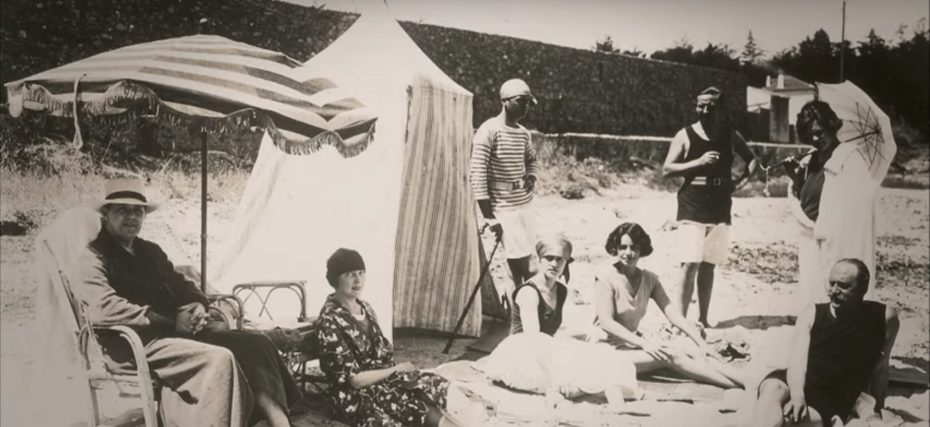
It was no accident that MacLeish contributed to The New Yorker: in addition to being among the literary expatriates in Paris including Gertrude Stein and Ernest Hemingway, MacLeish and his wife, Ada Hitchcock, were part of the Riviera crowd hosted by Gerald and Sara Murphy, which included among other notables John O’Hara, Dorothy Parker, and Robert Benchley.

OVER THERE…Gerald and Sara Murphy hosting friends at a Riviera beach party, circa 1923. Gerald is the man standing in the striped shirt; Sara is at right with a parasol. I believe that is Benchley at the bottom right, and Parker seated at center-right. (Beinecke Library)

*  *  *

From Our Advertisers

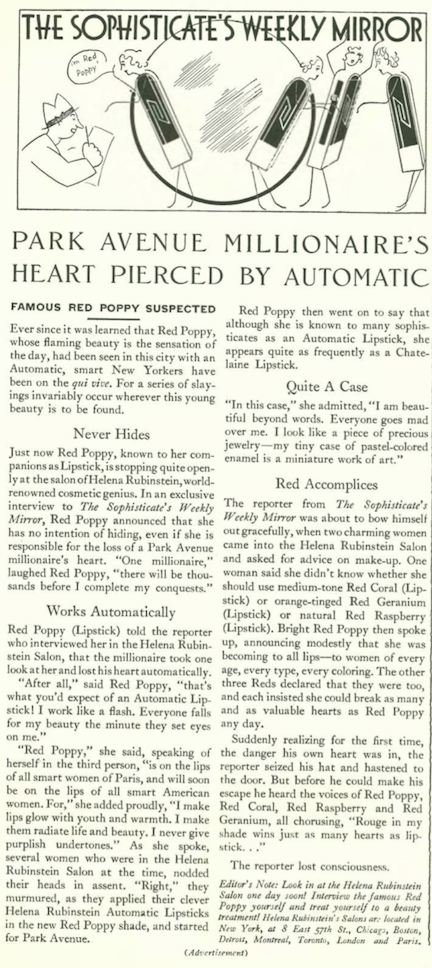
We begin with this ad from Helena Rubinstein that parodies Lois Long’s “Tables for Two” column (Long signed that column as “Lipstick”) and announced a new “Red Poppy” shade…

…on the other hand, the folks at Tangee borrowed from the old Temperance Movement song, The Lips that touch liquor, shall never touch mine, to promote a lipstick guaranteed to snag a sugar daddy like the one illustrated below (recalling Monopoly’s Uncle Pennybags)…

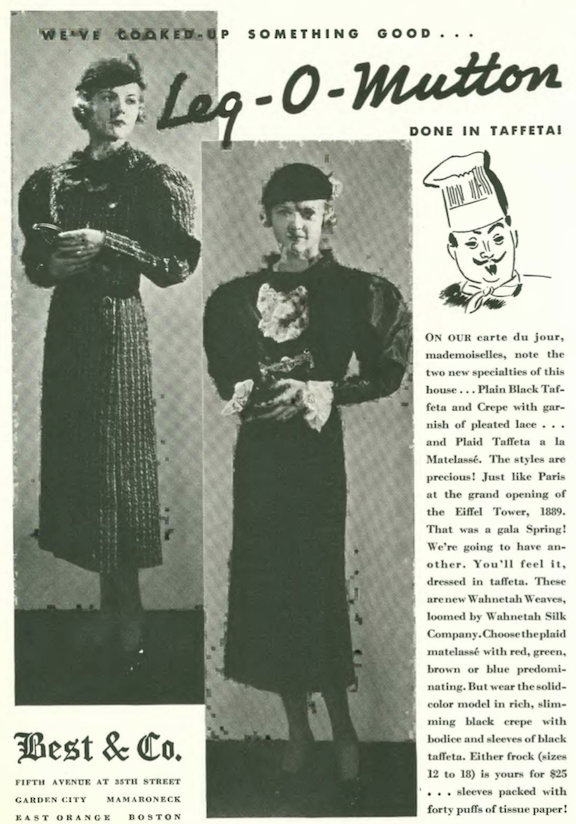
…more advertising weirdness comes our way from the staid Best & Company, its execs somehow persuaded by an ad man to go with this chef motif…

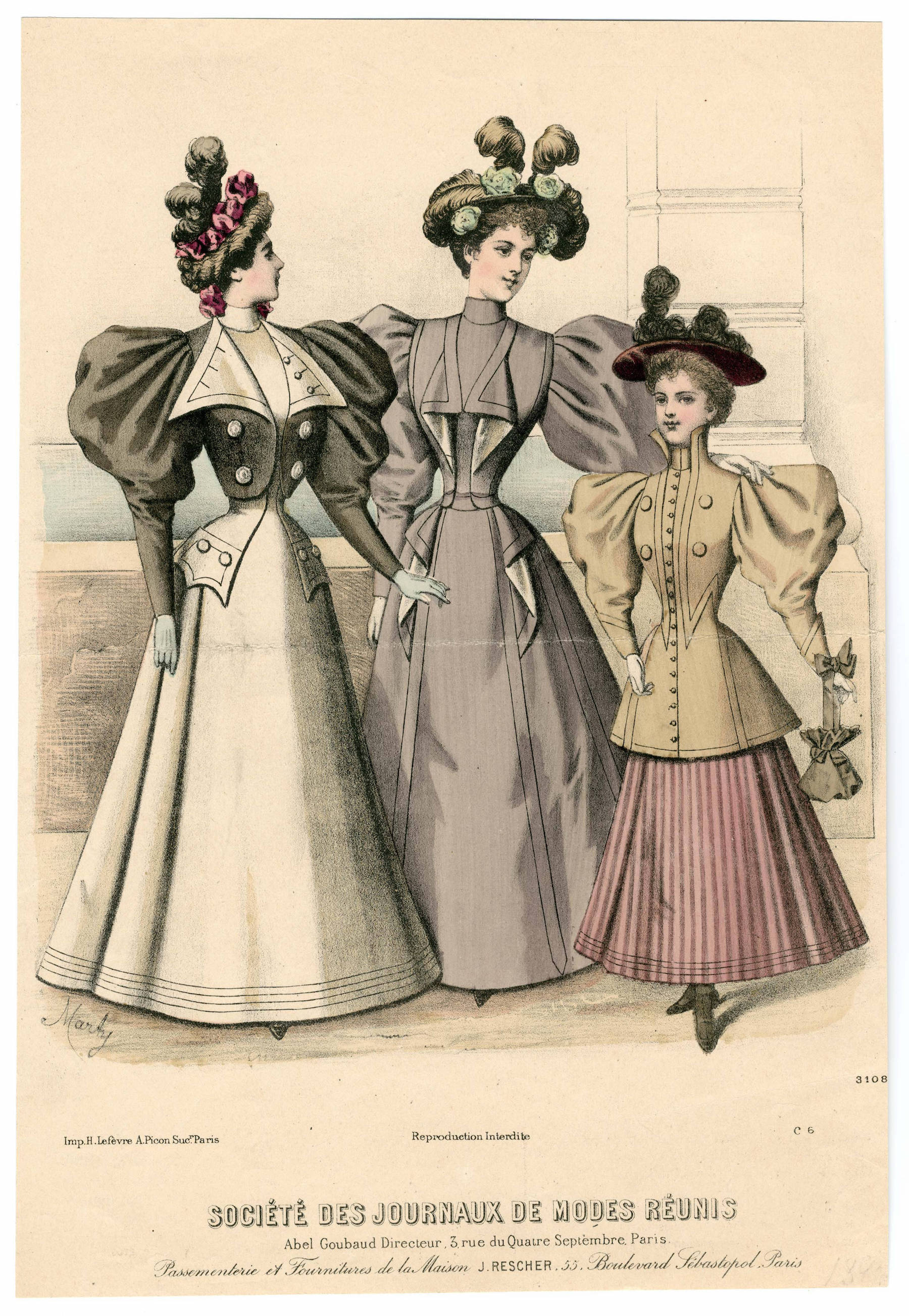
…Leg ‘O Mutton referred to a type of puffy sleeve introduced in 1830s France that had a revival in the late 1880s…

MMMMM, MUTTON…The Leg ‘O Mutton look, circa 1890s. (genealogylady.net)

…the National Auto Show moved on and the National Motor Boat and Engine Show took its place at the Grand Central Palace…

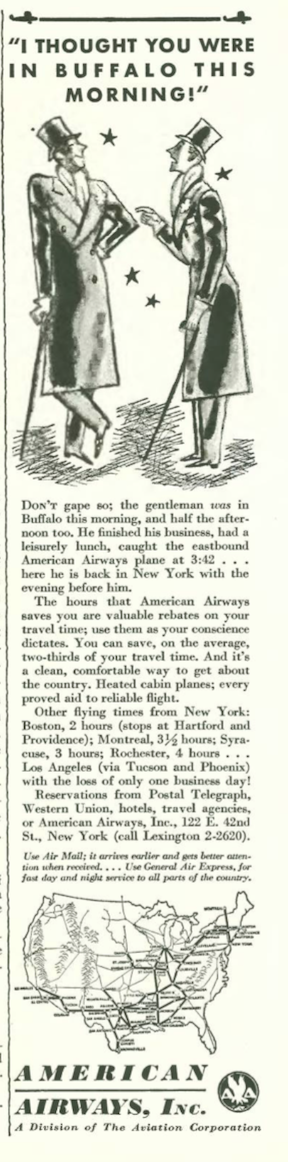
…I’m trying to imagine the guy at left stowing his top hat in an overhead bin…

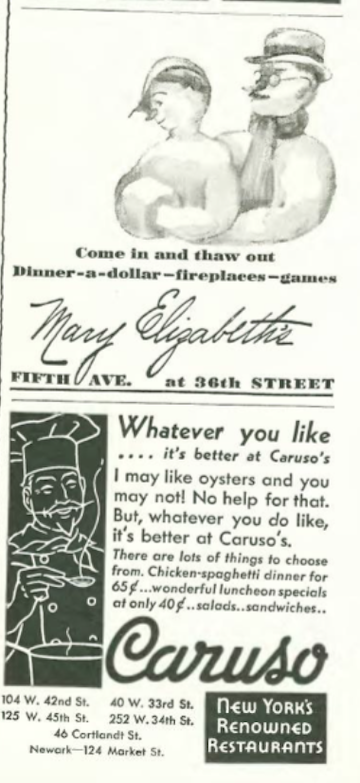
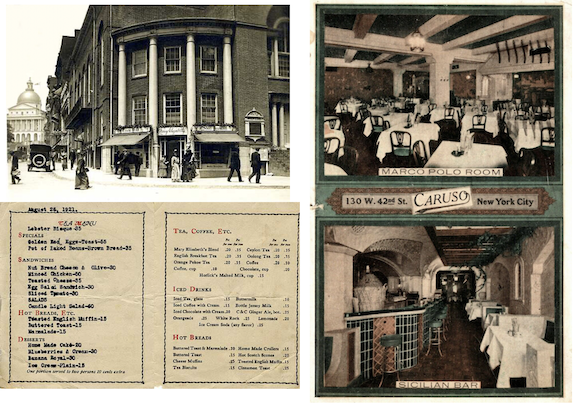
…down on earth folks could enjoy some down-to-earth home cooking at Mary Elizabeth’s, or go some Italian at Caruso’s…

…and for reference…

Top left, Mary Elizabeth’s success on Fifth Avenue led to expansion into Boston; below, a 1921 menu at Mary Elizabeth’s in New York; at right, 1930s postcard advertising Caruso’s on 42nd Street. (restaurant-ingthroughhistory.com)

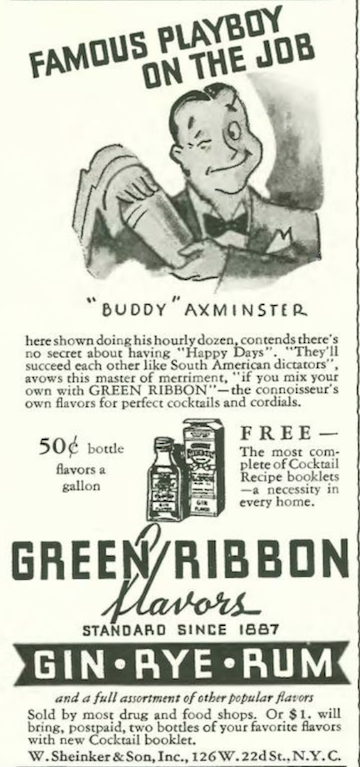
…of course you couldn’t legally drink at those places, so you had to go to a speakeasy or mix your cocktails at home…but this is just sad, ‘ol Buddy here flavoring his bootleg with some Green Ribbon…let’s hope the playboy’s guests aren’t blinded before the night is over…

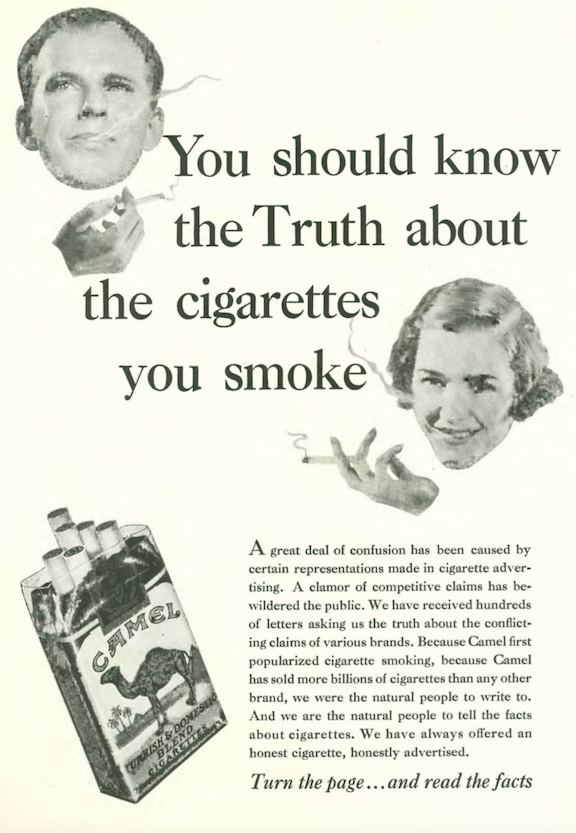
…we all know the tricky ways of the tobacco companies, including this 3-page Q&A from the makers of Camels offering smokers and would-be smokers THE TRUTH and THE FACTS about the cigarettes folks smoke…turns out Camels are the best!…

…and now for a bit of fresh air before we turn to our cartoonists…

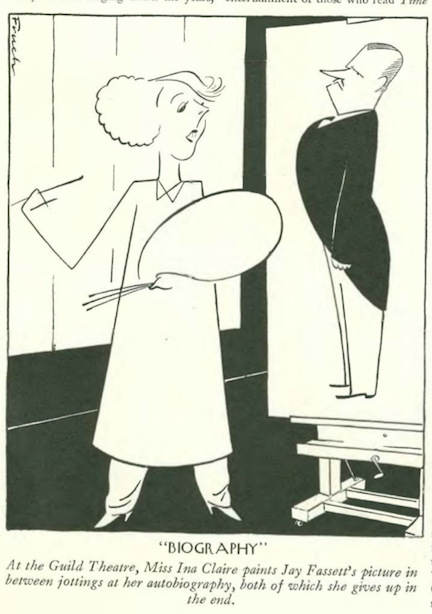
…beginning with Al Frueh and his impressions of a show at the Guild Theatre…

Peter Arno contributed this illustration across pages 12-13 in “The Talk of the Town” section…

Helen Hokinson offered up some scandal among the “girls”…

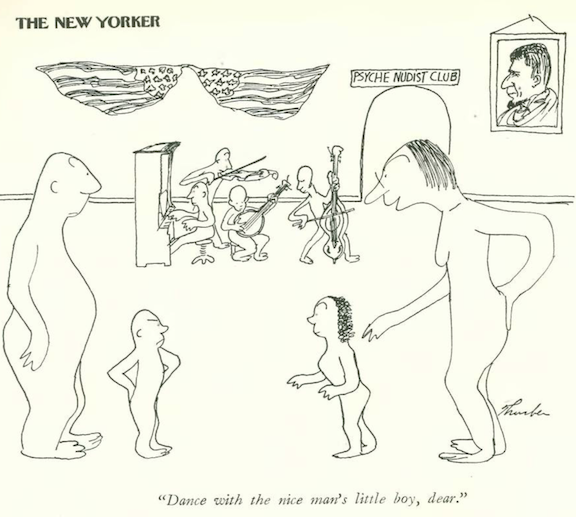
James Thurber gave us an awkward moment among the tender youth of the unclad world…

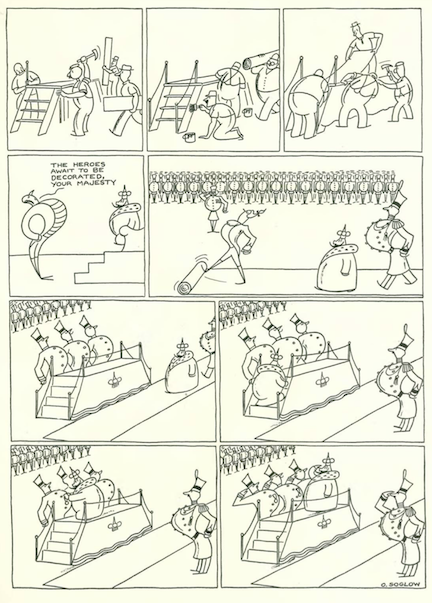
Otto Soglow’s Little King rose to the occasion, as always…

Daniel Alain’s artist tried his best to make some small talk while at work…

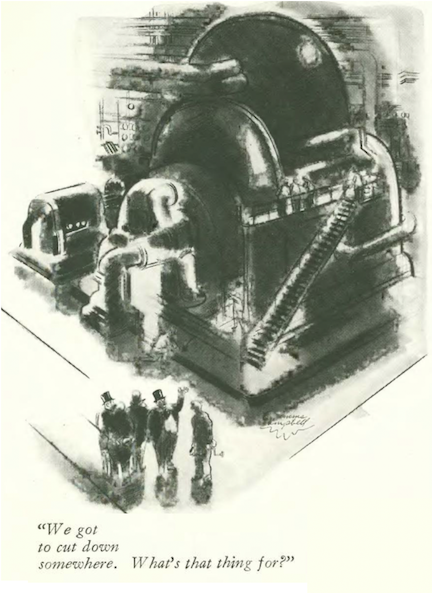
…and we close with E. Simms Campbell, and the yawning gulf between owners and workers…

Next Time: A Slice of Paradise…