The January 8, 1927 issue of the New Yorker was all over the 27th Annual Motor Show at the Grand Central Palace, both in its lengthy review of the show and the many automobile ads throughout its pages.
January 8, 1927 (Issue # 99) cover by Ilonka Karasz.
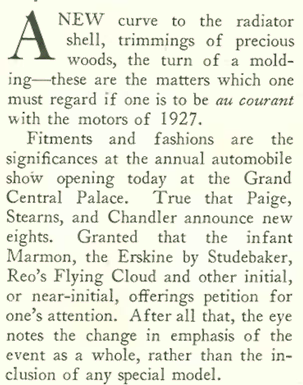
Auto manufacturers discovered early on that cars didn’t need to advance technologically from year to year as long as there were superficial changes–trimmings and such–to dazzle the consumer:
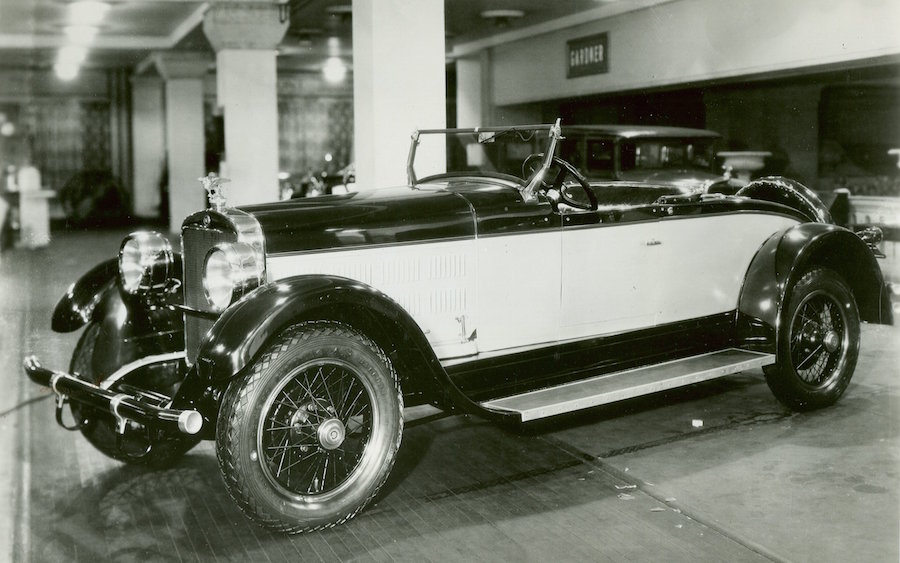
Helen Hokinson added this touch to the issue devoted to the auto show.A 1927 Gardner Model 90 Roadster on display at the 27th Annual New York Motor Show at Grand Central Palace. (gardnermotorcars.com)
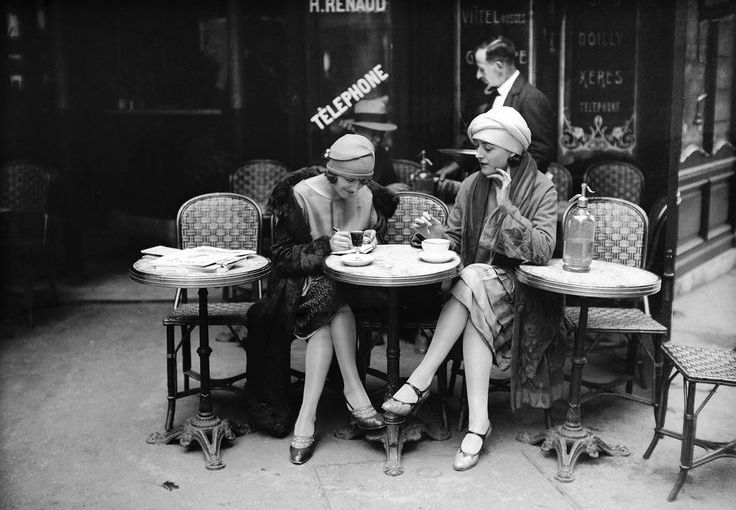
Advertisements in the New Yorker ranged from snobbish appeals to Francophiles…
…to those who might be concerned about safety. Although cars weren’t very fast, they were fast enough to kill, and their plentiful numbers often overwhelmed a city with rudimentary traffic control.
In his book, One Summer: America, 1927, Bill Bryson writes that New York in 1927 was the most congested city on earth. It contained more cars than the whole country of Germany, while at the same 50,000 horses (and wagons) still clogged the streets. More than a thousand people died in traffic accidents in the city in 1927, four times the number today.
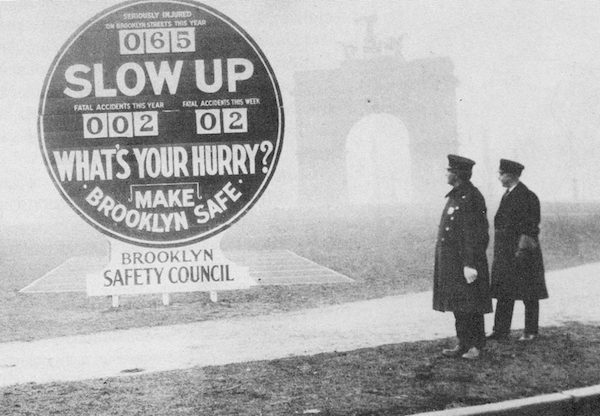
THE DEATH-O-METER … was a 20-foot sign installed near Grand Army Plaza in 1927. It tallied traffic accidents and fatalities in the borough and reminded motorists to slow down at the traffic circle. (Ephemeral New York)
Traffic control was still in its infancy in the 1920s. Seven ornate bronze towers, 23 feet high, were placed at intersections along Fifth Avenue from 14th to 57th Streets starting in 1922. By 1927 smaller, simpler lights were mounted on street corners and the system of green, yellow and red was generally adopted.
Bronze traffic signal tower designed by Joseph H. Freedlander at 42nd Street and Fifth Avenue, 1922. (stuffnobodycaresabout.com)
Keeping with the motorcar theme, the issue also featured a profile (written by Lurton Blassingame) of Walter P. Chrysler, founder of the new car company that bore his name (Chrysler founded his company in June 1925 after acquiring and reorganizing the old Maxwell Motor Company). In just three years a famous New York City landmark bearing his name would pierce the skyline.
I recently noted that the fall 1926 editions of the New Yorker barely mentioned baseball, even though the Yankees made it to the World Series that year. No doubt the Black Sox scandal of 1919 still lingered in the minds of many fans. Morris Markey’s “Reporter at Large” column in the Jan. 8, 1927 issue suggested that the game, “no more important than the circus,” was still dishonest, thanks in part to its collusion with the newspapers:
Baseball might have been down and out, but actress Pola Negri still maintained her place in the spotlight with her latest film, Hotel Imperial.
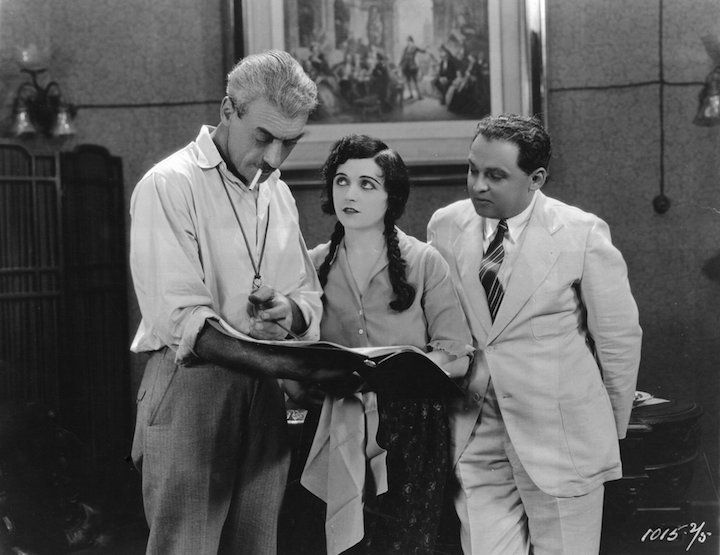
Actress Pola Negri consults on a script with director Mauritz Stiller (left) on the set of Hotel Imperial. (MOMA)
It was 1926 and another marvel of science—talking pictures—was unveiled to audiences at Broadway’s Warners’ Theatre. It was here that the Warner Brothers launched their ‘Vitaphone’ talkies including The Jazz Singer, which would premiere the following year.
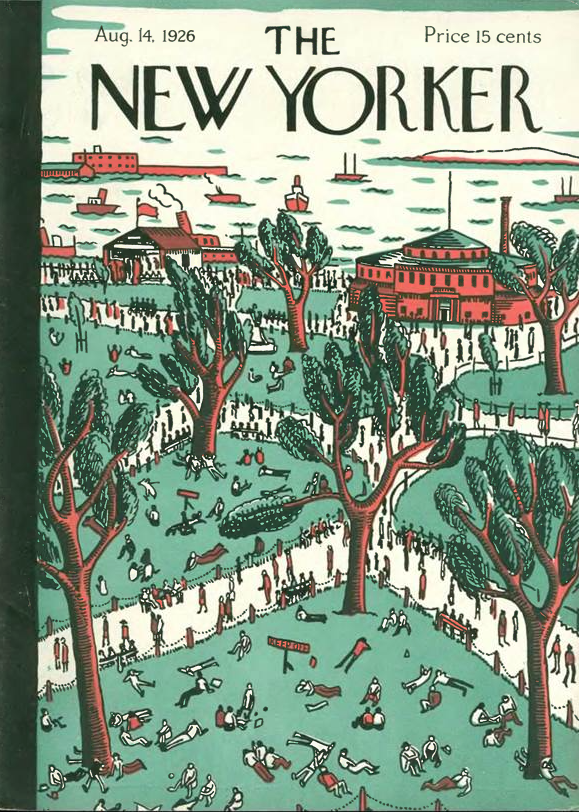
Aug. 14, 1926 cover by Ilonka Karasz.
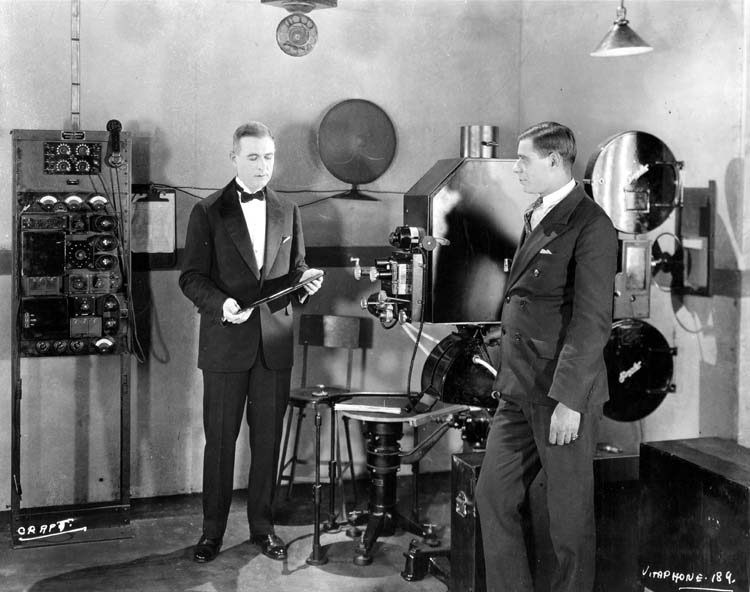
The Vitaphone soundtrack was not printed on the film itself, but rather recorded separately on phonograph record, the sound synchronized by physically coupling the record turntable to the film projection motor.
A Vitaphone projection setup at a 1926 demonstration. Engineer E. B. Craft is holding a soundtrack disc. The turntable, on a massive tripod base, is at lower center. (University of San Diego History Department)
Don Juan was the first feature-length film to use the Vitaphone system, which was not a continuous soundtrack but rather a sprinkling of sound shorts (the musical score, performed by the New York Philharmonic, and various sound effects) throughout the film. No spoken dialogue was recorded.
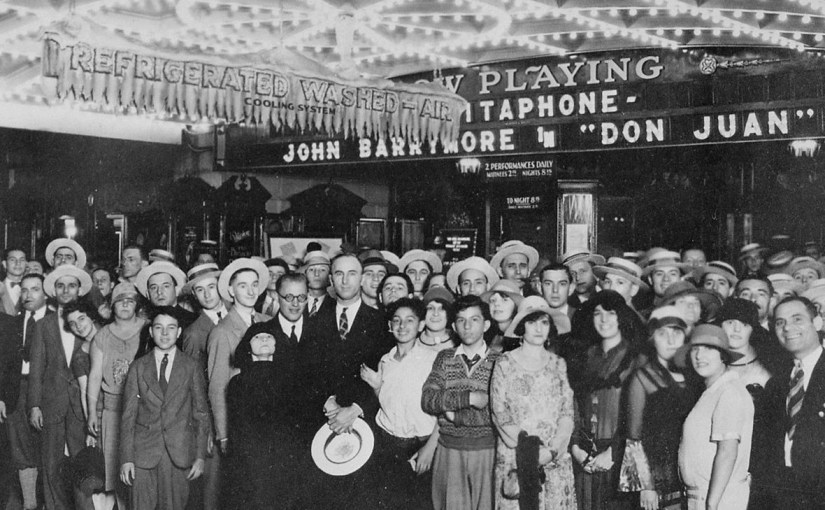
First-nighters pose outside Warners’ Theatre before the premiere of Don Juan, August 6, 1926 (US National Archives)
Produced at a cost of $789,963 (the largest budget of any Warner film up to that point), the film was critically acclaimed and a box-office success. However, and predictably, The New Yorker was not so impressed with Vitaphone…
…or the acting of John Barrymore…
I have to agree with the critic, identified only as O.C., after viewing this TCM clip of the film on YouTube. Lacking a voice, silent actors had to exaggerate emotions onscreen, but Barrymore here is every bit the ham. This screen grab from the clip says it all:
The object of his gaze, Adriana della Varnese (played here by a young Mary Astor), reacts rather dramatically to his advances…can’t say I blame her…(however, the 44-year-old Barrymore and the 20-year-old Astor were having an affair at the time…)
Adriana della Varnese (played here by a young Mary Astor), reacts rather dramatically to Don Juan’s advances.
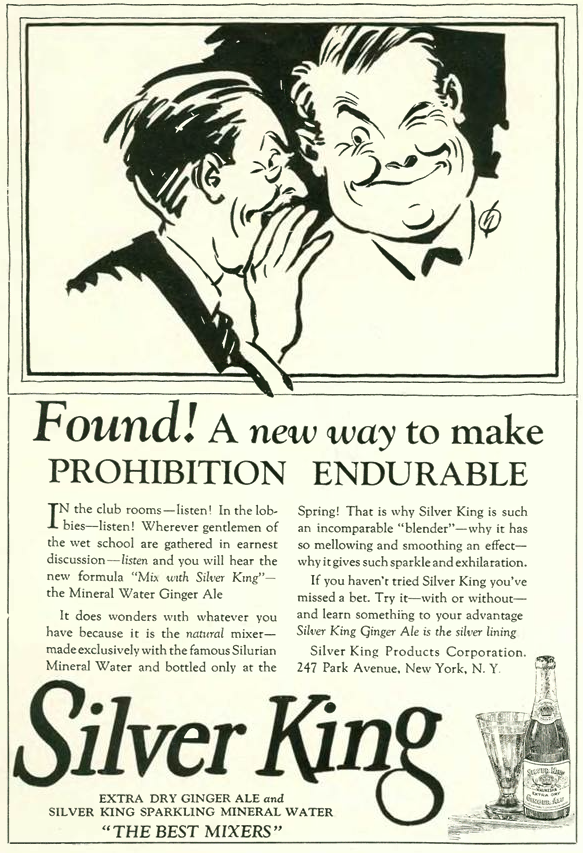
A couple of interesting ads in the Aug. 14, 1926 issue, including this one featuring a couple of sneaky gents who’ve found a solution to life in dry America…
…and this not-too-subtle message from a swanky shop on Fifth Avenue:
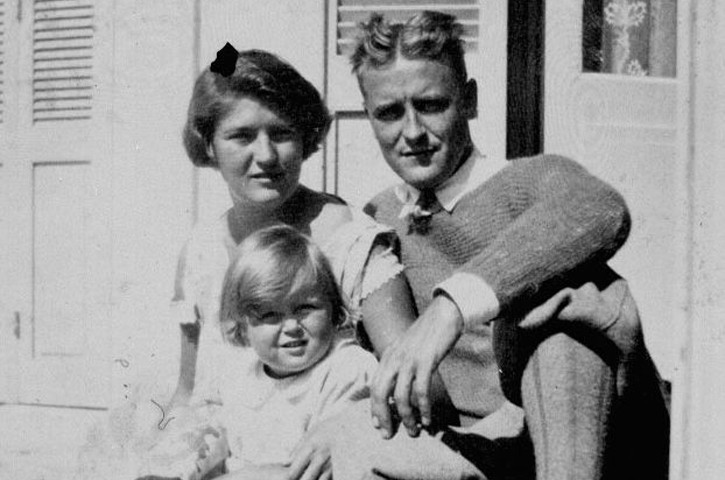
The “sad young man” in question was none other than F. Scott Fitzgerald, who was profiled by John Mosher (who would succeed Theodore Shane as film critic) in the April 17, 1926 issue of The New Yorker.
April 17, 1926 cover by Clayton Knight.
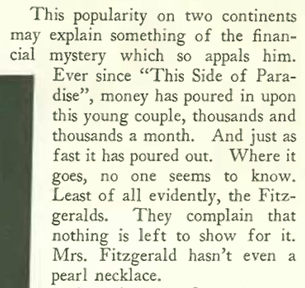
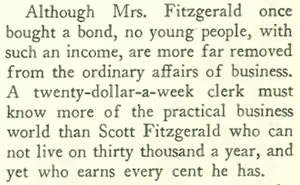
Mosher wrote that Scott believed he was “getting on in years,” even though he was only 29 years old and had recently published The Great Gatsby (which had received a brief, lukewarm review from The New Yorker in 1925). Mosher observed that the novelist and his wife, Zelda, famous on two continents and with money pouring in from the publication of This Side of Paradise, nevertheless complained of being broke:
It was noted however that the couple had little financial sense:
Mosher found Fitzgerald to be a grave, hardworking man, and seemed to sense the melancholy that would lead to madness (in Zelda’s case), alcoholism and an early grave (Fitzgerald would be dead in 14 years).
Illustration of Fitzgerald by Victor De Pauw for the April 17 “Profile.”
In this issue we were also introduced to Peter Arno’s “Whoops Sisters,” although they are not yet identified here by that title:
According to New Yorker cartoonist Michael Maslin, “in 1925, The New Yorker published nine Arno drawings. In 1926, it ran seventy-two. The enormous jump was due to the wild success of two cartoon sisters Arno created: Pansy Smiff and Mrs. Abagail Flusser, otherwise known as The Whoops Sisters. The Sisters were not sweet little old ladies — they were naughty boisterous grinning “wink wink, nudge nudge” sweet little old ladies, their language laced with double entendres.”
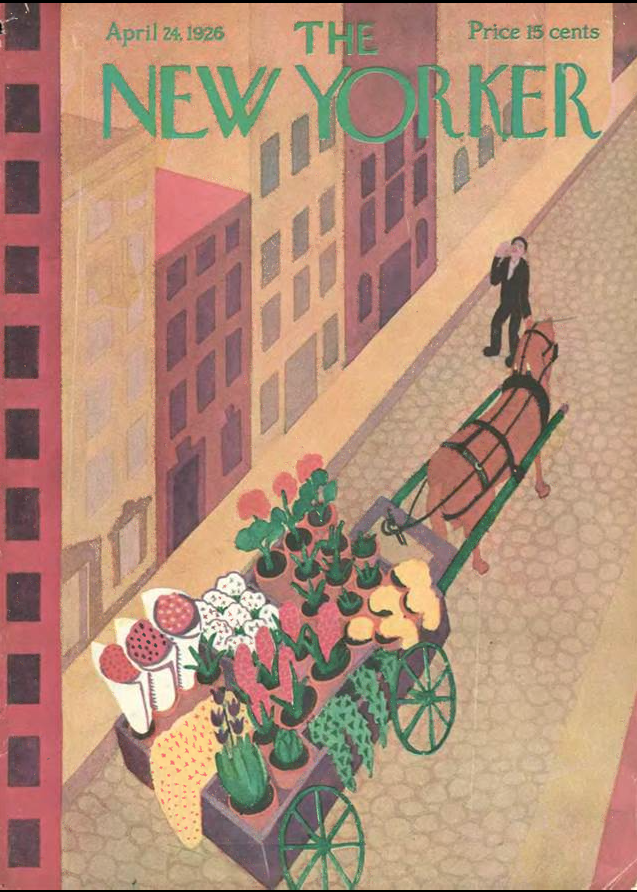
April 24, 1926 cover by Ilonka Karasz.
In the April 24, 1926 issue, the dyspeptic film critic Theodore Shane took aim at Cecil B. DeMille’sThe Volga Boatman:
VOLGA HOKUM…Elinor Fair and Victor Varconi in The Volga Boatman. (Virtual History)
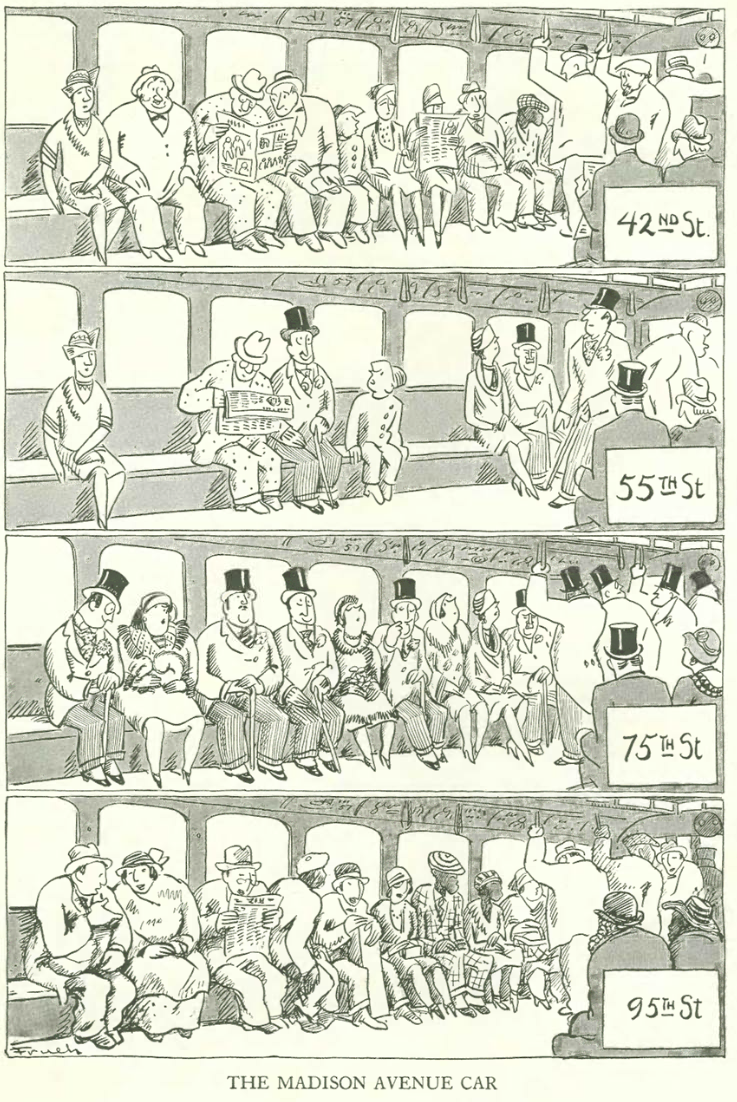
Also in this issue, Al Frueh’s interpretation of New York’s social strata via the city’s Madison Avenue train stops:
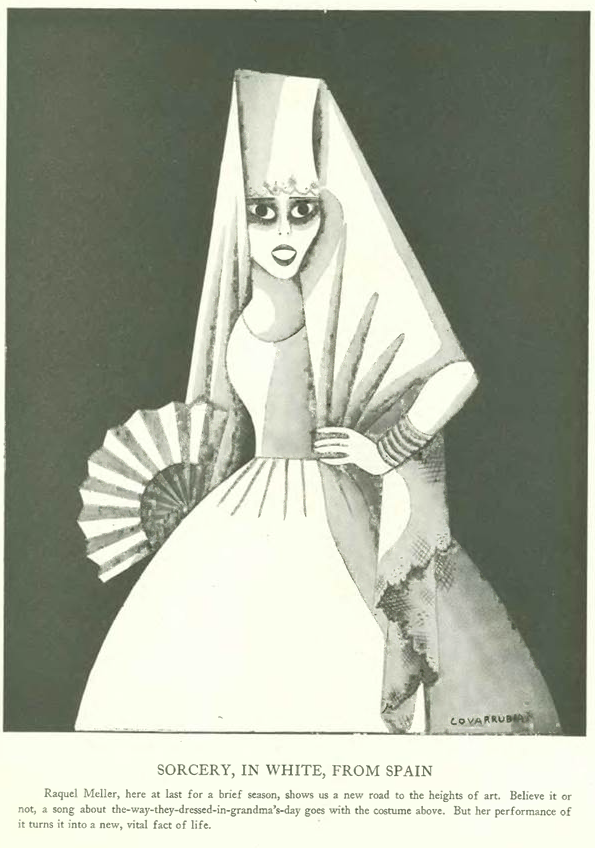
Near the theatre section, this illustration of famed Spanish singer and actress Raquel Meller, as rendered by Miguel Covarrubias:
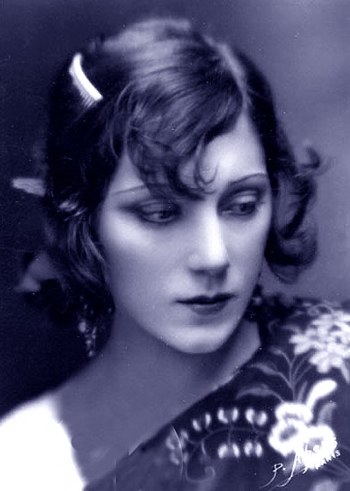
And a photo of Meller from the 1920s that looks like it could have been taken yesterday:
(rameller.tripod.com)
An international star in the 1920s and 1930s, Meller appeared in several films and sang the original version of the well known song La Violetera.
Although the trade name “Technicolor” conjures up images of mid-century Hollywood, the process was actually invented in 1916 and developed over subsequent decades.
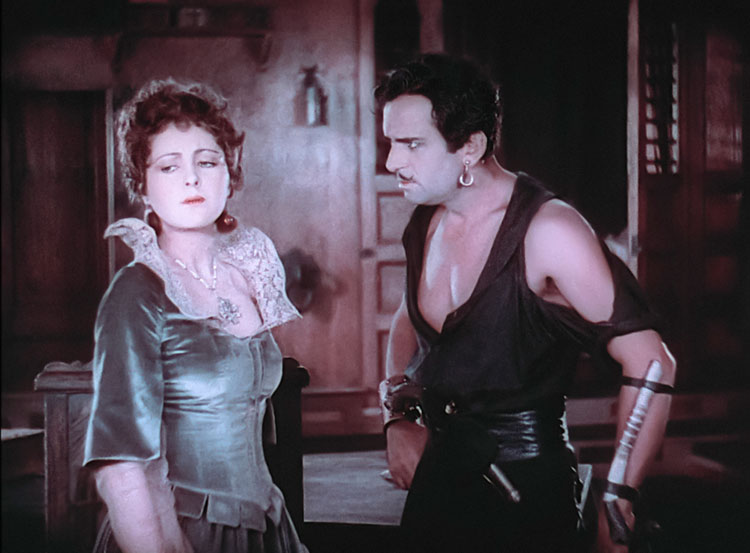
Early Technicolor was a complicated process, using a prism beam-splitter behind the camera lens to simultaneously expose two consecutive frames of a single strip of black-and-white negative–one behind a red filter, the other behind a green filter. A projectionist had to be highly skilled to keep the film aligned during its showing. The Black Pirate, however, used a later technique that cemented the two prints together, making for a thick film that was prone to bulging and distortion.
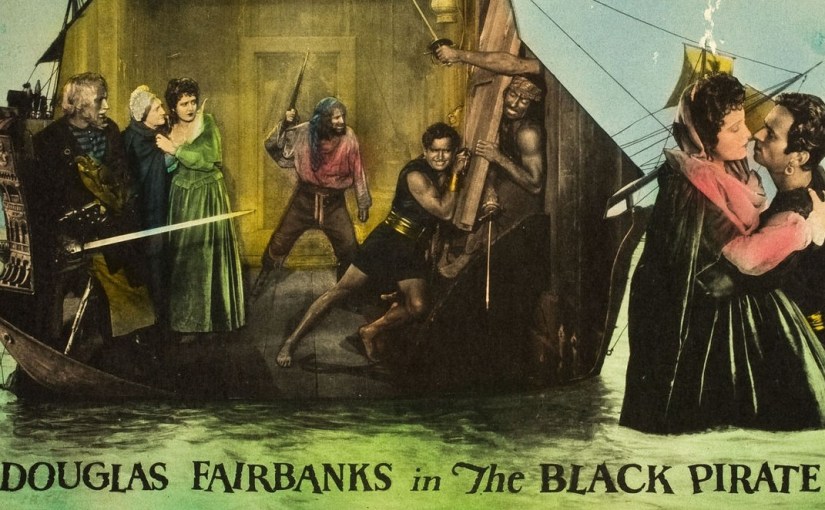
When the New Yorker’sTheodore Shane reviewed Douglas Fairbanks’ latest swashbuckler film, The Black Pirate, in the March 13, 1926 issue, it appeared that after ten years of development the Technicolor process had a long way to go:
DEAR, YOU LOOK A BIT PEAKY…Billy Dove and Douglas Fairbanks rendered in early Technicolor in The Black Pirate. (MovieMail.com)
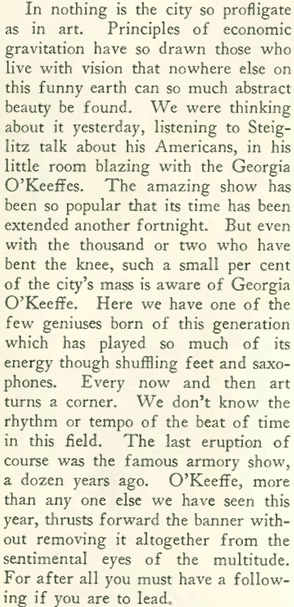
Art critic Murdock Pemberton wrote about the genius of the young artist Georgia O’Keeffe, whose work was on display at husband Alfred Stieglitz’s new exhibition space, the Intimate Gallery:
Georgia O’Keeffe’sBlack Iris, 1926. (Metropolitan Museum of Art)
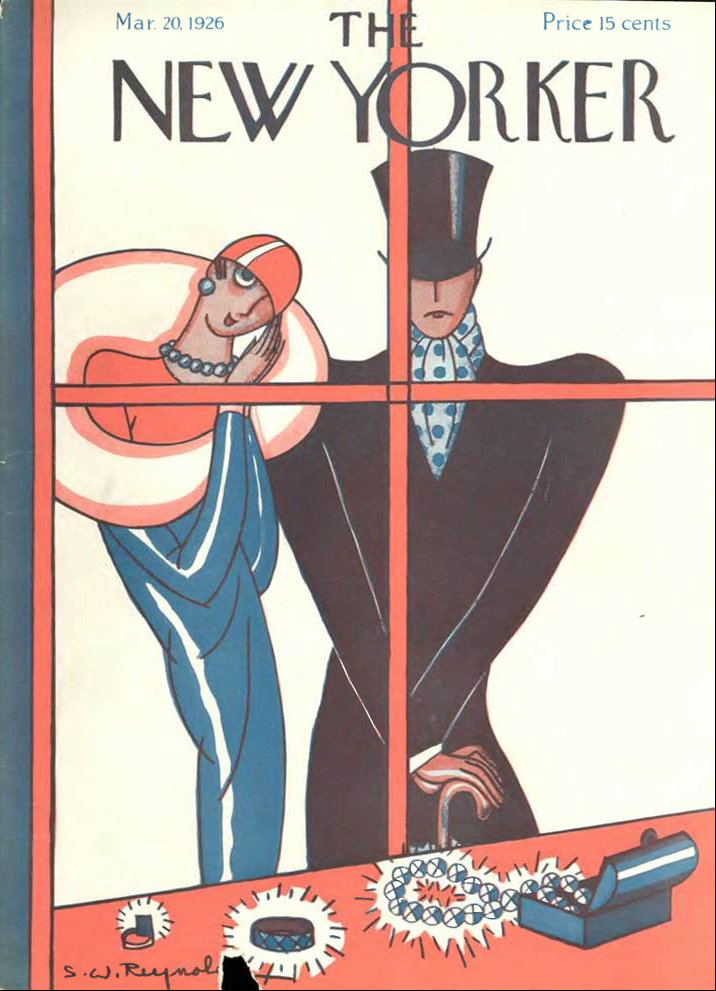
On to the March 20 issue, boldly illustrated by S.W. Reynolds, who contributed a number of deco-themed covers for the magazine:
March 20, 1926 cover by S.W. Reynolds.
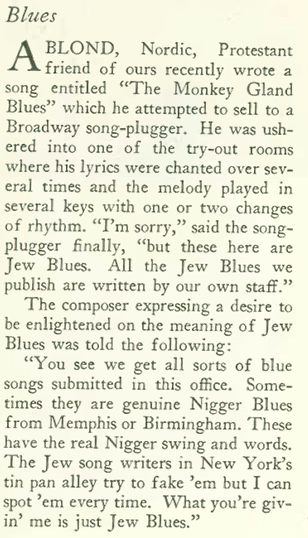
For all The New Yorker’s progressive wit and style, you are occasionally reminded that some of its sensibilities were still very much mired in those times. For example, this bit from the issue’s “The Talk of the Town” segment:
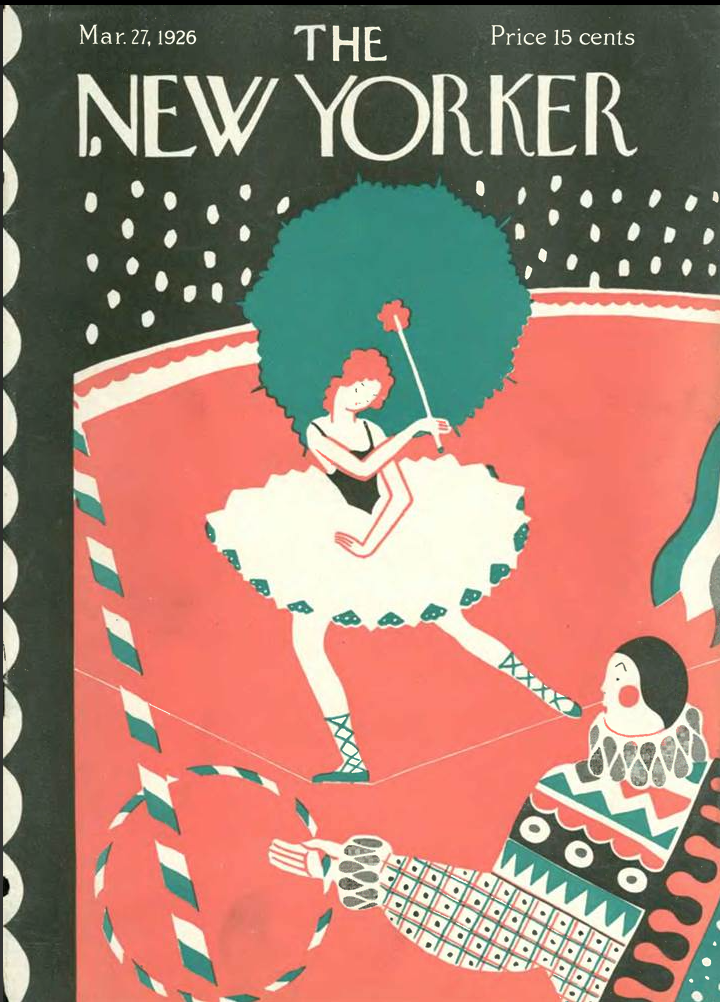
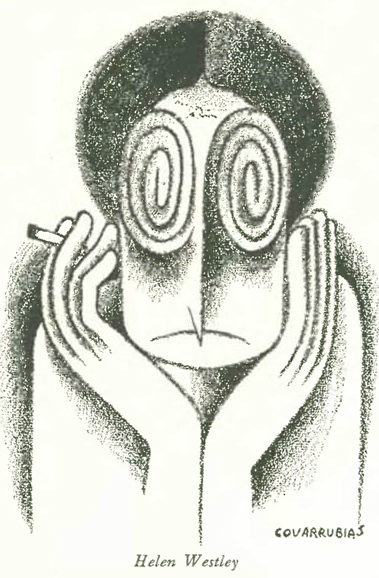
The March 27 issue offered a profile of actress Helen Westley, who was described by writer Waldo Frank (pen name “Search-light”) as “a goddess of our city” whose “true value and her art (was) her personal life.”
March 27 cover by Ilonka Karasz.
Wesley often played a stern, indomitable character who wore a hawk-like glare, and in her later years portrayed dour dowagers and no-nonsense matrons. Frank wrote that while Wesley was not a particularly good actress, she lived her life with a spirit for adventure and a need to plunge her fine-born, gracious manner into the “frowsy” world of Broadway.
A Miguel Covarrubias rendering of Helen Wesley for the “Profiles” piece.
And to close, Al Frueh’s take on a day in the life of a doorman:
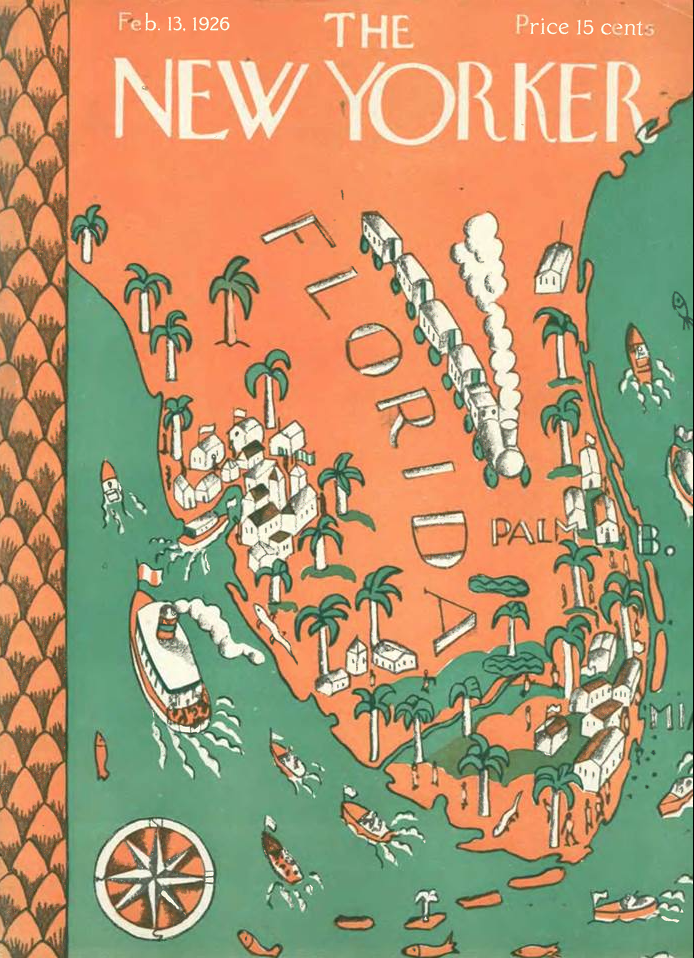
Feb. 13, 1926 cover by Ilonka Karasz. Image at the top of this entry is by Russell Patterson, circa 1930.
In reading all of these past issues of The New Yorker (a year’s worth, as of this post) one writer in particular jumps from the pages: Lois Long.
Perhaps it was her irreverent, high-spirited style and her fearless forays into any topic. She was the most modern of the New Yorker writers, developing a style that communicated directly to the reader as a confidant.
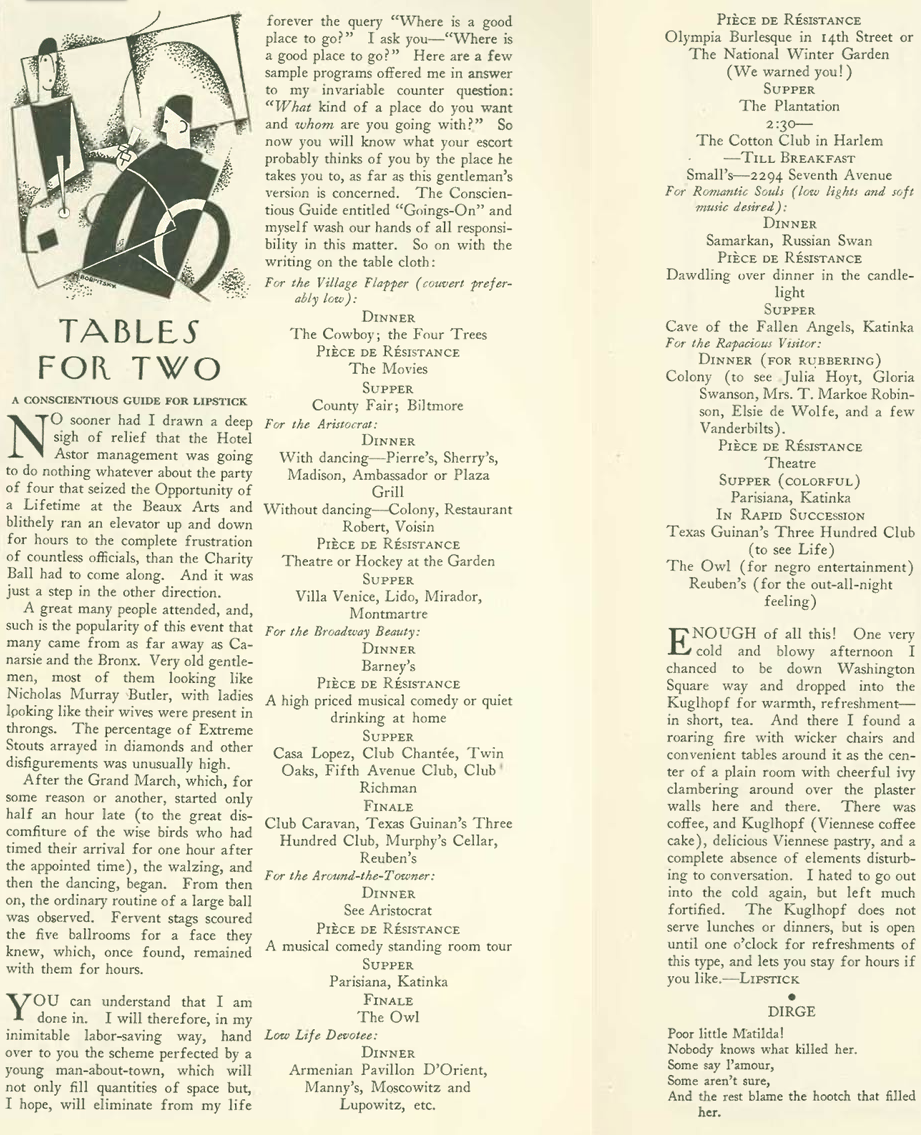
Her output was also impressive, writing about nightlife in “Tables for Two” under the pseudonym “Lipstick” and also about fashion in “One and Off the Avenue.” In his autobiography, Point of Departure, colleague Ralph Ingersoll wrote that Long “did a wheel-horse job of pulling The New Yorker through its first years,” with an “almost infinite capacity for being childishly delighted” while also possessing a “native shrewdness, an ability to keep her head.”
THE GANG…(l to r) Silent film star Charlie Chaplin,Vanity Fair editor Frank Crowninshield, sculptor Helen Sardeau, Lois Long and screenwriter Harry D’Arrast pose in a Coney Island photo booth, 1925. Photo scanned from the book Flapper by Joshua Zeitz.
Long was in rare form in the Feb. 13, 1926 issue, offering a comprehensive list of evening entertainments for everyone from a flapper to an aristocrat. Here’s the entire column:
According to Long, if you were an aristocrat, or a “rapacious visitor” wishing to rubberneck at the rich and famous, The Colony restaurant was a good choice for the dinner hour.
The Colony, which began as a speakeasy in the early 1920s, was one of the places to be seen in New York for many decades. According to the blog Lost Past Remembered, “there was a Colony ‘crowd’ that included Hollywood royalty Errol Flynn, Gary Cooper, and Joan Crawford as well as the real deal ––The Duke and Duchess of Windsor were great fans (as were assorted bankers, brokers, wheeler dealers and gangsters and socialites).”
In those days you could display your status by where you were seated at The Colony. In later years the place was frequented by the likes of Jackie O and her sister Lee Radziwill. Writer Truman Capote, who enjoyed a special back table under a TV set, reportedly wept when the restaurant closed in 1971.
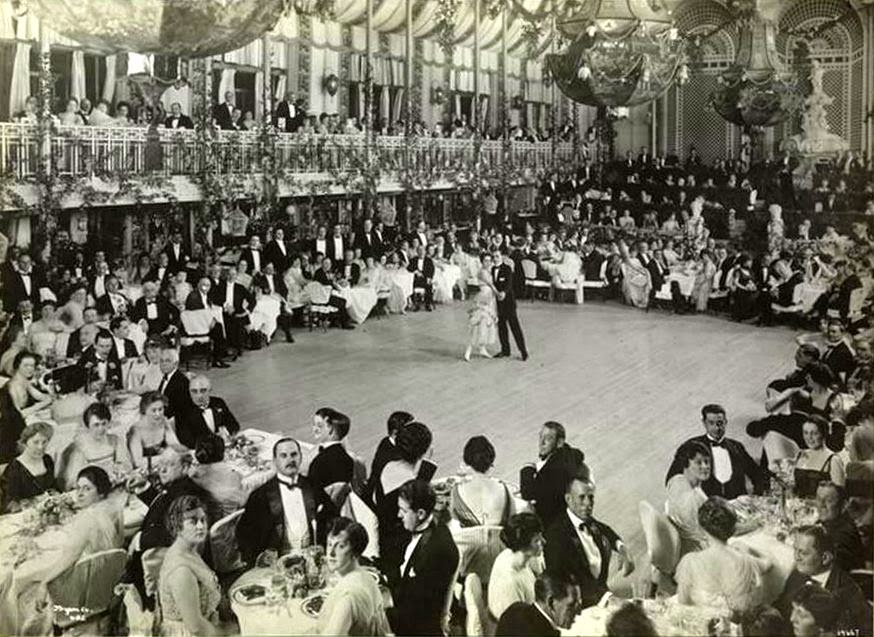
FLAPPER FARE…Long suggested that the Biltmore might be a suitable dining destination for the “Village Flapper.” Pictured here is the Biltmore’s Cascades ballroom and dining area, circa 1915. (Museum of the City of New York)
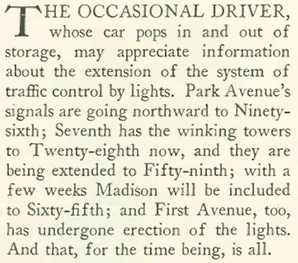
On to a less glamorous subject, “The Talk of the Town” made note of the extension of traffic lights in the city:
In 1926 traffic lights were still something of a novelty in New York, which didn’t install its first traffic light until 1920.
According to the New York Times (May 16, 2014), the first permanent traffic lights in New York went up in 1920, a gift from millionaire physician Dr. John A. Harriss who was fascinated by street conditions. His design “was a homely wooden shed on a latticework of steel, from which a police officer changed signals, allowing one to two minutes for each direction. Although the meanings we attach to red and green now seem like the natural order of things, in 1920 green meant Fifth Avenue traffic was to stop so crosstown traffic could proceed; white meant go. Most crosstown streets and Fifth Avenue were still two-way.”
The signals were so popular that in 1922 “the Fifth Avenue Association gave the city, at a cost of $126,000, a new set of signals, seven ornate bronze 23-foot-high towers (designed by Joseph H. Freedlander) placed at intersections along Fifth from 14th to 57th Streets.”
Bronze traffic signal tower designed by Joseph H. Freedlander at 42nd Street and Fifth Avenue, 1922. (New York Times)
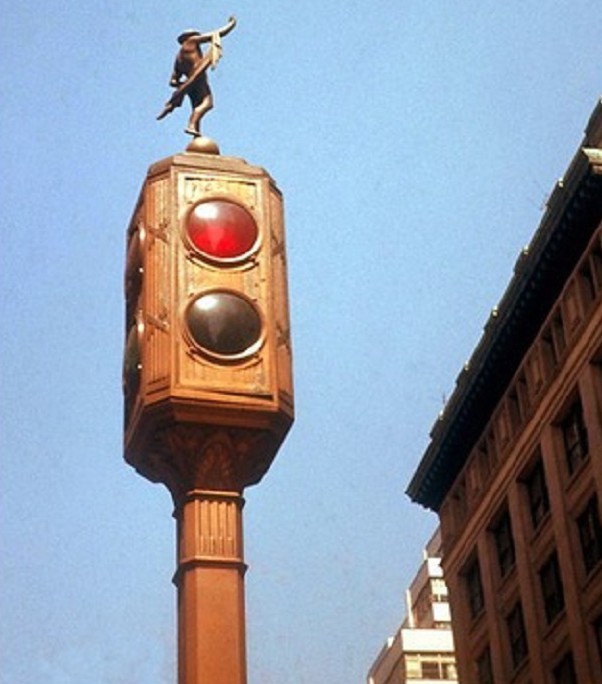
Within a few years it was determined that the towers were blocking the roadway, so in 1929 Freedlander was “called back to design a new two-light traffic signal, also bronze, to be placed on the corners. These were topped by statues of Mercury and lasted until 1964. A few of the Mercury statues have survived, but Freedlander’s 1922 towers have completely vanished.”
Freedlander’s bronze corner traffic signal, topped by a statute of Mercury. (Untapped Cities)
Skipping ahead a few issues, this Hulett advertisement from the March 20, 1926 issue features a drawing of the Freelander signal:
* * *
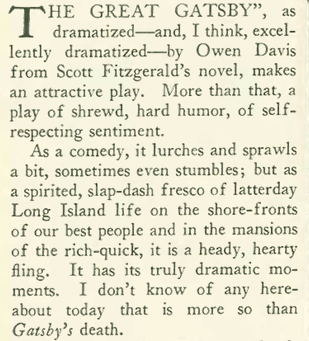
Although F. Scott Fitzgerald’s novel The Great Gatsby received a brief, dismissive review from the magazine in 1925, a stage adaptation of the novel was received favorably by theatre critic Gilbert W. Gabriel:
A Page From Playbill...The Great Gatsby, February 22, 1926 at Ambassador Theatre (Playbill Vault)
In the movies, critic Theodore Shane gushed over a new film by Robert Flaherty, famed director of Nanook of the North. This time around Flaherty turned his lens on a Polynesian paradise in Moana:
Still image from Moana (Indiewire)
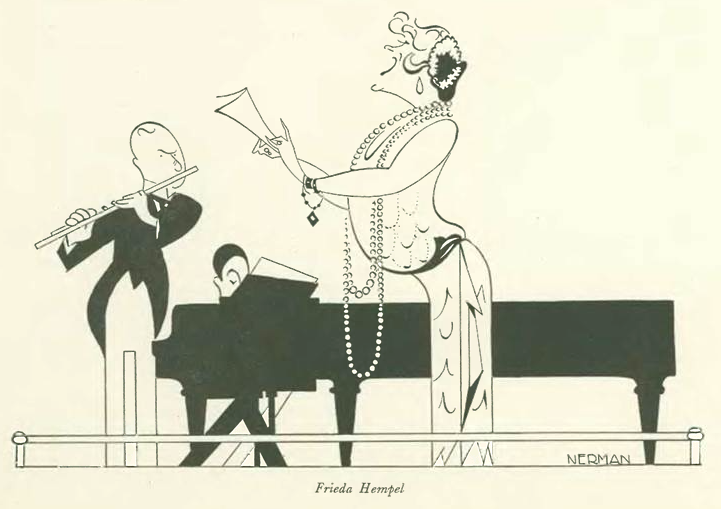
And to wrap things up, a drawing by Einer Nerman of German soprano Frieda Hempel…
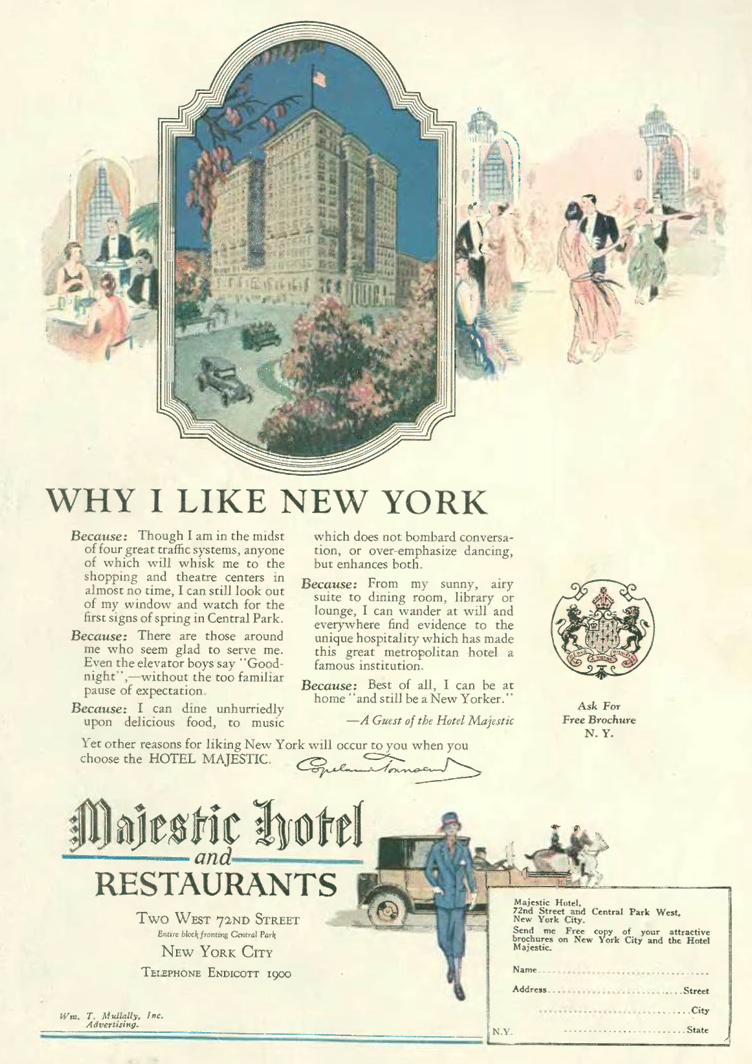
And this advertisement exhorting readers to stay at the Hotel Majestic. The hotel, built in 1894, would fall to a wrecking ball in 1929, just three years after this ad appeared:
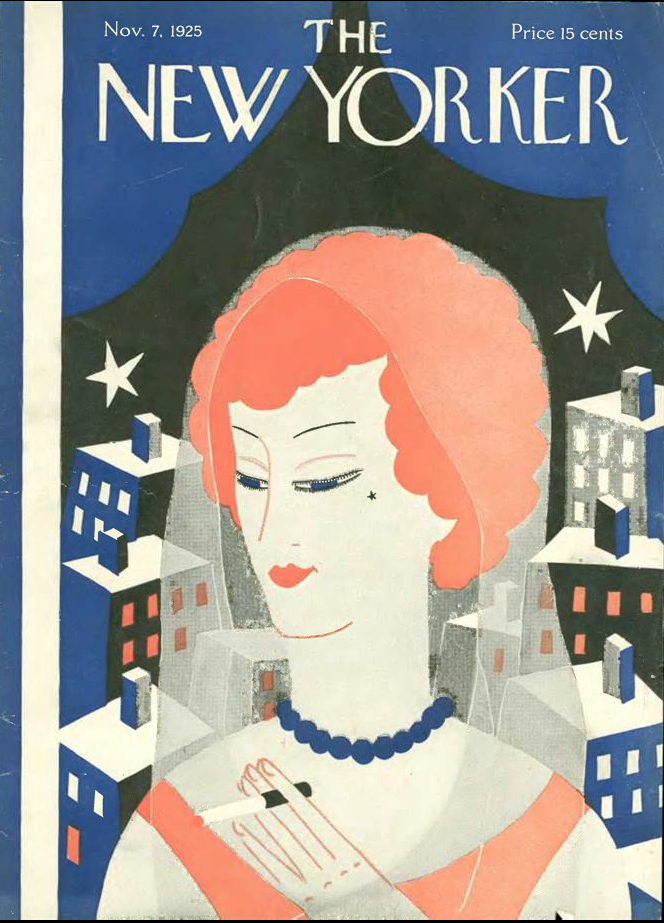
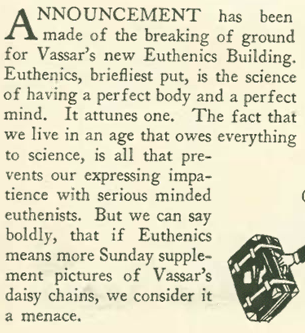
A brief item in “The Talk of the Town” for Nov. 7, 1925, mentioned the groundbreaking for a new building at Vassar dedicated to the study of something called “Euthenics.” The term was used by Ellen H. Swallow Richards (Vassar, Class of 1870), based on the Greek Euthenia, which described a good state of the body, including prosperity, good fortune and abundance.
After Richards died in 1911, the idea was taken up by another Vassarite Julia Lathrop (’80) who teamed up with fellow alumnae Minnie Cumnock Blodgett (’84) to create a program of Euthenics at Vassar, against the protestations of some faculty who found this new field of interdisciplinary study suspect. It didn’t help that some even confused it with the racist “eugenics” movement.
At a time when many academic disciplines were moving in the direction of specialization, students in euthenics could study horticulture, food chemistry, sociology, statistics, education, child study (Lathrop would serve as the first chief of the U.S. Children’s Bureau), economics, economic geography, physiology, hygiene, public health, psychology, domestic architecture and furniture. The New Yorker had this to say about the new area of study:
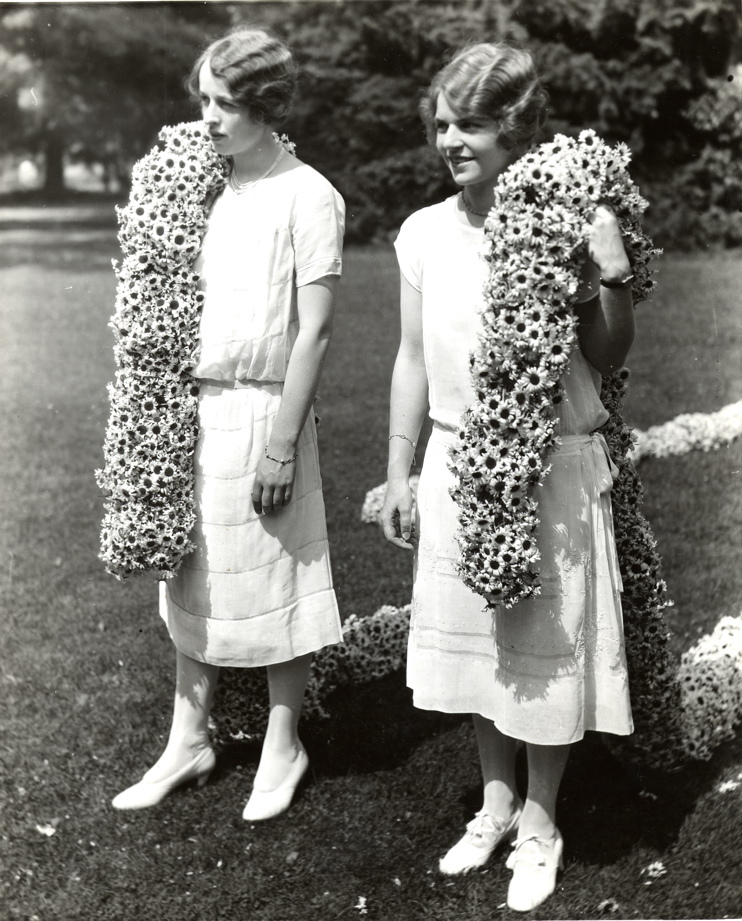
The “daisy chains” referred to above are one of the oldest traditions at Vassar. Every year, the senior class chooses sophomore women who demonstrate superior leadership and class spirit to carry a 150-foot chain of daisies and laurel at Commencement.
Carrying the “Daisy Chain” at Vassar, 1925 (Vassar College)
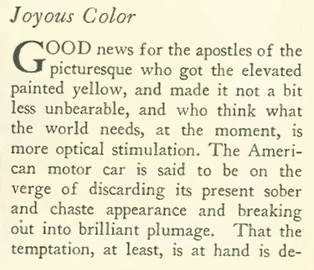
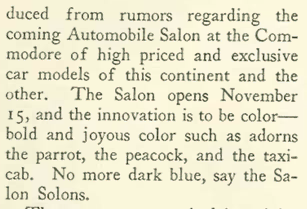
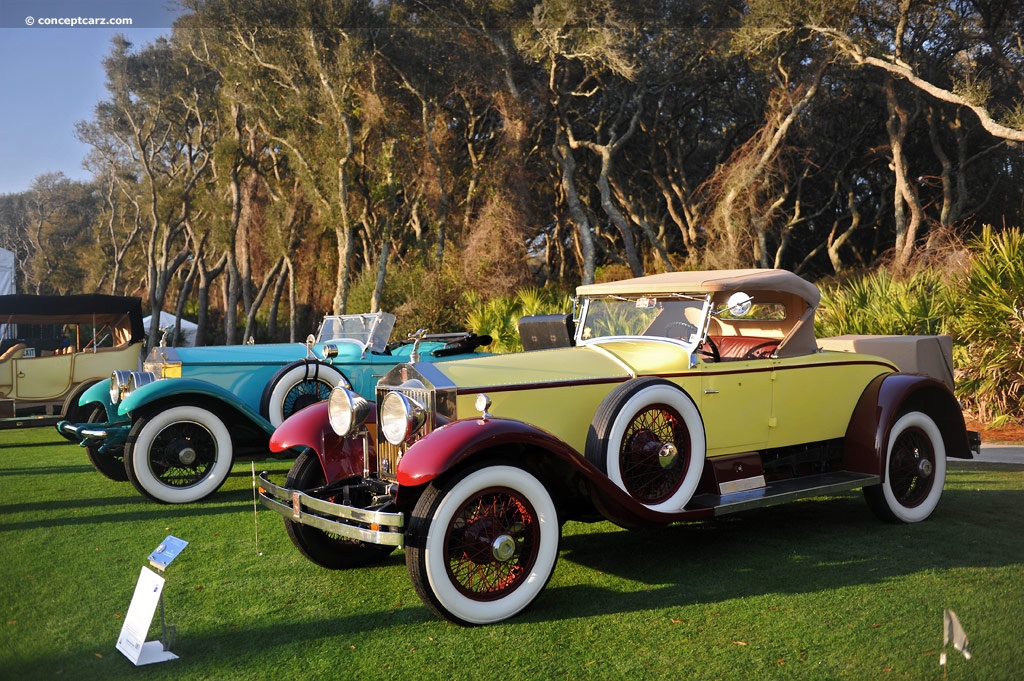
The New Yorker was also anticipating the upcoming Automobile Salon at the Commodore Hotel, including the news that autos would break from sober black and navy into a palette of colors:
1925 Rolls Royce Silver Ghost (conceptcarz.com)
“Profiles” featured Gen. John J. Pershing, while “Sports of the Week” featured the Oct. 31 “Cornell-Columbia battle” at the Polo Grounds (Cornell prevailed 17-14). That same day in New Haven, Yale humbled Army 28-7.
In her fashion column “Fifth Avenue,” Lois Long paid a visit to designer Paul Frankl’s store, where she admired his collection of “four-dimensional furniture, including his “skyscraper” bookcases:
Paul Frankl “skyscraper” bookcase, ca. 1927. Fashioned from maple and trimmed with Bakelite (Metropolitan Museum of Art).
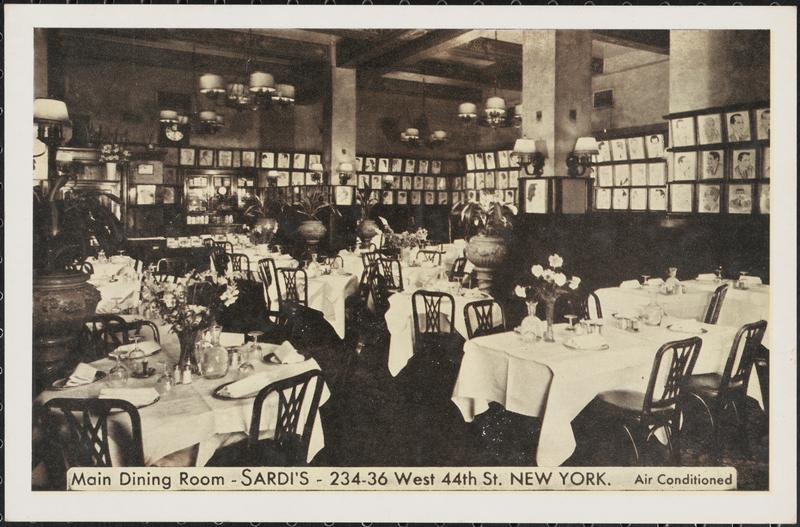
In her “Tables For Two” column, Long’s previous criticism of Sardi’s (lack of celebrity sightings) received this reply:
Main Dining Room of the old Sardi’s, 234-36 West 44th St. New York. (Museum of the City of New York)
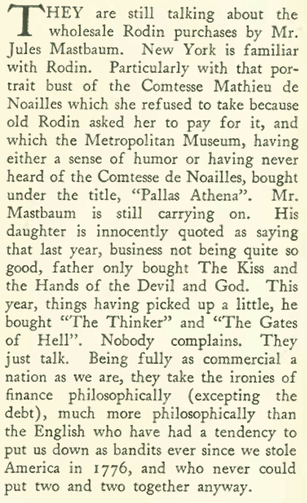
In her latest dispatch from Paris, Janet Flanner wrote that Philadelphia movie theater magnate Jules Mastbaum was making a haul of Rodin sculptures. The French found it interesting but not alarming:
Mastbaum would die the following year and donate his Rodin collection to the city of Philadelphia. It is the largest collection of Rodin’s works outside Paris. Flanner also offered this tidbit on a new, scandalous book by Texan Gertrude Beasley:
In a 2000 article for Texas Monthly (“A Woman of Independent Means”), Don Graham wrote that “no other book in Texas literature is quite like Gertrude Beasley’s little-known memoir, My First Thirty Years. For one thing, it was published in Paris in 1925 by the avant-garde press Contact Editions (it was banned in Britain and America), which included among its authors Ernest Hemingway.” He wrote that Beasley’s book established itself “as a provocative and highly subversive text: She recounts her birth as the violent outcome of marital rape by her father…Things go downhill from there…” You can read more about Beasley, and her “disappearance,” in this Texas Observer article.
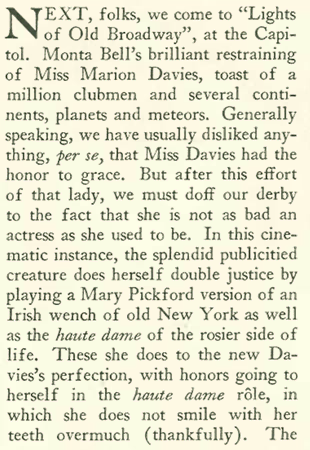
In “Motion Pictures,” The New Yorker (via critic Theodore Shane) cut actress Marion Davies a little slack:
Channelling her inner Pickford: Marion Davies in The Lights of Old Broadway. (Wikipedia)
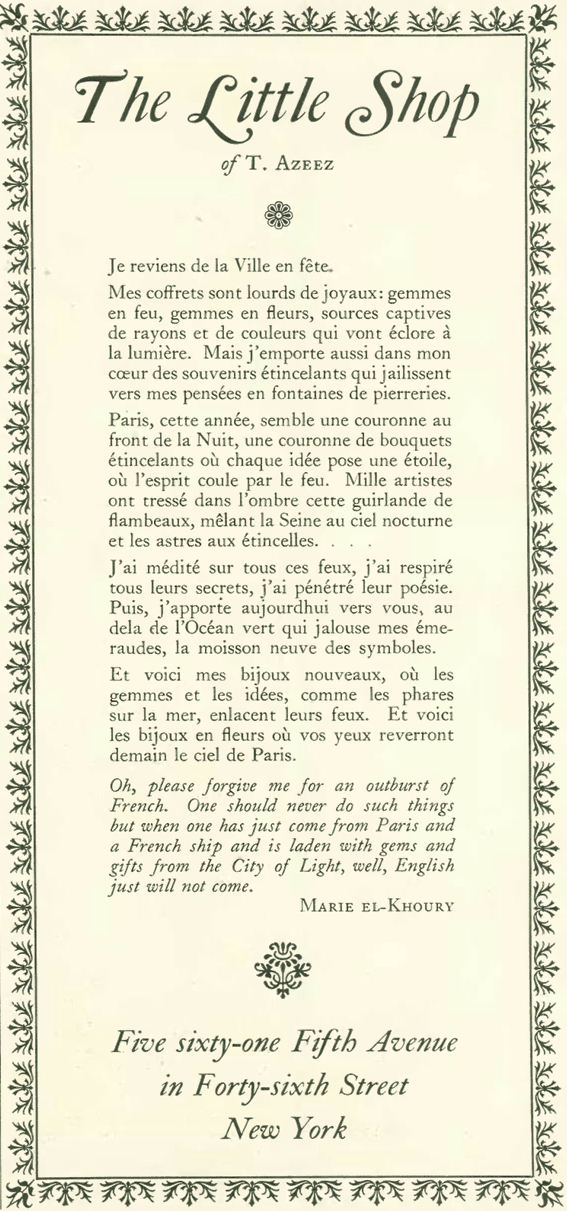
And if you doubt the Francophile ambitions of New Yorker readers, here are two ads written almost entirely in French:
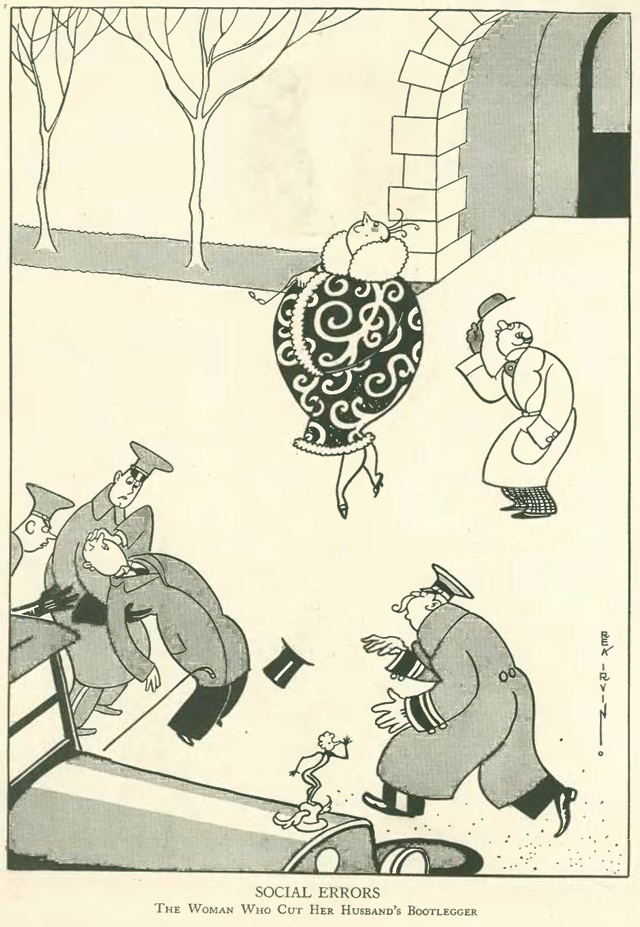
And to end on an amusing note, more perils of Prohibition, courtesy of Rea Irvin:
The Oct. 10, 1925 issue marked Janet Flanner’s first “Paris Letter” signed under the pen name Genêt.
The column, dated Sept. 25, noted that droves of American tourists were heading for the northern ports “carrying everything away that’s portable, and the American Express is hard pressed to find crates enough to house the antiques that are on their way to make American homes beautiful.”
Flanner also noted the huge attendance numbers at the Exhibition of the Decorative Arts, but she was no fan of the teeming masses: “More than ten million people have attended which, by the way, if you have been there, you will know, has been nine million nine hundred thousand too many for comfort.”
Postcard image of the International Exposition of Modern Industrial and Decorative Arts. The term “Art Deco,” which would be used to describe a prevailing design style of the Jazz Age, was derived by shortening the words Arts Décoratifs. (Flickr)Janet “Genêt” Flanner in Paris, 1928, in a photo by Berenice Abbott. (Wikipedia)
Persistent rainstorms that ruined the French wheat crop and inflicted major damage on the wine growing regions had also dampened the spirits of the French and tourists alike, so Flanner looked forward to the Autumn Salon which was “still to come as the big Fall event.” She also noted that James Joyces’s novel Ulysses, banned in the U.S., was already into its sixth French edition.
According to Ben Yagoda (About Town: The New Yorker and the World it Made), Flanner had first come to the attention of editor Harold Ross through his wife, Jane Grant, who was a friend of Flanner’s from the Lucy Stone League, an organization that fought for women to preserve their maiden names after marriage. Flanner would go on to work for The New Yorker for the next five decades.
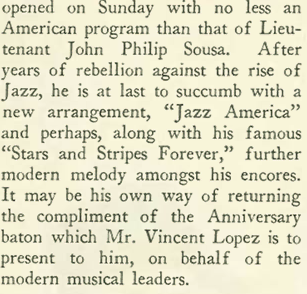
In “The Talk of the Town,” it was reported that Patricia Salmon was returning to Broadway “a more confident person” after enlarging her fame with performances “in the hinterland.” And in other show-biz news, the Masonic Order’s new Mecca Temple announced that it would open with an American program led by John Philip Sousa. It was also noted that the great Sousa had succumbed to the lure of jazz music:
The Mecca after its completion in late 1924. Known today as New York City Center, it is now home to the Alvin Ailey American Dance Theater, Manhattan Theatre Club, The Flamenco Festival, and the Martha Graham Dance Company among other groups. (nycago)
“Profiles” featured publisher and stage producer Horace B. Liverwright, the piece defiantly titled “One Hundred Per Cent American.” The social activist Waldo Frank (“Search-light”) wrote admiringly about this vocal campaigner against strict literary censorship, and observed that Liverwright possessed the soul of a poet who does what he likes, and this is what he likes above all: “that no hour be heavy, that no day and no deal be without its radiant wings.”
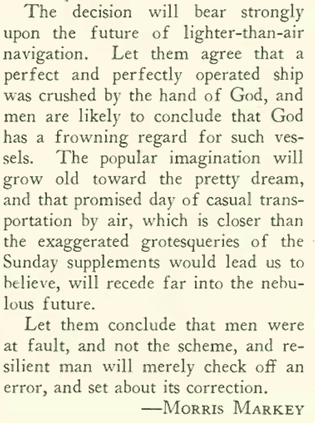
Morris Markey explored the Shenandoah airship disaster in greater detail in his “In the News” section, and hoped that the Navy’s inquiry into the crash would not deter further developments in airship travel:
In “Sports of the Week,” John R. Tunis wrote what would be the first of many articles in the magazine on college football, which featured prominently in the fall issues thanks to an ailing Babe Ruth and the slumping Yankees.
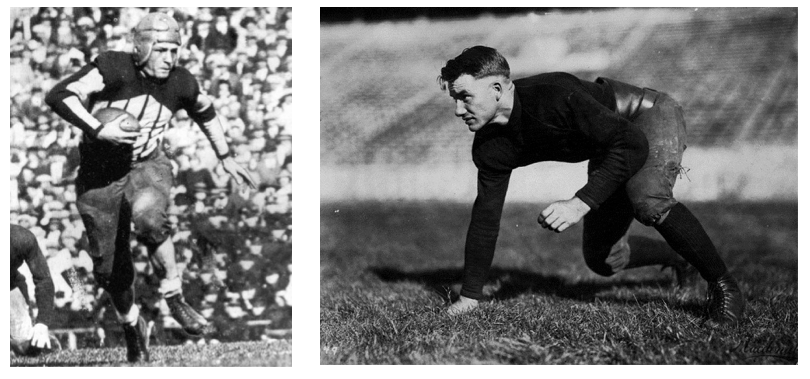
The lengthy article was an account of Nebraska’s 14-0 victory over Illinois in the Illini’s gleaming new stadium in Champaign. The match was billed as one of the major contests of the season, bringing together two All-American captains in a defensive slugfest: Red Grange of Illinois and Ed Weir of Nebraska.
Famed Illinois running back Red Grange (left) was held scoreless by fellow All-American Ed Weir and his Nebraska Cornhuskers in a much ballyhooed matchup of 1925.
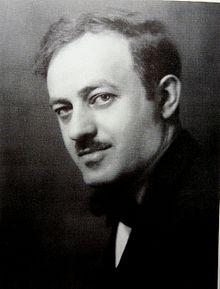
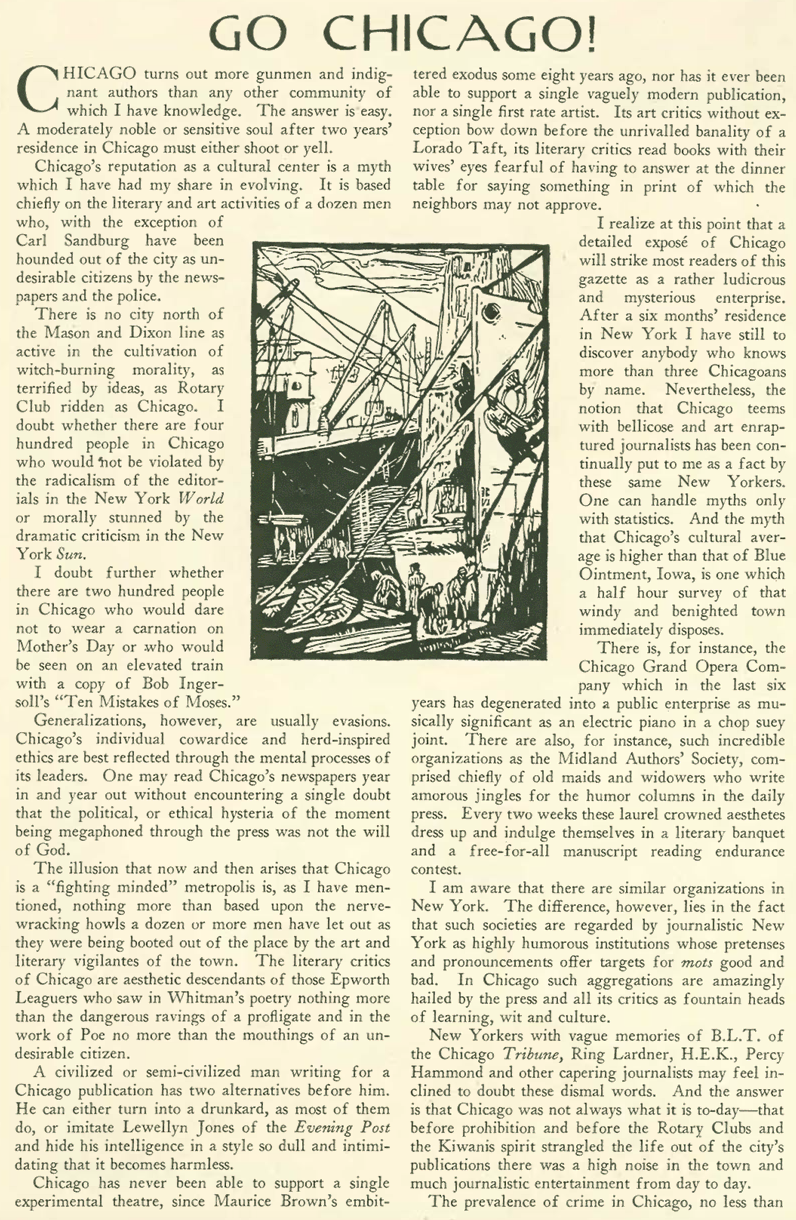
The New Yorker rarely missed an opportunity to take potshots at rival cities such as Philadelphia or Boston, but Chicago was a special target in the magazine’s crosshairs as a notorious Midwestern backwater. The July 4, 1925 issue included a feature titled “Go Chicago,” in which Ben Hecht parodies the city’s pretensions and acts of boosterism.
Ben Hecht in 1919. (Wikipedia)
Among Hecht’s observations:
There is no city north of the Mason and Dixon line as active in the cultivation of witch-burning morality, as terrified by ideas, as Rotary Club ridden as Chicago.
I include below the entire piece for the full effect of Ben’s acid-tipped pen:
(New Yorker Digital Archive)
A note on Hecht: According to IMDB, he is considered one of Hollywood’s and Broadway’s greatest writers. He won an Oscar for best original story for Underworld (1927) at the first Academy Awards in 1929 and had a hand in the writing of many classic plays and films, including the play The Front Page and the film Notorious. Although he received no credit, Hecht was paid $10,000 by David O. Selznick to perform a “fast doctoring” on the script for Gone With The Wind.
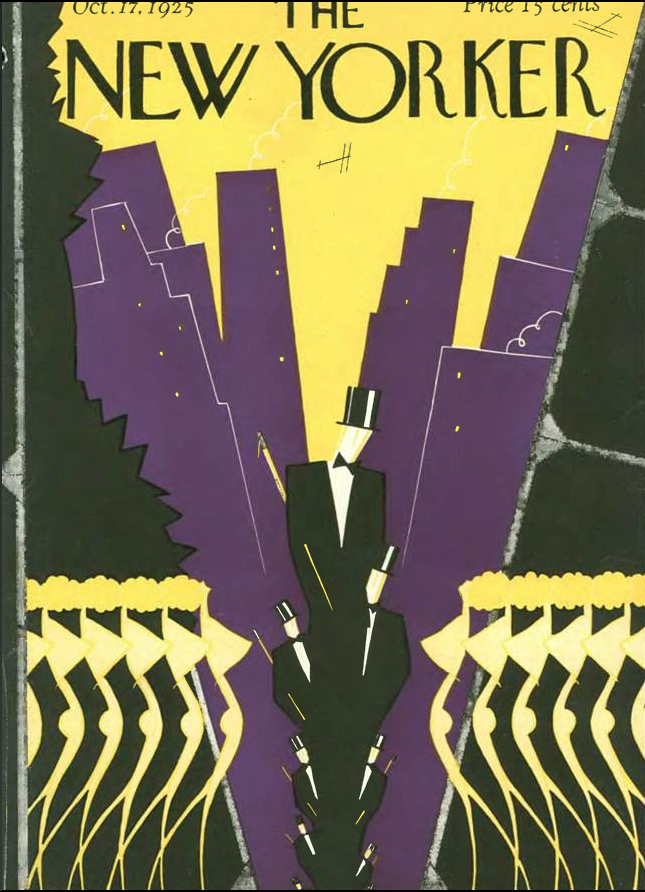
The New Yorker celebrated its first Fourth of July with a busy, two-color cover depicting Coney Island’s famous Luna Park:
July 4, 1925 cover by Ilonka Karasz. (New Yorker Digital Archive)
One wonders if the cover art was part of an arrangement for advertising revenue, given that this ad appeared on the back cover of the same issue:
(New Yorker Digital Archive)
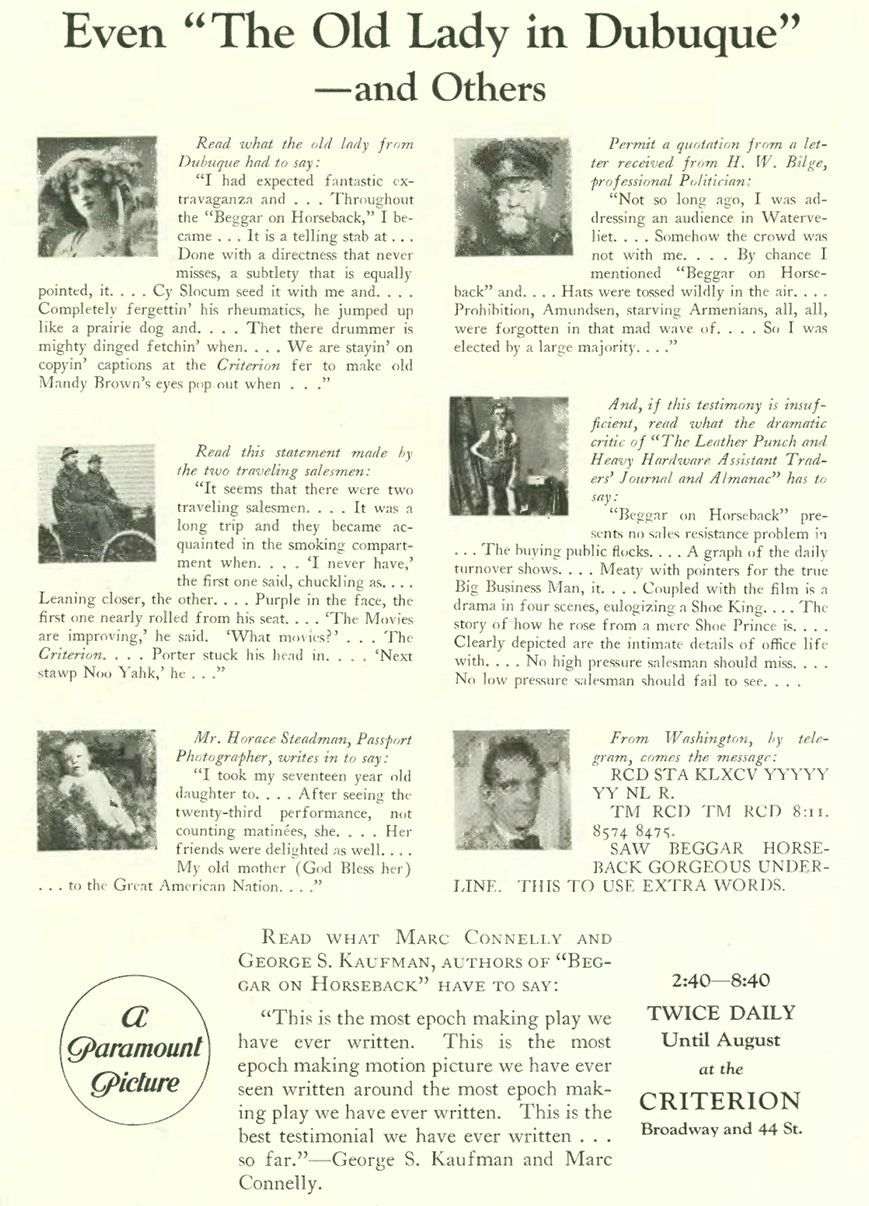
The inside front cover of the issue featured a full-page ad for the Paramount film, Beggar on Horseback, complete with joke reviews from the “Old Lady in Dubuque” and others including the film’s two writers, Marc Connelly and George S. Kaufman, who were also advisory editors of The New Yorker:
(New Yorker Digital Archive)
“Talk of the Town” commented on how modern artists such as Henri Matisse, Marsden Hartley, Charles Demuth and Constantin Brancusi were influencing contemporary fashion: “To-day sees the dress houses and even the Fifth Avenue department stores displaying “Cubist fashions”—scarves patterned like composite photographs of all the abstruse countenances in Euclid’s book of open curves, gowns that are marked with subtle diagrams on the variation of the triangle…sports blouses done in bands of gradated color and roundish forms which proclaim their nepotal relation to Cezanne…”
Dress at left “suggests the fractured and splintered paintings of George Braque, Marcel Duchamp and the early cubist paintings by Picasso. In both art and fashion, Cubism was the modern style” (description and image from Smith College Historic Clothing). At right, a dress from 1924 designed by Paul Poiret (Thierry de Maigret).
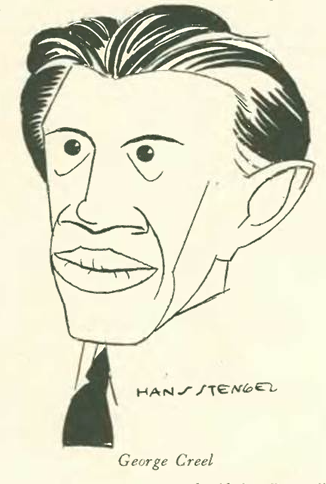
“Profiles” featured George Creel, an investigative journalist and politician who headed President Woodrow Wilson’s propaganda arm, the Committee on Public Information, during World War I. The profile’s author, Harvey O’Higgins, wrote that “The Incredible Mr. Creel” was often unpopular with the press as a war-time propagandist, but Creel himself was not a censor but rather a good-humored, honest man with “the ideals of an adolescent.”
Hans Stengel rendering of George Creel in “Profiles” (New Yorker Digital Archive)
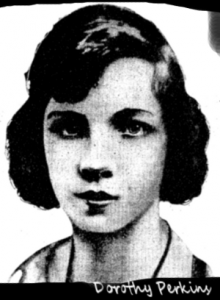
In the “Of All Things” section, Howard Brubaker wryly observed: “Now that Dorothy Perkins has been sentenced to three years in prison we hope that ladies will think twice before killing gentlemen unless they are actually annoying.”
At the time, Perkins was the youngest woman ever charged with murder in New York. She was just 15 when she met 35-year-old Mickey Connors, described by blogger Mark Gribben in The Malefactor’s Register as a “truck driver and spouse-abusing divorced felon.”
Gribben writes that “Connors and Dorothy apparently met in June 1924 when he wed the mother of one of Dorothy’s girlfriends. After that marriage, Connors moved away from Greenwich Village, but kept in contact with Dorothy on the sly.”
According to Gribben, on Valentine’s Day 1925, a rival suitor for Dorothy, 26-year-old Tommy Templeton (who served with Dorothy’s father, Rudolph, in World War I), attended a birthday party for Rudolph at his Greenwich Village house. During the party, the drunken Rudolph apparently asked Dorothy, “Why do you want a bum like Connors when you can have a nice fellow like Tommy?” At some point Dorothy went to her room to fetch a .22-caliber revolver she had stolen from an aunt in Connecticut.
Dorothy Perkins (The Malefactor’s Register)
What ensued was related by the family minister, Rev. Truman A. Kilborne, in testimony to the court. Rev. Kilborne said the family told him that when Rudolph attempted to take the revolver from his daughter, she resisted and in the struggle the revolver went off. Templeton, who was standing nearby, was shot through the heart.
During her trial, Dorothy claimed that her standoffish treatment of Tommy (and being seen with Conners) was an attempt to make “(Tommy) jealous by flirting with someone else.”
On June 17, 1925, the jury rejected the state’s case that the shooting was murder and convicted Dorothy of manslaughter.
Contrary to The New Yorker account, Dorothy was sentenced to 5 to 15 years in the women’s prison at Auburn, but ended up serving just four years of the sentence, during which time she was trained as a stenographer. She was released in January 1929 for good behavior. Mickey Connors served a few months in the Tombs prison for contributing to the delinquency of a minor.
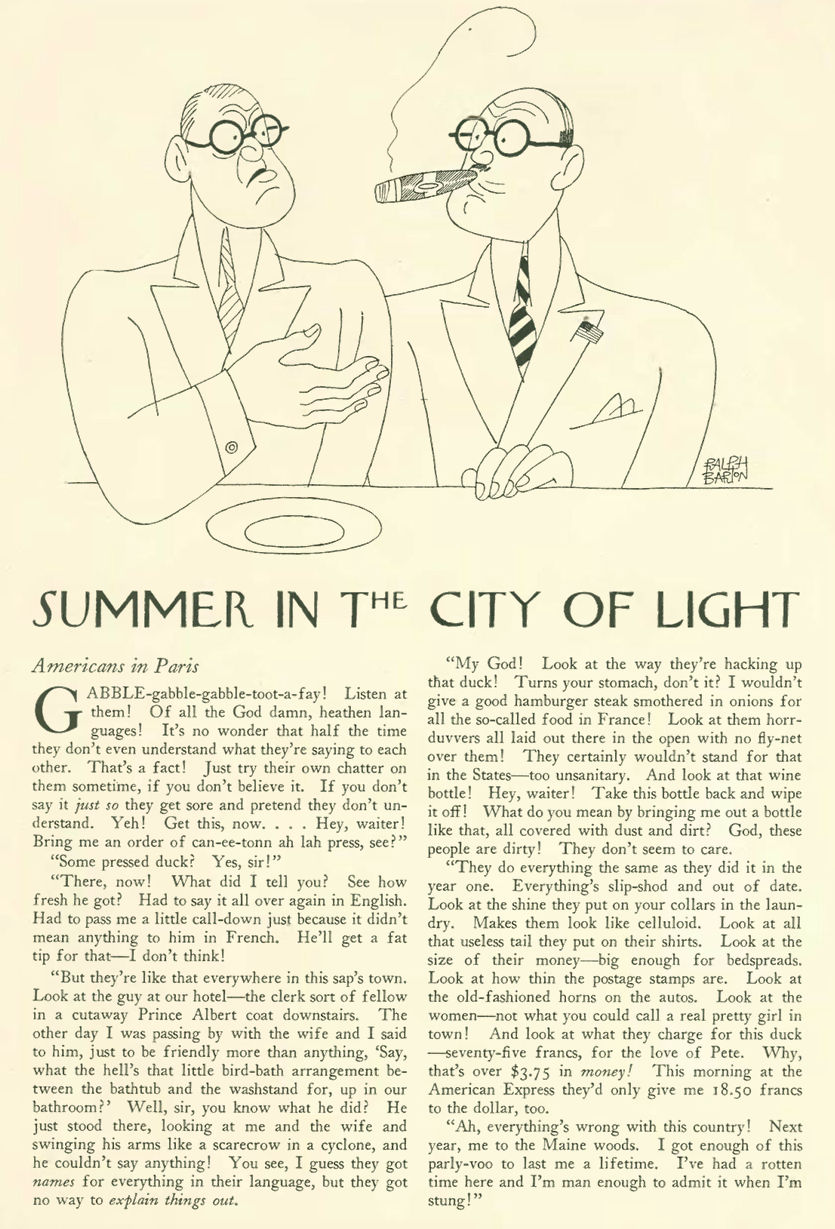
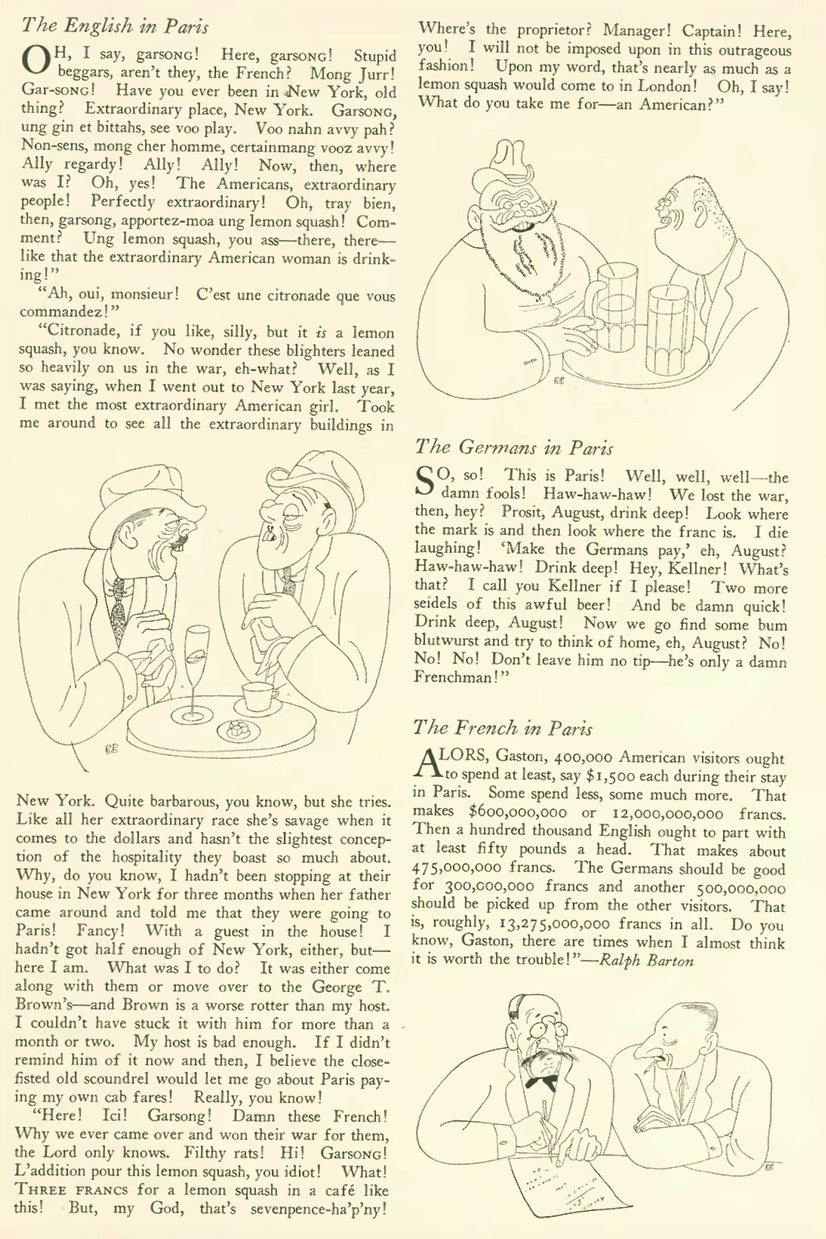
The issue also included this wonderful two-page illustrated feature by Ralph Barton, a subject in my previous blog post, The Vicious Circle. Barton was very familiar with French life and customs. According to Wikipedia, in 1915 Puck magazine “sent Barton to France to sketch scenes of World War I. It was then that Barton developed a great love of all things French, and throughout his life he would return to Paris to live for periods of time. In 1927 the French government awarded Barton the Legion of Honour.”
(New Yorker Digital Archive)
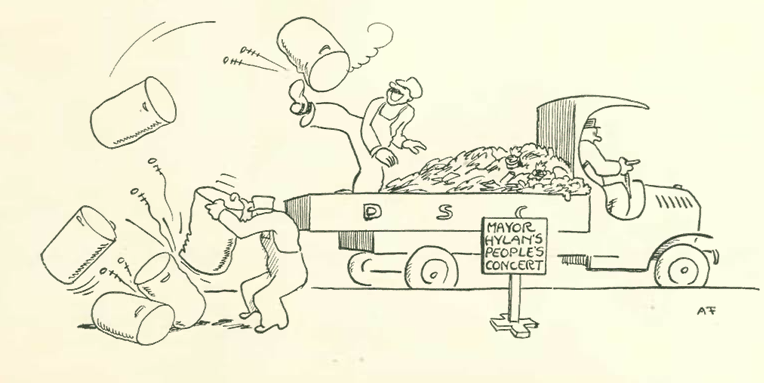
And finally, a cartoon from the issue that takes aim at New York City Mayor John F. Hylan. From the very first issue of The New Yorker (Feb. 21, 1925), the mayor (comically referred to as “Jonef Hylan”) was a frequent target:
The next great figure in the early legends of New York is that of Jonef Hylan. Hylan, in all probability, was not a real person; but it is impossible to understand New York without giving careful study to the Hylan myth. In many respects, it resembles the Sun Myth of other great civilizations; for his head was as a head of flame, and he rose early each morning from beyond the East River, bringing light into all the dark places and heat into the sessions of the Board of Estimate. The populace called their Sun God “Red Mike”; but in the frenzy of their devotions, they simply yelled “Ra! Ra!
Cartoon by Al Frueh from the July 4, 1925 issue (New Yorker Digital Archive)
There was much ado at the Junior League Convention in Boston, according to May 30, 1925 New Yorker. The lead item in “The Talk of Town” concerned the delegation from New York that “wished to exercise censorship over Junior Leaguers who move here from other towns—Dubuque, Iowa*, for example—and whose memberships in the League were transferred to them.”
(*Dubuque, Iowa, as you may recall, is where resides the proverbial “old lady”–the antithesis of a New Yorker reader).
May 30, 1925 cover by Ilonka Karasz (New Yorker Digital Archive)
The New York delegates pointed out that their league was “committed to accepting into membership between eighty and ninety debutantes each year; moreover, that it was forced to accept as members, also, those young ladies whose ambitions led them to shake the Dubuquian dust from their French heels and take the train to New York.”
Debutantes practicing the proper way to pick up a handkerchief in 1925. (Buzzfeed)
To address this situation, the New York delegation proposed that such transfer members should only be accepted on a one-year trail basis. “Talk” noted that “It was not said, of course, that the object of this proposal was to allow local Junior Leaguers to inspect their guests against such provincial failings as might not be corrected in the period of twelve months…”
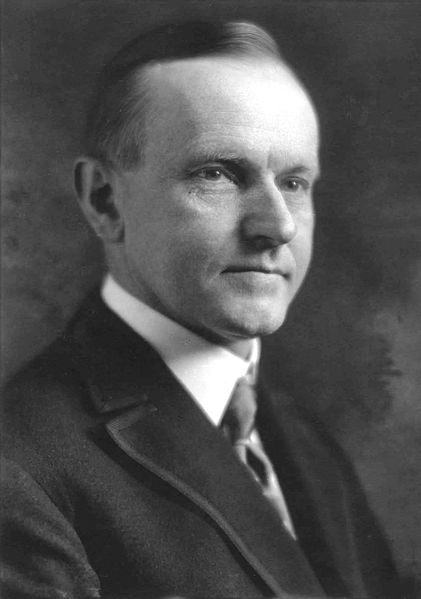
President Calvin Coolidge (History Today)
“Talk” also continued mining the (unintended) humor of President Calvin Coolidge. When a Washington newspaper correspondent (identified as Mr. Sullivan) asked if the president might recognize the arts and letters by inviting some poets to the White House, Coolidge responded, “Who are the leading poets?” Sullivan suggested such luminaries as Edward Arlington Robinson, Carl Sandburg, Robert Frost, Edna St. Vincent Millay, Edgar Lee Masters and Elinor Wylie. After some consideration, Coolidge replied: “When I was in College, there was a man named Smith—who wrote verse.”
Gilda Gray performed as the Hula-Hula Girl at the old Rendezvous supper club. Photo from 1922. (Wikipedia)
It was reported that the Montmartre supper club had reopened after being closed for a year by Prohibition authorities, and many of the old clientele had returned including Alice and Jimmy O’Gorman “at their usual table with the Storrs and Thelma Morgan Converse, now abroad but that evening fresh from Hollywood and the barber.” Another supper club, the Rendezvous, had also reopened, “although without the erstwhile influence of Gilda Gray’s glamourous shimmy.”
According to Wikipedia, “although the shimmy is said to have been introduced to American audiences by Gray in New York in 1919, the term was widely used before. Some stories said that her shimmy was born one night when she was singing the Star Spangled Banner and forgot some of the lyrics.She covered up her embarrassment by shaking her shoulders and hips. Although the shimmy was already a well-known dance move, Marianna appropriated it as her own: when she was asked about her dancing style, she replied in a heavy Polish accent; “I’m shaking my chemise,” which sounded to the English-speaking audience like shimmy.”
There was also a brief item on the changing fashions of men’s hats:
“Of All Things” offered its first comments on the upcoming Scopes Trial, coverage of which would be a regular feature in upcoming issues. It was noted “If the anti-evolutionists win in Tennessee, anyone wishing to drink at the fountain of truth will have to go to a speakeasy…We are not without a twinge of envy for J.T. Scopes. A young high school teacher who can give a simple lesson in biology and become a great national menace is getting into the hall of fame on an uncomplimentary ticket.”
We also have our first mention of Benito Mussolini, who “has granted women the ballot and the right to serve in war. It is understood, however, that the Italian women will not be used in actual fighting but will be saved for the heavy work.”
“Profiles” featured William Allen White, famed editor and owner of the Emporia (Kansas) Gazette. The piece was written by Edna Ferber, who concluded that “Bill White comes perilously close to being the Great American Citizen.”
1925 catalog ad for radio receivers (Ad scan from a 1925-26 Brown Lynch Scott publication)Lionel Barrymore in 1923. He mostly known today for his portrayal of Henry F. Potter, a rapacious slumlord, in Frank Capra’s It’s A Wonderful Life. (Wikipedia)
“Music” featured the review of entire radio broadcast—the first lengthy account of radio featured in the magazine. The reviewer tuned in to WEAF, “a commercial station, renting the air to affluent concerns who provide the amusement or otherwise. At least two of the attractions presented (including singers, a piano duet) on our night of earful waiting were sponsored by business interests and on some nights the whole program may be provided by accounts, Consequently, WEAF is able to inundate its listeners with paid entertainers in place of song pluggers and ambitious choir applicants.”
In “The Theatre,” Man or the Devil by Jerome Kern opened on Broadway featuring Lionel Barrymore and Marion Ballou. The character acting was described as pleasurable, but the play itself was referred to as “nothing much…Two men, you see, exchange souls. However, if you wish you can stuff your ears with cotton and make up a dandy plot for yourself as the action develops.”
“The Talk of the Town” opened with musings on the “banqueting” ritual practiced by various celebrities in Manhattan, in this case the silent film stars Gloria Swanson, Pola Negri, and Tom Mix.
April 25, 1925 cover by Ilonka Karasz (New Yorker Digital Archive)
The magazine noted that “Banquets are given upon a star’s departure and upon return, and each succeeding one must be bigger and better than ever.” Even the star of silent Westerns, Tom Mix, had a dinner in his honor when he visited the city with his fourth wife, Victoria Forde. “Talk” made this observation:
True, this cowpuncher, who sets fashion by wearing wine-colored evening clothes and with overcoats rimmed with brown leather for morning wear, did not elect to outdo Pola Negri. His was a modest affair held in the Hotel Astor, at which, however, Mrs. Mix was able to display the discomforts of being wealthy by having such an armful of glistening bracelets as made necessary treatment by a masseuse of muscles lamed by bearing such weight of jewels.
Tom Mix and Victoria Forde (Wikipedia)Pola Negri
In Pola Negri’s case, a bon voyage banquet was given at the Ritz-Carlton (she was headed to Europe) and among the guests were the familiar faces of writer Michael Arlen and movie producer Jesse Lasky, who announced that Arlen would be writing “special stories” to be used as screen vehicles for Negri.
As for Gloria Swanson (returned from France, more on that below) she was “in the happy position of having a contract for one more year with the Famous Players-Lasky Corporation, whose officials are greatly concerned lest Cecil B. DeMille wean from them their popular actress.” To ensure Swanson’s happiness, Lasky and Adolph Zukor hosted a banquet and dance in her honor at Park Lane. It was reported that Swanson “was signally honored” when she entered the room to greet her 300 guests:
Gloria Swanson (United Artists)
The lights were turned off as she took her seat; a spotlight was thrown on her shingled head, and the orchestra struck up her new national anthem, “La Marseillaise”…Girls in Marie Antoinette costumes wended their way among the tables, passing around Napoleonic paper hats, singularly appropriate for the gentlemen who wore them.
“Talk” also offered the latest observations from the magazine’s “Prohibition Authority” regarding the Coast Guard’s inability to stem the flow of Scotch whisky into the city: “Human nature is frail and large operators can afford to offer rewards far above Government pay, all for a little blindness.” Despite a Coast Guard effort to stop smugglers, Scotch remained “plentiful and reasonably priced.”
April 8, 1925, New York Times
Other “Talk” items of note: “King” Babe Ruth, after eating his “fourth breakfast porterhouse and a rough train ride,” fell ill in Asheville, N.C. (he was taken to the hotel on a stretcher, clad in pink pajamas he insisted on wearing)…The Bronxville Golf Club “decided to go stag,” and bar women from membership…Noting that New Yorkers treat their city’s landmarks with amazing indifference, it was announced that the Brevoort Mansion was to be torn down. It was described as “a huge brownstone pile, of stern aspect. It looks like a mausoleum.”
When Henry Breevort Jr. built the mansion at Fifth Avenue and Ninth Street in 1834, it marked the beginning of the transformation of Fifth Avenue from a rutted road into the destination for old and new money alike. According to the excellent blog No Place For Normal: New York, in the 1860s Fifth Avenue’s growing renown as the “axis of elegance” was enhanced by the opening of Central Park in 1859 and by fortunes fattened by Civil War contracts.
Cornelius Vanderbilt II House on “Millionaires Row” (nyc-architecture.com)
Then during the last several decades of the 19th century, known as the “Gilded Age,” brownstone mansions like Breevort’s were supplanted by ornate French chateau-style mansions, and “a flocking of Old and New Money alike to the Upper Avenue,” which came to be known as “Millionaires Row” (and famously known for the social wars between the Astors and Vanderbilts among others).
The early 20th century saw Fifth Avenue transformed from a place of elegant mansions to a place of elegant hotels and stores. The first years of The New Yorker would witness this transformation as one mansion after another fell to the commercial interests of the booming 1920s.
“Profile” illustration
“Profile” examined the life of Samuel Goldwyn, “The Celluloid Prince,” whose rule of life was that “in order to live, is not to let live…(this) means outstripping the other fellow by any means possible that does not land one in jail.” His rise from a glove maker to fame and fortune began around 1915 after he “saw a picture show and saw himself a millionaire simultaneously. He took his vision to Jesse Lasky, his brother-in-law, who was a vaudeville man at the time.” In ten years time “a man without background, without education…by sheer urge of some divine spark within him, he was able to build up that colossal enterprise at Culver City.”
Adele and Fred Astaire in Lady Be Good (nickelinthemachine)
Listings in the “Goings On” section (subtitled The New Yorker’s conscientious calendar of events worth while) included George Gershwin’s Lady Be Good at the Liberty Theatre, with the brother-sister dancing team Fred and Adele Astaire. Movies playing included Grass at the Criterion (“Remarkable film panorama of a primitive Persian tribe on its migration in search of food”).
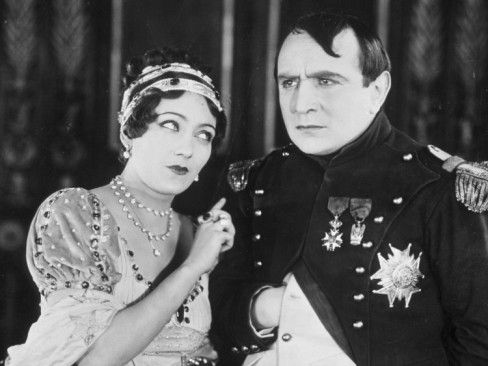
And in continuing Gloria Swanson news, it was noted that Swanson was appearing in a new moving picture, Madame Sans-Gêne, playing the role of “the Napoleonic lady of historical romance. Color—and real Parisian backgrounds.”
Gloria Swanson and Émile Drain (as Napoleon) in Madame Sans-Gêne (1925). (A Lost Film)
According to the site A Lost Film, Swanson took the role to “get away from Hollywood’s frivolous roles in which she felt her talent was under-used and she was little else than a clothes horse.” The lavish production, filmed at various French locations including Fontainebleau and Compiègne, was said to be Swanson’s favorite film. Although the film was released in both the U.S. and France, it is now lost, save for a snippet from the film’s trailer.
(New Yorker Digital Archive)
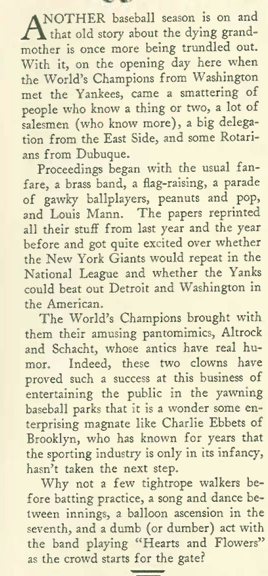
“Sports” offered this observation about the pantomime routine of Altrock and Schacht at a baseball game between Washington and New York (see clip at right).
Al Schacht’s ability to mimic other players from the coaching lines, and his comedy routines with fellow Washington coach Nick Altrock, earned him the nickname of “The Clown Prince of Baseball.”
If only the writer knew the extent to which his absurd suggestions would one day come true (and then some) in today’s jumbotron-dominated ballparks.
Ruth, as we know, did not play. By the Babe’s standards, it would prove to be a bad year for him, appearing in fewer than 100 games and batting .290. Somehow, though, this overweight wreck of a man still managed to score 25 home runs that year.
Al Schacht and Nick Altrock in 1925 (Library of Congress)



 …to those who might be concerned about safety. Although cars weren’t very fast, they were fast enough to kill, and their plentiful numbers often overwhelmed a city with rudimentary traffic control.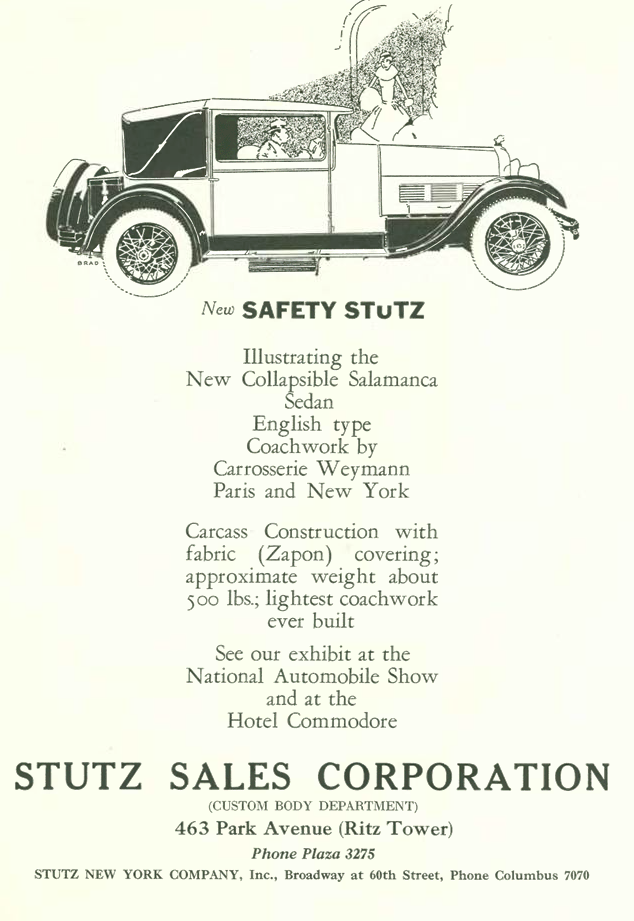










































 A New Yorker State of Mind