Although the trade name “Technicolor” conjures up images of mid-century Hollywood, the process was actually invented in 1916 and developed over subsequent decades.
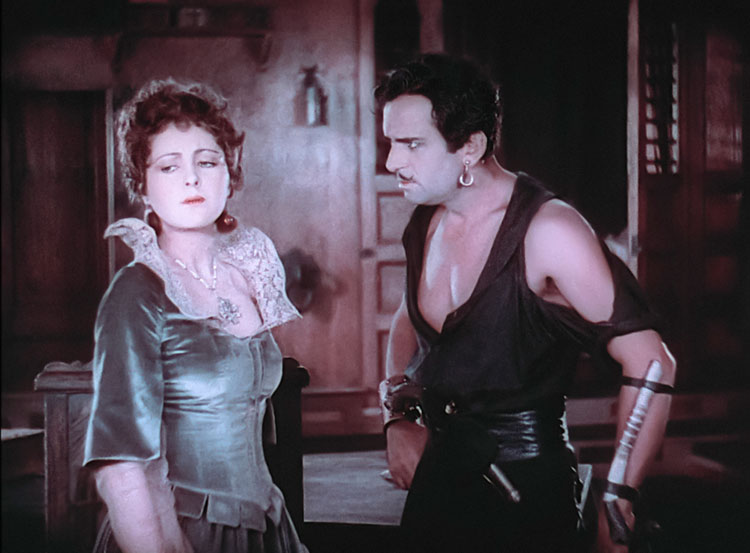
Early Technicolor was a complicated process, using a prism beam-splitter behind the camera lens to simultaneously expose two consecutive frames of a single strip of black-and-white negative–one behind a red filter, the other behind a green filter. A projectionist had to be highly skilled to keep the film aligned during its showing. The Black Pirate, however, used a later technique that cemented the two prints together, making for a thick film that was prone to bulging and distortion.
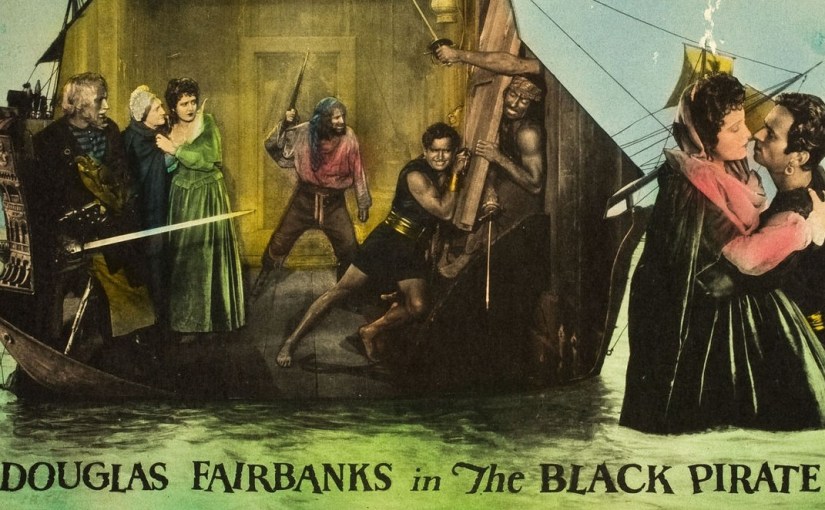
When the New Yorker’sTheodore Shane reviewed Douglas Fairbanks’ latest swashbuckler film, The Black Pirate, in the March 13, 1926 issue, it appeared that after ten years of development the Technicolor process had a long way to go:
DEAR, YOU LOOK A BIT PEAKY…Billy Dove and Douglas Fairbanks rendered in early Technicolor in The Black Pirate. (MovieMail.com)
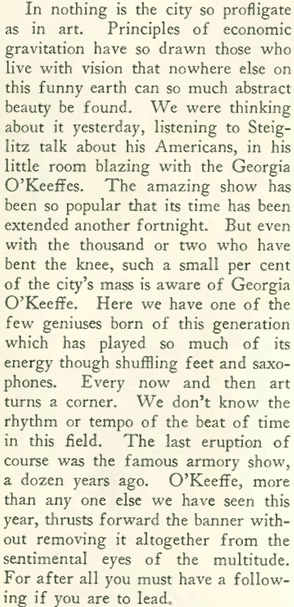
Art critic Murdock Pemberton wrote about the genius of the young artist Georgia O’Keeffe, whose work was on display at husband Alfred Stieglitz’s new exhibition space, the Intimate Gallery:
Georgia O’Keeffe’sBlack Iris, 1926. (Metropolitan Museum of Art)
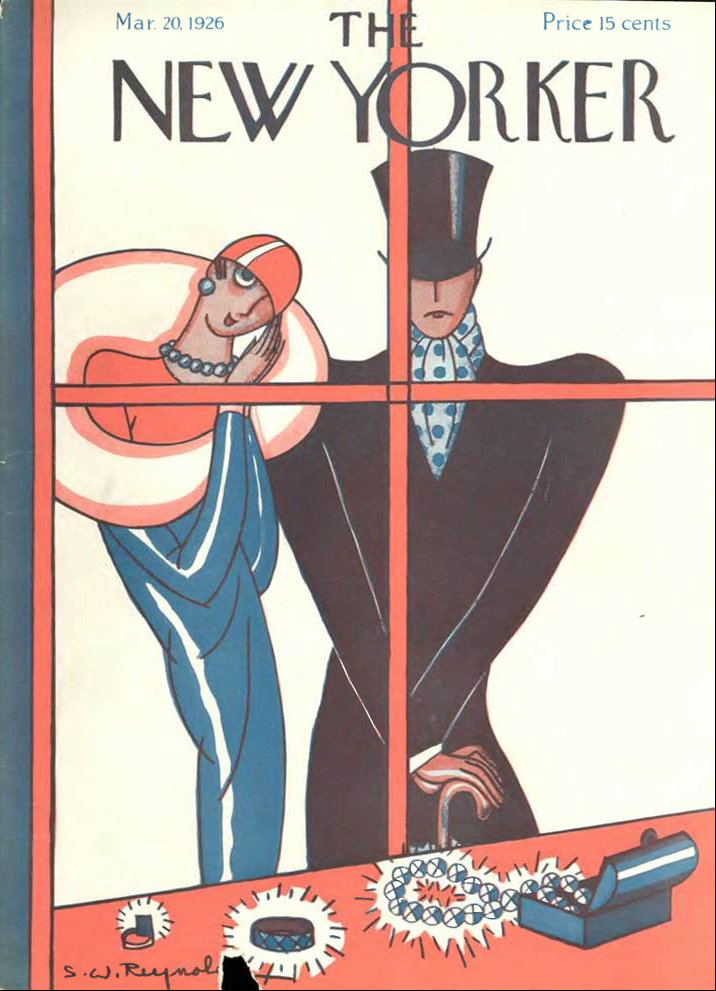
On to the March 20 issue, boldly illustrated by S.W. Reynolds, who contributed a number of deco-themed covers for the magazine:
March 20, 1926 cover by S.W. Reynolds.
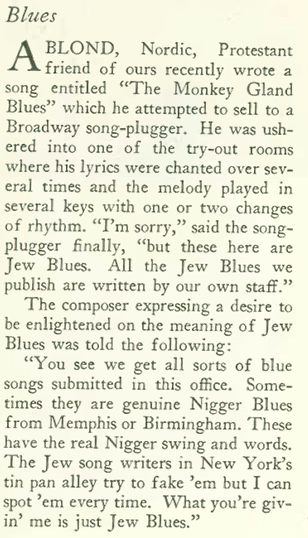
For all The New Yorker’s progressive wit and style, you are occasionally reminded that some of its sensibilities were still very much mired in those times. For example, this bit from the issue’s “The Talk of the Town” segment:
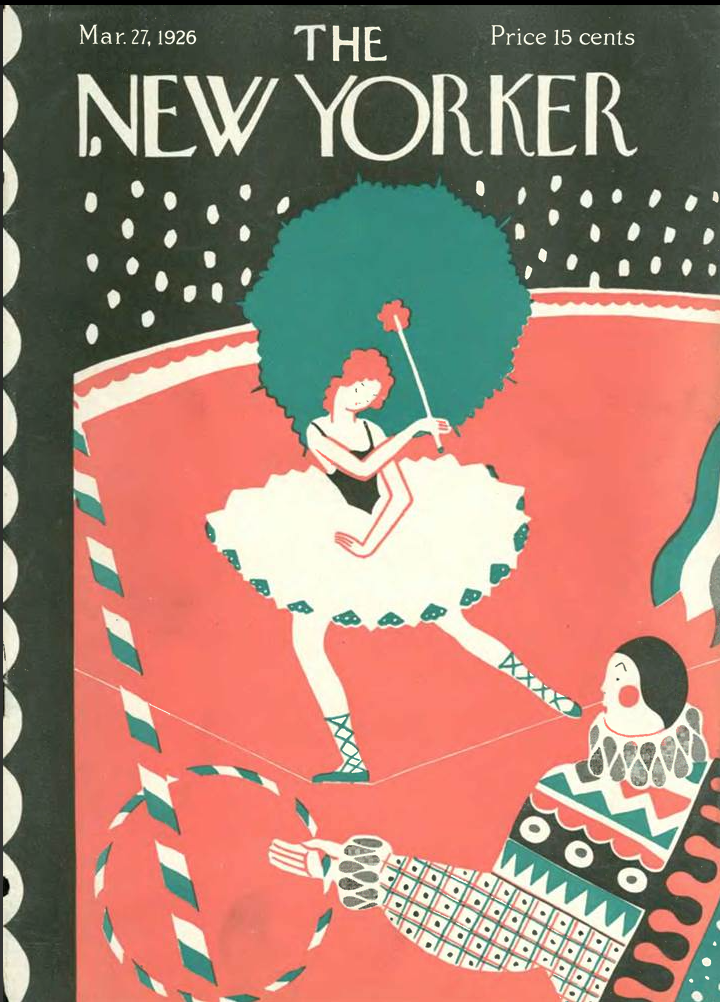
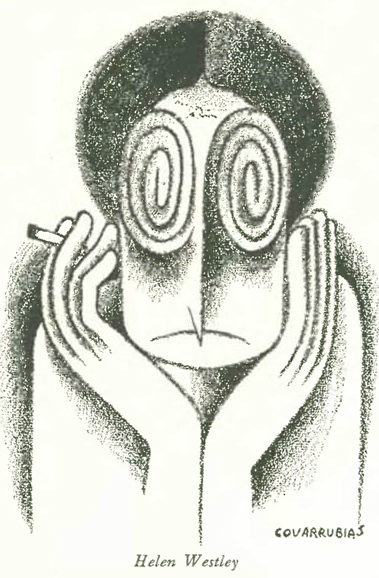
The March 27 issue offered a profile of actress Helen Westley, who was described by writer Waldo Frank (pen name “Search-light”) as “a goddess of our city” whose “true value and her art (was) her personal life.”
March 27 cover by Ilonka Karasz.
Wesley often played a stern, indomitable character who wore a hawk-like glare, and in her later years portrayed dour dowagers and no-nonsense matrons. Frank wrote that while Wesley was not a particularly good actress, she lived her life with a spirit for adventure and a need to plunge her fine-born, gracious manner into the “frowsy” world of Broadway.
A Miguel Covarrubias rendering of Helen Wesley for the “Profiles” piece.
And to close, Al Frueh’s take on a day in the life of a doorman:
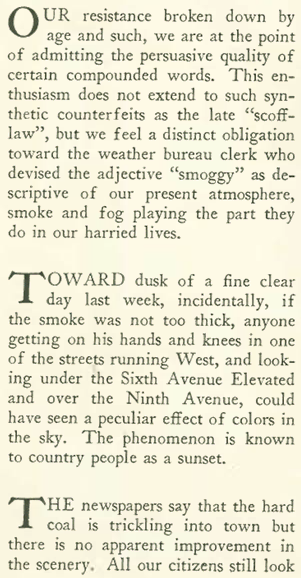
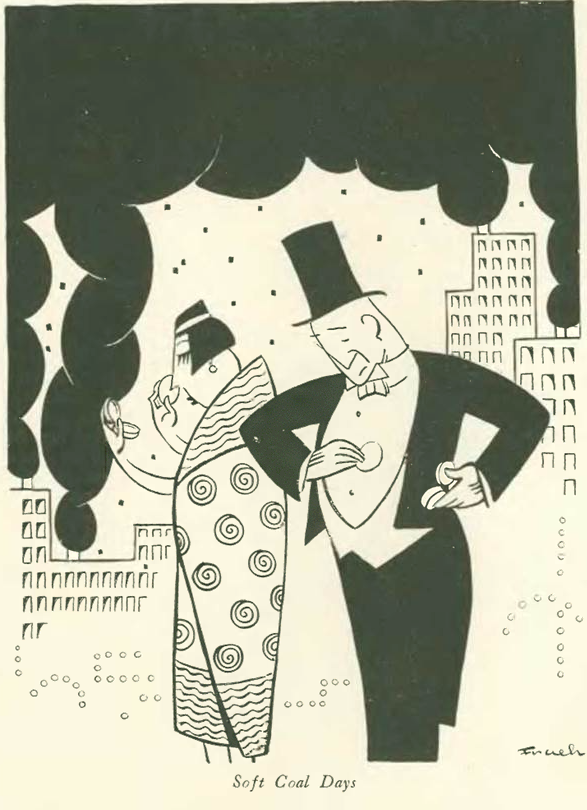
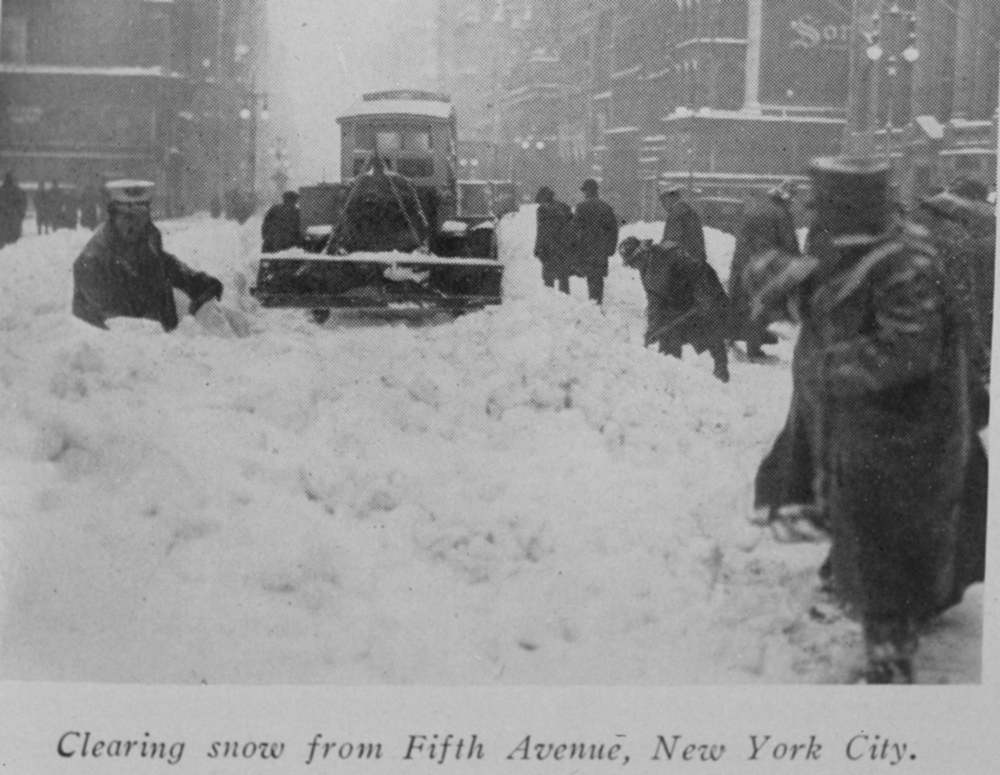
The month of February 1926 must have been miserable in New York City. A massive blizzard made a mess of the streets, which were then topped by a soot-laden smog. The smog was the result of homes and businesses burning soft coal, which produced far more smoke than the hard variety (which was in short supply).
The photo above, from the Daily News archive, shows a chaotic scene on Orchard Street (Manhattan’s Lower East Side) after the storm.
As could be expected, The New Yorker editors tried their best to make light of the situation, although they couldn’t resist making a racist remark regarding the effects of soot on the population. It is also interesting to note that the word “smoggy” was considered by the editors to be a relatively new term:
Al Frueh showed us how the toffs dealt with the situation…
…and Fifth Avenue was not the best place for a fashionable stroll…
Shovelers were hired to clear the streets after 1926 blizzard (National Oceanic and Atmospheric Administration)
No doubt the foul weather contributed to the mood of the writers and critics at The New Yorker, who reacted rather sourly to the much ballyhooed Feb. 17, 1926 debut of young Marion Talley at the Metropolitan Opera. At the tender age of 19, she was the youngest prima donna to sing at the Met at that time.
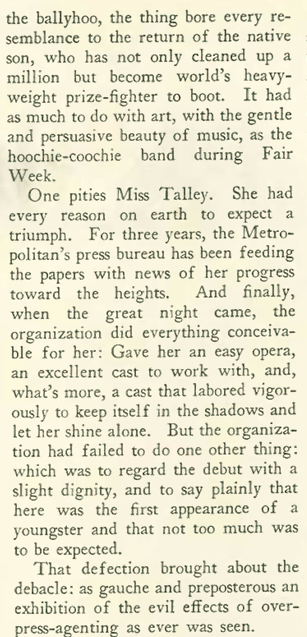
In his “A Reporter at Large” column, Morris Markey scoffed at the hype and small-town boosterism that accompanied the young singer from rural Missouri:
Talley’s debut performance was as Gilda, the daughter of the title character in Giuseppe Verdi’s Rigoletto. The Metropolitan Opera’s general manager, Giulio Gatti-Casazza, hoped Talley’s debut would be low-key and not overshadow the production. However, a delegation of two hundred leading citizens of Kansas City, including the mayor, arrived via a special train for the event.
Adding to the chaos, a noisy telegraph machine was set up backstage so Talley’s father could send dispatches to the Associated Press.
OVER EXPOSED: Marion Talley in 1926. (Library of Congress)
Talley’s swift rise to fame would be followed by a relatively quick return to obscurity. After appearing in seven productions at the Met, her contract was not renewed for the 1929 season.
If you are looking for a watershed moment in the history of The New Yorker, this is one of them. The issue of Nov. 28, 1925, featured an article written by 22-year-old Ellin Mackay titled “Why We Go To Cabarets: A Post-Debutante Explains.”
Mackay was the daughter of a Catholic multi-millionaire, Clarence McKay, who was threatening to disinherit his daughter because of her romance with Jewish songwriter Irving Berlin. Mackay’s essay explained why modern women were abandoning the forced social matchmaking of débutante balls in favor of the more egalitarian (and fun-loving) night club scene:
At last, tired of fruitless struggles to remember half familiar faces, tired of vainly try to avoid unwelcome dances, tired of crowds, we go to a cabaret. We go to cabarets because of the very fastidiousness that Our Elders find so admirable a quality. We have privacy in a cabaret…What does it matter if an unsavory Irish politician is carrying on a dull and noisy flirtation with the little blonde at the table behind us? We don’t have to listen; we are with people whose conversation we find amusing. What does it matter if the flapper and her fattish boy friend are wriggling beside us as we dance? We like our partner and the flapper likes hers, and we don’t bother each other.
Mackay’s piece provided a huge boost to The New Yorker’s circulation, which had dipped below a death-rattle low of 3,000 in August 1925 before it rebounded a bit with new and more aggressive advertising and marketing strategies.
The “Debutante” article was featured on the front page of the New York Times, and was also covered on the front pages of other New York newspapers and even in papers across the country. By the end of the year circulation of The New Yorker neared 30,000.
TIME magazine later observed that with the Mackay piece, The New Yorker “suddenly found that it had succeeded in storming the penthouses of High Society. Its success opened the eyes of Editor (Harold) Ross to the importance of the Manhattan socialite, to the fact that Broadway gossip sounds dull on Park Avenue.”
In The New Yorker’s 90th anniversary issue (Feb. 23, 2015), Ian Frazier wrote about the “débutante to the rescue in the Harold Ross era…”
Sometime during the magazine’s early months, Alice Duer Miller gave him (Ross) Ellin Mackay’s “Cabarets” essay. Jane Grant recalled that Ross kept it at the bottom of the pile of manuscripts he brought home, procrastinating because he liked Ellin and expected he would have to reject it, as he often did with others. Grant urged him to run the piece. “It will make wonderful publicity,” she said. Alexander Woollcott, the Times drama critic, with whom the Rosses shared a house…also championed Ellin’s piece. Woollcott knew her through Berlin, whose worshipful biography he had written.
Frazier writes, “In 1,076 words, the “Cabarets” essay had hit precisely the sophisticated young night-club-going, speakeasy-patronizing, up-and-coming, unimpressed-by-their-elders readership Ross was aiming for. The grateful editor gave Ellin Mackay a lifetime subscription to the magazine.” You can read Frazier’s entire article about Mackay and Berlin here.
Mackay and Berlin pose for Cecil Beaton in the June 1930 Vanity Fair. (LIVEJOURNAL/Conde Nast)
Mackay, who would publish several novels, would marry Berlin on Jan. 4, 1926. The marriage would last until her death in 1988 at age 85. Berlin would die the following year at age 101.
Here is Mackay’s full article:
* * *
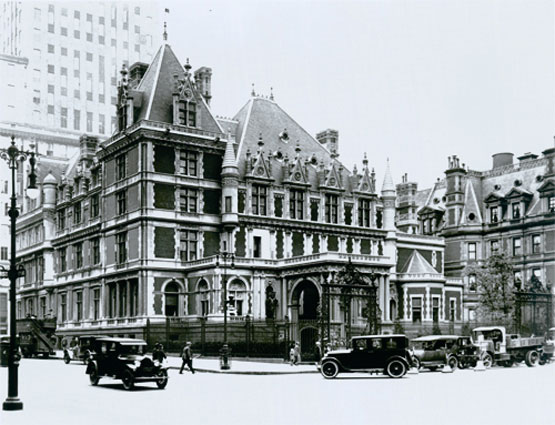
Even as one grand house after another fell to the wrecking ball along “Millionaires Row,” it was hard to believe that the Vanderbilt Mansion between 57th & 58th Streets would also succumb to the commercial interests transforming Fifth Avenue seemingly overnight.
“The Talk of the Town” noted that the doomed mansion, once the largest private home in New York City, was being descended upon by all manner of curiosity seekers:
According to writer Adrian Dannatt, the 130-room, full-scale Renaissance-style château was “originally built to accommodate an entire regal court, a small army, huntsmen and ladies in-waiting, but it was given over instead to a family of eight.”
A photo of the 58th Street side of the house, taken shortly before the house was sold for $7.1 million, demolished and replaced by the Bergdorf Goodman store. (newyorksocialdiary.com)
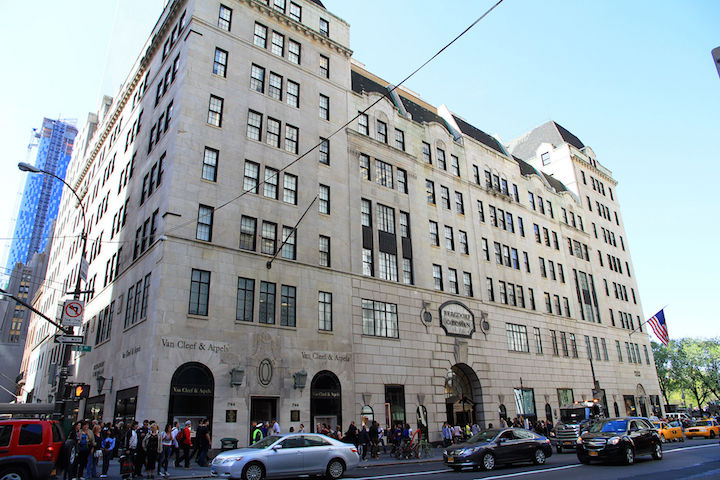
This grand pile was designed by George B. Post in 1882, with interior design by John LaFarge and Augustus Saint-Gaudens among others. Post, along with Richard Morris Hunt, substantially expanded the house in 1893. Demolished in 1926, Bergdorf Goodman Department Store now occupies the site.
Opened in 1928, the Bergdorf Goodman store occupies the Vanderbilt site today. (Wikipedia)
According to Benjamin Waldman, writing for untappedcities.com, a few remnants from the mansion weren’t reduced to dust, including a pair of monumental gates relocated to Central Park and two of six bas-relief sculptures by Karl Bitter that were relocated to the lobby of the Sherry-Netherland Hotel. Apparently the other four disappeared without a trace.
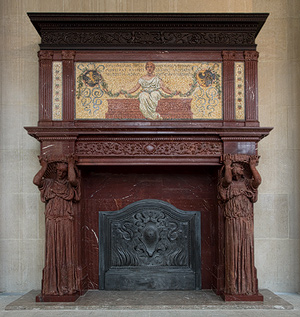
REMNANT…Caryatid-flanked fireplace designed by Augustus Saint-Gaudens, topped with a John LaFarge mosaic, at the Metropolitan Museum of Art. (Metropolitan Museum)
A fireplace designed by Augustus Saint-Gaudens, topped with a John LaFarge mosaic, was donated to the Metropolitan Museum of Art and is displayed in the courtyard of the museum’s American Wing.
EPIC…In 1923 Cecil. B. DeMille built the largest set in movie history near Guadalupe, California, for his silent epic, The Ten Commandments. (Santa Barbara Historical Museum)
“Profiles” looked at the life and work of movie director Cecil B. De Mille. Wrote R. E. Sherwood: De Mille was the “archetype of the motion picture director—a composite photograph of all the Olympian gods who have descended from Mount Hollywood to dominate the earth.”
Harry Este Dounce (“Touchstone”) reviewed John Dos Passos’ new novel, Manhattan Transfer, and noted that Dos Passos’ version of Manhattan was “not the hypothetical typical New Yorker reader’s, but as far as this department knows, it is very much like the real, complete thing—which is to say, like a hell of chaotic futility.”
In “Sports of the Week,” football continued to dominate the column, with a report on Harvard and Yale battling to a 0-0 tie.
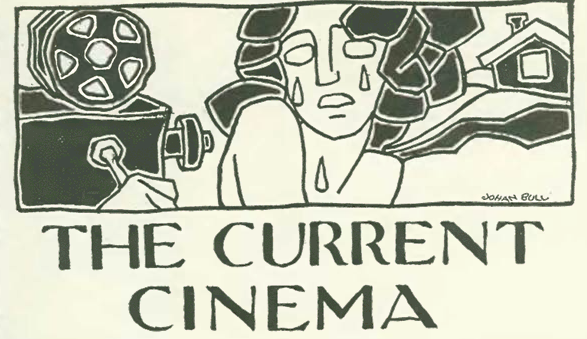
With this issue, “Motion Pictures” was moved from the “Critique” section and given its own page under the Johan Bull-illustrated heading “The Current Cinema.” Theodore Shane wrote that he found Laurence Stalling’s The Big Parade “utterly satisfying,” but he was less impressed with the much-hyped Stella Dallas, which he viewed as a contrived weeper designed to draw lovers of such fare to the box office.
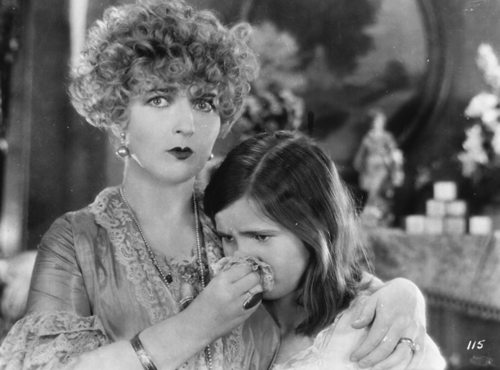
BOO HOO…Belle Bennett and Lois Moran in Stella Dallas, 1925 (IMDB)
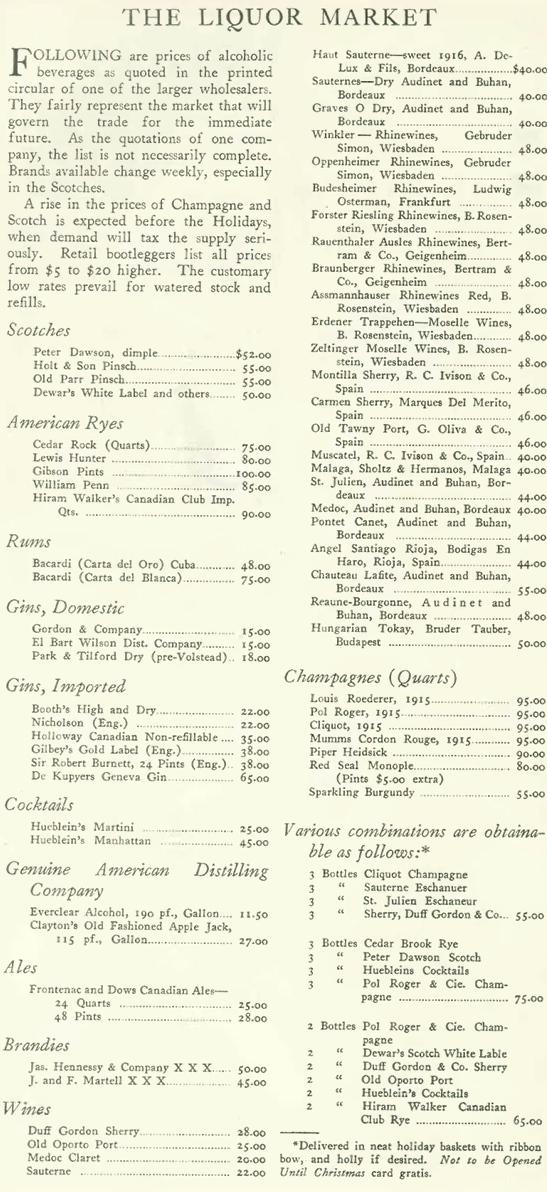
Near the back of the magazine the editors printed an exhaustive list of prices on the bootleg liquor market. The prices are quite astonishing, given that $50 in 1925 would be the equivalent of roughly $675 today, based on inflation. Of course that number could vary depending on all sorts of other economic and historic factors, but nevertheless fascinating reading if you are into that sort of thing:
At the conclusion of “The Talk of the Town,” the editors offered this qualifying note regarding their liquor market list:
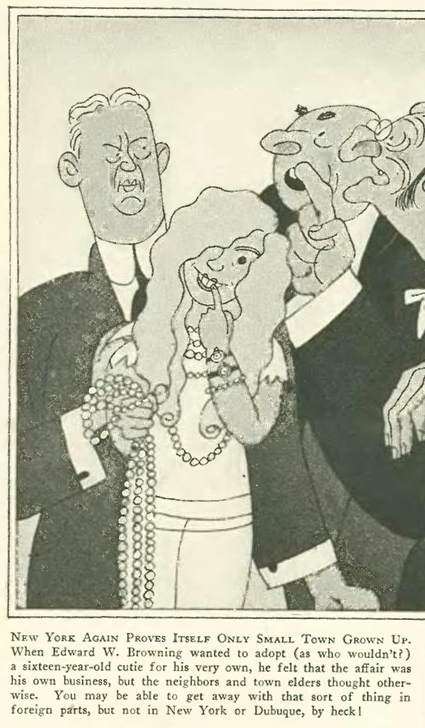
Ralph Barton’s “The Graphic Section” in the August 15, 1925 edition of The New Yorker gave readers their first whiff of one of the sensational scandals of the Roaring Twenties. Barton reported that wealthy, middle-aged bachelor Edward Browning (then 51 years old) wanted to “adopt” a “sixteen-year-old cutie for his very own.”
What Barton referenced in his comic illustration foreshadowed the “Peaches” scandal that would occur the following year.
According to an April 1, 2012 article by Dan Lee in New York Magazine (titled with the subhead, “She was 16, he was 52, what could go wrong?”), Browning was well known in New York City “as perhaps the most idiosyncratic of the city’s eligible bachelors…worth what would now be an estimated $300 million.”
Ralph Barton illustrates Edward Browning’s predicament in “adopting” Mary Louise Spas. (New Yorker Digital Archive)
Lee writes that Browning was already a tabloid fixture at age 40 when he married his first wife, Adele, a considerably younger file clerk. They adopted two daughters, Marjorie and “little Dorothy Sunshine,” Browning’s favorite. When Adele left him for a “28-year-old playboy dentist,” they split the girls between them. Browning, of course, chose “Sunshine,” and vowed never to marry again. Lee takes it from there:
In what the tabloids quickly helped morph into a Willy Wonka–style lottery, Daddy set about finding a sister for Sunshine: After personally reviewing 12,000 applications and interviewing scores of would-be daughters, he chose Mary Louise Spas of Queens, who, despite being 16 and therefore two years older than the cutoff, bore a charming gold tooth and stole his heart. A My Fair Lady transformation ensued, rapturously reported by the press, which continued trolling Spas’s past, ultimately uncovering revealing swimsuit photos that led to school records that led to the disclosure that Mary was actually 21 and not poor. Daddy moved to have the adoption annulled. Mary responded with a tabloid tell-all and lawsuit, alleging Daddy was a pervert.
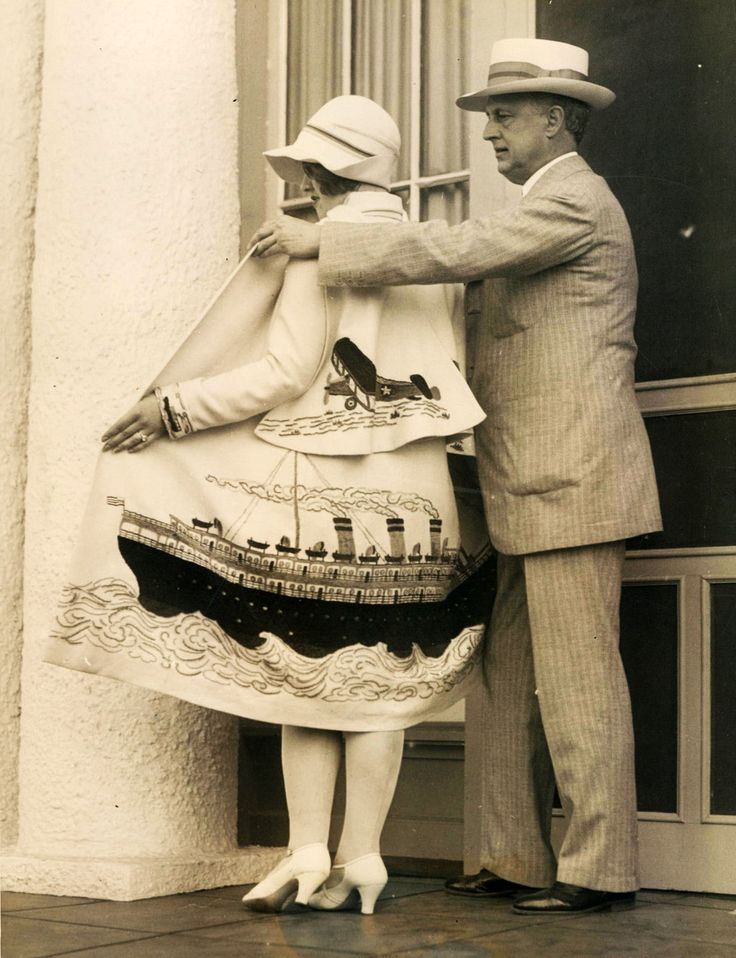
“Daddy” helps “Peaches” with her coat. If that is an image of the Titanic, the irony is just too rich…(Retronaut)
According to Lee, Browning then turned his attention to charity, “especially for a local chapter of the Phi Lambda Tau social sorority for high-school girls, of which he was the main benefactor.” Lee continues:
The sorority’s primary function was throwing dances across Manhattan for girls in scanty flapper dress, where Daddy, with his long, sagging face and steep W-collared dress shirts, smoked cigars and held court. And so it went that one night, inside the ballroom of the Hotel McAlpin on 34th and Broadway, Browning’s life intersected with Frances Heenan’s, whom the press would describe as a “chubby,” strawberry-blonde high-school dropout with “piano legs” but an inexplicably “magnetic” smile who worked as a shop clerk and lived with her single mother in Washington Heights. He likened her to peaches and cream, securing her lifelong nickname. Thirty-seven days later to thwart a child-protective-services investigation, they were married.
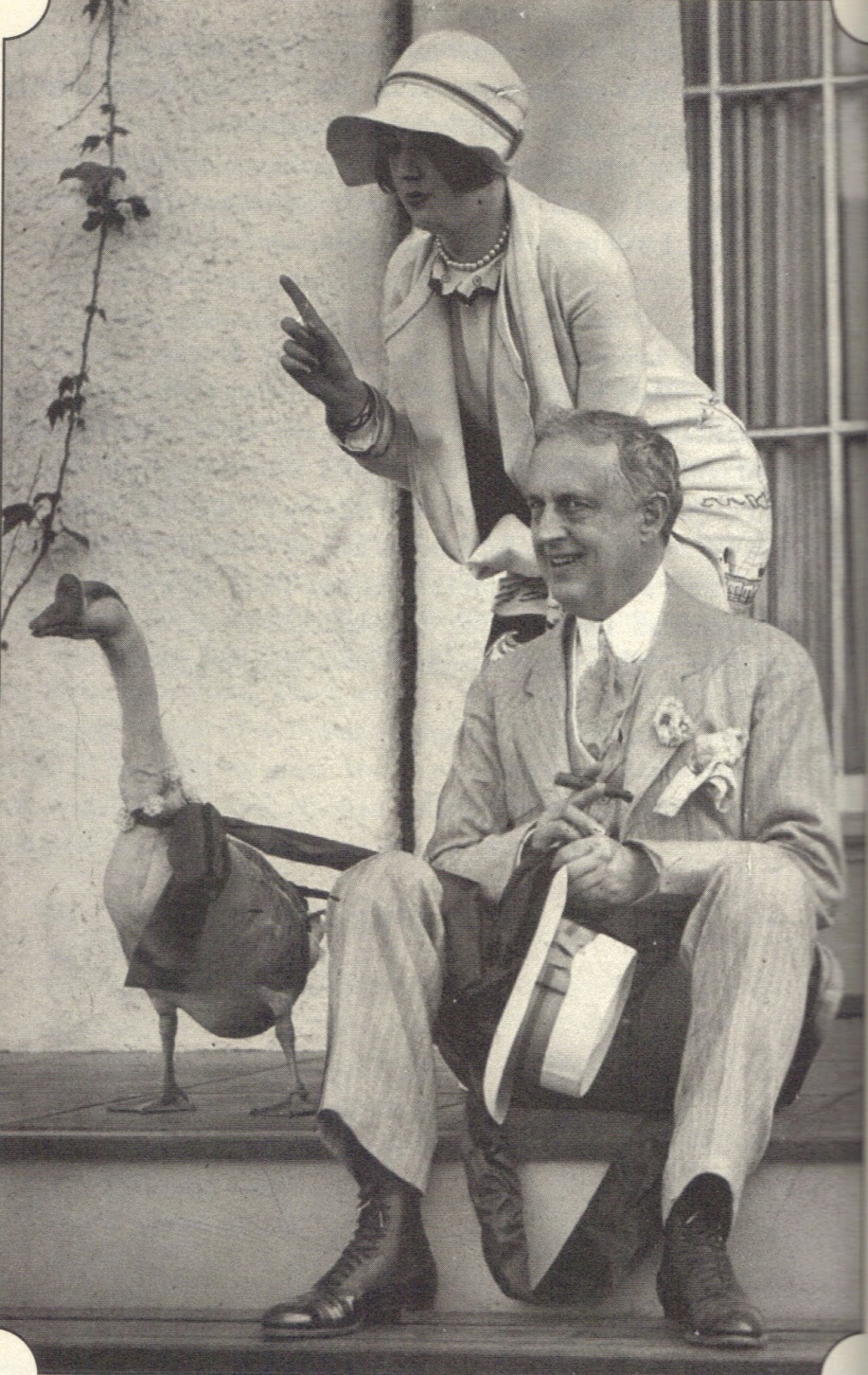
Peaches and Daddy with African goose. (brandypurdy.blogspot)
The wedding took place on June 23, 1926, Peaches’ 16th birthday, but later that year, Peaches would seek a divorce.
The divorce trial in White Plains, New York drew intense coverage by the tabloids including Bernarr McFadden’s notorious New York Graphic, which published “composographs” of the couple, including this one:
Composographs, forerunners of photo manipulation, were retouched photographic collages popularized by publisher and physical culture advocate Bernarr Macfadden in his New York Evening Graphic. The Graphic was dubbed “The Porno-Graphic” by critics of the time and has been called “one of the low points in the history of American journalism.” The images were cut and pasted together using the heads or faces of current celebrities, glued onto staged images created by employees in Macfadden’s in-house studio. (Image: dhtinshakerheights.blogspot.com, Text: Wikipedia)
The story was featured in newspapers across the country, including reports of Peaches’ testimony regarding her husband’s odd sexual behavior and the fact that he kept an African goose in their bedroom. According to Wikipedia, the phrase “Don’t be a goof,” which Browning allegedly used to insult Peaches, came into national vogue, and later turned up in the lyrics of the song “On Your Toes,” by Rodgers and Hart.
In the end, the judge ruled that Peaches had abandoned her husband without cause, and released Browning from the marriage. She was however awarded a $6,000 “widow’s portion” when Browning died in 1934.
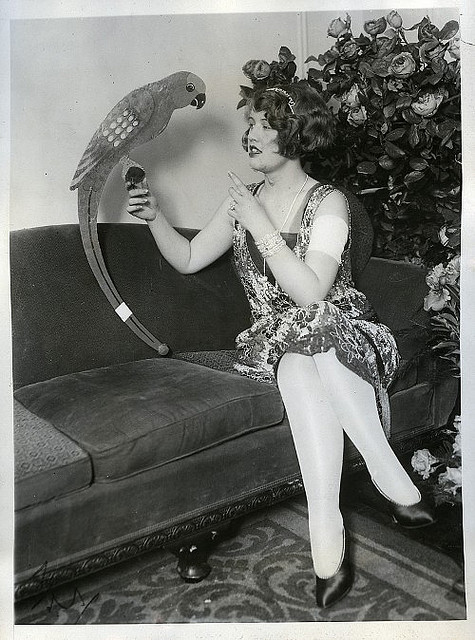
Peaches in her vaudeville days. (travsd.wordpress.com)
According to Lee, Peaches pursued a successful career in vaudeville, “had an affair with Milton Berle,” would marry and divorce three more times, and would become an alcoholic. On August 23, 1956, her mother heard a crashing sound in the bathroom of their New York City apartment and found Peaches unconscious with a large contusion above her ear. She was dead at 46.
If you want to read more about this strange coupling, Michael Greenburg has written a book, Peaches and Daddy: A Story of the Roaring 20s, the Birth of Tabloid Media, and the Courtship that Captured the Hearts and Imaginations of the American Public.
And so on to the rest of the issue…
“Profiles” featured Theodore Dreiser, whom Waldo “Search-light” Frank dubbed “the martyr of the American Novel” and a “heroic warrior against legions of a commercial and Puritan world.”
“The Talk of the Town” offered this postscript on the “Scopes Monkey Trial,” observing that the small Tennessee town was suffering a bit of hangover (and attendant humiliation) from all of the trial publicity:
“Sports of the Week” covered the annual “Dog Show of the Consolidated Hamptons,” featuring illustrations by Johan Bull:
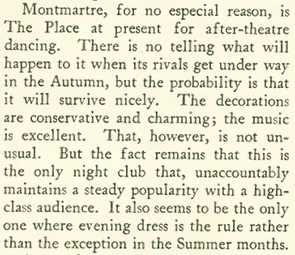
In her column, “When Nights Are Bold,” Lois Long offered the Montmartre as a venue for summer entertaining:
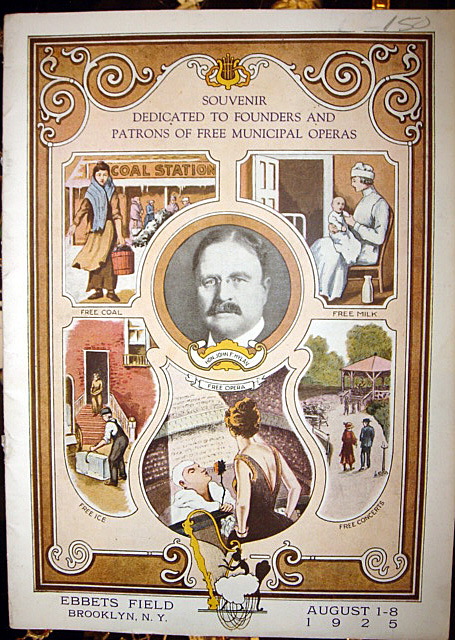
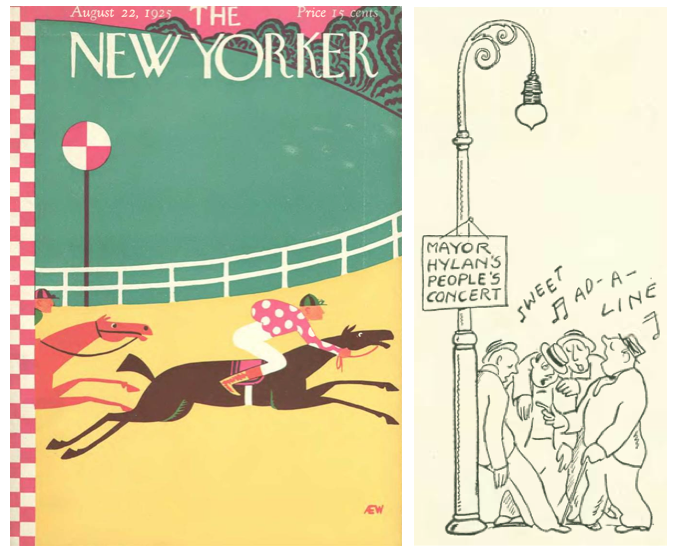
“Music” featured a brief review of Mayor John F. Hylan’s “free people’s concert,” Aida, at Ebbett’s Field, taking the usual shots at the mayor’s grasping attempts at publicity:
Program promoting Mayor Hylan’s public operas and other services from August 1925
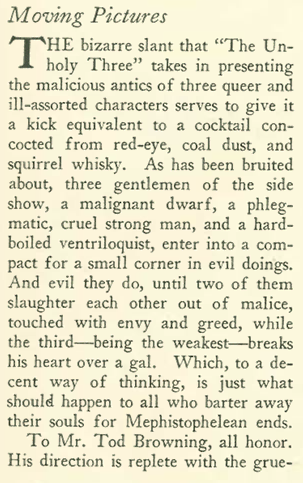
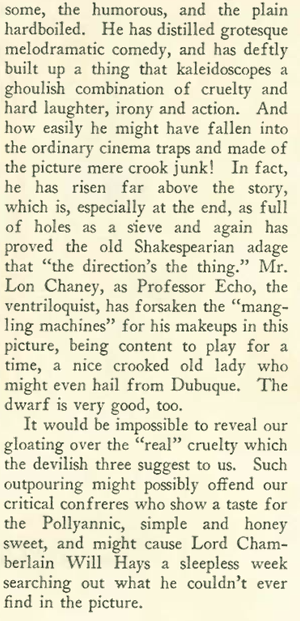
“Moving Pictures” peered between fingers at Tod Browning’s latest picture, The Unholy Three (the same Tod Browning who would go on to direct Dracula with Bela Lugosi in 1931 and the creepy 1932 cult classic, Freaks):
Lon Chaney and friend in The Unholy Three (1925) (Alamo Drafthouse)
Sweet dreams!
Next time, more horseplay, and another jab at the mayor:
The dog days of summer were ushered in by the news that “the buyers” had “invaded” the city.
The “buyers” in question were tourists (and no doubt some clothing store merchants) from across the country who had descended upon Gotham in search of the latest fashions that could be bundled off to the hinterlands.
“The Talk of the Town,” speaking through the fictional persona “Van Bibber III,” took a sneering view of this annual migration:
(New Yorker Digital Archive)
In the first issues of The New Yorker, the “Van Bibber III” signature appeared occasionally at the end of “Talk” or other items.
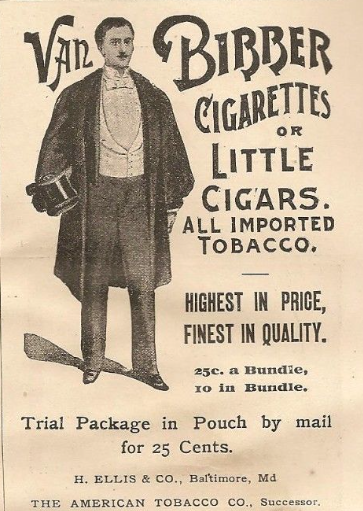
Van Bibber advertisement in Cosmopolitan, 1896
In her book, Defining New Yorker Humor, Judith Yaross Lee wrote that early readers of The New Yorker would have recognized the Van Bibber III persona “as a joke, a personification of Van Bibber cigarettes, whose ads targeted the devil-may-care, swagger young man about town all dressed up for the opening night. As an insiders view of the urban scene, Van Bibber’s accounts featured casual conversation—that is, talk.”
“Of All Things” offered this update on the activities of illusionist Harry Houdini:
Houdini, charged with disorderly conduct after smashing up an office, replied: They locked the door and I had to fight my way out.” Bang goes another illusion! We thought he could open anything but a car window.
Murdock Pemberton wrote about the life of poet Harry Kemp in “Profiles,” and cartoonist Al Frueh offered this twist on the uses of “hot air:”
(New Yorker Digital Archive)
And more art from Ralph Barton, this time along with his views on the play Artists and Models and the contrasts between life in New York and Paris:
(New Yorker Digital Archive)
“Moving Pictures” offered praise for Sally of the Sawdust, featuring W.C. Fields. Theodore Shane wrote that Fields had distinguished himself from other movie comedians through his act as a “snooty sort of superclown.”
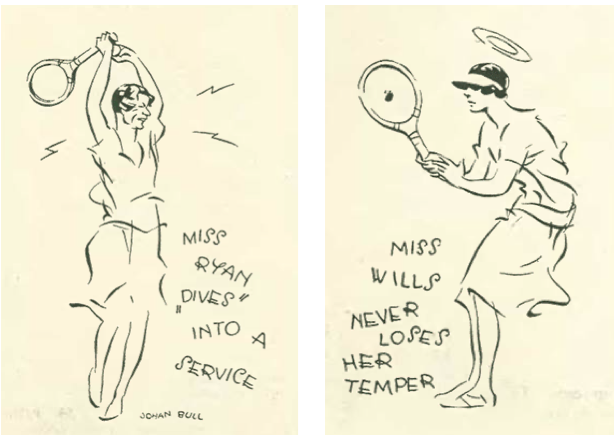
Art work by Johan Bull from “Sports of the Week.” In their careers, Elizabeth Ryan won 30 Grand Slam Titles, and Helen Wills won 31 (New Yorker Digital Archive).
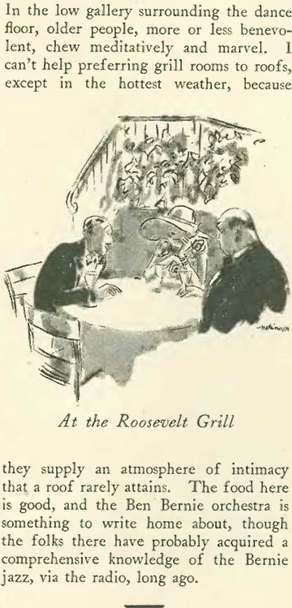
The tennis tournament at Seabright featuring Elizabeth Ryan and Helen Wills was the subject of “Sports of the Week,” and in “When Nights Are Bold,” Lois Long continued her look at nighttime entertainment venues to beat the summer heat:
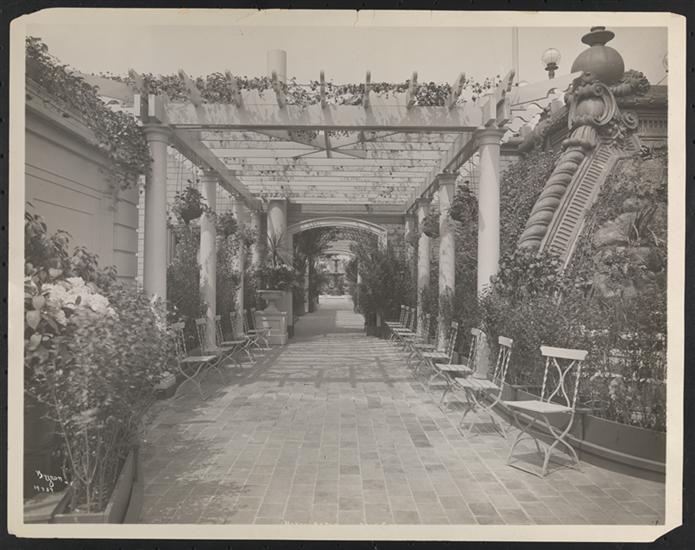
(New Yorker Digital Archive)Hotel Astor Roof Garden in 1905 (Museum of the City of New York)
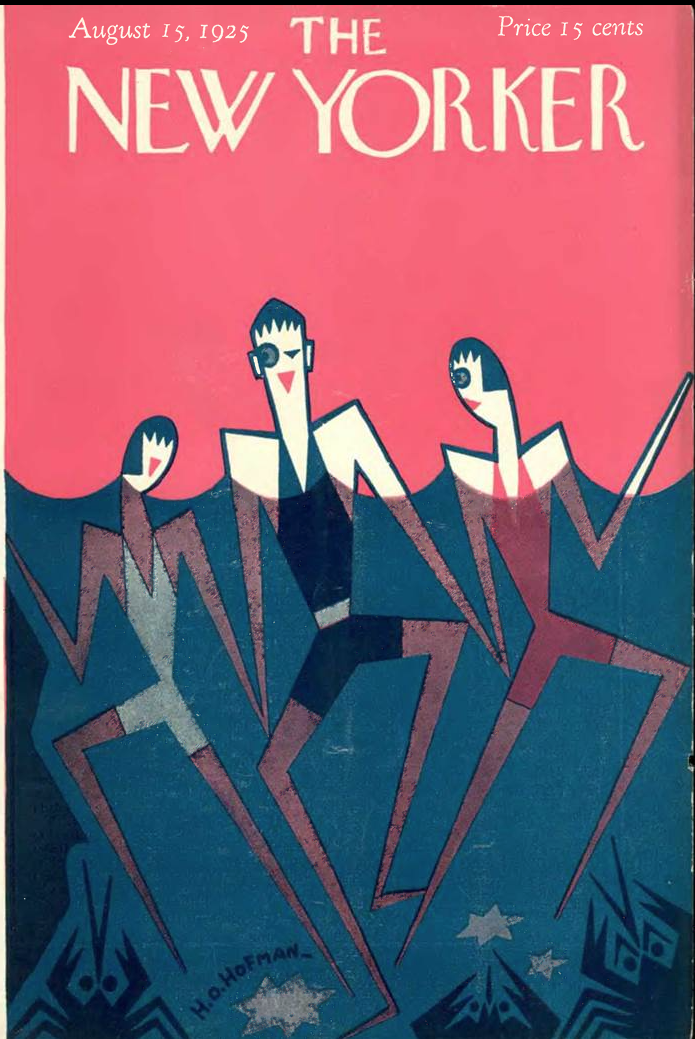
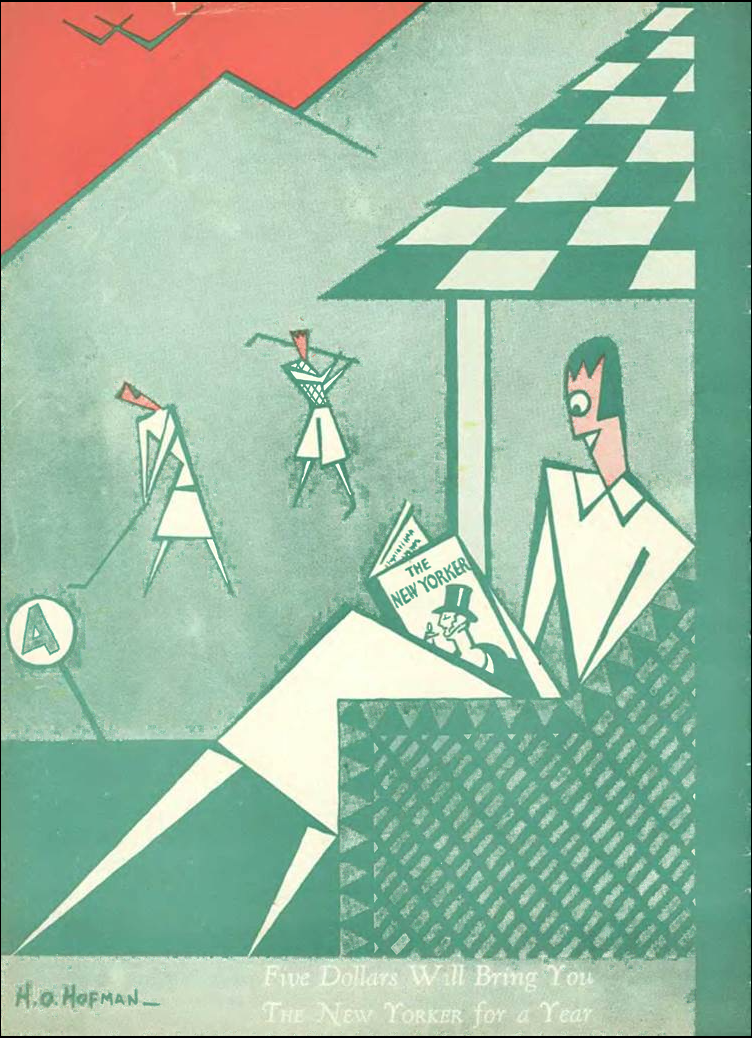
Advertising remained sparse in the pages of The New Yorker, with both inside front and inside back covers devoted to in-house ads promoting the magazine. In addition, the color back cover was also a house ad, featuring a rendering by H. O. Hofman:
The “King of Greenwich Village Bohemians,” Maxwell “Bogie” Bodenheim, was a leading (and notorious) American poet and novelist when “The Talk of the Town” (July 25, 1925) reported on the controversy surrounding his latest novel, Replenishing Jessica, sometimes referred to as one of the infamous “lost” bohemian novels of the 1920s.
Although few consider the book to be great literature (or by today’s standards, scandalous), Replenishing Jessica’s frank portrayal of a woman’s many sexual liaisons was enough to draw the ire of censors.
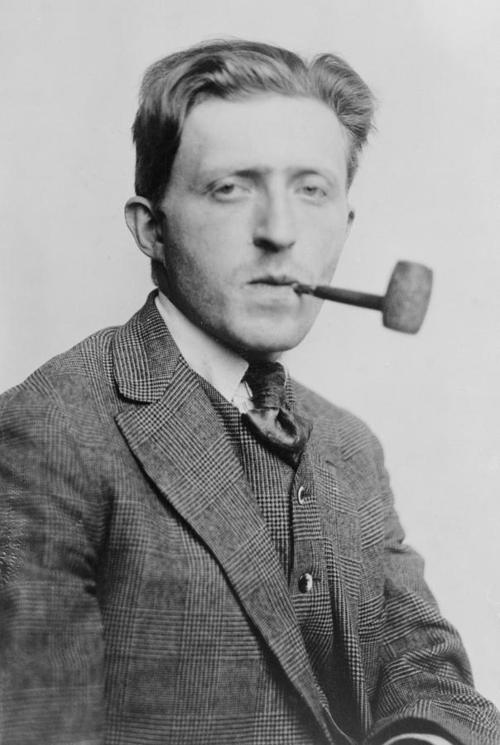
Maxwell “Bogie” Bodenheim (The Chiseler)
Bodenheim’s publisher, Horace Liverwright, even found himself the subject of a grand jury investigation, which had declared the book obscene, although he was never prosecuted (Liverwright’s defense attorney was none other than Arthur Hayes, who would also serve on Clarence Darrow’s defense team in the Scopes Monkey Trial).
The New Yorker reported that Bodenheim was “present under a $2,500 bond” following publication of Replenishing Jessica, and called him “one of our few sincerely colorful literati.” It was also suggested that Bodenheim suffered from a “the same persecution complex which tortured Lafcadio Hearn; in his mind, editors meet to plot means to keep him out of print” (Hearn was a late 19th century writer known for his stories based on Japanese legends).
“Talk” described Bodenheim as “ragged and unkempt,”
his pipe “a burnt corn-cob, wedged in his broken front teeth…Eccentric, erratic, is Mr. Bodenheim, careless of the world’s criticism outside of his work, but there is an air of sincerity about him, cynical sincerity, a brittle sparkle to his conversation, that fascination of exotic, social lawlessness.
There is an interesting New Yorker connection to Bodenheim, who met writer Ben Hecht in Chicago in 1912 and with him co-founded the short-lived Chicago Literary Times, which featured such poets and writers as Carl Sanburg, Theodore Dreiser and Sherwood Anderson.
After his success as a leading American author in the 1920s and 1930s, Bodenheim became a panhandler and was arrested and hospitalized a number of times for vagrancy and drunkenness. In an article for The Chiseler, critic John Strausbaugh wrote that Bodenheim had “a real talent for scandal, easy enough to generate during Greenwich Village’s prolonged drunken orgy in the Prohibition years.”
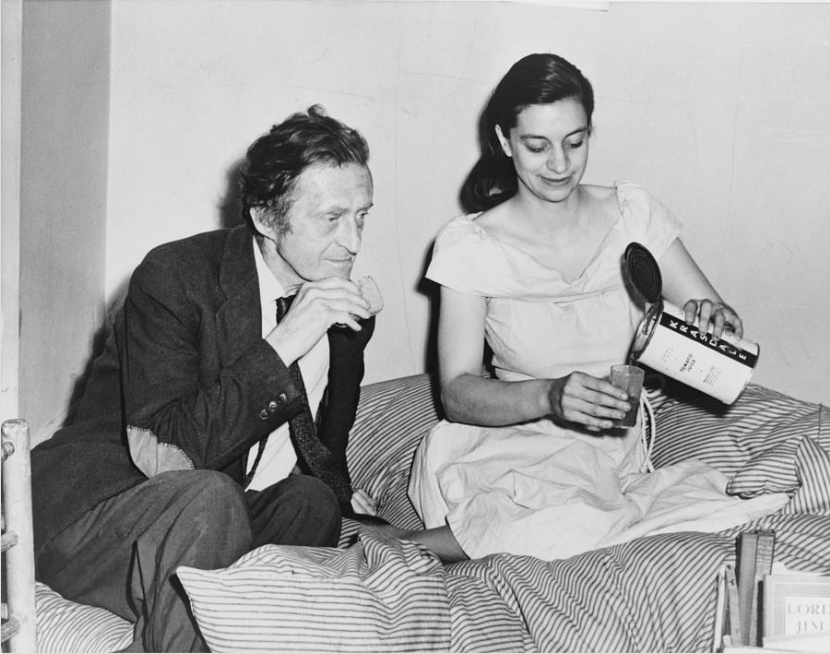
Maxwell Bodenheim and Ruth Fagin sharing a breakfast of tomato juice and sandwiches as they await eviction from their Bleecker Street apartment, circa 1952. (The Chiseler)
In 1952 the 60-year-old Bodenheim married his third wife, Ruth Fagin, who was 28 years his junior. Strausbaugh takes it from there:
In 1953, Ruth took up with a violent, mentally unstable dishwasher named Harold Weinberg. One night in the winter of 1954 the three of them wound up in Weinberg’s room off the Bowery. Bodenheim roused himself from a drunken stupor to see Ruth and Weinberg having sex. He attacked Weinberg, who pulled out a .22 and shot him through the heart. Then Weinberg stabbed Ruth in the chest. The last photos of Bodenheim show him and Ruth lying dead in the squalid room.
Weinberg confessed to the double homicide, was judged insane and sent to a mental institution.
Now on a happier note…
This issue was also replete with various equine diversions. A feature titled “Au Gallop!” looked at groups of New Yorkers who plied the bridal paths of Central Park.
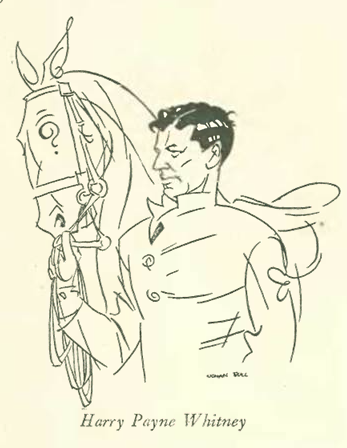
In “Profiles,” Jack Frost wrote admiringly about Harry Payne Whitney (accompanied by an heroic pen-and-ink portrait by Johan Bull). Whitney was a wealthy American businessman, thoroughbred horse breeder, and according to Frost, a “restless impatient force” who “concentrates on success.”
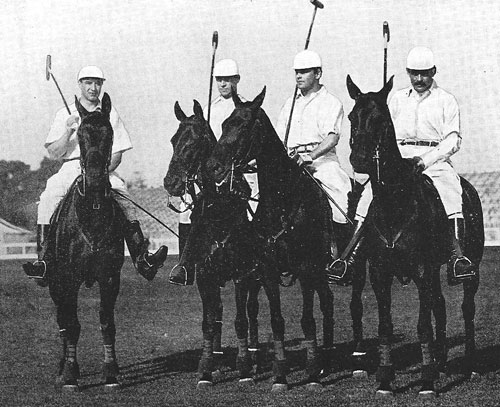
The victorious American team at the 1911 Westchester Cup. Harry Payne Whitney is second from left. (westchestercup.org/archives)
Among other things, The New Yorker credited Whitney with the creation of international-level polo competition in America and considered him the country’s best hope to win the Westchester Cup from England (Whitney was on the 1909, 1911 and 1913 winning American teams). Frost wrote that thanks to Whitney, “we have Homeric contests at Meadow Brook, as blood-stirring as the most epic battles of a Griffith film…”
There was no coverage of the Scopes Monkey Trial in Dayton, Tennessee, but cartoonist Al Frueh provided this reminder:
(New Yorker Digital Archive)
“Of All Things” noted that the population of New York City stood at 6,103,384, the 384 representing “those who have never had ferry-boats named after them” (The current population of the city is about 8.5 million).
View of midtown Manhattan looking southeast from Central Park, May 1925, when the population stood at 6,103,384. (Fairchild Aerial Surveys)
The column also offered this quip about the difference between France and England: “Another difference between the two countries is that England is working on the isolation of germs while France is still concerned with the isolation of Germany.”
Will Rogers was a popular draw as part of the “Follies” cast. (Will Rogers Memorial Museums)
The “Critique” section urged readers to see select Broadway shows before the new fall season. Recommended plays included What Price Glory, They Knew What They Wanted, Desire Under the Elms, Is Zat So?, the Ziegfeld Follies, Artists and Models, Lady Be Good and Rose-Marie.
The “Music’ section praised a new talent, Abram Chasins. “This young man is going to be something. In fifty years you may pat your granddaughter’s hair (if she has any) and tell her that you saw it in THE NEW YORKER first.” Chasins would have a long career as a pianist and composer, and later as a broadcaster and radio executive. He is perhaps best known for his Three Chinese Pieces composition.
The “Moving Pictures” section looked at Lightnin (“all our sentimental friends will find it a charming American epic”), and Rugged Water, starring Wallace Beery, who played a cowardly coast guard captain. Wrote the reviewer: “(Beery) does not seem to know what it is about and funks badly indeed. As for the rest of the picture, a good performance is given by the ocean.”
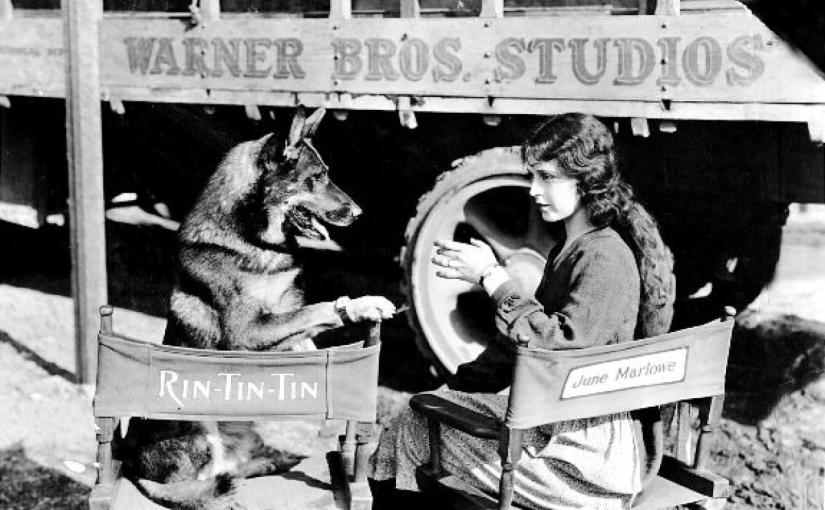
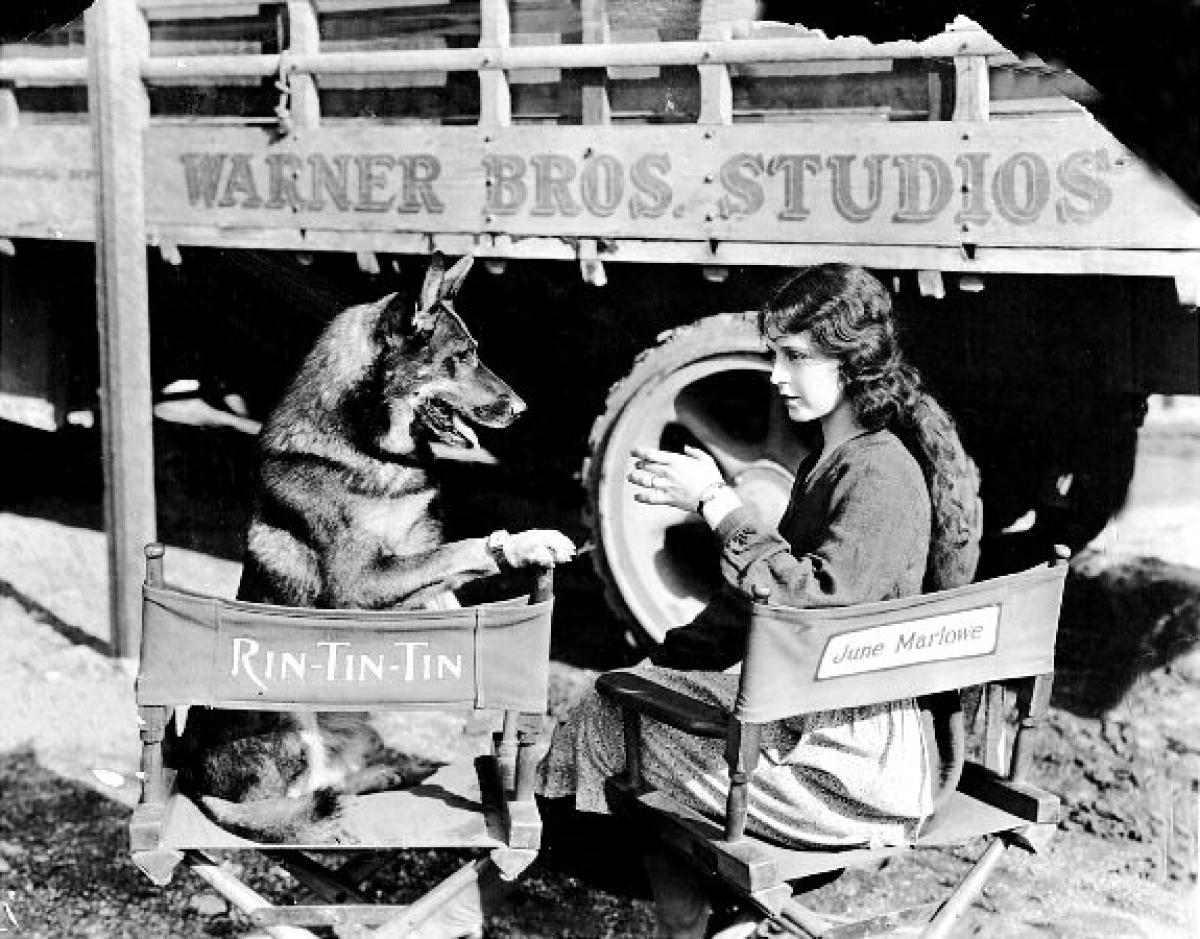
June Marlowe and Rin Tin Tin in a scene from Tracked in the Snow Country. (1925) (Warner Bros.)Rin Tin Tin and June Marlowe appear in an advertisement for wristwatches. They made four films together in 1925-26 (Warner Bros.)
In reviewing the dog superstar Rin Tin Tin’s latest movie, Tracked in Snow Country,Theodore Shane (“TS”) mused “It is questionable as to what a dog would say were he able to appraise the virtue that he defends on the screen. Would he find that gold mine worth fighting for or that gal’s innocence worth saving or that villain’s throat worth chawing?…He is a handsome animal to look on and appealing in every foot of the film he plays, but we wish that all that beauty would get cynical for a change.”
Susan Orlean wrote a terrific article about Rin Tin Tin in the August 29, 2011 issue of The New Yorker titled “The Dog Star: Rin Tin Tin and the making of Warner Bros.” She also published a book, Rin Tin Tin: The Life and the Legend that same year. Highly recommended.
In her column “When Nights Are Bold,” Lois Long offered readers cool escapes from the summer heat at various themed entertainment venues:
(New Yorker Digital Archive)
While advertisers continued to shill exclusive getaways for “carefully selected clientele”…
(New Yorker Digital Archive)
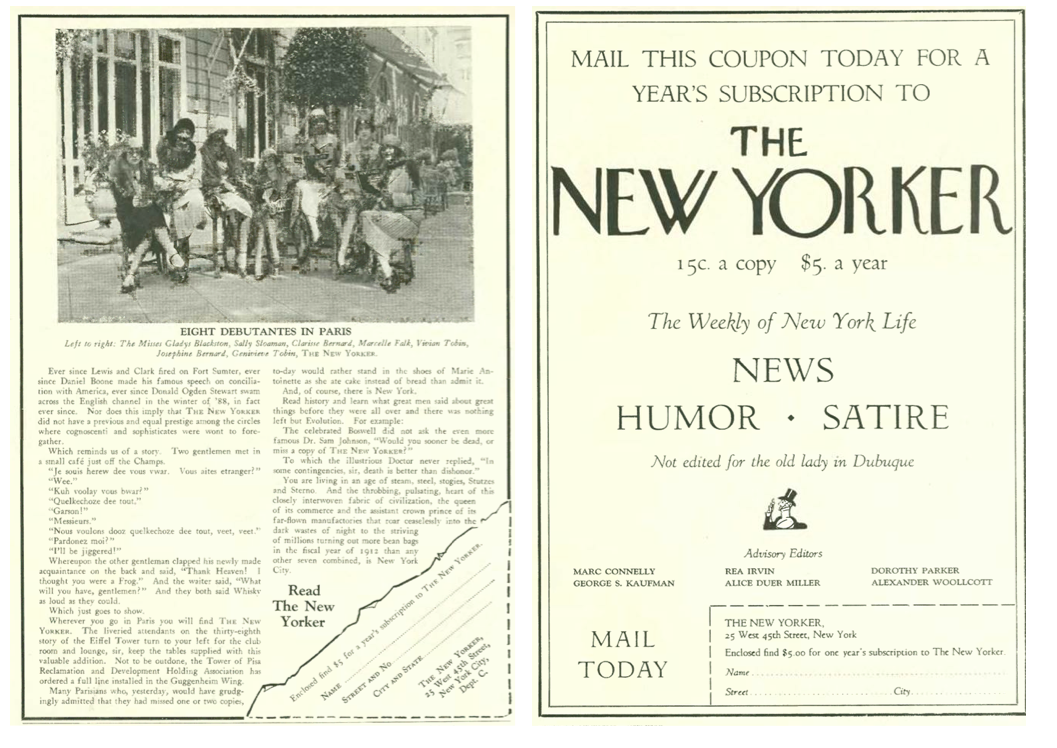
At this point the magazine itself seems to be hanging on by a thread. There is scant advertising in this thin issue (24 pages plus cover). The full-page ads on both the inside front and back covers are in-house ads promoting subscriptions to The New Yorker:
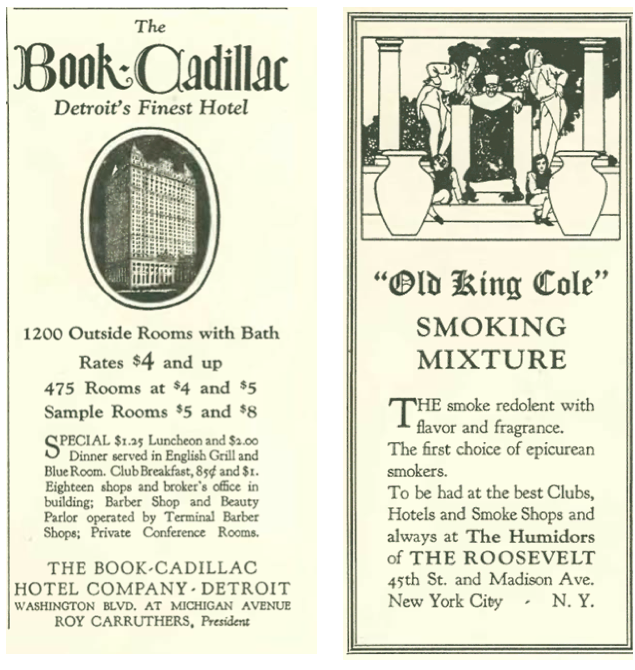
And here are two 1/6 page ads featured in the sports section, one from a Detroit hotel no less:
(New Yorker Digital Archive)
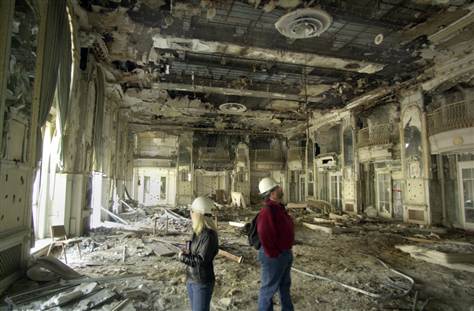
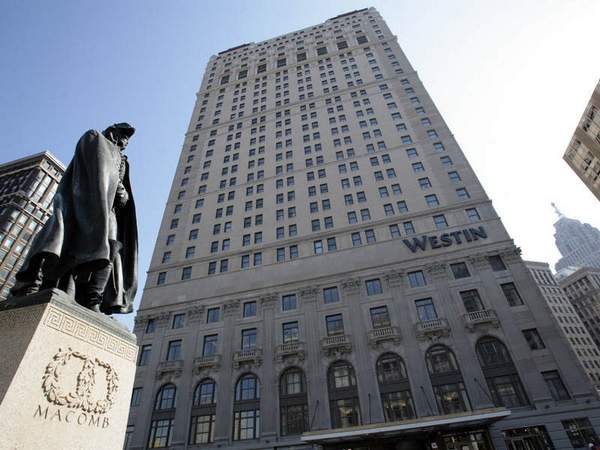
In a final note, I feature a rare non-NYC item. After falling into decay over several decades, Detroit’s Book Cadillac Hotel (advertised above) was restored in 2008 and reopened as a Westin hotel:
Before restoration (NBC News)The same room today after restoration (above), and the hotel’s exterior (Westin/Wikipedia)
“The Talk of the Town” welcomed midsummer by noting the changes in the “new Summer Social Register…A long, slow swing of the same pendulum-like power which shifts the vogue in night clubs and restaurants is the migration to inland resorts…The Hamptons have fallen off, Newport has weakened and of the coasts only New England, boasting ‘the prestige of the Summer White House,’ has held its own.”
It was thought that perhaps financial pressures on waterfront acreage “had added zeros to the 400” and “The fragments of our battered conservatives turn and twist uneasily, seeking readjustment, new barriers (translation: old money responds to the invasion of new money).
There goes the neighborhood…
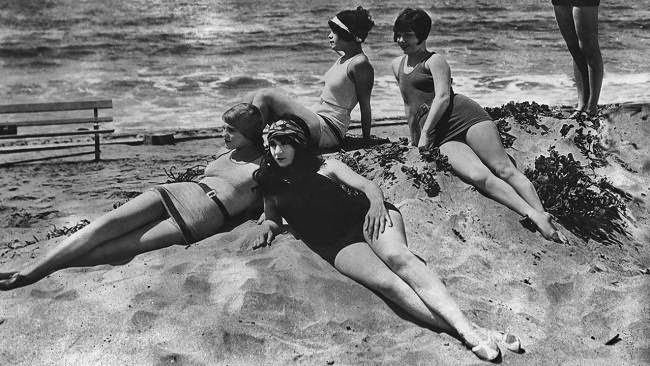
This siege on the sanctity of “the 400” – a reference to the number limited to Mrs. John Jacob Astor’s social circle – included the appearance of “scanty” bathing suits on Southampton beaches:
Corroborative evidence of the storming of the conservative fortresses by Undesirables comes with Southampton’s latest protest against scanty bathing costumes, “usually worn by strangers.”
Just what these costumes were or were not, the Southampton Bathing Corporation did not say, but they ruled that stockings and cape must be worn “while walking down to the water.” This ordinance to apply “especially at week-ends and during tennis week.
Arrowhead Inn Dining Terrace (Museum of the City of New York)
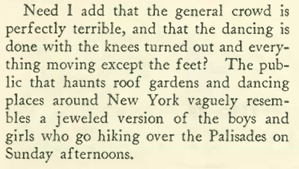
Beginning with this issue, the “When Nights Are Bold” feature was passed from Charles Baskerville (pen name “Top Hat”) to the newly hired Lois Long (pen name “Lipstick”). In her first column for The New Yorker, Long suggested that for those “who can get out of town at will,” the Arrowhead Inn “up Riverdale way” and high on a bluff above the Hudson, was a popular destination for dining and dancing, even if the dancing crowd left something to be desired:
Another recommended Hudson River location was the Claremont (but alas, no dancing!), while for those staying in the city, Long recommended the Embassy Club at 695 Fifth Avenue.
Lois Long at work in the 1920s (Wikipedia)
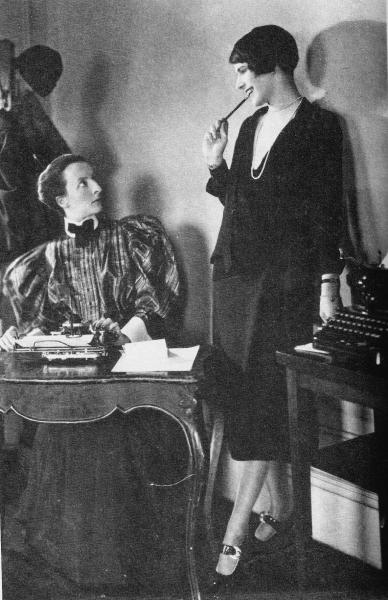
According to Here At The New Yorker by Brendan Gill, Long chronicled nightly escapades of drinking, dining, and dancing for The New Yorker, and because her readers did not know who she was, she often jested in her columns about being a “short squat maiden of forty” or a “kindly, old, bearded gentleman.” However, in the announcement of her marriage to The New Yorker cartoonist Peter Arno, she revealed her true identity.
Harold Ross hired Long in the summer of 1925 as part of a group of “saviors” he hoped would help boost his struggling magazine. The group included Arno, Katharine Angell, managing editor Ralph Ingersoll, and cartoonist Helen Hokinson.
Although she was a favorite of Ross’s, the two couldn’t be more different, as historian Joshua Zeitz explains in Flapper: A Madcap Story of Sex, Style, Celebrity, and the Women Who Made America Modern (2006), Long knew just how to embarrass the girl-shy editor, and loved to do it:
(Ross) was a staid and proper Midwesterner, and she was absolutely a wild woman. She would come into the office at four in the morning, usually inebriated, still in an evening dress and she would, having forgotten the key to her cubicle, she would normally prop herself up on a chair and try to, you know, in stocking feet, jump over the cubicle usually in a dress that was too immodest for Harold Ross’ liking. She was in every sense of the word, both in public and private, the embodiment of the 1920s flapper. And her readers really loved her.
Julia Lydig Hoyt in 1922 (Wikimedia Commons)
“Talk” also reported that Mrs. (Julia Lydig) Hoyt had “very nearly arrived,” and was capitalizing on her stage career through endorsements for cold creams and articles on social etiquette. “The motion picture industry and stage know her and now she is a designer at highest salary ever paid to an American.”
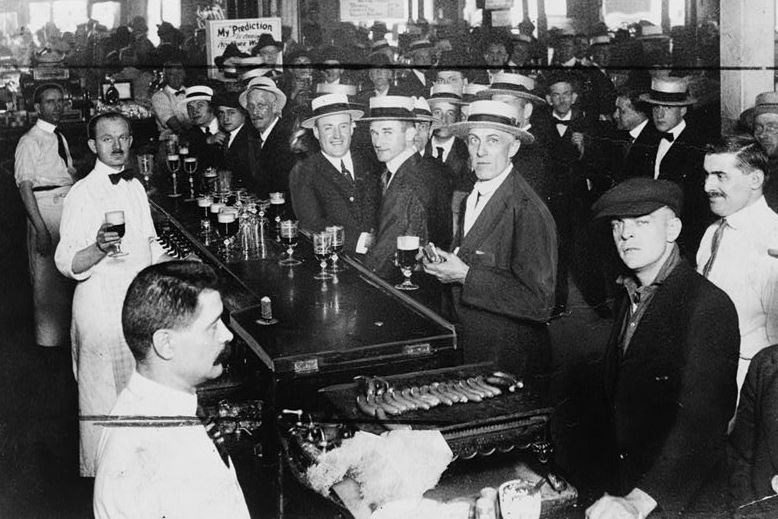
Last Call…A rather dour-looking crowd at a New York City bar moments before midnight, June 30, 1919, when Prohibition went into effect. (Library of Congress Archives)
Prohibition continued to dampen the spirits (pun intended) of New Yorkers, particularly during the summer season. The editors noted that of 36 random summer reminiscences submitted to the magazine, eighteen were “direct references to alcoholic concoctions and all but a few theatrical recollections directly suggested indulgence. Then the editors offered their own wistful recollections:
Of course we remember “The Doctor’s cocktails” mixed by the “Commissioner” at the Astor…the highball sign at Forty-second and Broadway…the “Old Virginia Mountain” between the acts under the smile of Old King Cole…the Sunday afternoon absinthe drips at the Lafayette…Champagne at the Claremont on a June night…the Manhattan bar at cocktail time…the Ancient and Honorables in the Buckingham bar….the Navy in mufti at Shanley’s…the horseshoe bar at the Waldorf…the blue dawn of the West Forties…
Of course…but why bring that up again? It’s merely driving us down the street to that place that gave us the card last week and the rumor has just reached us that they are back serving Scotch in teacups, accompanied by a large earthenware teapot filled with soda.
Left, Delmonico Building at Fifth Avenue and 44th Street (photo from The Brickbuilder, 1899), razed in 1925 and replaced by the building at right (Google Maps screen image)
Also lamented was the loss of renown restaurant Delmonico’s, which had been closed for some time (due mostly to alcohol sales lost to Prohibition; its famous rival across the street, Sherry’s, closed in 1919 for the same reason) but was now yielding to the wrecking ball: “Possibly, Delmonico’s might have been saved as a tradition, but finances and the changes of Fifth Avenue’s complexion forbade…Now we are to see yet another skyscraper, this one on the site where once they dined; where once they danced; across the street from old Sherry’s, long since a bank; orchestraed only by adding machines.”
“The Talk of the Town” concluded with a price list for various bootleg spirits, a feature that would continue through the Prohibition:
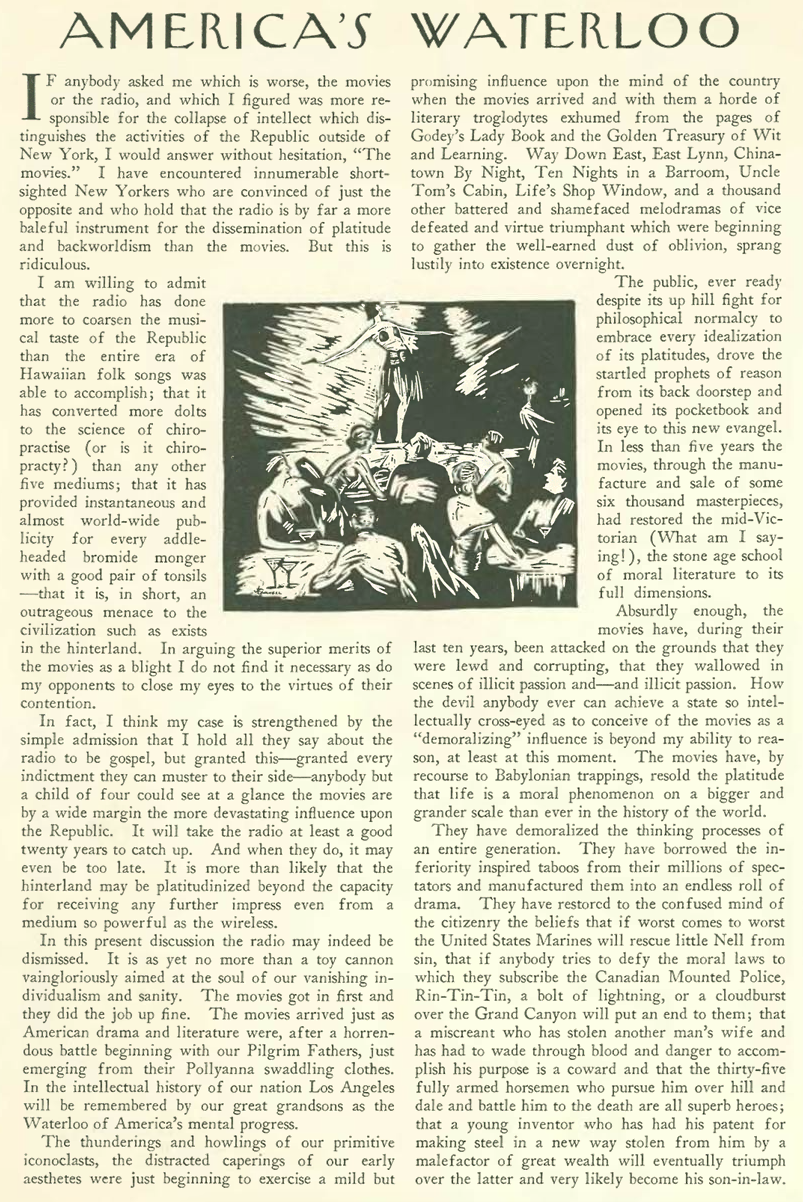
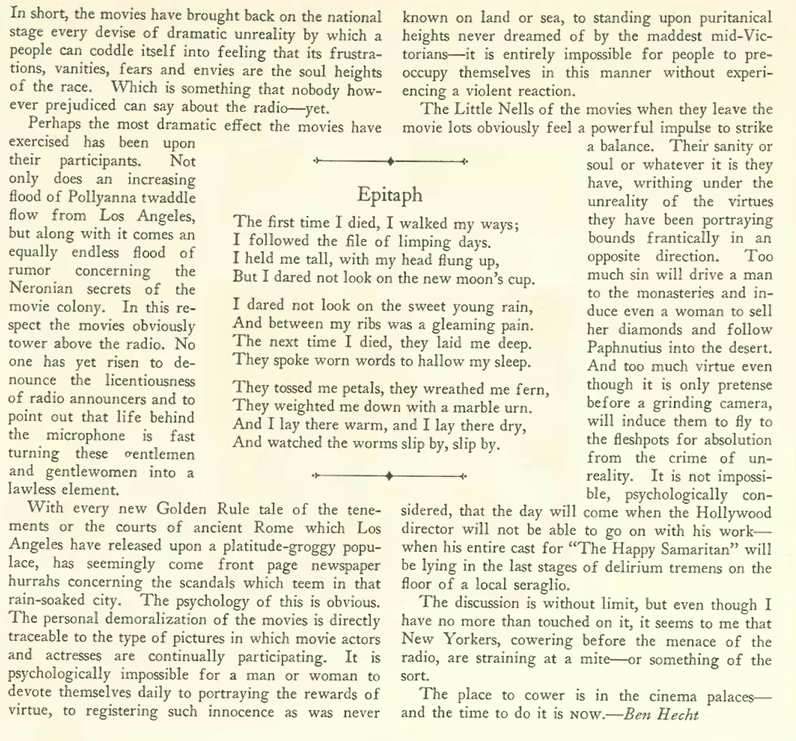
Fresh off his dismantling of those clod-kickers in Chicago, Ben Hecht continued his dyspeptic tirade on the America that lay beyond Gotham, specifically attacking its love of the “Pollyanna twaddle flow” of entertainment from Hollywood:
(New Yorker Digital Archive)
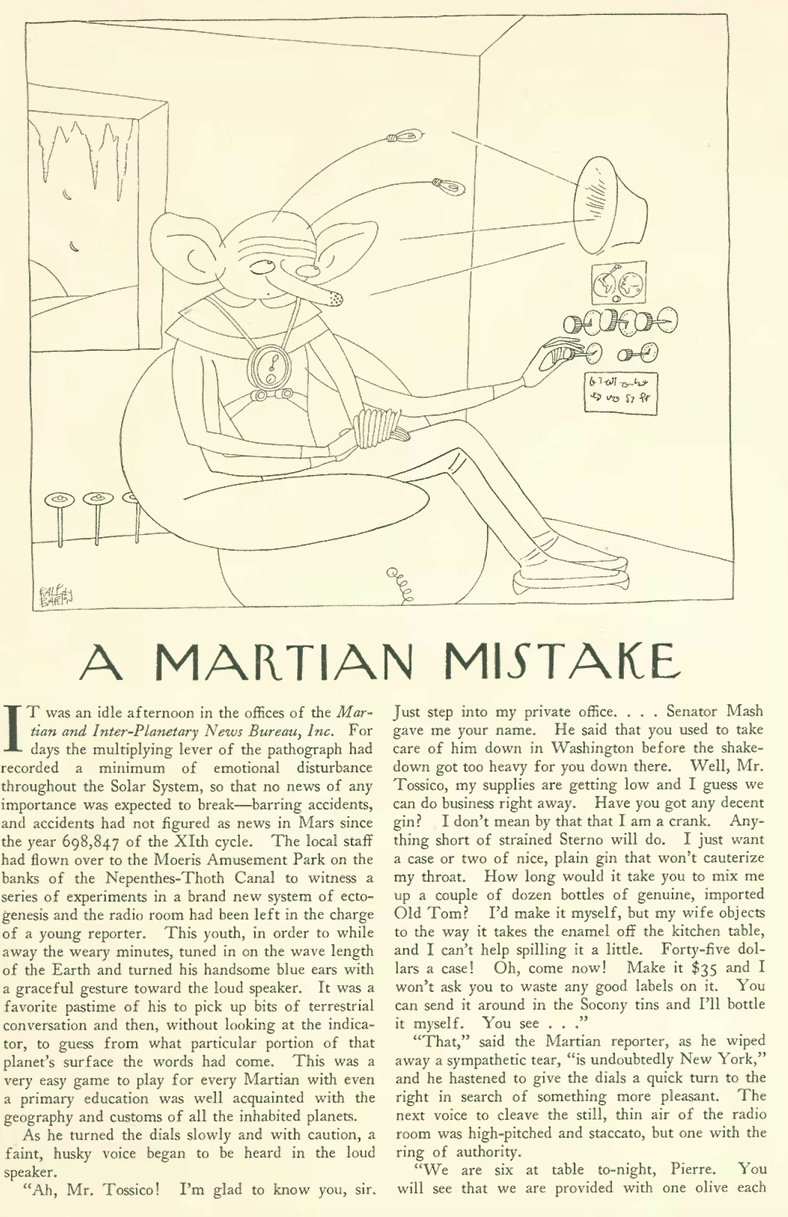
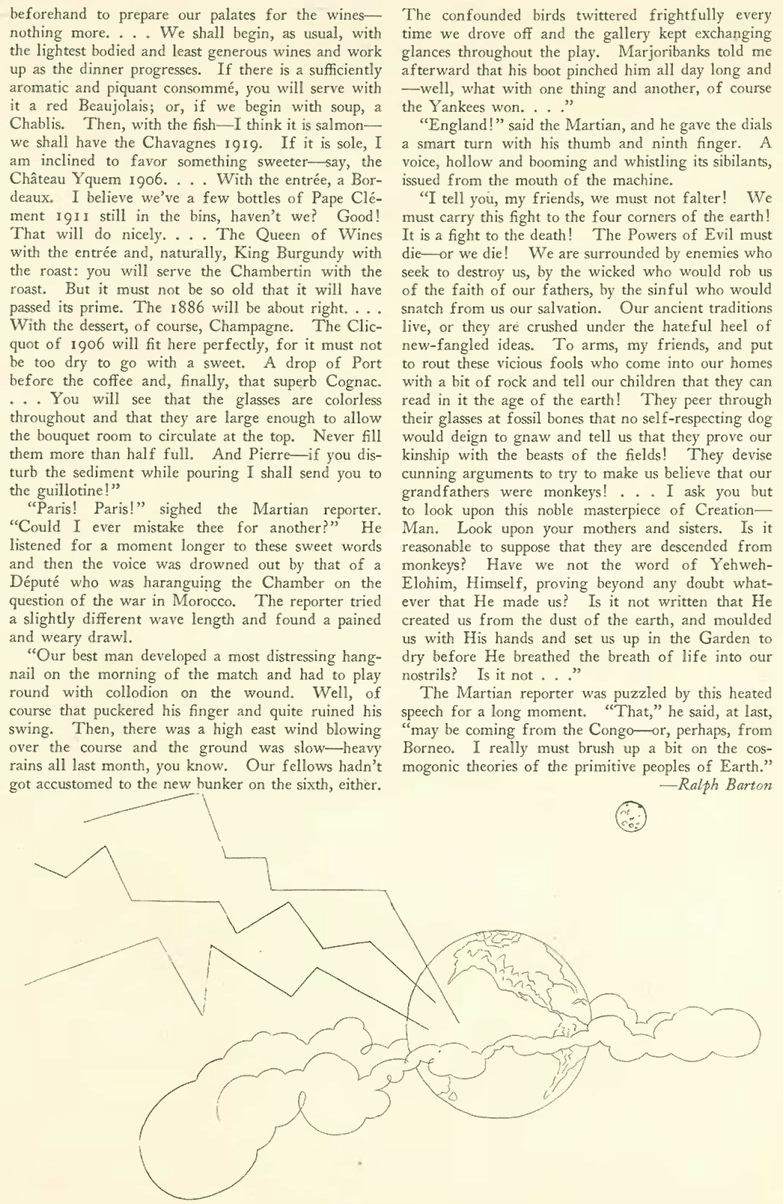
Ralph Barton, on the other hand, offered of a view of the entire earth, from the vantage point of a Martian observer:
(New Yorker Digital Archive)
In “Profiles,” Waldo Frank (writing under the pen-name “Searchlight”) looked askance at the life and work of writer Sinclair Lewis.
Frank offered these observations: “Once upon a time, America created a man-child in her own image…
There’s a strange thing about America. She is passionately in love with herself, and is ashamed of herself…Here was a dilemma, Could not her self be served up to America in such a way that she could love herself—and save her shame? Sinclair Lewis, true American son, was elect to solve it.”
And for those rising young men who did not wish to mix with the unwashed during the summer social season, membership to the Allerton Club Residences was recommended in this back page advertisement:
(New Yorker Digital Archive)
And yes, the Scopes Monkey Trial is still on the minds of the editors:
(New Yorker Digital Archive)
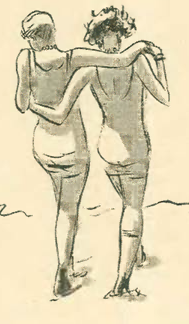
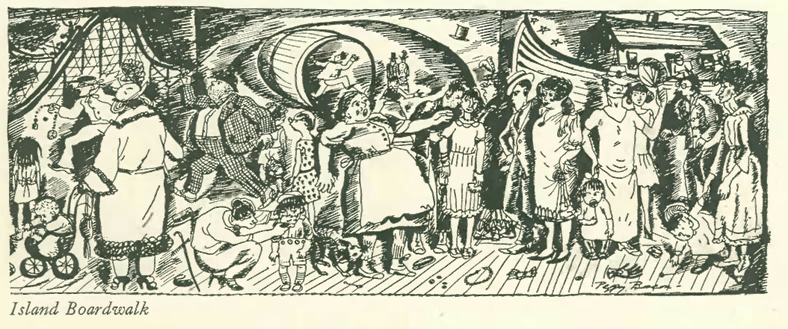
And finally, to close out with a beach theme, a two-page illustration from “The Talk of the Town” section, an early work by illustrator Peggy Bacon:
Anticipation of the upcoming Scopes “Monkey Trial” continued to fill the pages of The New Yorker. In the June 20, 1925 issue, “The Talk of the Town” led with an account (titled “Martyr de Jour”) of trial defendant John T. Scopes’s visit to New York City.
The “Talk” author wrote admiringly of Scopes, if not also with a degree of condescension, noting that the Tennessee schoolteacher was “introduced in circles with which, hitherto, he had been acquainted only through his love for books and periodicals…He was fêted and lionized, this back-country school-teacher, a shrewd, slow-speaking, slow-moving individual such as novelists have misrepresented as being typical of our agricultural regions. He was lionized socially, that is. Although, of course, there was that rather distressful incident of entertainment when Mr. Scopes and Dr. George W. Rappleyea, his devoted friend, attended the “Follies” by invitation of the late press agent for the American Civil Liberties Union, and found, on arrival that while guests they were expected to pay for their own tickets.”
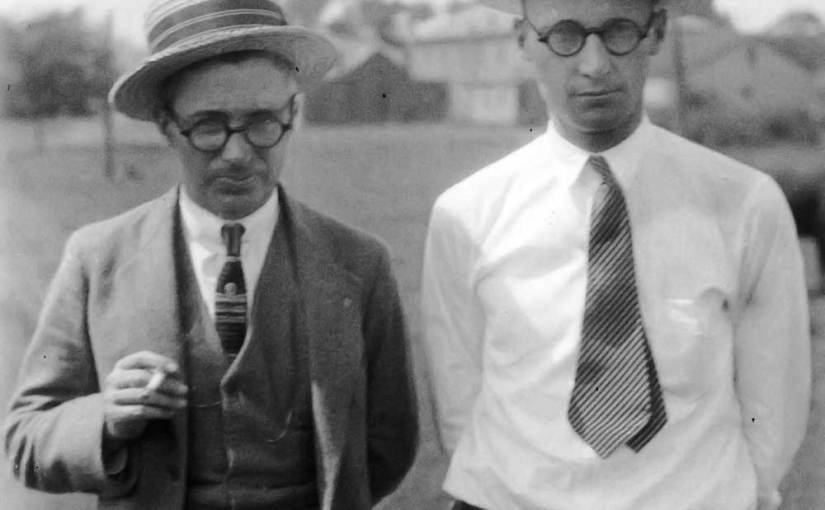
Rappleyea and Scopes in 1925 (Smithsonian Institution)
Scopes and Rappleyea were in town to find scientists who would be willing to testify in Scopes’ legal case. “Talk” noted that despite its humble description of the teacher, Scopes was no meek country boy; indeed he had complained to the press that his importance had been minimized by all the attention paid to the prosecuting and defending attorneys, Clarence Darrow and William Jennings Bryan.
For the record, George Rappleyea was a metallurgical engineer and manager of the Cumberland Coal and Iron Company in Dayton, Tennessee, which was the site of Scopes Trial. It was Rappleyea who convinced a group of Dayton businessmen to sponsor a test case of the Butler Act (which prohibited the teaching of evolution in state schools) and also convinced Scopes to serve as defendant.
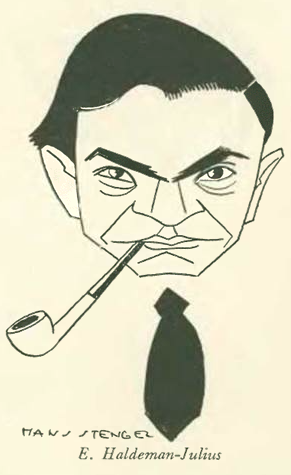
The trial would attract many public figures, including E. Haldeman-Julius, who was coincidentally featured in the issue’s “Profiles” section.
Hans Stengel’s “pen portrait” of E. Haldeman-Julius
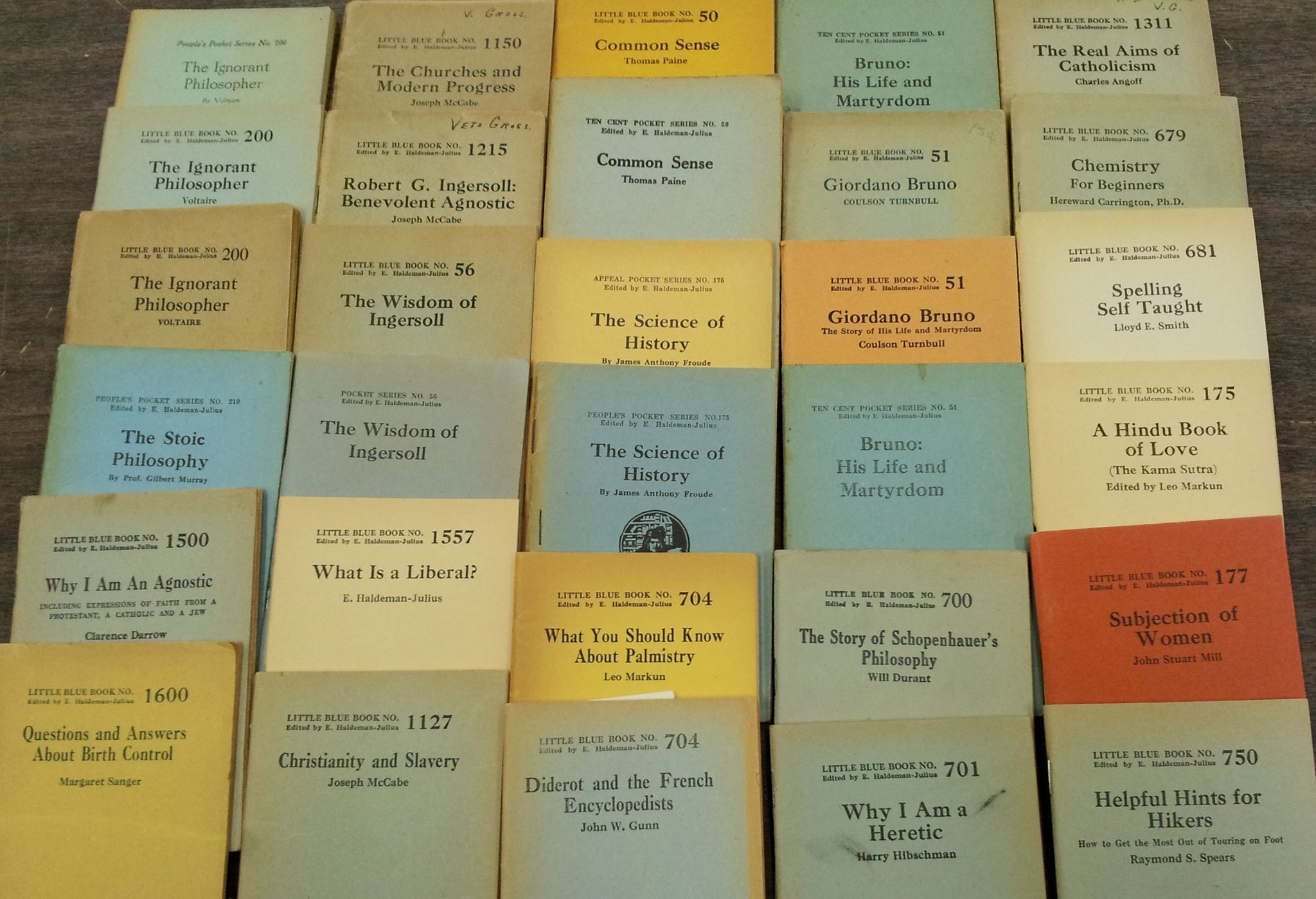
Haldeman-Julius was a socialist reformer and creator of a series of small, staple-bound booklets known as “Little Blue Books,” which featured various writings on social issues and abridged reprints of classic literature.
If a book sold less than 10,000 copies in one year, Haldeman-Julius would remove it from his line. But first he would try out a lurid title for the book, and sometimes the tactic would revive sales. For example, The Tallow Ball by Guy de Maupassant sold 15,000 copies one year, but nearly 55,000 the next year after the title was changed to A French Prostitute’s Sacrifice.
A sampling of Little Blue Books (image: centerforinquiry.net)
The writer of the profile, Alexander Woollcott, noted that 75 million Little Blue Books had been published to date (according to Haldeman-Julius), and one might conclude that the famous socialist pamphleteer had “sold out to Mammon” because of the wealth generated from the sales, but Woollcott concluded that Haldeman-Julius and his wife, Marcet, were accomplished authors themselves (including their 1921 novel Dust) and even a socialist crusader would feel pride at the sight of a workman on a subway train, settling back with “his Little Blue Book.”
It should be no surprise that Haldeman-Julius was also present in Dayton for the Scopes Monkey Trial. According to the Smithsonian, he and his wife Marcet drove 200 miles from their home in Kansas to observe the trial. In this photo he is shown on the steps of “Defense Mansion,” an old Victorian house owned by Rappleyea’s coal and iron company, which had been quickly restored by Rappleyea to accommodate the defense team and their scientific witnesses. (Smithsonian Institution)
The “Critique” section offered this observation about a new show at the Colonial, featuring Johnny Hudgins (Hudgins was featured in my April 8 blog, Knickerbocker Junction:
(New Yorker Digital Archive)
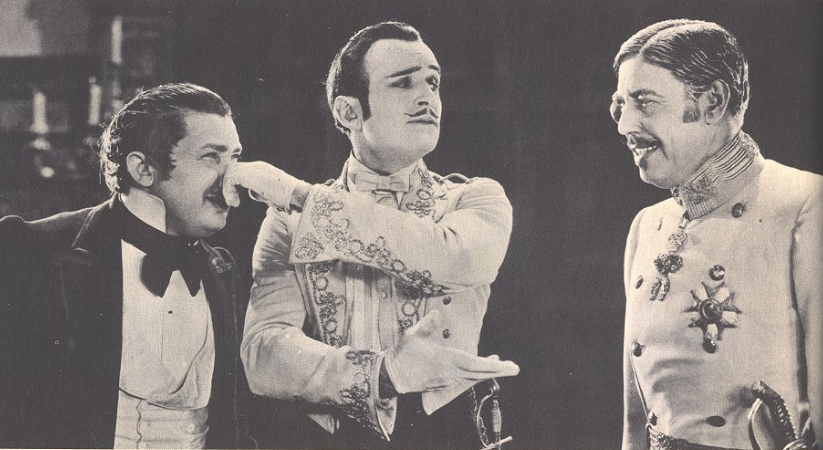
There was also an item about Don Q, Son of Zorro, a film starring Douglas Fairbanks that made its debut at Broadway’s Globe Theatre. The review noted that the movie is full of Fairbanks acrobatics, and “Doug does everything except play the saxophone.”
Don Q (Douglas Fairbanks) tweaks the nose of Don Fabrique (Jean Hersholt), much to the amusement of The Archduke (Warner Oland). (Scan from Jean Hersholt’s Album Of Hollywood Stars, a promotional booklet sponsored by the makers of Vaseline)
It was noted, however, that the best performance of the picture was by Warner Oland, who played a dimwitted archduke. The Swedish actor Oland would gain fame for playing “oriental” characters, most notably Dr. Fu Manchu in the late 20s and early 30s, and the detective Charlie Chan in more than a dozen movies in the 1930s. He also played the role of “The Cantor” in 1927’s The Jazz Singer, one of the first of the “talkies.”
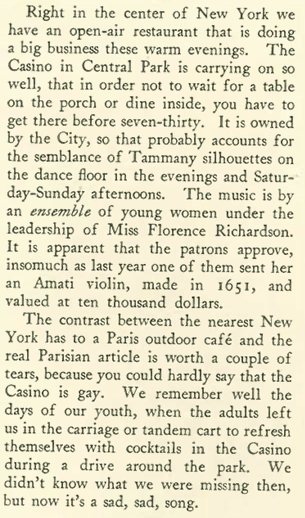
“When Nights Are Bold” featured, among other items, this bit about the growing popularity of an open-air restaurant in Central Park called “The Casino”:
(New Yorker Digital Archive)
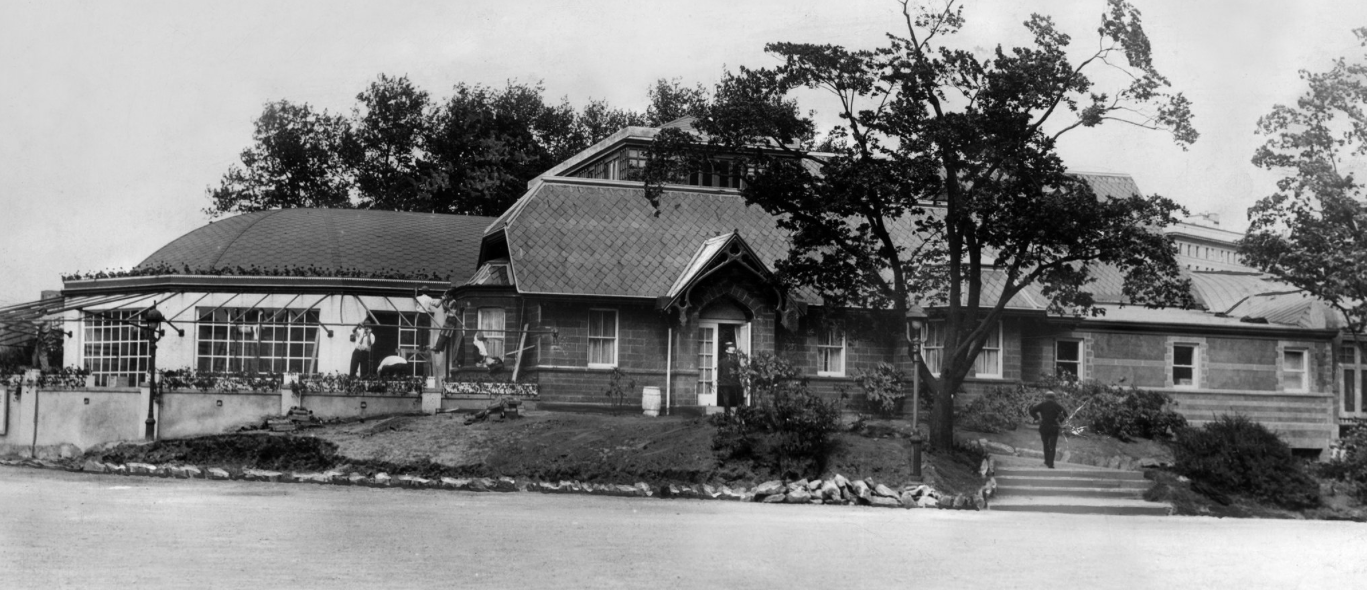
The Museum of the City of New York blog notes that the Central Park Casino began in 1864 as the Ladies’ Refreshment Salon. About 20 years later the salon “morphed into a far pricier destination, called The Casino, and was open to both sexes. The name was used to invoke the Italian translation of “little house” rather than denoting a gambling joint.” Because of its park location and then rare outdoor seating option, it was the place to see and be seen. By the early 1920s it had declined into “a somewhat dumpy night-club,” but when flamboyant Mayor Jimmy Walker took office in 1926 he personally revived the Casino (through “a series of somewhat sketchy maneuvers”) and turned it into an exclusive nightclub for high society. The good times quickly ended with the 1929 market crash.
Central Park Casino (The New York Times)
According to centralparkhistory.com, on opening night, June 4, 1929, “a good deal of cynical talk was bandied about among the crowd who watched the socialites arrive. In the fall mayoral campaign Fiorello La Guardia had attacked Walker for leasing the “whoopee joint” in the park to his close friends for a ridiculously low rent — friends who, in turn, obtained some of their financing from gangster Arnold Rothstein (the man who reputedly fixed the 1919 World Series). The stock market crashed that same fall and federal prohibition agents raided the Casino. The elegant playground of the rich had become a symbol of decadence and corruption.” Parks commissioner Robert Moses later replaced the Casino with the Rumsey Playground, which in turn was replaced by the park’s current SummerStage.
Finally we close with some illustrations from the issue. In her book, Defining New Yorker Humor,Judith Yaross Lee writes that the magazine’s “signature caricaturists established the New Yorker’s high sense of humor and gave comic character to the texts…The New Yorker attracted first-rate artists despite its comparatively low rates because photojournalism was restructuring their work, and because art editor Rea Irvin gave it attractive layouts.”
On the inside front cover, this illustration by W. Heath Robinson takes aim at upper-class vanities:
(New Yorker Digital Archive)
And here are some comic trifles; these were usually found in the center pages, sort of a “joke section” for the smart set. Note the ubiquitous “The Optimist” filler, a tired joke featured repeatedly in the first issues until Katharine (Angell) White came on board later that year and put an end to such nonsense. Also note that the second item is contributed by Julius H. Marx, better known as Groucho:
(New Yorker Digital Archive)
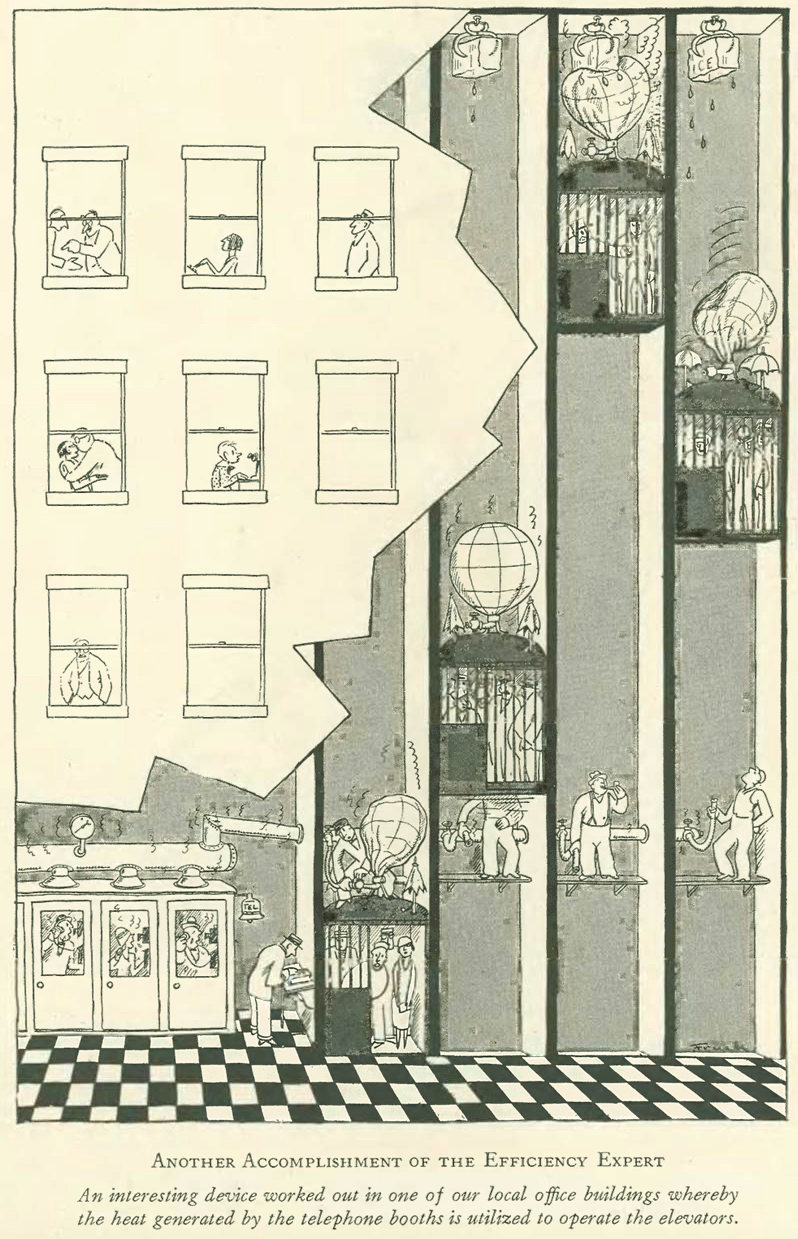
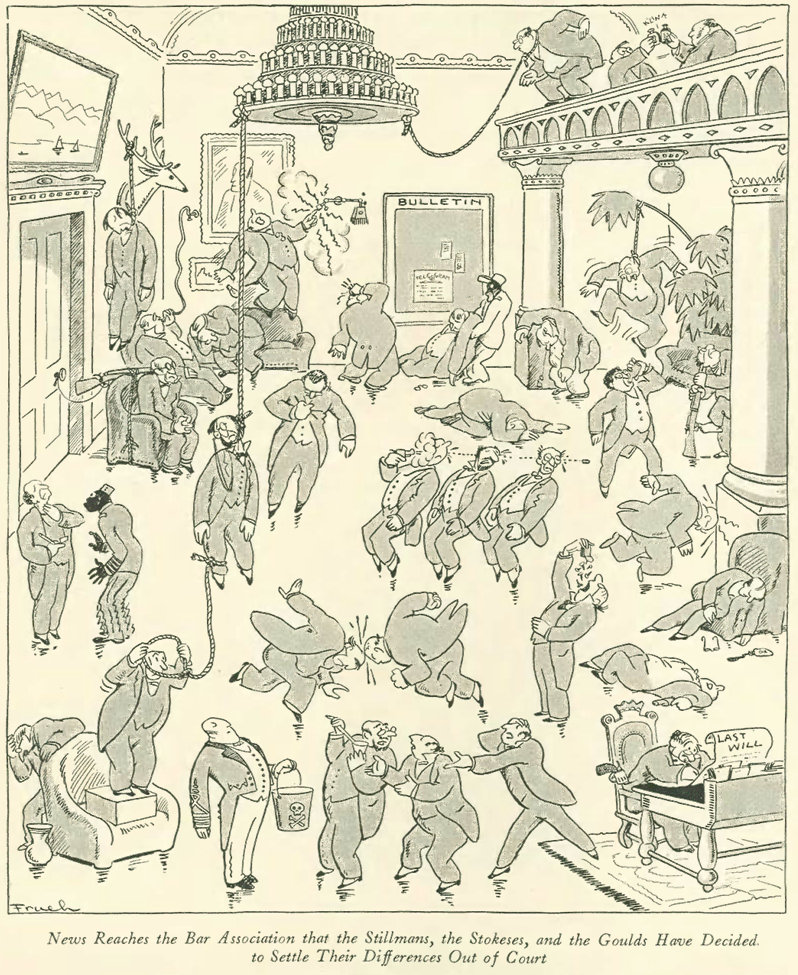
A good example here of how another artist, Al Frueh, finds humor in how the professional elites and the moneyed classes overreact to seemingly minor incidents. In just four years this wouldn’t be so funny:
(New Yorker Digital Archive)
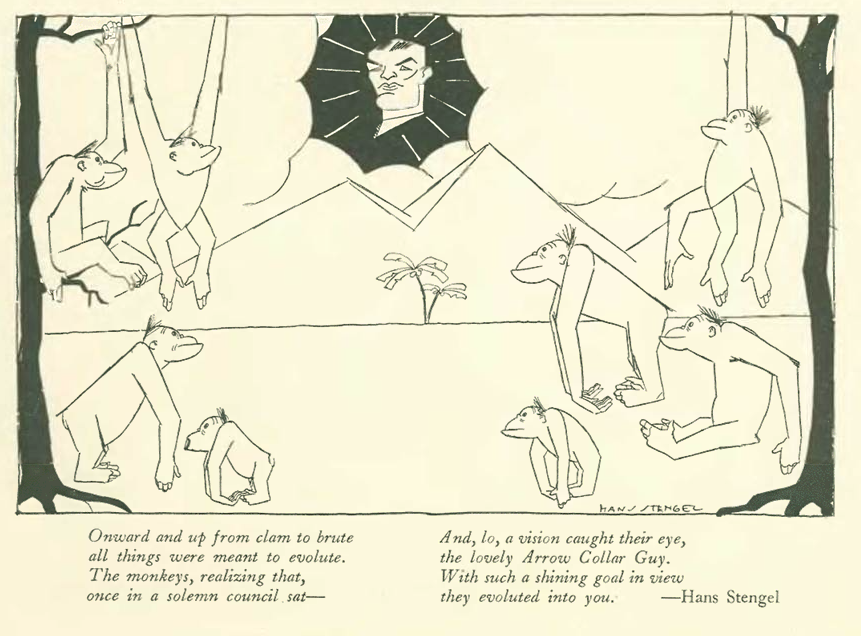
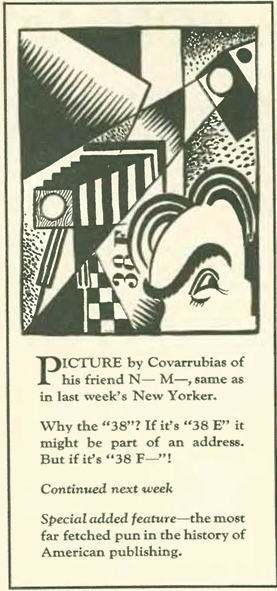
Again we get the mysterious Covarrubias drawing, also featured in my previous post, Bryan’s Planet of the Apes:
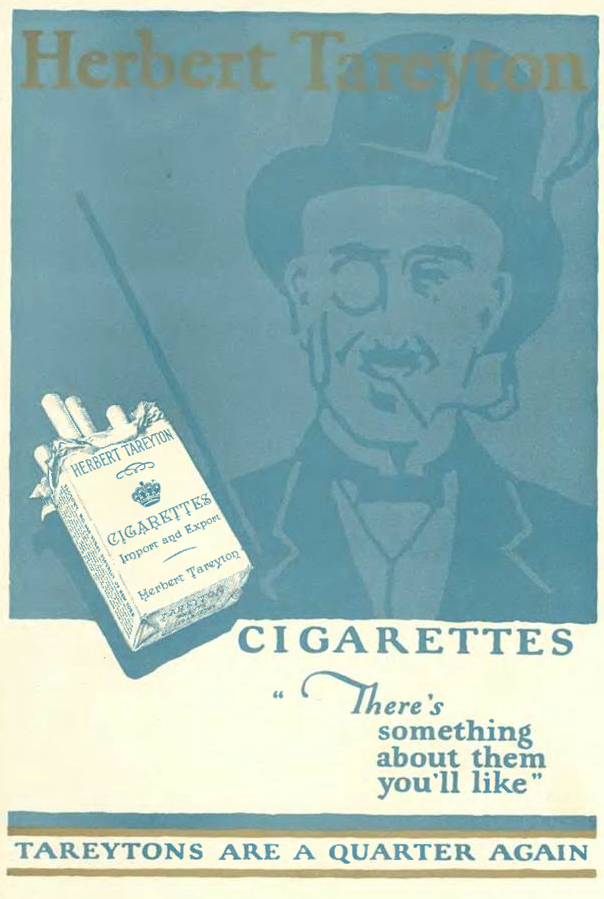
And finally, an advertisement for “Herbert” Tareyton cigarettes. Not exactly the most the persuasive tagline:
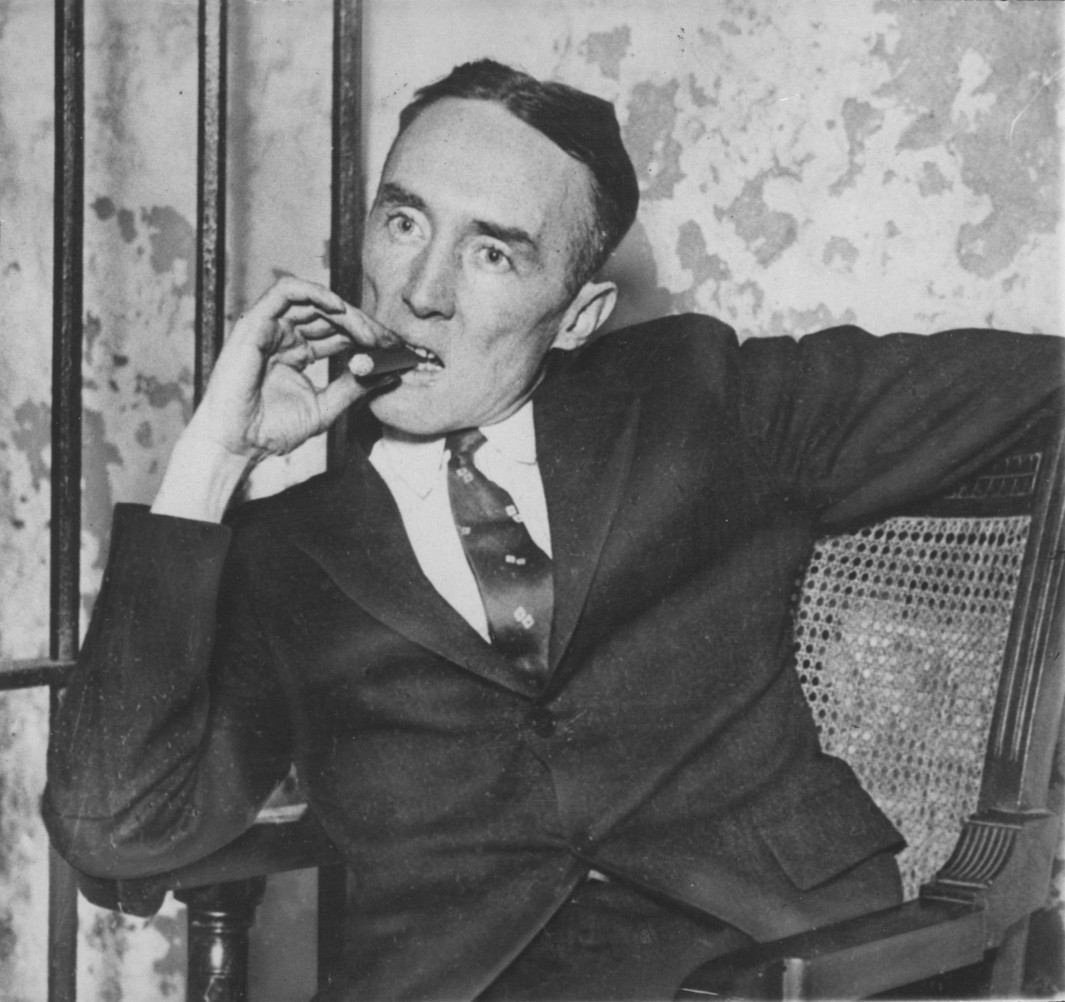
The plight of “The Gentleman Bandit” Gerald Chapman was recounted in the April 18 “Talk of the Town,” pitting the sensibilities of urbane New Yorkers against Connecticut Yankee morality.
The New Yorker noted that many of Gotham’s citizens were sympathetic to Chapman, who during the previous year had murdered a police officer during a crime spree in Connecticut.
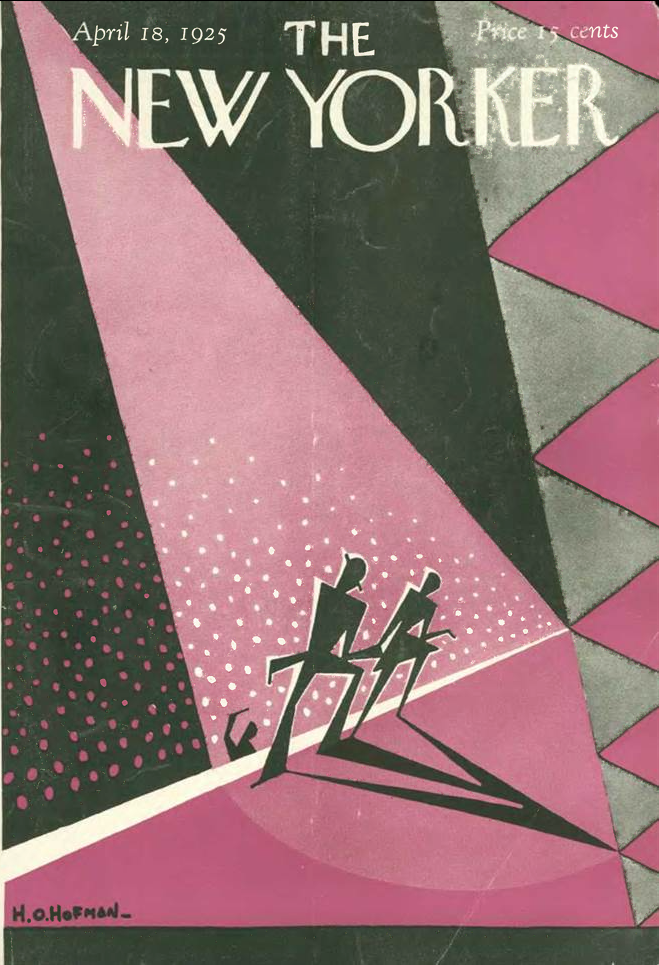
April 18, 1925 cover by H.O. Hofman (New Yorker Digital Archive)
The magazine suggested that Chapman—who grew up on the Lower East Side and had a long history of bootlegging and other crimes—had been sentenced to death by a Connecticut judge and jury because they hated all things associated with New York City:
You do not have to go so far as Dubuque to find a definite hatred of New York and things from New York. In Connecticut there is a very lively detestation of the loud and happy neighbor down the Sound. People from New York, to mention only one Connecticut grievance, rush through the tidy little Yankee State in week-end automobile parties, which break the Sabbath and the speed laws. This breeds no great affection.
“The Gentleman Bandit” Gerald Chapman (Hartford Courant)
Chapman was America’s first “celebrity gangster,” and the first to be dubbed “Public Enemy Number One” by the press. He was executed by hanging a year later, on April 6, 1926. A full account of Chapman’s life can be found here.
The magazine continued its habit of William Randolph Hearst-watching, noting that the famed publisher seemed headed for retirement at his San Simeon estate in California:
Mr. Hearst retires to San Simeon and its vast acres, with only the expense accounts of his editors whom he sends for to worry about. He is not a young man,–he is sixty-two,–and he feels that his time to play has arrived…
In other news, invitations to the new Embassy Club (695 Fifth Avenue) of New York were being extended “to a selected list of persons; that is to say, to most persons owning town residences not situated in Brownsville or the Bronx.” It was further observed “when the Embassy Club opens formally, it is believed that Mr. Michael Arlen (subject of my post “The Ordeal of Michael Arlen”) will be invited to attend, if he survives Hollywood.”
Note: The Embassy Club location is now more or less occupied by Bottega Veneta. It’s hard to tell with all of the changes to the facades on the streetscape. It is, however just around the corner from the St. Regis Hotel, which became home to the King Cole Bar and its famous Mayfield Parrish mural in 1932 (See my blog on “A Dry Manhattan” for more about the mural).
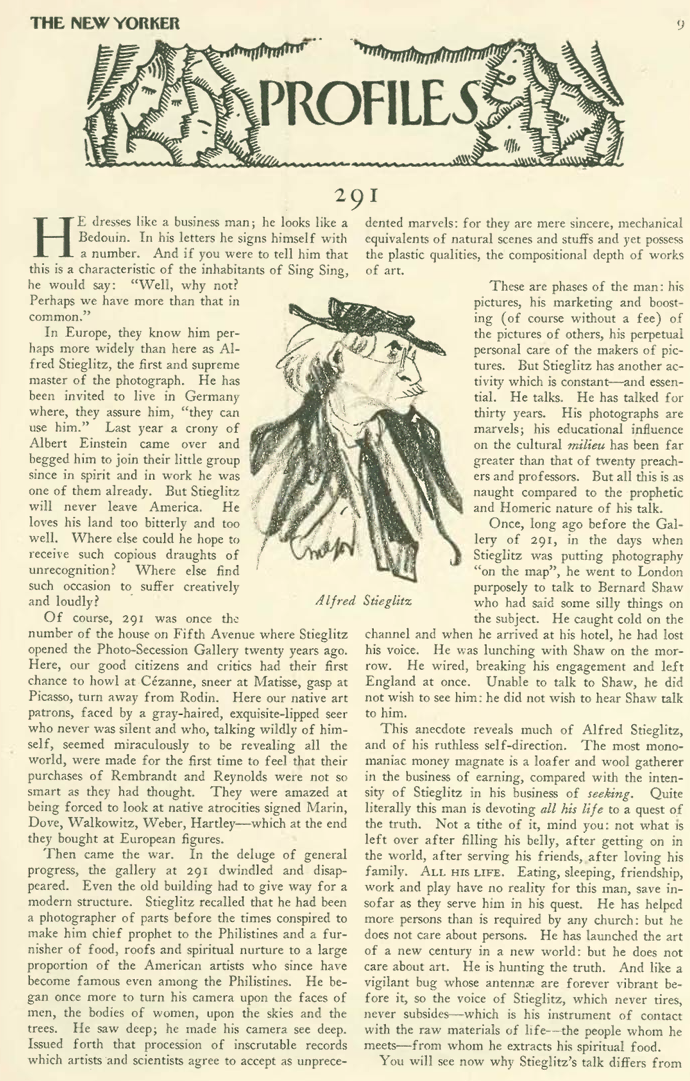
The “Profile” featured Alfred Stieglitz, noting the famed photographer’s “ruthless self-direction” in his pursuit of the truth. “His life is a dynamic gesture, as of Life itself, trying to find out what Life is.”
(New Yorker Digital Archive)
This issue features The New Yorker’s first automobile ad, from the bygone Pierce Arrow automobile company. Pierce Arrow would be a frequent early advertiser, soon to be joined by other car manufacturers in the magazine’s pages. But not just yet. As I’ve noted before, advertising (and editorial content) in these first issues is scant, and so it is no surprise that the magazine is barely limping along during these precarious months.
(New Yorker Digital Archive)
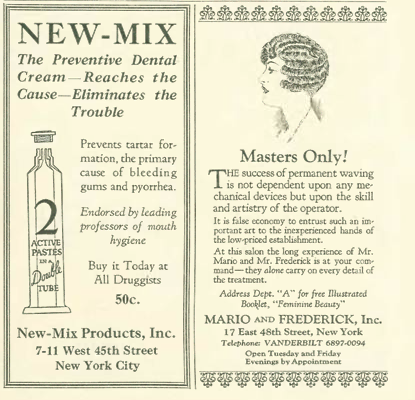
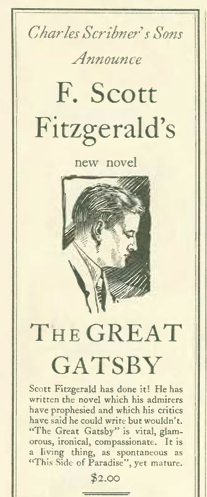
Many of the advertisements are more of this variety…
(New Yorker Digital Archive)
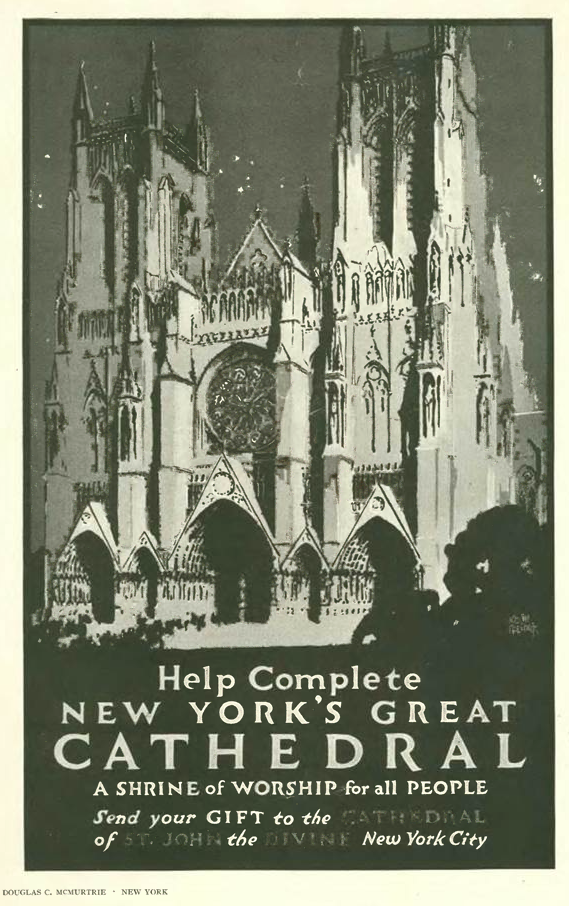
And then we have this gem on the inside back cover. Perhaps the only time a church will ever advertise in The New Yorker. Then again, we shall see…








































 A New Yorker State of Mind