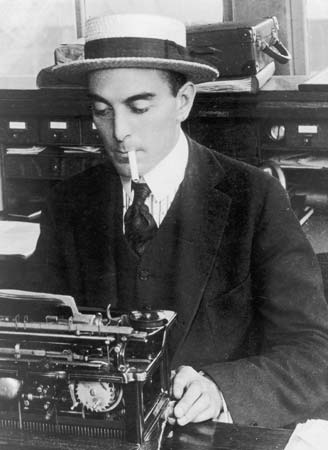
Ring Lardner is one of those 20th century American writers everyone has heard of but few have actually read. This is perhaps because he is often pigeonholed as a sportswriter rather than being remembered as a gifted satirist whose crisp writing style—often peppered with slang—influenced a generation of writers including Ernest Hemingway, who covered sports for his high school newspaper under the pseudonym “Ring Lardner.”
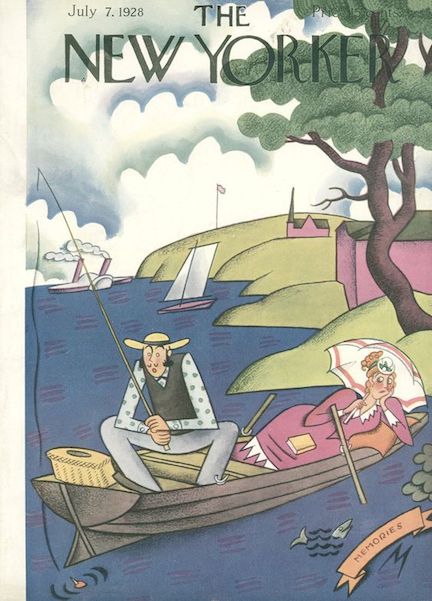
July 7, 1928 cover by Julian de Miskey.
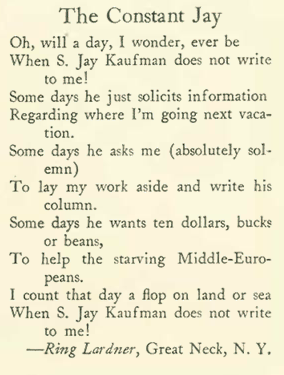
Lardner would contribute nearly two dozen pieces to The New Yorker beginning with this ditty in the April 18, 1925 issue—
—and ending with “Odd’s Bodkins,” published posthumously in the Oct. 7, 1933 issue (Lardner died at age 48 of a heart ailment on Sept. 25, 1933). In his satirical “Profiles” piece for the July 7, 1928 issue, Lardner had some fun with editor and playwright Beatrice Kaufman, who like Lardner existed within the orbit of the famed Algonquin Round Table but was not a regular member (however Beatrice’s husband, playwright and director George S. Kaufman, was a charter member).
The entire piece, including an illustration by Peter Arno, is below (click image to enlarge the text):
Ring Lardner in undated photo, possibly mid 1920s (Encyclopaedia Britannica)KAUFMAN CHUMS…Comedian Julius Tannen (left) frolics with Beatrice Kaufman and George S. Kaufman in Atlantic City in the 1920s; writer/critic Alexander Woollcott (left), artist Neysa McMein, actor Alfred Lunt, Beatrice Kaufman and comedian Harpo Marx hanging out in the 1920s. (spartacus-educational.com)
* * *
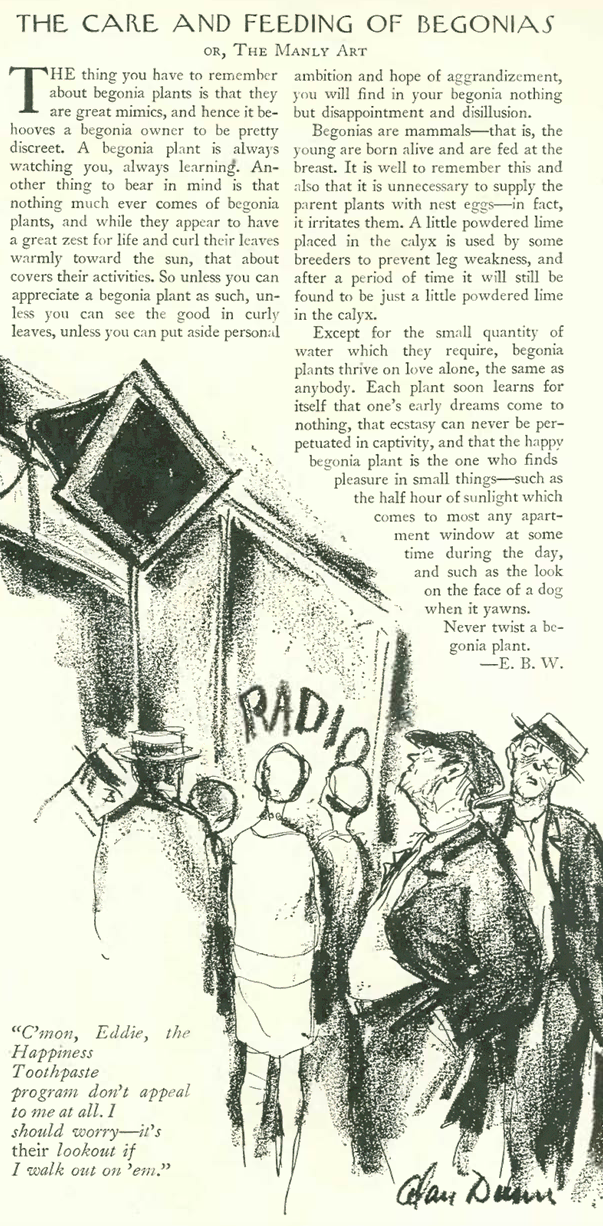
One New Yorker writer who does stand the test of time is E.B. White, known to earlier generations for his many humorous contributions to The New Yorker and to later generations for his co-authorship of the English language reference The Elements of Style, and for his beloved children’s books including Stuart Little and Charlotte’s Web (Charlotte’s Web was often voted as the top children’s novel in a survey of School Library Journal readers, and most recently in 2012—the 60th anniversary of its publication). In the July 7, 1928 issue the nature-loving White offered these tongue-in-cheek plant care instructions, arranged atop a cartoon by Alan Dunn:
Another cartoon in the July 7 issue by Garrett Price offered another perspective on an advertising come-on:
No doubt Price was referencing ads such as this one below by the American Tobacco Company in which actress and dancer Gilda Gray—who in the 1920s popularized a dance called the “shimmy”—announced her preference for pipe smokers:
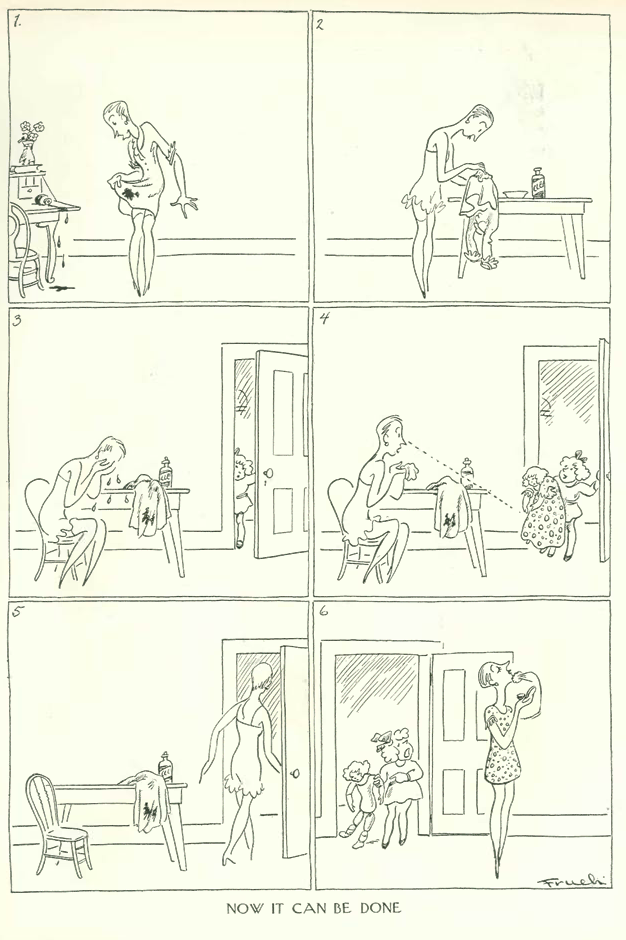
And we close with this cartoon by Al Frueh, who demonstrated how fashion had freed the woman of the Roaring Twenties:
Interested in the history of New Yorker cartoons and cartoonists? Then I recommend you check out cartoonist Michael Maslin’sInkspillwebsite for news on cartoonists and events. Another great site is Stephen Nadler’sAttempted Bloggery, which explores original art, auctions, obscurities and other angles of New Yorker cartoons and cartoonists.
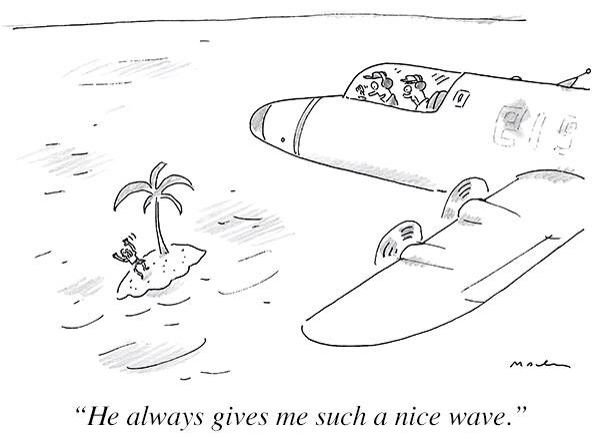
A couple of my favorite Maslin cartoons (among many):
Compared to Hollywood, cinema as an art form in the 1920s was more advanced in Europe, where filmmakers took a more mature, nuanced approach to movies; they focused less on money and more on exploring difficult social and historical issues. Trench warfare, genocide and famine have a way of doing that to you.
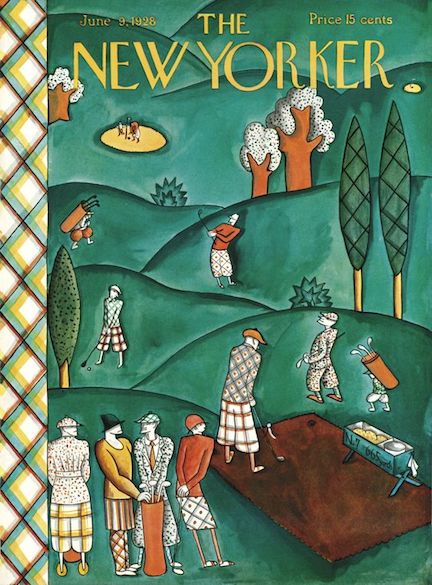
June 9, 1928 cover by Ilonka Karasz.
The contrast between the European avant-garde and Hollywood’s Tinseltown was not lost on The New Yorker’s film critics, who consistently lambasted American cinema while applauding nearly everything coming out of Europe, and especially the films produced by German and Russian directors. The critic “O.C.” used the Russians latest American release, The End of St. Petersburg, to drive home the point. He also chided those who dismissed the film as propaganda, a stance much in line with leftist intellectuals of the day who found inspiration in the Russian Revolution (and sometimes they looked the other way when things didn’t go so well in the Soviet experiment—1928 marked the beginning of the Soviet Union’s first Five-Year Plan. By 1934 it was estimated that almost 15 million people died from forced collectivization and famine).
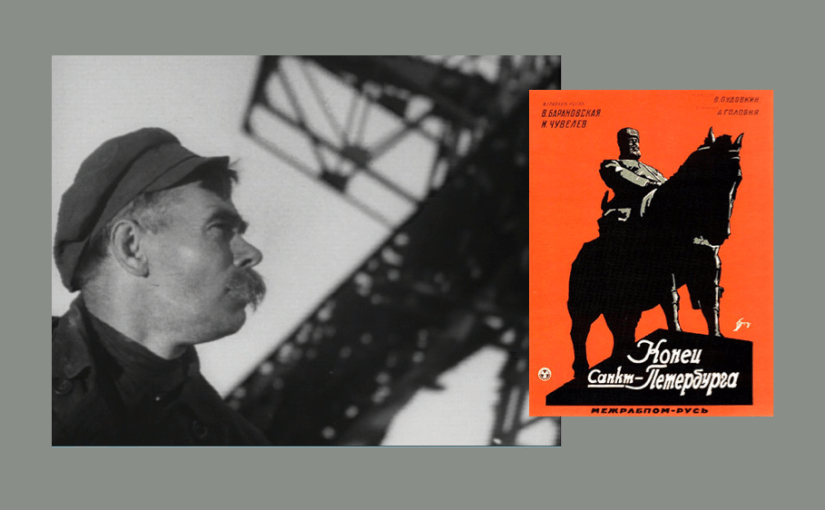
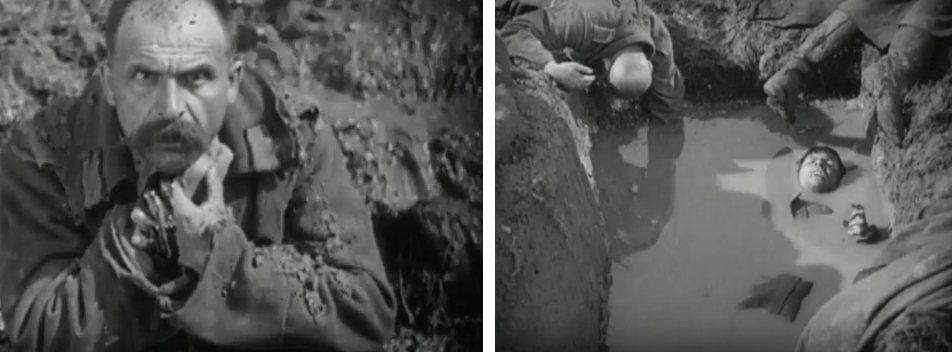
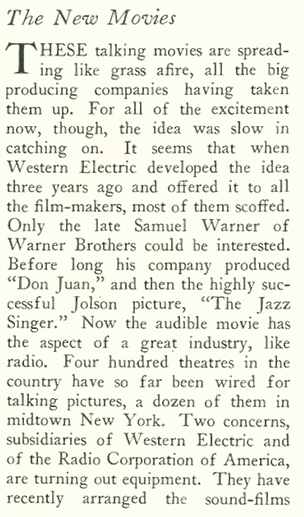
The End of St. Petersburg was blatant propaganda, to be sure, but to this day it has been widely praised for its cinematic innovations. The story itself was fairly straightforward: A peasant goes to St. Petersburg looking for work, gets arrested for his involvement in a labor union and is subsequently sent to fight in the trenches of World War I. His experiences in the war solidify his commitment to revolution and the overthrow of the capitalist overlords. The New Yorker review:
OPPRESSORS & OPPRESSED…The shareholders of a steel mill (top) demand longer hours from workers who already suffer from hellish conditions at the factory in The End of St. Petersburg. (Stills from the film, available on YouTube)
TheNew Yorker reviewer suggested that a story used primarily to influence an audience—propaganda—was not necessarily a bad thing:
ALL CHOKED UP…The horrors of trench warfare were graphically depicted in The End of St. Petersburg. (stills from film)
* * *
Back in the New World, most of the talk in cinematic circles revolved around the excitement of “talking pictures.”
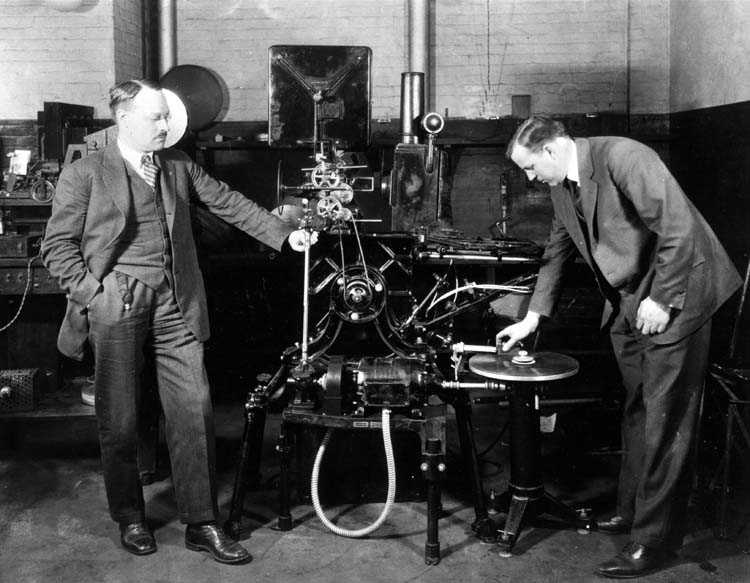
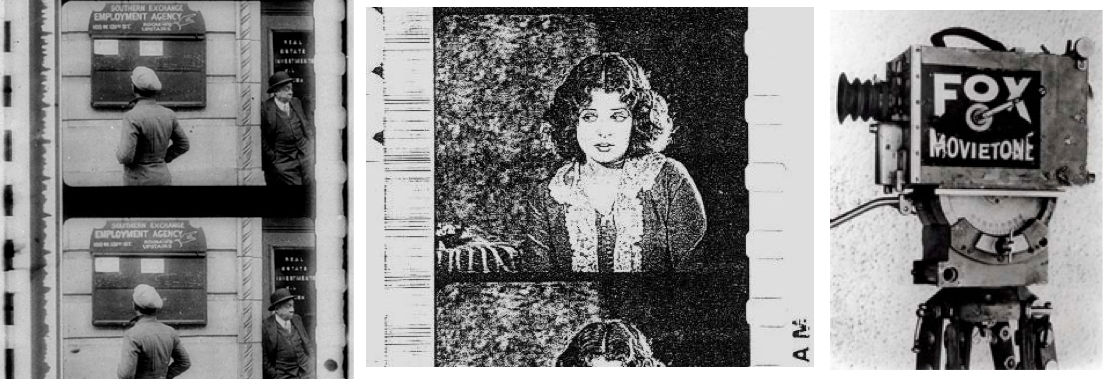
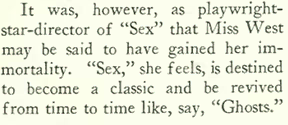
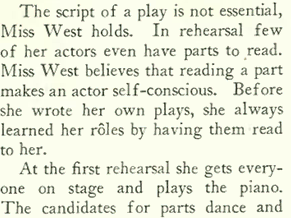
FORERUNNER…The Vitaphone system was the most successful of early attempts at sound movies. It synchronized a large recorded disc (seen at lower right) with the film. The Jazz Singer, often heralded as the movie that marked the commercial ascendance of sound films, used Vitaphone technology. (Audio Engineering Society)BETTER YET…Sound movies took off with the invention of a soundtrack that could be printed directly onto the film. Filmmakers either used Variable Area (left) or Variable Density (center) mono optical soundtracks located between the film’s picture frame and sprocket holes. The tracks could be read by a newly developed photocell (a light source also known as Aeo-light) that could be modulated by audio signals and was used to expose the soundtrack in sound cameras such as the one at right. (Images 1 & 2, Audio Engineering Society/ Image 3, Wikipedia)
It seems that Fox Movietone newsreels really got things going with sound and whetted audience appetites for more:
TELLING US A THING OR TWO…Irish playwright and critic George Bernard Shaw’s first visit to America, recorded for posterity in this 1928 Fox Movietone Newsreel. (YouTube still from film)
* * *
Then There Was The Other Playwright…
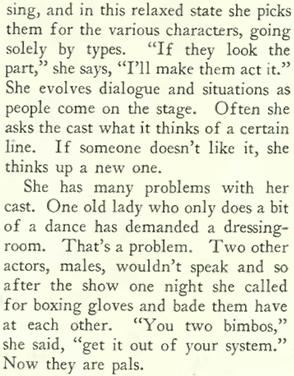
Mae West, to be exact. My guess is her approach to the craft was a bit different than G.B. Shaw’s, and we can gather as much from these excerpts from the June 9 “Talk of the Town.” The piece discusses West’s rise to fame as the creator and star of the scandalous play Sex, and her unorthodox approach to rehearsals.
DEMURE SHE’S NOT…Mae West in 1928’s Diamond Lil. (doctormacro.com)
* * *
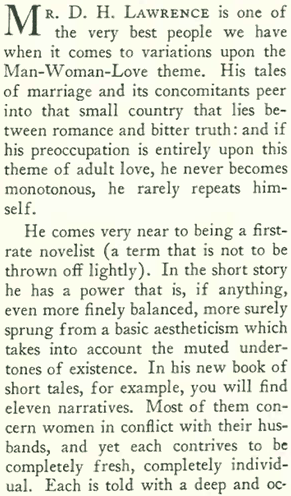
Although many today would identify D.H. Lawrence as one of great English novelists of the 20th century, eighty-some years ago New Yorker book critic Dorothy Parker described him as “very near to being first rate.”
A BARDIC QUALITY…D.H. Lawrence with wife Frieda Weekley in Chapala, Mexico in 1923. (tanvirdhaka.blogspot.com)
* * *
Blind Justice
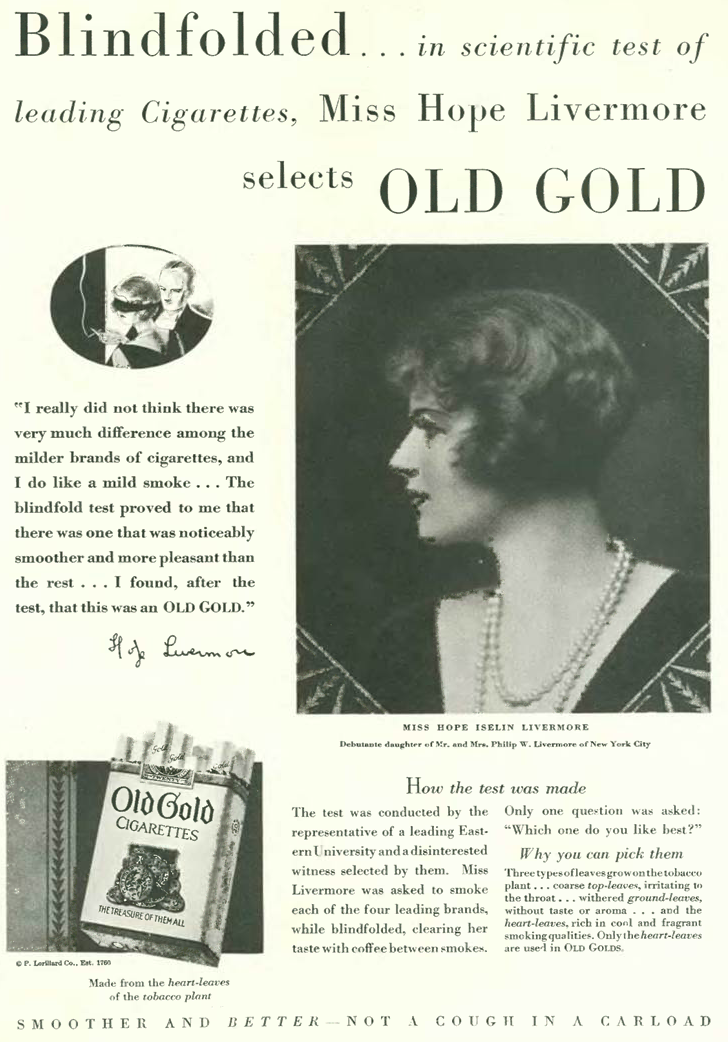
The makers of Old Gold cigarettes claimed to have scientific proof on their side with a series of ads featuring endorsements by the rich and famous. This ad ran in the June 9 issue:
In the same issue was this cartoon by Al Frueh that took a poke at Old Gold’s marketing strategy…
…and Peter Arno offered this unique take on human vanity…
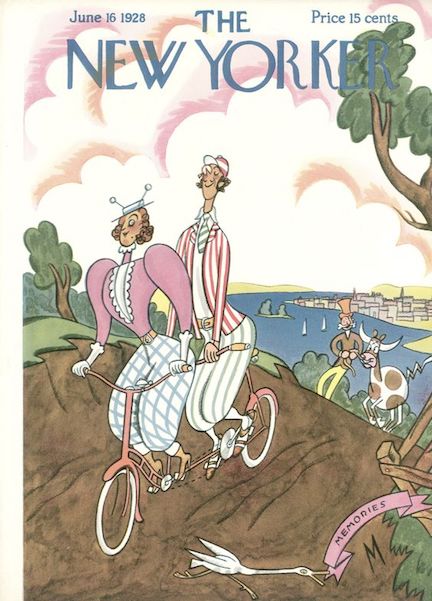
Talking pictures continued to be a theme in the June 16, 1928, issue…
June 18, 1928 cover by Julian de Miskey.
In his “Of All Things Column,” Howard Brubaker suggested that sound movies would spell the end of careers for some silent stars:
Although some actors struggled with the transition to sound, the reasons why some major stars faded with the advent of “talkies” are far more varied and nuanced. In many cases, some stars packed it in because their careers had already peaked during the silent era, and both studios and audiences were looking for some fresh faces.
HAS BEENS?…It is a common assumption that sound motion pictures killed the careers of many silent stars, including big names like John Gilbert (left) and Clara Bow. The reality is far more nuanced. (Wikipedia)
* * *
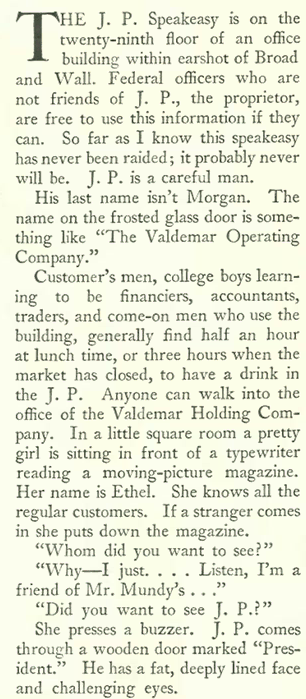
Niven Busch, Jr. continued to explore the illicit bar scene in his recurring feature “Speakeasy Nights.” I include this excerpt because it described a rather clever facade devised by the owner of the “J.P. Speakeasy.”
WORK/LIFE BALANCE…What might appear to be a typical business office might conceal an even more lucrative business in the back rooms. (Musée McCord/americanhistoryusa.com)
Busch observed an interesting protocol for admittance into the speakeasy, including a typewritten message devised to throw off any would-be Prohibition officers:
From Our Advertisers…
This ad leaves a bad taste in your mouth no matter how you look at. Nothing like coating your mouth with Milk of Magnesia before lighting up that first fag of the day…
…and here we have another ad for Flit insecticide, courtesy of Theodore “Dr. Seuss” Geisel.
And finally, a look at a Roaring Twenties wedding reception, courtesy cartoonist Garrett Price:
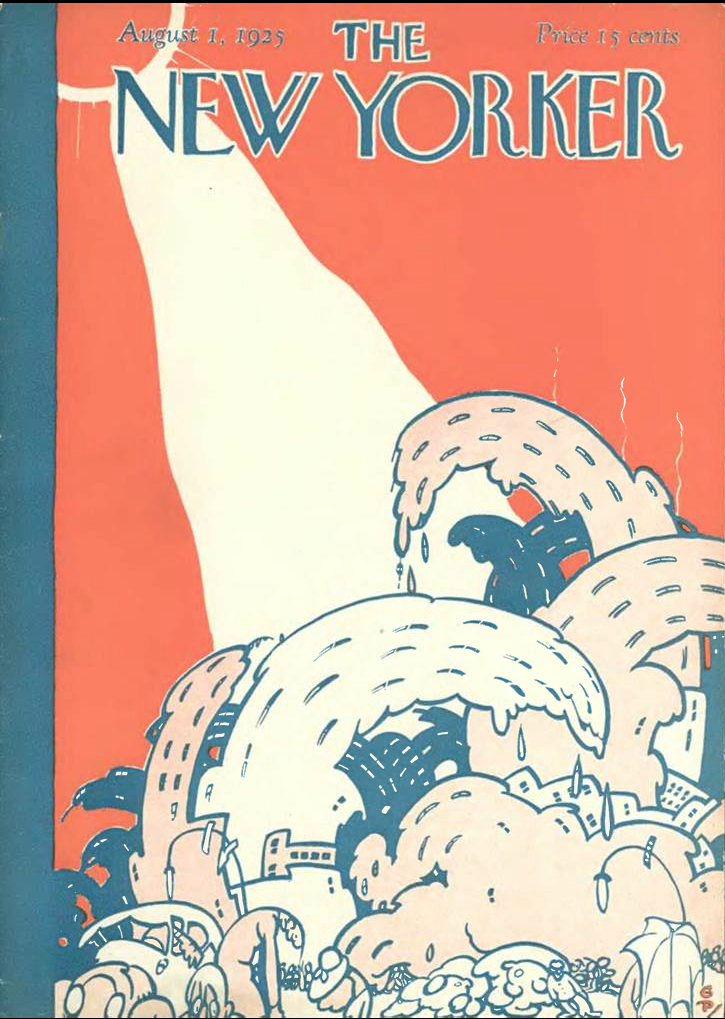
For all of TheNew Yorker’s attention to the Scopes Monkey Trial, the August 1, 1925 issue had little to say about the trial’s outcome.
The State of Tennessee v. John Thomas Scopes was decidedin the Criminal Court of Tennessee on July 21, 1925, with Scopes found guilty and fined $100 (equivalent to $1,345 in 2015), but the verdict was overturned on a technicality.
“The Talk of the Town” offered this brief observation under its weekly wrap-up column: “Mr. Scopes, found guilty, goes home to Paducah, Kentucky…”
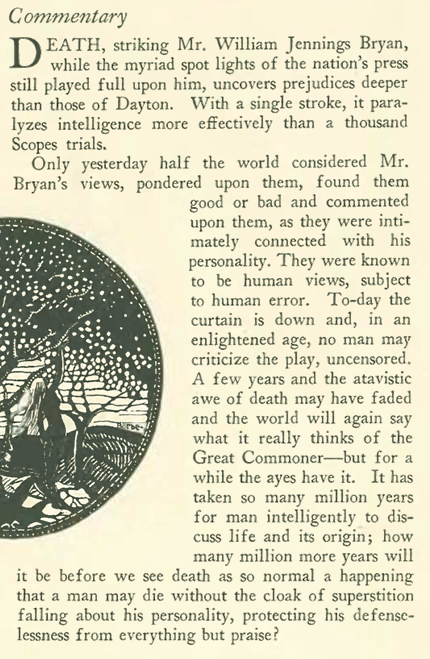
And then this item toward the end of “Talk,” announcing the death of the Scopes Trial defense attorney (and one of the magazine’s favorite punching bags) William Jennings Bryan:
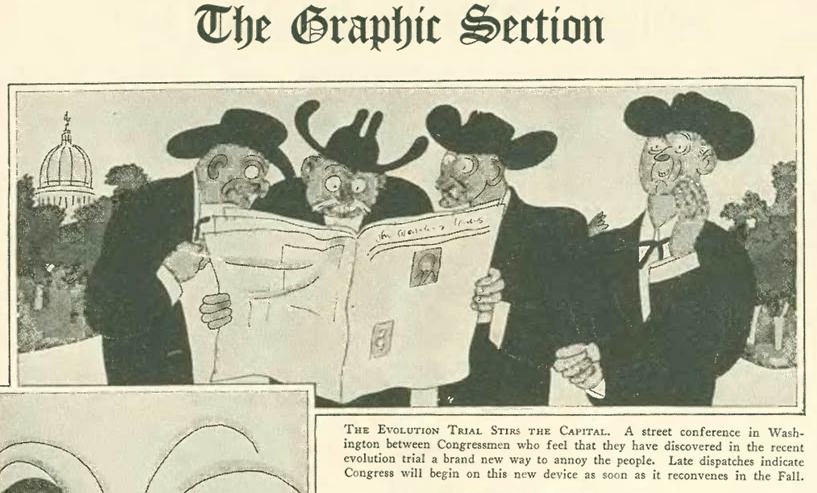
“The Graphic Section” offered this cynical twist on the trial’s outcome:
(New Yorker Digital Archive)
In a related item under “Of All Things,” Howard Brubaker wrote, “Representative Upshaw of Georgia will introduce an anti-evolution bill in Congress. Upshaw is never happy unless the Ship of State is making twenty thou-shalt-nots an hour.”
Clarence Darrow and William Jennings Bryan have a friendly chat during the Scopes Monkey Trial. Following the trial Bryan traveled hundreds of miles, delivering speeches in multiple towns. On July 26, 1925, he returned from Chattanooga, Tennessee to his home in Dayton. After attending church services he ate a large meal, then died during a nap that afternoon, five days after the trial’s conclusion. When someone remarked to Darrow that Bryan died from a “broken heart”, Darrow responded, “Broken heart, hell, he died of a busted belly!” (Wikipedia)
Brubaker also quipped, “Tennessee is not the only State where there is arrested mental development, but it is the only one so far where it has been fined.”
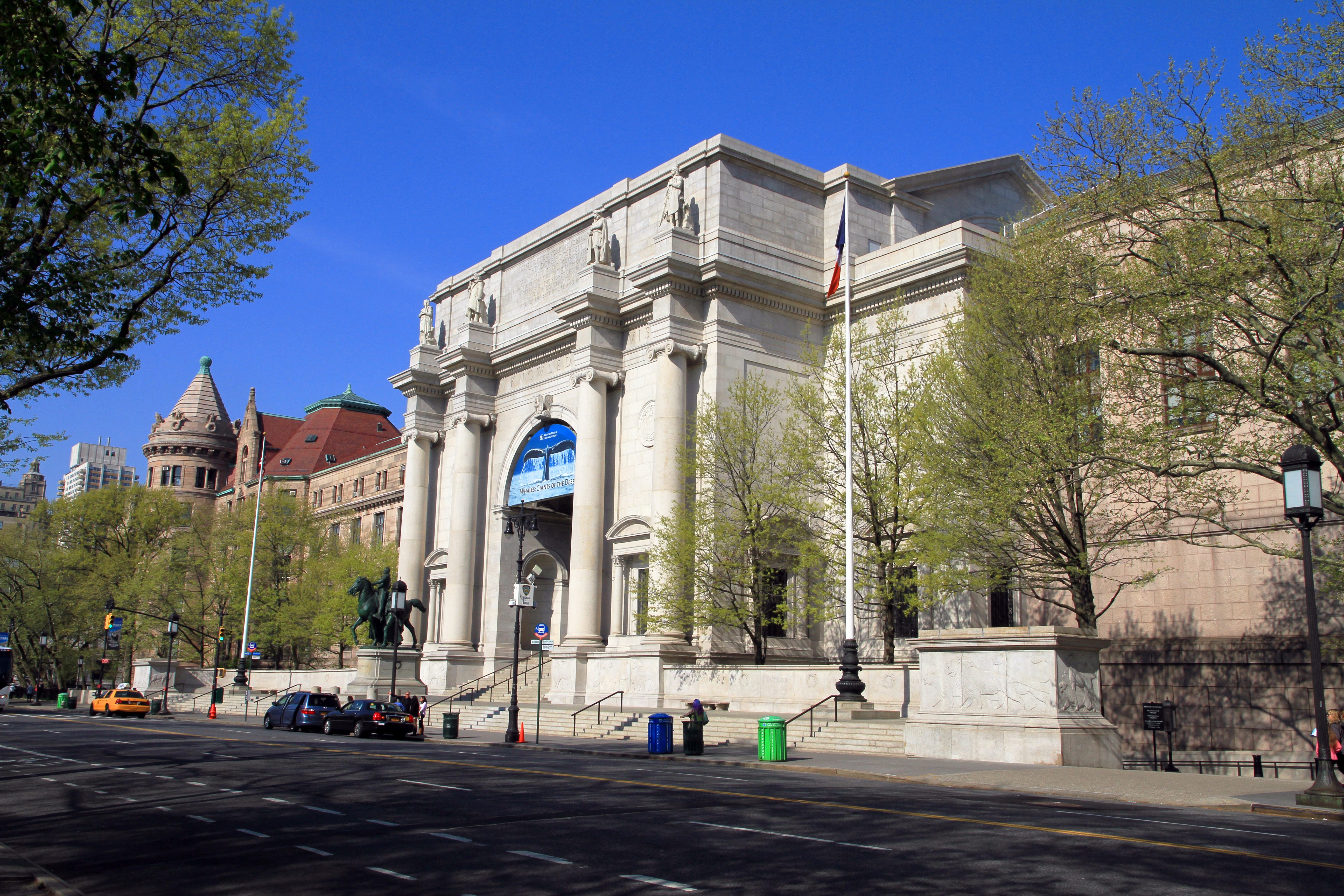
Back to “The Talk of the Town,” the design for a memorial to Teddy Roosevelt was approved, to be erected as part of the east façade of the Museum of Natural History. It was noted that the design featured Ionic columns that Roosevelt “would have detested in favor of a “native expression of the arts…”
The Museum of Natural History façade designed by John Russell Pope. (Wikimedia Commons)
“Talk” continued: “One recalls that Colonel Roosevelt wrote the American Institute of Architects deprecating the use of the lions which doze at the entrance to the Public Library, and advocating the placing there of bisons instead…The memorial to the man who insisted thus on American art, rather than imitation of foreign models, is to be a severely classic as the facade of –let us say—the First National Bank of Dubuque, Iowa.”
Lion guards New York Public Library entrance. Teddy would have preferred the native bison. (Wikimedia Commons)
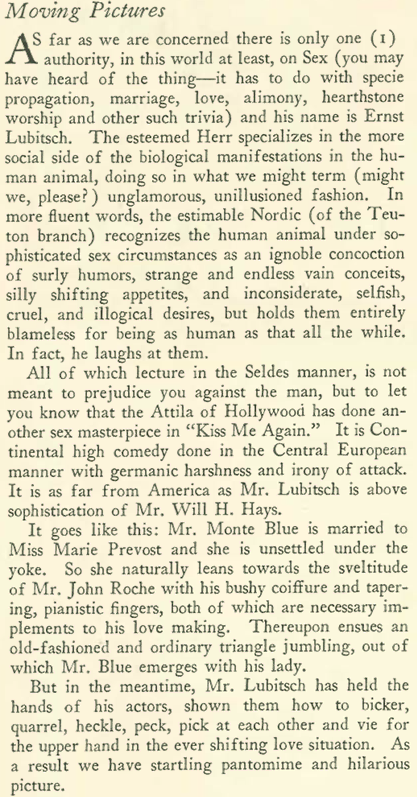
“Profiles” featured Walter L. Clark, a “genius who made art into business.” The movie reviews included Theodore Shane’s fumings on prudishness of American censors (Will Hays in particular) especially when compared to more liberal European productions by directors such as Ernst Lubitsch:
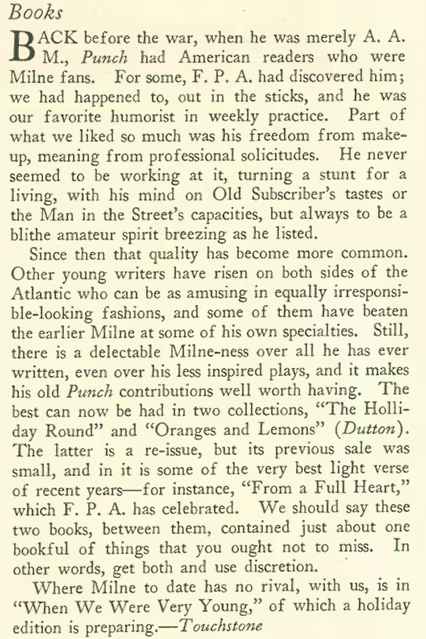
In books, the magazine continued its admiration for the jottings of A.A. Milne:
(New Yorker Digital Archive)
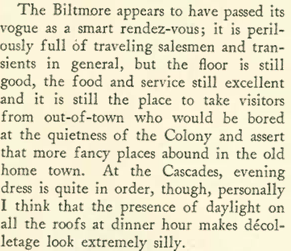
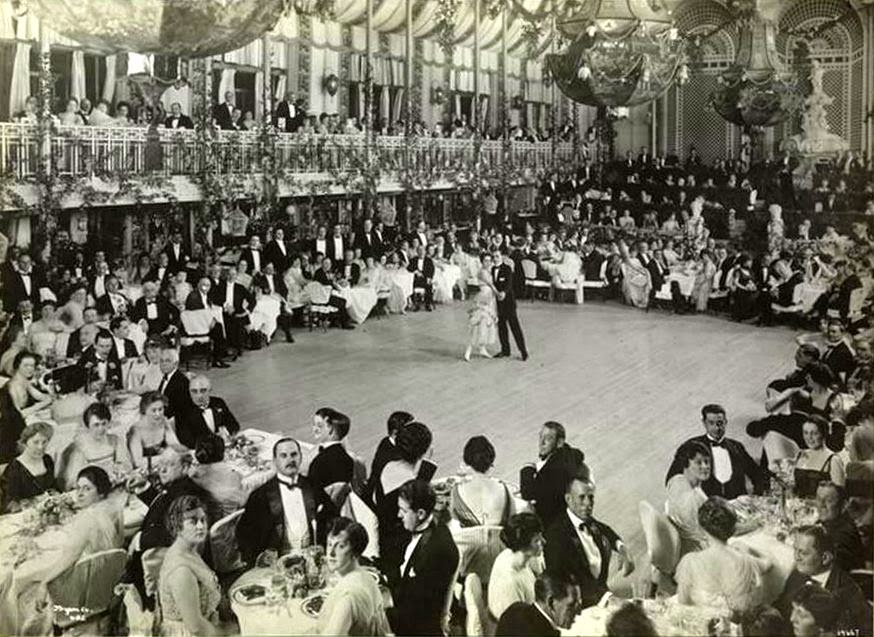
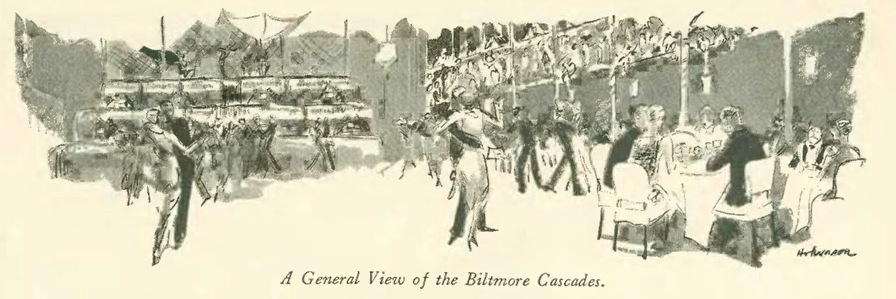
As for night life, The New Yorker lamented (“When Nights Are Bold) that the rooftop garden at the Biltmore “was the only bower worthy of the name left in town where quiet or startling simplicity reigns”:
The Biltmore Cascades (Museum of the City of New York)Illustration of the Cascades by Helen Hokinson.(New Yorker Digital Archive)
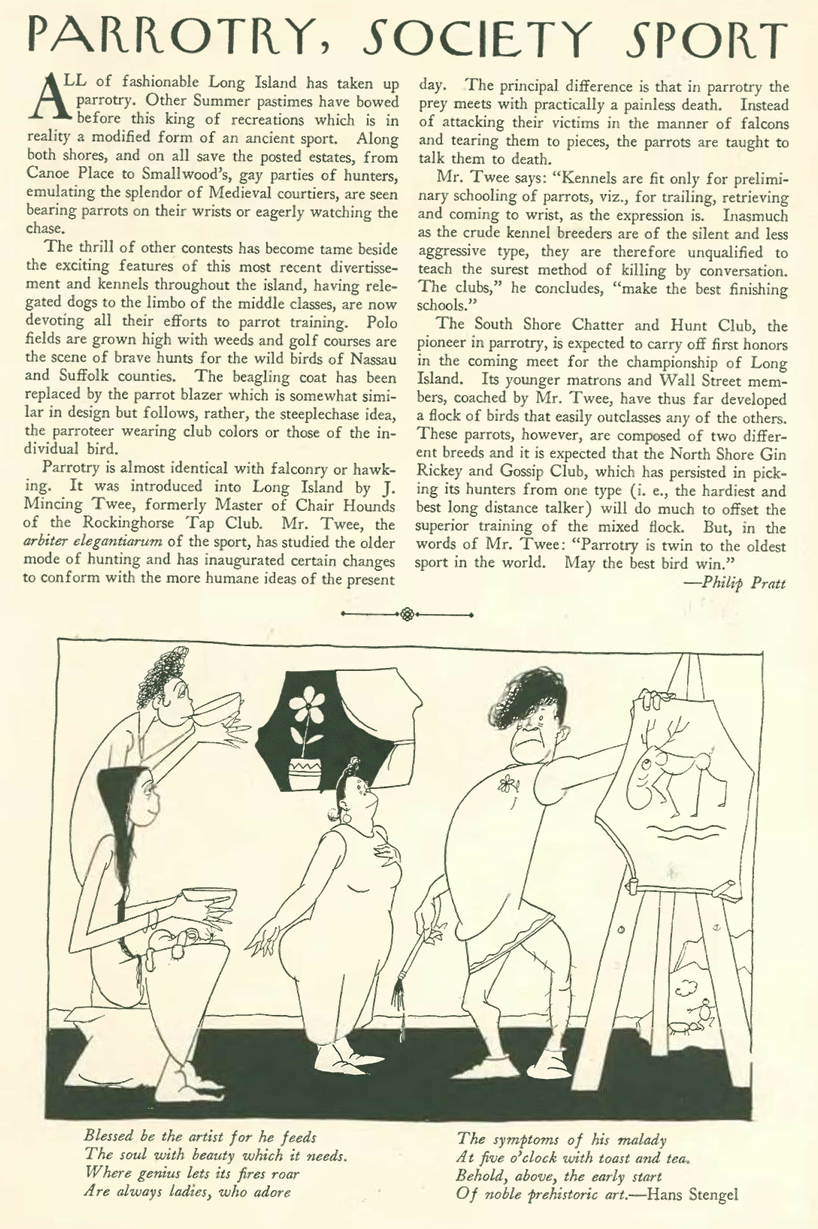
And speaking of society pursuits, Philip Pratt offered this parody on falconry, while Hans Stengel took aim at the starving artists:
(New Yorker Digital Archive)
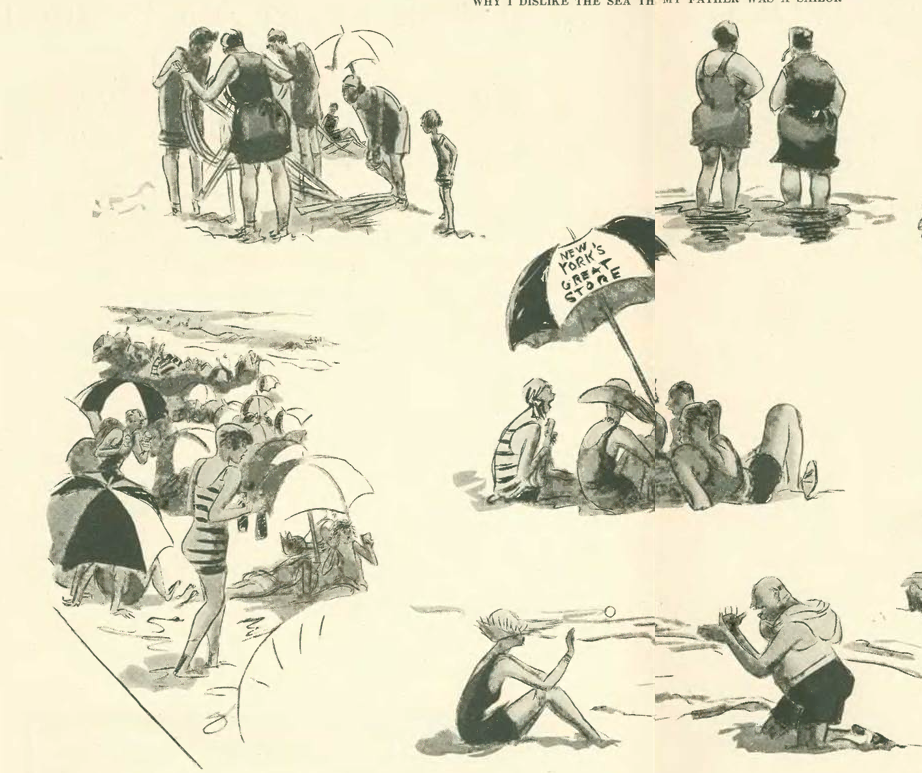
And we end with a detail of summertime images (by Helen Hokinson) from the center spread of the August 1 issue:
























 A New Yorker State of Mind
