Picking on Pickford

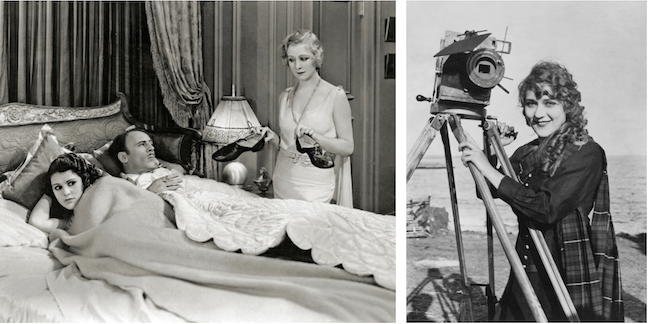
Above: Mary Pickford (right, from 1916) spoke out against salacious content in films, such as this scene from 1930's Madam Satan. (Wikipedia/mainemedia.edu)

James Thurber seemed to enjoy teasing silent film legend Mary Pickford in her new career as social commentator and author of spiritual articles and books. Having retired from acting in 1933, Pickford was also using her powerful position as a co-founder of United Artists to focus on the moral direction of the film industry.
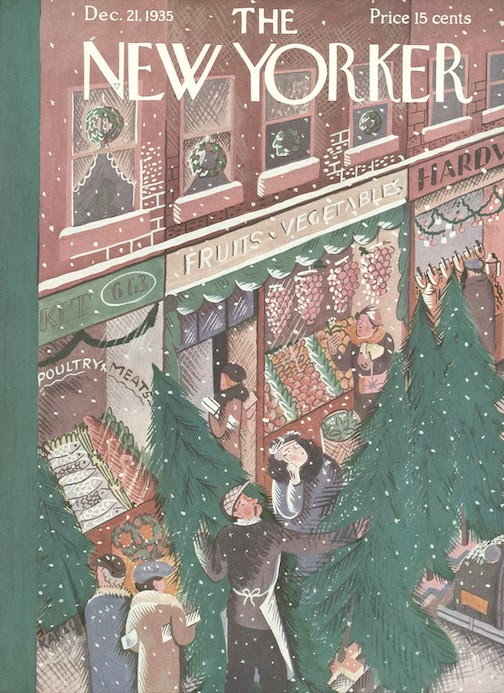
December 21, 1935 cover by Ilonka Karasz.

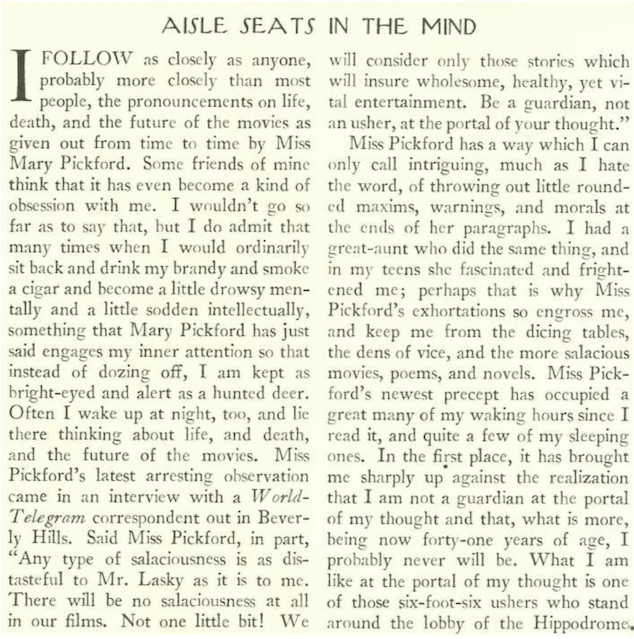
Back in the Sept. 21 issue of The New Yorker, Thurber took a humorous poke at Pickford’s Liberty magazine article on the afterlife, and found more fodder after Pickford, in an interview with the World-Telegram, criticized “salacious” films. “Be a guardian, not an usher, at the portal of your thought,” she advised. Thurber took the bait. Excerpts:
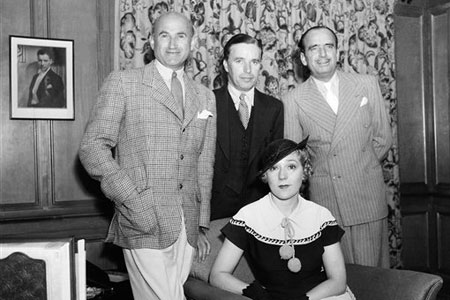
KEEPING IT CLEAN…From left, producer Samuel Goldwyn, actors Charlie Chaplin and Douglas Fairbanks Sr. pose behind Mary Pickford at a United Artists board meeting in Los Angeles, July 9, 1935. (AP)

Thurber took particular pleasure in Pickford’s comments regarding the control of one’s dirty thoughts:
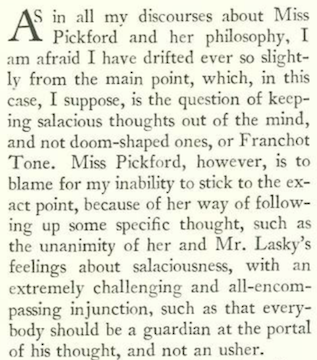
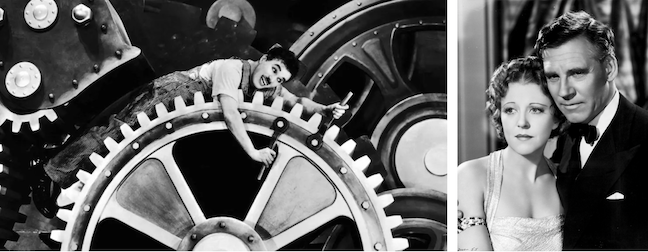
PICKFORD’S UNITED ARTISTS produced some memorable, non-salacious films in 1936, including Charlie Chaplin’s Modern Times, and the acclaimed Dodsworth starring Ruth Chatterton and Walter Huston as Fran and Sam Dodsworth. (Wikipedia)

Pickford had a strong ally in the Hays Code, a set of self-imposed censorship guidelines that would keep mainstream studio films relatively free of salacious content for the next thirty years.

 * * *

A White Christmas

E.B. White offered holiday greetings to everyone from drinkers of blended whiskey to the makers of red tape (plus a plug for New Yorker subscriptions)…
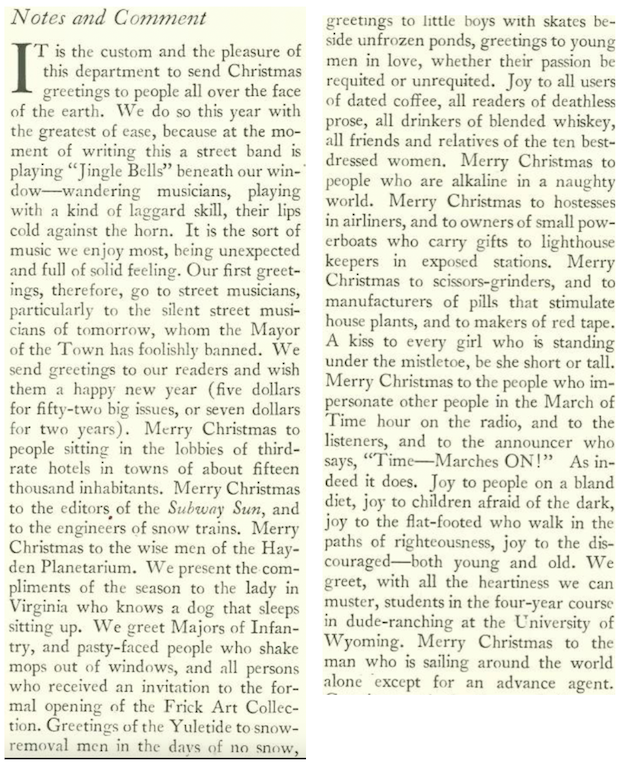
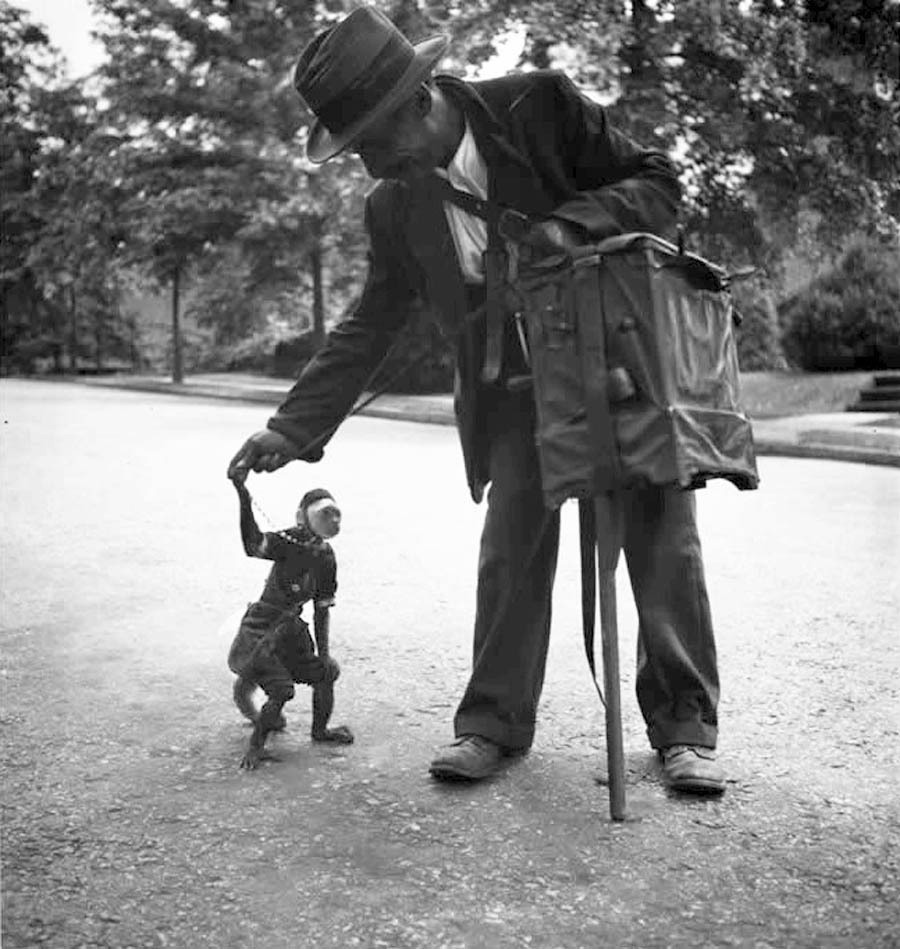
CHEERS AND JEERS…E.B. White sent holiday greetings to the men who were changing the Normandie’s massive propellers (from three- to four-blade), and probably wanted to give a lump of coal to Mayor Fiorello La Guardia for “foolishly” banning organ grinders from city streets. (ships nostalgia.com/ephemeralnewyork)

…and concluded with these words…

Otto Soglow added this bit of spot art to the bottom of White’s “Notes and Comment”…

 * * *

A Holiday Tradition

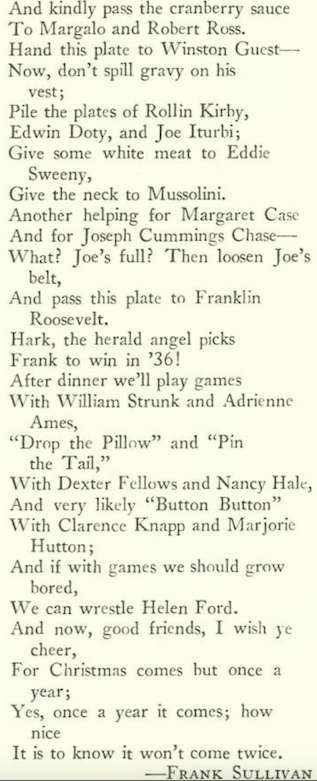
Page 21 featured Frank Sullivan’s annual Christmas poem (he wrote forty-two of them from 1932 to 1974)…
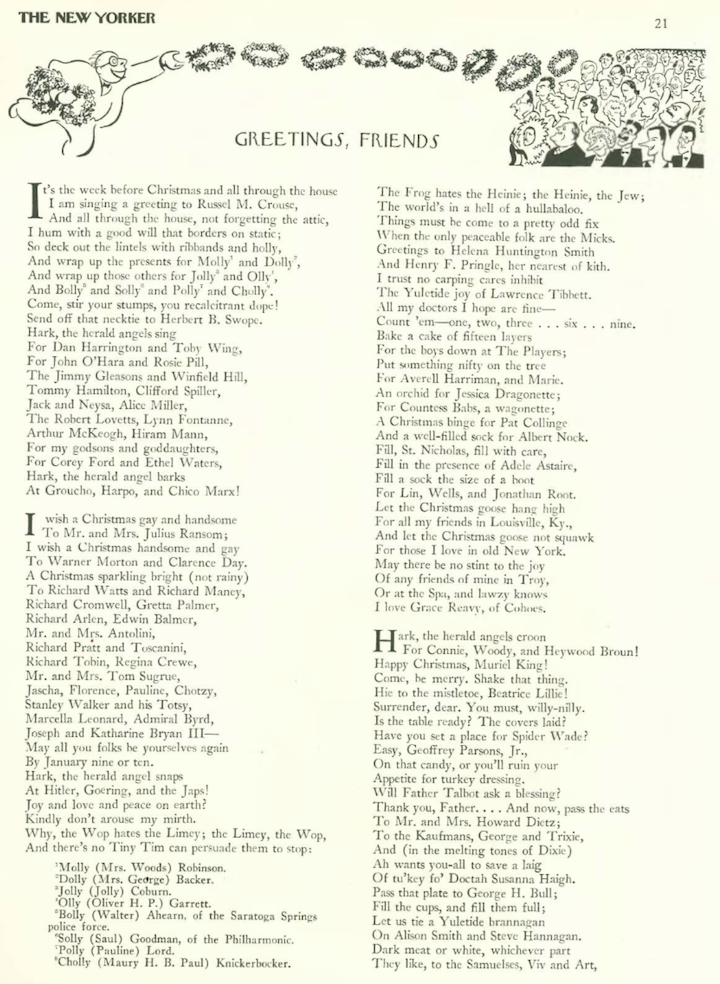
…which continued on page 22…
 * * *

Lost In Paradise

Robert Benchley did the honors as theatre critic for the Dec. 21 issue, enjoying an evening at Longacre Theatre with the richly endowed characters featured in Clifford Odets’ Paradise Lost.
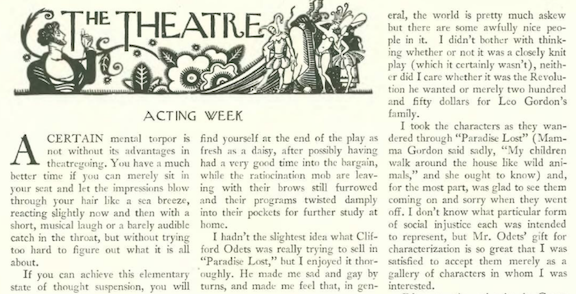
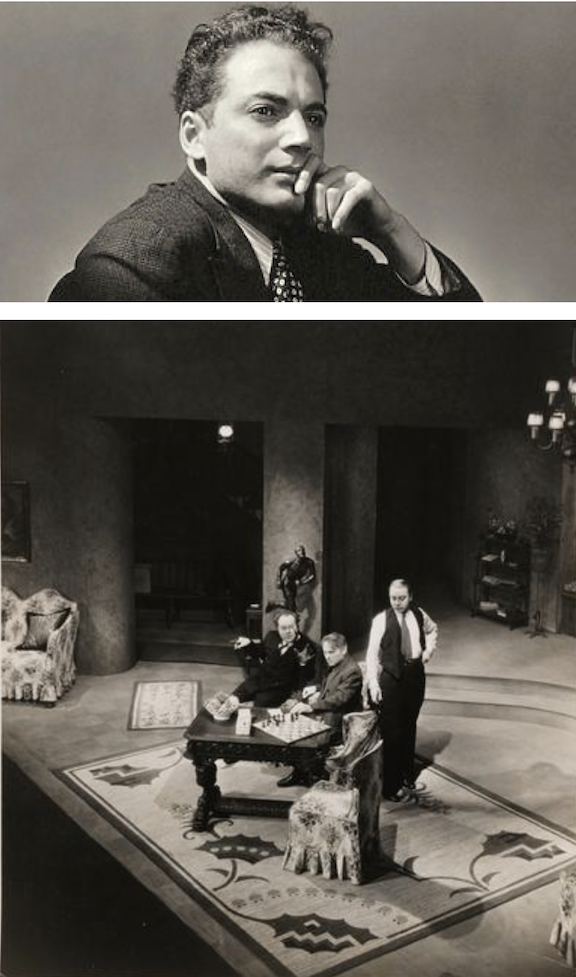
GREAT PLAY, WHATEVER IT MEANS…Robert Benchley thoroughly enjoyed Clifford Odets’ gallery of characters in Paradise Lost. Top, Odets circa 1930s; below, photo from the 1935-36 production at Broadway’s Longacre Theatre. (mcny.org)

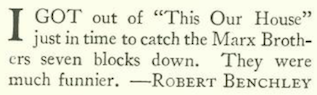
Apparently the rest of the Broadway fare was not so great, as Benchley fled Cort’s Theatre (it featured This Our House, which closed after just two performances) to catch A Night at the Opera with the Marx Brothers. 
 * * *

At the Movies

Benchley wasn’t the only one enjoying a night at the movies. Critic John Mosher found favor with German actor Emil Jannings’ latest flick, The Making of a King (Der alte und der junge König), calling the film “a sensible picture of the old bully,” namely the father of Frederick the Great.

LIGHTEN UP, FRED…Heinrich Marlow (left) and Emil Jannings in a scene from The Making of a King. The film depicted the turbulent relationship between Prussian King Friedrich Wilhelm I and his son, Crown Prince Friedrich. (IMDB)

Mosher found bright moments in Ginger Rogers’ latest film, but would have preferred another pairing with her fellow hoofer, Fred Astaire.
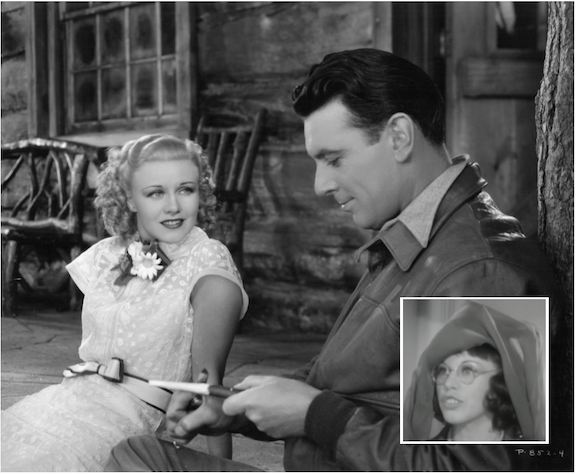
BETTER WITH FRED thought John Mosher of Ginger Rogers’s brave turn as an actress fleeing from her admiring fans in 1935’s In Person. Rogers donned eyeglasses, a wig, and fake teeth (inset) to portray the actress in hiding. She is pictured here in a scene with co-star George Brent. (IMDB)

Mosher was stimulated by The Great Impersonation, however, the “cordial” films about small town life and happy radio folk left him less than enthused.
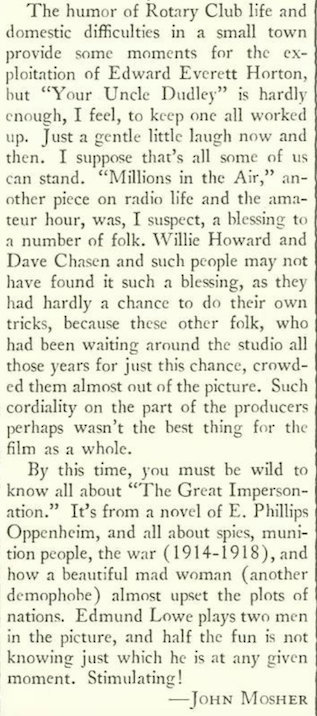
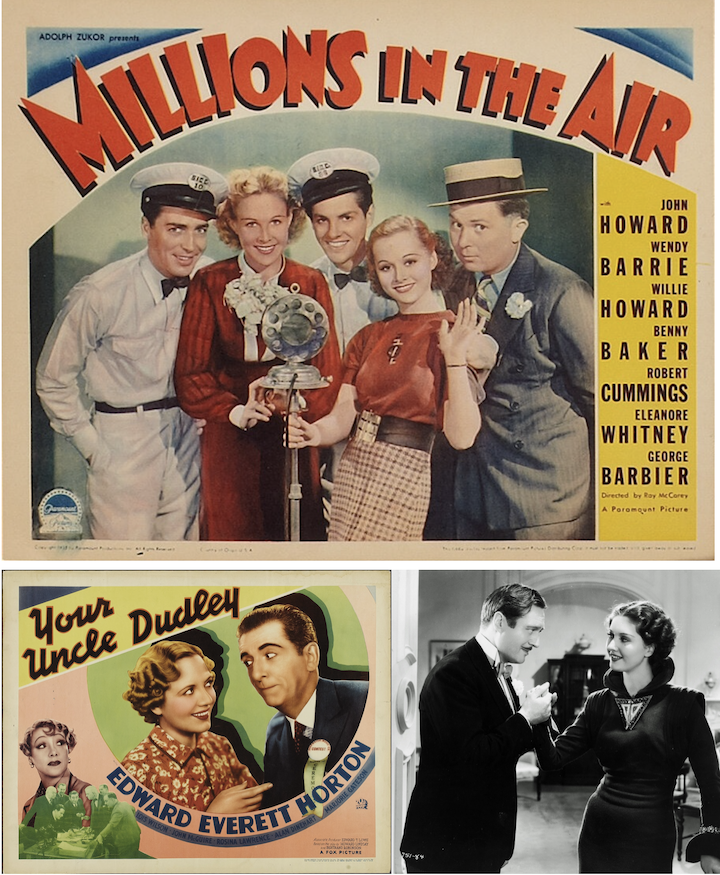
MORE SPIES, PLEASE…John Mosher didn’t get too excited over the standard fare offered in the films Millions in the Air and Your Uncle Dudley, however he found the performances of Edmund Lowe and Wera Engels (bottom right) in the spy caper The Great Impersonation to be most stimulating. (IMDB)

* * *

From Our Advertisers

After touring France in the late 1870s, a New York drugstore owner named Richard Hudnut returned to the States determined to introduce French-style perfumes and cosmetics to American women. He soon transformed his drugstore into an elegant showroom, and in time became the first American to achieve international success in cosmetics…
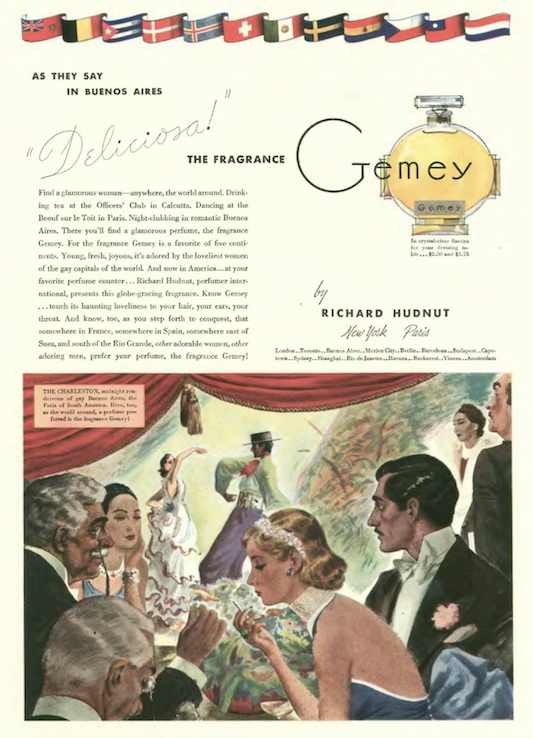
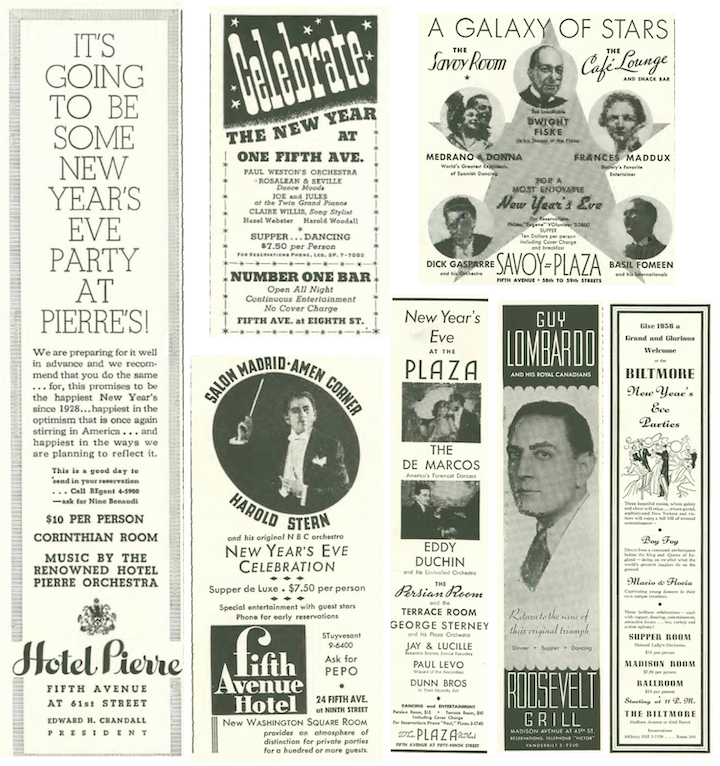
…advertisements for Christmas gifts mostly dropped out of the magazine, and the back of the book was filled with spots touting various New Year’s Eve entertainments…
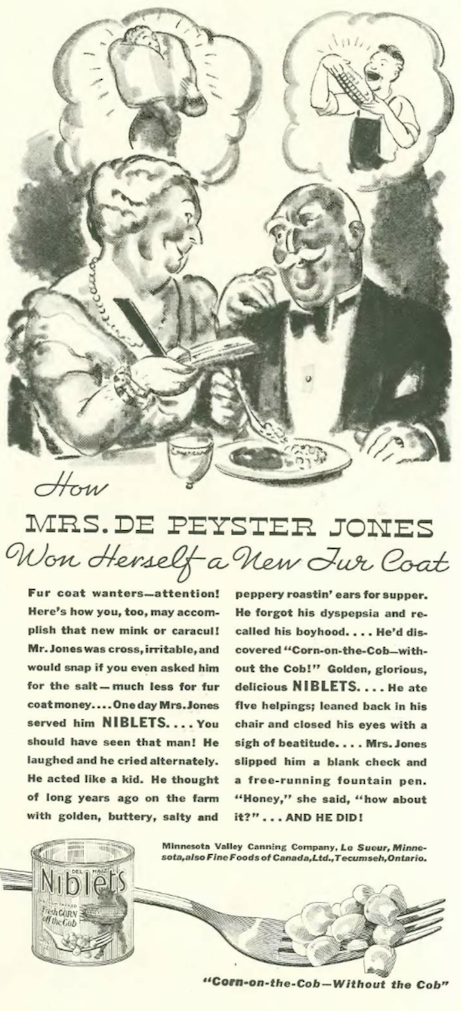
…in this ad from the Minnesota Valley Canning Company (renamed Green Giant in 1950), a robber baron’s humble roots, and his checkbook, are triggered by a can of corn…
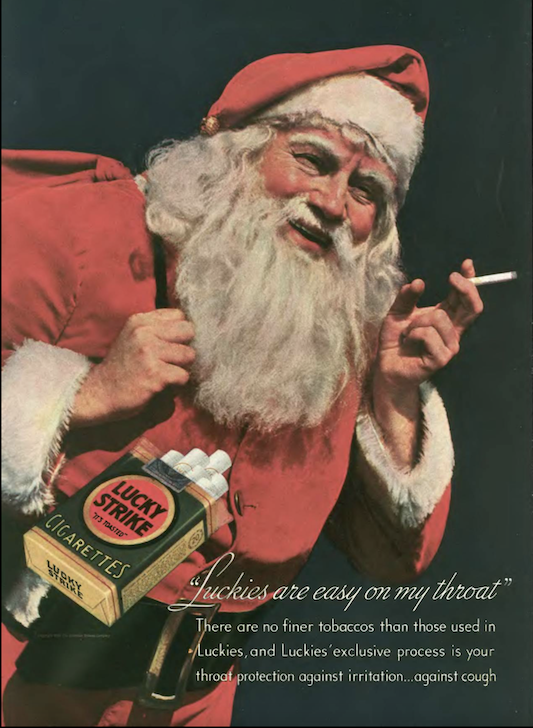
…thanks to the makers of Luckies, Jolly Old St. Nick was dropping more than soot down your chimney on Christmas Eve…
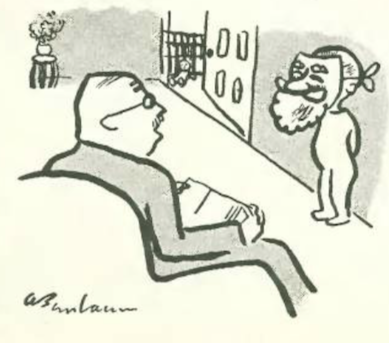
…we kick off our cartoons with this spot illustration by Abe Birnbaum

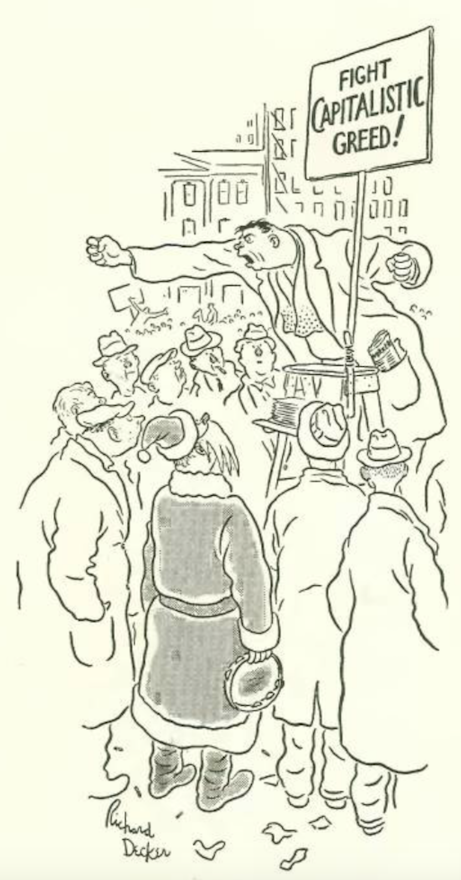
...Richard Decker gave us this caption-less appeal to the masses…
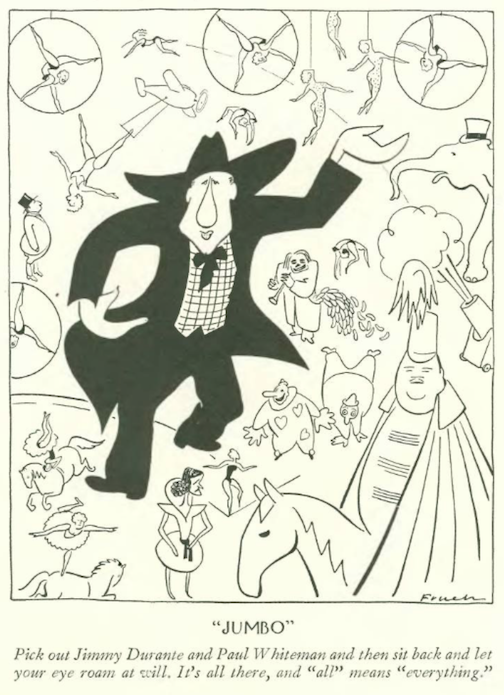
Al Frueh brightened up the “Theatre” section…
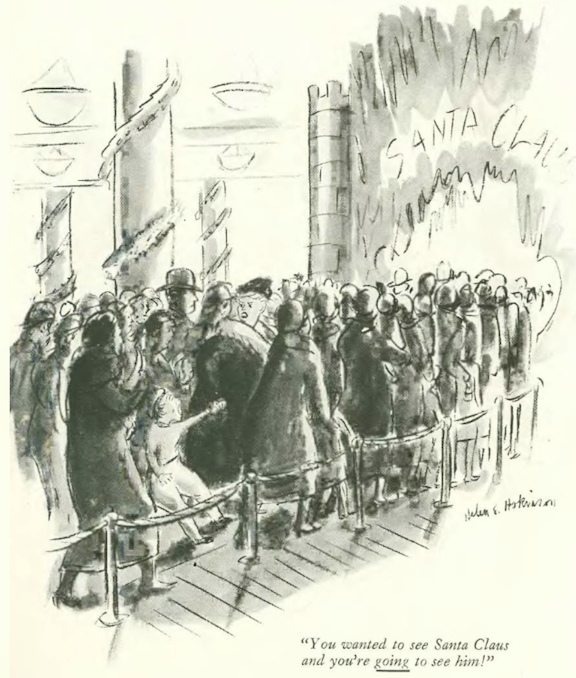
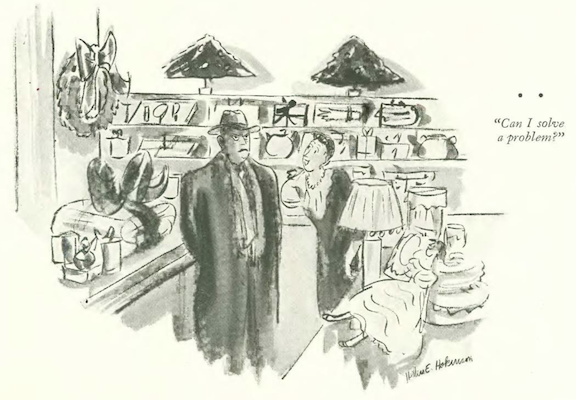
Helen Hokinson got in line at Macy’s…

…and found a challenge in the housewares department…(see Summer Pierre’s wonderful tribute to Hokinson and her observational forays into the city with James Reid Parker)…
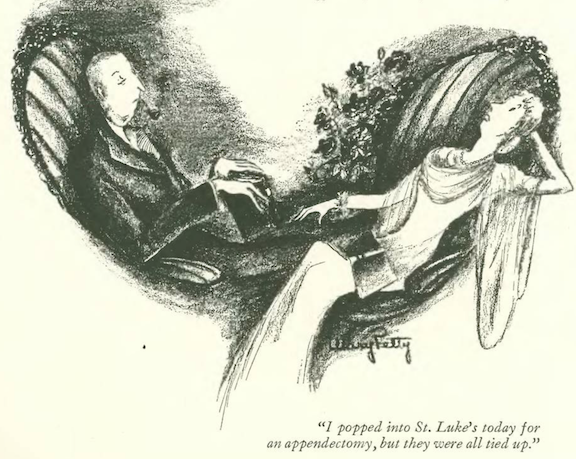
Mary Petty took the laid-back approach to a medical emergency…
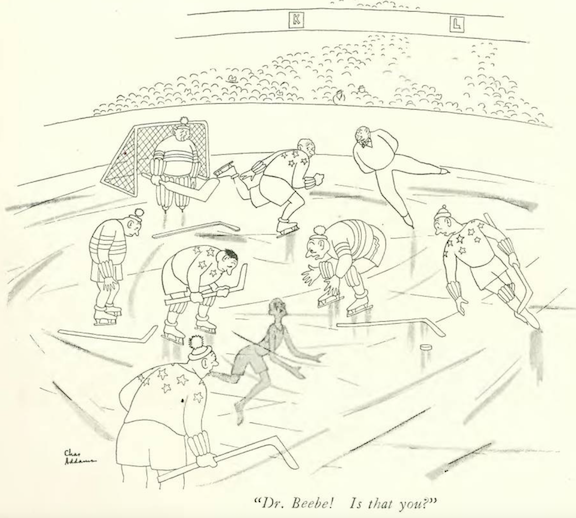
Charles Addams placed undersea explorer William Beebe in a precarious situation…
Alan Dunn diagnosed a bad a ticker at a watch shop…

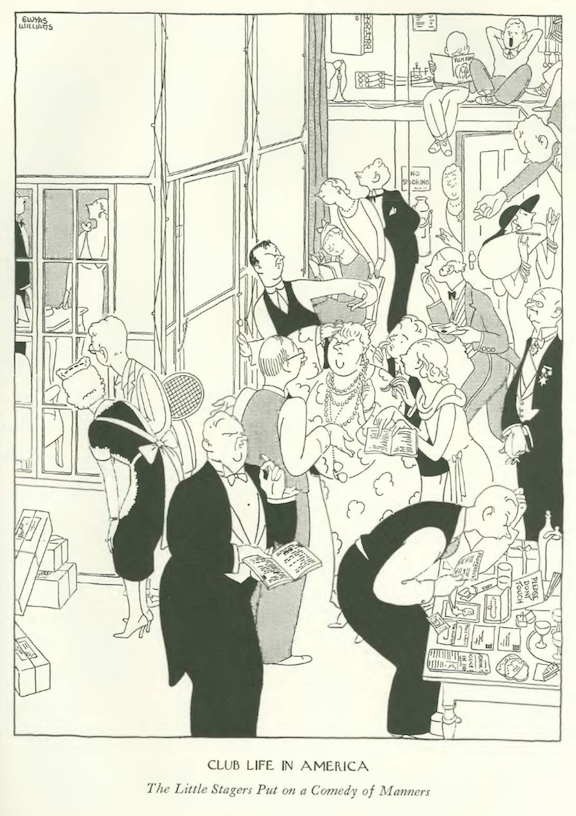
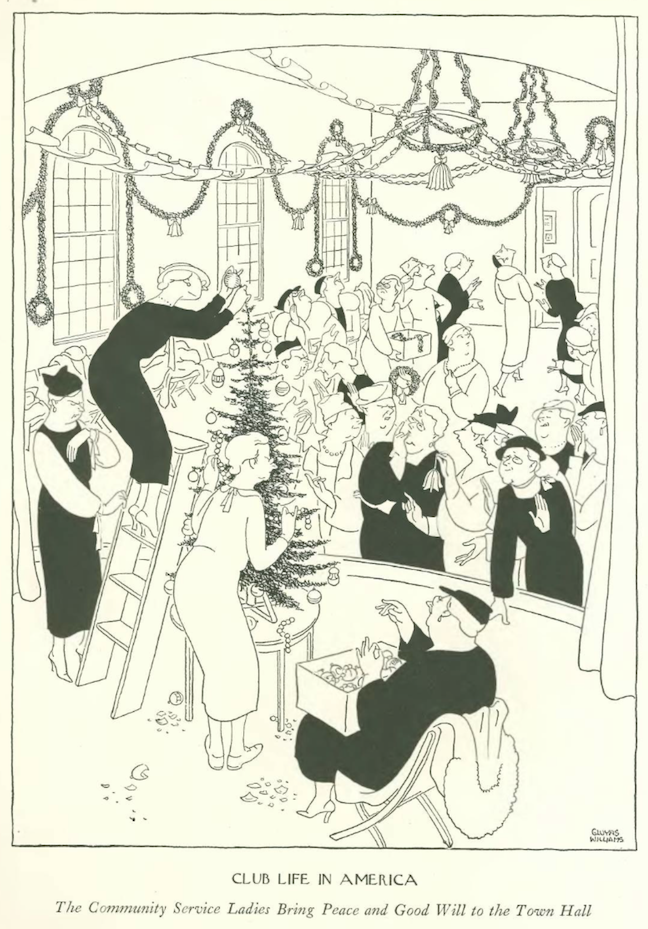
Gluyas Williams was back with another look at club life…
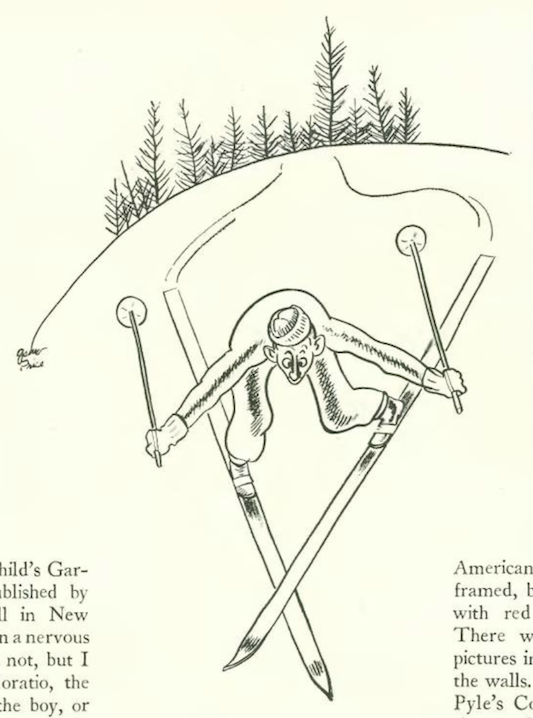
Garrett Price snowplowed his way onto the page…
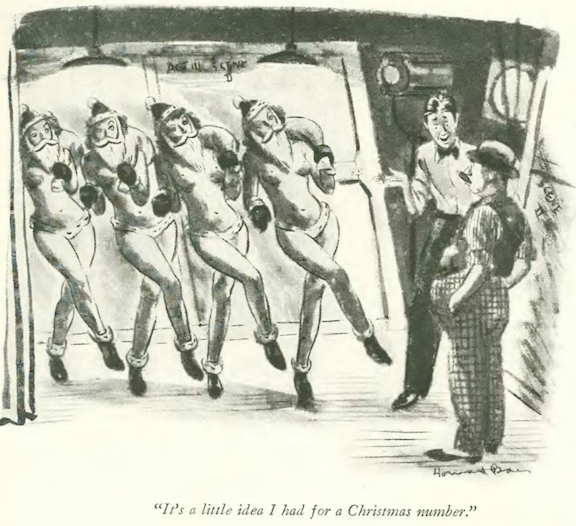
…it seems Howard Baer channeled Peter Arno for this one…
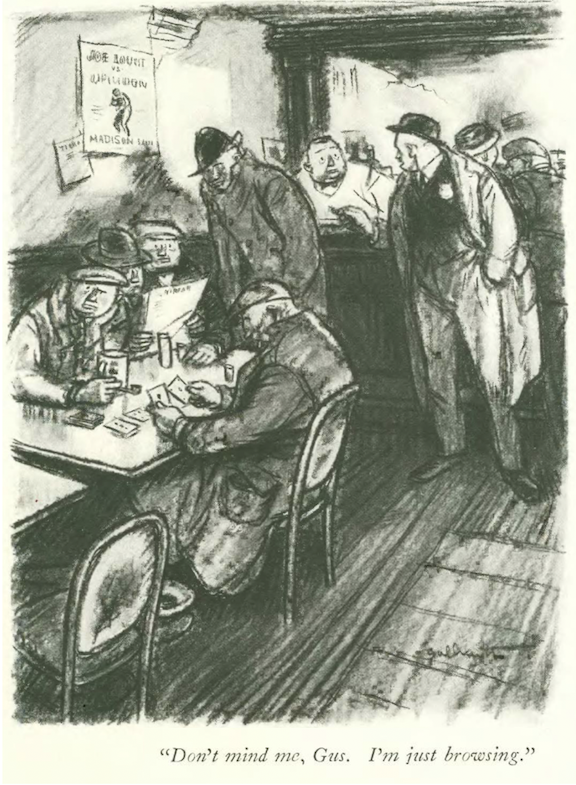
…and we close with William Crawford Galbraith, just doing a little browsing…
Next Time: Fracking the Frick…

Keep Calm and Carry On

If you lived in Germany in 1935, or in Italy or Spain for that matter, the world would have looked very different from the one most Americans were experiencing, clawing their way out of the Great Depression and hoping to improve their domestic lives. War was not big on their worry list.

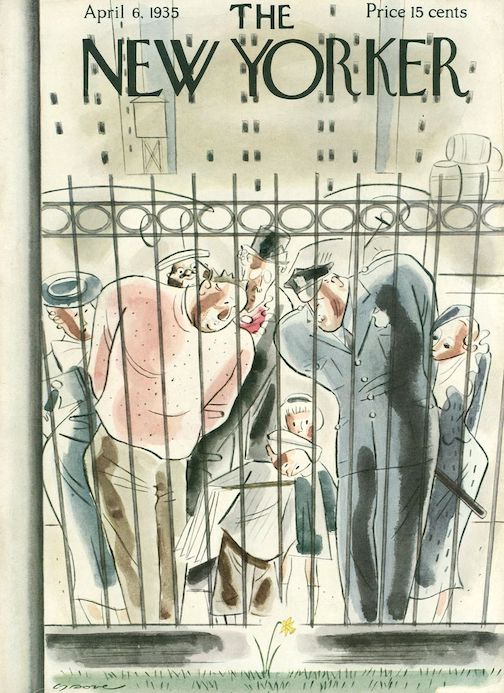
April 6, 1935 cover by Leonard Dove.

In his “Notes and Comment,” E.B. White satirized the talk about war that was filling more column inches in the nation’s newspapers. He was particularly scornful of journalists such as Arthur Brisbane—the influential editor of William Randolph Hearst’s media empire—who was fond of giant headlines warning of impending war.

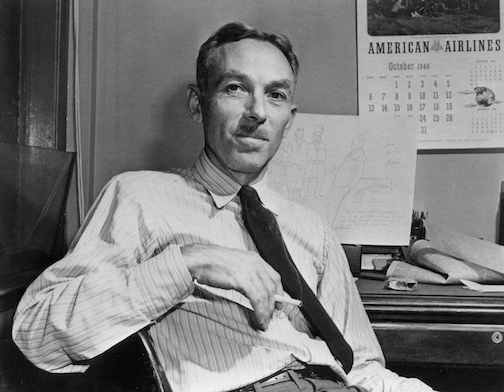
TEND YOUR OWN GARDEN...E.B. White in 1946. (Britannica)

White wasn’t naive about the possibilities of war; however, he believed obsessing about things over which we have little control did little to help the human condition. Helping one’s neighbor, on the other hand, would do the world more good. In 1939, just six months before Germany invaded Poland, White wrote a piece titled “Education” for his Harper’s Magazine column, One Man’s Meat. This excerpt helps define his worldview:

“I find that keeping abreast of my neighbors’ affairs has increased, not diminished, my human sympathies…in New York I rise and scan Europe in the Times; in the country I get up and look at the thermometer—a thoroughly set-contained point of view which, if it could infect everybody everywhere, would I am sure be the most salutary thing that could happen to the world.”

With that, here is a selection from the April 6 “Notes and Comment”…

TANKS A LOT…Clockwise, from top left, German war production in the 1930s—by increasing the size of the army by 500,000 and establishing the Luftwaffe in early 1935, Germany broke international law and the Treaty of Versailles; the 1935 Anglo-German Naval Agreement was the first sign of British and European appeasement—photo shows the launch of the Admiral Graf Spee; a display of force at Nuremberg, mid 1930s; cartoon by Bernard Partridge from Punch (September 1932) foresaw the inevitable. (parisology.net/theholocaustexplained.org/Punch Limited)

In March 1973, a “Mr. Nadeau” wrote a letter to E. B. White expressing fears about humanity’s bleak future. Here are the first and last lines of White’s reply:

As long as there is one upright man, as long as there is one compassionate woman, the contagion may spread and the scene is not desolate. Hope is the thing that is left to us, in a bad time. I shall get up Sunday morning and wind the clock, as a contribution to order and steadfastness…Hang on to your hat. Hang on to your hope. And wind the clock, for tomorrow is another day.

 * * *

Another Viewpoint

Ever the observer of the passing scene, Howard Brubaker made these relevant observations in “Of All Things”…

…and back to White’s “Notes,” and the imminent passing of the beloved organ grinder…

THE OLD GRIND…Above, one of New York City’s last organ grinders in Washington Heights, ca. 1935. Organ grinders had been fixtures in Manhattan since the 1850s, and by 1880 roughly five percent of Italian men living in Five Points were organ grinders, often accompanied by monkeys who entertained and collected coins. Organ grinders were outlawed in 1936 by Mayor Fiorello La Guardia. It is thought the mayor disliked the Italian immigrant stereotype. (Library of Congress)

 * * *

Give Him More Mickey Mouse

John Mosher expressed his displeasure with movies that failed to deliver some escape from life’s mundane realities or offered little more than tepid storylines.

IN SEARCH OF A CREDIBLE PLOT…Critic John Mosher found Claudette Colbert (top left) both unbelievable and unqualified to be a psychiatrist in Private Worlds; at top right, Joan Blondell and Glenda Farrell offered some mindless distractions in Traveling Saleslady (from 1933 to 1936 Blondell and Farrell appeared together in seven films); bottom, Mosher called The Woman in Red an “anemic” tale. Barbara Stanwyck seems to be wondering why she took the part. (rottentomatoes.com/TCM)

 * * *

Odds and Ends

Also in the issue, John O’Hara kicked off the short fiction with “I Could Have Had A Yacht,” Margaret Case Harriman penned a profile of Elizabeth Arden (of cosmetics empire fame), and theatre critic Wolcott Gibbs enjoyed the “bitterly effective performances” in Clifford Odets’ Waiting For Lefty, which was being produced at the Longacre Theatre.

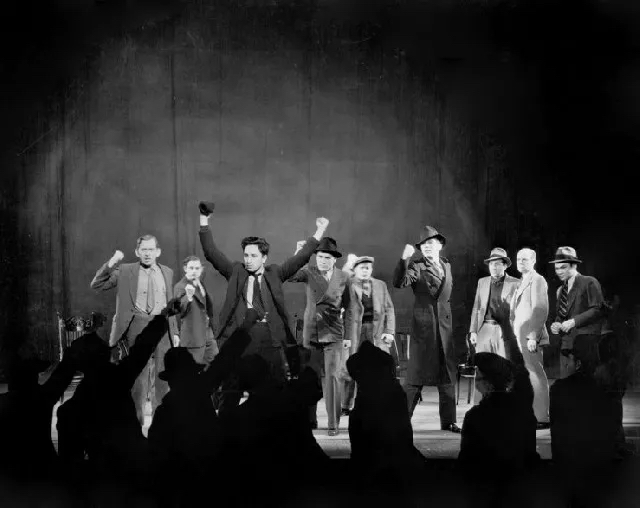
ENOUGH IS ENOUGH...Elia Kazan led the cast in the original production of Clifford Odets’ iconic 1935 play Waiting for Lefty. Centered around a taxi drivers’ strike, Lefty was produced by The Group Theatre, which sought to perform plays that functioned as social commentaries on the inequality and poverty of 1930s America. Some referred to Kazan as the “Proletarian Thunderbolt.” (Creative Commons)

 * * *

From Our Advertisers

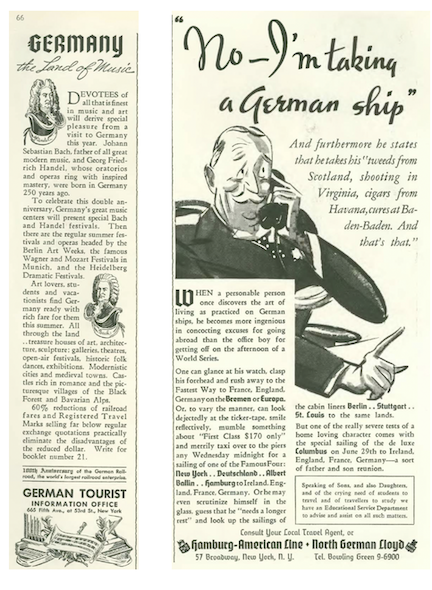
While Hitler ramped up weapons production and prepared to enact the Nuremberg Race Laws, the German Tourist Office touted their country as “The Land of Music” in this one-column advertisement on page 66 (left)…a couple of pages later we have an old chap looking forward to a German cruise and a quiet soak at Baden-Baden in the midst of madness…

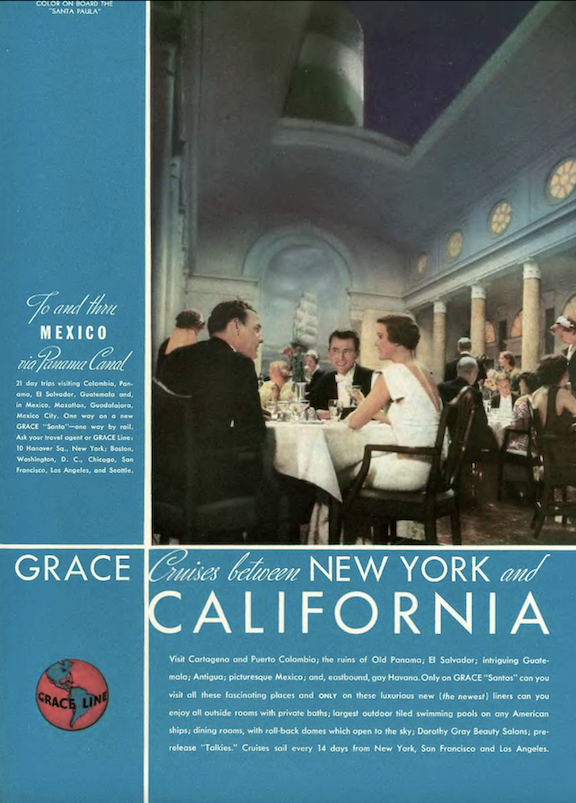
…now this is more like it, fine dining under the stars aboard the Santa Paula, far from the maddening crowds…

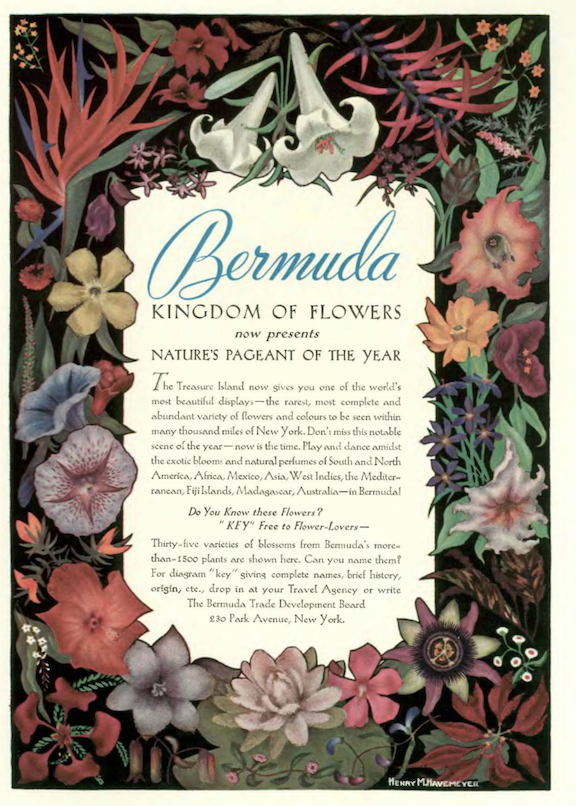
…there were several colorful full-page ads in the issue, including this splashy display from the very un-splashy-sounding Bermuda Trade Development Board…

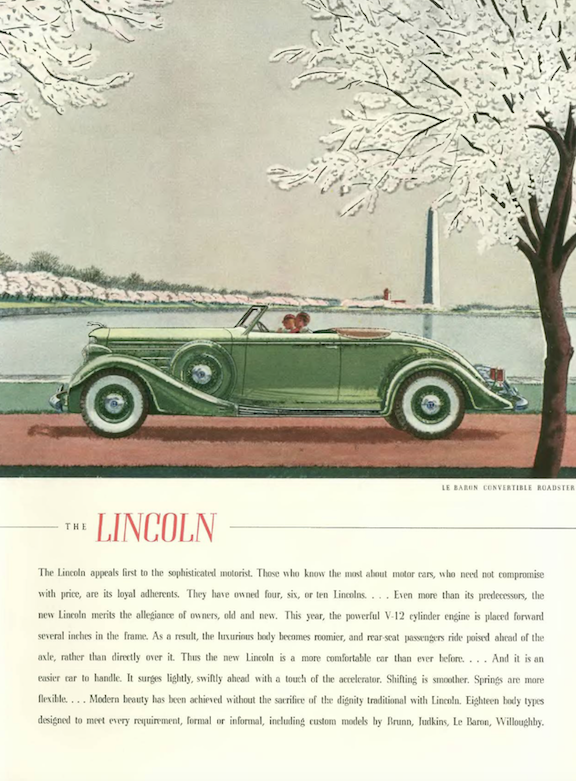
…cherry blossoms lined the path of Lincoln’s Le Baron Roadster…

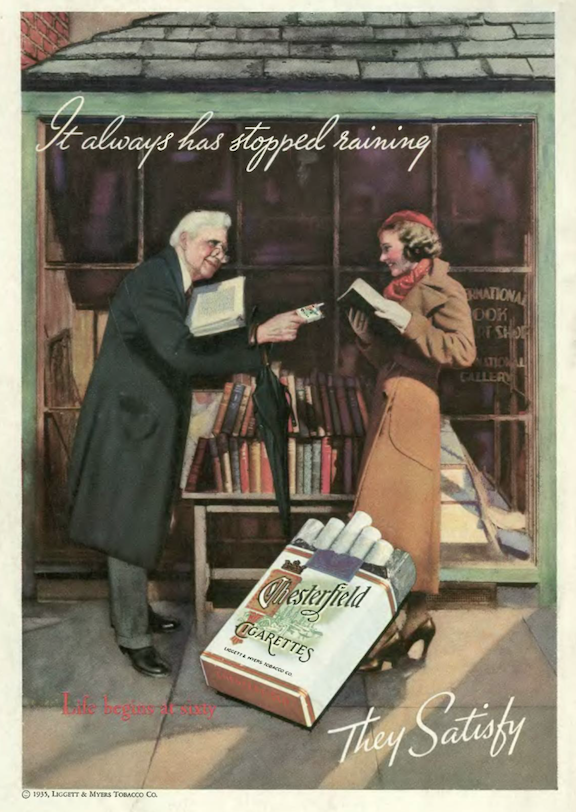
…Camel played to a wide demographic, from ads featuring stylish young women to ads like this that roped in everyone from an “enthusiastic horsewoman” to an engineer working on the Boulder (now Hoover) Dam…

…I’m not sure what “Life begins at sixty” is supposed to mean, unless it’s about tempting young women with your bad habit…

…the New York American was hoping that some of the “Best People” who read The New Yorker would also want to read their apartment rental want ads…

…spring was in the air at Richard Hudnut’s Fifth Avenue salon…if you had dry skin, it was recommended you try a product with the unfortunate name “Du Barry Special Skin Food”…

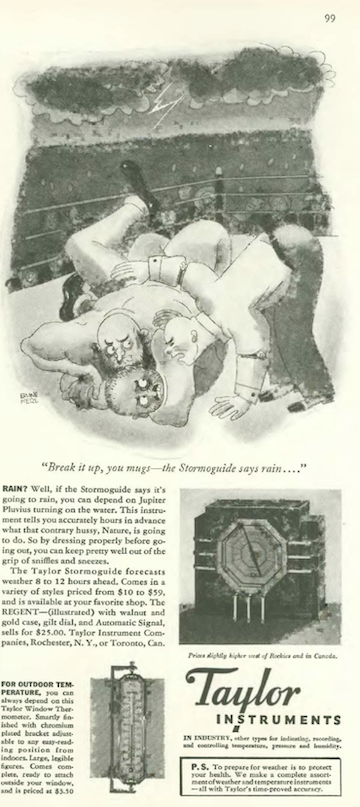
…Taylor Instruments hoped readers would monitor the spring weather with one of their stylish thermometers…American graphic artist and illustrator Ervine Metzl provided the artwork…he was best known for his posters and postage stamp designs…

…which brings us to our illustrators and cartoonists, beginning with this small woodcut on page 6 signed “Martin”…

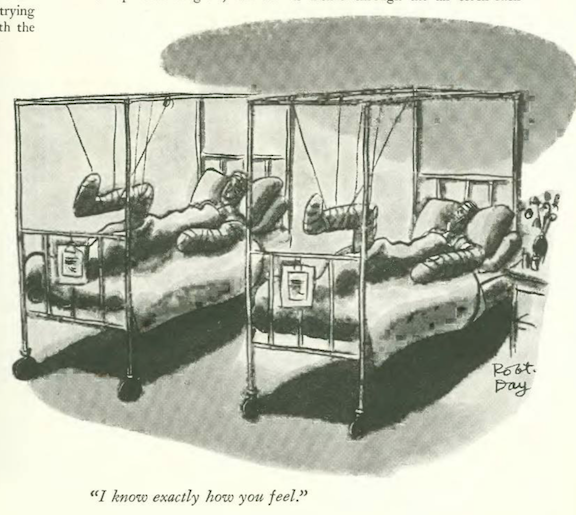
…empathy gained some traction in this Robert Day cartoon…

Alan Dunn demonstrated the effect of the Depression on the building trades…

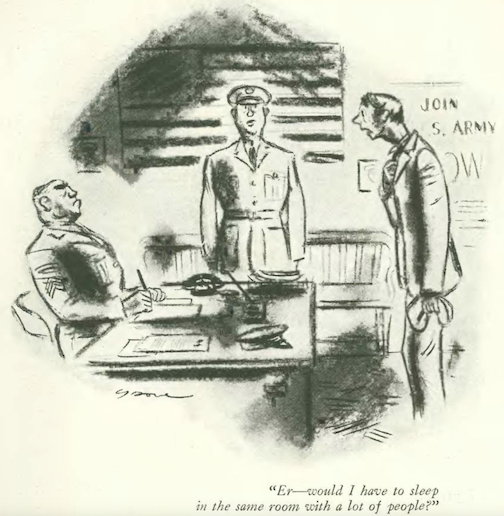
Leonard Dove found one enlistee not ready for basic training…

Syd Hoff showed us all the right moves…

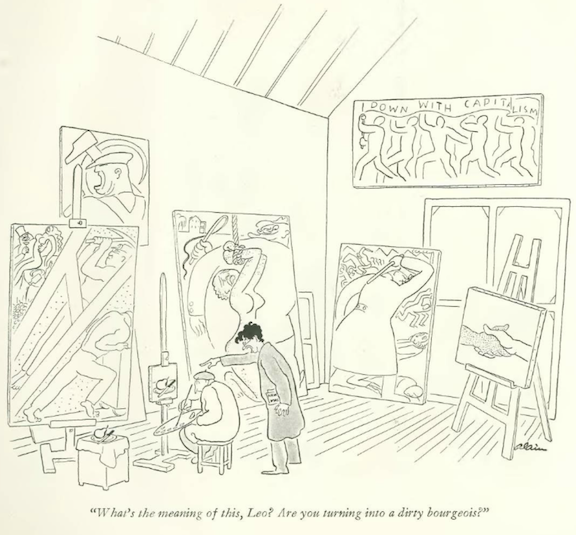
Alain was up in the garret with an artist in need of some peace…

Gluyas Williams took a glimpse backstage…

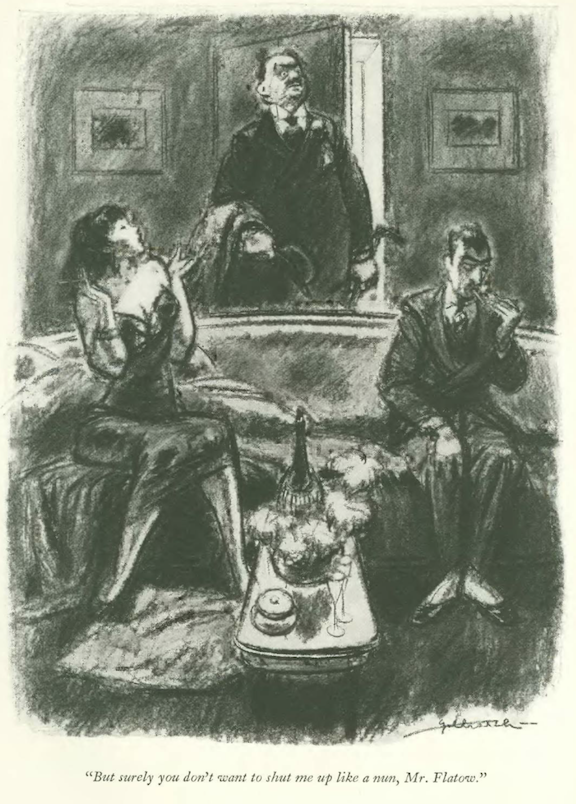
William Crawford Galbraith was still exploring the world of sugar daddies and golddiggers…

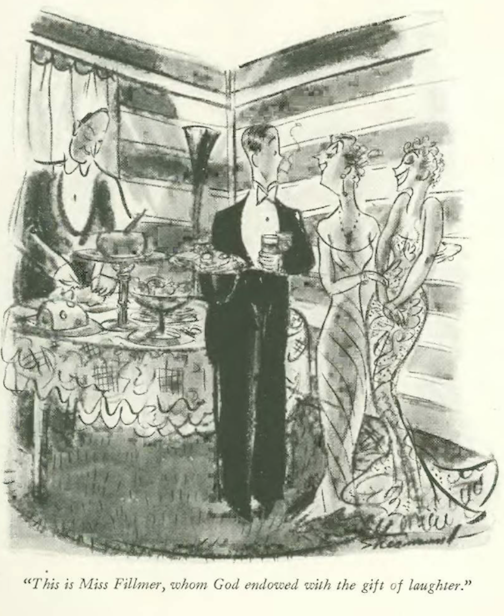
Barbara Shermund introduced a few giggles…

…and we close with another James Thurber classic…

Next Time: The Cowboy Philosopher…